CHAPTER 1402: IN HIS IMAGE
The presence of the camel in Lanzarote constitutes a trace of the archipelago’s colonial history. Its arrival is connected to the early processes of European conquest of the Canary Islands and to the expeditions that, from the beginning of the fifteenth century onwards, linked the islands to the coasts of the African continent through operations of capture, plunder and the trafficking of human beings and animals.
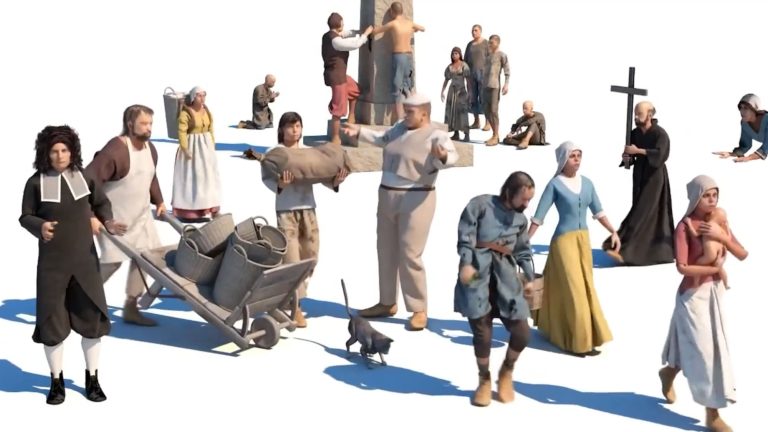
In 1402, Jean de Béthencourt initiated the Norman conquest of the Canary Islands, establishing his first settlement in Lanzarote. In 1405, his incursions along the African coast gave rise to what became known as the cabalgadas de Berbería(raids into Barbary): expeditions aimed at capturing people who would be subjected to slavery. The introduction of African camels to the islands is also situated within these networks of appropriation and circulation. These animals were incorporated into the colonial economy and employed in agricultural labour, transportation and the transformation of a territory marked by aridity. The formation of insular society was thus shaped by forced displacement and different forms of exploitation of both human and animal bodies.
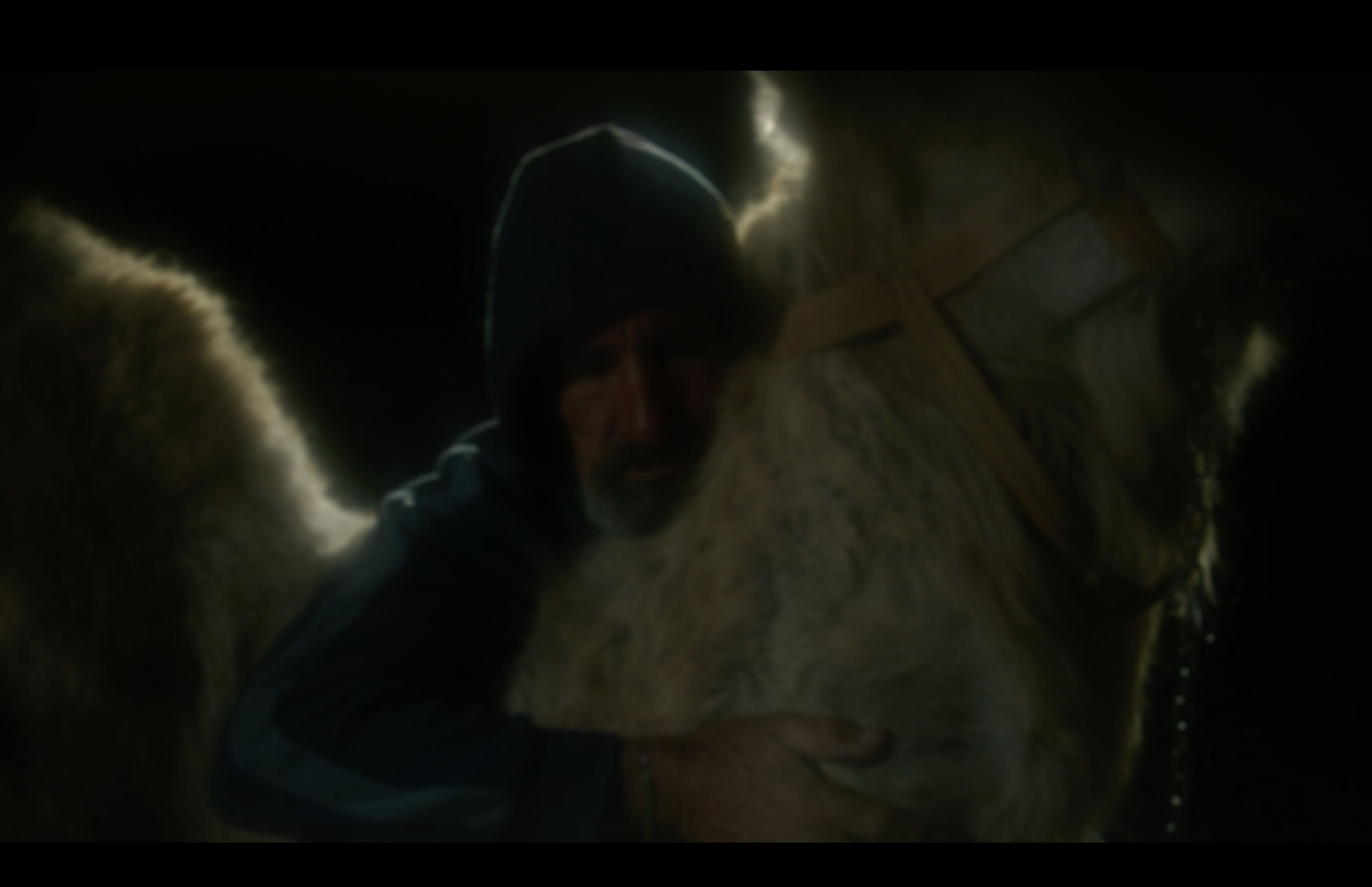
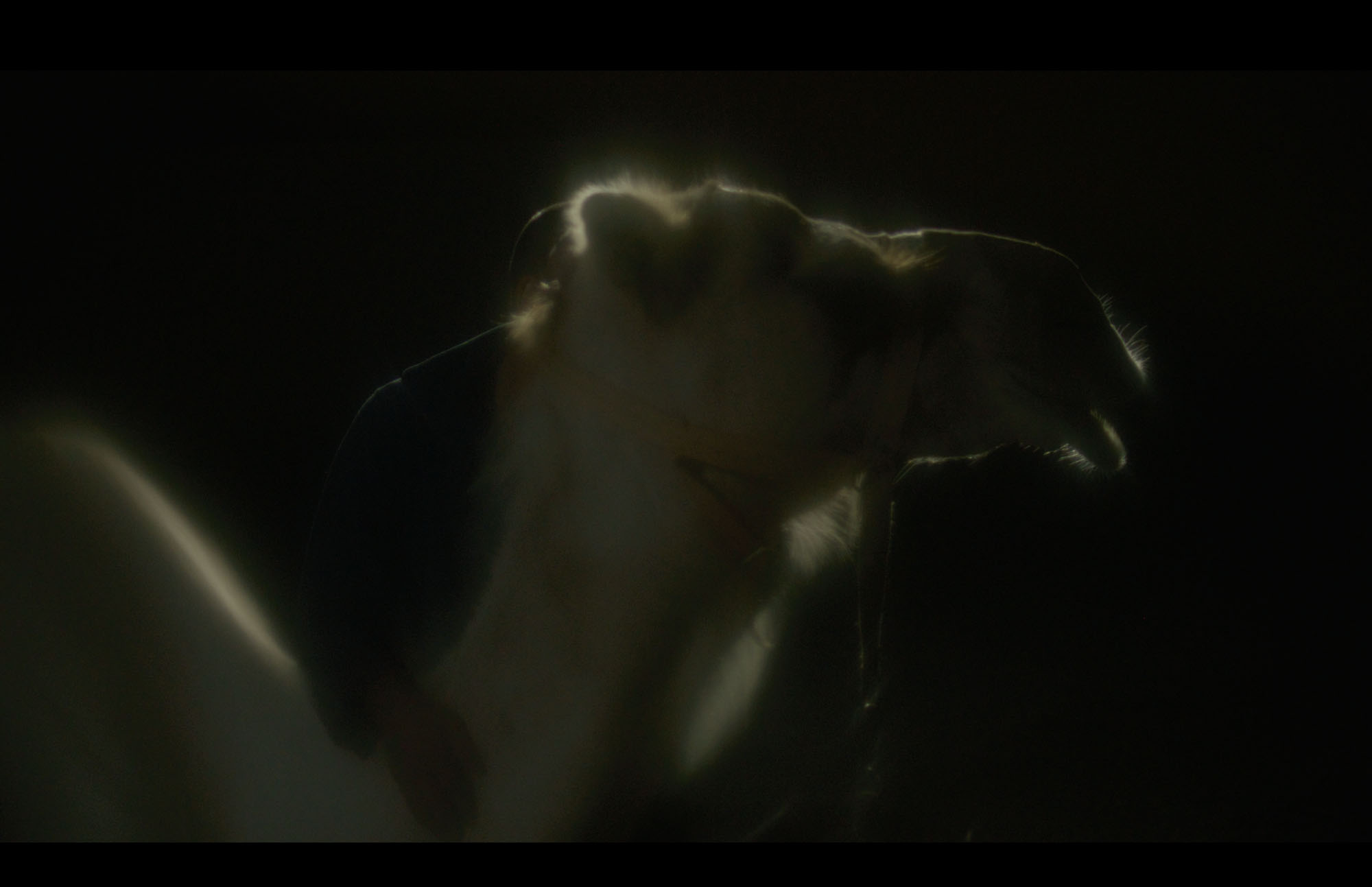
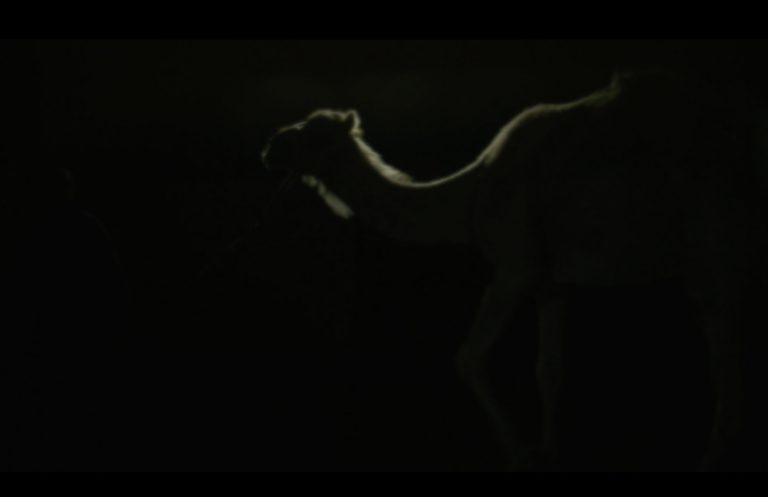
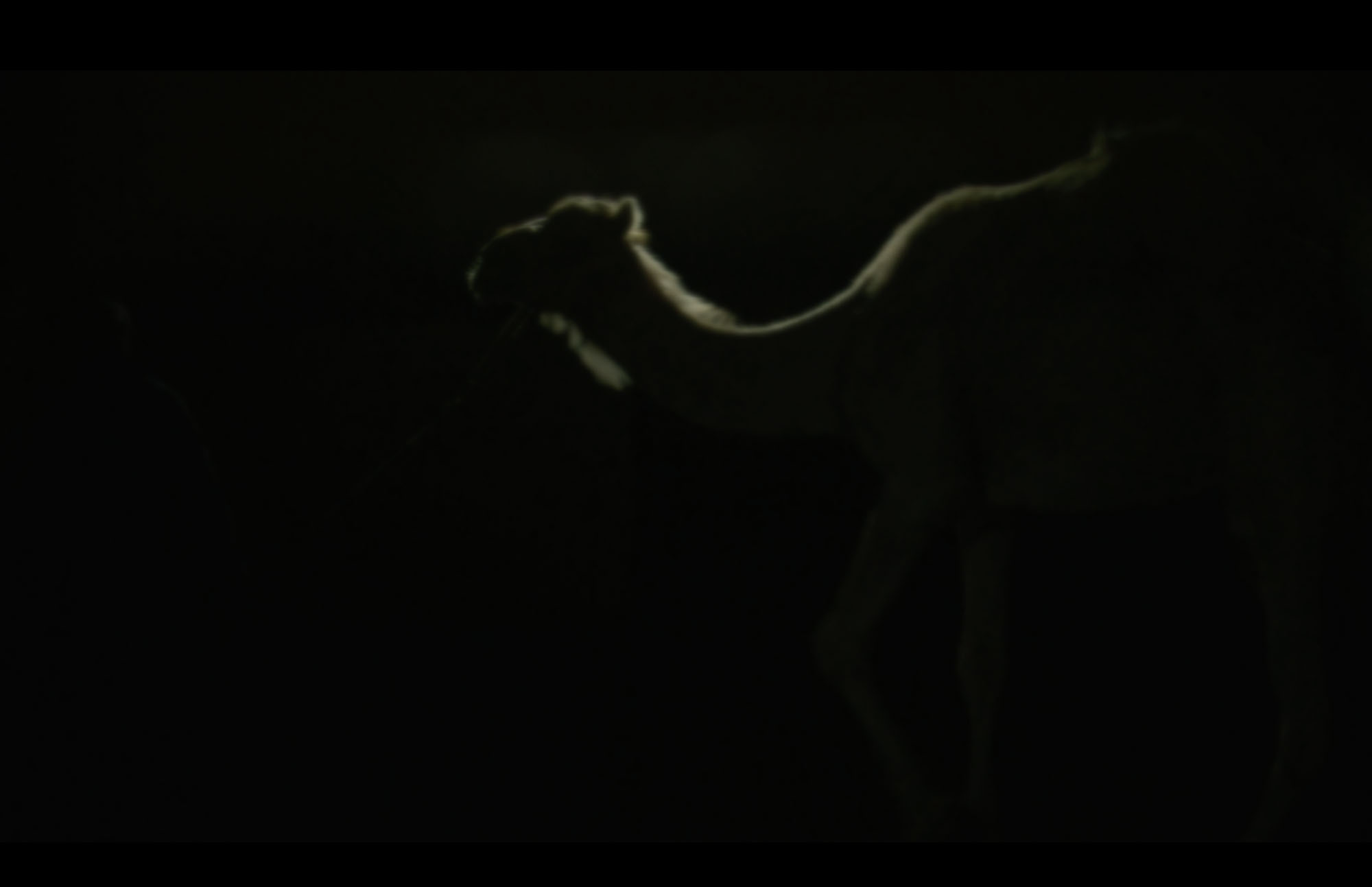
In In His Image, Silvia Navarro Martín revisits and expands upon a research project developed in Lanzarote and initiated through her film Al mal engaño. The artist approaches a universe of relationships between humans and animals through a group of camel handlers who share their living spaces with the camels in the same stables. The work shifts the gaze away from the animal as a picturesque element or emblem of local identity, towards an exploration of the forms of coexistence, dependency and recognition that emerge between the two species.
The history of the camel in Lanzarote allows this proximity to be understood through a colonial genealogy. Humans and animals, although subjected to different regimes of domination and without equating their respective experiences, became inscribed within the same process of territorial and economic reorganisation. Domestication, understood as a technology of control and exploitation, also emerges as a process of mutual transformation, in which bodies, gestures and behaviours are reshaped through prolonged coexistence.
The title of the work introduces a question about image and resemblance. To be made in the image of another implies a relationship of reproduction, but also of difference, identification and displacement. In this sense, the camel can be understood as a specular figure of the island’s own history: a foreign body whose presence has become naturalised to the point of forming one of the most recognisable images of Lanzarote. Its apparent belonging to the landscape conceals, however, a history of mobility, appropriation and colonial violence. What is now recognised as tradition is part of a far more complex memory, bound to the historical relations between the Canary Islands and Africa.
The silent nature of the video introduces another dimension to this approach. Without a soundtrack or narrative voice to guide or delimit its interpretation, the image acquires autonomy and places the viewer within a space of observation. Gestures, proximities and bodily correspondences become fundamental elements through which to speculate on the bonds between species. Silence does not erase history; rather, it offers a way of approaching what remains outside official narratives: the forms of life, knowledge and relationships that survive at the margins of colonial memory.
The coexistence recorded by Navarro Martín also unfolds against a horizon of disappearance. The world of camel handlers and their animals, sustained by knowledge, practices and bonds transmitted across generations, faces the threat of extinction. The work inhabits this threshold, where a relationship that is still alive begins to acquire the condition of a remnant.
Moving between colonial history and everyday intimacy, In His Image proposes a reflection on the ways in which bodies inherit, reproduce and transform the traces of the past. The camel ceases to be merely a domesticated animal or an image associated with island identity, becoming instead a presence that turns our gaze back towards processes of conquest, power relations and the forms of life they have produced. Within this uncertain resemblance between humans and animals, the work opens up a space to consider how history is inscribed upon bodies, and how its traces continue to inhabit the present.
Silvia Navarro Martín (Canary Islands, 1986) is a visual artist and filmmaker. Her work explores the narrative layers that shape history, in an exercise in speculation to re-imagine it, opening up new articulations of meaning. Her audiovisual work blends archival material with her own footage establishing a dialogue about the materialization of fictions in the collective imagination. Along these lines she has developed exhibition and film work, while also collaborating with other artists, curators, researchers or filmmakers whose perspectives share this field of work.