“A ideia de progresso é a que sustenta a destruição de tudo em nome do futuro.”
Ailton Krenak, Ideias para adiar o fim do mundo
Broken lines that pretend to be straight. To think from the idea of lineage is to confront a promise of continuity, of orderly passage, of an inheritance that flows without resistance. It tells us that we come from a clear, universal place from which we move toward another equally legible one. Beneath its soft appearance, lineage draws a straight path and demands fidelity: to origin, to form, to rhythm. Everything that does not conform to that line—what deviates, fragments, bifurcates, or is interrupted—falls outside the narrative, suspended in a time that does not progress and cannot become genealogy. To name lineage is also to decide which memories may be inherited and which must disappear. For this reason, to speak of what exists outside lineage is not to deny the past, but to listen to what insists when the line breaks. When linear temporality becomes a tool of hegemonic power, resisting definition, classification, and inheritance turns into a device for survival.
In a context of intensified neo-imperialism, where old logics of domination reappear under renewed technological, economic, and cultural languages, Outside Lineage emerges as a space of friction: a series of twelve videos that think and practice resistance from the margins of inheritance and outside the temporality that sustains it.
Imperialism—yesterday and today—does not only occupy territories; it administers time. It decides which temporalities are valid, which are relegated to backwardness, and which are declared obsolete. As Ngũgĩ wa Thiong’o has noted, colonial violence also acts upon the imagination, breaking the relationship between language, memory, and history. Added to this rupture is another: the imposition of a single time that invalidates rhythms, cycles, and durations not aligned with the logic of power. In response, many contemporary practices operate from bastard genealogies that cannot be cleanly inherited, and from presents that refuse to be read as a transition toward a predetermined future.
In dialogue with this condition, the notion of ch’ixi memories developed by Silvia Rivera Cusicanqui allows us to think overlapping temporalities that neither merge nor reconcile—layers of time that coexist without integrating into a single narrative, without obeying the imperial chronology of progress. Outside Lineage situates itself precisely there: in the friction between times, in the refusal to order the present as a promise of the future, and in resistance to the dominant languages that organize thought—toward a rebellion against the end of the idea of the world… of “one world.”
The twelve episodes of the program bring together artists who work from visions historically linked to resistance against hegemonic power— orality, opacity, myth, linguistic disobedience, the body, the night, fragmentation—activated as contemporary strategies that disrupt the linearity of time. Languages that do not move toward synthesis, but insist, reappear, fold back on themselves, and refuse closure.
Outside Lineage does not propose a new canon or an alternative genealogy. Nor does it propose a new chronology. It proposes something else: breaking with the idea of an inheritance without fissures. To think and create outside lineage also means to think and create outside imperial time, where history is not inherited or advanced, but contested, interrupted, and reactivated.
At a moment when neo-imperialism flourishes massively and at speed, this program affirms that resistance cannot be limited to a single language, a single era, or a single tool. It must be activated from all the times power has tried to erase, and from all the forms of knowledge it has never fully managed to domesticate.
***
“A surrender of the conquered to the conqueror is a sad function from its very nature, but in this instance it was far more than sad; it was the acme of human misery, arising, however, not from the hurt done to martial spirit, but from annihilation of happy homes.” With these words, journalist William Dinwiddie described the events that took place in San Juan, Puerto Rico, during the week in which the Spanish Army evacuated the island and the United States Army officially established its presence on October 18, 1898. Far from celebrating a military victory, Dinwiddie emphasized the human consequences of the occupation: the destruction of homes, the loss of a way of life, and the radical transformation of the territory under a new colonial power.
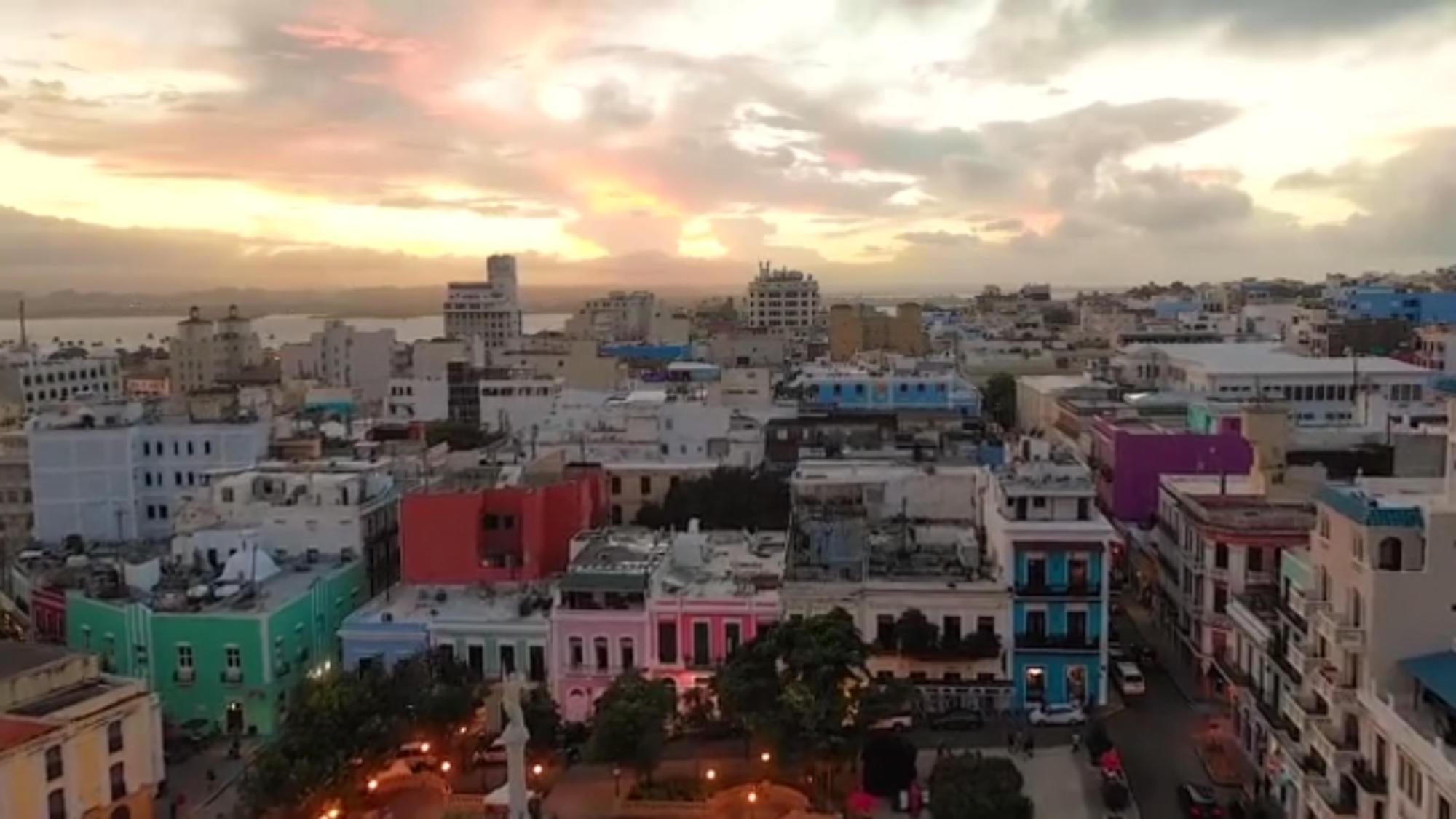
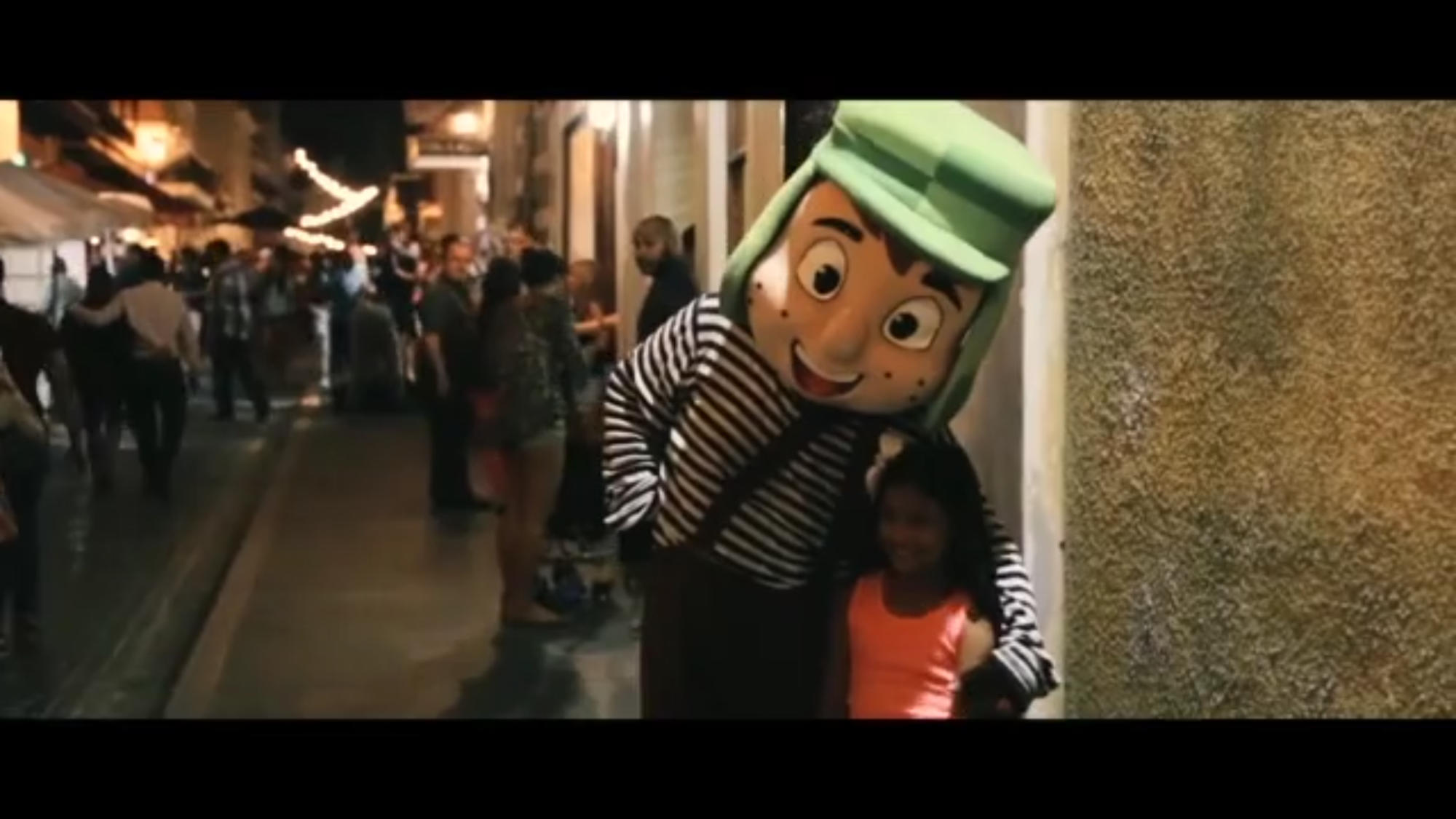
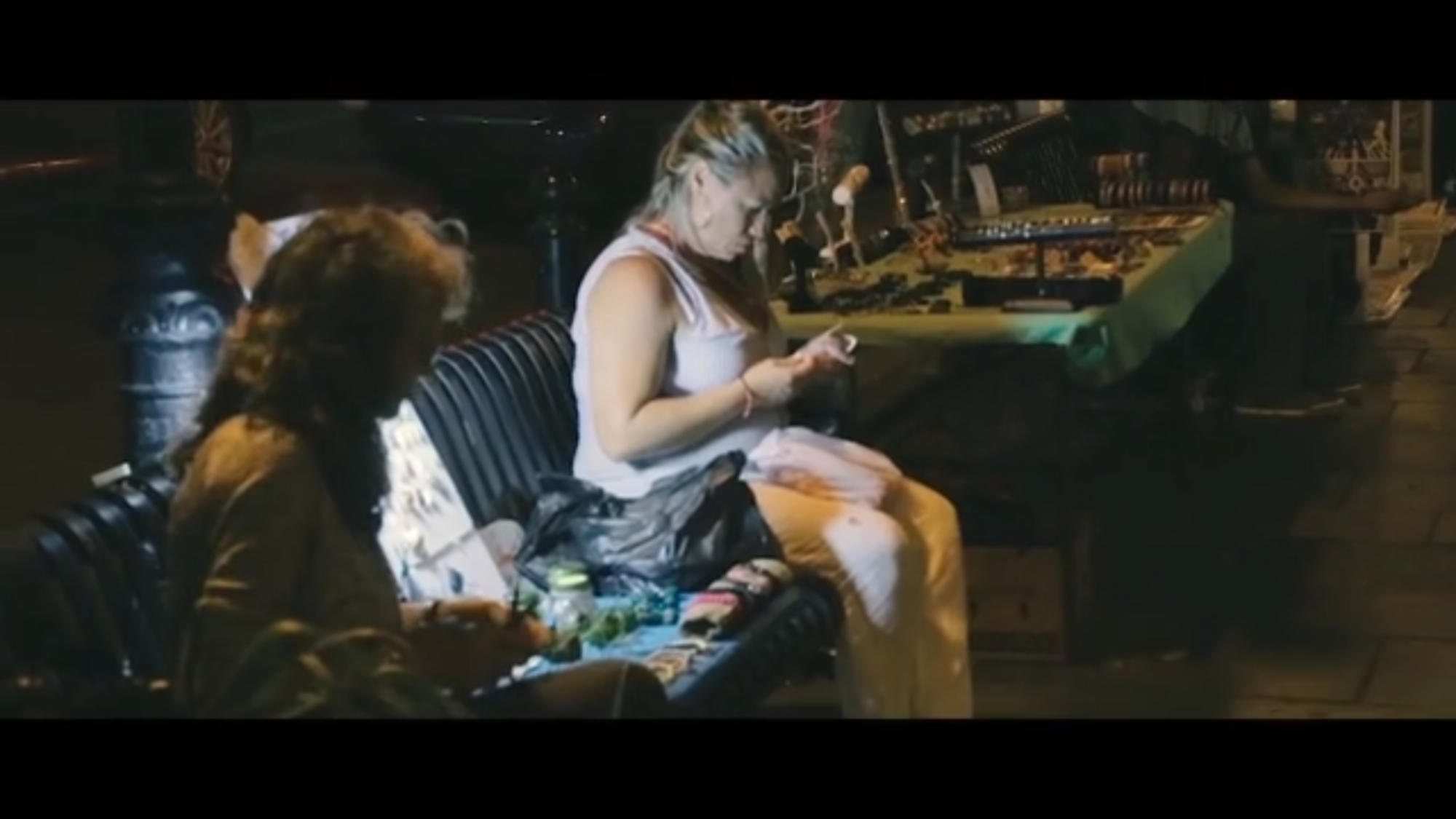
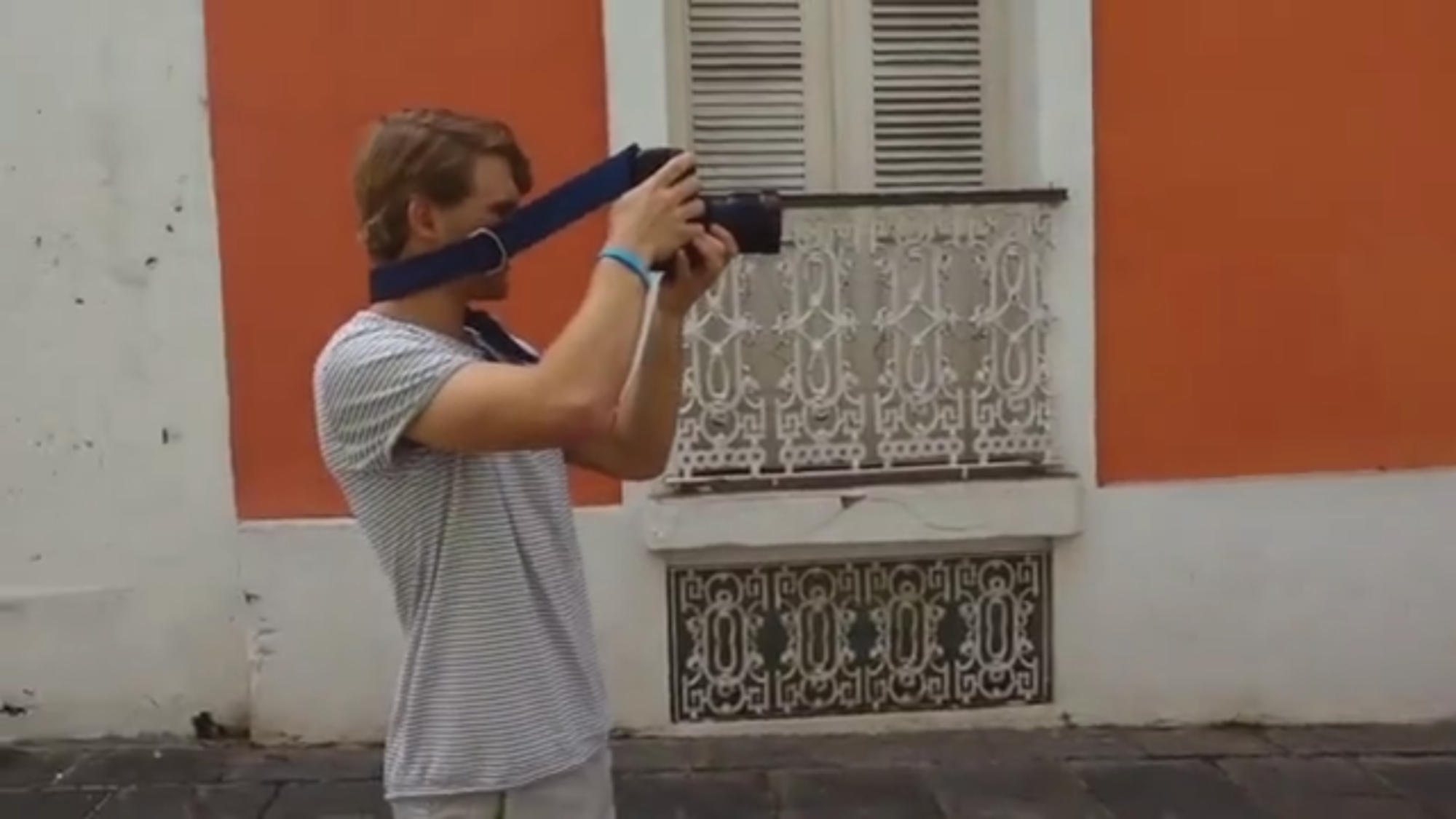
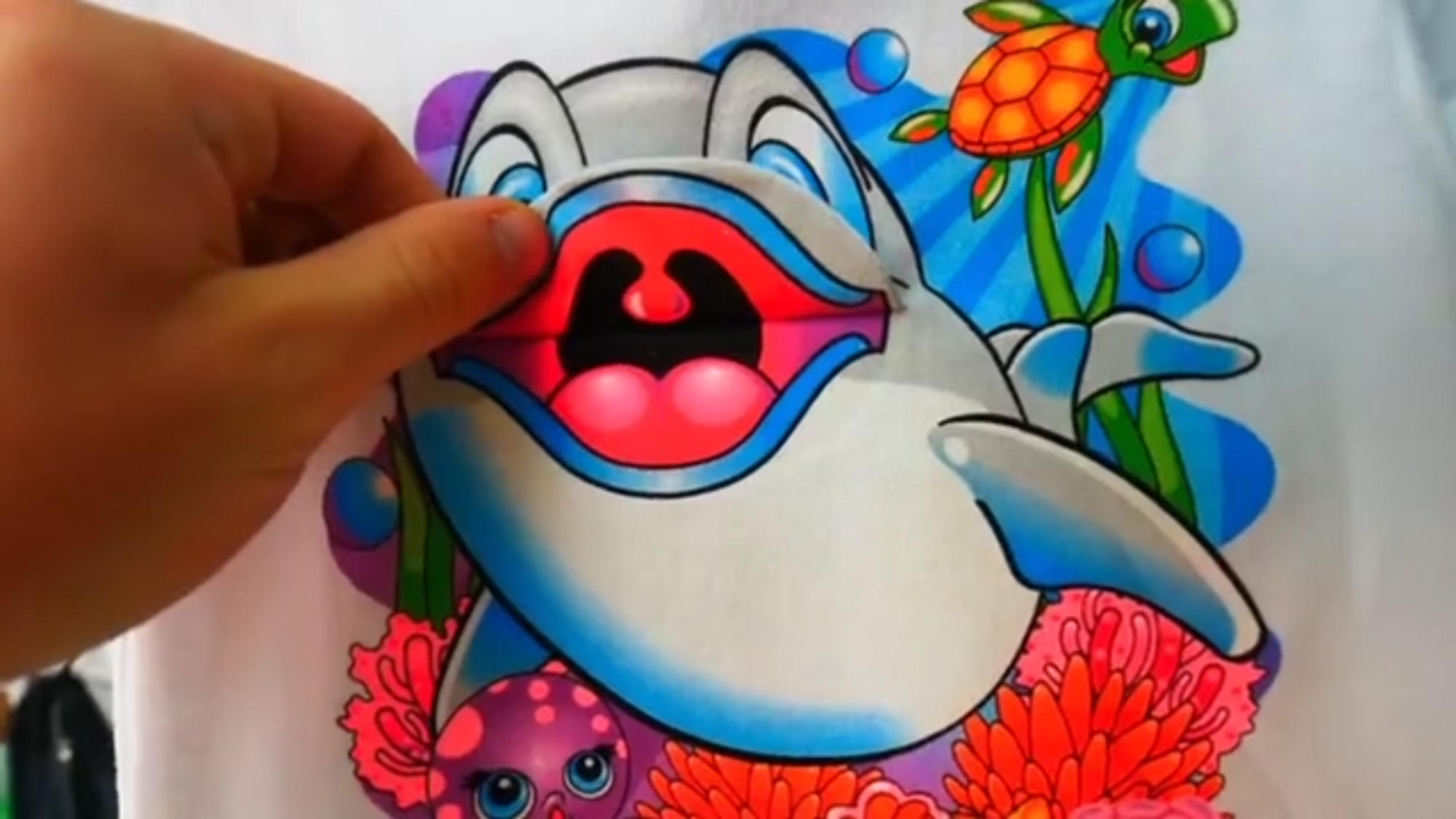
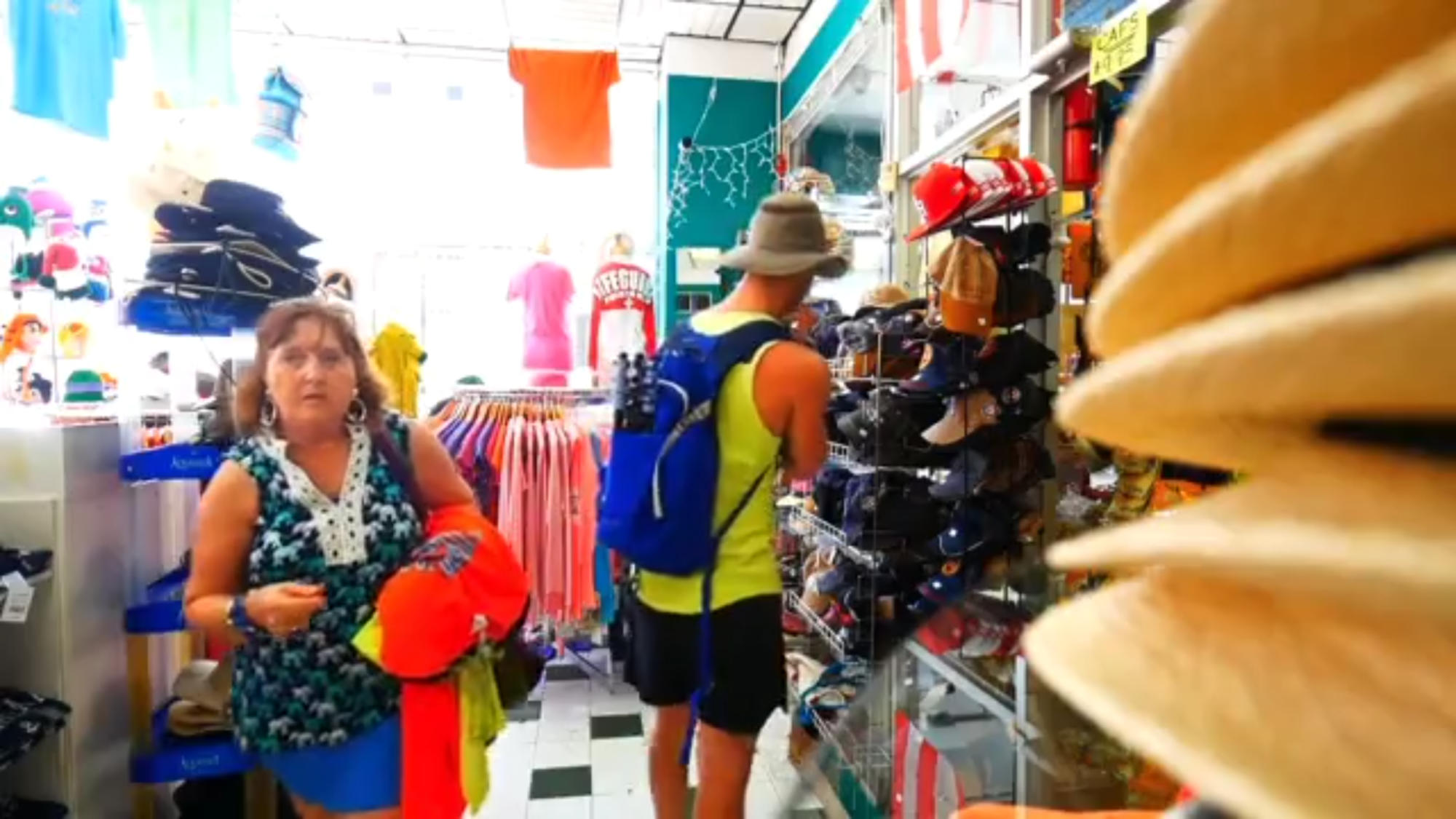
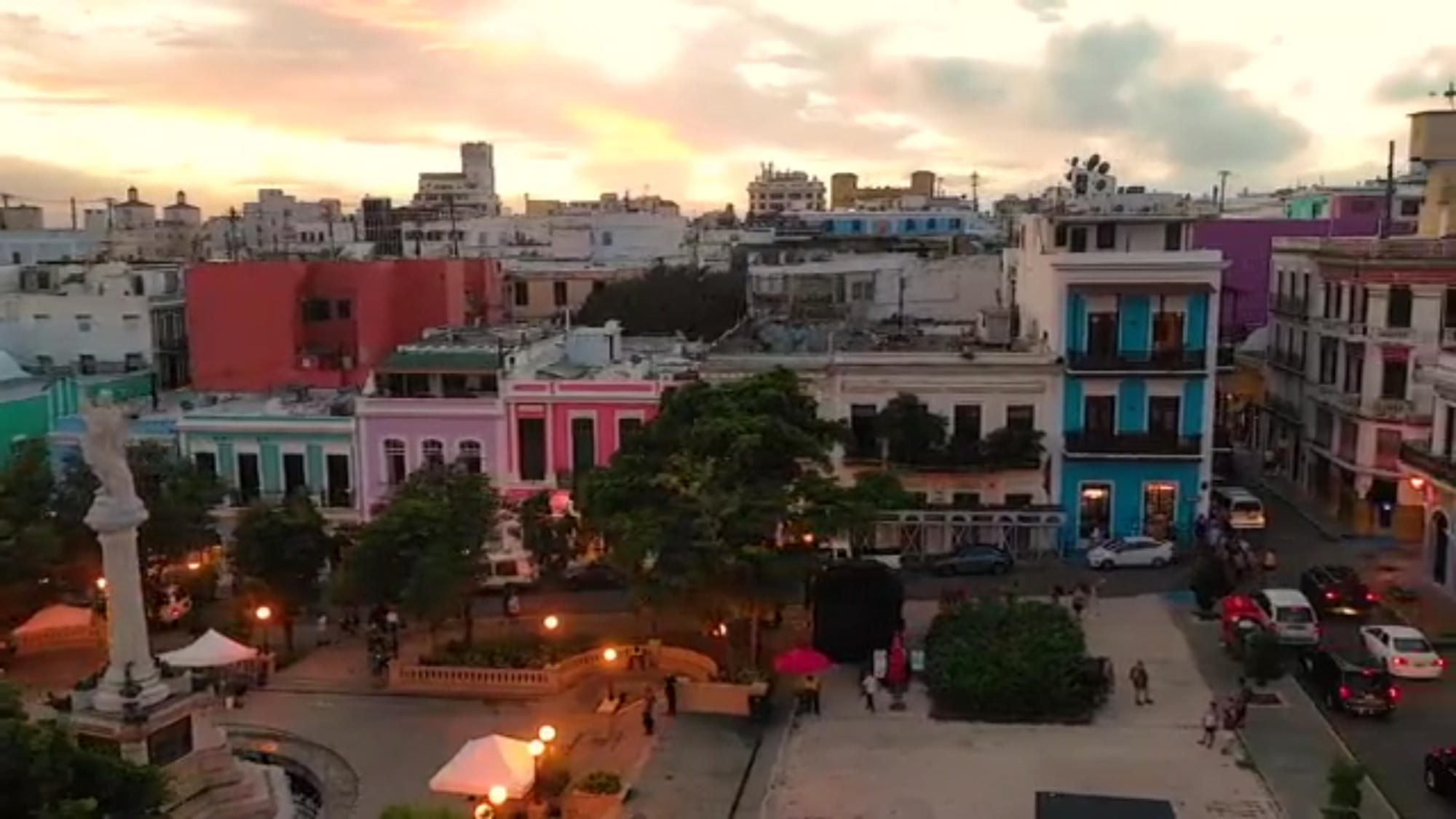
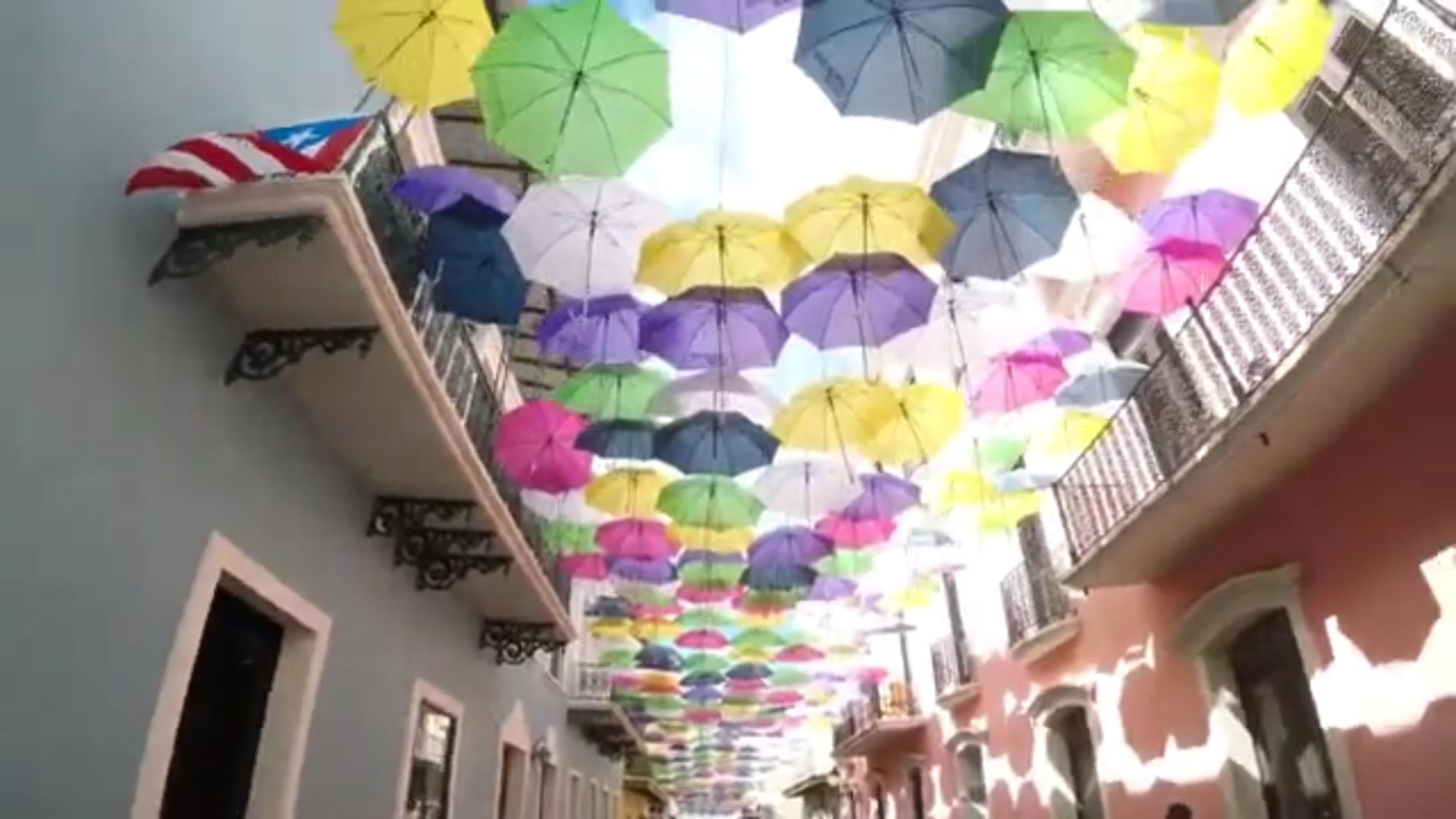
Drawing on this historical account, Evacuación by Mónica Rodríguez creates a friction between past and present through a sequence of images extracted from videos uploaded to YouTube by American tourists documenting their visits to Old San Juan. While the camera captures colorful façades, cobblestone streets, historic monuments, and tropical landscapes, the voice-over recites Dinwiddie’s text written more than a century ago. The result is a temporal overlay that exposes the tensions hidden beneath the pleasurable and carefree surface of the tourist image.
The work proposes a reflection on contemporary tourism as an heir to the lineage of colonial structures. The same spaces that once served as the stage for the U.S. occupation now appear as destinations for visual and cultural consumption. The tourist gaze moves through the territory as though it were a landscape available for experience and enjoyment, while the histories of dispossession, conflict, and domination that shaped it are relegated to the background or disappear altogether.
By appropriating images produced by American tourists, Rodríguez points to the ways in which certain modes of seeing the territory maintain a continuity with colonial logics. If imperial expansion depended on the exploration, classification, and symbolic appropriation of conquered places, contemporary tourism reproduces similar mechanisms through the mass circulation of images that transform historically layered and politically complex spaces into consumable settings. The visitor does not physically conquer the territory, yet it becomes an object of consumption; it belongs to them for as long as they remain there. It has been designed for their experience.
The work highlights the distance between historical memory and contemporary representations of place. Where Dinwiddie described the “annihilation of happy homes,” tourist videos present a pacified landscape, attractive to global consumption. This contradiction reveals how tourism can function as a mechanism of historical erasure, neutralizing the traces of colonial violence through images centered on leisure, authenticity, and heritage beauty.
Evacuación questions the cultural systems that produce these ways of seeing and the power relations that sustain them. Through the encounter between historical archives and contemporary digital material, Mónica Rodríguez invites viewers to reconsider tourism as part of a colonial genealogy that continues to shape the ways in which certain territories are seen, represented, consumed, and ultimately drained in the present.
Mónica Rodríguez (1980, San Juan, Puerto Rico) Her practice explores the intersections of feminist, environmental, and anti-colonial histories in Puerto Rico. Through drawing, sculpture, video, and participatory formats such as reading circles and collective research processes, she examines how historical narratives are constructed, remembered, and erased. Her work approaches art as a form of restorative history, bringing visibility to silenced narratives while proposing artistic creation as a space for collective reflection, ecological awareness, and relational exchange.
Grounded in an understanding of history as inseparable from the land, her projects investigate the connections between colonialism, environmental violence, cultural survival, and community care.
Rodríguez received an MFA from the California Institute of the Arts and participated in the Whitney Independent Study Program. She has completed artist residencies at MASS MoCA, TEA Tenerife Espacio de las Artes, and Para la Naturaleza. Her work has been presented internationally at institutions including the Museo de Arte y Diseño de Miramar, Los Angeles Contemporary Exhibitions, the Whitney Museum of American Art, the Swiss Institute of Contemporary Art, the Institute for Contemporary Art at Virginia Commonwealth University, and the Mexicali Biennial. She currently lives and works in Puerto Rico.