Broken lines that pretend to be straight. To think from the idea of lineage is to confront a promise of continuity, of orderly passage, of an inheritance that flows without resistance. It tells us that we come from a clear, universal place from which we move toward another equally legible one. Beneath its soft appearance, lineage draws a straight path and demands fidelity: to origin, to form, to rhythm. Everything that does not conform to that line—what deviates, fragments, bifurcates, or is interrupted—falls outside the narrative, suspended in a time that does not progress and cannot become genealogy. To name lineage is also to decide which memories may be inherited and which must disappear. For this reason, to speak of what exists outside lineage is not to deny the past, but to listen to what insists when the line breaks. When linear temporality becomes a tool of hegemonic power, resisting definition, classification, and inheritance turns into a device for survival.
In a context of intensified neo-imperialism, where old logics of domination reappear under renewed technological, economic, and cultural languages, Outside Lineage emerges as a space of friction: a series of twelve videos that think and practice resistance from the margins of inheritance and outside the temporality that sustains it.
Imperialism—yesterday and today—does not only occupy territories; it administers time. It decides which temporalities are valid, which are relegated to backwardness, and which are declared obsolete. As Ngũgĩ wa Thiong’o has noted, colonial violence also acts upon the imagination, breaking the relationship between language, memory, and history. Added to this rupture is another: the imposition of a single time that invalidates rhythms, cycles, and durations not aligned with the logic of power. In response, many contemporary practices operate from bastard genealogies that cannot be cleanly inherited, and from presents that refuse to be read as a transition toward a predetermined future.
In dialogue with this condition, the notion of ch’ixi memories developed by Silvia Rivera Cusicanqui allows us to think overlapping temporalities that neither merge nor reconcile—layers of time that coexist without integrating into a single narrative, without obeying the imperial chronology of progress. Outside Lineage situates itself precisely there: in the friction between times, in the refusal to order the present as a promise of the future, and in resistance to the dominant languages that organize thought—toward a rebellion against the end of the idea of the world… of “one world.”
The twelve episodes of the program bring together artists who work from visions historically linked to resistance against hegemonic power— orality, opacity, myth, linguistic disobedience, the body, the night, fragmentation—activated as contemporary strategies that disrupt the linearity of time. Languages that do not move toward synthesis, but insist, reappear, fold back on themselves, and refuse closure.
Outside Lineage does not propose a new canon or an alternative genealogy. Nor does it propose a new chronology. It proposes something else: breaking with the idea of an inheritance without fissures. To think and create outside lineage also means to think and create outside imperial time, where history is not inherited or advanced, but contested, interrupted, and reactivated.
At a moment when neo-imperialism flourishes massively and at speed, this program affirms that resistance cannot be limited to a single language, a single era, or a single tool. It must be activated from all the times power has tried to erase, and from all the forms of knowledge it has never fully managed to domesticate.
***
Feminist geography has long argued that territories are not only produced through infrastructures, cadastral systems, or maps, but also through forms of knowledge that rarely attain the status of an archive. There exists a geography transmitted in hushed voices, embedded in everyday habits, interrupted routes, and warnings that are never fully articulated. These are forms of knowledge that do not seek to become discourse; instead, they endure as inherited practices: knowing where not to go, when to return, which places belong to the realm of the possible, and which are relegated to a cartography of risk or the unknown.
Historically, these minor geographies have remained outside the mechanisms through which knowledge is legitimized. While modern cartography sought to produce a territory that was entirely visible, measurable, and governable, everyday experience—and women’s experience in particular—was shaped through fragmented memories transmitted across generations by means of silences, intuitions, and gestures. This was not the absence of narrative, but rather another form of knowledge that deliberately escaped the logic of documentation.
In this sense, silence does not signify emptiness. It functions as a technology of memory. That which remains unnamed does not necessarily disappear; it can persist as a force that continues to shape our relationship to space long after the conditions that produced it have faded from view. Bodies continue to follow certain paths—or avoid others—without necessarily knowing the origin of those inherited decisions. The territory retains these traces as an affective stratigraphy that official maps are incapable of recording.
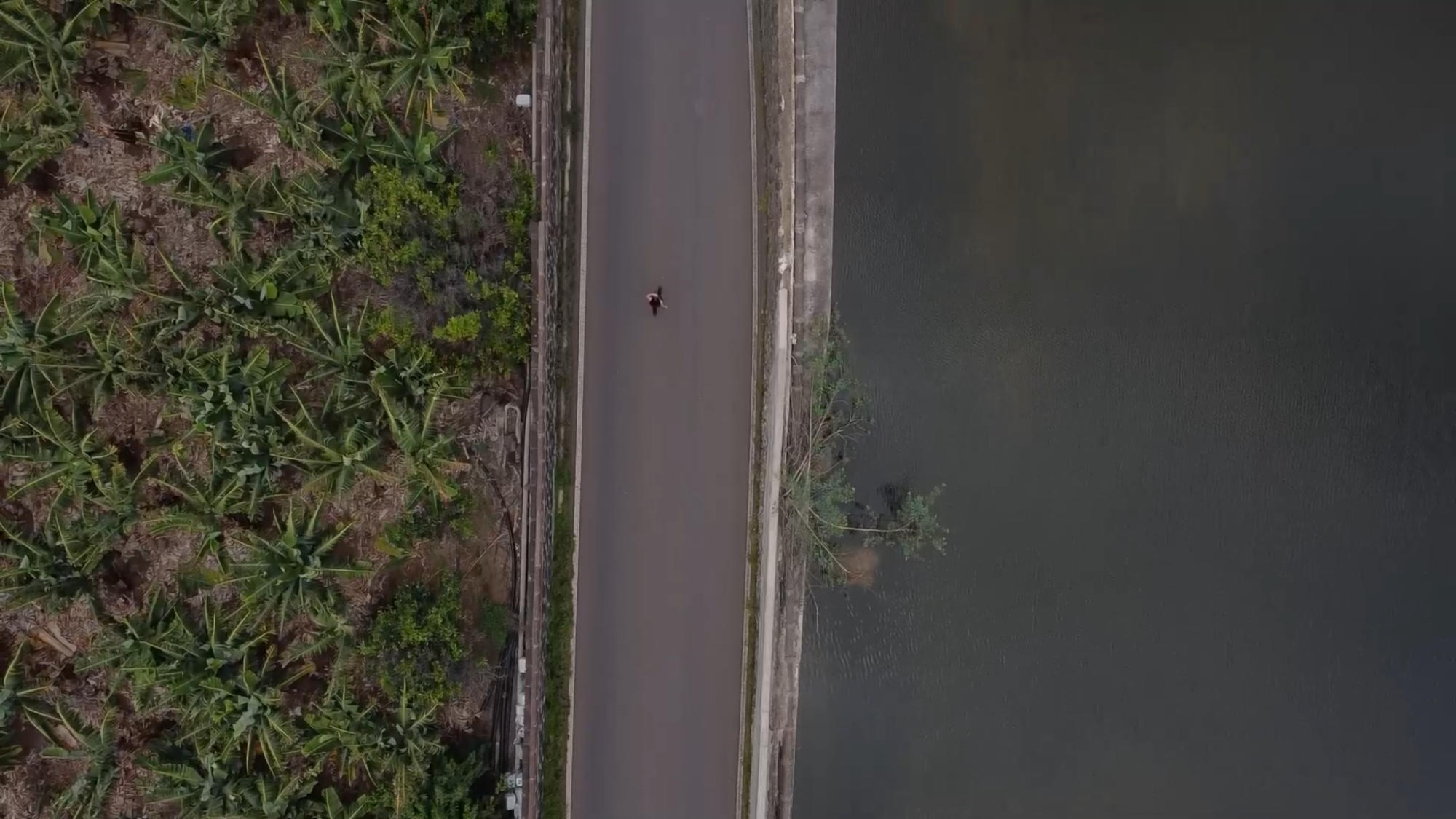
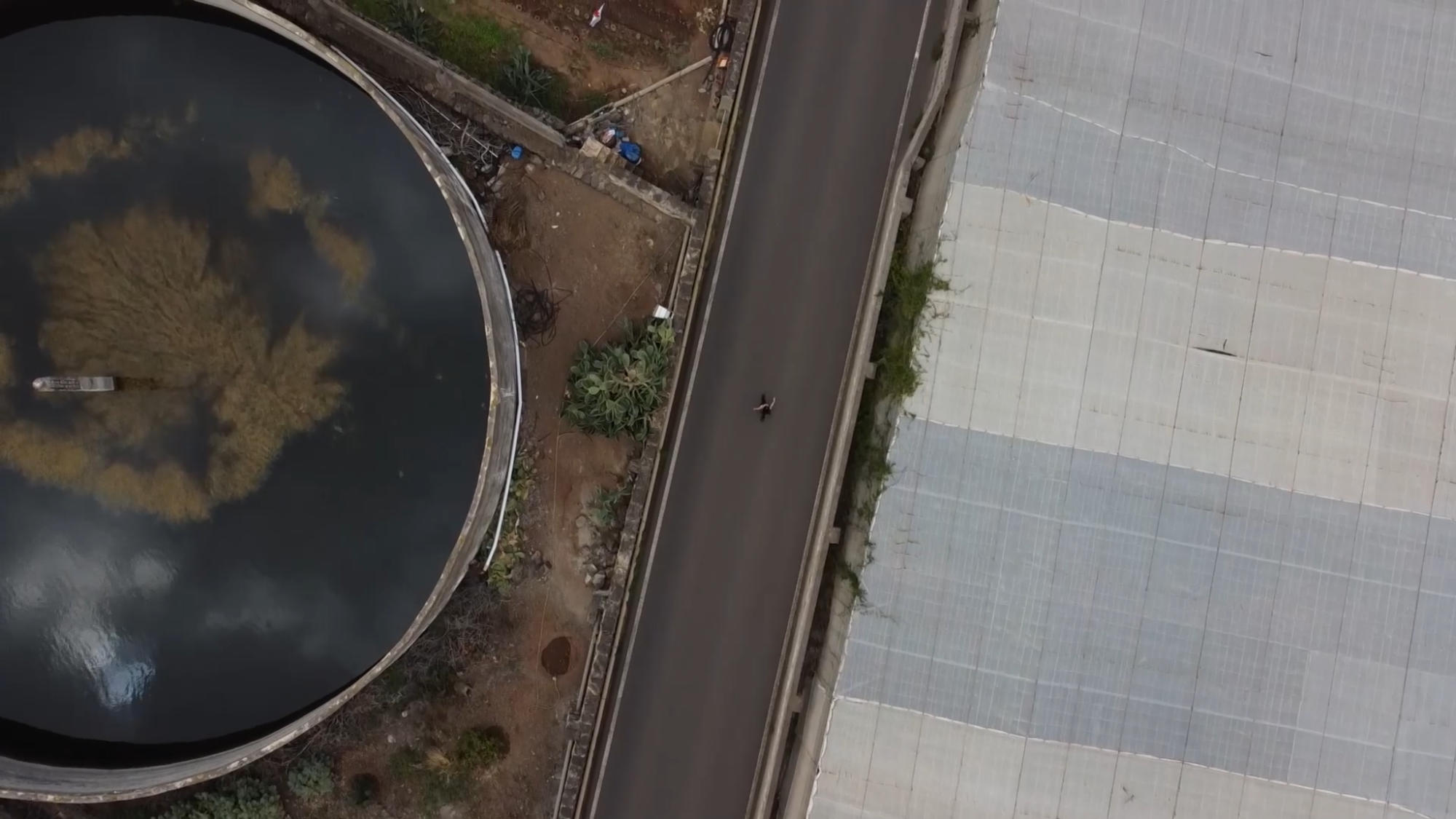
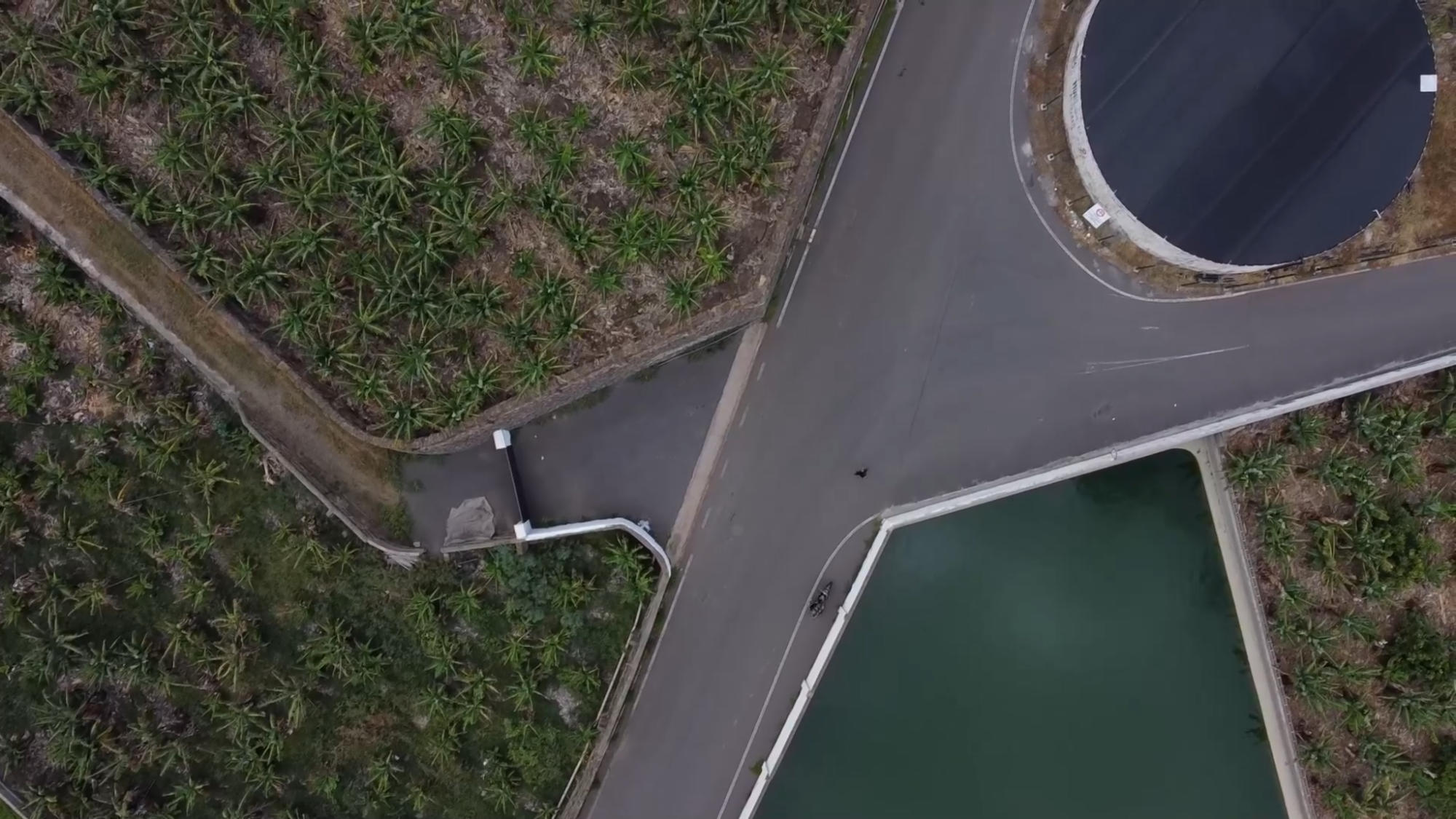
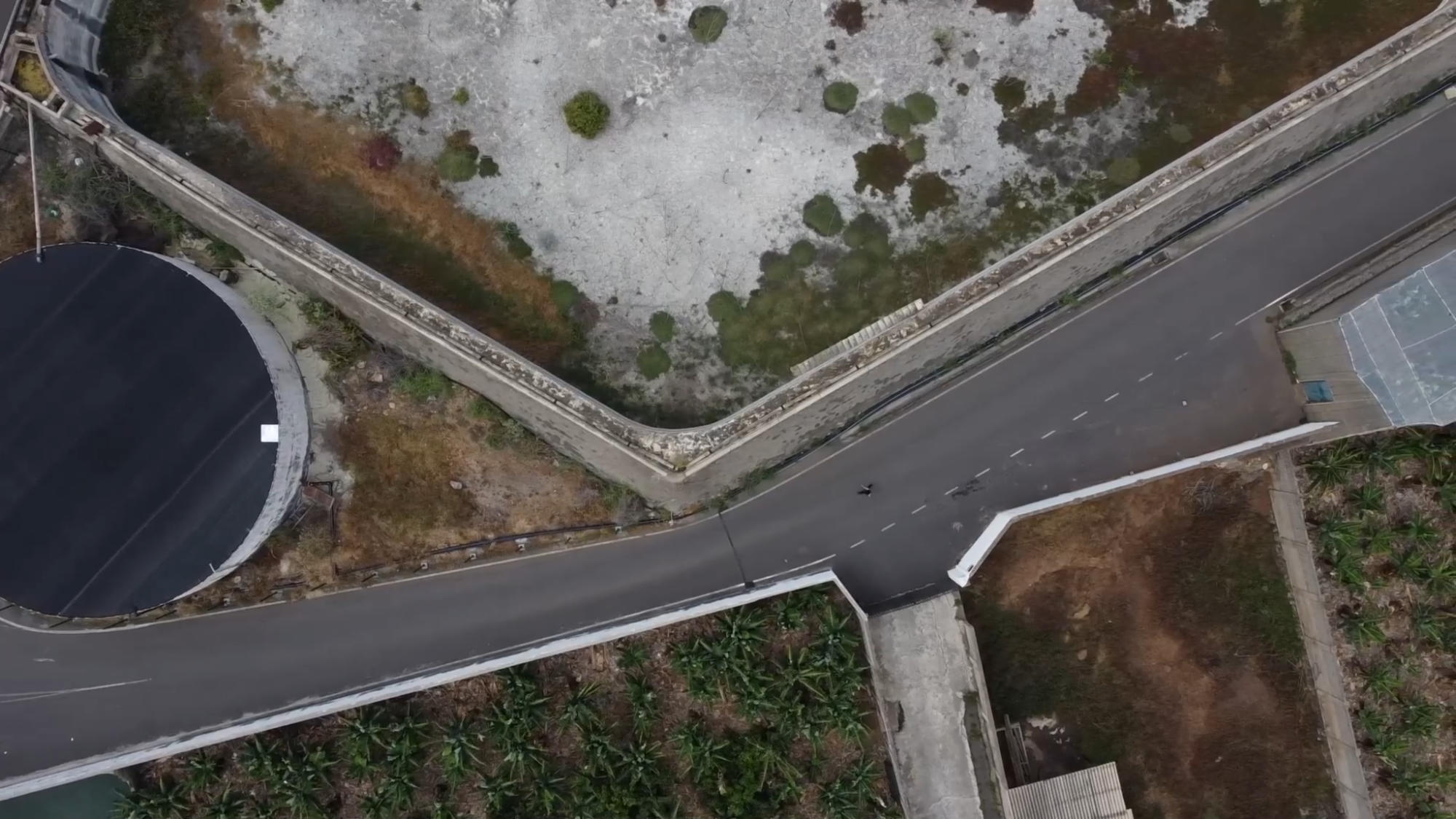
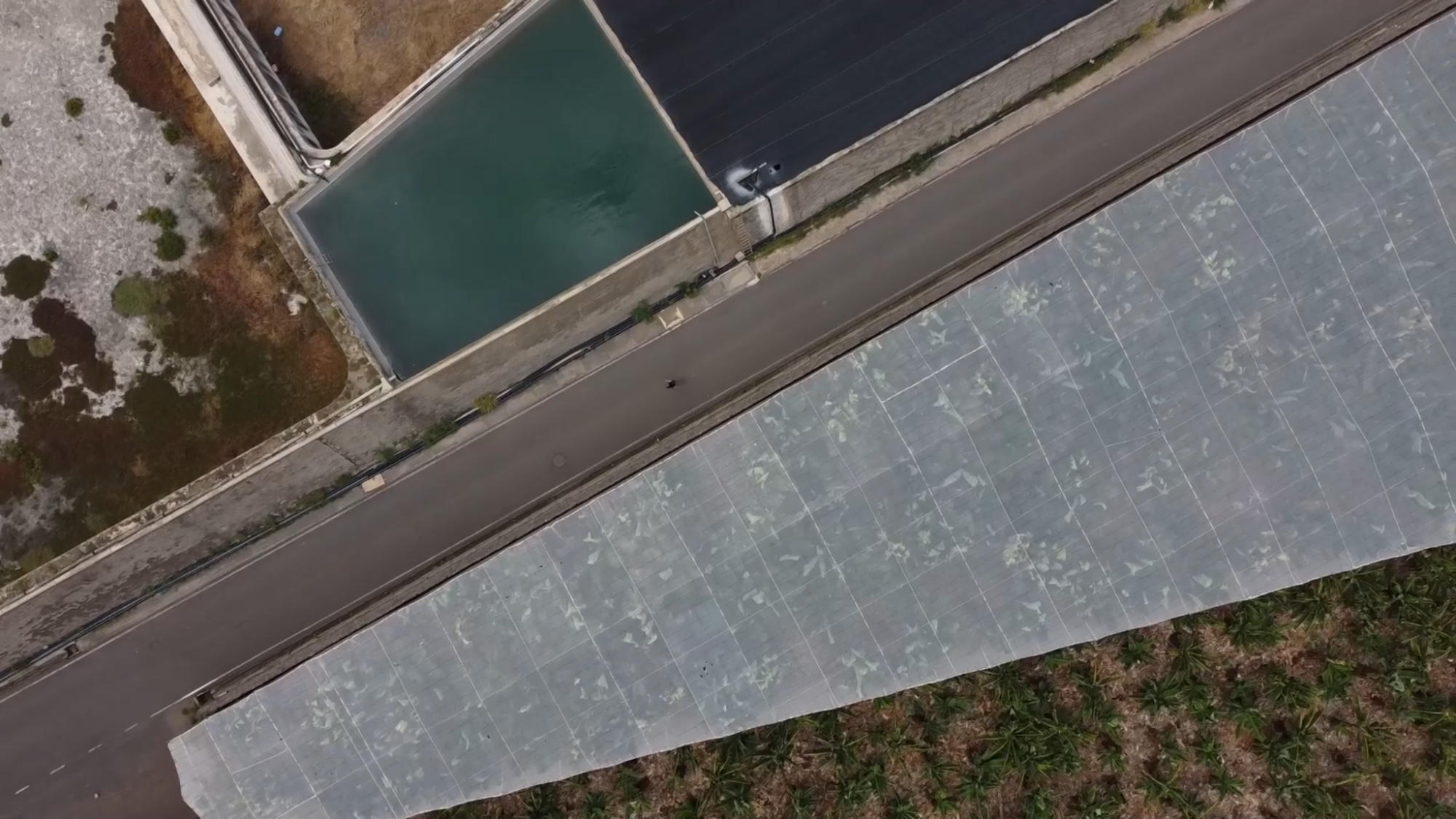
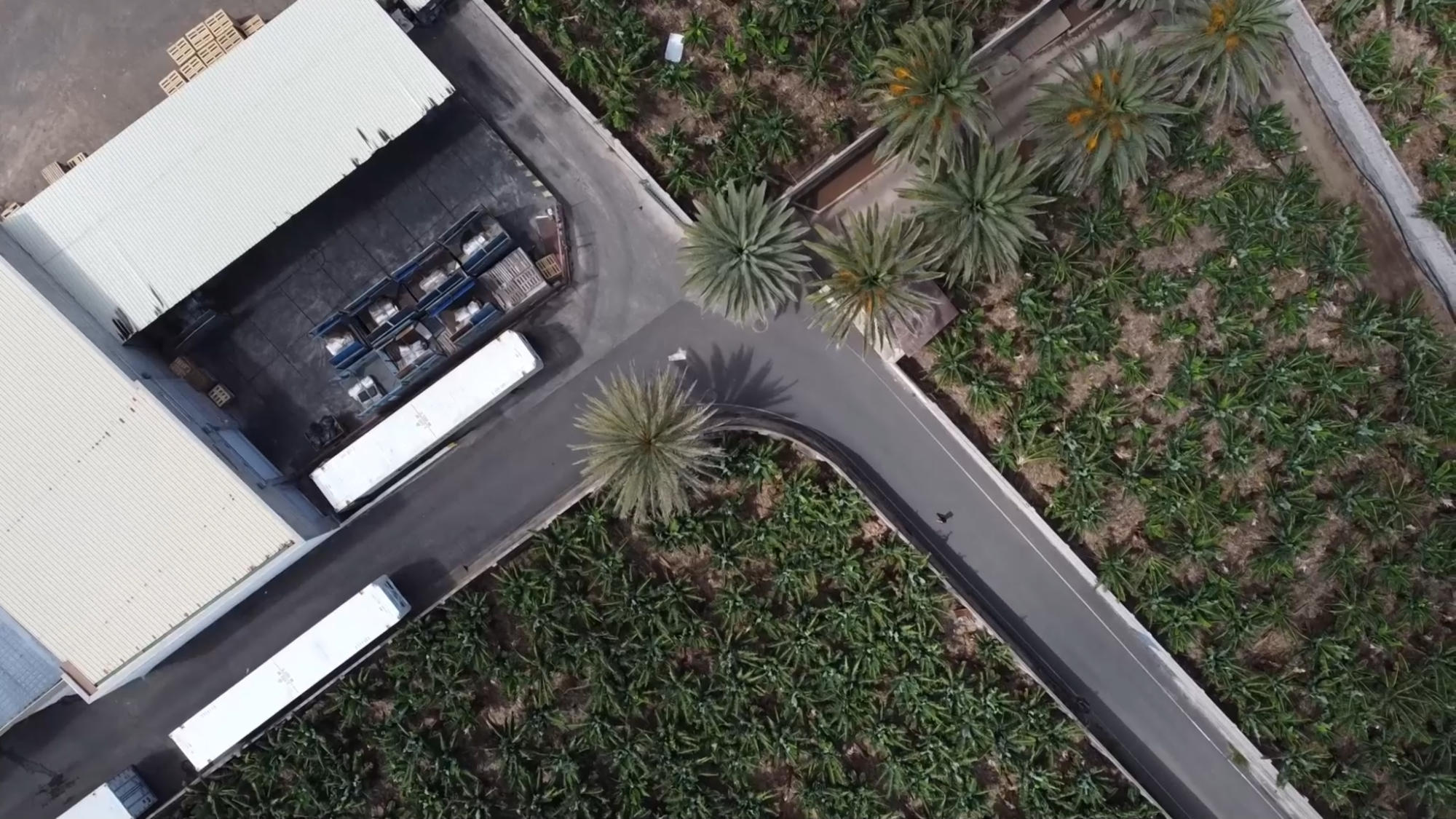
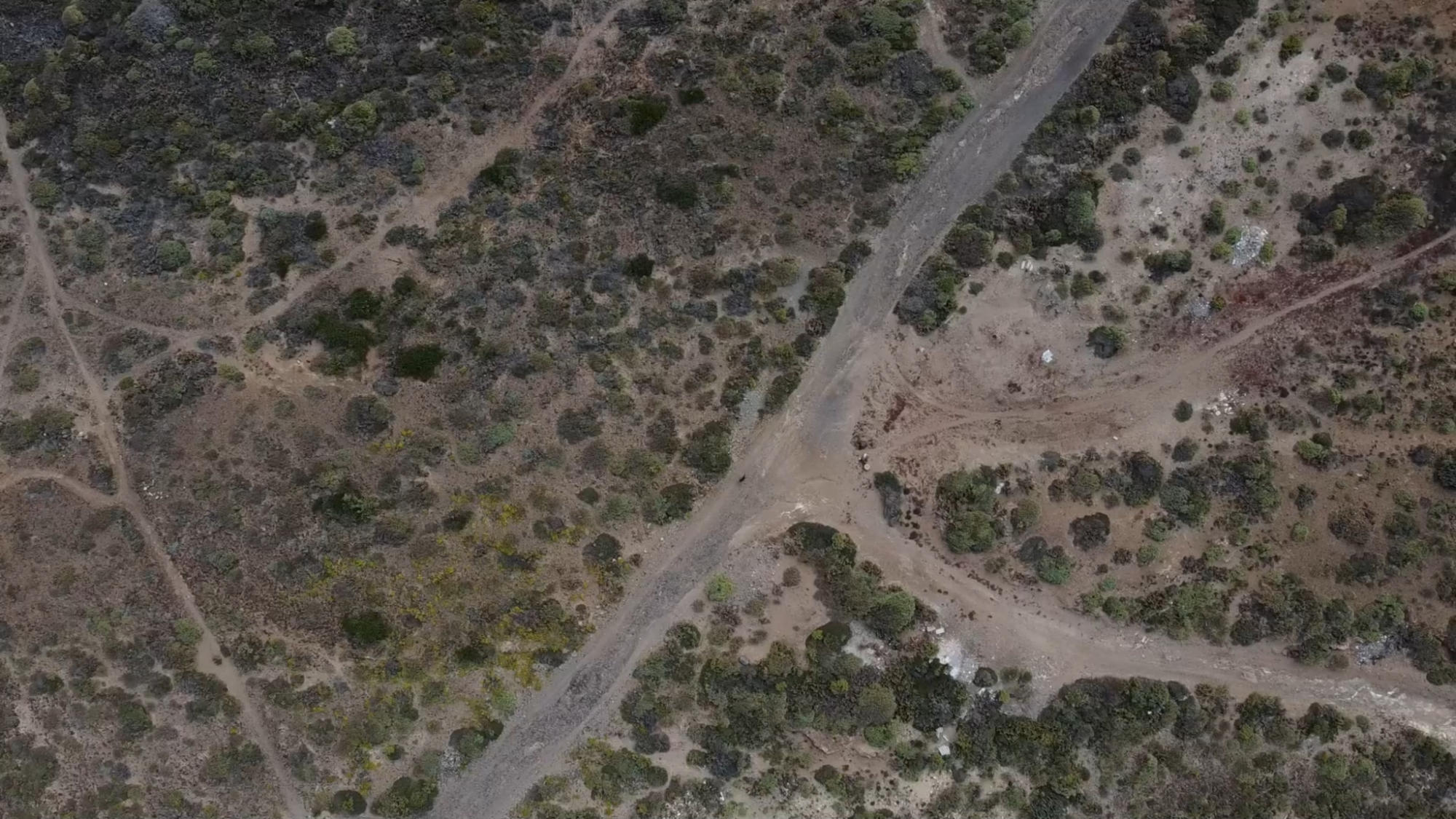
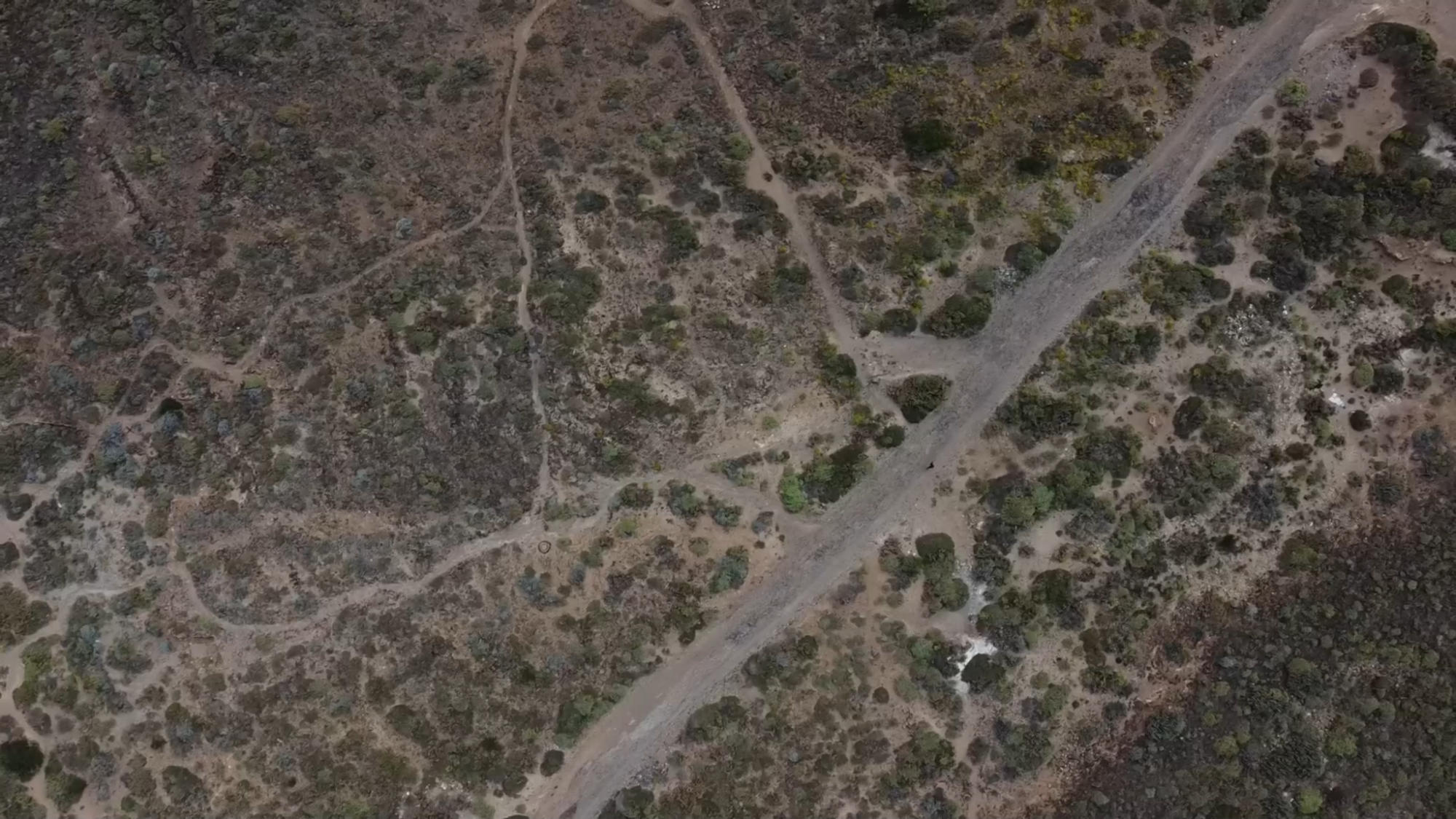
Alter Ego (1986) inhabits precisely this tension between absolute visibility and that which remains irreducible to representation. The work takes the form of a video recorded from the singular, overhead gaze of a drone that follows the artist’s sister—her body doubled into an alter ego—through disused streets and old rural paths that many women would hesitate to walk alone. The choice of the drone is significant insofar as it adopts the contemporary apparatus par excellence of cartography and surveillance. Its aerial gaze promises complete transparency, as though the landscape could be fully revealed from a single point of view. Yet the more exhaustive this vision becomes, the more evident its inability to grasp what truly constitutes the territory. The camera records paths, cultivated fields, architectural structures, and physical boundaries, while remaining blind to the density of memories, affects, and unspoken prohibitions that continue to sustain those same places.
Within the context of an outermost territory such as Isla Baja (Los Silos, Tenerife, Canary Islands), this question acquires particular resonance. The history of the agricultural landscape is most often narrated through the lenses of economy, property, or production, while the ways in which it has been inhabited remain largely invisible. Yet among greenhouses, irrigation ponds, storage buildings, and abandoned paths, another geography persists: one shaped by everyday movements, care, fear, alliances, and shared memories. It is a legacy preserved not in monuments, but in the continuity of routes that endure even after they have ceased to be travelled.
Perhaps the work’s greatest critical gesture lies in its displacement of the very notion of legacy. Rather than understanding inheritance as material heritage or historical narrative, Alter Ego (1986) proposes inheritance as a spatial transmission. We inherit ways of moving, orienting ourselves, and perceiving territory; we also inherit the silences that accompany those practices. What passes from one generation to the next is not merely a memory of the past, but a way of inhabiting the present.
Within this silent persistence resides a geography that cannot be mapped from above, because it exists only where a body returns to walk the path
LUCIA DORTA ABAD (Los Silos, Tenerife, 1998) investigates mediation and curatorial practice as sites from which to explore imaginaries of otherness. She holds a BFA in Fine Arts from the University of La Laguna. Together with Maï Diallo, she develops collaborative artistic projects, and they jointly coordinated the public programme Rethinking from the Edge (2021–2023) at TEA Tenerife Espacio de las Artes (Santa Cruz de Tenerife). At the same institution, she co-coordinated Onda Corta (2022–2023) with MLaura Benavente, as well as PLIEGUE, a queer publishing and self-publishing festival (2022–2024).
She was awarded a curatorial research residency at the Centro de Residencias of Matadero Madrid in collaboration with TEA Tenerife (2026). Together with Carla Marzán, she co-curated Paisajes del intersticio (Landscapes of the Interstice, 2023). Since 2023, she has also collaborated with Abraham Riverón in coordinating the Visual Arts Section of the Ateneo de La Laguna (San Cristóbal de La Laguna).