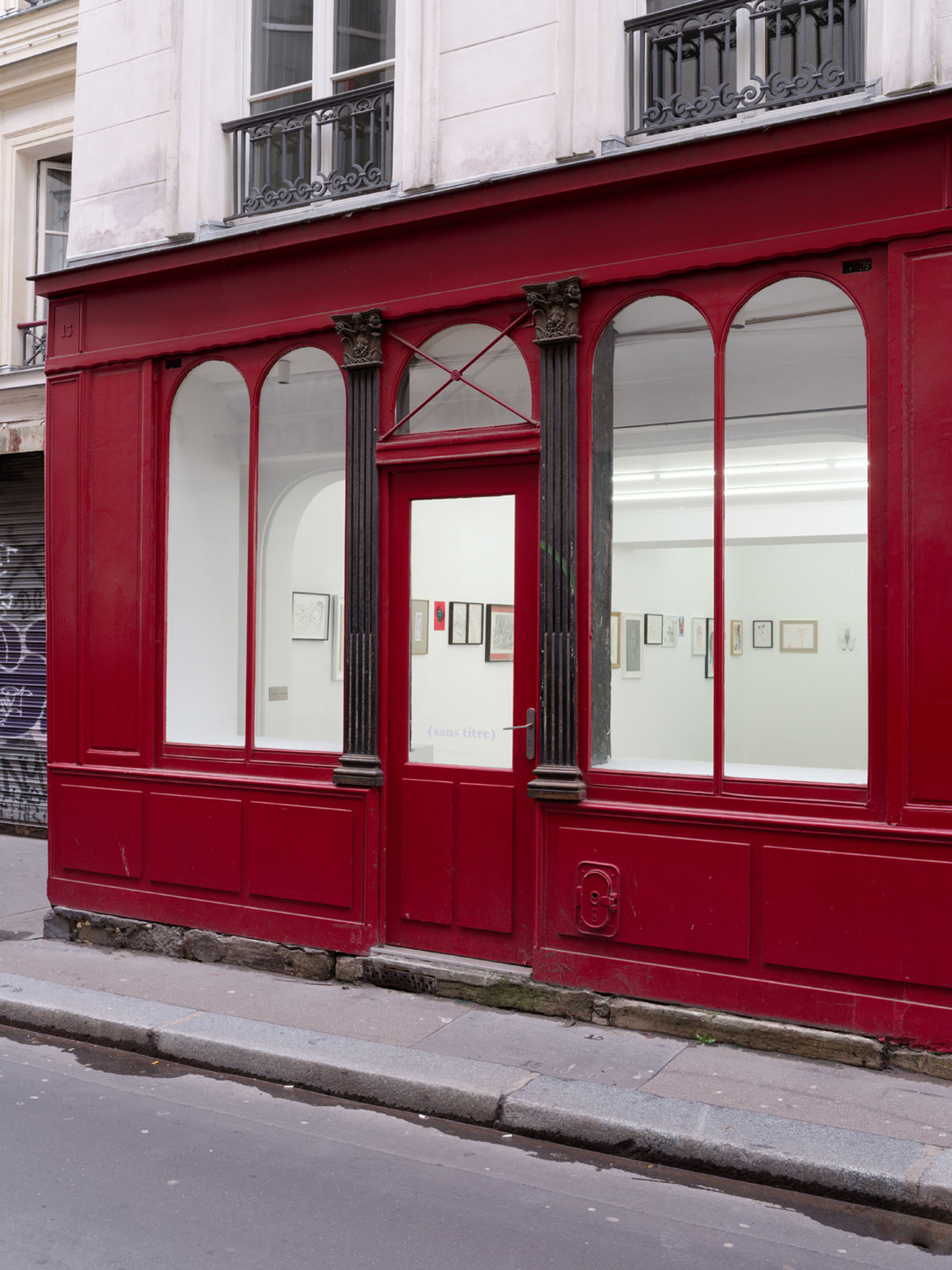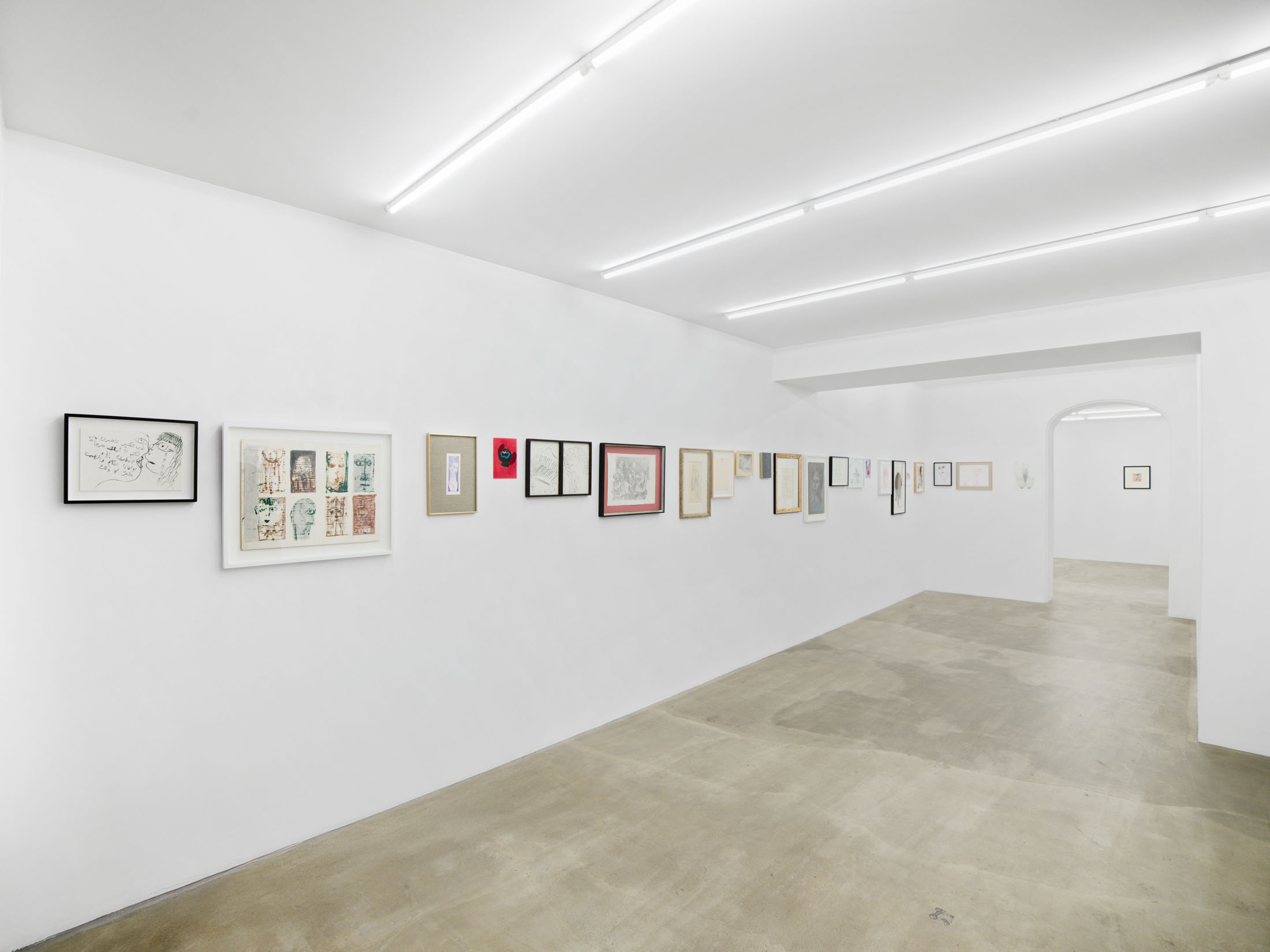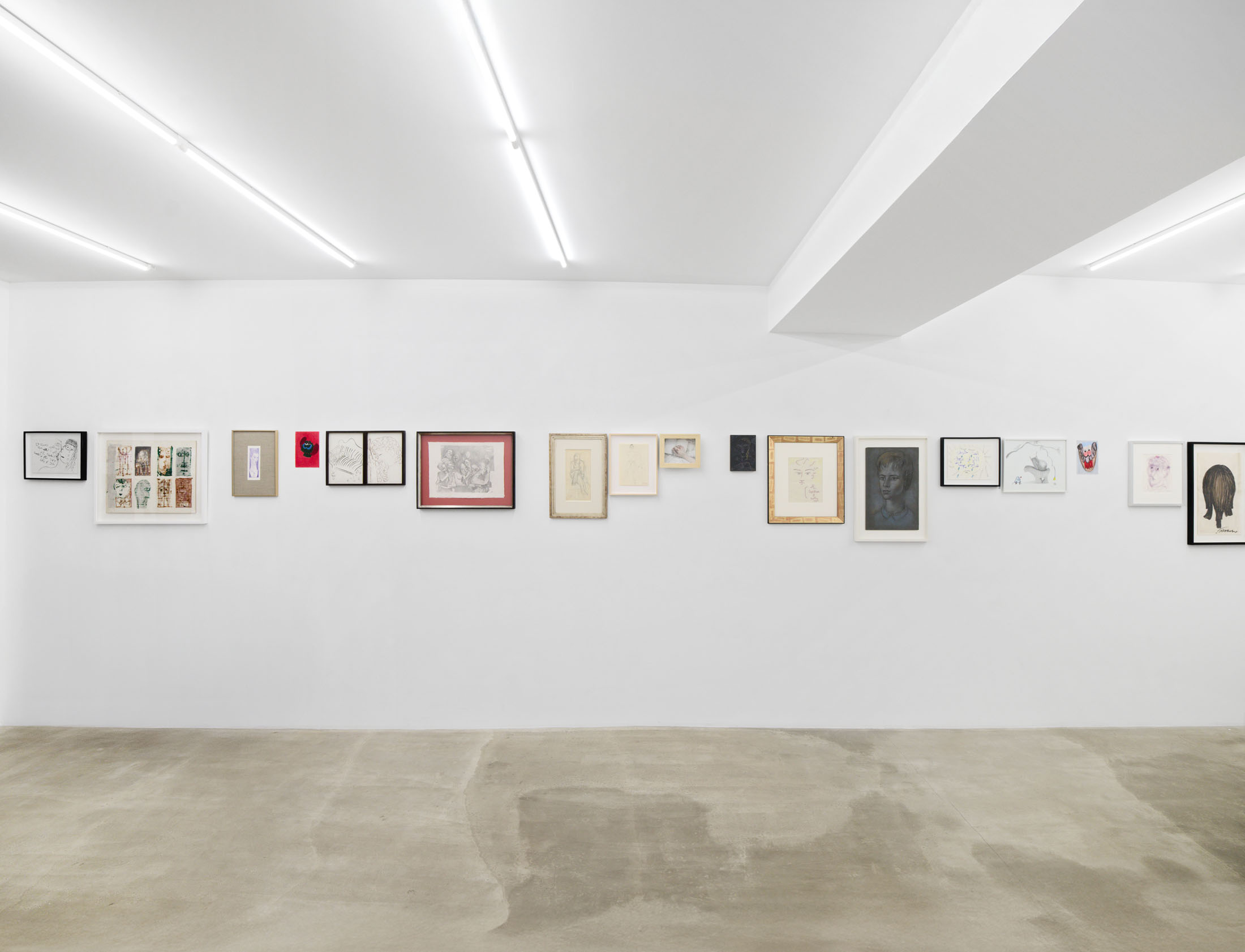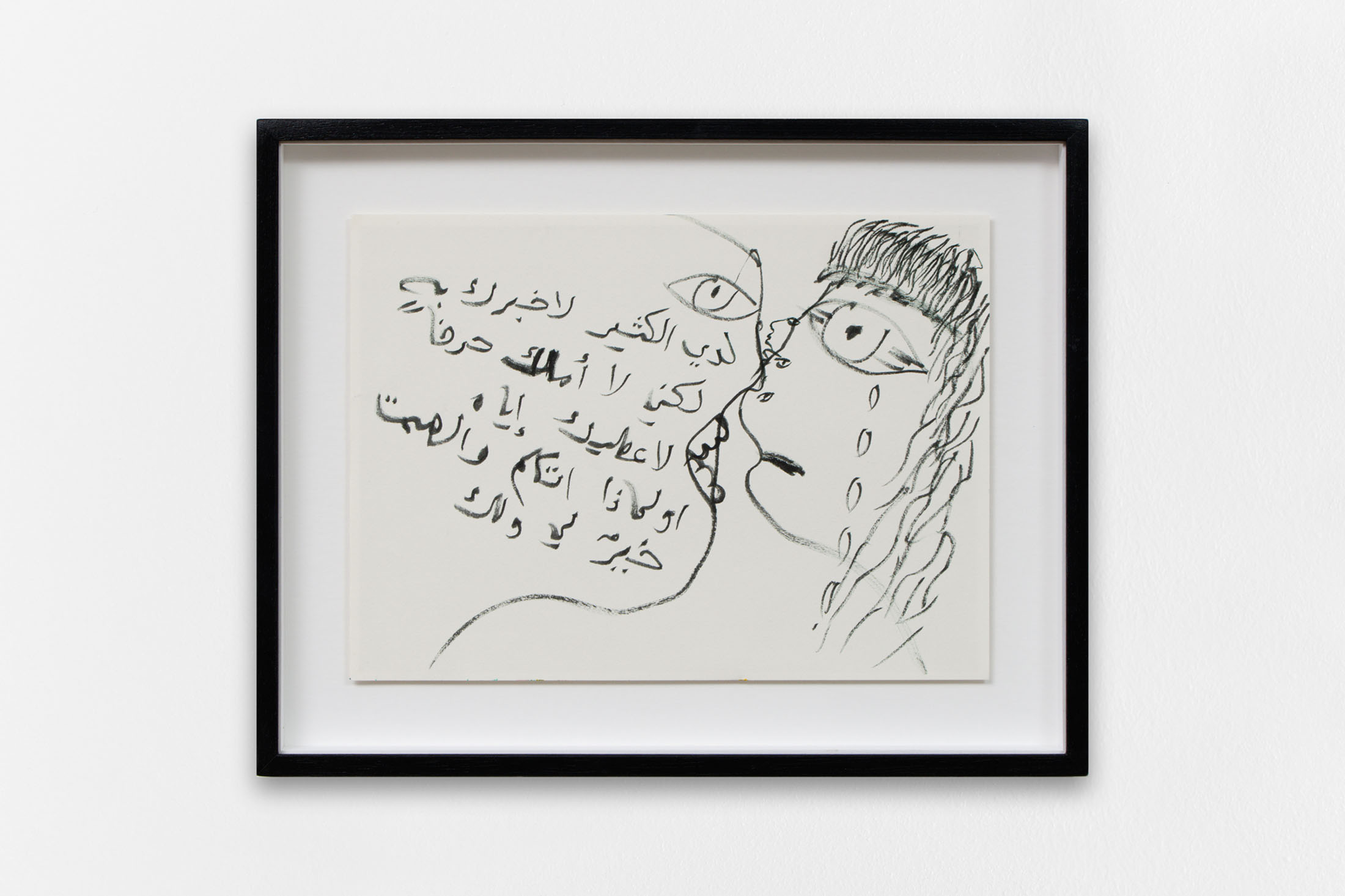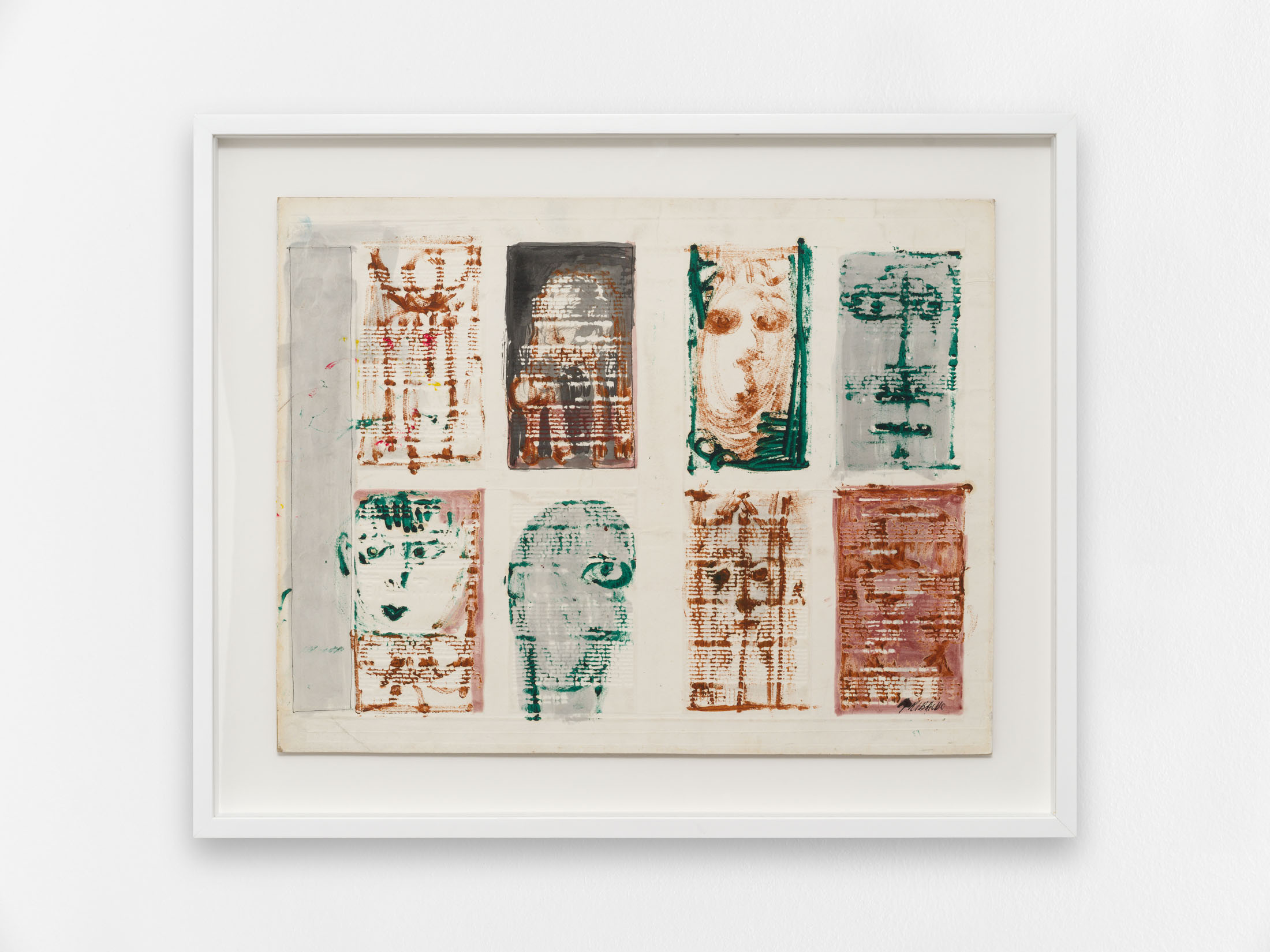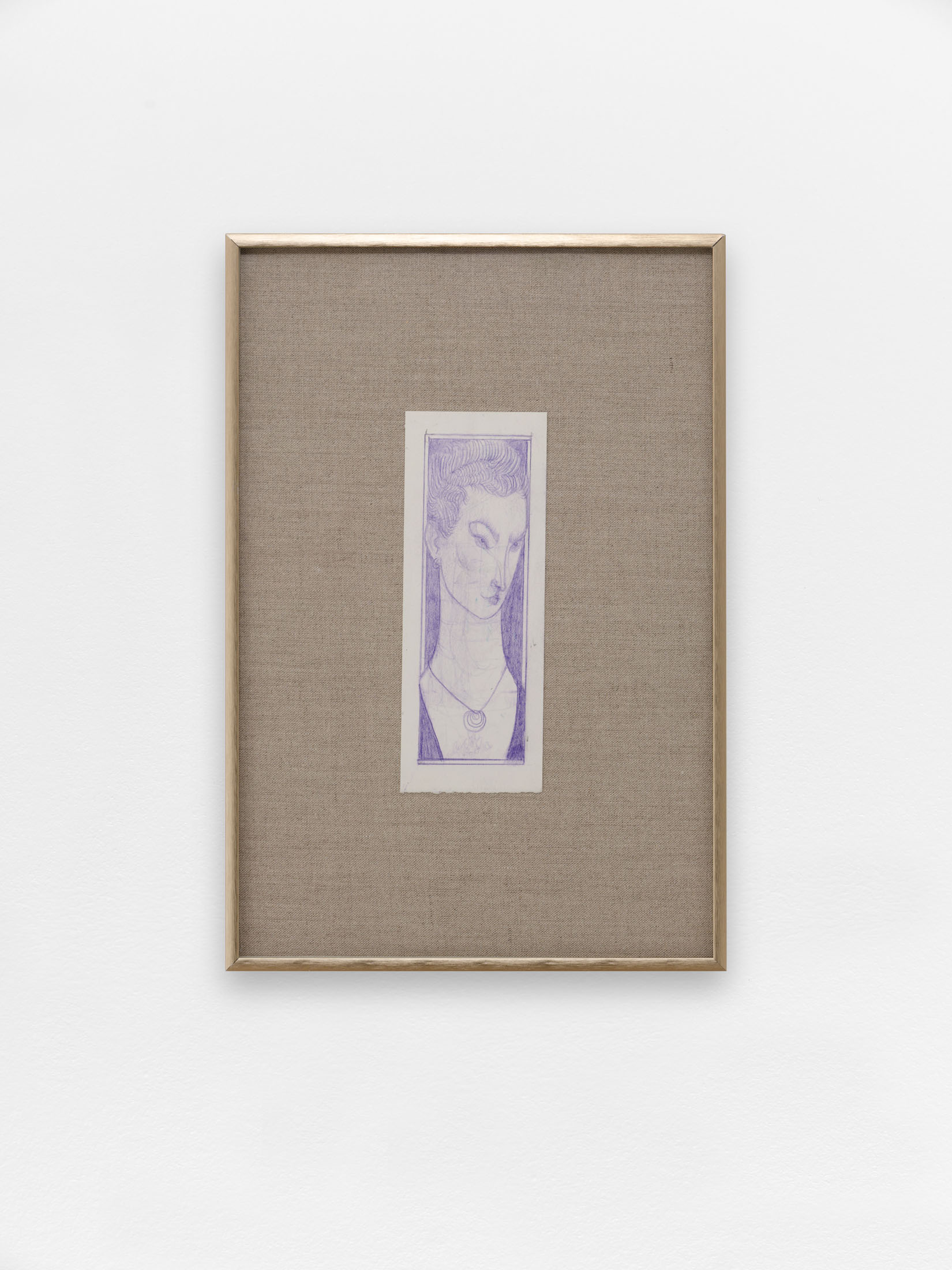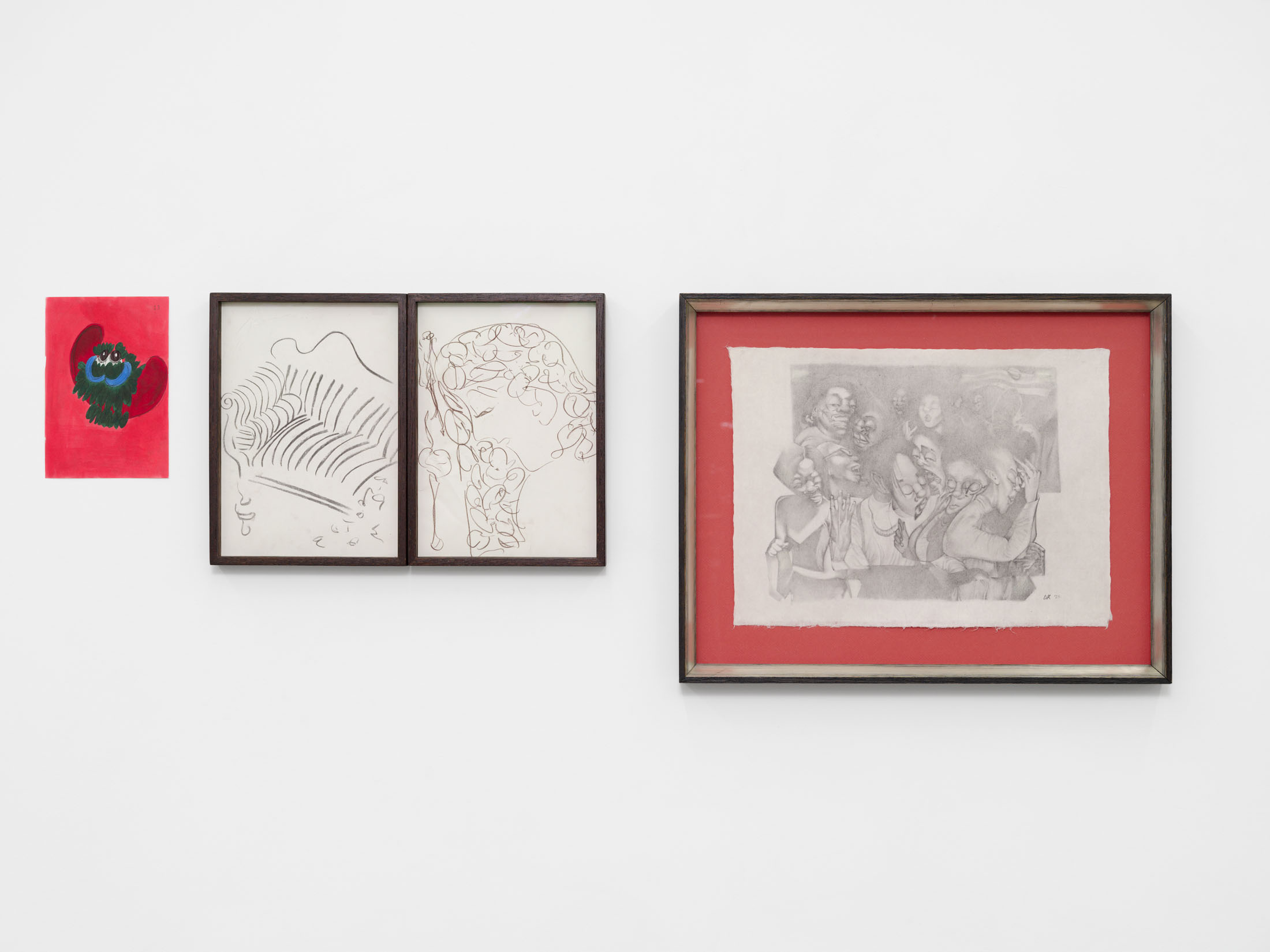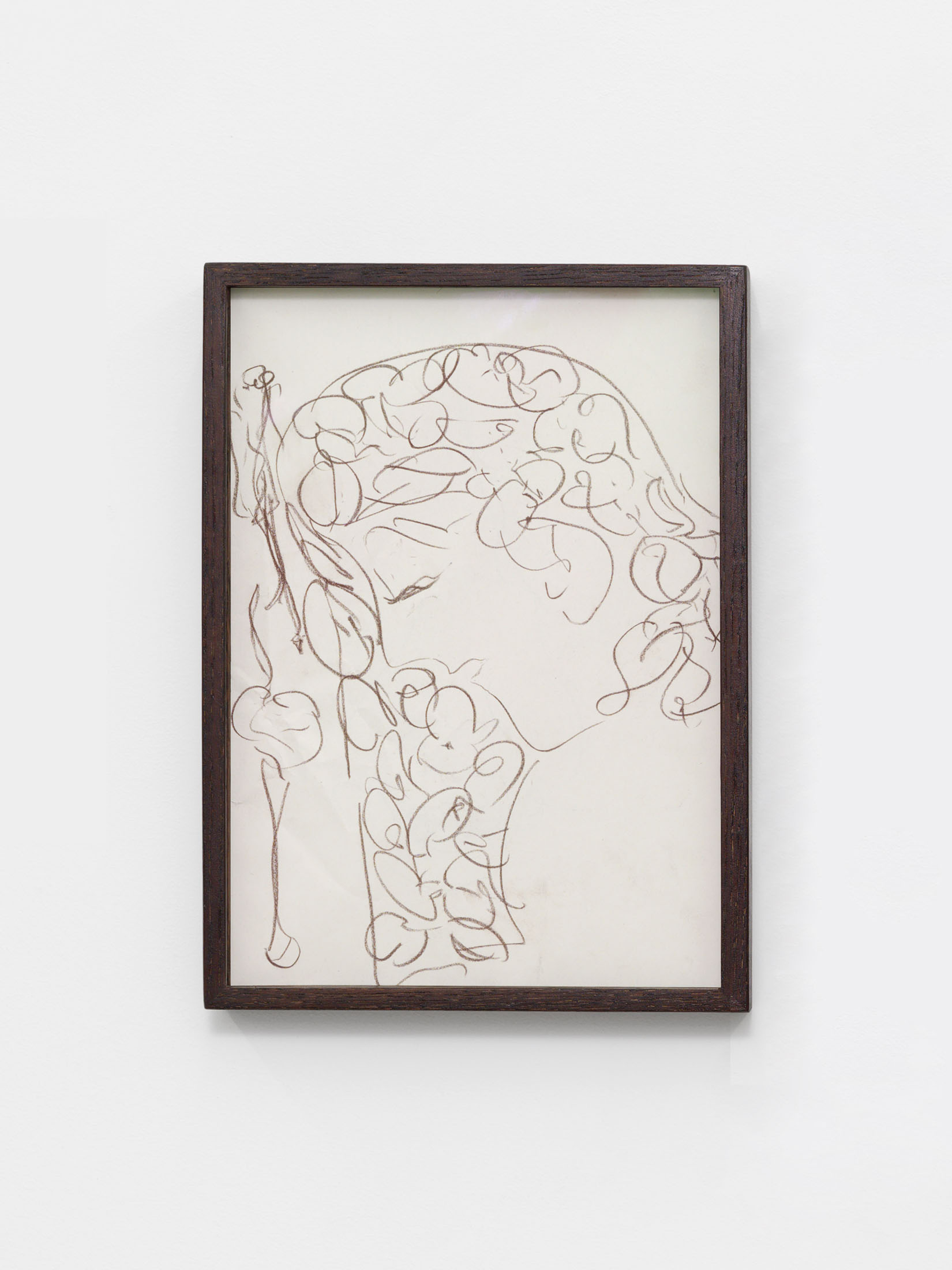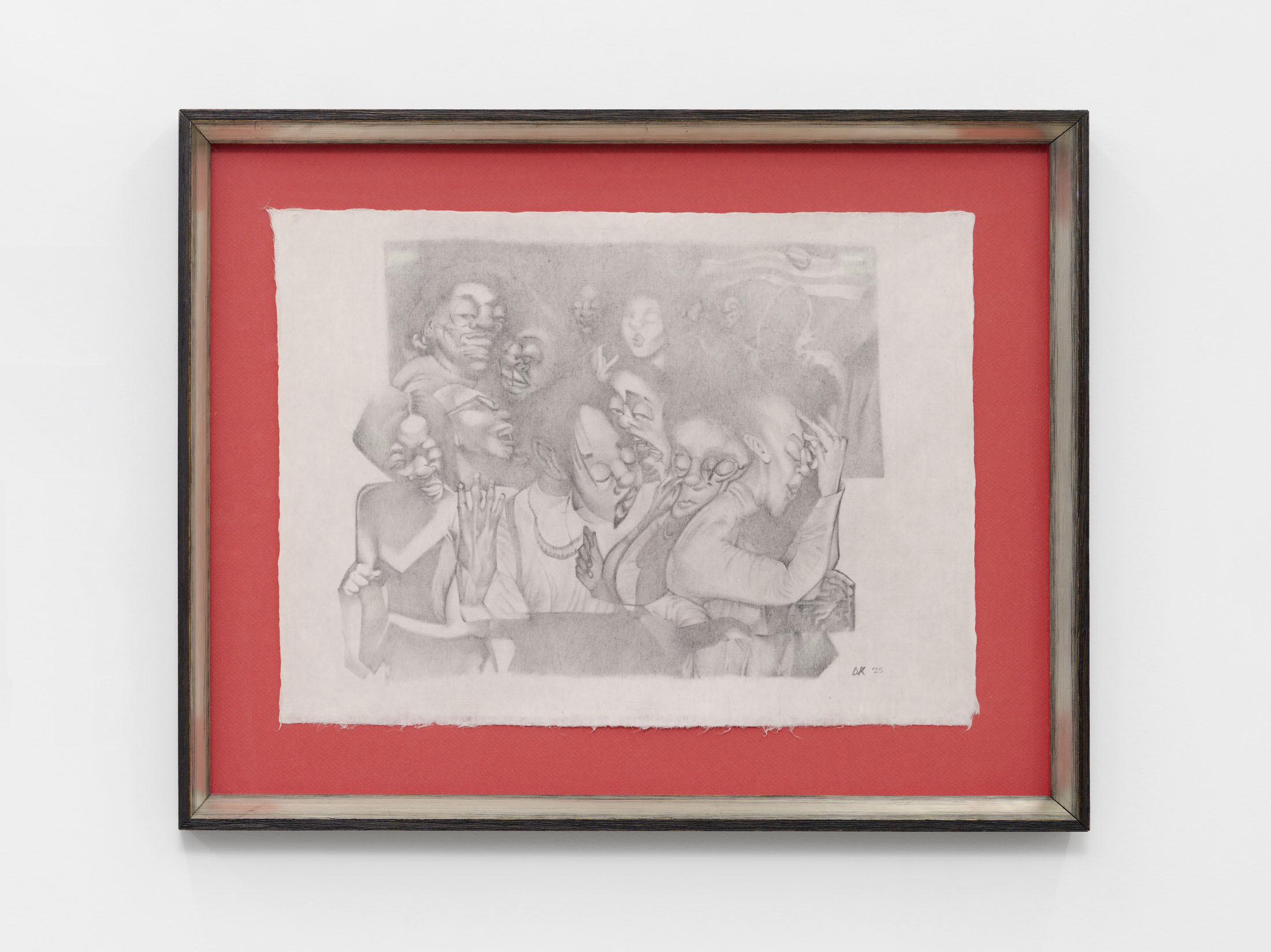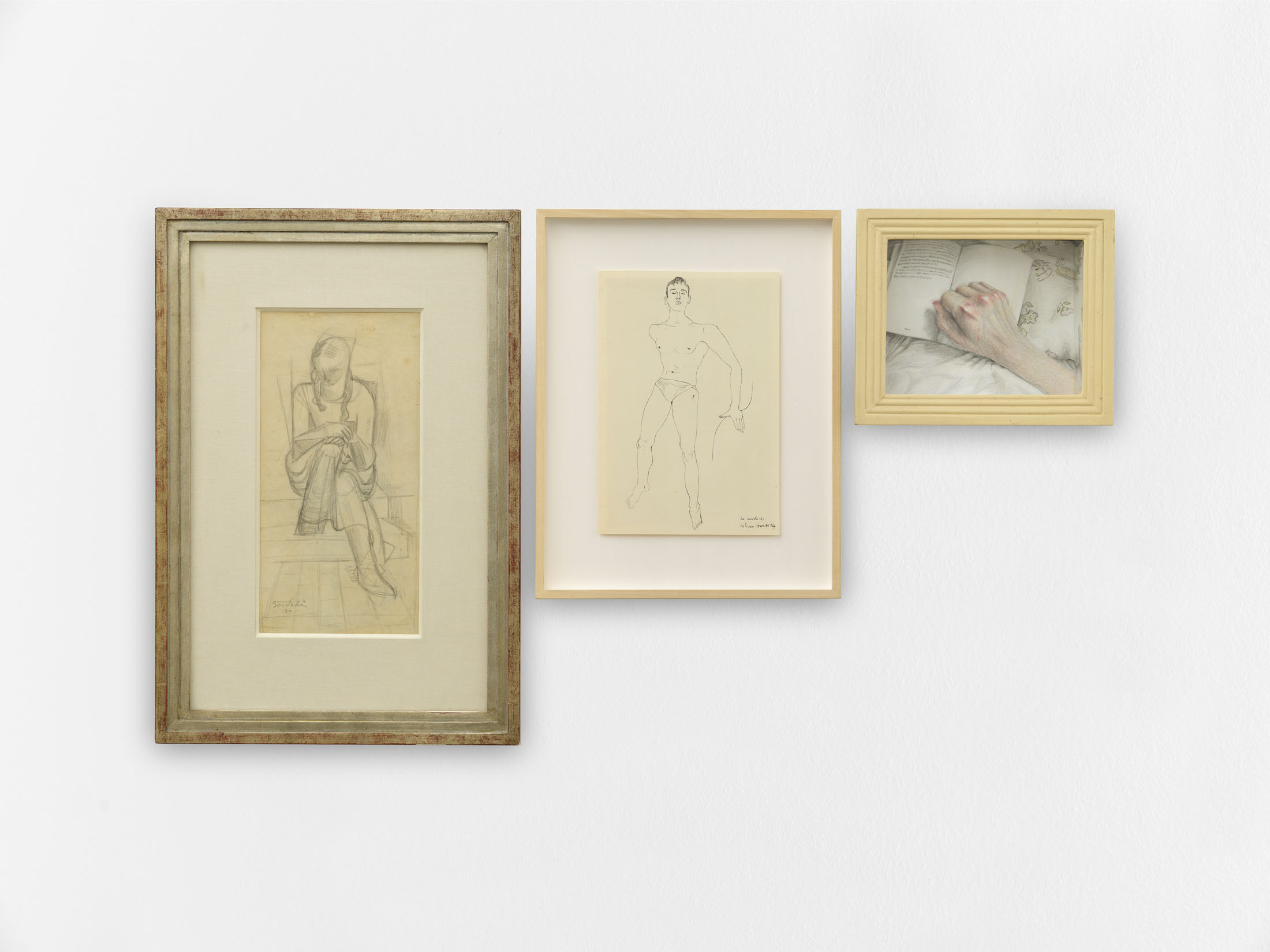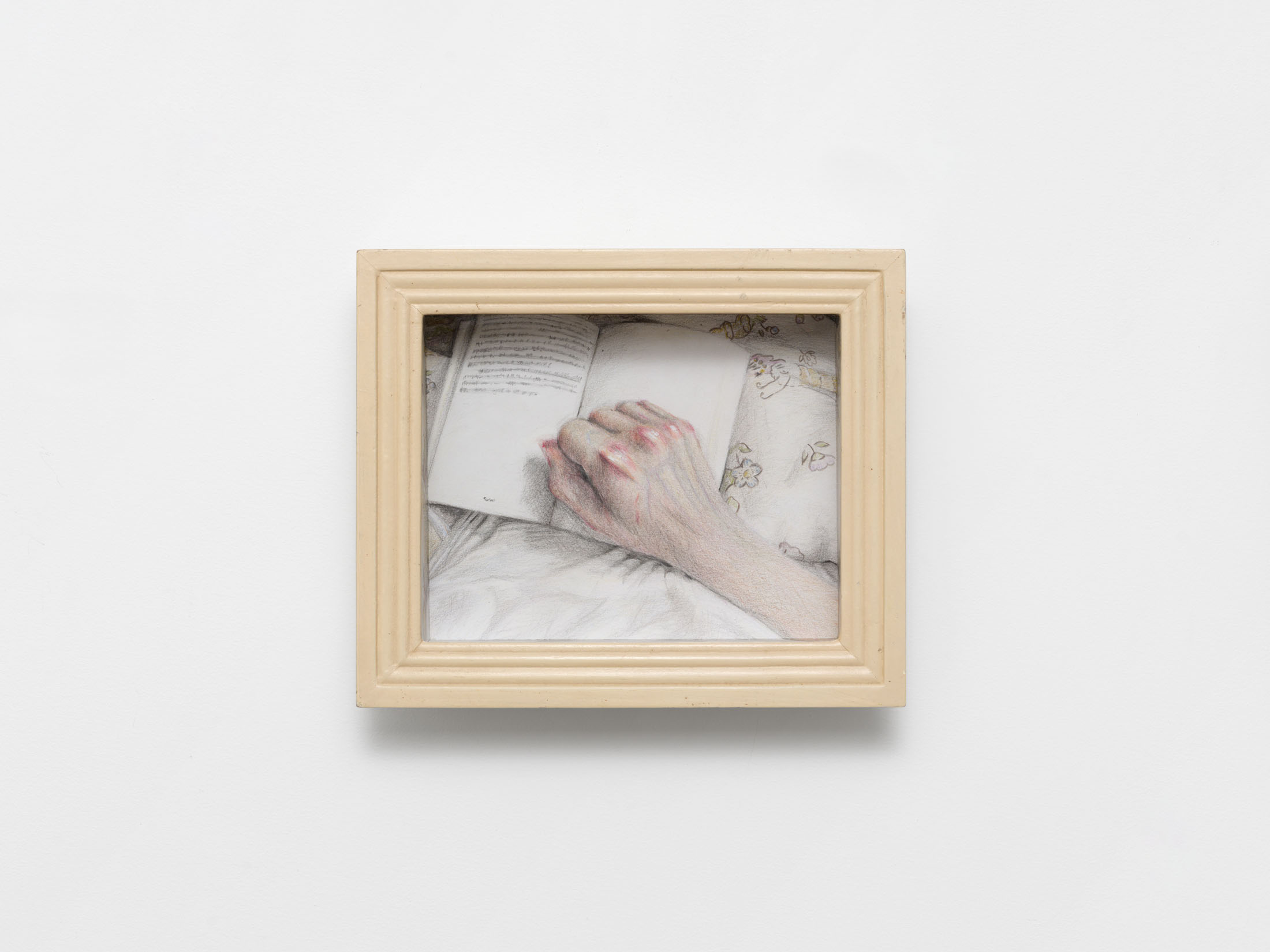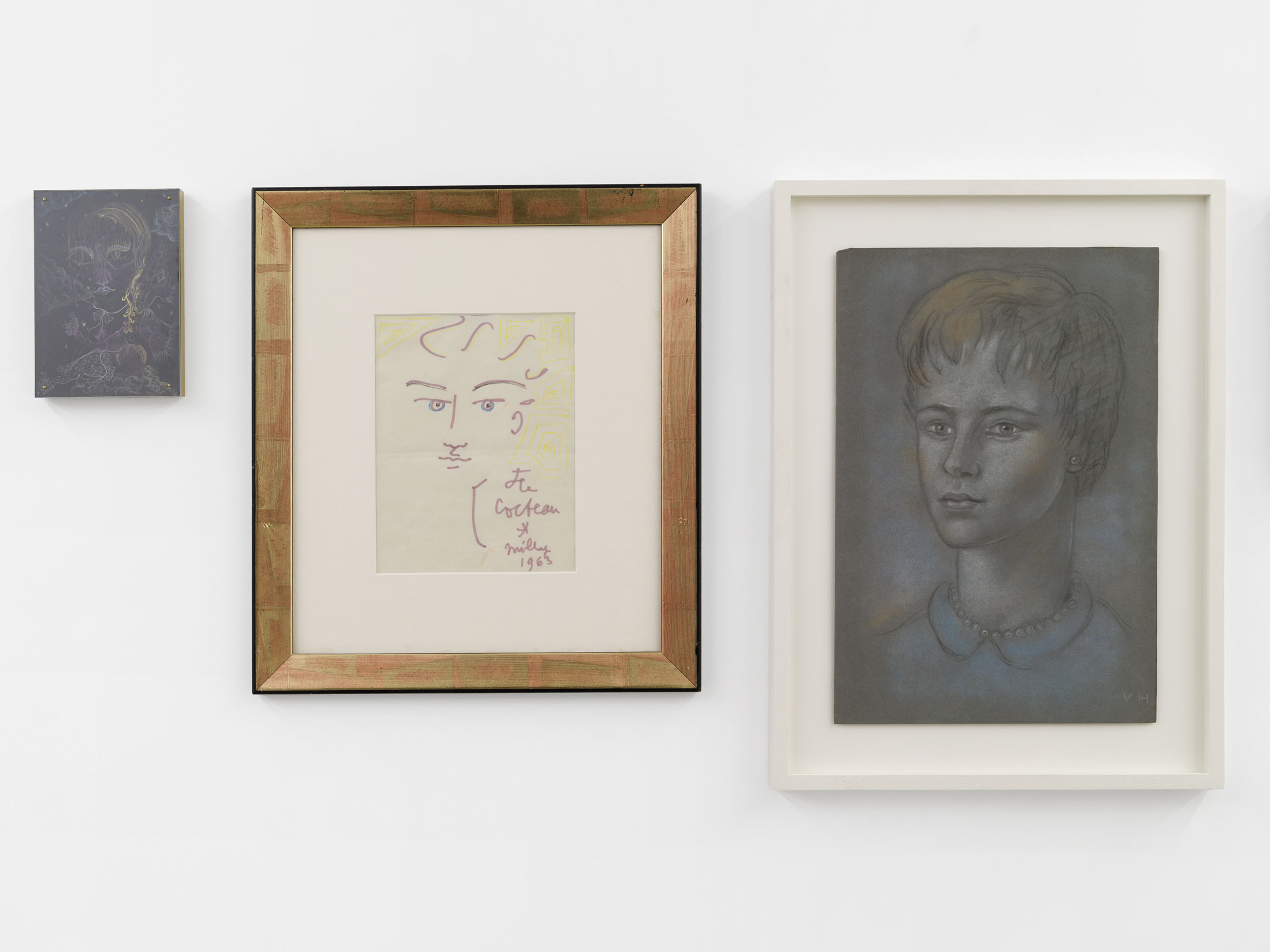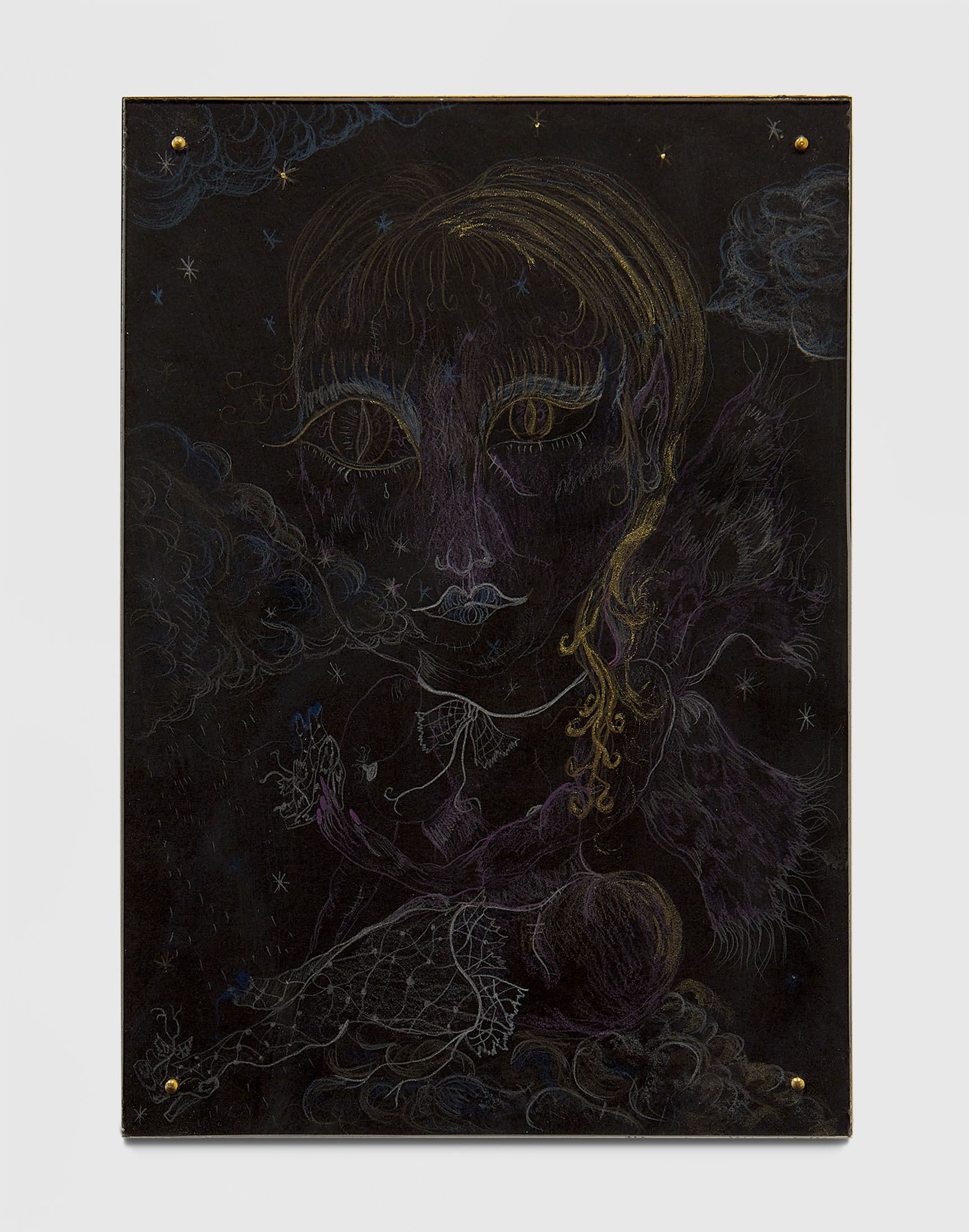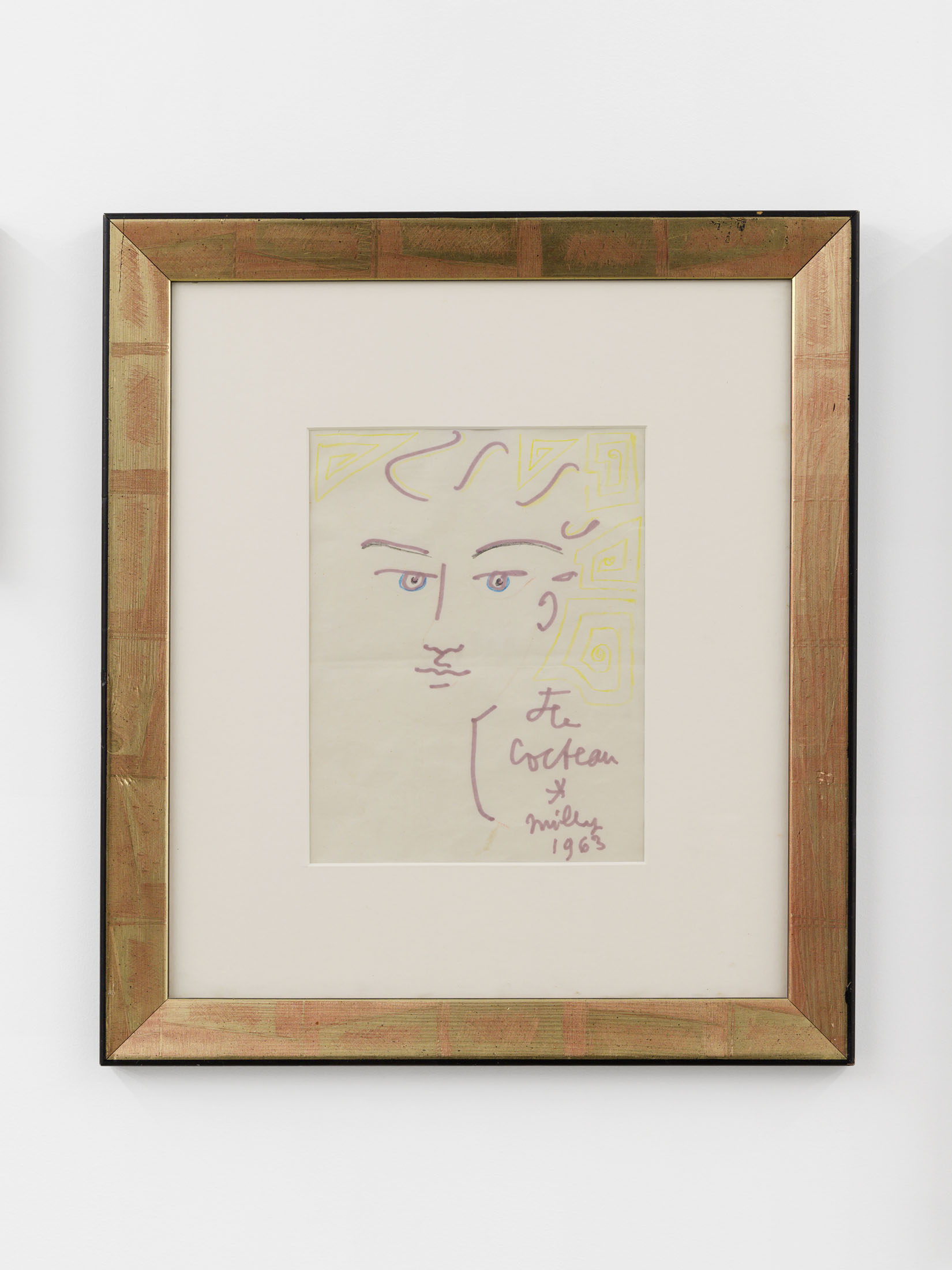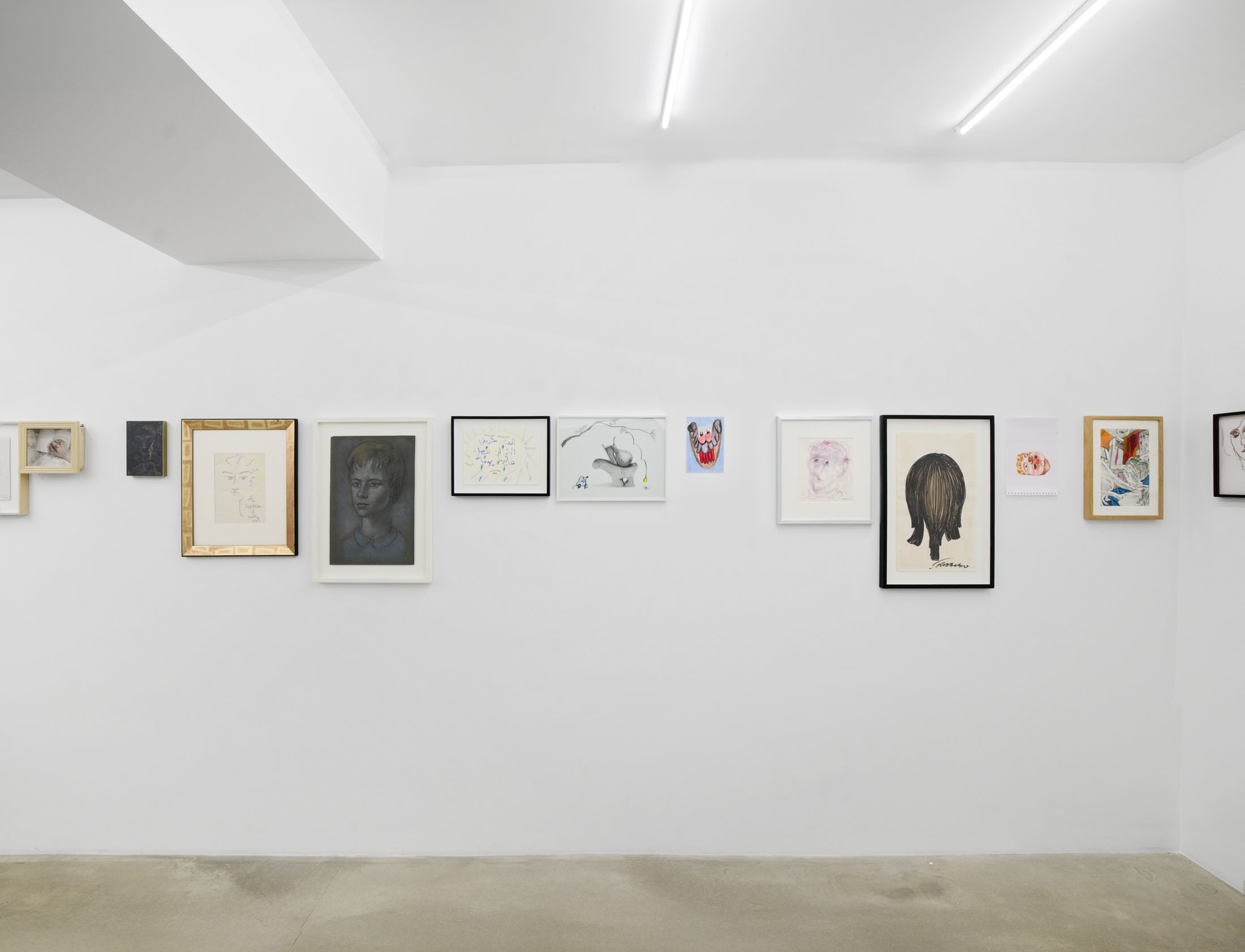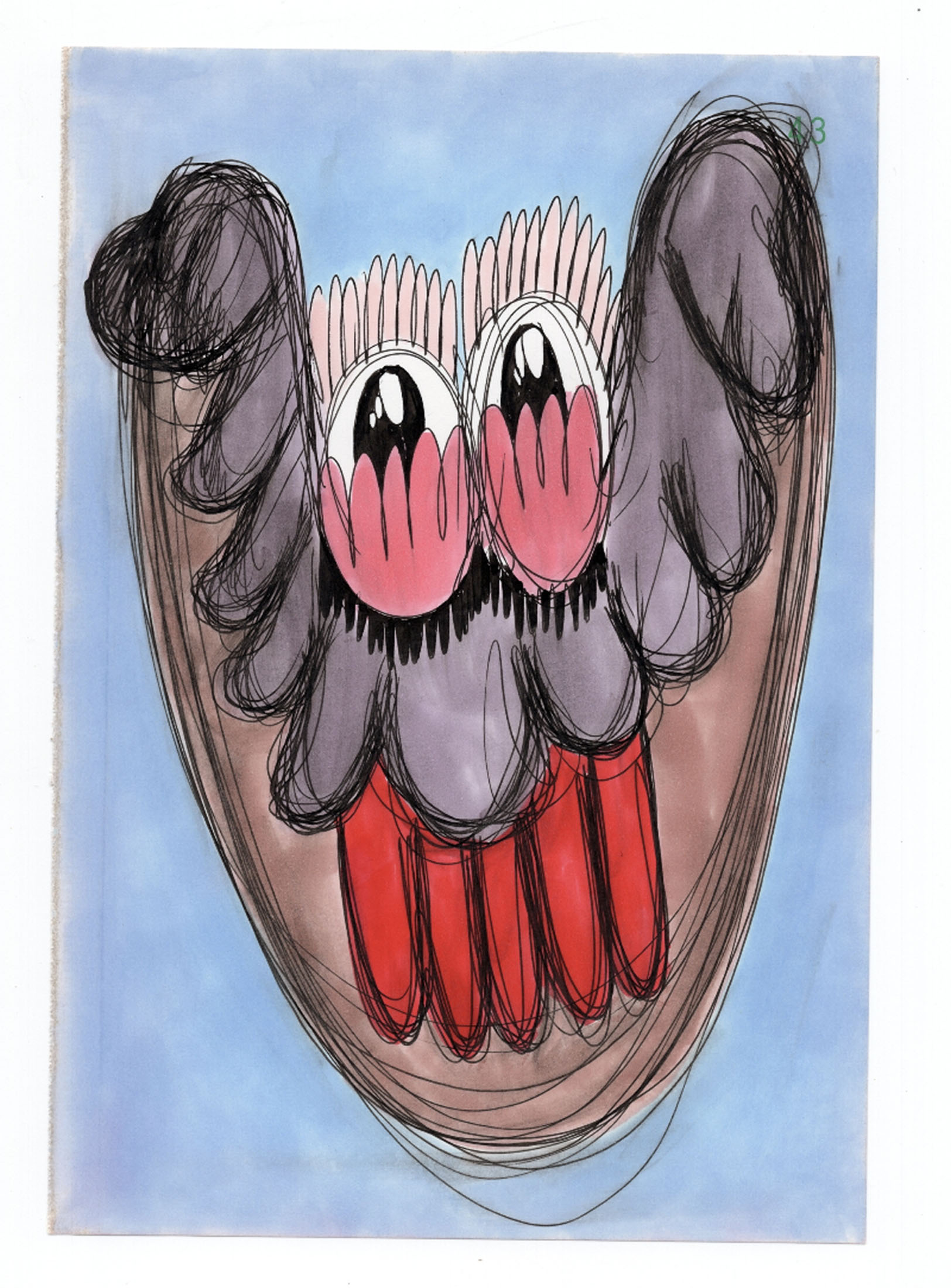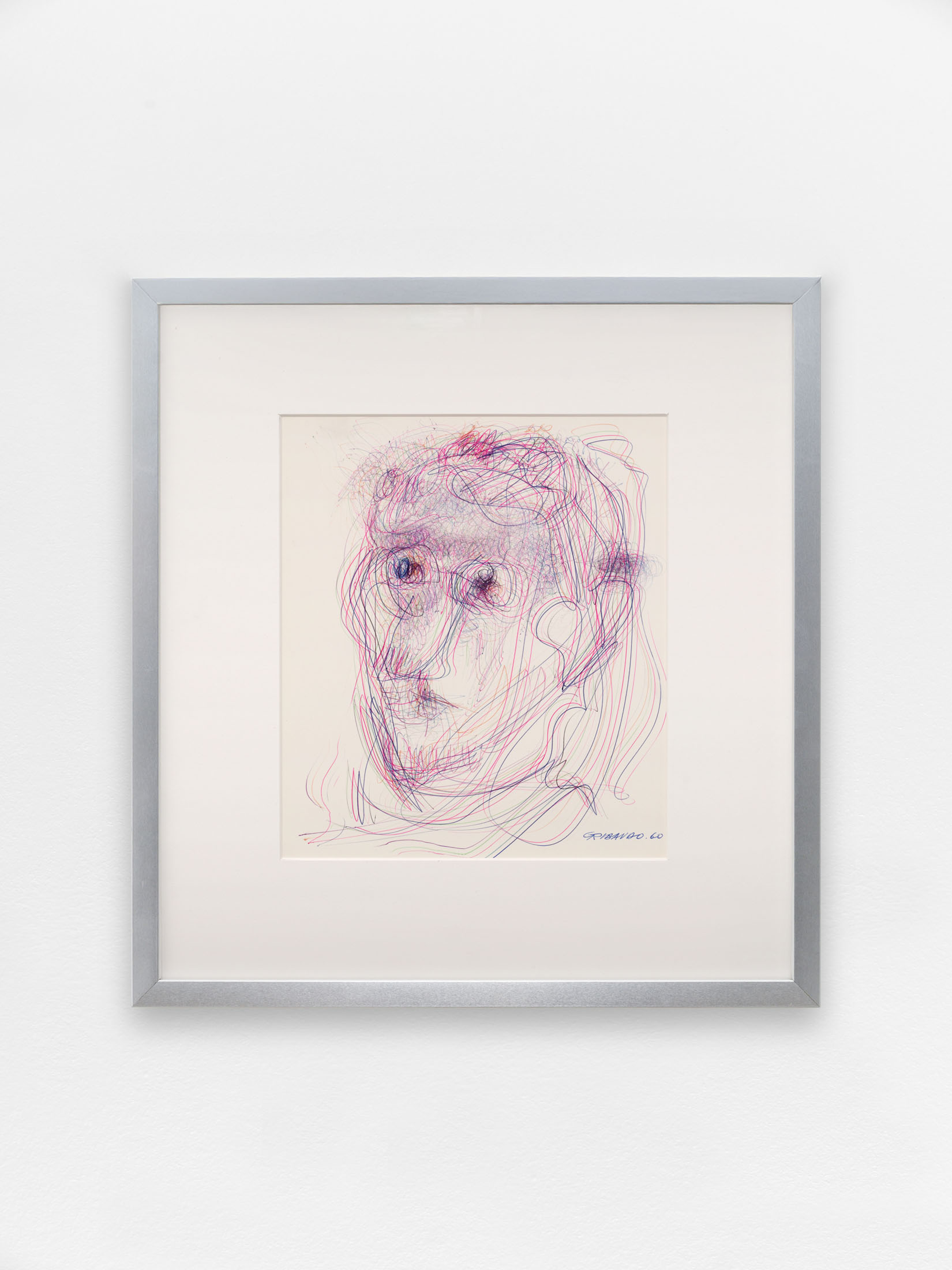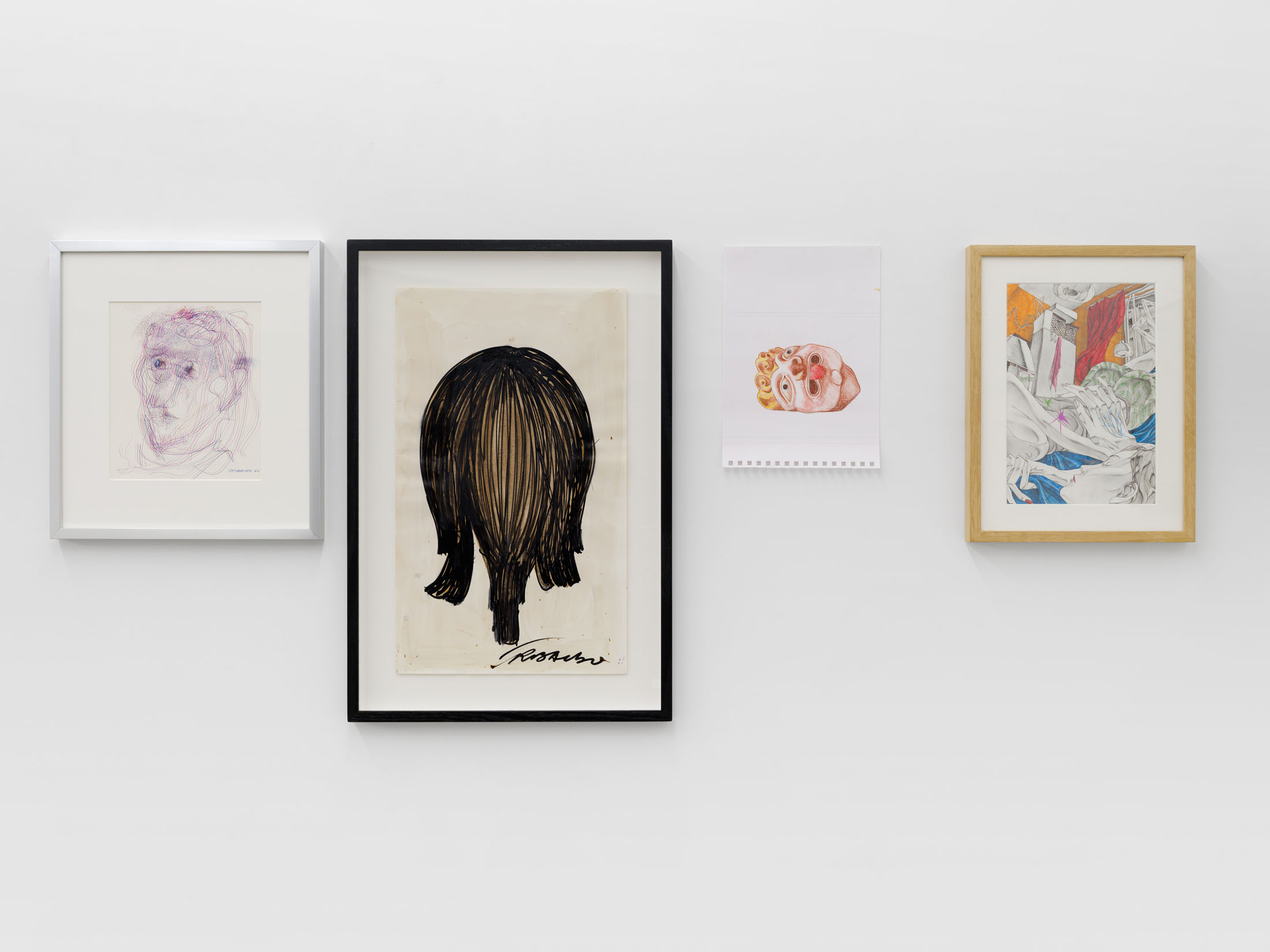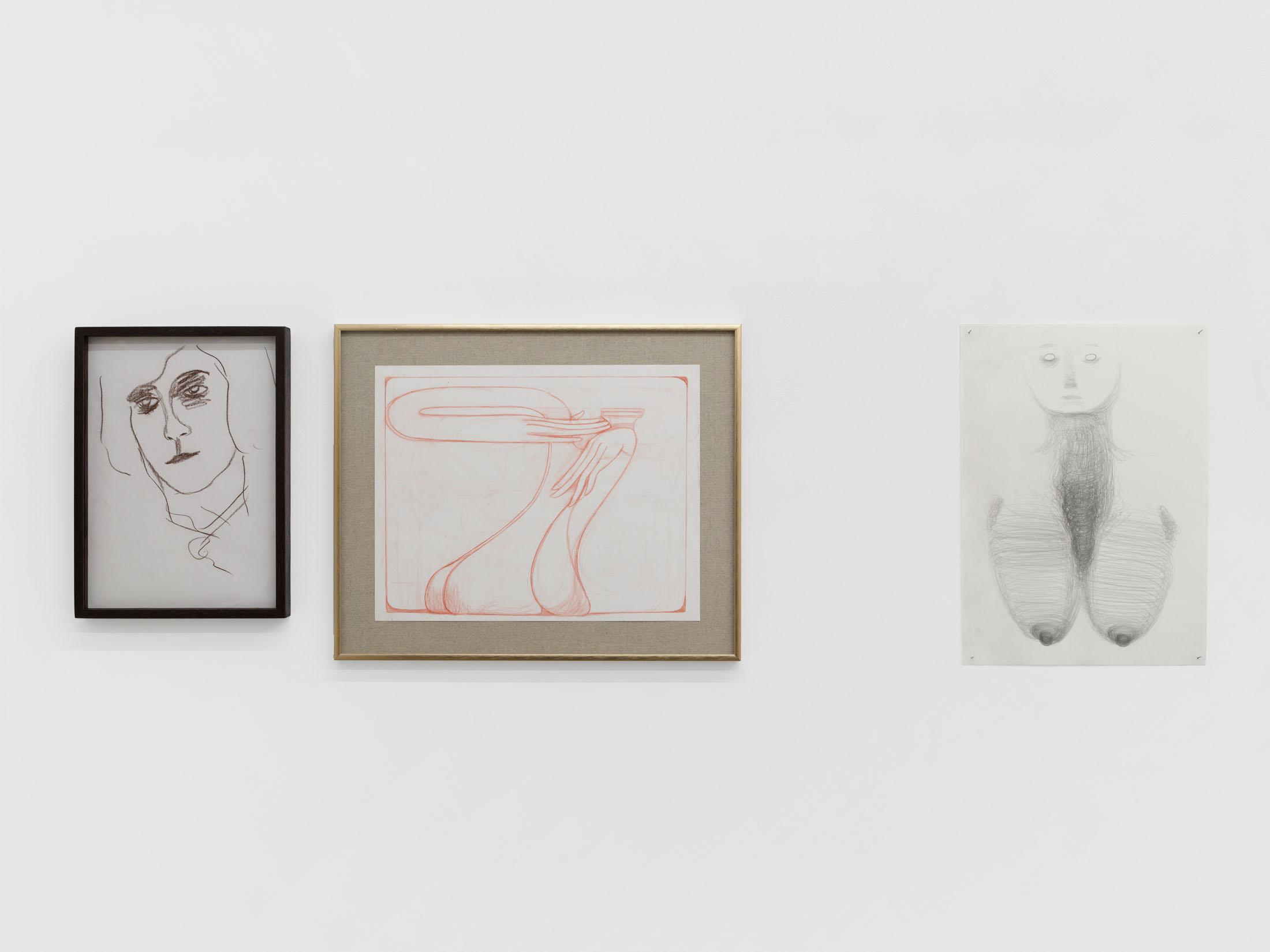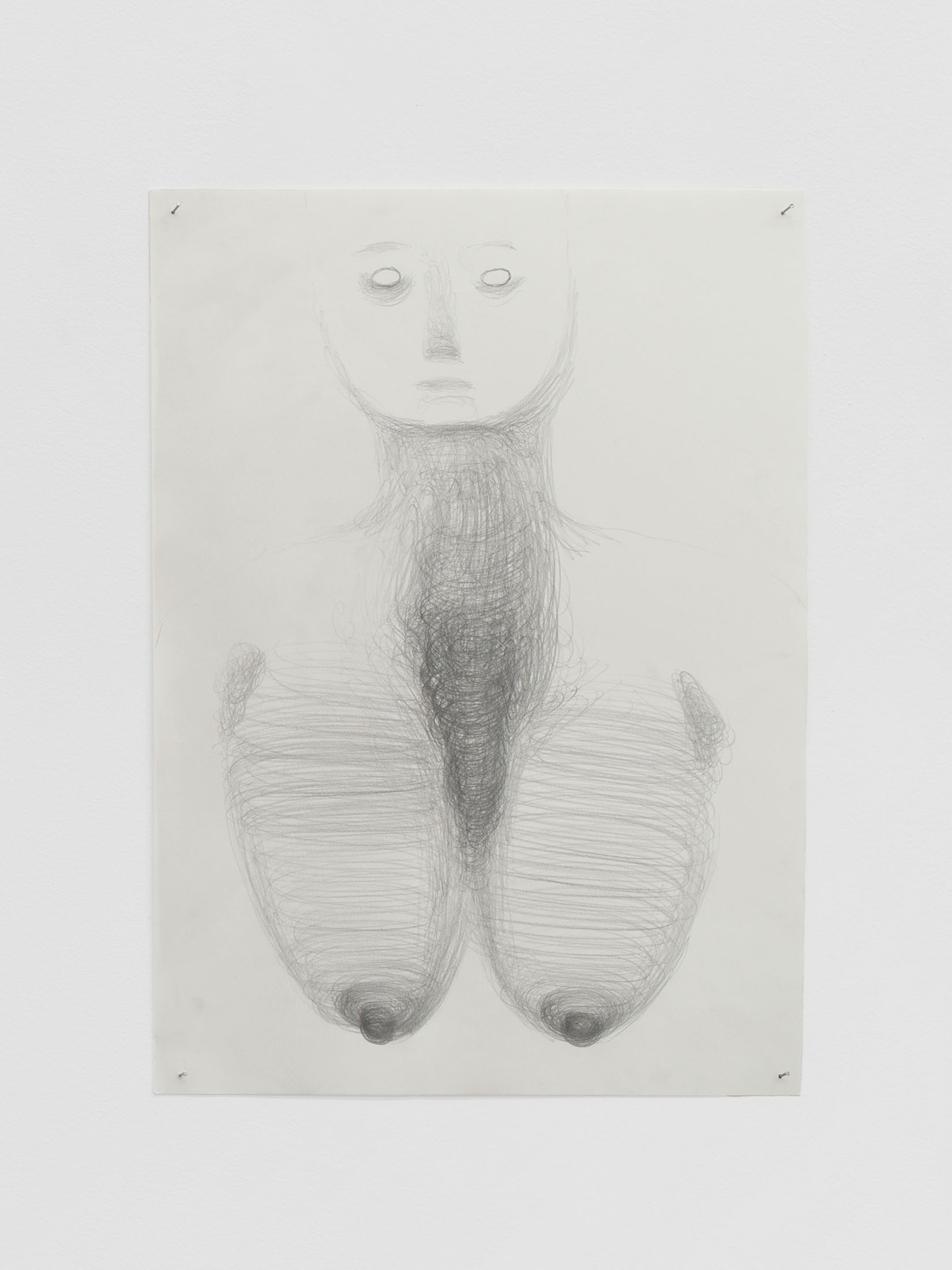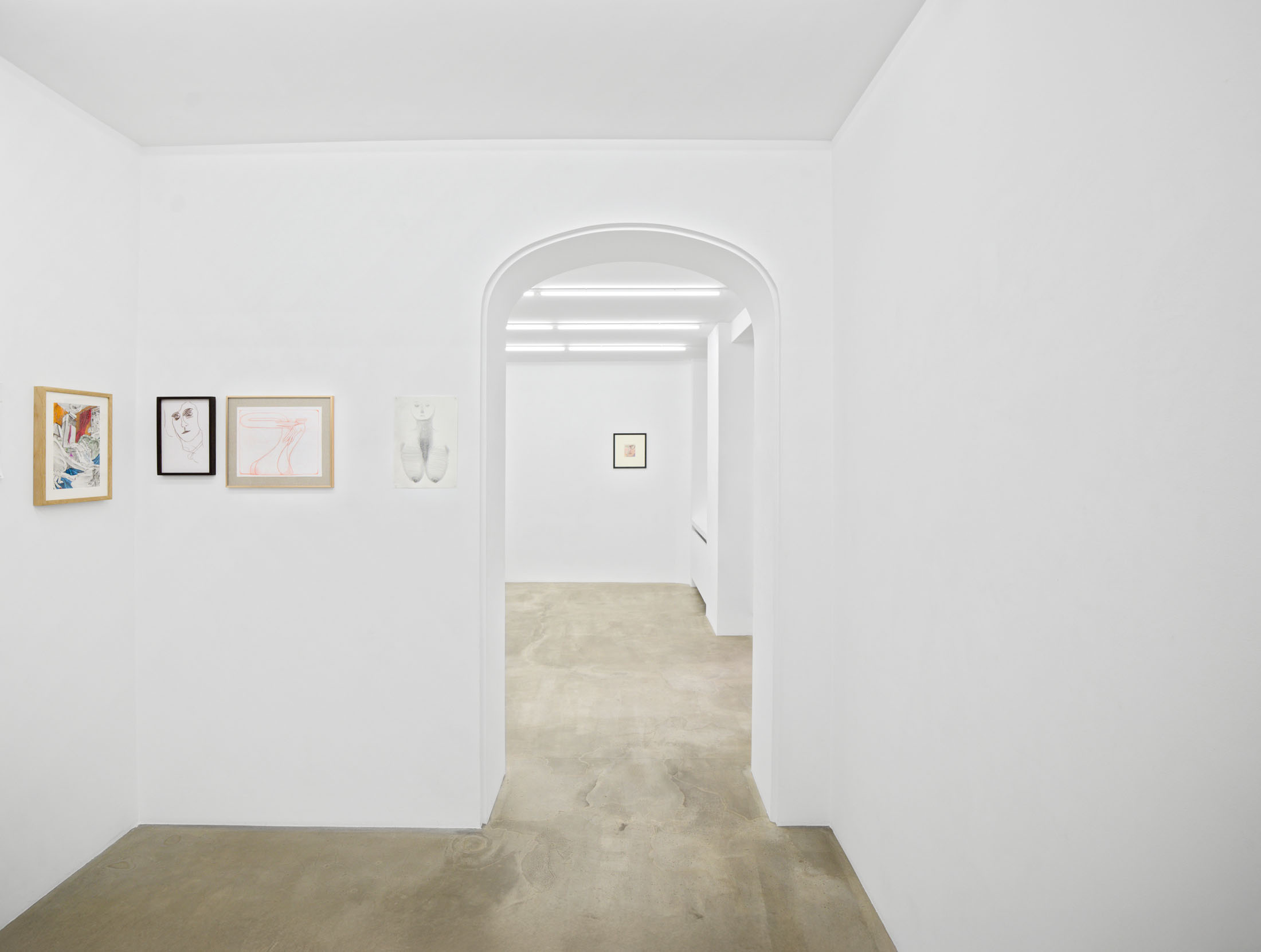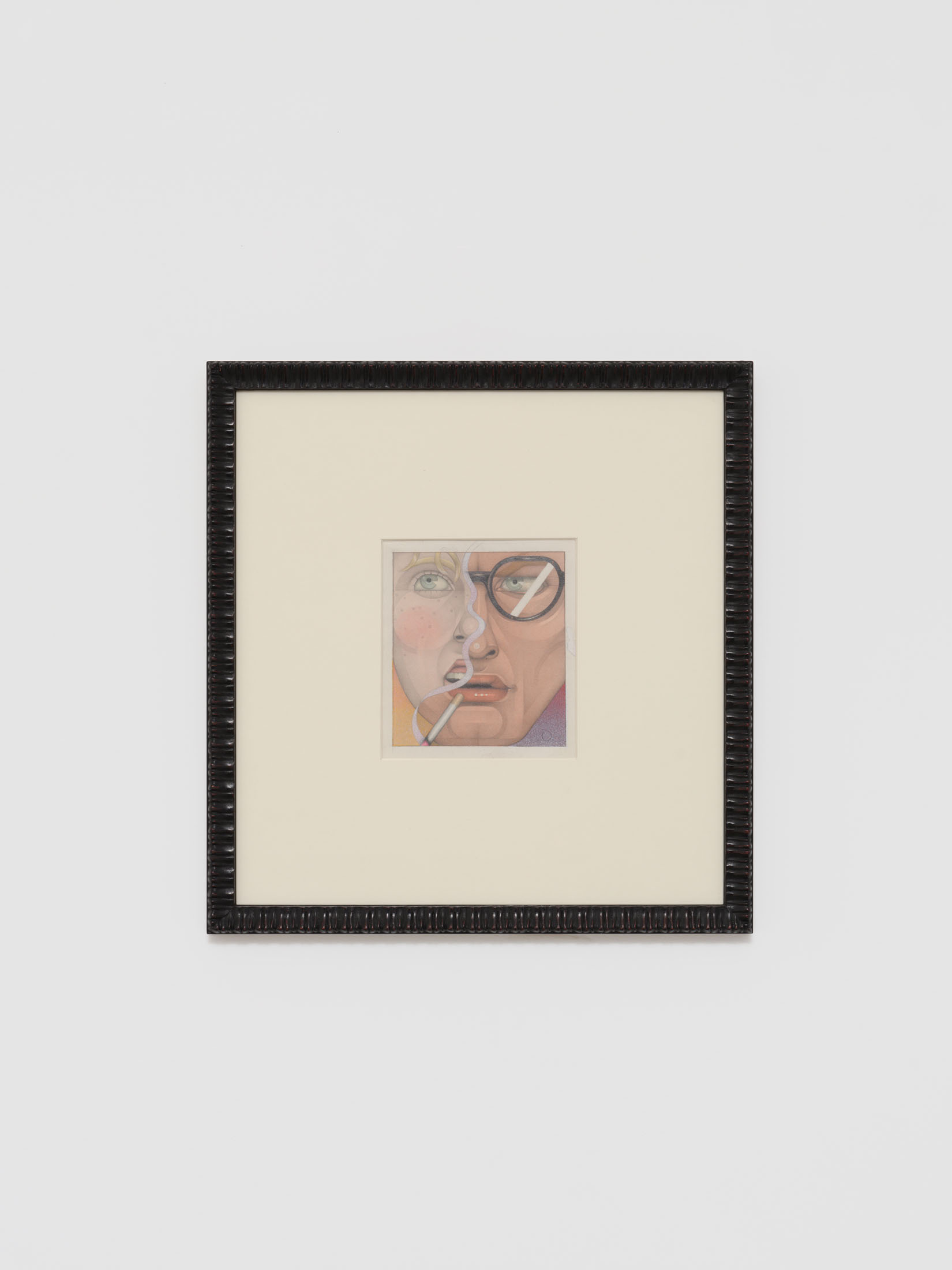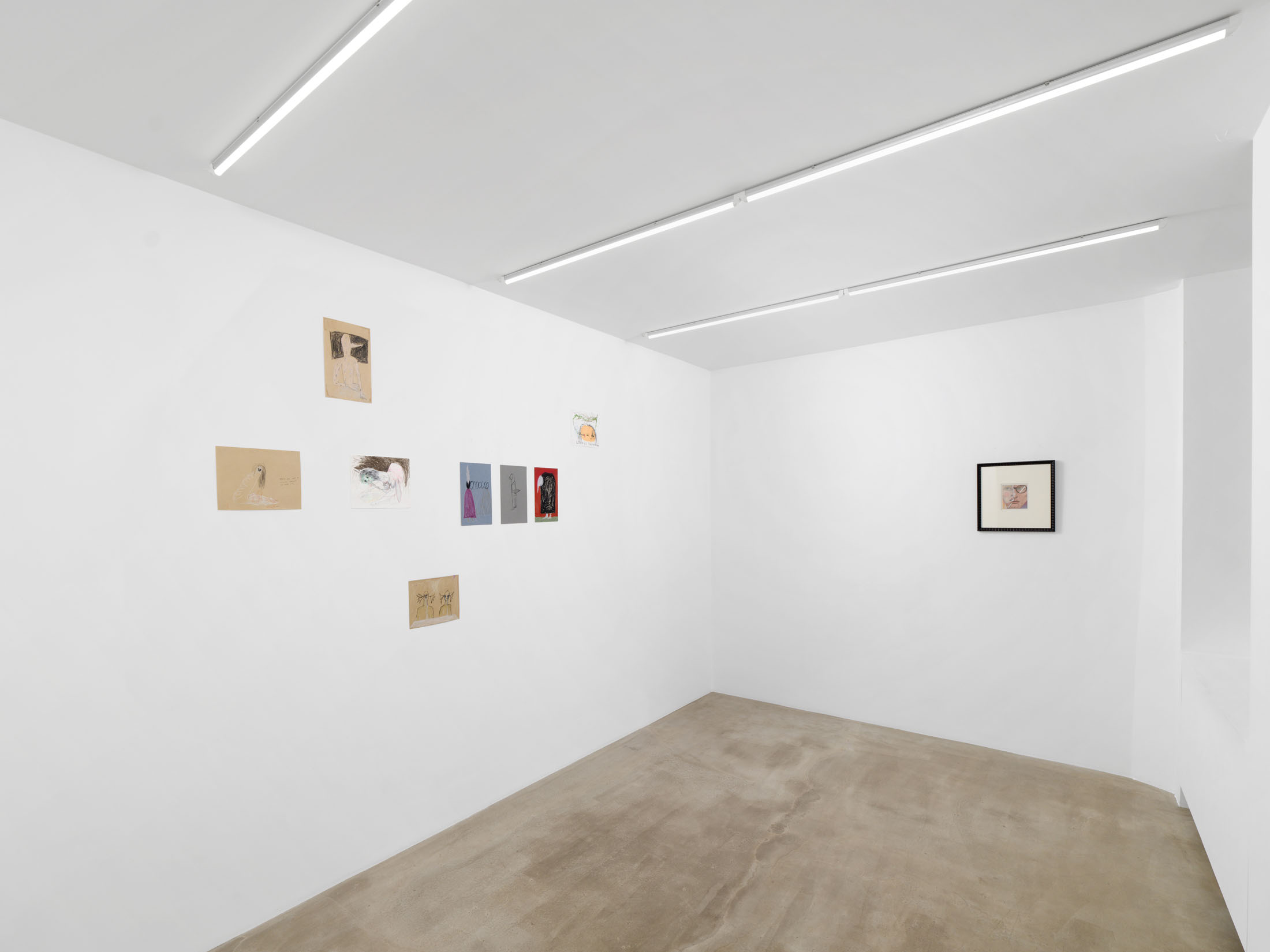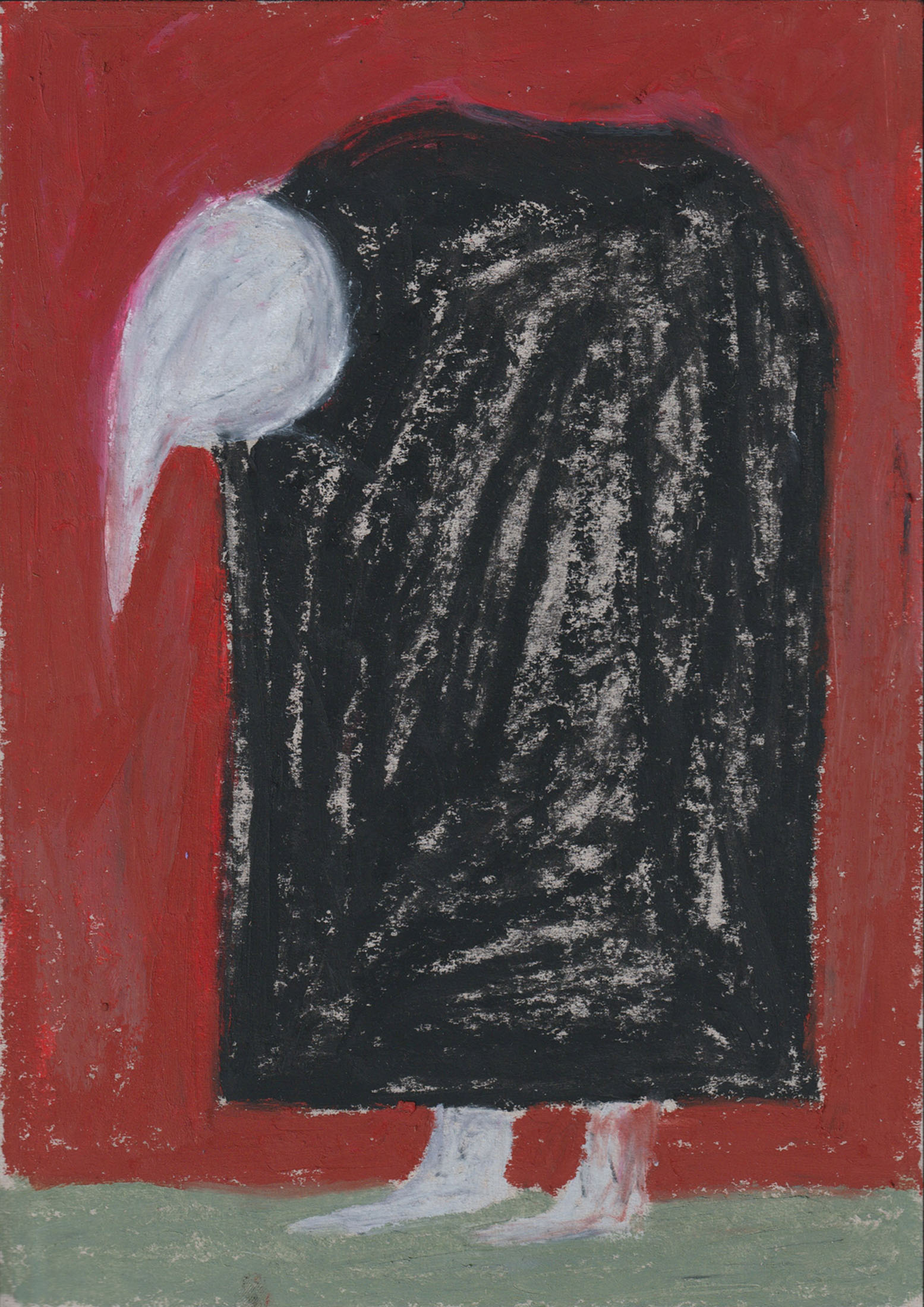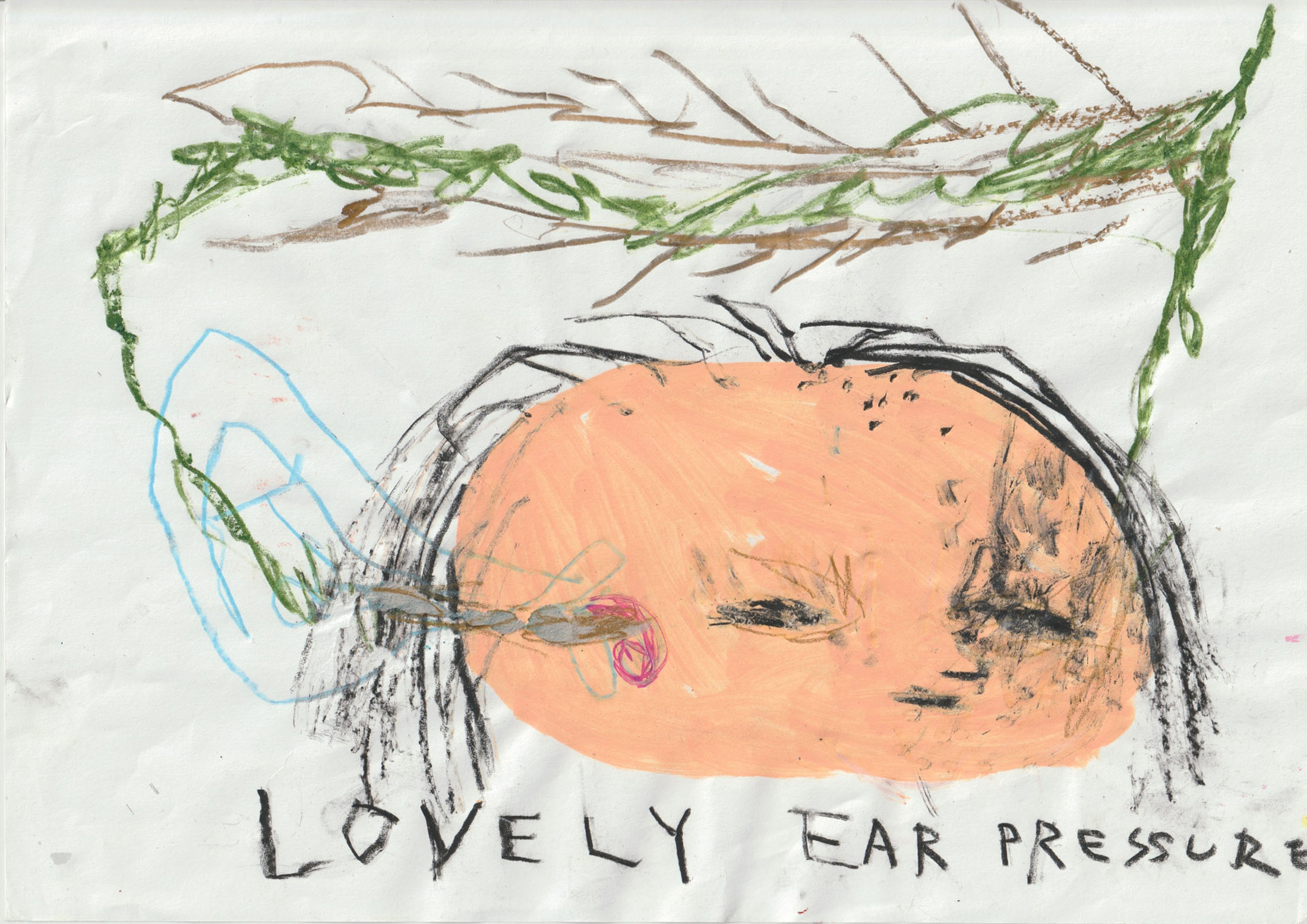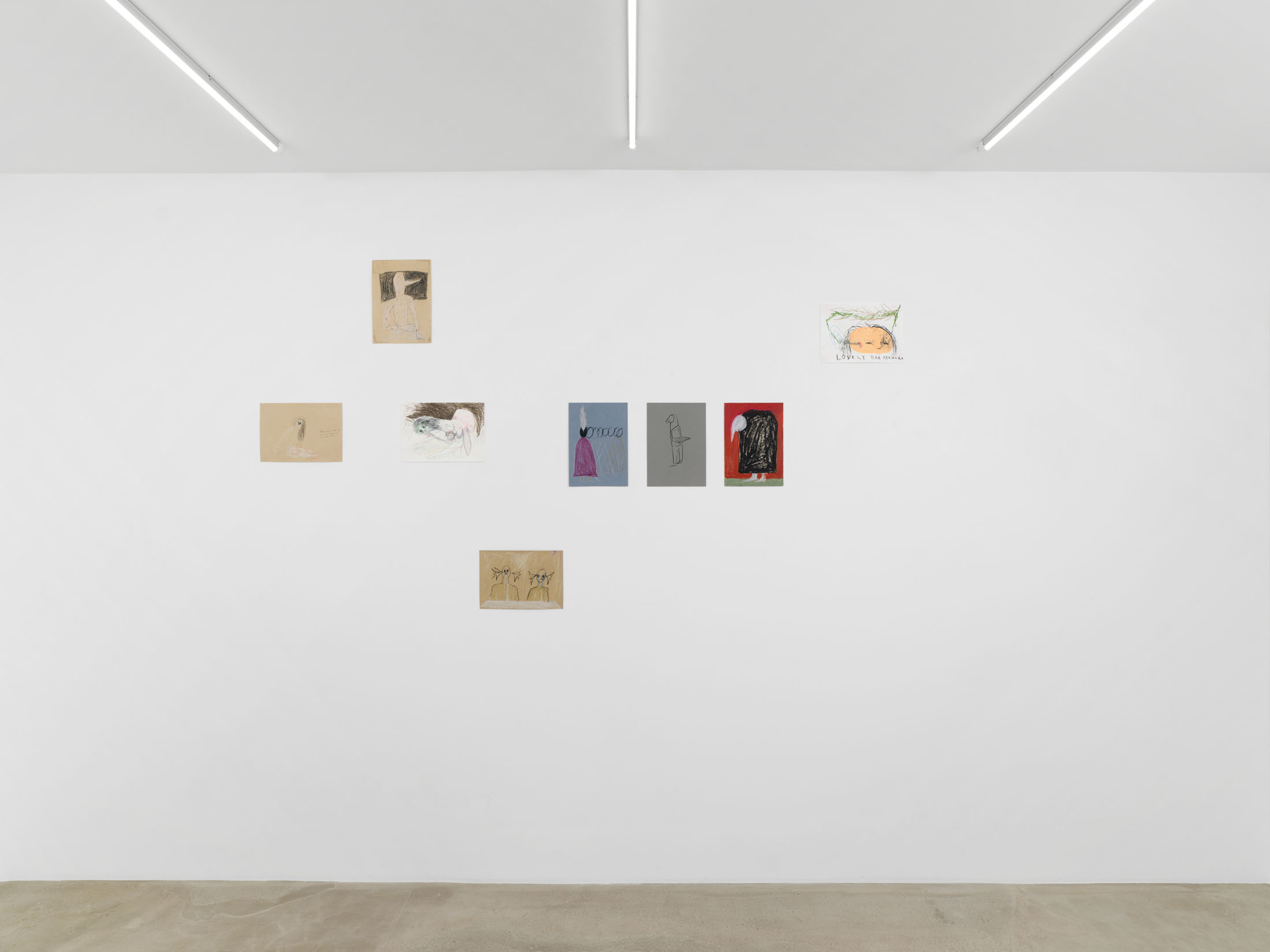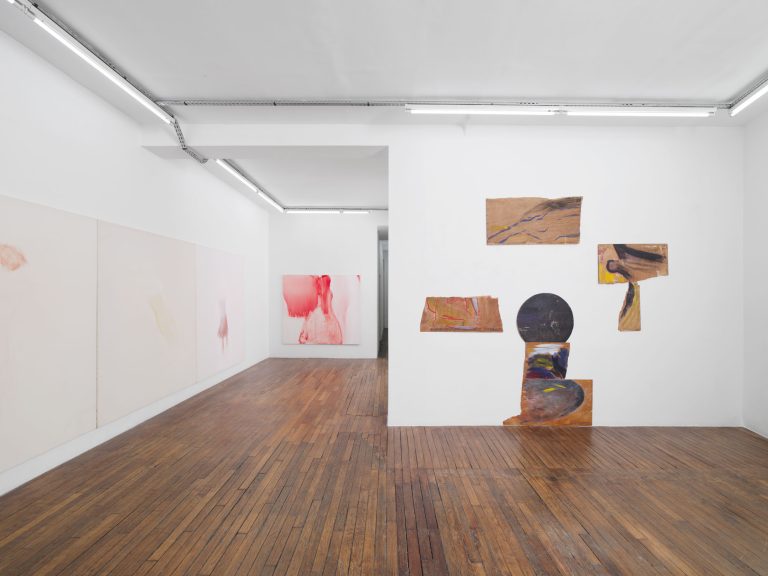
Sans titre is pleased to present L’âge du trait from December 11, 2025 to January 17, 2026. Bringing together eighteen artists from different generations and contexts, the exhibition gathers a group of works on paper that examine portraiture through the multiplicity of its forms. As a medium of immediacy and intimacy, paper records the swiftness of a gesture, the economy of a line, the density of a gaze. It becomes the place where modes of embodiment are tested, where attempts to grasp a presence, an attitude, or a way of inhabiting the world unfold.
For this presentation, a salon style display has been chosen, placing the works side by side in a deliberately dense visual continuity. This proximity evokes the atmosphere of a domestic interior, while generating a series of formal and conceptual resonances between the pieces. Together they form a field of correspondences, like the fragments of a vast puzzle through which the exhibition proposes the reading of a collective portrait.
The exhibition coincides with Drawings outside the lines at the Grand Palais, showcasing masterpieces from the Centre Pompidou’s collection from December 16, 2025, to March 15, 2026.
“I perceived his face as a figure in which every line was charged with meaning. Nothing there seemed given or placed at random. That forehead had the calm of surfaces shaped by a mind untouched by turmoil; those eyes had the mobility of a very pure flame. It seemed to me that every feature answered to a necessity, that an inner order revealed itself in the slightest inflection of his lips. And the more I looked at him, the more convinced I became that this man was the most perfect creation that a certain state of the human soul could produce.
Thus, I discovered that one can read in a face something other than fleeting passions or thoughts: one finds an architecture there. A secret design governs the curves that gather around the eyes, the subtle break of the nose, the separation of the lips; and this design depends neither on the accidents of flesh nor on the whims of nature, but on a deeper harmony, akin to the one that presides over accomplished edifices.”
–Paul Valery, Eupalinos, or the Architect (1921)