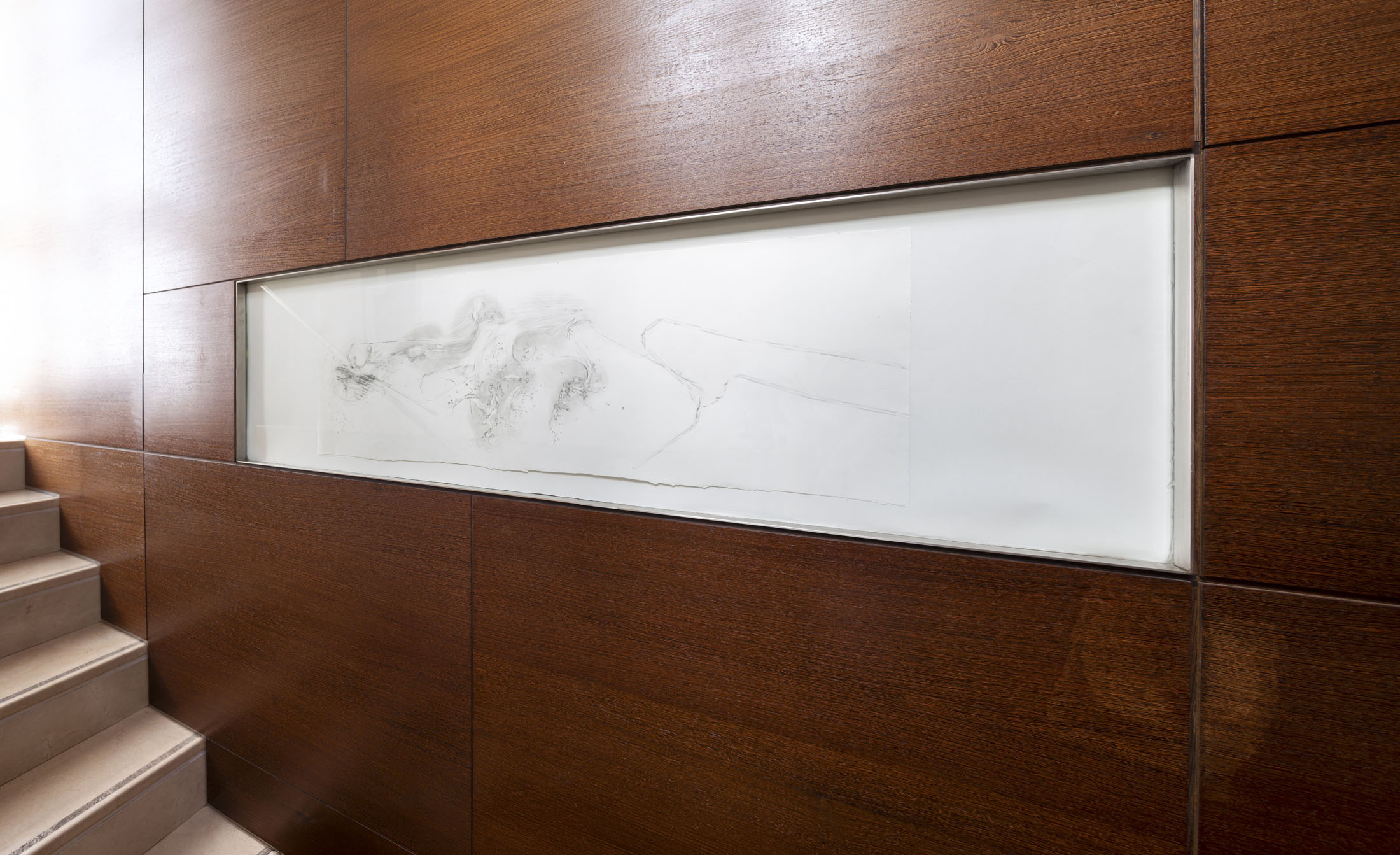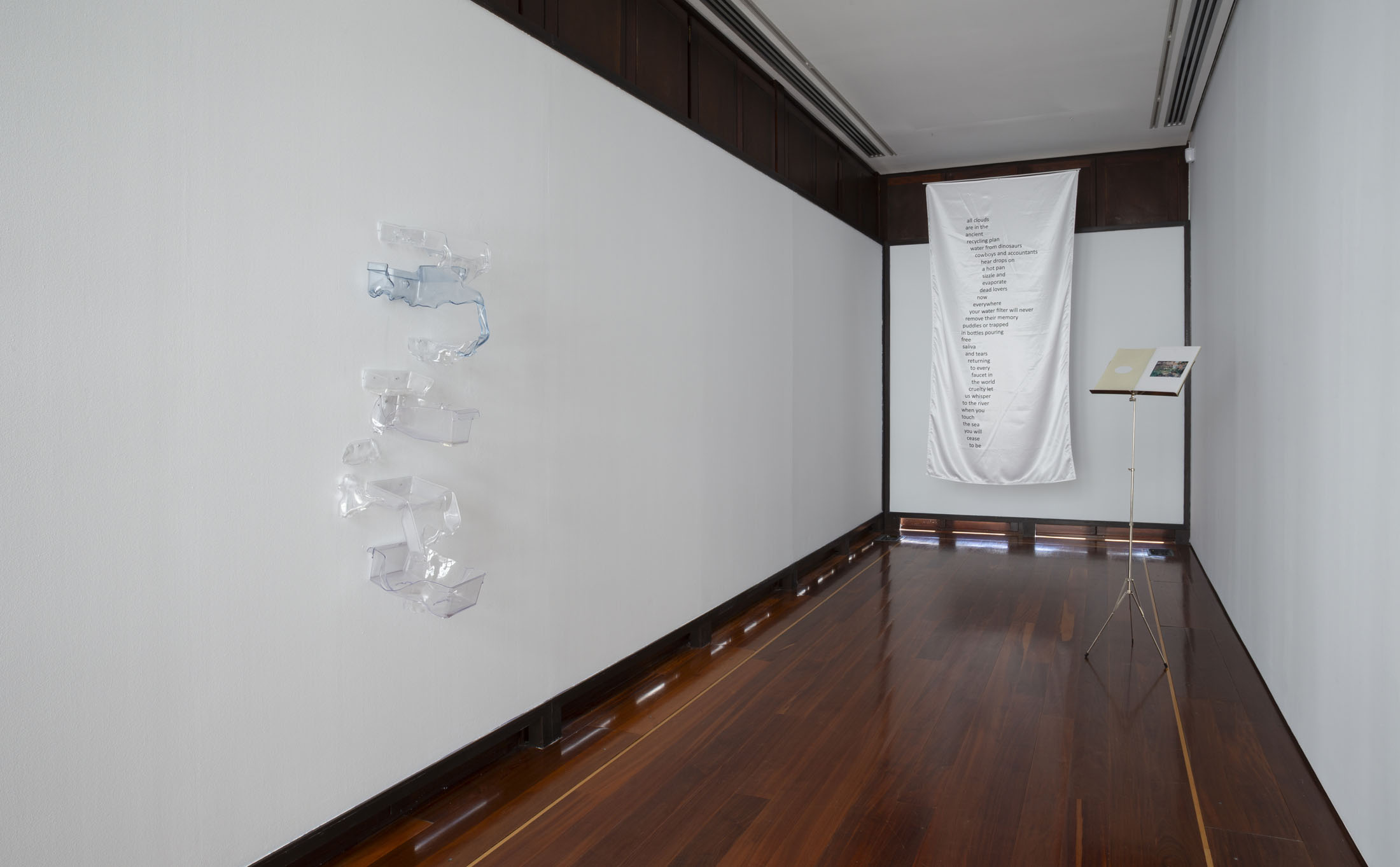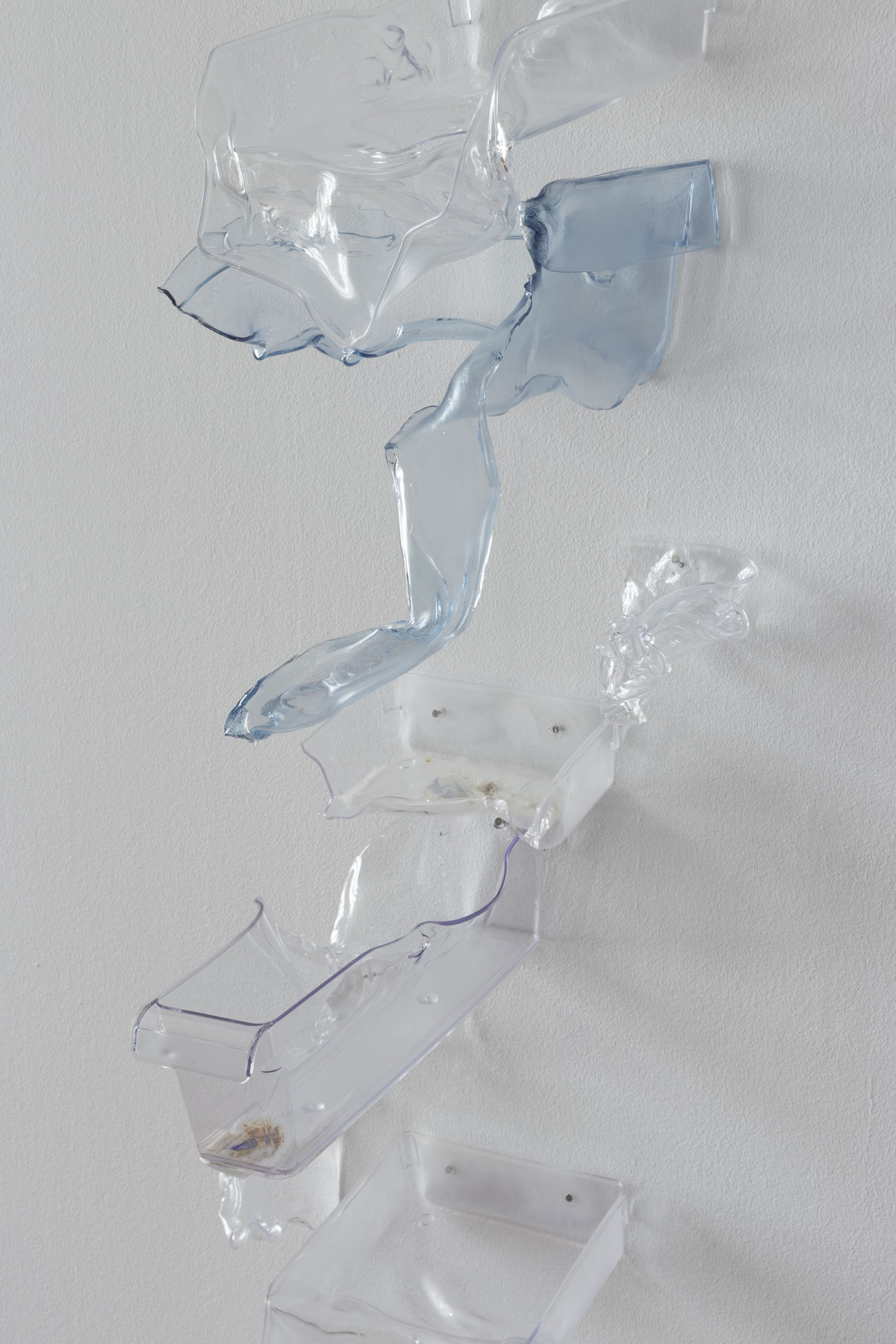
The sound of splashes appears and disappears, as the premonition of a path to our people, our horizon, our thirst. This sound streams through the paths of possibility, a feedback of murmurs, a circuit of promises.
On the occasion of fluent’s 10th anniversary 1 / X, high speed splash gathers the work of ten artists whose work has contributed to our history, as a means to celebrate the first decade of our existence. Taking place at fluent and a series of locations across Santander, fountains appear as an haptic possibility for de–centralisation, a formless–formation, a subtle device of potentiality, redistribution, and force.
Through the fountain as a motif that centers this genre–based exhibition, 1 / X, high speed splash looks at orders of unpredictable transmission and how de–centralised forms of making and producing aesthetics, impact on our shared sociopolitical and structural realities.
The fountain itself —the poem fountain, the playful fountain, the embodied fountain, the structural fountain, ventures a new formless architecture—it is a diluted form, or a version of a place within which we are encouraged to enter and hold open an alerted and attentive consciousness in a site of non–resolvability. It is an open field poem—the architecture of a hypothesis constructed to exist in the tense of the ‘‘what if’’. Its channelings, currents and rhythms present themselves as intentionally provisional, replacing definitive form with tentative form, the notion of a lasting structure with that of an adaptive one.
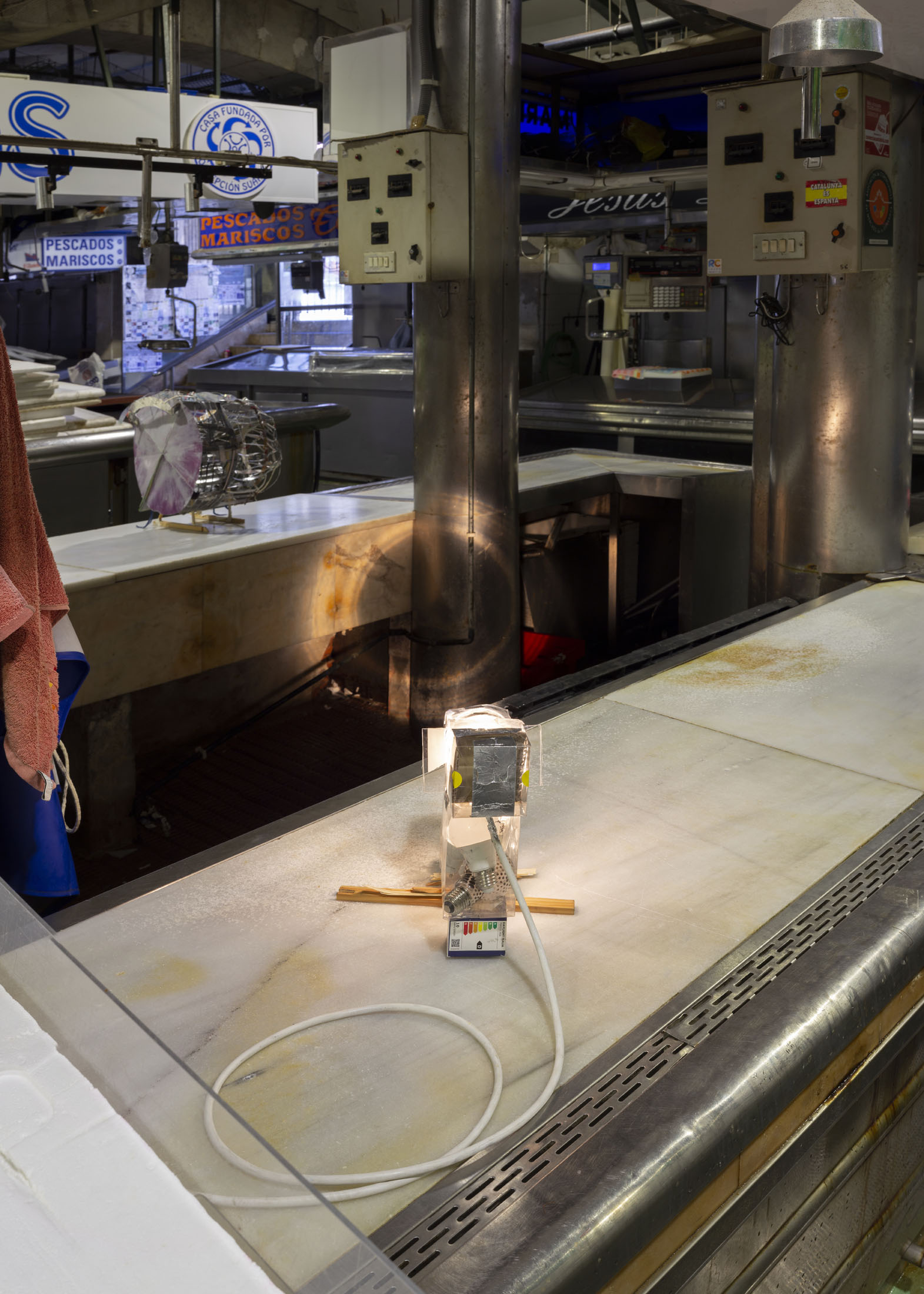
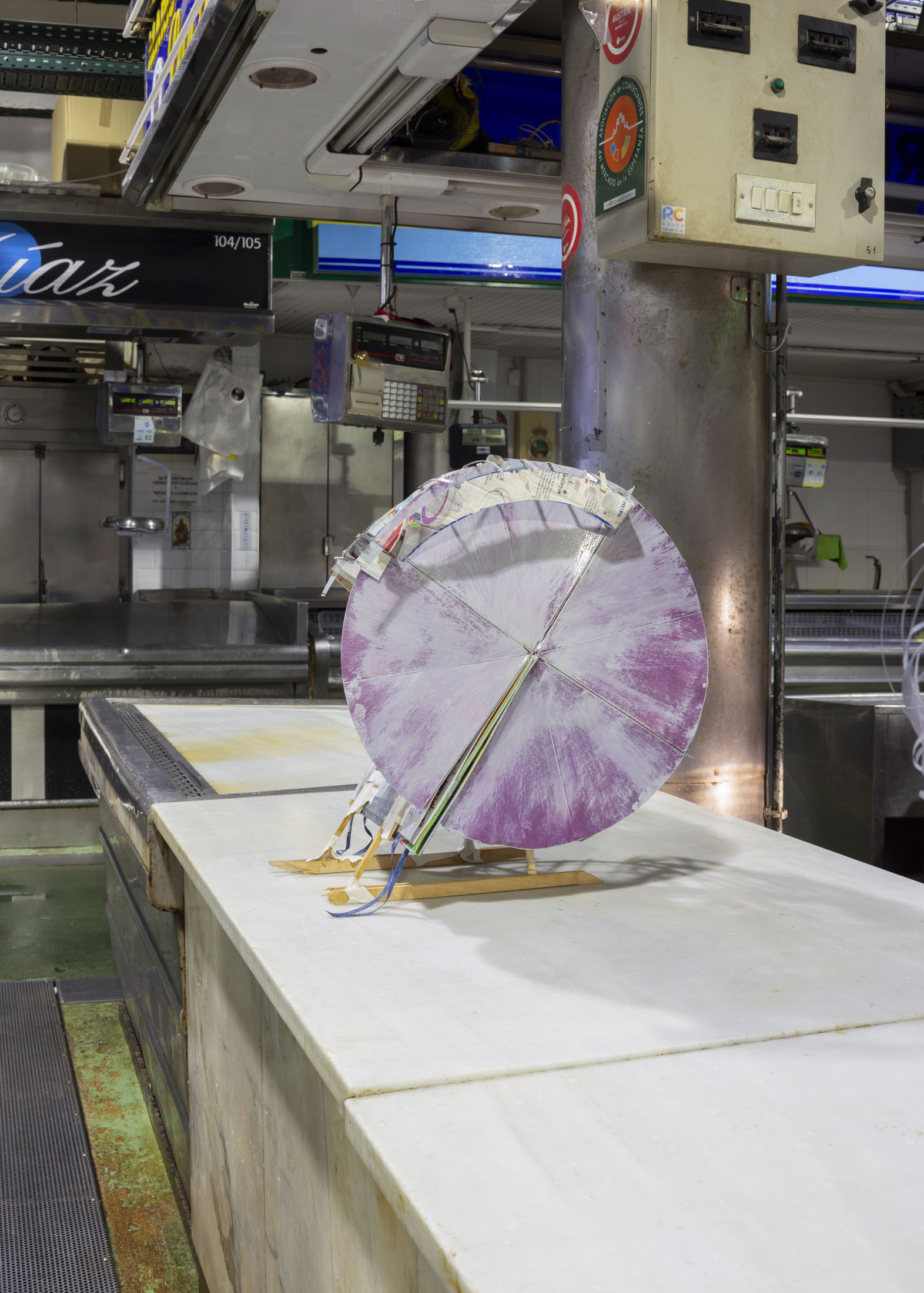
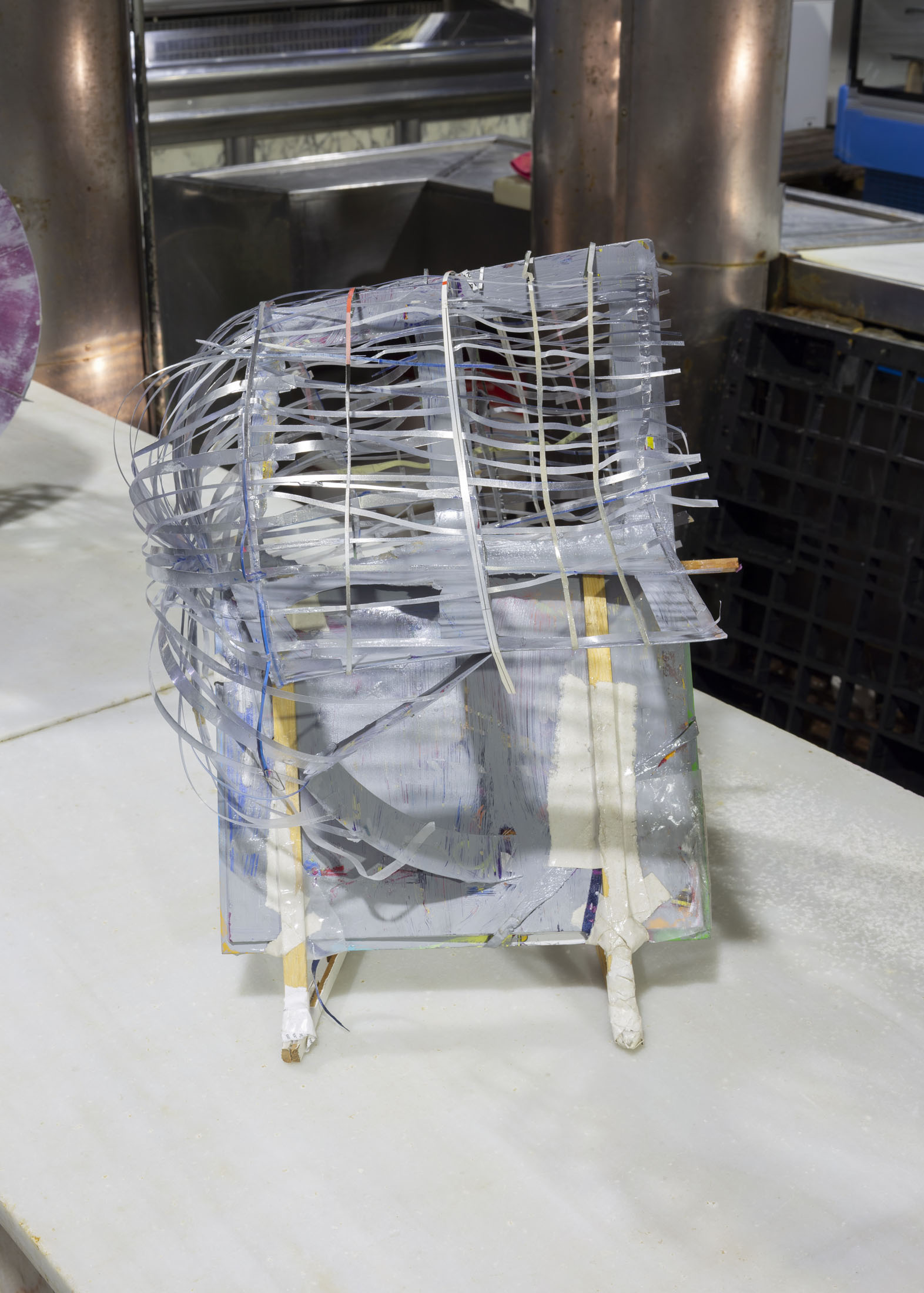
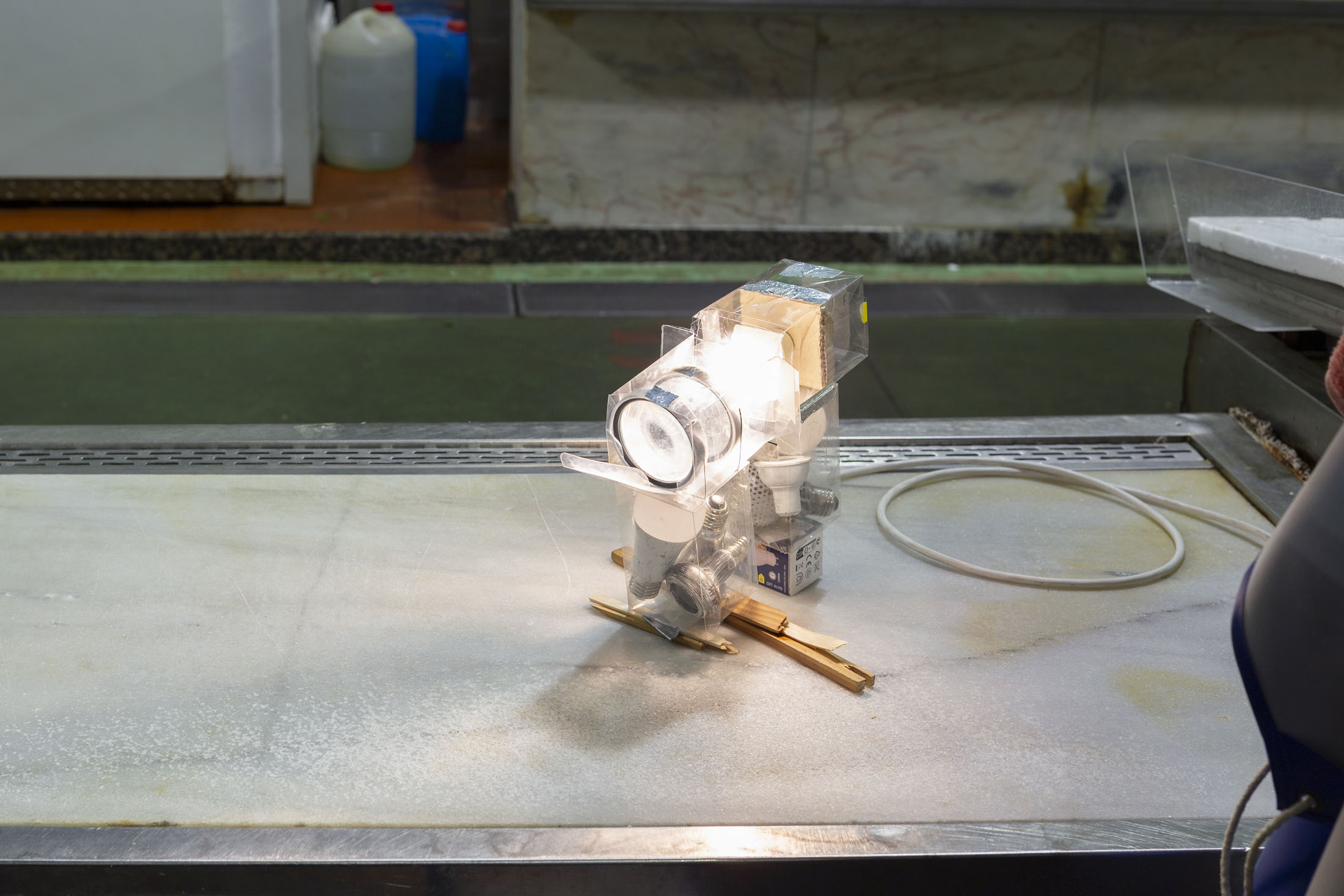
Avoiding formal predictability, Iris Touliatou realizes works wrought with tension by removing objects from their usual contexts, thus interrupting their interpretation.
Is there enough water?
Is there enough pressure? Is there a right time?
What is necessary and how is it connected? What is permitted and how is it dismantled? Who decides and who functions?
What is still available and to whom?
When does the work start and when does the work stop? Are we allowed?
Are they autonomous? Can we rely on them? How do we care?
How much of a commitment is that?
Will we miss something?
Can it be replaced? Should it be replaced? What will happen afier?
Do we still believe in this, or have we changed our minds?
Lots of questions and lots of feelings are great, but the unfinished business of sentimentality at some point comes down to facts: Infrastructures—things and systems made, built, old, new, lived, loved, hated, sustained, or resisted—often remain invisible, enigmatic, sometimes unquestioned. They become apparent and change when friction is applied.
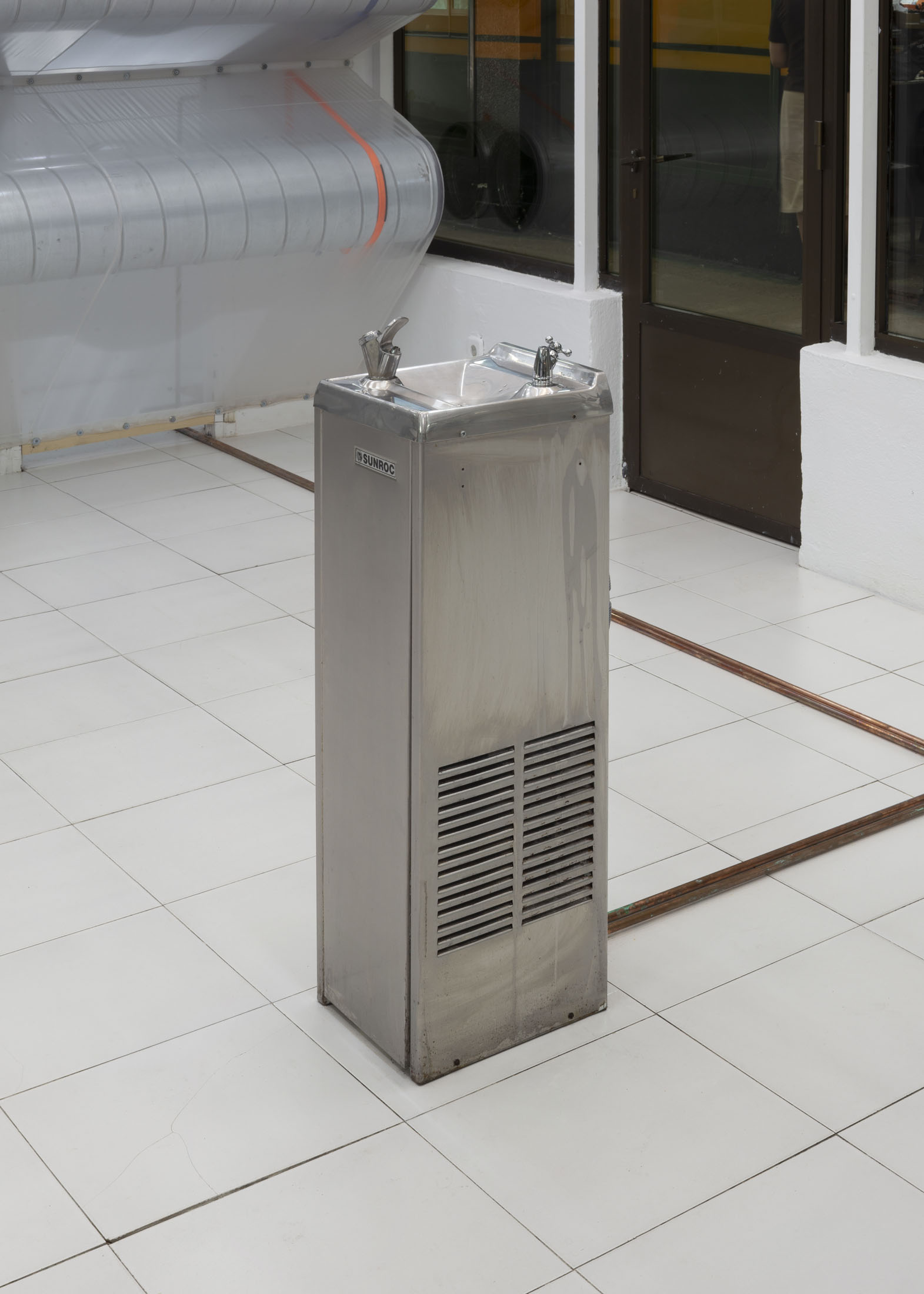
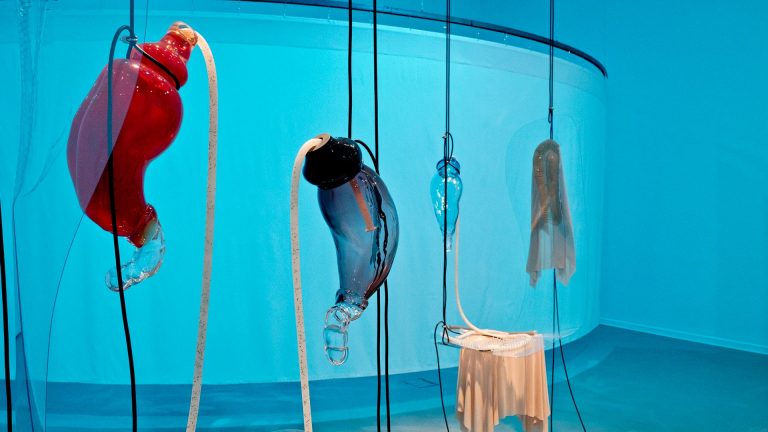
For mothers (mother fluency), 2026, Iris Touliatou addresses water supply as a device connecting subjects to larger surrounding structures (institutions, society, the state, etc.). Originally designed for use in public spaces like hospitals or schools, the fountains spurt cold water when activated – a welcome refreshment during the summer heatwave – and hum as they adjust their temperature. The performance of Touliatou’s score reveals what theorist Lauren Berlant, in The Queen of America Goes to Washington City, 1993, identified as an ‘intimate public sphere’ – a fleeting, collective affinity triggered by overlapping, affective components of political, economic and social life.
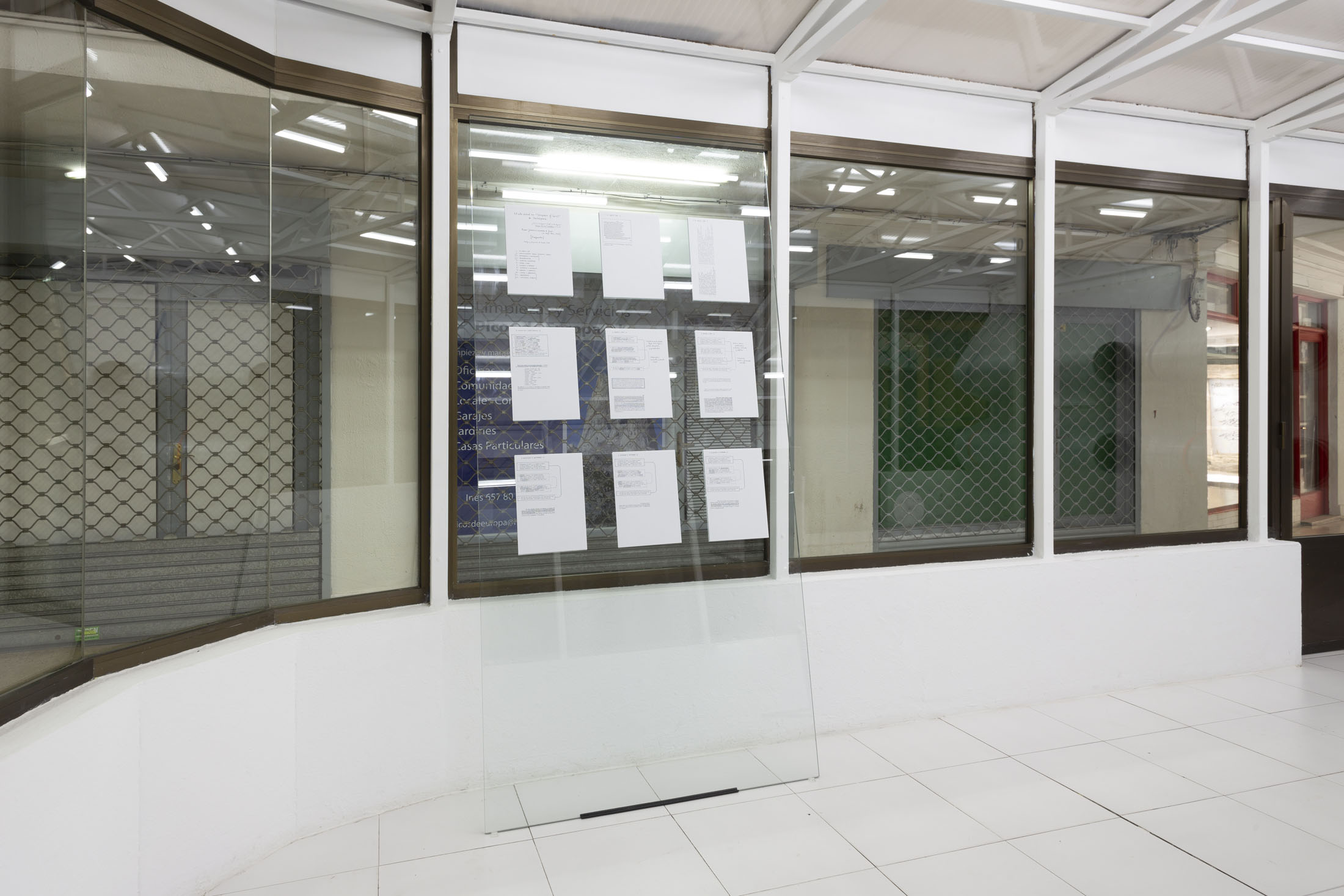
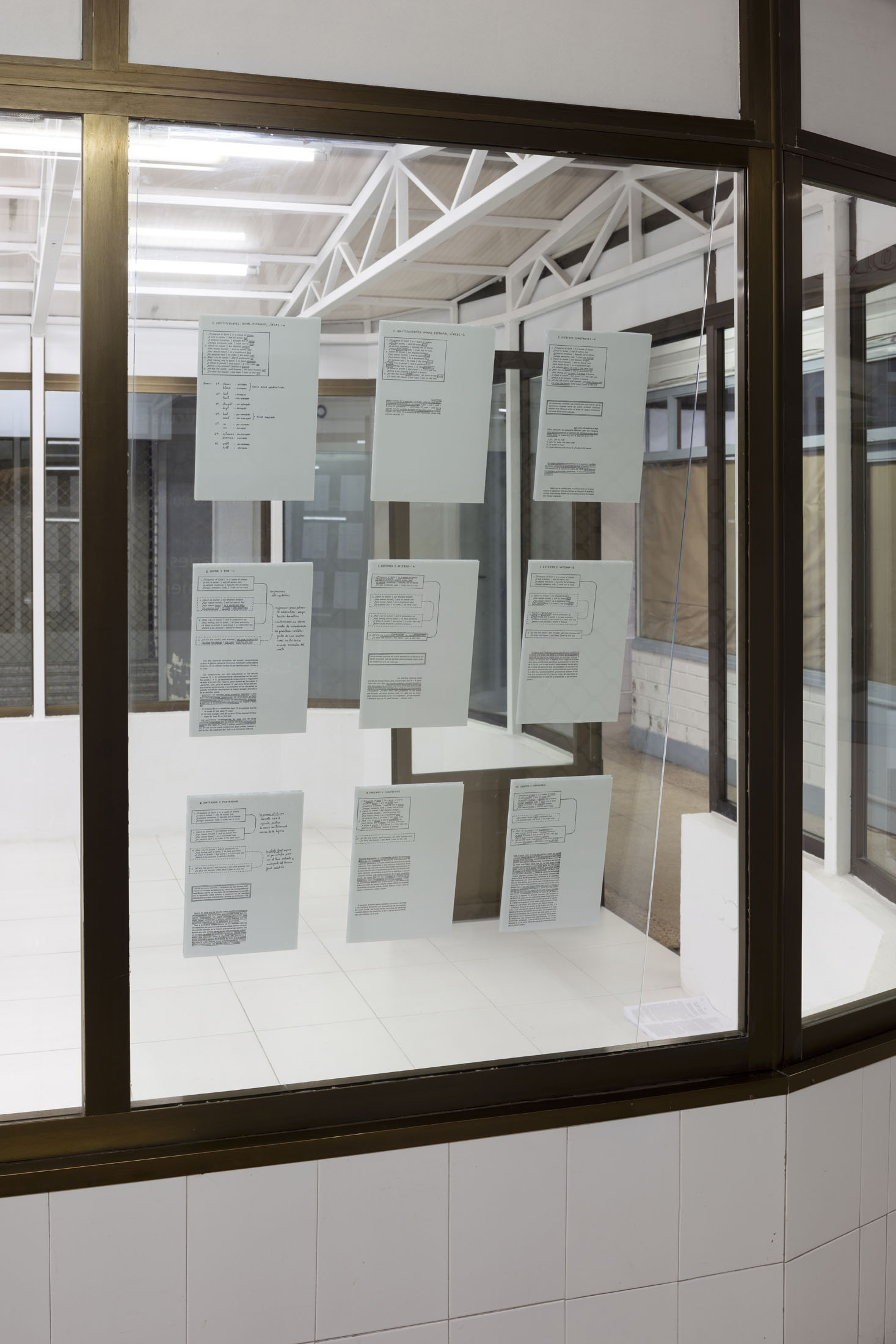
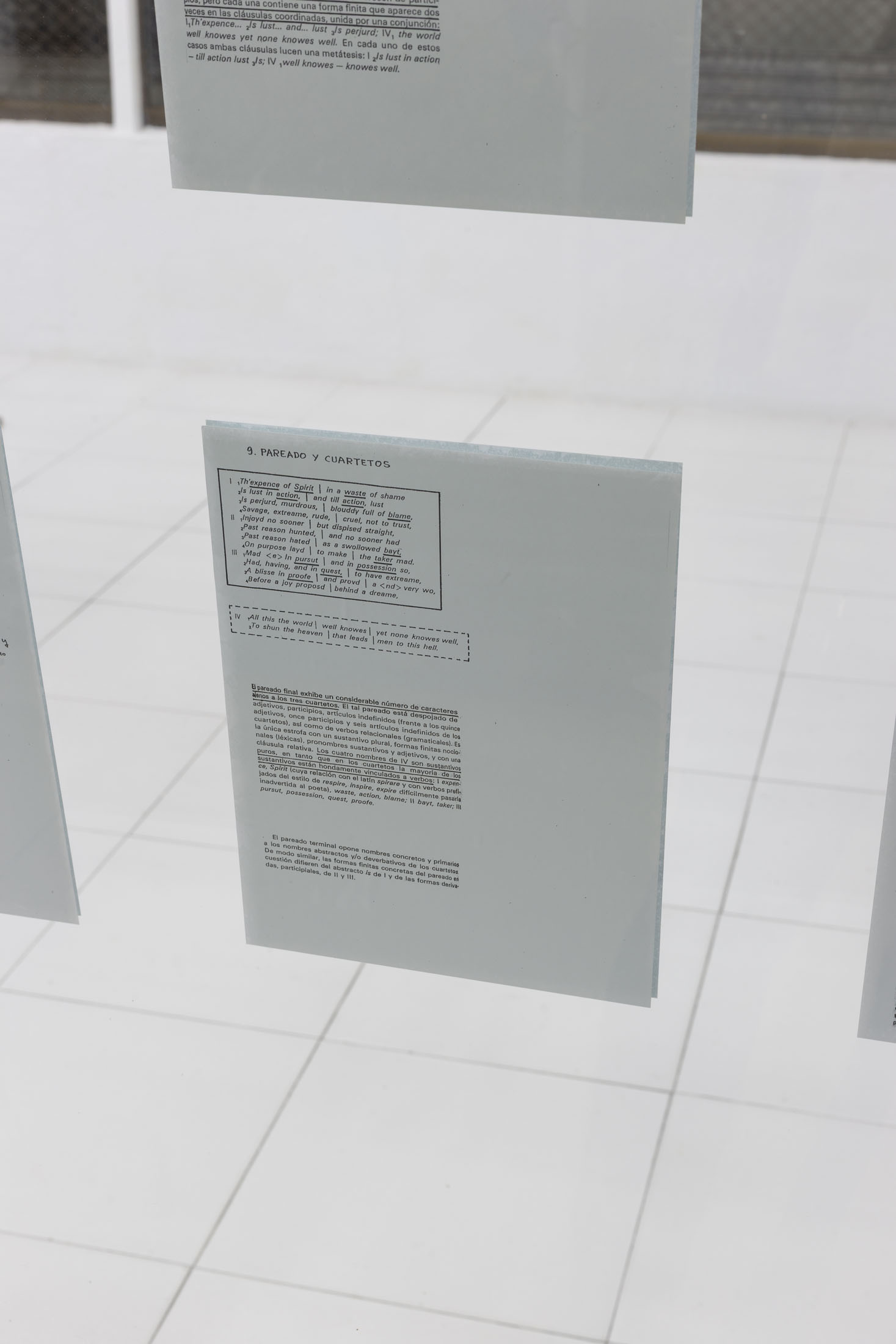
Between March 23rd and 24th, 1993, Paulino Viota made The verbal art in Th’experience of Spirit. Departing from Roman Jakobson’s analysis of Sonnet 129 by William Shakespeare, Viota transforms Jakobson’s linguistic theories into a kind of visual method that allows to delve into a series of formal relations –centre and margins, outside and inside, even and odd, front and back– in order to study certain filmic logics to which he has devoted his life as a filmmaker, educator and researcher.
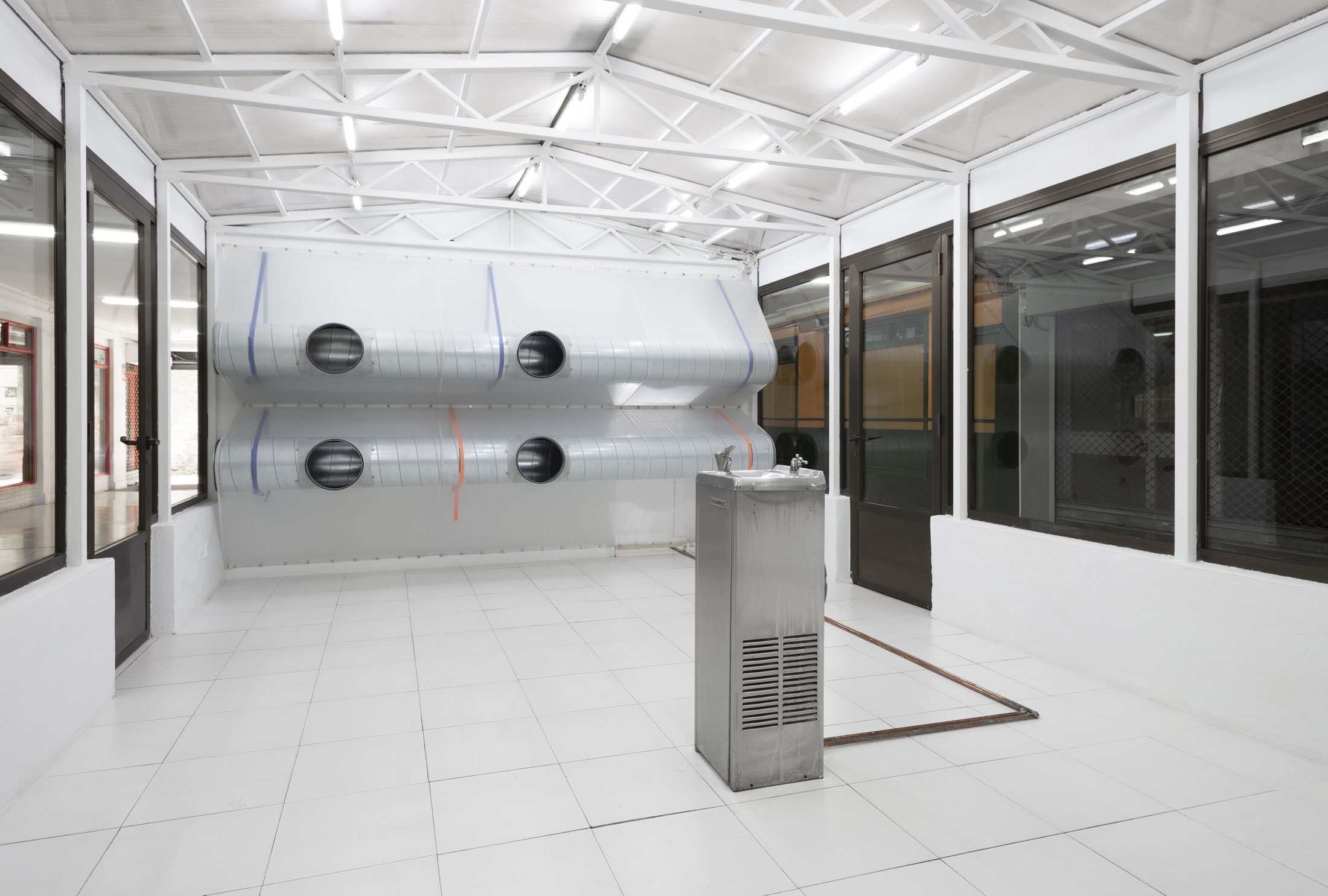
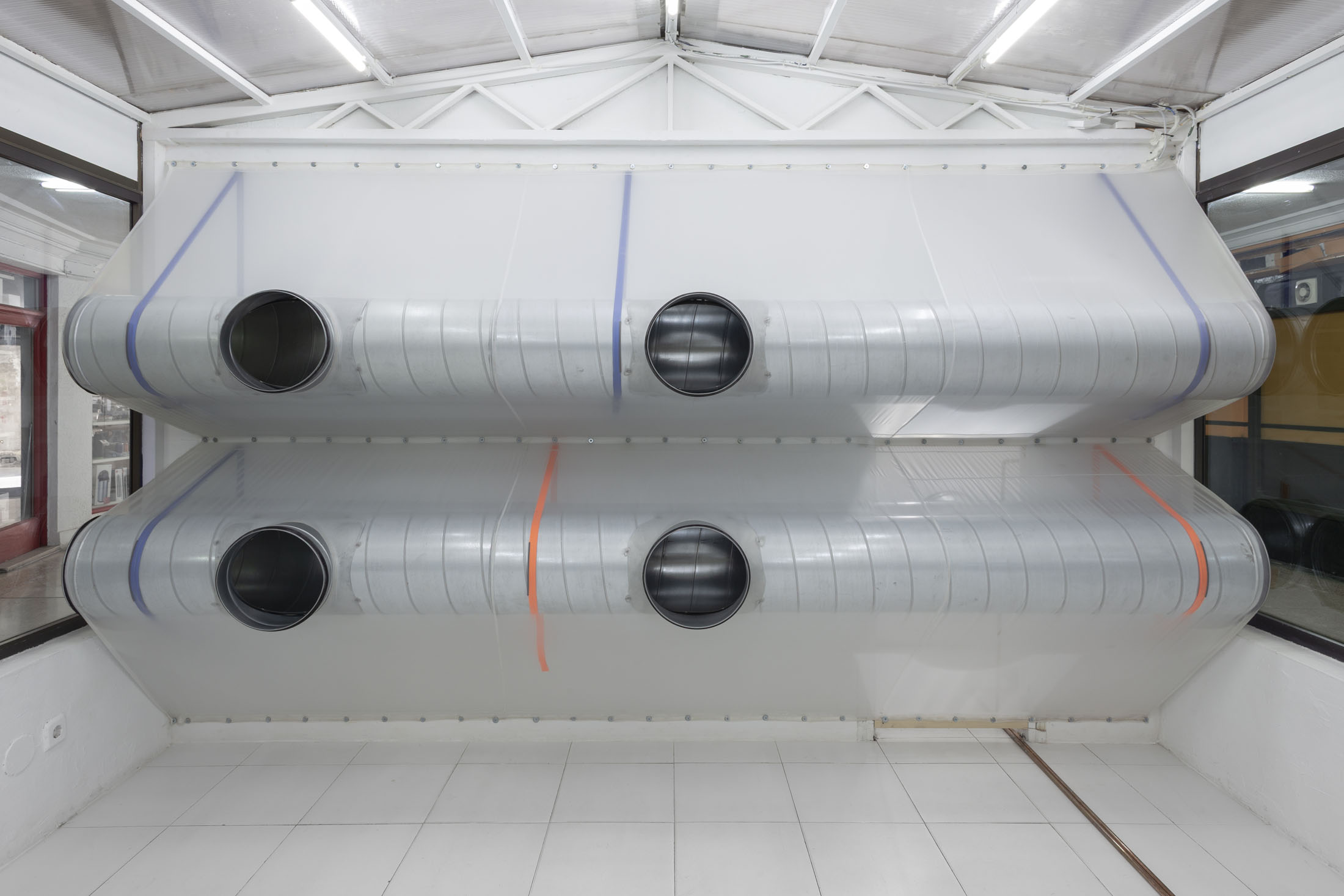
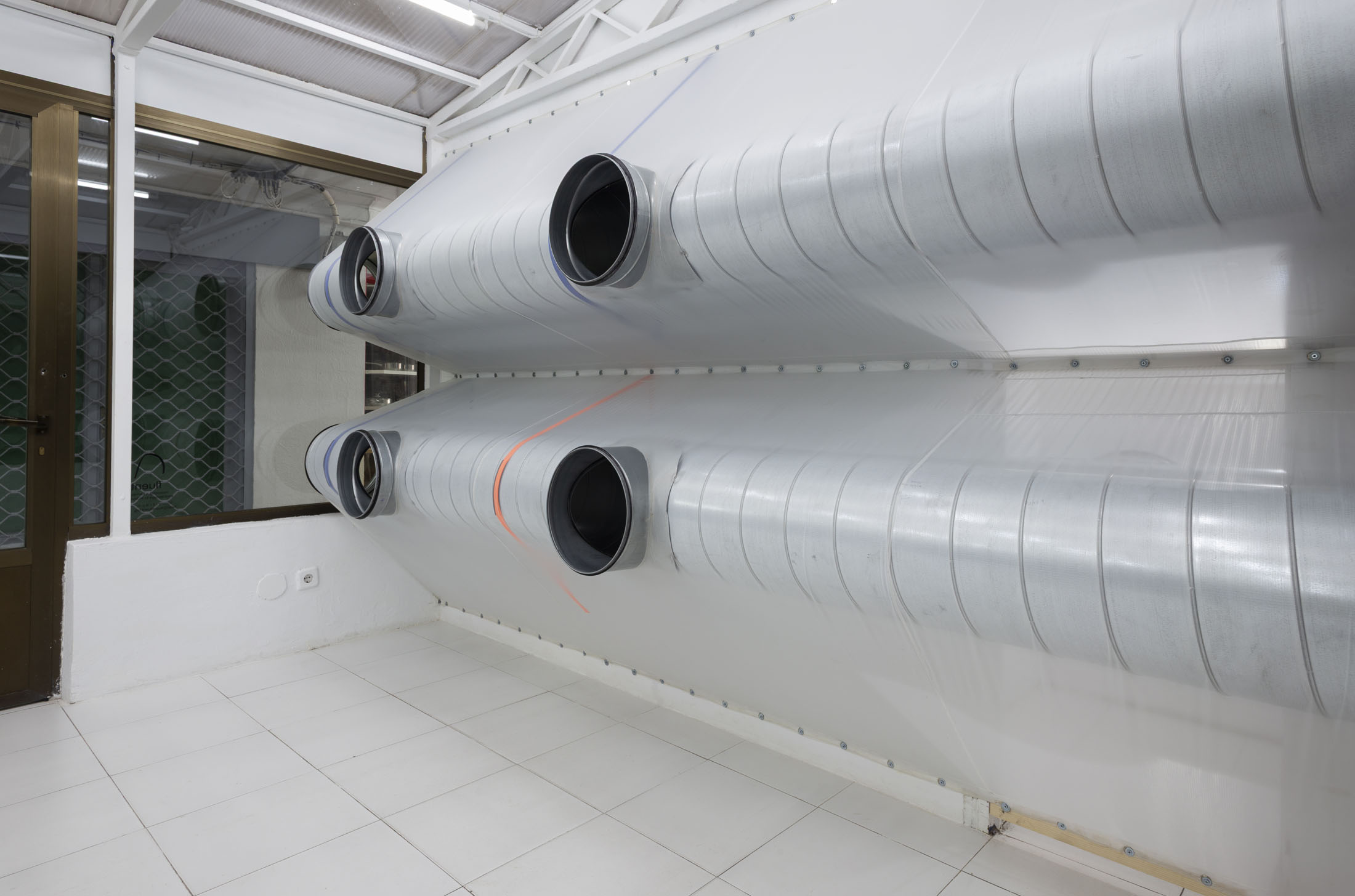
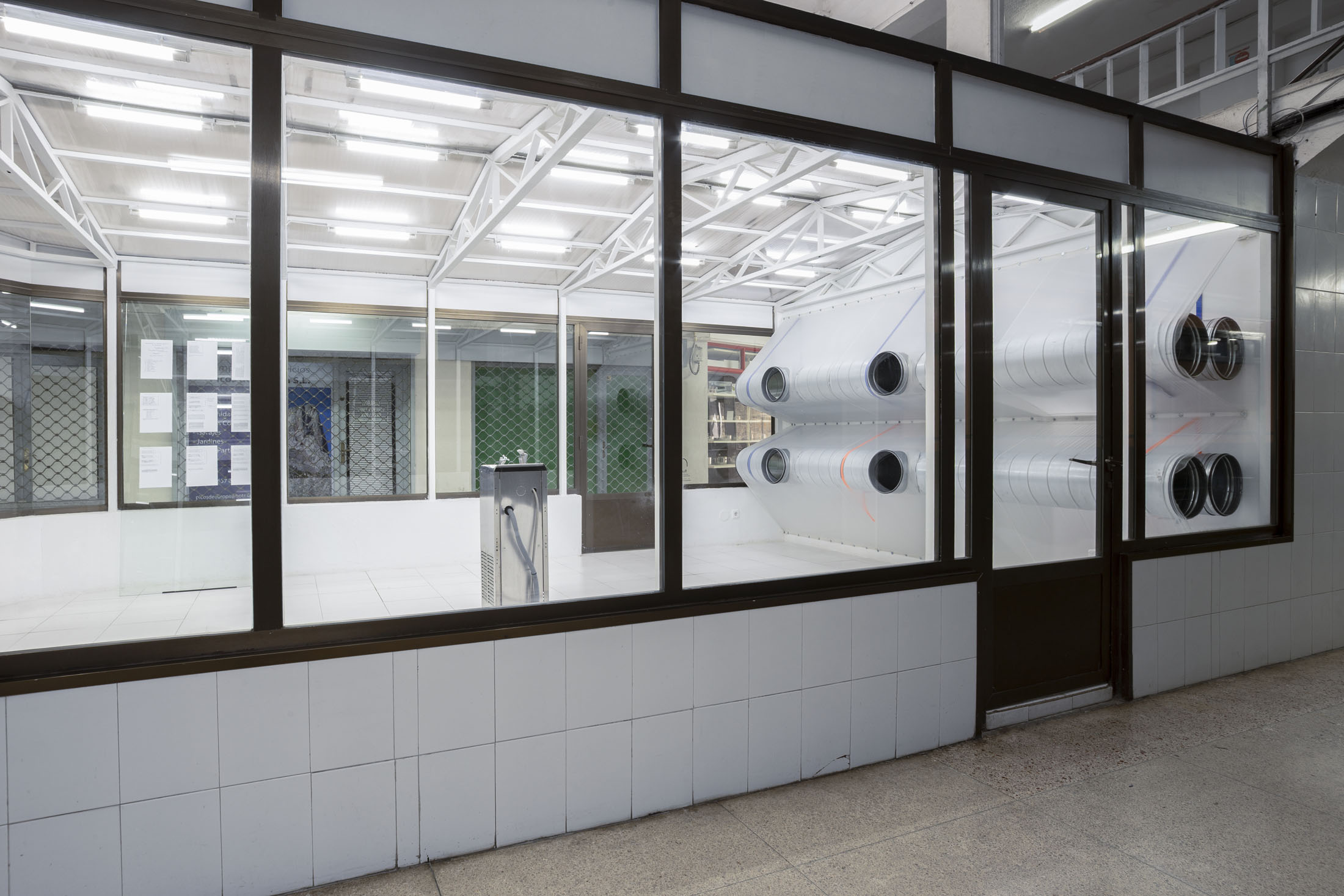
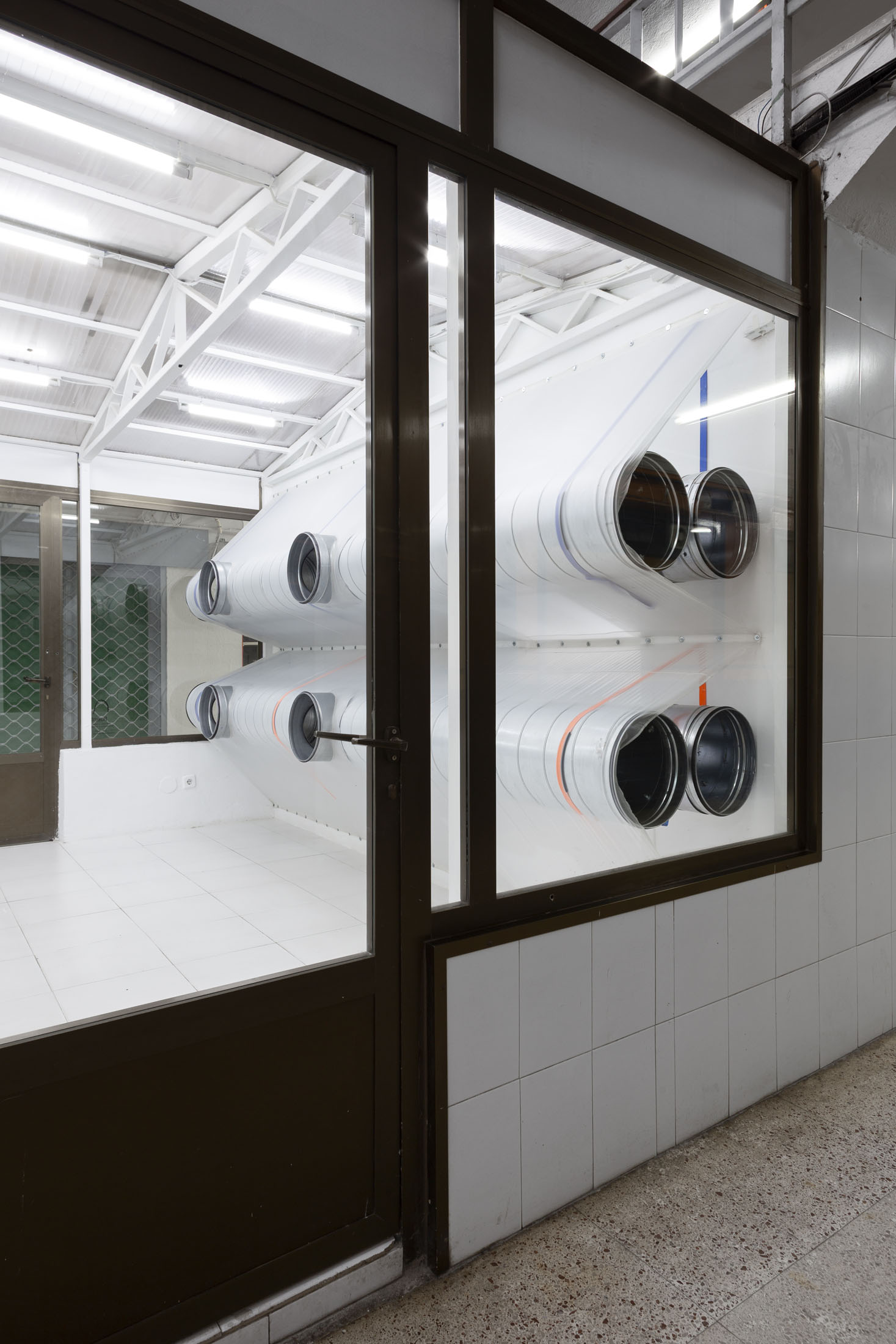
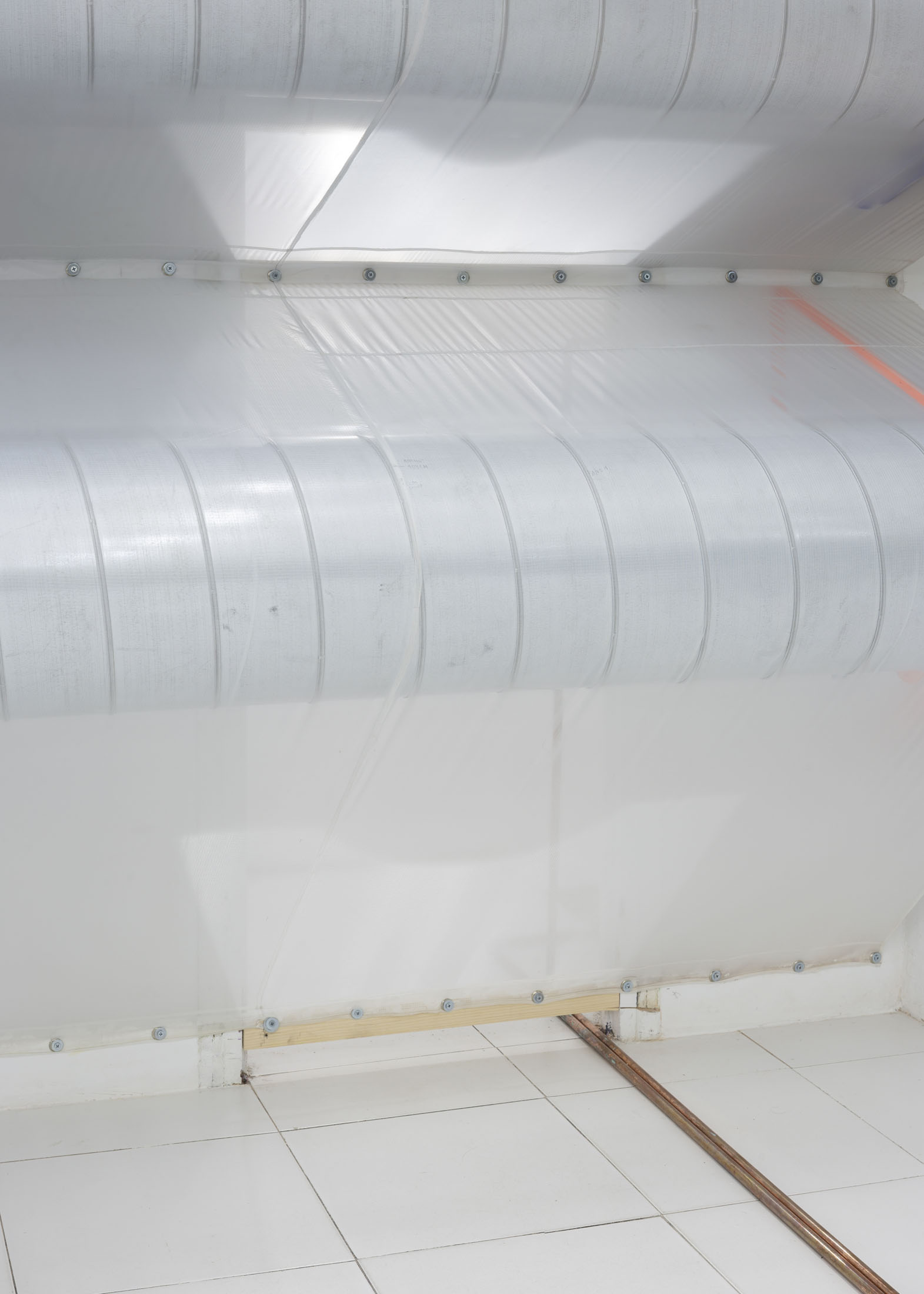
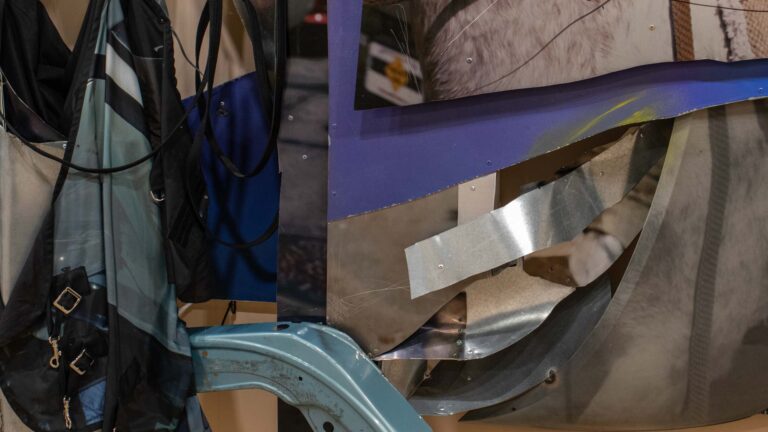
In Trraction, 2026, June Crespo assembles ventilation pipes and truck tarpaulins to form a wall piece where circuits, channels and holes appear partially, through different access points, translucid surfaces, and fragmented perspectives. Holes that open up to the existing tension in the architecture’s glass surface provide a sense of continuity as suggested by semi–transparent surfaces, the arrangement of the pipes, the hole on the wall and the interplay with the inside–out confusing nature of the architecture itself. In that sense, the friction between the visible and the opaque, trace a system of access and exit, a space of forming and becoming in continuous circulation.
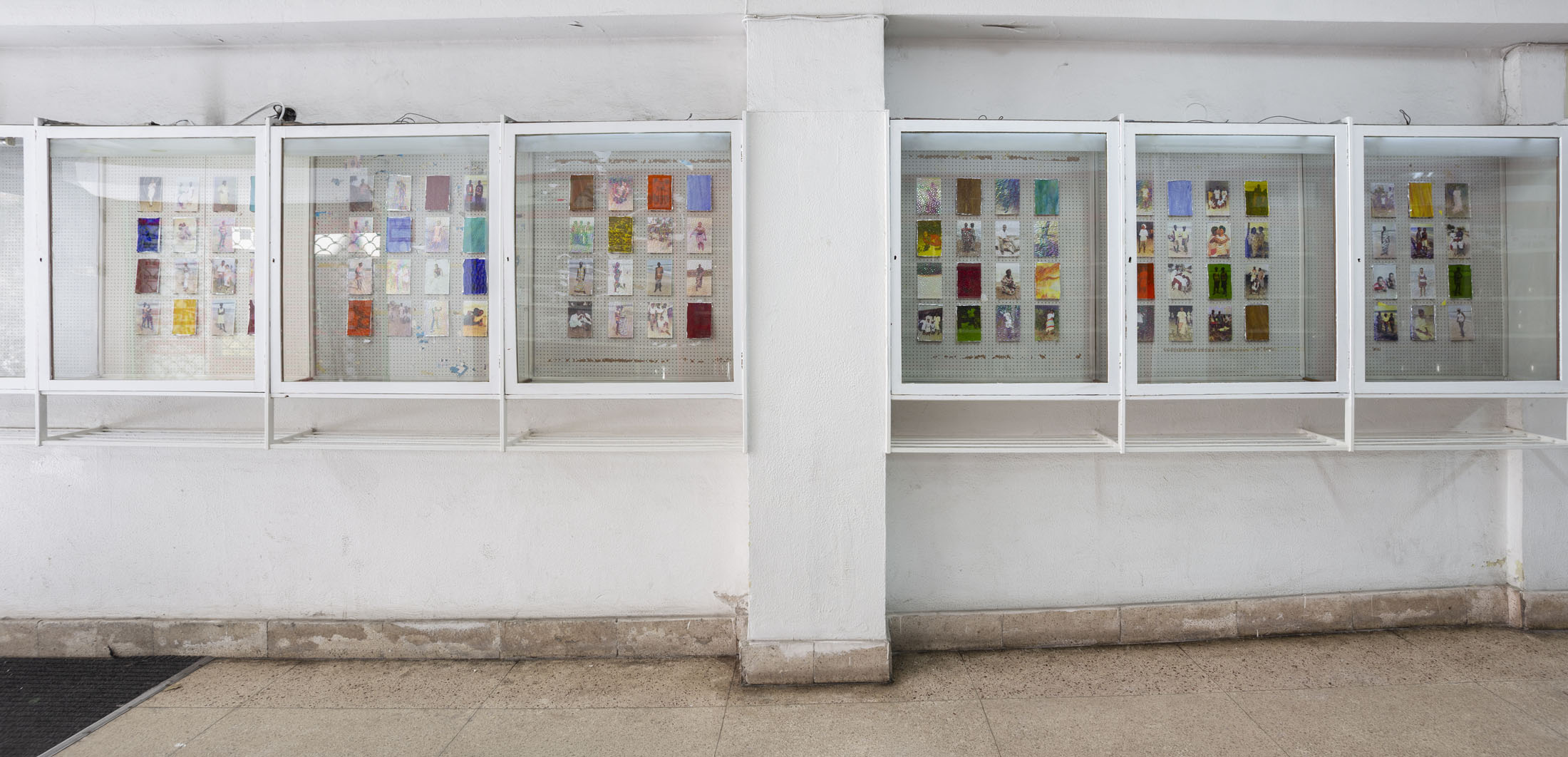
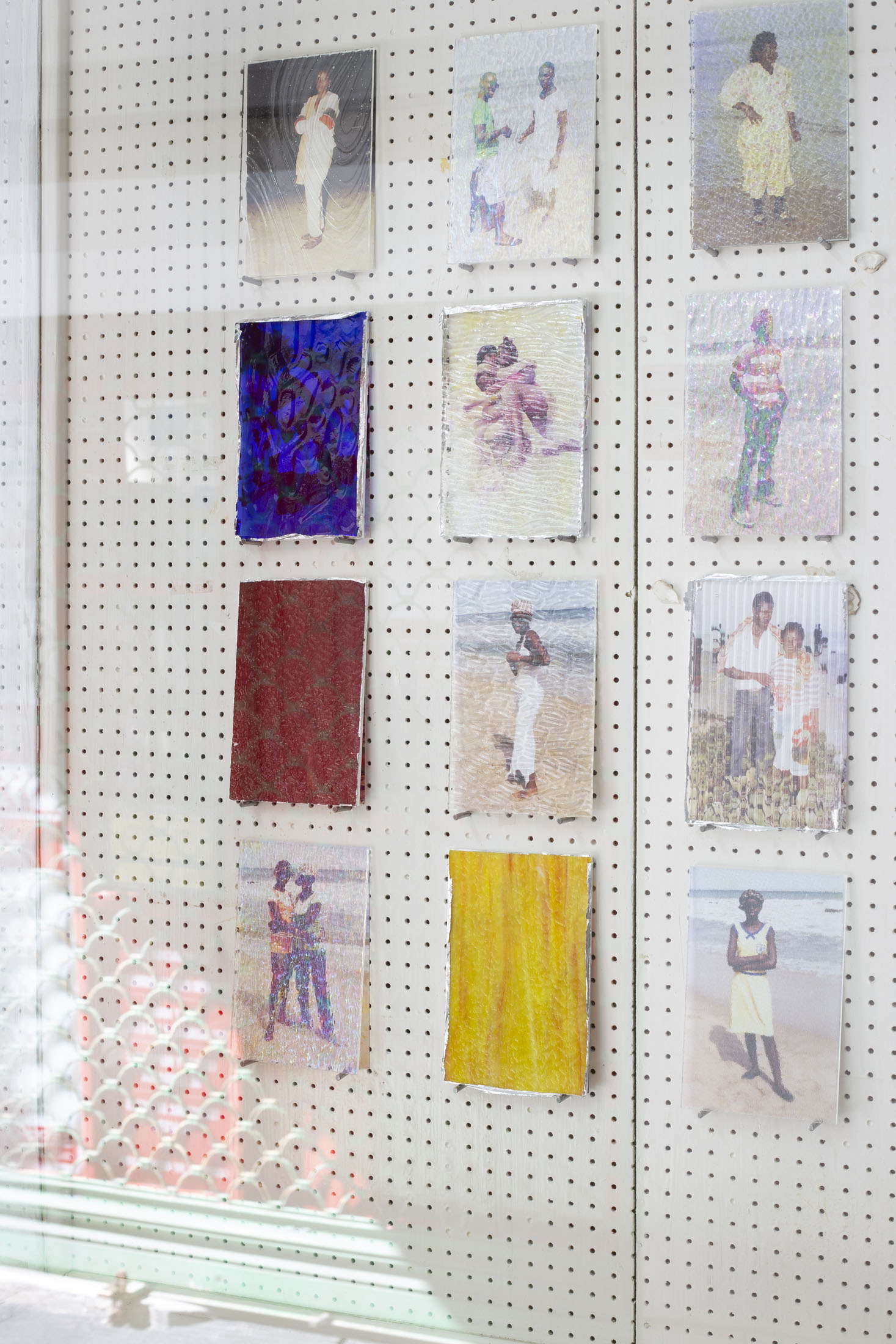
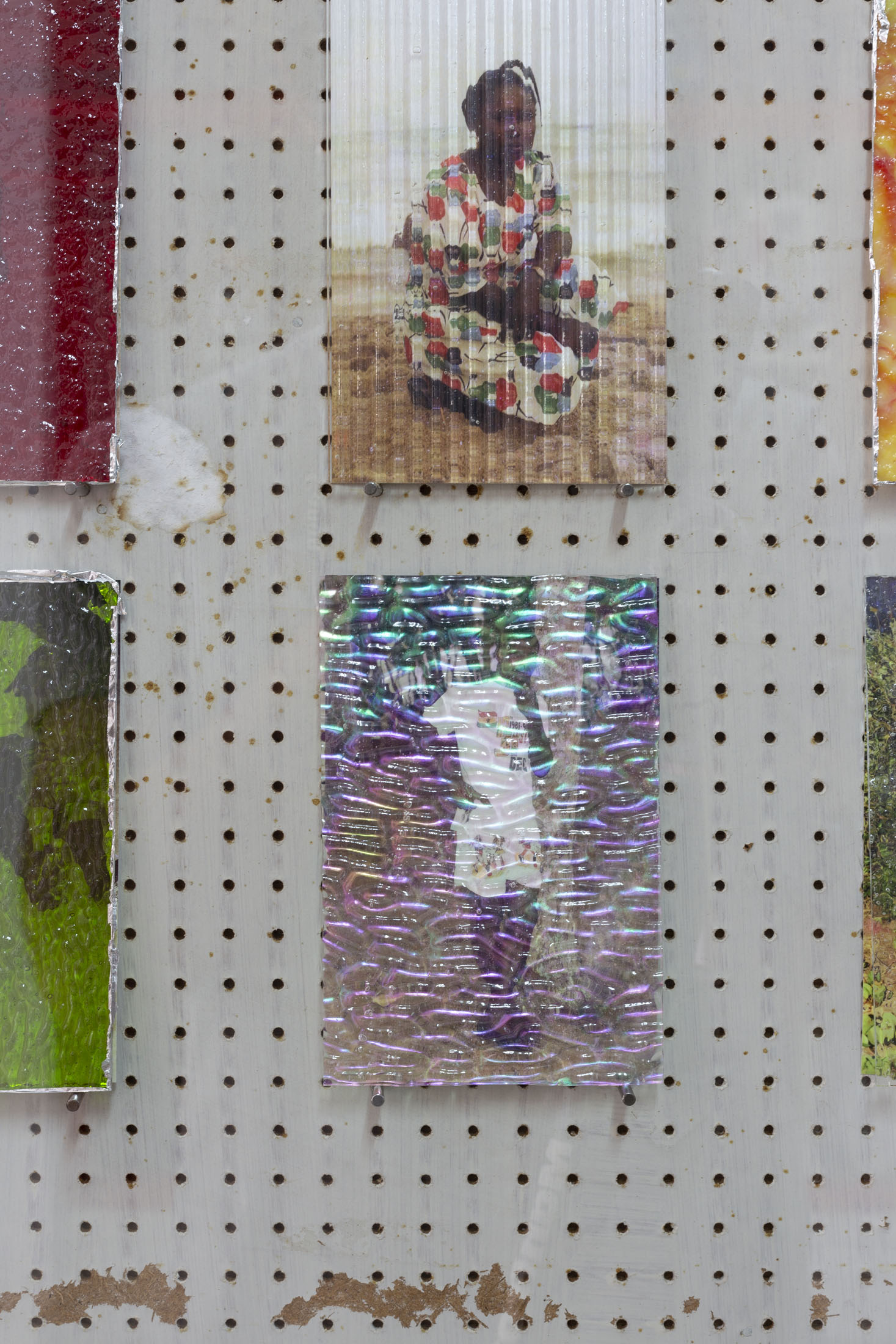
As you exit (or enter) the space, a series of photographs, each encountered as ghosts of themselves, each part of saman archive, greet you. This project by Adjoa Armah, now entering its second decade, has eluded all notions of working in good time. These photographs form a constellation of intersecting bodies taken in Armah’s hometown, the mid-size coastal town of Apam, Ghana, in the 1990’s, these photographs are as good a way as any to articulate preoccupations on sand as a historical material, the spatial dimension of the archive, the archives limits, and the body as a historical instrument.
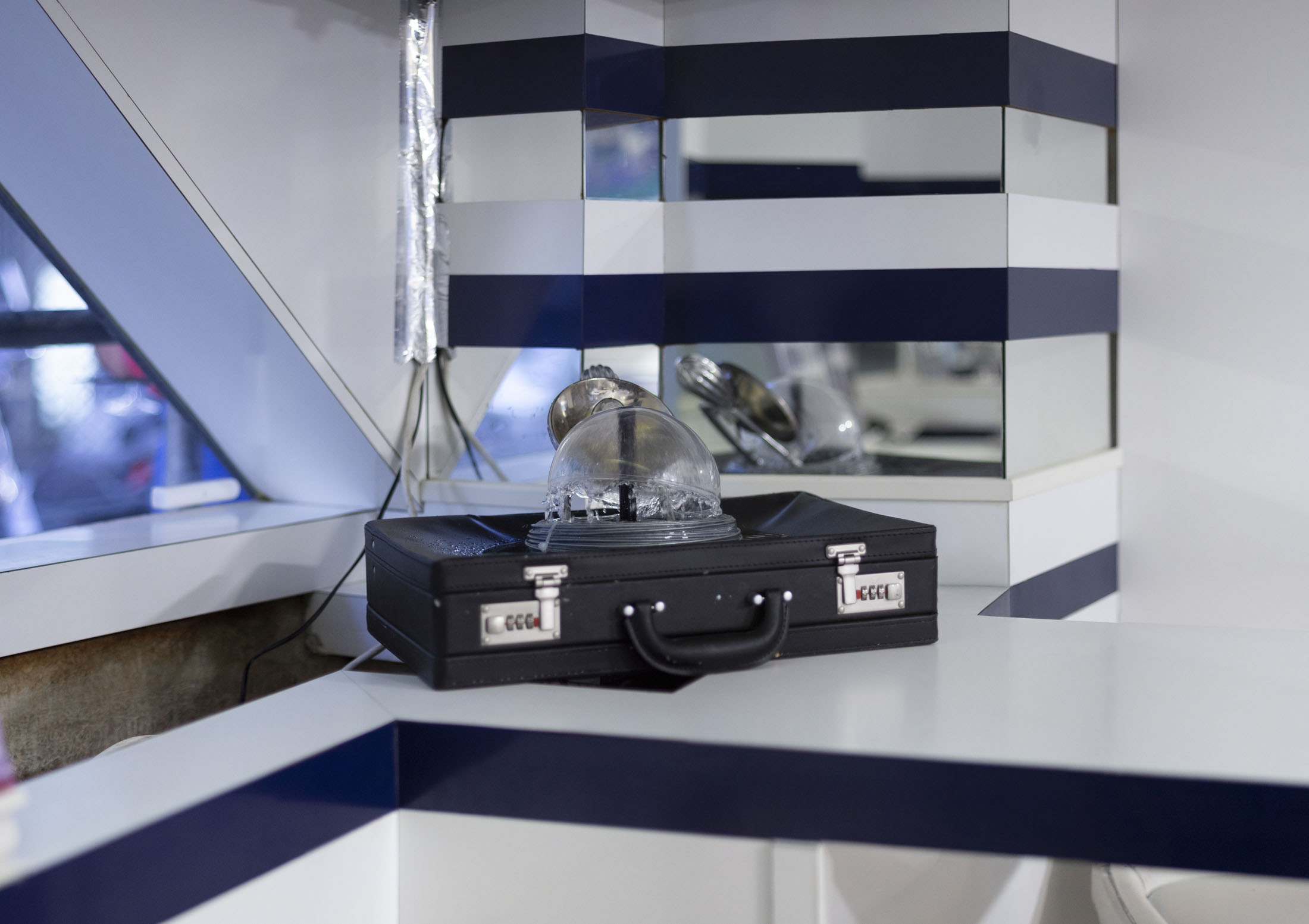
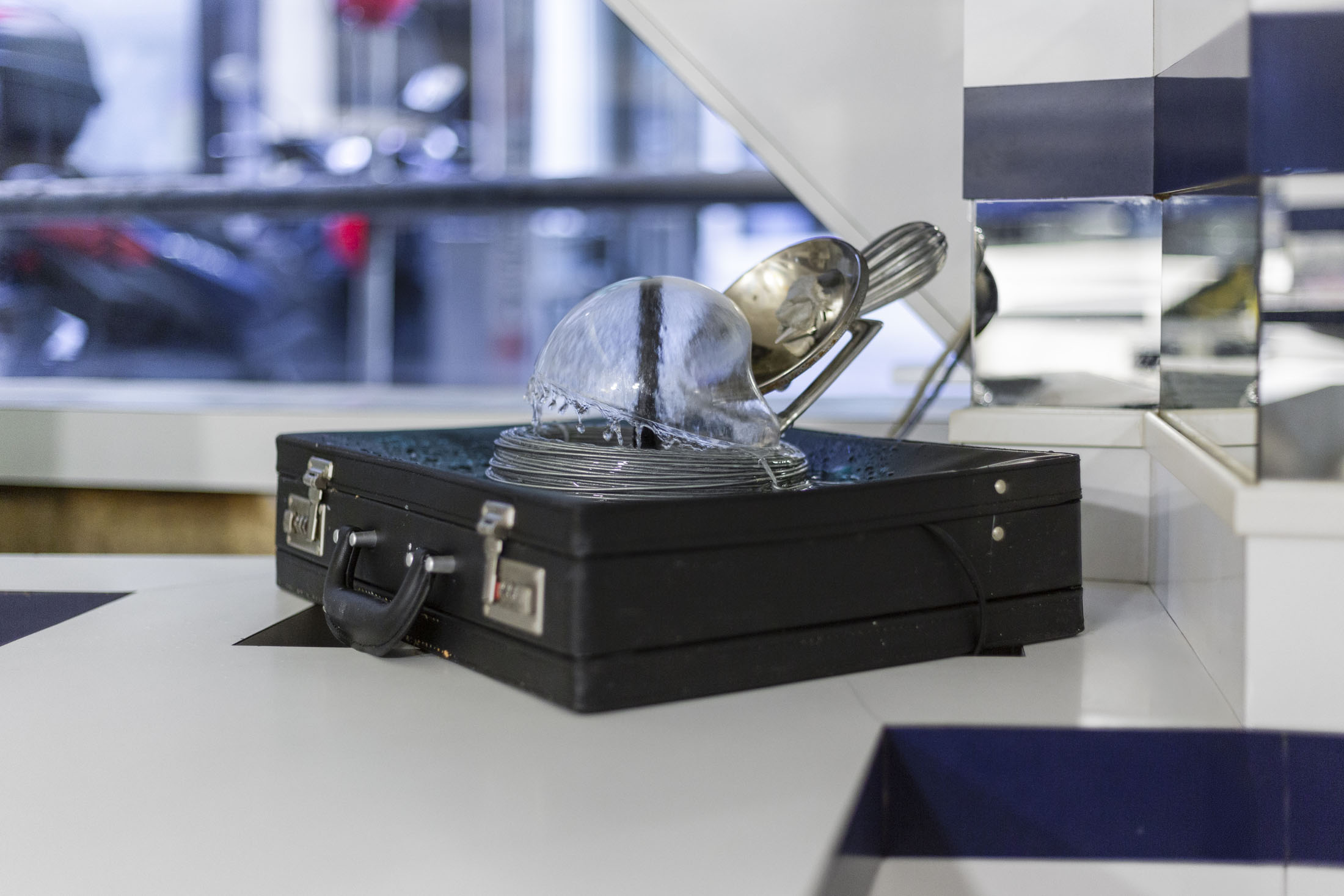
At El Caballo Blanco II, a fountain by Jack O’Brien hides within the noises of daily life in the café. Silo, 2026–– a perforated suitcase becomes the host for a circular dynamic between presence, performance and dissolution.
In O’Brien’s work, movement appears across materials, forging an oscillation towards redistribution, often through chances, assemblages and frictions. His sculpture operates as a pause within instability, a stretched punctuation in time or an ongoing tension between the sensual and the static.
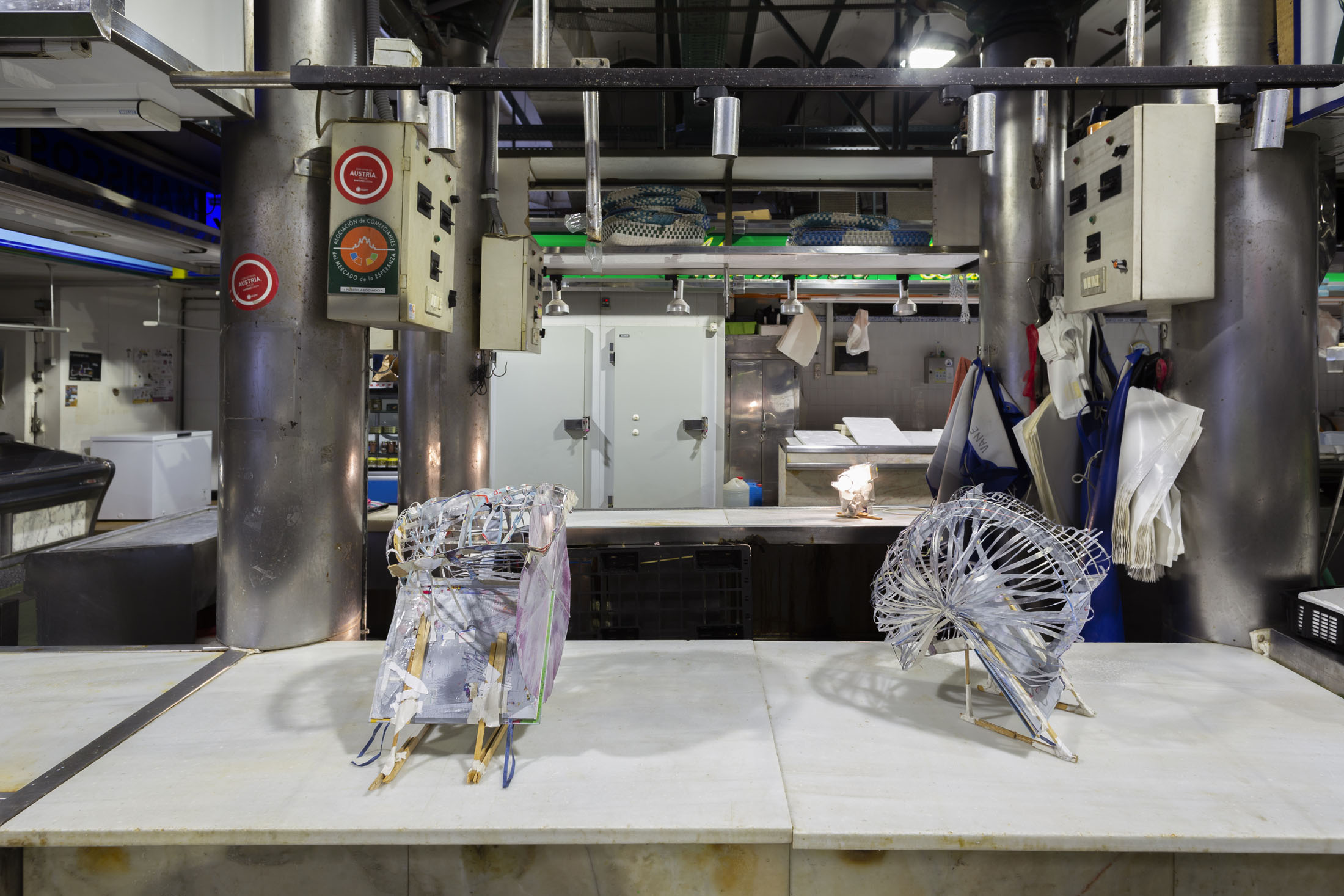
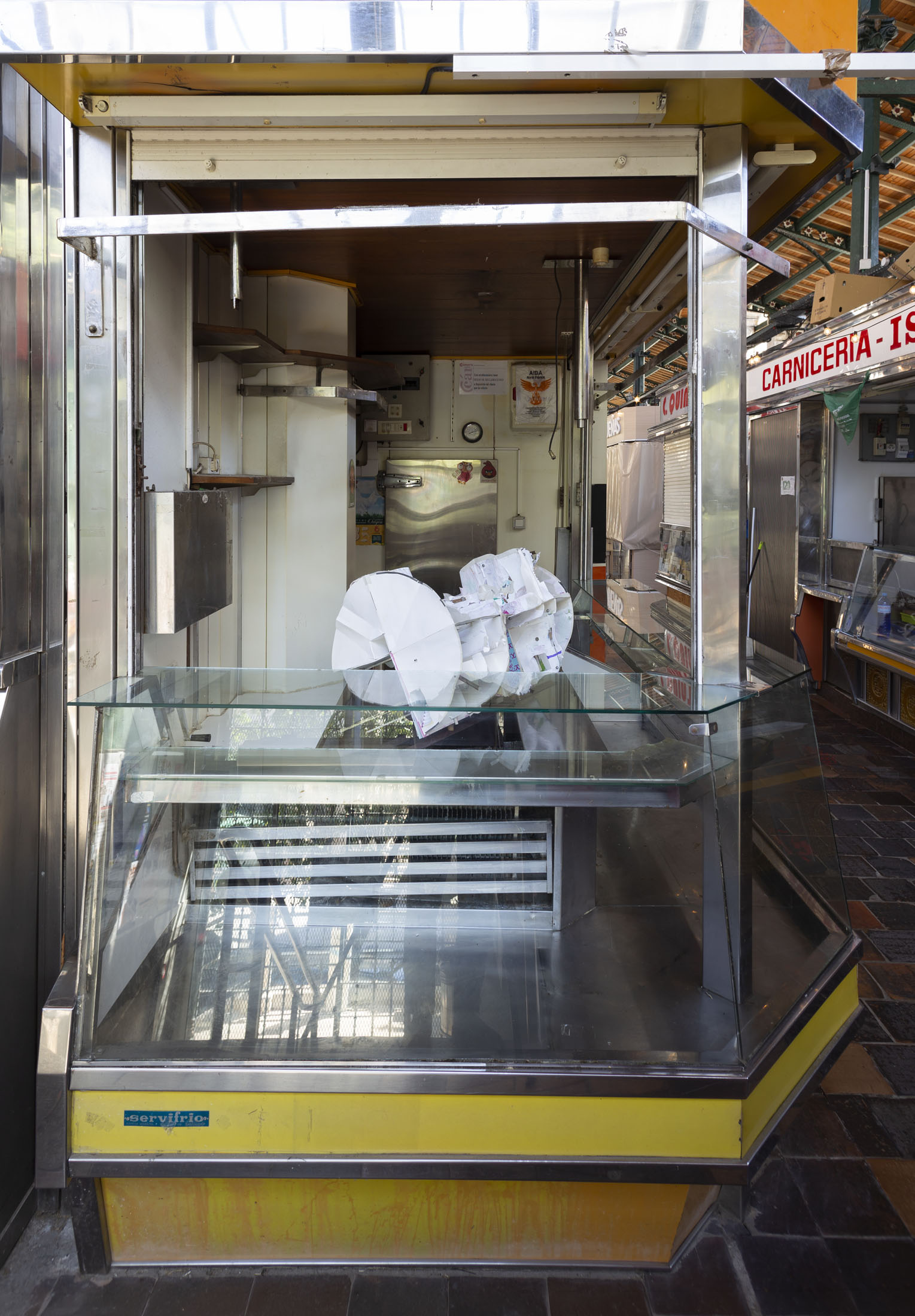
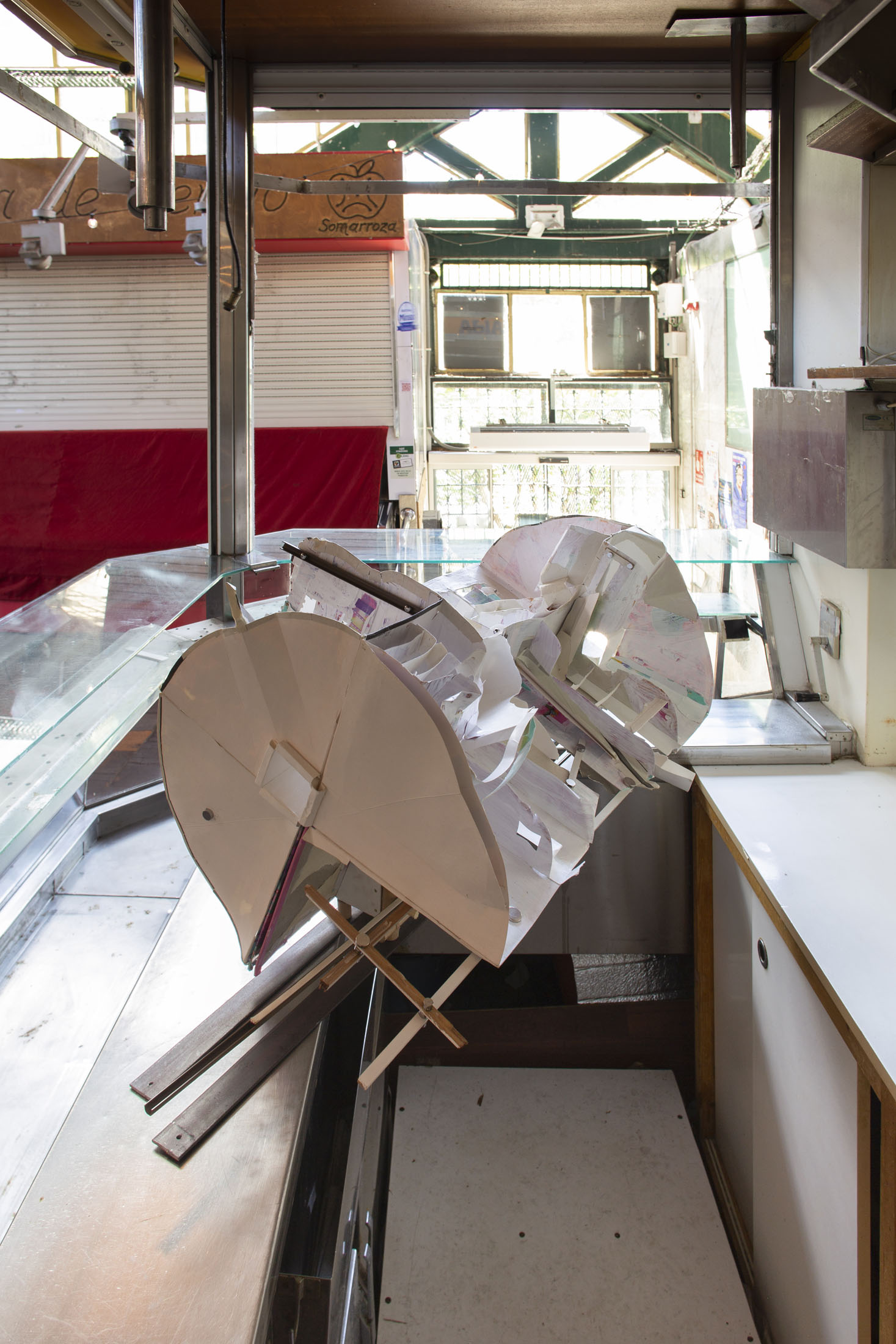
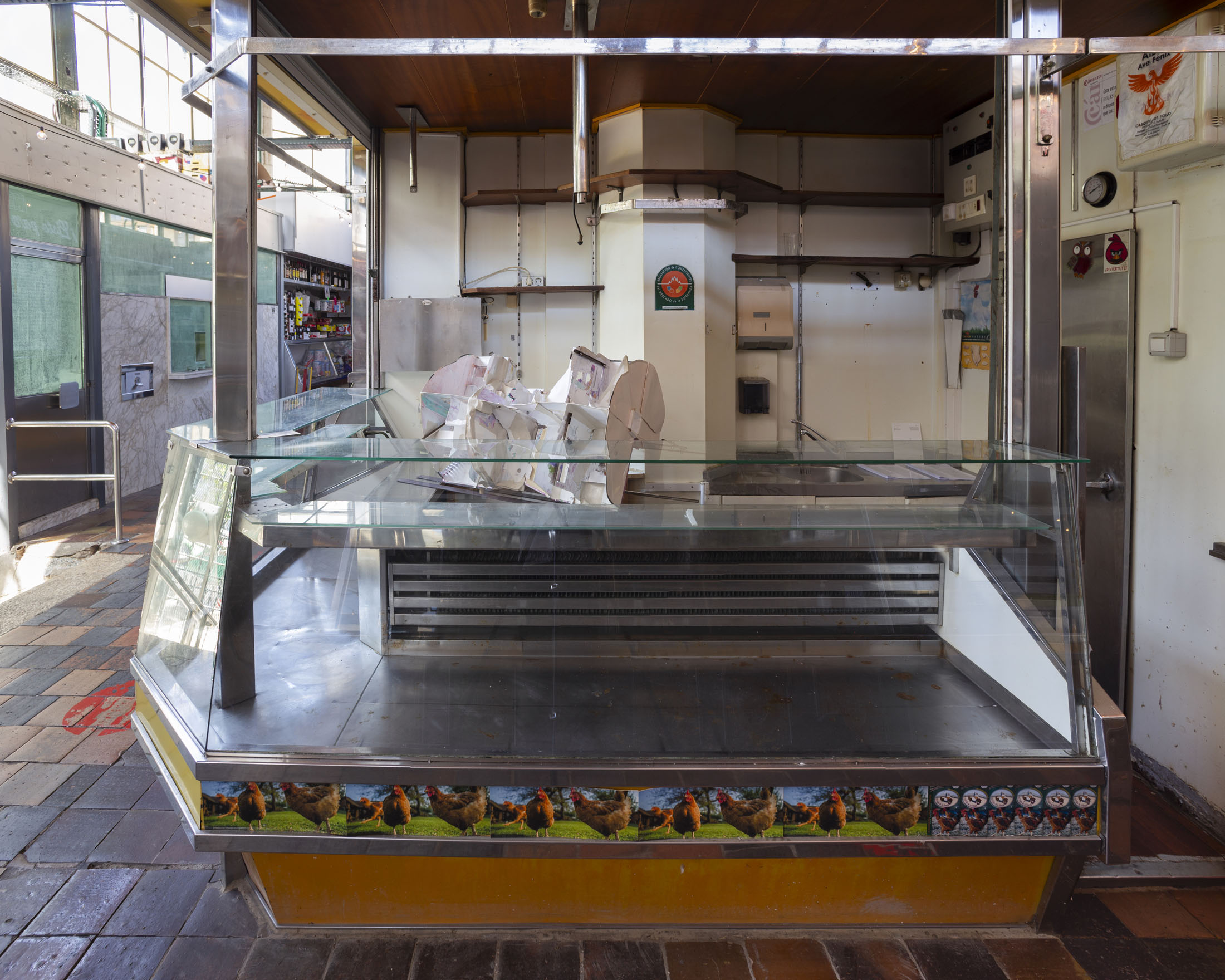
A few metres away, encountering Víctor Ruiz Colomer’s work at El Mercado de la Esperanza entails navigating a trajectory of multiple orientations, detours, primary and secondary corridors. Ruiz Colomer’s practice unfolds as a broader investigation into the construction of space and the material friction inherent to that process. Through a range of media—some more firmly rooted in sculptural tradition, others still indeterminate or held in suspension—the artist examines the relationship between the different scales that shape and condition a given spatial context.
Installed across two market stalls on the first and second floors of Mercado de la Esperanza, his work occupies a site defined by commercial circulation, the exchange of goods, and flows of desire and attention. Its spatial autonomy negotiates a broader set of surrounding dynamics, seeking to redirect or place them under tension. This body of work is part of a larger genealogy of work in which the artist moves his practive from the studio to a mental hospital and its surrounding environment, thus delving into the notion of accidental that interview, his exhibition at fluent, initiated. Such methodology enables to establish relations across different registers and scales that open a broader undersating of space through diverse logics and forms of perception.
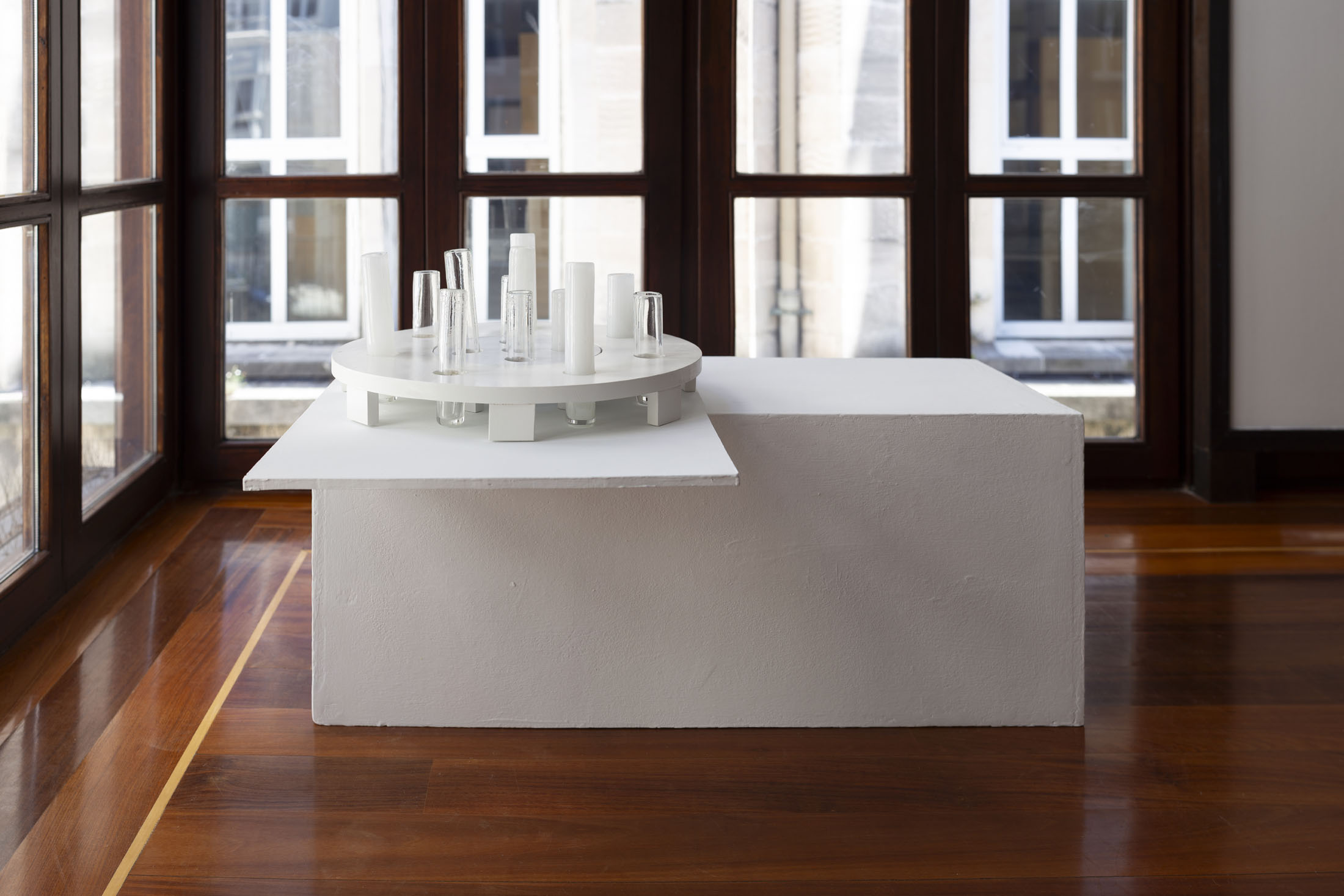
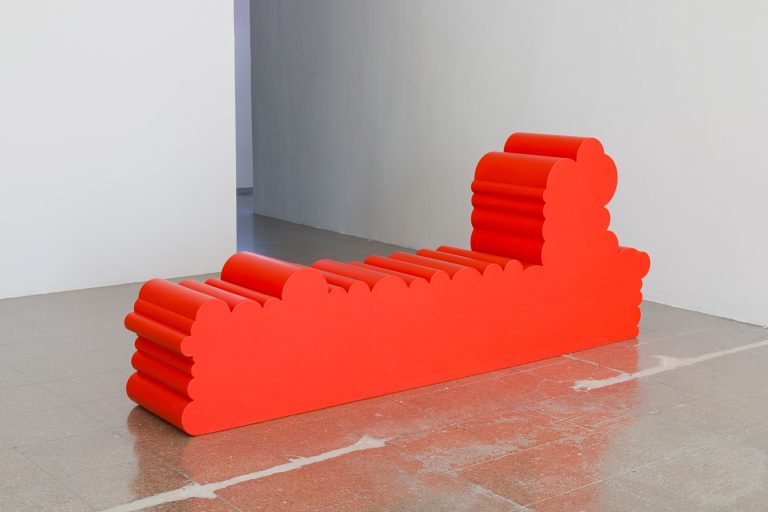
In Georgina Hill’s practice, objects often appear as axis of the in–between. Her works address the stream of memories, intimacies and social relations inscribed into material codes and spatial orders. Hill is particularly interested in the emotional and atmospheric dimension of architecture, examining how spaces are shaped by personal experience, background and collective memory. Fountain model, 2026 might take on the appearance of a child’s game, a domestic embellishment or a psychomotor device. A container of exchanges that is simultaneously a shelter, a stage and a projection surface.
It is also a system that can be remade by the person installing as the glass parts are not fixed but can be rearranged. The frames can be rotated or placed apart, thus reminding to structures as in a theatrical logic, giving shape to a specific condition. Playing with representation and presence there’s a certain amount of suspended disbelief involved. Fountain model also nods to Duchamp’s readymade, in its shades of off-white, swapping the urinal for a group of potential drinking vessels.
Garden ponds, 1996–2026 is an artist book made out of c-prints from scanned photographs of the ponds that Hill’s grandmother made in her garden in the 1990s, which she used to visit often. Hill has created ellipse cut-outs in archival paper in between each image to show a partial view at first, in a shape redolent of the suburban pond. The prints and paper are wire ring bound. It is a simple collection of images that relate to the fountain, recalling on her grandmother’s gesture to excavate and plant beside and fill the holes with water, in a similar pulsion to this of sculpture and installation. The keyhole view on the scene suggests a mystery that these ponds retained despite their setting in what might appear generic suburbia.
Resounding Water is part of an ongoing sound sculpture developed around the idea of melting MIDI and digital audio like liquid metal and shaping and forging something new. The work is part of Lamin Fofana’s ongoing practice of transmuting text into sound, particularly echoing a 1948 poetry book by Aimé Césaire. The resulting sound is a rendition of History of the Voice, a series of stretched-out voice fragments, field recordings, and debris concerning presence and environmental expression.
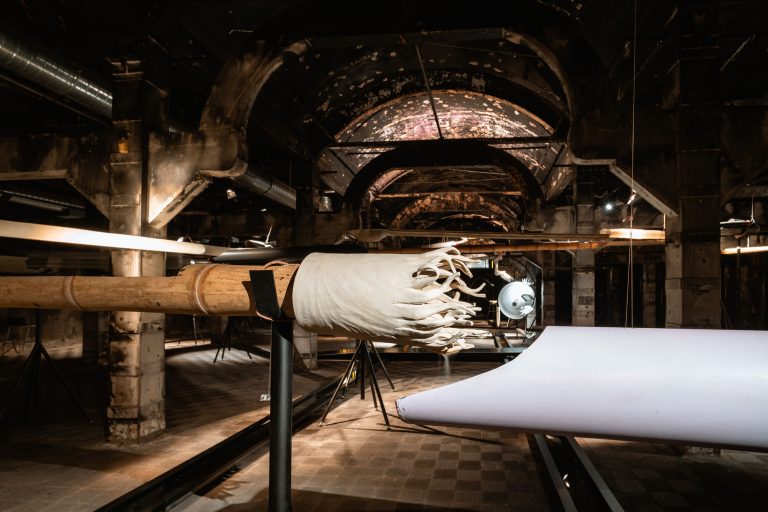
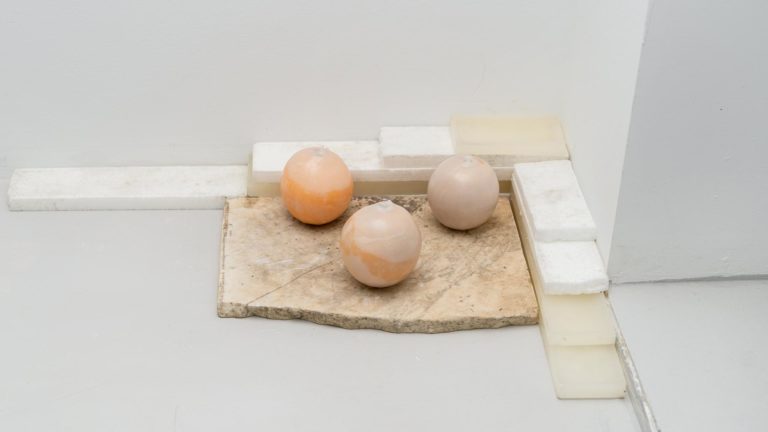
1. Head / 2. Source / 3. Splash / 4. Stream / 5. Upper Course / 6. Splash / 7. Splash / 8. Middle course / 9. Lower course, 2026, also contains a melting or casting process in itself, departing from Estéfana Román Matesanz’s interest in the mechanisms of matter once it ceases to operate according to the stable logics of objecthood. Her sculptures frequently exceed the limits of fixity, containment, and definition, suggesting instead material states that persist through movement, pattern, or flow, cutting across multiple phases of material transformation while inviting the viewer to imagine others yet to unfold. The circulation of its materials never fully resolves into a regulated system; instead, it continually reconfigures itself, shifts, adheres, and diffuses into its surrounding environment.
As you get to the end of the itinerary, CAConrad writtes a poem explicitly dedicated to fluent and the love story between the organisation and the poet. Fountain poem, 2026 is authored in the poetic style [Soma]tics — that they coined, a form of writing that involves the body as a resonant device porous to everything that surrounds it.