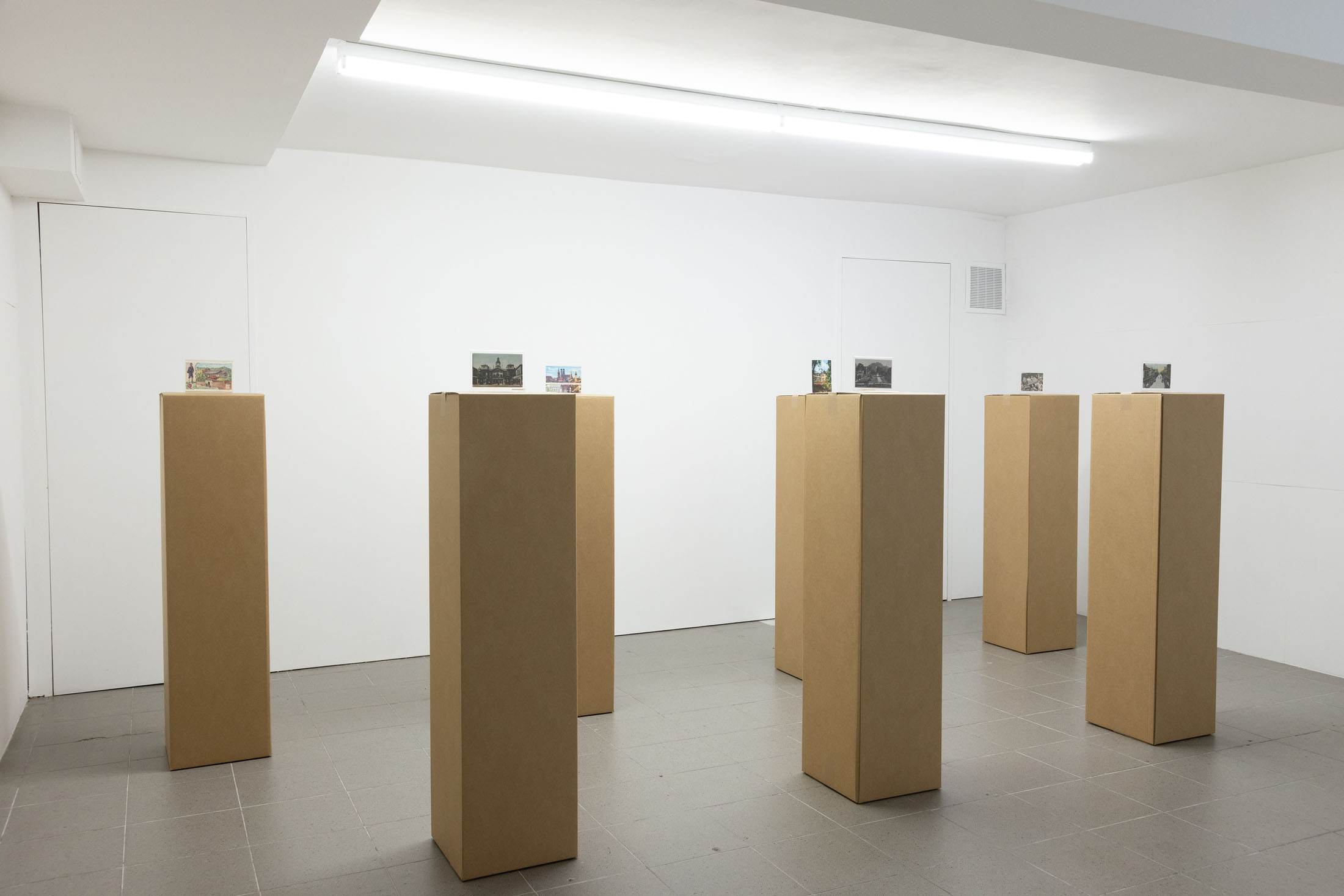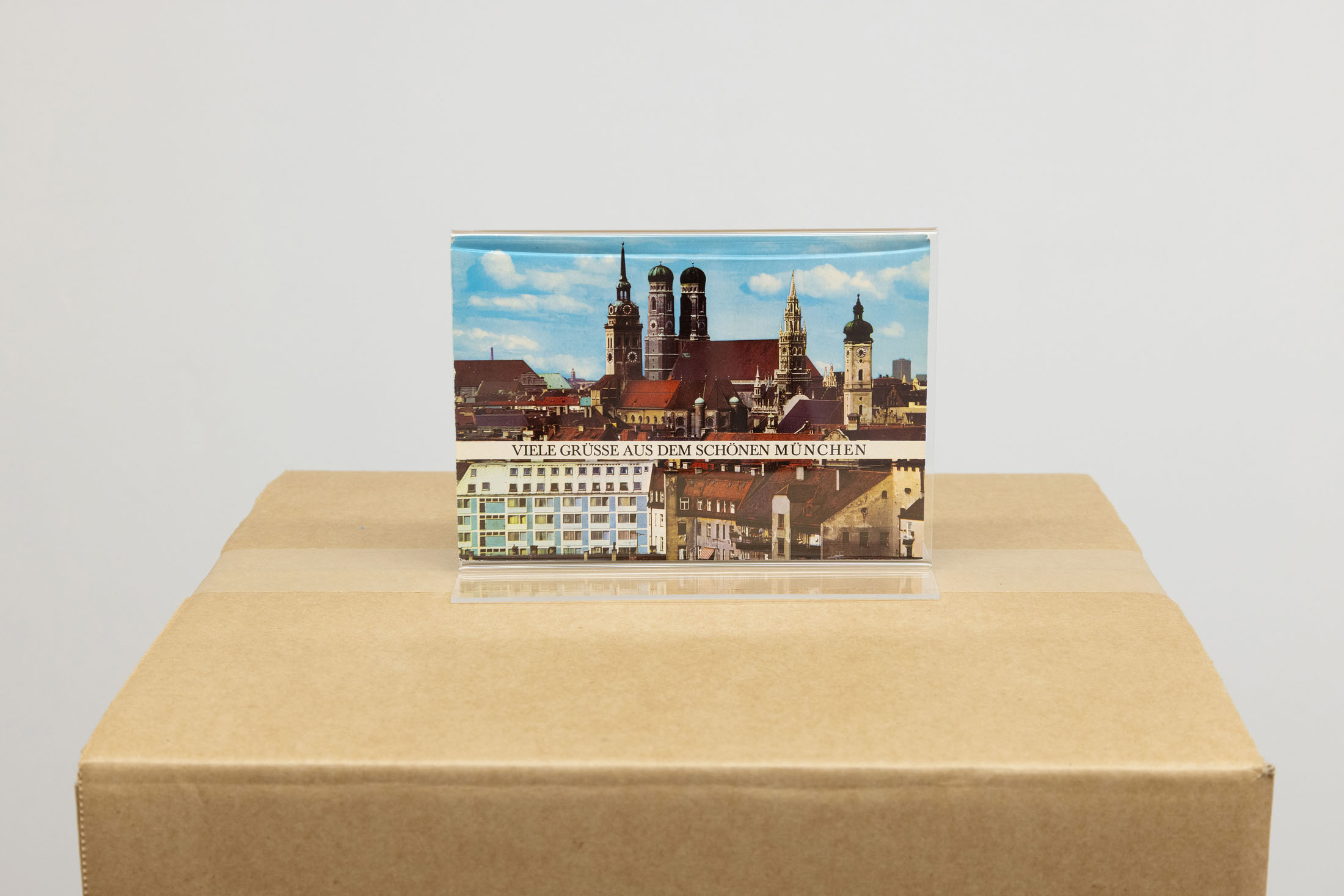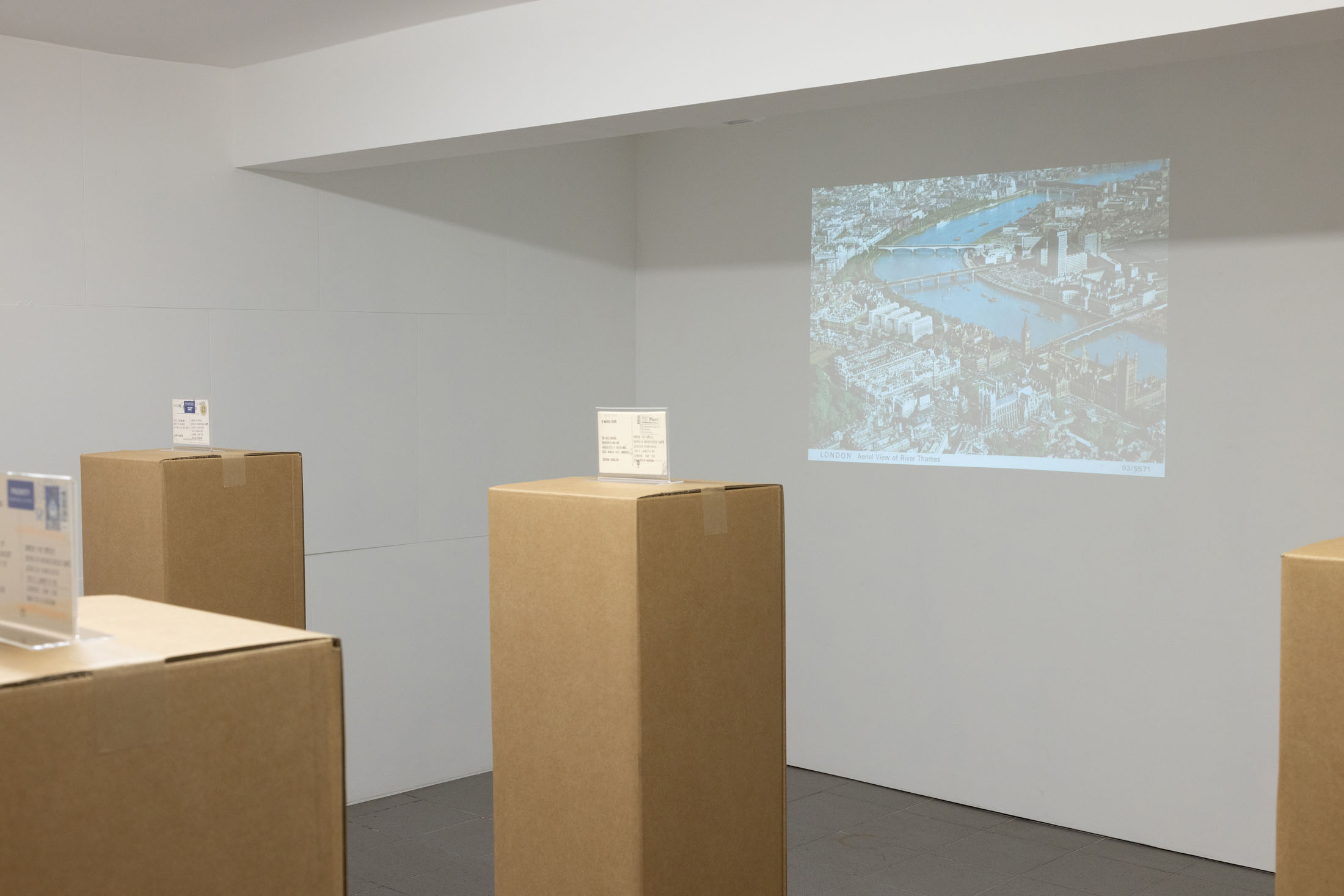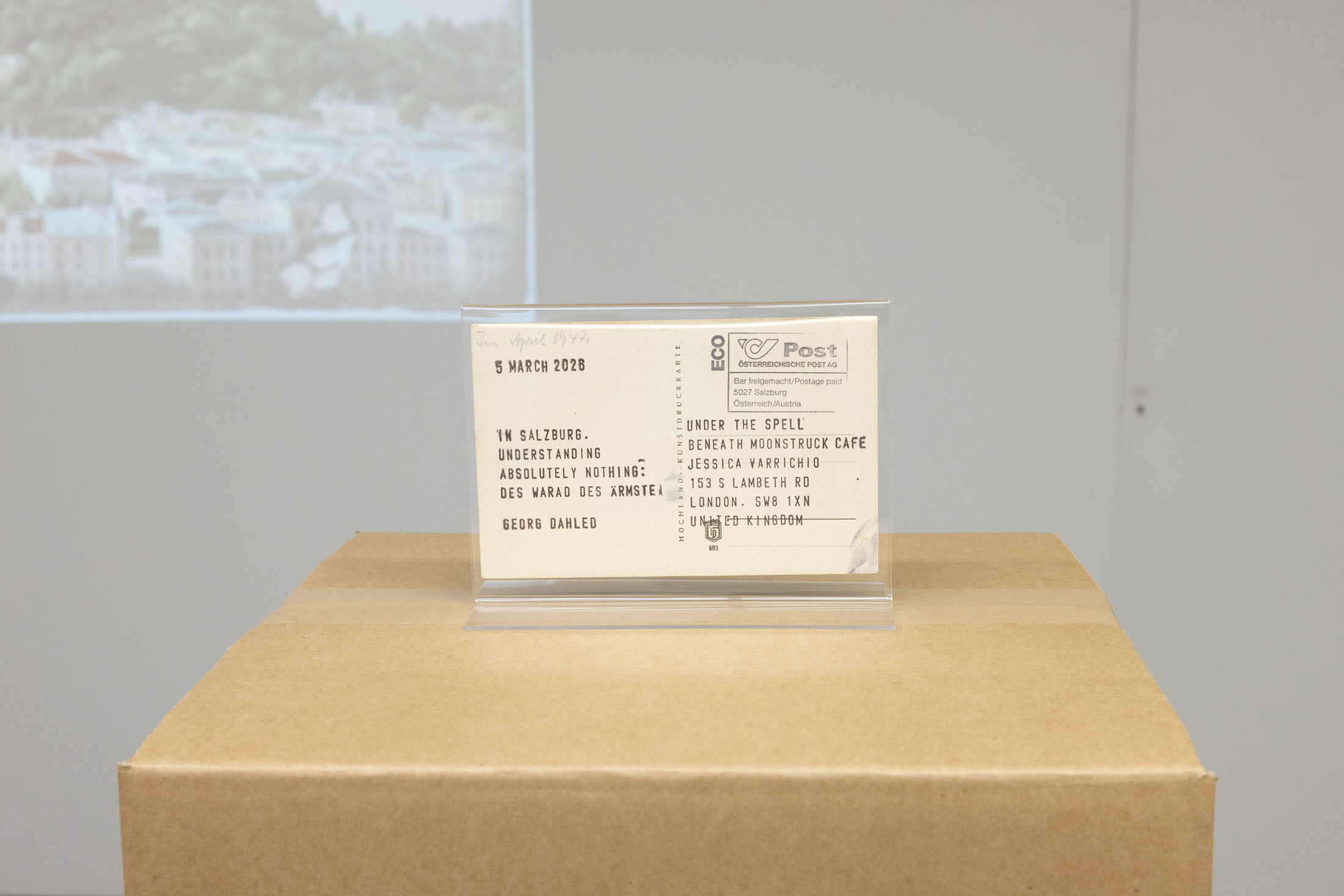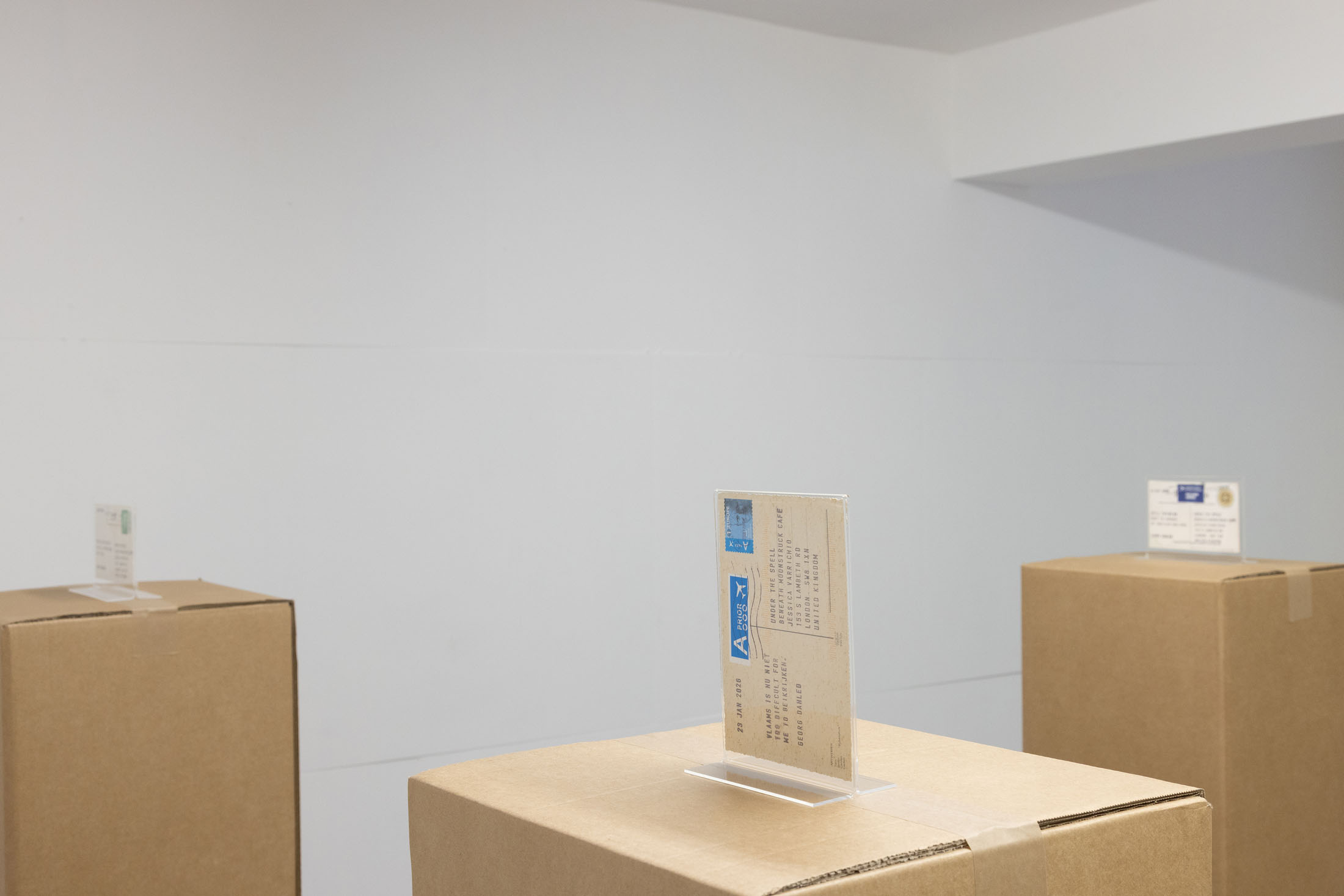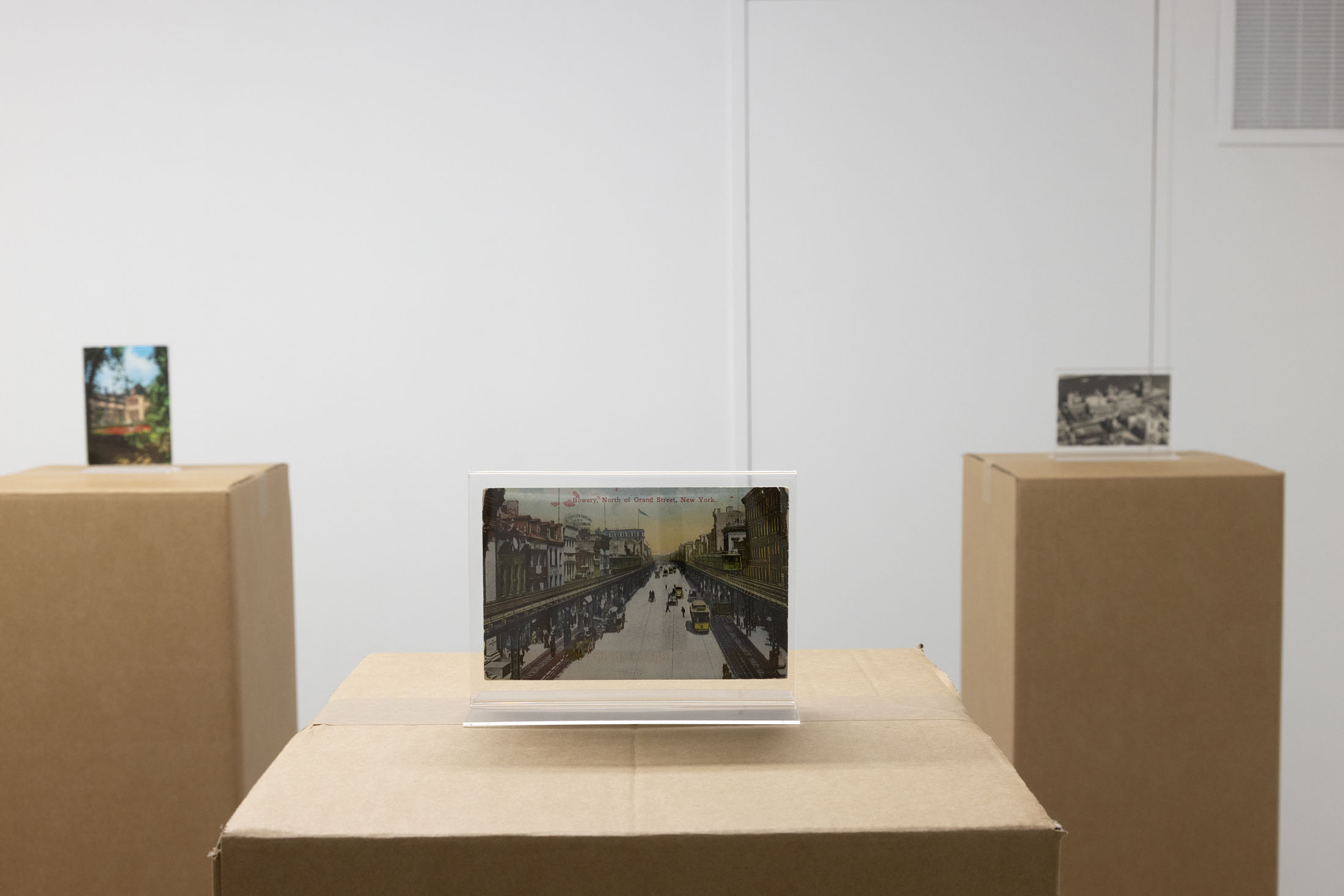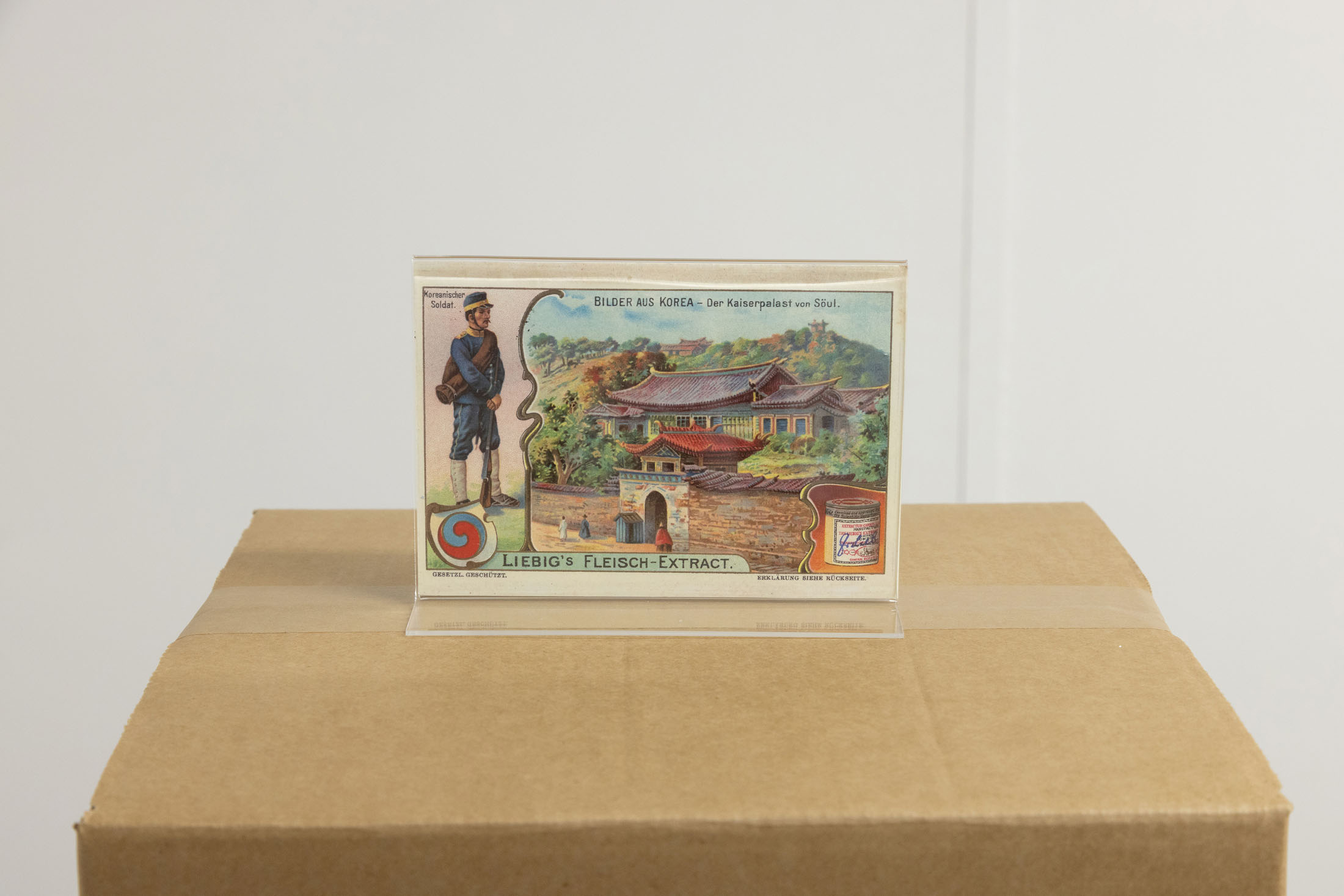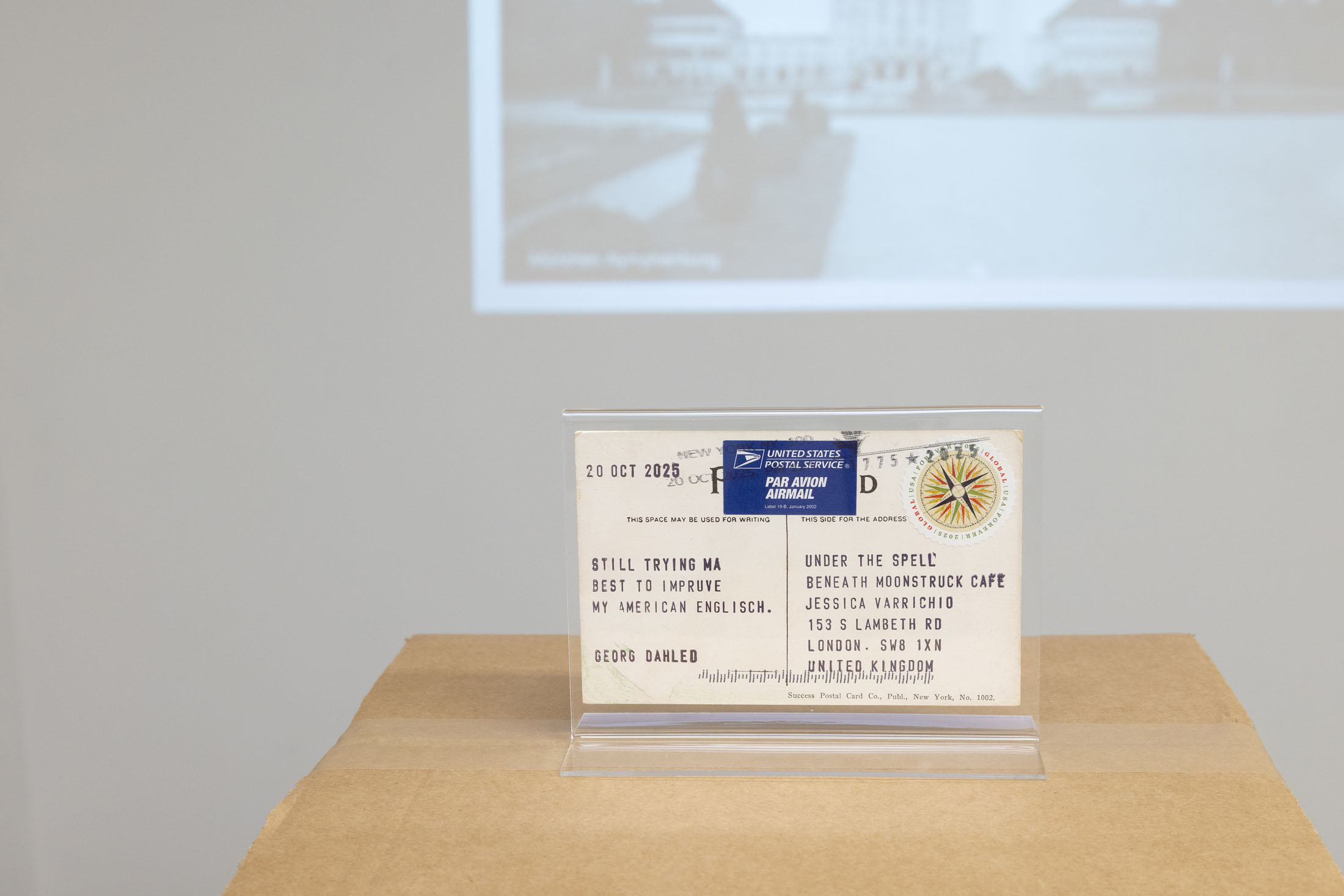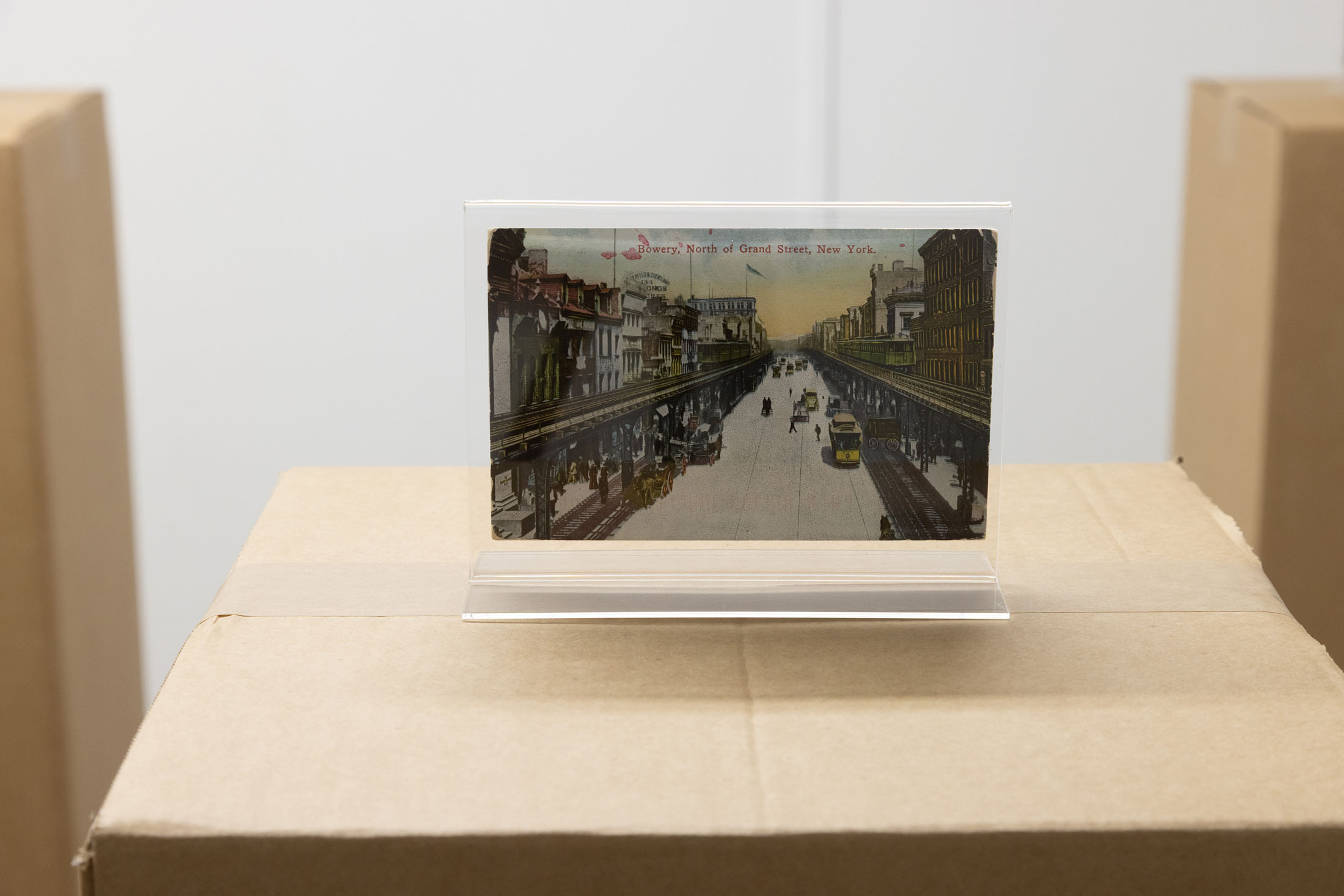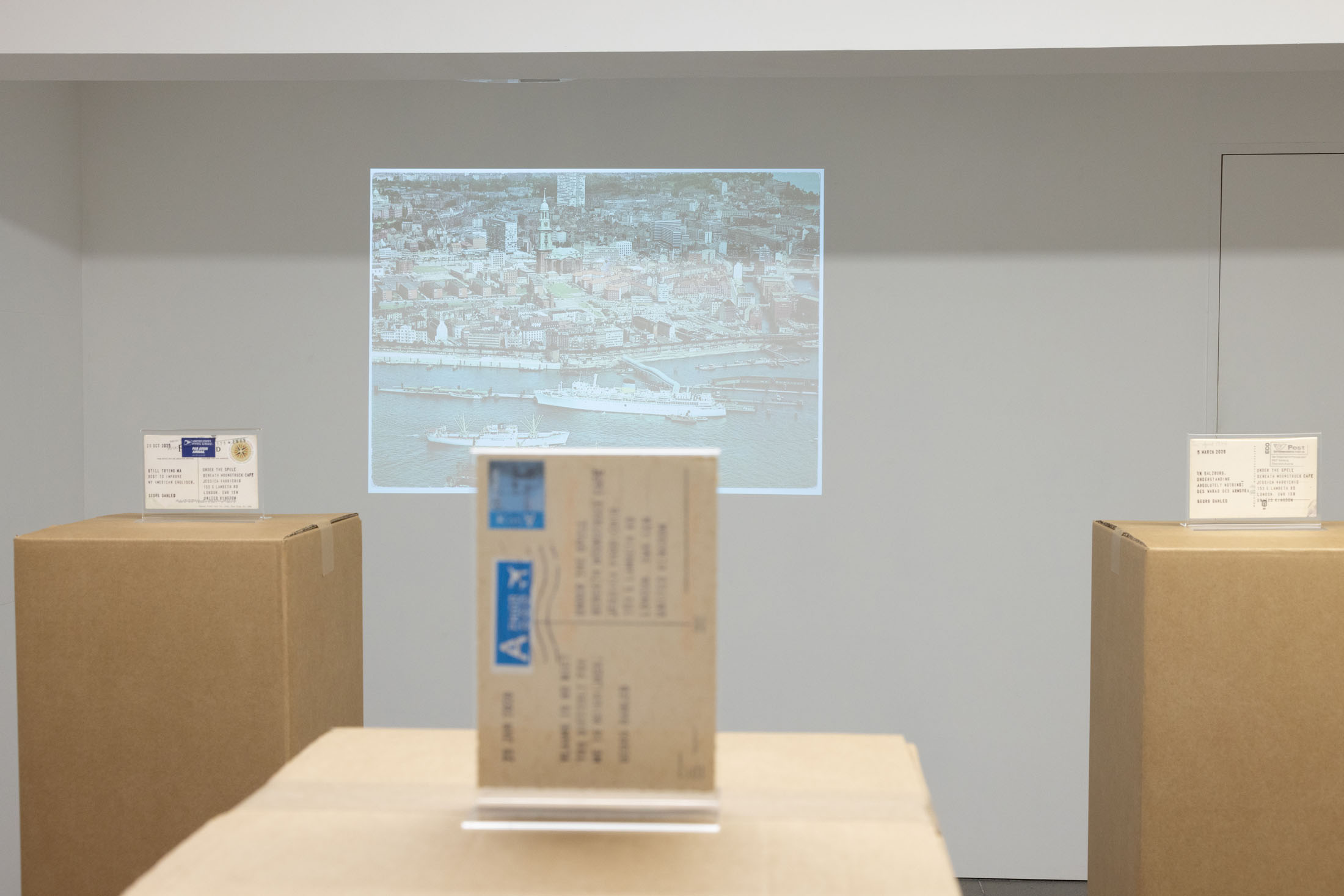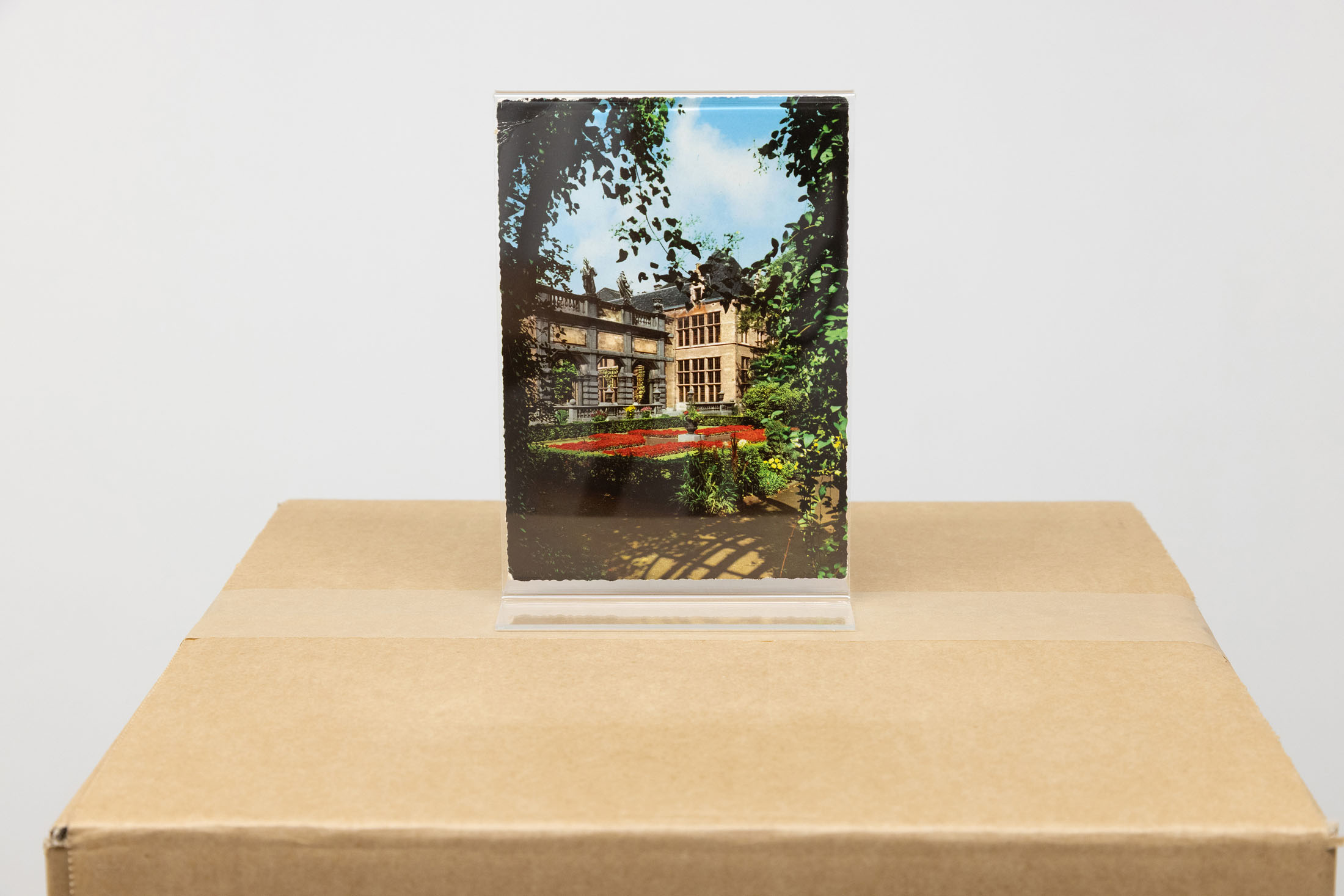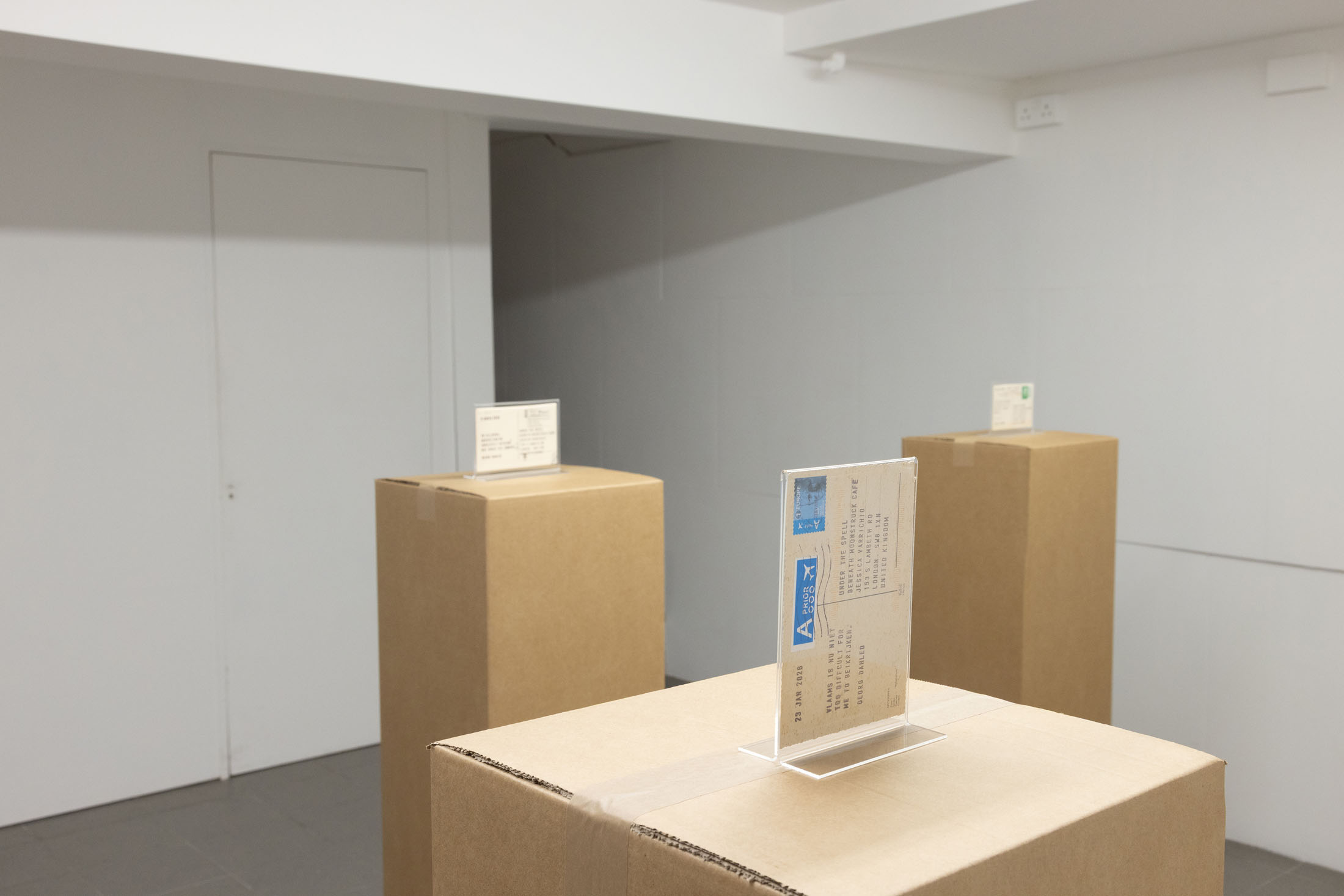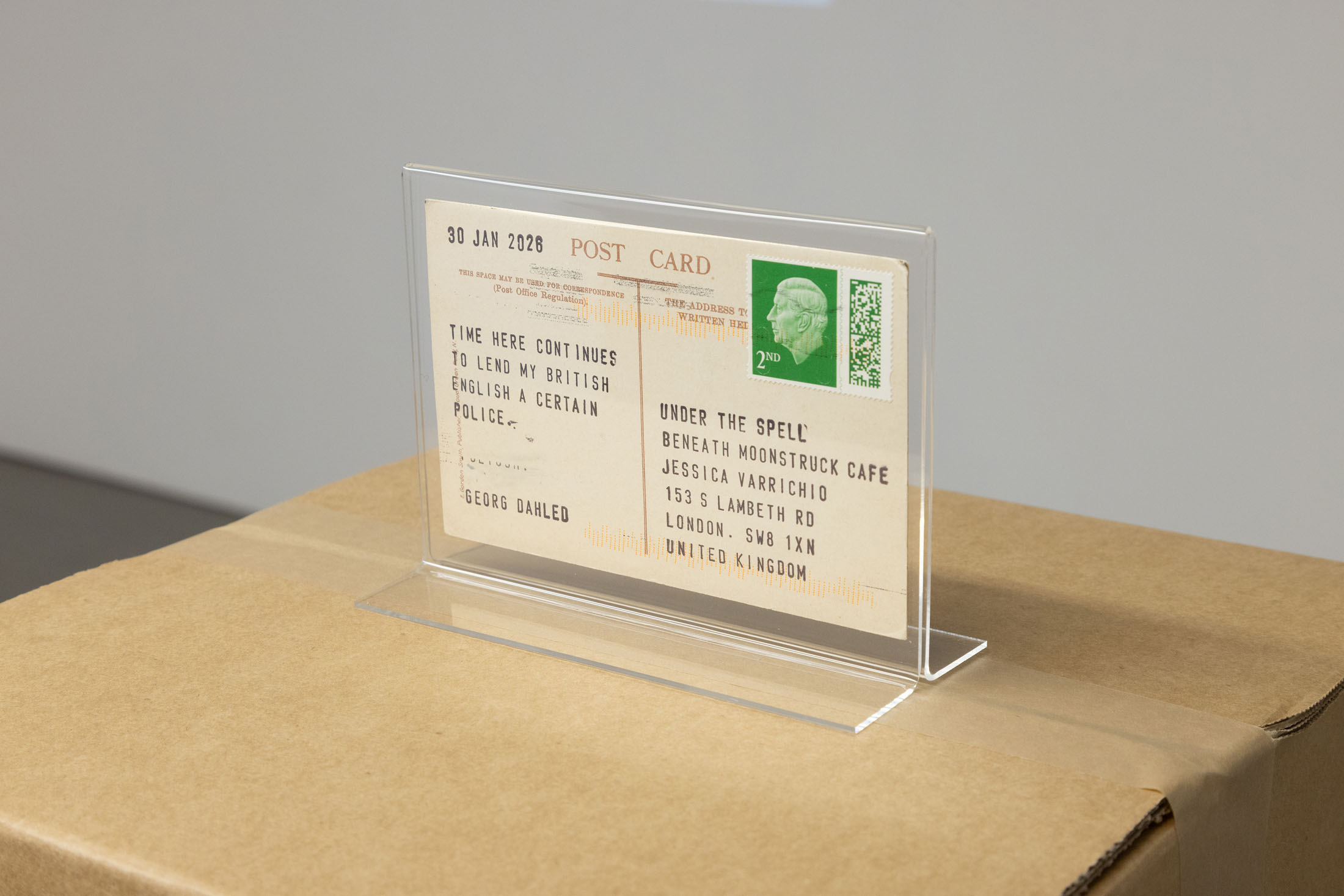
Under the Spell is pleased to present its fourteenth exhibition, Luxury Liner, by Georg Dahled, accompanied by the launch of the artist’s new publication of the same title. The exhibition brings together a series of vintage postcards sent by the artist from different countries over the course of a year. Each postcard bears a stamped phrase reflecting on the language of the place from which it was sent. It attempts to learn, inhabit, mispronounce, misunderstand, or approximate another tongue. The sentences mutate from card to card. Misspellings and grammatical errors migrate across the series, transforming through repetition. No postcard is identical. Language here appears not as mastery, but as exposure, vulnerable, public, and at the same time intimate, precisely because of the nature of the postcard itself, permanently open, written without the protection of an envelope, circulating through strangers’ hands before arriving at its destination.
Drawn from flea markets, antique shops, and eBay, the postcards themselves are residues of older tourist economies. They depict landscapes that no longer exist, or survive only as images from another era. Their faded colours, obsolete views, postal marks, scratches, and stains become part of the work’s vocabulary. The postcards travel physically through contemporary infrastructures while carrying images from the past, collapsing different temporalities into a single object. The result is both melancholic and strangely tender: a portrait of communication slowed down enough to reveal its fragility.
The exhibition unfolds through the physical postcards sent directly to Under the Spell, displayed atop plinths constructed from cardboard shipping boxes, while a projector presents a wider selection of postcards mailed to friends, artists, and interlocutors connected to the project. These recipients form an invisible network around the work. They are the people through whom language, affinity, projection, and misunderstanding circulate.
The title Luxury Liner operates across multiple registers. It evokes the romance of travel and the faded glamour of ocean liners transporting passengers between continents, but also the “line” itself: the stamped sentence running across each postcard, carrying the marks of linguistic slippage and imperfect translation. The title further reflects on the increasing economic absurdity of physical correspondence. During the making of the work, sending a single postcard internationally could cost more than £3.00. What was once ordinary has become a luxury gesture. To send a postcard today feels almost excessive: slow, impractical, sentimental.
This sense of obsolescence shadows the exhibition. In 2025, Denmark became the first country in the world to effectively end its national letter delivery service after more than four centuries, declaring physical letters economically nonviable in the face of digital communication and parcel logistics. The disappearance of postal infrastructures mirrors the disappearance of other analogue forms of relation: handwriting, delayed communication, waiting, getting lost, misreading. The cardboard-box plinths subtly reflect this transition from letter economy to parcel economy, from correspondence to delivery, from communication to logistics.
At a moment when communication is increasingly frictionless, automated, outsourced, and instantaneous, Dahled insists on the opposite: slowness, error, physicality, and doubt. His practice foregrounds the awkward beauty of trying to speak in someone else’s language, the vulnerability of imperfect communication, and the material traces left by travel itself. Phrases such as “MIN SWISS GERMAN IS PROGRESSING DAY BY DAY”, “STILL TYRING MY BEST TO IMPRUVE MY ’MERICAN ENGLISH”, or “SO FAR THE KOREAN LANGUAGE HAS BEEN A BOTTOMLESS PIT FOR ME” oscillate between humour, failure, sincerity, and self-exposure. The mistakes are never corrected because the mistakes are the work.
Formally sparse and conceptually rigorous, Luxury Liner situates itself within a lineage of text-based conceptual practices associated with On Kawara and Lawrence Weiner. Like Kawara’s date paintings and telegrams, Dahled’s postcards register presence through time, distance, and repetition; like Weiner, language itself becomes material, sculpture, and event. Yet unlike the declarative certainty often associated with conceptual text works, Dahled’s language remains unstable, accented, hesitant, and exposed to failure. His postcards resist the seamless neutrality promised by predictive translation tools and AI-generated images. They remain stubbornly human: marked by delay, misunderstanding, accent, distance, and touch.
In Luxury Liner, communication survives not through efficiency, but through effort. The postcard becomes both relic and gesture: a small, fragile insistence that language still matters precisely where it breaks apart.