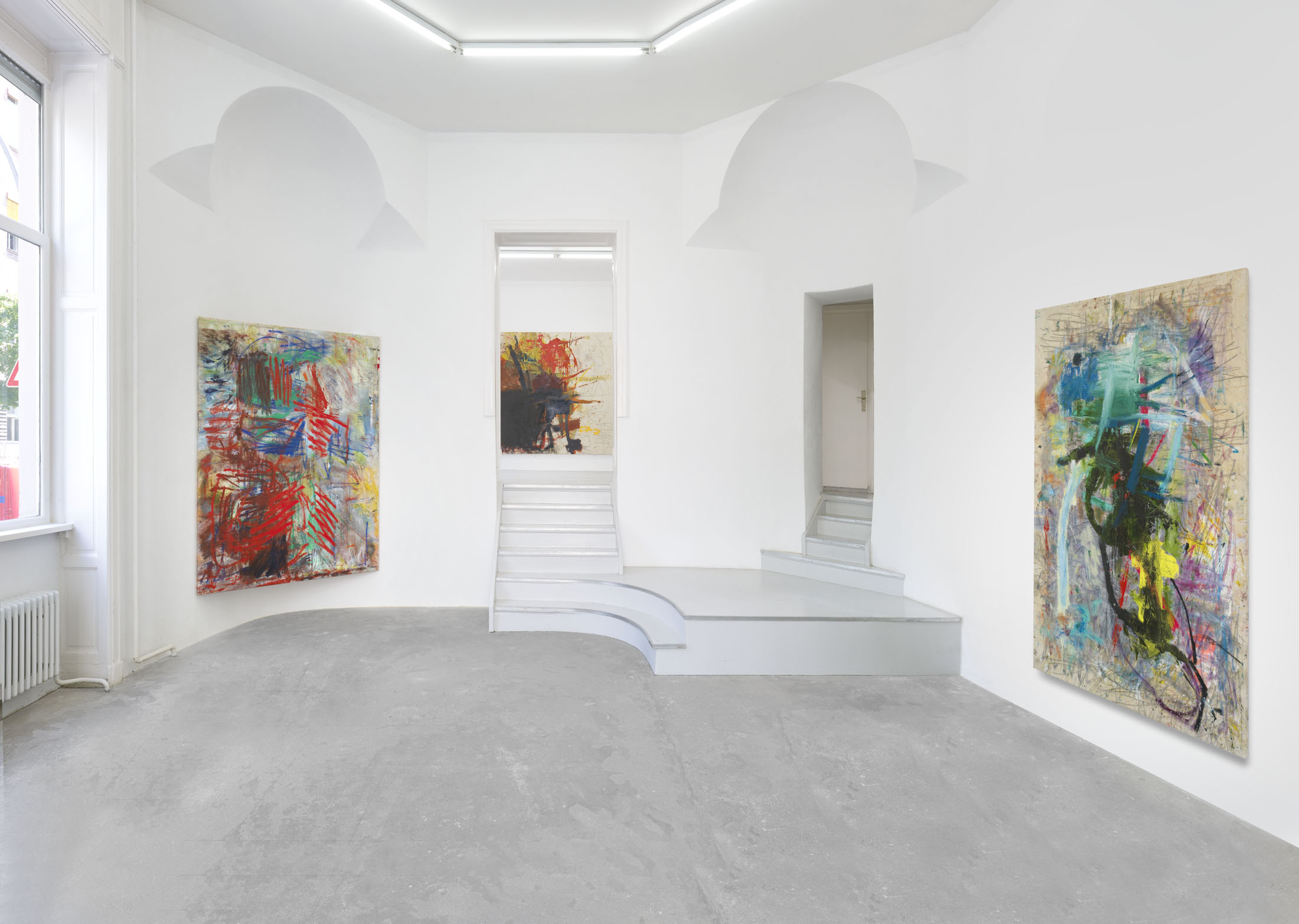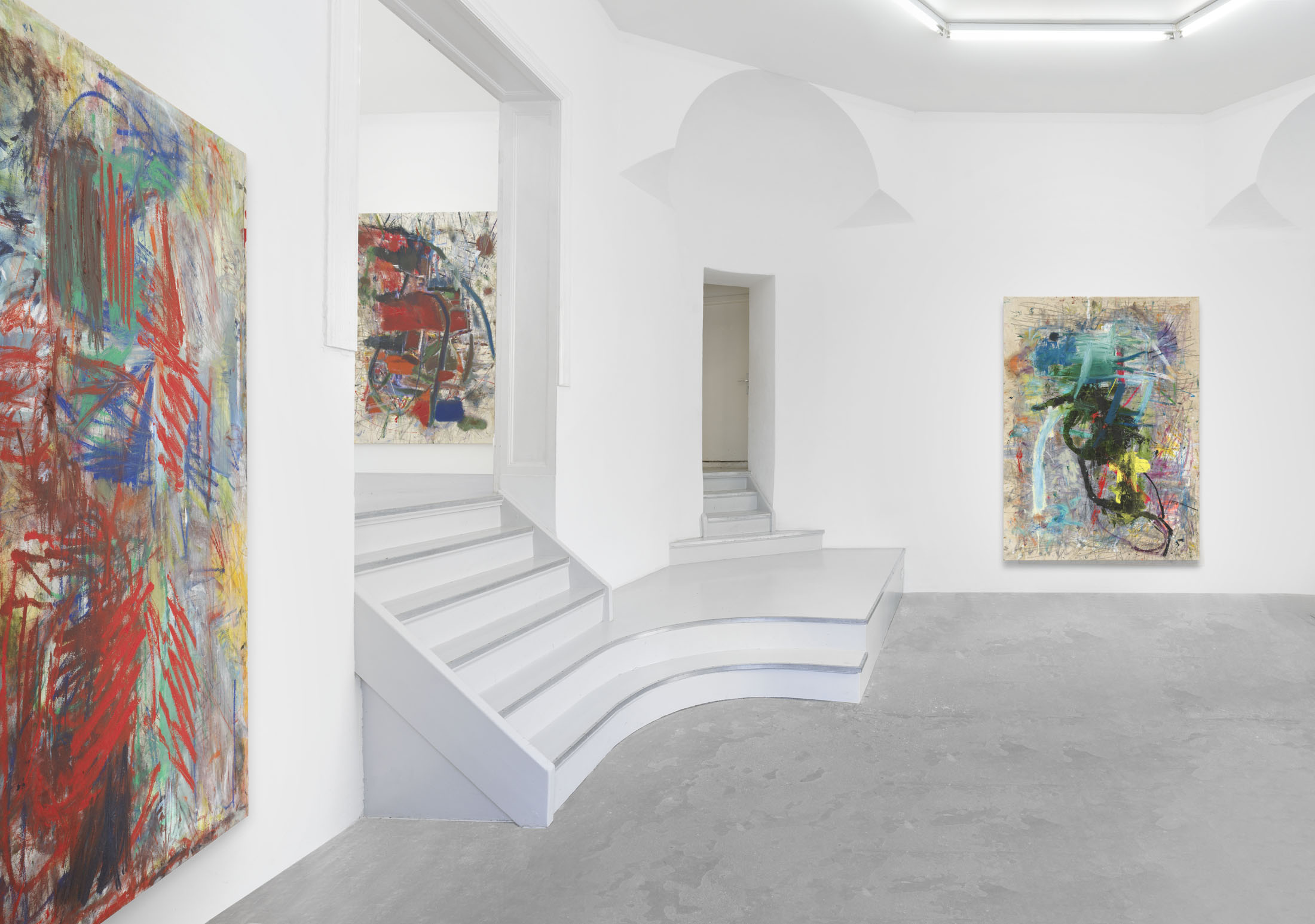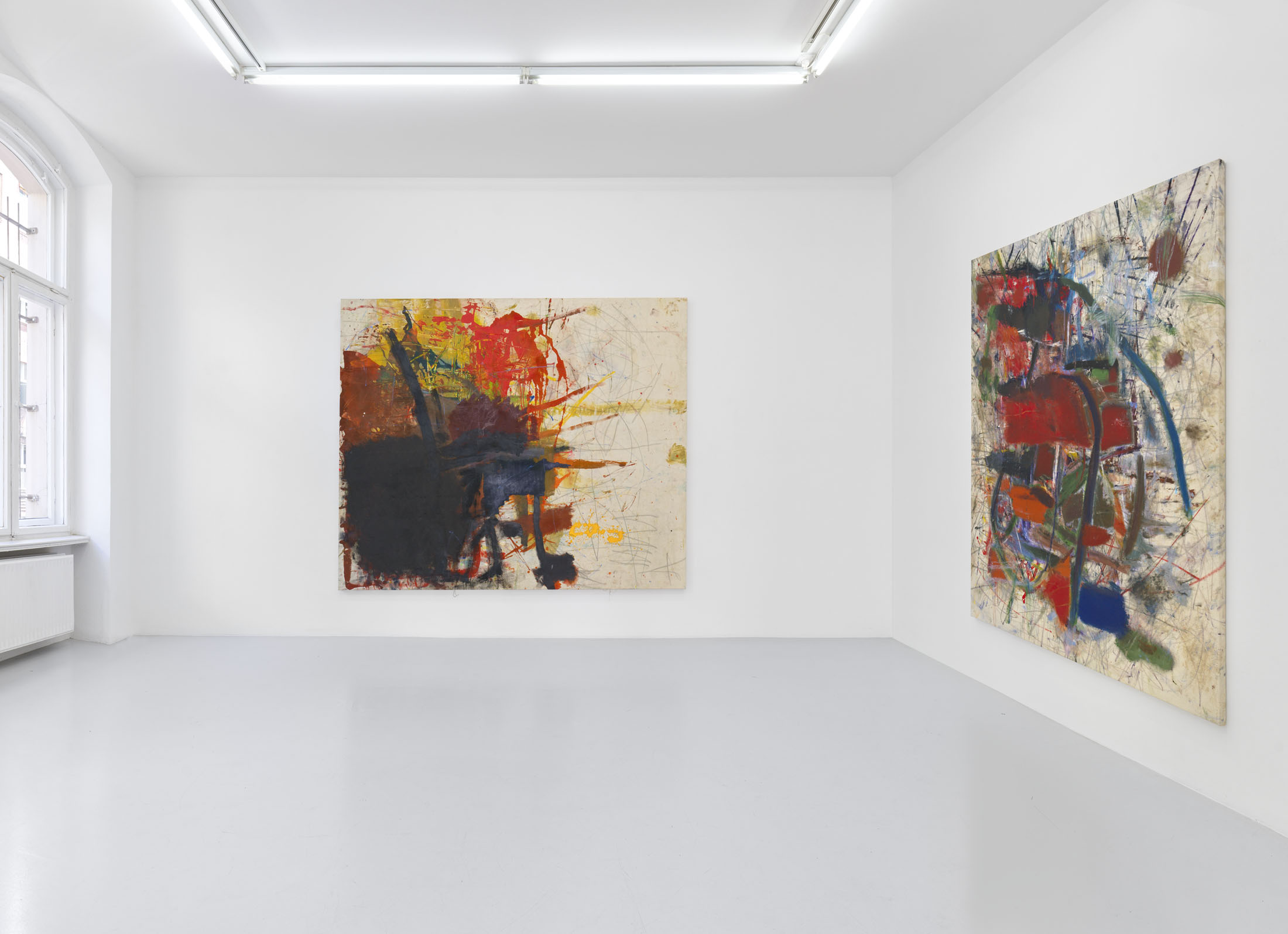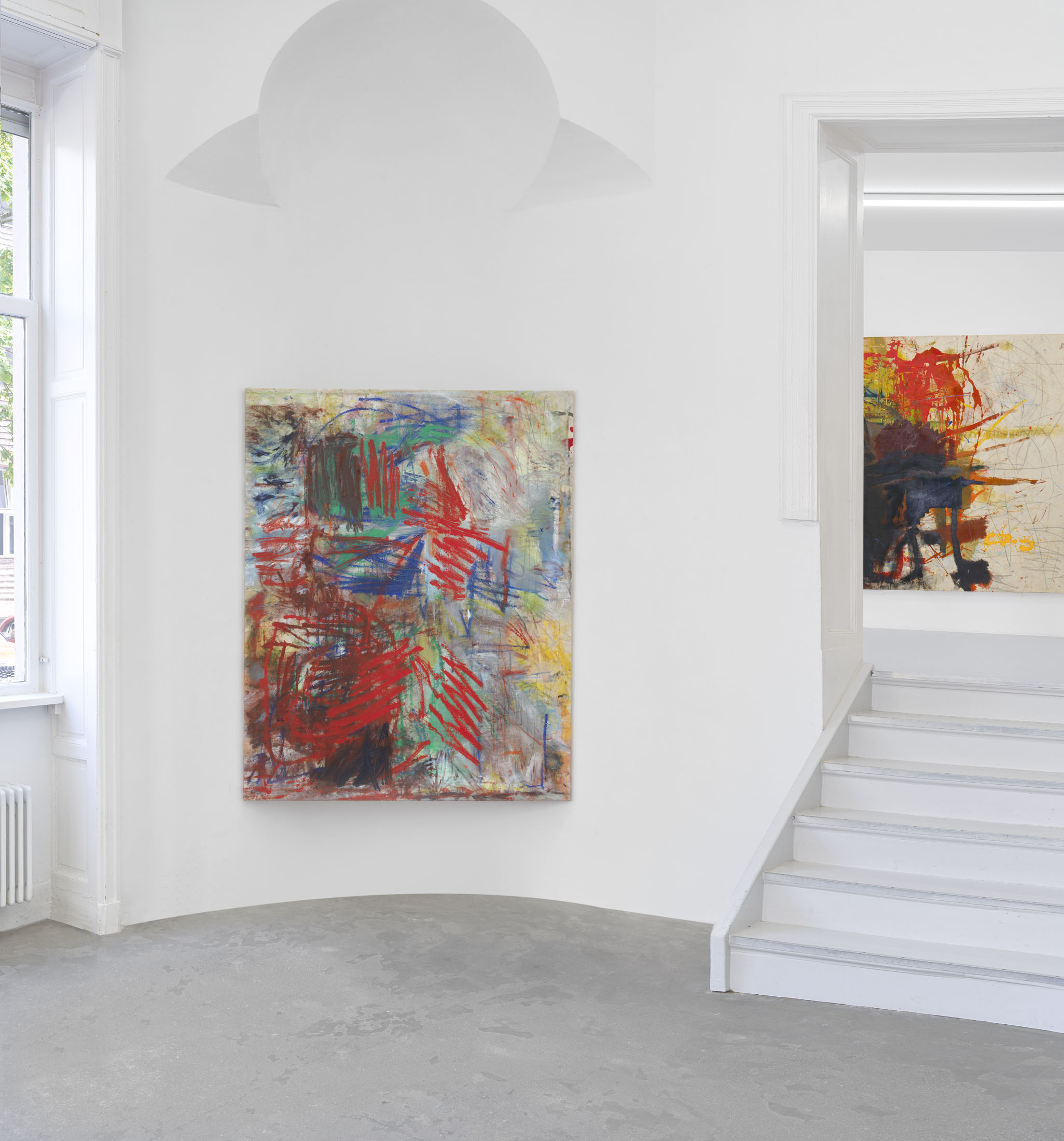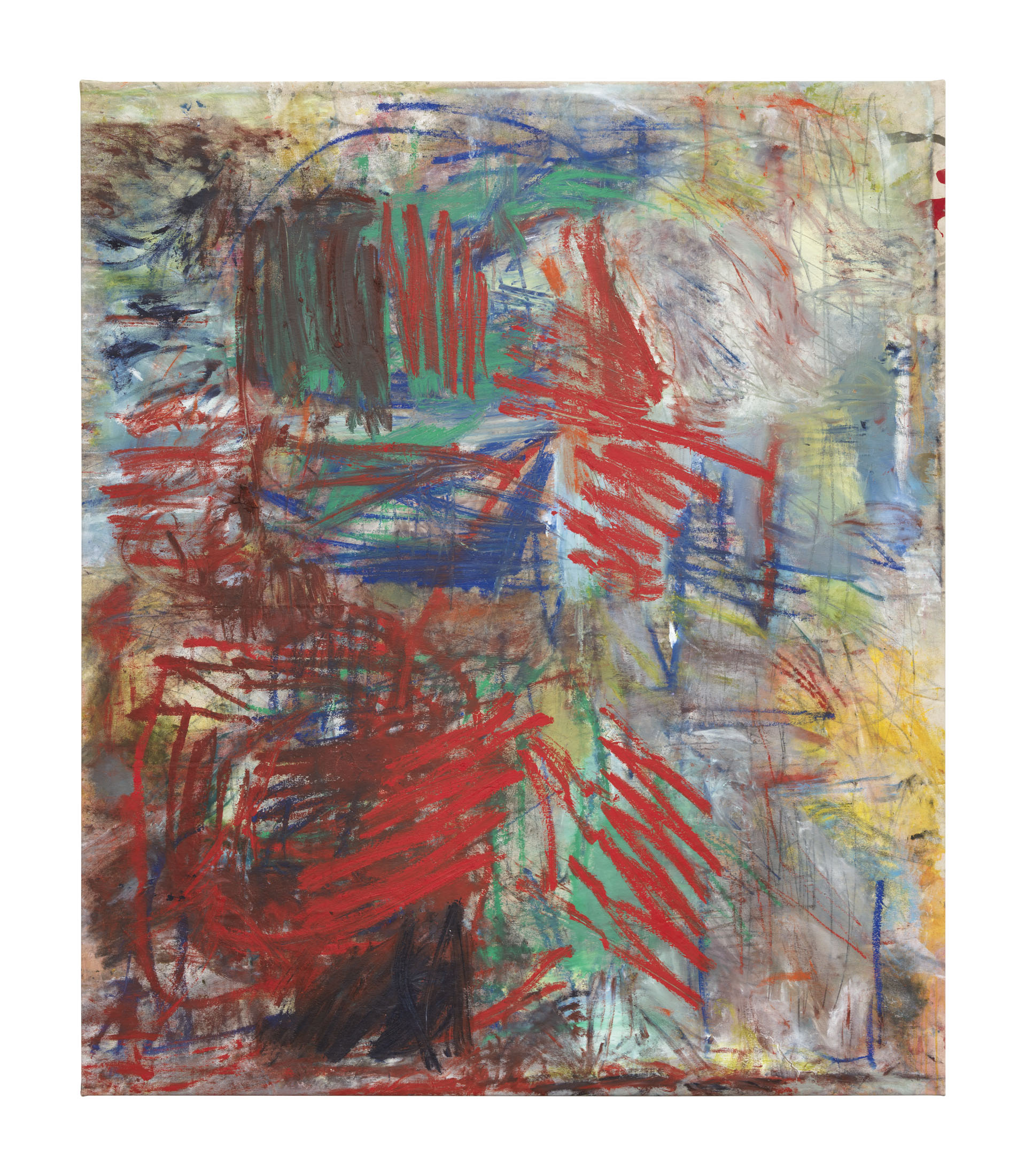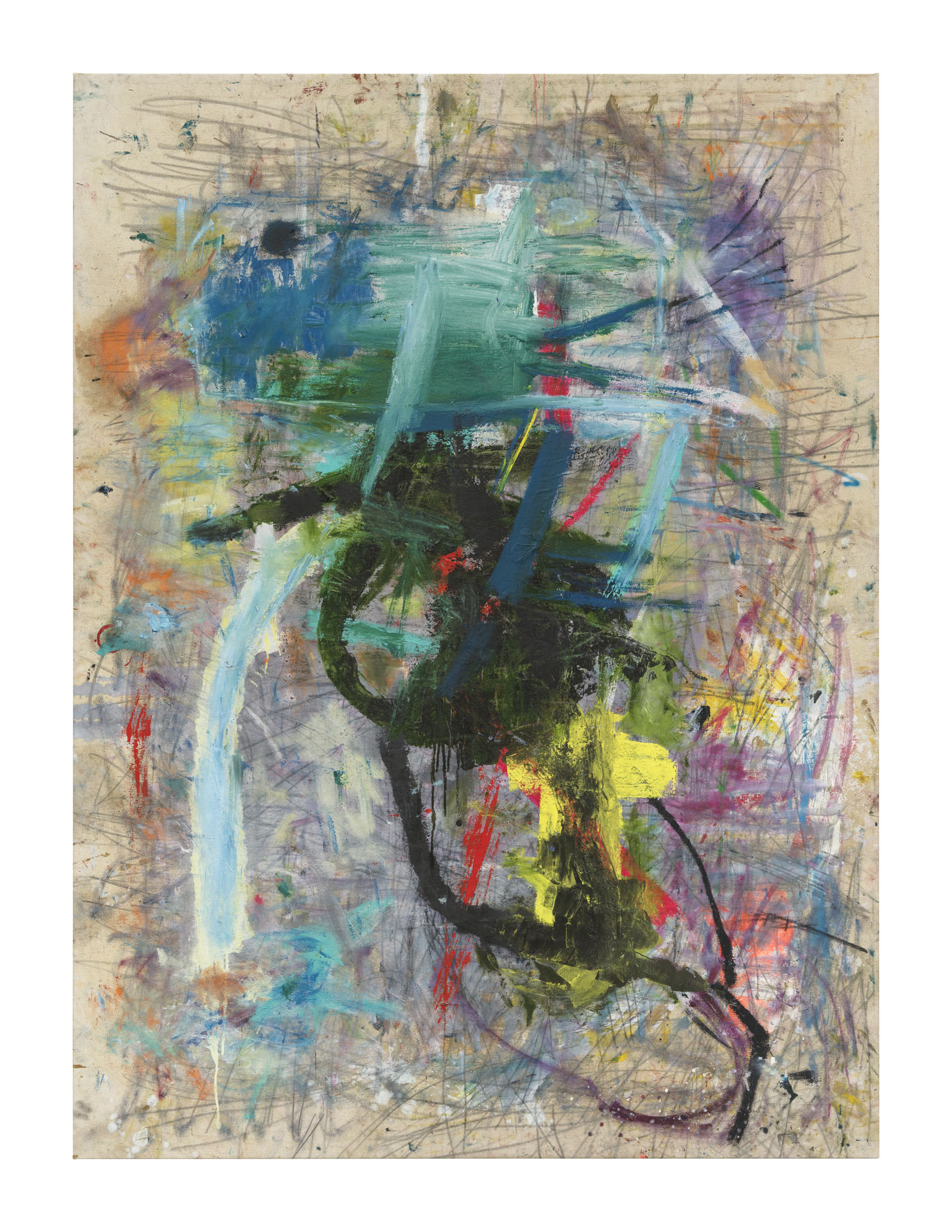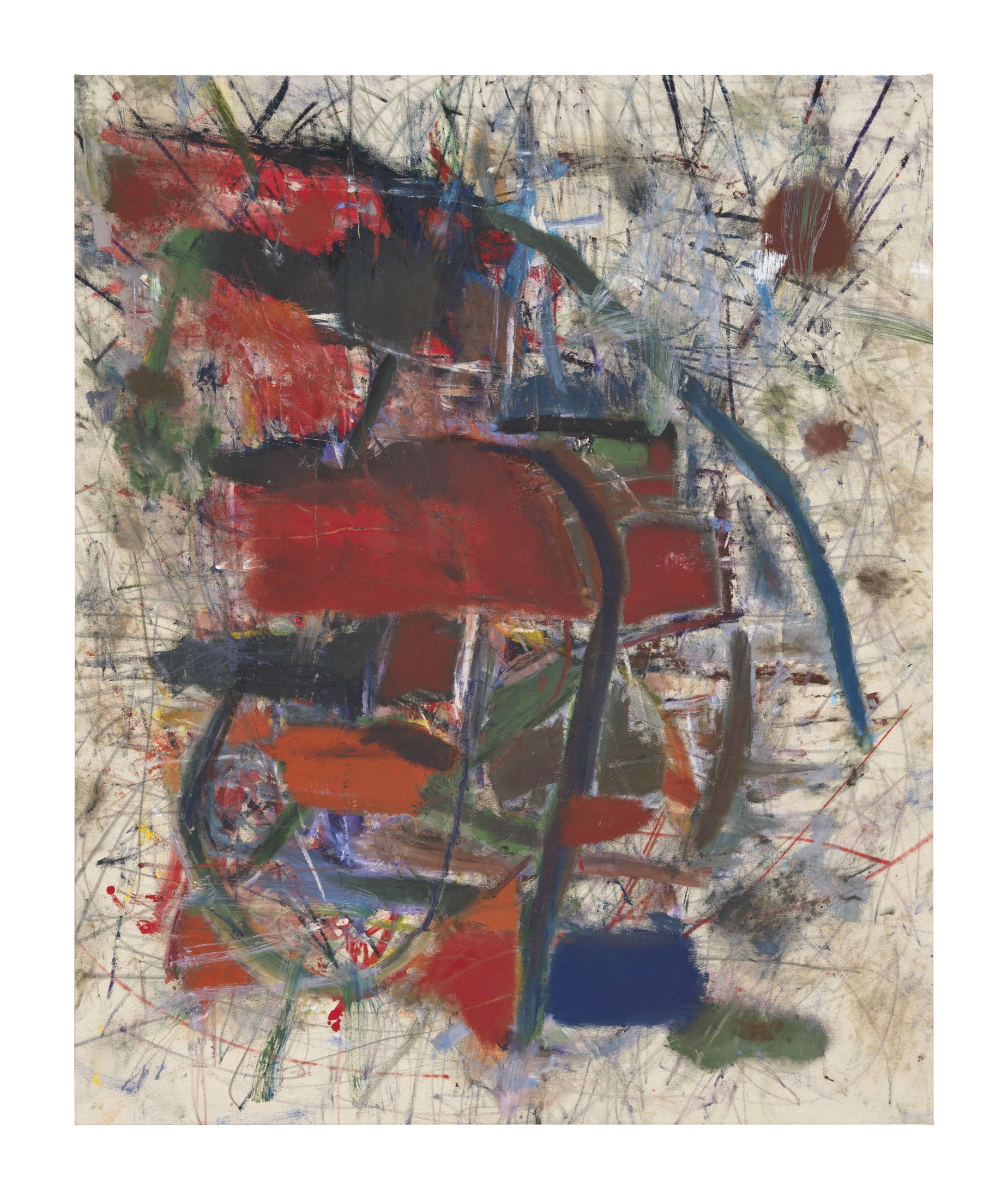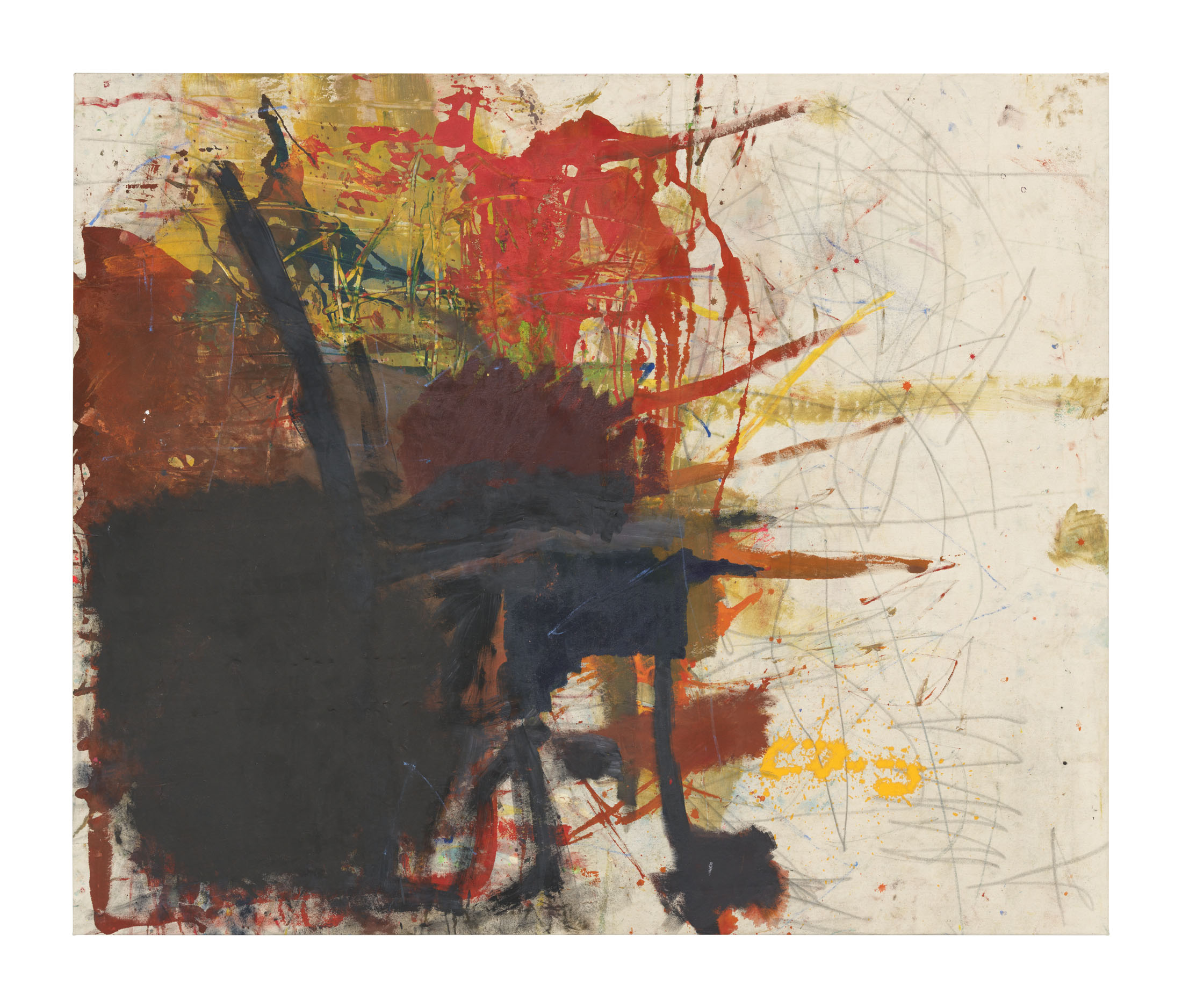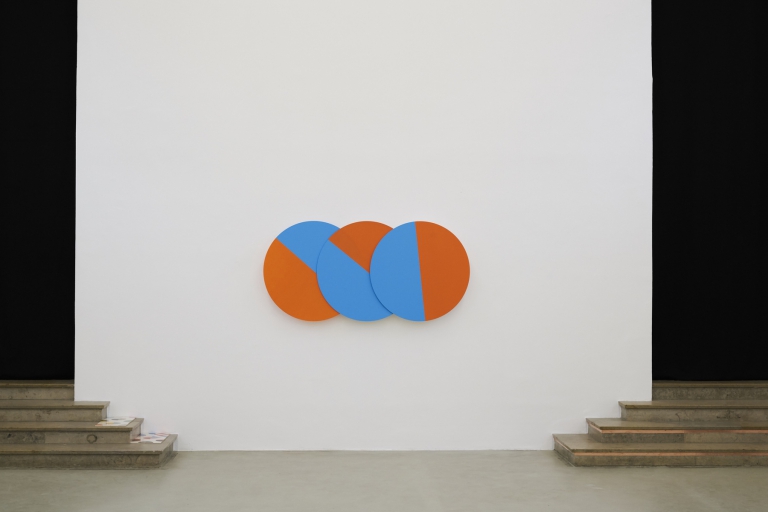
Bukia Vakhania is pleased to present Folded Surface, the first solo exhibition by Georgian artist Beso Uznadze at its Berlin space.
‘In a recent conversation, while preparing for the exhibition Folded Surface, Beso Uznadze spoke about returning, over many years, to works he had once considered unfinished. He felt that something was missing: another gesture, another line, another layer, or another decision. Only later did he understand that the painting had already been finished. The problem was not that the canvas required further work, but that he himself had not yet been ready to recognise it as complete. This story seems important for understanding his practice. Uznadze does not treat the painting as a place where full control over form must be achieved. He is more interested in the moment when a work begins to exist beyond the artist’s intention. For him, a painting is not the execution of a pre-established plan, but a process in which meaning appears gradually, often only after some time.
Beso Uznadze was born in Tbilisi, grew up in the 80s and started his adult life in the 90s, amidst the collapse of the Soviet Union and a period of rapid political, economic, and social transformation. It was a time of destabilised identities and attempts to build new forms of collective life. As an individual growing up in a conservative environment, he also experienced the tension between wanting to live his own life and being subjected to the pressure of social expectation. These experiences are not represented directly in his painting, but they form an important background to his work. Uznadze is interested in what cannot be easily shown, named, or organised. The artist began his practice as a portrait photographer, and while his paintings are far from portraits, the presence of a body, a face, or a gaze can still be felt within them. His painting, a visual language he took up only in his late forties, consists of afterimages of expressions, feelings, relationships and tensions that once belonged to photography, a medium devoted to capturing reality, in which he worked for many years. In painting, however, these experiences are not reconstructed. In place of an image, there is only a trace of contact. What in photography might have been a face, a body, or a gesture is transferred, in Uznadze’s painting, into the matter of paint, line, and the surface of the canvas.
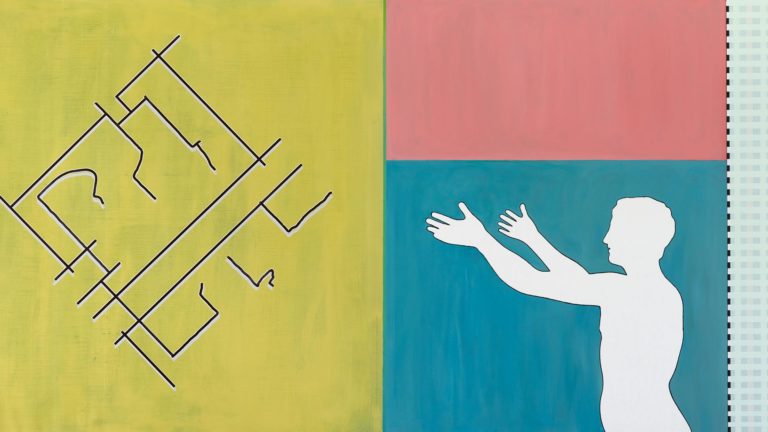
Unadze’s painterly work is not about abstraction understood solely as a formal experiment. Rather, his paintings emerge from an experience of instability, personal, social, and visual, as he reached toward abstraction when the language of photography was no longer sufficient to grasp the reality around him. On his canvases, forms appear and are partially erased. Some fragments are dense and intense, while others remain empty or only lightly marked. The artist does not construct his compositions around a clear centre; more often, he works with the tension between what is visible and what remains hidden or illegible. In his painting, what matters is not only the presence of the gesture, but also the decision to stop: to leave an empty surface, an incompleteness, or the trace of an earlier layer.
The title of the exhibition, Folded Surface, can be understood as a reference to a surface that is neither flat nor unambiguous. Beso speaks about being ‘folded’ as a form of adaptation to the condition of survival. This ‘folding’ does not mean disappearance, but a way of preserving oneself under pressure.
The notion of the fold also evokes the work of Gilles Deleuze, for whom the ‘fold’ complicates any simple division between interior and exterior, surface and depth. In this sense, the surface is no longer neutral, but becomes the site where interior and exterior meet, where something might appear or survive. Uznadze often says that he does not immediately know what he is doing. He works first, and only later tries to understand what the painting has become. Meaning, therefore, does not precede the work, but appears after it. This allows us to look at his paintings as a process of thinking through material, gesture, and surface, with meaning crystallising gradually, sometimes revealing itself only in retrospect’ – Taras Gembik.
Beso’s works have been exhibited at Bukia Vakhania (Tbilisi, Georgia), Nathalie Karg Gallery (New York, USA), Georgian National Gallery (Tbilisi, Georgia), Tbilisi’s Georgian Museum of Fine Arts (Tbilisi, Georgia), Tbilisi History Museum Karvasla (Tbilisi, Georgia), Beijing International Art Biennale (Beijing, China), Galerie Hors-Champs (Paris, France), Palazzo delle Esposizioni (Rome, Italy), National Portrait Gallery (London, UK).