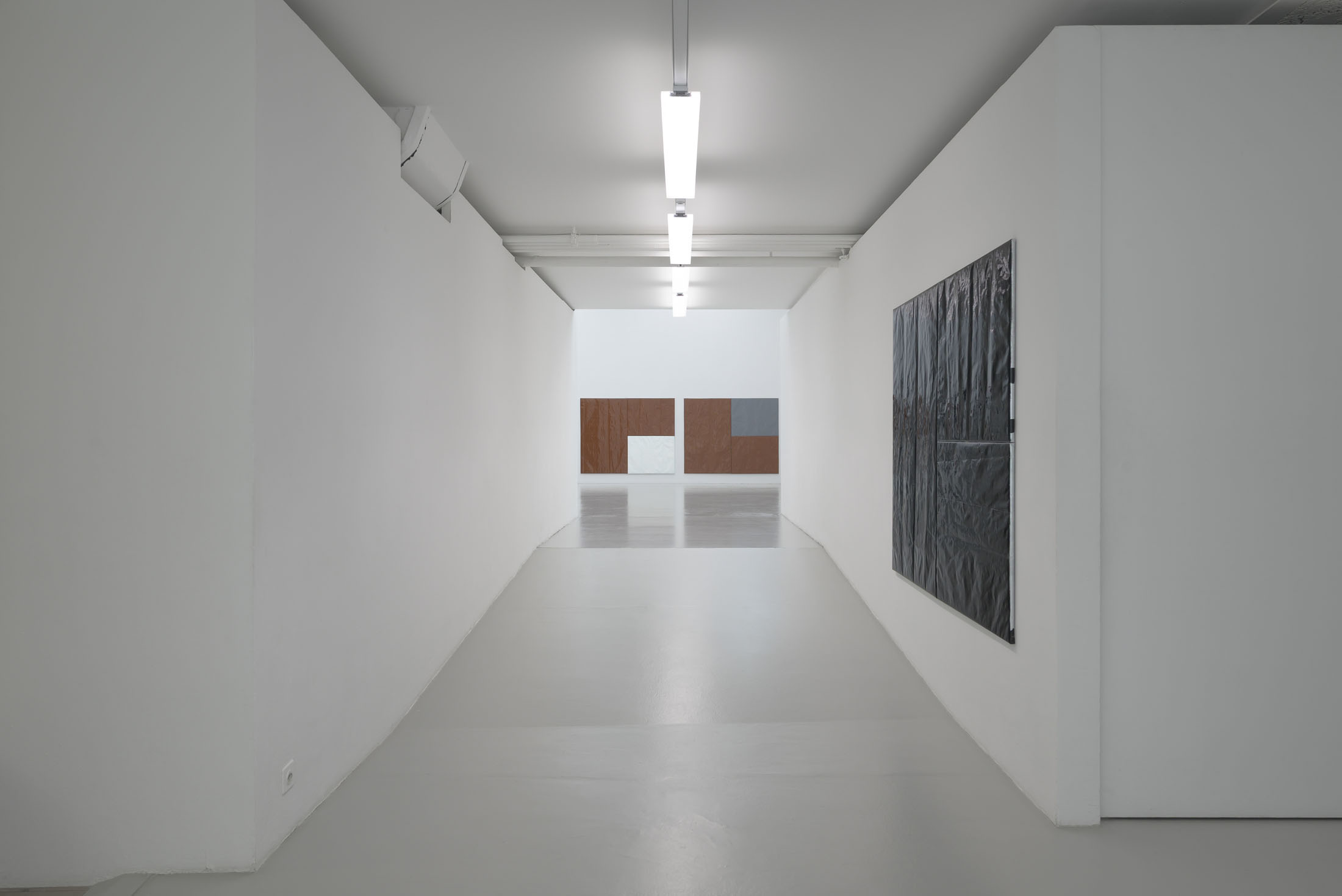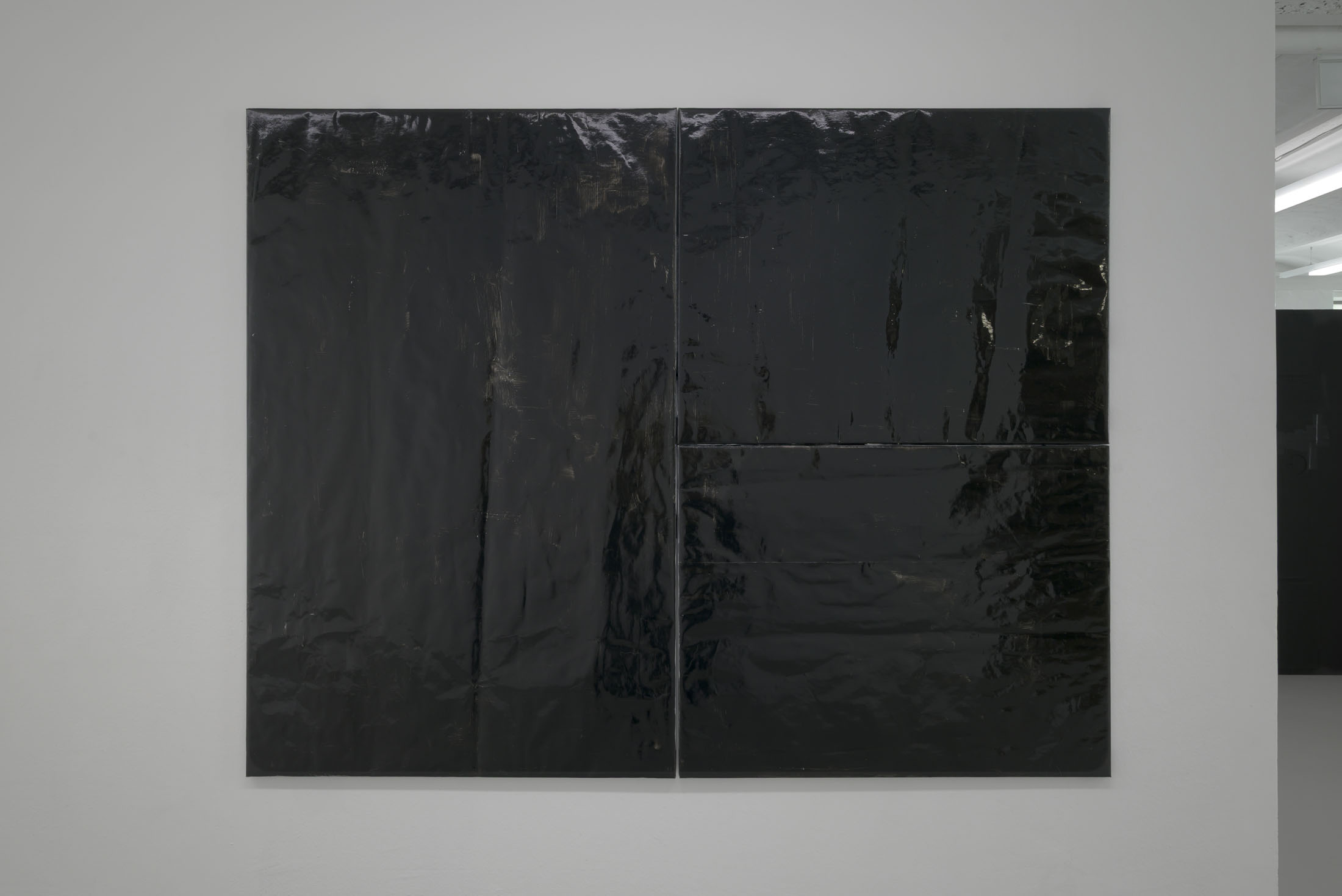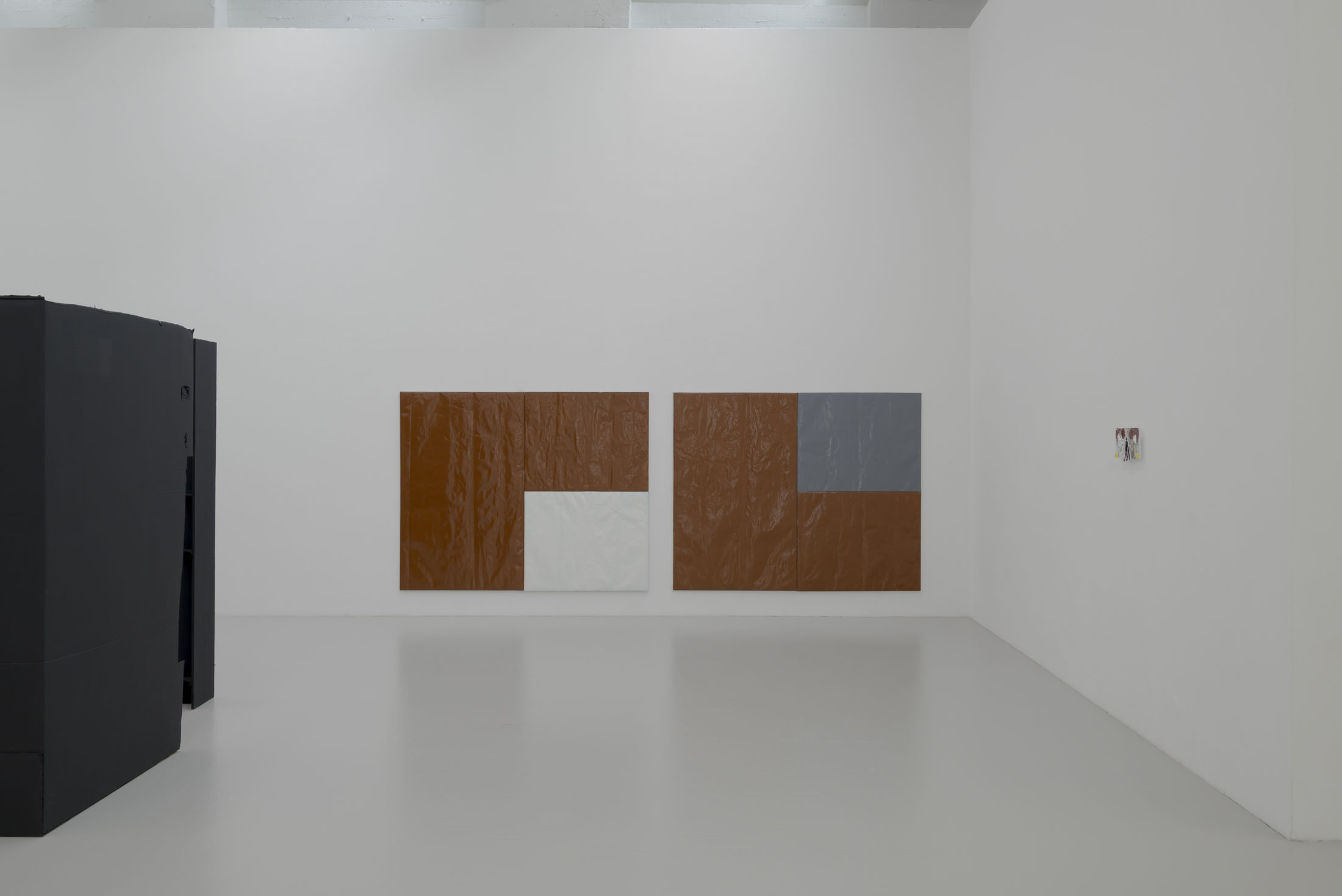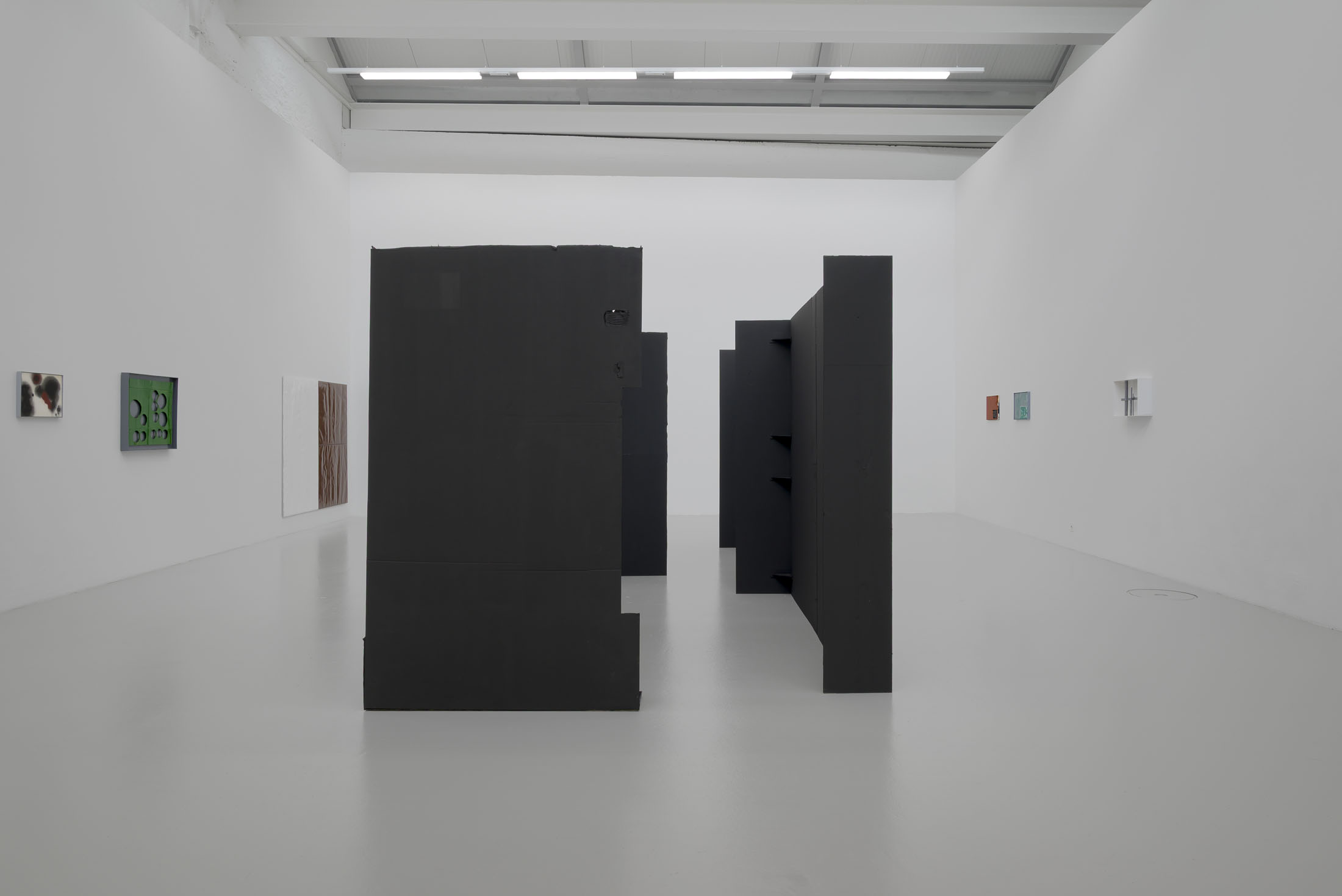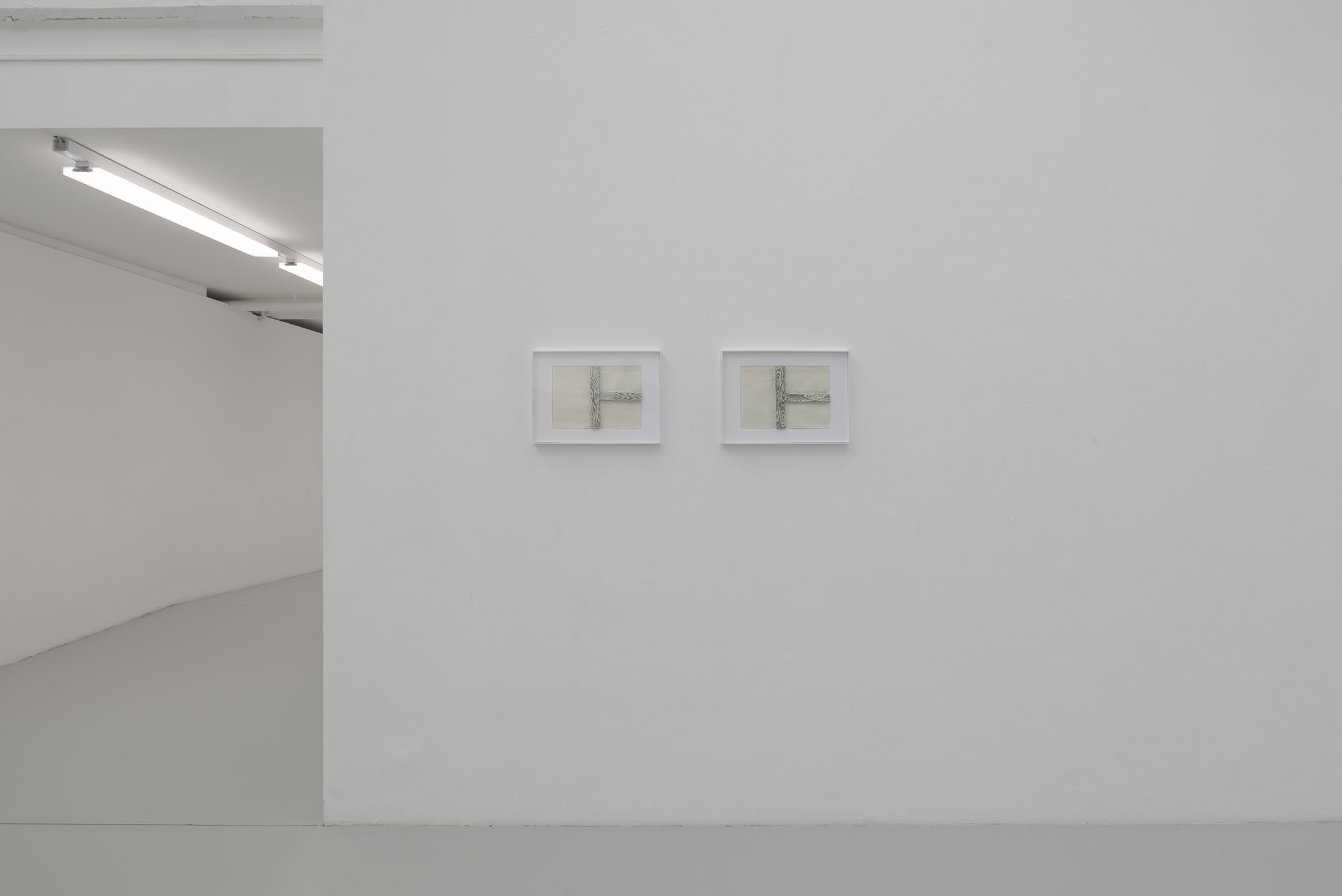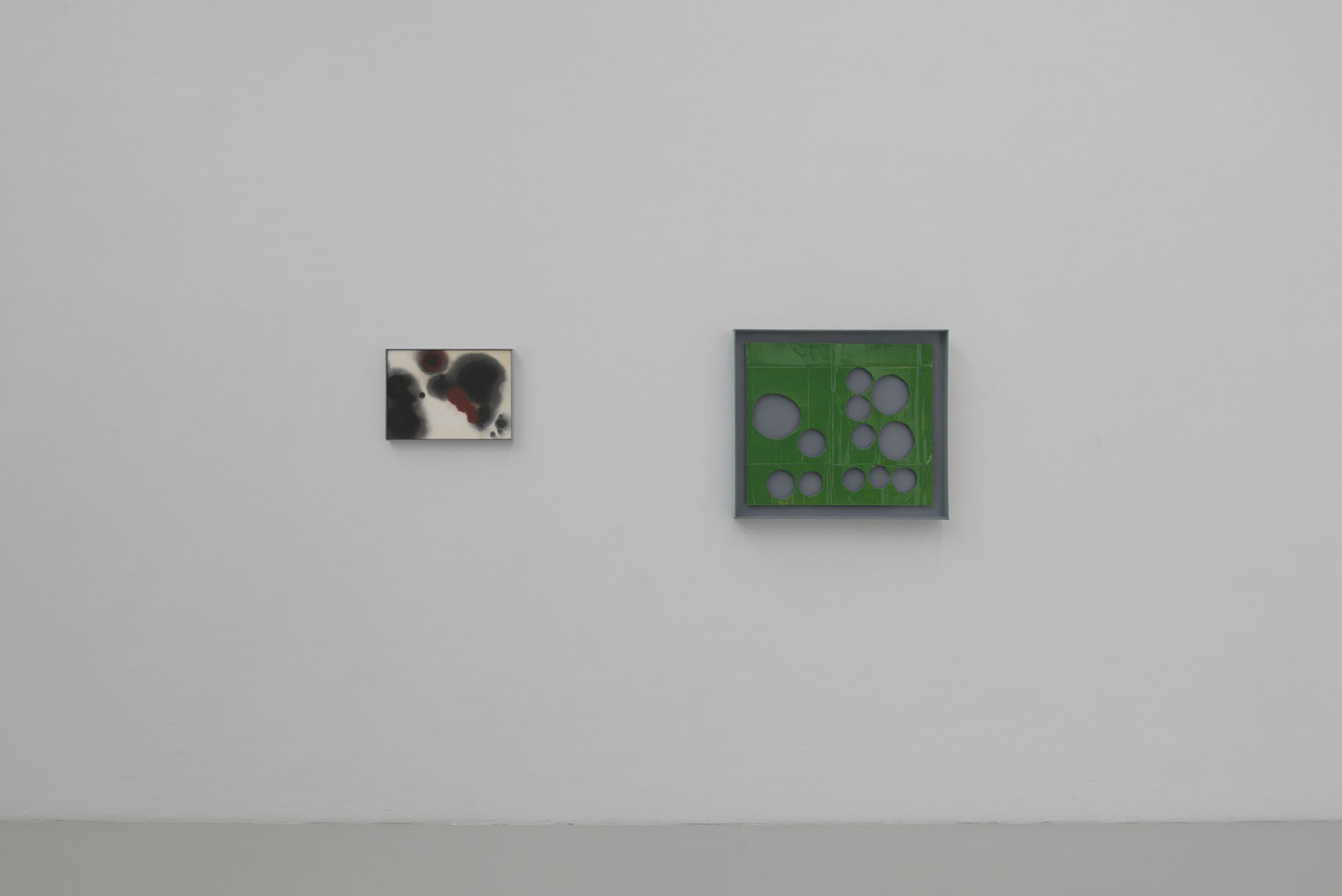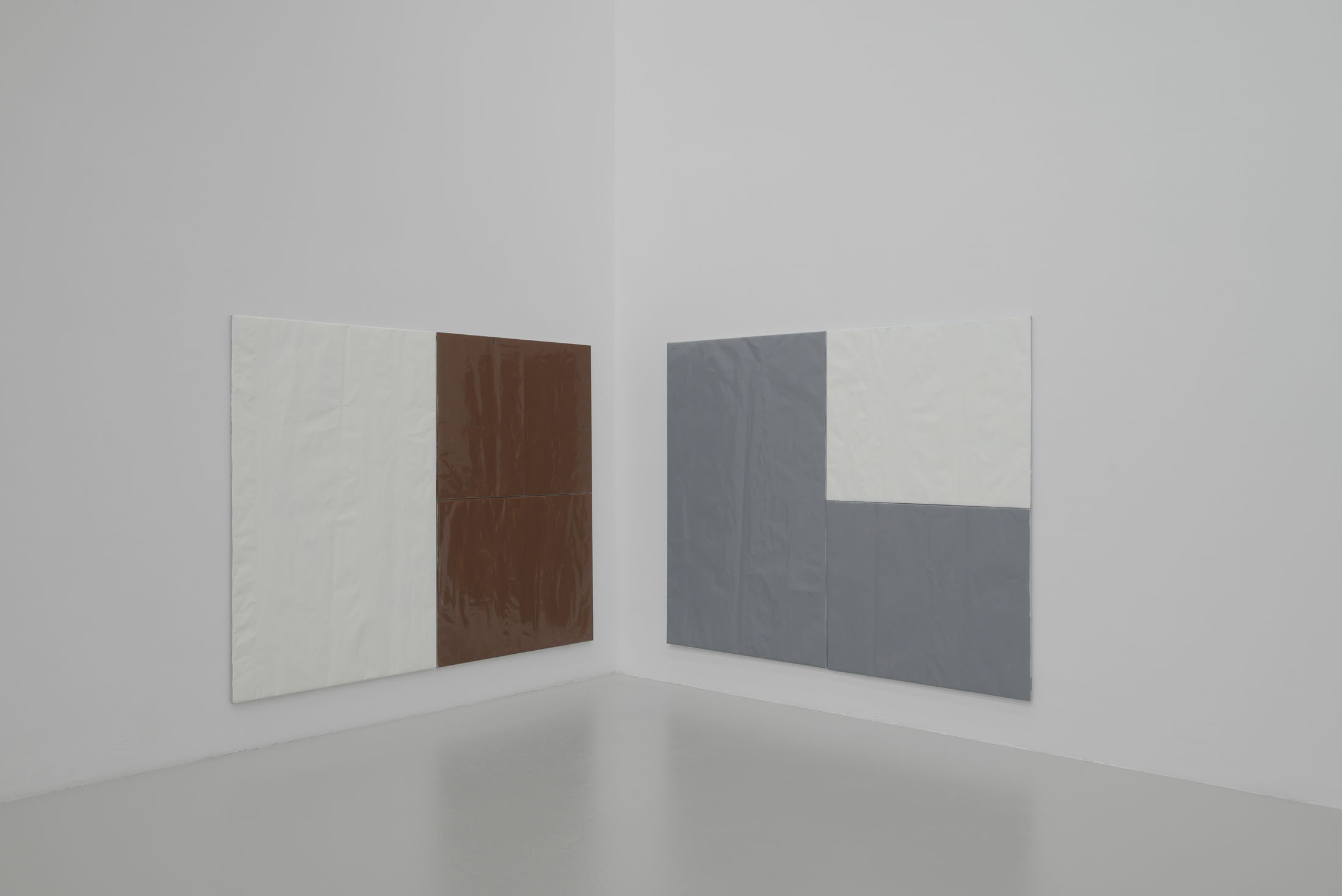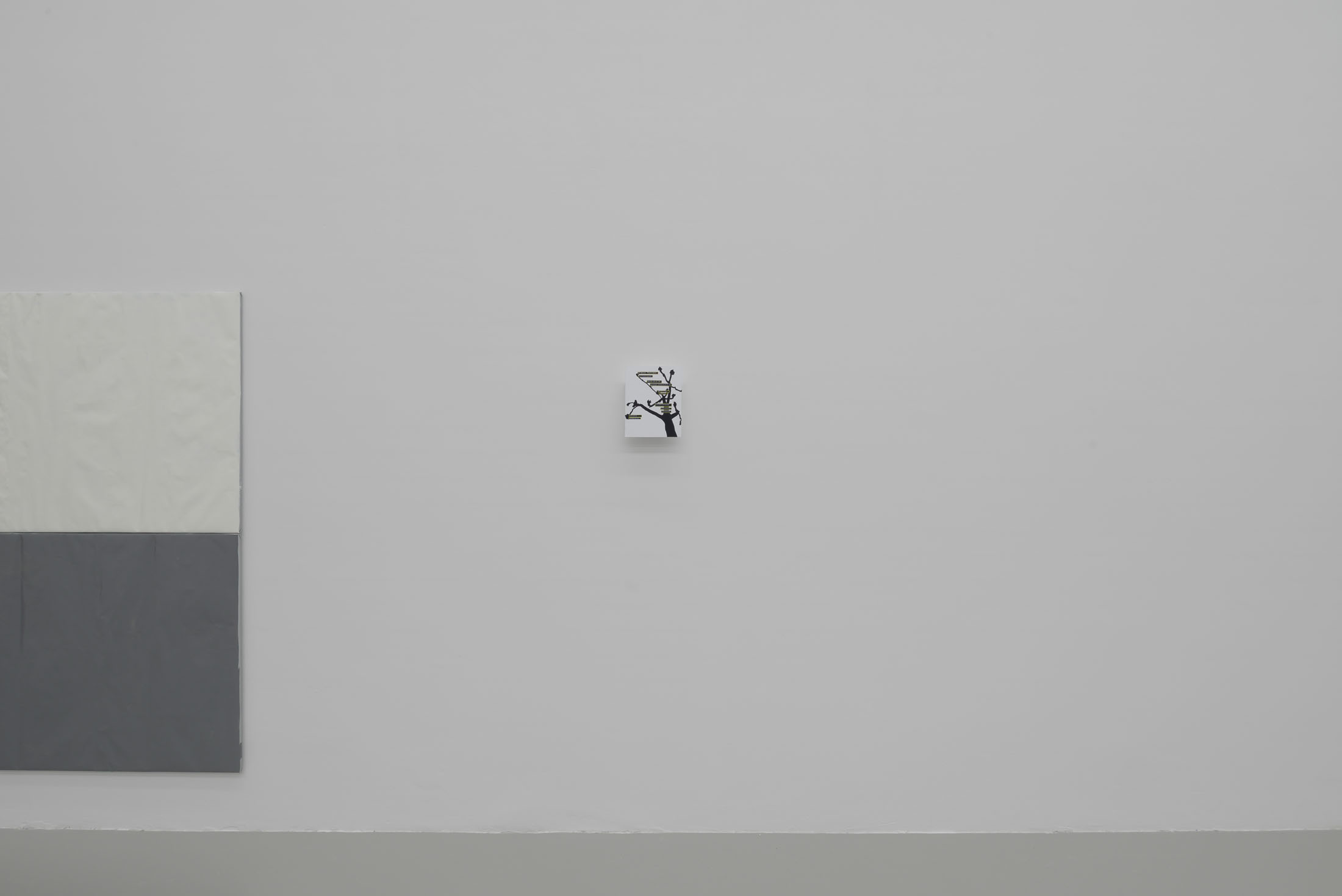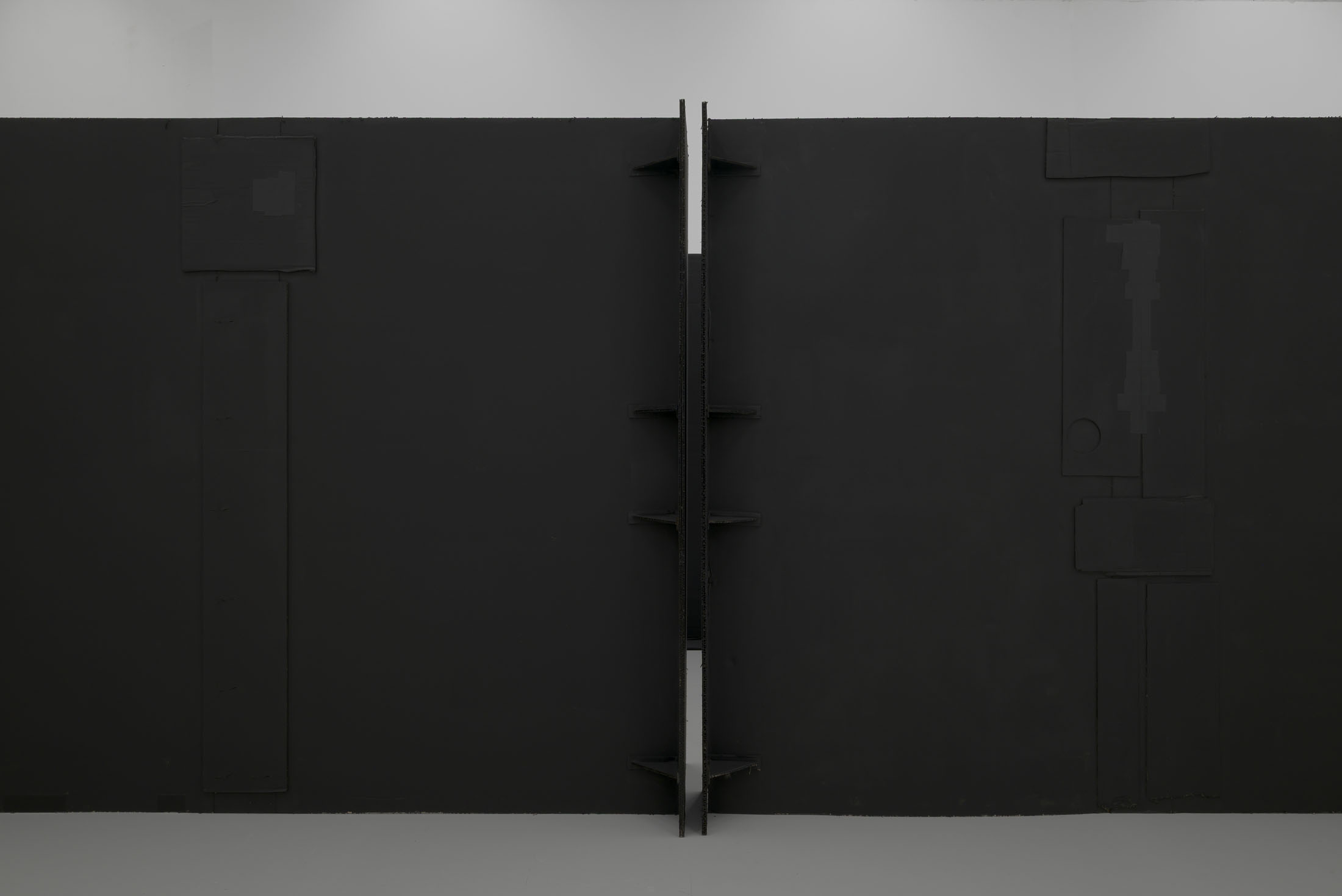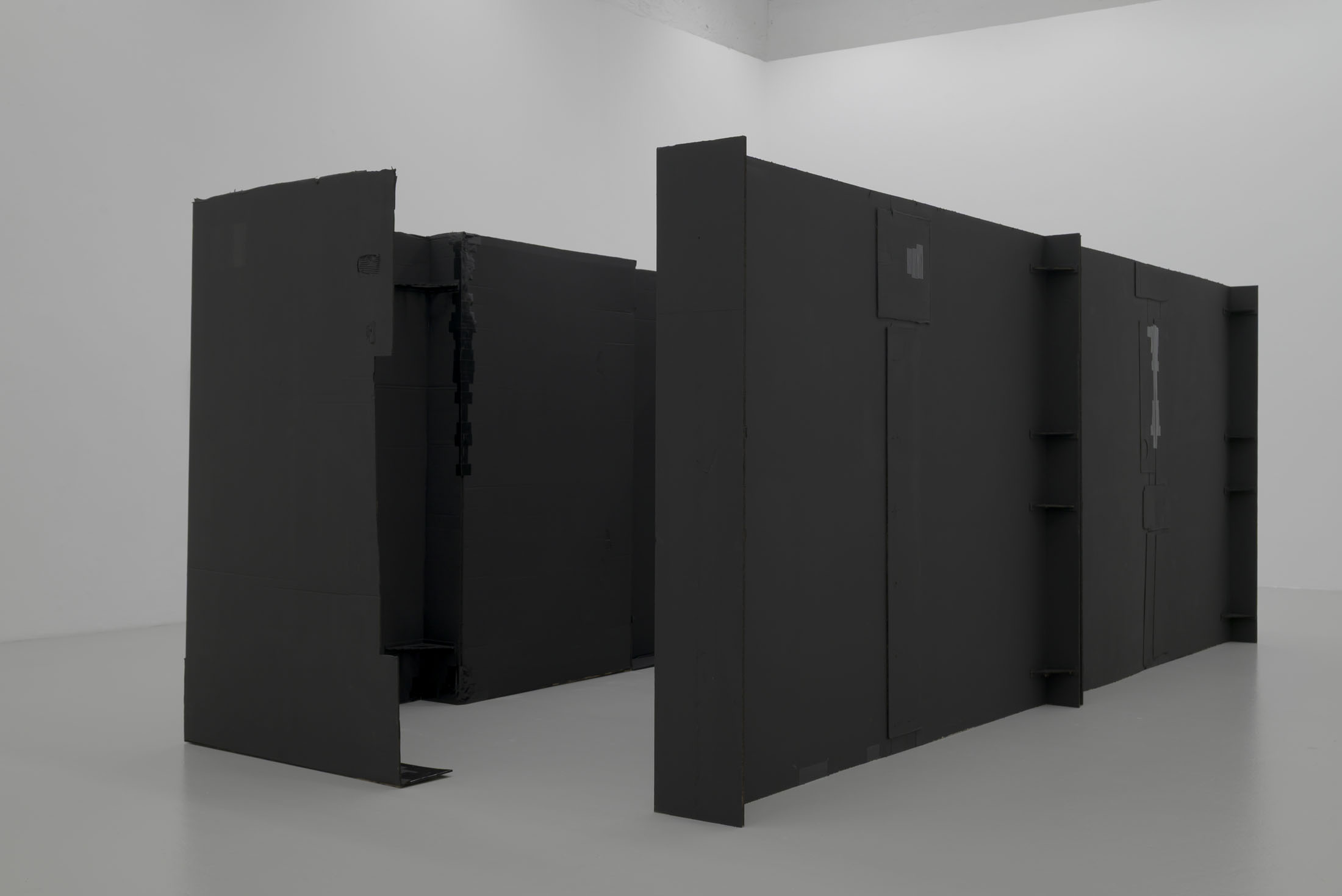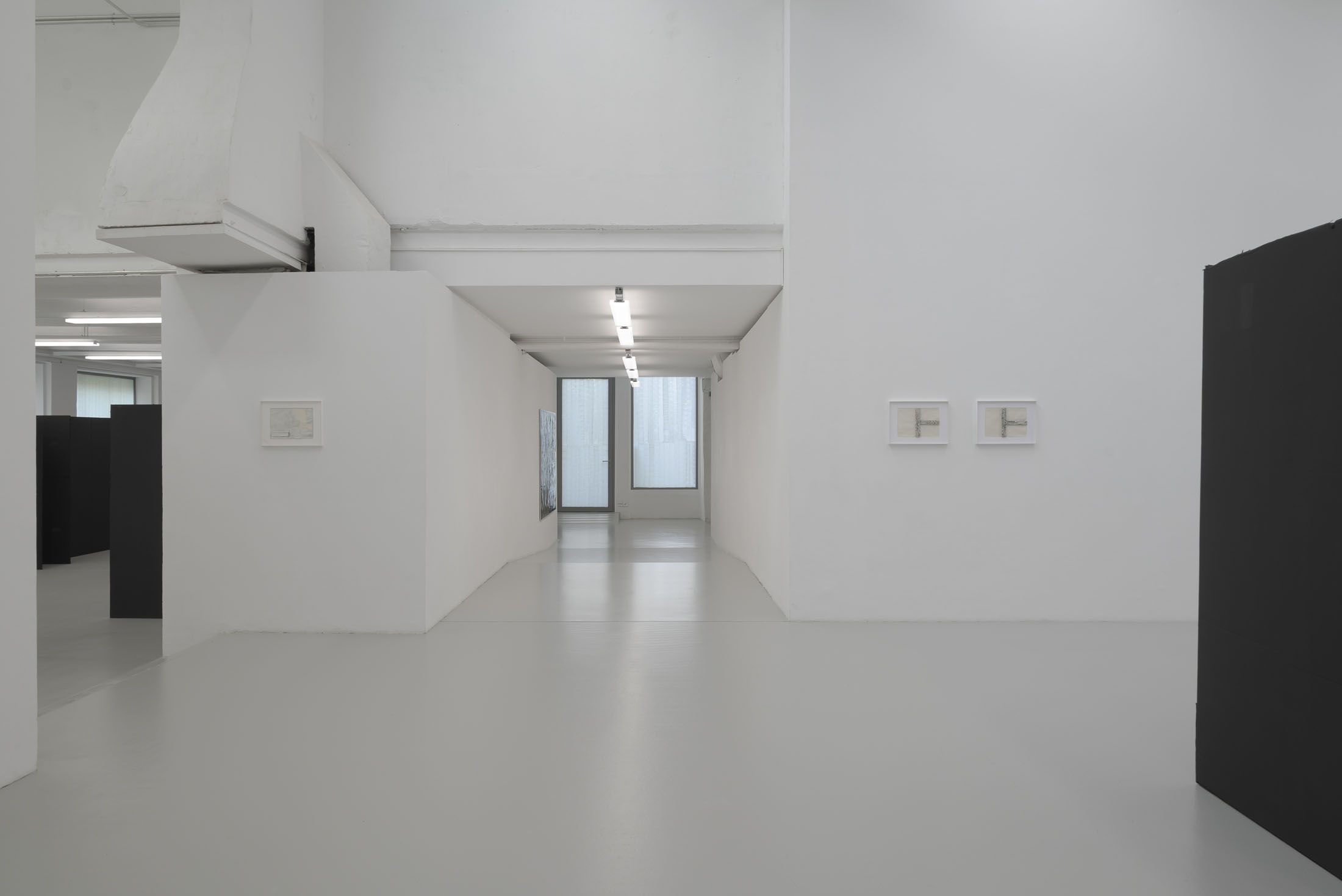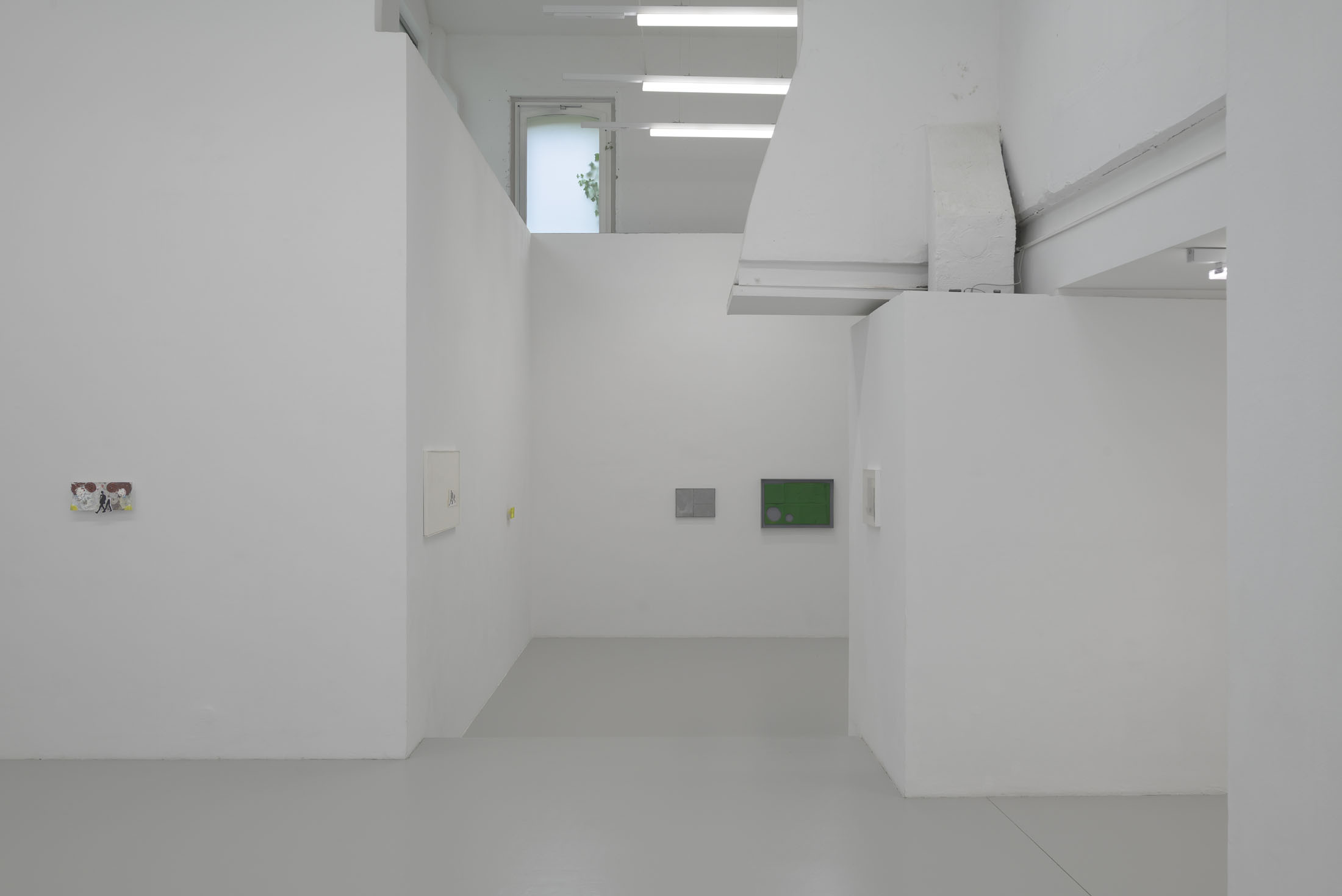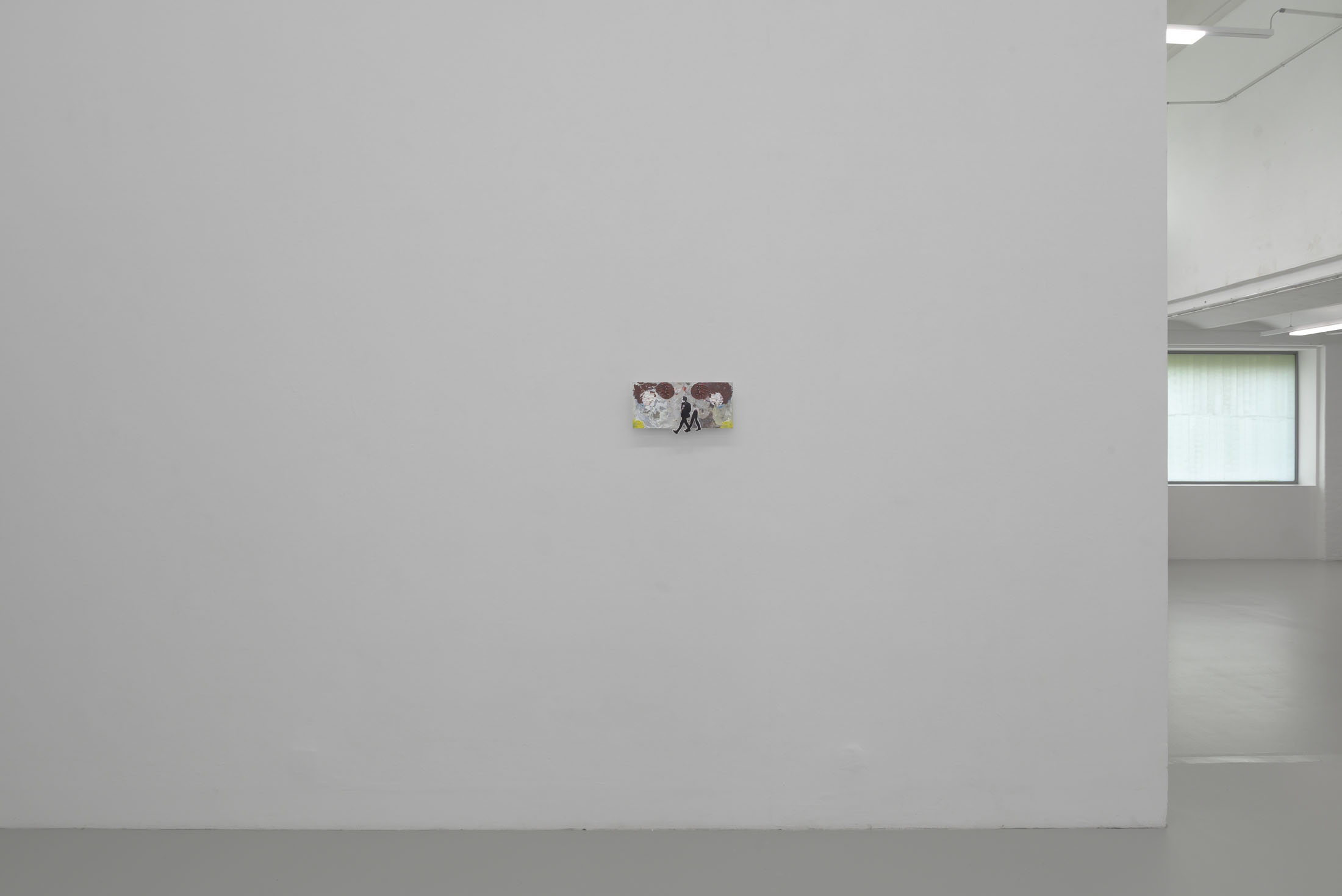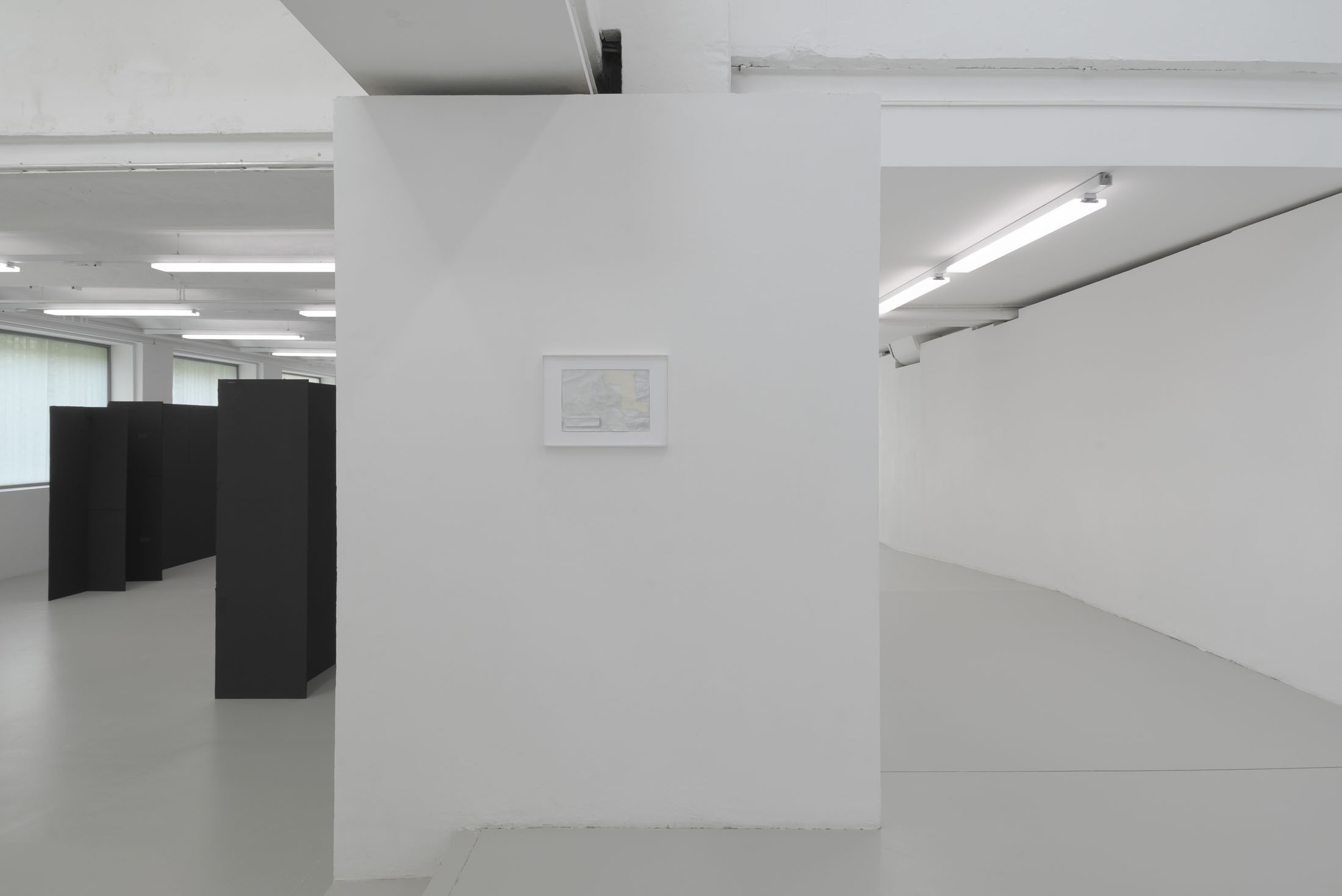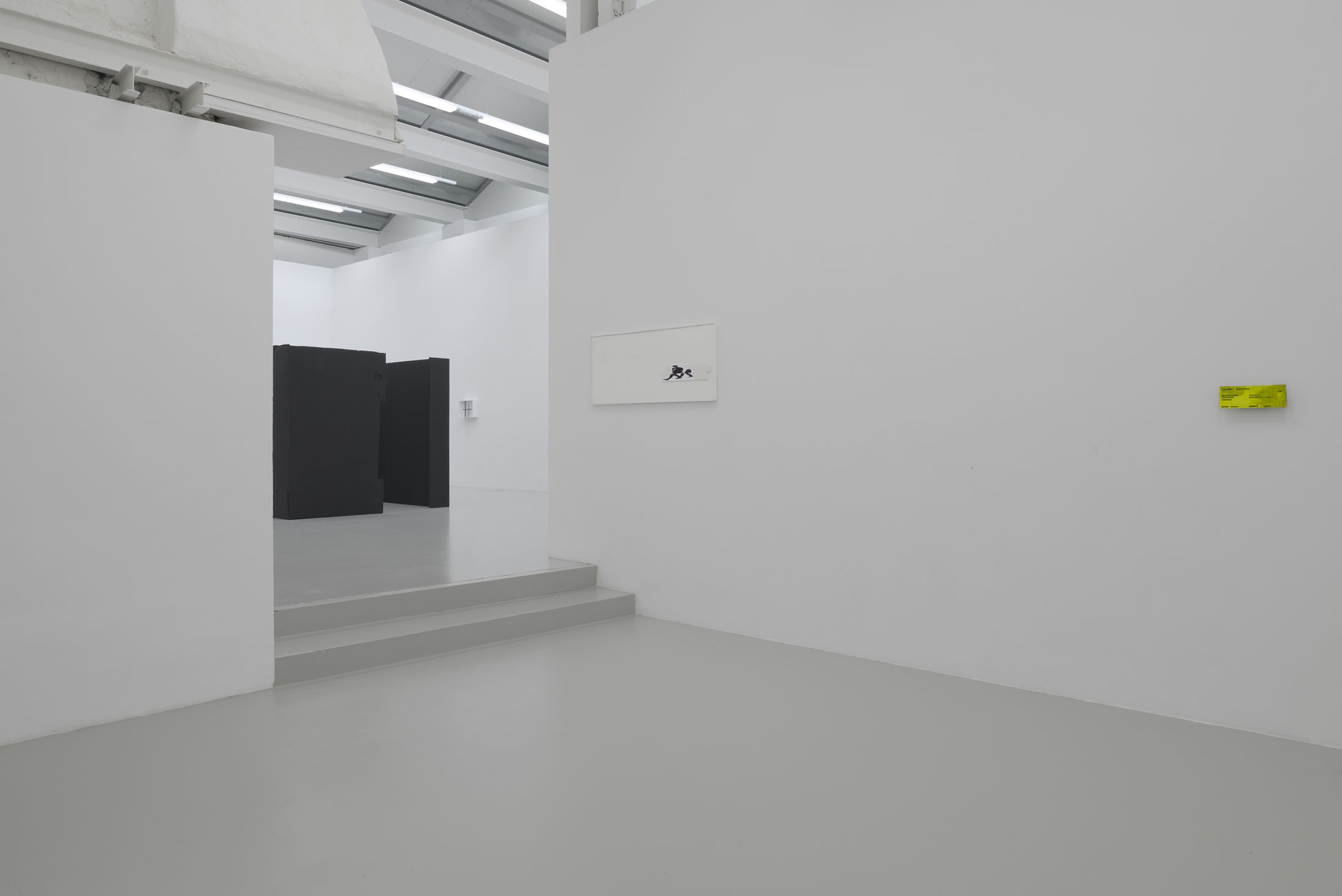
In panoramas — circular, large-scale paintings of the 19th century — or museum dioramas, faux terrain is the name given to the strip of ground placed between the viewer and the painting. Its purpose is to perfect the illusion, to erase the boundary between reality and fiction. Yet, in trying to support the illusion, the faux terrain oflen reveals it even more; it becomes the breaking point where one becomes aware of the dispositif.
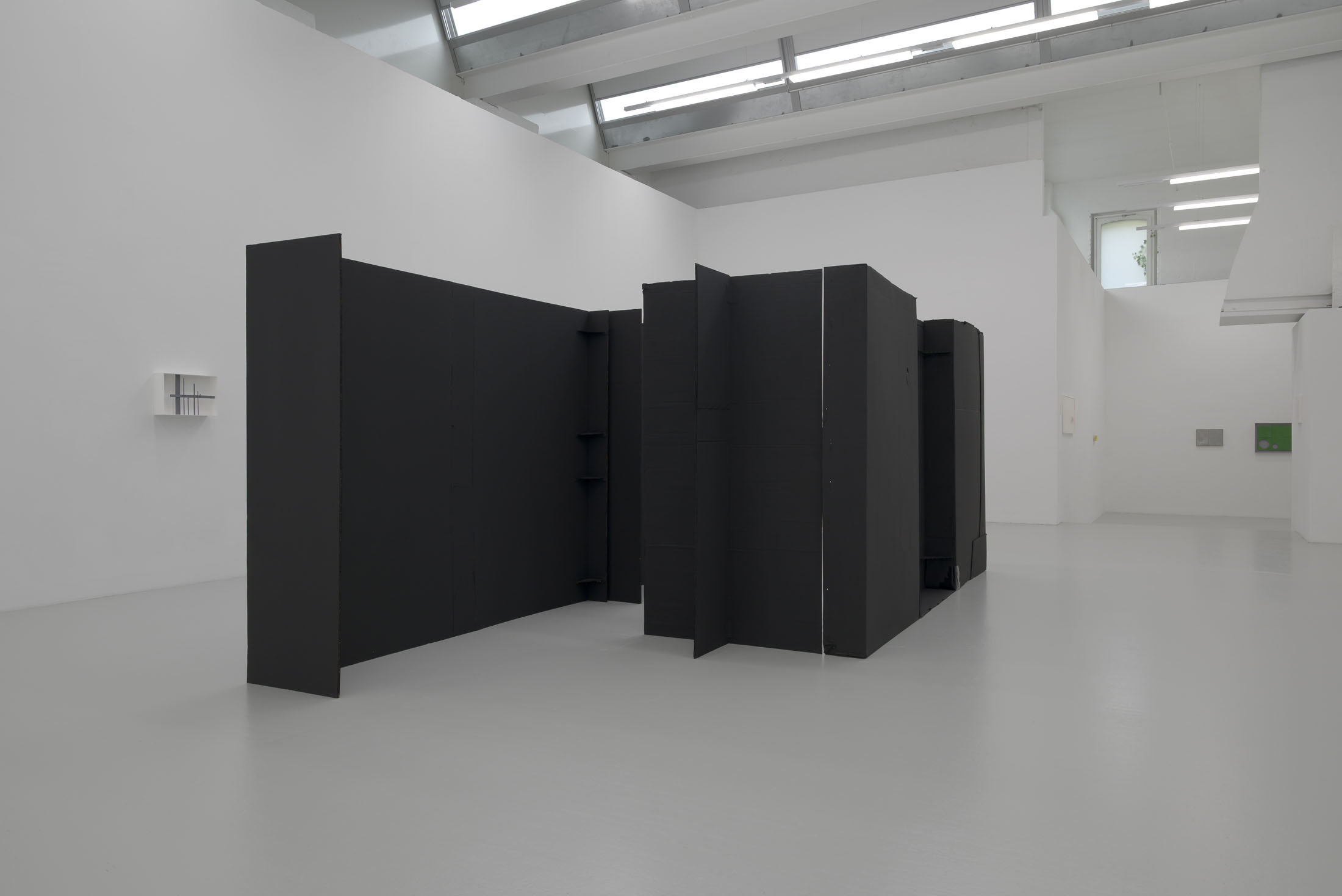
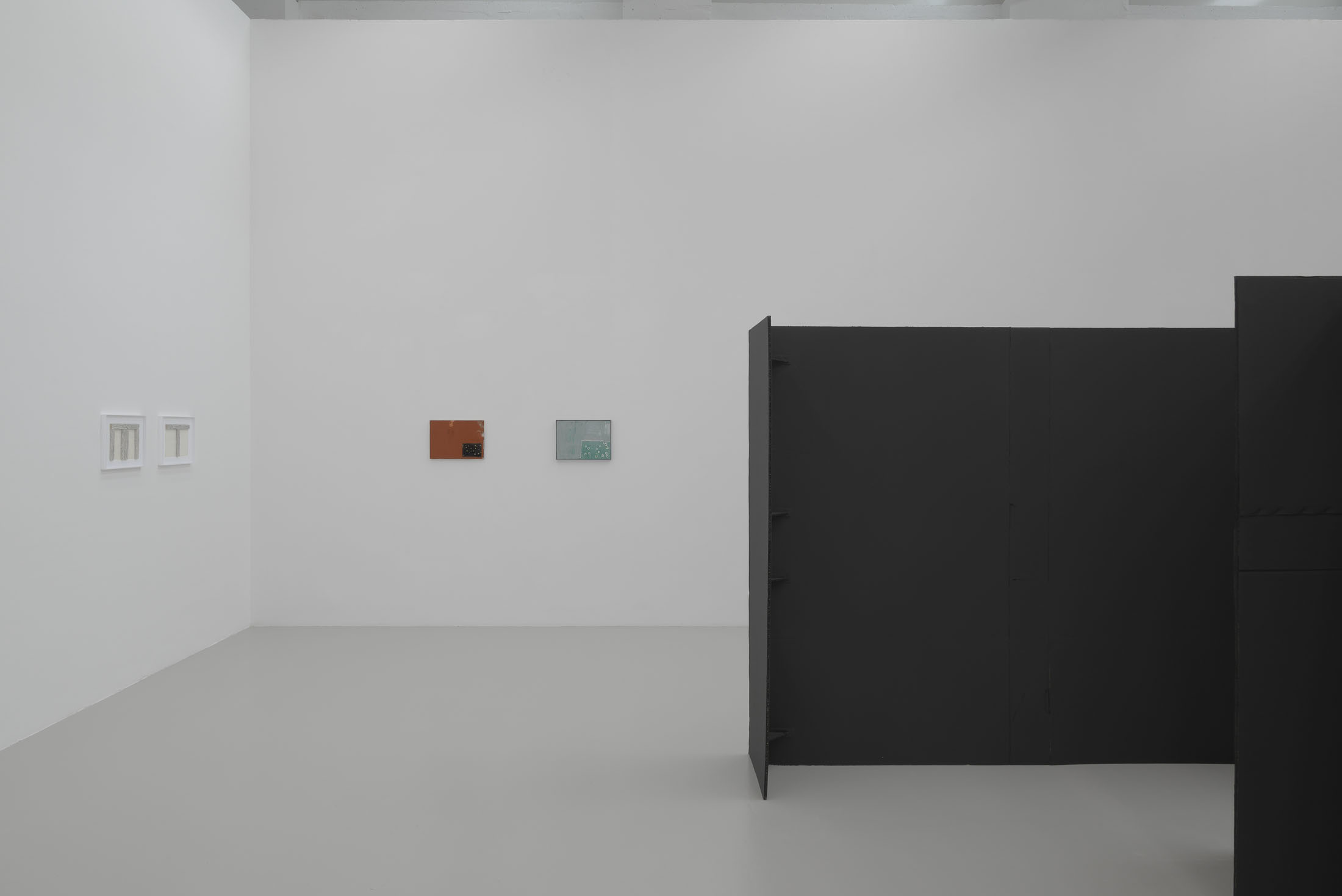
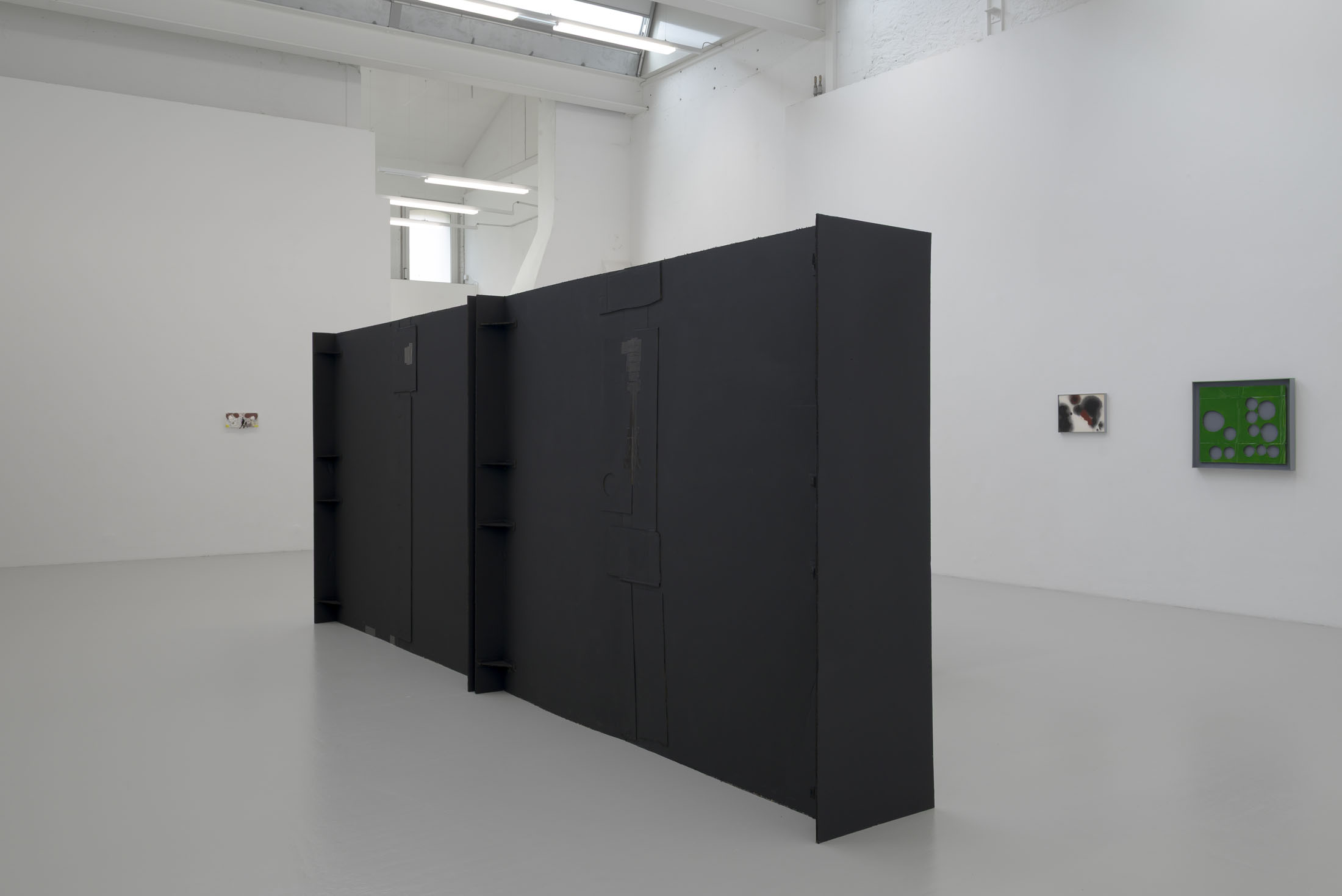
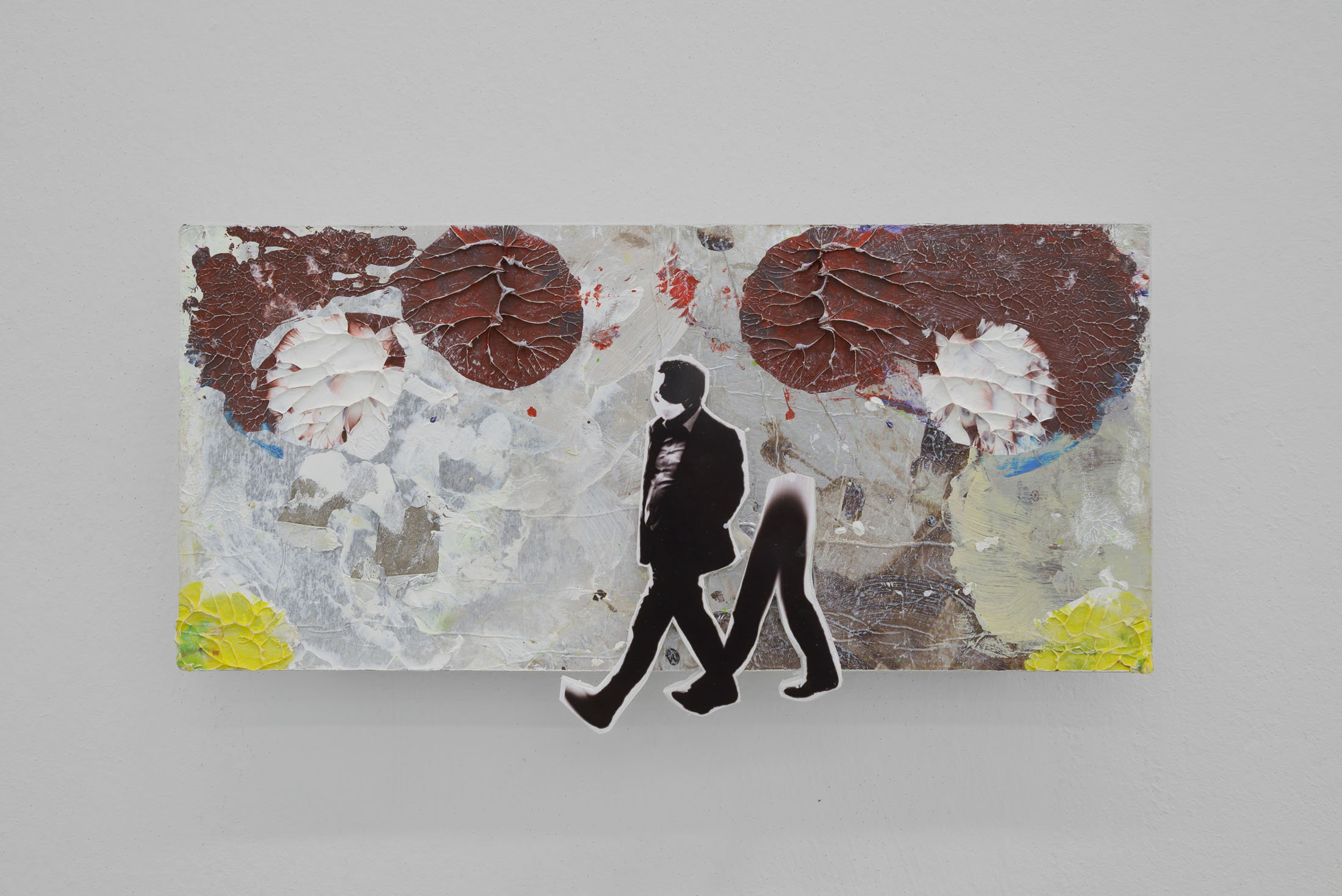
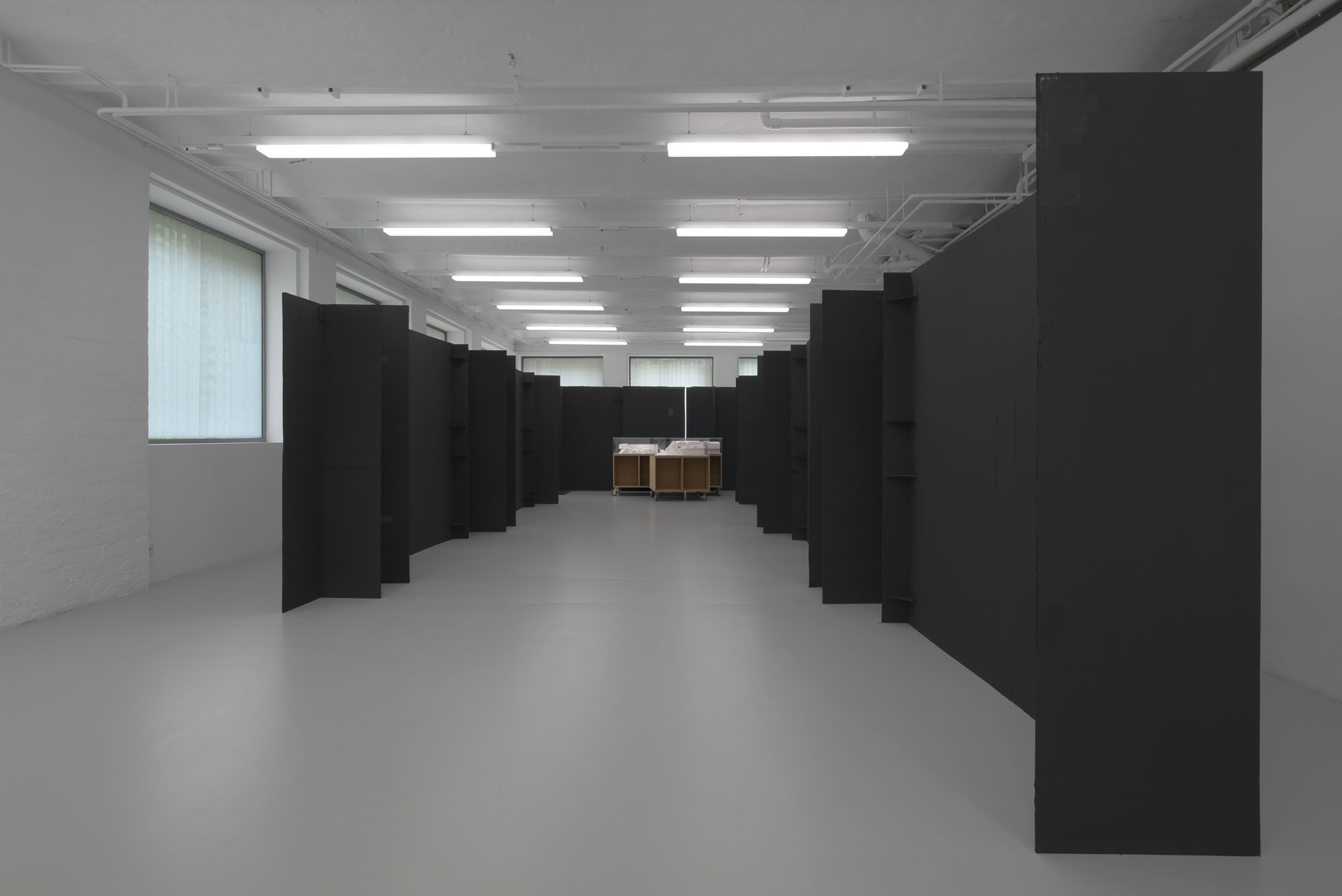
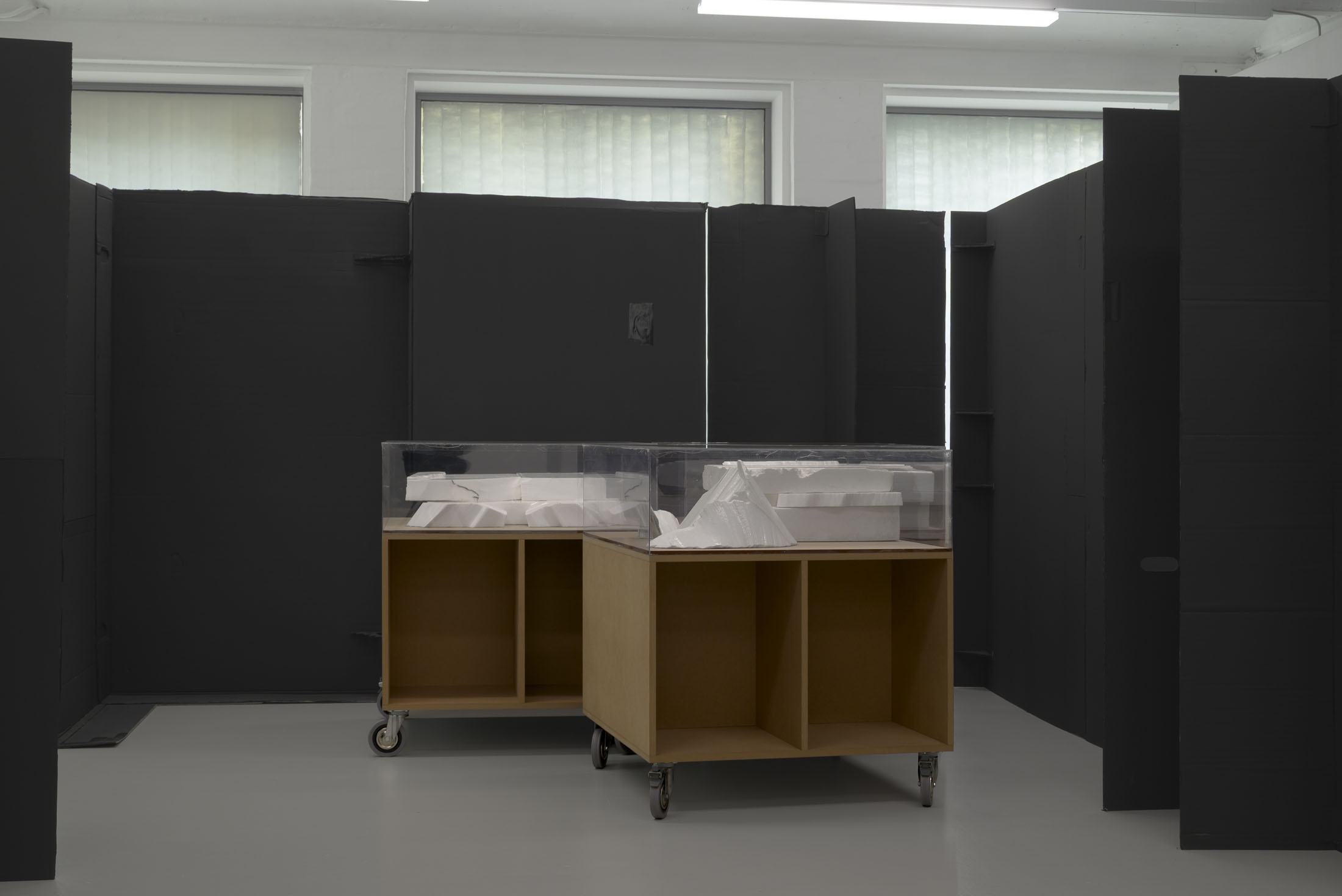
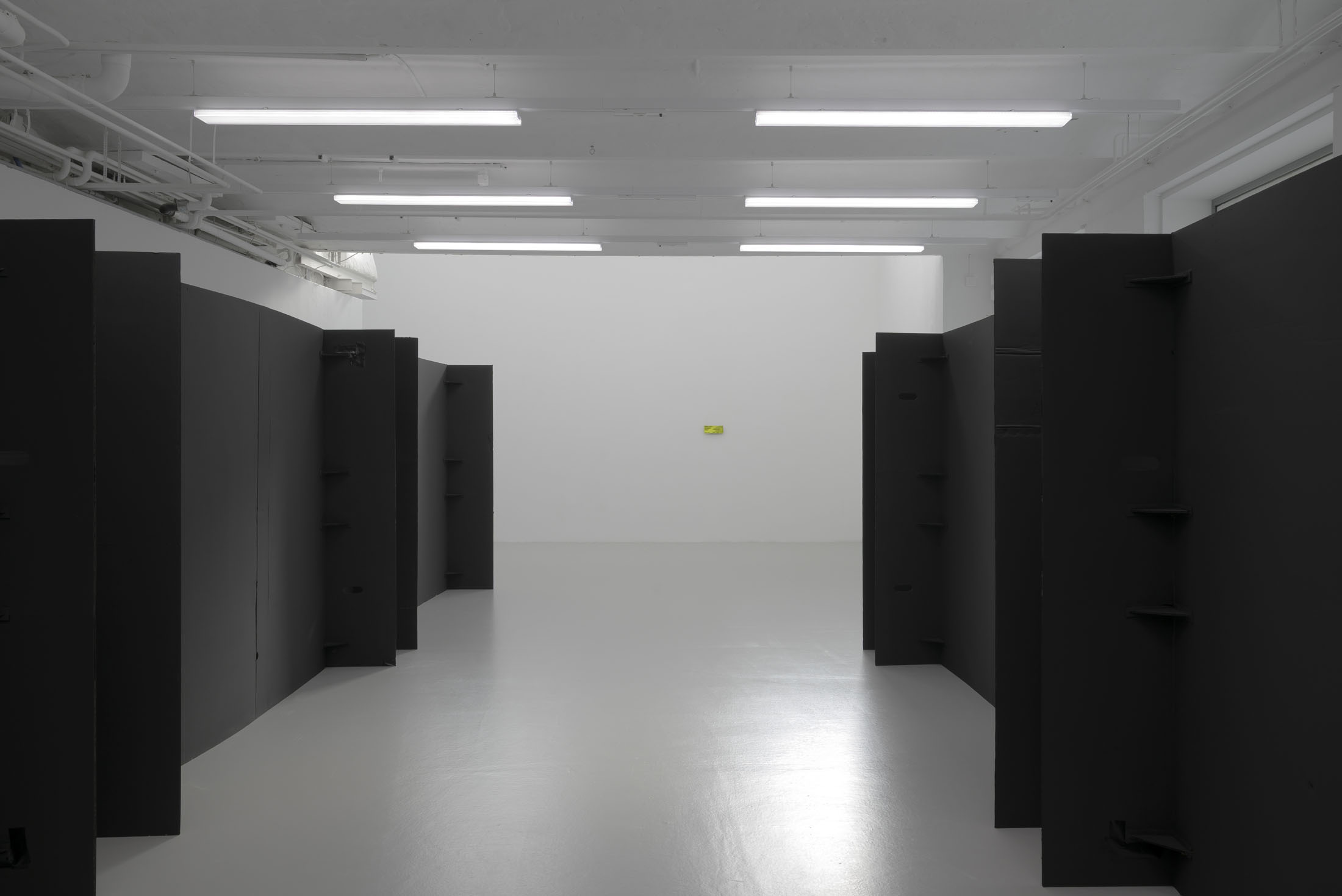
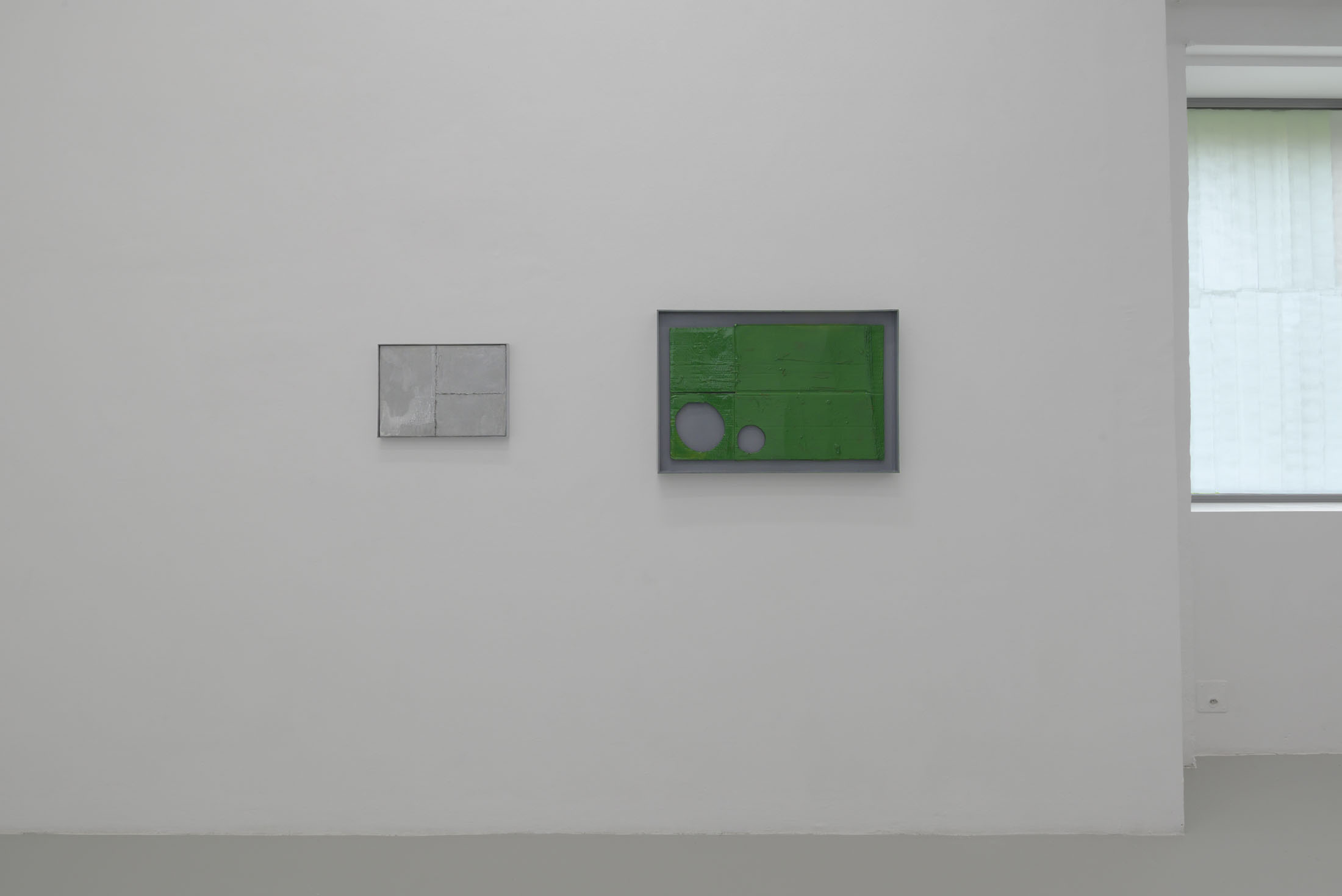
In Cyril Tyrone Hübscher’s exhibition Faux Terrain, the cardboard walls make very liule auempt to conceal their material. The sculptures evoke stones formations without claiming their mass; the painted surfaces and cut-outs impose no image. Walls, sculptures, display cases, paintings, frames. There is no hierarchy within this ensemble, where everything participates in a single and shared gesture. And everything seems, in a certain way, “false”, like a stage set – or rather: everything refuses to pass itself off as real.
The garden, the artist’s starting point and the subject of the exhibition, might seem to belong to an entirely different order: that of nature, of spontaneous growth. Yet, like the exhibition, it is a highly constructed space, a synthesis between natural processes and the human desire for control and organisation; what happens there oflen comes down to choices, categorisation and exclusion.
This parallel sheds light on this exhibition’s undertaking: Cyril Tyrone Hübscher produces an immersive world, a garden, but he does not seek to create an illusion; rather, he aims to make visible the very act of producing such a world. Where Faux Terrain openly asserts its artifice, a garden oflen cultivates ambiguity. It stages the “natural,” composing with living mauer to produce an image. It is a set that succeeds all the beuer insofar as it conceals the conditions of its own production: the arrangement presents itself as self-evident. It belongs to that regime of appearance that the exhibition disrupts.
In Faux Terrain, what first appeared as a weakness — this absence of illusion, this deliberate poverty of materials — becomes a form of rigour. The artistic gesture becomes ambiguous, not in an auempt to make us believe in something, but in its auitude, which embraces this “falsehood” as a form of honesty. The materiality, the visible traces of construction, give the works an unexpected density, a real authenticity. This is the paradox of theatre: we know the prop is artificial, yet the emotion it evokes is entirely real. Cyril Tyrone Hübscher does not seek to imitate the world, but rather to invite us into another one that is honest in its artificiality.
By contrast, it is the outside world that begins to waver. Beyond these walls, many things tend to appear other than they are, even the most familiar and banal. Objects carry within themsleves a form of doubt. Flat-pack furniture imitating wood, plastic mimicking marble, surfaces feigning a substance they are not. The gaze glides over these familiar forms, only to stumble on their uncertain reality. Concrete and wood borrows the appearance of stone, while metal is coated with paint to imitate rust. Green spaces and forests are defined, arranged, cultivated. Many objects and environments thus seem to operate through a logic of simulation, covering or substitution. This dynamic is not confined to materials; it also runs through the symbolic architectures of our societies. Nation-states, institutions — structures we believe to be solid — are also fragile constructions, liable to crack or even collapse. We inhabit a stage set that presents itself as reality.
The exhibition performs a subtle yet decisive reversal in relation to this reality. What might be described as simulacrum ultimately appears less deceptive than that which, elsewhere, claims authenticity. It is not about revealing a hidden truth behind appearances, but rather about making the appearances themselves visible. Thus, Cyril Tyrone Hübscher constructs a world which destabilises the one we thought we inhabited. By refusing illusion, he reveals our own; Faux Terrain exposes and, by contrast, dismantles the fictional dimension upon which our daily experience rests. And this overtly constructed world becomes, paradoxically, the space where a form of truth can emerge: that of our human condition, made of arrangements with reality, shared narratives, and collective beliefs.