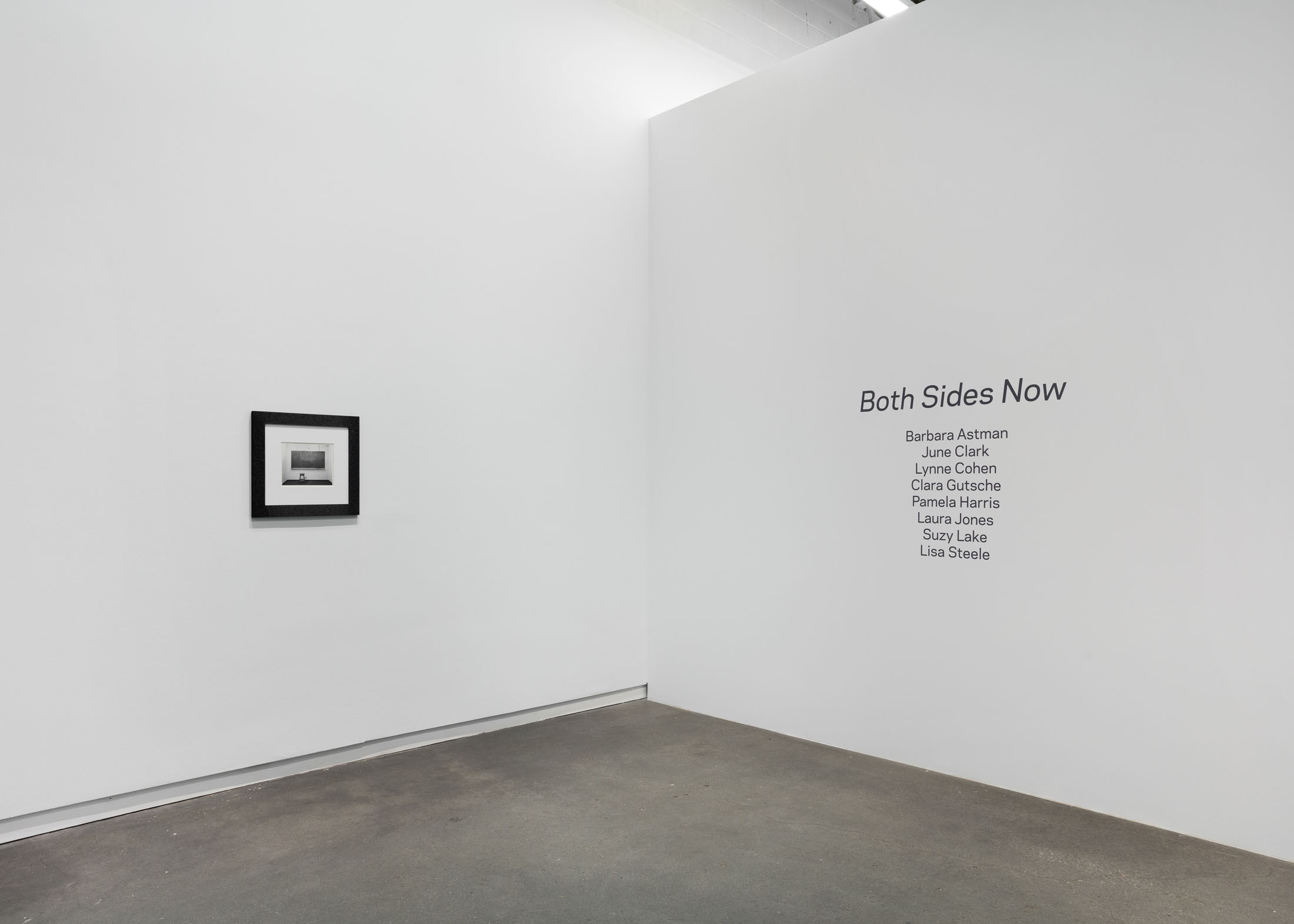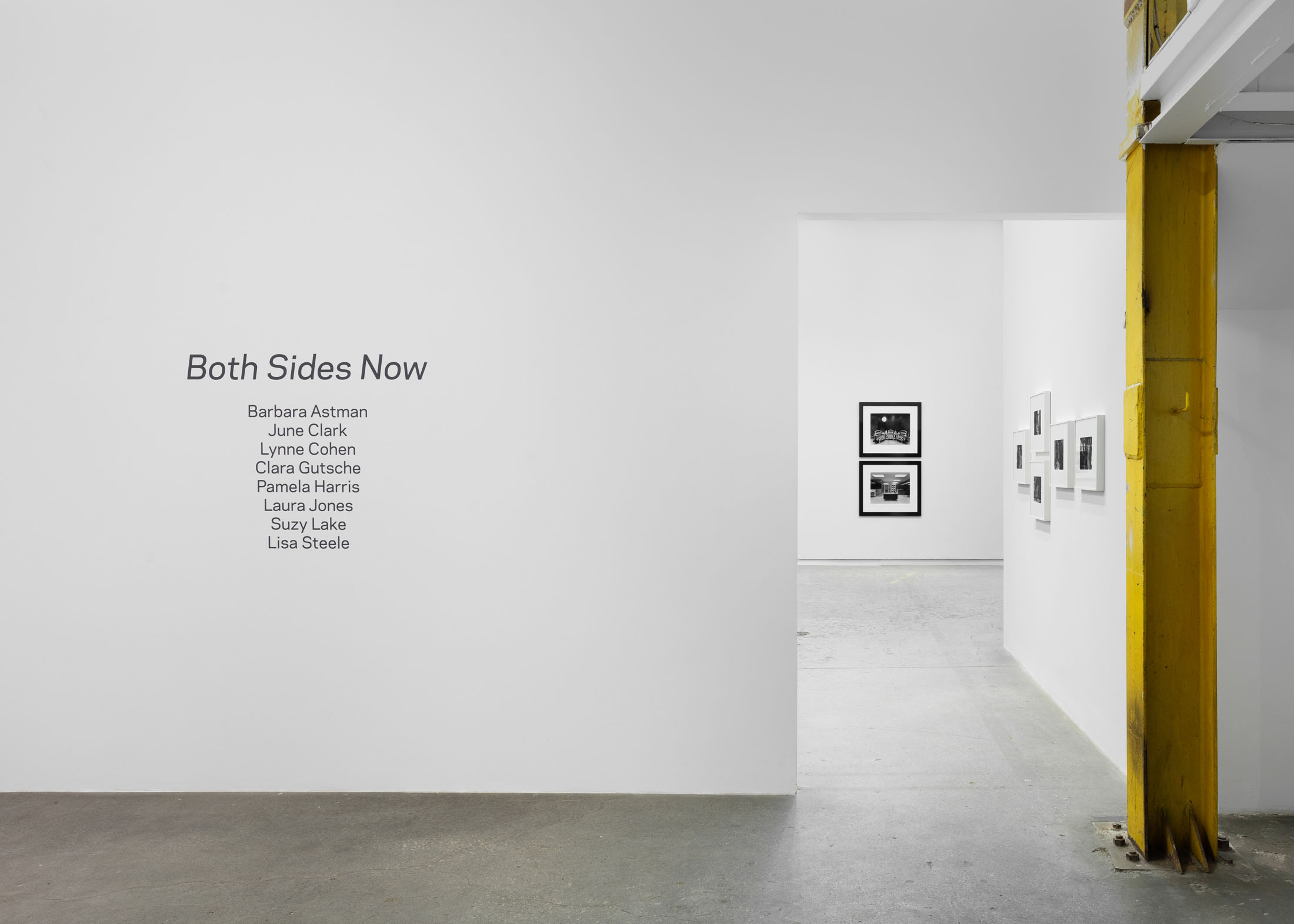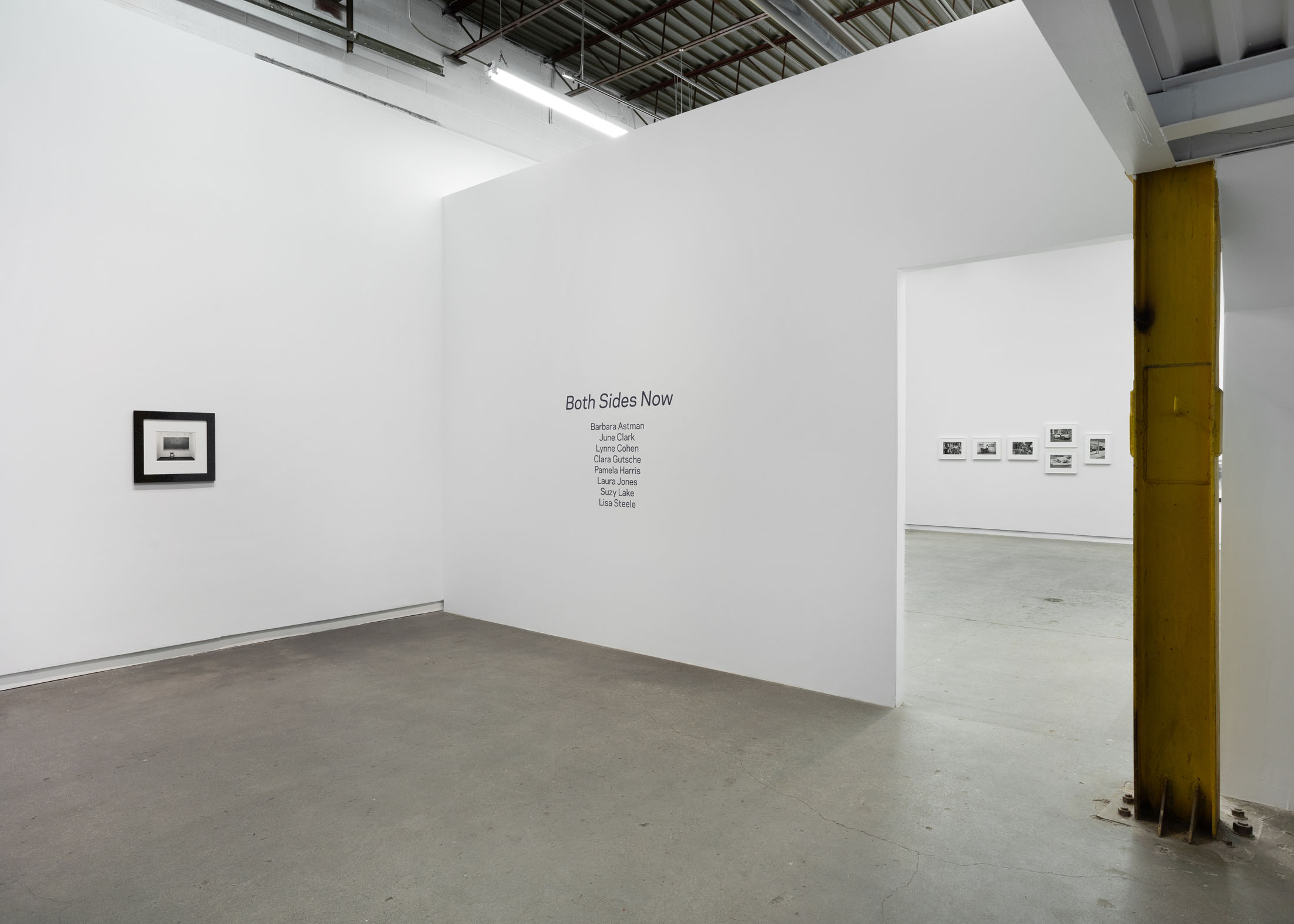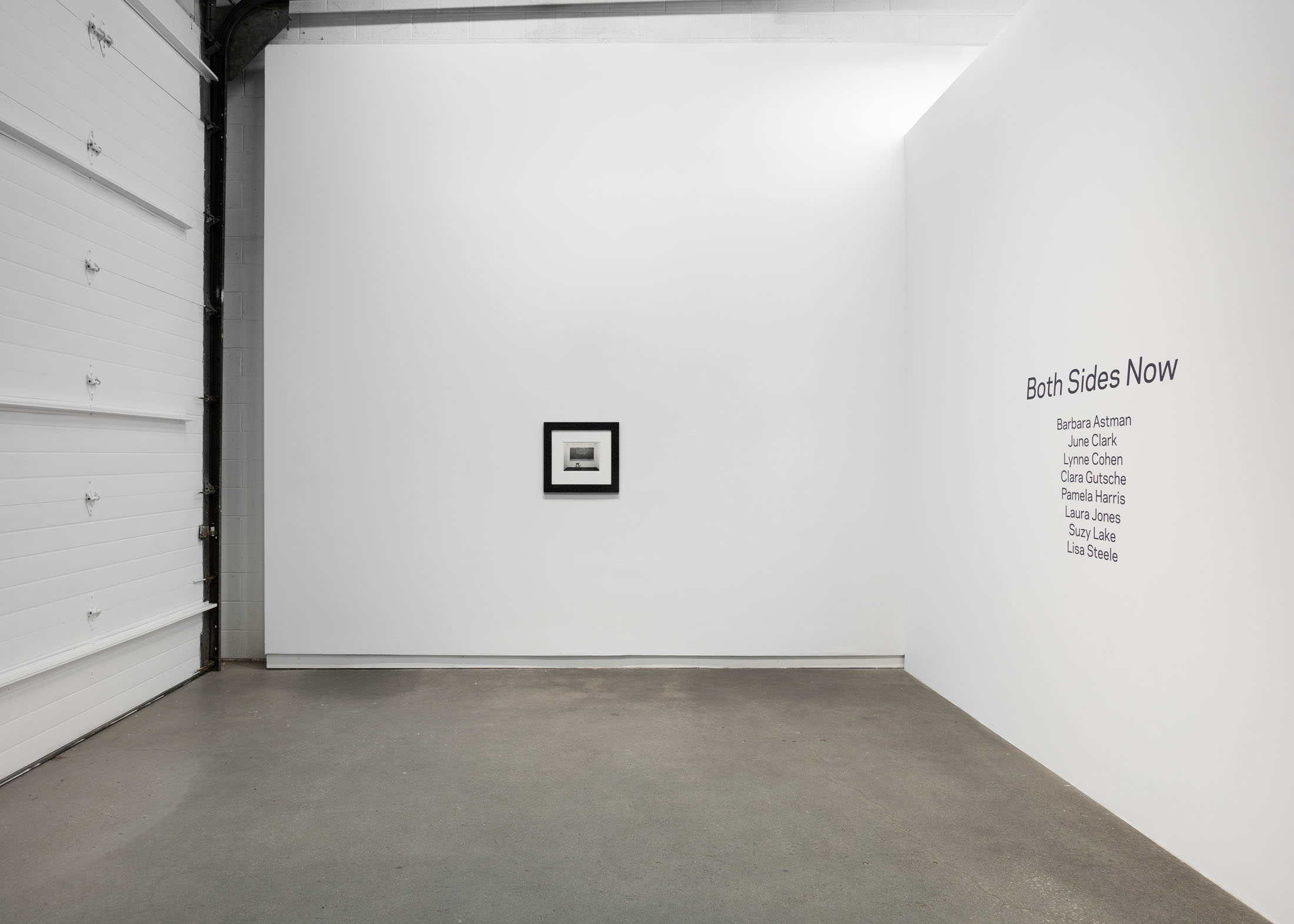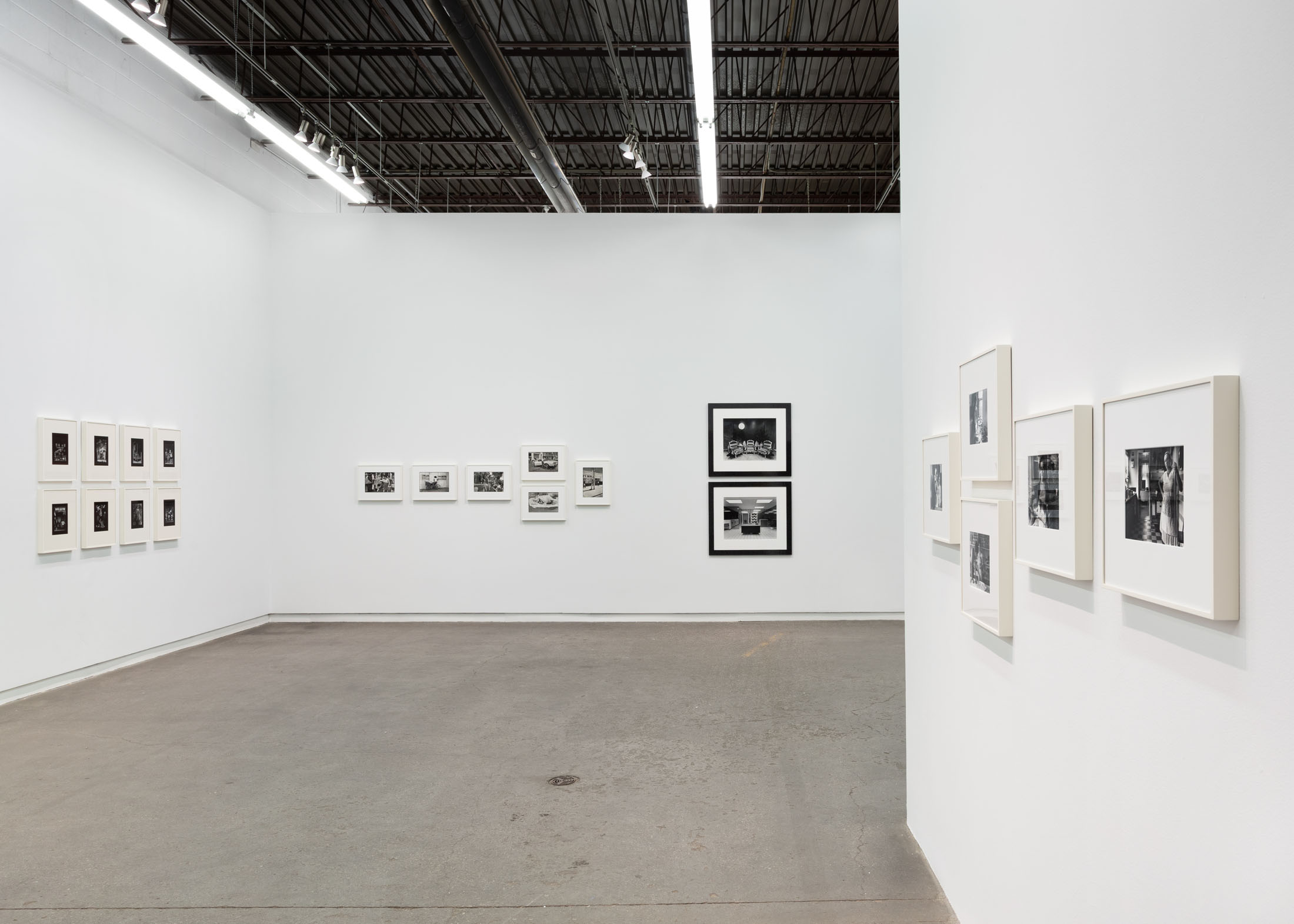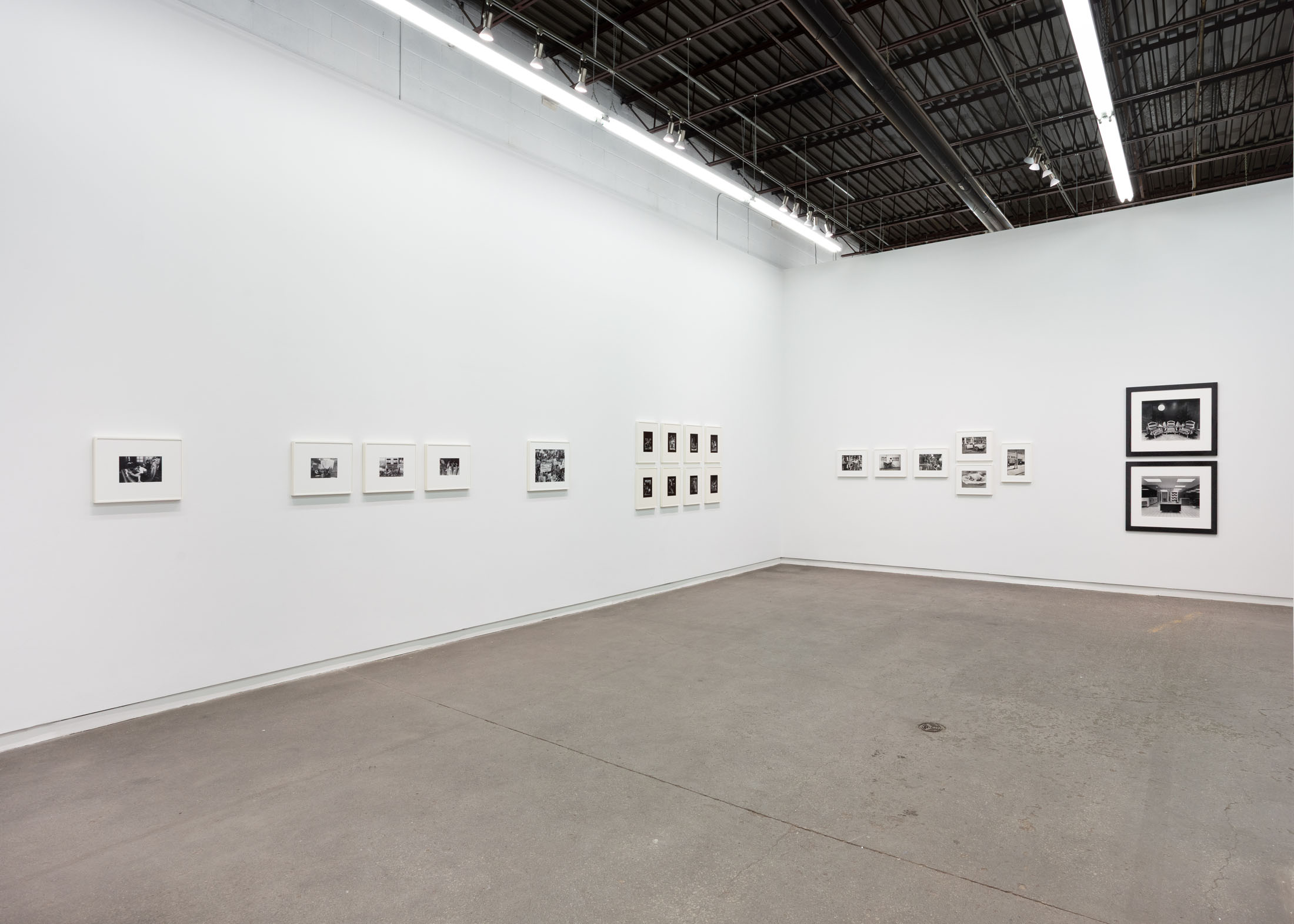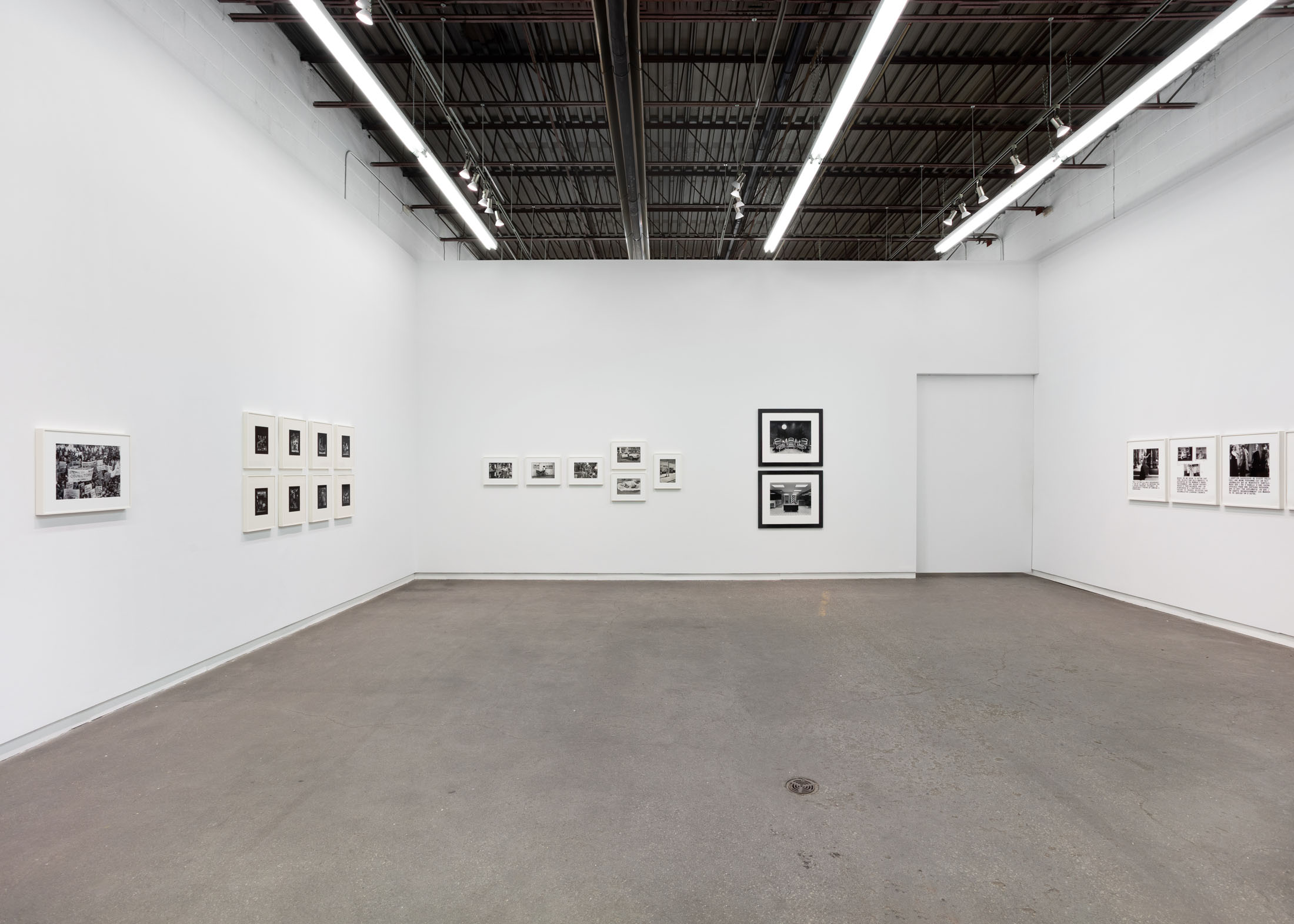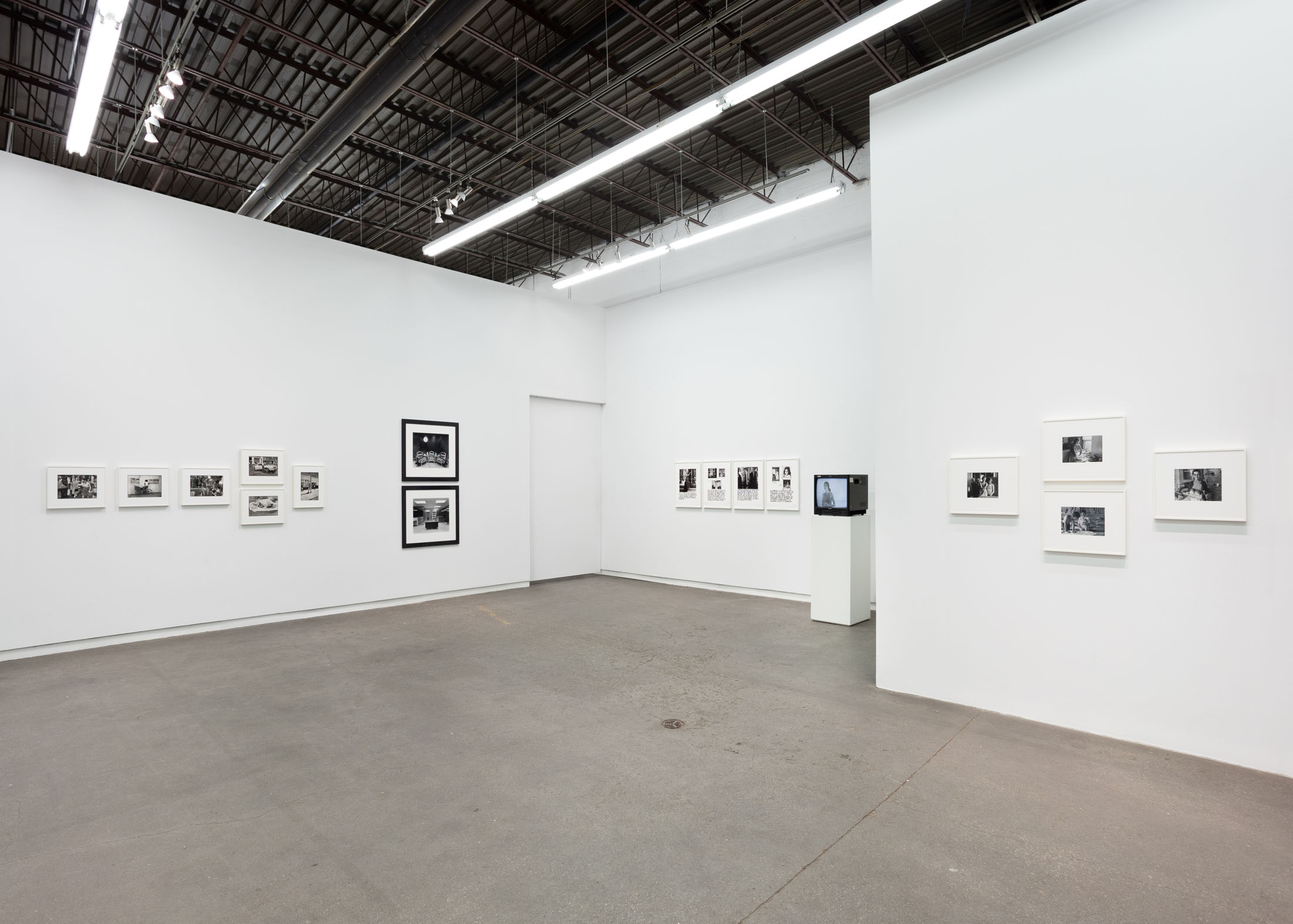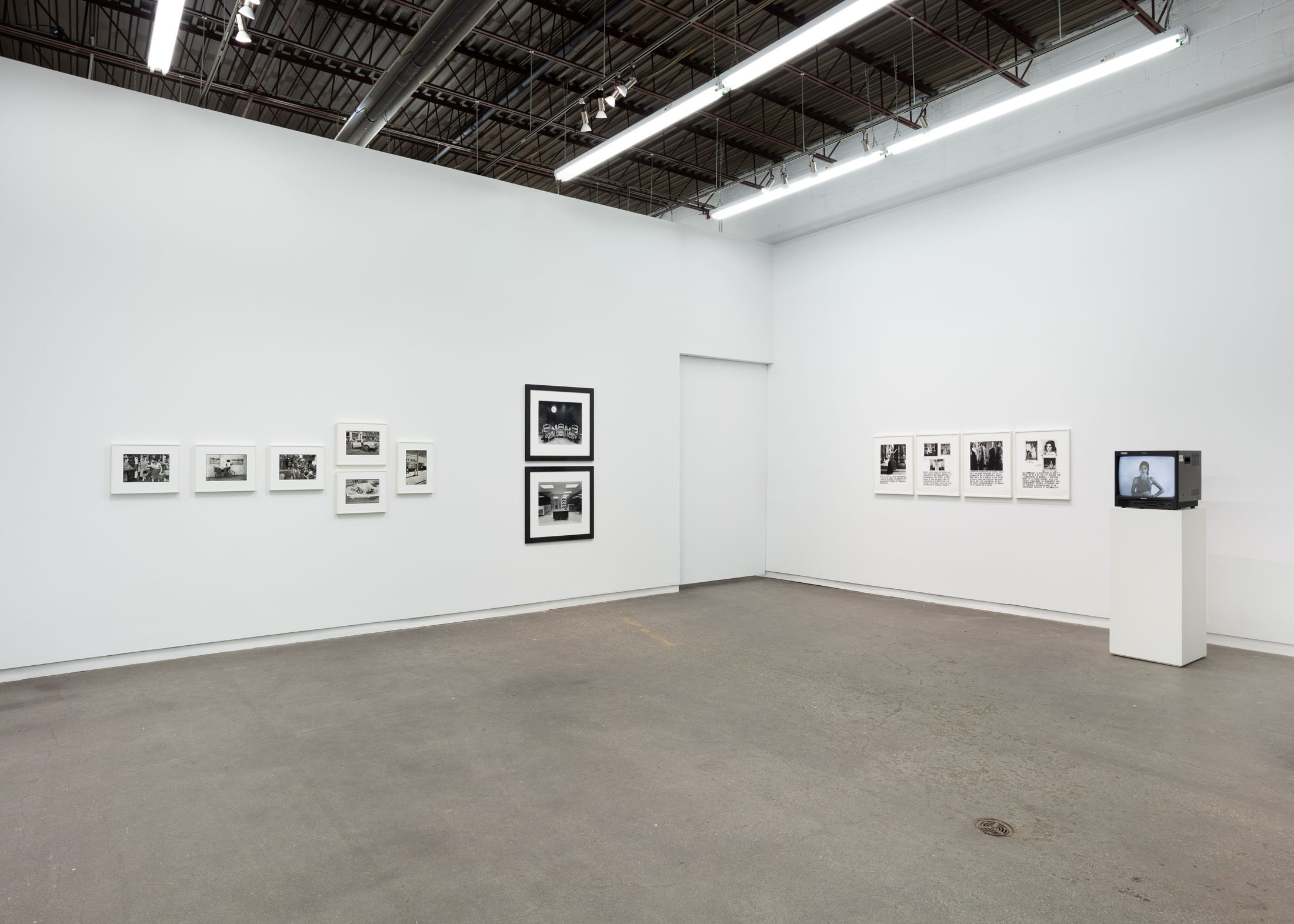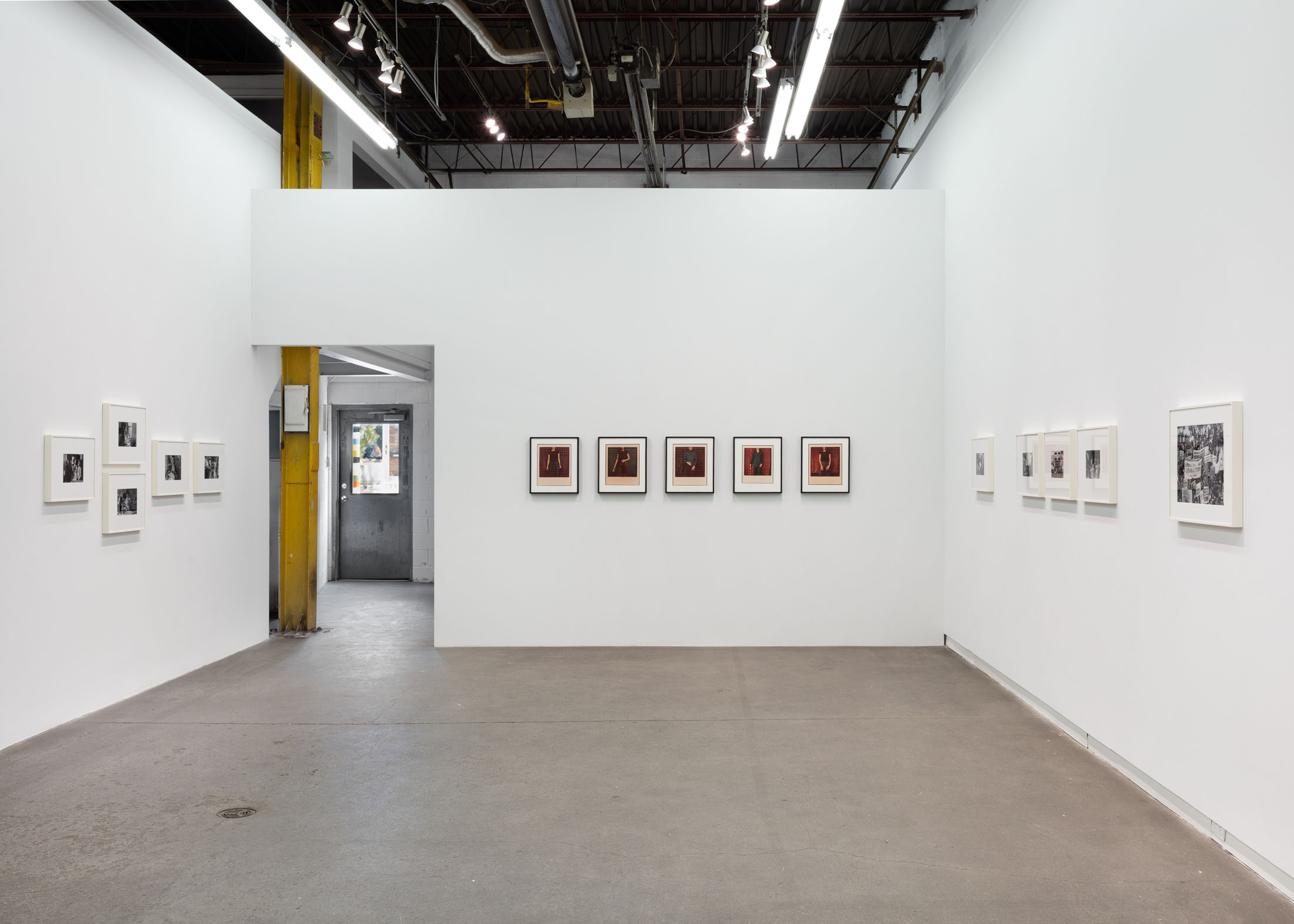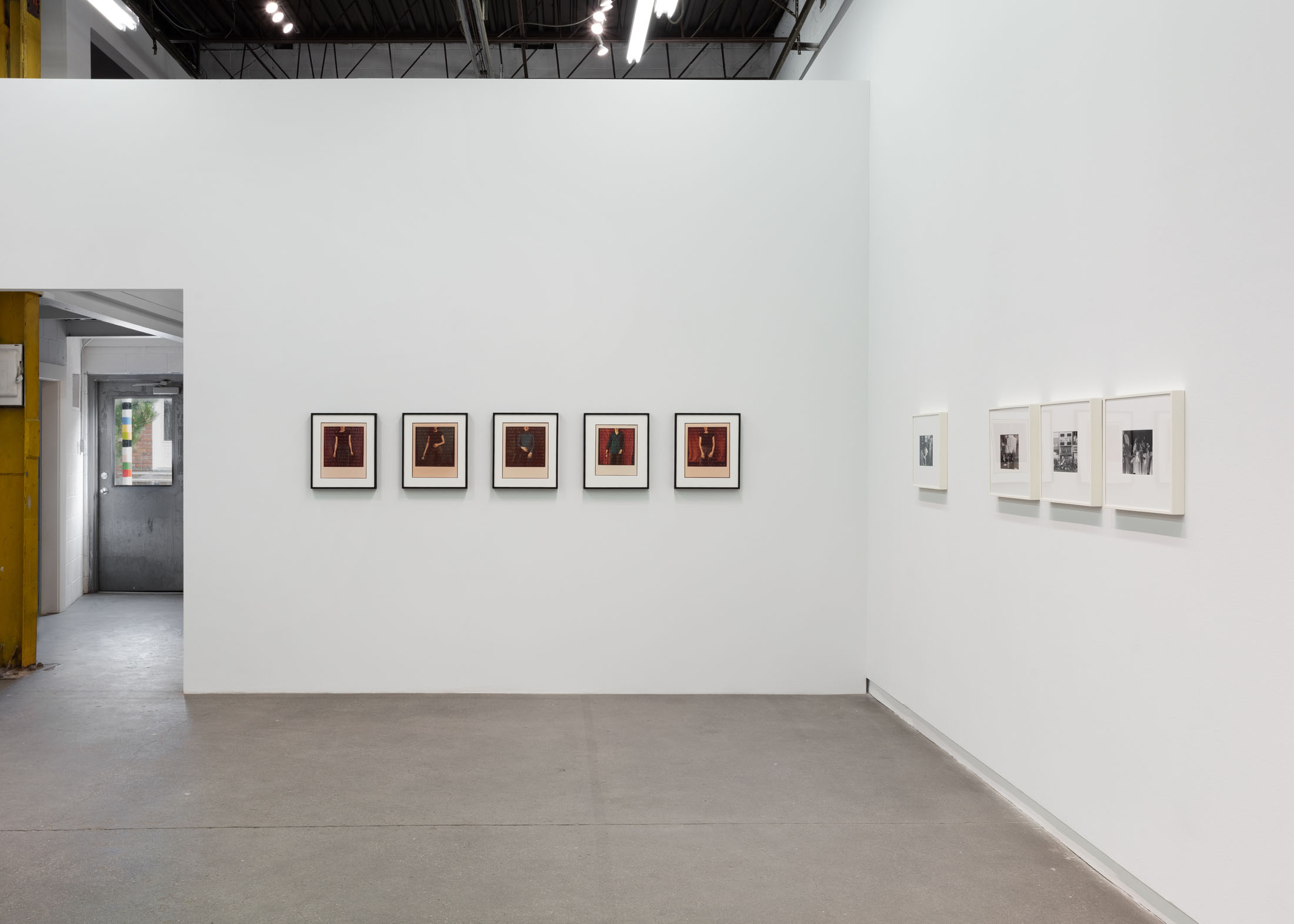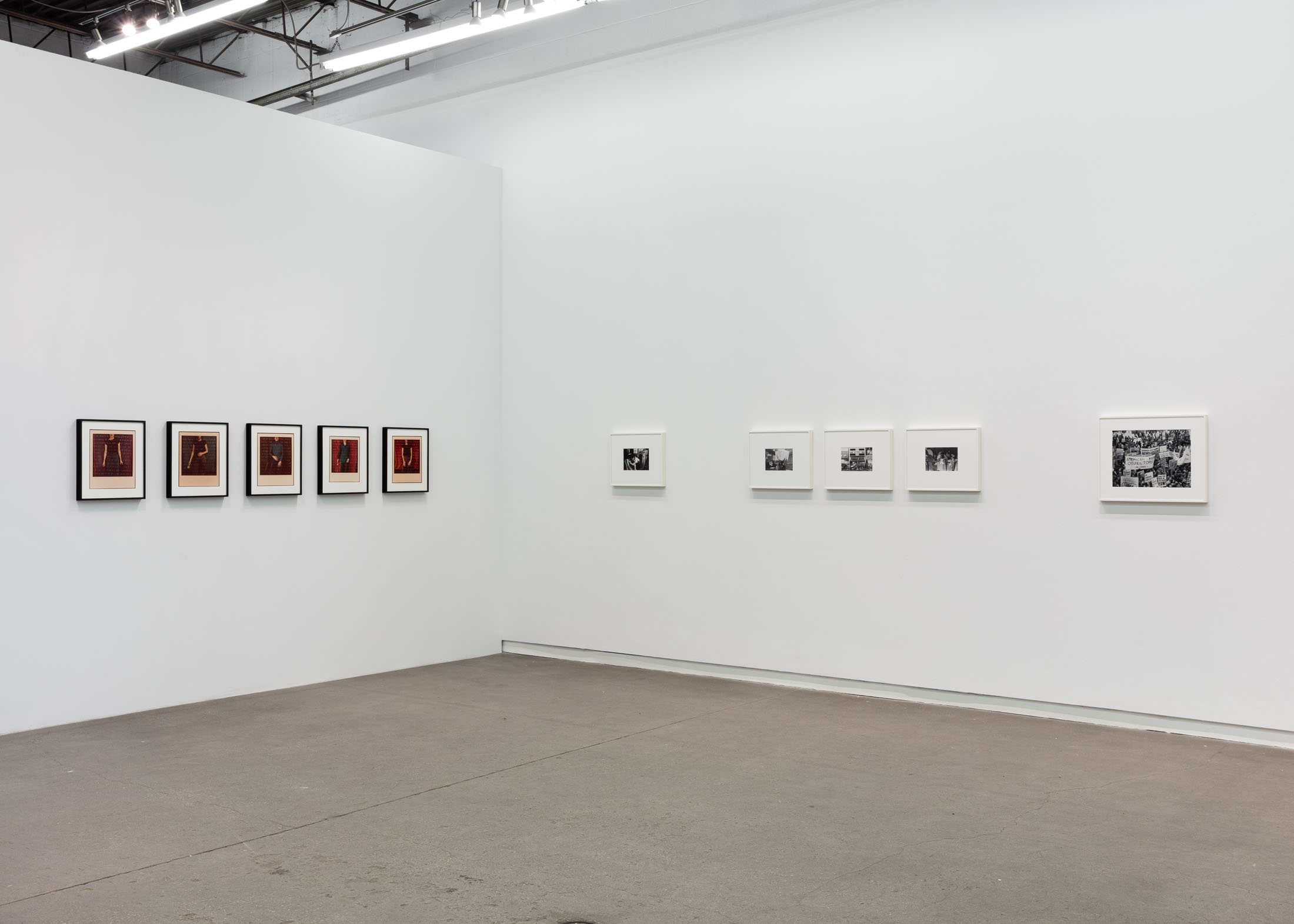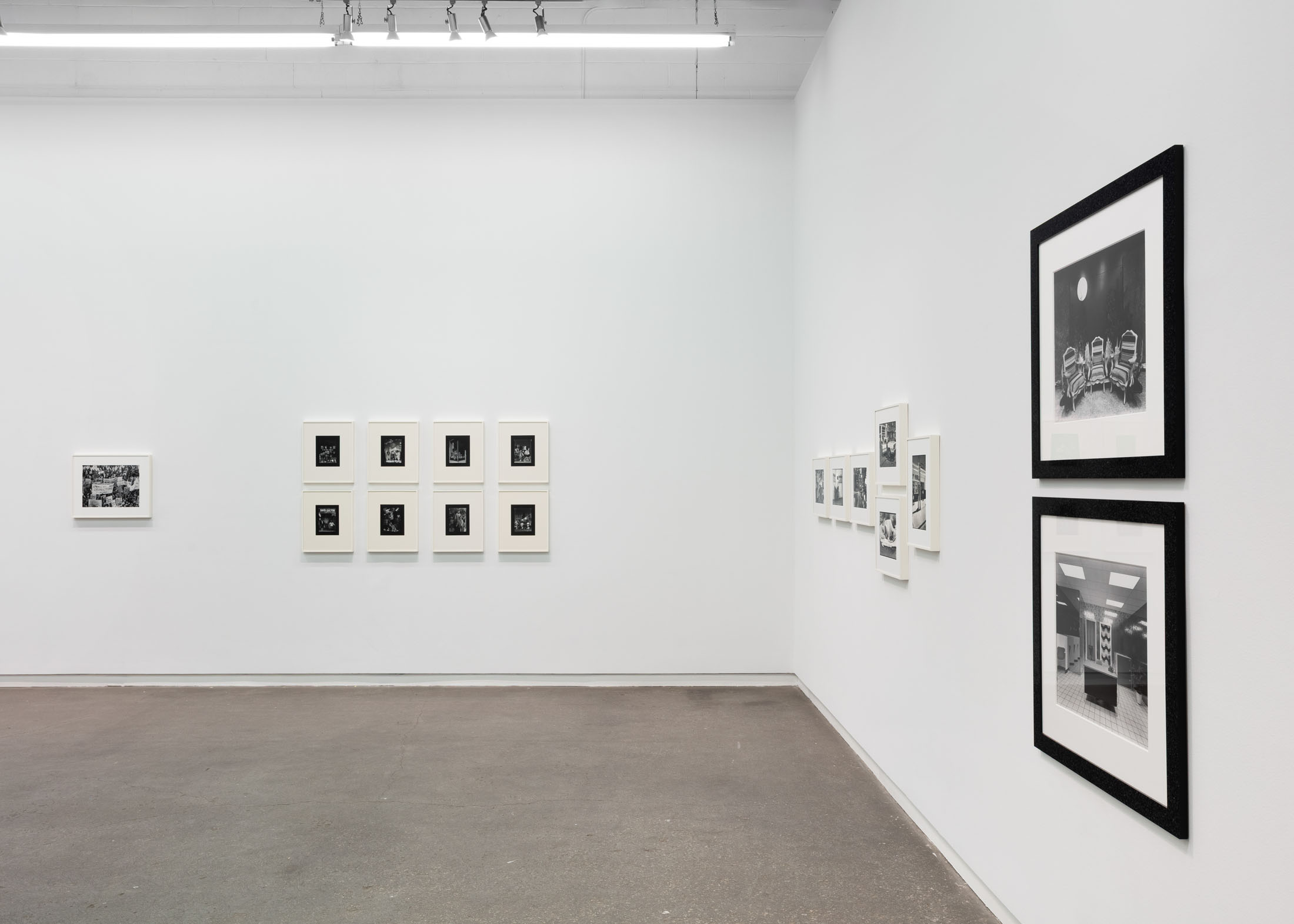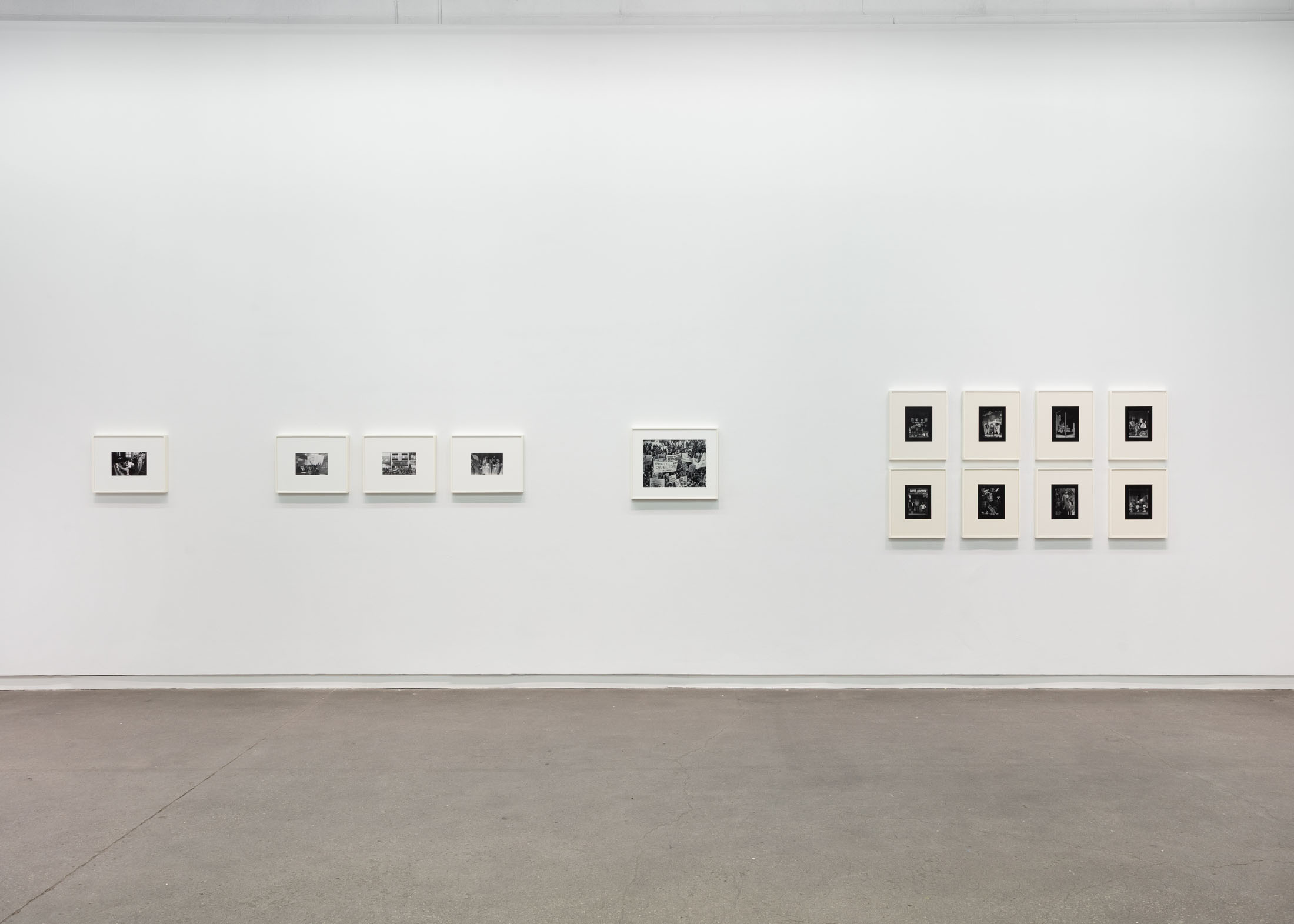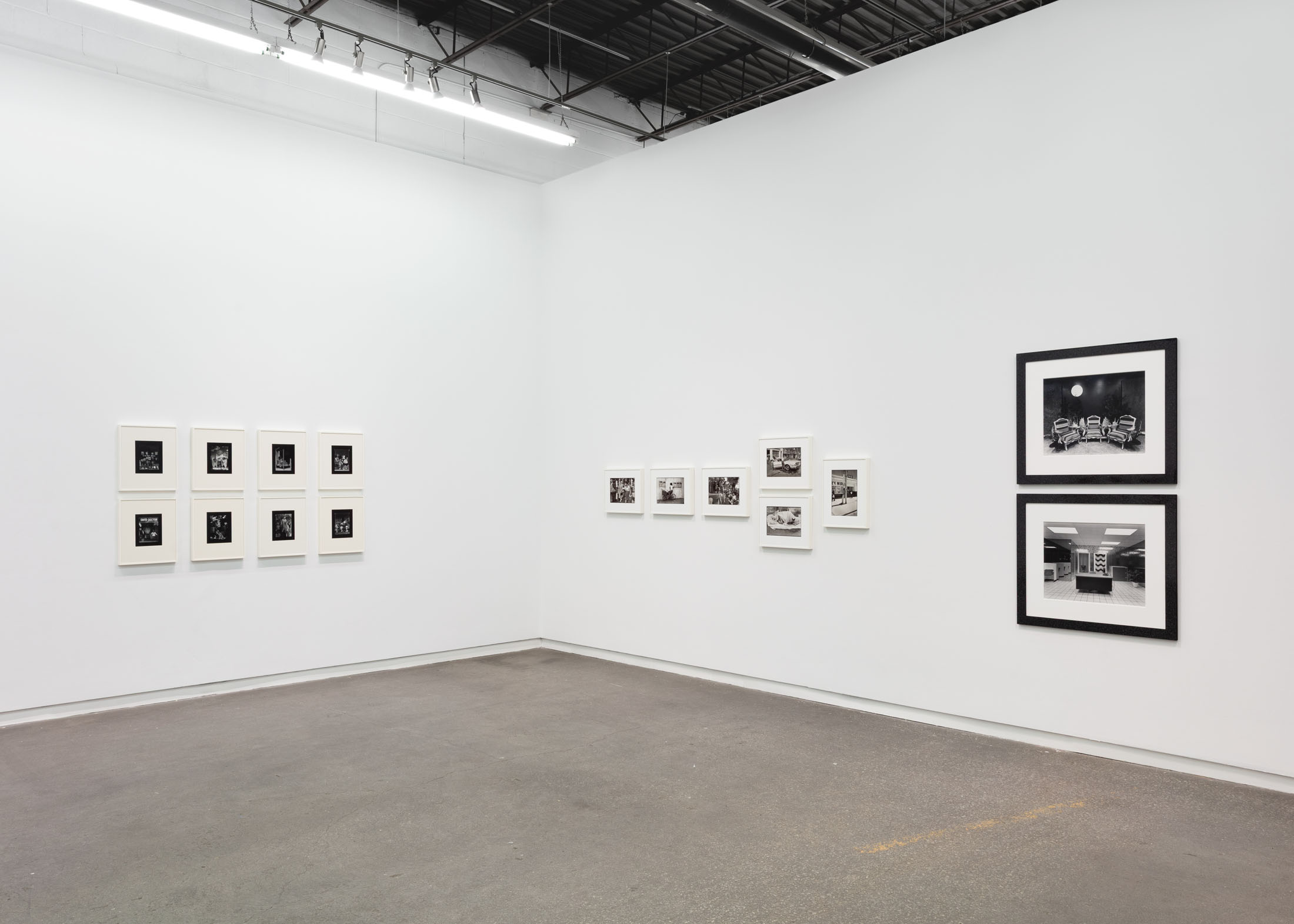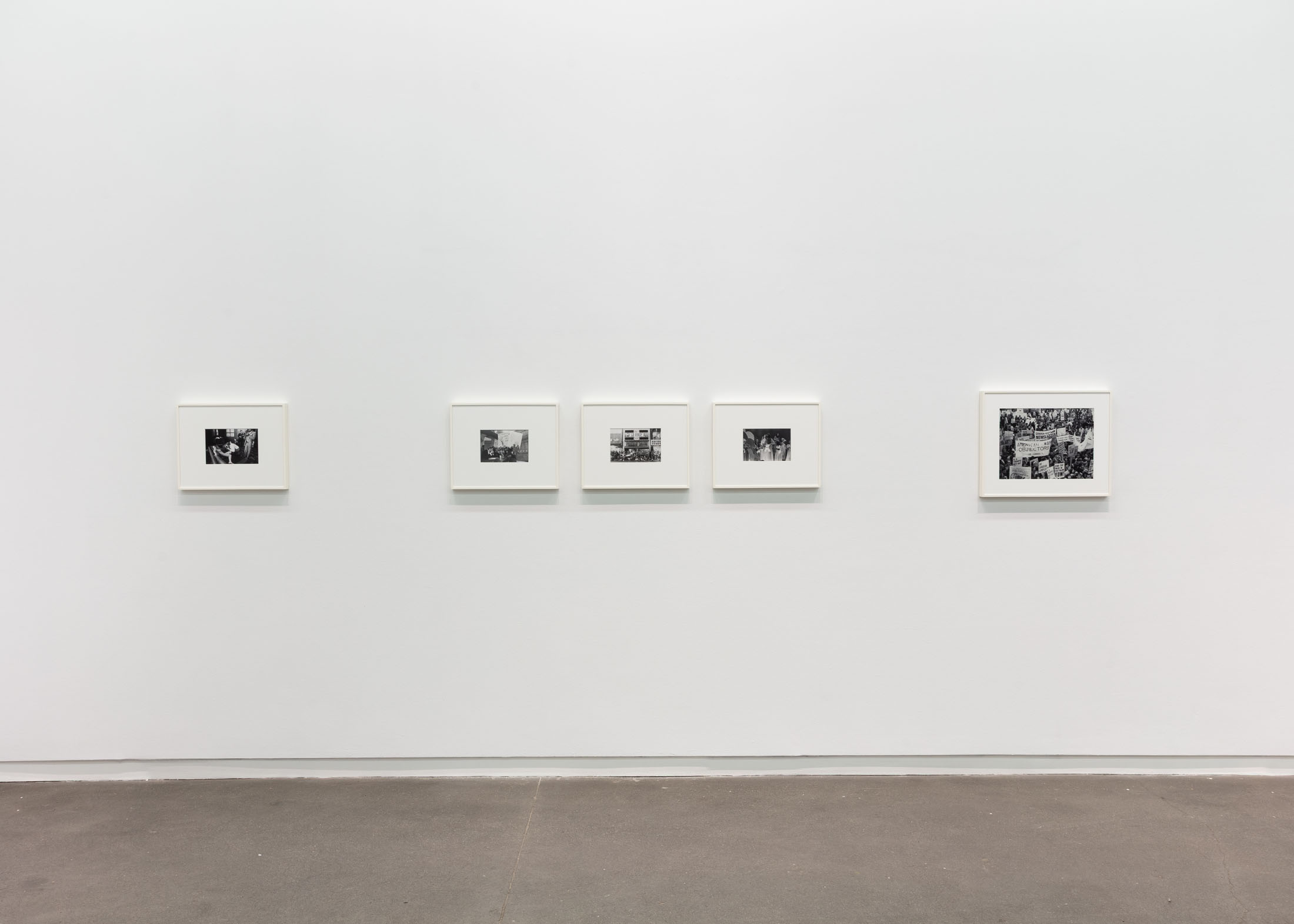
Daniel Faria Gallery is pleased to present Both Sides Now, a group exhibition featuring historic works by American-born Canadian artists Barbara Astman, June Clark, Lynne Cohen, Clara Gutsche, Pamela Harris, Laura Jones, Suzy Lake and Lisa Steele. This show is ostensibly the first of its kind.
The artists in Both Sides Now share the experience of having left the United States in the late 1960s and early 1970s in response to the prevailing political climate, seeking refuge, community, and a sense of home in Canada. Many turned to photography as a means of reconstructing belonging or as a self-reflexive tool for examining identity as young women negotiating new social realities. In Toronto, several artists formed networks around the Baldwin St. Gallery (1969-1980), the first photography gallery in Canada founded by Laura Jones and her husband John F. Phillips.
The Baldwin St. Gallery functioned as a key site of exchange and connection. Rather than operating as a commercial venue, the gallery functioned as a community-oriented space for meeting, dialogue, storytelling, and experimentation. It hosted established photographers alongside local women and children, and even provided temporary shelter for newly arrived draft resisters. It is also where many of these artists first connected, including Clark, Harris, Jones, and Steele. The four would become co-founders of the Women’s Photography Co-op in 1972 along with Judith Holman, Lynn Murray, Liz Maunsell and Linda Rosenbaum. In early 1970s Toronto, photography remained a male-dominated field; women were barred, for example, from using darkrooms at the University of Toronto. Working instead in the two basement darkrooms at the Baldwin St. Gallery, members of the Co-op taught themselves all aspects of photographic practice, from camera use to print development. The Co-op also curated exhibitions, most notably Photographs of Women by Women in 1972 which toured nationally and fostered connections with photographers across North America, including others in this exhibition.
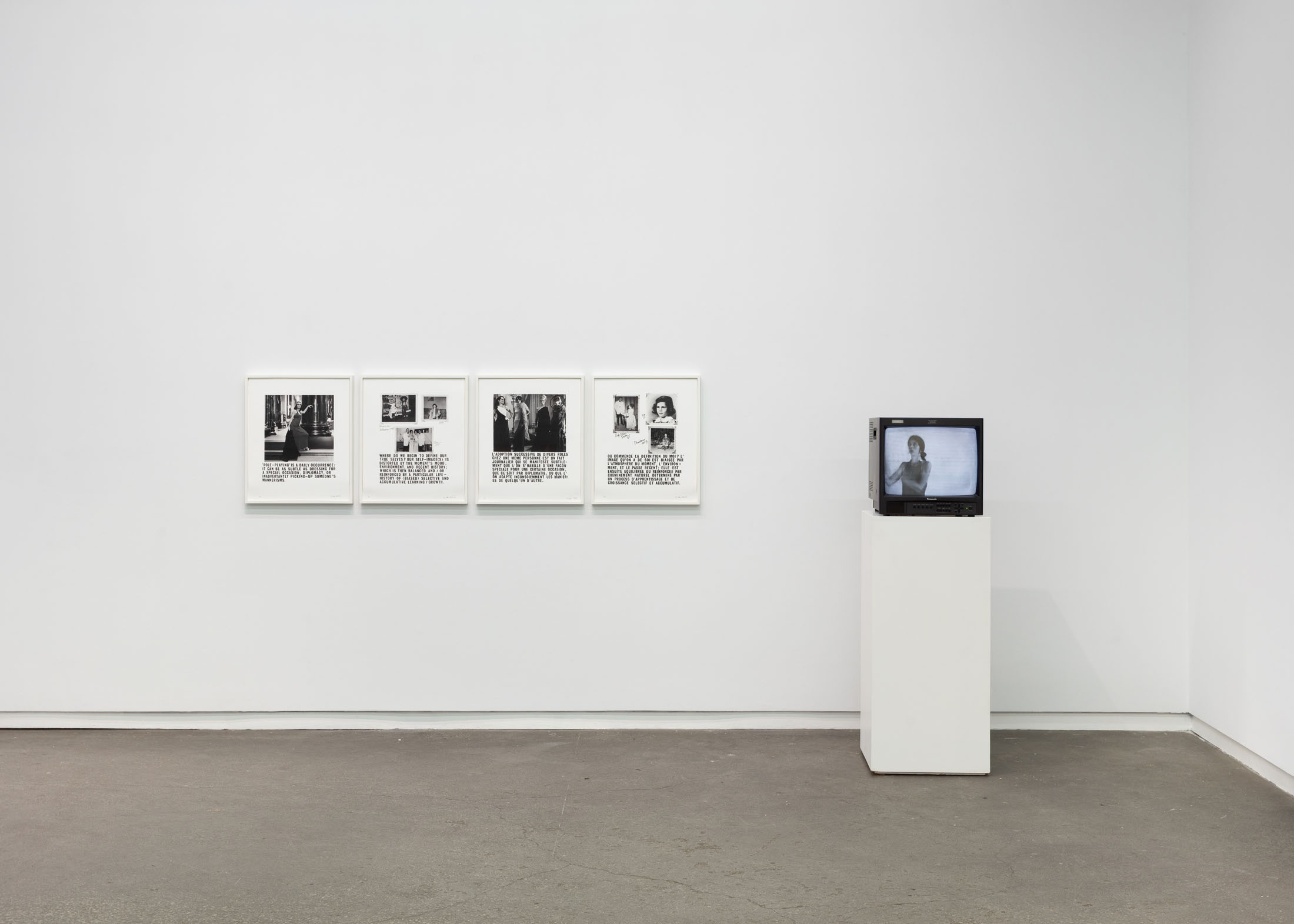
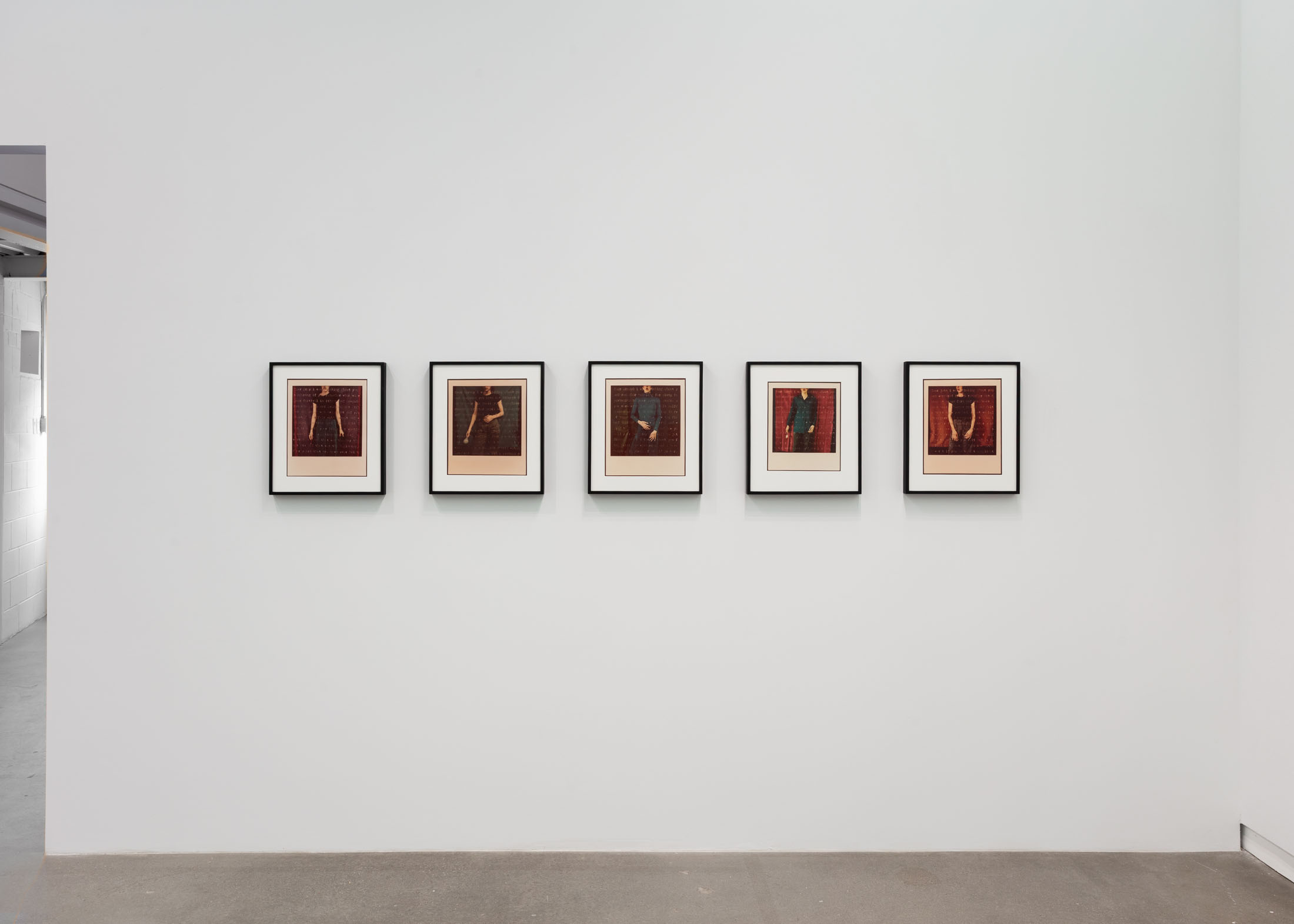
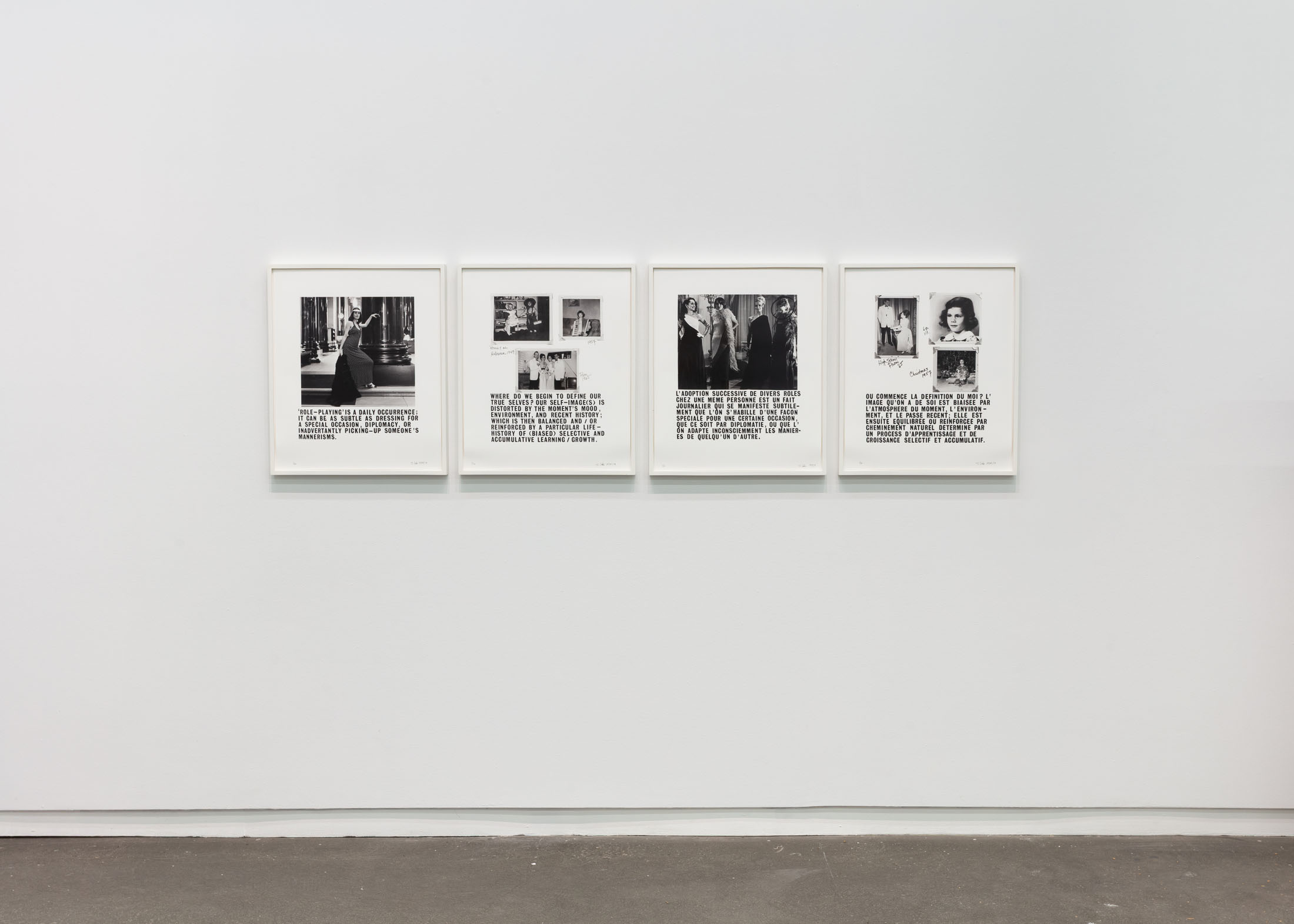
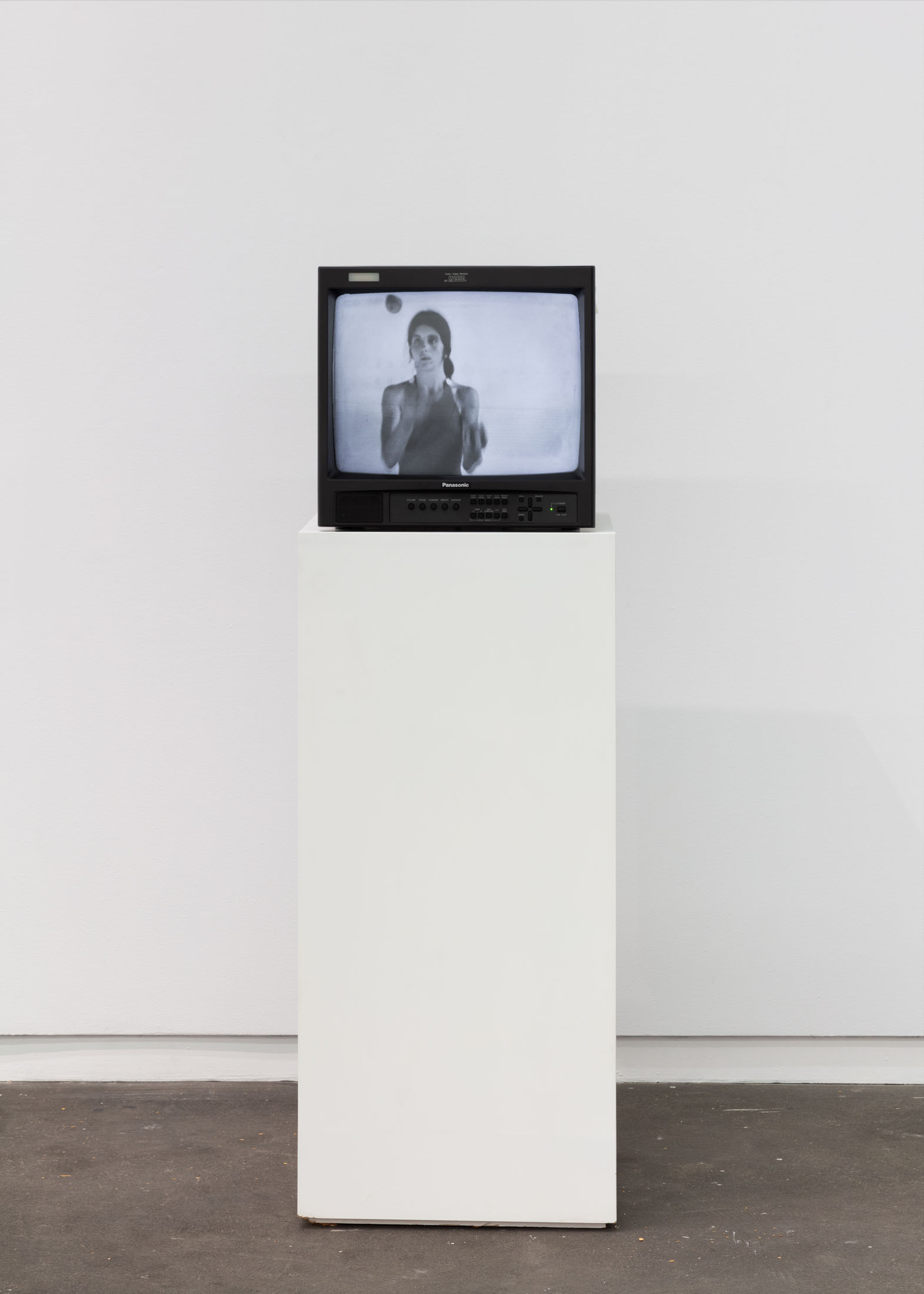
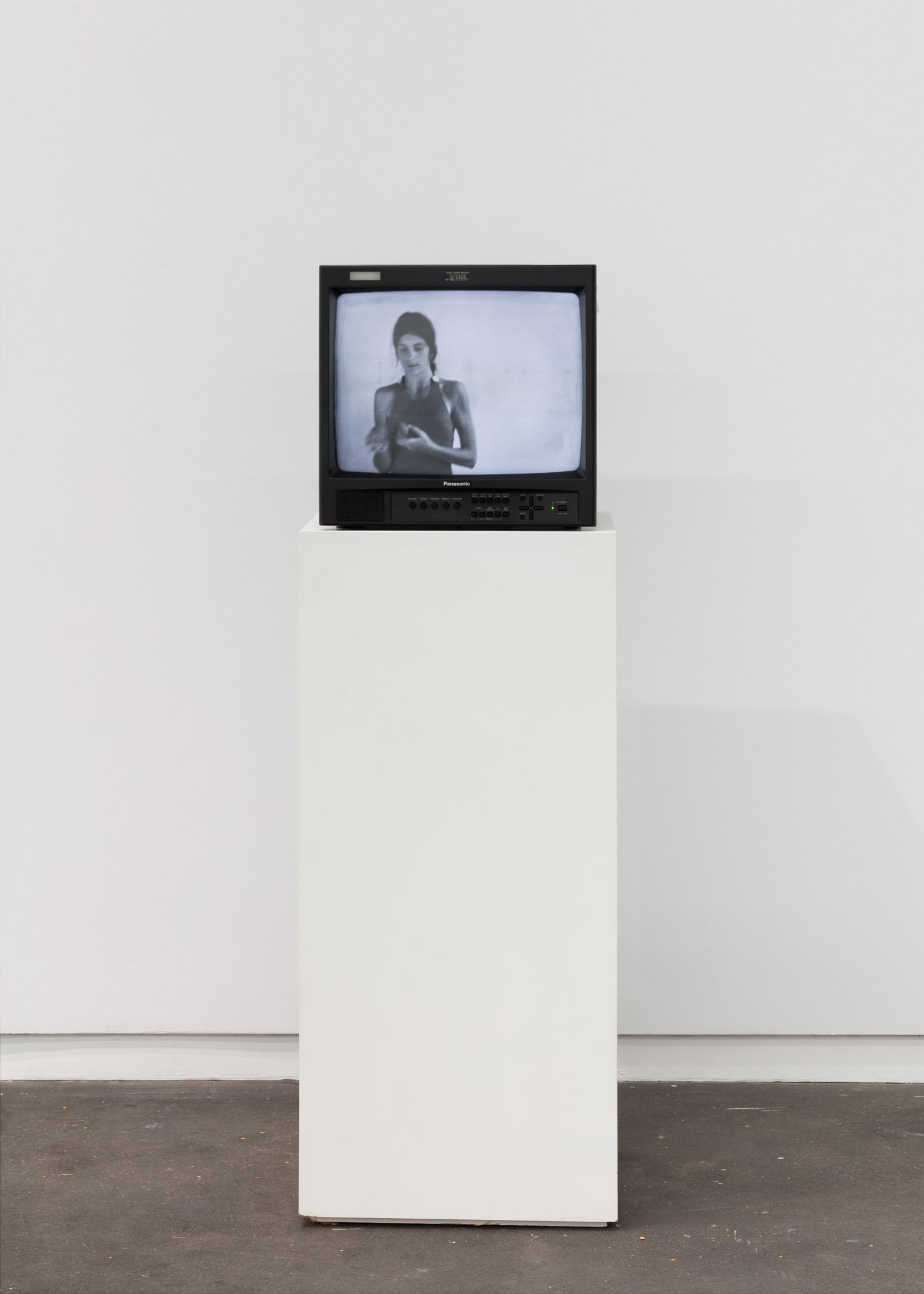
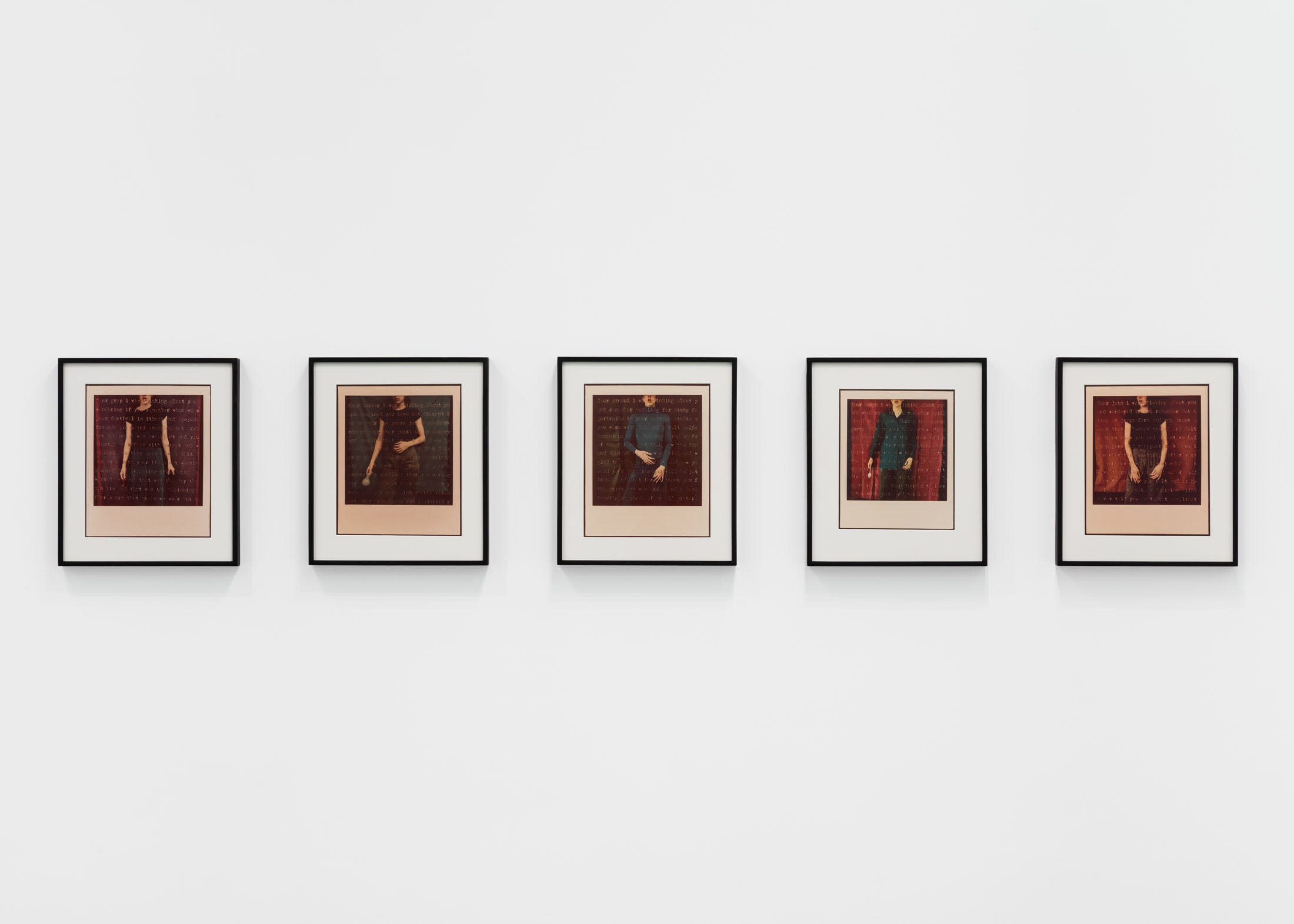
Astman, Lake, and Steele each turned the camera on themselves to examine self-portraiture, identity, and the representation of women in mass media. In I Was Thinking About You (1978–80), Astman typed letters to friends directly onto Polaroid self-portraits before re-photographing and enlarging them, an early example of her material experimentation with the photographic medium. Similarly, Lake’s On Stage (1972) employs the artist as both subject and model, appropriating the visual language of contemporary women’s magazines through exaggerated poses and costumes to interrogate the construction of identity and gender roles during a period of social and political upheaval. The inclusion of text, as in Astman’s work, underscores the critical rather than narcissistic nature of these self-images. As Lake observed, “Art became a mode through which to explore the social, political, and philosophical concerns of the time.” In Juggling (1972), Steele’s first film, the artist attempts to perfect juggling before the camera. The repetitive action serves as a metaphor for adaptation and persistence, and could reflect the uncertainties of beginning a new life in Canada. As Steele later remarked, “You get a little better, and then you plateau, and then you usually fall back. That’s my story.”
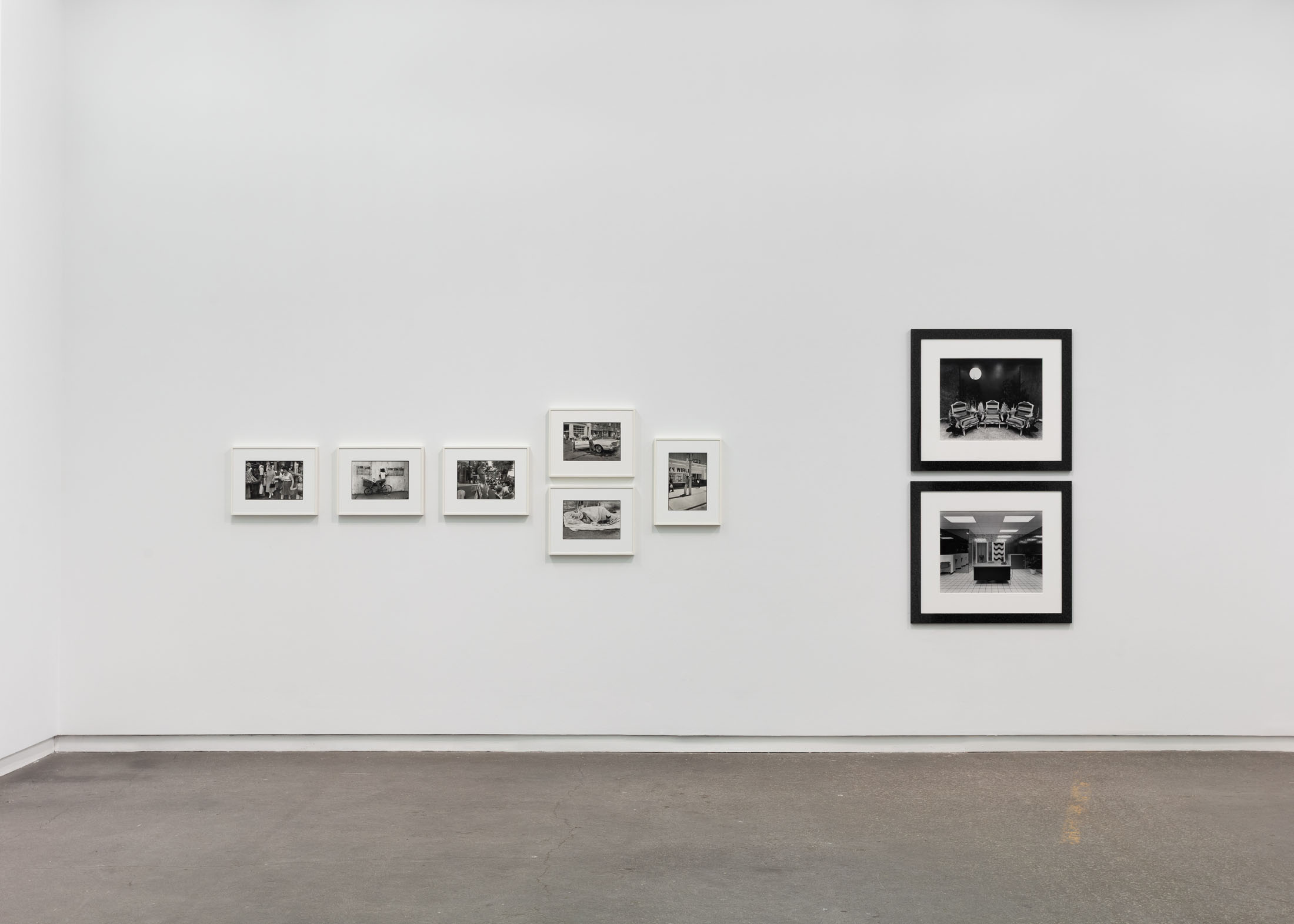
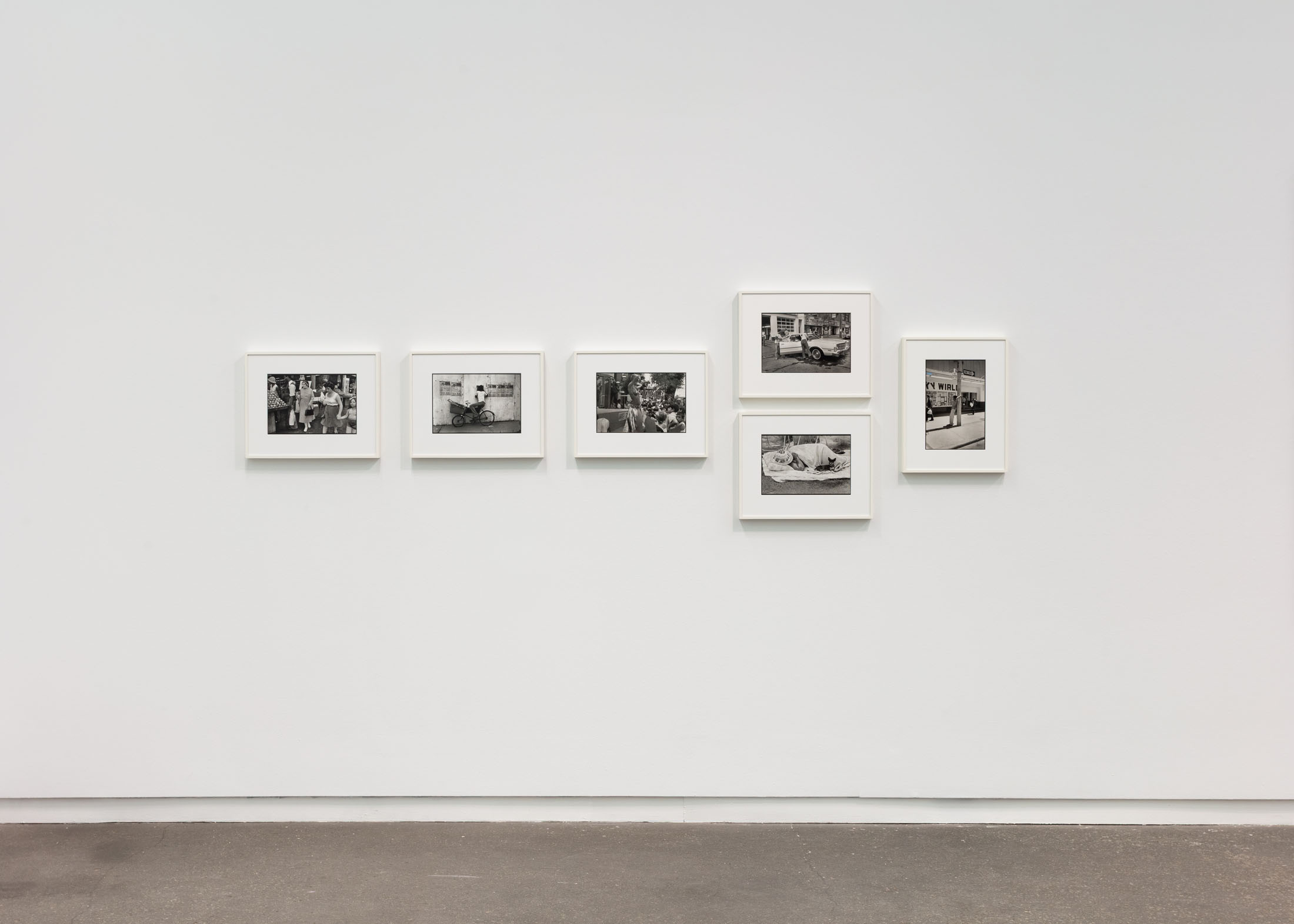
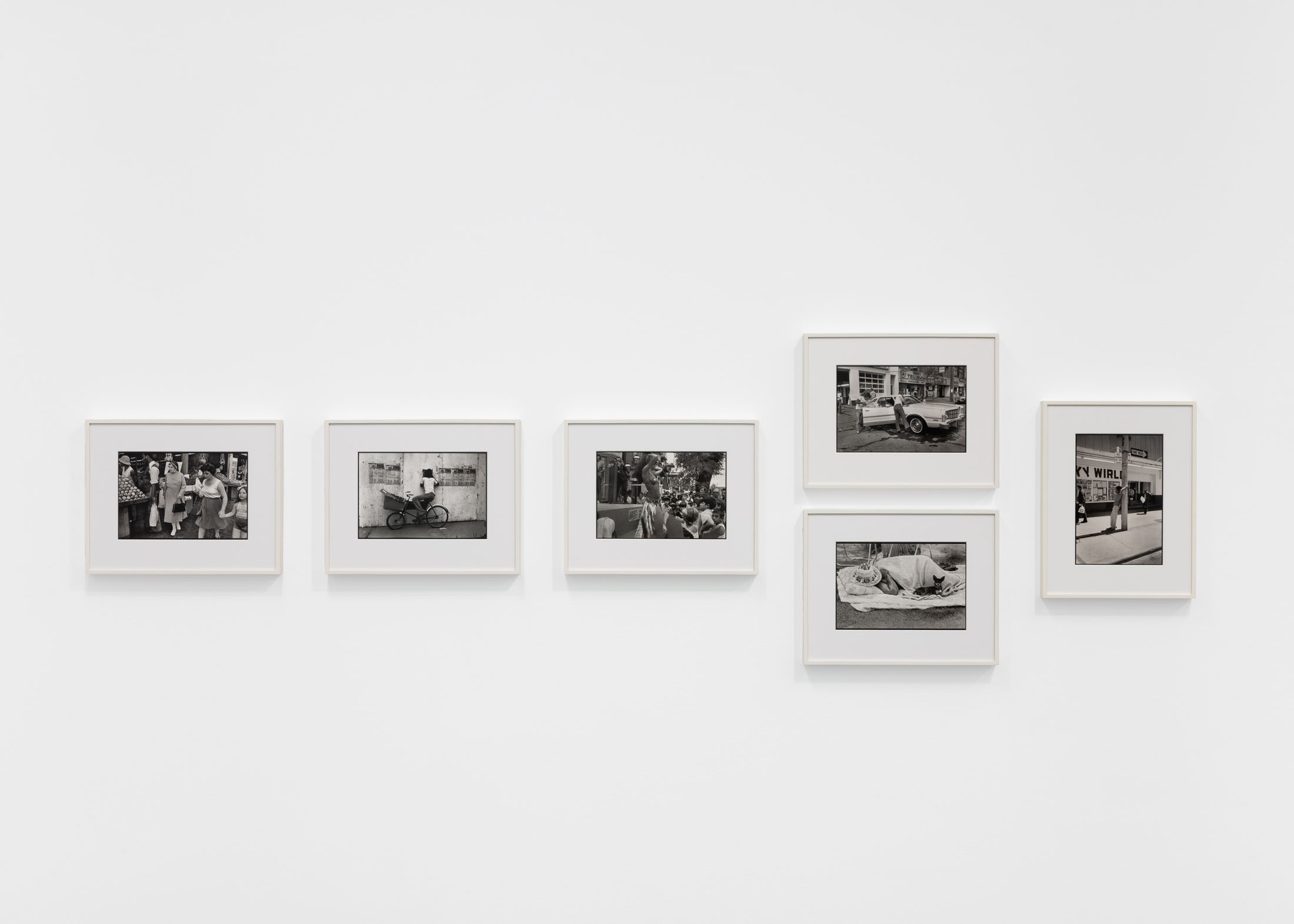
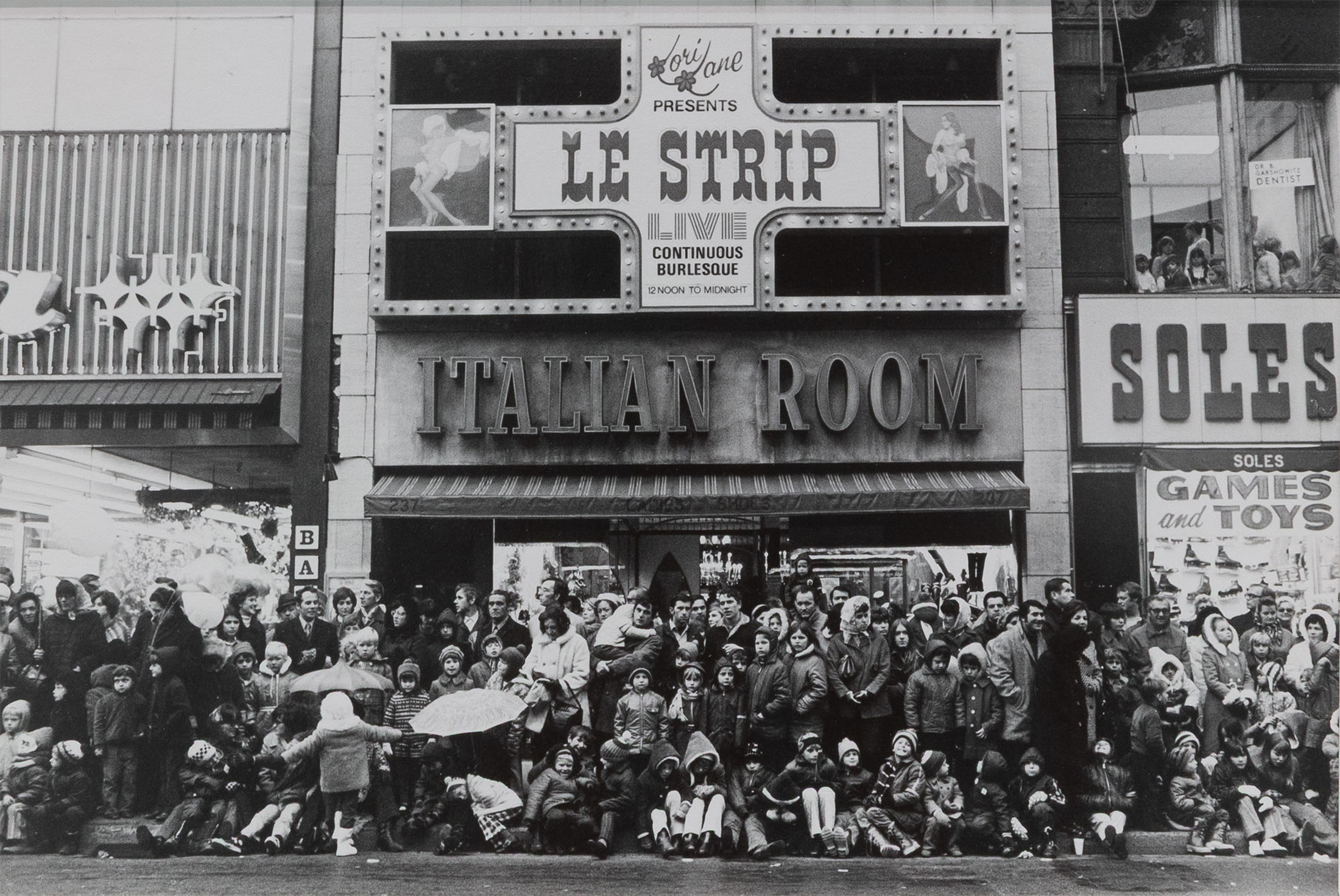
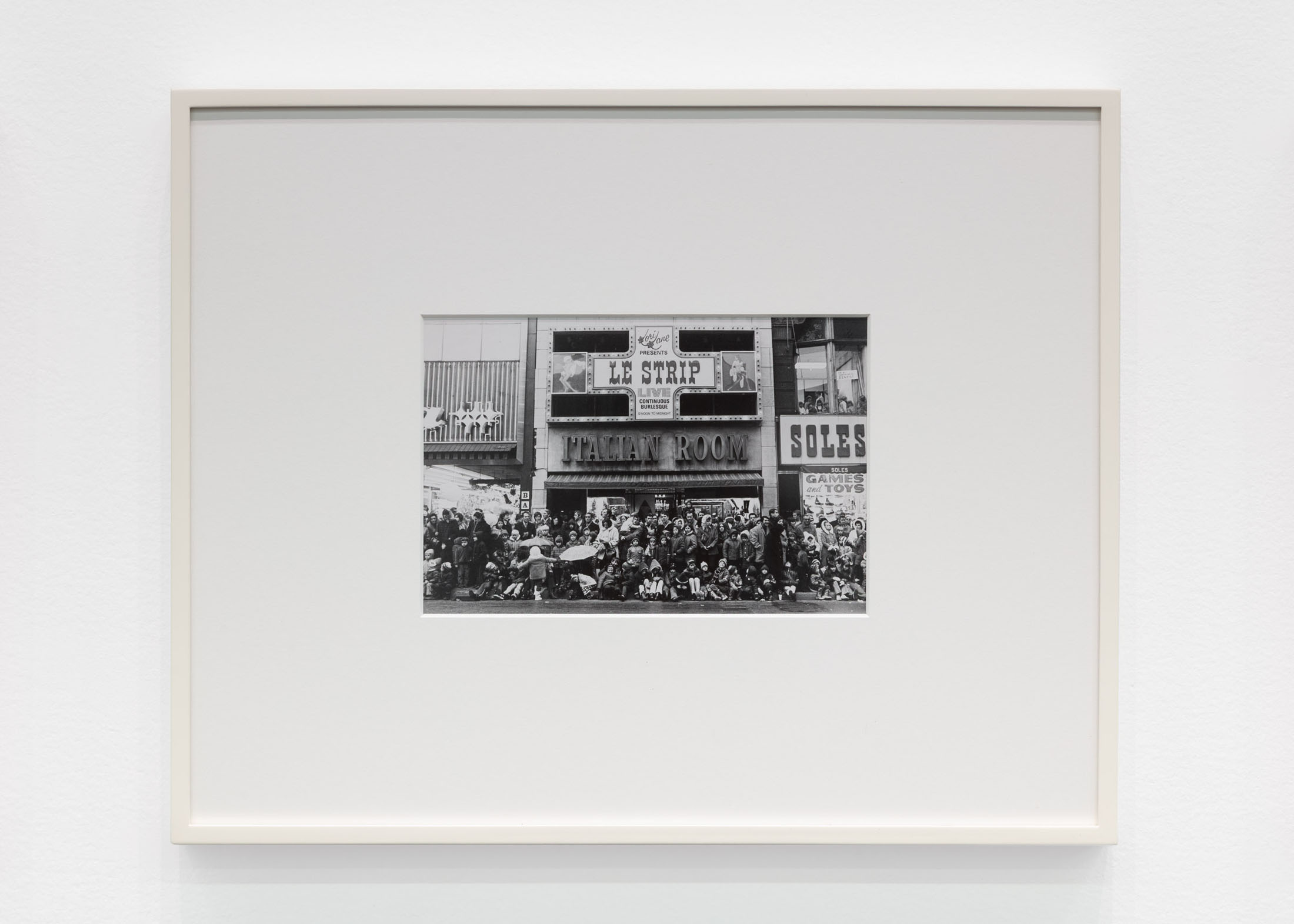
Clark, Harris, and Jones turned their cameras toward people and communities, using photography to cultivate a sense of belonging and situate themselves within their adopted environments. As Clark recalled, “I walked around looking for imagery that brought me home or had me feel as if I was home.” Images such as Untitled (Car Wash) (1975) and Waiting for Caribana to Begin (c.
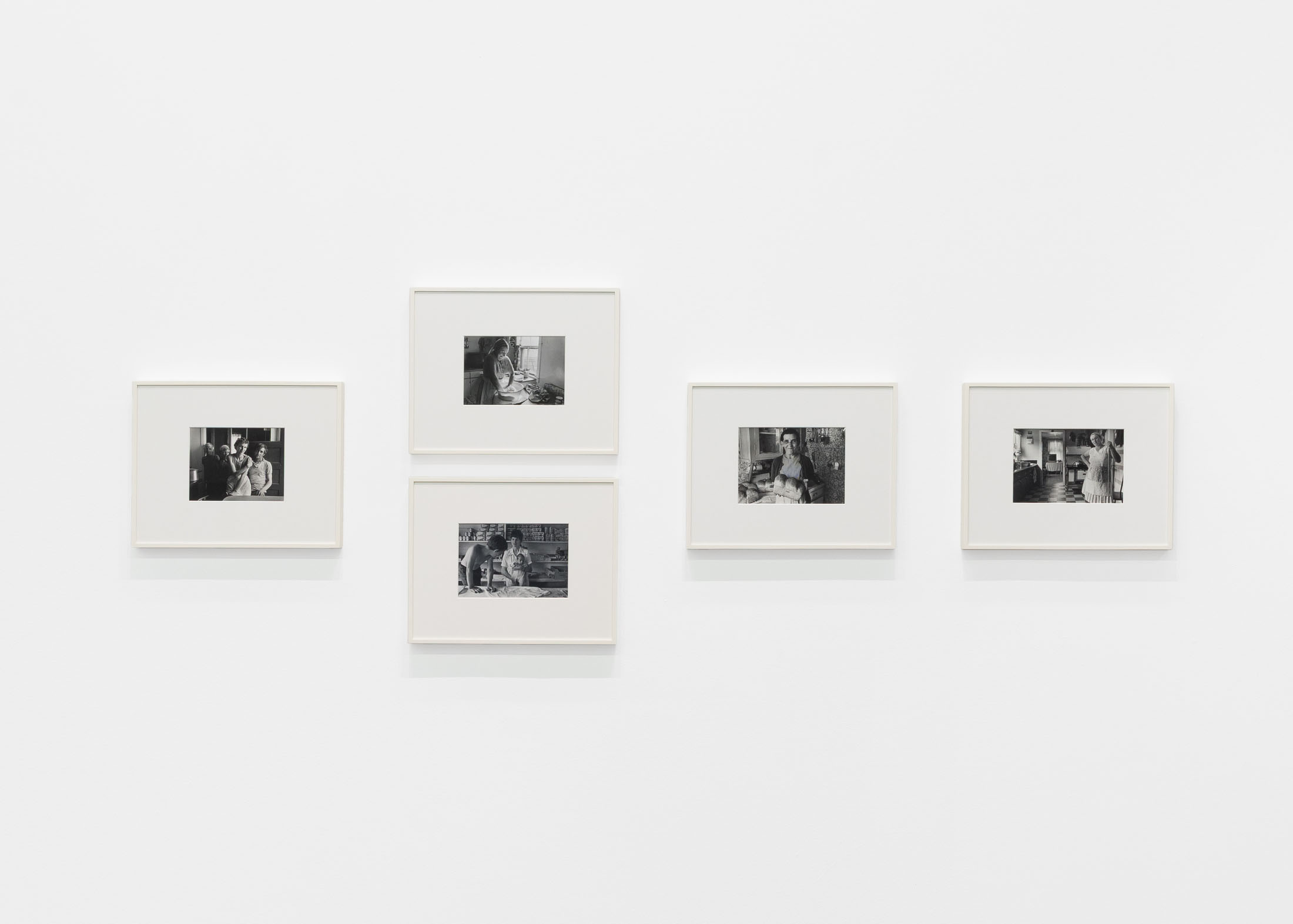
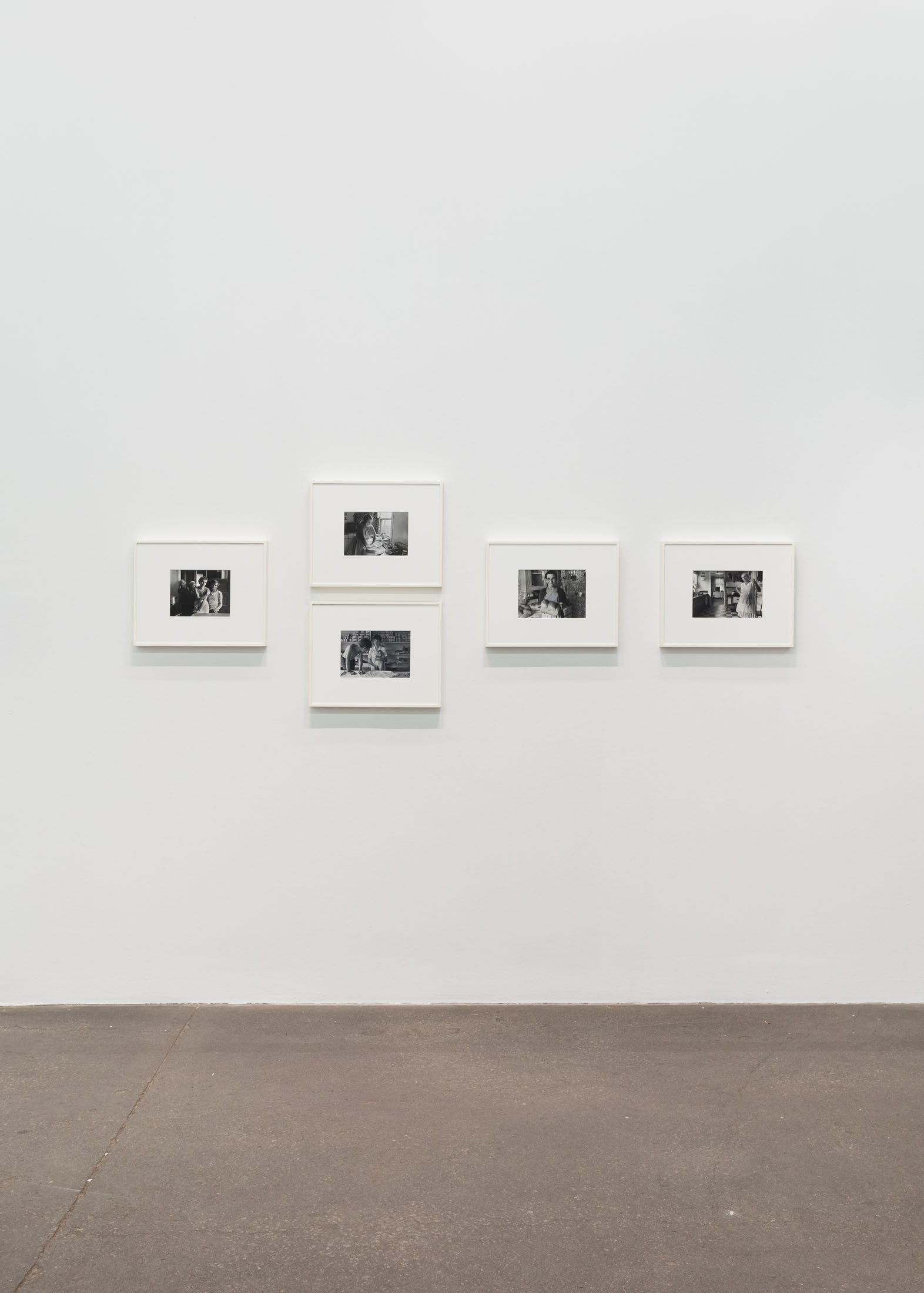
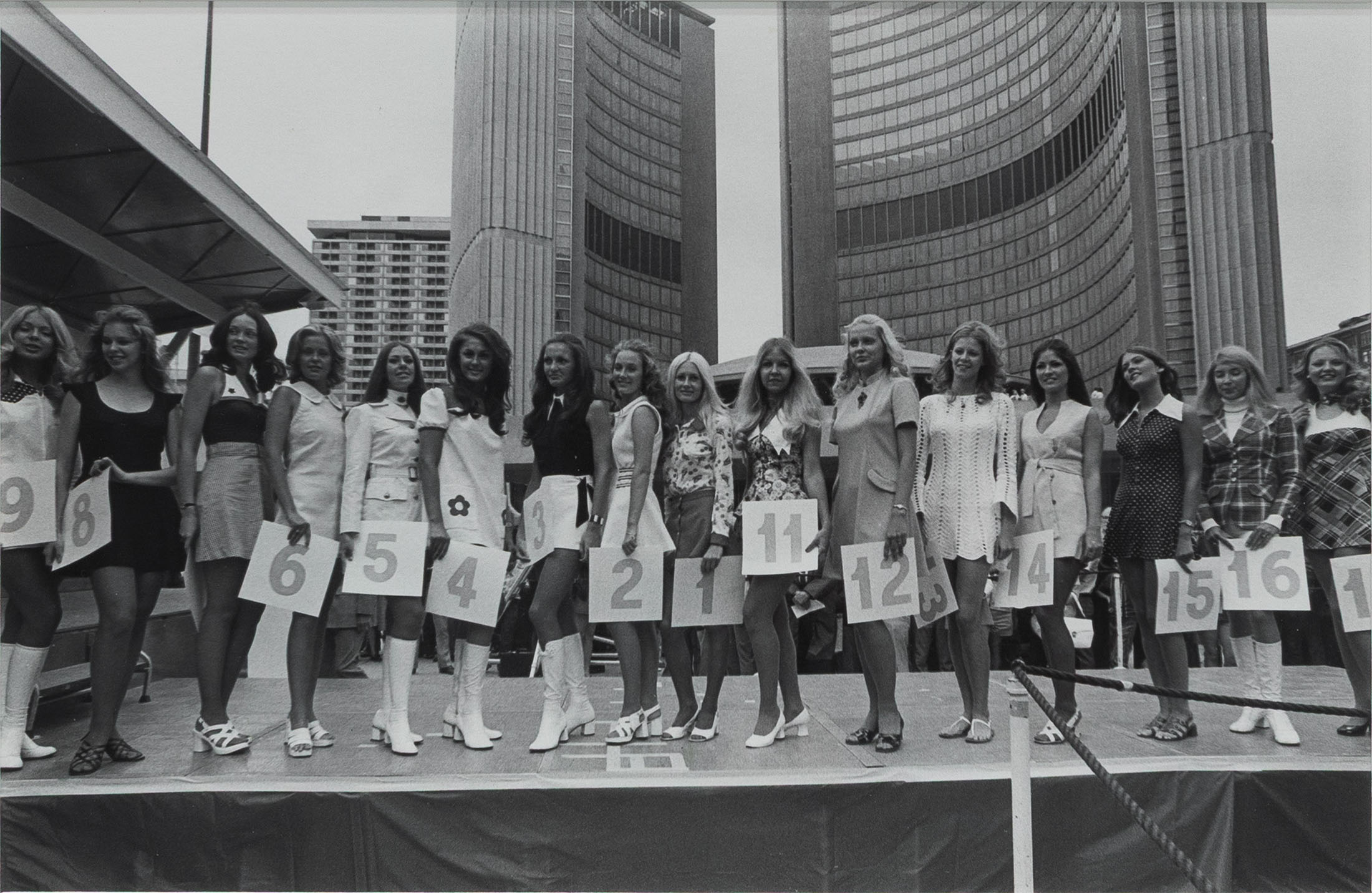
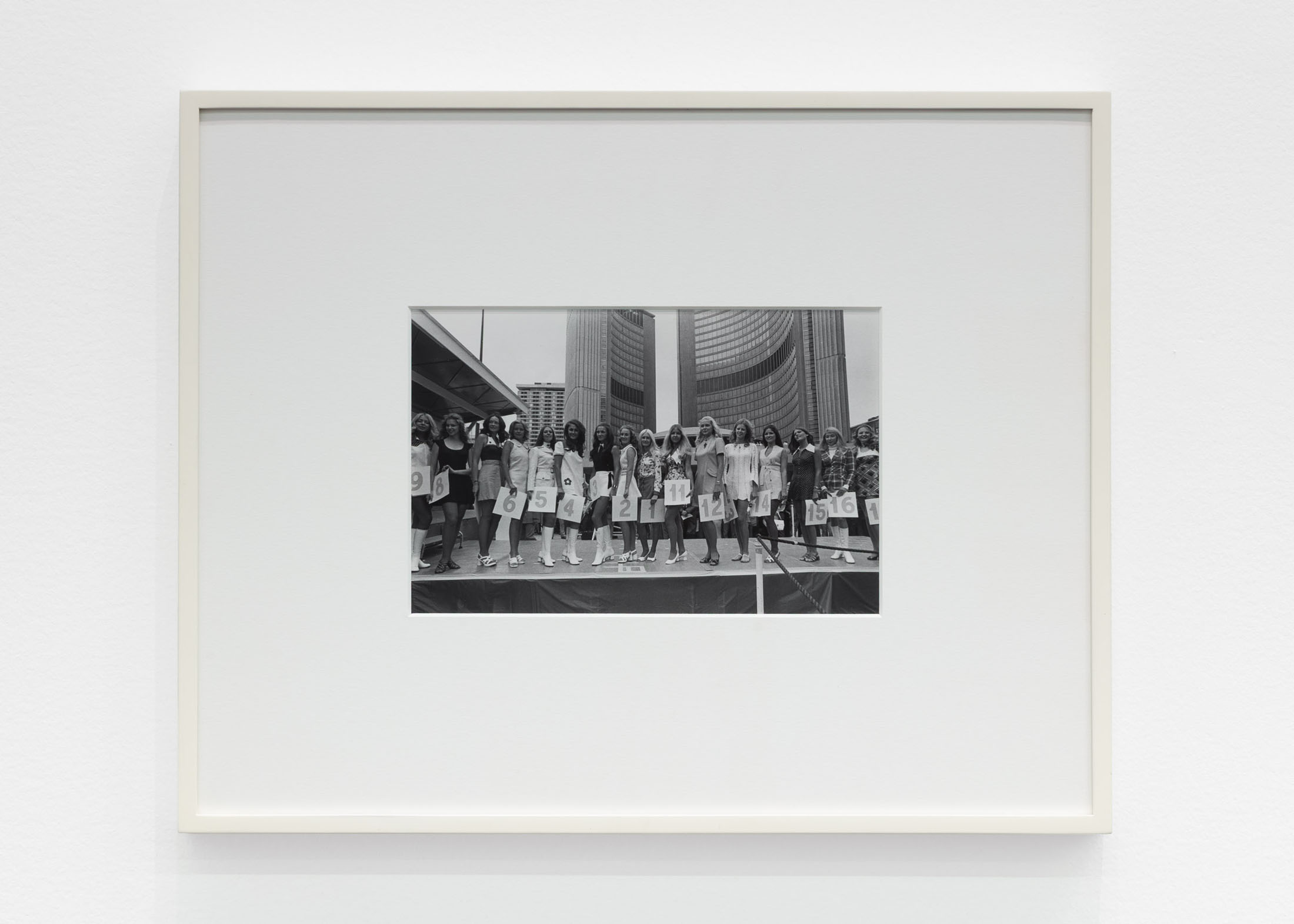
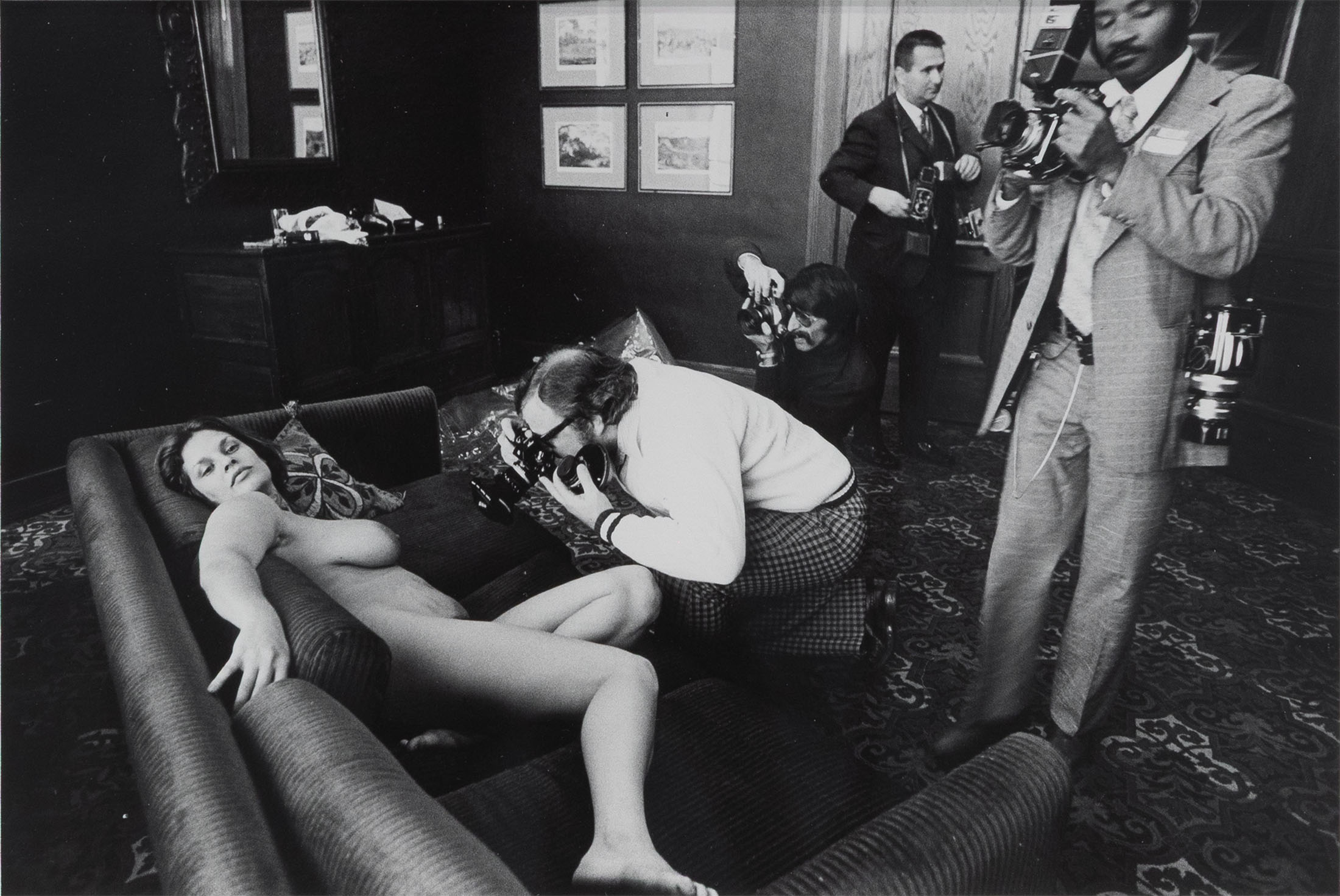
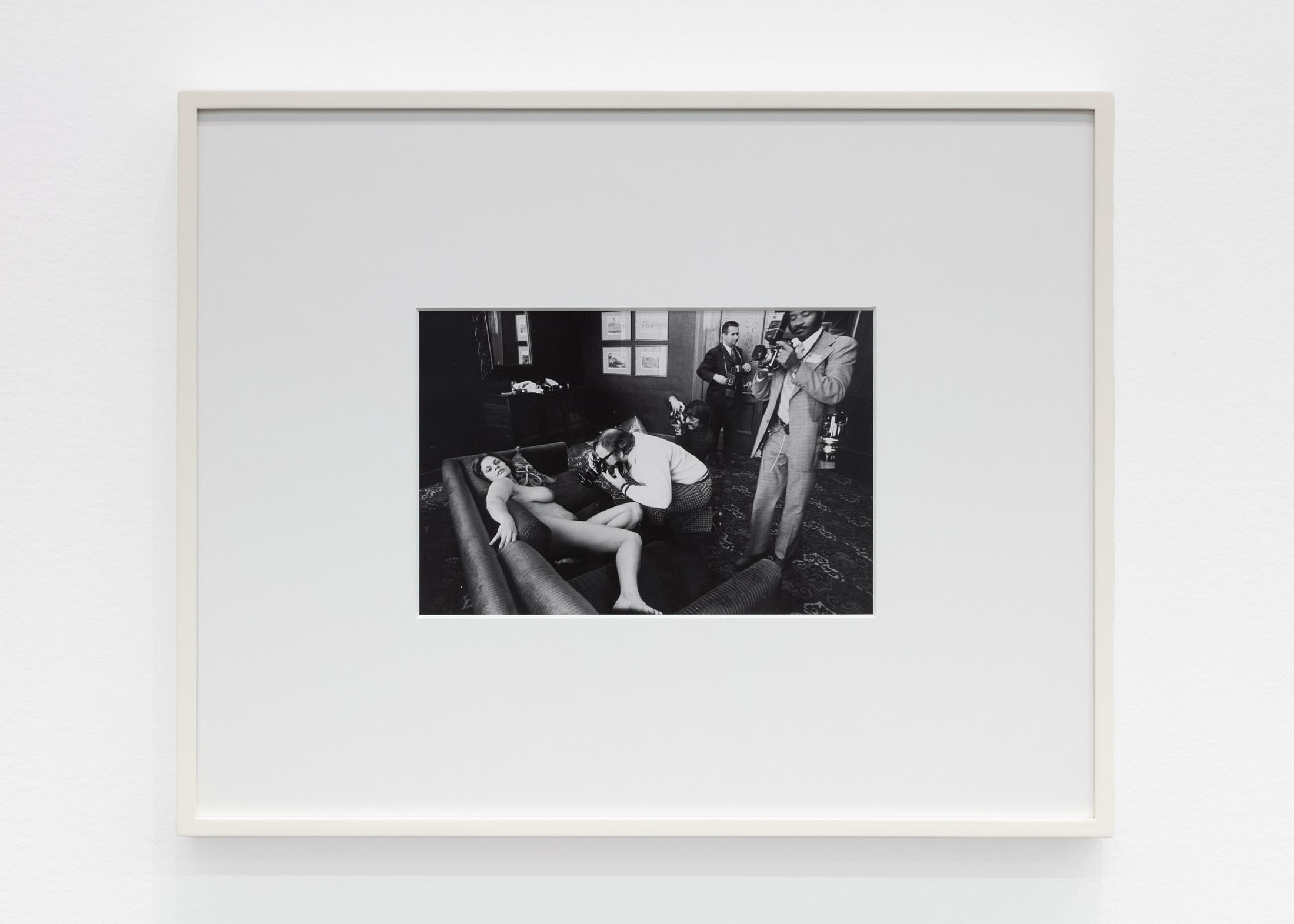
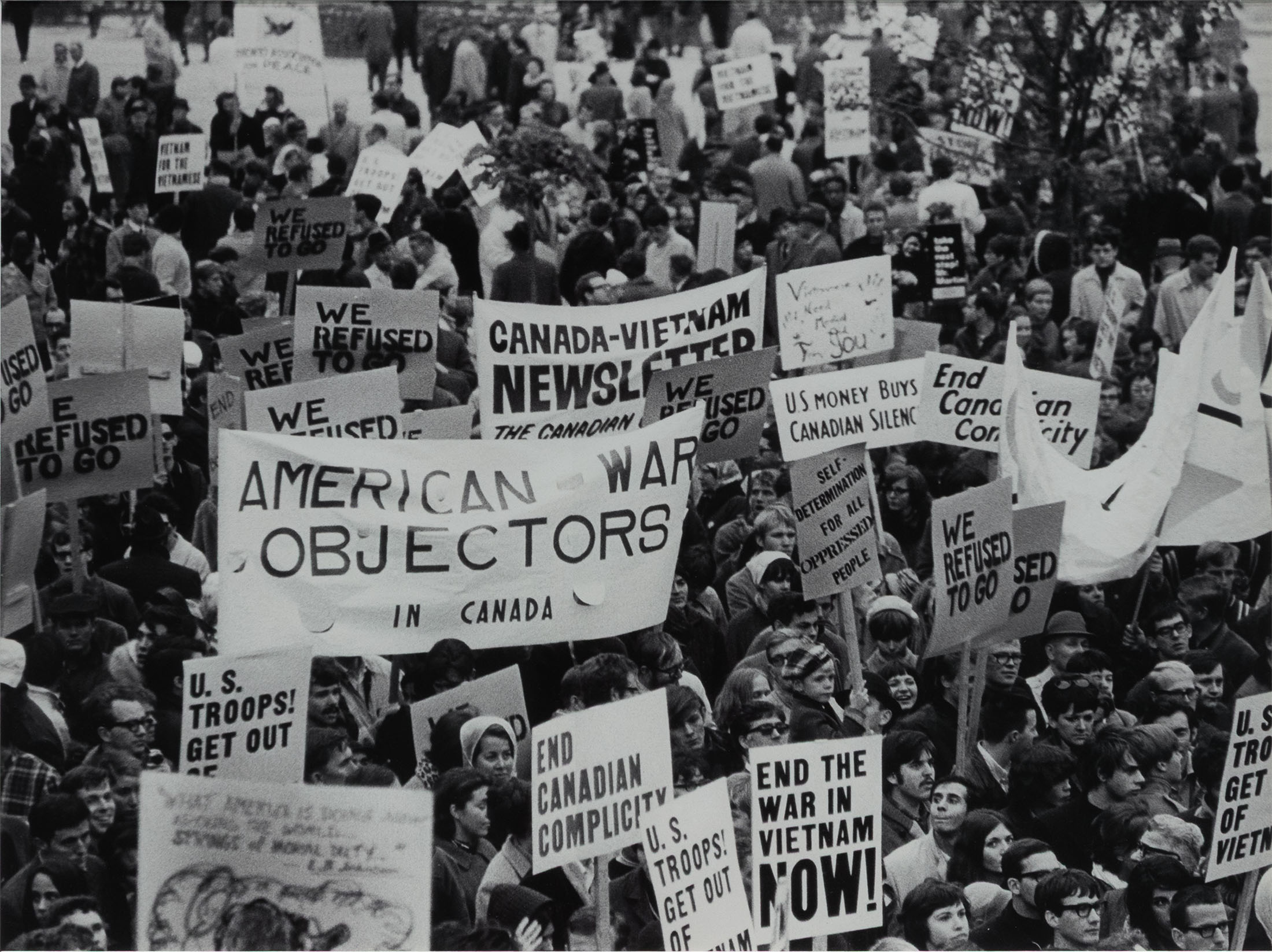
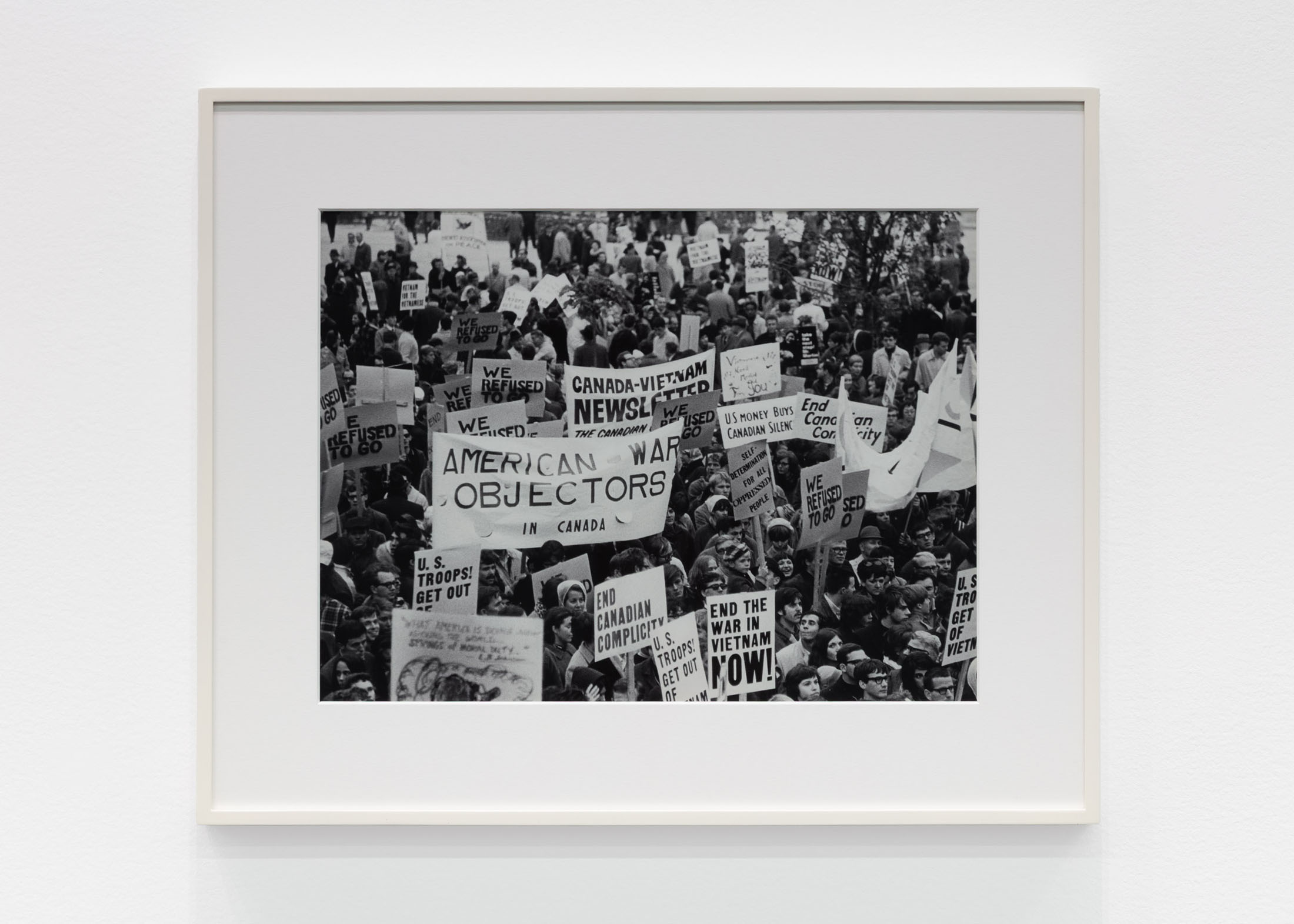
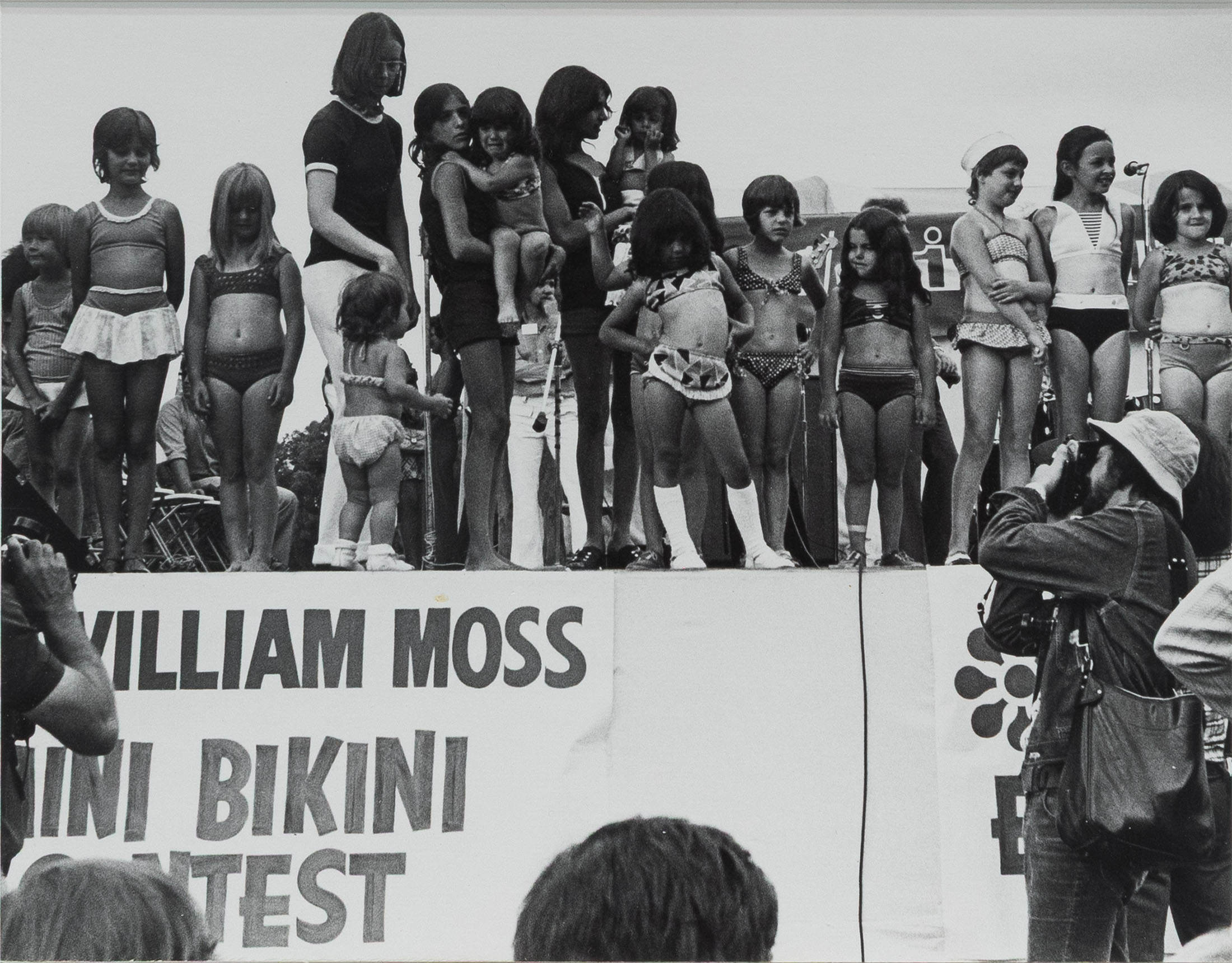
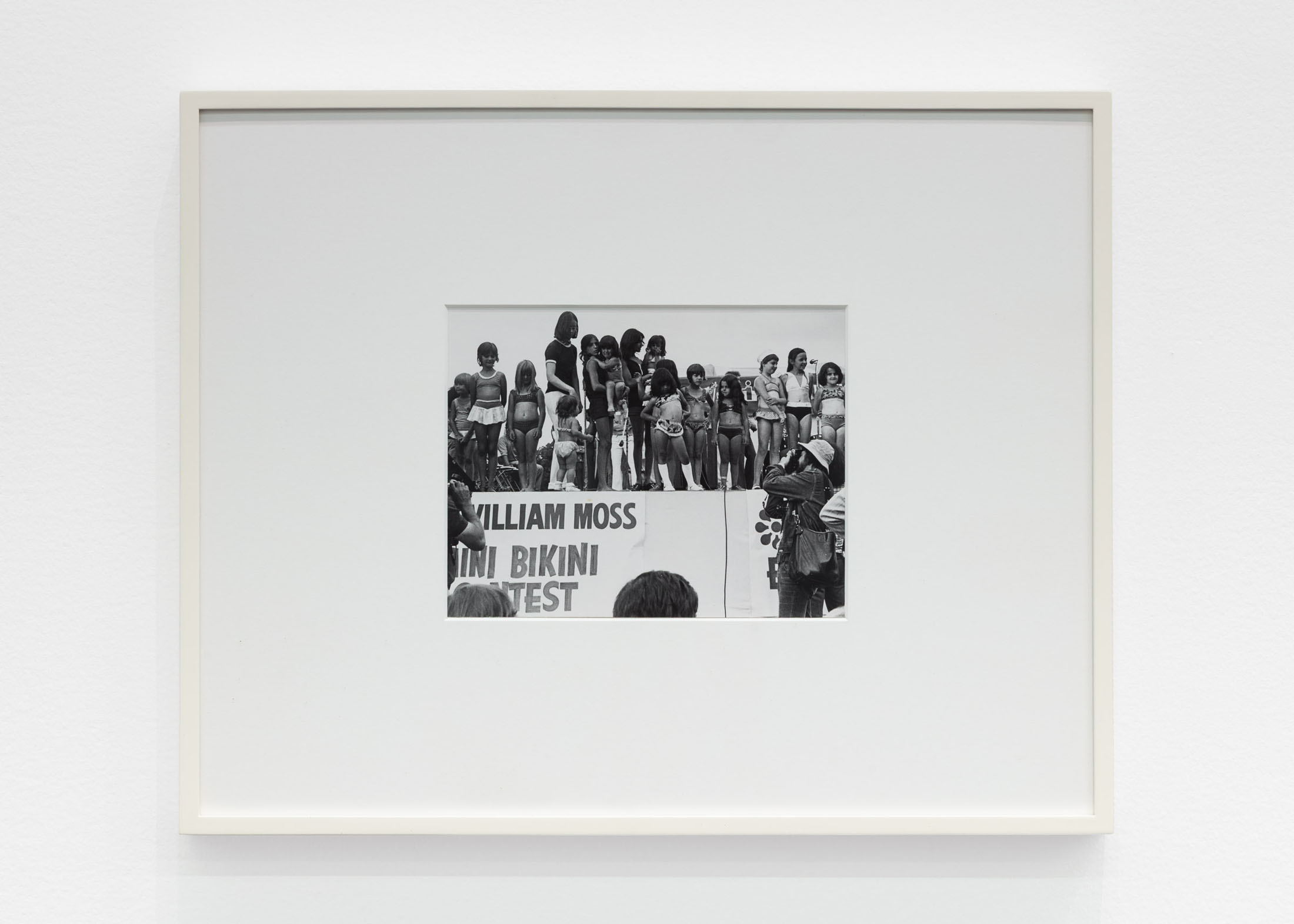
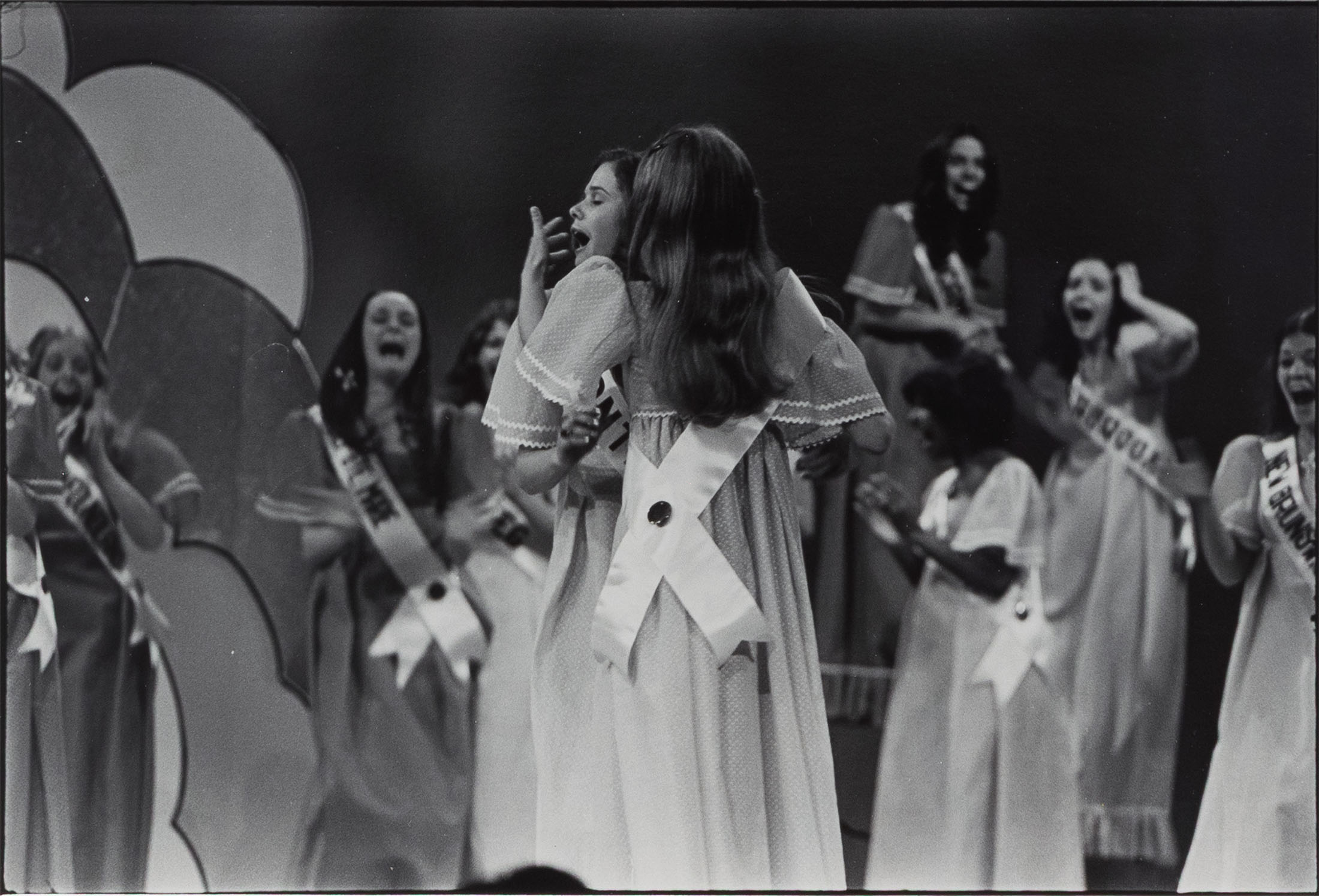
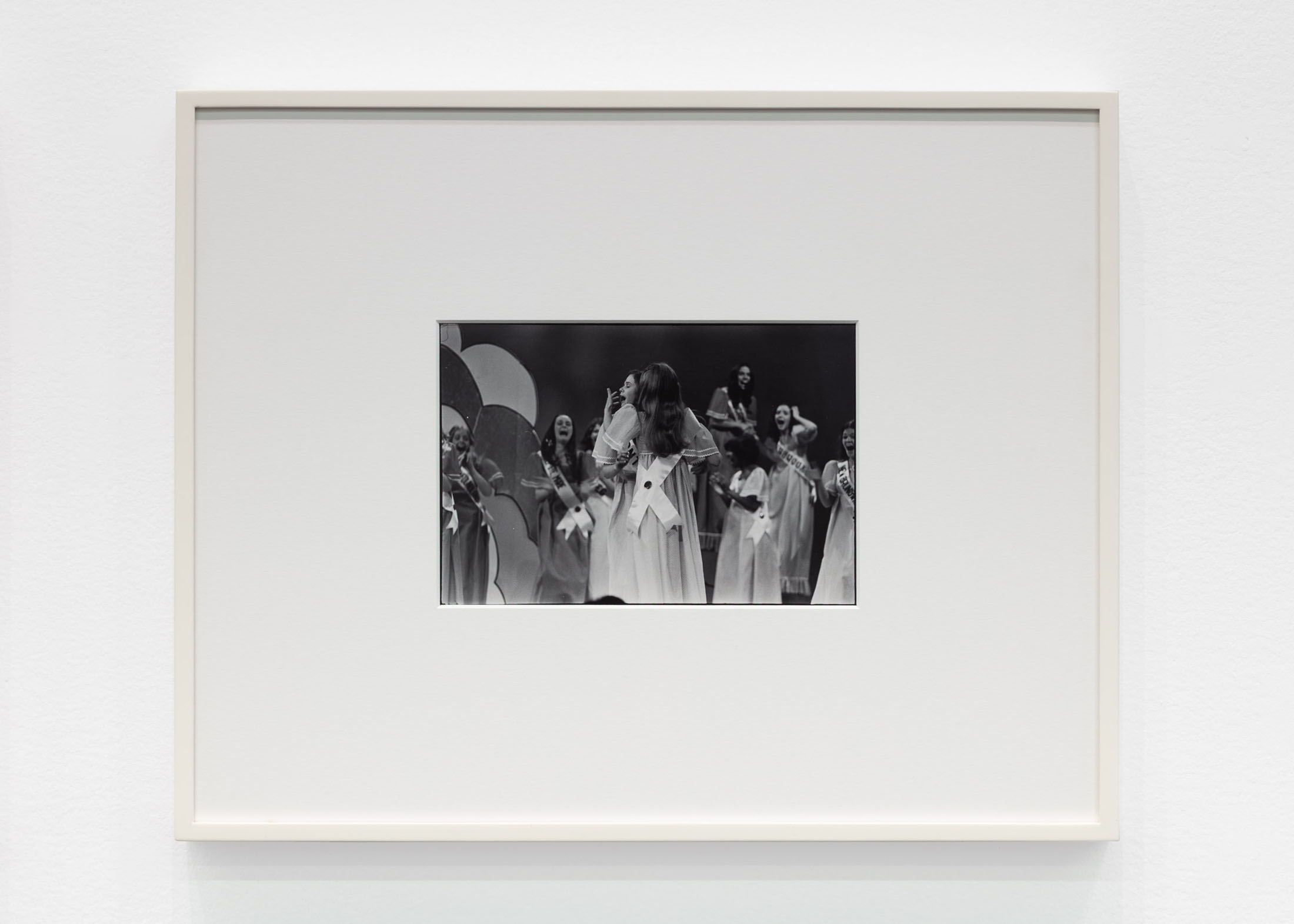
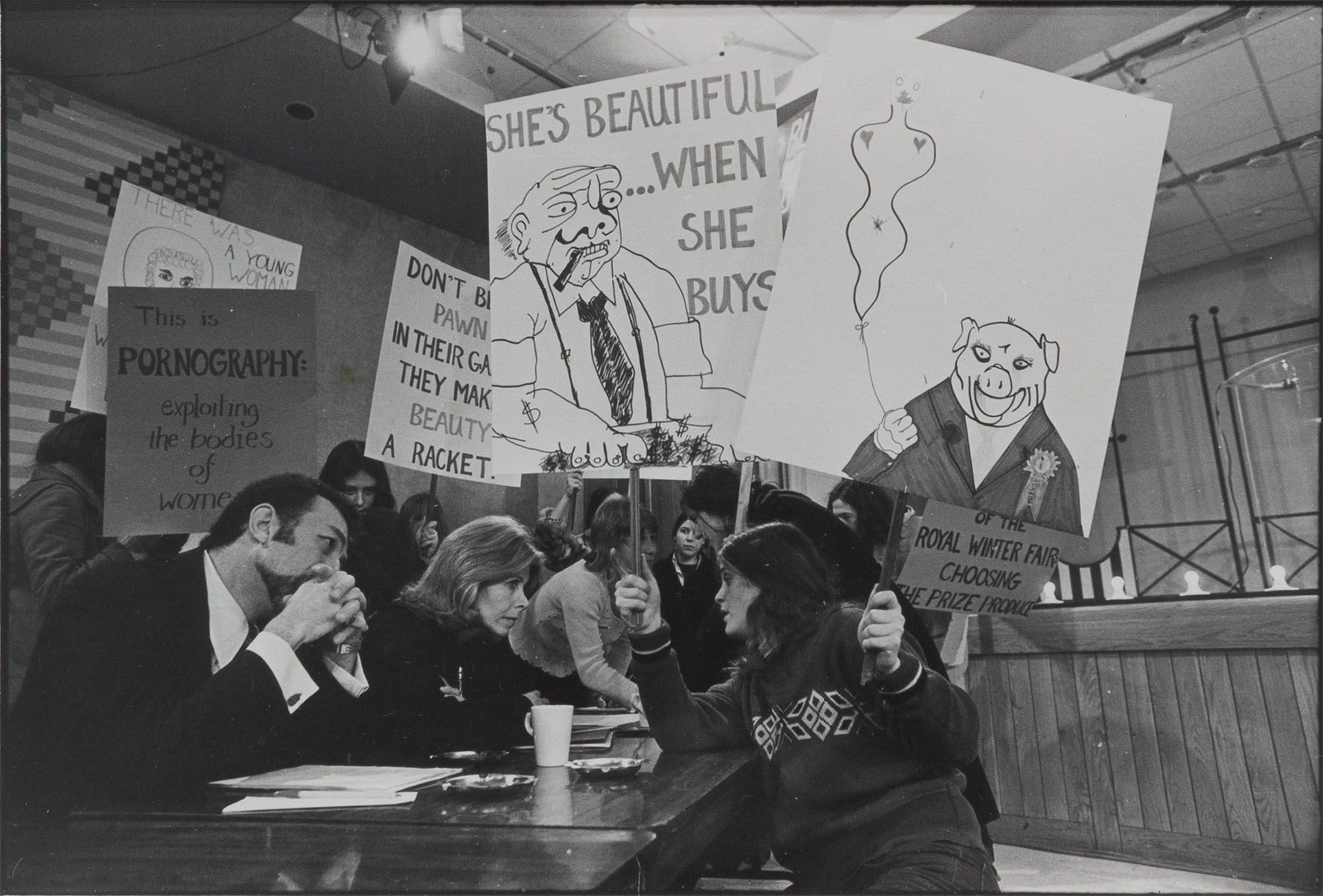
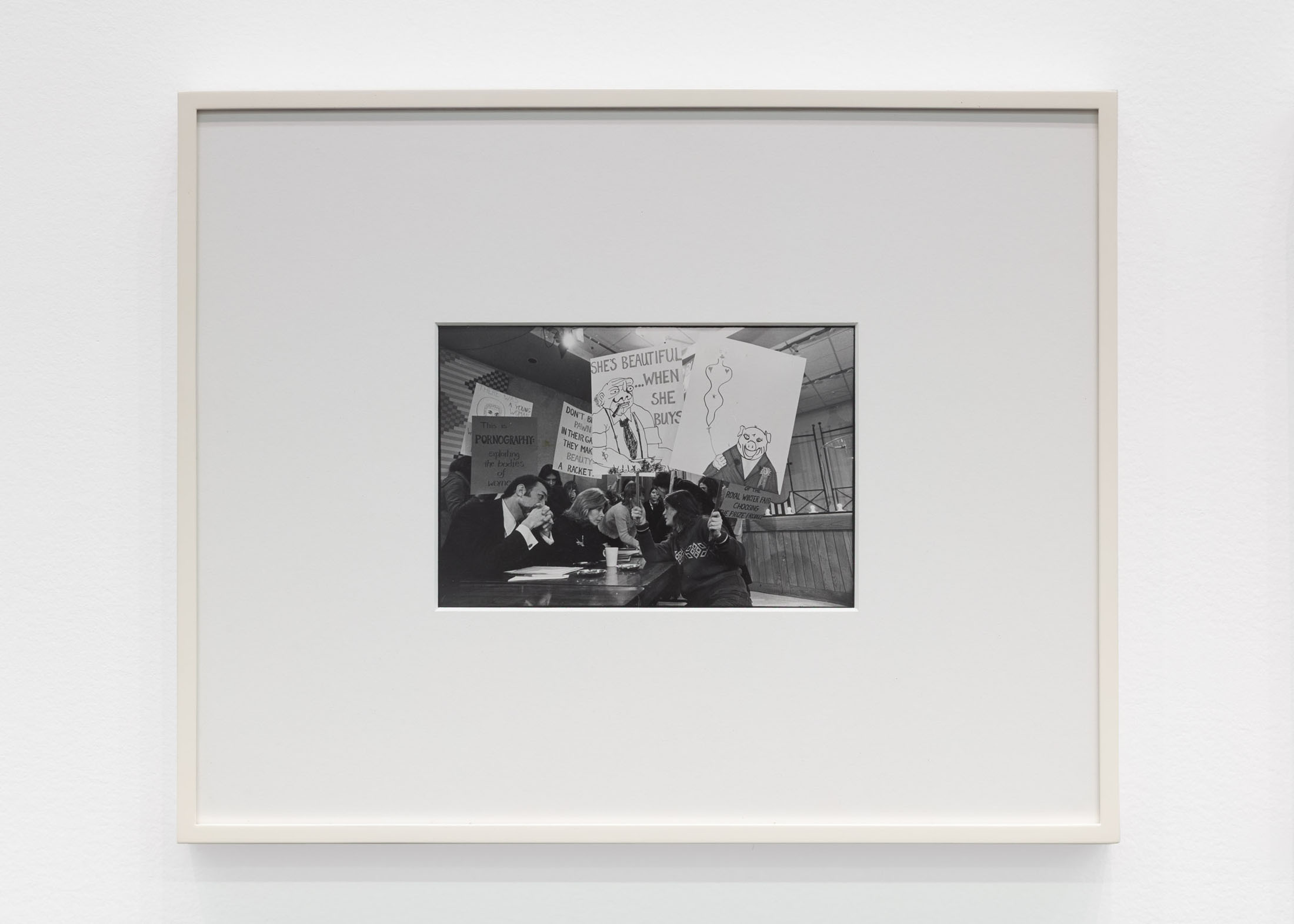
1980) could as easily have been photographed in her native Harlem as in downtown Toronto, collapsing distinctions between past and present, home and elsewhere. Harris similarly approached photography through sustained engagement with her subjects, travelling to document diverse communities including migrant farm workers, Inuit communities in the Canadian North, domestic workers, and participants in the women’s movement. Her images of the fishing community of Trout River, Newfoundland (1971), are included in the exhibition. Likewise, Jones’s longstanding commitment to documentary photography foregrounded social observation over easy conclusions. Her images of beauty pageants, protests, and civil disobedience in both Canada and the United States expose structures of power and representation, while her perspective on the objectification of women offers a marked contrast to that of many male photographers working at the time.
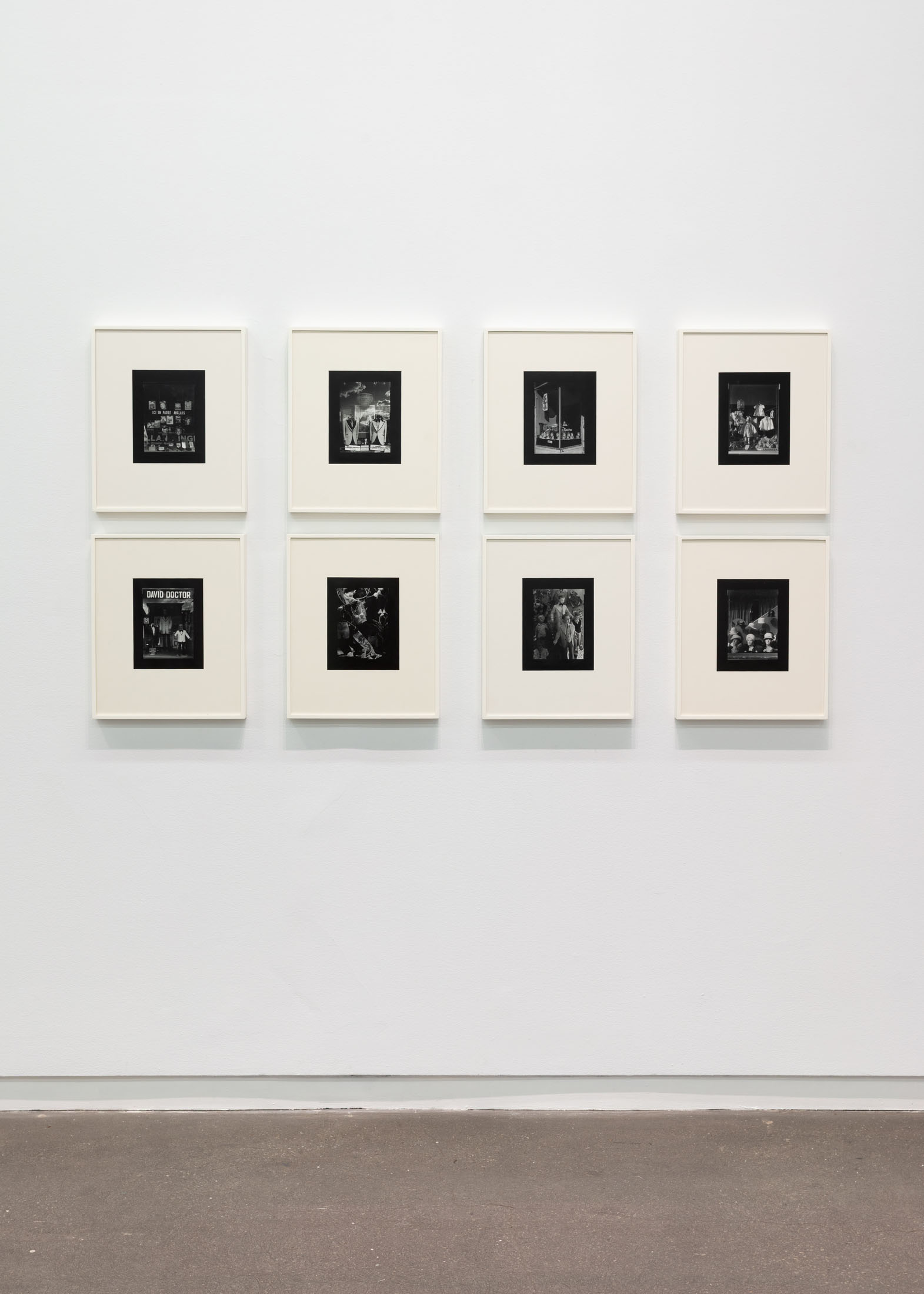
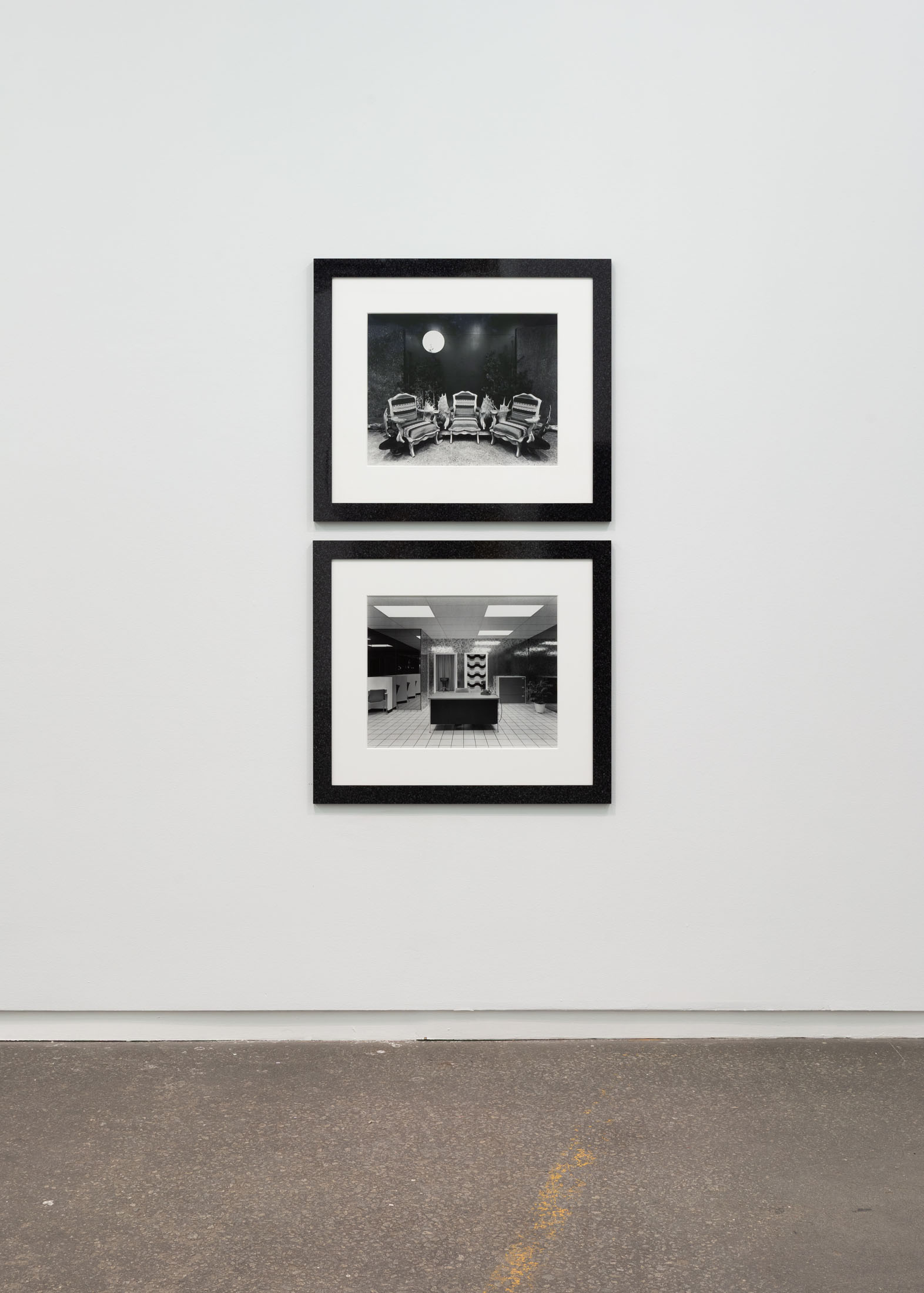
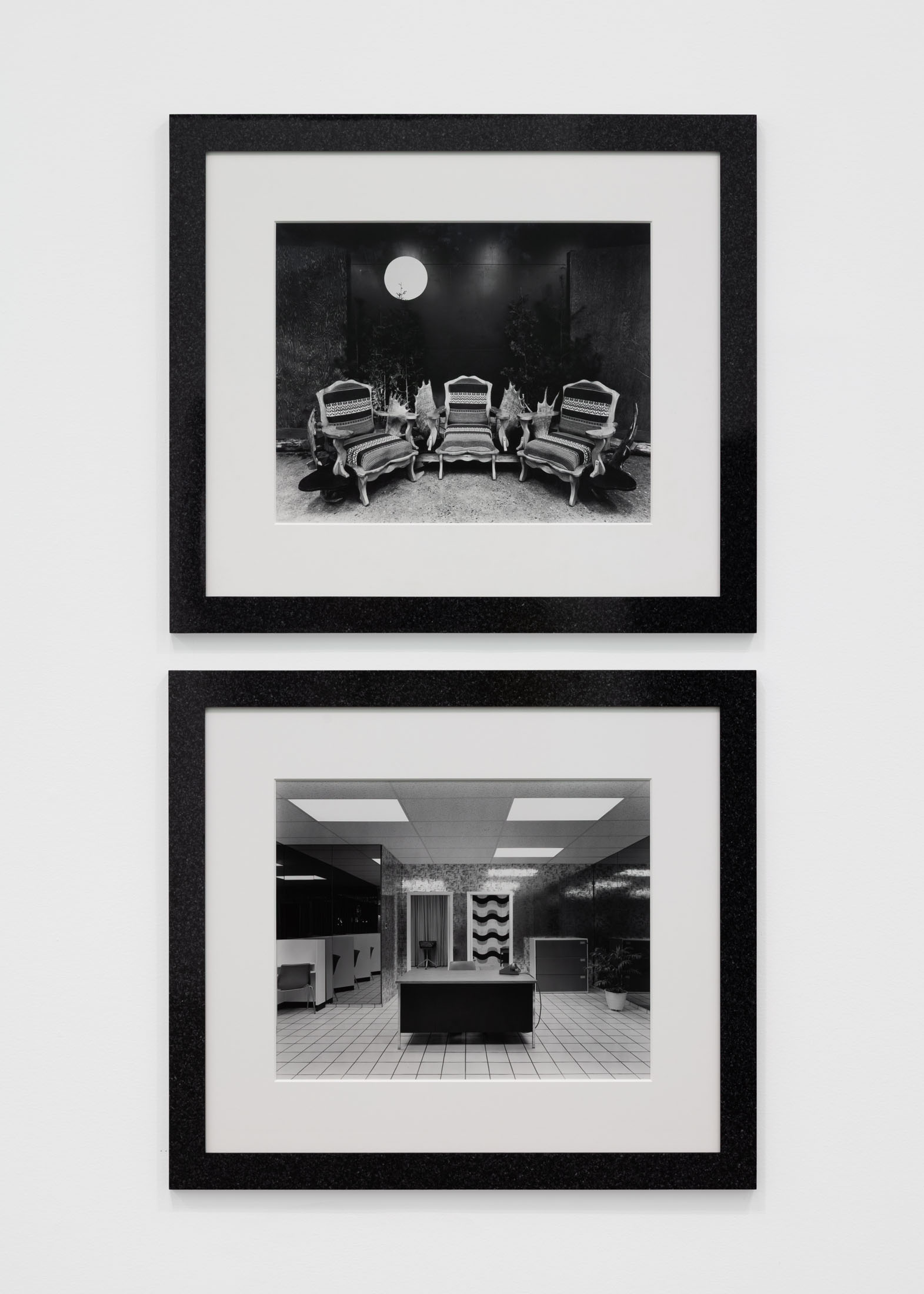
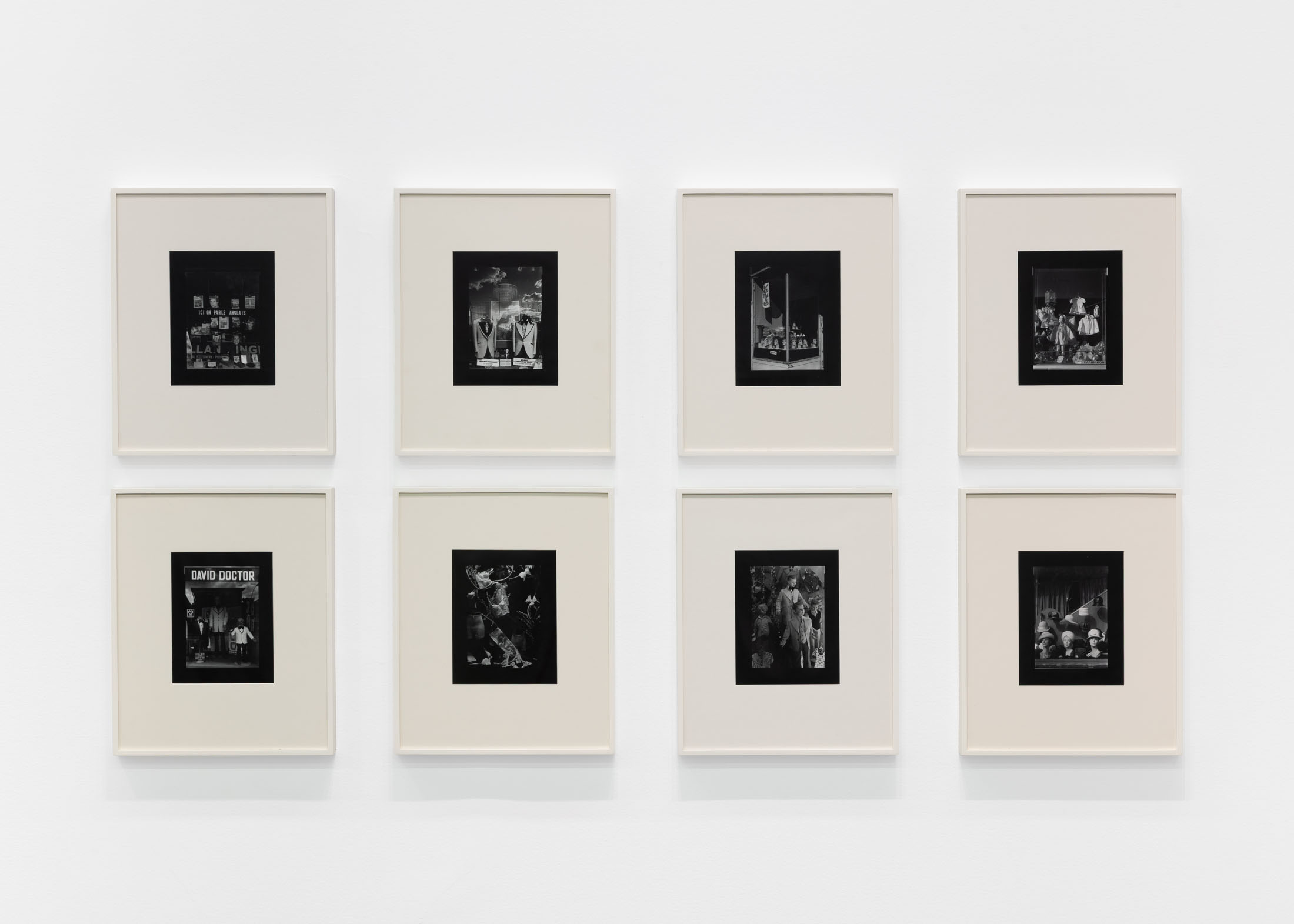
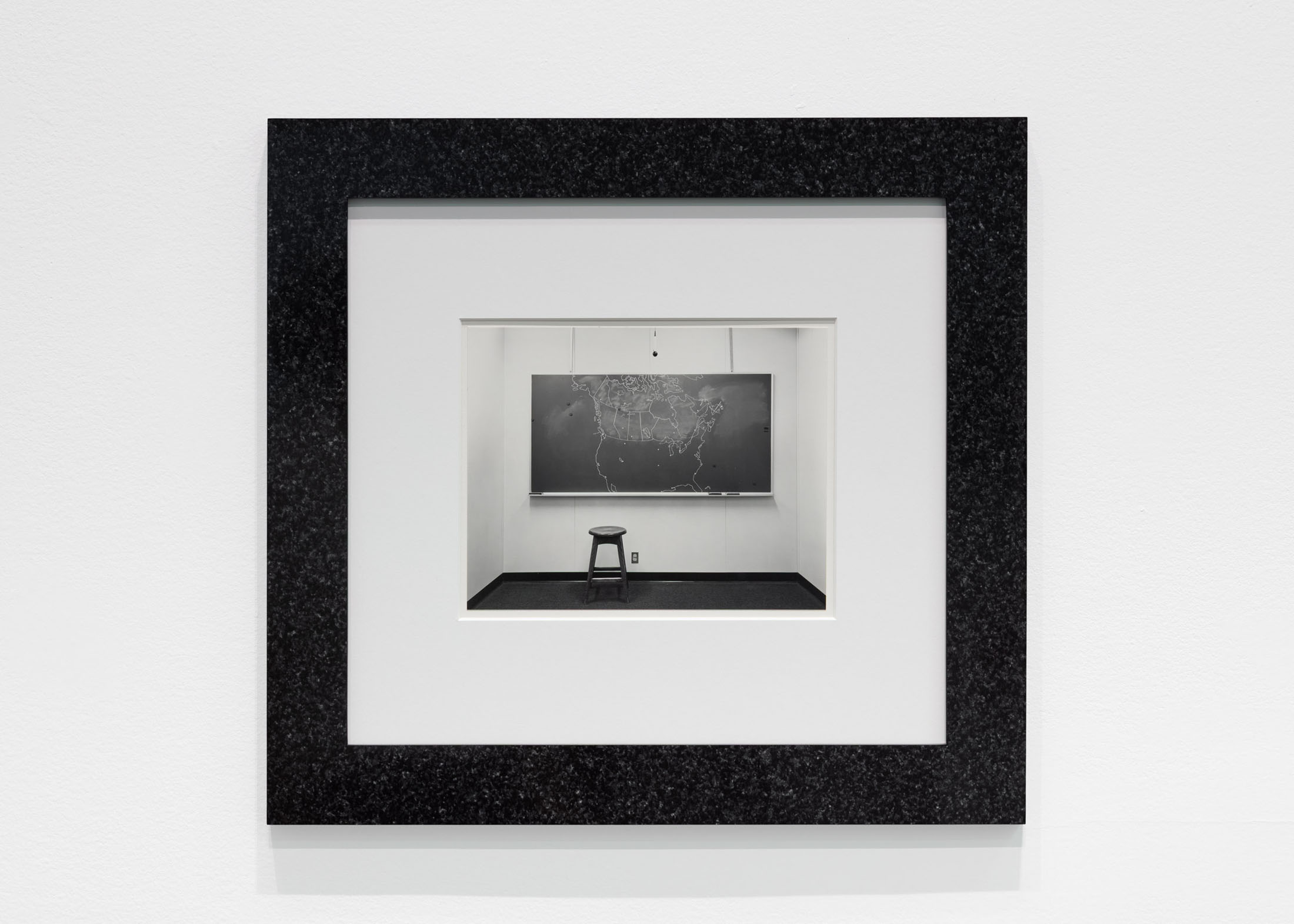
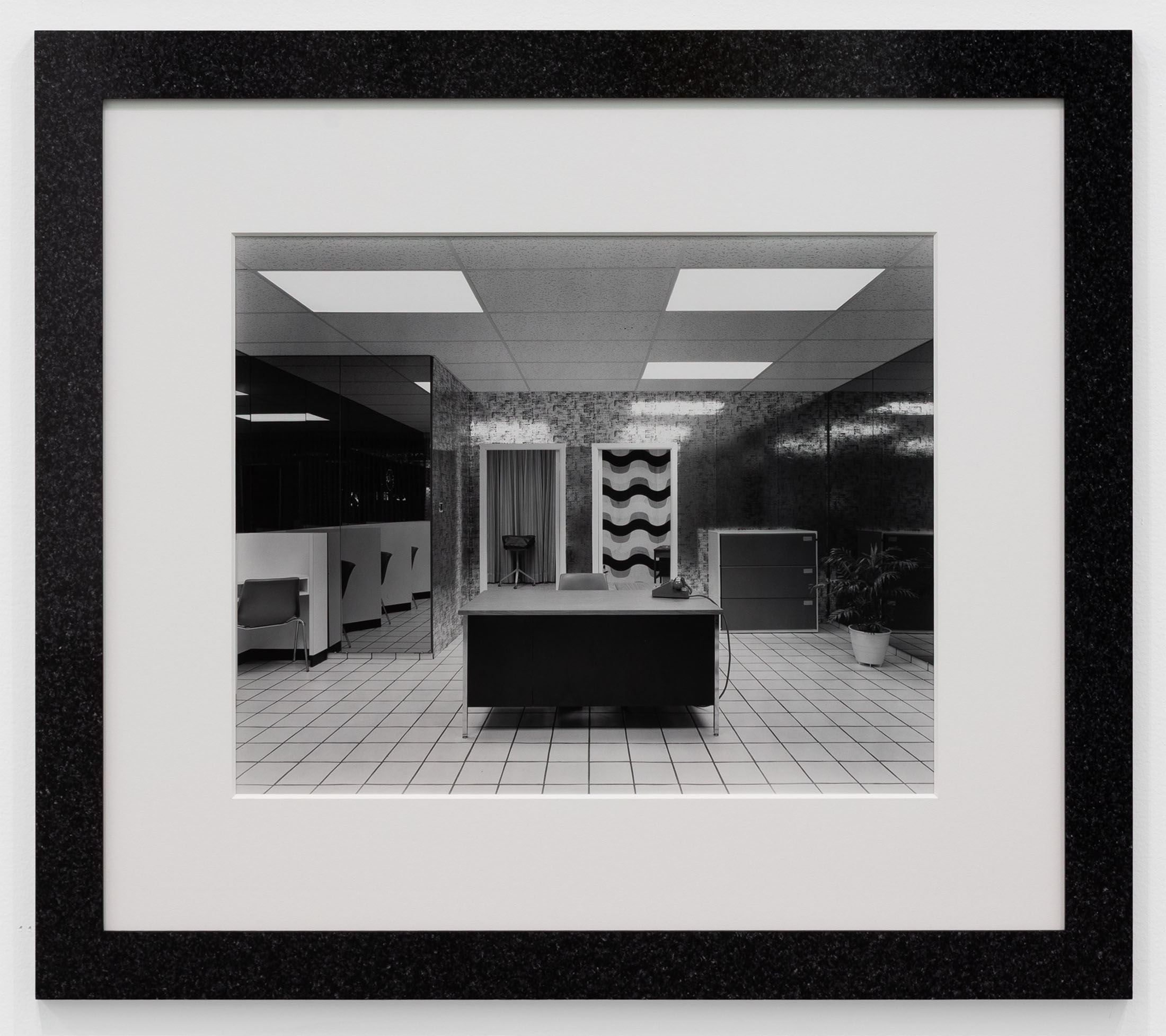
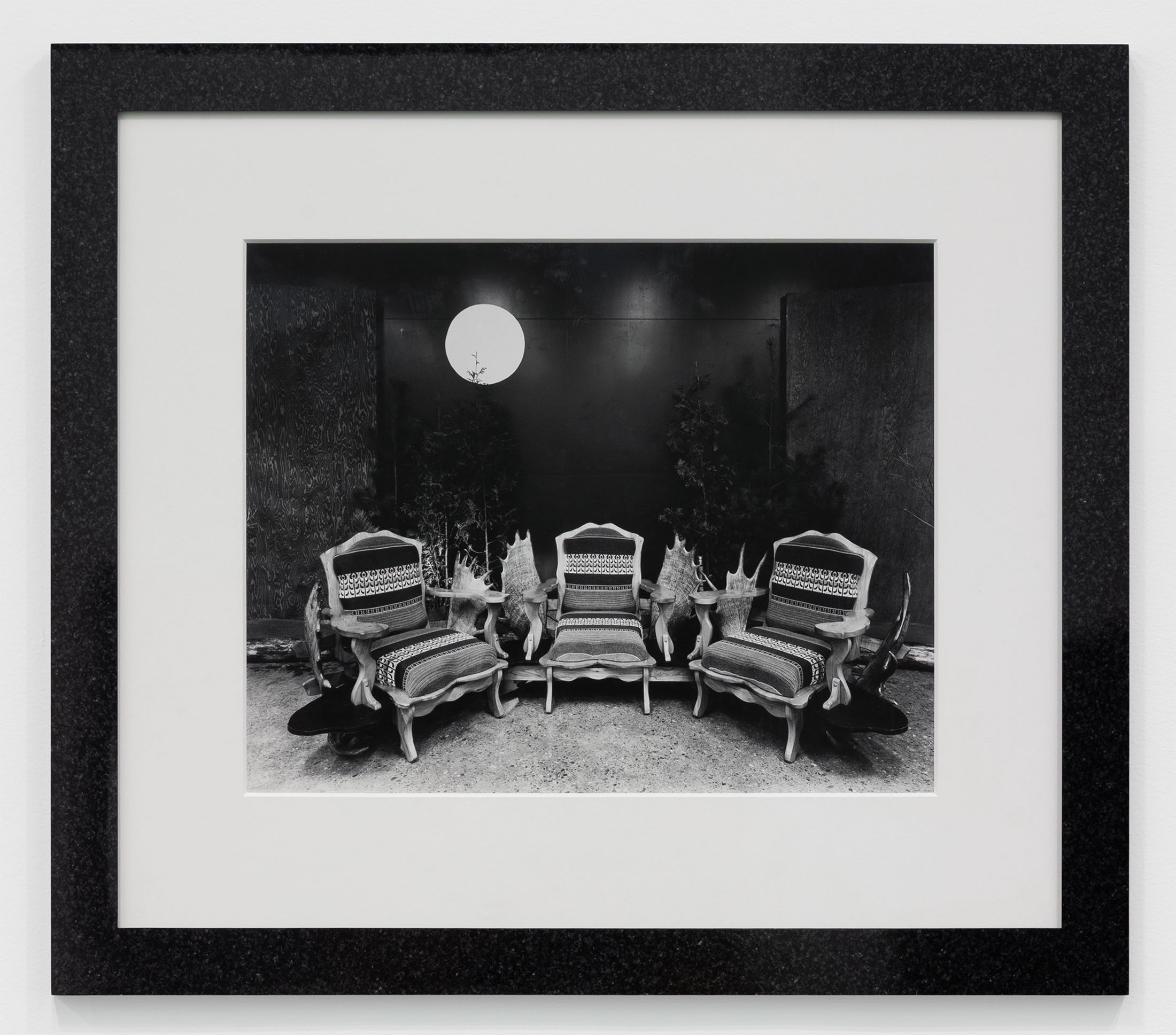
Although Gutsche also photographed people and communities throughout her career, she shares with Cohen a sustained interest in uninhabited spaces. Gutsche’s series Windows I (1976–80) presents carefully composed images of storefront displays that reveal the unique social and cultural character of the Plateau and Mile End neighbourhoods in Montreal, evoking human presence through objects and material traces rather than figures. In these works, the city becomes an emotional landscape, with shop windows suggesting private narratives concealed behind public facades. Cohen, by contrast, focuses on the emptied interiors of institutional and domestic environments—including living rooms, laboratories, offices, factories, spas, and military facilities. Though designed for human activity, these spaces are typically devoid of people, emphasizing the uncanny qualities of the artificial and the everyday. Her photographs combine understated humour with subtle social critique, rendering real locations that often appear strangely staged, as though they were installations in a contemporary art museum.
The exhibition takes its title from the iconic Joni Mitchell song from 1967, an artist who also occupied a space between Canada and the United States. Written from an airplane, the lyrics points to a shifting atmosphere and viewpoint. It also evokes the many perspectives these photographers inhabited at the time: across the border, between private life and public engagement, and the often-competing roles of artist, mother, and partner. Seen together, the works in Both Sides Now reveal the early conceptual and formal experimentations as well as the artists’ close observations of the world around them. These traits would shape each of their distinct practices in the decades that followed as they became vital voices in their new home, Canada.