Hesitation, Speculation, Extraction, Metamorphosis, Conjuring
“Matters matter: what matters we use to think other matters with; what stories we tell to tell other stories; what knots knot knots, what thoughts think thoughts, what descriptions describe descriptions, what ties tie ties. It matters what stories make worlds, what worlds make stories.”
Donna Haraway, Staying with the Trouble: Making Kin in the Chthulucene (Consonni, 2019).
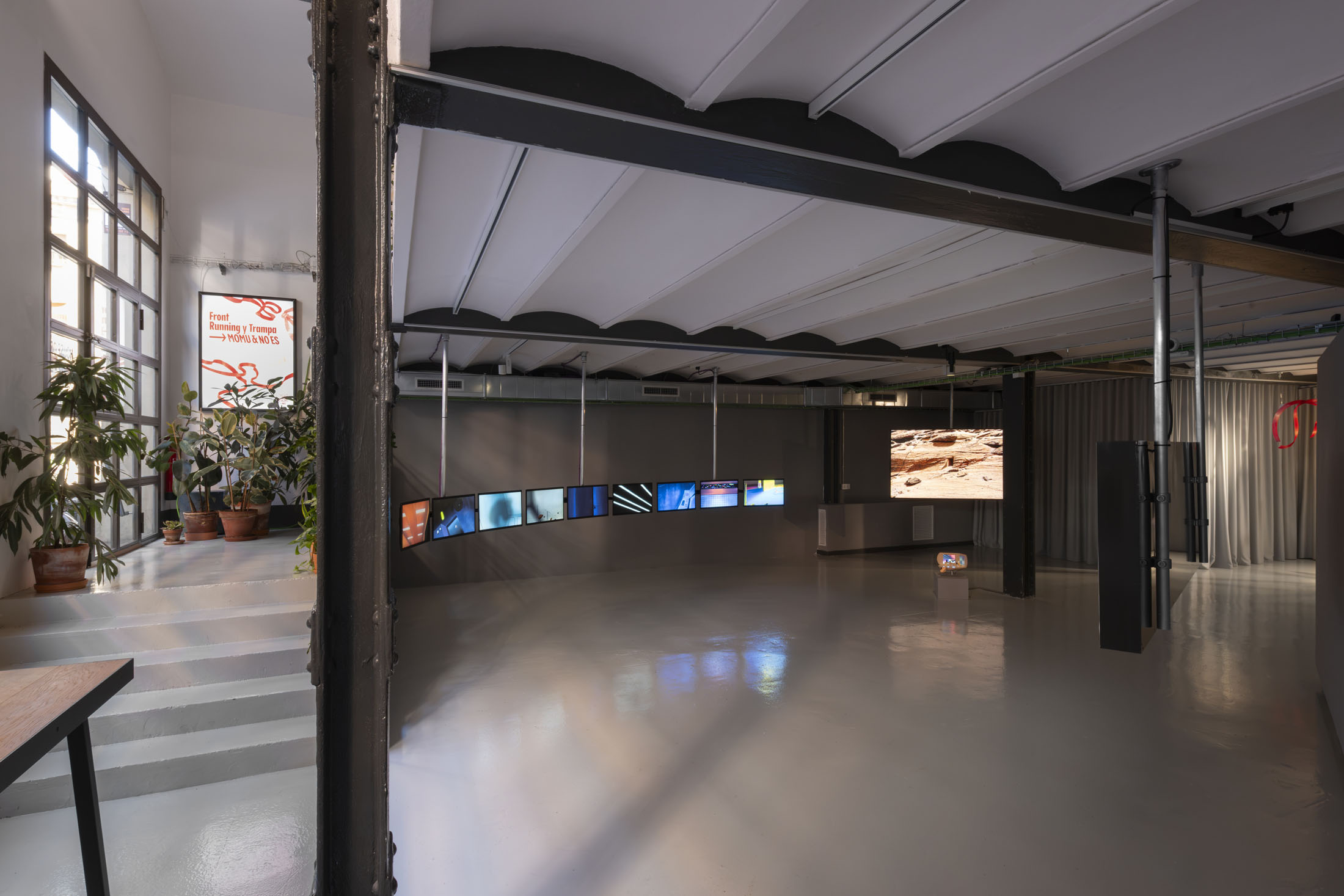
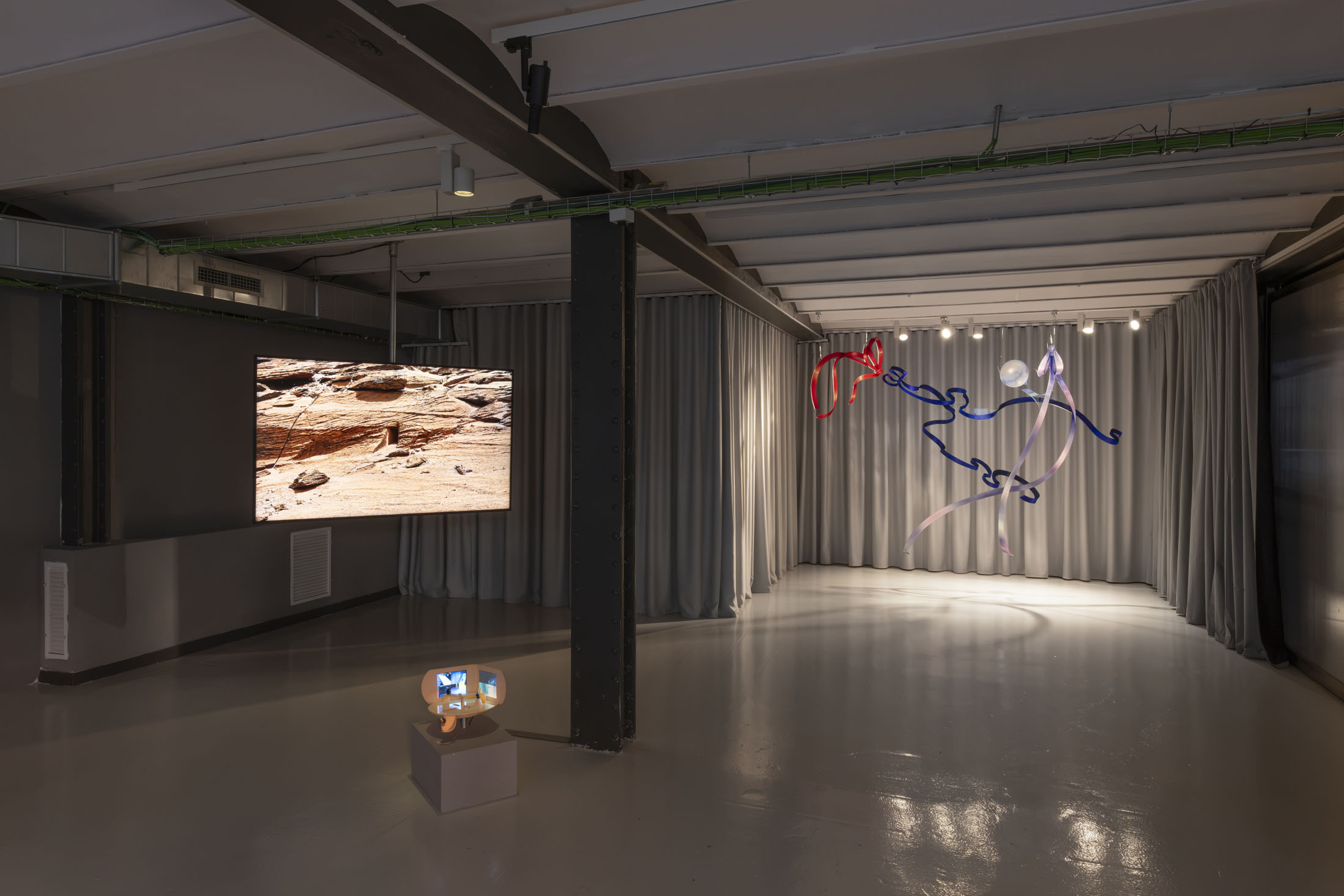
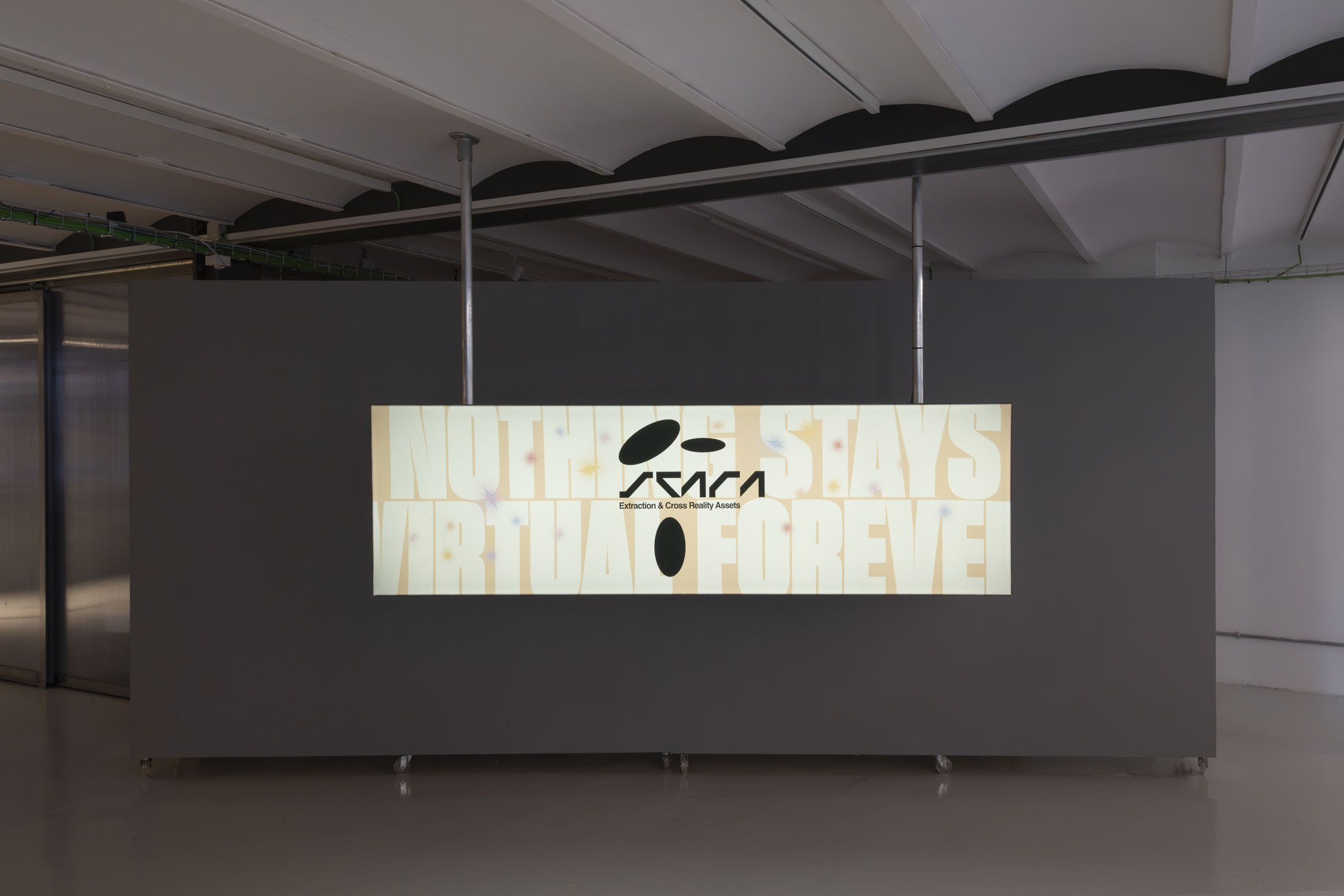
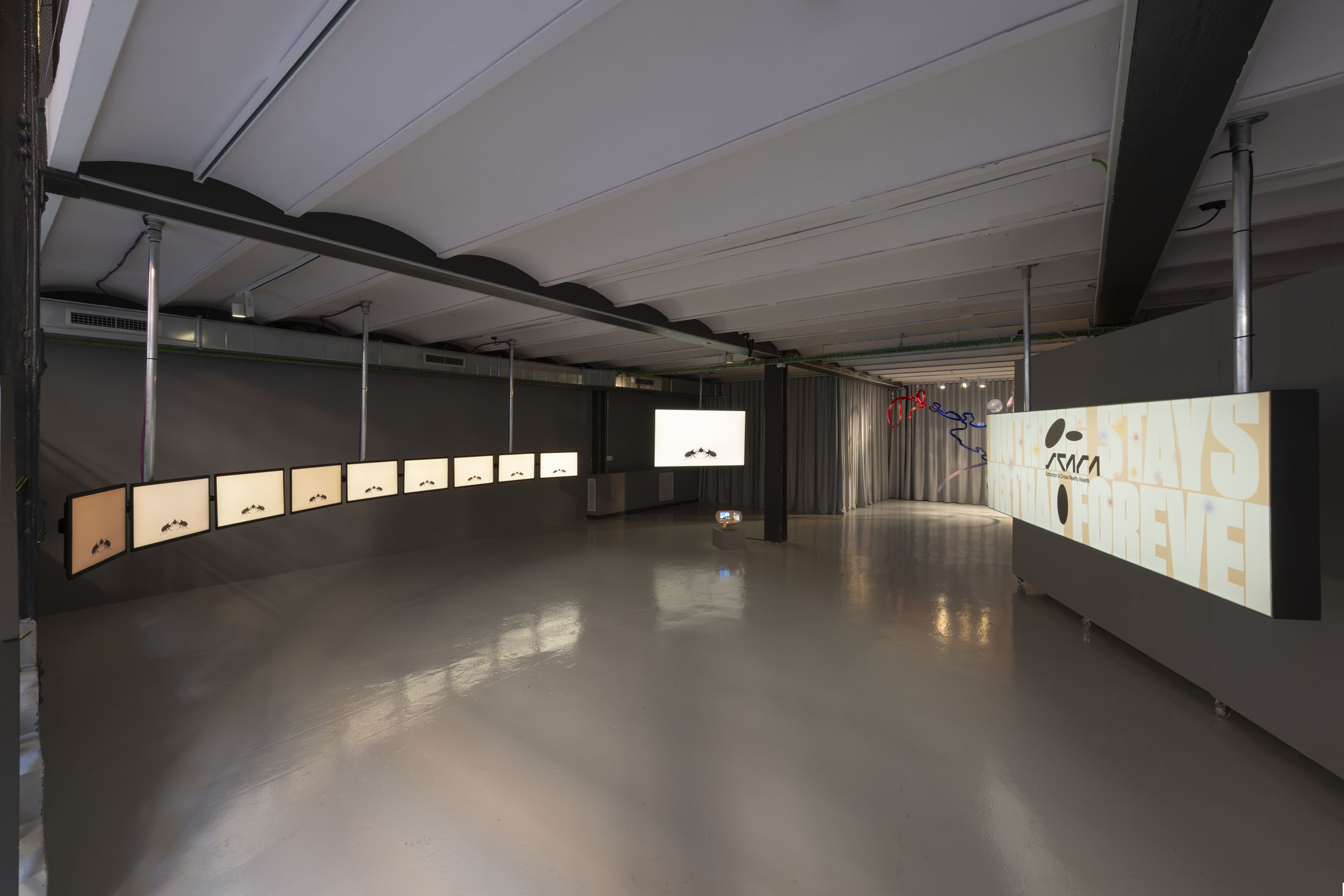
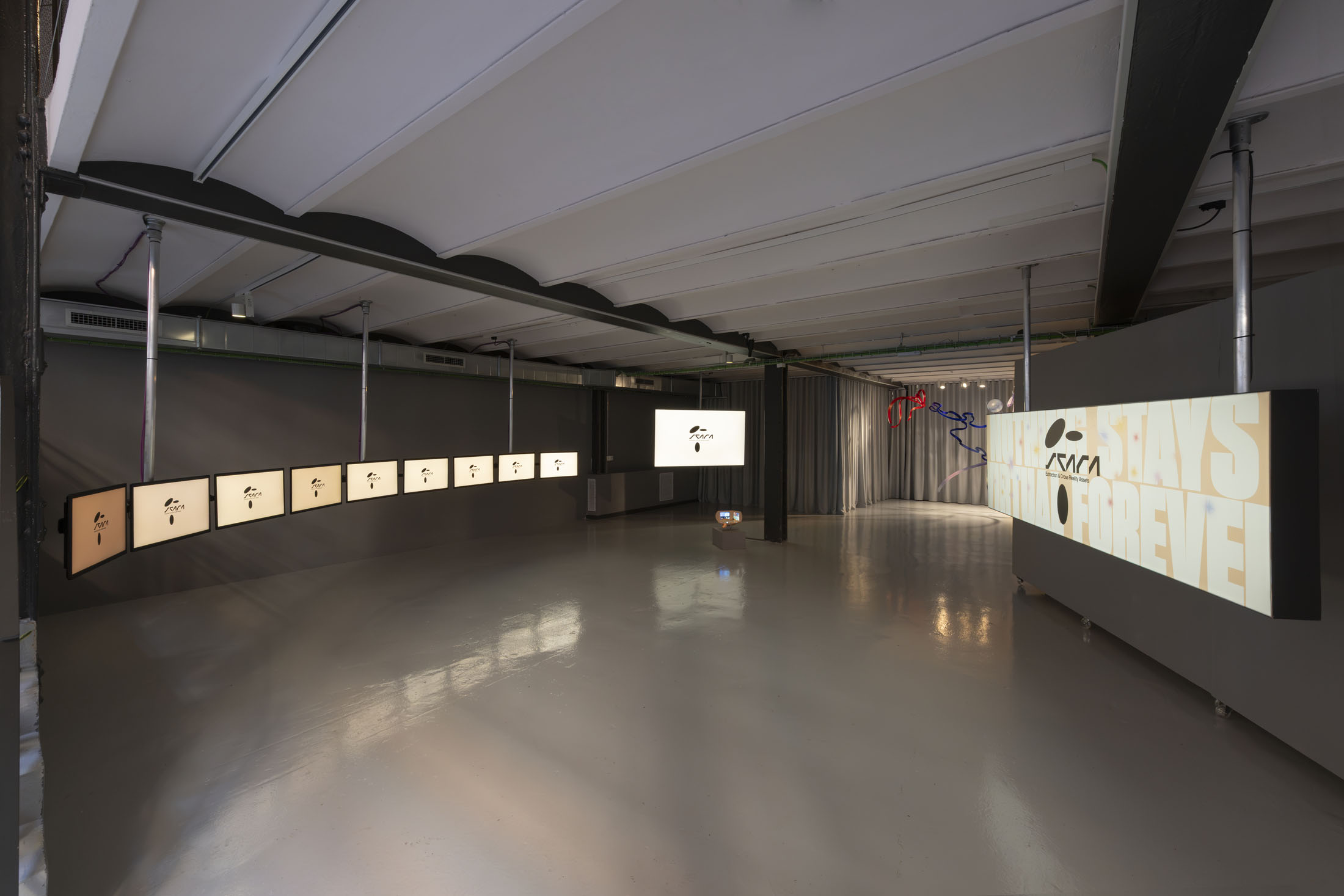
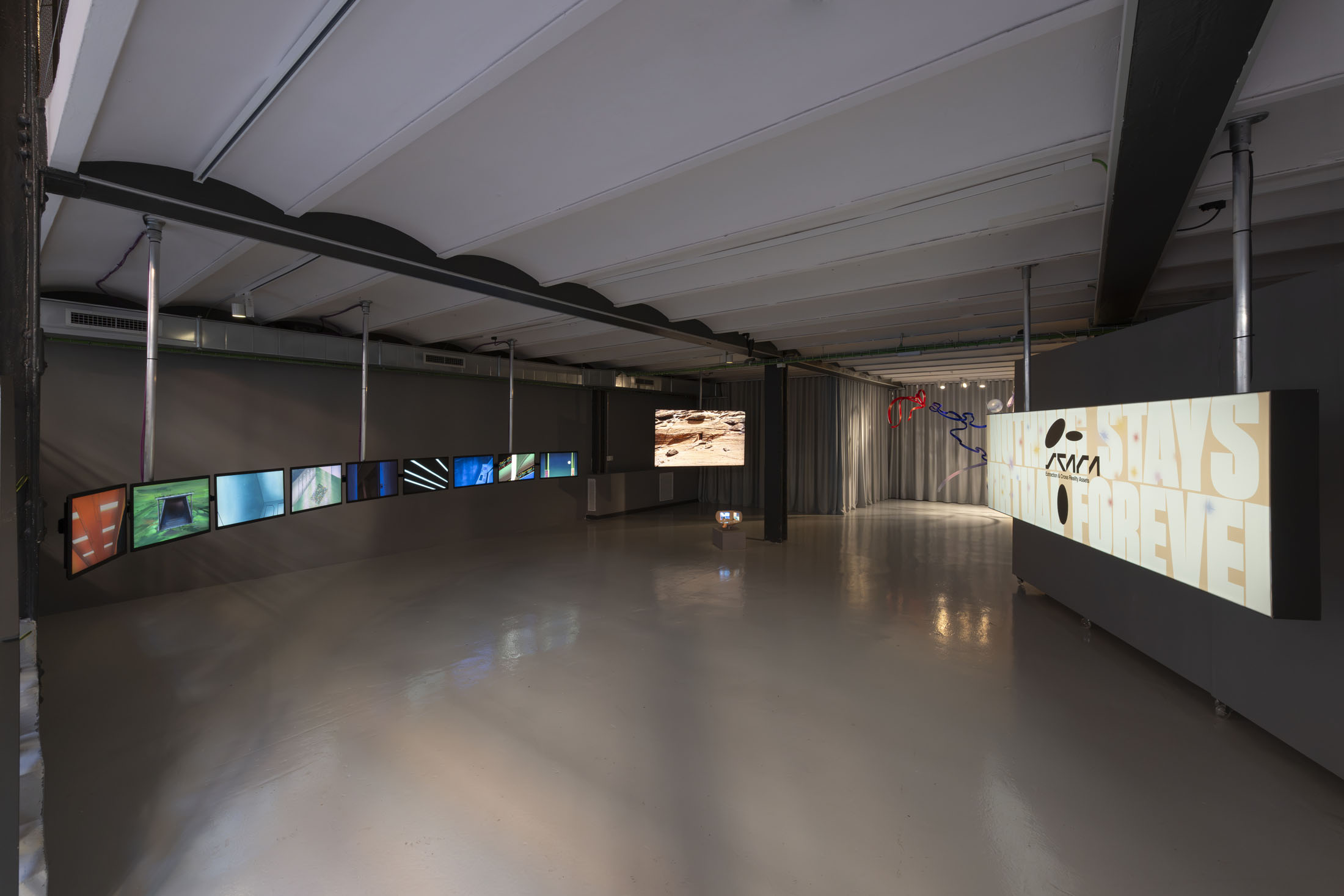
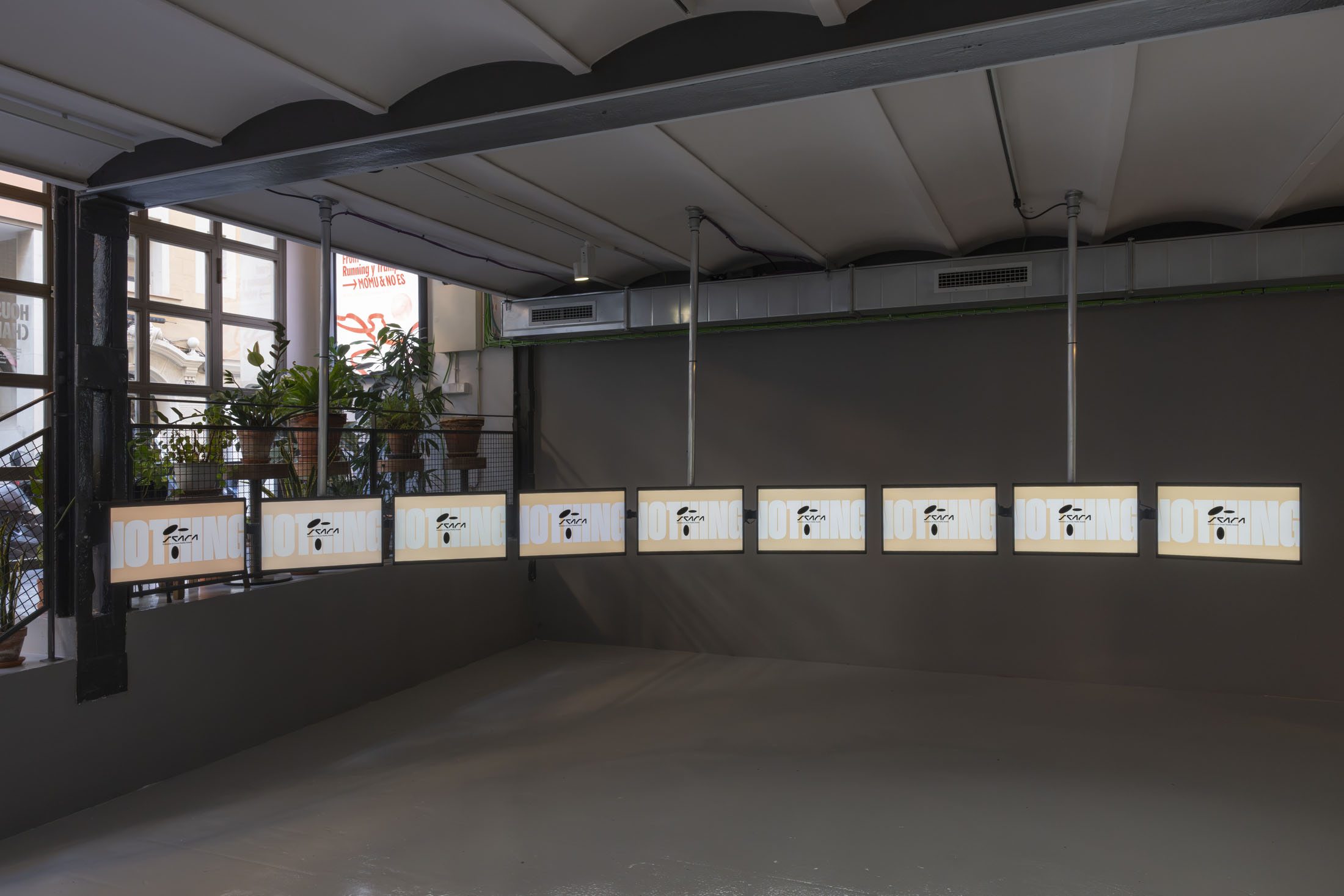
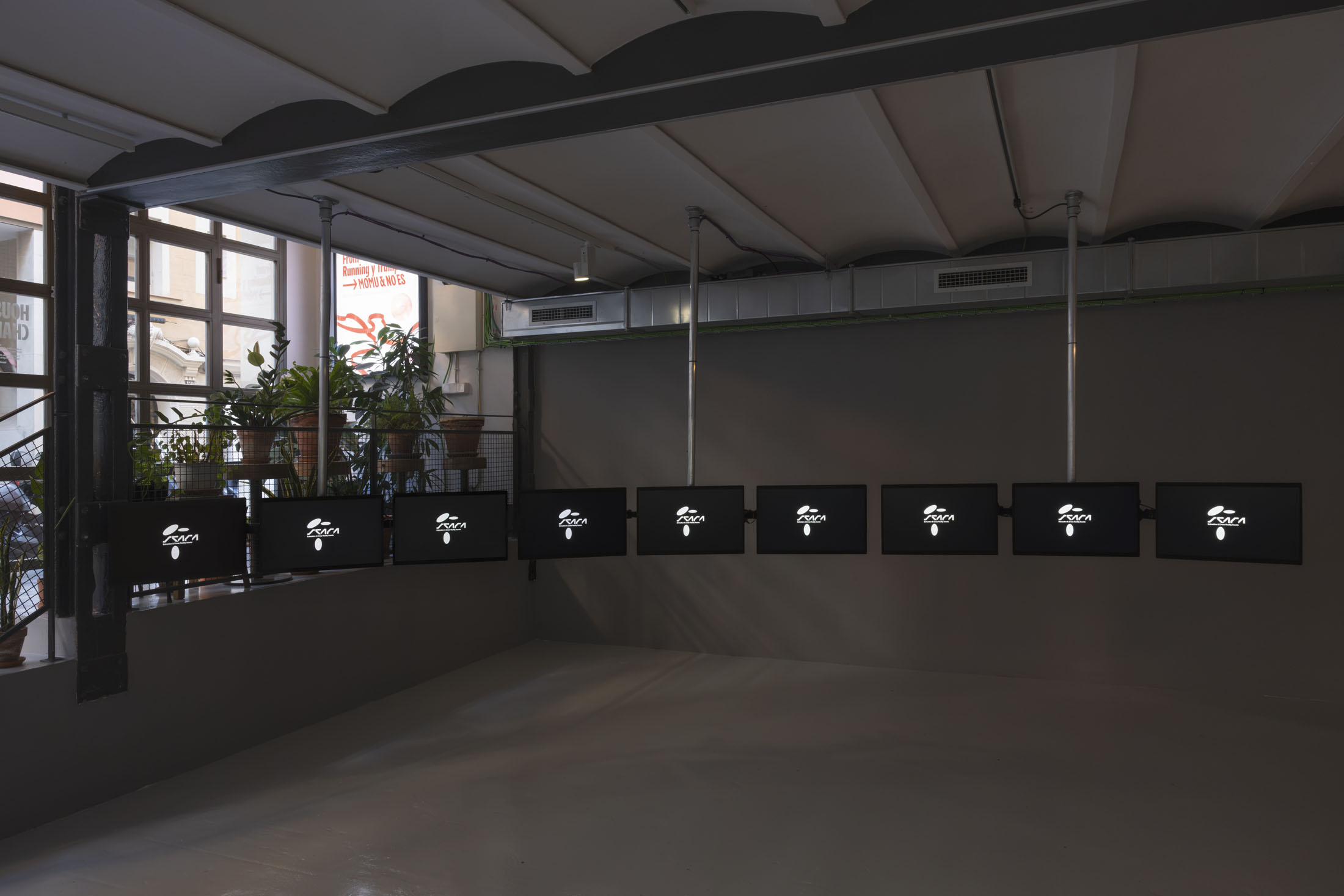
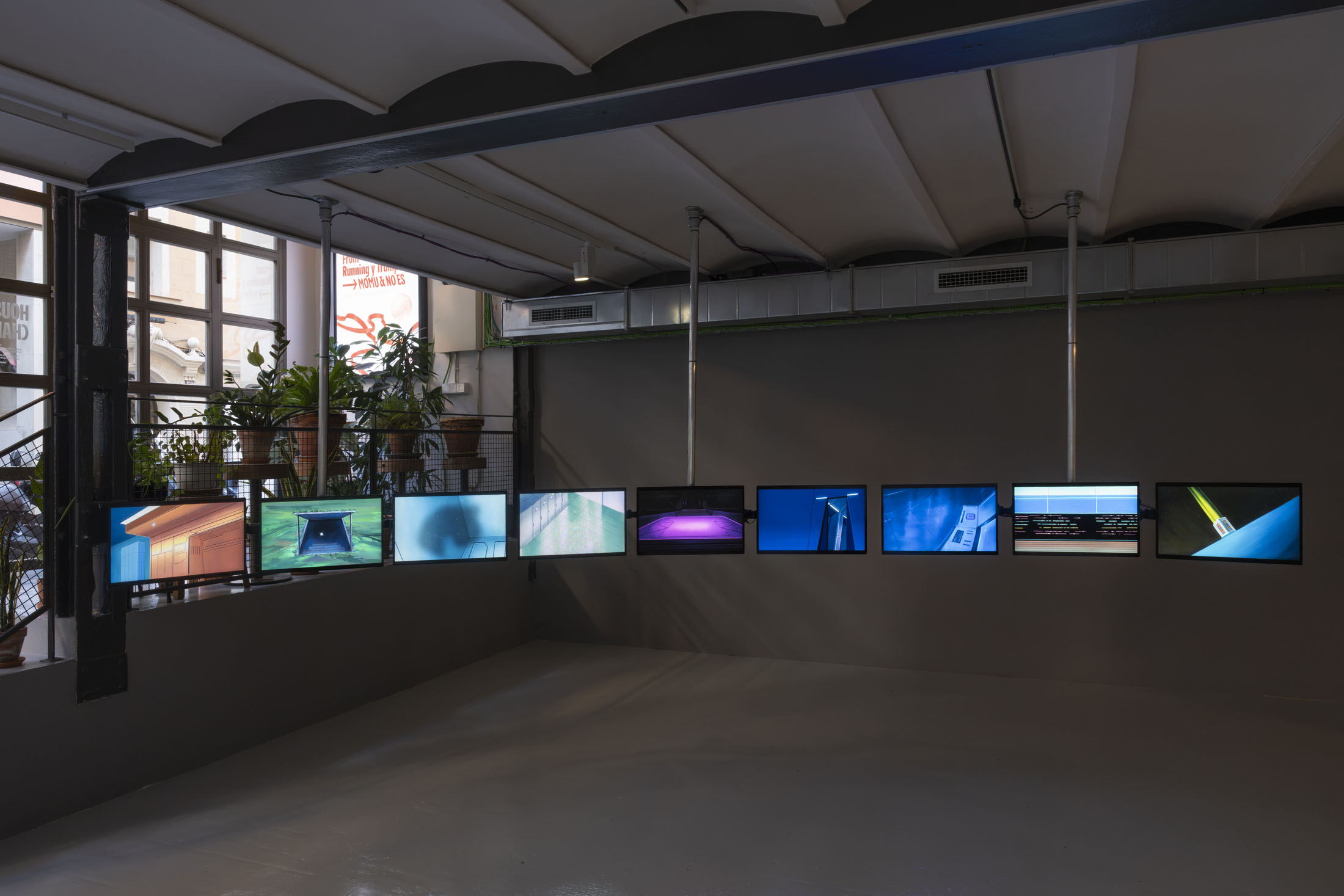
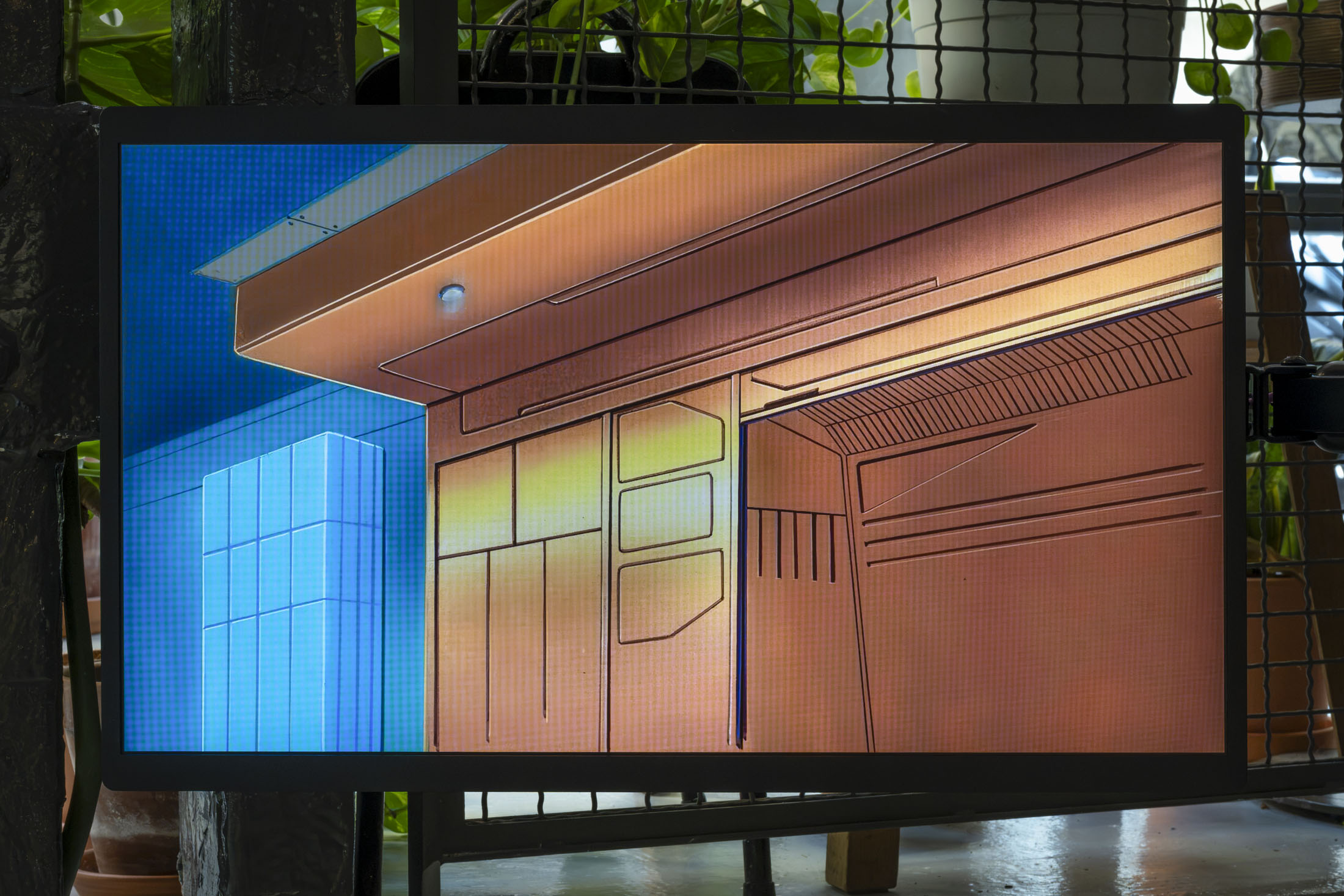
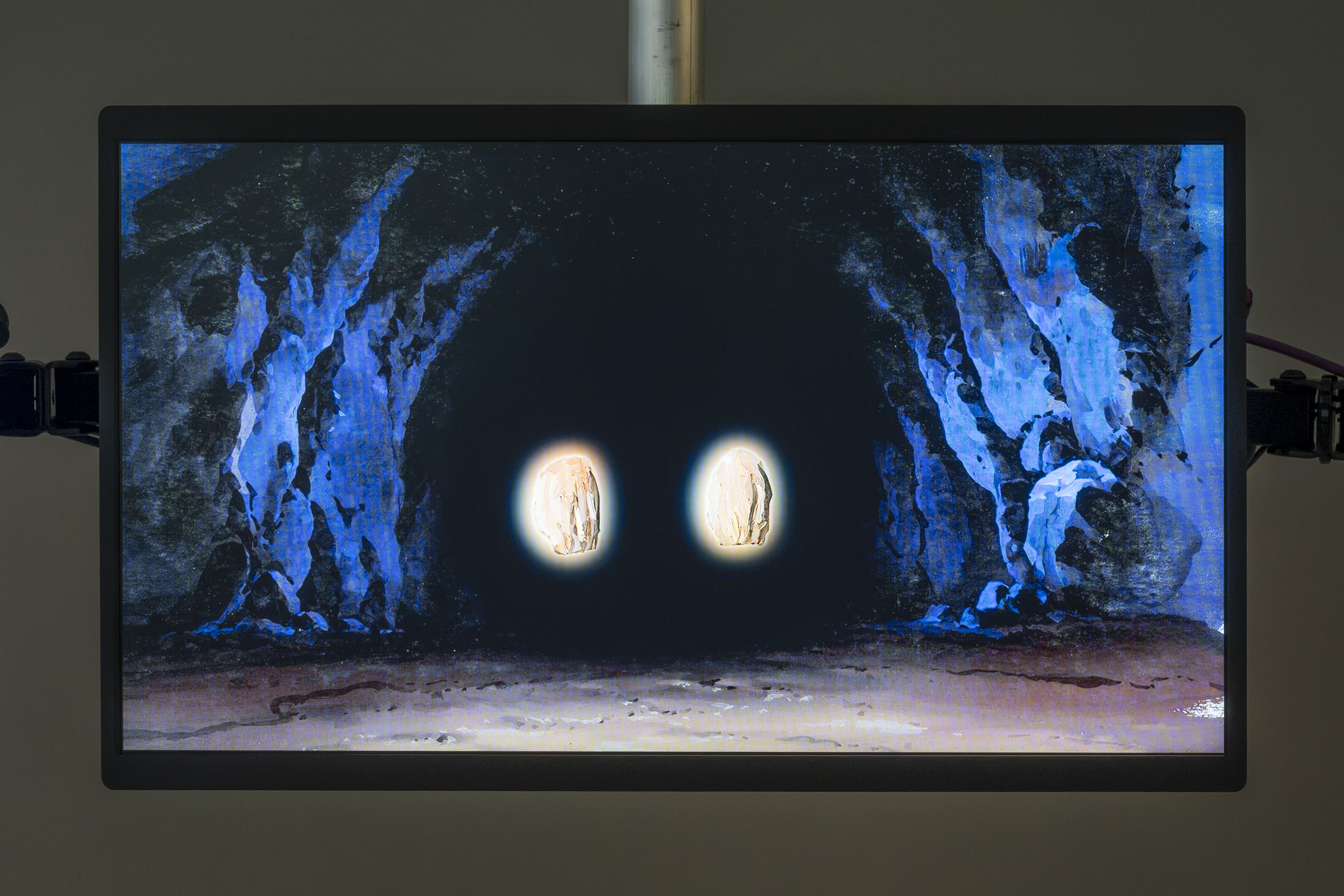
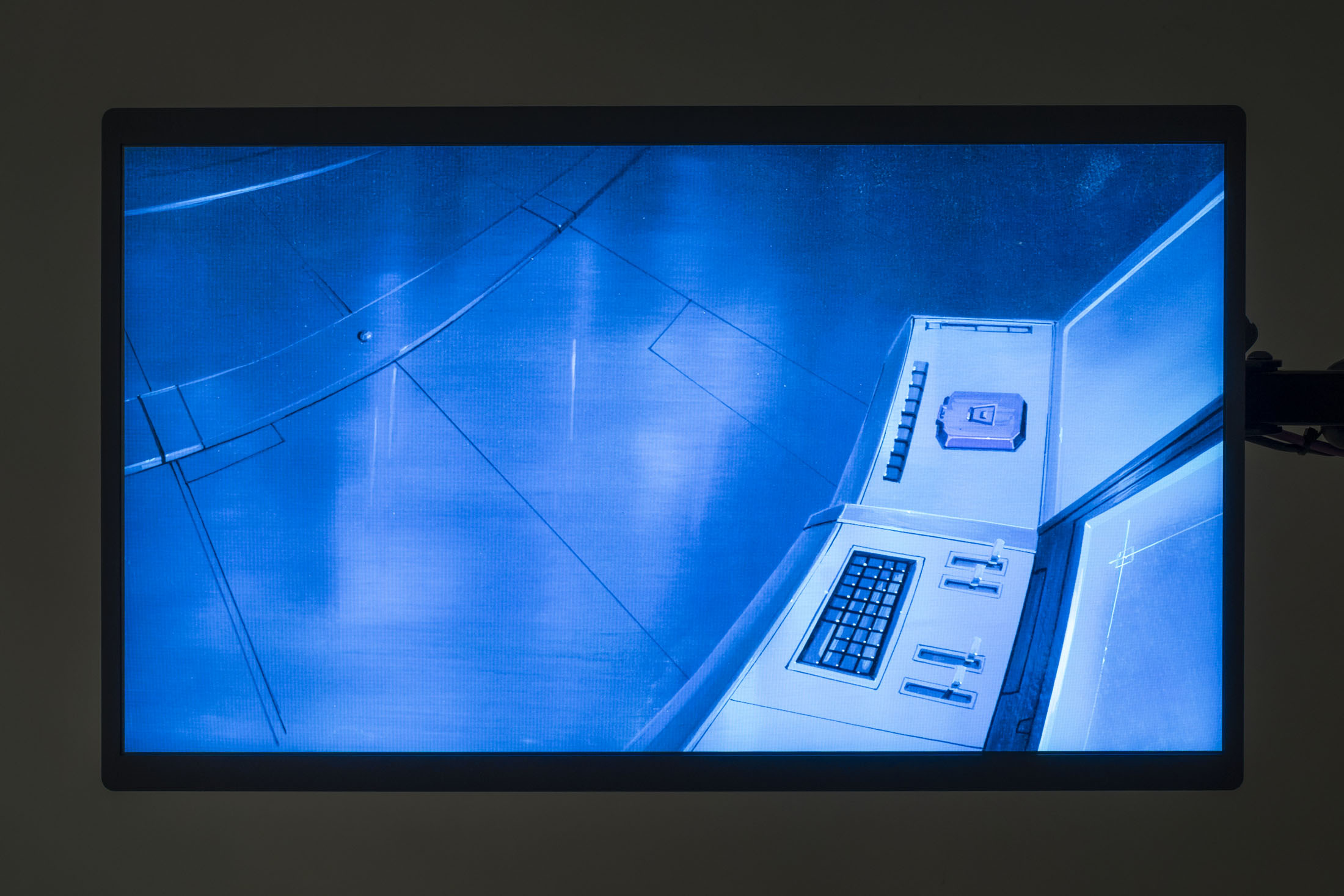
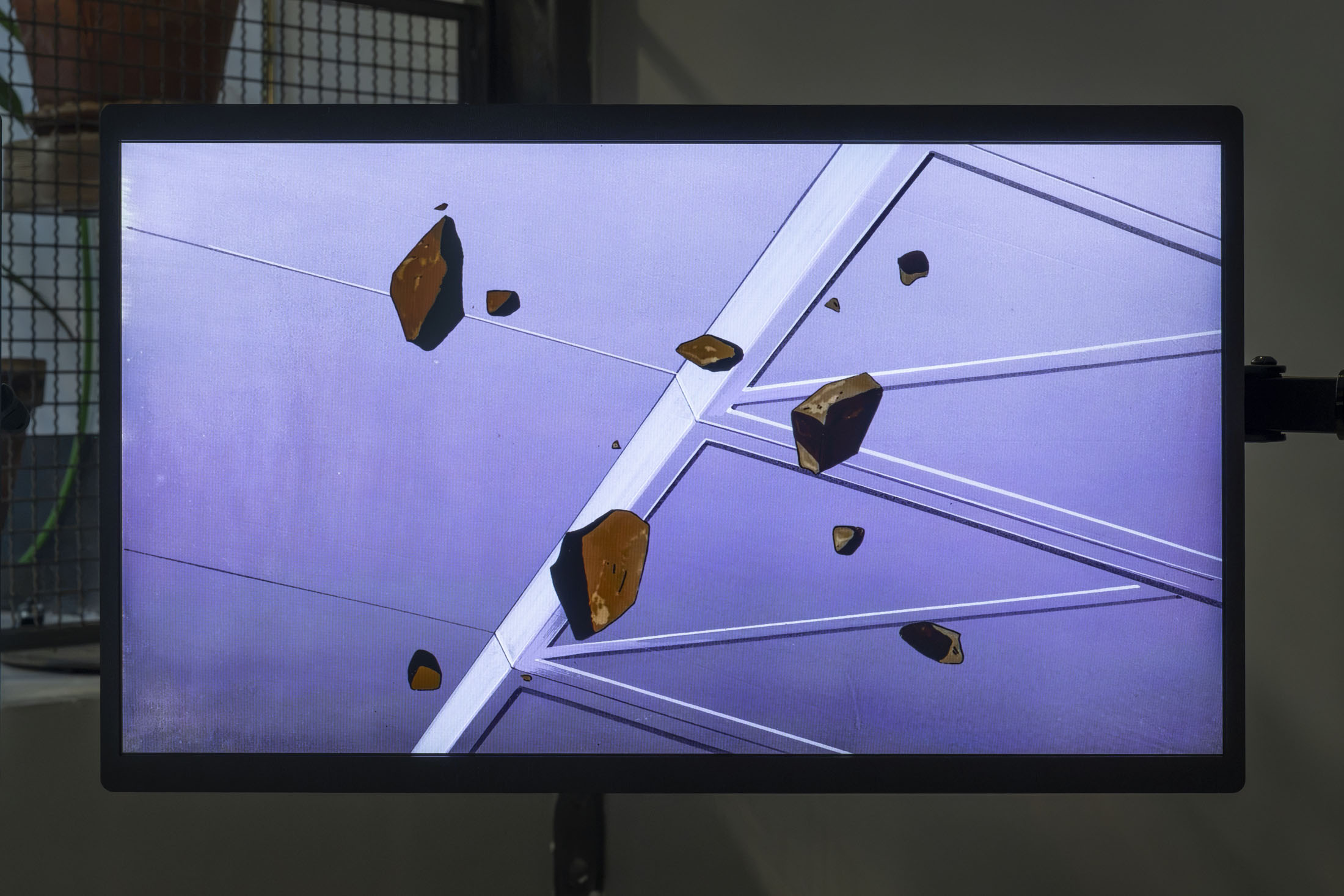
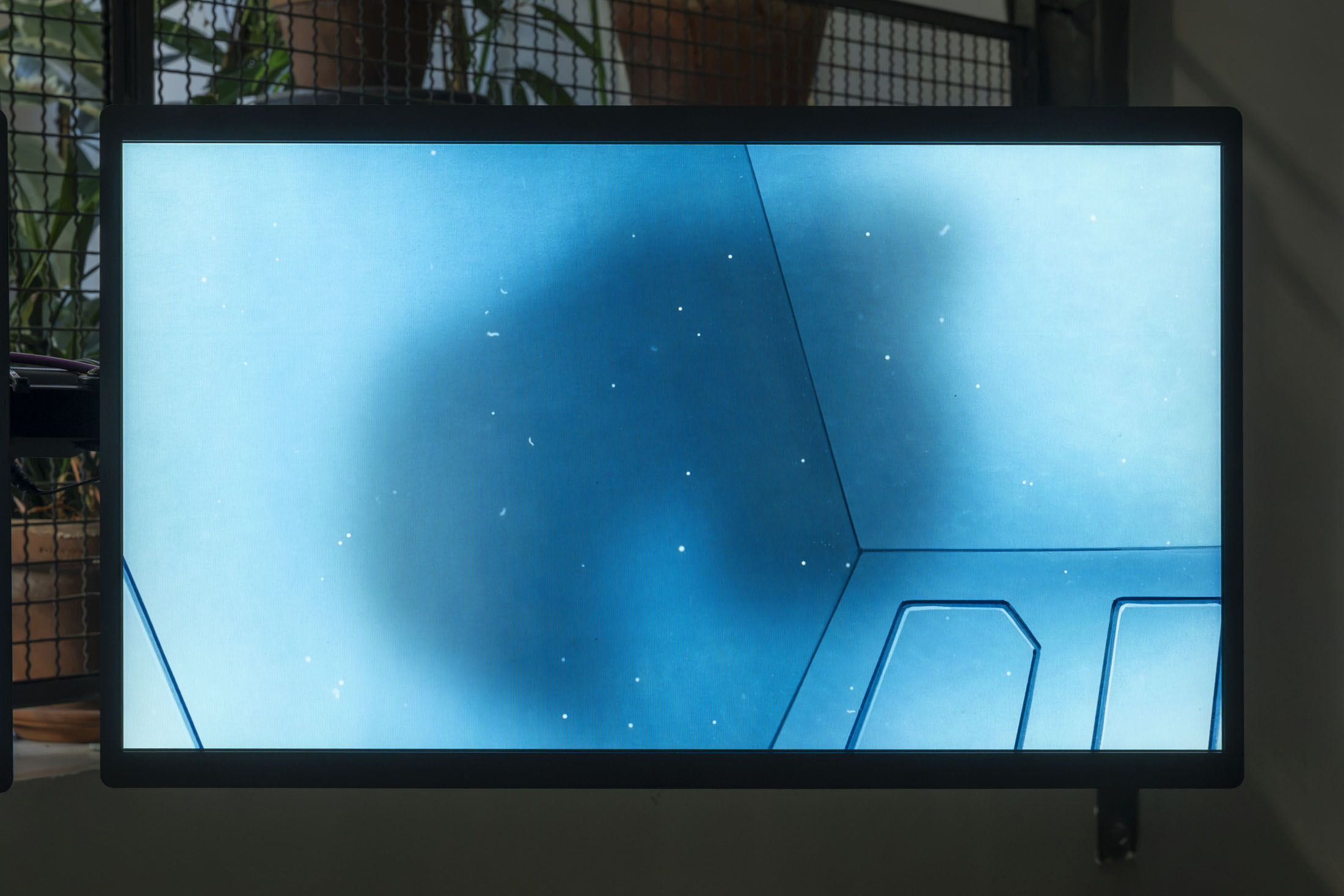
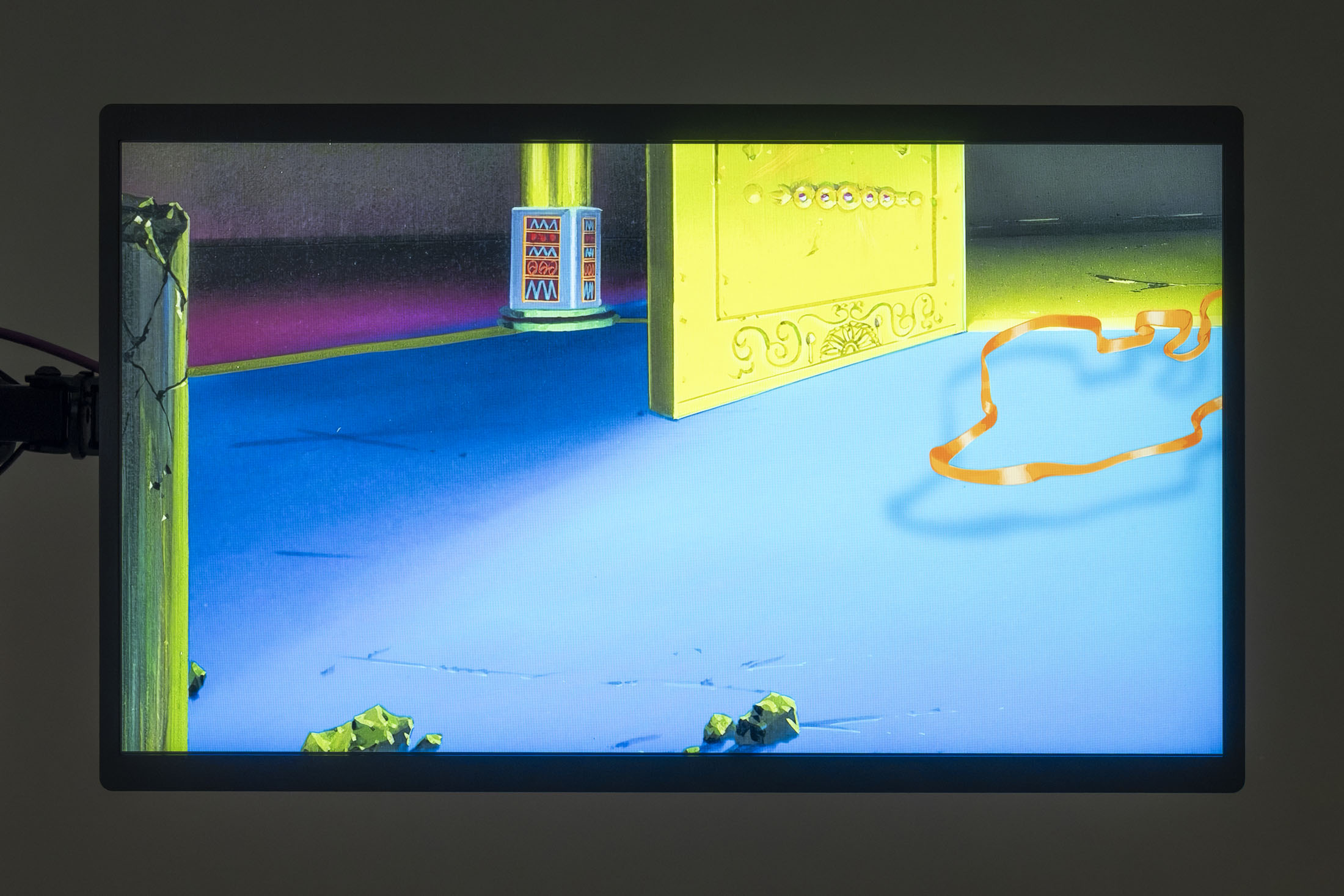
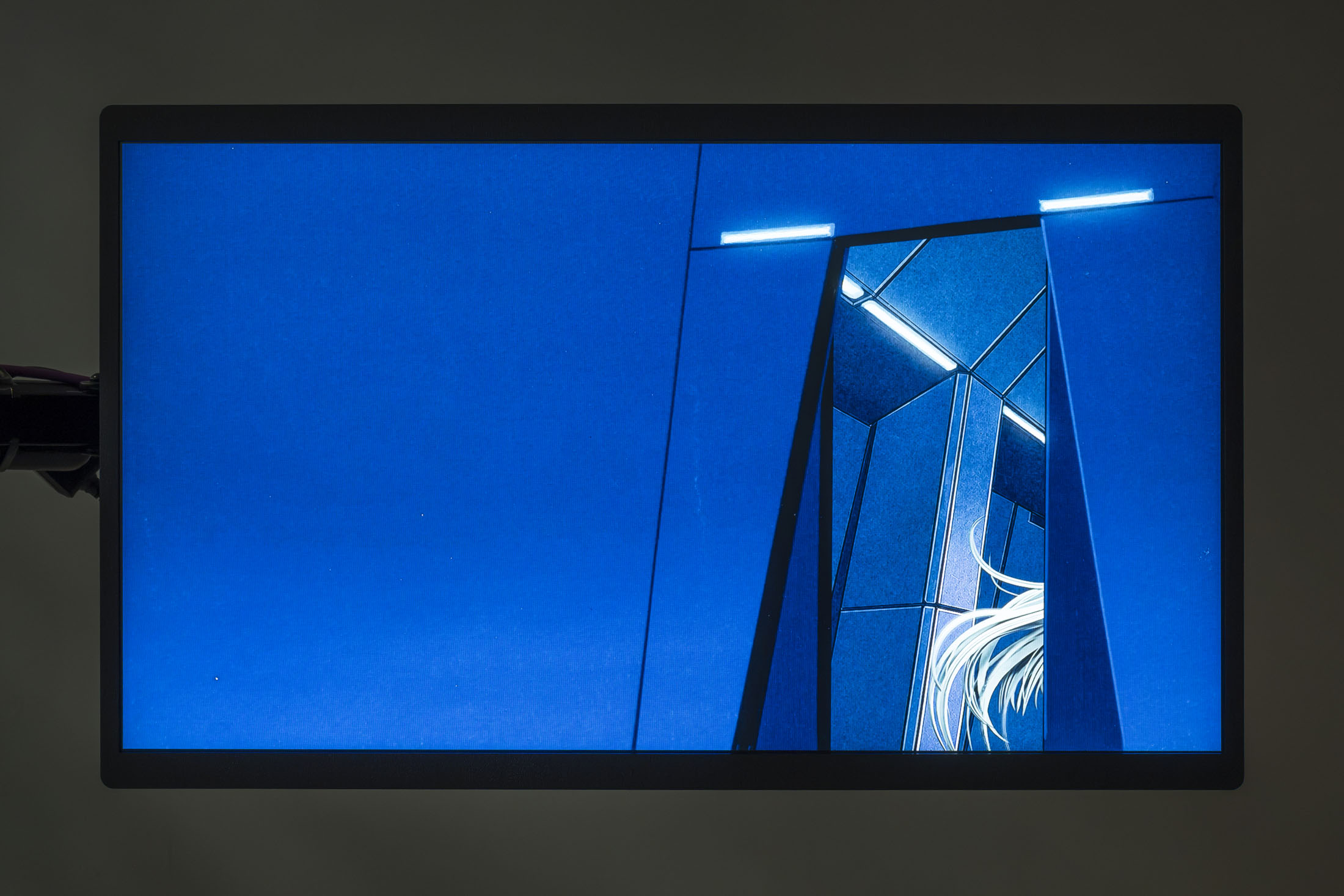
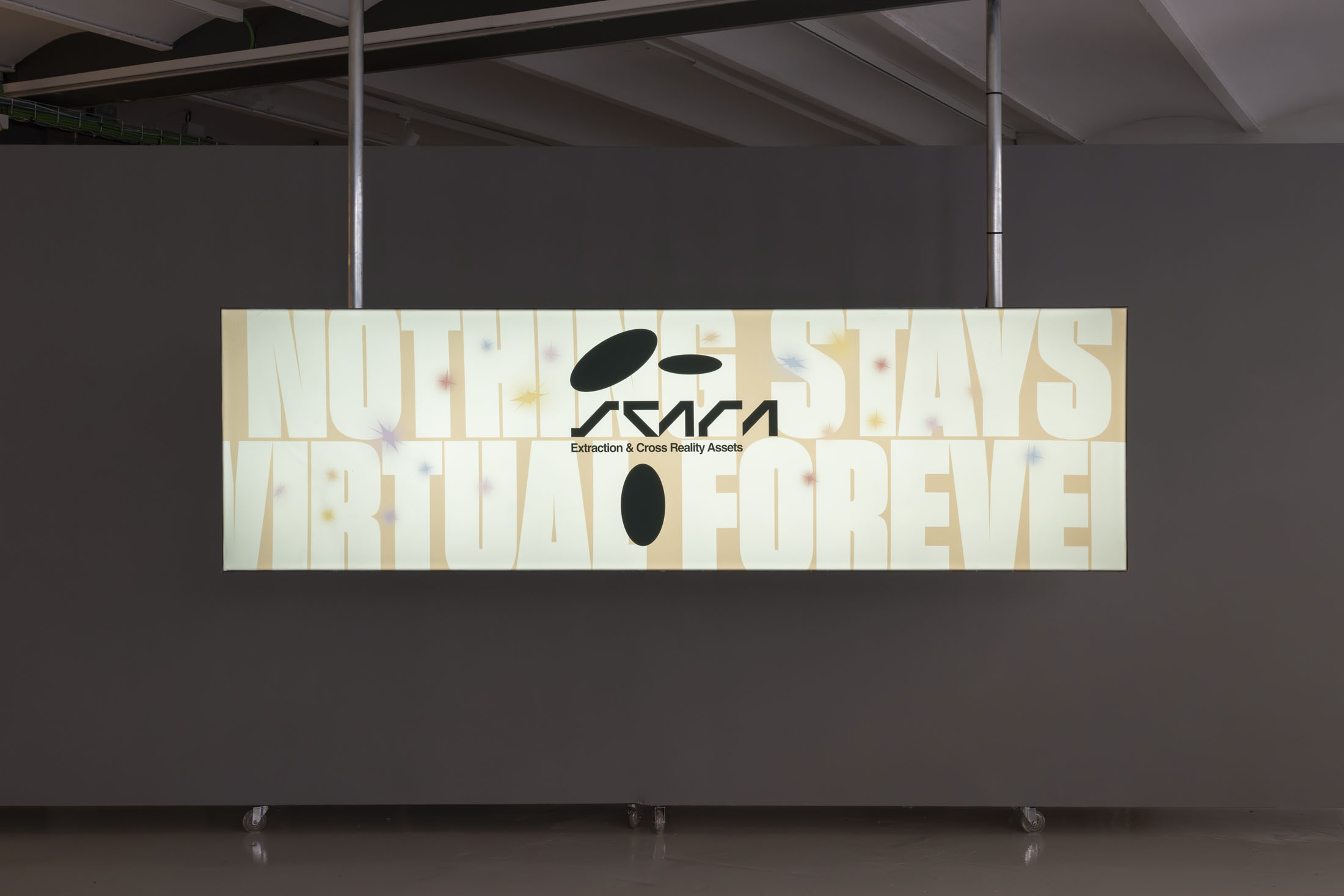
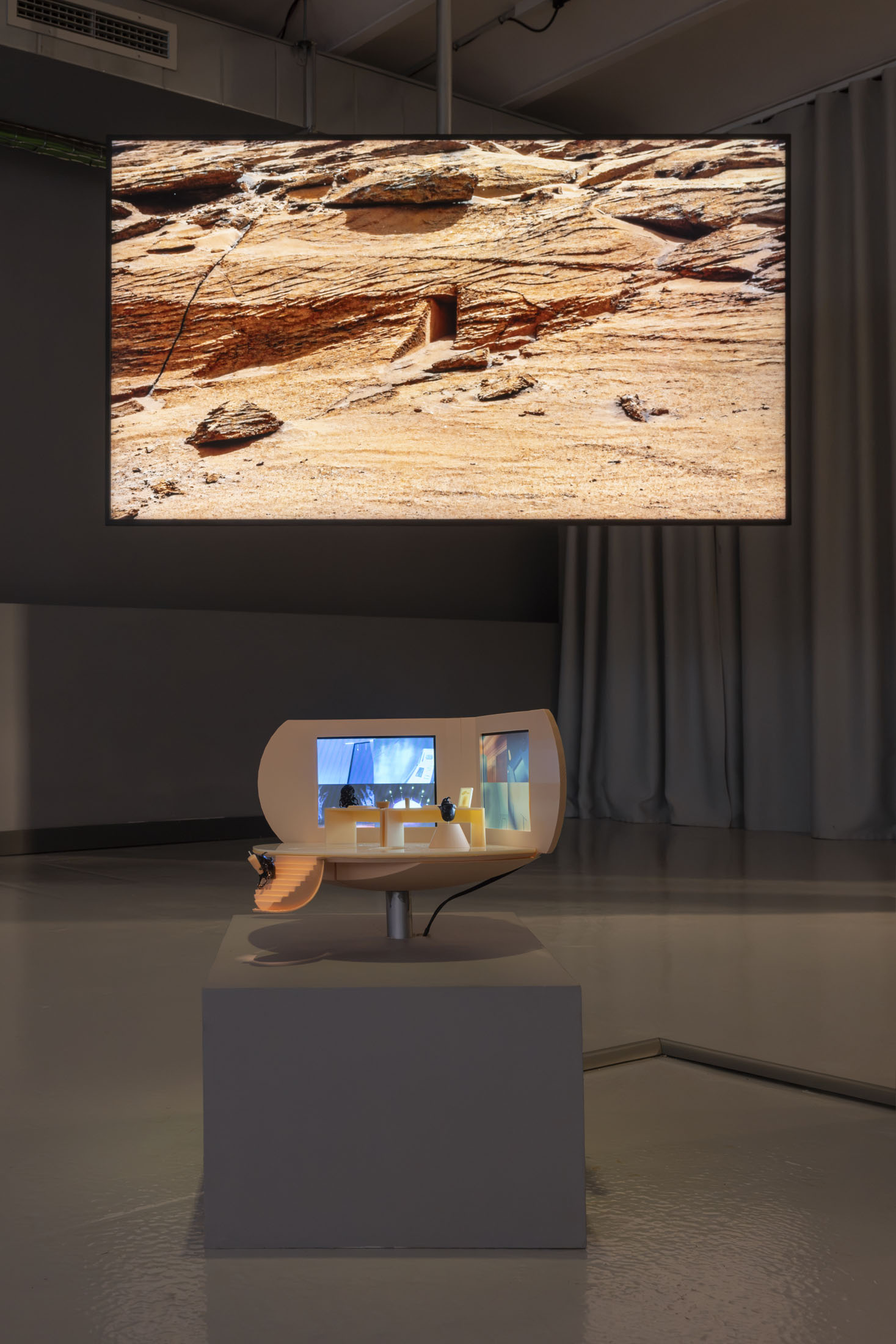
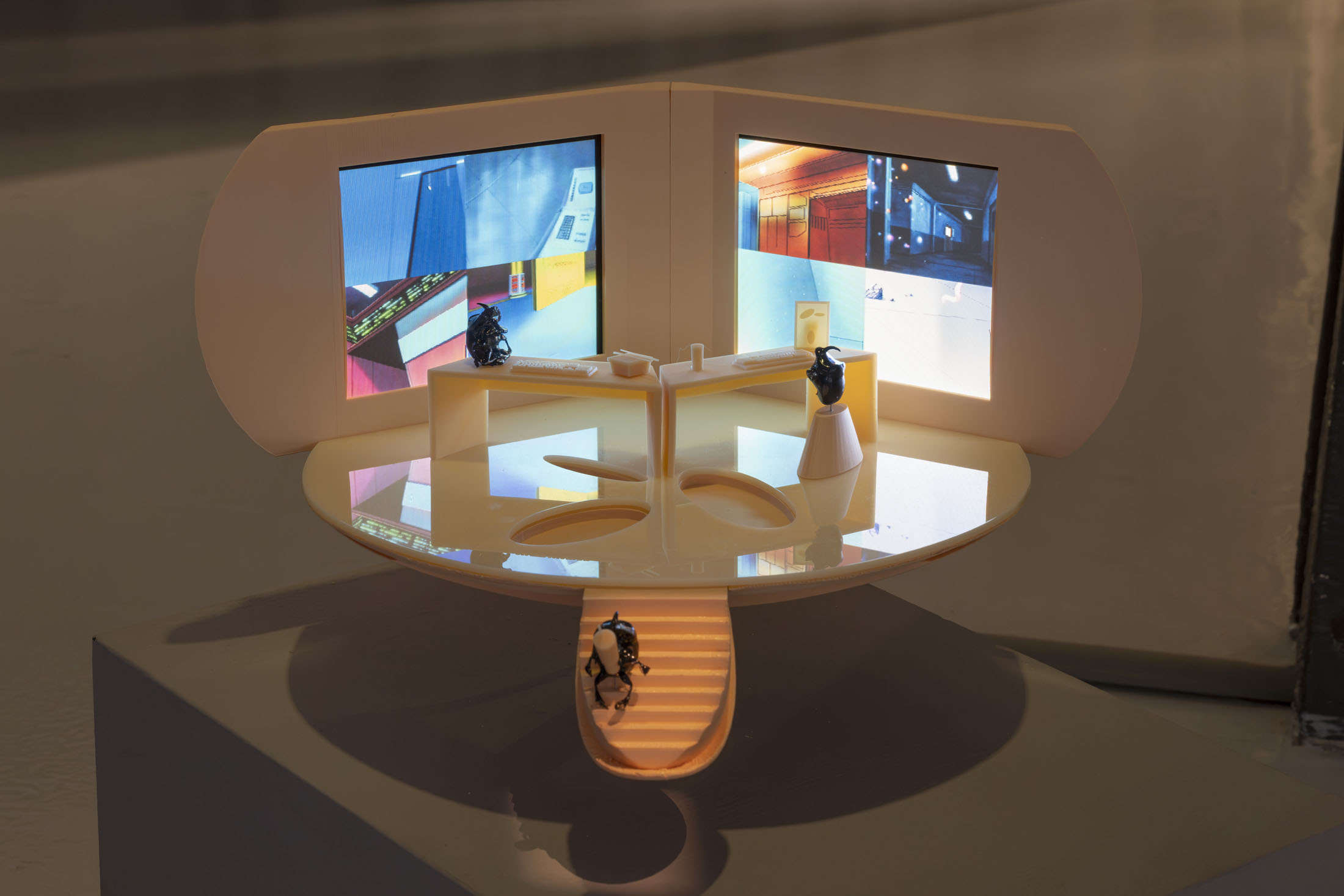
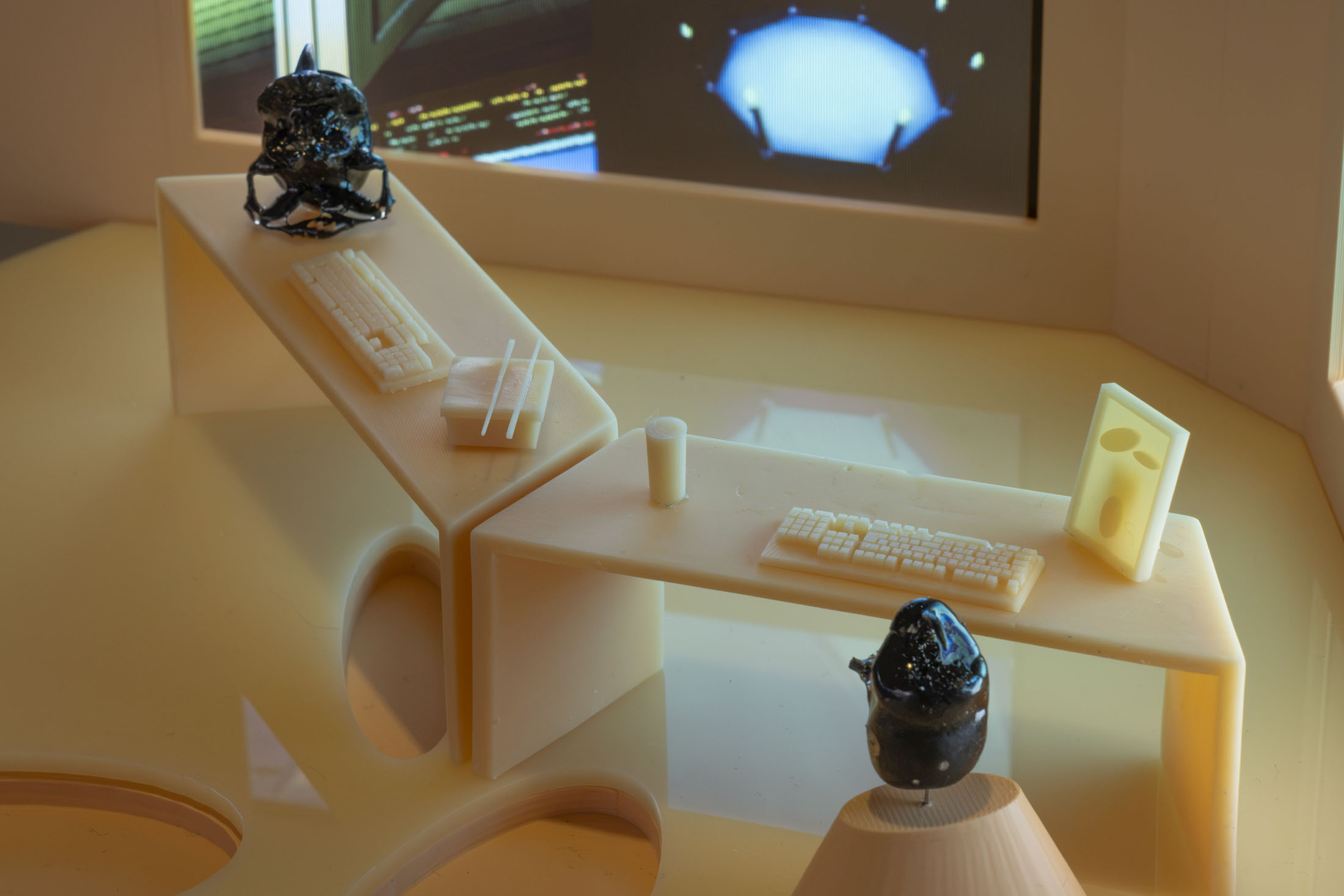
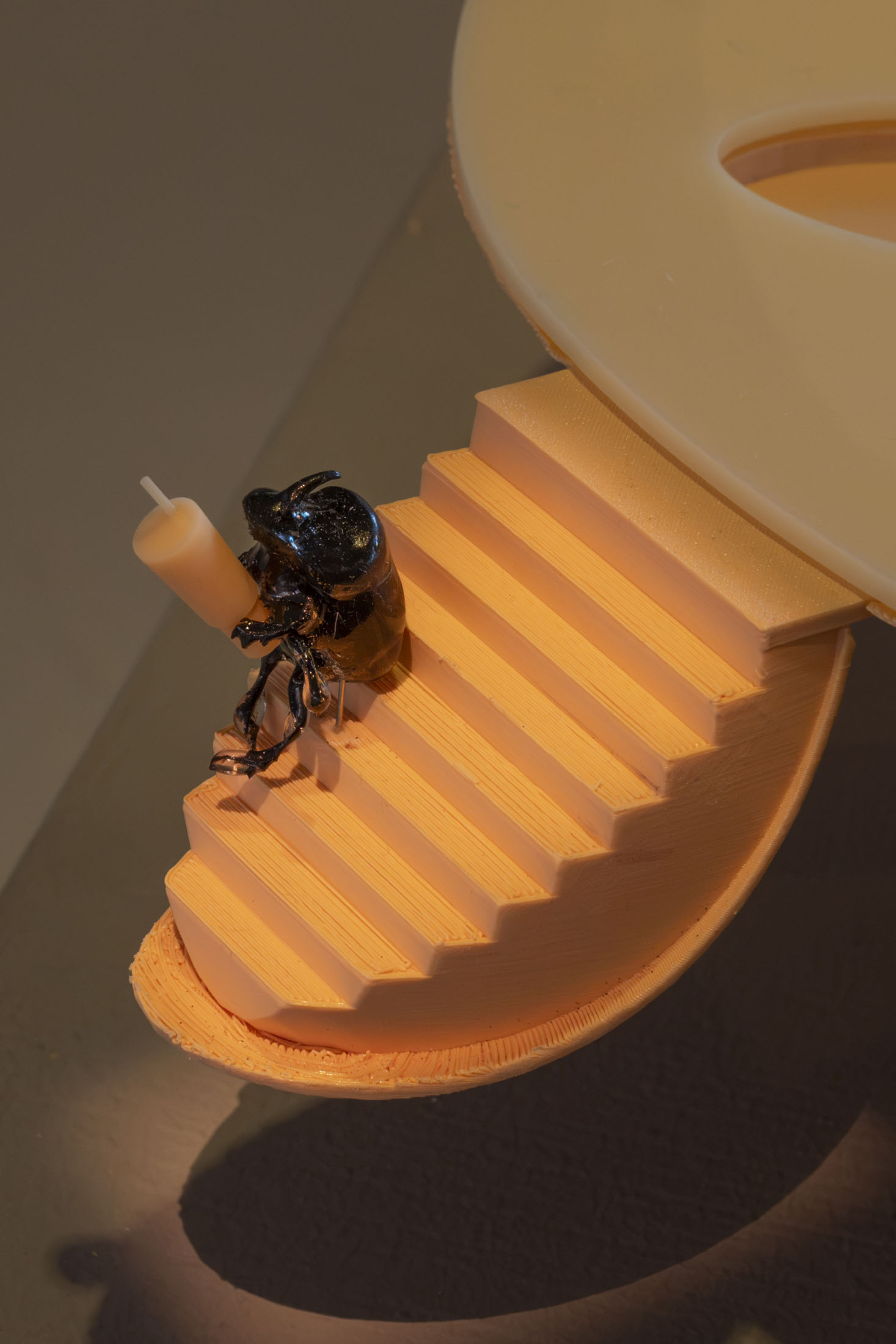
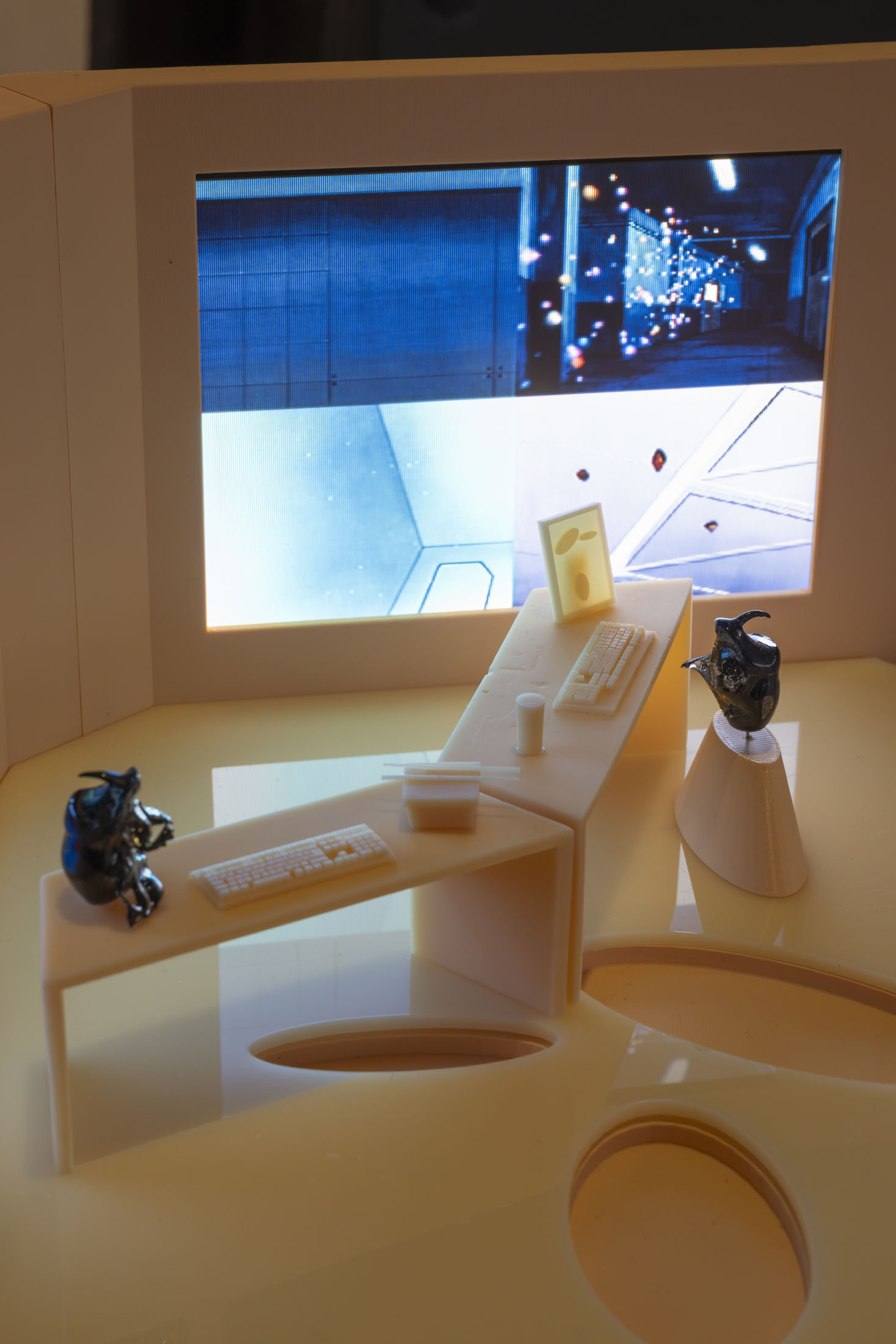
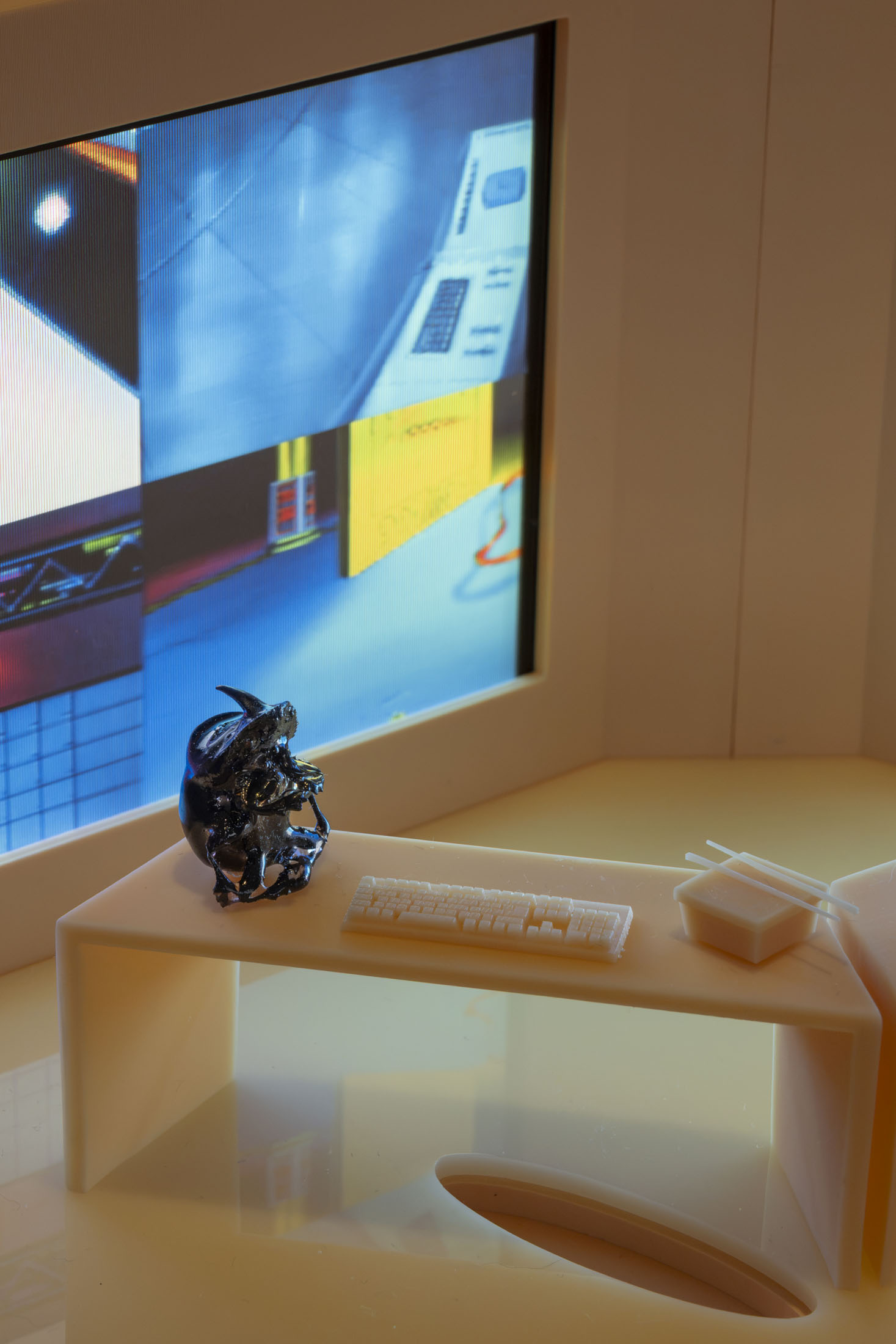
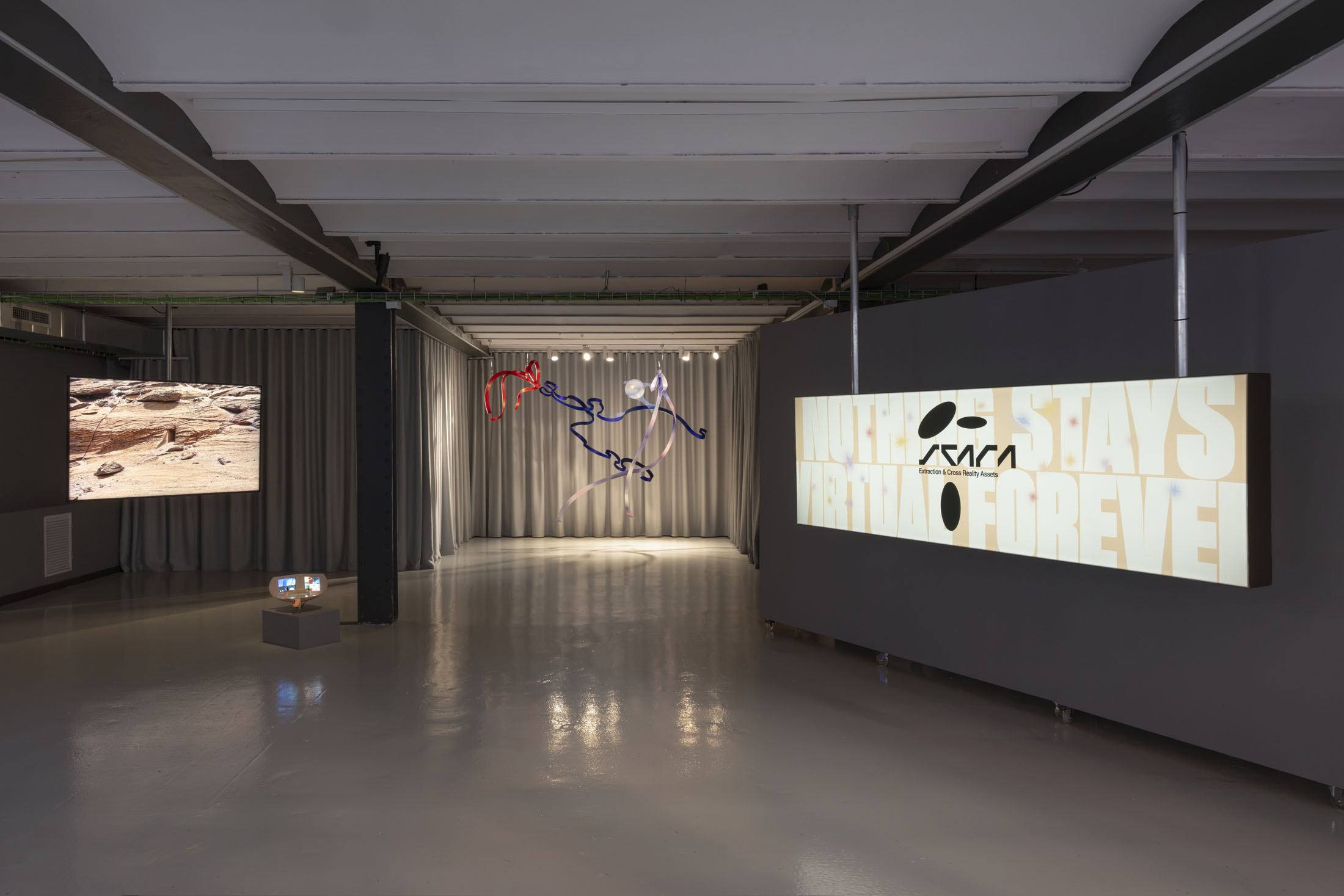
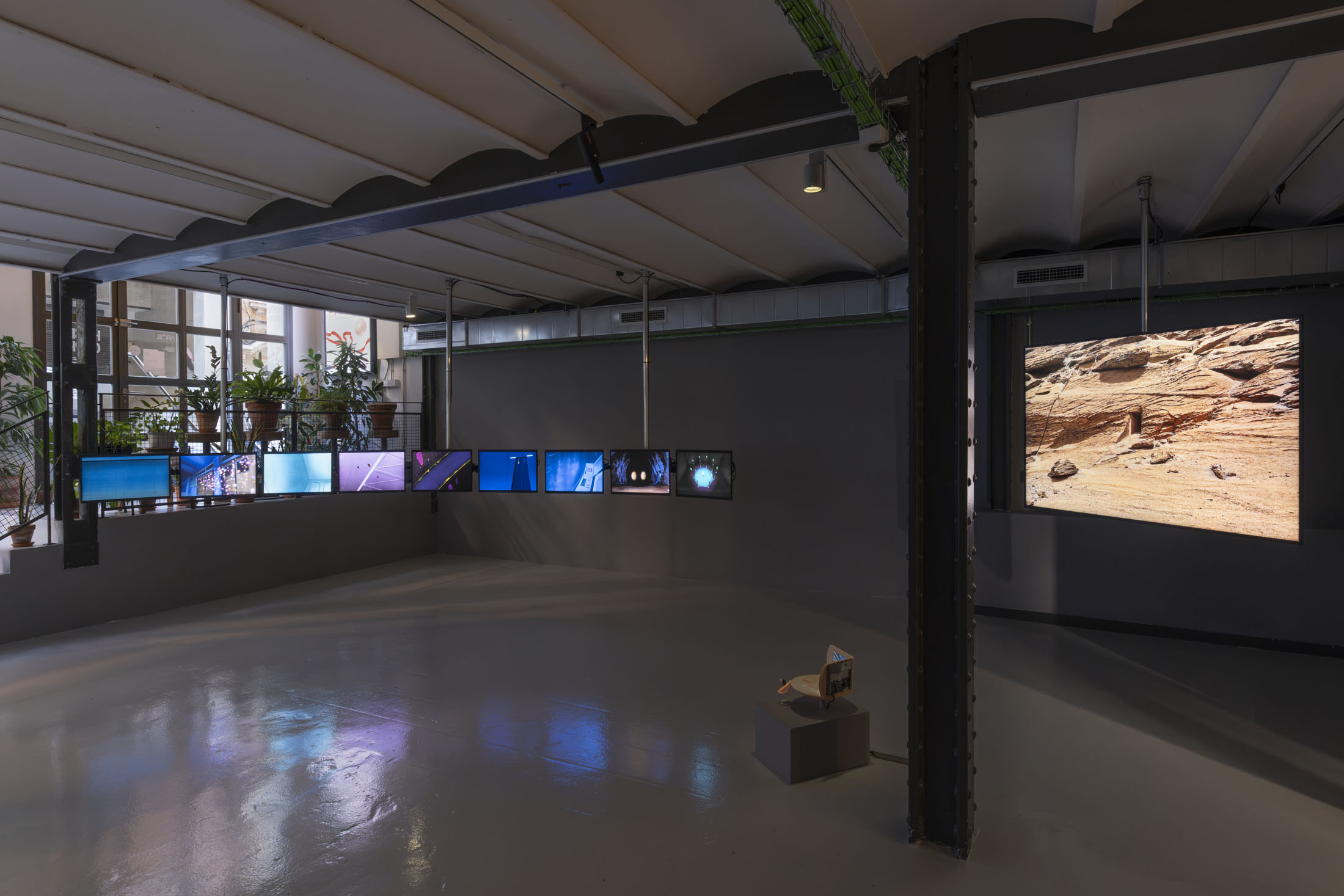
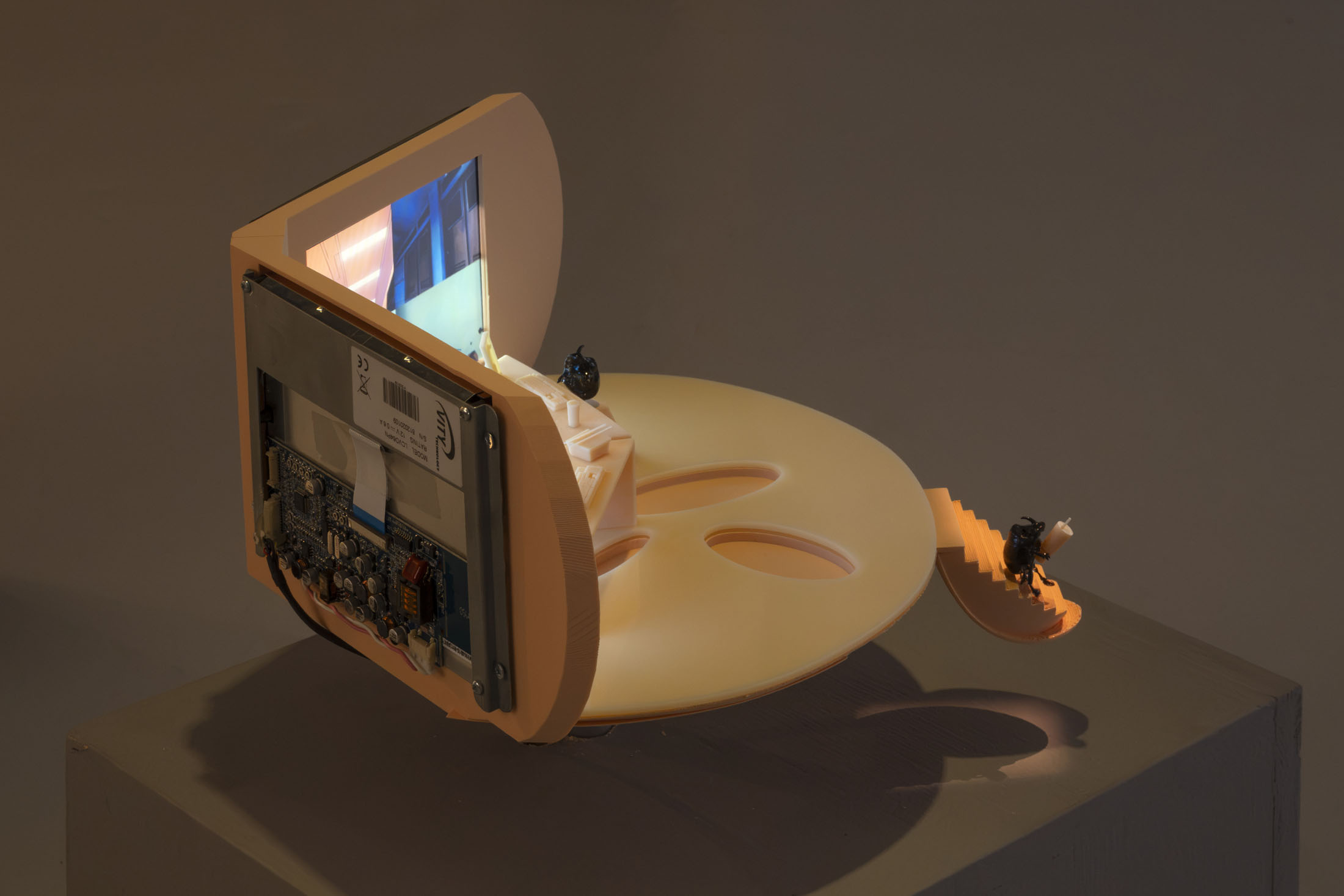
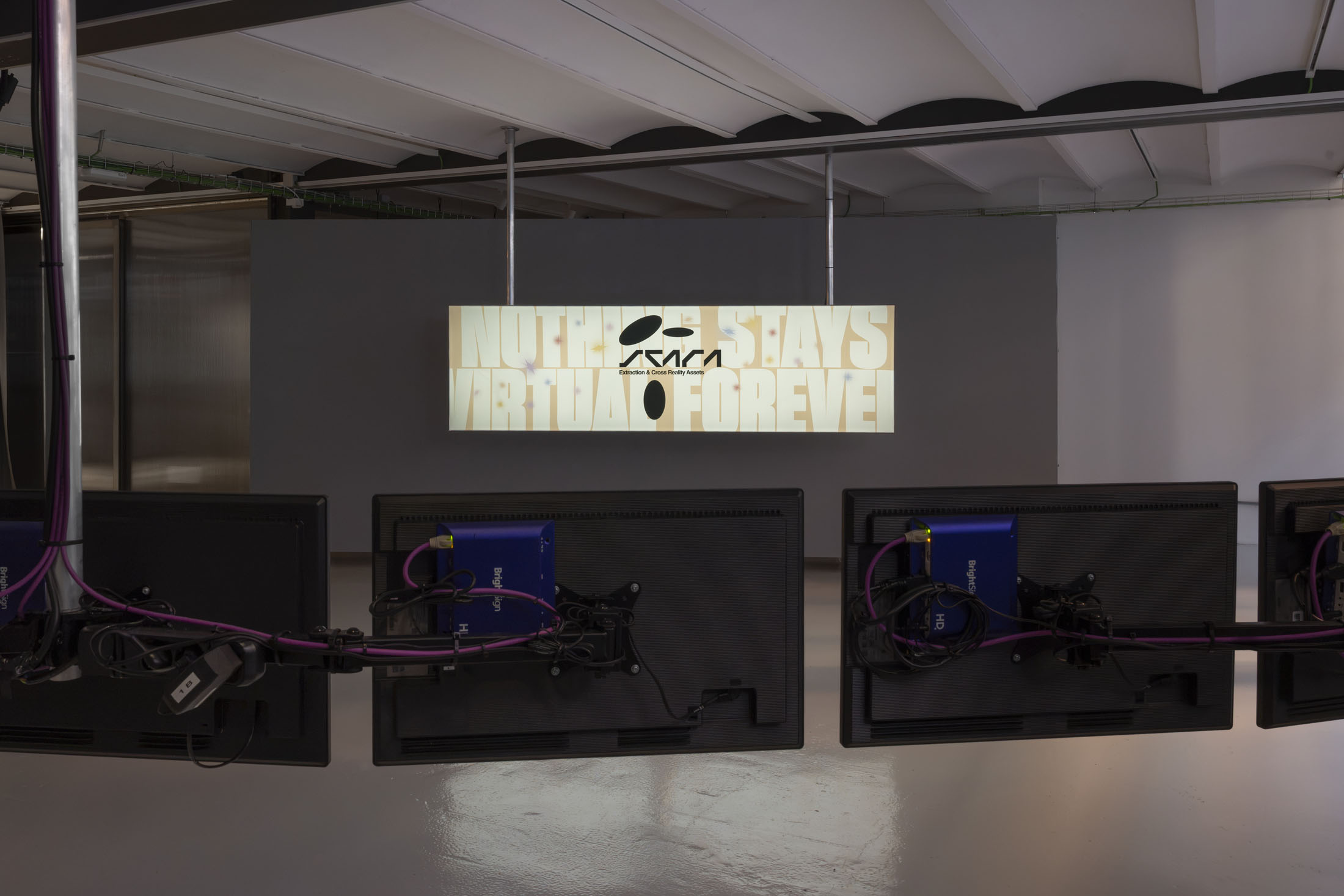
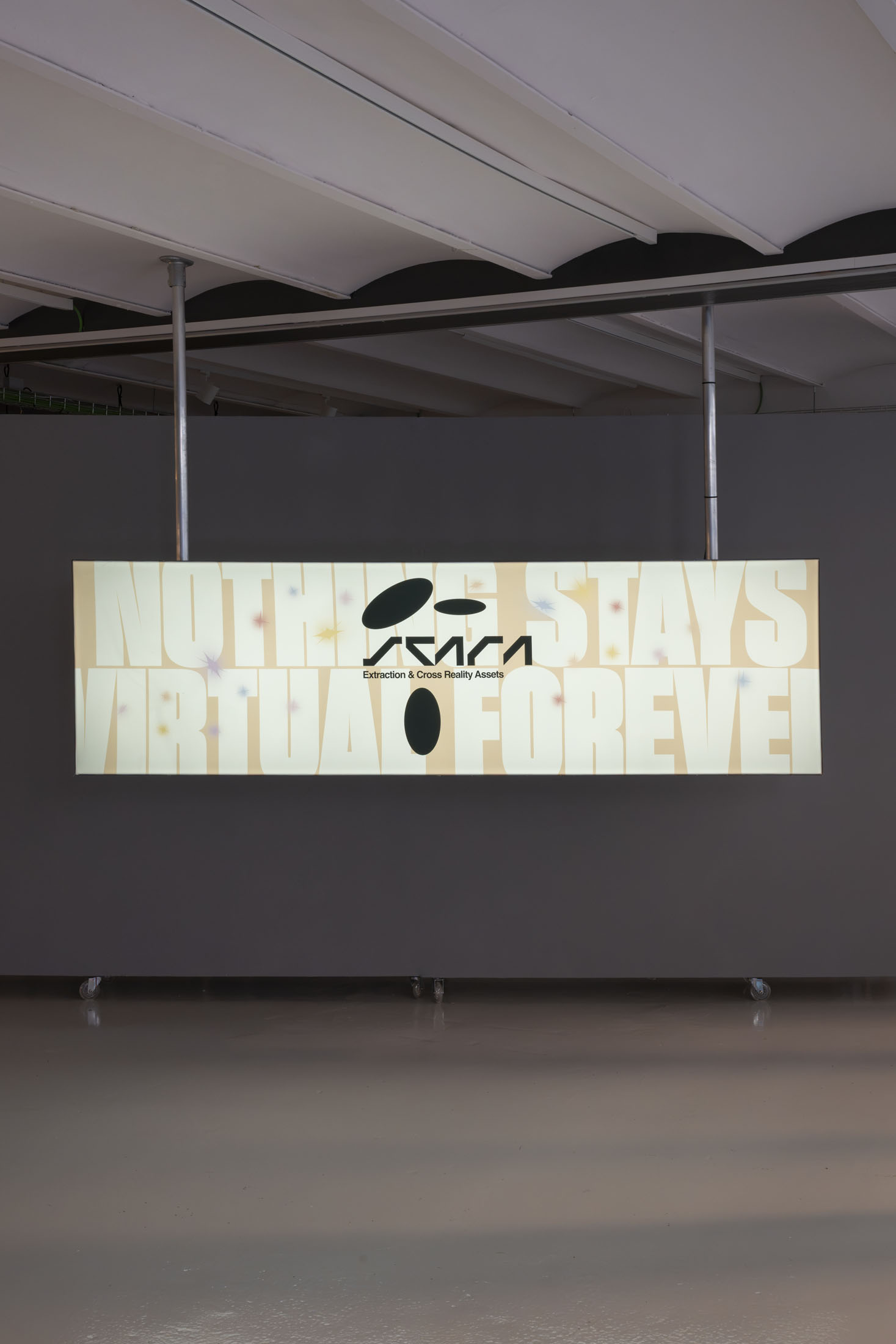
In SCARA, different objects from diverse origins are the subject of speculation. Three arthropod entities are tasked with scrutinising nine screens on which one of these objects may emerge at any moment. They cannot hesitate, they must not. Their function is not to analyse their meaning or, if there is one, their symbolism, but to determine whether they have any kind of value for exploitation. What they may not know is that they are not the owners of the prospecting company. What they may be unaware of is that their extractive universe could be governed by other entities, or by a protocol that, who knows whether obsolete, places the valuation of these objects in an infinite loop of value generation. In SCARA, value is not determined by the material meaning of the object; it dissolves in the continuous search for its detection, extraction, valuation… Perpetually hyperconnected, perhaps, the corporation’s entities monitor, process and select objects or certain anomalies emerging from the infinite flow of information, in a state of pure speculative pleasure. Perhaps. Or perhaps not.
Stories that make worlds. Hesitation
Each proposal by the collective Momu & No Es, formed by Lucía Moreno (Basel, 1982) and Eva Noguera (Barcelona, 1979), is an invitation to let ourselves be carried along by a story, to follow the thread, to explore or discover a universe. A fictional world that addresses us through its strange familiarity. Because there is always a sense, or premonition, of hesitation. A disturbance at the heart of the everyday.
On the fantastic, Tzvetan Todorov writes: “The person who perceives the event must choose between two possible solutions: either it is an illusion of the senses, a product of the imagination, and the laws of the world remain what they are, or the event really took place, it is an integral part of reality, and then this reality is governed by laws that we do not know. […] The fantastic occupies the duration of this uncertainty. As soon as one chooses one answer or the other, one leaves the fantastic for a neighbouring genre: the uncanny or the marvellous.” (Introducción a la literatura fantástica, Paidós, 2006).
It is at this hinge, in this time of uncertainty, that I situate the artistic proposals of Momu & No Es. Within this hesitation, this text also fantasises, speculates, weaves itself and traces, observes and dances, drawing on different voices that bring stories and ideas together in order to think about the installations Front Running y Trampa at House of Chappaz.
Thoughts that think thoughts. Speculation
“We only warn (as if we weren’t already saturated with warnings) that capitalism is in a position that allows it to evade all the half-assigned and half-executed plots, weak, limp, arbitrary, that now bind it to social reproduction, literally happening right now, so as to leave behind our blistered and deforested earth and fold in on itself towards higher, more enclosed, smaller, thinner dimensions, until, poof!, we can no longer see it. What will we do then?”
Marek Poliks and Roberto Alonso Trillo, Exocapitalismo. Economías absolutamente sin límites (Caja Negra, 2026).
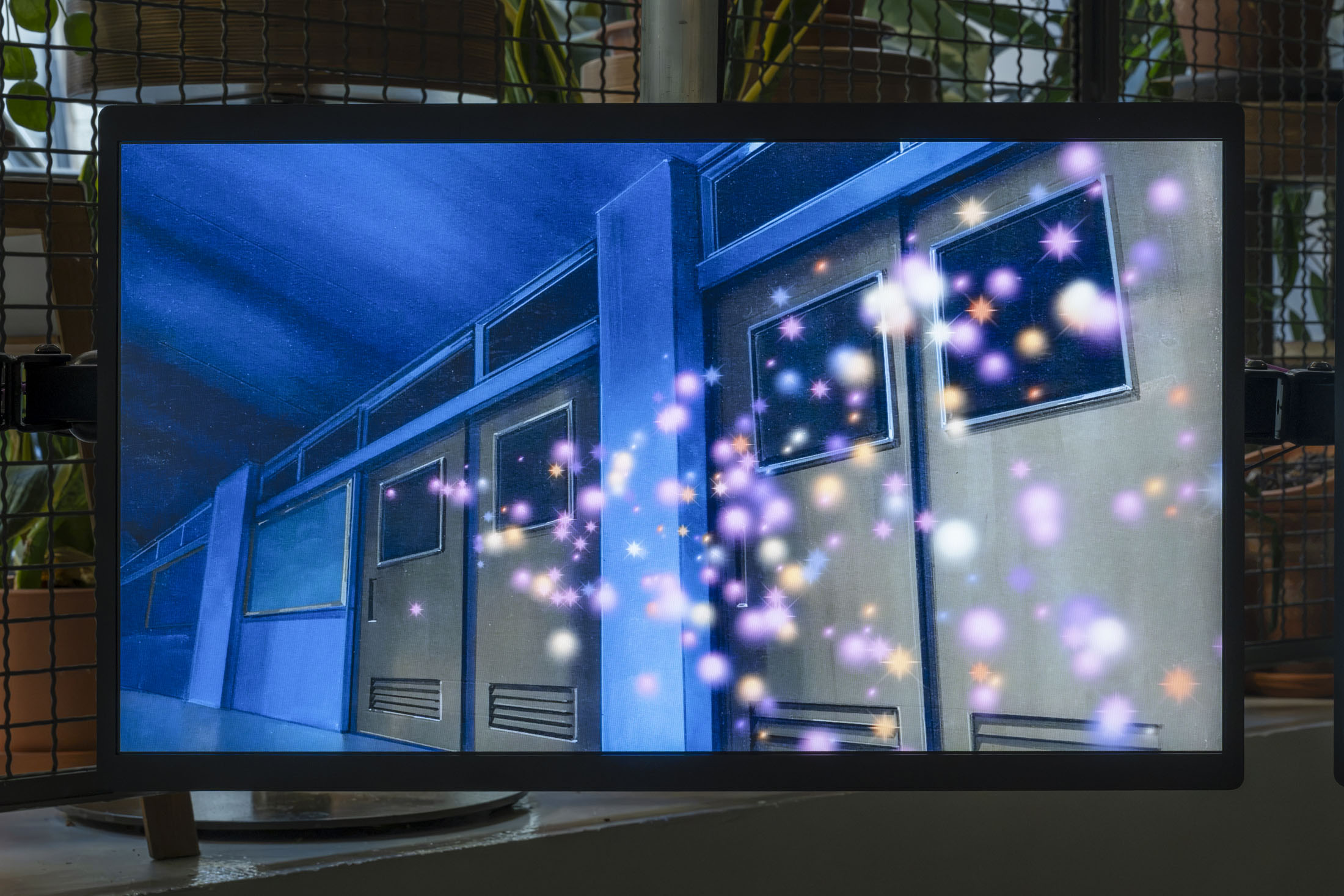
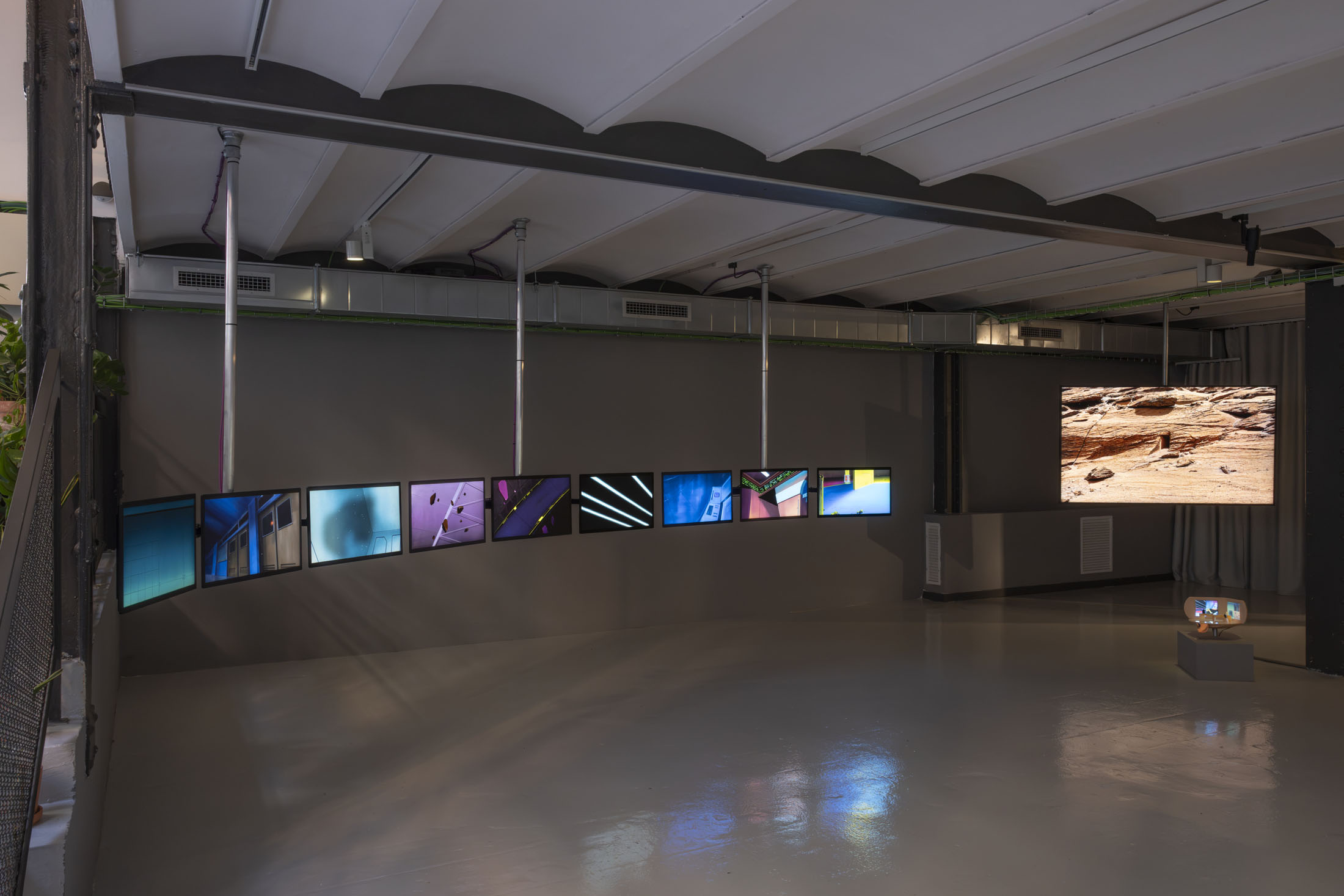
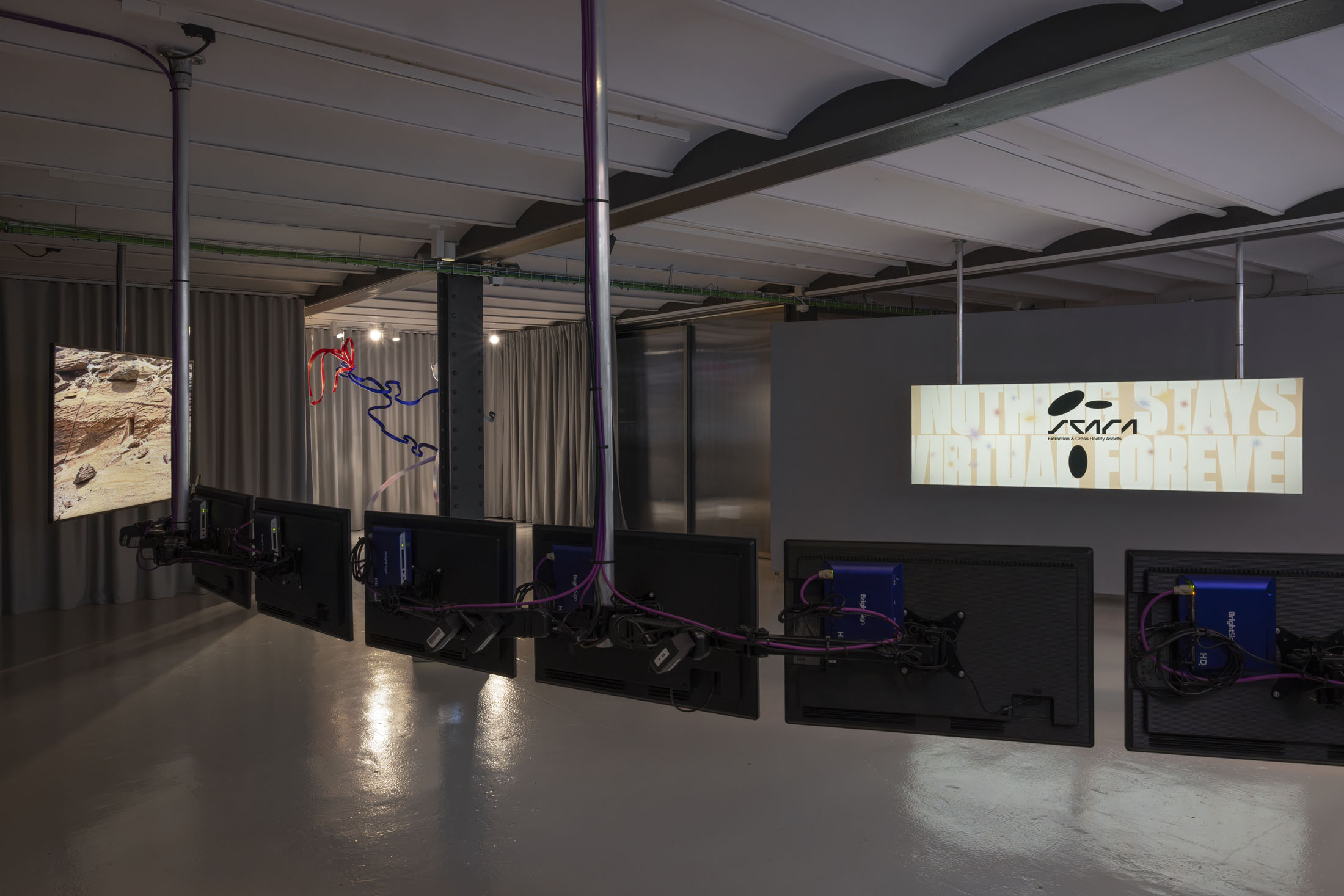
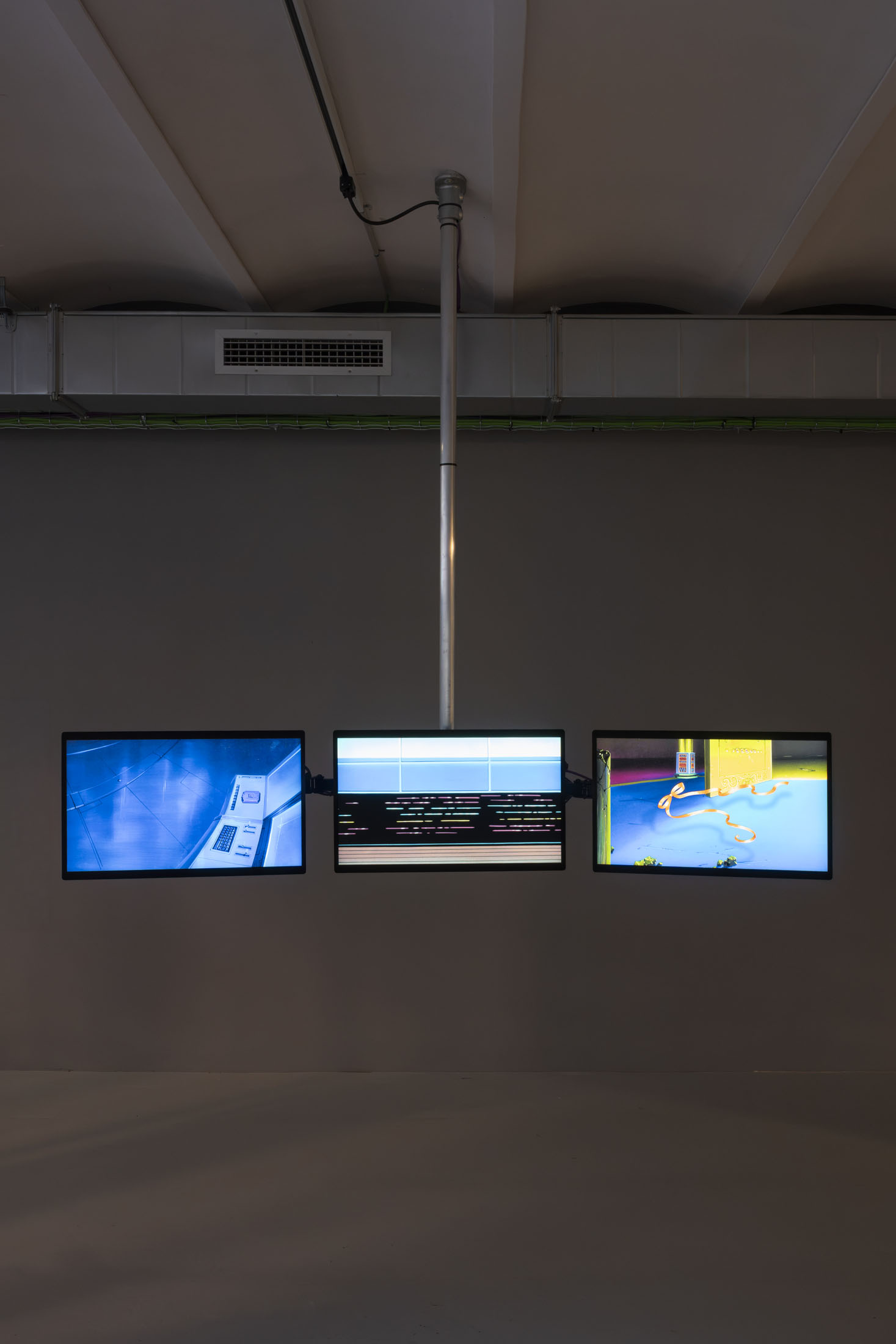
Three coleopteran creatures, positioned in front of nine screens, speculate on the images projected on them. The first definition of the verb “speculate” in María Moliner’s Diccionario de uso del español is: “to examine something carefully in order to study it”. The second, which Moliner identifies as “and more frequently used”, is: “To think or reflect on theoretical questions. To make conjectures about something”. In the third, valuation enters the picture: “To trade or negotiate in something”. It already hints at the use of “a certain thing for profit or advantage”. Finally, speculation leaves the realm of reflection and is defined as “to take advantage, to traffic”. What catches my attention is the sentence preceding this definition, the example given for this meaning: “He speculates with his knowledge of the intimacies of the house”.
From examination, from the world of ideas, in a single definition María Moliner leads us to the “intimacies of the house”. And, moreover, to taking advantage of something, which resonates with the stock-market connotation of the term front running. Someone speculates, taking advantage of their position. They inhabit a speculative hesitation. What if there were speculation without return? What if…? I think of my reading this week, alongside the writing of this text, of Marek Poliks and Roberto Alonso Trillo’s Exocapitalismo. What if… in an infinite loop of “buy, hold, sell, buy”… capitalism were caught in such a deranged fold and unfolding that it became endless speculation, an infinite speculative loop? “It is no longer only the consumer who ‘owns nothing’: annualised income represents a dispossession of the real income of the business in favour of speculative income.”
Matters for thinking other matters. Extraction and metamorphosis
In front of nine screens, the creatures strive to extract everything from which value can be generated. An extractive loop with no return. The history of capitalism is the history of the enslavement of bodies, the exhaustion of materials, the destruction of life. In this sense, in La zona extractiva. Ecologías sociales y perspectivas descoloniales (Ediciones Metales Pesados, 2021), Macarena Gómez-Barris defines this “extractive zone” as the “colonial paradigm, worldview and technologies that single out regions of ‘high biodiversity’ in order to reduce life to resources for capitalist conversion”.
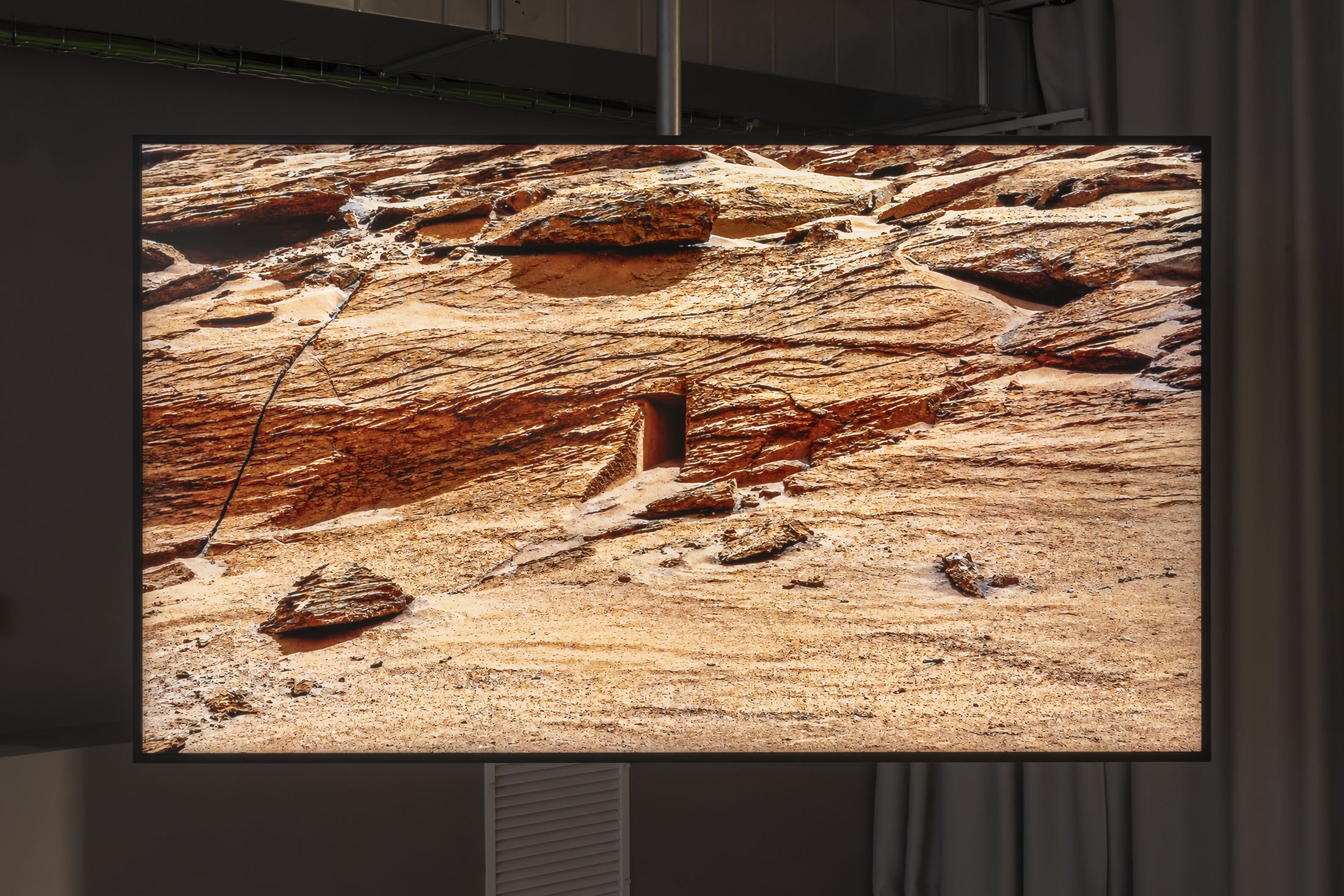
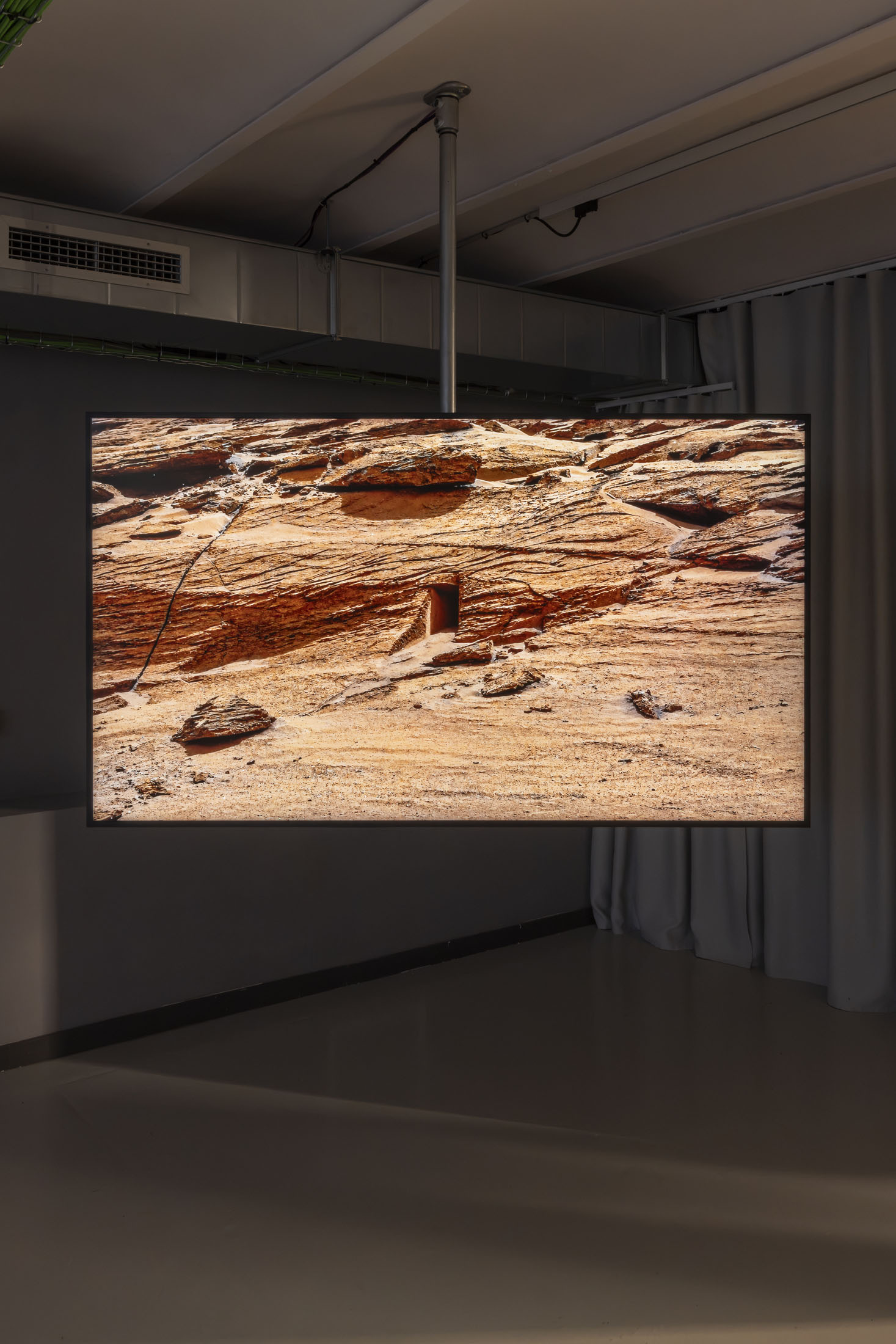
Beyond Earth, other potential extractive zones have begun to be explored, such as the planet Mars, which is projected onto a tenth screen in the exhibition.
But speculation also refers to conjecture and, following Donna Haraway’s quotation that threads this text together, to telling stories, thinking thoughts, knotting knots. And it comes together with feminism and fabulation, with that space of hesitation in which the possibility emerges of shaking up reality, or illuminating within it a suggestive creative twist that generates worlds. “SF”, Haraway writes, “is a sign for science fiction, speculative feminism, science fantasy, speculative fabulation, science fact, and also string figures. Playing string figures is about giving and receiving patterns; dropping threads, failing, and sometimes finding something that works, something consequential and perhaps even beautiful, something that was not there before; it is about passing on connections that matter, about telling stories with hands upon hands, fingers upon fingers, anchor points upon anchor points; about crafting conditions for finite flourishing, on Earth. […] Scholarship and politics are like this too; passing something along in twists and skeins that require passion and action, stopping and moving, anchoring and setting sail.”
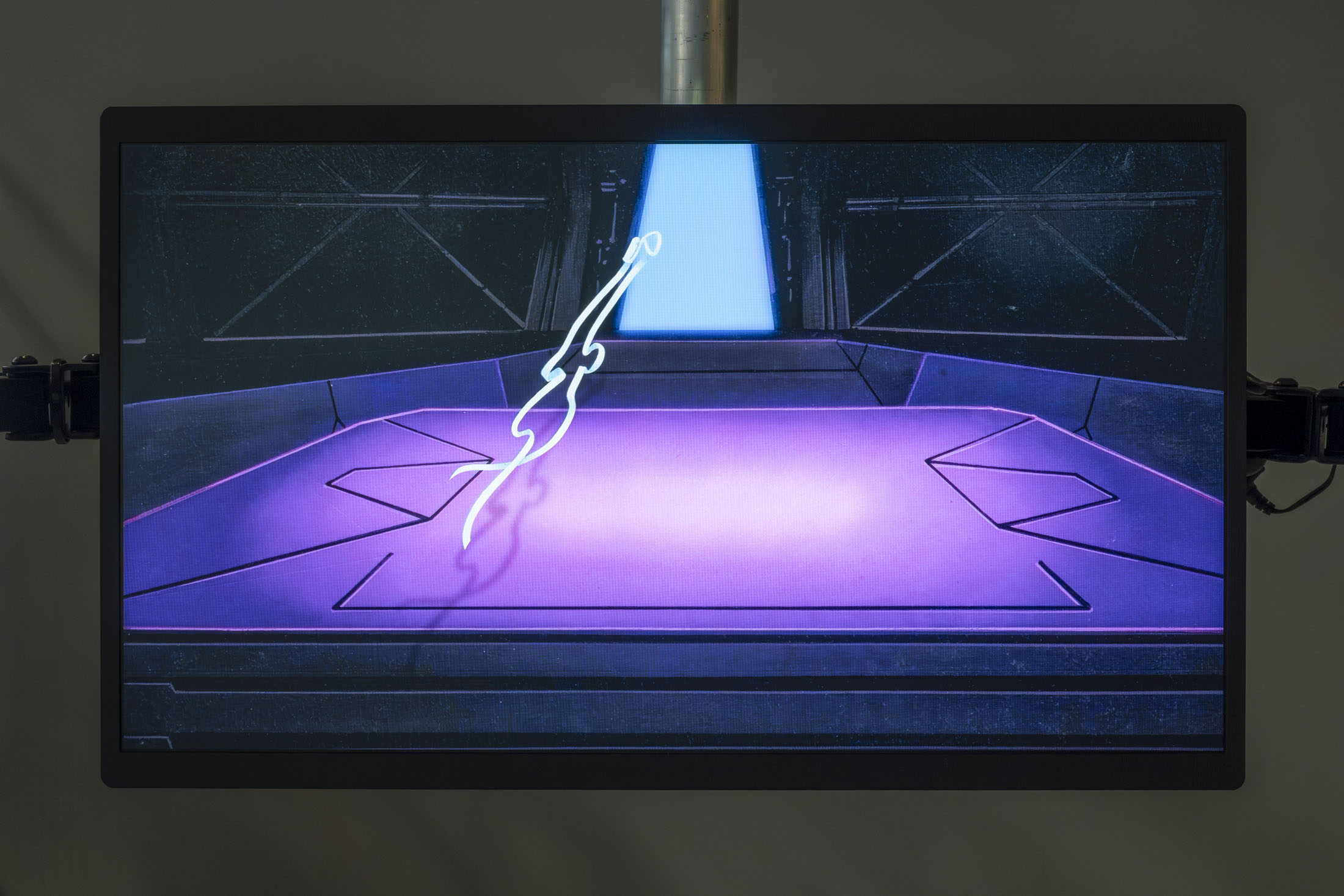
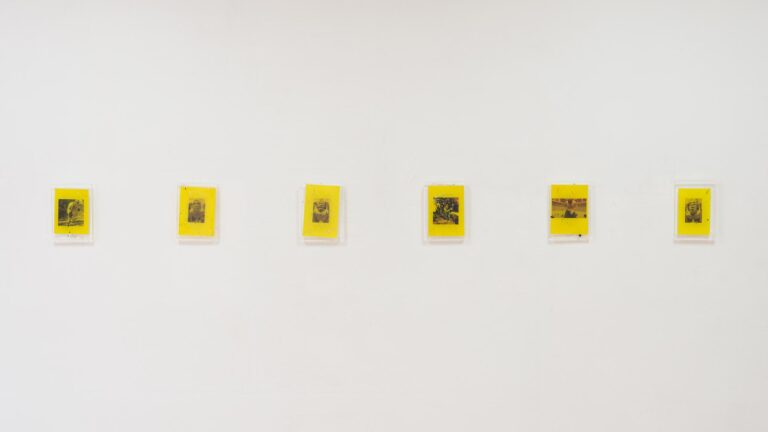
In various artistic proposals by Momu & No Es, we find this game of string figures with images, a speculative fabulation made from pre-existing audiovisual fragments, or everyday objects whose material metamorphosis addresses our present. From the video installation Global Windshield the Musical (2018) and its critical re-signification of the images we consume on the internet, proposing a hypnotic immersion of the viewer in the visual and sonic flow, to F.A.T.A.L., a post-pandemic reflection in which different consumer objects address us through their sculptural and narrative transformation, exhibited at House of Chappaz in 2022. The animations in Front Running tell “stories with hands upon hands”, created through the reappropriation of “original background sheets (genga or Background Art), all hand-painted, from old Japanese anime, on which animation was created”, the artists explain to me, “superimposing cells (sheets of cellulose acetate, celluloid, transparent sheets)”. As a palimpsest, these images reveal the material and cultural history of Japanese animation.
Ties that tie ties. Conjuring
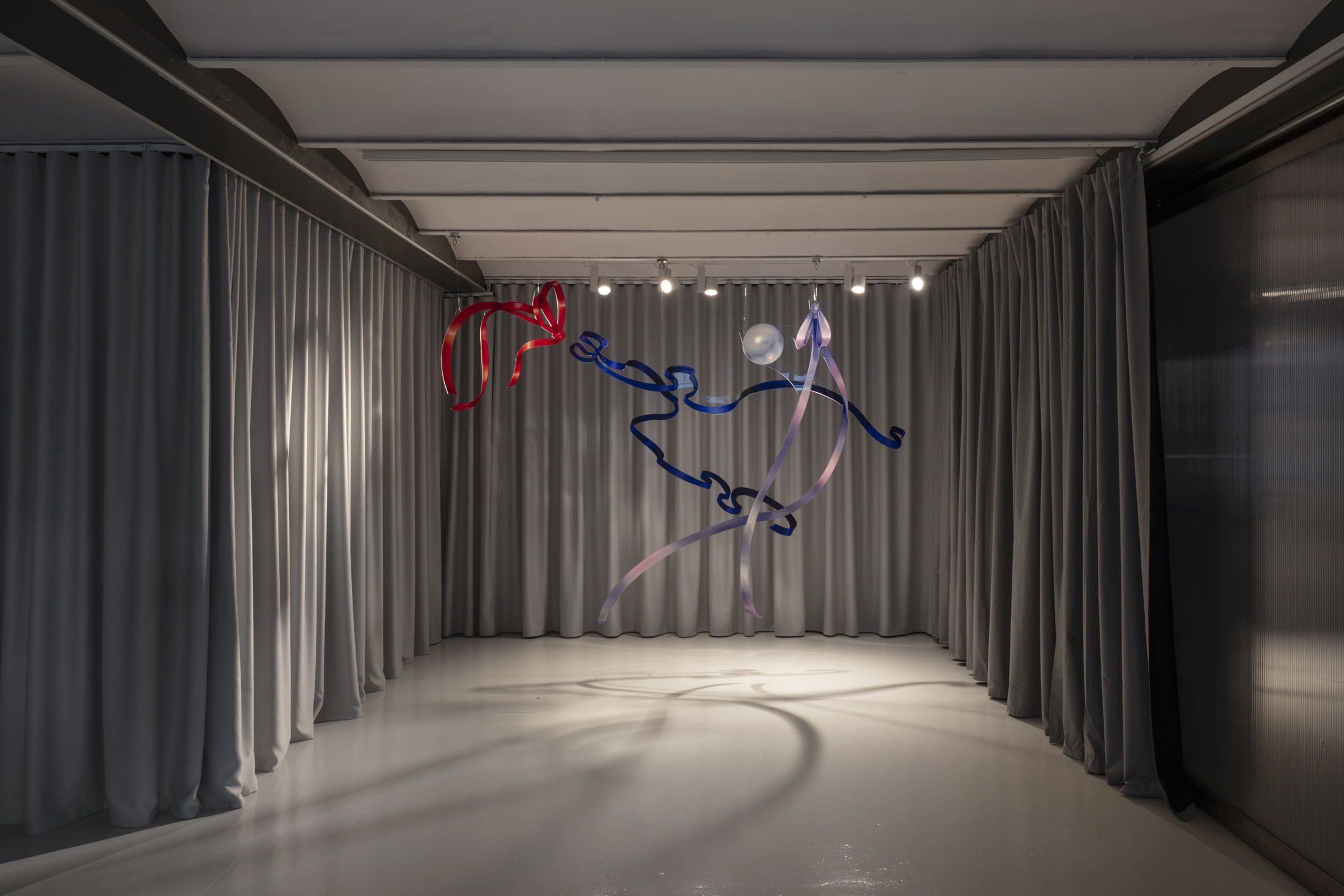
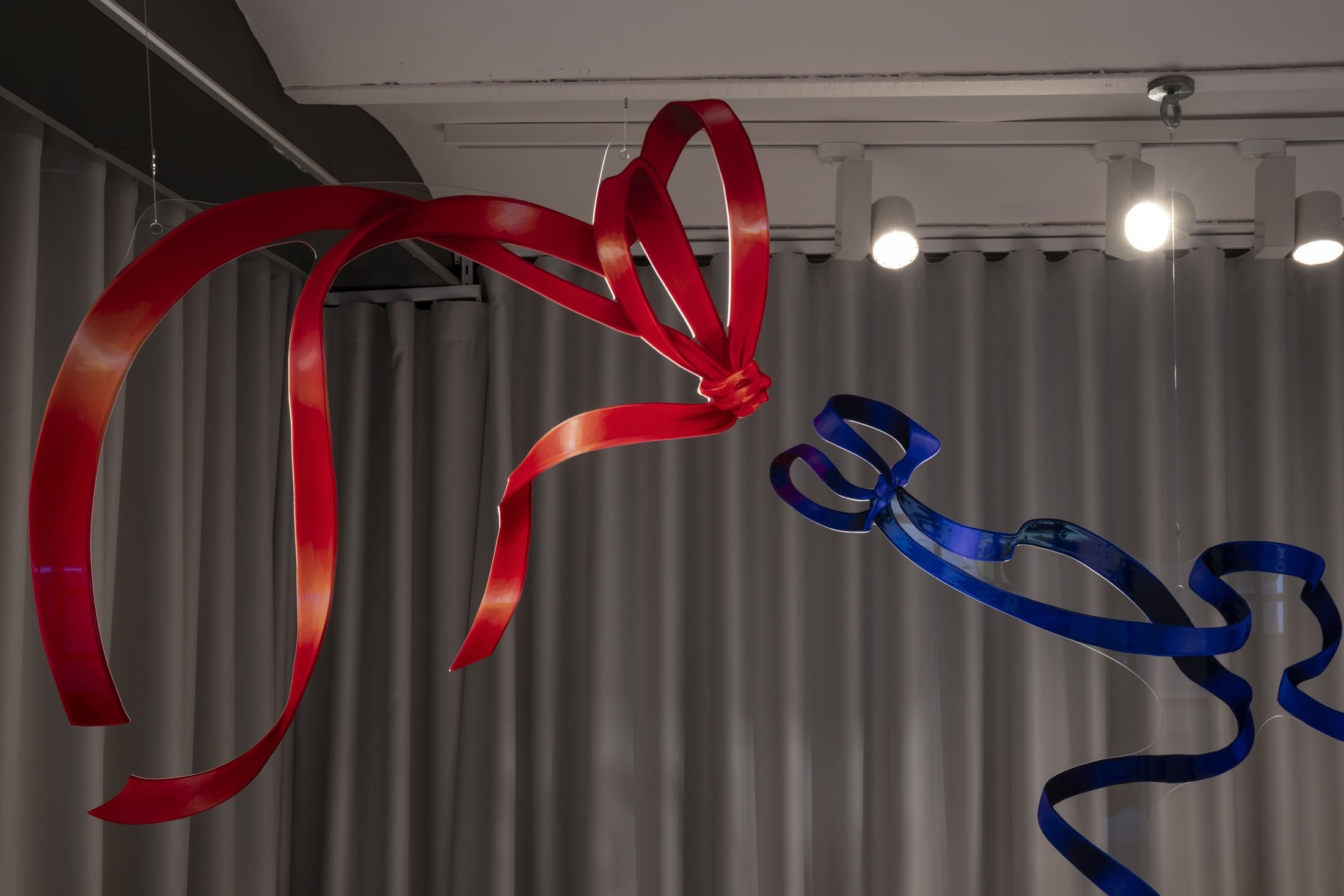
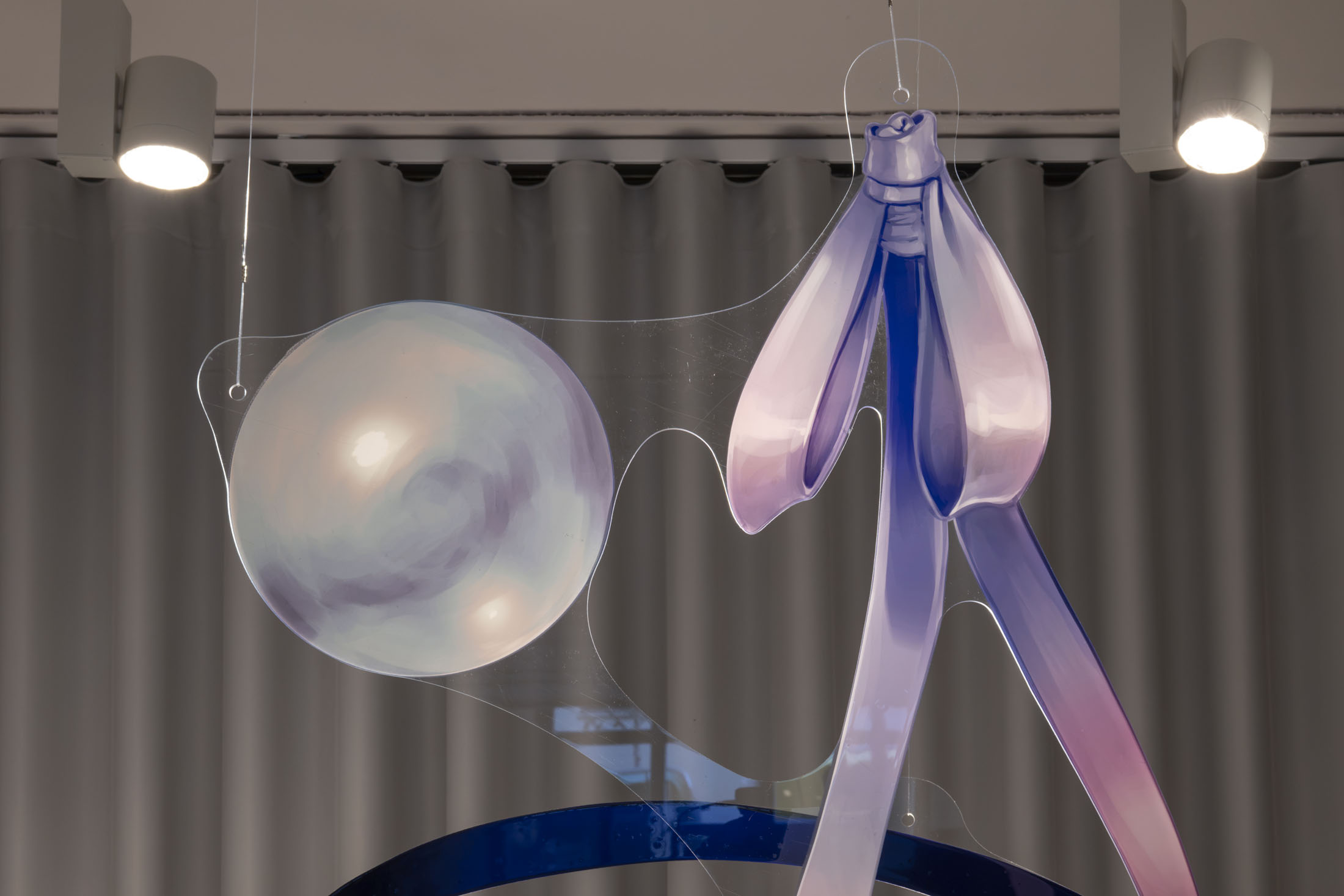
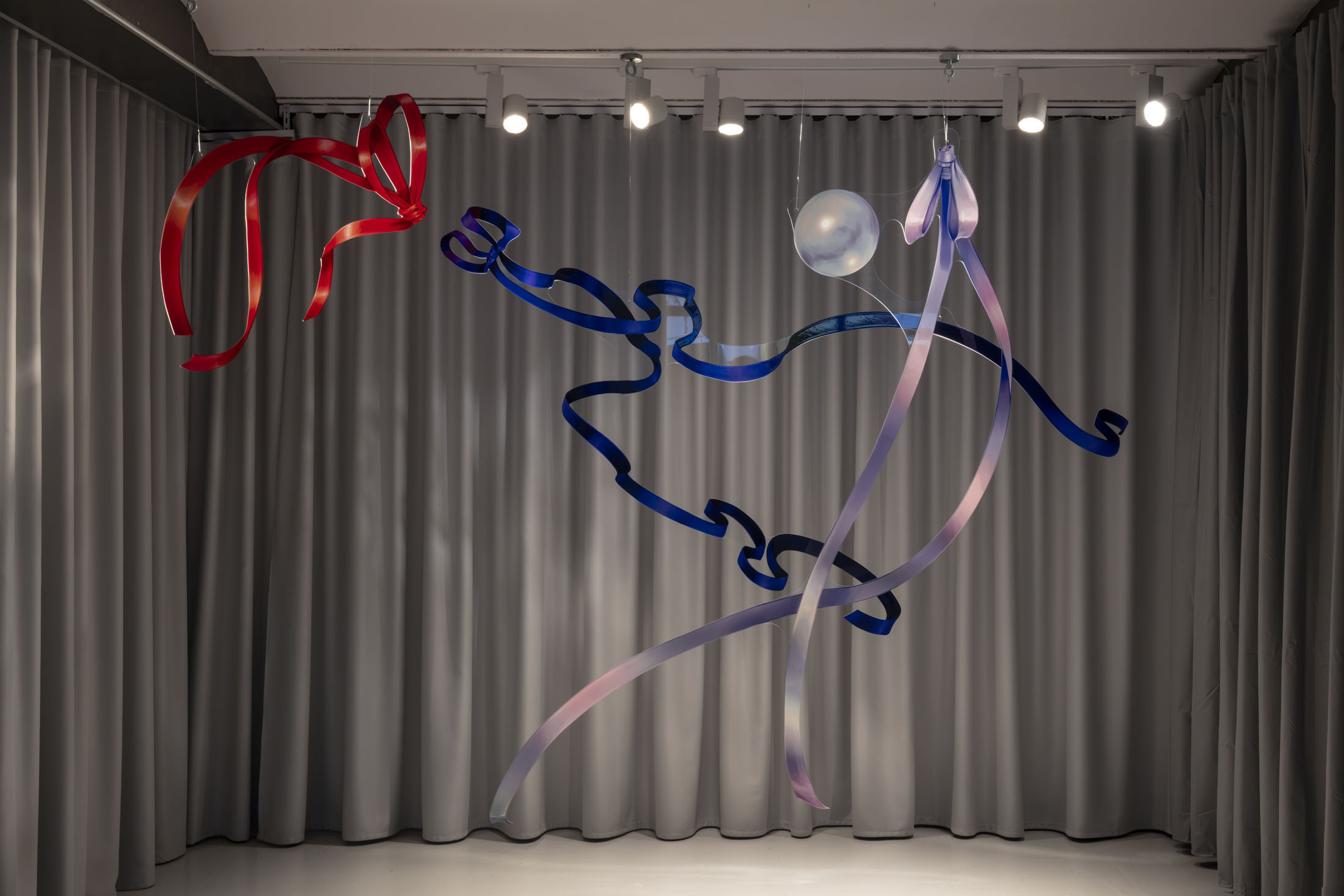
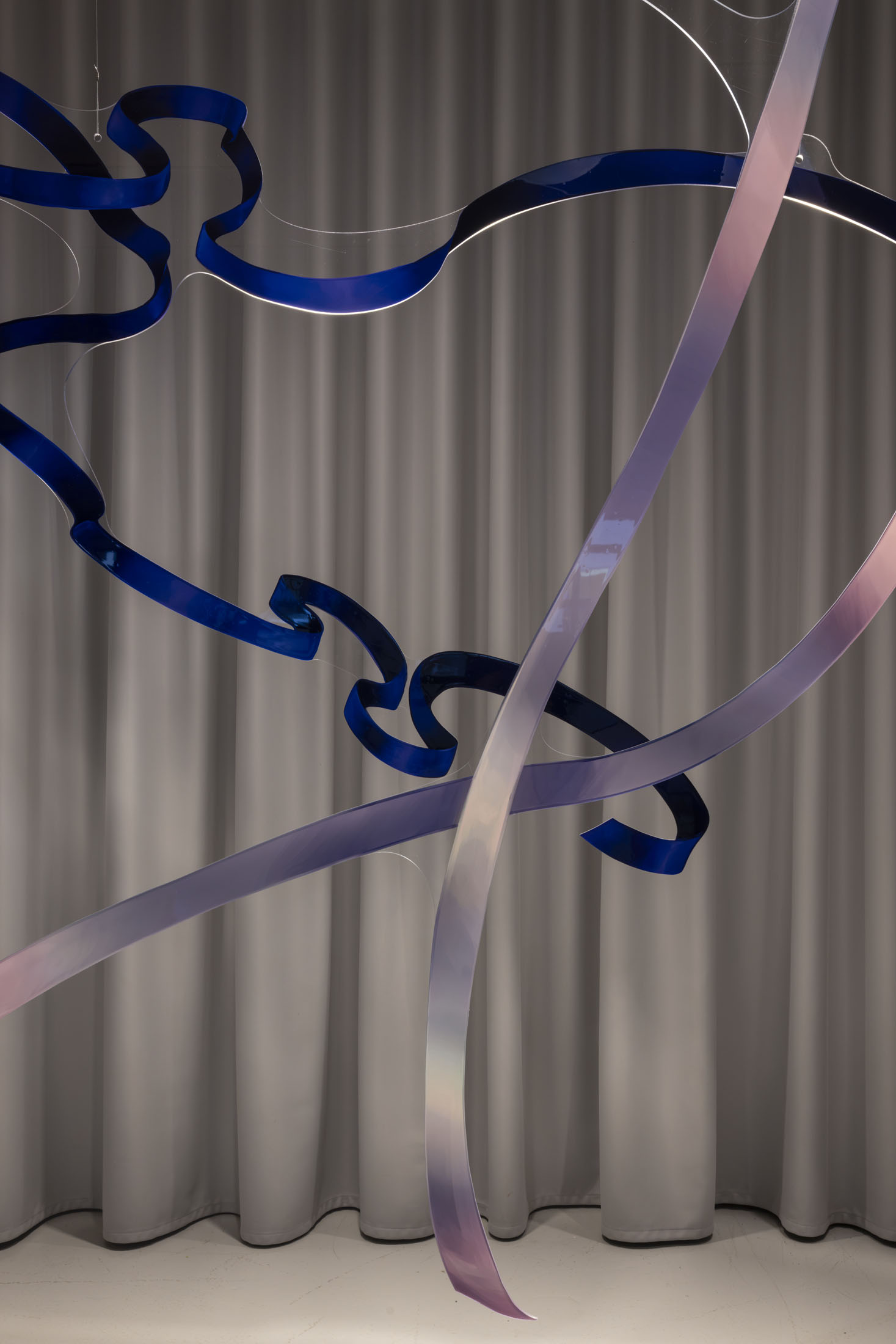
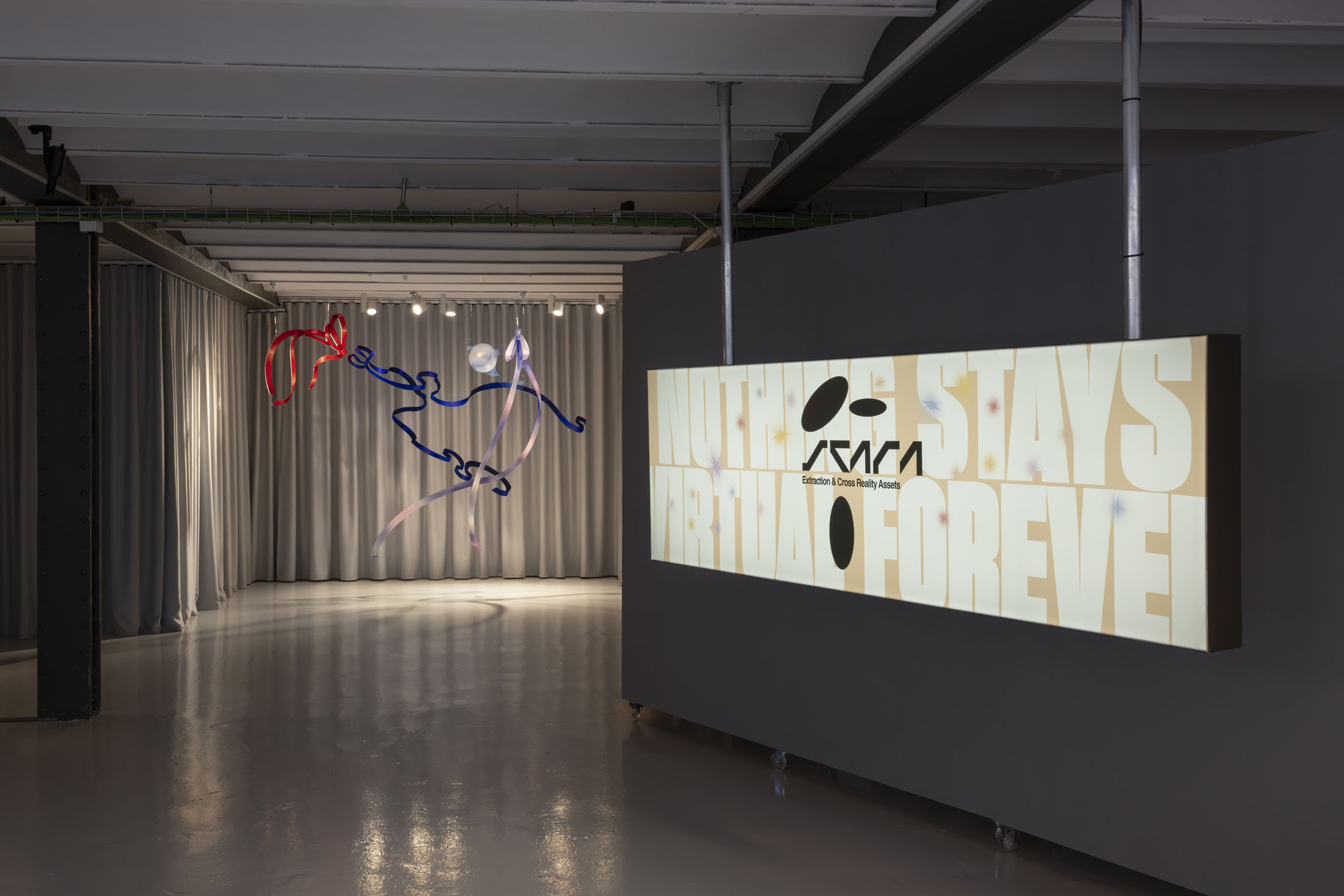
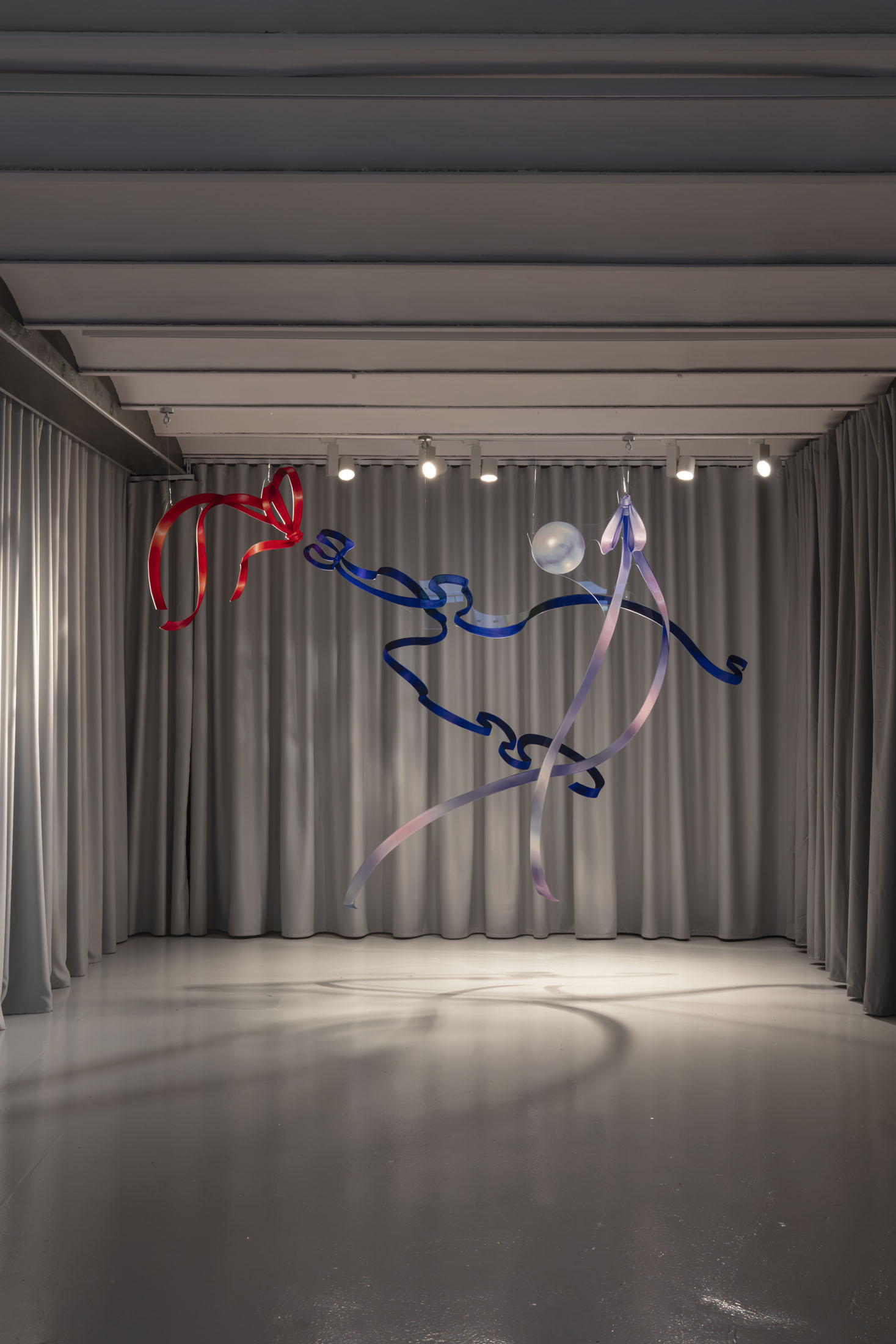
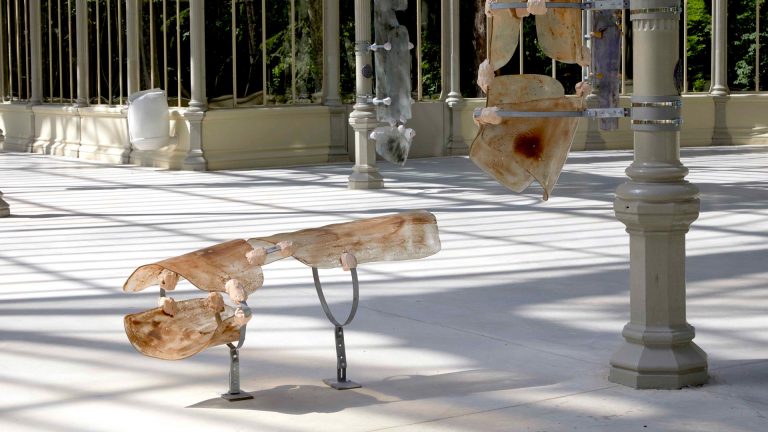
In the same space in which the extractive chain unfolds incessantly, a series of objects resulting from it are exhibited. And we feel the invocation of one of them, a rippling tie or ribbon that invites us to recover the rhythm of the body, its heartbeat.
In a delightful conversation we had one August afternoon, which became the seed of this text, the artists mention the Japanese manga collective CLAMP. I think of the ribbon, an identifying attribute of the protagonist of the Sakura Card Captor saga, and of the kinetic line she traces when she uses her magic. A ribbon whose movement may be due less to the air than to the vibration of Sakura’s spells. I return to the room, to this set of serpentine swirls, something unfolding in a different tempo and space from that of the three creatures, from that of the nine screens. Although its extraction may, or may not, have been intended to add it to the speculative objects, its vibration endures. It strikes me, undoubtedly, as choreographic. It invites us to dance and, following Sakura, to magic.
What if the entities subjected to SCARA were to transform their scrutinising gaze? What if those suggestive chromatic spaces flickering across the nine screens were explored through the pleasure of their forms and textures? What if, in chromatic hypnosis, we were to abandon our human vantage points and surrender to the spell of undulation? Sakura and her dancing line evolve in their relationship with nature and ally themselves with the four elements, expressing gratitude and asking permission. Nature becomes her companion, the source of her magic. Sakura makes kin.
Here the question opens up again. What if the entities subjected to SCARA were to transform their scrutinising gaze? Or perhaps it is we, the viewers, who should question these same creatures, dissected and exhibited in an art gallery, inviting us to think about our own relationship with the nature that we are, with extractivism, as we visit the installation?
En estado de profunda admiración is the evocative title of a lecture by Ursula K. Le Guin, which joins the invitation to magic offered by Momu & No Es’s swaying sculpture. “One way to stop seeing trees, hills and rivers only as ‘natural resources’”, Le Guin writes, “is to classify them as companion beings: kin. I suppose I am trying to subjectivise the universe, considering how far we have come in turning it into an object. Subjectivising does not necessarily mean co-opting, colonising, exploiting. Rather, it would mean going far beyond the mind and imagination. What tools do we have to make that great leap?” (La conexión infinita. Una conversación entre Donna Haraway y Ursula K. Le Guin, Continta Me Tienes, 2024).
—Cloe Masotta Lijtmaer
Educator, researcher, and curator