Is destruction or disruption the only way to break free from standardized structures? In 1912, psychoanalyst Sabina Spielrein proposed a radical idea: destruction is not the opposite of creation, but its very engine. In her essay Destruction as the Cause of Coming Into Being, she suggested that the drive toward disintegration is essential to transformation. Later adopted and reinterpreted by Freud as the “death drive,” this concept challenges the idea that growth is purely additive. Instead, it reveals how undoing—of identity, of form, of meaning—is often a necessary condition for becoming. Lee Edelman, in No Future: Queer Theory and the Death Drive, echoes this logic by arguing that the figure of the Child becomes an idolized surface for projecting societal fantasies of innocence, futurity, and continuity. Thus, for Edelman, the ‘death drive’ disrupts these fantasies, exposing the limits of reproductive time and identity coherence.
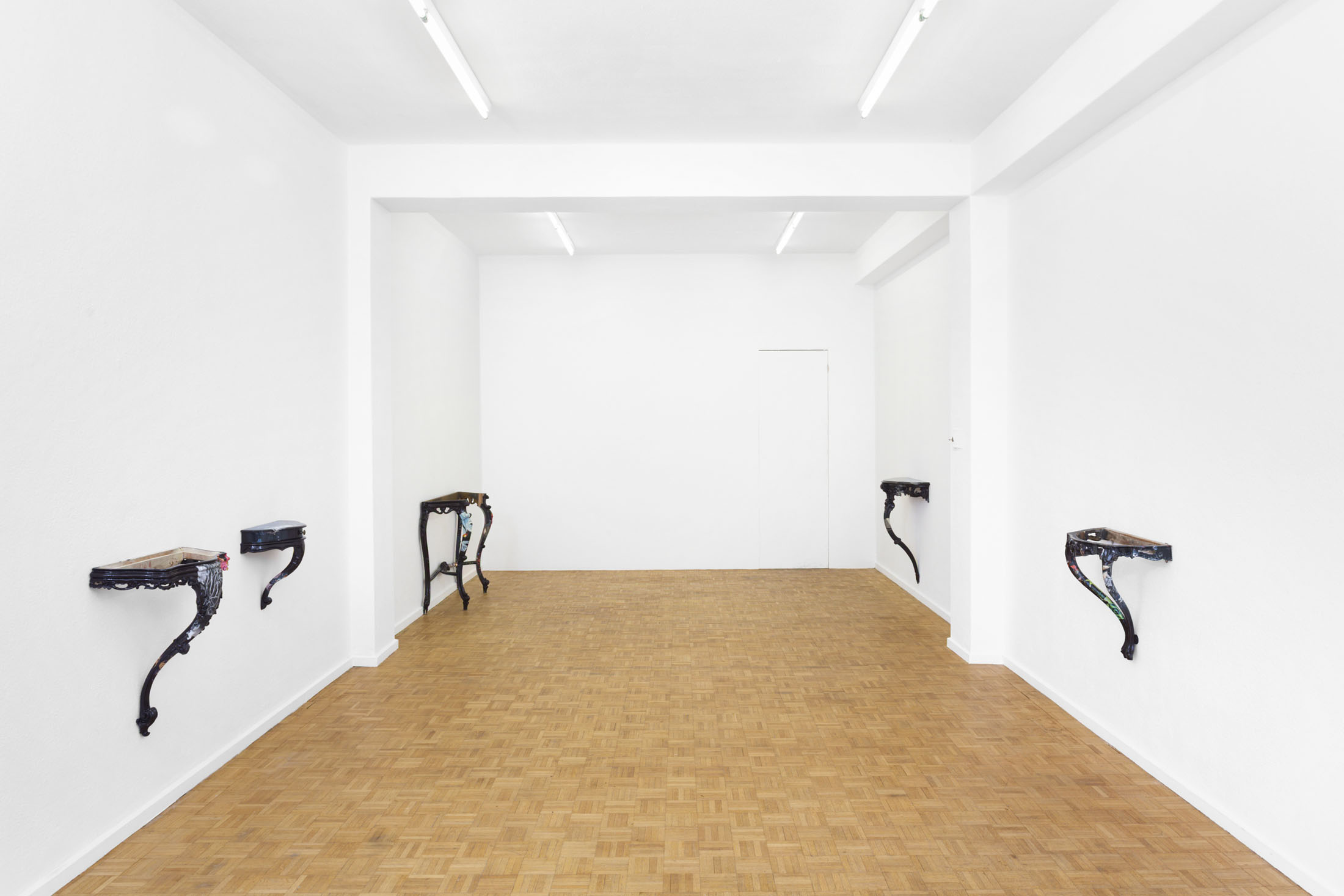
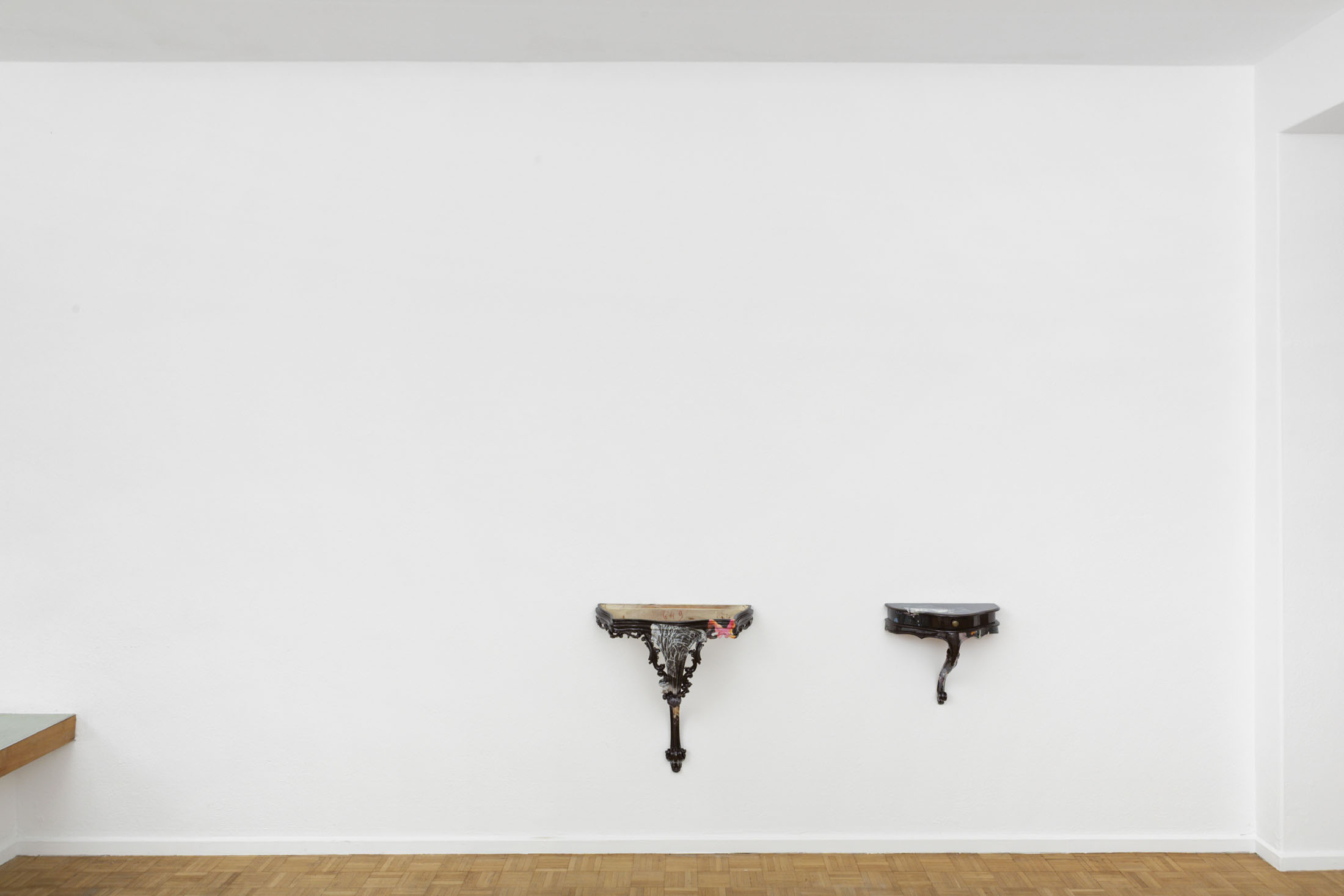
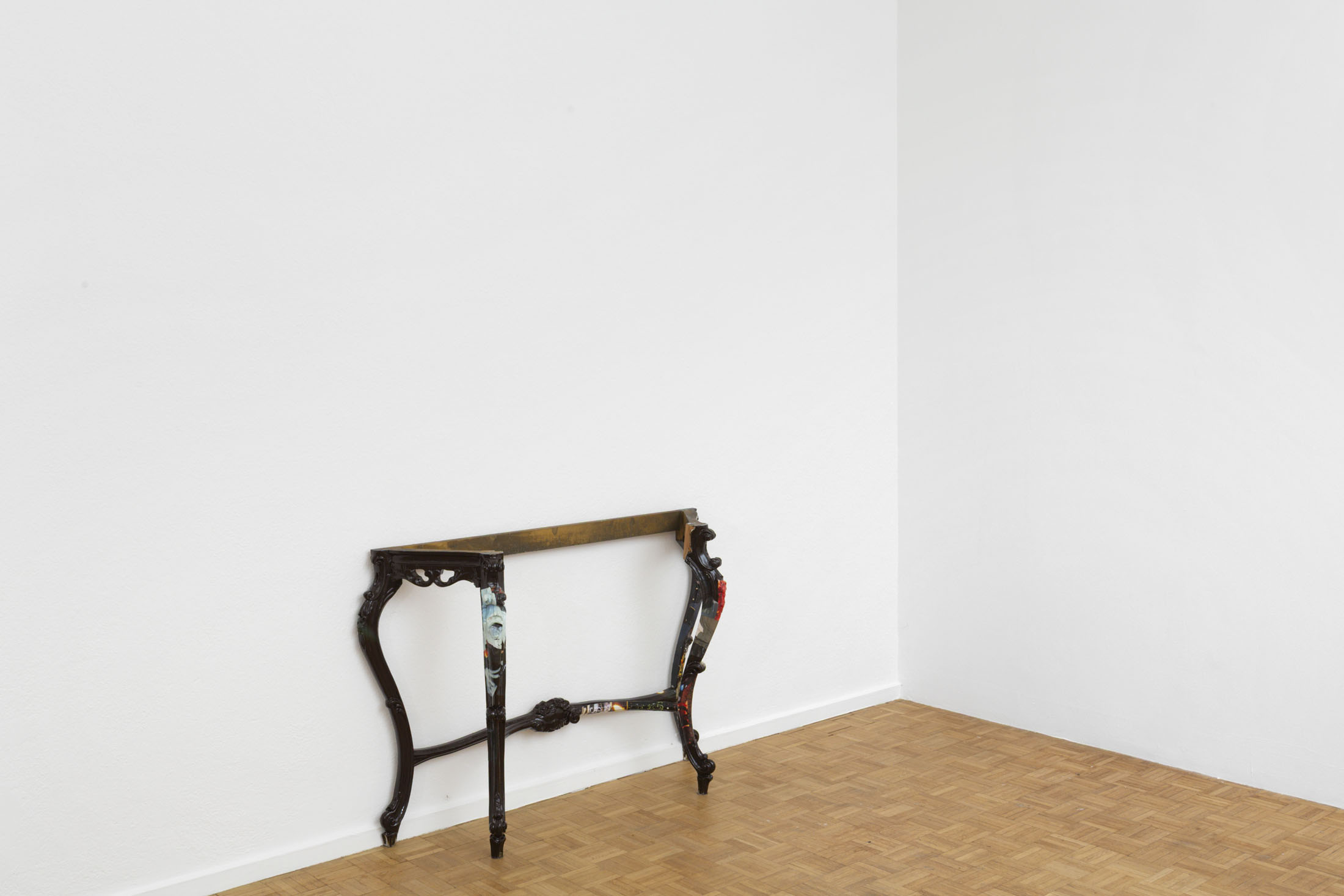
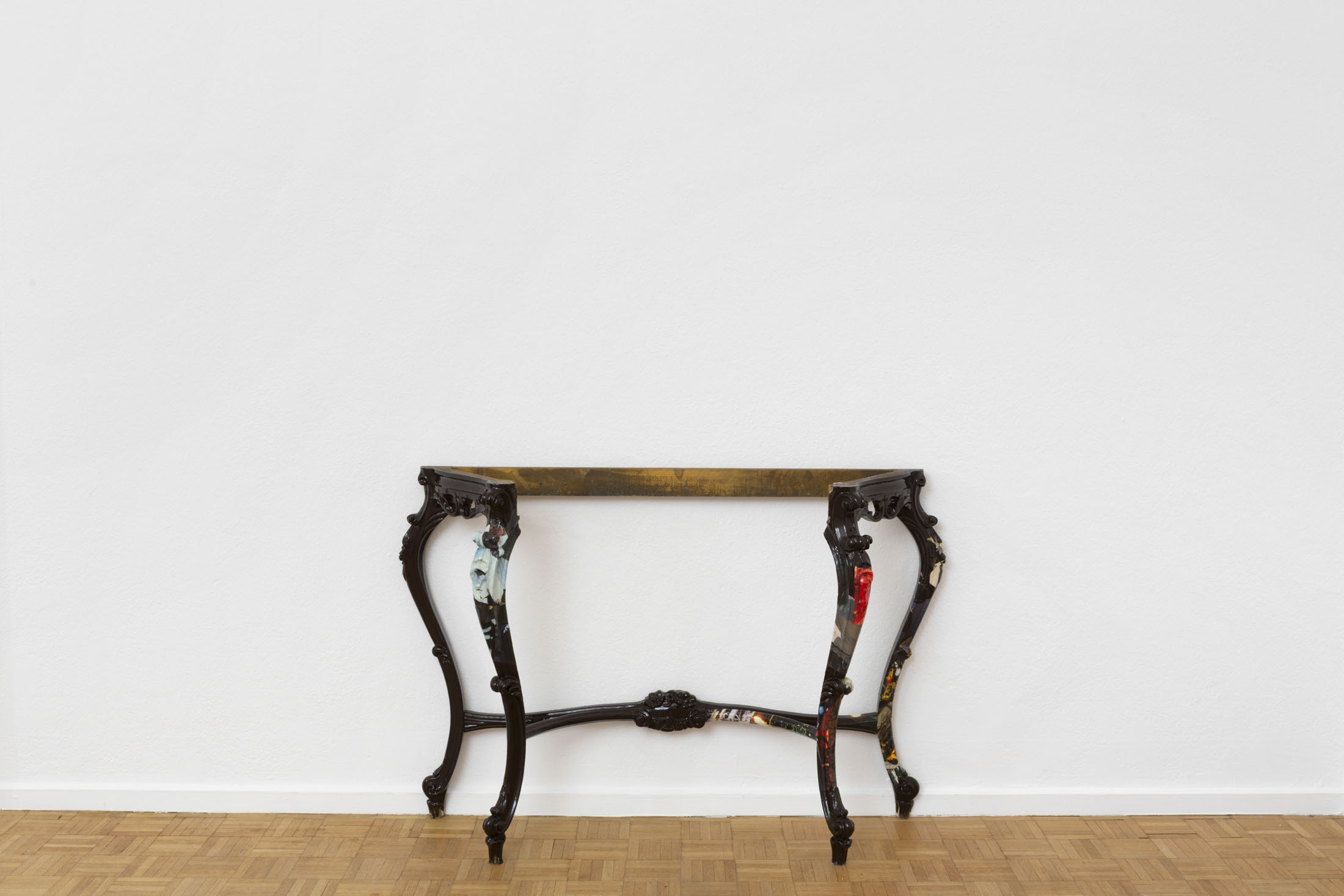
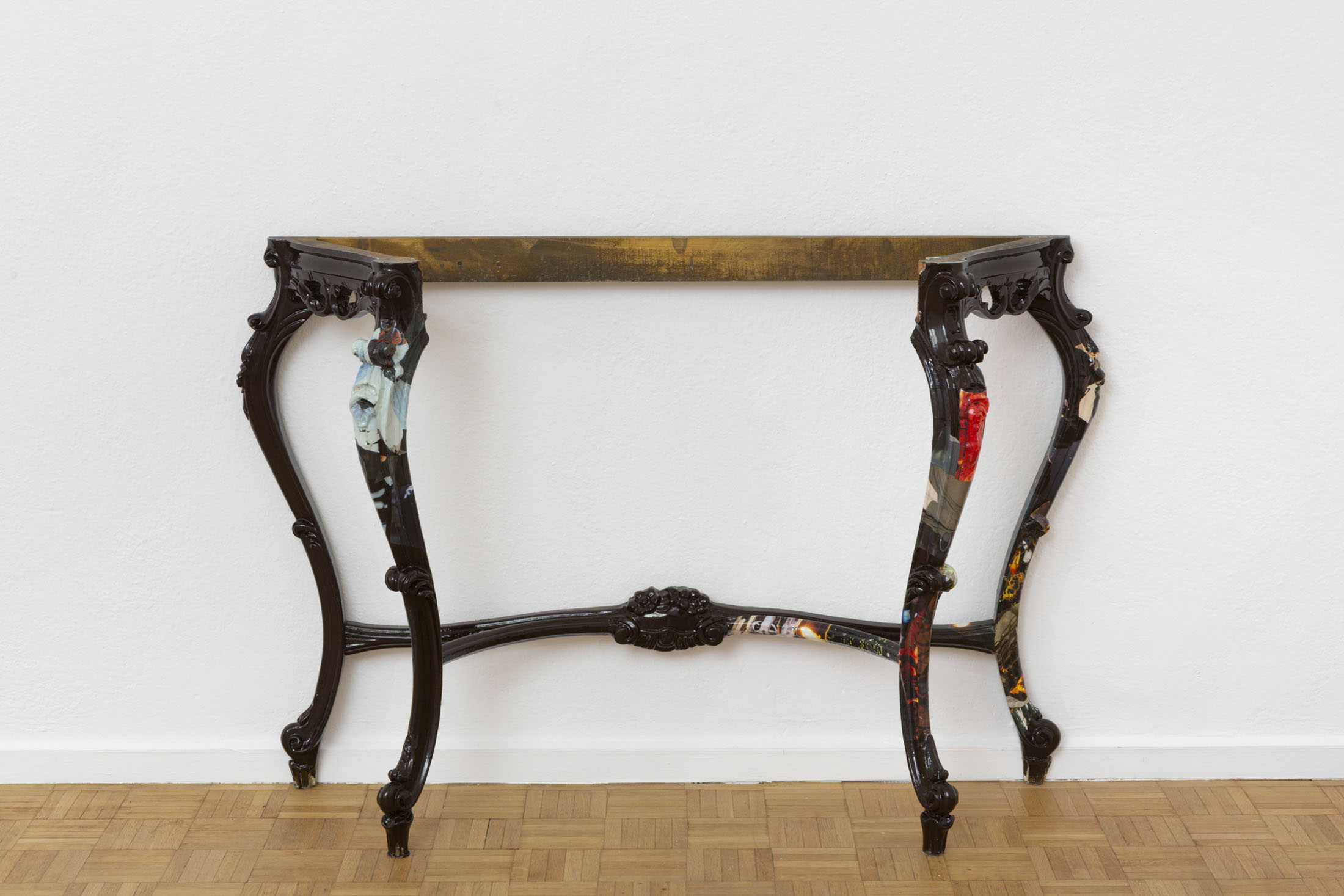
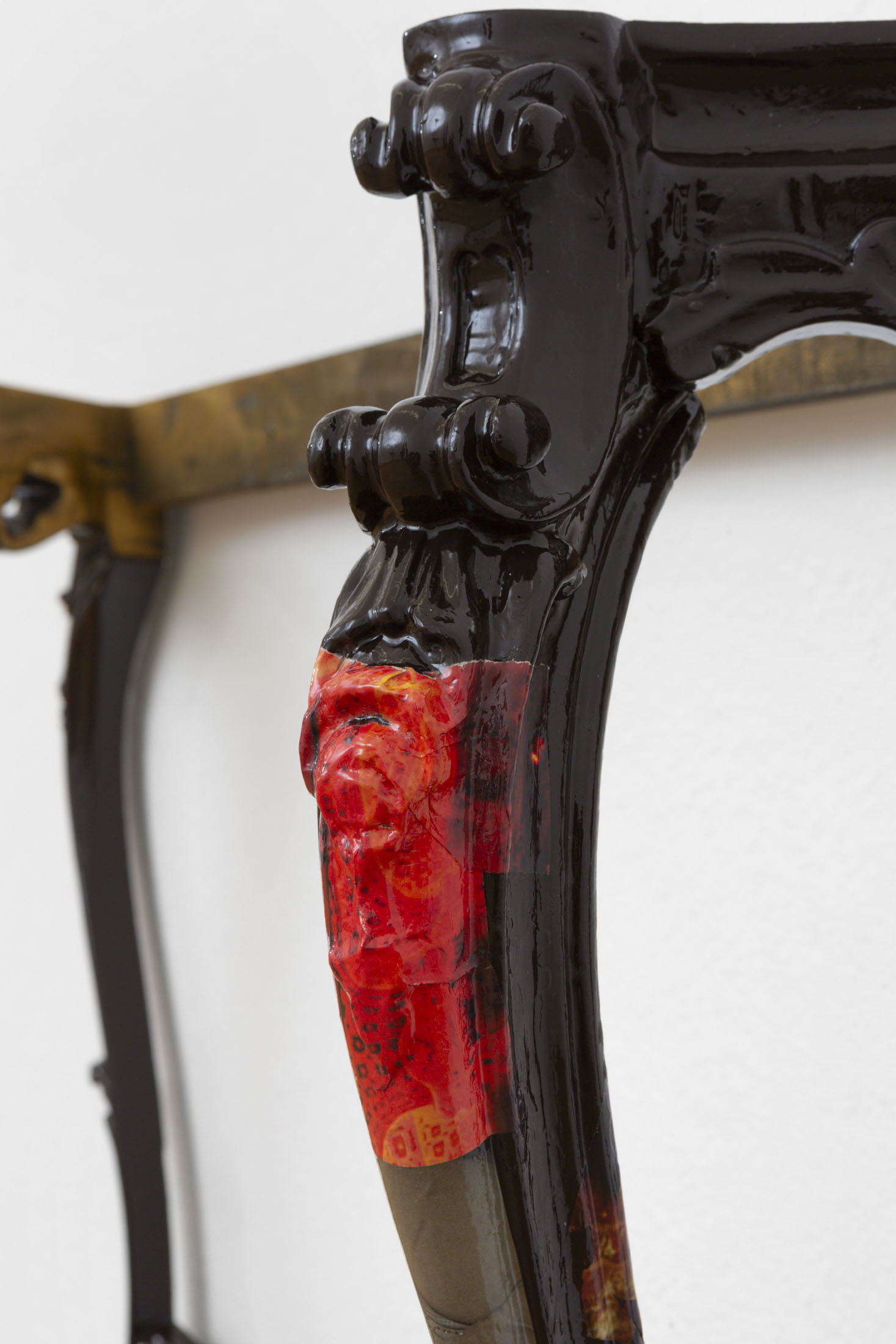
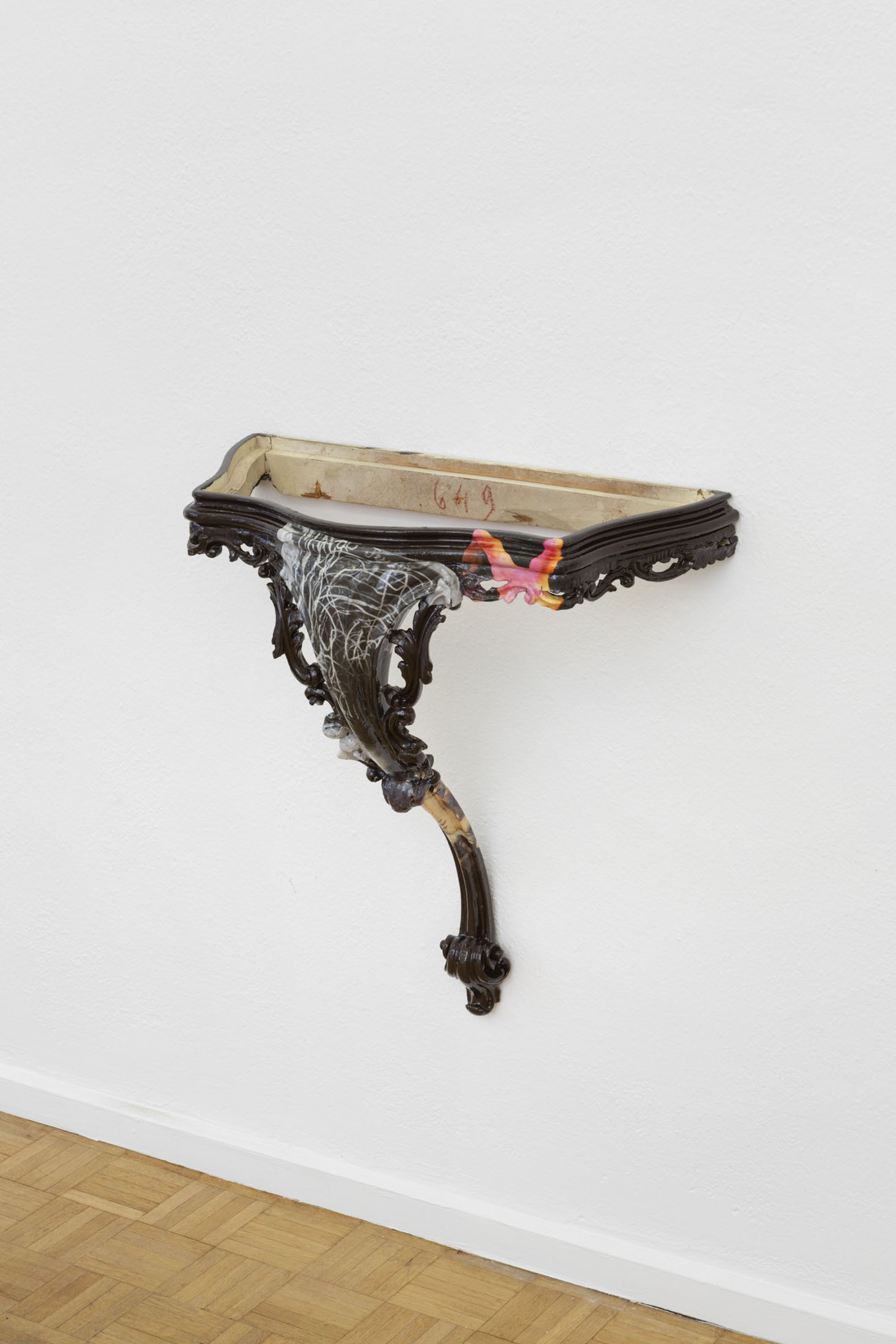
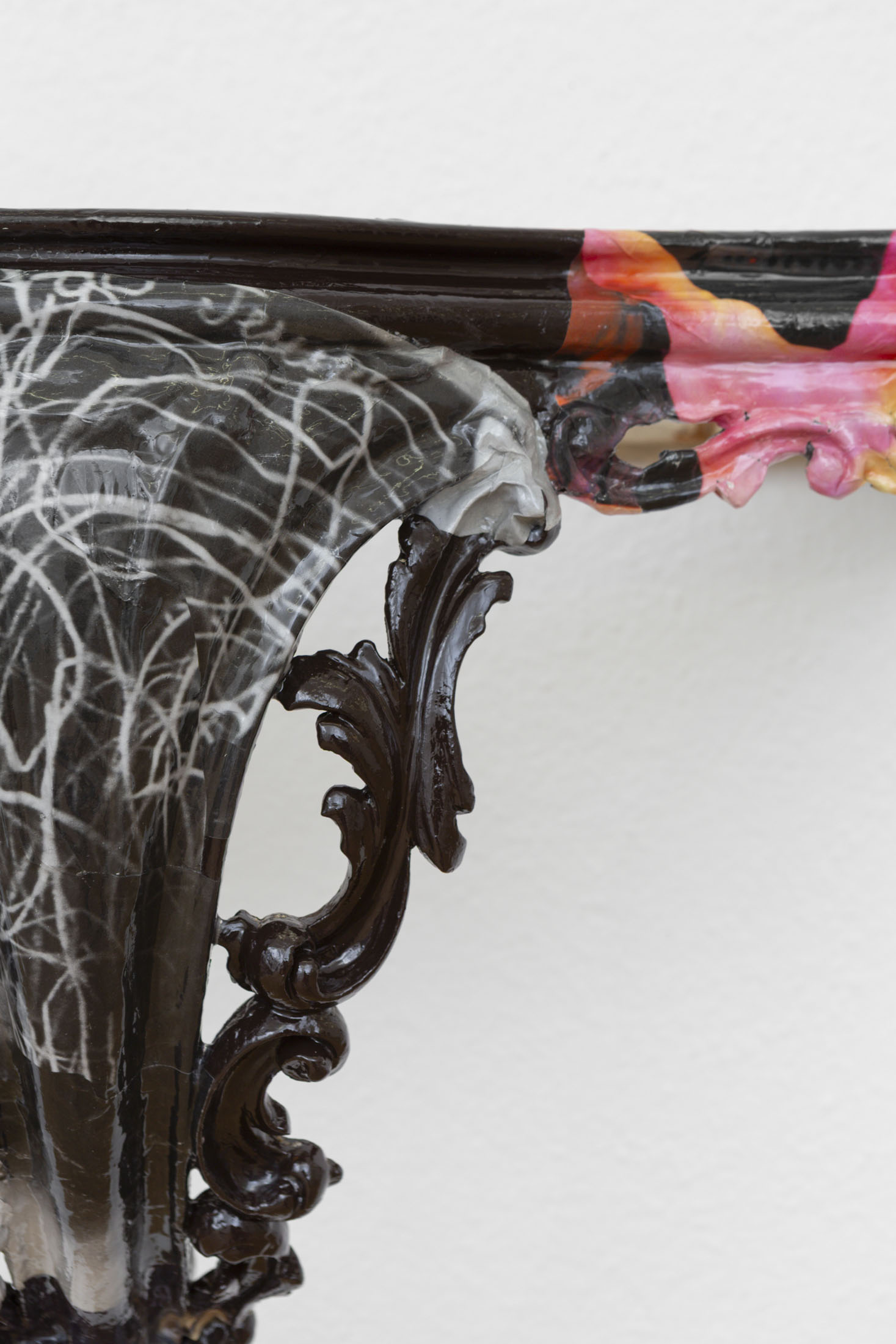
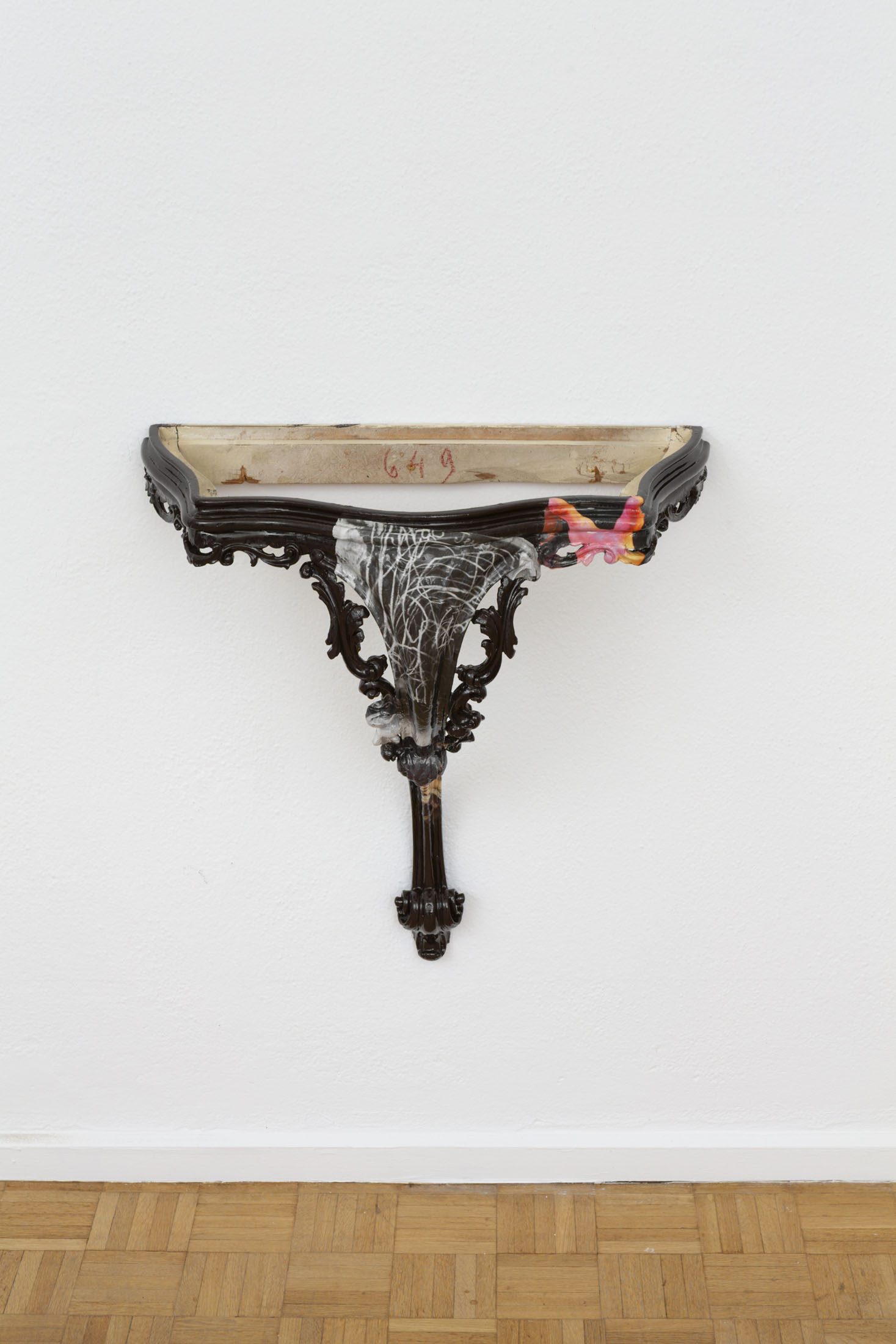
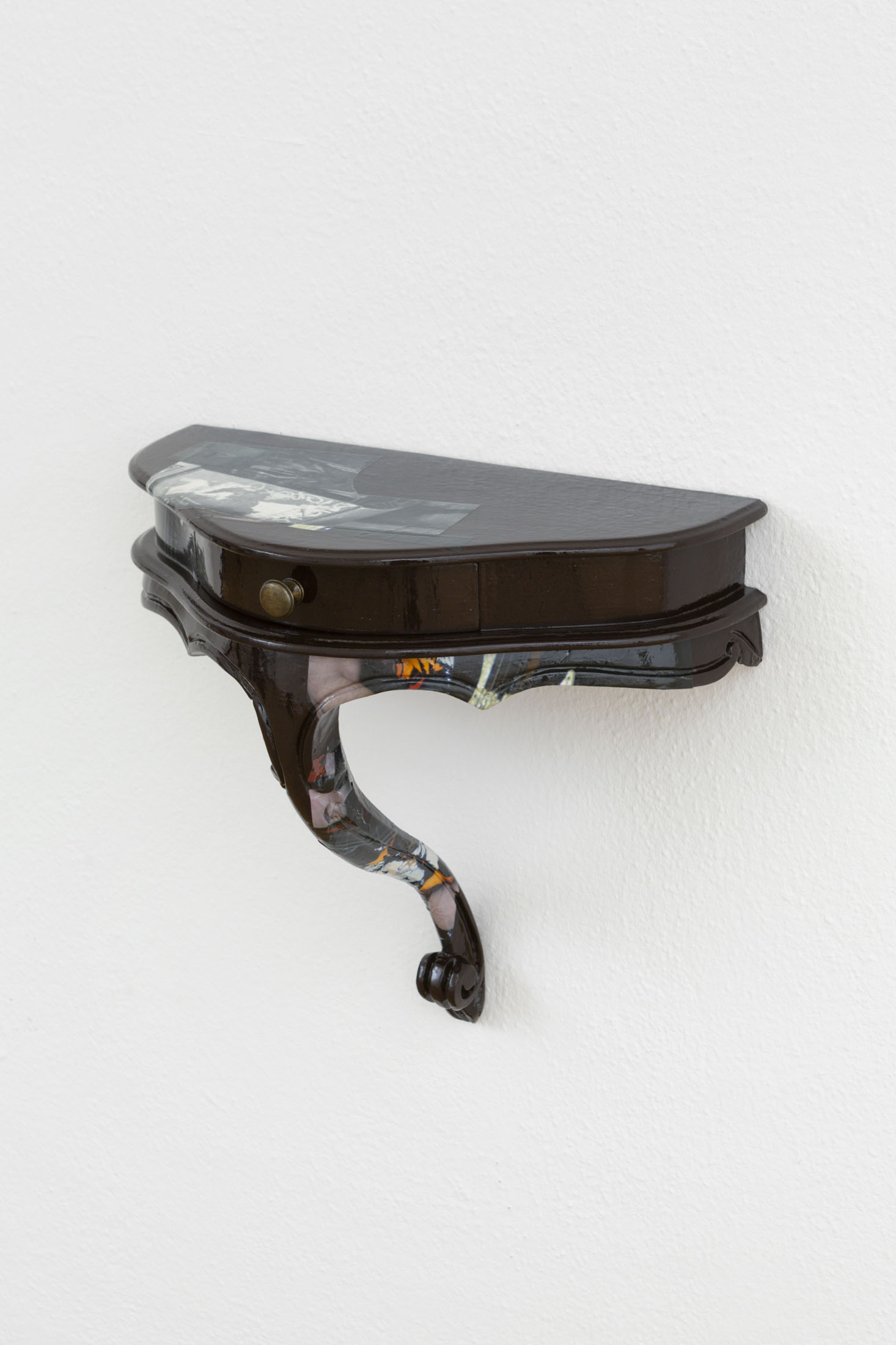
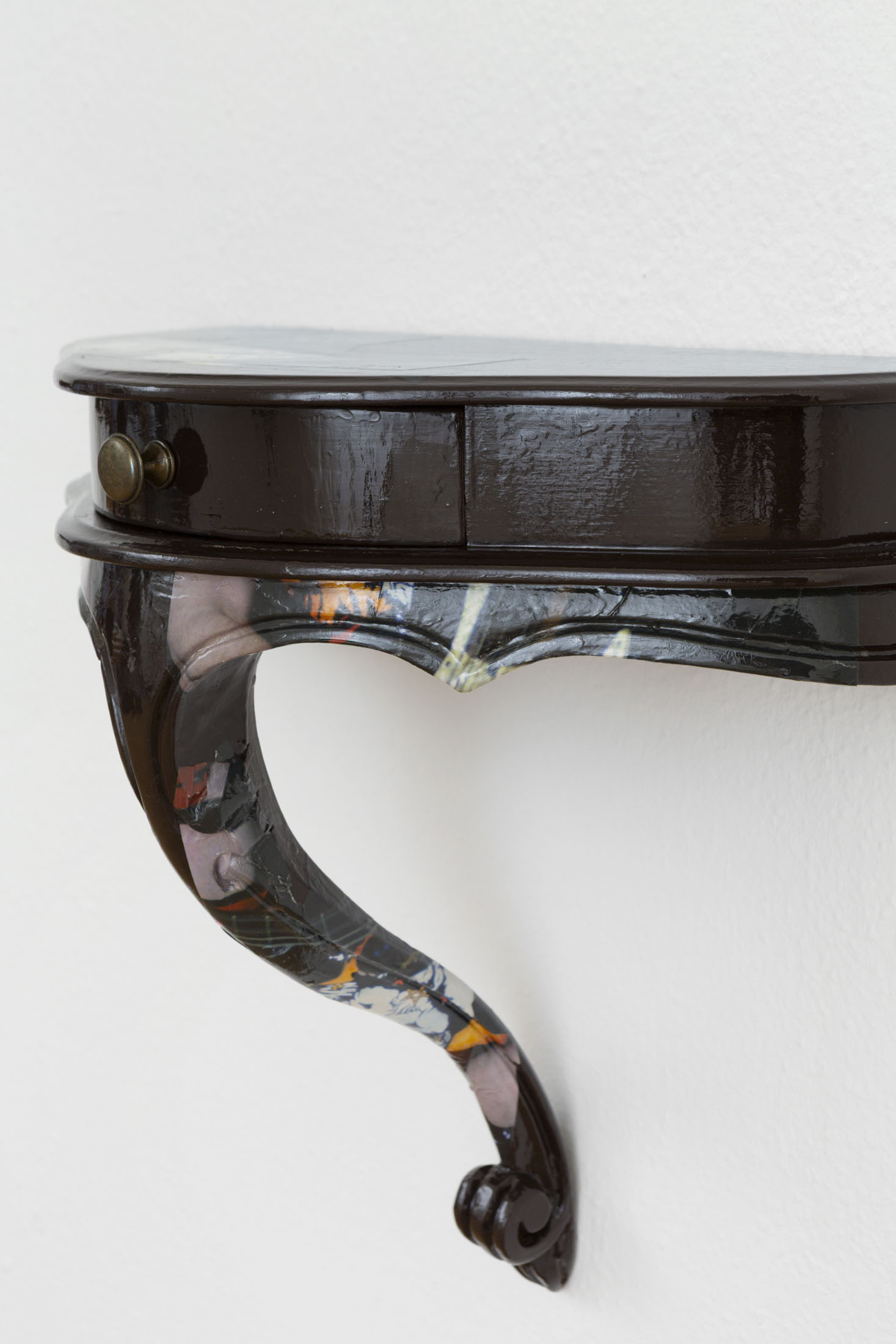
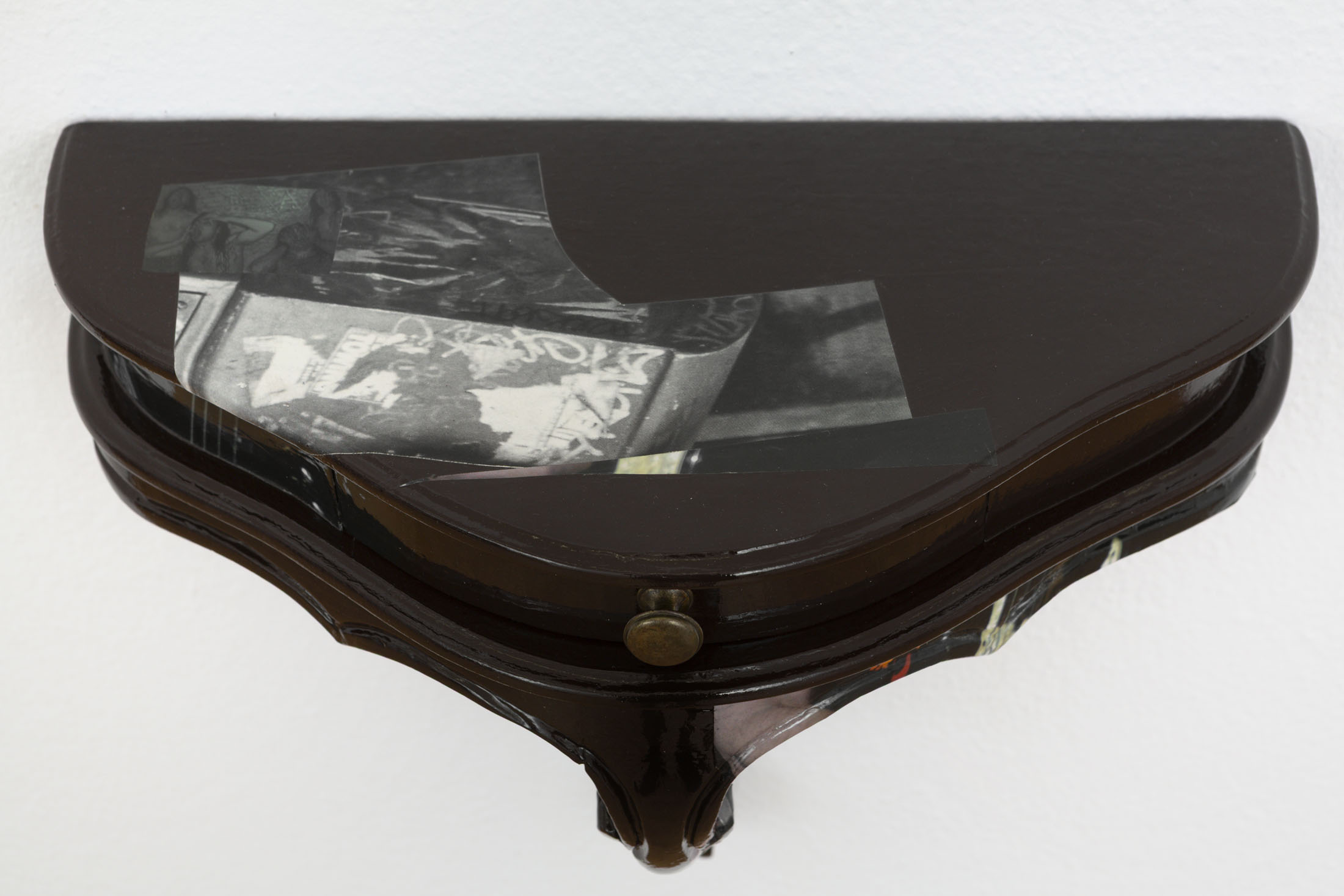
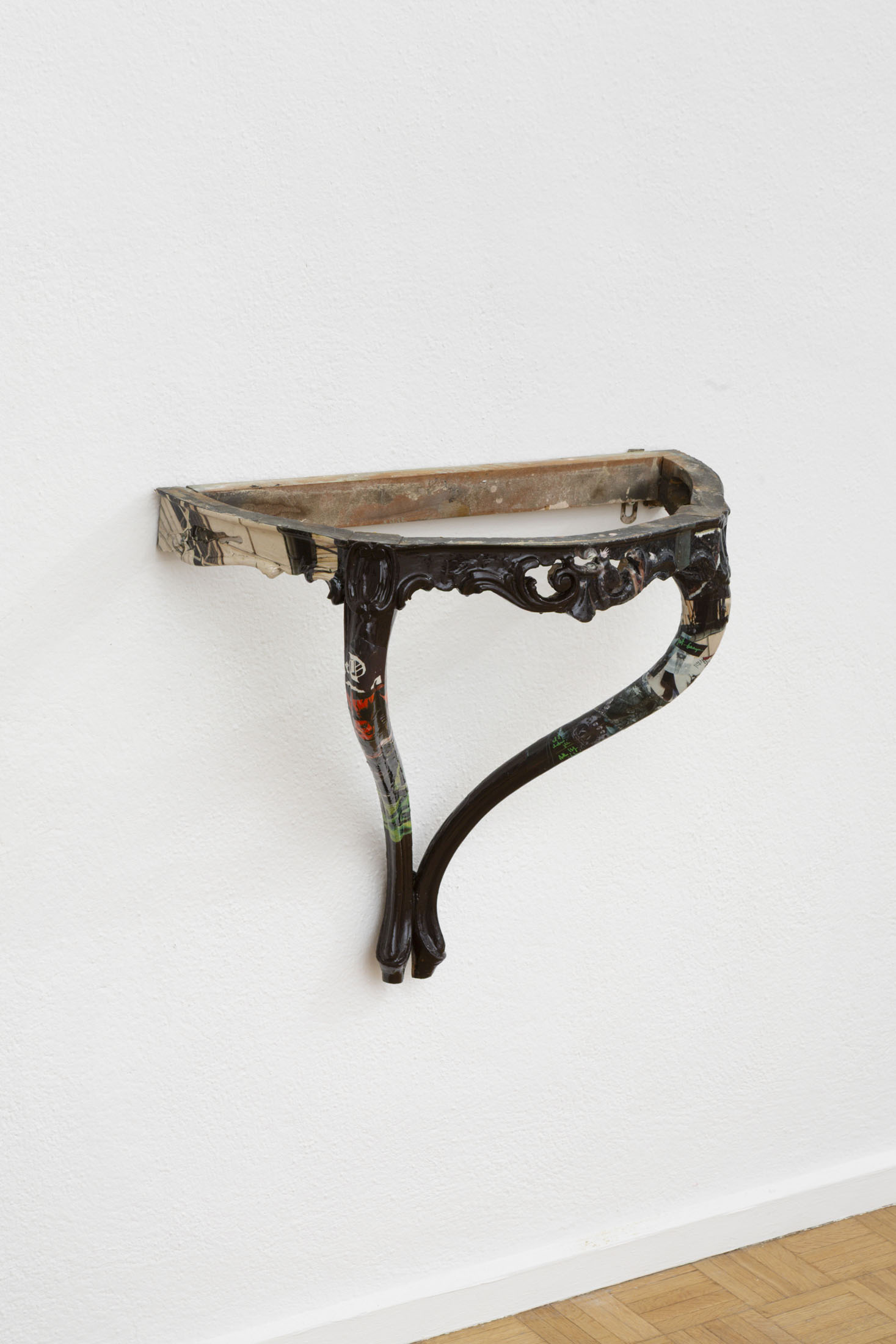
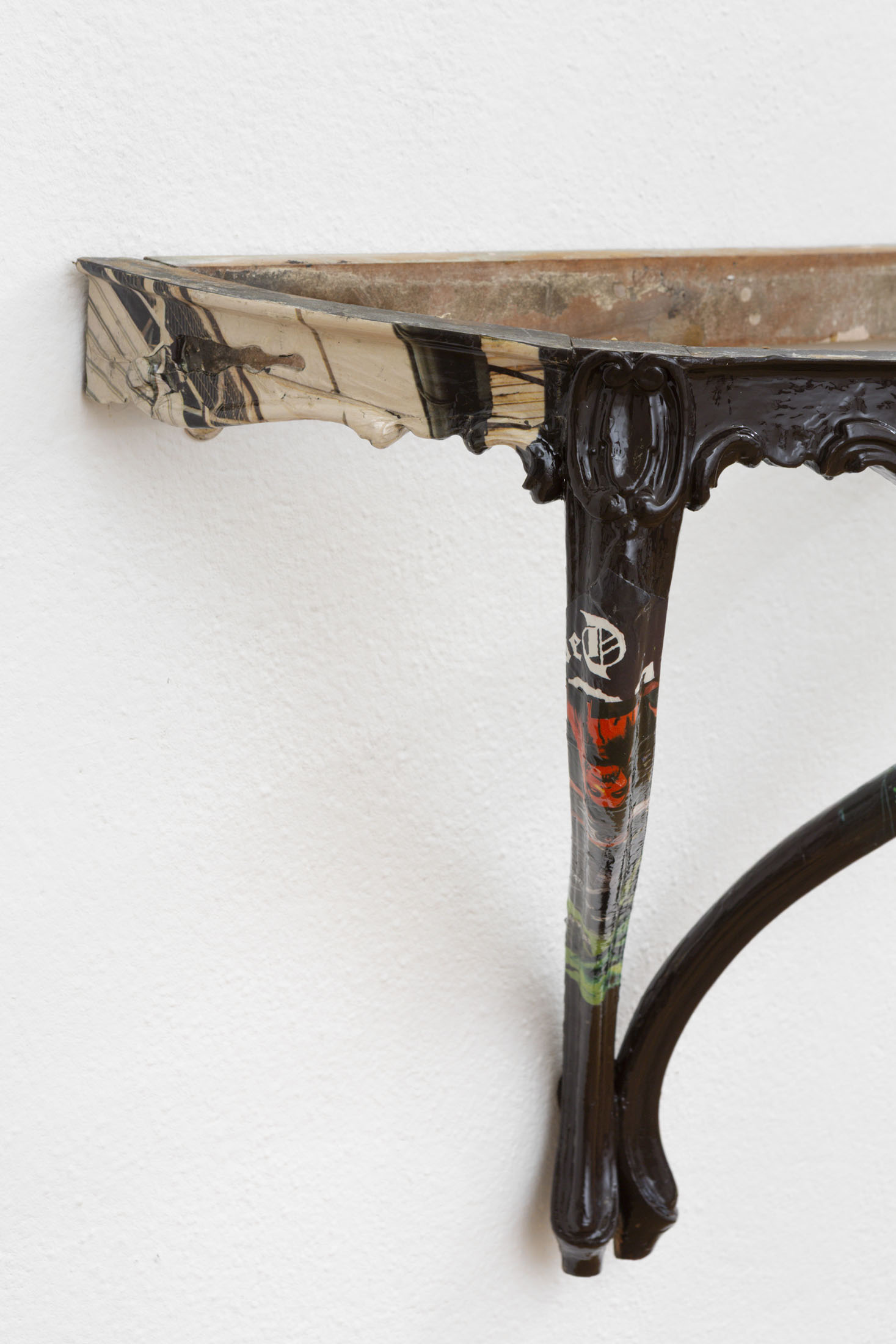
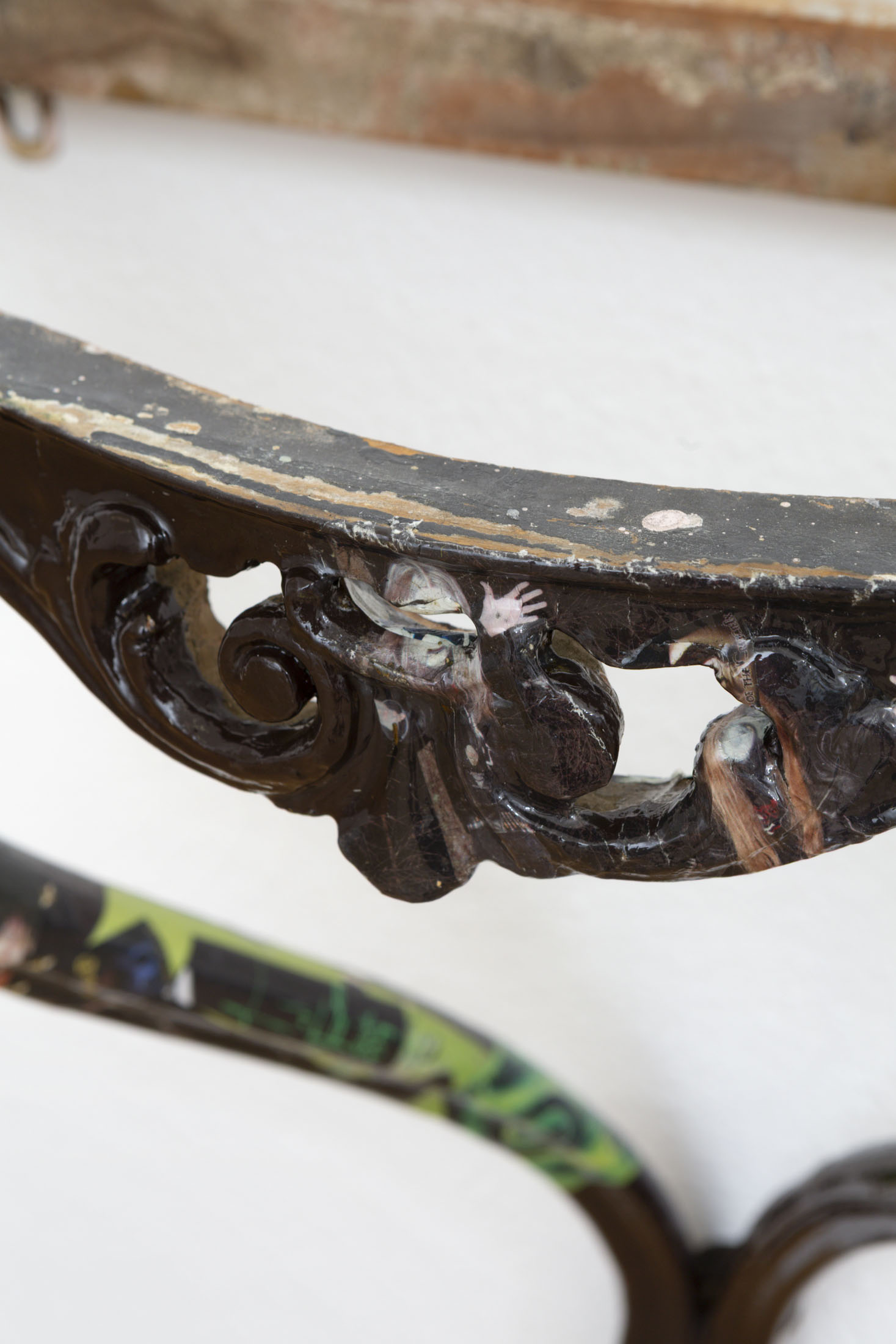
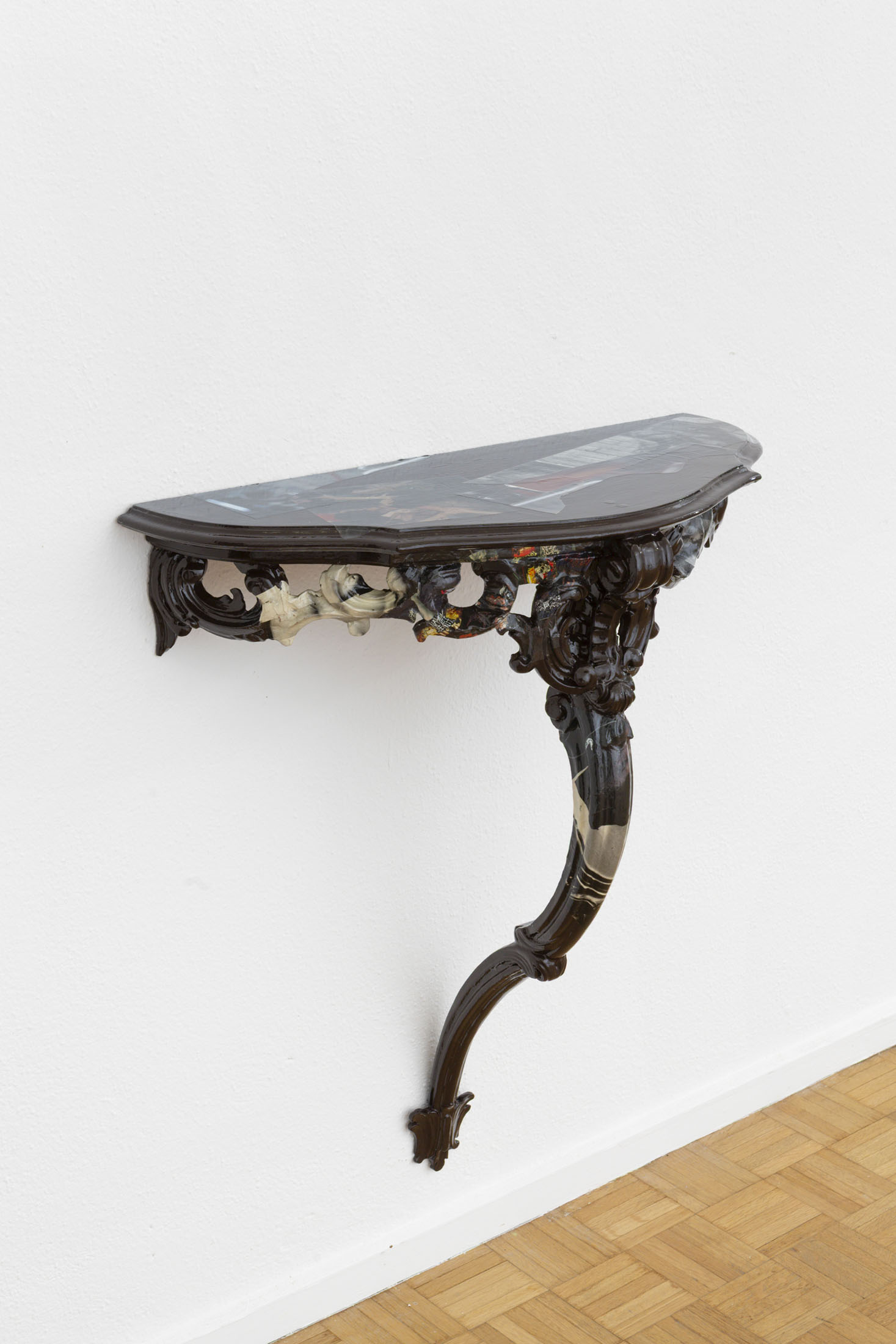
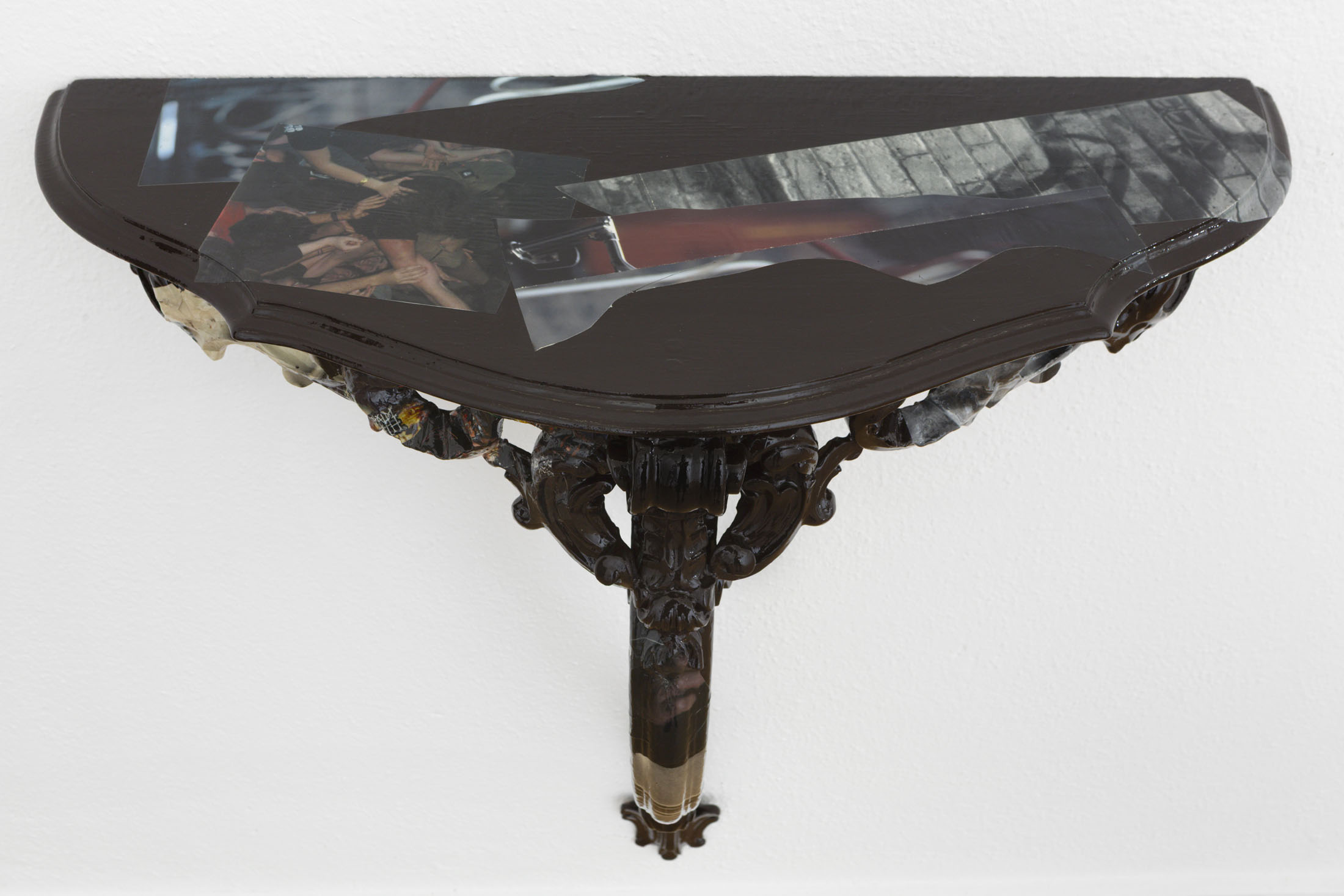
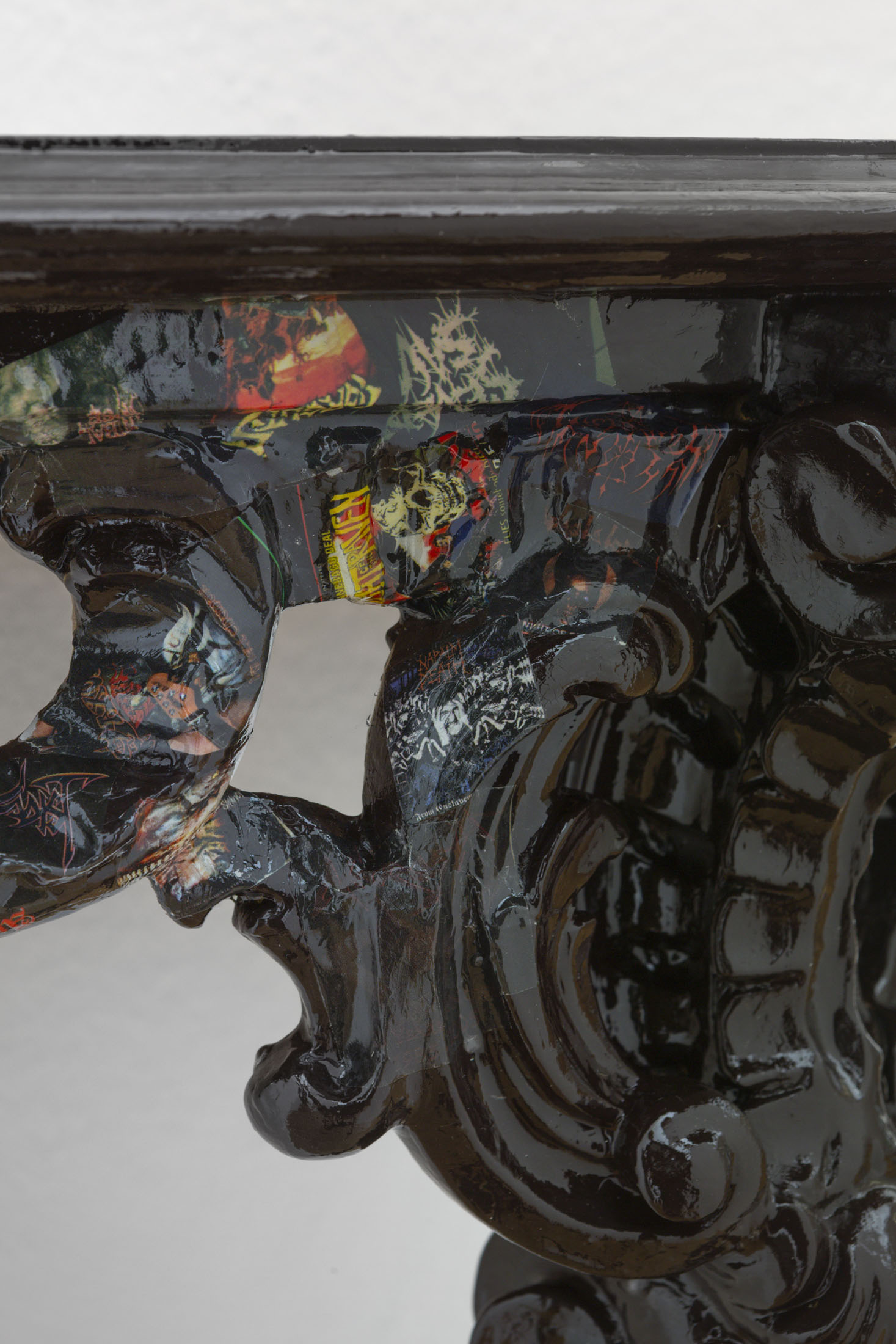
Virginia Ariu’s practice draws from teen mythologies and rites of passage, early-2000s aesthetics, DIY culture, and subtle political critique. In her exhibition Exercises of Abstraction, a recurring object – the console – acts as a transitional element —a station between departures and arrivals. Each console is covered with magazine cut-outs, photograph clippings, becoming a ‘devotional station’ – a kind of an anchor of a ritual, longing for a sense of belonging and identity. This series of works draw inspiration from teenage rebellions and their urge to claim their surroundings or mirror individualities – be it their bedroom walls, parents’ home, or school furniture – by marking and covering what preceded them with their own personal icons and references.
In this world, reality isn’t a stable reference point—it functions more like a search engine. Meaning is no longer fixed; objects float between roles and identities. Ariu embraces this fluidity through découpage, the 17th-century French cut-out technique, which she uses to collapse personal history and popular culture. Originally rooted in Eastern funerary traditions and later popularized in Western craft culture, découpage becomes in her work a metaphor for fragmentation and reconstruction. Through it, the surface becomes a site of tension: carefully composed but fundamentally unresolved.