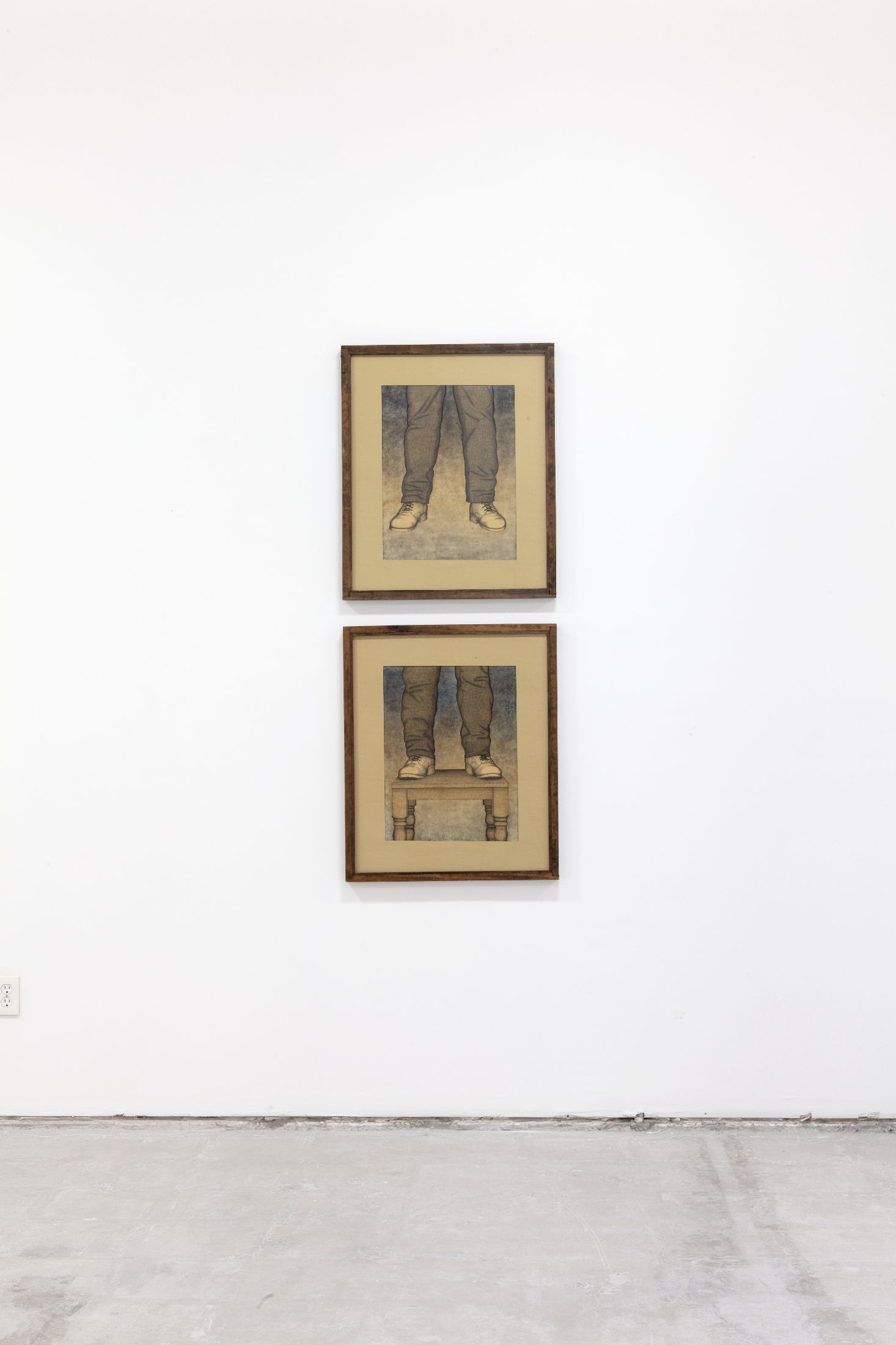
Parallel Oaxaca is thrilled to present silhouettes with Nahum B. Zenil, Frieda Toranzo Jaeger, Chiachio & Giannone, Michael van den Abeele, Aline Bouvy, Vava Dudu and Rubén Ulises Rodríguez Montoya
April 17 to june 6th, 2026
In Silhouettes, the intertwining of corporeal representation expands materialities and expressions as an unusual dynamic: a transfiguration and recasting of diverse economies that both contain and cross us.
At the confluence of subject / object, presence / time, the exhibition considers the body’s sovereignty within the aesthetic experience of corporate culture. Against the reduction to stereotypes, it foregrounds desire as a structuring force, moving toward a constellation that reimagines mythologies.
A presence expanding its borders, a body re-negotiating visibility, its social conditioning, affects, and the erasure caused by spectacle and its framing of subjects, rendering artworks as possibilities for a figuration saturated with desire, where private emotions become visible.
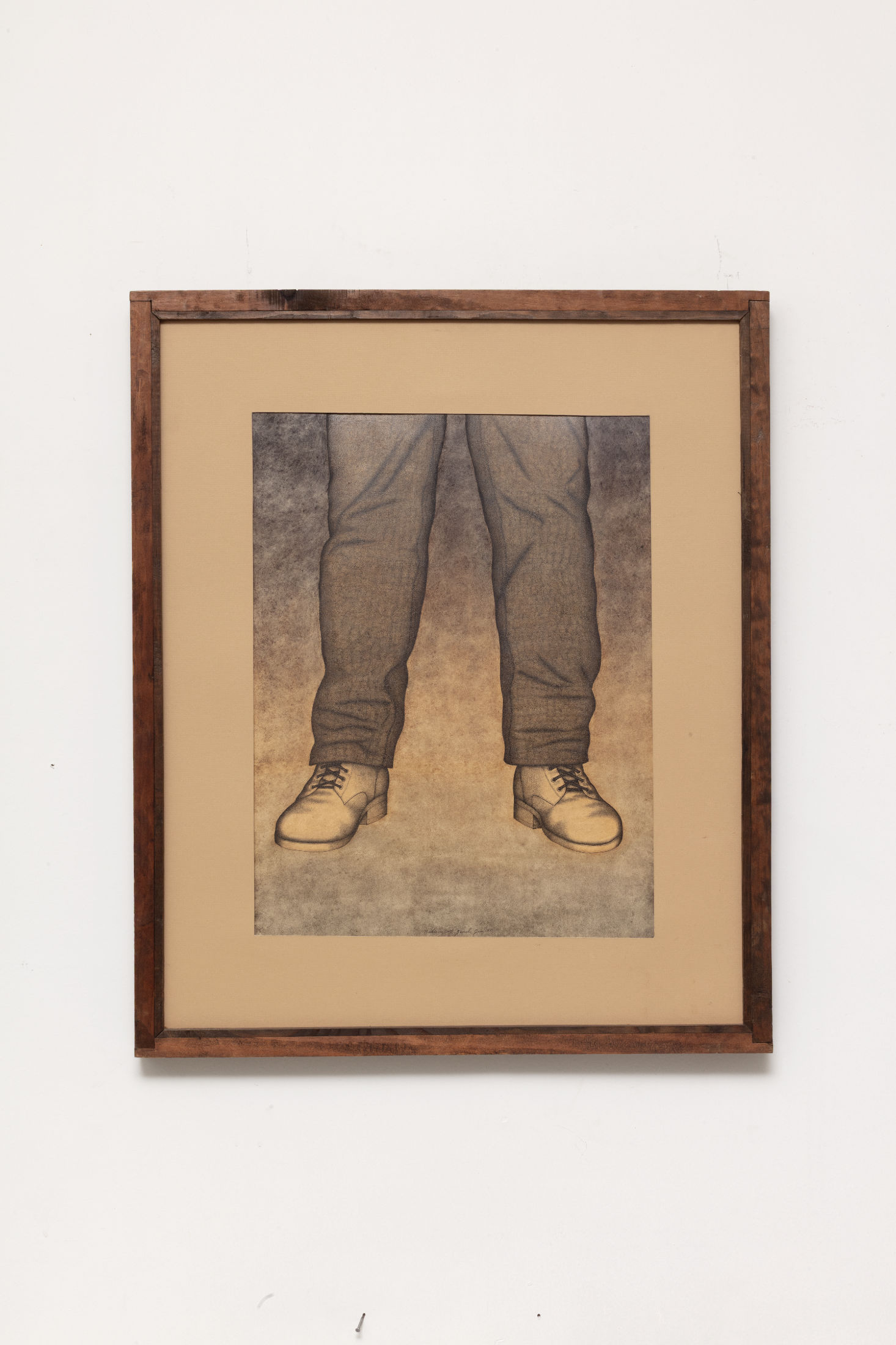
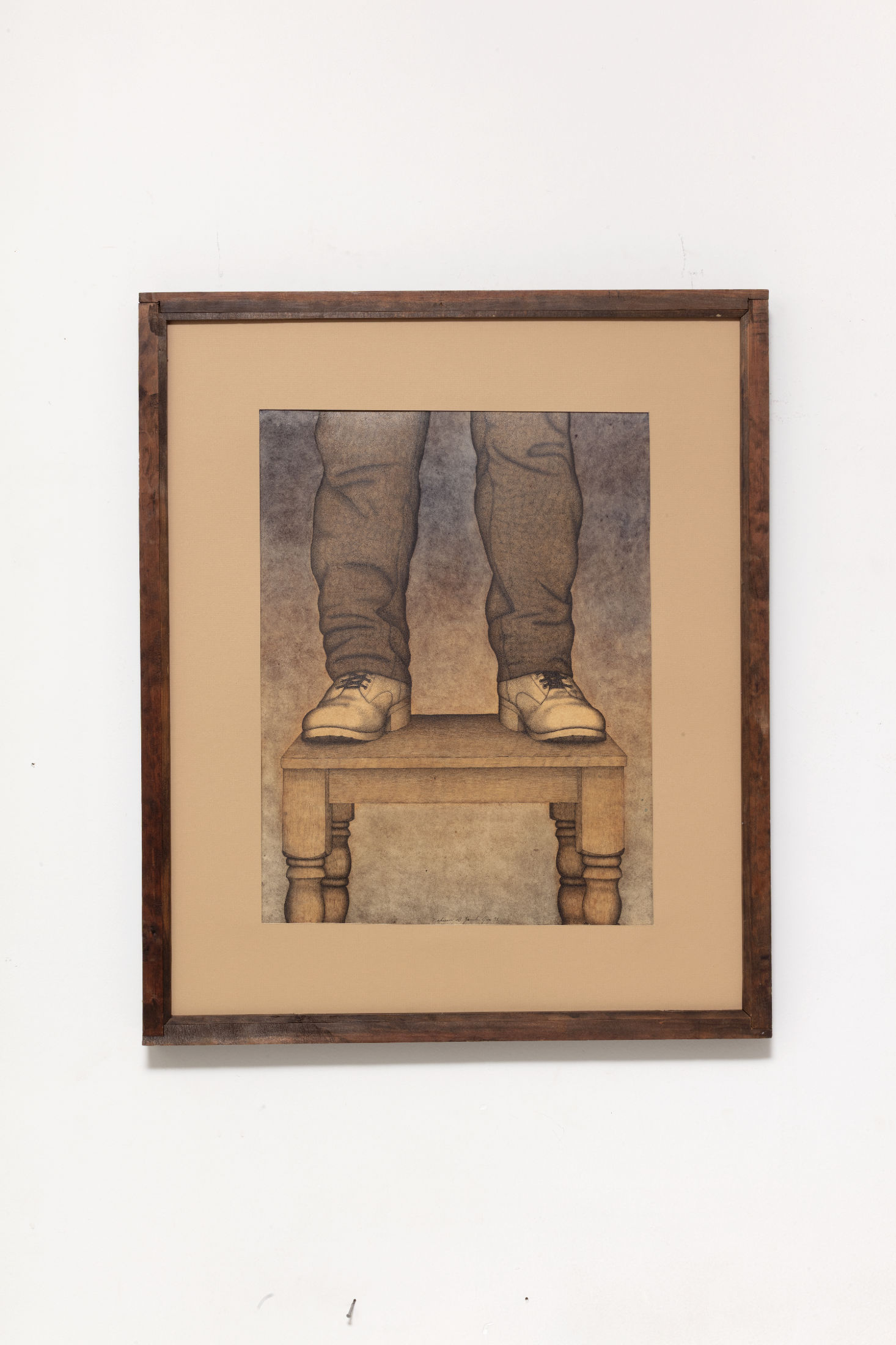
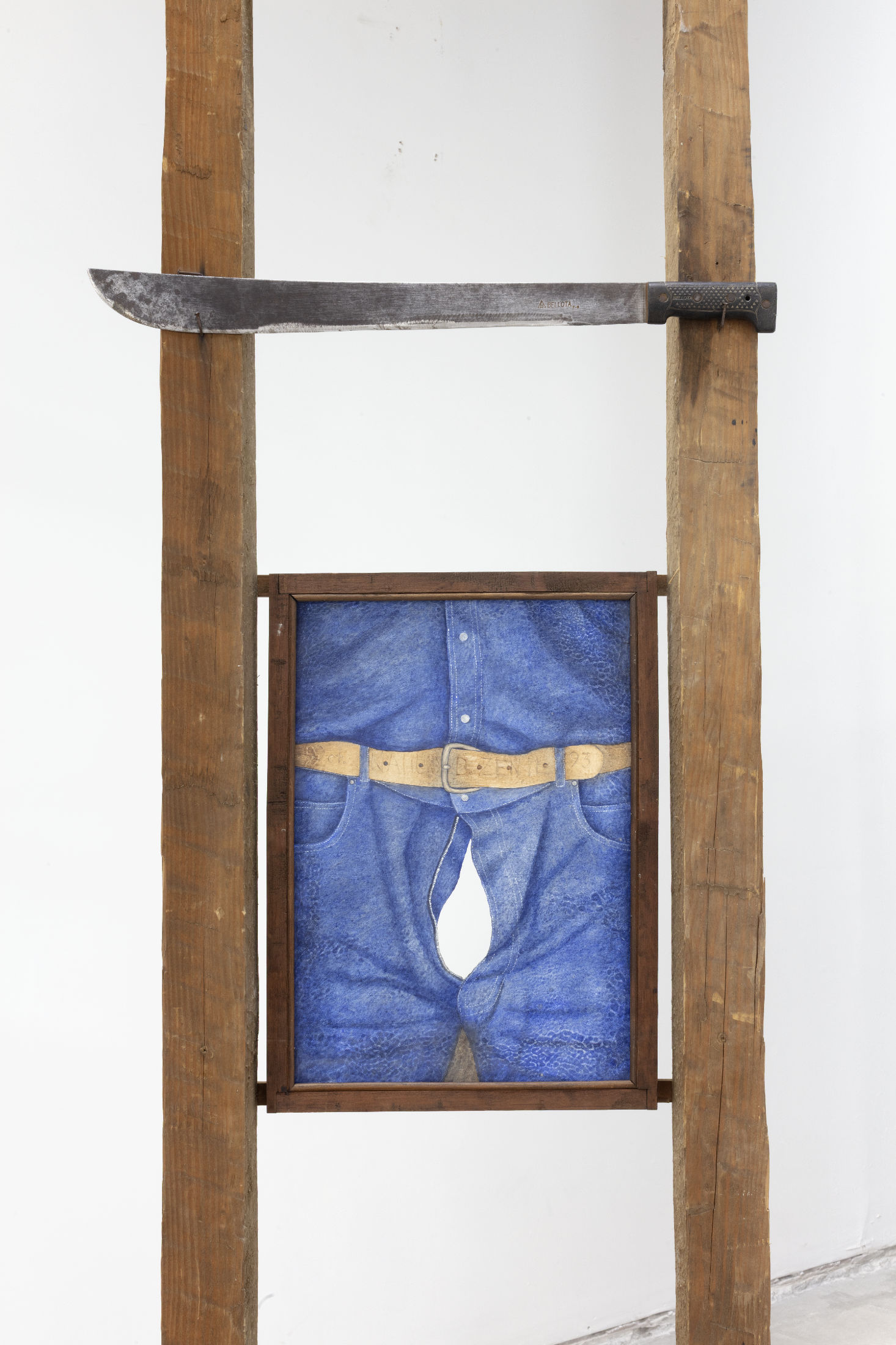
The works of Nahum B. Zenil in Silhouettes are presented for the first time within a curatorial context following the artist’s solo exhibition at the Museo de Arte Moderno, El gran circo del Mundo, in 1999.
Developing his interest in the unfolding and elasticity of bodies in the circus as a way of experiencing the world differently, the artist’s proposal traced a journey through the human condition, solitude, and the search for desire.
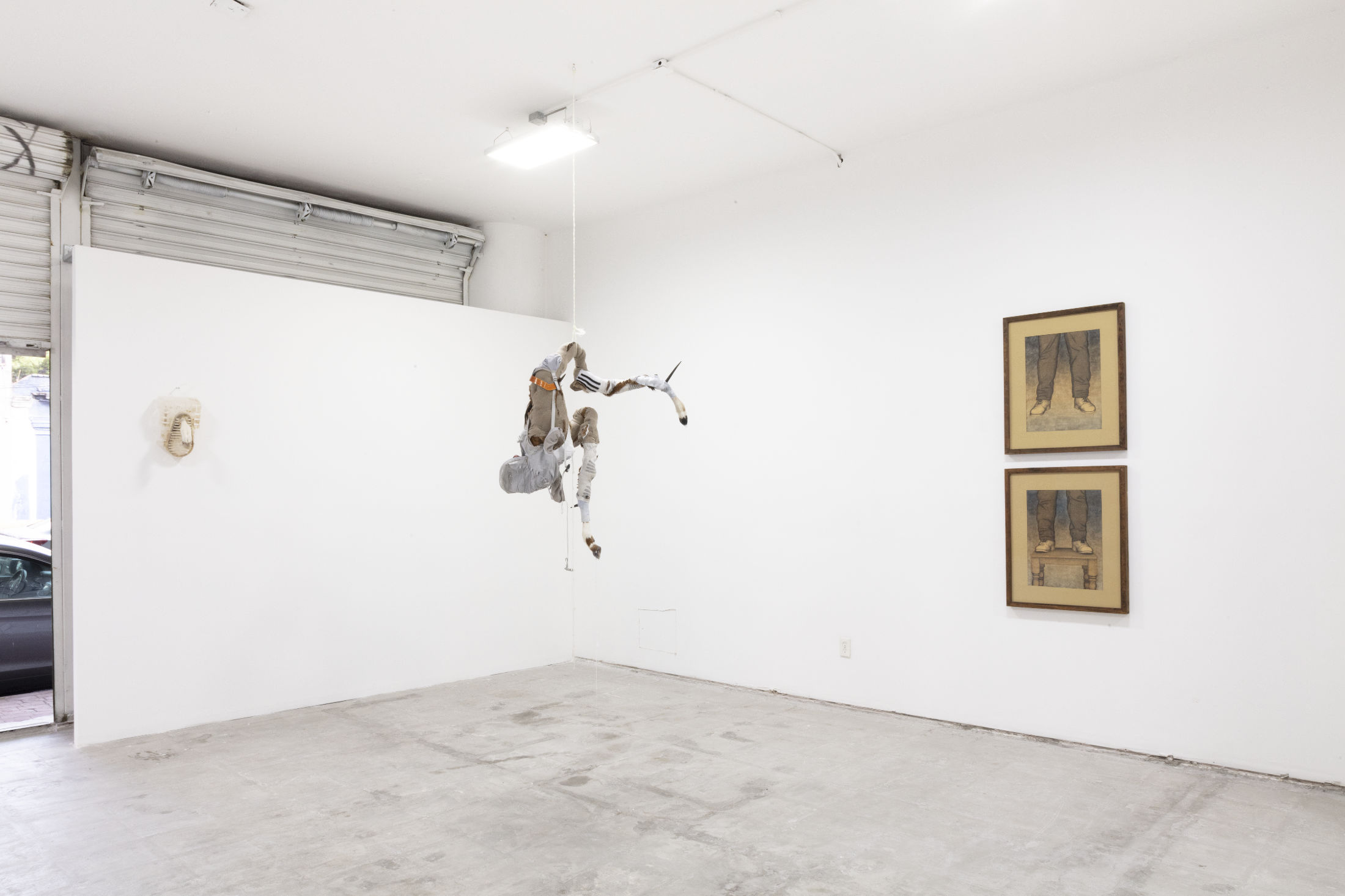
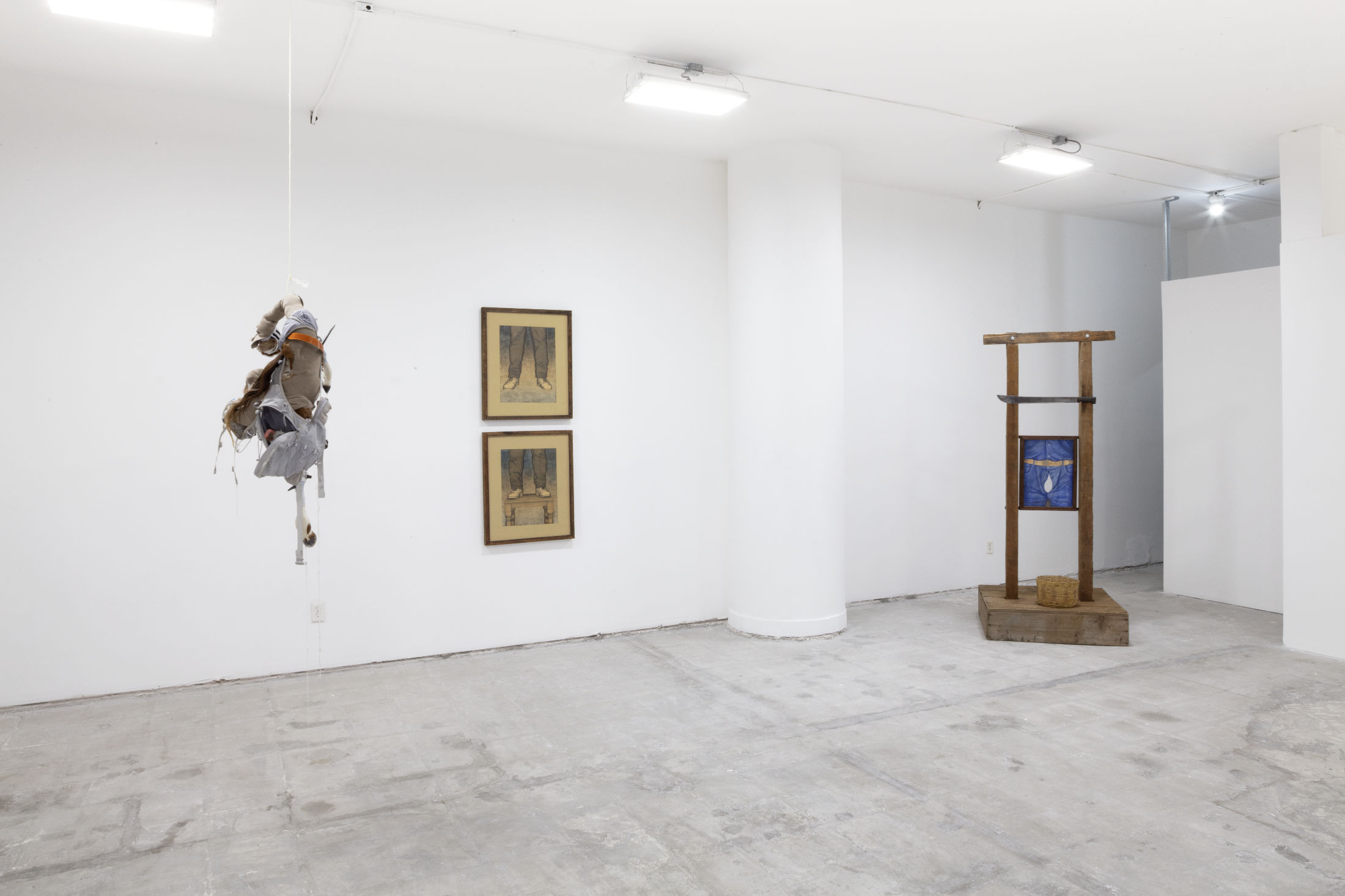
In the artist’s words: “…we die at every instant and are reborn all the time.” The work Suicida I (a Enrique Guzmán)(1995) presents the body as the bearer of individual identity, in homage to the Neo-Mexicanist artist Enrique Guzmán, an artist for whom self-erasure and death became recurring themes in his work, and who was one of the precursors of Neo-Mexicanism from the 1970s until his death in 1986.
Erotic representation, the homeland, myth, death, identity, love, and sexuality constitute, in the work of Nahum B. Zenil, the fundamental consciousness of his self-referential practice.
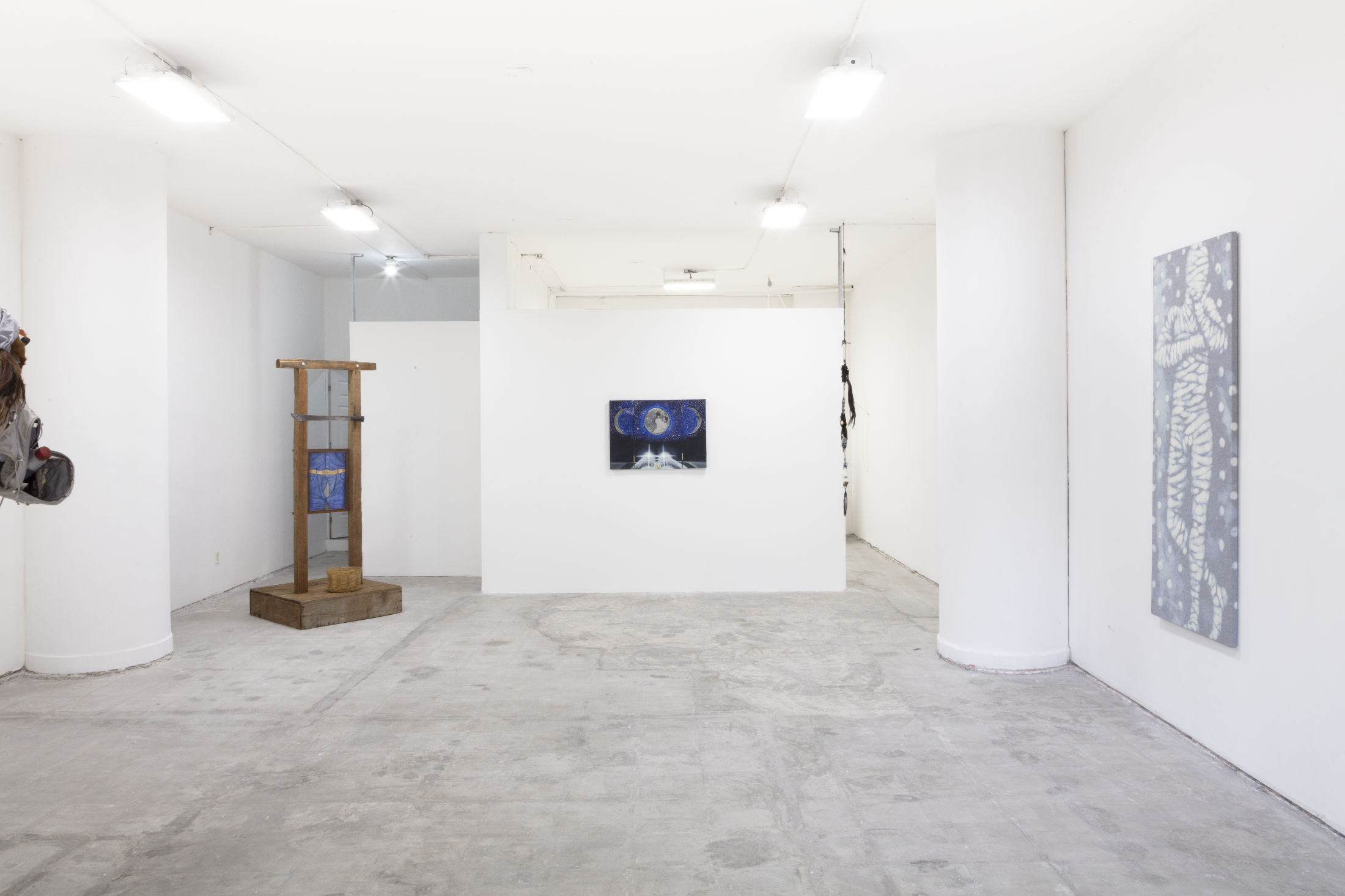
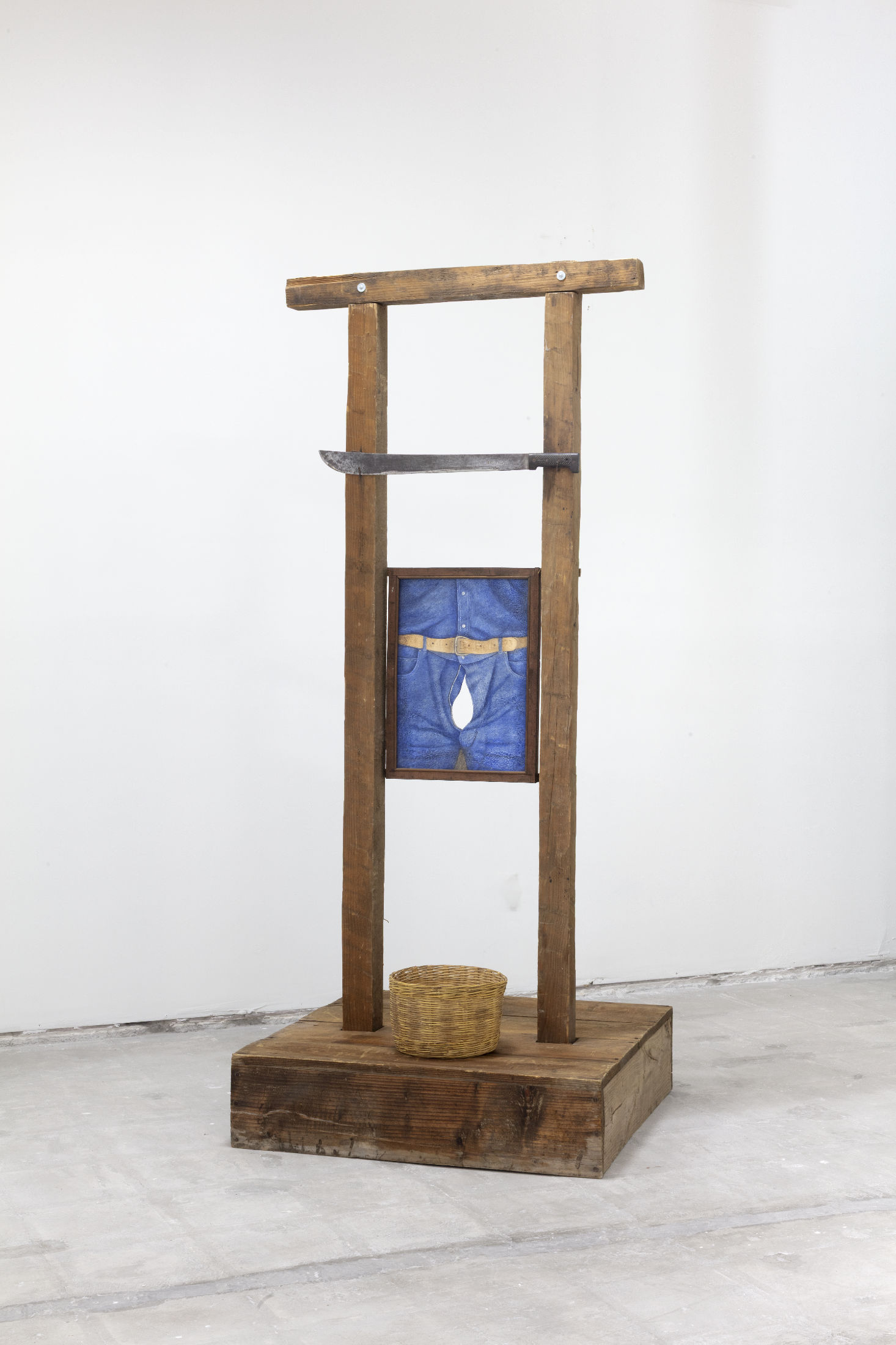
Likewise, the work and installation Verdugo (1993) created an interactive dynamic with visitors, who, by climbing onto the platform alluding to a guillotine, could pose behind the work, while at the same time the artist articulated a critique of the violences produced through the condemnation of homoerotic representation and the gay impulse within Neo-Mexicanism.
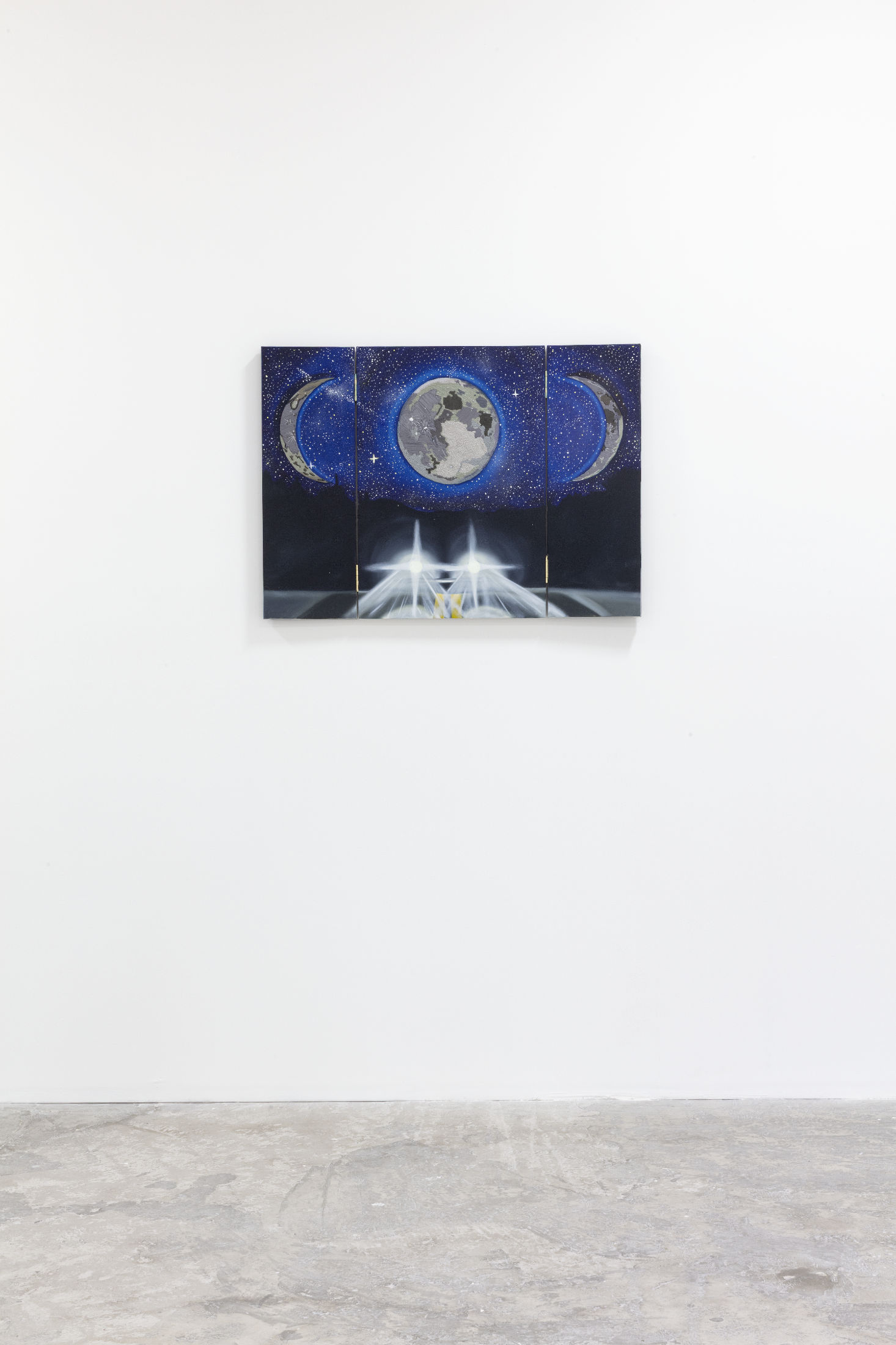
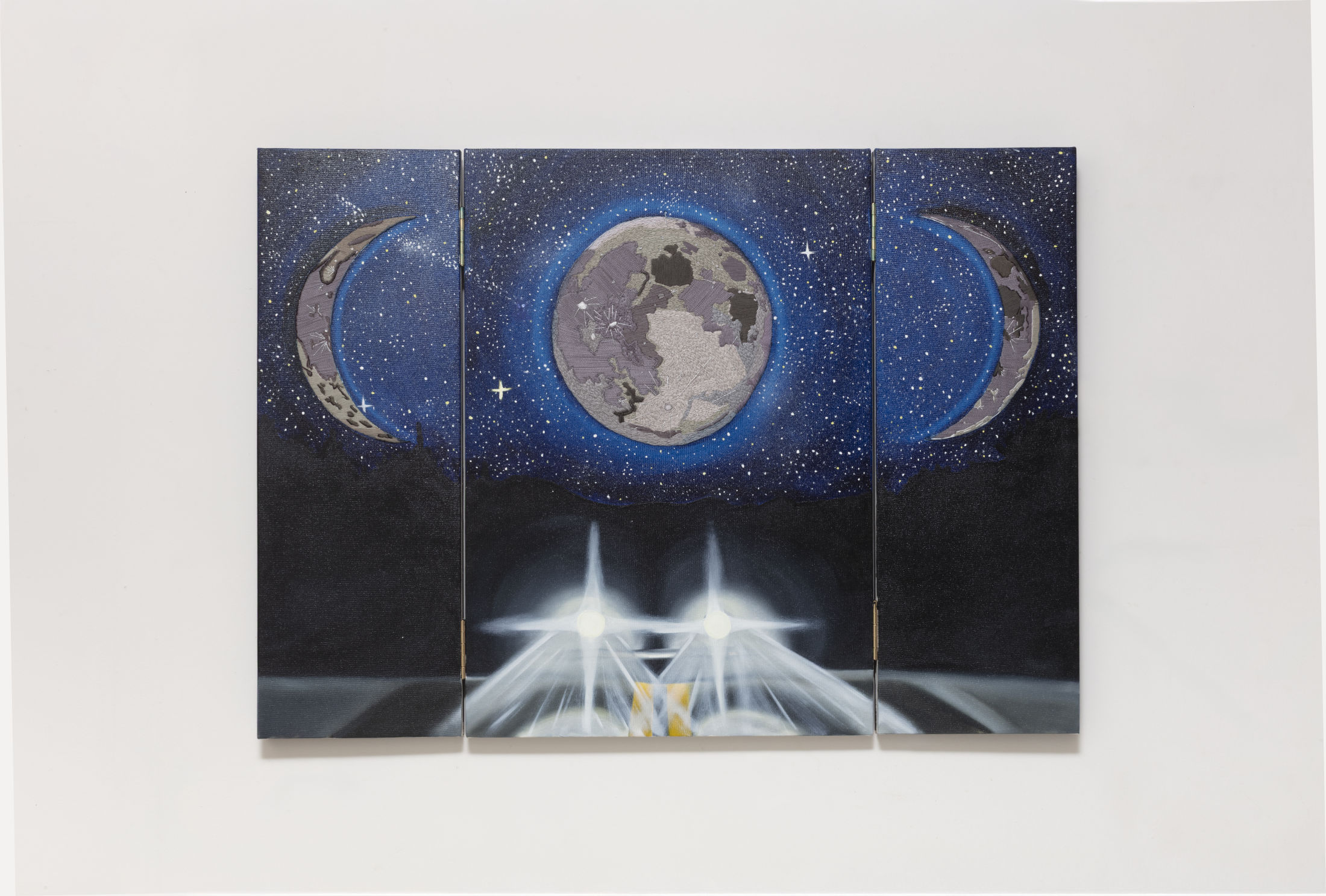
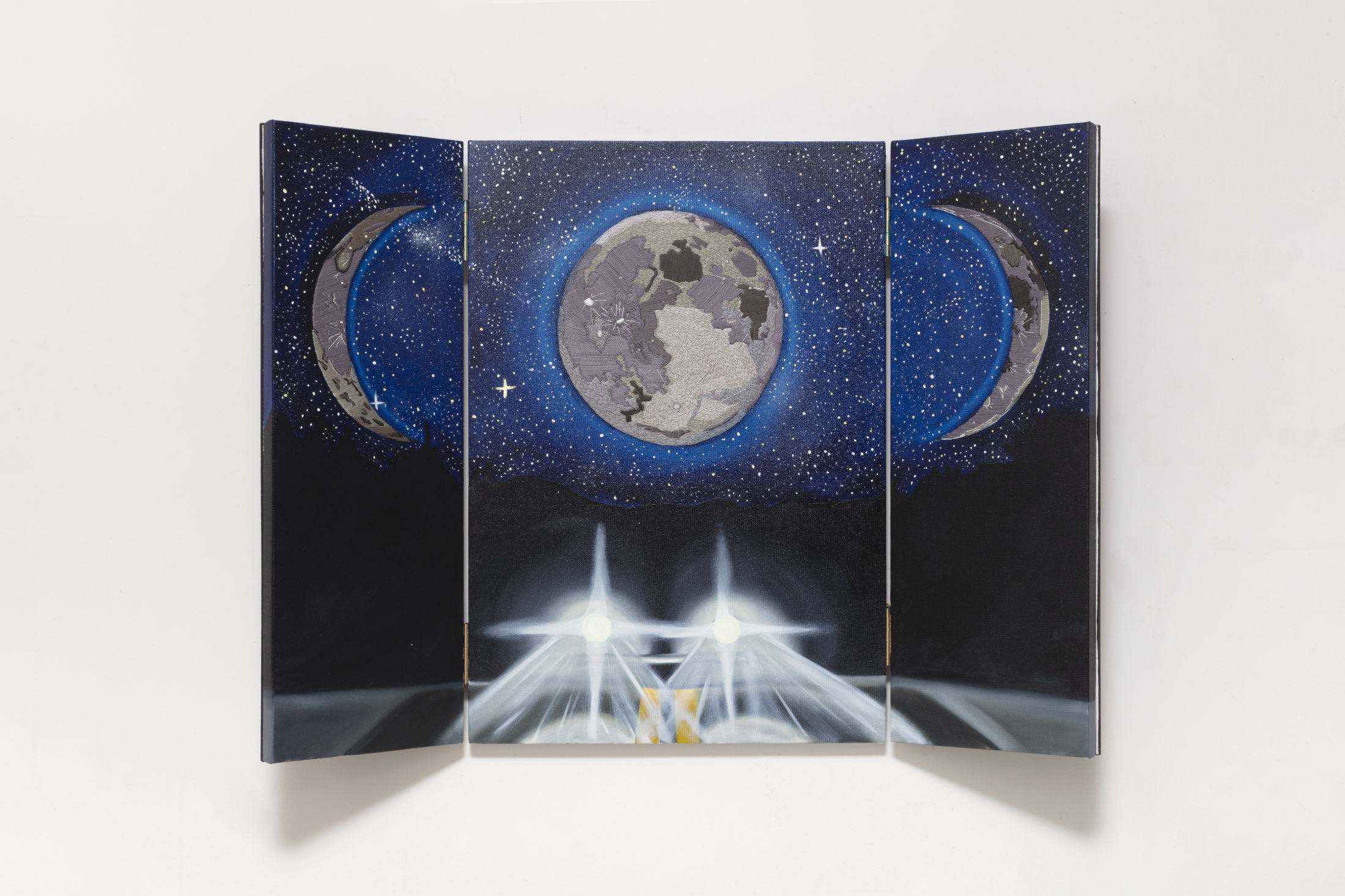
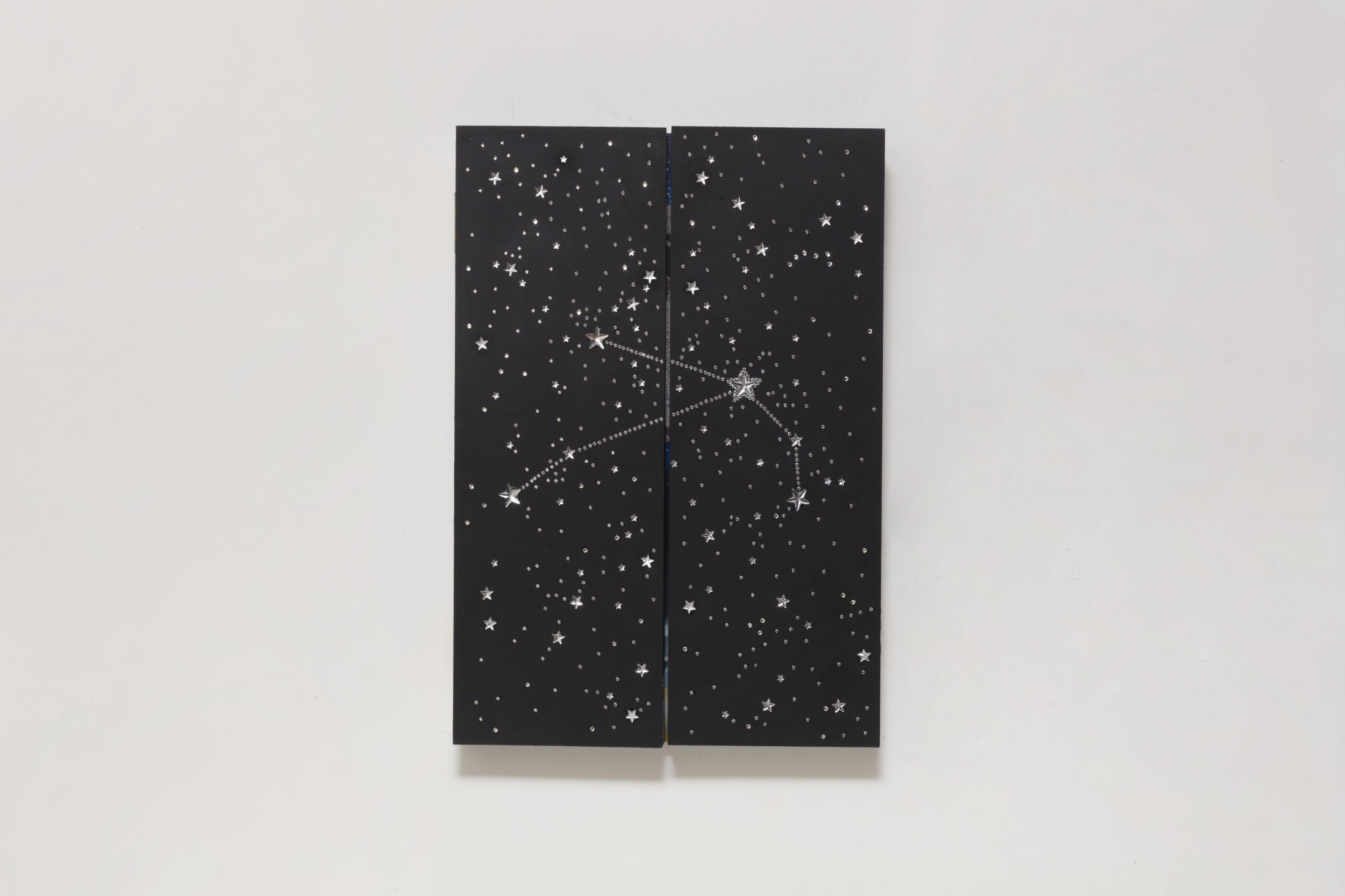
Frieda Toranzo Jaeger ́s Blindness: Moral Disconnection (2026); employing the triptych format, the work navigates time and space as a re-aligned cosmology that embraces confrontation at the verge of collapse. Combining the use of space in painting with embroidery produced in collaboration with the artist’s cousin, the work envisions a fleeting moment of clarity before impact.
Representing imaginaries of mobility traditionally engendered as male trajectories, the work of Frieda rejects the reduction of material and narrative space typically associated with control.
Echoing J. G. Ballard’s phrase condensing the whole 20th century into one image—that of a man driving along a concrete highway toward an unknown destination— Blindness: Moral Disconnection (2026)envisions an imminent crash, with the car’s lights coming directly toward us. This is counterposed with a wider depiction of space and the Moon in its three phases—crescent, full, and waning.
Referencing cosmic alignments and late-sky movements over the Aries constellation, the artist reflects on current moral imbalances permeating all aspects of life, affecting social structures on a global scale—disasters and events such as war are revealed through symptoms experienced within our contemporary political and heteronormative systems.
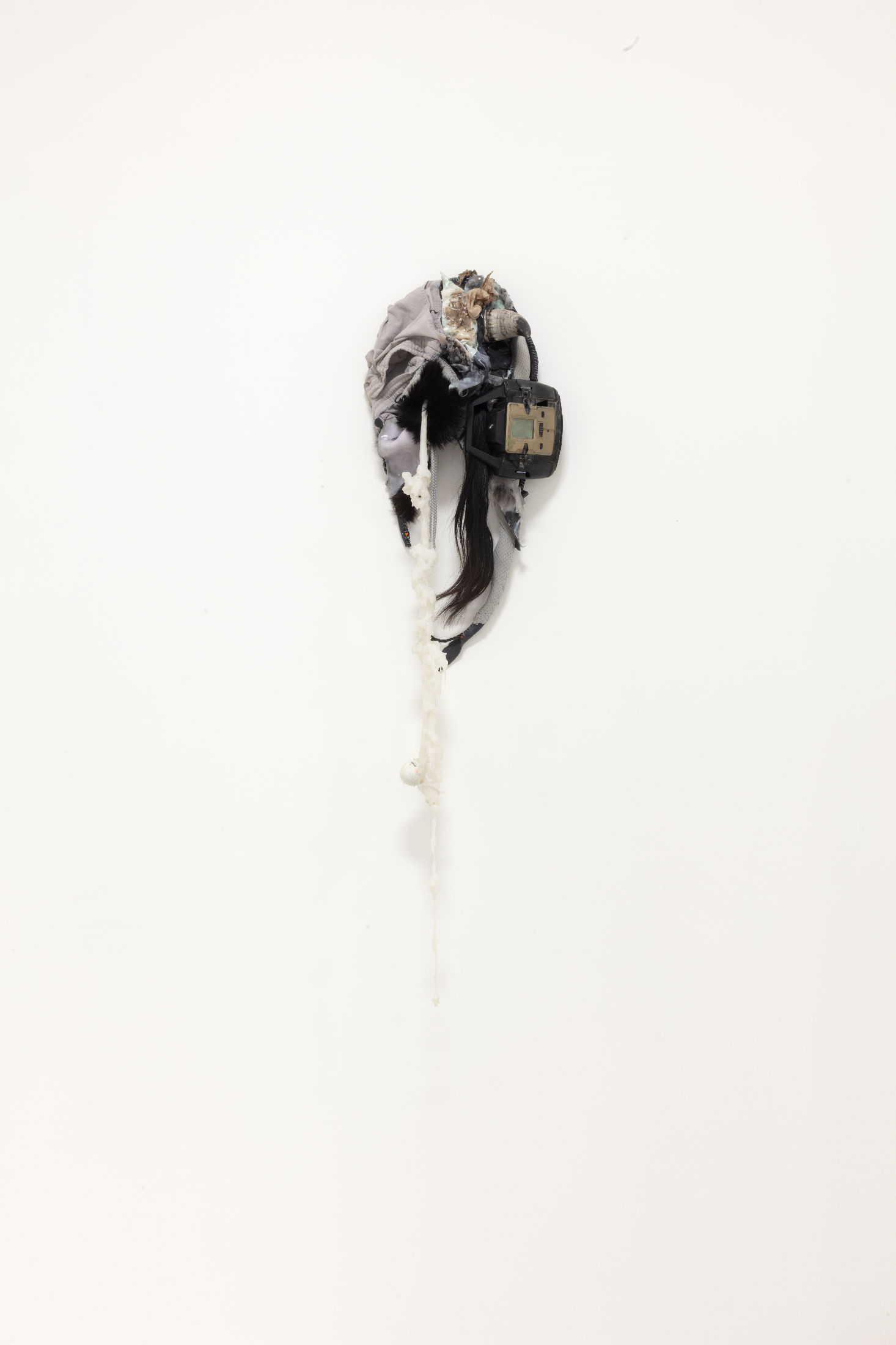
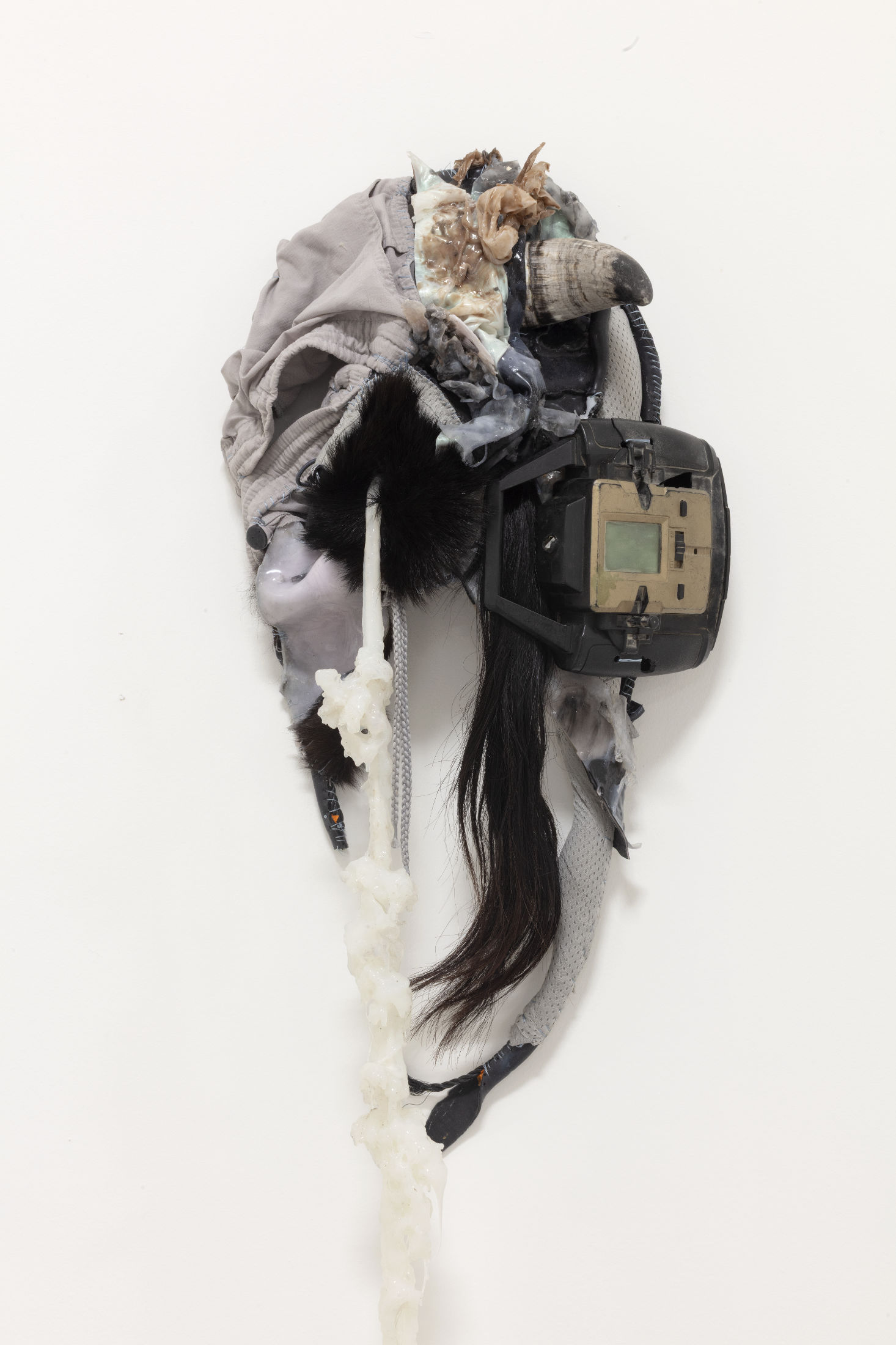
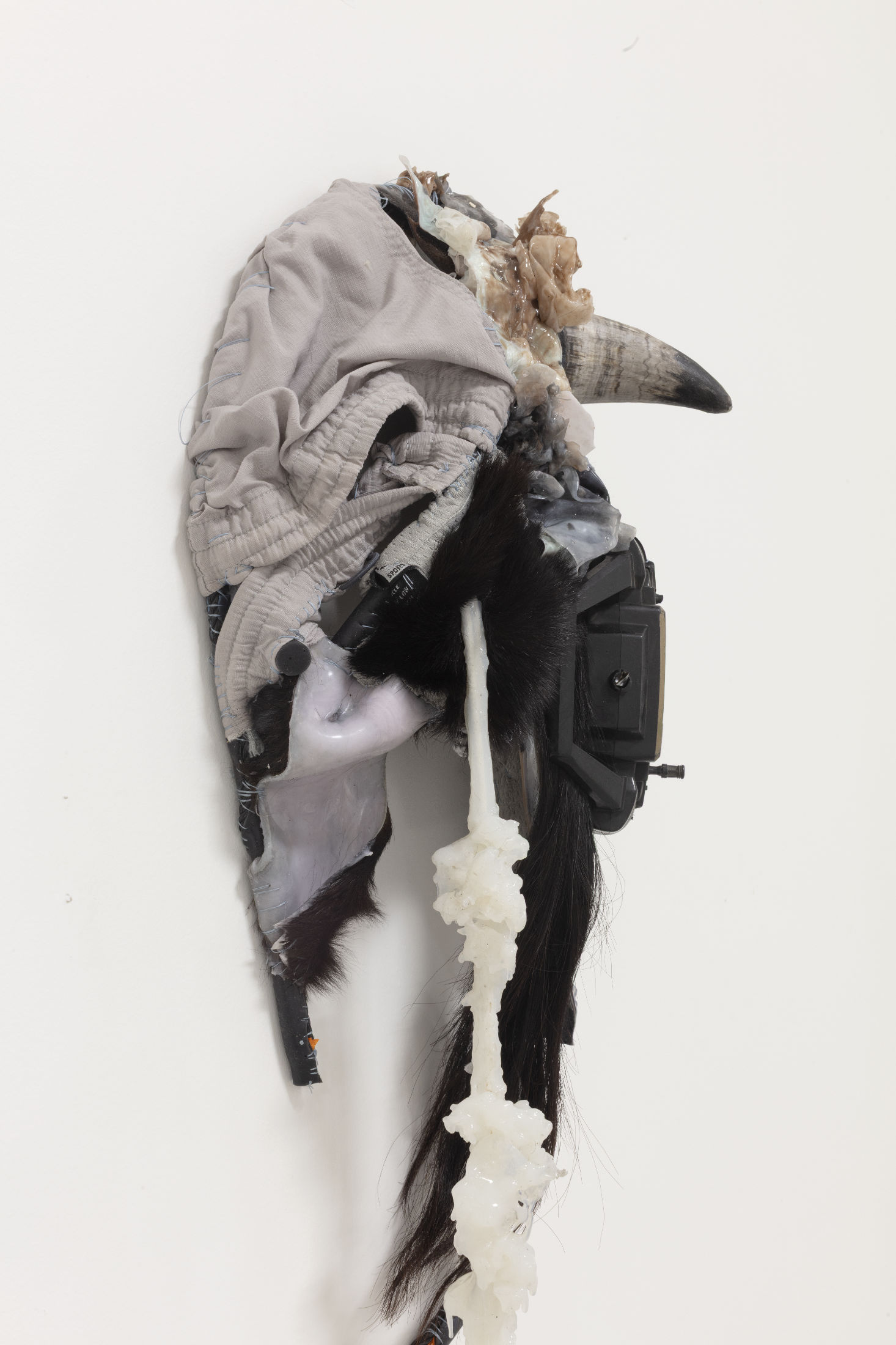
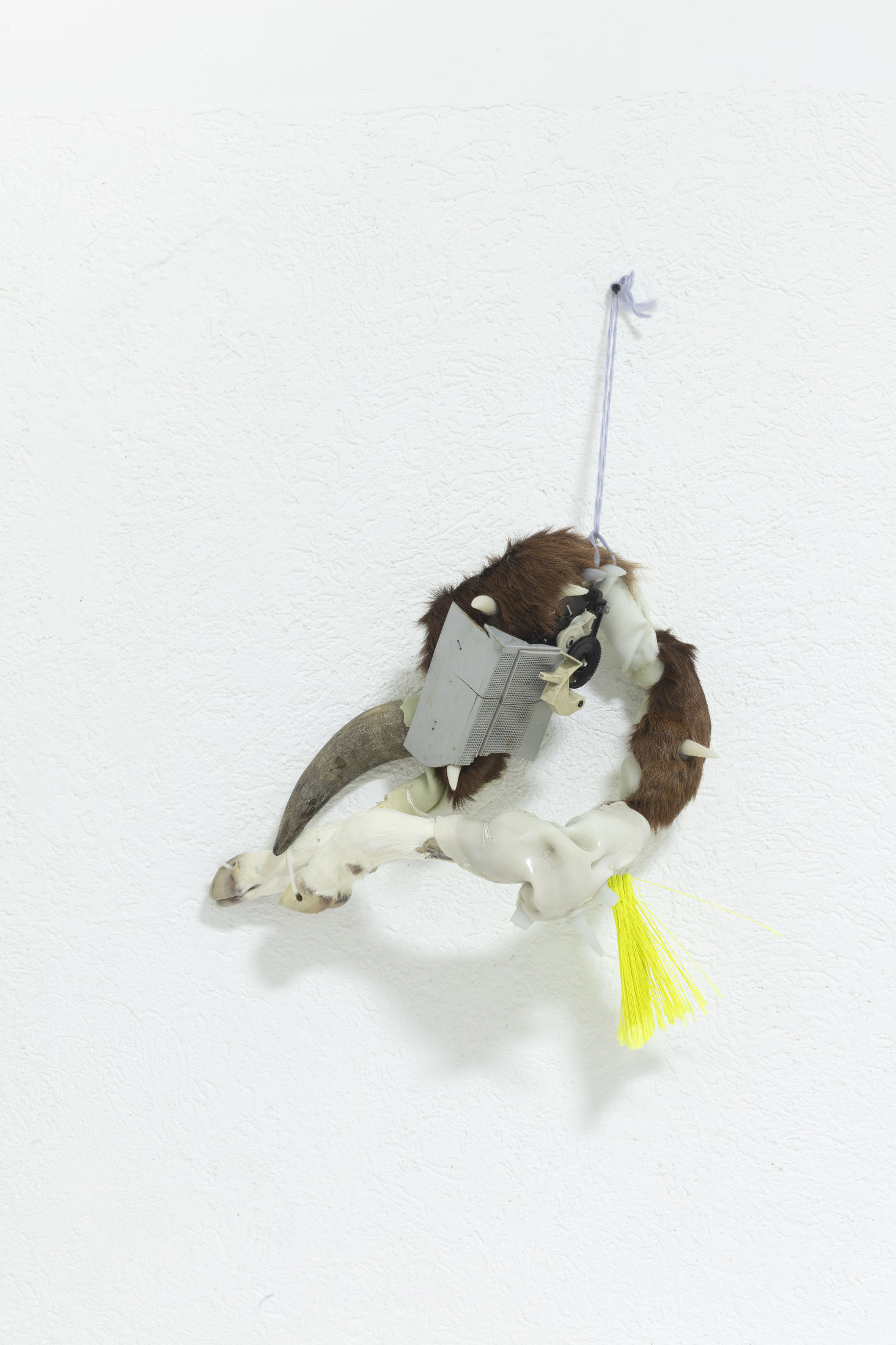
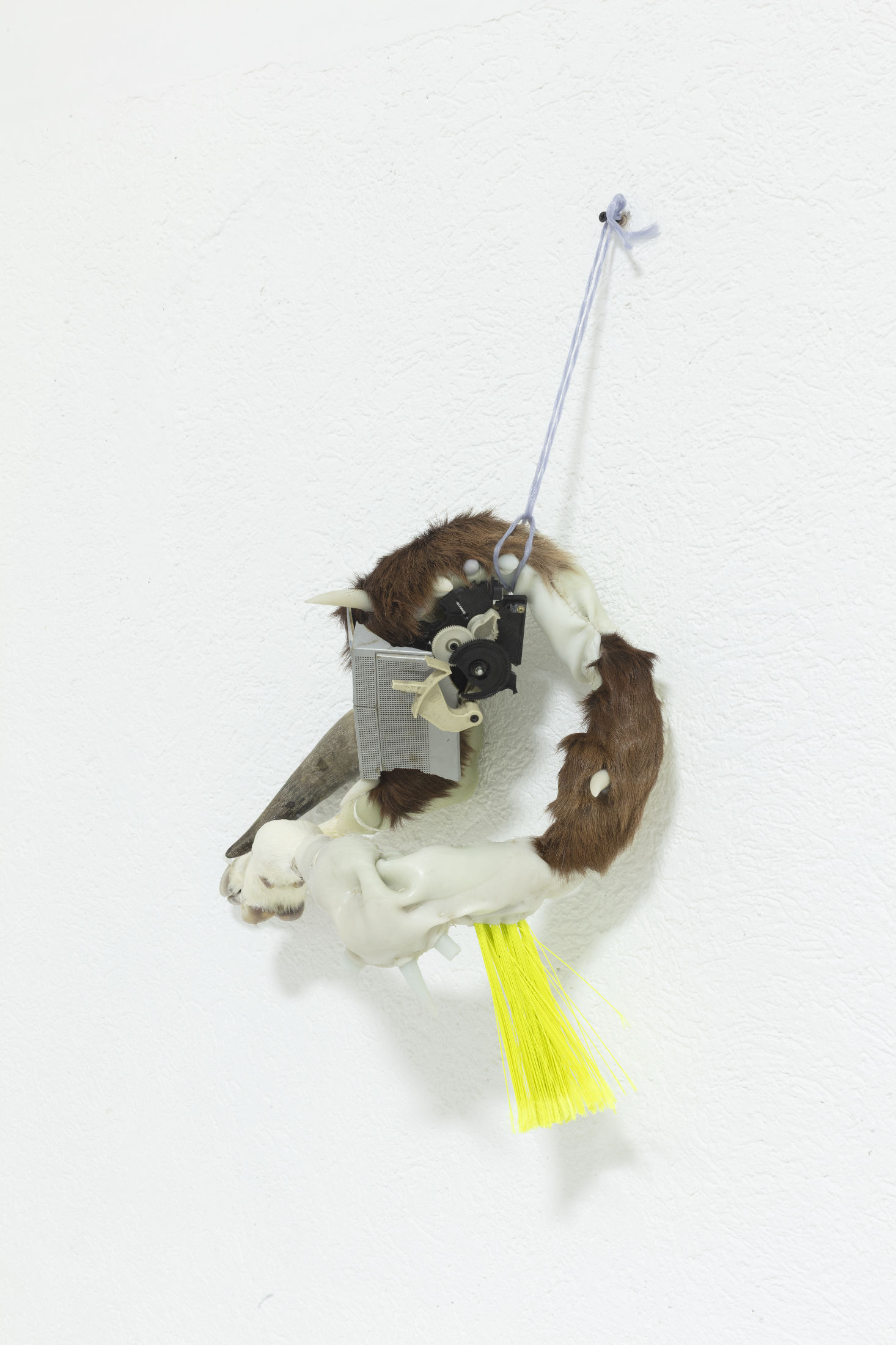
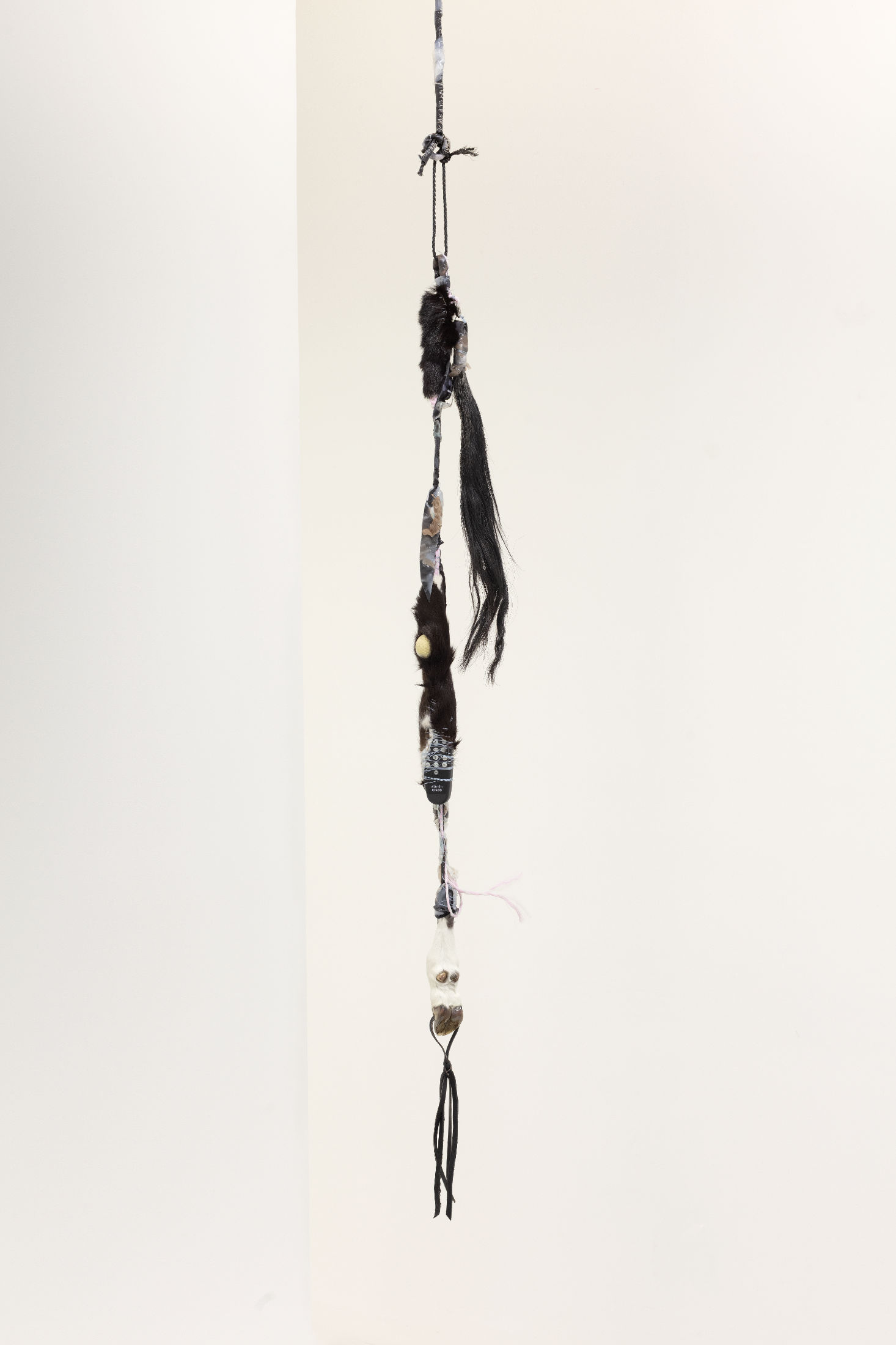
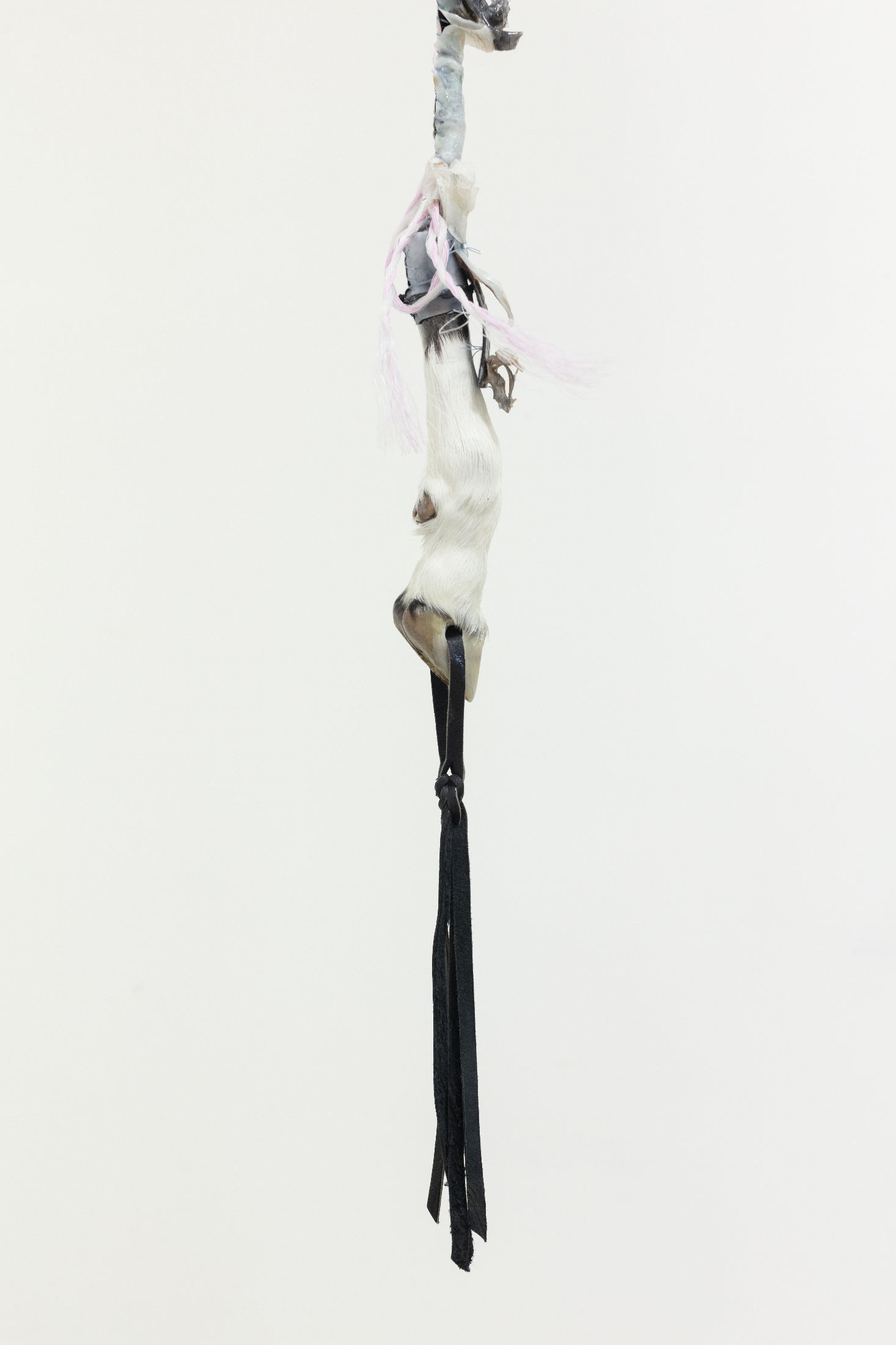
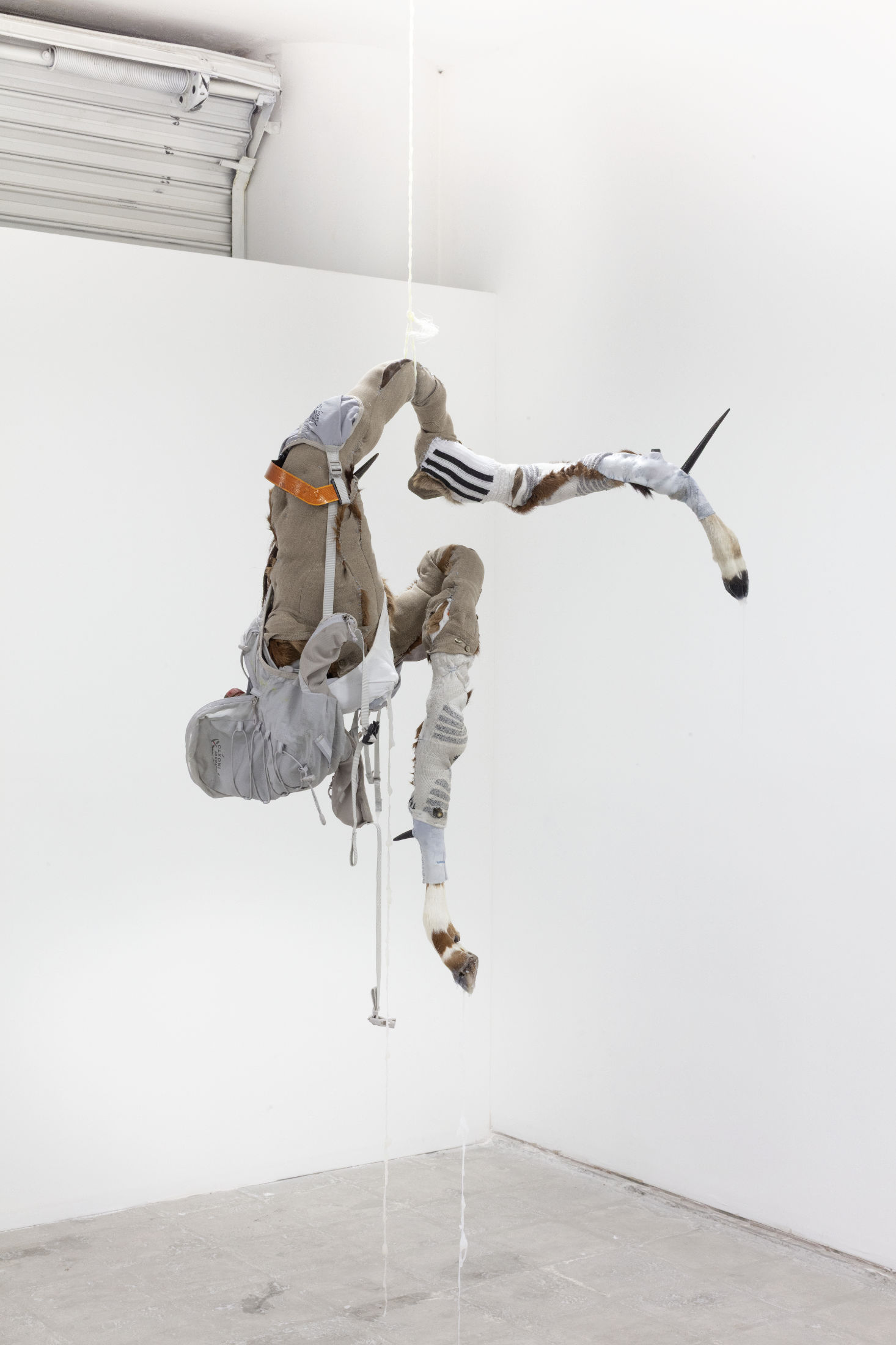
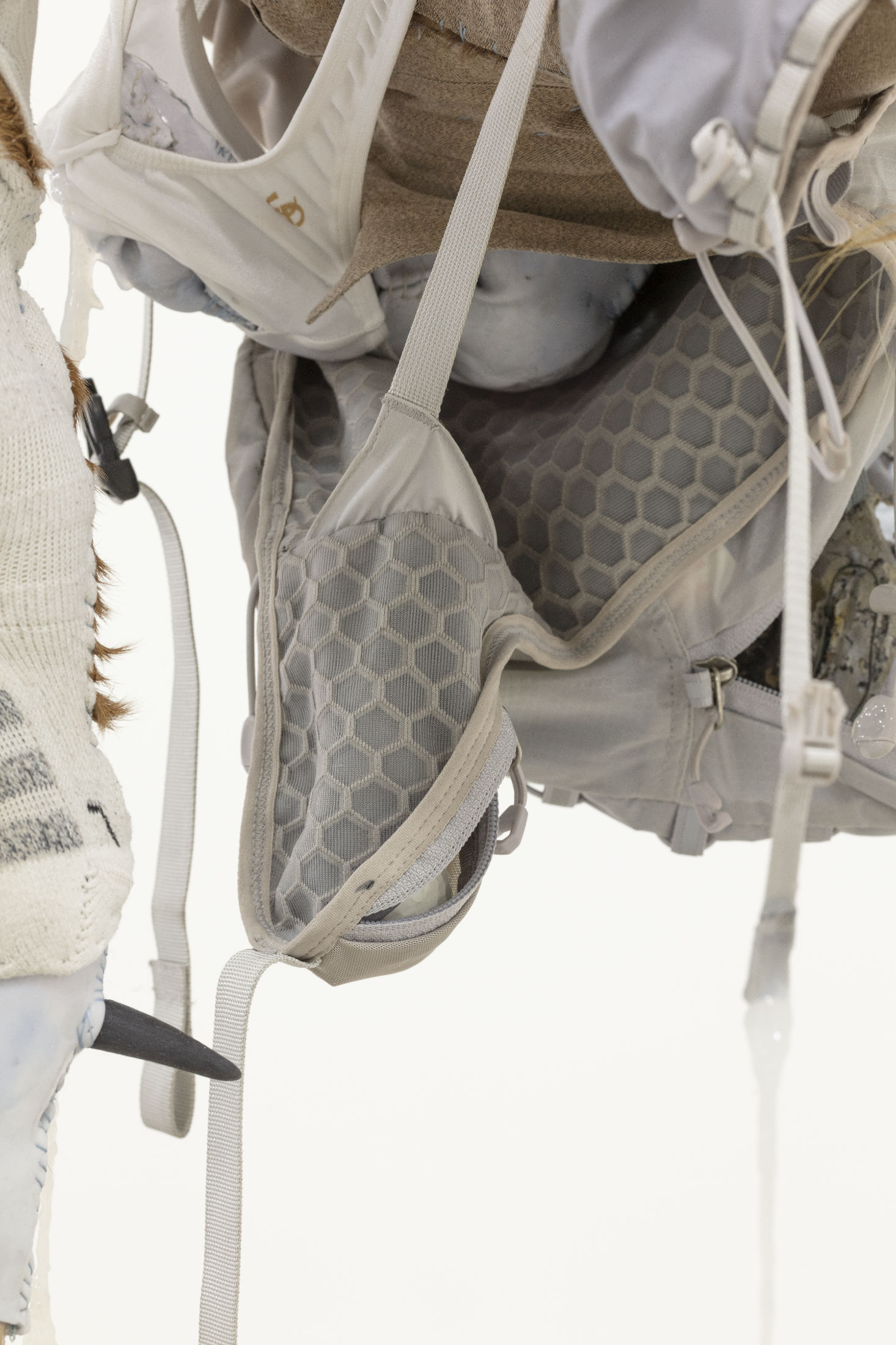
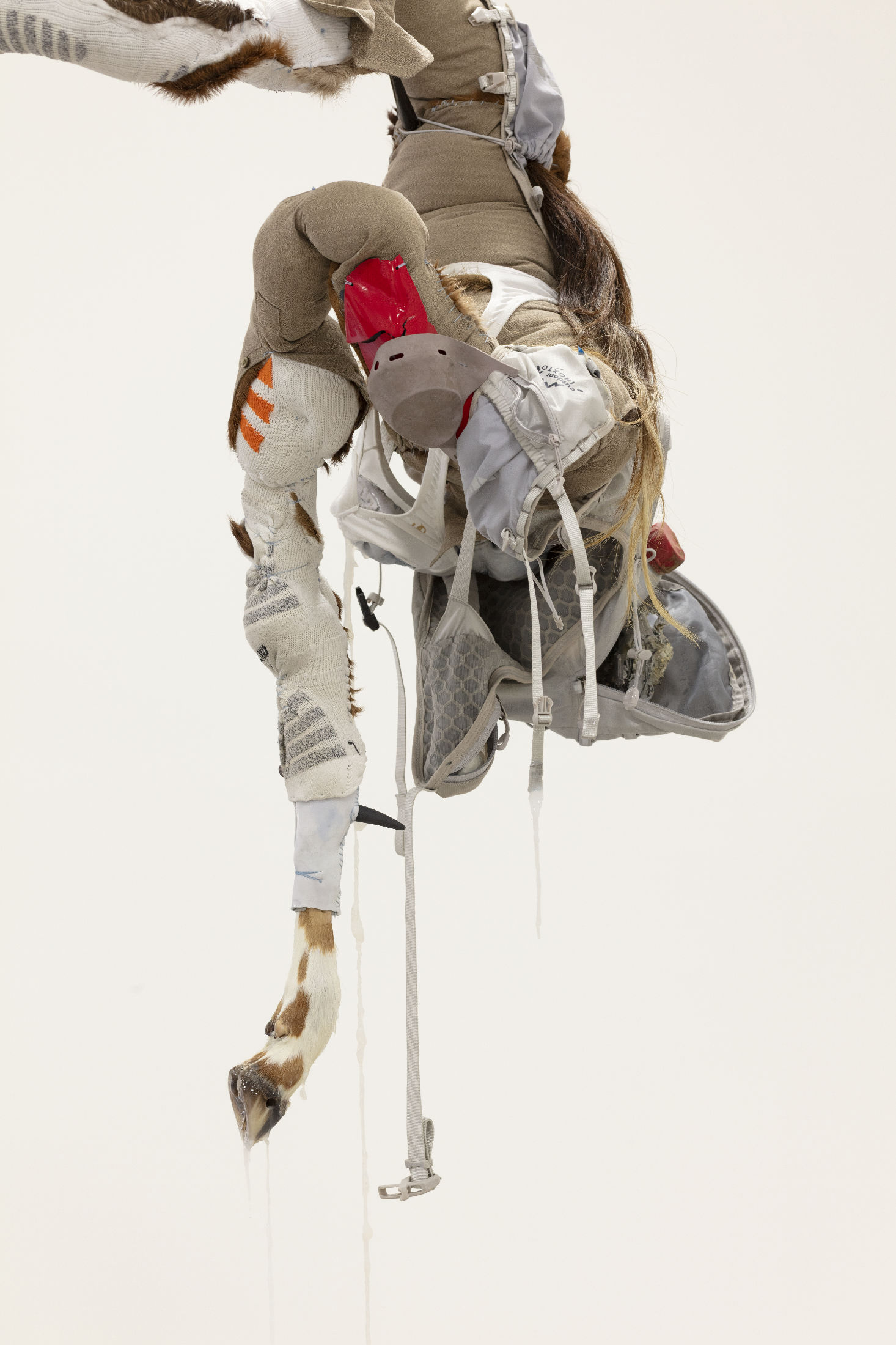
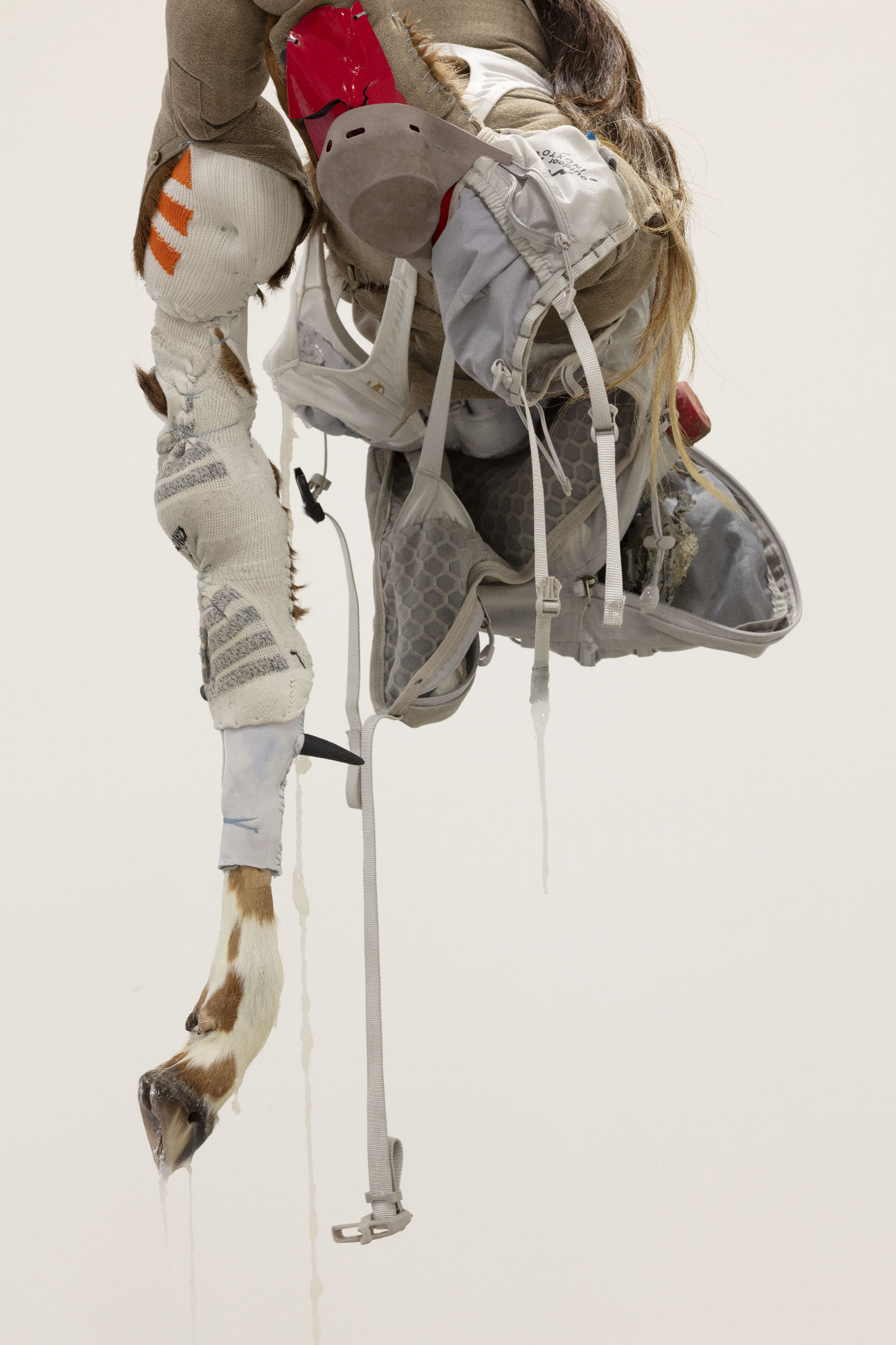
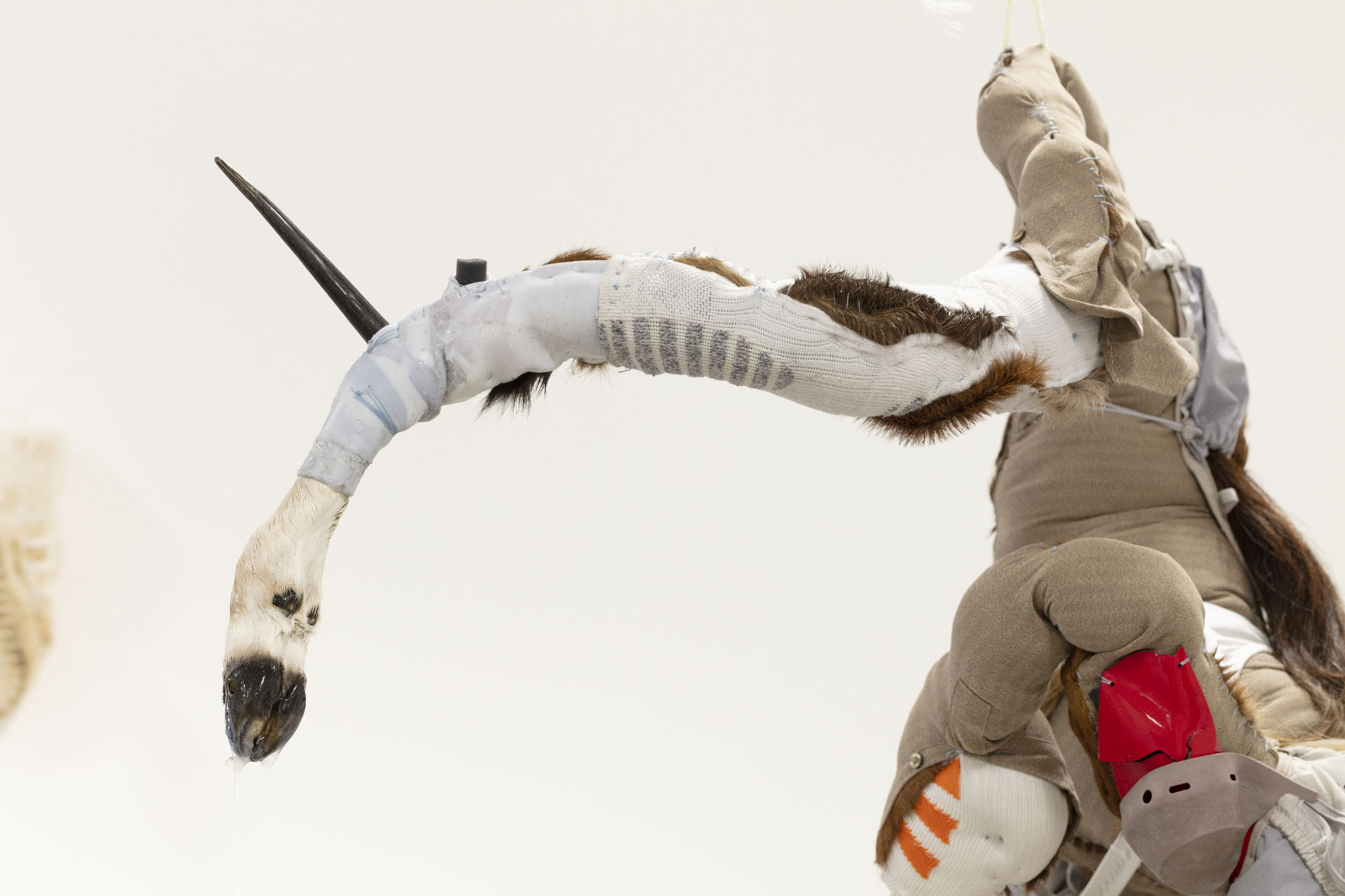
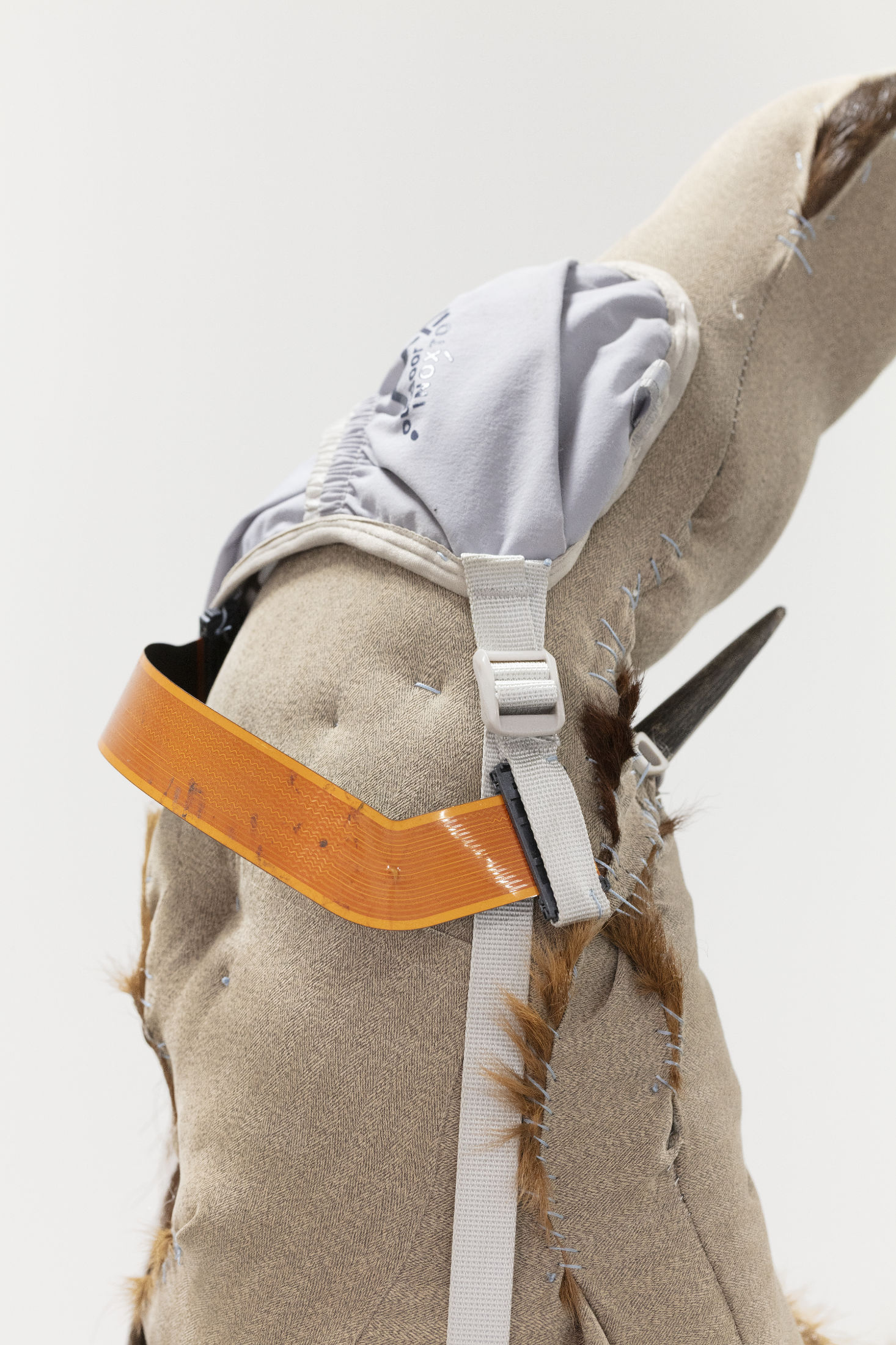
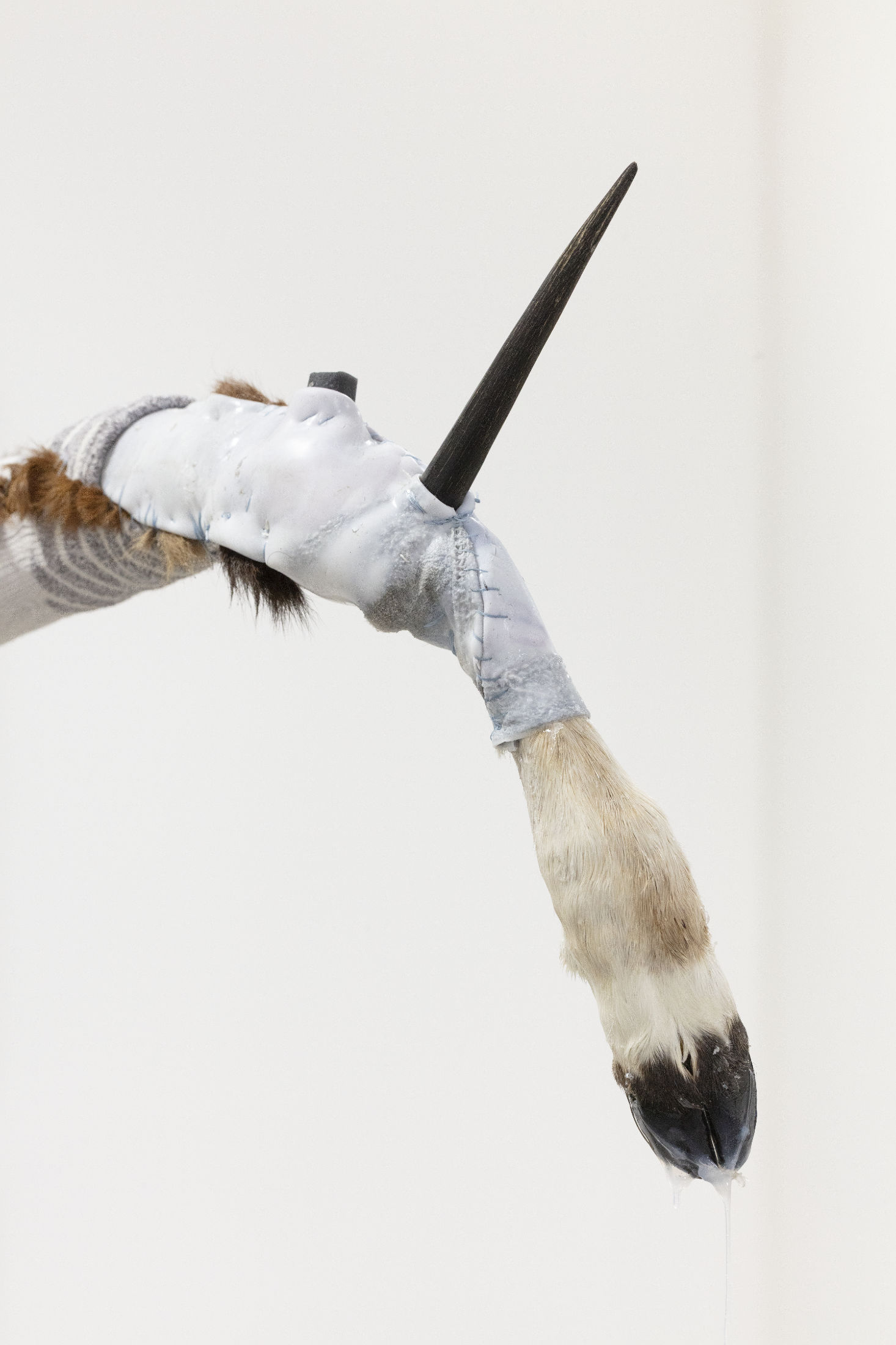
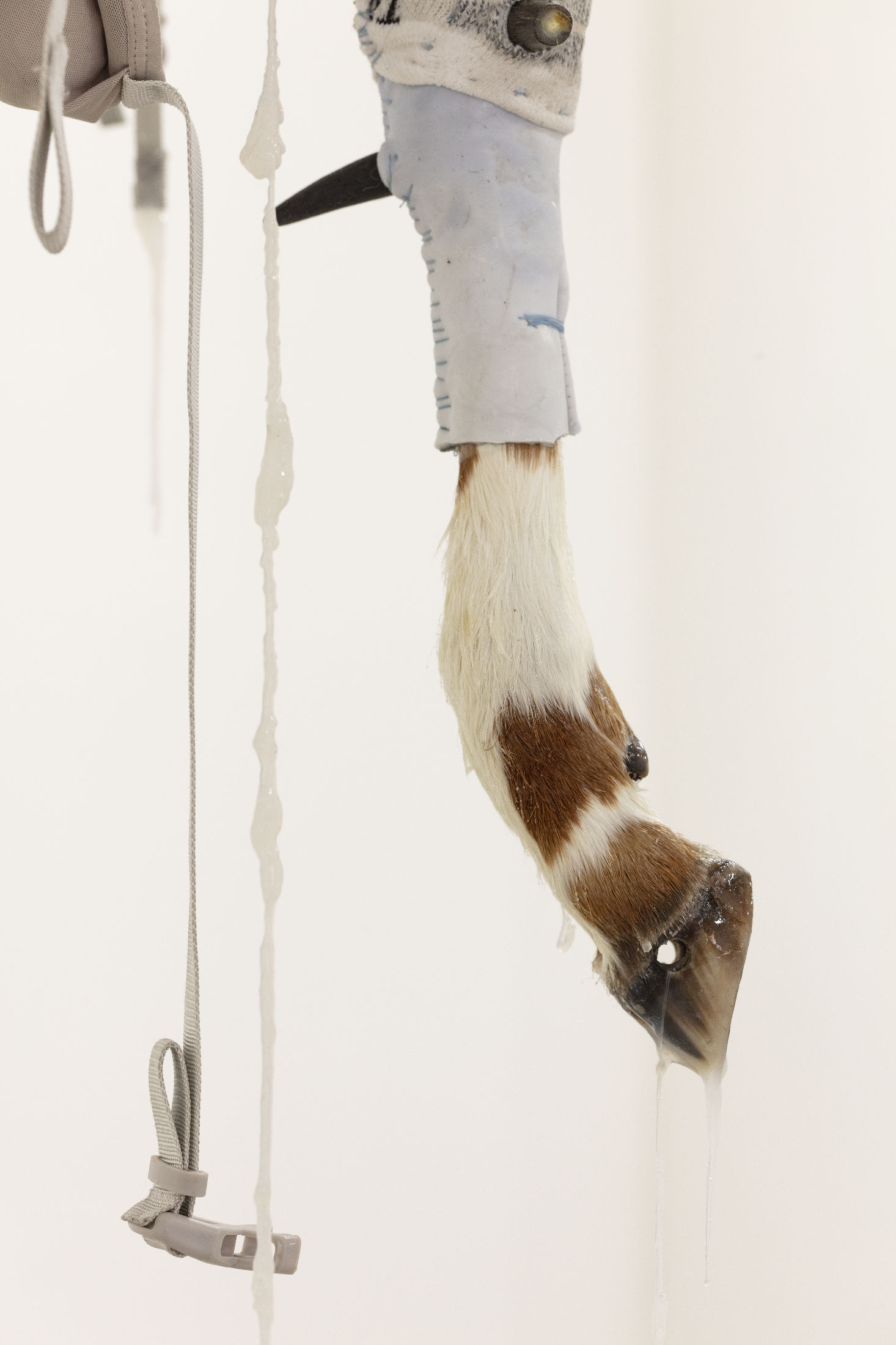
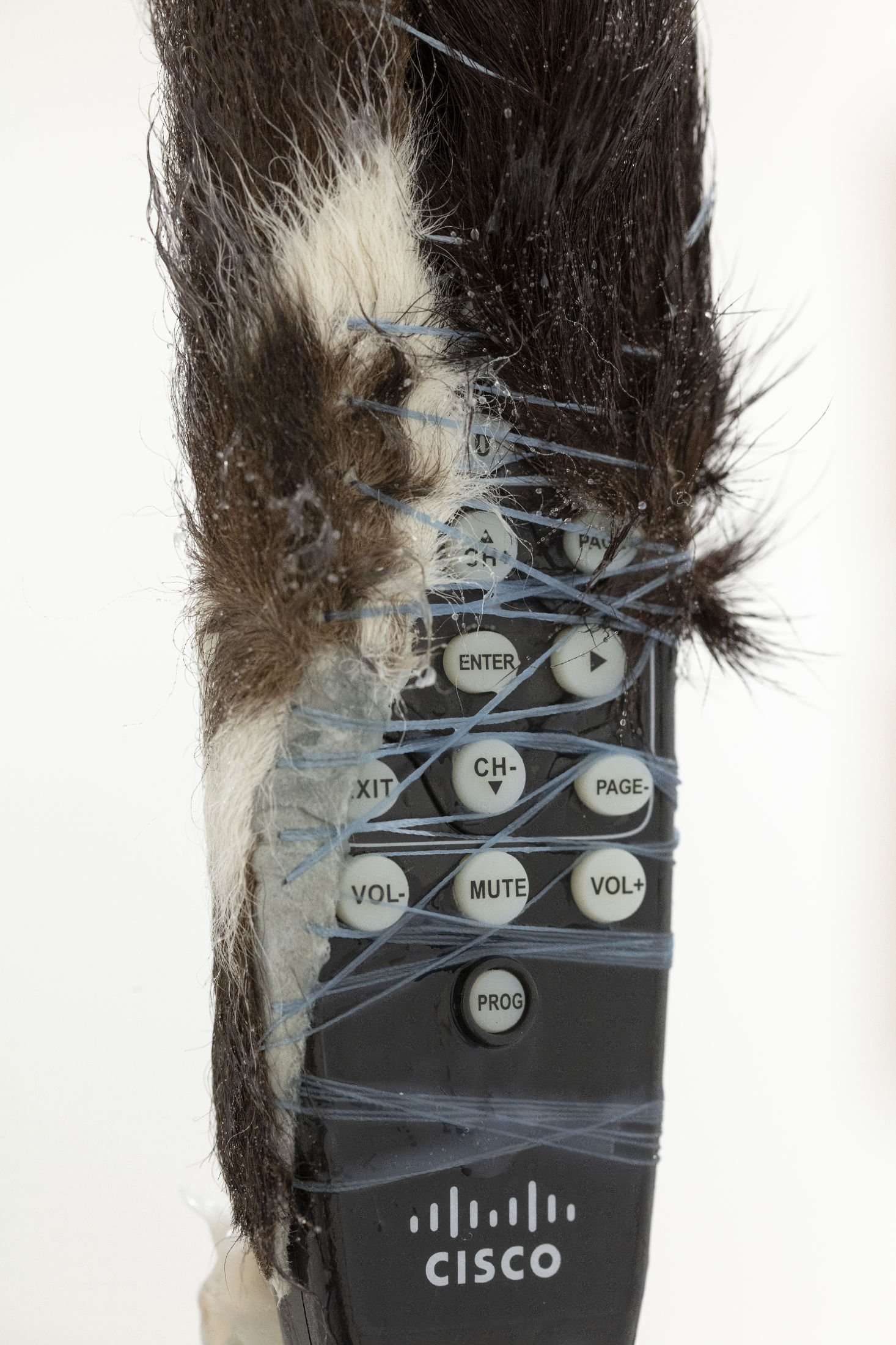
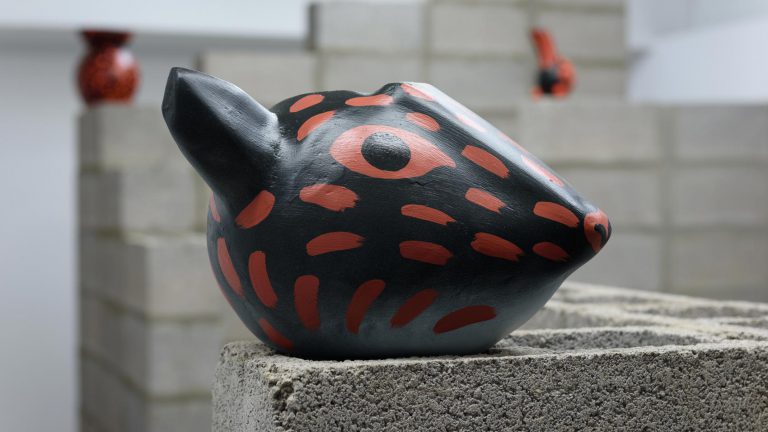
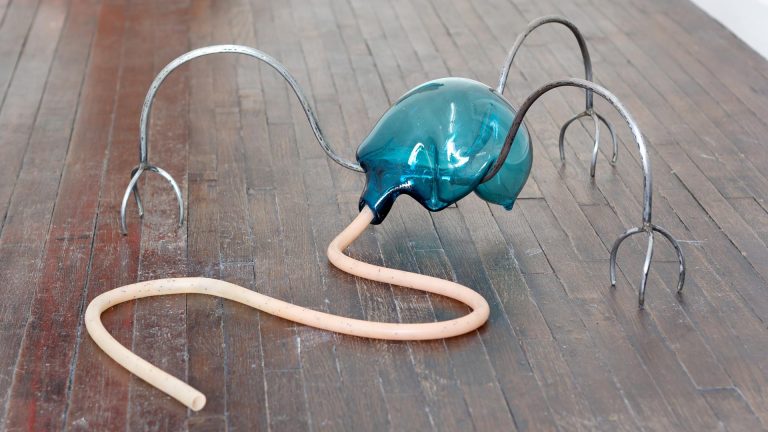
Rubén Ulises Rodríguez Montoya creates hybrid entities through speculative fiction, Nahualismo, and sci-fi, weaving together border culture and family labor. In his work, beings that derive from abject queer fecundity shapeshift between hybrid states—the mundane, the terrible, and the sacred—forming a cosmology that is at once familiar, communal, and deeply personal. These figures explore how violence erodes communities of color by merging land, human, and animal into forms that are both sacred and monstrous.
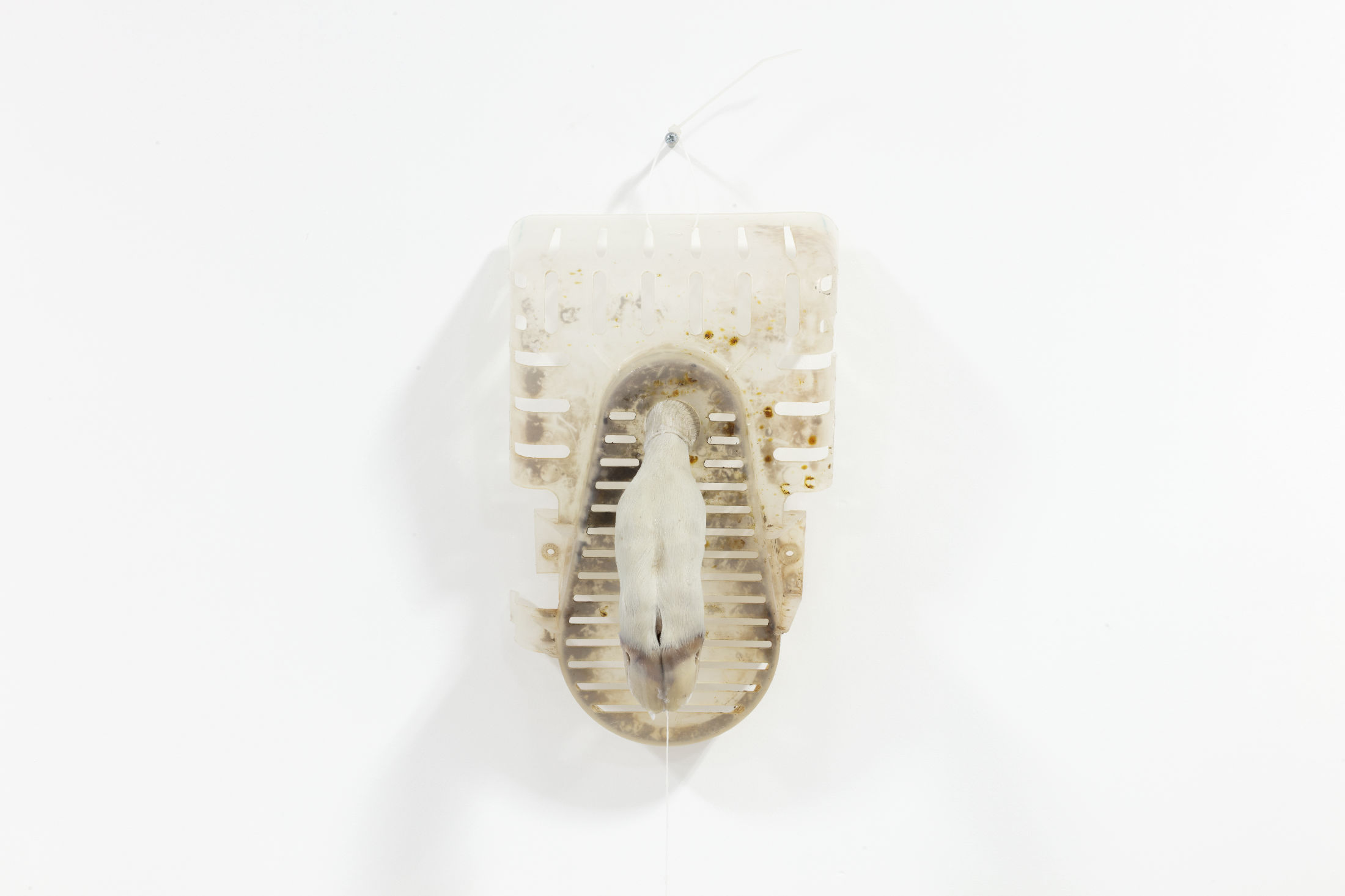
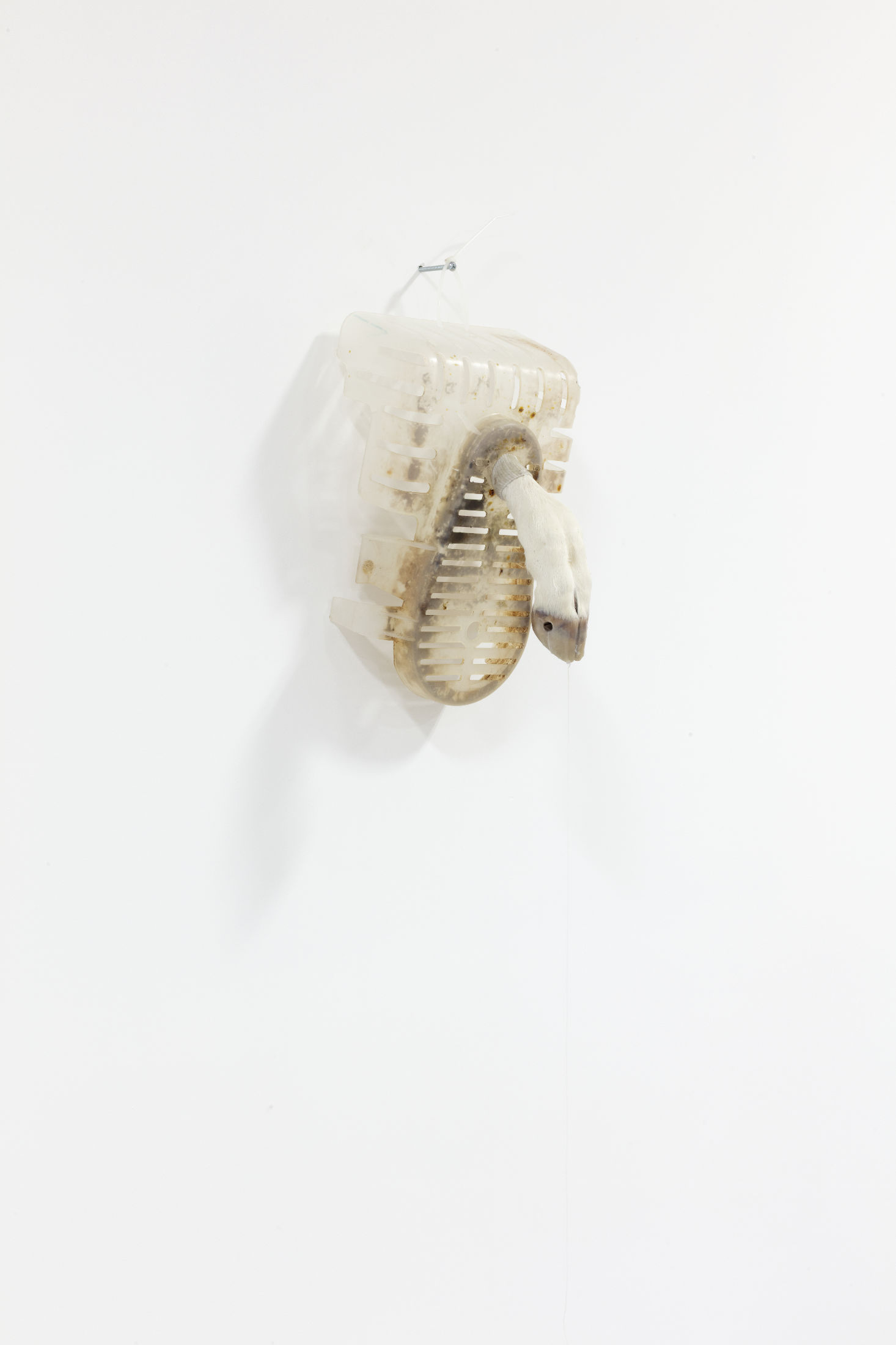
As a mythological genesis, Rubén’s work evolves through refuse and toxicity, becoming bodies that reflect ecological collapse, migration, and survival. His practice reclaims histories, confronts border violence, and imagines futures already unfolding. Using his own clothing and detritus gathered while walking the desert along the U.S.–Mexico border, his sculptures embody movement and mutation, shaped by environmental harm into liminal, abject figures centered on adaptation and mestizaje.
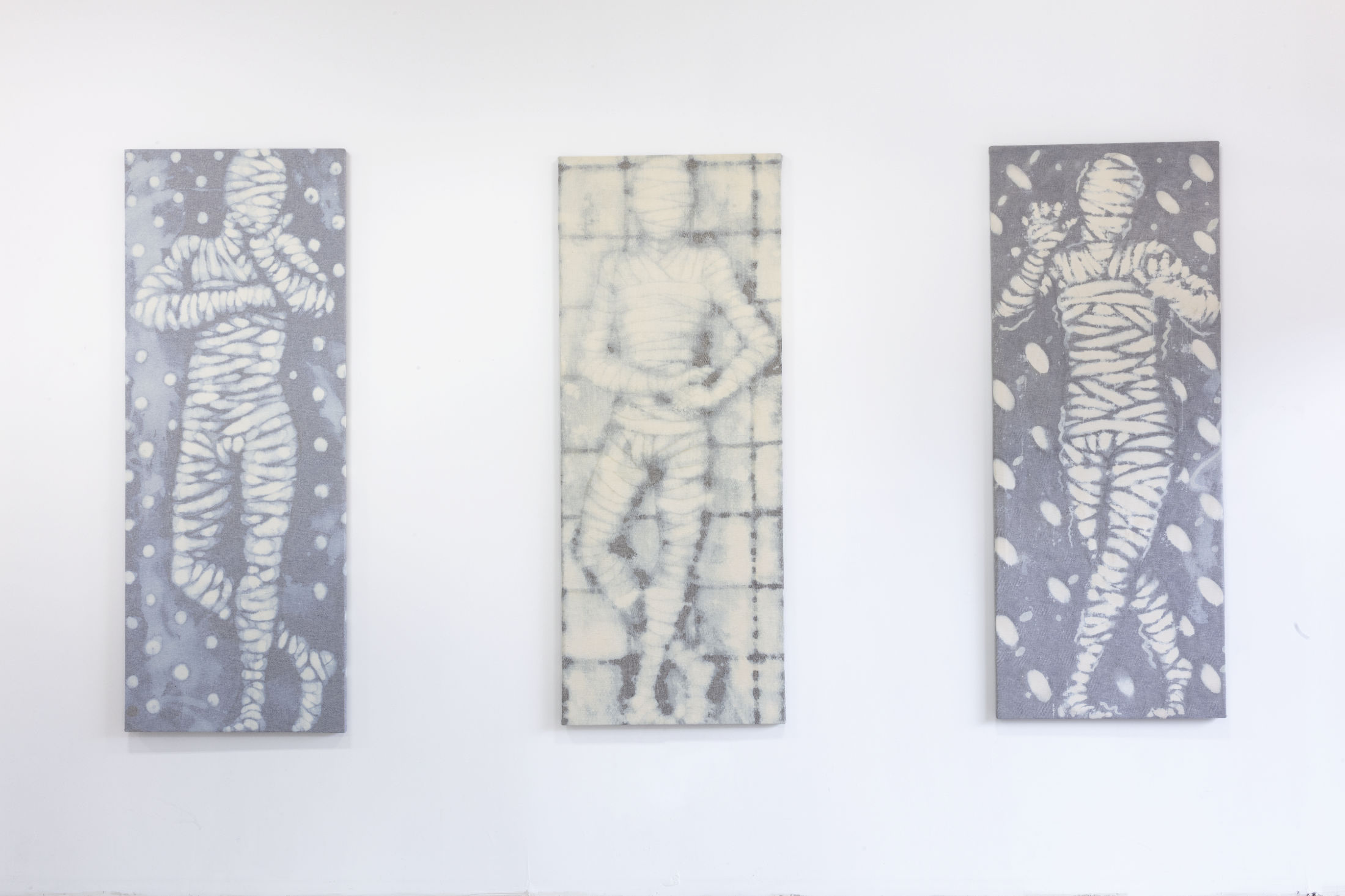
Michael Van den Abeele lives in Brussels and works across a variety of media, including painting, furniture, and narrative forms.
As scripts of reproduction and resurrection—understood as both forms and economies—the artist reappropriates materiality as mythology, proposing emancipation through seduction.
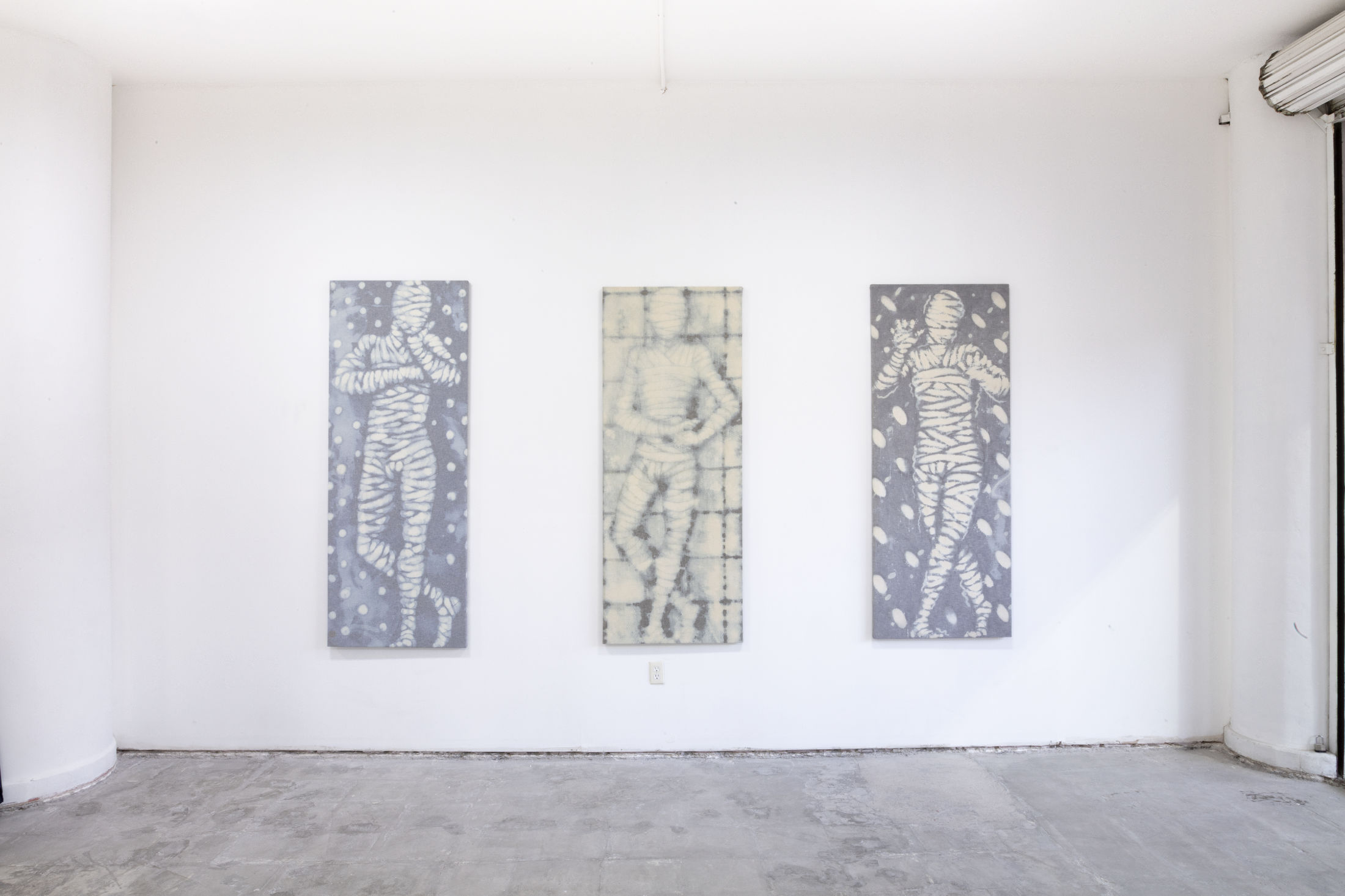
The mummies paintings presented at silhouettes evoke a mannerist death cult, and a human quest for eternity. The mummy—once an irreproachable aristocrat—has been transformed into a popular icon, here represented on bleached denim; displacing jeans from the domain of workwear to be reconfigured as ornament.
A commodity emerging from the throes of the market; a desire for legibility and discernible form.
Neither fully subject nor object, the mummies embody a human pursuit of eternity. At once iconic and anonymous, each figure remains resolutely individual: a bourgeois-bohemian or a performer of suspended time.
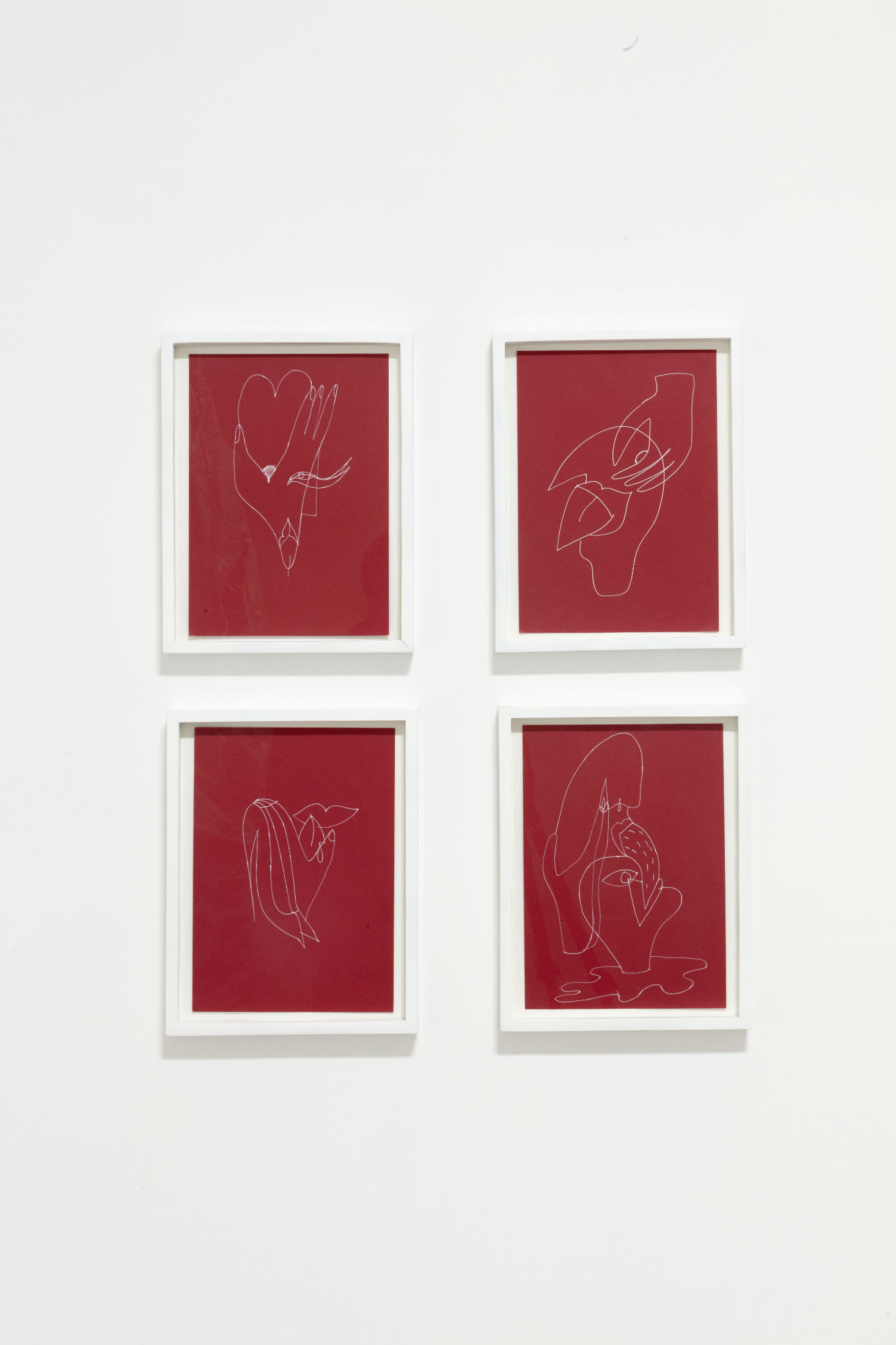
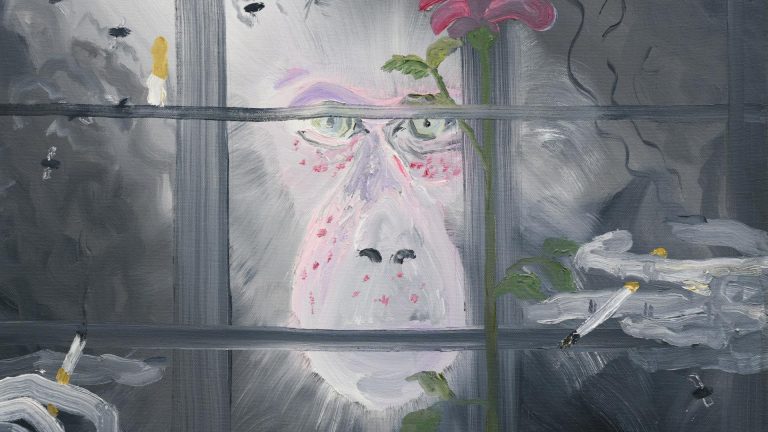
Vava Dudu perceives bodies as a candid language of signs and symbols, creating overlapping polymorphed drawings, the artist recurrent elements; mouths, tongues, breasts, fingers, eyes, tears, affirm that there is nothing abject about desire. With a drive similar to graffiti the artist provides a distincitive graphic language of bodies making out with another displaying erotic iconographies free of codes and norms, spreading across surfaces.
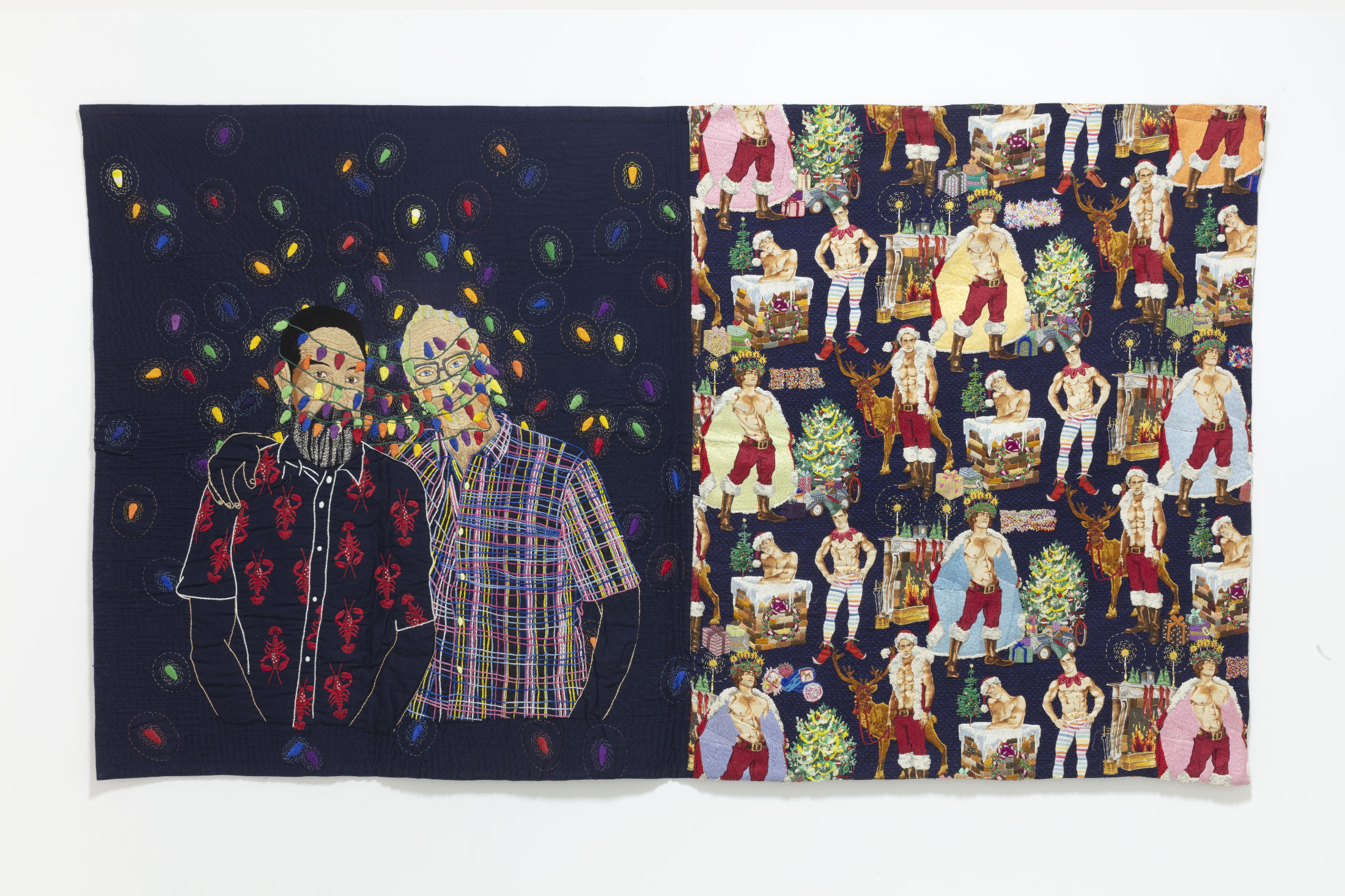
Chiachio & Giannone are an Argentine artistic duo who create all of their works collaboratively, dissolving the idea of individual authorship into a single shared identity. Working across embroidery, painting, ceramics, porcelain, and textile mosaics, they approach stitching as a painterly gesture, producing richly detailed portraits that reimagine themselves and their pets through diverse cultural, historical, and fantastical identities. Their practice blends theatrical humor, queer representation, craft traditions, and references to both modern and outsider art, while also embracing activist, environmentalist, and anti-productivist values through slow handmade processes and the reuse of domestic fabrics.
Expanding beyond the intimacy of their partnership, their participatory projects engage LGBTQ+ communities, migrants, and the public in collaborative works that celebrate artisanal traditions and collective identity.
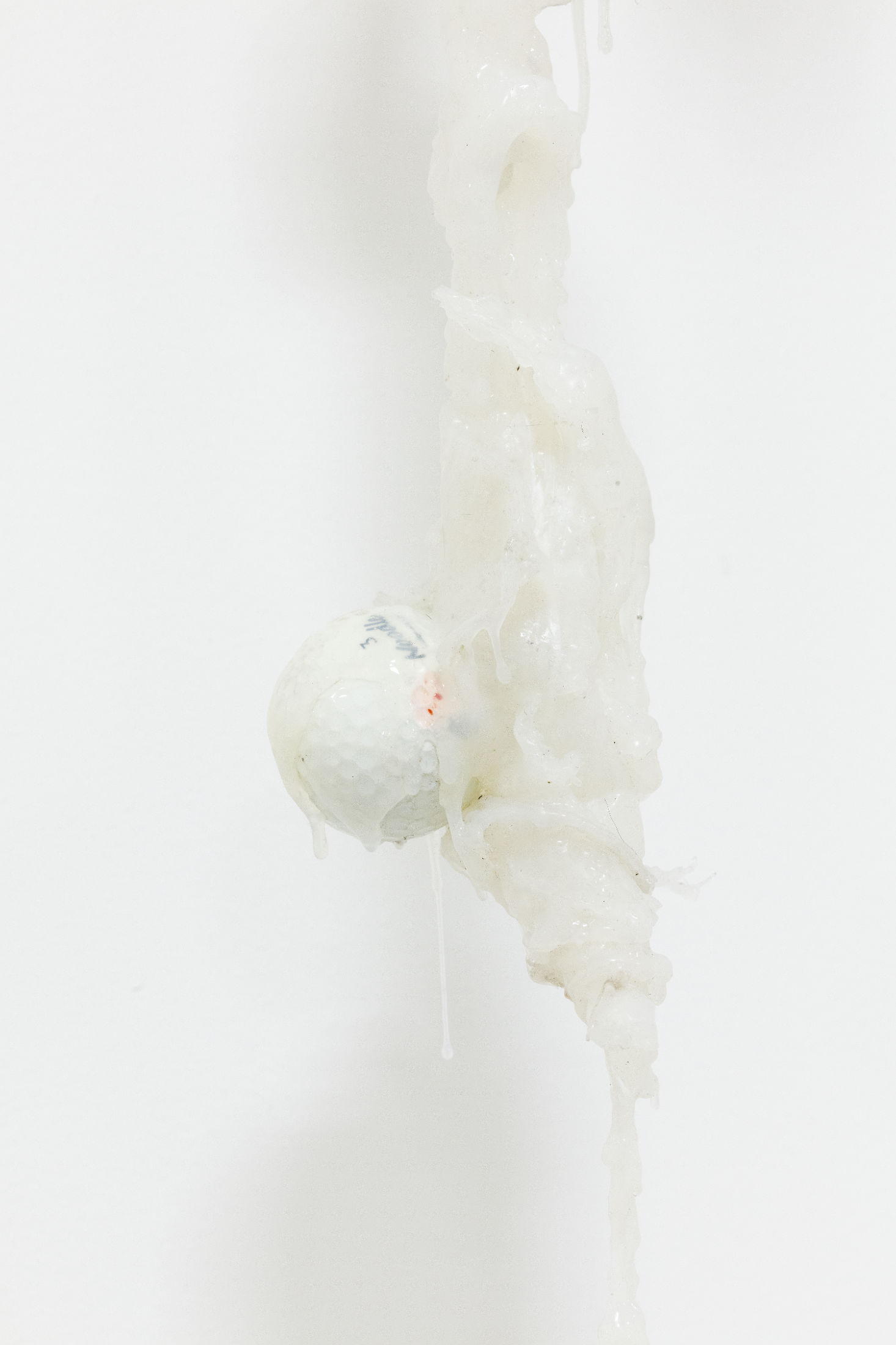
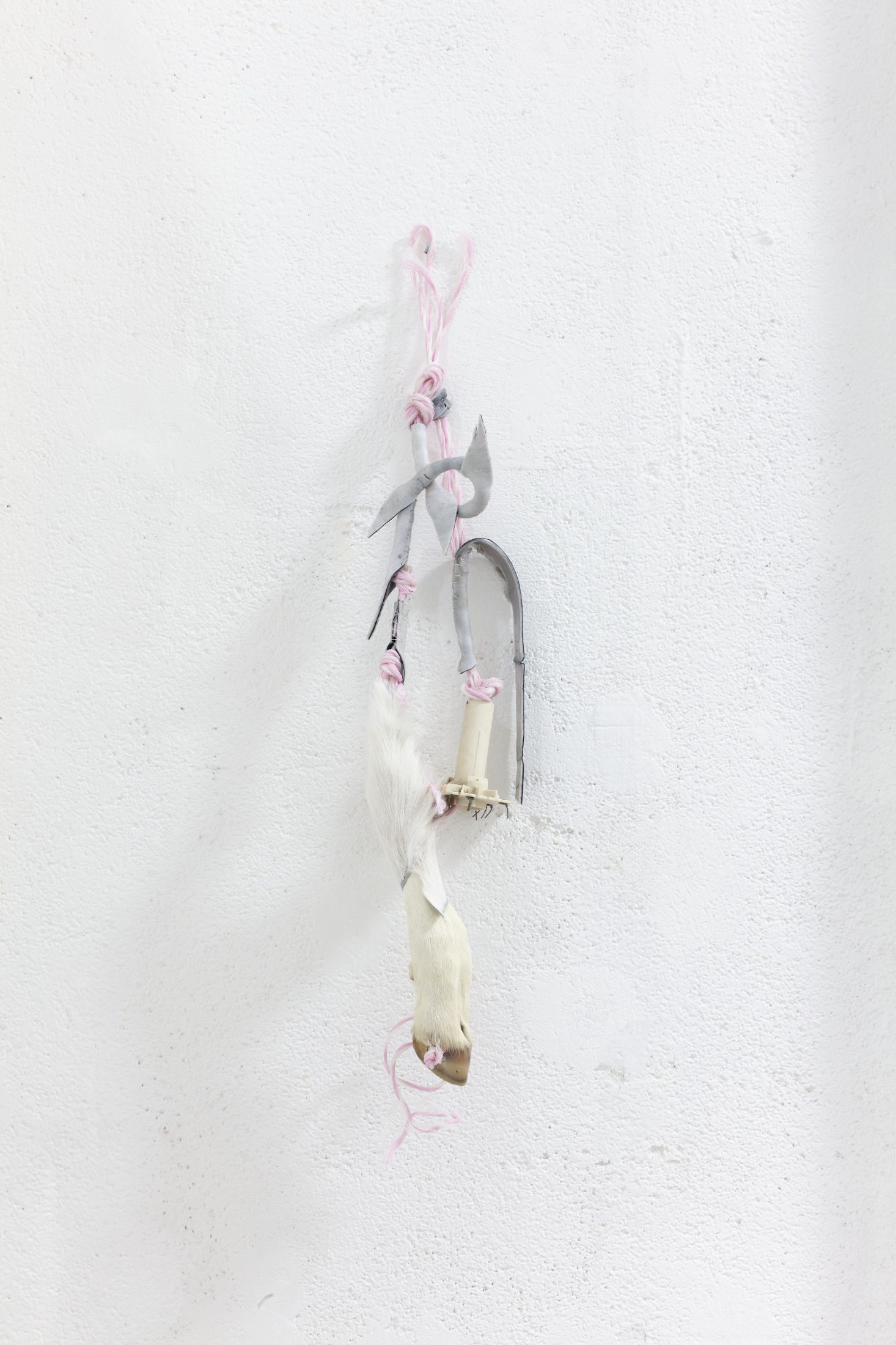
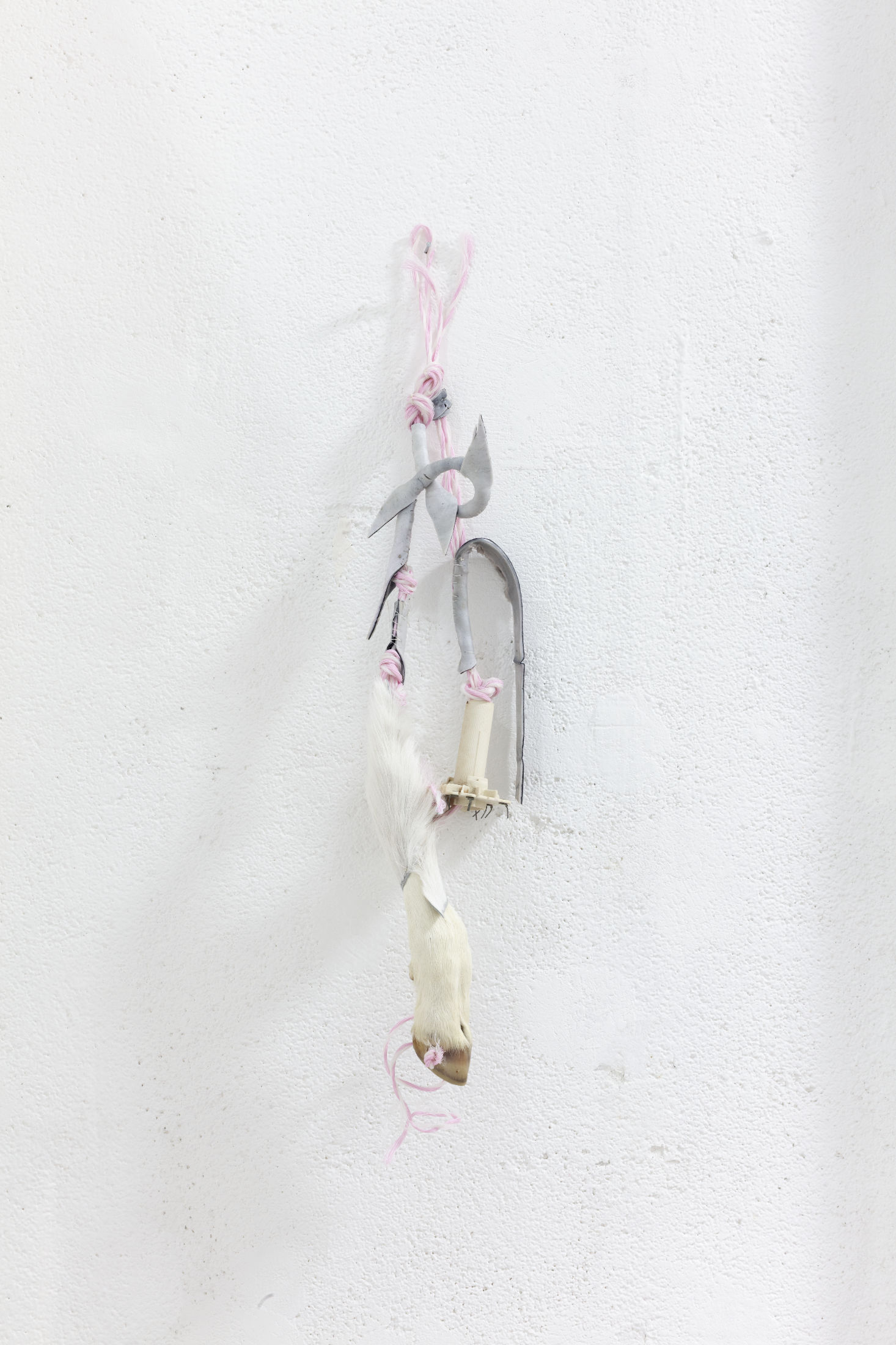
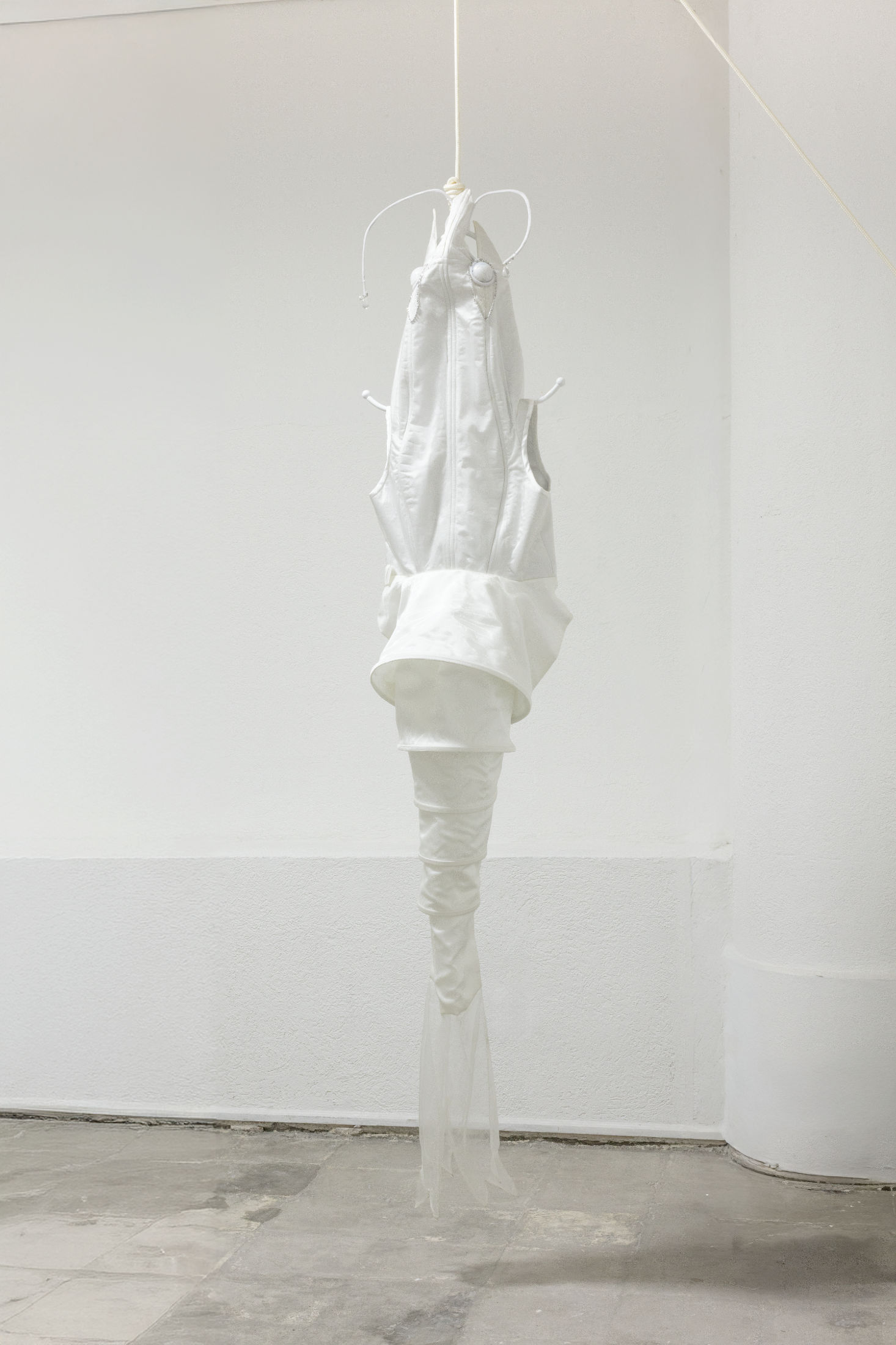
Aline Bouvy is a visual artist whose work explores the universal through the body, space, and social norms. Rooted in a feminist perspective, her practice subverts conventions and transforms the body into a medium of expression. Created for the 2024 exhibition at Triangle-Astérides in Marseille, the costumes were conceived with an anxiety-inducing white neutrality. Suspended on hooks in the first part of the divided exhibition space—described by the artist as “the vestibule”—majestic figures inspired by Mediterranean fish and shellfish evoke a theatrical and unsettling landscape, somewhere between a miners’ dry room, a deserted carnival, and a silent ritual awaiting performance.
Biographies:
Nahum B. Zenil (1947, Chicontepec, Veracruz, Mexico) Lives and works in Tenango del Aire, Mexico. He graduated in 1964 as a teacher at the National School of Teachers and in 1972 from “La Esmeralda”Academy Mexcio City. Together with his partner Gerardo Vilchis are the founders of Tecomate where more than 60 exhibitions and poetry encounters have been motivated. Solo exhibition include José María Velasco Gallery, Mexico City; Carrillo Gil Museum; the Museum of Modern Art, Mexico City, Marie Anne Martin/Fine Art, New York; The Mexican Museum, San Francisco, California; Fine Art Gallery. University of Southern Colorado.
Nahum B. Zenil is currently presenting a retrospective exhibition at Museo Universitario del Chopo curated by Sol Henaro and Miguel A. López. His work is part of the exhibition Frida. The Making of an Icon at Museum of Fine Arts Houston / Tate Modern, UK
Frieda Toranzo Jaeger (b. 1988 Mexico City, Mexico) lives and works in Mexico City. Frieda obtained her postgraduate degree from the Hochschule Für Bildende Künste Hamburg, after having completed her professional studies there. In 2022, she was awarded the HISCOX Art Prize in 2016 and The Finkenwerder Förderpreis Prize from her alma mater. Solo exhibitions of her work include Visioni, at the Bonollo Foundation, Italy (2026); A future in the light of darkness, Modern Art Oxford, UK (2024); Autonomous Drive, MoMA PS1, New York (2023); and The Perpetual Sense of Redness, Baltimore Museum of Art (2021). A large-scale commissioned mural was exhibited as part of the 2024 Venice Biennale’s exhibition, Stranieri Ovunque – Foreigners Everywhere, curated by Adriano Pedrosa. Her work can be found in international museum collections including the Hammer Museum of Art, Los Angeles; The Bronx Museum of Art, New York; Museo Jumex, Mexico City; the Detroit Art Institute; The San Antonio Museum of Art, Texas, and Inhotim Museum, Brazil. She is currently a certificate student at the new center for research and practice in critical philosophy.
Rubén Ulises Rodríguez Montoya (b. 1989 in Parral, MX) lives and works nomadicly Past solo exhibitions include ICA San Diego, San Diego, California (2025); Skinchangers, moCa Cleveland, Cleveland, Ohio (2024); James Webb and The Thestral Born Without a Vertebrate – Sargent’s Daughters, New York, NY (2022); Ex Situ Canis Latrans, Murmurs, Los Angeles, CA (2021). Group exhibitions include Flow States, La Trienal 2024, El Museo del Barrio, curated by Susana V. Temkin, Rodrigo Moura, Maria Elena Ortiz, NYC Artist Space, New York, NY; Perhaps the Truth, Ballroom Marfa, curated by Daisy Nam, Marfa TX; Durian on the Skin, Ghebaly Gallery, Los Angeles, CA; Palm Springs Museum of Art, Palm Springs, CA, among others.
Michael Van den Abeele (b. 1974 in Brussels, Belgium) lives and works in Brussels. Past exhibitions include KIN Brussels; Cherry Hill, Cologne; The Wig, Berlin; Museum Dhondt-Dhaenens, Deurle; Fanta-MLN, Milan; Museum Leuven; Stadtgalerie Bern; Etablissement d’en face, Brussels and WIELS Brussels. Upcoming exhibitions include Kölnischer Kunstverein and CRAC Alsace, Altkirch.
Vava Dudu (Paris, 1970) Lives in Paris and Berlin. Growing up in Paris in the early seventies to parents from Martinique, she quickly rose to prominence in the fashion world with her upcycled pieces: a first designer job for Jean-Paul Gaultier in 1997 led to her winning the prestigious ANDAM prize after teaming up with costume designer Fabrice Lorrain. Dudu is the lead singer in the neo-punk band La Chatte, she has exhibited her clothes in showrooms around Europe and her catwalks are an anthem to the underground. Her work has been presented in mayor group exhibitions and performances in Palais de Tokyo (FR), Le Confort Moderne (FR) and Komplot (BE). Exhibitions have taken place at Villa Arson, Nice; Musée d’Art Moderne de la ville de Paris (both 2019); and Lafayette Anticipations, Paris (2018).
Leo Chiachio (Buenos Aires, 1969) studied at the Escuela Nacional de Bellas Artes Prilidiano Pueyrredón and the Escuela Superior de Bellas Artes Ernesto de La Cárcova, while Daniel Giannone (Córdoba, 1964) trained at the Facultad Nacional de las Artes de la Universidad de Córdoba and attended workshops with Sergio Bazán and Teresa Lascano. Together, they have exhibited extensively in Argentina and internationally, including at the Victoria and Albert Museum, Museum of Arts and Design, Museum of Latin American Art, and Lux Art Institute. They participated in the Bienal do Mercosul and Bienal Sur, received an award in Aubusson, France, in 2013, and won the Premio Adquisición Presidencia de la Nación at Argentina’s Salón Nacional de Artes Visuales in 2019. Their work actively contributes to discussions surrounding LGBTQ+ identities and contemporary family structures, and they have lived and worked together in Buenos Aires since 2003.
Aline Bouvy (1974, in Watermael-Boitsfort, Belgium), lives and works in Brussels, studied at the ERG – École de Recherche Graphique in Brussels, then at the Jan van Eyck Academie in Maastricht. Among her solo exhibitions, Cruising Bye at MACS Grand Hornu in Charleroi in 2022 constitutes the largest collection of her works shown to date. Recently, her work has been shown at Triangle-Astérides in Marseille (2024), Kunsthal Gent in Ghent (2021), New Space in Liège (2020), and Künstlerhaus Bethanien in Berlin (2019). She is representing Luxembourg at the Pavilion at the Venice Biennale Art 2026.