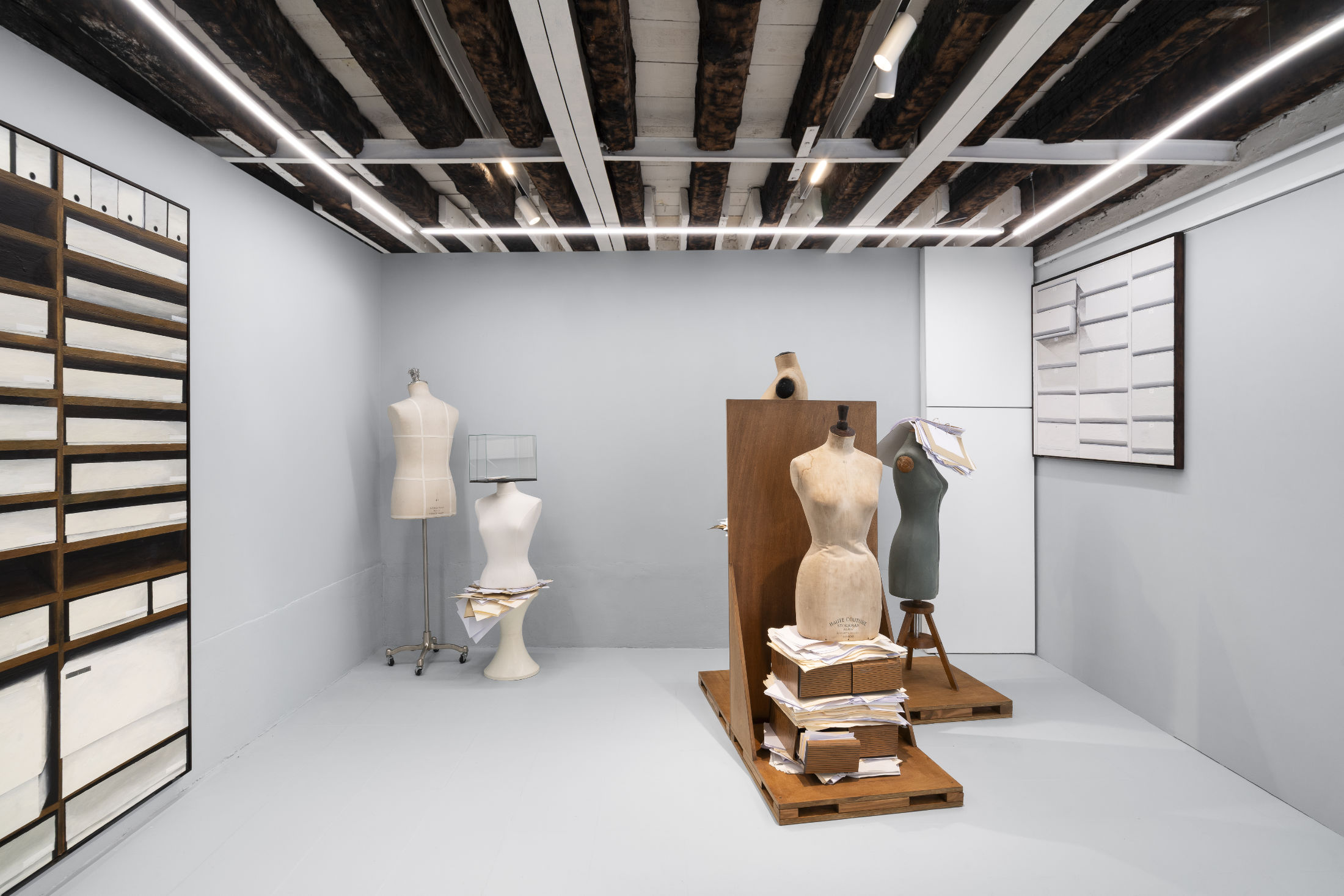
Hanna Rochereau’s archives are meticulously organised, her boxes well-arranged. Piled, packed and stacked, one can expect to find within them promptly the things previously lost. The Marseille-based artist is showing a new body of work in Data Divas, her first solo exhibition in Italy, taking place at Mare Karina, a gallery housed in a long-disused Venetian dry cleaner. On this occasion, Rochereau continues her study of archives, focusing on their display and organisational systems — the architecture of archiving and containment.
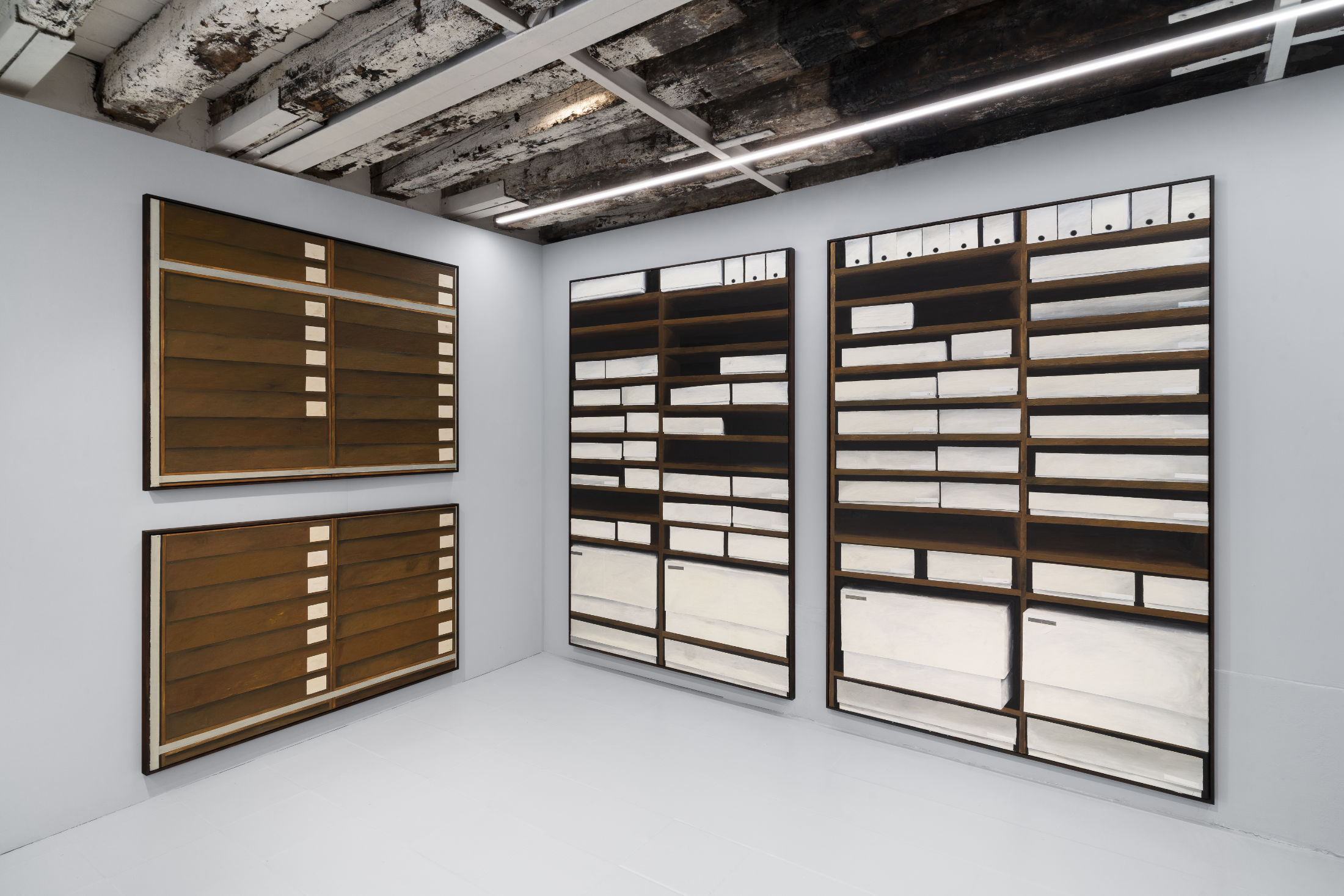
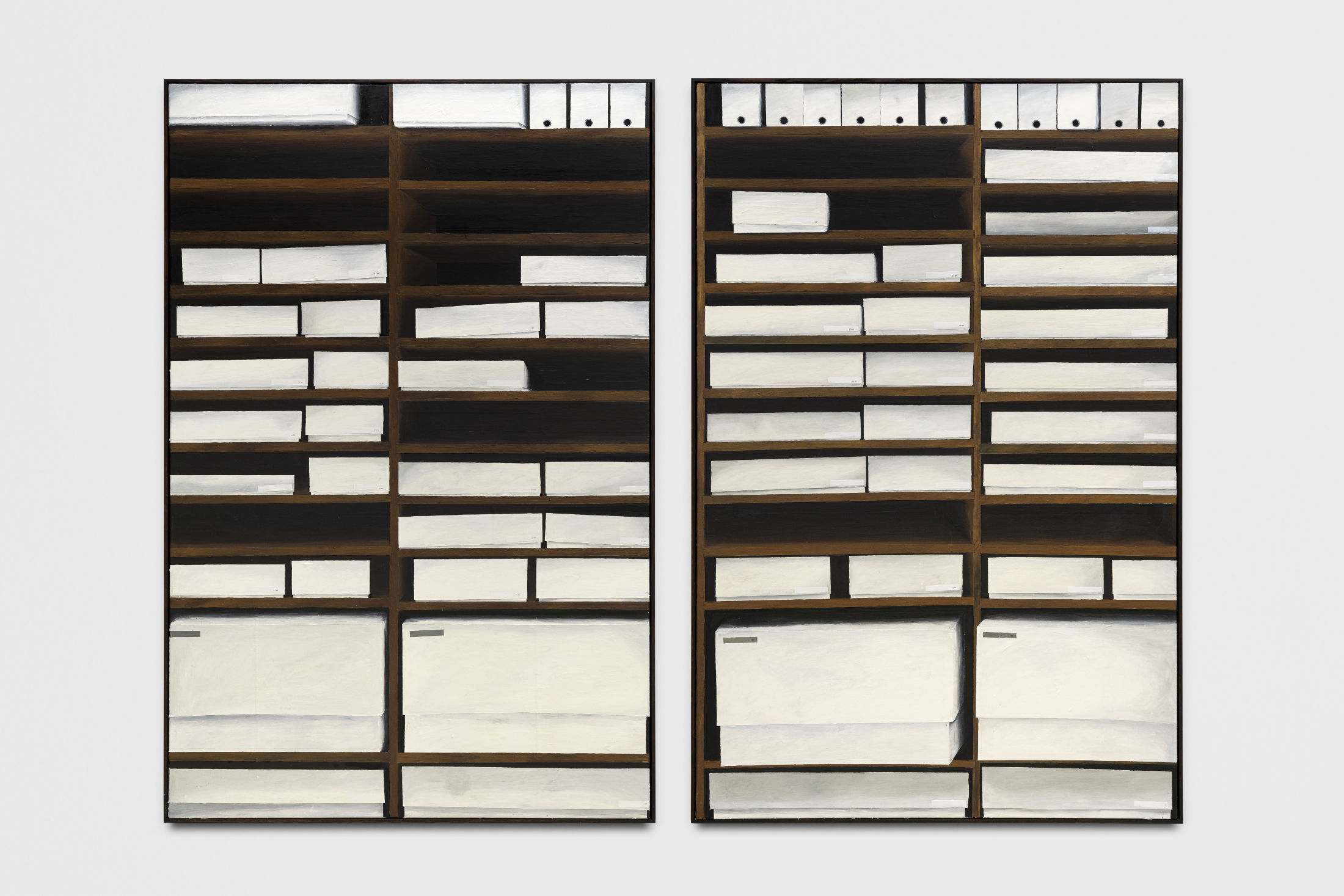
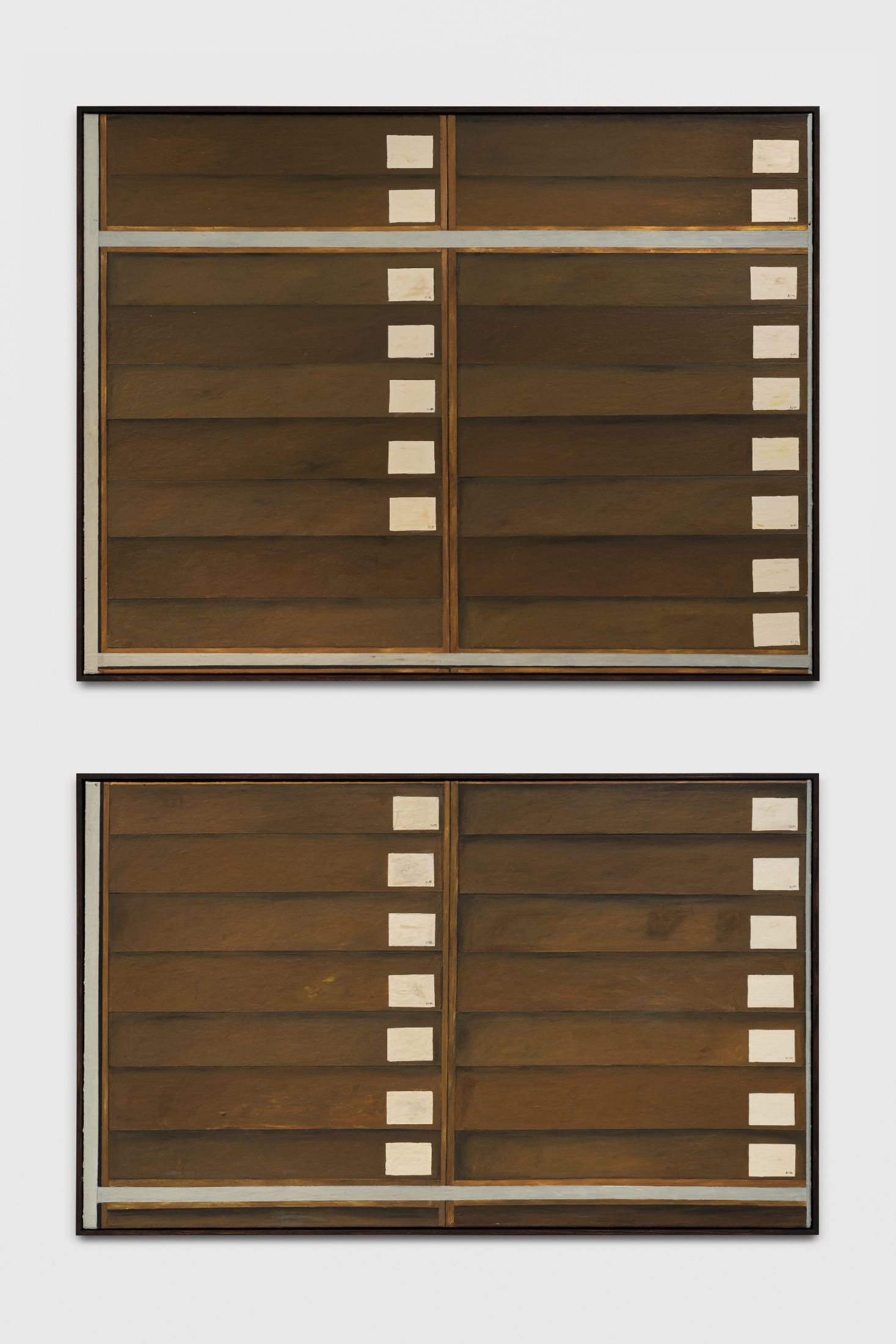
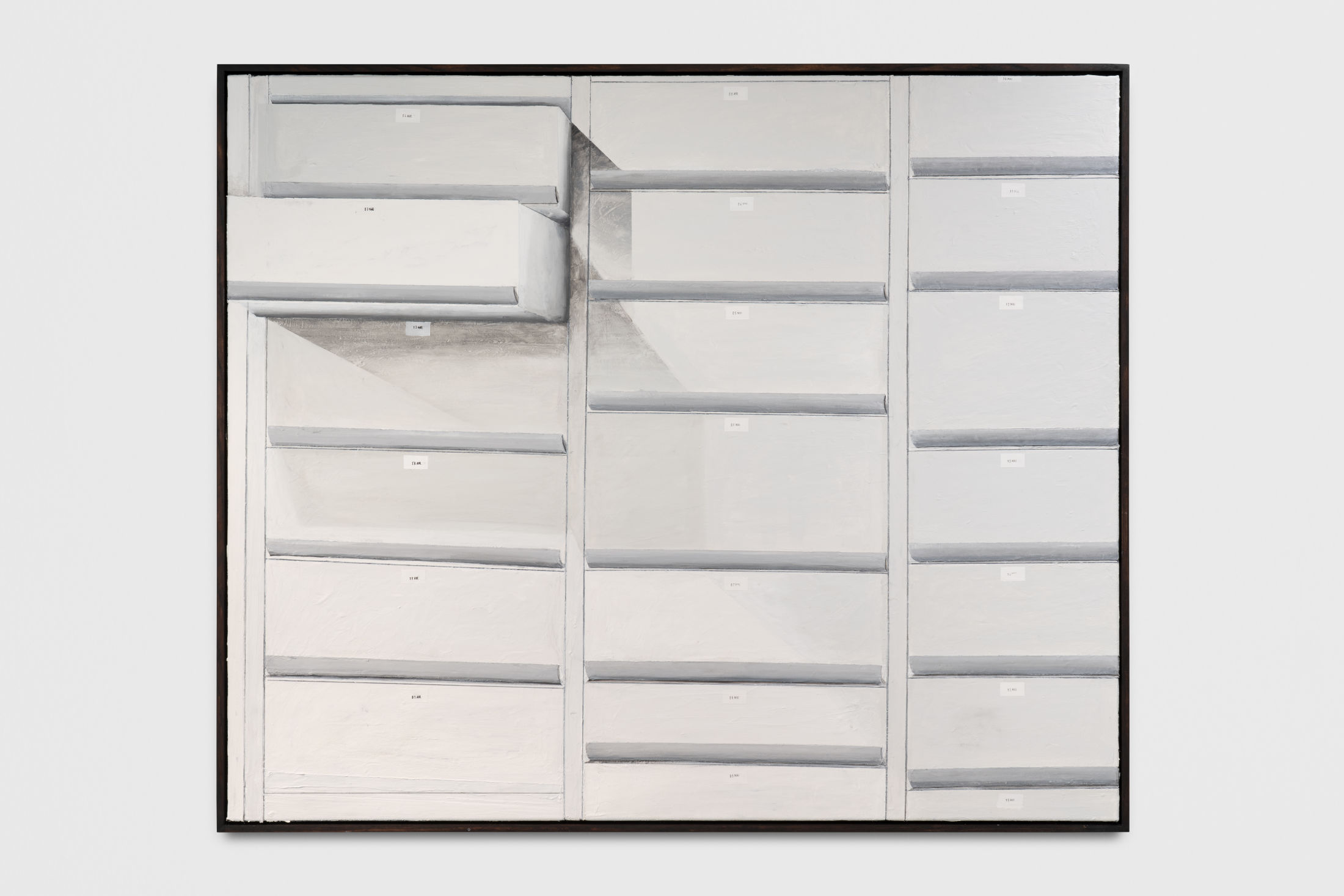
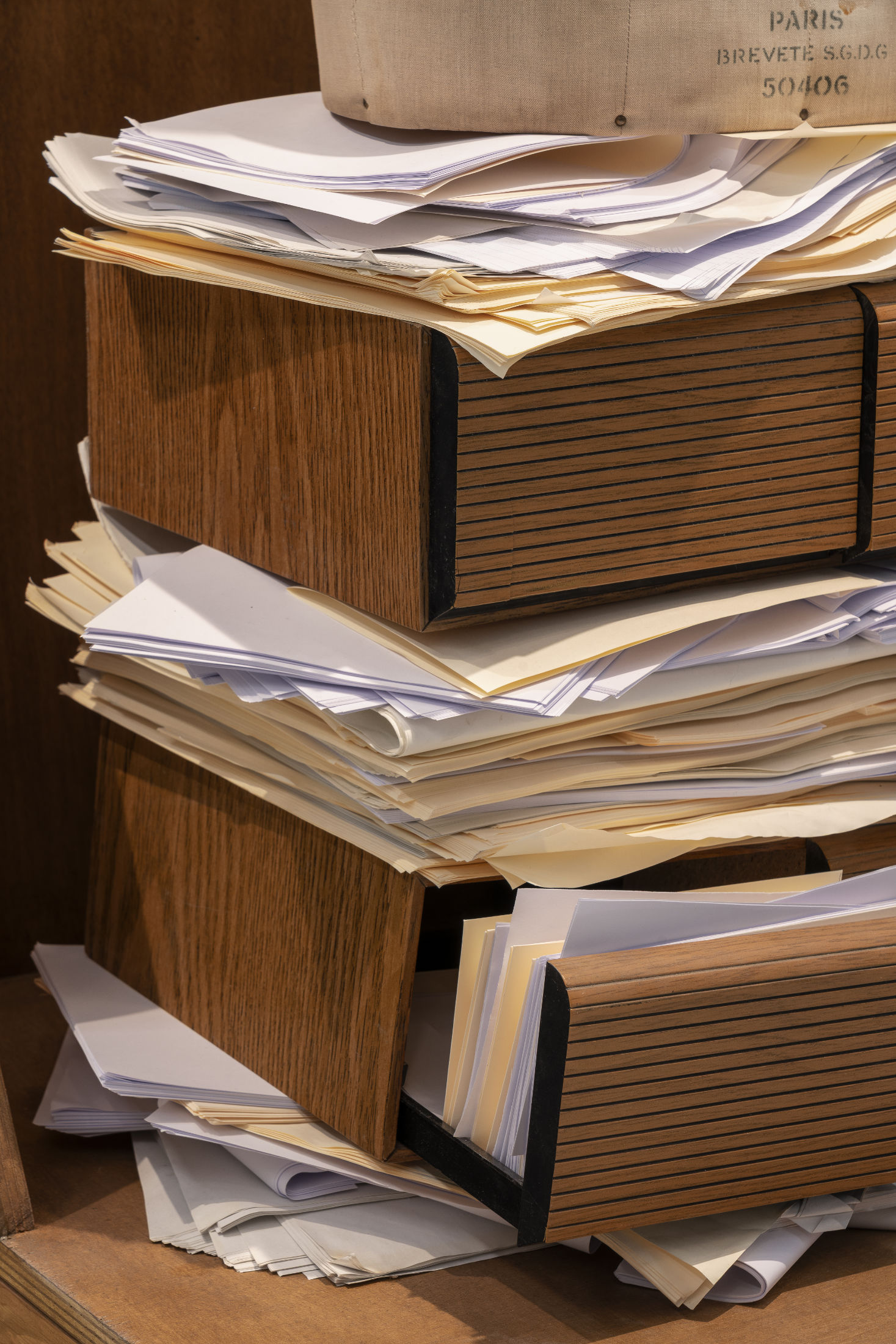
The three walls of the enclosed inner room of the gallery are taken by a series of new paintings. They feature vertical and horizontal boxes and shelves, capable of containing smaller boxes in seemingly infinite sequence. Through these works, the artist continues her formal analysis of interior motifs derived from various storage systems. The painterly forms are based on photographs taken or found by Rochereau herself. Two diptychs are on display here — the first series is titled The Moment 1 and The Moment 2, and the second Worn Once, Yours Forever 1 and Worn Once, Yours Forever 2. The former is horizontal and the second vertical, both depicting wooden repositories for papers and boxes of varied proportions. The titles of the diptychs suggest a tension between the eternal, the ephemeral and the recurrence. They are in marked contrast to the third painting in the room, Them, which features a grey-white colour scheme and suggests a recording system of industrial kind. In this painting, dates of unknown origins are inscribed on some of the drawers, and the partially opened box is a quaint suggestion of a lingering human presence.
A sense of distance and control is conveyed through a restrained palette of subdued brown, white and black tones. The almost tangible thickness of the archive is accentuated by the lack of depth in the painting, while the opacity conceals the contents of the boxes. The colours, shapes, textures and composition of the paintings evoke a visual connection with Synthetic Cubism of the 1910s. However, this is not a nostalgic nod or a historicist reference; Rochereau’s painting maintains a conceptual link with this artistic period, manifesting itself in an abstract form built upon careful observation of reality.
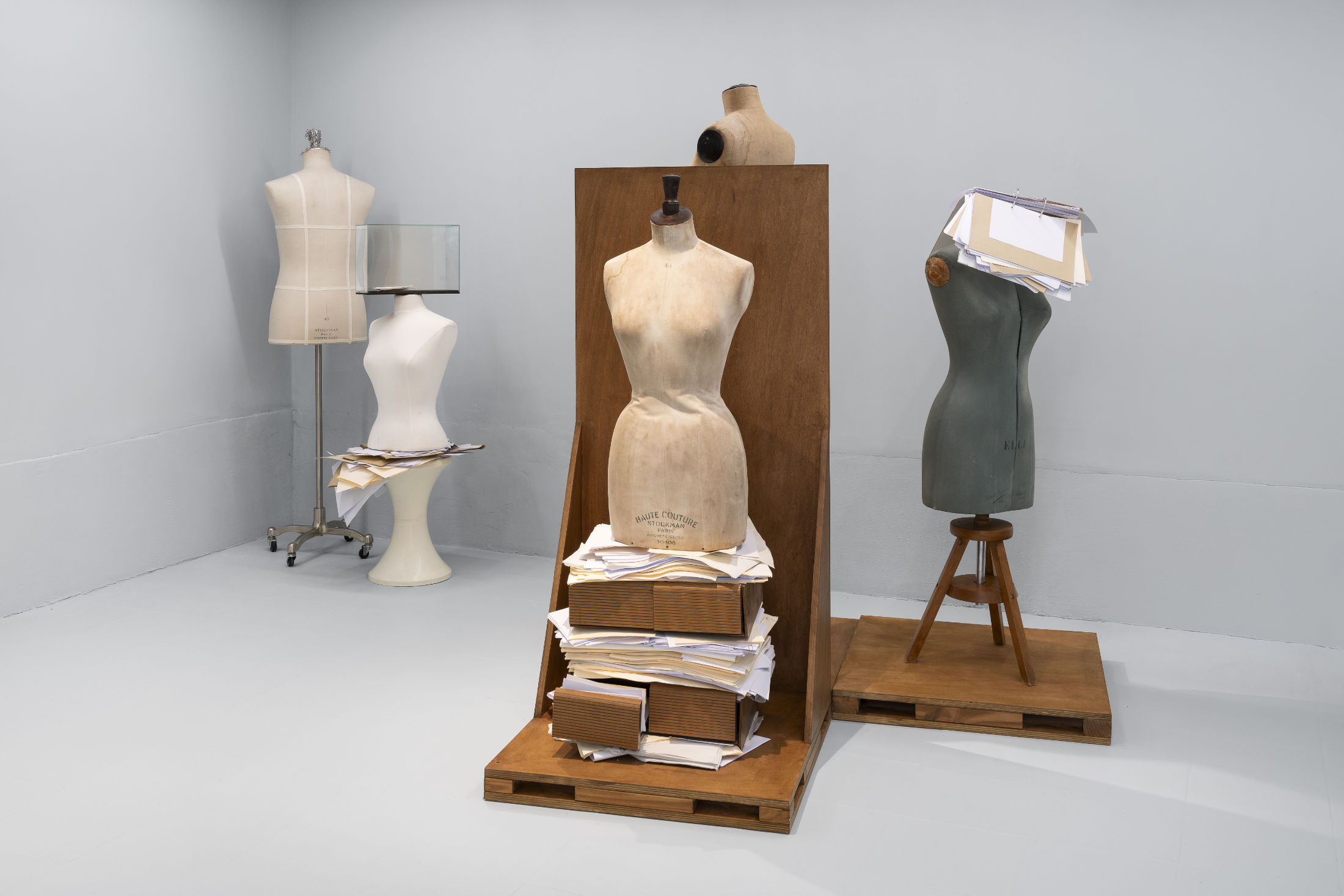
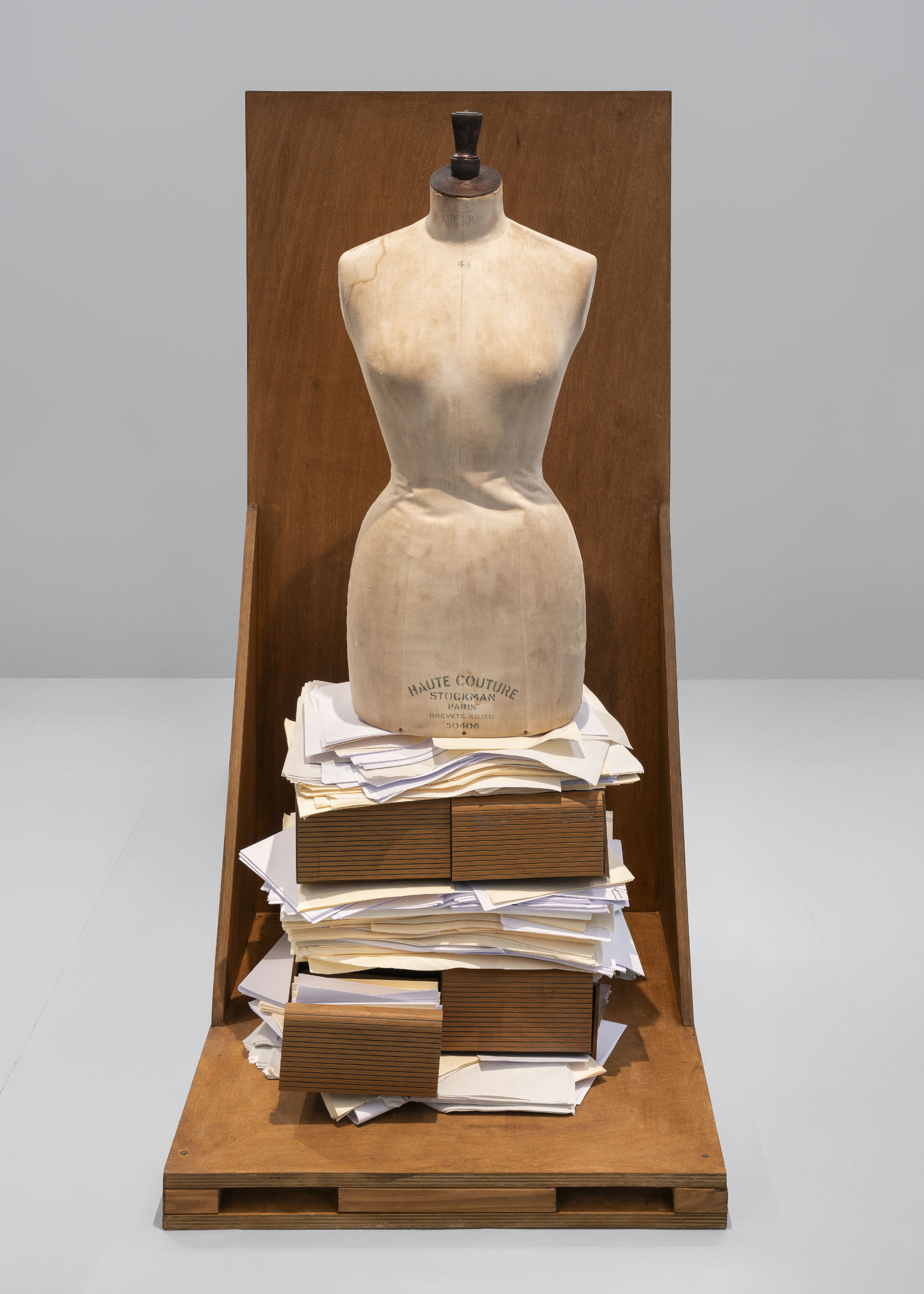
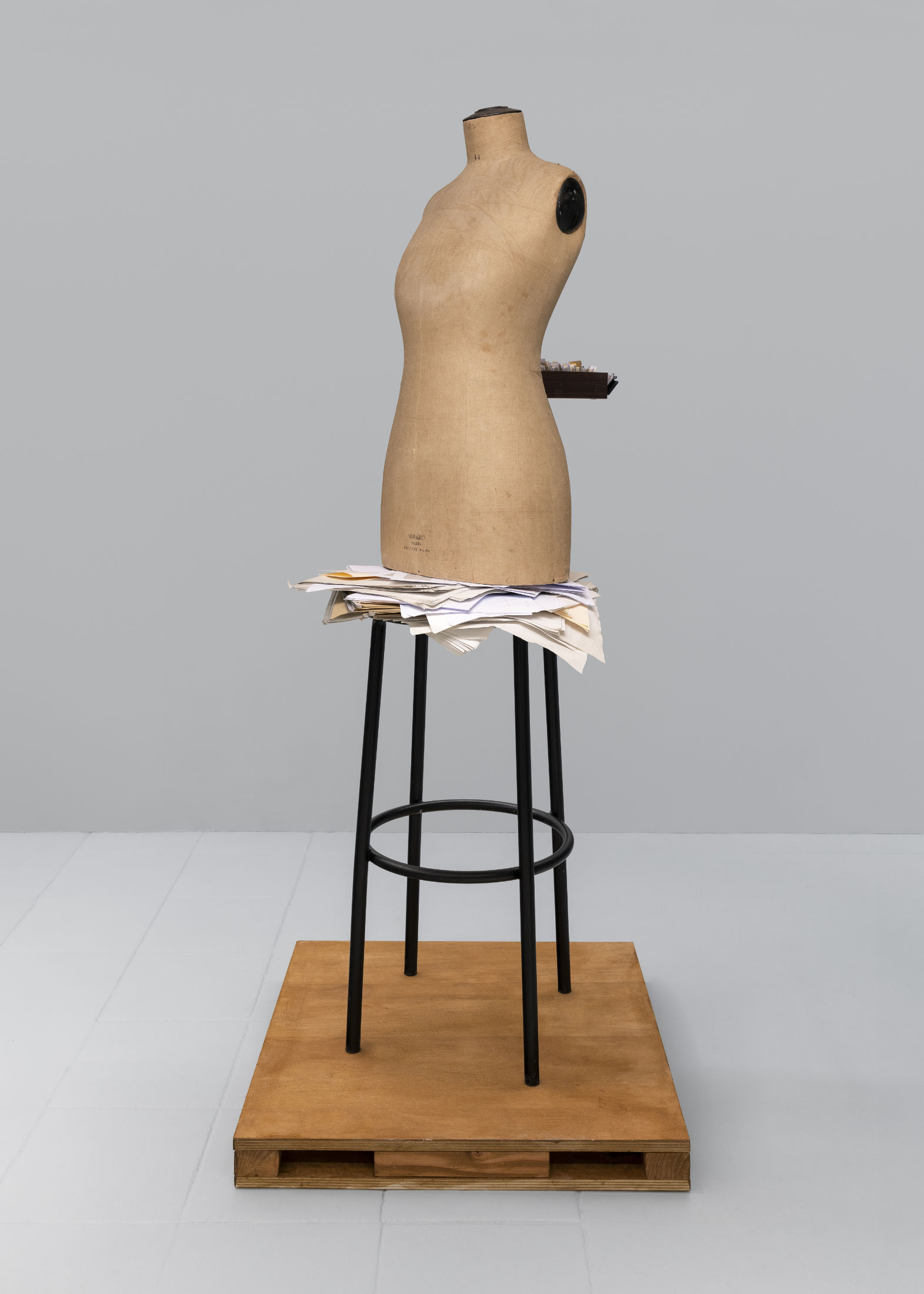
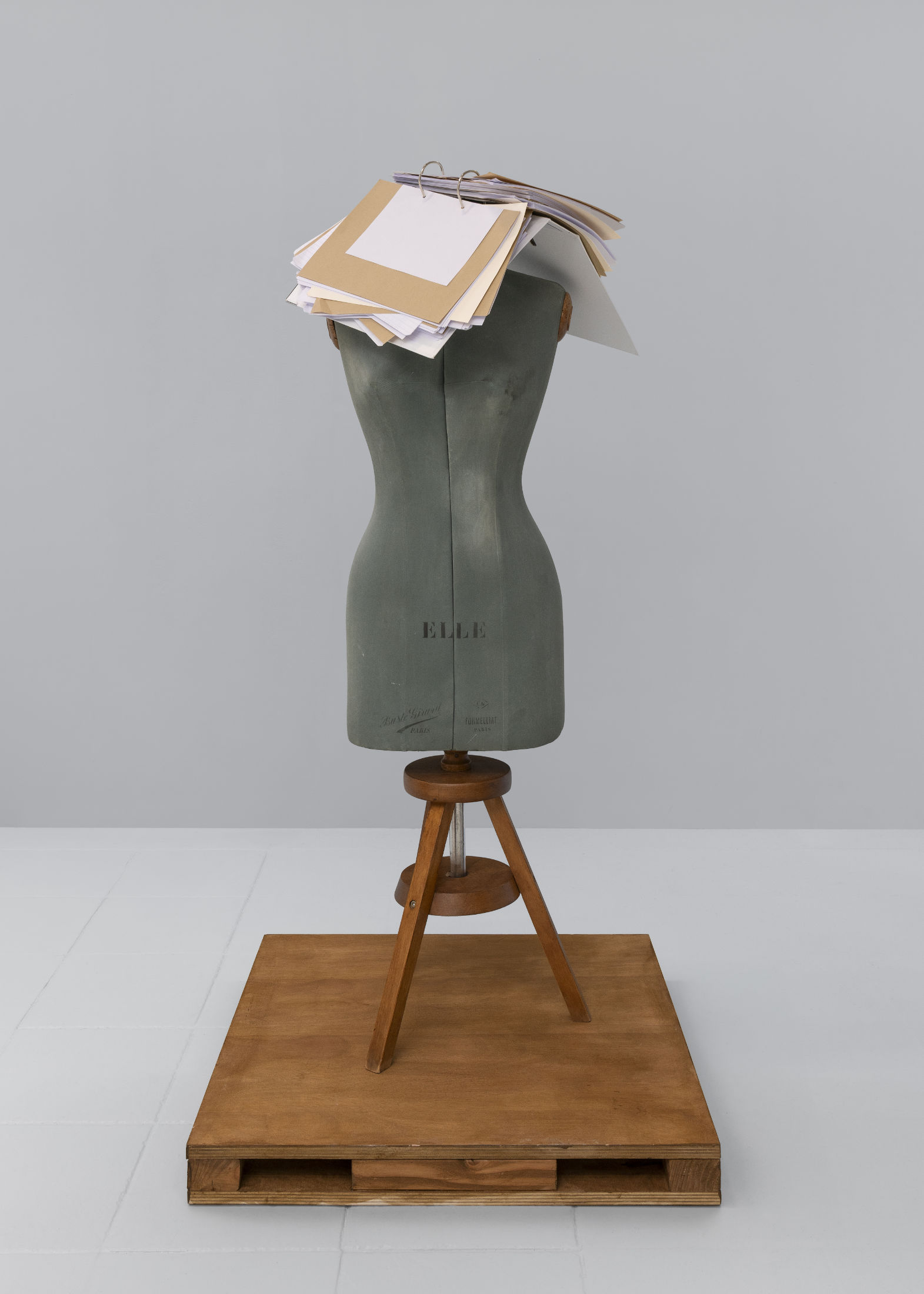
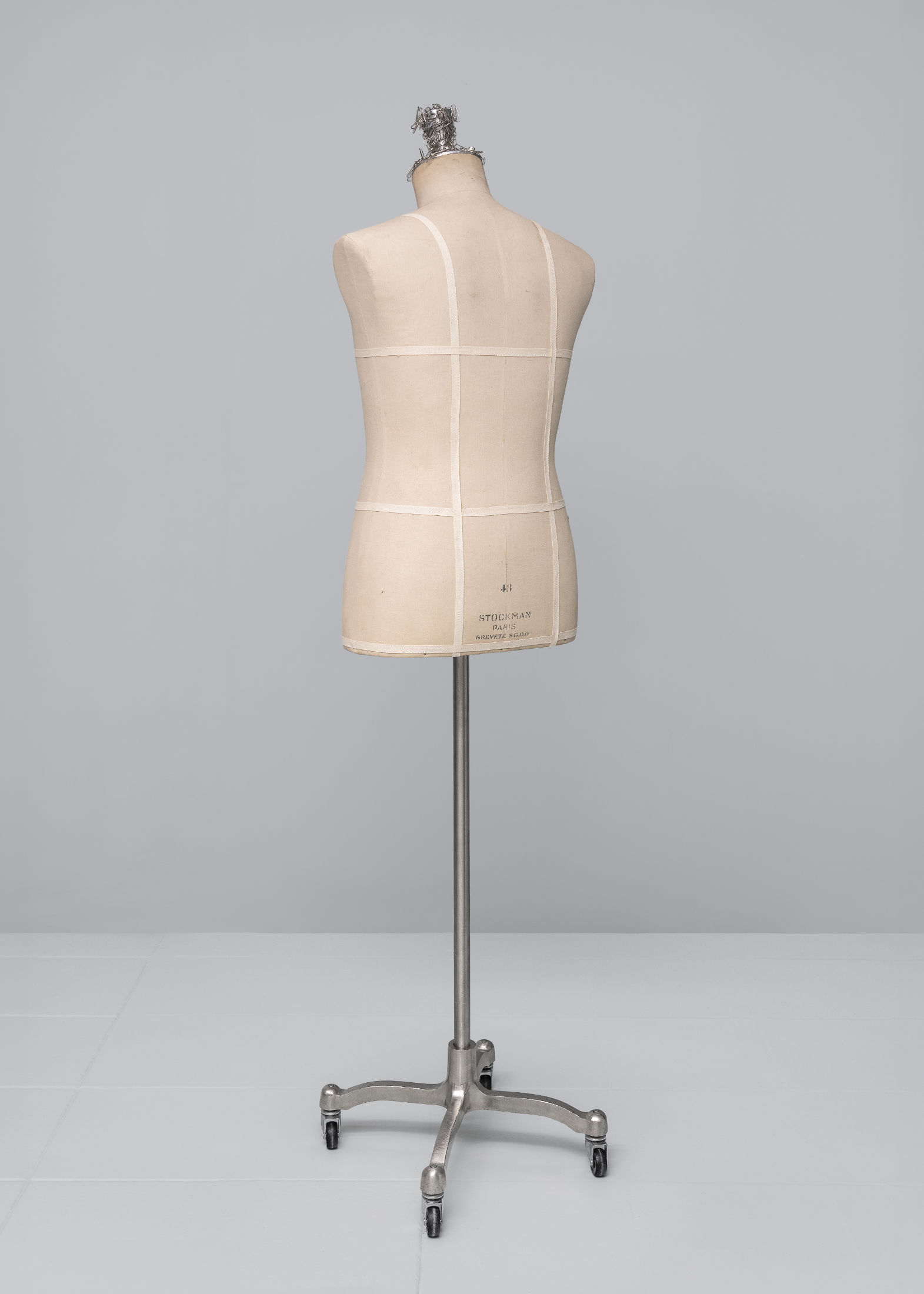
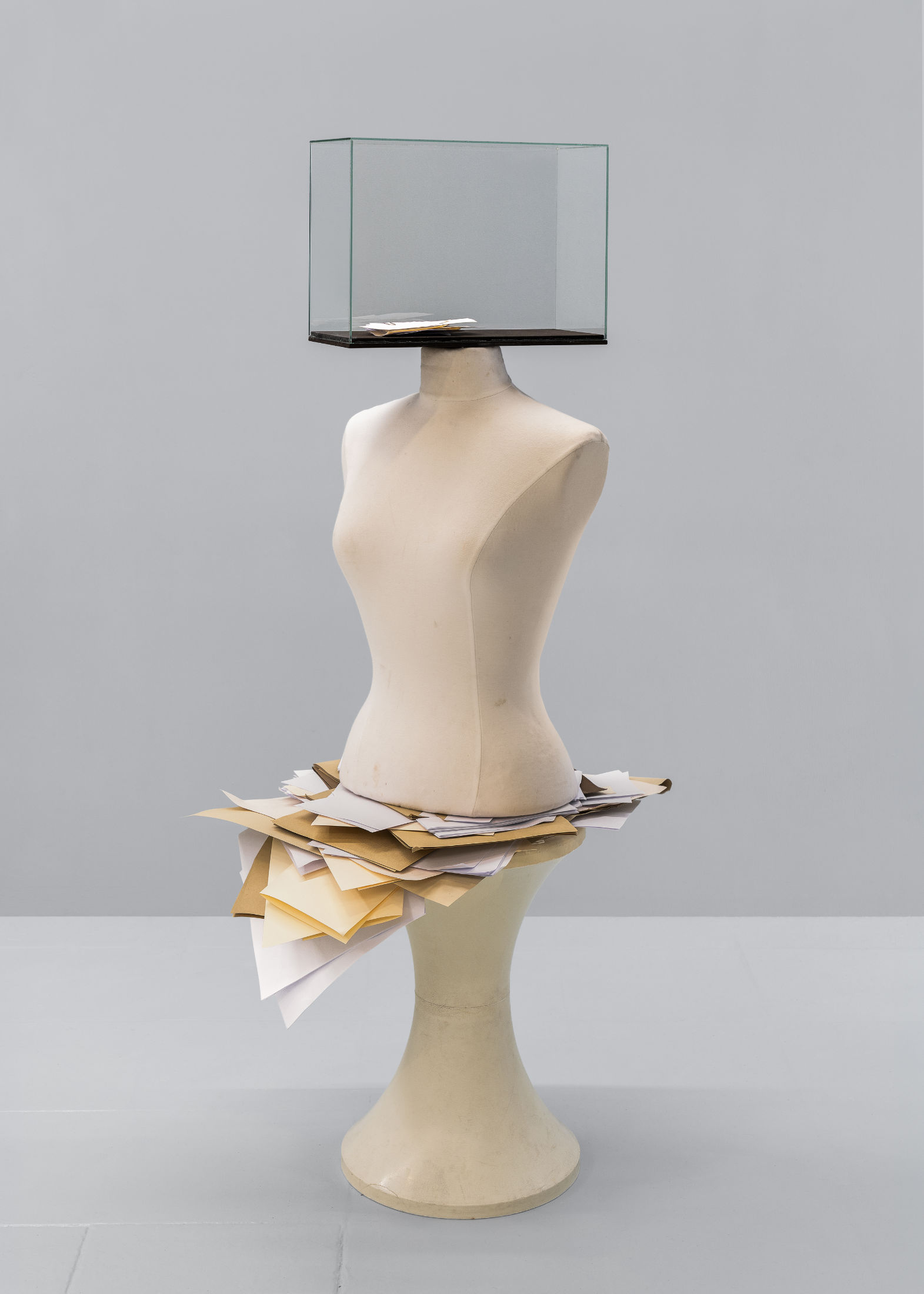
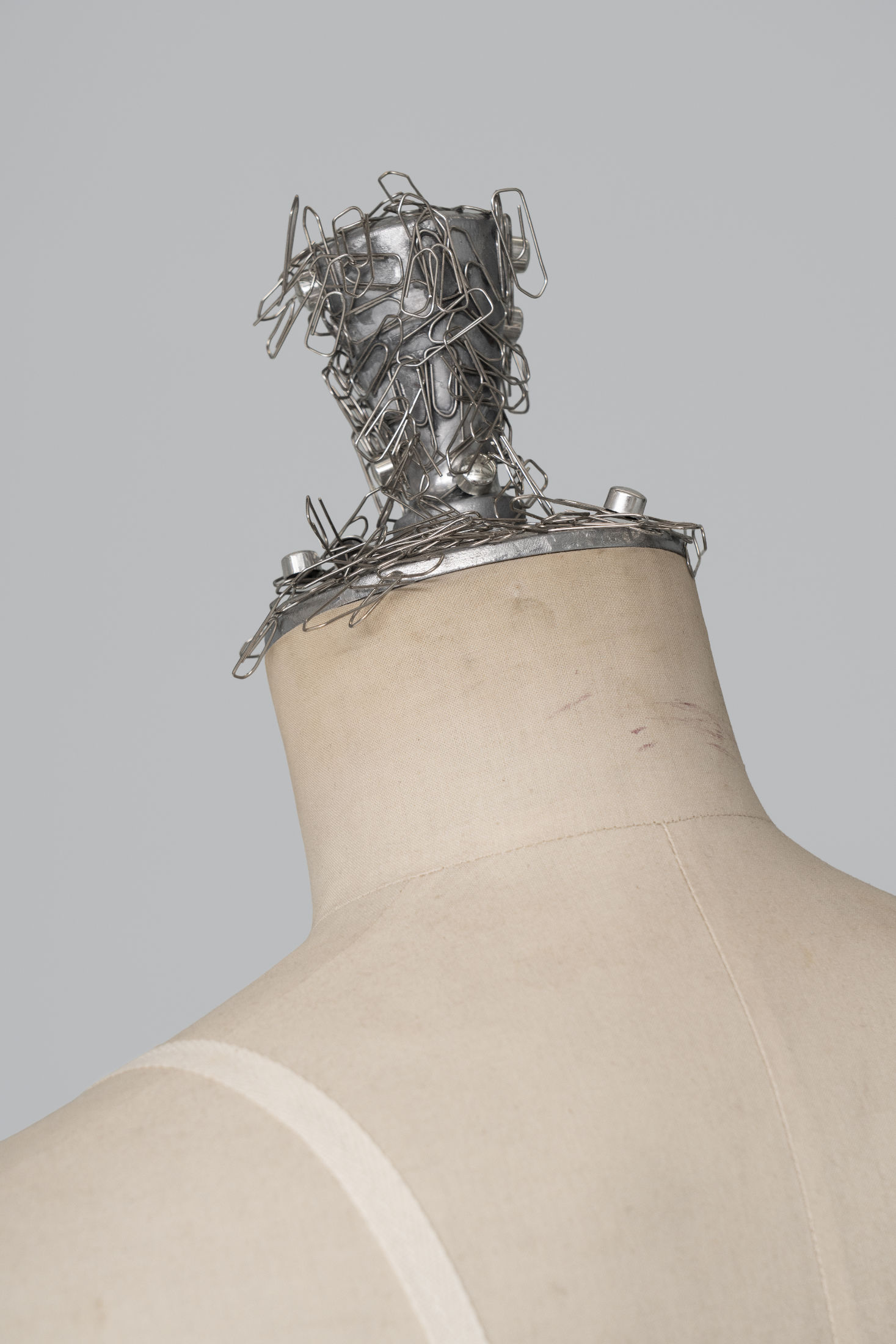
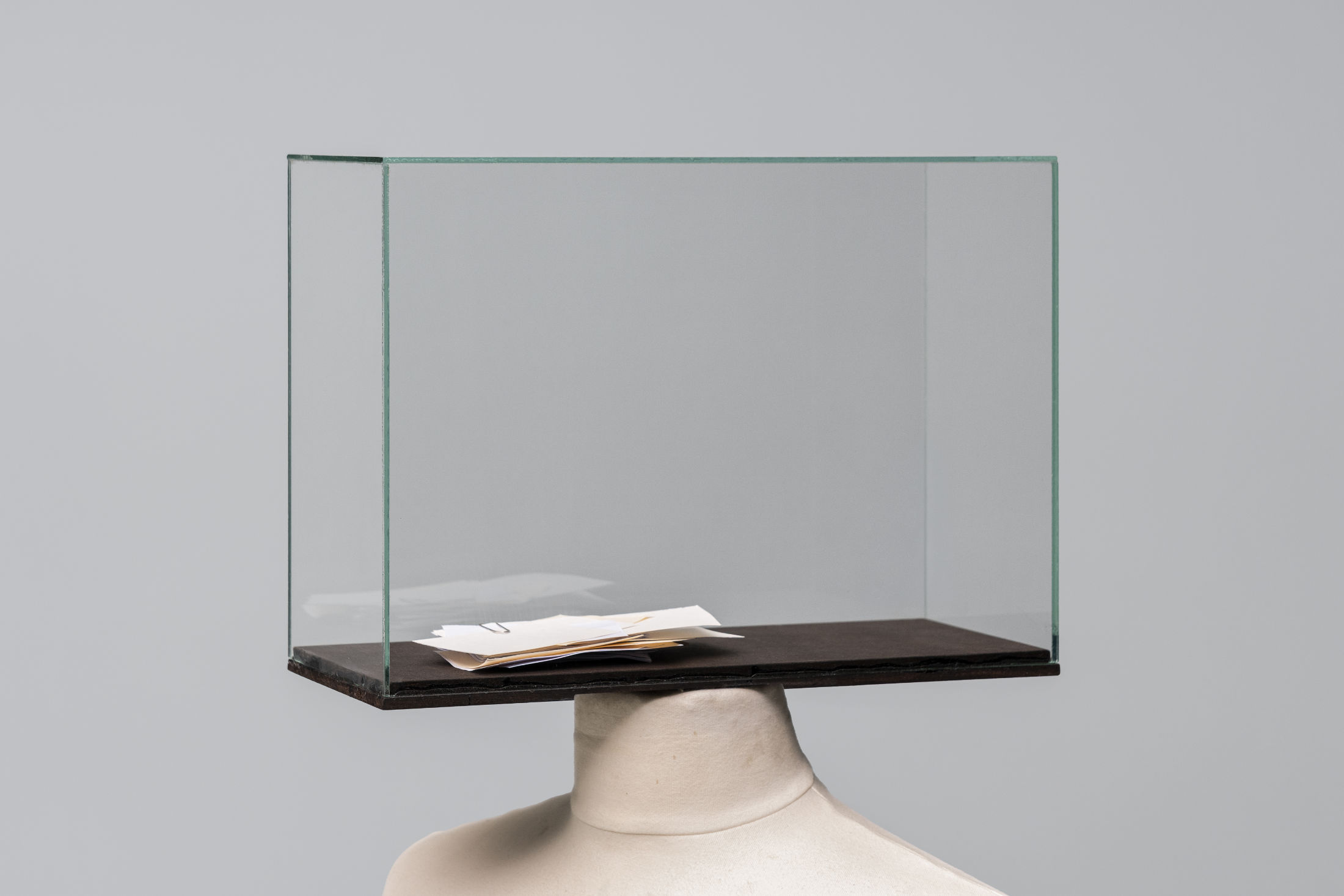
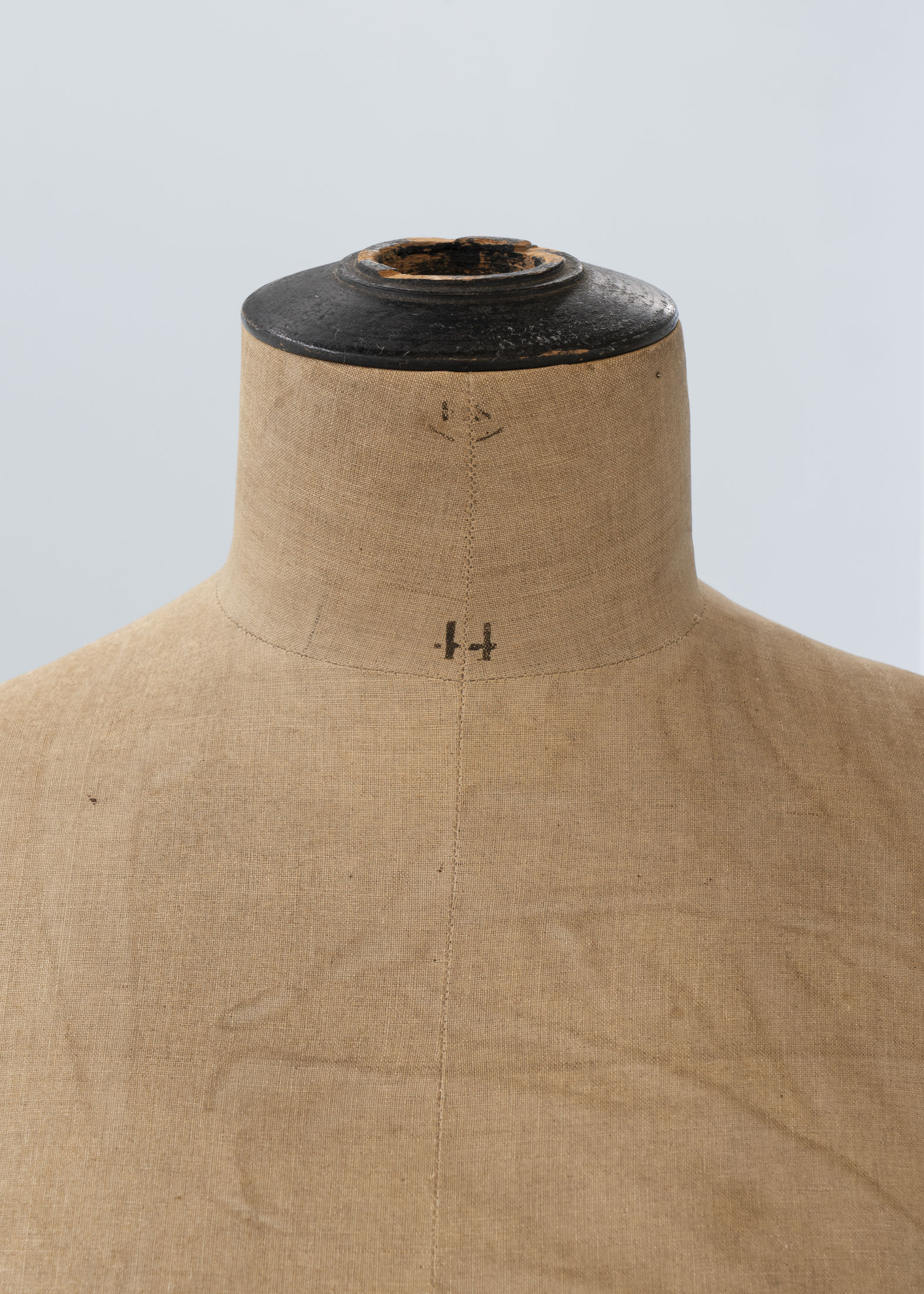
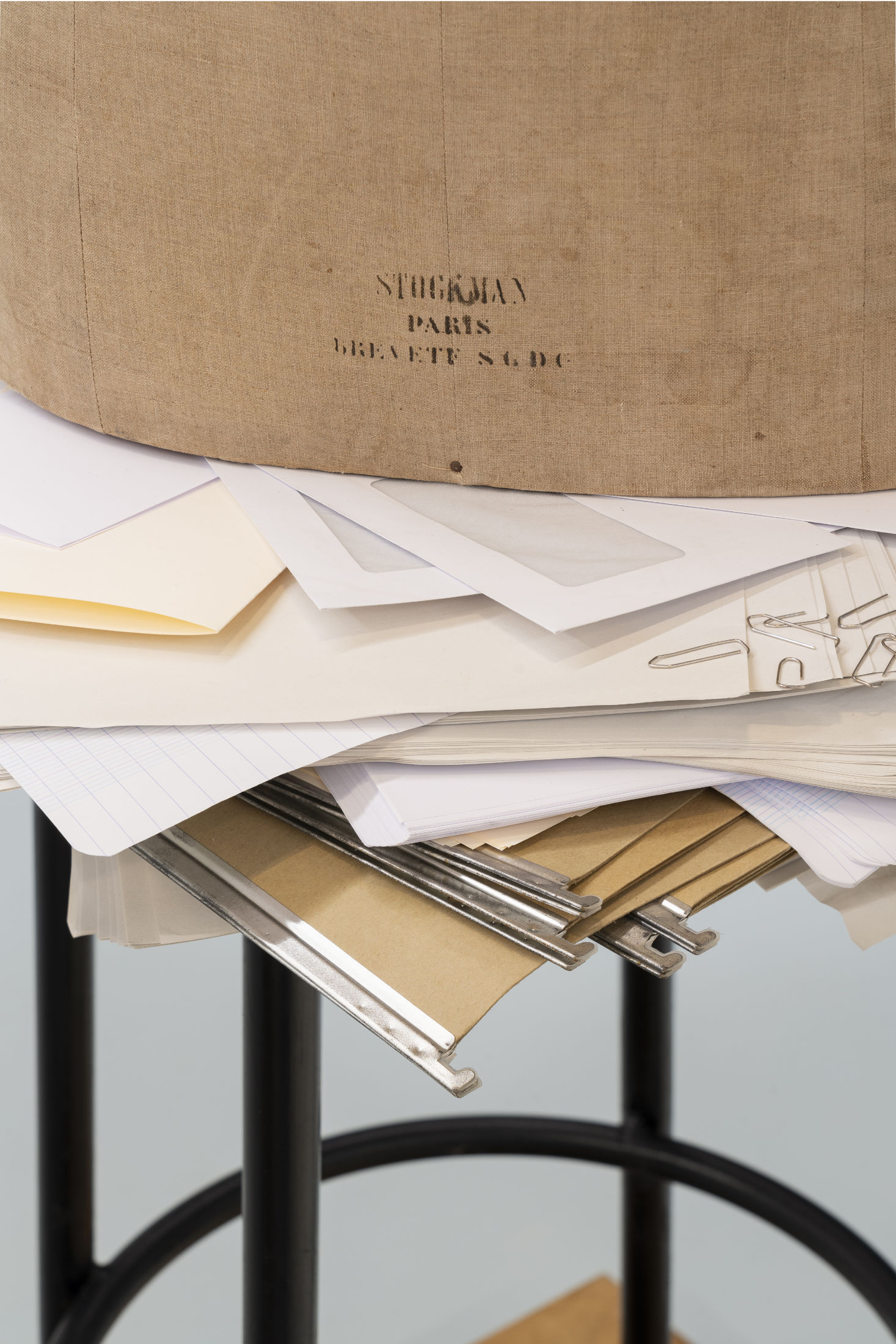
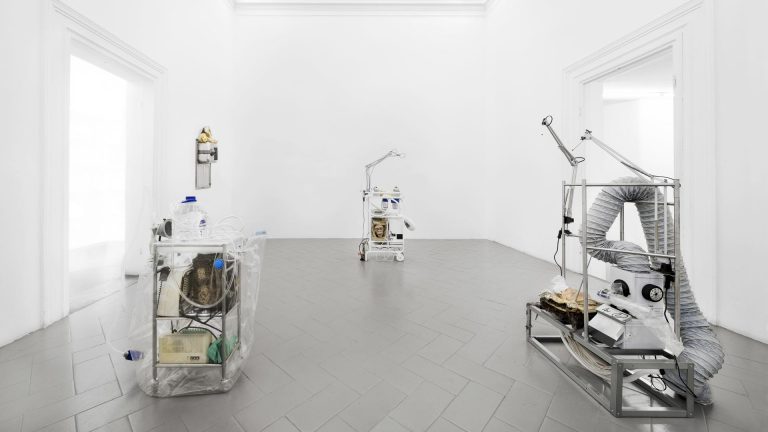
The exhibition — quite unusually for Rochereau — features a human presence, evident not only through the scribbled dates on the painted shelves. It takes its title from a painting of the same name, Data Divas, which was exhibited earlier this spring at the Paulina Caspari Gallery in Munich. The work marked the first instance in Rochereau’s archival probing in which a partial human presence appeared in the form of a mannequin torso. In the Venice exhibition, these torsos reappear — this time in the flesh — with a gentle nod to the previous sartorial function of the gallery space. There are five of these sculptures in varying sizes, assembled from different materials: torsos of display mannequins, to which various accessories, including binders, boxes and clips, designed for keeping archives in order, are attached.
Titled 404-DIVA ERROR 1–5 respectively, these bust sculptures carry multiple art-historical allusions. Yet the titles have a programmatic sound to them; and the errors in them suggest that something has failed. The objects attached to the busts, along with the seeming disorder that envelops them, refer to a certain open-endedness and tangled webs — other type of organisational mechanism relating to data and storytelling. Beneath the sculpture pedestals, lonely pieces and piles of unmarked paper lie scattered as if lost from the archival order. Streams of data and information are spilling over from orderly, contained systems elsewhere in the room.
The divas of the exhibition can be viewed as entropic, futuristic data bodies representing relational nodes. In her book Zeros + Ones, Sadie Plant writes about the hierarchical divisions in texts and writing, “divisions between centers and margins, authors and scribes.” She continues: “only when digital networks arranged themselves in threads and links did footnotes begin to walk all over what had once been the bodies or organized texts. Hypertext programs and the Net are webs of footnotes without central points, organizing principles, hierarchies.” In the exhibition, something akin to footnotes — perhaps discarded details or things that didn’t make it into the archives — takes an exponential presence in sculpted form. They “are now leaking through the covers of articles and books, overflowing all the classifications and orders of libraries, schools, and universities,” or in Rochereau’s case, leaking from the drawers, boxes, bookshelves. The Data Diva sculptures come to represent the matrices, the motherboard, the womb. They resist the correction, classification, containment and the disciplined process brought forward in the paintings.
Human beings have an urge to classify the past and the present through different mechanisms. Classifying, categorising and cataloguing things that elude us is important in our quest to understand and make sense of the world. As Walter Benjamin reminds us in Unpacking My Library, packing and unpacking are two sides of the same impulse, and both lend meaning to moments of chaos, “dialectically pulled between the poles of disorder and order.” Where there is order, structure and stability, there is also entropy. The current obsession with archives means they have spread beyond universities and museums — the traditional repositories of knowledge — evolving into an excitement about exhibiting archives or artists performing as archivists. However, Rochereau does not follow either of these trajectories; she examines the formal logic of archival systems in pictorial spaces. By prioritising form over content, she illustrates modern attempts to organise, arrange and classify anything and everything, and how this pursuit is bound to fail.
Artist Biography:
Rochereau (b. 1995, Paris) lives and works in Marseille. She received a Master’s degree in Fine Arts – European Art Ensemble from ECAL, Lausanne, in 2020.
Her practice moves between painting and installation, focusing on the spaces and gestures of commercial display and on the ways consumerism stages desire, temptation, and absence. She often works with shop-like architectures, ghostly display devices, and serial arrangements of objects, using the visual language of retail and advertising to question how everyday aspirations are shaped and commodified.
In 2026 she presented “First Floor” at Paulina Caspari in Munich; in 2025 she presented “Full Package” at Shmorevaz and a solo project as part of the Hauser & Wirth “Invite(s)”, both in Paris. She has been an artist in residence at La Becque, La Tour-de-Peilz, Switzerland (2024) and at Villa Belleville, Paris (2025).