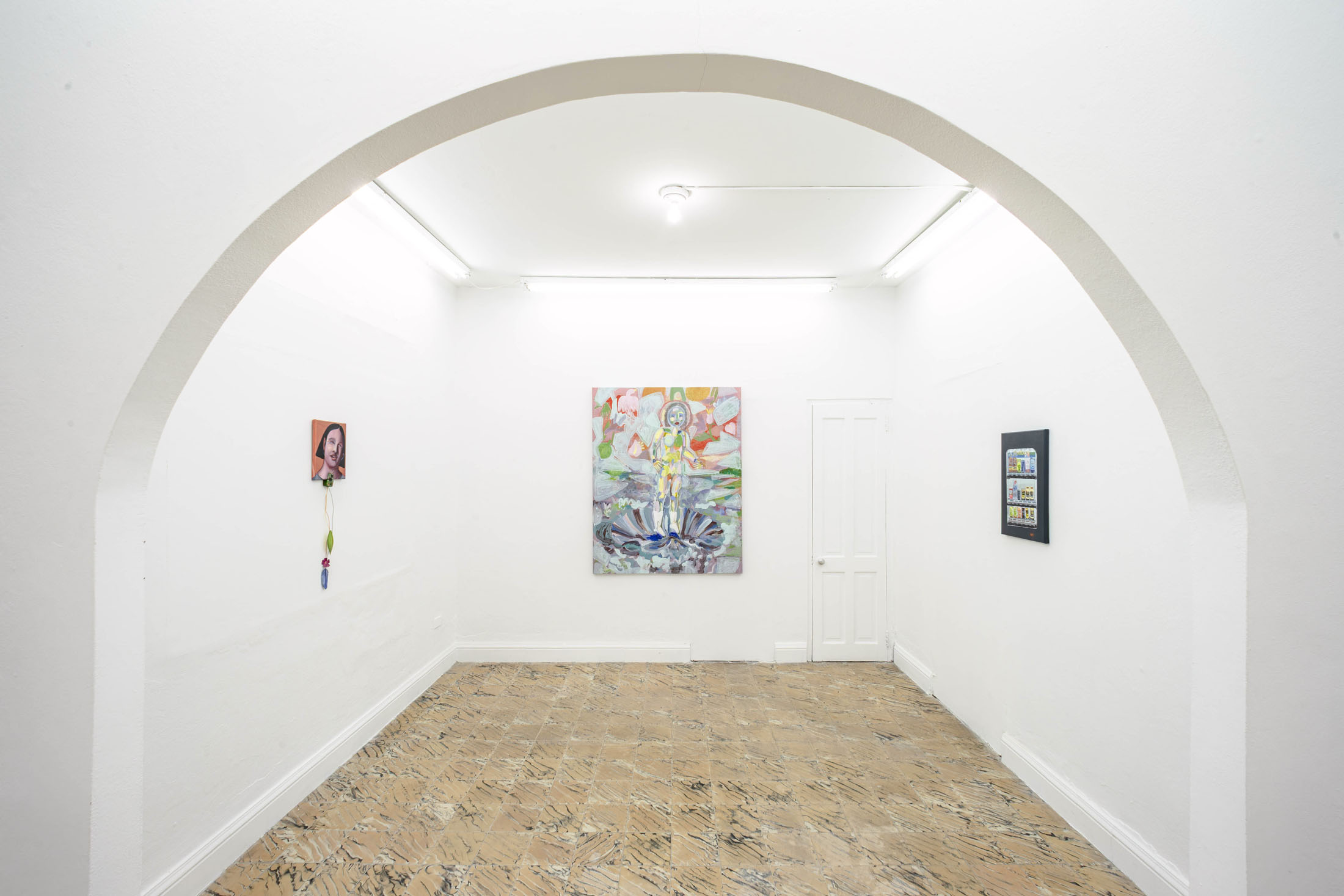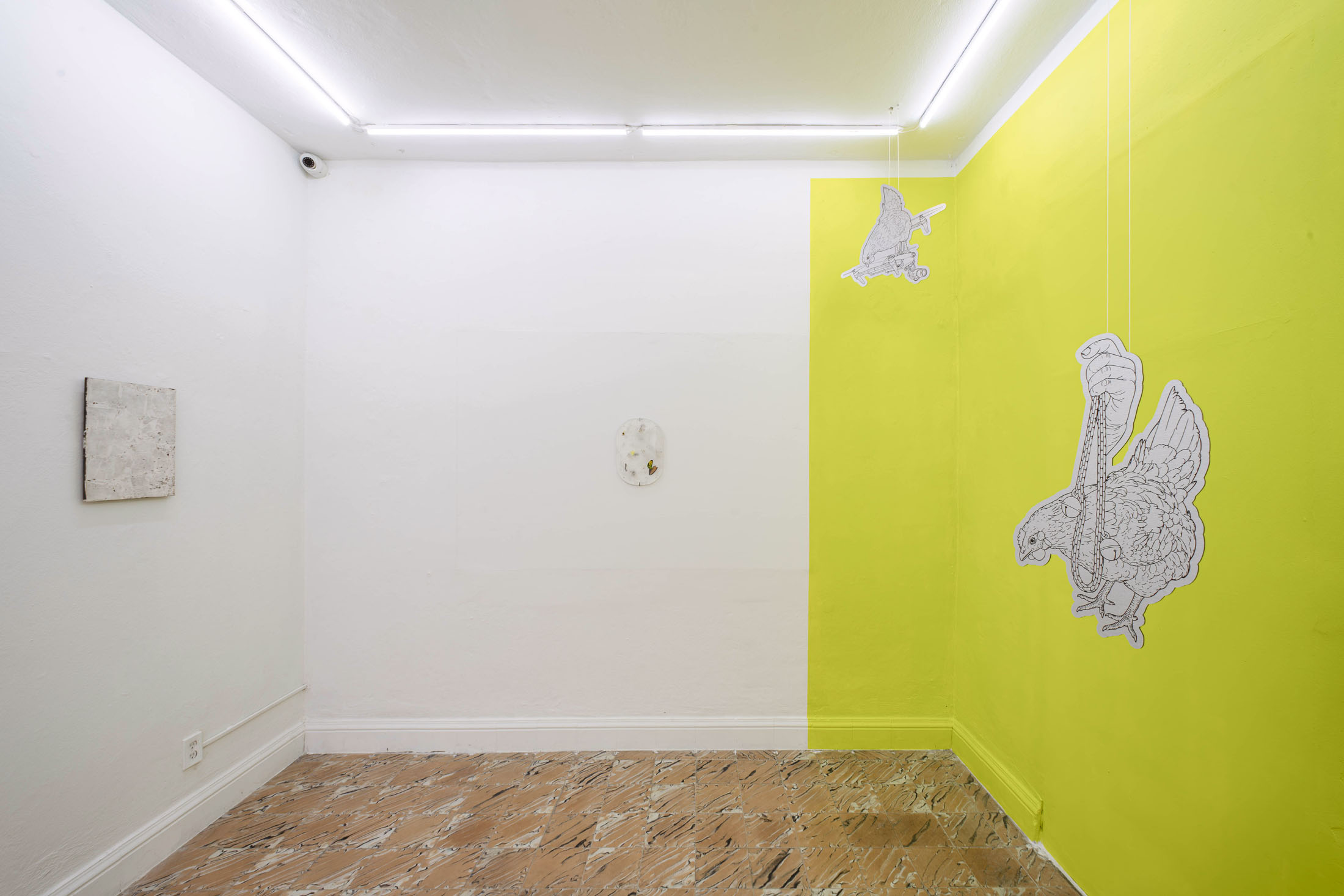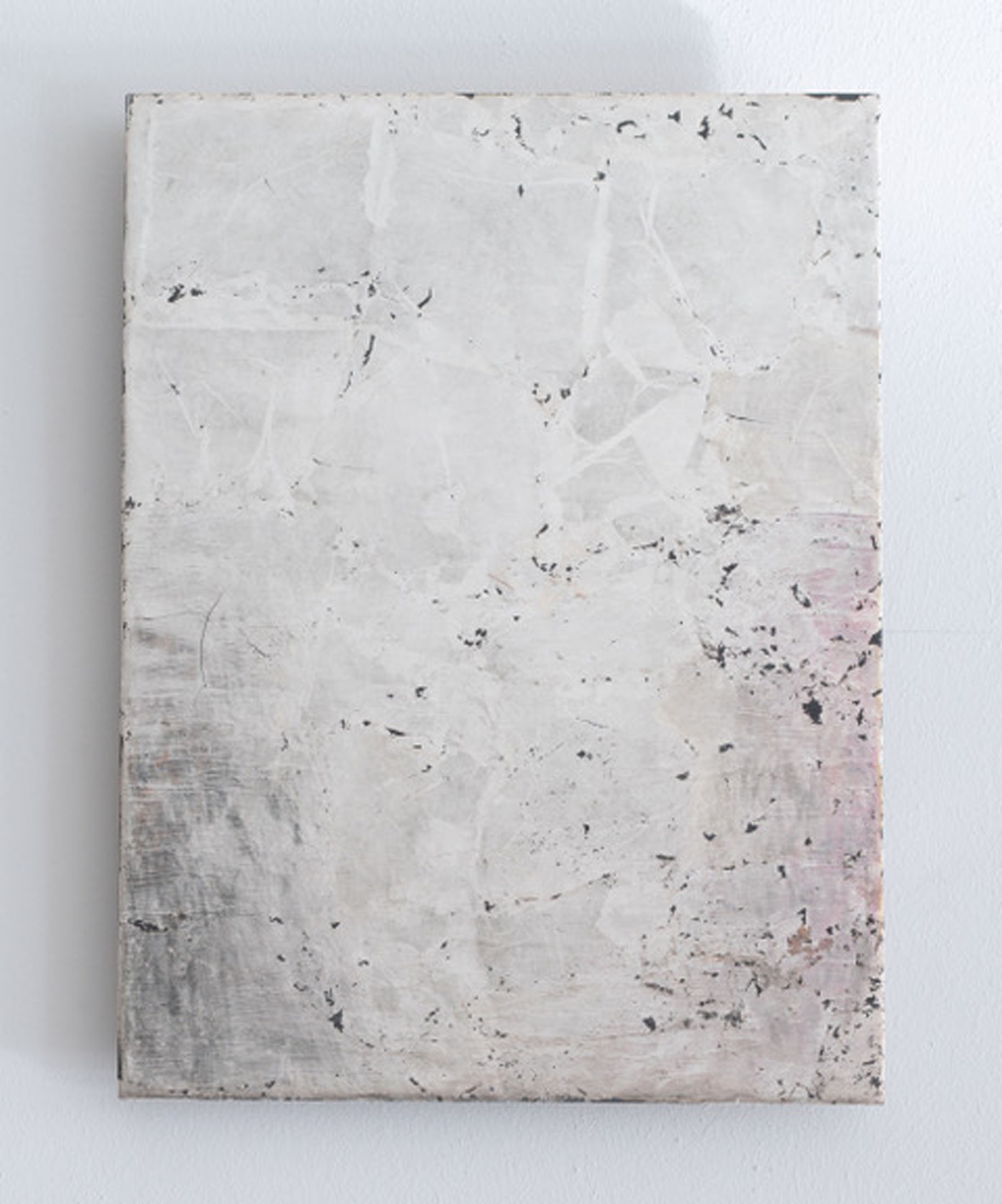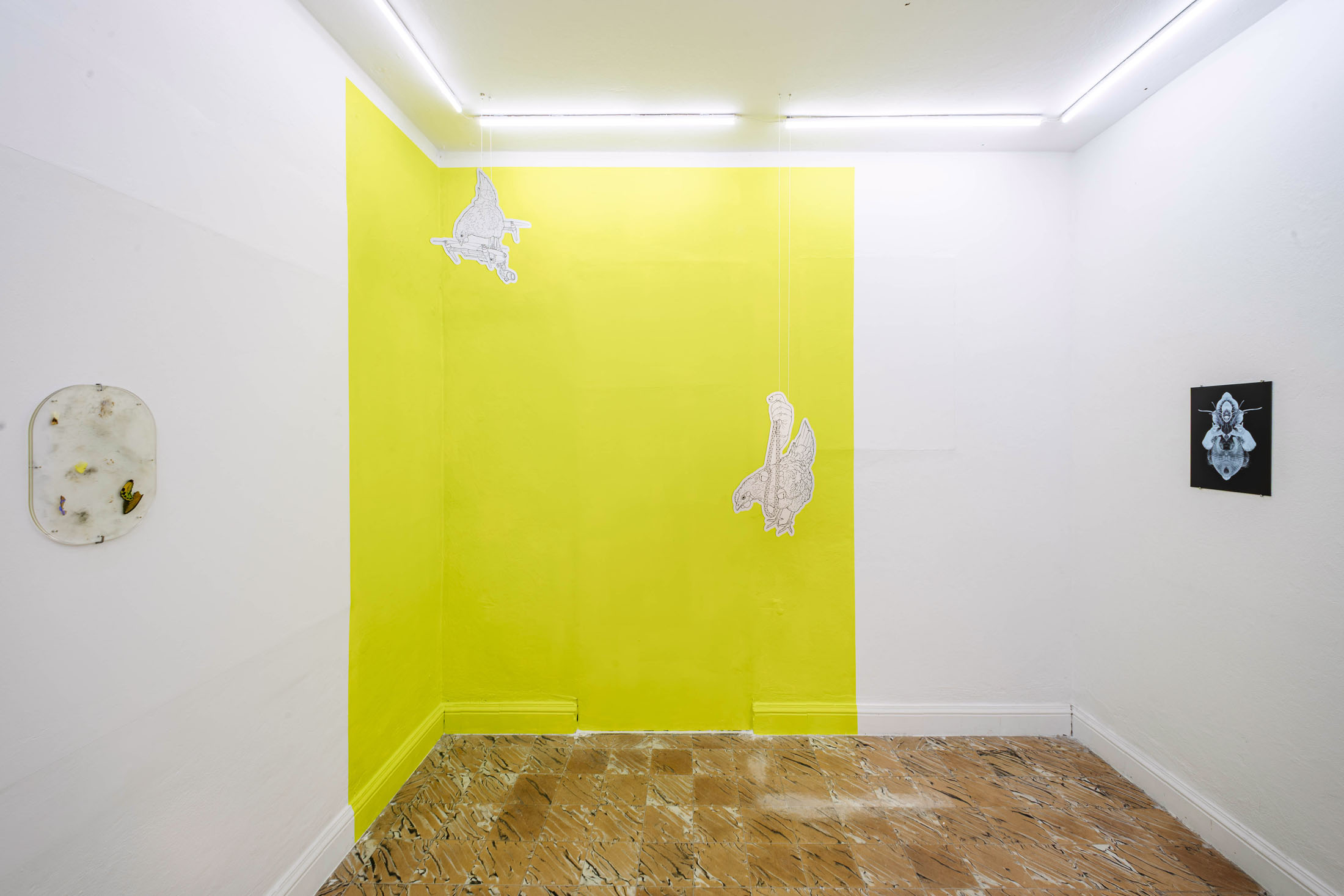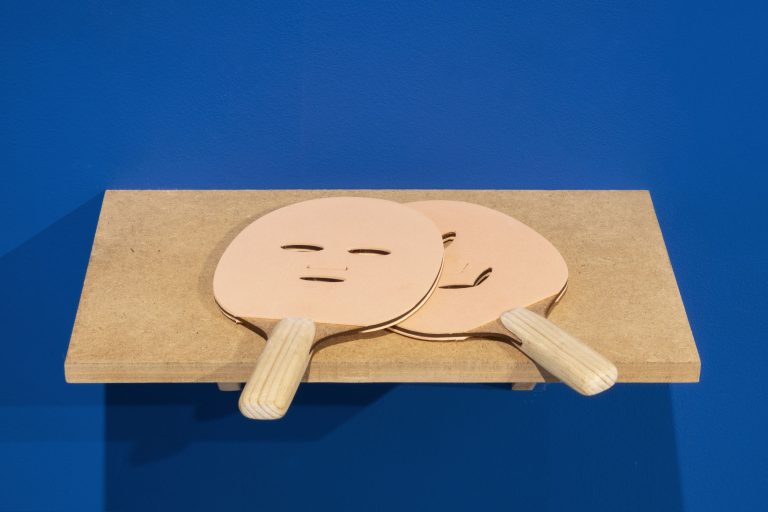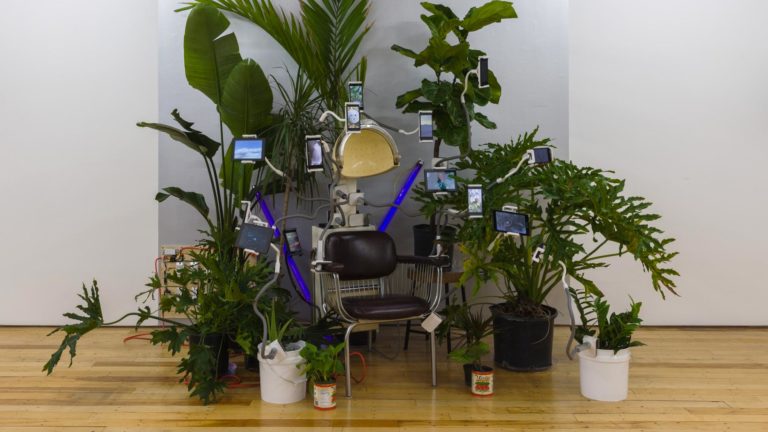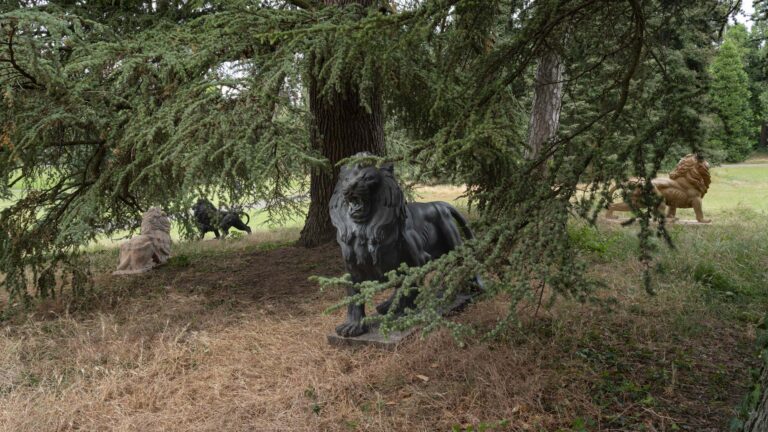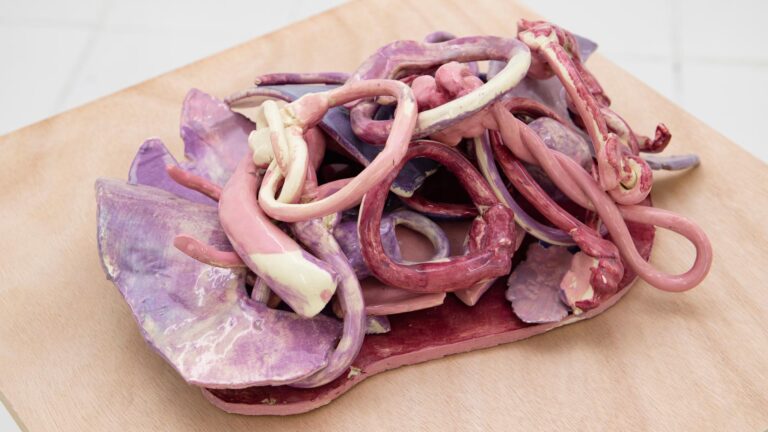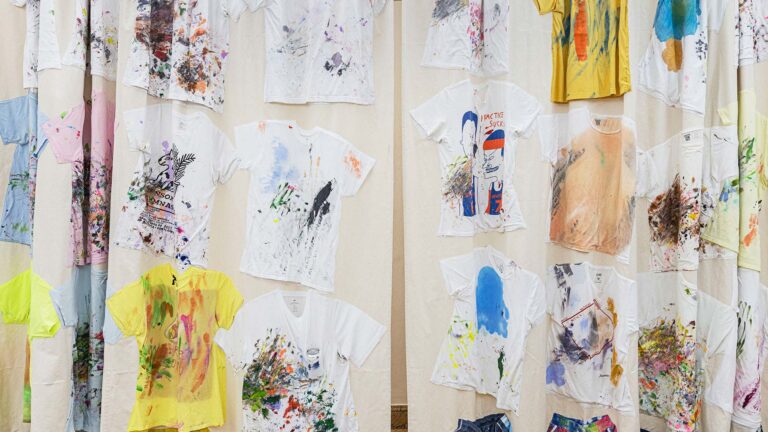
EMBAJADA is pleased to present Chamanes y Robots, a group exhibition curated by editor, curator, and writer, Ana Gabriela García. Working across editorial and curatorial practices, her work explores the sabotage of colonial legacies inscribed in language, territory, and memory. Drawing from archives and fiction, she is interested in the political imagination that traces futures lost to History. The following is an essay by the curator:
Rumor has it that the future sounds robotic. But another register, barely audible, murmurs that before we invented machines to think, we invented machines to believe. For some time now, the artificial has inhabited the body, right in that place we call absence—or perhaps desire.
When the possibility—and danger—of an increasingly automated future driven by new technologies is being contested, perhaps the question is not whether a robot can dream, but what it needs in order to do so, and why we desire it to, or else, what rituals we will have to invent in order to dream with them. Perhaps, as Roger Bartra suggests, to understand the workings of a robot, it might be worth listening to the shaman.
Between ritual and algorithm, the exhibition Chamanes y robots [Shamans and Robots] moves through that unstable place where the things with which we make worlds also make us part of something else: a short circuit revealing how the technologies that have accompanied us are not merely extensions of ourselves, but agents of our own transformation. This is an attempt to (un)entangle the circuitry of machines and rites that inhabit us, their worlds and the worlds we conjure together with them and with other beings.
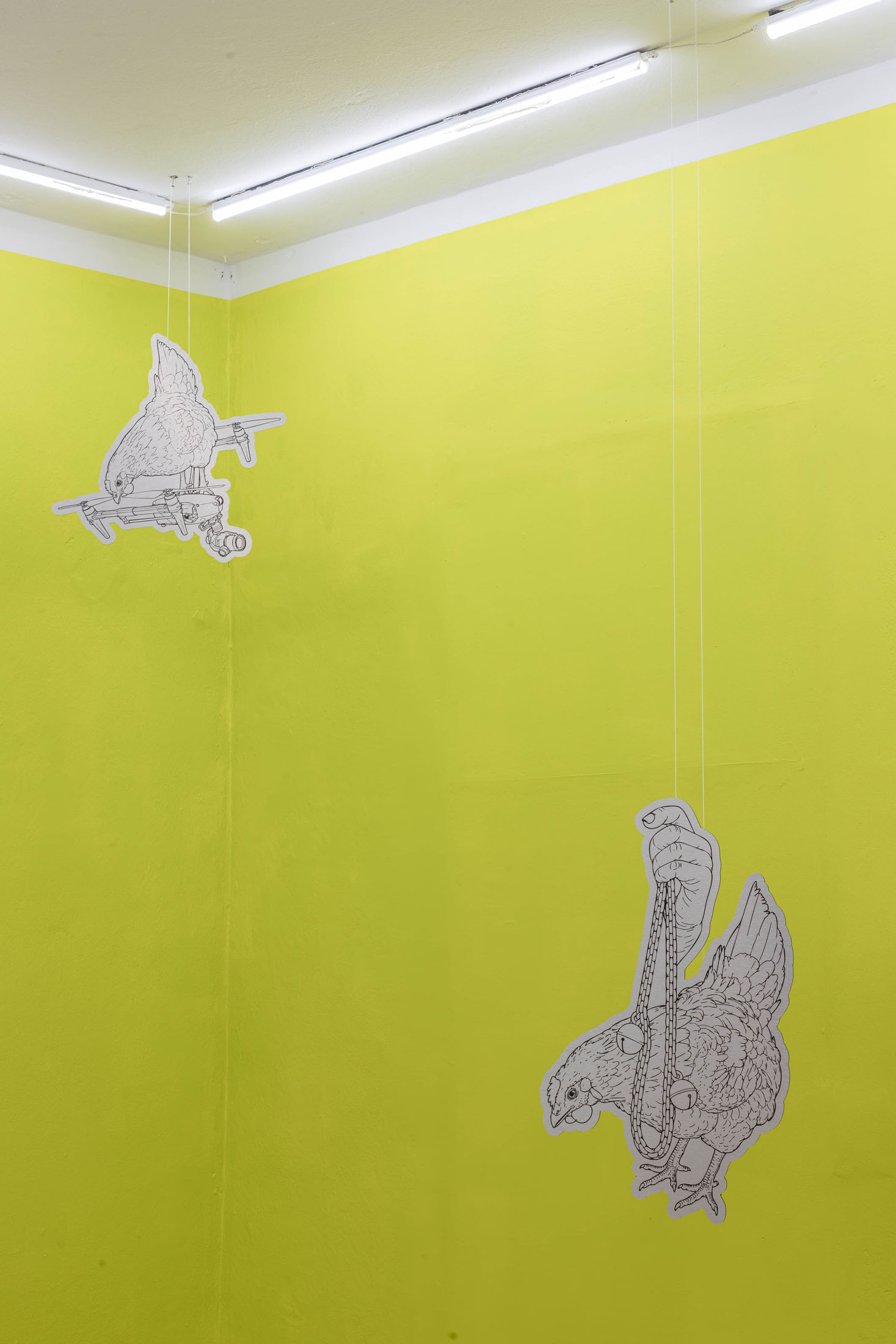
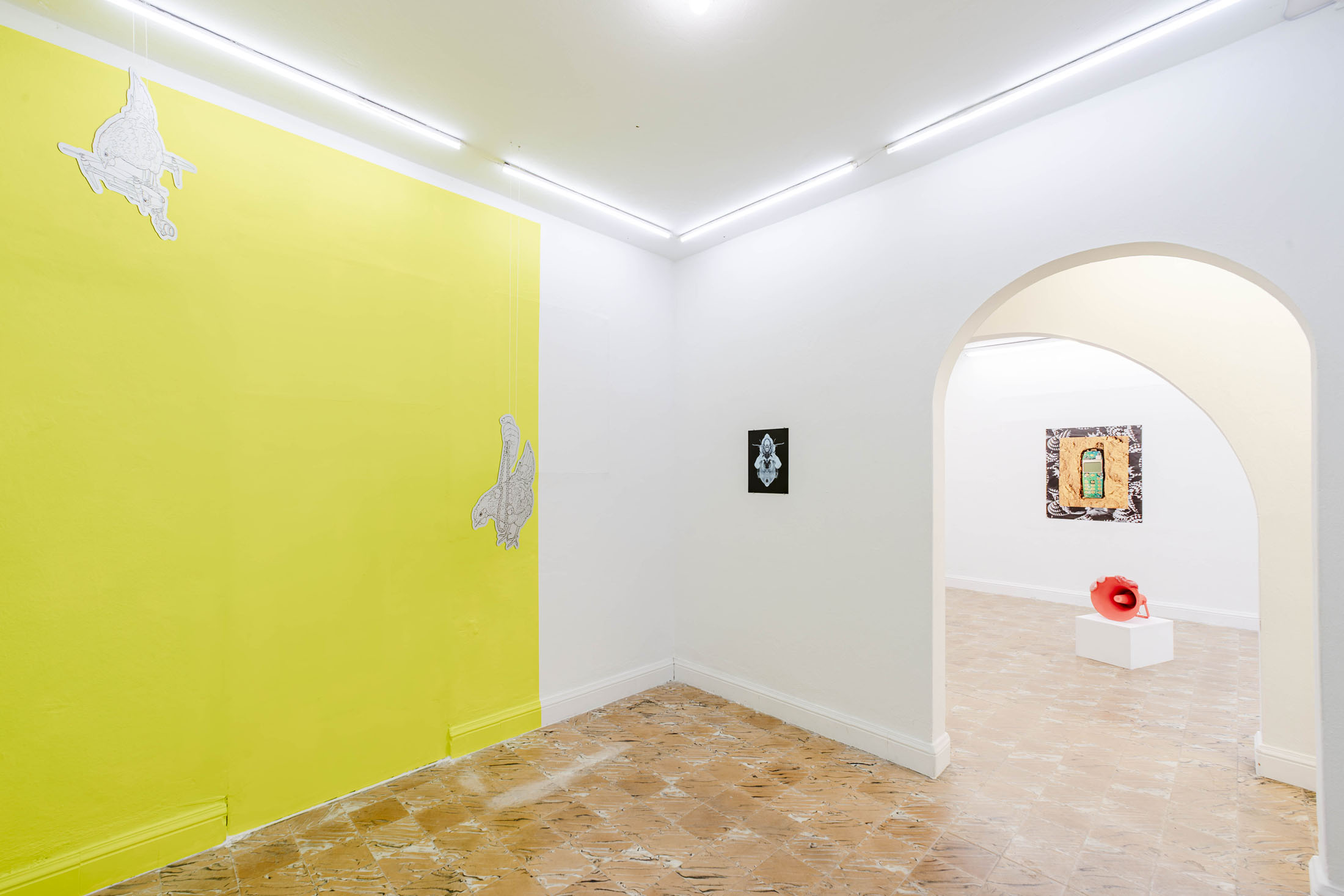
The first constellation is made of amulets. As auguries of contemporary technologies, Eli Cortiñas’s Amuletos electrónicos [Electronic Amulets] emerge suspended in space. In their call for protection against threat, they reimagine the systems of control and surveillance that organize our present by recalibrating the symbolic and the everyday. In these hybridizations, amulets become devices whose ritual function transforms them into talismans charged with memory, desire, and affect; technological relics appearing as remnants of a time yet to come.
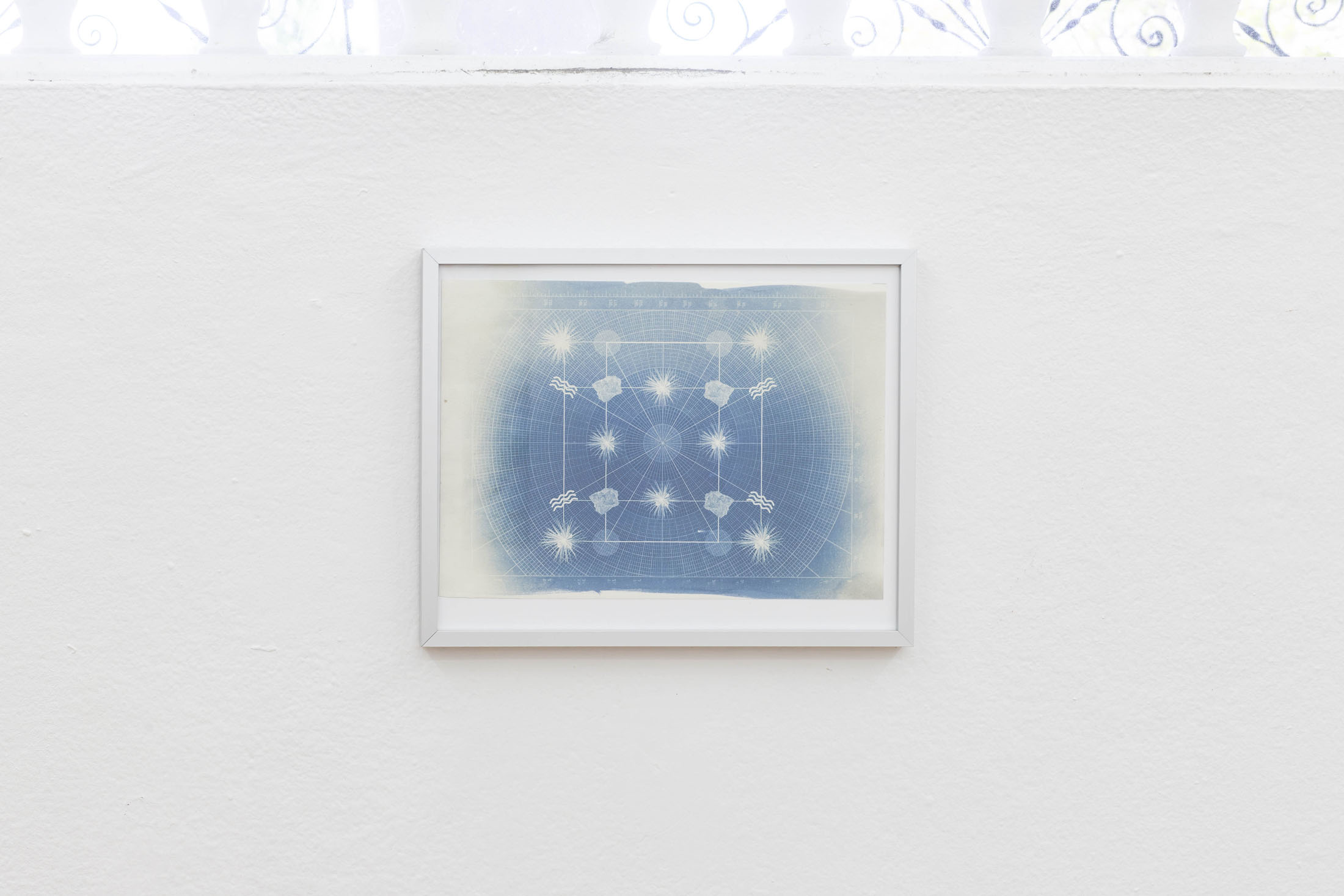
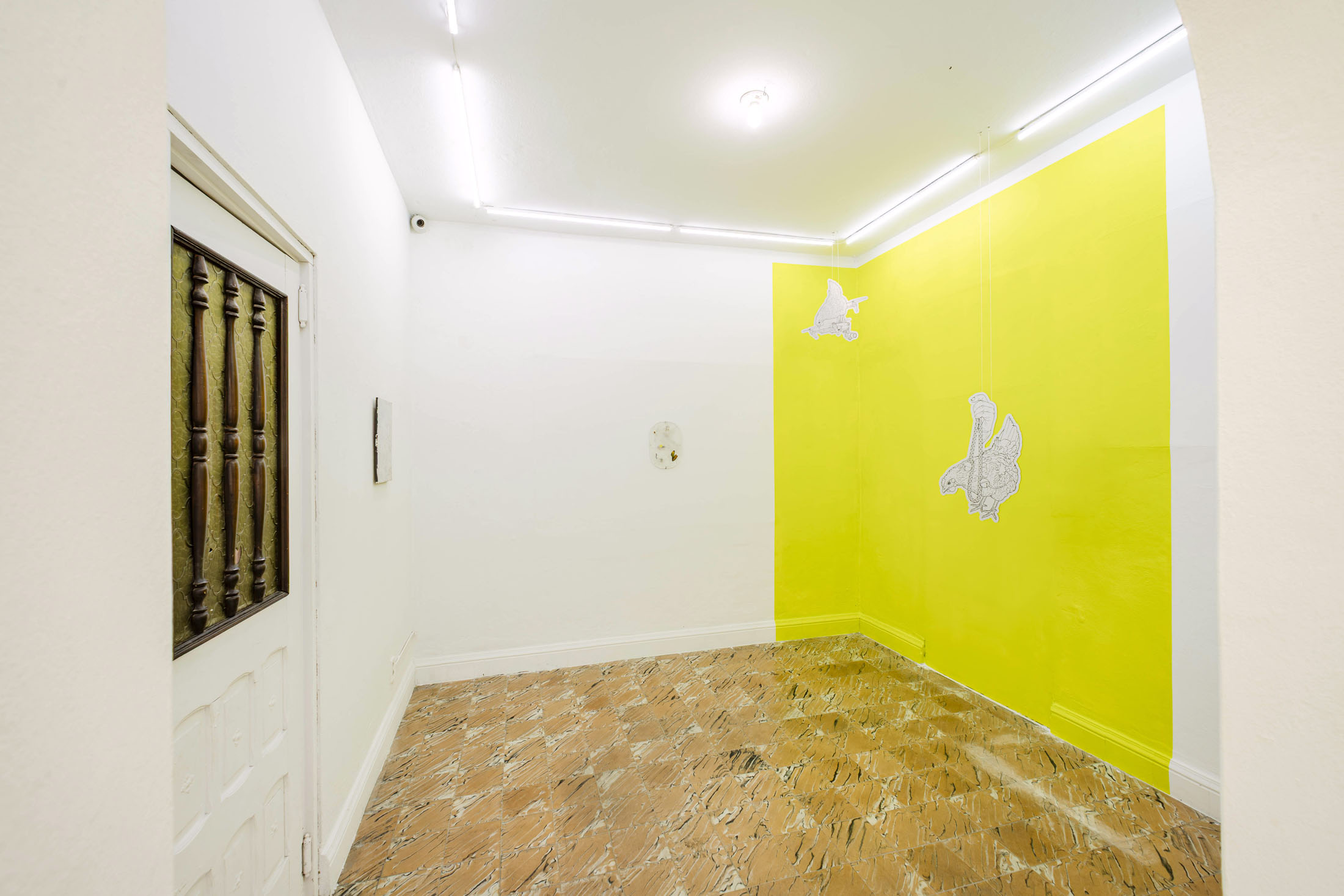
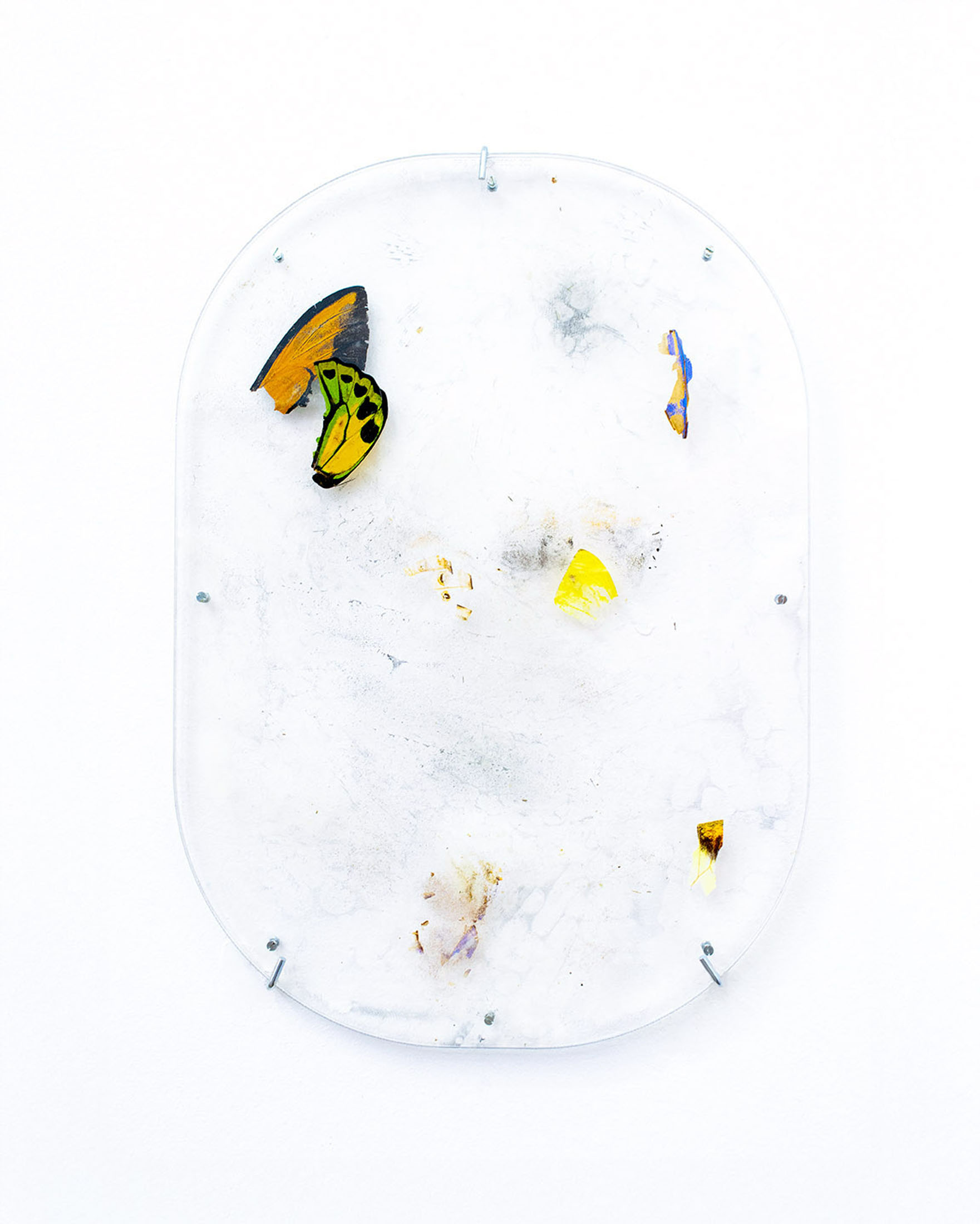
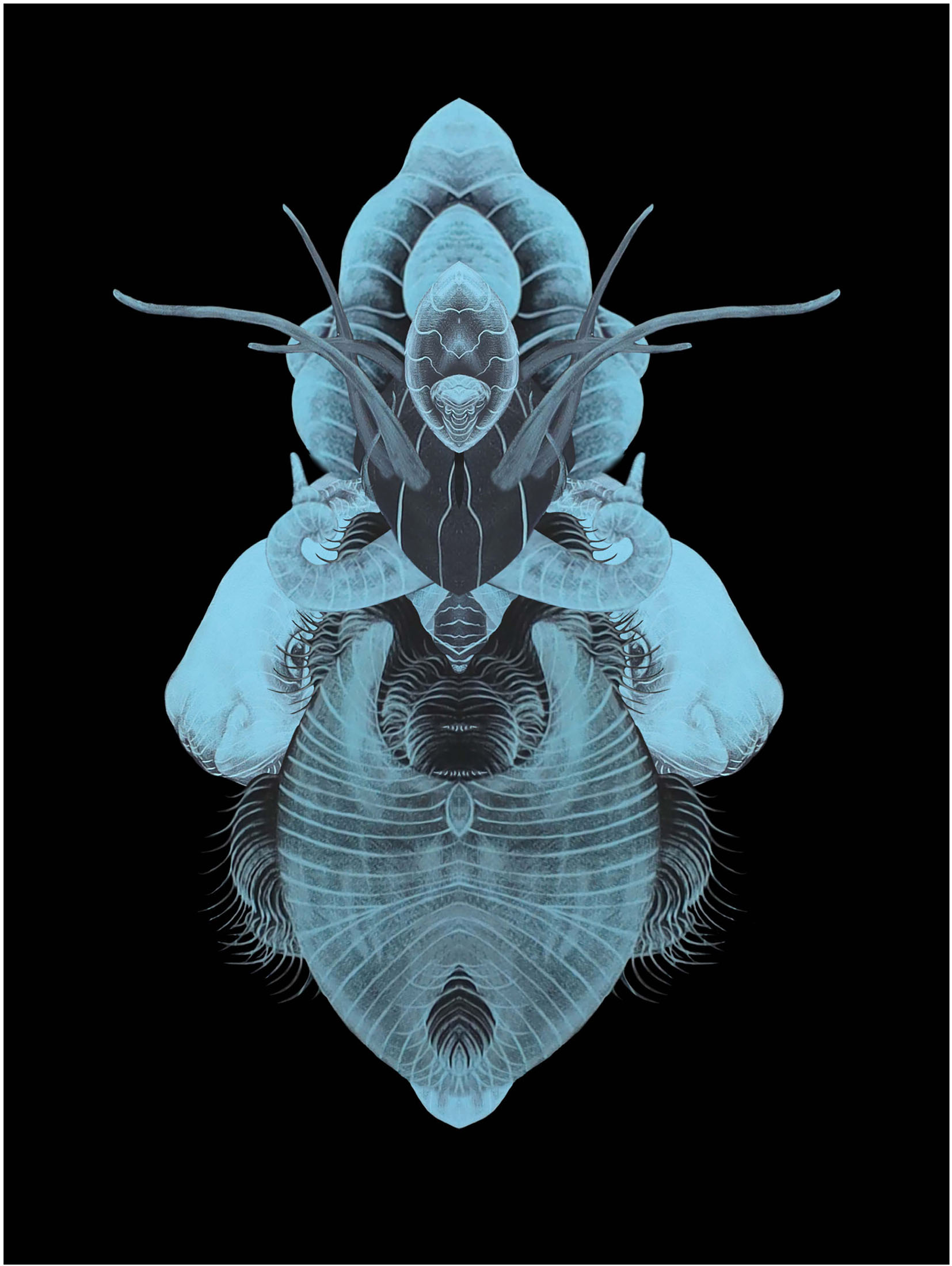
Other works shift the gaze toward scales that exceed the human. Elisa Balmaceda’s work unfolds as a kind of oracular cartography: a system of planetary correspondences in which plants, rocks, and water make it possible to read territories that are not organized according to human coordinates. This relationship between the more-than-human and territory extends into the technologies of travel proposed by Vibeke Mascini, where migratory routes, forced displacement, and the movements of species are rendered through electrostatic drawings that imagine, from the window of an airplane, the journey of a moth across distant geographies. In Laura Arminda Kingsley’s assemblages, the cartography shifts scale once again: microorganisms, anatomies, faces, and ancient forms of life emerge within the same visual field, inviting associations between things that, at first glance, might appear distant. Each gaze reorganizes the relationships between living things and reveals new forms of interconnectedness. Here, technology appears less as a tool of domination than as an instrument of listening: an almost shamanic prosthesis for perceiving, registering, and modulating the signals of a vitality that has always been speaking beneath our feet.
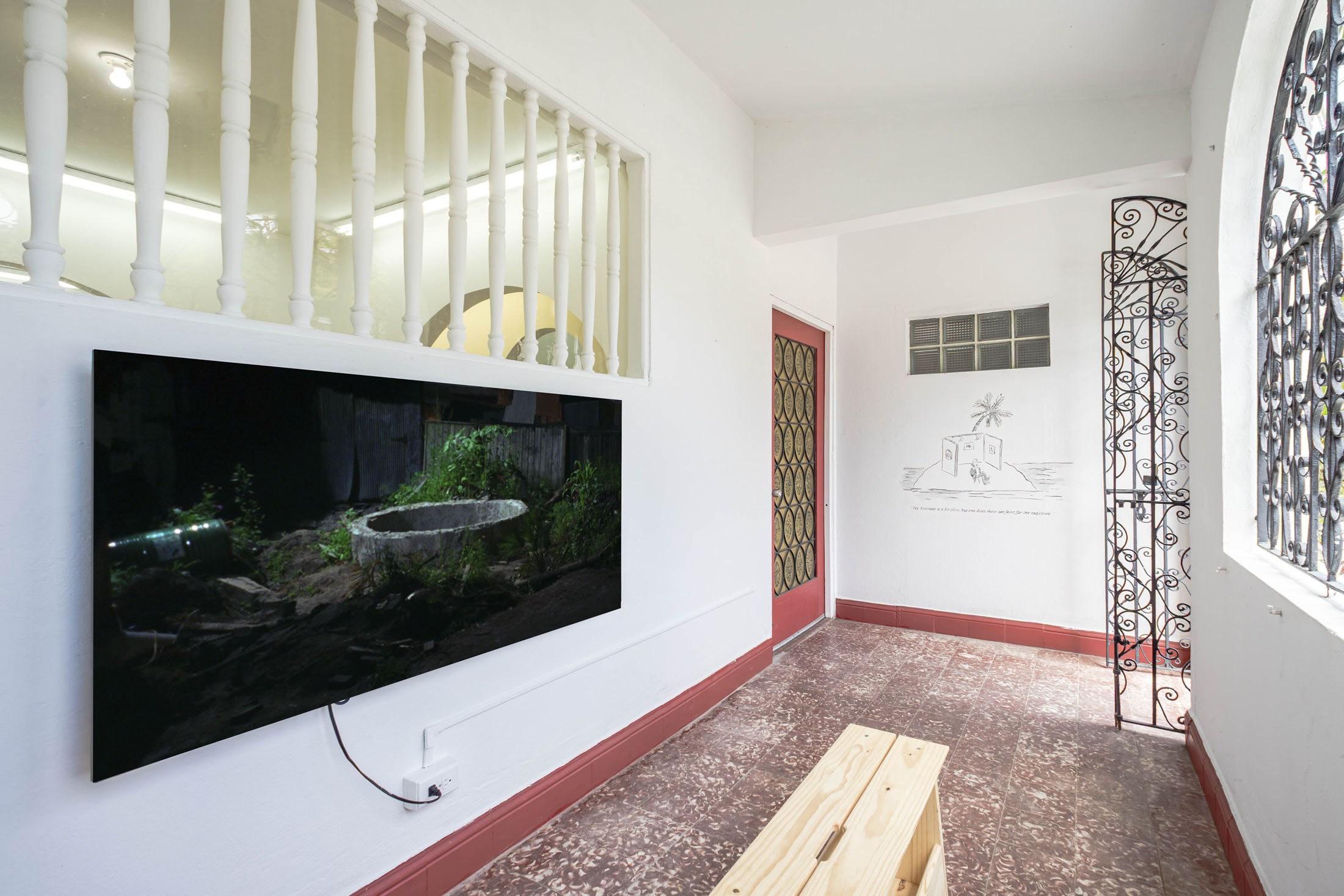
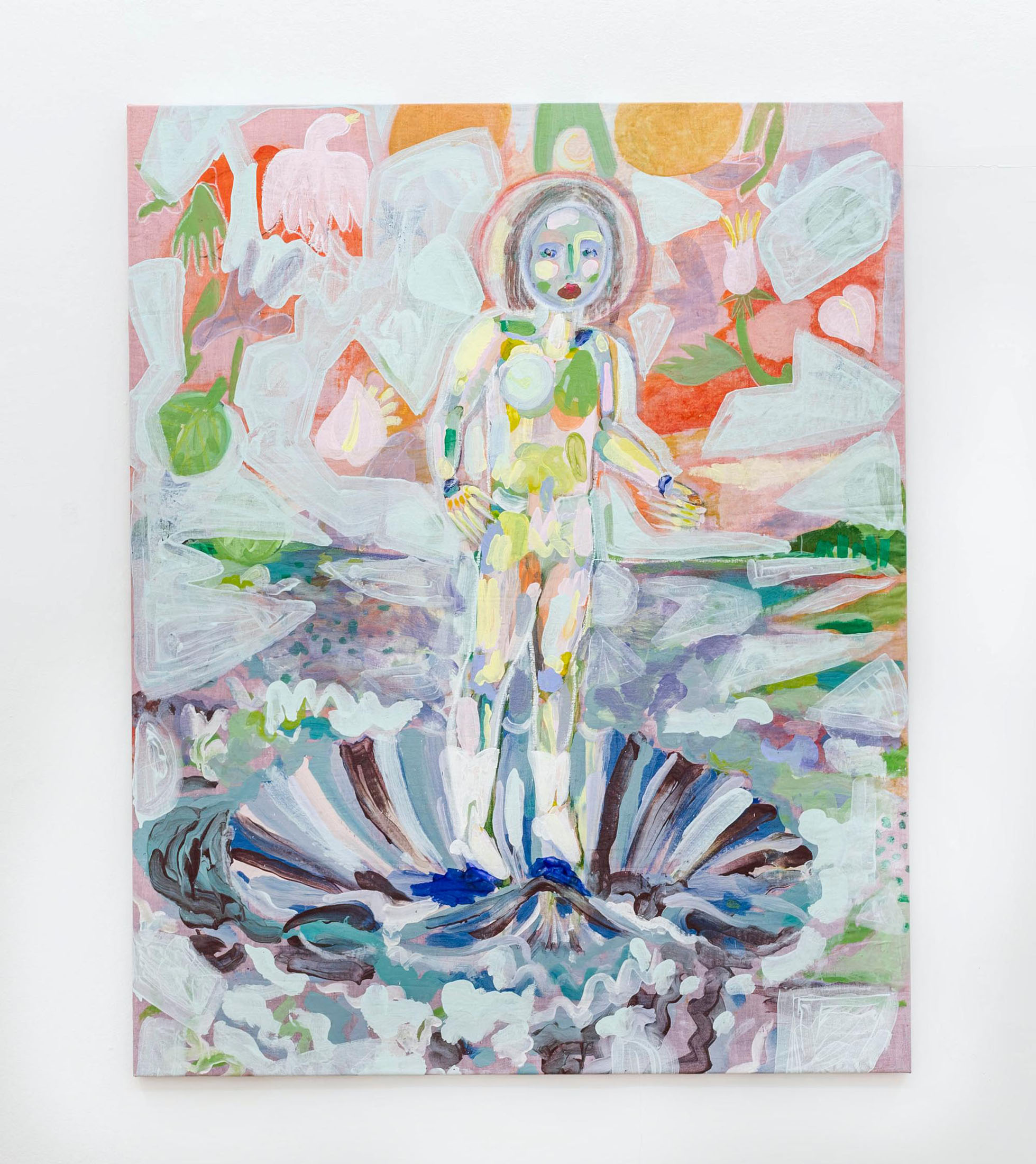
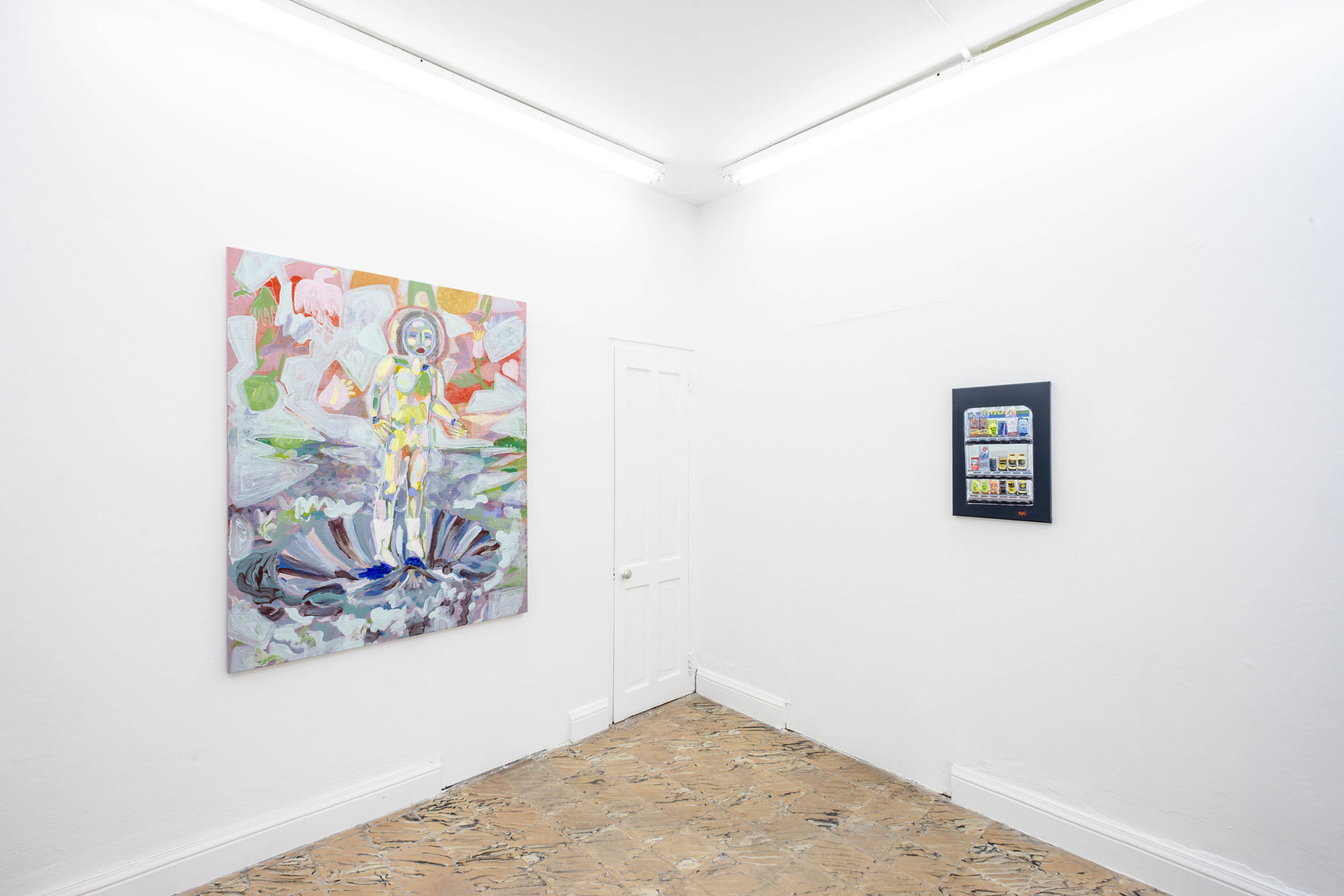
Water seeps in as another way of making memory. Simon Shim-Sutcliffe captures wells, artificial lakes, and hydraulic infrastructures that remain as ruins of the colonial project and, at the same time, as places where water erodes the landscape and history, inscribing its own records onto the territory. In dialogue with this, Chaveli Sifre revisits the motifs of a somewhat familiar Venus, whose reconfigured symbolism celebrates other forms of perception and botanical knowledge in order to imagine other forms of care, where beauty and love presage new ritual technologies for nourishing the soul, and the telluric resurfaces as a sensible force in the hands of a galactic cowgirl.
This dreamlike pulsation also enters the space as sonic vibration. Nicole L’Huillier plays with frequencies and listening devices that transmit sonic technologies for rest and care: a soft purr propagating at low frequencies, calibrating other languages and evoking an aural imaginary from which daydreams and journeys into other worlds become possible.
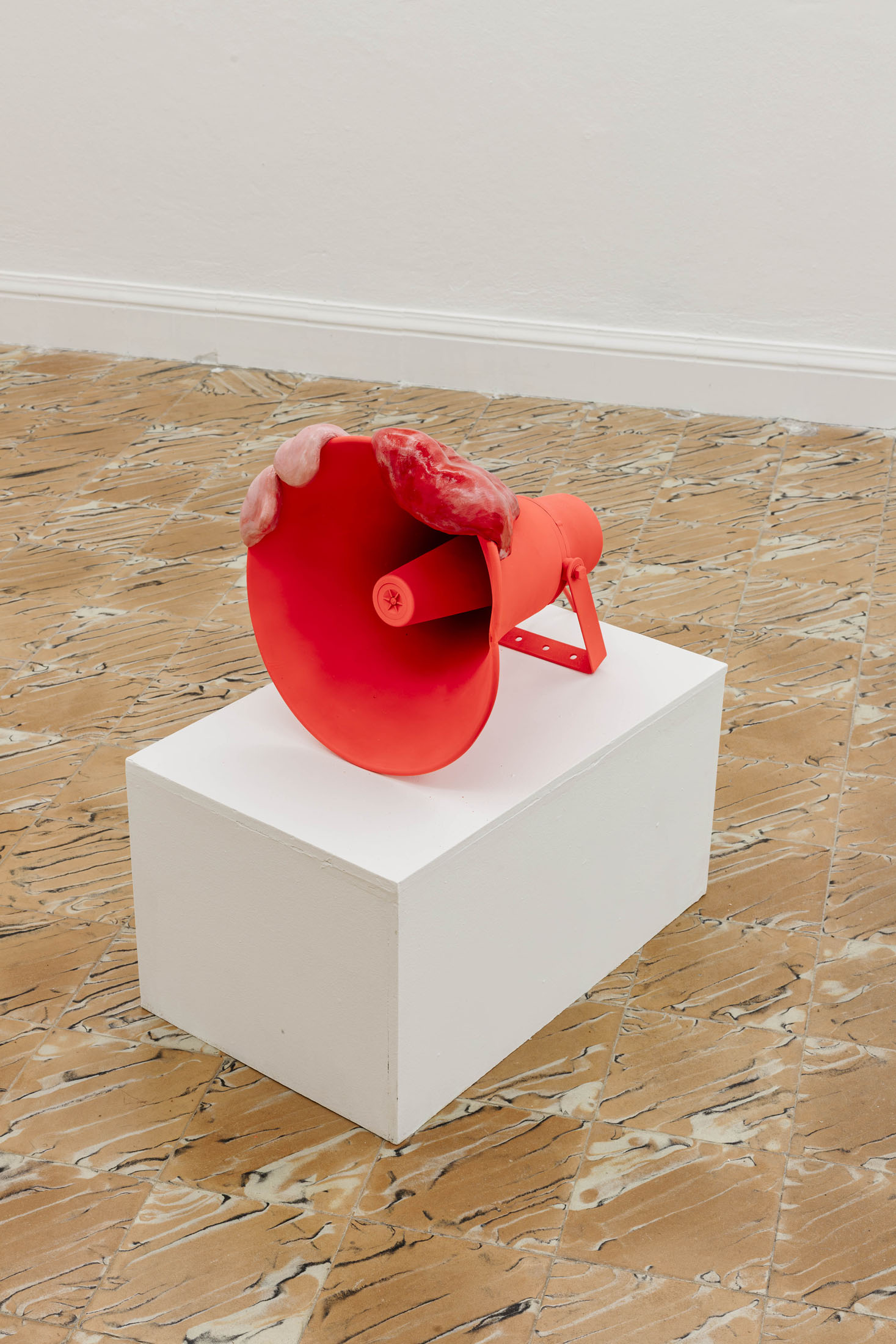
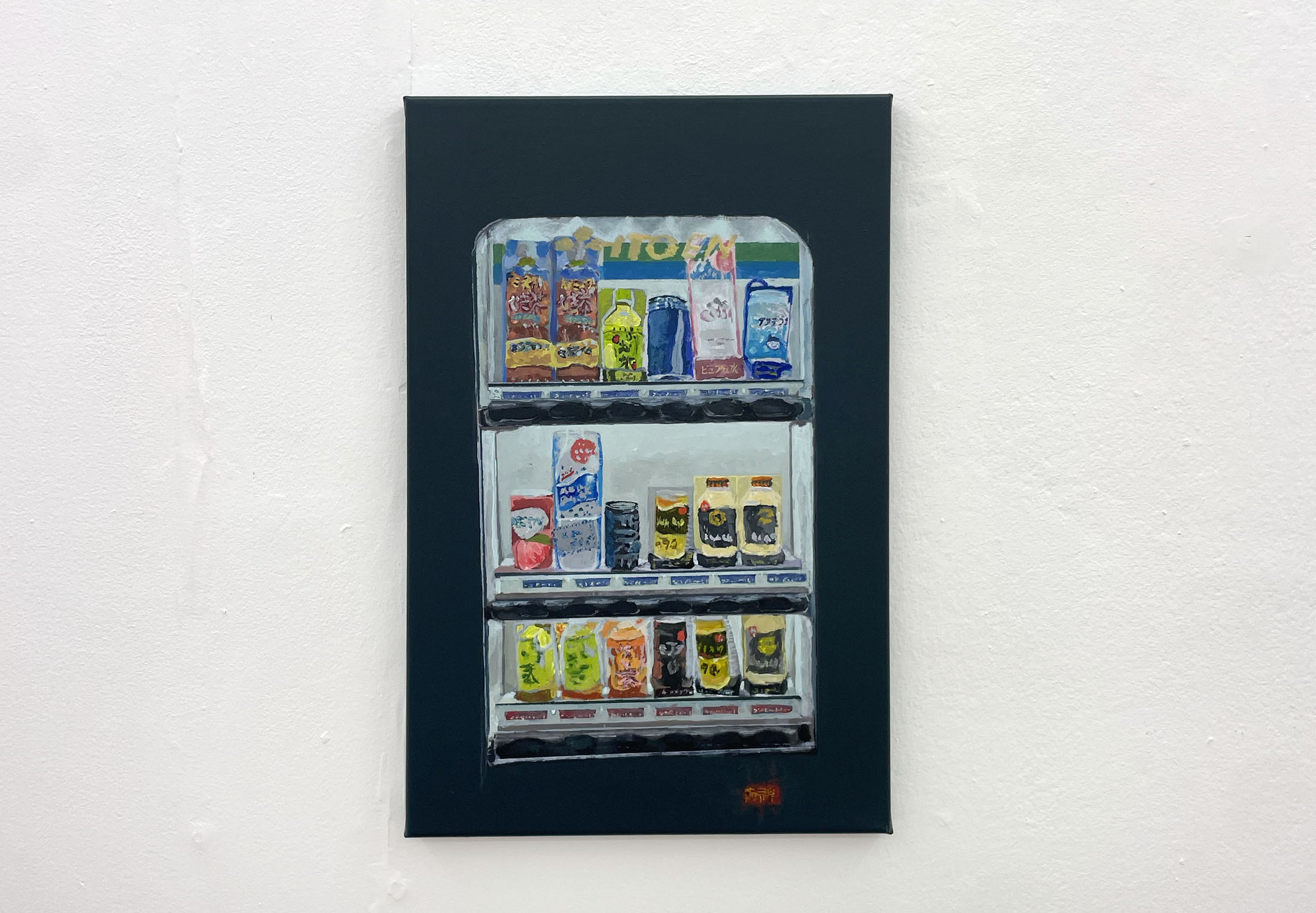
And yet, the sonic dimension of the machine that works without rest also roars in silence. Though it too speaks to us at low frequencies, Rubén D’Hers’s machine finds its counterpart here in the hyperavailability of products and in a looping system that, in order to keep its interior cold, must release heat into the outside world: an entropy whose chaos permeates its surroundings.
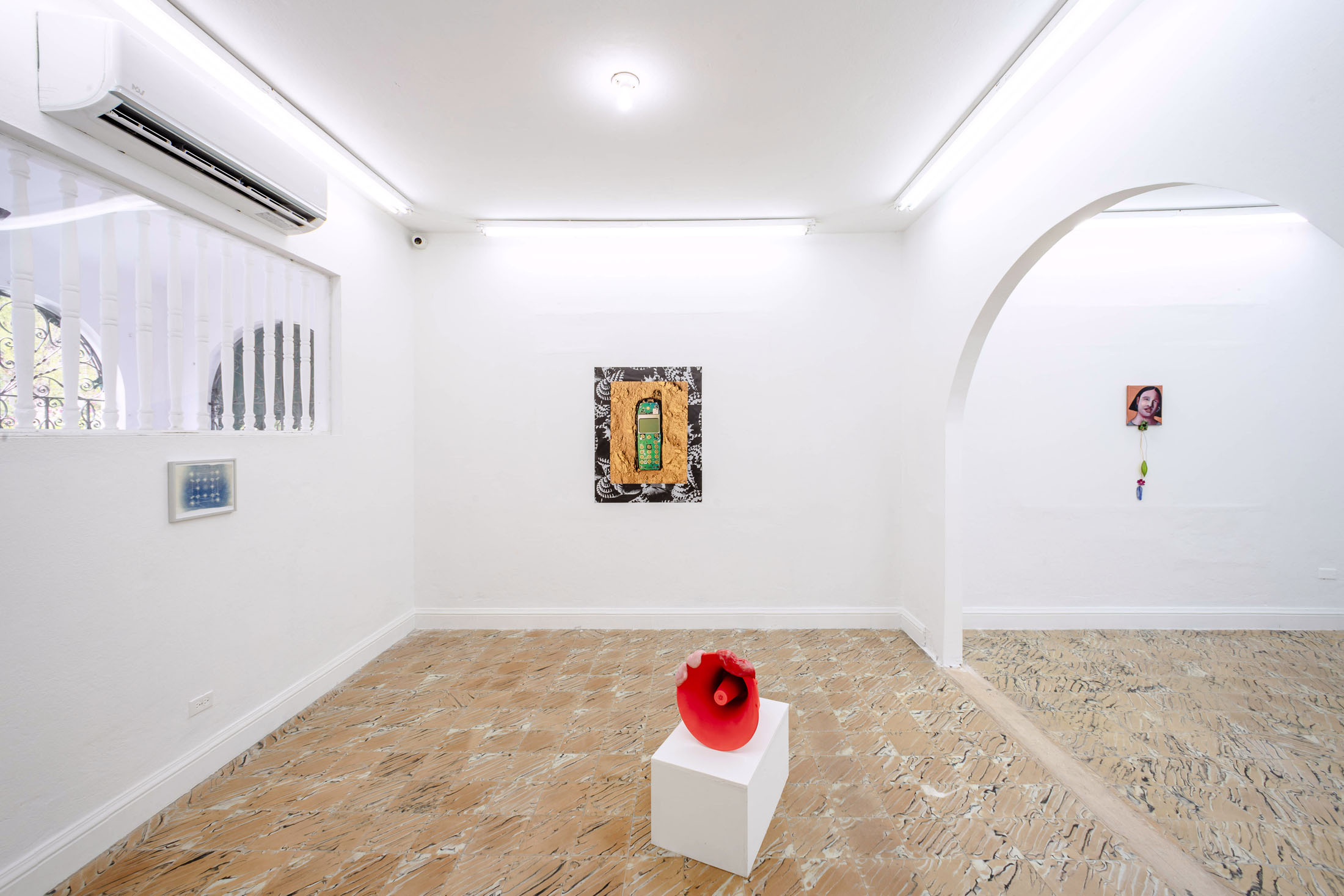
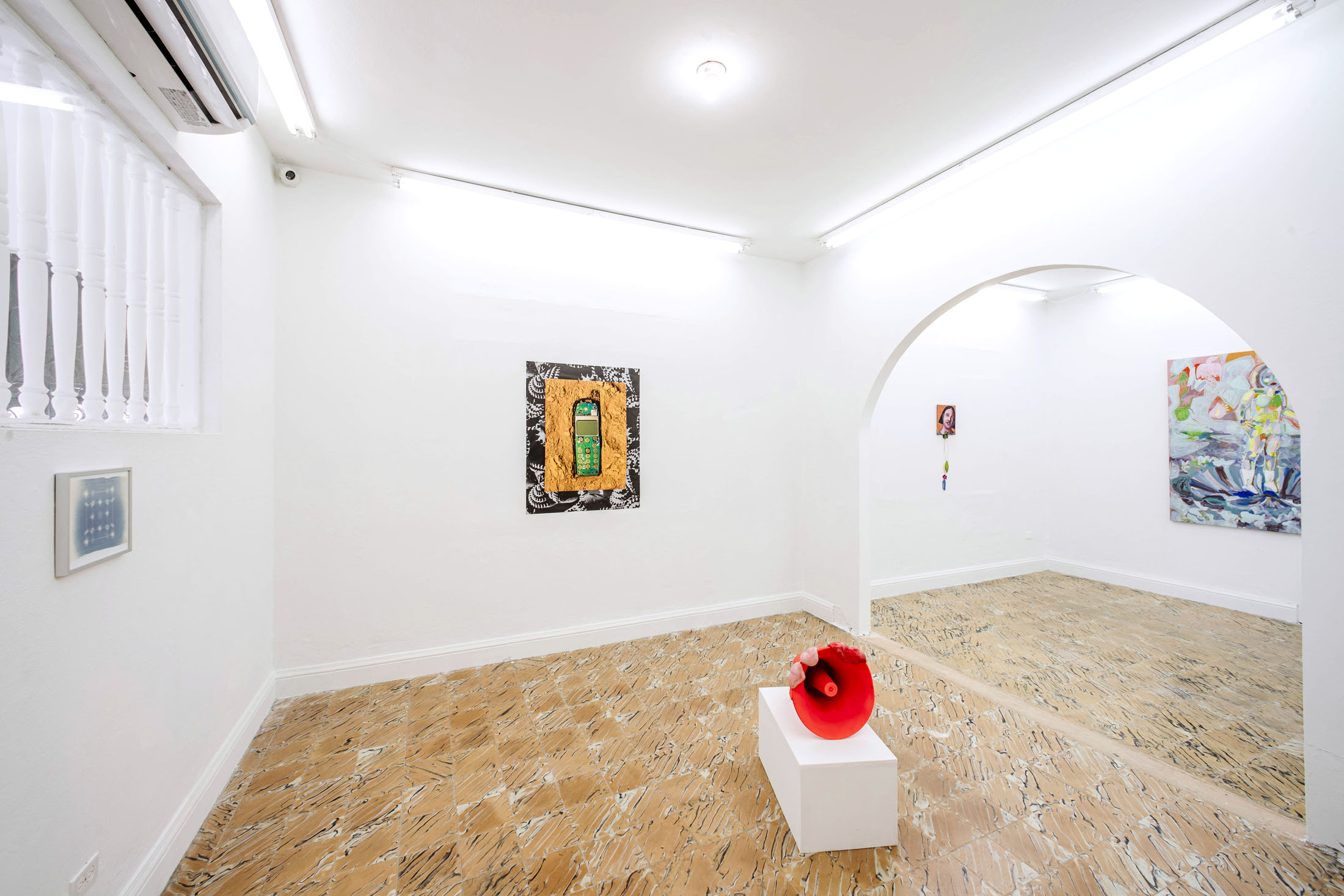
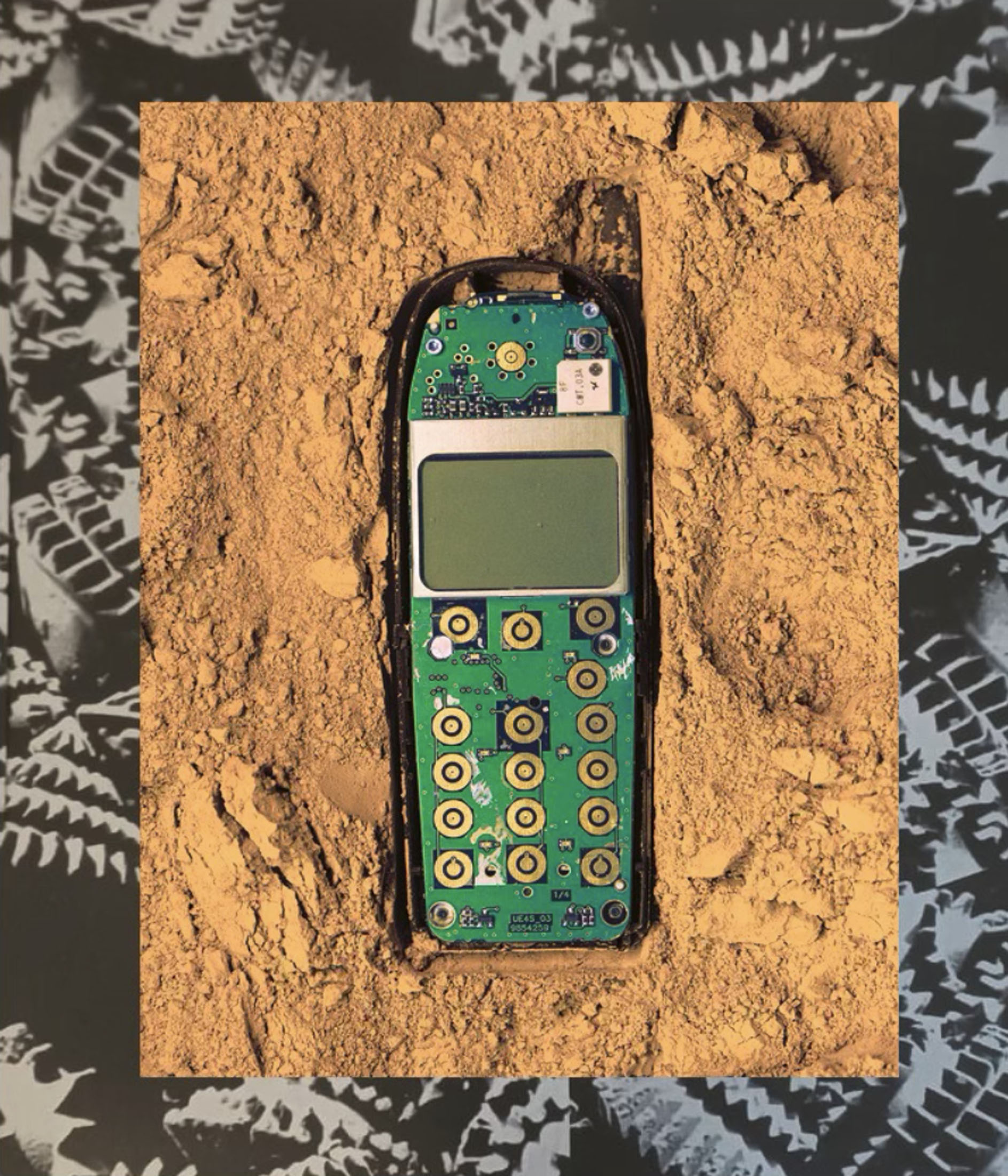
This is also a reading of the earth through the inscriptions that the very matter of technology leaves upon it: the ecological traces of electronic-device production, the extractivist violence of mining, and the geopolitical tensions that run through the material cycle. Ana Alenso’s mobile phone appears as a prosthesis and exobrain, mutating almost into an ornament whose remnants seem to configure a writing yet to be deciphered. In a synchronic register of unearthing, Jakob Forster’s work considers the time capsule as a technology of memory: heavy metals become containers in which the remnants of another time preserve, transform, and transmit the traces of bodies, affects, and past economies.
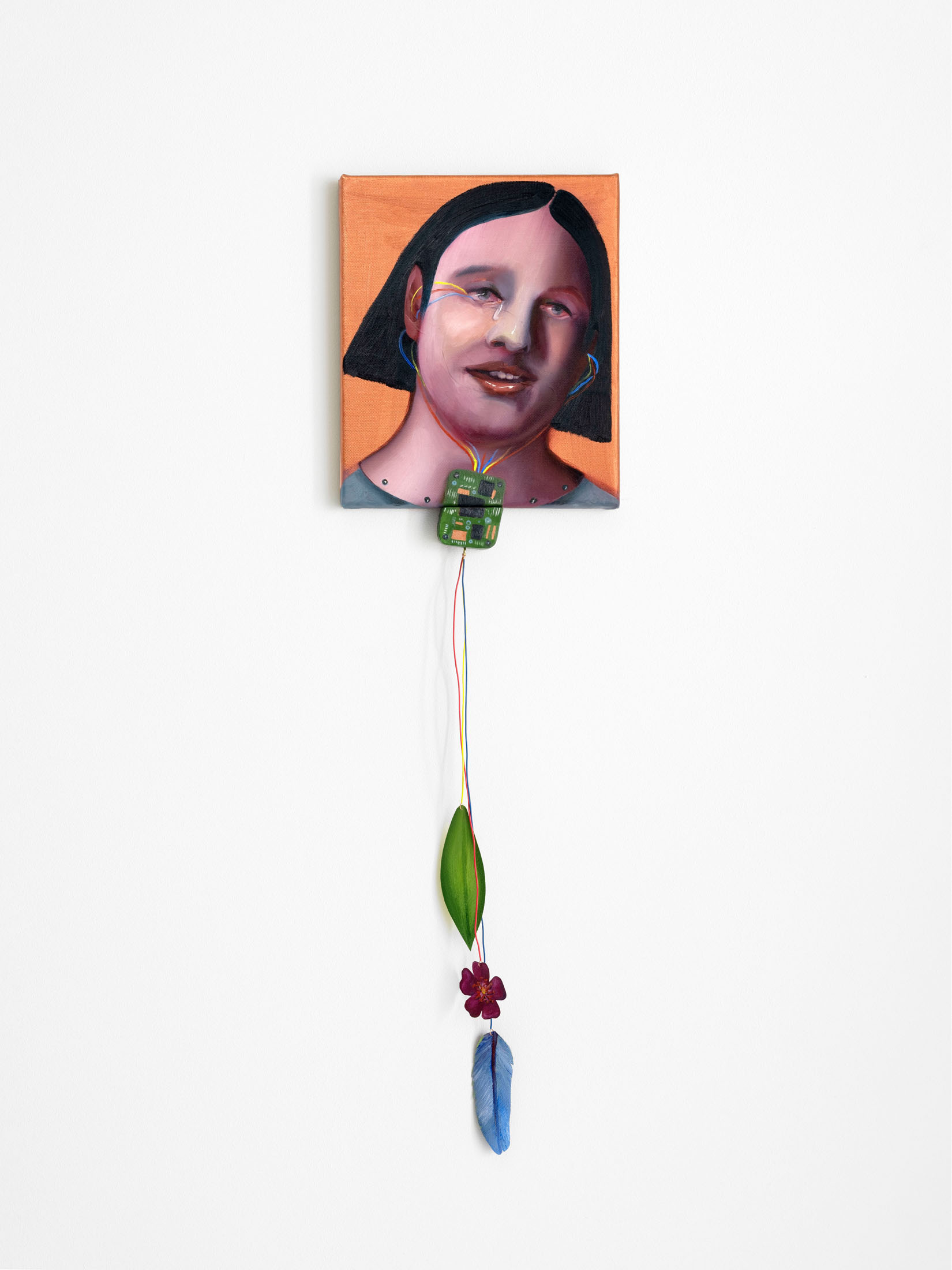
But what is it that makes bodies pulse? Ivana de Vivanco’s speculative fiction traces a route. The symbiosis between body and device imagines forms of orientation built from the memories of nature: intricate circuits running from the veins of a plant to the heart become compasses pointing toward where the living asks for our attention. In these works, the machine becomes a premonition: a question about the conditions that make life possible, about what keeps it in motion, and about the ways in which we might still apprehend it.
Perhaps the anxious anticipation does not lie in machines becoming human, but in understanding that we have been hybridizing with them for a very long time. The relationships at play here speak, borrowing Mary Oliver’s words, of stories that break our hearts: unstable wastelands where circuits and rituals participate in the same alchemy of memory, desire, affect, and transformation. From the depths of the earth to the orbits of the cosmos, from algorithms to the membranes of an organism, the worlds conjured here are not improbable futures, but reconfigurations of relationships that, from tomorrow to yesterday, are already here. They break our hearts, yes, but hopefully to leave them open now—to looking, listening, and walking anew.
—Text by Ana Gabriela García