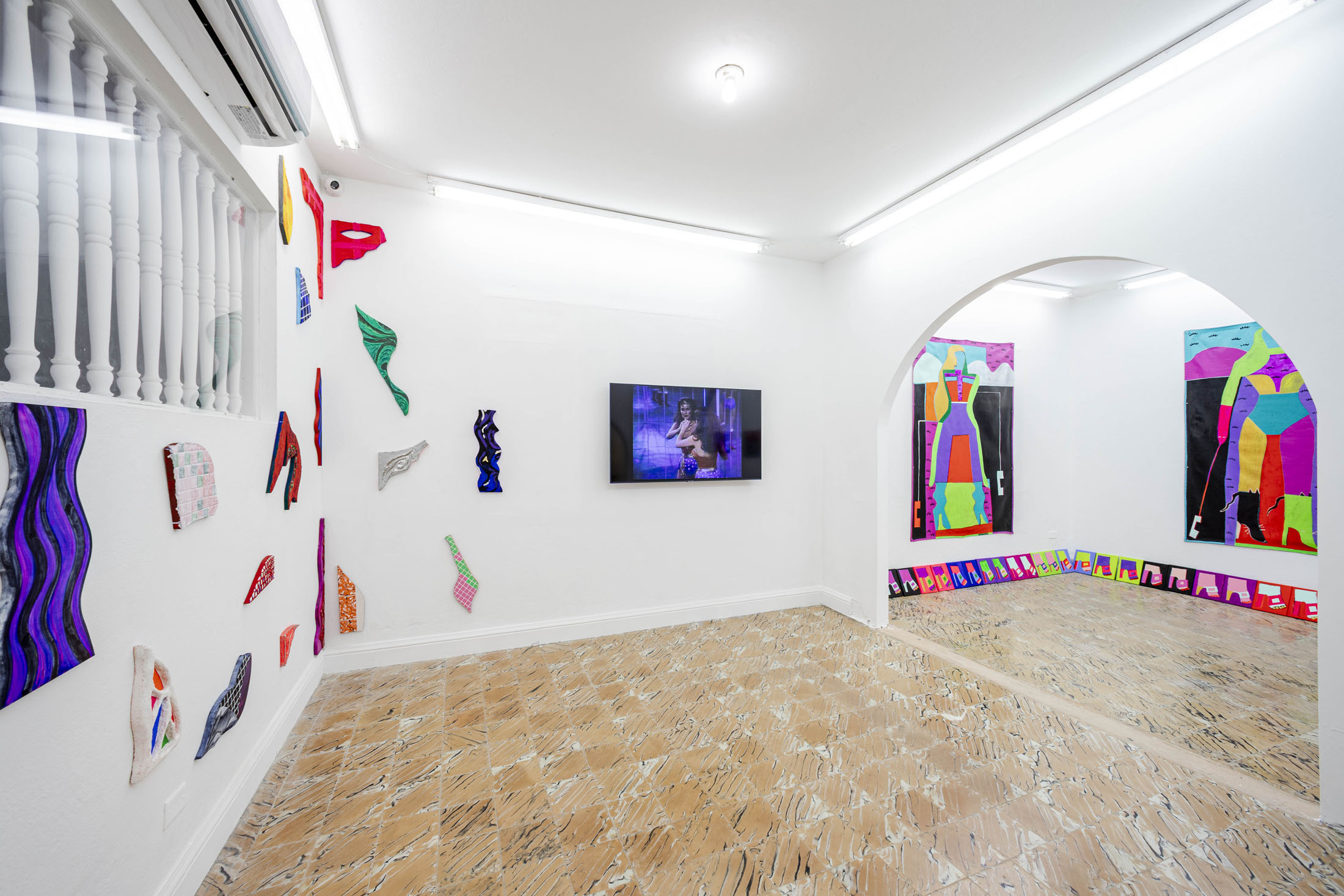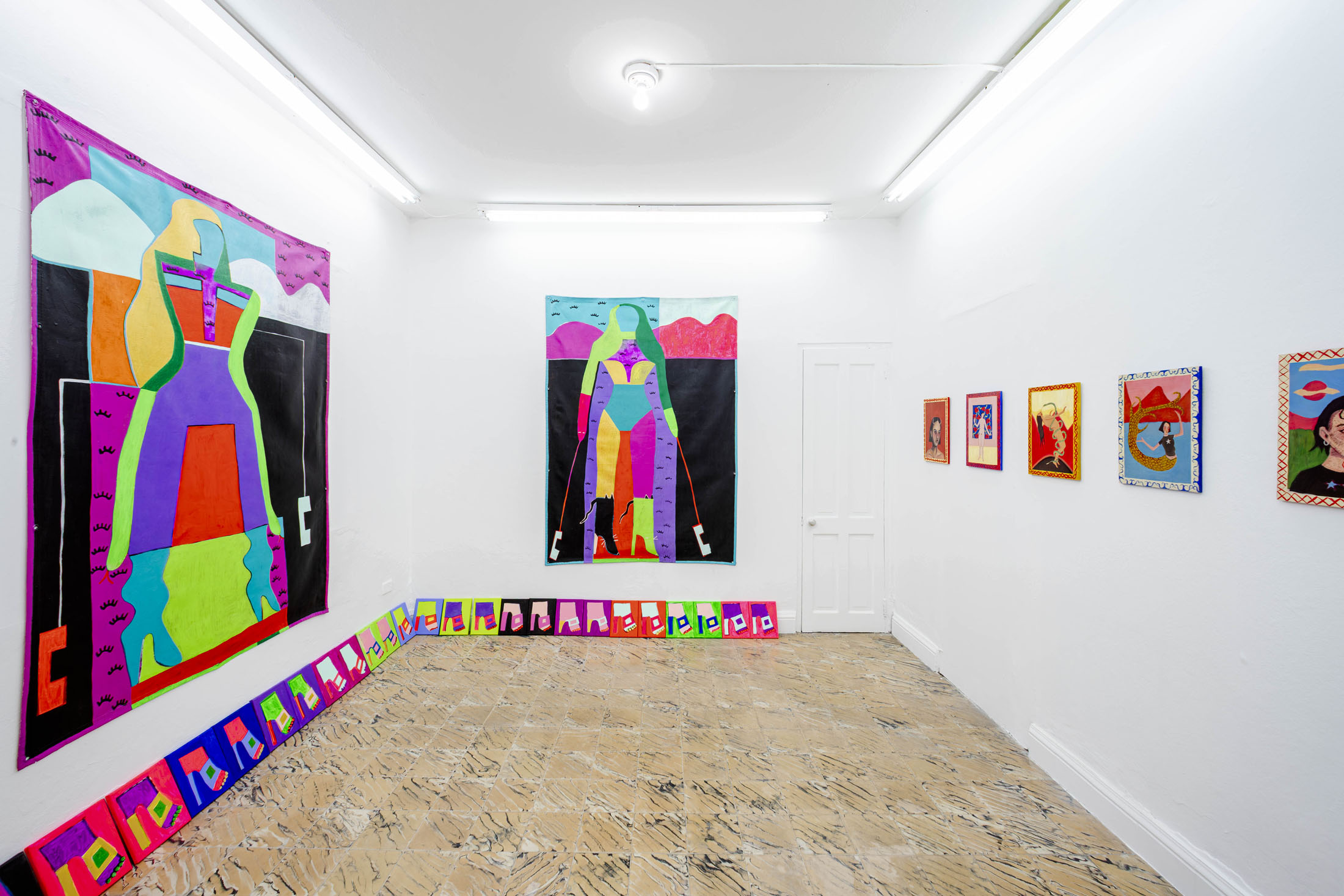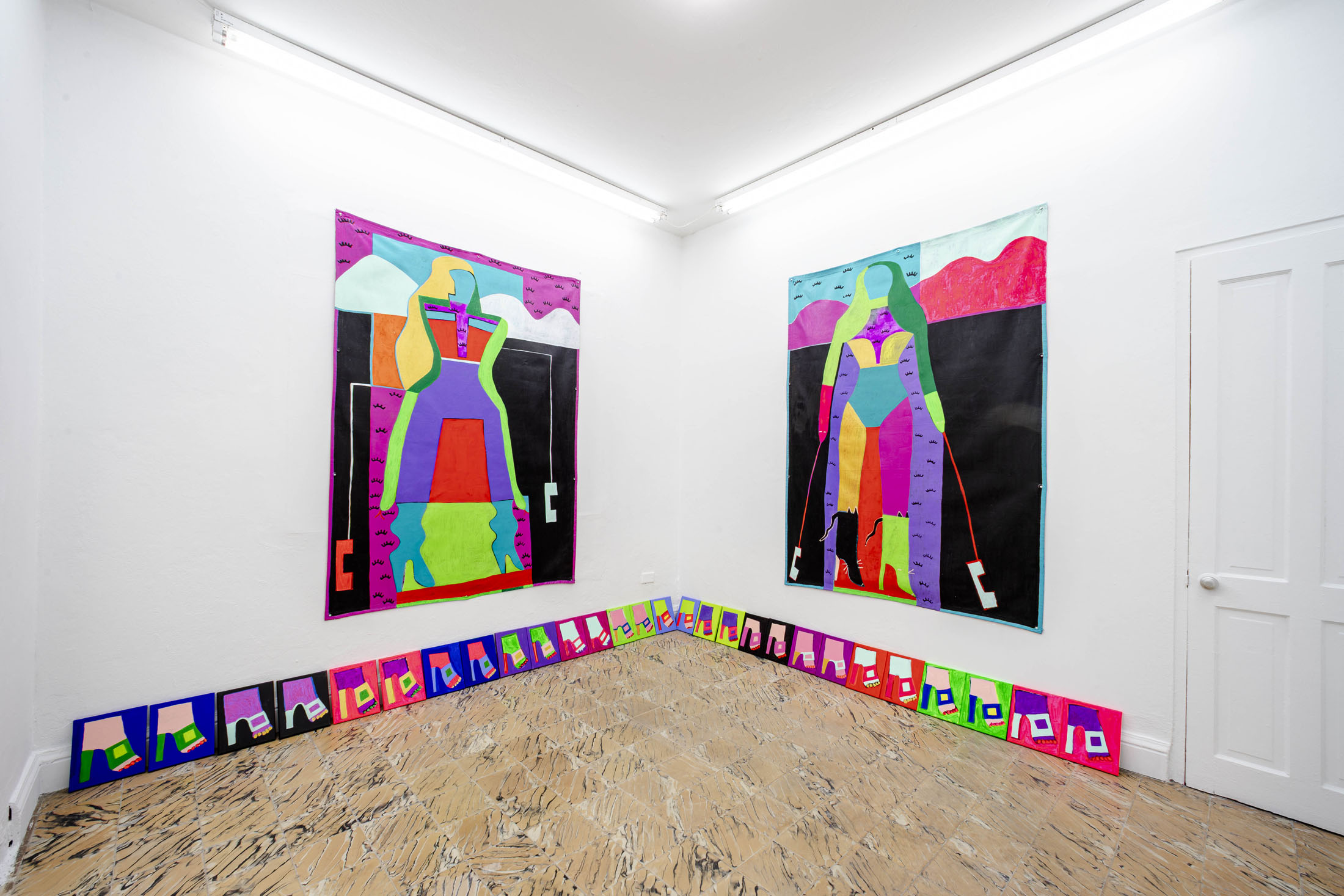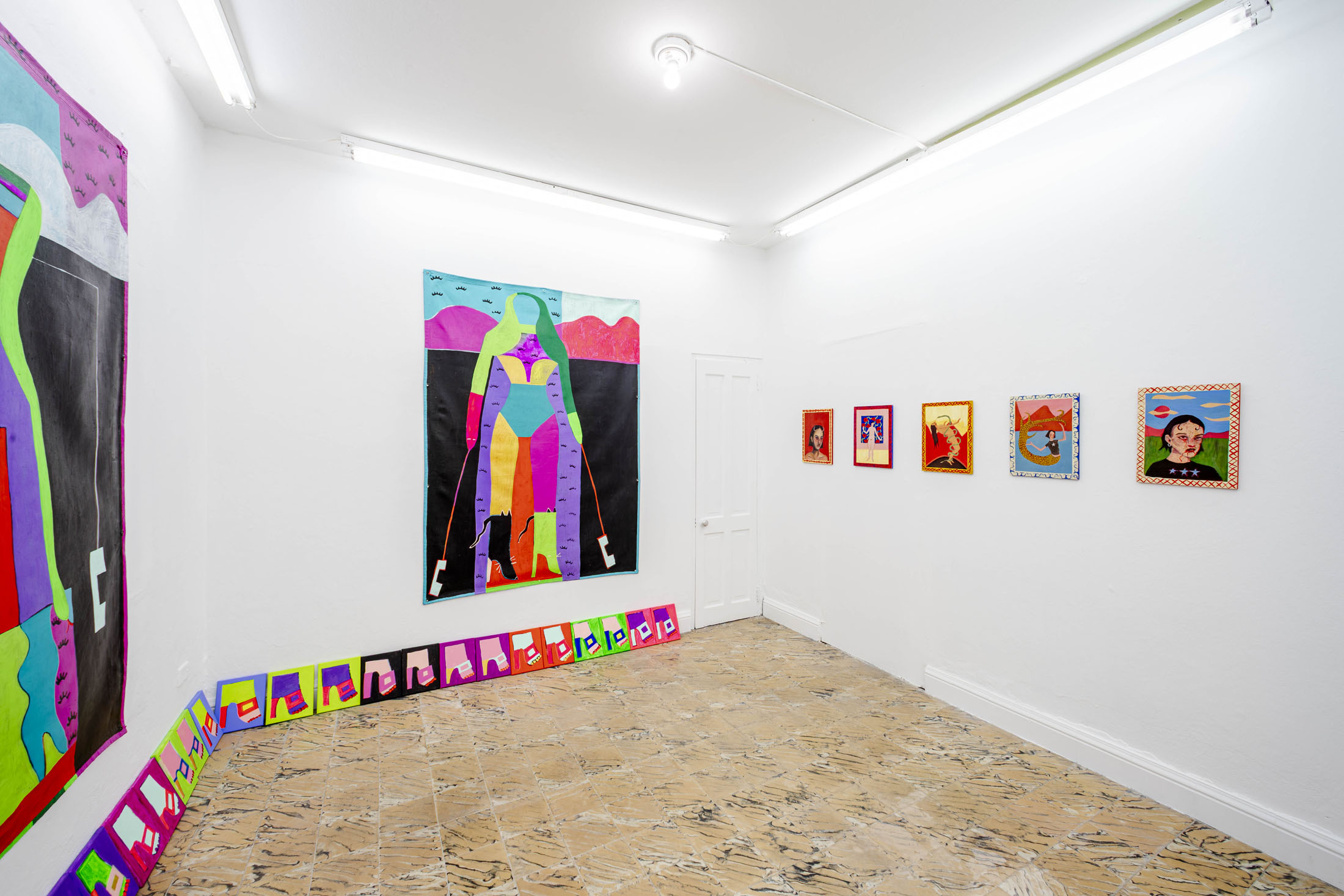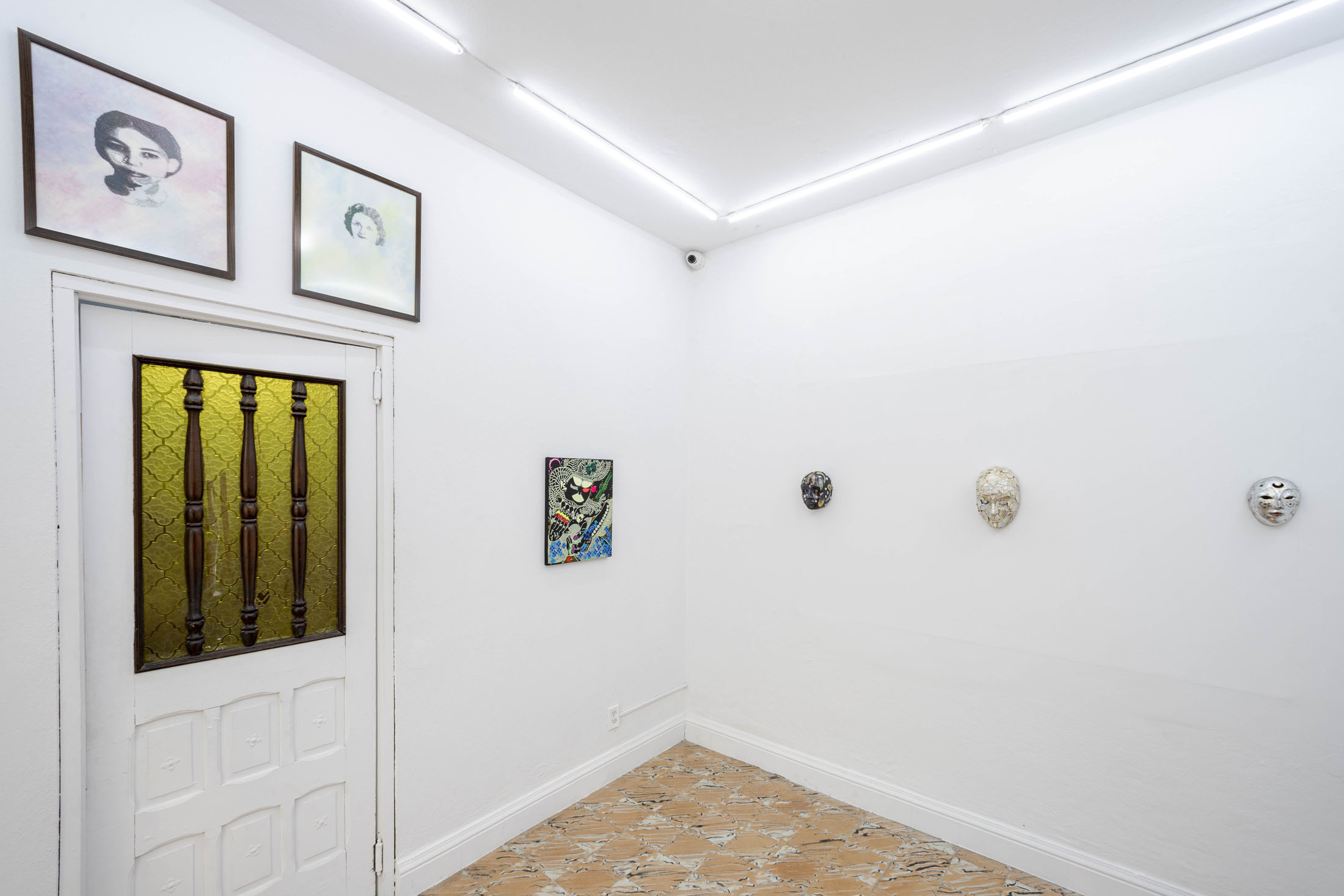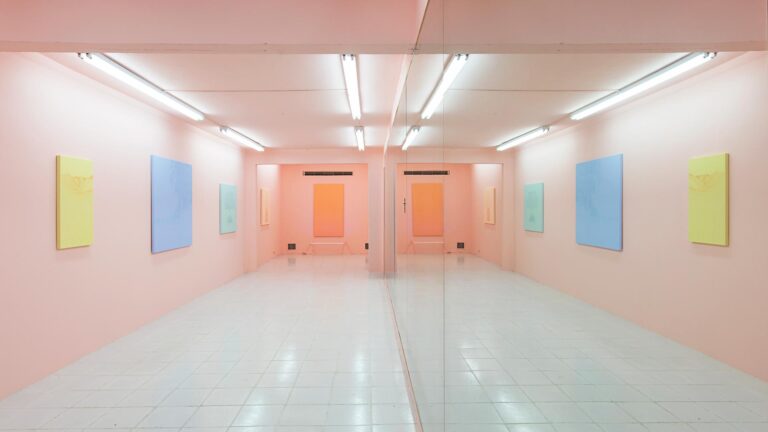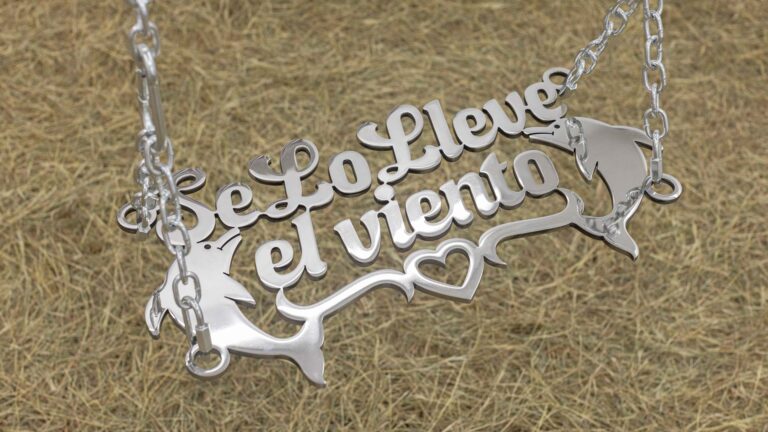
Gladiatrix brings together works by female artists that explore mythic, monstrous, and transformative themes as catalysts for awakening power, resistance, and becoming. Across the exhibition, these ideas emerge in a moment of rupture, the visible strain and fading reach of patriarchal authority. The monstrous and magical are not outliers here, but spaces of knowledge, agency, and possibility, carrying the echoes of ancestral voices and foremothers who inspire acts of courage and resistance. In this context, myth becomes a living language and a call to arms: a reminder that resistance is cyclical, power is always shifting, and new worlds are often first imagined through myth, ritual, and shared memory.
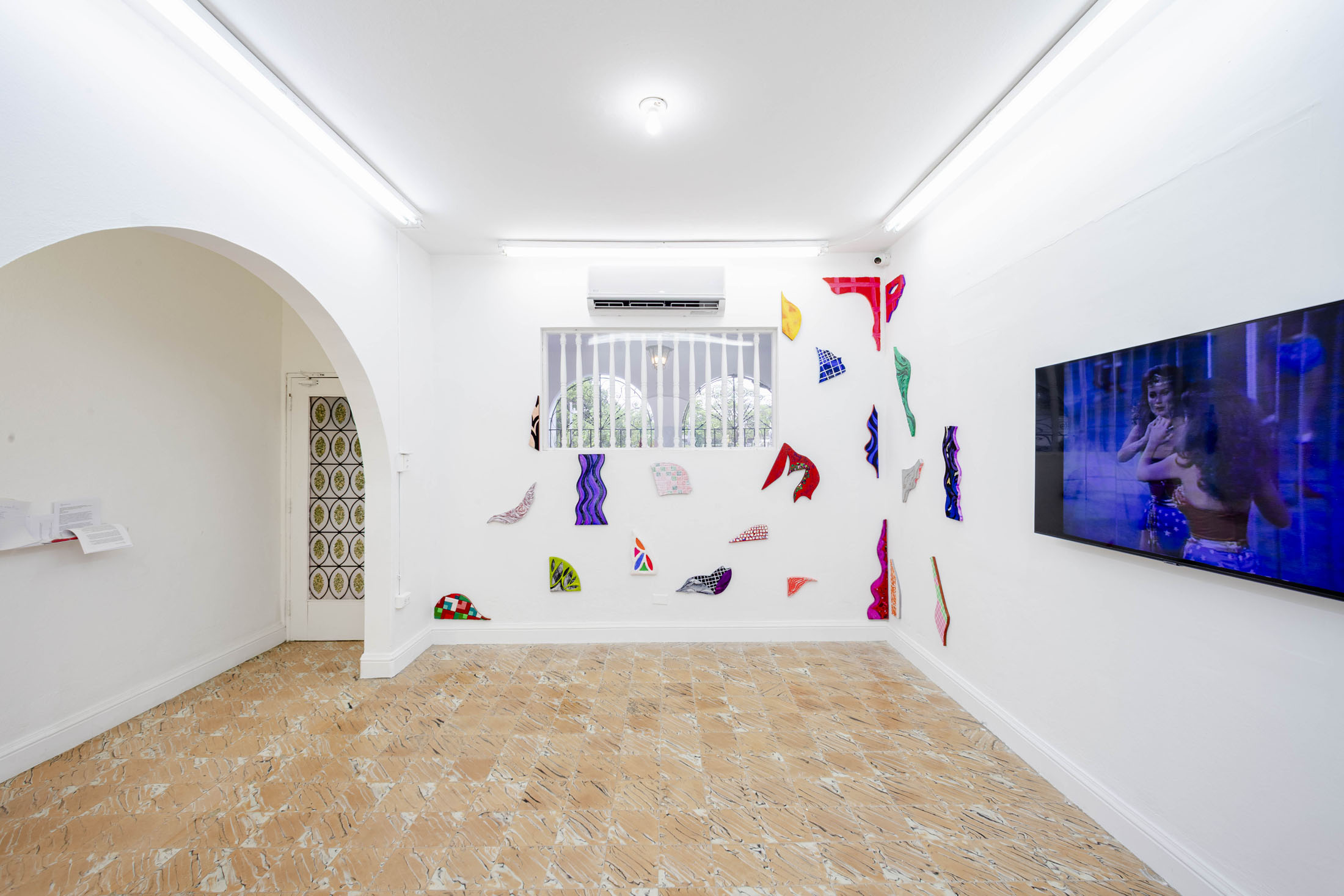
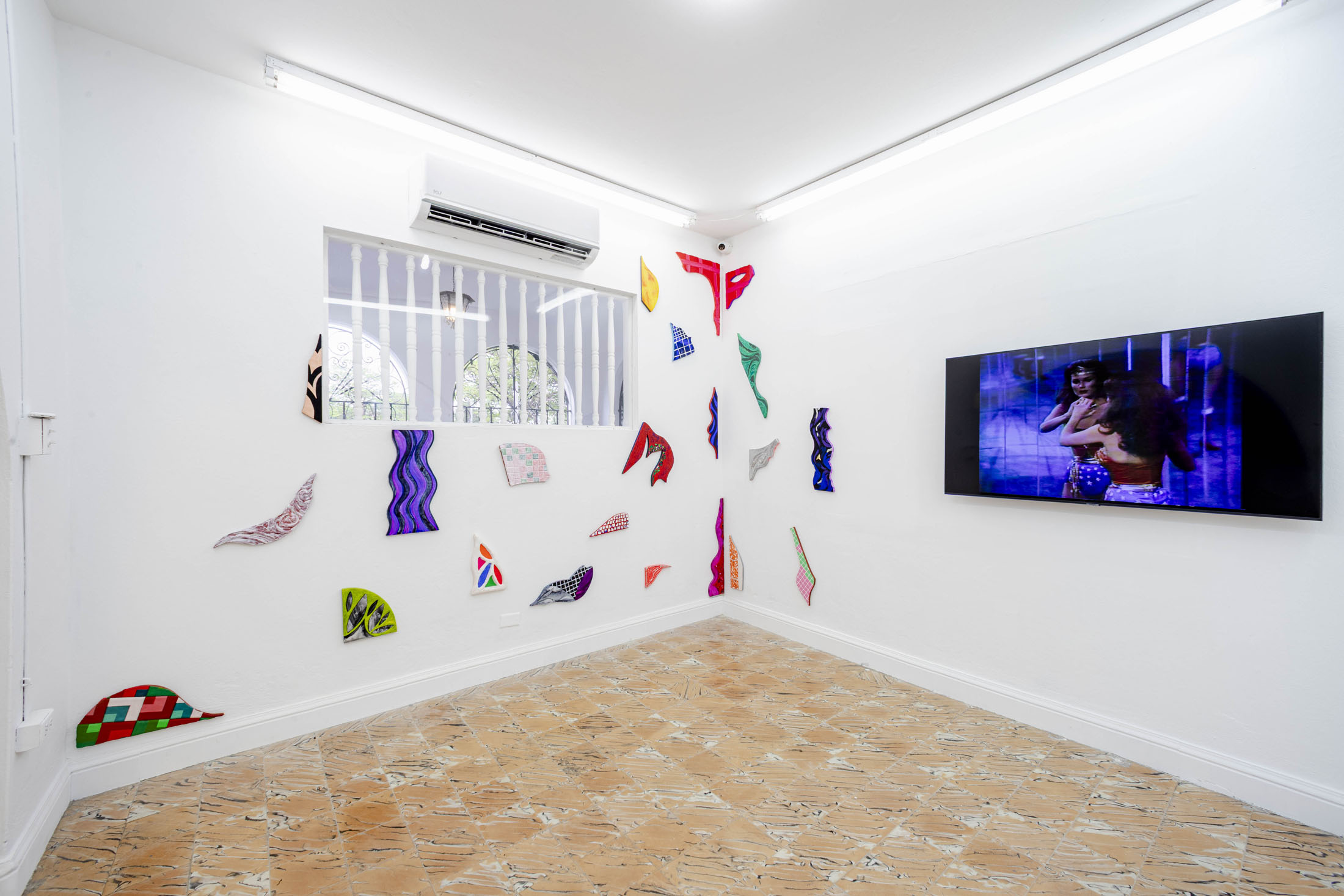
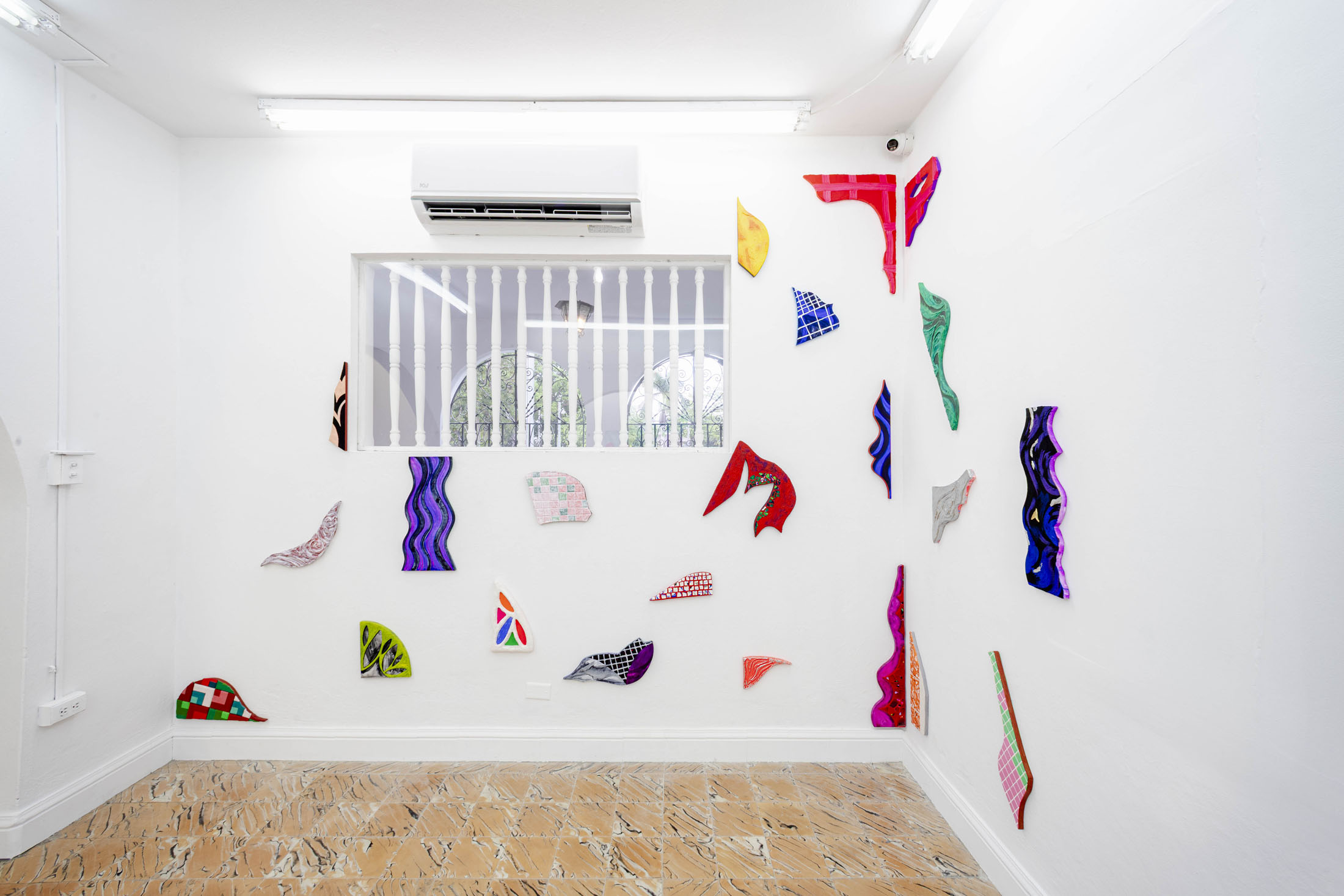
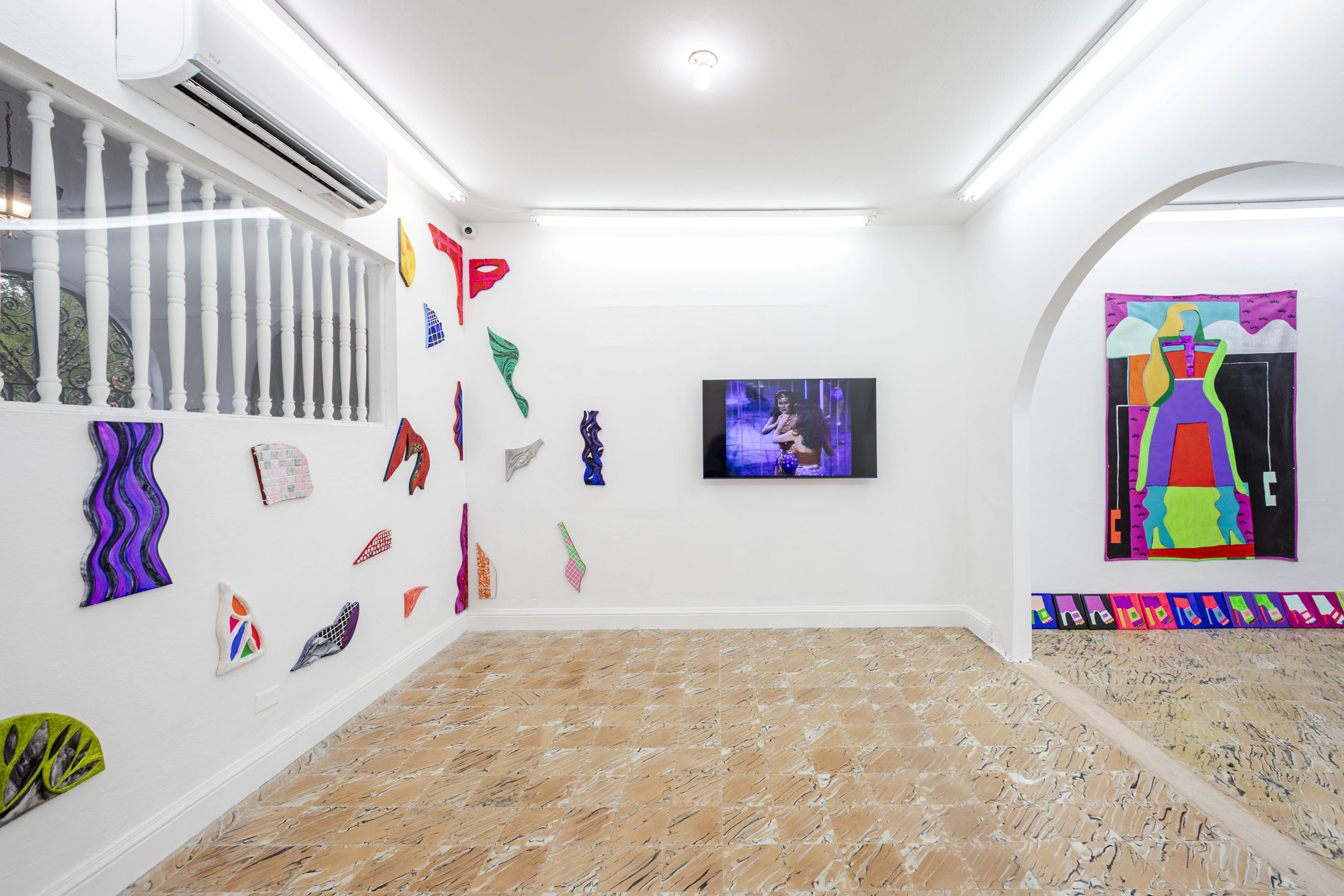
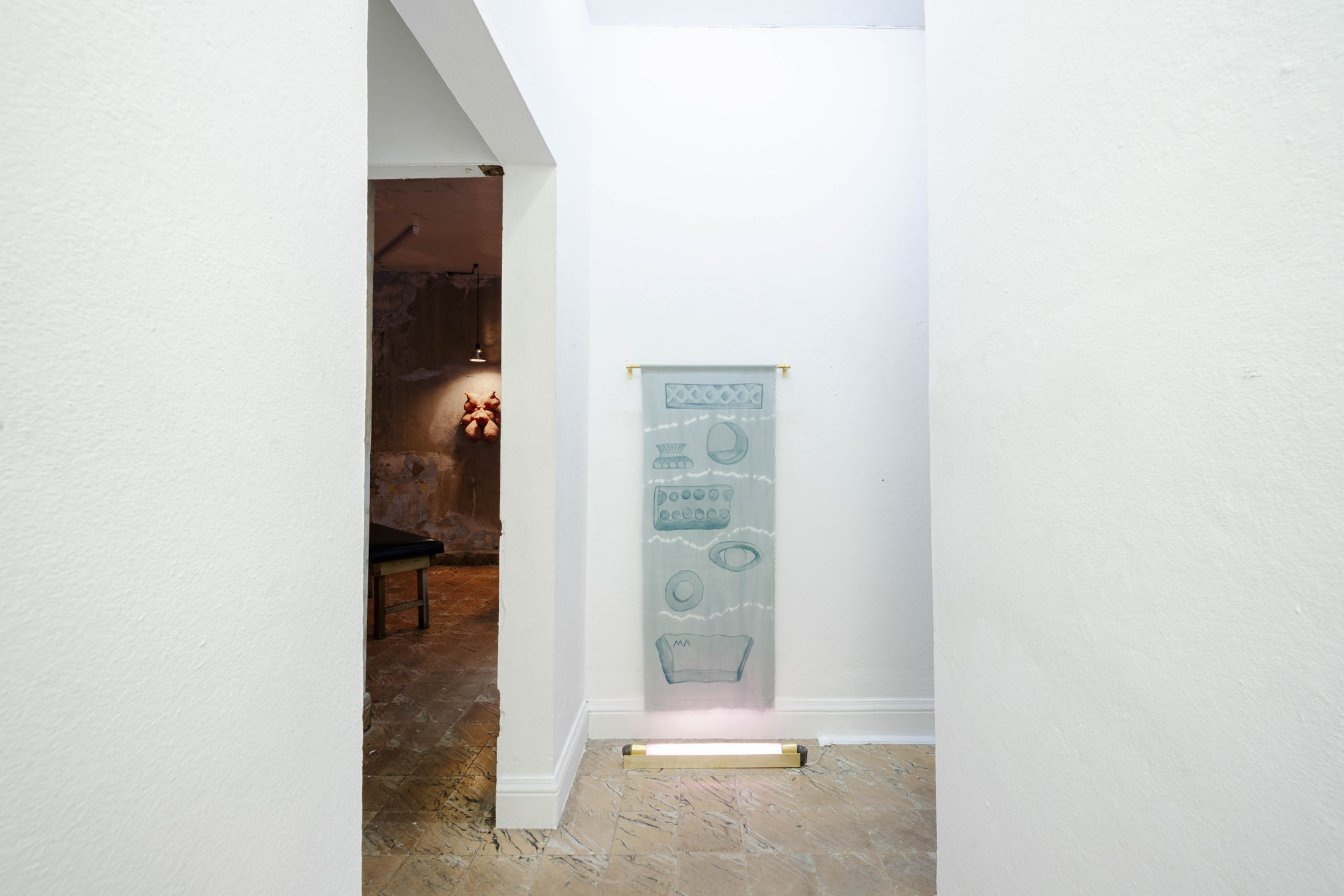
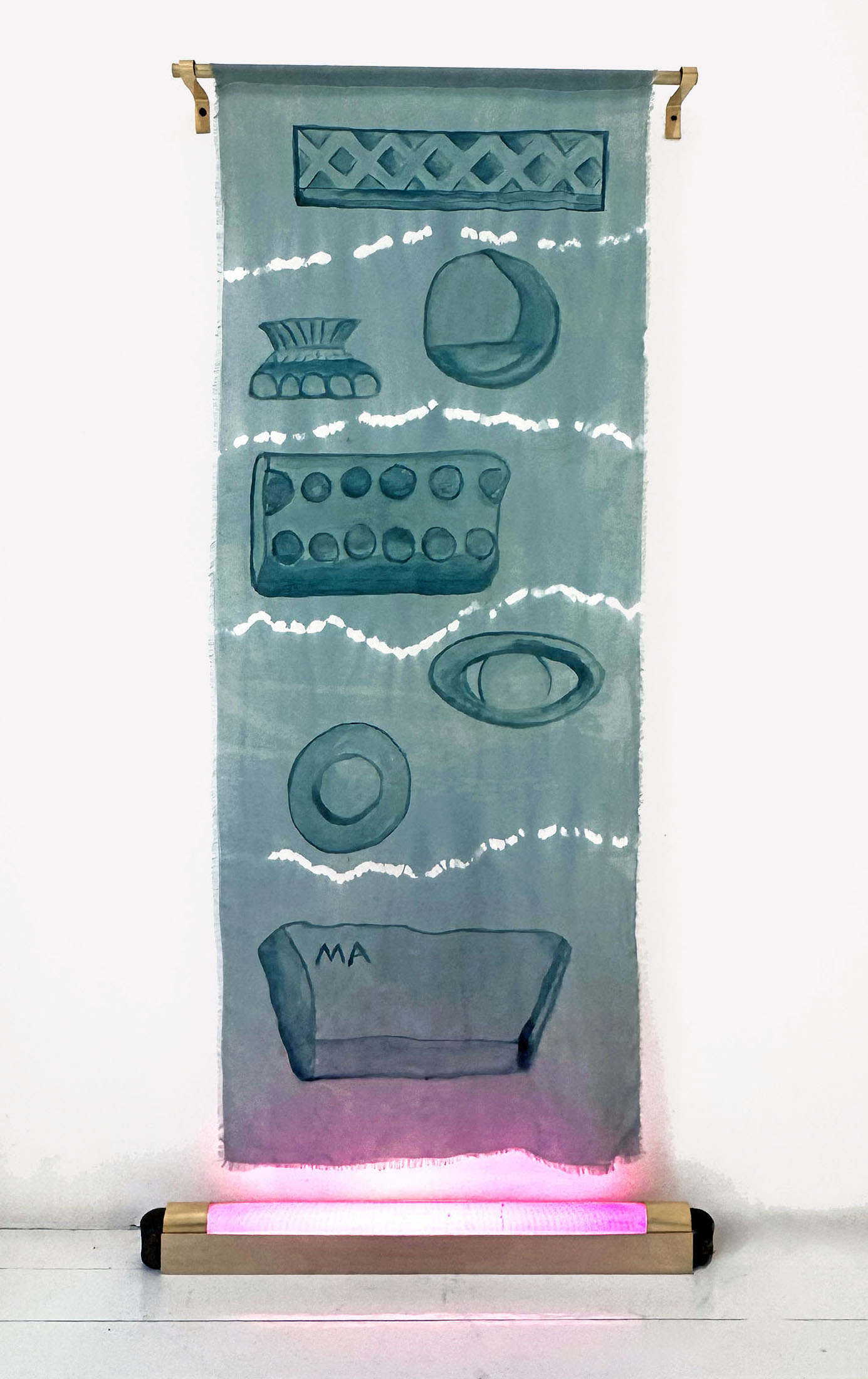
The exhibition begins with an installation by Nora Maité Nieves, where architectural motifs operate as markers of memory and belonging. Presented as fragments, these forms evoke the generative power of fracture, proposing fragmentation not as loss, but as a process through which strength and wholeness are continually rebuilt.
Dara Birnbaum’s iconic Wonder Woman video anchors the exhibition, grounding it in the feminist media critiques of the 1970s that helped shape subsequent generations of women video artists. Through repetition and disruption, the work deconstructs representations of women in popular culture and mass media, reframing the superheroine as both a site of empowerment and mediation.
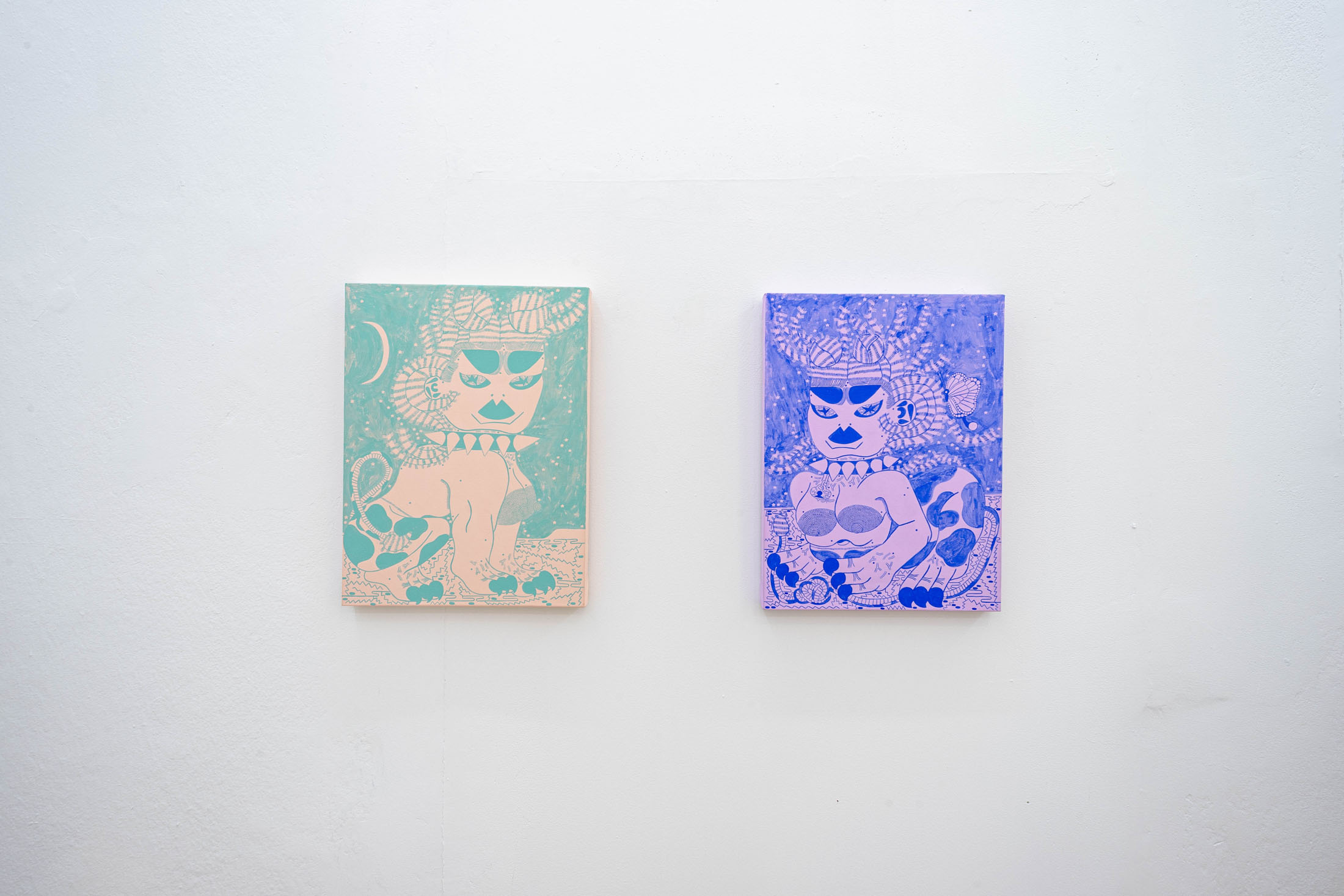
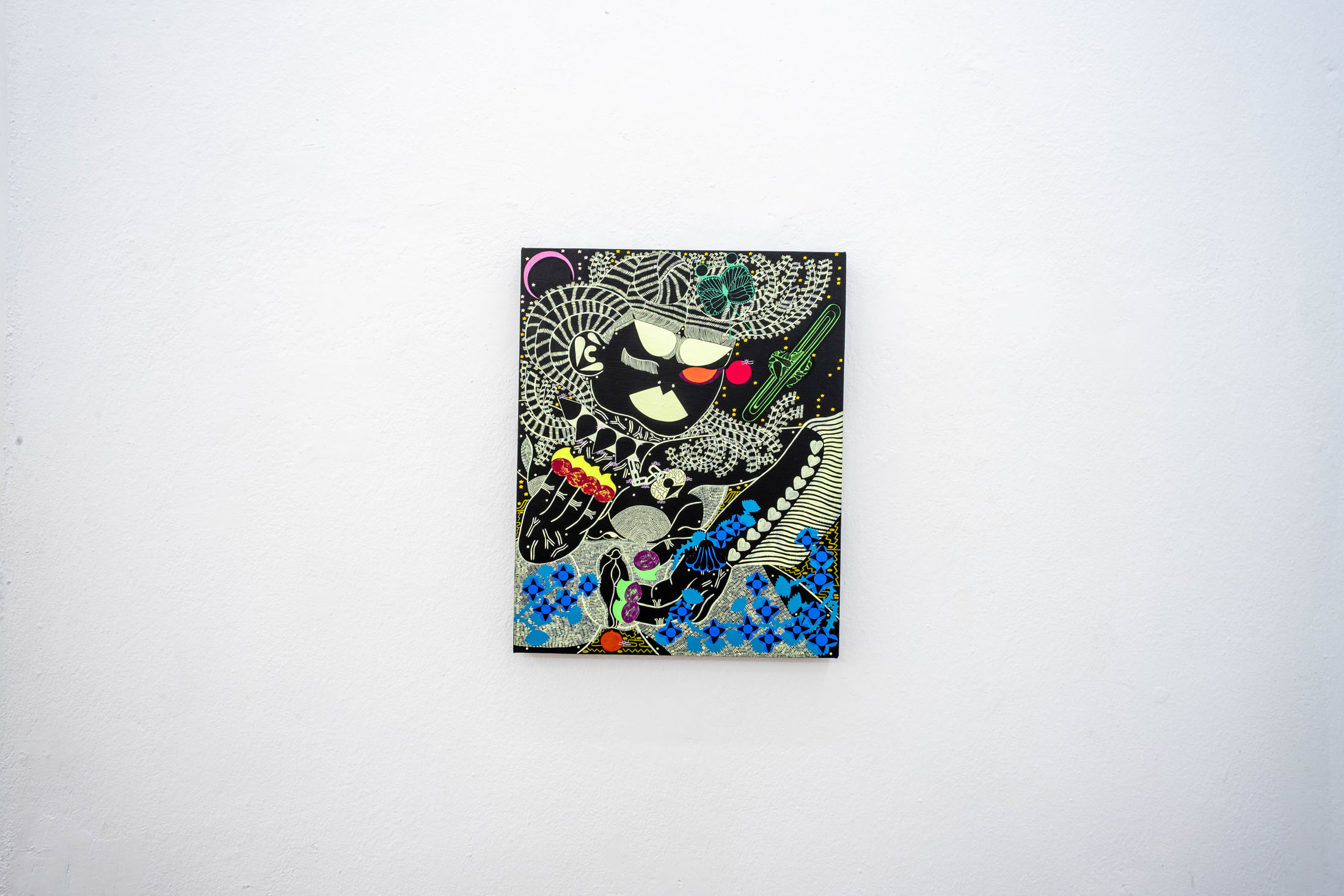
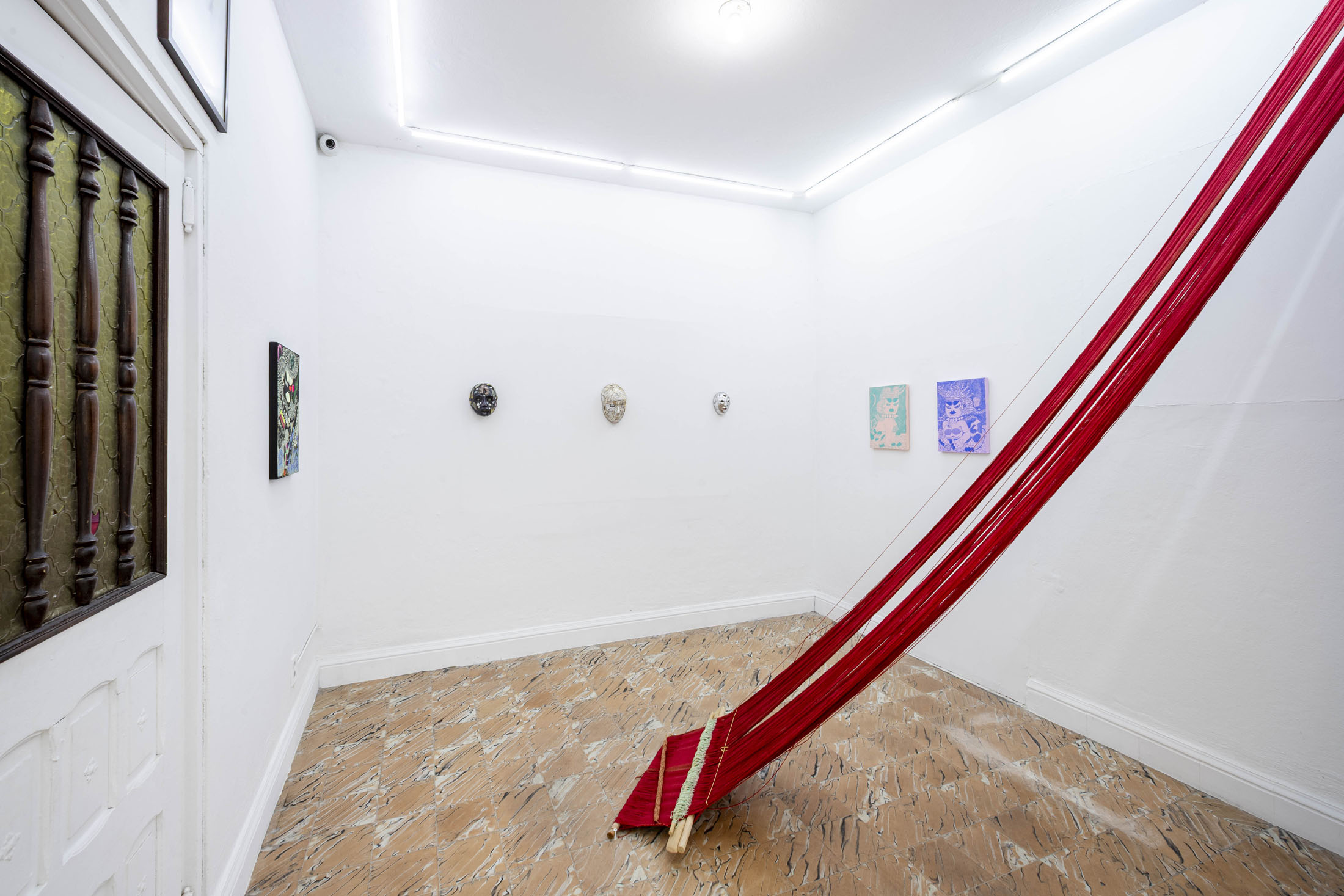
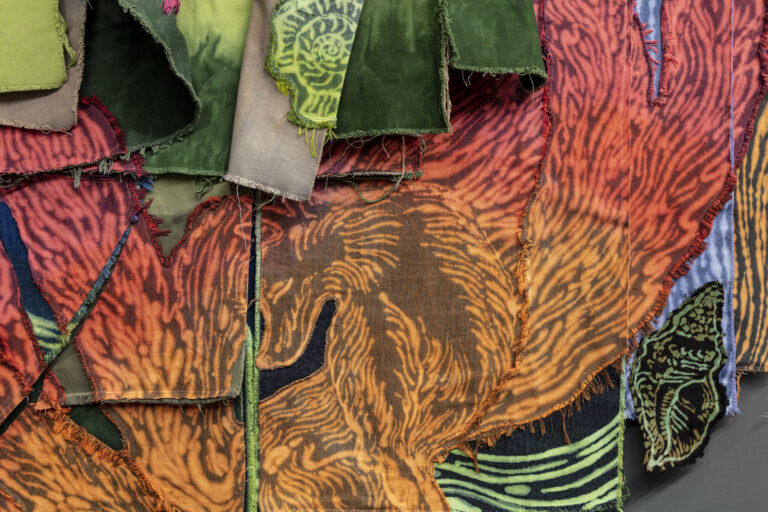
Gyan Shrosbree’s monumental tarp paintings conjure armored presences that stand like avatars for gladiators, where clothing and accessories becomes both shield and signal. Through playful, vividly colored forms and fractured silhouettes, these works dissolve and reassemble the body, transforming the gladiator into a fluid presence shaped by ornament, fragmentation, and becoming. Extending this are Heather Benjamin’s paintings that render commanding female avatars whose exaggerated, volatile bodies radiate both menace and autonomy. Through this confrontational figuration, Benjamin reframes femininity as a site of psychic intensity, desire, and unruly power.
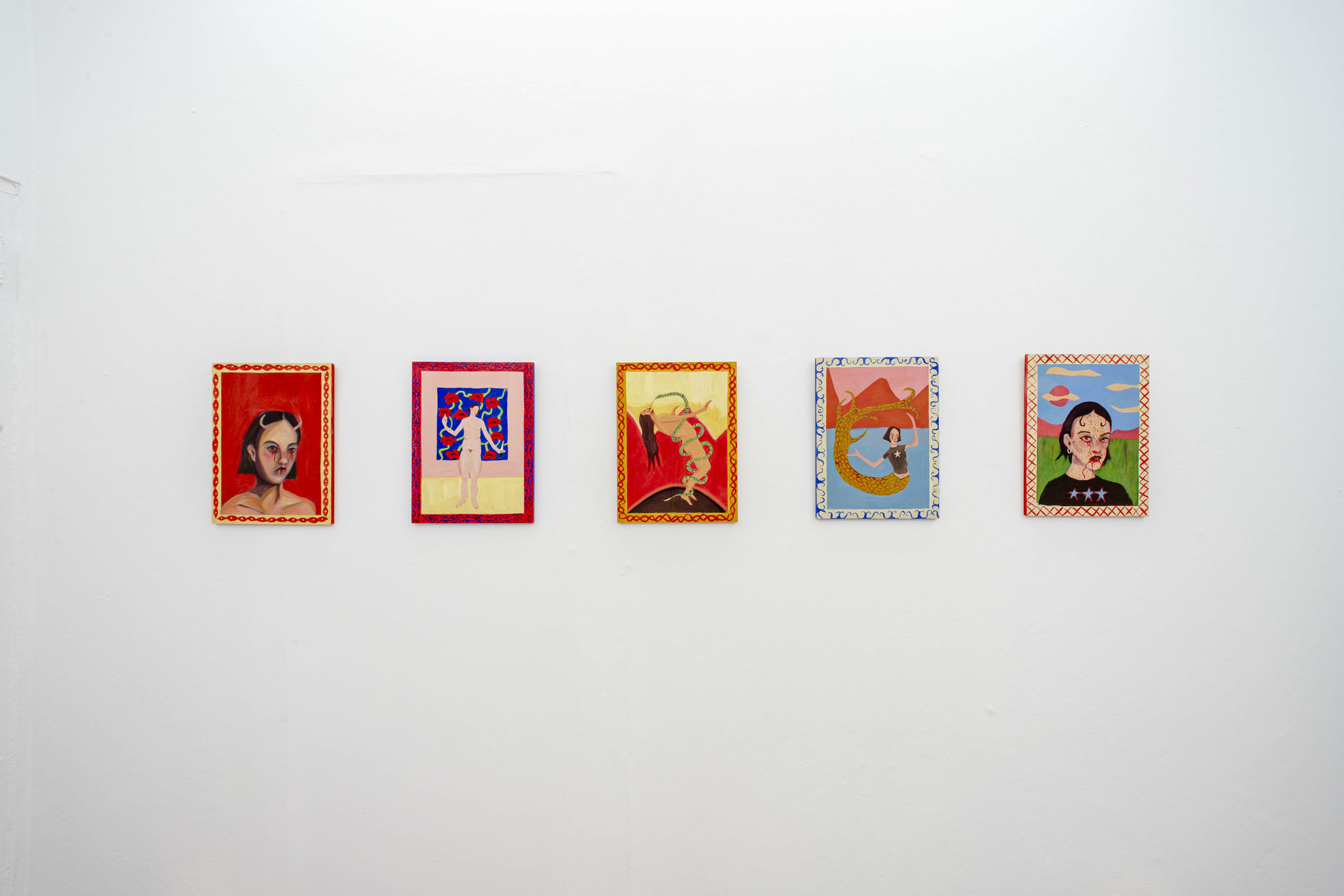
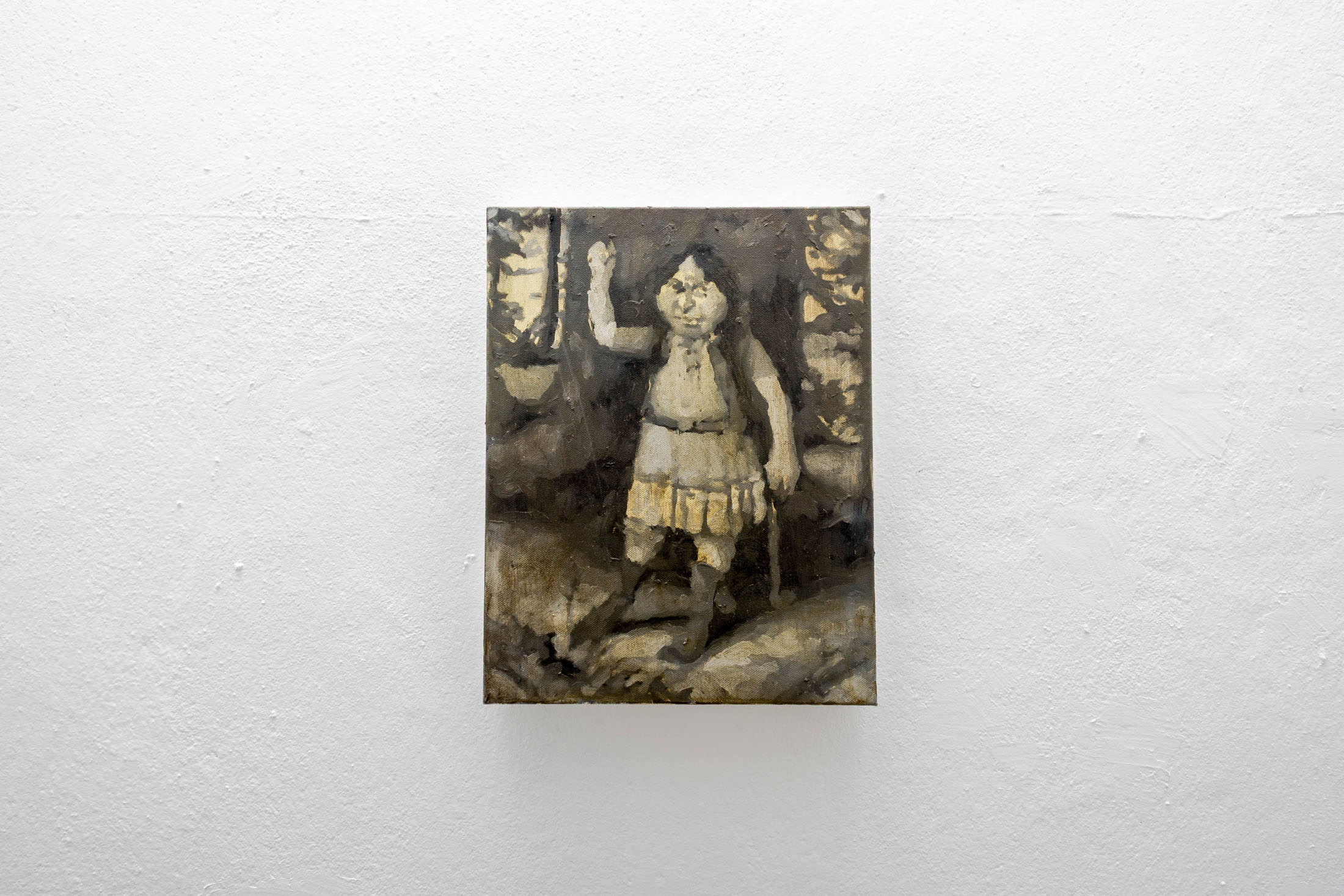
Raquel Sofía Moreno approaches figurative painting as a space of psychological charge, where bodies become vessels for tension and introspection. Her works emphasize an emotional atmosphere, rendering figures that feel suspended between interiority and confrontation.
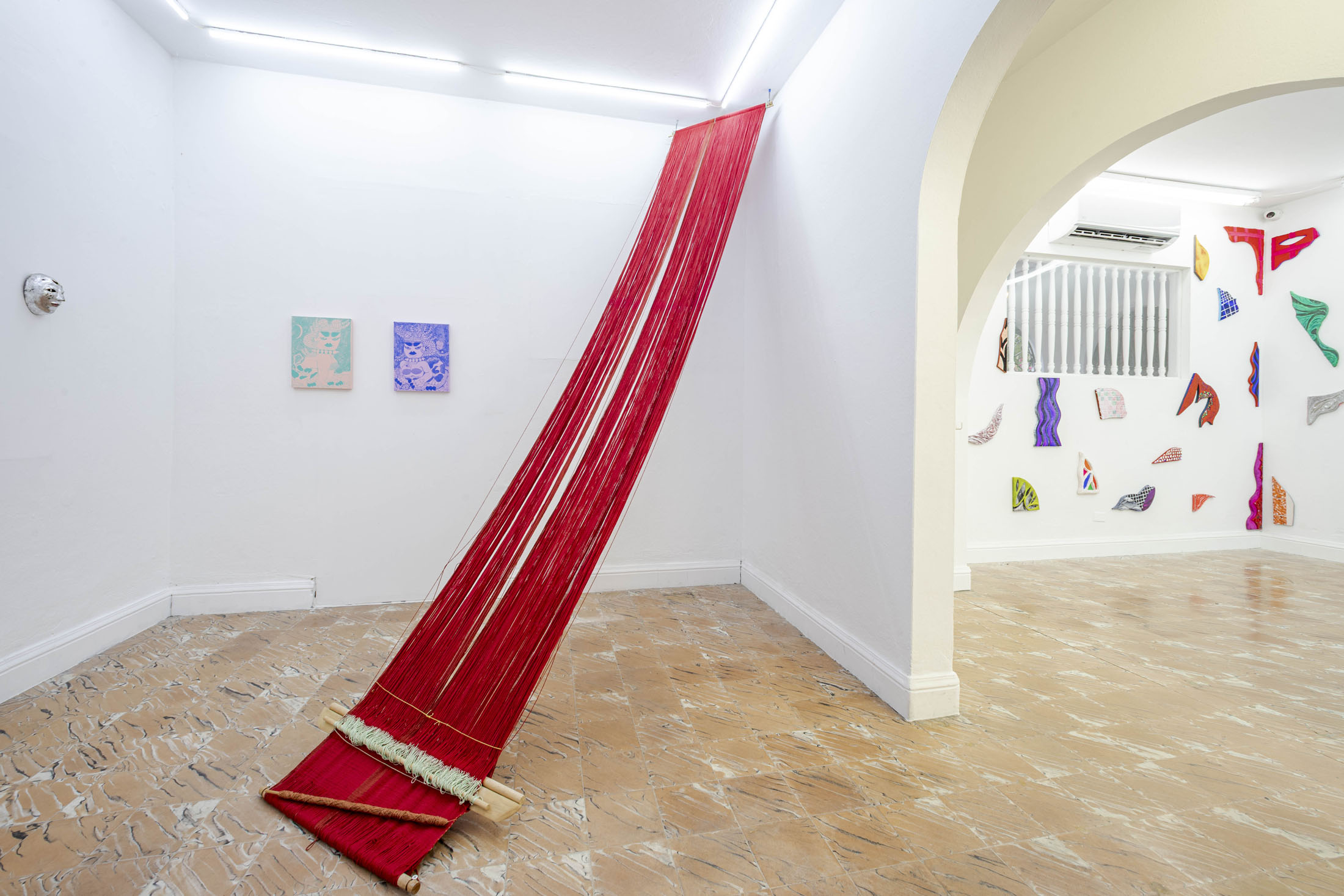
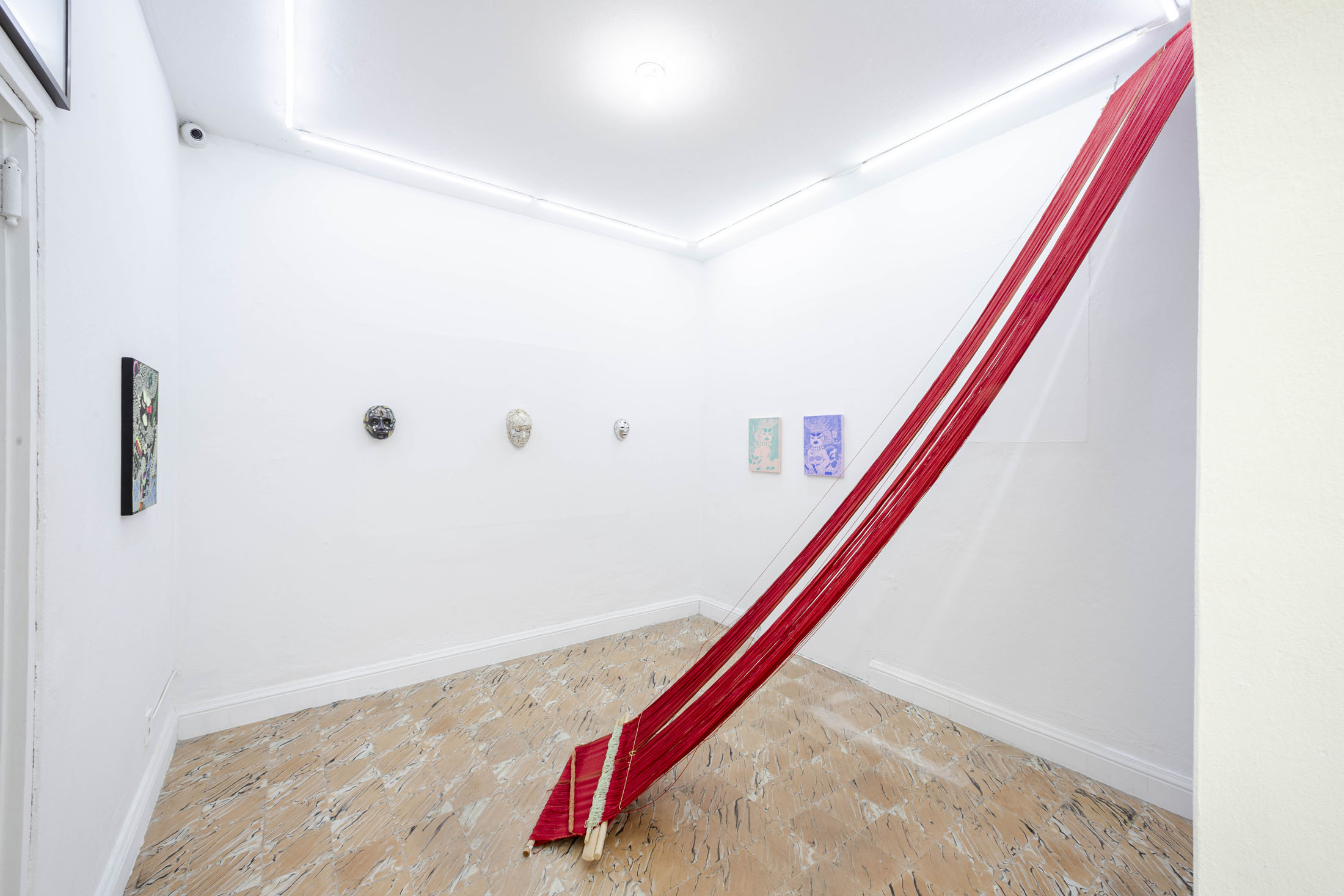
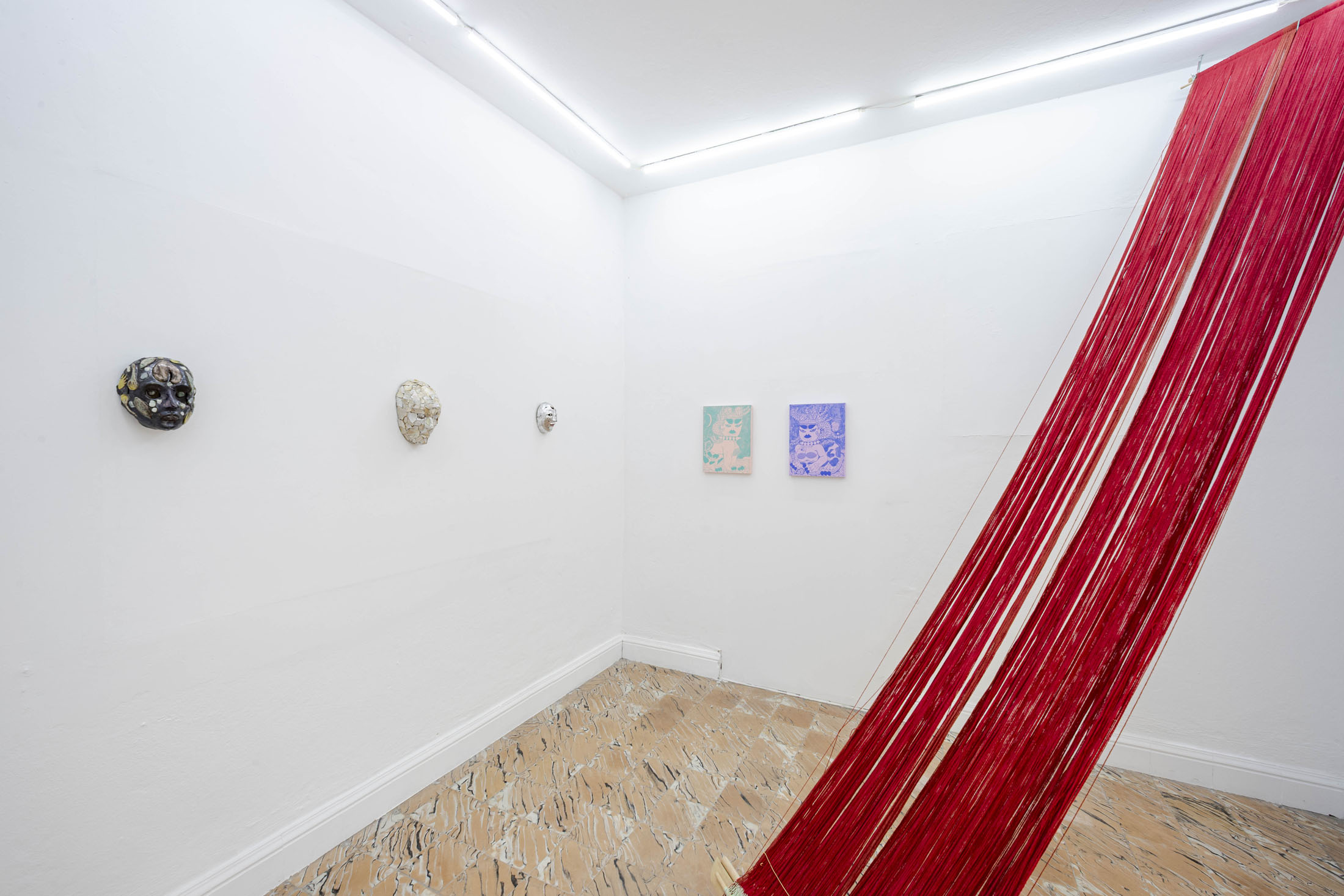
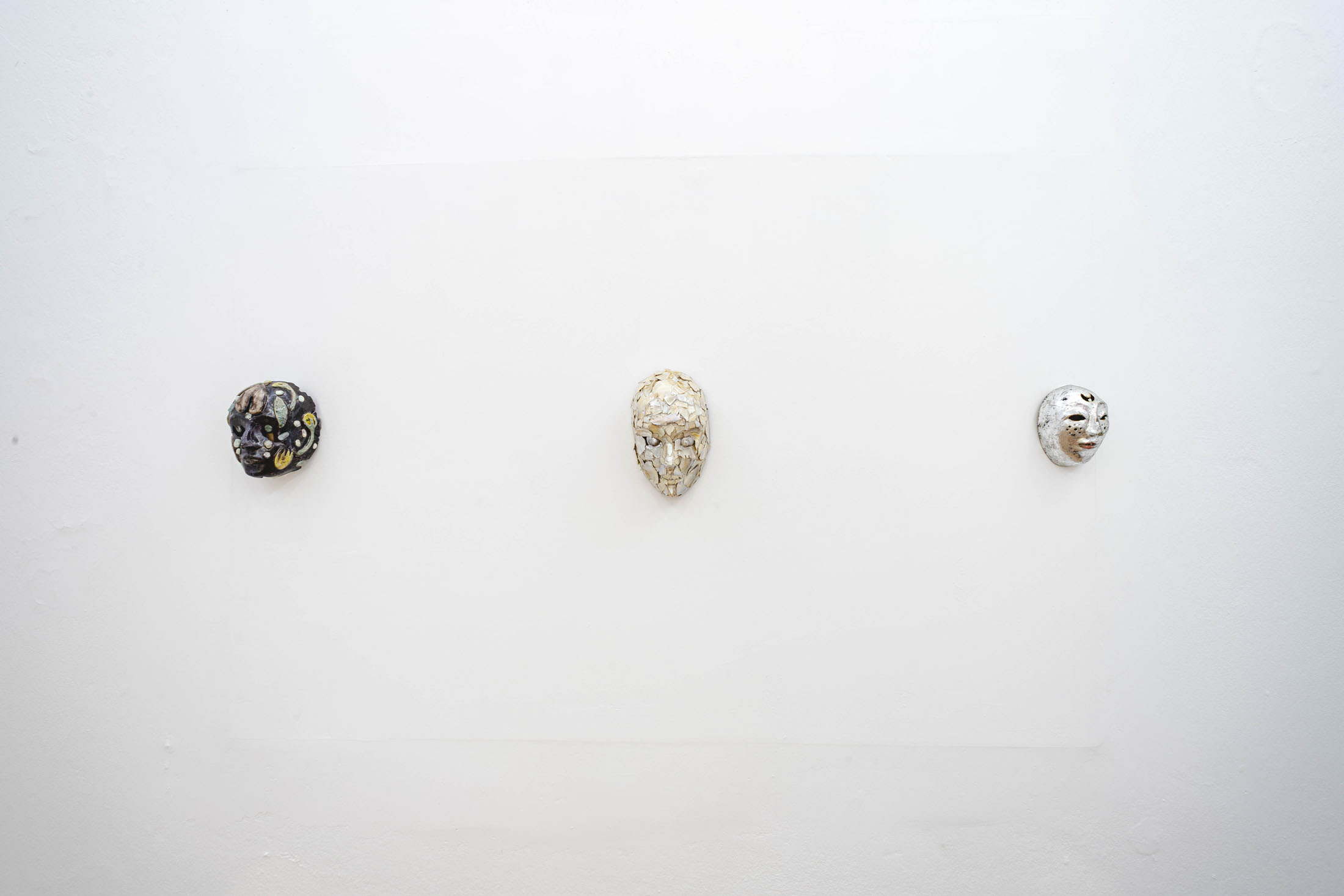
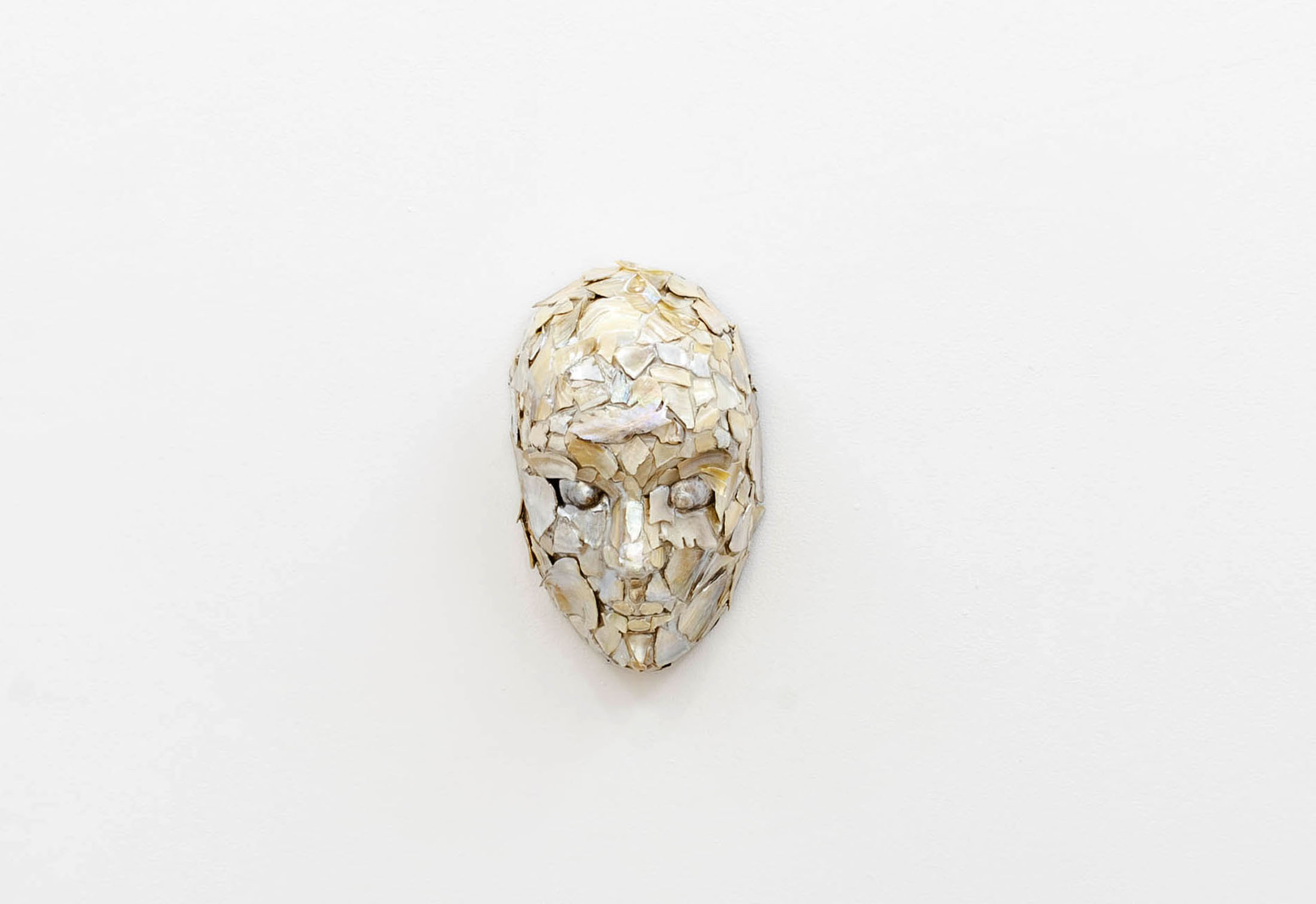
Chaveli Sifre presents three masks designed for the burning of scents, linking ritual, concealment, and transformation. The works invoke associations with witchcraft and ceremonial practice, where fragrance, fire, and objects become instruments of change and becoming.
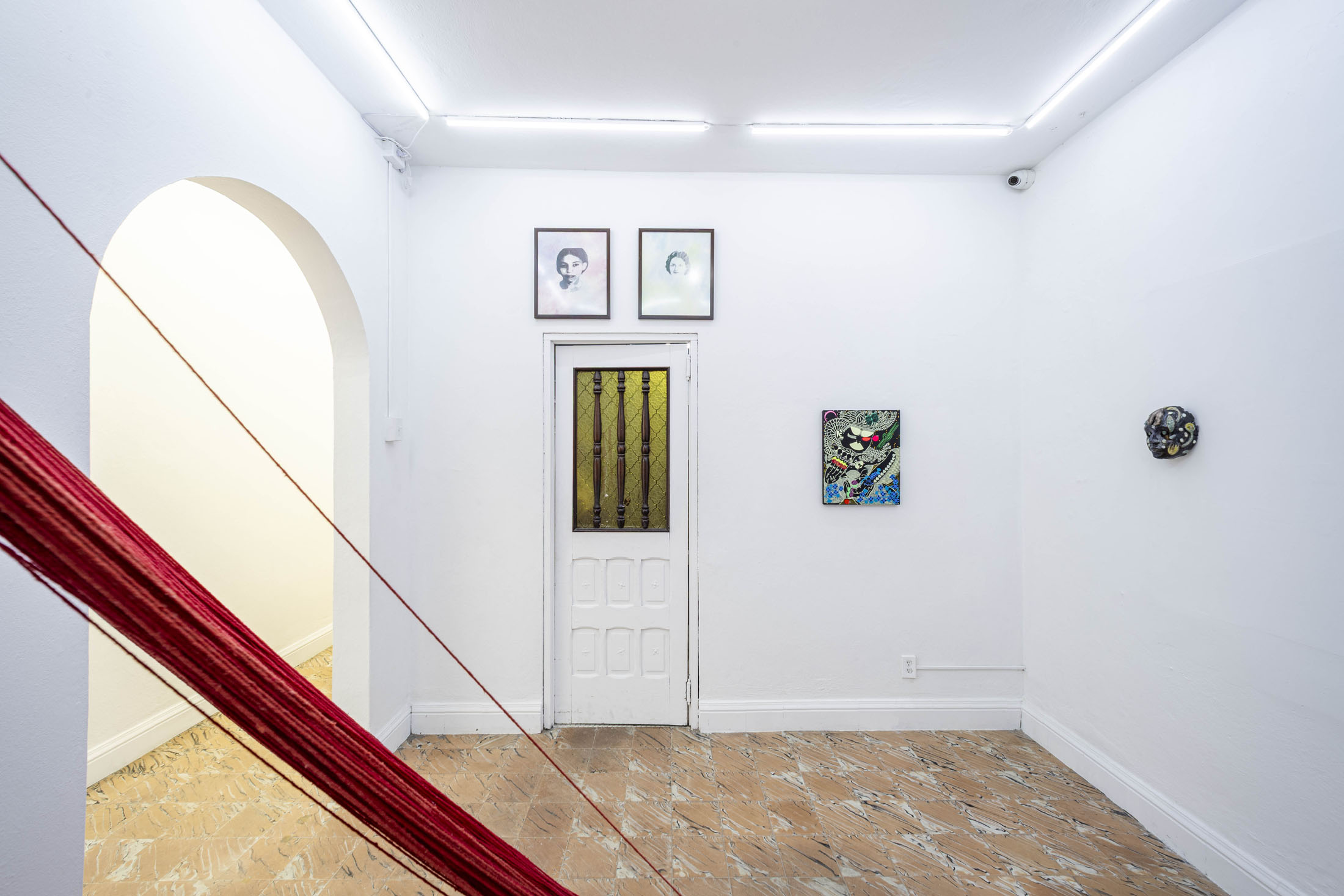
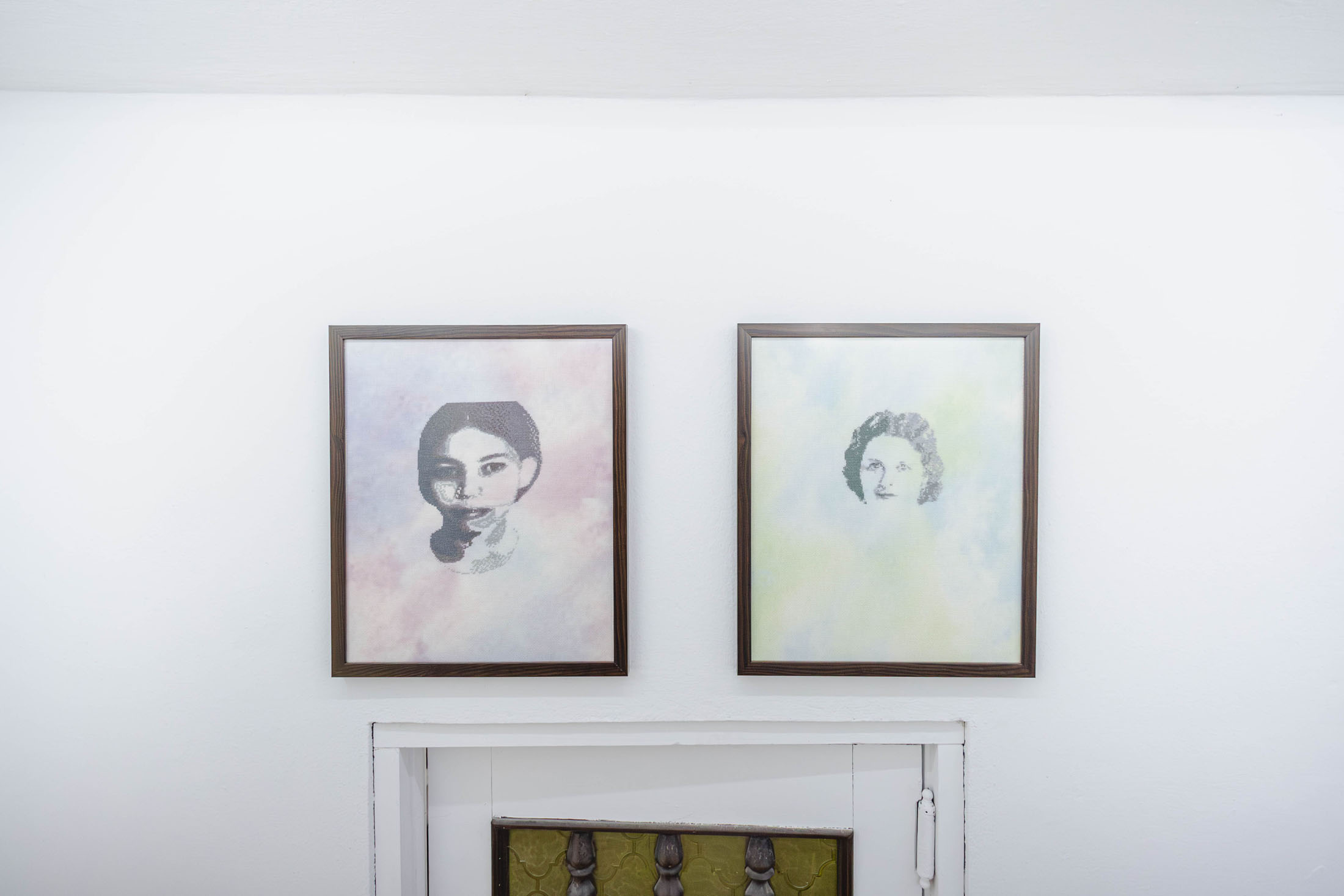
María Sosa’s blood-red textile produced with indigenous looming equipment, foregrounds labor, lineage, and material memory. Anchored by a machete, the work binds softness and threat, weaving together histories of survival, protection, and embodied knowledge. In dialogue are Lulu Varona’s embroidered portraits of early twentieth-century labor organizers Teresa Angleró Sepúlveda and Rose Pesotta that pay tribute to their work advancing unionization and improving conditions for women in the textile industry. Through thread and gesture, the work reconnects contemporary practice with legacies of craft, labor, and often-overlooked feminine histories.
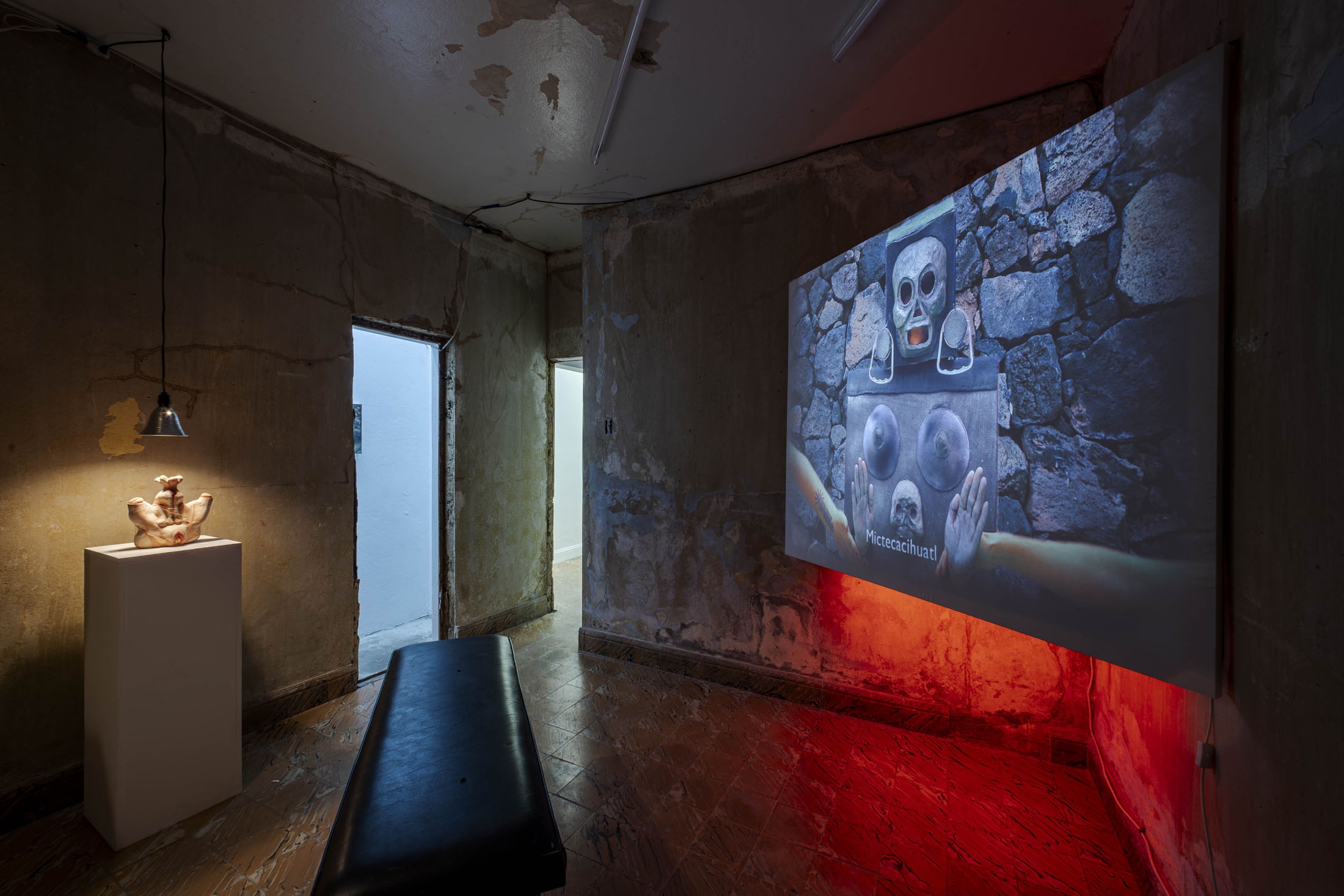
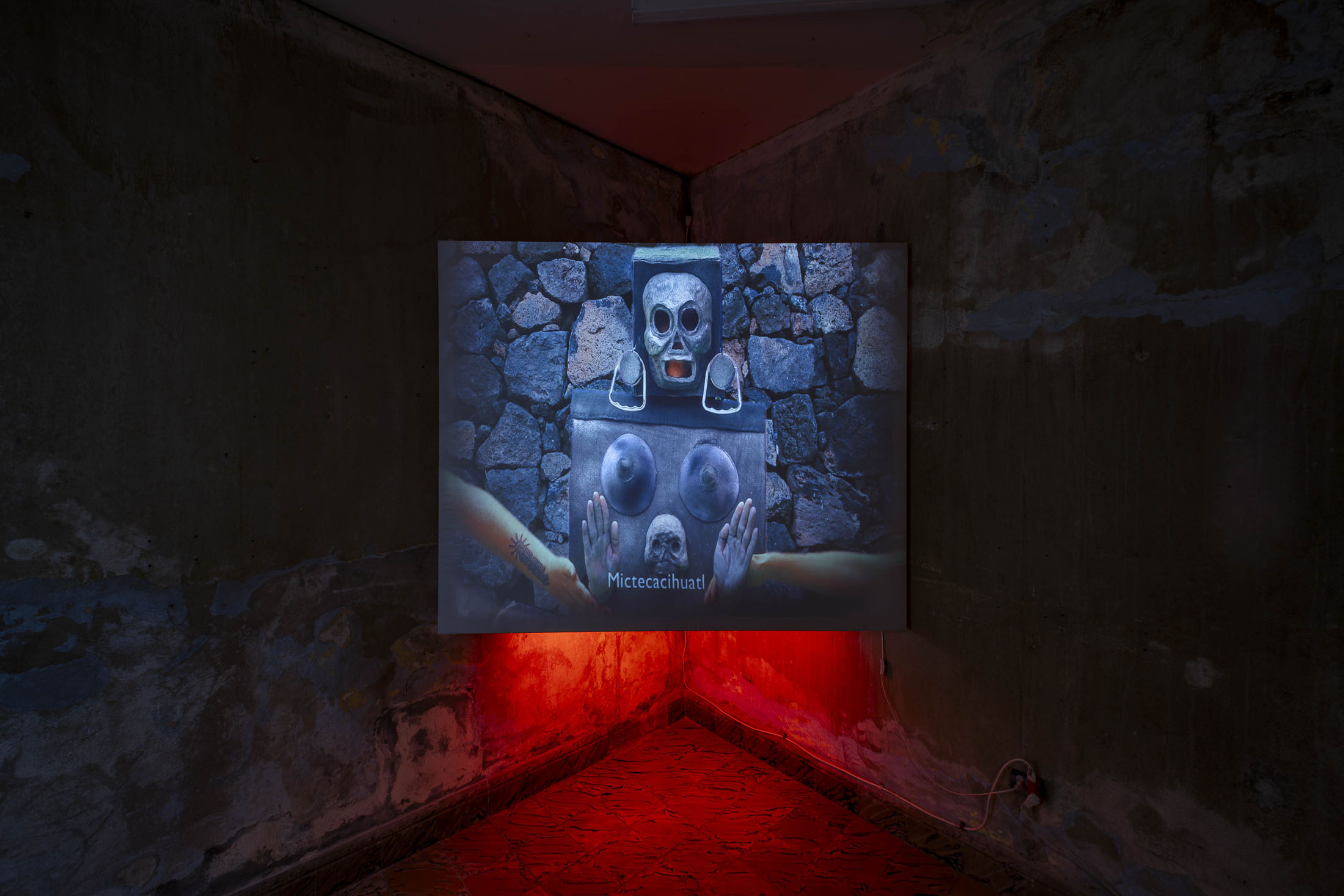
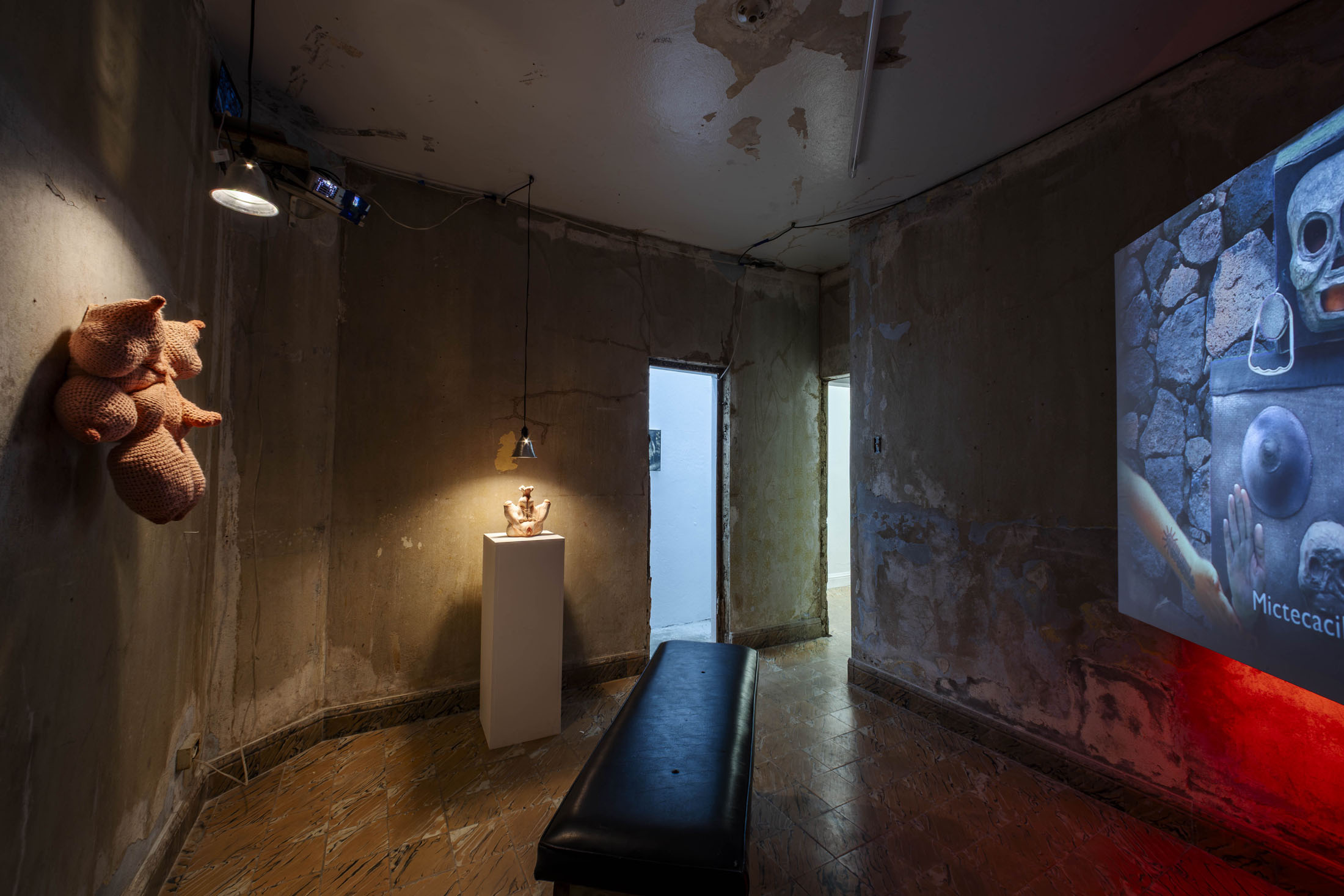
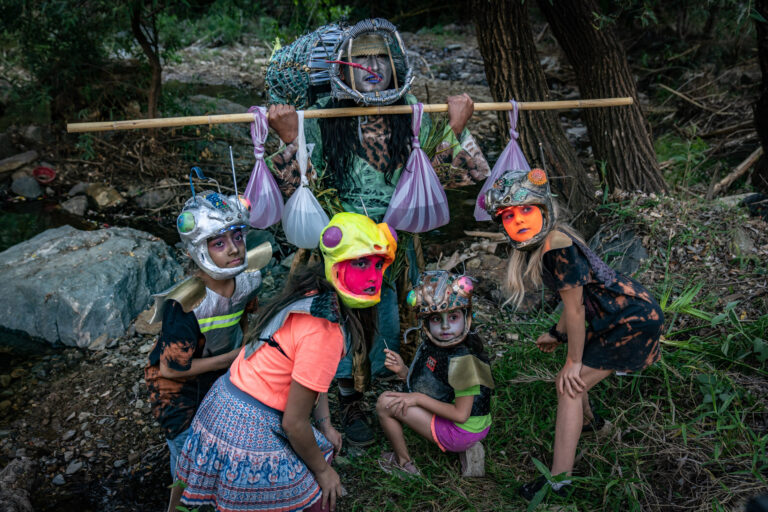
Drawing on pre-Columbian cosmology, Claudia Peña Salinas engages the Aztec deity Tlaloc through a lens of gender fluidity and reinterpretation. By alluding to debates around the gendered relationships within Aztec mythology, her work destabilizes fixed mythologies and opens space for more expansive readings of identity and divinity. Naomi Rincón-Gallardo also invokes Mesoamerican deities in her video installation Verses of Filth, where an insurrection is sparked by a brigade of undomesticated arms and underworld creatures in search of touch and pleasure.
Taina Cruz summons mythic beings that appear drawn from folklore, dream, and spiritual imagination. Her figures evoke a sense of timelessness and otherworldly power, where the mystical and the symbolic intertwine to suggest transformation as an elemental, almost cosmological force.
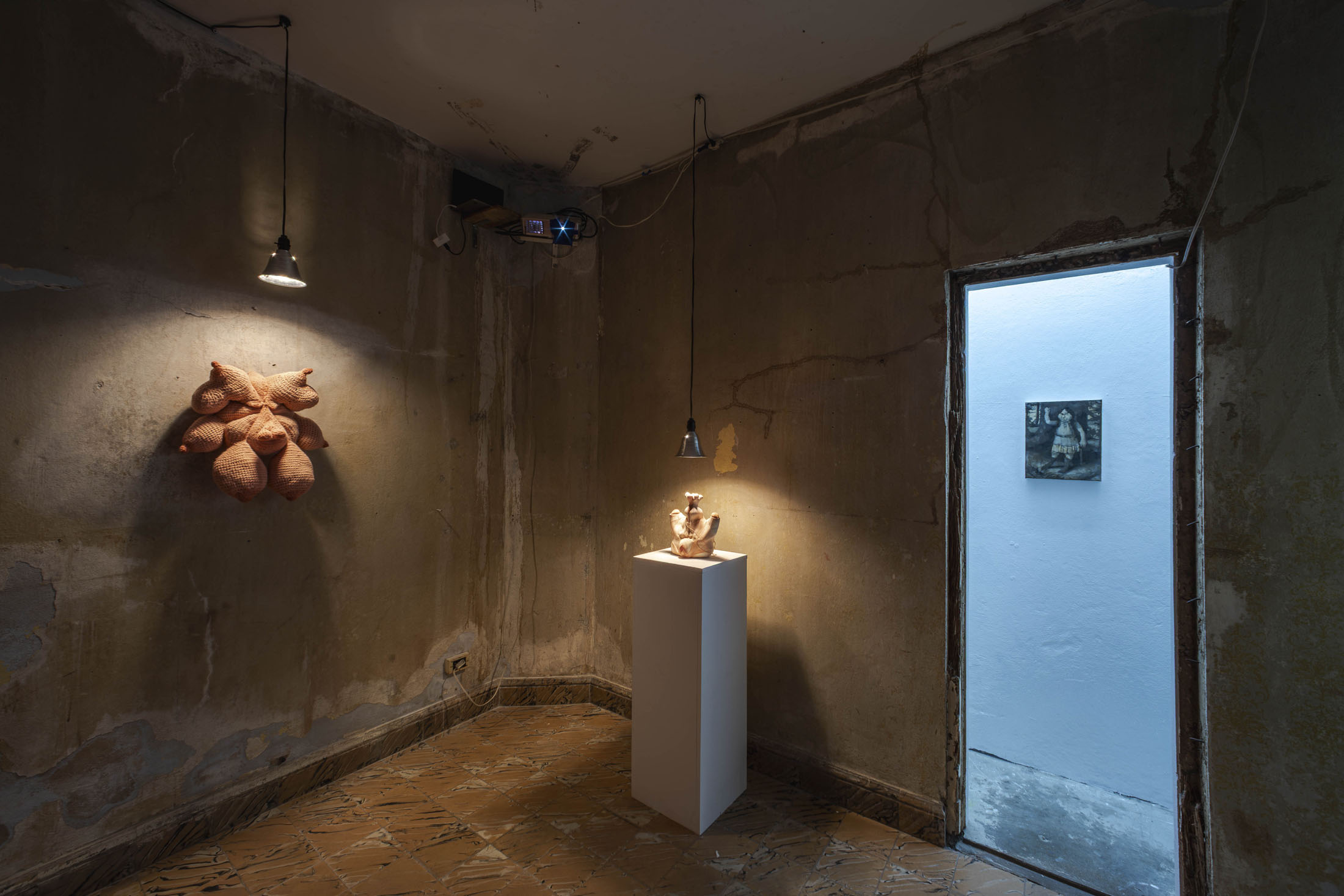
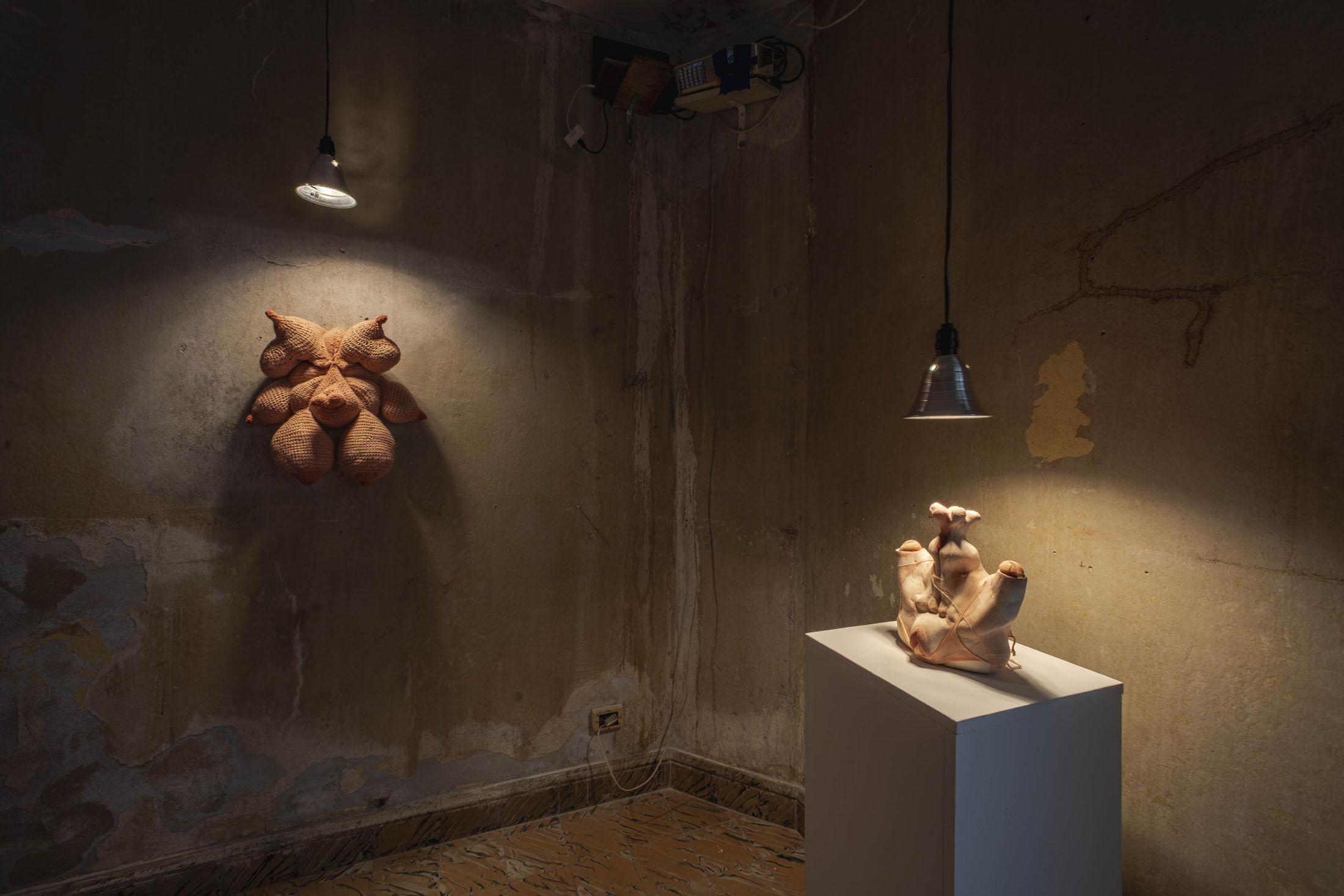
Working fluidly between material and form, Gabriela Mejías Jaramillo creates organic structures that emerge through ceramic and knitted processes. These biomorphic gestures blur distinctions between body, object, and environment, evoking growth, fragility, and quiet resilience.
Taken together, the works in Gladiatrix position myth, material, and memory as interconnected frameworks through which contemporary forms of power and resistance are articulated and reimagined.