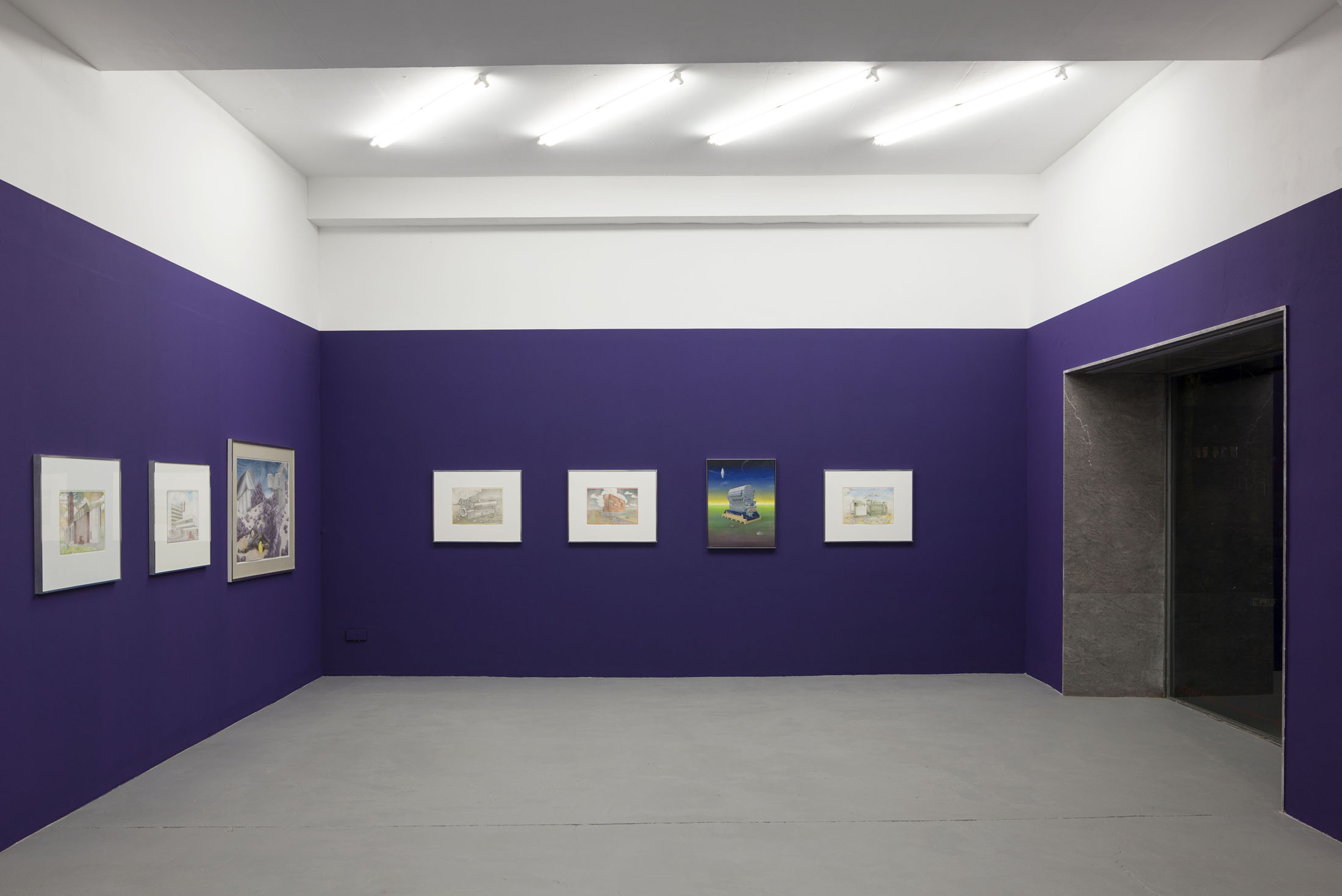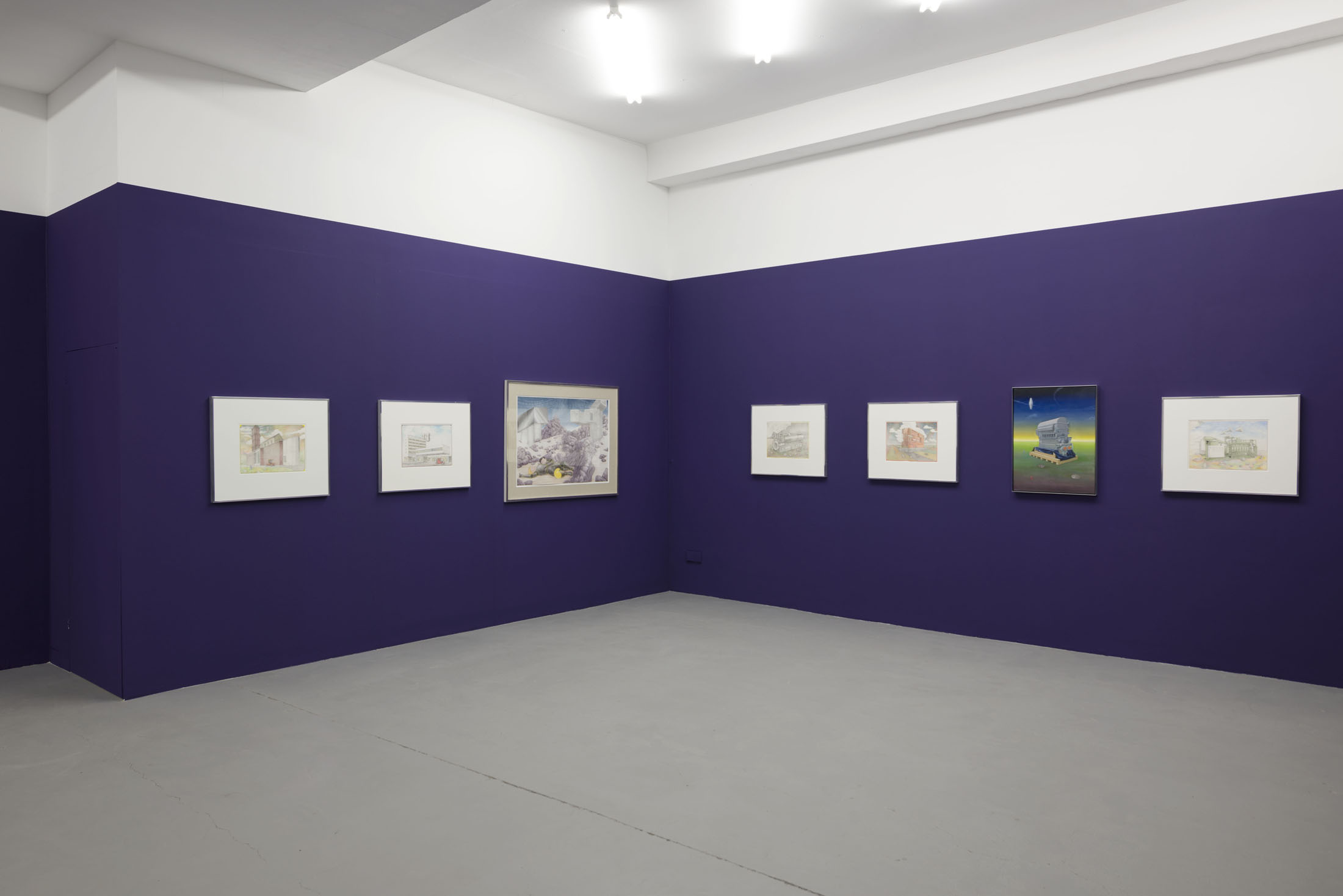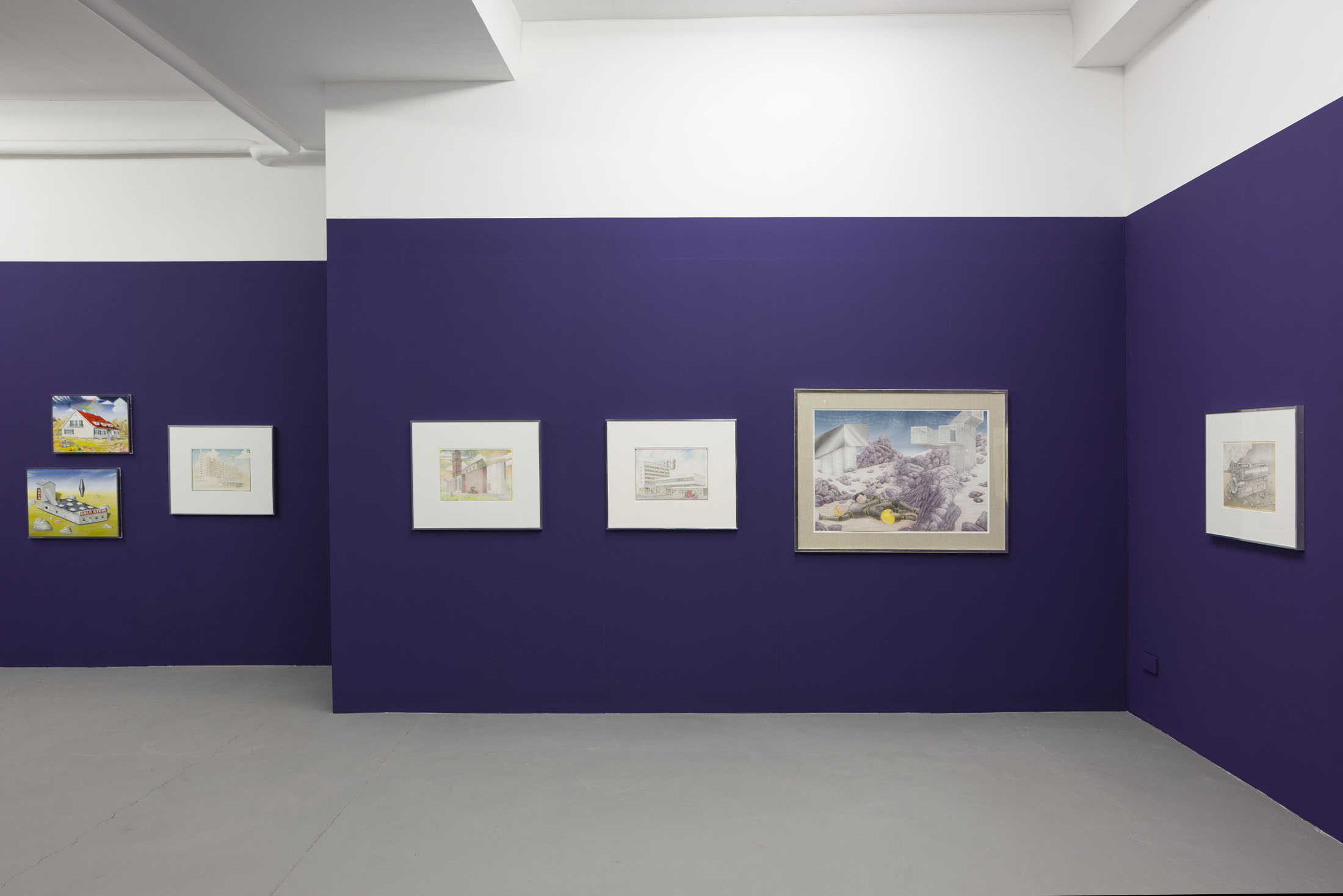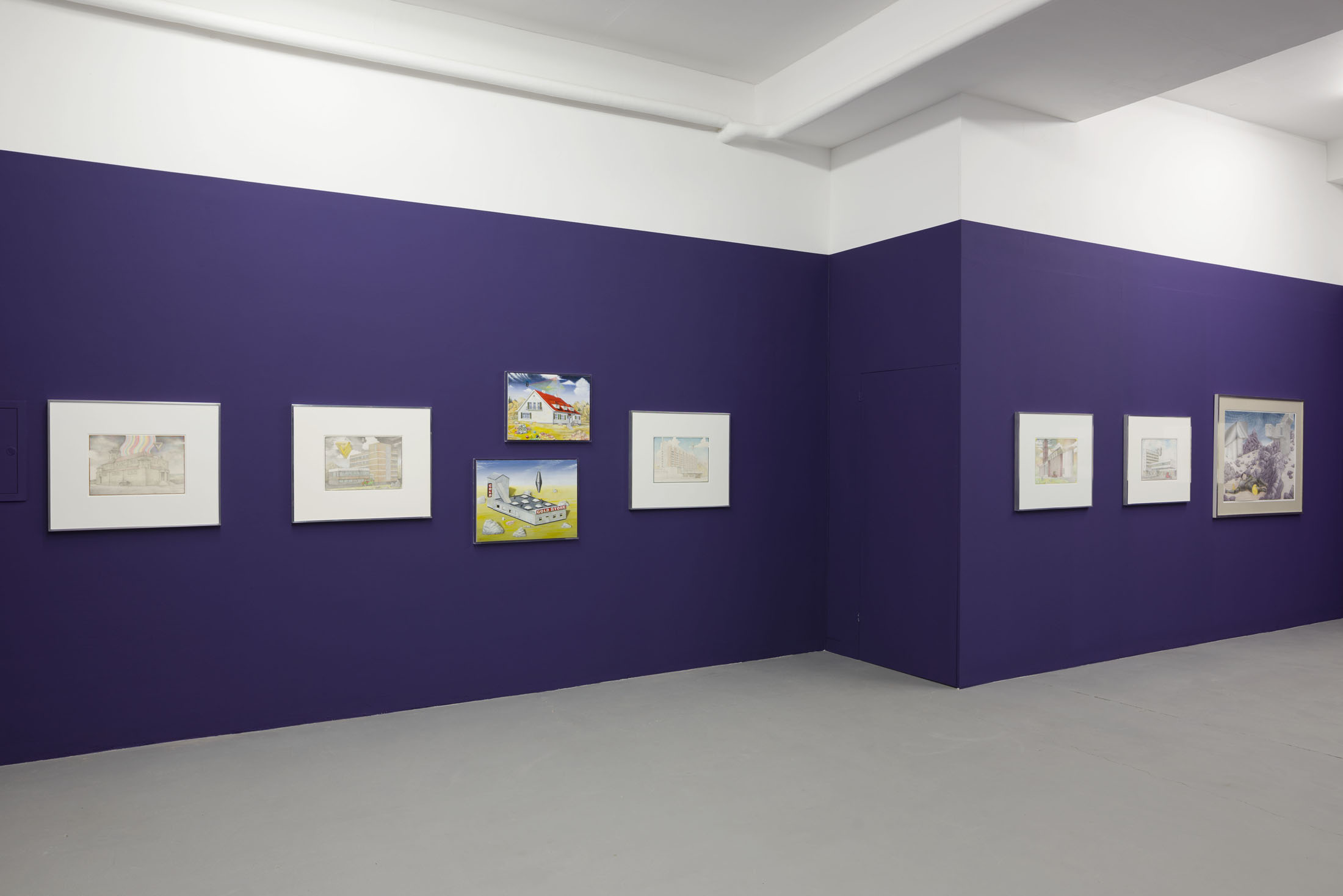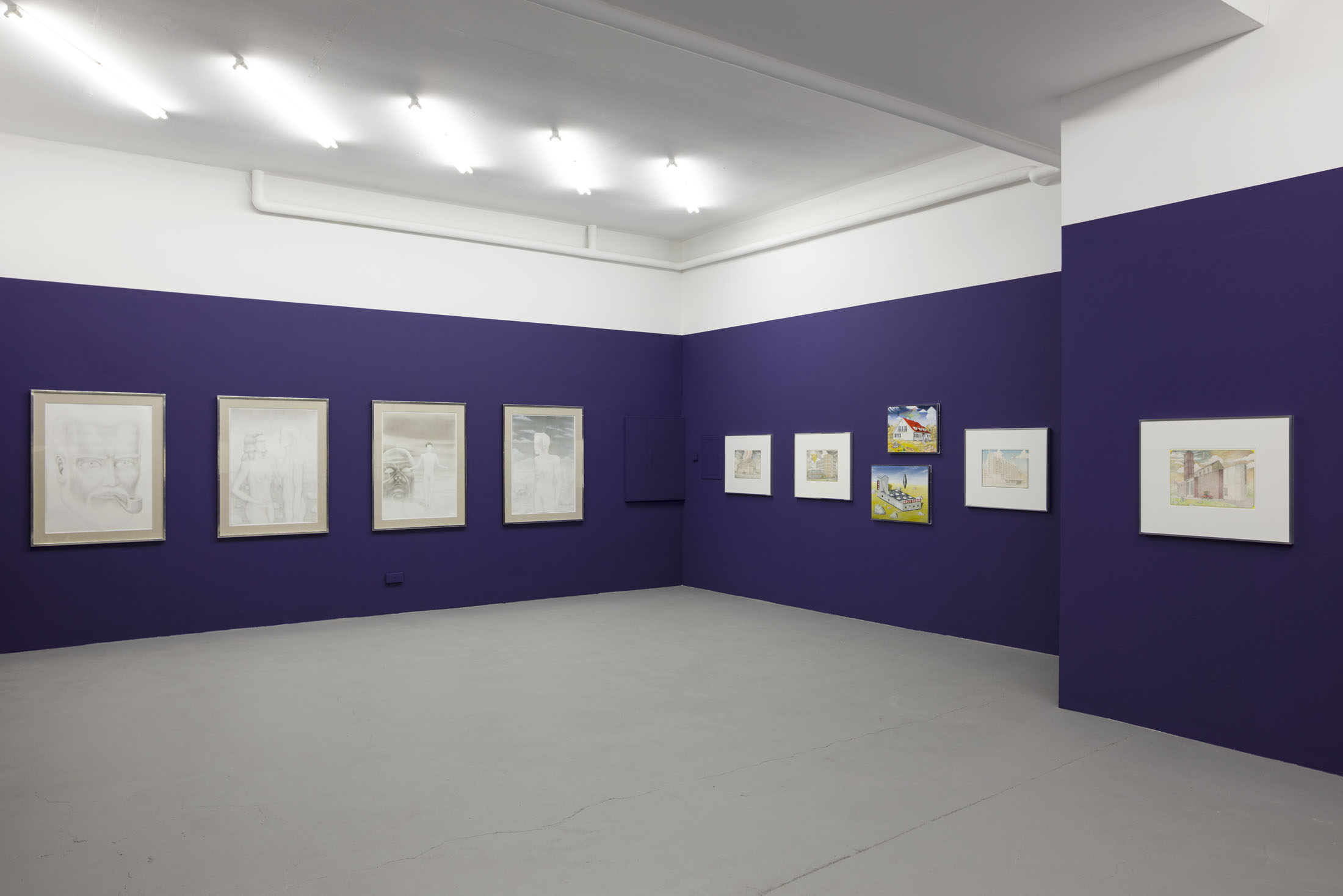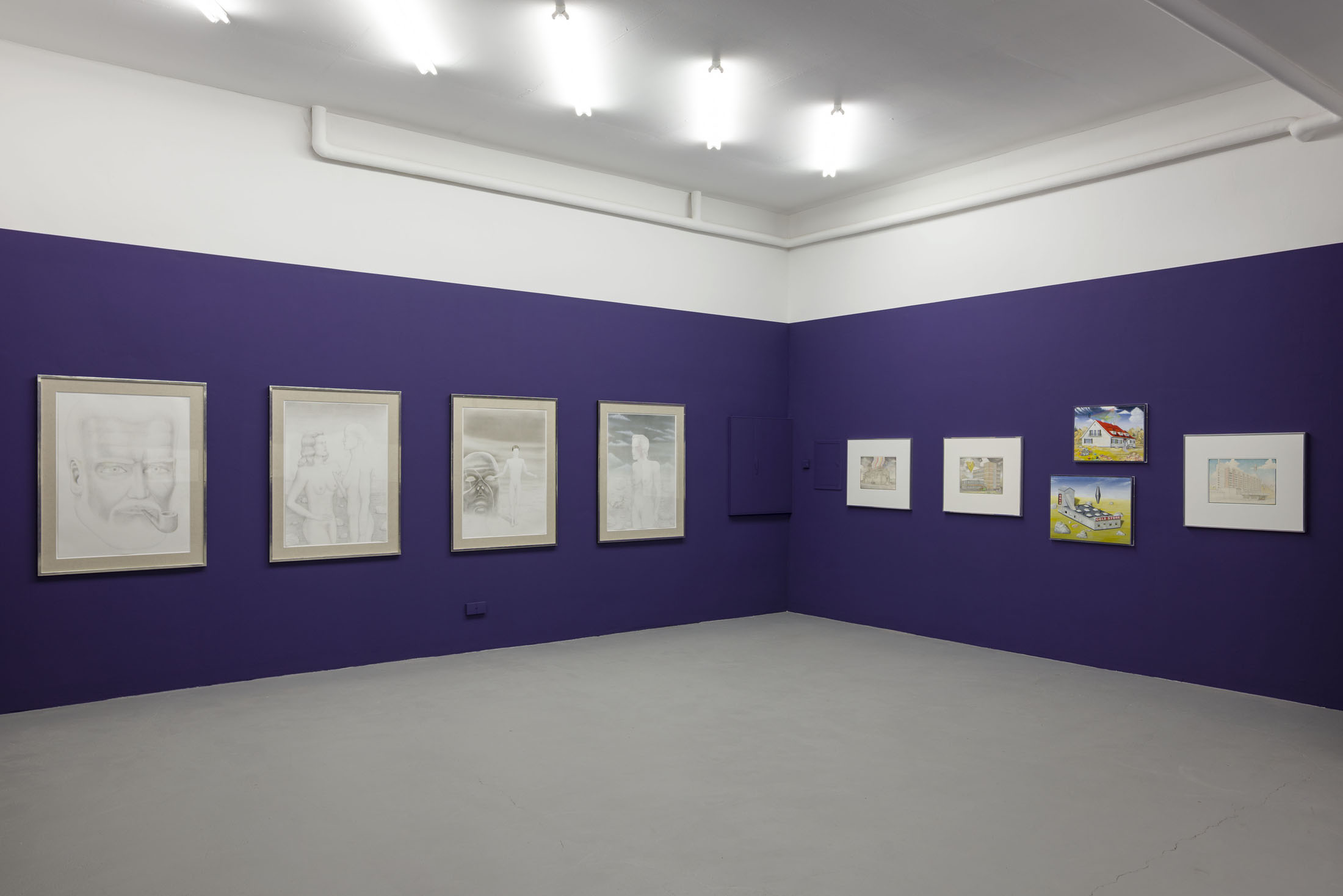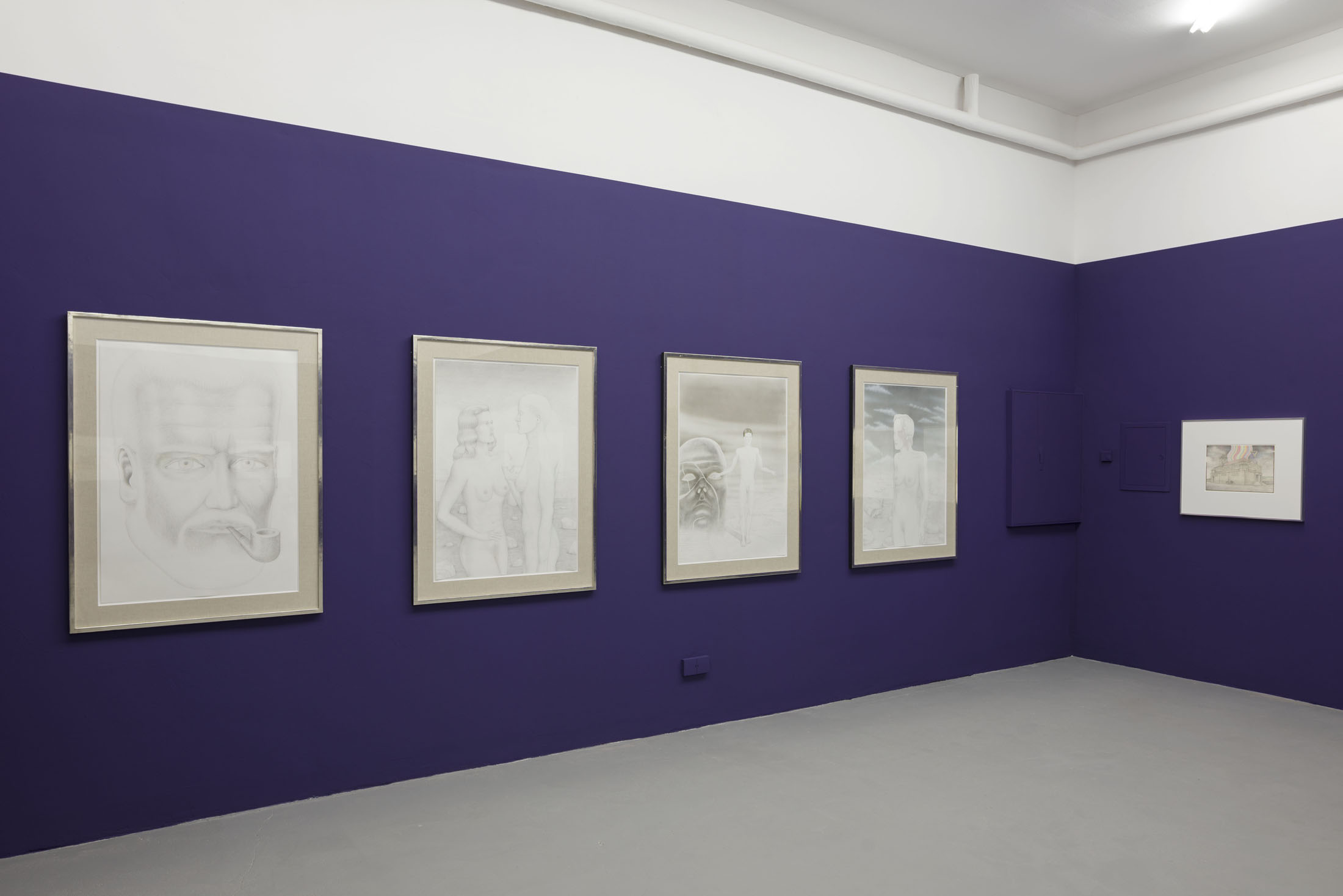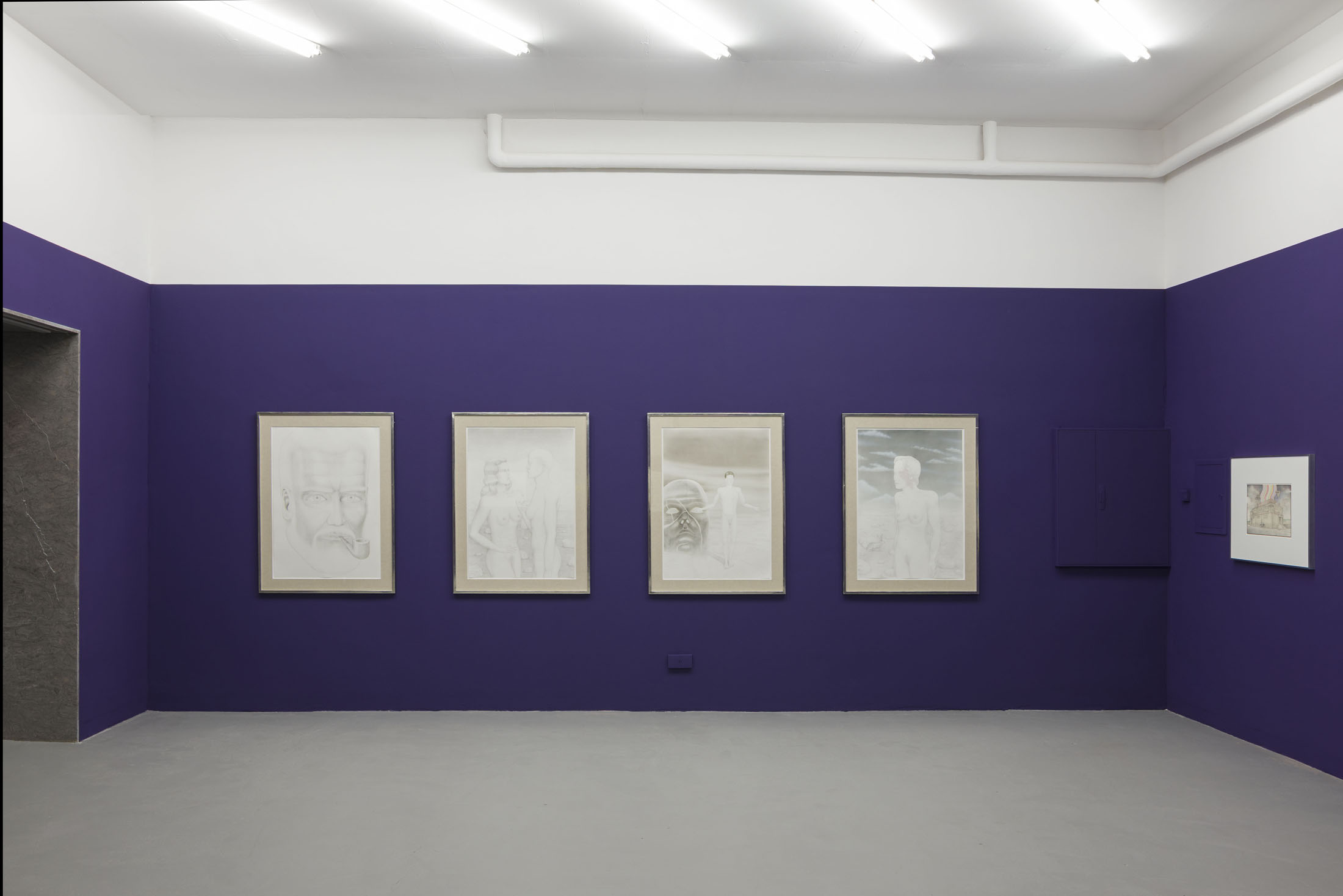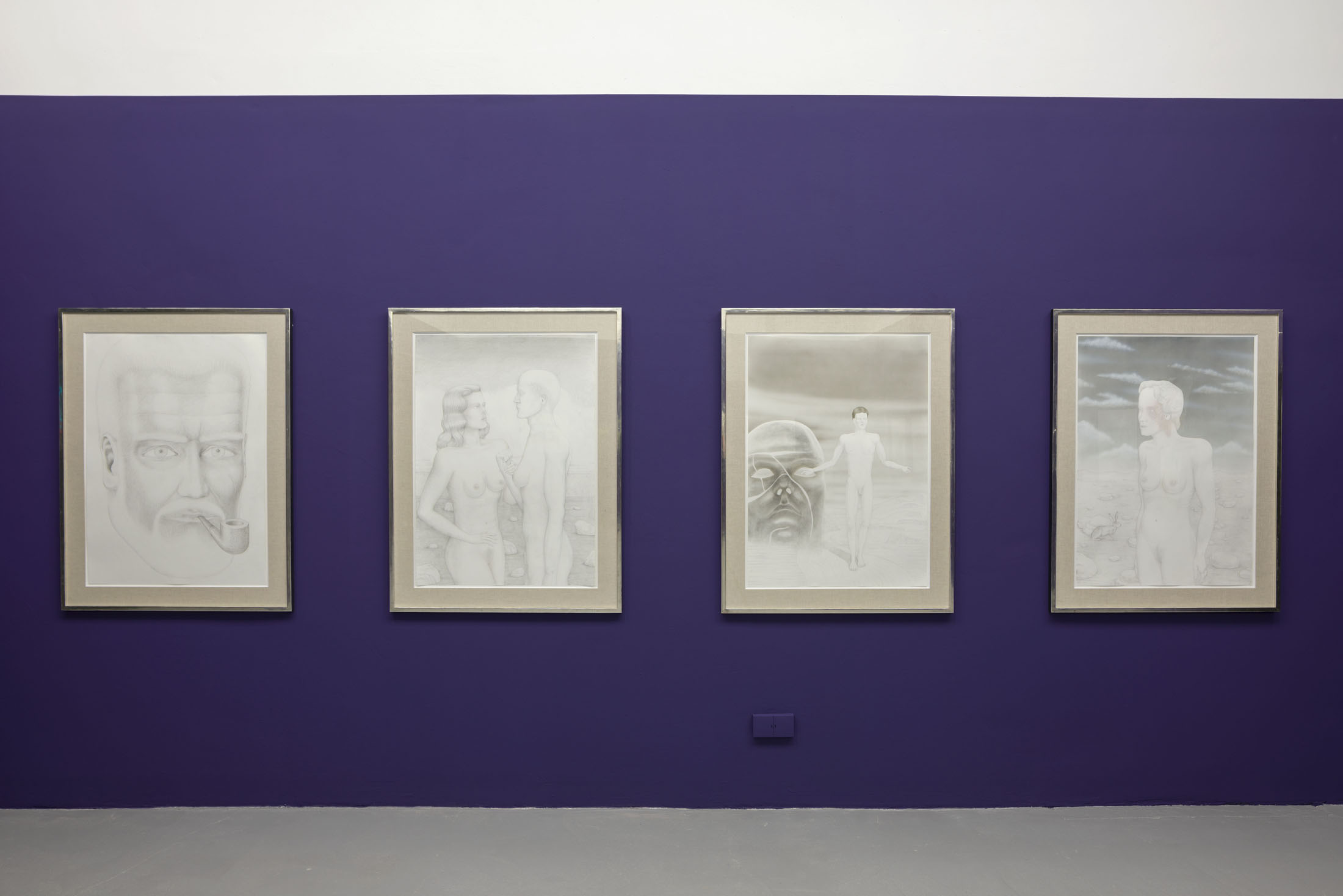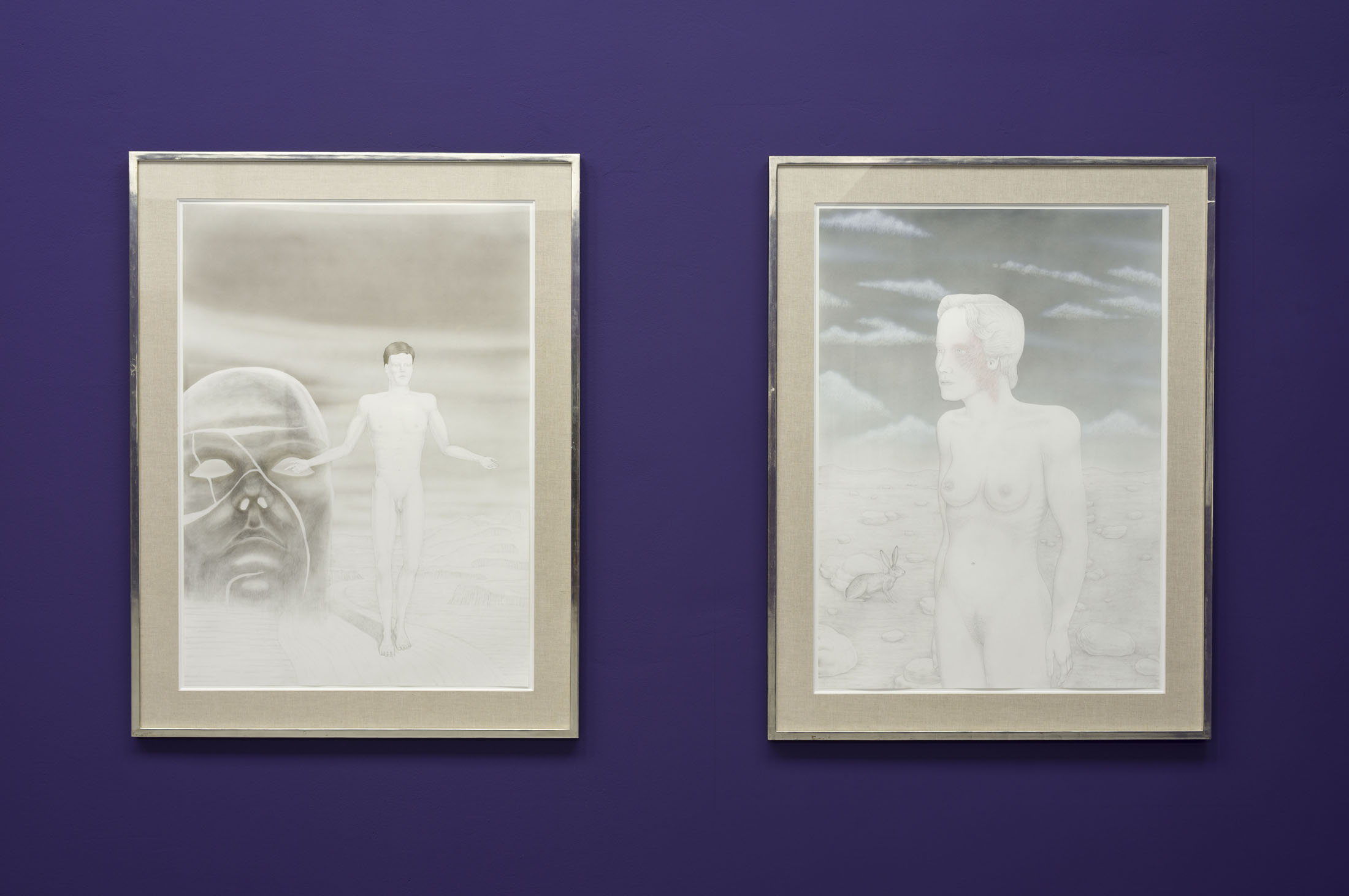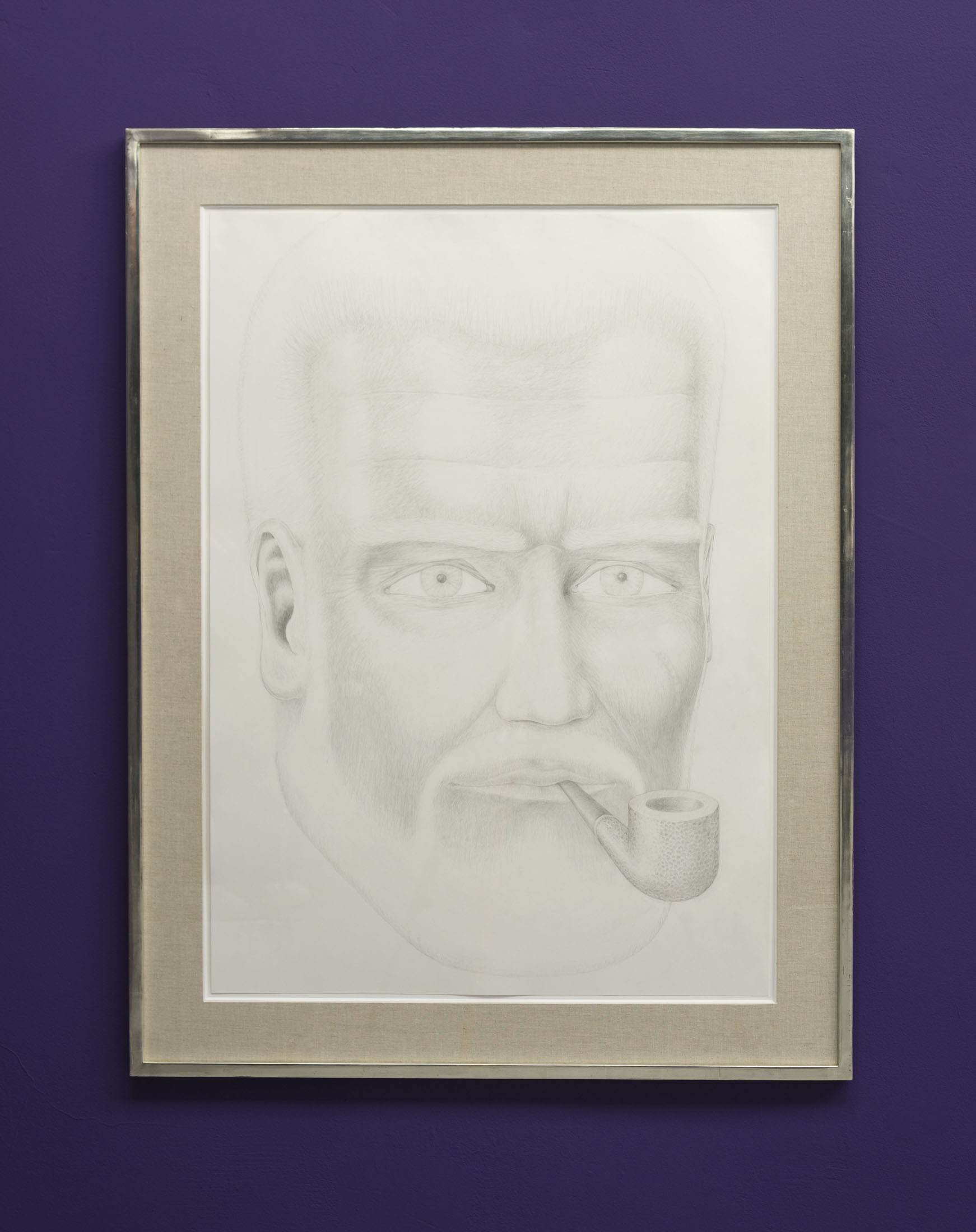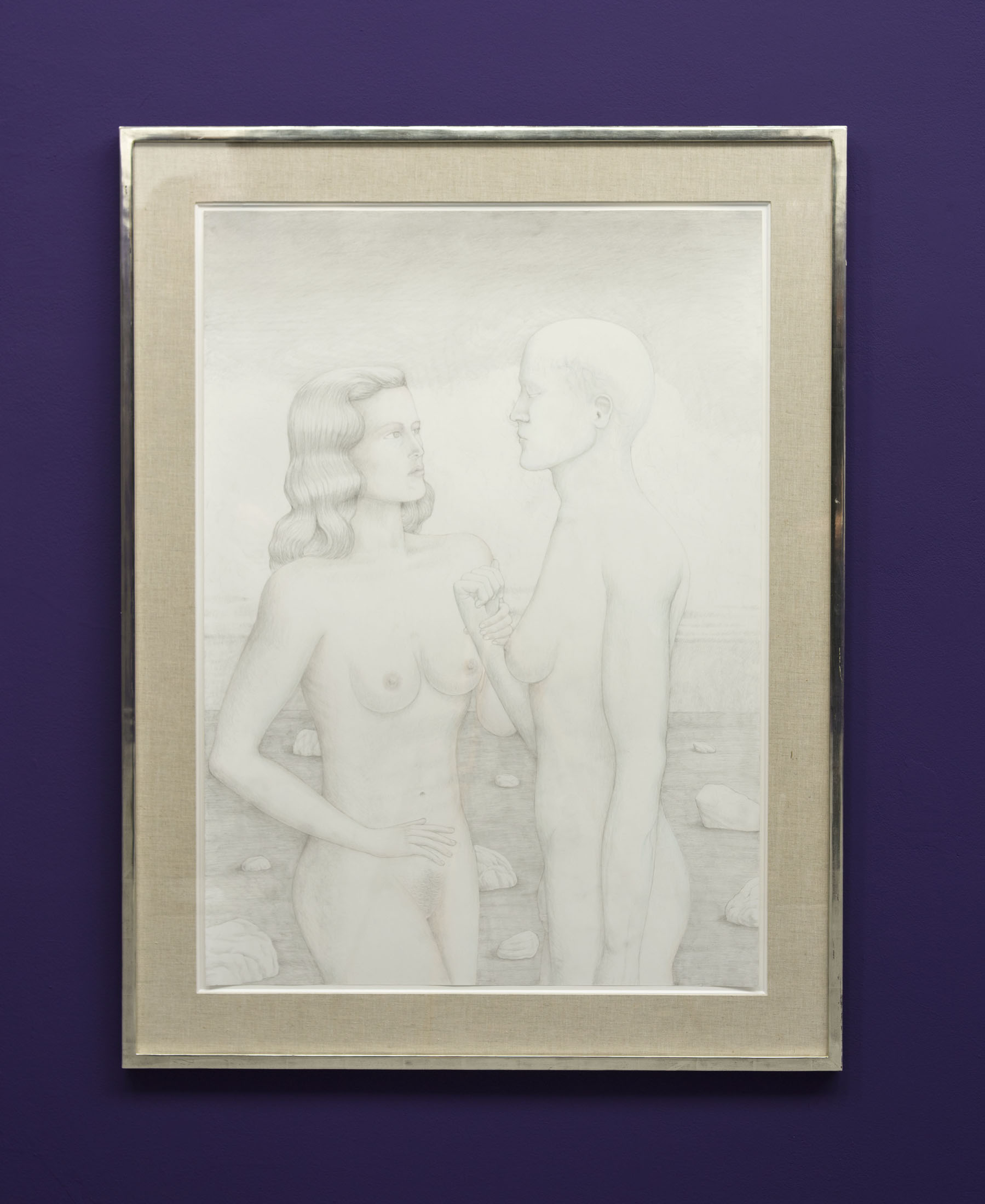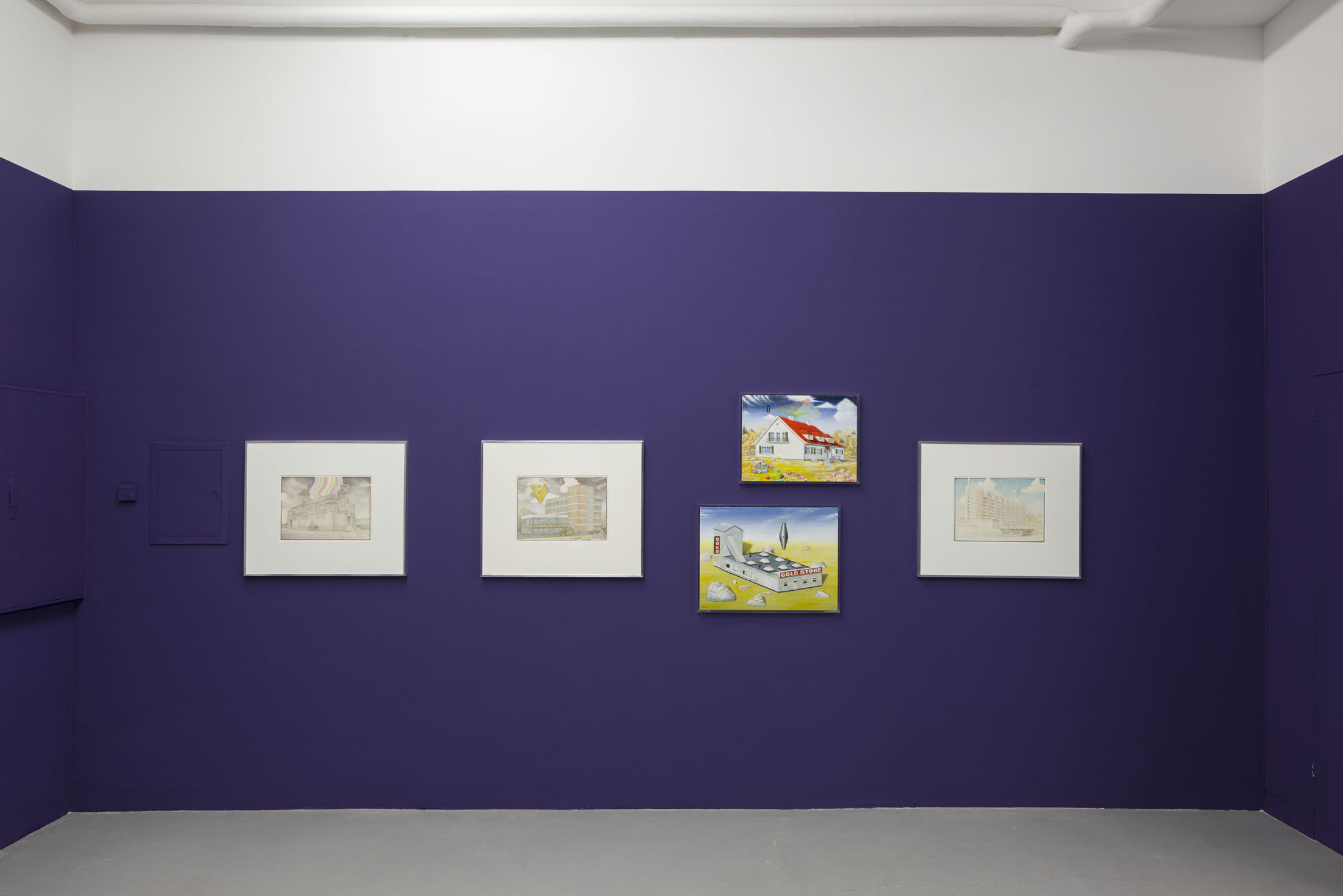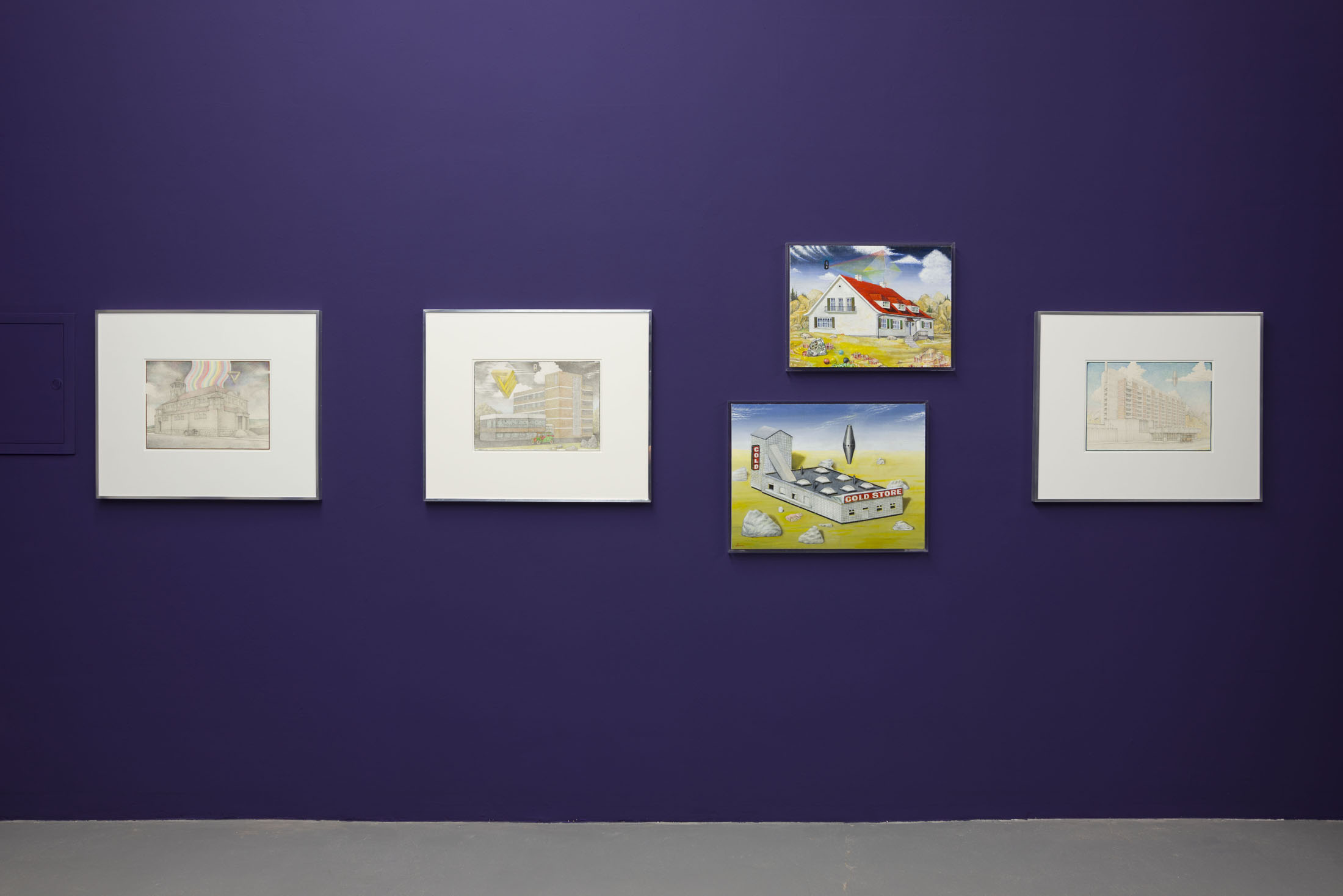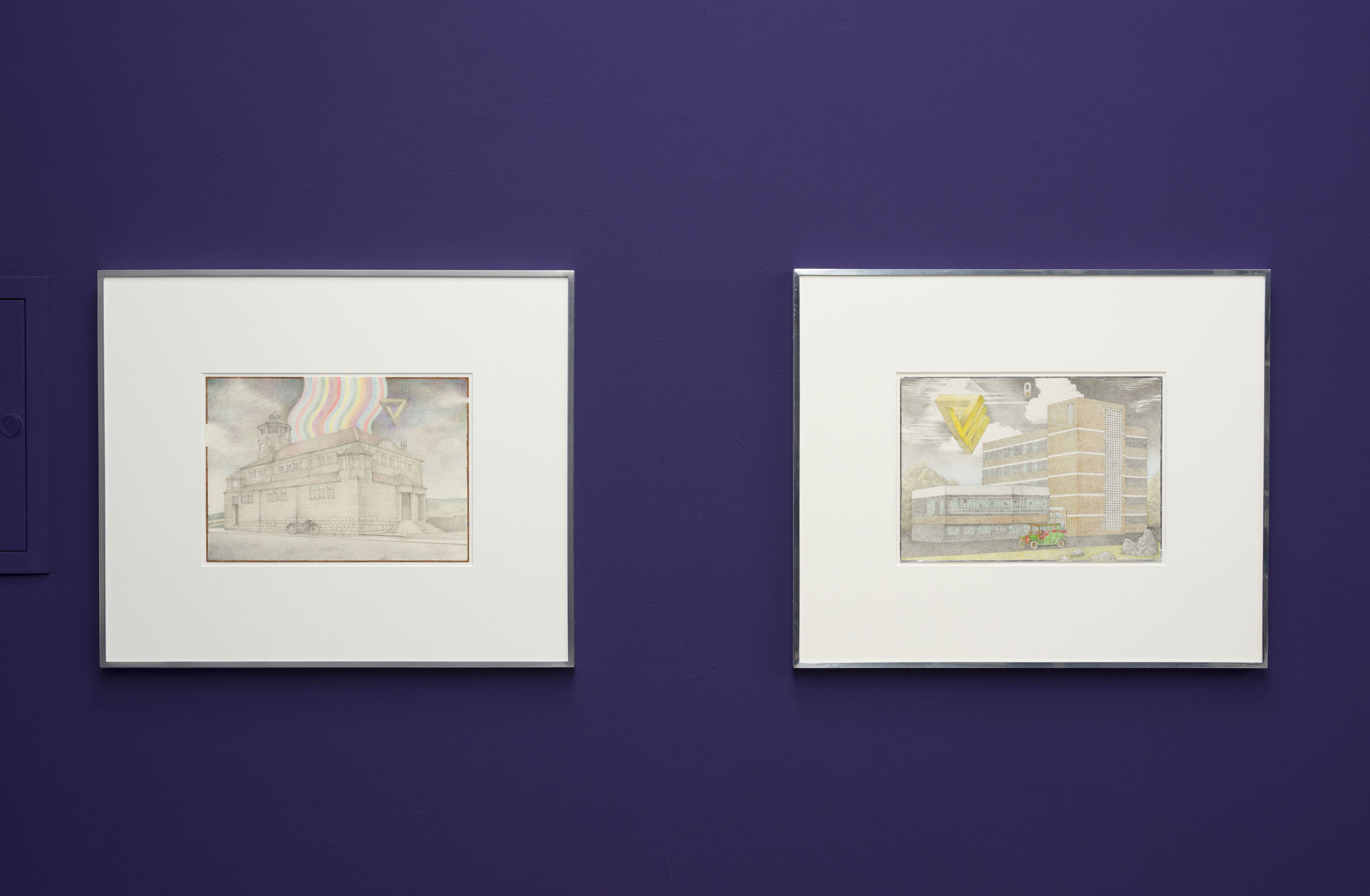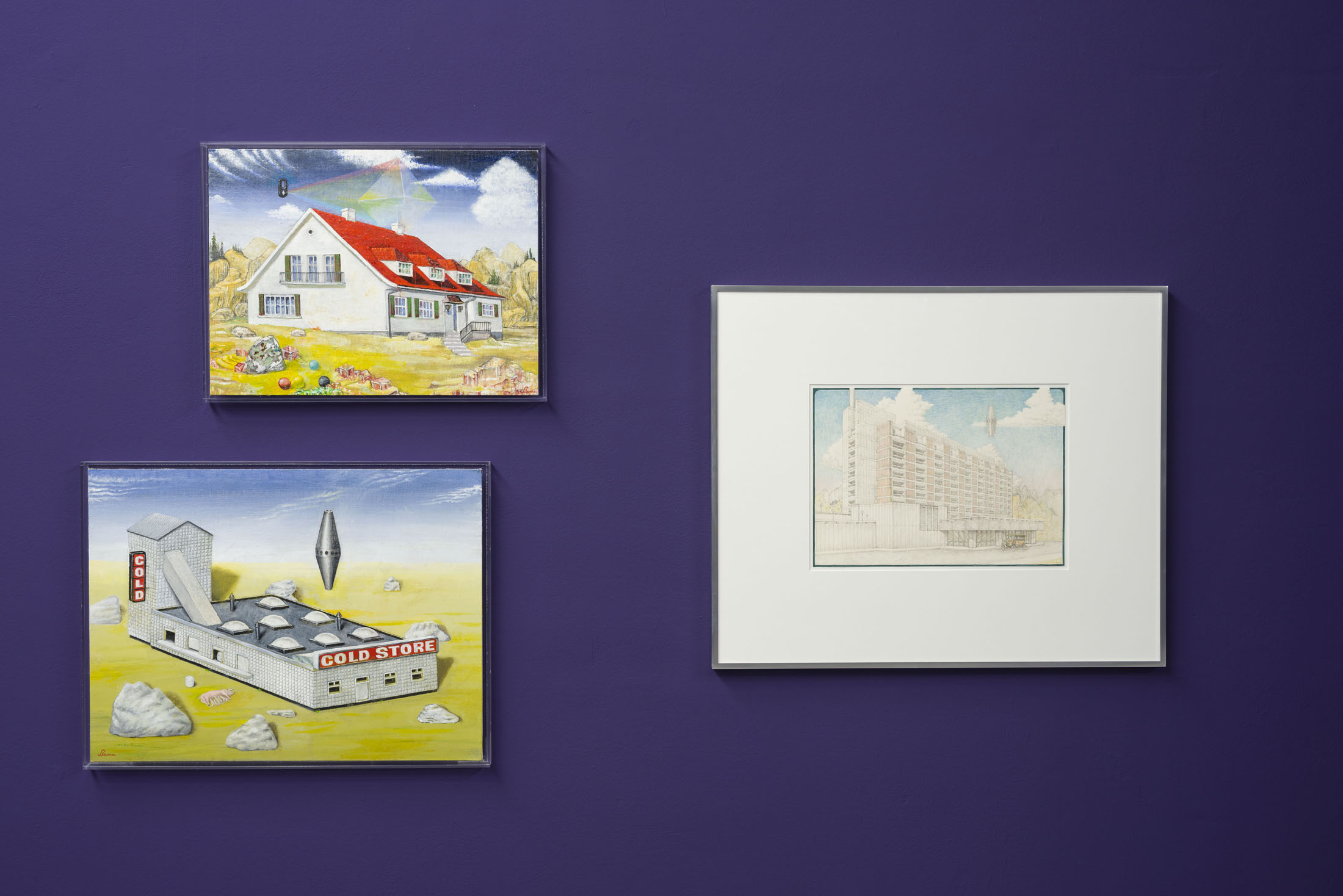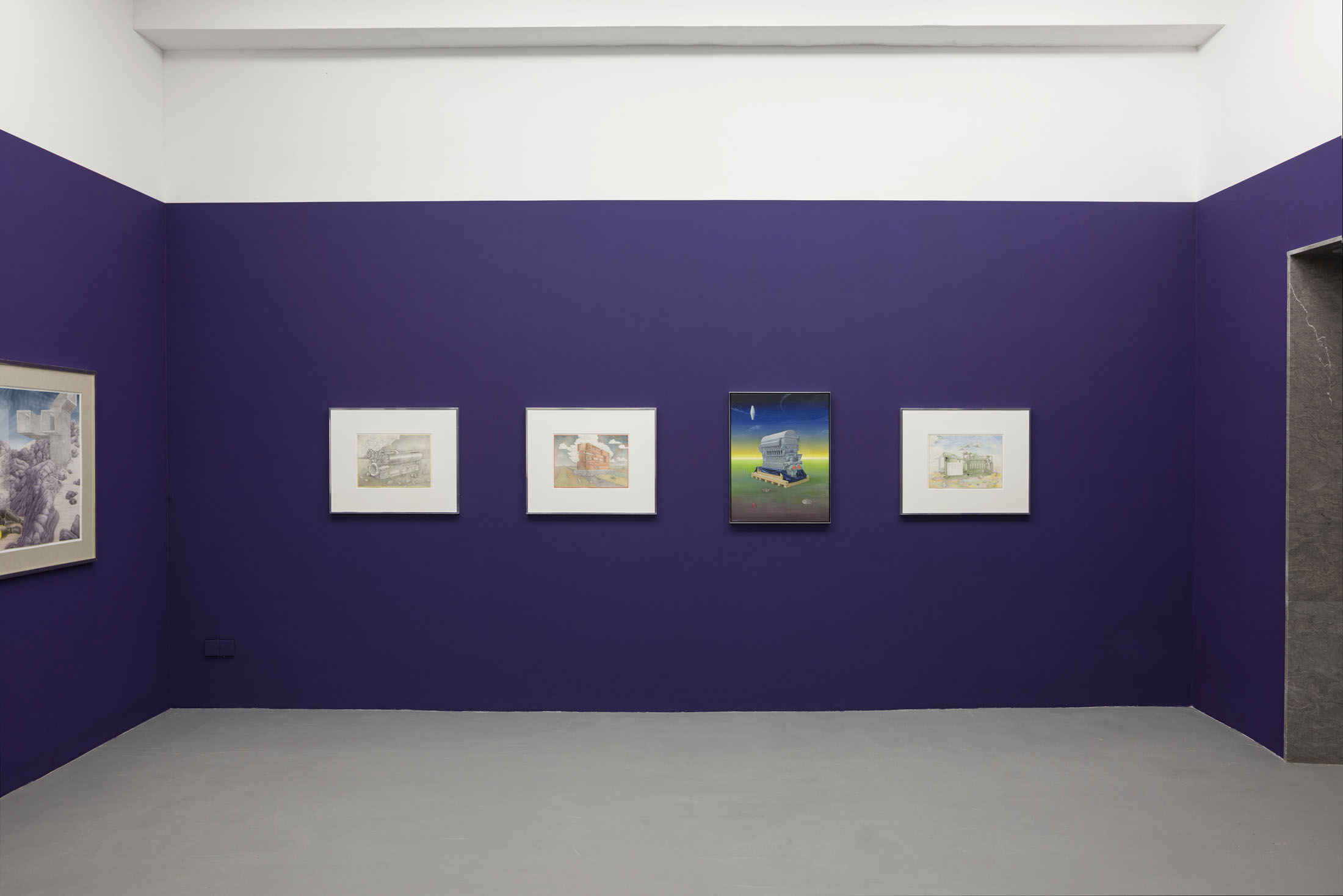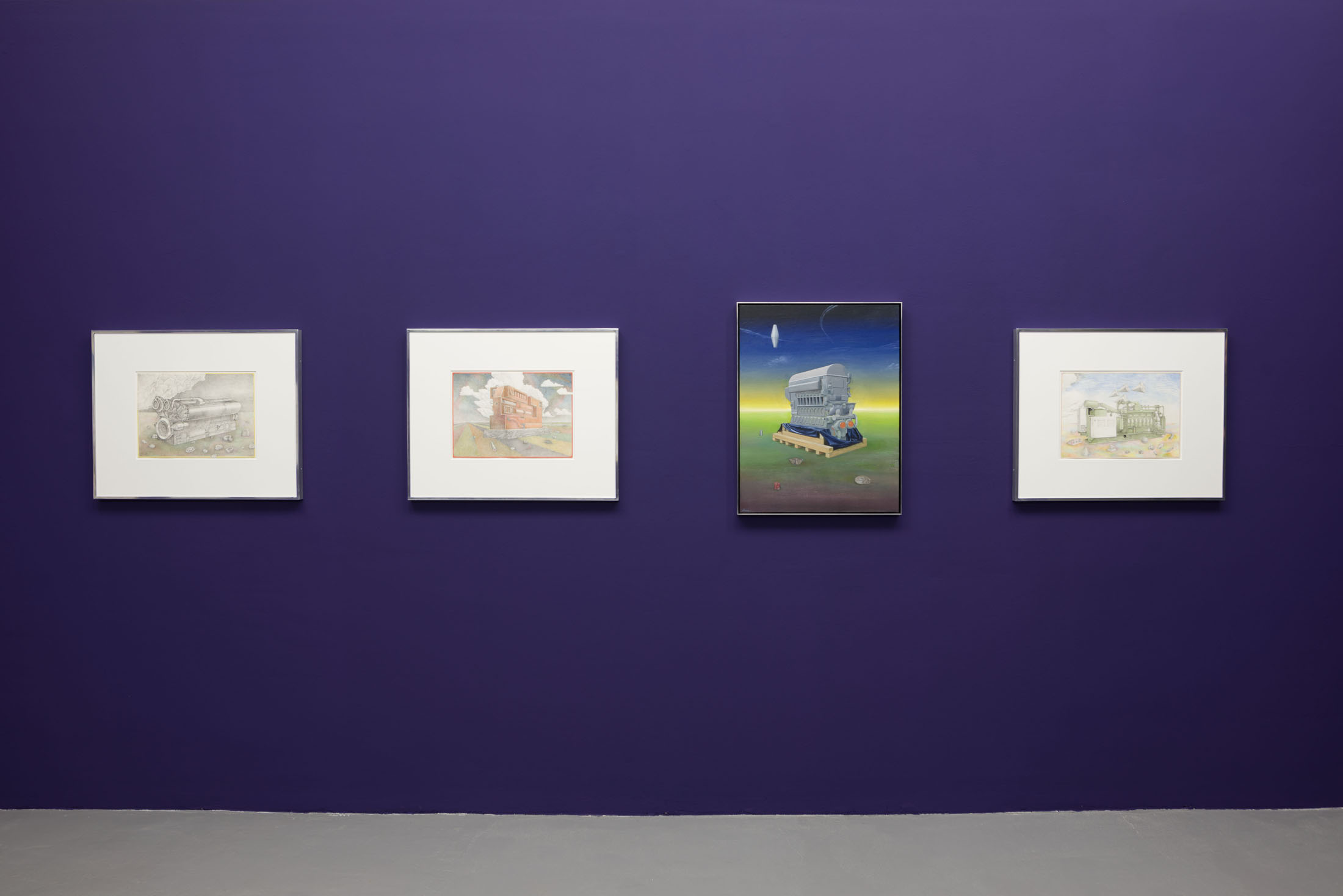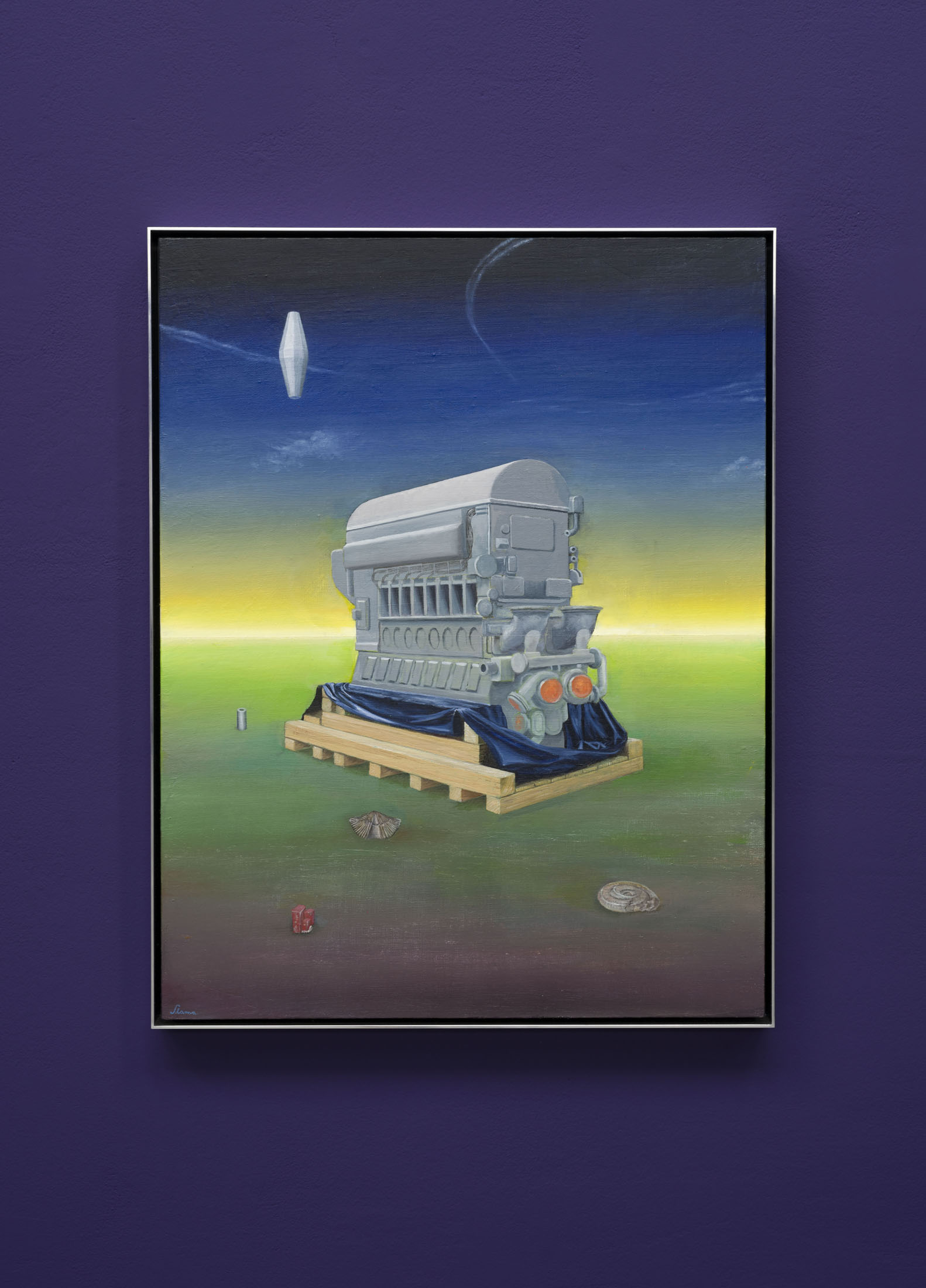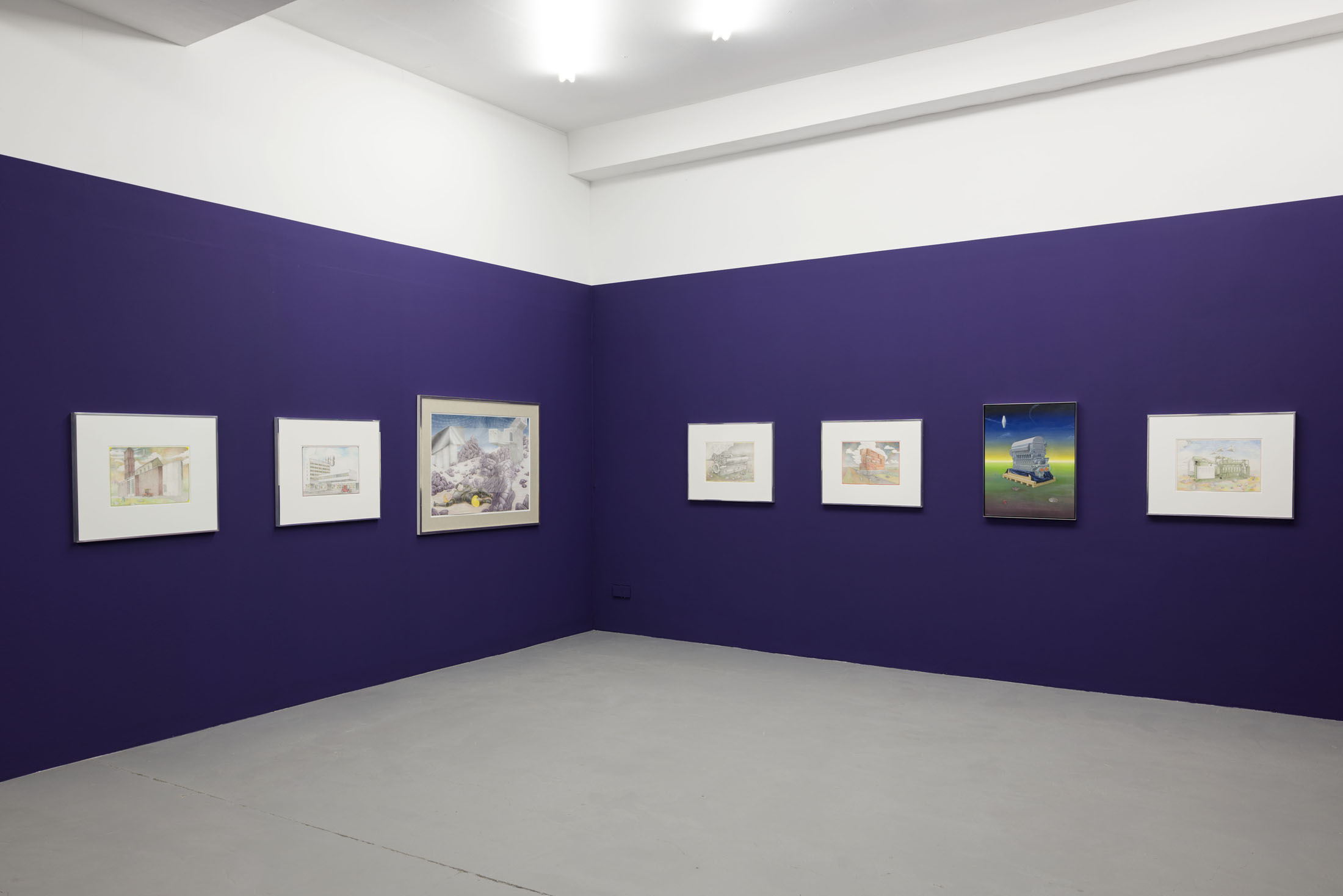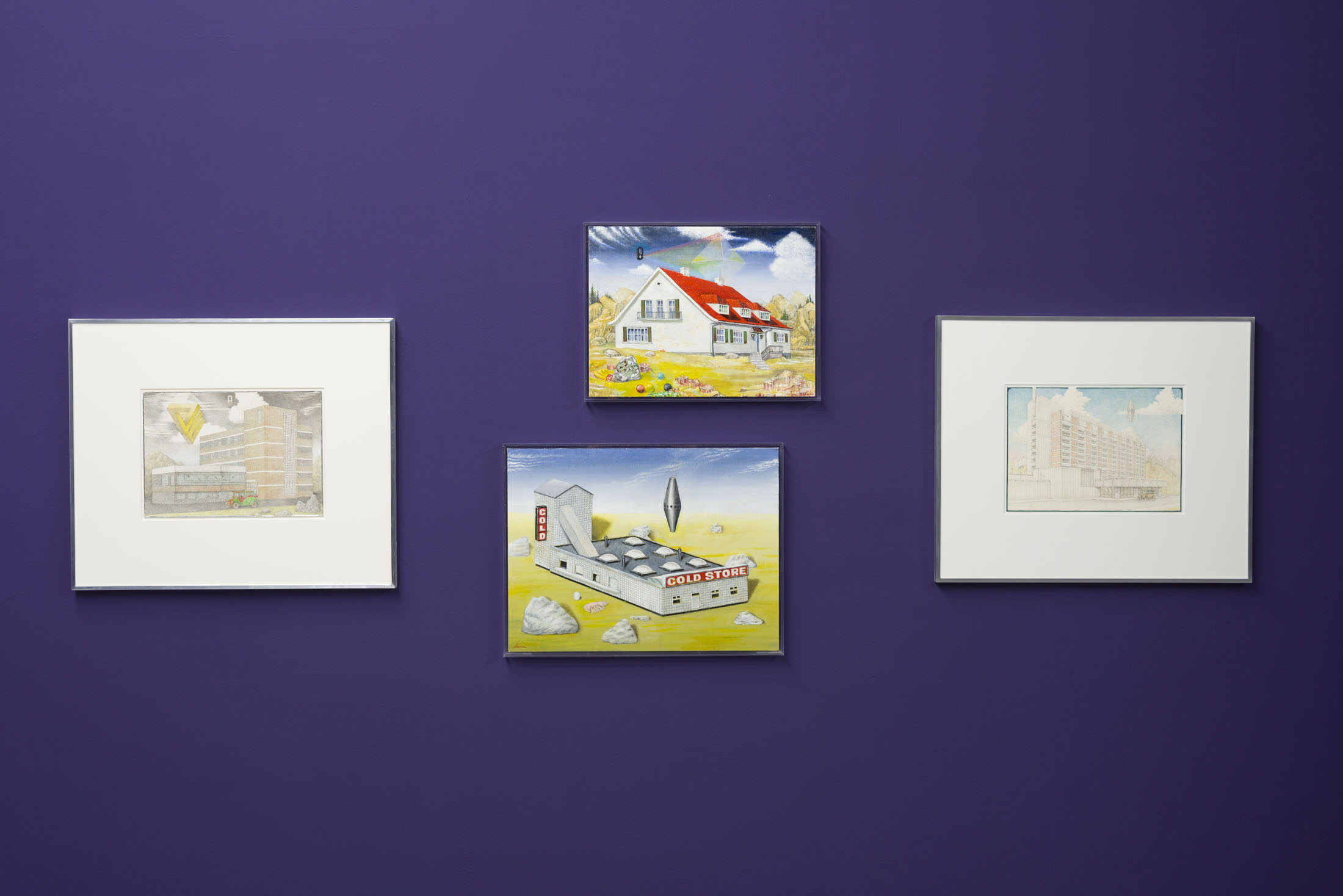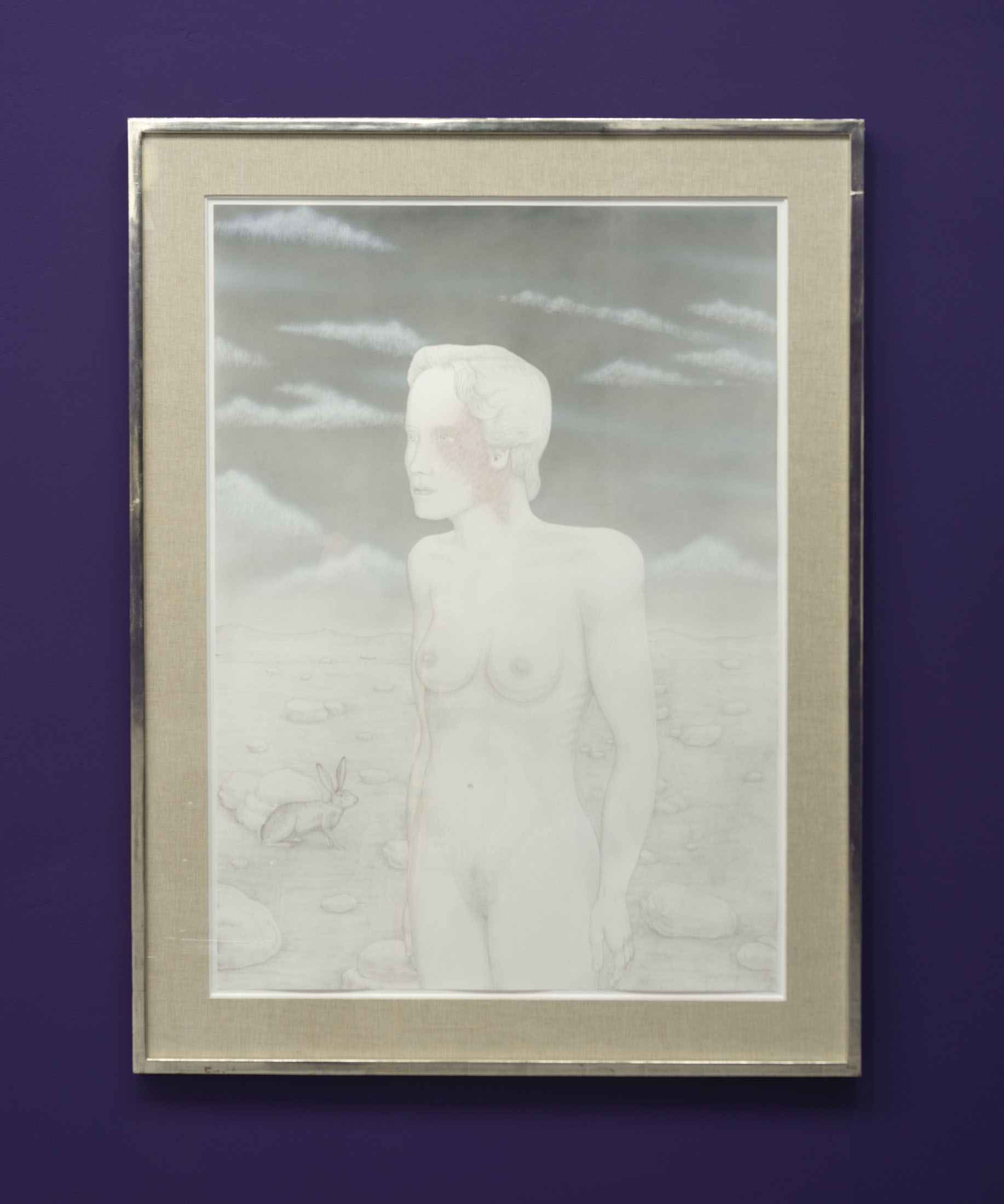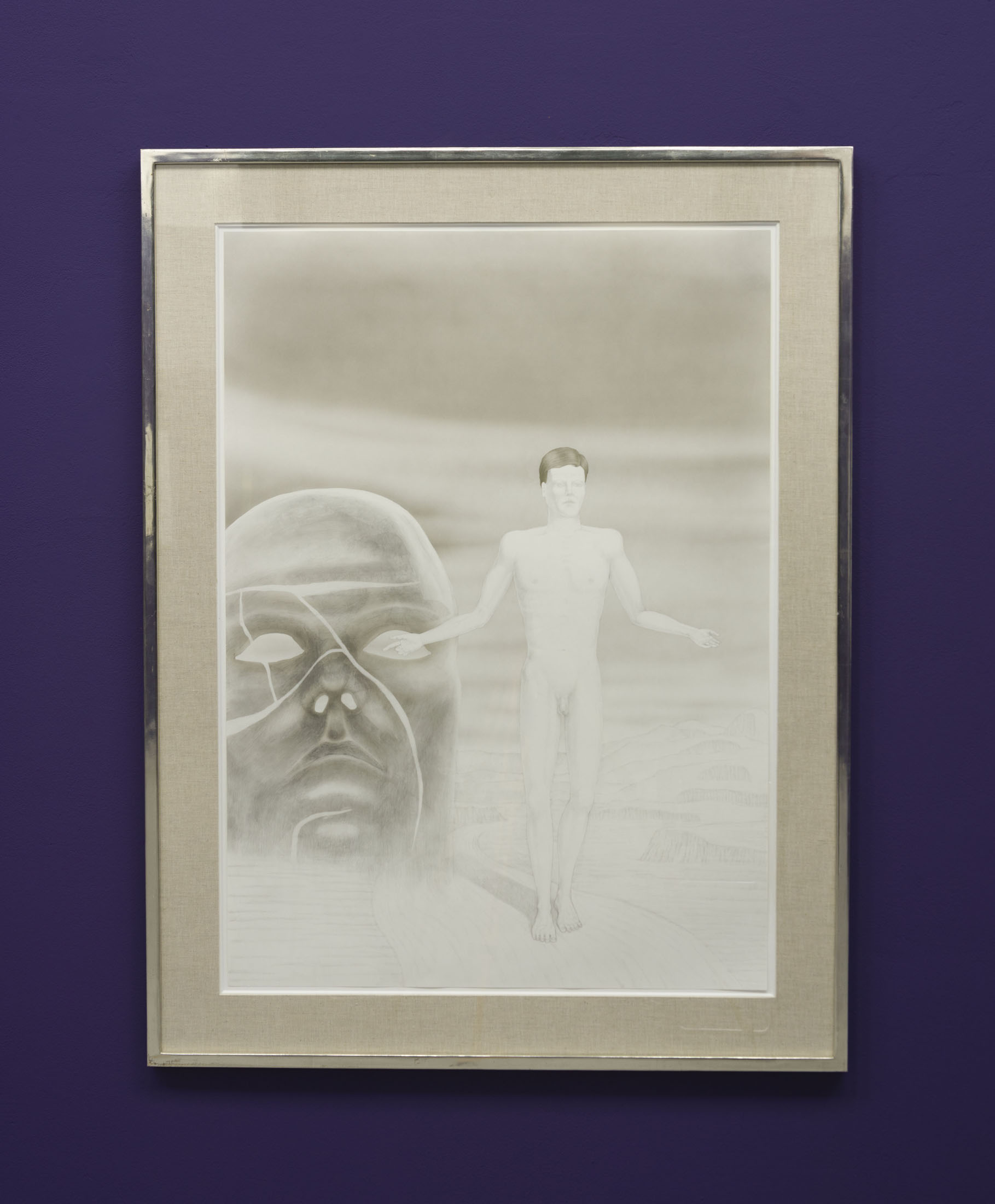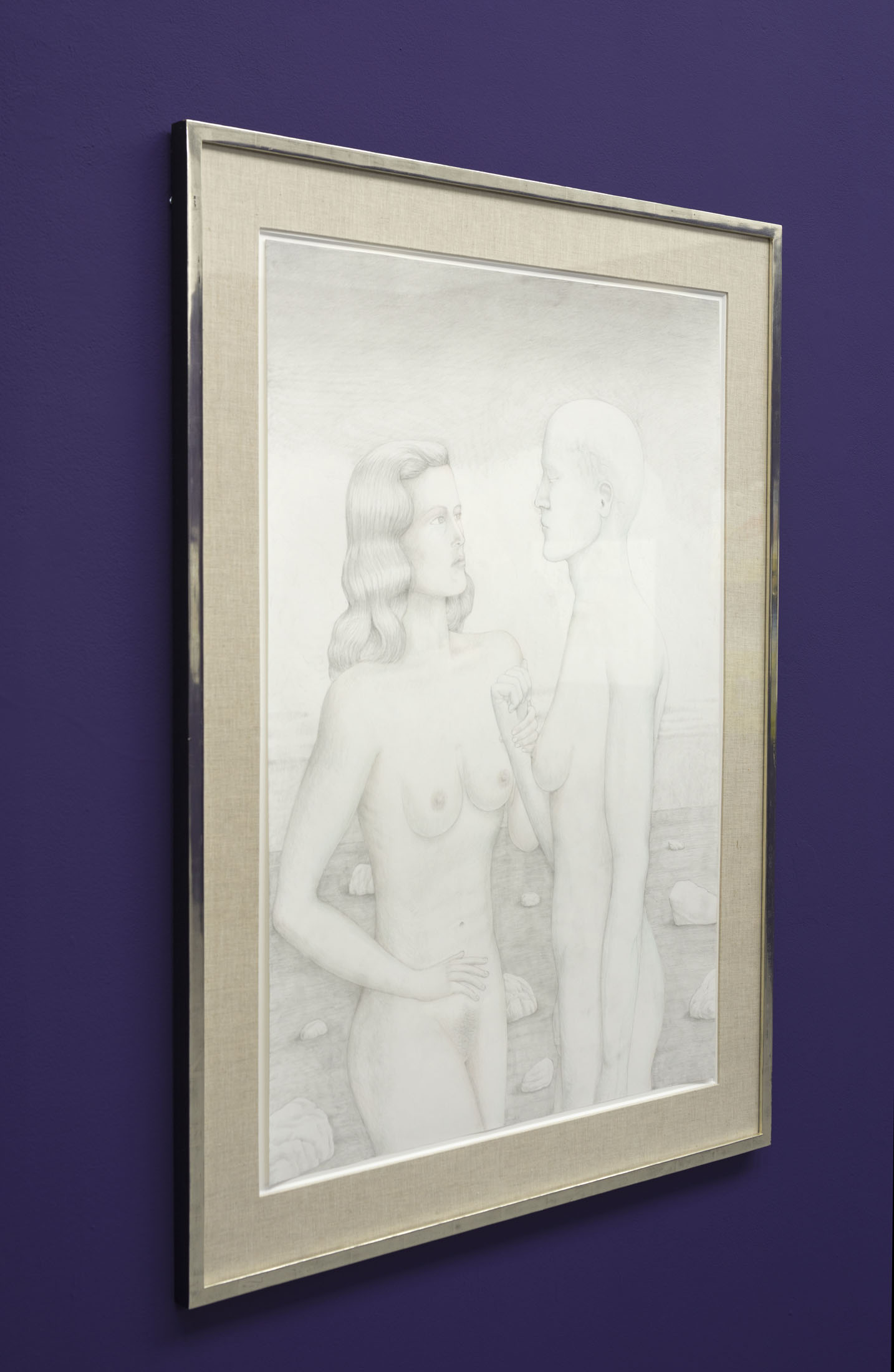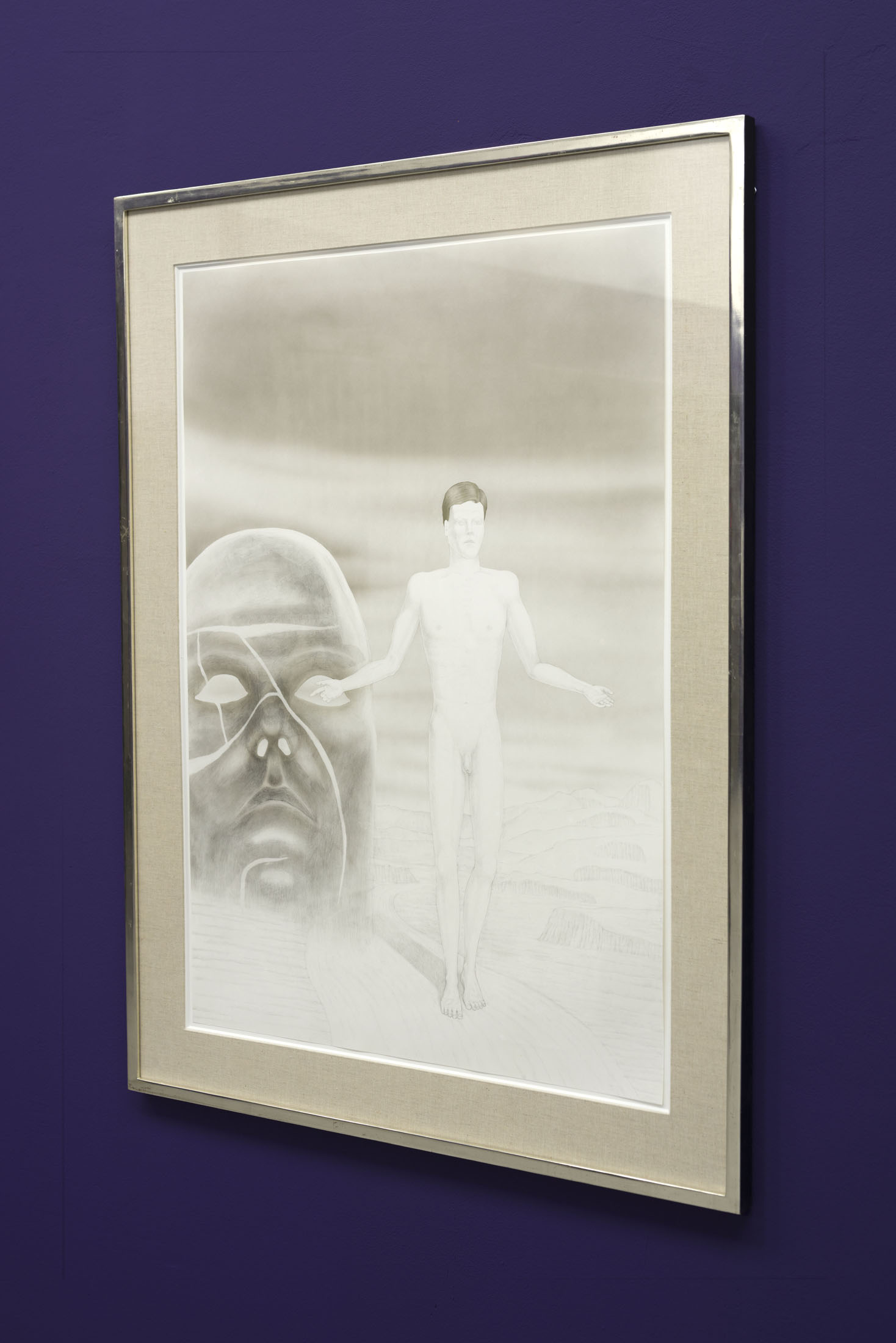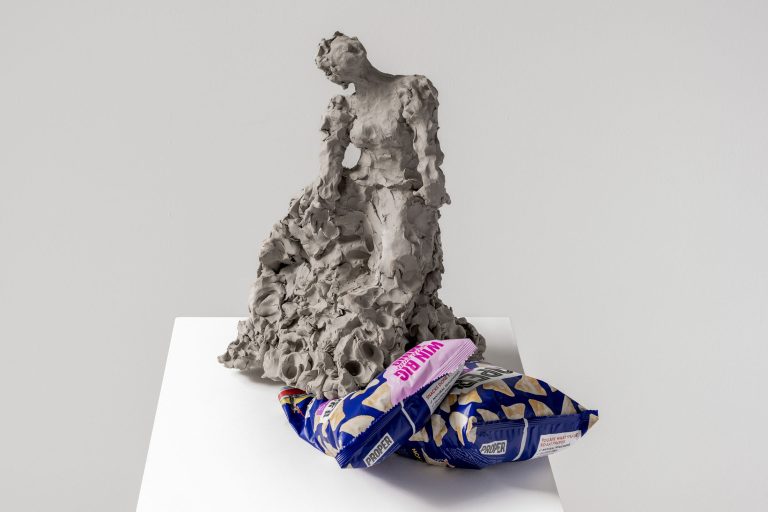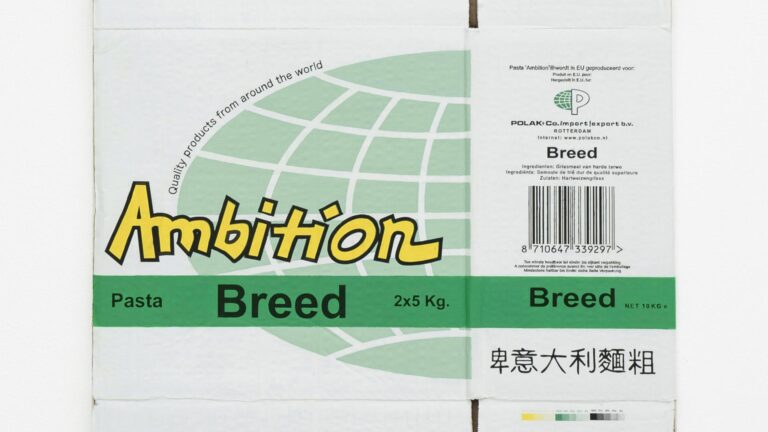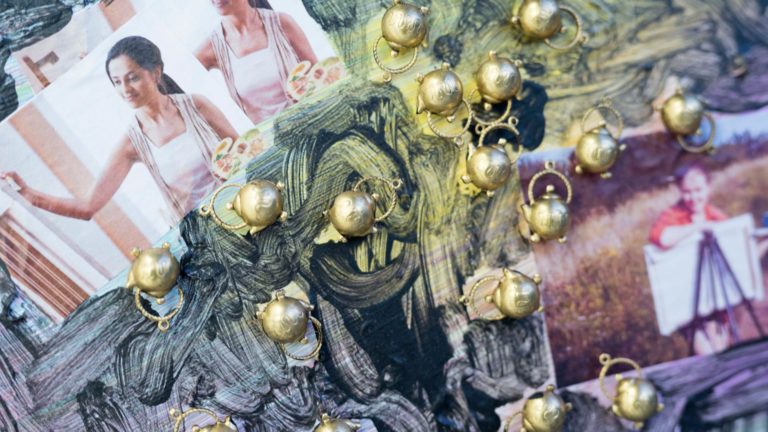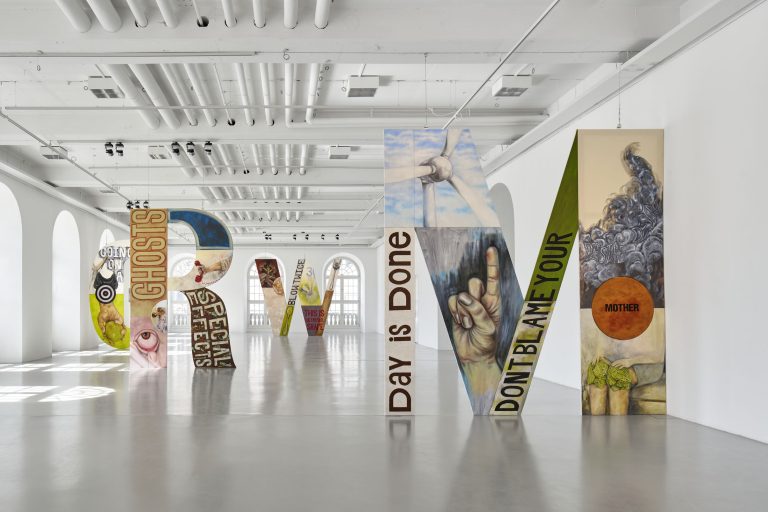
Torsten Slama is perhaps the great blind spot in the narrative of the now proverbial “Cologne of the 1990s”—that generation of artists, gallerists, critics, and curators who enlivened the Rhineland before and after the turn of the millennium, only to shape the Berlin dynamic in the early 2000s. His work, on the other hand, has always been solitary, even hermit-like. It operates from a position disguised as retreat, which has enabled him to comment indirectly and subtly on societal developments. Characteristic of Slama’s oeuvre of drawings and paintings in a strong graphic style is a symbolically oversaturated conception of the image, which almost collapses under its intertextual correspondence with references and other works by the artist. Obvious points of friction are Pierre Klossowski’s transgressive bodies, Carl Grossberg’s deserted landscapes, and Konrad Klapheck’s erotically charged machinery. In equal measure, Slama’s eclectic visual worlds were informed by MAD magazine, television detective series, and small-run guidebooks on local architectural phenomena. The results are set in dystopian, sometimes post-apocalyptic landscapes that can easily be understood as a repetition of the New Objectivity’s announcement of an impending social bankruptcy. Yet the objectivity of the representation, which Slama overstretches with hidden humour and sober isometry, is always mixed with a nervous tone. Ultimately, even in a present shaped by godlike technologies, paleontological emotions break through.
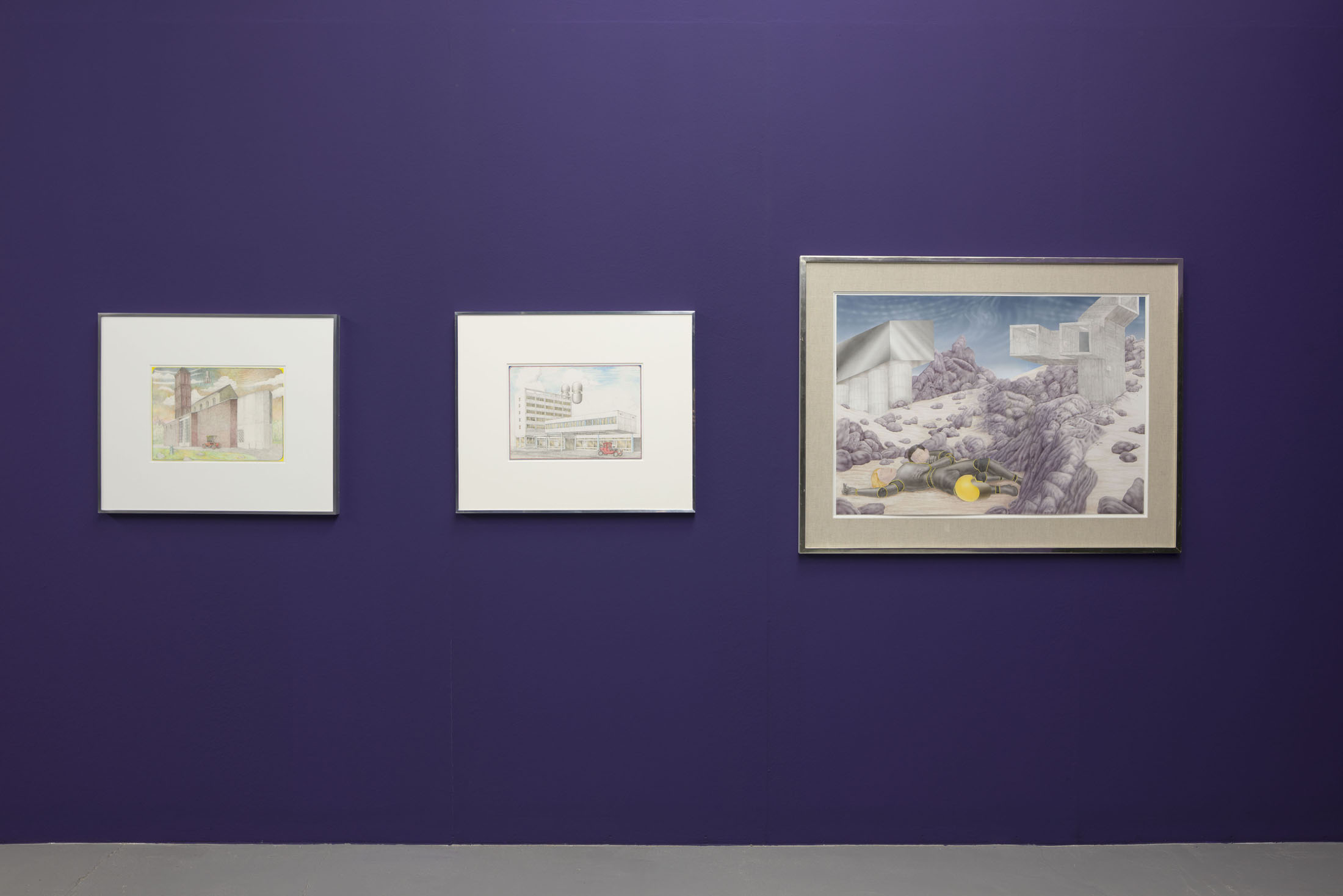
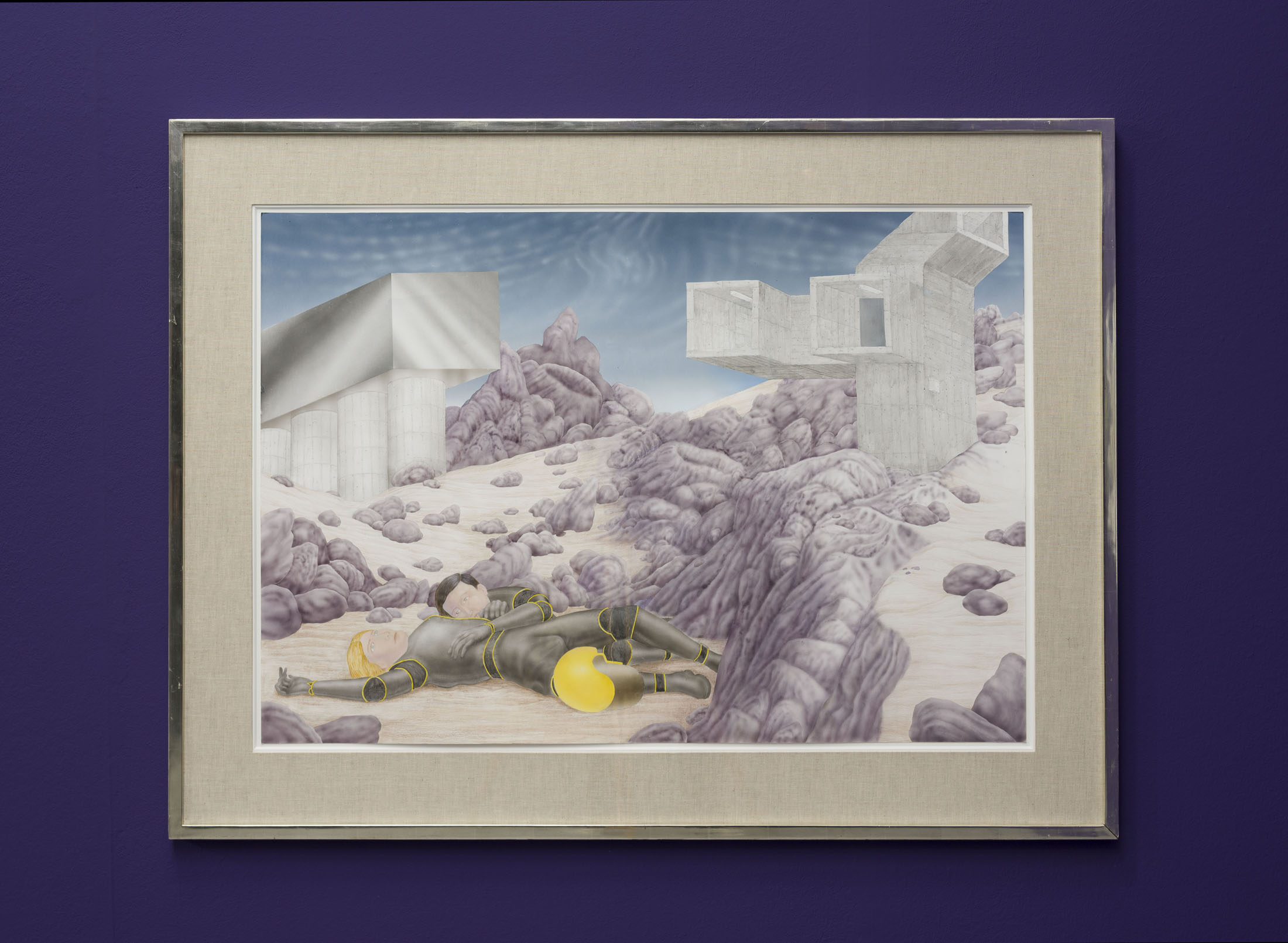
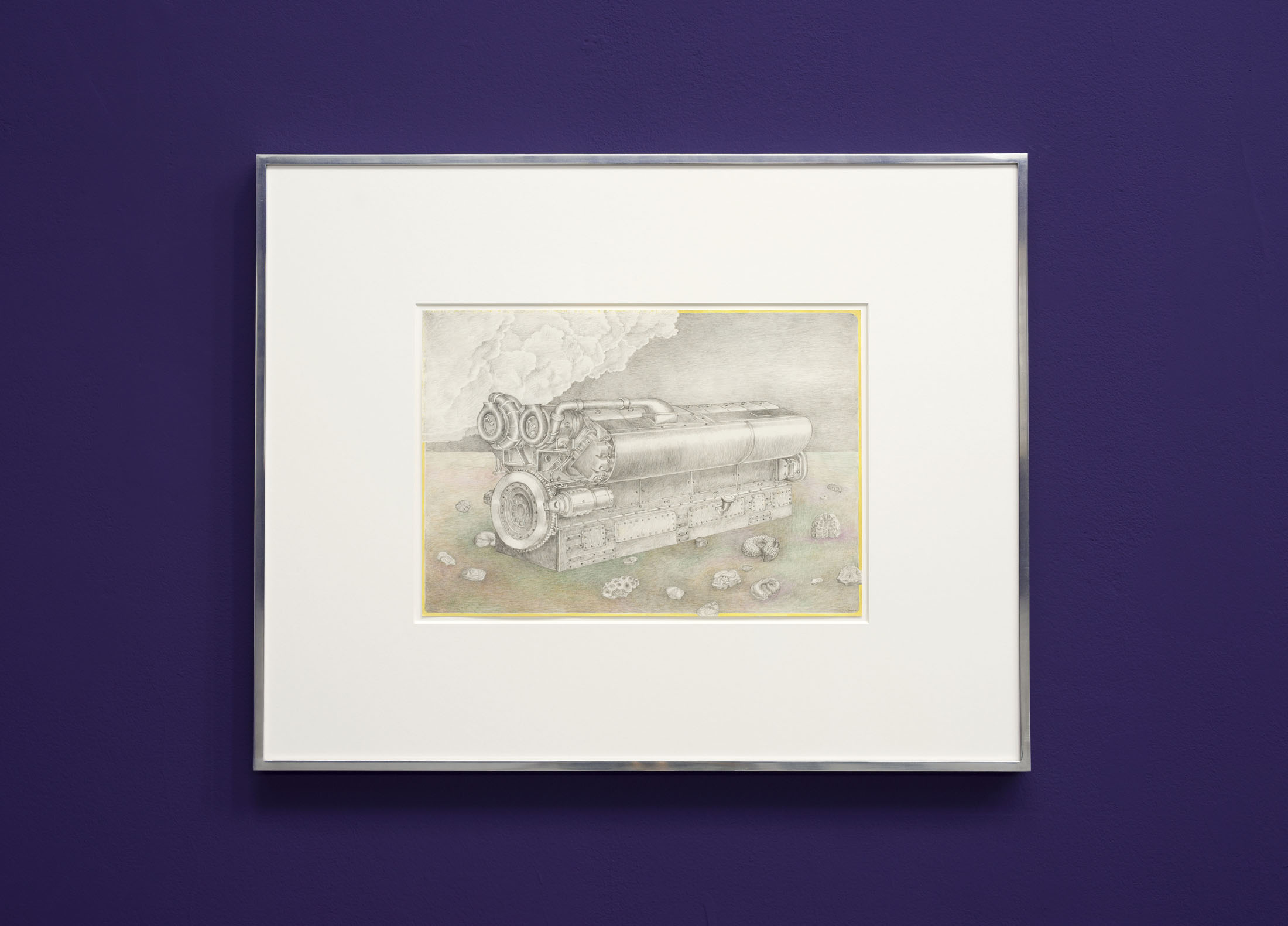
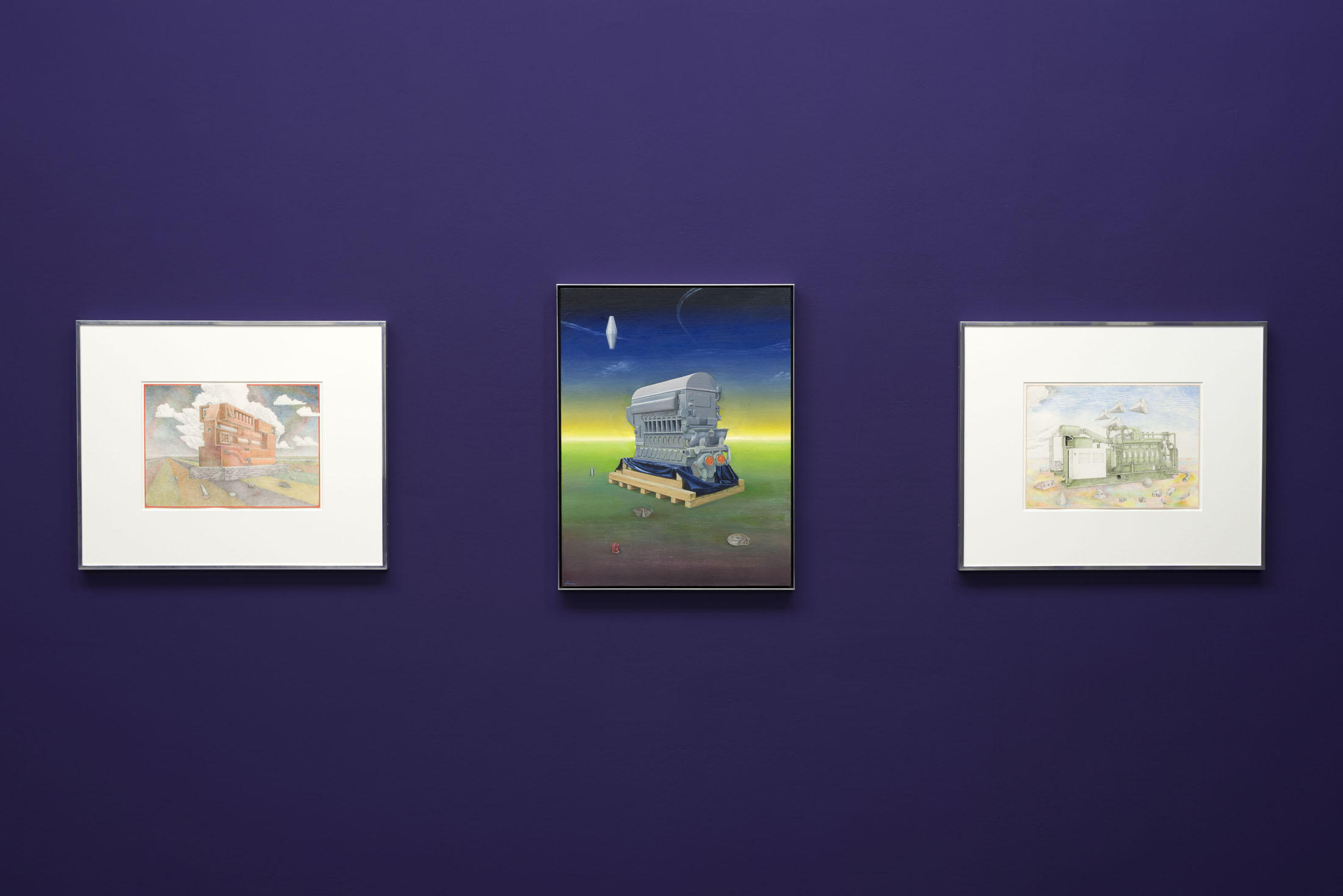
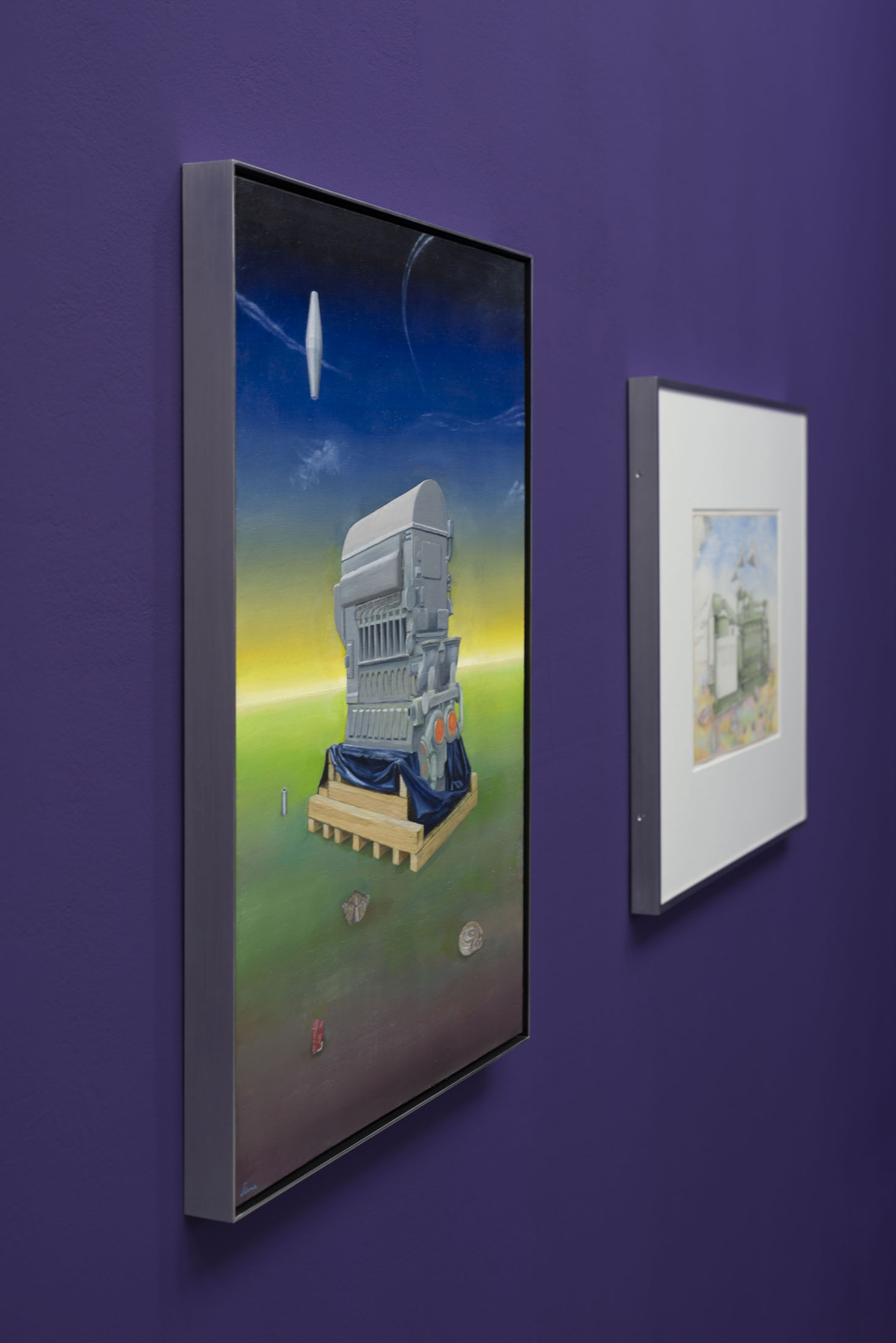
‘Die Vatermaschine’ (The Father Machine) presents a representative selection of Slama’s works from 2007 to 2020. The large-format, psychological drawings from the series‘Sexuality and Fear’ (2007) use archetypal subjects to explore the depths beneath the porous layer of civilisation. The planet is hostile, and vulnerable humans are under the influence of instinct, taboo, and forces of authority. The latter are represented here by Slama’s leitmotif of a character—half double agent, half villain Sigmund Freud—this time called ‘Dr. Demiurg’ (2007). The libidinal tension of these mini-narratives is also conveyed in Slama’s depictions of machines, once again situated in primeval spaces. The monolithic elegance of the machine, combined with its enchanting causality, which cannot be understood without expertise, links Slama here to the blurring of loss of control and vulnerability that sexuality entails. And this at a time when digital technologies were on the verge of a technical paradigm shift whose significance most people could not yet foresee at the time. At the same time, the works make it clear that the mechanics of the soul will still apply in a world of ones and zeros.
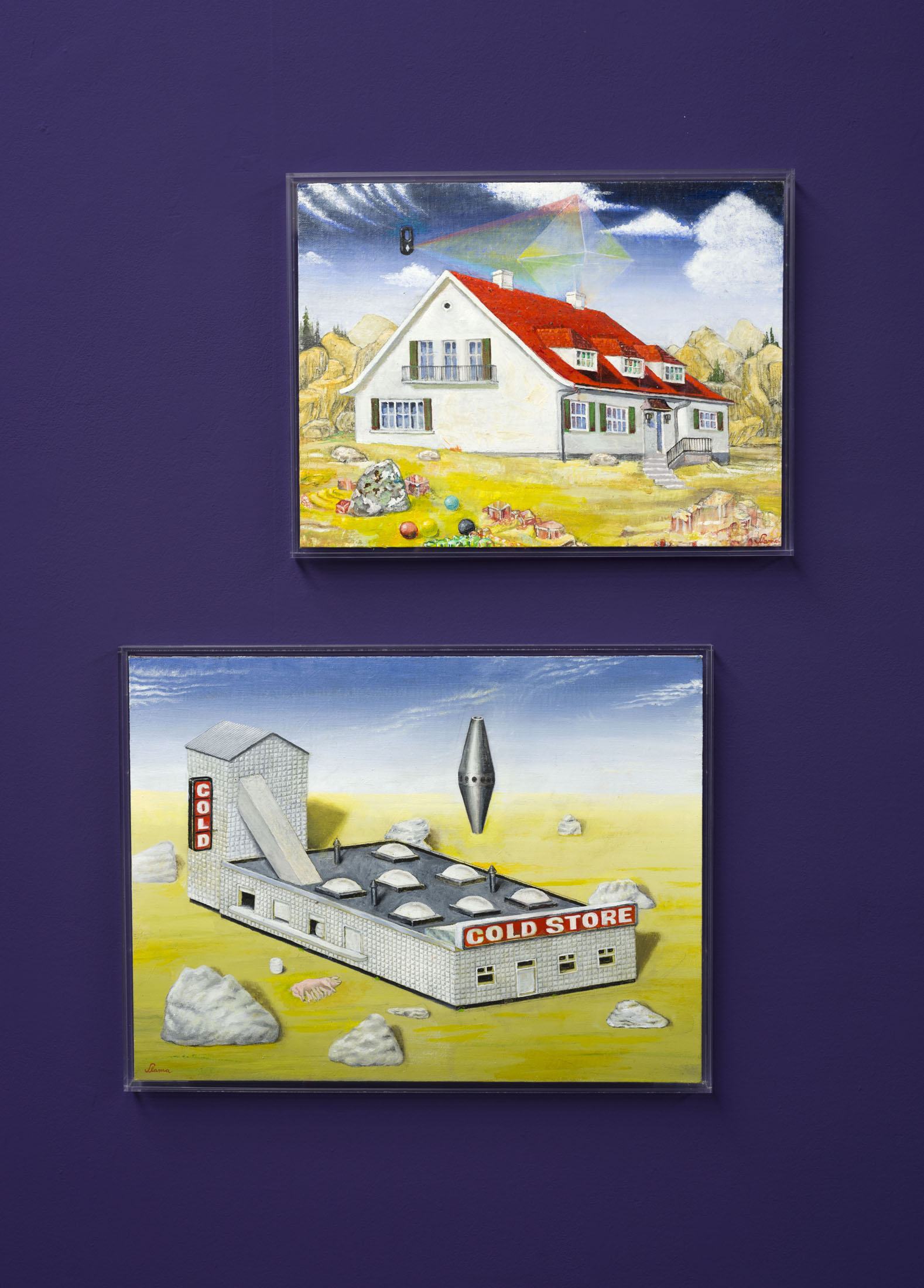
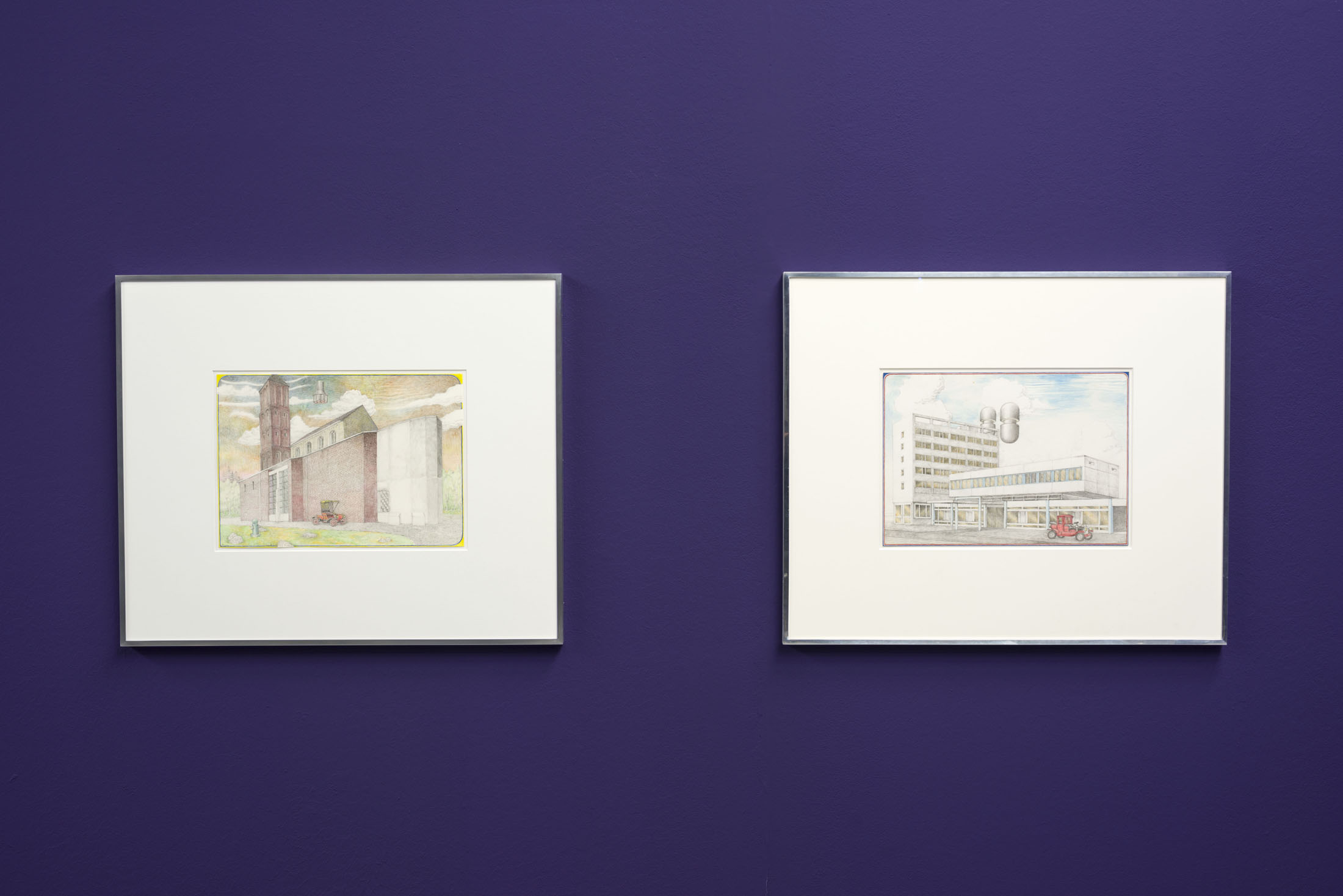
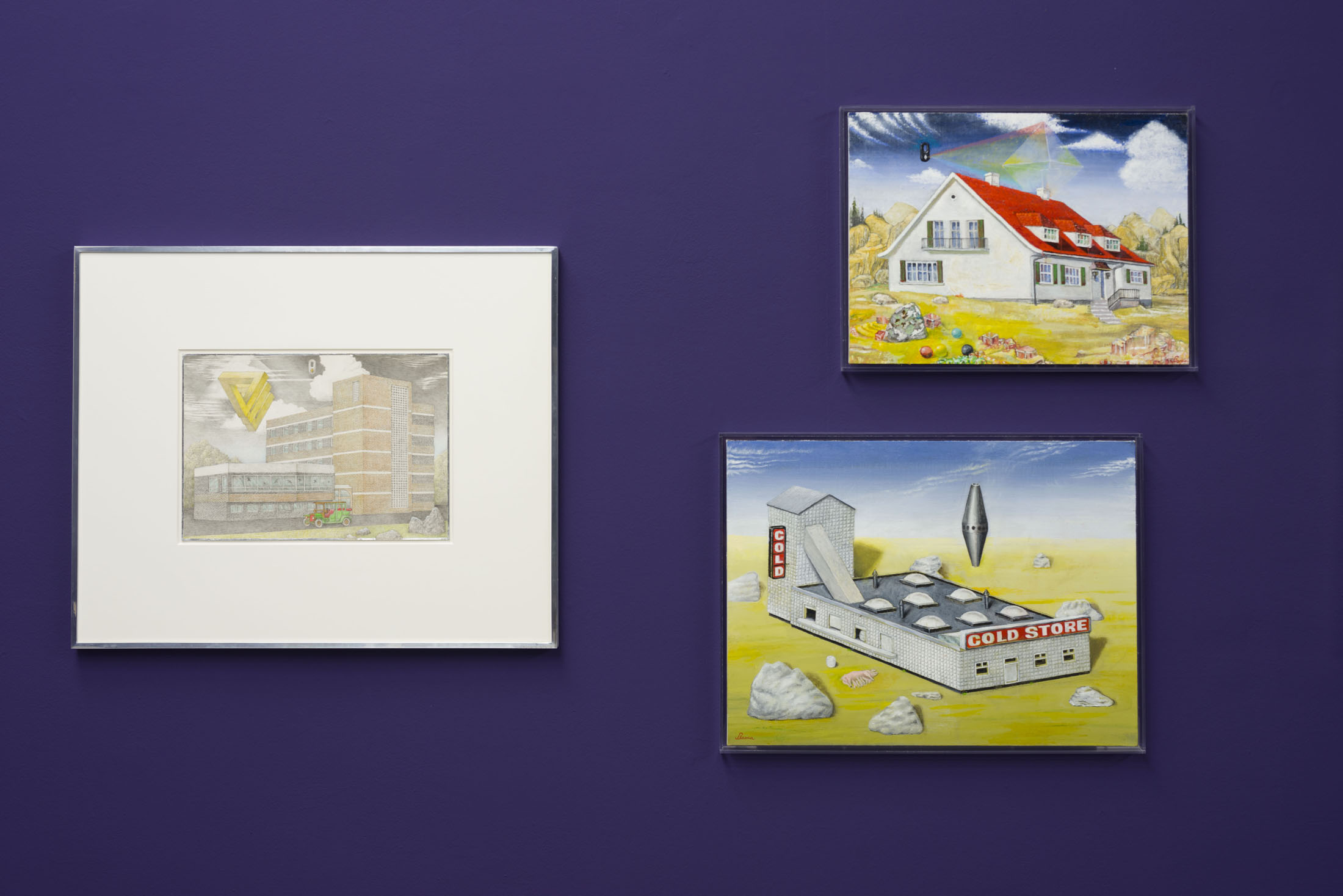
If you like, Slama’s depictions of buildings–churches, office complexes, houses and factories – also function as machines or psychological mini-melodramas. Precise in their design, historically informed down to the last detail and enriched with references, they are built ideologemes in which instinctual bodies and individual life plans are pressed into the ideological patterns of religion, work and society. The compositional complexity is sometimes increased by the incorporation of vehicles that have fallen out of time, which block possible exits from a hasty image analysis. However, it is particularly Slamas’s engagement with the house as a built ideology, as an ideology factory, that demonstrates his alert participation in his present. Eventually, the entire austerity policy of the 2010s, which was omnipresent in the daily news, resulted in the aftermath of the 2007-08 global financial crisis in the subprime crisis, i.e. the collapse of the (excessively priced) dream of home ownership. Among other things, it is such conscious and analytical assumptions about the present, which nevertheless elude the simple and precocious appeals of so-called polit-aesthetics, that lend Torsten Slama’s multi-layered work considerable ongoing relevance. This applies equally to its absolutely contemporary synthesis of beauty and collapse.
Torsten Slama (1967-2023) was an artist, coder, and writer. He studied at the Düsseldorf Art Academy and was an integral figure in the Cologne art scene in the 1990s, which continued in Berlin in a different constellation from the 2000s onwards. He had solo exhibitions at the Museum of Contemporary Art Houston, the Focal Point Gallery in Southend-on-Sea, and the Kunsthalle Bremerhaven. The artist’s works are in numerous public collections, including the Museum of Modern Art, NY. “Die Vatermaschine” is Slama’s first solo exhibition since his untimely death in 2023.