In his copy of Gilles Deleuze and Félix Guattari’s “Kafka: Toward a Minor Literature,”W. G. Sebald boldly marked, with a felt tip pen, the chapter on Kafka’s minoritarian use of the German language in Prague with its poverty of words and faulty syntax. Through Kafka’s literary use of misused prepositions, the abuse of reflexive pronouns, words that refuse tofittogether, the metallic-sounding order of consonants and vowels, and, more generally, linguistic elements that D&G–referring to the linguist Vidal Séphiha–call intensifiers or tensioners (éléments intensifs ou tenseurs), language is pushed beyond the semantic bounds of the word, moving toward its extremes, toward a reversible aldilà or aldiquà.
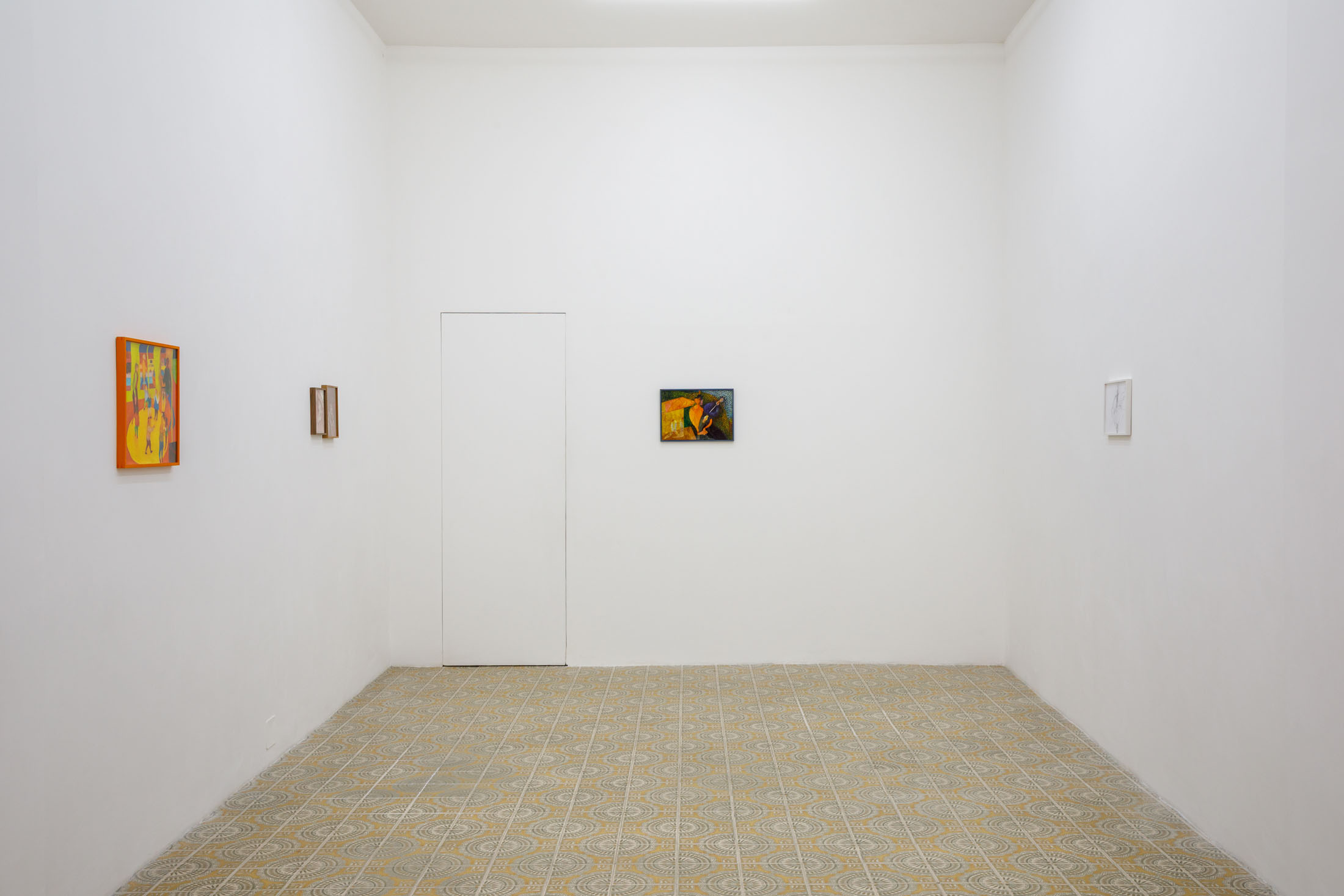
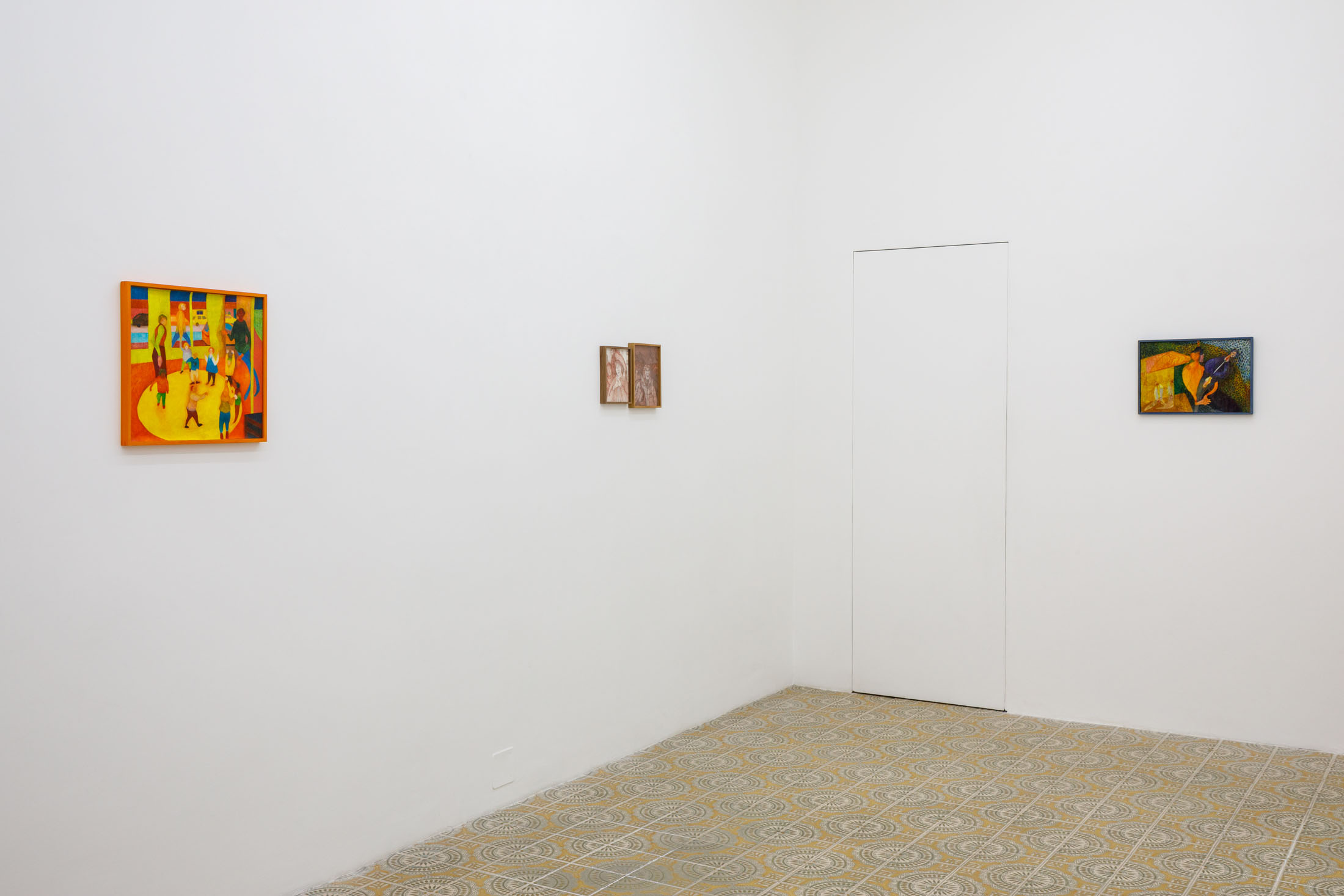
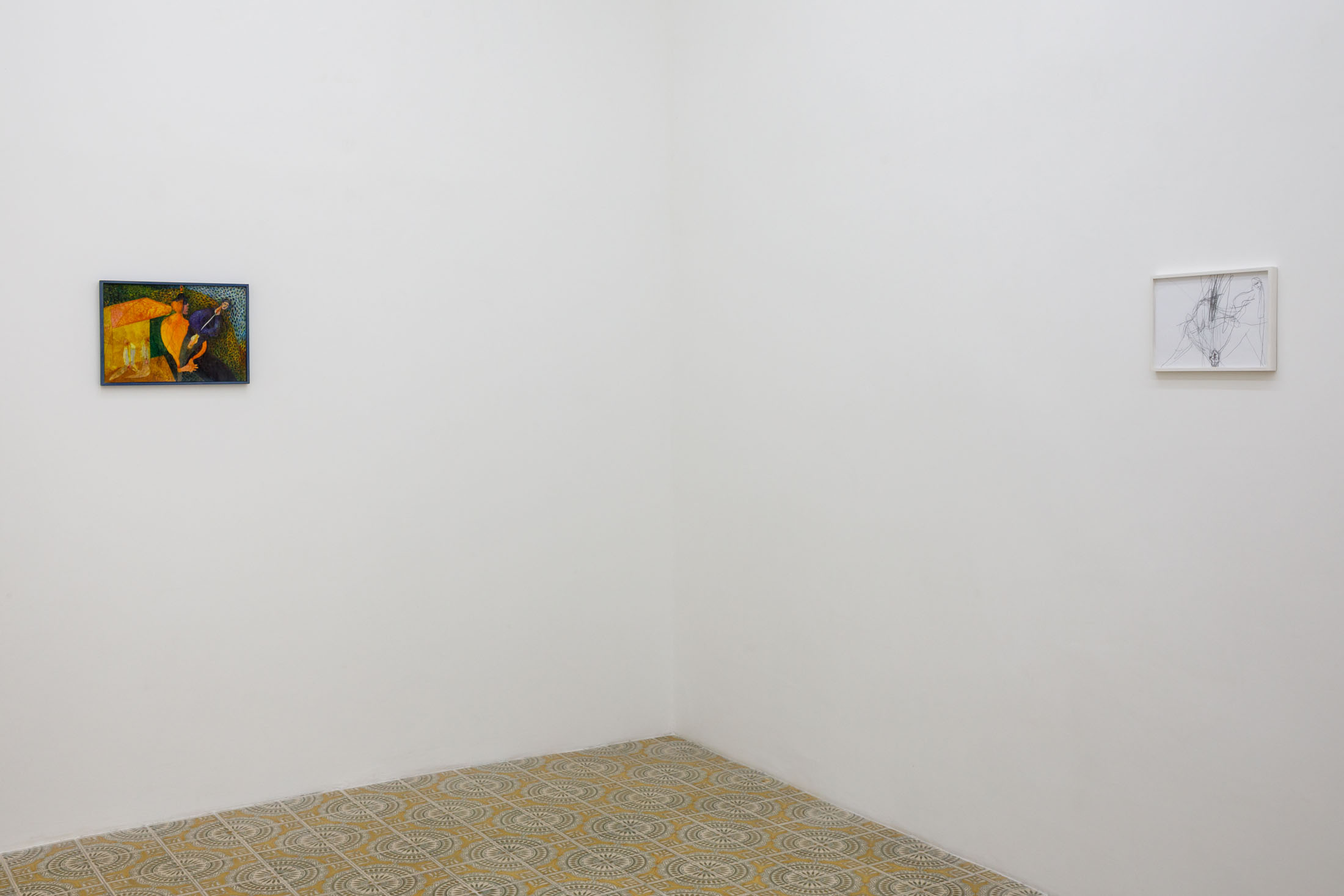
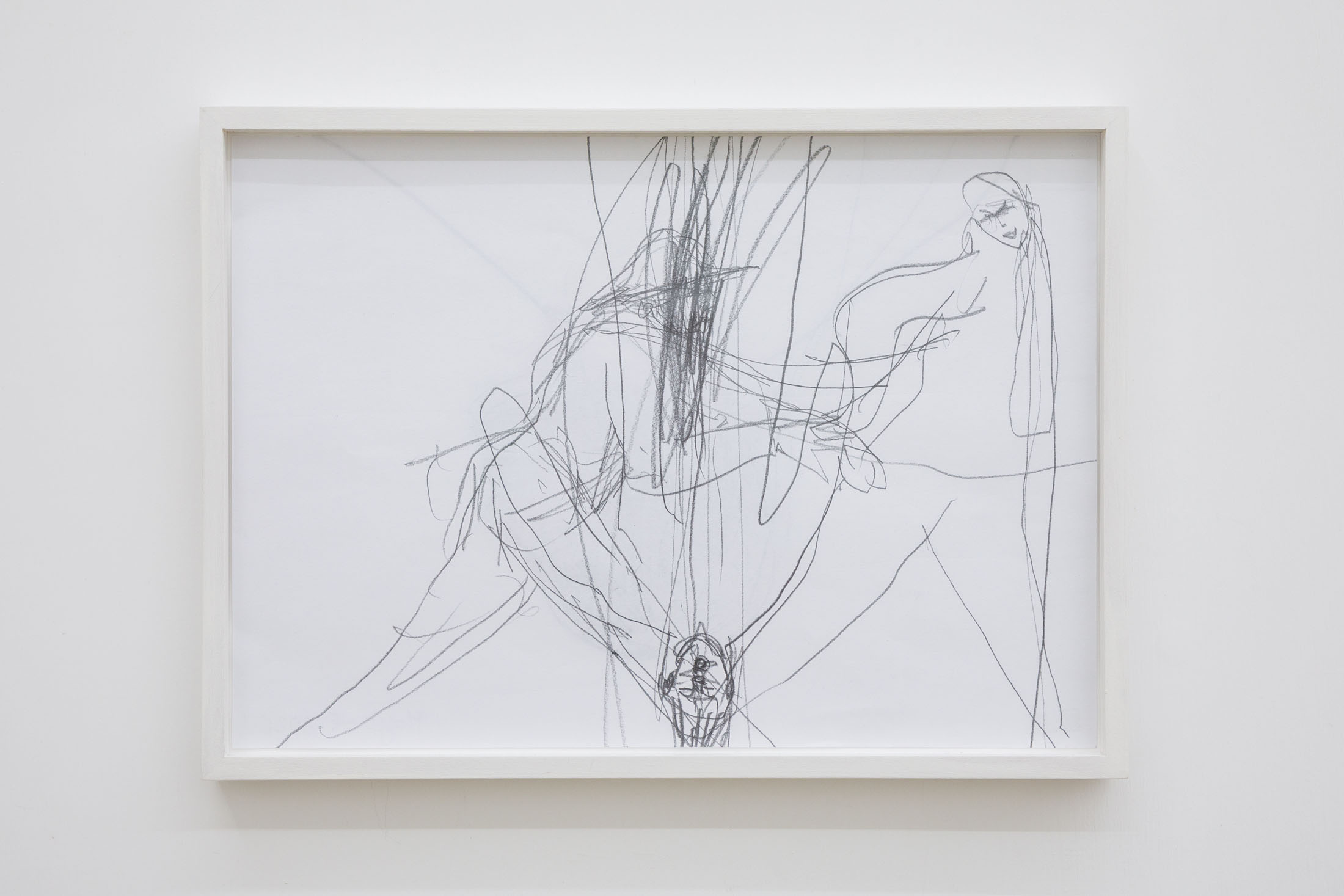
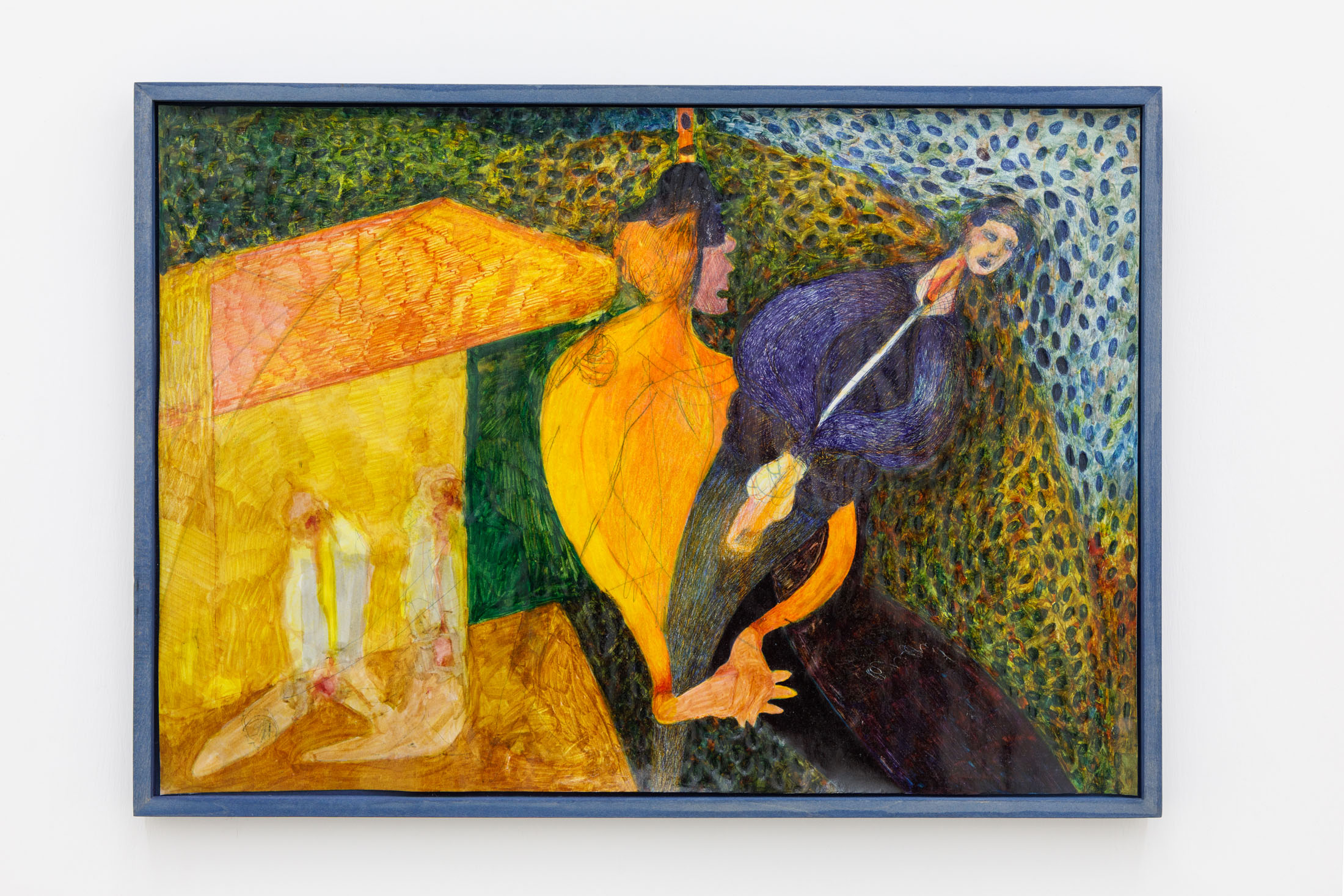
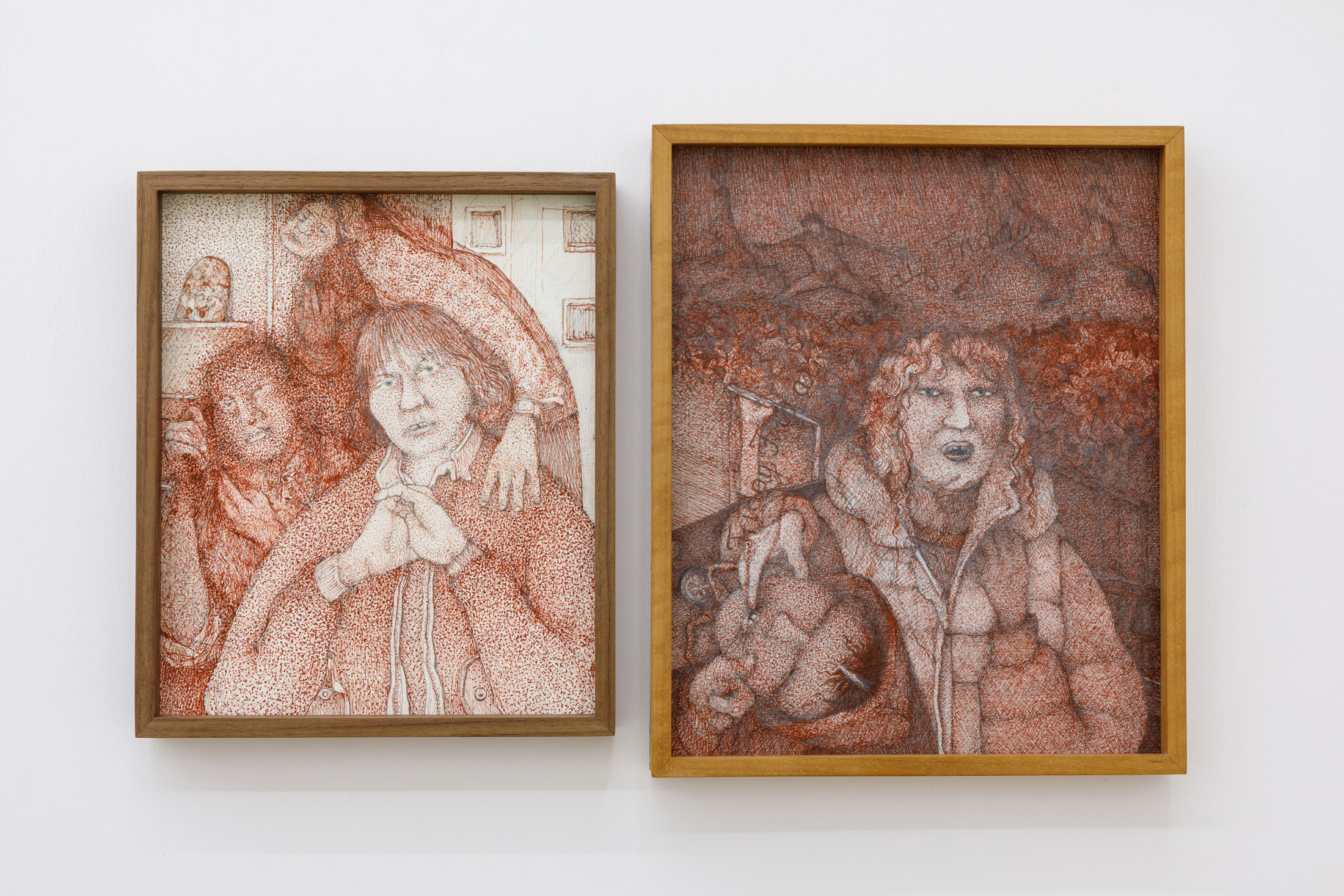
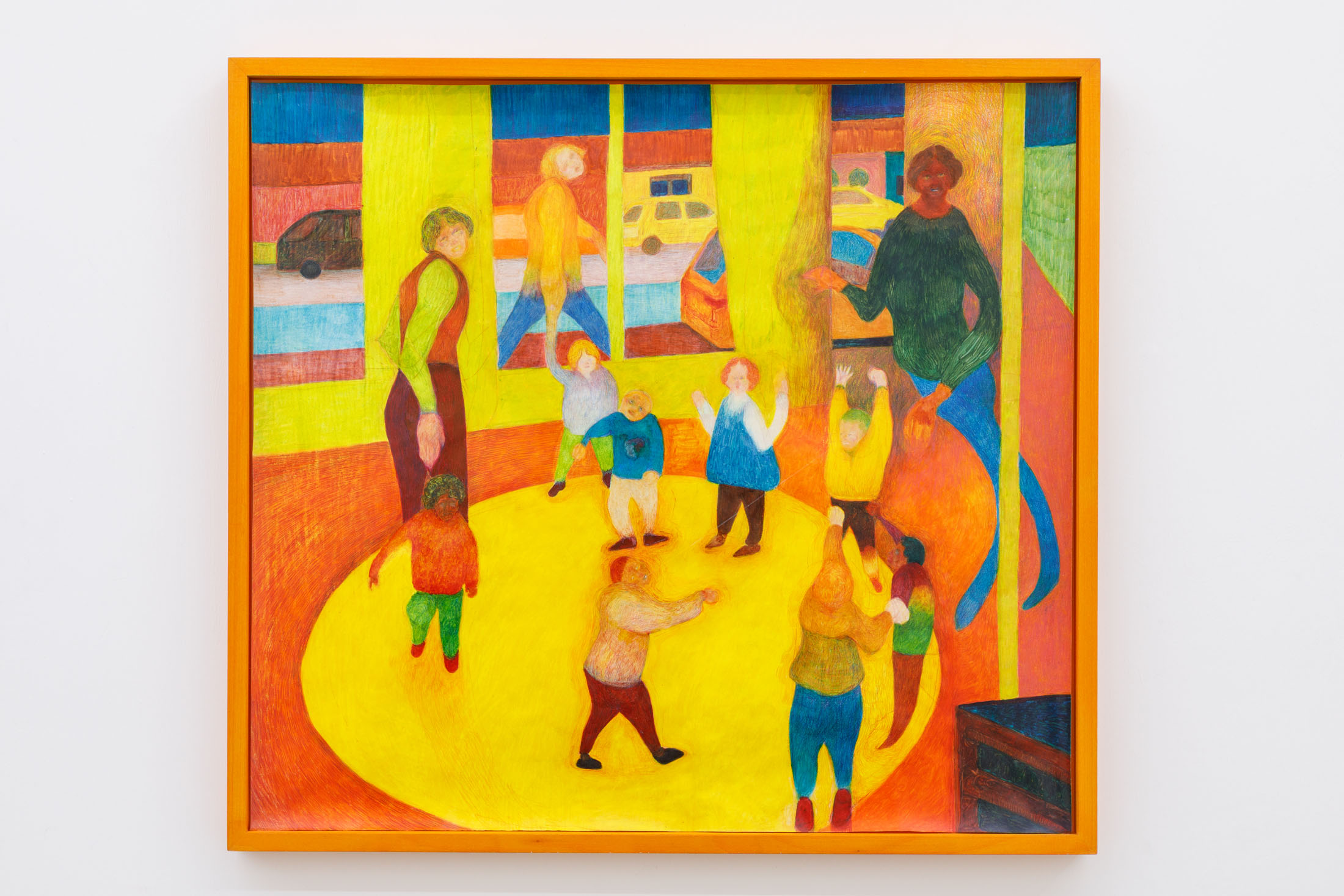
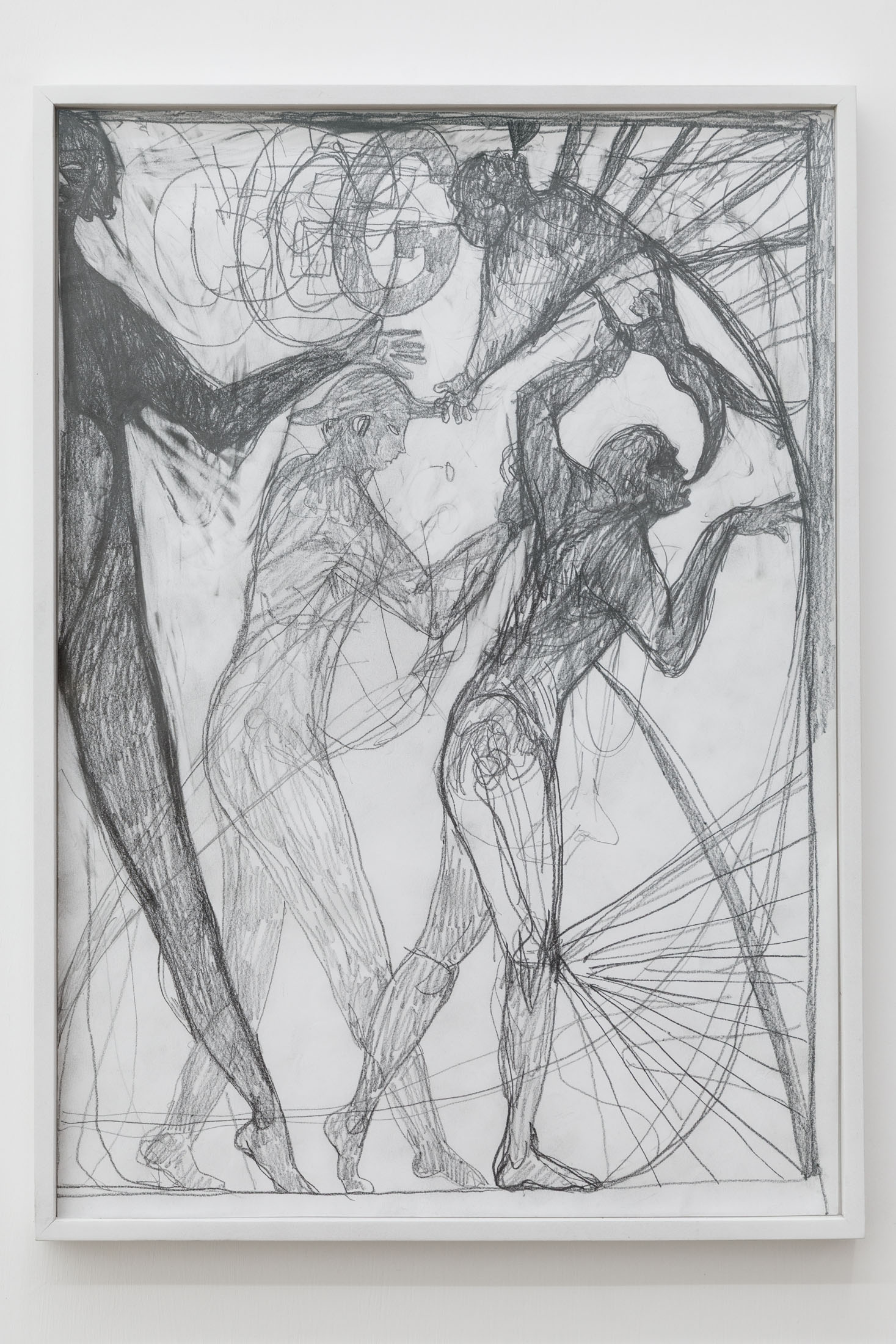
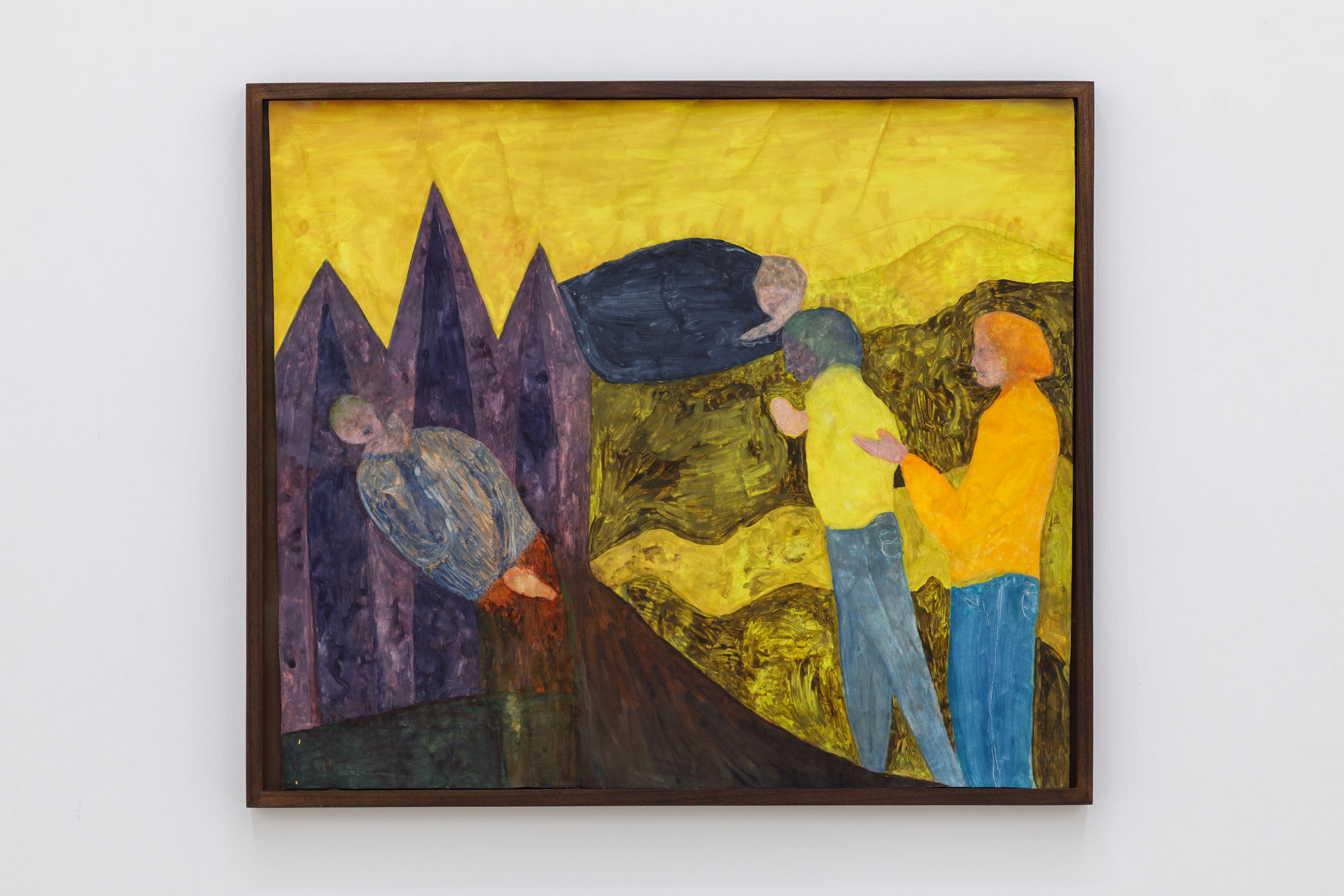
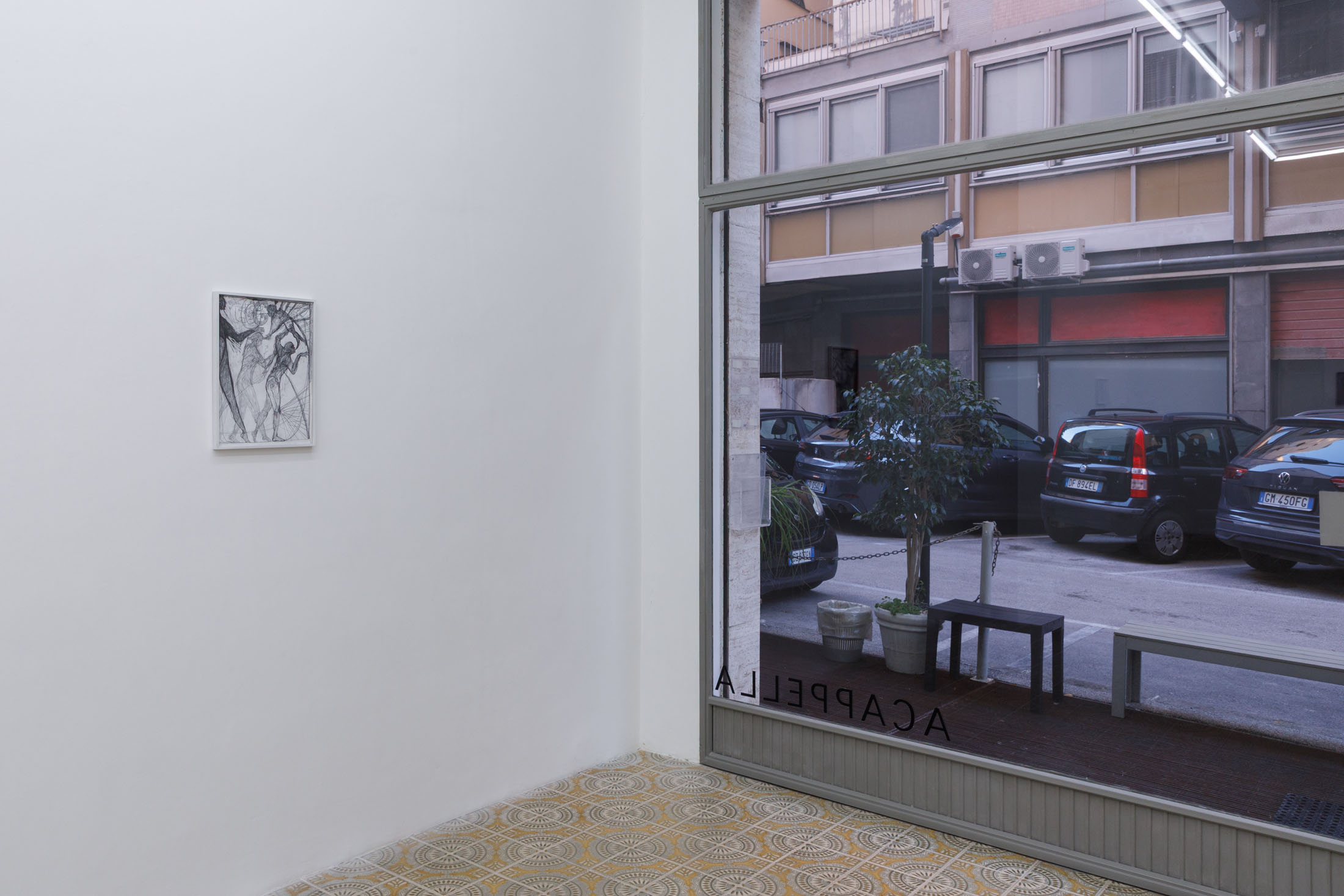
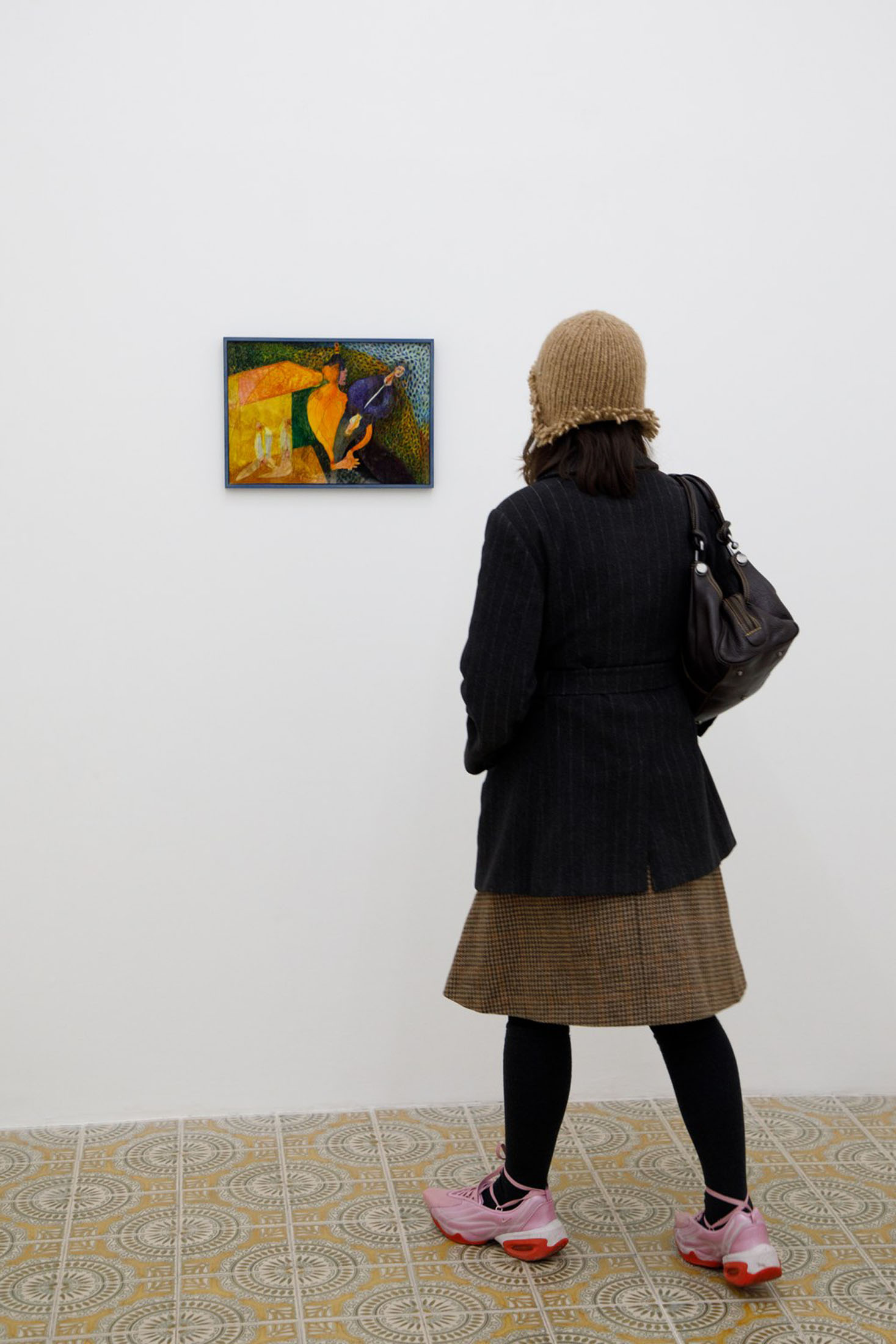
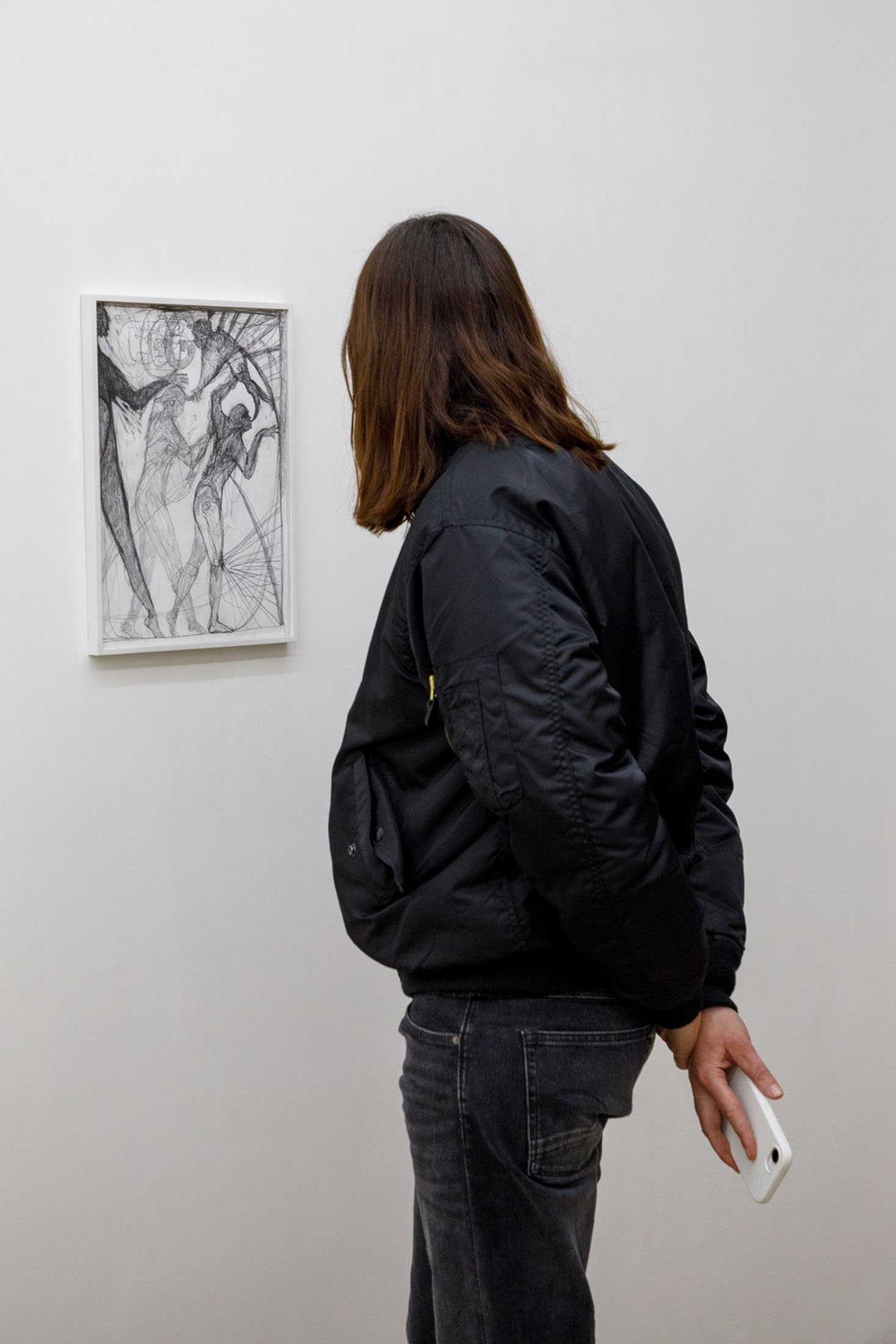
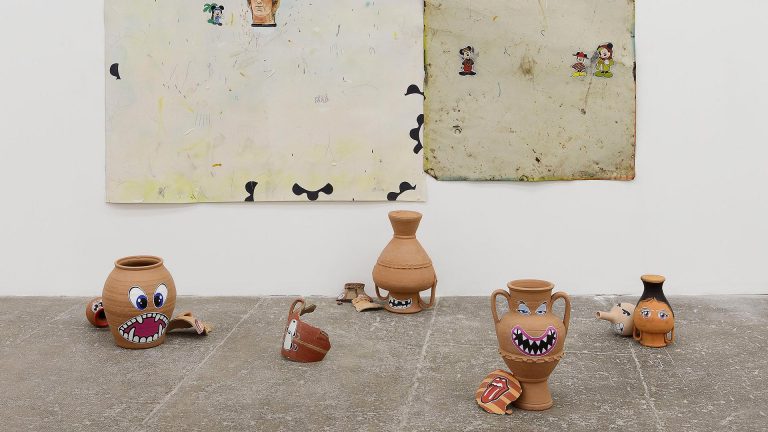
In Till Megerle’s drawings and paintings, bodies act as intensifiers and tensioners. Often staged on a small scale or within a snippet of time, akin to a film still, the images show figures who, in fleeting or clinging contact with other bodies, perform and frequently overextend their bodily existence. Contorted postures, rubber-stretched or compressed limbs, movements suspended in tension, gaping mouths from which a- signifying tonalities emerge or from which a peculiar beyond seems to blow forth. These bodies—anchored in art history, contemporary internet rap culture, or the artist’s own familial environment—abandon, in the ecstatic experience of something higher, such as the repeated utterance of the word “gravity,” their representational existence, stretching themselves to their outermost limits, becoming intense.
–Sophia Roxane Rohwetter