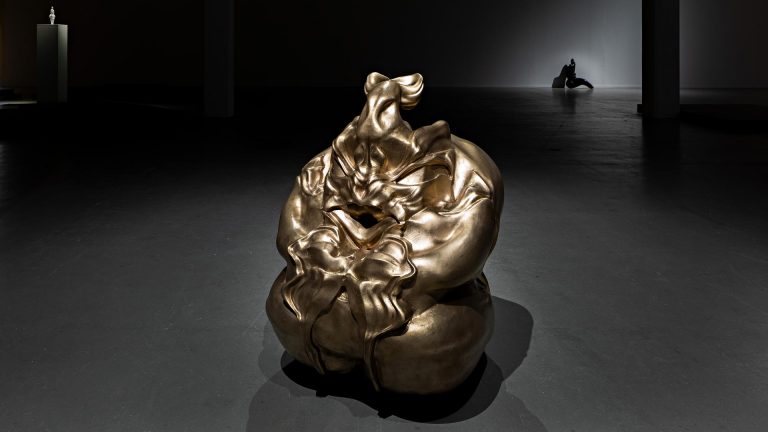
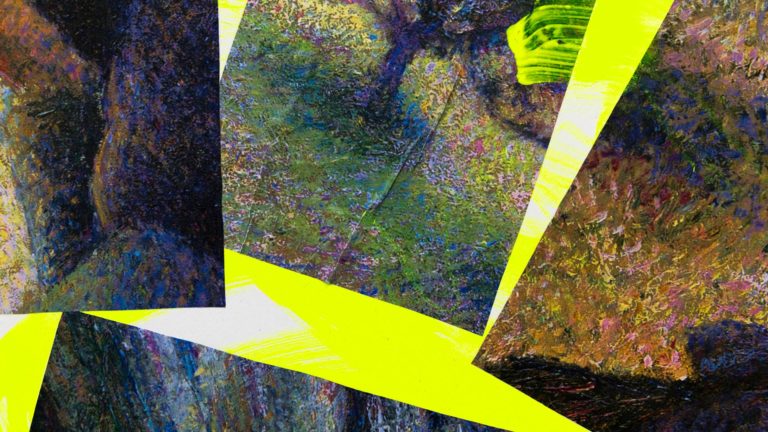
I wouldliketobeginifI may,witha thoughtexperiment.I wanttoask,howmanyI’sarethere withinyou?I canstartifyoulike.One.ThereisanI inme, who isa housewife.Shewakesup at 6:25amandpreparesbreakfastwhile emptying the dishwasher. Two. There is another I in me, who is a writer. I like her a lot more. Three. Another I has always been a migrant, who speaks German only hesitantly when she must. Four. There is an English I, who is silently loud in my head. What a shame, she lost her British accent.
WecarrymanyI’swithin us.A non-unitary,multi-layeredsubjectivityis part ofourcontem- poraryhistoricalcondition.
The exhibition “The many within” echoes a call for nomadism, first made so memorably by the feminist philosopher, Rosi Braidotti. Her work on nomadism is conceived as a response to the challenges set by advanced capitalism, in which a global economy of transnational flows of capital and labor has an direct impact on the embodied subject, caught up in the ever-shifting boundaries between the center and the periphery, replicated ceaselessly on an ever-decreasing scale. This is a paradoxical world in which the metropolitan city coexists with the refugee camp, a global freely-mobile elite with the immobile migrant. To advance a subjectivity that would resist capitalism’s flow, she defines a nomadic position, taking her cue from the French post-structuralists, Deleuze and Guattari. For them, the figure of the nomad is someone who retains the capacity of rendering the boundaries between smooth and straited space fluid. No matter where a nomadic tribe might settle, however far be it from desert or sea, they still move across straited space as if it was unmarked. Because for them, it is. A nomadic position approaches difference, as a difference carried “within,”not a difference defining itself against the other as a “difference from.” The second is easily acquired and absorbed by the forces of capital, the other, somehow manages to slips away.
There is an implicit demand here at stake. Nomadic positions have to be accounted for, the power relations through which they are constituted and in which they operate, carefully charted to reproduce a cartography of power. The exhibition commits to such a mapping of multiple belongings, the socio-economic and symbolic locations of the non-unitary subject.
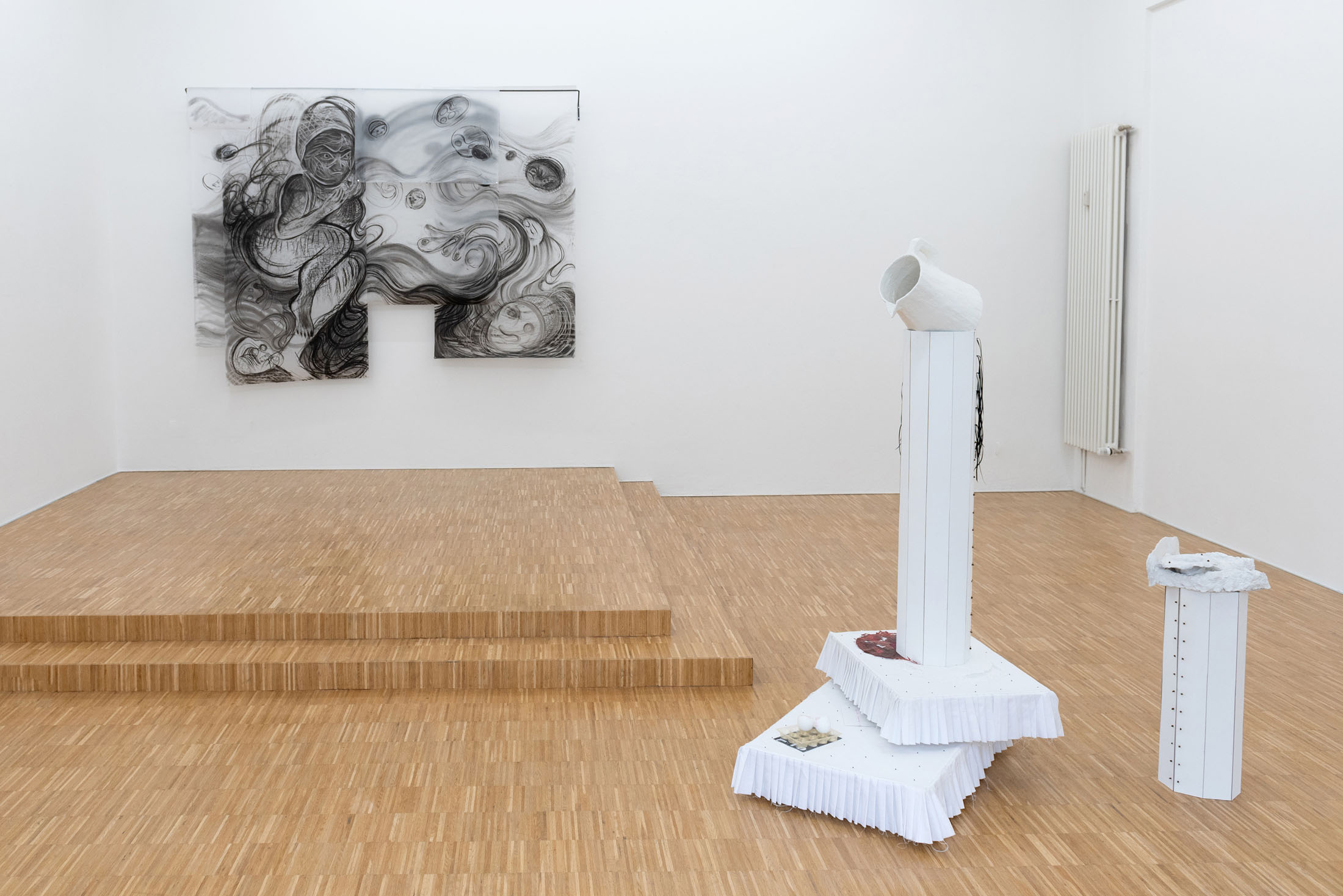
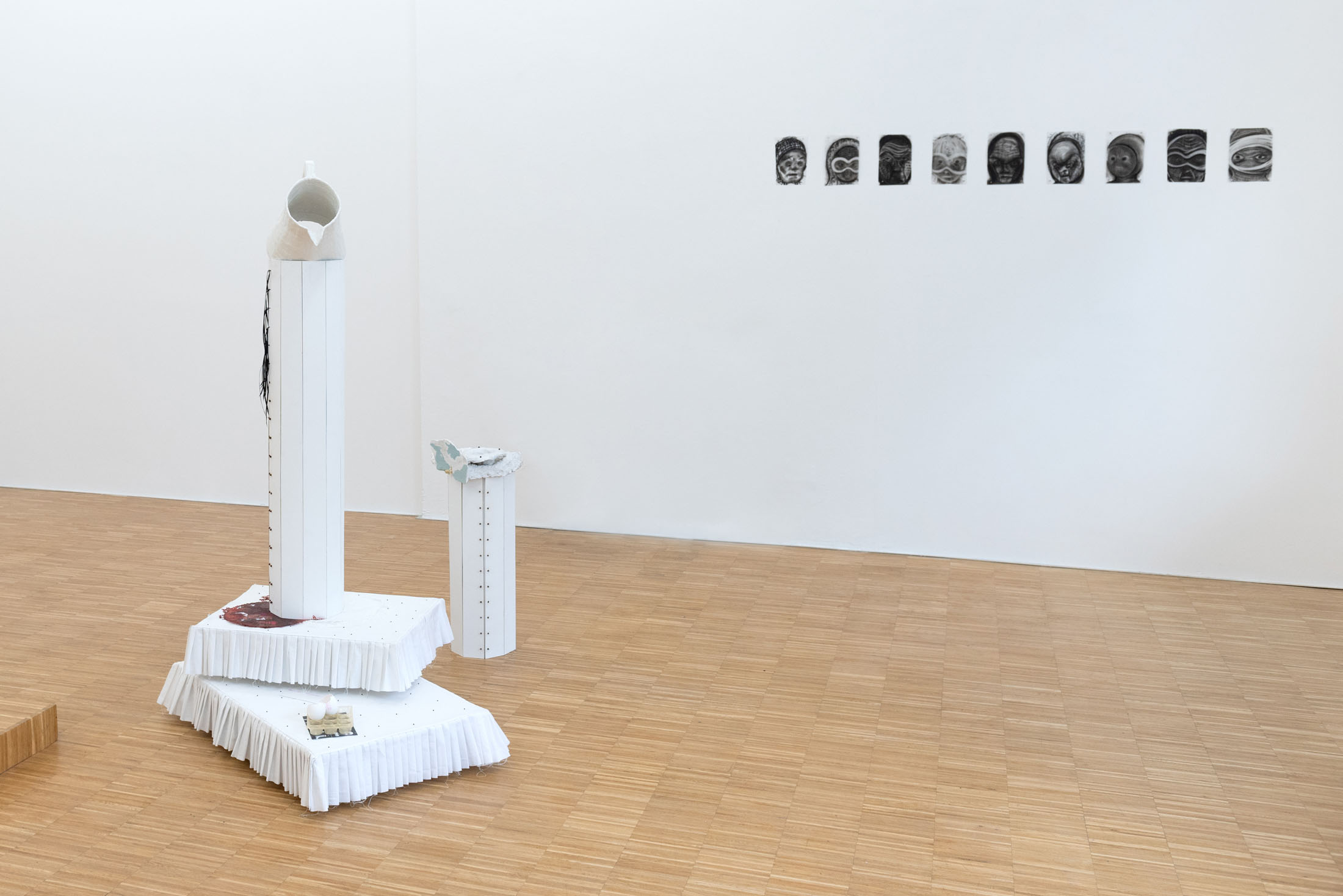
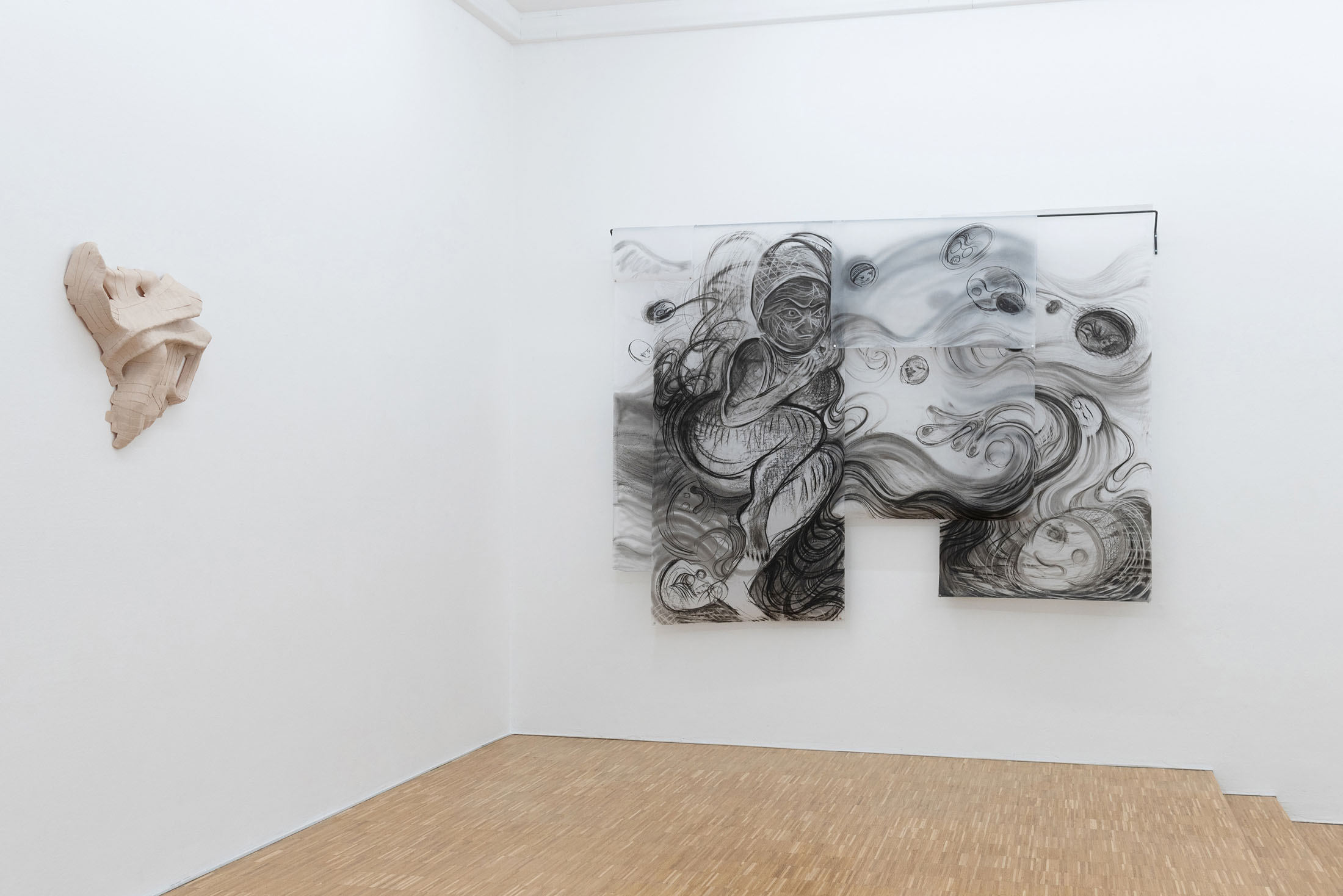
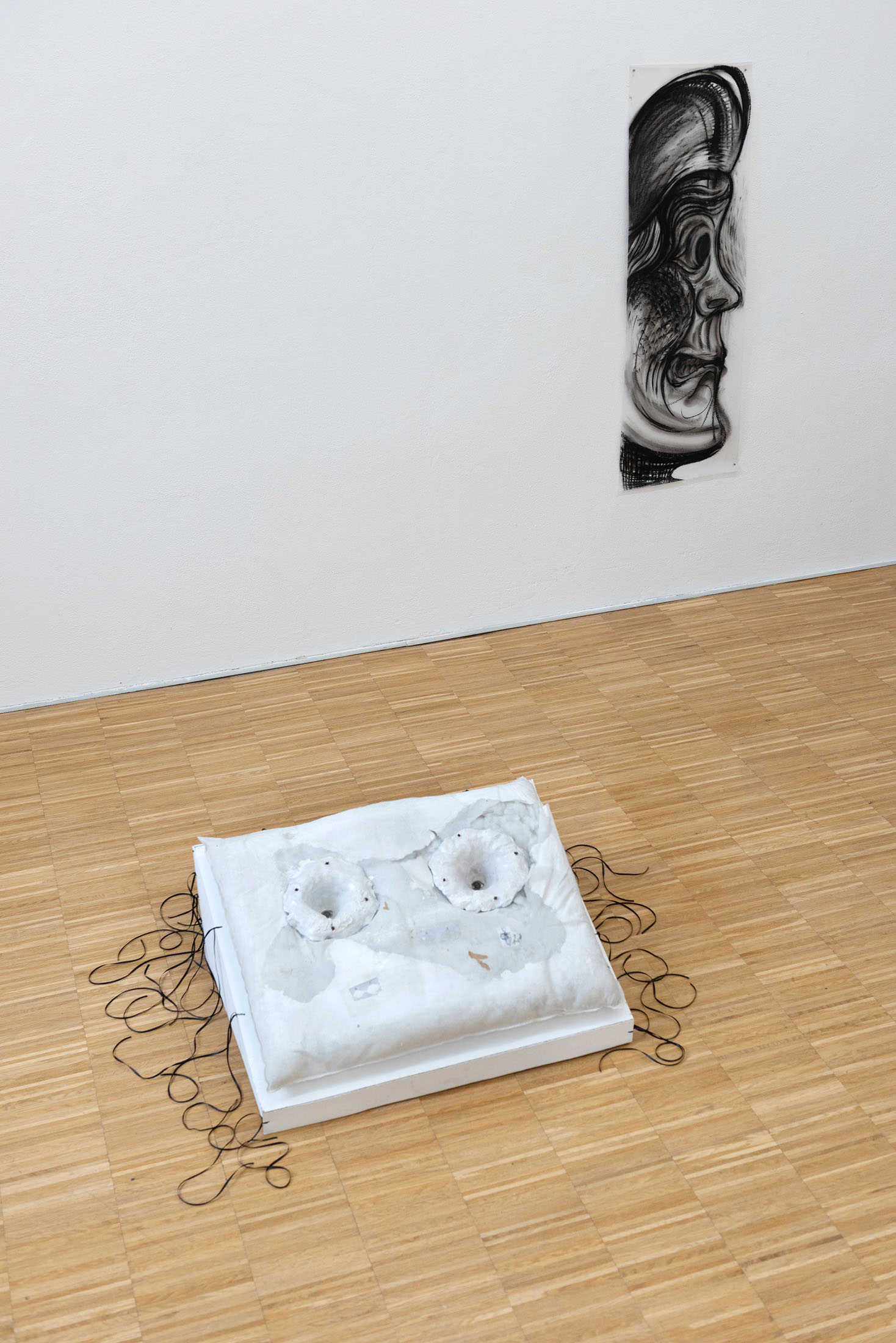
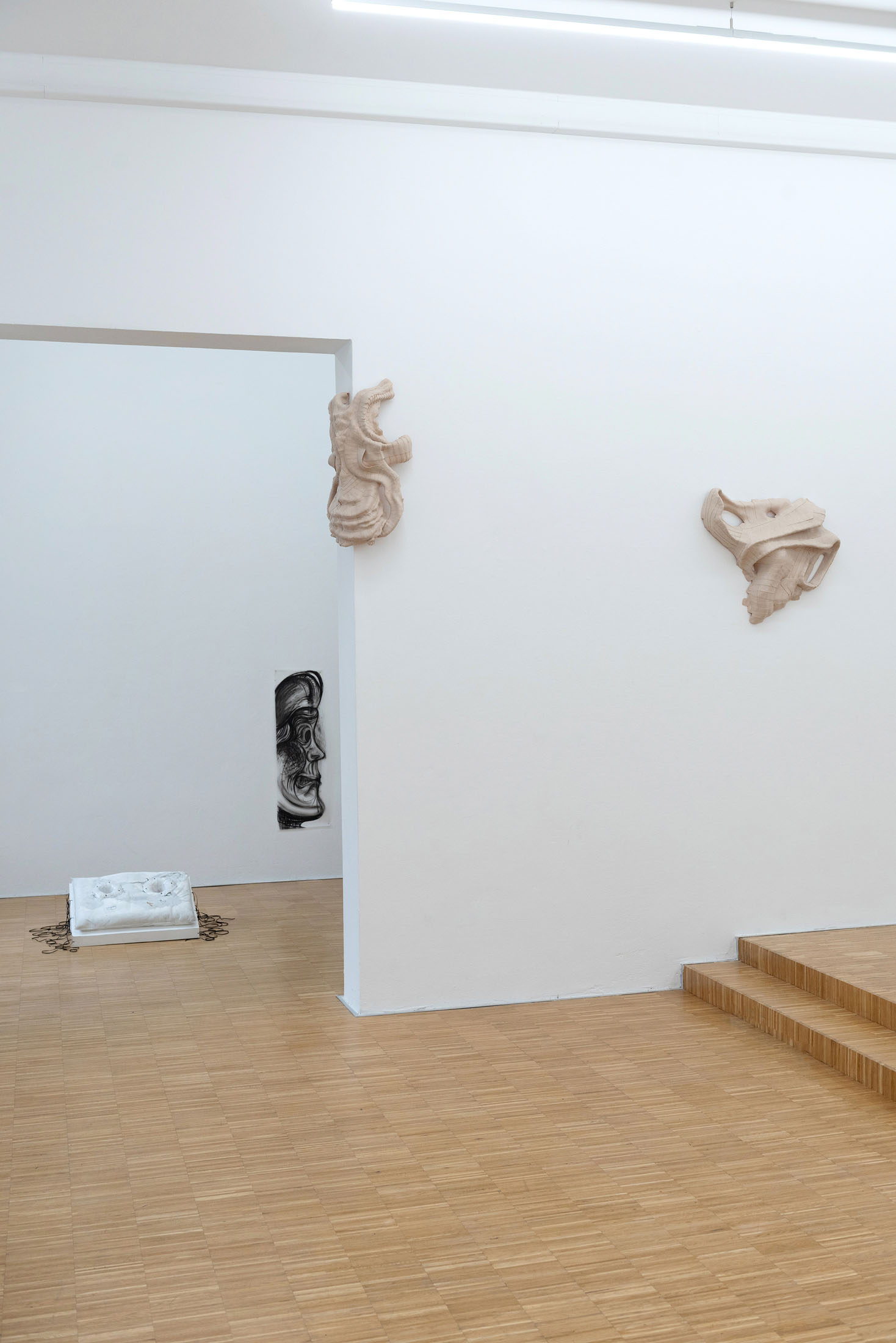
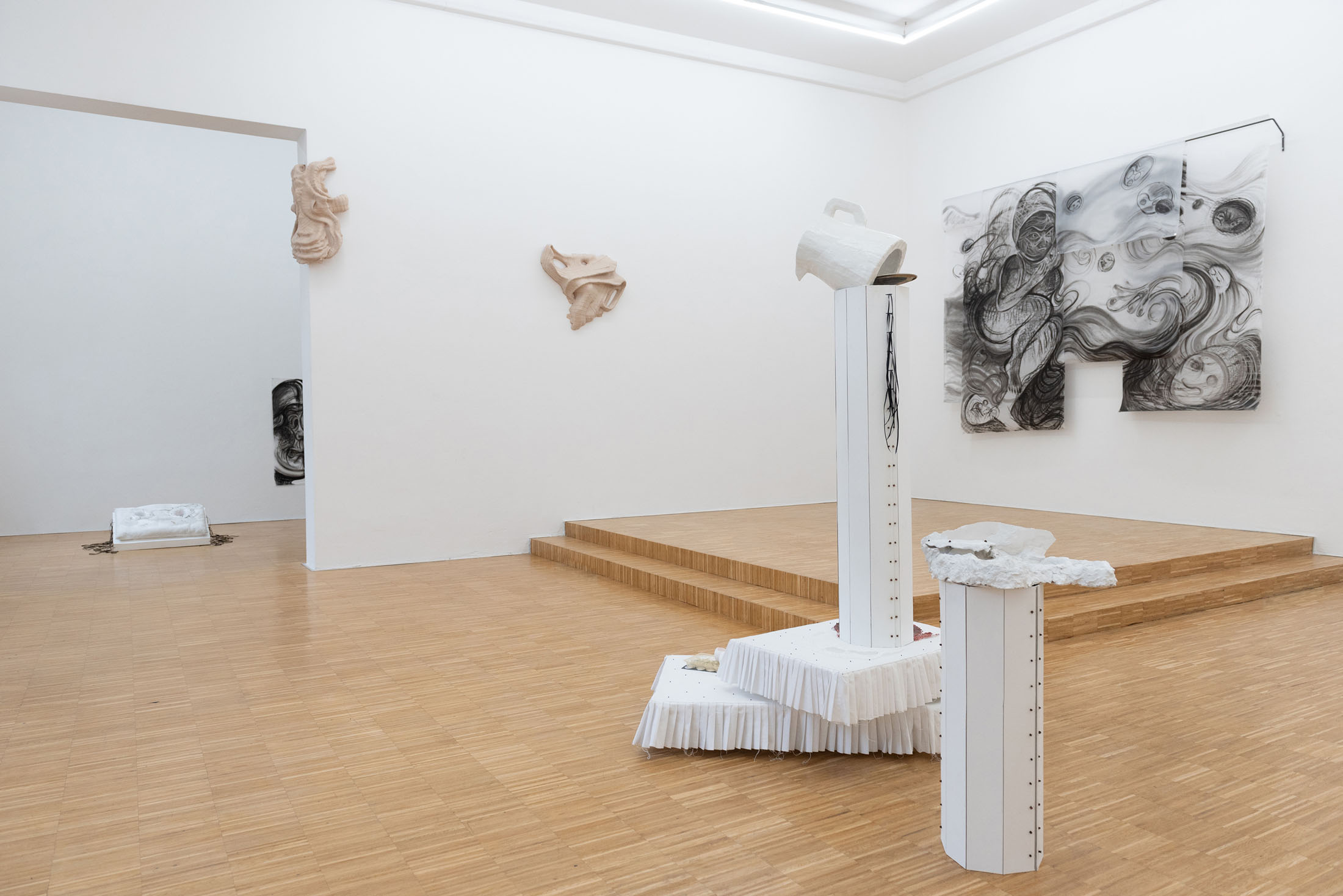
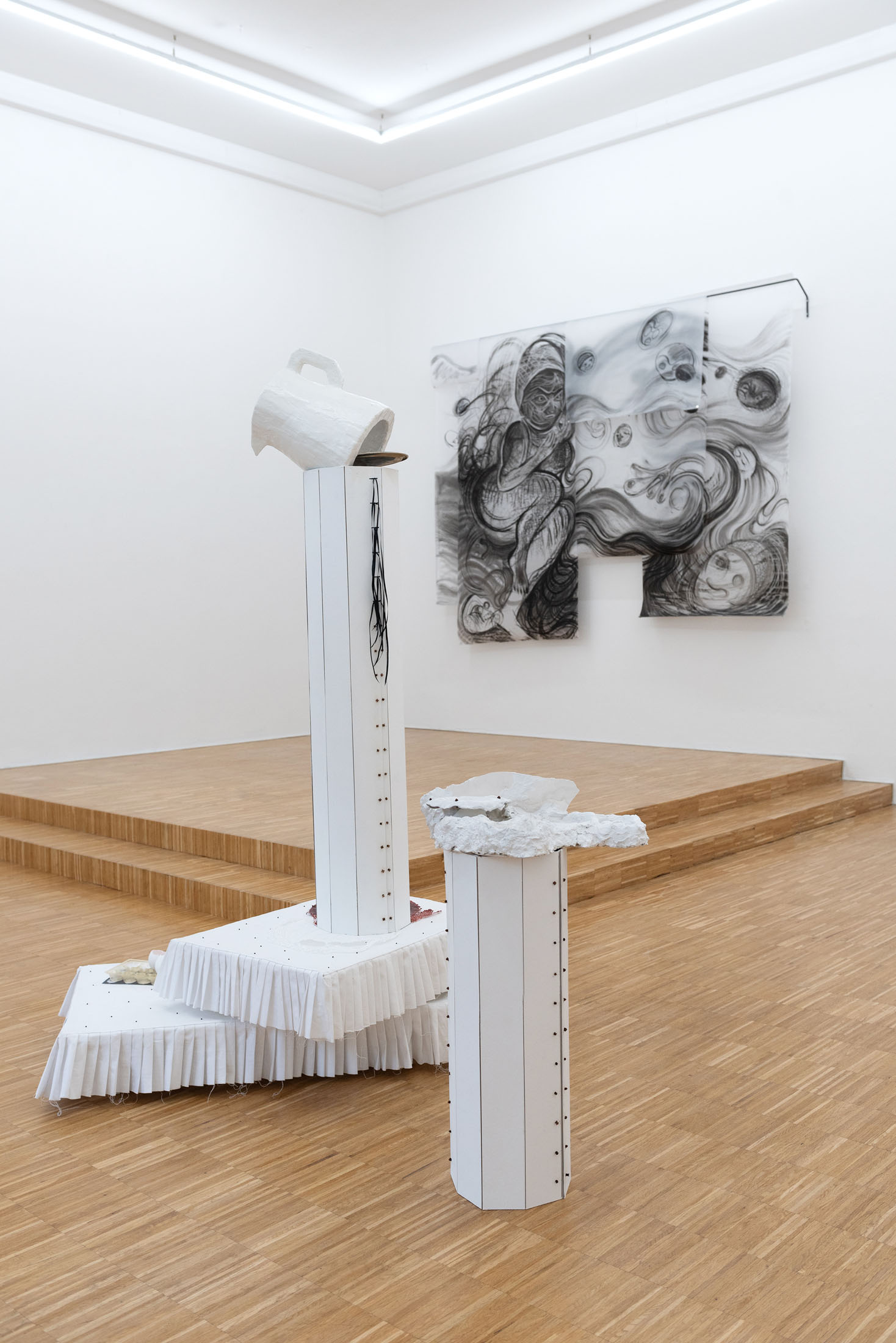
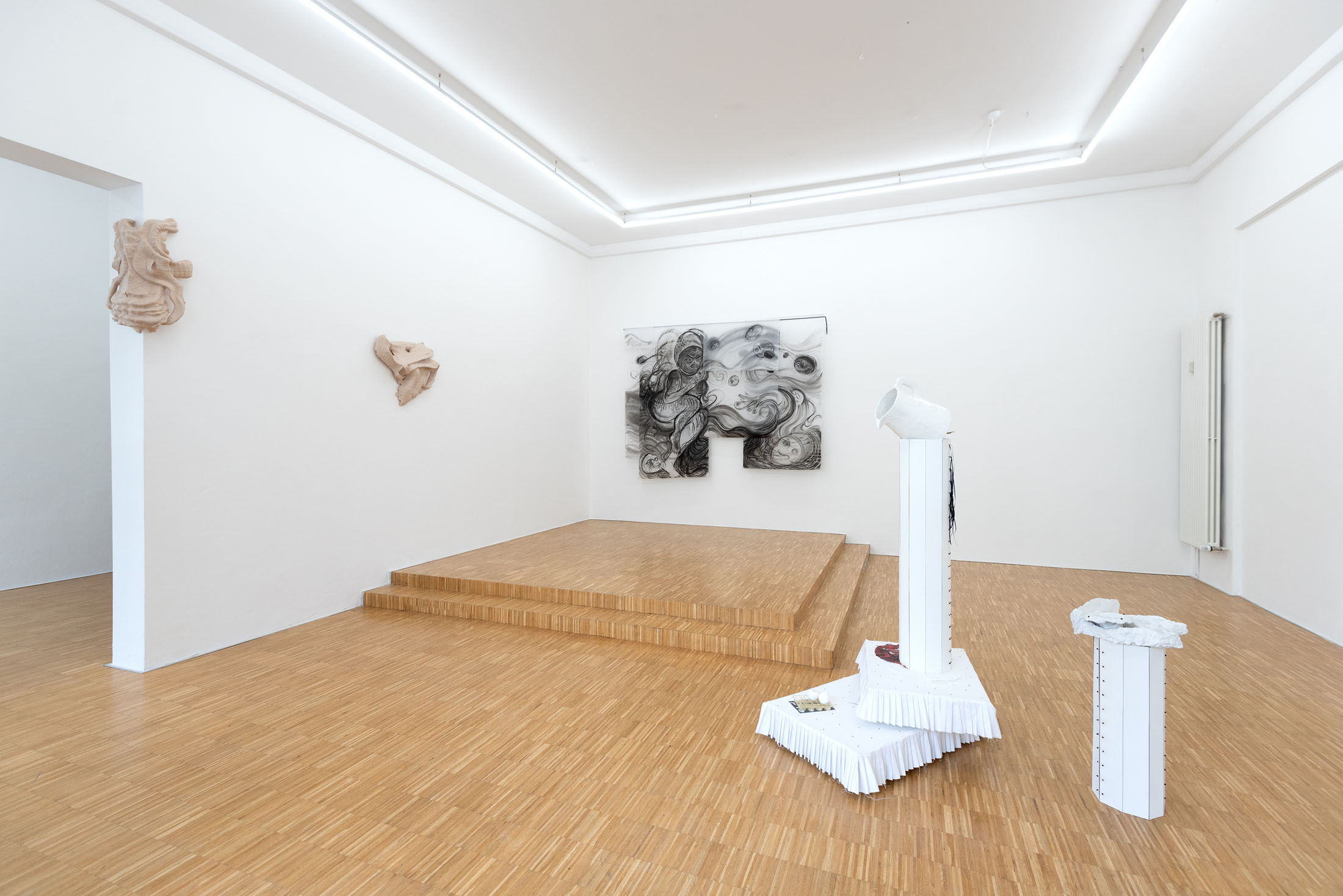
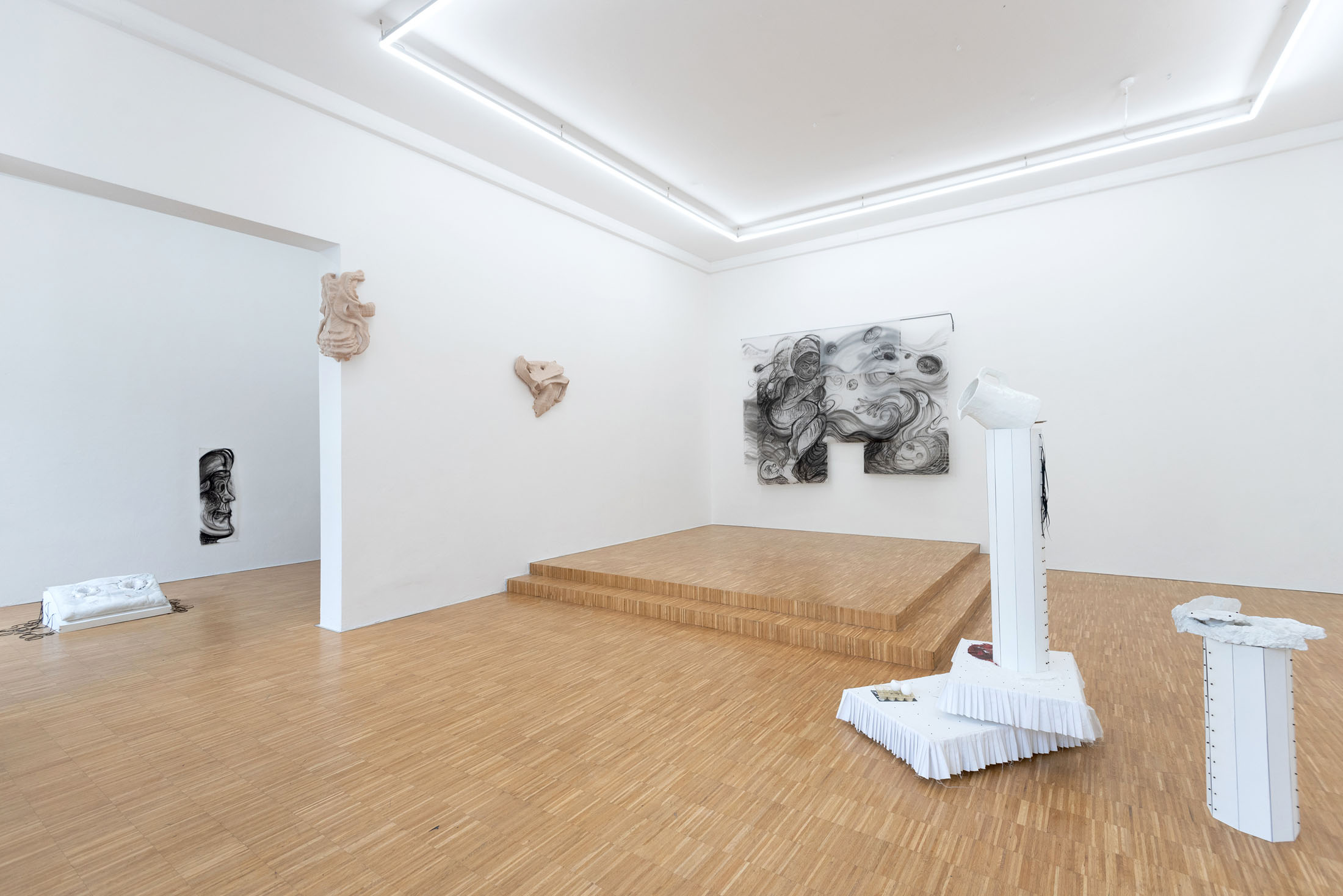
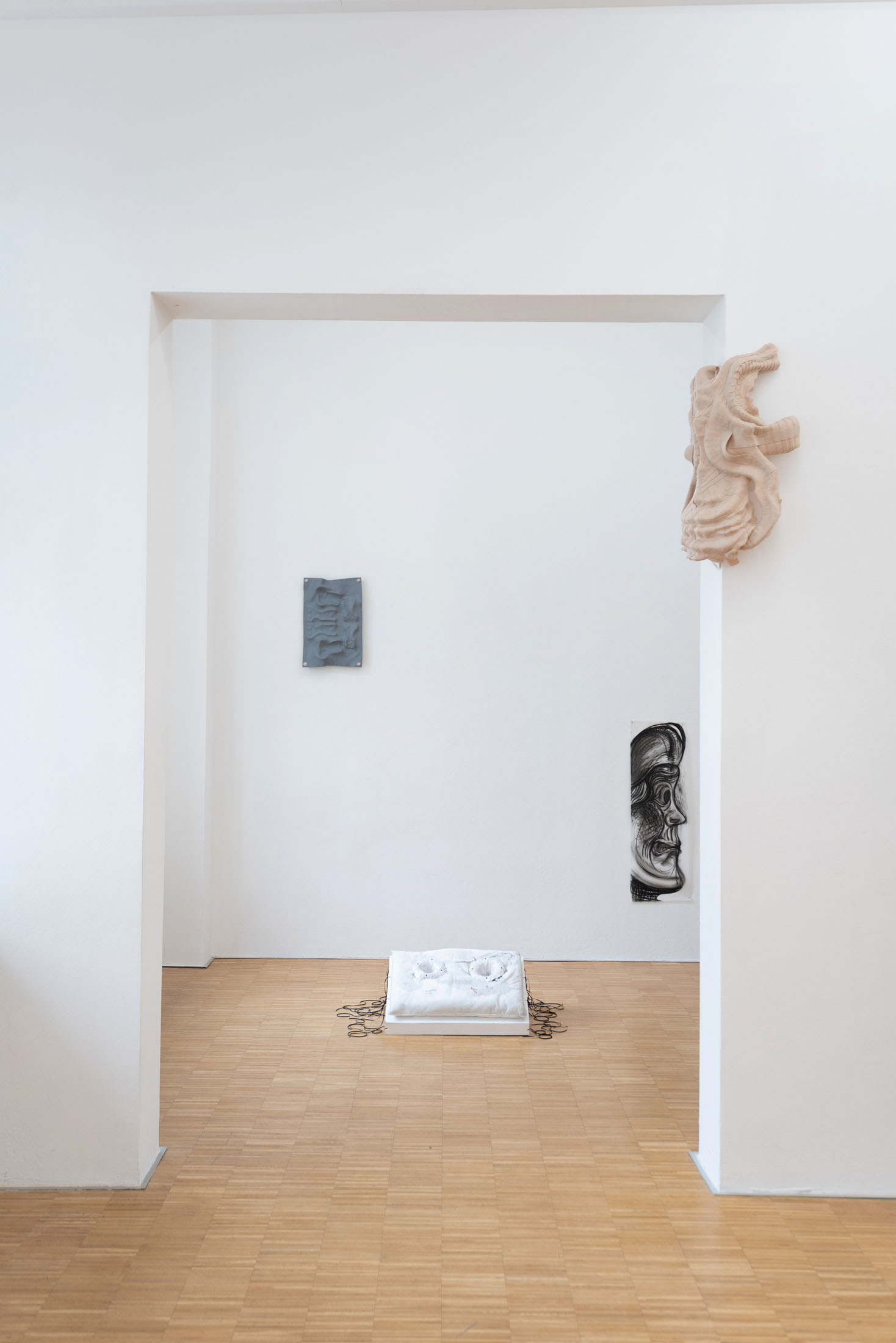
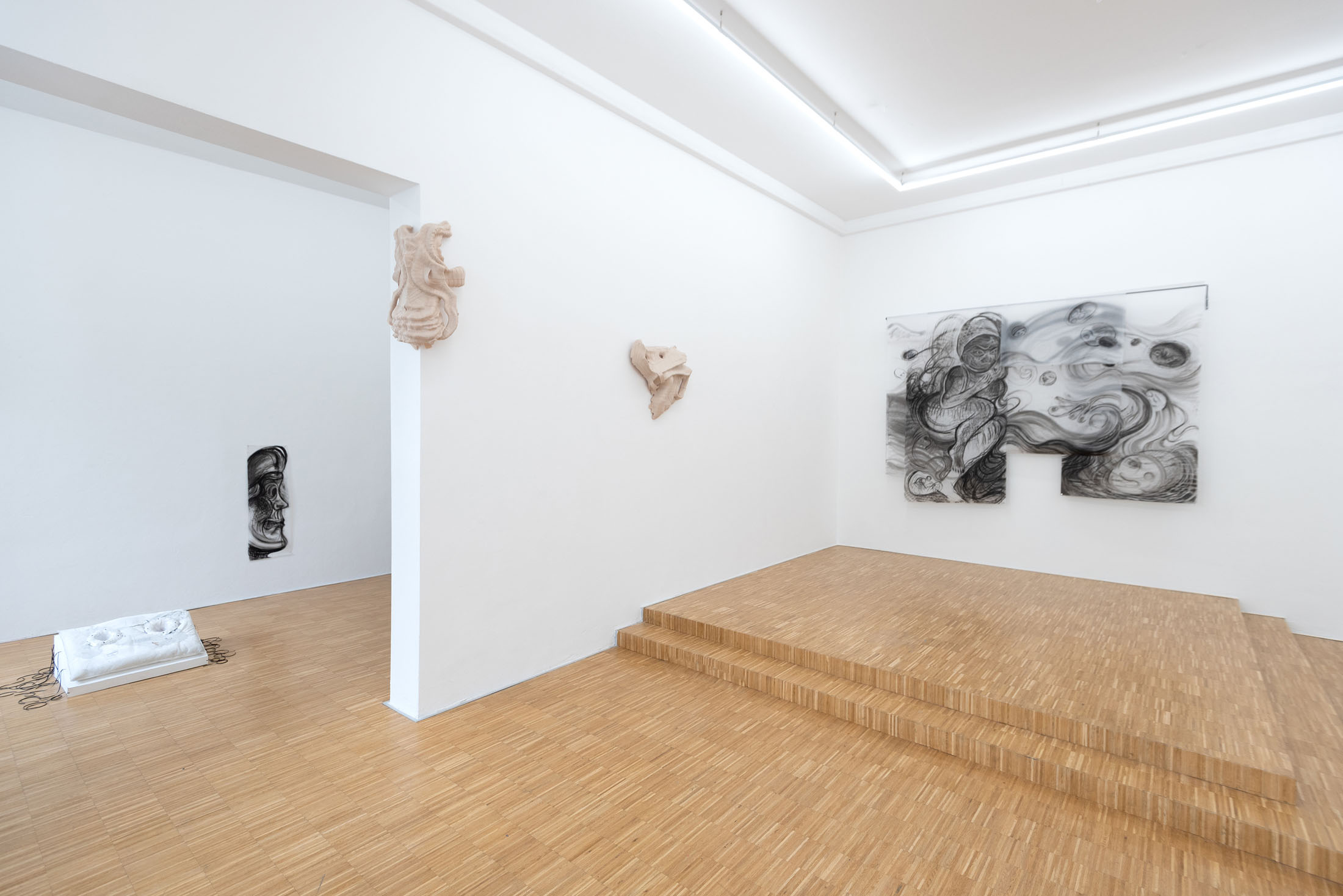
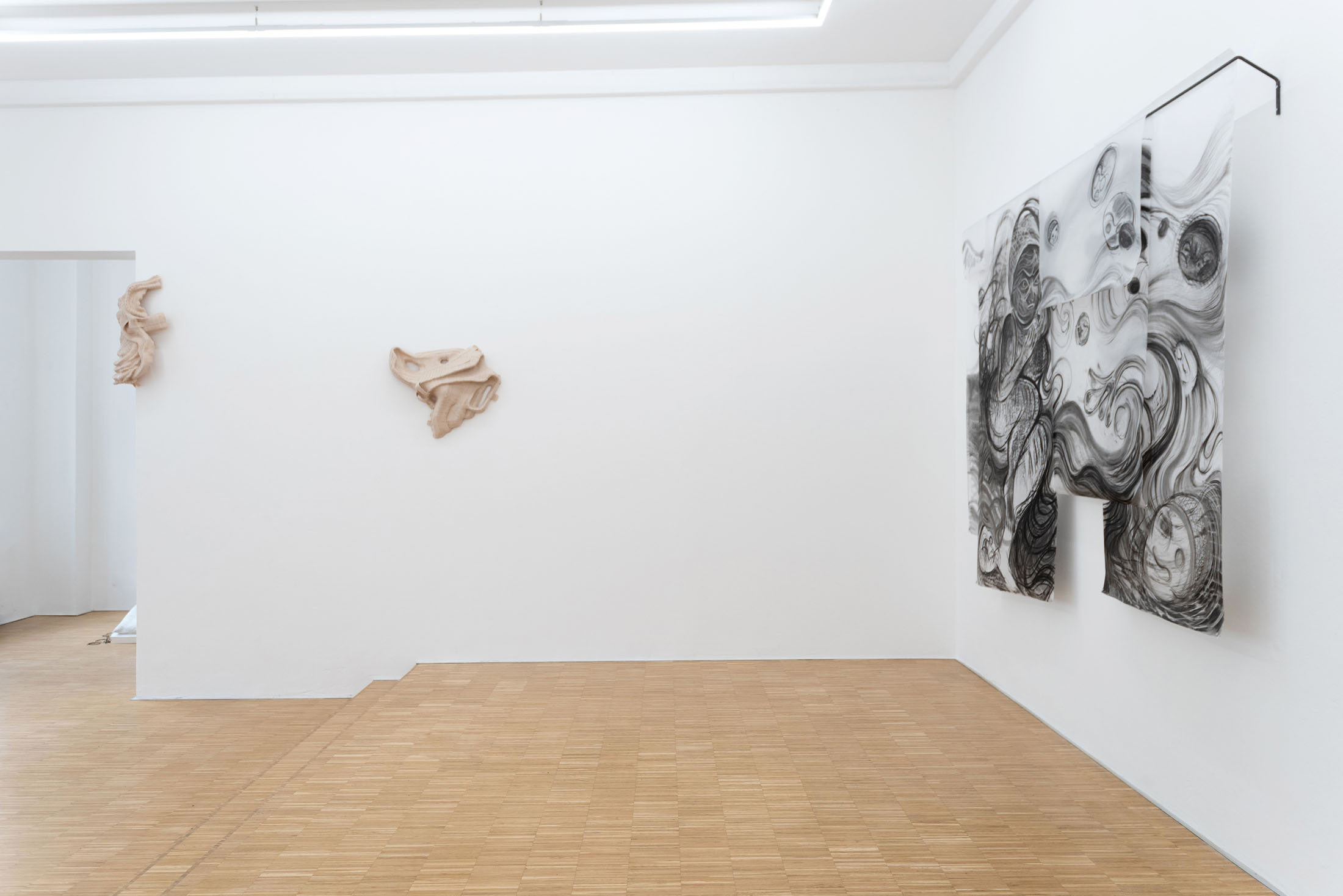
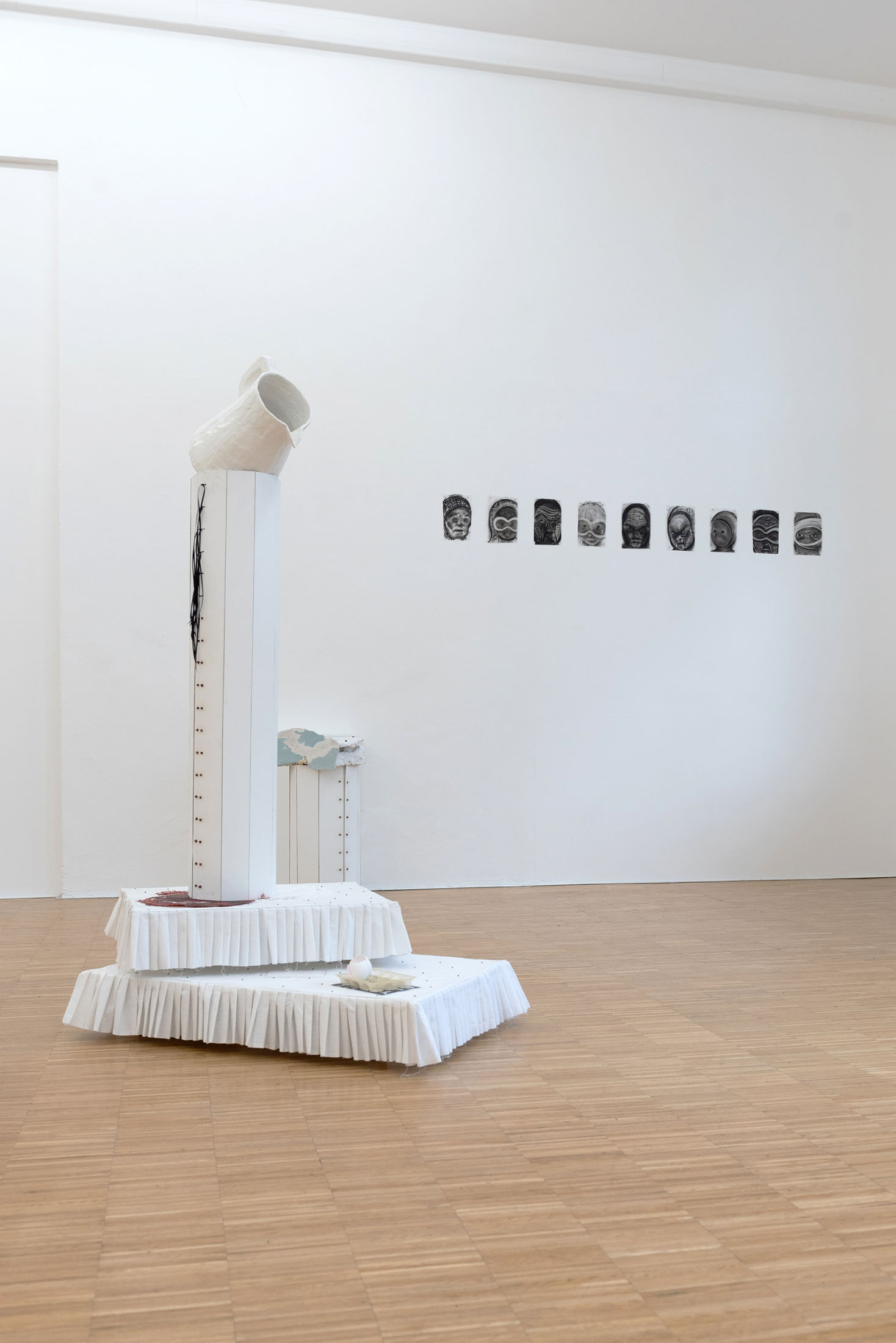
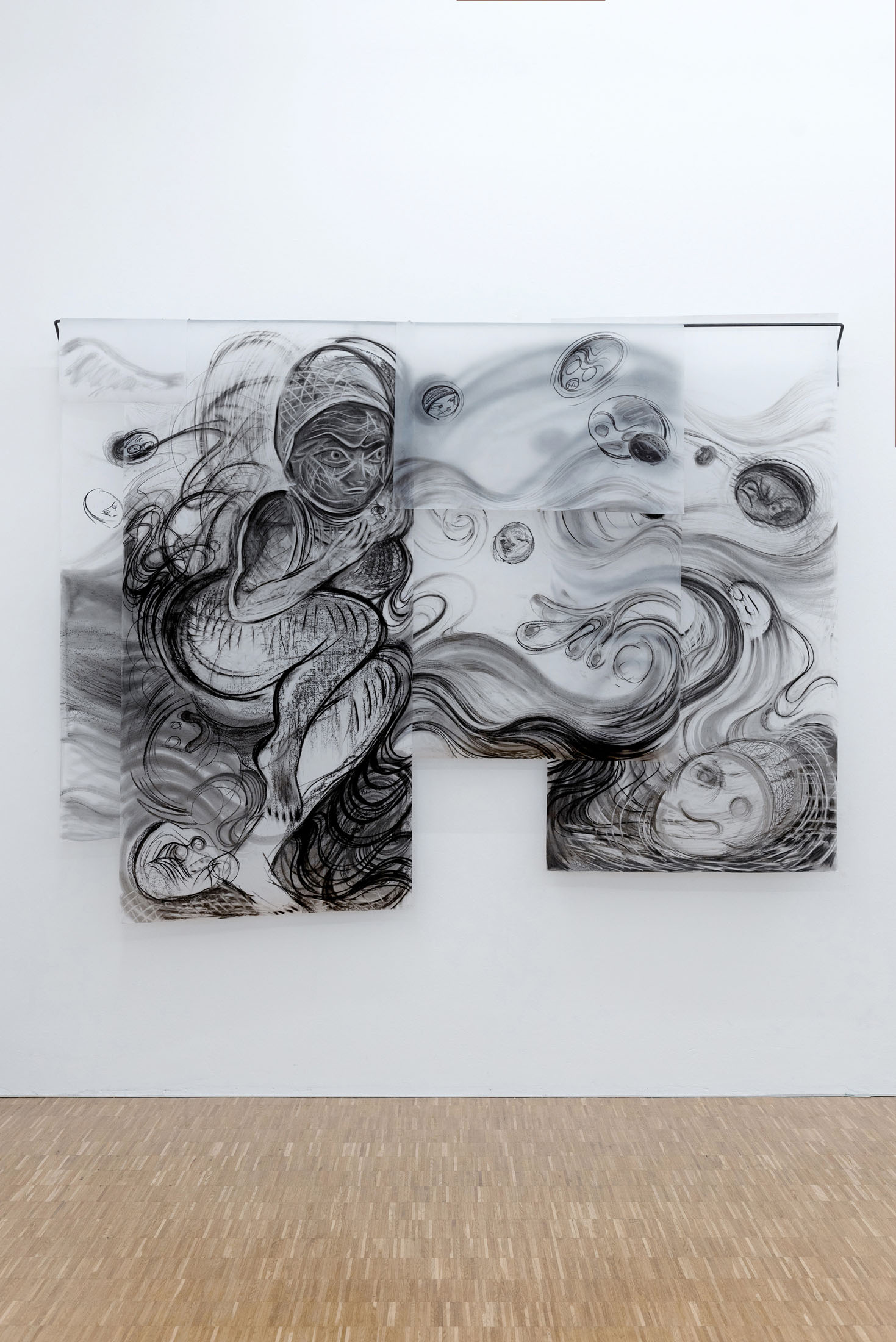
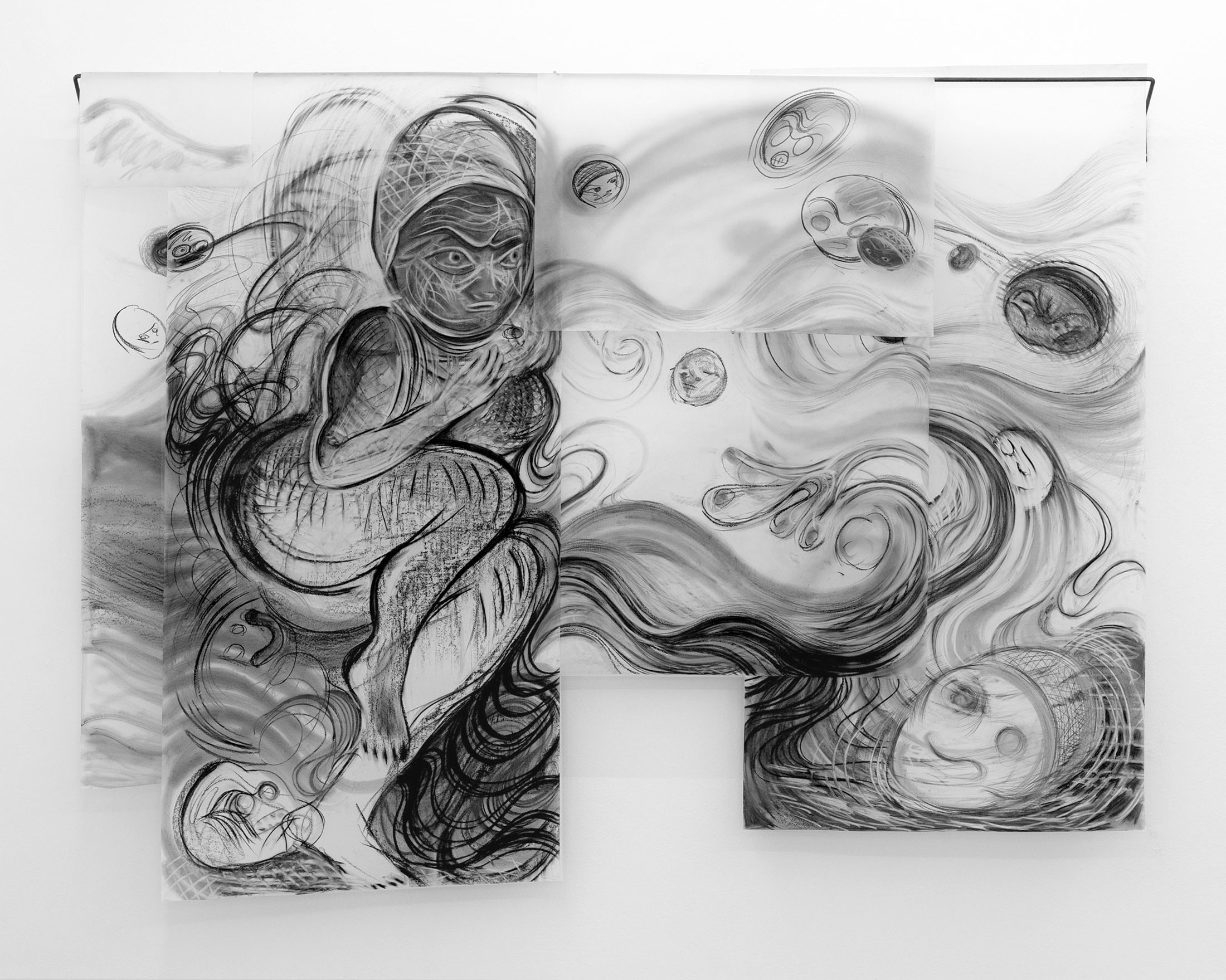
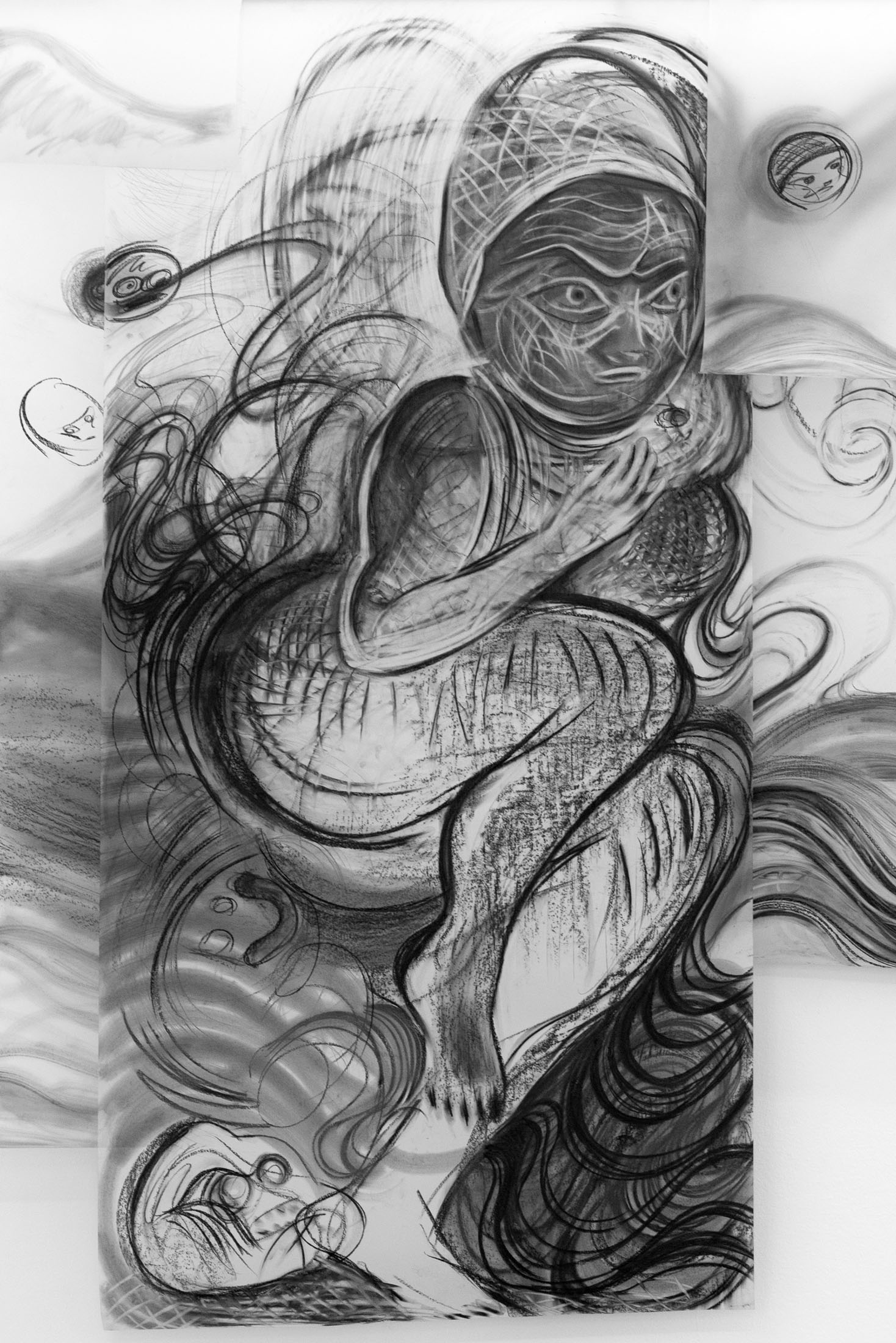
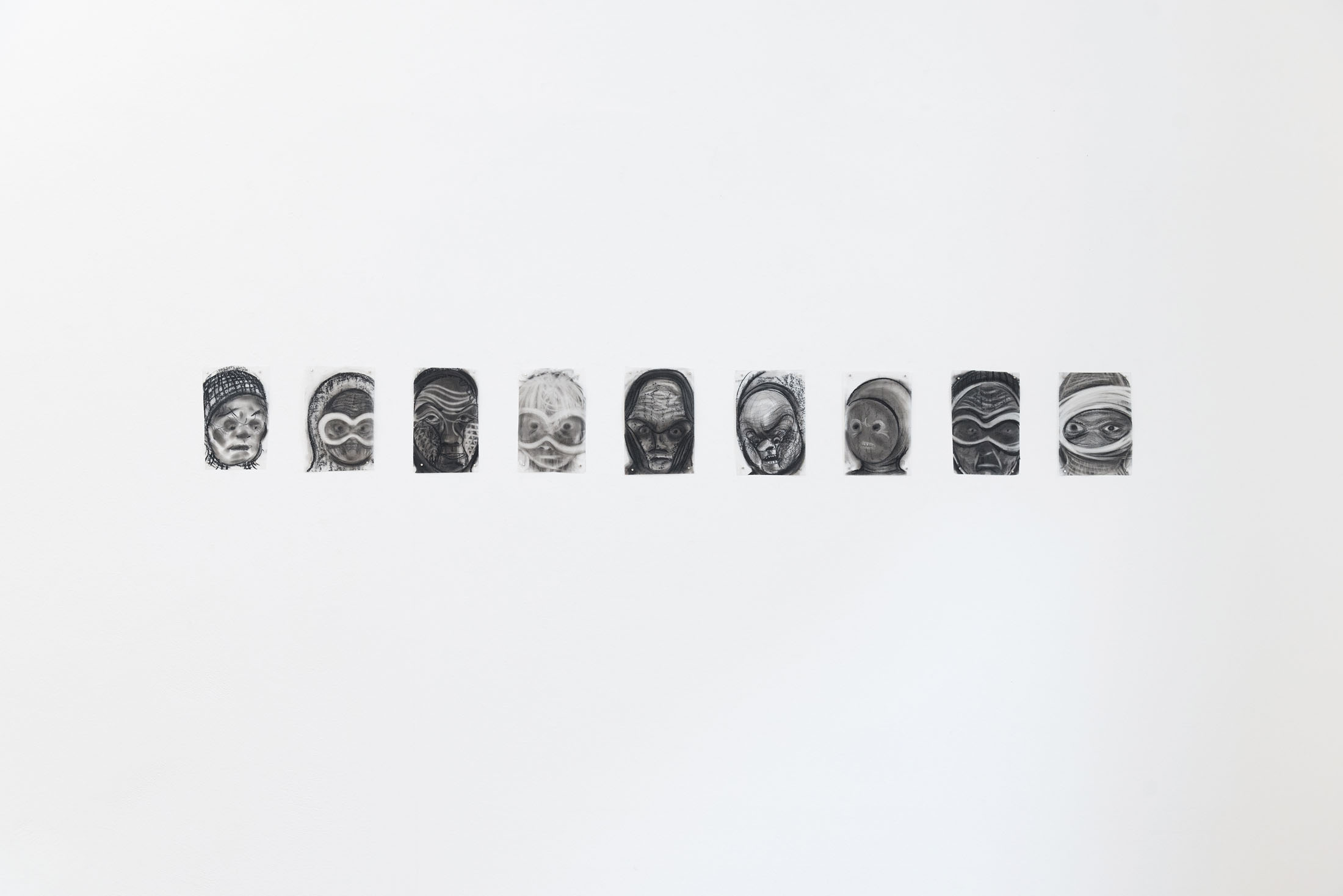
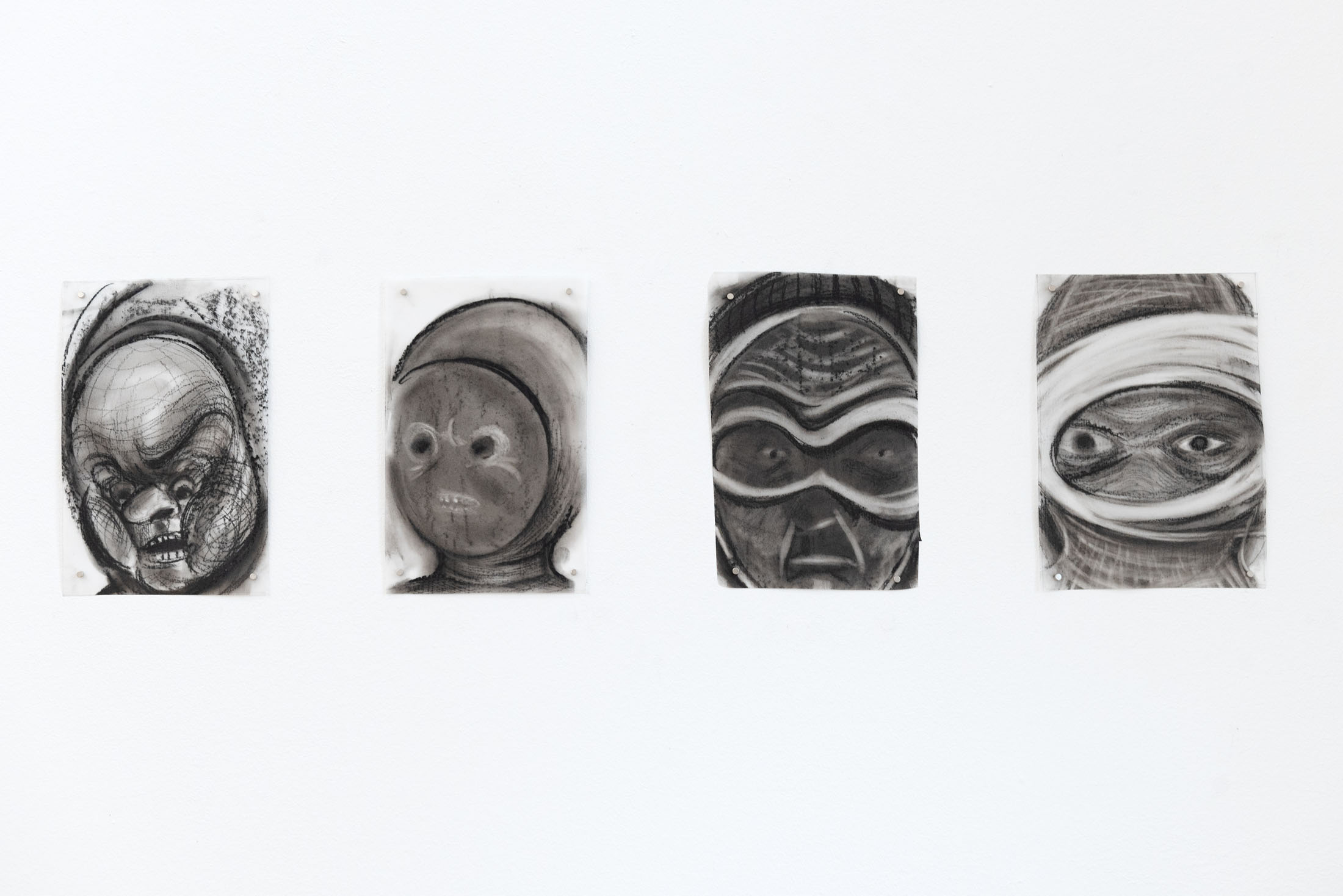
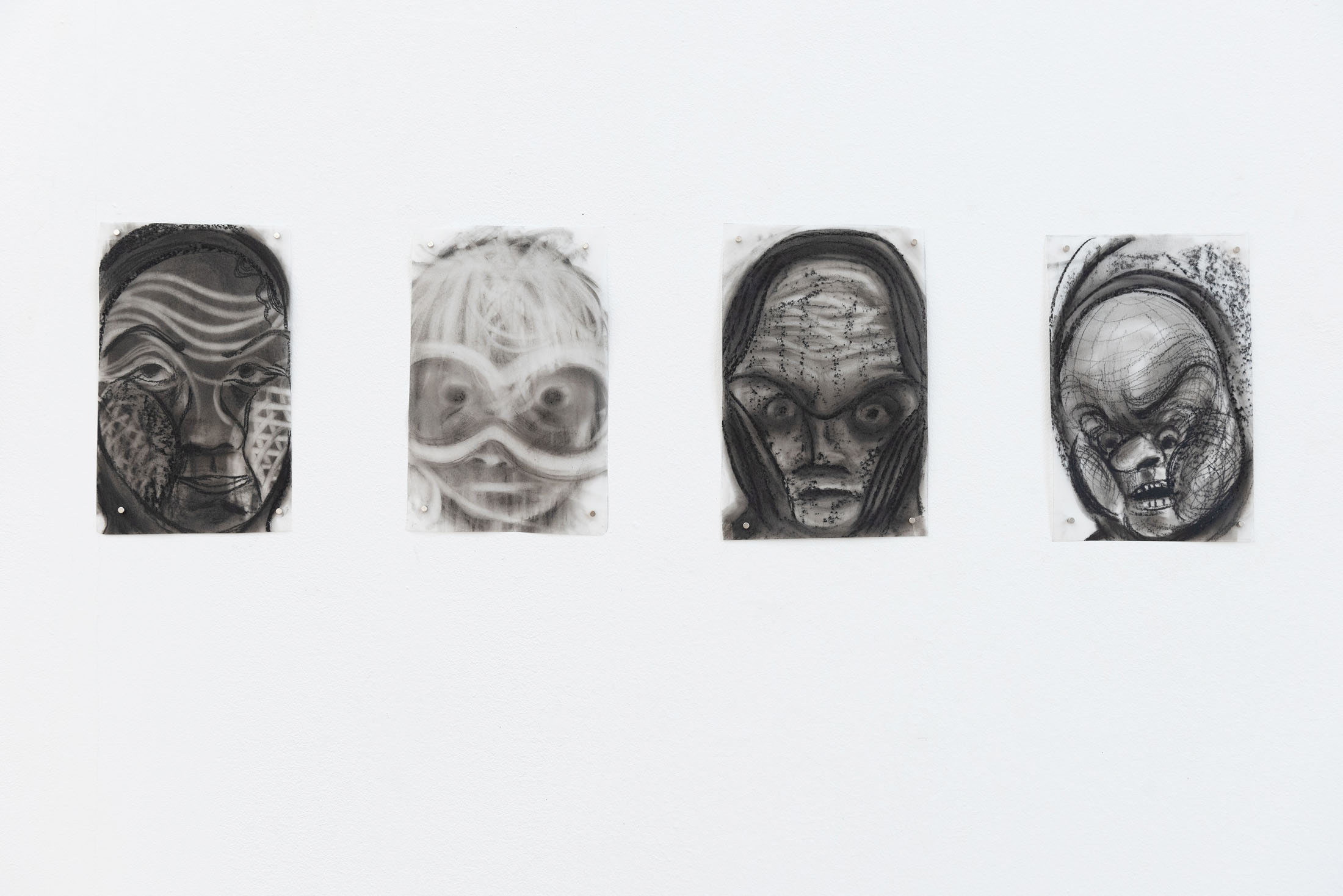
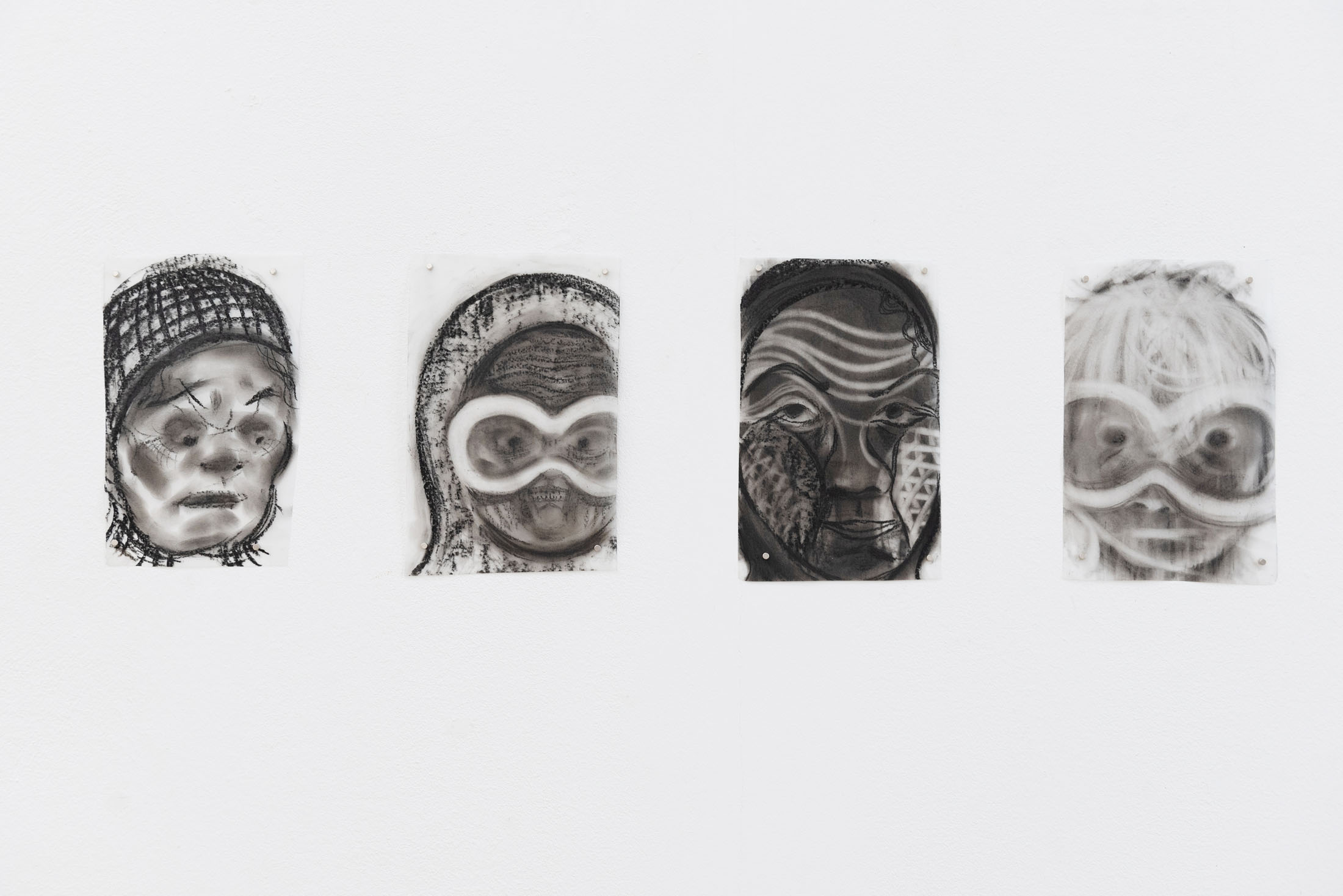
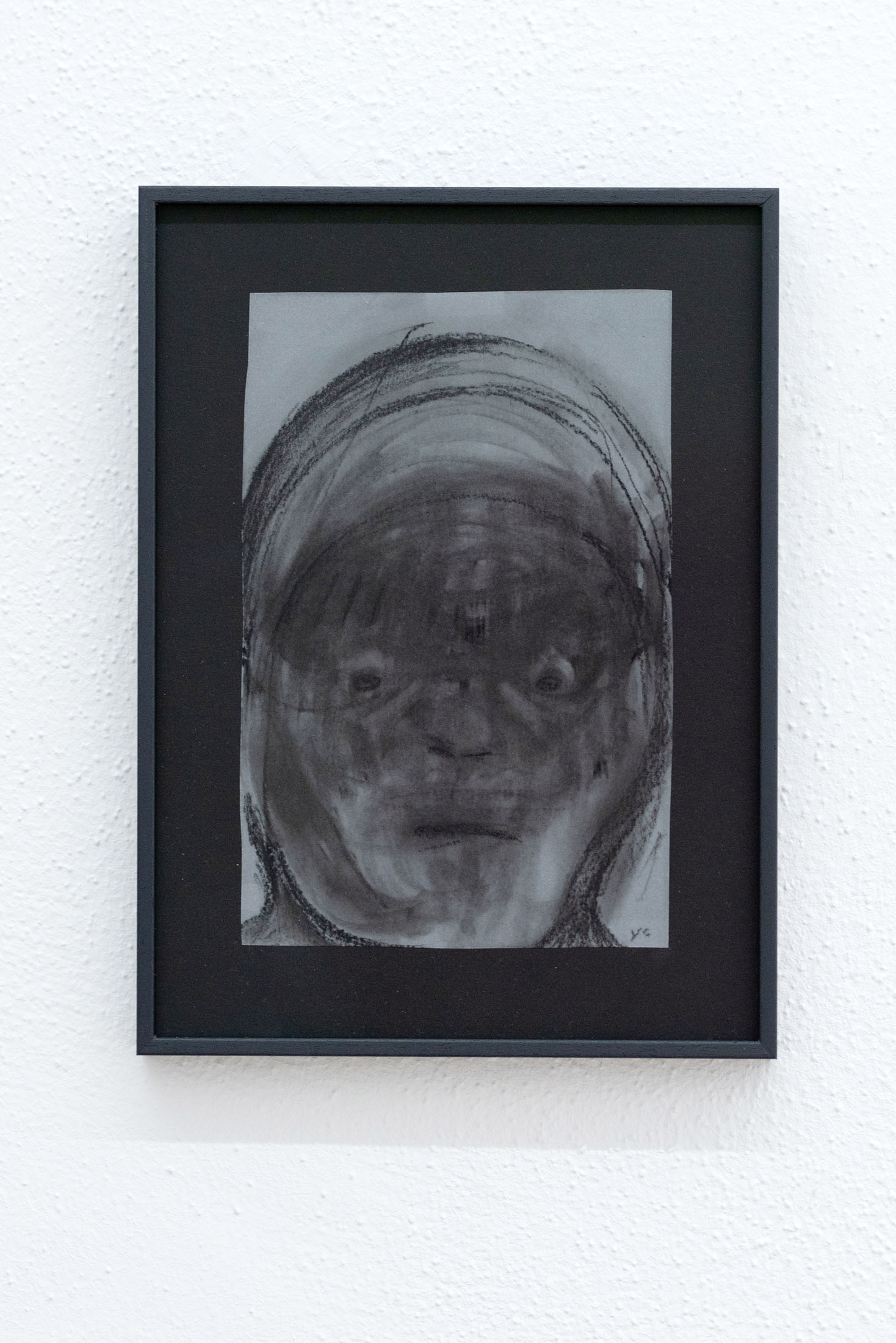
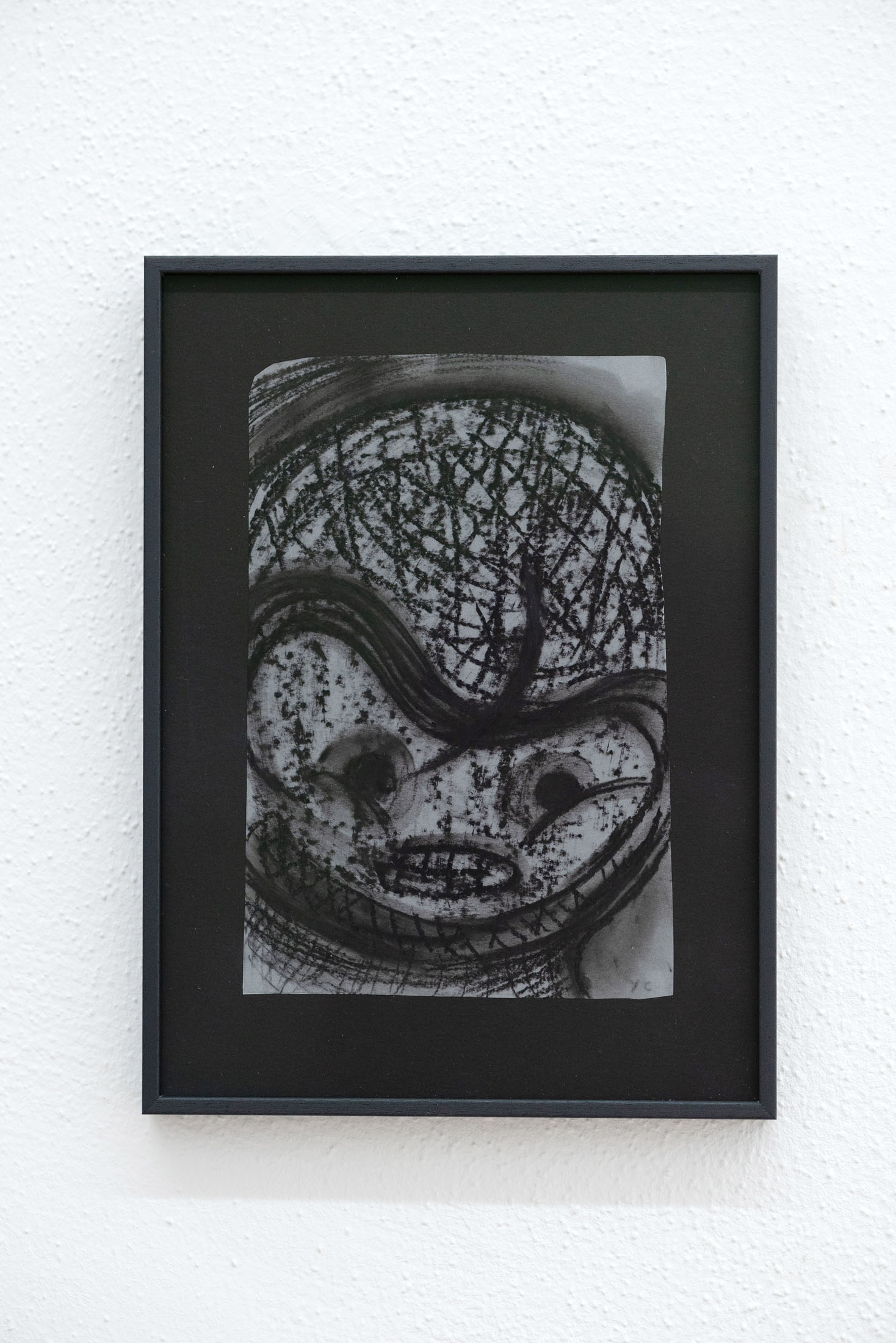
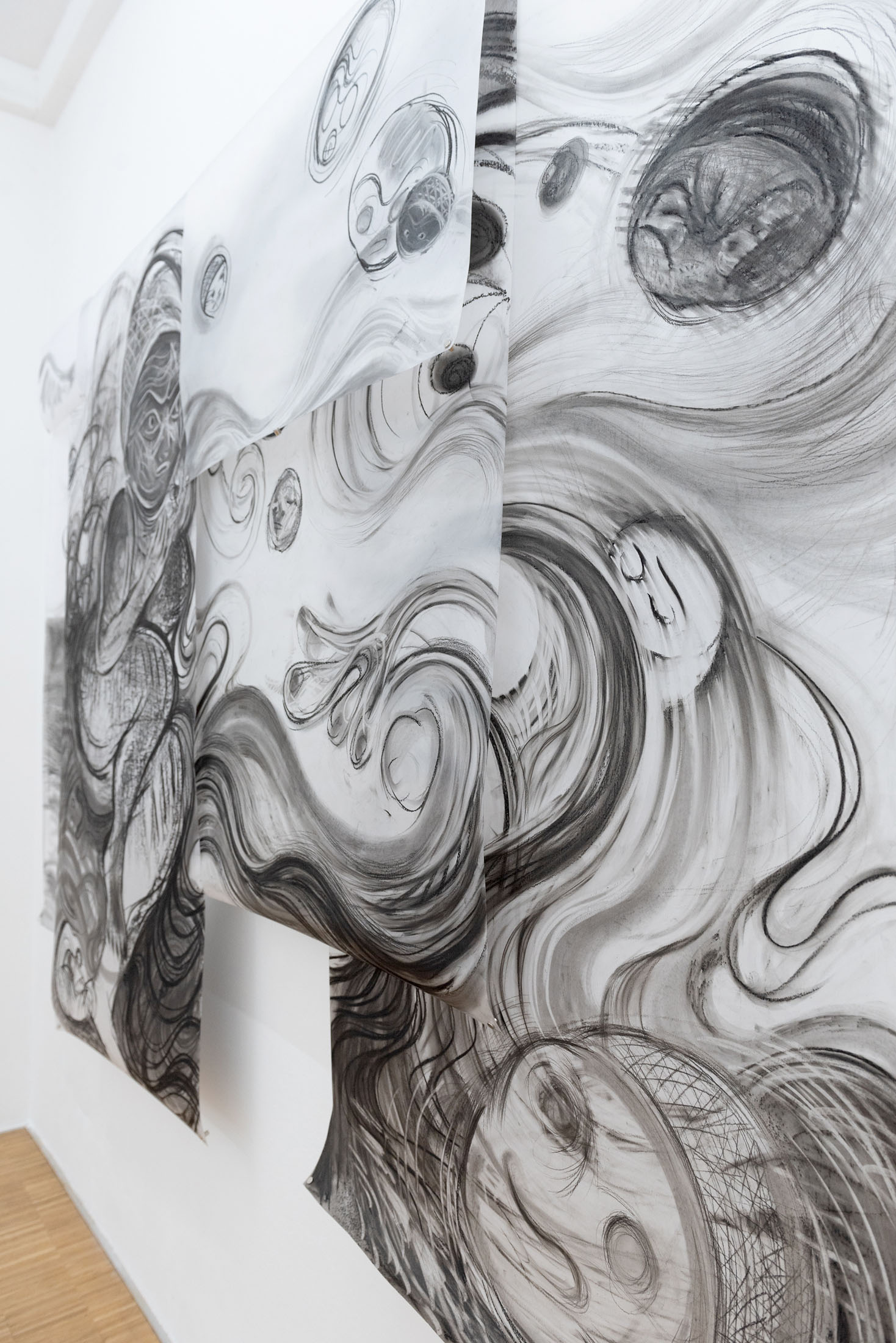
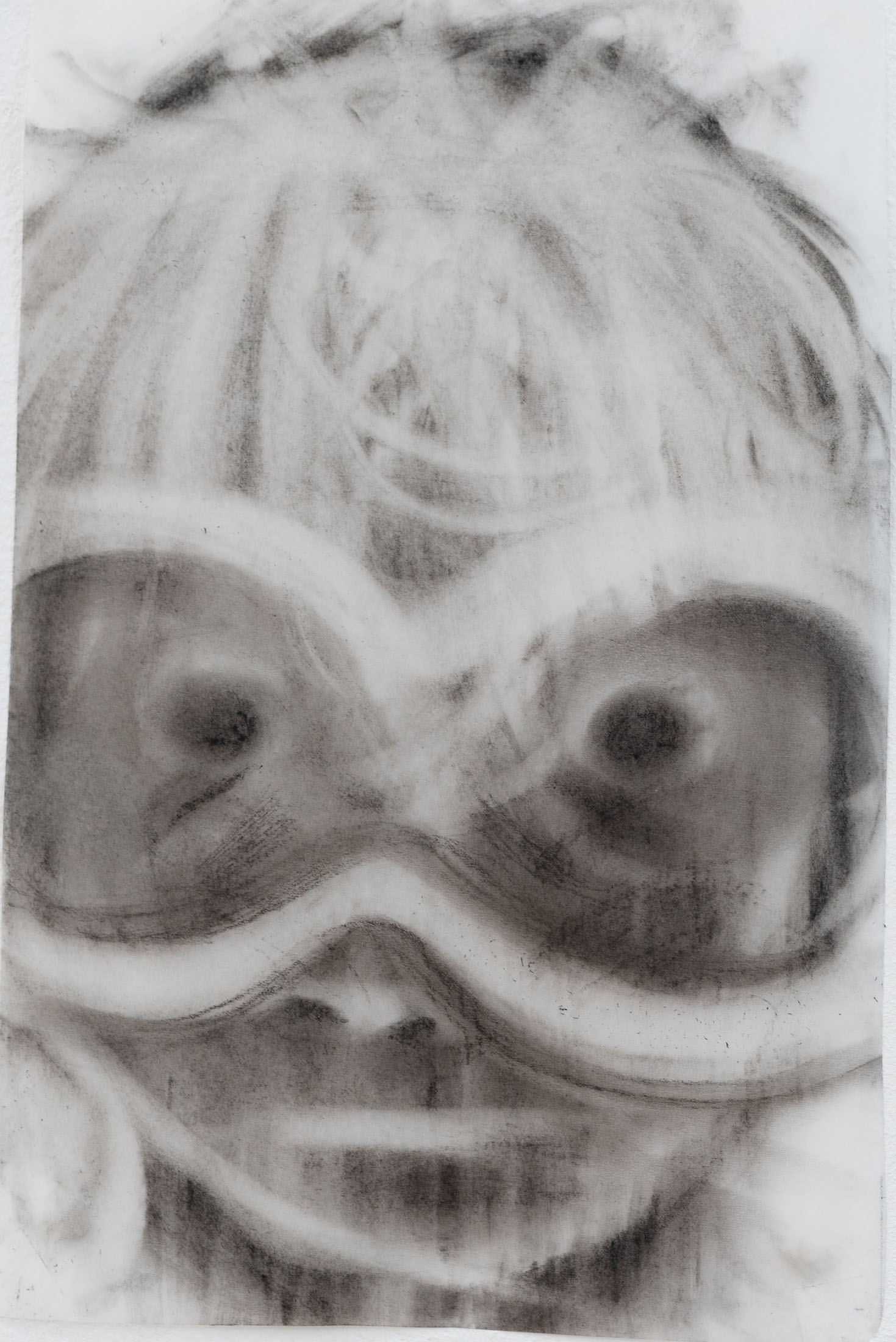
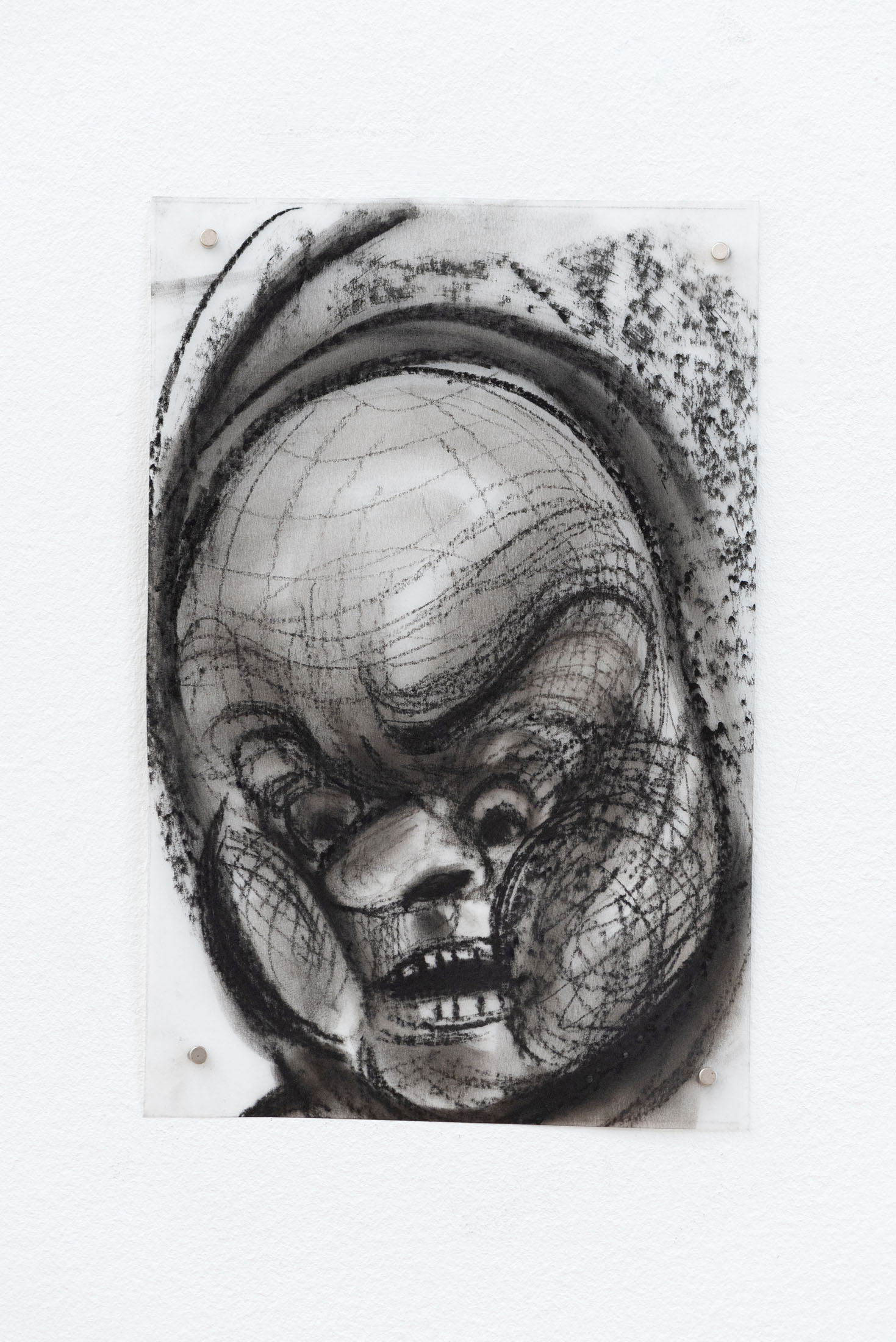
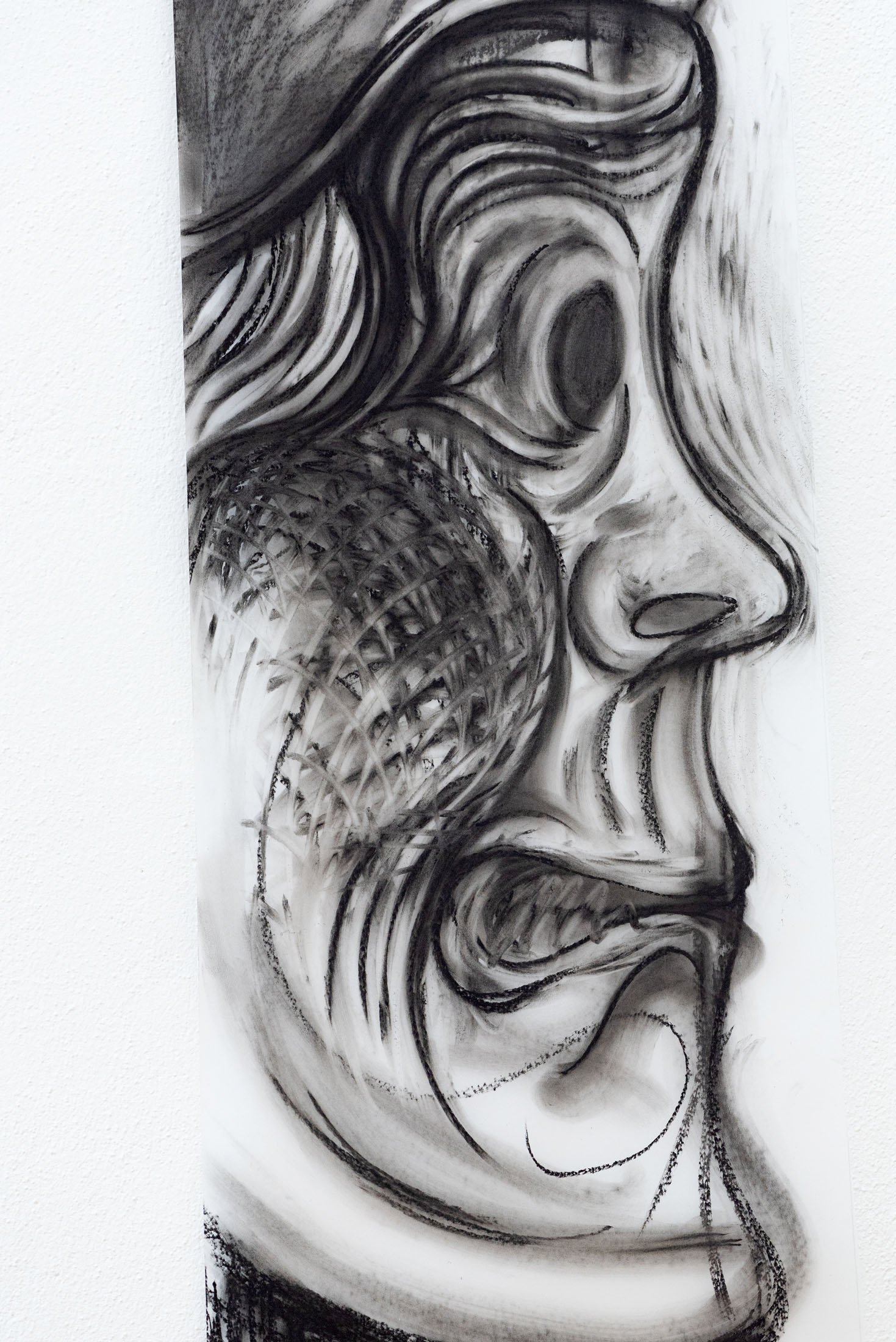
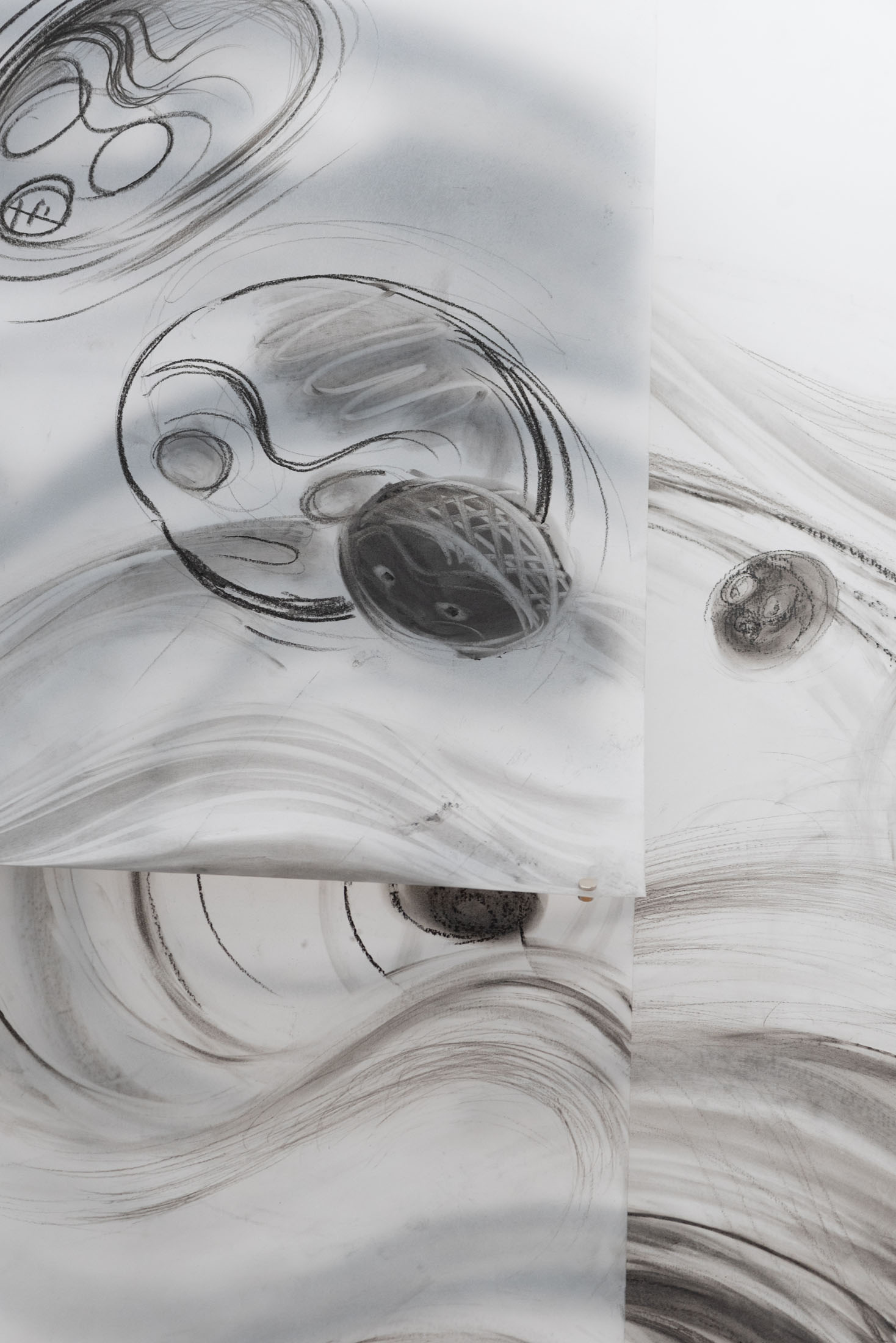
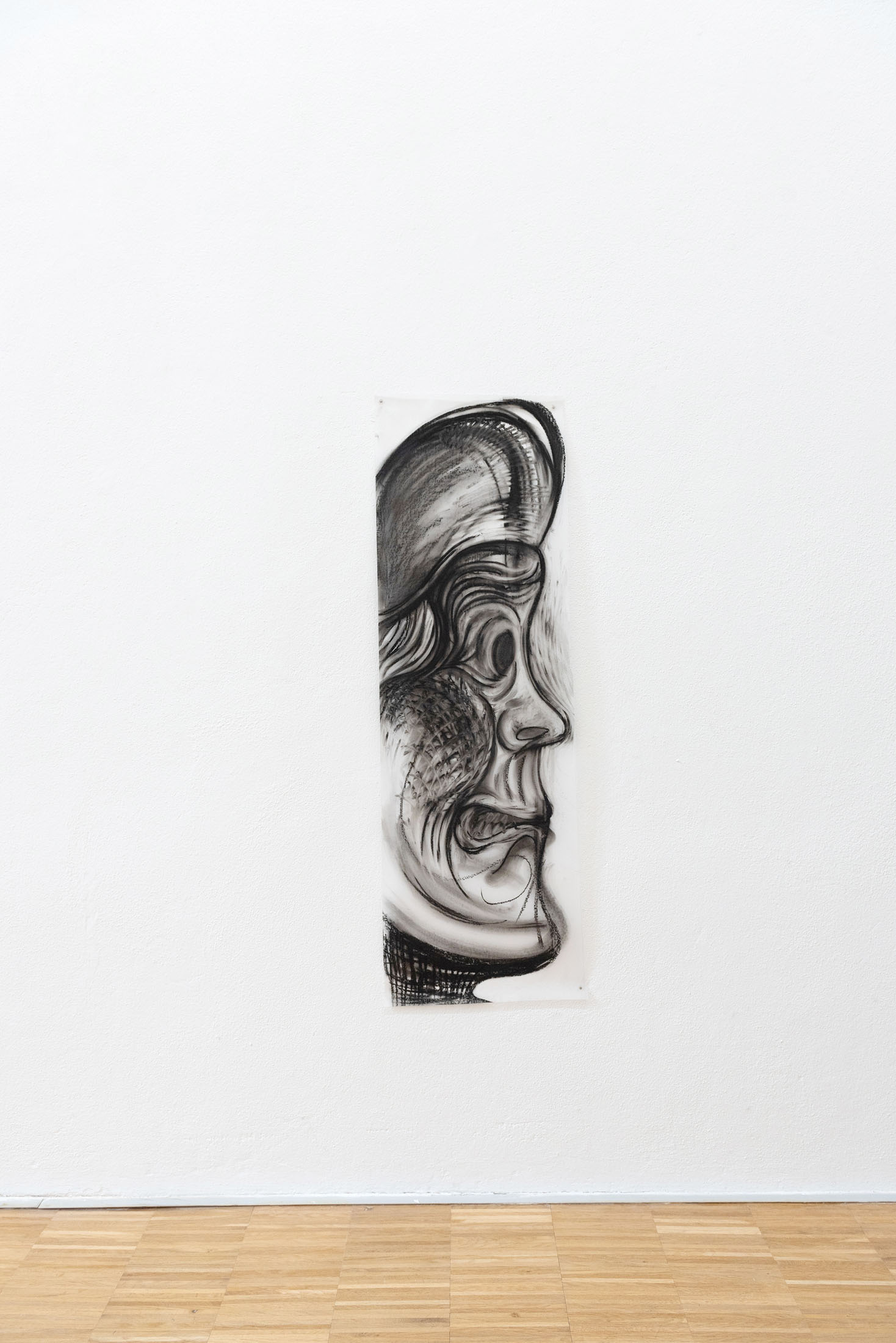
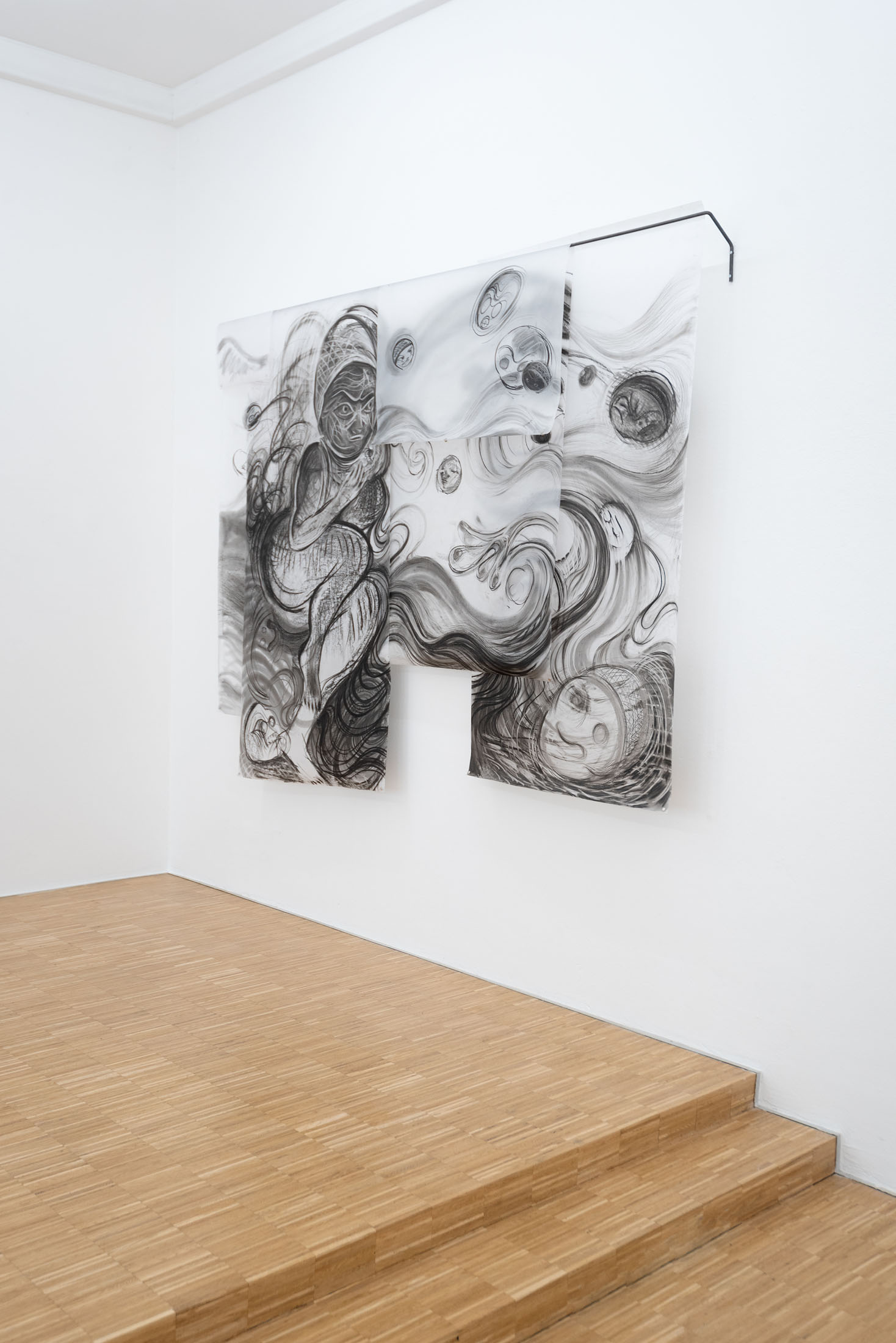
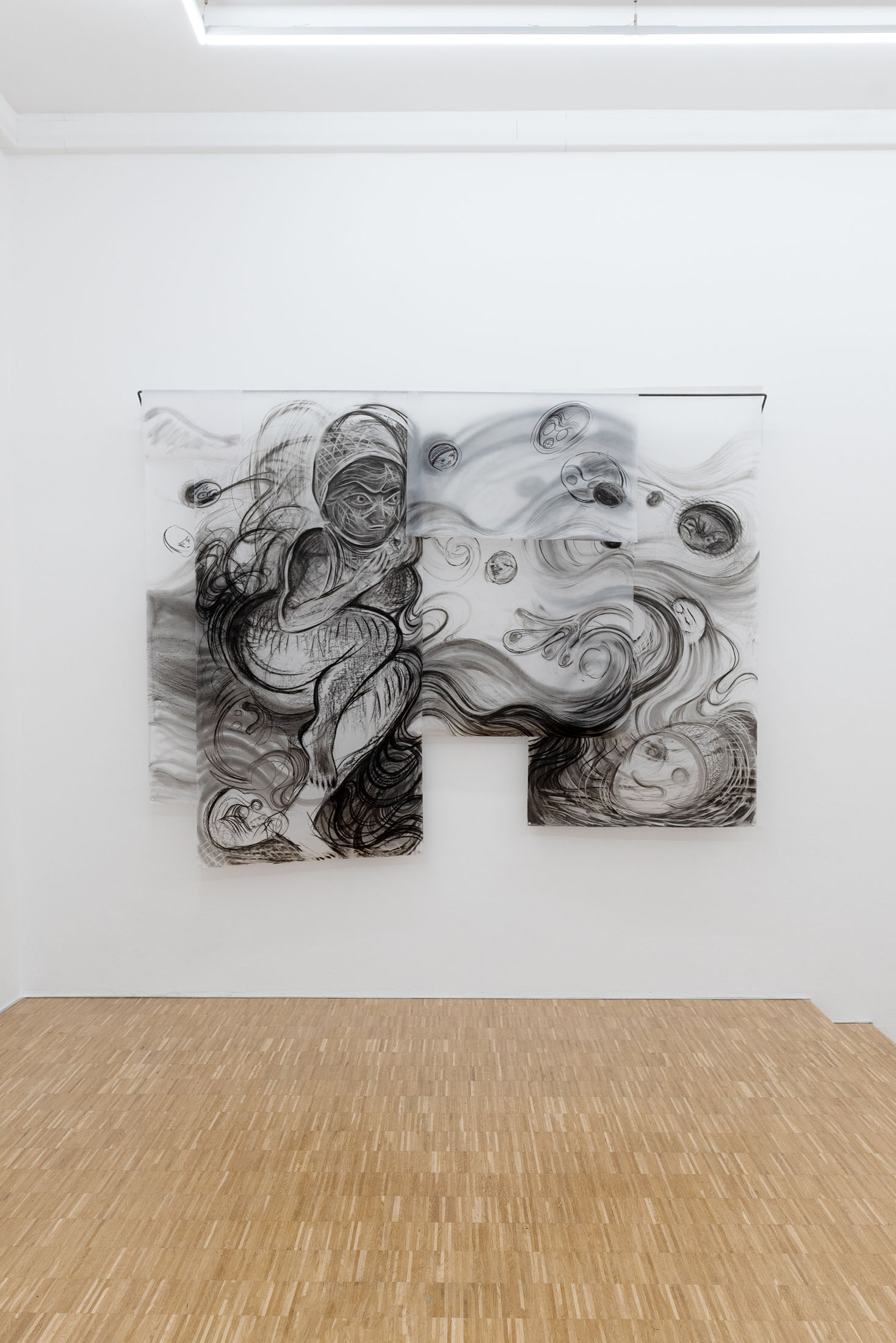
The bodies and faces of women looking out at us from Yuchu Gao’s drawings belong to a female community, like the one of “Haenyeo” from the South Korean island of Jeju, though many others of a similar kind can be found around southern Asia. Not one but many, all con- fronting us at eye level. They free dive, often to a depth of 20 m, to harvest molluscs from the sea floor. Many are elderly now, as this cultural practice is in decline, a consequence of ongoing industrialisation. But for a long time, these divers formed their own semi-matriarcal society, challenging our preconceived notions concerning the distribution of labor and eco- nomic leadership. They looked out to the sea and saw a smooth space, or rather, they found a way of making the space of the sea smooth again for themselves. We all know women who are like this, who build difference within. We walk among them as they flutter deli- cately on transparent layers of tracing paper, moving up, down and around the supporting rod, edges curling inwards and outwards. In Indian mythology, the churning of the ocean represents the transition from chaos to creation. Difference carried within is never still. It bobs up and down on the waves. Subjectivity becomes nomadic in motion.
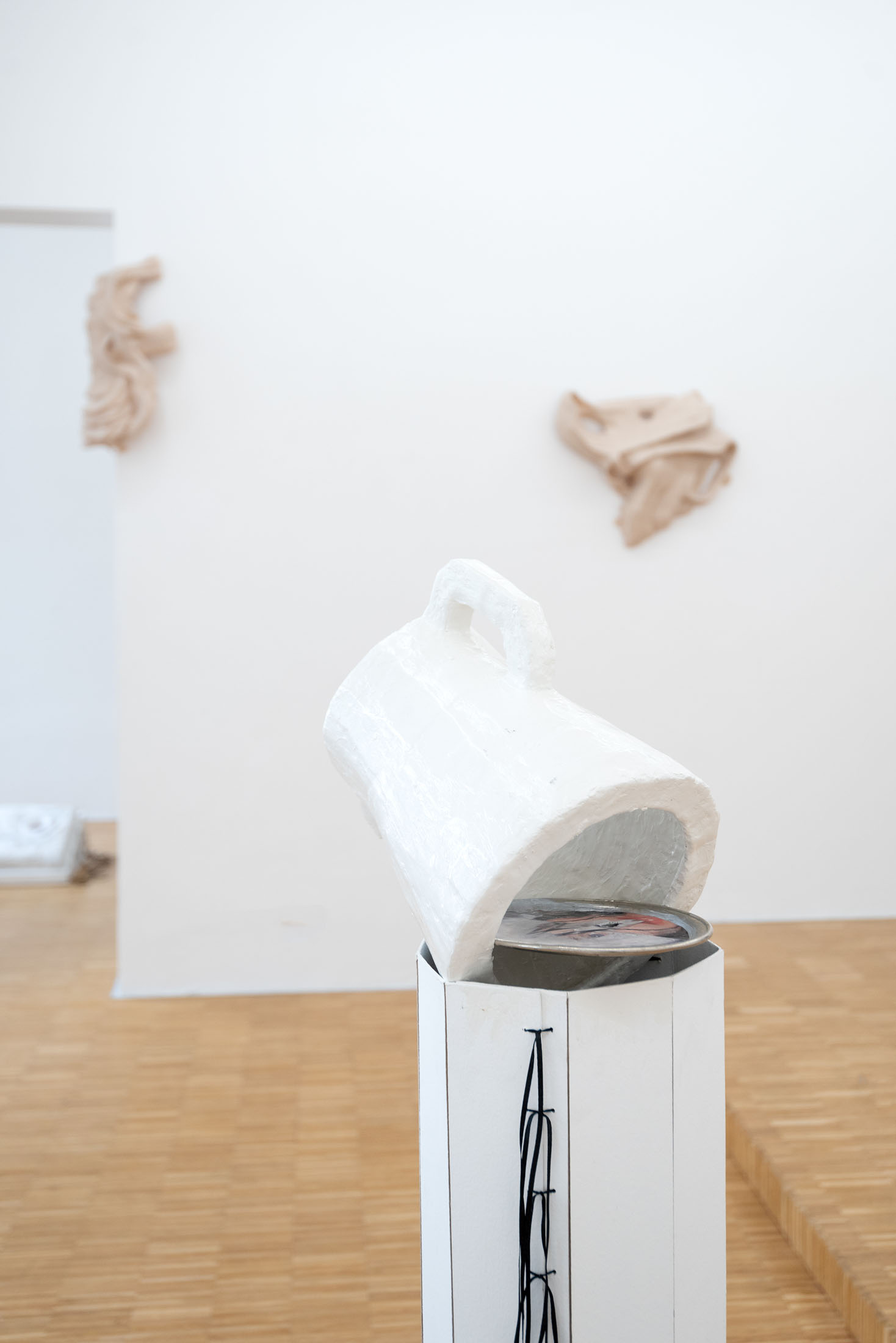
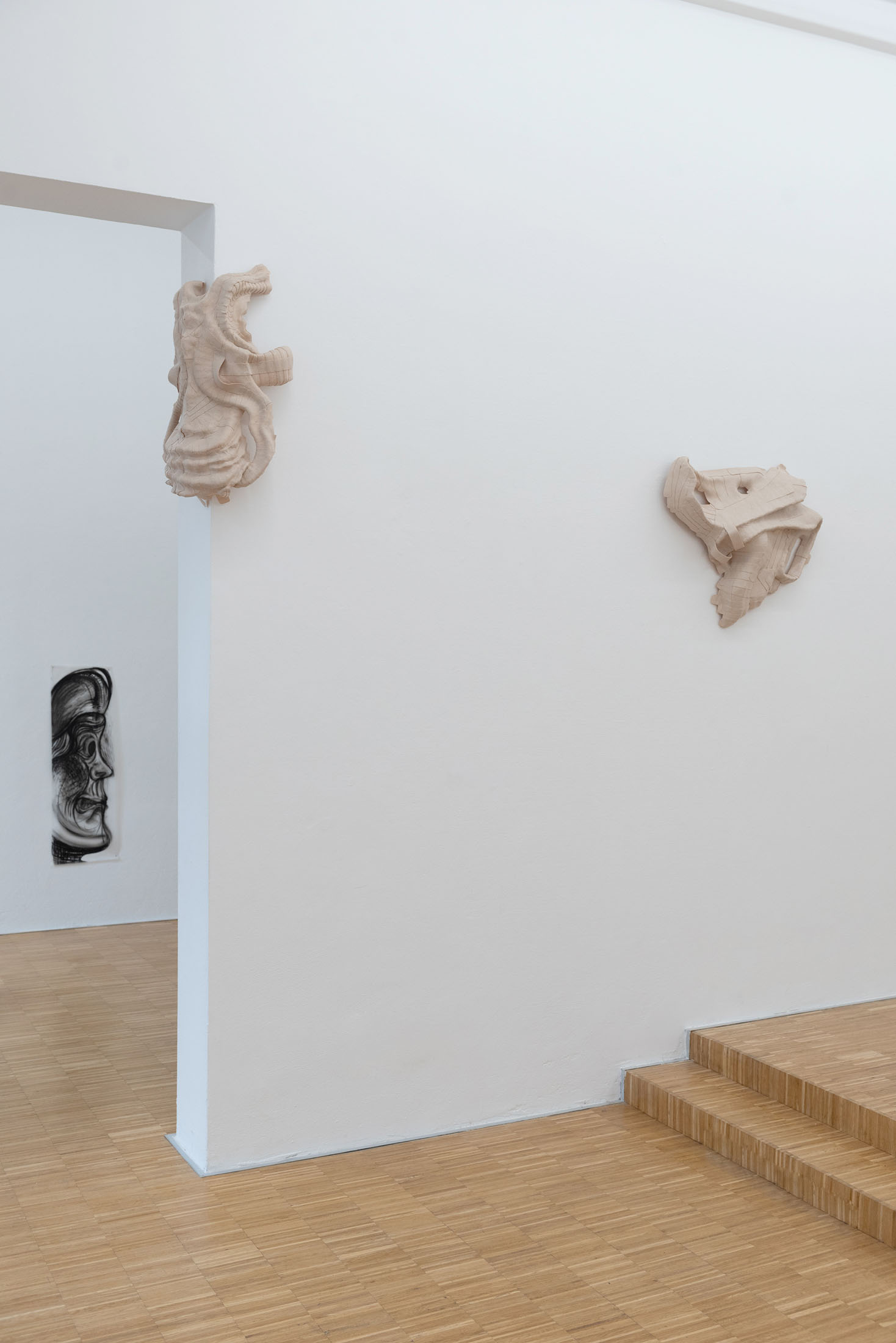
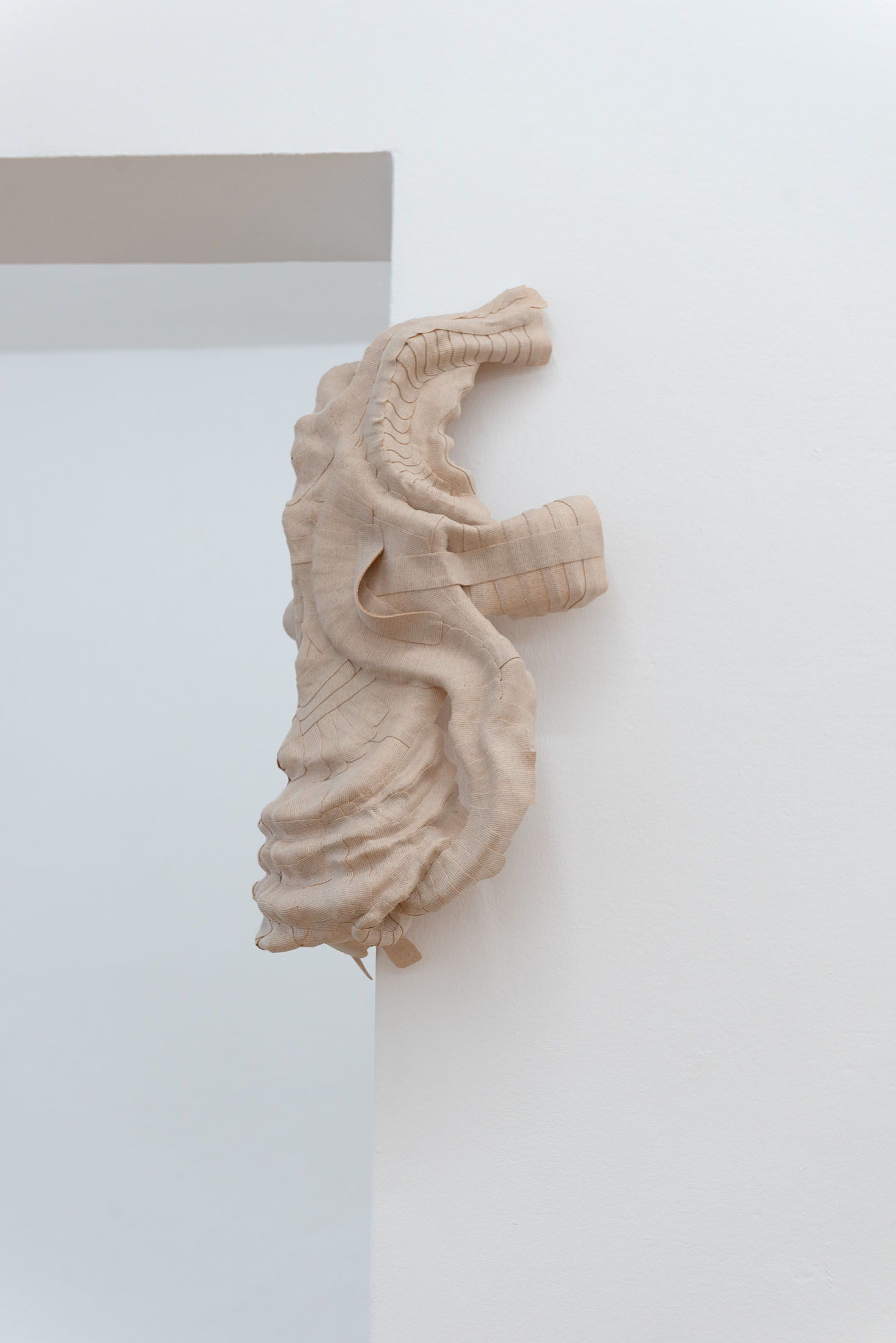
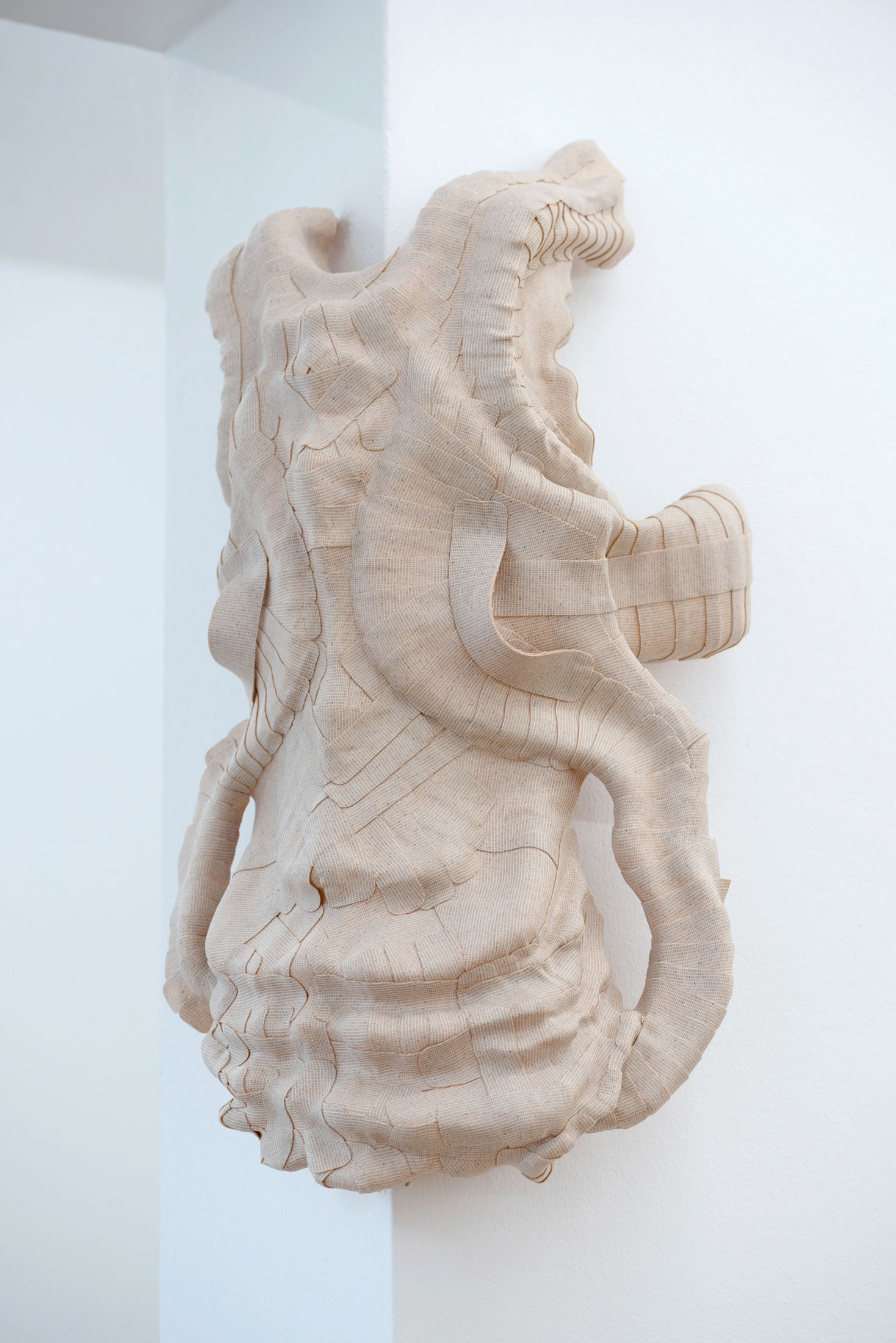
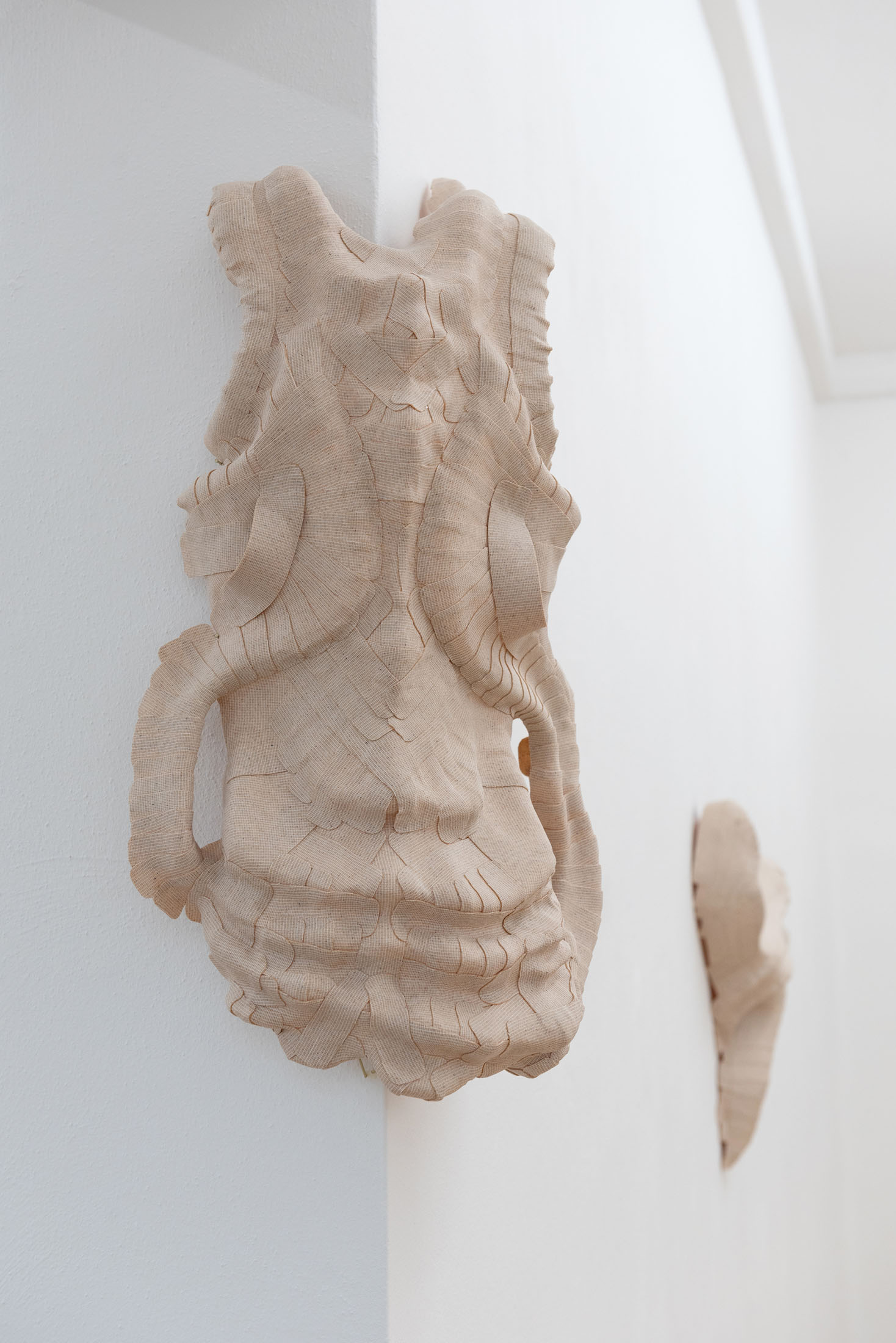
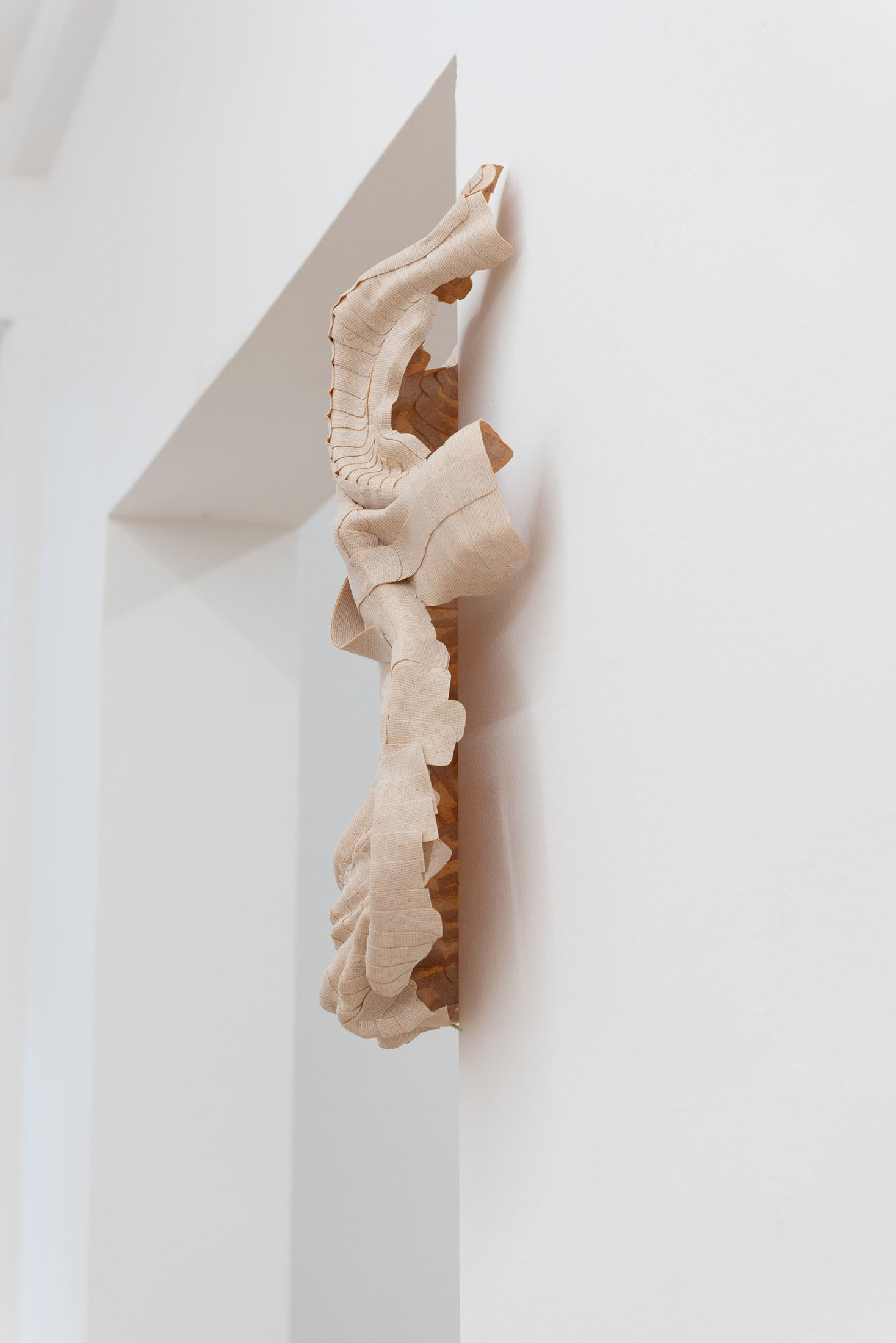
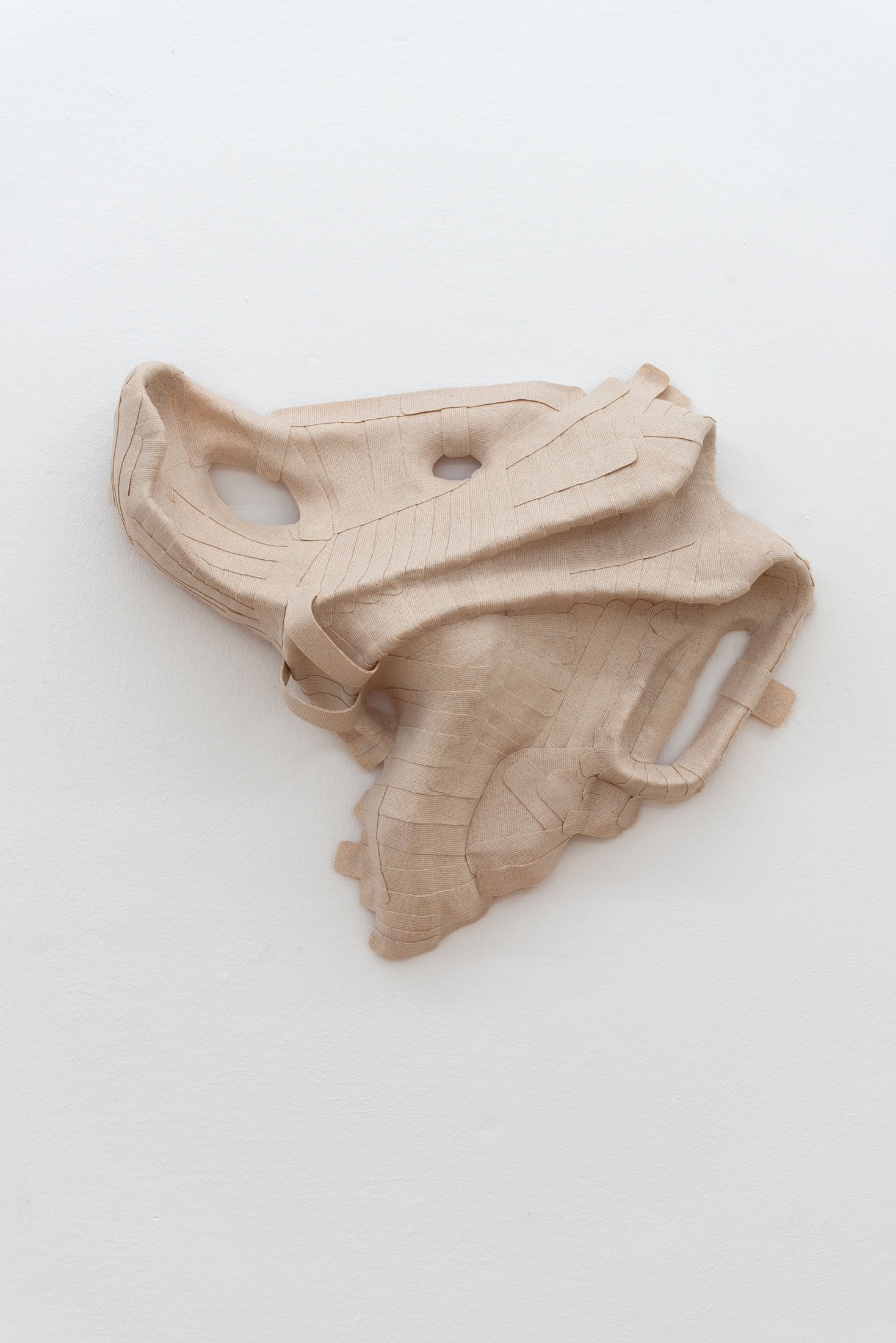
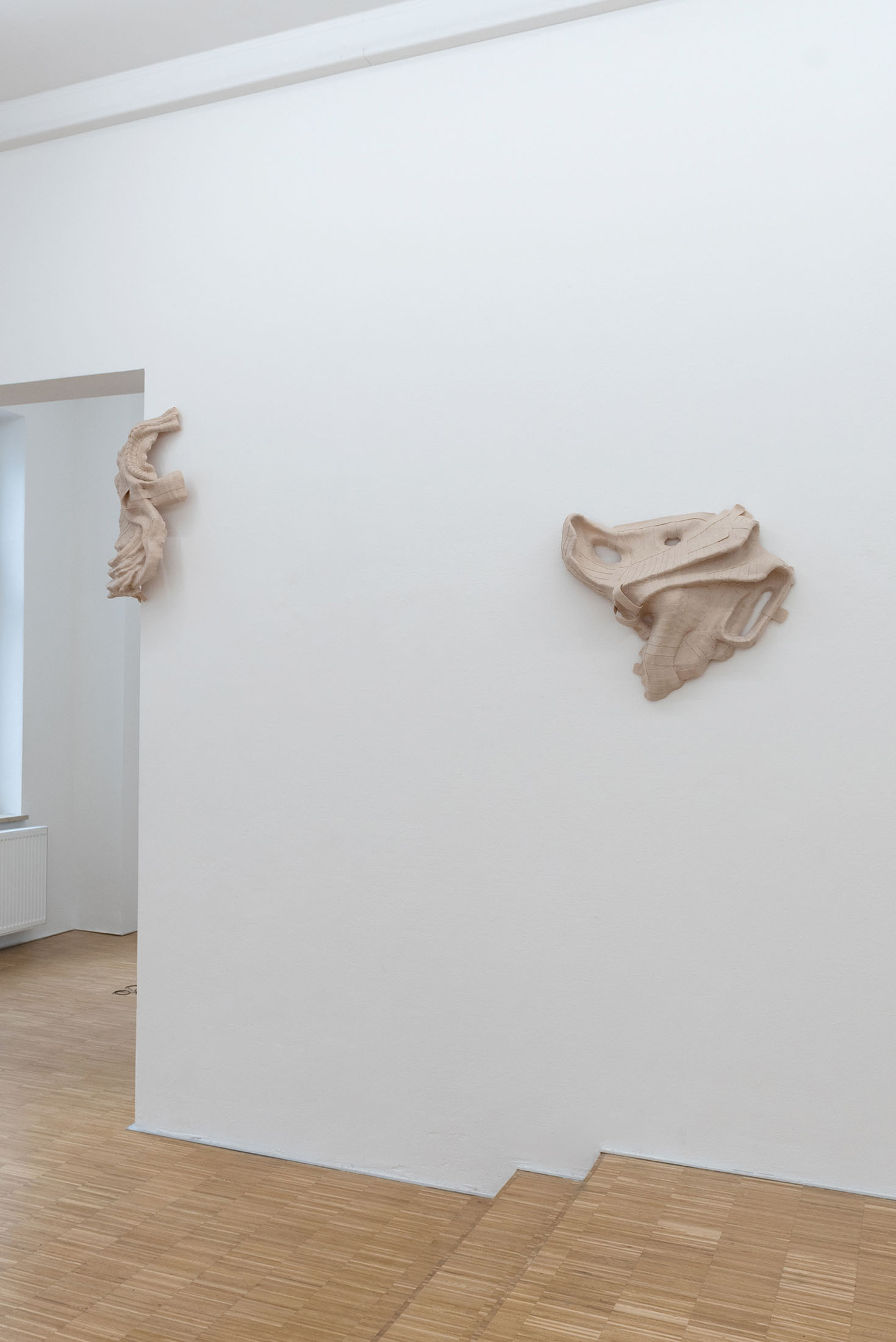
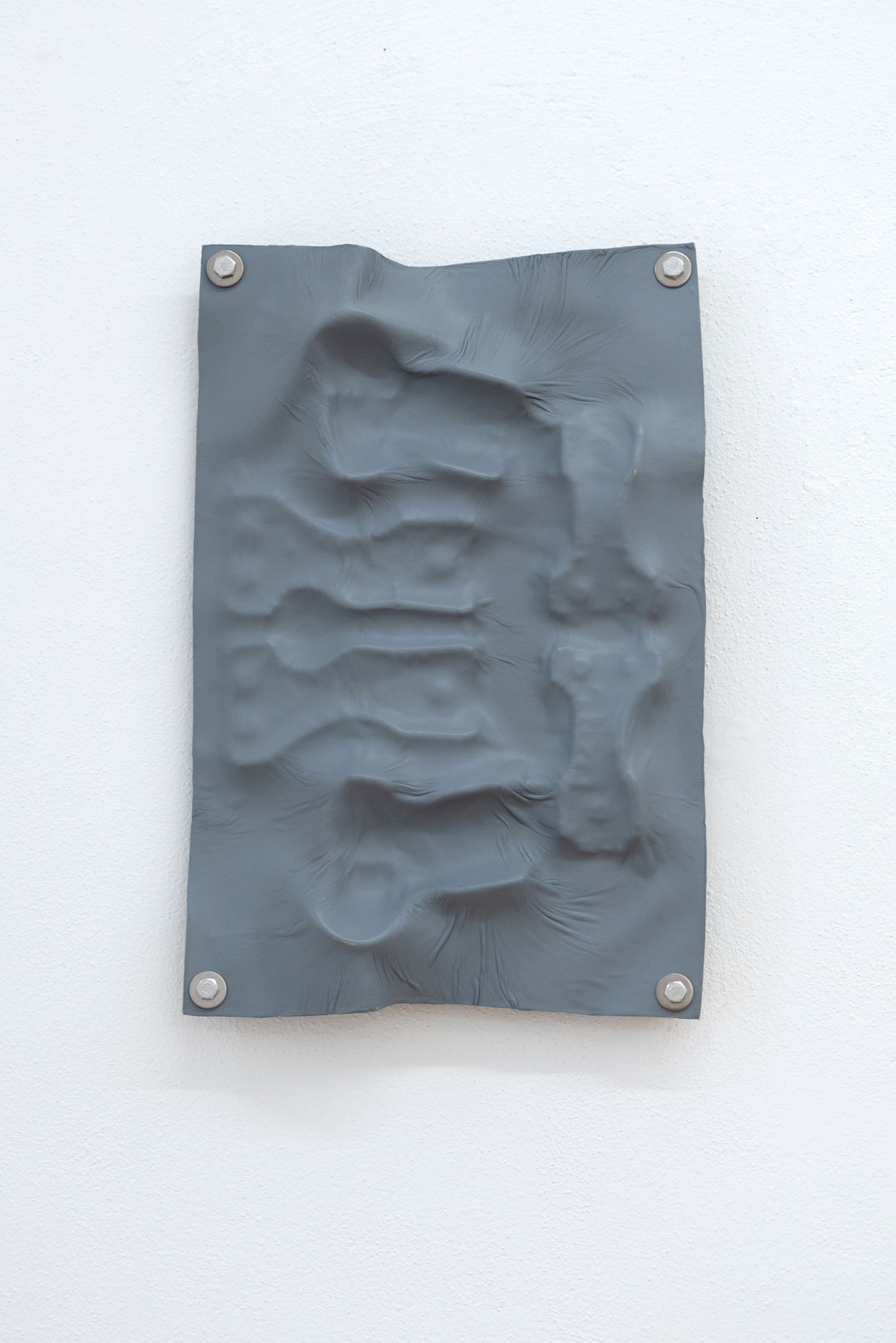
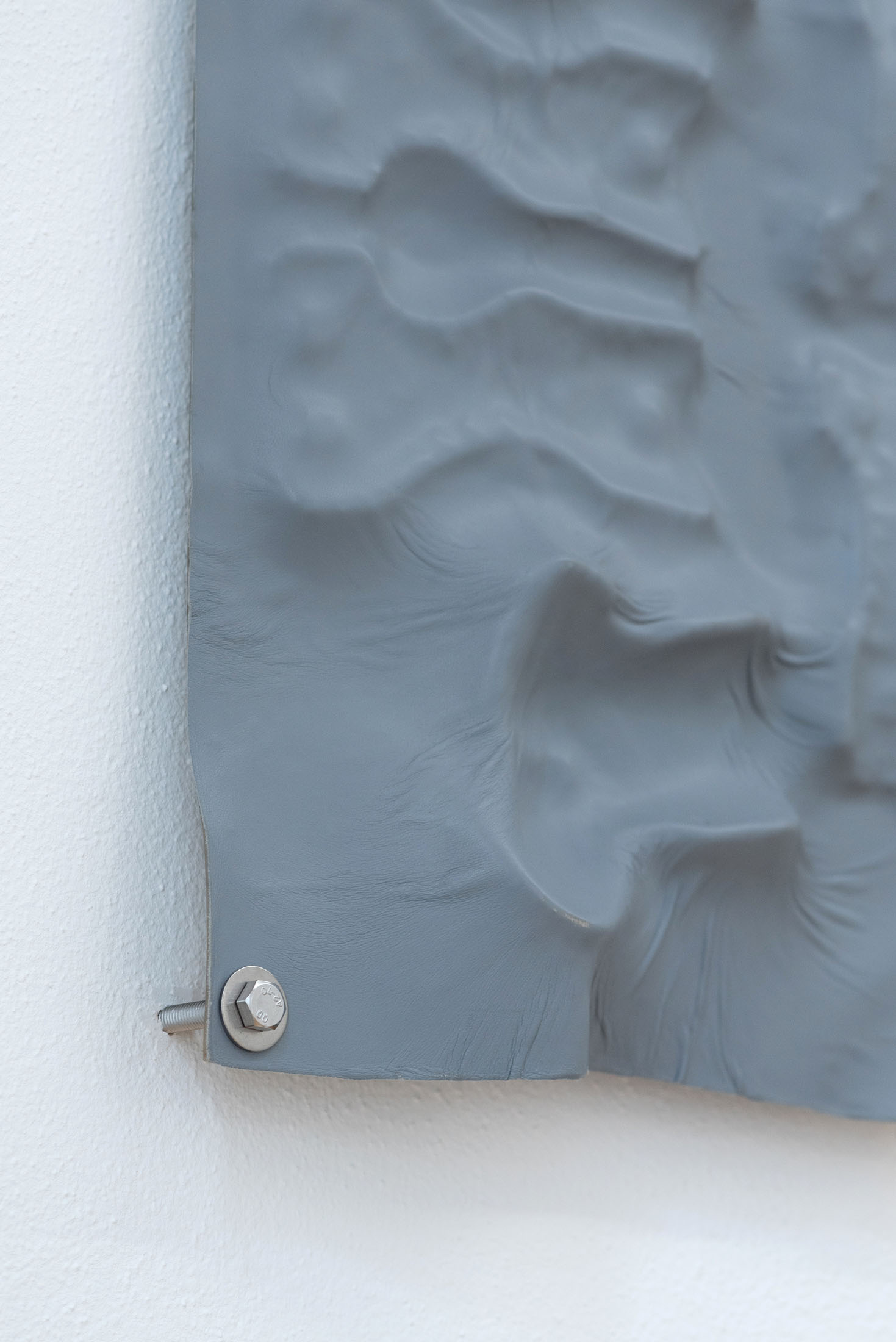
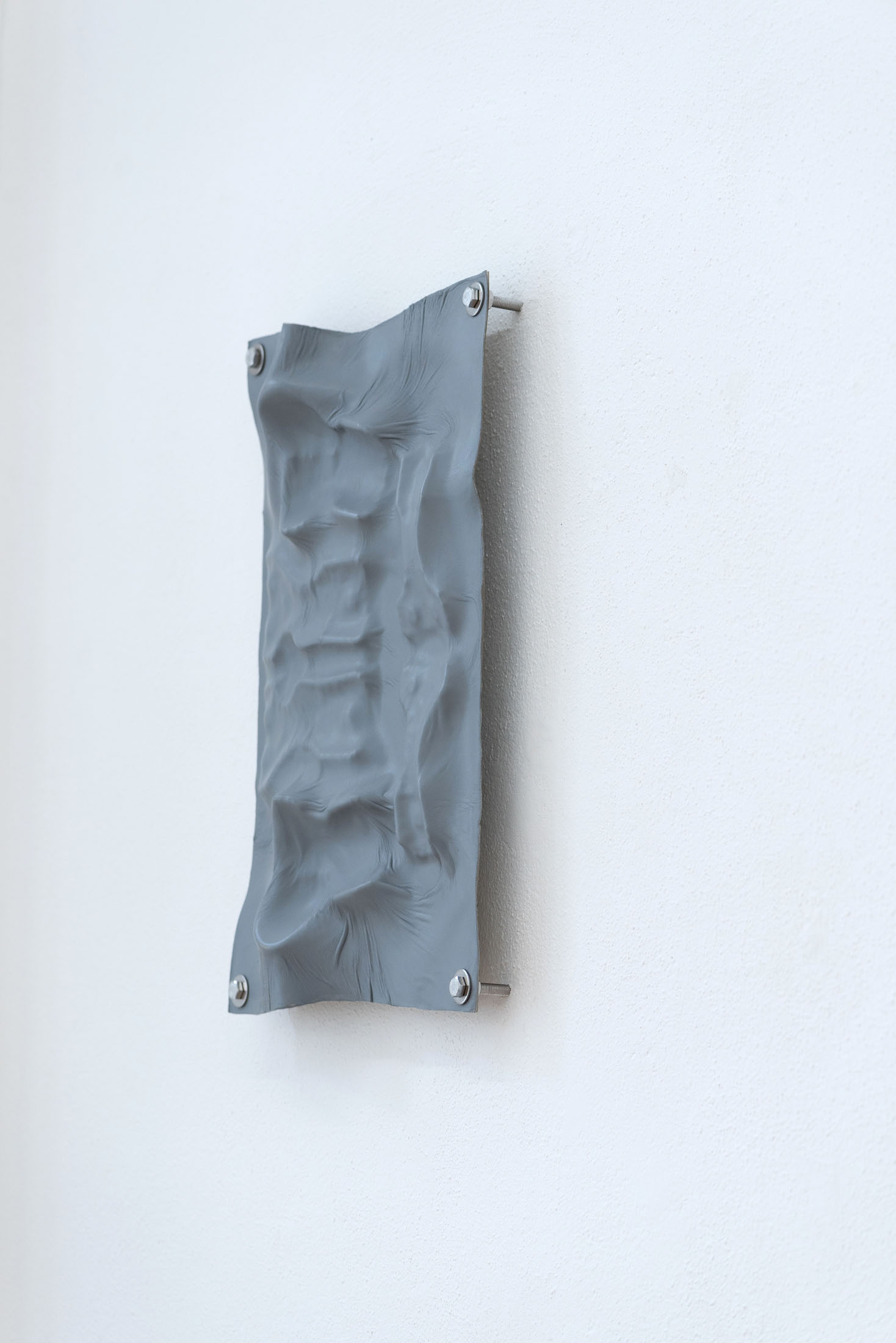
The curving structure of Anna Lena Keller’s thermoplastic exoskeletons support a double- understanding of the body. On the one hand, the body is the biological organism already exhibiting signs of proto-technicity, where organs are defined as technologies developed in the course of evolution, allowing us to function ever more efficiently. On the other hand, the body is presented as the “technium,” consisting of all those detachable external tech- nical artefacts that expand the organ’s individual capacities, necessarily fragmented, scat- tered, but also interconnected with each other in a complex wide-ranging network. These are bodies extending nomadically into space they rendered smooth. In physically deman- ding workplaces, the military or in rehabilitation, the kind of exoskeleton referenced to by Keller, has a supportive function, assisting, augmenting and enhancing the user’s body. However, Keller’s objects only perform this supportive function, as their specific materiali- ty – worbla tape, heated around a mould, then cooled and set – is more commonly used in cosplay. Keller’s objects operate within a prosthetic theory of technology, to play with the relation between the inner and the outer. By removing any claim of functionality, the object no longer serves as a supporting device, with the inside supported by an outside structure, but performs a redrawing of their boundary.
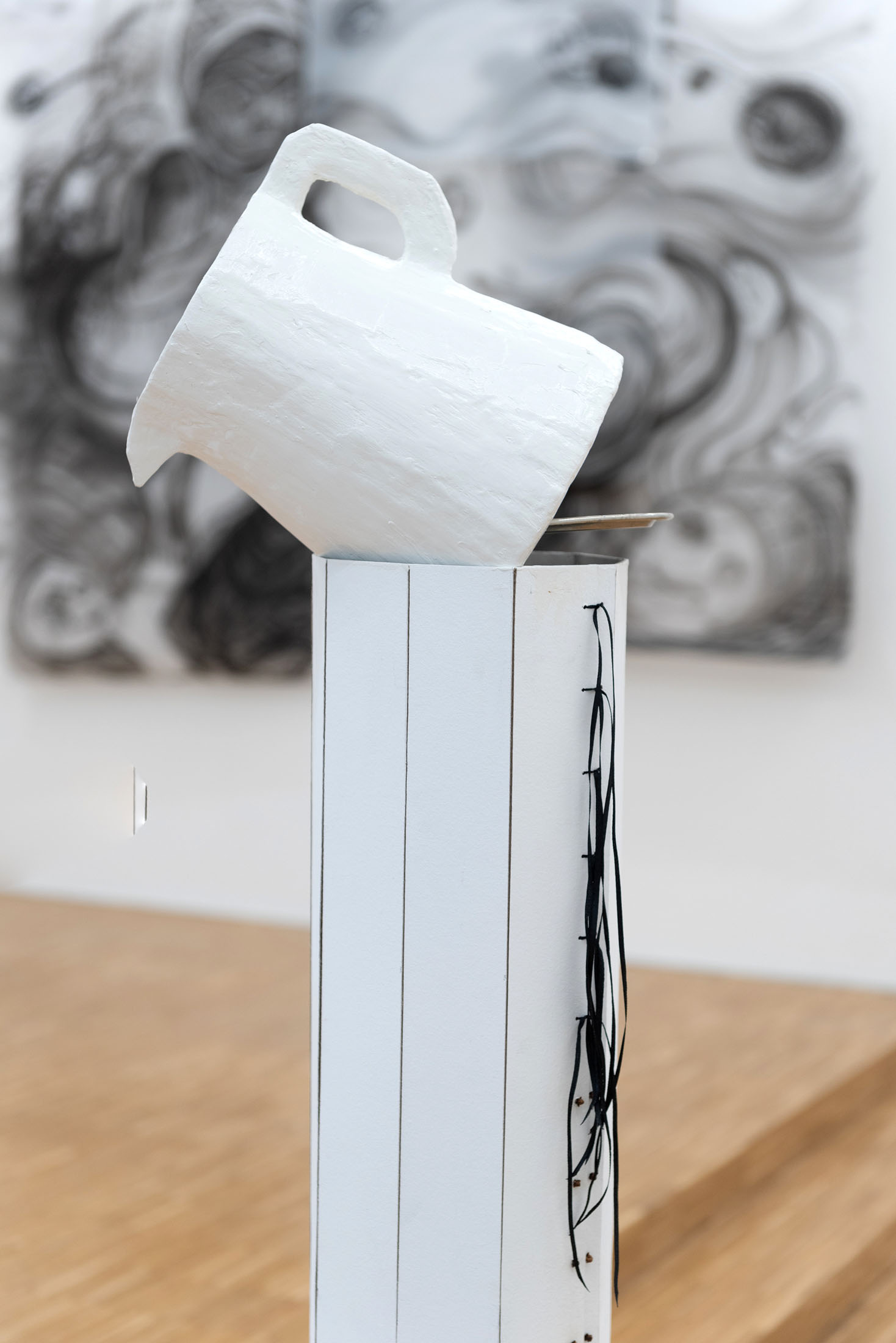
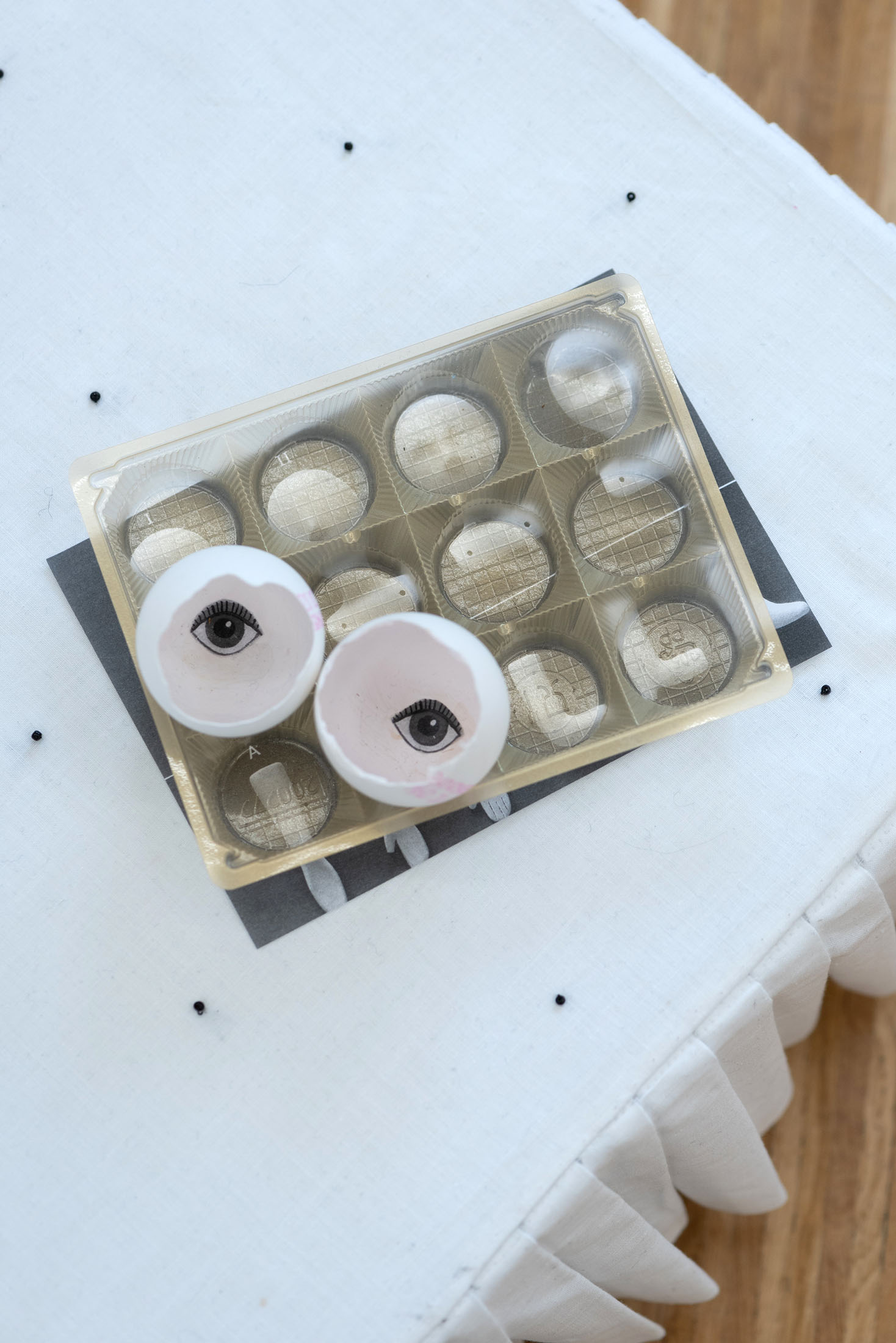
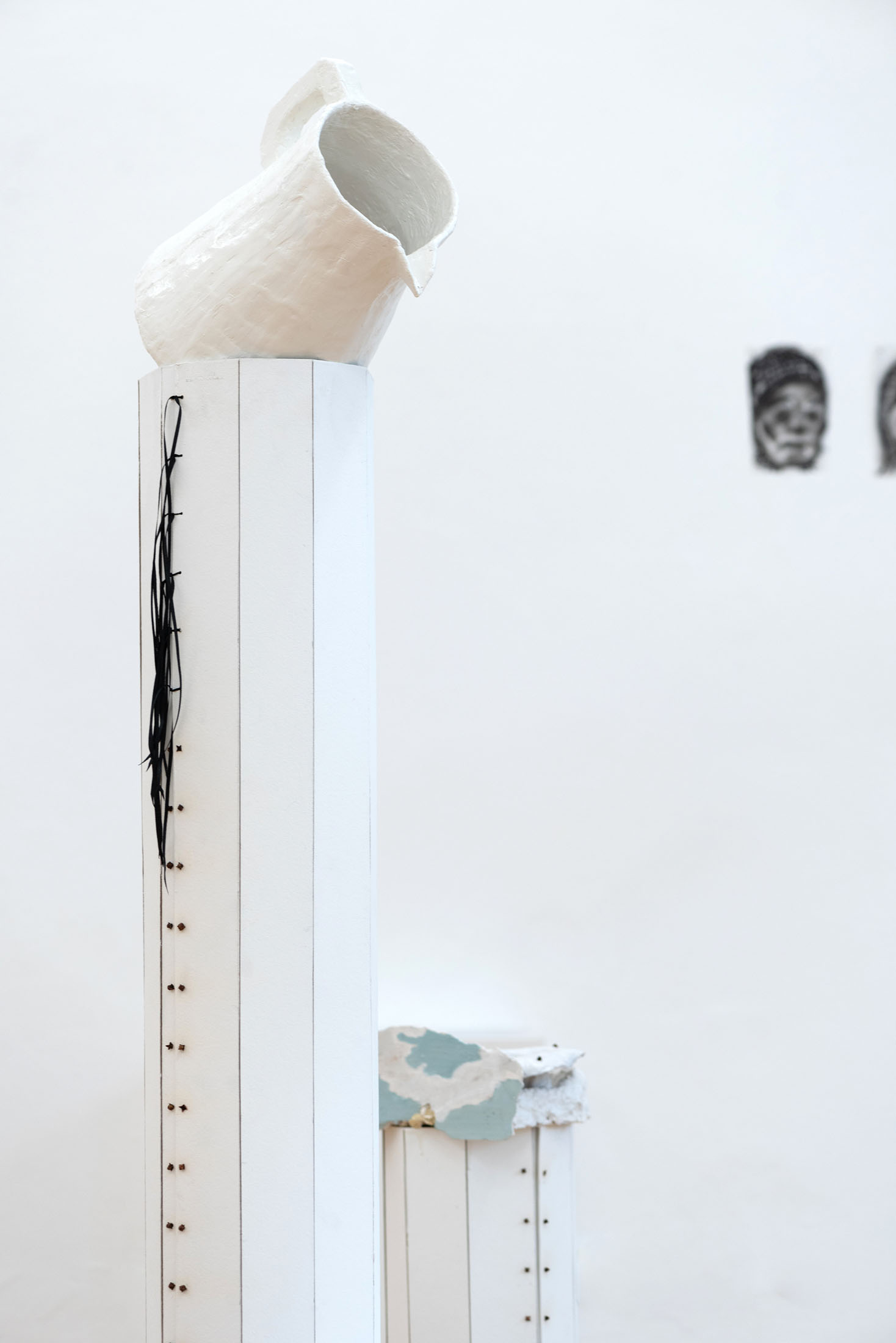
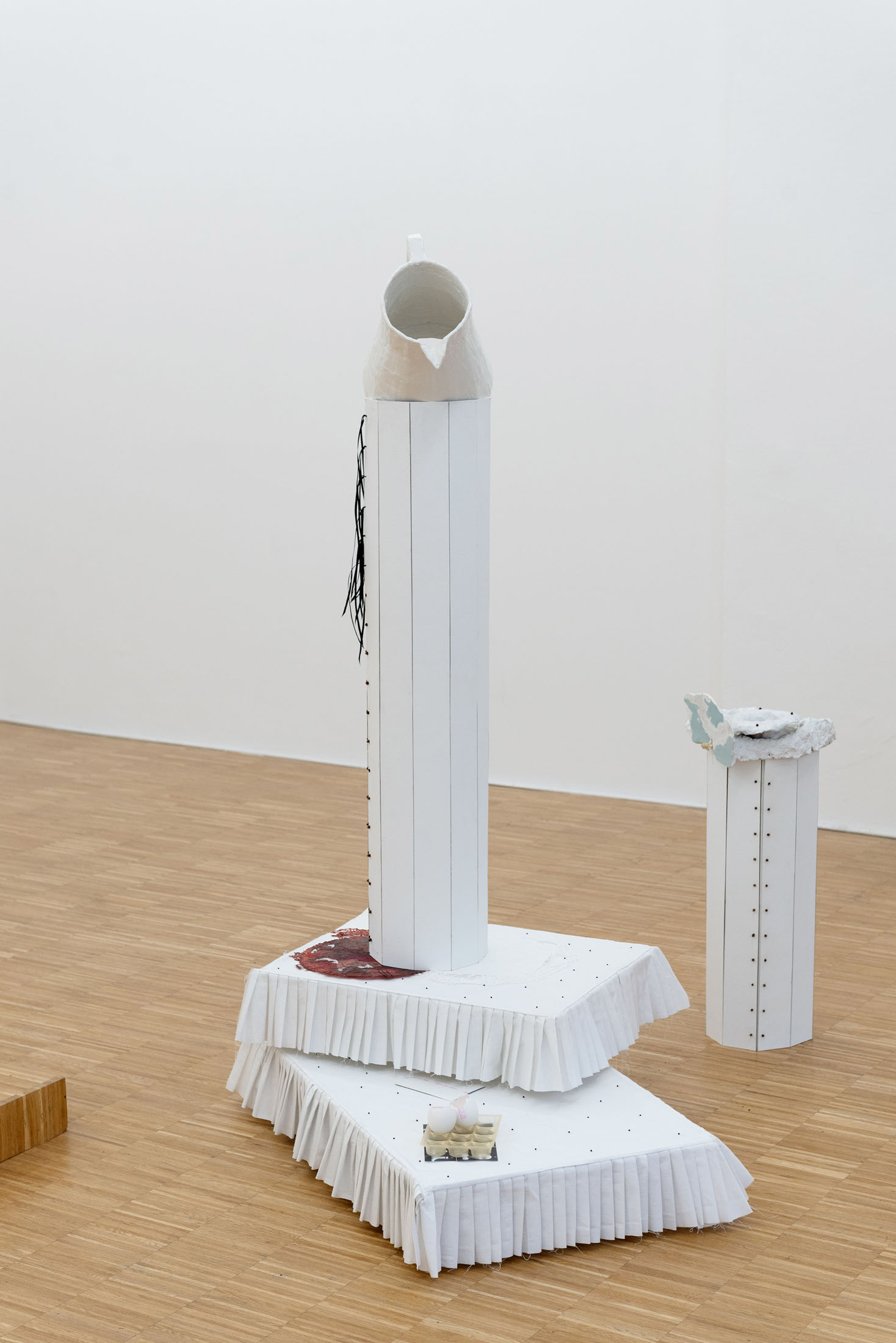
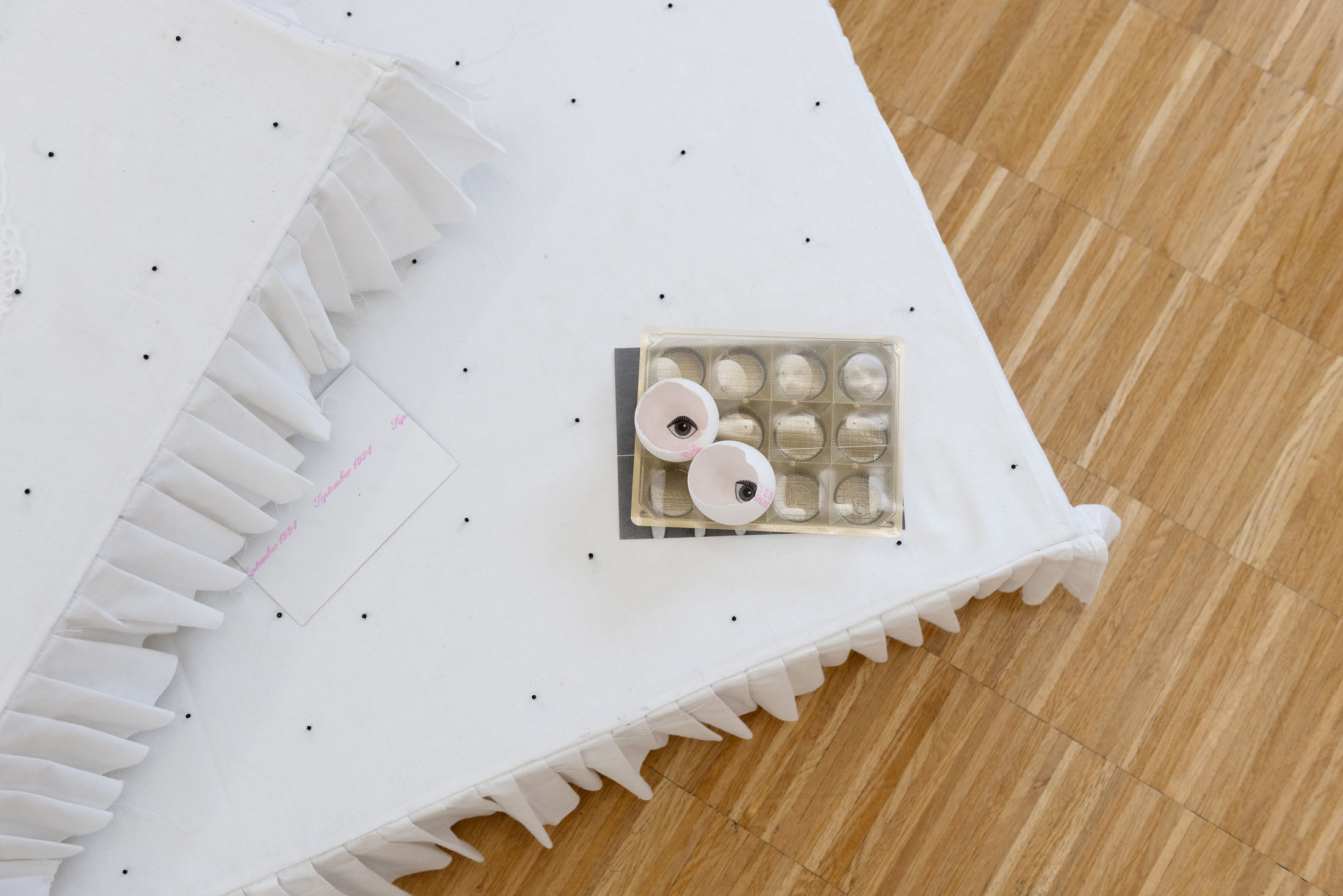
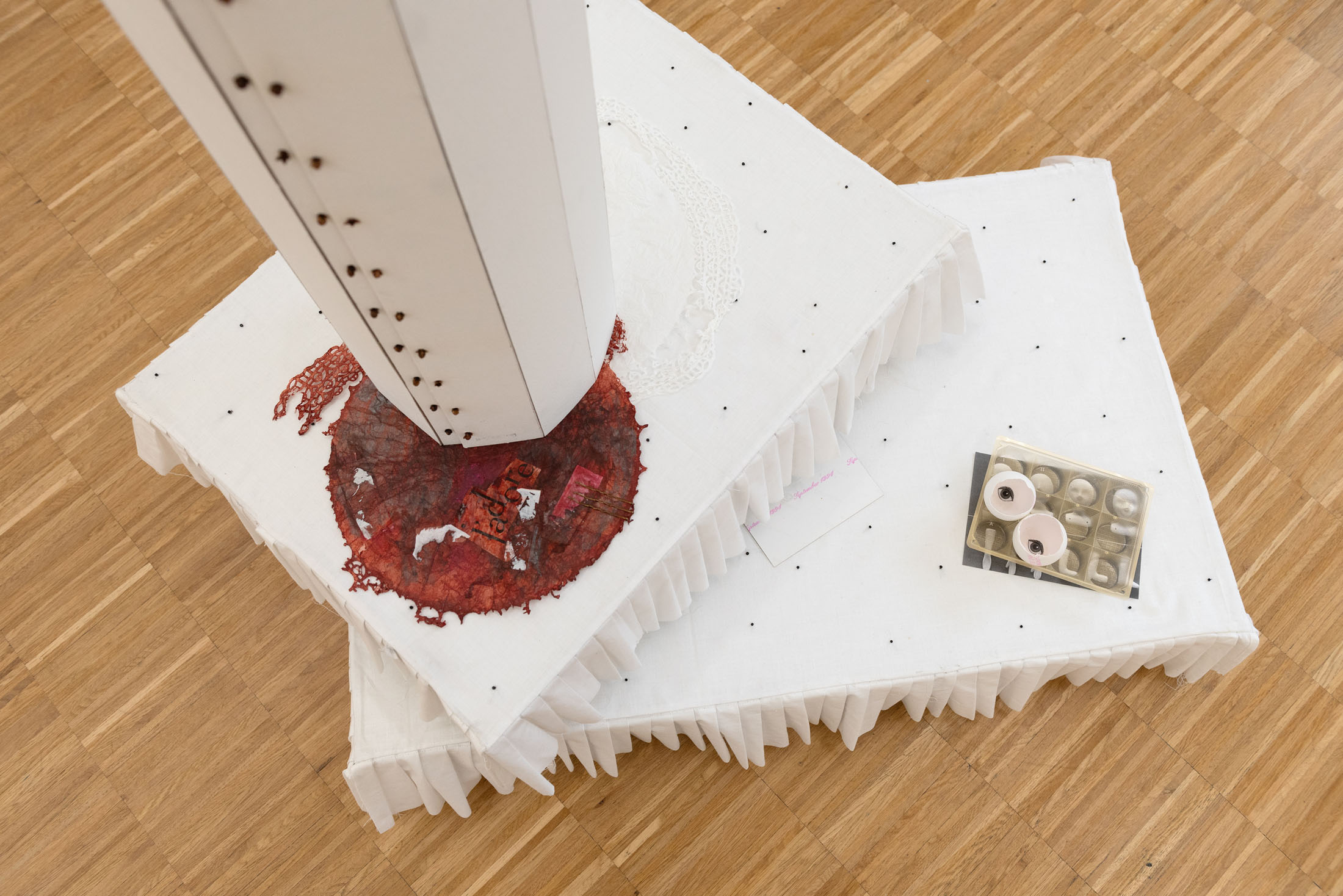
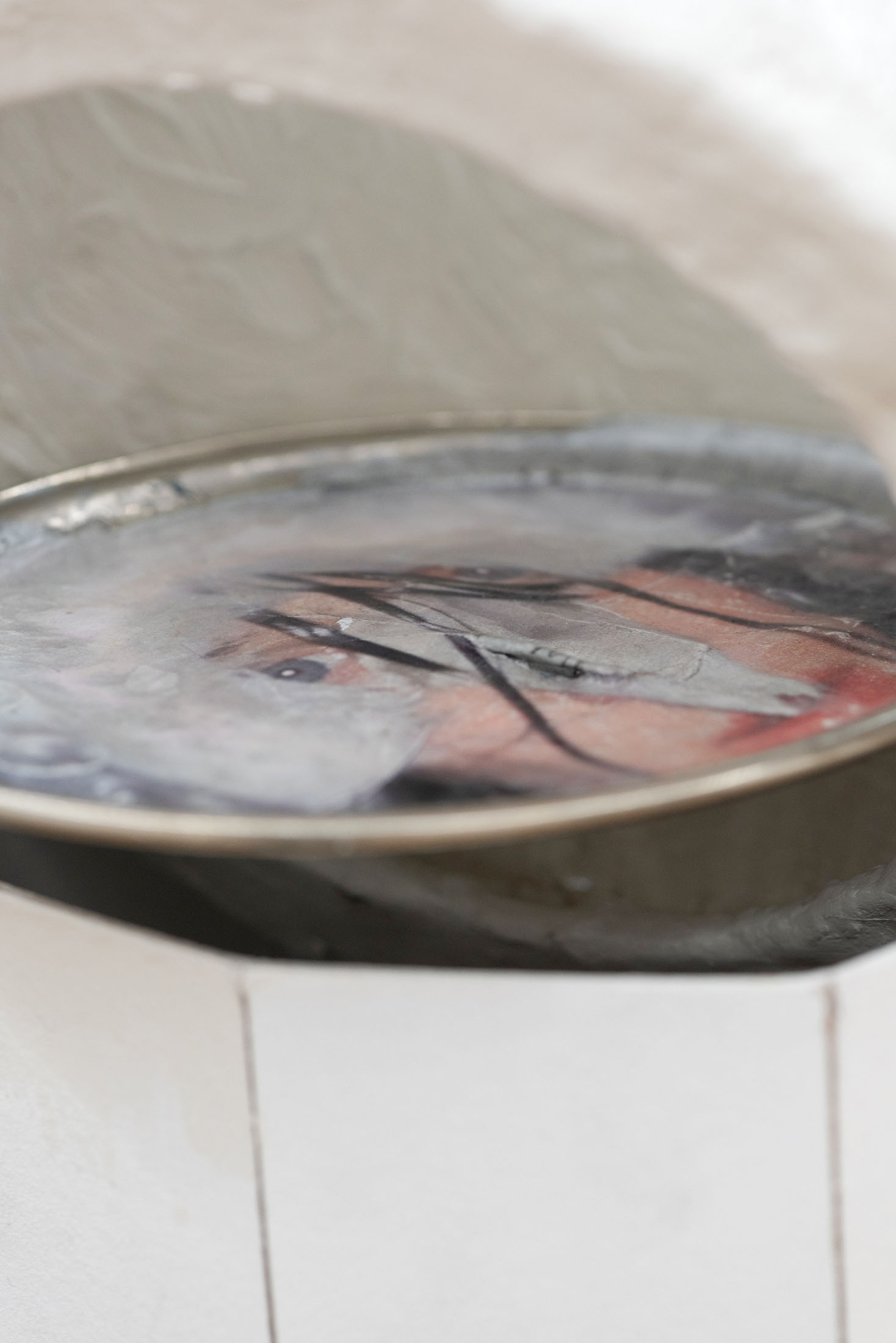
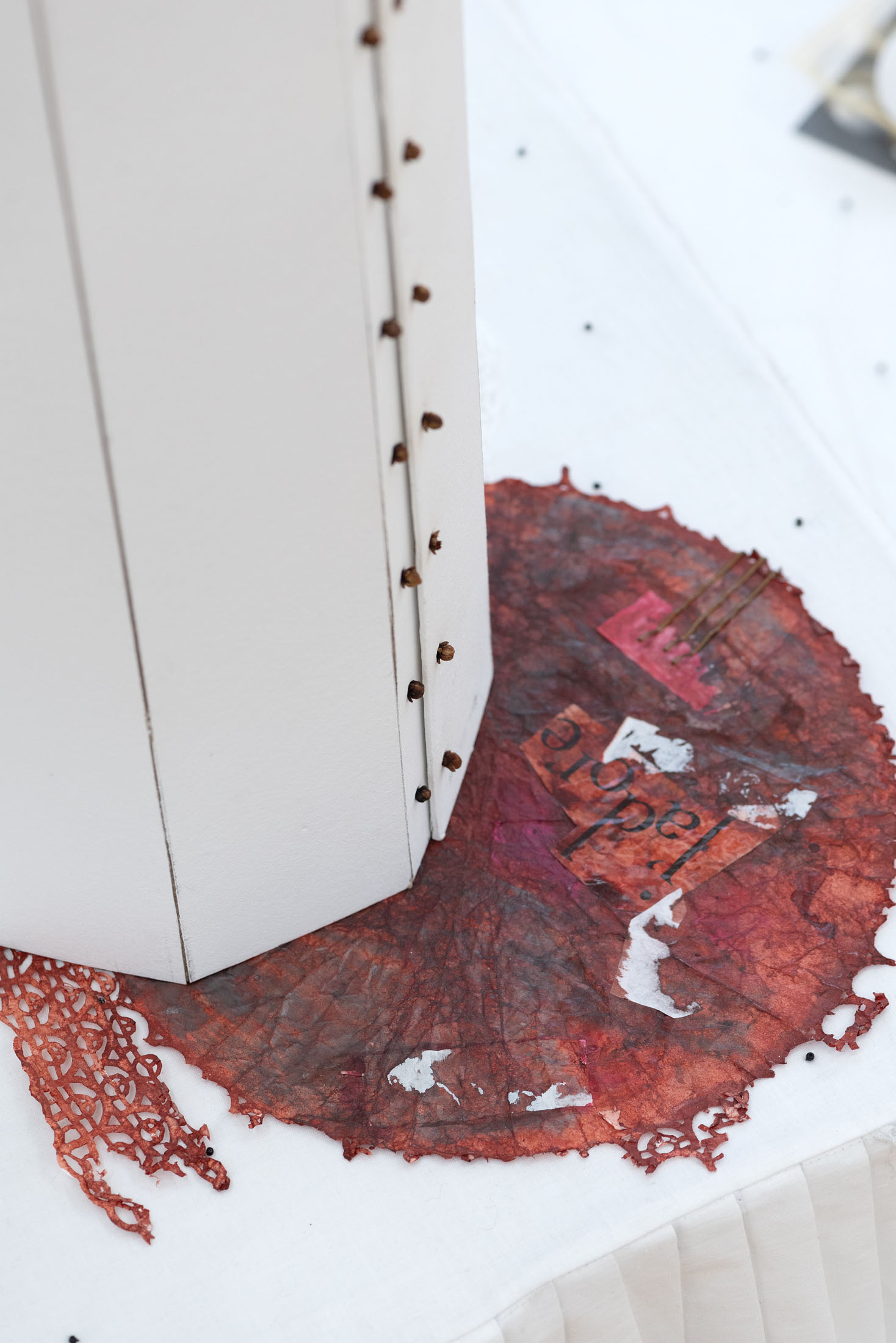
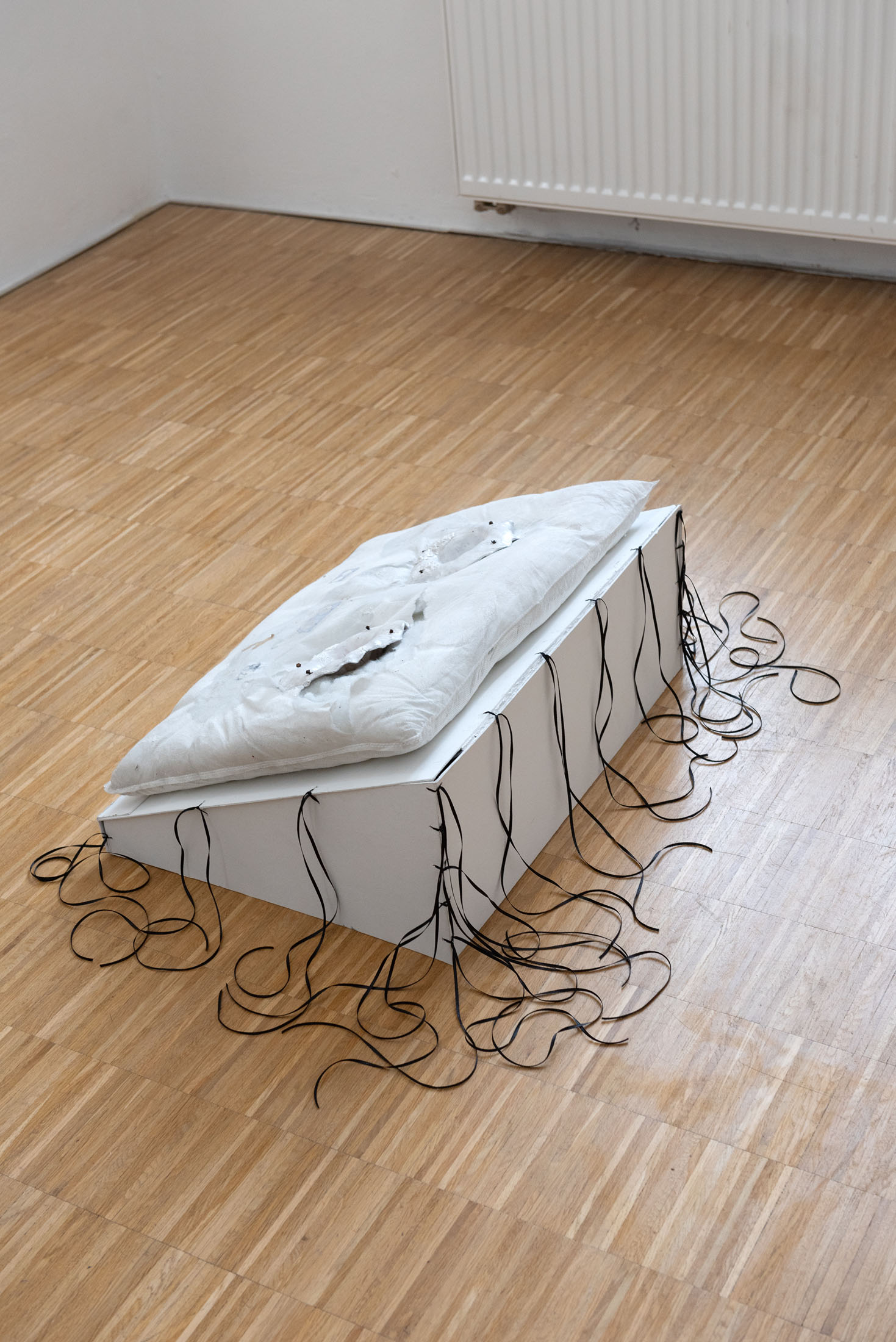
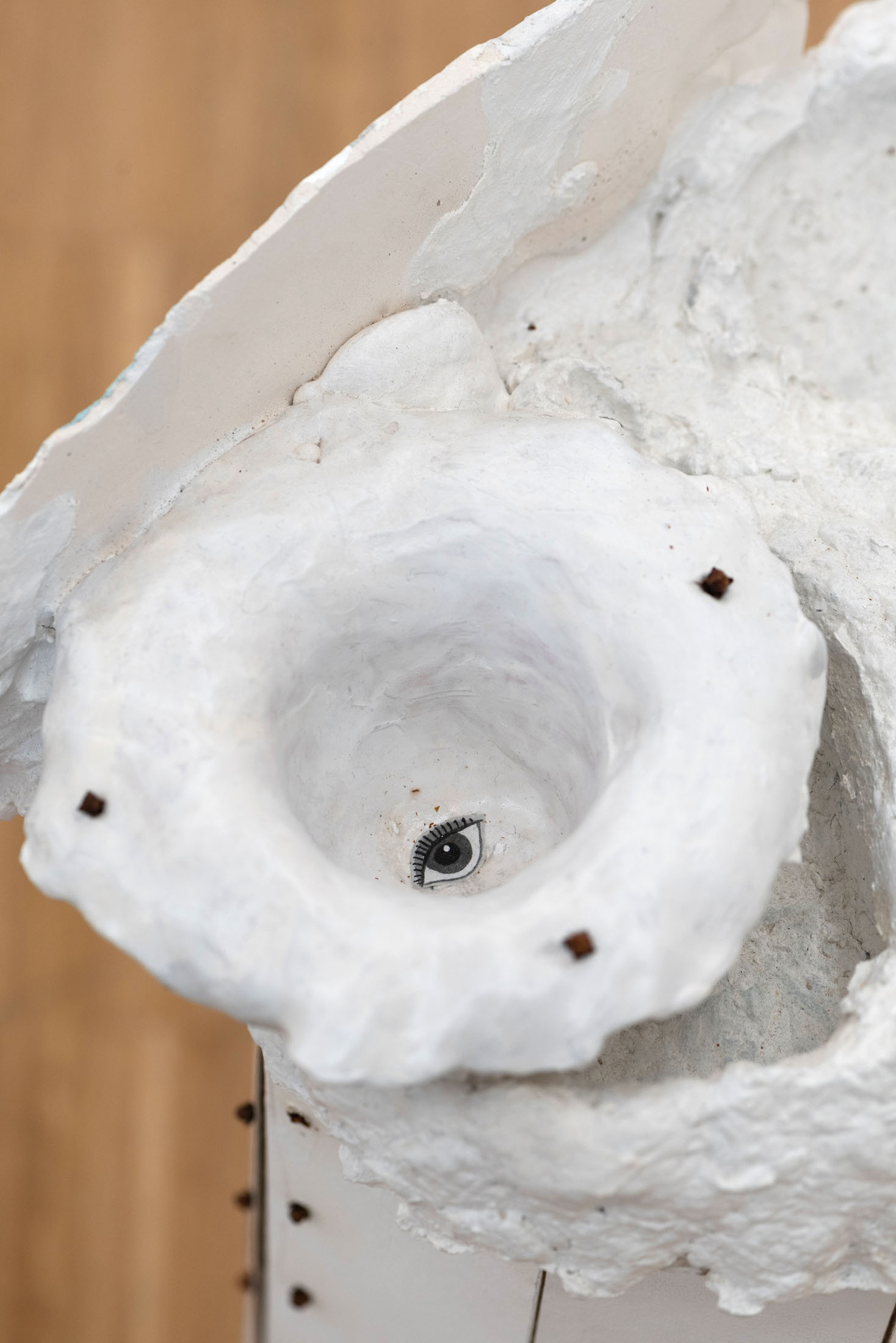
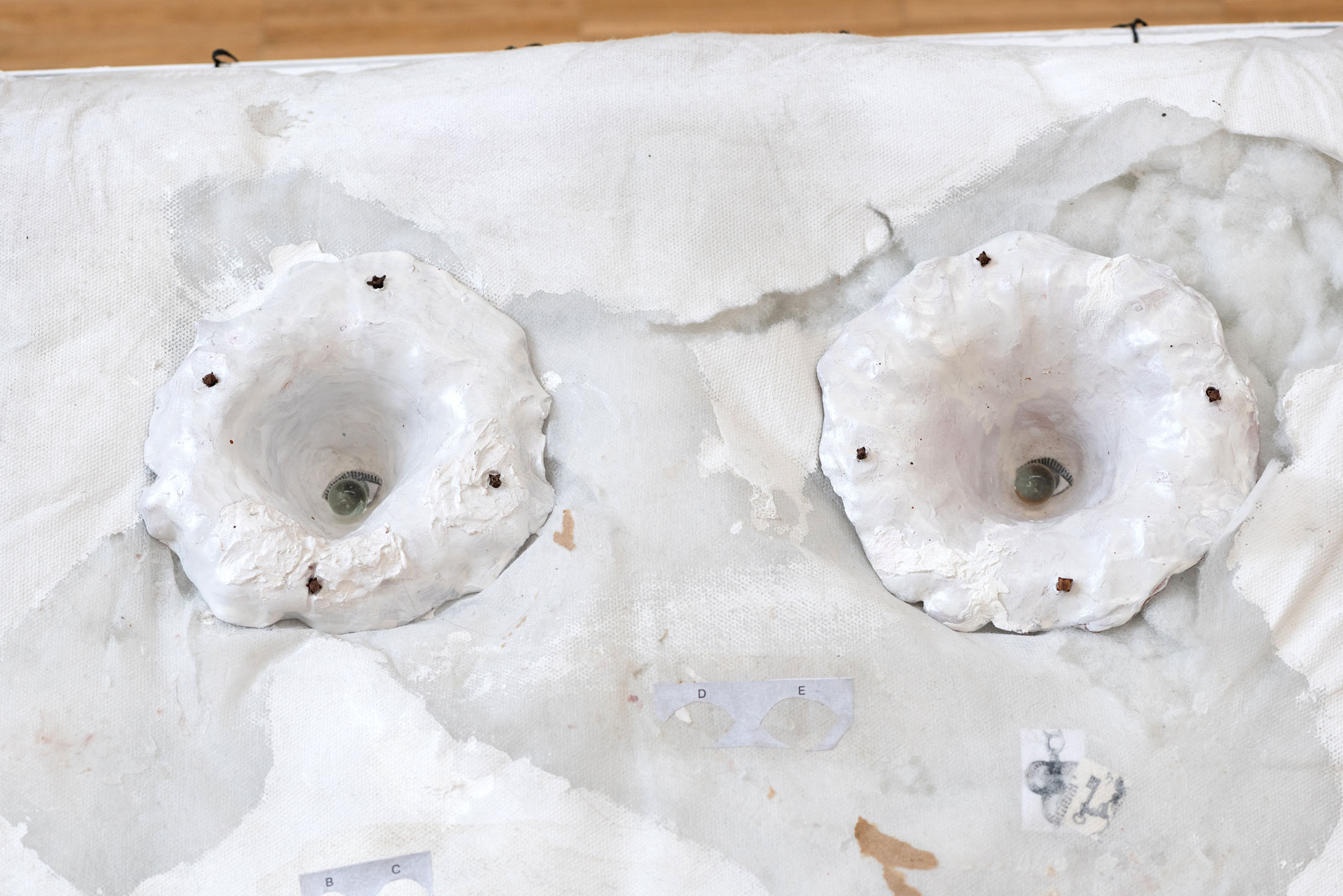
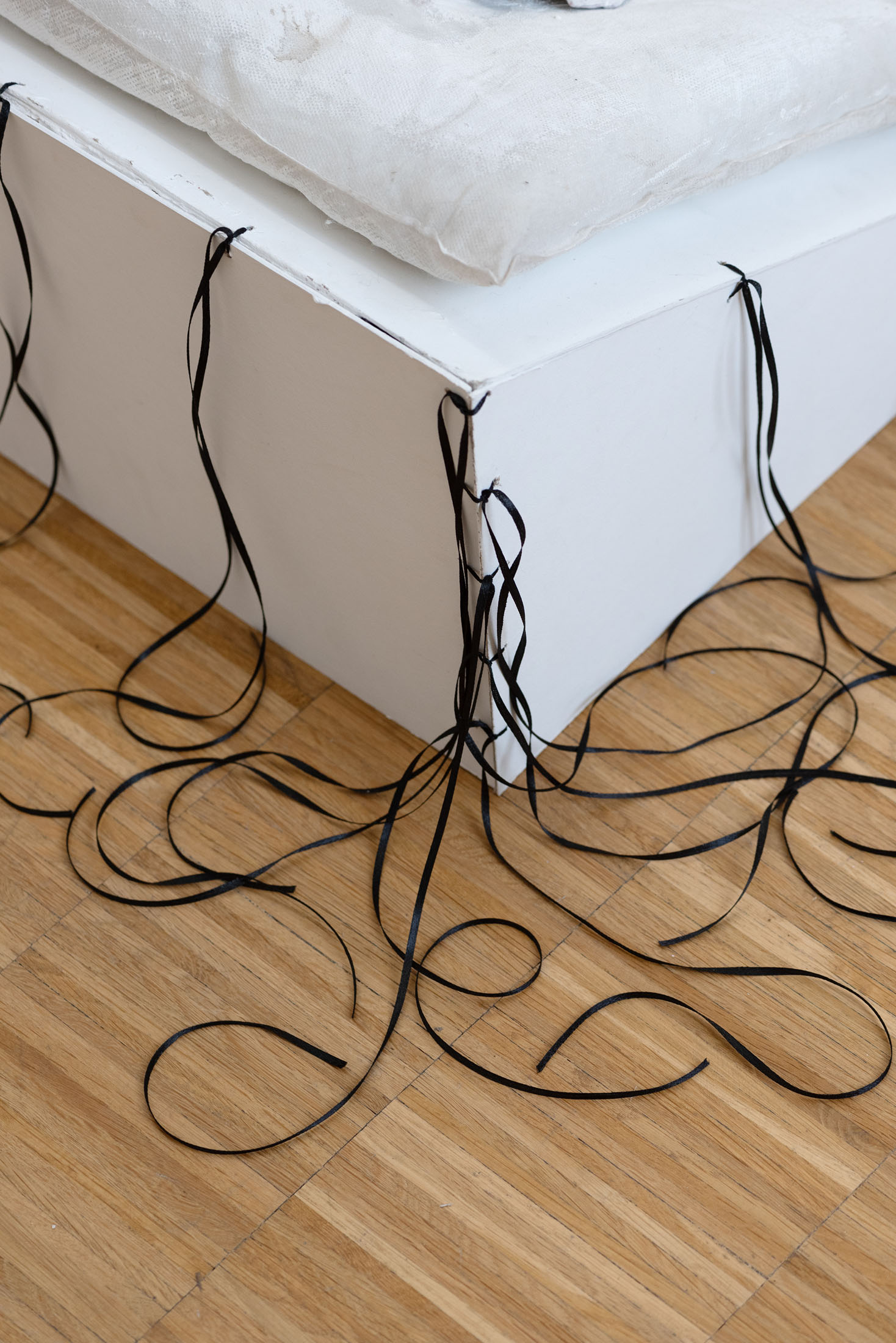
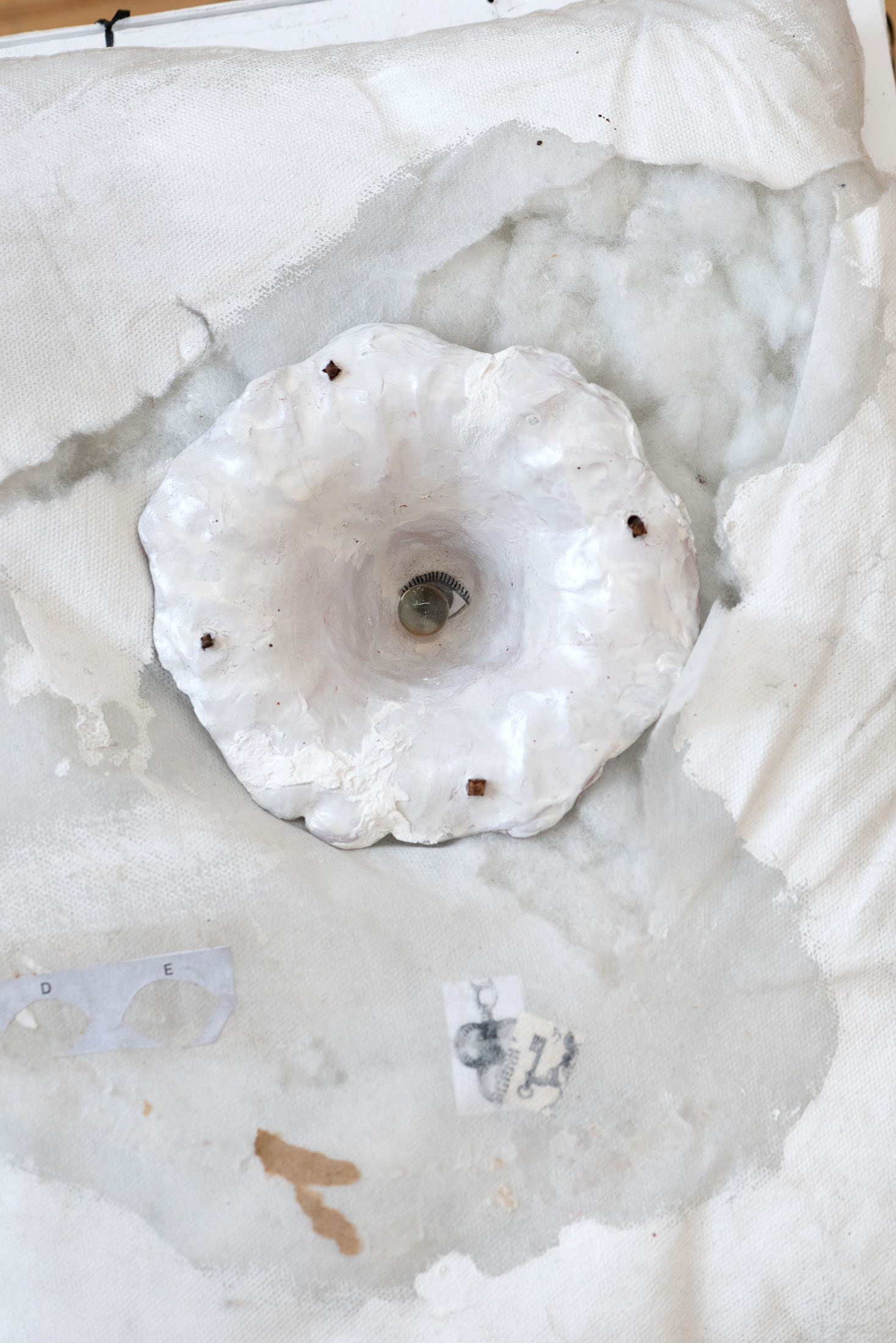
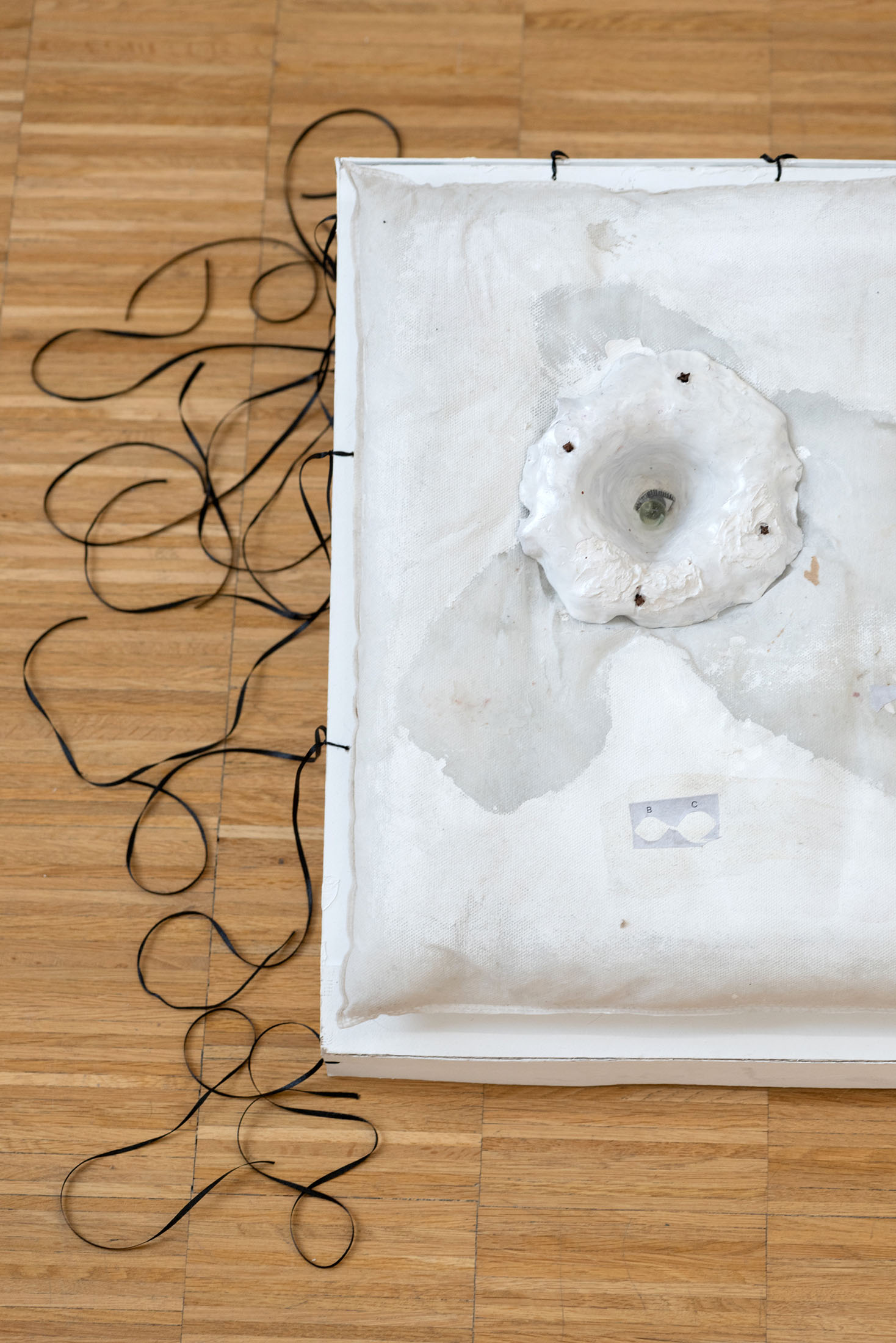
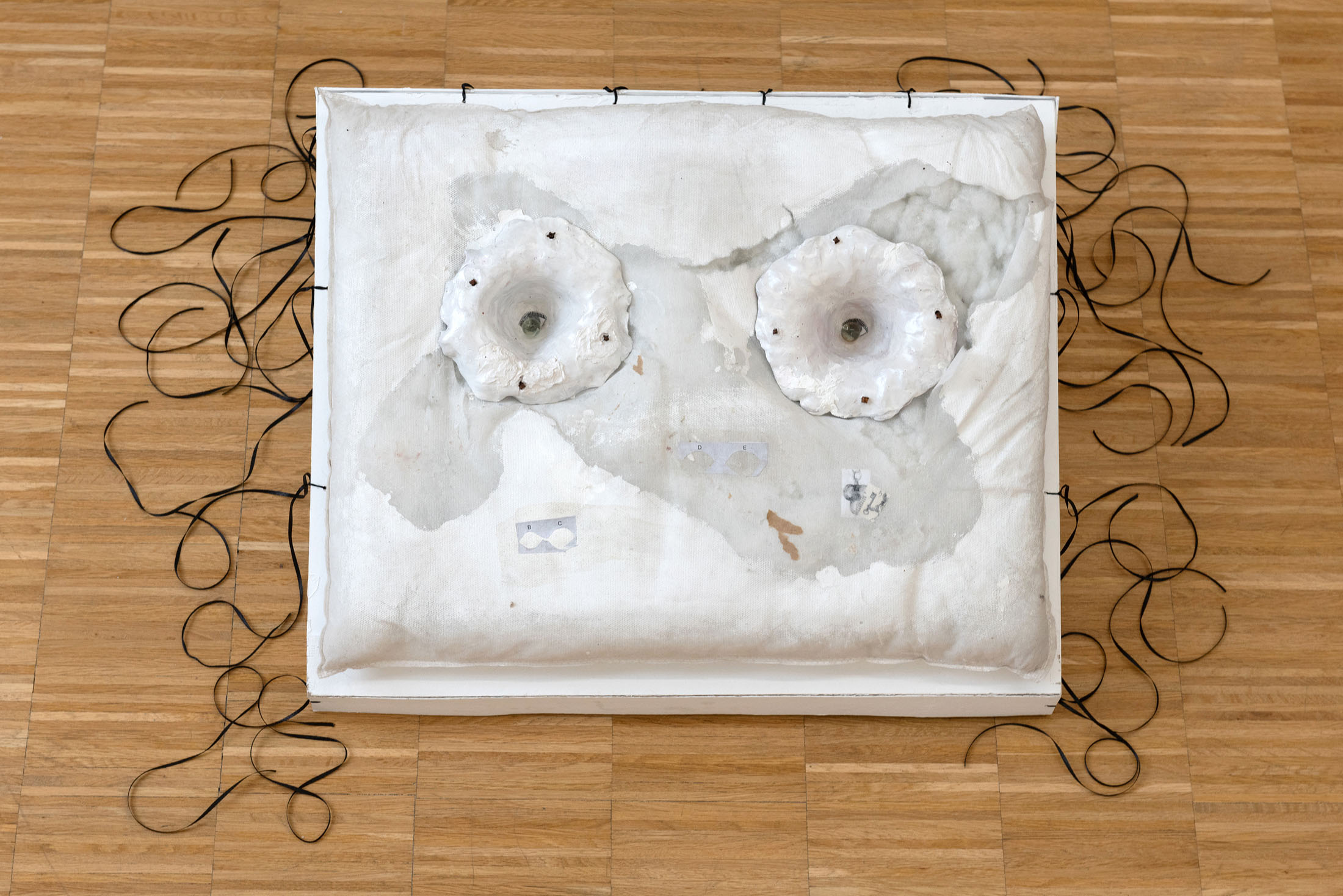
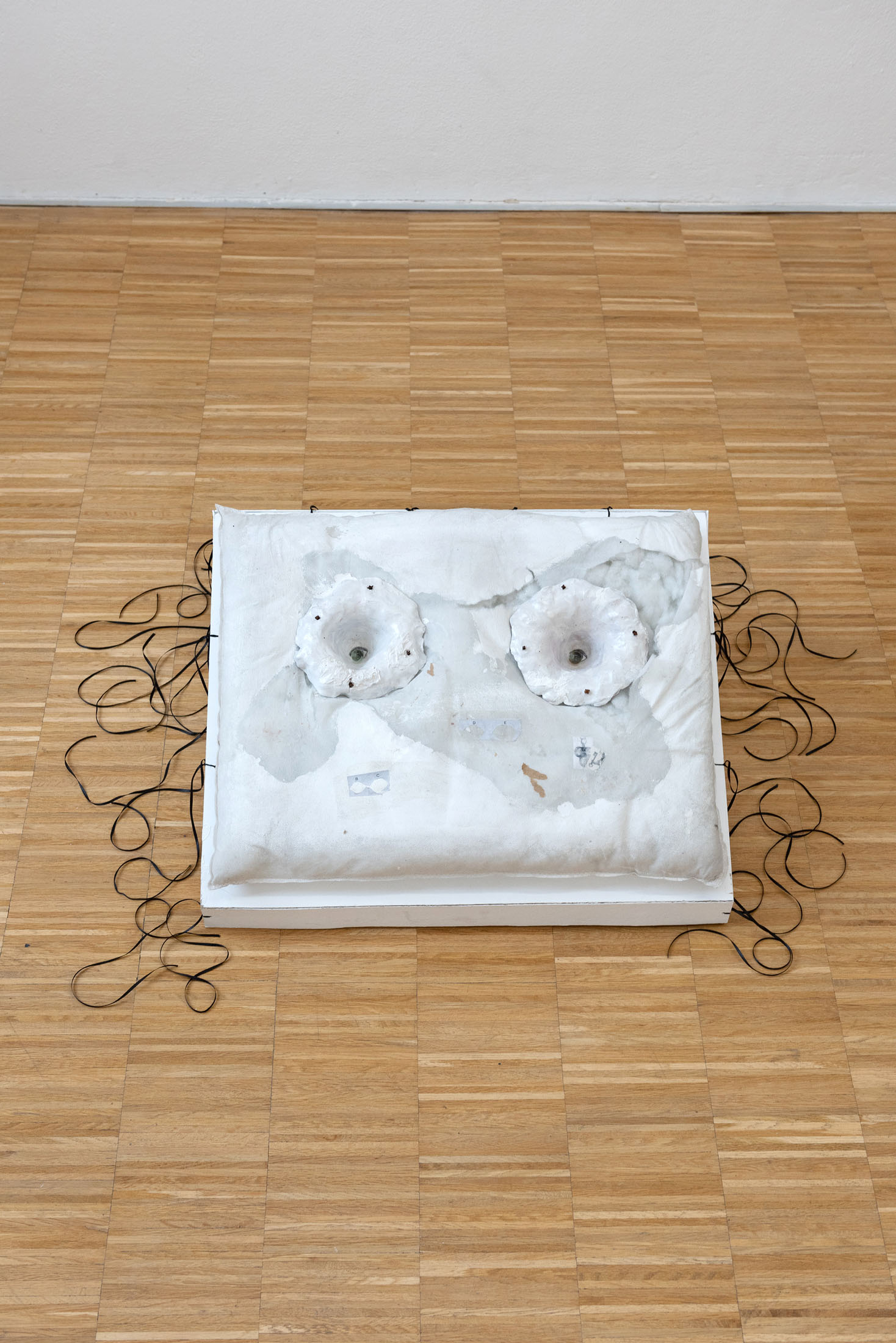
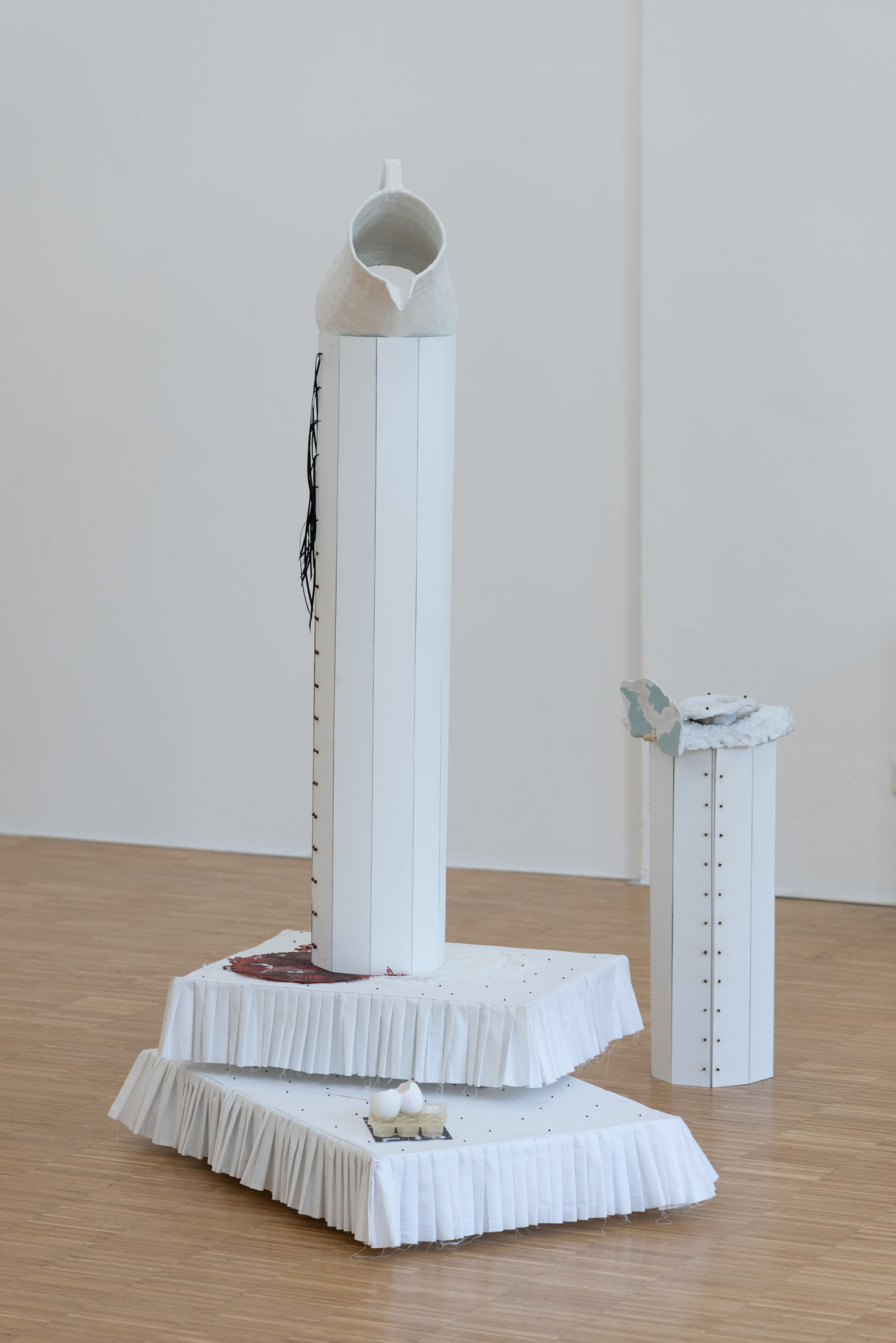
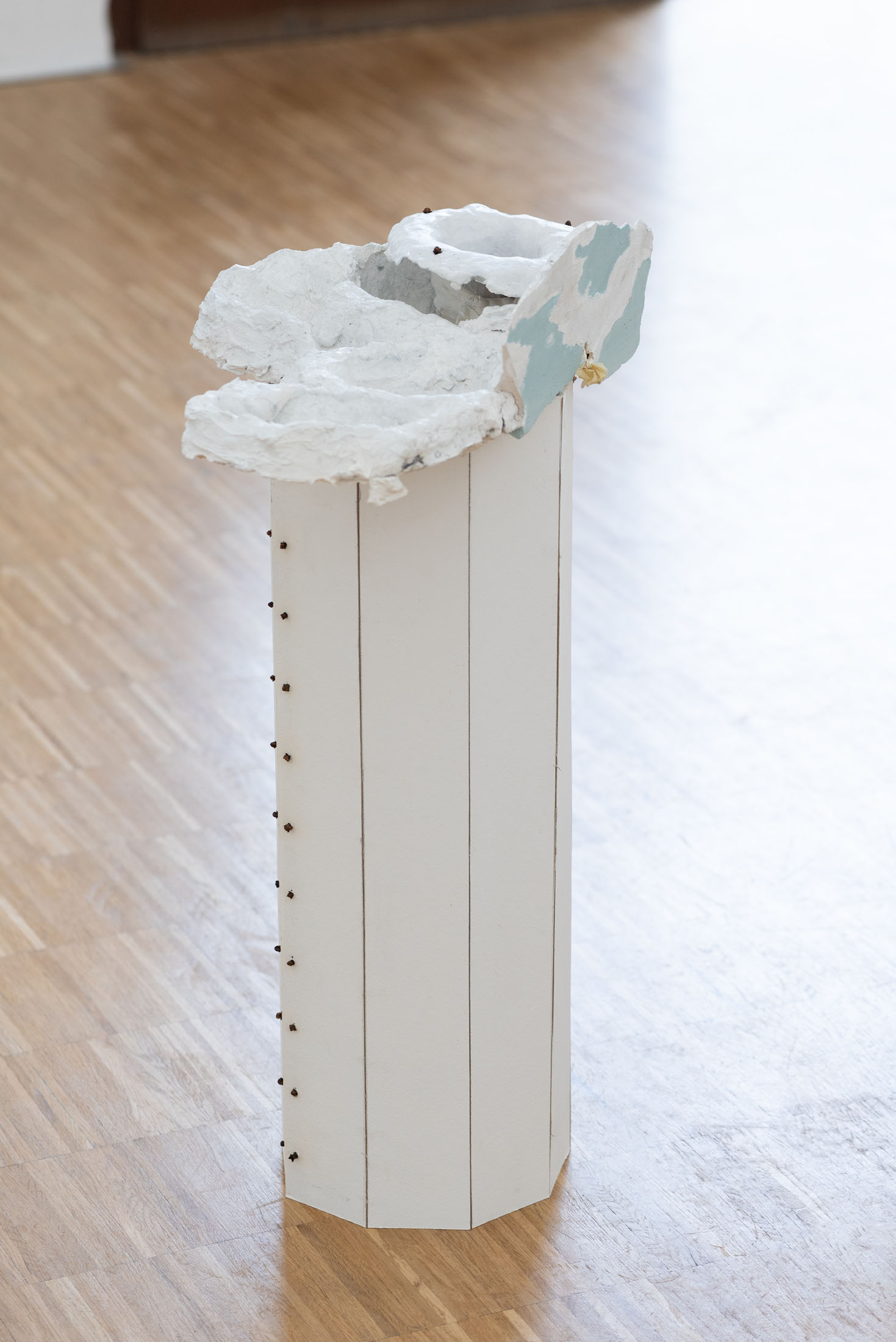
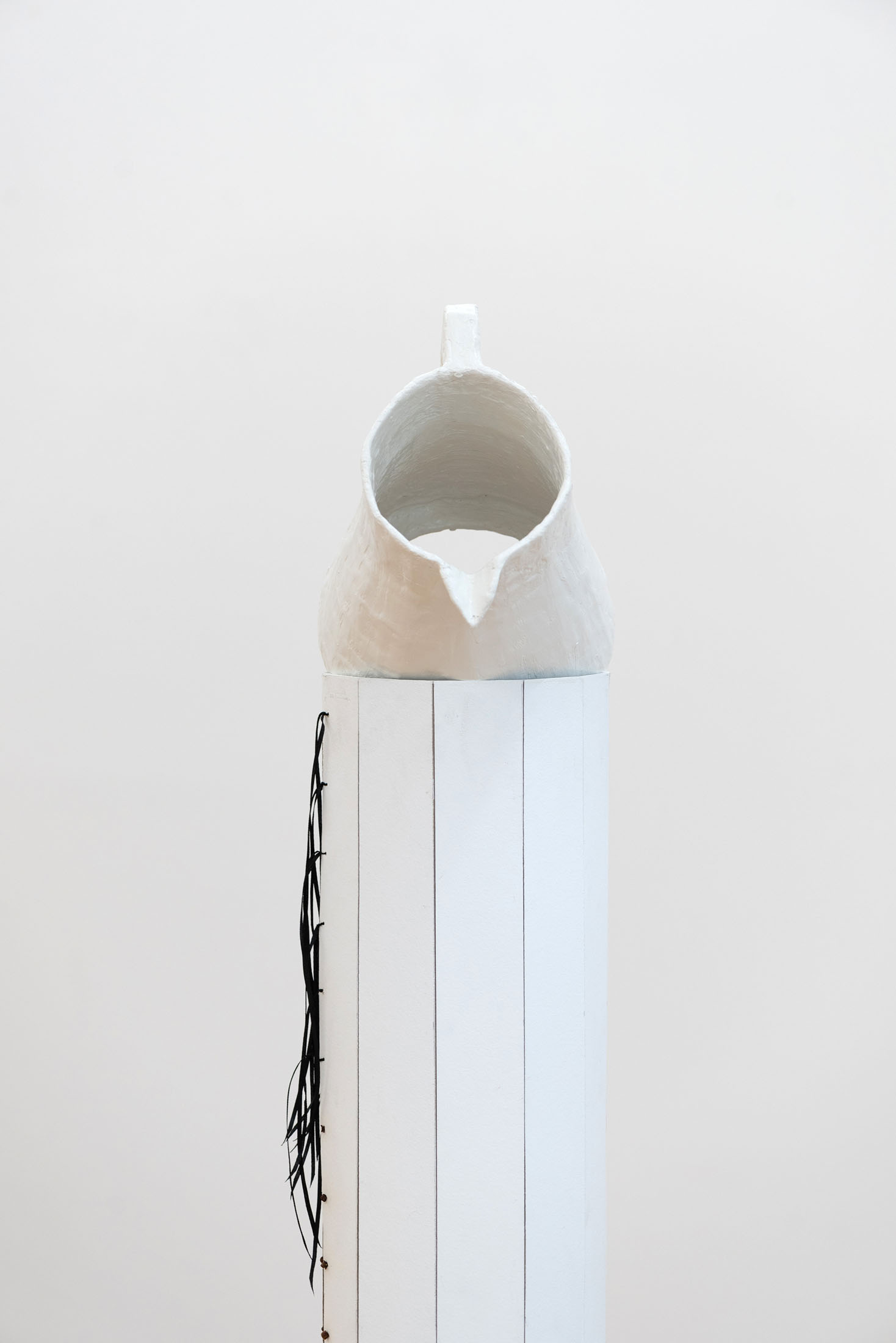
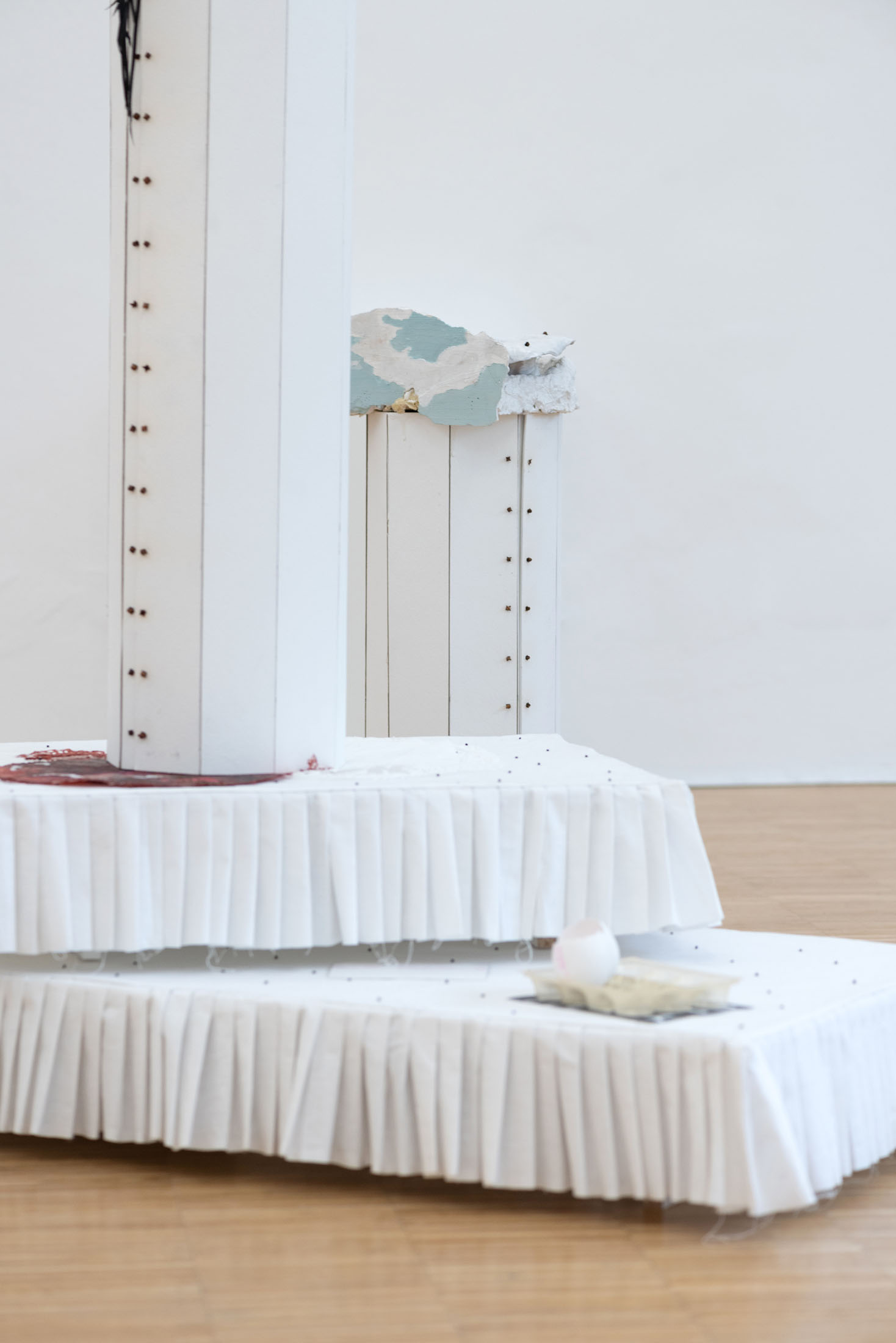
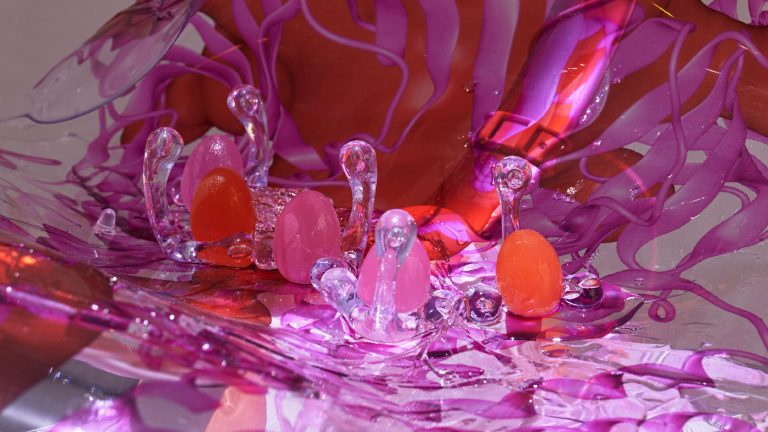
When Iris Böhnlein introduces her art practice, she refers to herself and the kind of do- mestic environment of middle class Franconian comfort she grew up in, with its familiar routines divided between work and home. She is interested in how these past rhythms can gain visual form. Examining the emotional, social and cultural codes inscribed in everyday objects and their environments, her work becomes a kind of mapping, the charting of the embedded subject’s location within the intersection of the symbolic, the social and the cultural. She remakes routines out of paper and card – hollow, repetitive acts represented by the jug pouring or the tying of knots in black ribbon that looks like wet hair – to produ- ce what in Braidotti’s terms would be a cartography of the subject in becoming. Böhnlein understands how our past and present shapes our current subjectivities and the subjectivi- ties yet to come. An old photograph is stamped with a date in pink, as is the egg shell, an Ei containing the eye like a talisman. So much we have learnt from psychoanalysis: that the subject – the“I”- is non-unitary and non-unified, a process of negotiation between different levels of power and desire, wilful choices and unconscious drives. It is a tangled knot of different, contradictory impulses given a grand illusion of unity. My making the location of our subjectivities unfamiliar to us, Böhnlein brings to representation what by definition escapes our consciousness.
Text by Magdalena Wisniowska
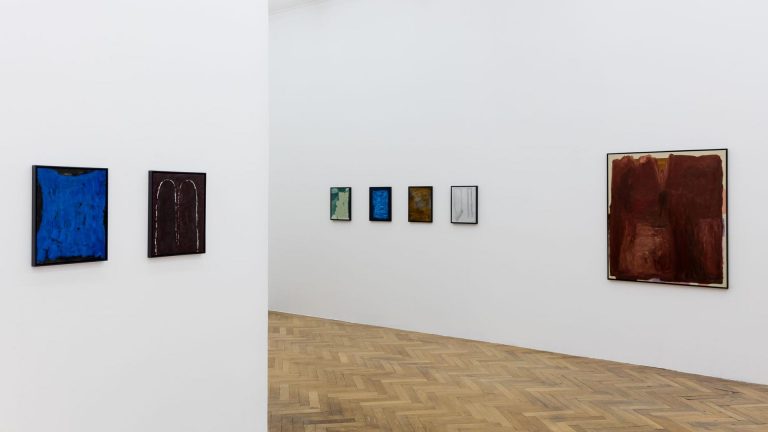
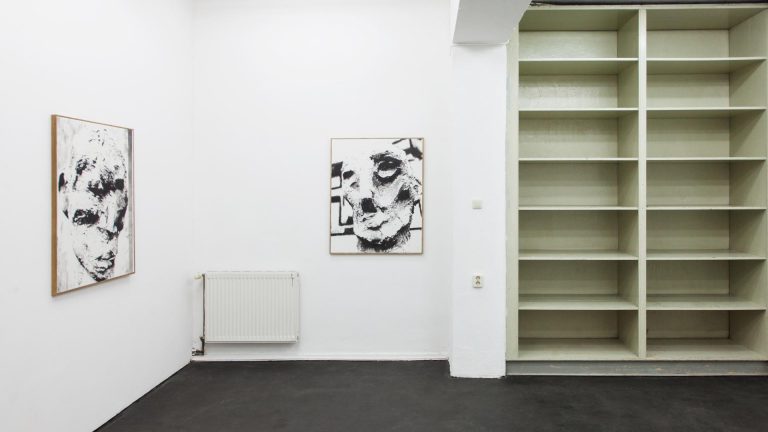
The Many Within, 2026, exhibition view, The Tiger Room, MunichThe Many Within, 2026, exhibition view, The Tiger Room, MunichThe Many Within, 2026, exhibition view, The Tiger Room, MunichThe Many Within, 2026, exhibition view, The Tiger Room, MunichThe Many Within, 2026, exhibition view, The Tiger Room, MunichThe Many Within, 2026, exhibition view, The Tiger Room, MunichThe Many Within, 2026, exhibition view, The Tiger Room, MunichThe Many Within, 2026, exhibition view, The Tiger Room, MunichThe Many Within, 2026, exhibition view, The Tiger Room, MunichThe Many Within, 2026, exhibition view, The Tiger Room, MunichThe Many Within, 2026, exhibition view, The Tiger Room, MunichThe Many Within, 2026, exhibition view, The Tiger Room, MunichThe Many Within, 2026, exhibition view, The Tiger Room, MunichThe Many Within, 2026, exhibition view, The Tiger Room, MunichIris Böhnlein, Poor thing, baby material and outlooks, in relation to a memory, cardboard, wood, linen sheet, plaster, papier machée, wall paint, clay, egg, clove, ribbon, photo, photocopy, paper doily, bead, hair pin, coffee tray, candy box insert, Column with jug on ‚little stage’: 148 x 85 x 55 cm, Small column on floor beside: 68 x 39 x 27 cm, 2025Iris Böhnlein, Poor thing, baby material and outlooks, in relation to a memory, cardboard, wood, linen sheet, plaster, papier machée, wall paint, clay, egg, clove, ribbon, photo, photocopy, paper doily, bead, hair pin, coffee tray, candy box insert, Column with jug on ‚little stage’: 148 x 85 x 55 cm, Small column on floor beside: 68 x 39 x 27 cm, 2025Iris Böhnlein, Poor thing, baby material and outlooks, in relation to a memory, cardboard, wood, linen sheet, plaster, papier machée, wall paint, clay, egg, clove, ribbon, photo, photocopy, paper doily, bead, hair pin, coffee tray, candy box insert, Column with jug on ‚little stage’: 148 x 85 x 55 cm, Small column on floor beside: 68 x 39 x 27 cm, 2025The Many Within, 2026, exhibition view, The Tiger Room, MunichAnna Lena Keller, Kast 4, thermoplastic material – Mixed granules of wood and plastic, 68 x 34 x 12 cm, 2026Anna Lena Keller, Kast 4, thermoplastic material – Mixed granules of wood and plastic, 68 x 34 x 12 cm, 2026Anna Lena Keller, Kast 4, thermoplastic material – Mixed granules of wood and plastic, 68 x 34 x 12 cm, 2026Anna Lena Keller, Kast 4, thermoplastic material – Mixed granules of wood and plastic, 68 x 34 x 12 cm, 2026Anna Lena Keller, Kast 5, thermoplastic material – Mixed granules of wood and plastic, 68 x 60 x 15 cm, 2026The Many Within, 2026, exhibition view, The Tiger Room, MunichAnna Lena Keller, Inner Layer, thermoplastic material, leather, stainless steel, 50 x 32,5 x 4,5cm, 2025Anna Lena Keller, Inner Layer, thermoplastic material, leather, stainless steel, 50 x 32,5 x 4,5cm, 2025Anna Lena Keller, Inner Layer, thermoplastic material, leather, stainless steel, 50 x 32,5 x 4,5cm, 2025Iris Böhnlein, Poor thing, baby material and outlooks, in relation to a memory, cardboard, wood, linen sheet, plaster, papier machée, wall paint, clay, egg, clove, ribbon, photo, photocopy, paper doily, bead, hair pin, coffee tray, candy box insert, Column with jug on ‚little stage’: 148 x 85 x 55 cm, Small column on floor beside: 68 x 39 x 27 cm, 2025Iris Böhnlein, Poor thing, baby material and outlooks, in relation to a memory, cardboard, wood, linen sheet, plaster, papier machée, wall paint, clay, egg, clove, ribbon, photo, photocopy, paper doily, bead, hair pin, coffee tray, candy box insert, Column with jug on ‚little stage’: 148 x 85 x 55 cm, Small column on floor beside: 68 x 39 x 27 cm, 2025Iris Böhnlein, Poor thing, baby material and outlooks, in relation to a memory, cardboard, wood, linen sheet, plaster, papier machée, wall paint, clay, egg, clove, ribbon, photo, photocopy, paper doily, bead, hair pin, coffee tray, candy box insert, Column with jug on ‚little stage’: 148 x 85 x 55 cm, Small column on floor beside: 68 x 39 x 27 cm, 2025Iris Böhnlein, Poor thing, baby material and outlooks, in relation to a memory, cardboard, wood, linen sheet, plaster, papier machée, wall paint, clay, egg, clove, ribbon, photo, photocopy, paper doily, bead, hair pin, coffee tray, candy box insert, Column with jug on ‚little stage’: 148 x 85 x 55 cm, Small column on floor beside: 68 x 39 x 27 cm, 2025Iris Böhnlein, Poor thing, baby material and outlooks, in relation to a memory, cardboard, wood, linen sheet, plaster, papier machée, wall paint, clay, egg, clove, ribbon, photo, photocopy, paper doily, bead, hair pin, coffee tray, candy box insert, Column with jug on ‚little stage’: 148 x 85 x 55 cm, Small column on floor beside: 68 x 39 x 27 cm, 2025Iris Böhnlein, My pillow is my friend, cardboard, ribbon, pillow, ceramic, clove, marble, wall paint, 63 x 50 x 20 cm, 2026Iris Böhnlein, My pillow is my friend, cardboard, ribbon, pillow, ceramic, clove, marble, wall paint, 63 x 50 x 20 cm, 2026Iris Böhnlein, My pillow is my friend, cardboard, ribbon, pillow, ceramic, clove, marble, wall paint, 63 x 50 x 20 cm, 2026Iris Böhnlein, My pillow is my friend, cardboard, ribbon, pillow, ceramic, clove, marble, wall paint, 63 x 50 x 20 cm, 2026Iris Böhnlein, My pillow is my friend, cardboard, ribbon, pillow, ceramic, clove, marble, wall paint, 63 x 50 x 20 cm, 2026Iris Böhnlein, My pillow is my friend, cardboard, ribbon, pillow, ceramic, clove, marble, wall paint, 63 x 50 x 20 cm, 2026Iris Böhnlein, My pillow is my friend, cardboard, ribbon, pillow, ceramic, clove, marble, wall paint, 63 x 50 x 20 cm, 2026Iris Böhnlein, My pillow is my friend, cardboard, ribbon, pillow, ceramic, clove, marble, wall paint, 63 x 50 x 20 cm, 2026Iris Böhnlein, Poor thing, baby material and outlooks, in relation to a memory, cardboard, wood, linen sheet, plaster, papier machée, wall paint, clay, egg, clove, ribbon, photo, photocopy, paper doily, bead, hair pin, coffee tray, candy box insert, Column with jug on ‚little stage’: 148 x 85 x 55 cm, Small column on floor beside: 68 x 39 x 27 cm, 2025Iris Böhnlein, Poor thing, baby material and outlooks, in relation to a memory, cardboard, wood, linen sheet, plaster, papier machée, wall paint, clay, egg, clove, ribbon, photo, photocopy, paper doily, bead, hair pin, coffee tray, candy box insert, Column with jug on ‚little stage’: 148 x 85 x 55 cm, Small column on floor beside: 68 x 39 x 27 cm, 2025Iris Böhnlein, Poor thing, baby material and outlooks, in relation to a memory, cardboard, wood, linen sheet, plaster, papier machée, wall paint, clay, egg, clove, ribbon, photo, photocopy, paper doily, bead, hair pin, coffee tray, candy box insert, Column with jug on ‚little stage’: 148 x 85 x 55 cm, Small column on floor beside: 68 x 39 x 27 cm, 2025Iris Böhnlein, Poor thing, baby material and outlooks, in relation to a memory, cardboard, wood, linen sheet, plaster, papier machée, wall paint, clay, egg, clove, ribbon, photo, photocopy, paper doily, bead, hair pin, coffee tray, candy box insert, Column with jug on ‚little stage’: 148 x 85 x 55 cm, Small column on floor beside: 68 x 39 x 27 cm, 2025Yuchu Gao, Tidal Surge #2, charcoal and pastel on tracing paper magnets and metal, 250cm ( L) x 198cm (H) x 12cm (W), 2026Yuchu Gao, Tidal Surge #2, charcoal and pastel on tracing paper magnets and metal, 250cm ( L) x 198cm (H) x 12cm (W), 2026Yuchu Gao, Tidal Surge #2, charcoal and pastel on tracing paper magnets and metal, 250cm ( L) x 198cm (H) x 12cm (W), 2026The Many Within, 2026, exhibition view, The Tiger Room, MunichThe Many Within, 2026, exhibition view, The Tiger Room, MunichThe Many Within, 2026, exhibition view, The Tiger Room, MunichThe Many Within, 2026, exhibition view, The Tiger Room, MunichYuchu Gao, In the Eye of Storm #32, charcoal and pastel on tracing paper, ca. 20x13cm (with frame 26x19cm), 2026Yuchu Gao, In the Eye of Storm #33, charcoal and pastel on tracing paper, ca. 20x13cm ( with frame 26x19cm), 2026The Many Within, 2026, exhibition view, The Tiger Room, MunichYuchu Gao, In the Eye of Storm #28, charcoal and pastel on tracing, paper, c.a. 20x13cm, 2026Yuchu Gao, In the Eye of Storm #26, charcoal and pastel on tracing paper, c.a. 20x13cm, 2026Yuchu Gao, The Clench, charcoal and pastel on tracing paper, 98x30cm, 2026Yuchu Gao, Tidal Surge #2, charcoal and pastel on tracing paper magnets and metal, 250cm ( L) x 198cm (H) x 12cm (W), 2026Yuchu Gao, The Clench, charcoal and pastel on tracing paper, 98x30cm, 2026Yuchu Gao, Tidal Surge #2, charcoal and pastel on tracing paper magnets and metal, 250cm ( L) x 198cm (H) x 12cm (W), 2026Yuchu Gao, Tidal Surge #2, charcoal and pastel on tracing paper magnets and metal, 250cm ( L) x 198cm (H) x 12cm (W), 2026