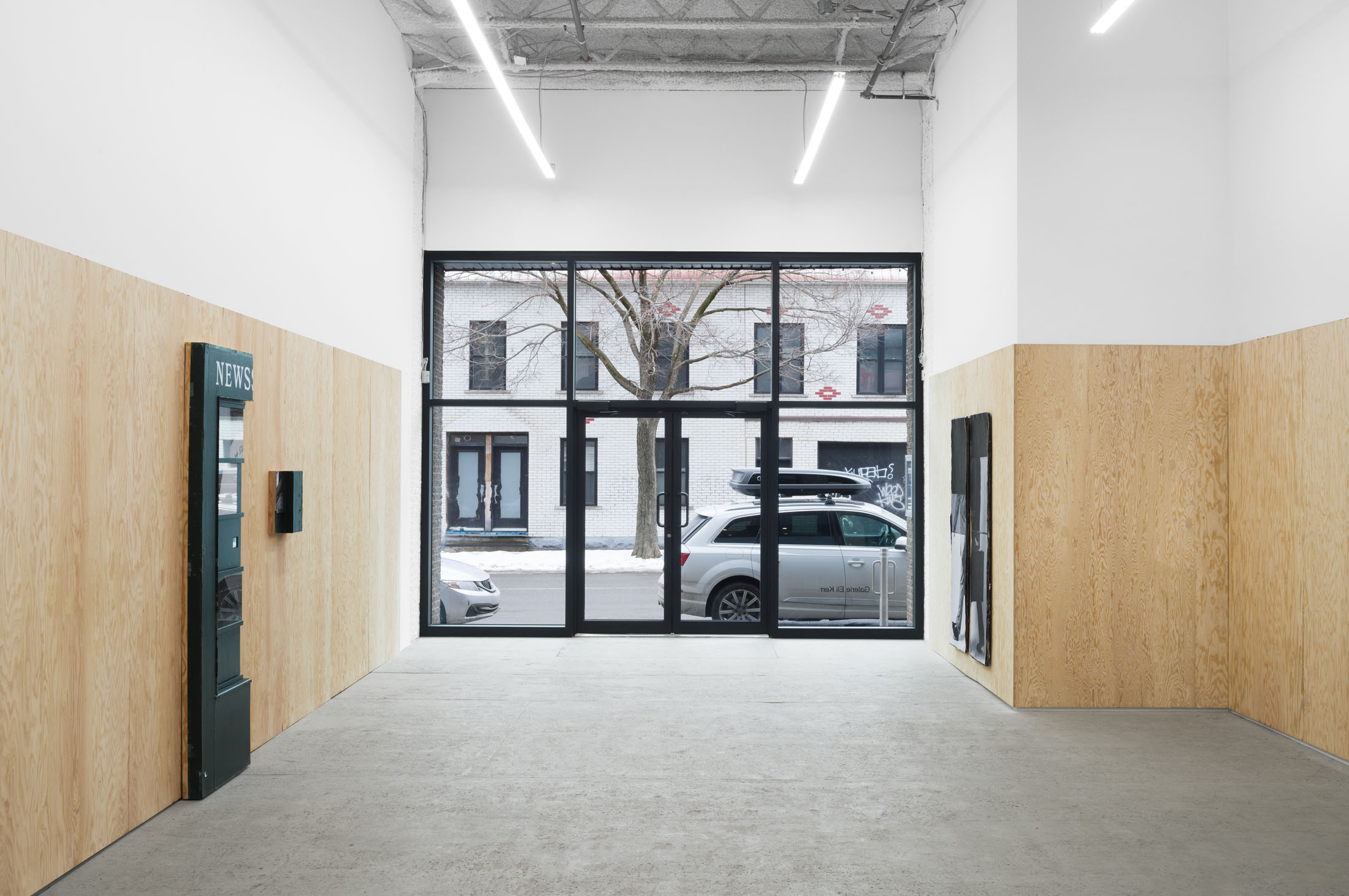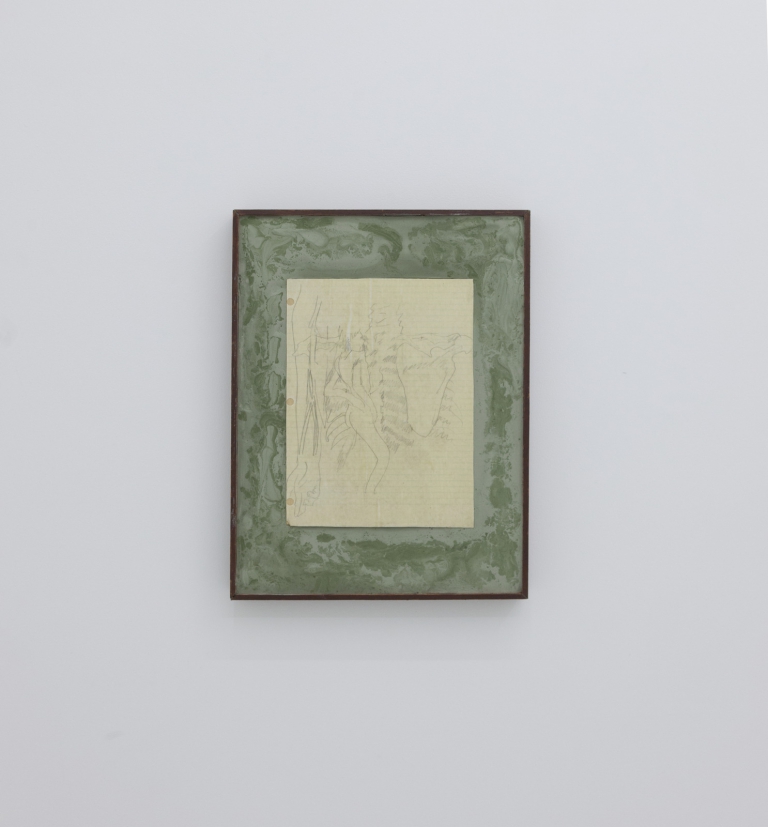
EXT. SIDEWALK – DAY
From the hustle and bustle of Saint-Laurent Boulevard, two figures inside a gallery are paused in motion as they seem to move toward the outside.
INT. LARGE ROOM ENTRANCE. LEFT WALL – DAY
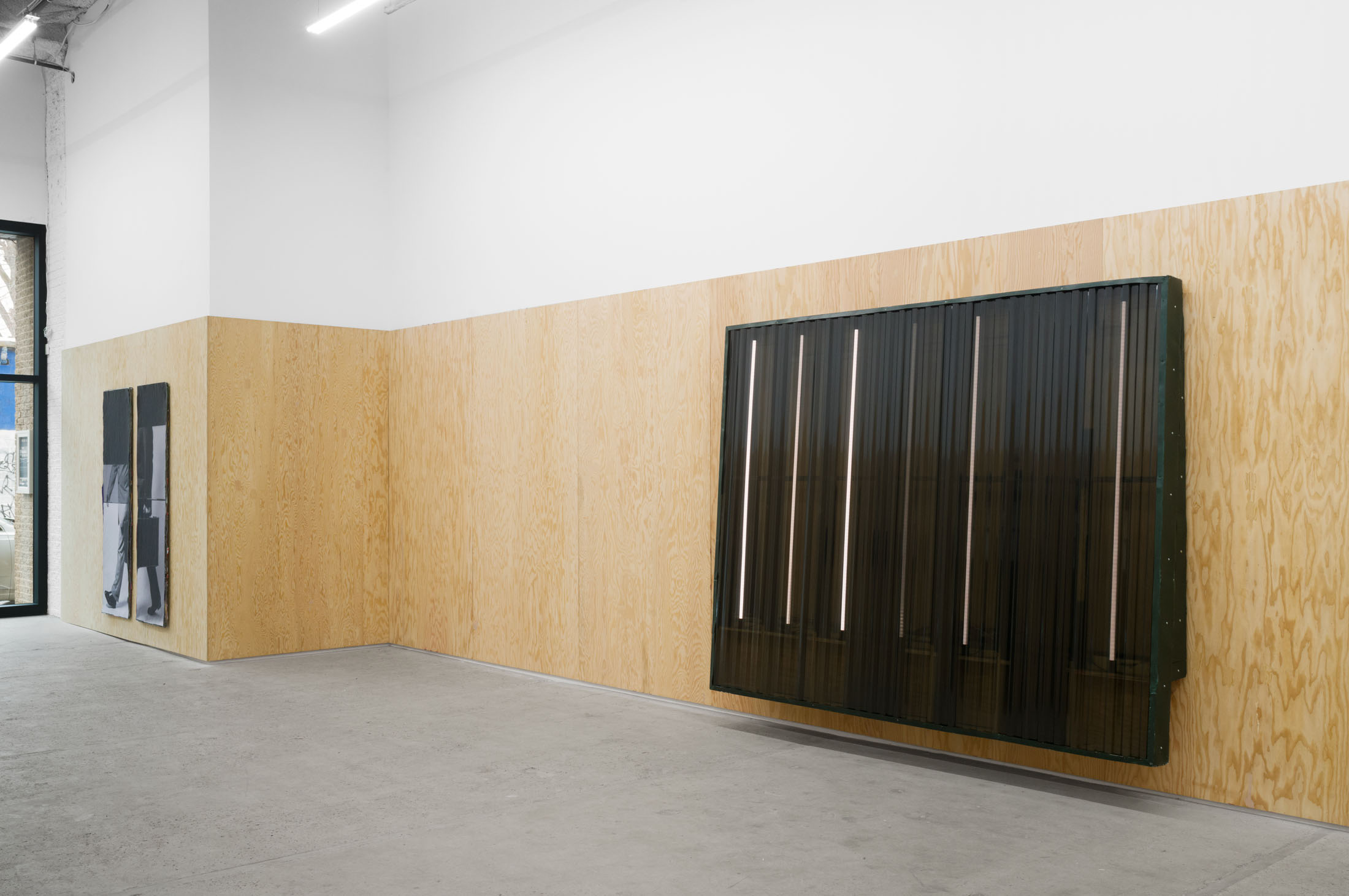
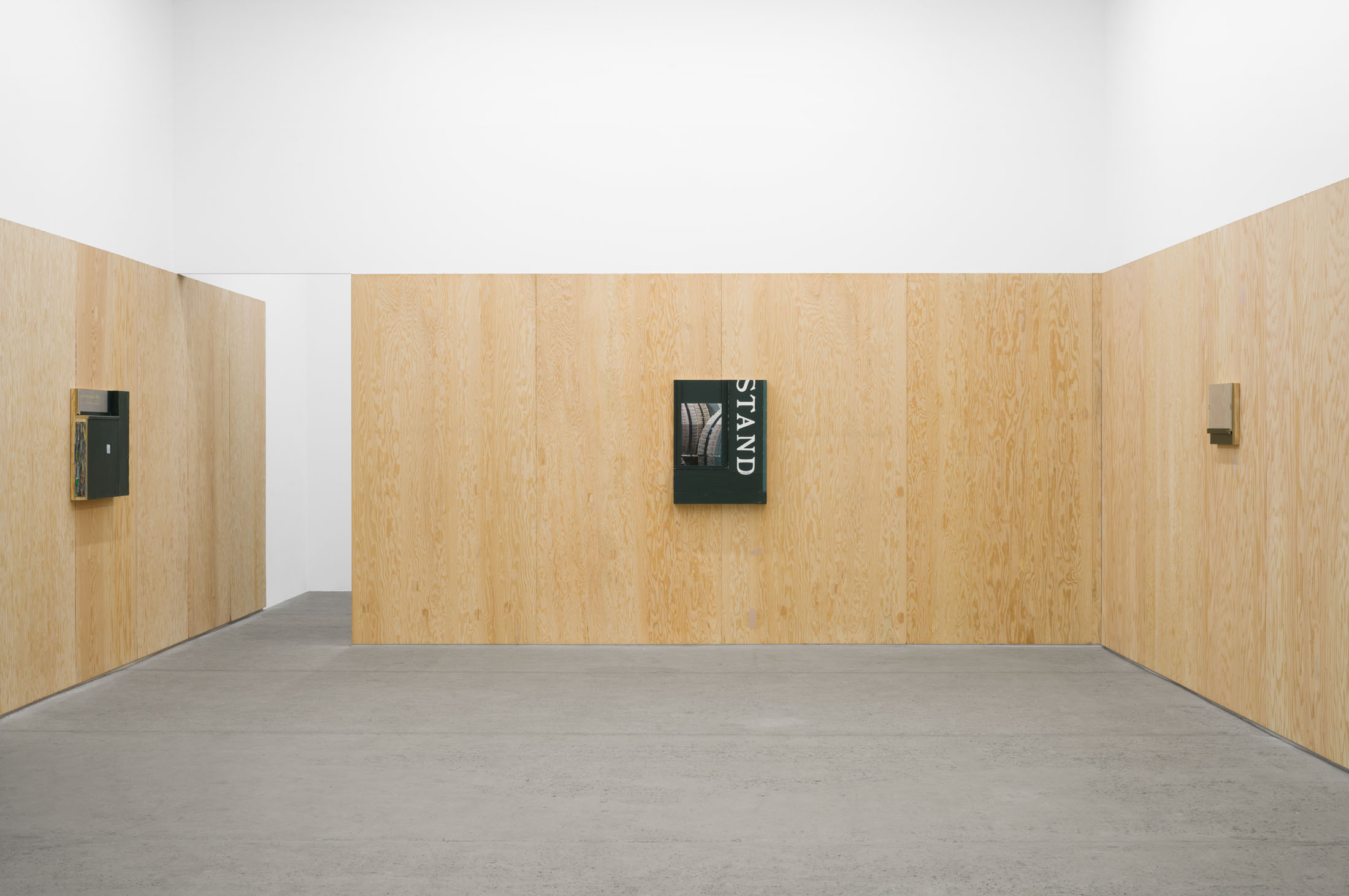
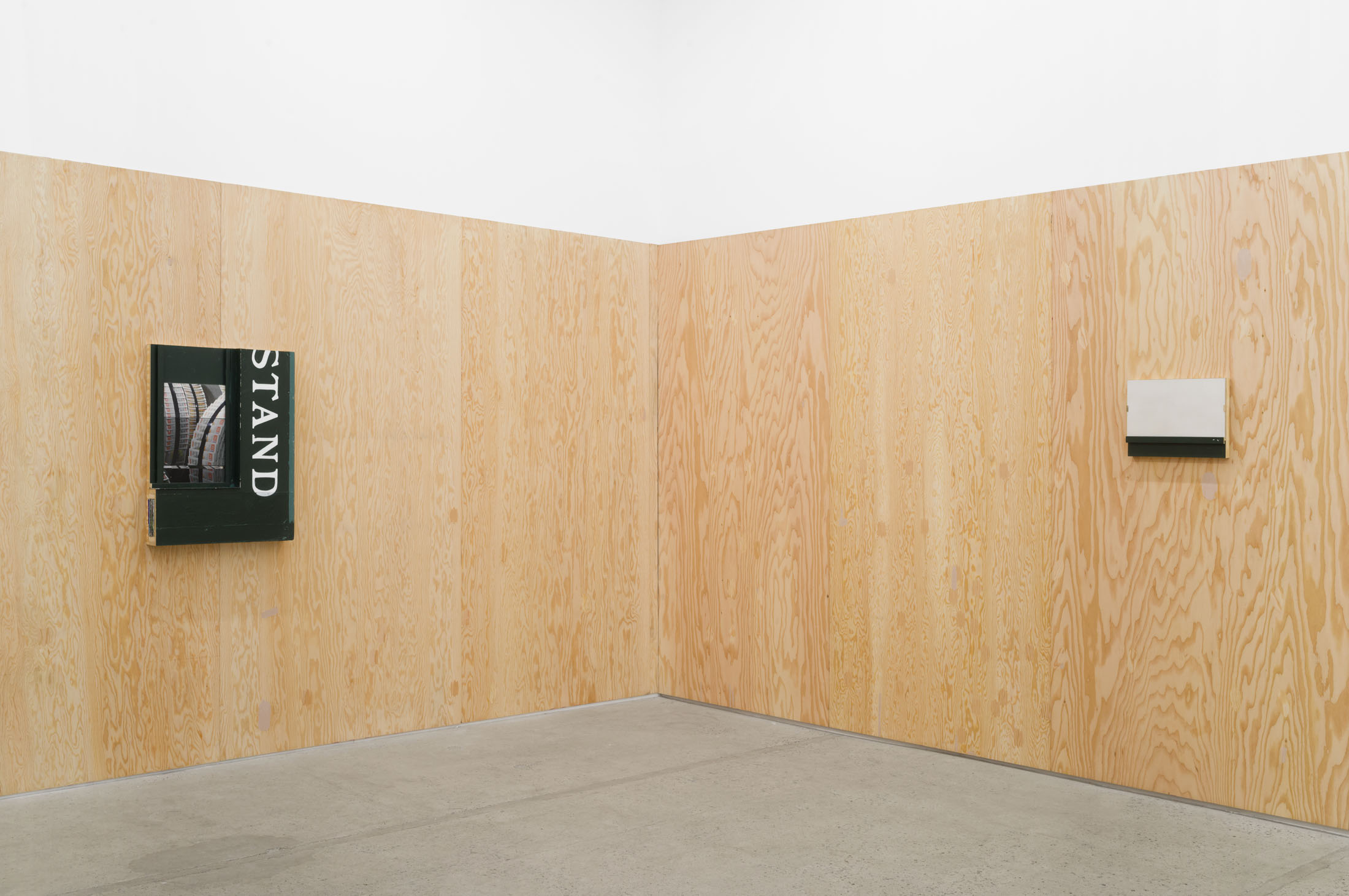
Entering from the street, a plywood cladding lines the gallery walls up to a height of eight feet.
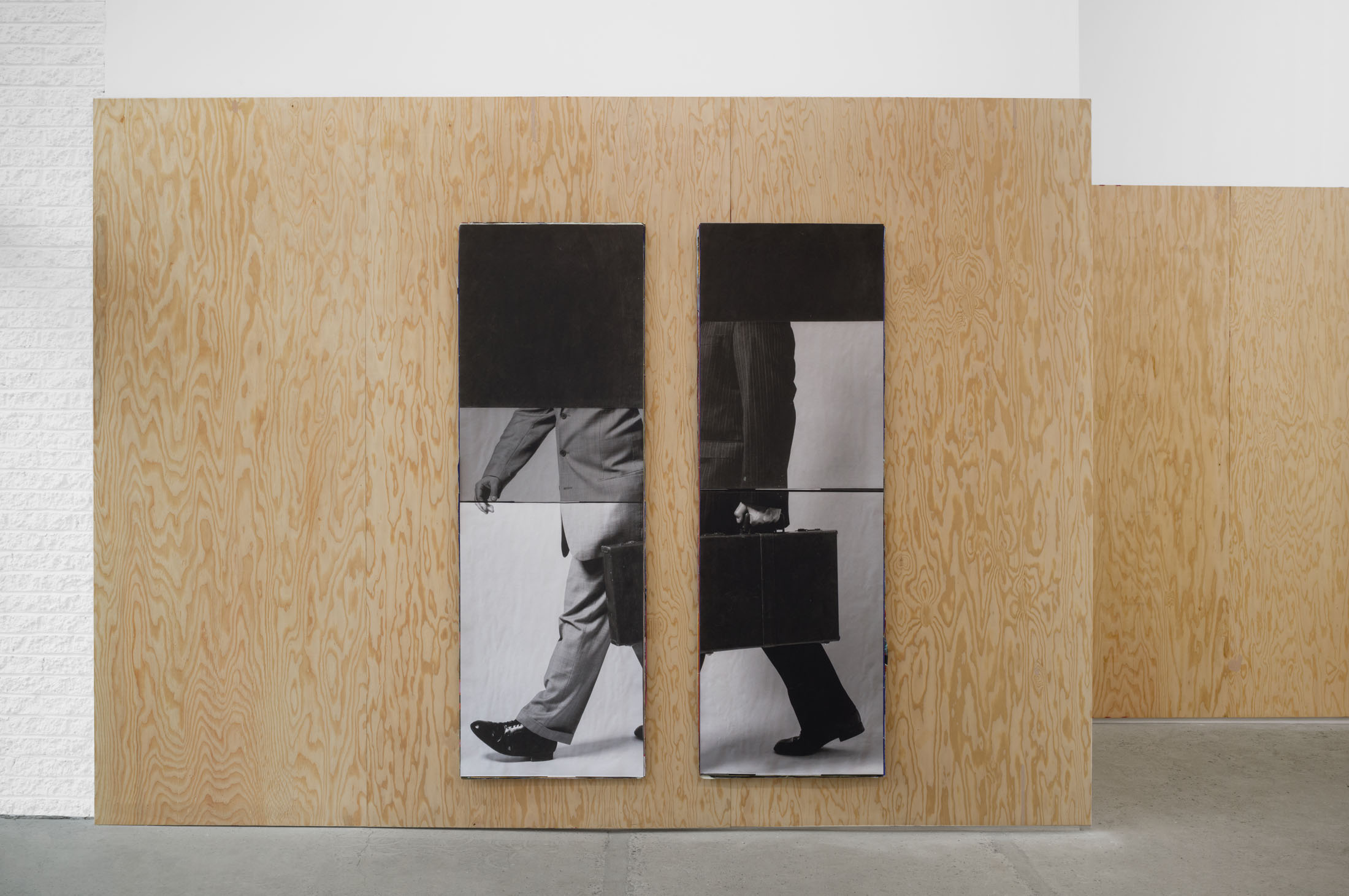
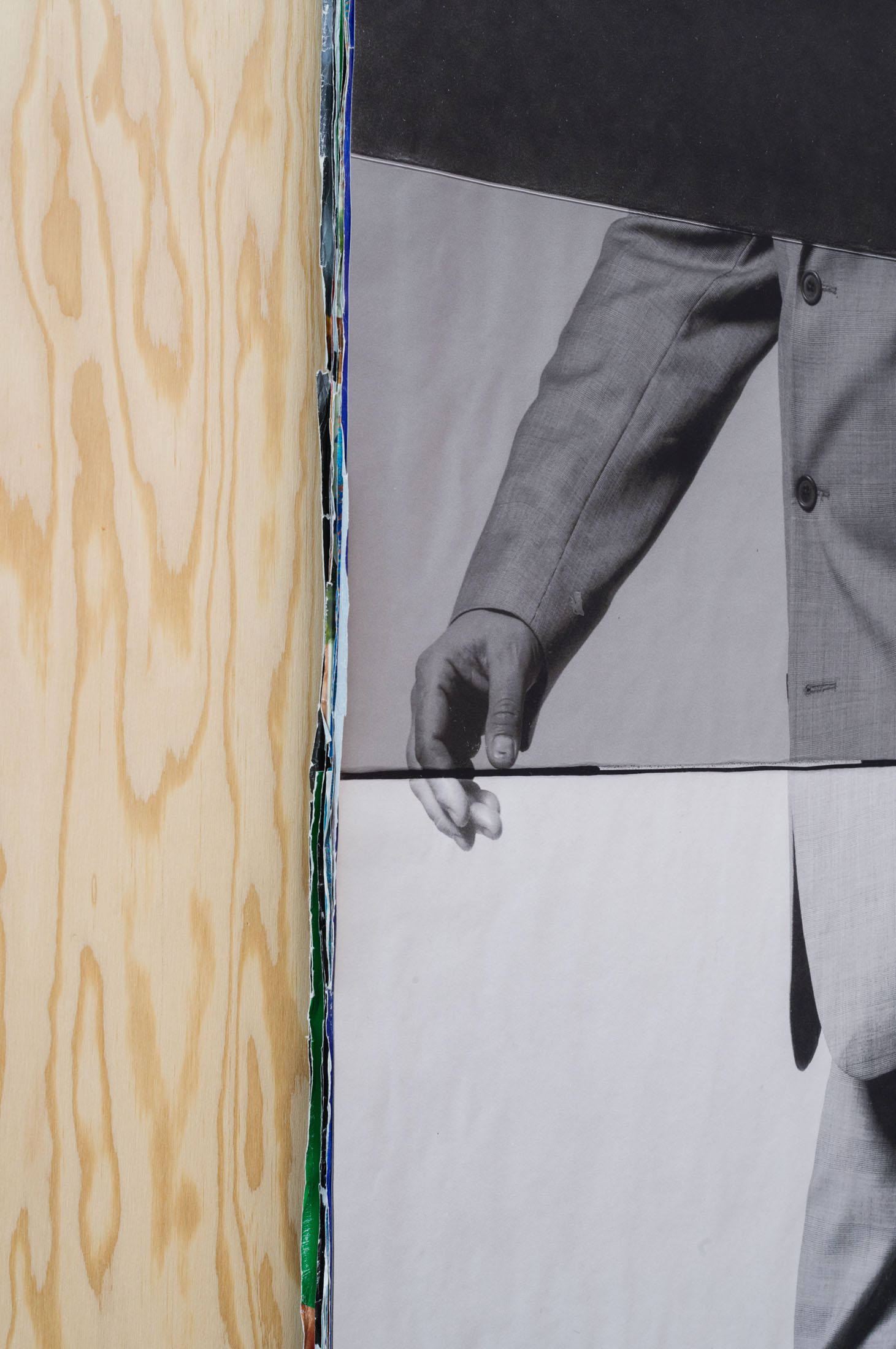
Immediately to the left, the two figures seen from the sidewalk are set upon thick strata of accumulated poster paper, like those seen on advertising street walls, serving as a support for the images above. Printed in black and white, the figures follow one another: each carries a briefcase, each appears en route to work, as the title suggests. Yet these are not singular images, but composites. The photographs seem to have been printed, folded, scanned, and reprinted in succession. They read less as images than as documents.
INT. LARGE ROOM. RIGHT WALL – DAY
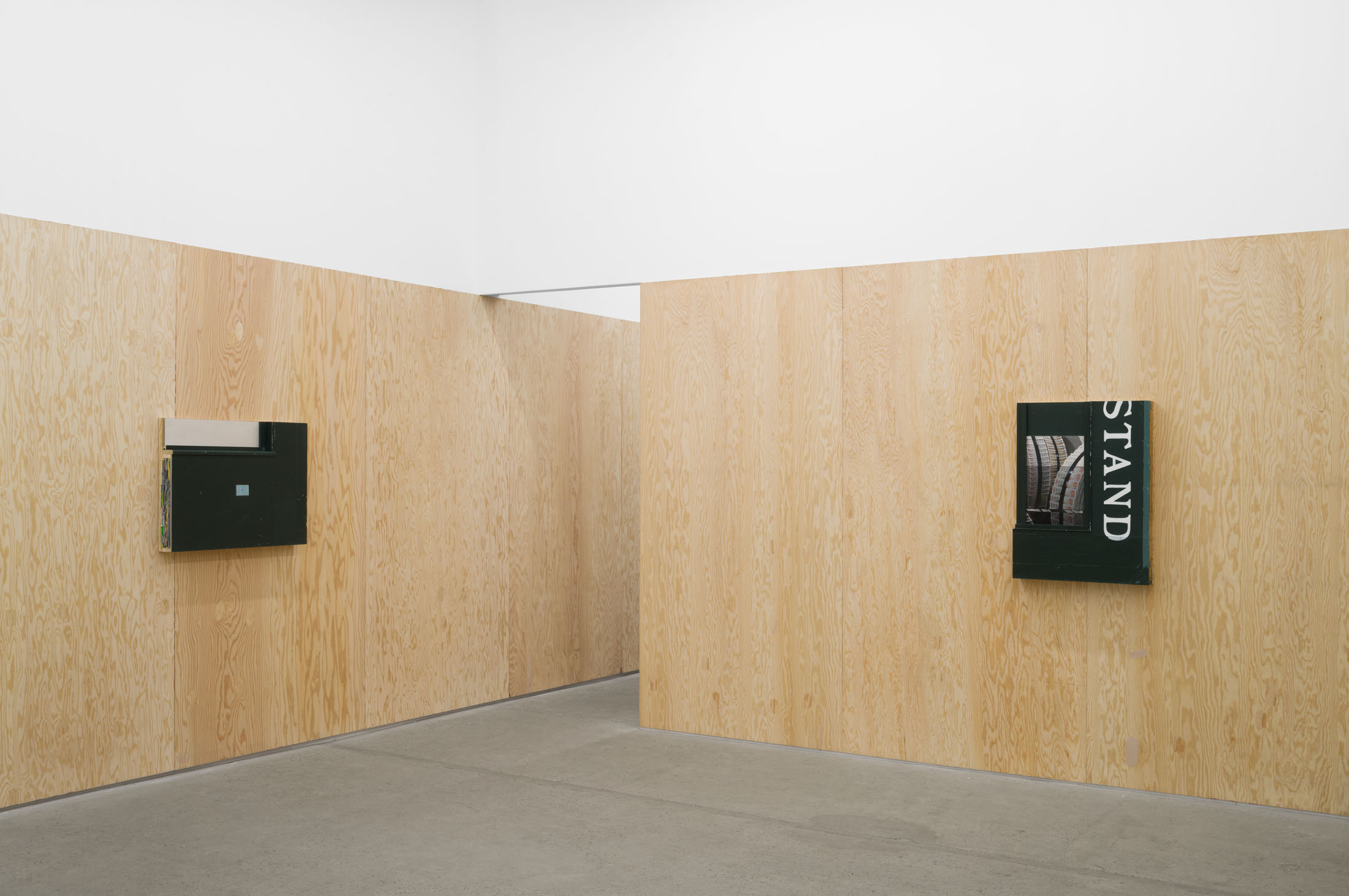
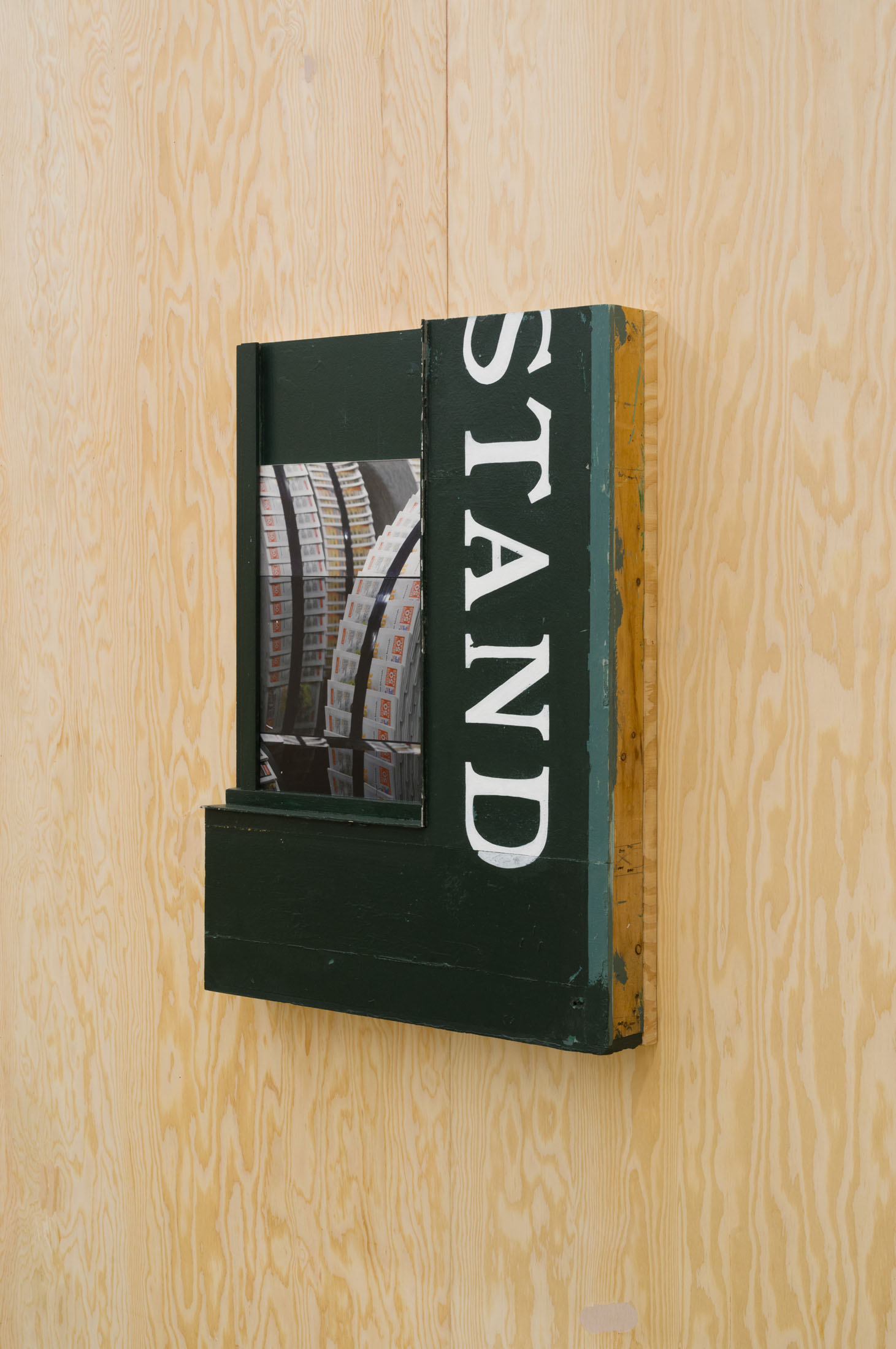
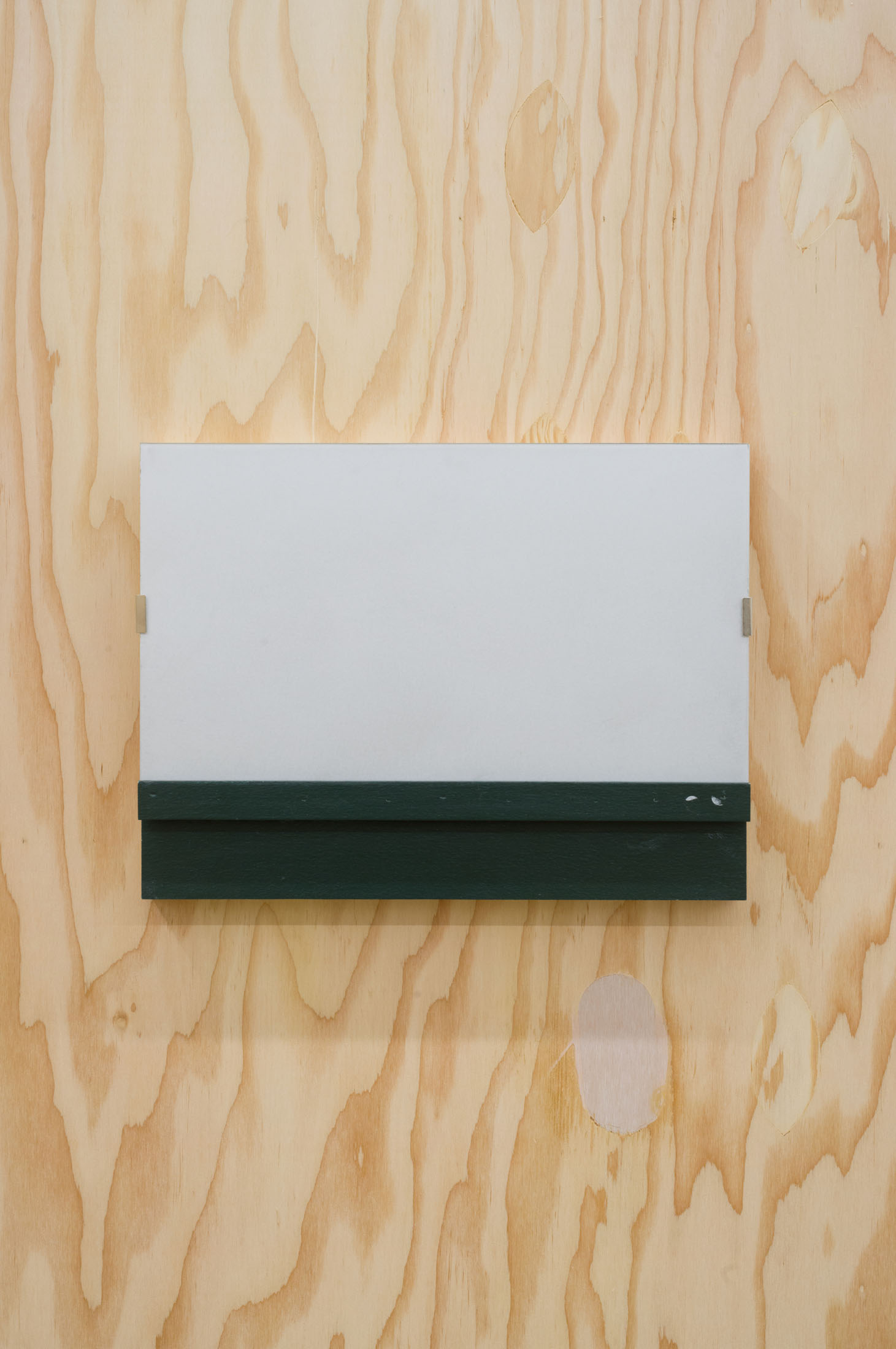
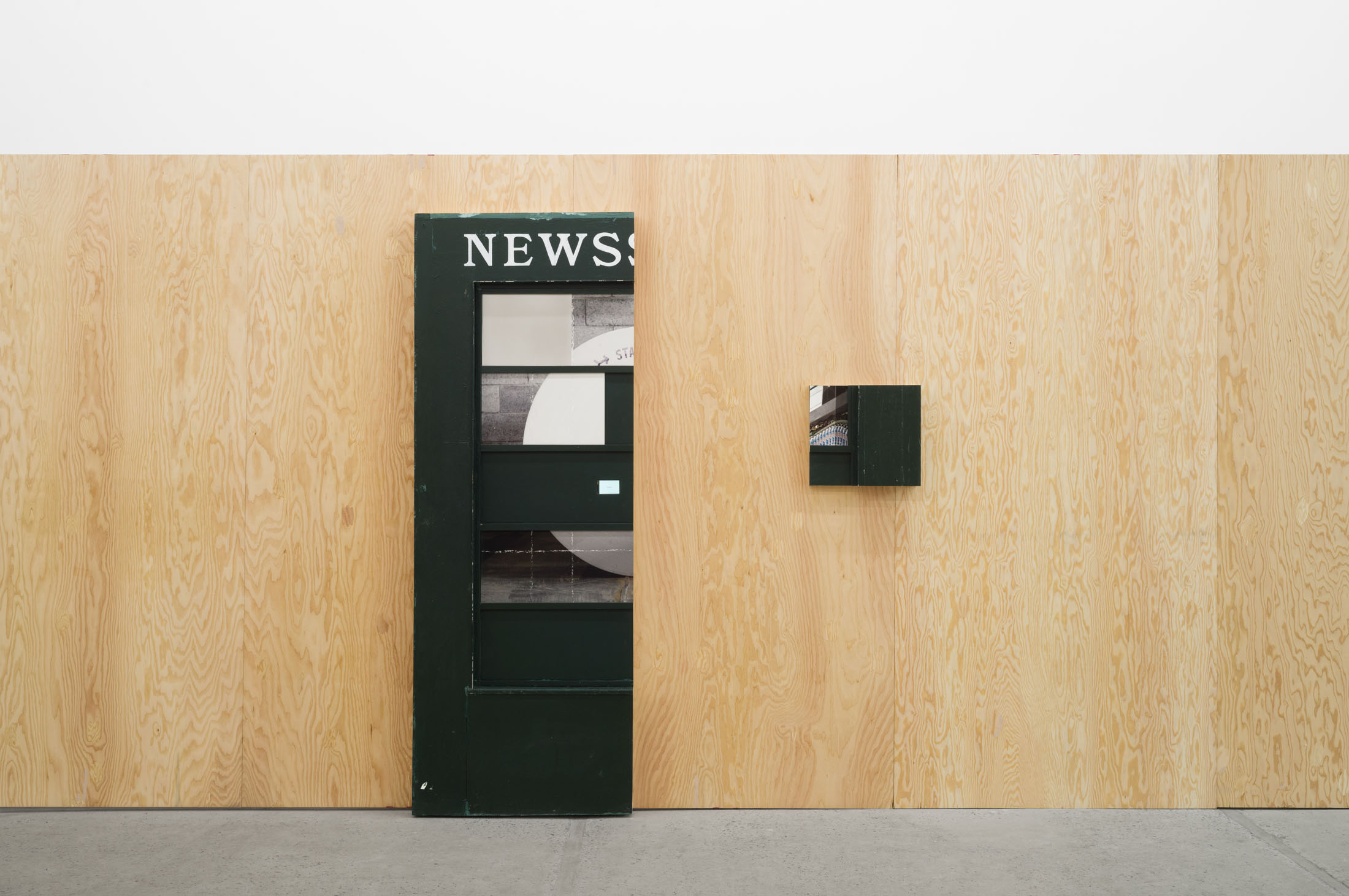
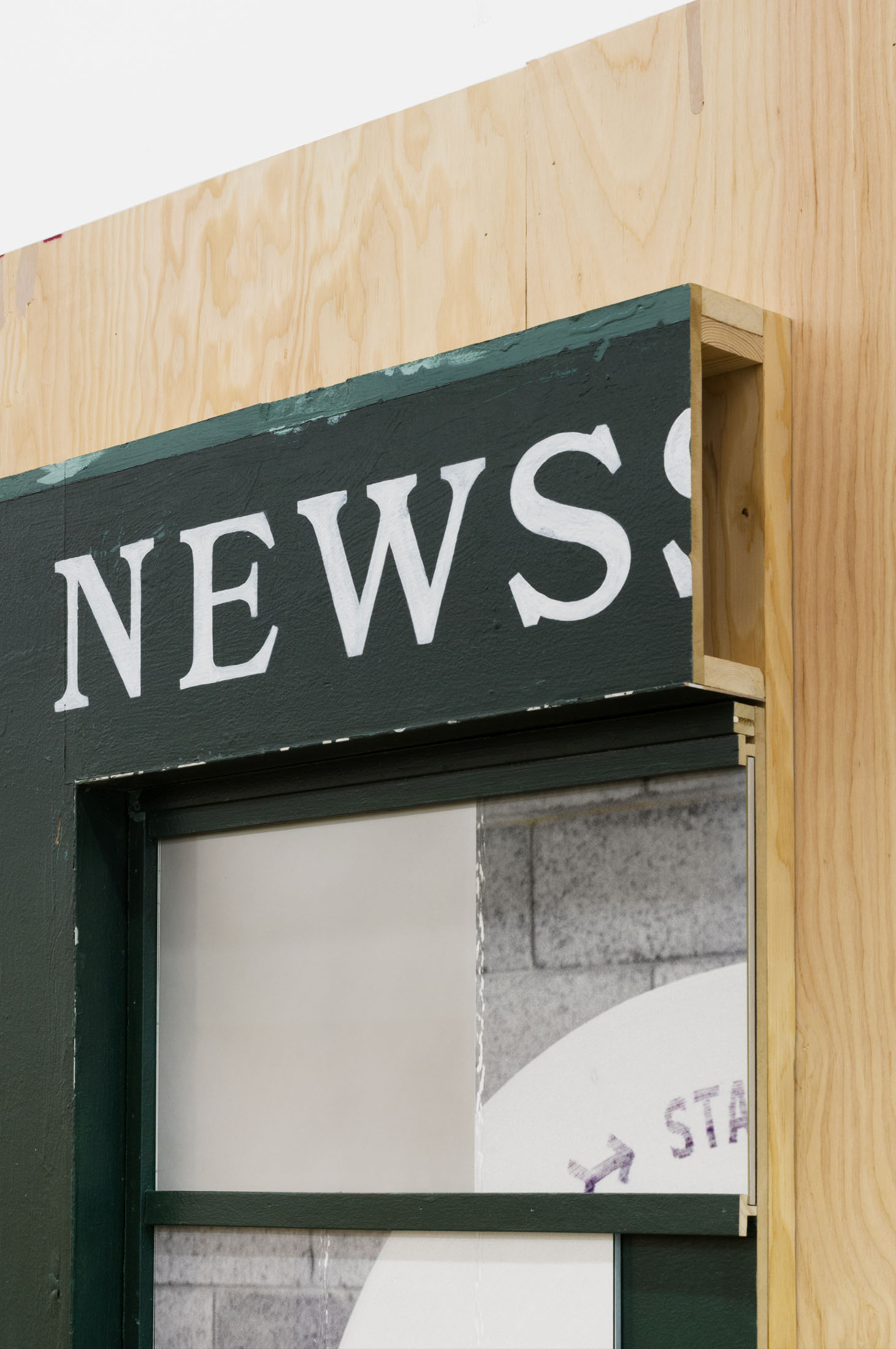
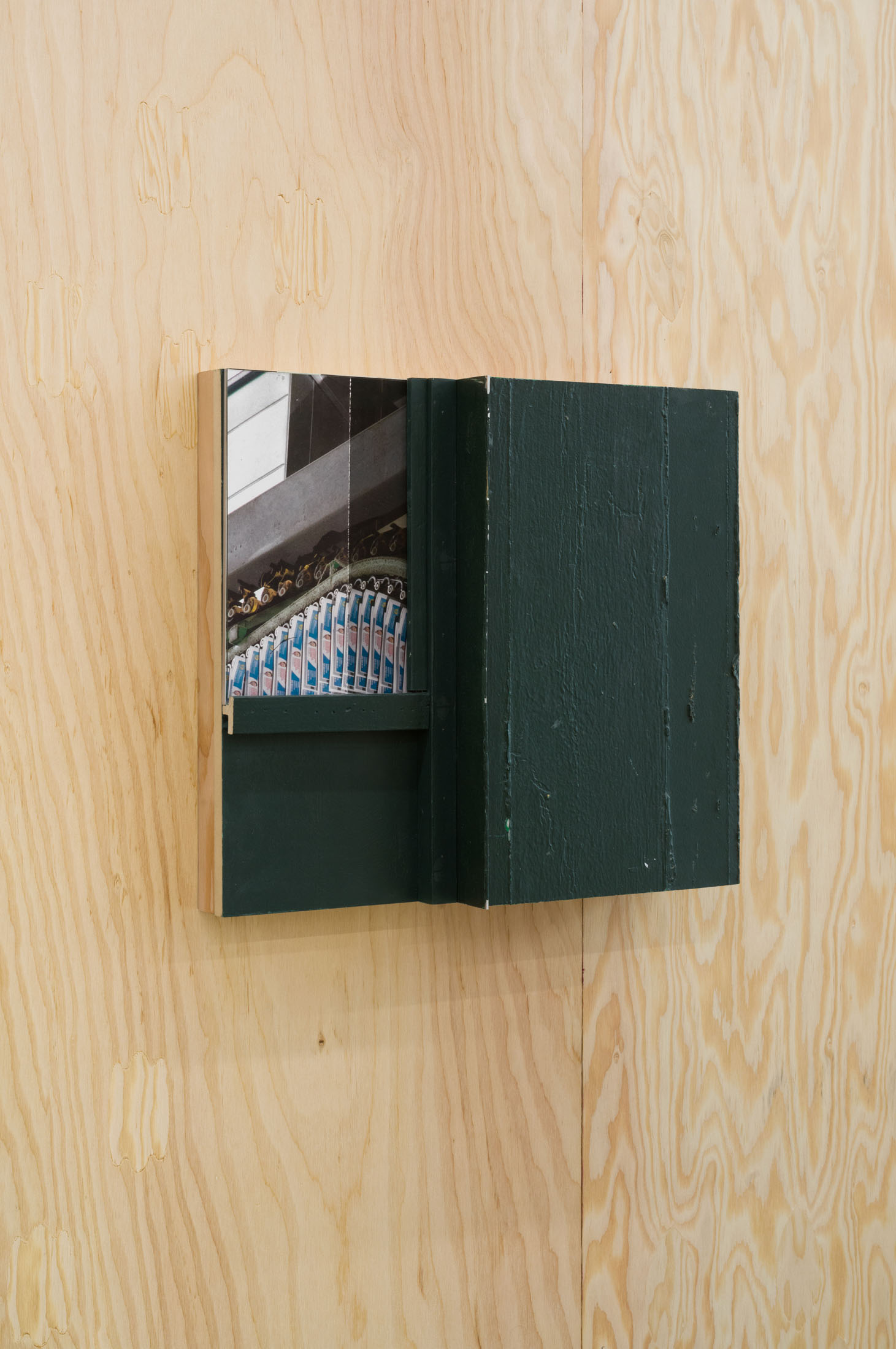
On the opposite side, two fragments of what appear to be a former newsstand are mounted on the wall. At the top of the larger piece, the word “NEWSS” is visible, with the second “S” partially cut off at the end.
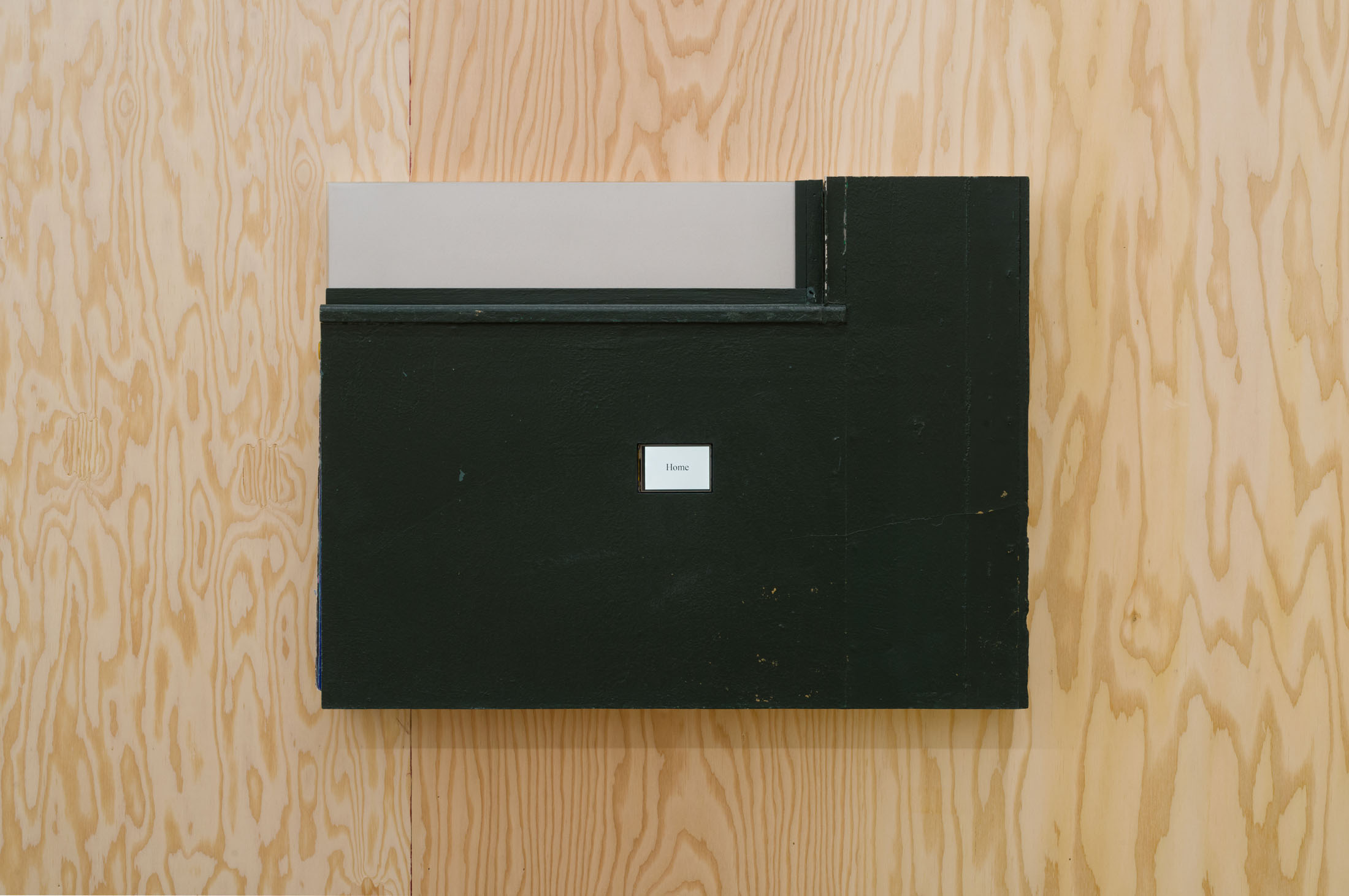
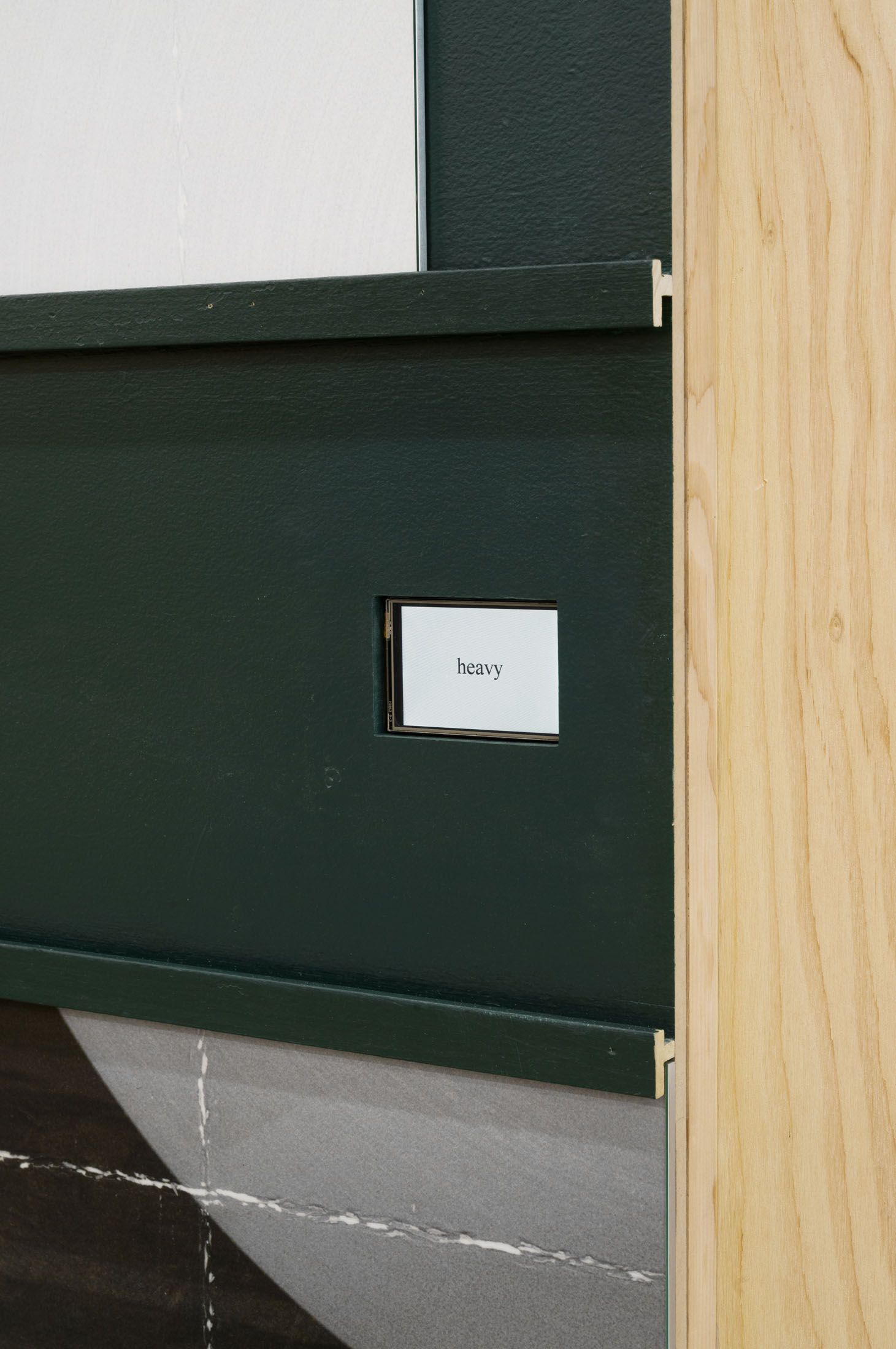
Embedded within the piece is a small video monitor displaying a sequence of words. These are programmed to update each morning, drawn from the previous day’s top headlines. By the following day, a new sequence appears, as the news continuously shifts. These words are drawn exclusively from The Globe and Mail, one of Canada’s leading national newspapers, and will continue to do so indefinitely. Only when the newspaper ceases publication will the sequence come to a halt, its final headlines looping endlessly.
INT. LARGE ROOM. BACK OF GALLERY – DAY
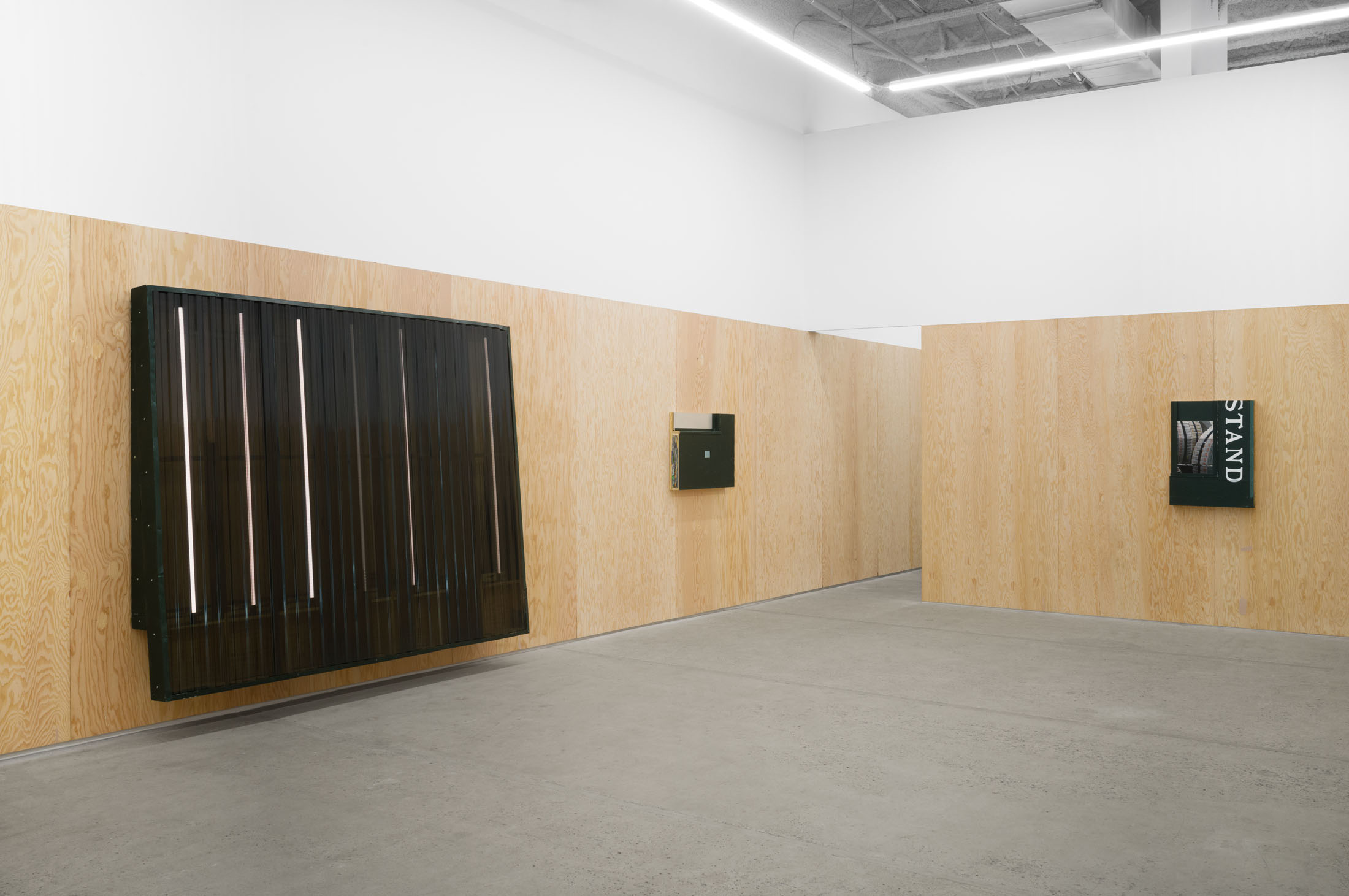
Walking to the back wall, the missing piece of the ‘newss’ hang on the wall. The fragmented ‘stand’ is turned 90 degrees, with the “S” partially cut off at the beginning.
To its left, on the opposite wall, another fragment with a video monitor displays words that will update tomorrow with a new series of headlines. This time, the titles come from The New York Times.
INT. LARGE ROOM. LEFT WALL – DAY
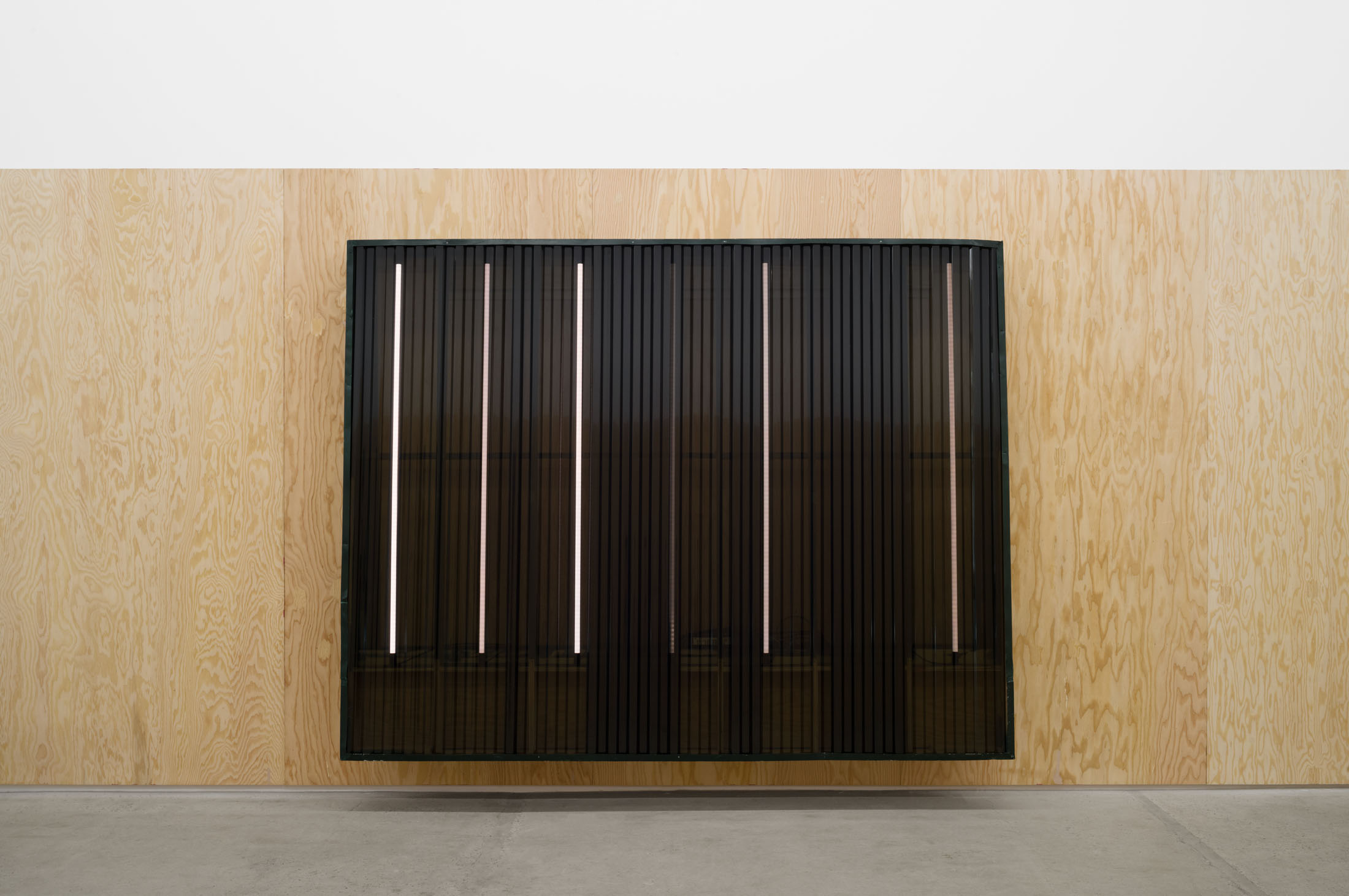
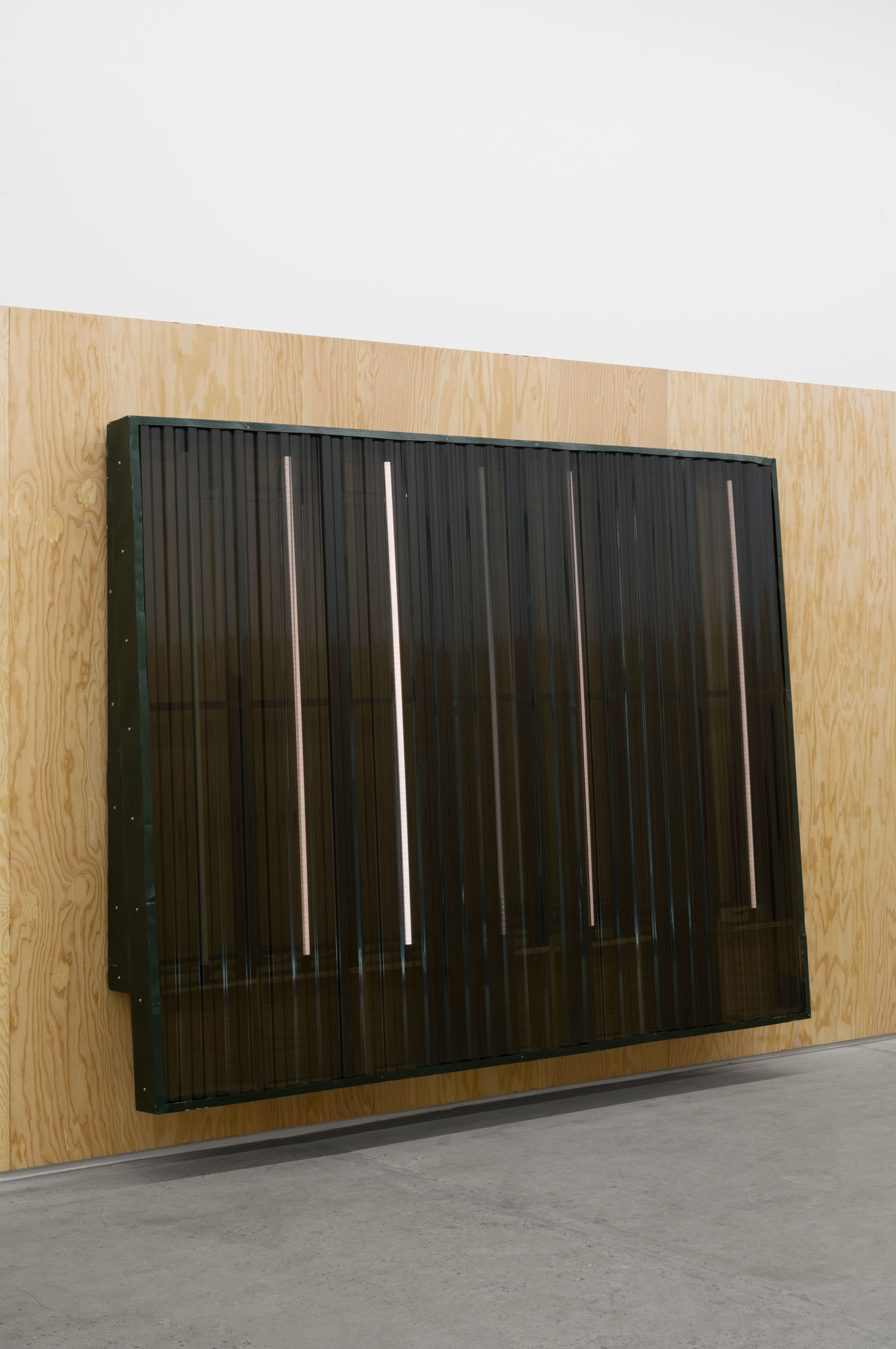
Walking back to the street, on the left wall stands the largest piece of the exhibition. This large sculptural fragment is the rooftop of the disassembled newsstand, turned on its side and mounted on the wall. A sequence of LED tubes emits a muted rhythm, evoking the flicker of a scene without images.
Once a place for sharing and gathering around printed information –un pôle d’attraction– the newsstand gradually transformed into a generic concession, selling cigarettes, trinkets, and tourist souvenirs. This shift, both mundane and symbolic, reflects the movement from a public space of communication to a space of consumption, as well as the way access to media has increasingly left the streets and entered our homes.
EXT. SIDEWALK – DAY
From the hustle and bustle of Saint-Laurent Boulevard, two figures inside a gallery are paused in motion as they seem to move toward the outside.
Notes on the newsstand:
This newsstand was removed from movie production rental circulation when it was acquired in January 2026, after three years of negotiations.
It was originally constructed in 2017 as a prop for a film by Xavier Dolan.
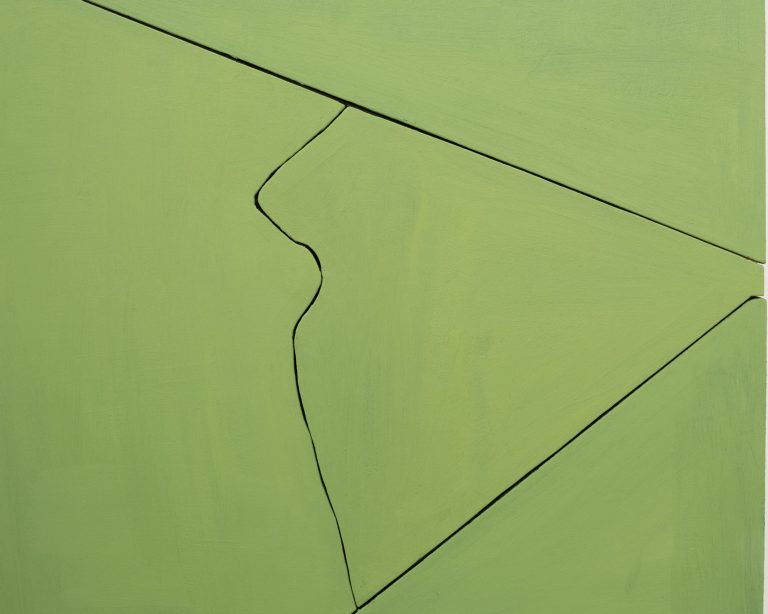
In its original version, it was designed to imitate a New York newsstand. It was painted bright green, with a red and yellow lighted sign on three sides.
It was subsequently rented to numerous film productions, each time undergoing changes in appearance and form.
Its final version before being decommissioned was painted dark green, modeled after a London newsstand.
With layers of time still visible in its chipped surfaces, it also evokes a dislocation of places: a single object here is made to imitate many different lieux.