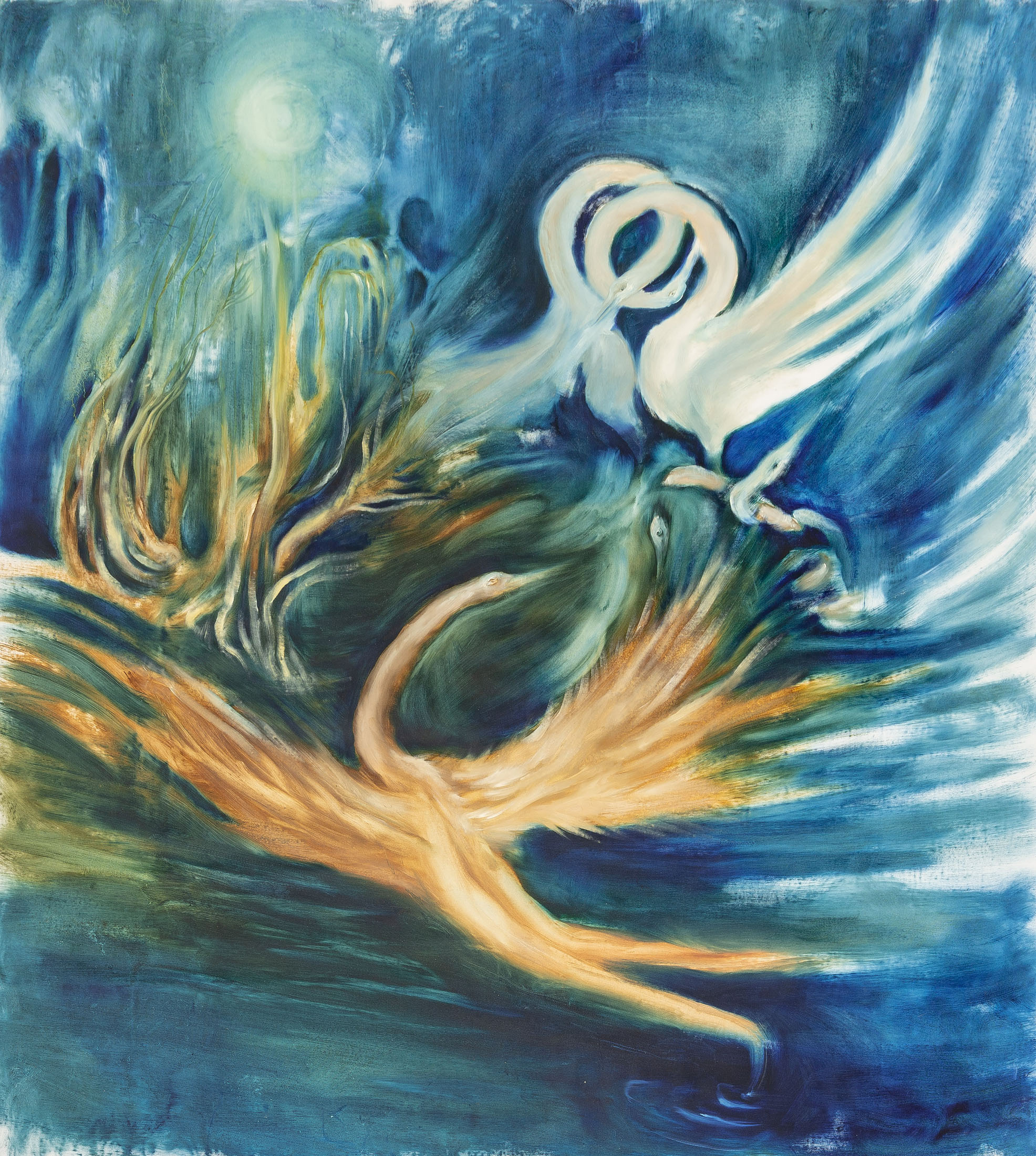
Two elders in my family passed down two premonitions based on the Holy Scriptures long before either seemed conceivable. I have come to believe that both are rooted in Revelation 11:9. One was a warning, almost a curse: a time would come when truth would become impossible to find because everything would be covered with wires: the earth, the sky, the space between people. Not wires as infrastructure alone, but wires as a kind of static, a covering that prom-ises connection while making the true thing underneath unreachable. The other was closer to a vision: people would one day speak to one another from oppo-site sides of the globe as though stand-ing face to face, with distance folded away entirely. I did not understand as a child that these were not two separate prophecies but one: the very wires that would make everyone reachable were the same wires that would make truth unfindable. Presence and distortion ar-riving together, inseparable, exactly as Revelation 11:9 seems to have known.
Last spring, a member of the administration of my Kyiv studio, damaged by a missile, told me that payment was still due. No one had promised me it was going to be alright. “Who said it is going to be alright?” he wrote. “We never did, indeed.” I kept the message close to my heart and mind for its precision.
Meanwhile, I kept asking what-if ques-tions, as I always do: what if Nuremberg had judged all sides responsible for evil? What if Ukraine had never surren-dered its nuclear arsenal for security as-surances that failed to hold? What if love never required self-sacrifice? What if an angel severed all the oil pipes from the Earth? My teacher Lada once answered a question like this with one line: “Sana, history knows no if.” Biblical promises turn out to be more reliable than those made by recognized authorities in real time. No one promised it was going to be alright.
What is mine, after all? Broken promises and open aggression. My love, my beauty, I’m sorry for sabotaging you because of your fragility.
This exhibition begins at the precise moment those promises collapse. Rath-er than asking “What if?”, it asks: “Who said it was going to be alright?” And it answers: “We never did, indeed.”
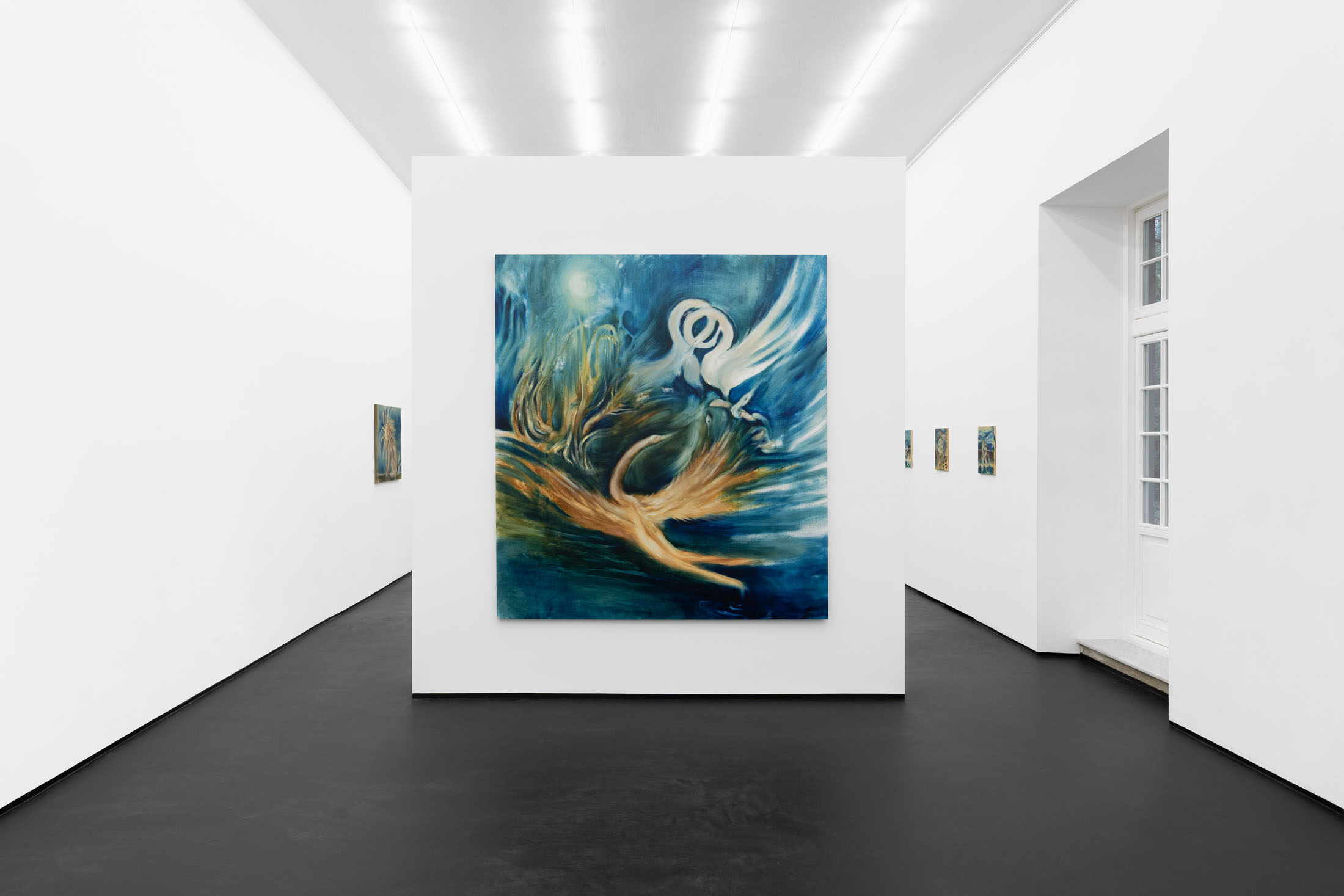
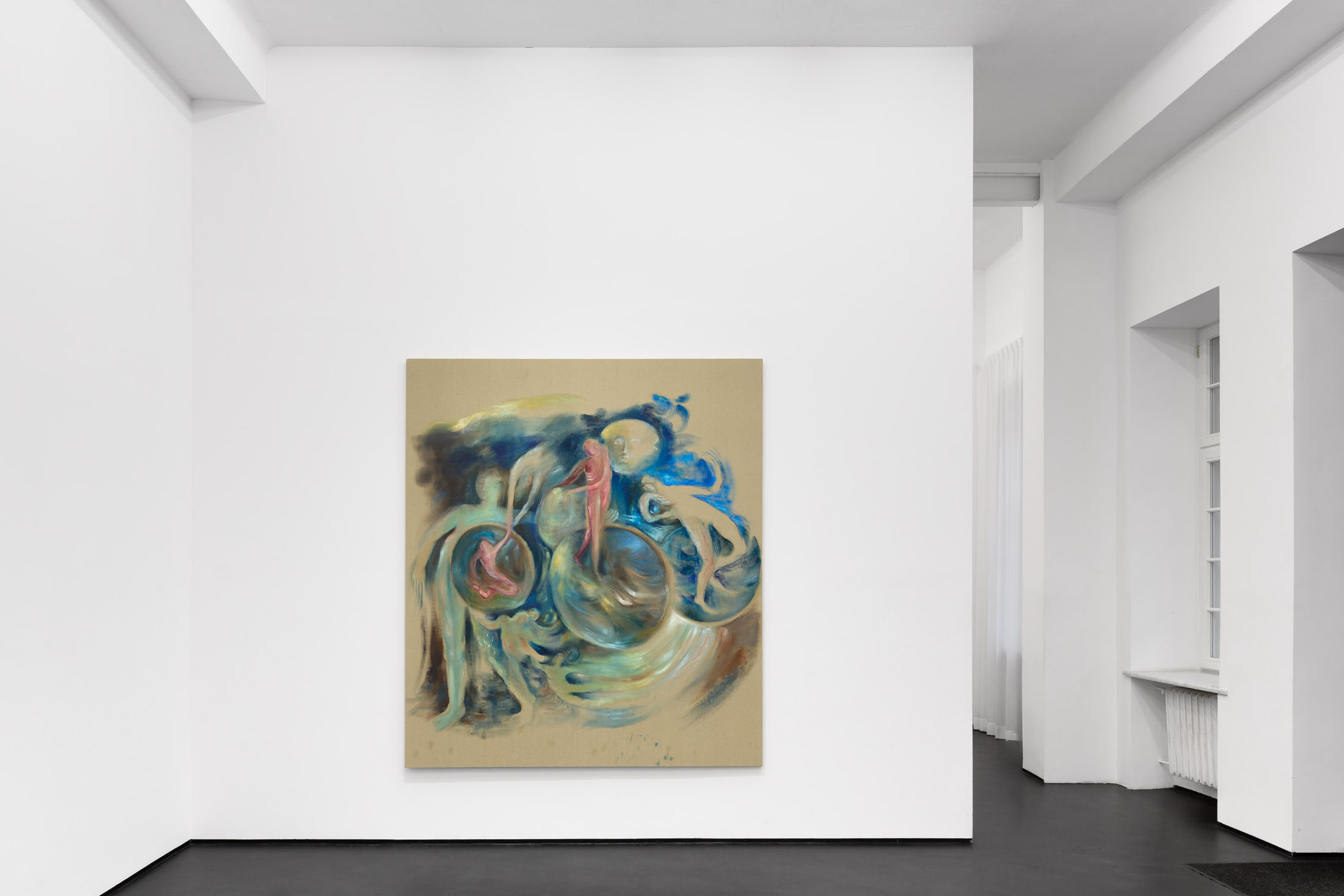
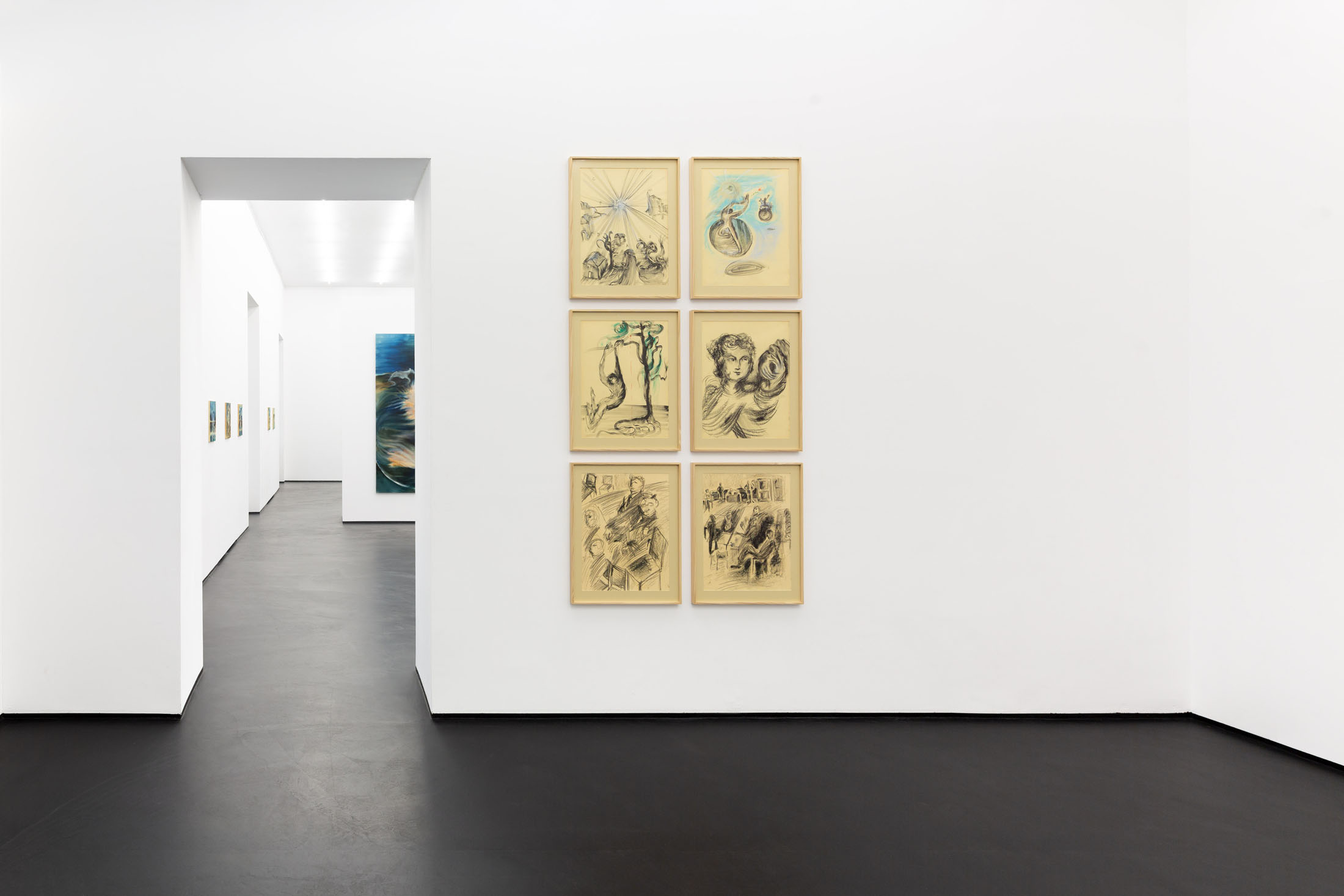
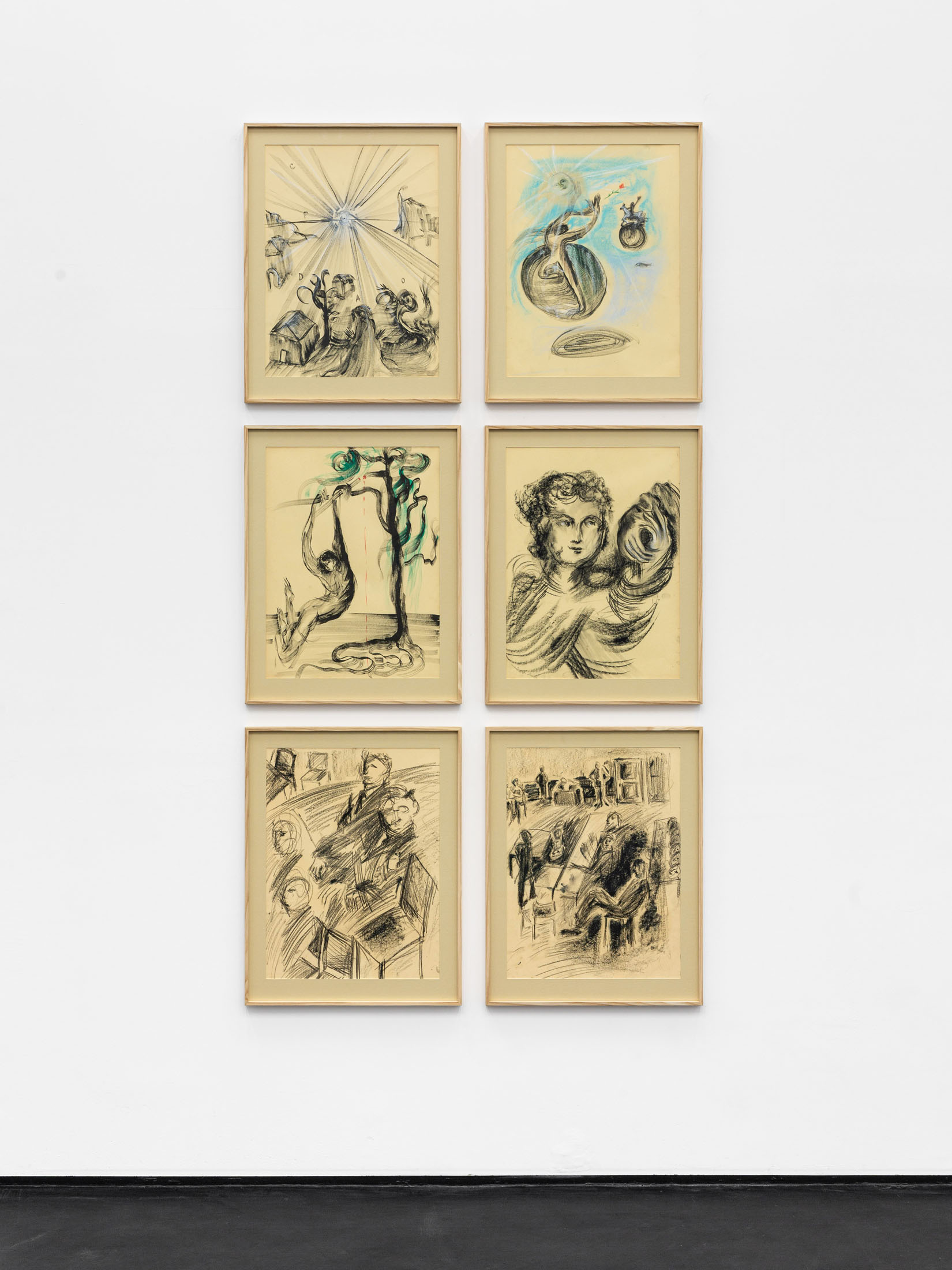
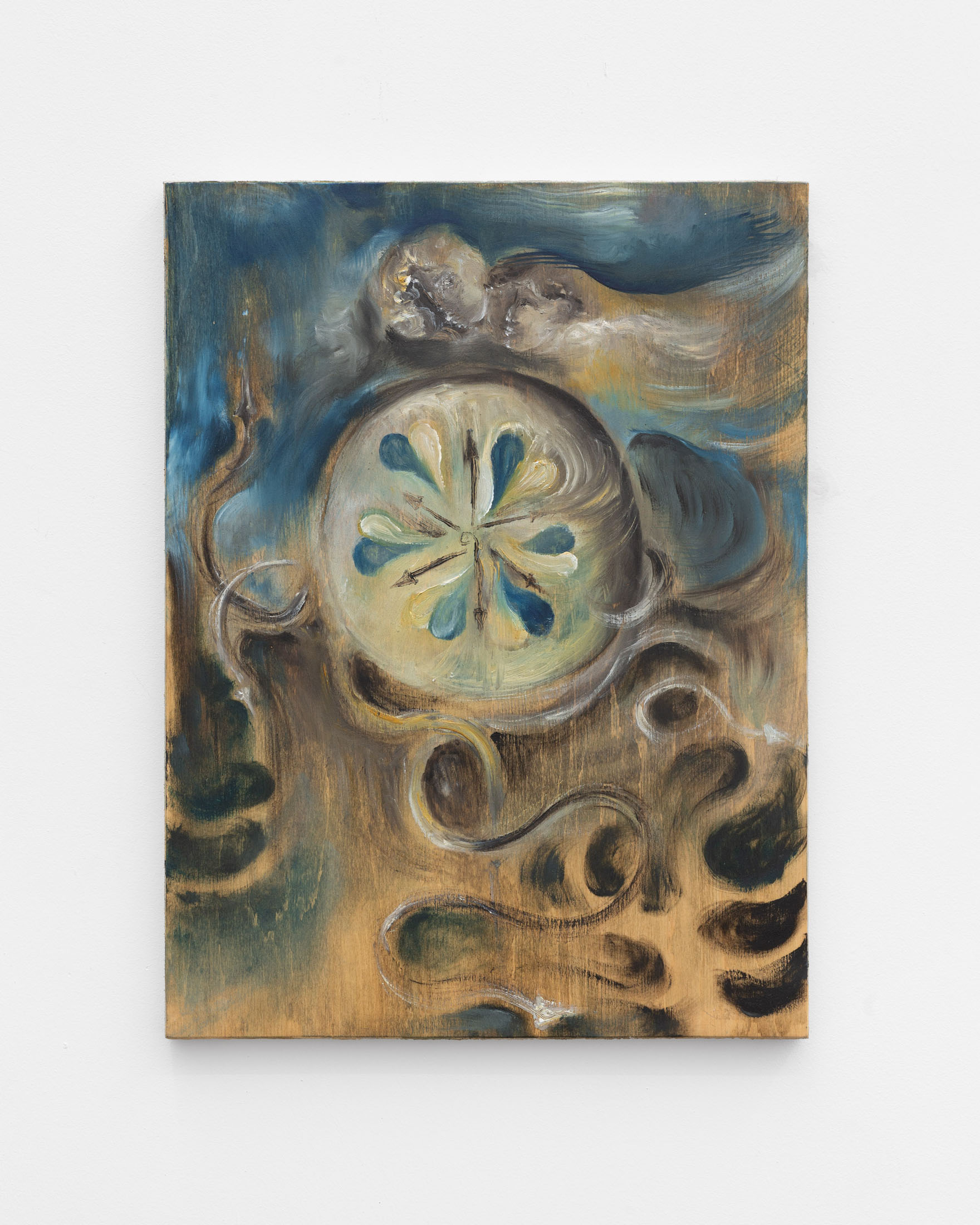
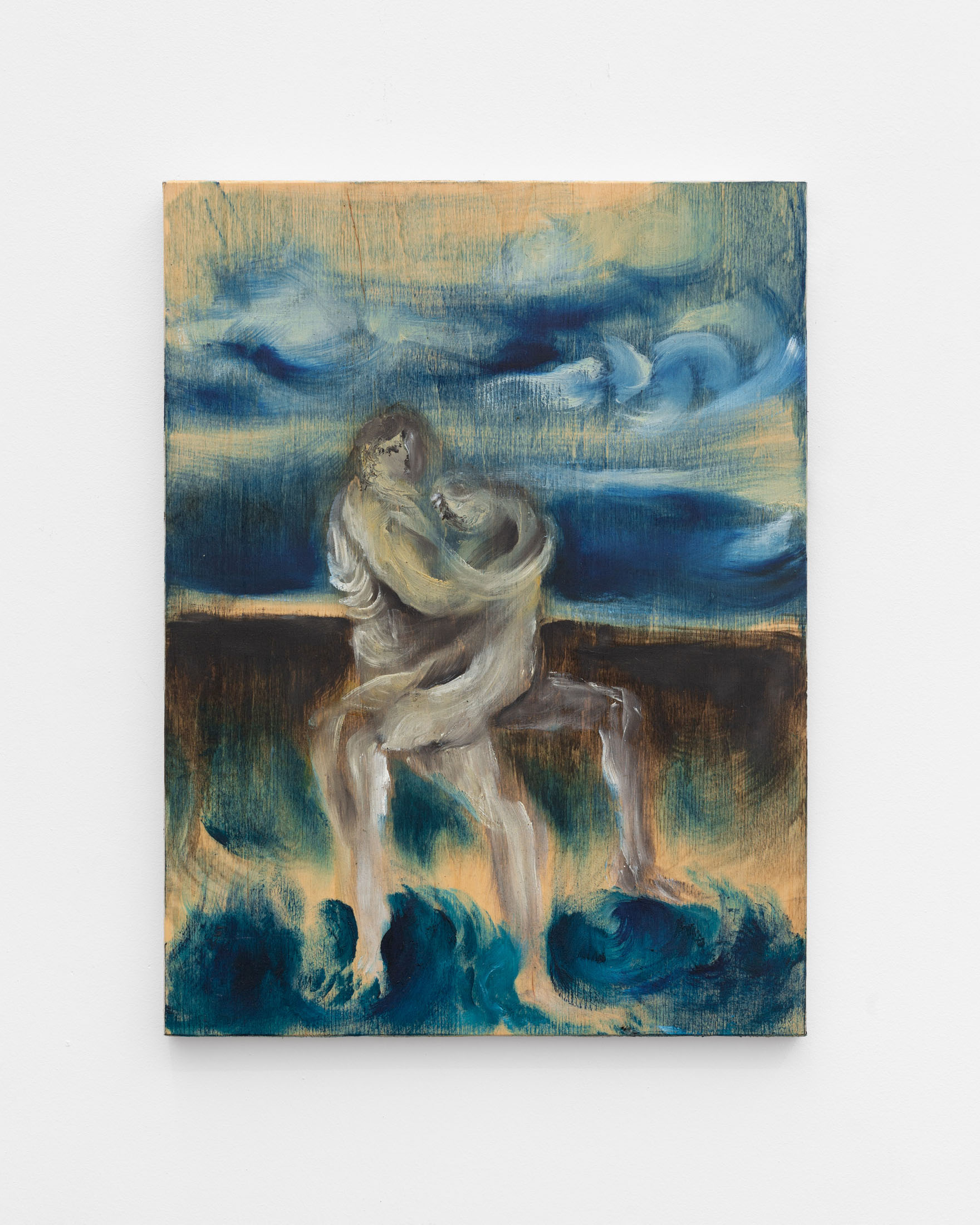
(A clock of eternity in Baroque stucco at St. Sophia, its hearts split blue and yellow, a nation’s colors and Hilma af Klint’s masculine and feminine force. A sarcophagus once holding Yaroslav and Ingegerd, emptied by Soviet authorities in 1939, its remains lost to war, memory preserved only through having been shared. Sketches after the students of the Kyiv Pechersk Lavra — itself, some believe, among the reasons for this invasion. An empty chair beside drawings of Nuremberg, asking what today might look like had every crime and criminal been named back then.
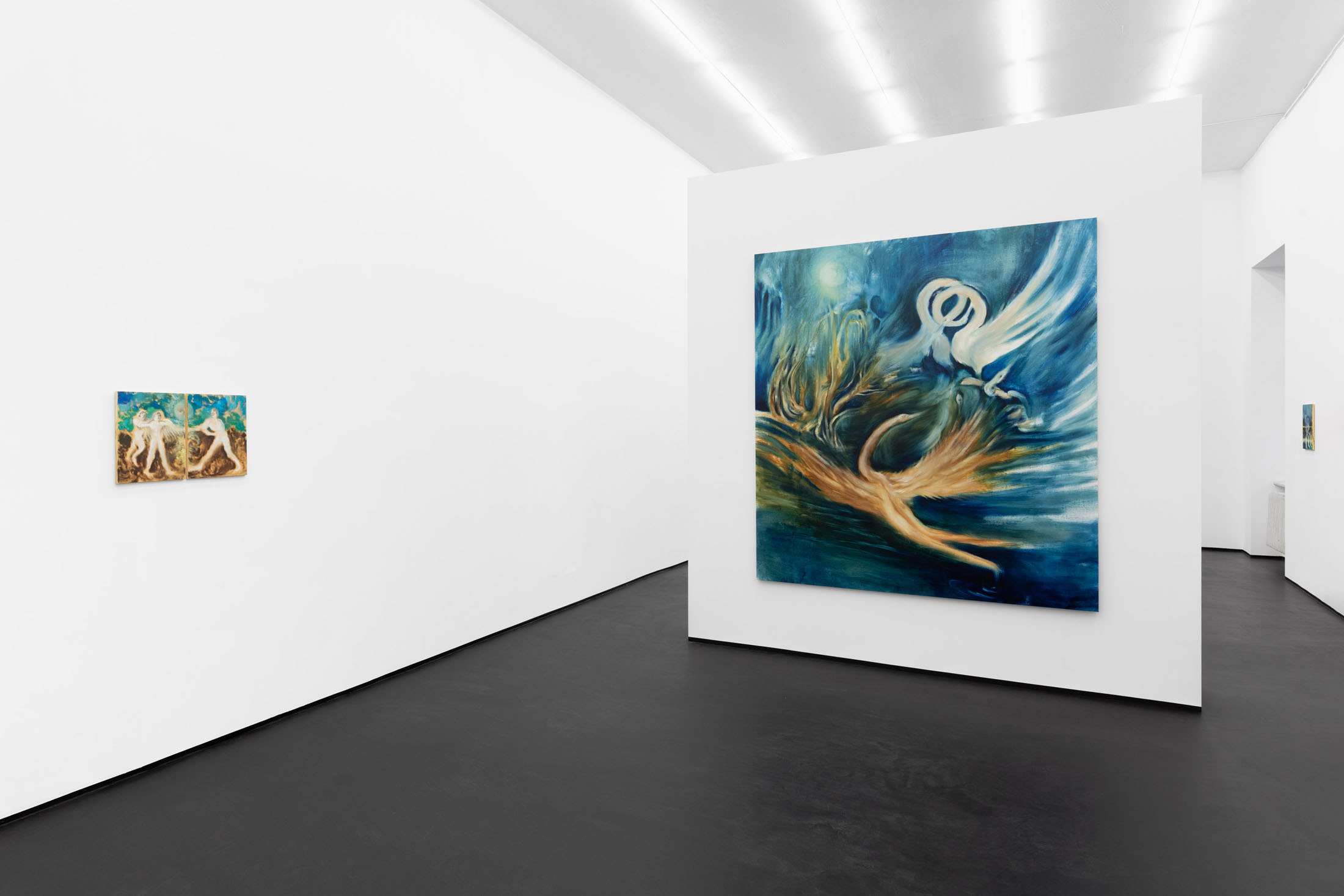
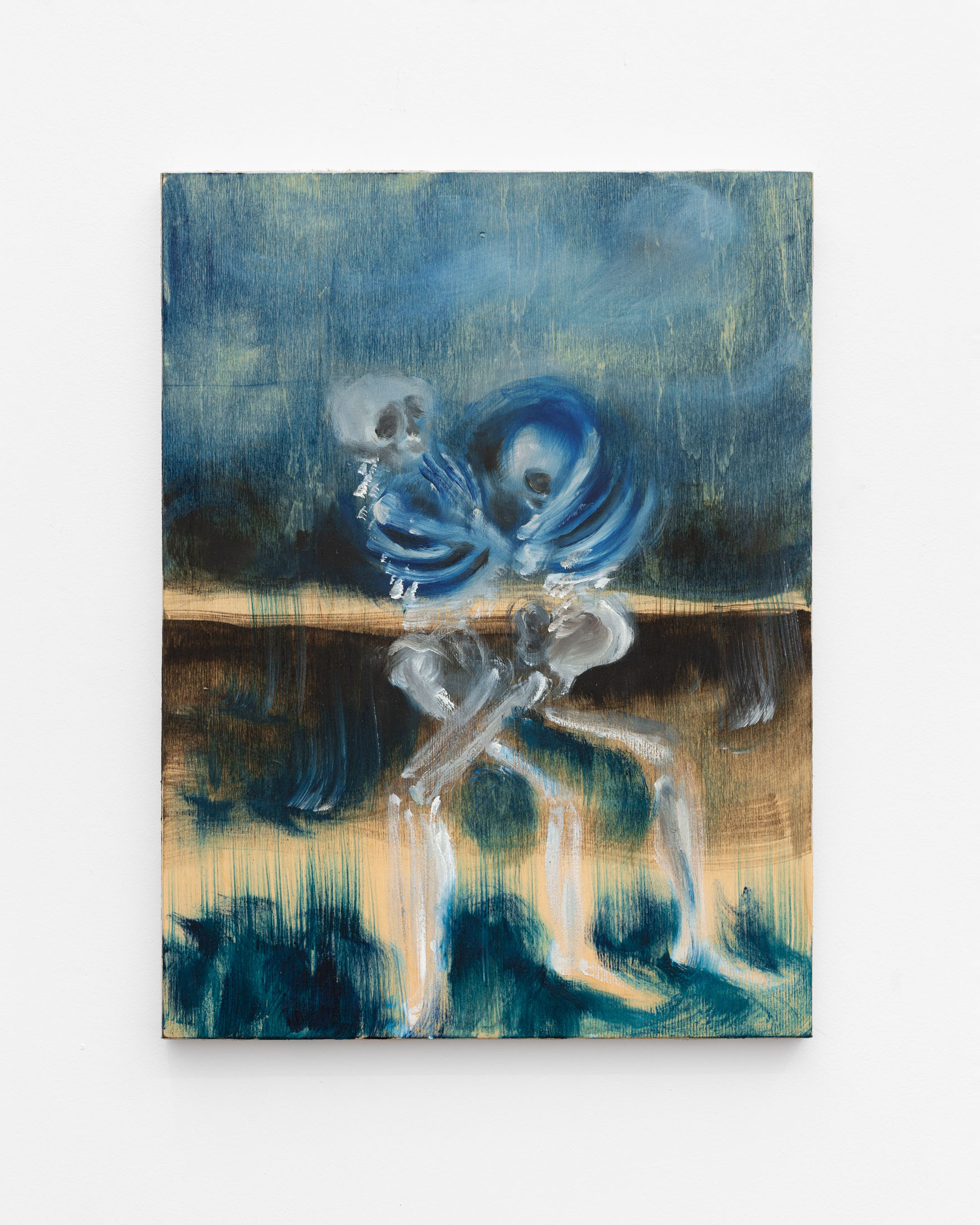
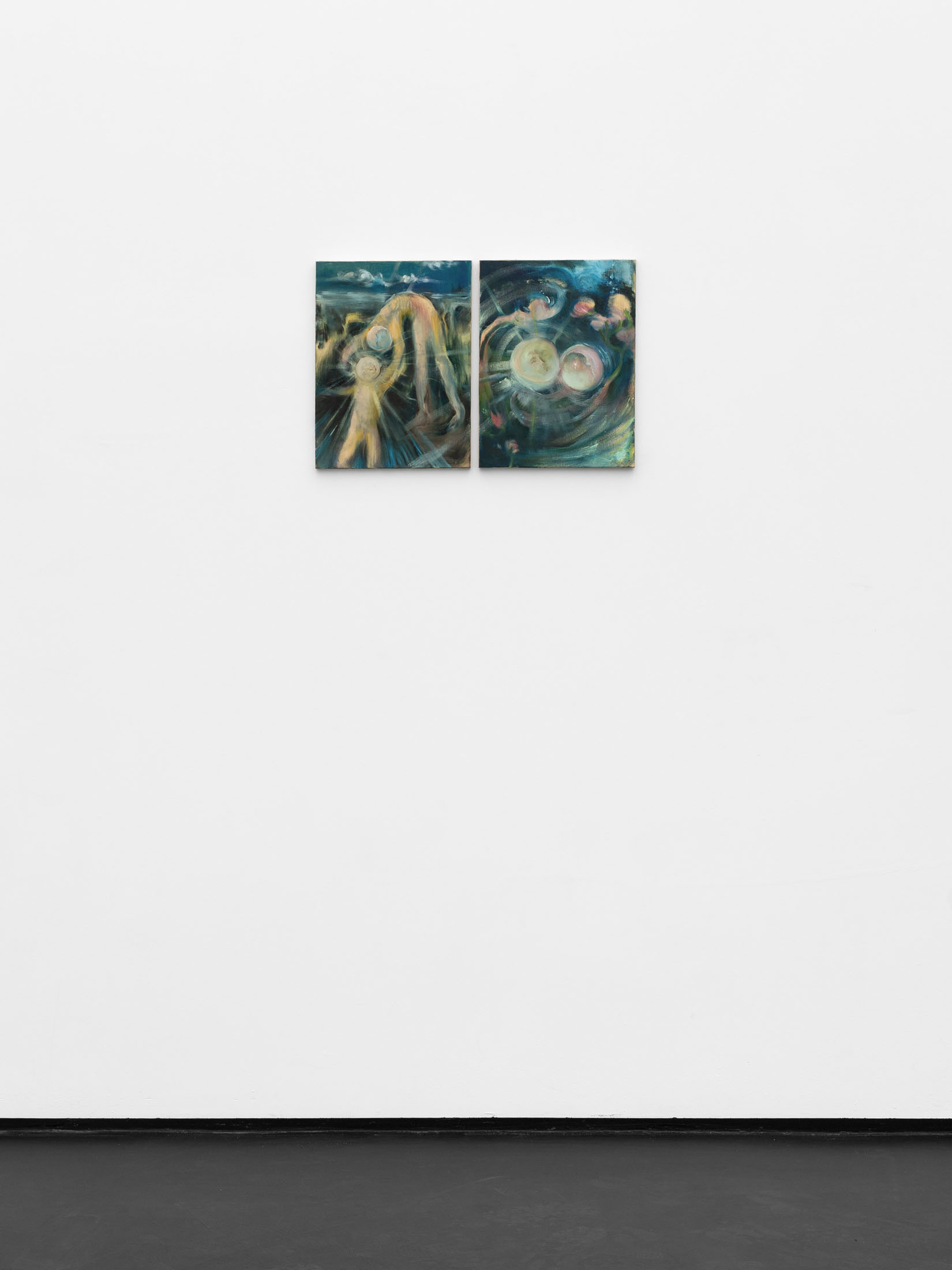
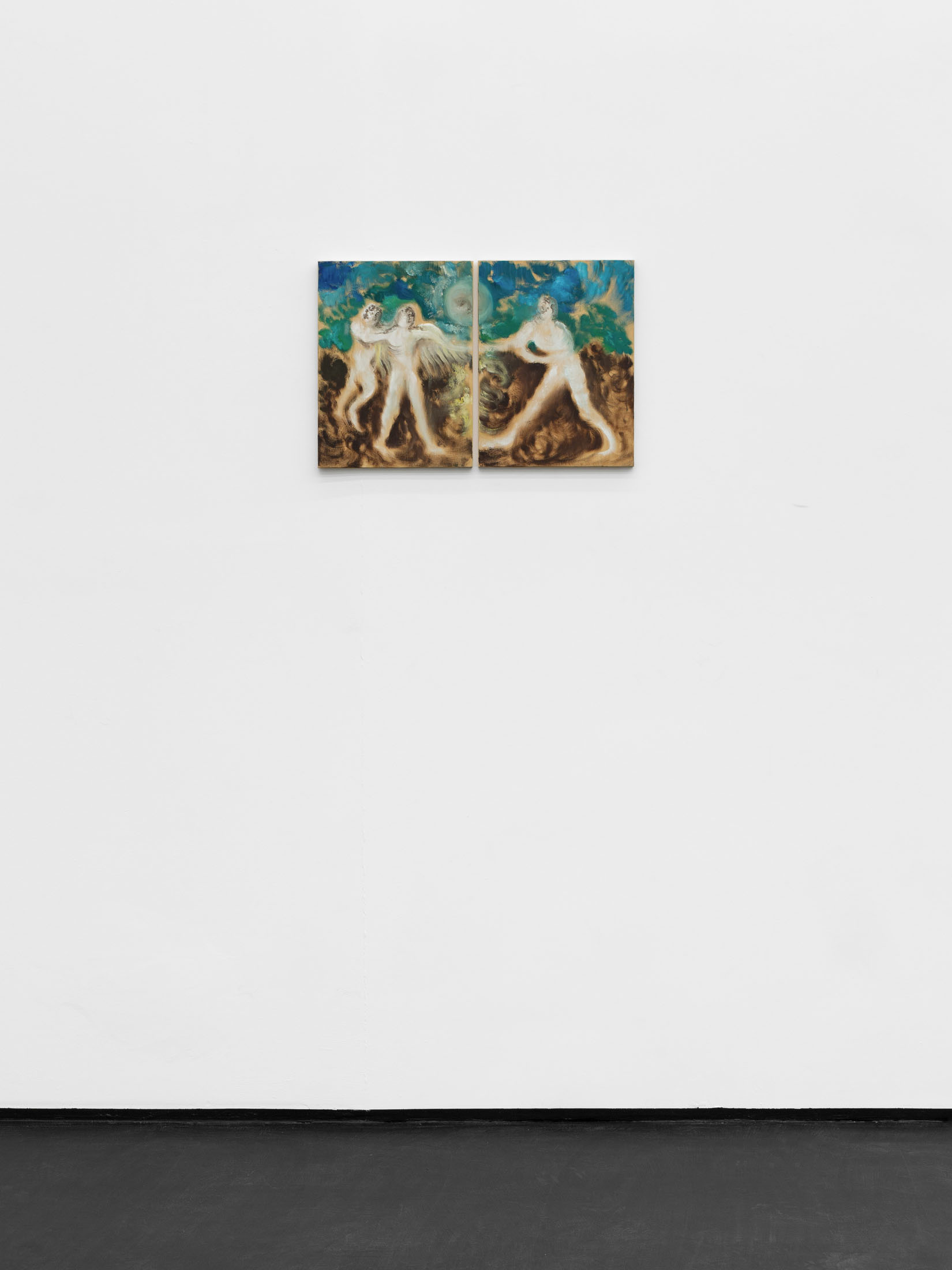
Some drawings are too personal to be only personal, since nothing, in the end, ever is — what I call, in my practice, inductive. Wooden diptychs hold day and night blending rather than exchanging, Sol and Luna, the alchemical union of opposites, for a city where attacks no longer distinguish between the two.
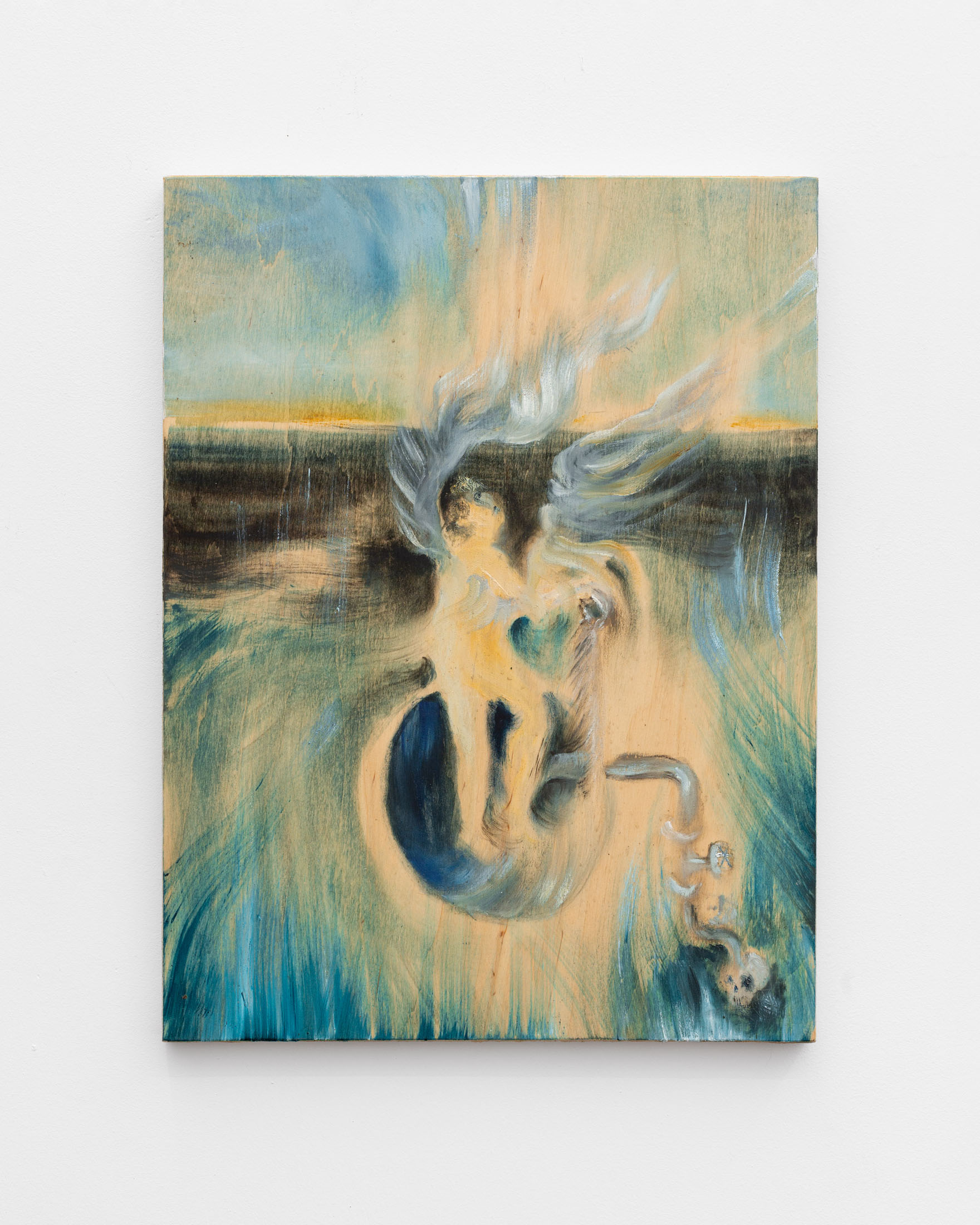
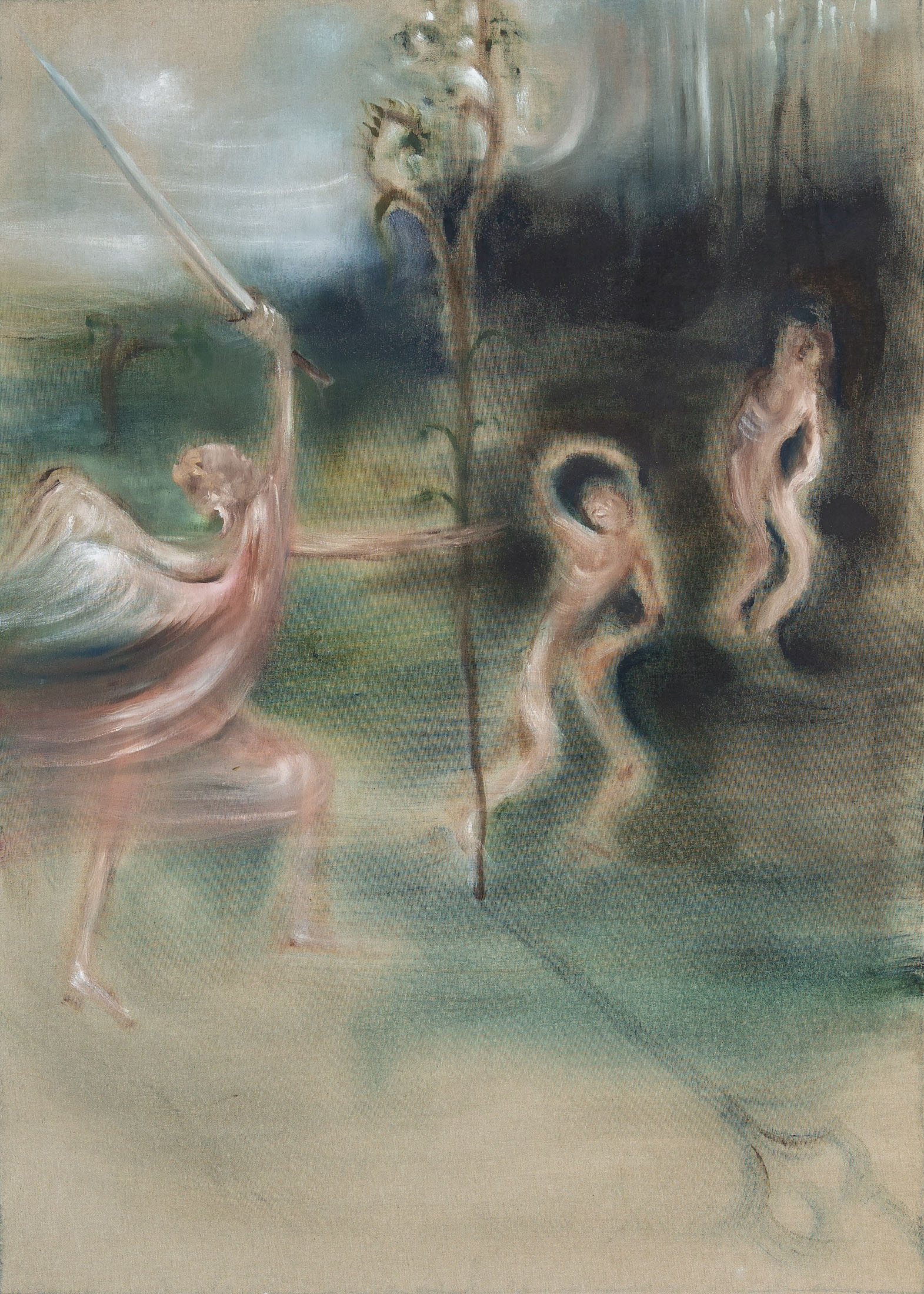
An angel cuts an oil pipe from the Earth — a trap within a trap. Not the petroleum, but the pipe: insatiability, the illusion of control mistaken for agency. Is this the Apocalypse at last, or only the one humanity anticipates each century? How long is now? Does destiny outlast an individual life?
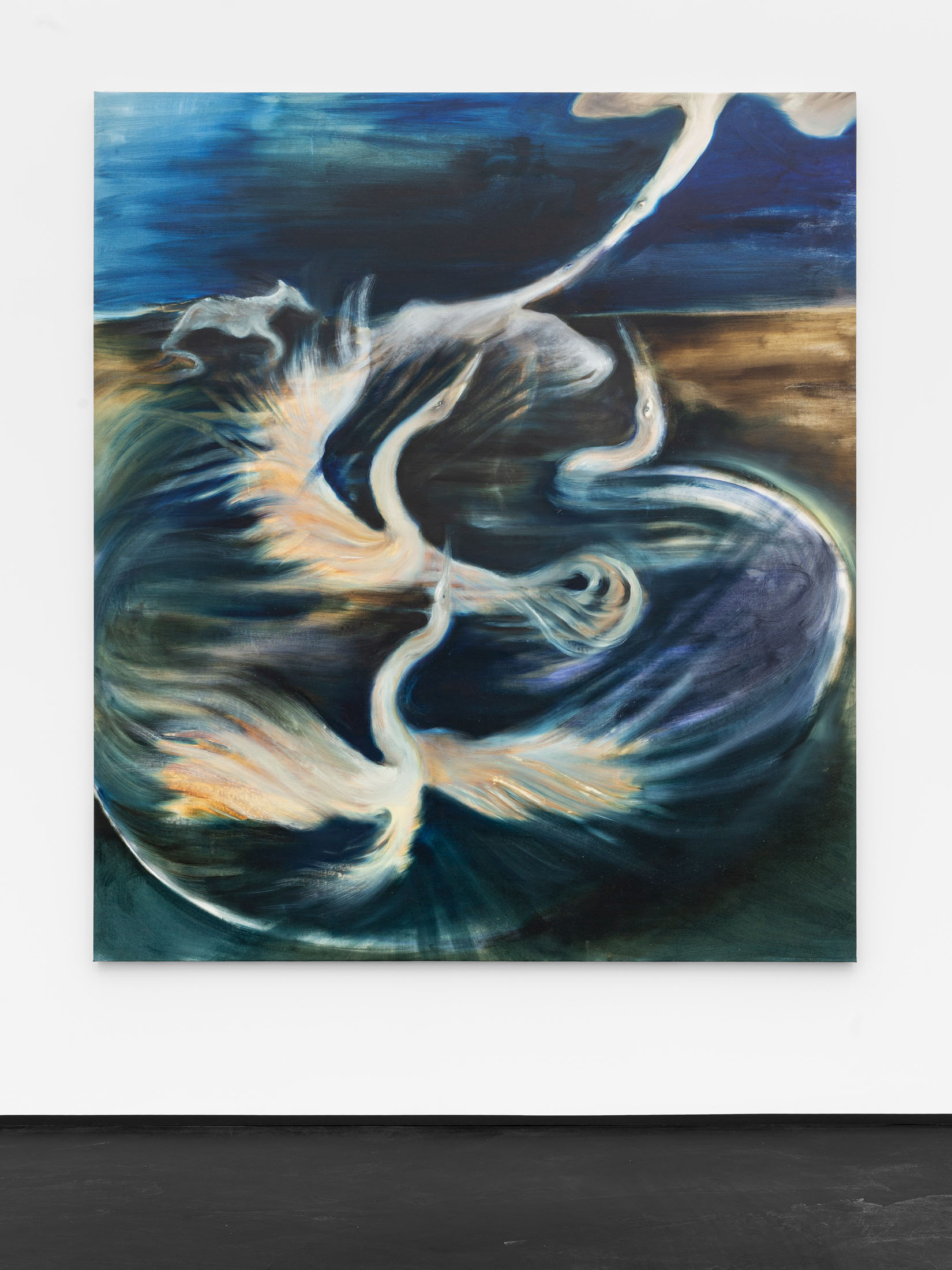
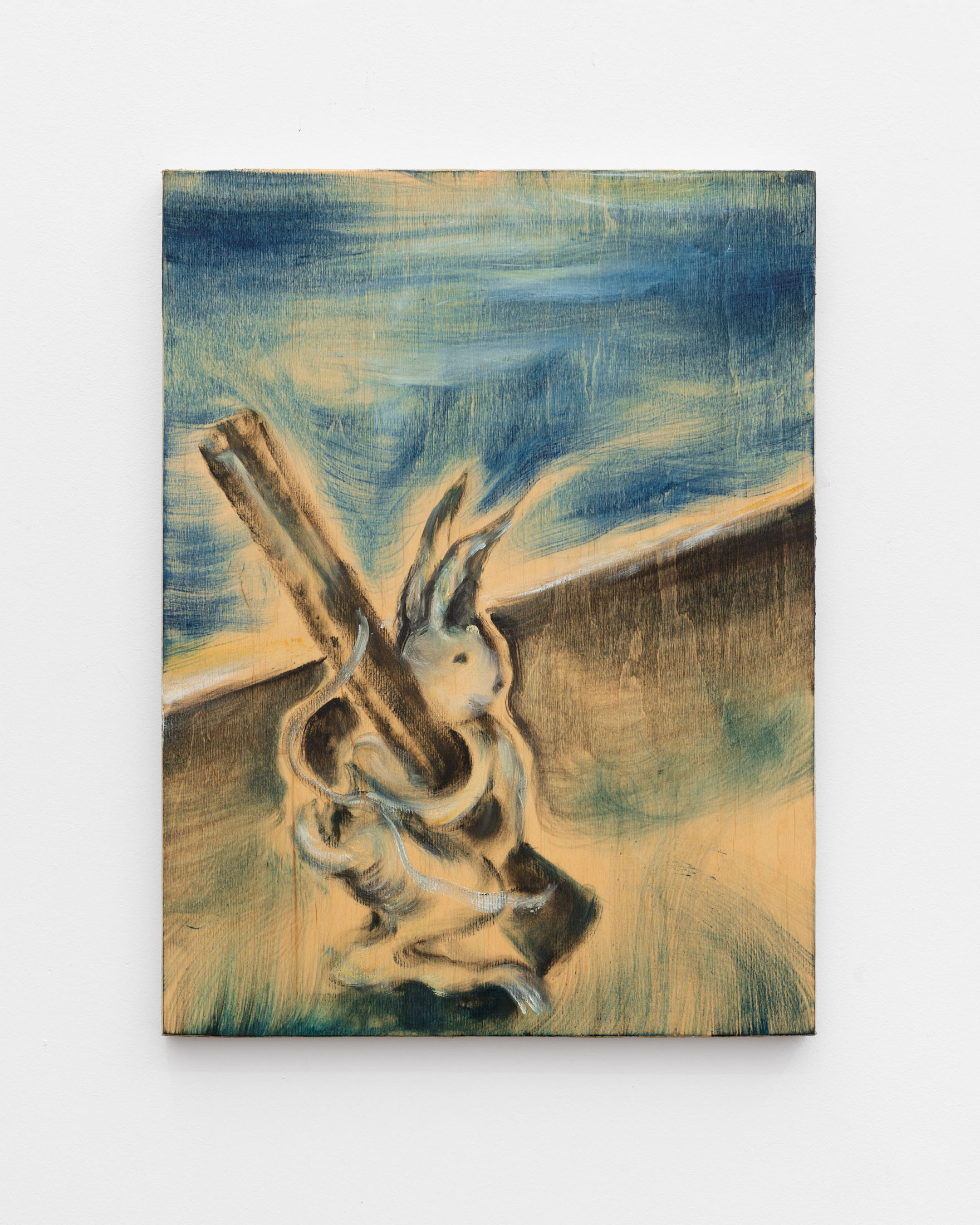
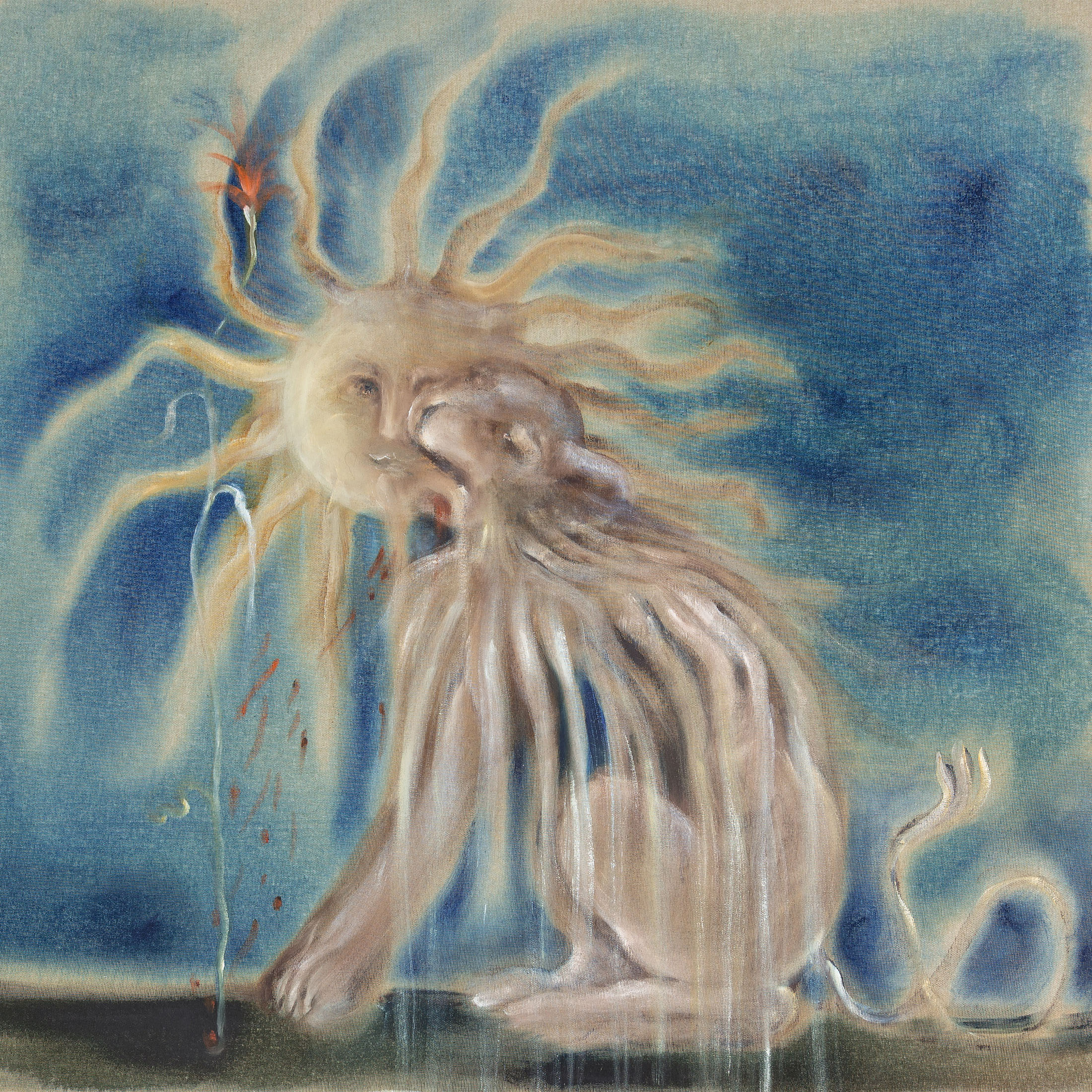
A hare holds a gun, lifted from a 1990s caricature, standing in for the Budapest Memorandum and what might have followed had its conditions been honored. A mute swan — quieter than other swans, its sound unusual rather than absent — a lesson in communication at the edge of helplessness. A green lion devours the sun: the ego confronted by instinct, in an encounter I refuse to call trauma. I call it awareness.
An expulsion, after Bosch — Archangel Michael, Adam, and Eve — against scripture’s unbroken promises, and the question of the Pelican in Her Piety: can love ever exclude suffering?
Self-Agency Search: on self-agency amid suffering and love.)
No one promised it was going to be al-right. We never did, indeed. And still: an-gels imagined cutting oil pipes, missiles that are never missed by air defense, an-gel songs sung across the globe, wires cut when the singing is misinterpreted.
—Sana Shahmuradova Tanska