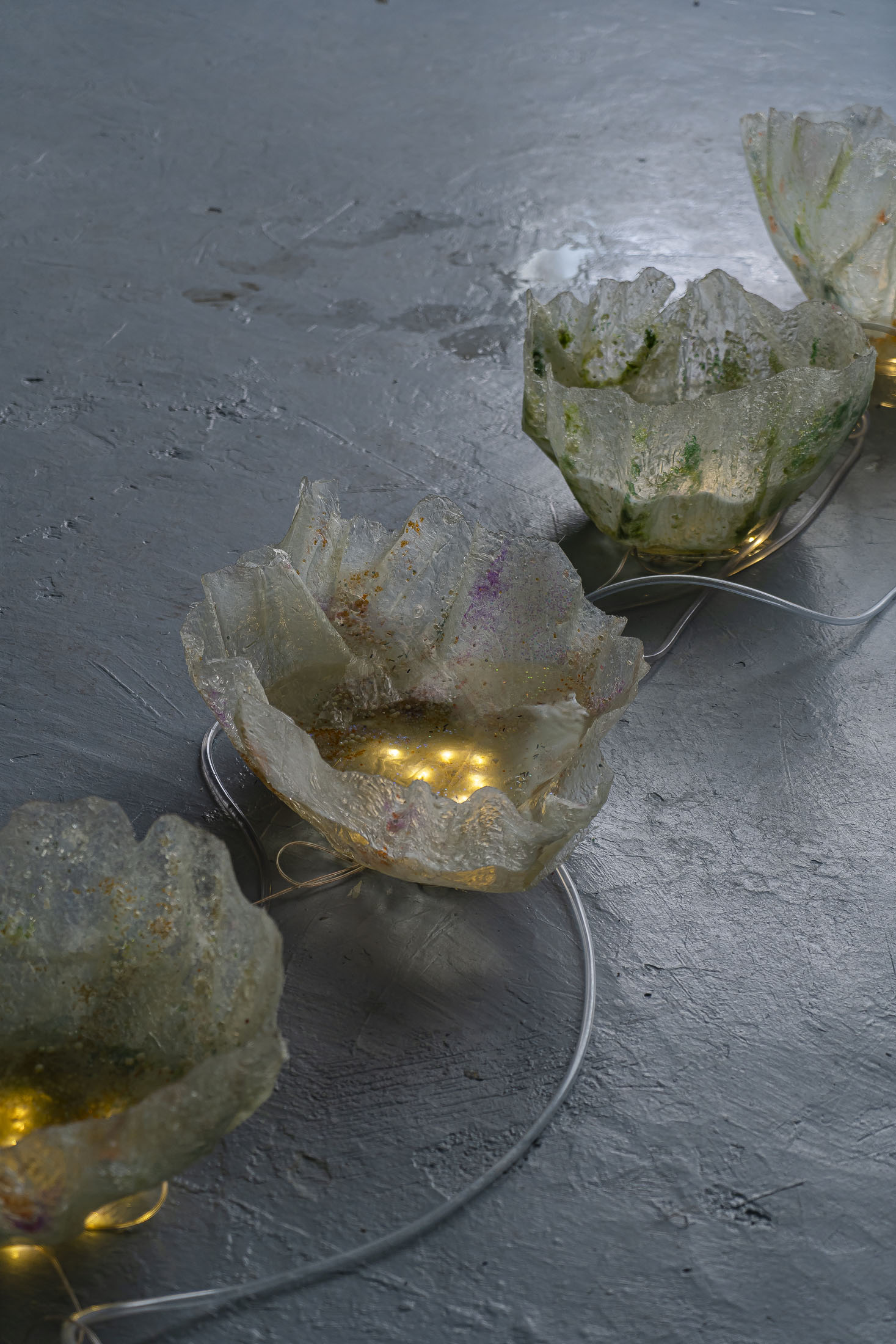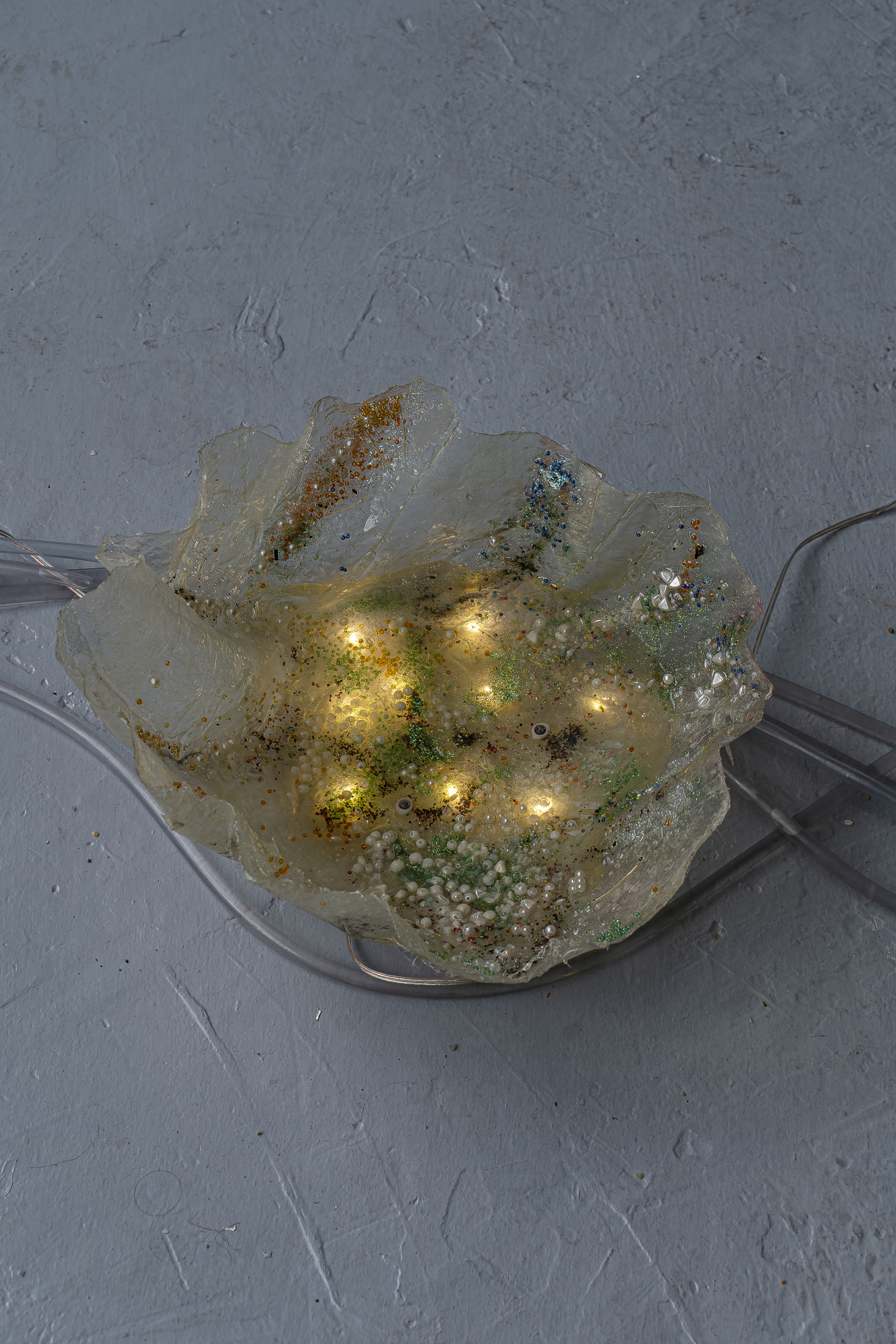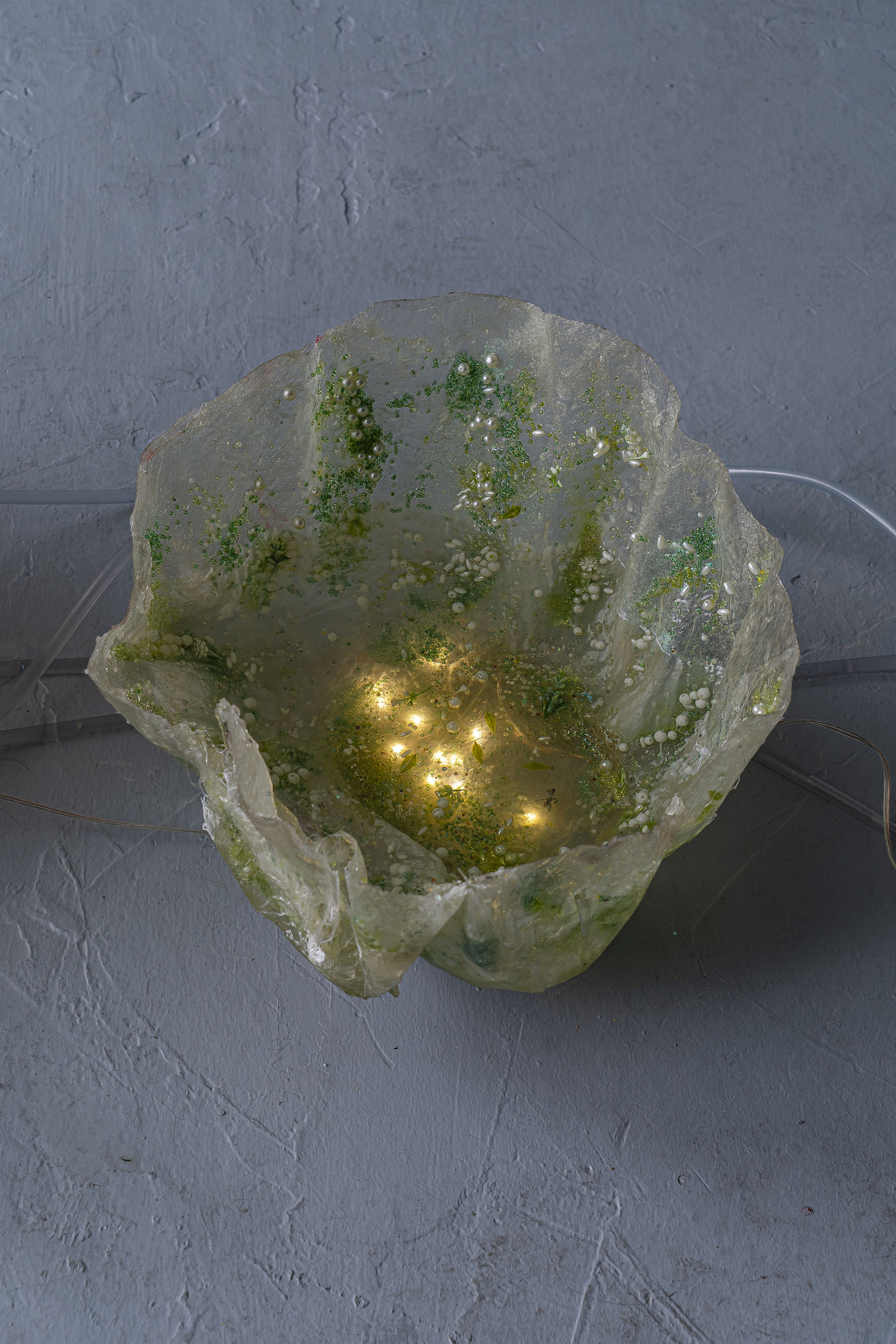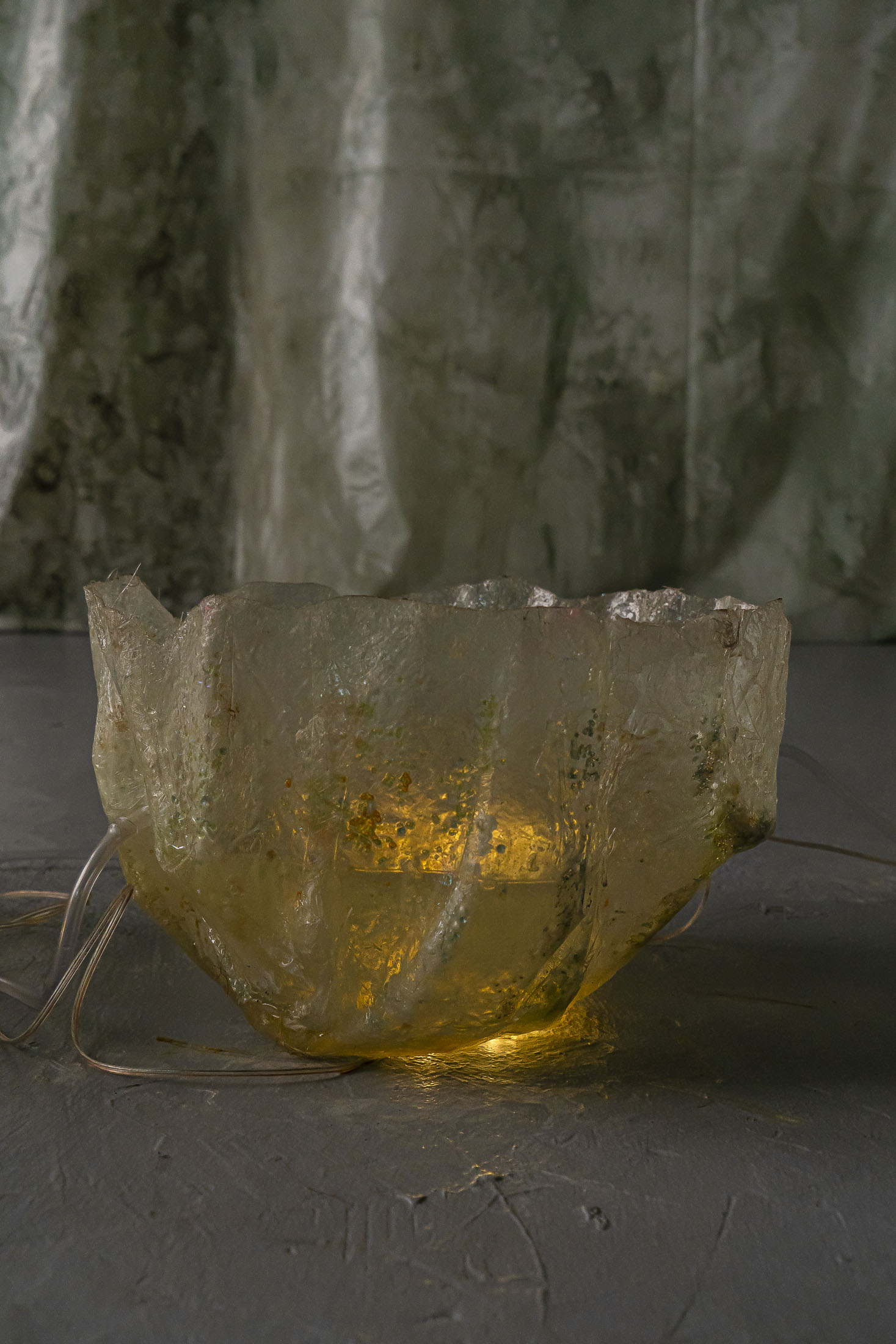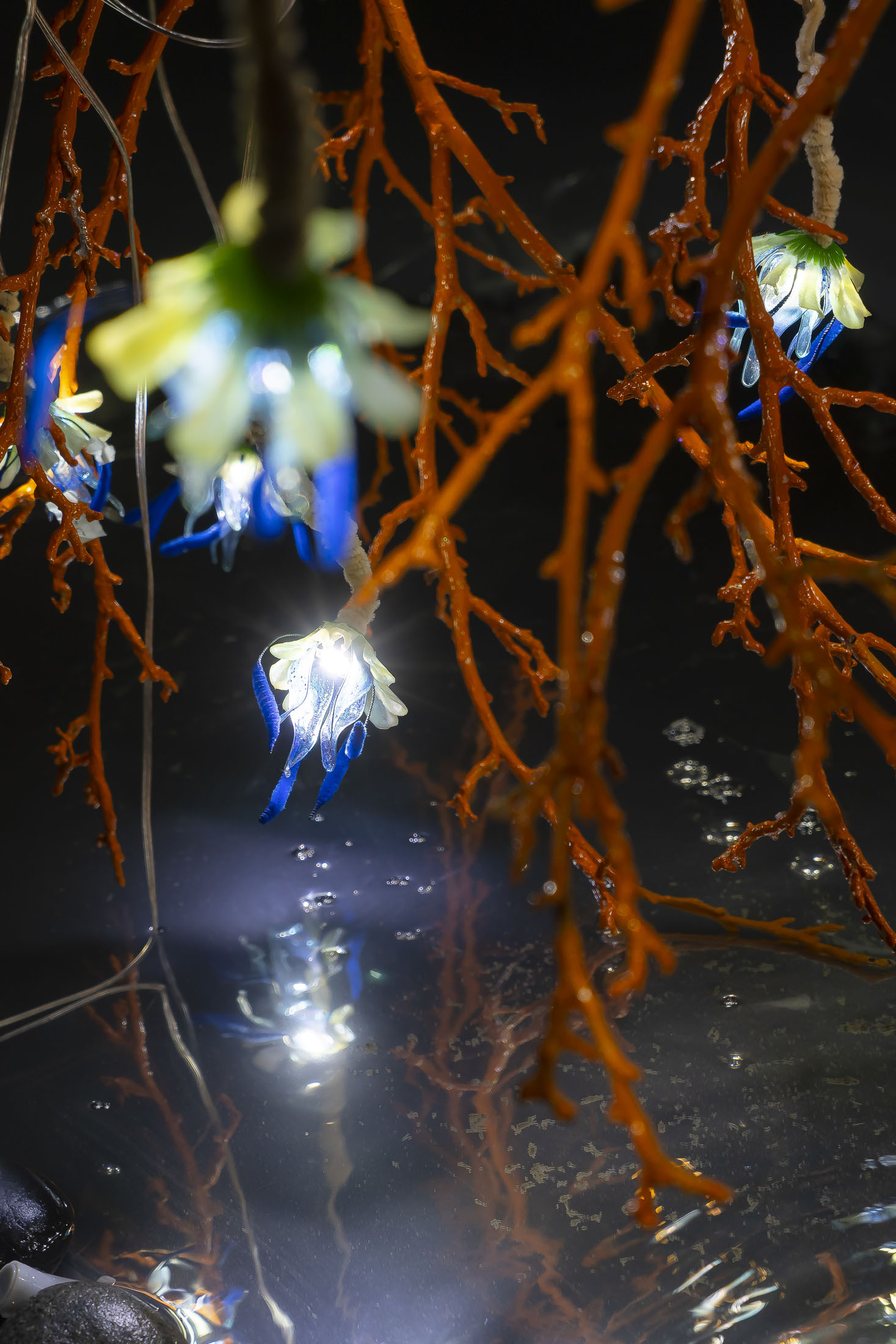
Paulina Mellado is an artist who touches the landscape. Looking at the trajectory of her work, it seems to me that she began from sculptural methodologies that, one could say, resemble the way a bird builds its nest (or relates vitally to its environment). Always gathering sticks and branches, weaving them together with fibers and wires, tangling hair into them. In some way, the constructive references that interest her seem rooted in the ways birds engage materially with the landscape: a twig fallen from a tree, dry grass, a loose strand. All these fragments come together in a practice that builds from them, constructing as one might create a tangle—thin structures, hardened fuzz.
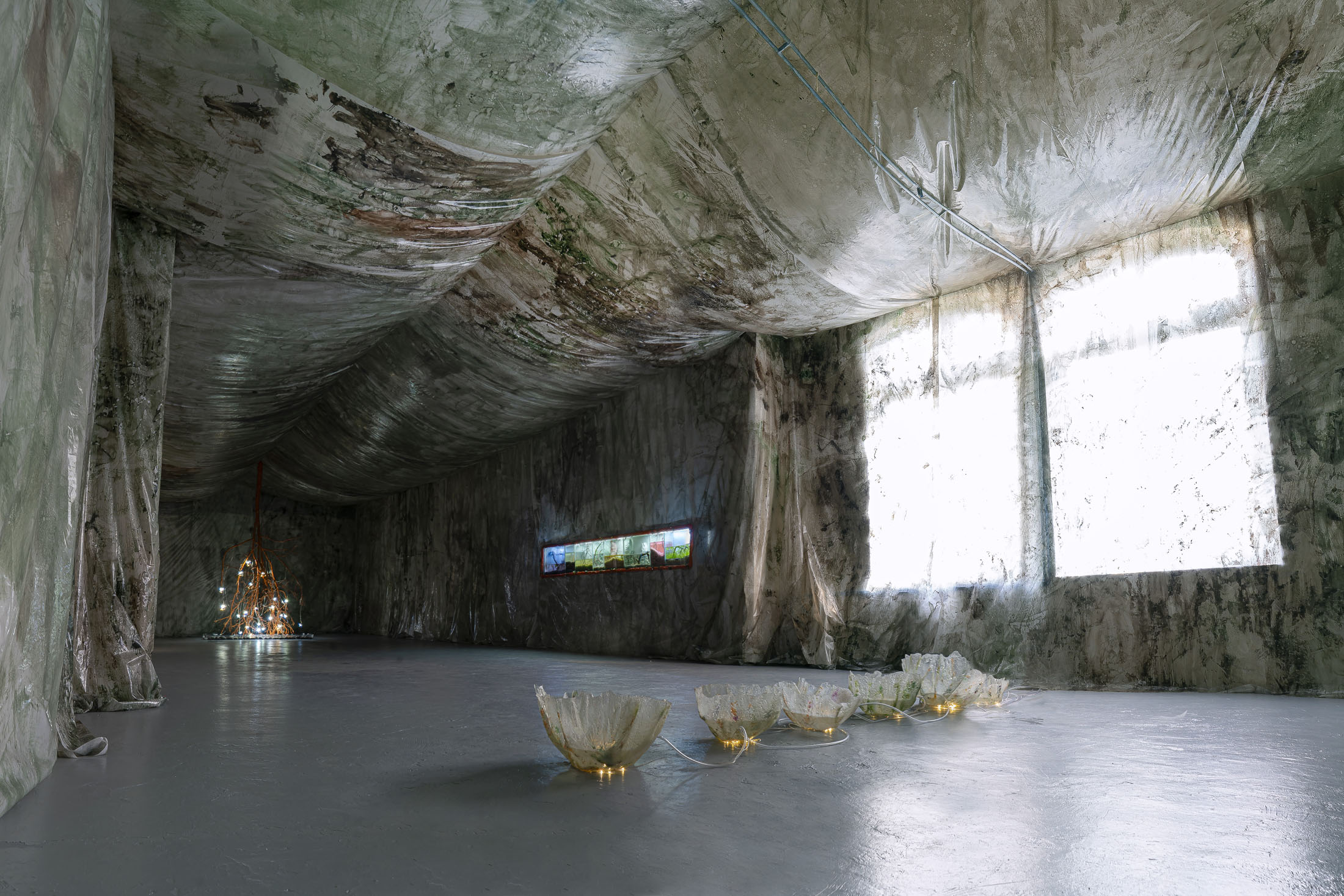
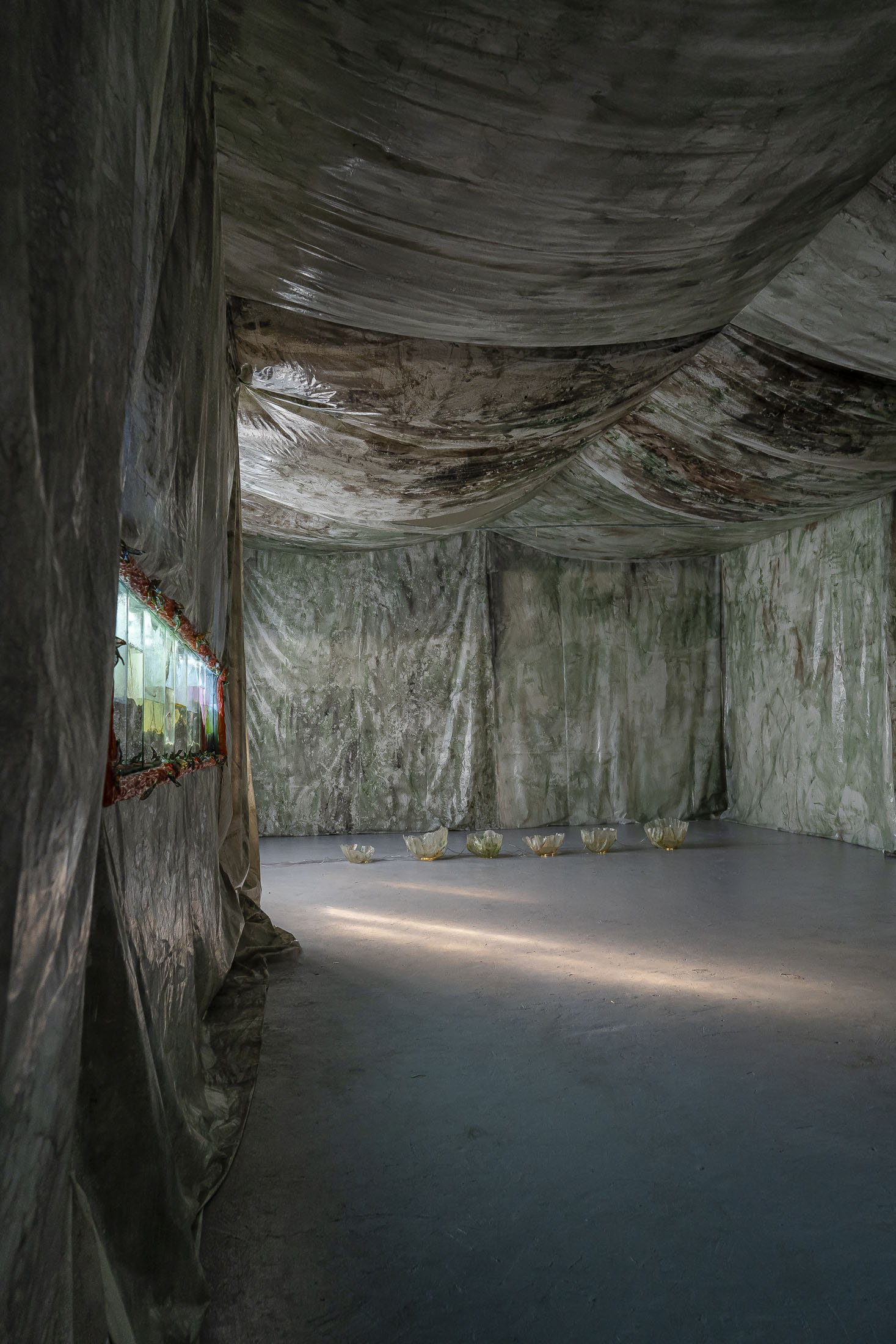
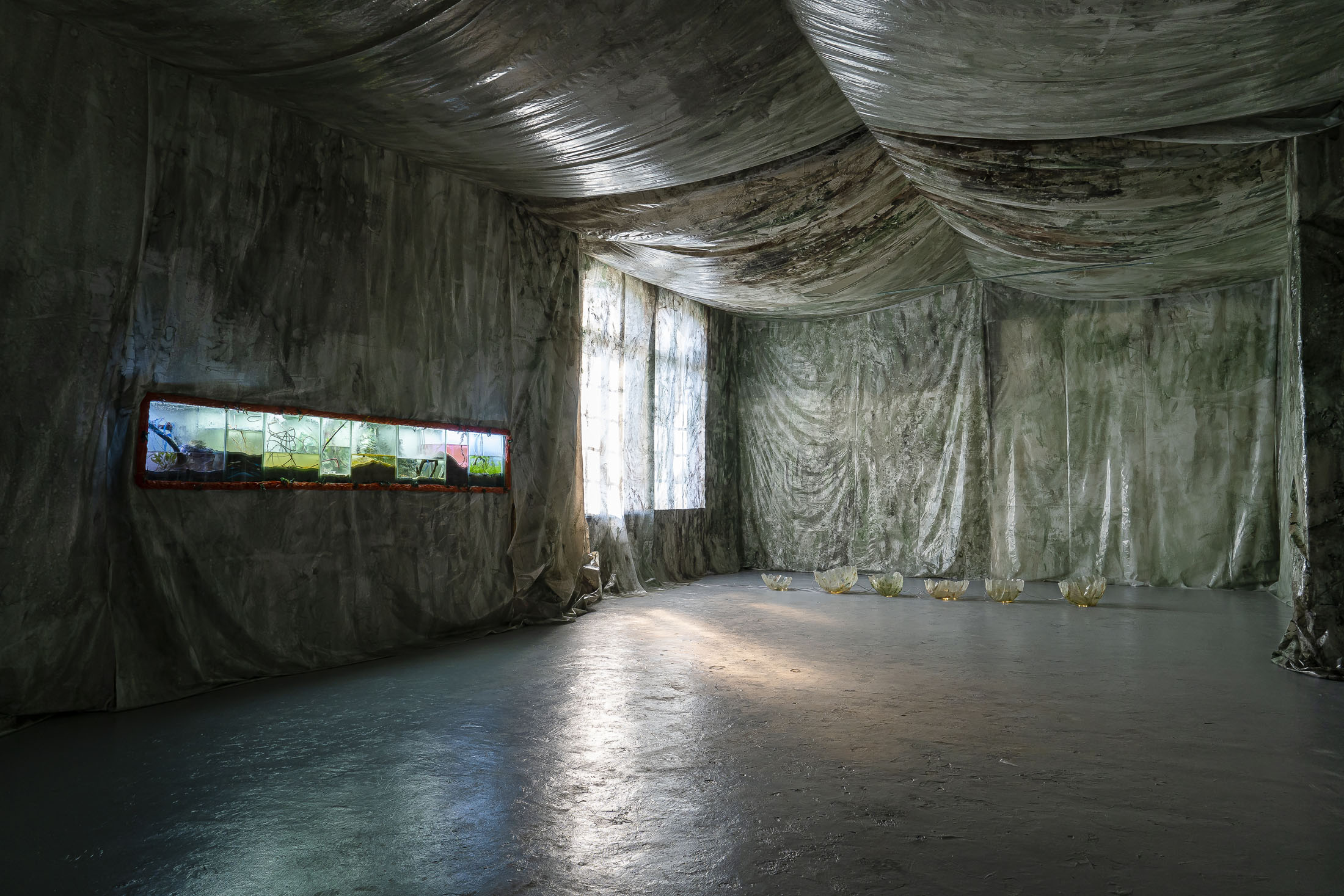
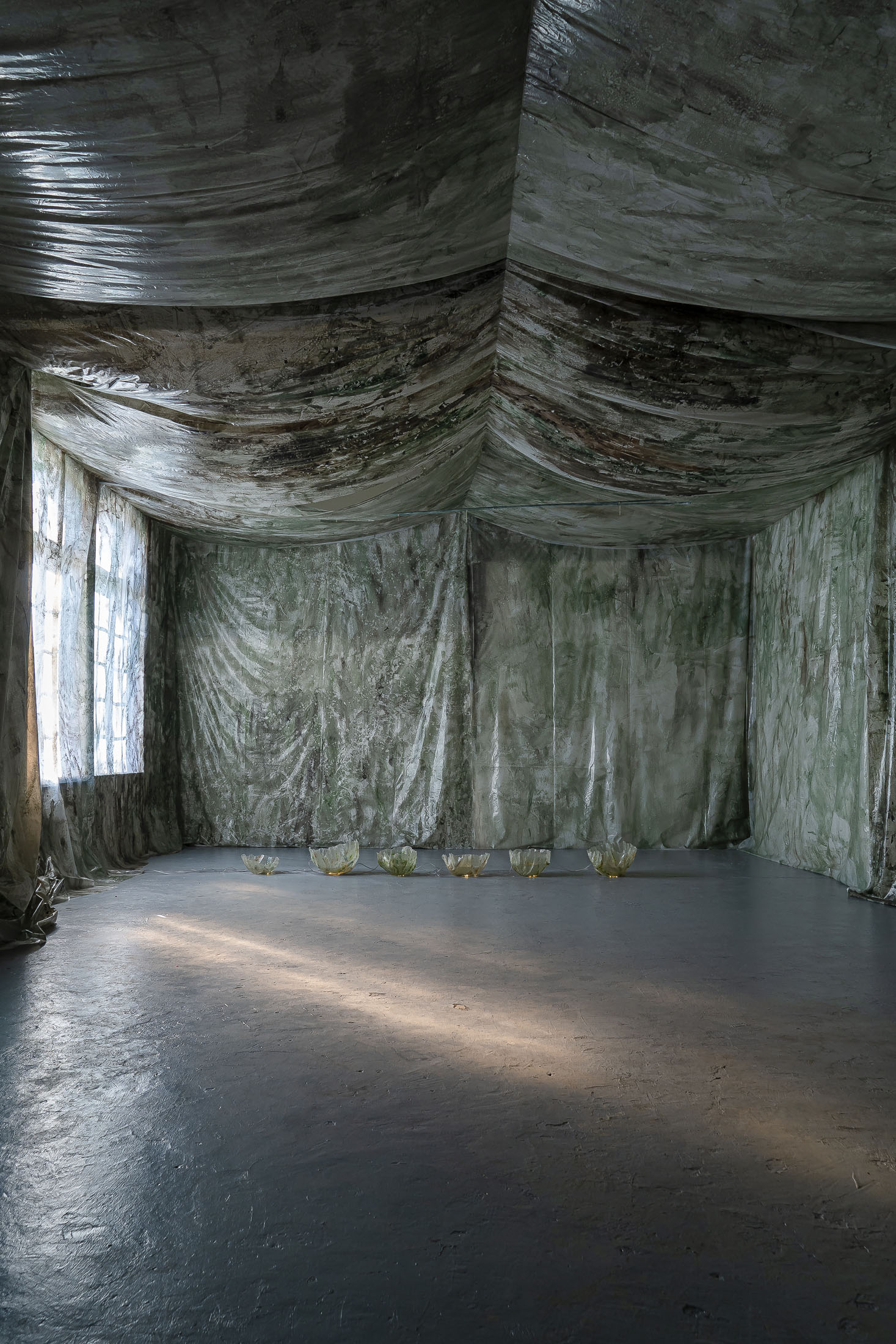
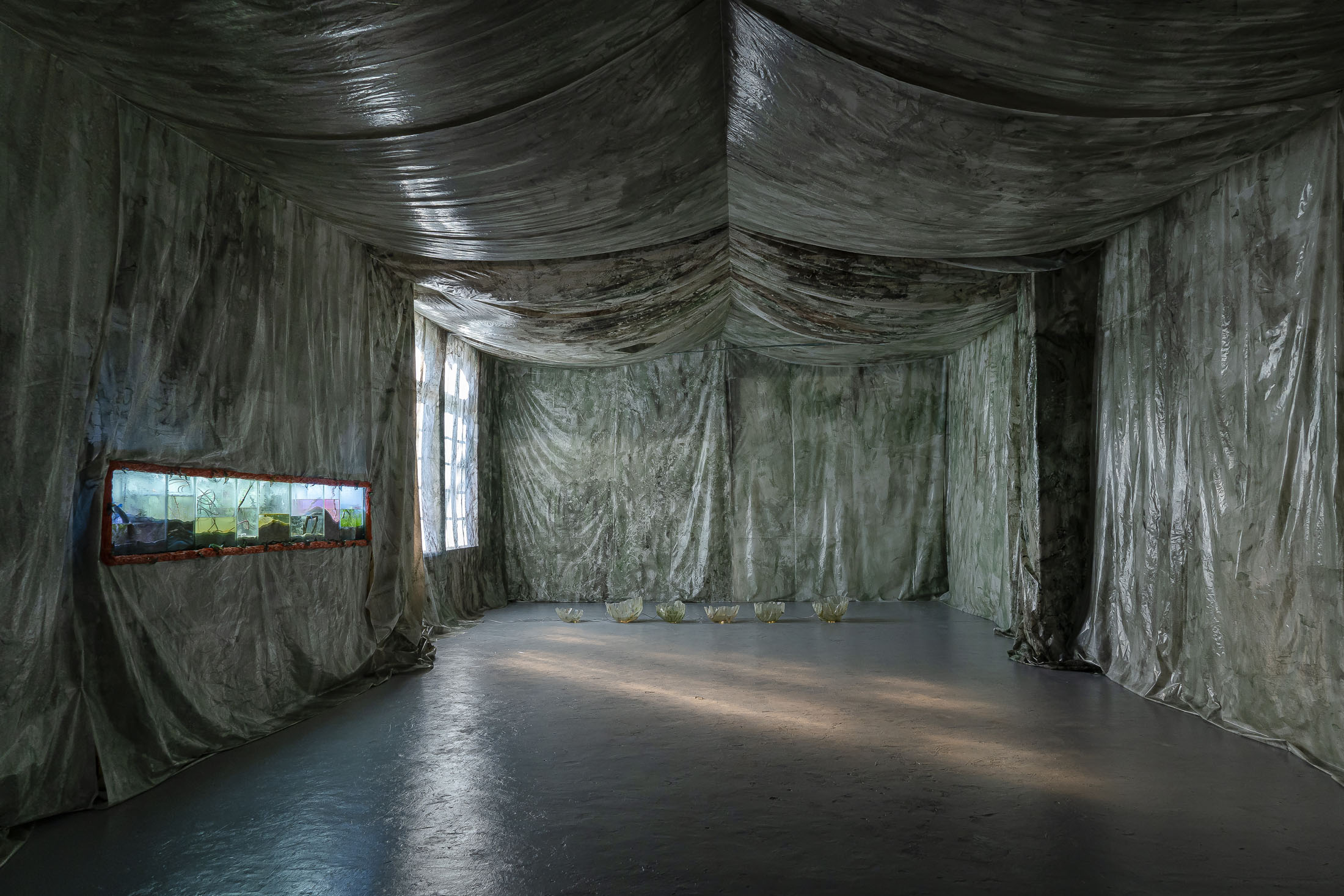
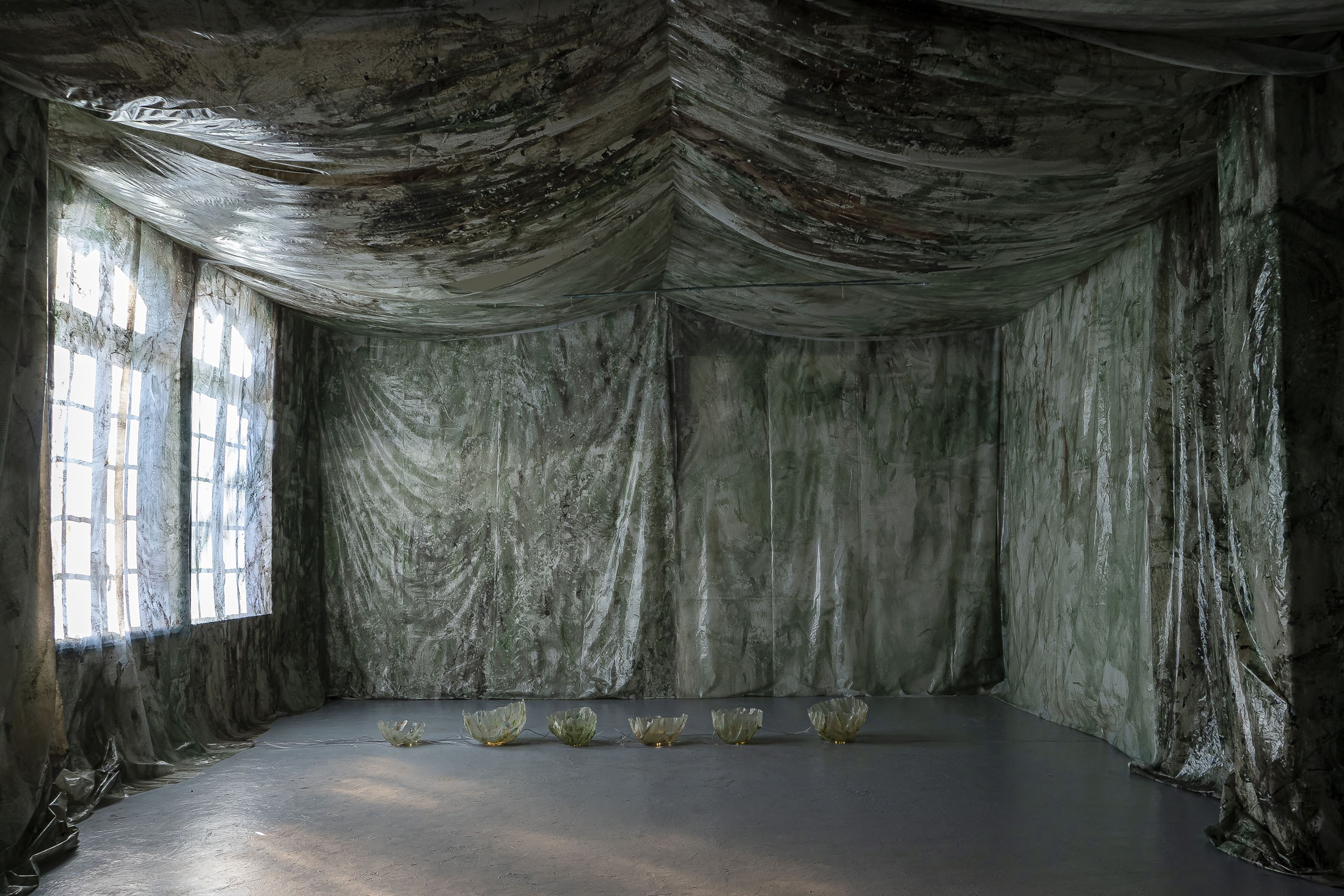
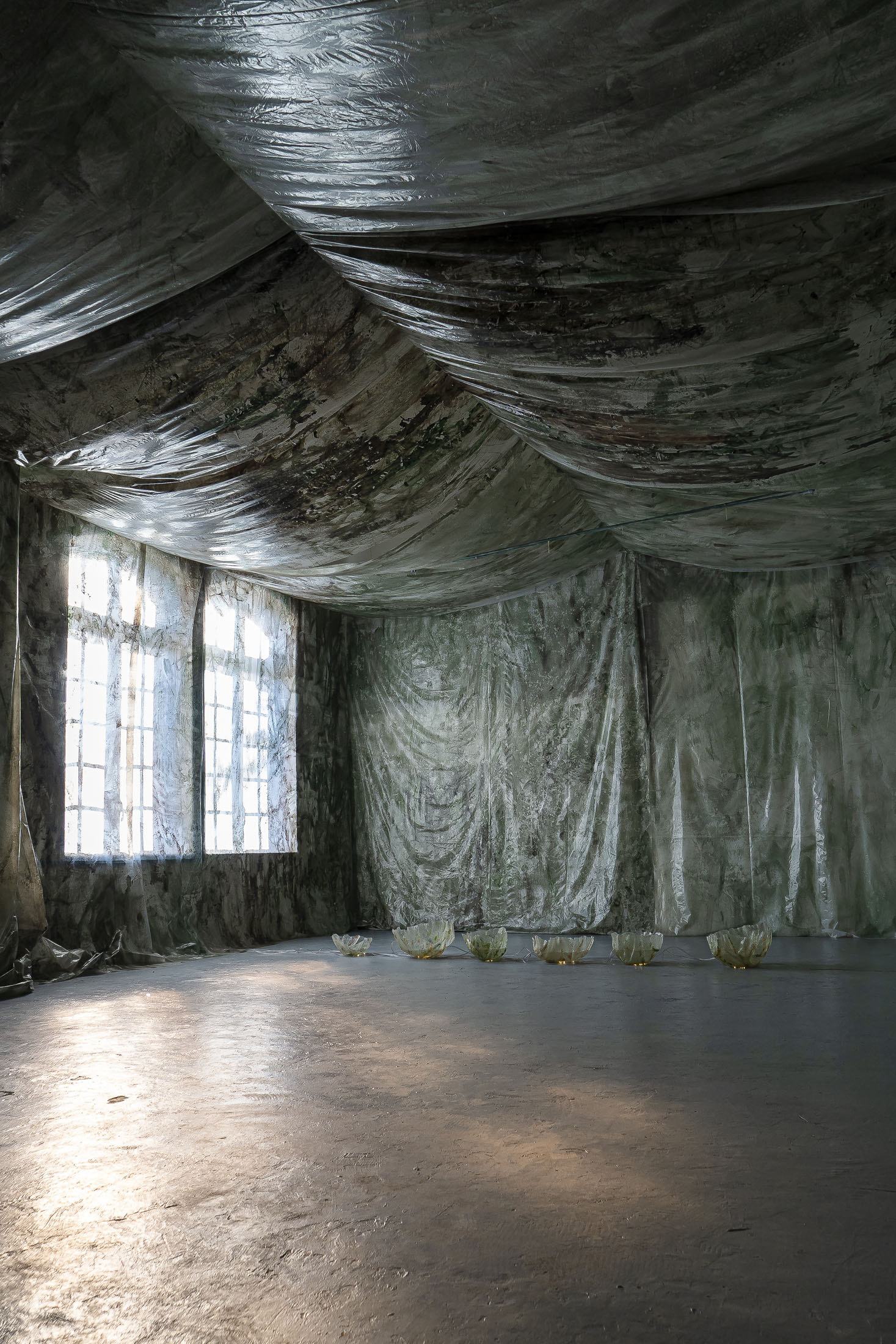
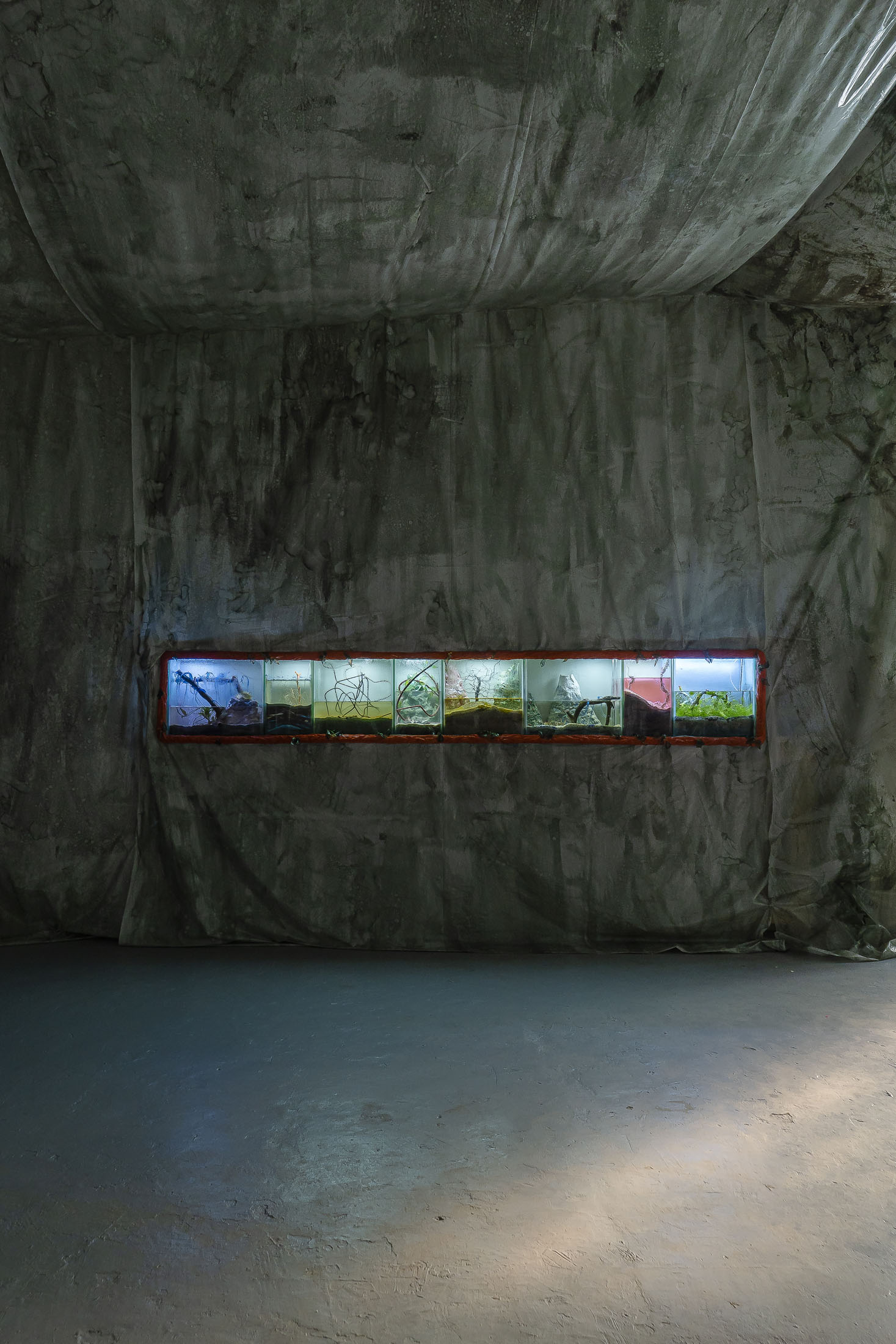
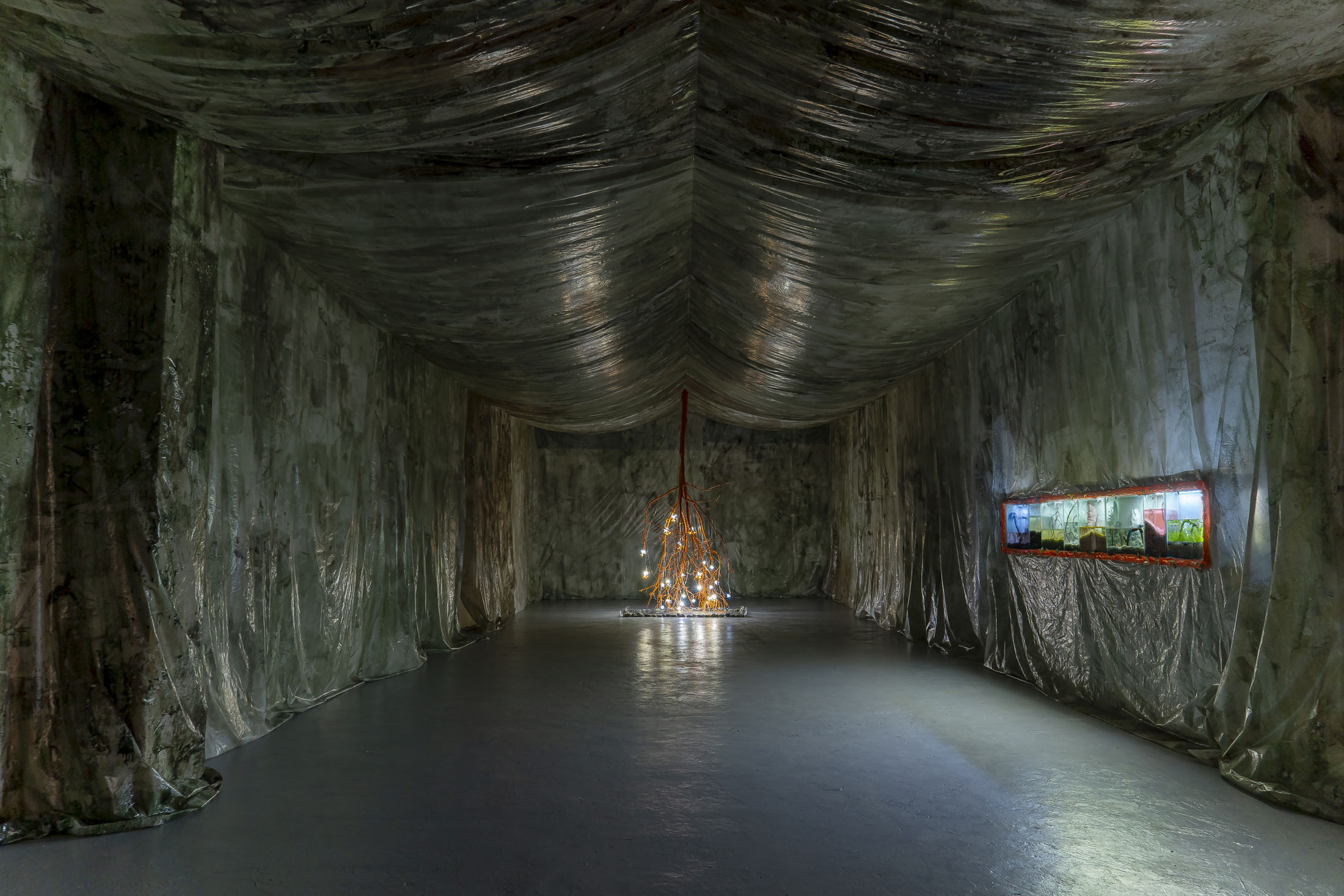
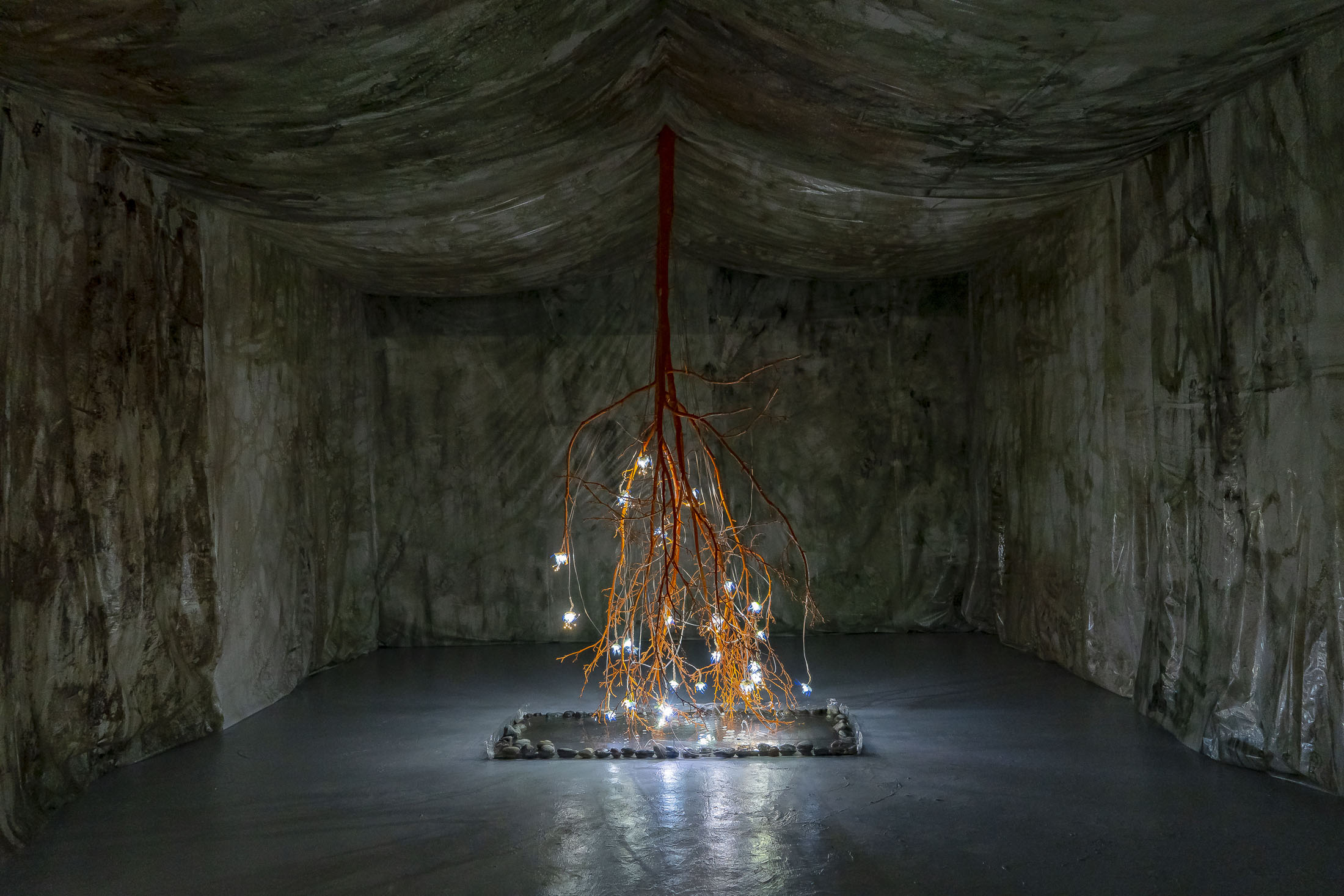
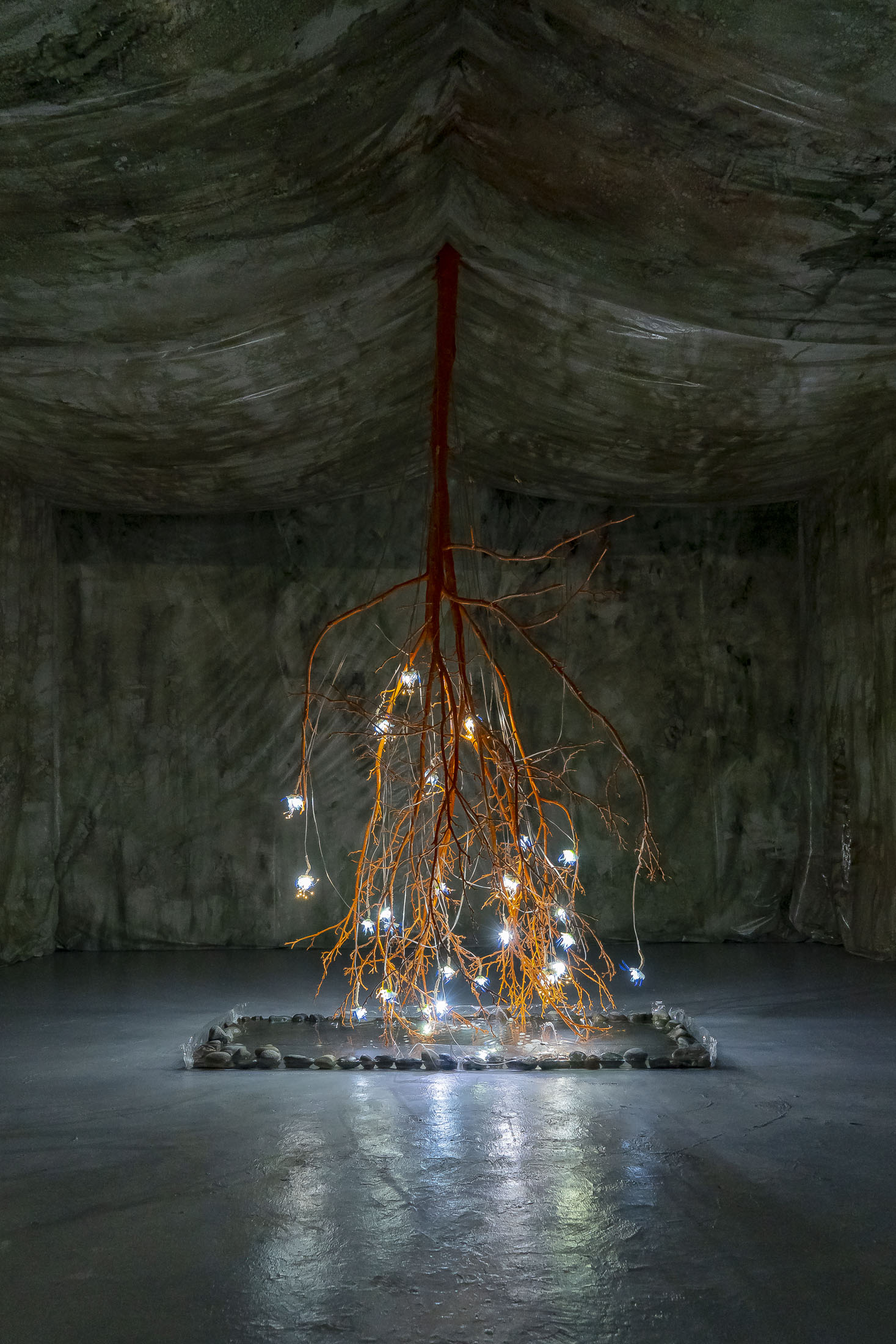
As her work progresses, these constructions, while never ceasing to be fragile and delicate, seem to acquire the capacity to engulf us. We are no longer simply standing before a sculpture or a painting; we enter a composition (a hybrid of sculpture, installation, and painting) that receives the body the way a landscape does—we find ourselves inside it. The nest has become a cave. Her work seems to have thickened until becoming spatially immersive; her practice has transformed into a place, a kind of sculptural landscaping, or sculpture as a device that allows us to experience environments as dimensional stimuli. There, inside Paulina’s work, we become sensitive spectators of a panorama that is always in dialogue with landscape and nature. If at first fragile elements constructed delicate forms, projects such as this one suggest that what has truly become delicate is the world itself as a system.
This immersive practice is also sensitive in the way it engages with the natural world, which is no longer expressed merely as the environment from which materials are gathered (as the bird does). Nature—and we ourselves, as a species and part of it—exists in a state of crisis. The landscape is no longer a reality altered only by the passing of the seasons. The world is heating from within; the particles of living matter accelerate, distorting the possibilities of the world’s future material and organic existence. Thus, these environments constructed by Paulina are speculative sculptures, materialized fantasies of a planet in crisis becoming what it may. If Impressionist painters could observe the landscape from a distance, it seems that the current state of catastrophe always places us within it. The natural environment is accelerating, transforming within its own organic logic and somehow becoming a potentially infinite wave or tornado. We are accustomed to positioning ourselves before the world as a succession of landscapes, which implies the possibility of photographic calm, a potential docility of the environment. Yet we are rapidly moving toward a state of environmental upheaval that leaves us permanently submerged within a voraciously catastrophic natural condition: the behavior of biology in the advanced Anthropocene.
A radical installation practice therefore becomes the appropriate means to confront the task of representing the nature of the future, portraying the absence of distance, the impossibility of experiencing the world outside immersion. If the nature of the past presented itself photographically, its futuristic forms propose it to us as hyper-accelerated, agitated, where immersive proximity seems to be the only possible perspective (somewhat as J. M. W. Turner experienced it pictorially). The landscape of the future is an infinite storm.
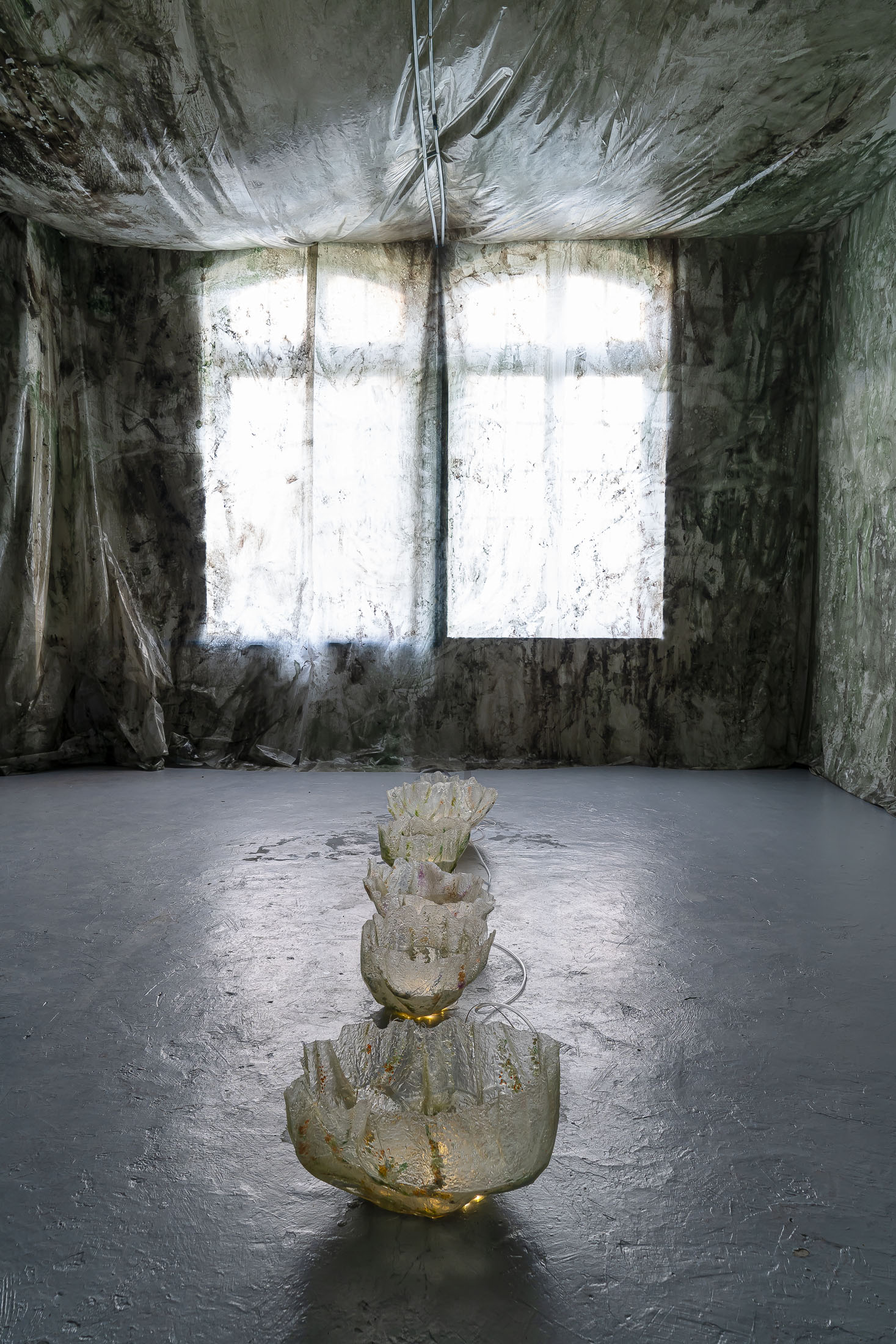
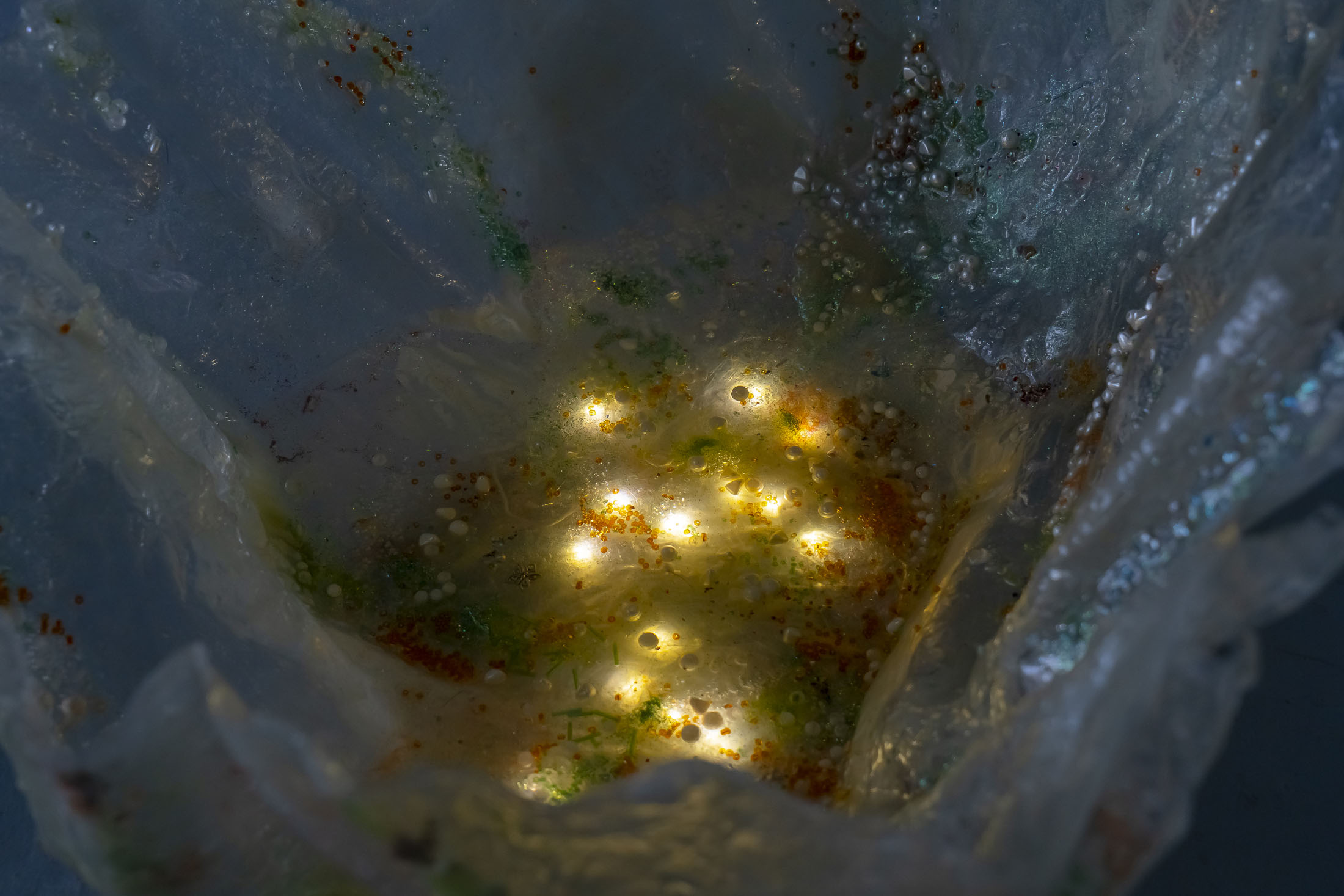
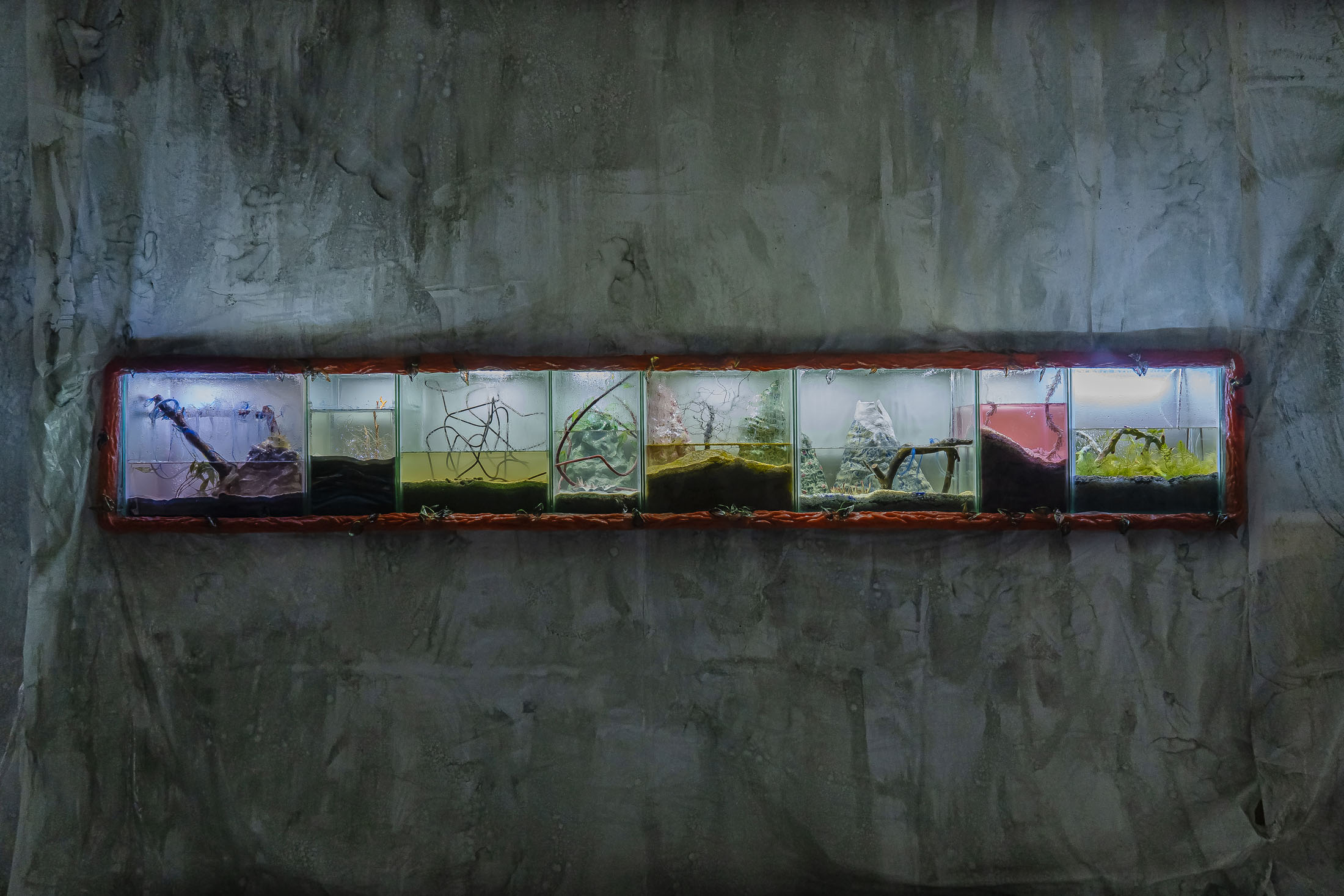
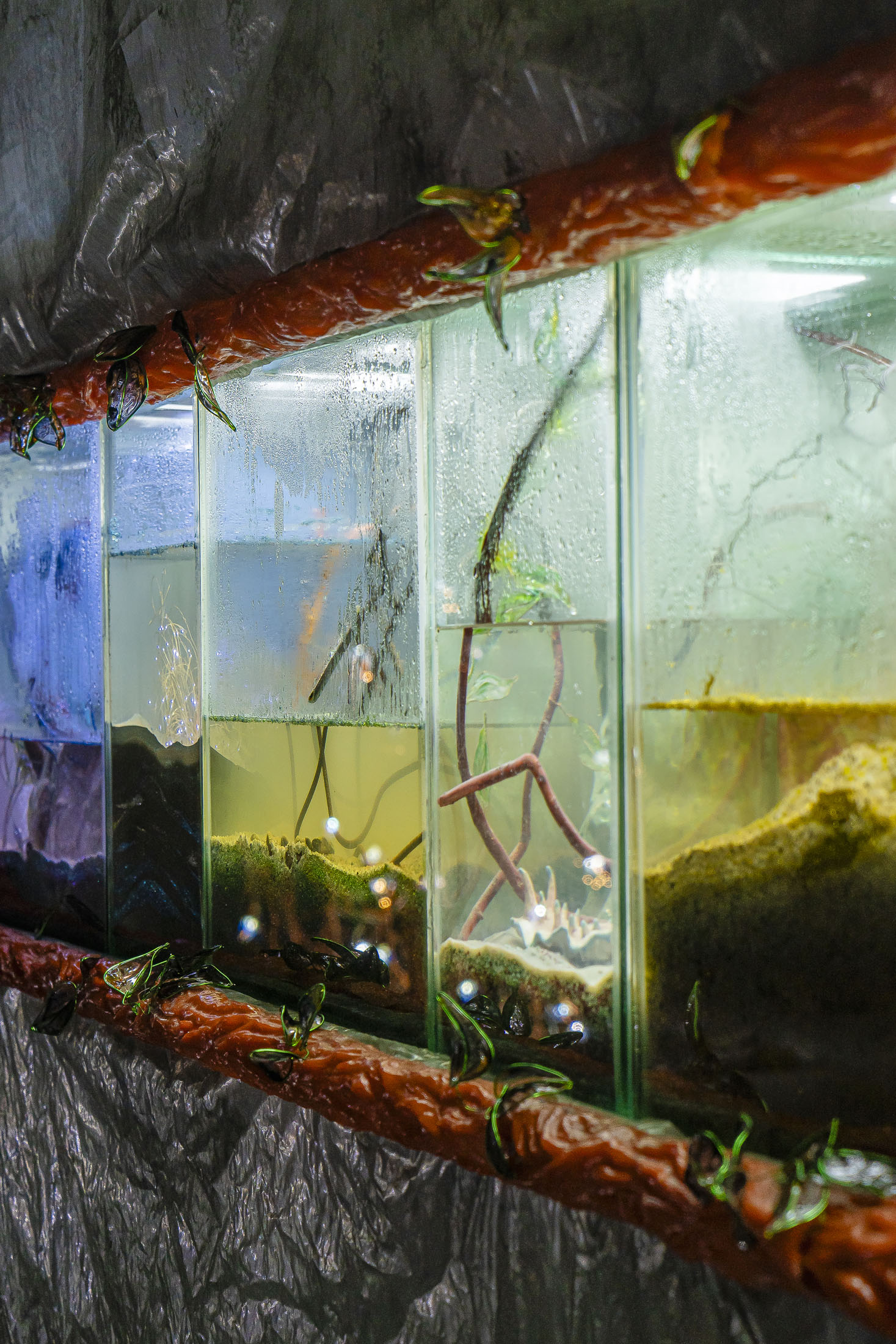
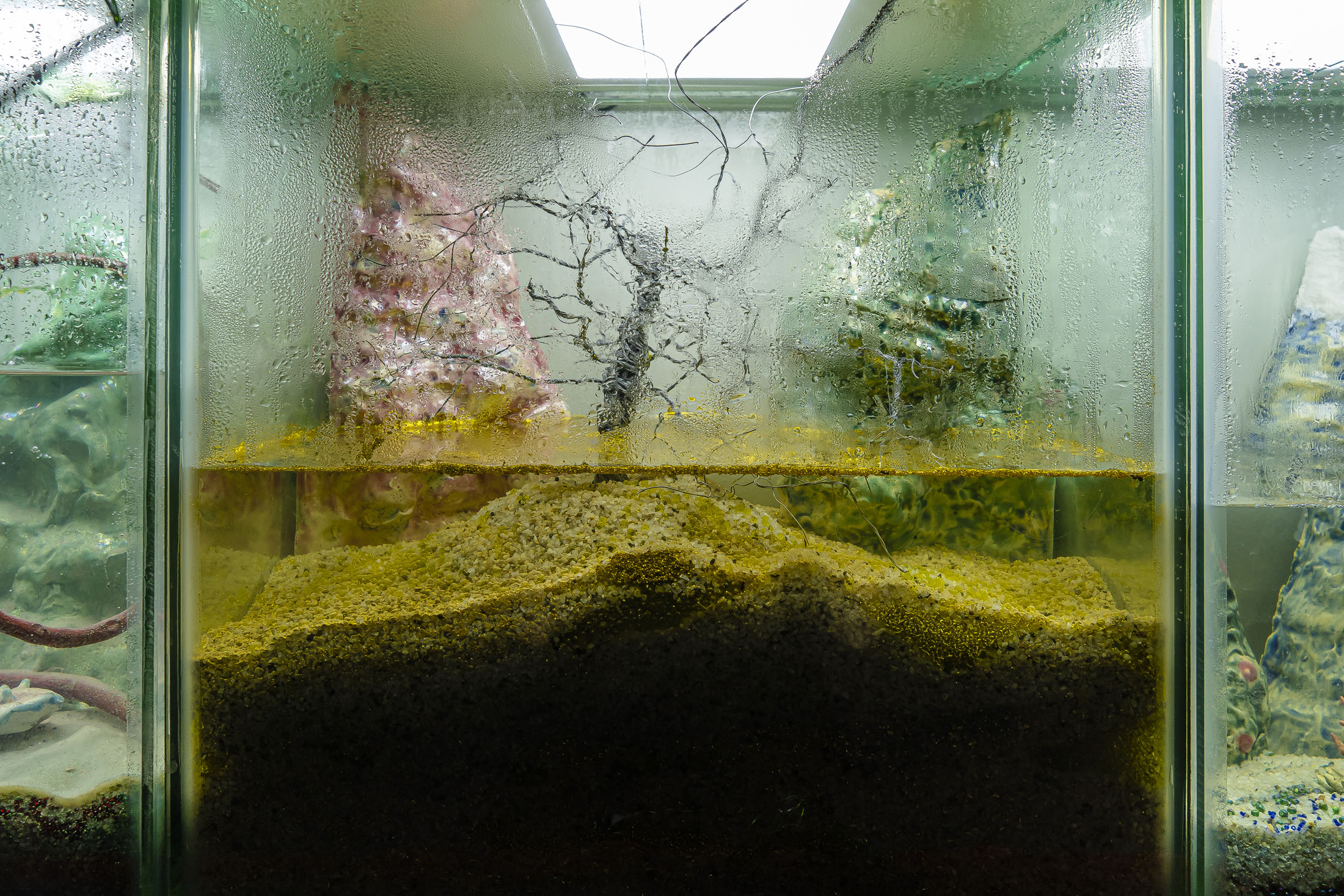
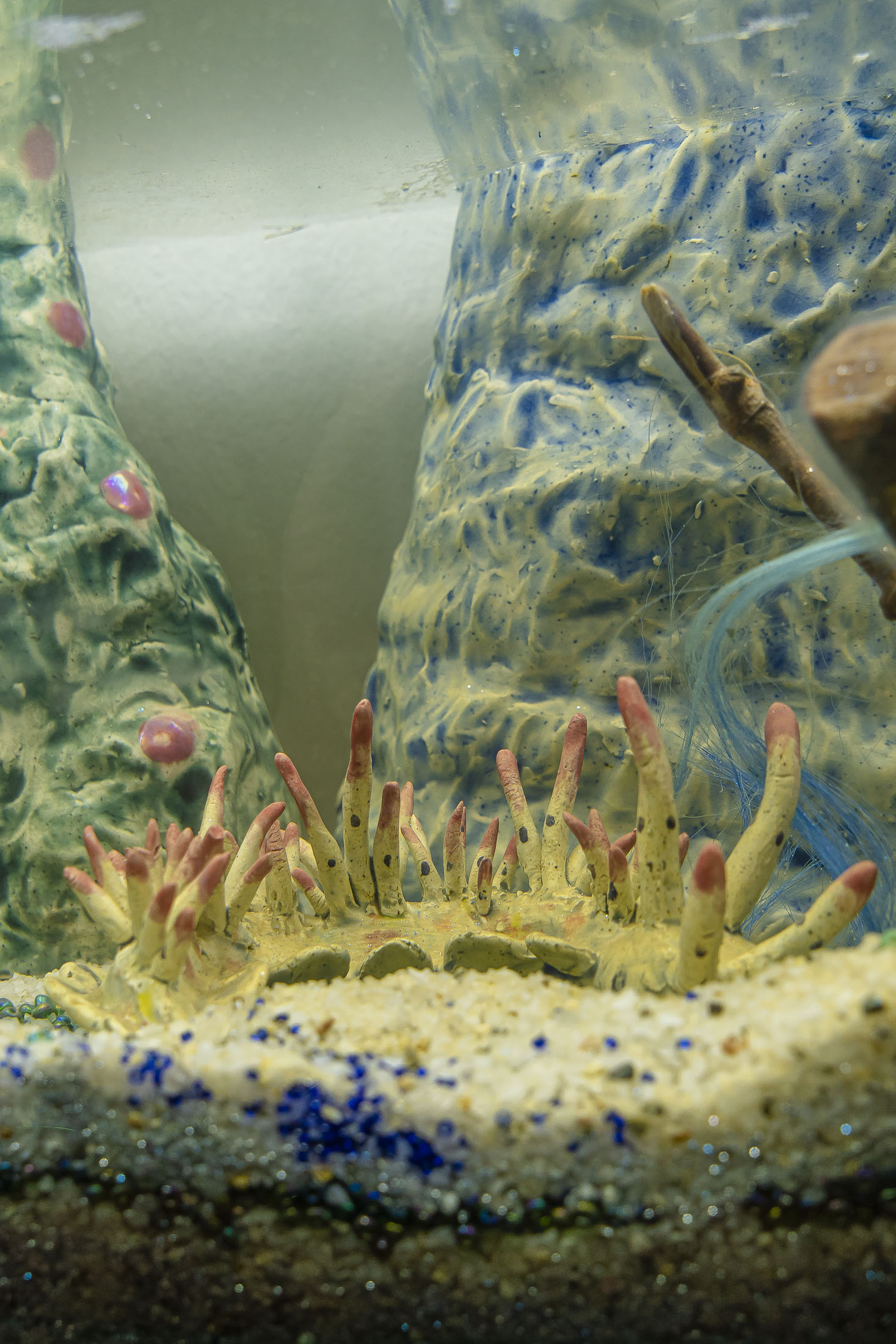
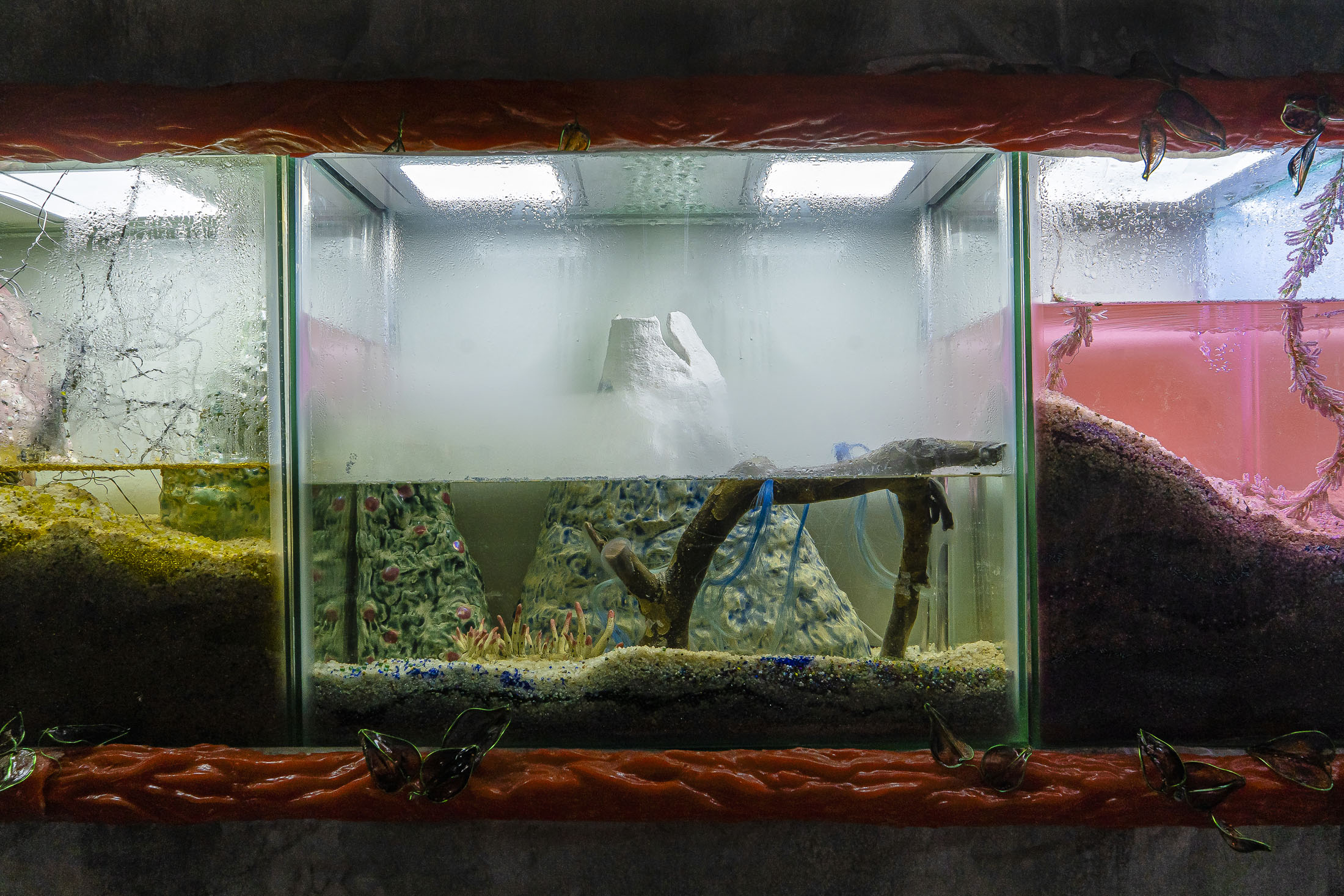
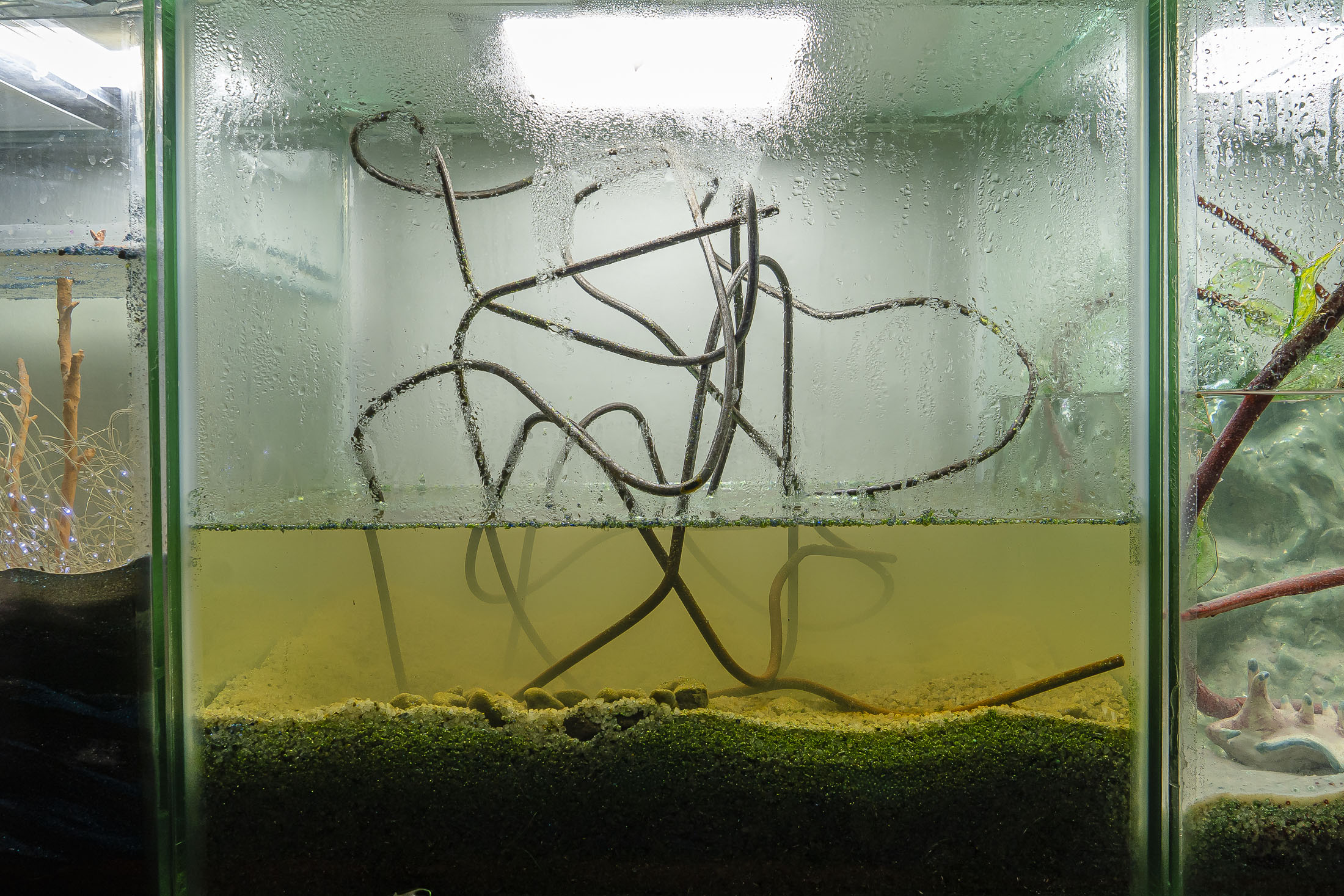
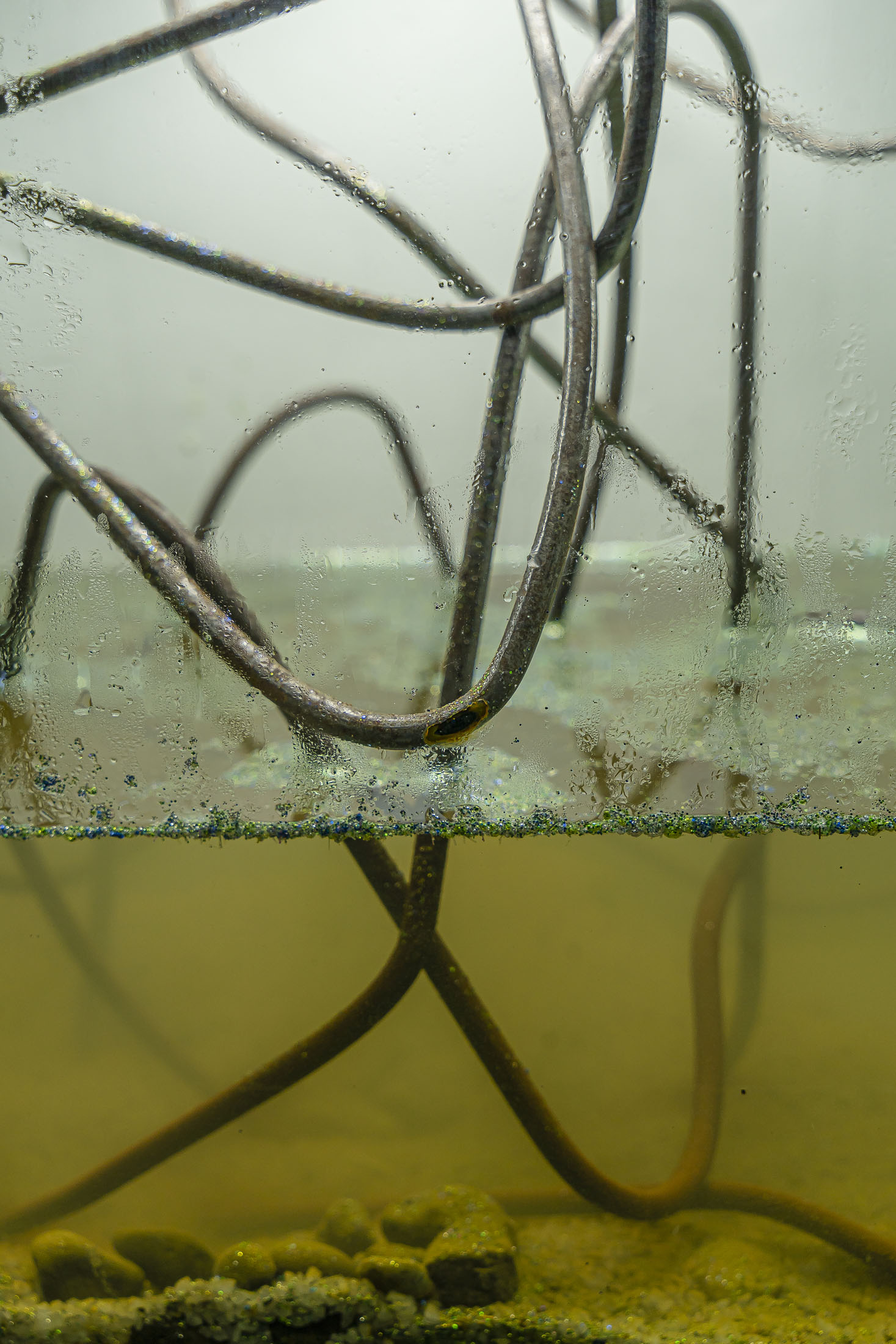
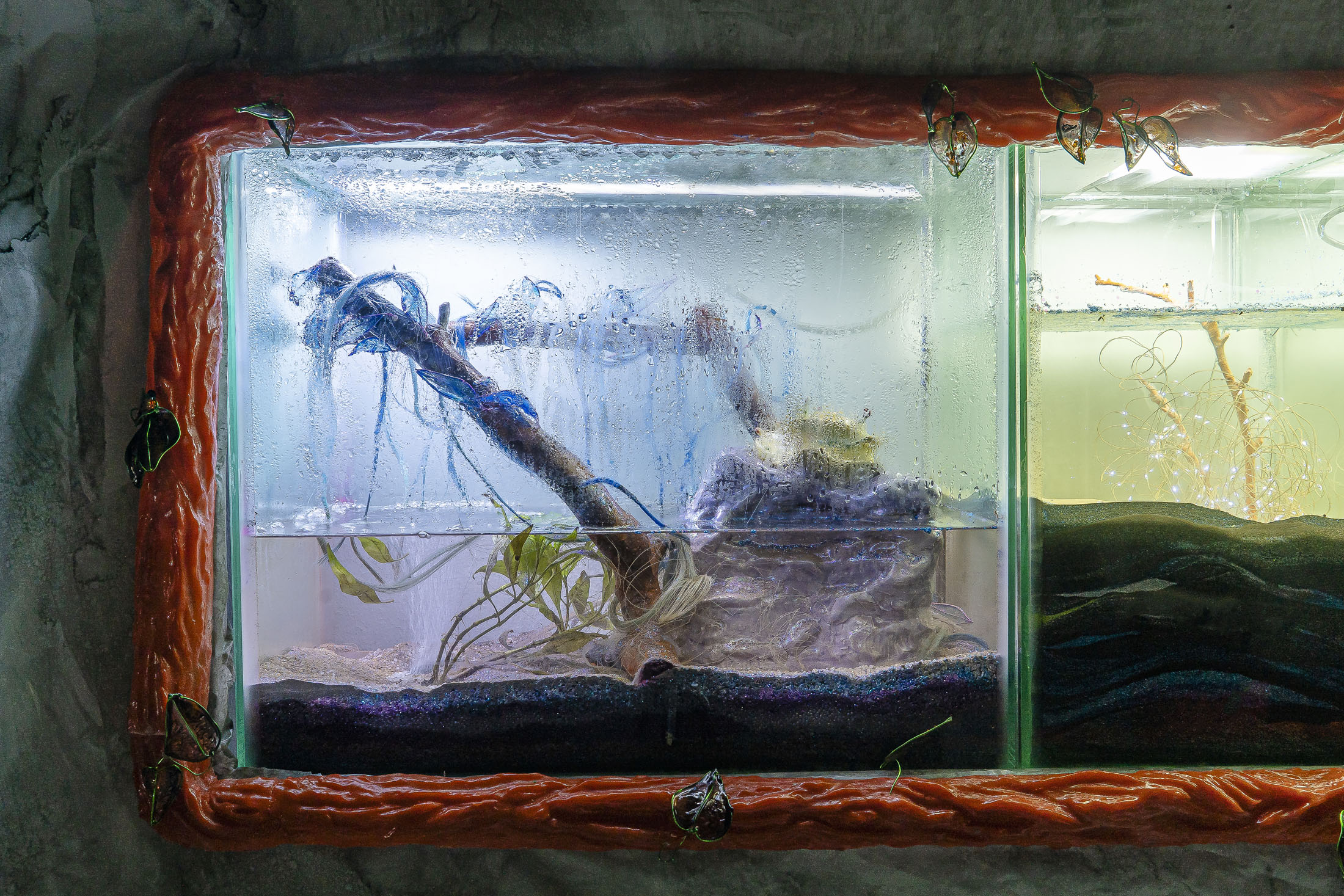
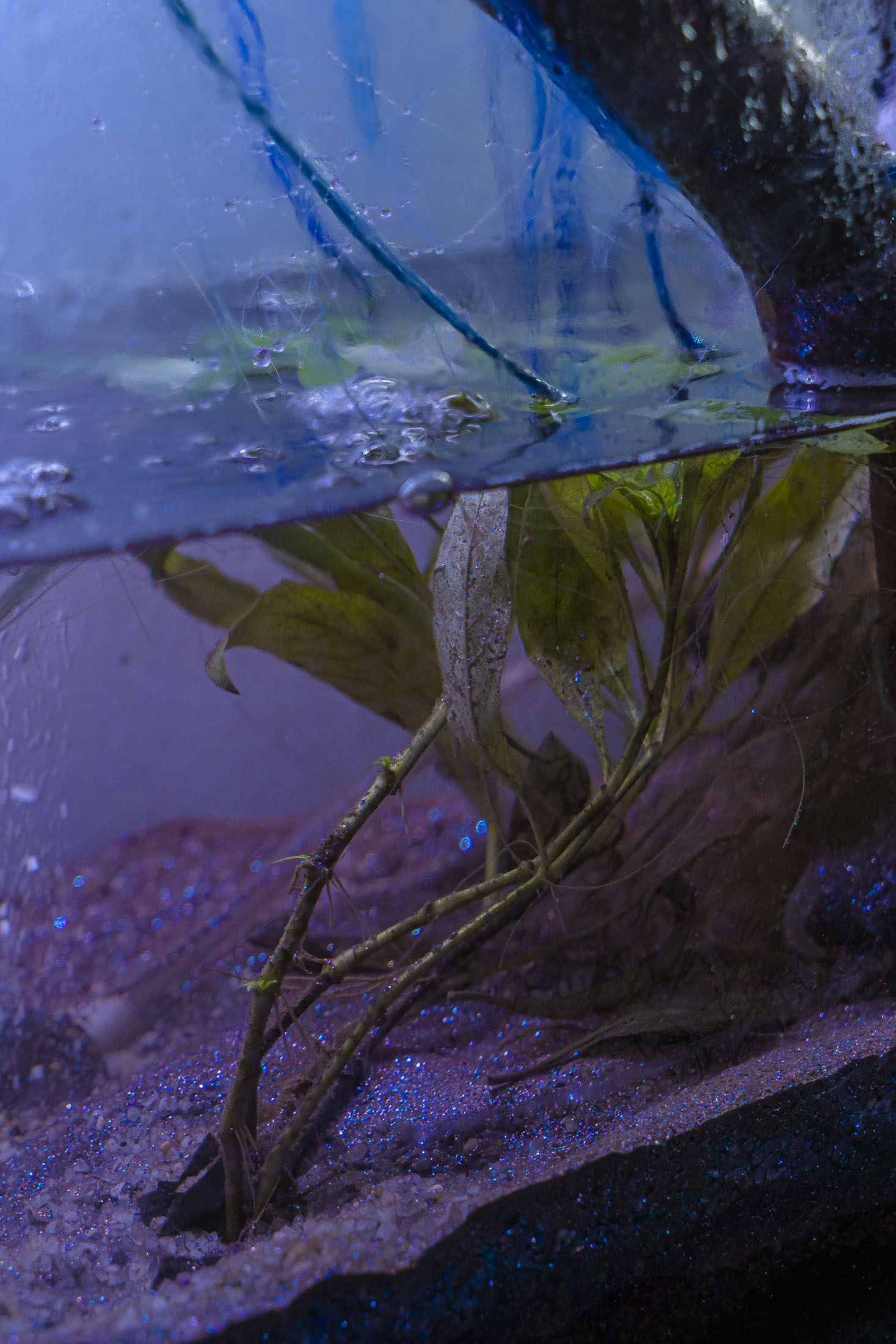
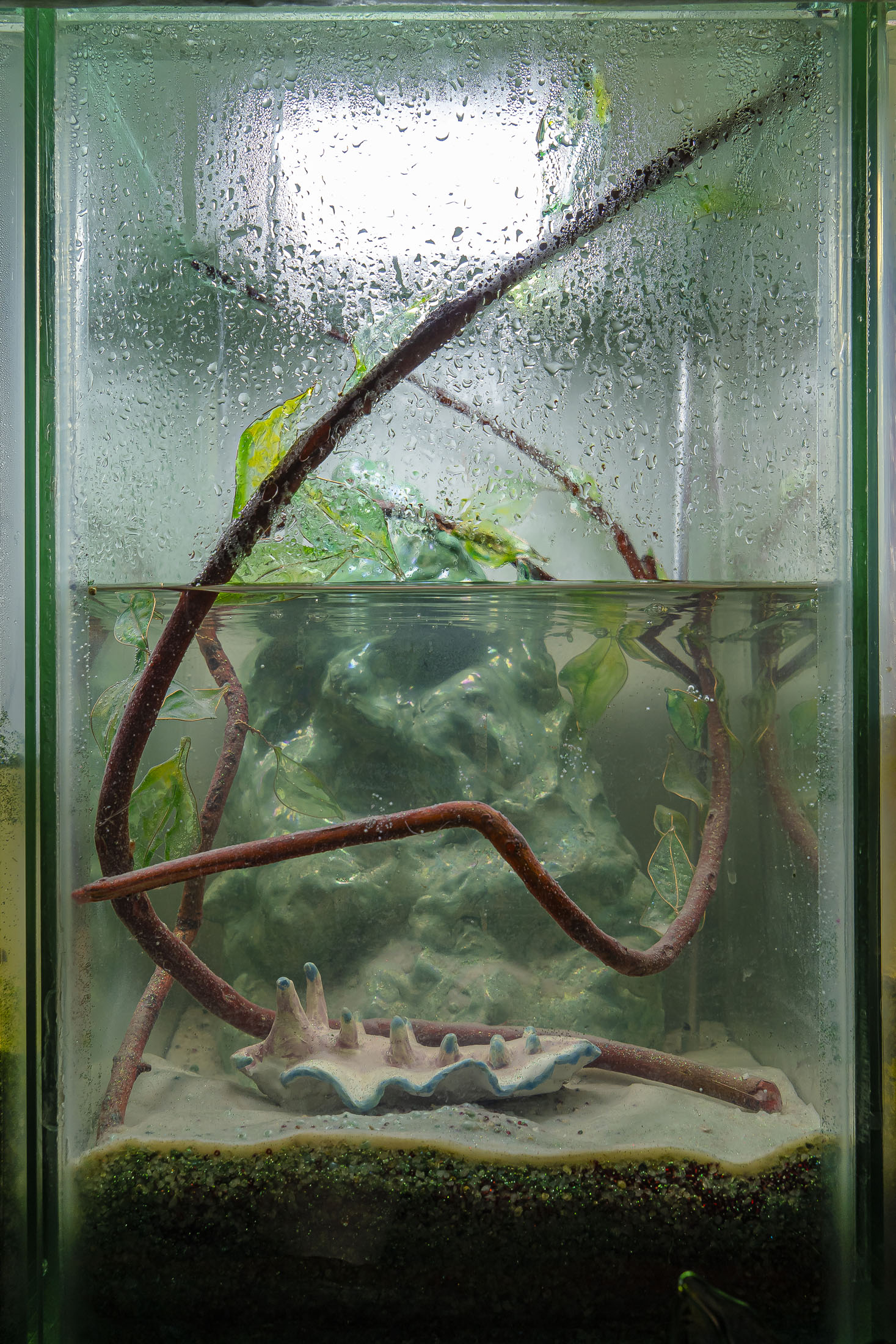
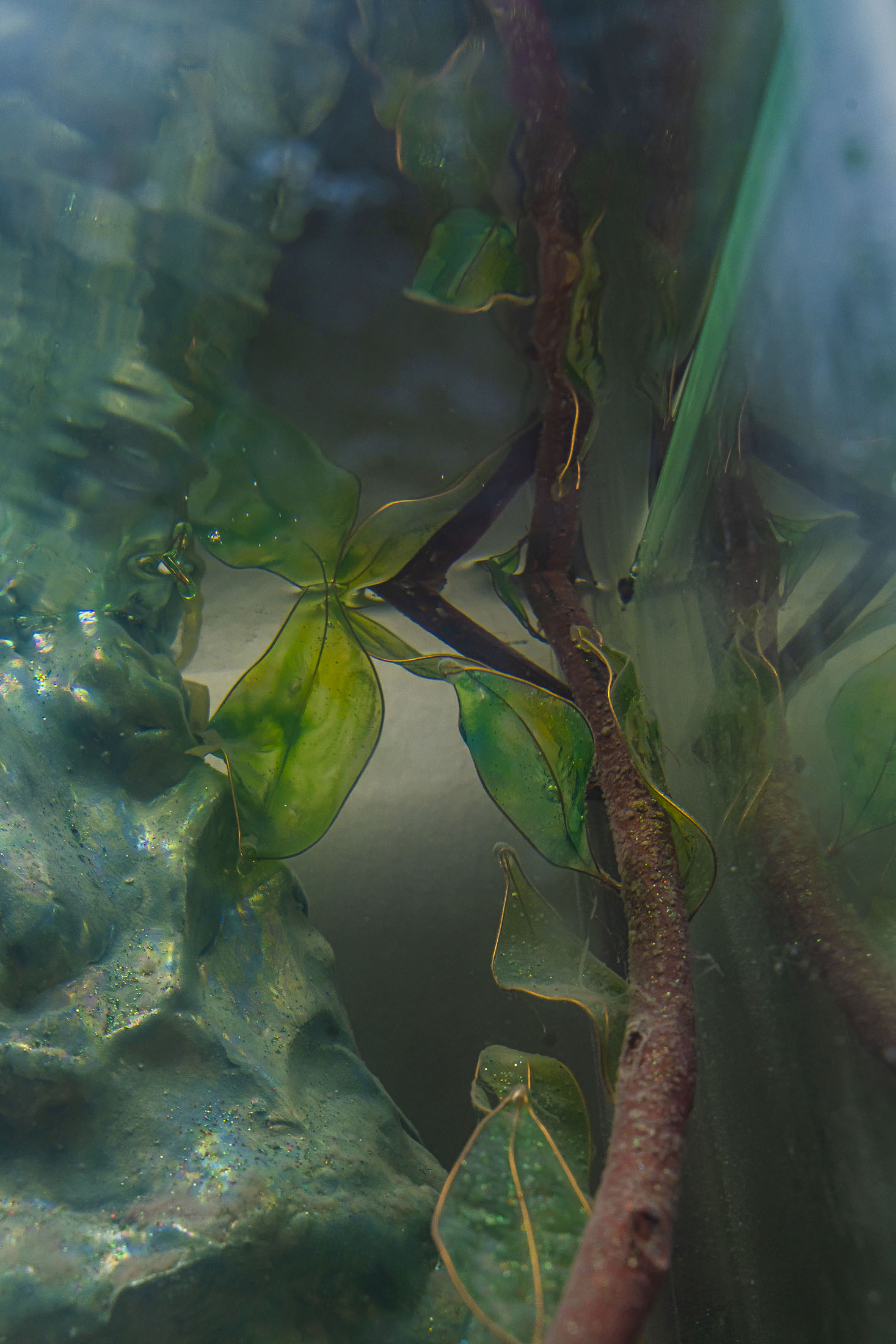
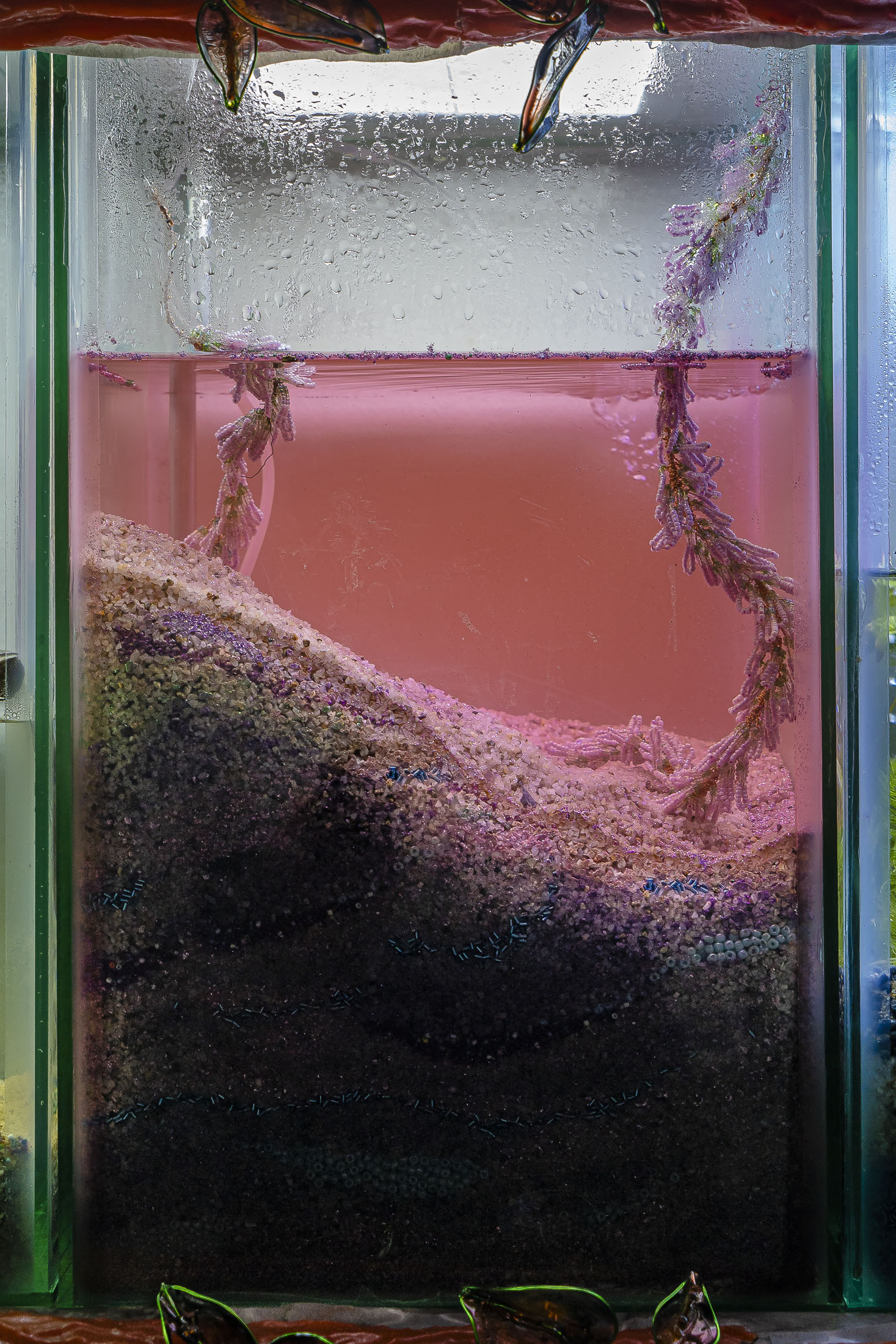
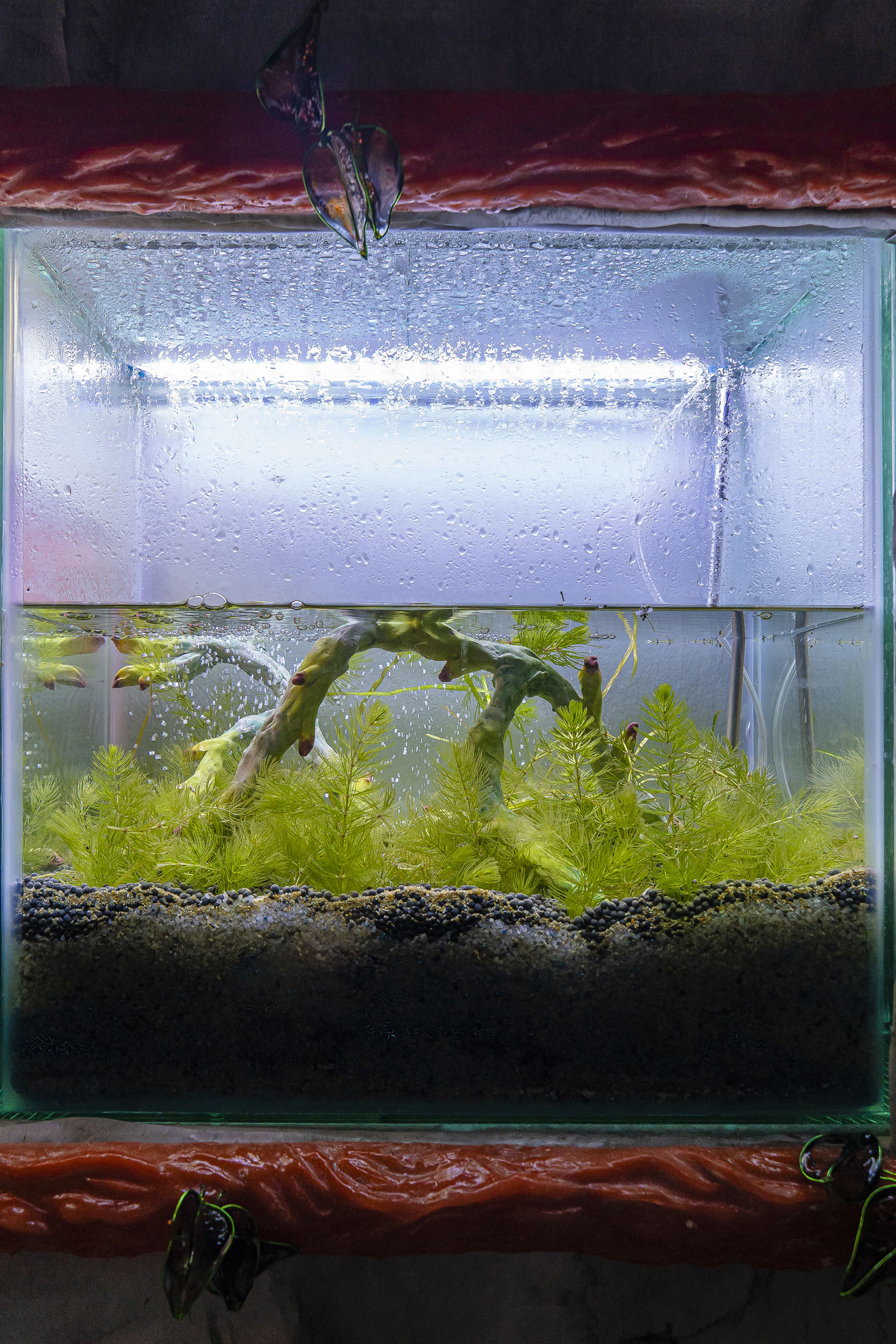
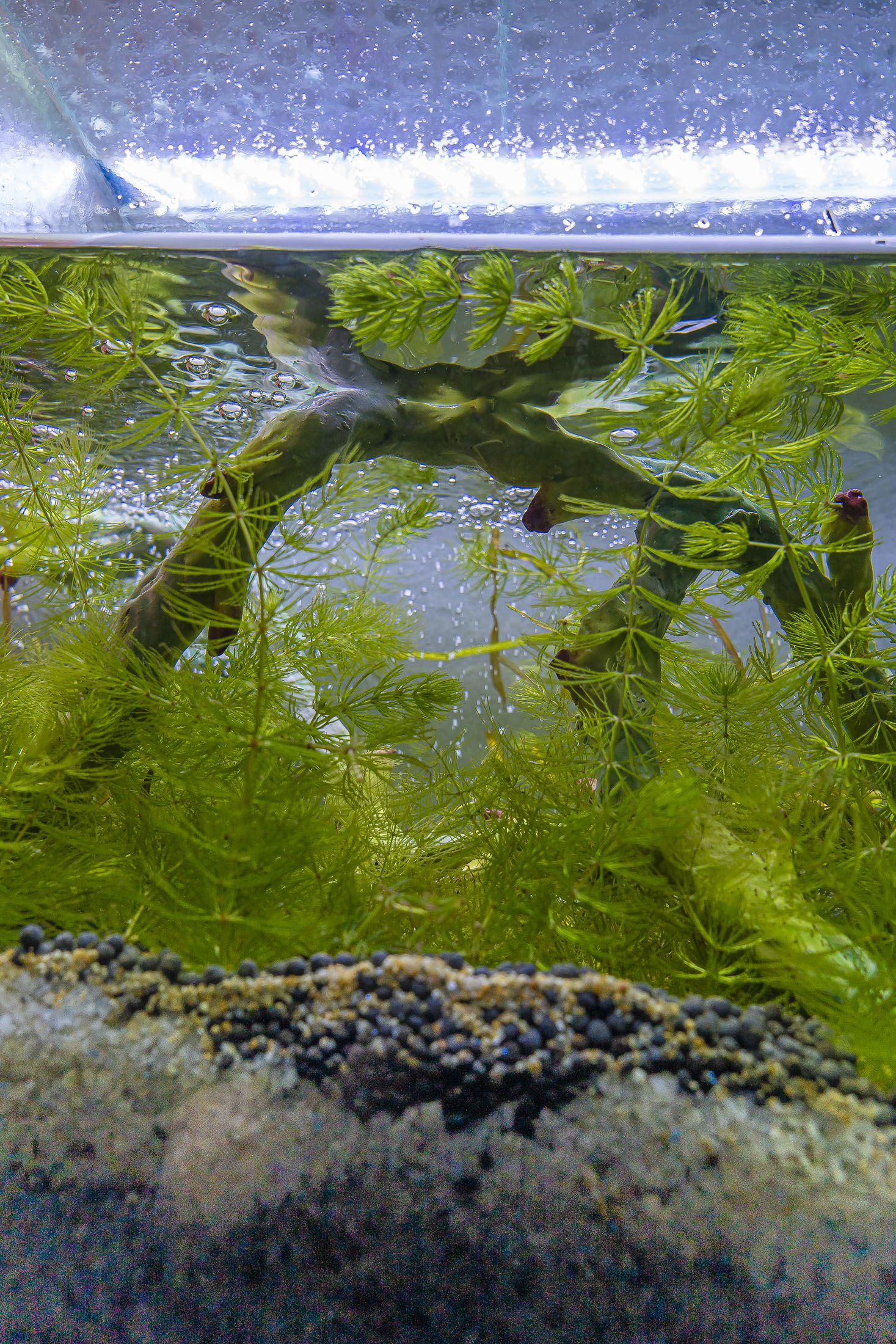
This proposal imagines an overflowing, aqueous material future: floods, humid environments, seepage infiltrating every imaginable structure. This apocalyptic reading (rooted in possible unfoldings of our material future) becomes the argument for generating a series of situations: fountains, aquariums, panels, sculptures, and interventions. These works, as art has traditionally done, engage the world through models. In this case, however, the model is not the world in its present state, but an imagined future world—a speculation made installation. Yet rather than seeing these parts separately, as “moments” within the exhibition, they function more like points that together configure a sensitive territory, a system. This exhibition is a place, an environment, much like a forest or the interior of a cloud: a material continuum that pushes experience and intellect to complement one another. An installation connected to the future through a scientific-speculative environmental perspective.
I suggested at the beginning that Paulina is an artist who touches the landscape. In this installation, she invites us into a space where we are allowed to have a sensory experience within an environment that seeks contact with a future nature.
—Javier González Pesce