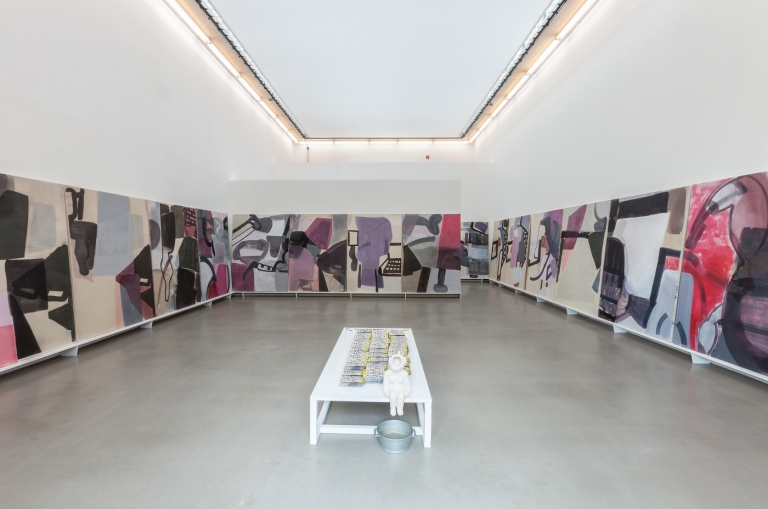
For me it is particularly interesting to consider what it means to understand painting as a living fossil, one in which the implications of its origin story are encapsulated—implications that have not been substantively altered within the context of Western historization processes. At the most fundamental level I am concerned with the question of whether a re-coding of painting is possible against the backdrop of its lineage since the Renaissance.
I understand painting, its materials, mannerisms, and myths as an interconnected system of meaning in which hegemonic power relations continue to inscribe themselves—an aesthetic manifestation that simultaneously holds the possibility of hybridization, renegotiation, and space for the transformative inhabiting of seemingly consolidated environments. Viewing habits cultivated during the Renaissance, which as apparatuses of power continue to discipline and shape perception to this day, are not limited in their effect to images alone, but are osmotically connected to modes of operation that reach far beyond them.
– Noemi Weber, Renaissance State of Mind\ing – Inhabitation, 2026
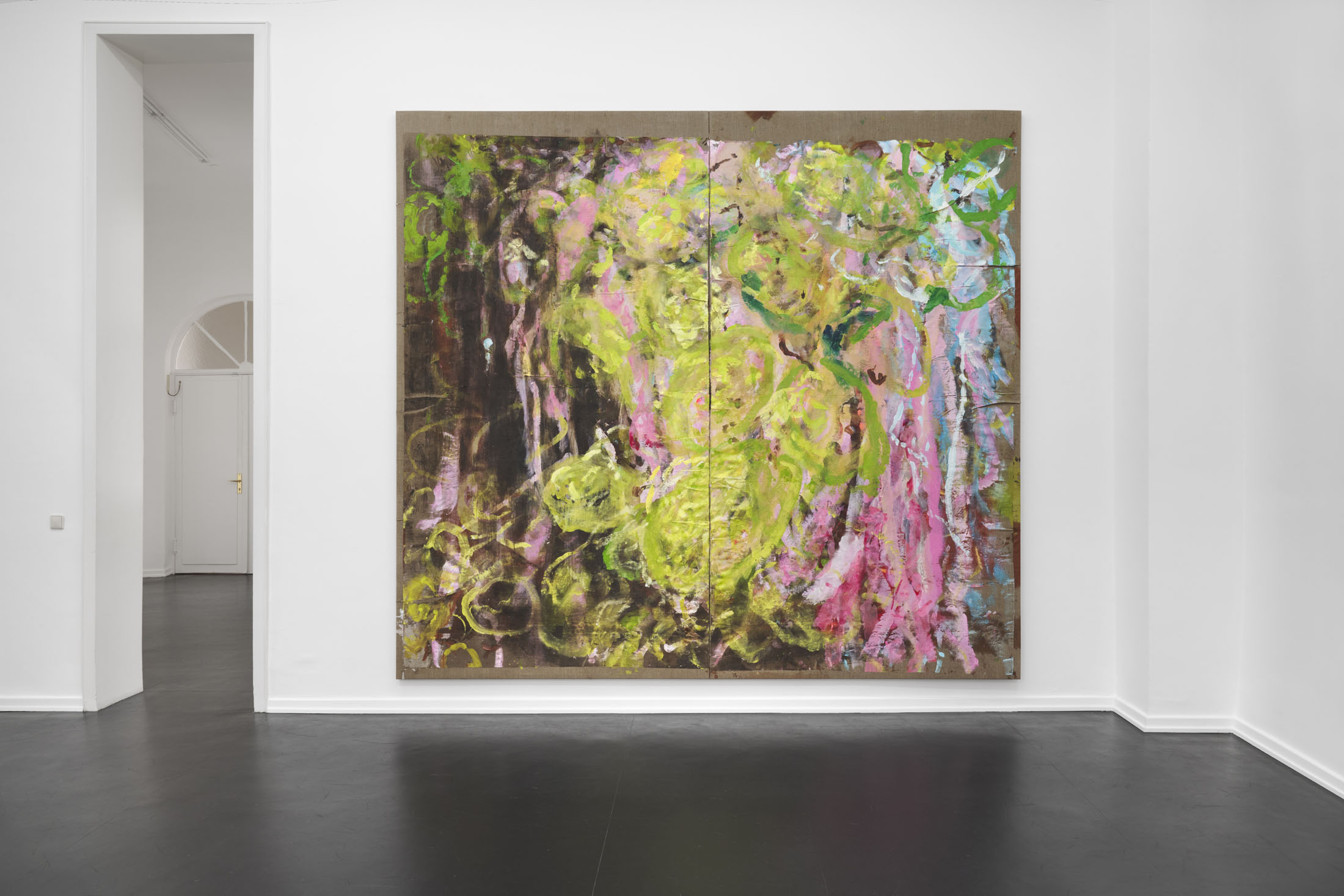
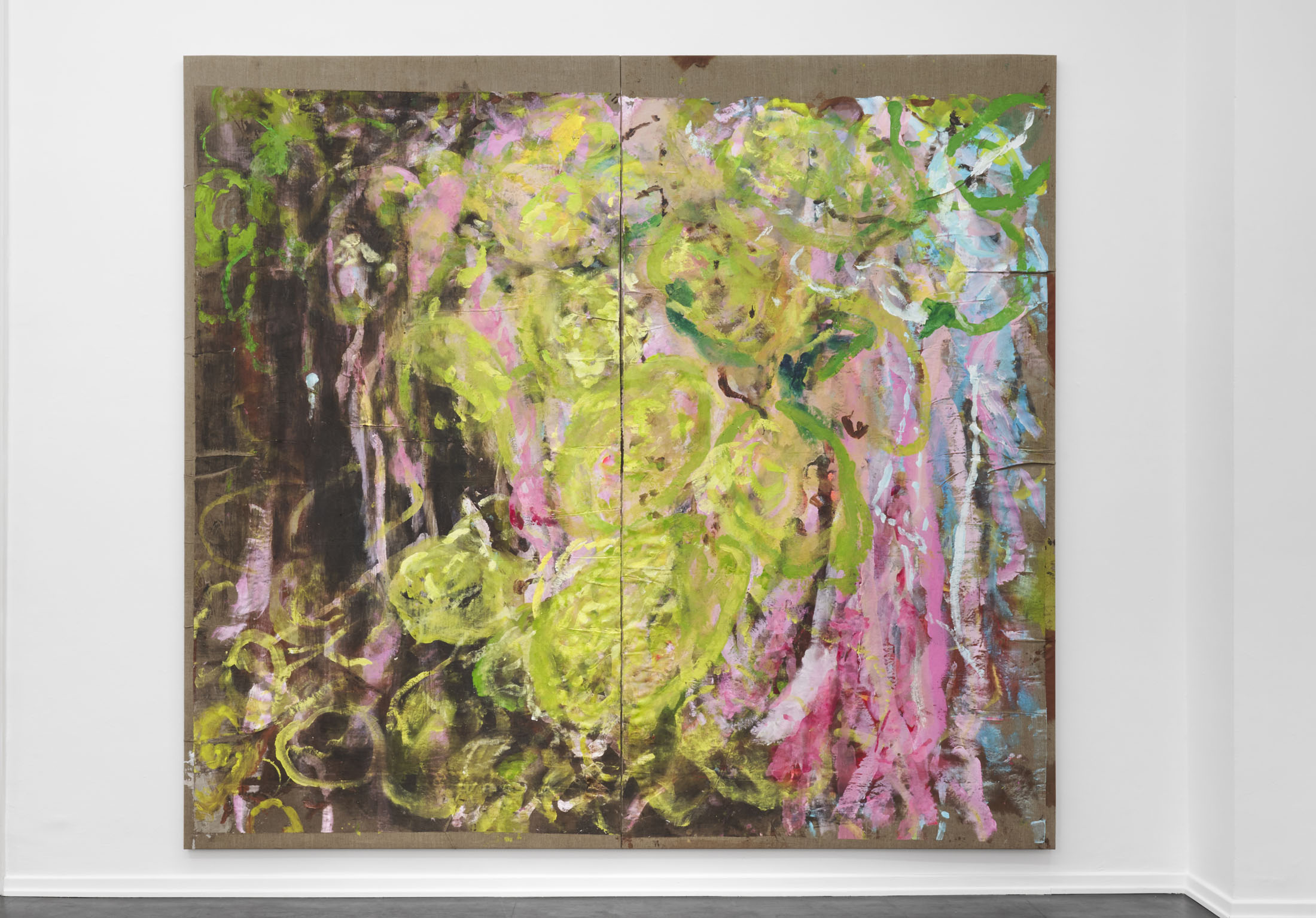
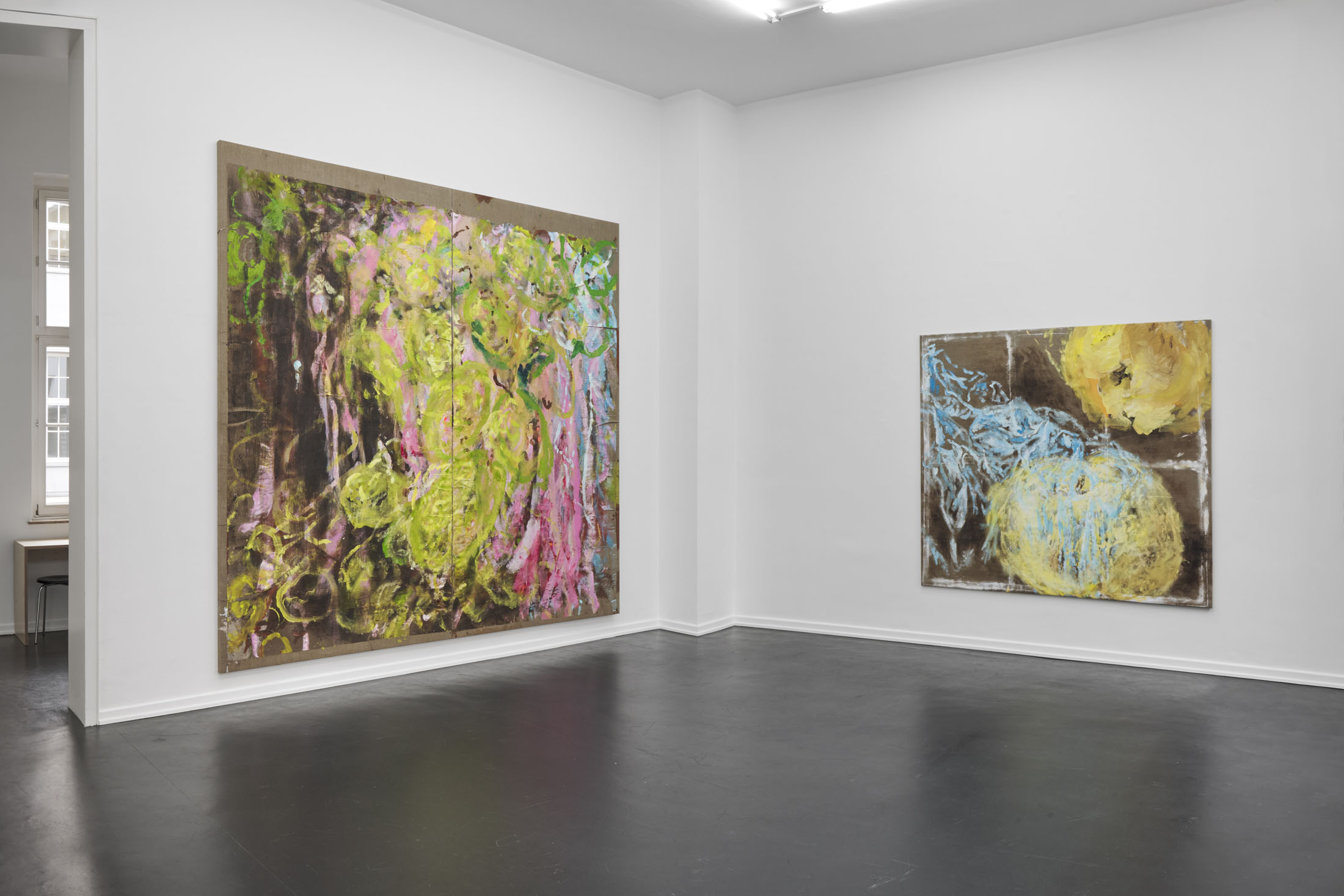
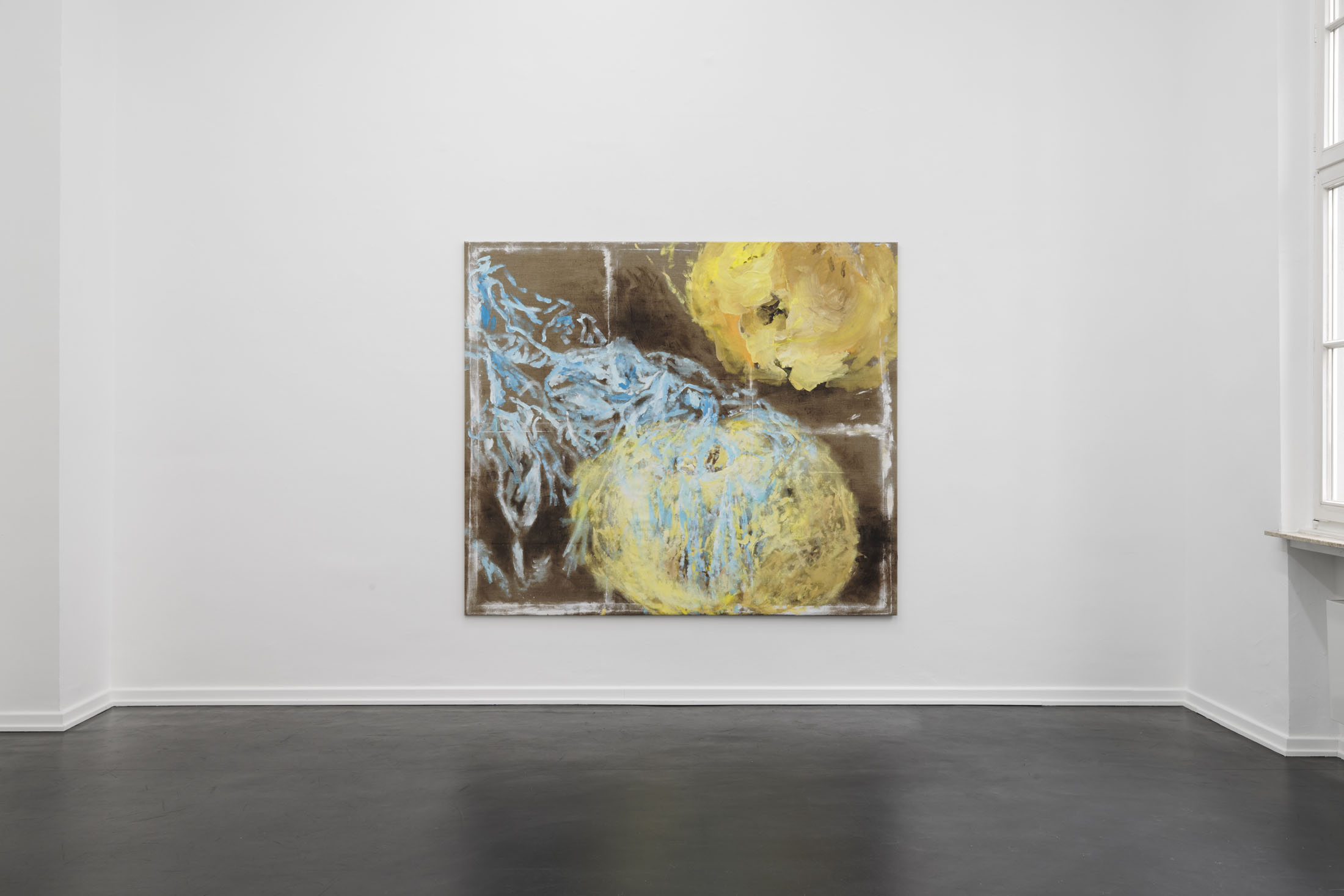
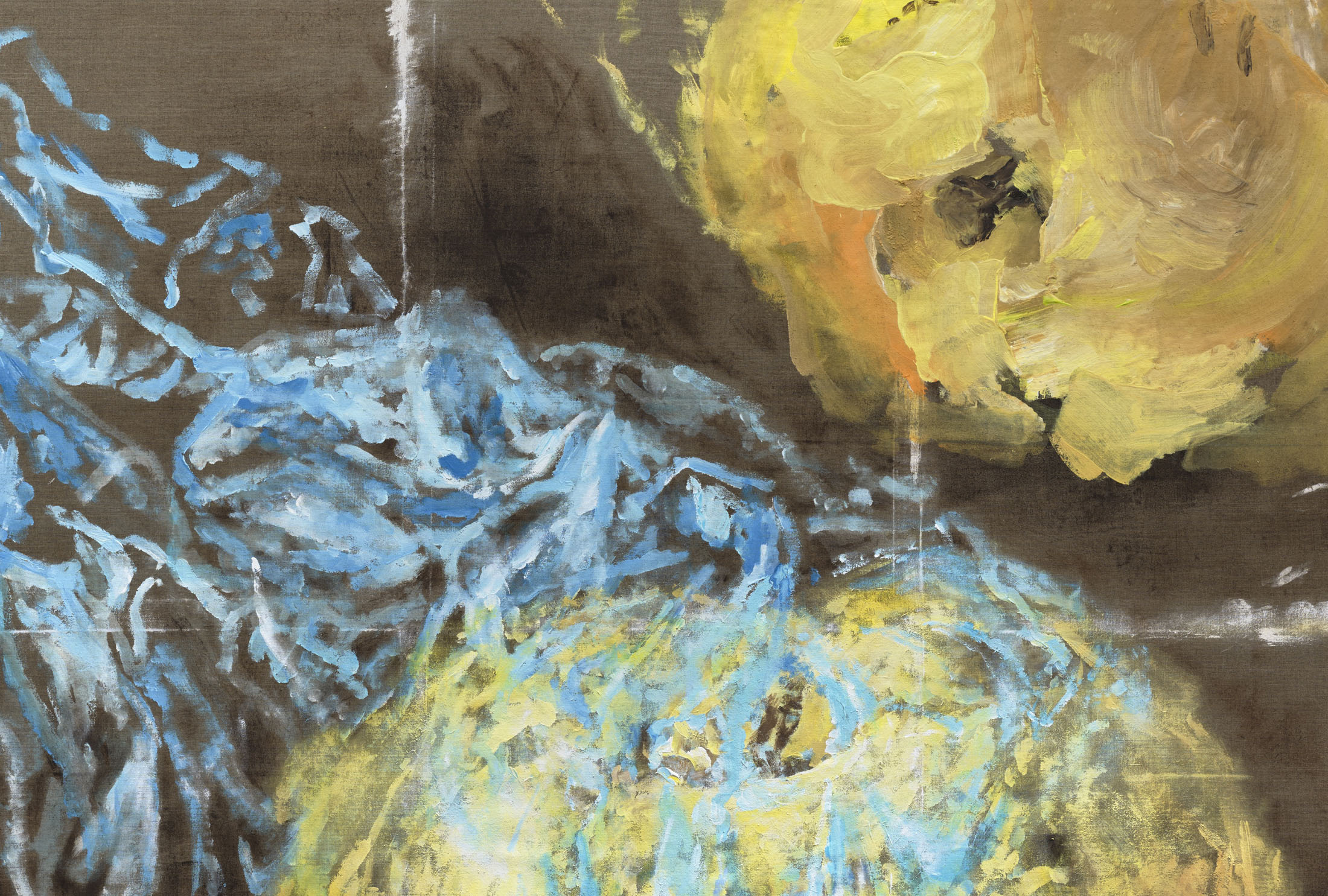
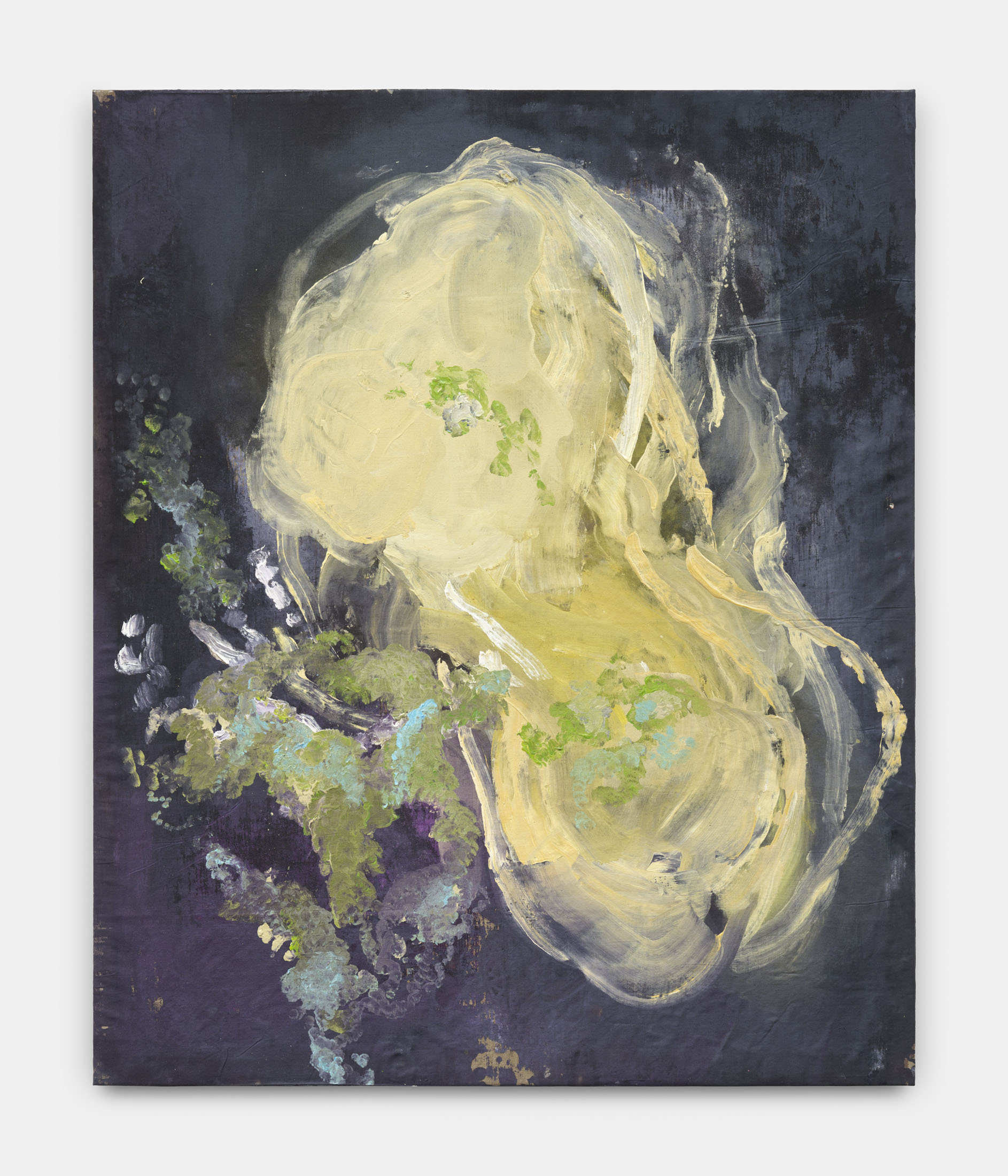
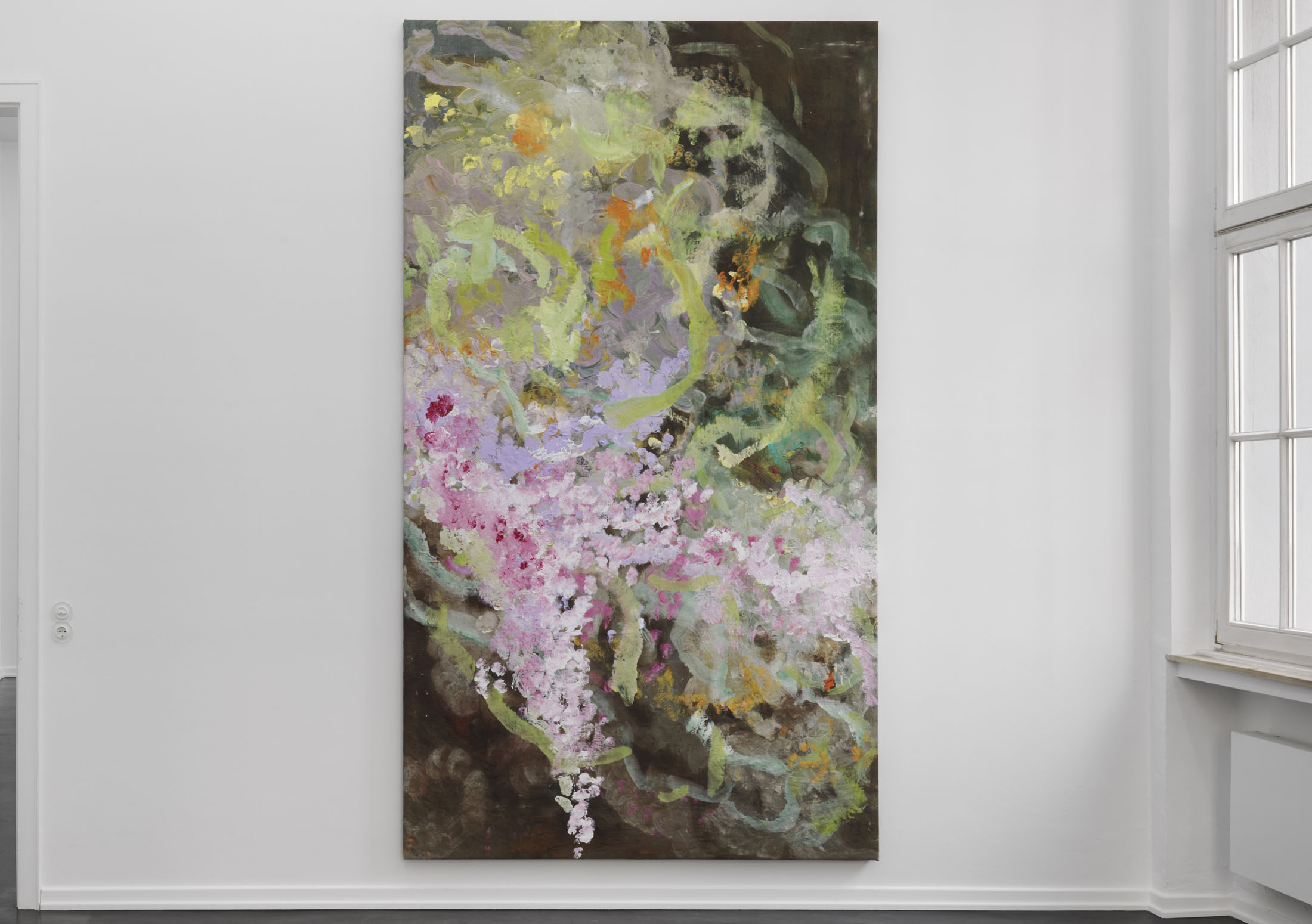
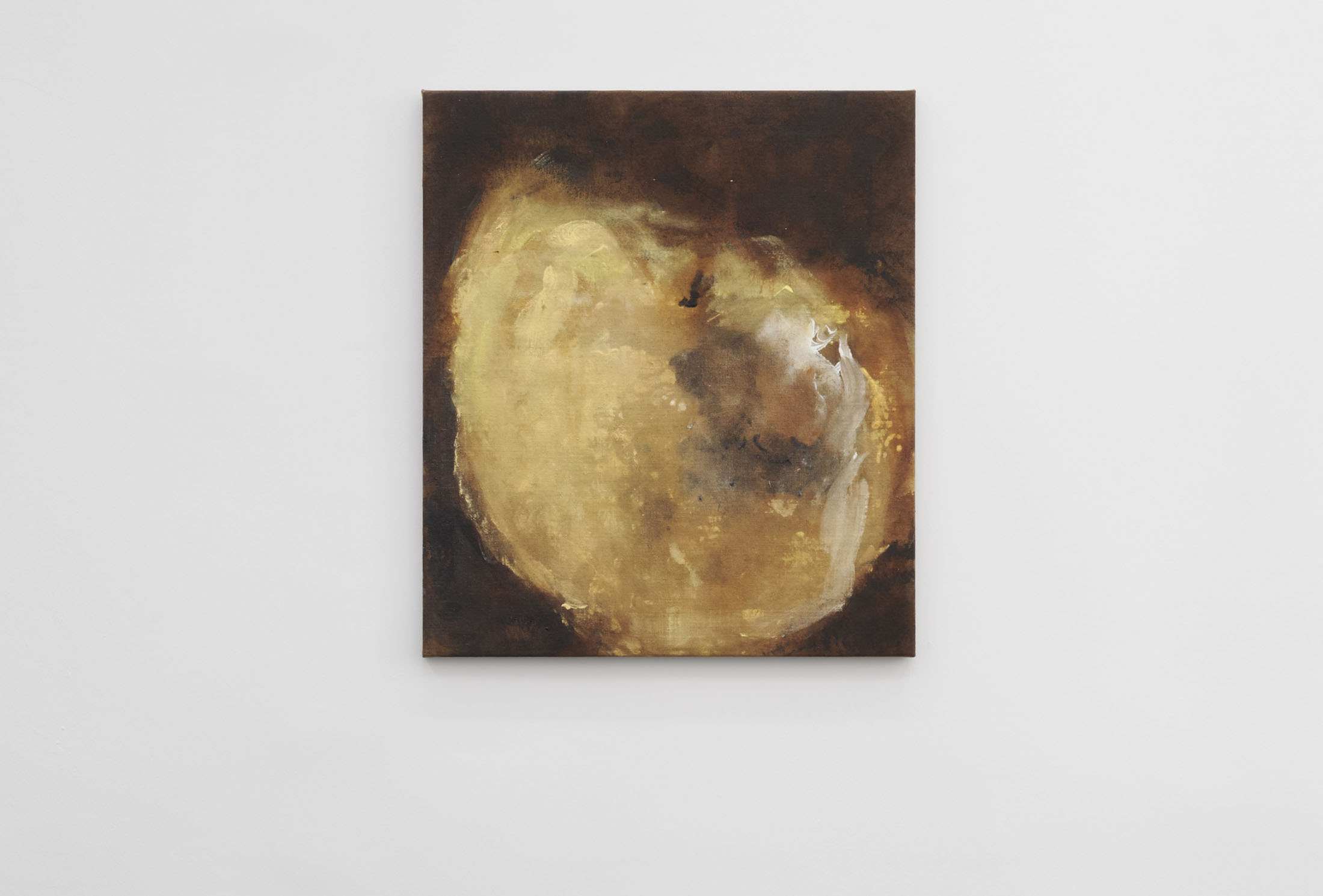
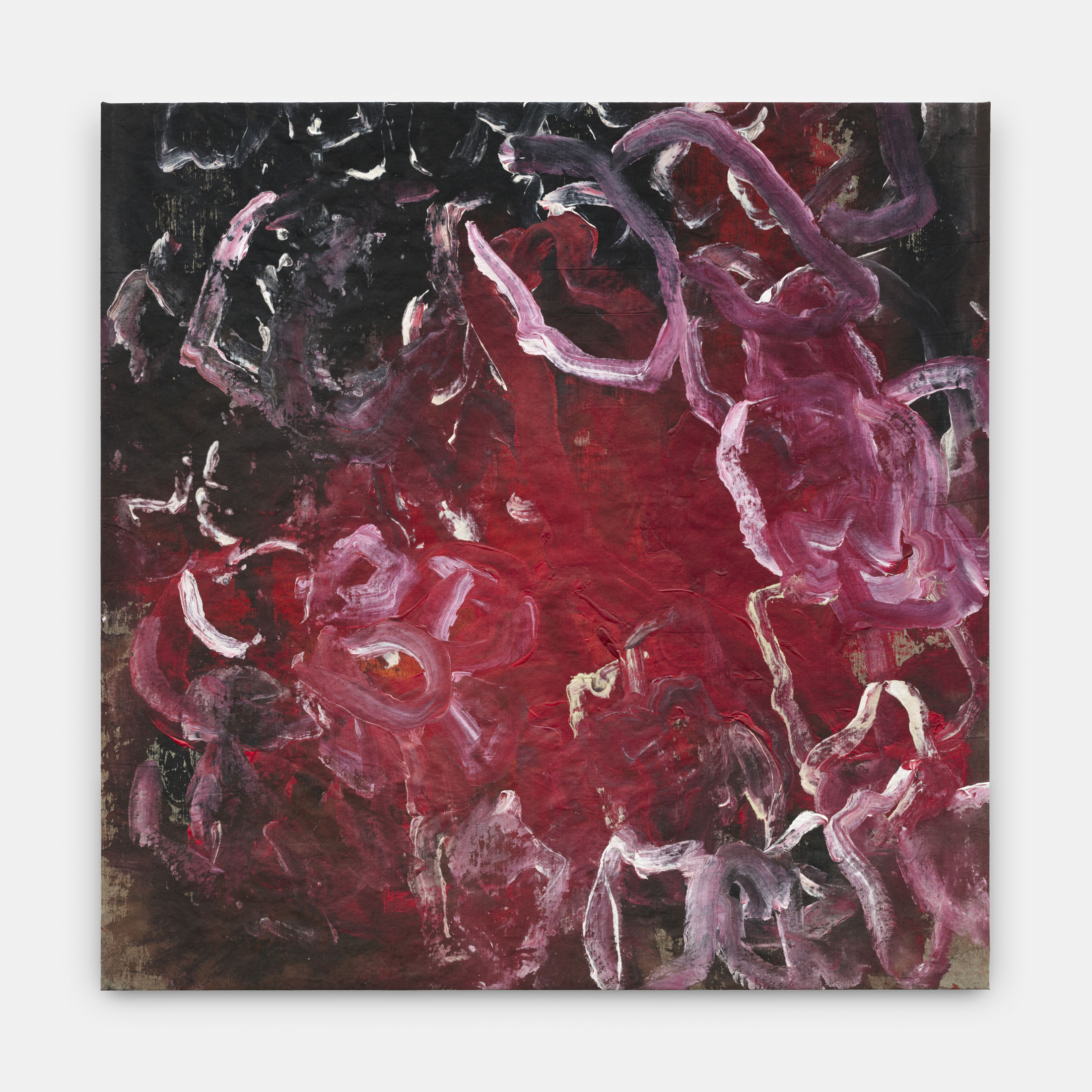
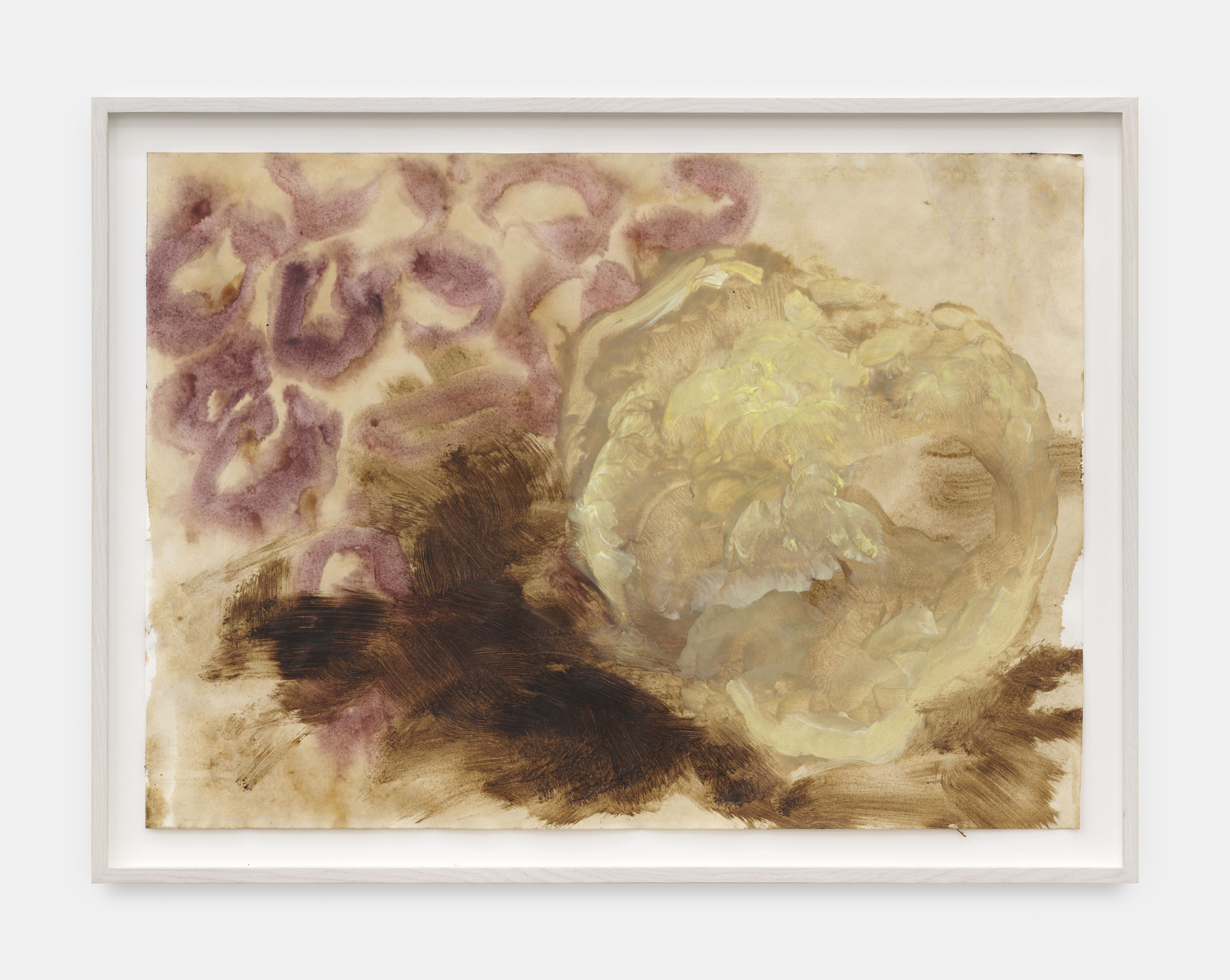
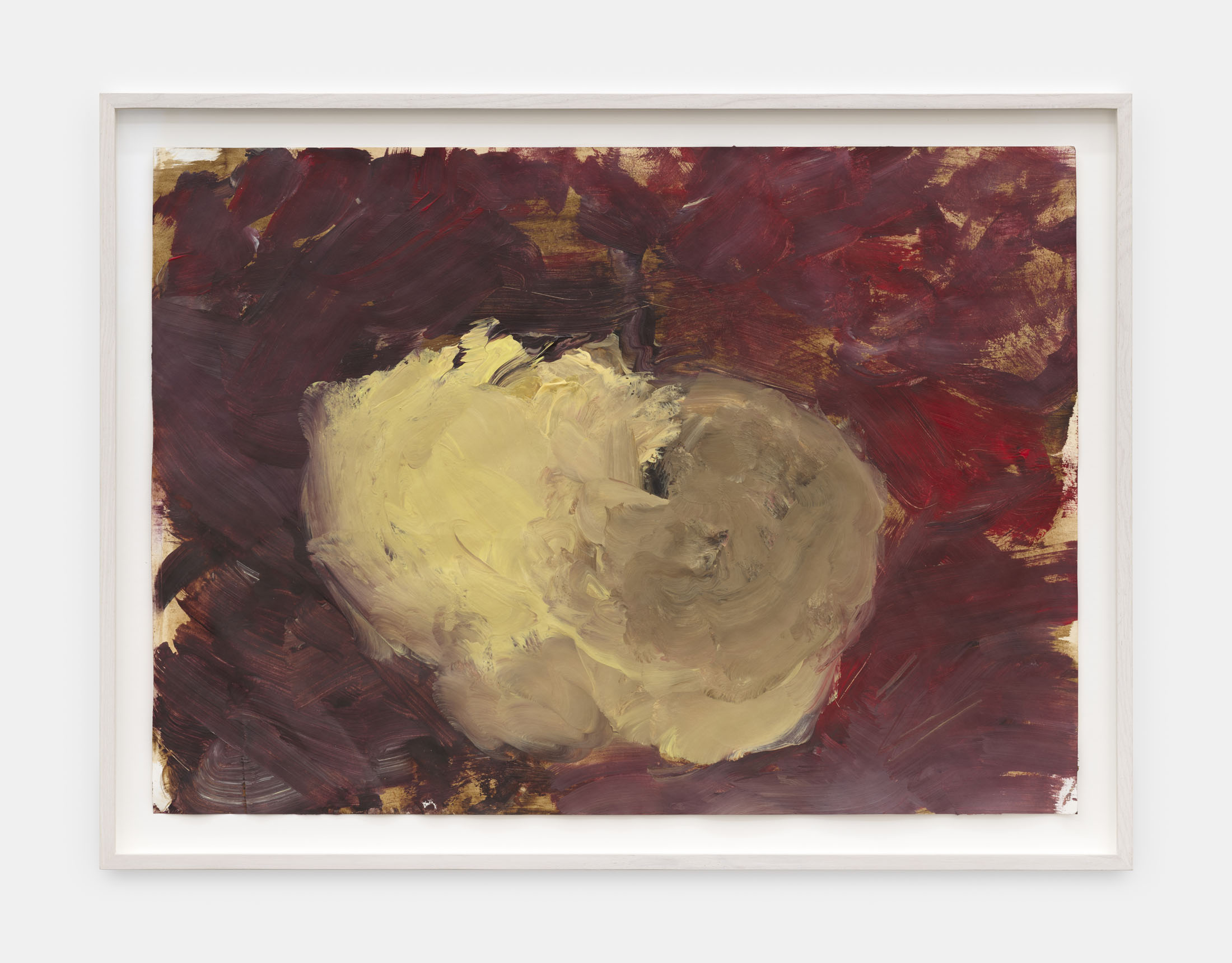
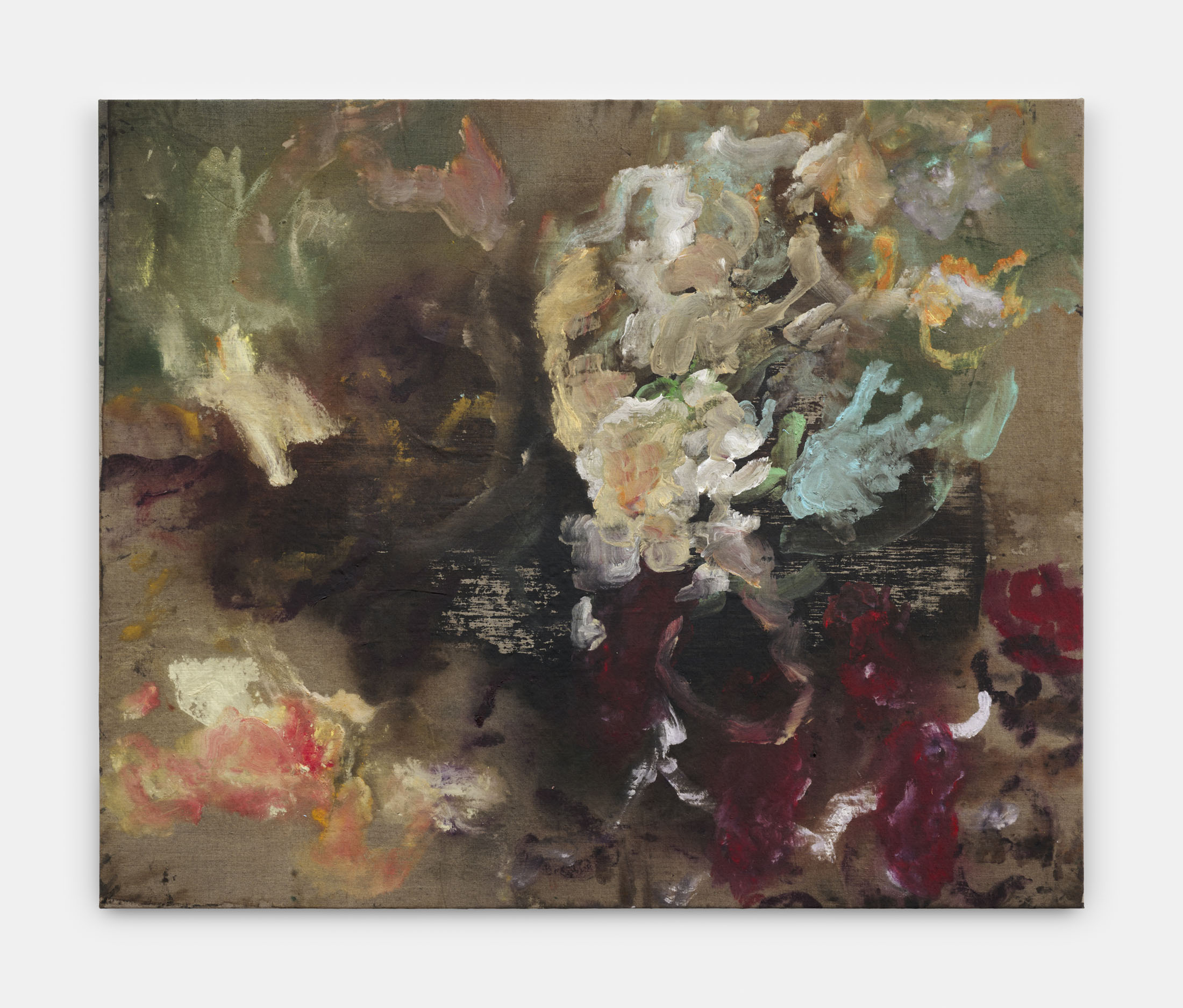
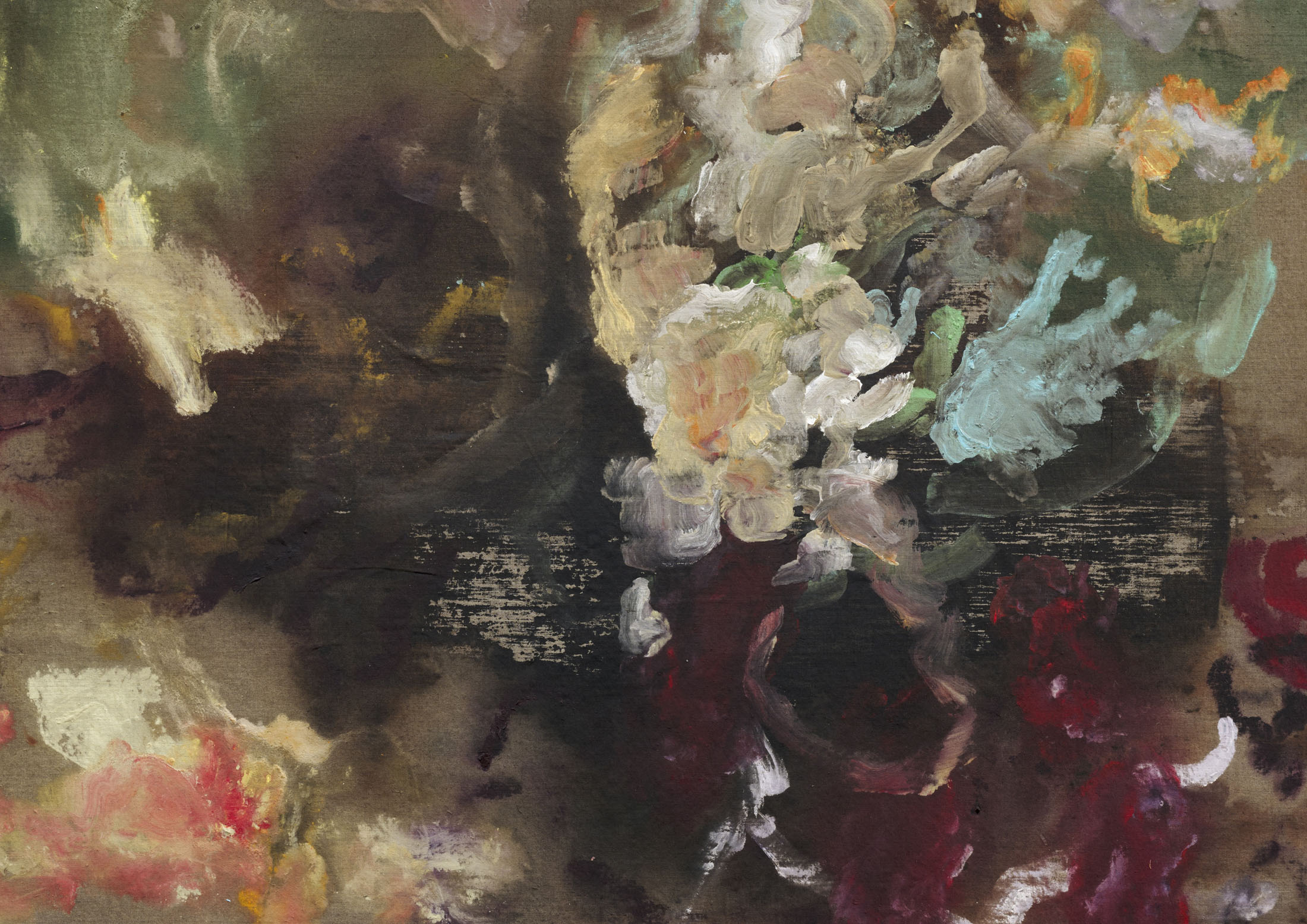
Noemi Weber is a painter. She paints her unprimed canvases on the ground, sometimes stacking them, so that the paint seeps through from the back of one canvas and imprints itself on the cloth below. Layer after layer, she first stains then paints with nail or body brushes, sponges, and her own extremities, leaving sweeping, sometimes breathy, marks that eventually become a relief. Weber chooses acrylic paint, which she often mixes with additives classically meant for priming, like cellulose and marble dust, to prolong wetness and produce surfaces that seem more succulent or rugged. The canvases writhe during their creation as the materials blend or shrink, their transformations revealed only later by the raw edges of unpainted fabric and an occasional imprint of the underlying frame. Weber speaks of her canvases as morphing topographies, refusing the empty white surface classically prepared for projection. This irreverence is not merely transgressive – Weber’s deep knowledge of European painting becomes the ground from which she builds a visual world entirely her own.
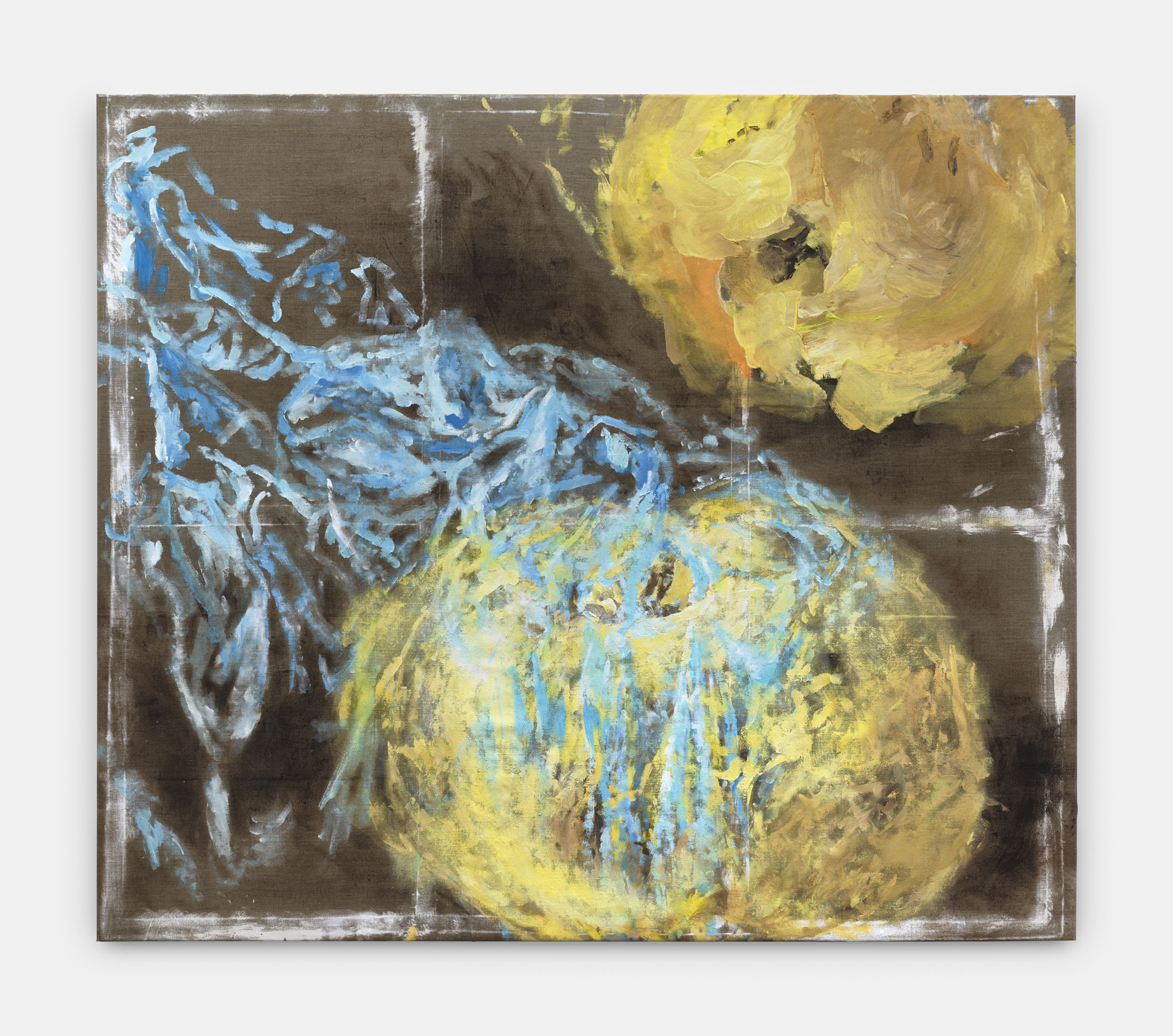
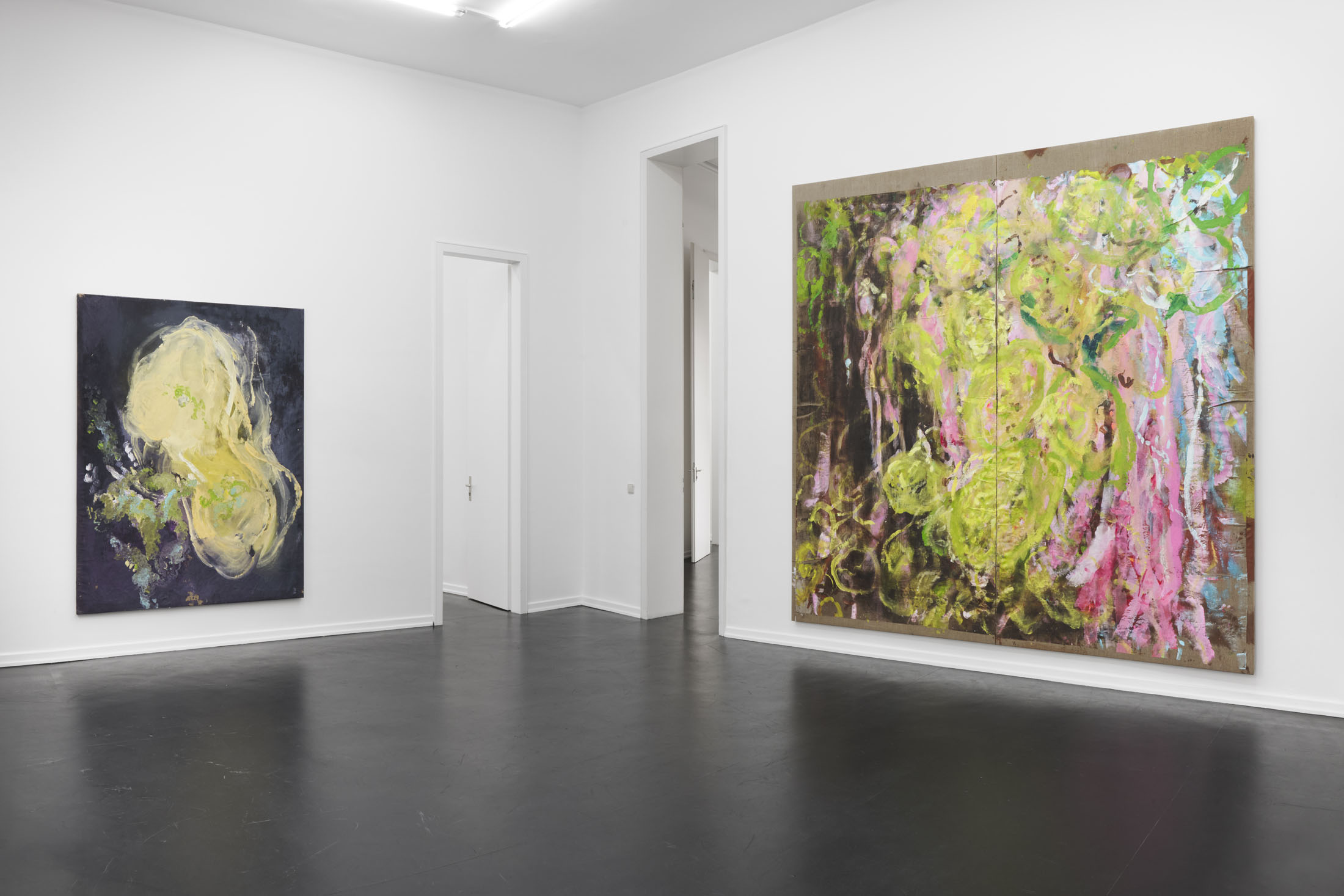
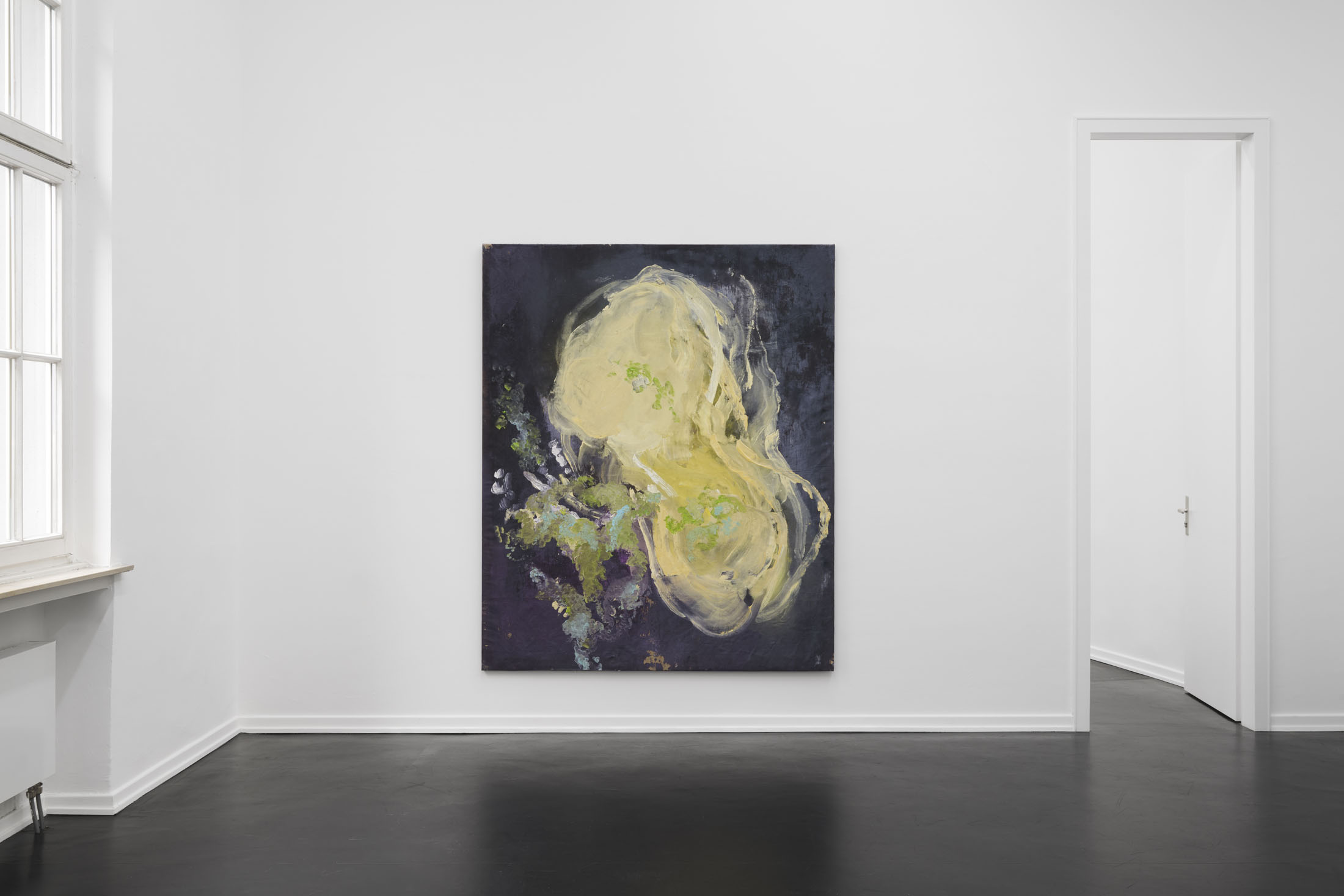
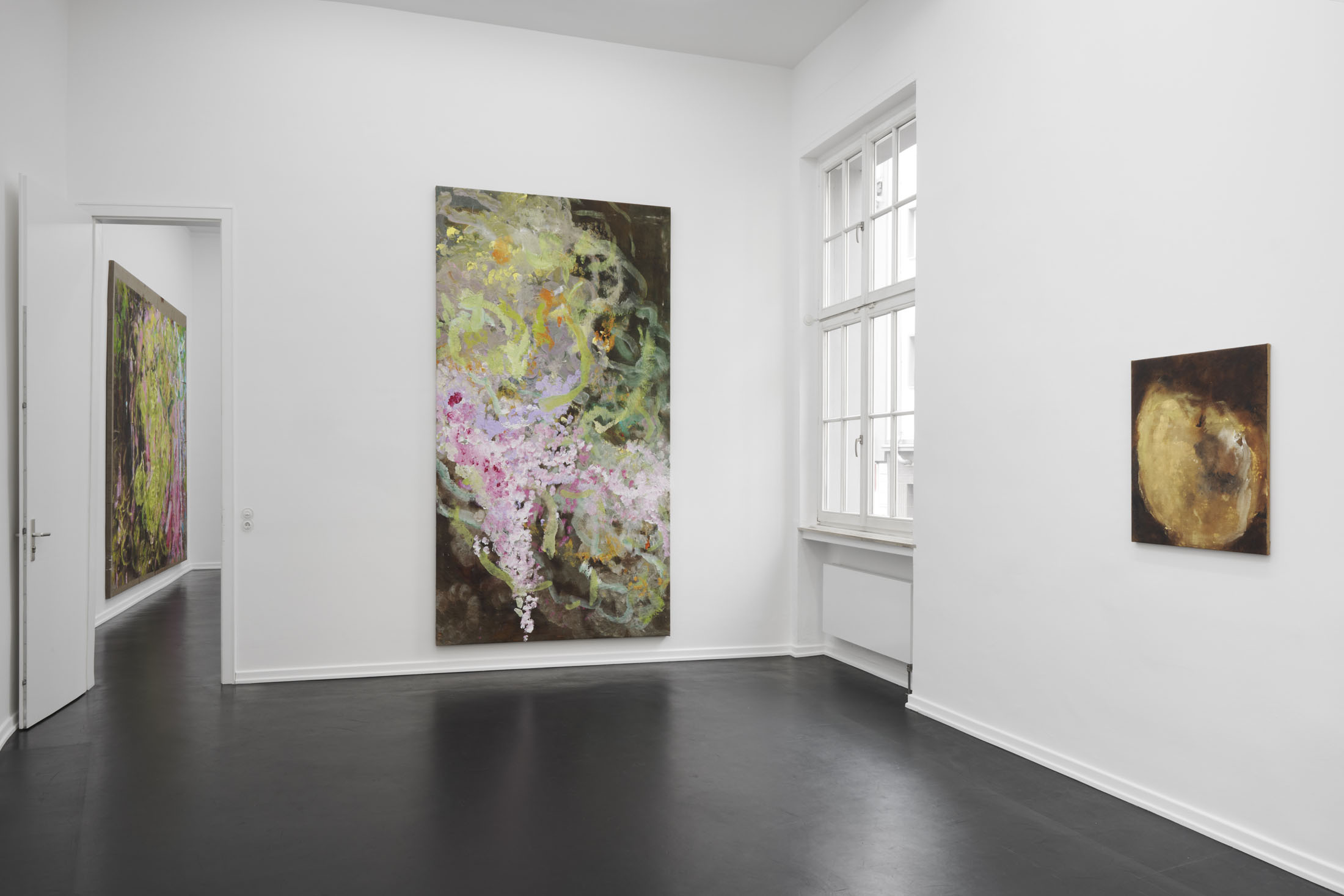
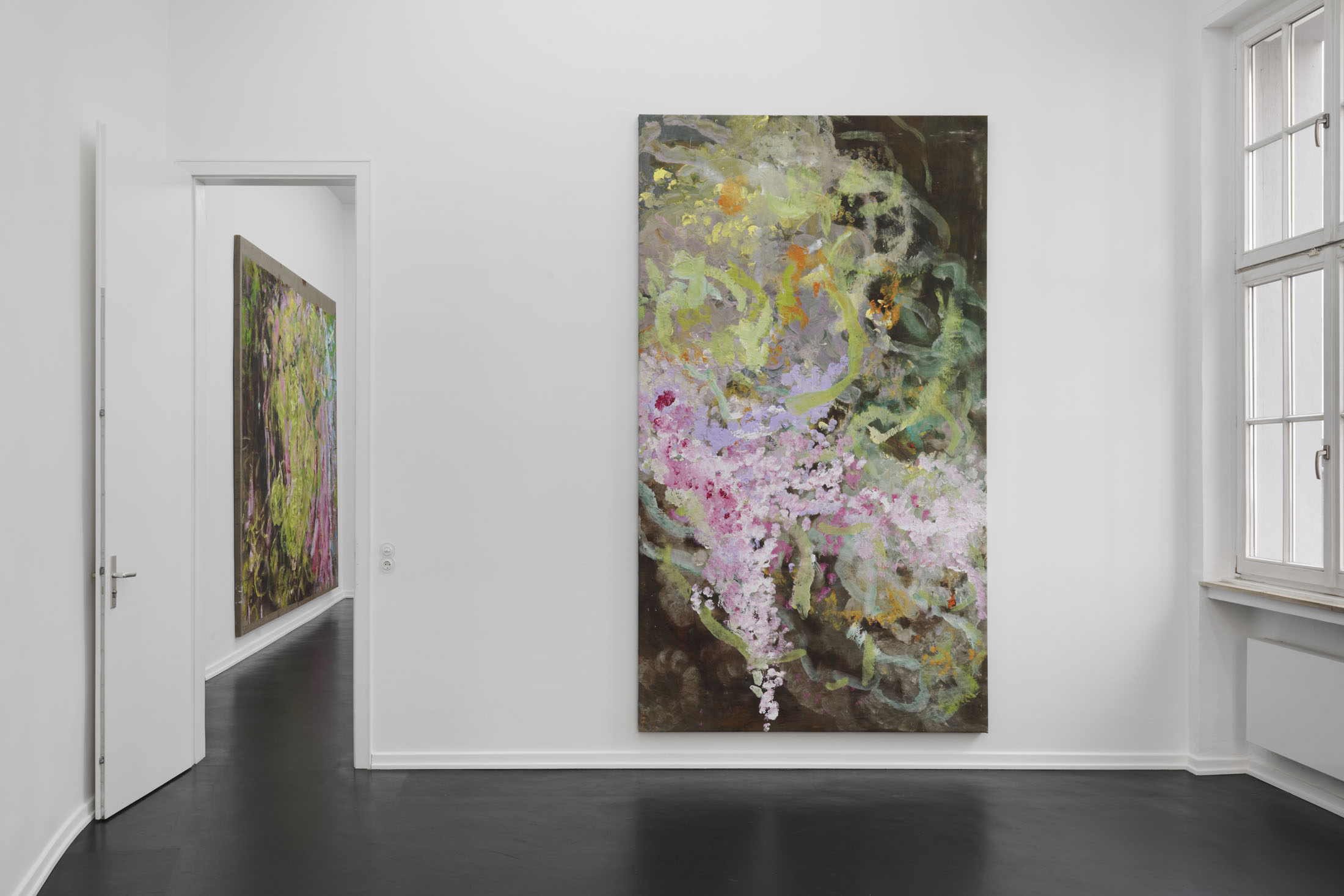
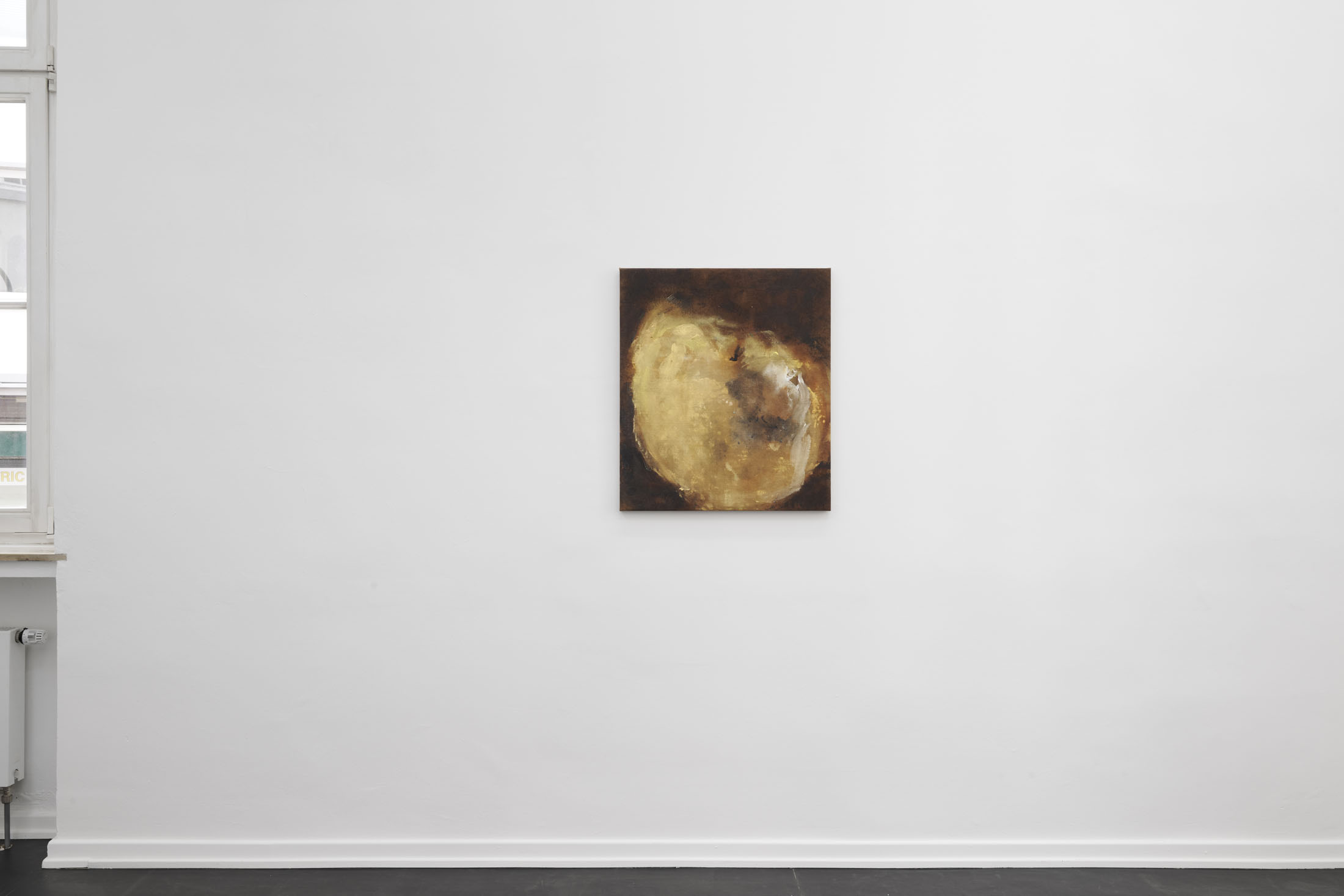
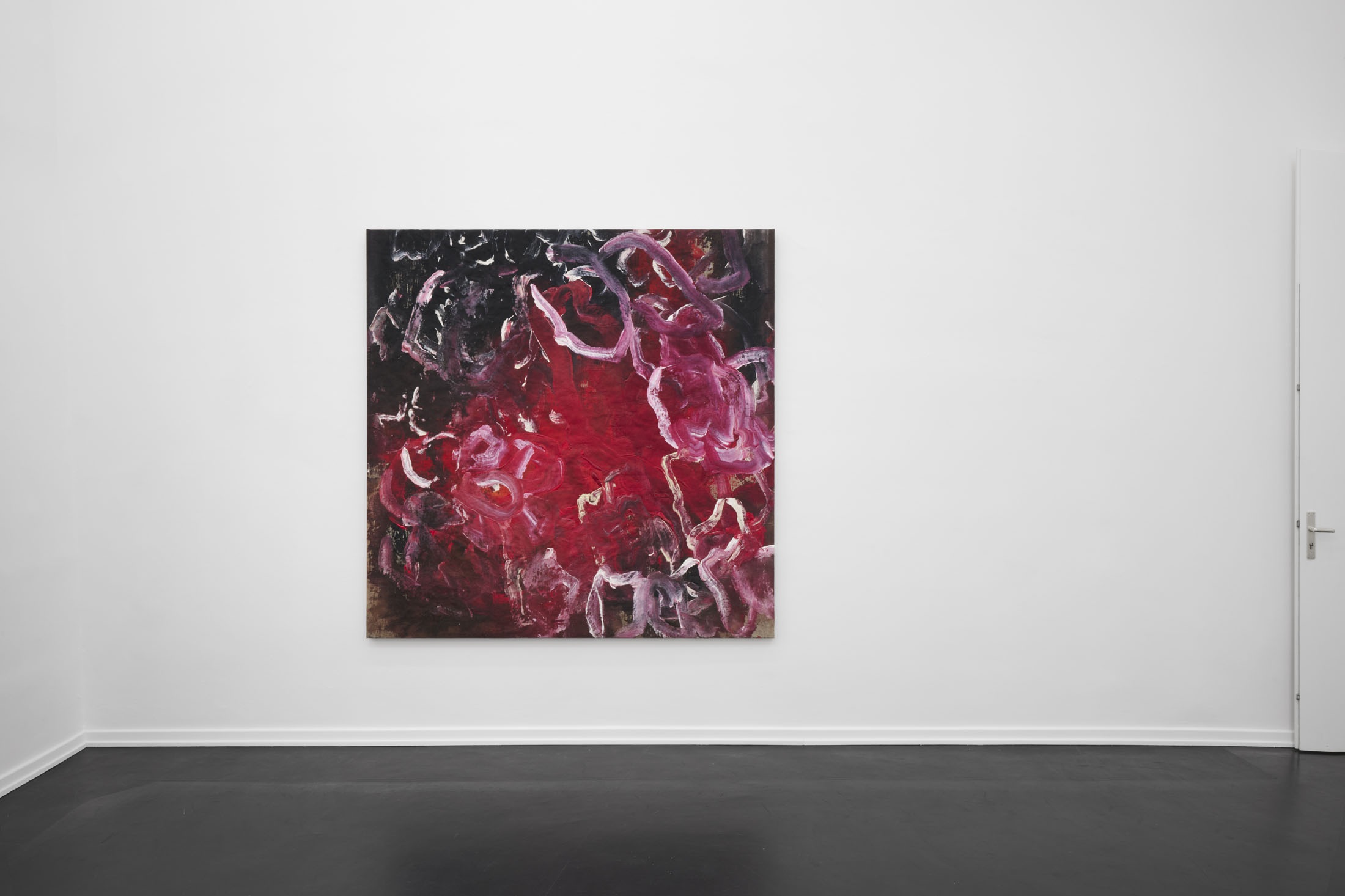
In Beißen (German for biting), Weber’s first gallery exhibition at Drei, the artist takes on the stale still life and exposes its fleshy underbelly. Once considered the lowliest of genres in the hierarchy of painting, the still life has endured throughout the centuries, not only because it still triggers a fetishistic desire to create the perfect depiction of an object and the symbolic meaning projected onto it, but because it has undergone various re-interpretations, specifically within feminist art histories. These revisions uncovered strokes of autonomy and critique embedded within the domestic scenes filled with double entendre or (self)reflection and helped reassess the careers of many female artists from the Renaissance onwards, including painters such as Clara Peeters (Dutch 1589–1658), Giovanna Garzoni (Italian, 1600–1670) and Rachel Ruysch (Dutch 1664–1750).
In contrast to the beautifully contained spaces of her early predecessors, Weber’s oversized single and paired canvases dethrone central perspective by immersing the viewer in the larger-than-life details of ripe and rotting fruit—pears, plums, and grapes—evoked by bulbous shapes of bright yellow, red, and purple, speckles of grey, and squiggly brownish guts. The individual paintings move between various degrees of abstraction, ranging from shapes recognizable as fruit to full decomposition. Abstraction takes place through proximity instead of distance, ultimately consuming the viewer whilst they are consuming the image that will never center their gaze, no matter how hard they try. This visceral decentering is radical and improper in the classical sense—a refusal to succumb to the orders that have long defined not only Western art but the people who were supposed to feel represented by it.
For Weber, the use of central perspective in European painting since the Renaissance, and by extension, still life, is a particular cultural technique, as Hans Belting has argued. It developed alongside the construction of a new social order around what Sylvia Wynter would describe as the overrepresentation of “Man” as the figure of a so-called rational humanity, which excluded most of the world’s people. Caught in a closed loop, the ‘universal’ viewing subject and his worldview are reproduced by linear perspective, and in return perspective is justified by the viewing subject.
Weber breaks this loop through drastic enlargement, increasing abstraction, and deliberate play with technique and color. She not only takes us into the murky terrain of messy pigments that unleash an alchemical abjection resembling innards or mold but positions us—like she does herself—on the ground and in the painting, our vision flayed at the edges. In doing so, Weber enacts an aesthetic form of double consciousness in the sense of W.E.B. Du Bois, who writes in The Souls of Black Folk (1903) of the condition of inhabiting two irreconcilable perspectives at once—one’s own, and that of a dominant culture that withholds recognition.
“The possibility of a re-coding of painting is saturated with the mechanics of value attribution, meaning, and power,” writes Weber in her essay Renaissance State of Mind\ing – Inhabitation. While Weber critiques the historical implications of linear perspective and its correlation with the consuming Eurocentric gaze, her autopoetic turn, to adopt Wynter’s terminology, generously expands the medium to arrive at exaltation. “The history of images becomes something that, through its constant expansion, ultimately holds the possibility of existing in a kind of reverse logic; content is transformed through aesthetic practices, and the processual nature of meaning-making in relation to mind can be understood as modifiable and relational,” she continues.
What biting beauty. What more could we want? – Lisa Long
Noemi Weber (b. 1989, German) lives and works in Düsseldorf. She studied at Bard College, New York, and graduated from the class of Katharina Grosse at the Kunstakademie Düsseldorf in 2017. Her works recently have been shown in a variety of institutions and venues including Raketenstation Hombroich, Neuss (solo, 2025); Kunstsammlung Nordrhein Westfalen, K20, Düsseldorf (2024); Kunstverein für die Rheinlande und Westfalen, Düsseldorf; Rautenstrauch-Joest-Museum, Cologne (both 2023); Kunsthalle Bremen; Dortmunder Kunstverein, Dortmund (Performance); Galerie Max Mayer, Düsseldorf; Palazzo San Giuseppe Polignano a Mare, Italy (all 2022); Mouches Volantes, Cologne (with Milena Weber, 2021); Ludwig Forum, Aachen (with Nobuyuki Osaki); Simultanhalle and PiK, Cologne (both 2018); Kunstmuseum, Solingen (2017); KIT, Düsseldorf (2025); Center for Contempoary Art, Warsaw (2013) a.o. Her work is currently on view as part of Kunstsammlung Nordrhein Westfalen’s major collection presentation Your Museum! Your Collection!, K20, Düsseldorf.
1 Hans Belting, Florence and Baghdad: Renaissance Art and Arab Science, trans. Deborah Lucas Schneider (Cambridge, MA: Belknap Press of Harvard University Press, 2011), p. 179. See also Hubert Damisch, The Origin of Perspective, trans. John Goodman (Cambridge, MA: MIT Press, 1994); and W.J.T. Mitchell, Picture Theory: Essays on Verbal and Visual Representation (Chicago: University of Chicago Press, 1994).
2 Sylvia Wynter, Unsettling the Coloniality of Being/Power/Truth/Freedom: Towards the Human, After Man, Its Overrepresentation – An Argument, CR: The New Centennial Review 3, no.3 (Fall 2003): 257–337.