Much of public discourse -from the most mundane and popular forms to parliamentary debate- is characterised by a disruption of the inherent disposition of words. To take the floor has become an exercise in bending words to fit a predetermined discursive agenda, one that entails their deformation, exhaustion, and eventual burnout. It seems to me that what you are proposing, Noela, is to think about conversation not at the moment it emerges, but from an earlier point in time: before those who speak arrive and gather around the table. As though there were a conversation before the conversation itself, before anyone takes the floor.
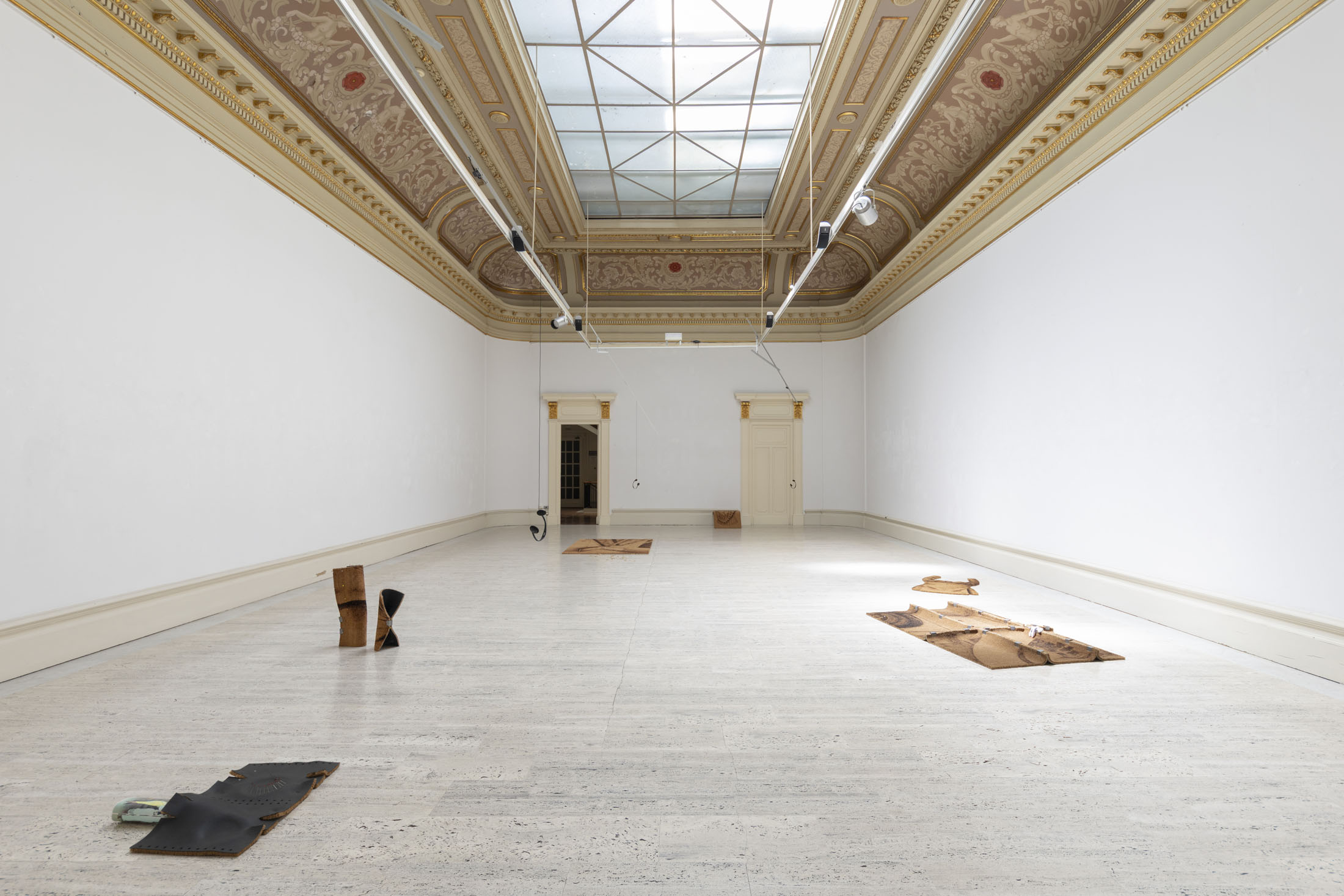
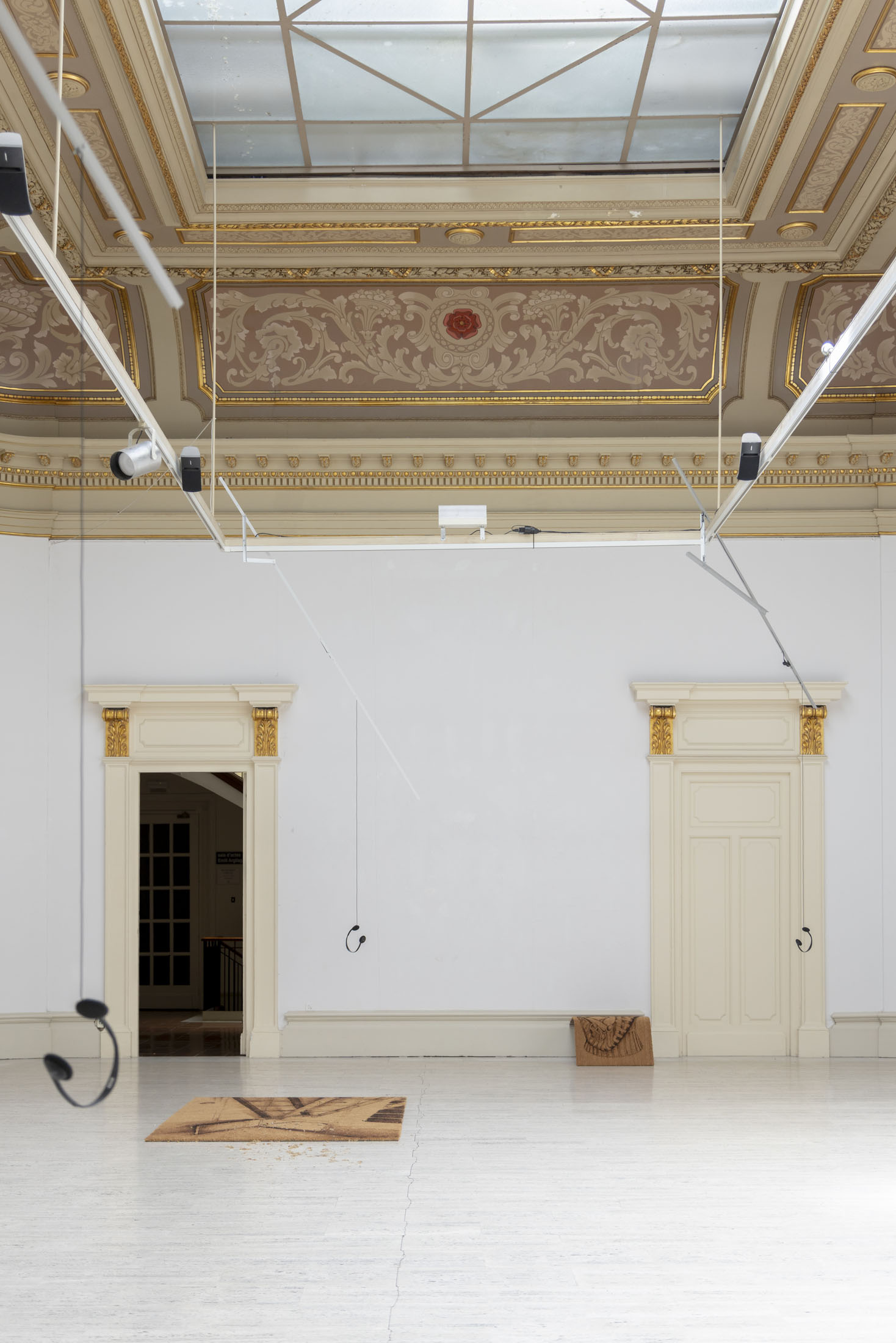
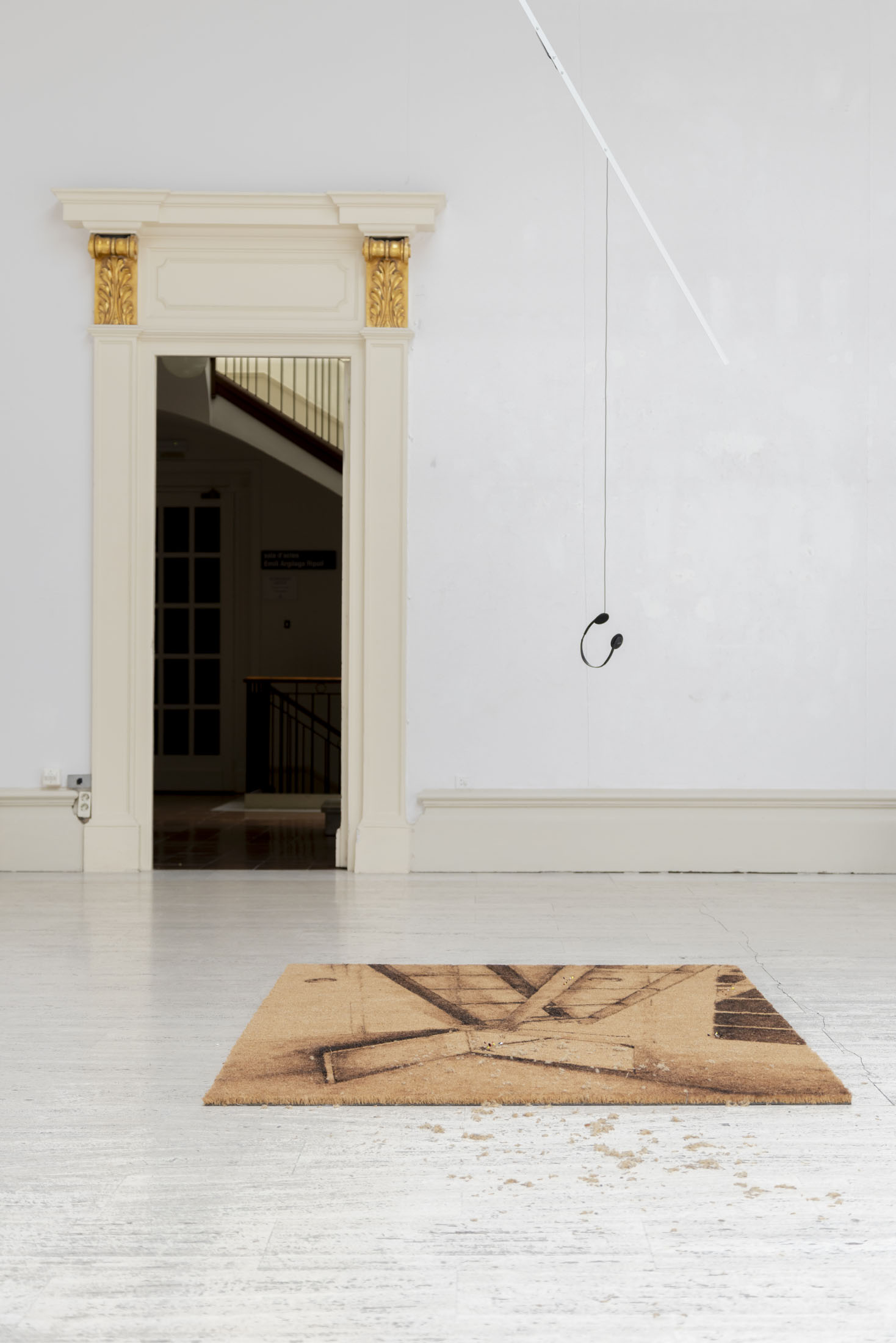
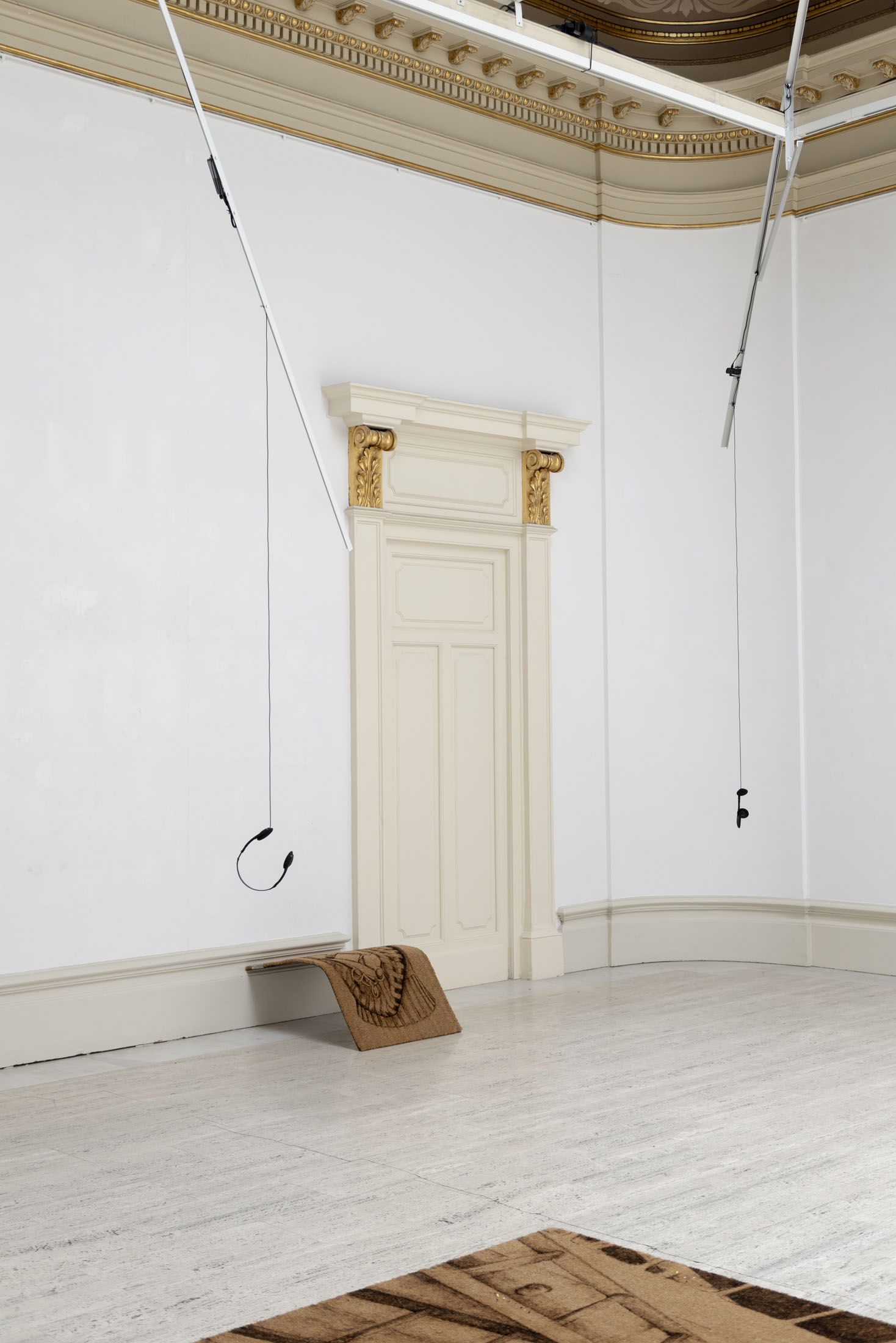
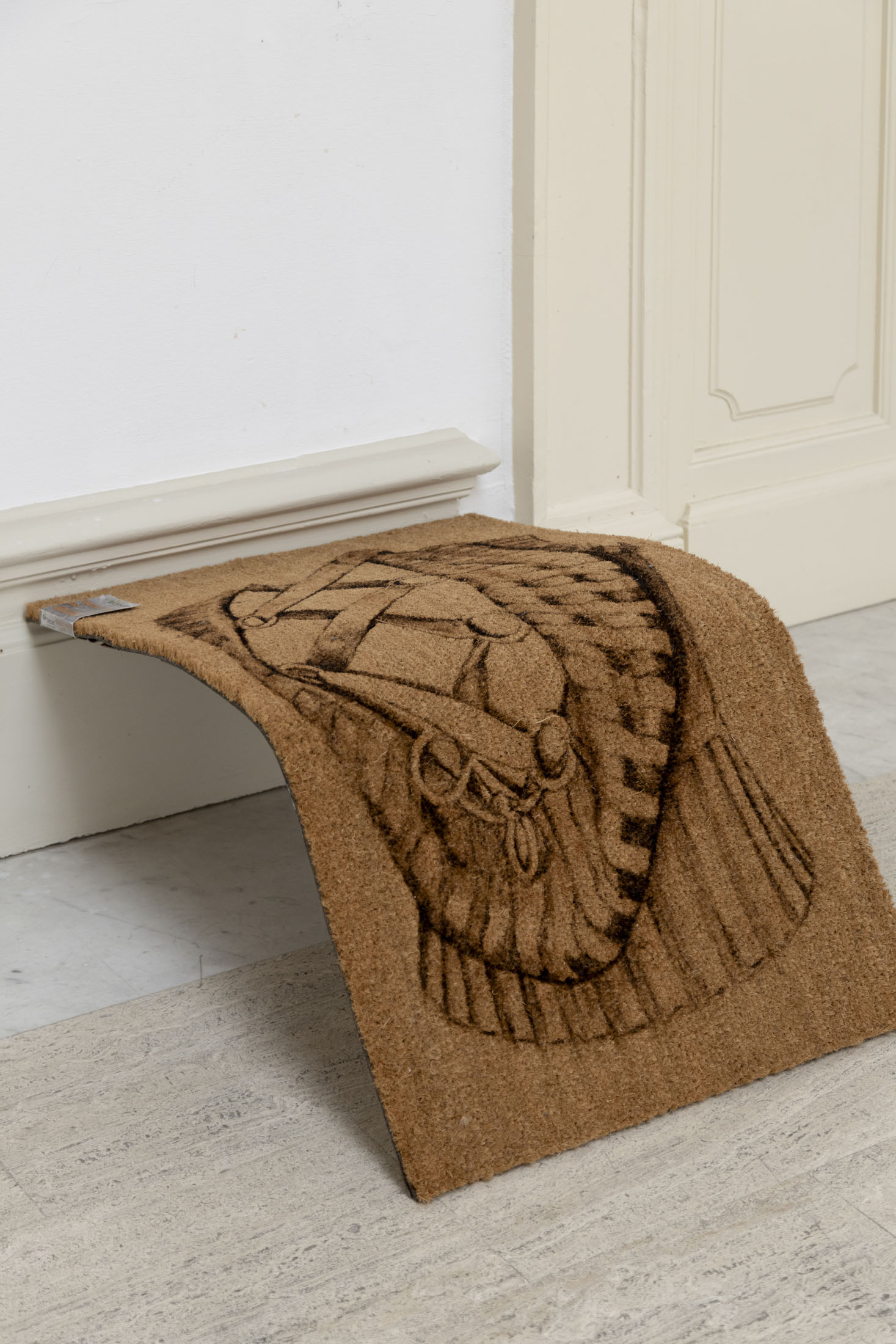
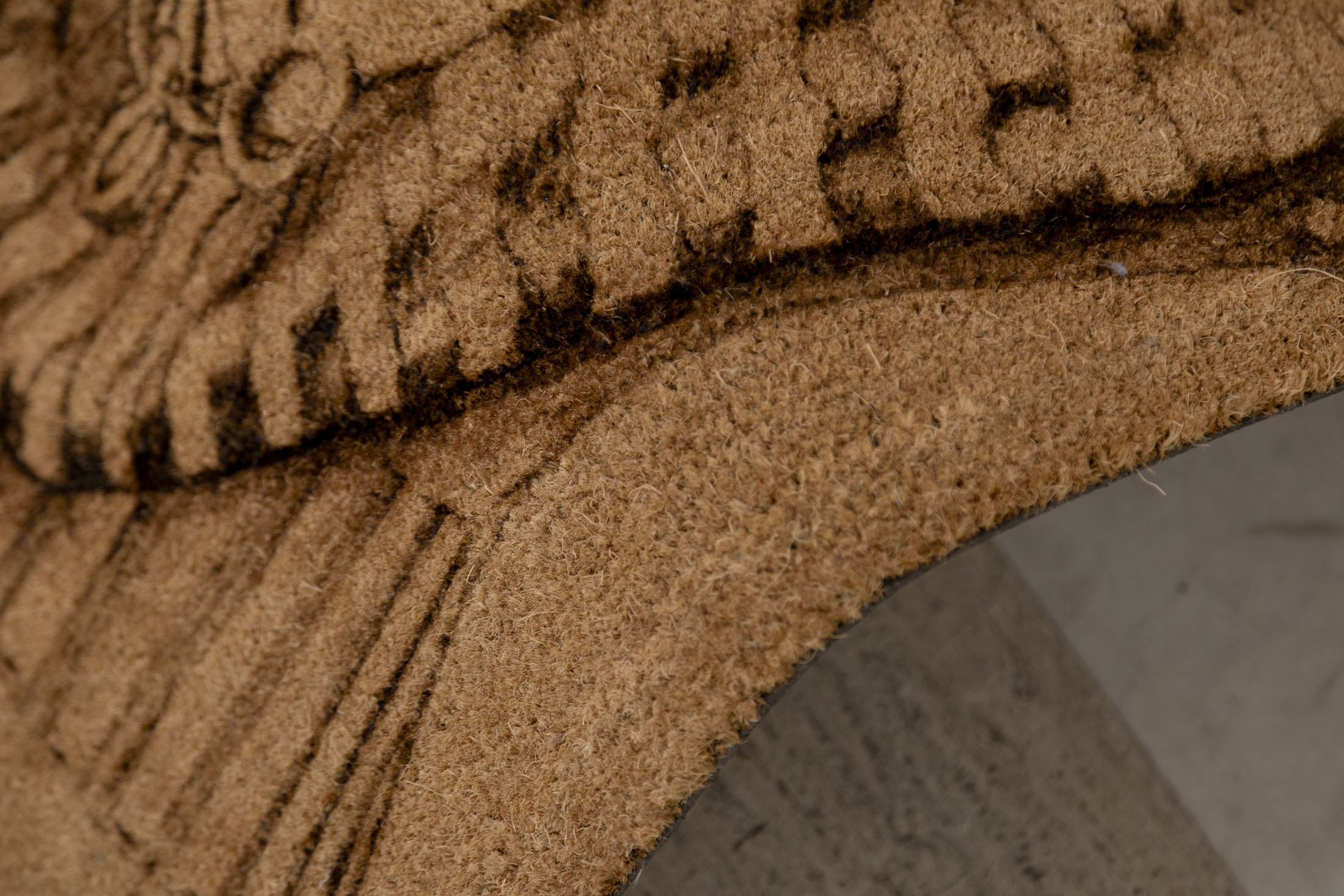
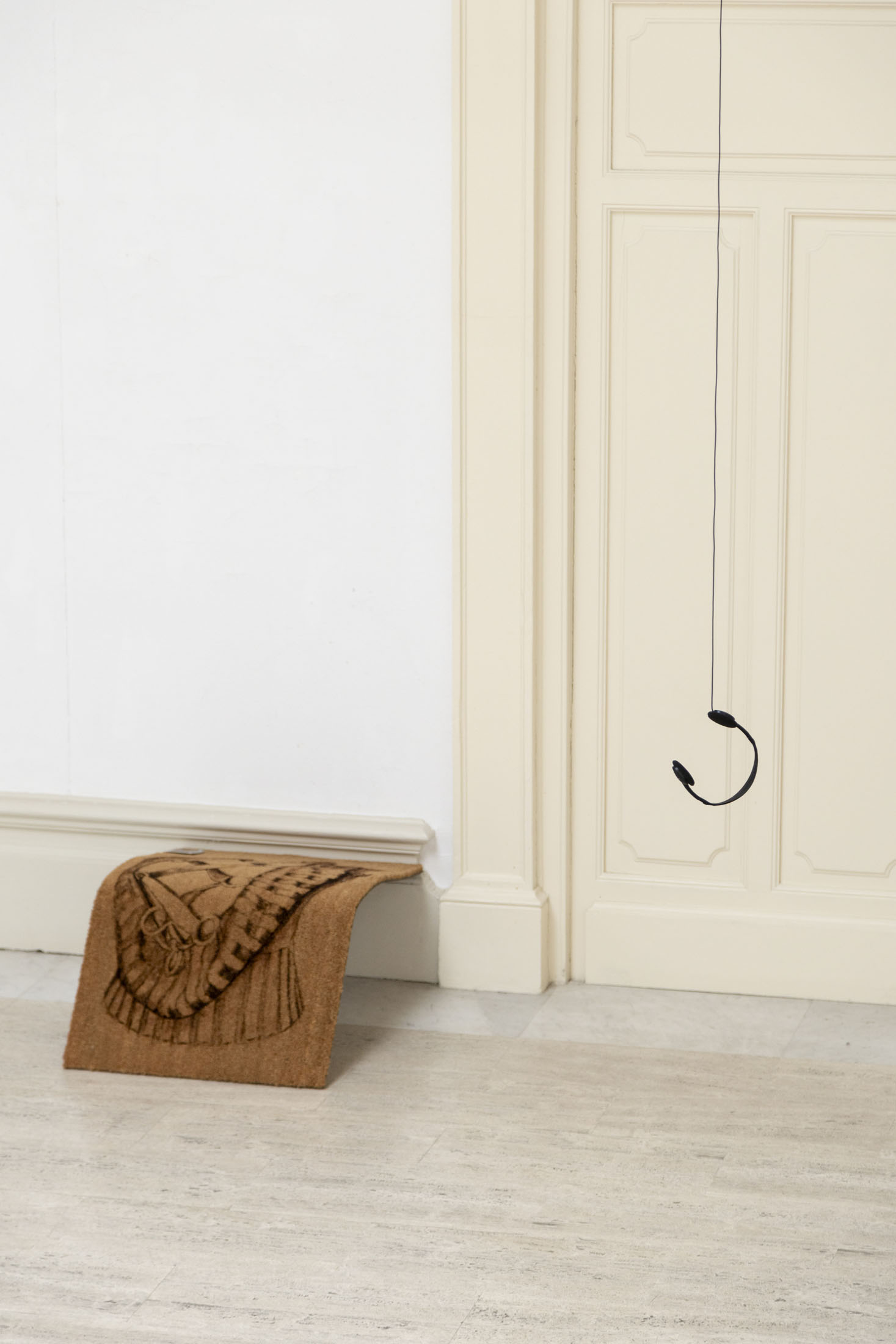
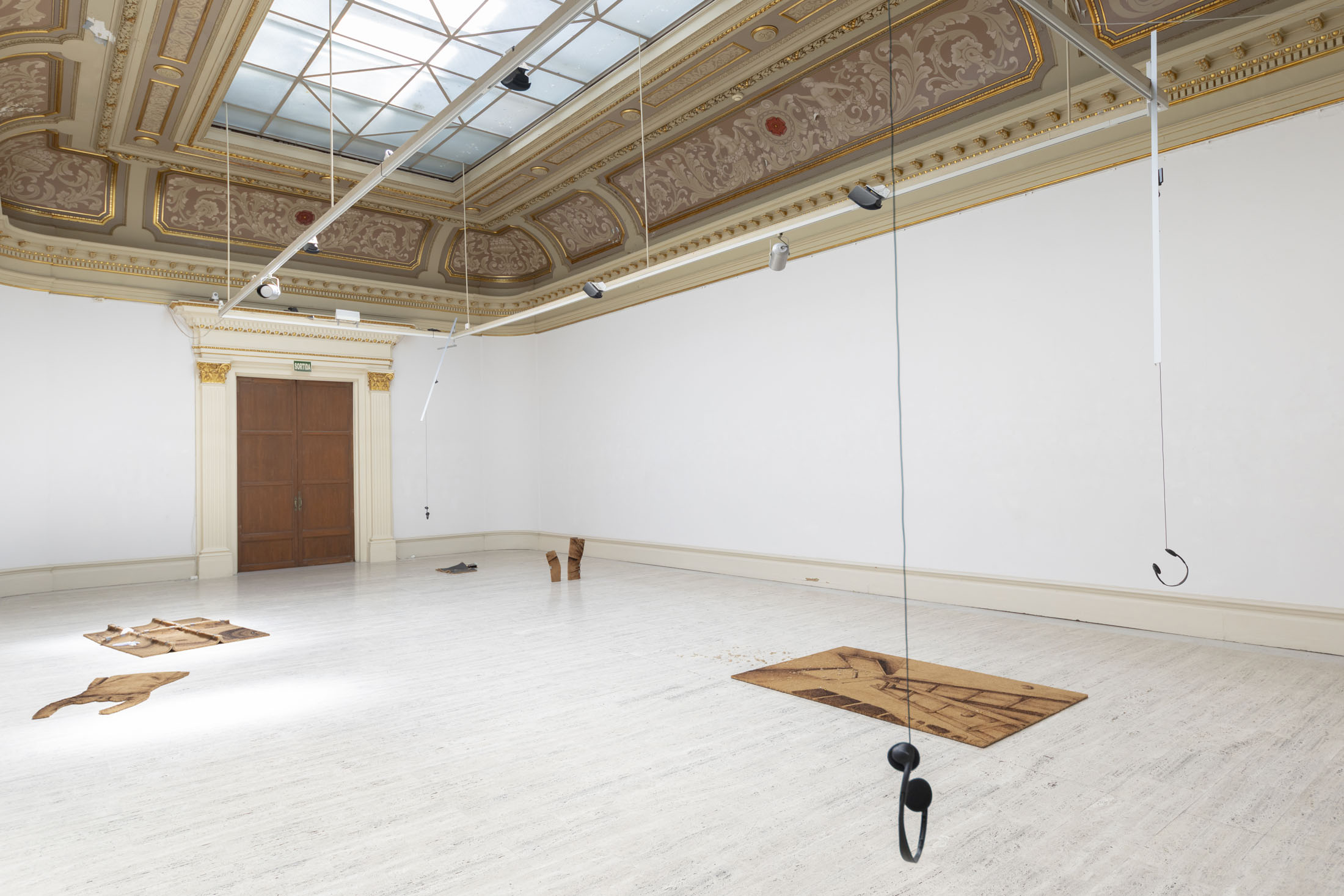
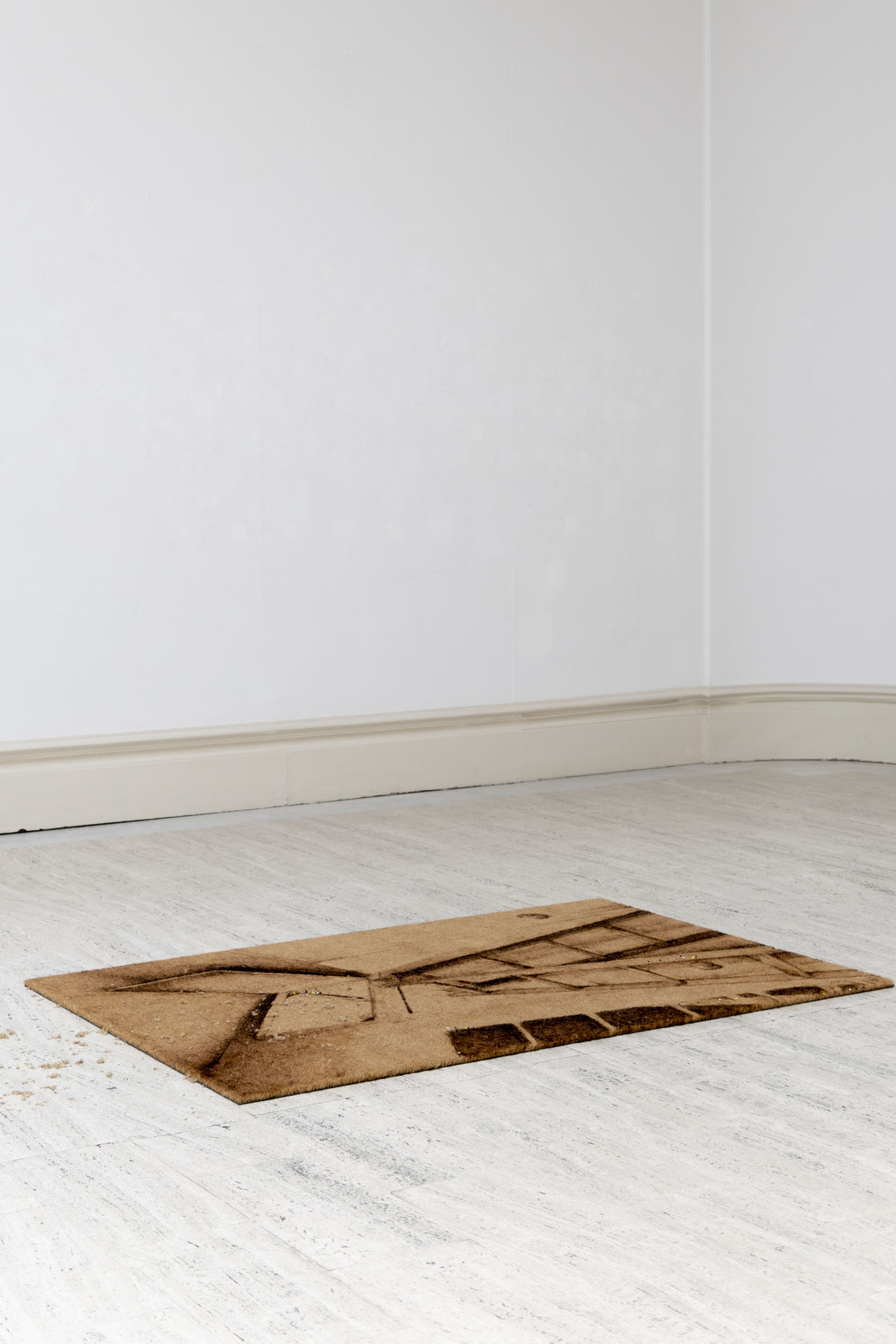
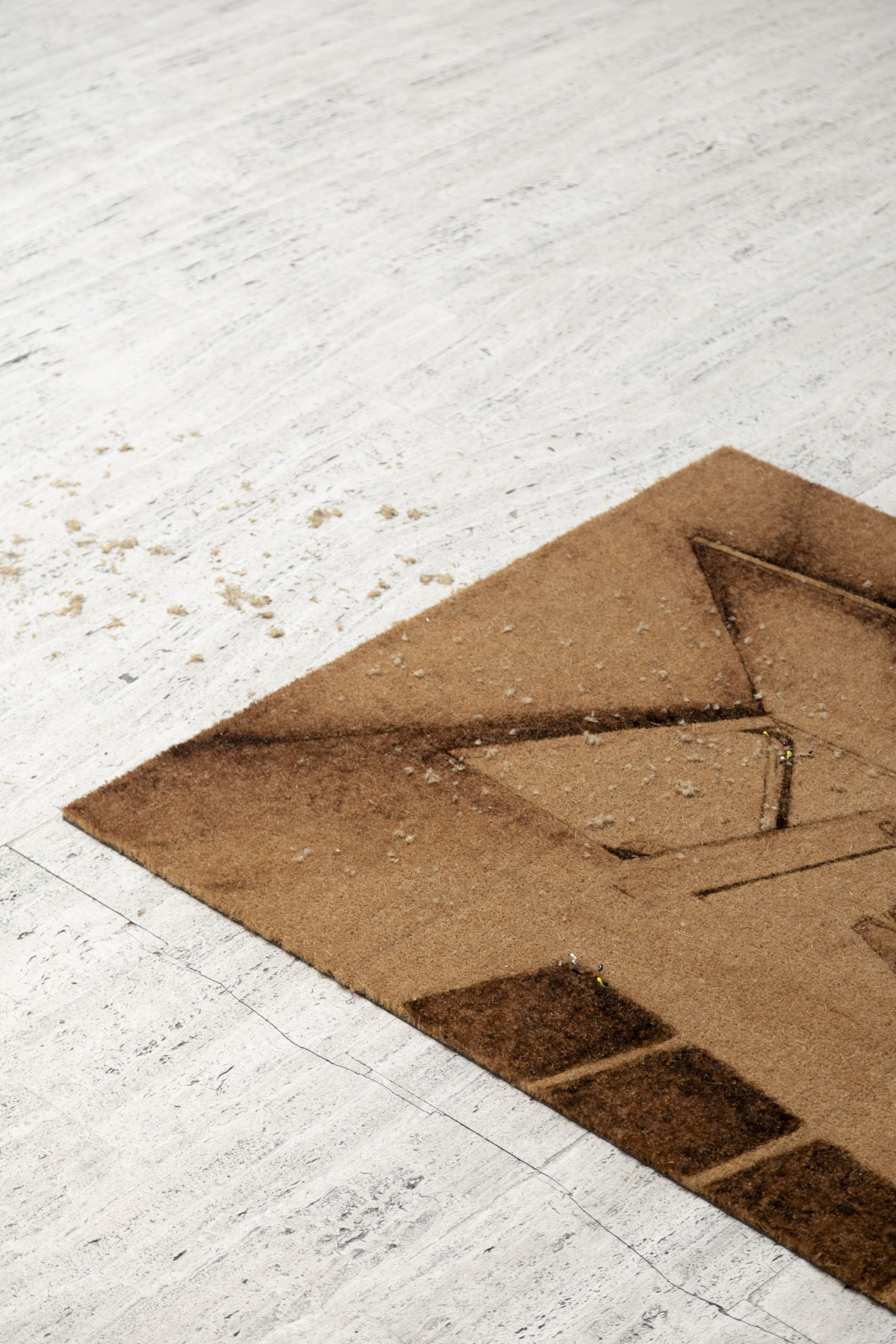
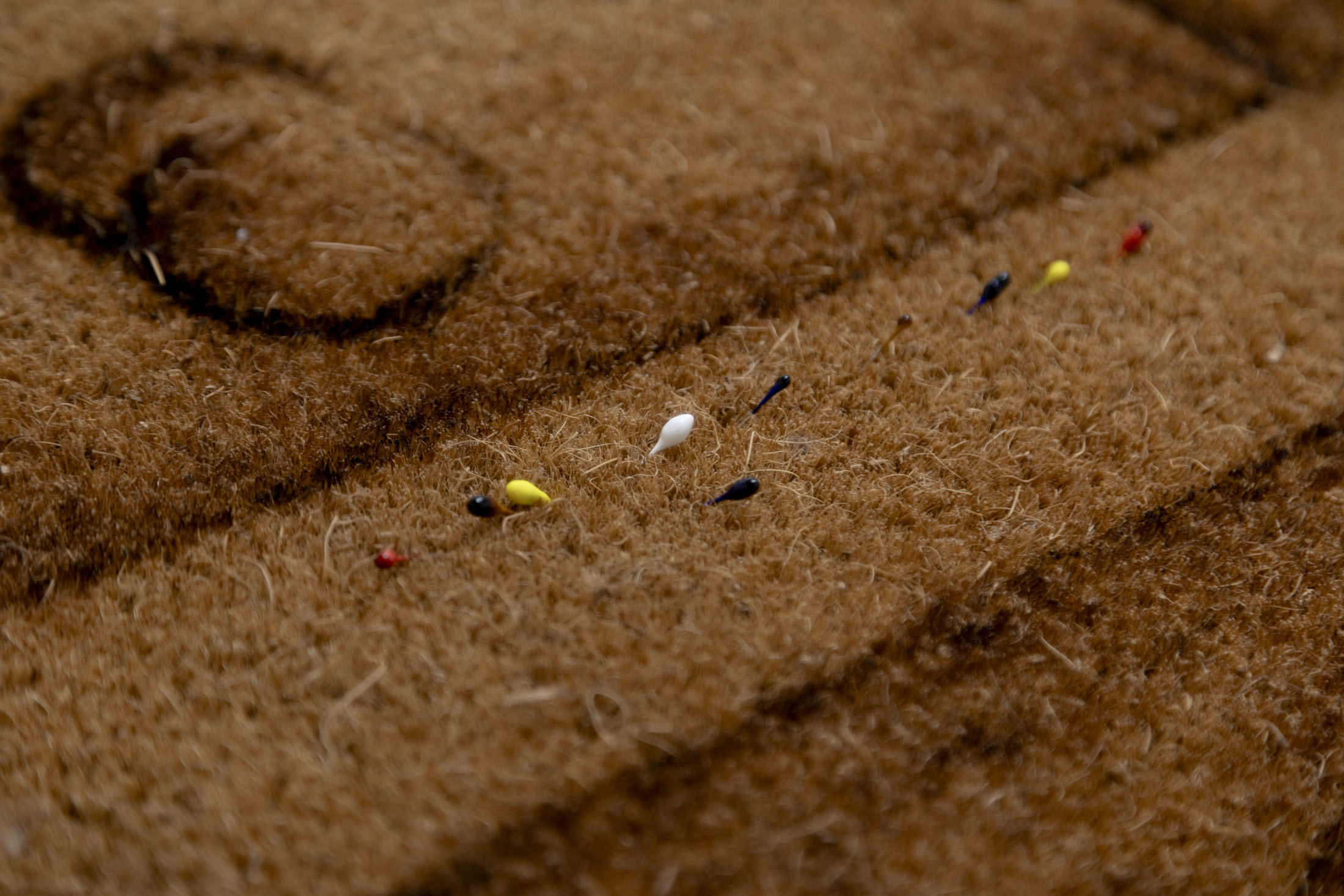
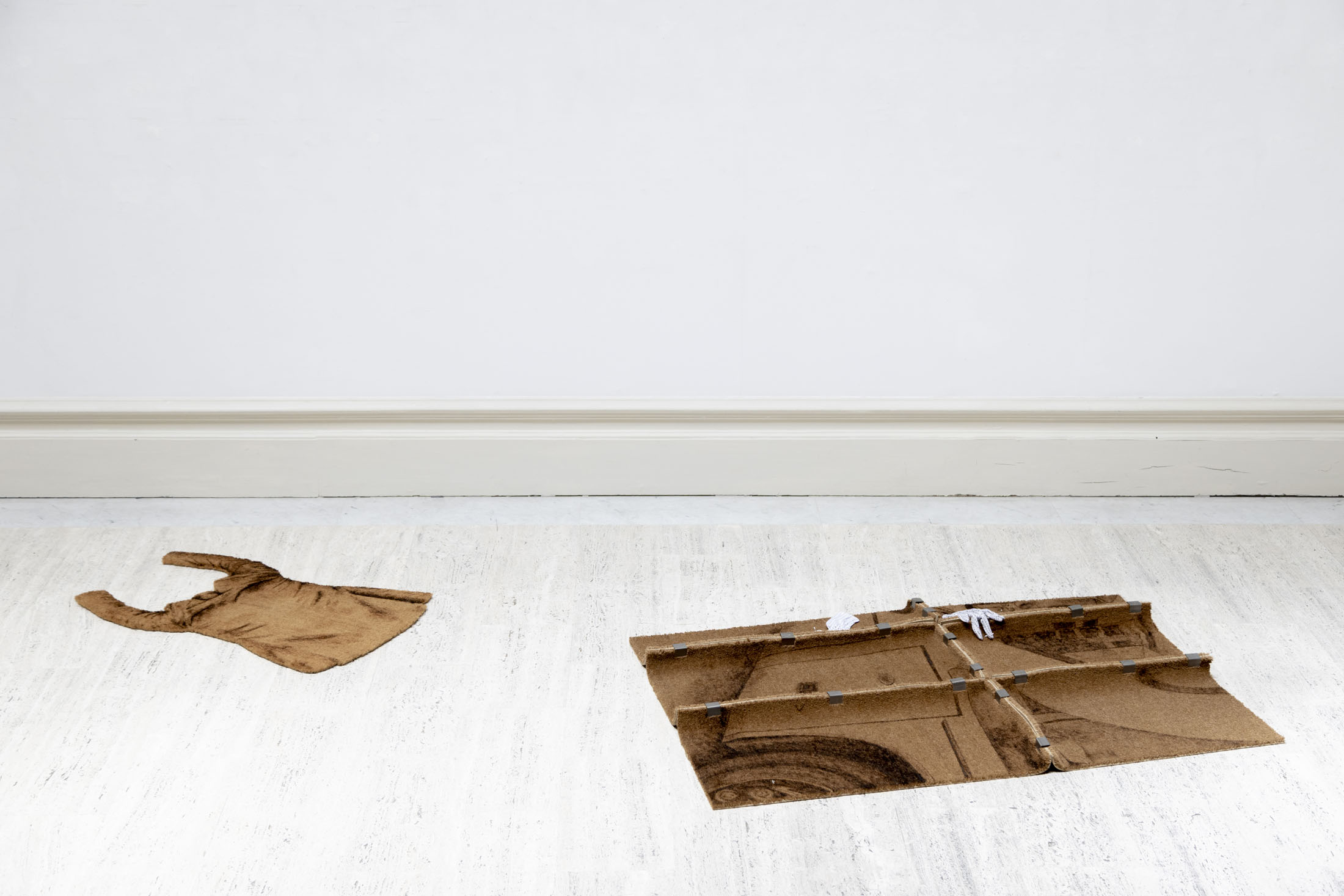
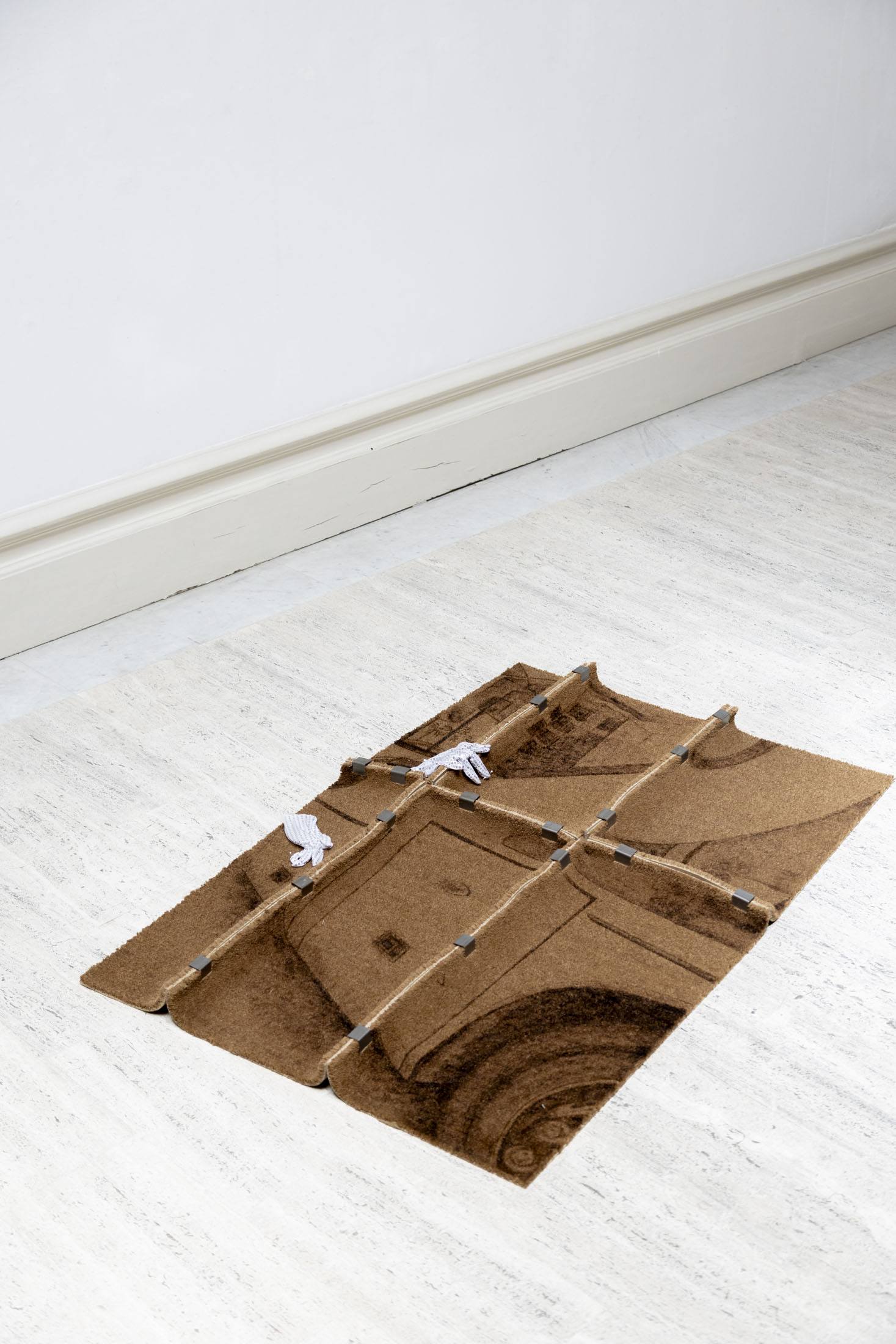
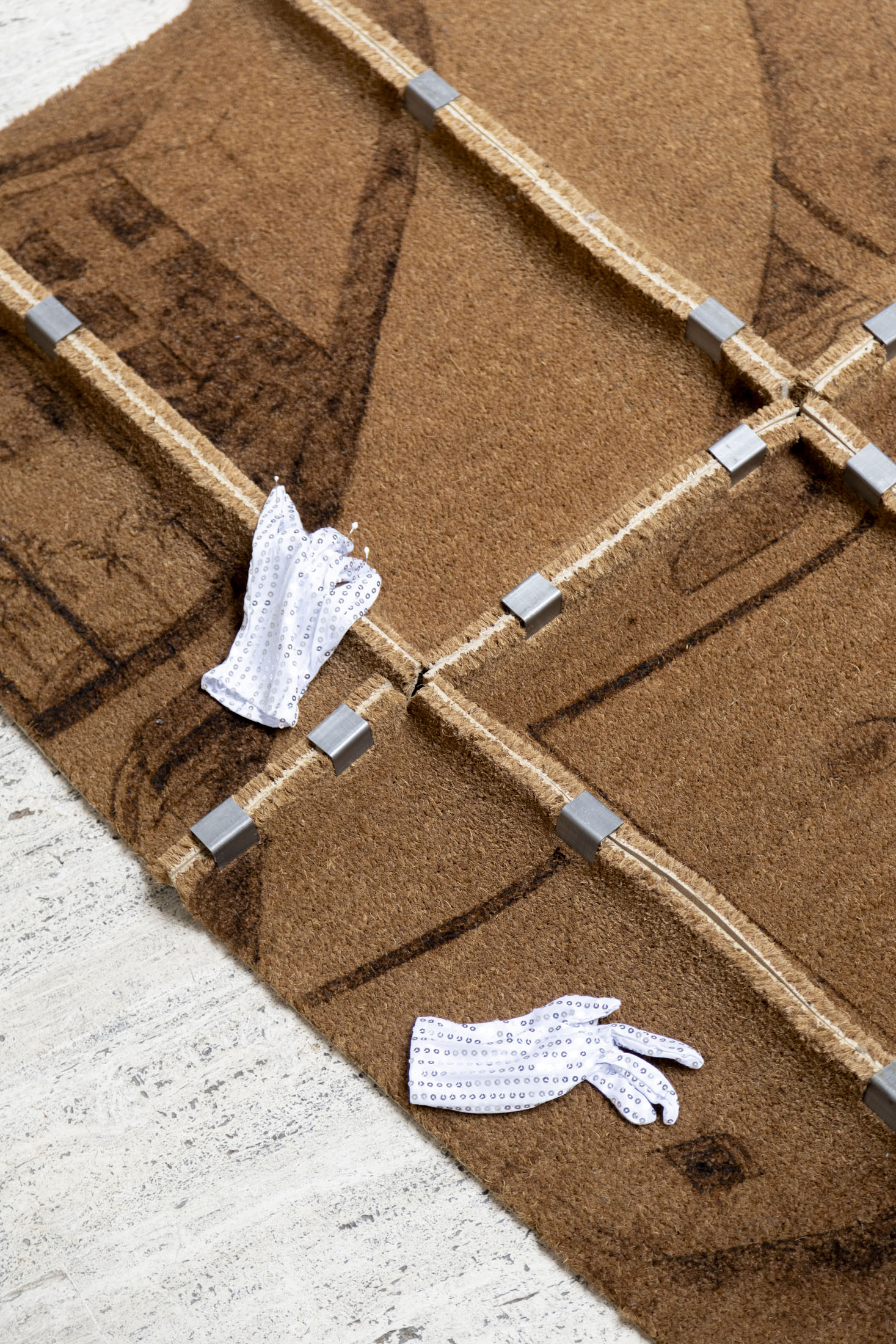
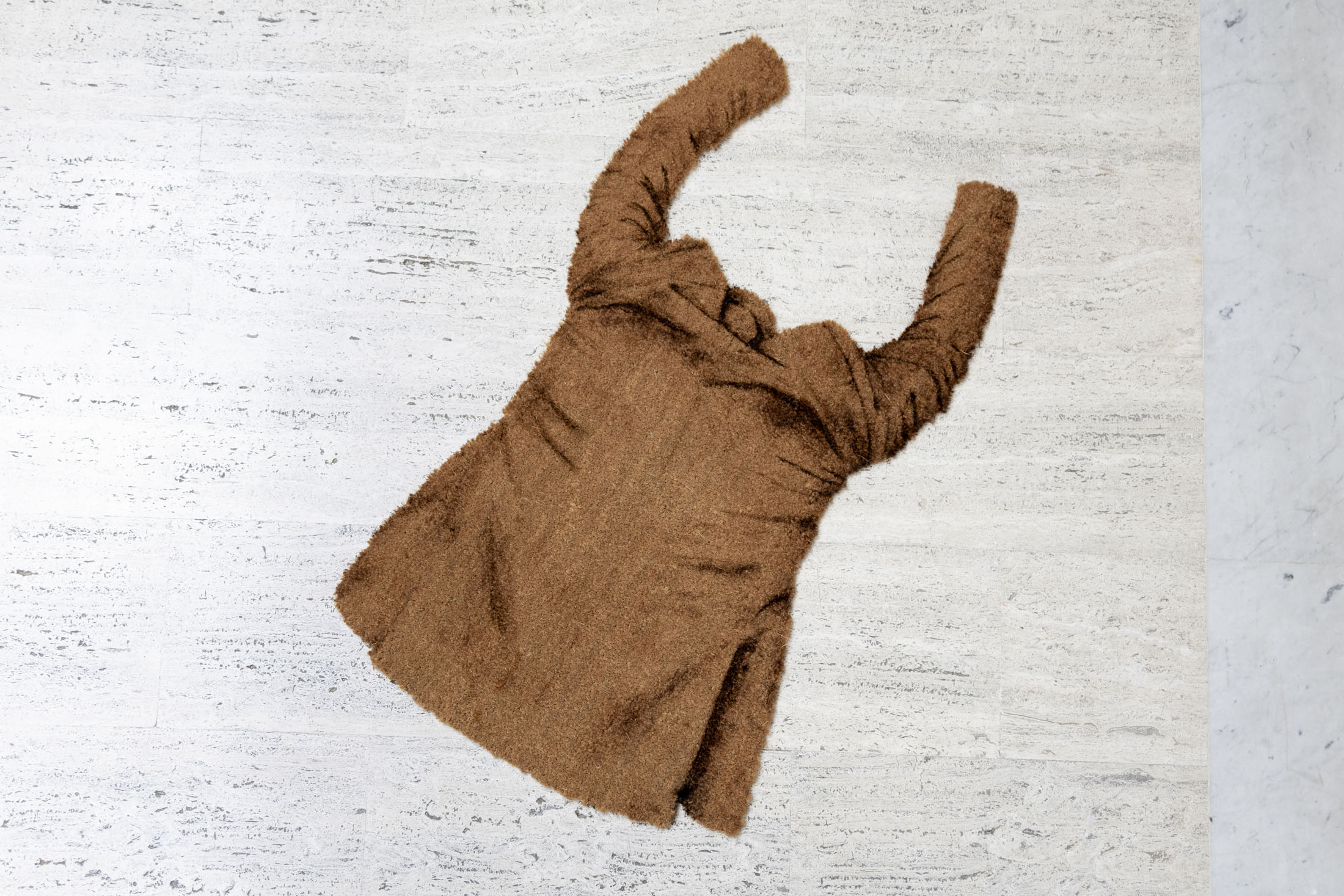
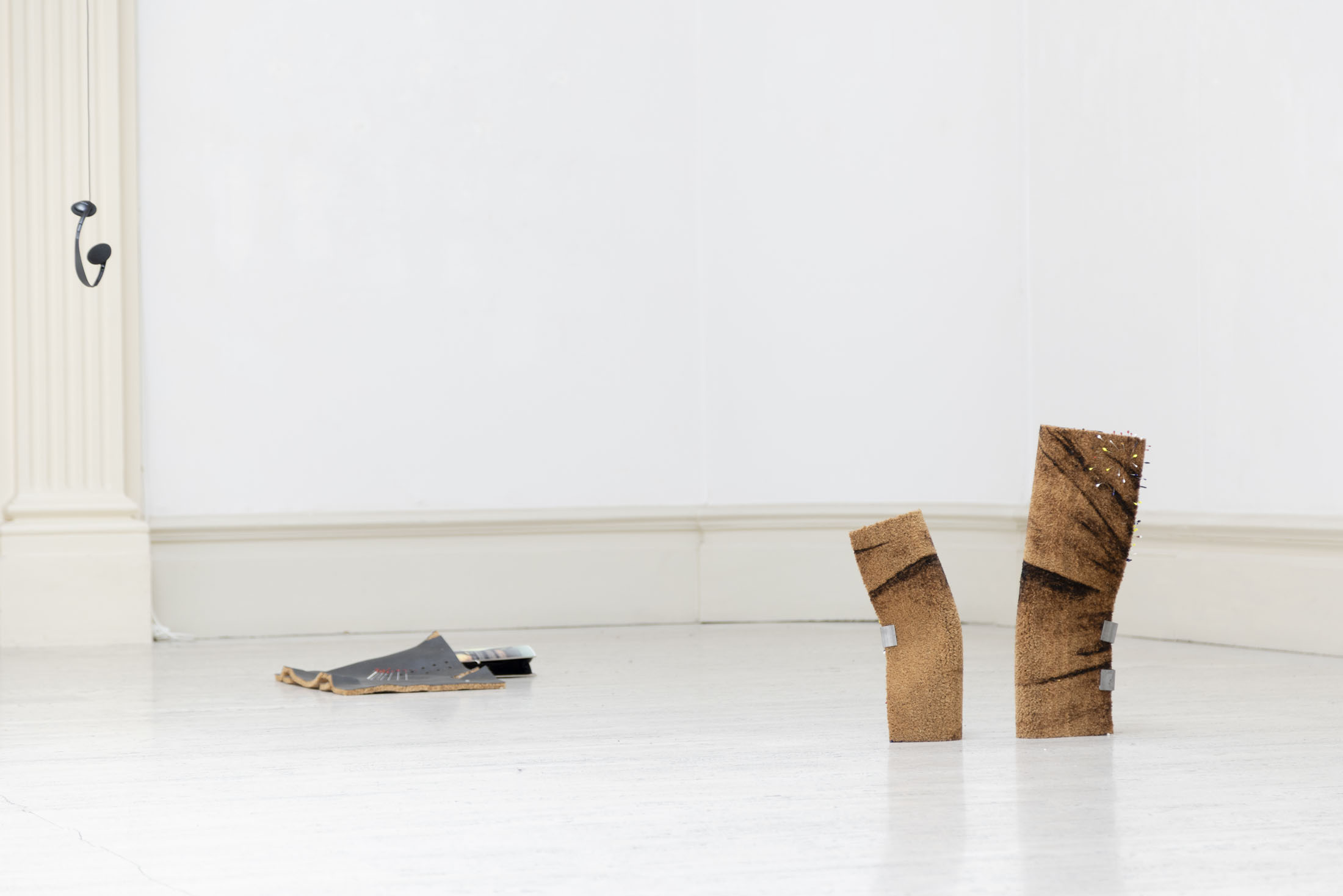
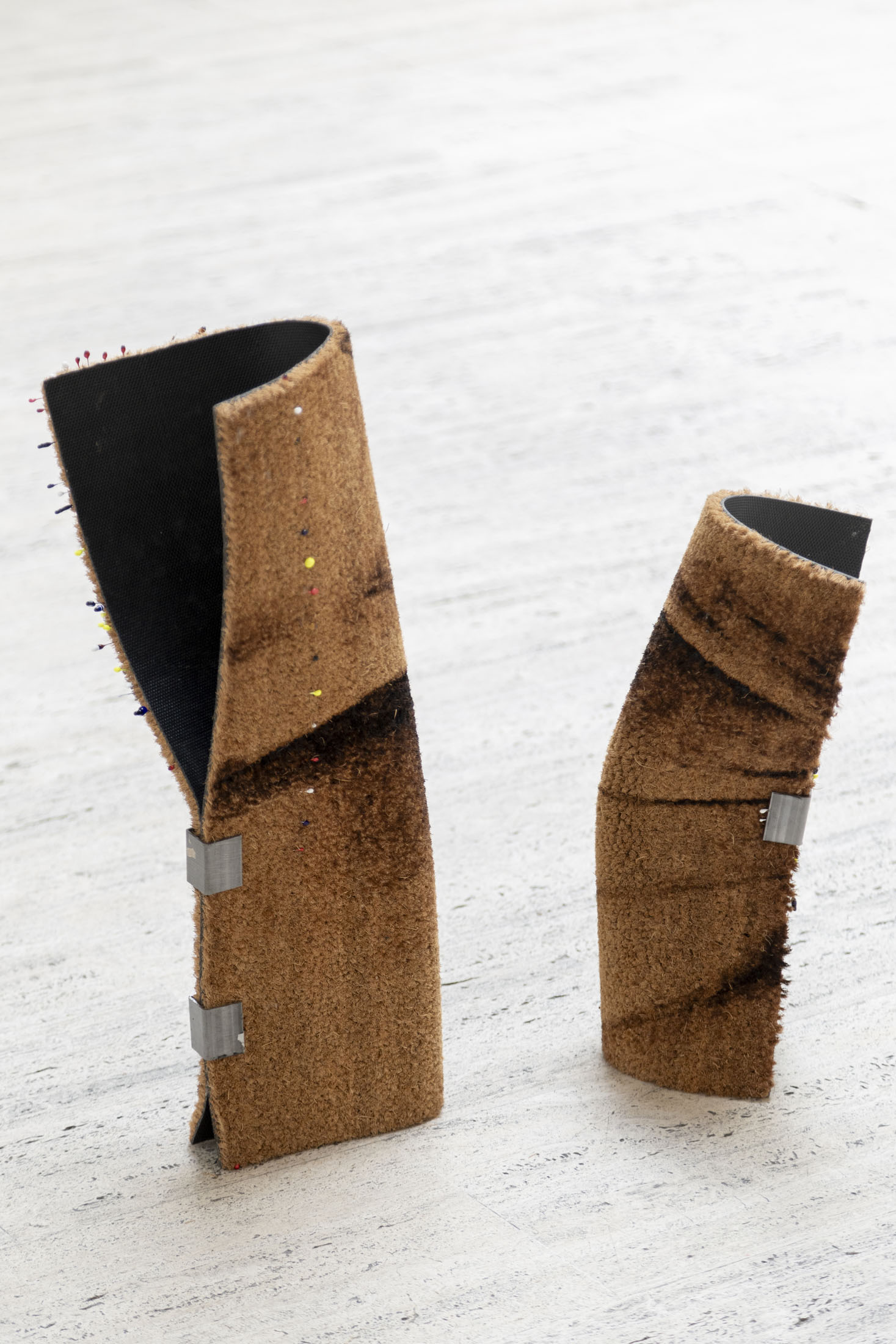
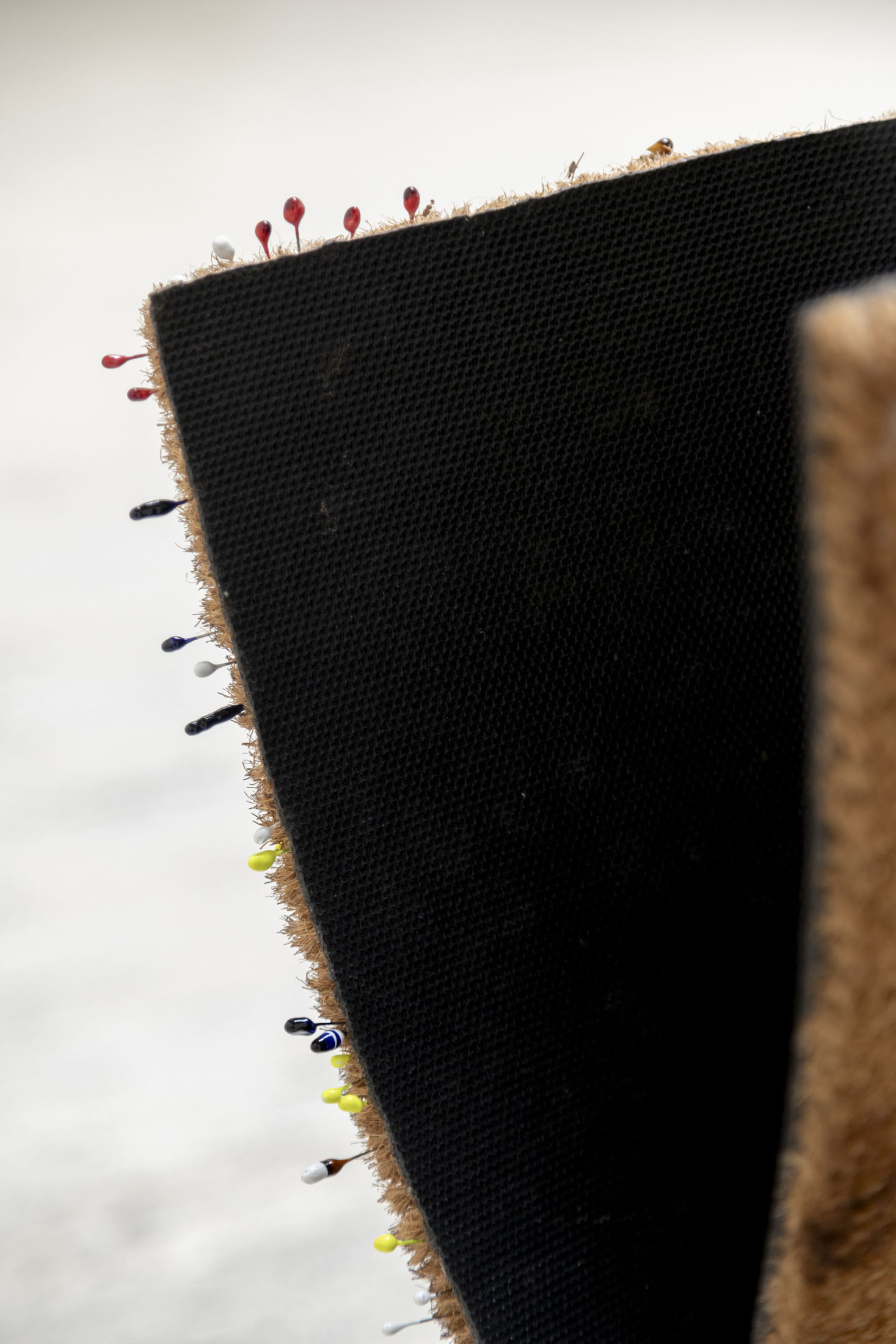
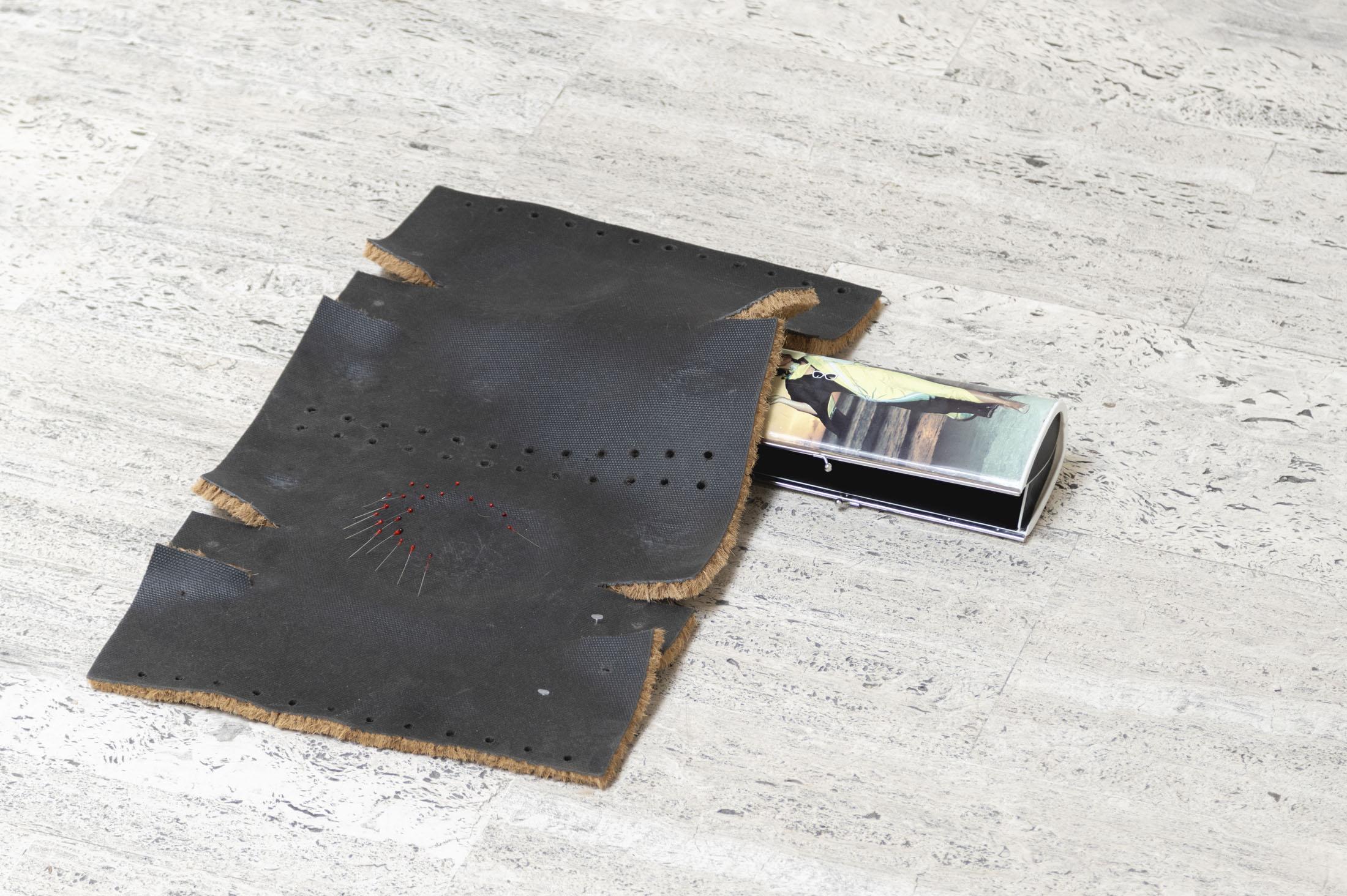
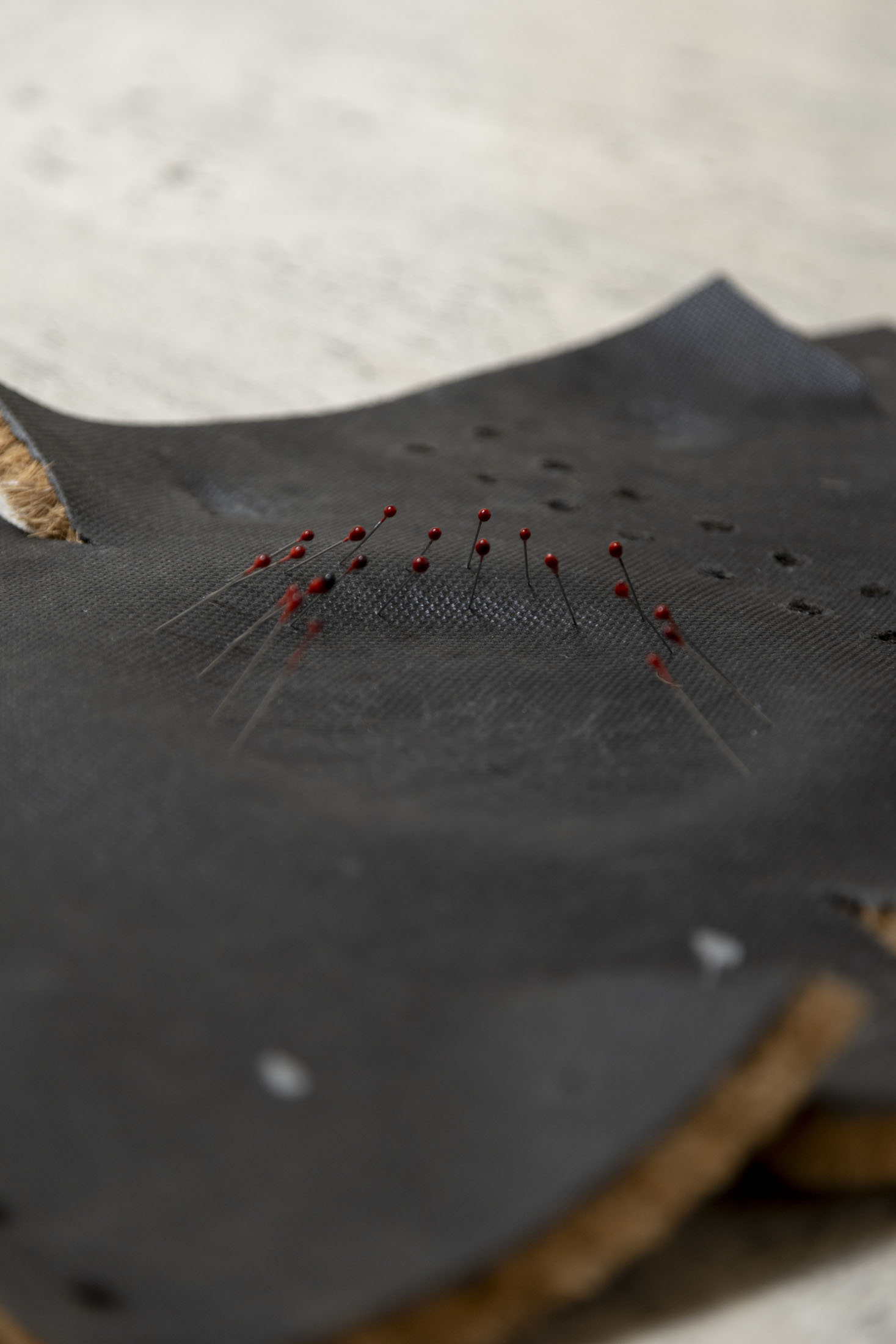
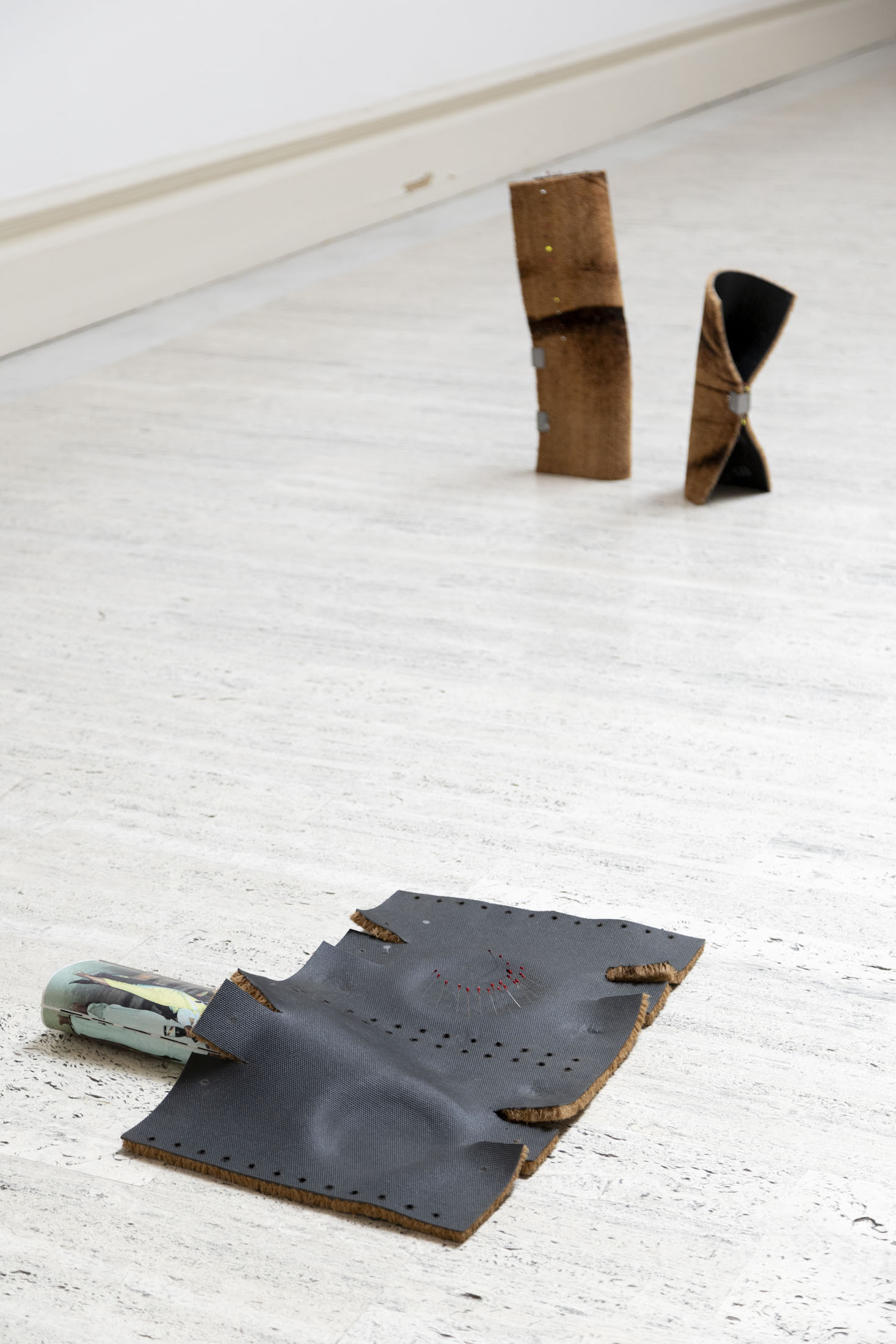
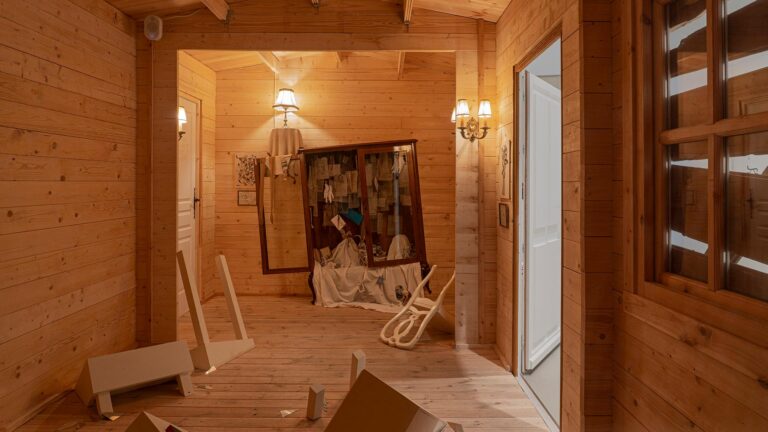
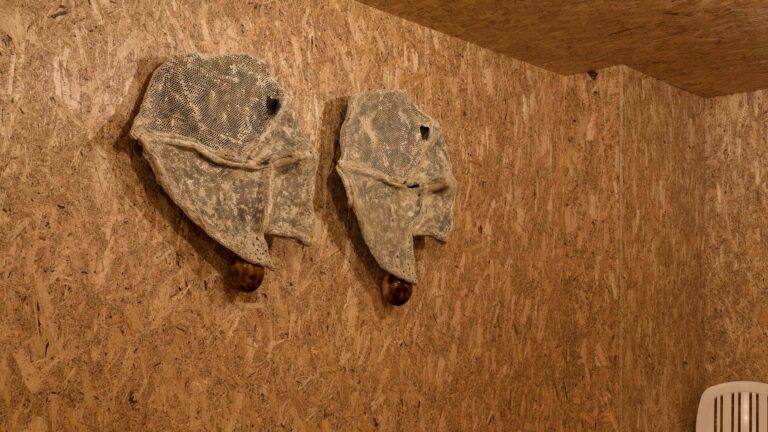
Those who take the floor do not arrive at the place of conversation entirely on their own. Someone opens the door for them, takes their coat, looks after them. In short: someone lets them in, welcomes them, and offers them hospitality. This is the position in which most of the works presented here place us: they are made from objects designed to receive, to fit the threshold of a doorway and at the feet of those entering, and which have now been deformed so as to accommodate various images. The images of clothing, for instance, reveal architectures of the body, whether or not the body itself is present, and in doing so also disclose the underlying structures of the garments’ pattern cutting. Such patterning is likewise present in the coconut-fibre and rubber panels of the doormats. Yet public and private space are also brought into view: architectures in which the reception our words will receive comes into play. There is a distinct imaginary associated with everything connected to the act of receiving.
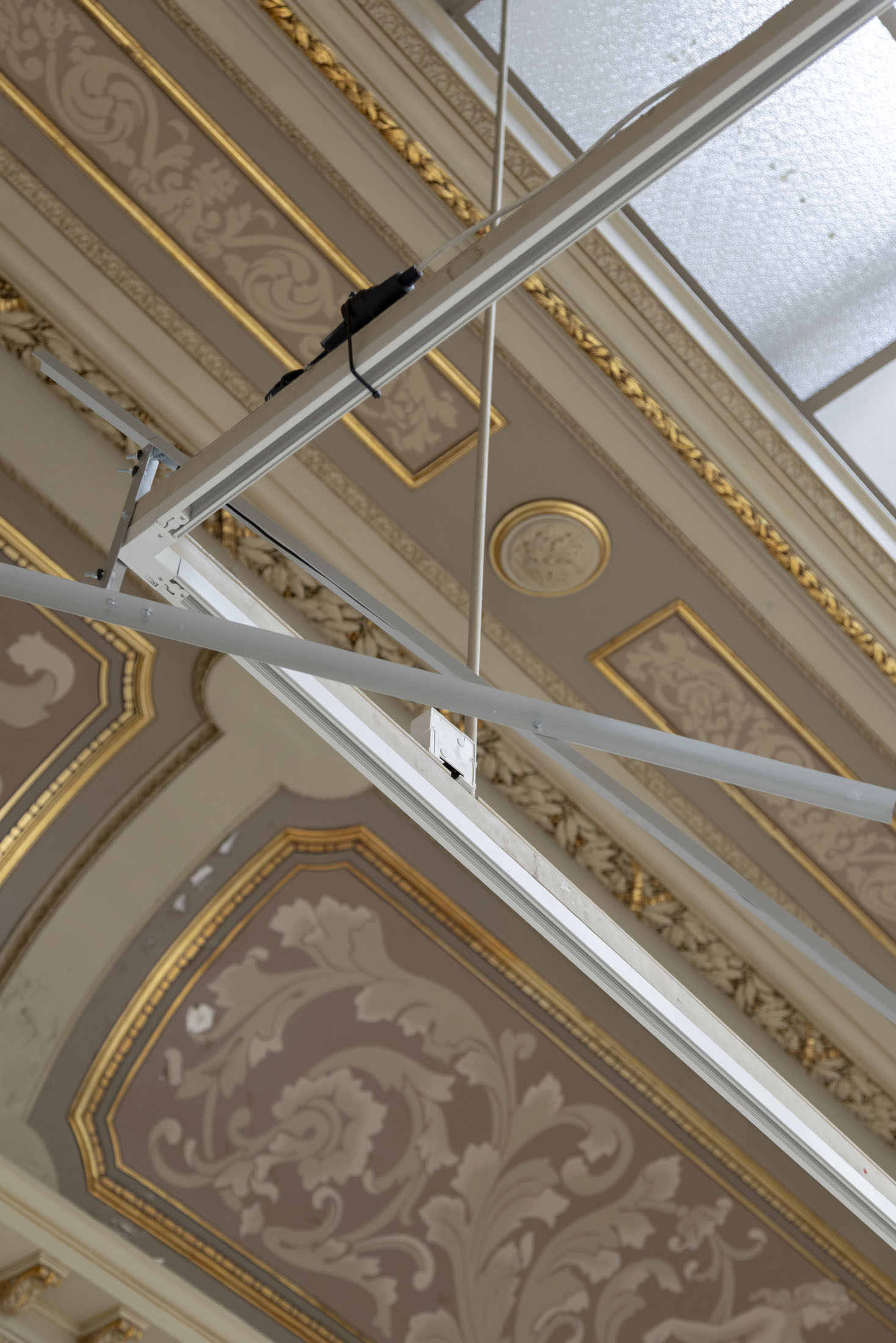
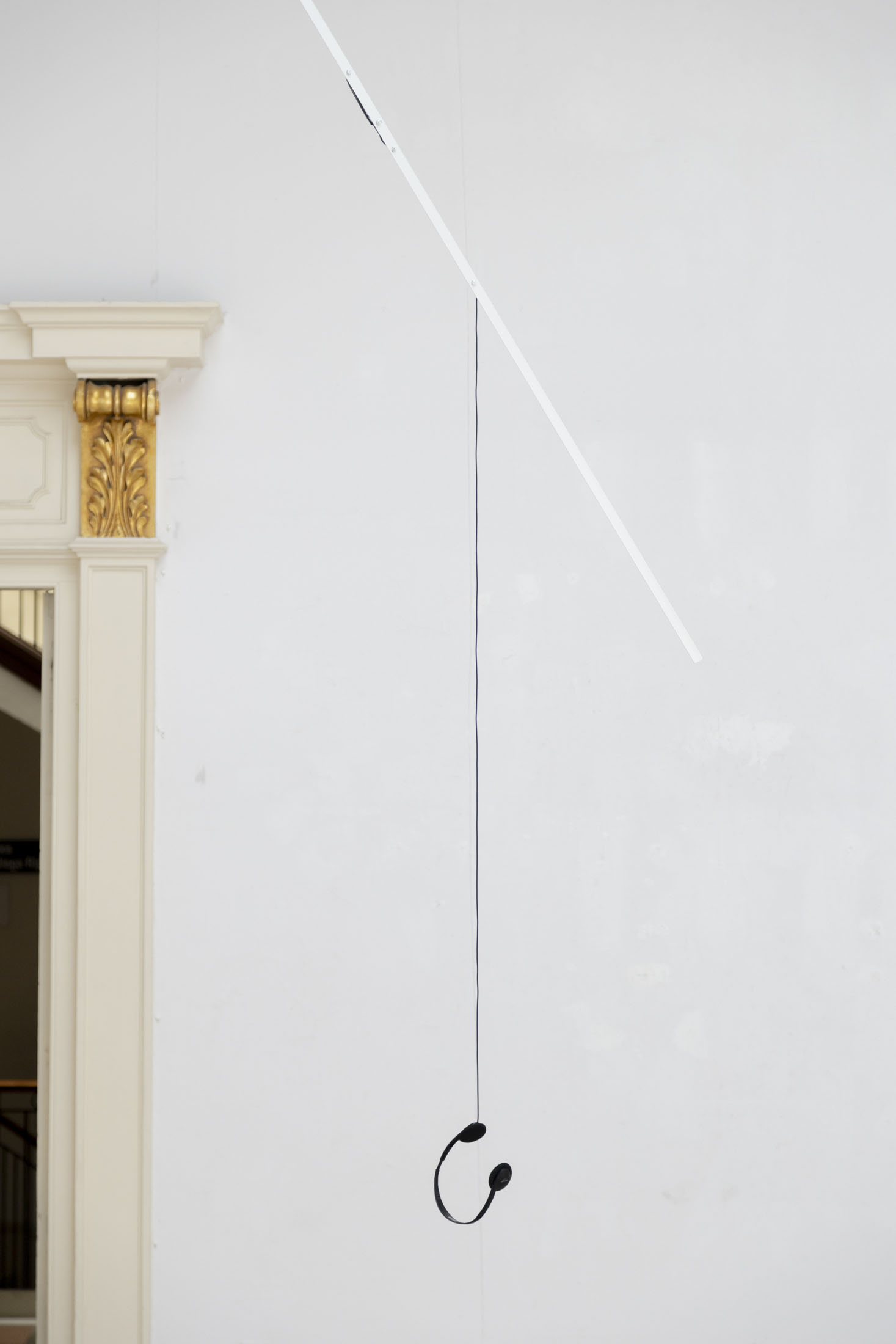
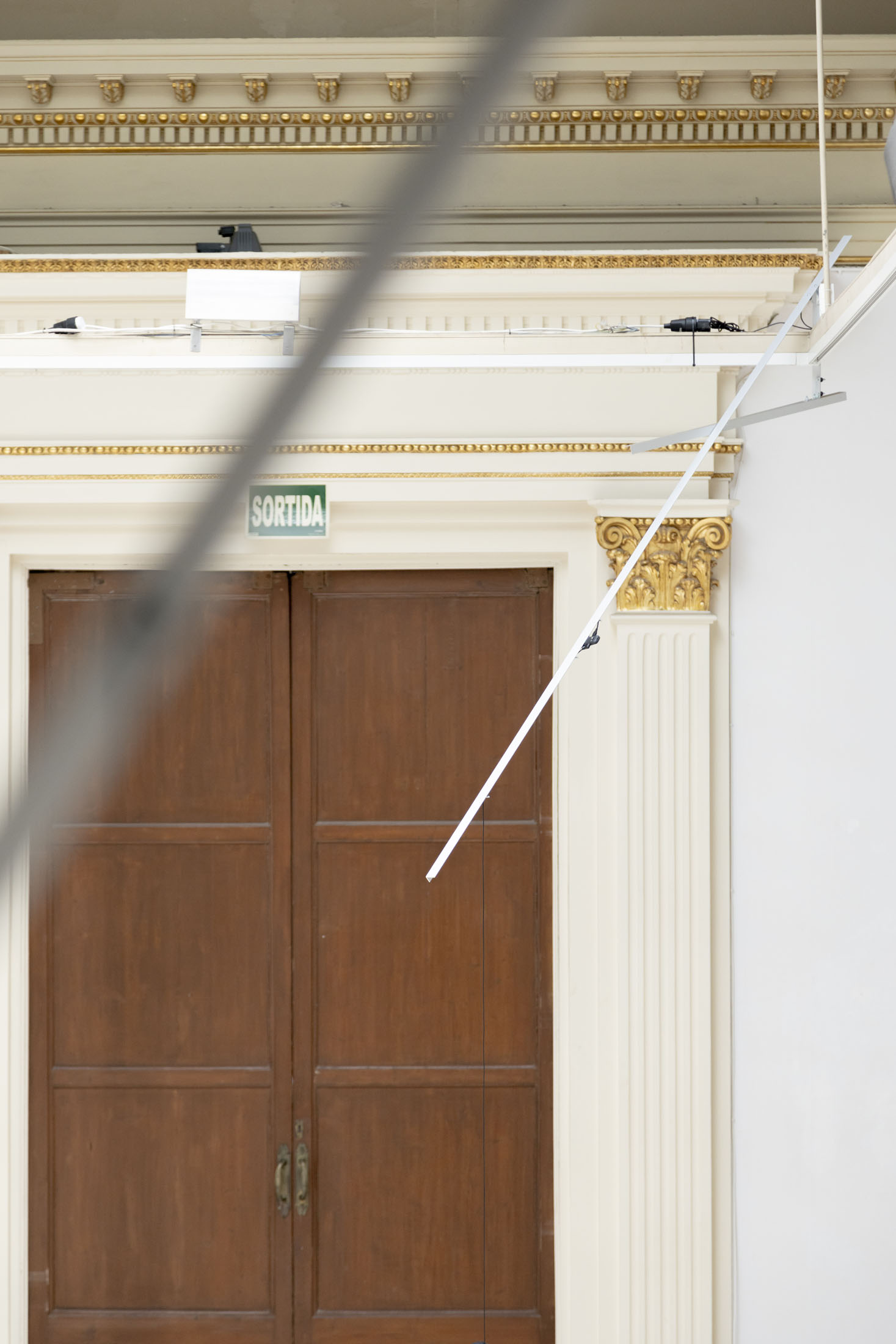
The materials and images within the works resonate with the organisation of bodies in space. As you explained to me, Noela, they are “stages of intimacy of the gaze and the body in relation to space”. An important role is played not only by the works that direct our gaze towards the ground, but also by the sound pieces that alter the circulation and performativity of the site. Their structure and the absence of discourse -though by no means the absence of voice- endow this architecture with a particular quality: that of deferring the prominence of the speaker, whilst words gradually regain their original disposition.
—Jordi Vernis
This exhibition is part of my recent research where song composition and floor works are layered as two stratum of a room. I would love to thank to Jordi Vernis for the accompaniment and the basso continuo of conversations with Ana Martínez Fernández, Victor Ruiz Colomer, digestivo, Avel Mismo, Élise Moreau, Lautaro Reyes, Maguette Dieng, Edín Covelo and Belén Velasco Pazos.
—noela covelo velasco