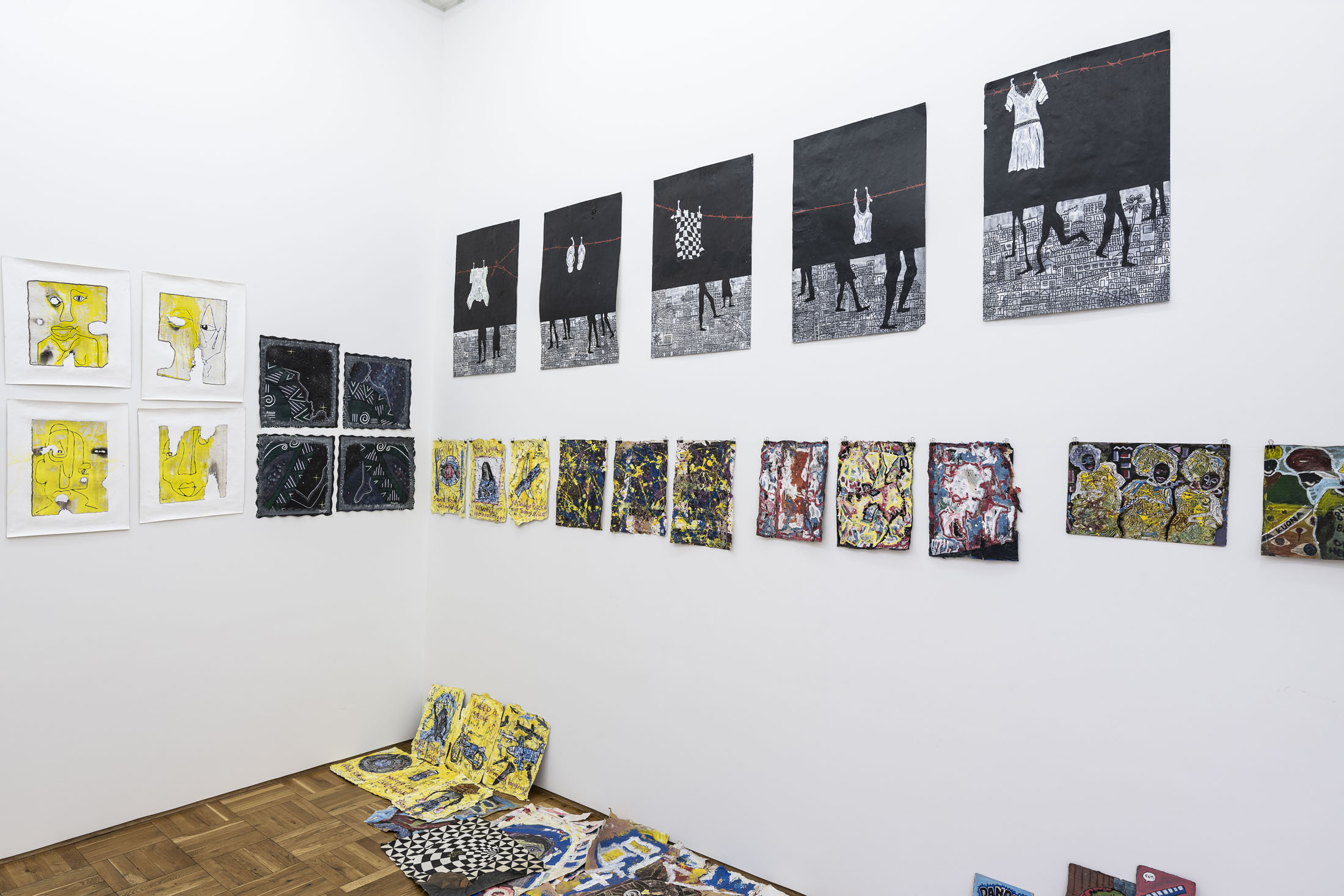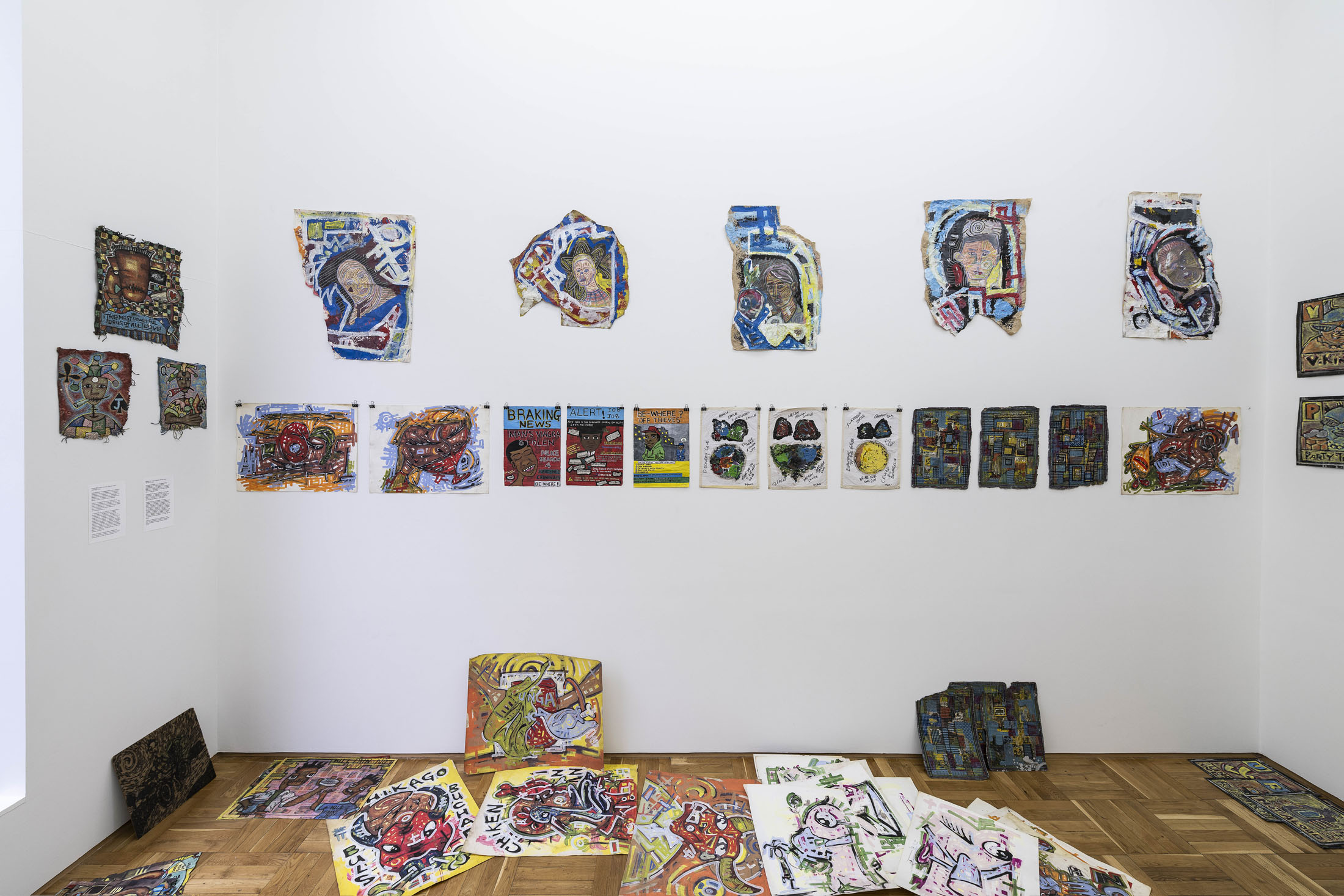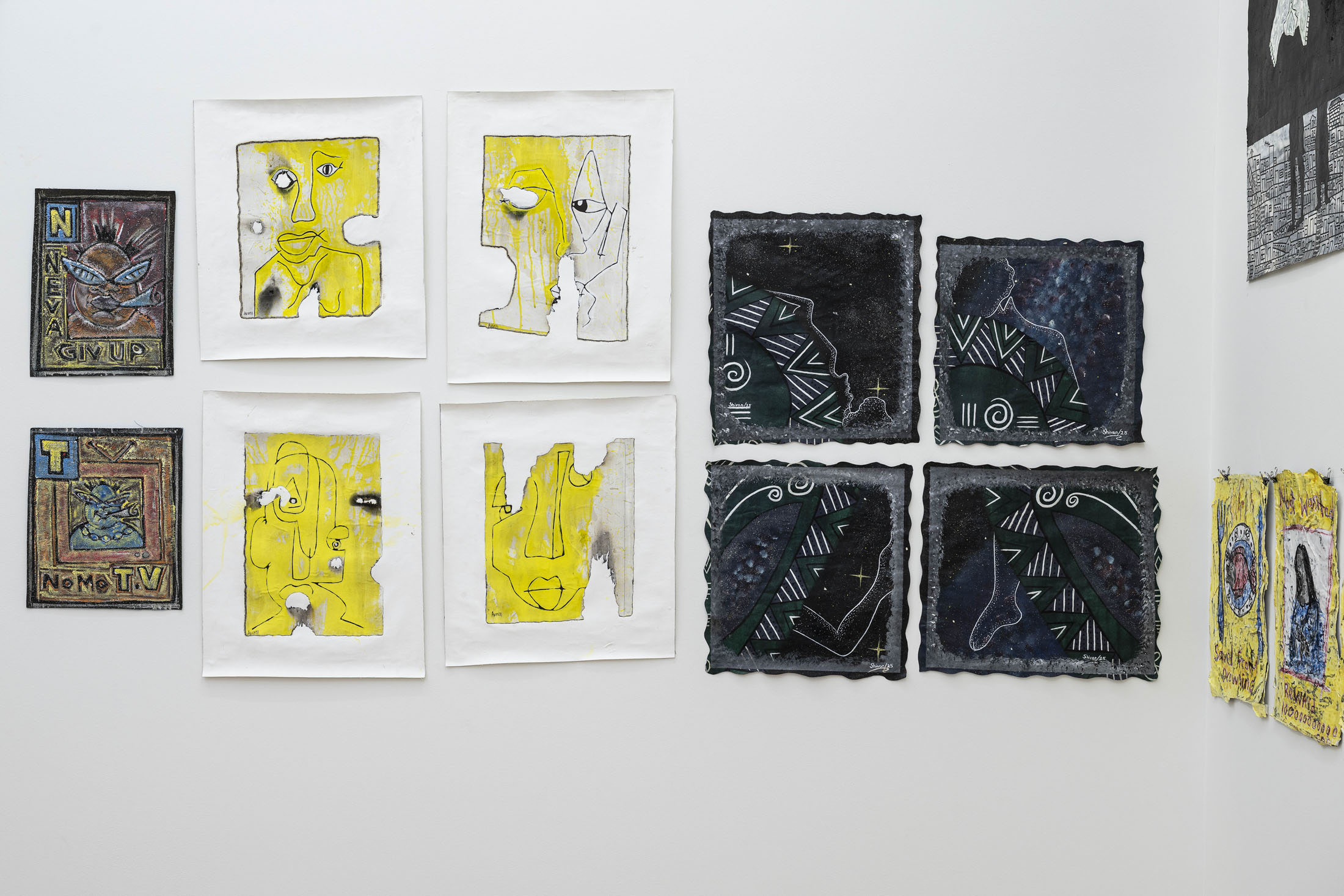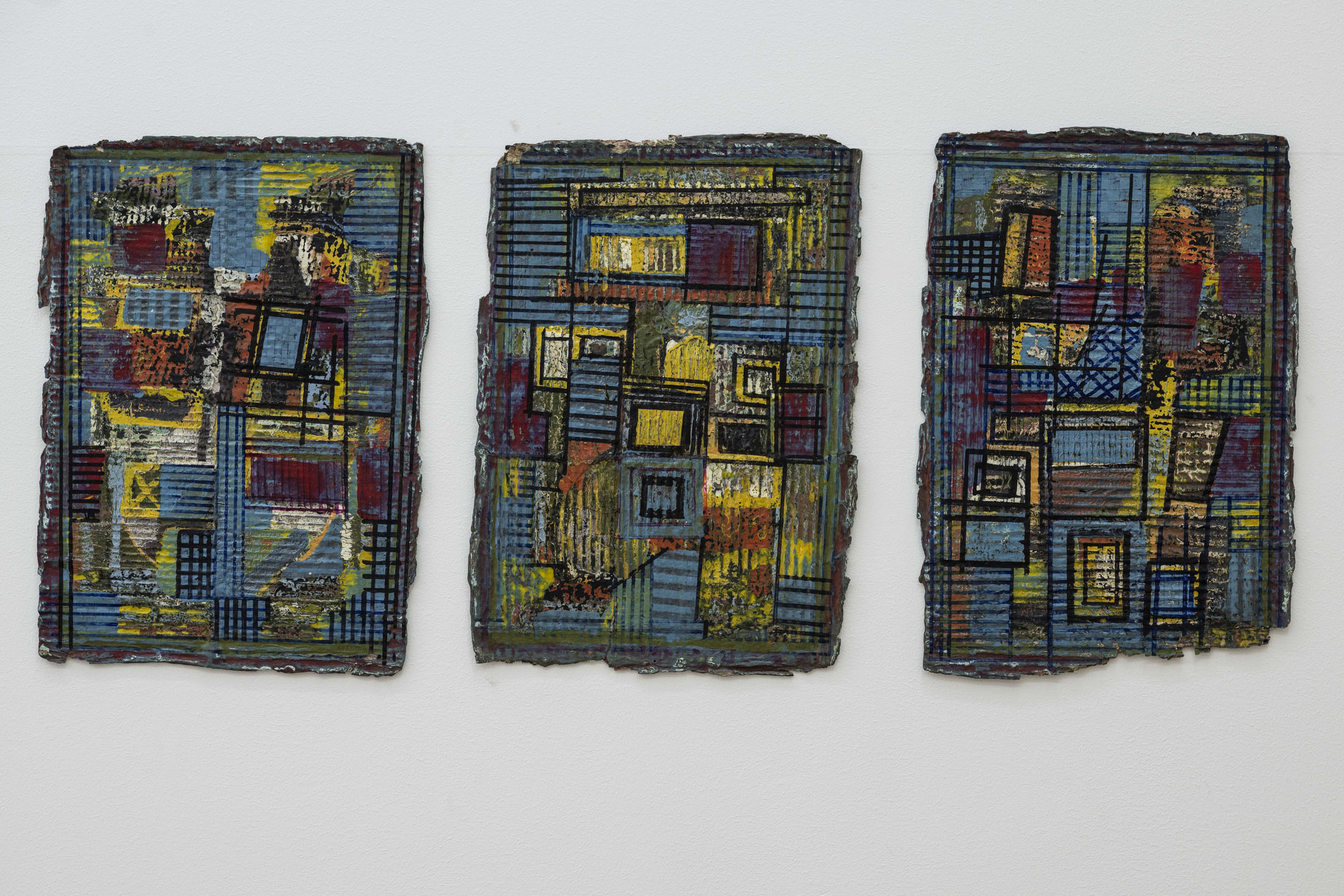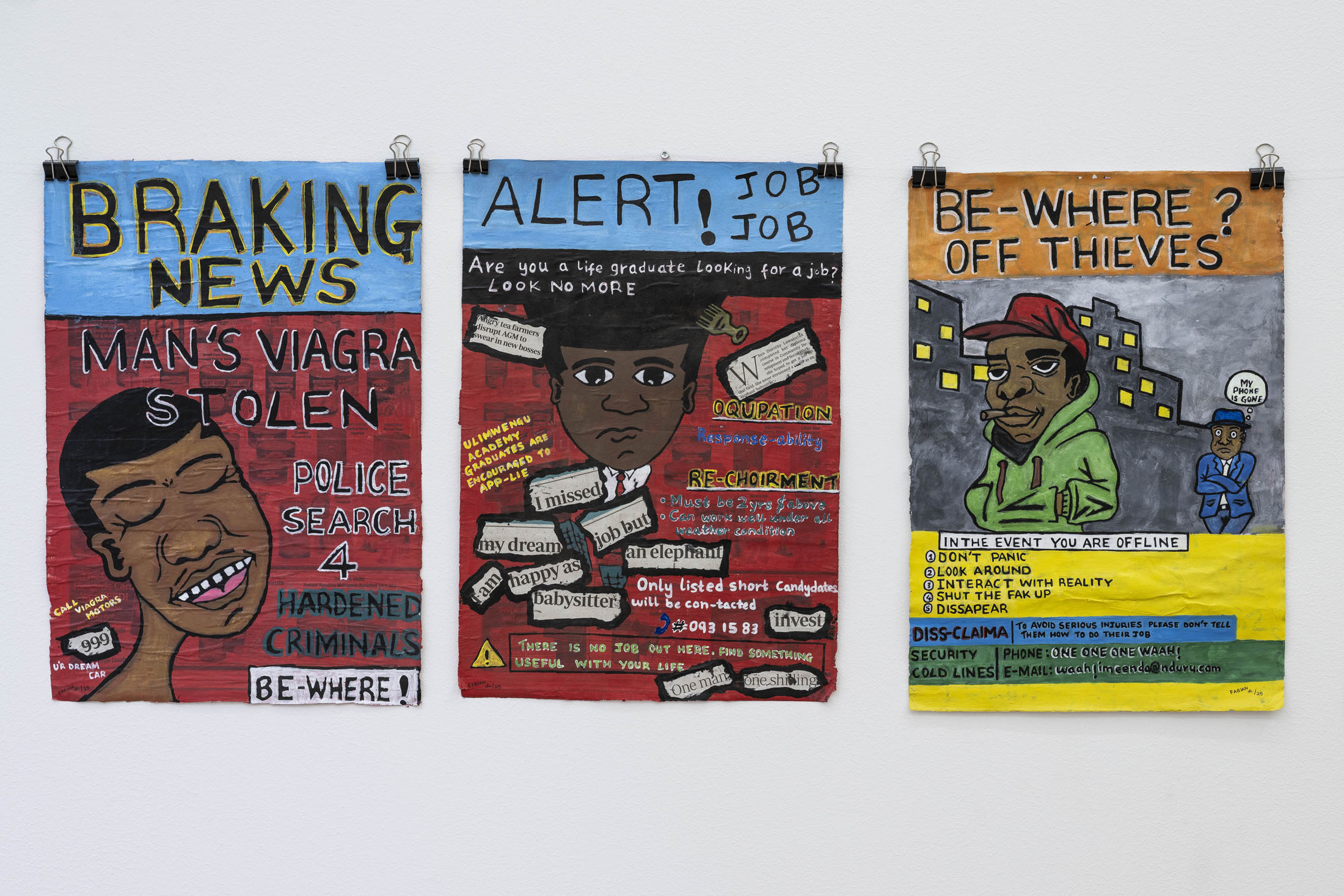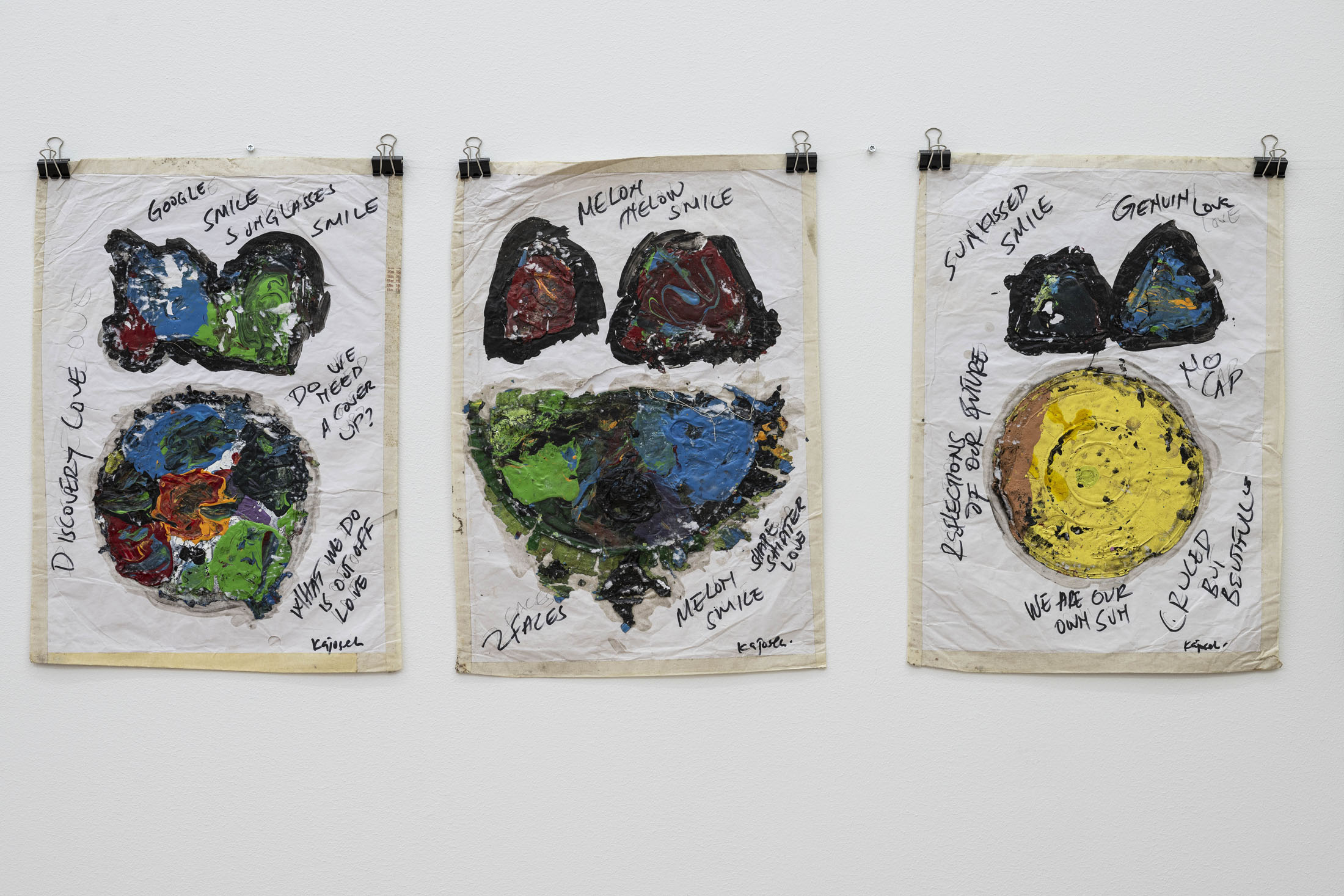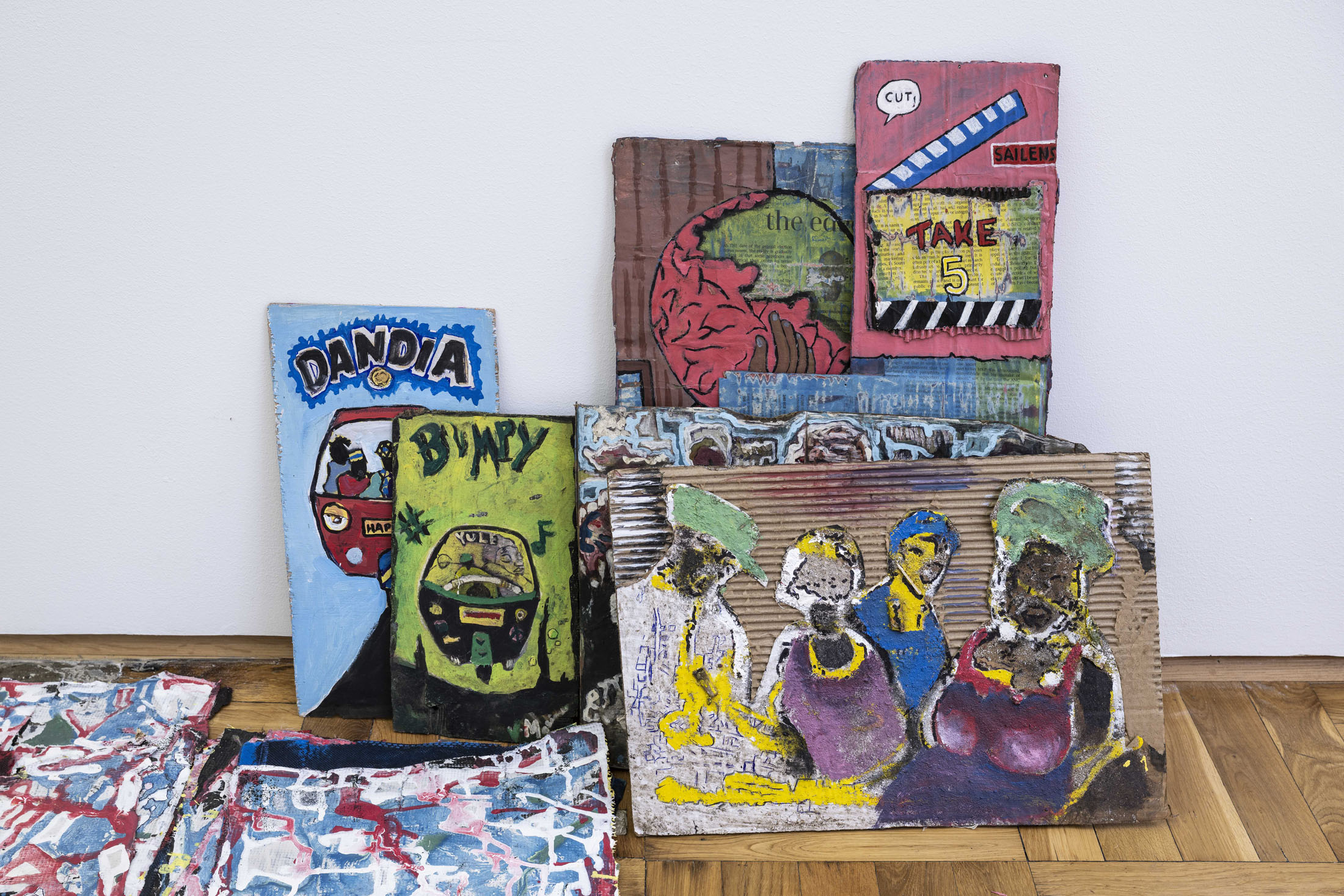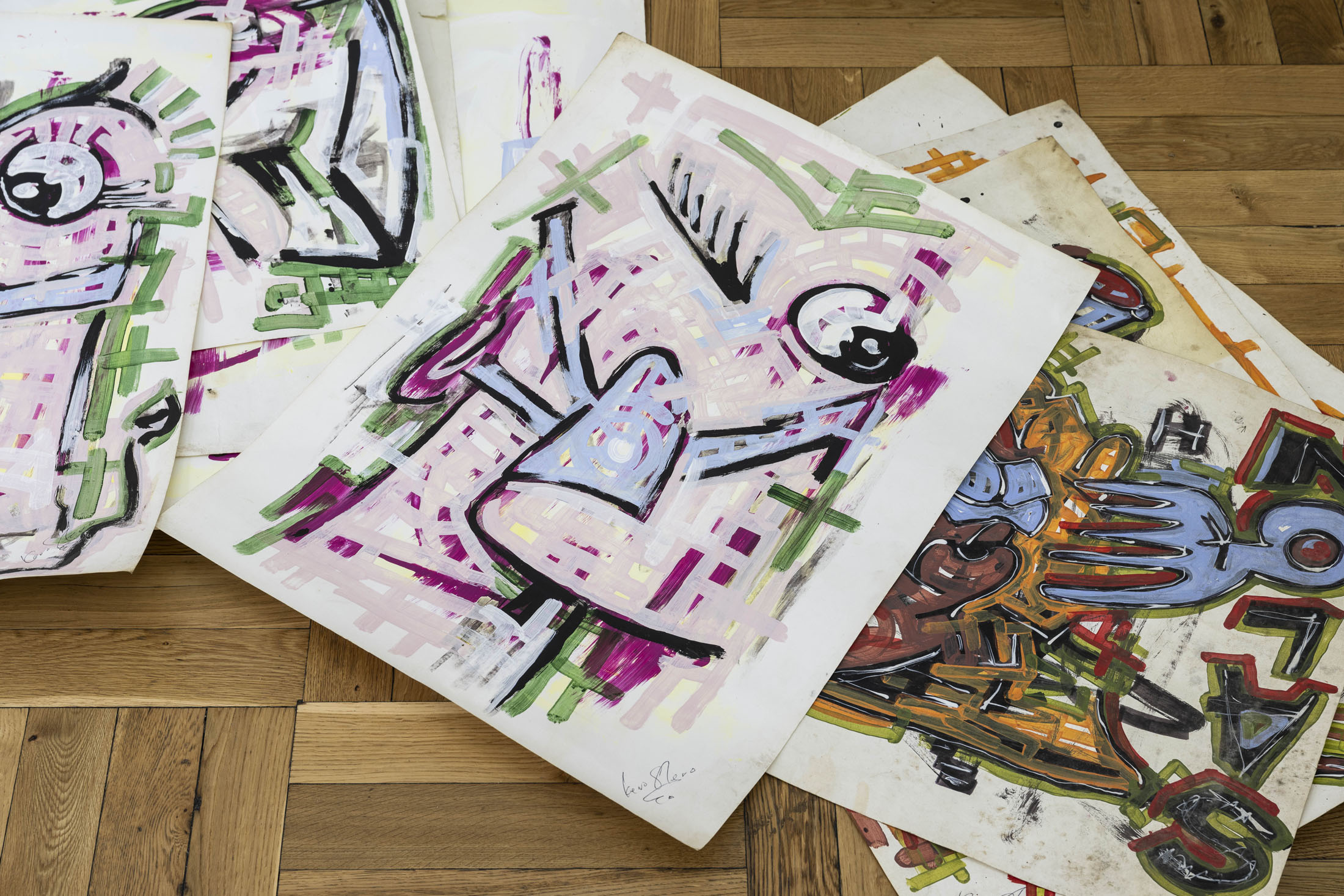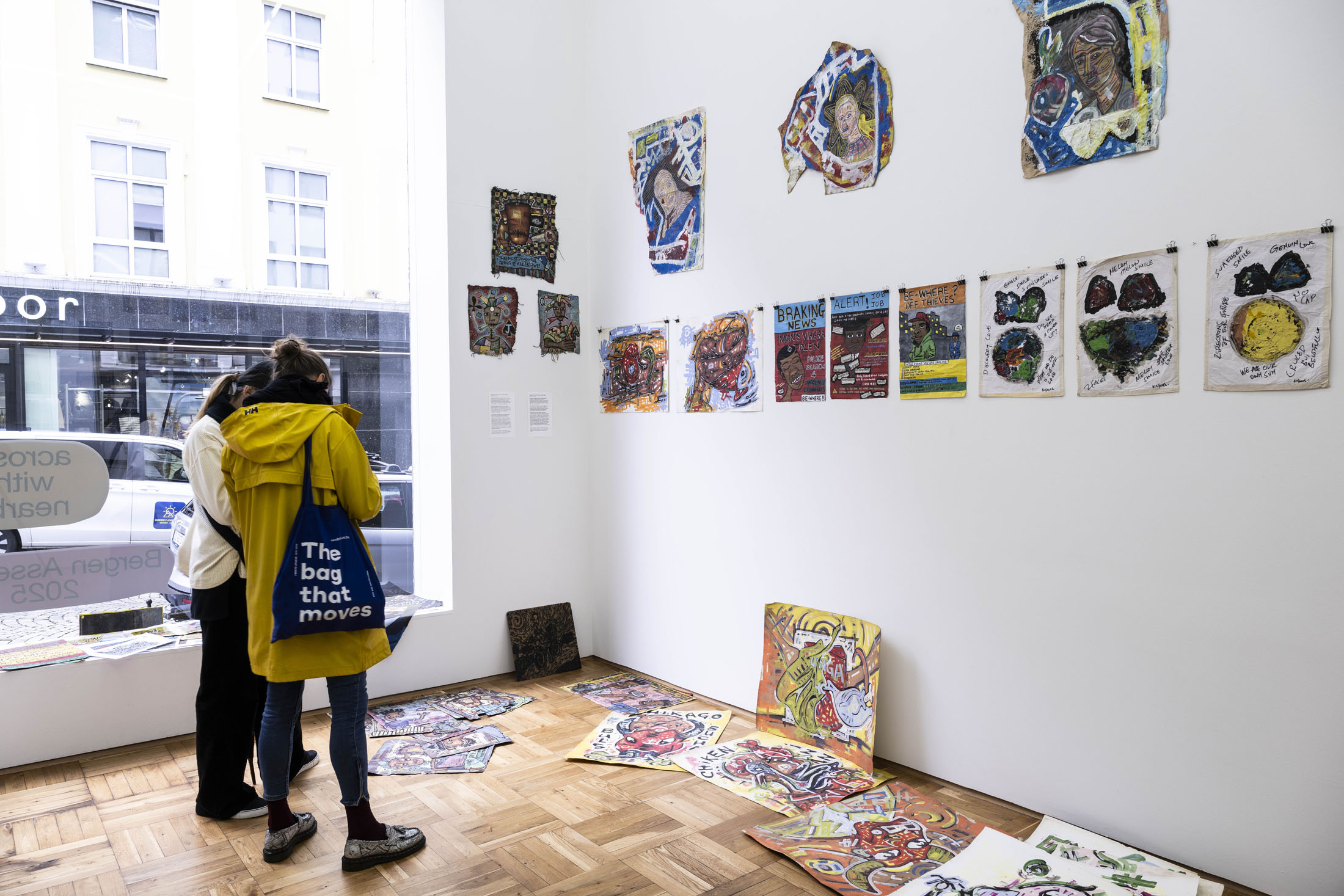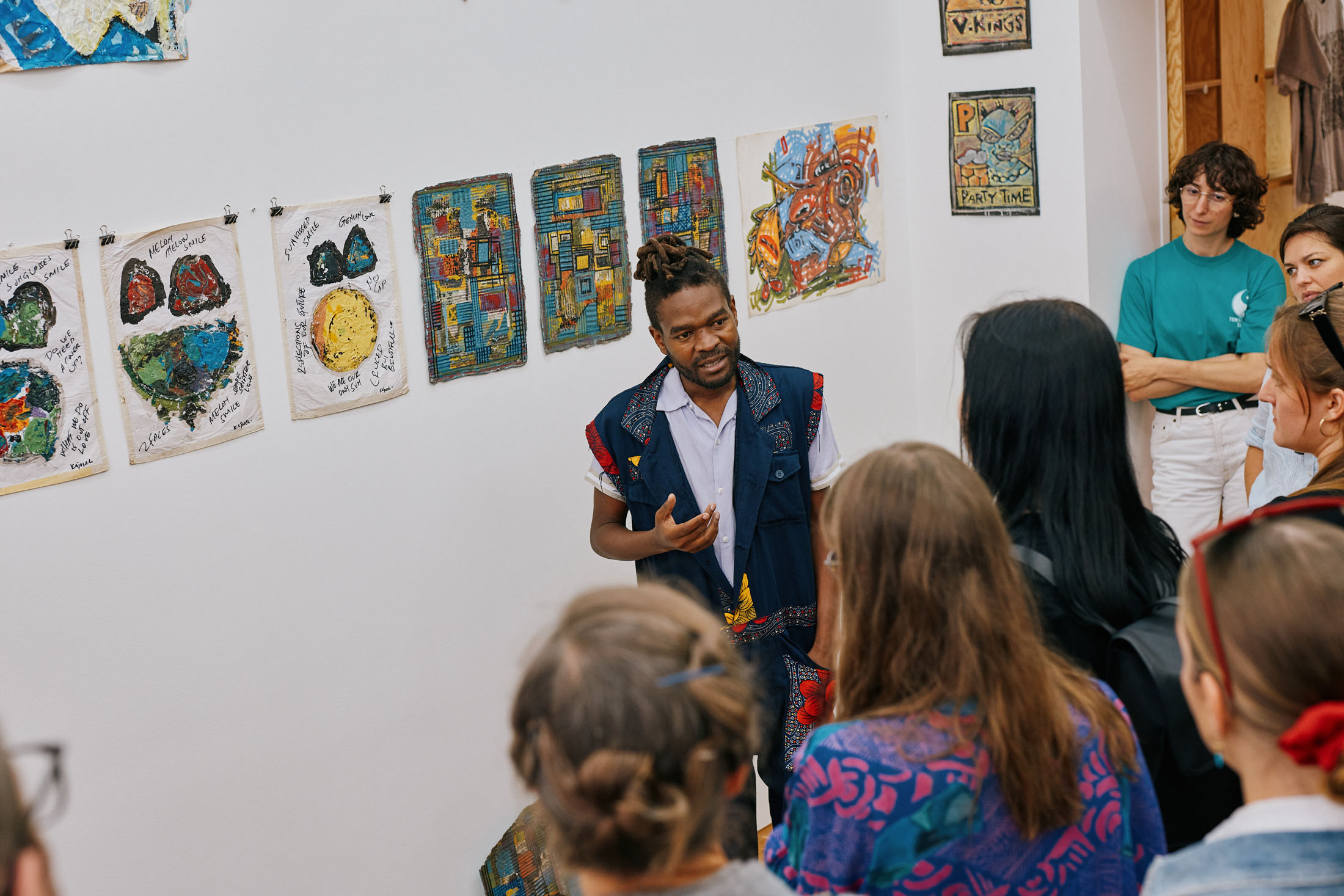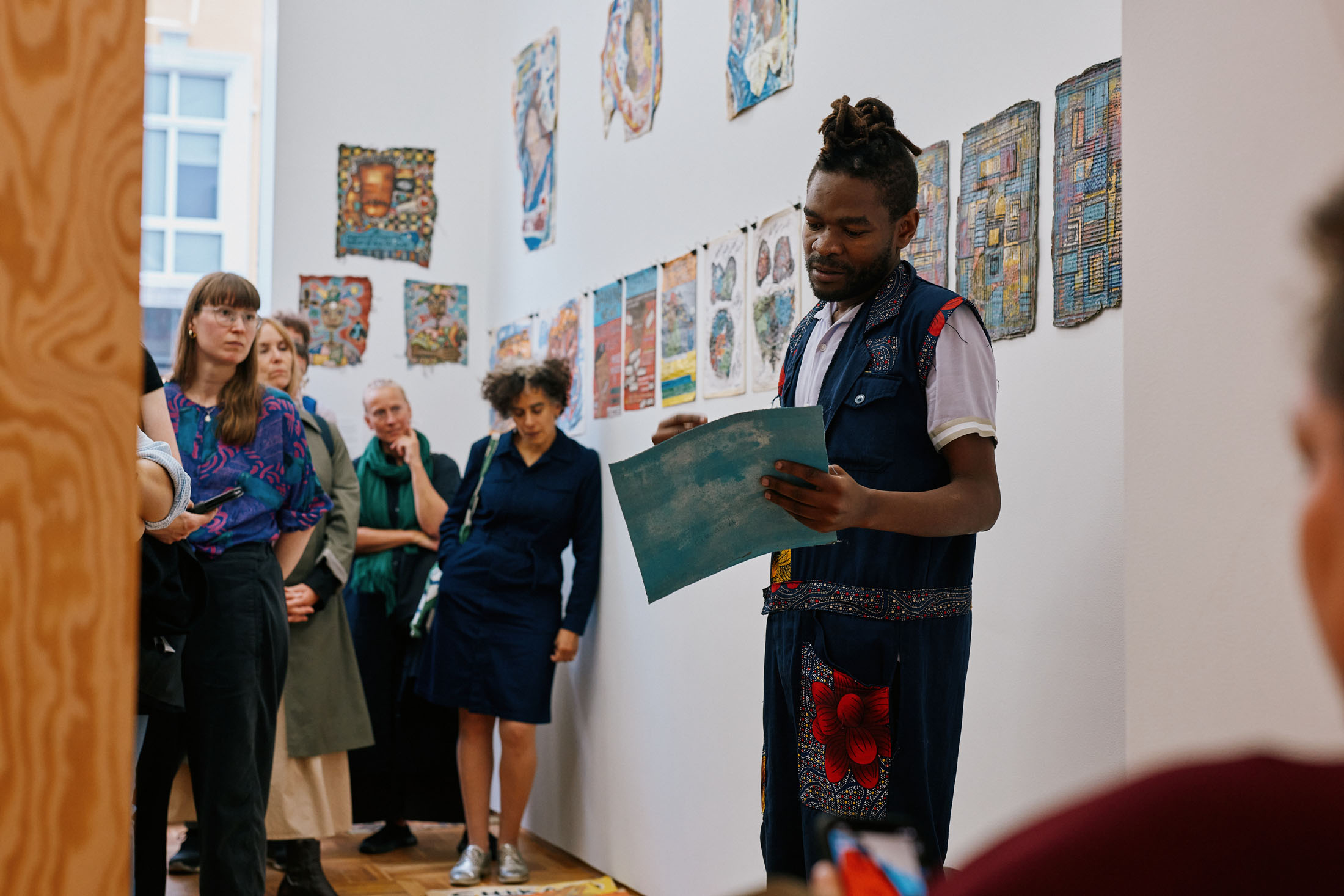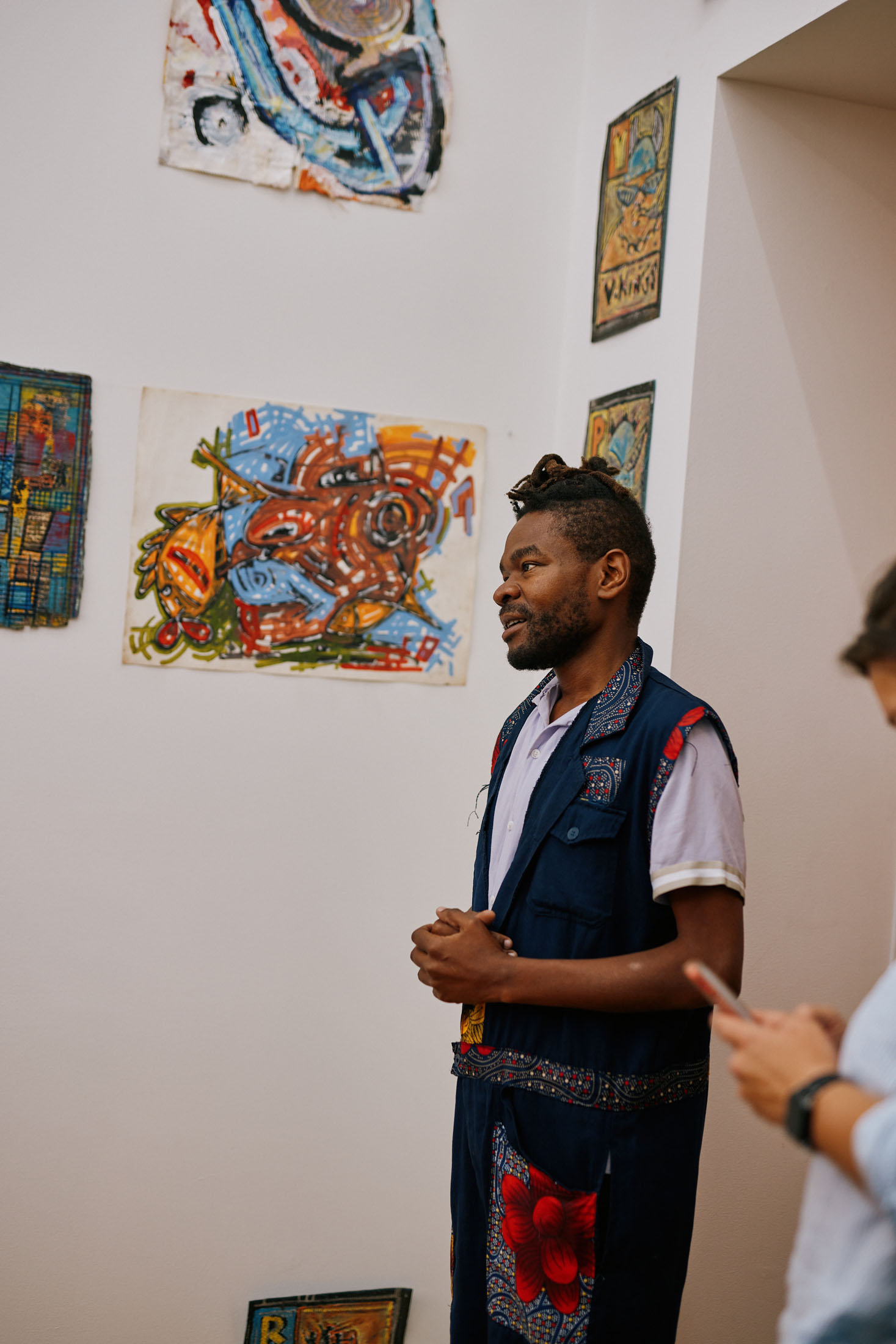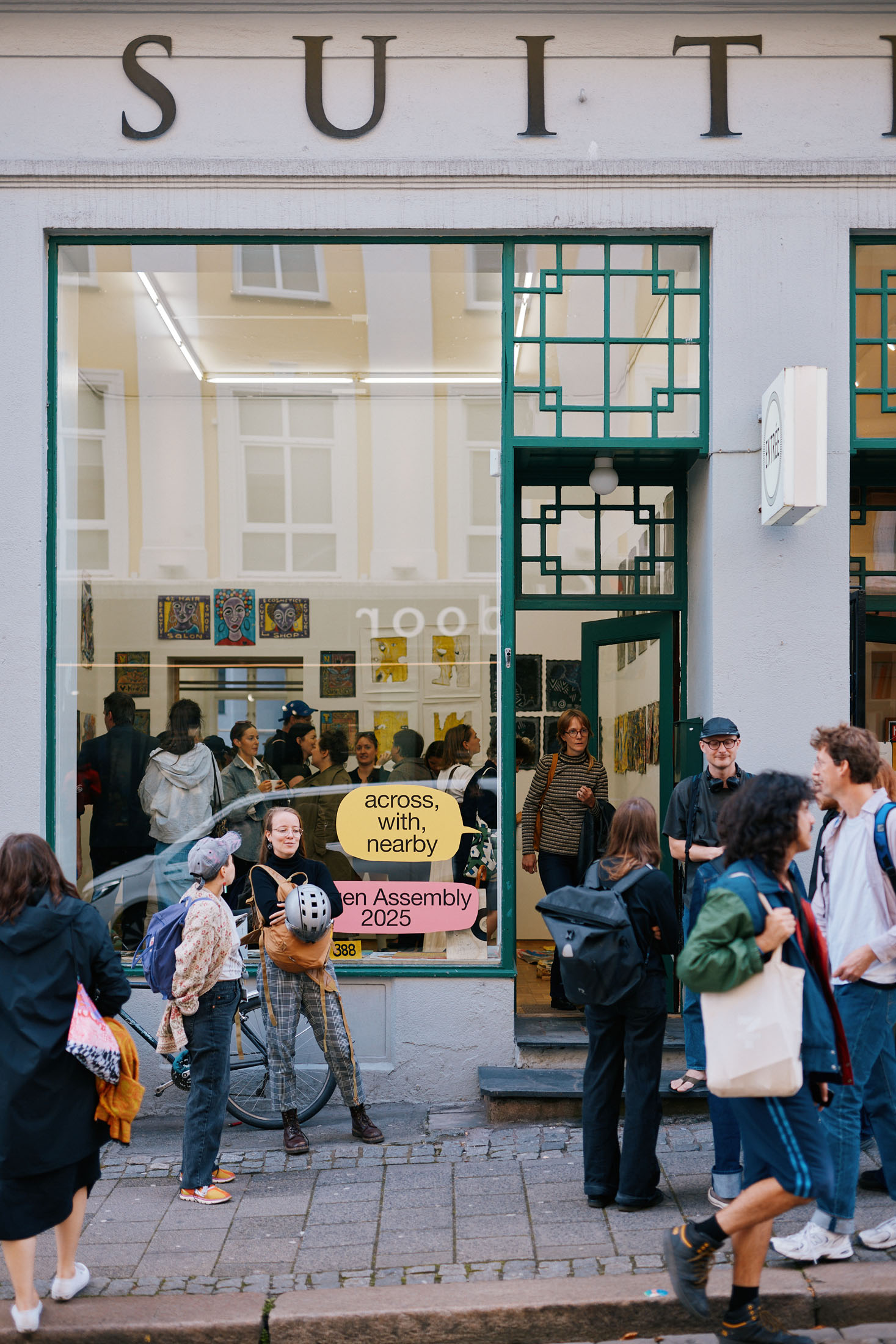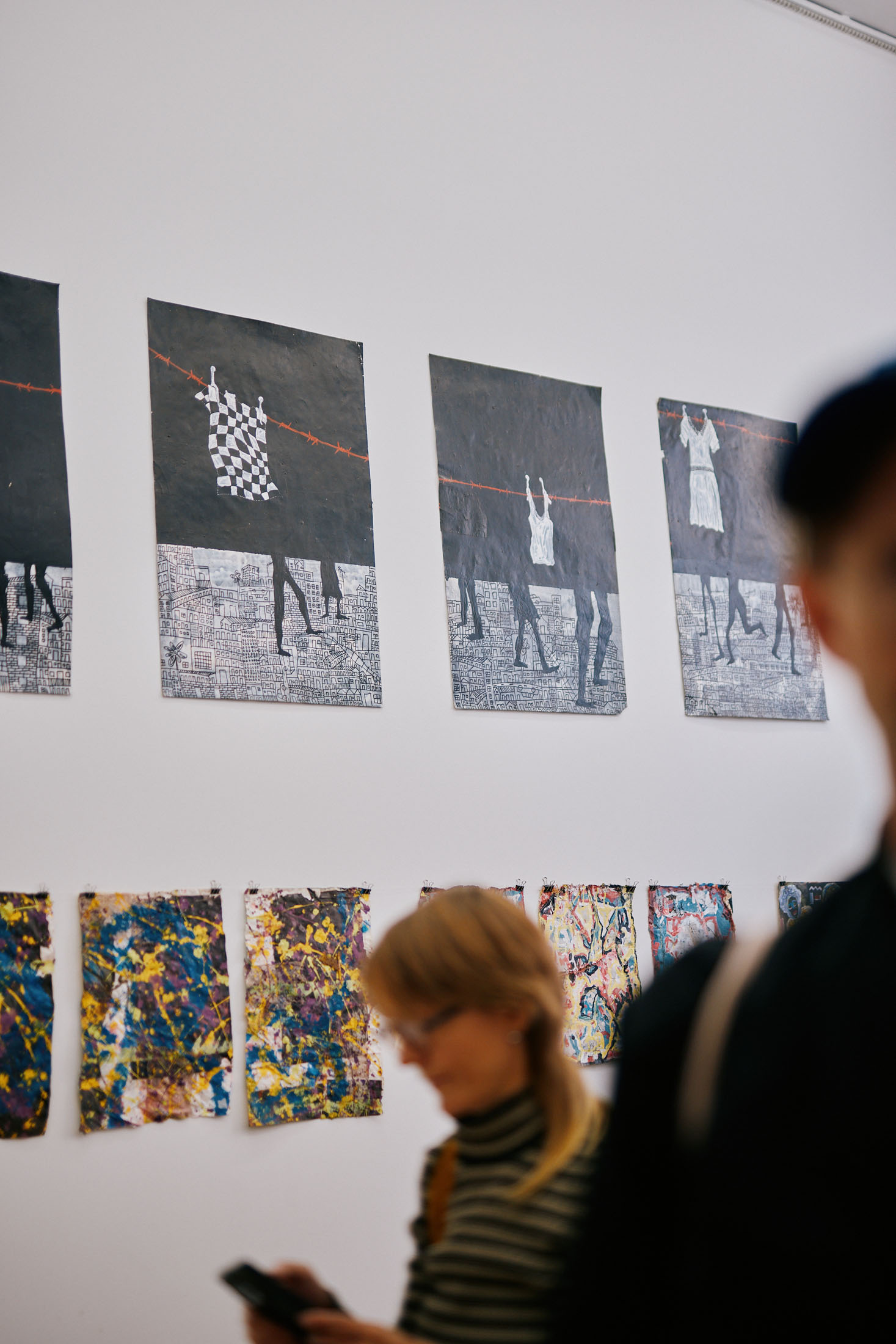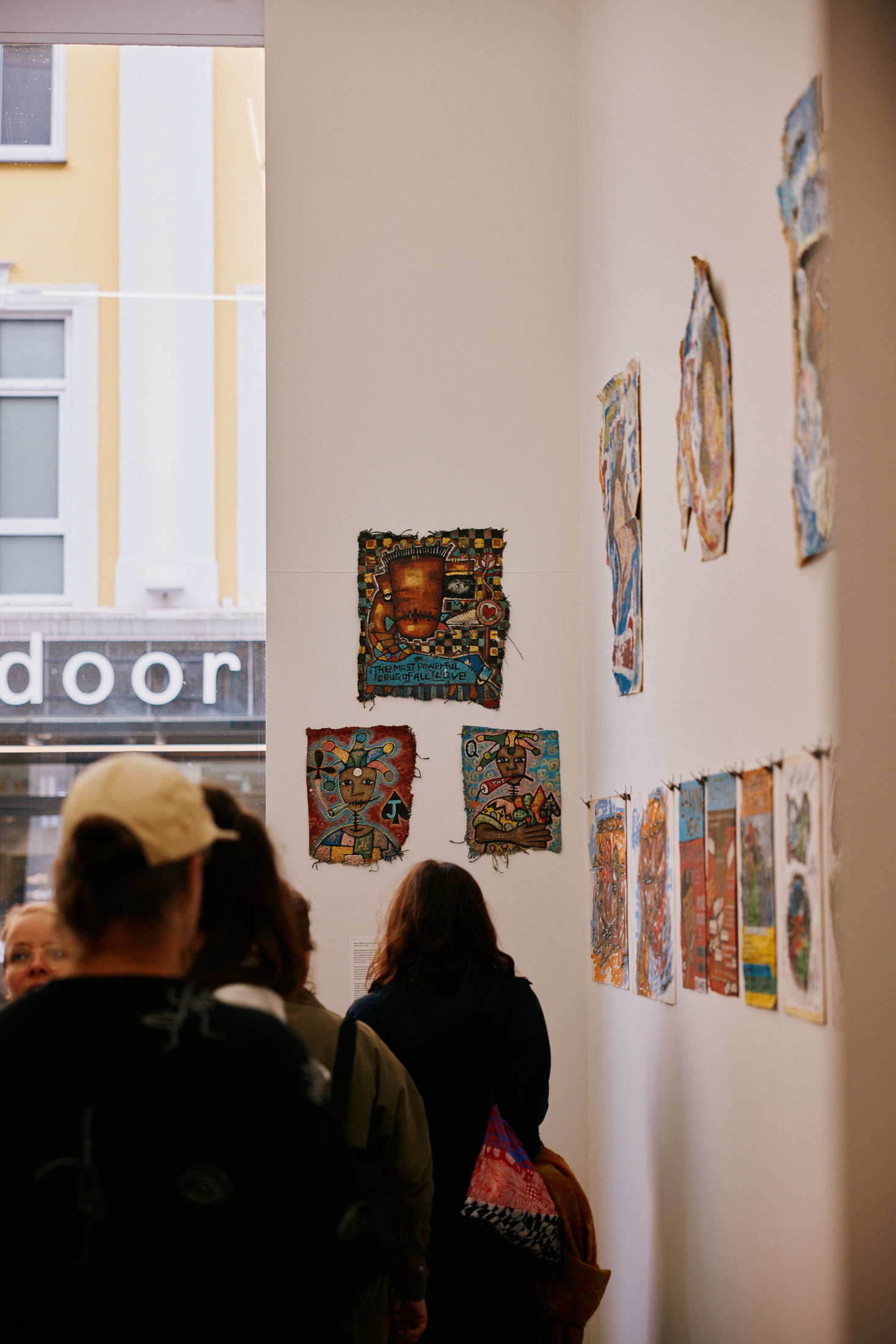
Mapping Bergen from Maasai Mbili’s perspective, this project engages with the city from the marginalised positions of a society. At Entrée, distinctions between the studio and gallery space are blurred to ask: is it possible to simultaneously exhibit and not exhibit; to show without showing?
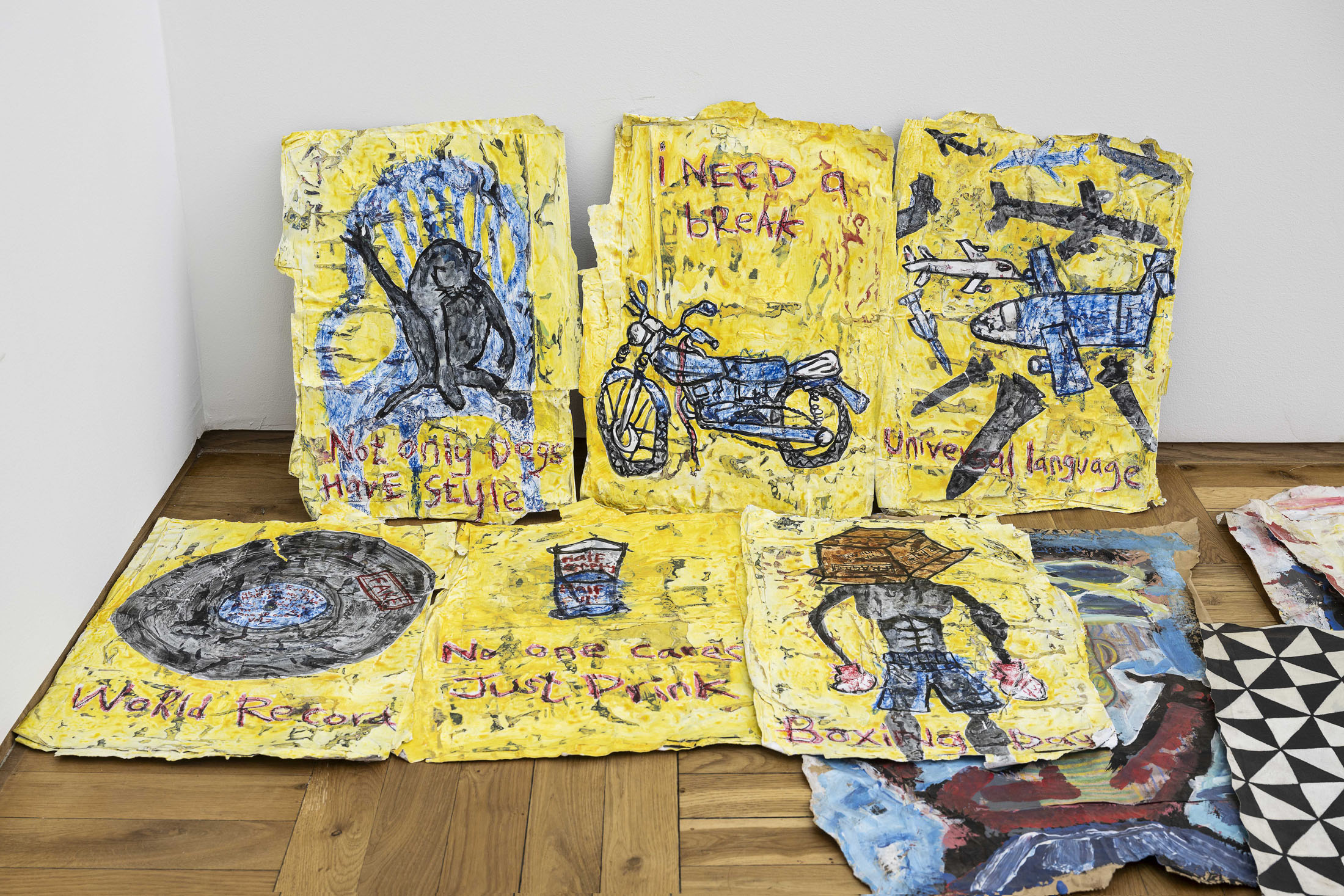
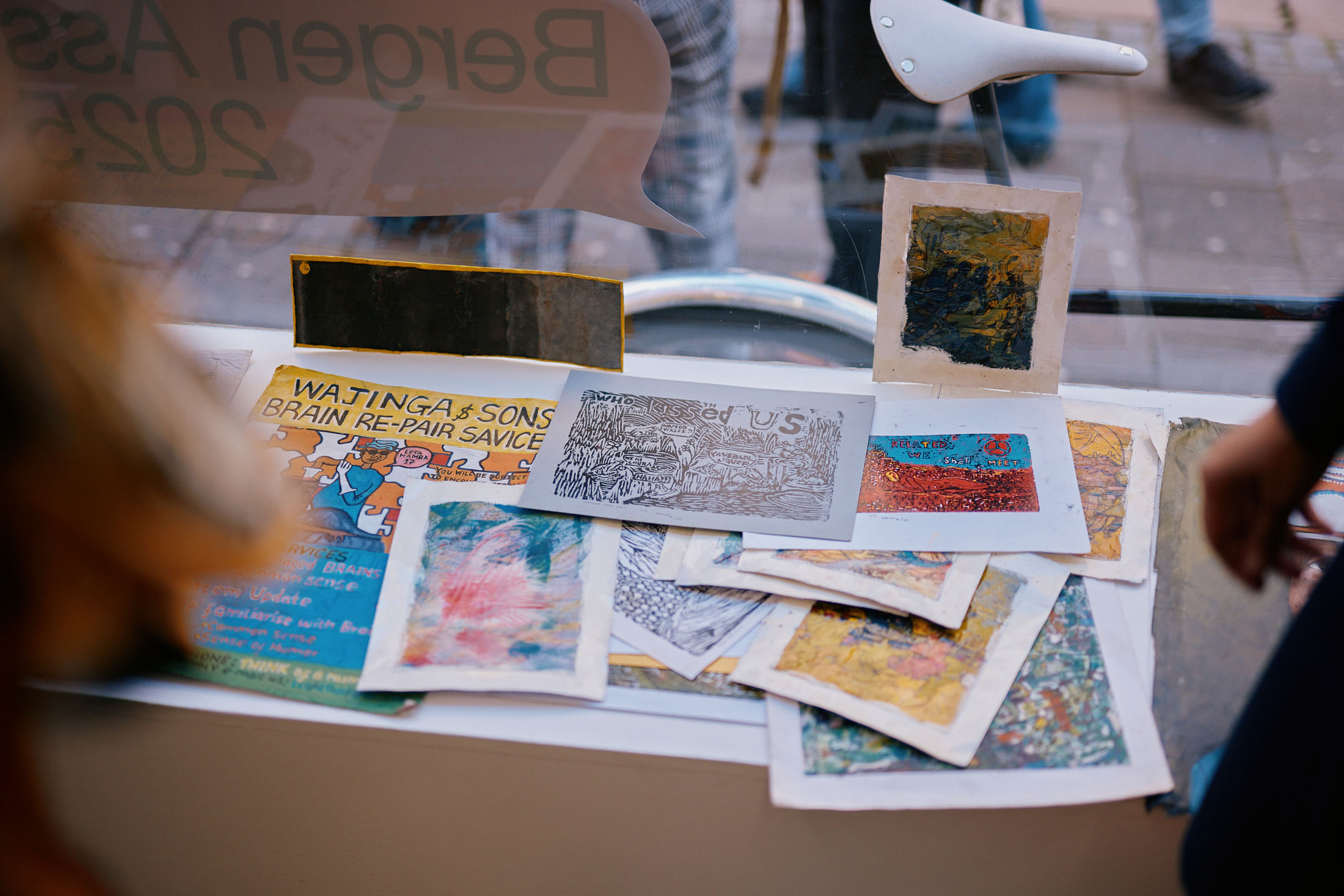
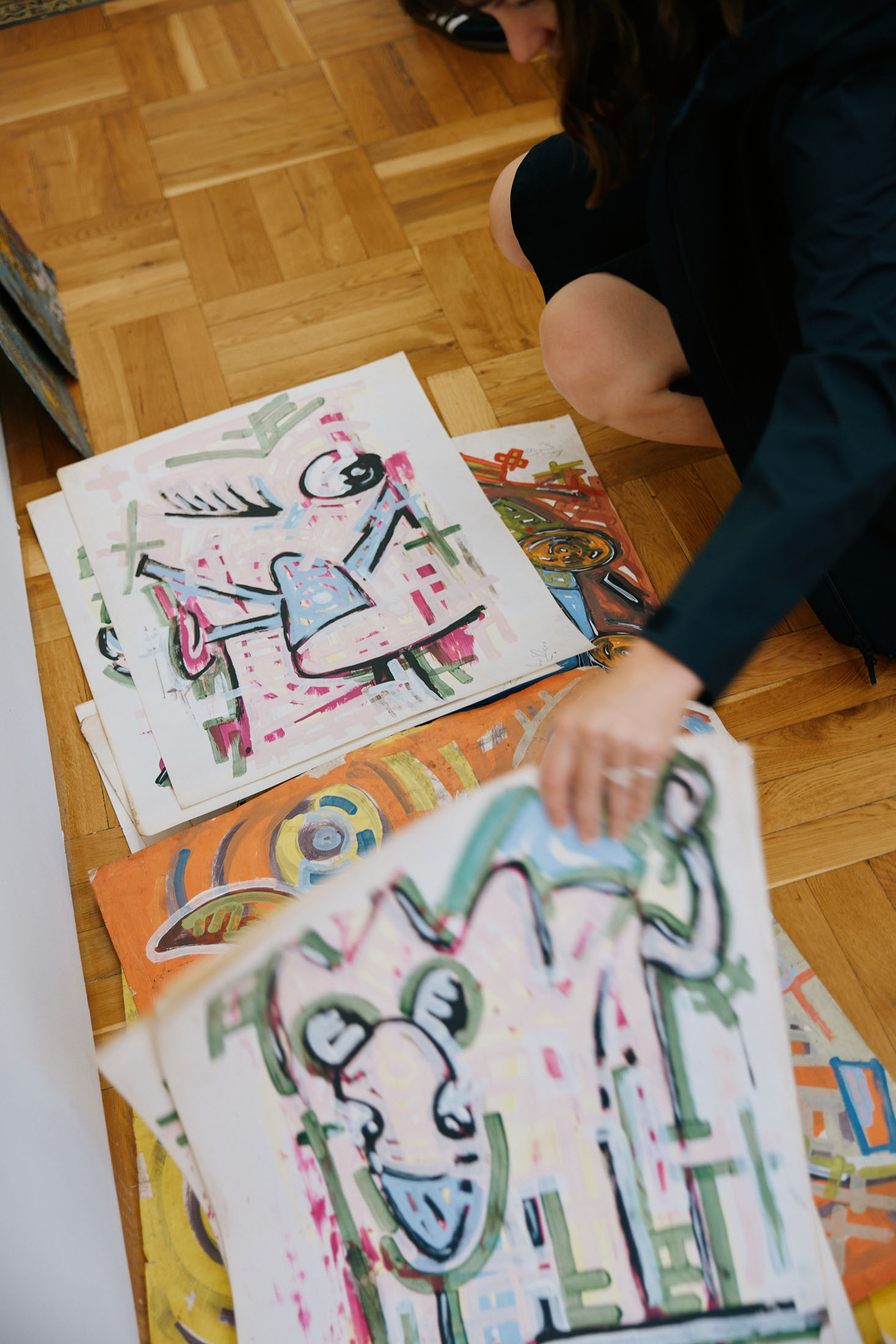
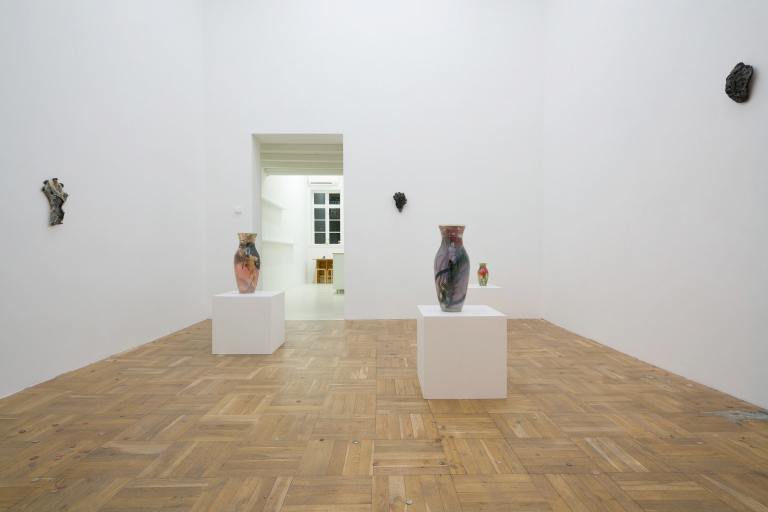
Artworks are placed everywhere: on the walls or leaning against them, and in piles upon the floor. The public is invited to touch and hold the artworks, and it is expected that they may even unintentionally change their position within the space, creating new formations and relations.
Alongside this, drawing upon two on-going projects, Obange: Games of the Map and Karibu Mtaa, Maasai Mbili members will engage with the community in Bergen. The former is a street radio station that asks: who gets to speak, and where?. ‘Obange’ is a figure who moves unpredictably through the city, observing, narrating, and avoiding categorisation. Meanwhile, Karibu Mtaa, which translates as ‘welcome to the neighbourhood’, is a mapping project shaped by everyday life in various districts and informal structures. Both projects engage with art as a way of moving through place, listening, learning, and knowing.
During their time in Bergen, Maasai Mbili Artist Collective will also present a co-ritus event at Bergen Kunsthall.
Maasai Mbili Artist Collective, also called M2, was founded in 2001 as a collective of Kenyan artists based in Kibera, Nairobi. In 2004, they moved from the streets of Kibera into their current studio. Their name means ‘Two Maasai’ in Kiswahili, which reflects their relation to Maasai culture and its values while linking it to the contemporary world. This reference mainly carries an ironic undertone, given that the Maasai are widely stereotyped in East Africa and also around the world. The collective’s practice, instead of tapping into such an idea of tradition, is deeply connected to its members’ experiences of life in the Kibera, the biggest urban slum on the African continent.
The artists work across the mediums of drawing, performance, fashion, sound, and installation, and their interactive multimedia projects function as both studio and public platform. Rooted in community, the collective is committed to staying with social struggles and enhancing education, particularly in relation to disadvantaged communities and youth in Kibera.
The current members of Maasai Mbili are Sharon Atieno, Otieno Gomba, Anita Kavochi, Otieno Kota, Joachim Kwaru, Xavier Makokha (Muliro), Vincent Masinde, Shivan Nafula, Fabian Sakwa, Kevo Stero, and Obi Vincent.
Kevo Stero has been working in Bergen for this edition. Stero’s work draws on informal architecture, urban movement, and social ritual, with projects that travel between gallery and street to challenge the boundaries of ownership, authorship, and display. Masinde’s paintings consider the relationships between time, space, intimacy, and being away from the public eye.
About Bergen Assembly: across, with, nearby
What does it mean to nurture gestures of neighbourliness, nearby and from afar? How might love shape the very act of assembly, capable of countering social, ecological, economic, and political injustices? How can we challenge pedagogy that flattens diverse worlds, cultural differences, forms of knowledge, engagement, and ways of being?
This edition of the Bergen Assembly is an invitation to participate alongside others in approaching these questions and to share in processes of learning across, with, and nearby. It is experiential: a communal, living, and evolving process. It weaves together artistic formations and knowledge creations through practices of sharing rather than showing. This assembly is led by the intention to foster collective encounters and responses to the paralysing cruelties and ensuing insecurities of our time. By embracing uncertainty, fragility, and intimacy we seek to forge paths through the abyss into reflective and creative kinds of engagements. Guided by curiosity and a spirit of collaboration, new and abandoned insights alike shape this edition’s experiences.
Carried in such questions and pursuits is the diversity of practices that interlace in this edition of the Bergen Assembly, convened by Ravi Agarwal, Adania Shibli, and the Bergen School of Architecture (BAS). As the assembly’s programme unfolds over and beyond a period of three months, these inquiries bring together artists and practitioners from other disciplines, while also inviting you to join, expand upon, and carry them forward.
Throughout, the convenors have sought forms of continuously ignored knowledge that are in motion and in relation to one another. In their complexity, these forms might recall poetic knowledge that precedes Modern scientific knowledge and ideas that embody knowing by letting ourselves be known. This approach foregrounds a kind of learning that resists categorisation or exclusion, and which is cultivated over time across places, humans, and more-than-humans. It invites each one of us to allow a space for what is there, though unacknowledged, as well as new modes of understanding and ways of being, both in Bergen and beyond.