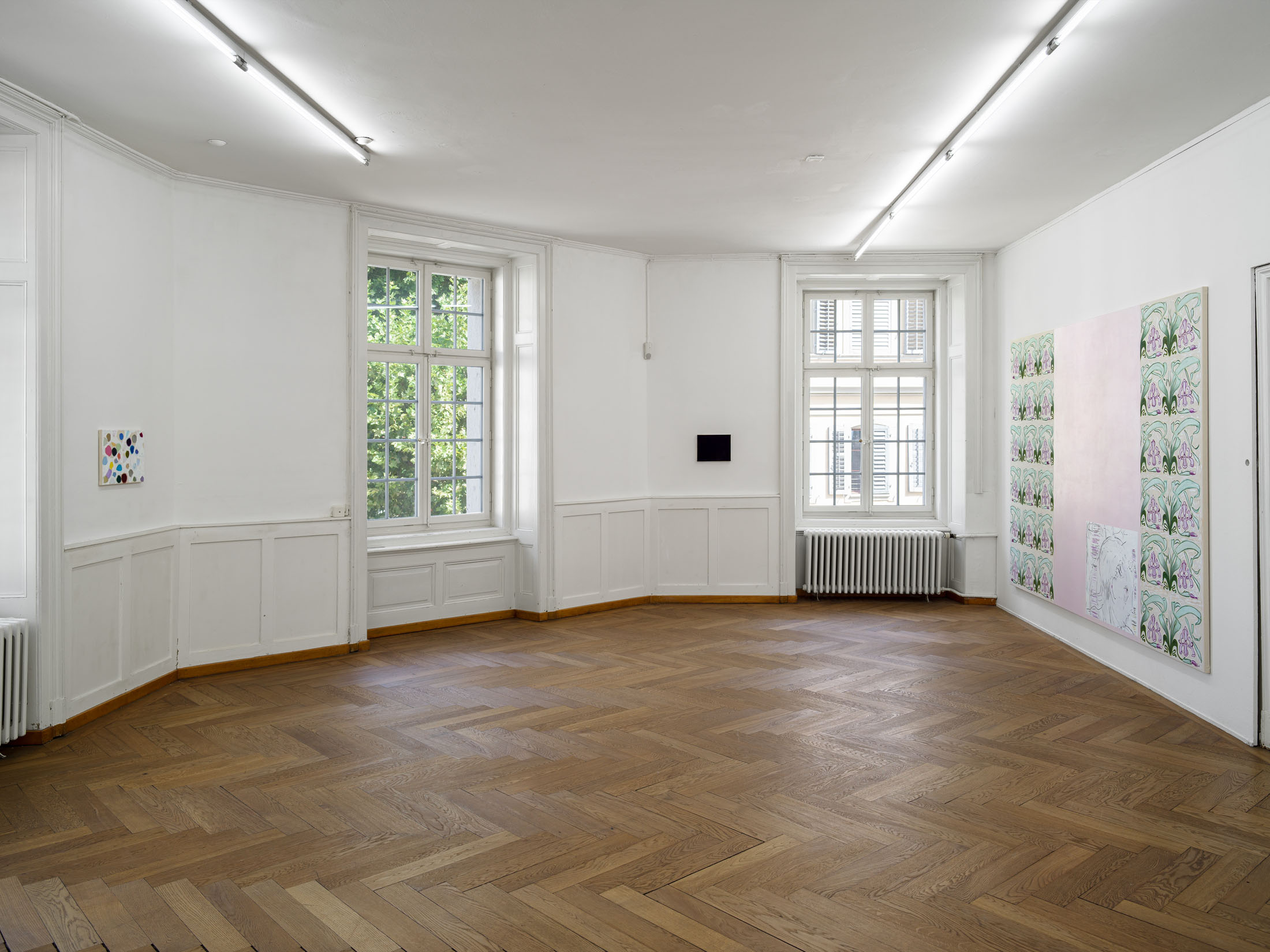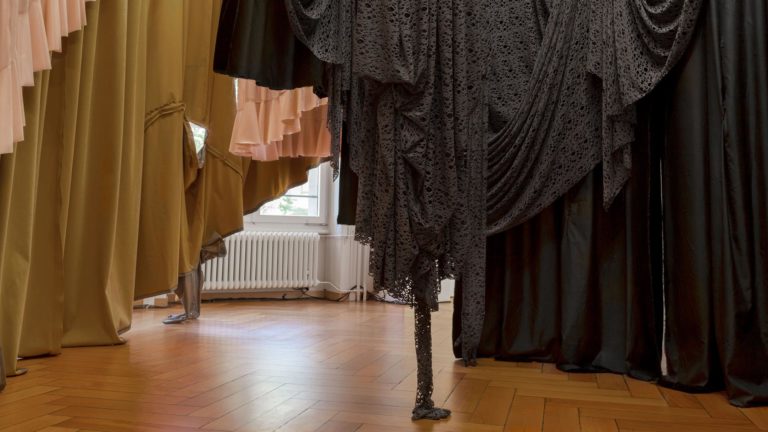
Kunsthaus Langenthal presents the first institutional solo exhibition in Switzerland by the painter Gritli Faulhaber (b. 1990 in Freiburg im Breisgau, lives in Zurich). The largest showing of her work to date, it brings together paintings from recent years and numerous new works. For the first time, her major ongoing groups of works are on view together.
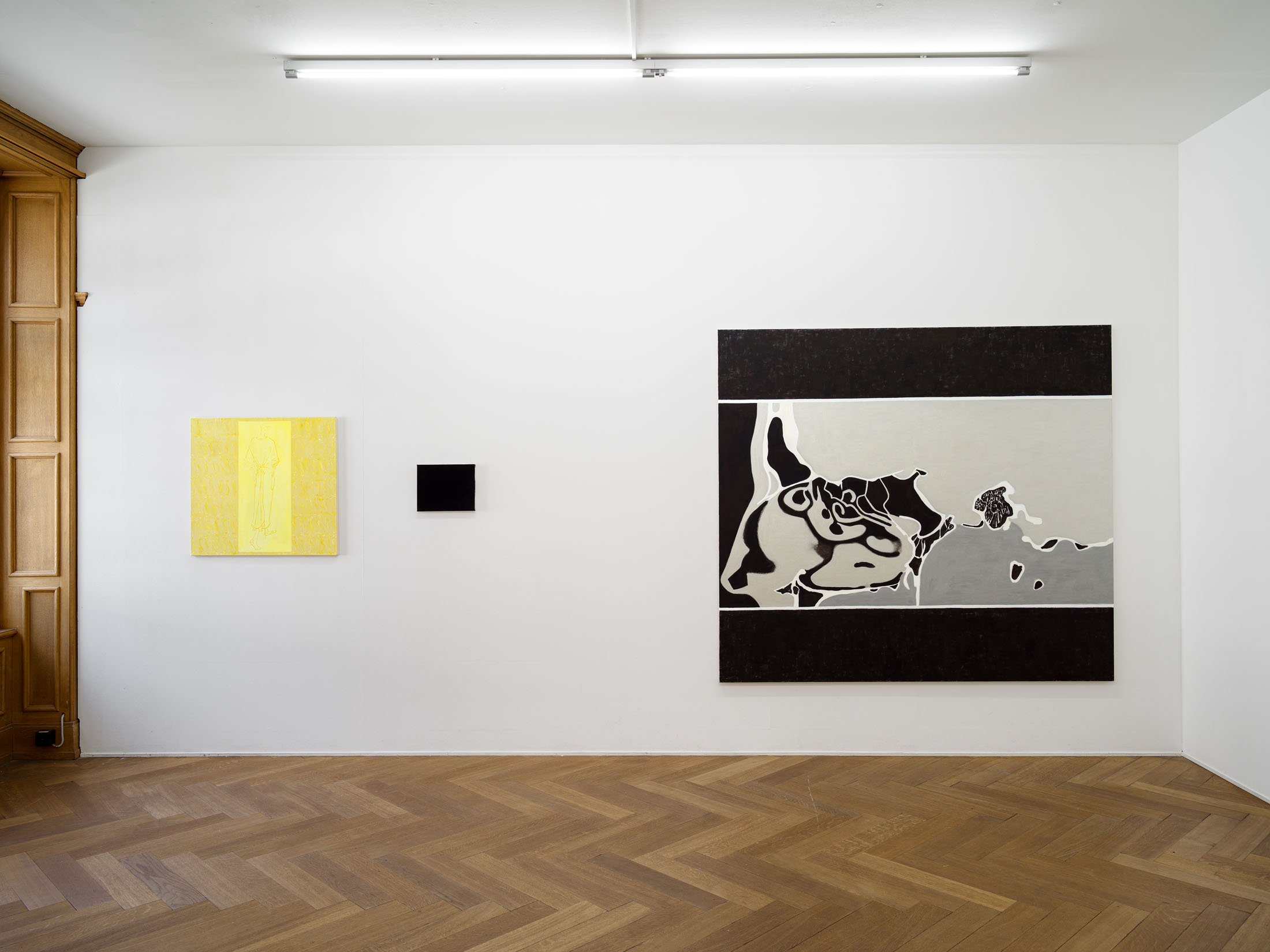
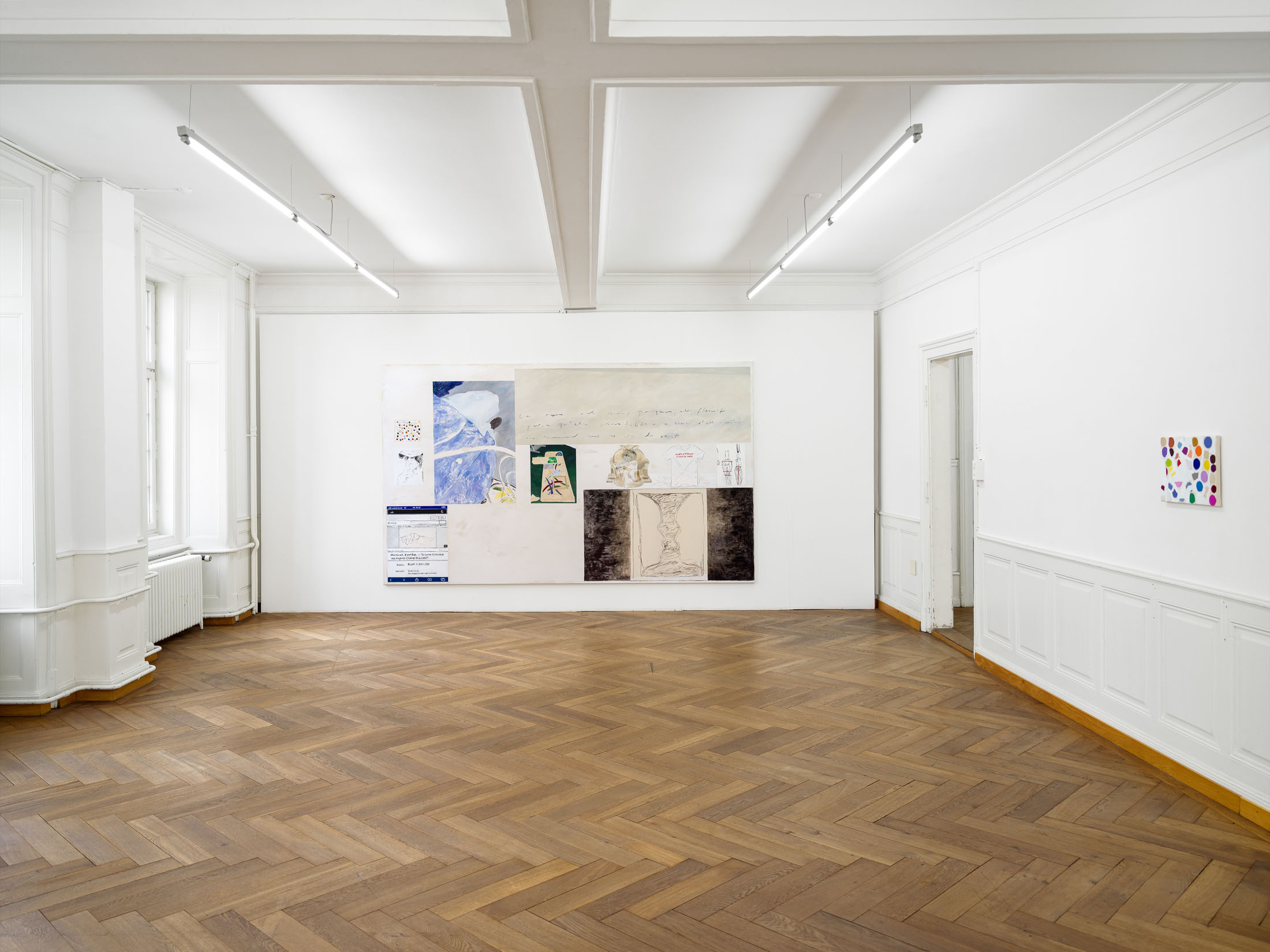
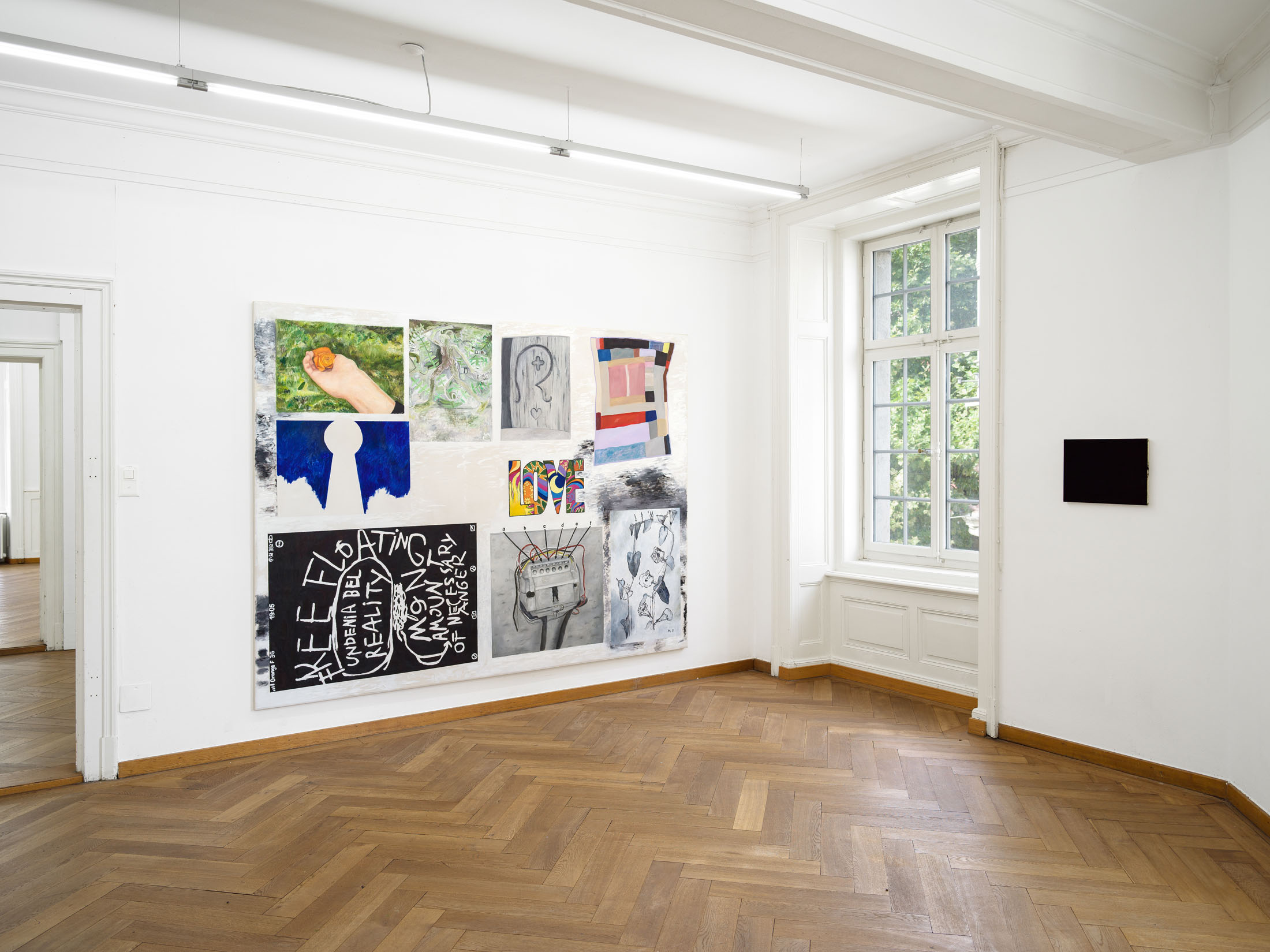
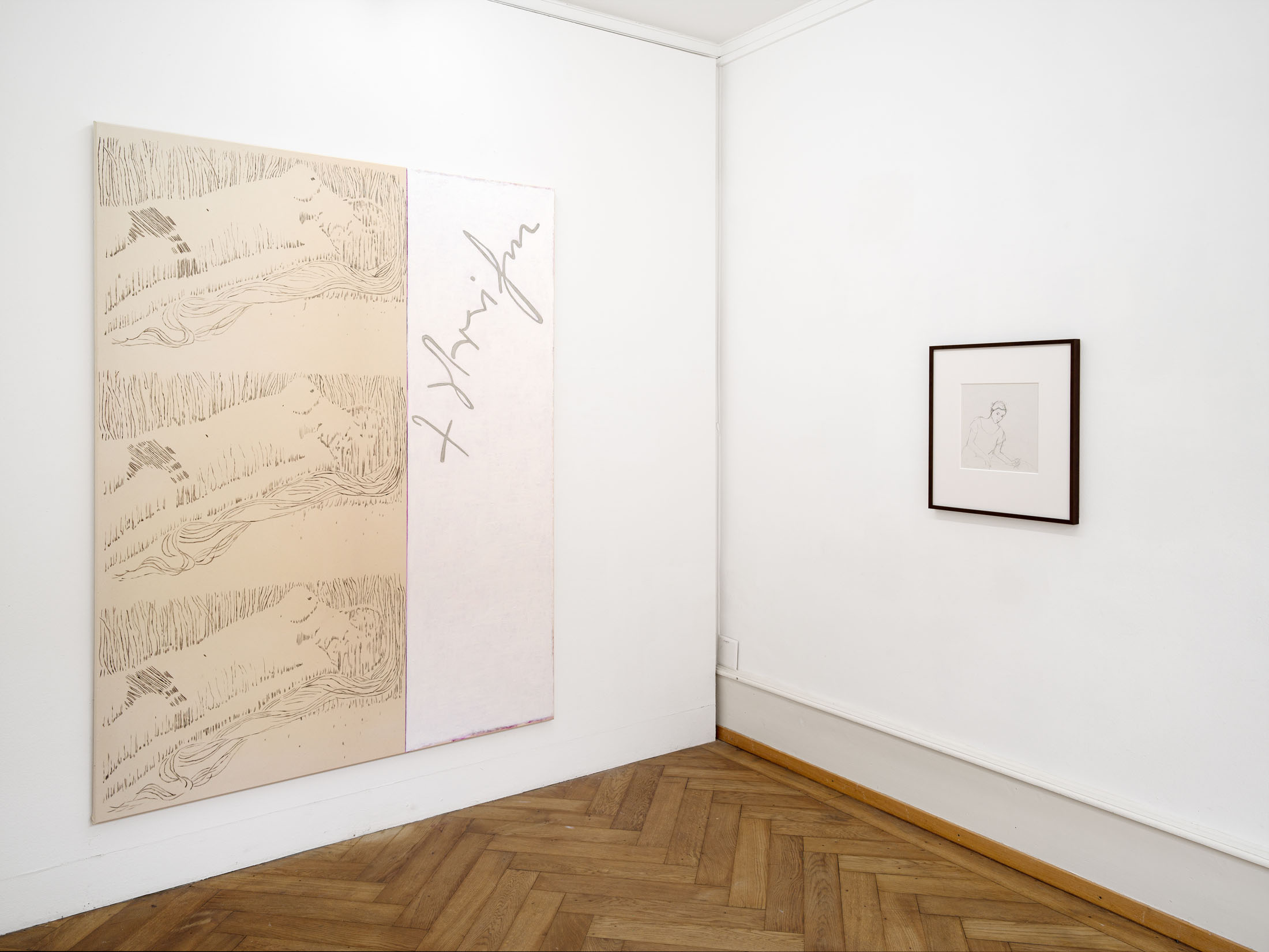
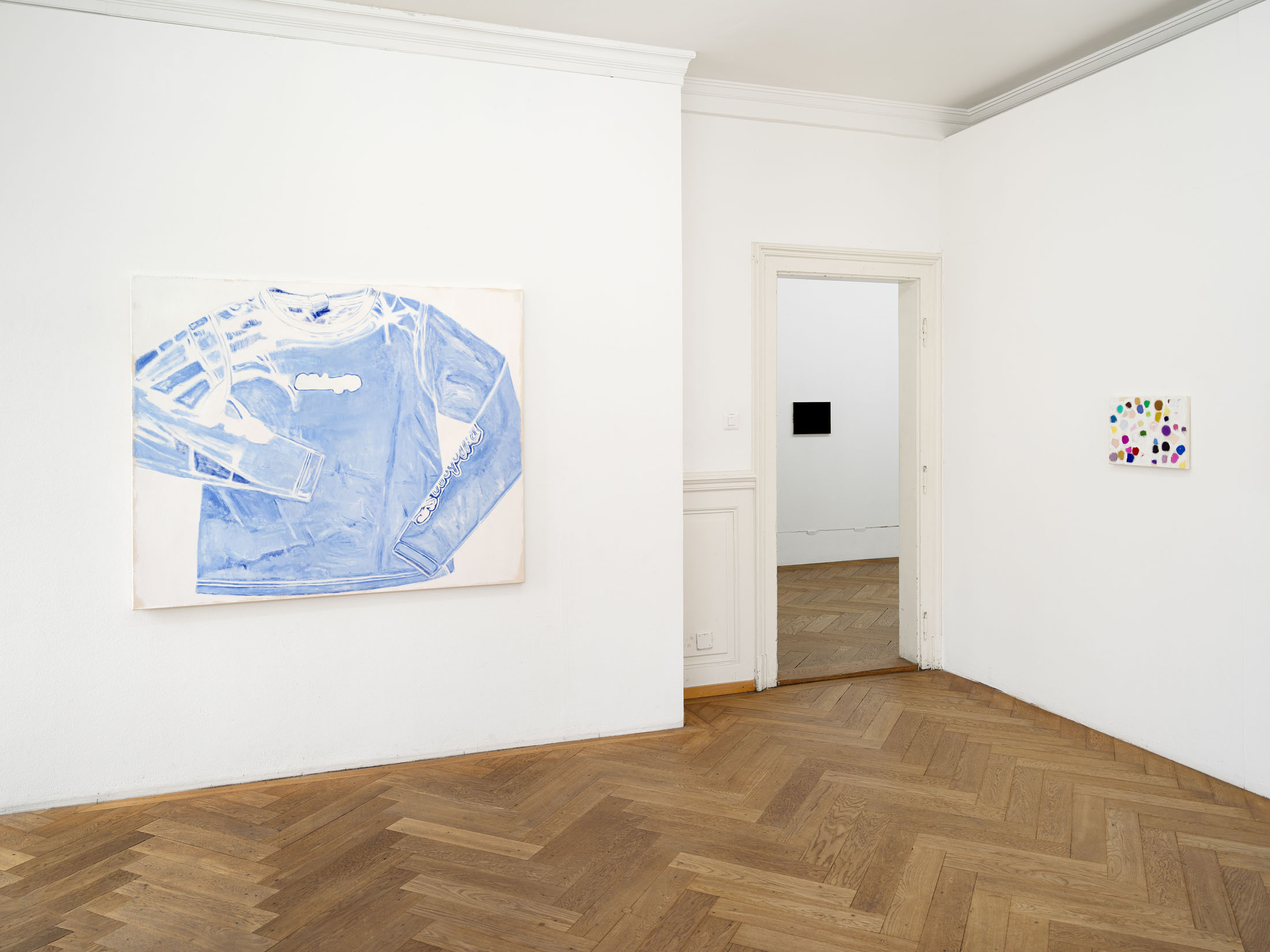
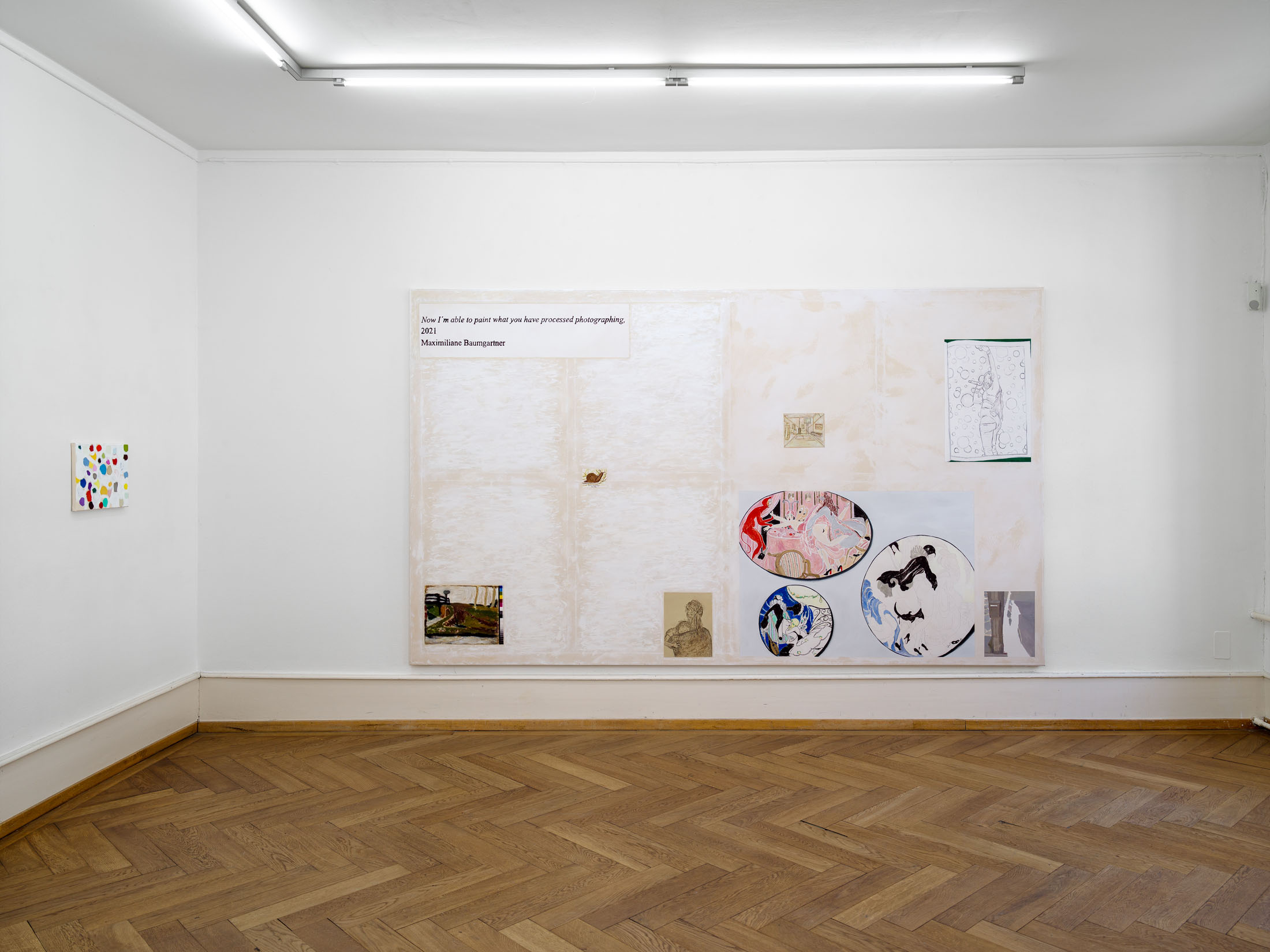
Faulhaber‘s large-format collage paintings are several paintings in one: arrangements of source images that she appropriates in paint. The sources come from art history, but also from fashion and internet pop cultures. The paintings emerge from her ongoing collecting of images, digital and ana-logue alike, out of which she forms compositions and translates them into painting. The constellation recalls the contemporary idiom of a pinboard, a mood board or the open windows of a browser after hours of surfing. It binds these very different sources together, pulls them into the present, draws connections to the life of the artist and to those of her viewers. In Ohne Titel (1) (Room 8), for example, found images from the internet meet a quotation from the Baroque poet Angelus Silesius, handwritten by the artist, and an etching by the Impressionist Berthe Morisot, shown as a screenshot from an auction website. Faulhaber also quotes a dot painting from her own group of works Militant Joy.
Faulhaber‘s method is one of research through painting and painting as research, a seeking out and appropriating of different motifs. Characteristically, gaps are left on the canvas where the ground shows through, and the painting processes break off at different stages. The fact of the painting‘s making, its materiality and the theme of deliberate openness and incompletion remain present throug-hout. The collage-like principle of the large formats recurs in the way the artist has hung the exhibi-tion, setting the varied images from her different groups of works in relation to one another.
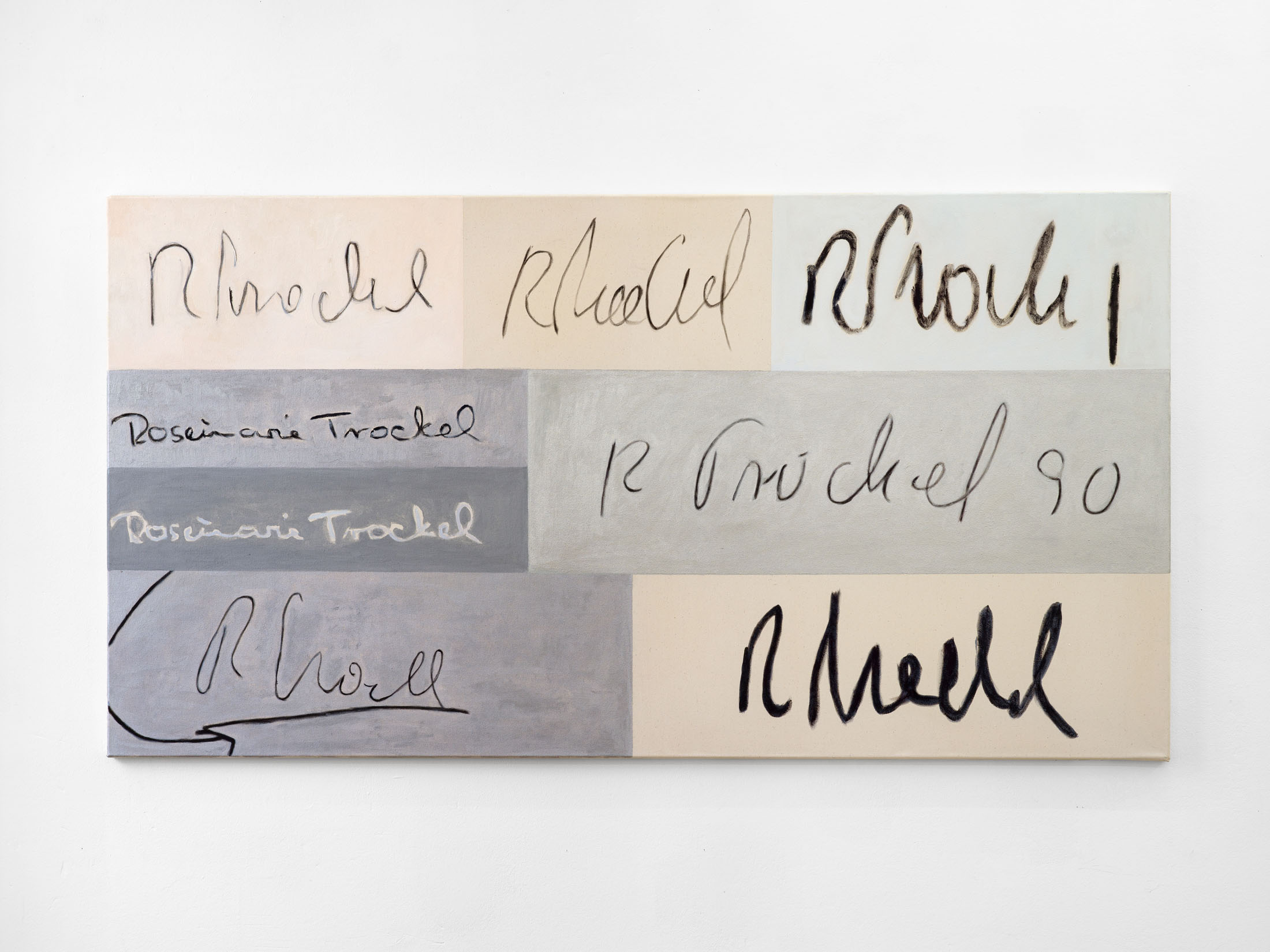
In turning to art history, Faulhaber focuses primarily on women painters and situates herself within the history of painting by drawing affinities with positions from different periods. She repeatedly quotes paintings by the Impressionist Berthe Morisot (1841–95), who experimented with the unfinished; the Expressionist Paula Modersohn-Becker (1876–1907); Gerda Wegener (1886–1940), in whose erotic scenes (and life) gender is fluid; and Rosemarie Trockel (b. 1952), whose formally varied work consistently resisted being pinned down. Faulhaber transposes a drawn female nude by Trockel into paint several times over. In another painting she enlarges Trockel‘s signature from different phases of her work, as if slipping into the various identities of the elusive Trockel. She also takes up the econo-mics of art, where a signature vouches for authenticity.
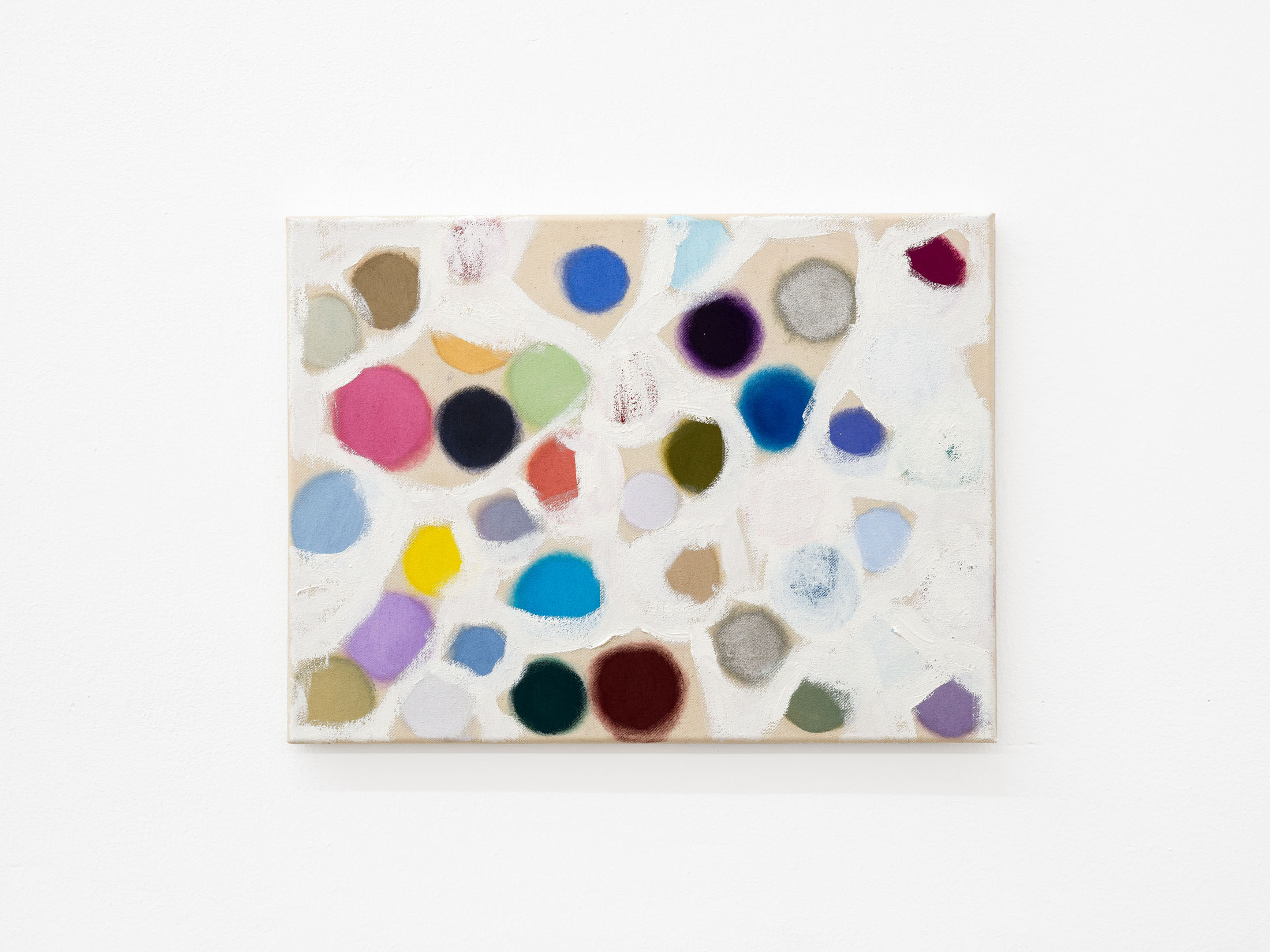
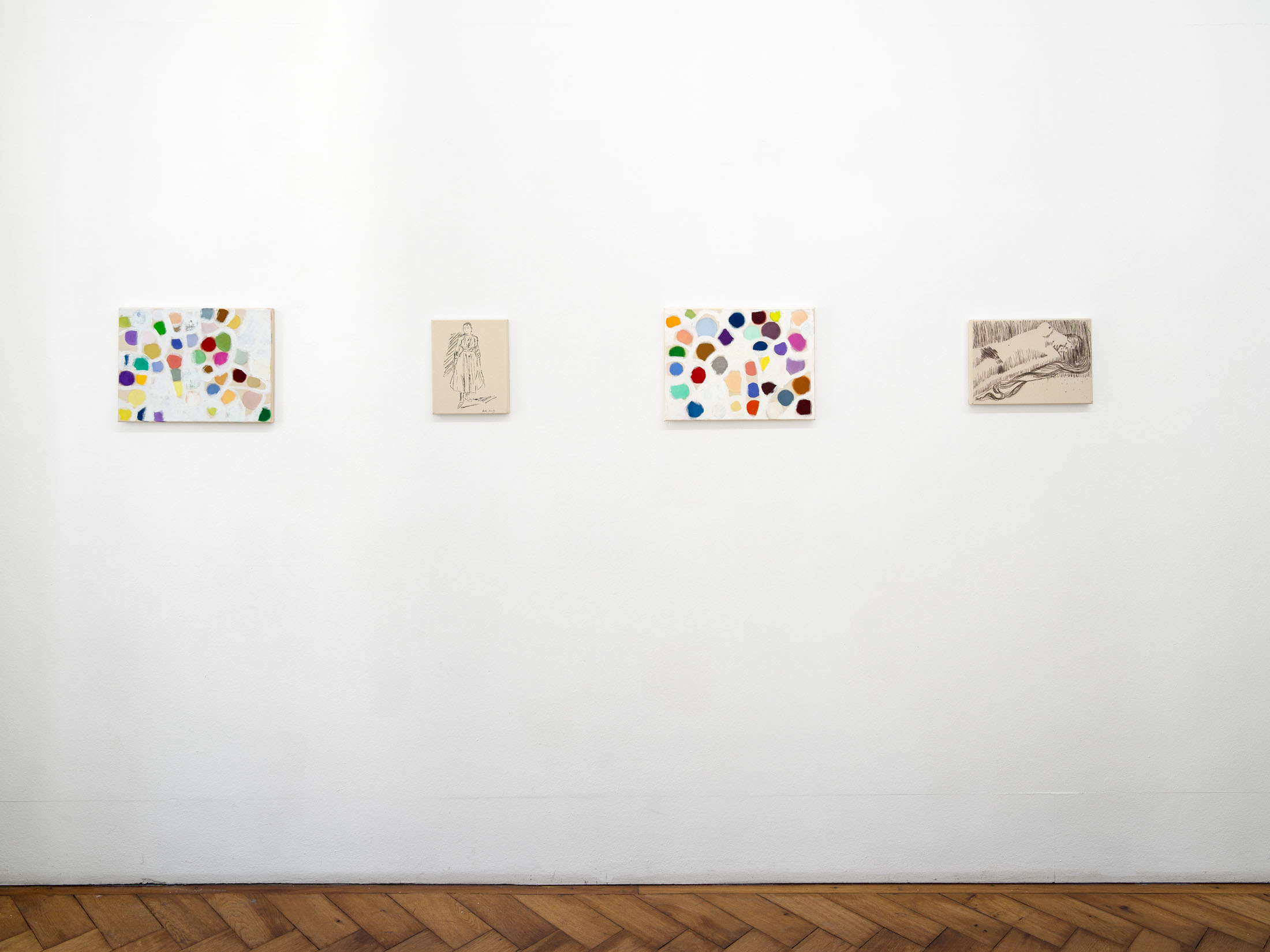
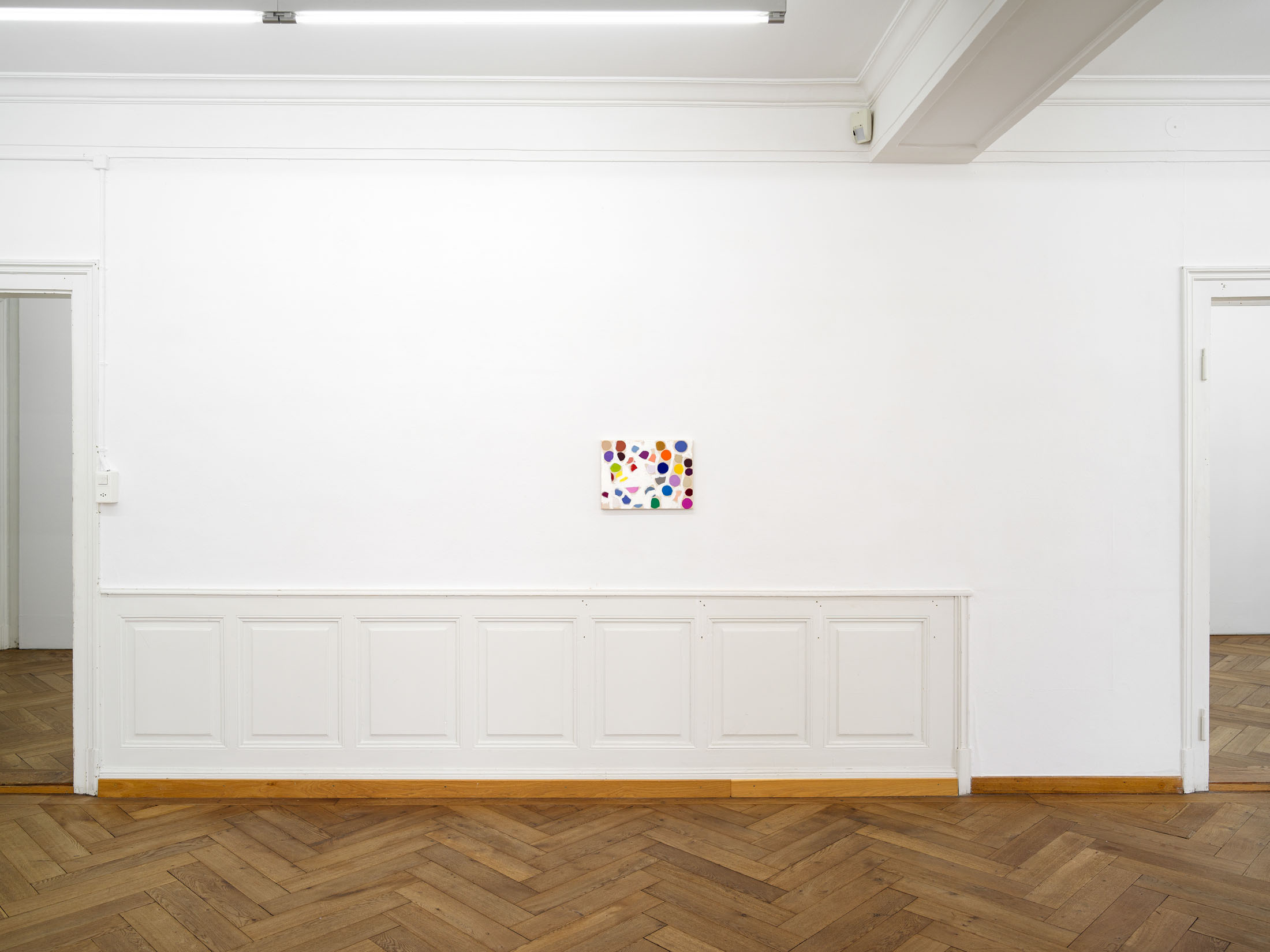
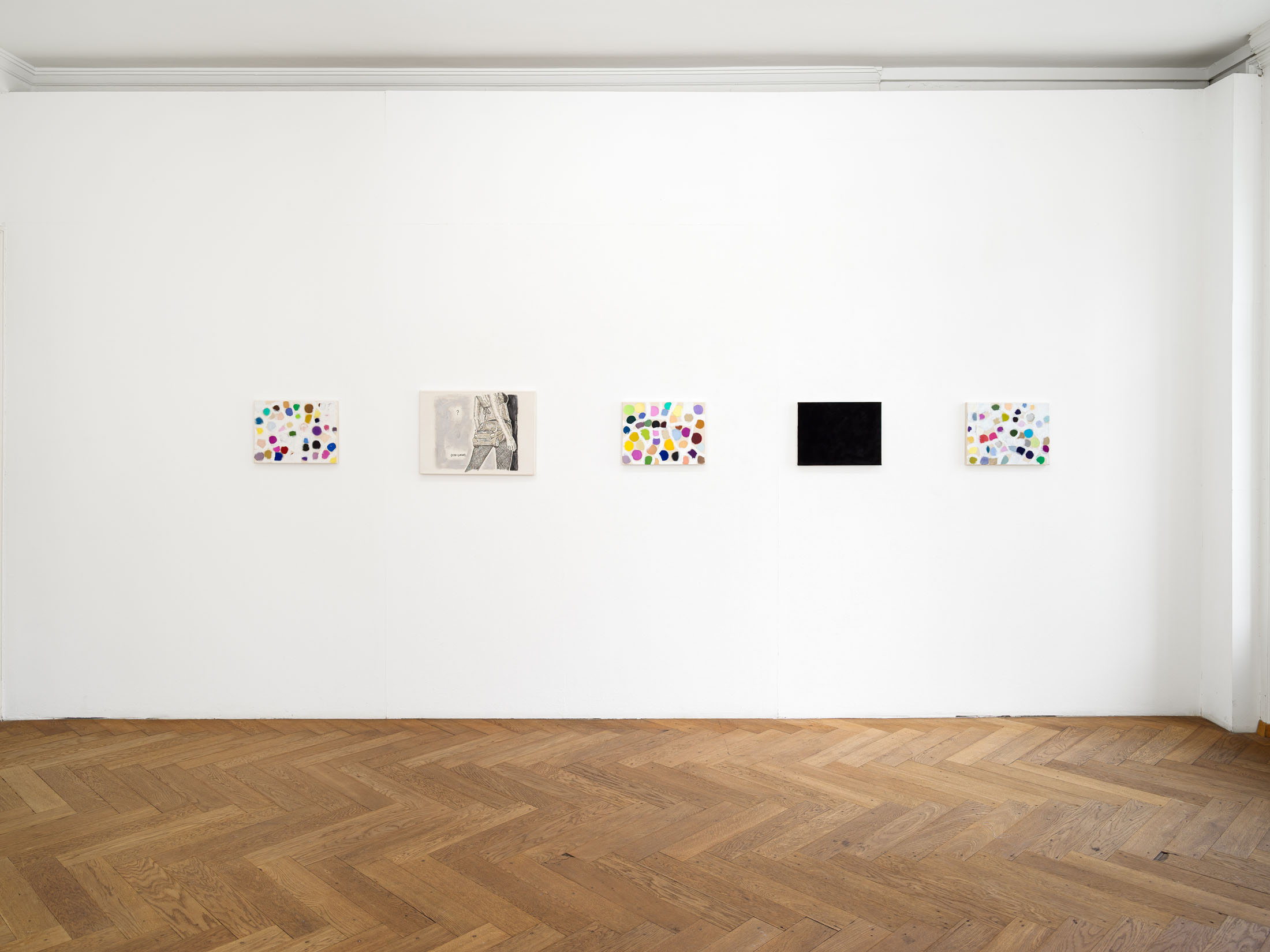
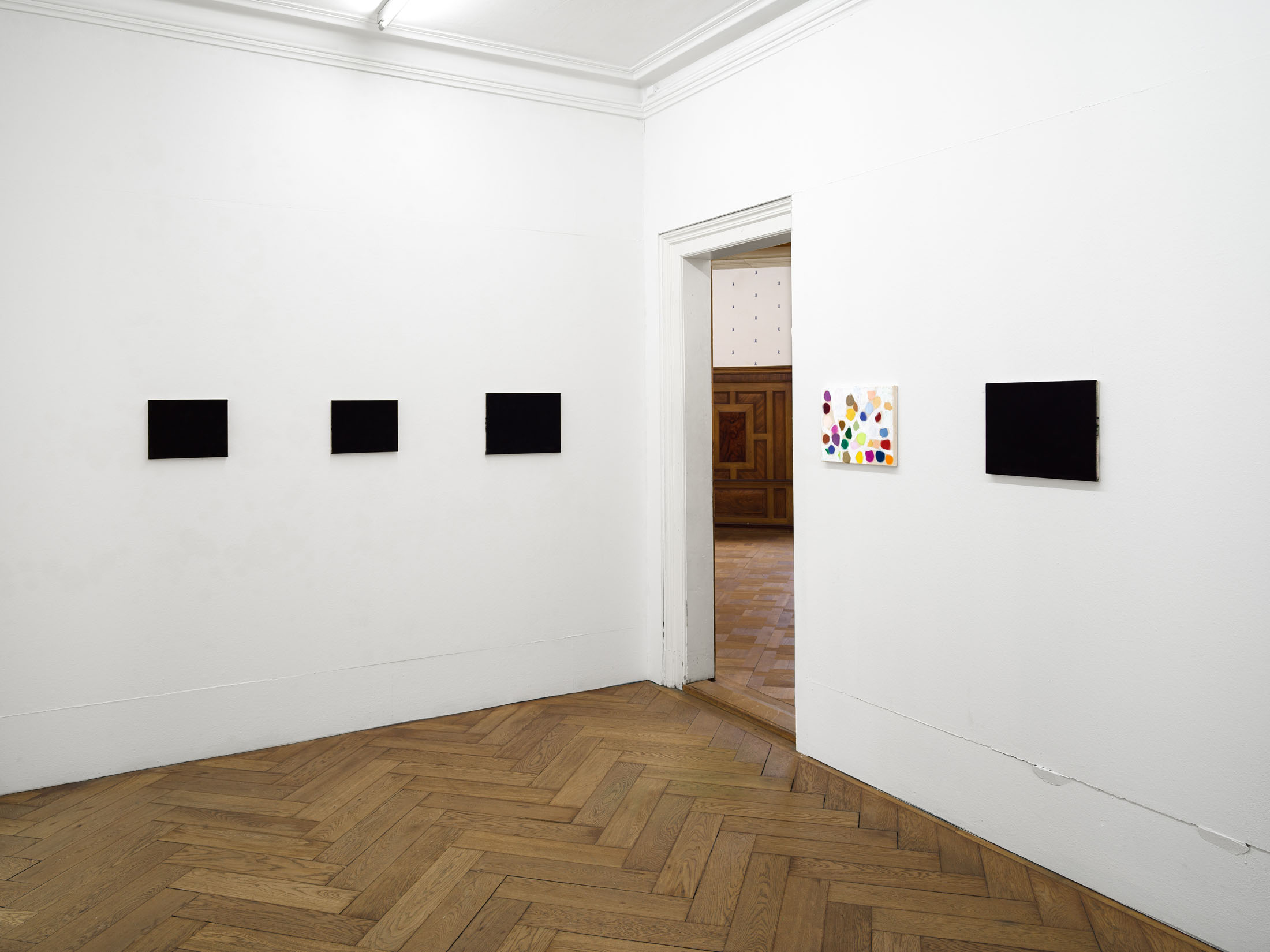
By quoting images and referring to women artists of the past, Faulhaber is always also negotiating questions about the conditions of her own life and artistic practice: being a woman, being an artist, being a painter, making images in an age of the ubiquitous digital image. A further condition is that of living and painting in impaired health. The small-format dot paintings in the Militant Joy series emerge exclusively in phases when, because of her chronic illness ME (myalgic encephalomyelitis), the artist can only work to a limited extent. She checks the state of her body as a painting body. ‚They are like a brief checking of the senses, that my body is still able to leave an image behind through the movement of my hand – and does not disappear entirely.‘ That is how she put it in a 2025 interview with the magazine Monopol, on the occasion of her exhibition at the Neuer Essener Kunstverein, where she showed works from this series exclusively.
It was then that she first spoke publicly about the illness, though she had had it for years, well before the Covid pandemic, which brought ME to wider attention as the ‚most severe form of Long Covid‘. Militant Joy is an assertion of agency within her own painting, under conditions constrained by the illness. In the title as on the paintings, fighting spirit and joy meet. It is also about a making visible, again with reference to women‘s art history. She draws affinities with chronically ill and disabled artists who often disappeared into the invisibility of the sickbed, because they did not meet the con-ditions of the art world: to be permanently present, and to deliver.
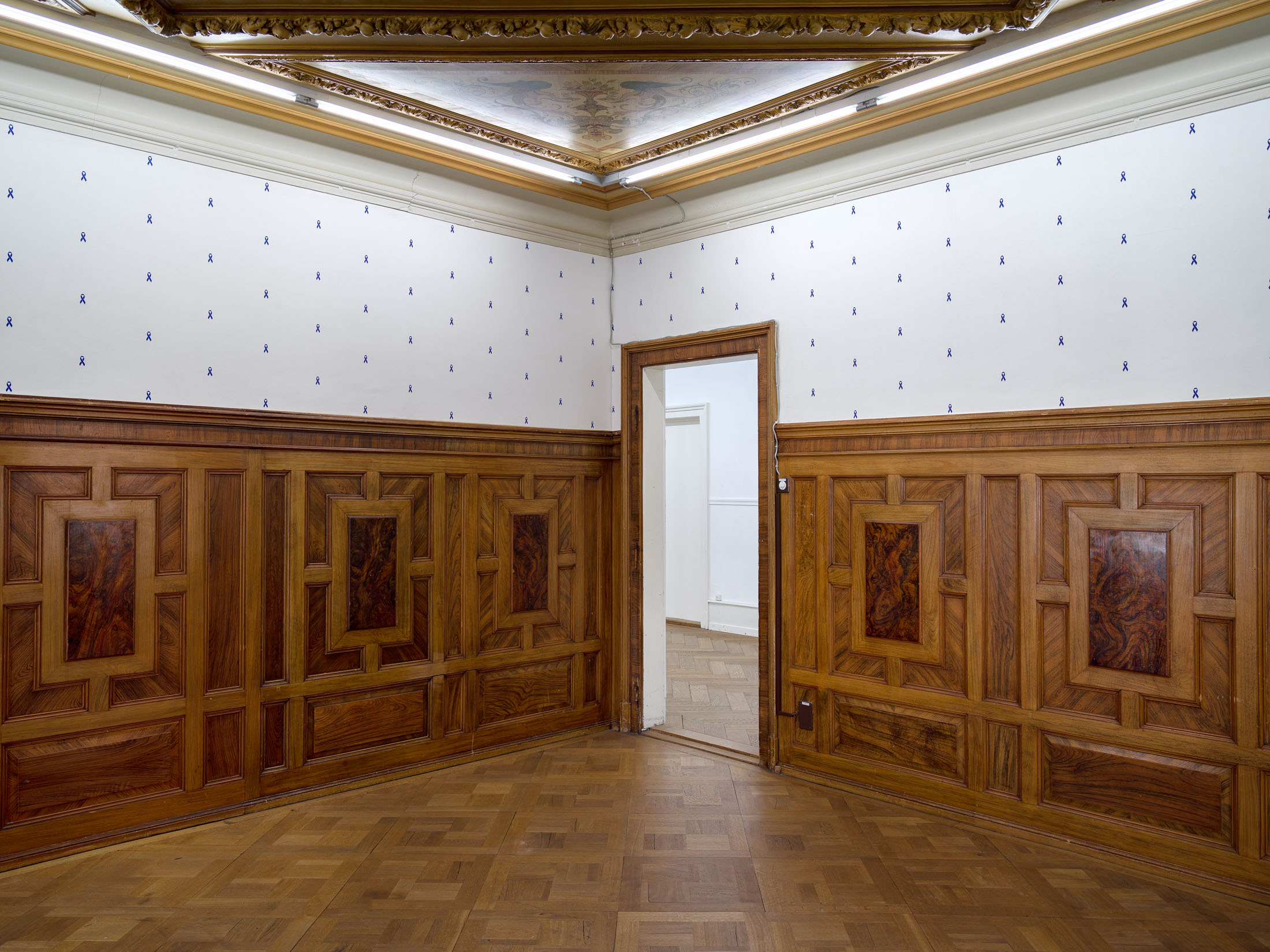
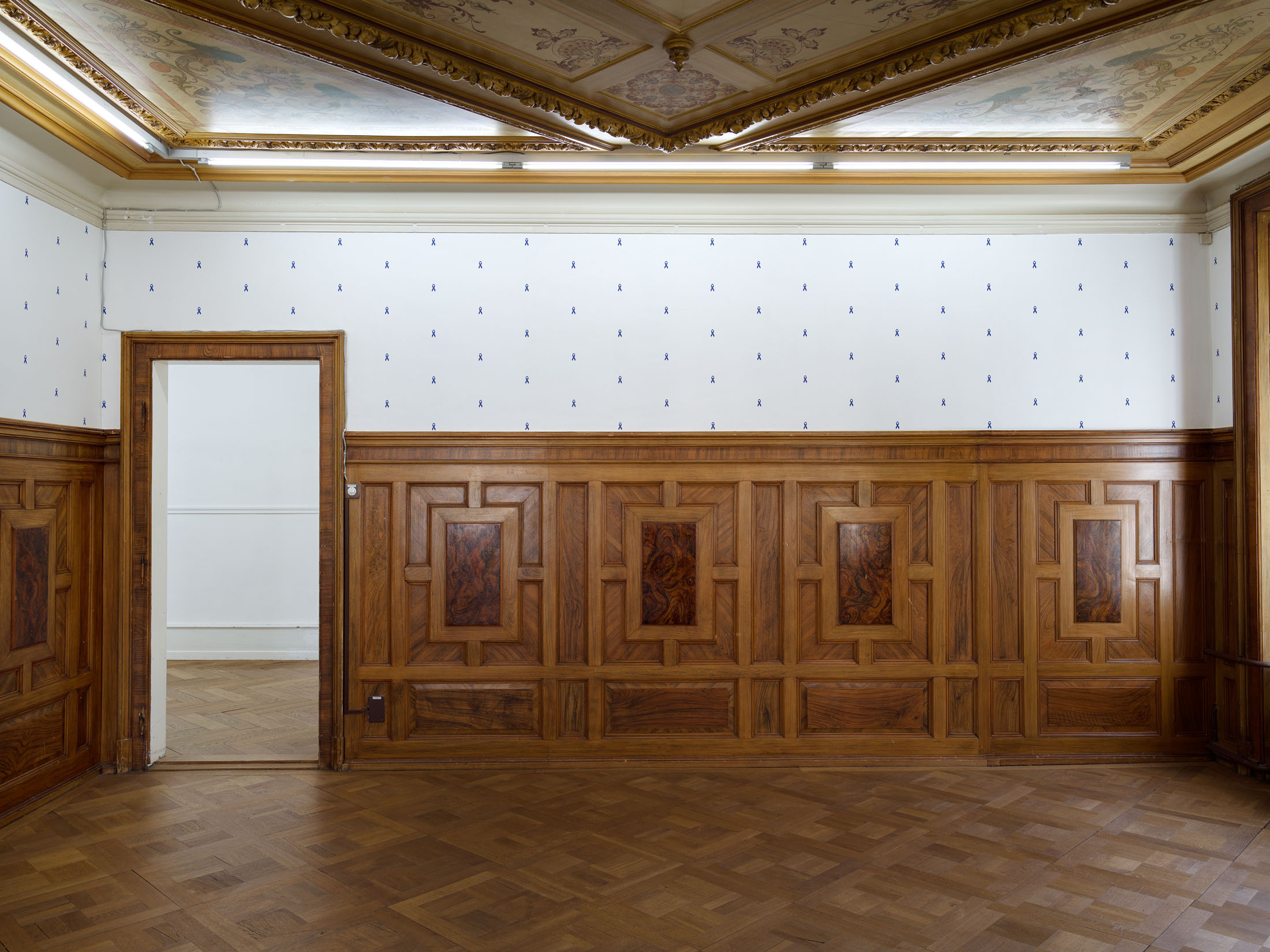
In the site-specific work The Blue Ribbon Wallpaper (Room 3), Gritli Faulhaber has covered the former office of the Stadtschreiber (Langenthal‘s most senior civil servant) with a wallpaper whose pattern is made up of the blue ribbon. The ribbon stands for solidarity with people with ME and is used in the activist context of the illness, for instance at the ‚lying-down protests‘ for recognition, research and care, much as the red ribbon was during the Aids crisis. In doing so she makes the‚invisible‘ illness visible in a place that once stood at the centre of political and administrative work. The activist symbol is integrated as a repeating pattern, as decoration. ‚As if the wallpaper had always been there‘, says the artist.
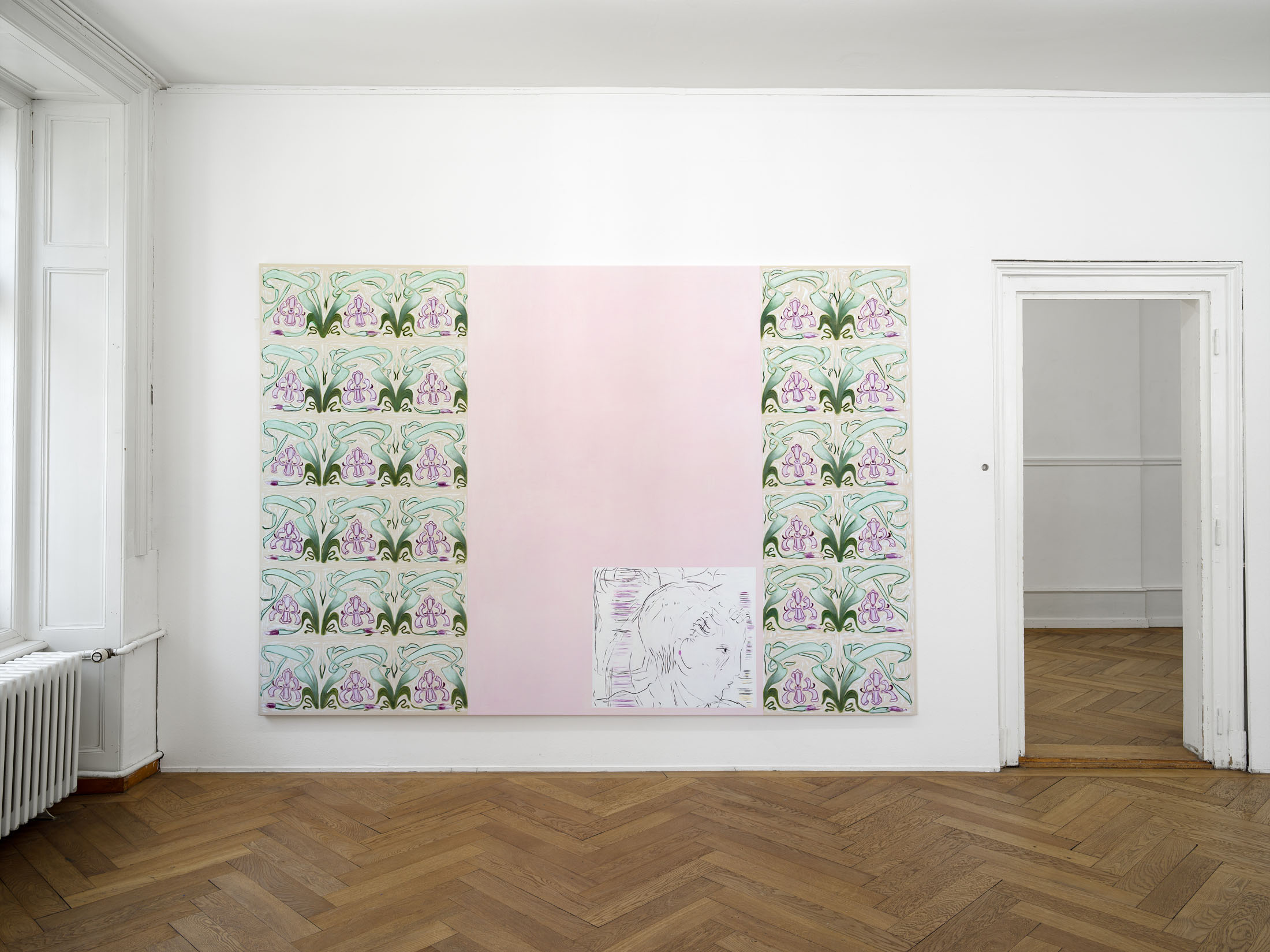
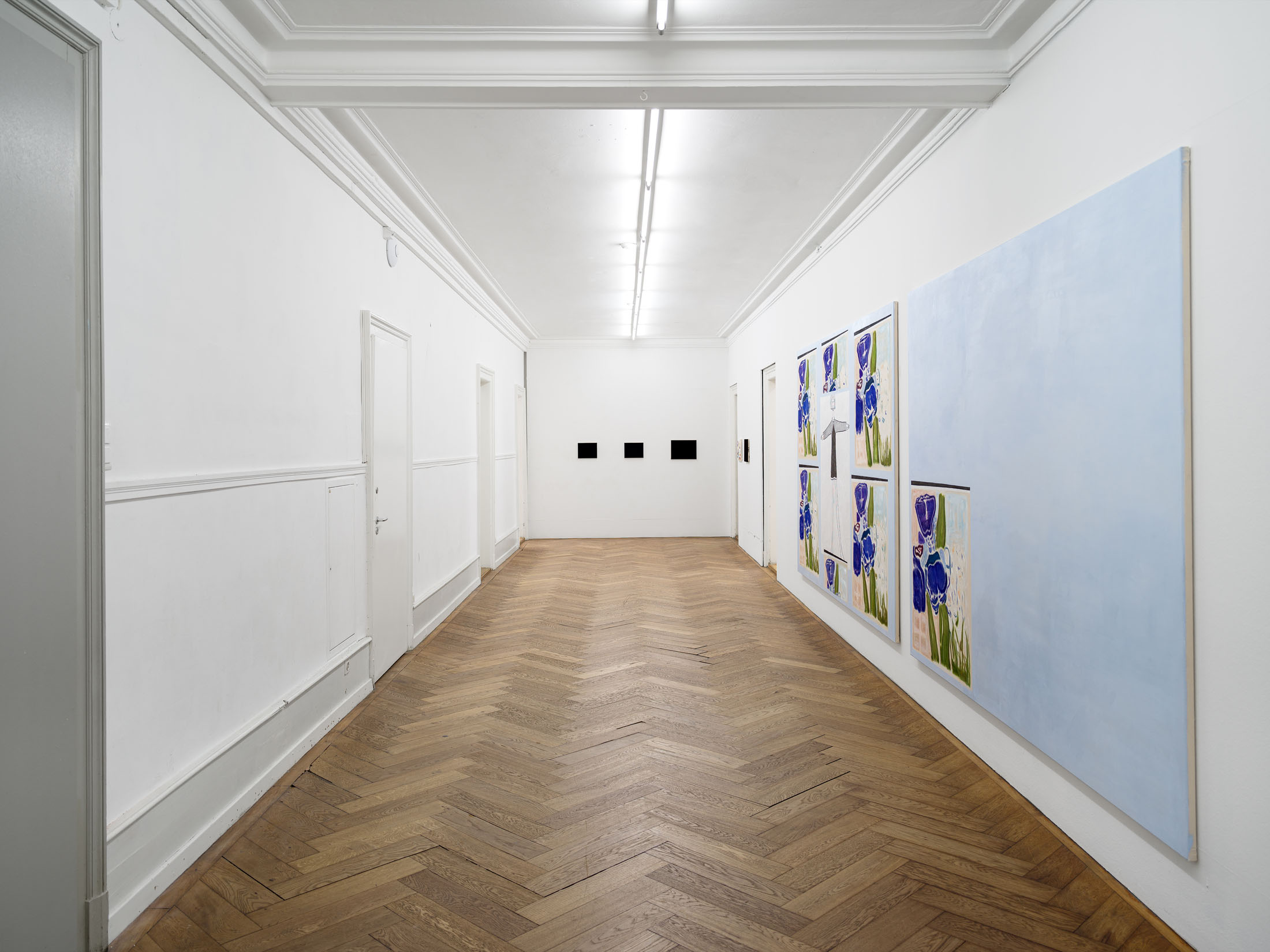
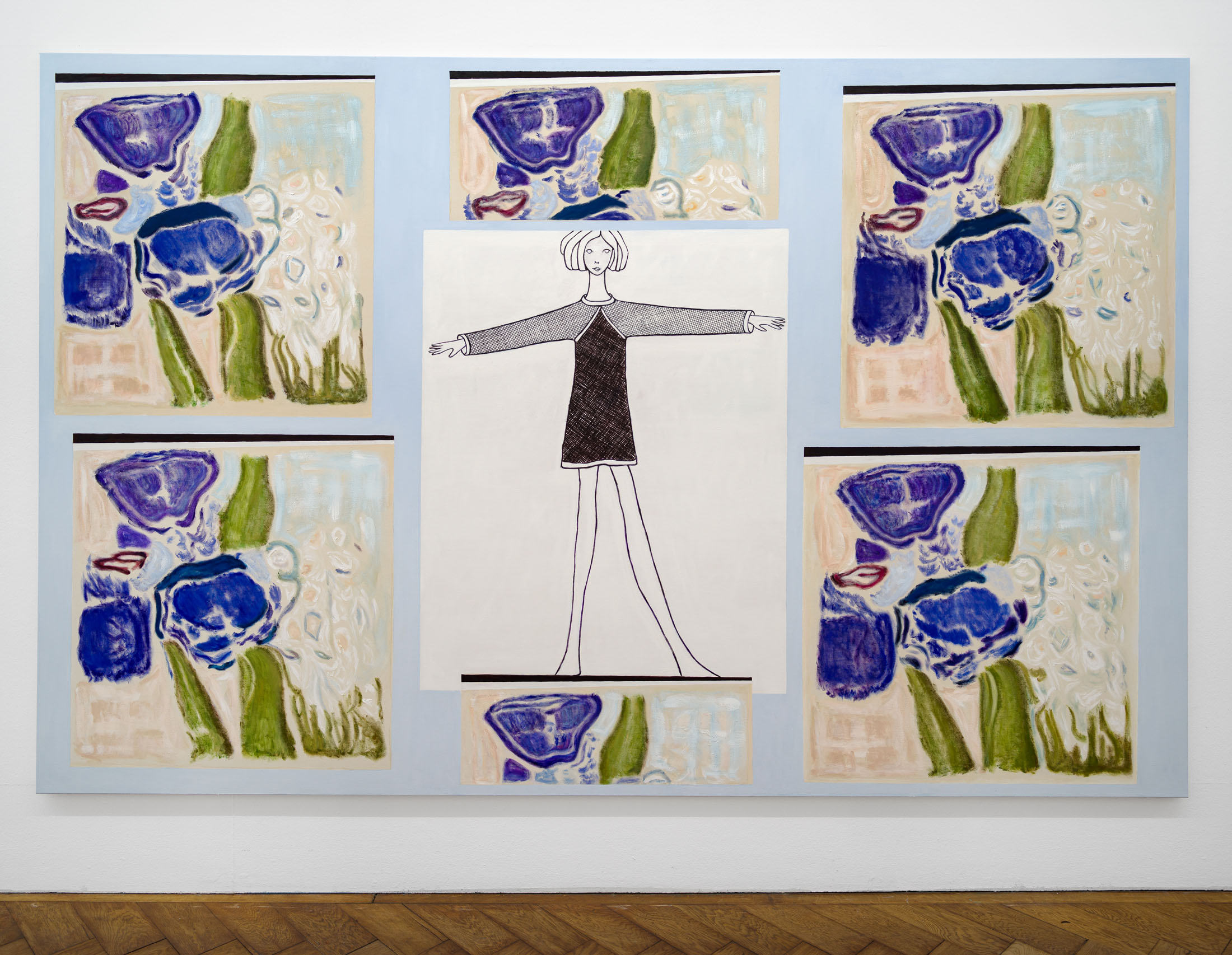
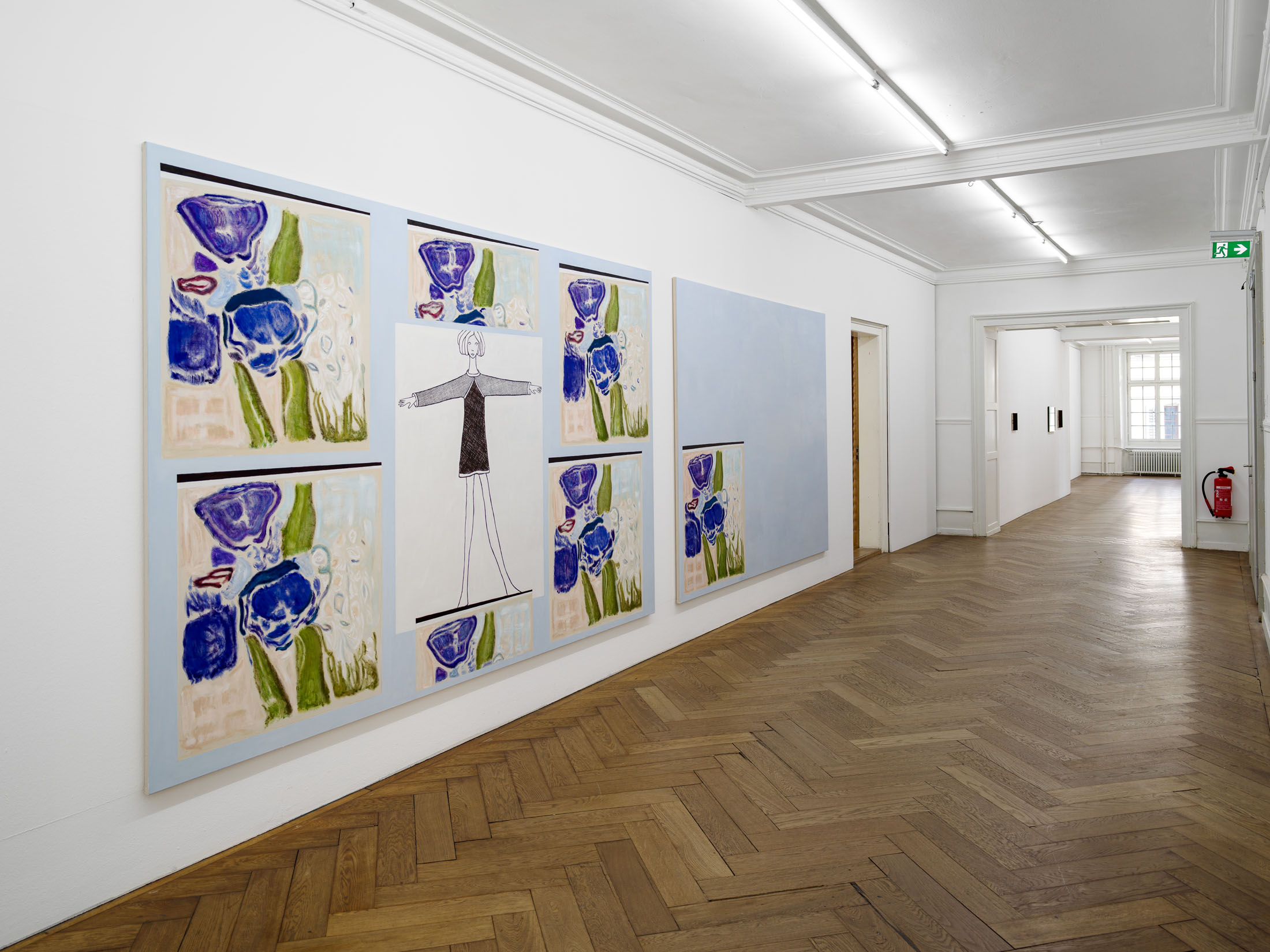
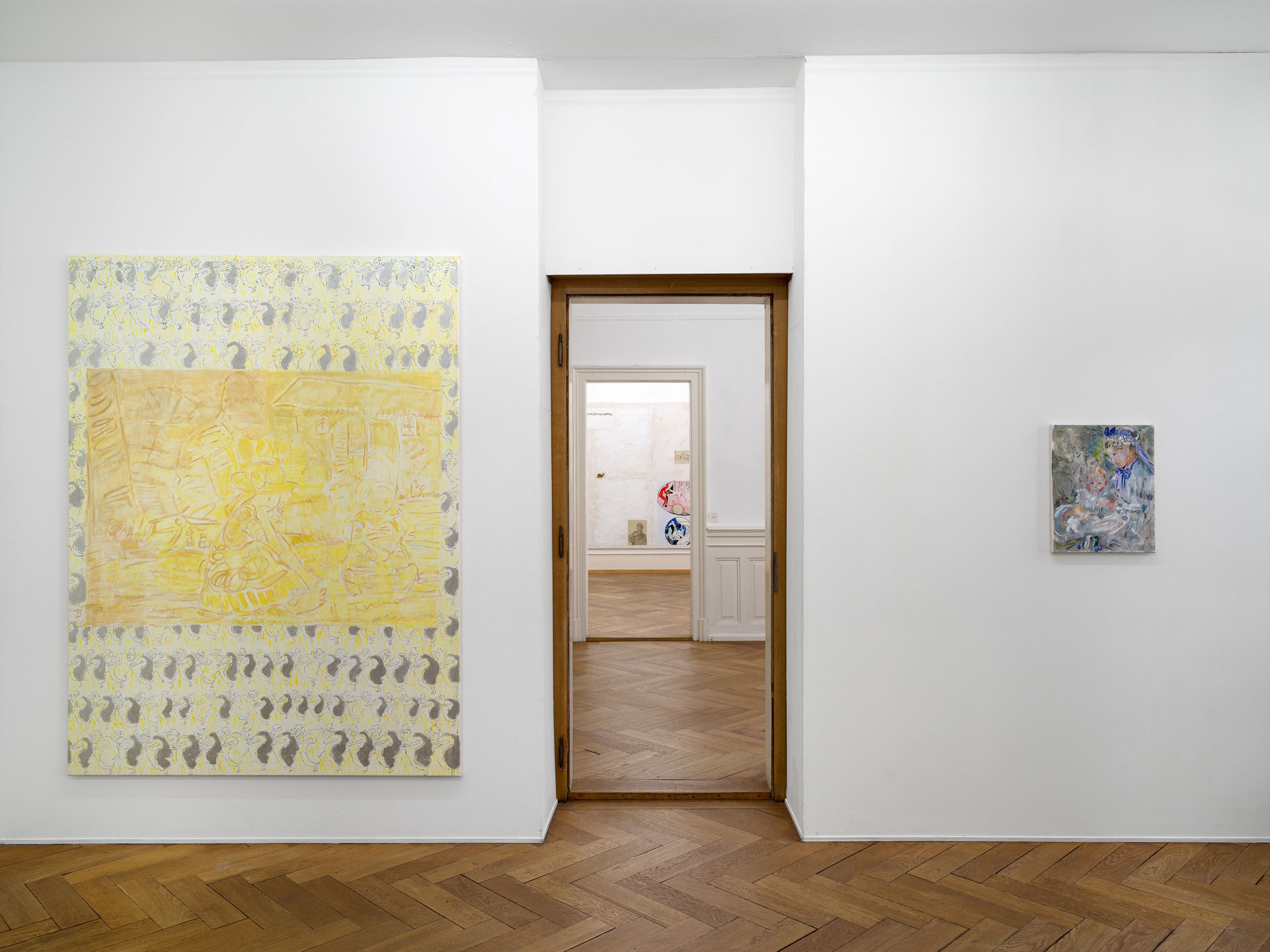
The theme of repetition, pattern and decoration is especially present in the most recent large formats, shown here for the first time, which work with fewer motifs than the earlier collage paintings. In Ohne Titel (6) (Mädchenstudie ausgestreckte Arme, unbekannt) (Room 9), a casually photographed flower becomes a pattern through repetition, set alongside a fashion drawing of a reform dress. The floral pattern continues in a second painting, Ohne Titel (7) (Mädchenstudie ausgestreckte Arme, unbekannt) , where it is contrasted with a monochrome area. In Ohne Titel (8), (Never-en-ding-post-adolescence, P.M.B. Tänzerinnen) (Room 6), Faulhaber places a pictorial quotation from Paula Modersohn-Becker in front of a background pattern of dancers whose skirts are accented in silver. Repetition and pattern in Faulhaber‘s painting can also be read in terms of an interest in Pattern and Decoration, the movement of the 1970s. The women artists of this movement countered the prevailing minimal and conceptual tendencies with a positive revaluation of decoration and pattern, which were regarded as feminine, non-European and craft-based (which is to say: worth less).
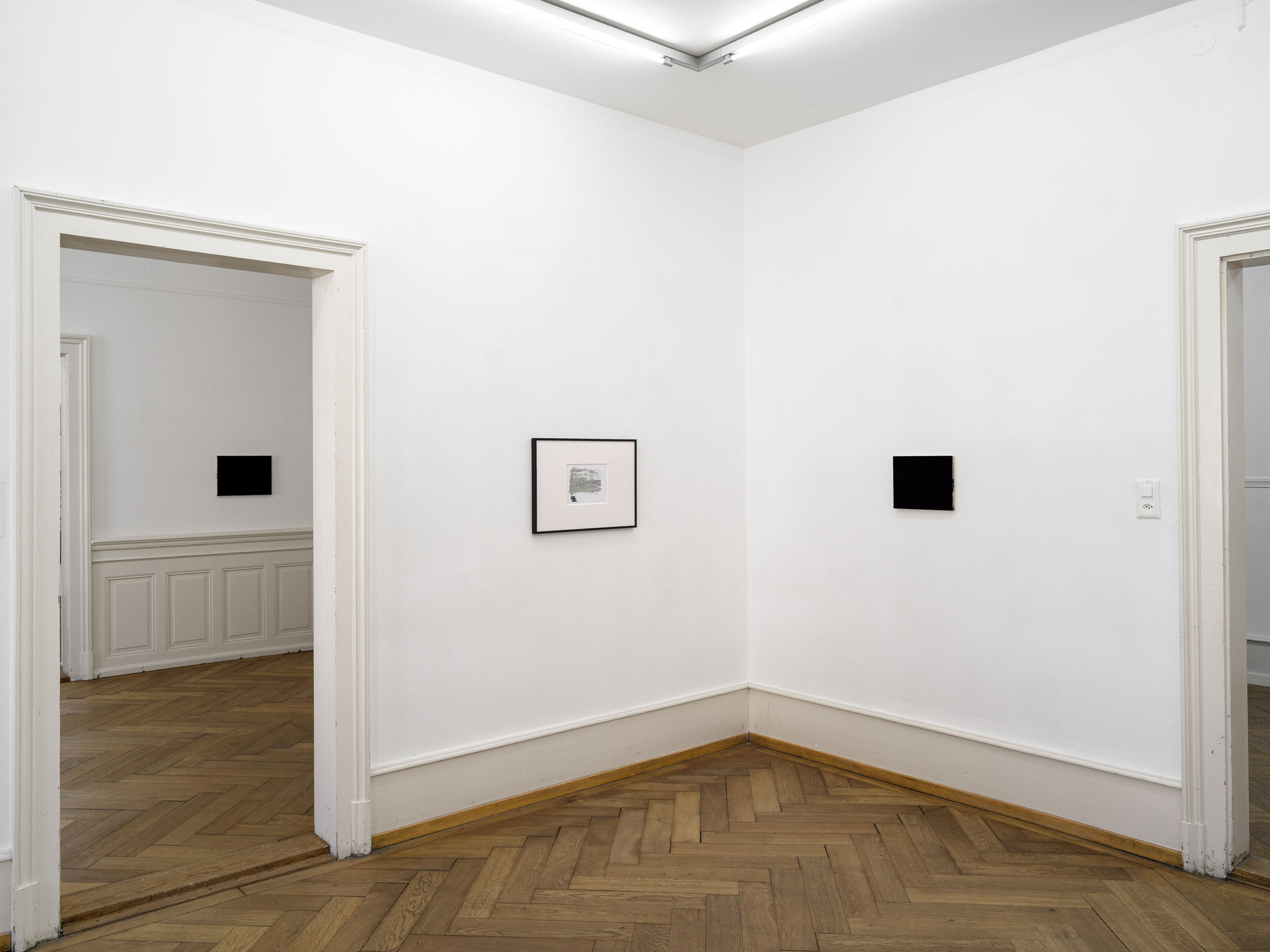
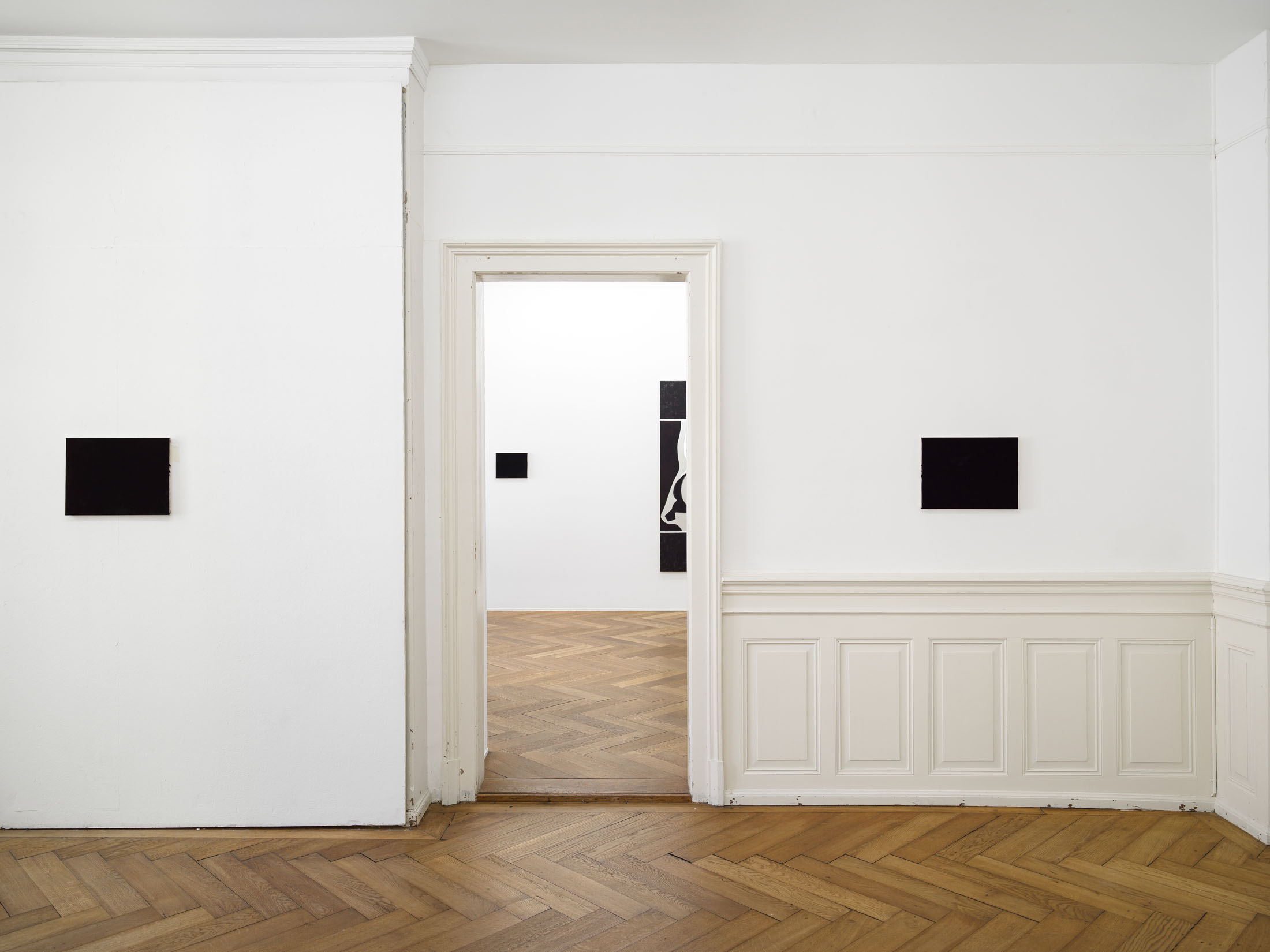
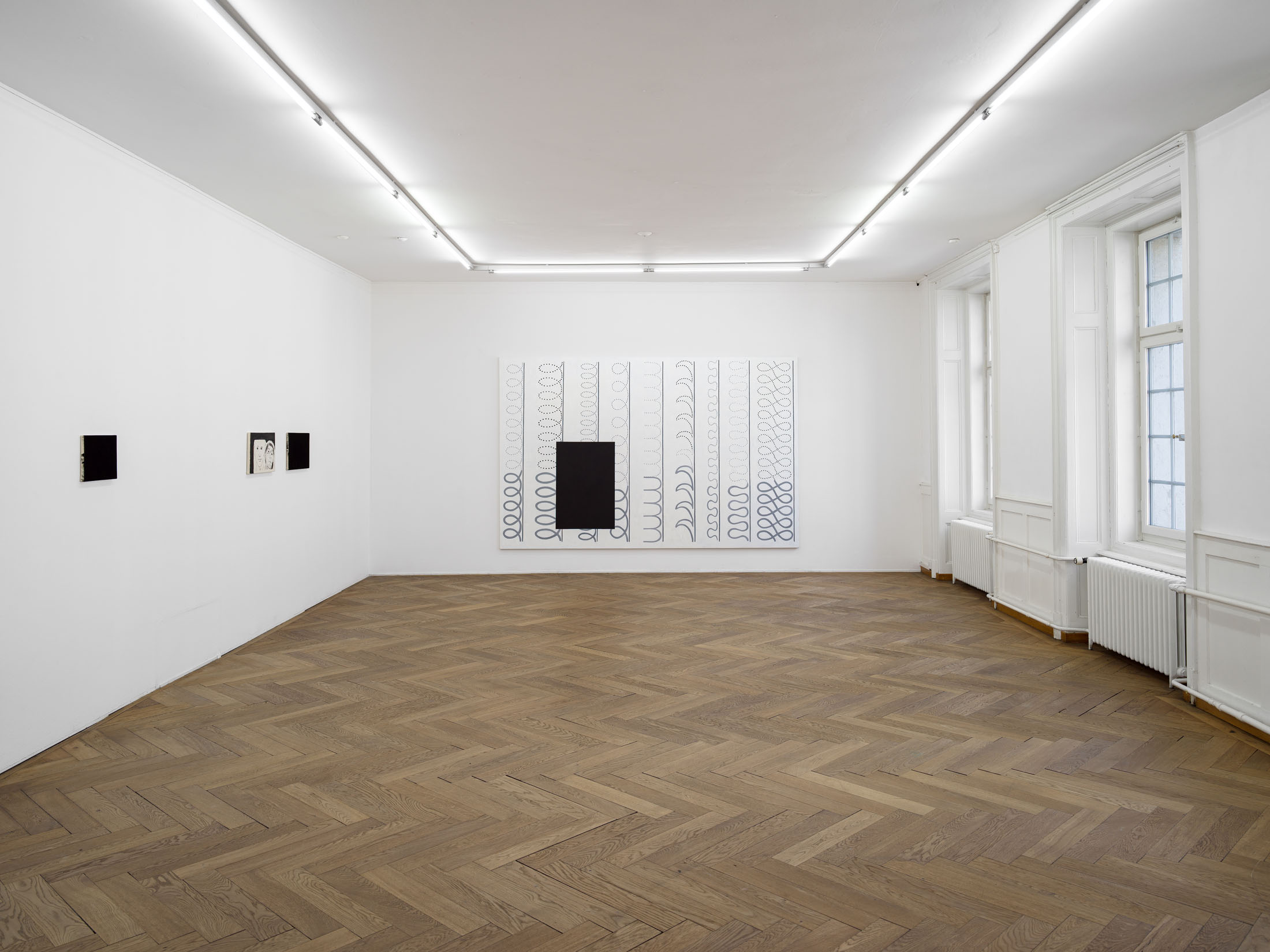
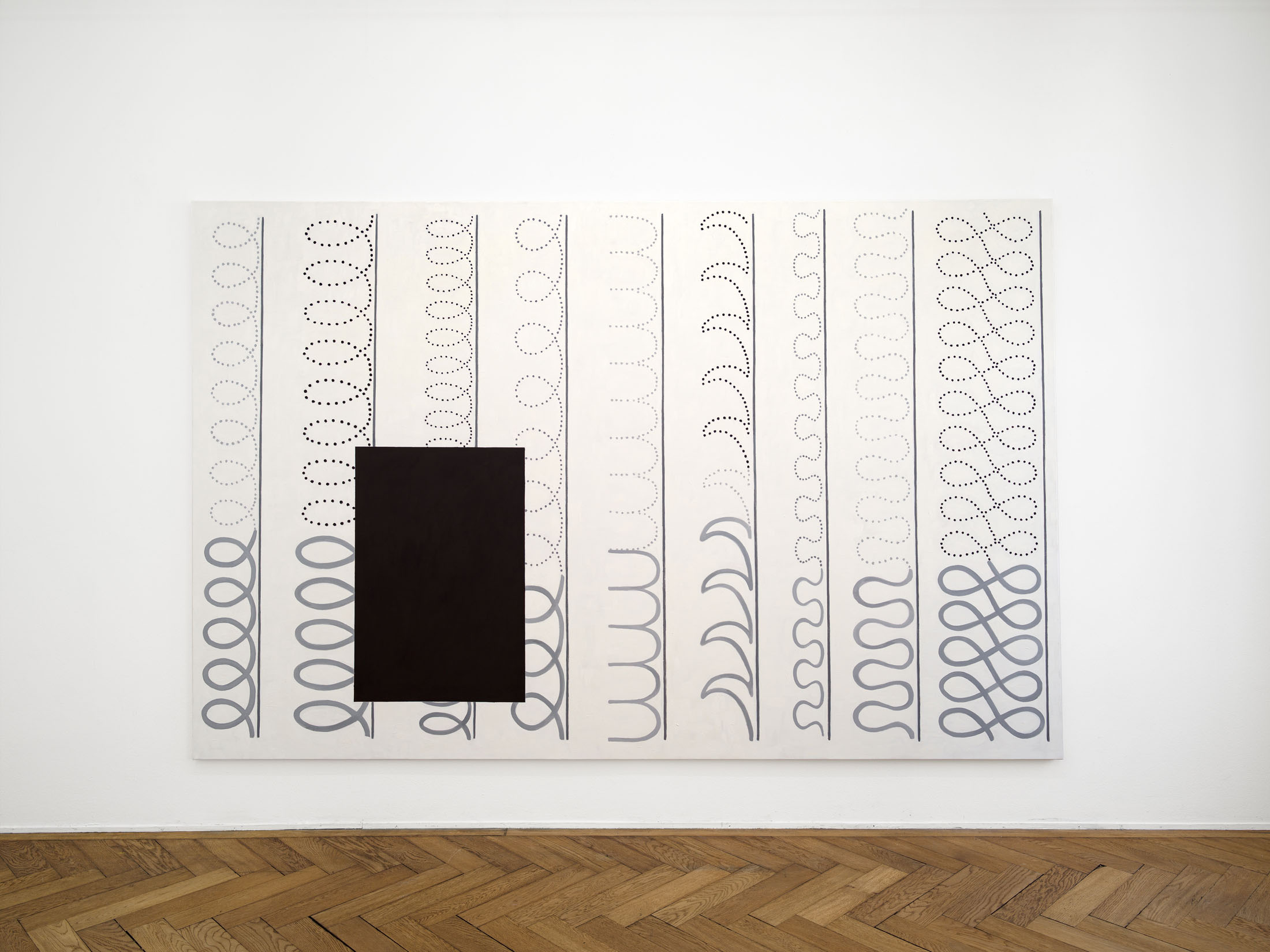
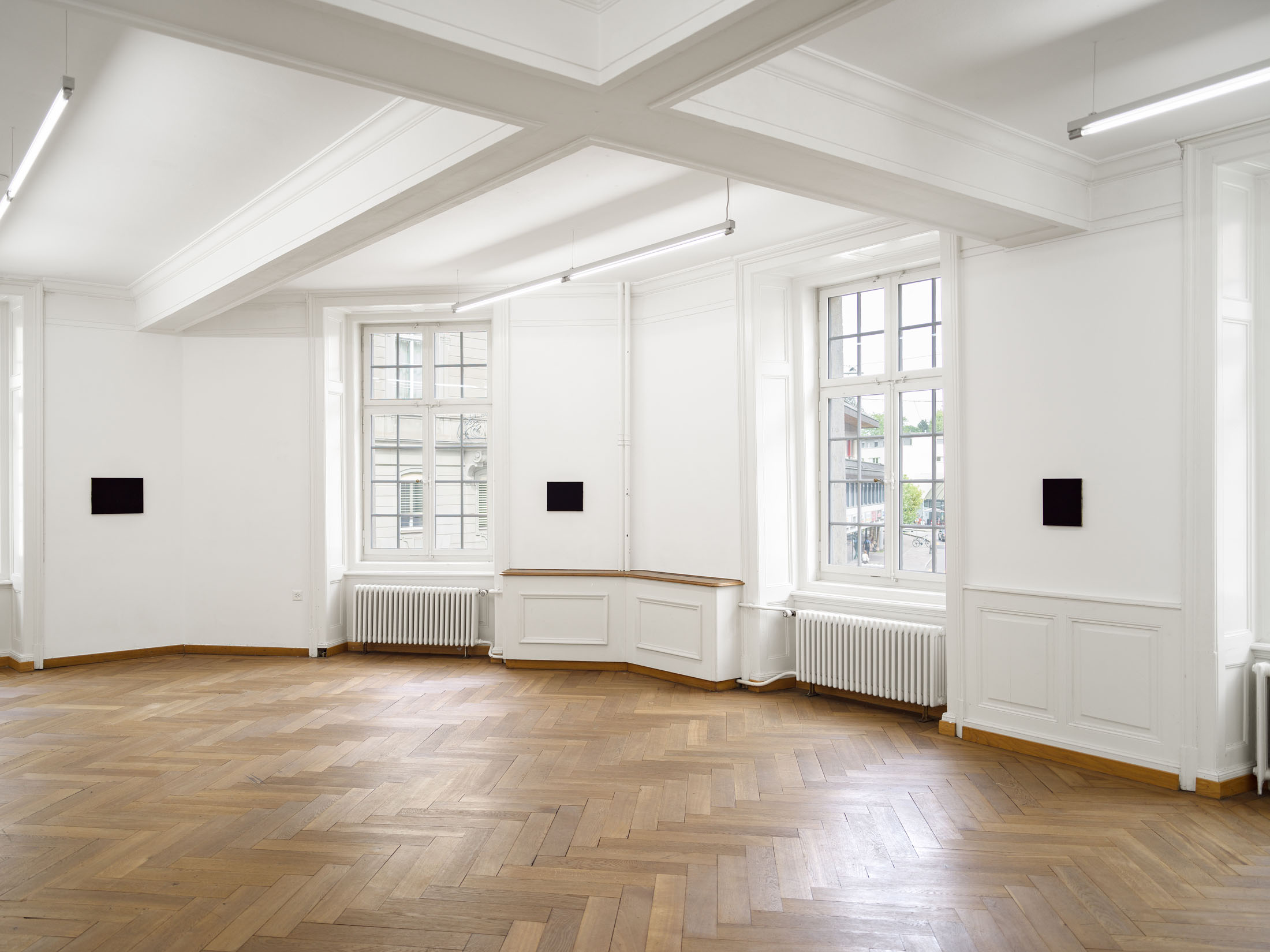
In Ohne Titel (4), (Named by ) (Room 7), repetition is the theme of the appropriated source image itself, since it shows writing exercises from a Montessori teaching resource. These are partly covered by a black rectangle, with which Faulhaber refers to her Debutante series, small-format black pigment paintings. Like the pale gaps in the collage paintings, they have a suggestive effect, as projection surfaces for images. The ground and the pigment mark the outer limits of the painterly process. While the gaps in the collage paintings technically suggest a painterly nonchalance, the pigment paintings are highly demanding, technically and in conservation terms, almost impossible, since they are made with pure pigments. With the black monochrome, a reference to symbolically charged moments in art history is unavoidable. ‚Like a gaffe I make on purpose‘, says the artist. As an engagement with the tradition of abstraction, they are also related to the Militant Joy series. Unlike the latter, however, they emerge expressly only in phases of stable health. The result is a working logic in the sense of Alison Kafer‘s ‚crip time‘, according to which the handling of time for chronically ill people must be able to work differently, beyond the logic of efficiency and linear scheduling.
A publication accompanies the exhibition, with a text by Geraldine Tedder and a conversation between the artist and the curators Raffael Dörig and Marius Quiblier.
Courtesy: Gritli Faulhaber
Ohne Titel (2), 2023. Photo: Kunsthaus Langenthal, Cedric Mussano. Courtesy: Gritli Faulhaber