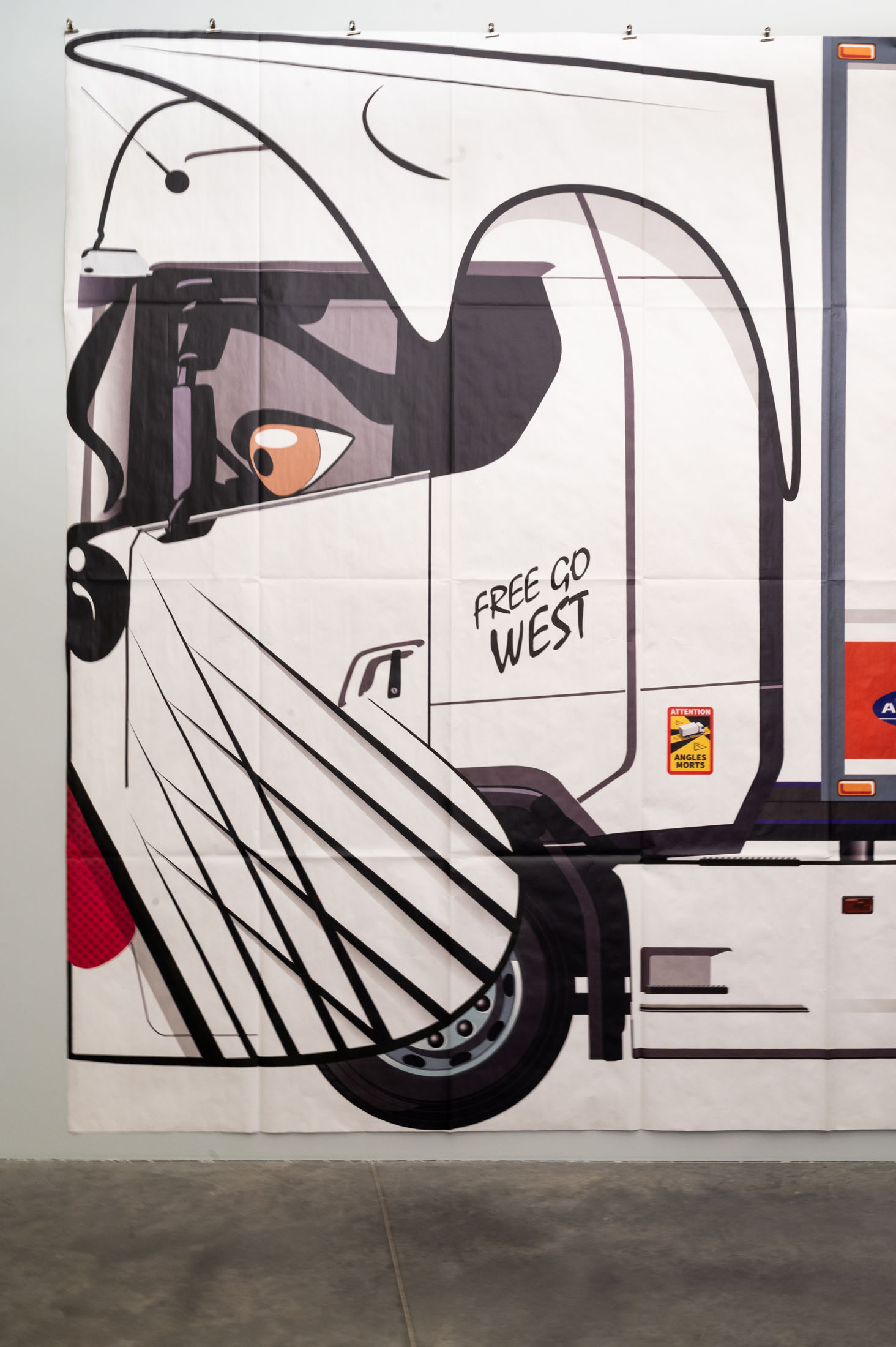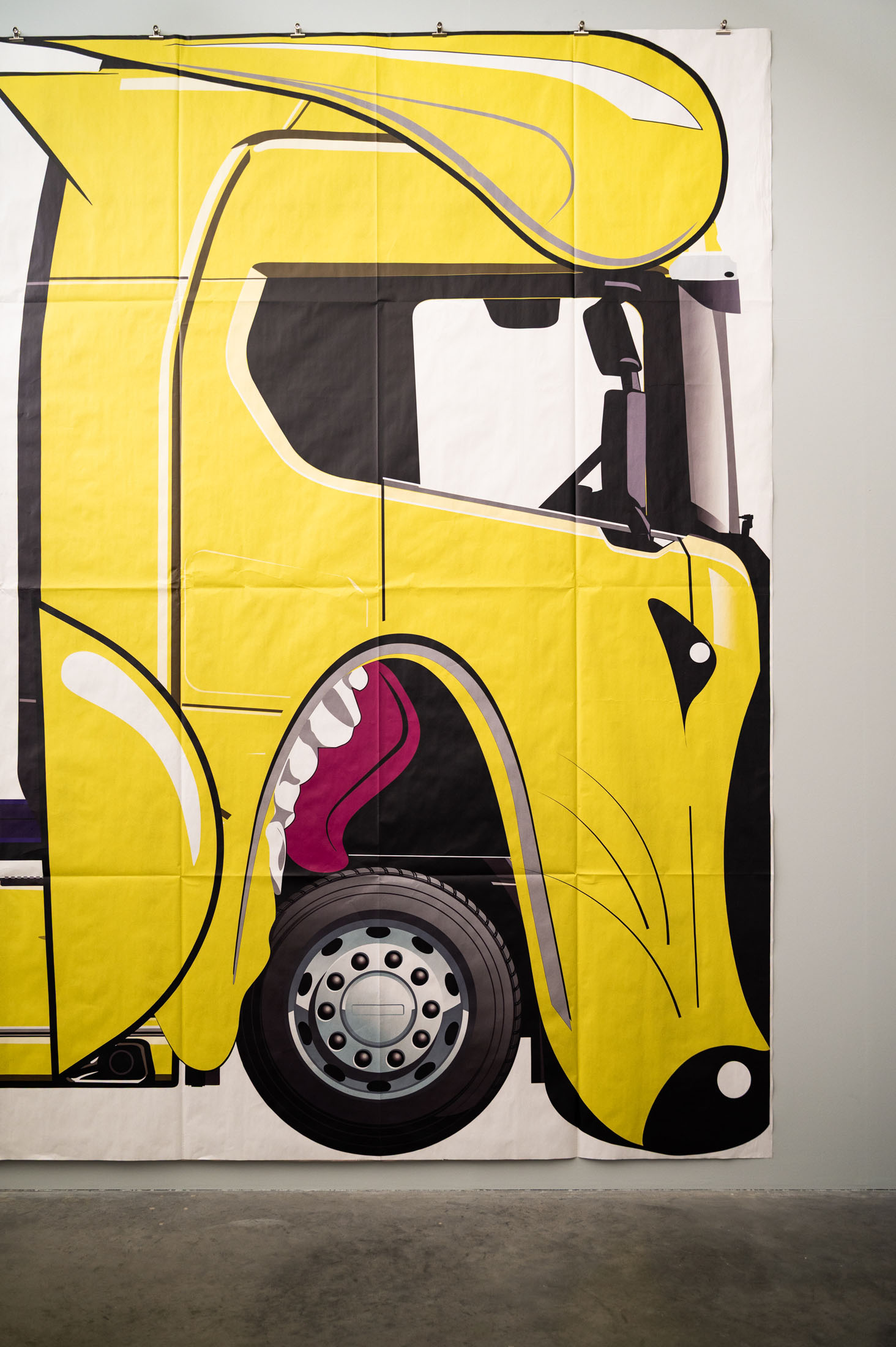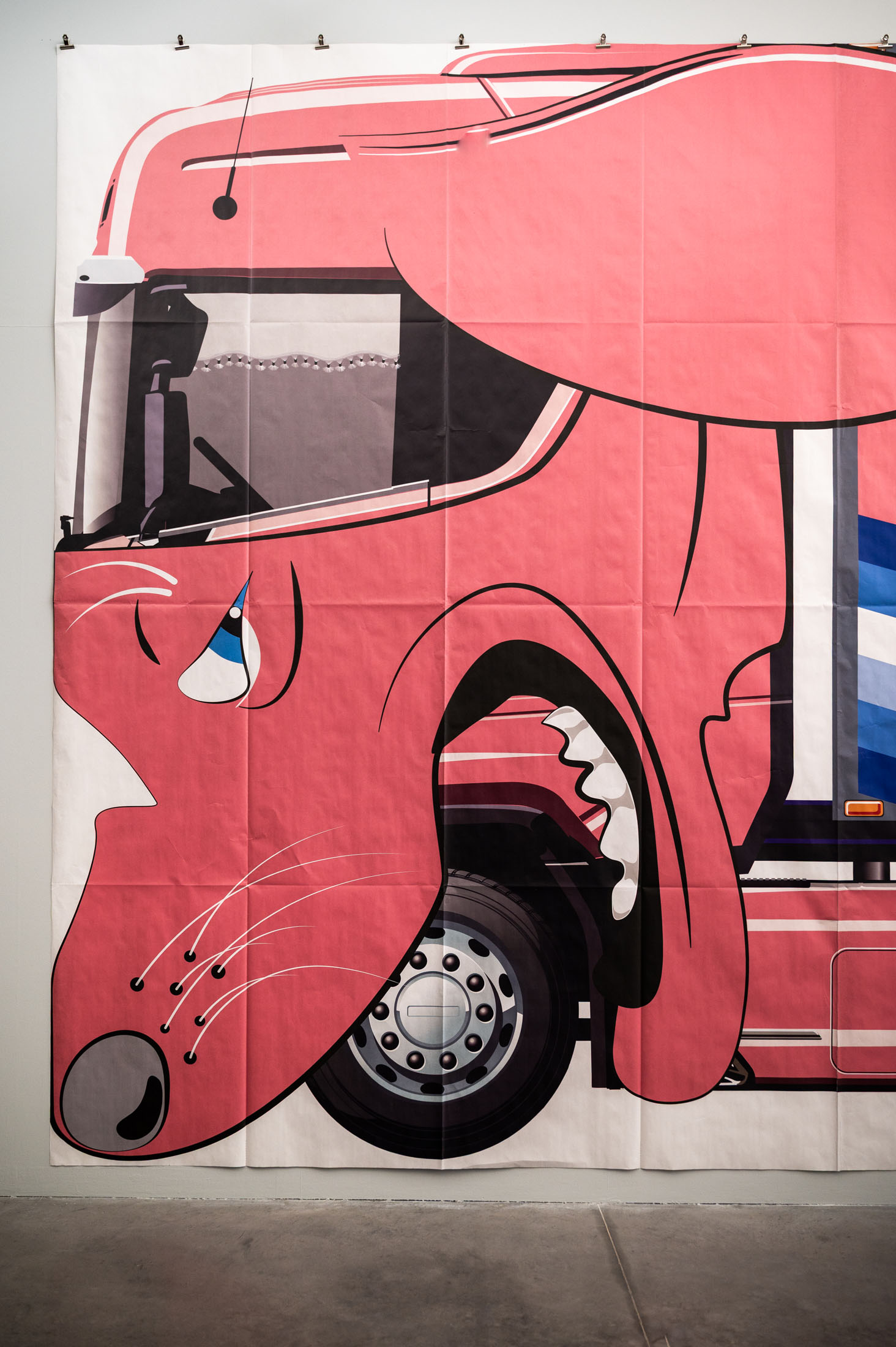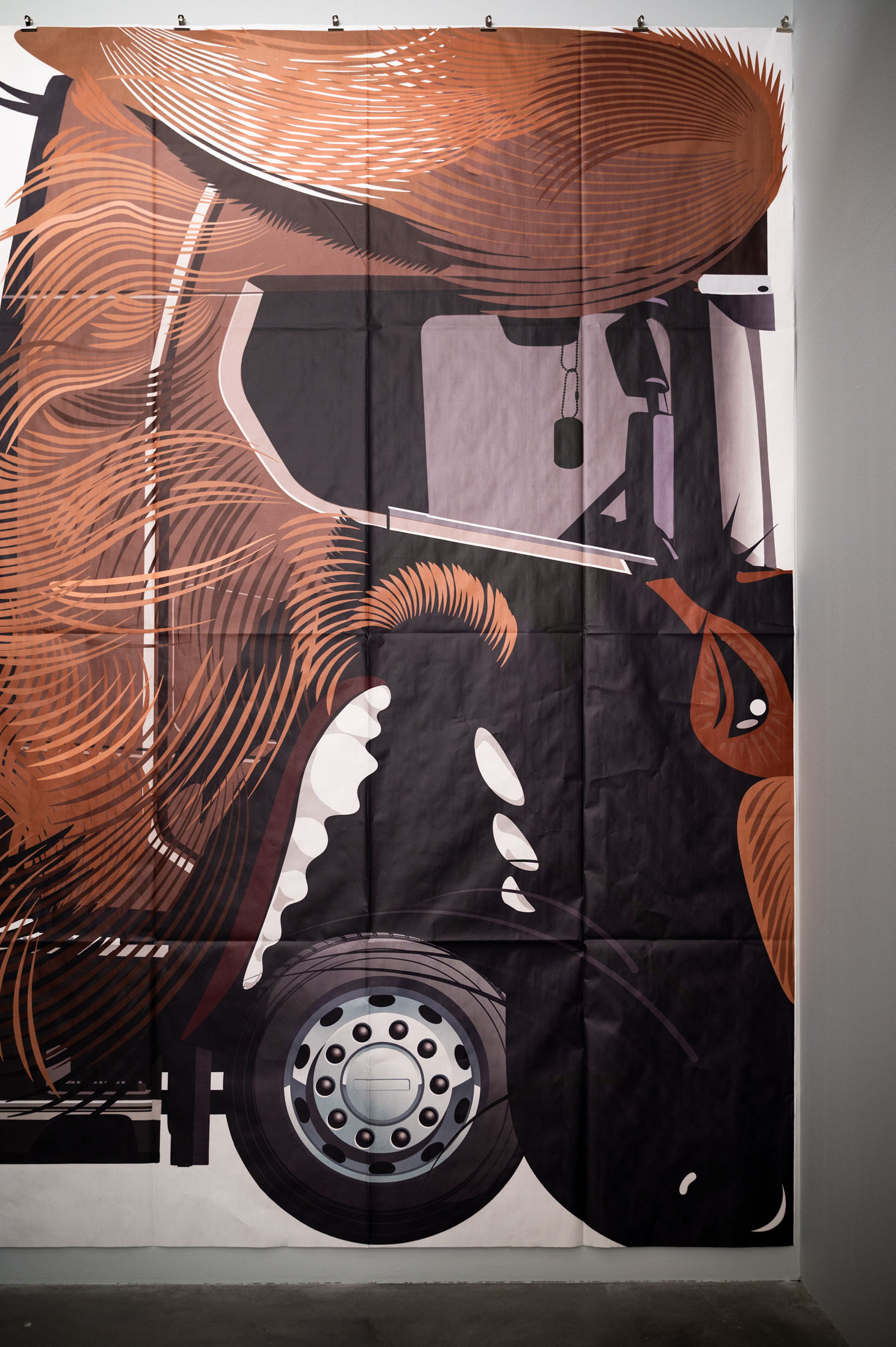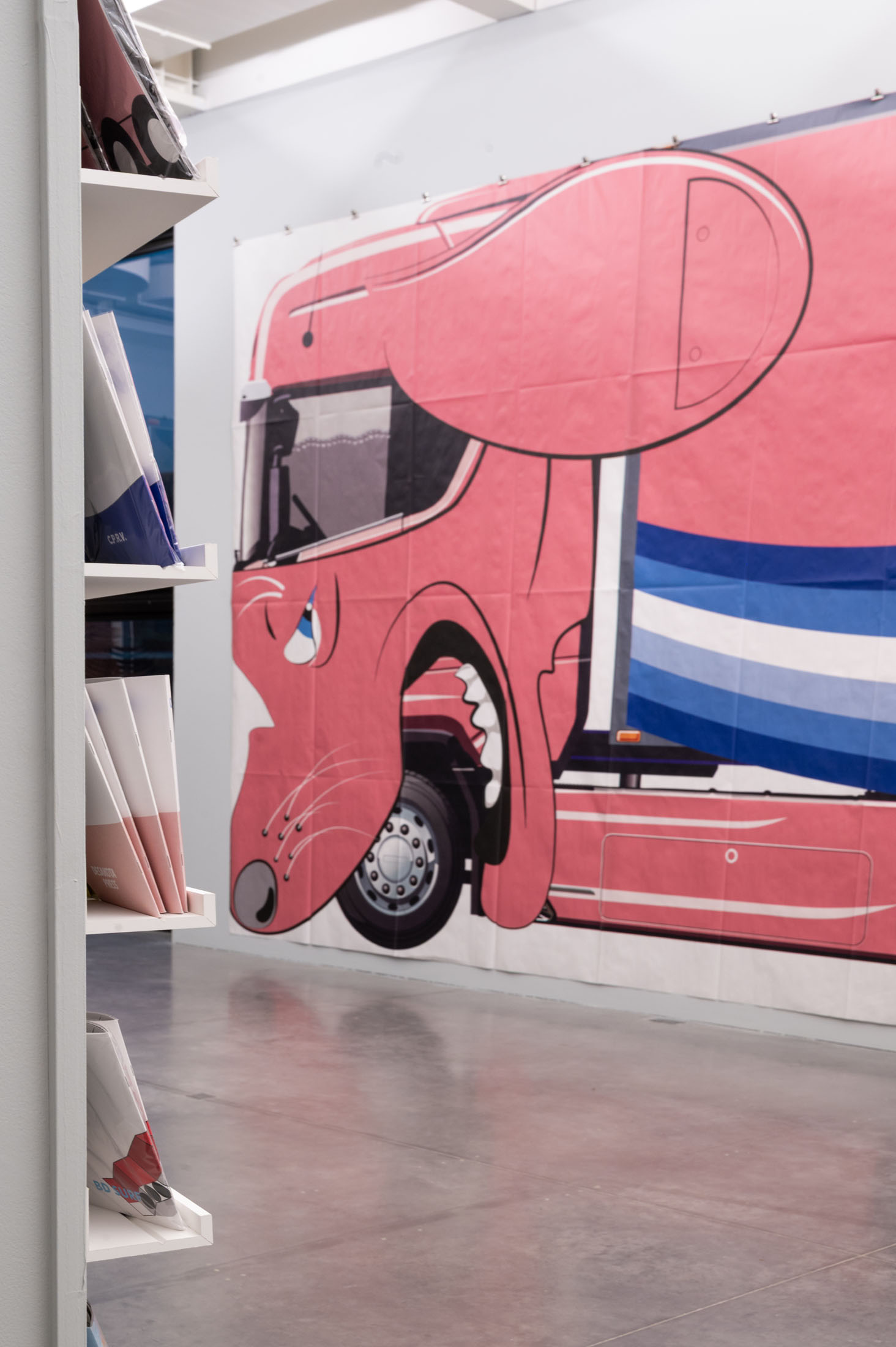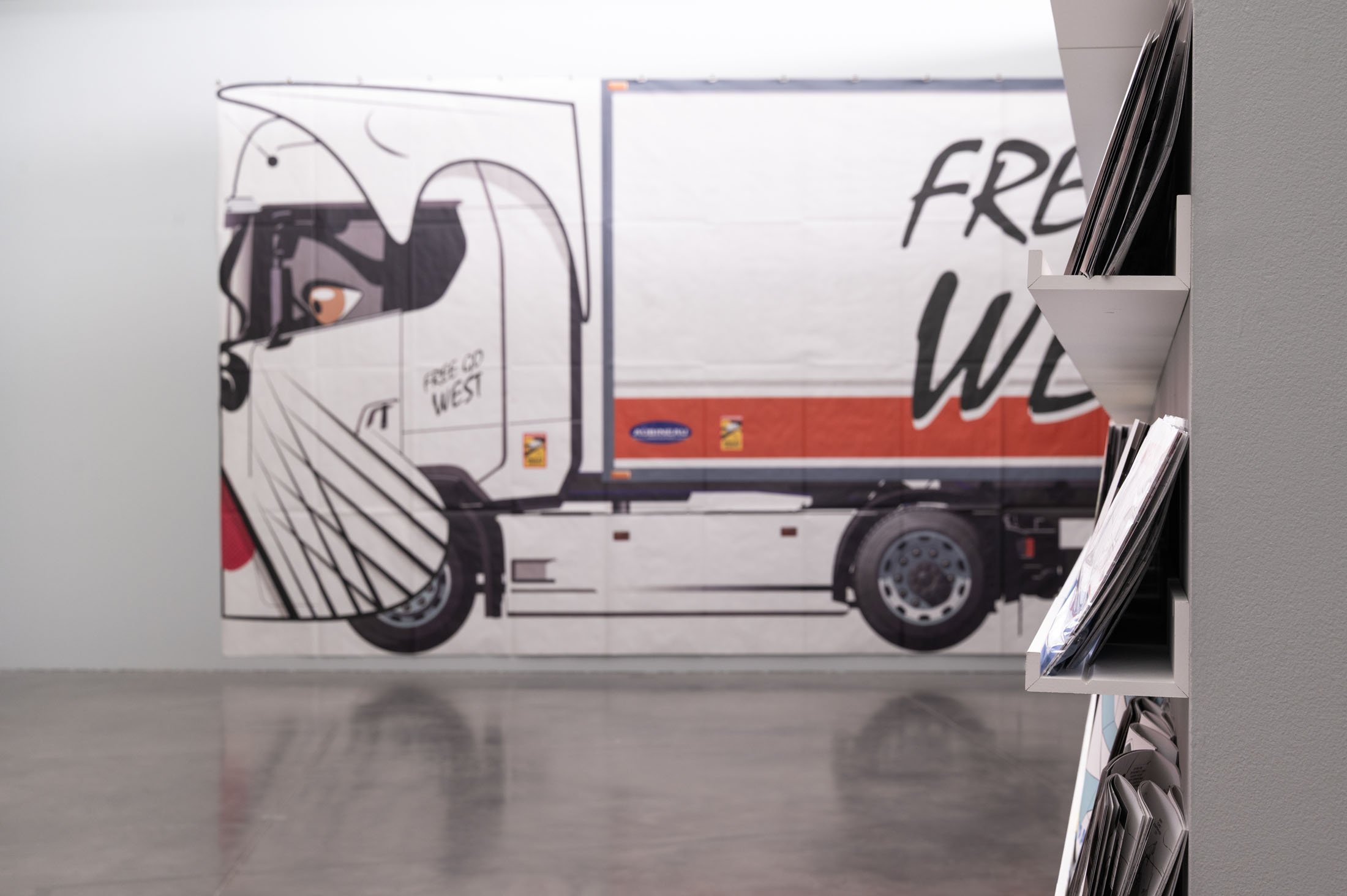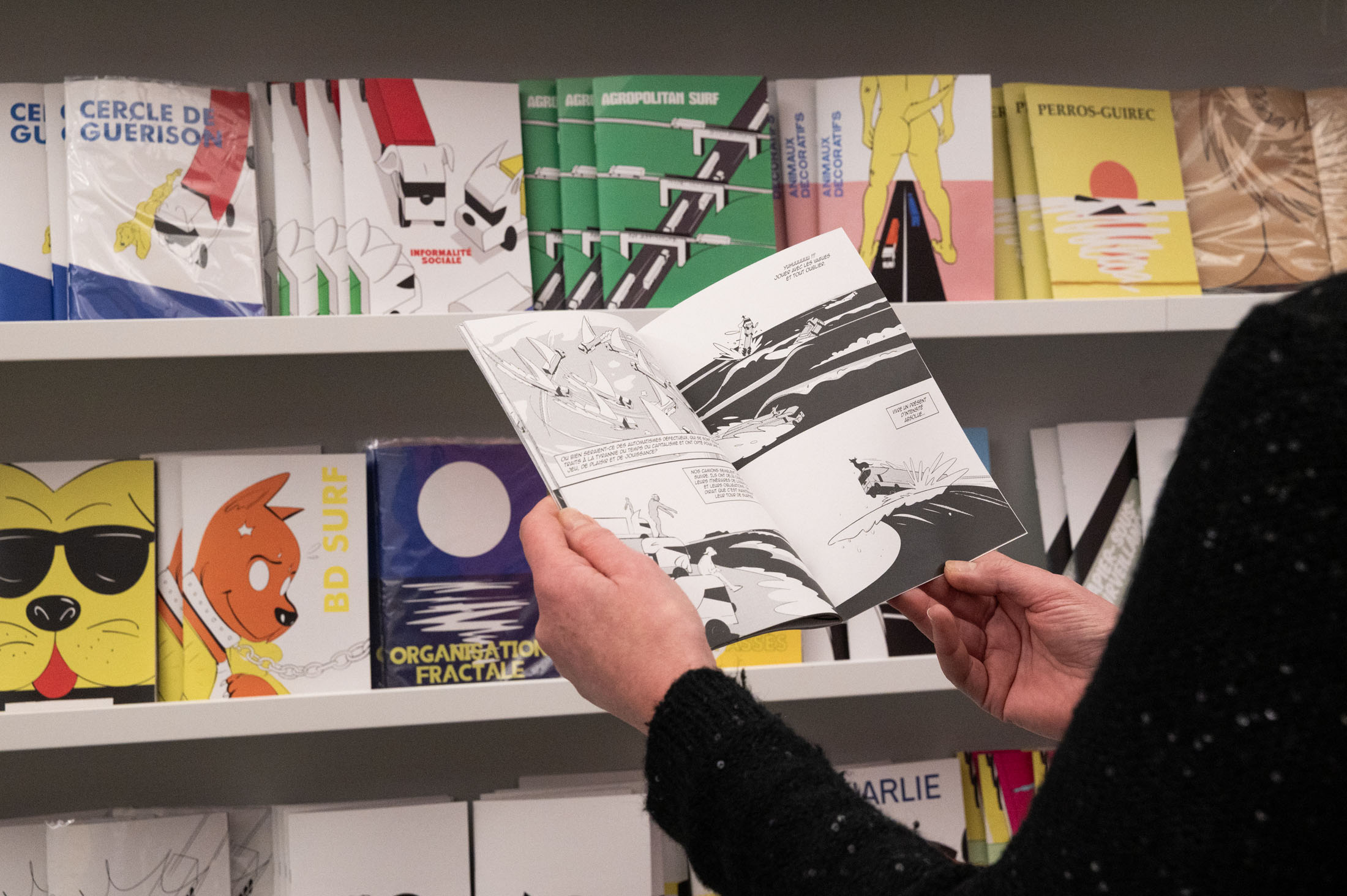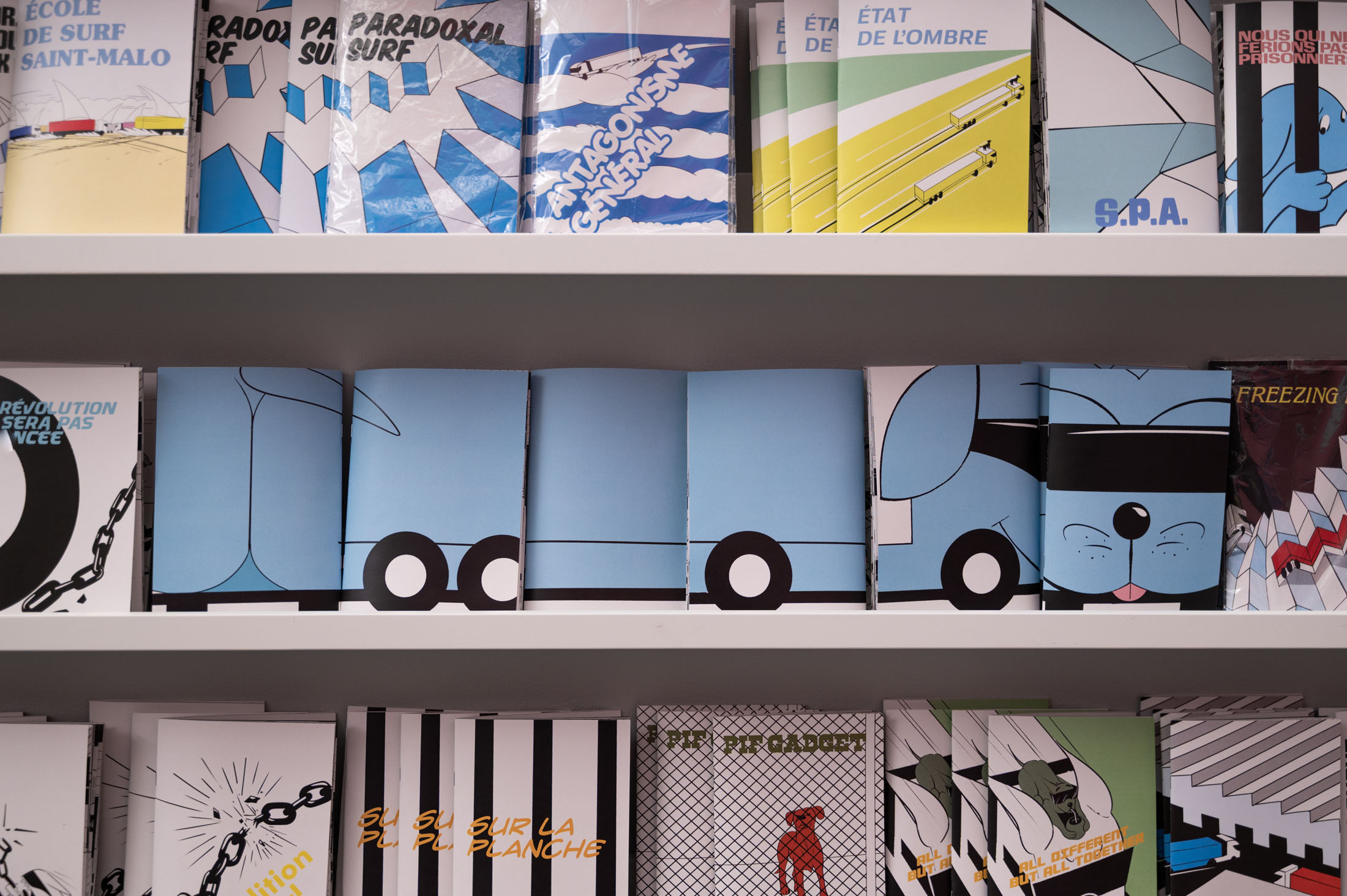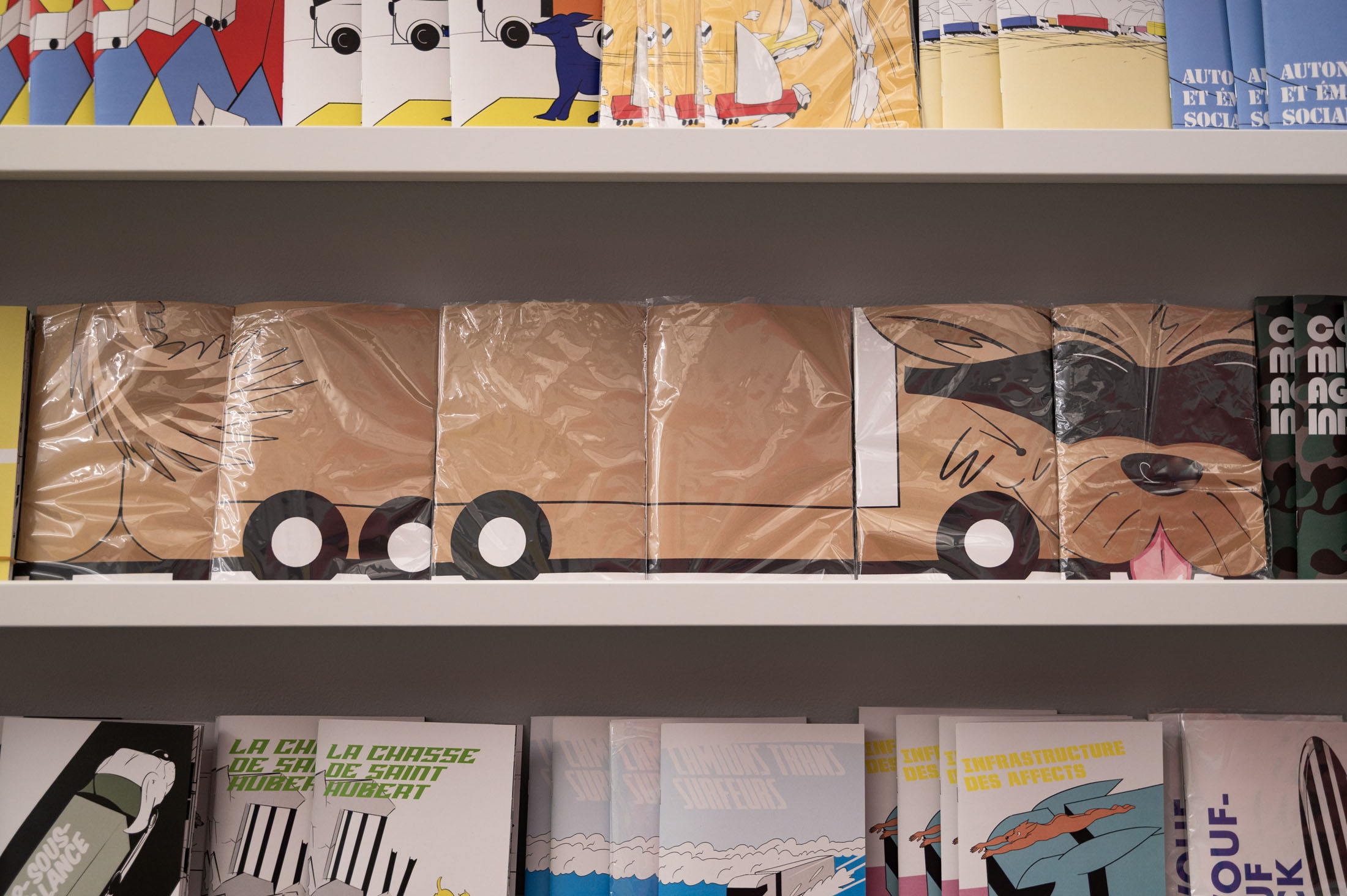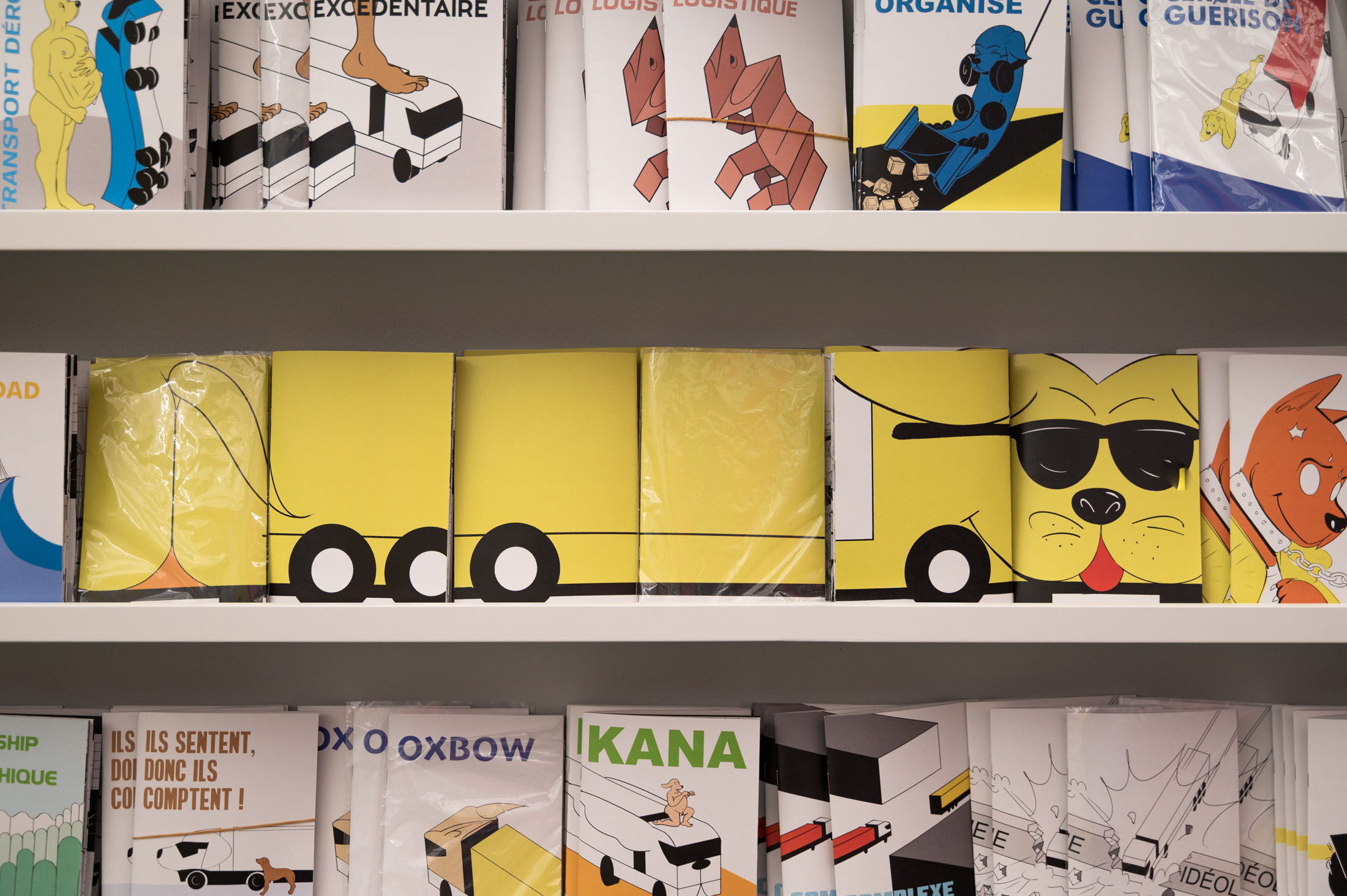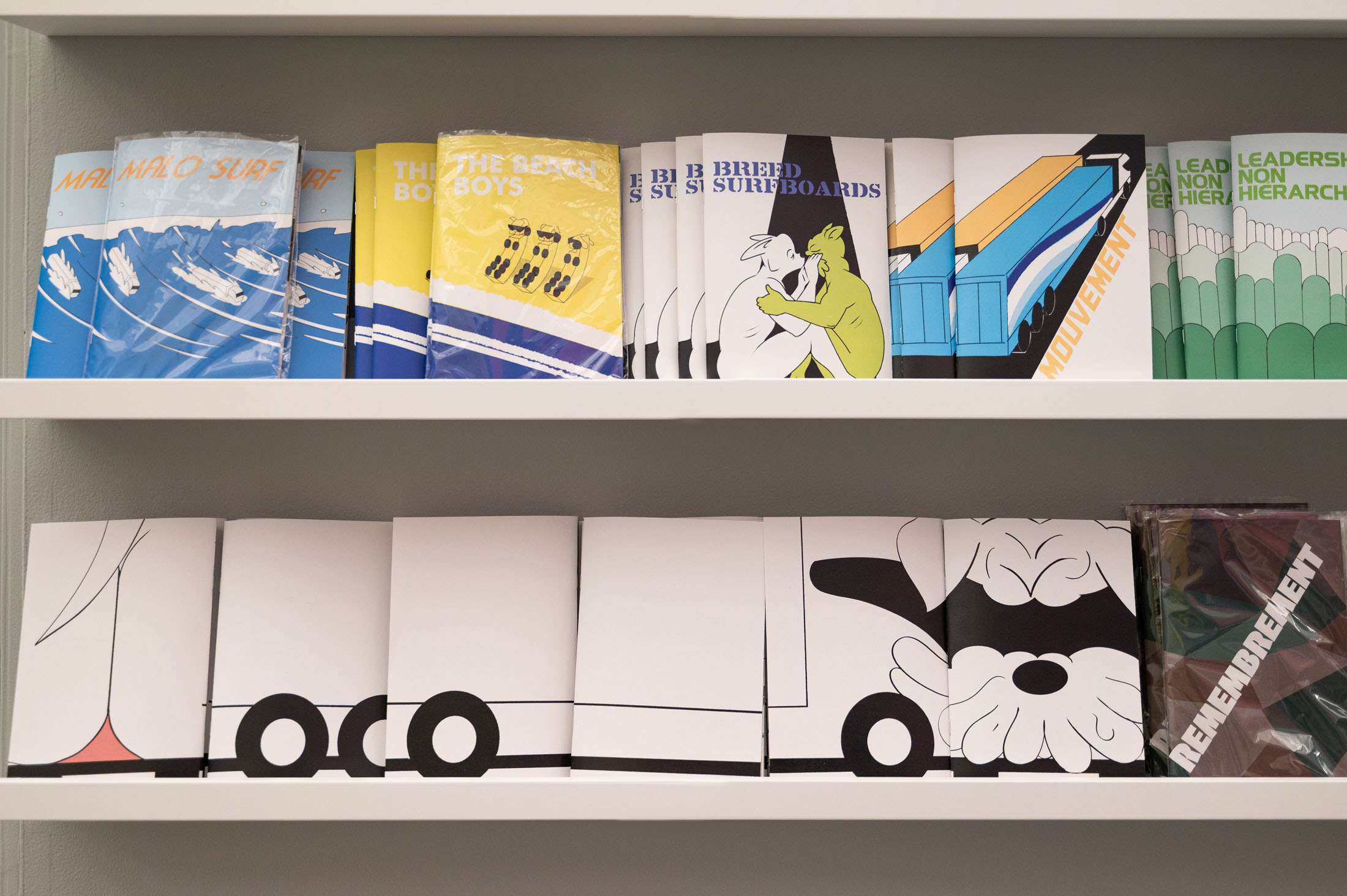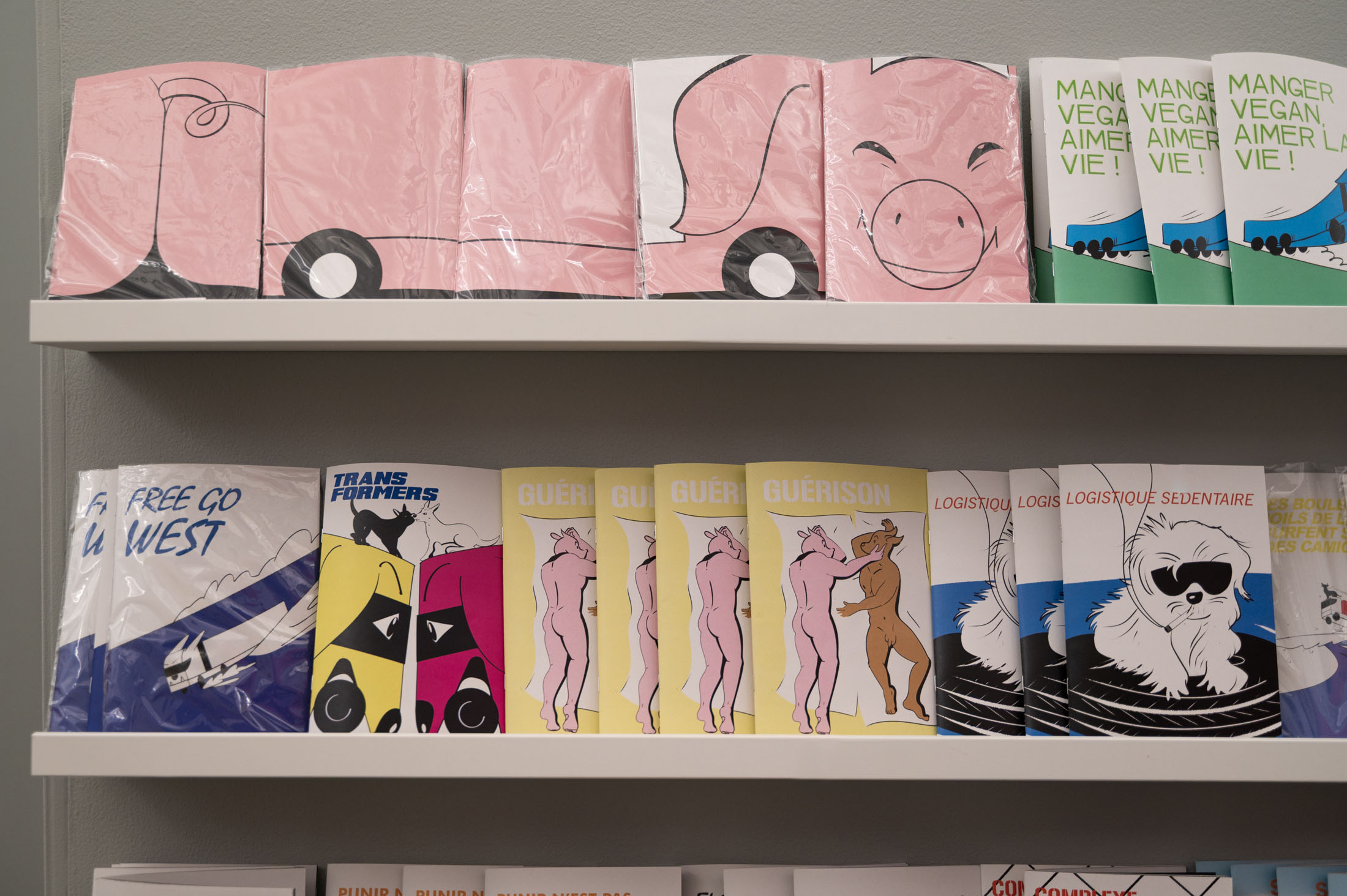
The artistic work of Francesc Ruiz is built around comics, which he approaches as a visual, narrative, and critical medium. A form that, beneath its playful appearance, conceals a subversive potential and acts as an unofficial means of communication.
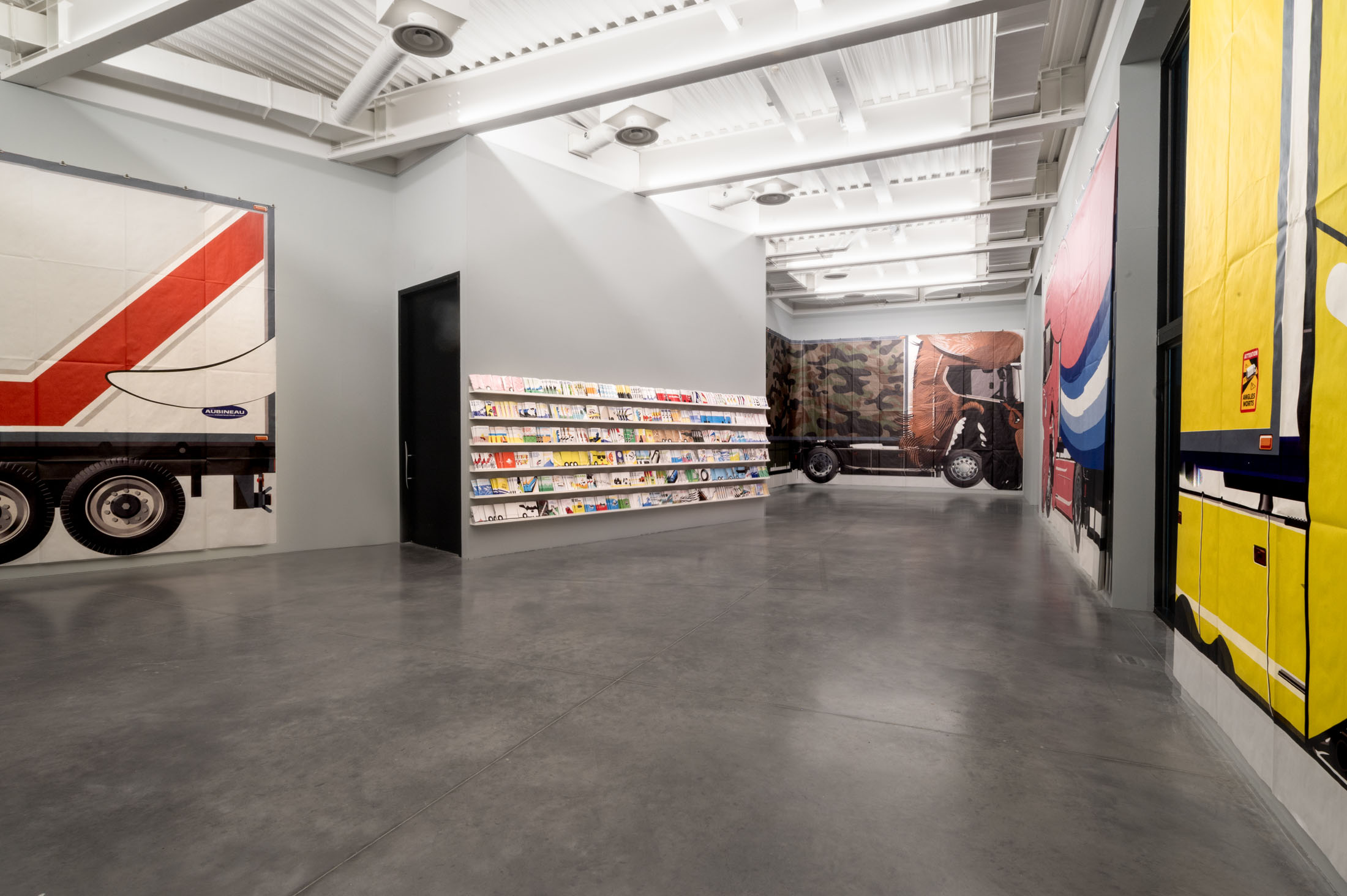
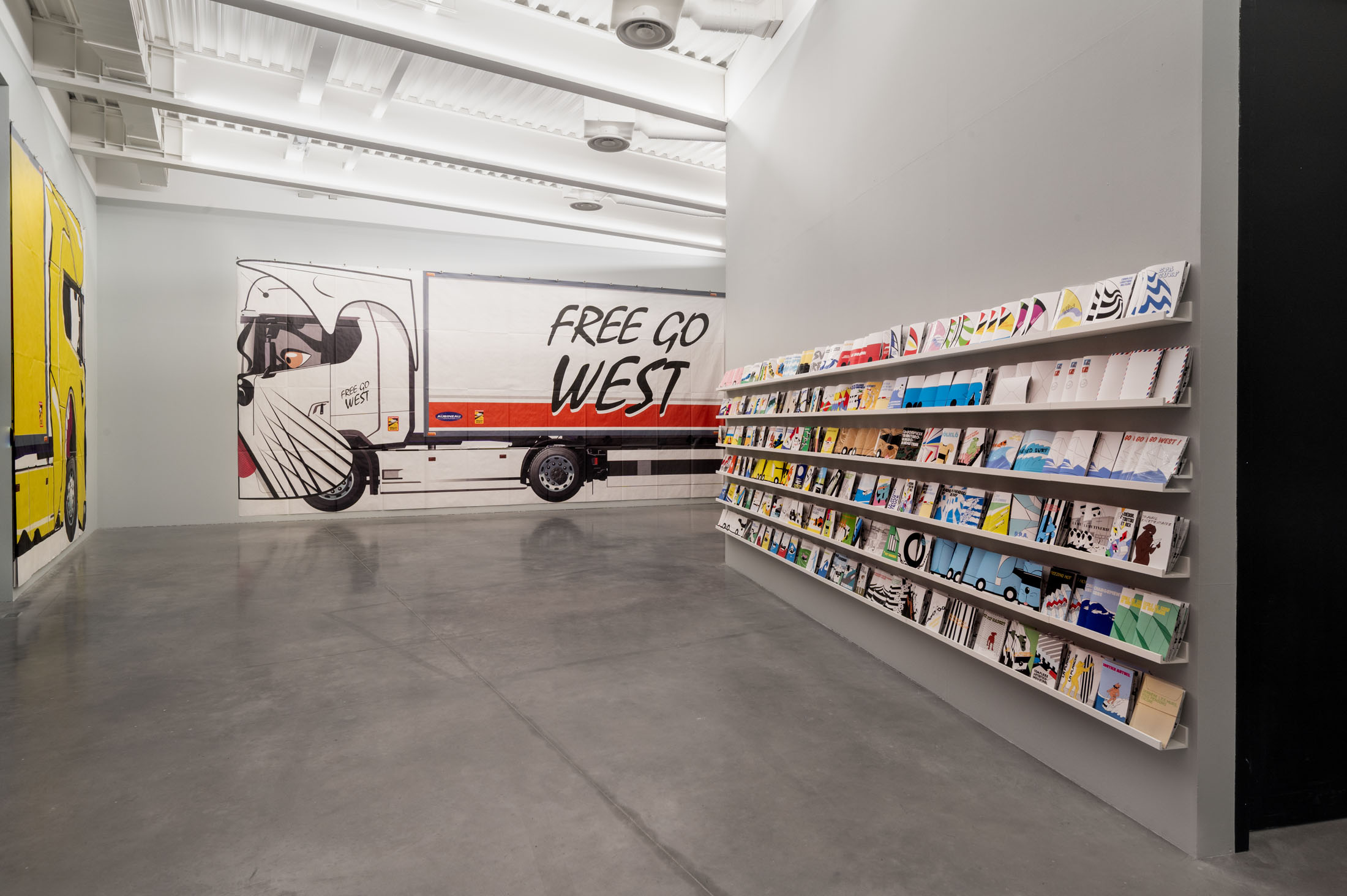
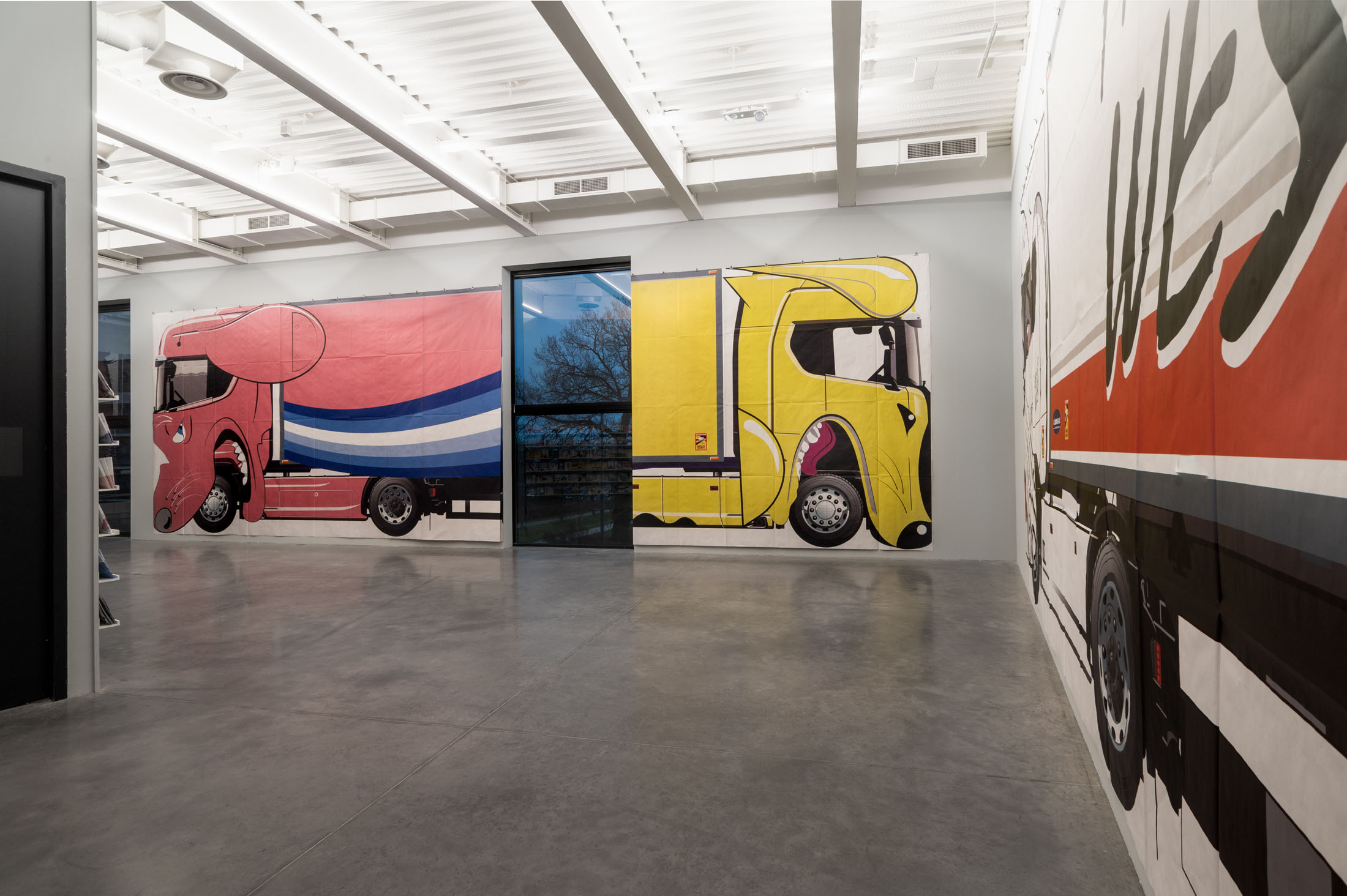
Considering context as inseparable from his creative process, Francesc Ruiz explored the city of Rennes—both its center and its outskirts—to create a poetic composition of the metropolis and its region. His work, populated with signs, streets, architecture, infrastructure, as well as inhabitants—human and animal—follows the complex dynamics of the city’s vibrancy and its territory.
Francesc, can you tell us how and why you chose to focus on the industrial zone of the Route de Lorient?
Discovering that a branch of the FRAC, a storage facility, was located in this area was a real revelation. The experience became even more striking when I visited the site and observed that, within a 50-meter radius, there are the Rennes-Vezin prison, the Society for the Protection of Animals, and a food logistics company—almost side by side. By coincidence, during my visit, the media reported that a prisoner had been denied permission to attend a surfing class in Saint-Malo as part of his rehabilitation process.
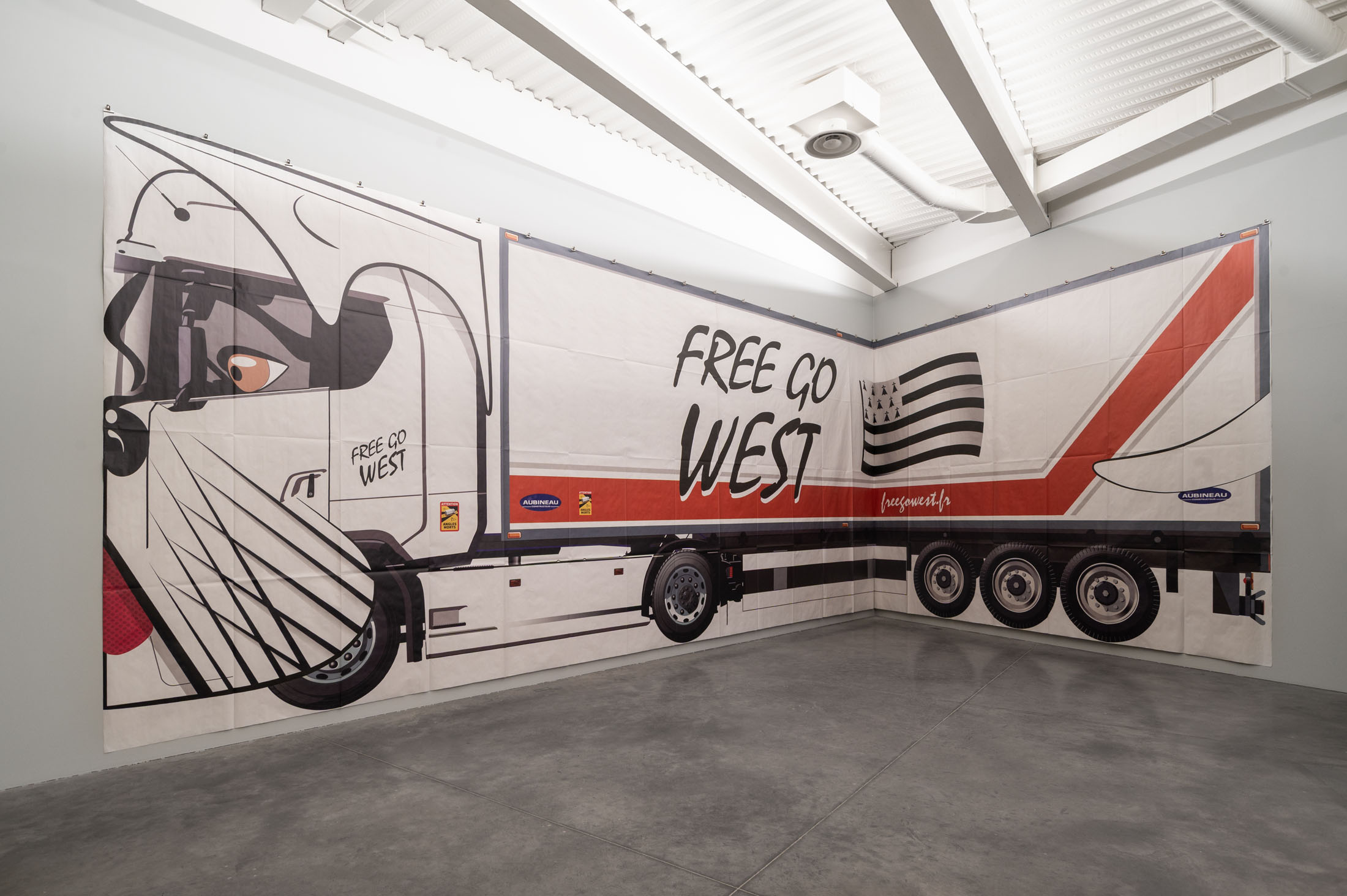
I tried to construct a narrative incorporating all these elements through a fiction that addresses themes that have interested me for a long time, such as animal exploitation, the military-industrial and prison complex, and their connection to contemporary logistics.
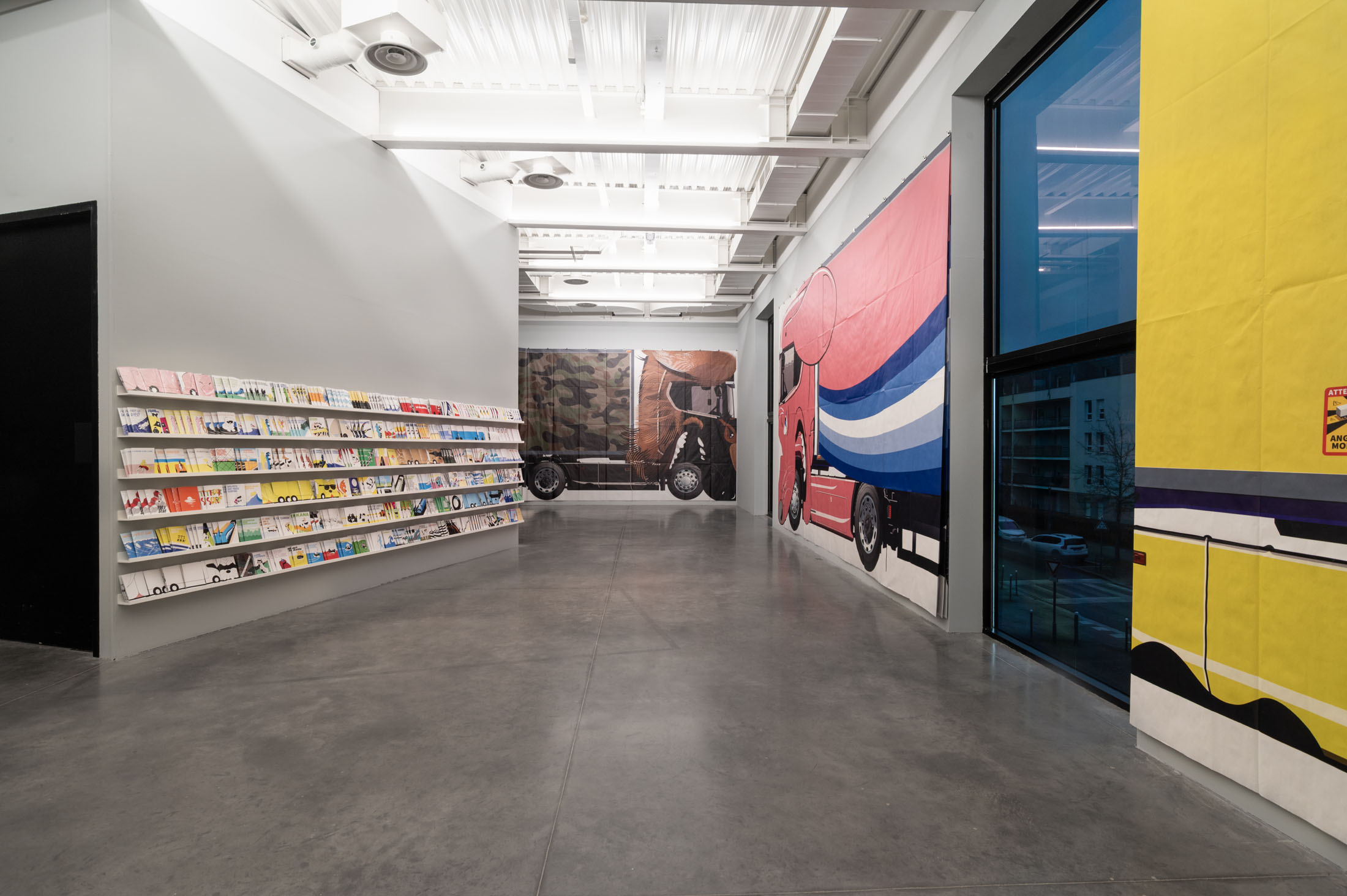
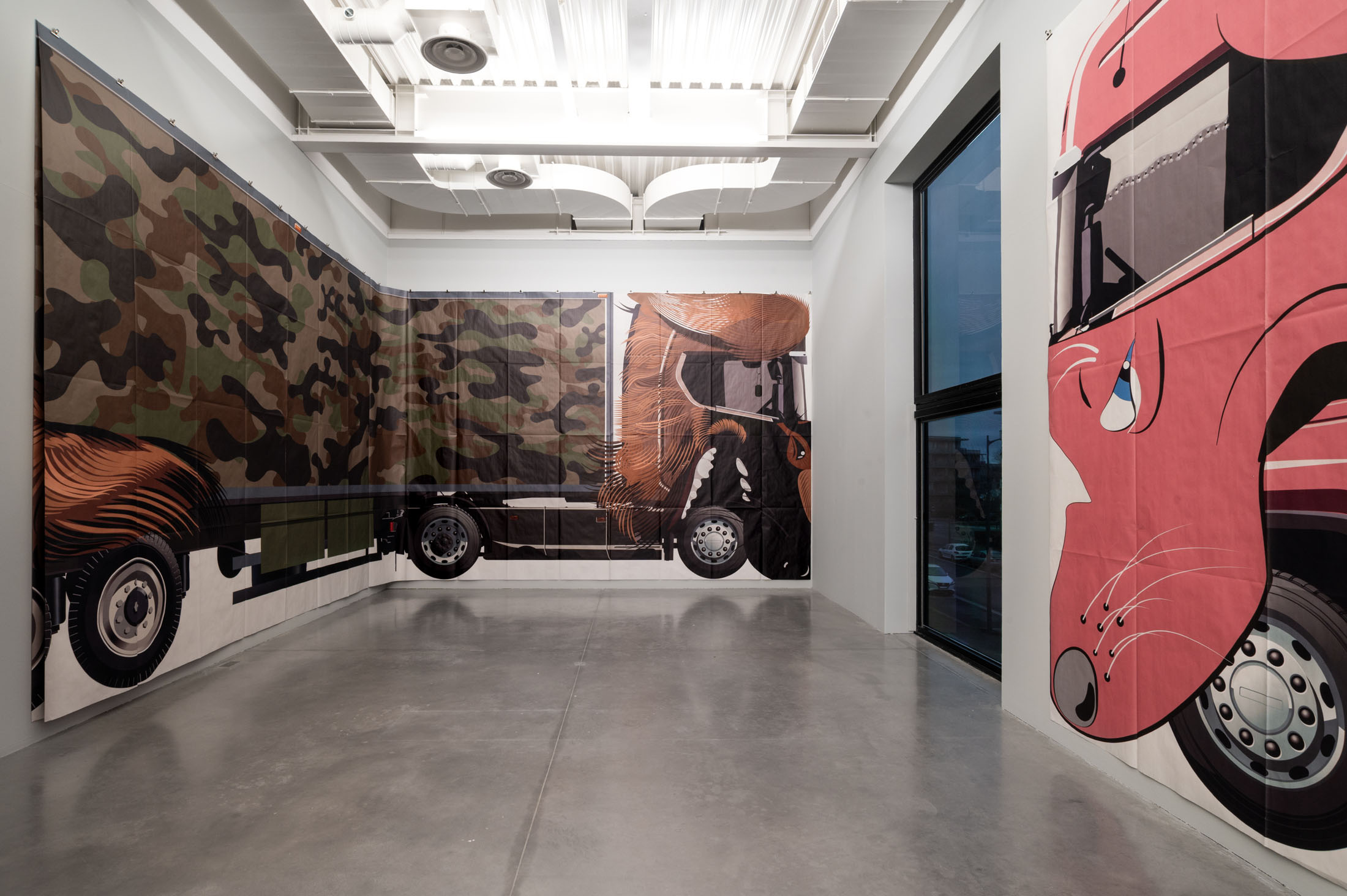
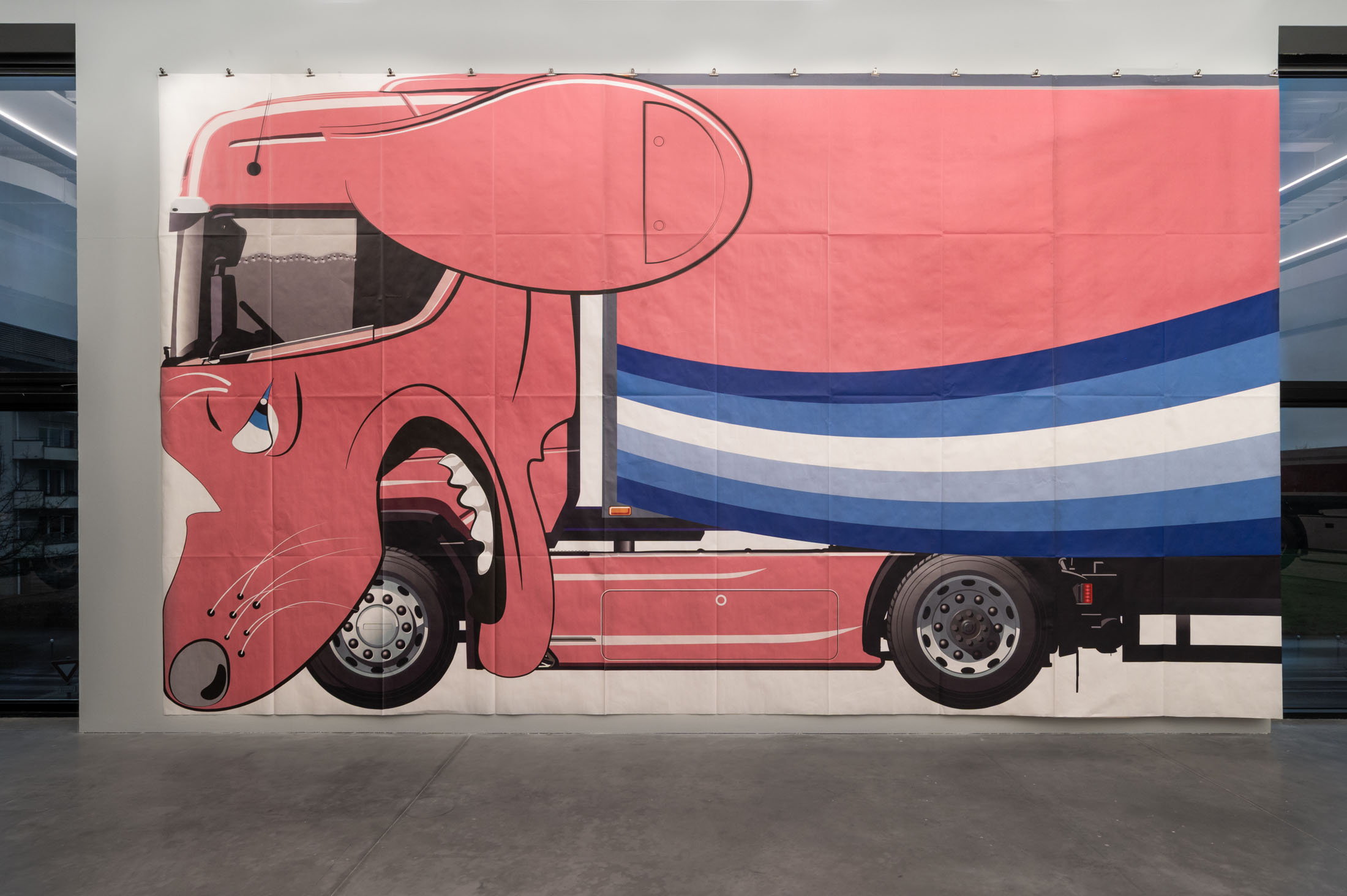
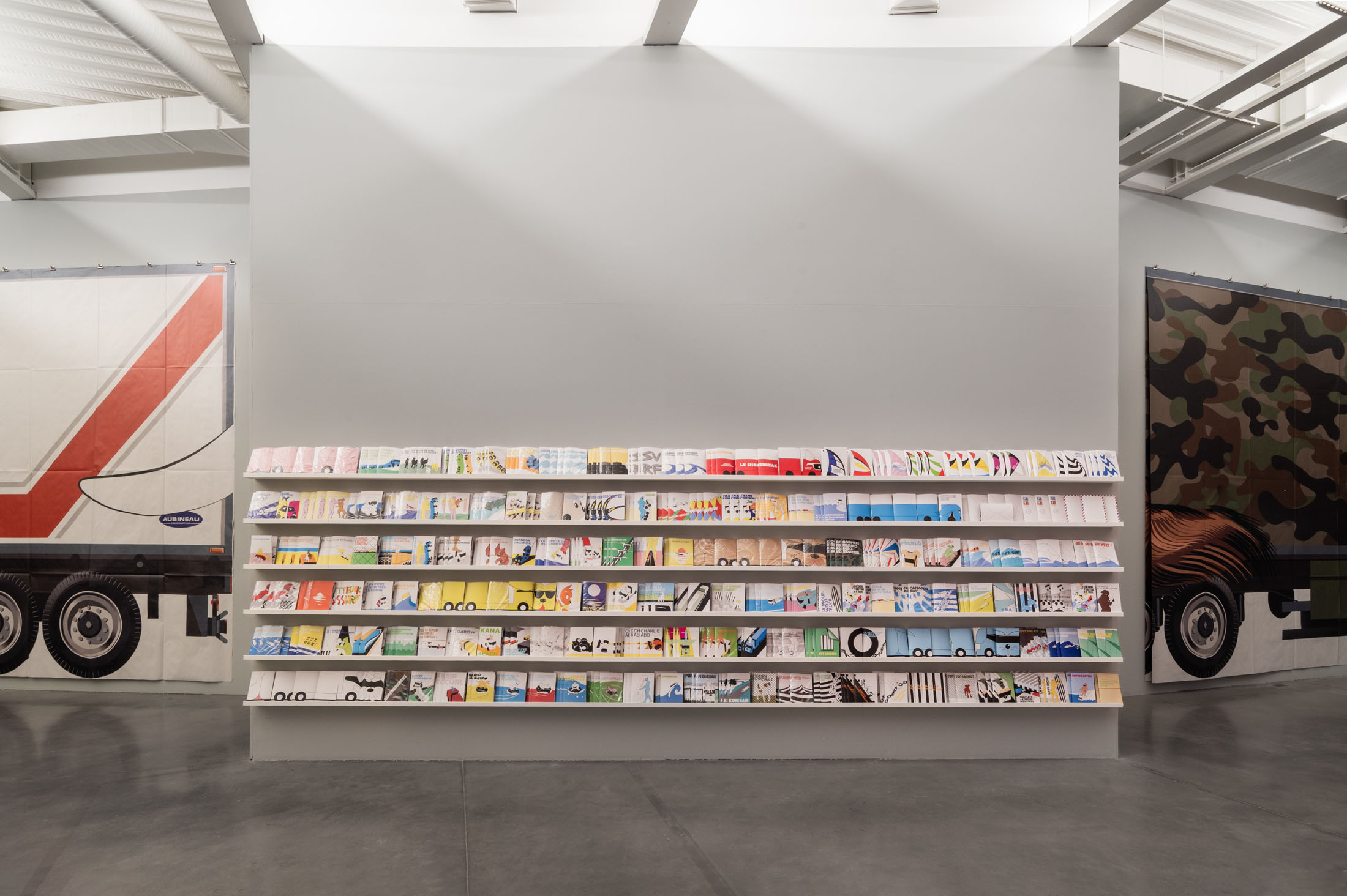
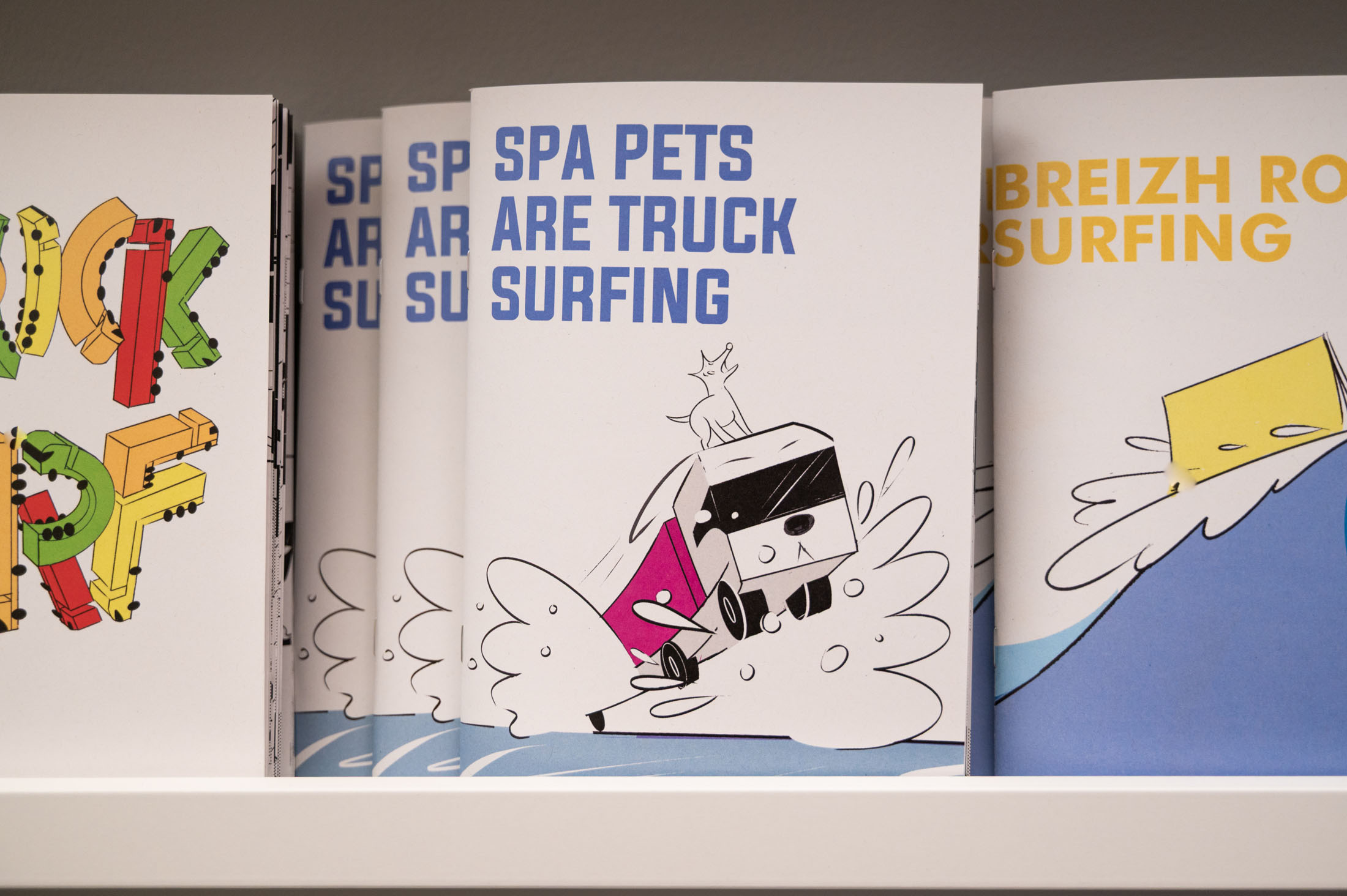
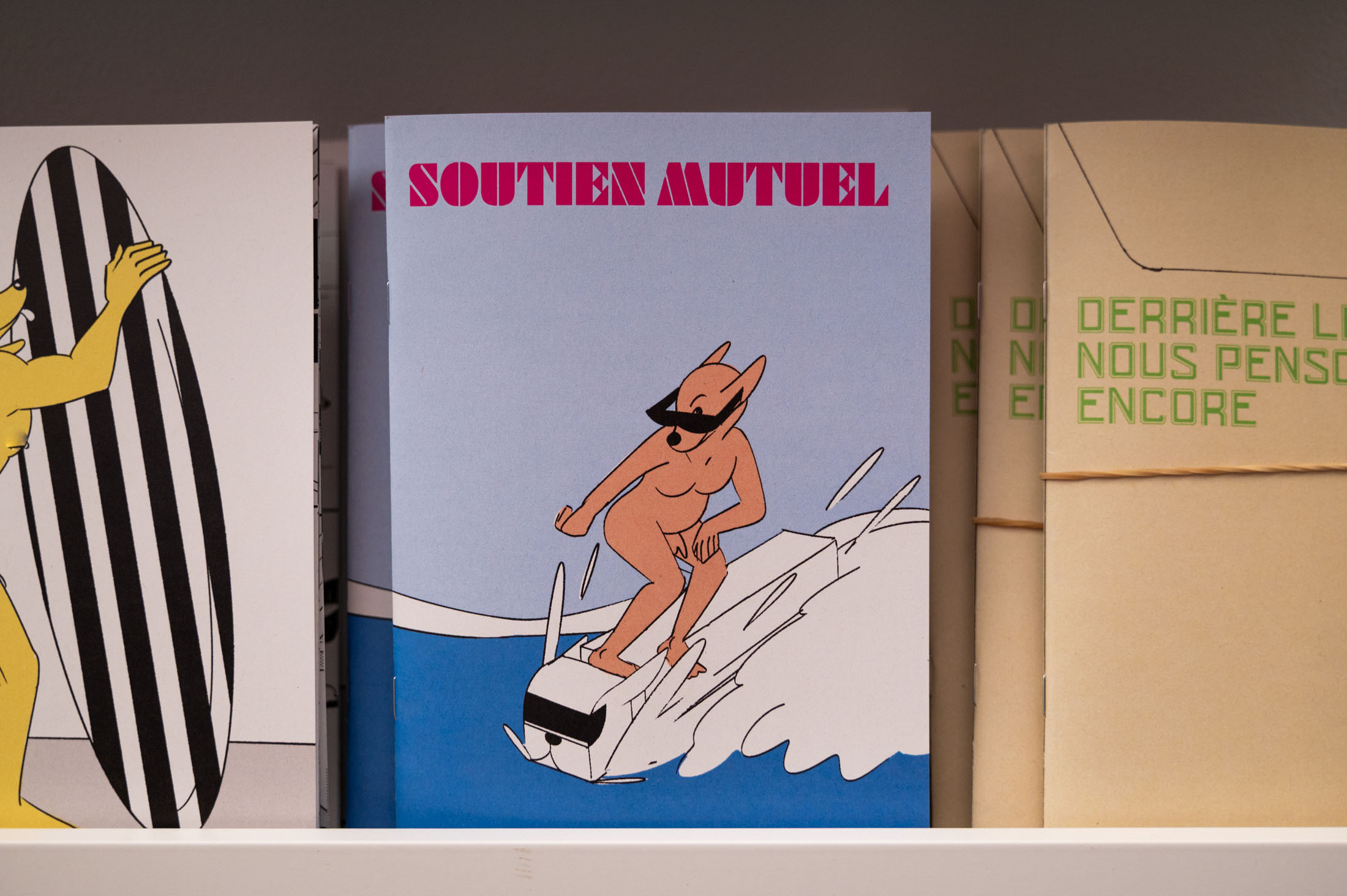
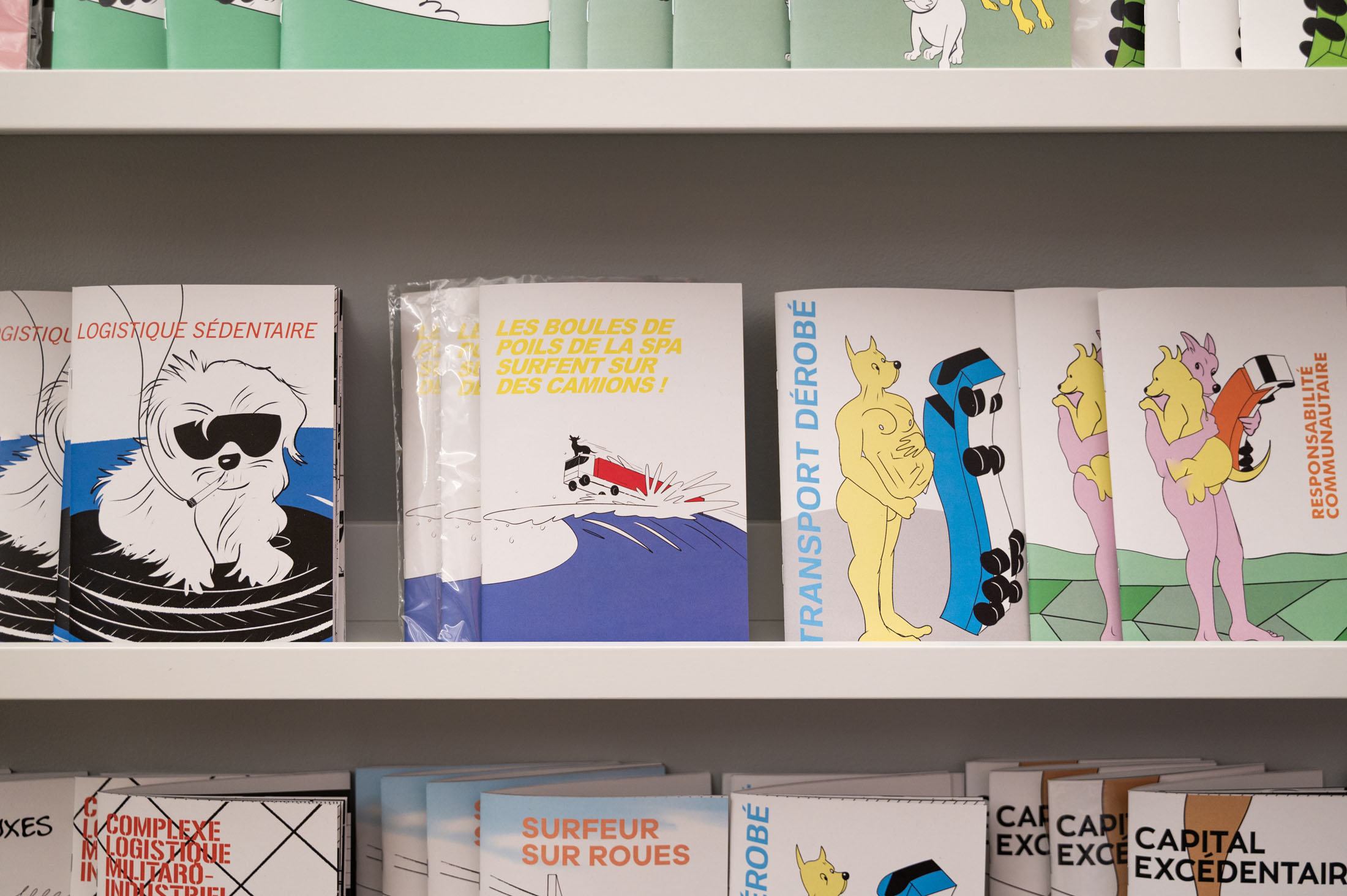
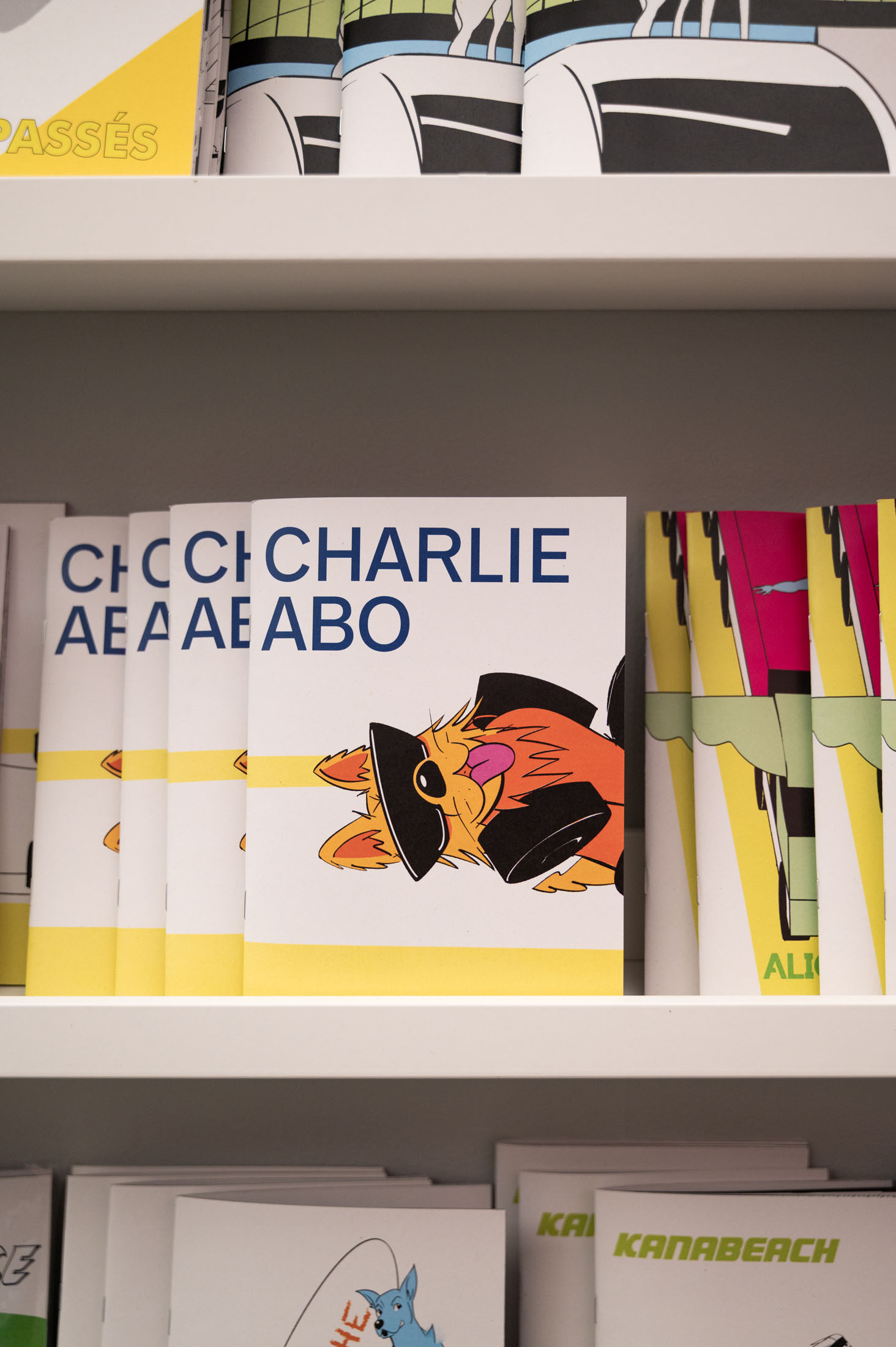
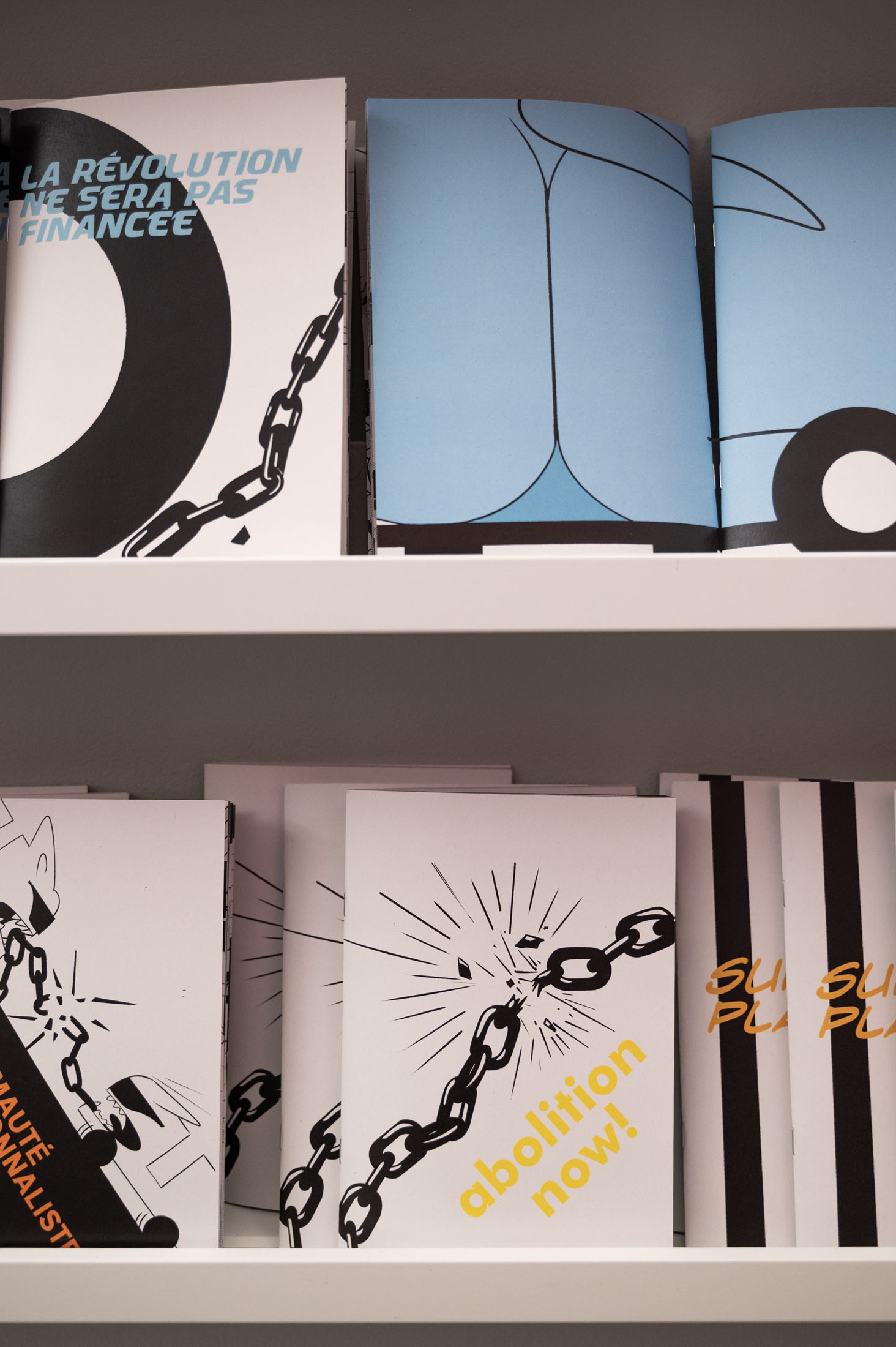
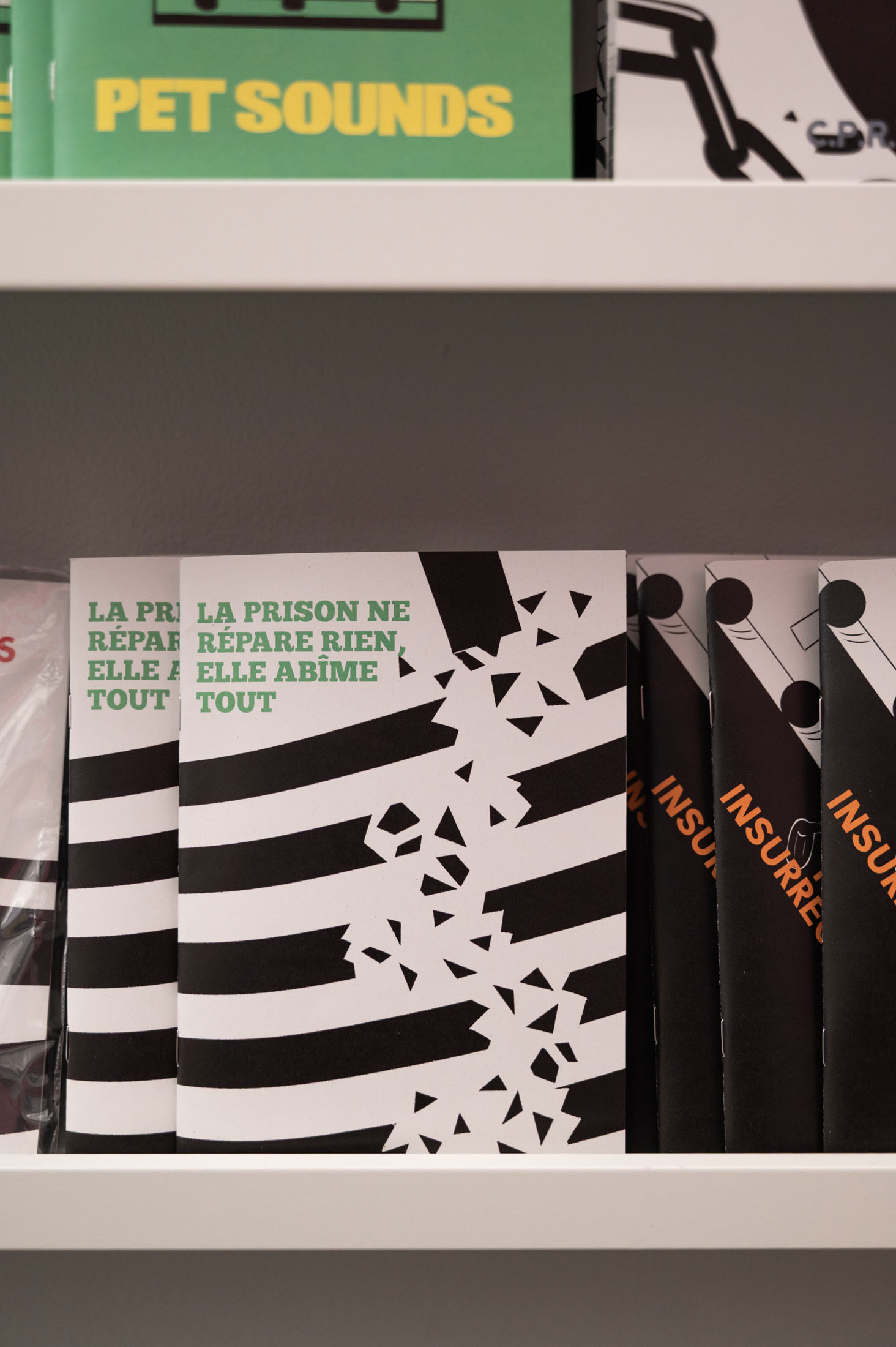
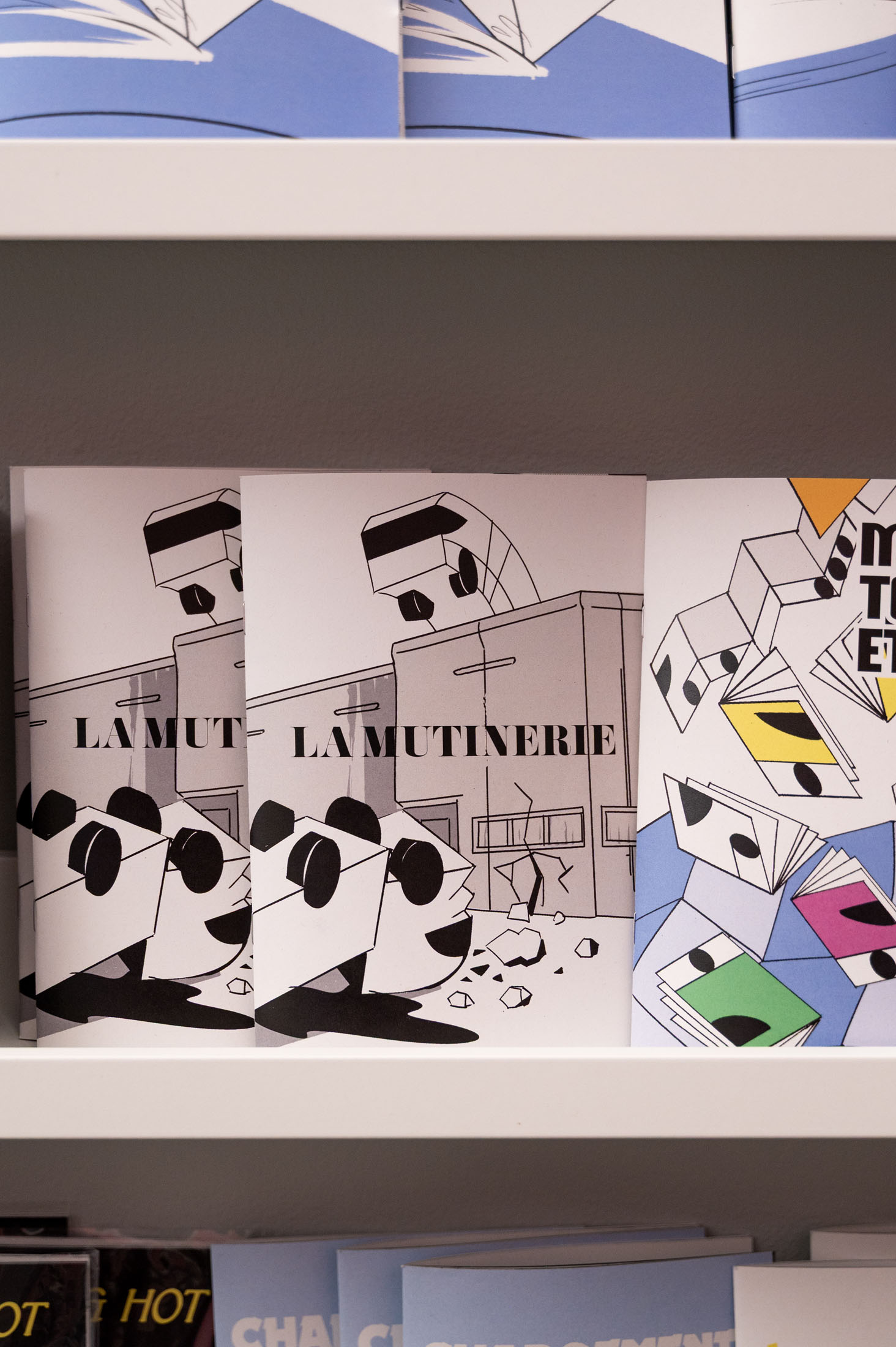
In the exhibition, conceived as a true environment, the public encounters both fanzines displayed on shelves and large prints hanging on the walls.Why did you choose these different formats, and what do they convey in your view?
I like to occupy the spaces of printed capitalism—such as large-format plotters, newsstands, or comic book stores—by adopting an approach I call “distribution art,” in reference to artists’ books and mail art. This allows works to circulate through channels different from those usually established.
This idea of printed mobility—with foldable formats that are easy to store and transport—also relates to the notion of circulation and fugitivity that runs through the exhibition. Hypothetically, thanks to the postal service, a truck could slip into your mailbox, or even pass through the doors of a prison.