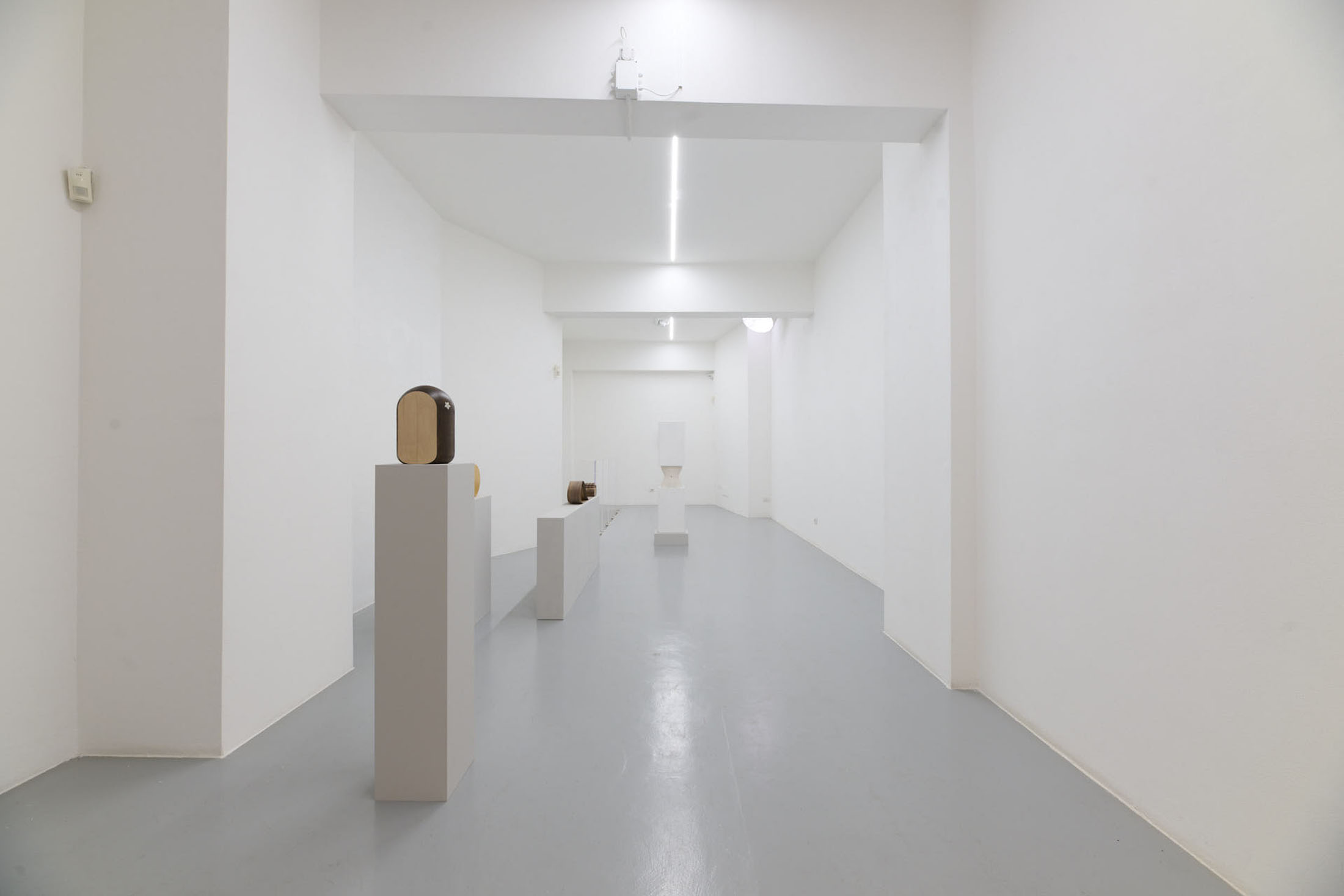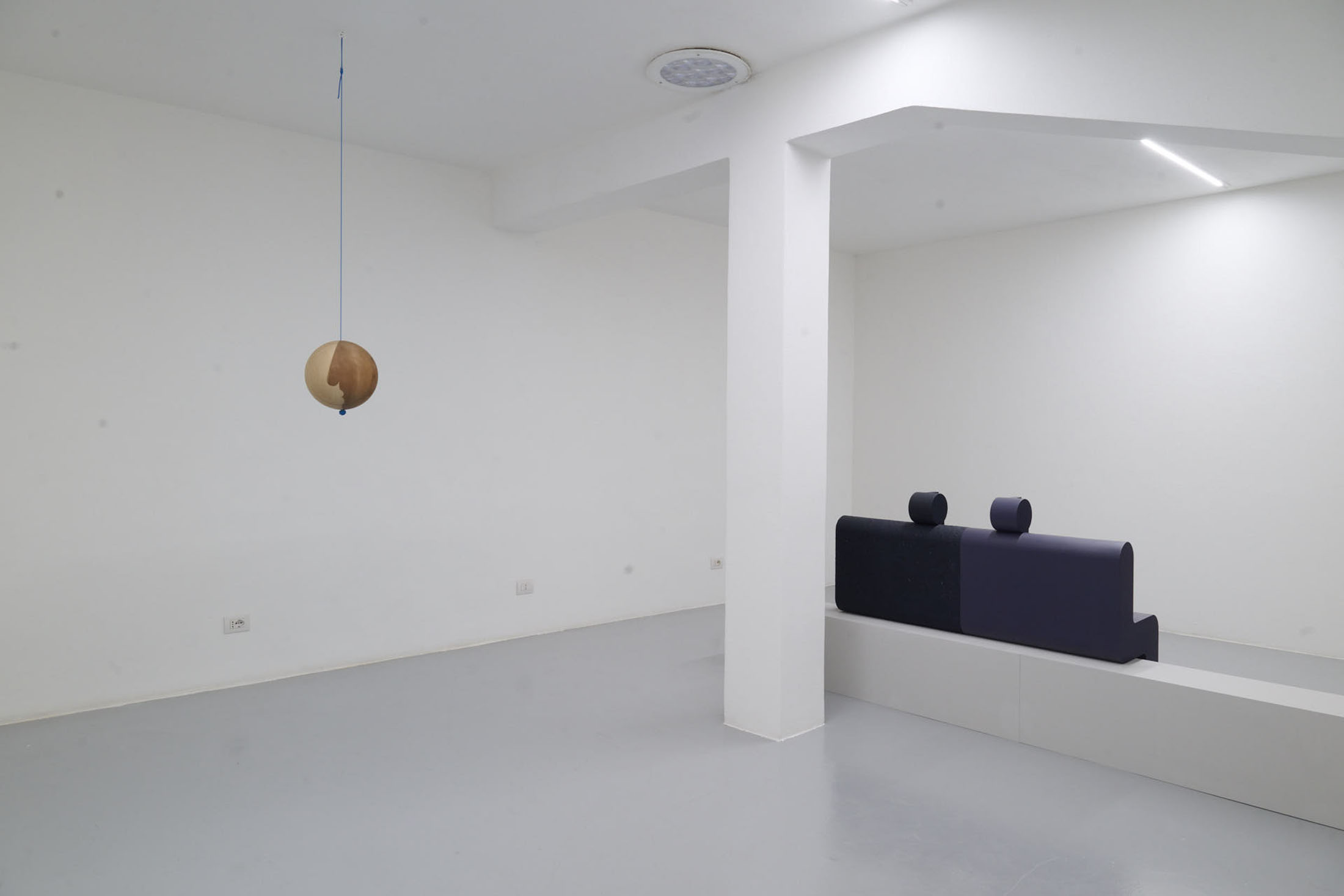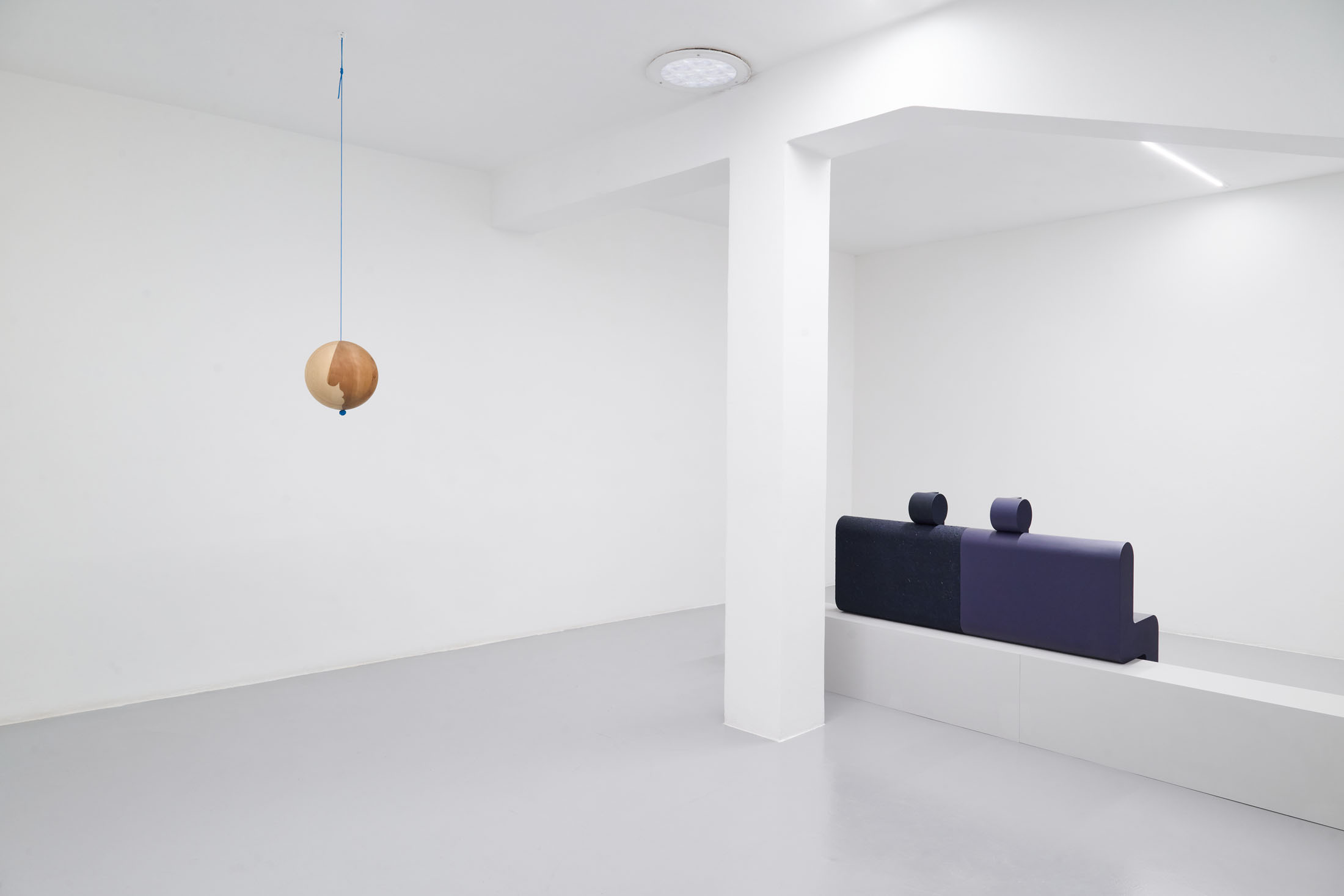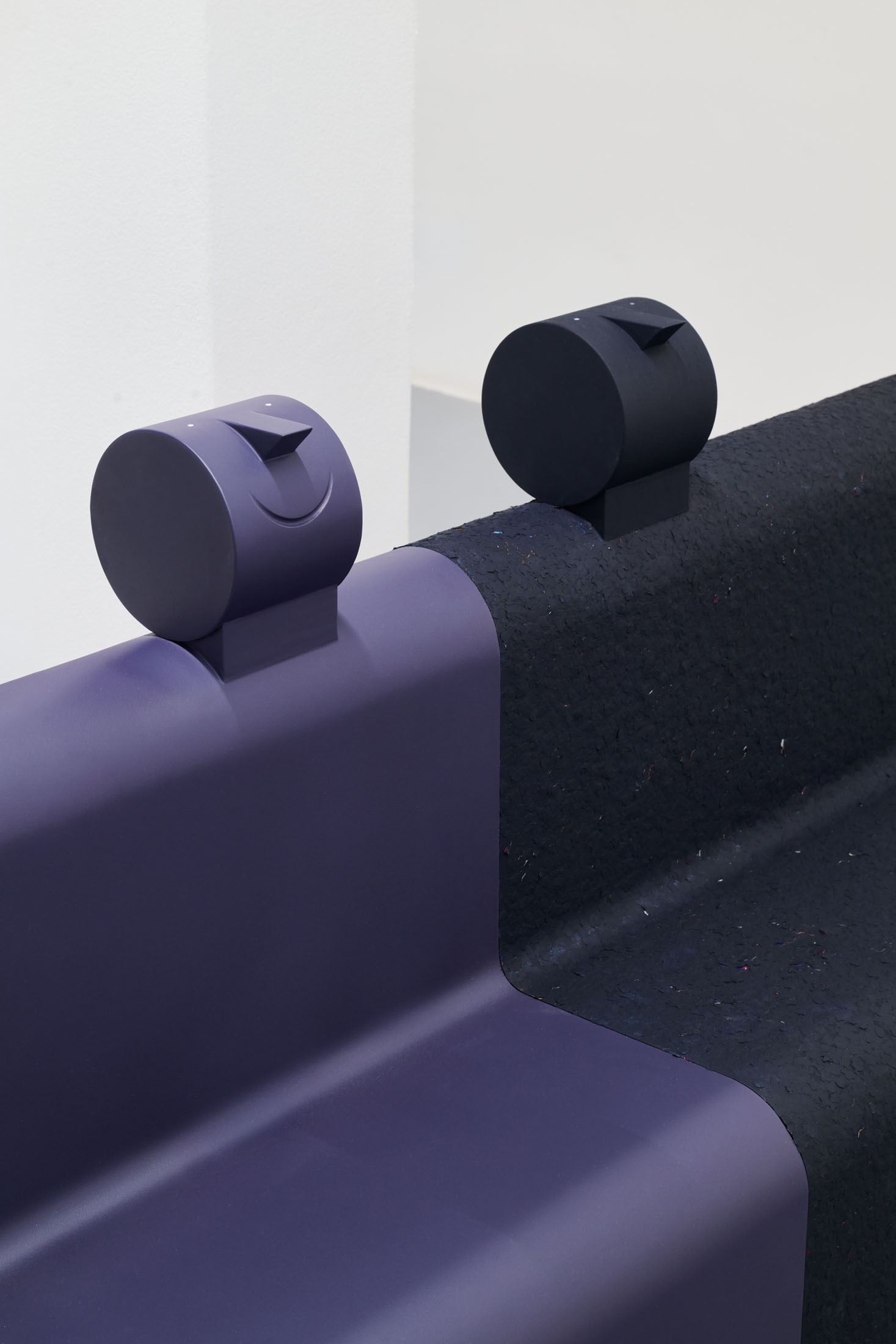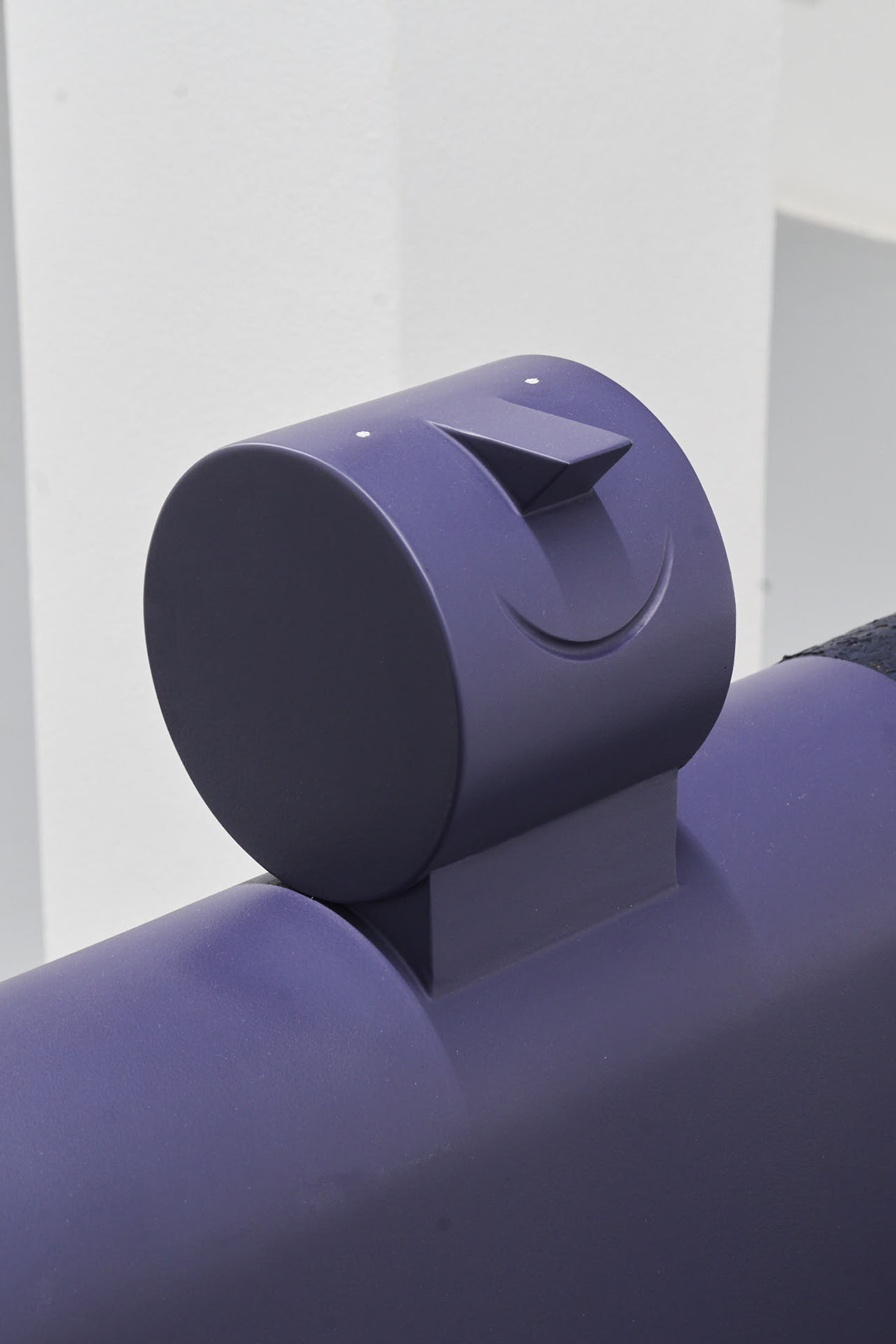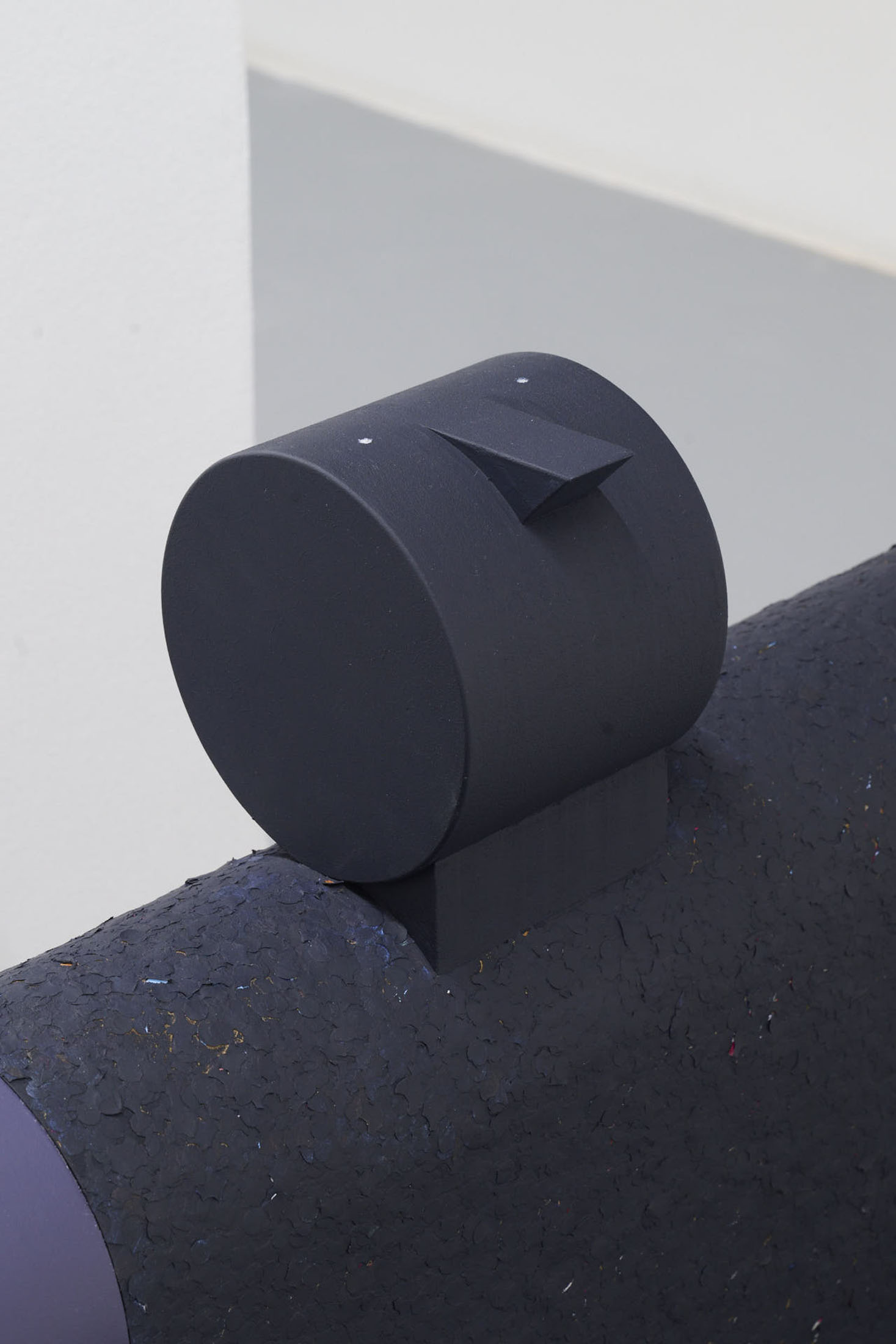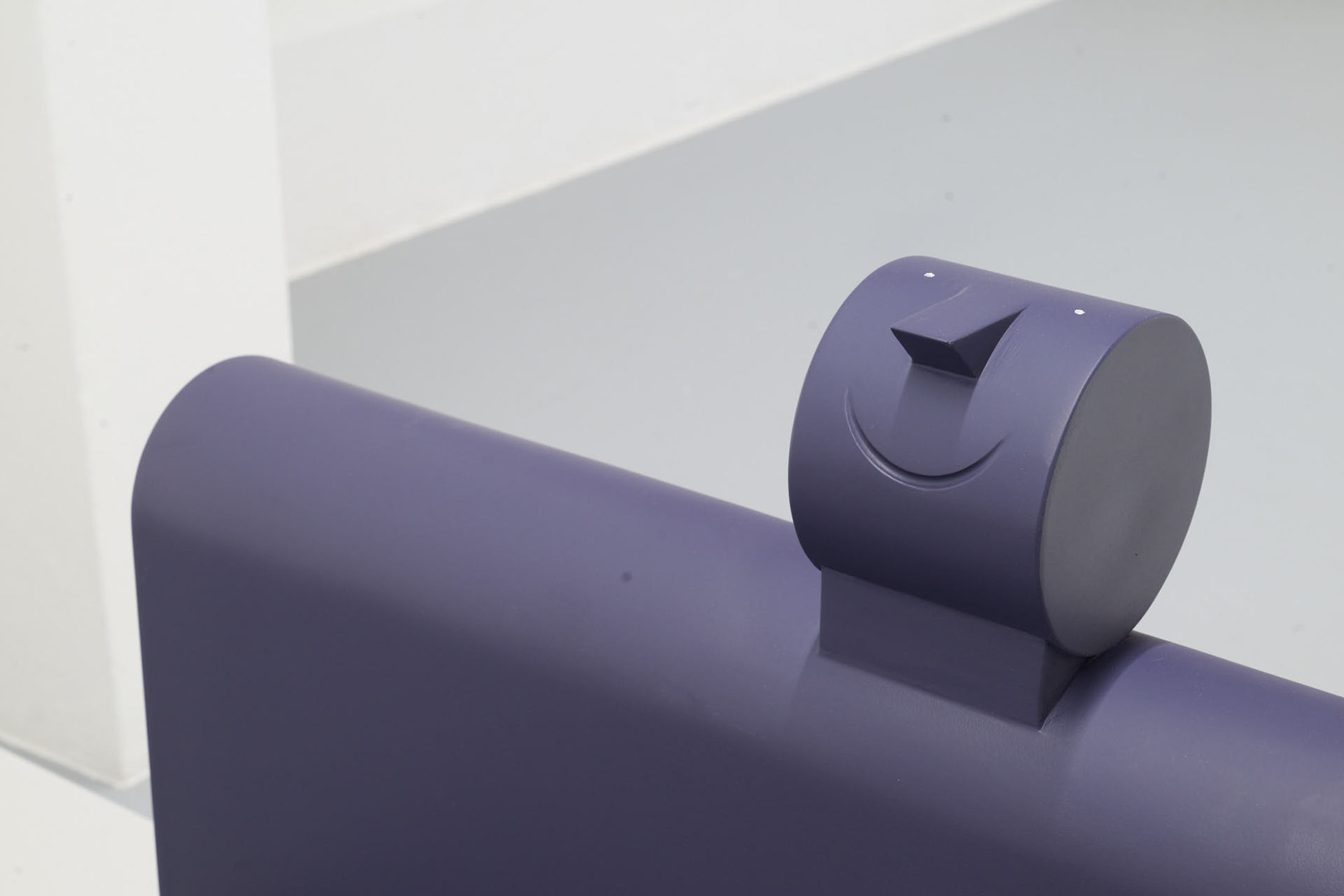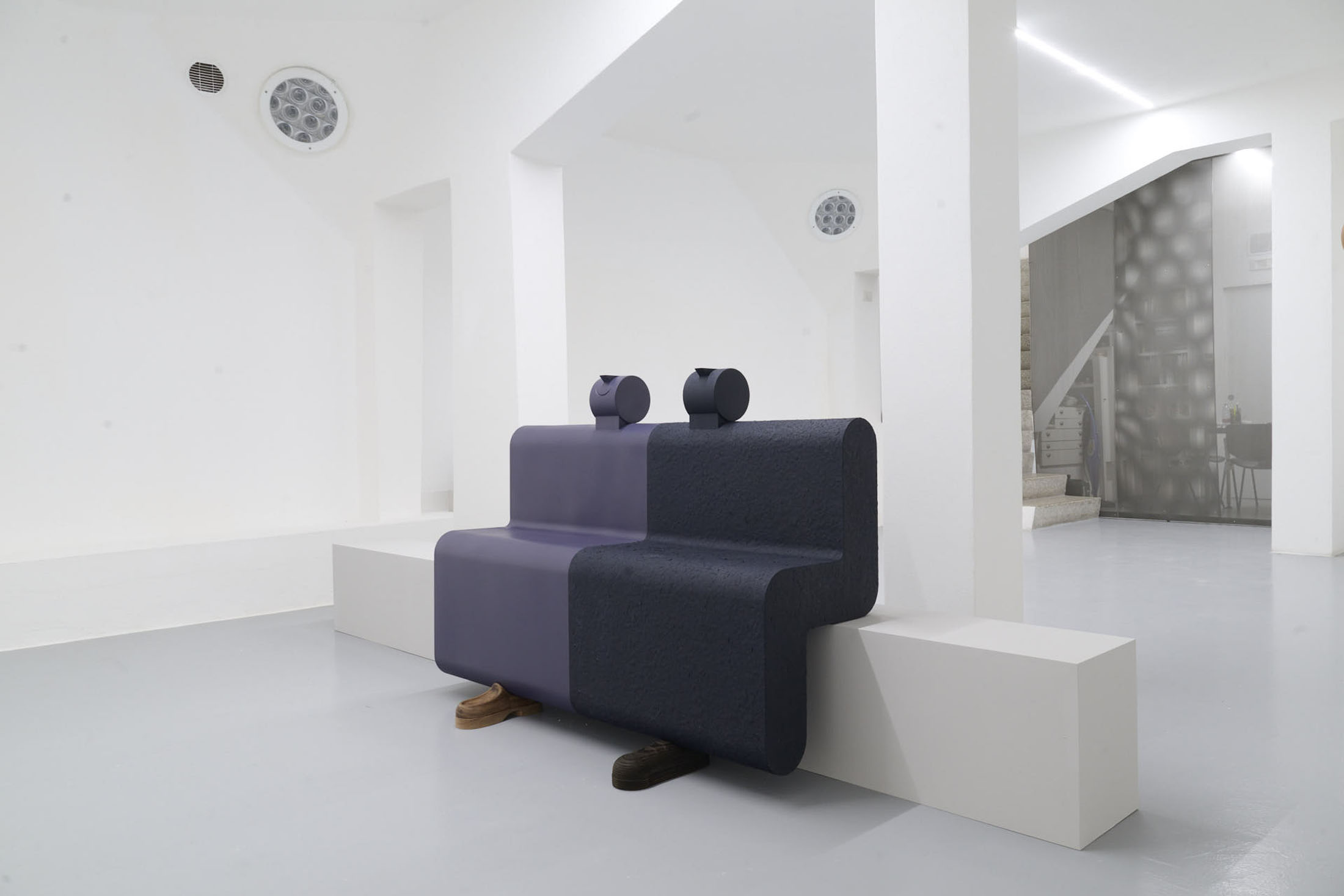
L’immaginazione ci salva, Federico Cantale’s second solo show at Triangolo, is an exhibition of sculpture – of sculptures, to be precise, seven in all. Reflecting on this medium, I find myself drawn back, almost unwittingly, to something Hidetoshi Nagasawa once said, sometimes in the 1970s: «the sculptor does not work on what he sees, but on what must happen. » I believe that statement holds, within the spell of a vision at once light and faintly paradoxical, certain questions that touch the very heart of what we have understood– and, I imagine, still understand – by sculpture. So then: where is sculpture? And what space is properly its own, and its alone?
Cantale’s practice, it seems to me, intersects these trajectories and turns them into a principle. I would like, then, to speak of the works on show not as objects in the strict sense, but as objects despite themselves: bodies that are at once gesture and image, playing out that ambivalence in ways neither symmetrical nor synchronous. Each is born as its own universe of making and of thought, and yet together they resonate as though they were so many essences within one quiet, flourishing garden.
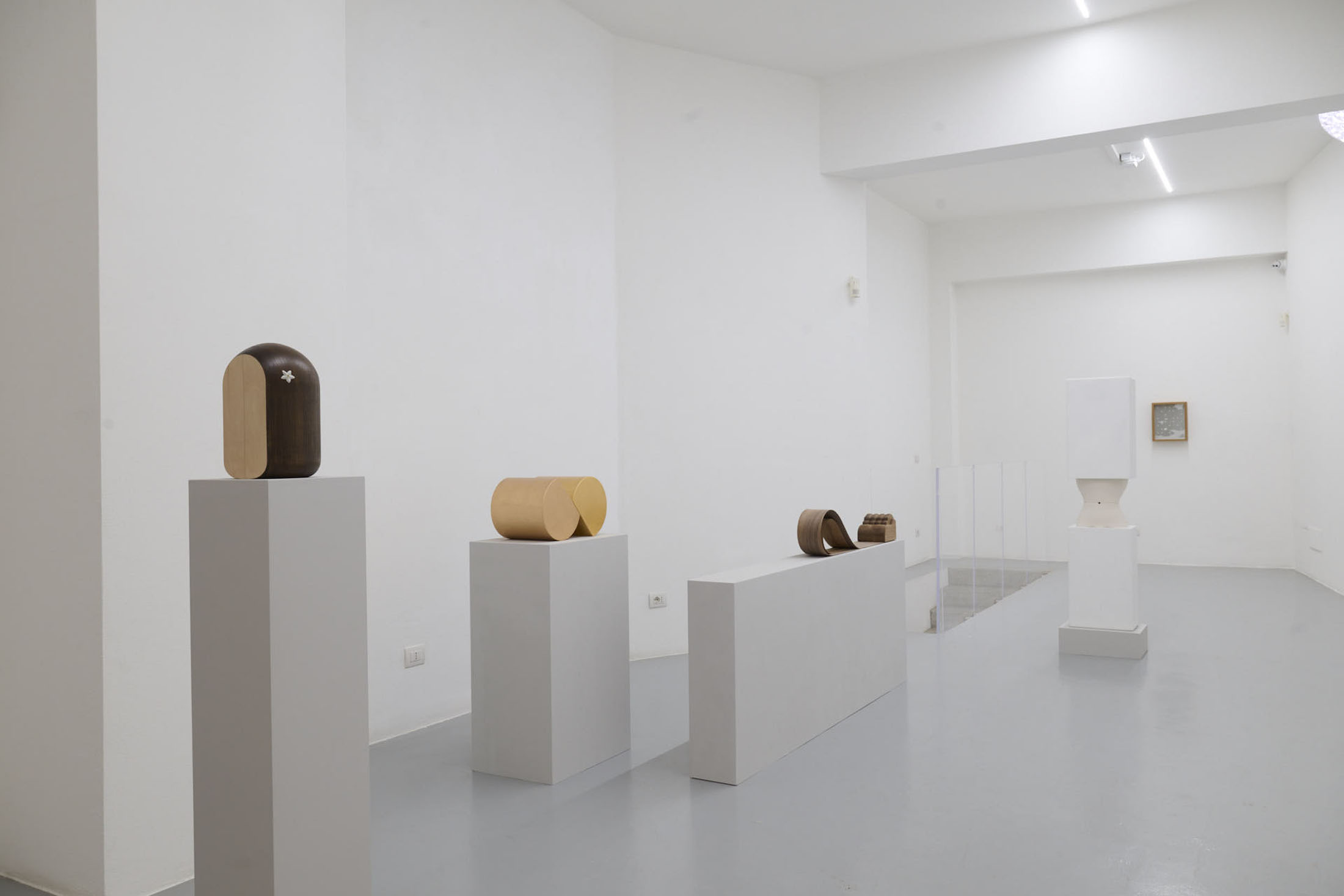
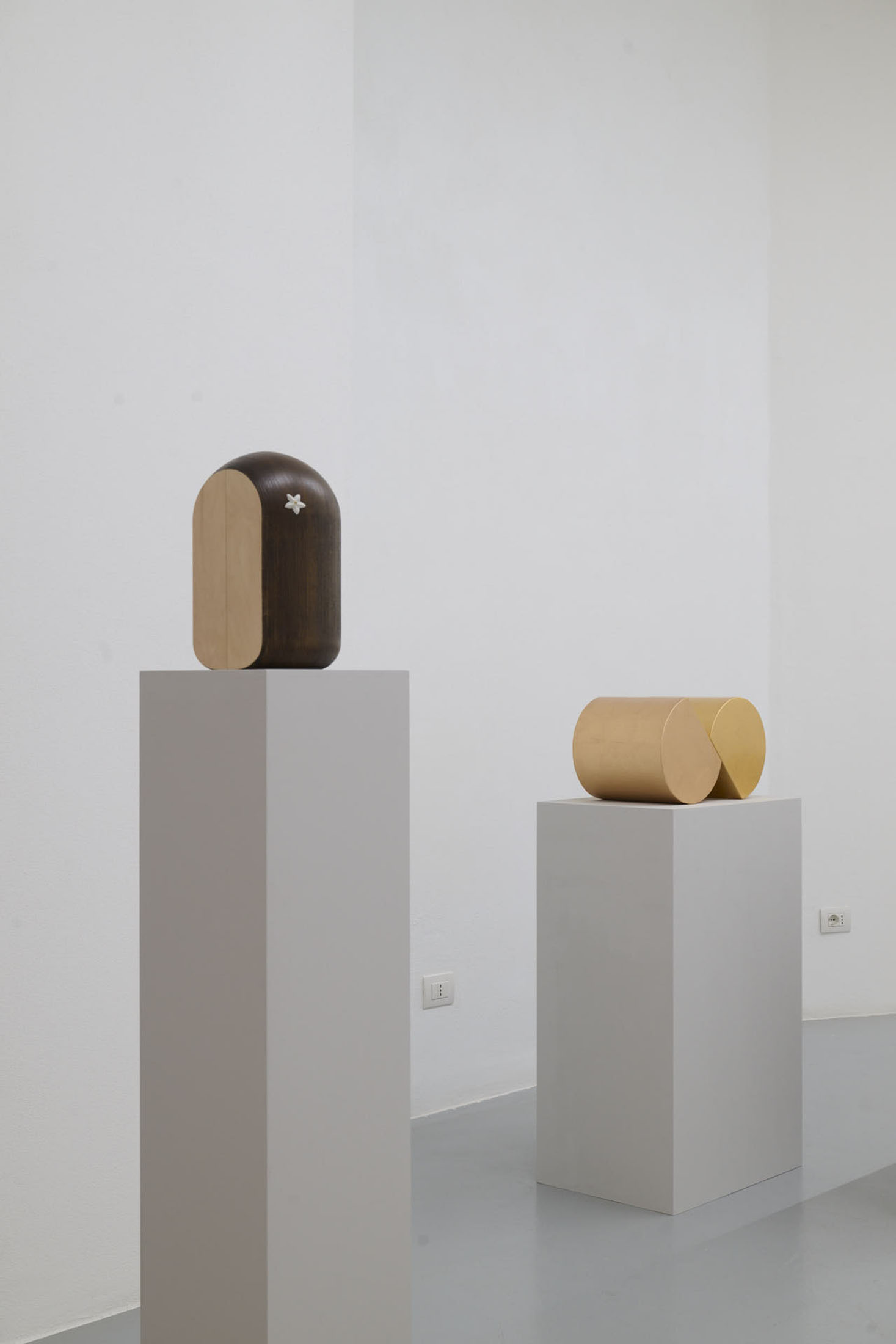
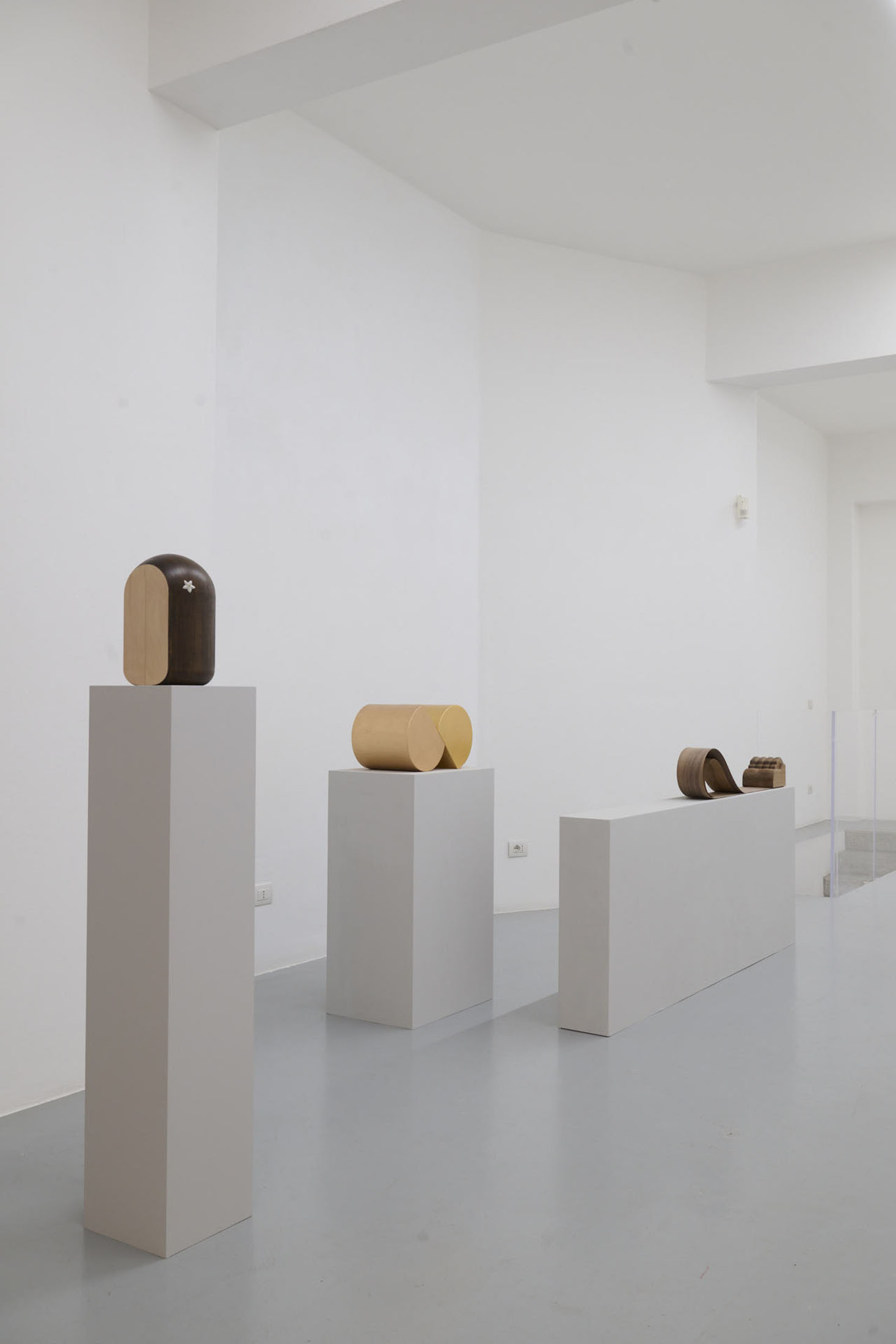
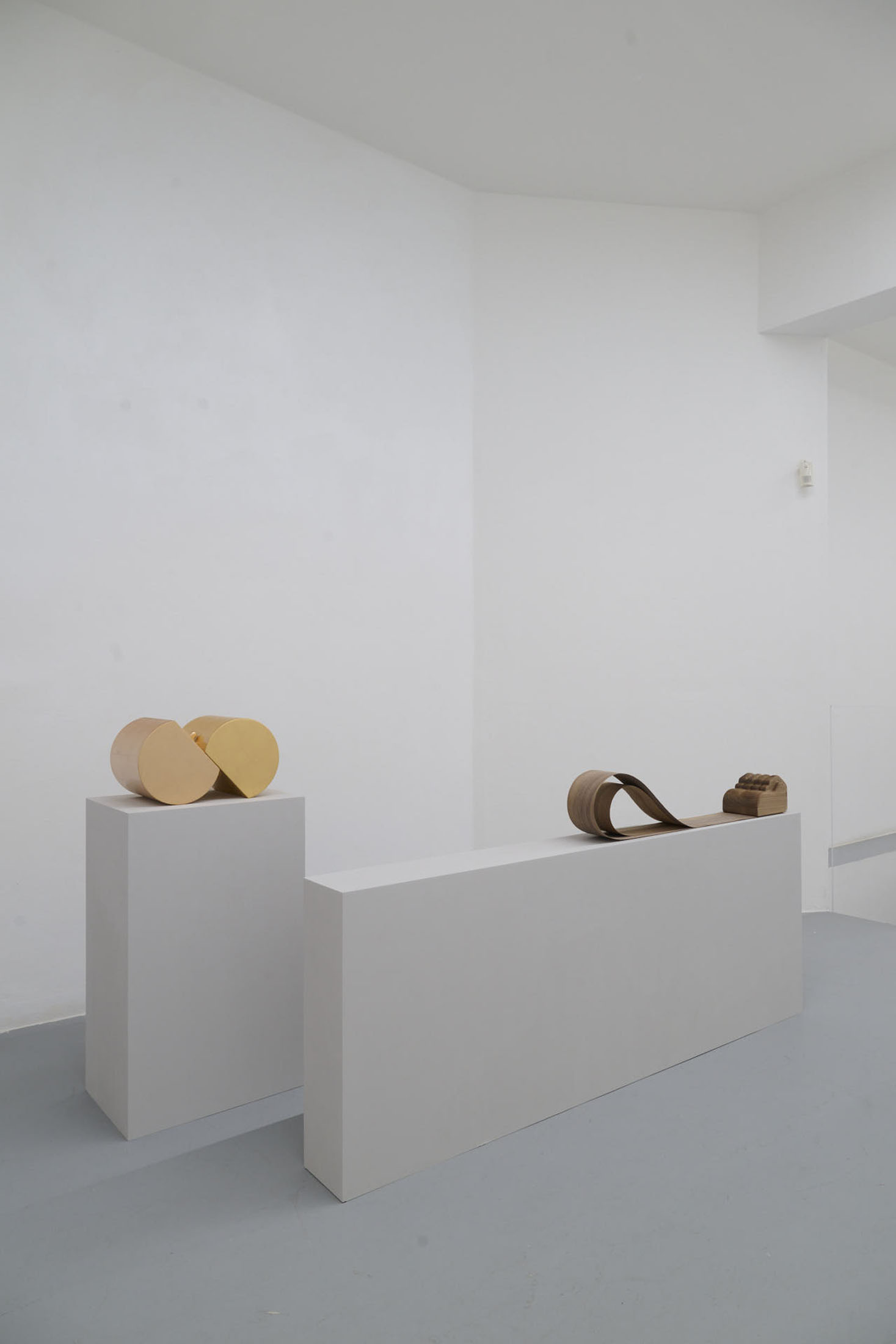
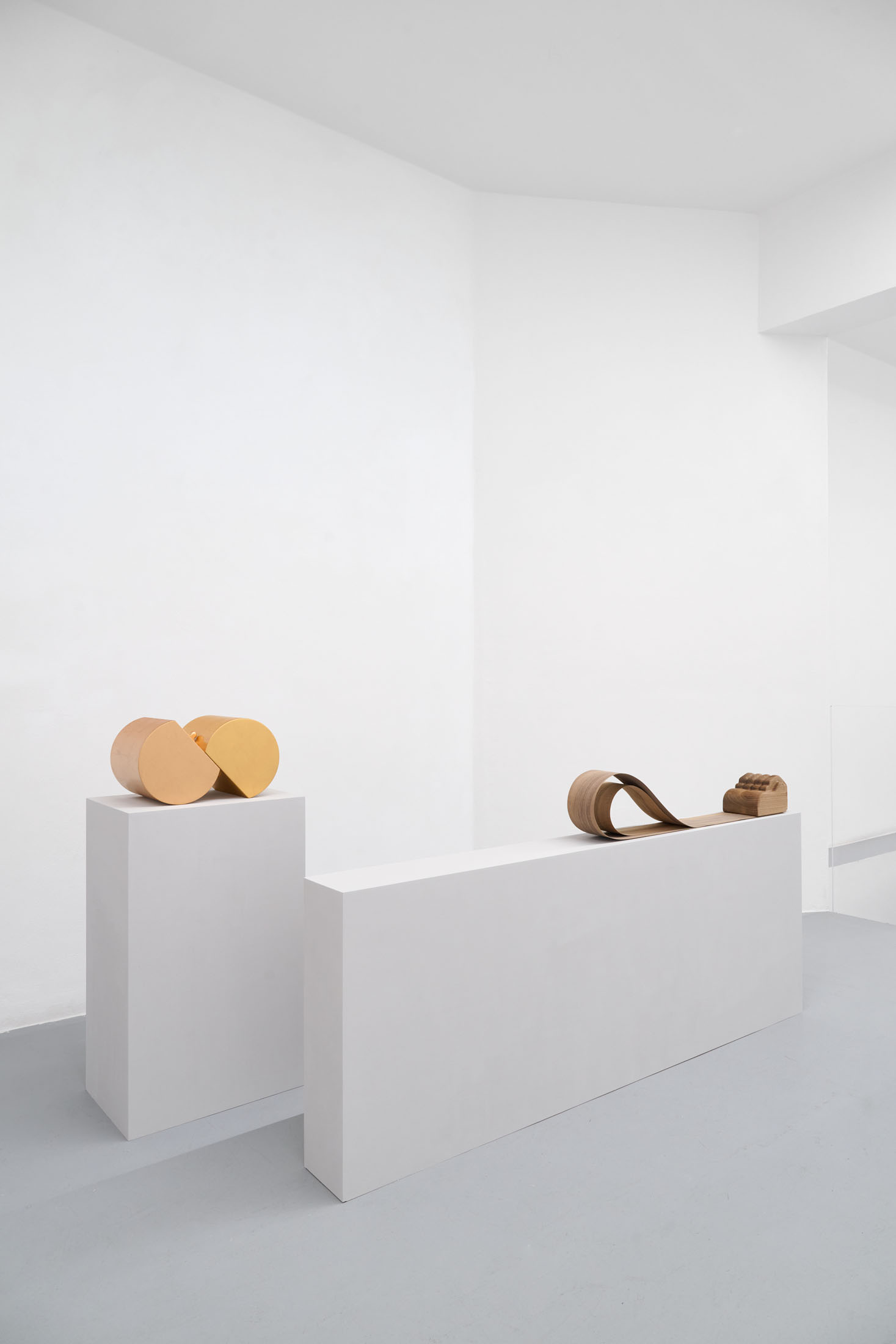
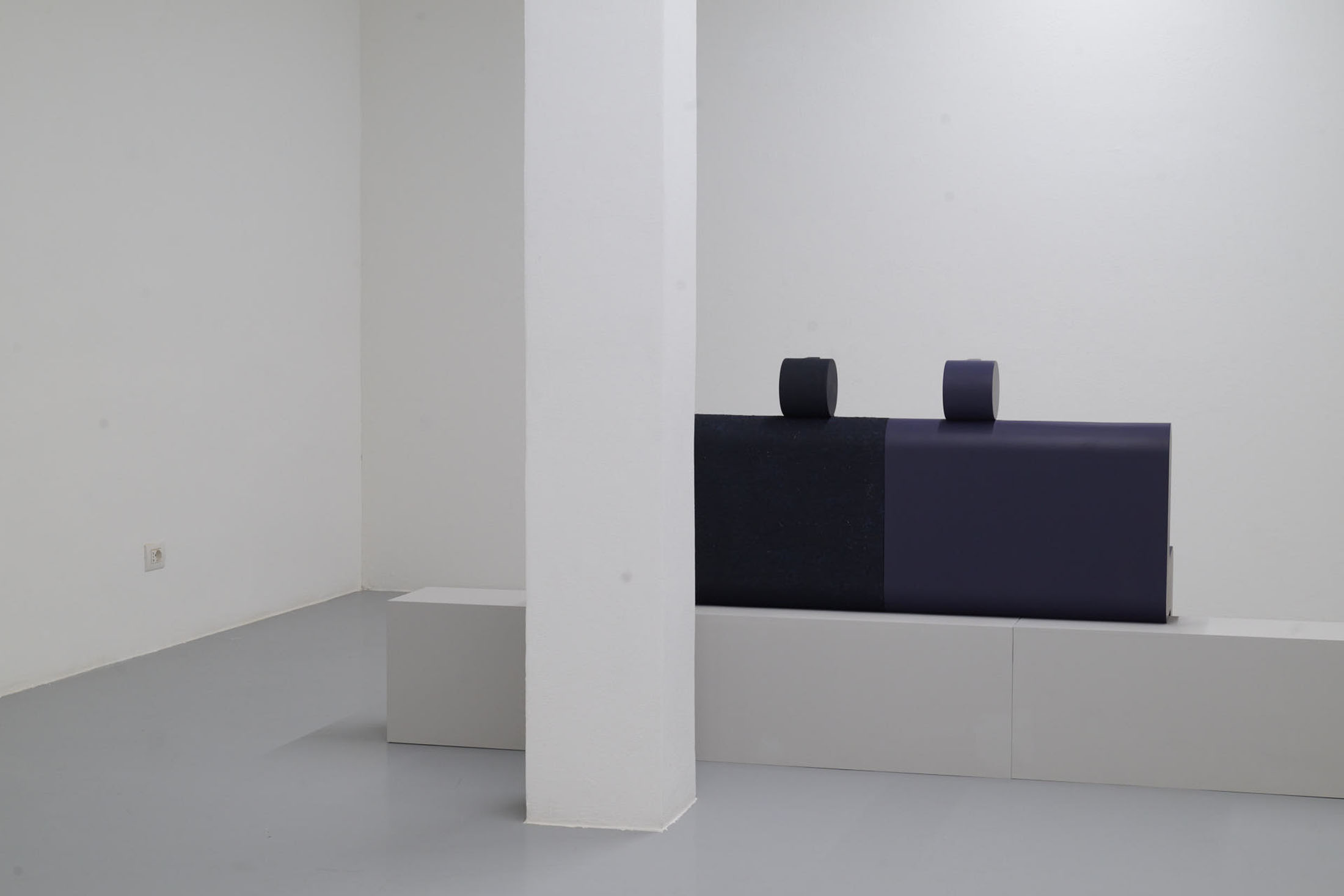
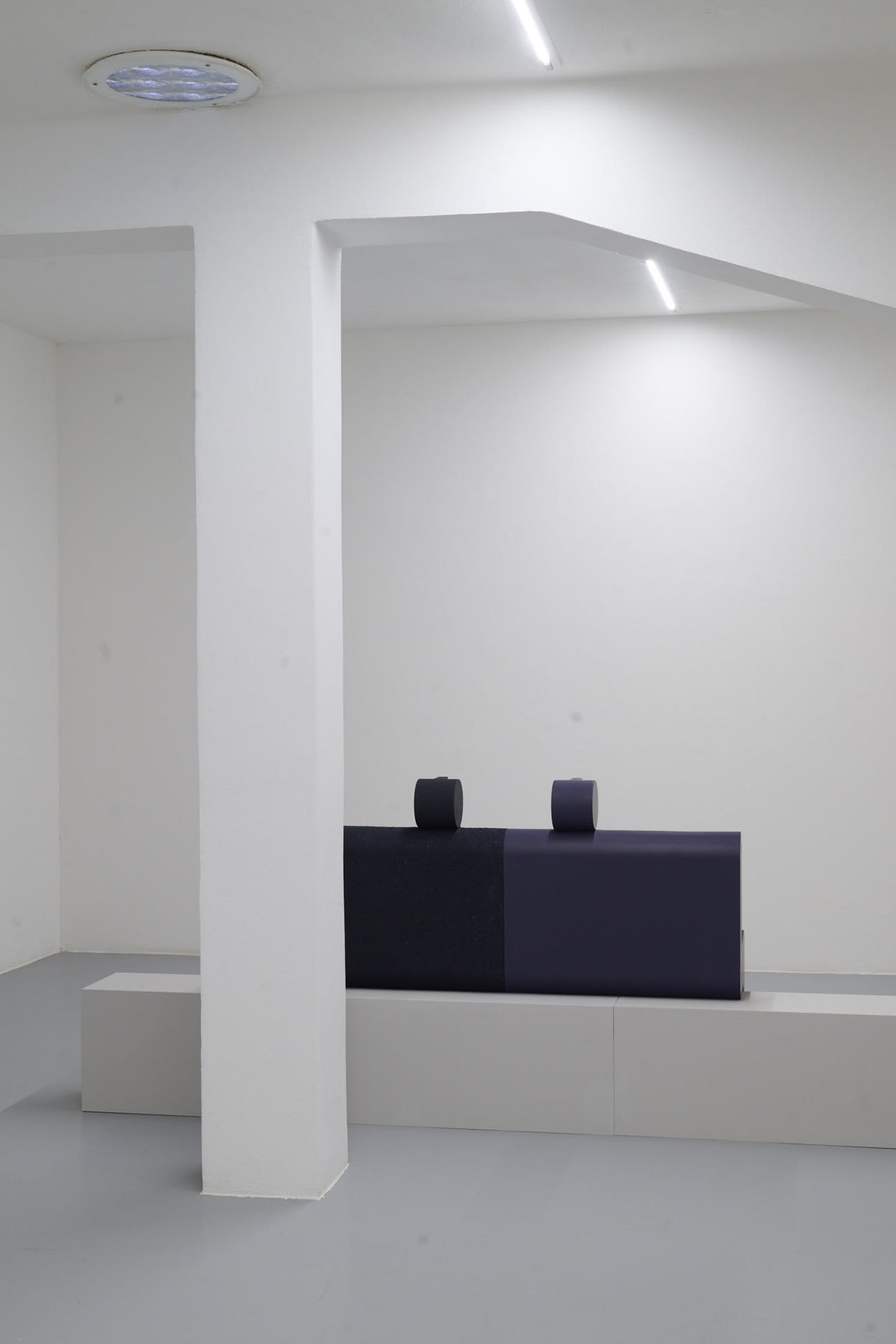
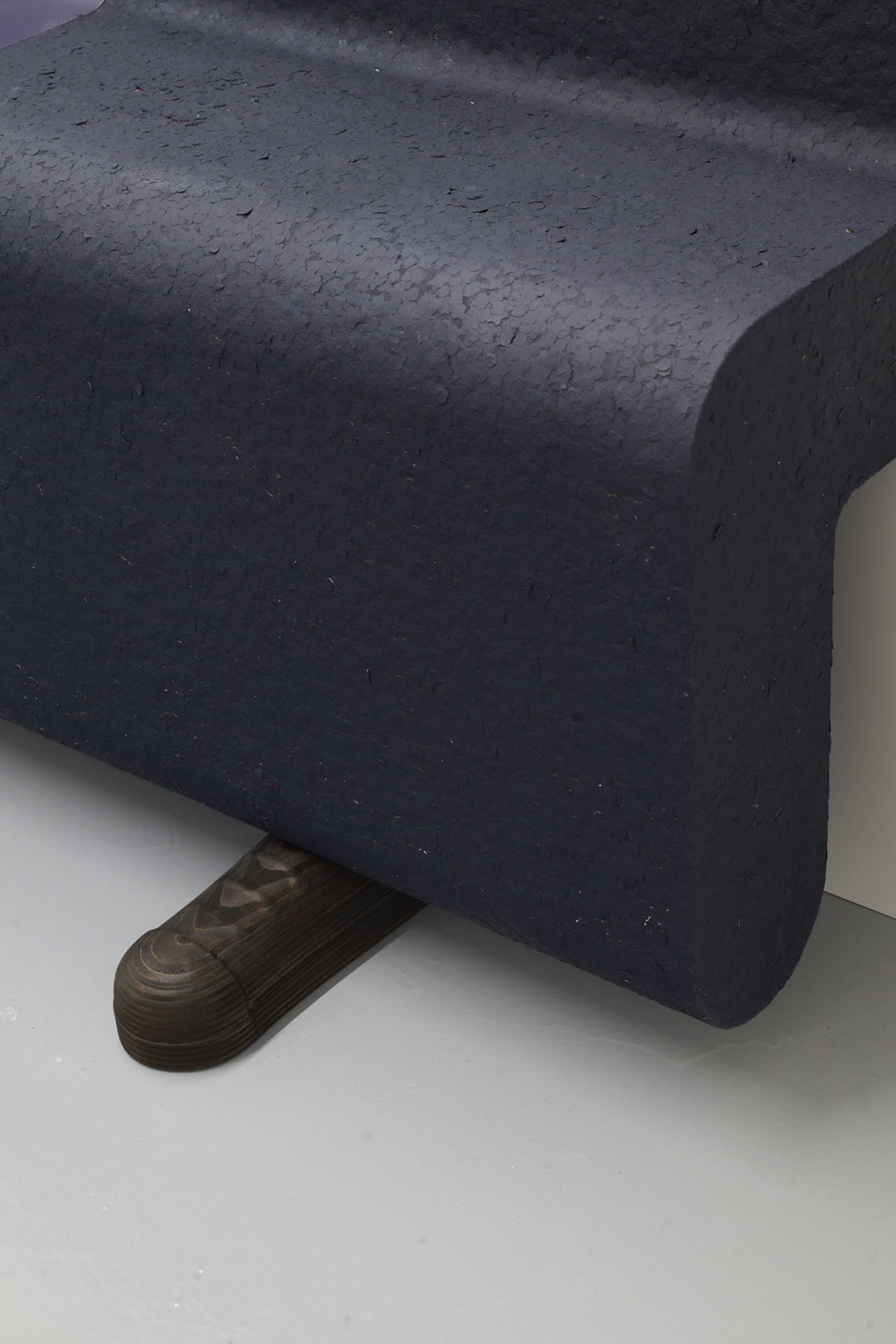
This multiplicity – apparent, and rooted in the conviction that the forms of the world reveal themselves as circles on water or as interlocking geometries of the heavens – finds its clearest example, I think, in the presence of the plinth, or in its absence. In Cantale, reclaiming the plinth serves a function more ostensive than structural: the sculptures settle upon it, some solidly stable, others balanced like tightrope walkers, giving material form to a space at once innate to them and interchangeable. More deeply still, these works grapple at close quarters with certain key nodes in sculpture’s great lexicon. I think, above all, of the tension between matter and materials; but also, of that between bulk and presence, between allusion and mimesis, and, most of all, between a space marked out by the cardinal axes and a counterpart that exceeds it, widens it, frays it at the edges. Even disorients it.
His works, then, emerge from the real, bound up directly with the wonder the artist experiences in encountering the things of the world. These pieces channel that wonder into a habit of technical gestures, always inevitable, at times extraordinarily simple, at others deliberately excessive.
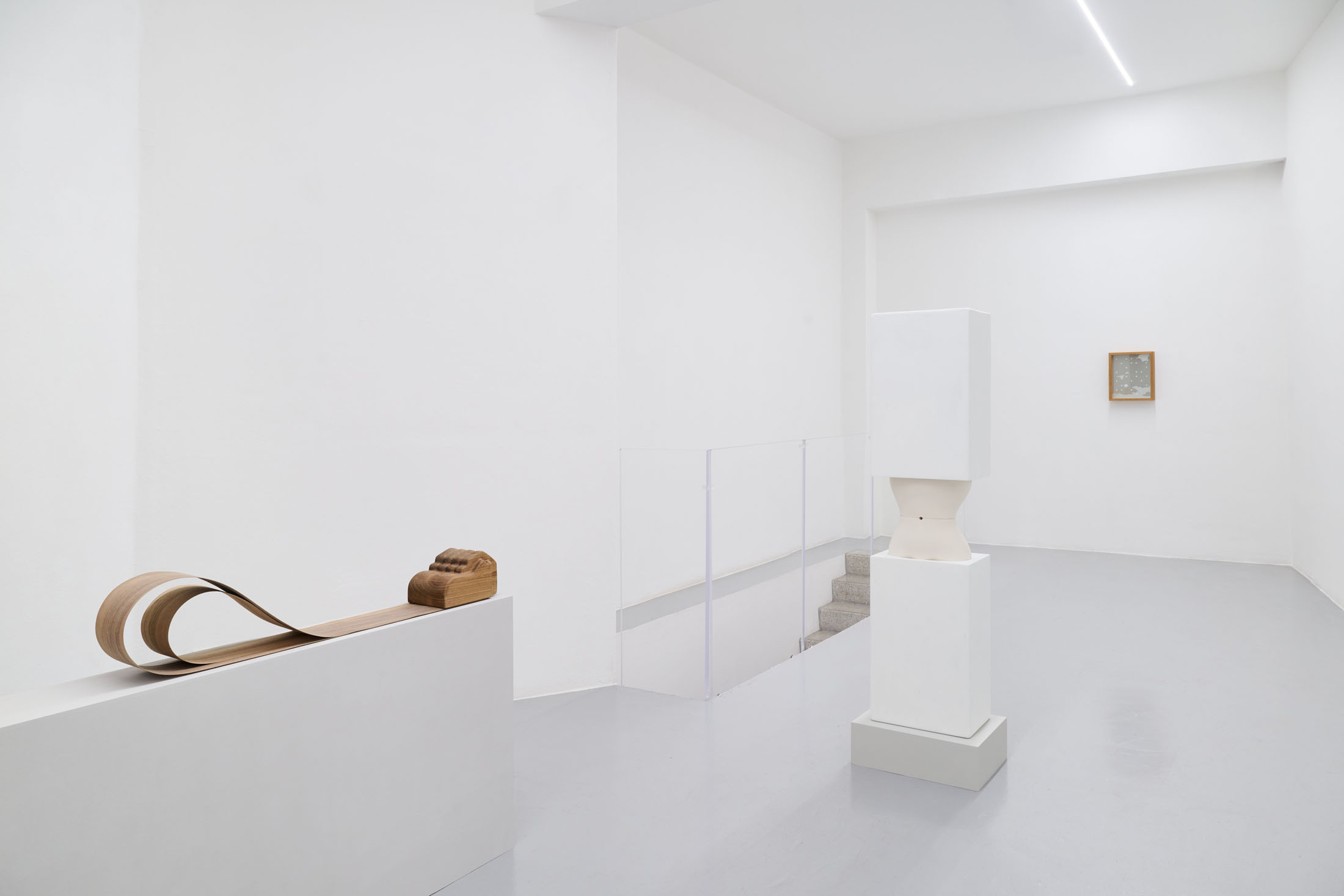
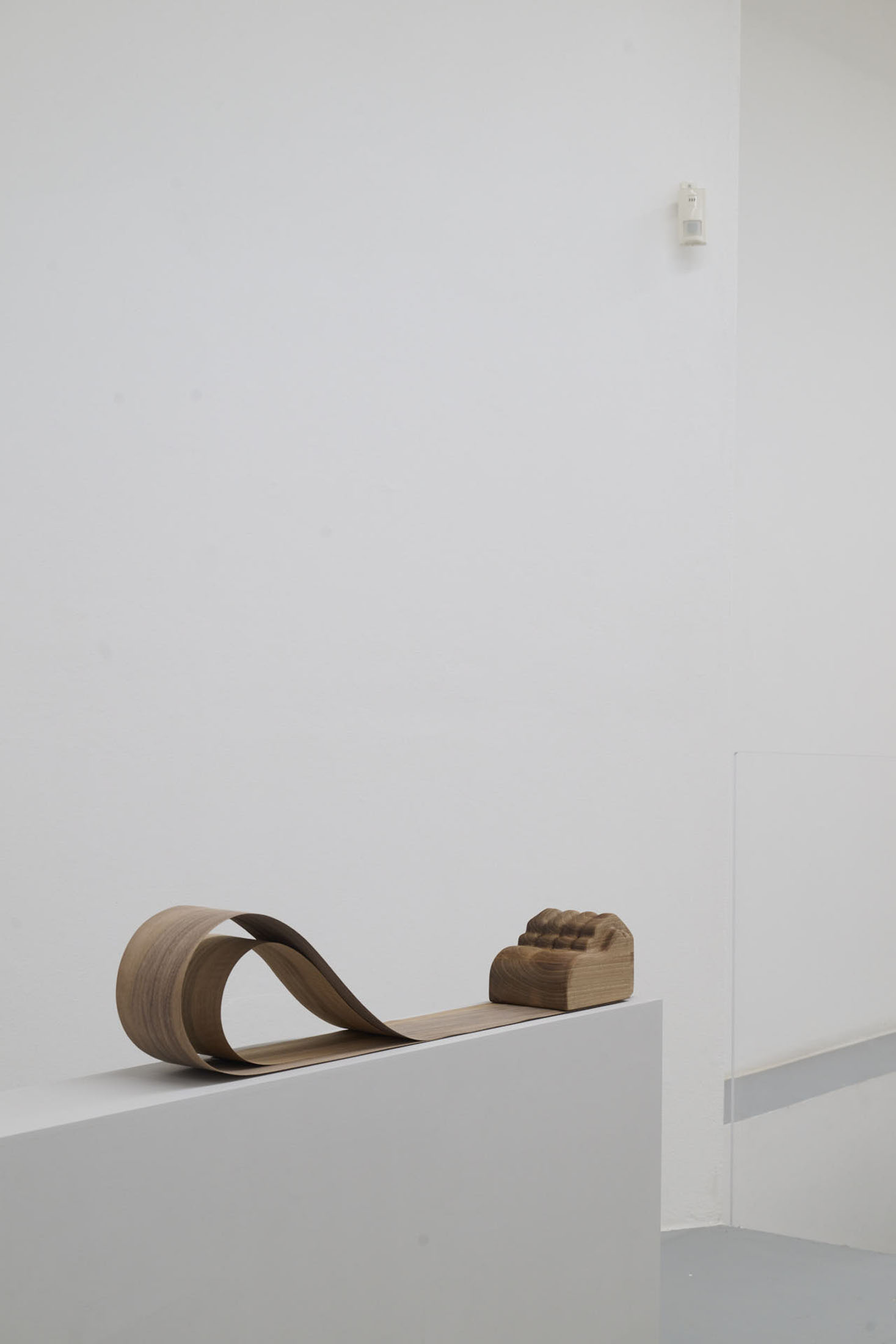
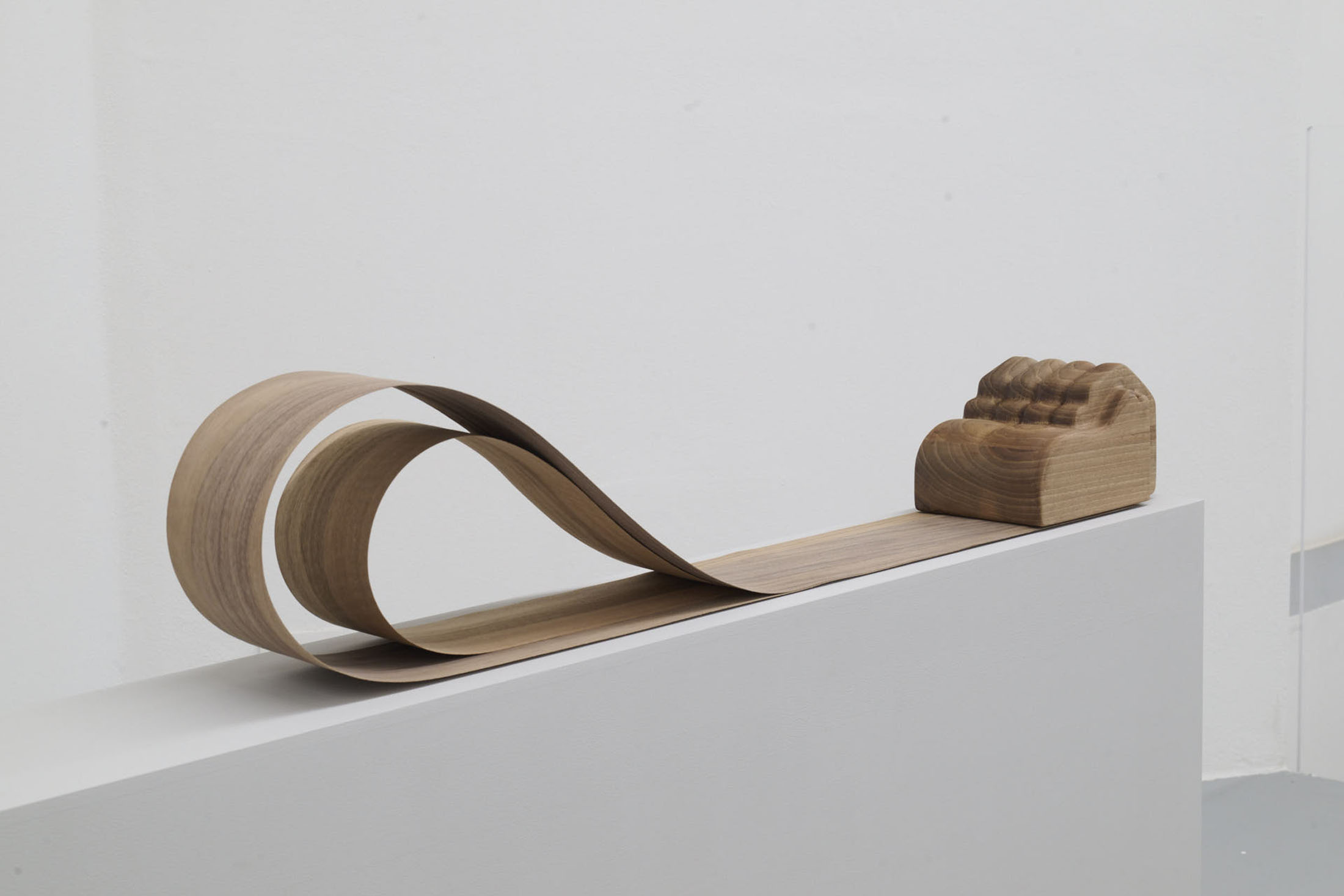
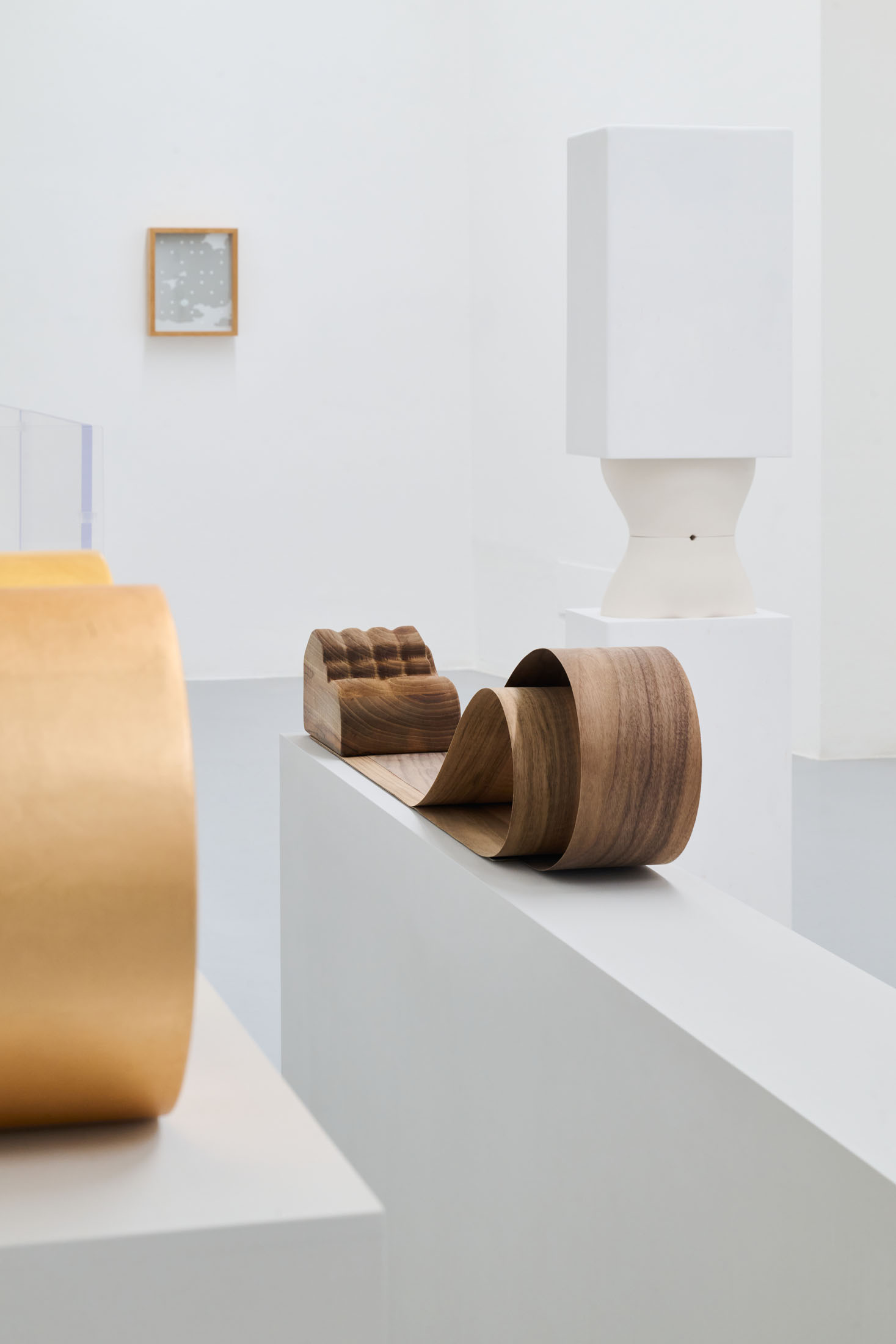
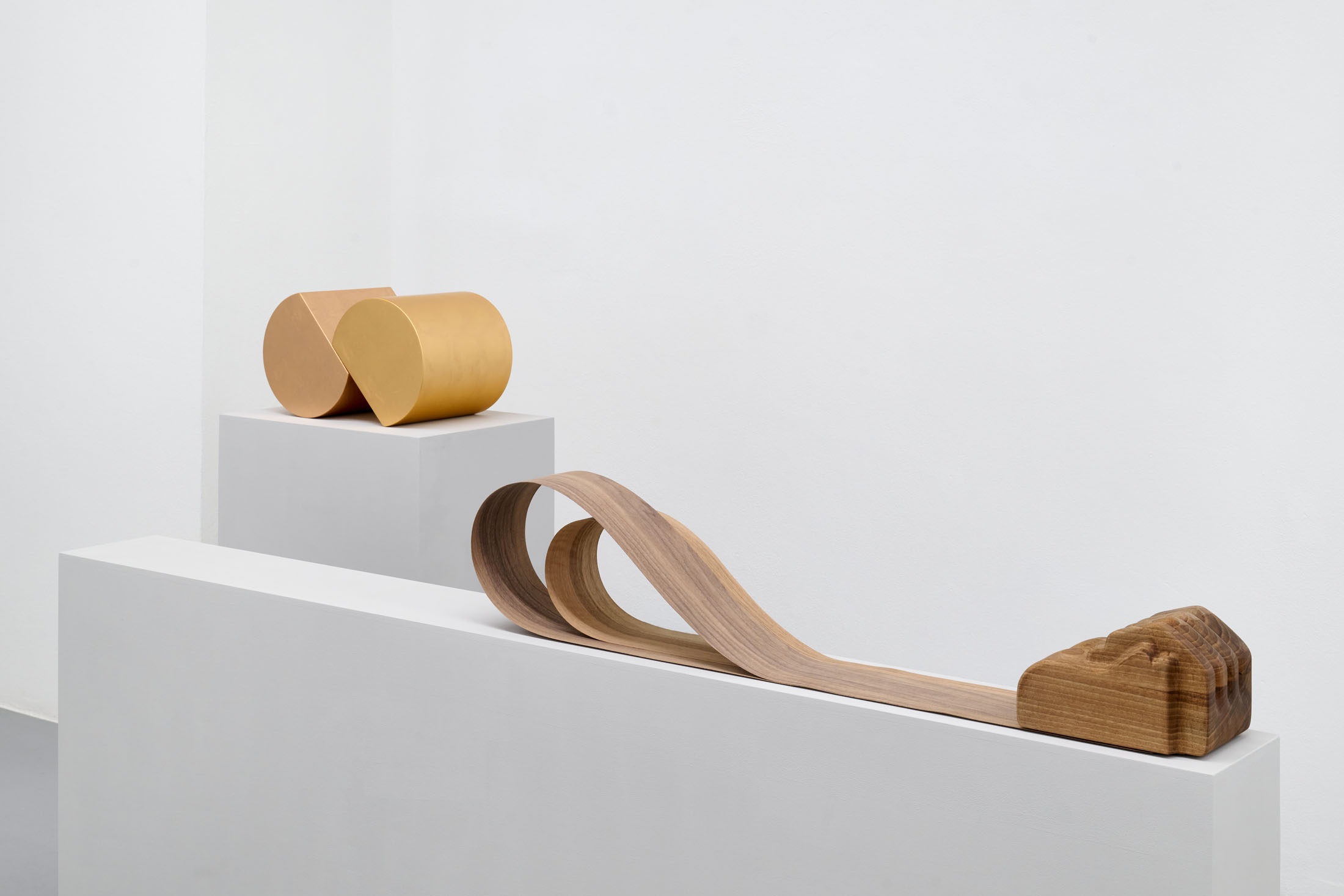
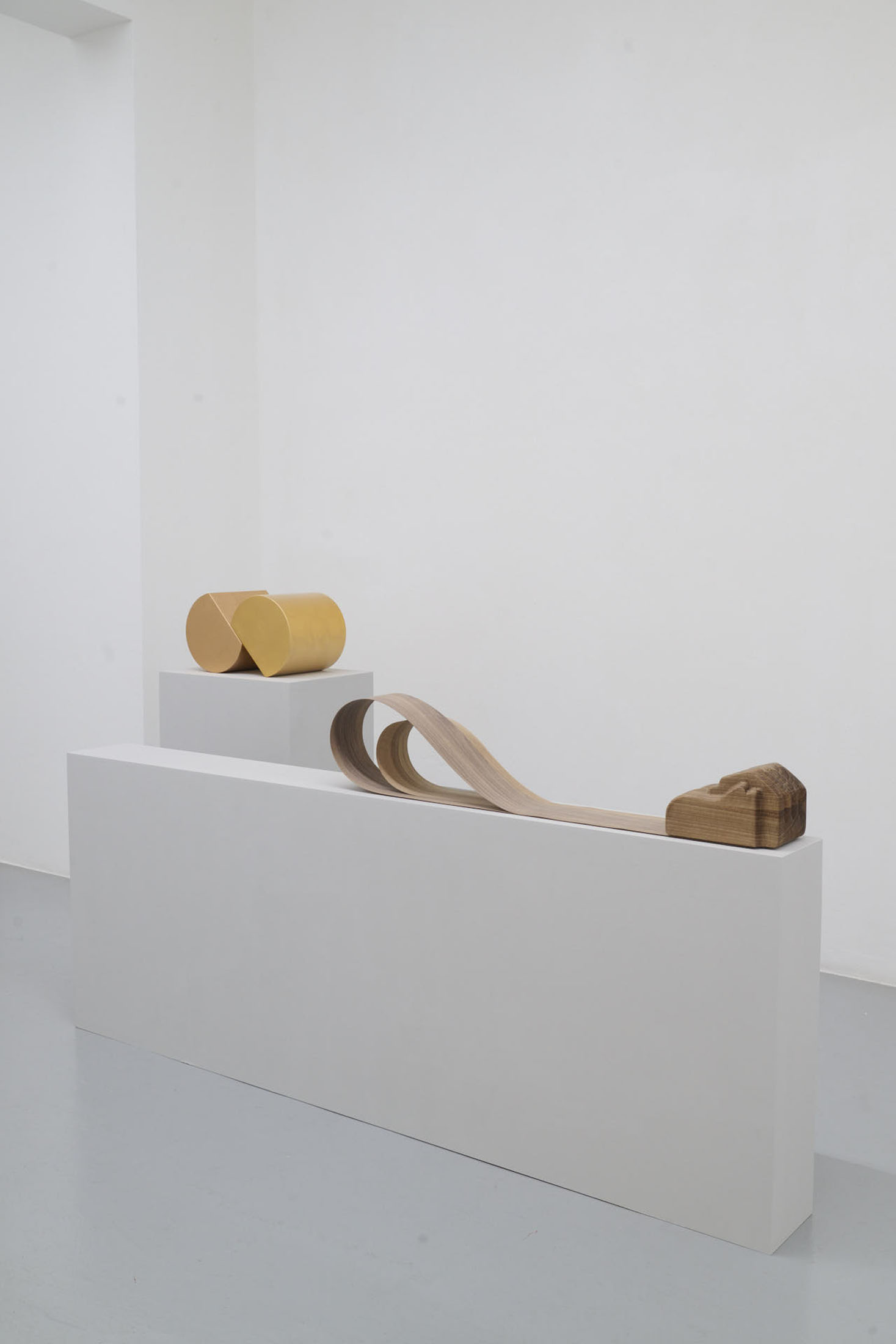
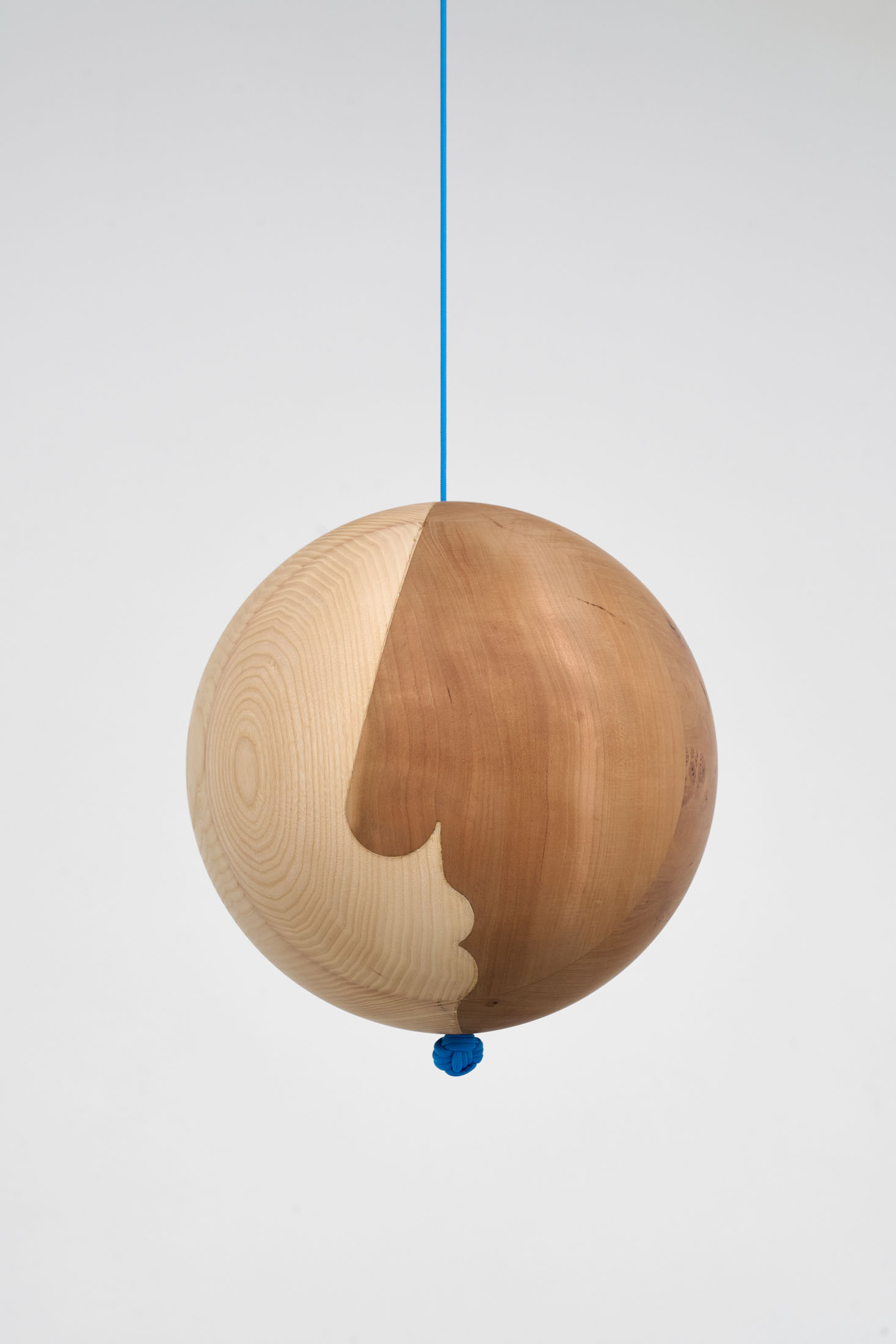
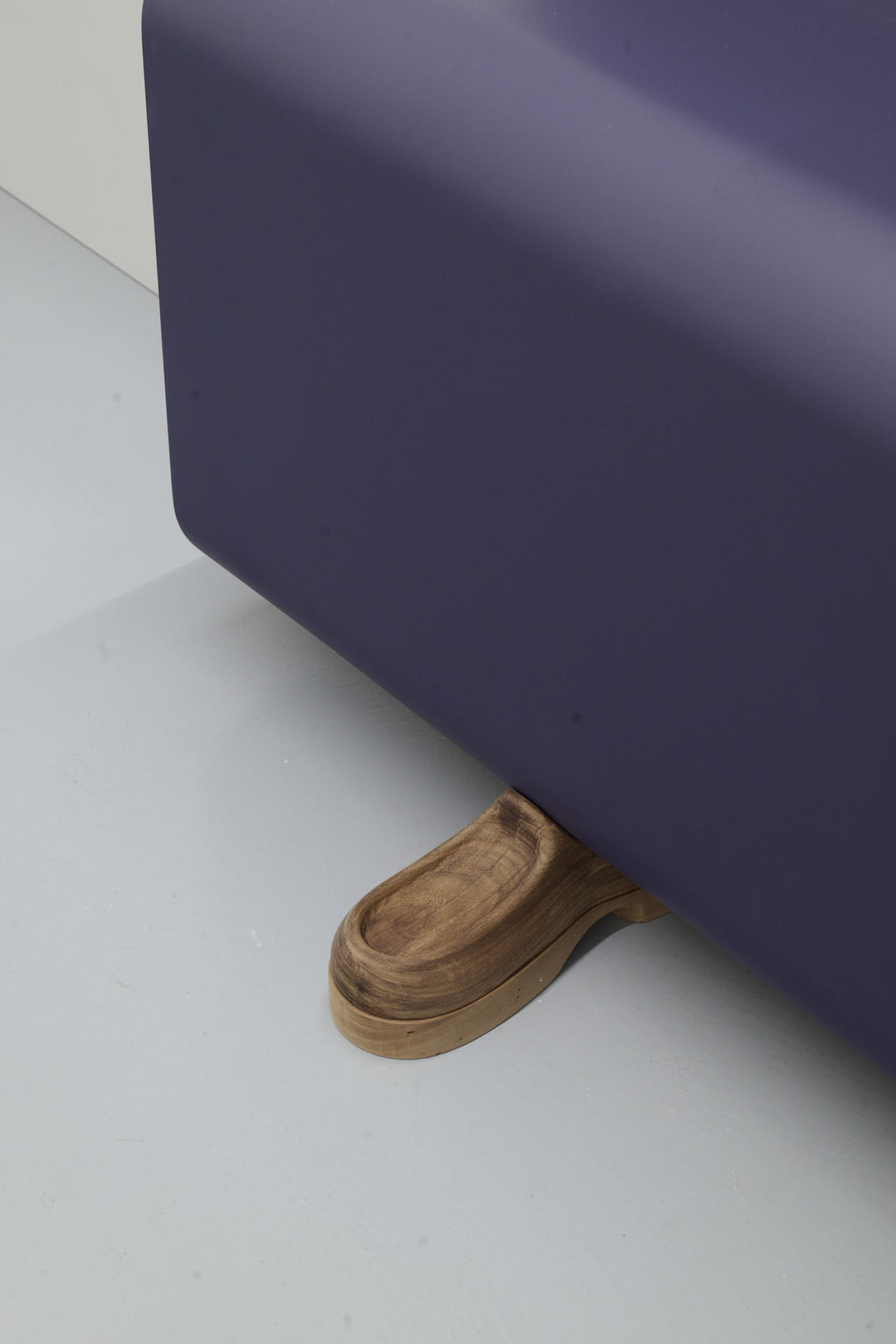
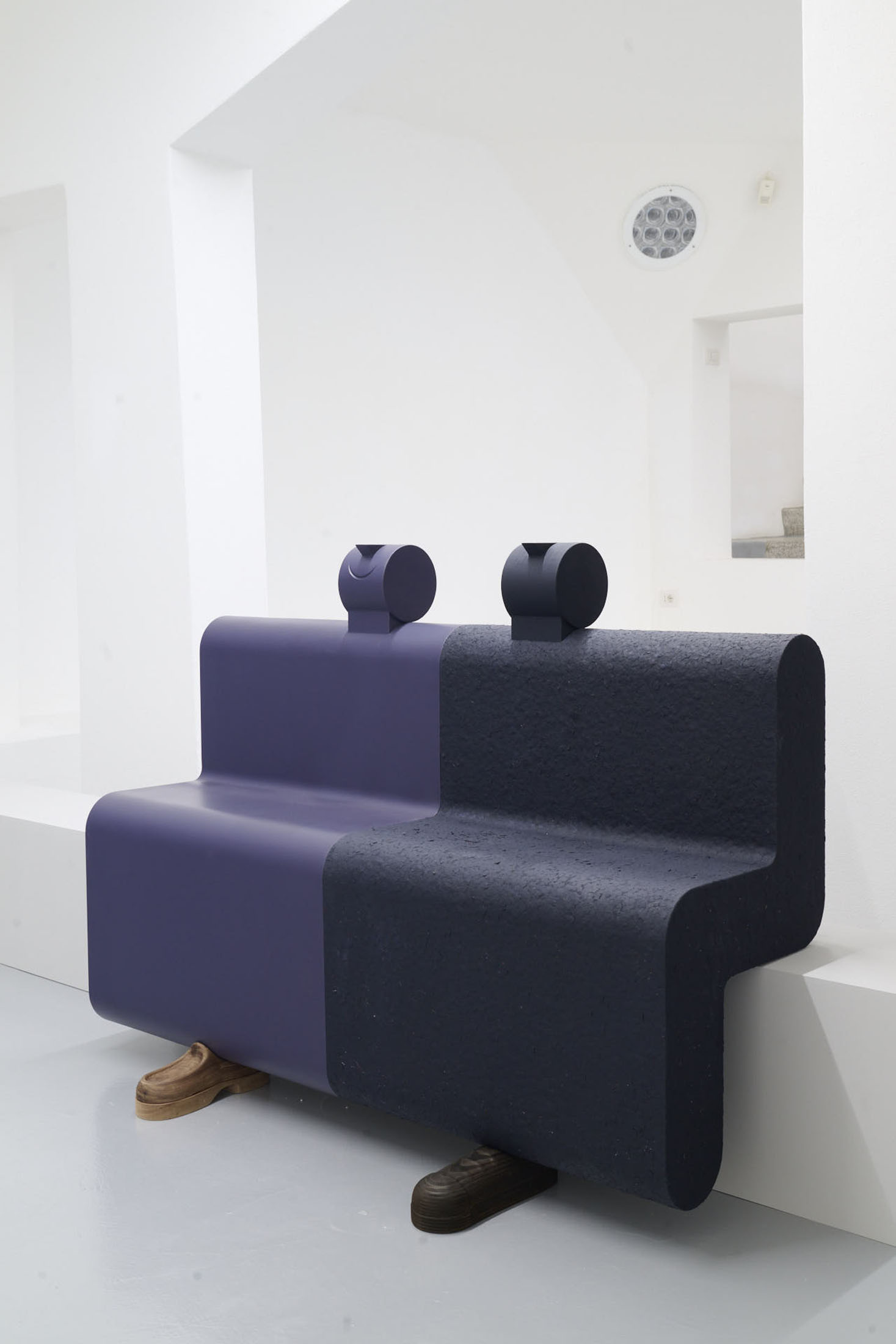
Sculpture, then, can be two strips of walnut and Canaletto wood, thin and fragrant, delicately bent back upon themselves. Thus, too, might it be the volute saturated with potential energy that this minimal operation produces, bending into the present dreams that have chased one another since the dawn of time – like that of drawing a bow and marvelling to find a moon gleaming within it. Perhaps, more than anything, sculpture is the curved line that this operation traces, in which one glimpses – or perhaps only imagines glimpsing – the profile of a crouching body, or maybe two.
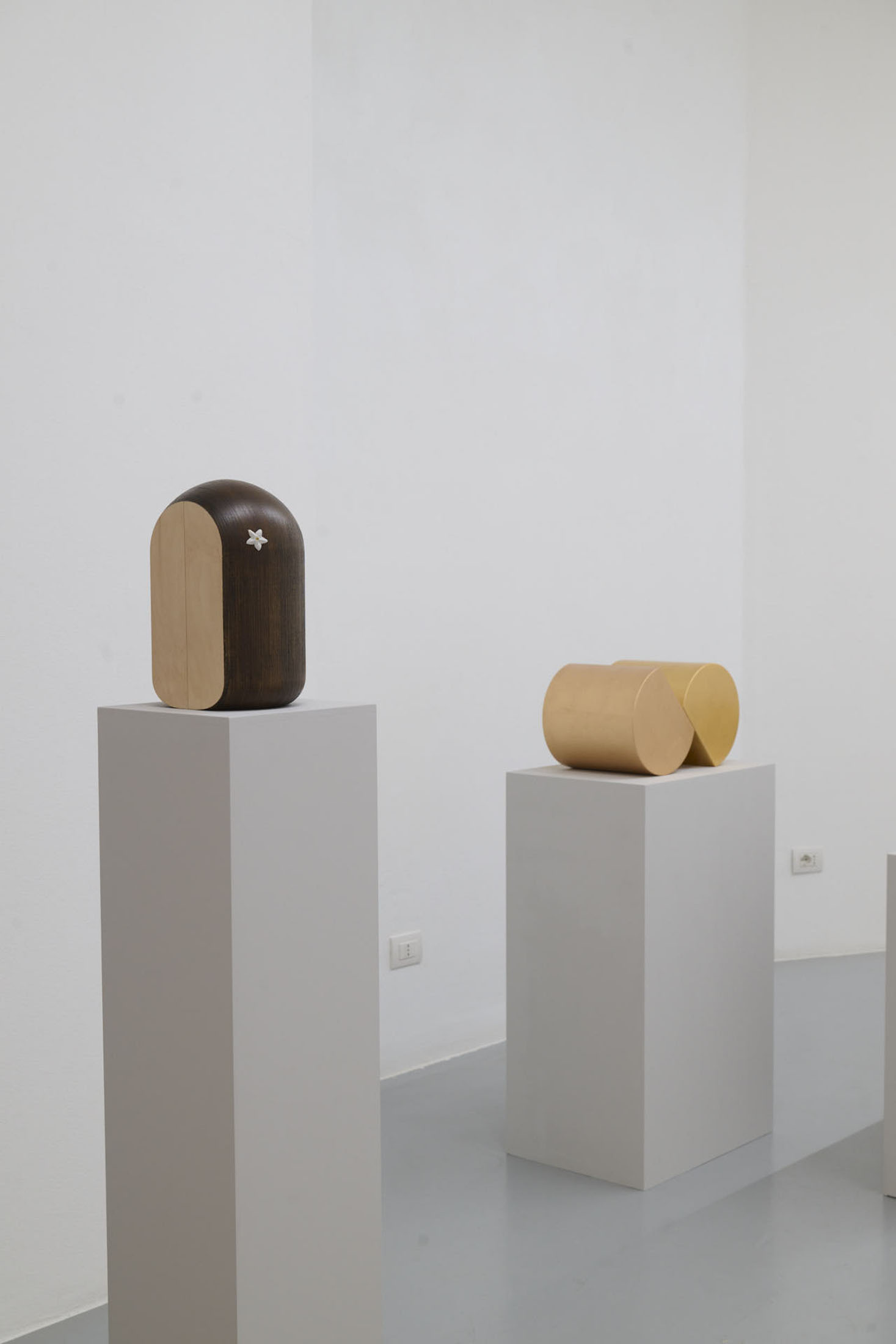
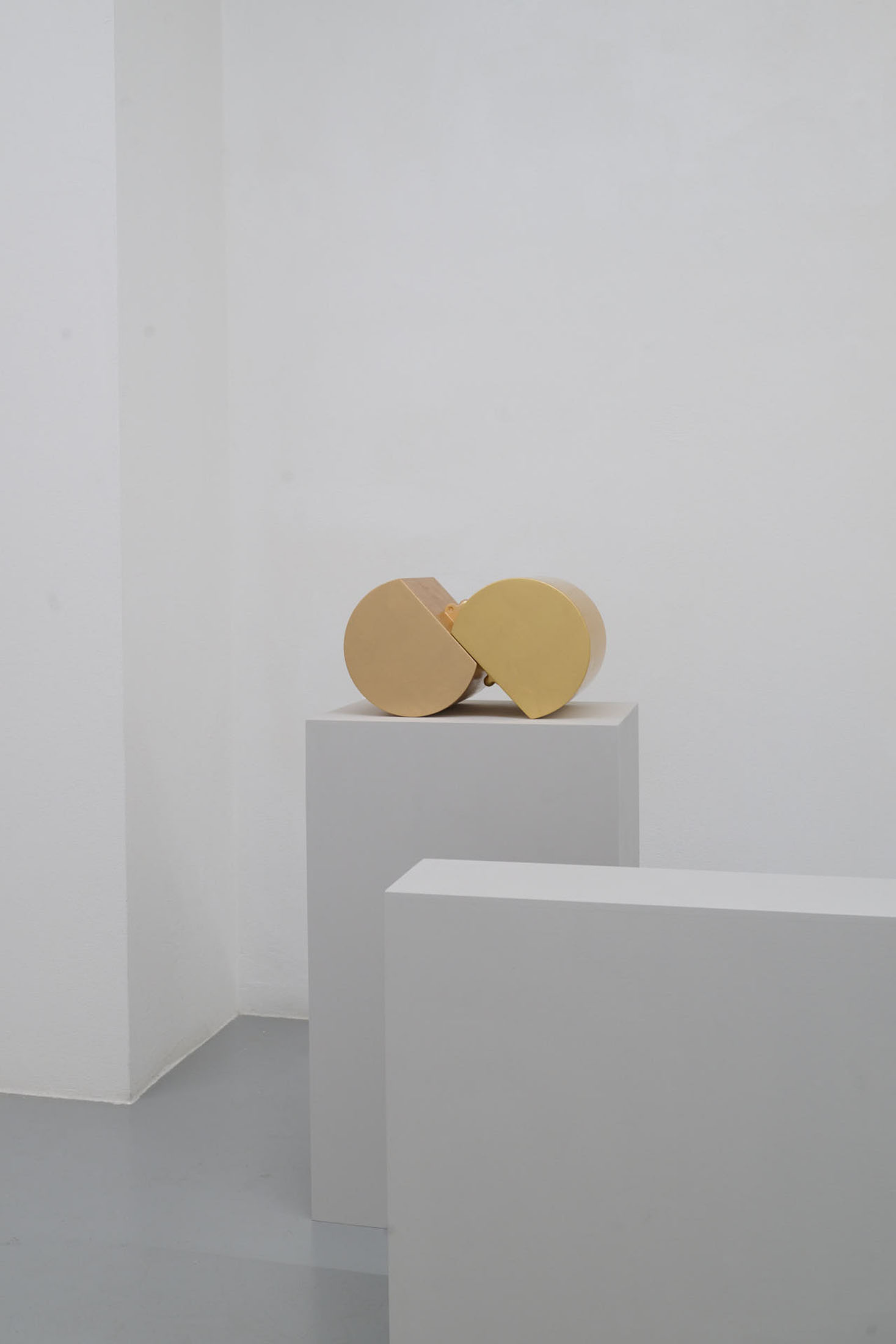
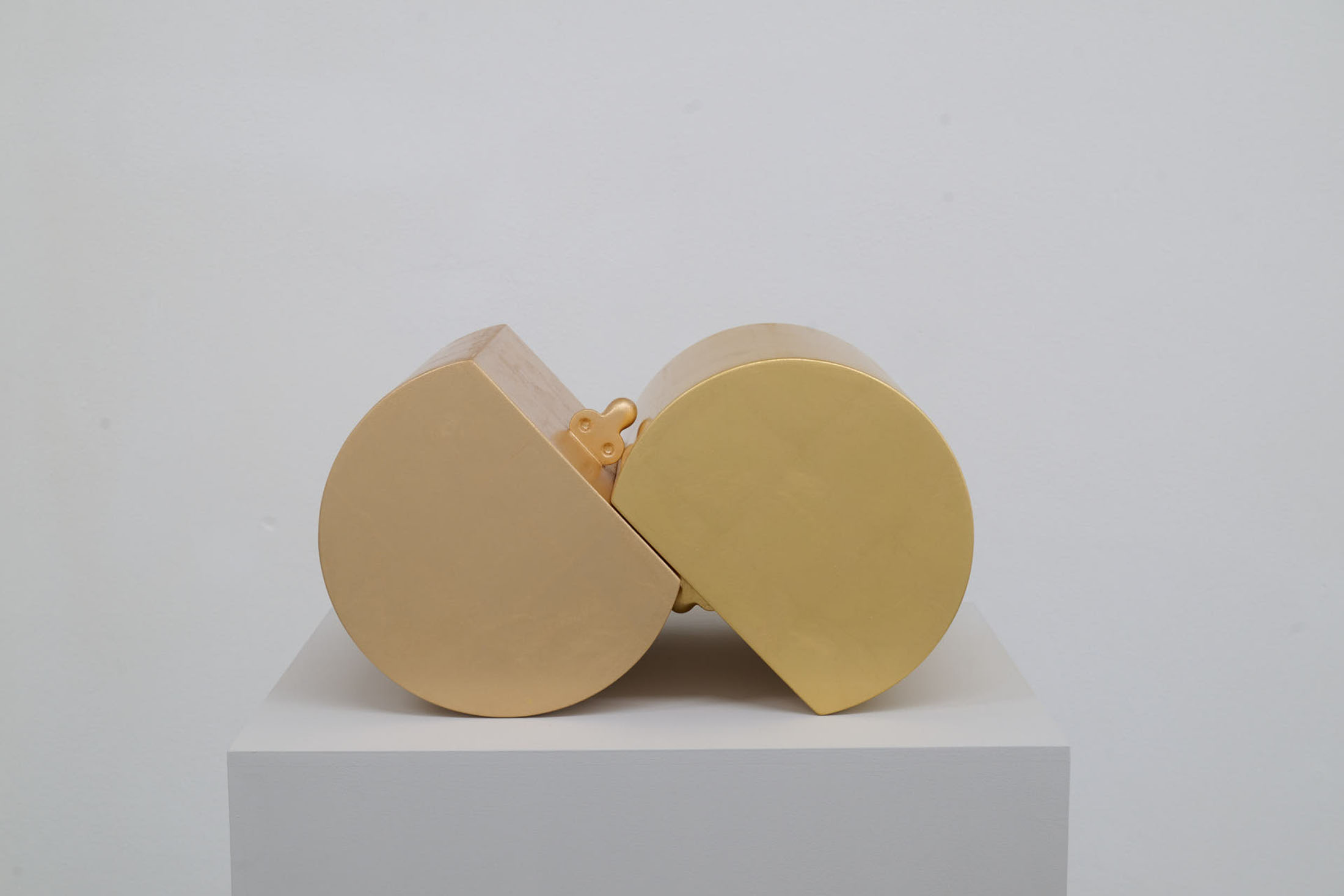
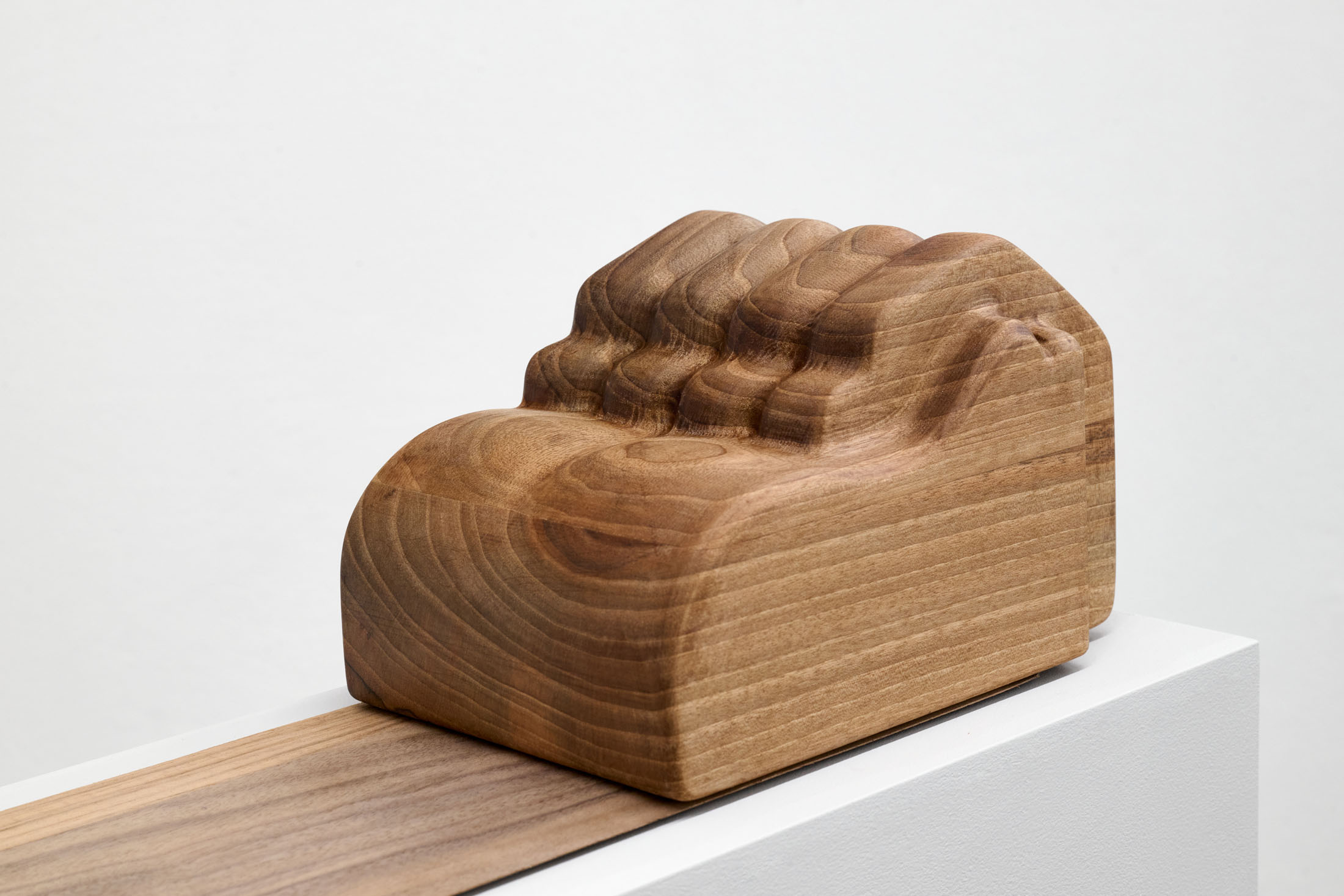
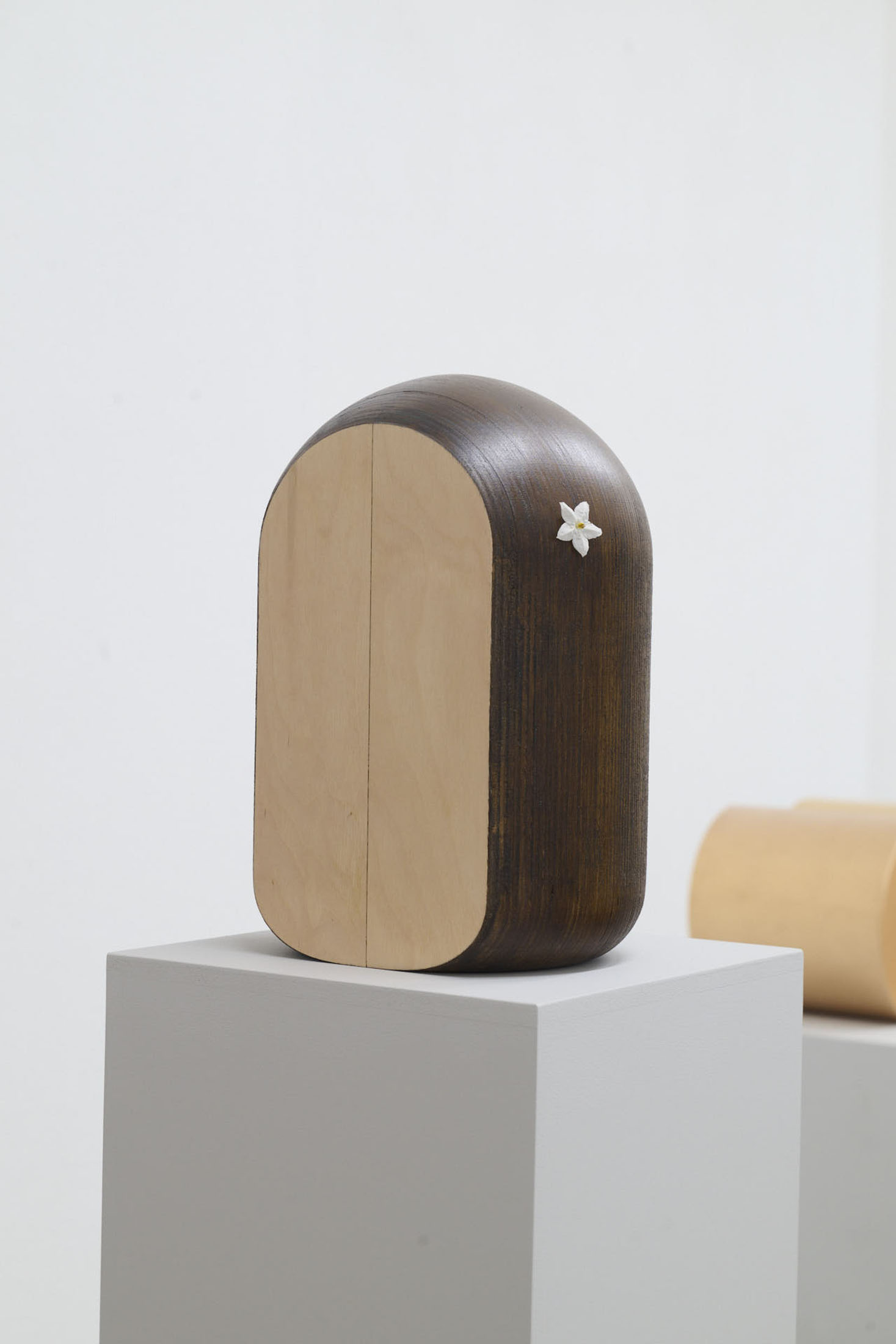
Maximum abstraction of proximity achieved with minimum expenditure of means: a baroque quality by subtraction that nonetheless does not relinquish the prodigy of gravitational force. Finely carved, at their ends appear two hands with tightly clenched phalanges, whose burden it is to transfigure the sculptural gesture into its image. This magic of representation, indifferent in the end to medium, permeates the making of certain pieces too. And so it is that an axonometry of wooden discs can give rise to the head of a young girl, haughty and Novecento. What results, processual rather than drawn a priori, is hair furrowed with locks recalling the swell of waves: a pink periwinkle, a further figure, supplies the confirmations we did not know we wanted. A sculpture may also lodge its most secret law within its own image, embracing its uncertainty. This is the enigma binding a pair of cylinders that, deprived of their shared hold (a golden, realistic nose), would roll off in opposite directions. A complicit sleep translates this strictly mechanical, structurally reciprocal effort into a rhythm of breathing.
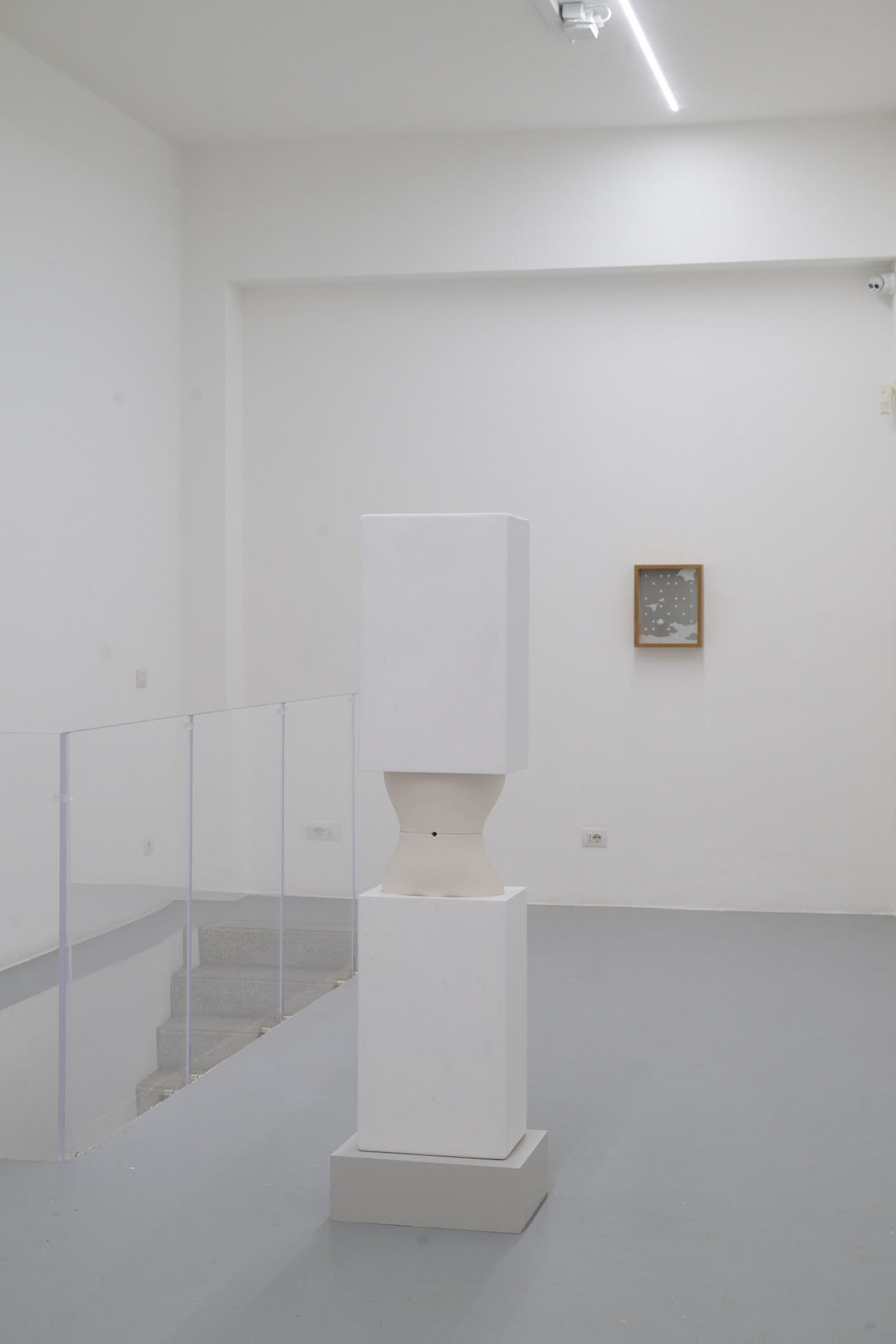
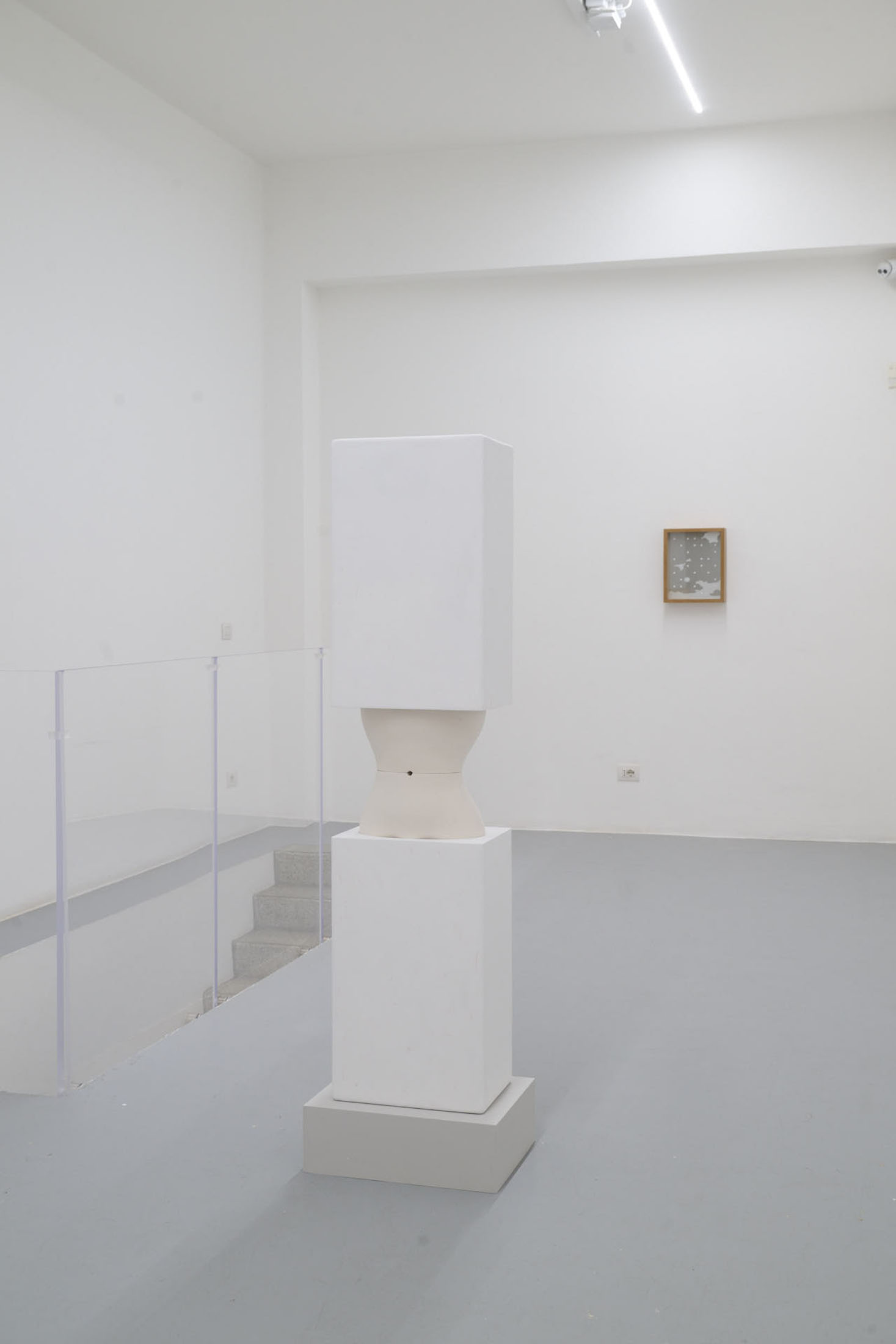
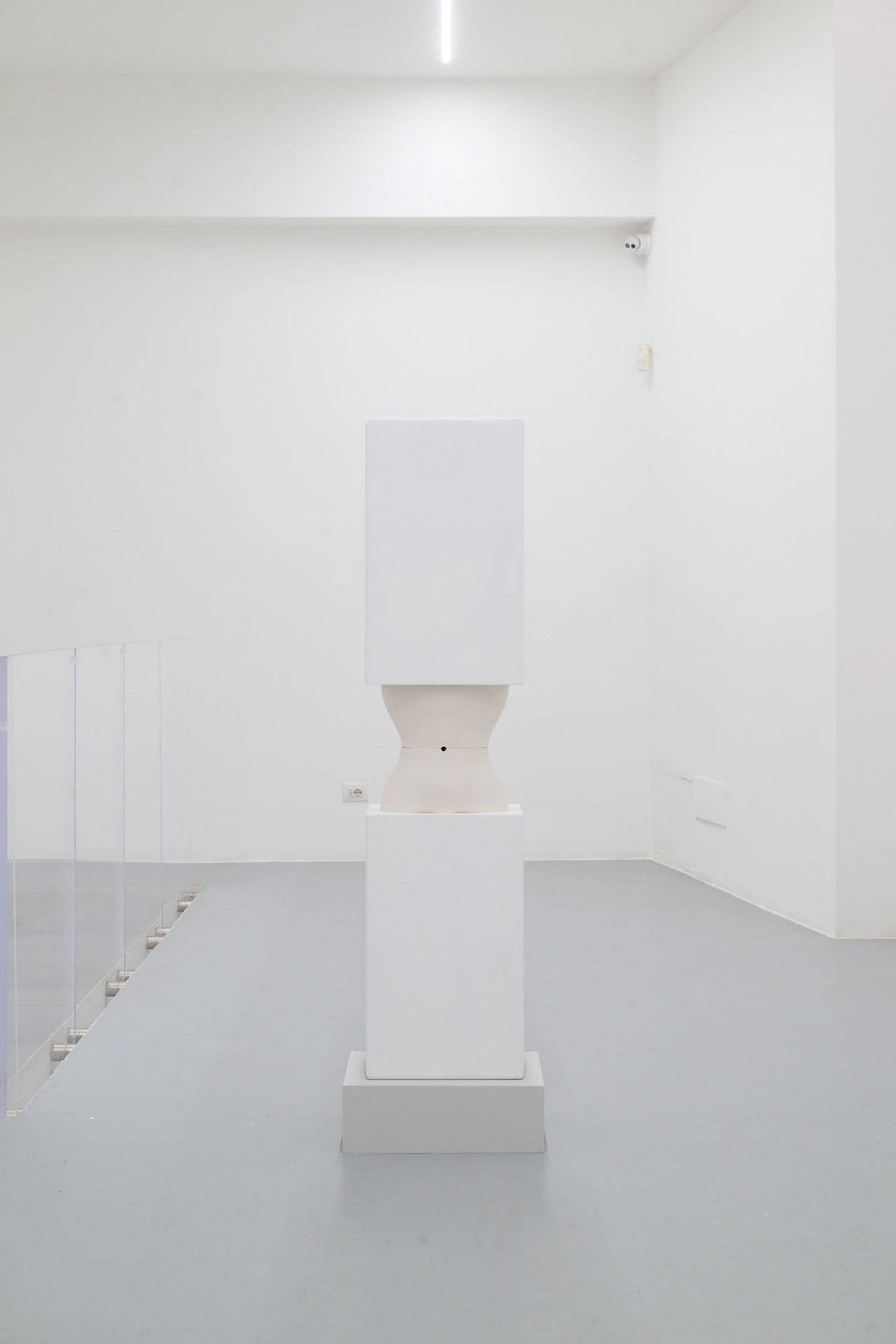
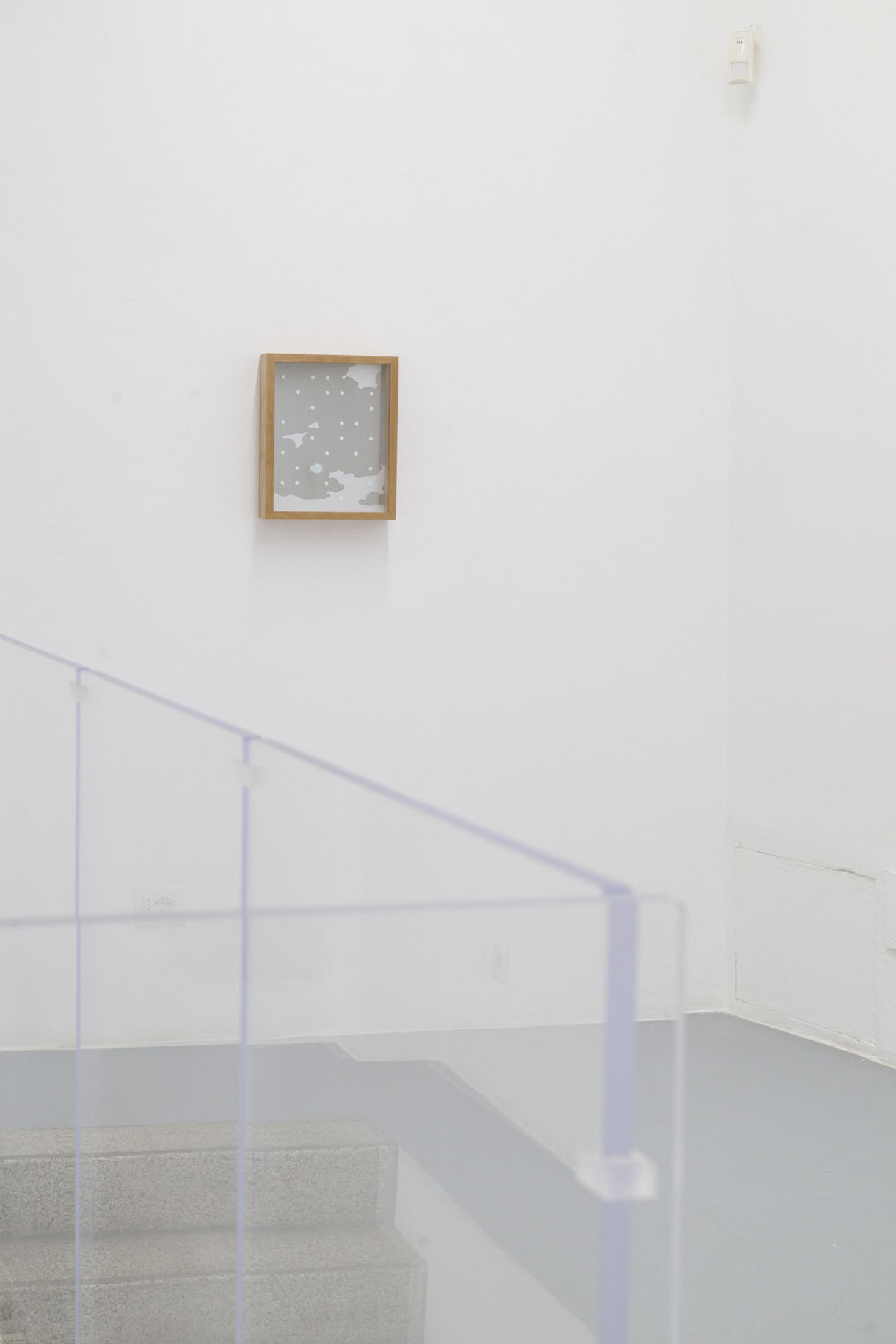
And mechanical, too, is the compression a terracotta torso undergoes, the most vertical of its elements and, so to speak, the most sculptural. Column of the earth, its hollowed navel becomes punctum and equator, the pro-mise of a vision that will not renounce its own becoming. Such a symphony of hypotheses hovers between the third dimension and the wall, crystallising the faintest instant of contact, the graze in which every trace will melt away in the sun. And it is in that hovering, I suspect, that whatever we still mean by sculpture makes its home. So, then, one last time: what is its space?
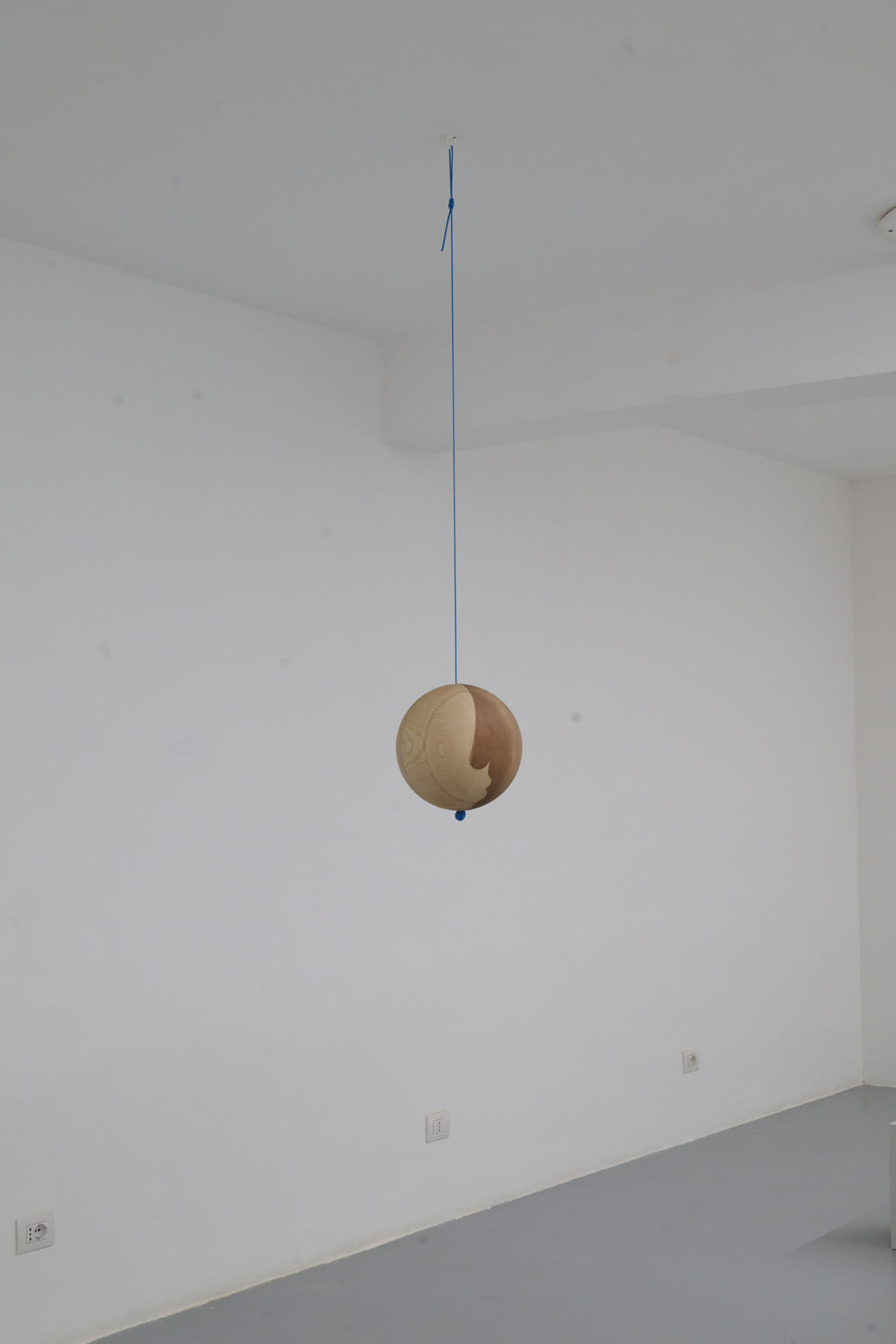
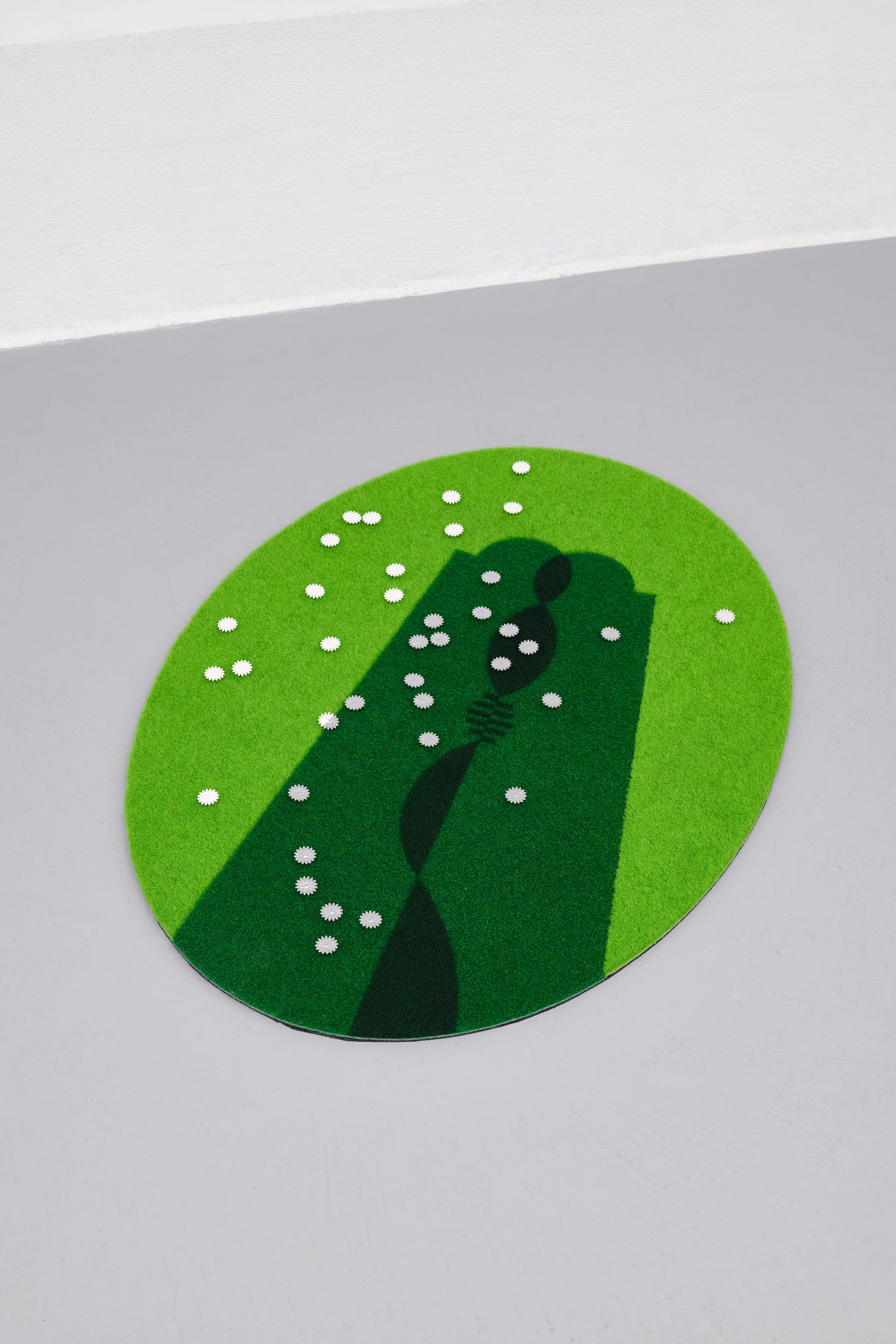
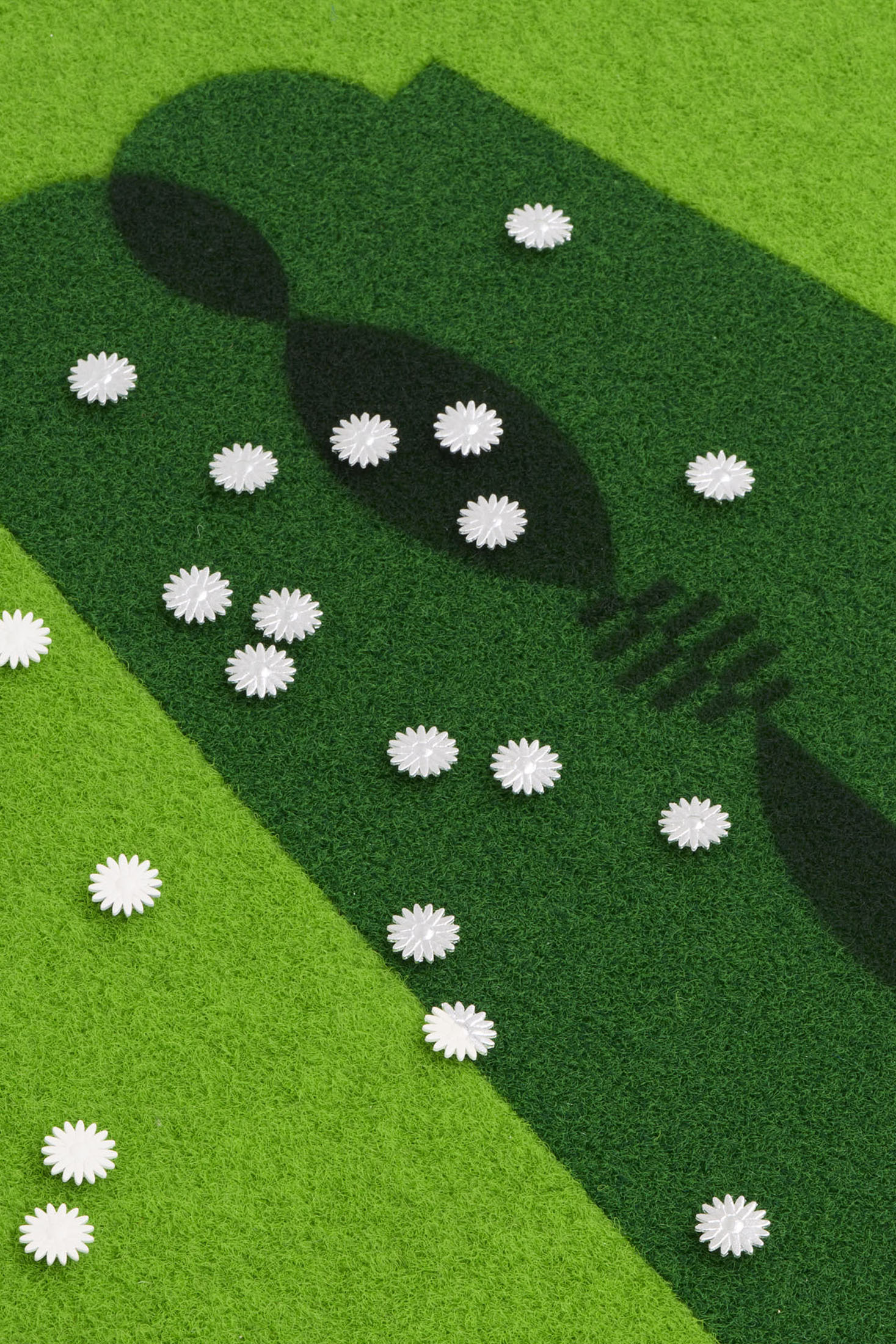
A region exists where the sun throws long shadows tracing the horizon, and tiny silver flowers glimmer. There, star-bodies hold presences close, spinning, suspended.
Feet planted on the earth, the gaze stretches into a night thick with stars, while the world cloaks itself in a veil of confetti. The space of sculpture, perhaps its very essence, lies in what remains present within an immeasurable distance, folded entirely inward, one that has to do with our dreams and desires. As gesture, and as image.
May the imagination always be free to roam and wander!