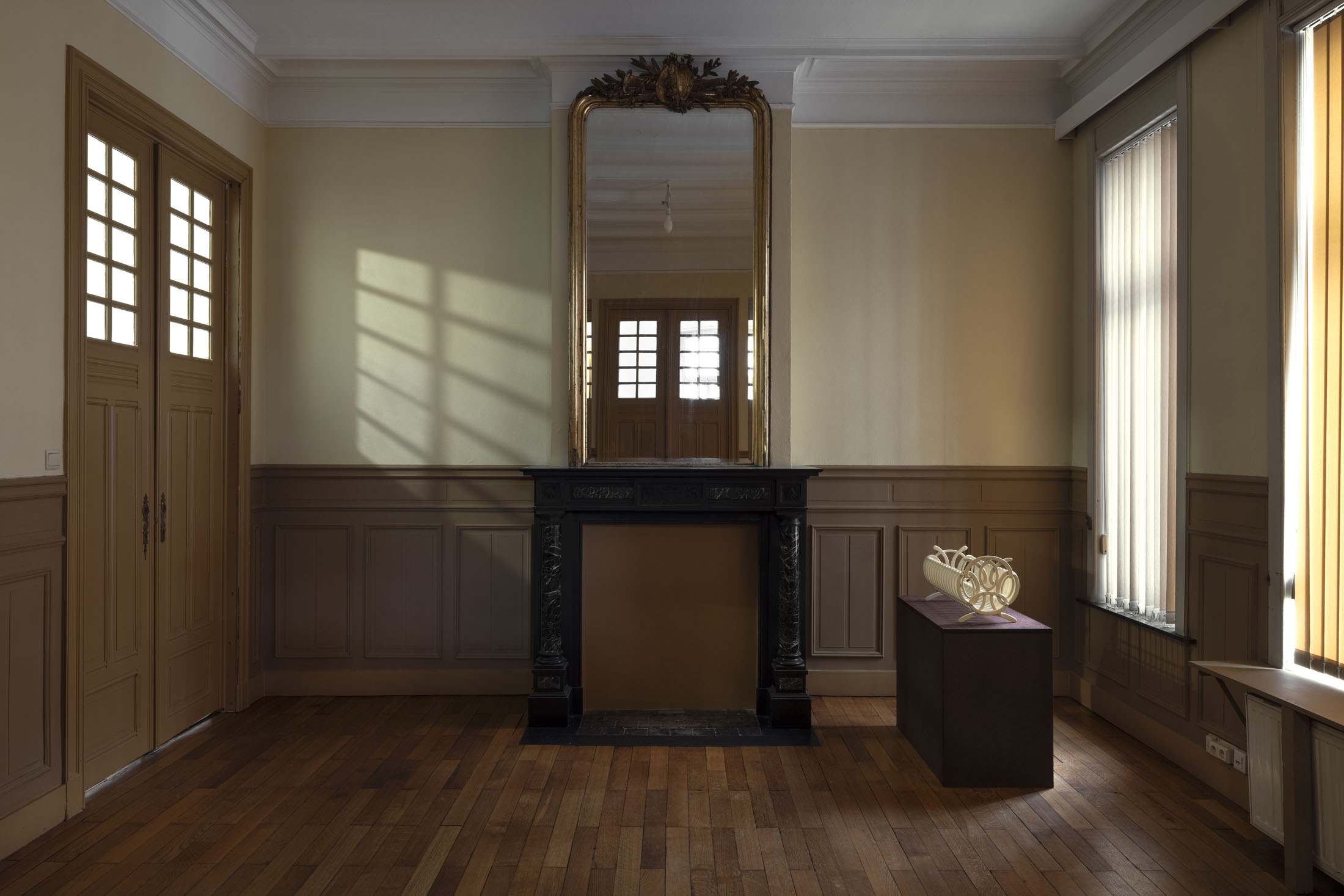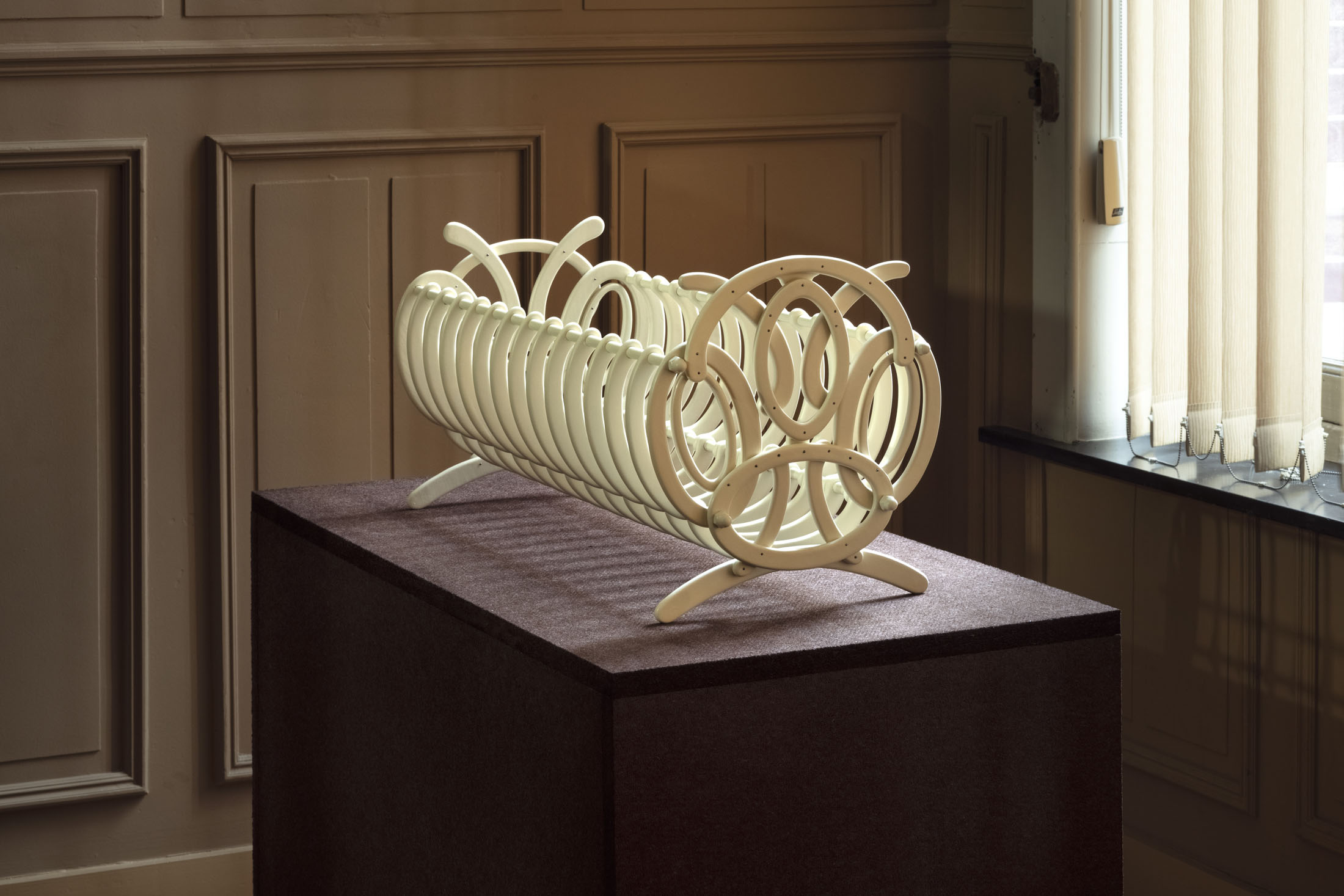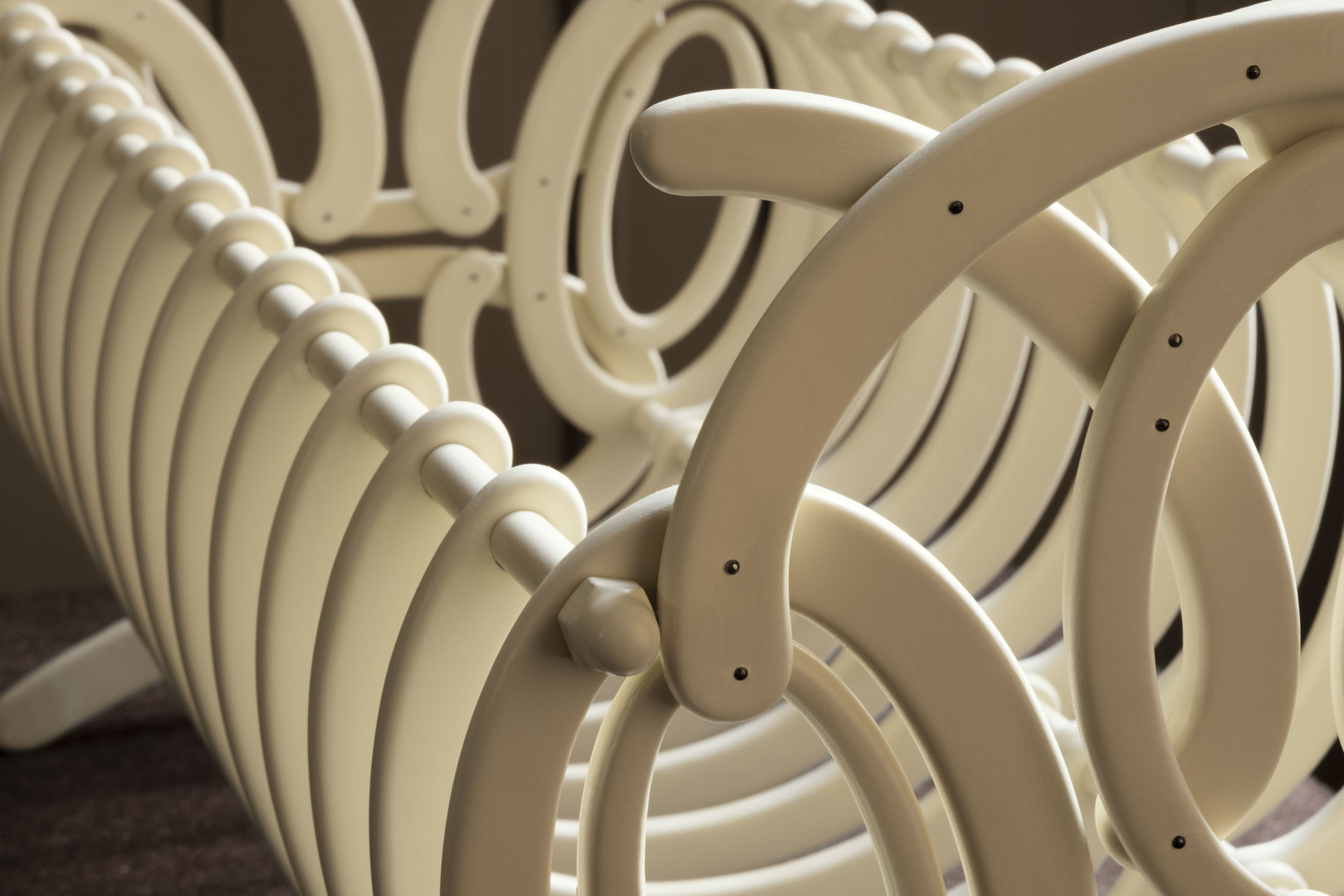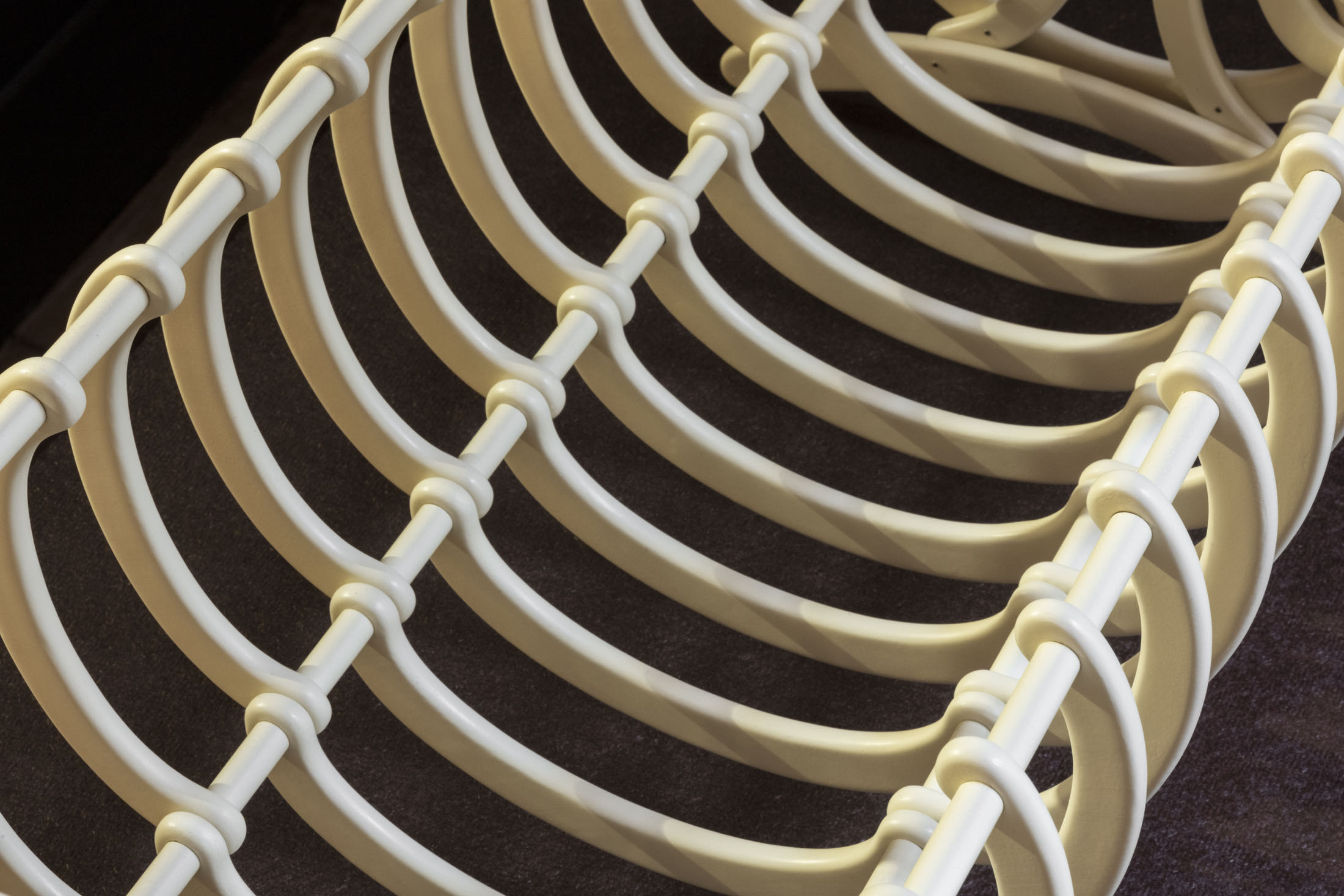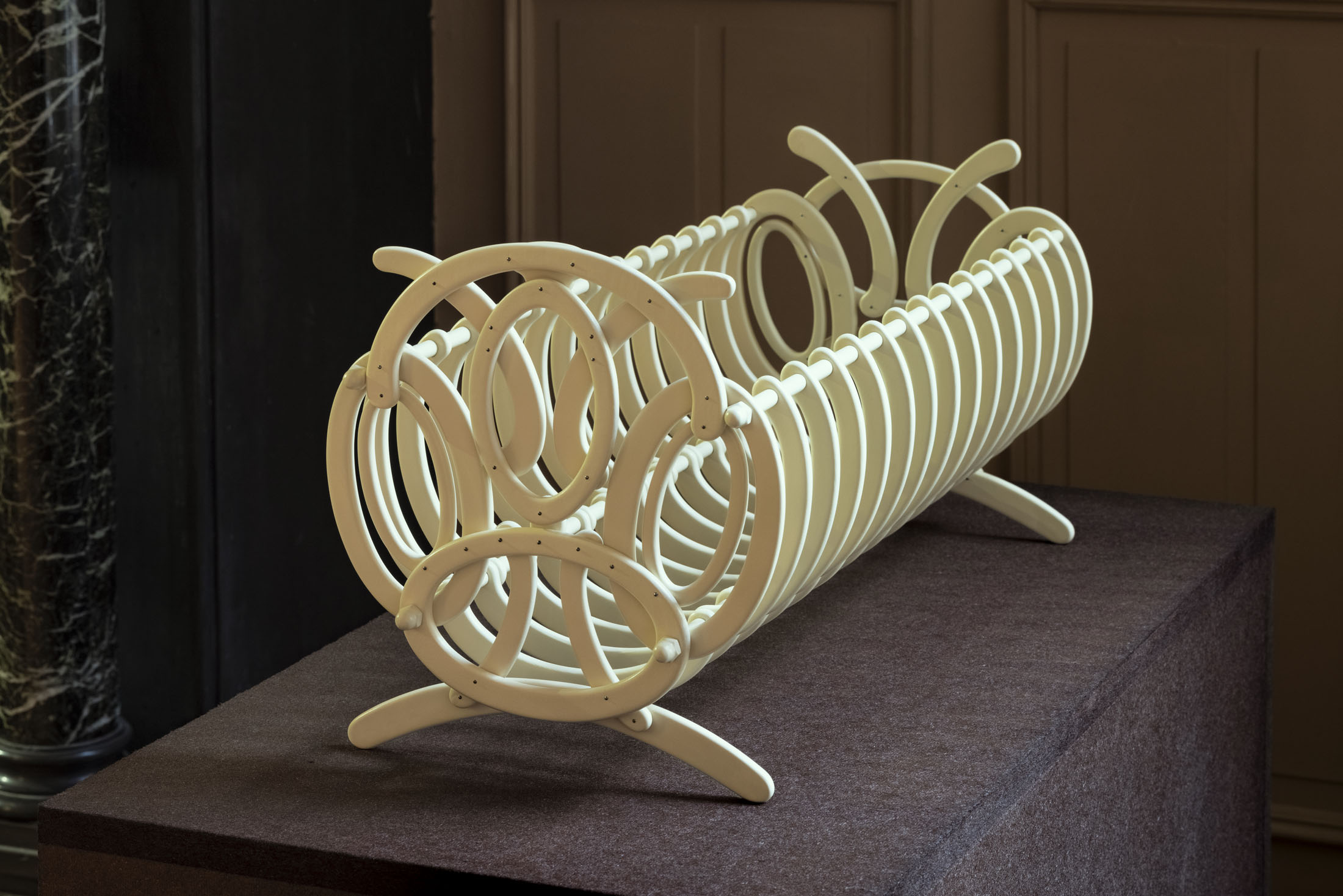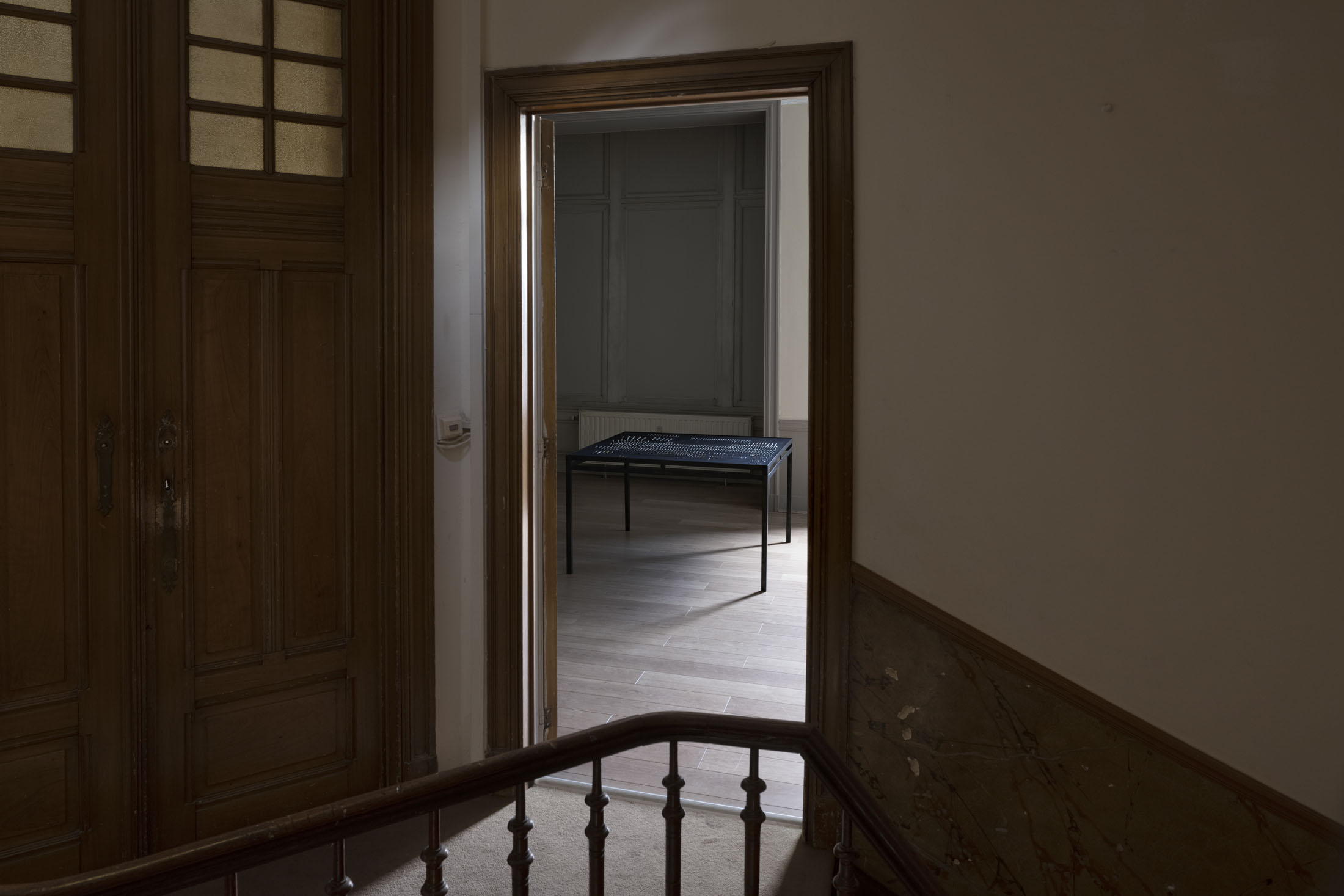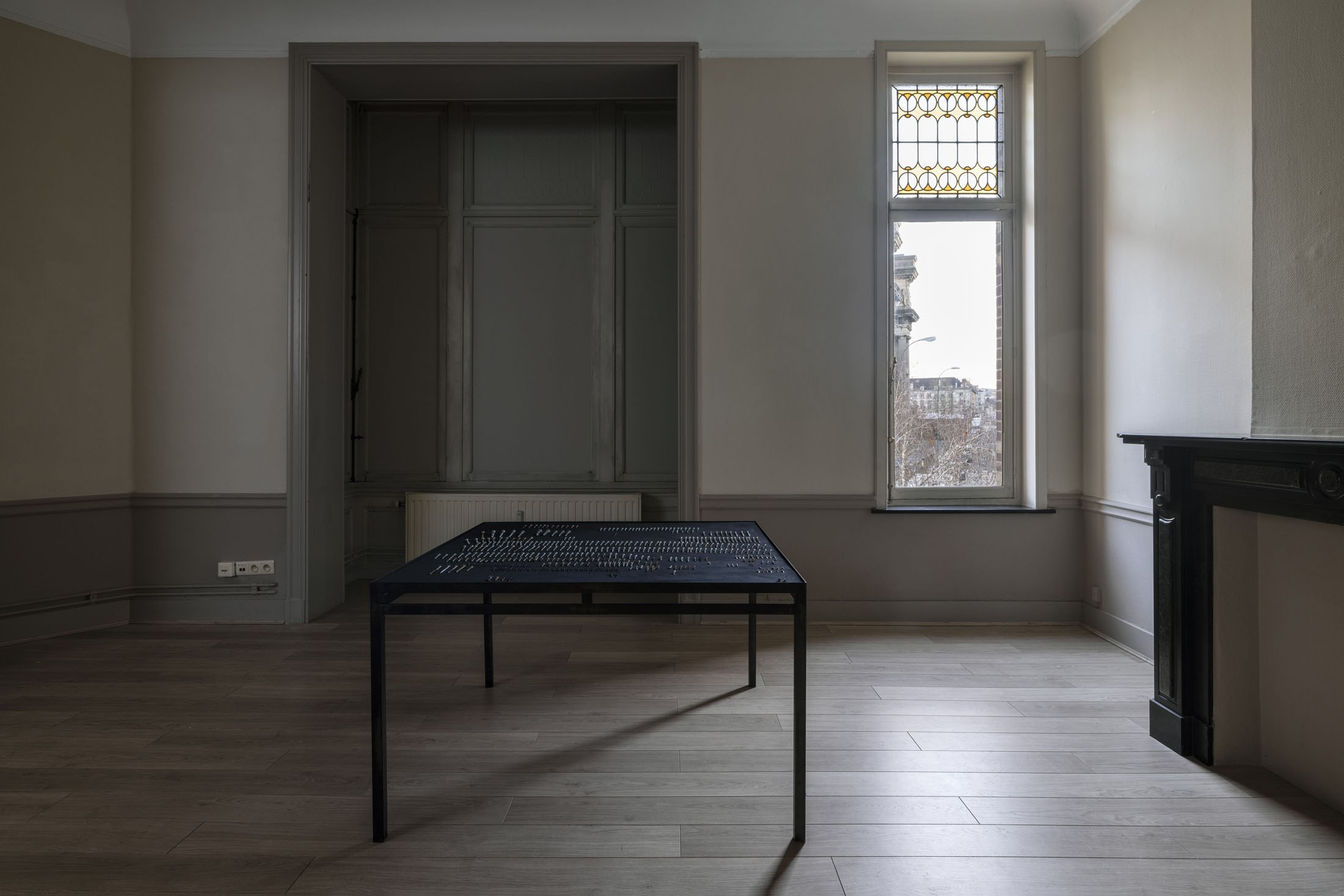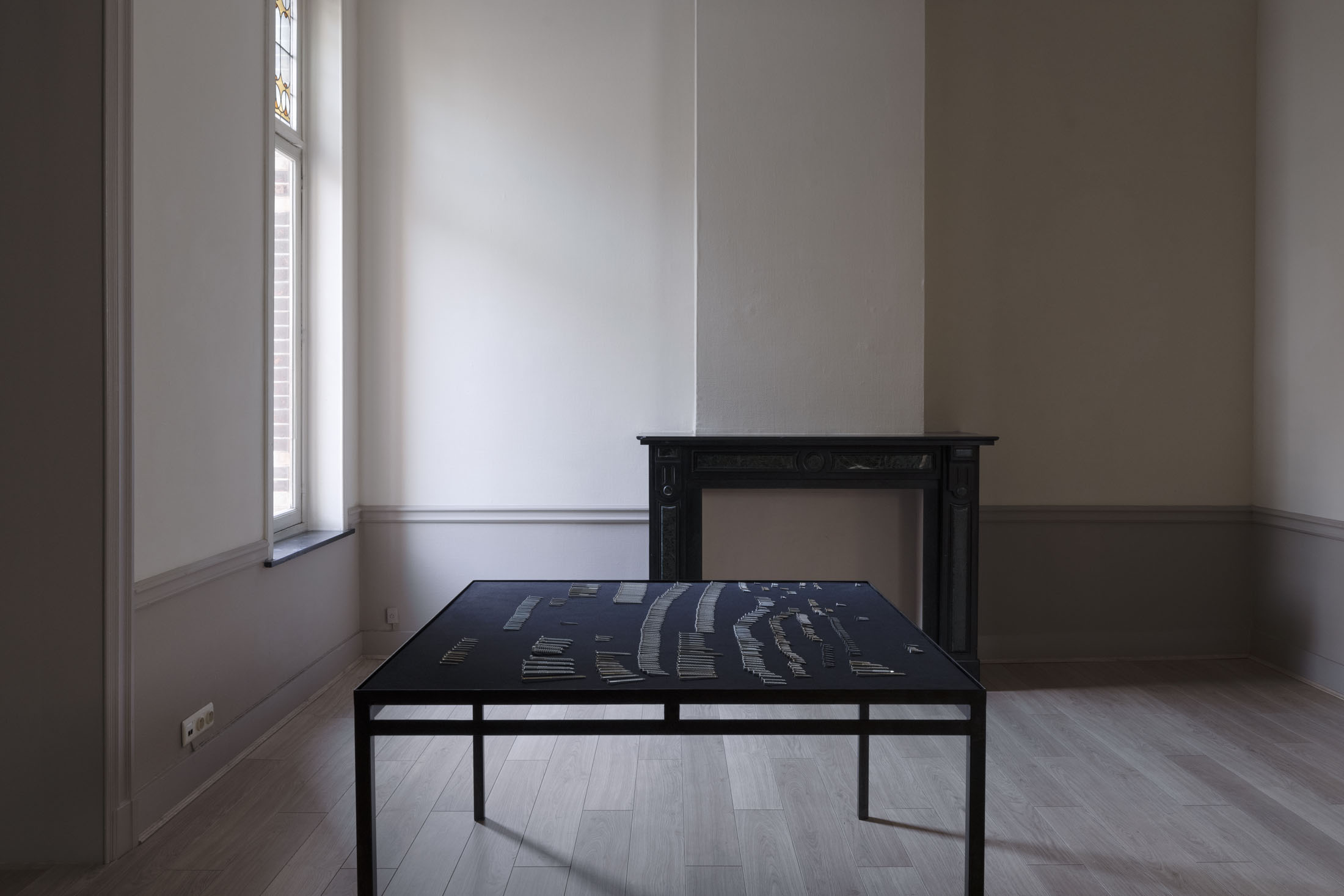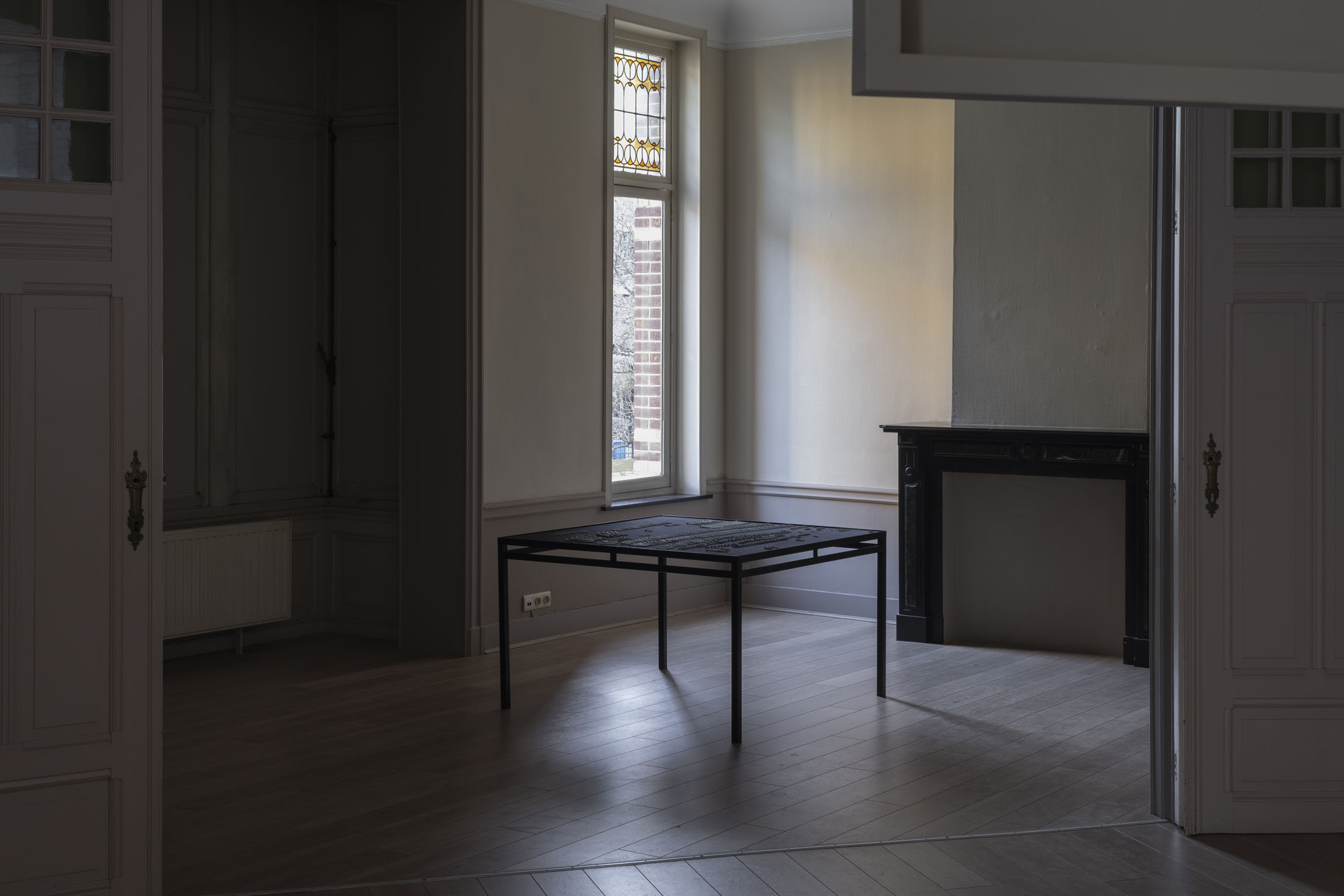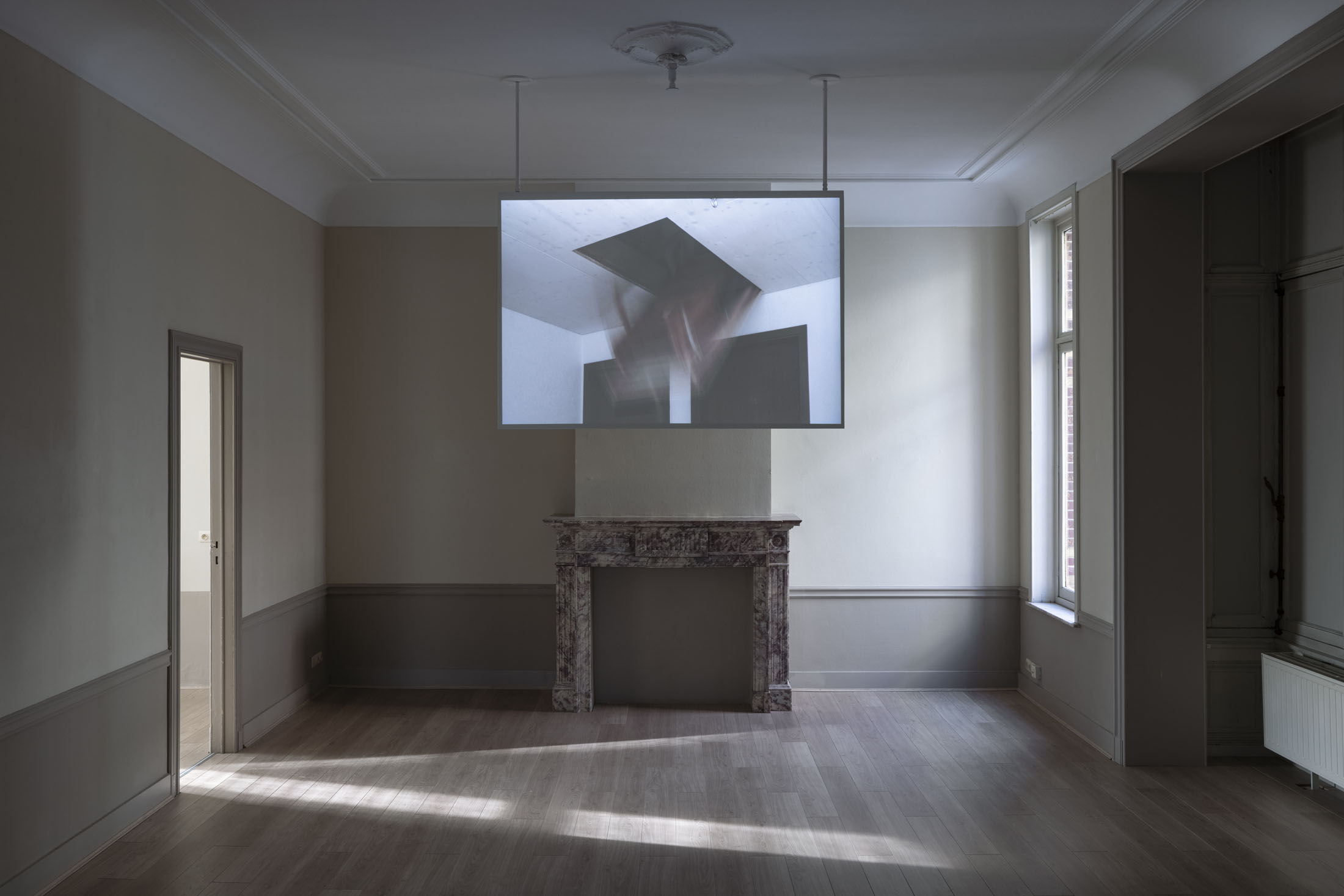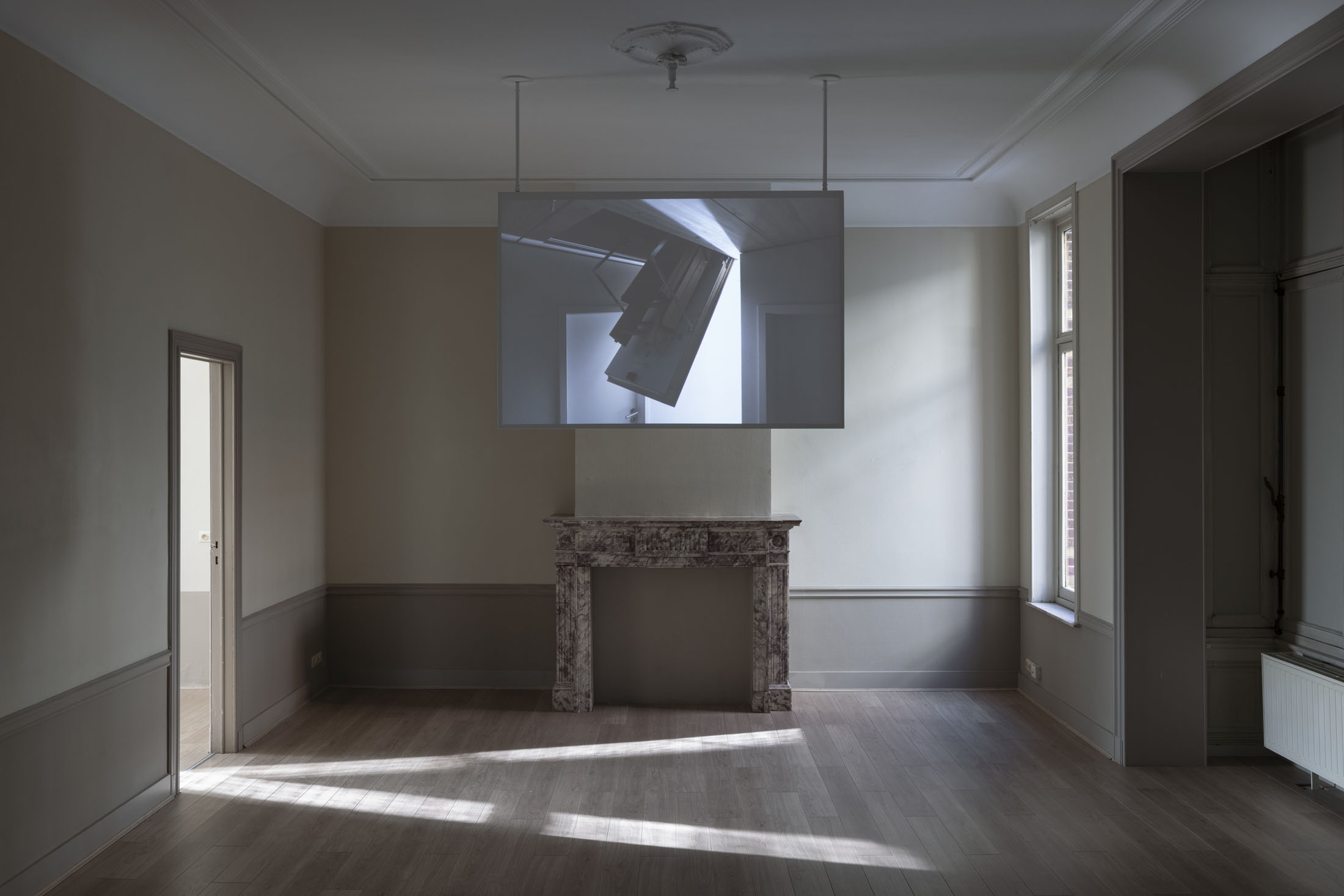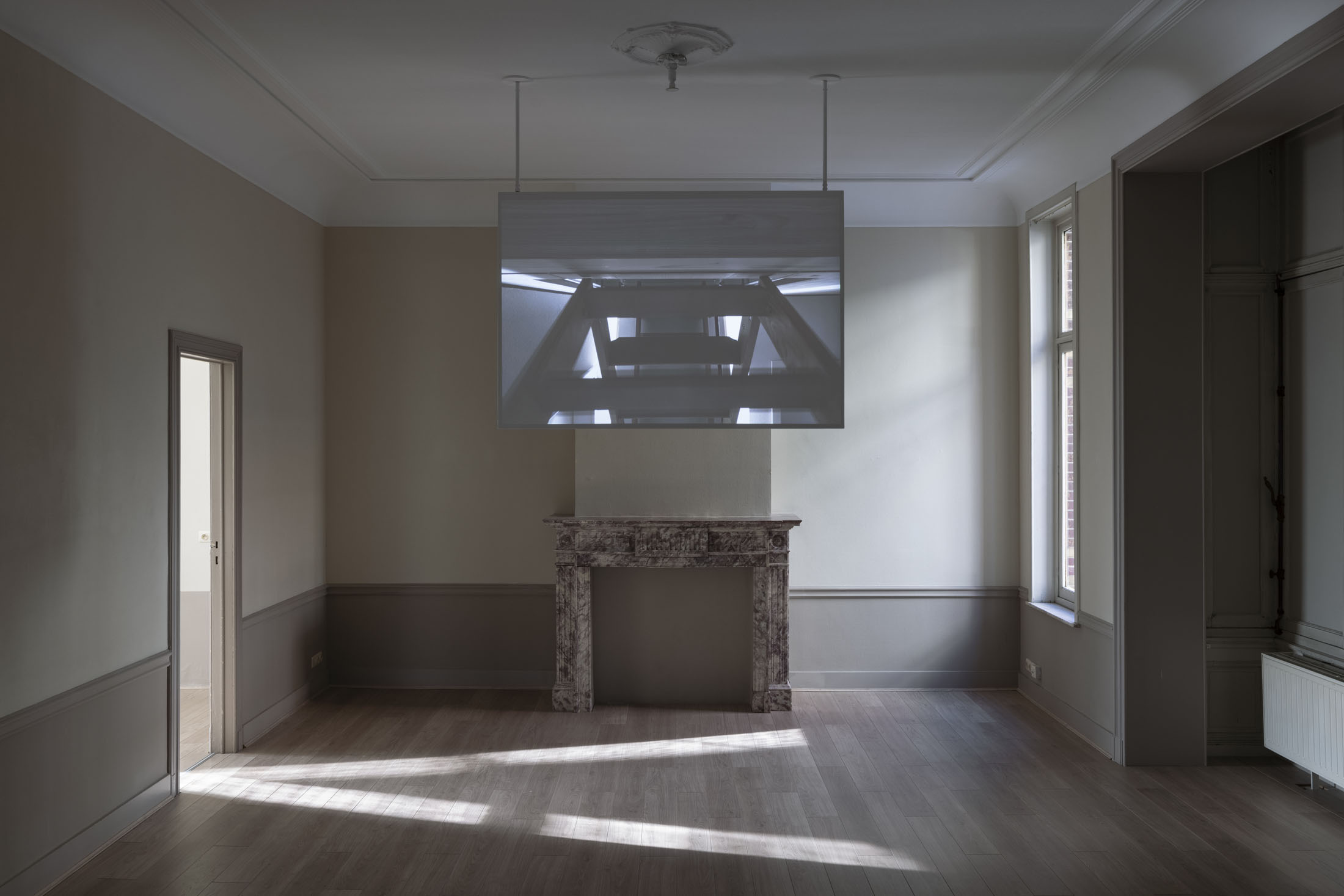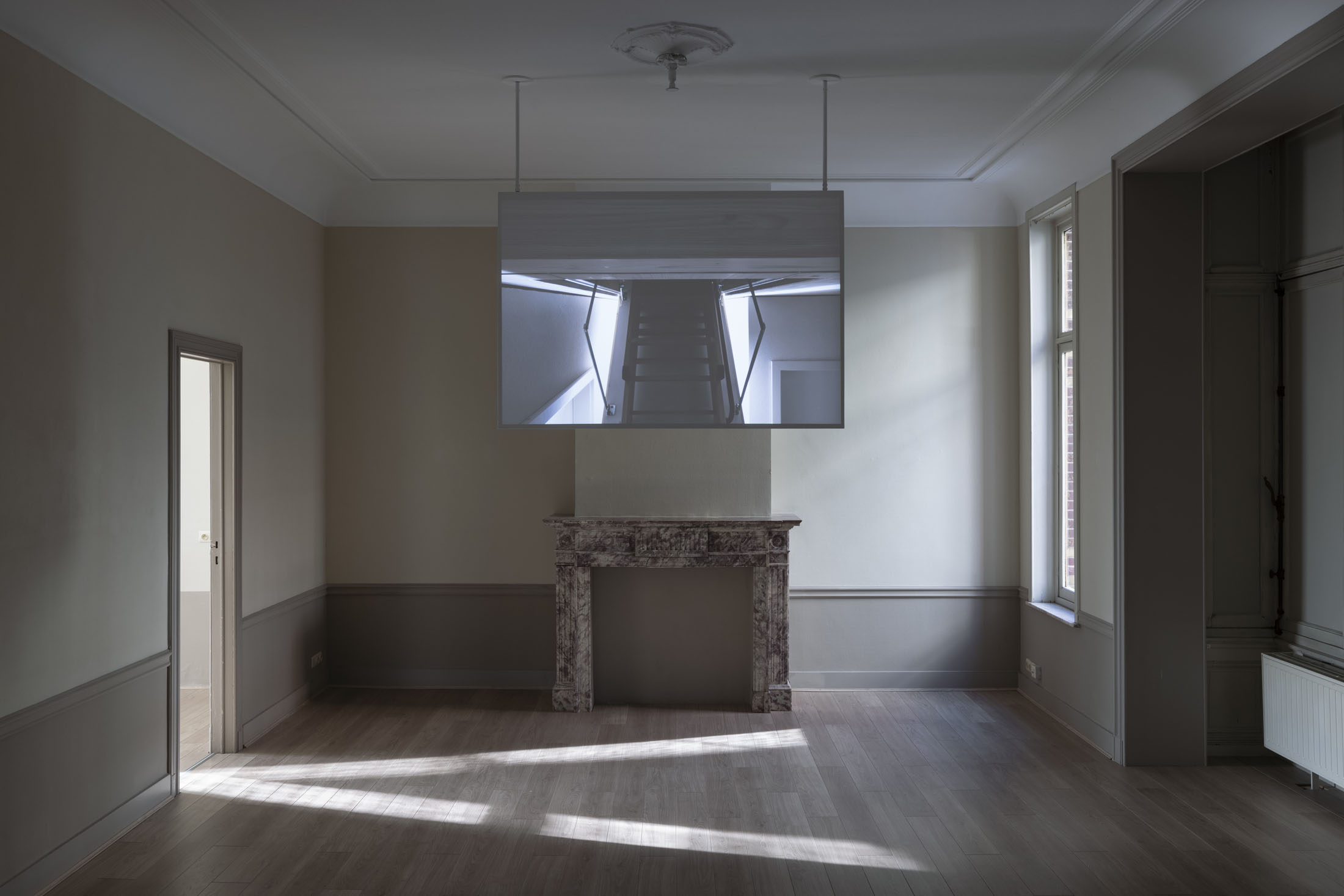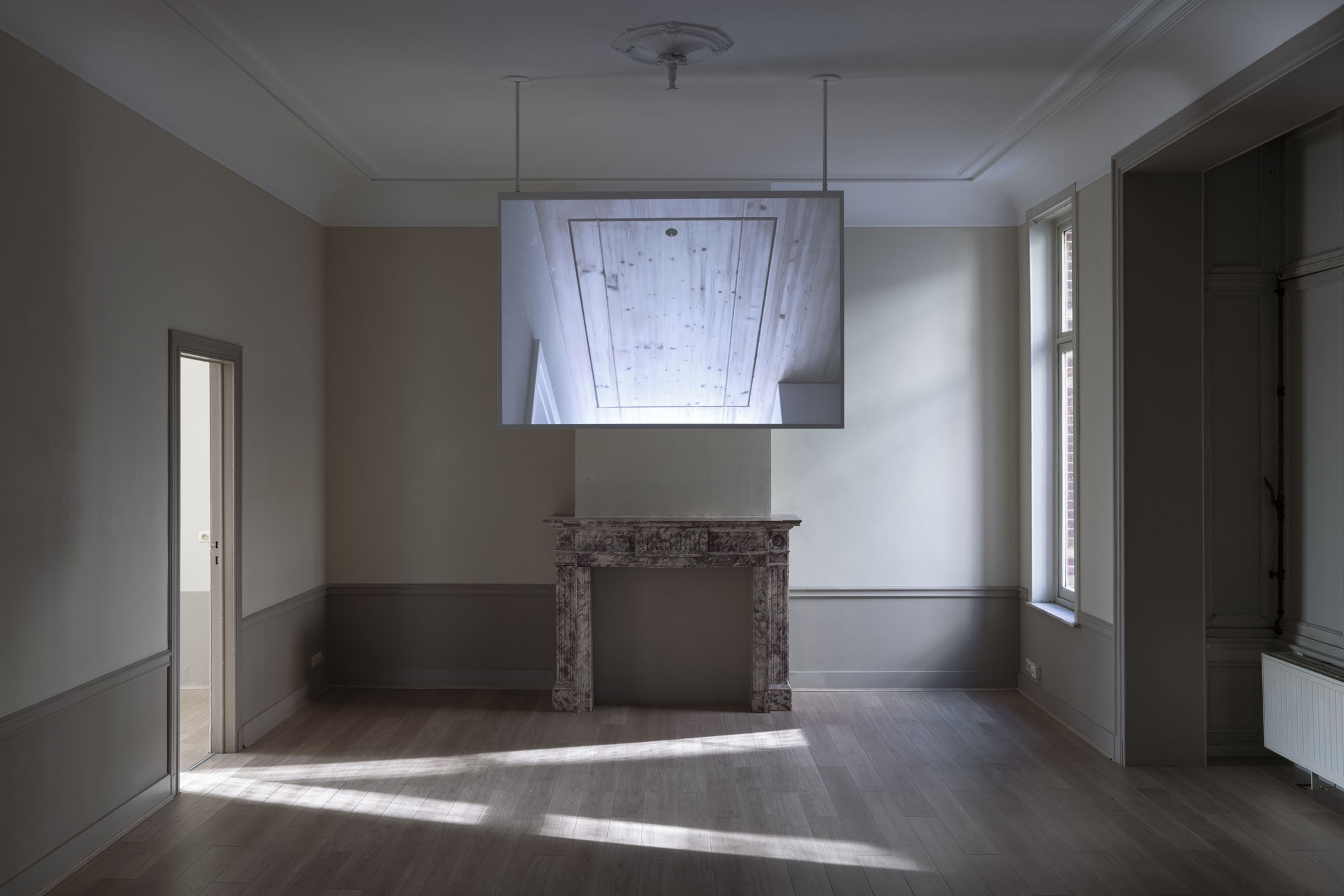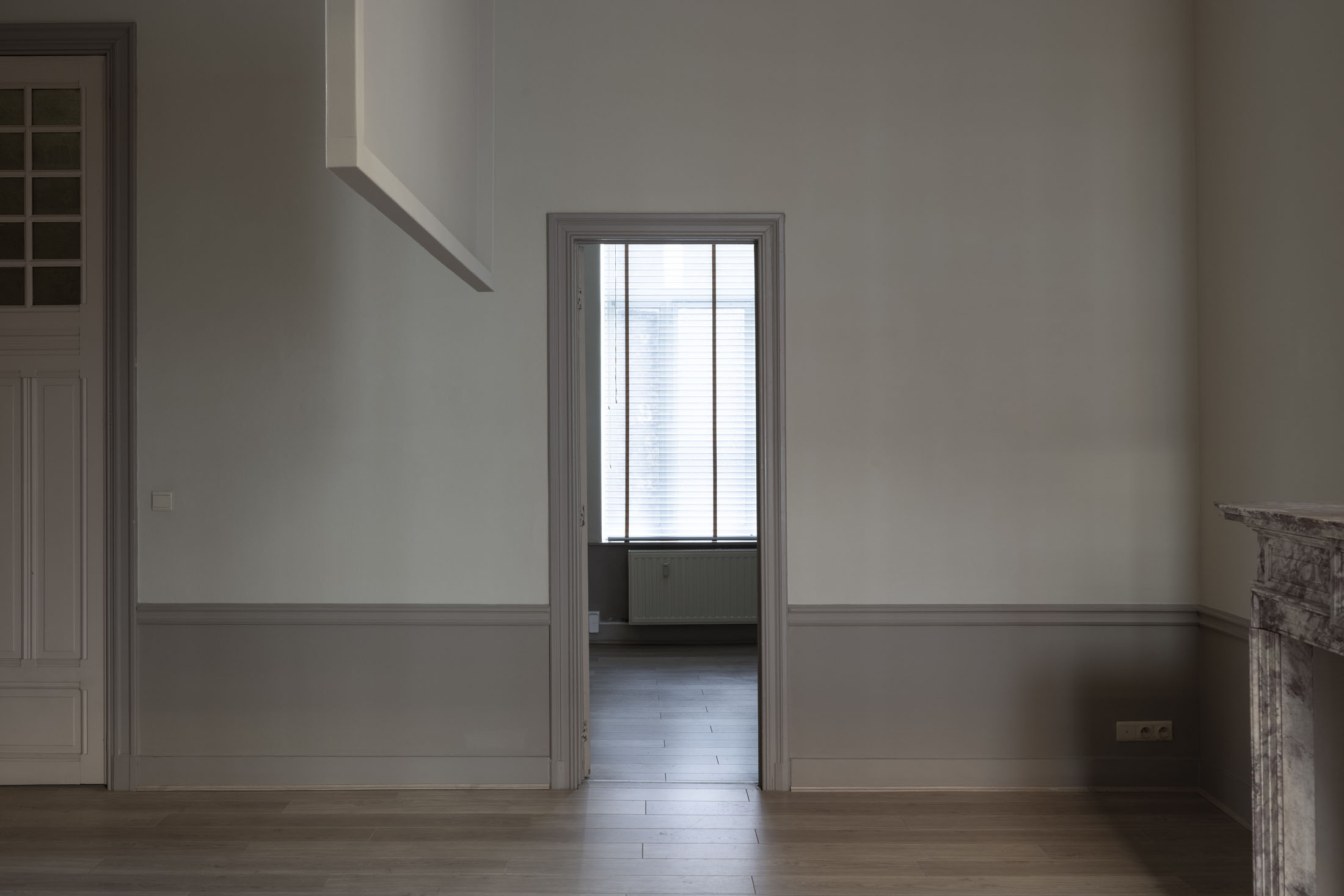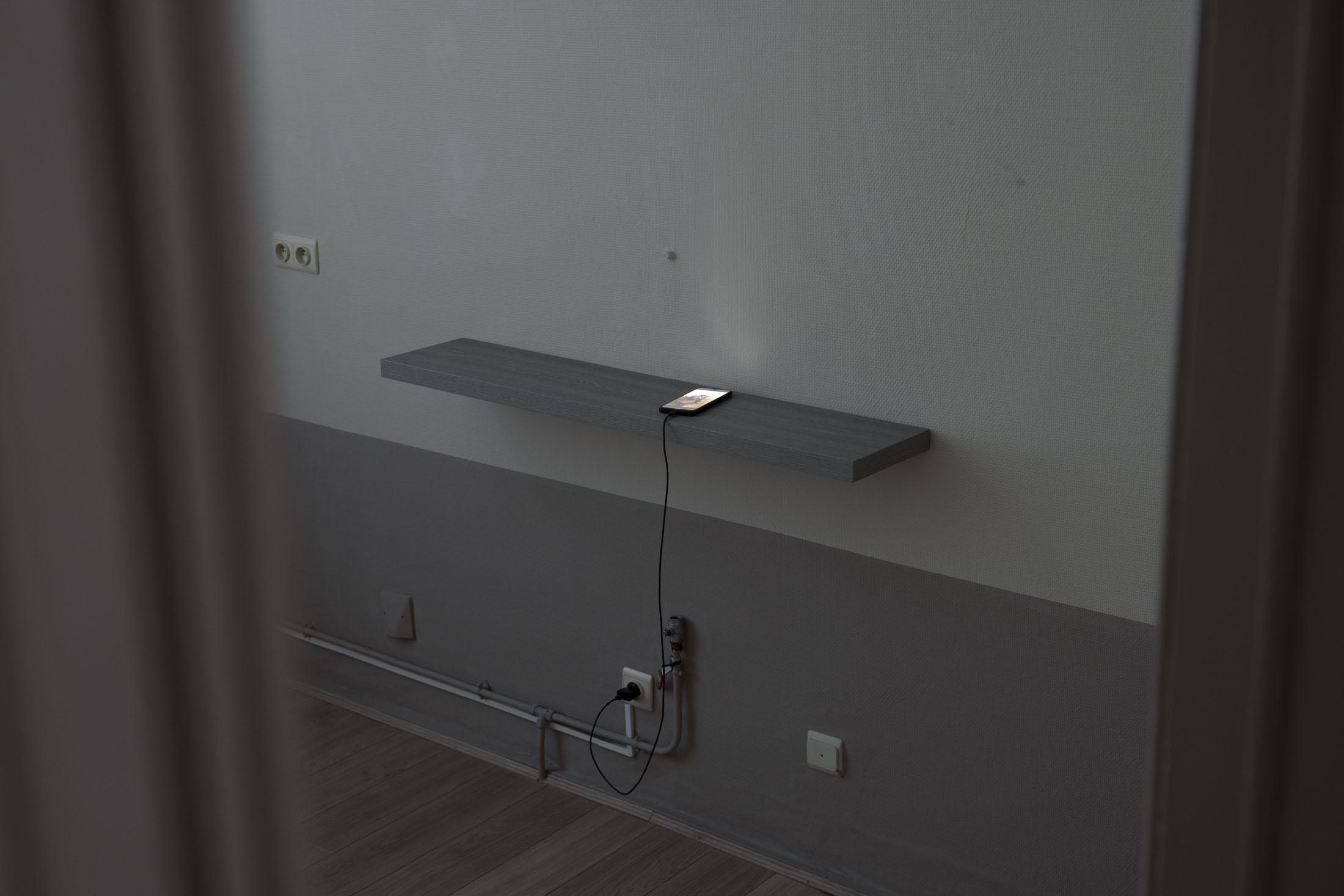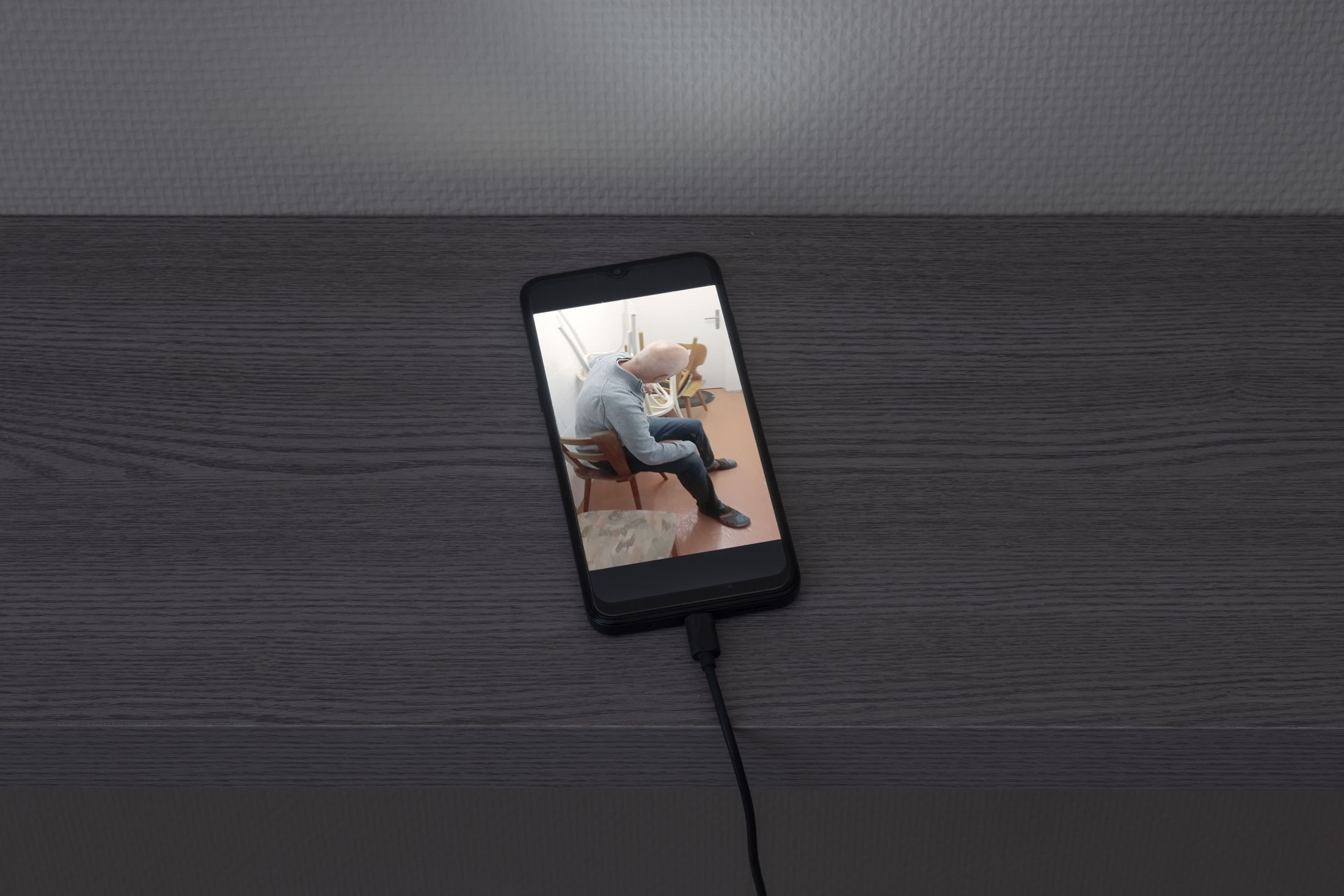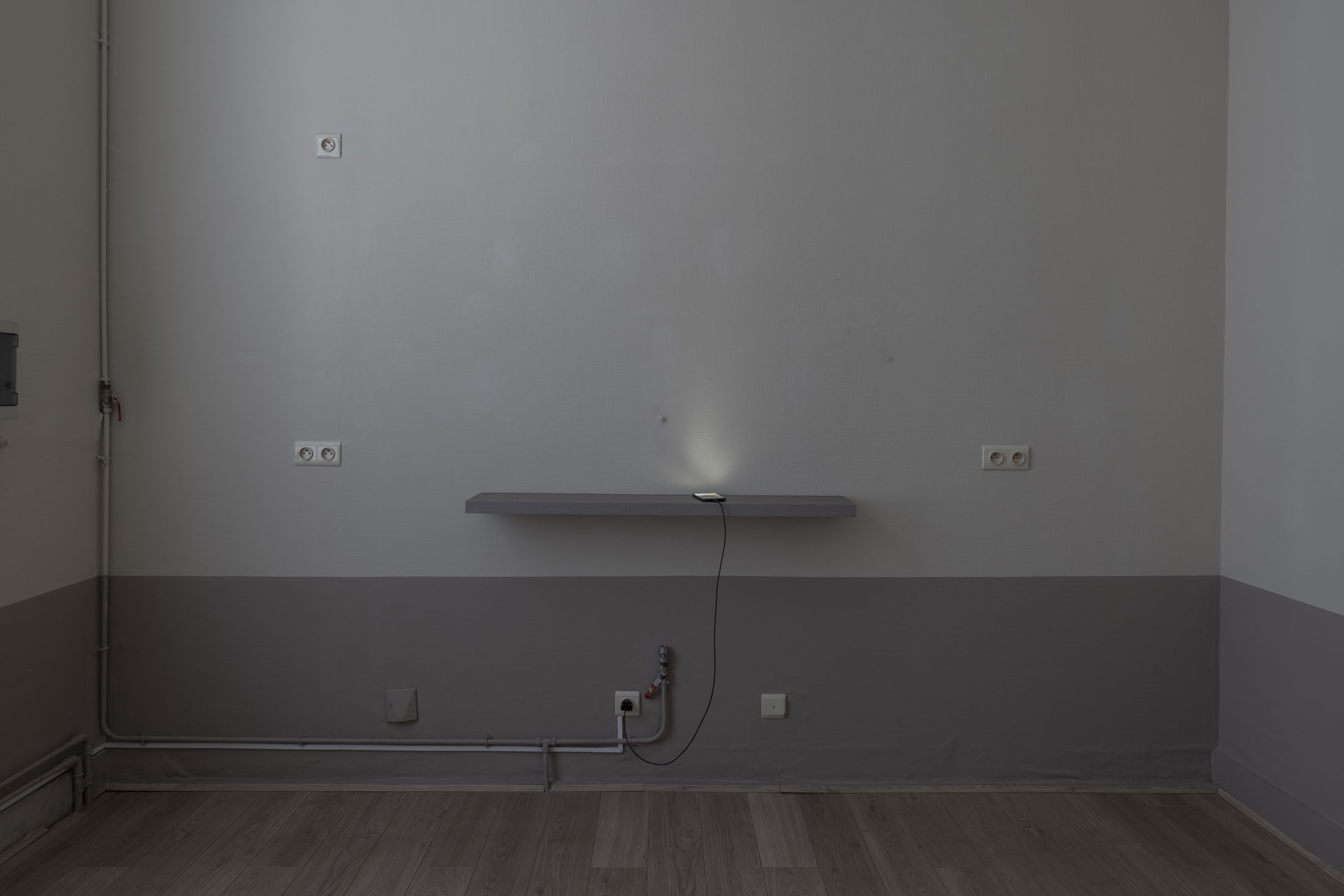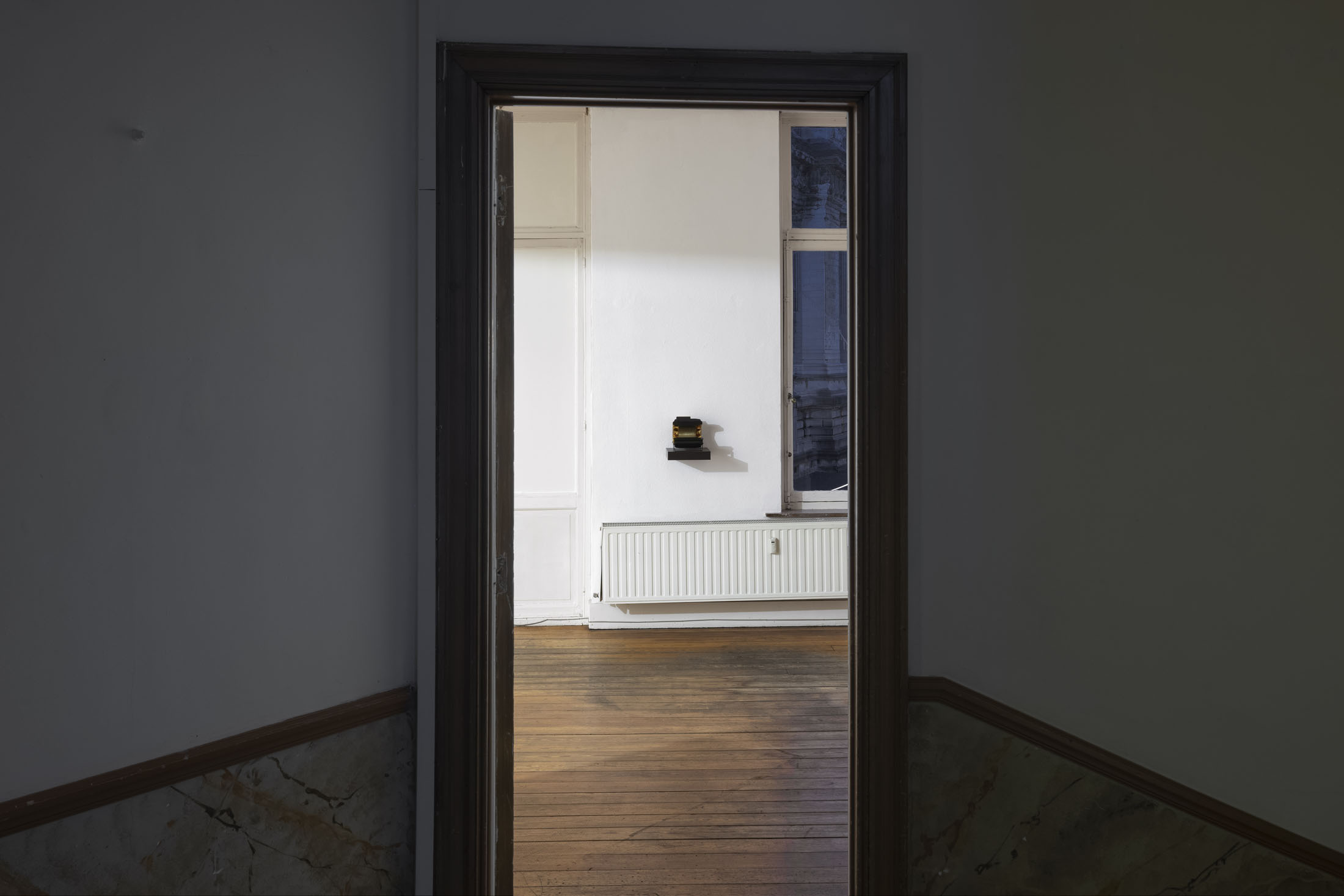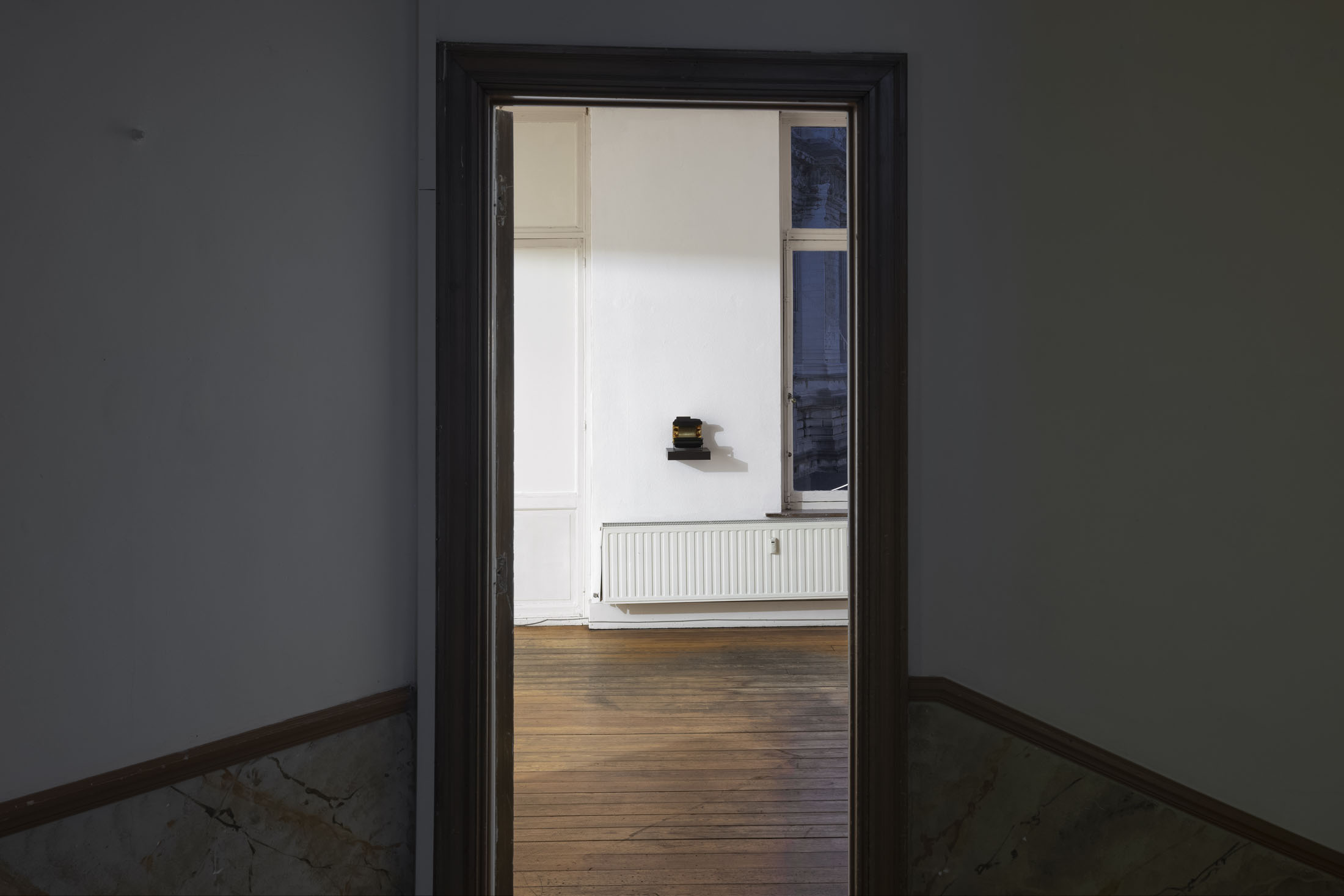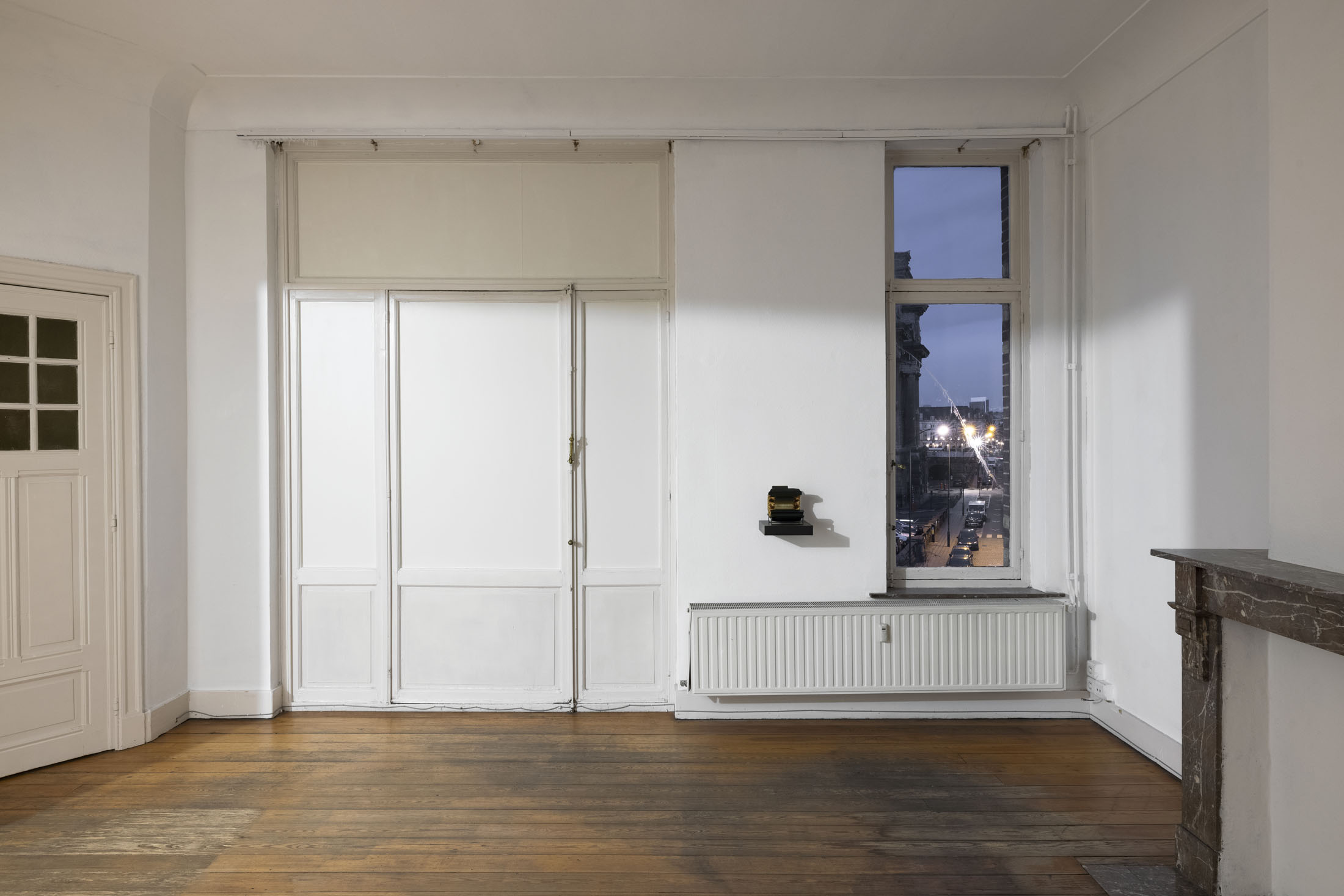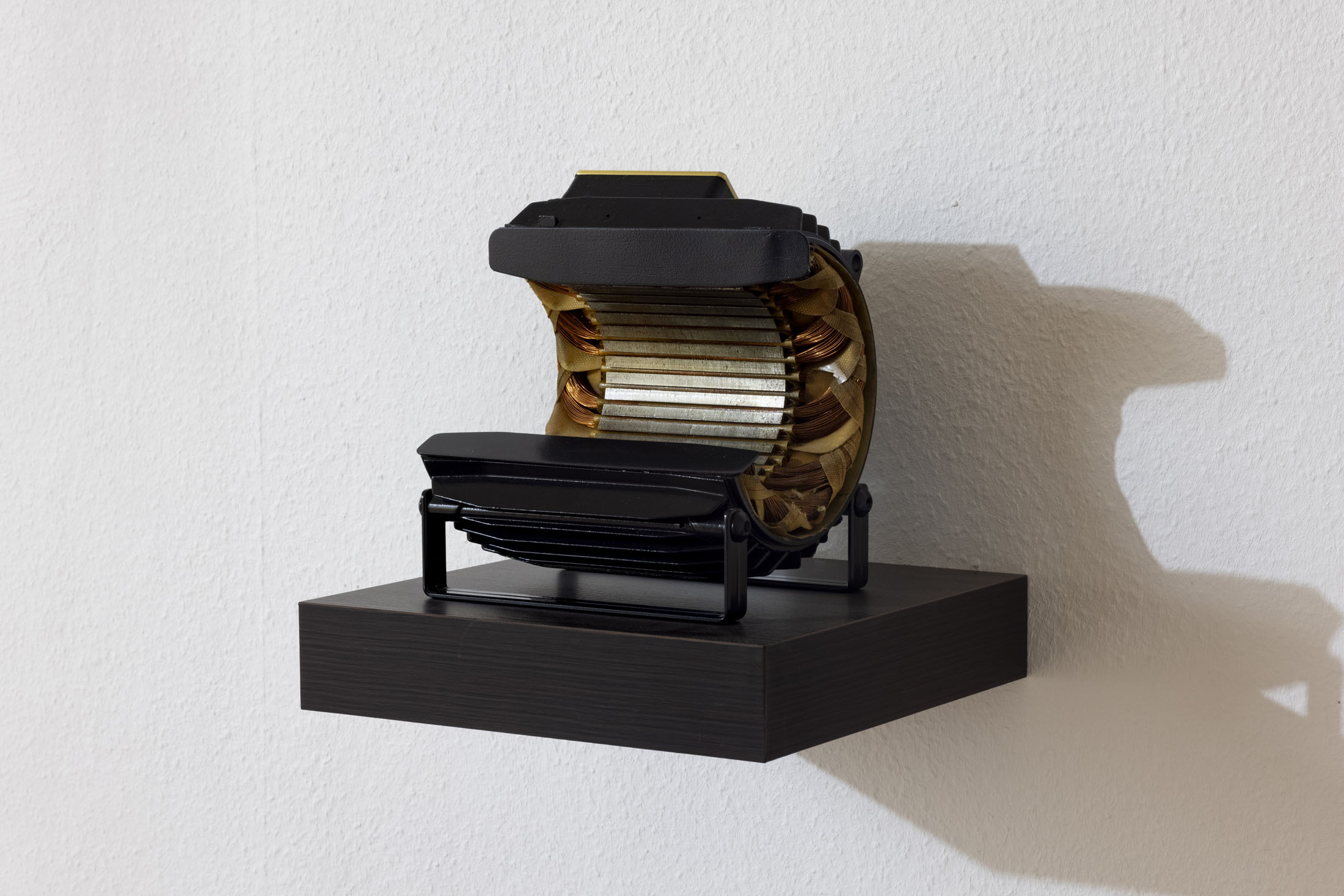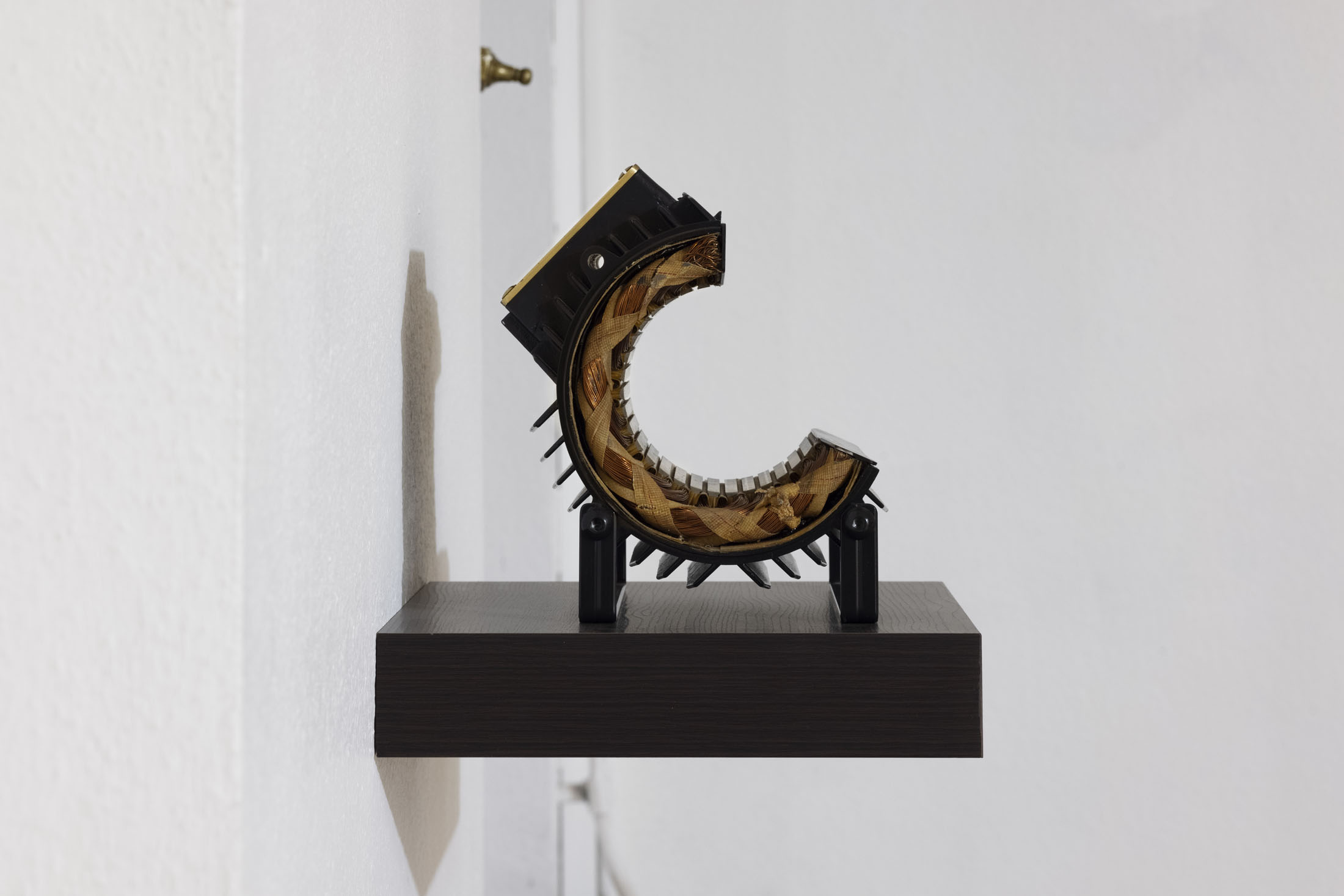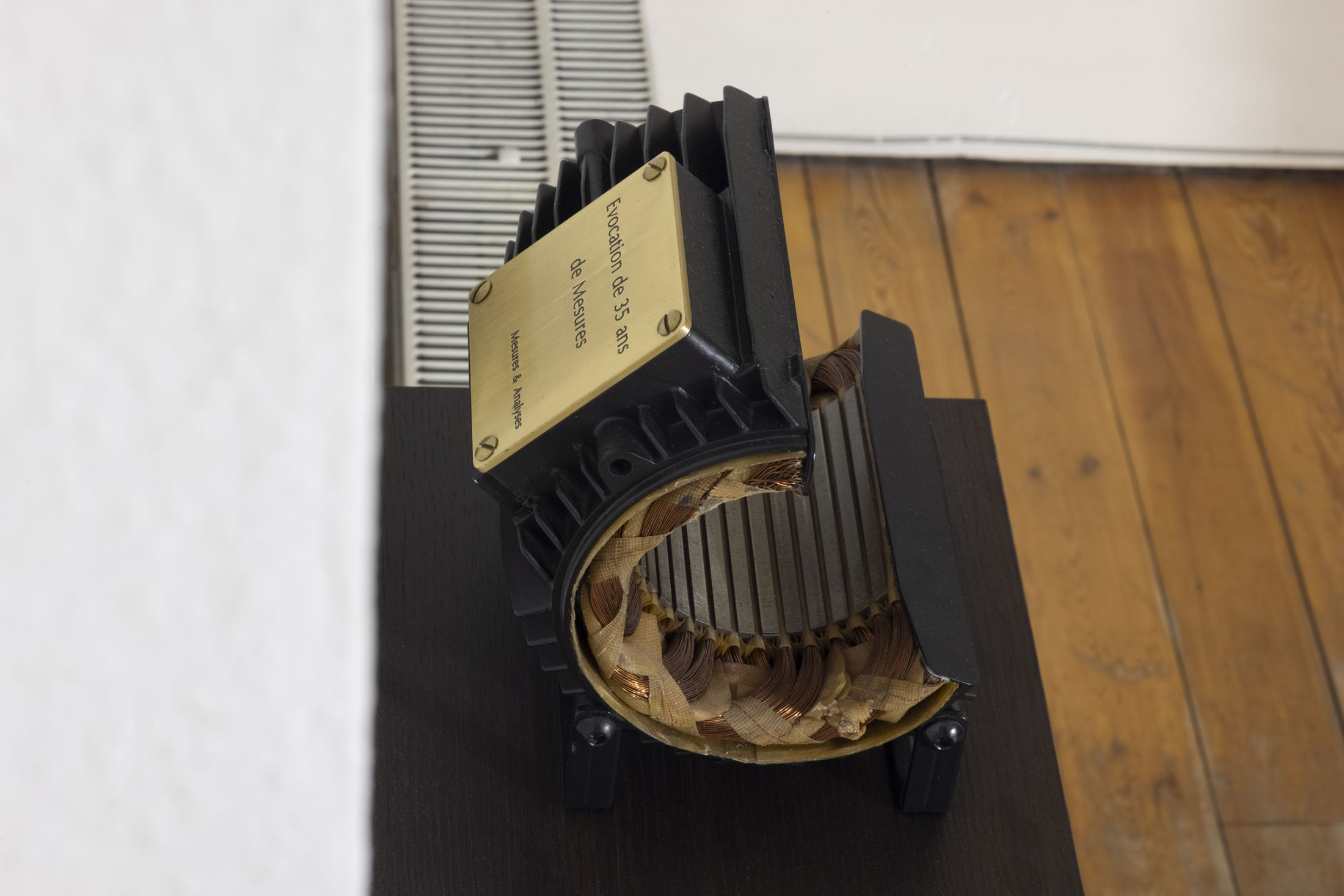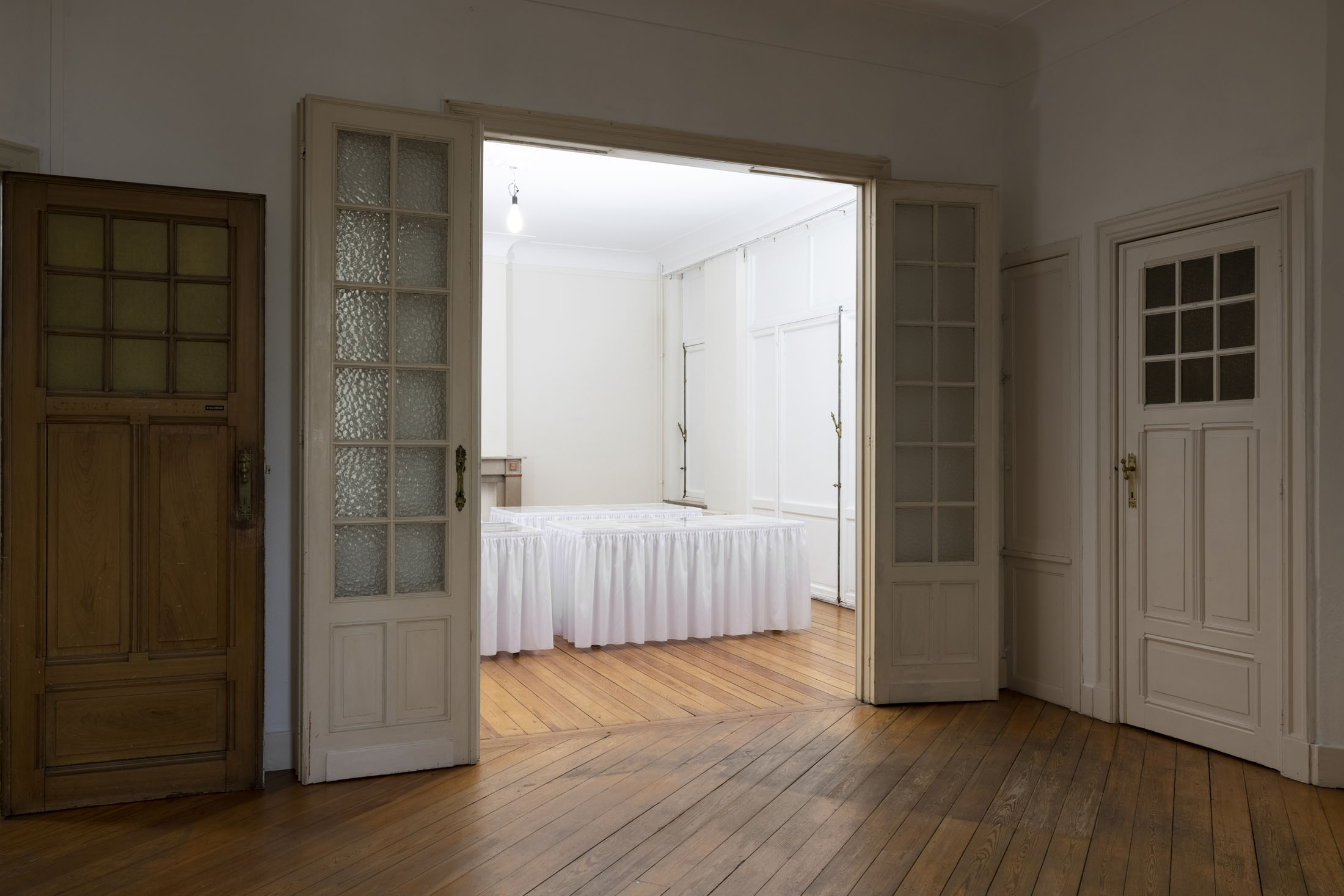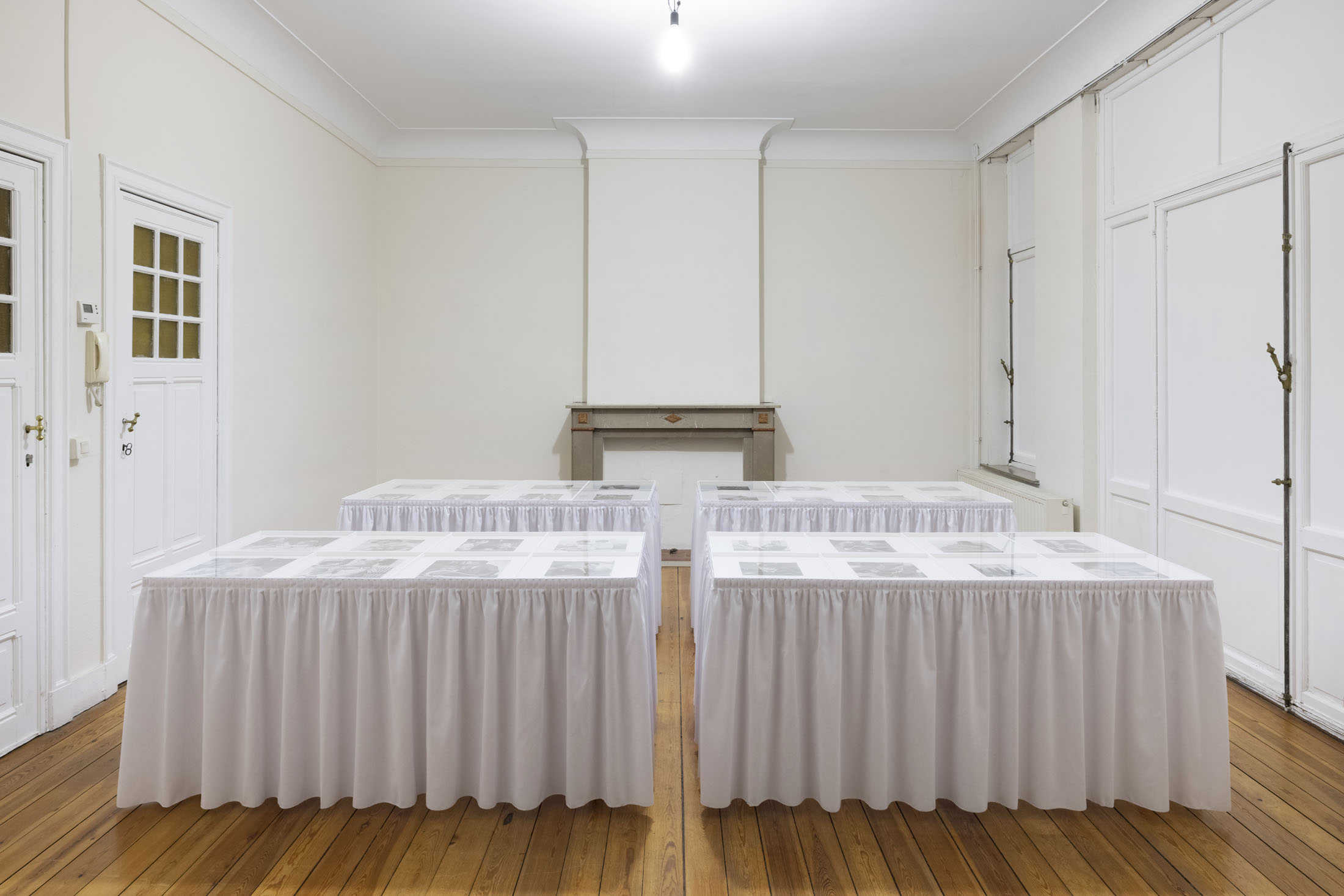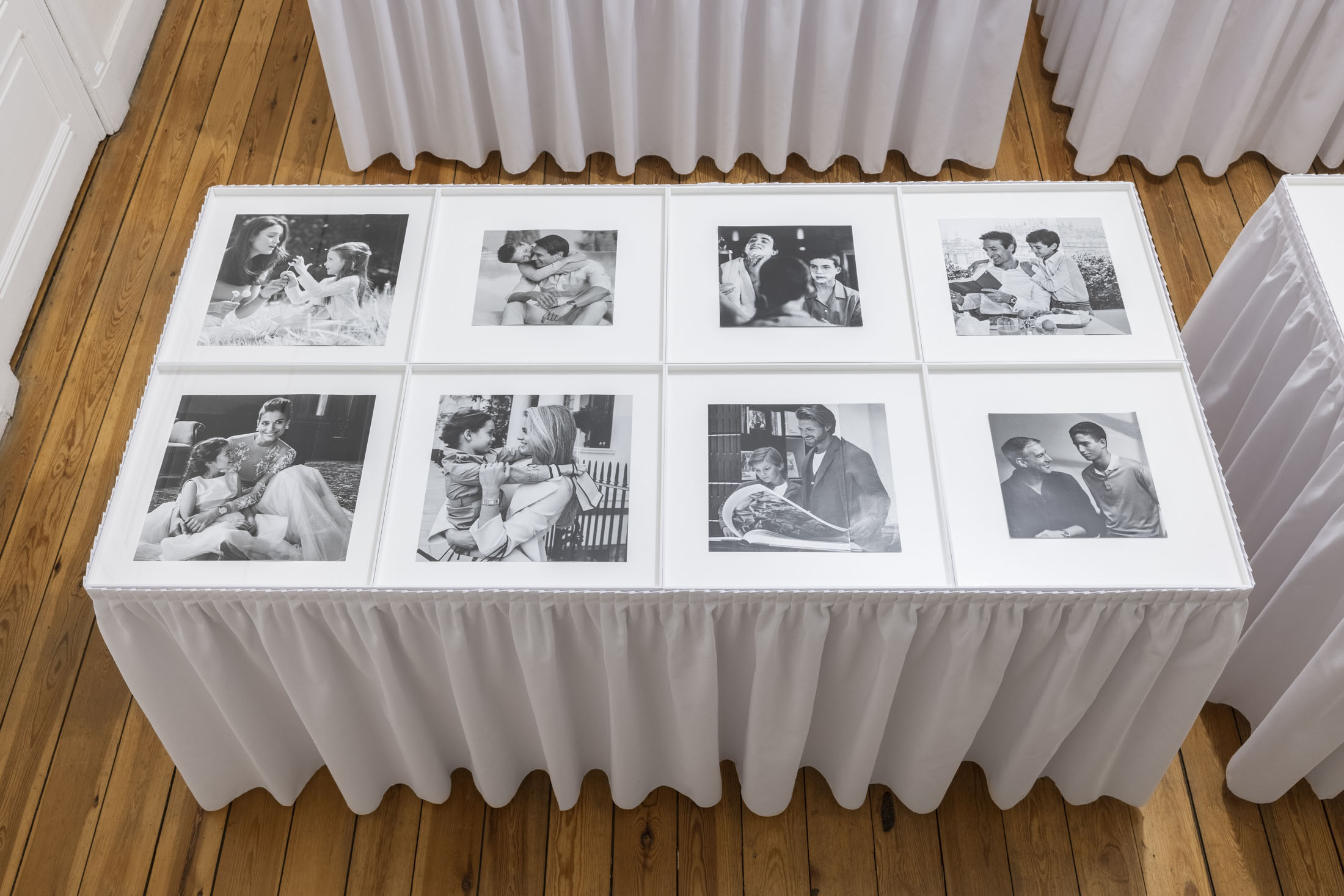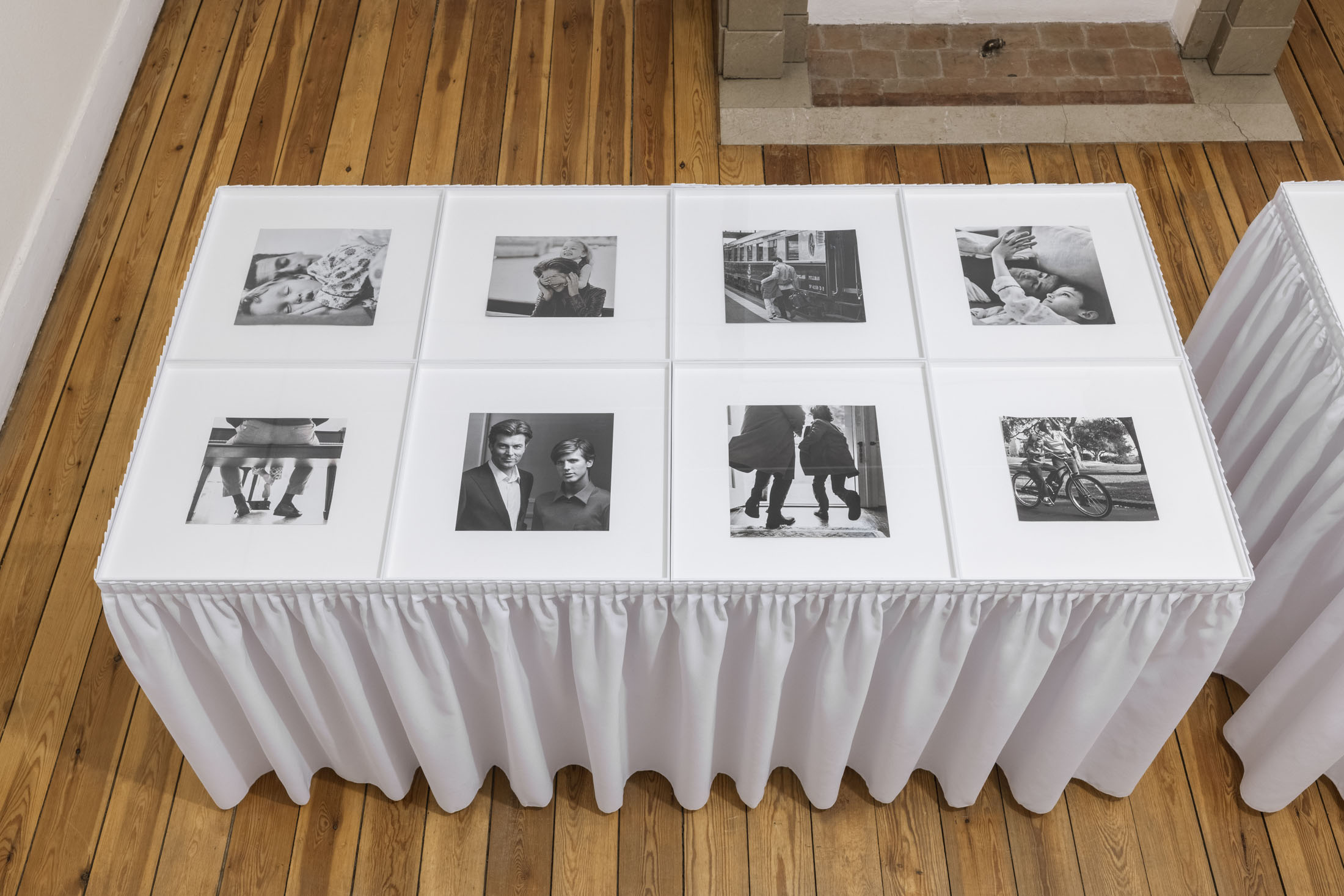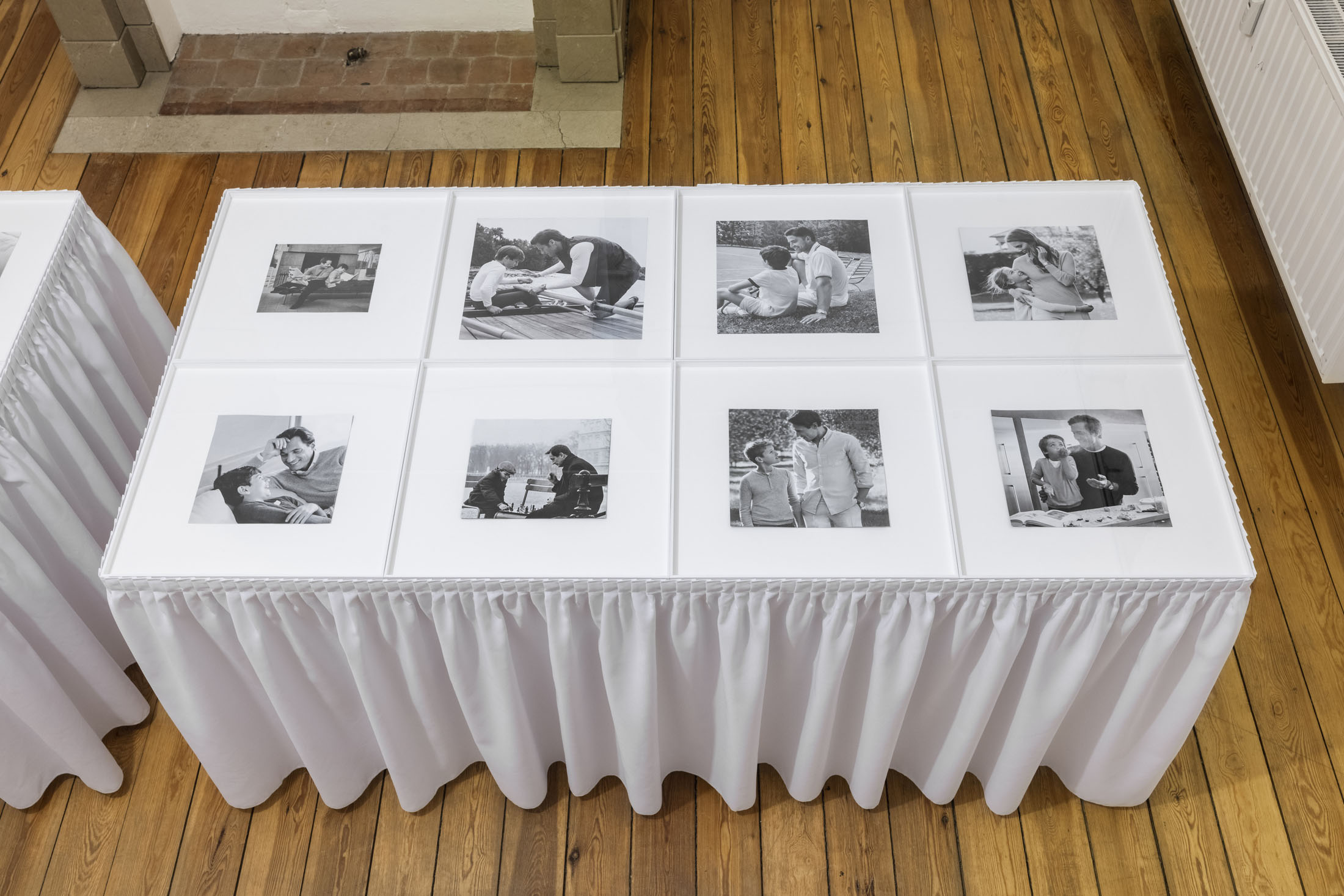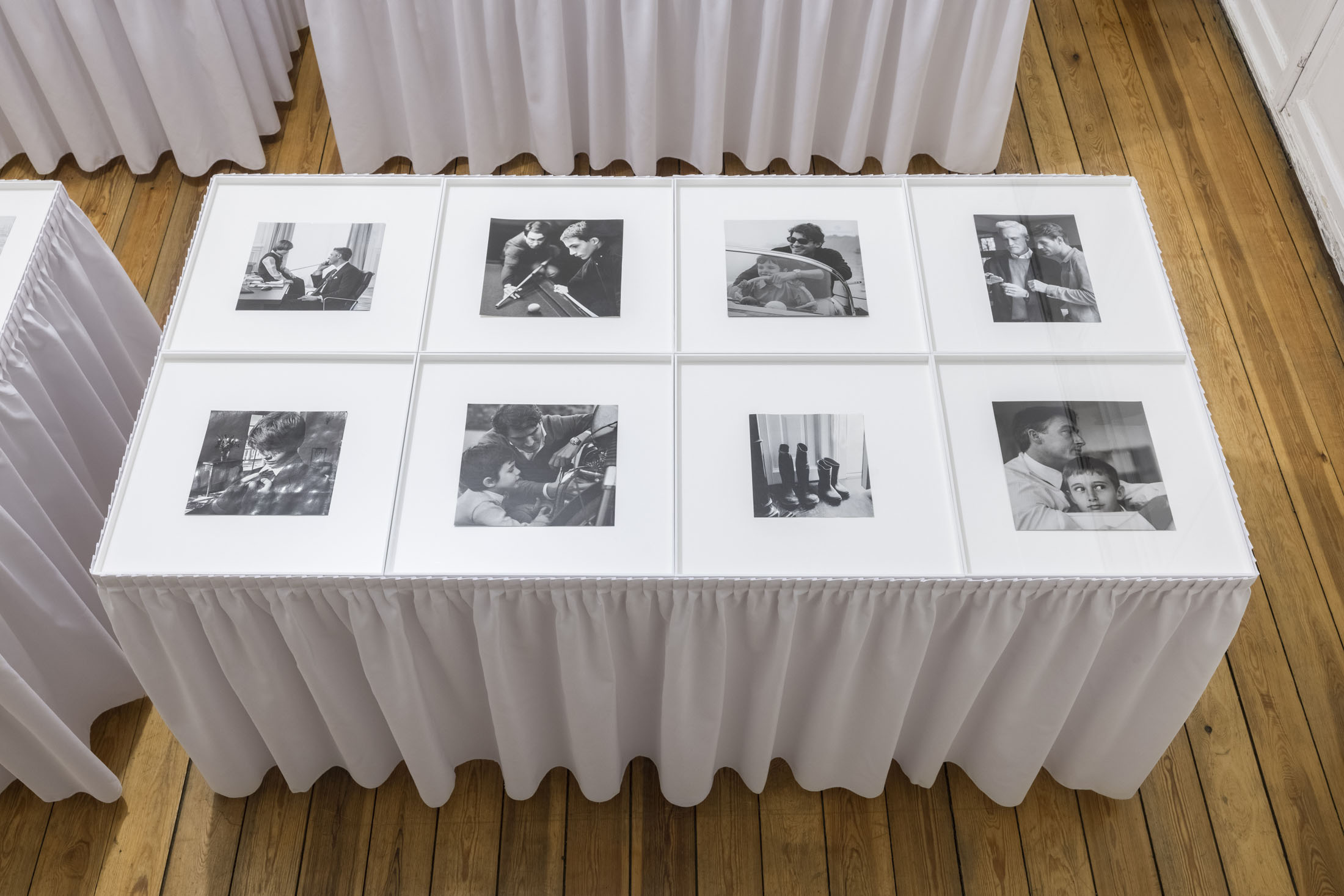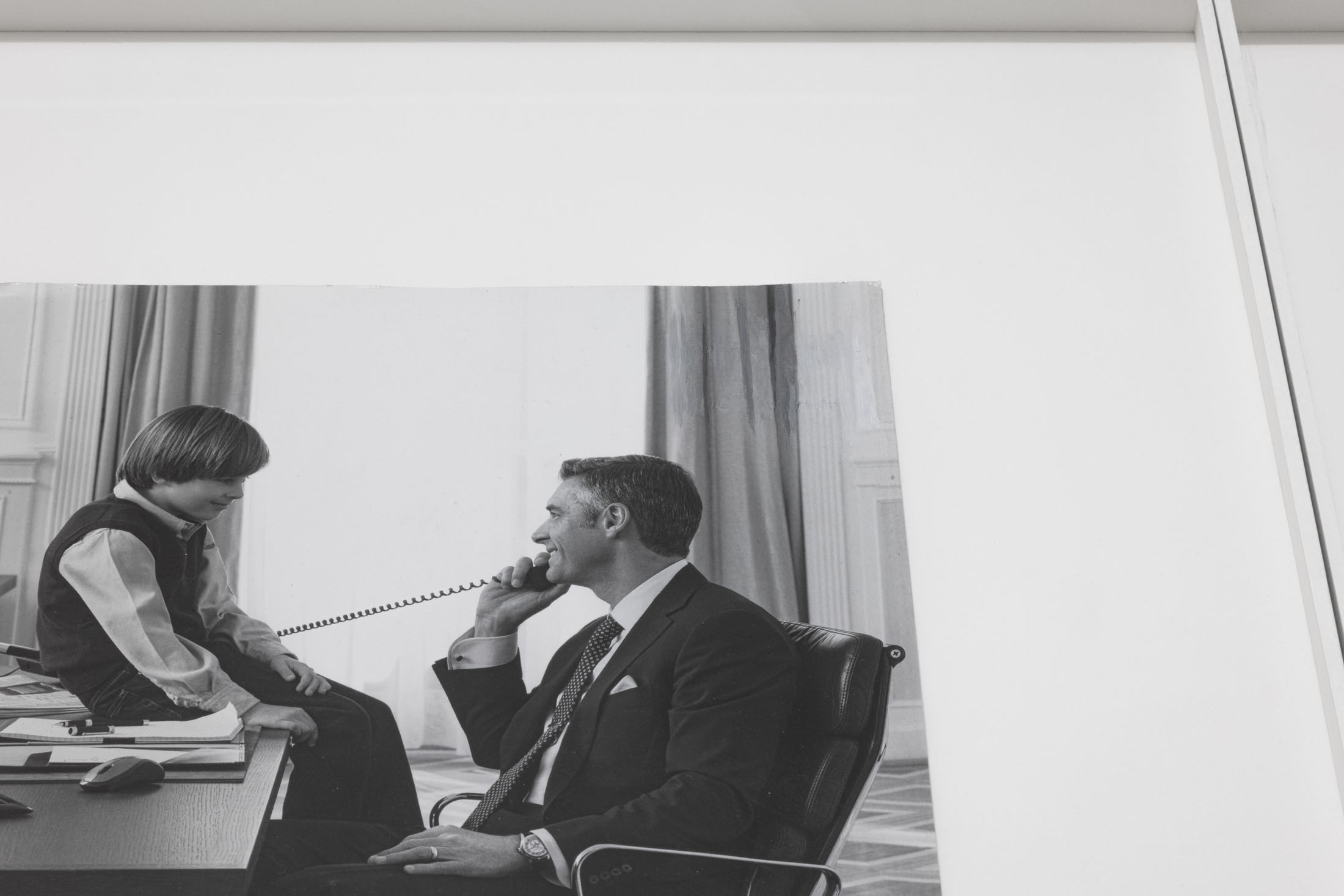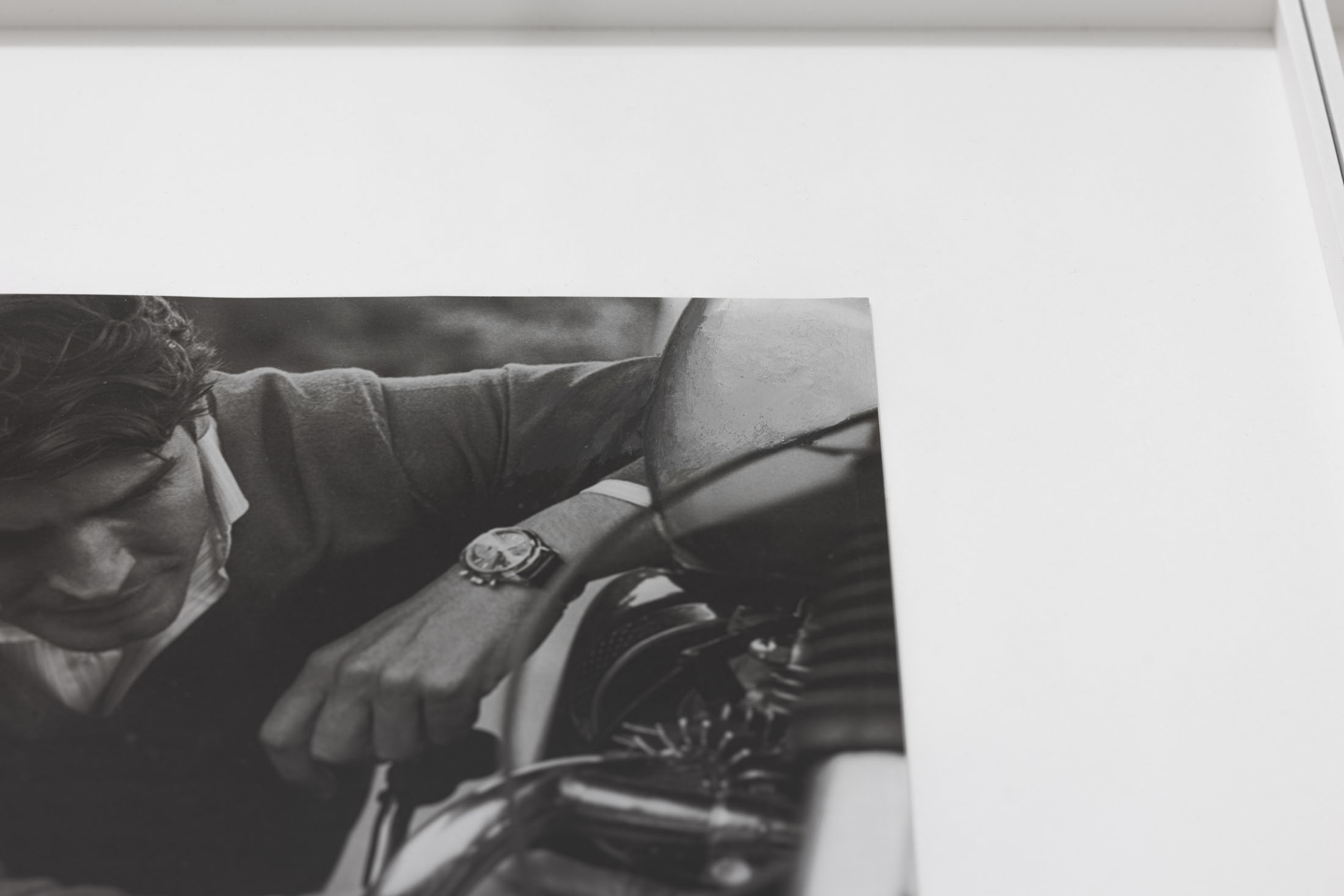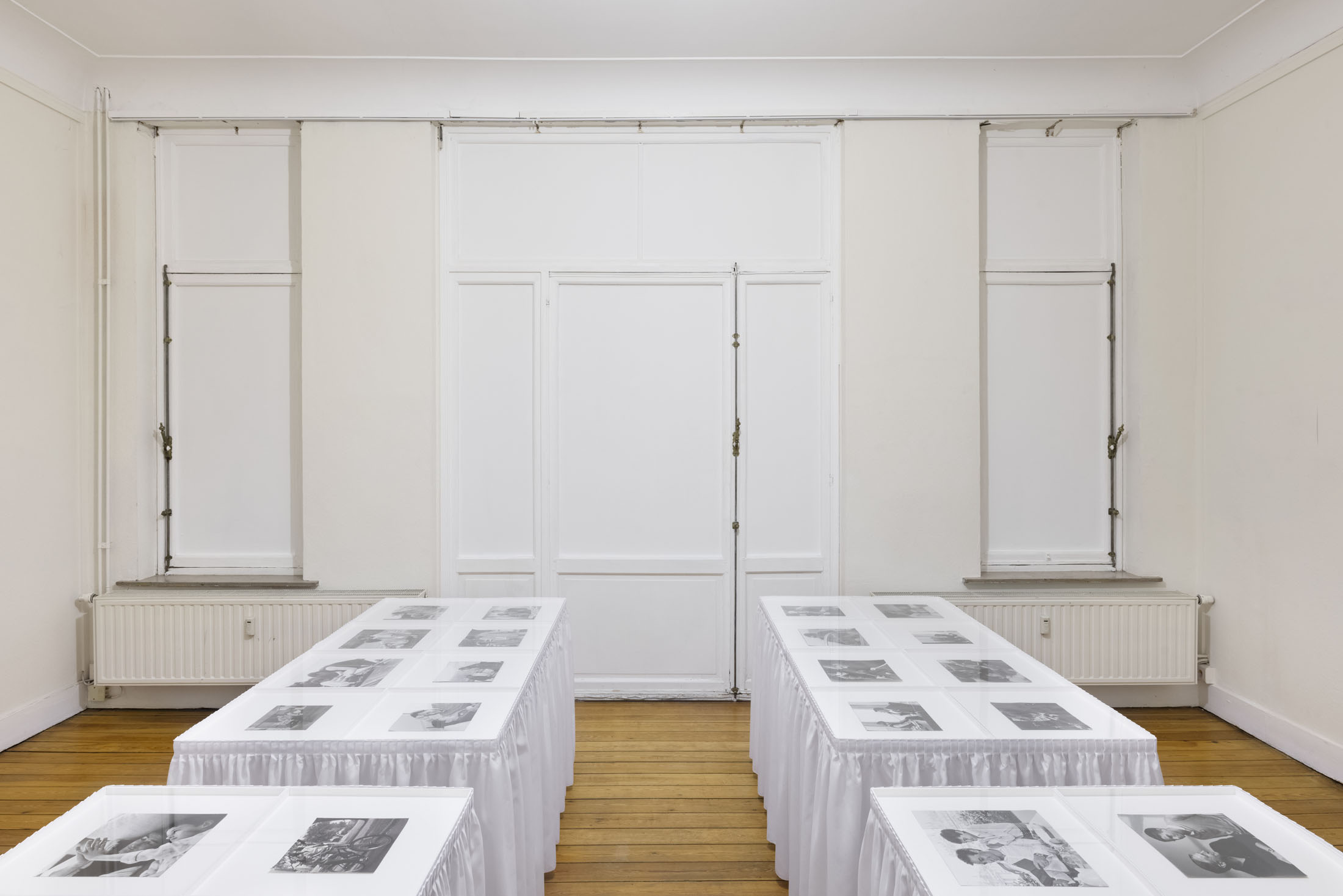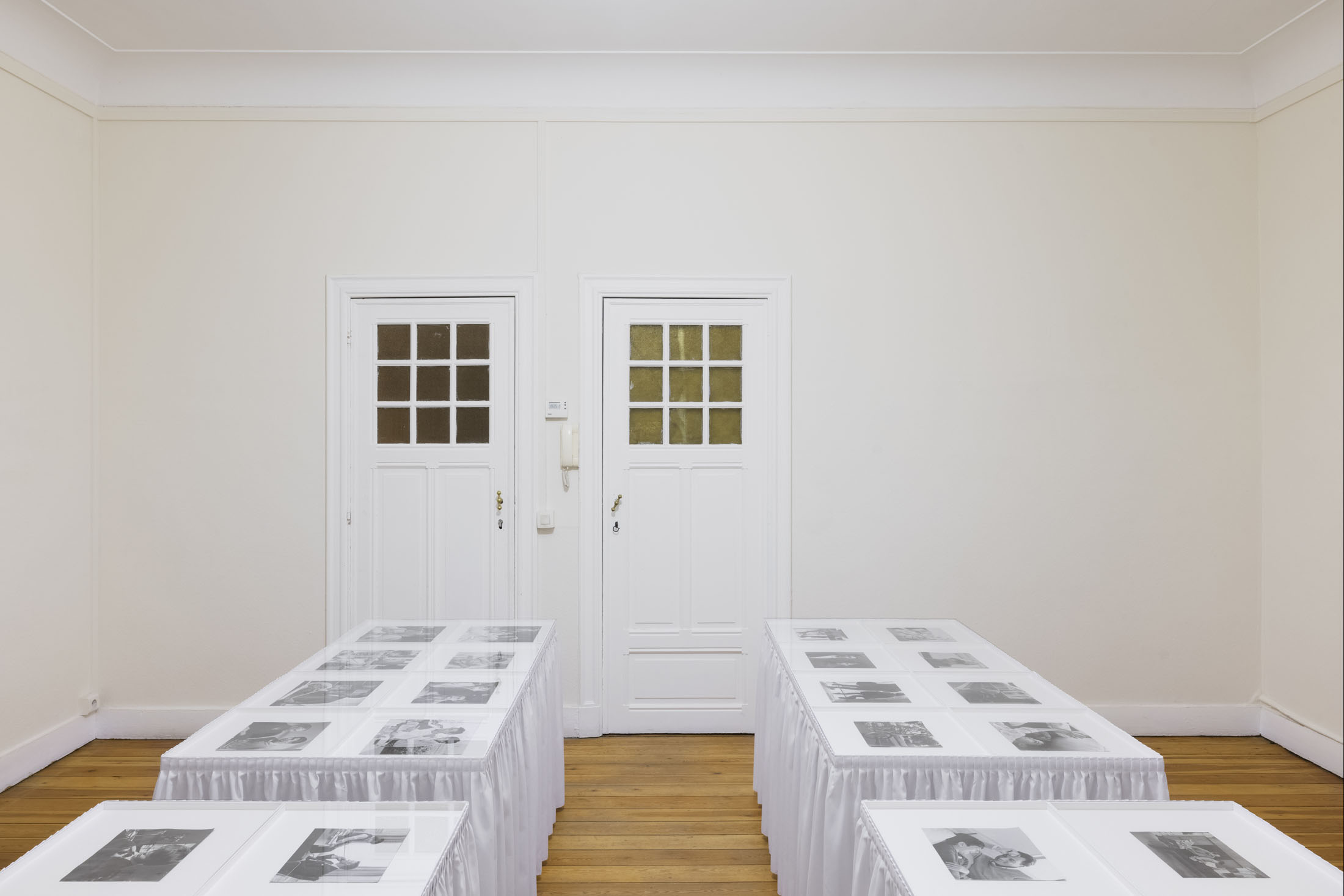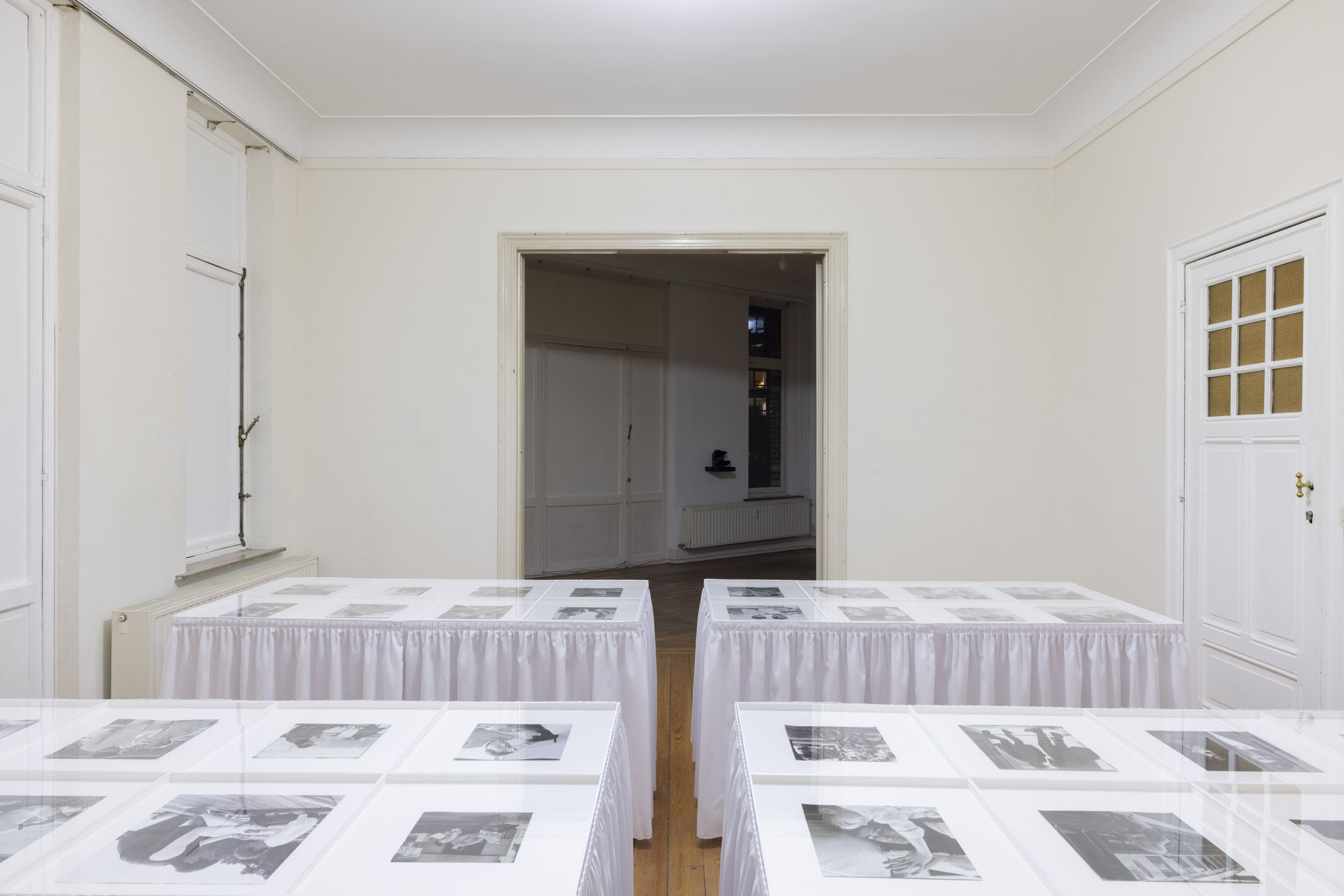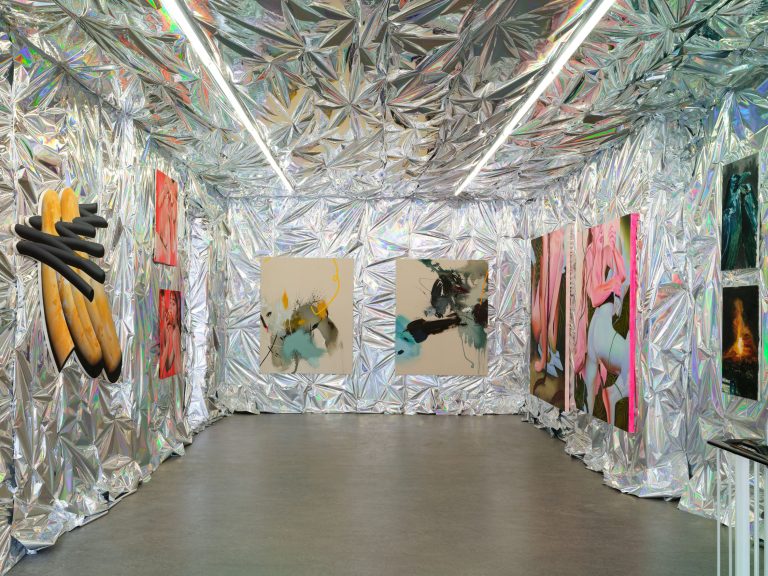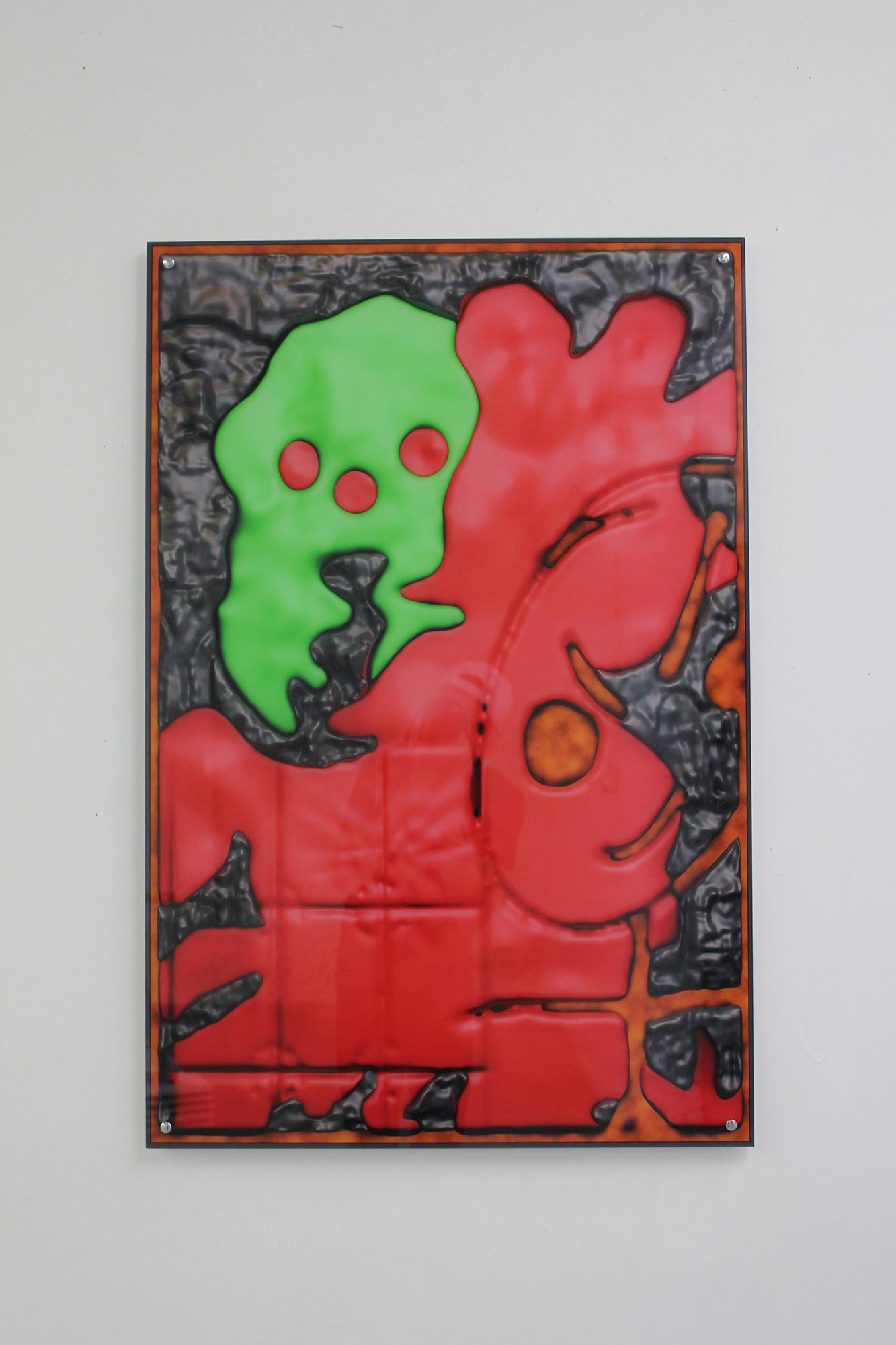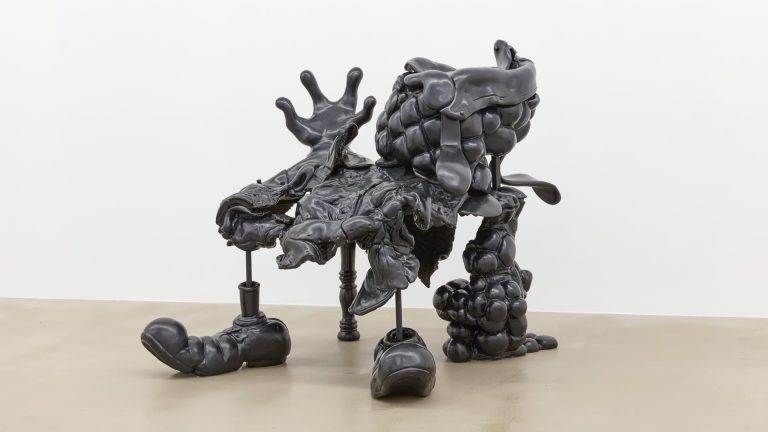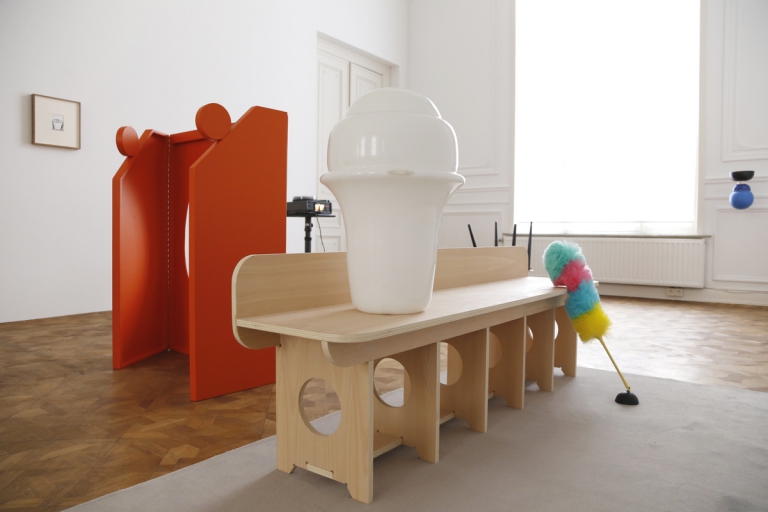
Reflect space through the point of an object: unfolds in reverse on the other side, hits the walls there like a shadow. Repeat the process: reflect this space through the object. The object becomes condensedspace in itself, spaces staggered and stacked. Andso the spacepiece, roomthing stands there, coreless, vacant, a gaping hatch, yet charged to the brim. With space! A static, starless constellation; perhaps a small-scale model of a private room, of one’s favourite piece of furniture. One imagines it might itself receive something like its double as content. A crumpled-up page from an auction catalogue; a stillborn Christ.
Consider counting. Onetwo three,, two, one. A humanrelies on tapping things. Percuss the chaos. What emerges is a rhythm, a movement.It can be strained, almost inverted, as if it were trapped between the tied up hands of the dullest of all mantlepiece clocks. Then accelerate all of a
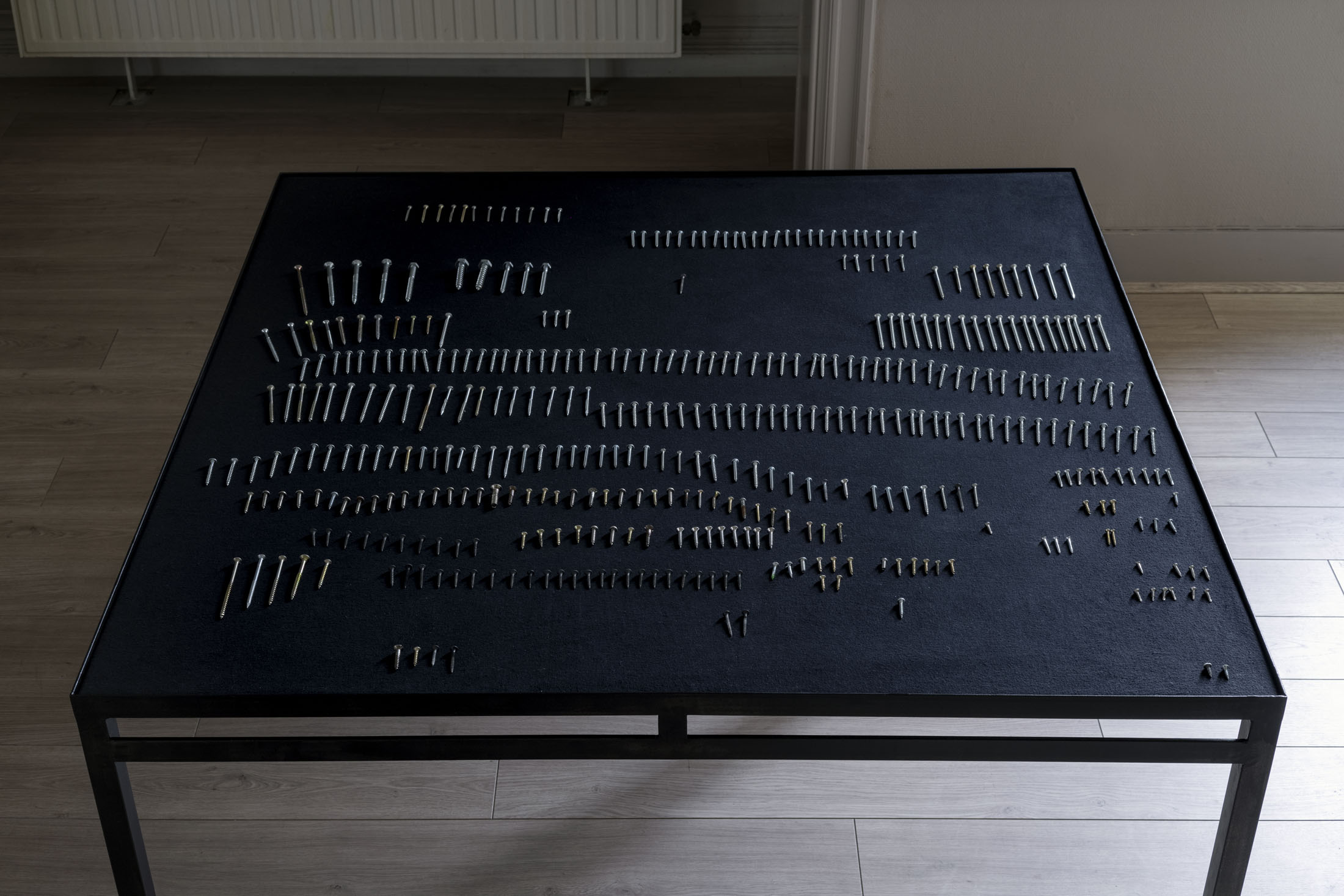
sudden, like a ribcage that snaps after yearlong nightlong tensions from within the chest. Time is not passing, time consists of intensities. Whenthe idea of time infuses an object, it can go two ways: either the object is charged with meaning, a significant timepiece, or it refers to nothing but its owncoherence, a timepiece like a piece of time, a careful composition of screws.
A.T.