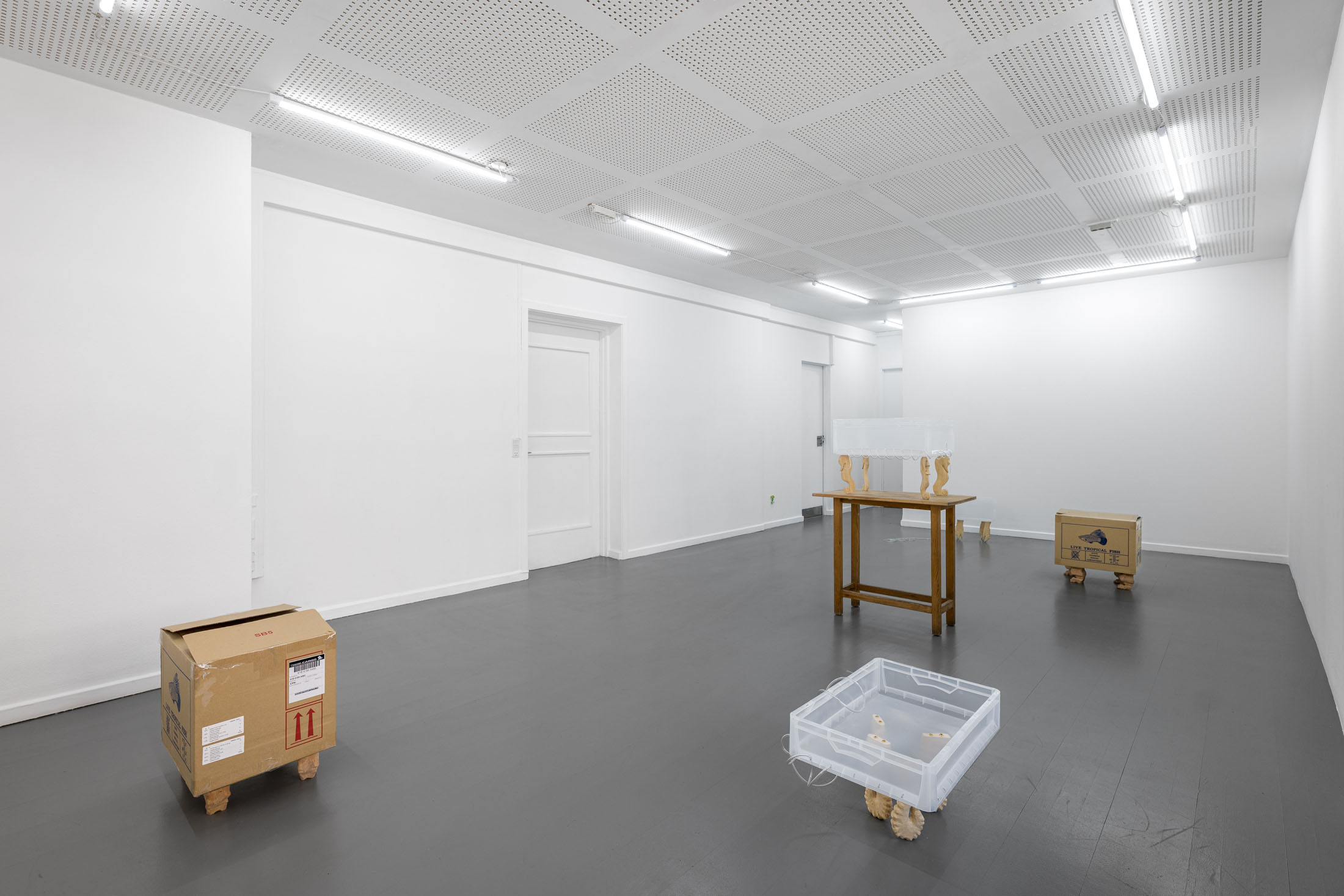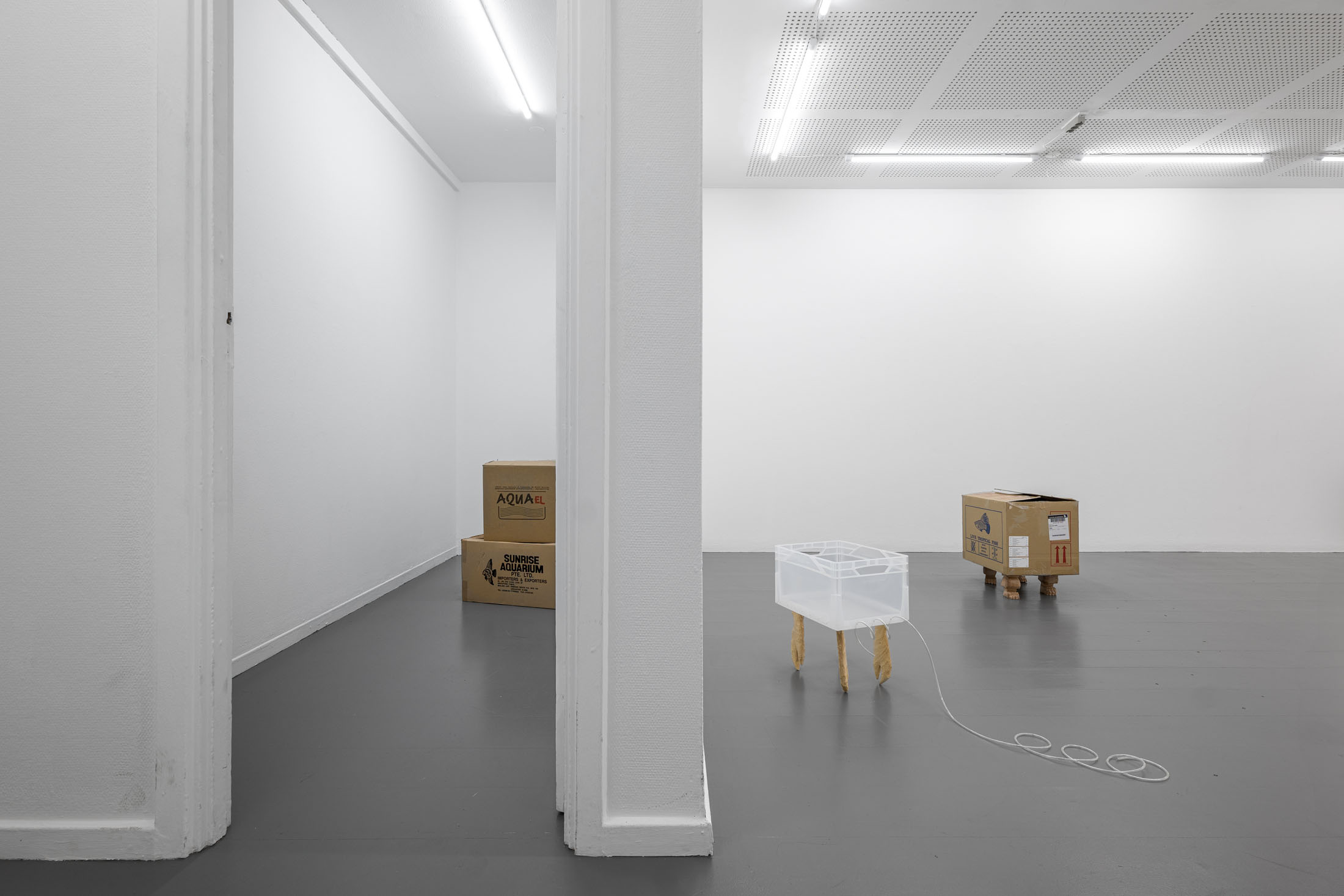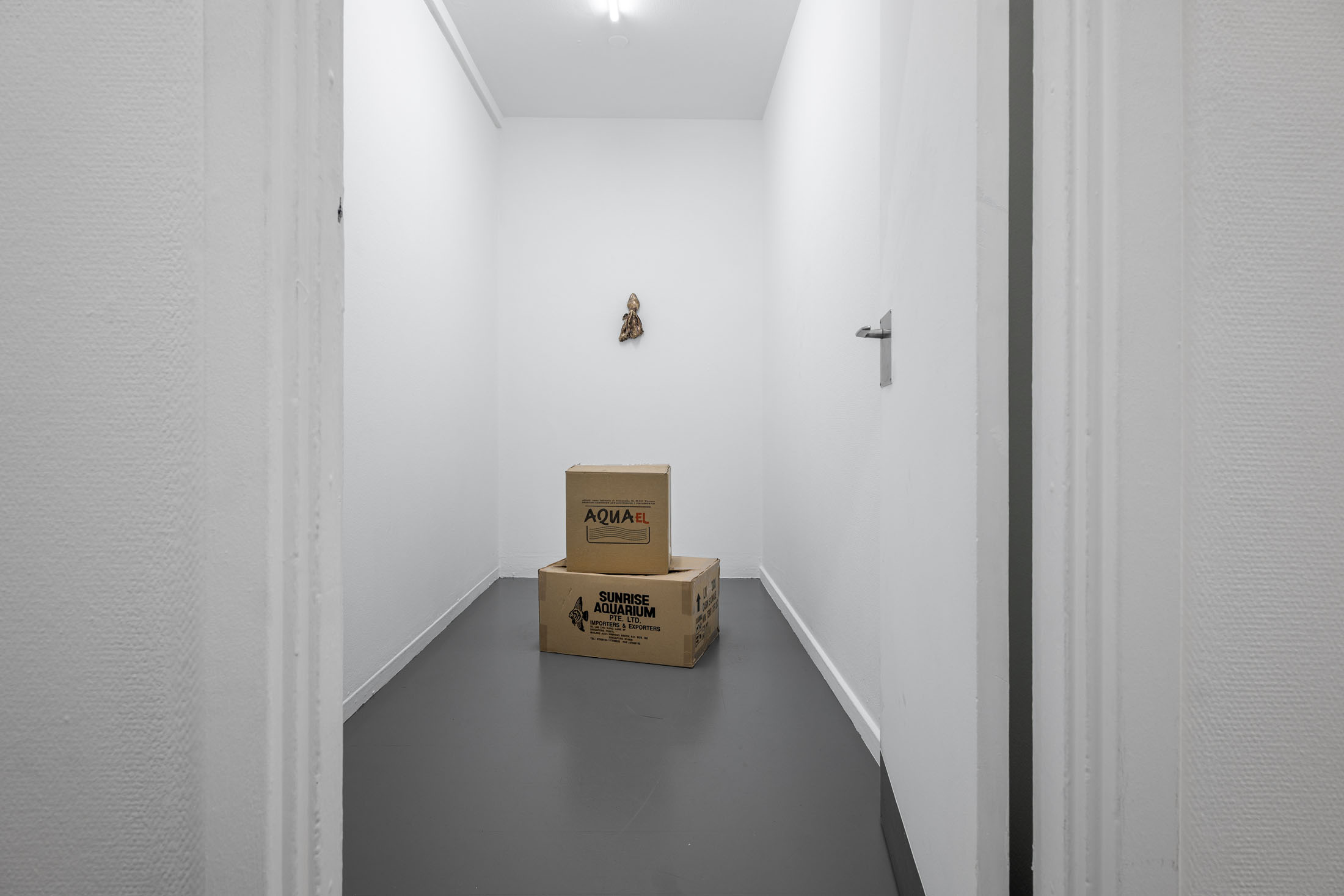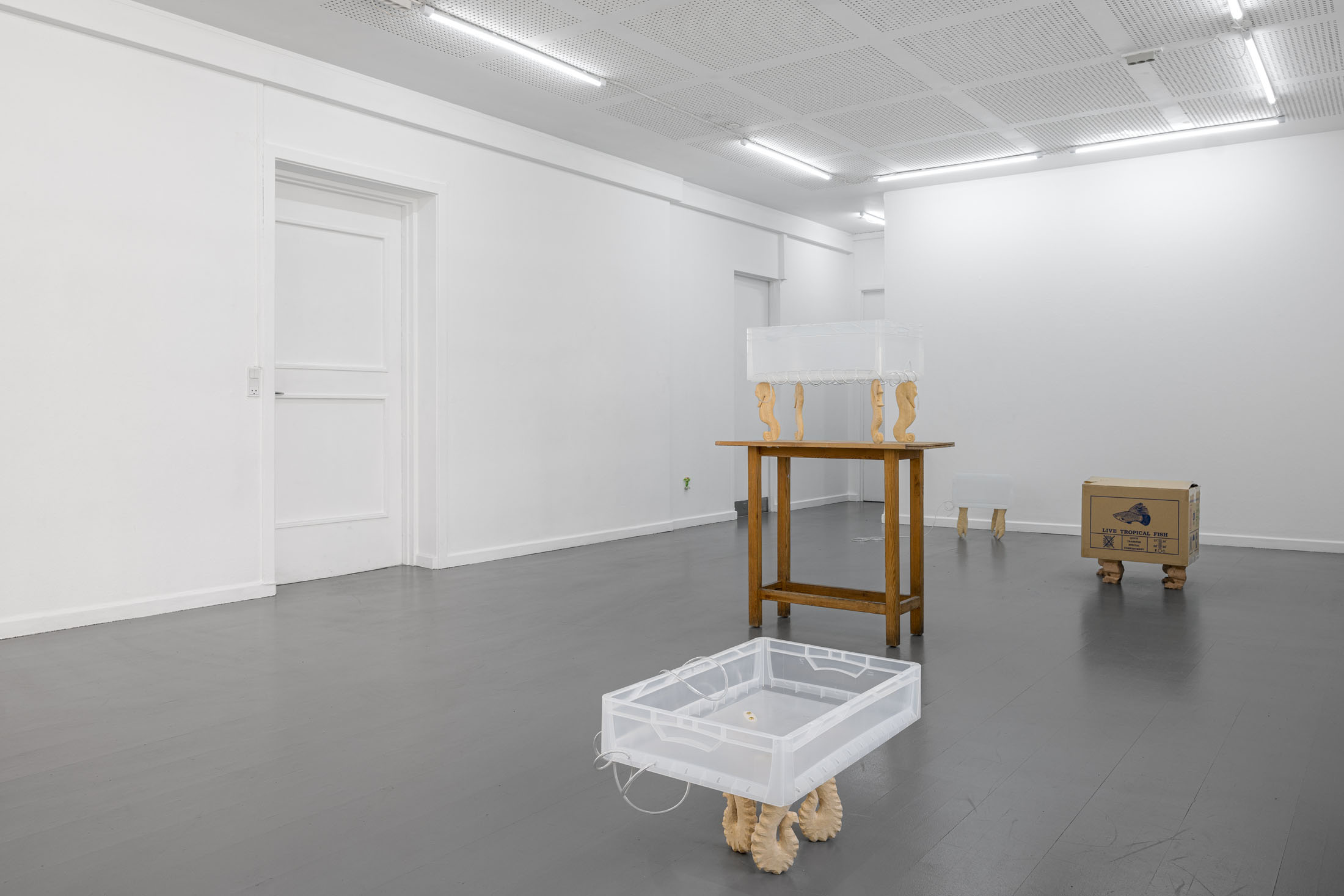
The first publicly accessible aquarium opened in London in 1853. Known as the Fish House, it was a major attraction on par with the great art exhibitions of the time. The aquarium revealed what had previously been invisible beneath the water’s surface. It made the mysterious wet something one could acquire. To see it was to own it.
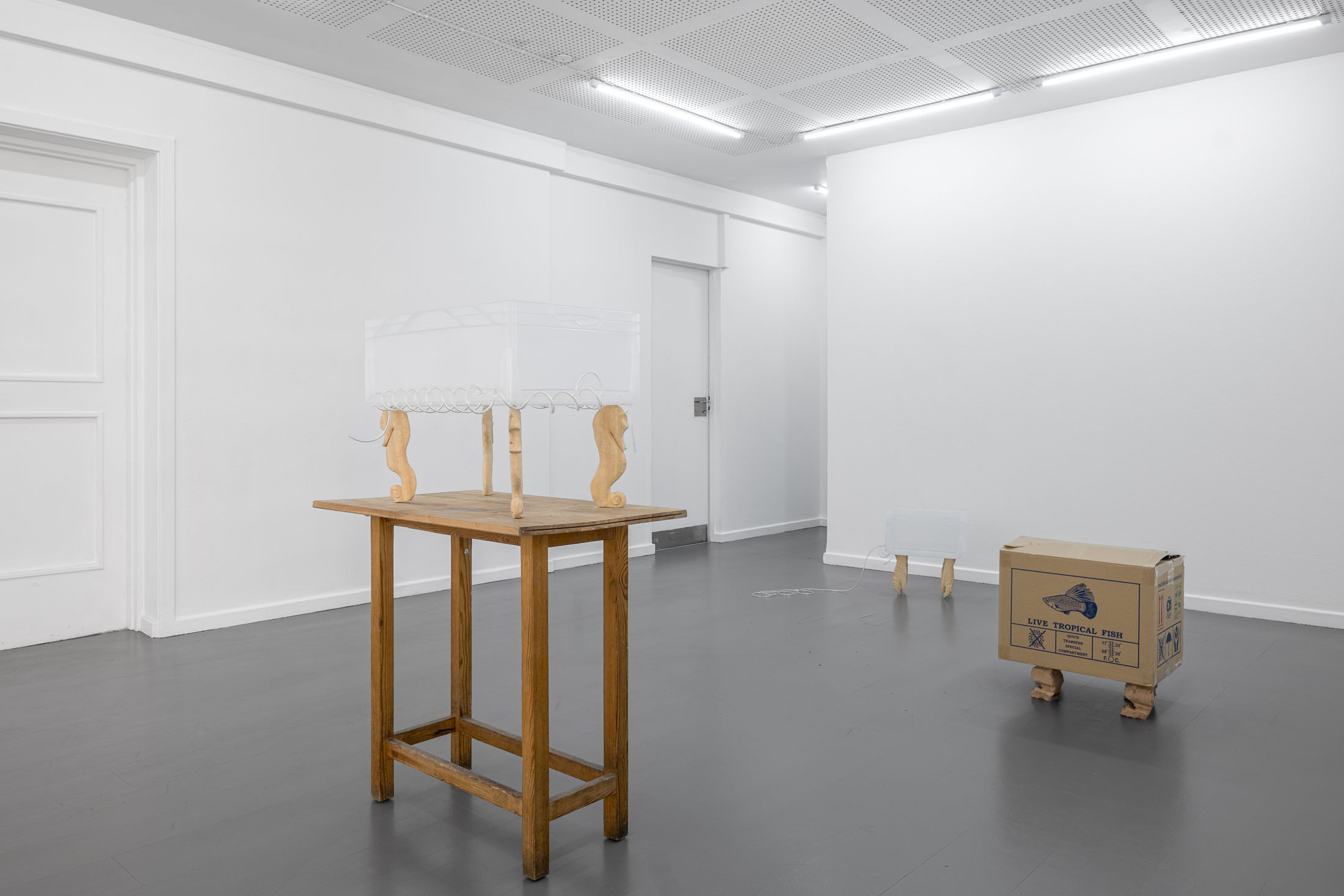
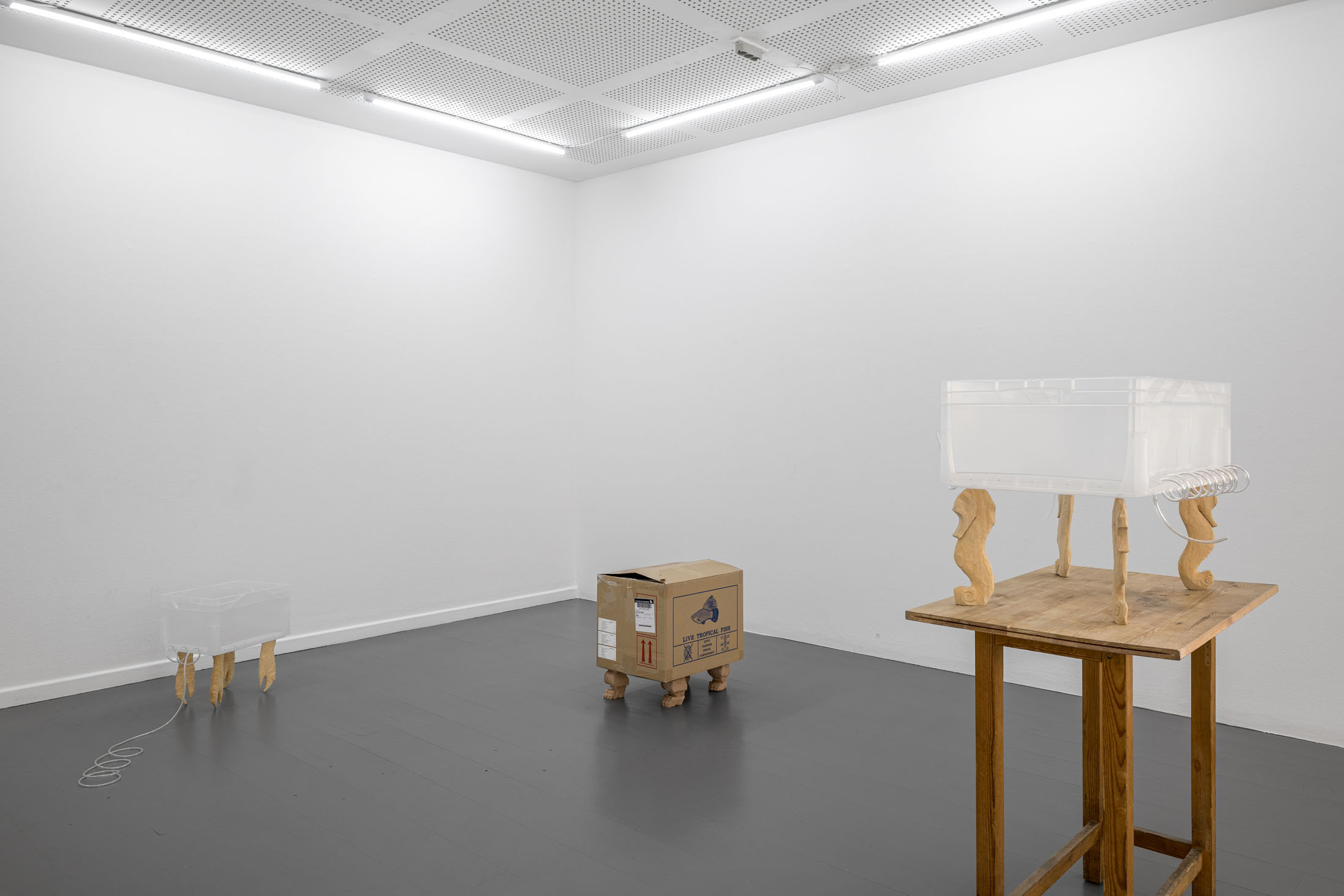
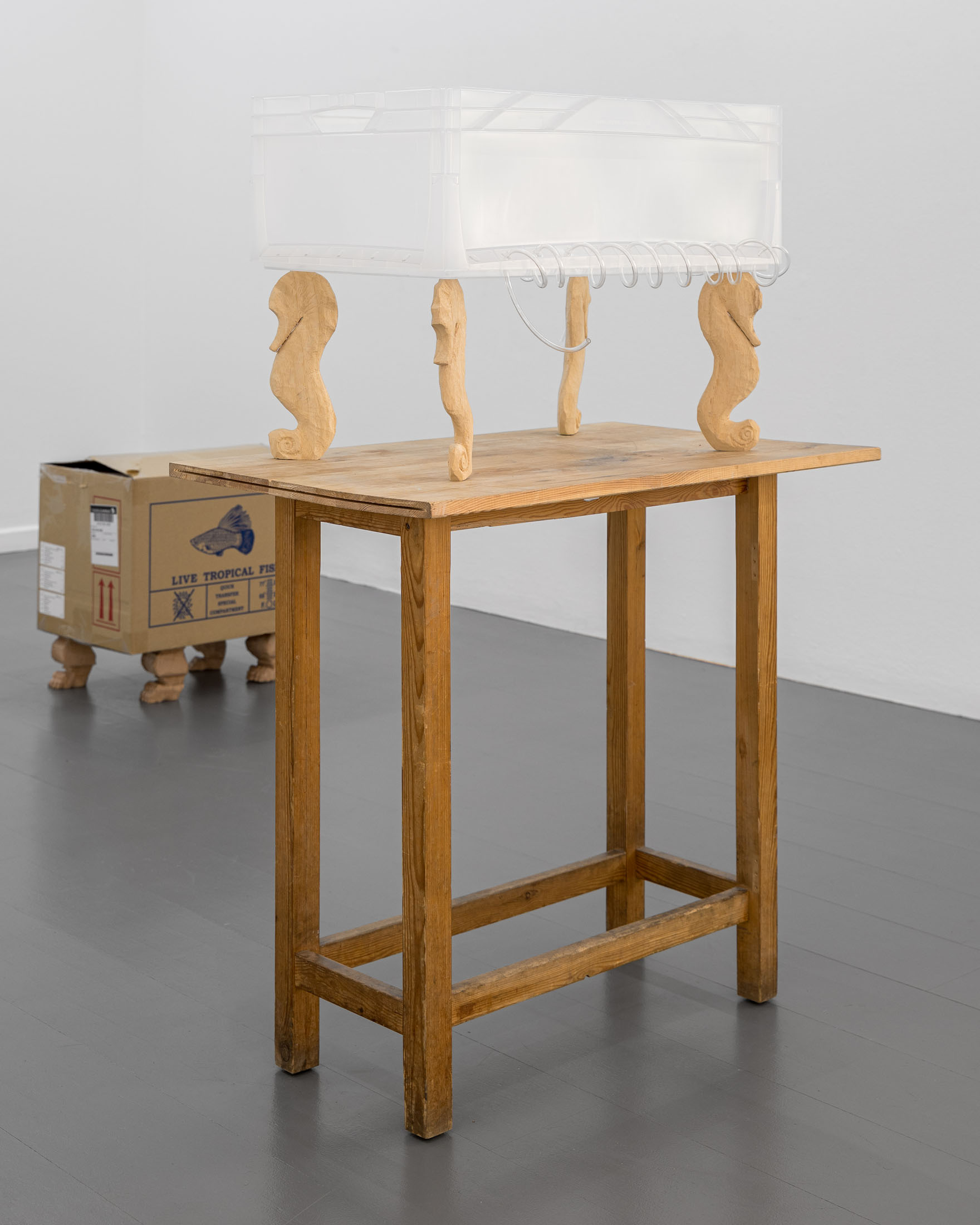
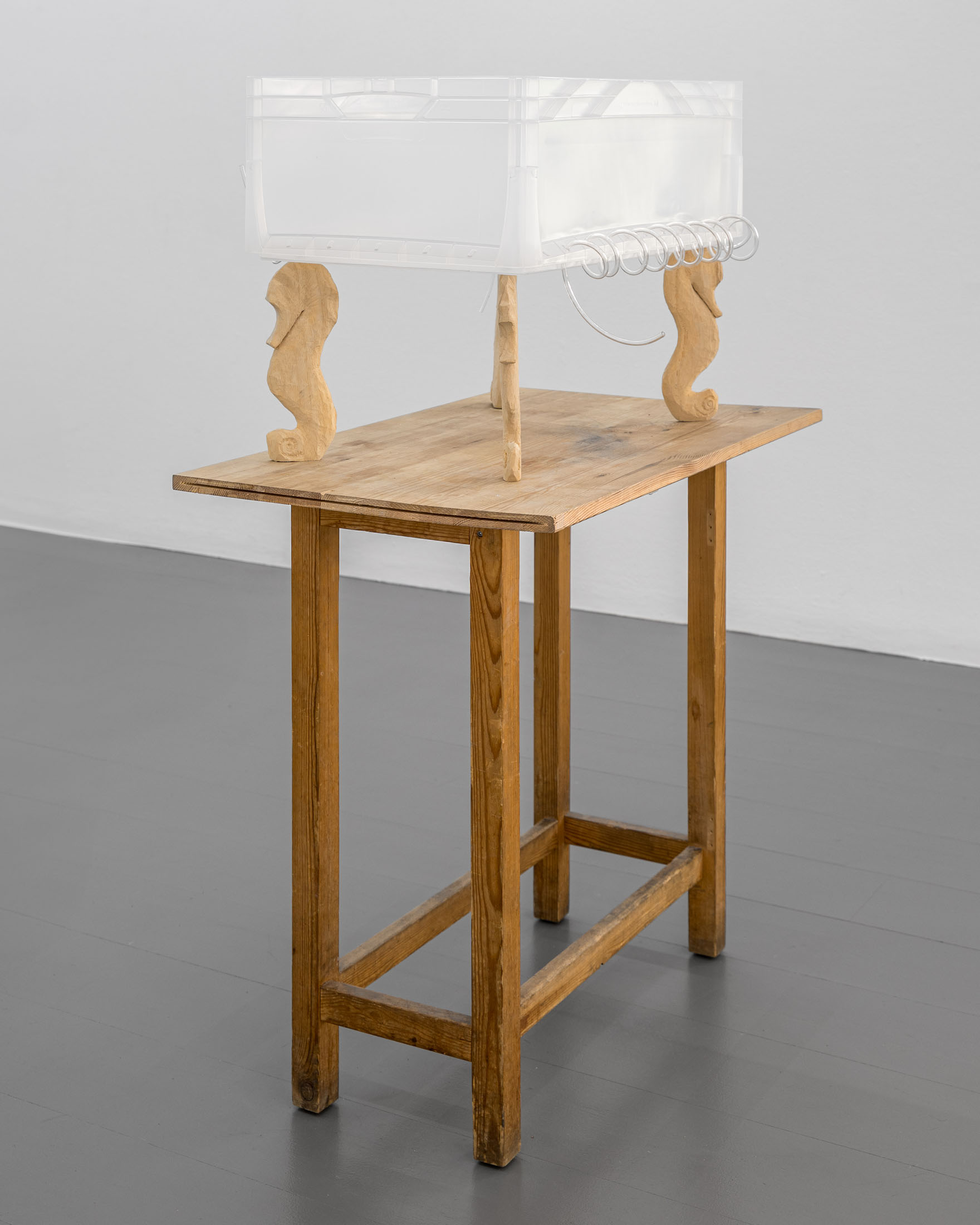
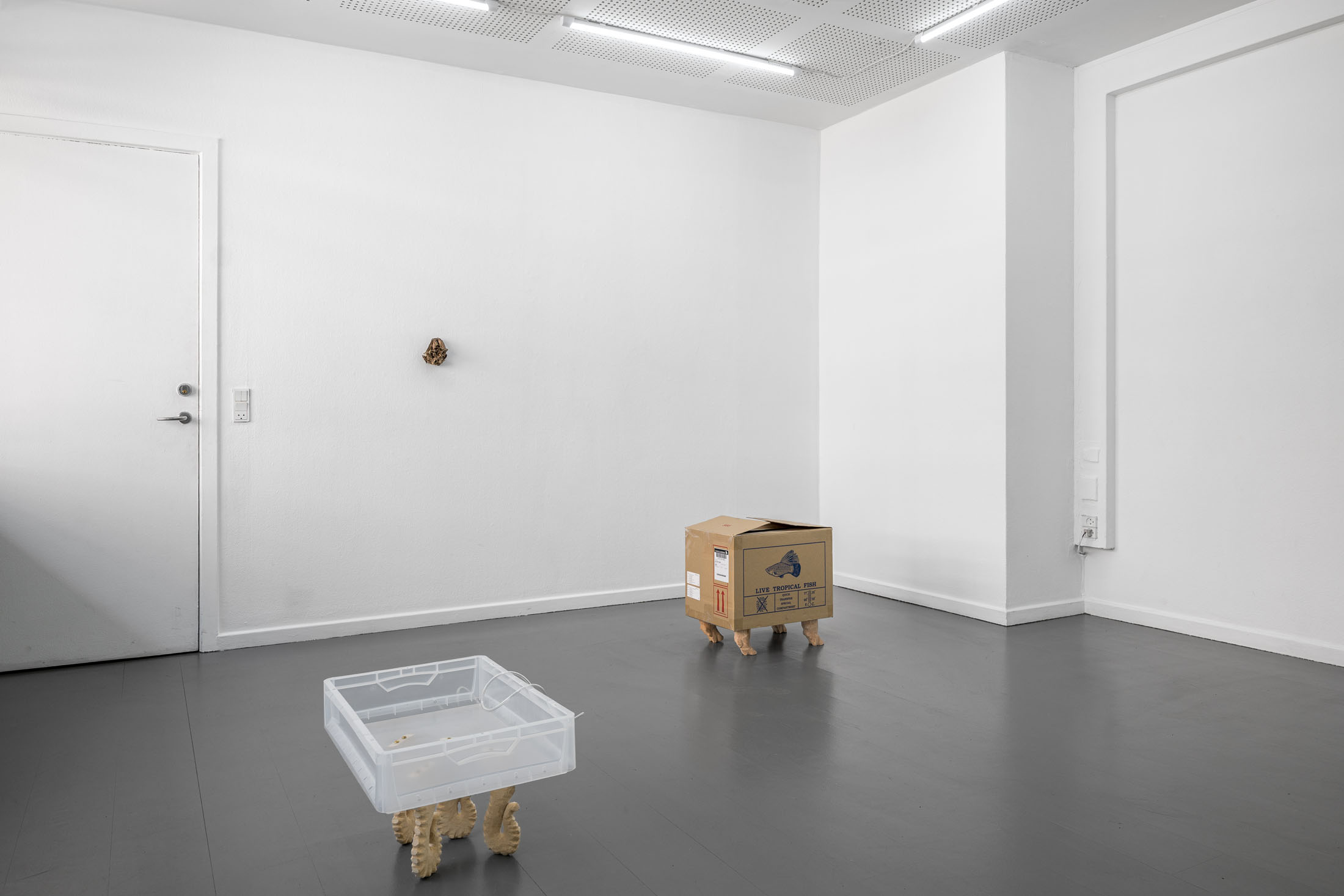
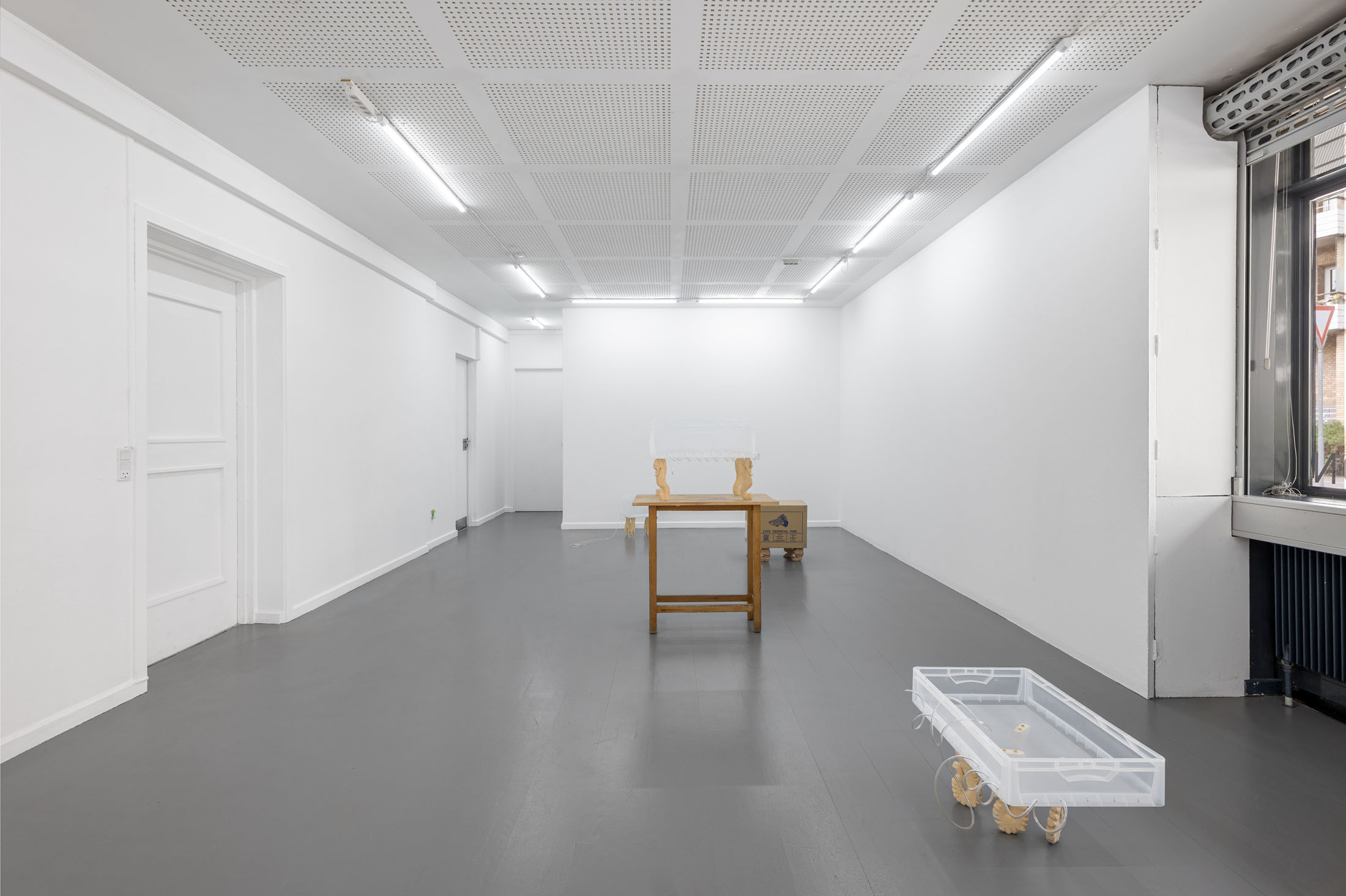
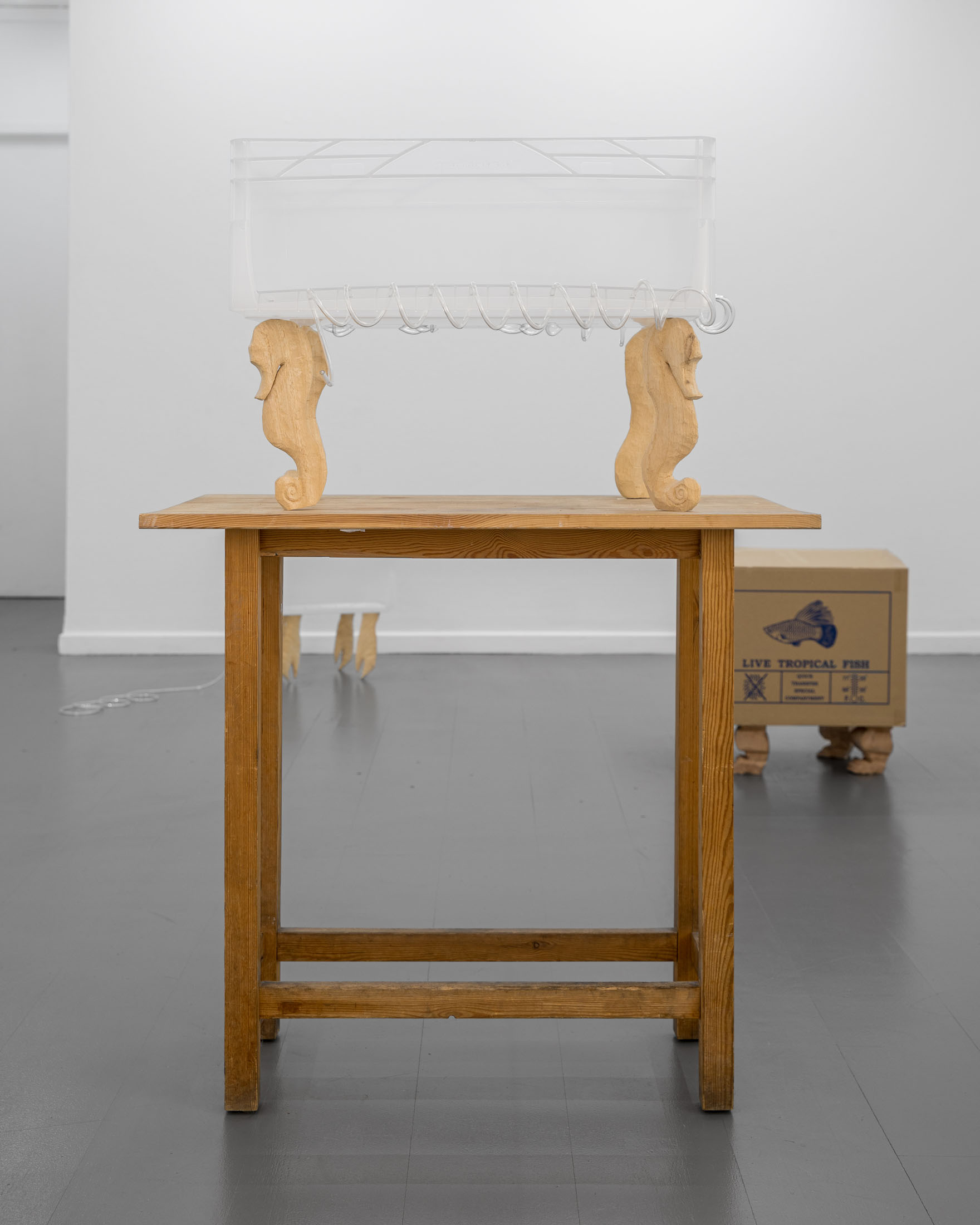
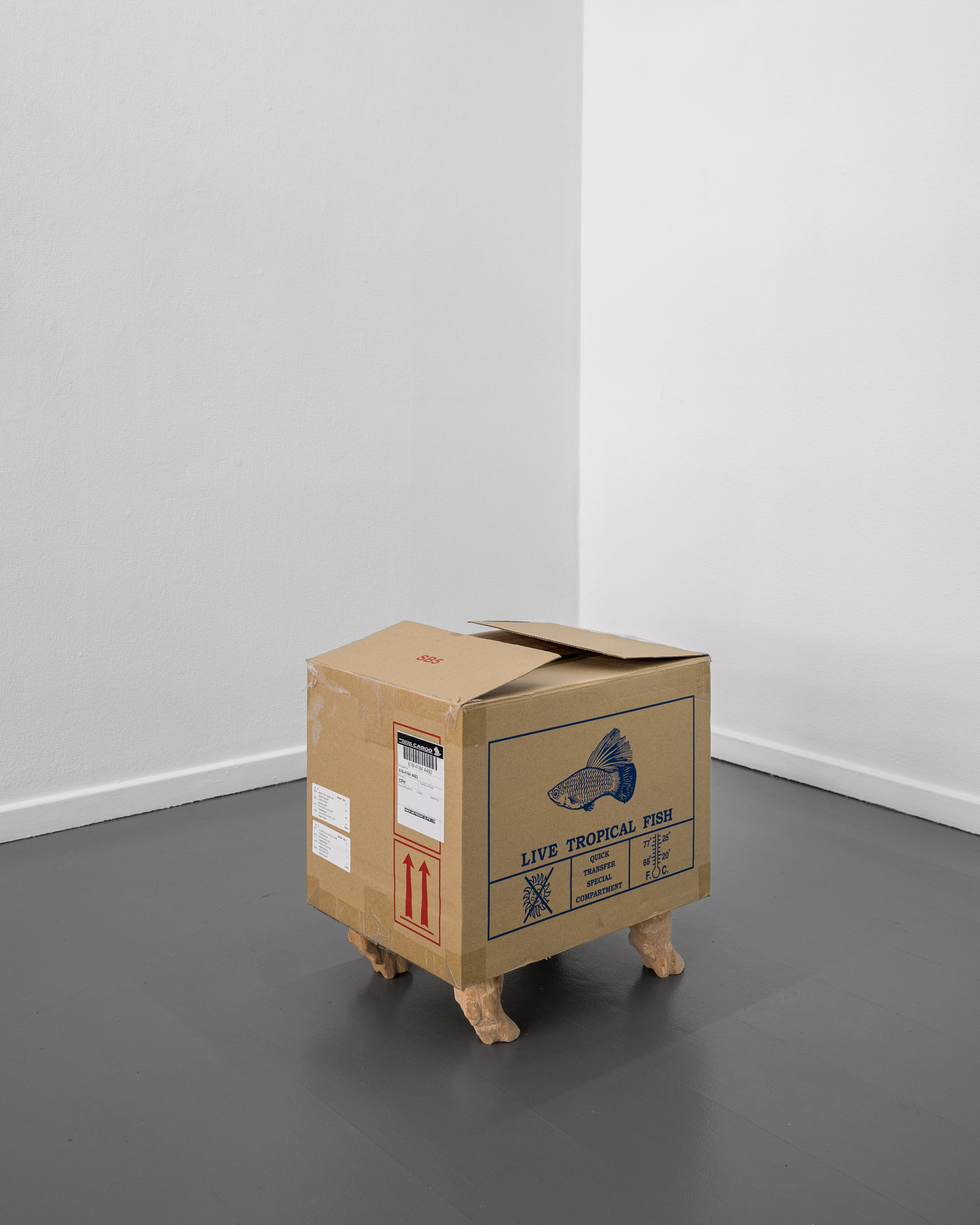
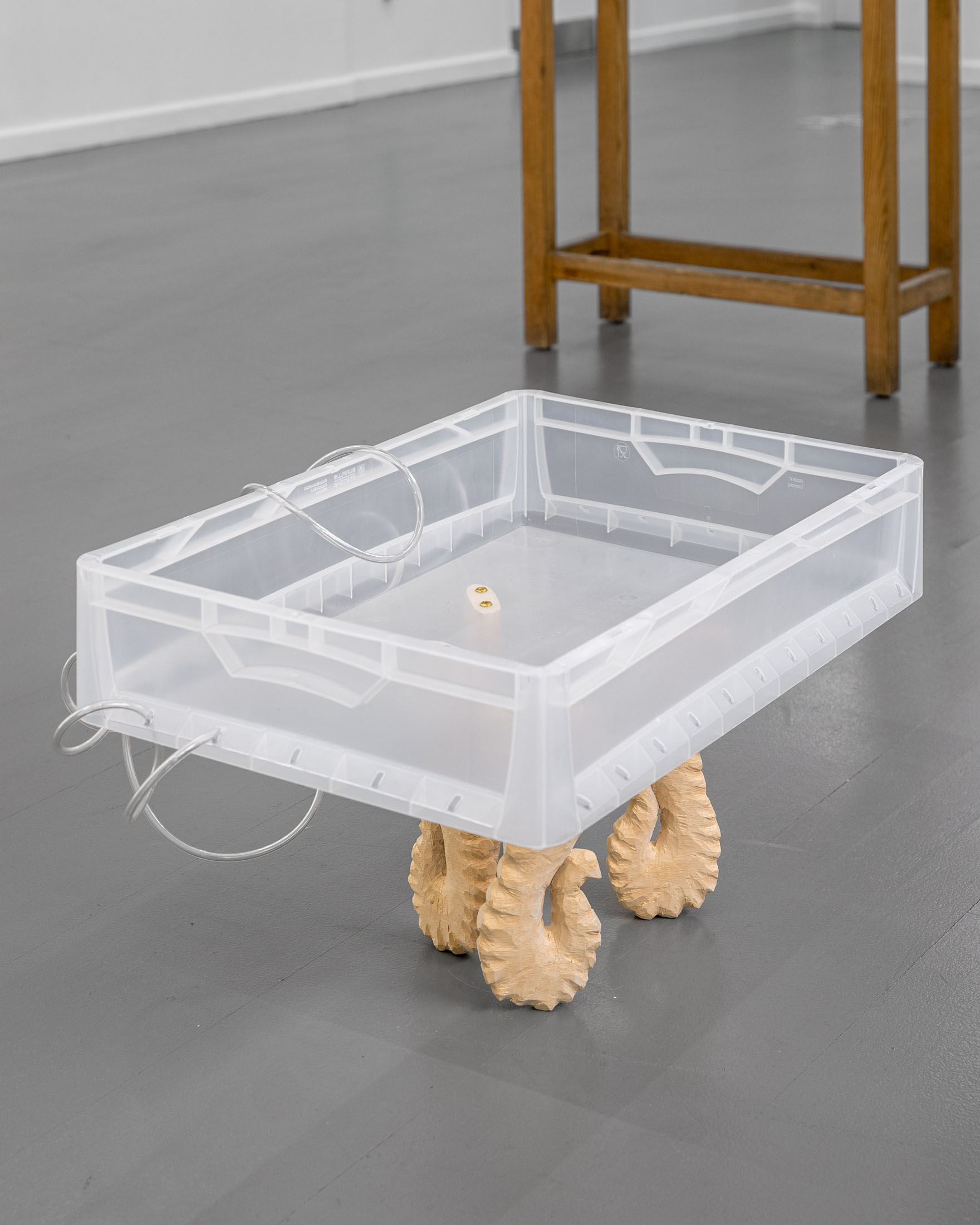
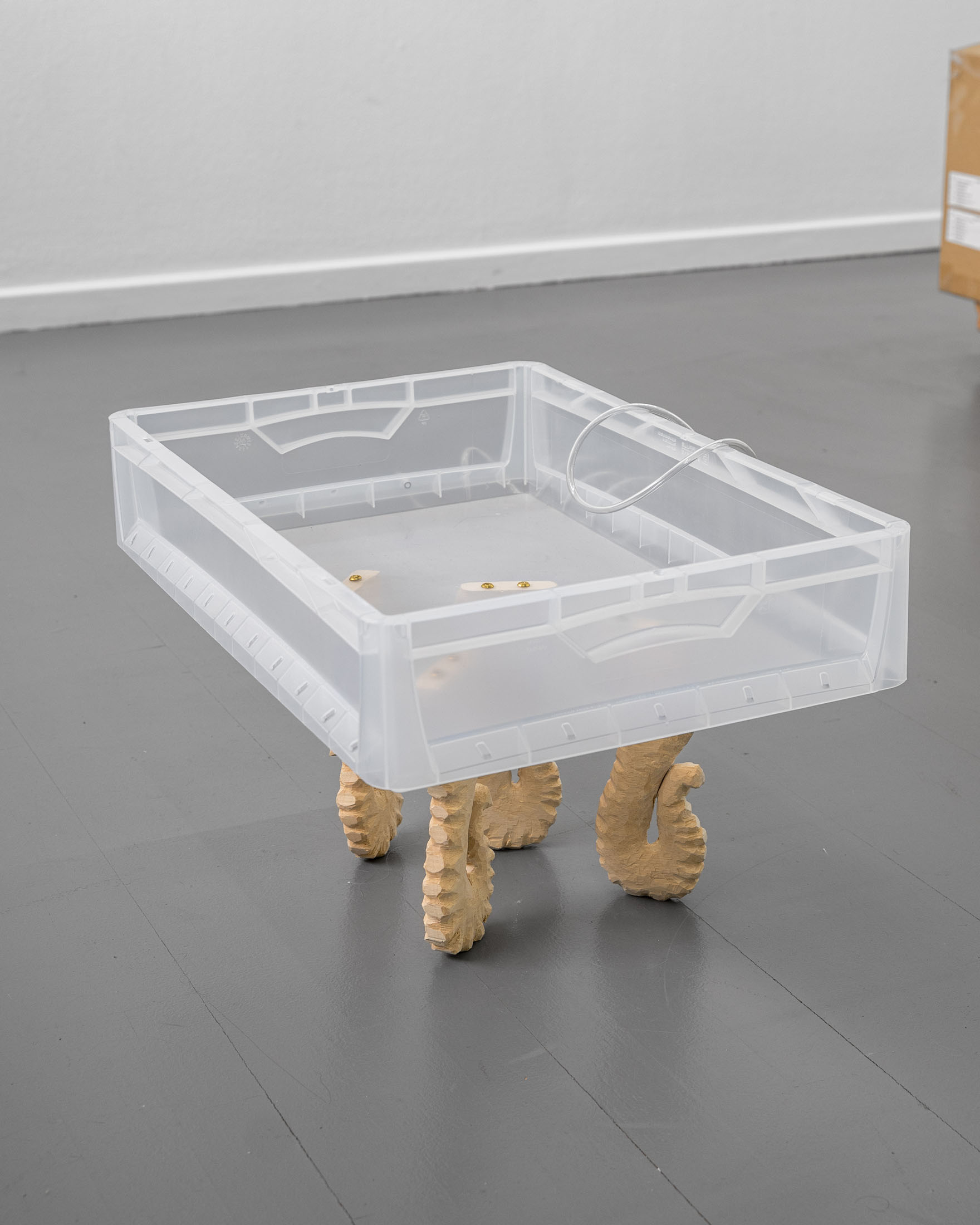
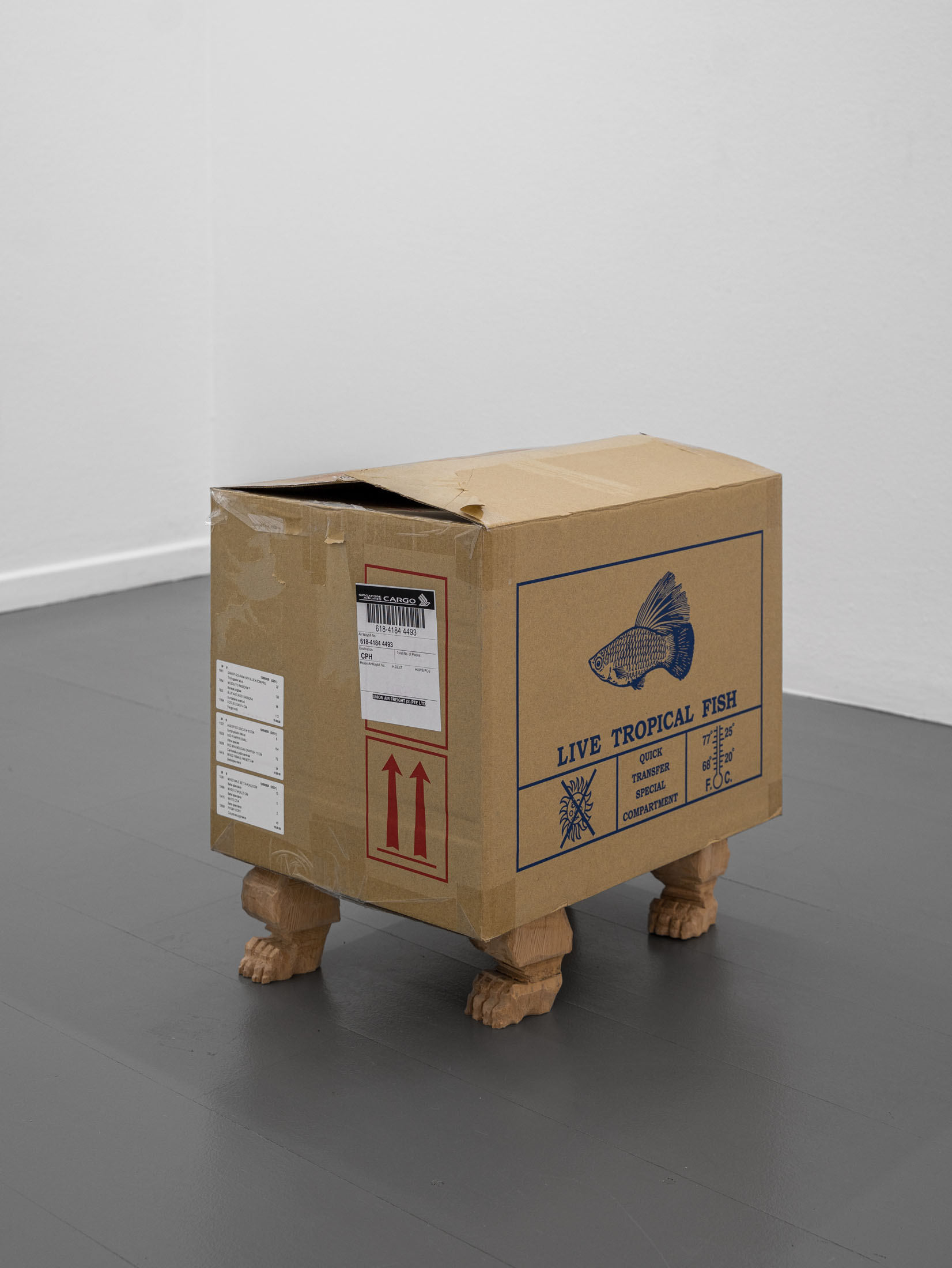
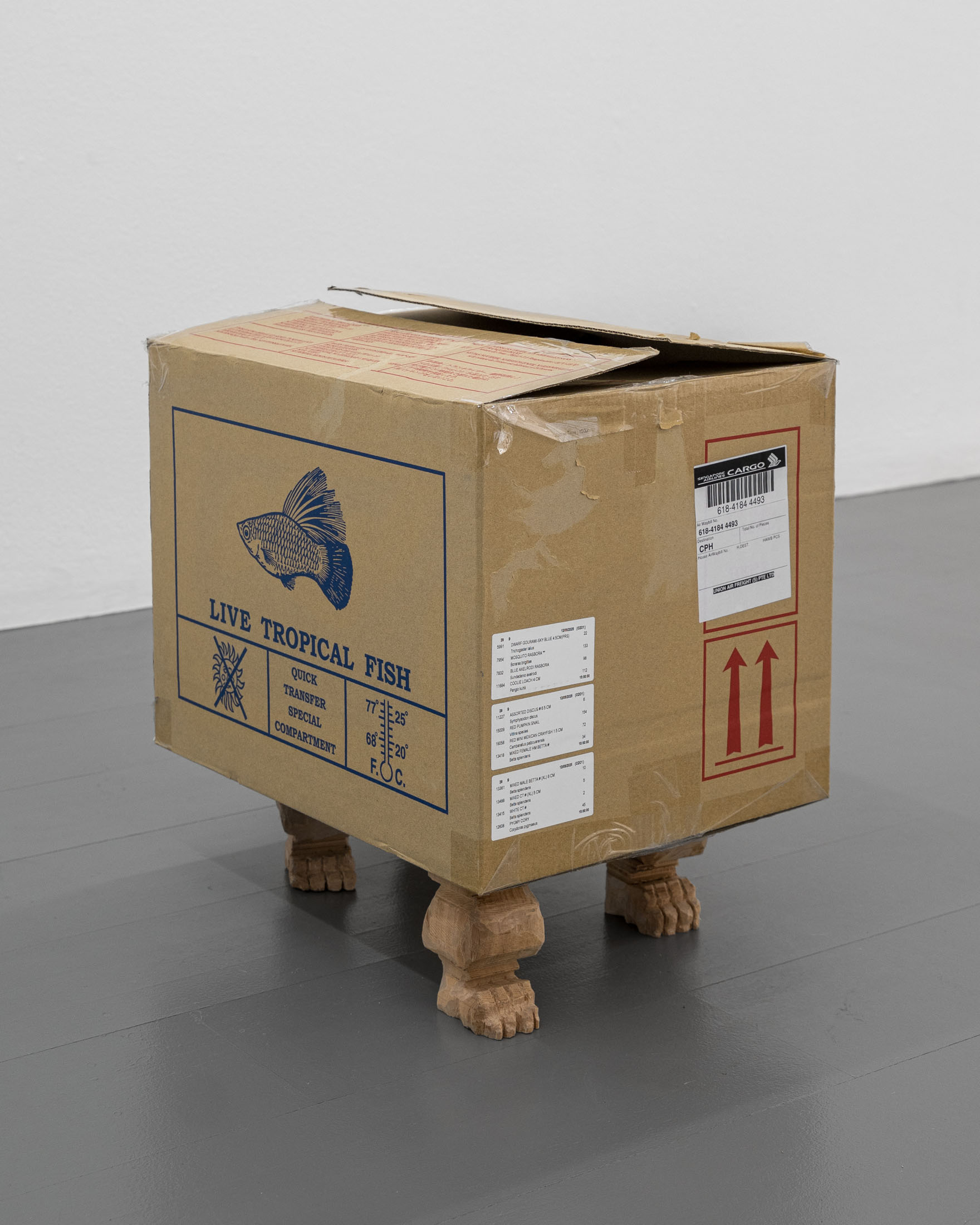
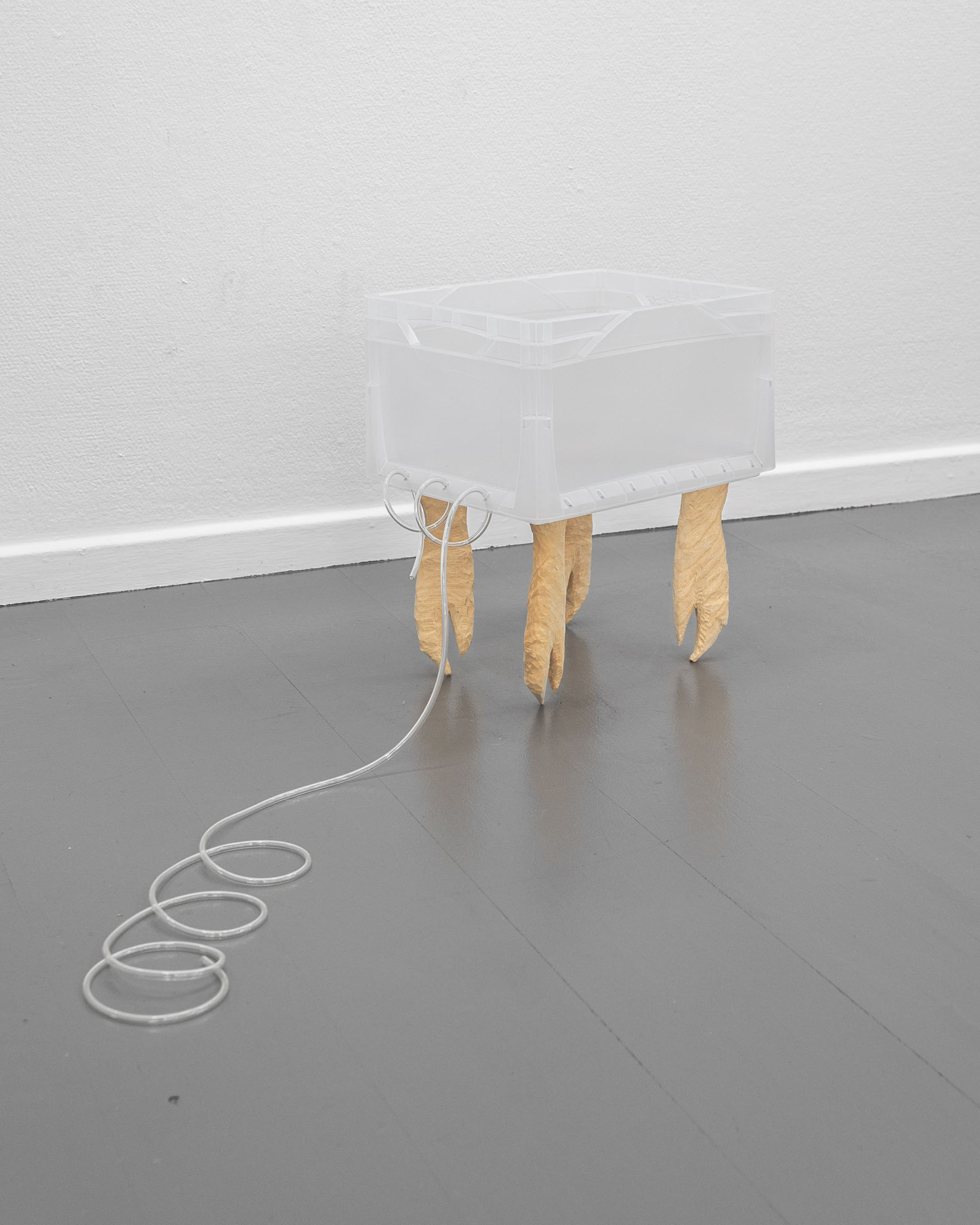
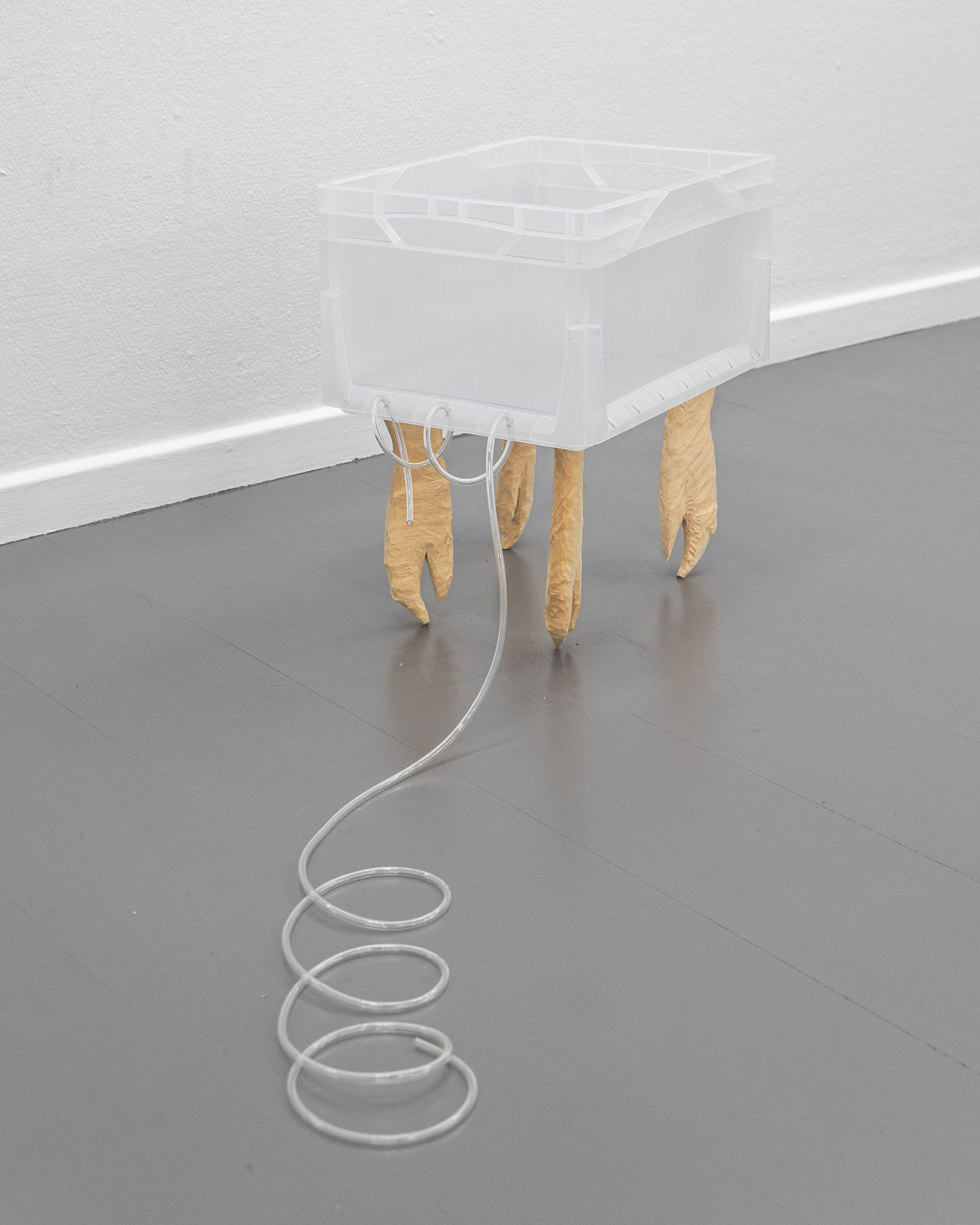
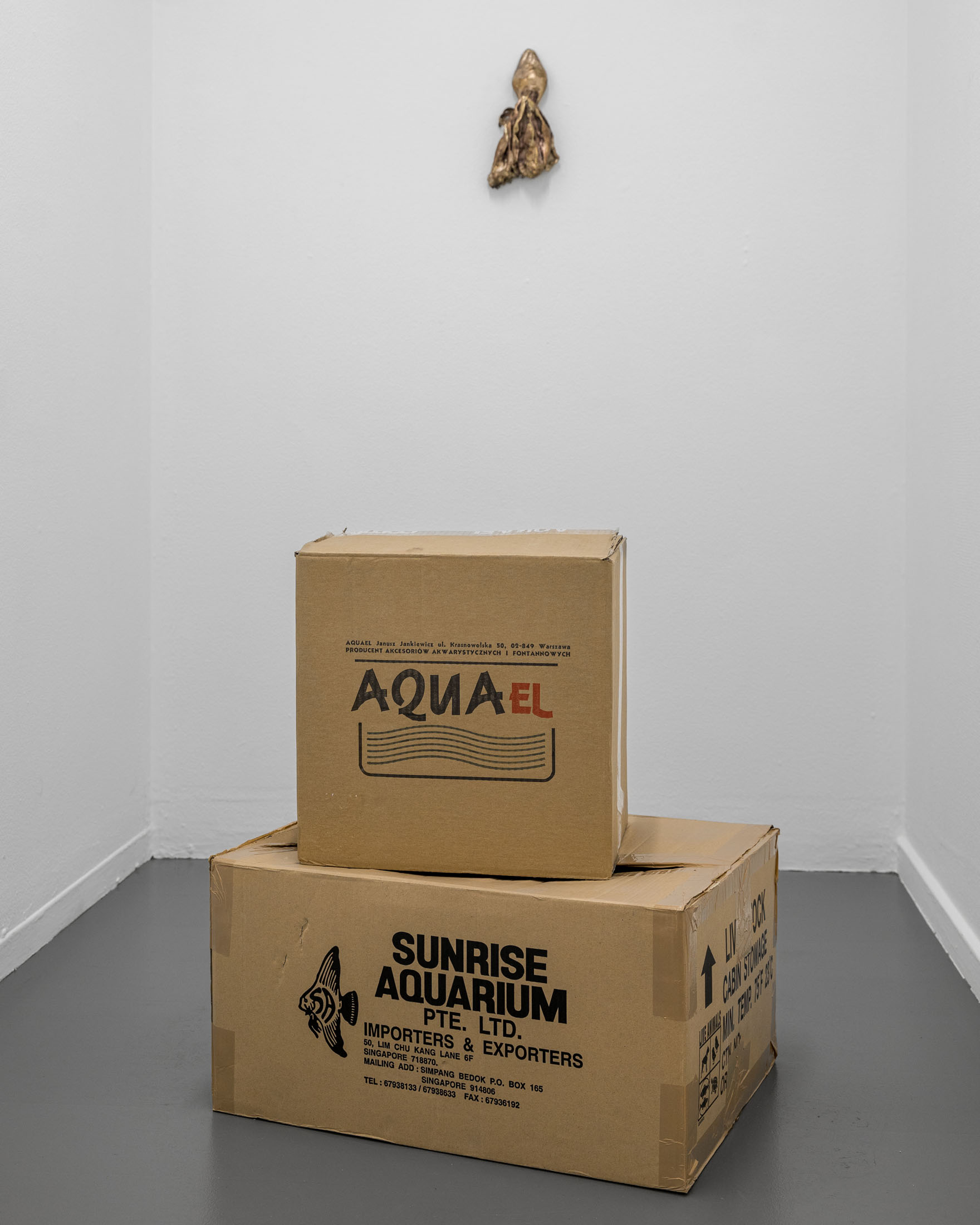
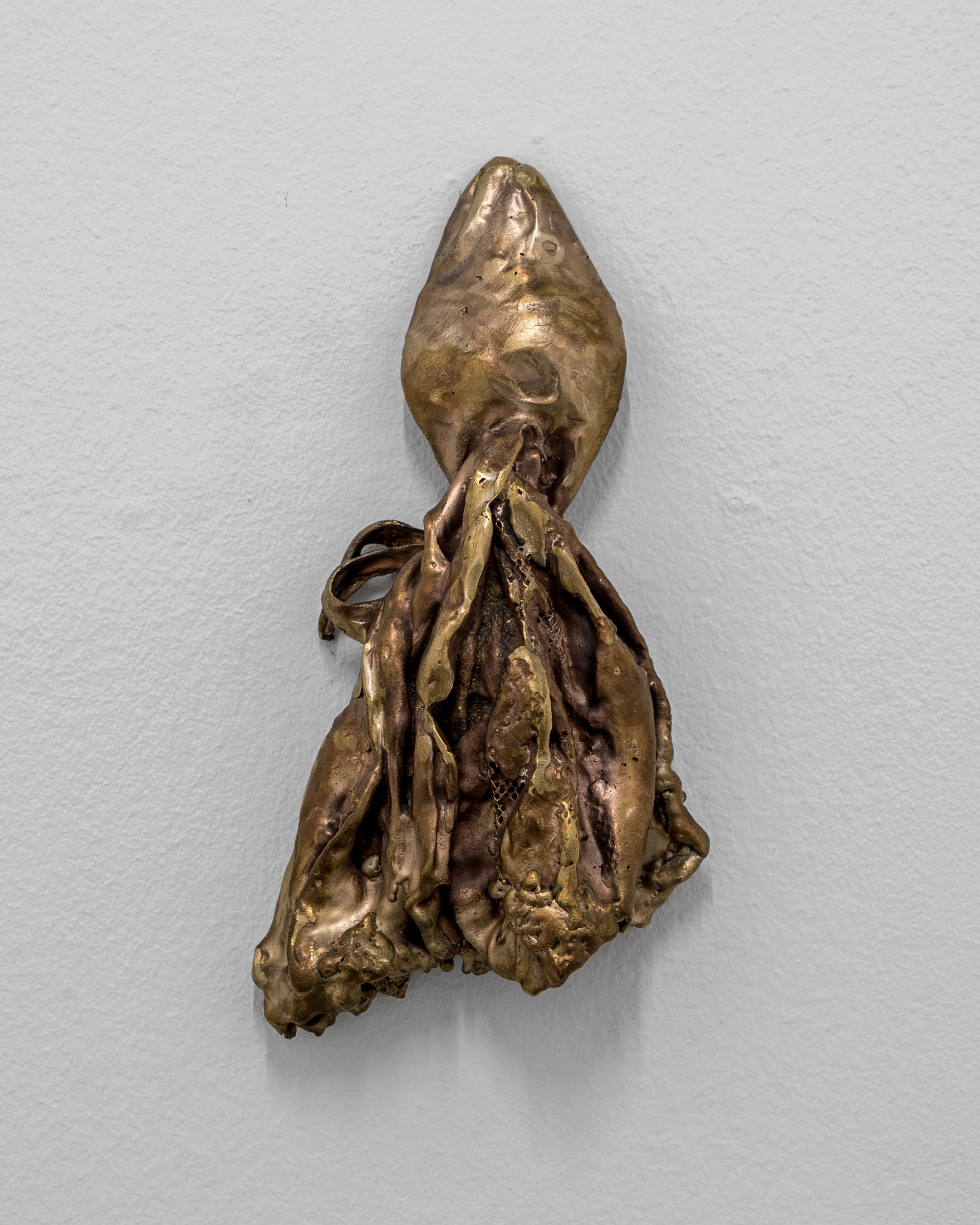
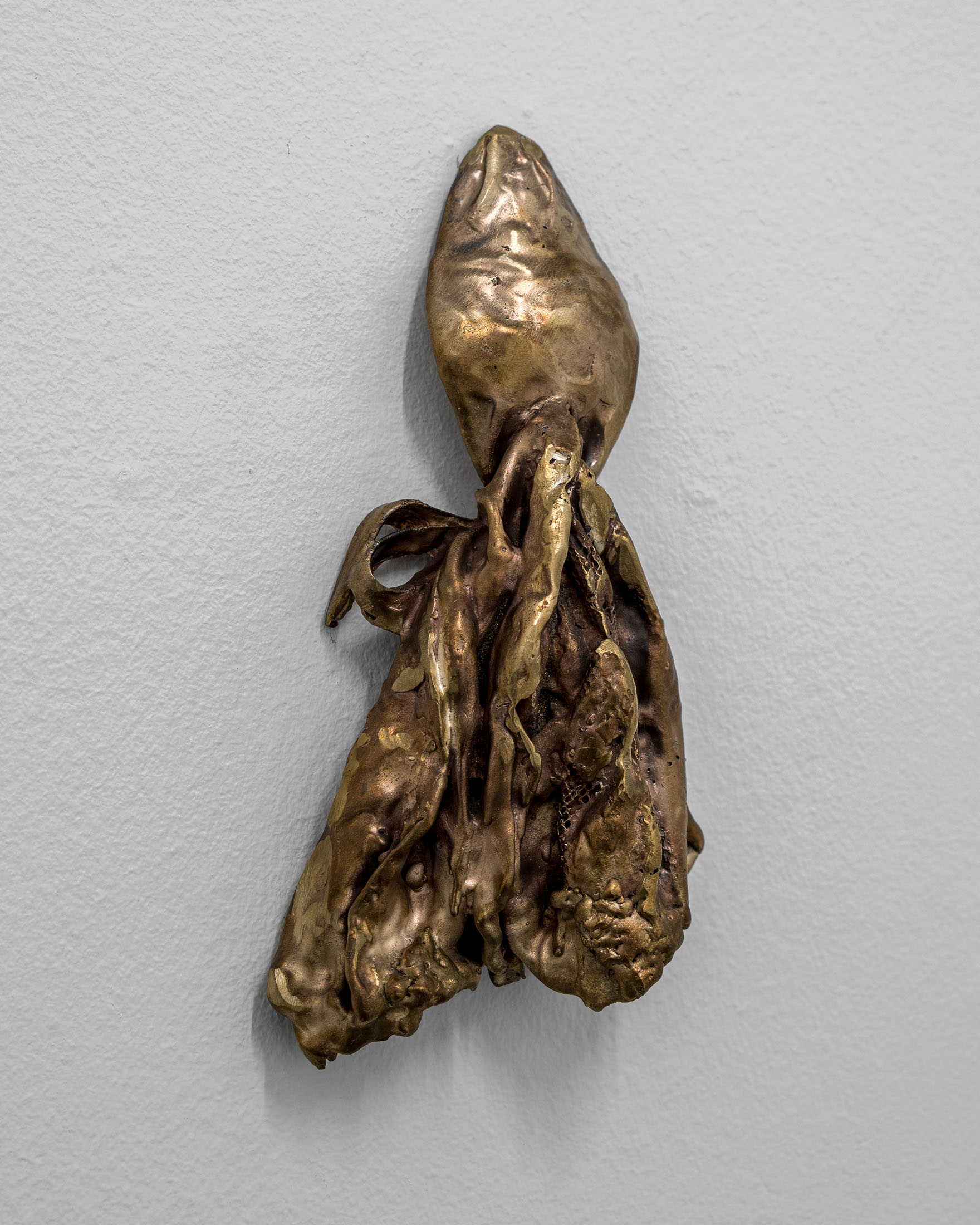
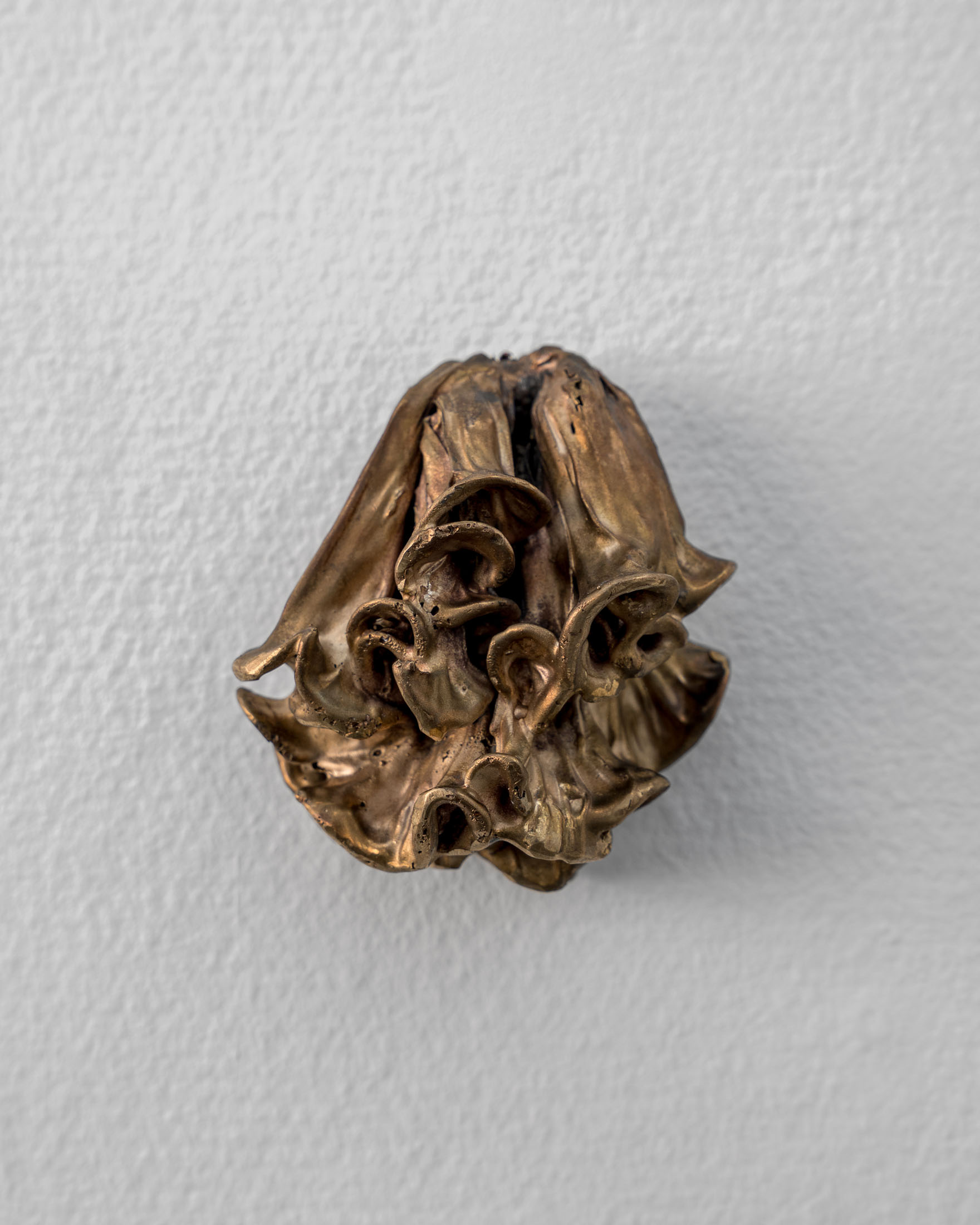
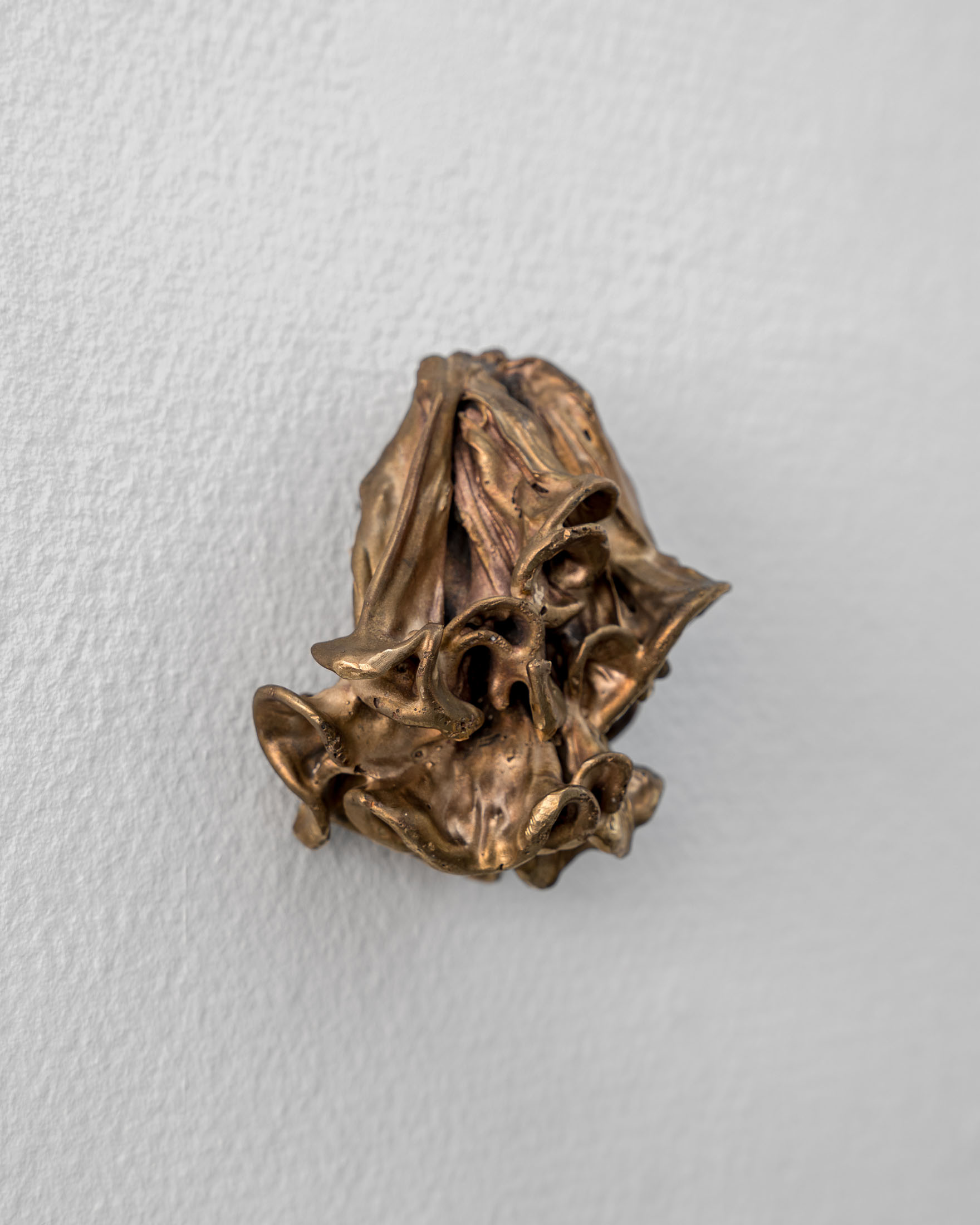
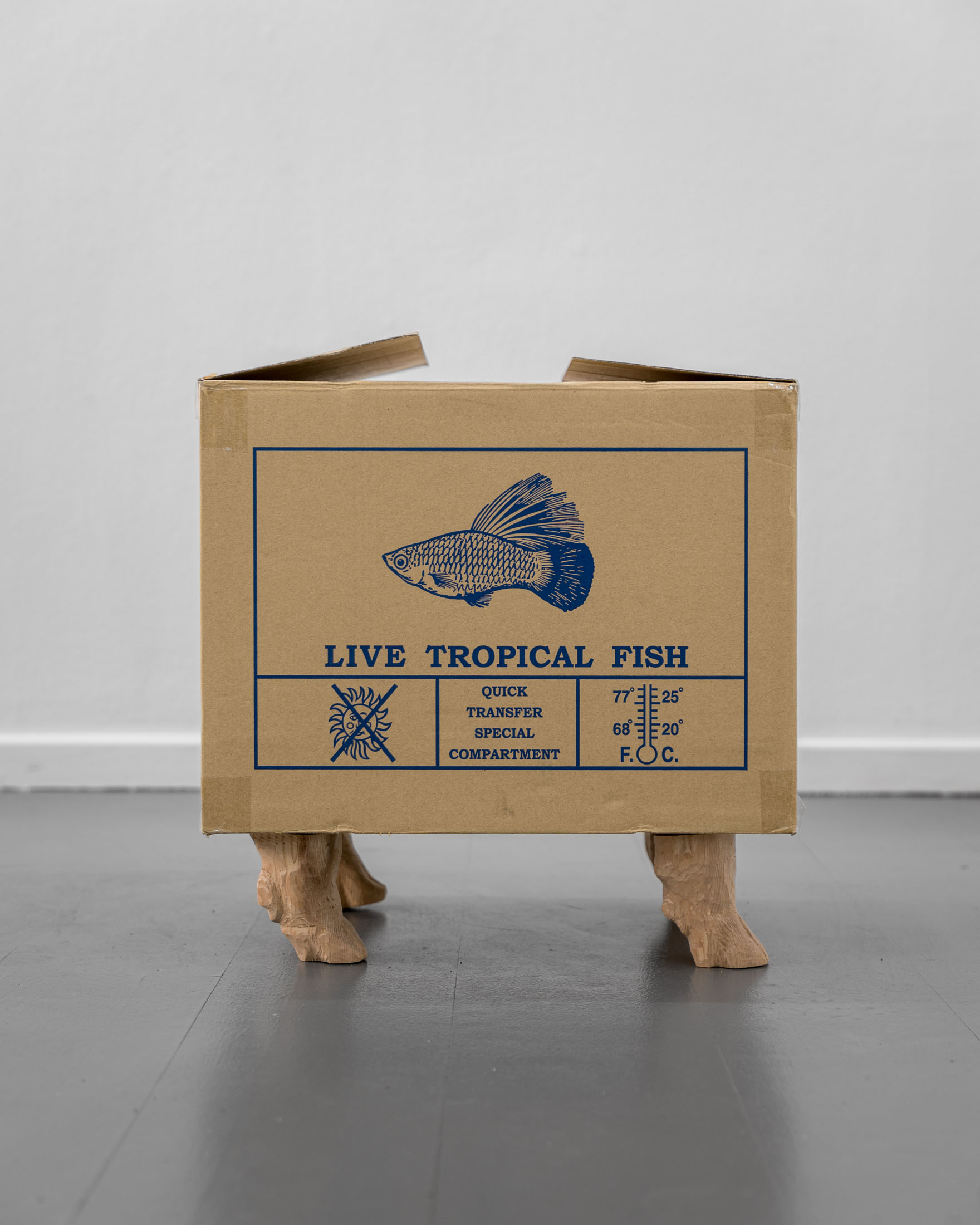
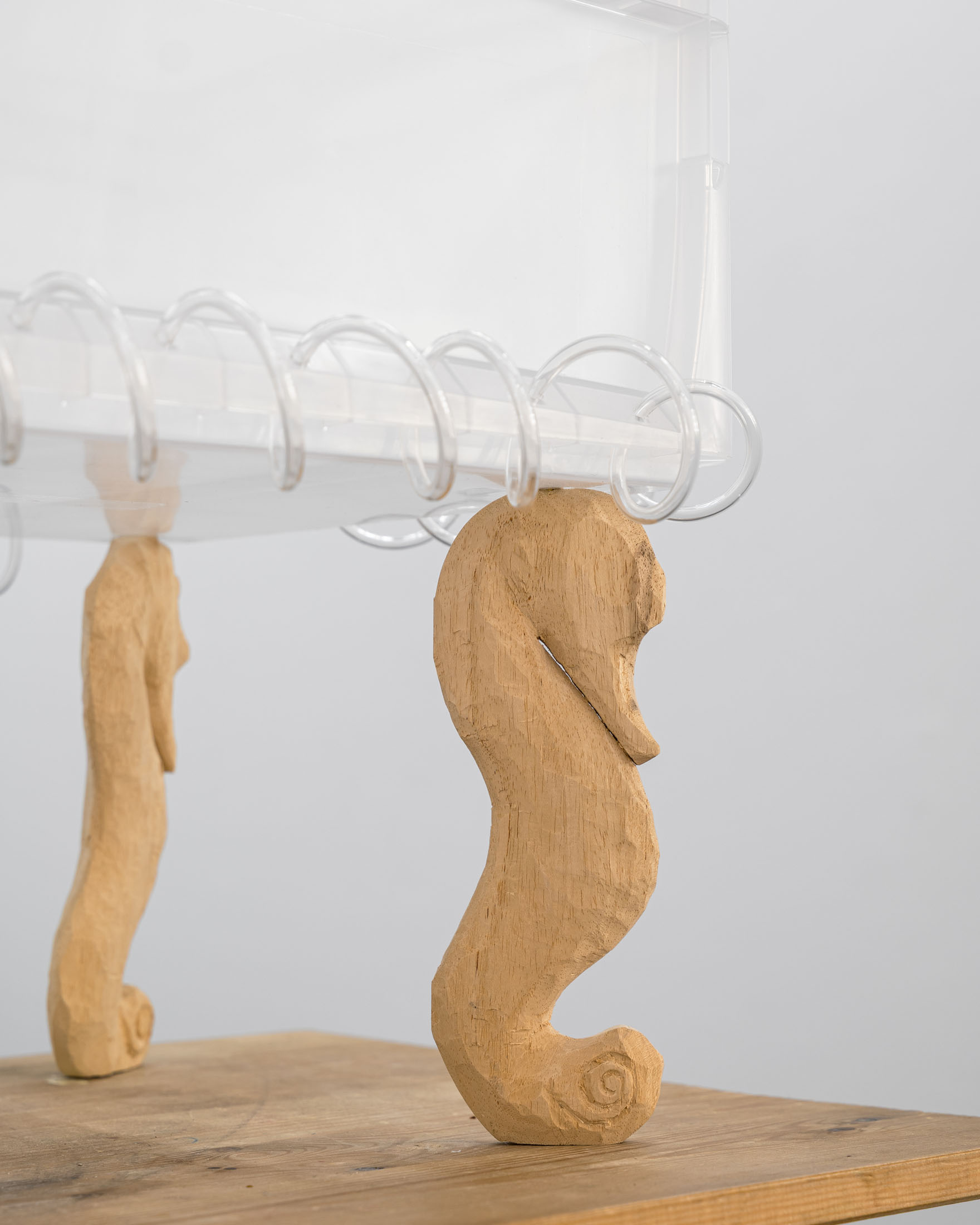
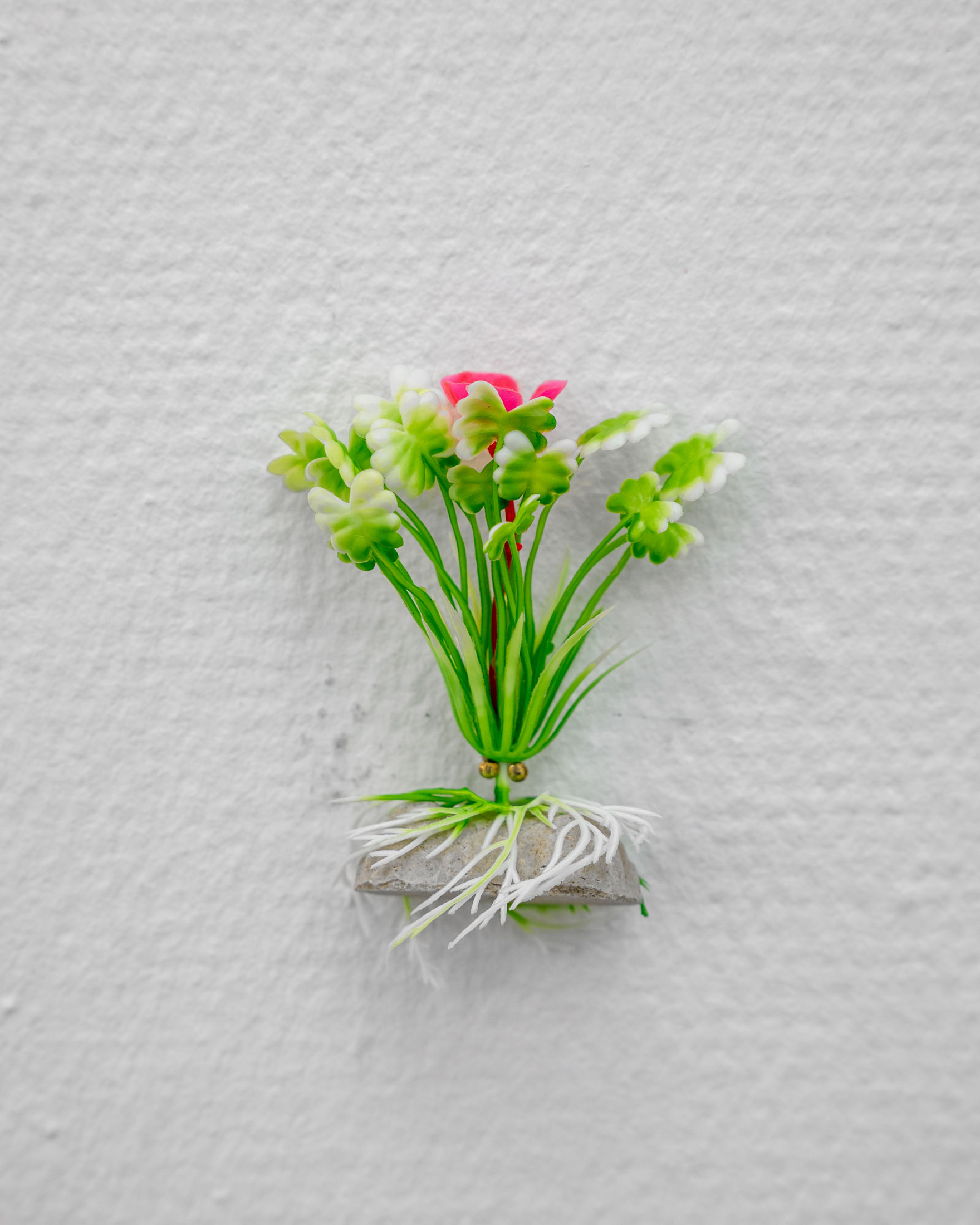
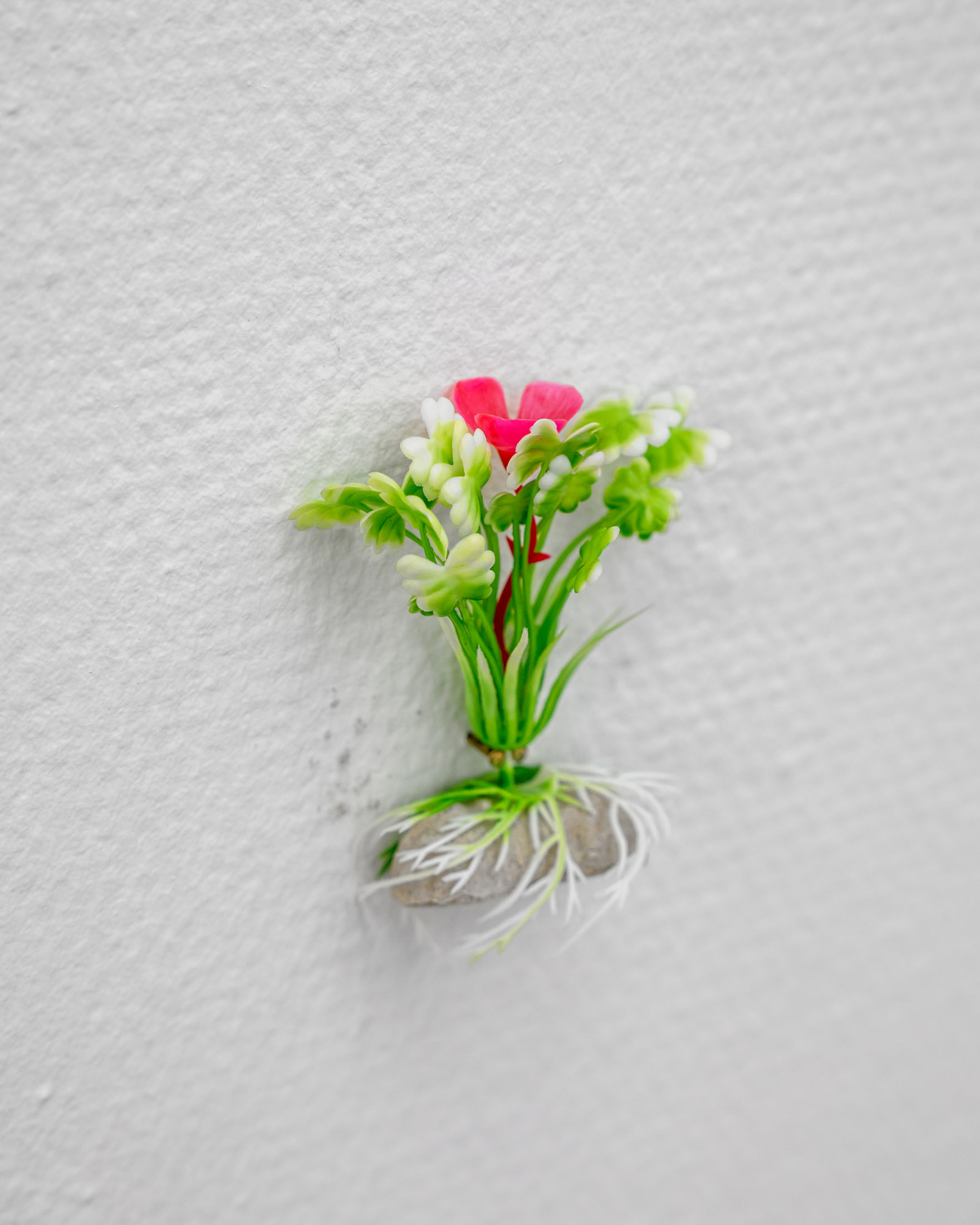
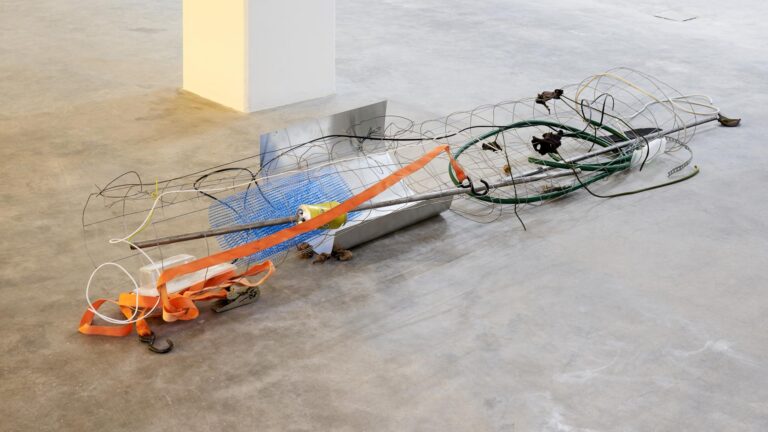
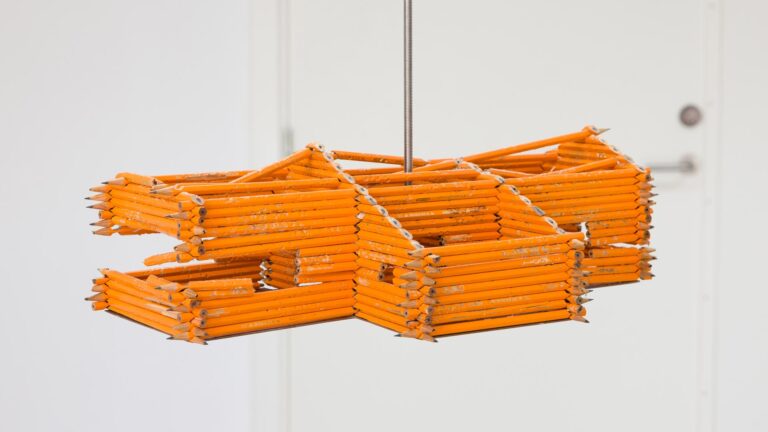
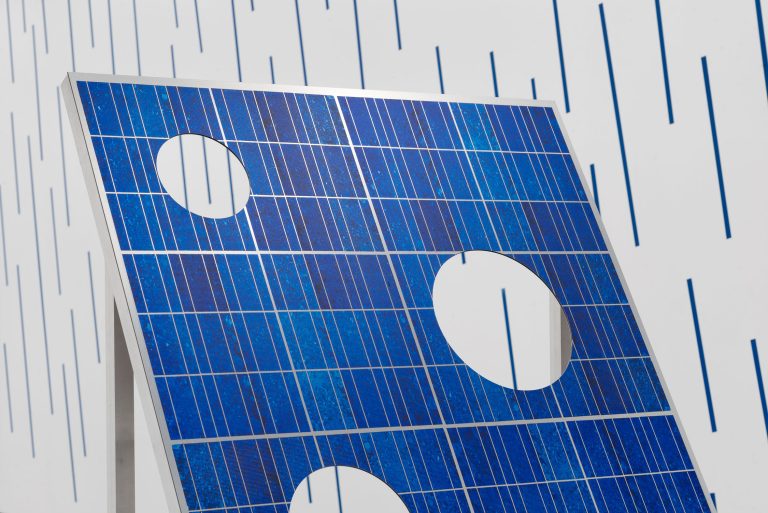
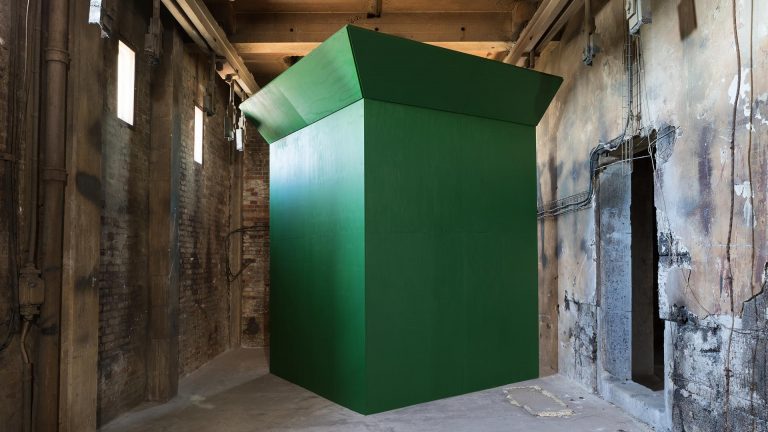
The exhibition FISH HOUSE animates and explores the contradictory need to possess fluid life through two series of sculptures. Weighted bronze sculptures of swimming veils and empty containers with wooden legs reflect on the impossible task the aquarium takes on: the vibrant, diffuse, and boundless life in water that is simultaneously confined and exposed.
Historically in Victorian England, women were advised not to look at aquariums, as they were deemed too “dramatic” and “vulgar” for their “delicate” eyes. Perhaps it was this potent contradiction and impossibility they sensed; the aquarium must not exist. The aquarium’s popularity during the Industrial Revolution was no coincidence. Here, men could control a micro-environment in a world whose macrocosm was in total flux. Perhaps it became a tool for them to uphold and preserve gender roles, class structures, and imperialism? In this exhibition, we set it free. Let them escape and swim away.
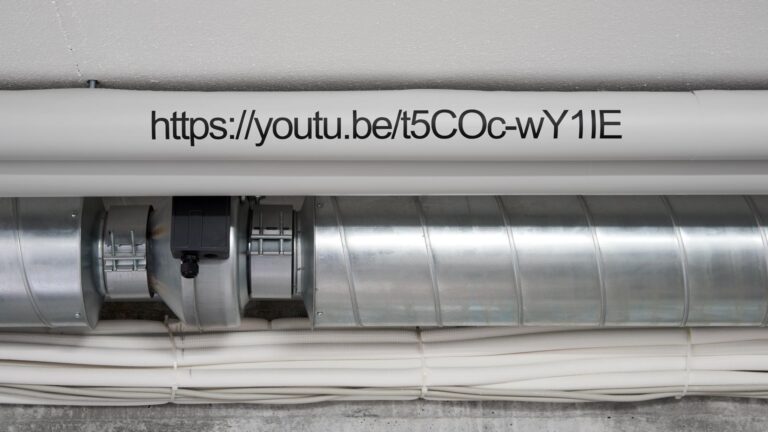
Emma Bang is a recent member of the exhibition space Sydhavn Station and has invited Louise Hammer and Ida Nissen to exhibit on the venue’s billboard and poster frieze for the occasion. Emma Bang is educated at the Royal College of Art in London and Rupert’s Alternative Education Programme in Vilnius. In her practice, she primarily works with sculpture and installation.
The exhibition is supported by the Poul Johansen Foundation and the Hielmstierne-Rosencroneske Foundation.