People, plants, languages, beliefs. Some come of their own accord. Others are forced, deported, torn away. Their paths cross, clash and intertwine. Something takes root, changing its language, form or name.
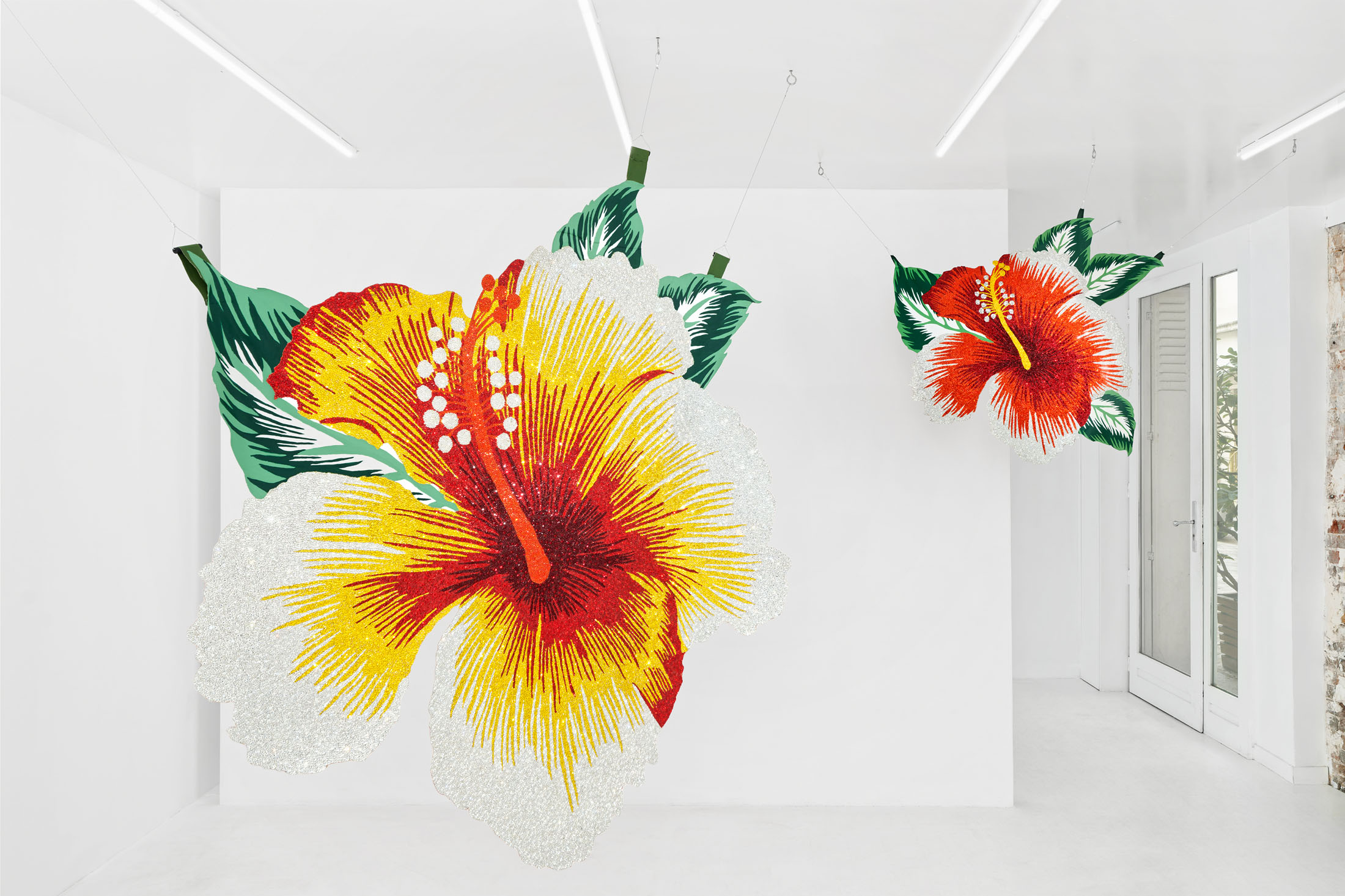
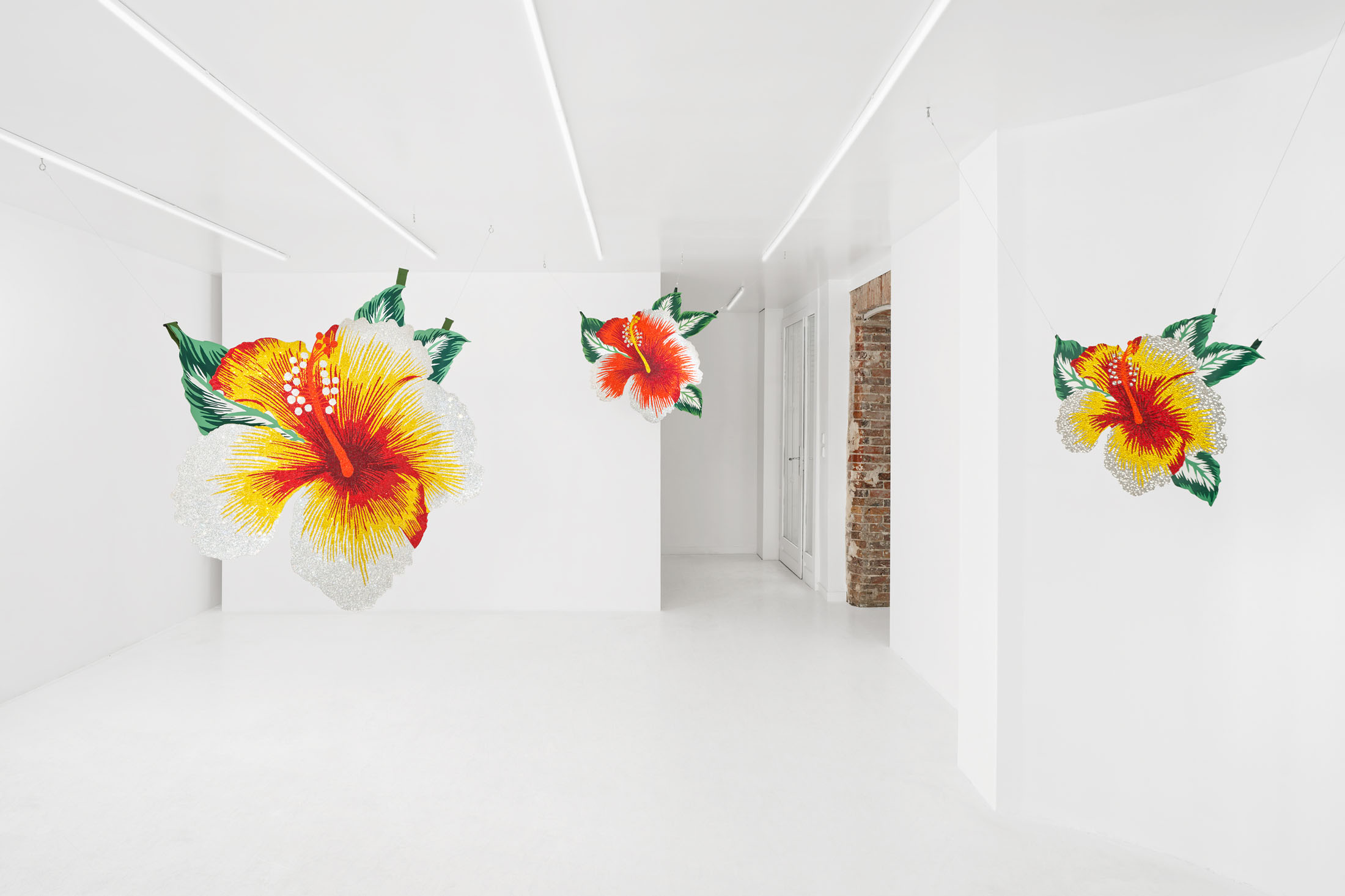
Imported into colonised island territories, the hibiscus eventually became part of the landscape, to the point of becoming one of its emblems. From one island to the next, the same flower forms a backdrop: exotic, lush, desirable. Behind the postcard image, the uniqueness of individual histories and struggles fades away. Shaped by the colonial gaze and subsequently commodified by the tourism industry, this imagery transforms the island into an artificial paradise, offered up to desire and consumption.
A flower may eventually become an image. An image may eventually become a landscape.
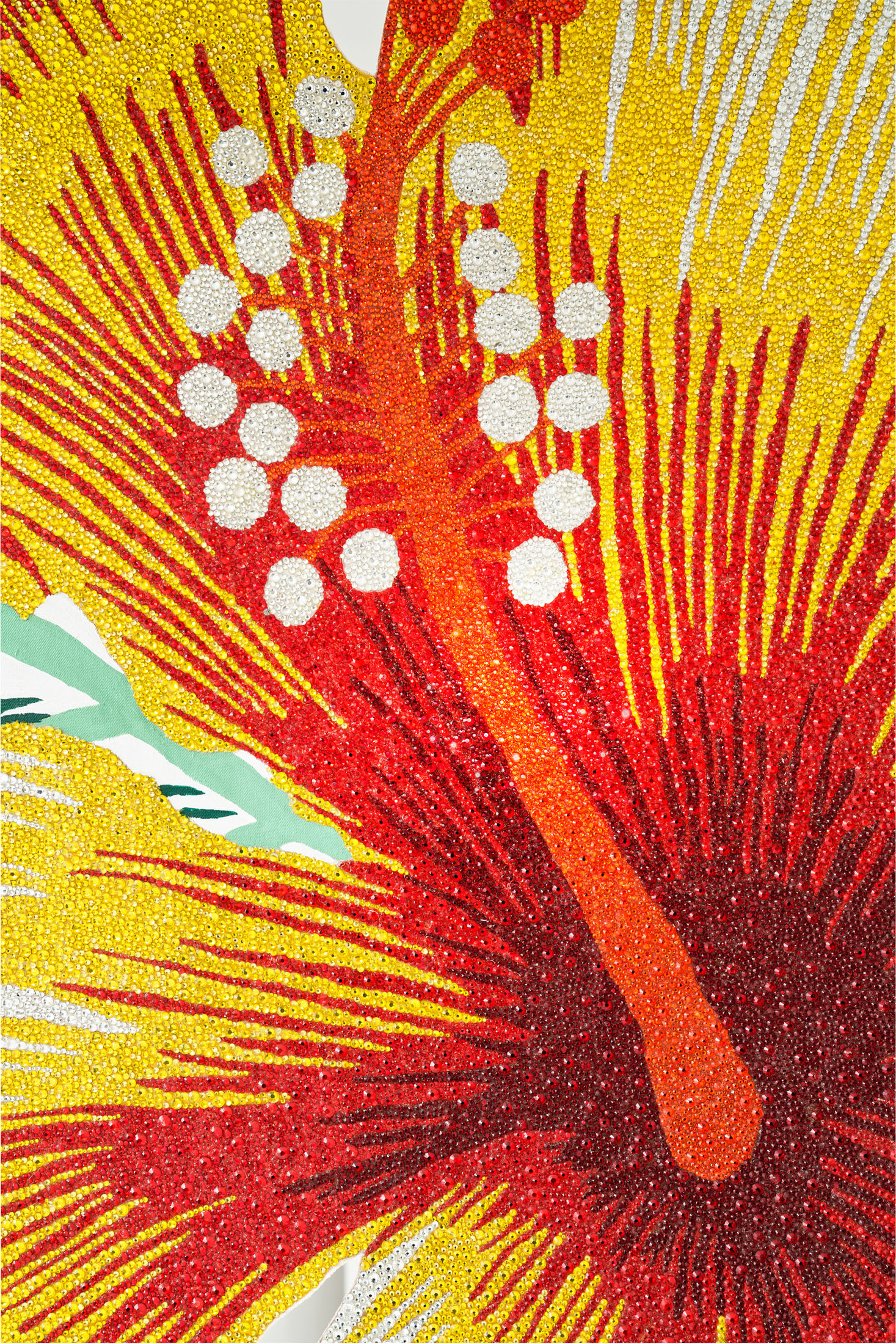
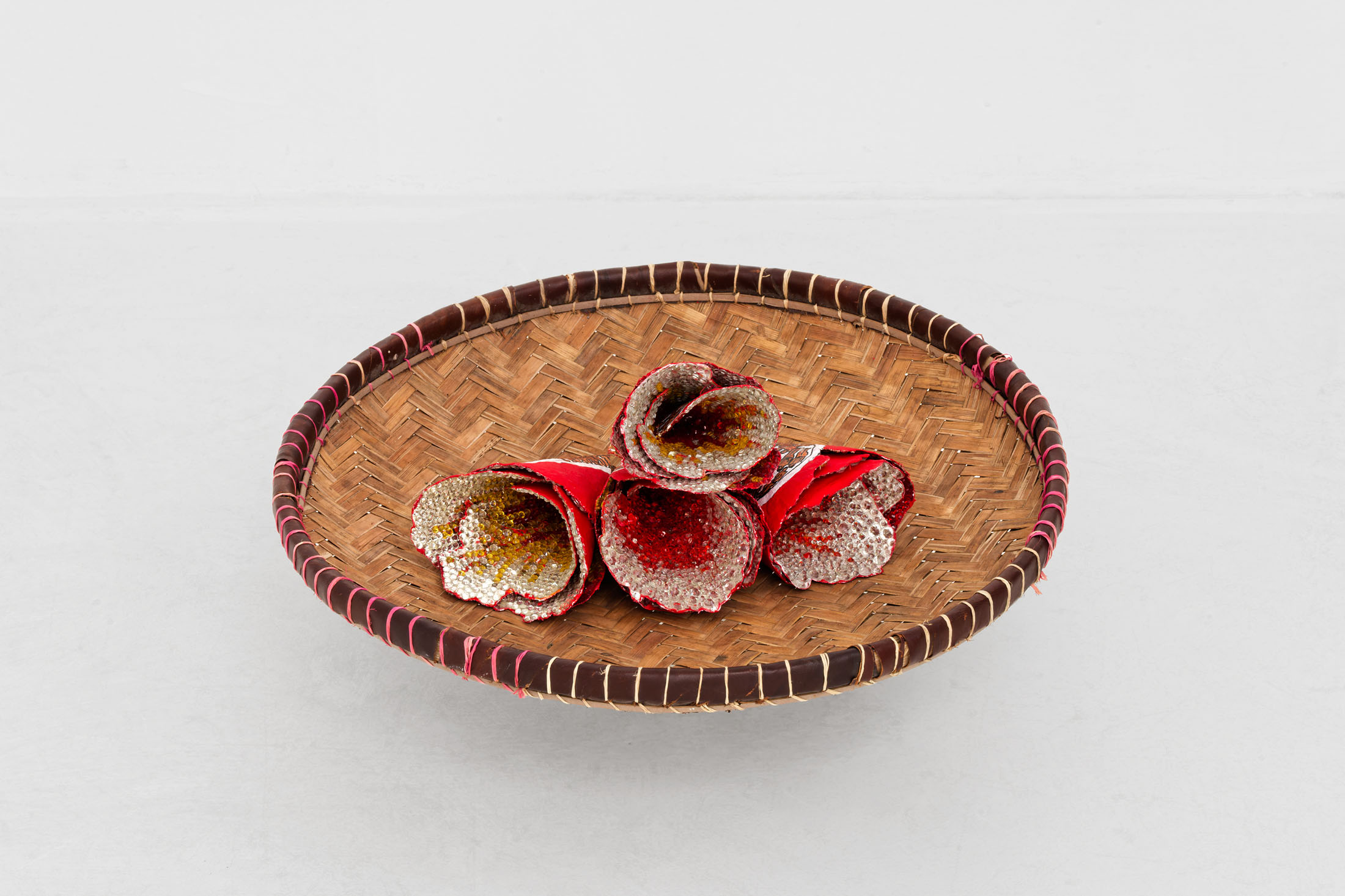
In three works from the series In the Shadow of the Hibiscus, oversized flowers are covered in thousands of rhinestones. They glitter, seduce, dazzle and draw the eye, only to redirect it elsewhere. Ornamentation pushes these decorative representations—detached from any sense of history—to the point of excess, subjecting landscapes and bodies to the same processes of exoticisation, sexualisation and racialisation.
But a flower has a reverse side.
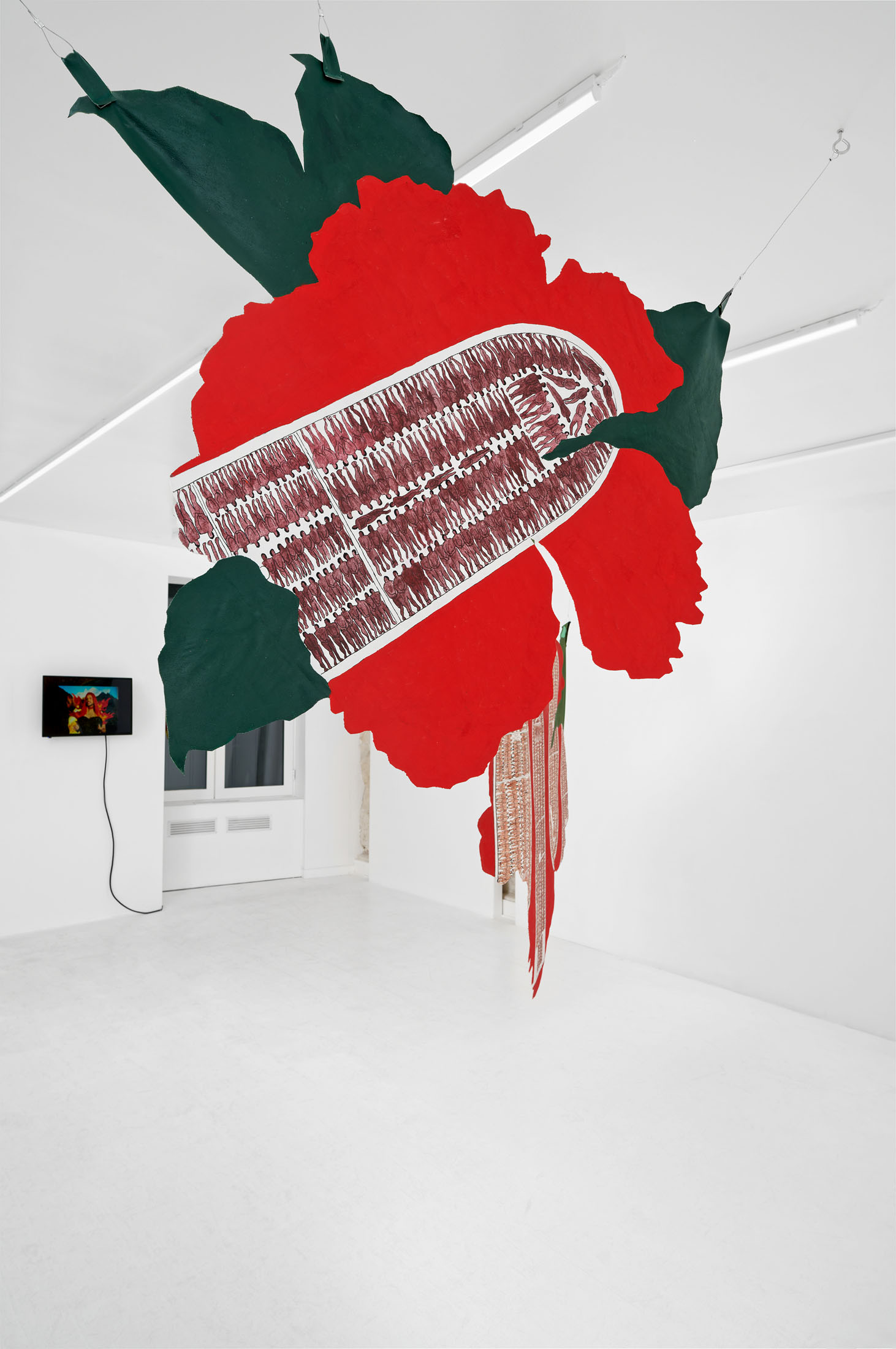
On the reverse, Brandon Gercara has painted the famous engraving by Brookes, circulated from 1788 onwards by British abolitionists. The bodies of enslaved people are lined up there, crammed together, reduced to a single measure. Two narratives thus occupy the two sides of the same object: a folklorised and pacified Creole identity; and slavery and colonial violence, long concealed.
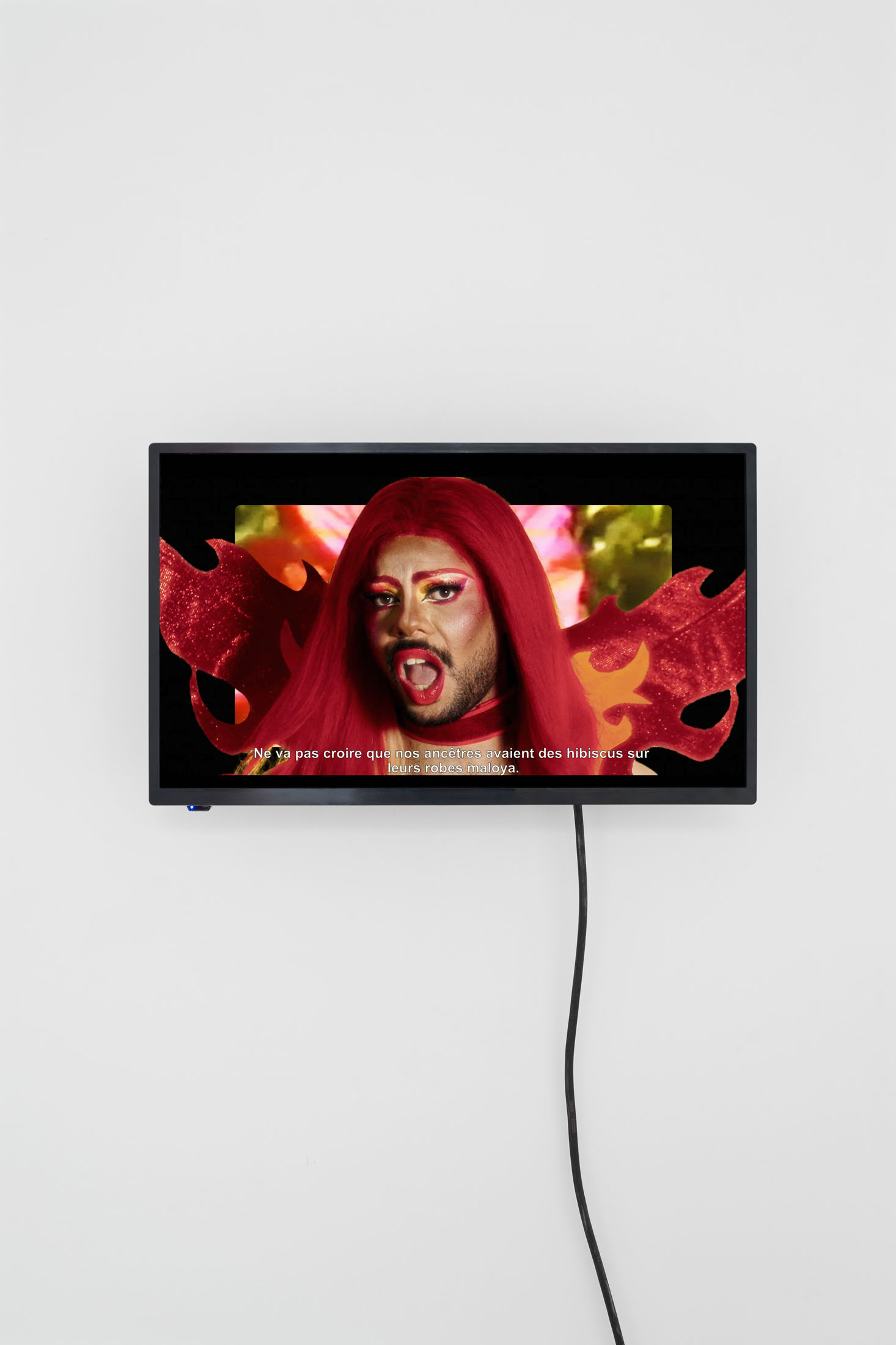
Making visible, passing on, reclaiming: knowledge here becomes a condition for emancipation. Queer and drag cultures extend this movement and constitute a mode of operation: borrowing, disguising, exaggerating, re-enacting, transforming. Artifice becomes a tool for empowerment; excess, a way of reclaiming one’s own narrative.
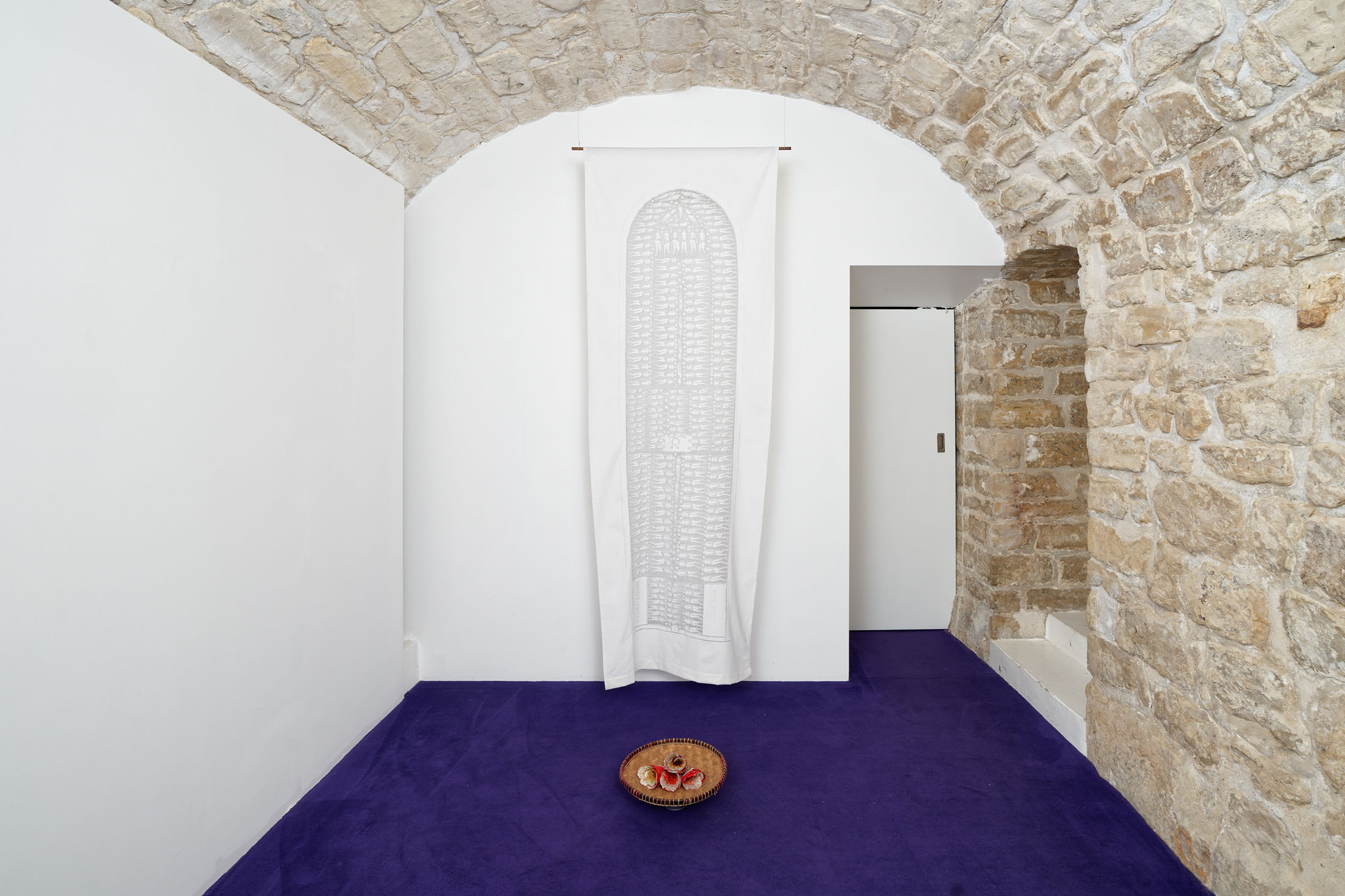
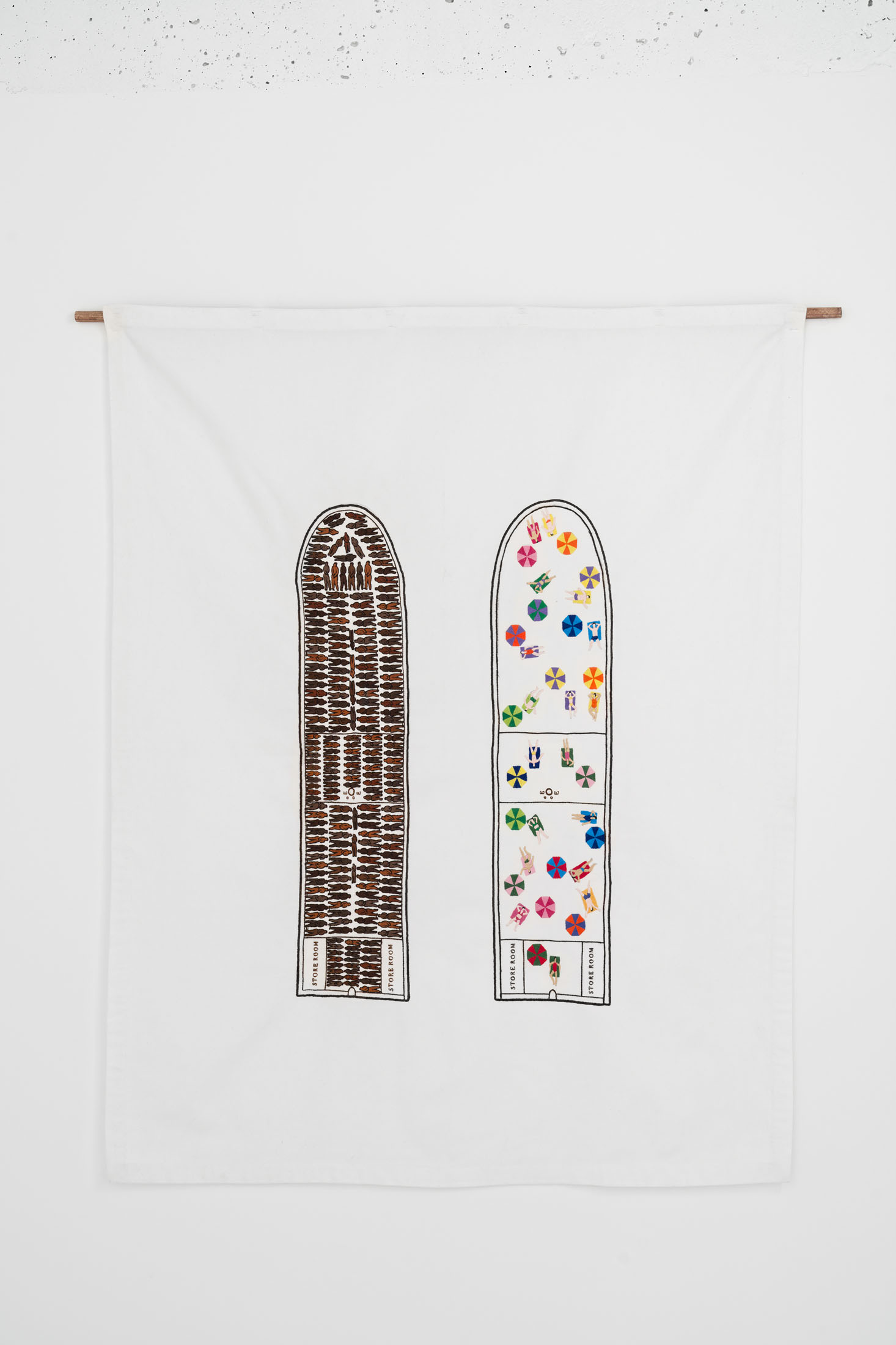
Images, too, shift and encounter other forms of craftsmanship. The Brookes image is reinterpreted in embroidery pieces created with Malagasy craftswomen during a residency at the H Foundation. In one of these, the Richelieu technique cuts away the fabric around the bodies, revealing almost ghostly silhouettes. Names erased, family lines severed: bodies persist where the archives no longer always allow us to trace them. In another piece, a slave ship and a cruise ship face each other. Two journeys separated by everything. Yet something of the island is re-enacted: a land of uprooting turned into a destination, a landscape transformed into the promise of elsewhere. Under the tourist’s gaze [1], she remains an image to be contemplated, desired and consumed.
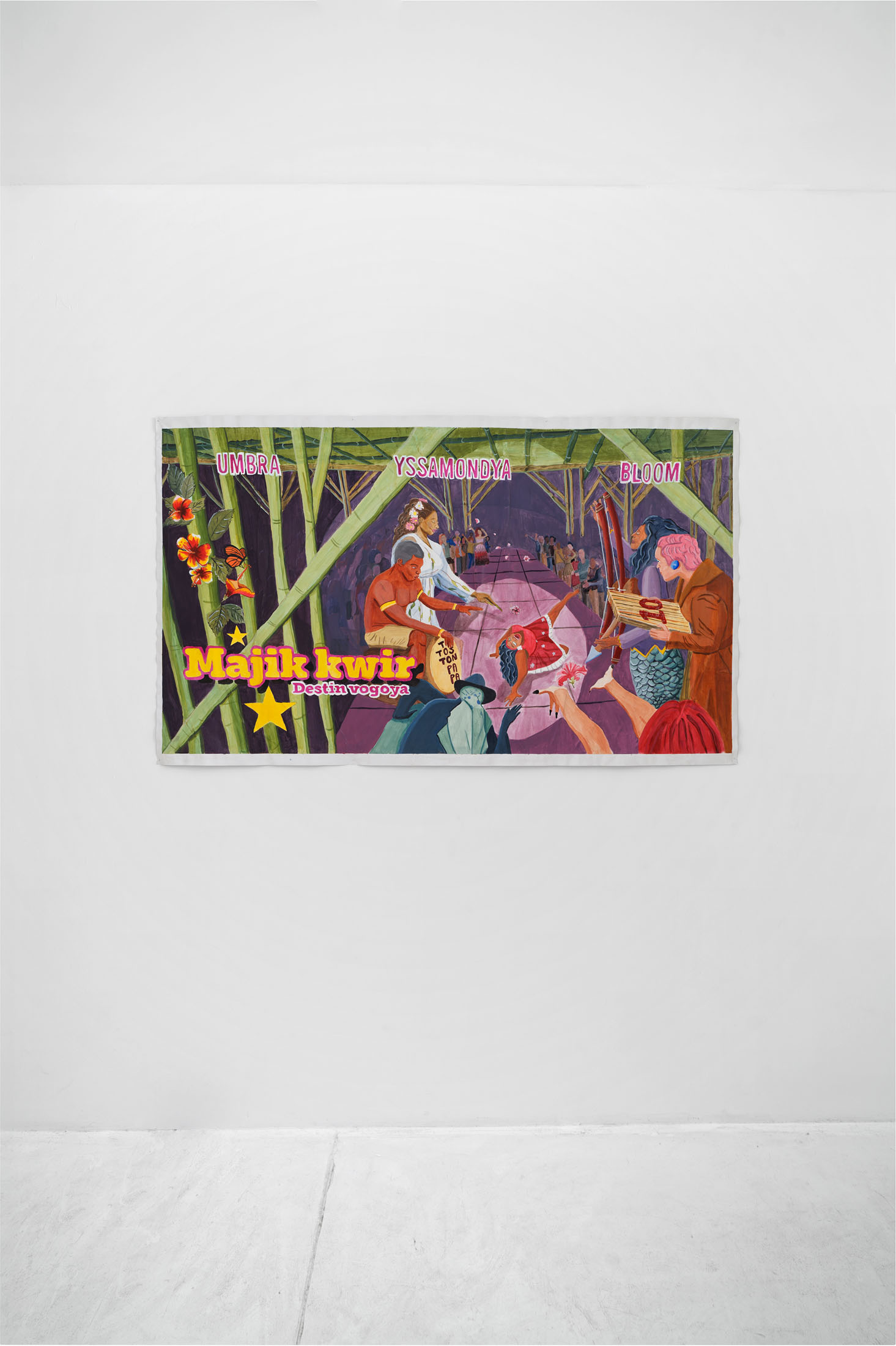
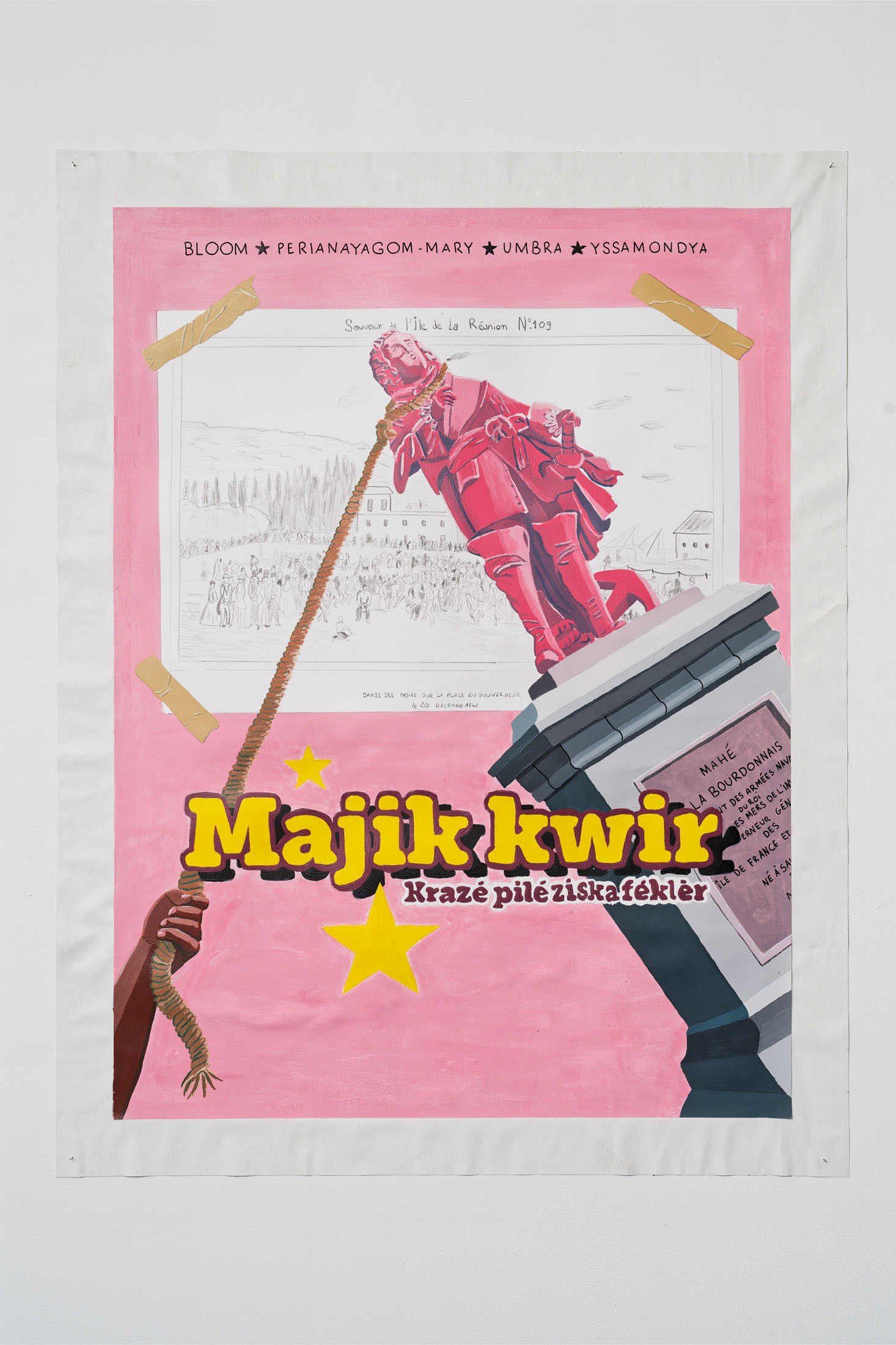
In the face of such categorisations, Brandon Gercara brings movement and fiction to the fore. ‘‘Krazé pilé ziska féklèr’’ echoes Kraz in maloya: dancing maloya until the ground trembles beneath one’s feet. In Destin Vogoya, the artist imagines the vogoya, a creolisation of two cultures of resistance: maloya, shaped by the history of slavery, and voguing, born within queer and racialised communities in the face of racism and LGBTphobia. Vogoya becomes the dance of Kwirdom, the world imagined by Brandon Gercara for kwir people, free from queerphobia and coloniality. The work lends its title to Brandon Gercara’s first solo exhibition in an institutional setting.[2]
This world comes to life in Majik Kwir, a narrative populated by characters, places and events that shape a Reunionese queer mythology. \ike posters, paintings bring the various episodes of this story to life. Two are presented here, one of which is inspired by the recent relocation of the statue of Mahé de \a Bourdonnais, a figure of the colonial order in Réunion. Heritage thus becomes a living substance:
Dance to survive. Dance to pass on.
Dancing until the light returns.
[1] John Urry and Jonas \arsen, The Tourist Gaze 3.0, \ondon, SAGE Publications, 2011.
[2] “Destin Vogoya”, a solo exhibition by Brandon Gercara at the Ferme du Buisson Centre for contemporary art from 10 October 2026 to 24 January 2027.
—Text by Thomas Havet