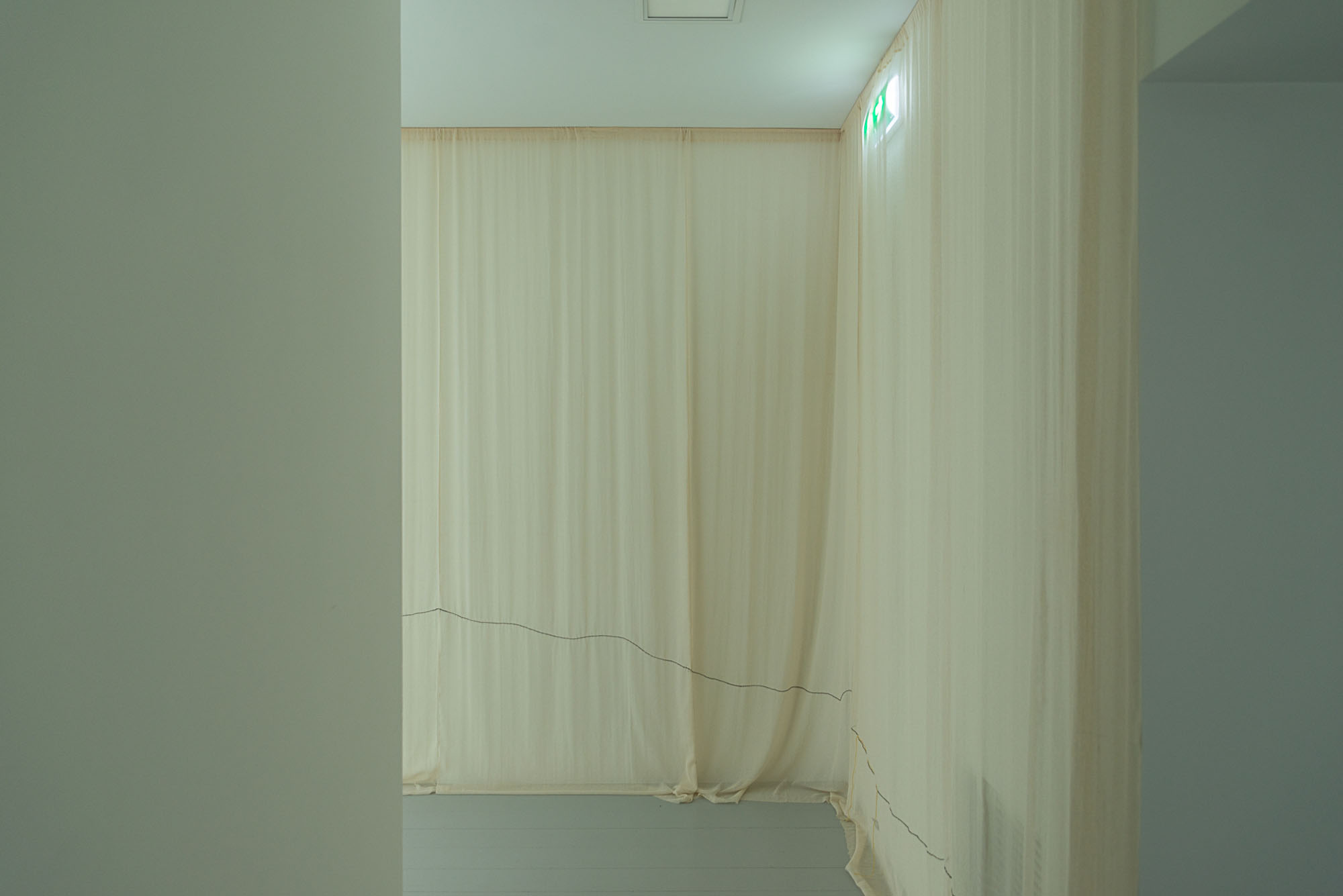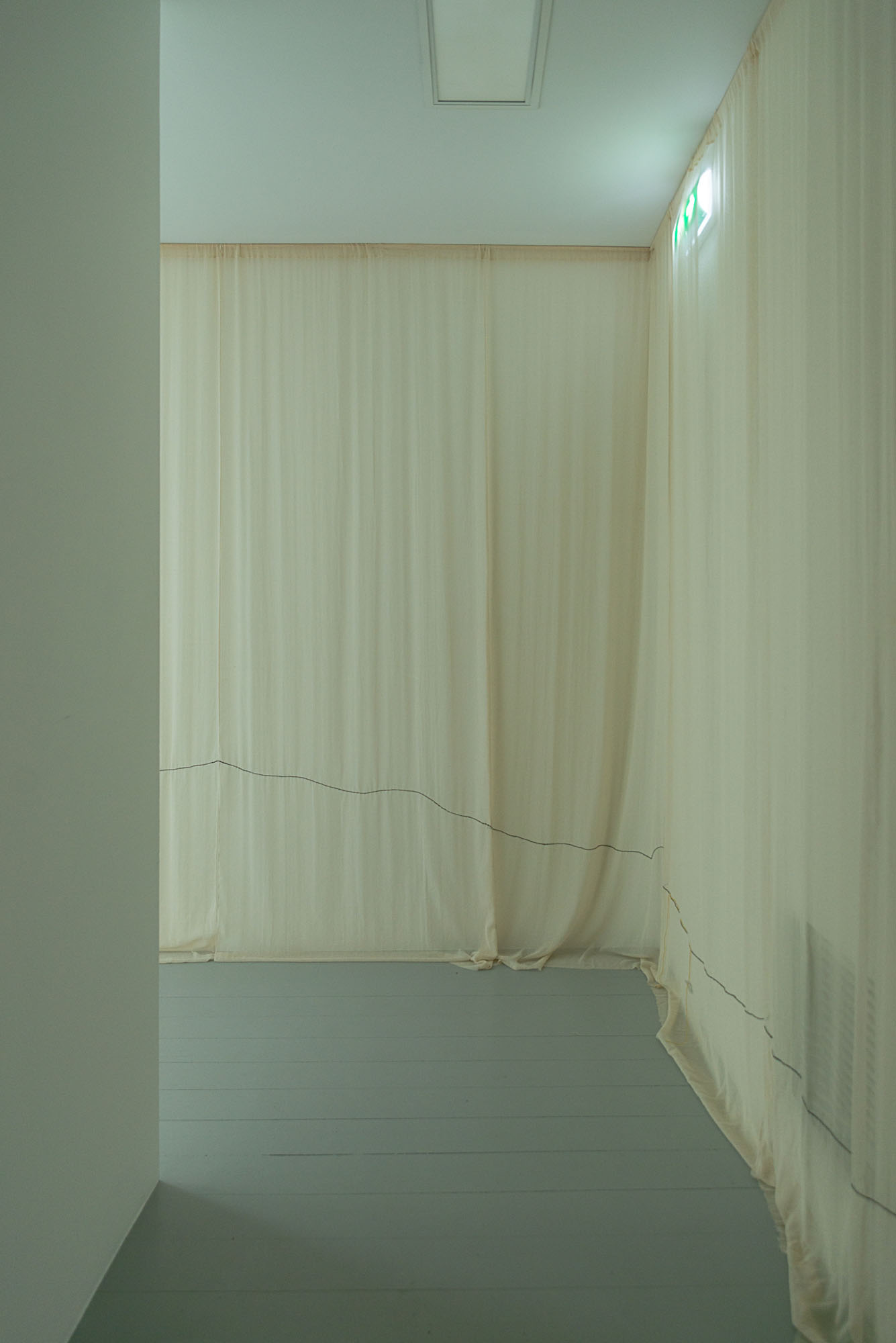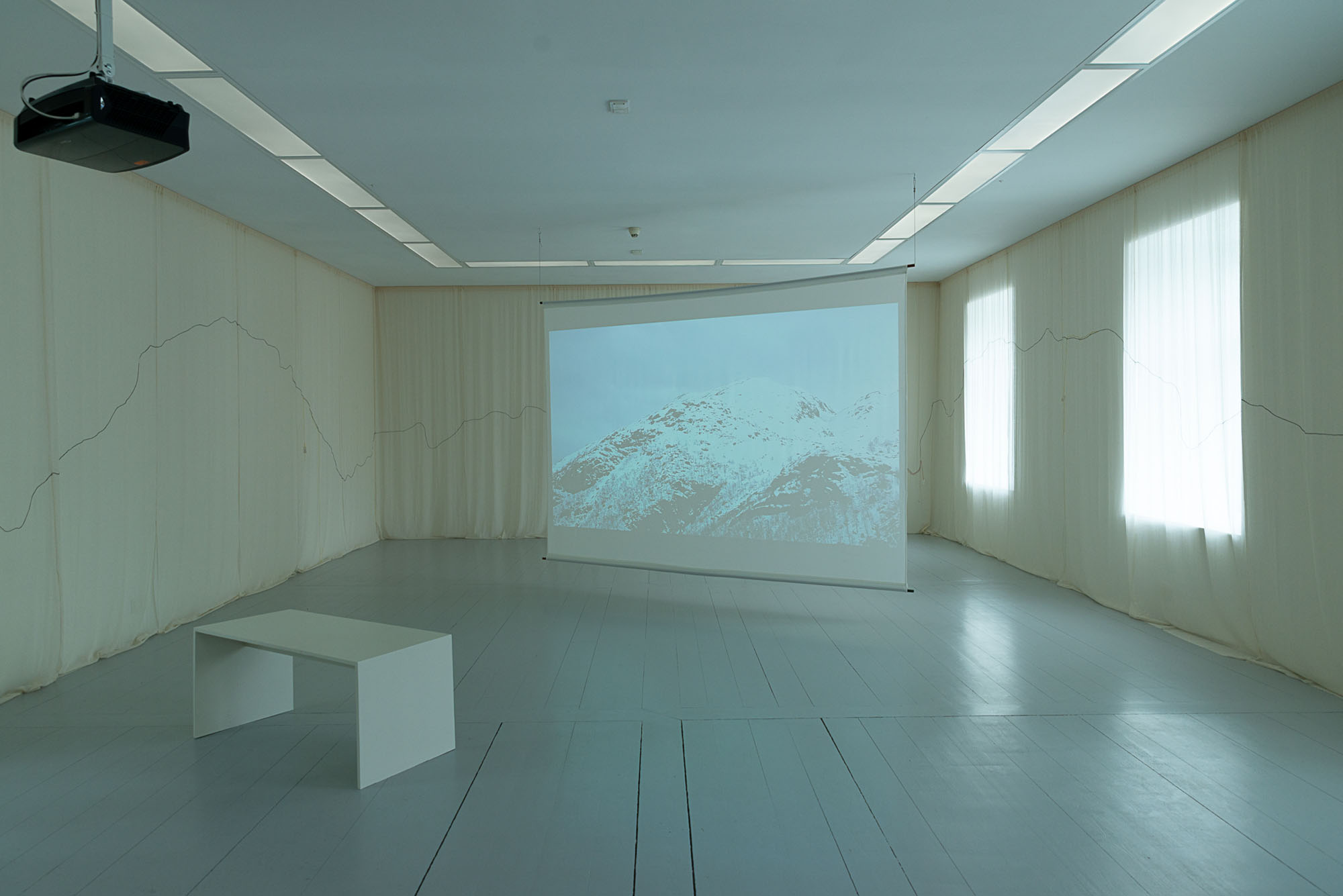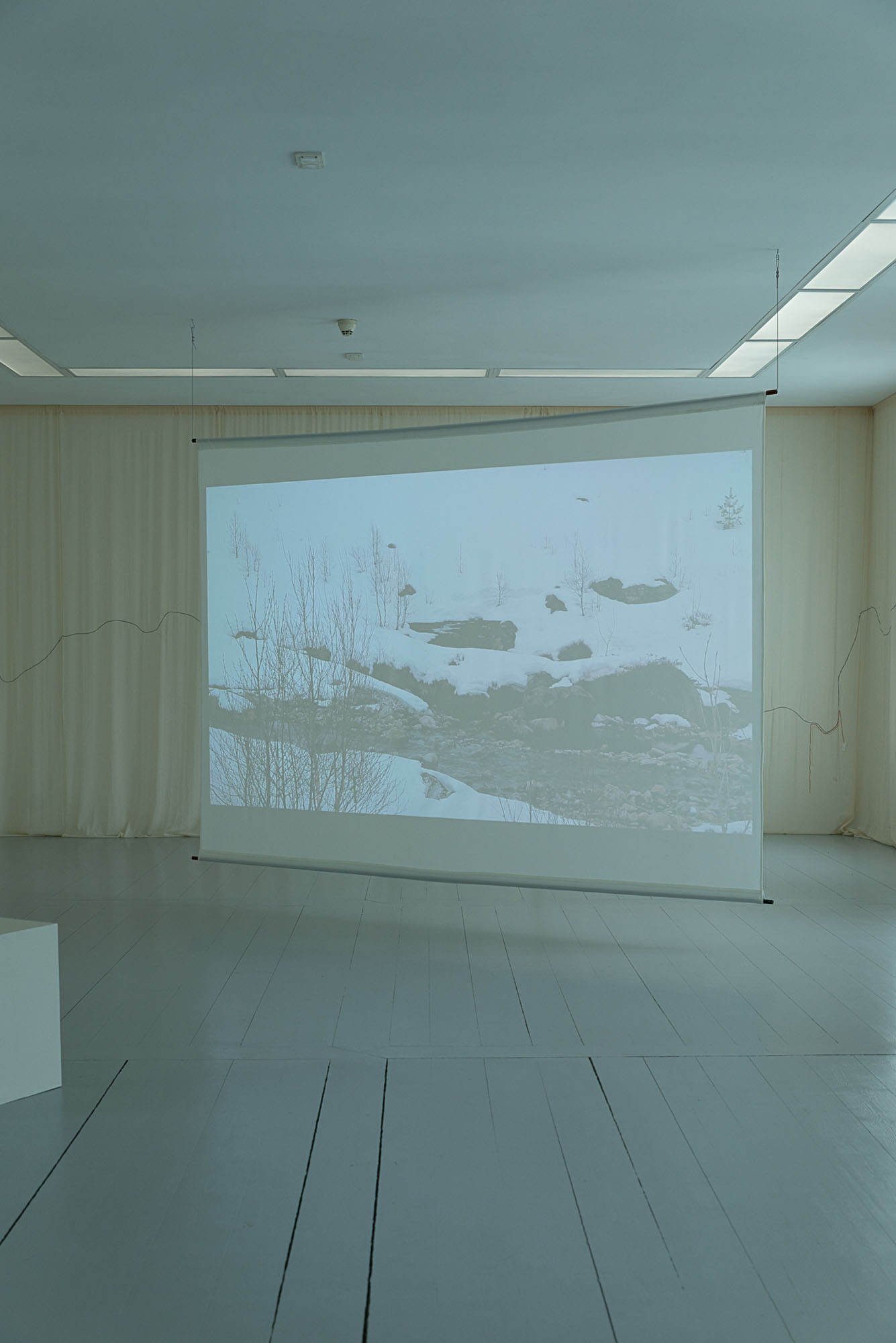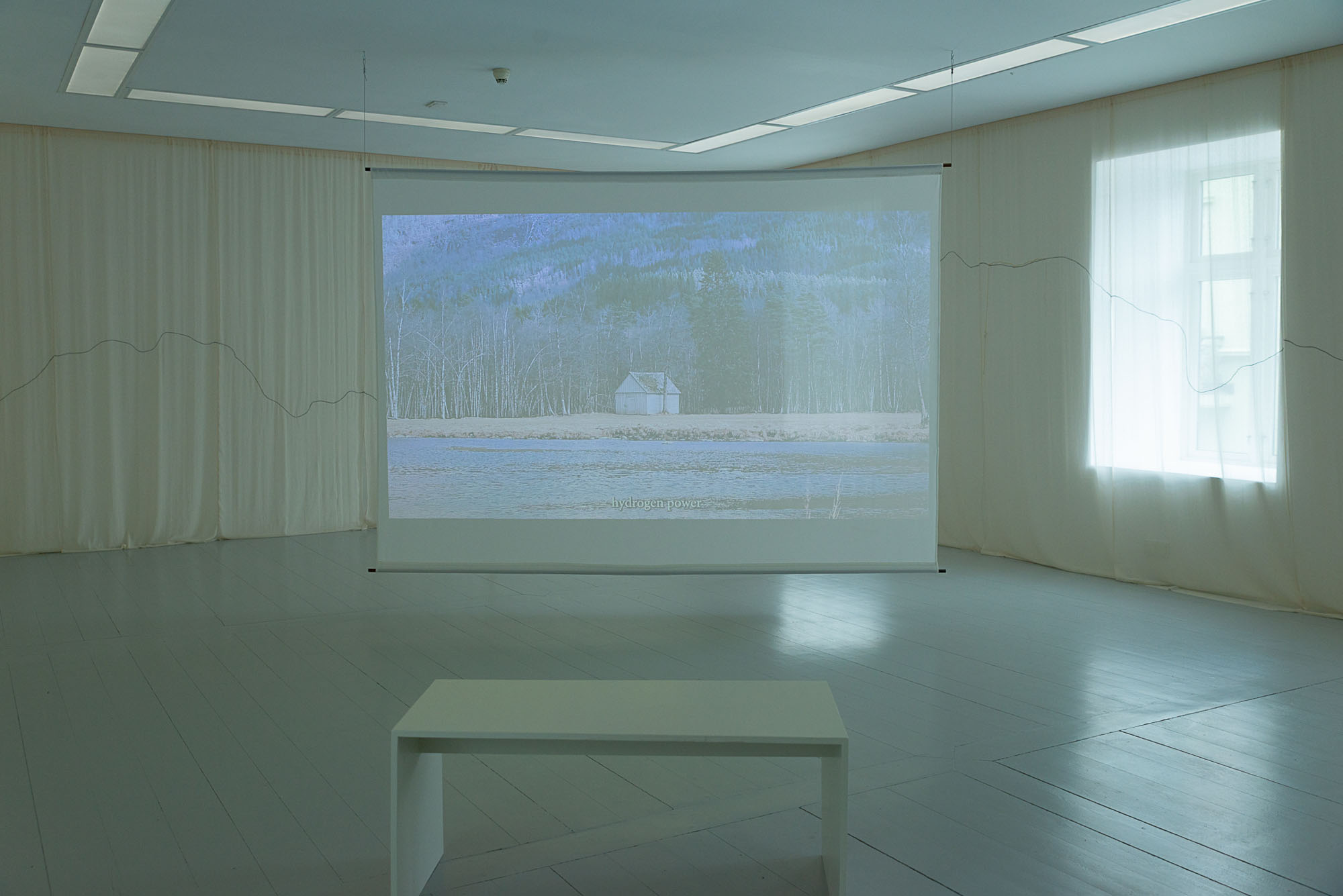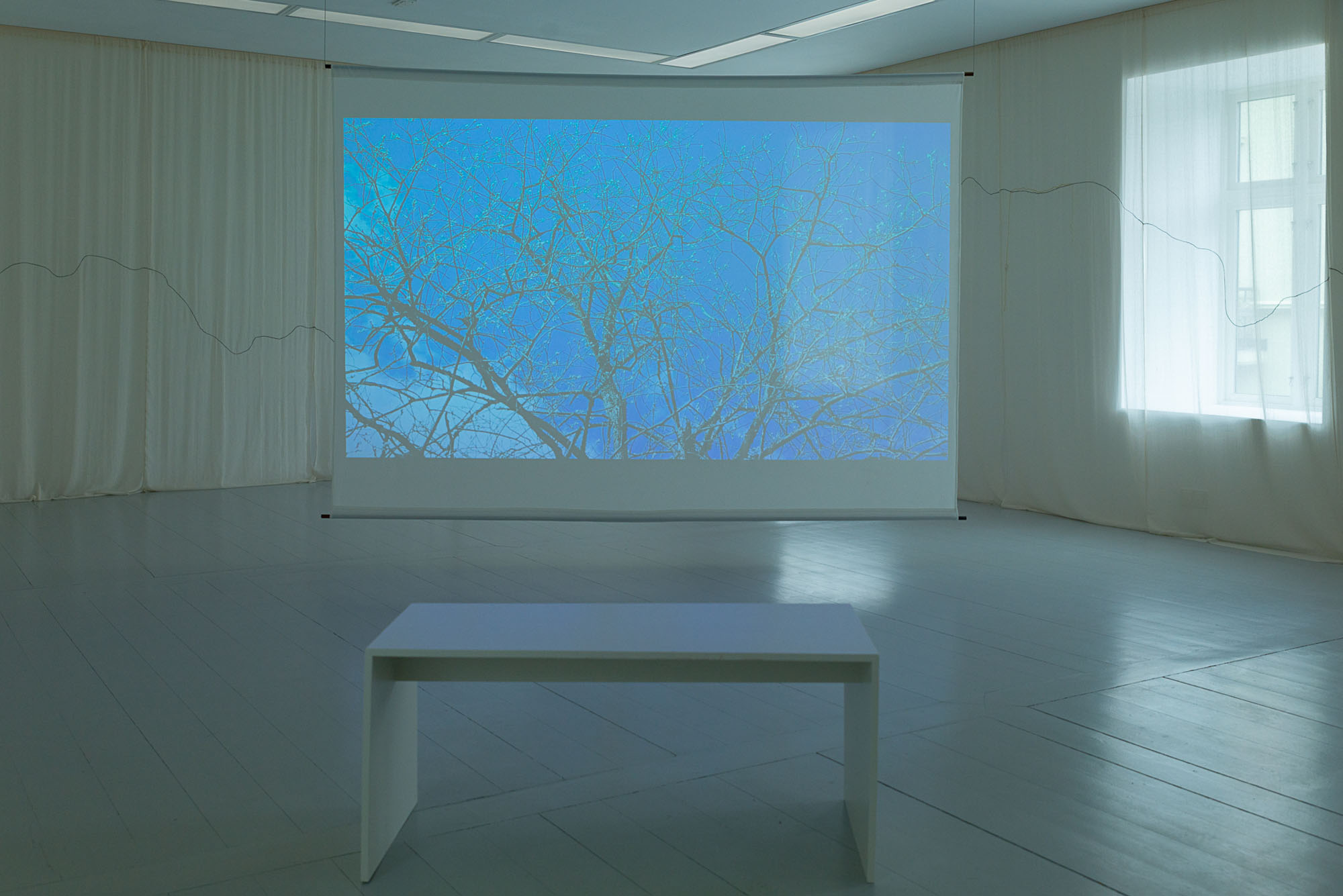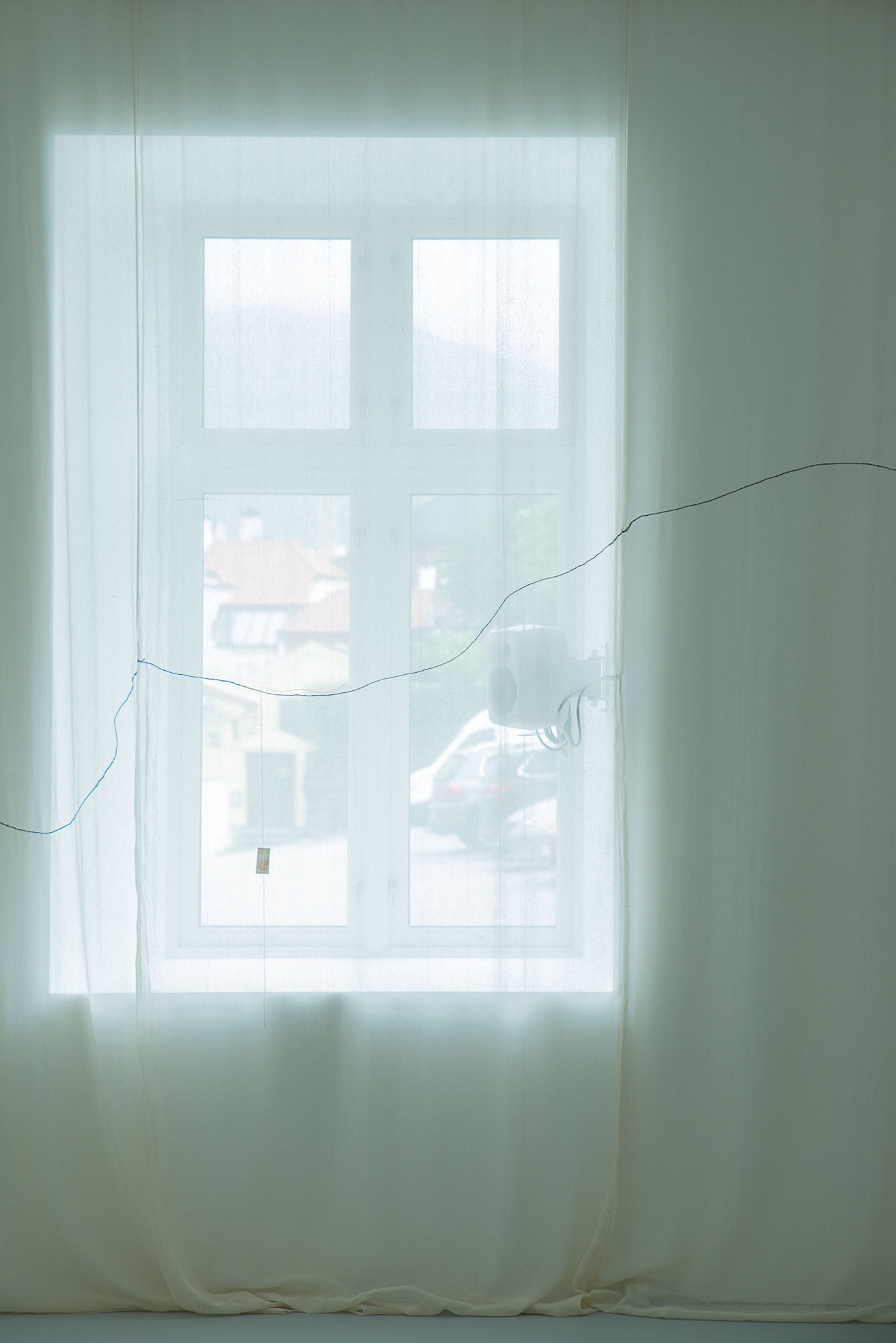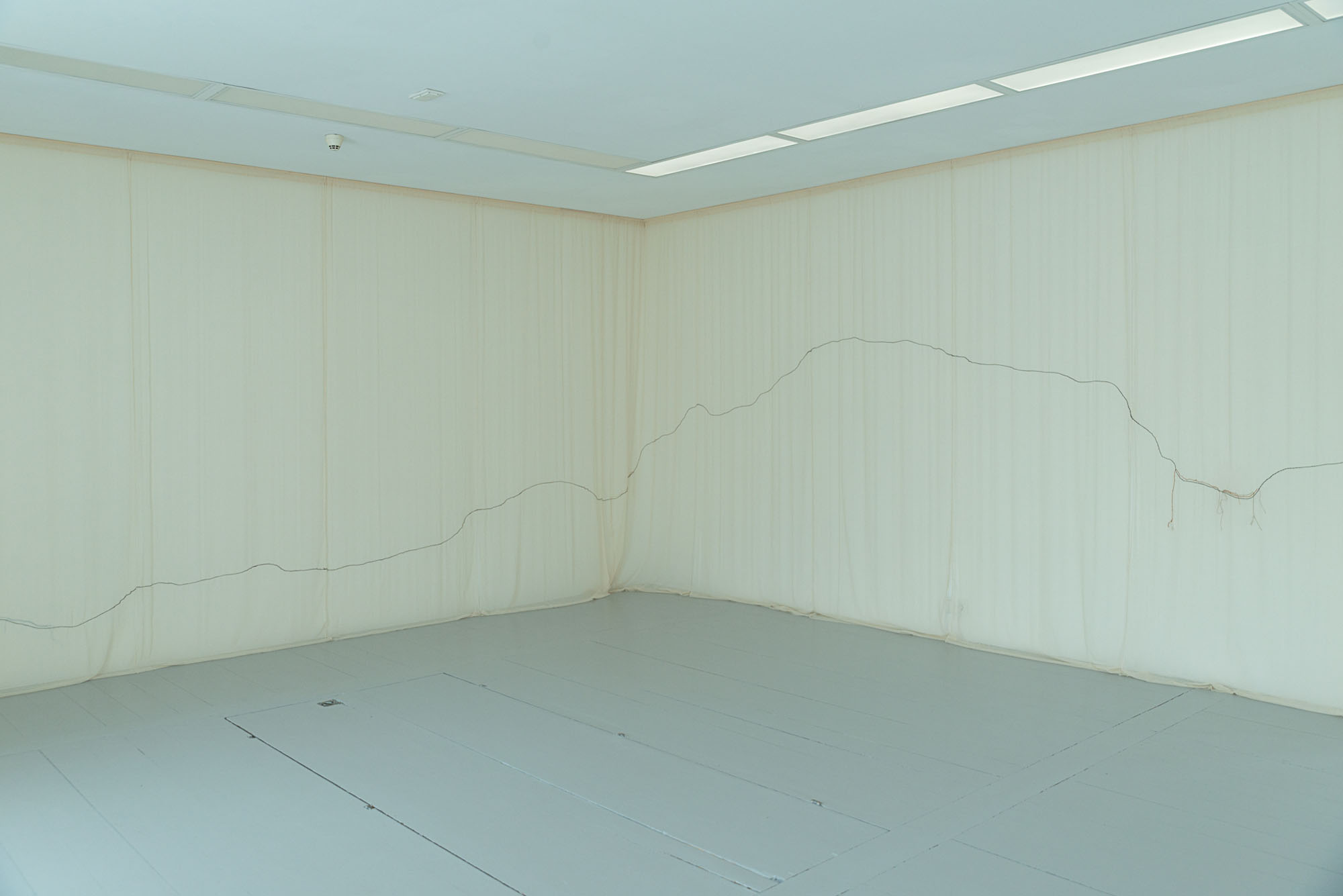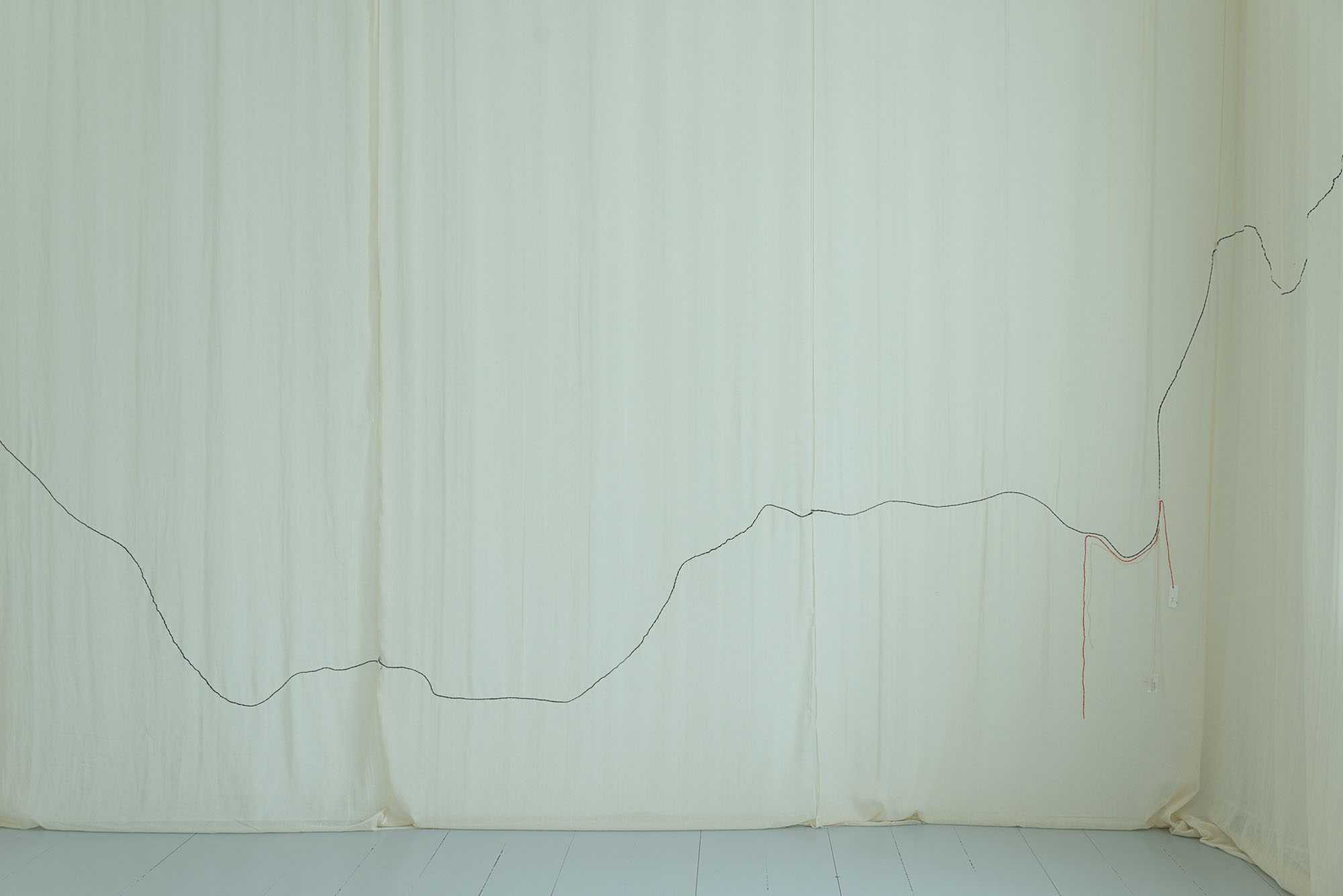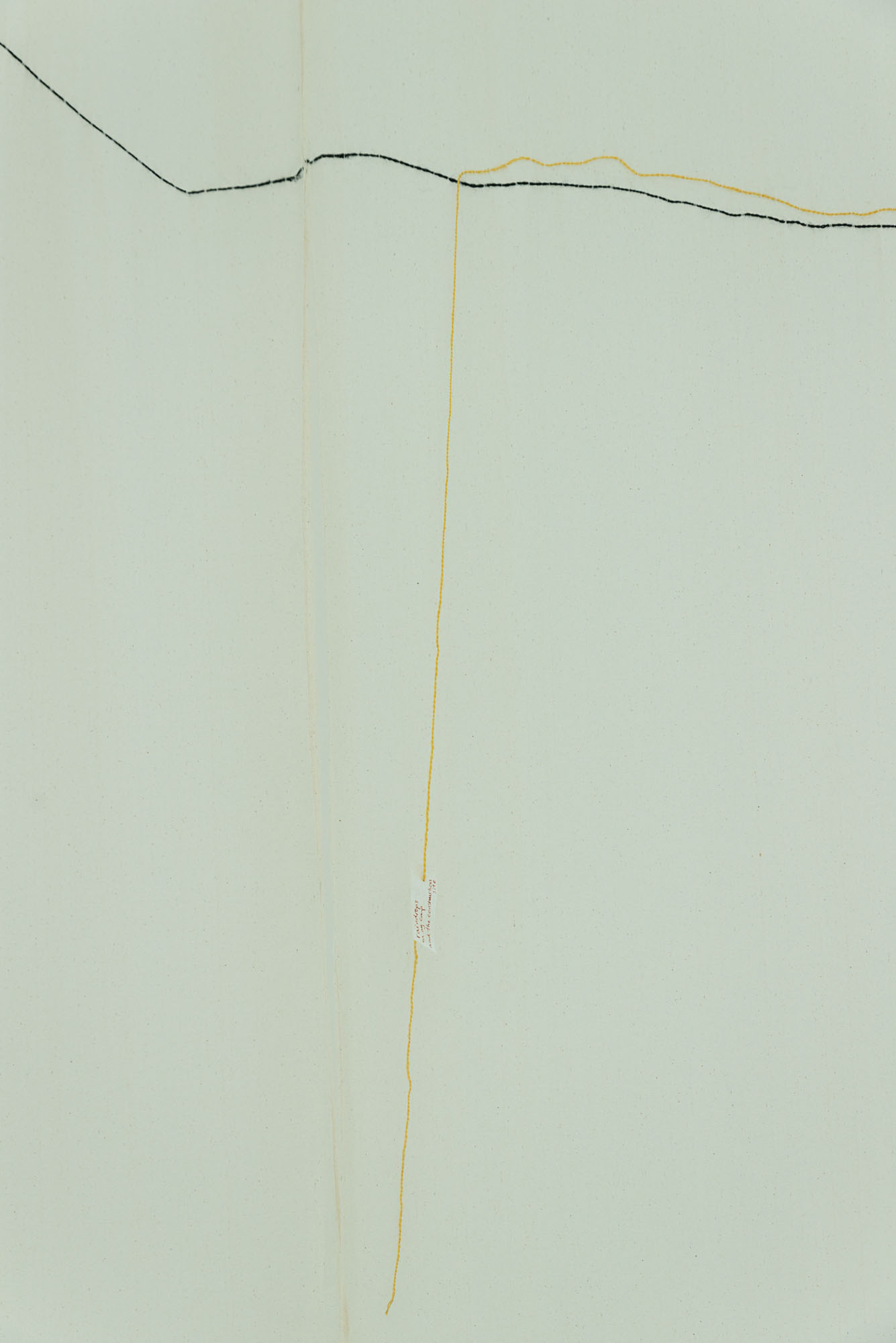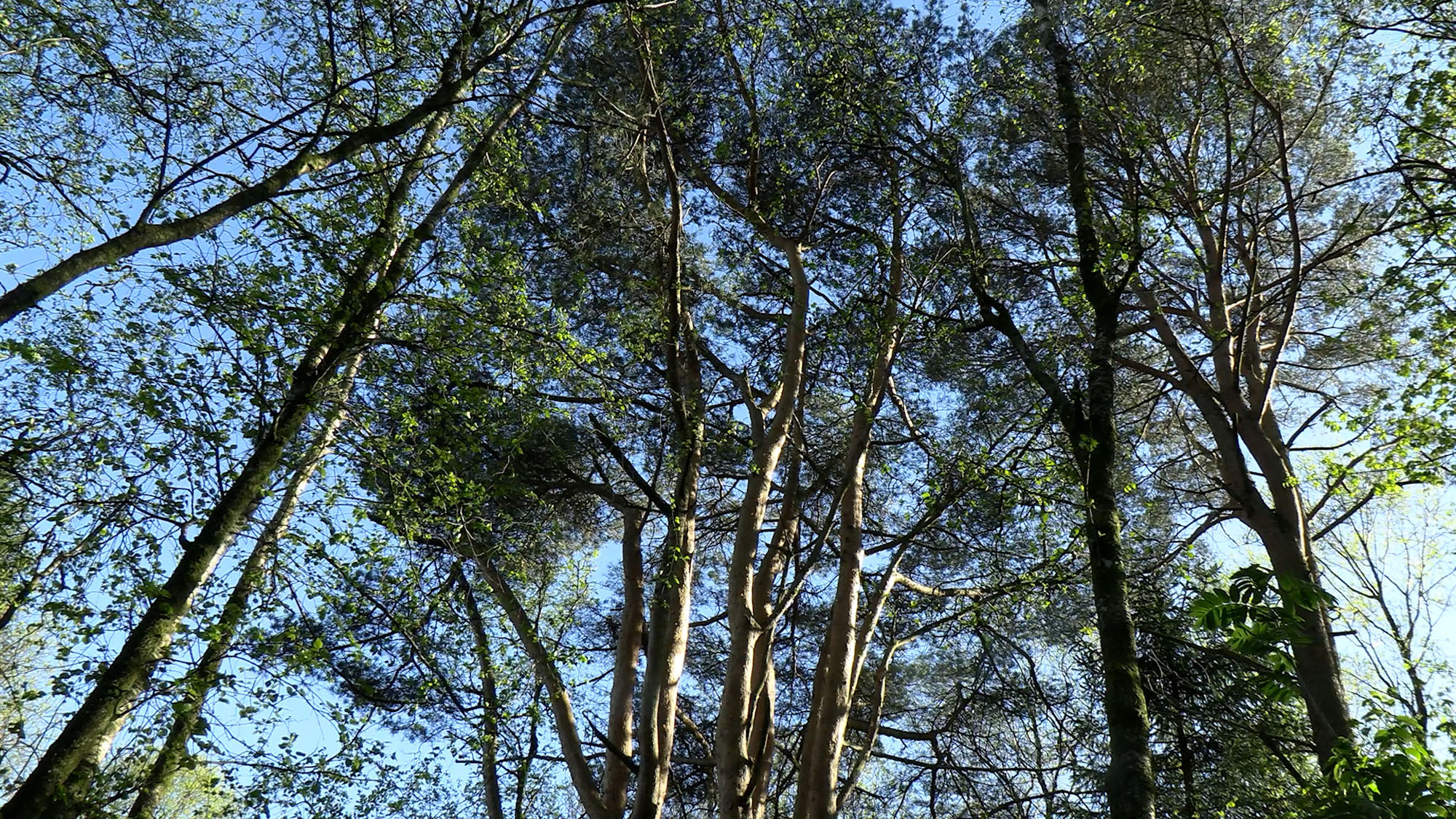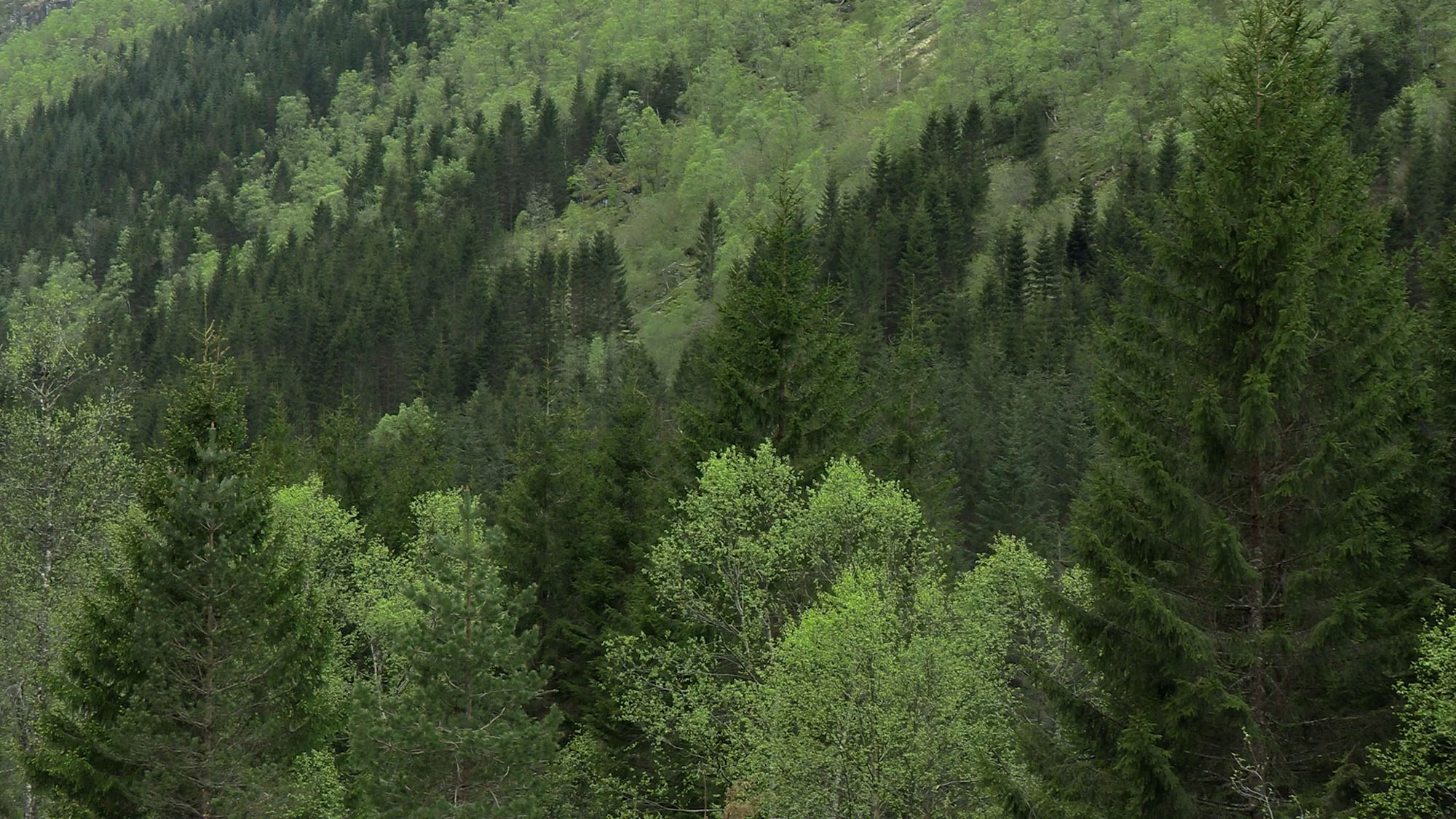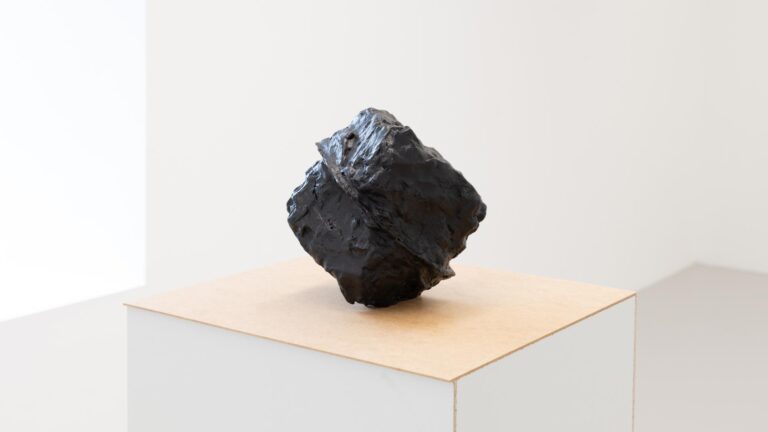
How is the value of our surroundings affected by a landscape under continuous change? What role and agency do local inhabitants feel they have? How do we negotiate conflicting values of nature and belonging within modern energy landscapes?
These are central questions in Ase Brunborg Lie’s exhibition Nimble Weavers. Nimble Weavers is also the title of the one-year interdisciplinary collaboration between artist Ase Brunborg Lie and the NFR-project ACTIONABLE at the University of Bergen (UiB). Through research and workshops conducted in the Nordhordland UNESCO Biosphere Reserve, they have focused on energy infrastructure, land-use conflicts, and local engagement.
A Biosphere Reserve is a UNESCO designation for a region with high biological and cultural diversity, demonstrating a balanced relationship between people and nature. They can act as learning sites for sustainable development, testing approaches to social and ecological change.
Over the past year the artist has worked alongside doctoral student Janne Thomsen, part of the ACTIONABLE team, travelling around the Biosphere Reserve, where Thomsen interviewed landowners, local residents, interest groups, industry, municipalities and state administrators about natural values, spatial planning and local agency. Brunborg Lie has also, in collaboration with Thomsen and local libraries and hiking groups, held several workshops in the Biosphere
Reserve: silent listening walks, drawing exercises and discussions around points of conflict, both potential and actual.
Through the workshops, field-based research, and collaboration, Brunborg Lie works to formulate situated knowledge about the landscape and out relation to it through sensing, mapping, and telling the story of what is often made abstract or inaccessible.
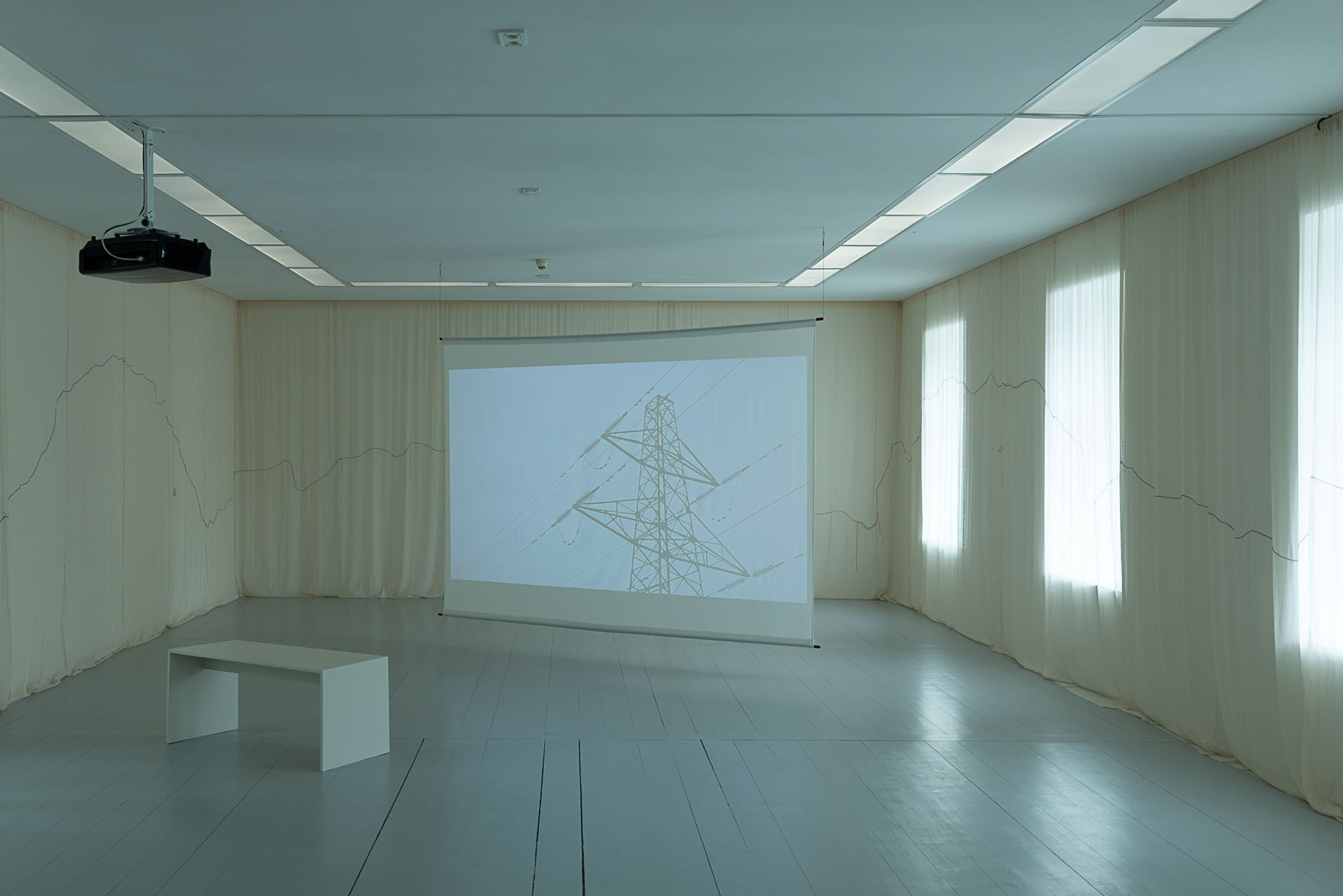
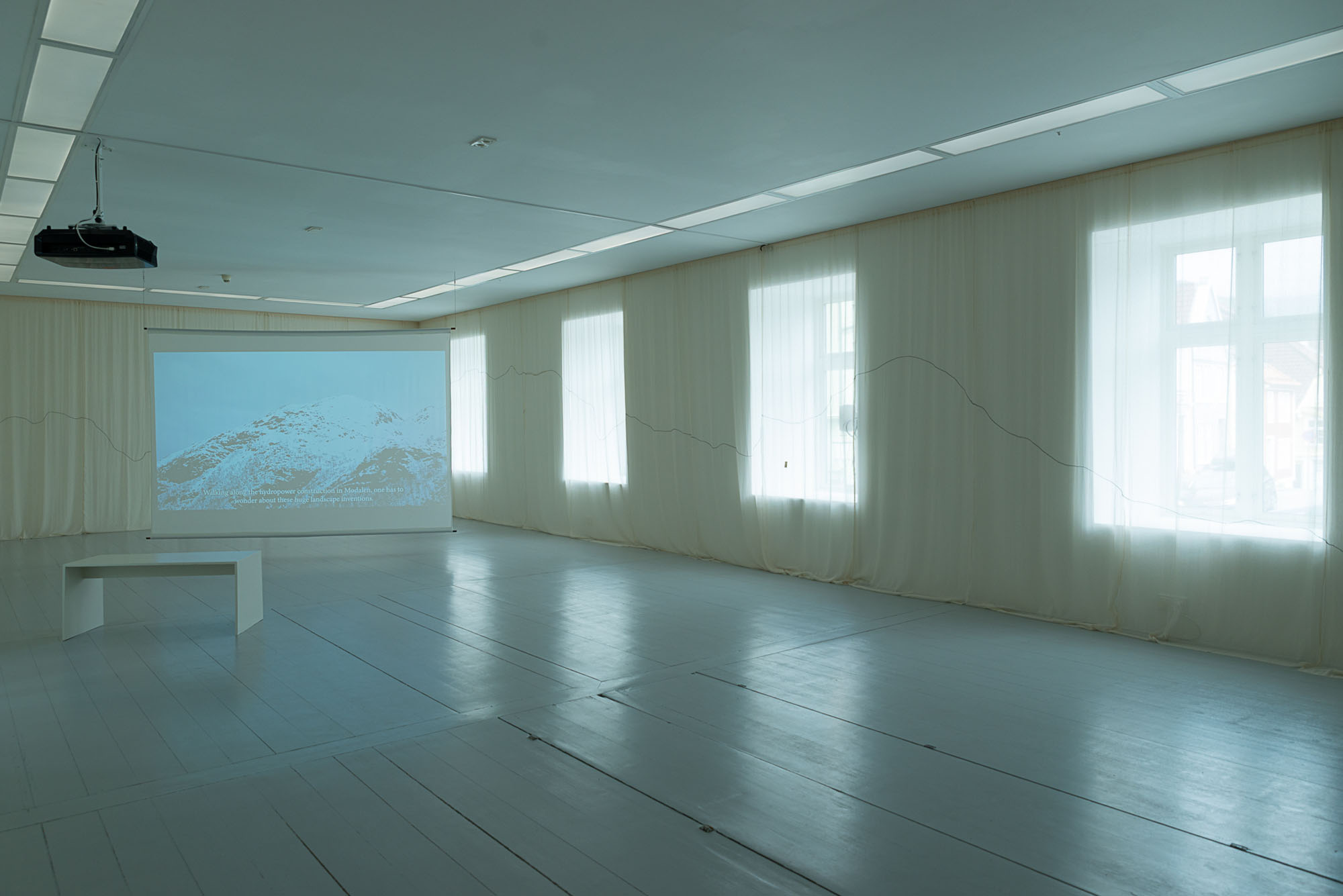
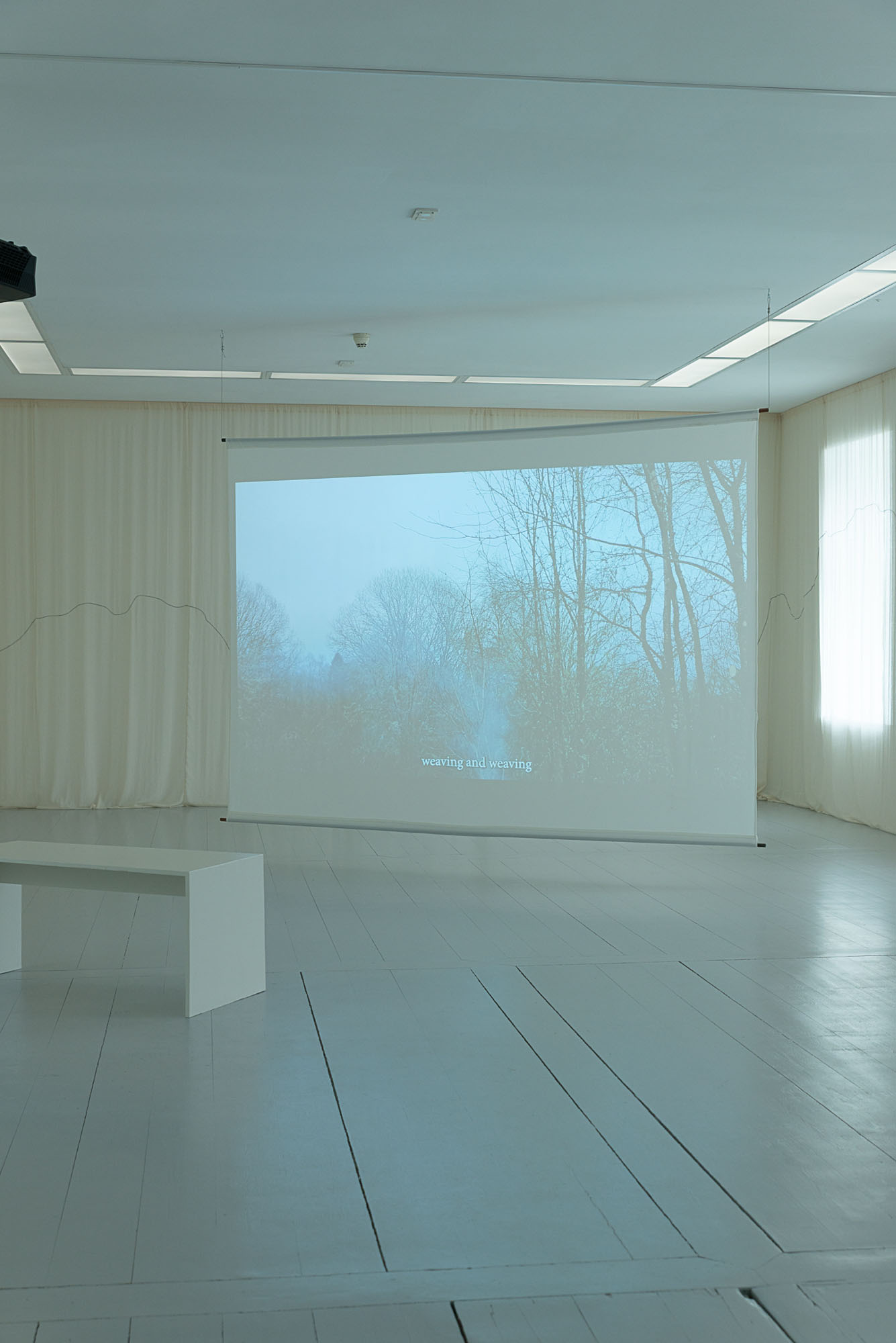
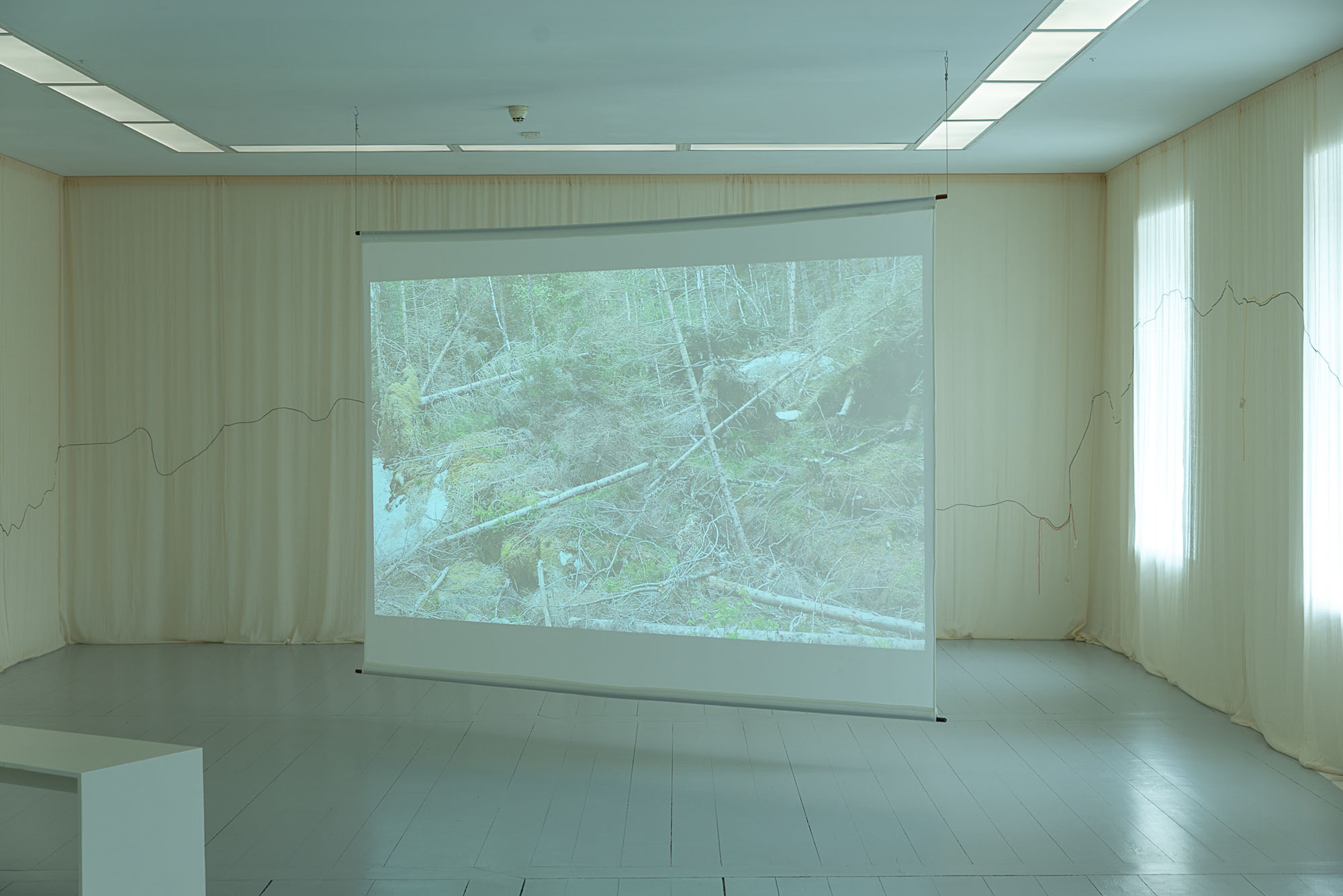
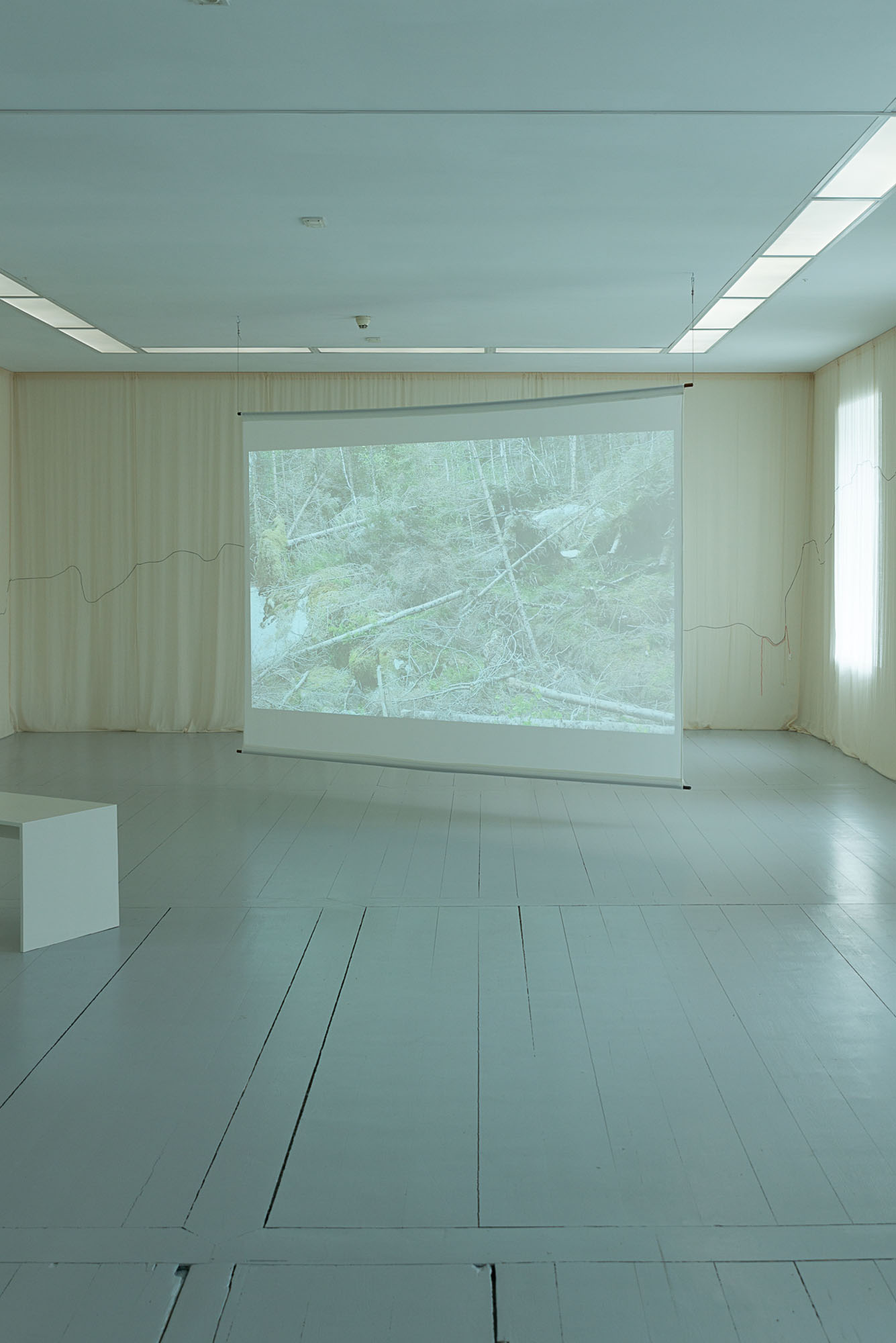
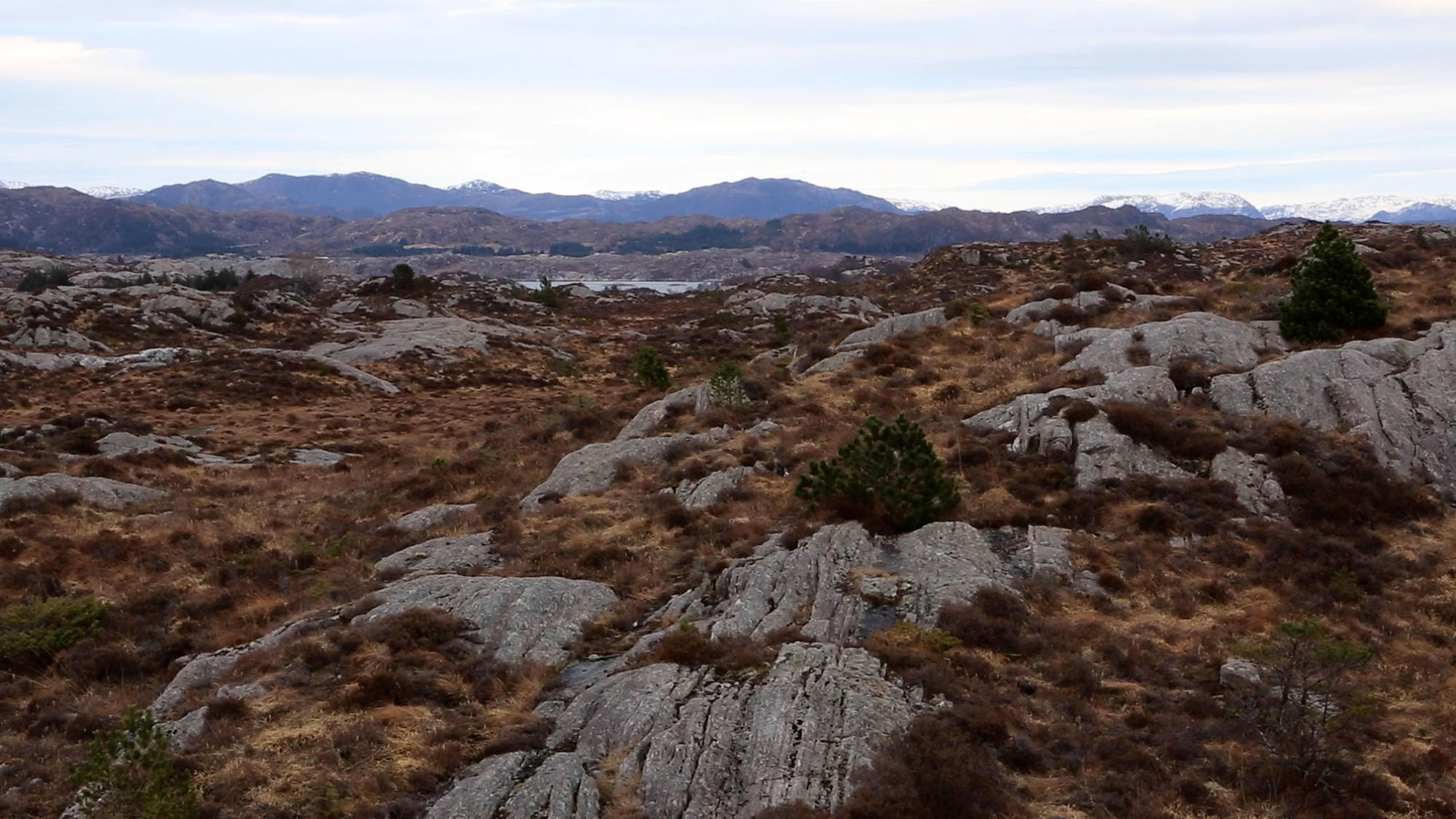
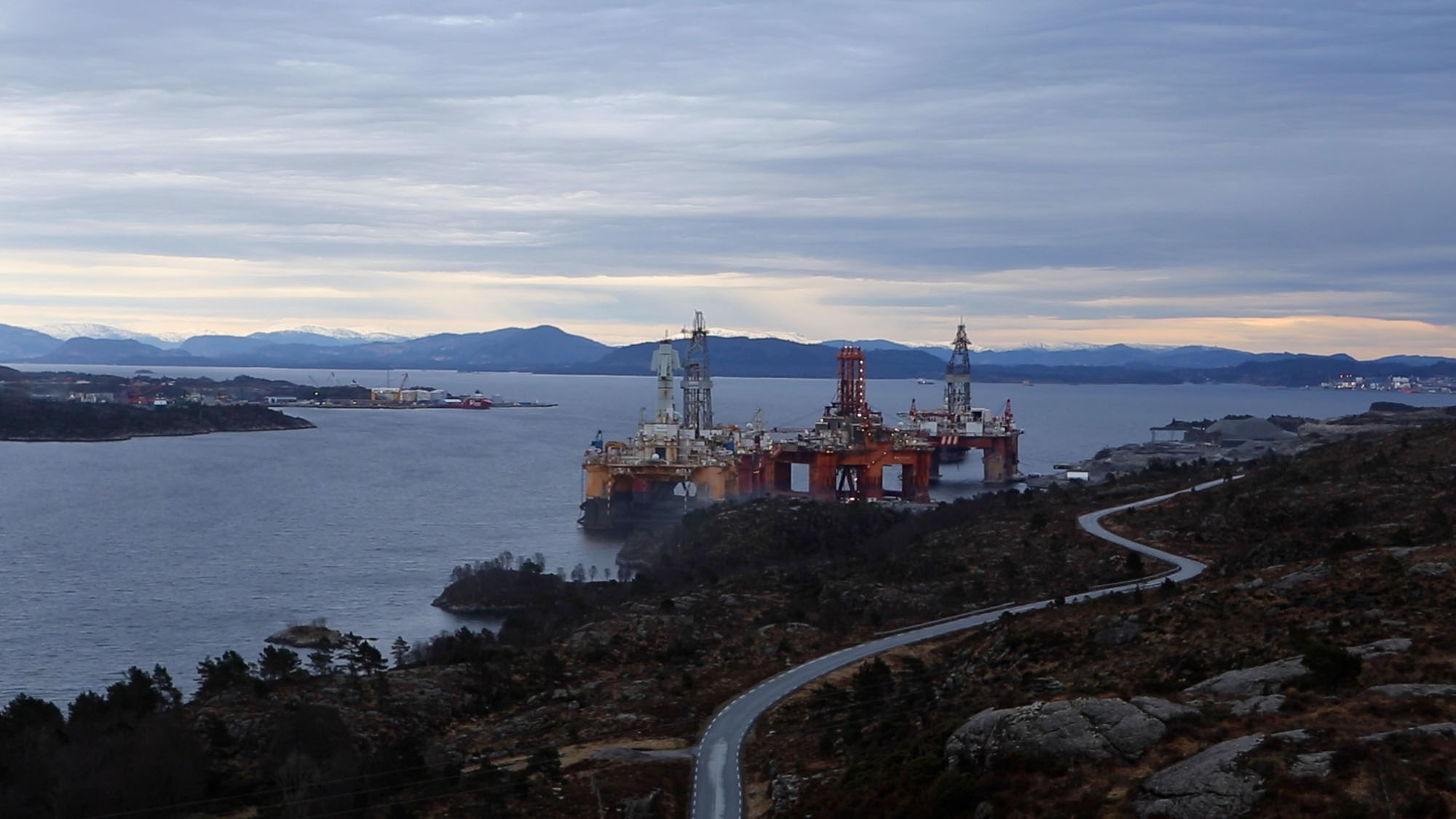
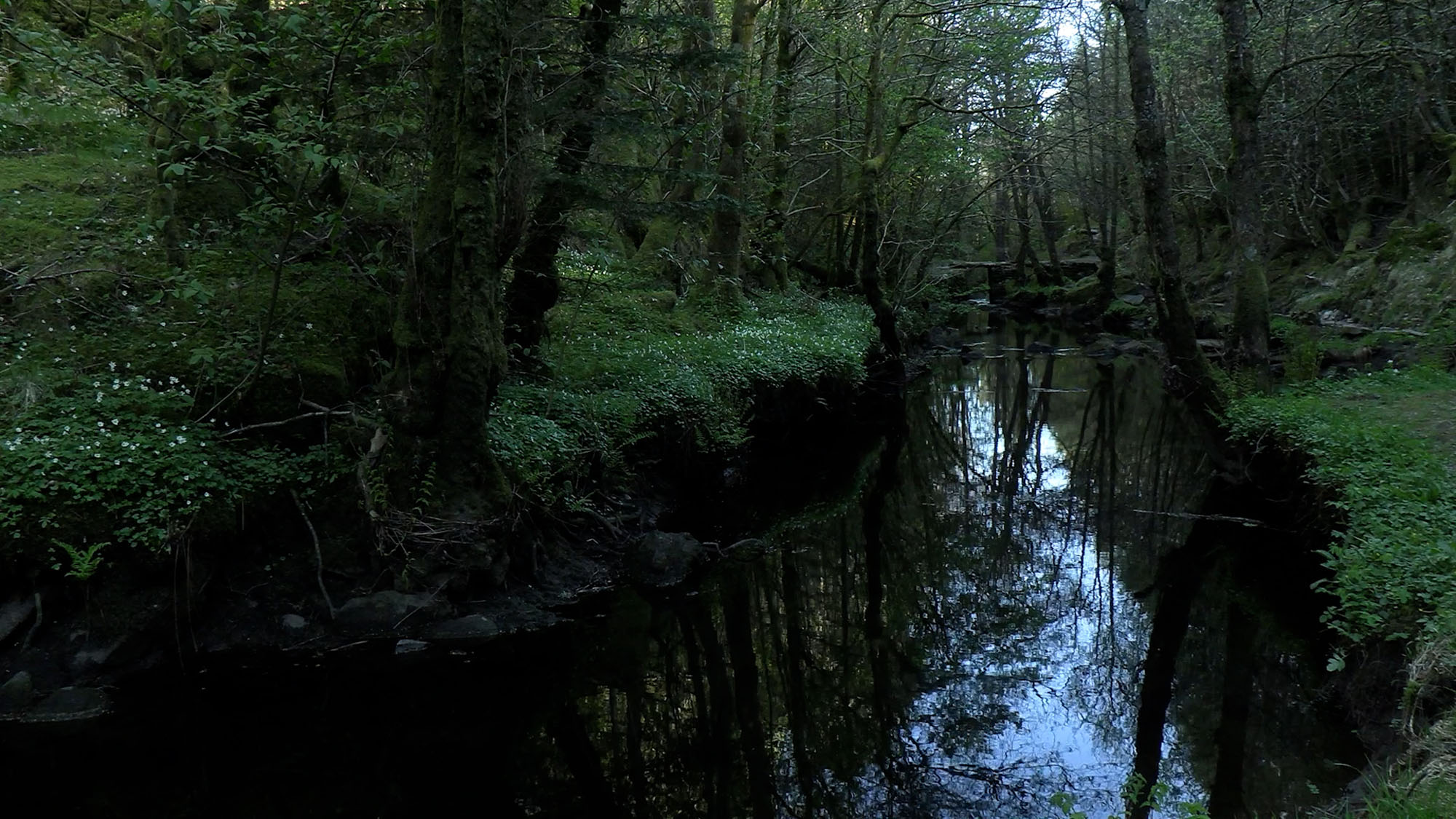
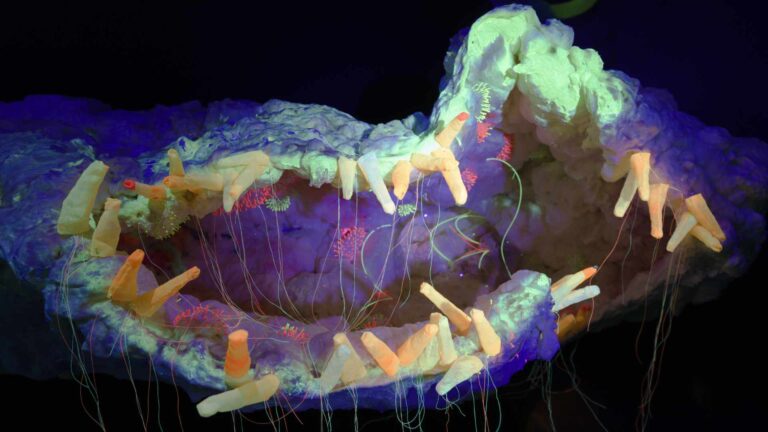
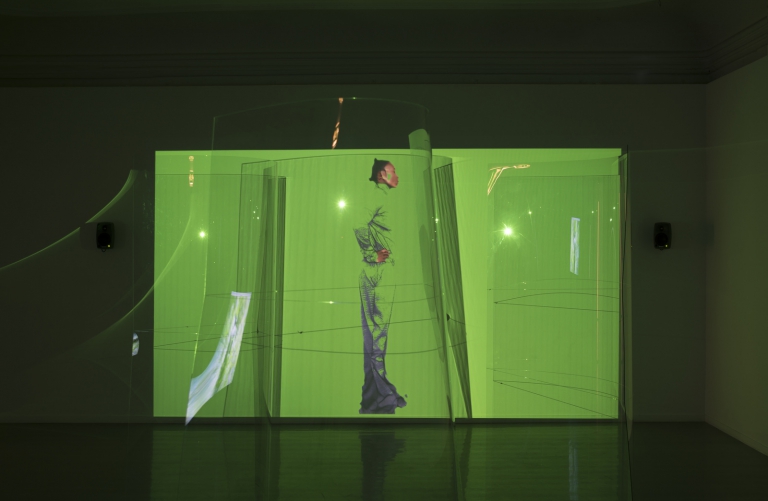
The exhibition at Hordaland Kunstsenter consists of, among other things, a video work that reflects on the Biosphere Reserve and what it can mean to live sustainably, with all the challenges and compromises this entails.
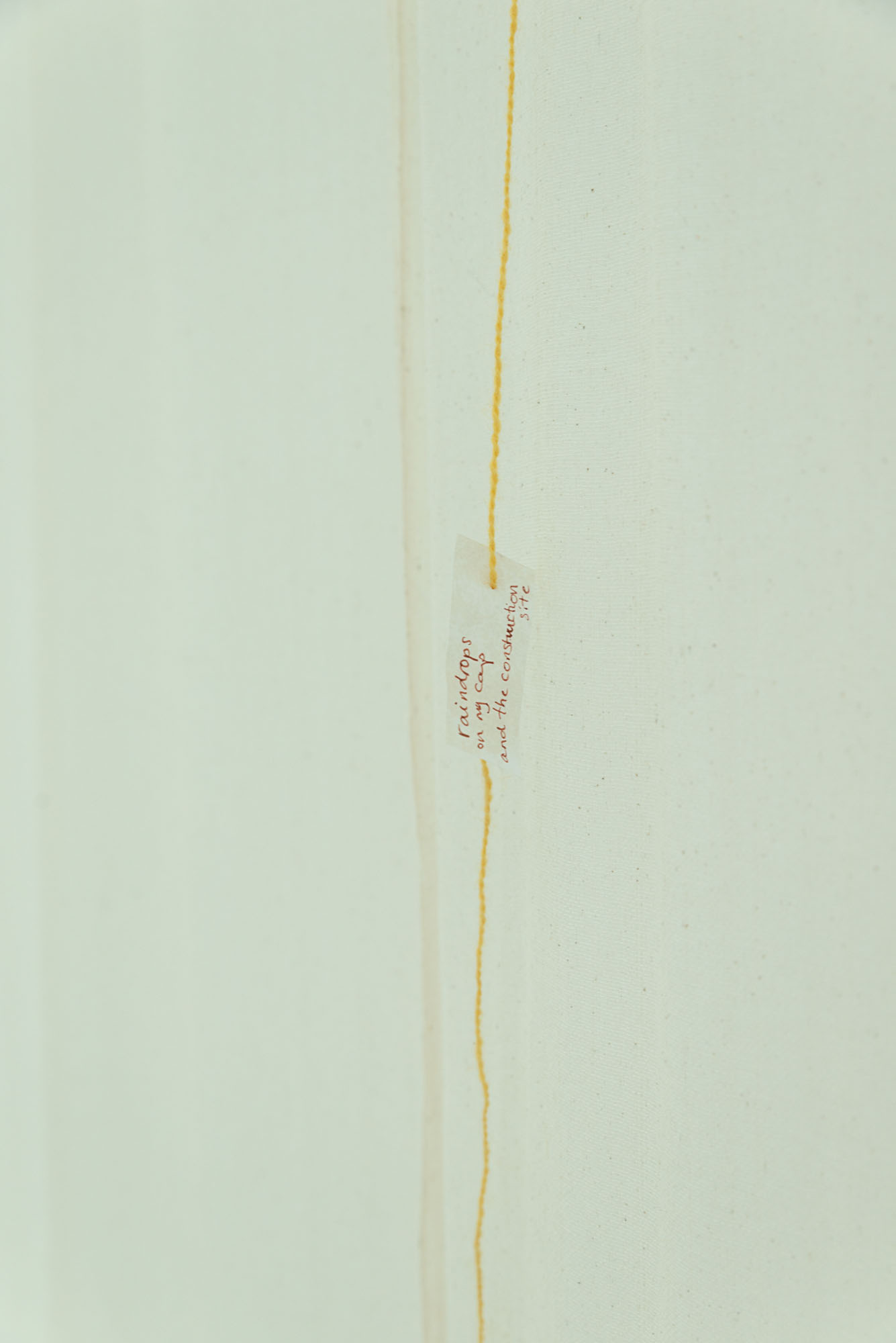
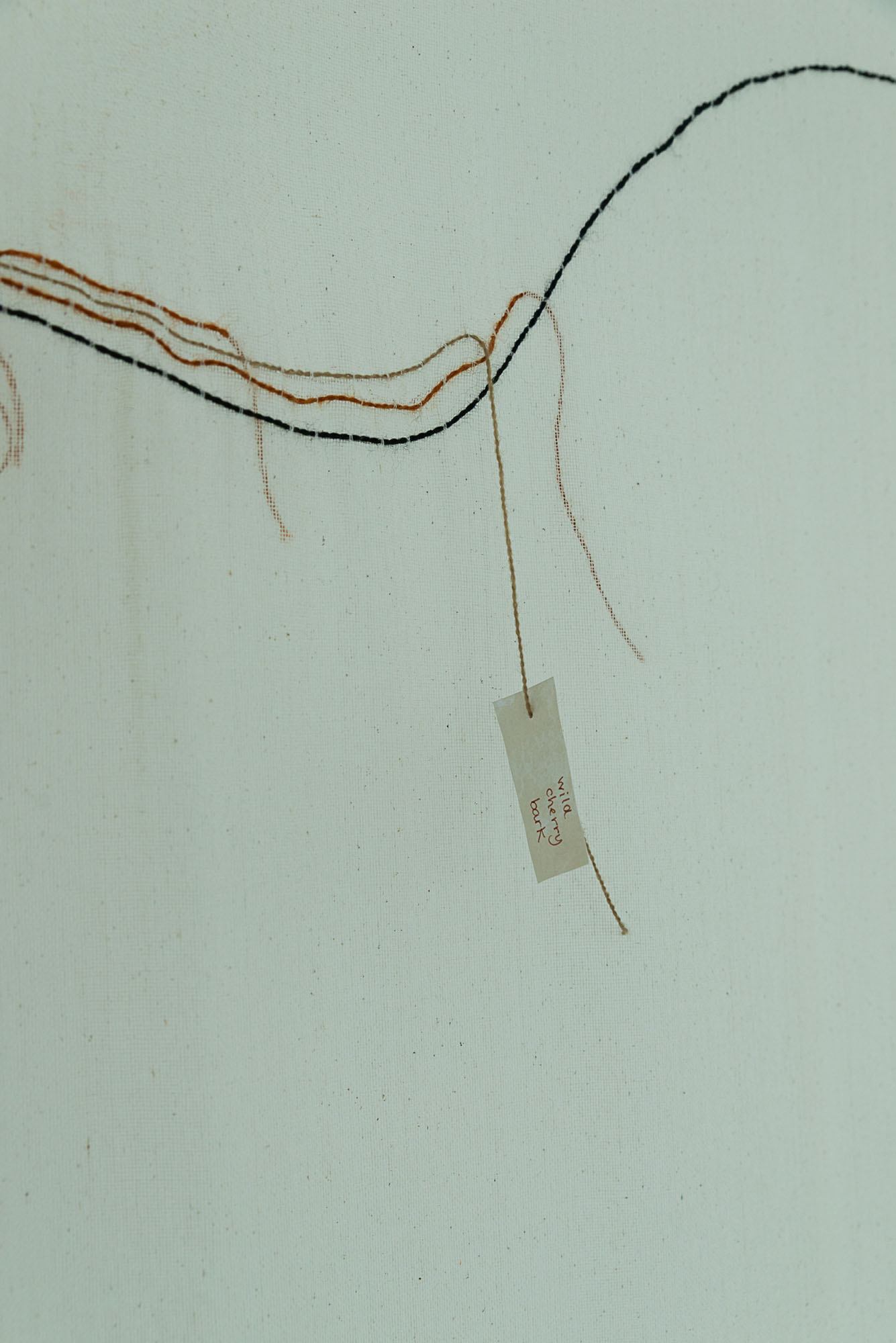
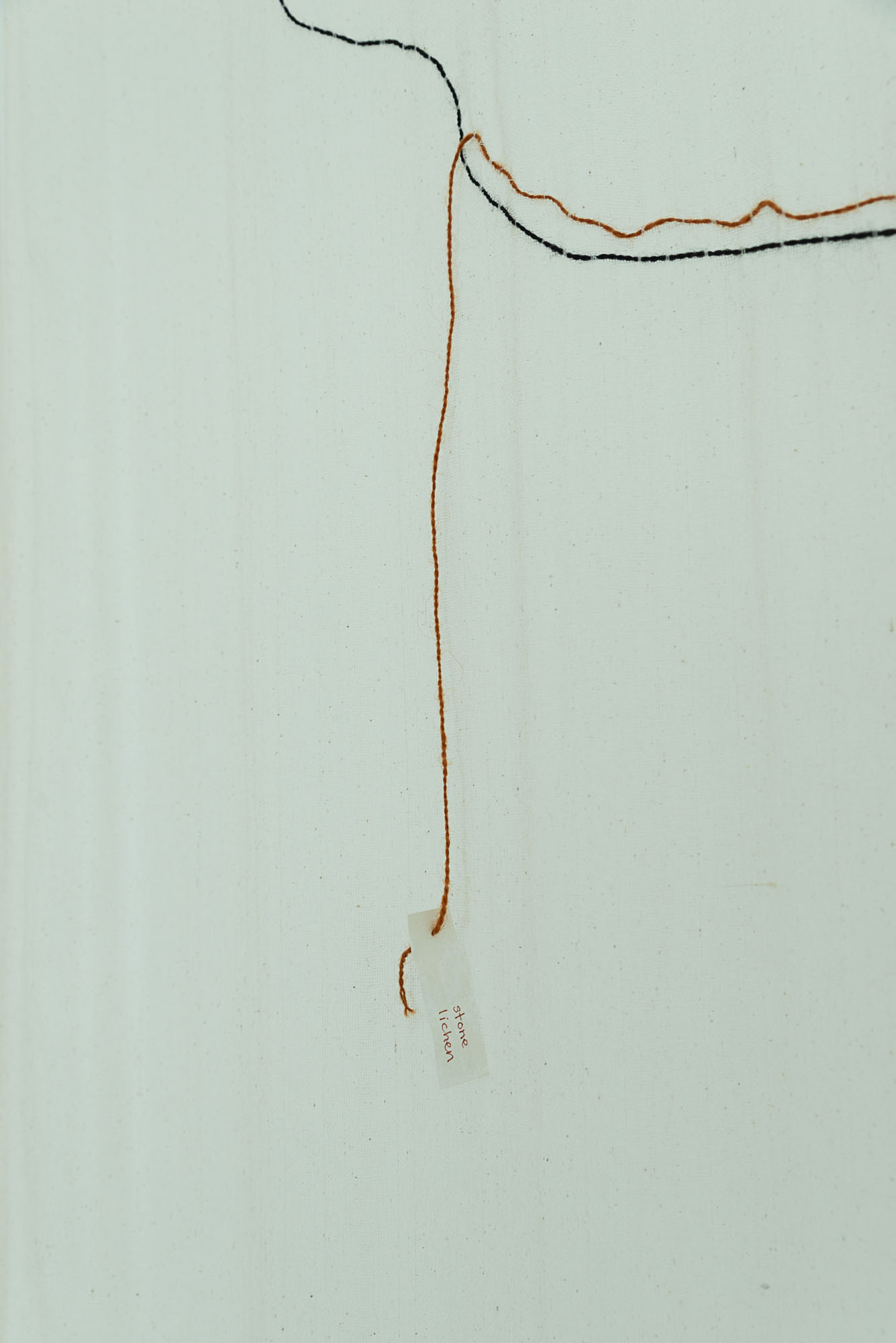
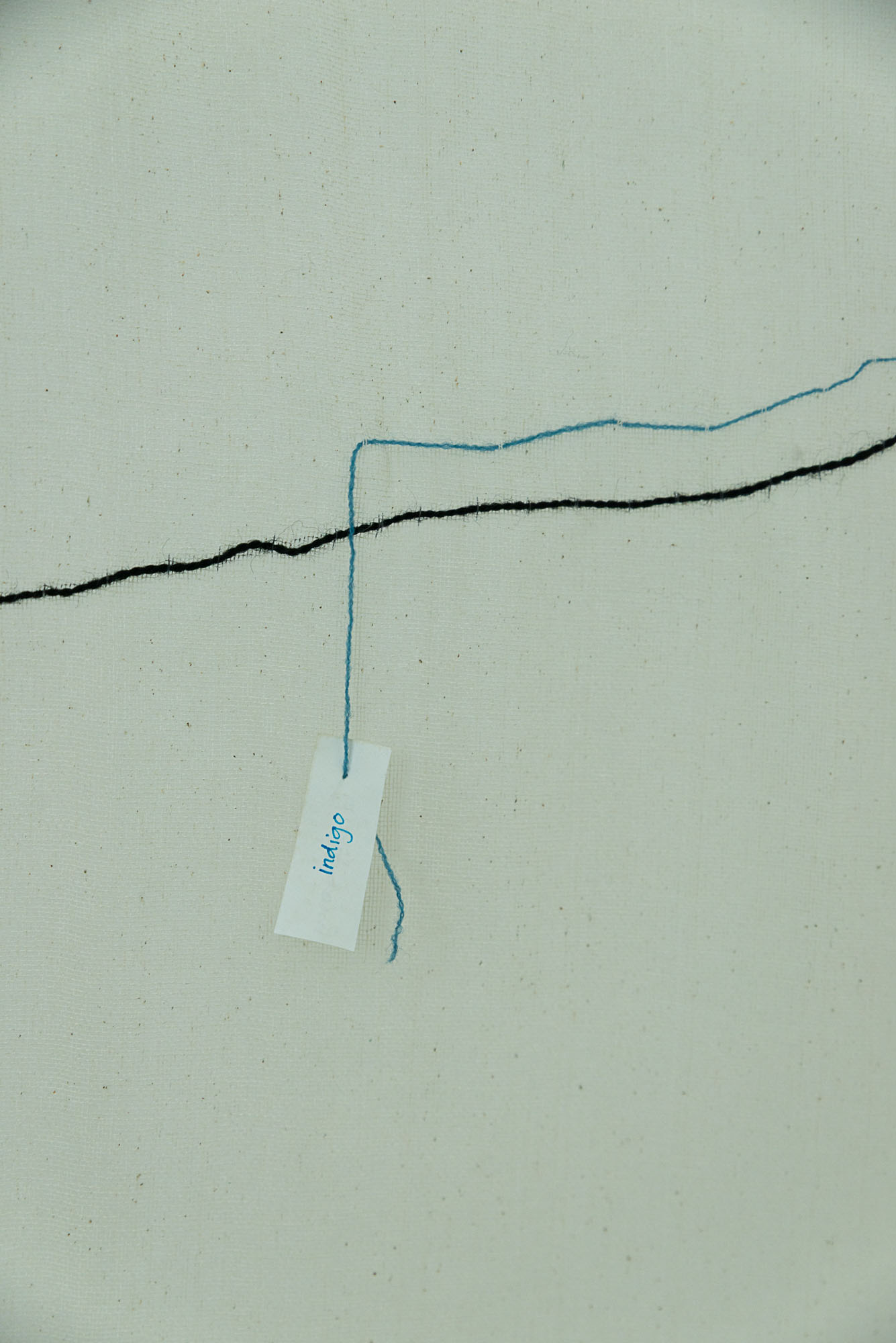
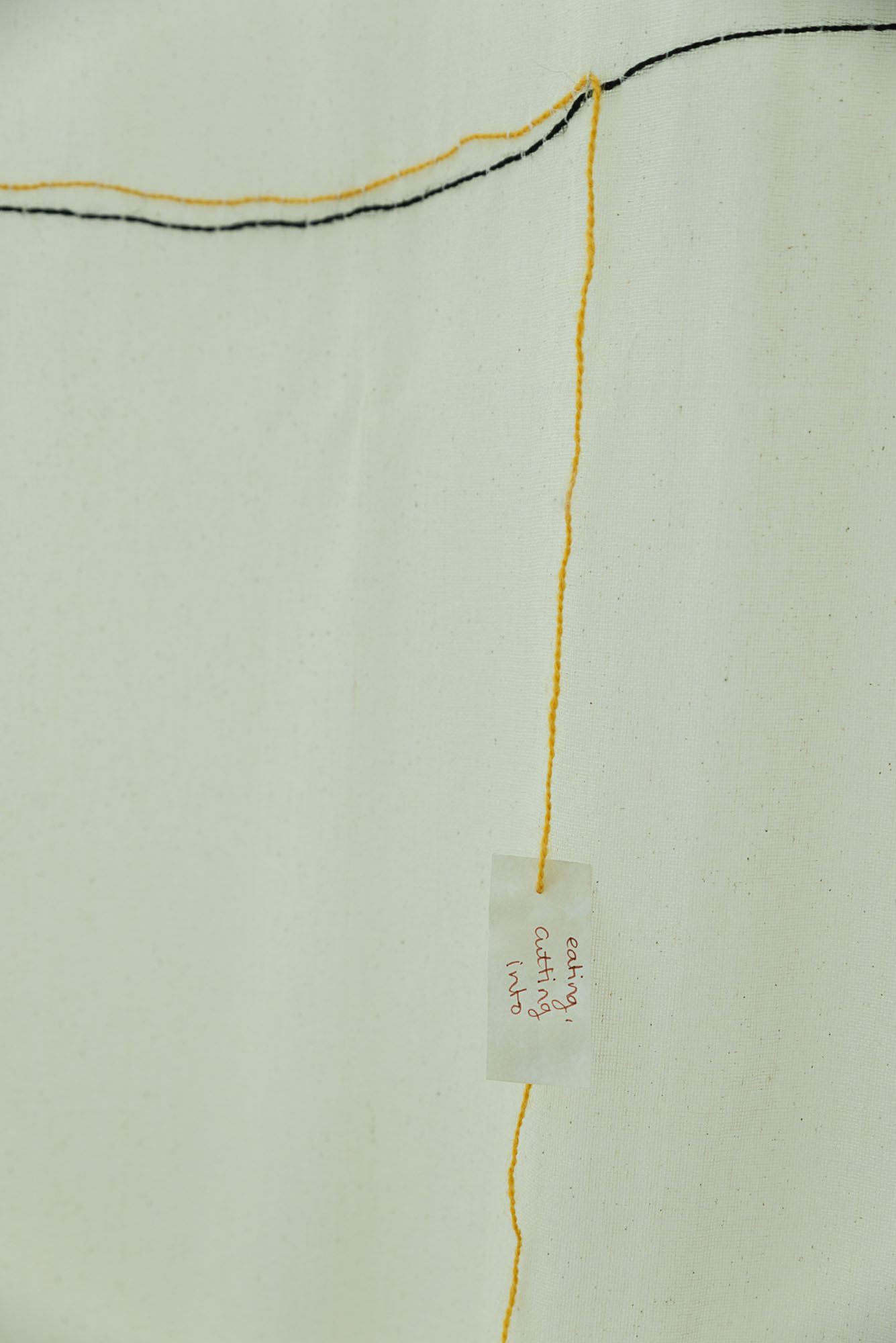
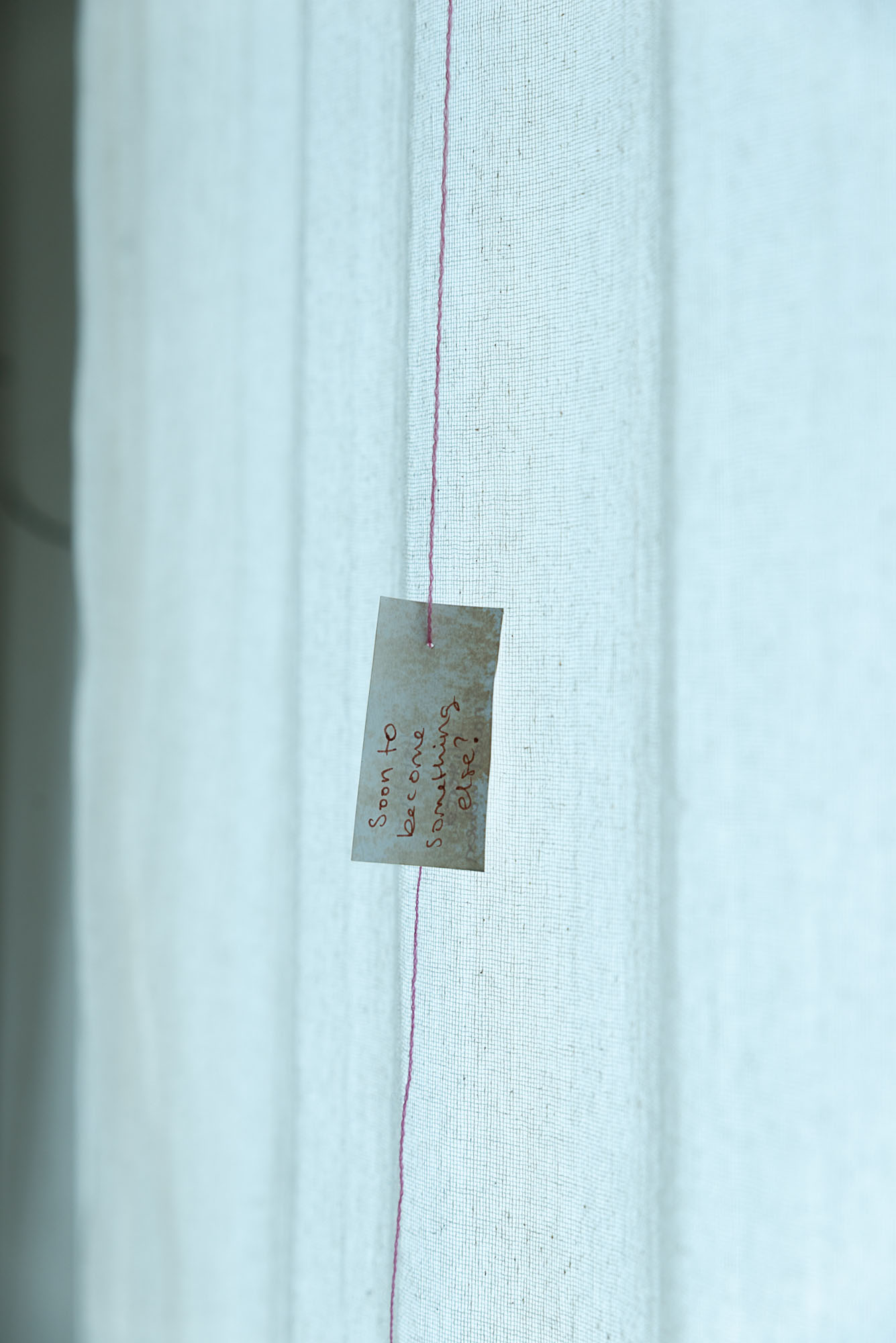
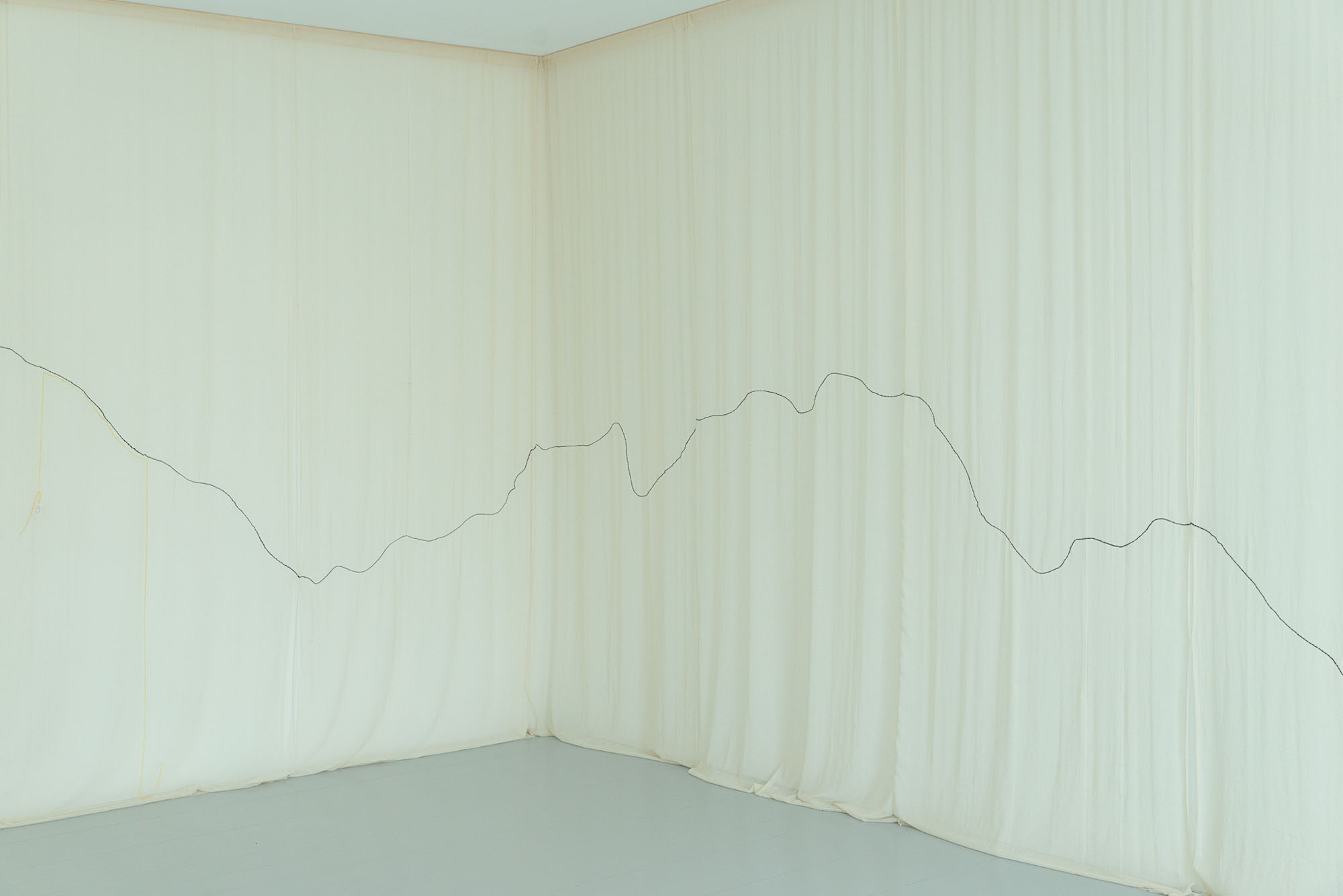
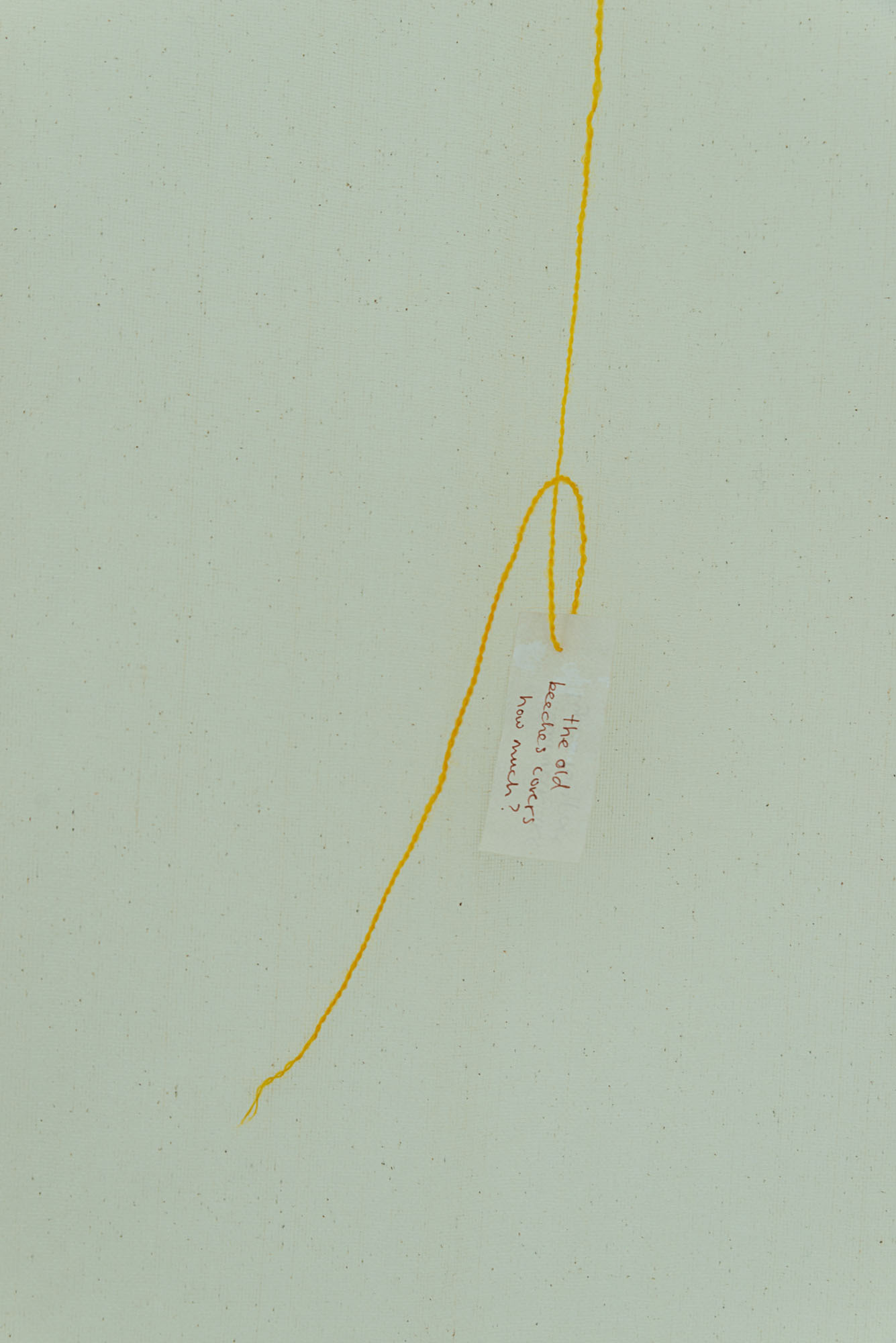
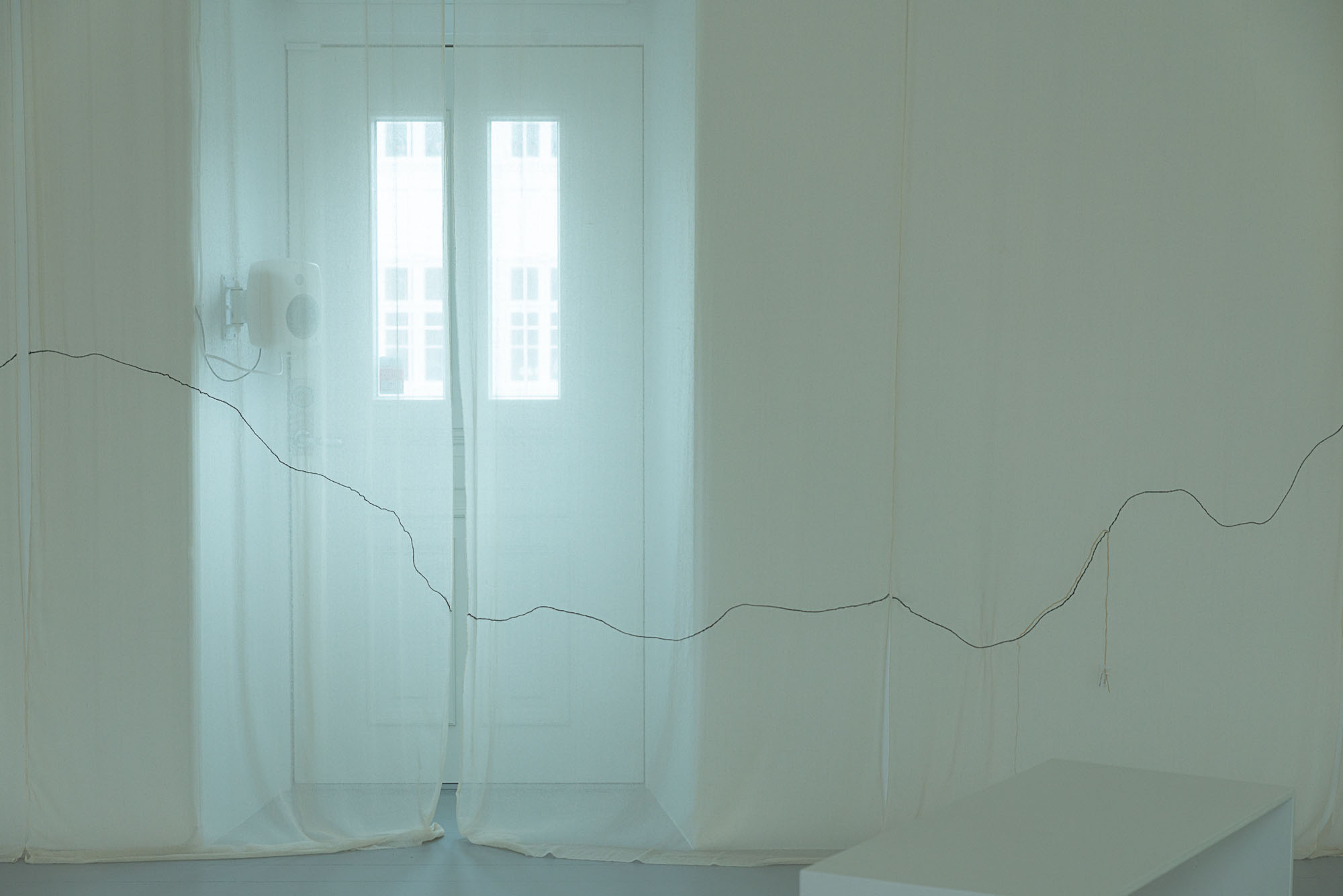
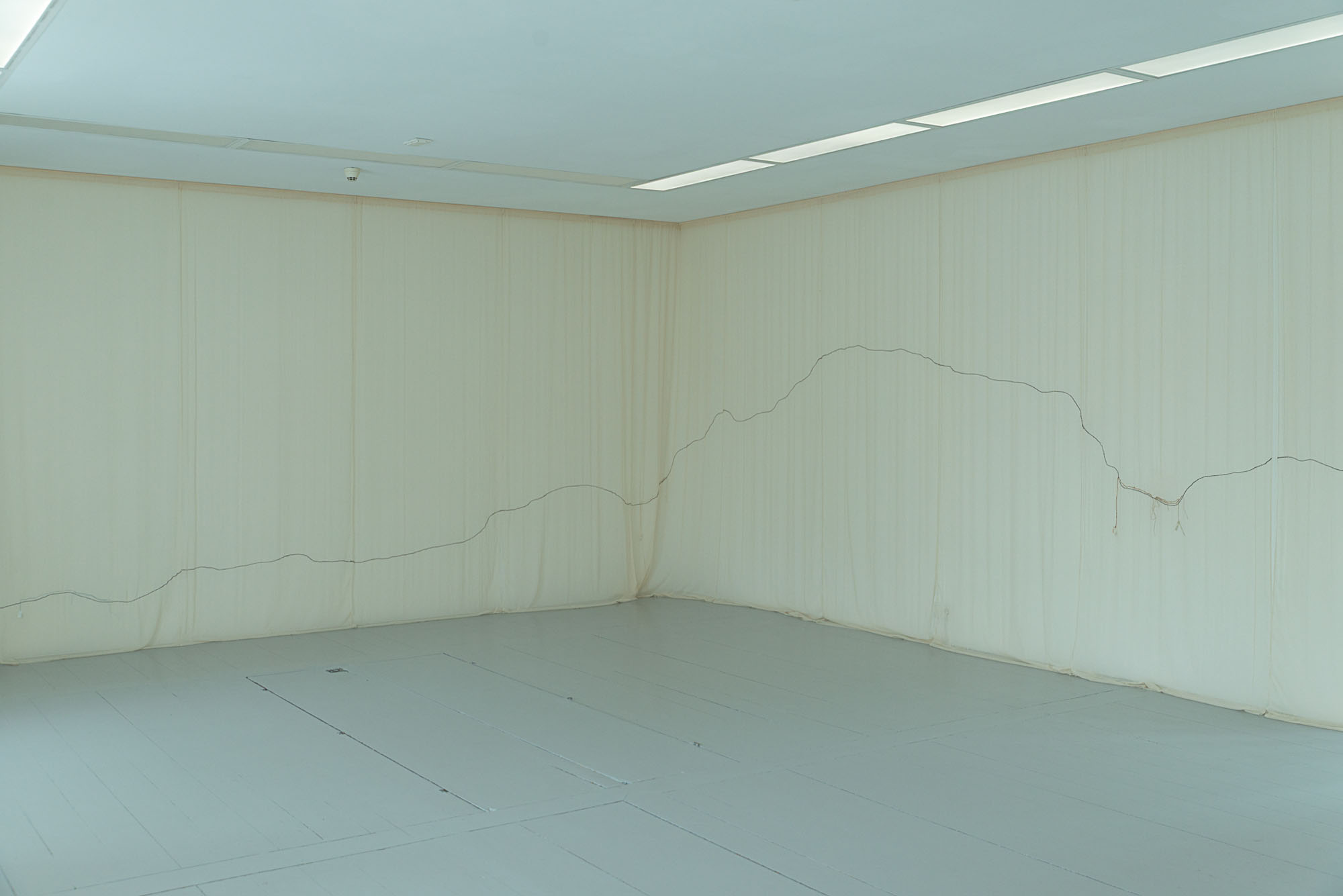
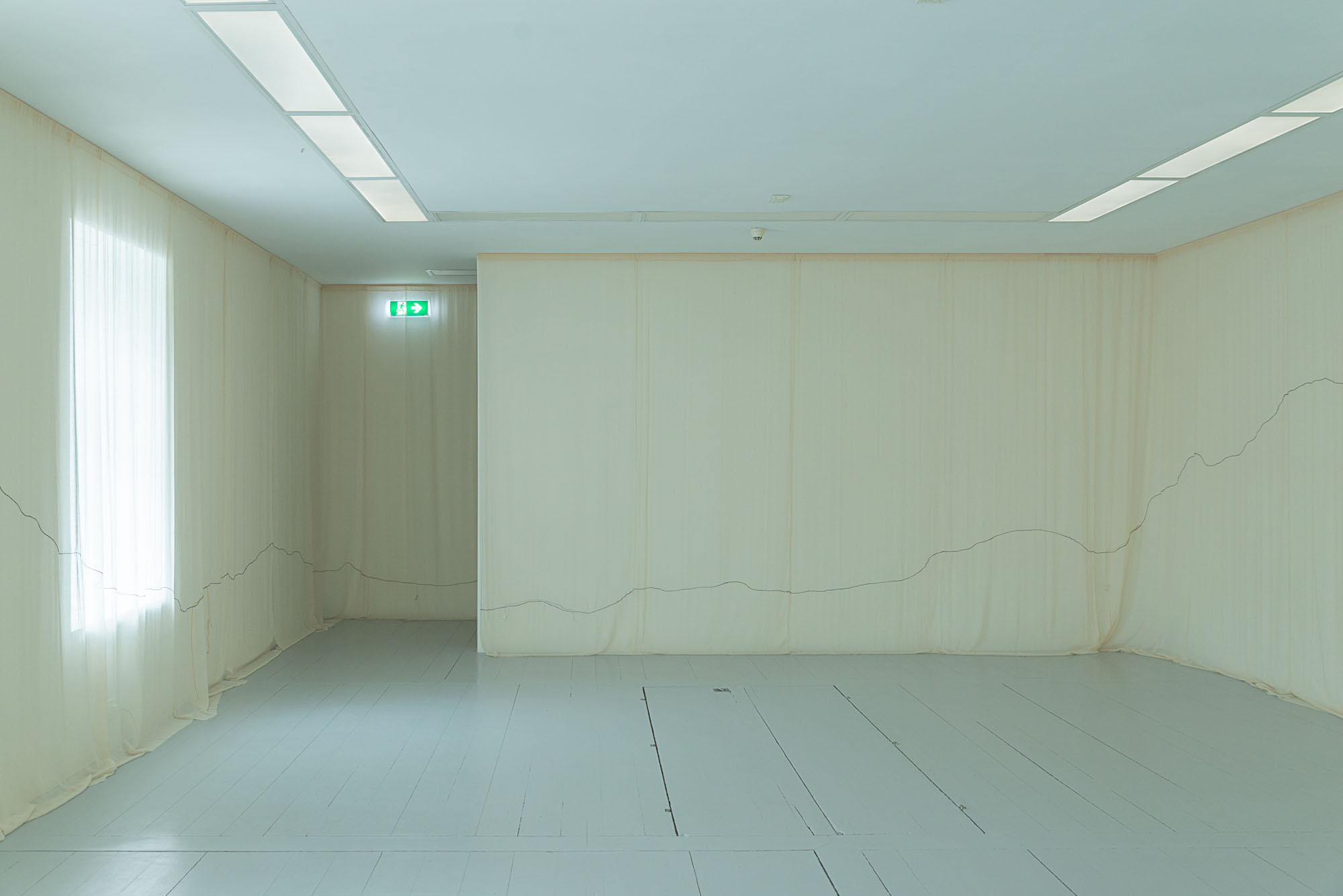
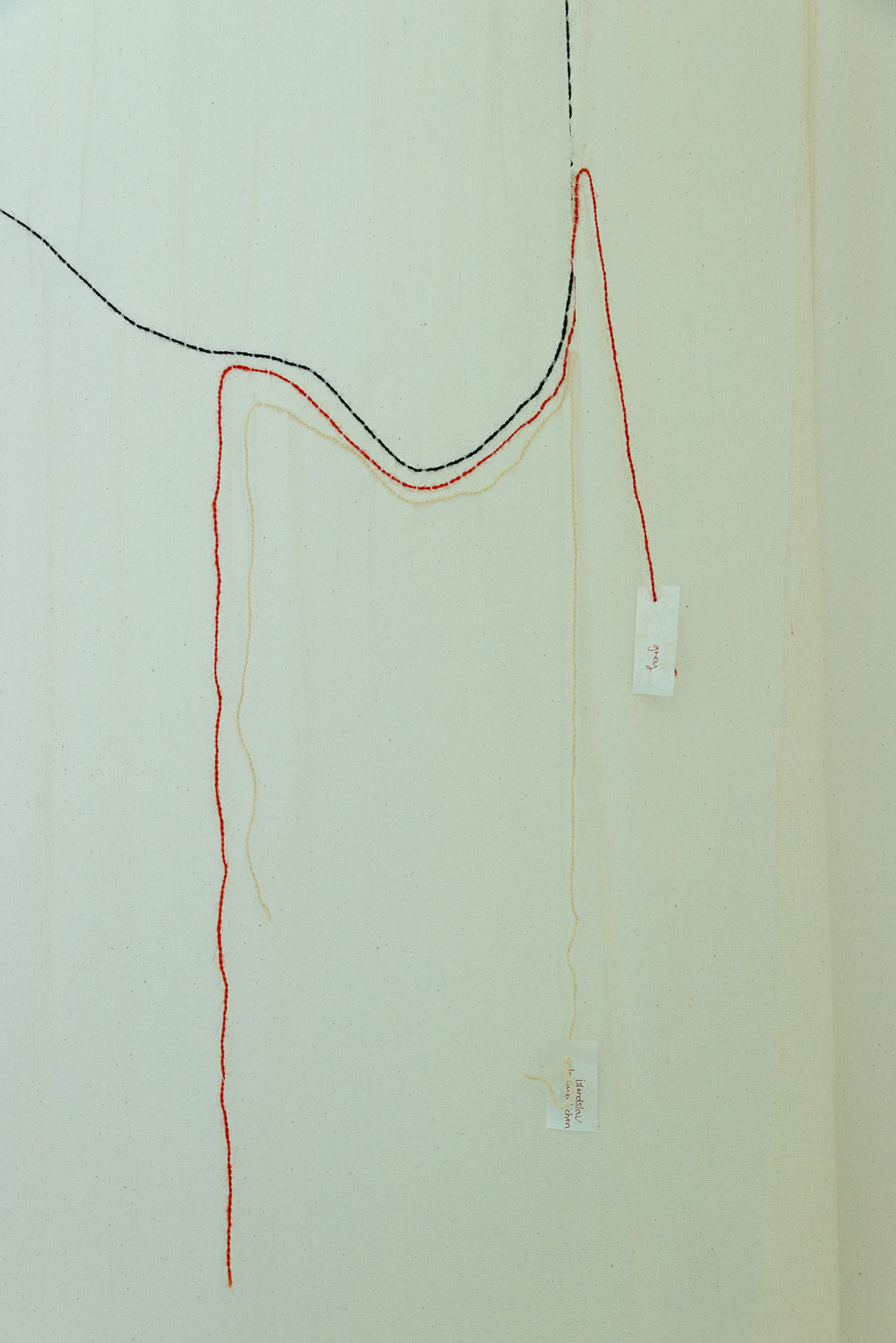
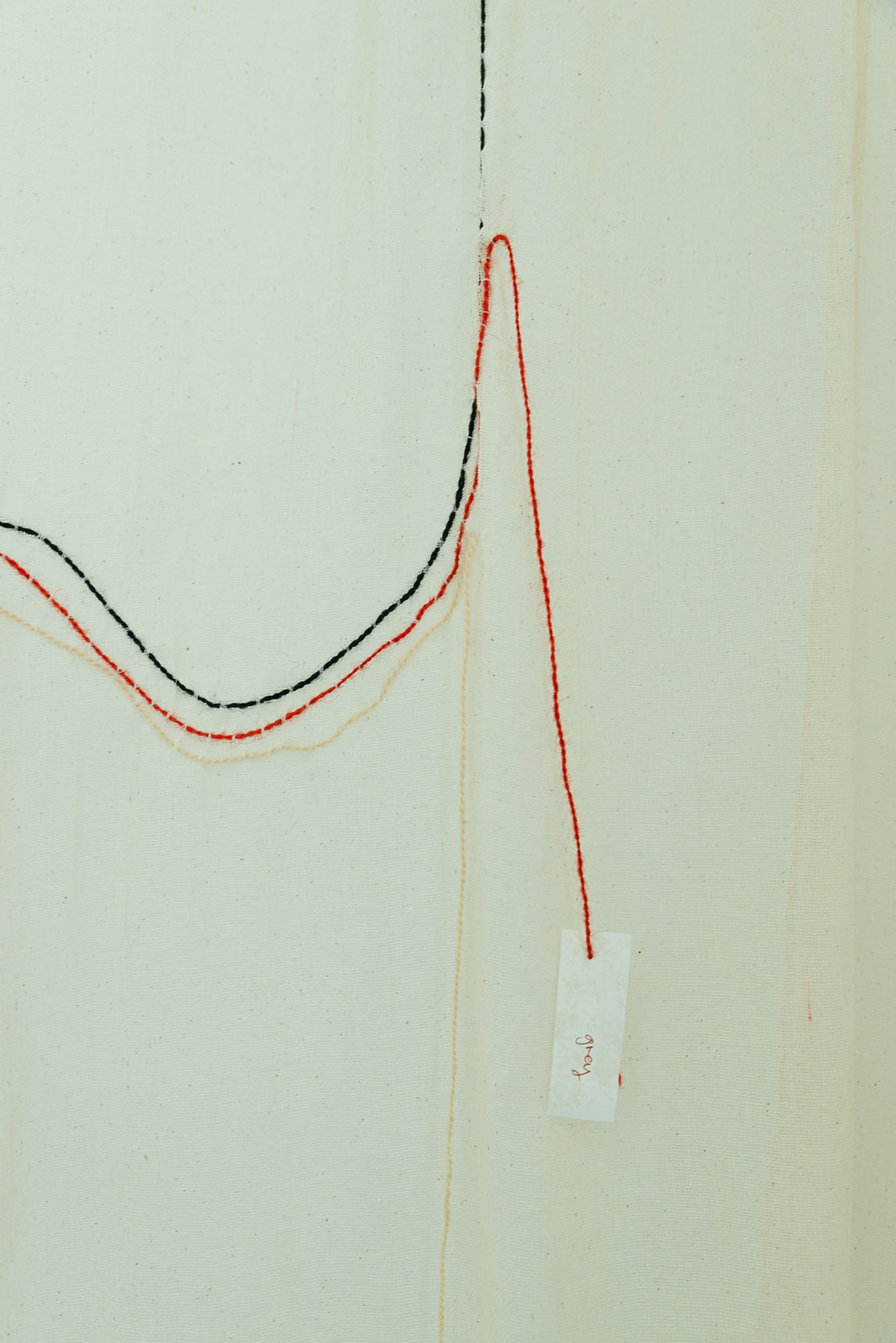
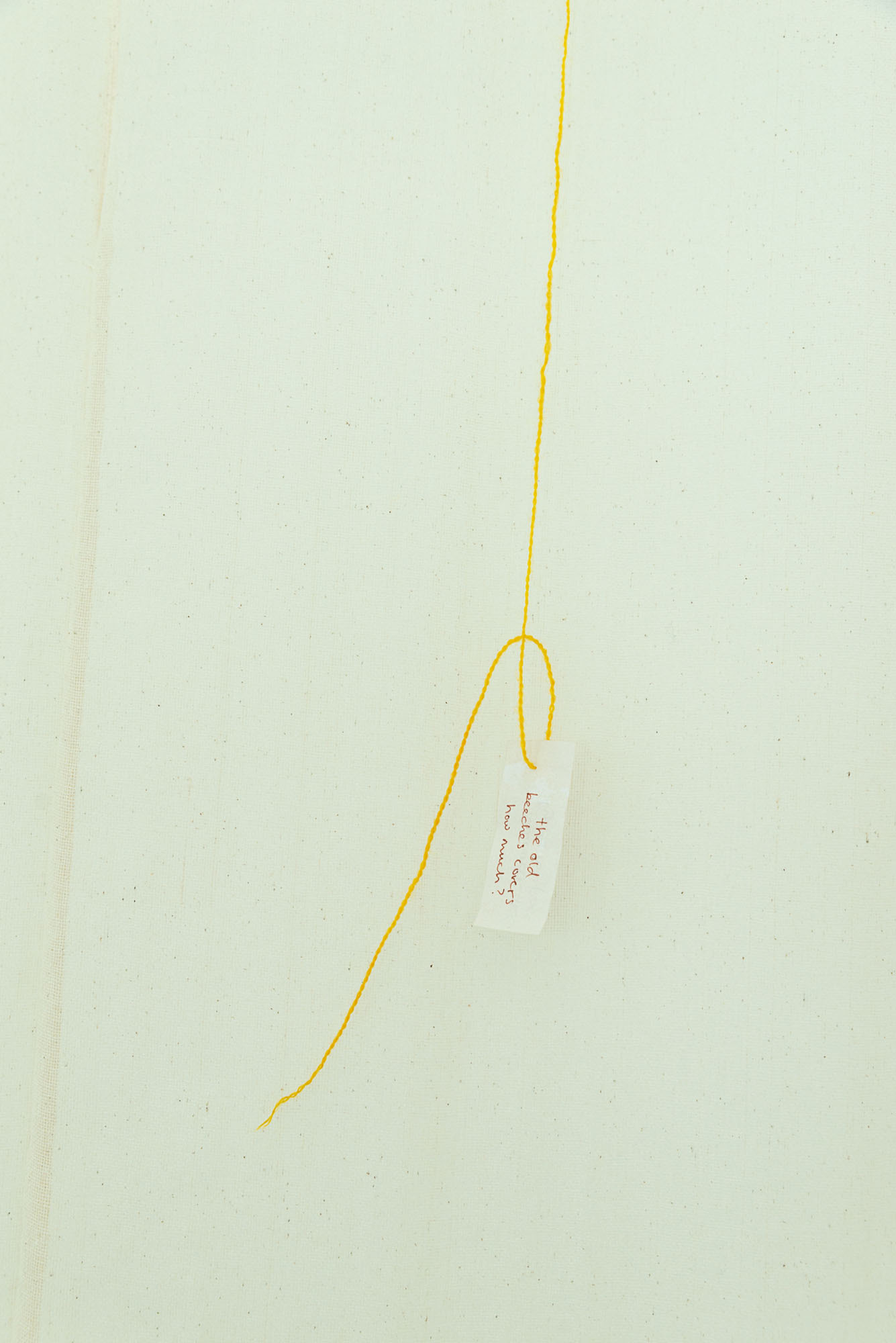
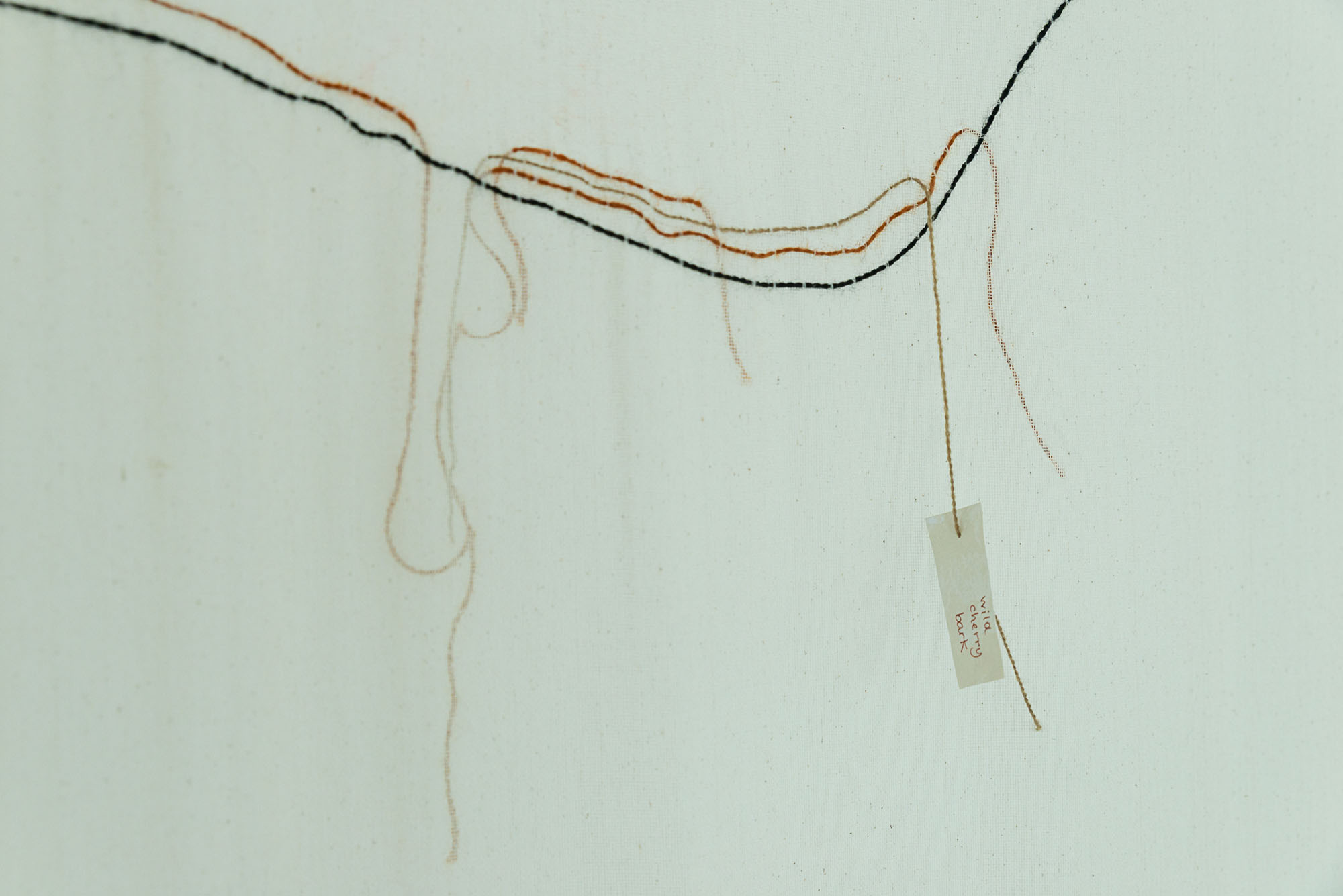
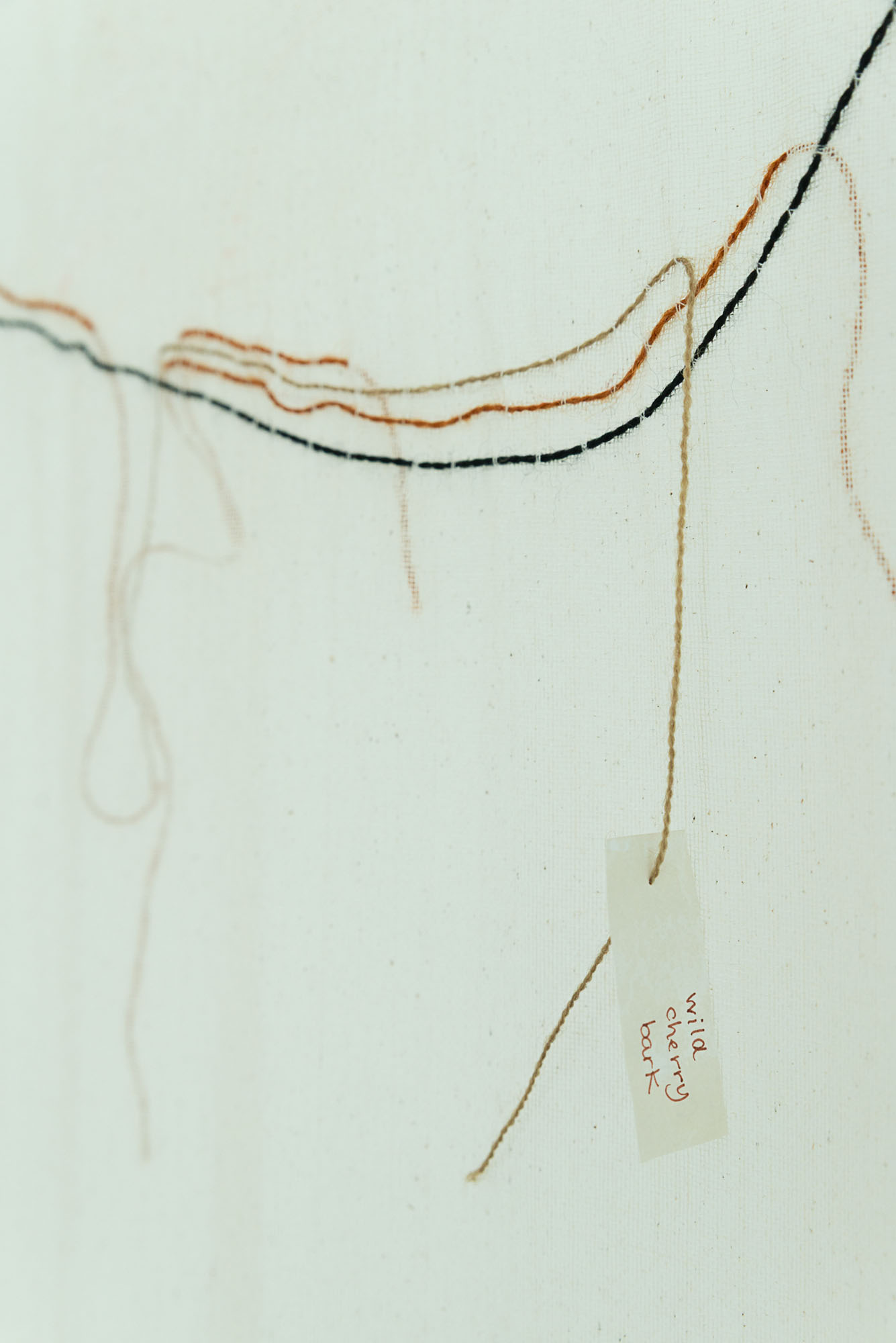
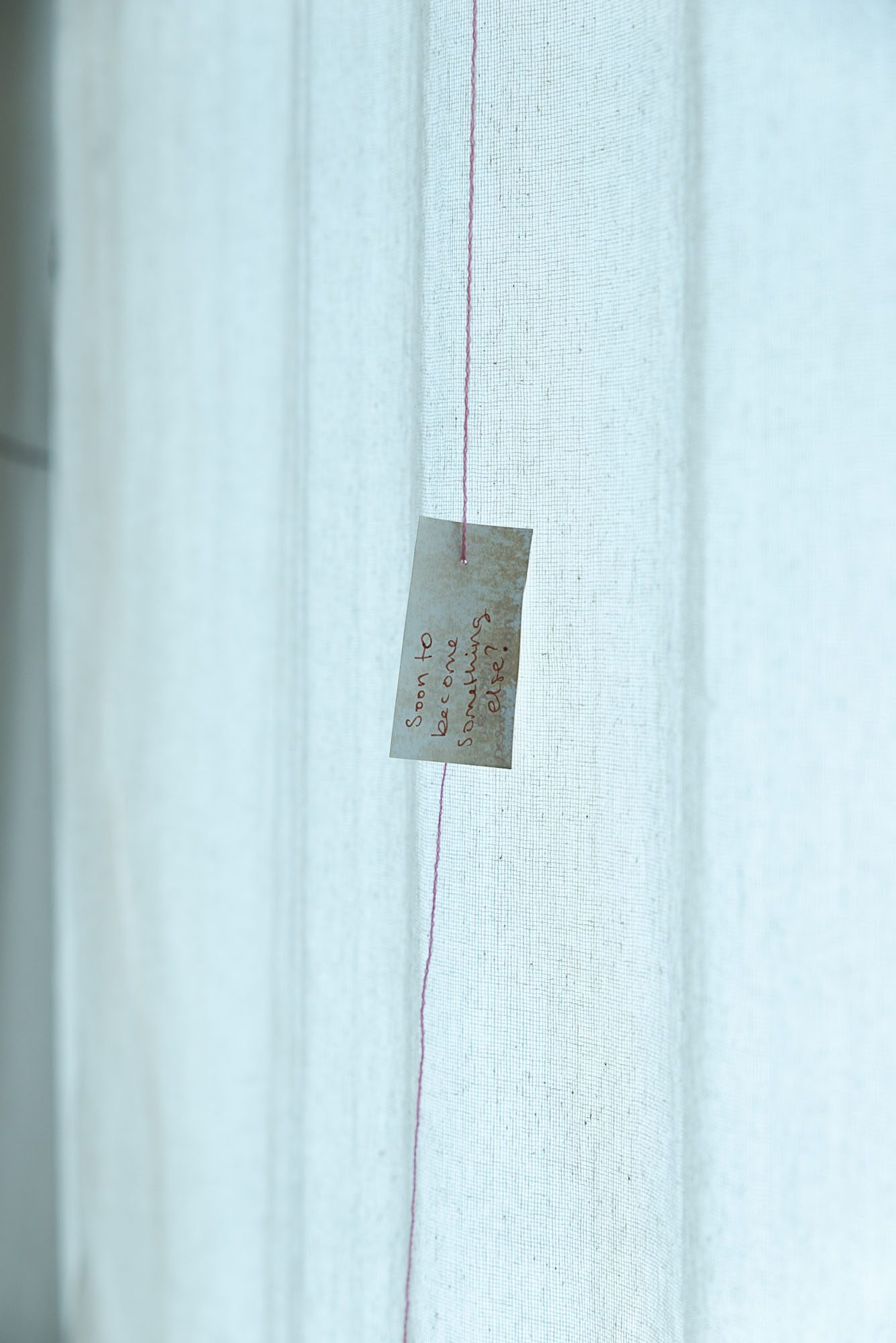
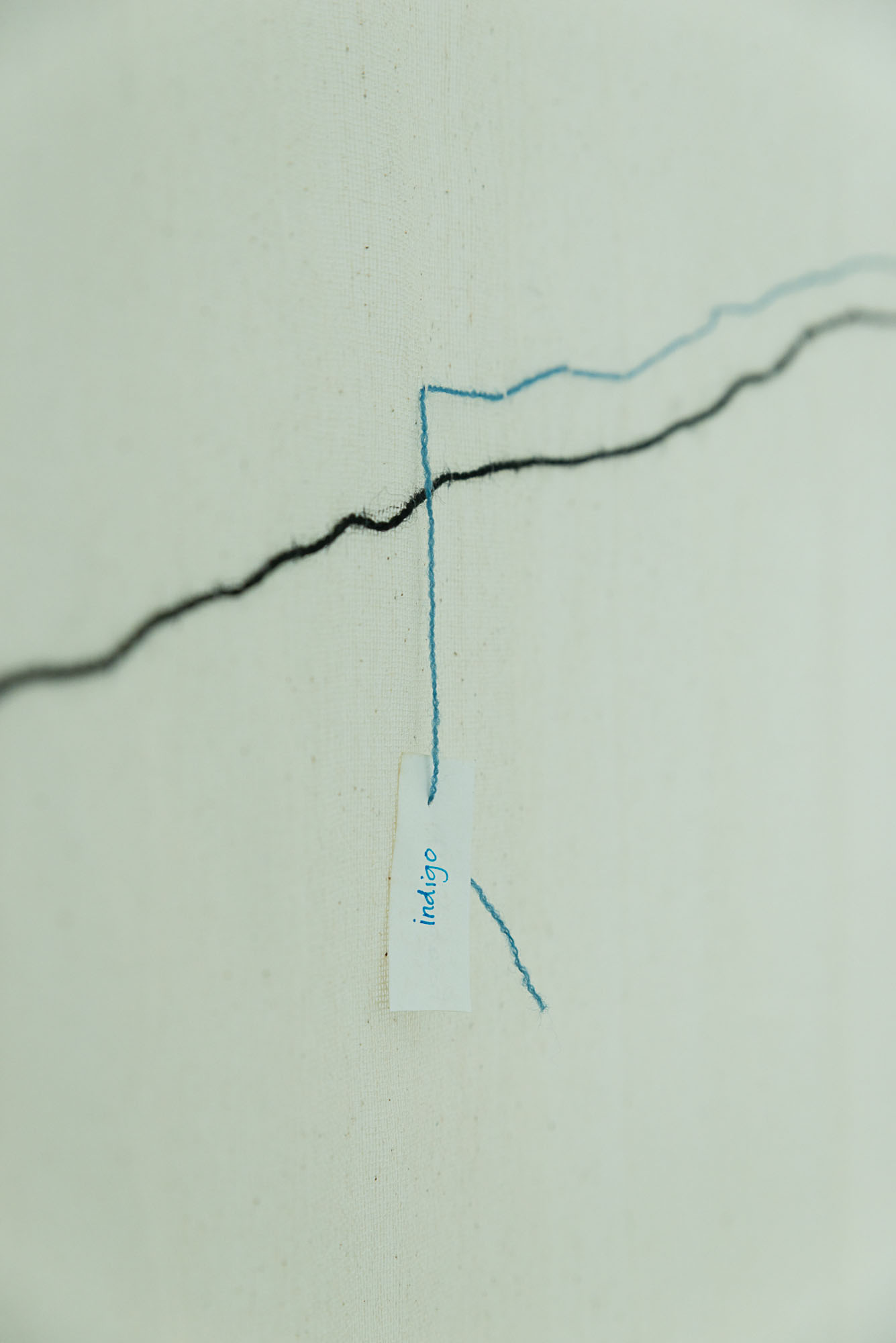
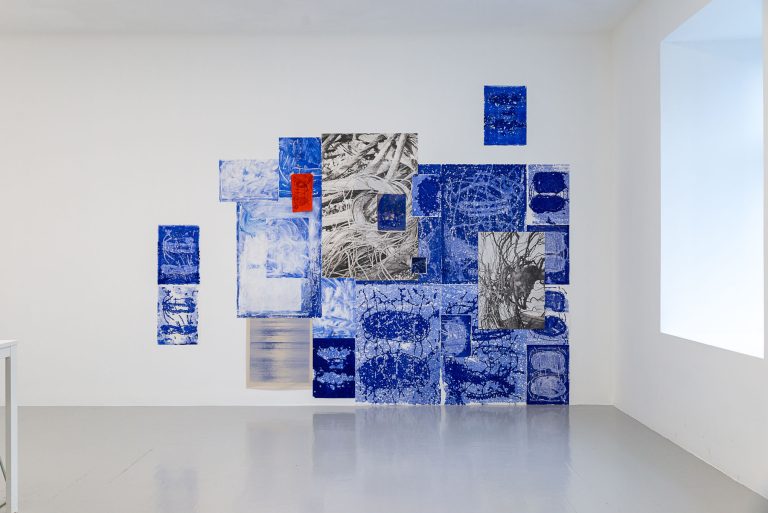
The walls of the exhibition space are covered by a 40-metre-long textile work, embroidered with local sheep’s wool dyed using plants and mushrooms gathered in the Nordhordland region, by textile artist and weaver Anne Grethe Breisnes. The embroideries may evoke landscapes or graphs, and contain within them fragments from the reflections made during the listening walks, where different colours represented different sensory experiences. Short excerpts from participants’ quotes are also integrated into the work. The textile was embroidered by Brunborg Lie and local embroiderers Anne Iren Hjelmeland and Ingrid Stokkenes.
After the exhibition period, the works will move on to Den Grøne Fabrikken and Osterøy Kunstlag. Listening walk workshops will also be held there. Osterøy is part of the Nordhordland UNESCO Biosphere Reserve.
Nimble Weavers is an interdisciplinary collaboration coordinated by Robin Everett, with artist Ase Brunborg Lie, doctoral candidate for ACTIONABLE Janne Thomsen, Nordhordland UNESCO Biosphere Reserve, the University of Bergen, and Hordaland Kunstsenter. It works with the Research Council of Norway (NFR) project ACTIONABLE to strengthen the interaction between science, art and local communities to promote socio-ecological sustainability. Through a series of events, workshops and an exhibition at HKS, it explores how cross-sectoral collaborations can drive systemic change and highlight local challenges and successes.
ABOUT ACTIONABLE
The research project ACTIONABLE explores sustainable solutions for societies with the goal of preserving nature and culture. The project is led by researcher Alicia D. Barraclough at UiB under the UNESCO Chair for Sustainable Cultural Heritage and Environmental Management. The aim is to translate the major global sustainability goals to meet local conditions and traditions. The project collaborates closely with the Nordhordland UNESCO Biosphere Reserve and local communities to learn how we can manage the landscape sustainably and address key sustainability challenges. Janne Thomsen’s doctoral project is part of ACTIONABLE.
ABOUT THE BIOSPHERE RESERVE
Nordhordland UNESCO Biosphere Reserve On June 19, 2019, Nordhordland was designated a UNESCO Biosphere Reserve, the first in Norway. The area includes the municipalities of Alver, Austrheim, Gulen, Fedje, Masfjorden, Modalen, Osterøy, and Vaksdal. In addition, parts of the municipalities of Høyanger, Vik, Voss, and Øygarden are included. Just under 55,000 people live in the biosphere reserve.
Nordhordland has been selected as a UNESCO biosphere reserve as it serves as a model area for Norway’s outstanding historical and modern coastal landscape. Developments in society and technology have enabled the region to develop significant resources, including hydropower, petroleum, and fish. The UN’s sustainability goals serve as the basis for work in the biosphere reserve.
ABOUT THE ARTIST AND COLLABORATORS
Ase Brunborg Lie is an artist who explores how one can create during our ongoing ecological crisis, and work for more just futures. They point out blind spots in constructed and built structures, and suggest alternatives to human exceptionalism. Central to their practice is site-specificity and cross-pollination, inspired by queer-feminist, postcolonial, scientific and fabulating thinking. Brunborg Lie often involves other actors in their work, from creative and scientific
fields to local communities. They work across a variety of media, including audience-participatory works, performance, sound, installation, bioart, sculpture, film, and more. They have completed the post-master’s program at the Public Interest Lab at the Royal Academy of Fine Arts in Stockholm, hold a master’s degree in Scenography from the Norwegian Theatre Academy, HIOF, and a bachelor’s degree from the Trondheim Academy of Fine Arts, NTNU. Ase Brunborg Lie lives and works in Oslo.
Robin Everett (1989, UK) is an artist and cultural worker, living and working in Bergen, Norway. His practice focuses on socio- and techno-ecological concerns, questioning how our understandings of human and more-than-human environments and ecologies are impacted through systems, both organic and technological. He works through a transdisciplinary approach often involving video, text, sculpture, and socially-engaged practices such as workshops, educational events, and publications. Together they act as a means to examine the multidimensional entangling of various infrastructures: climate, industry, technology, culture, and more.
Janne Katharina Thomsen is a PhD research fellow in the ACTIONABLE project at the University of Bergen. With an interdisciplinary background in geography and urban and regional planning, her doctoral research investigates the role of diverse values of nature in proposed large-scale infrastructure projects in Nordhordland. Using a mixed-methods approach, her work examines how diverse values of nature are affected by the proposed land-use changes, and how procedural conditions shape both the expression and influence of nature’s values in spatial decision-making.