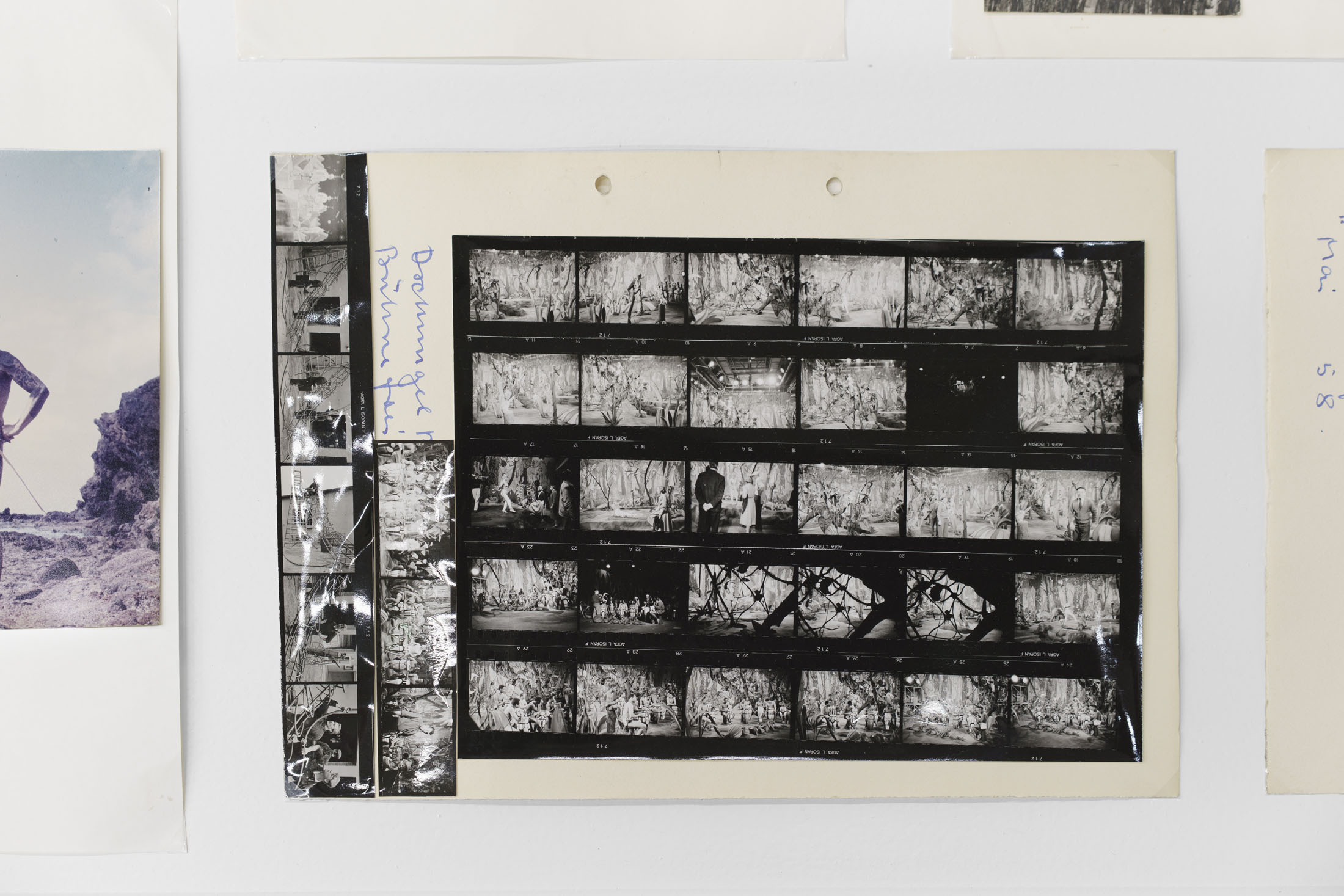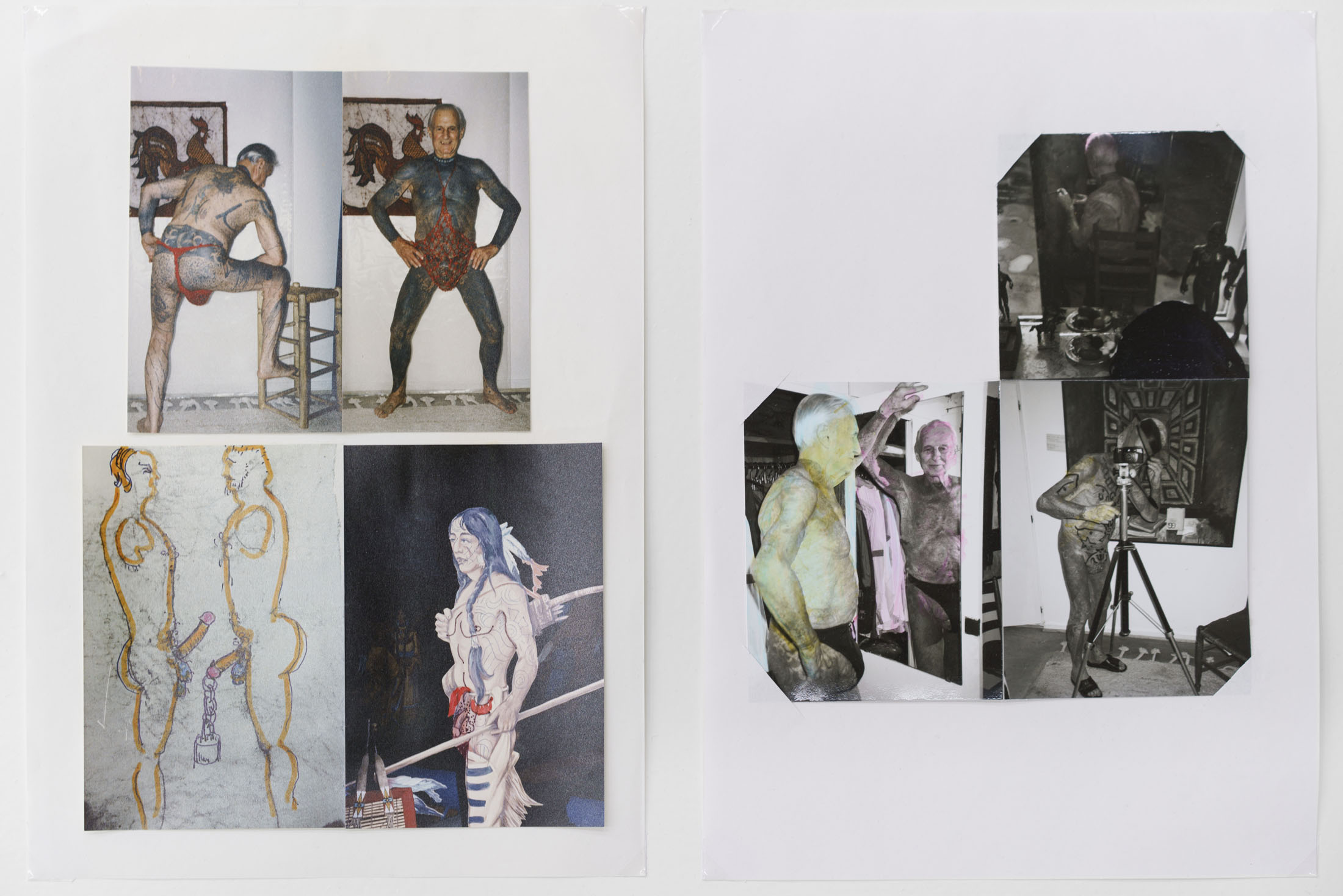
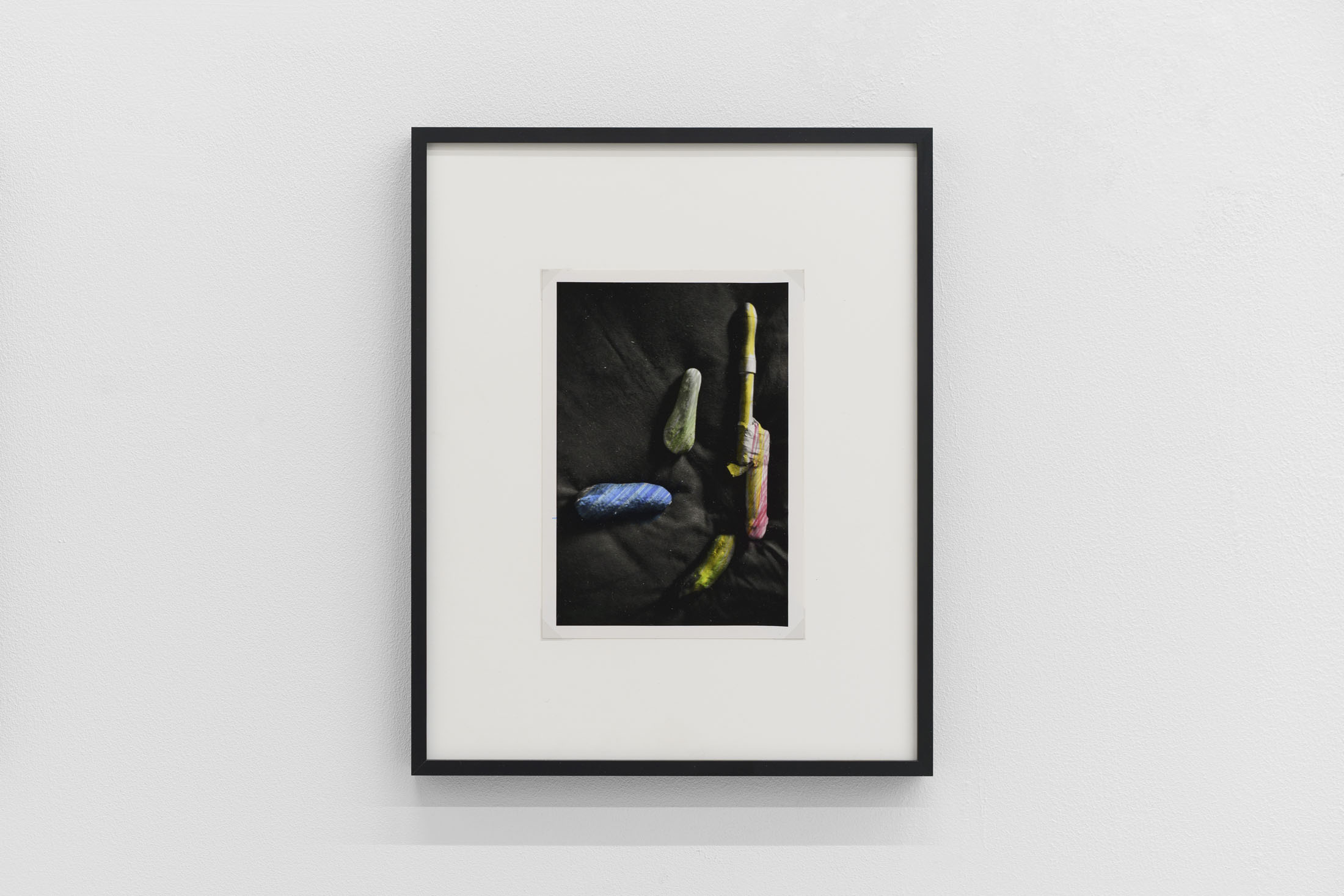
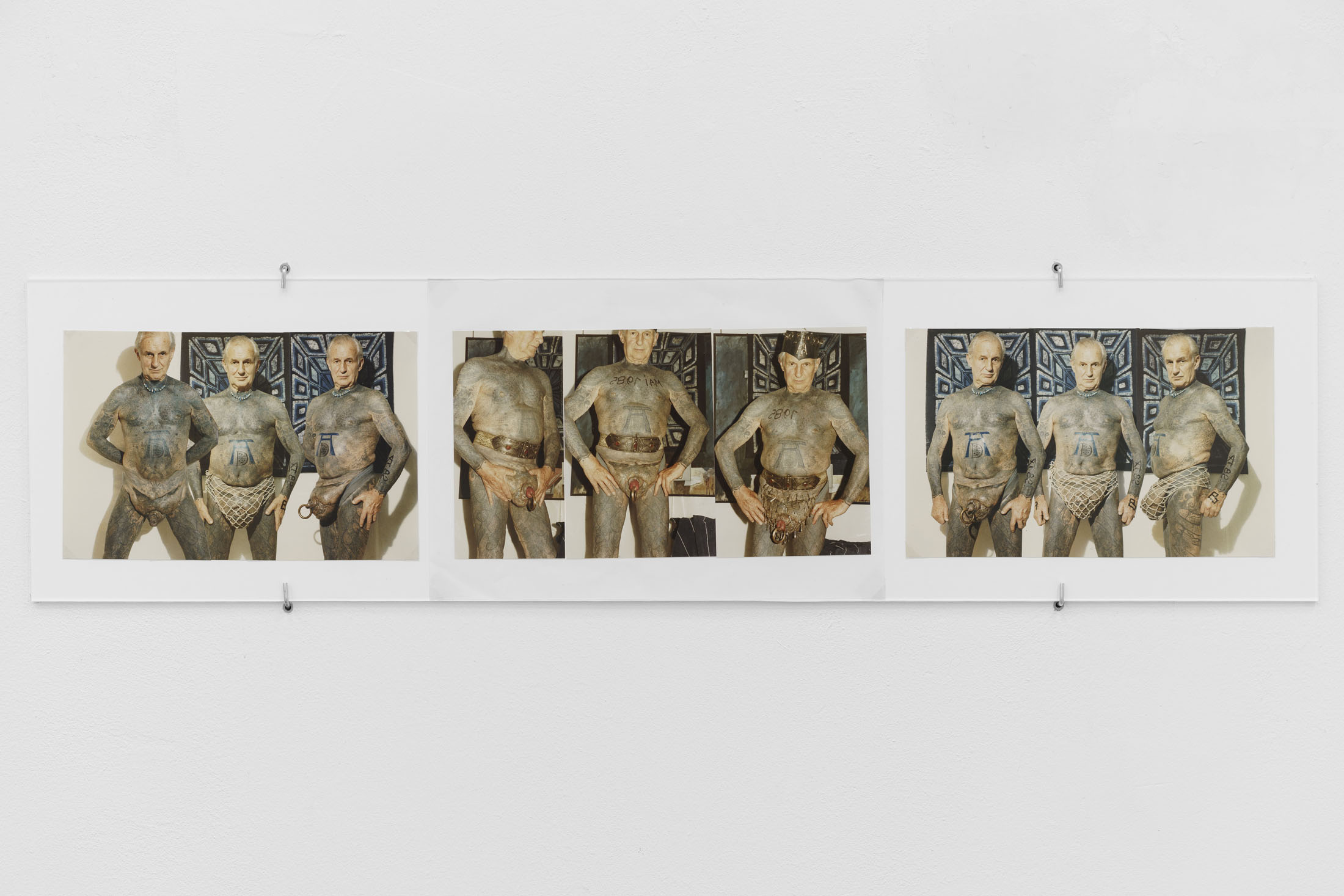
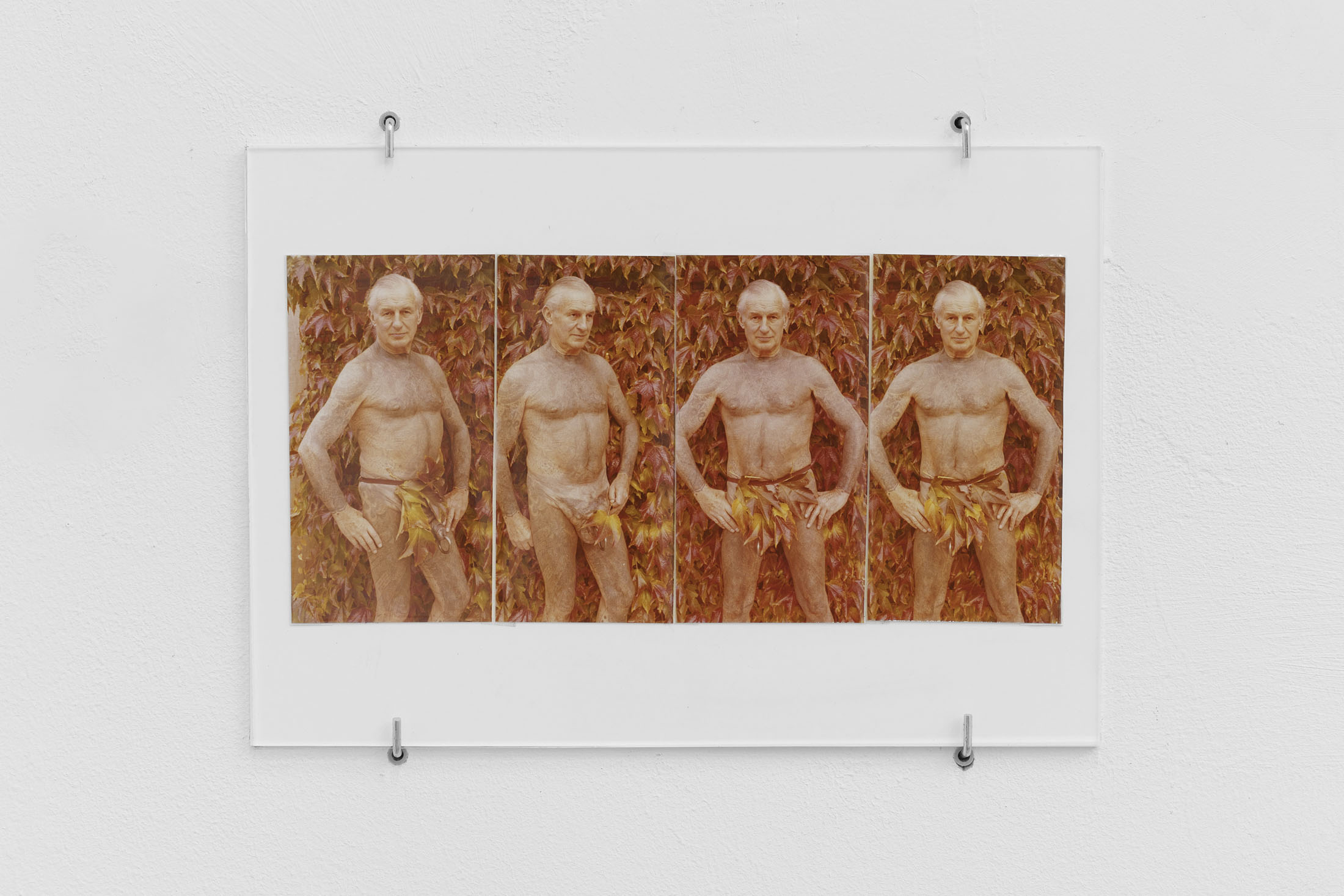
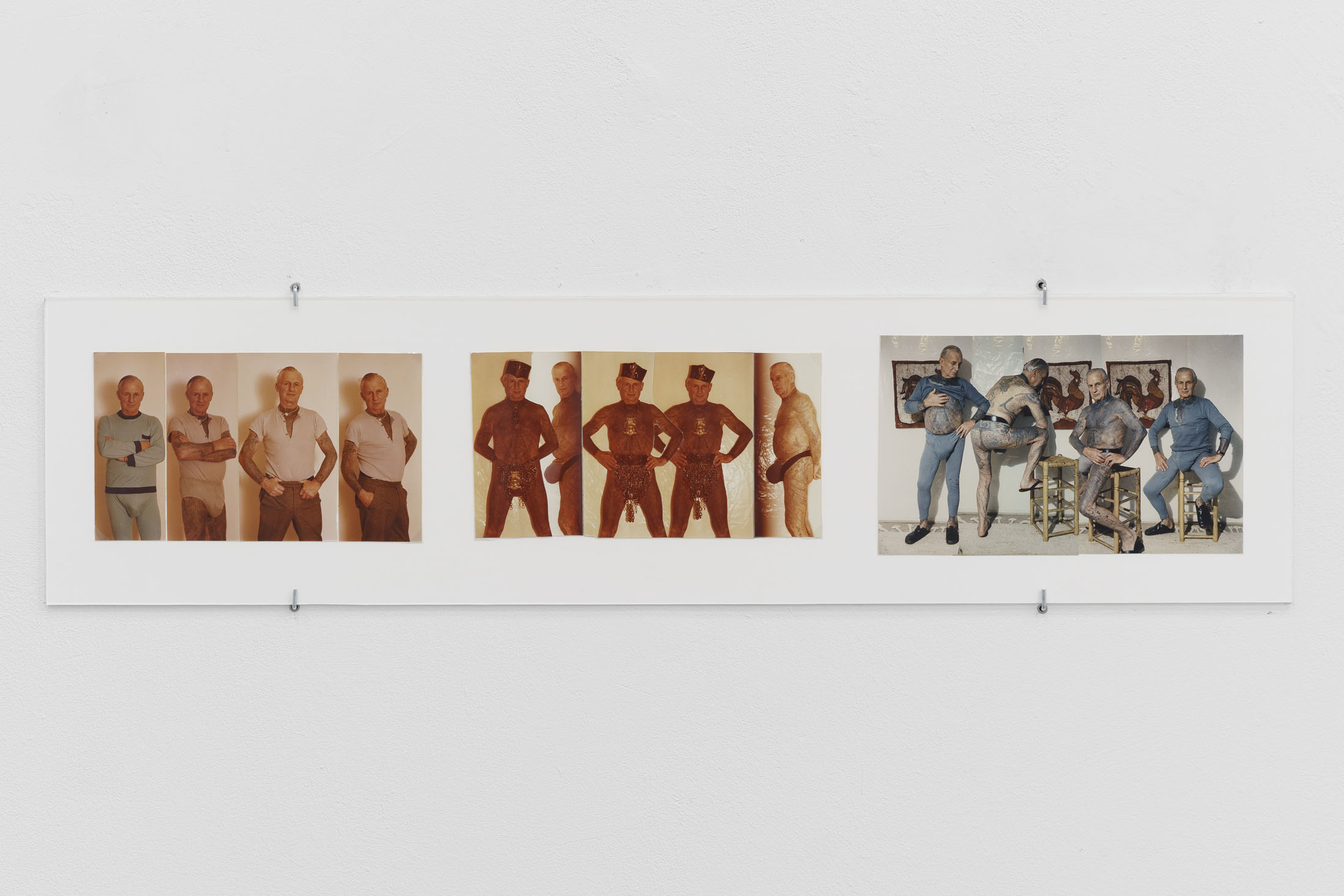
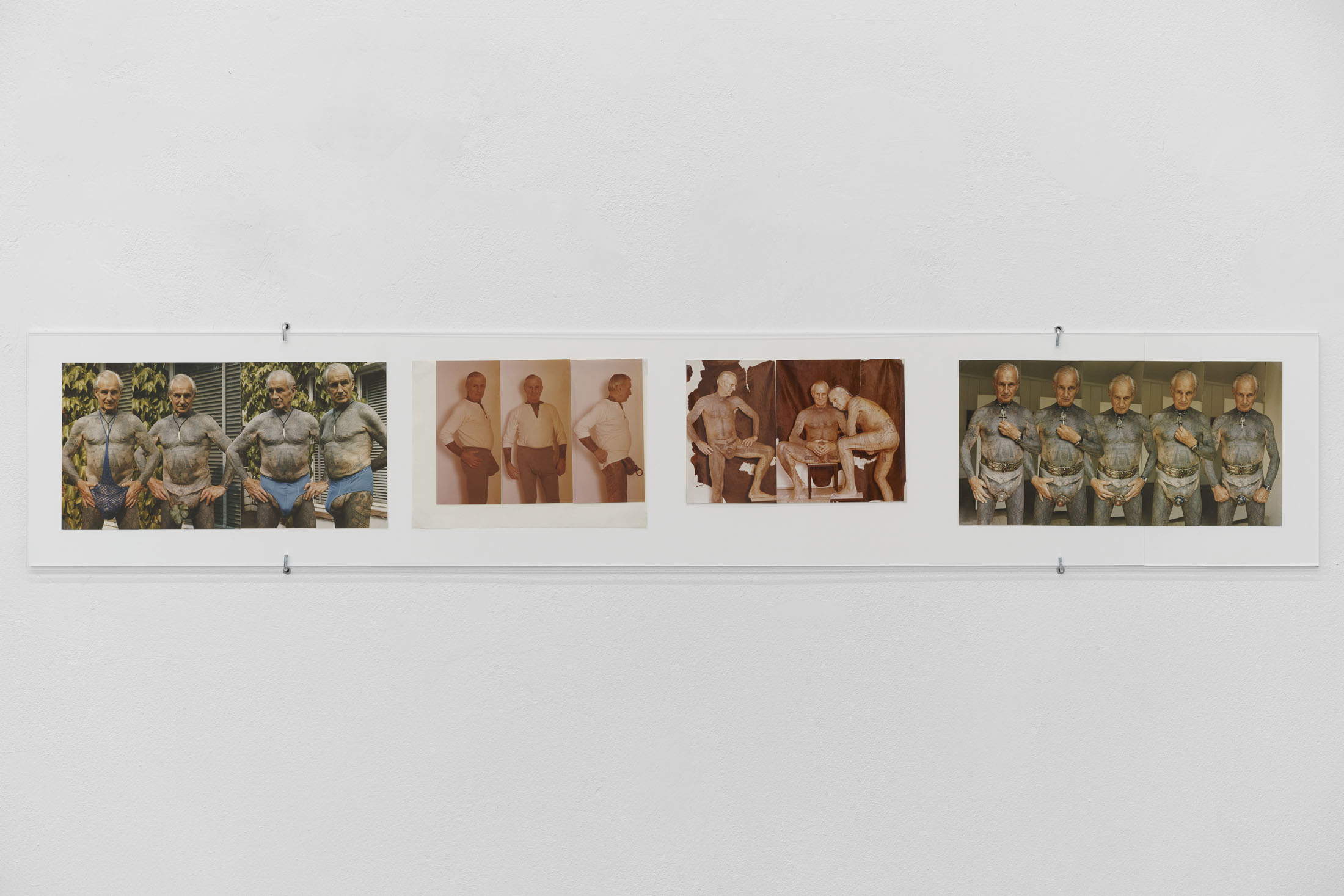
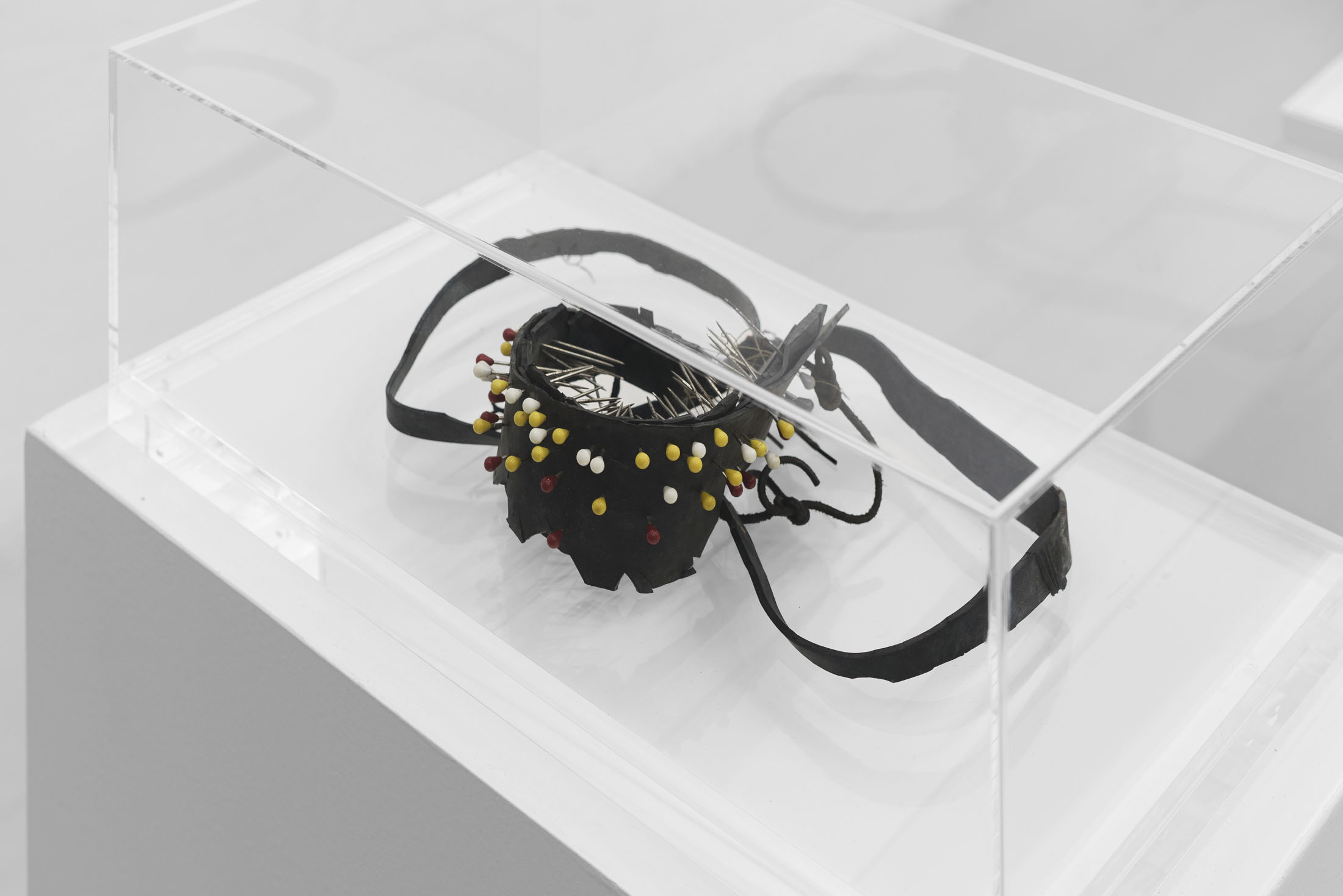
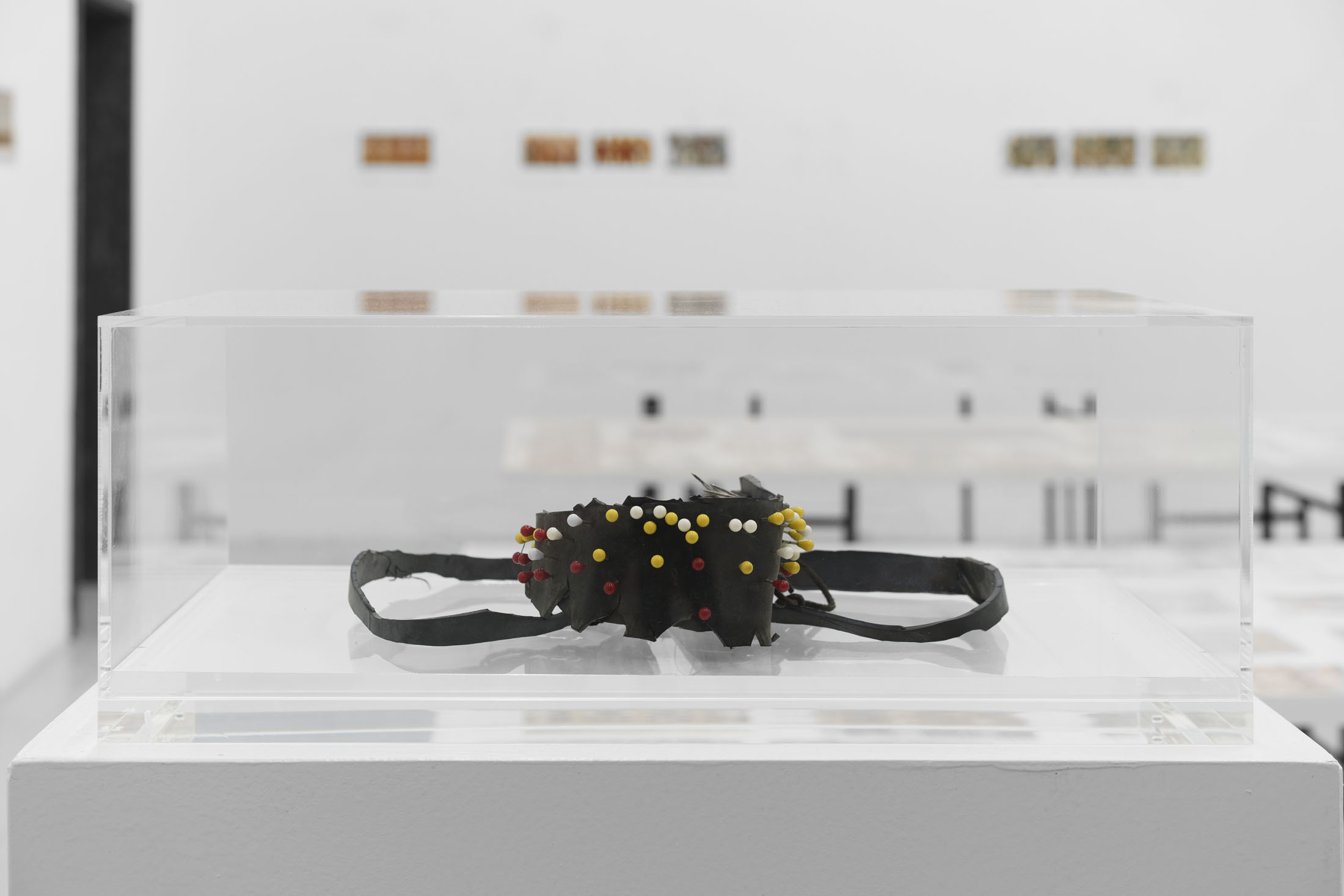
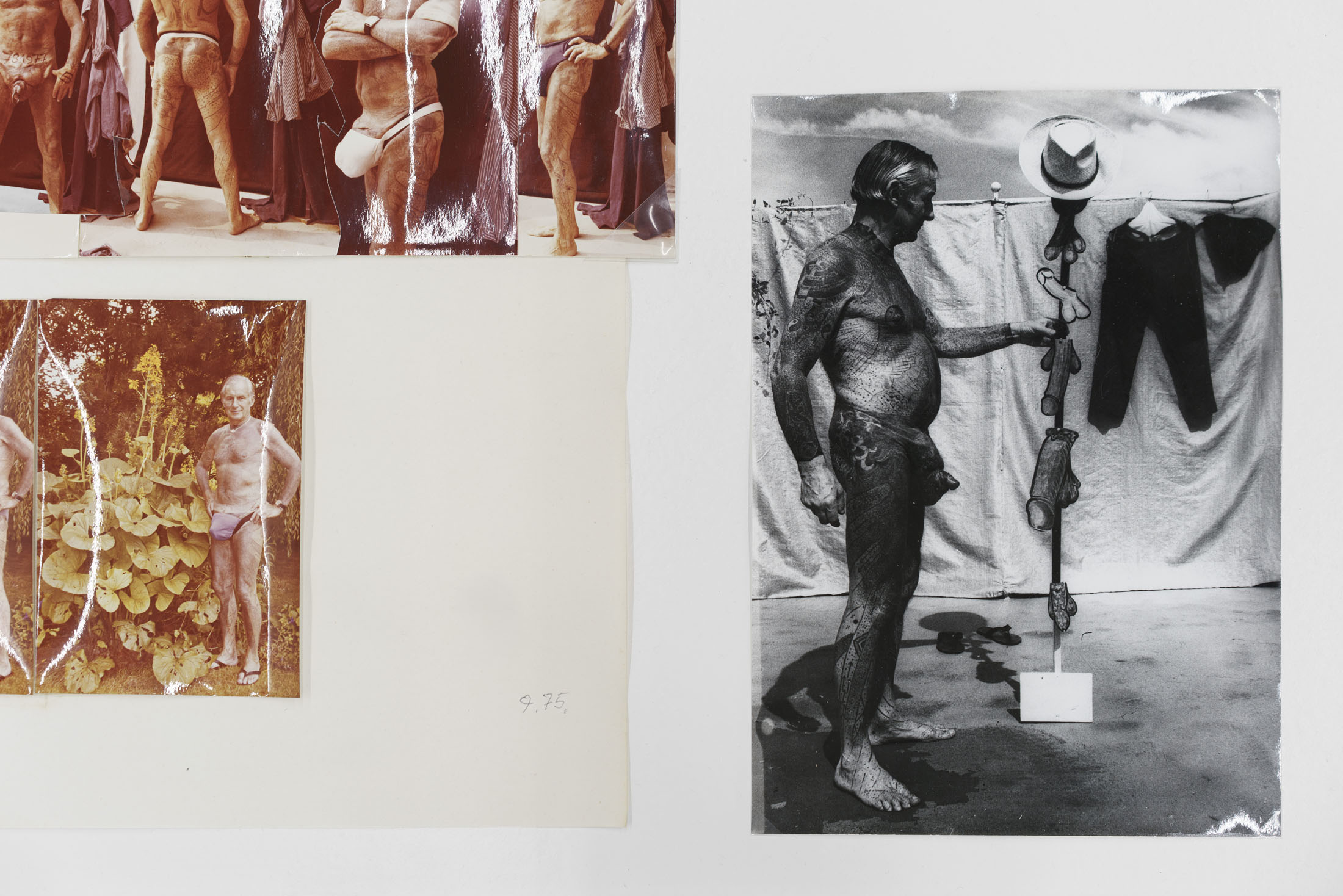
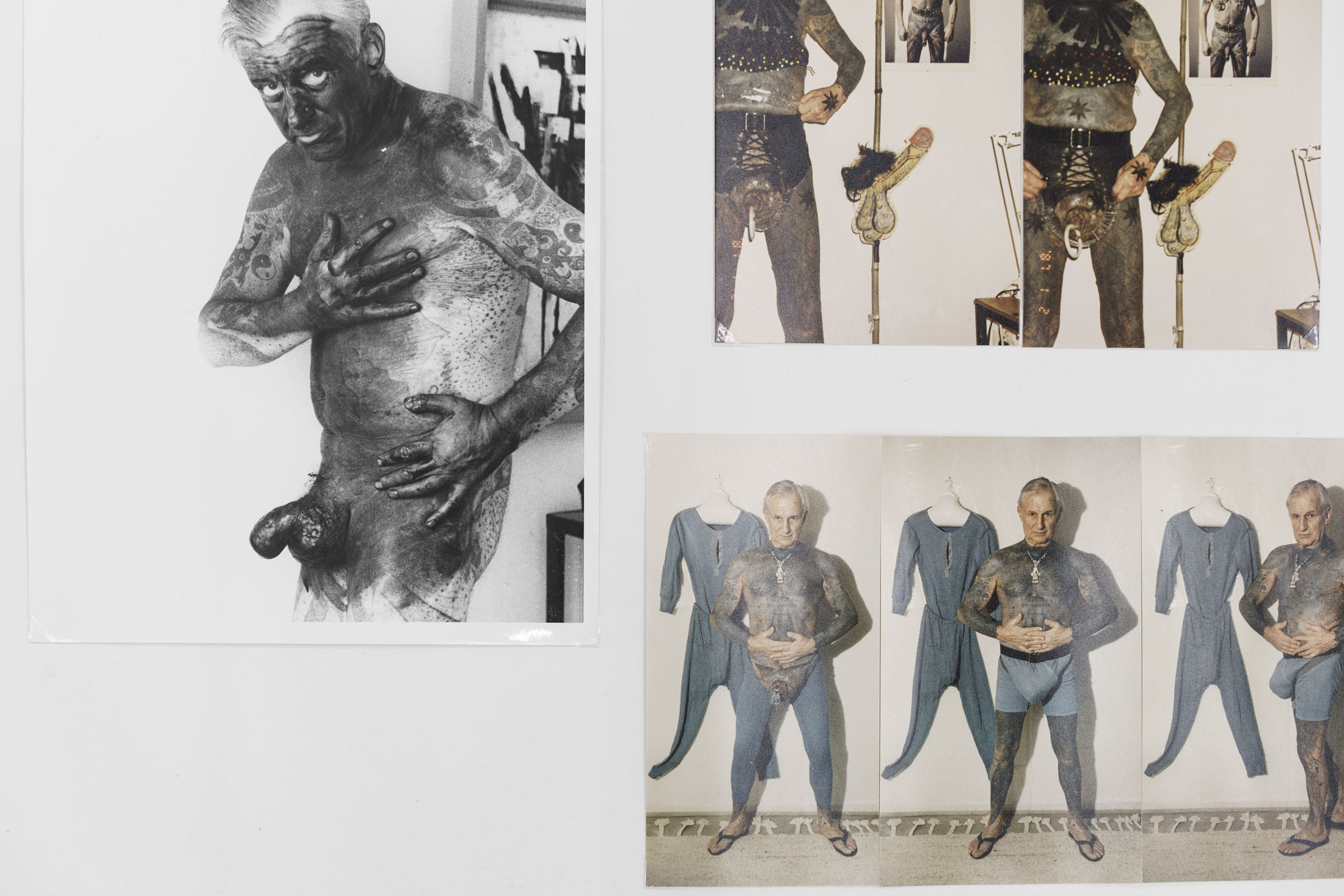
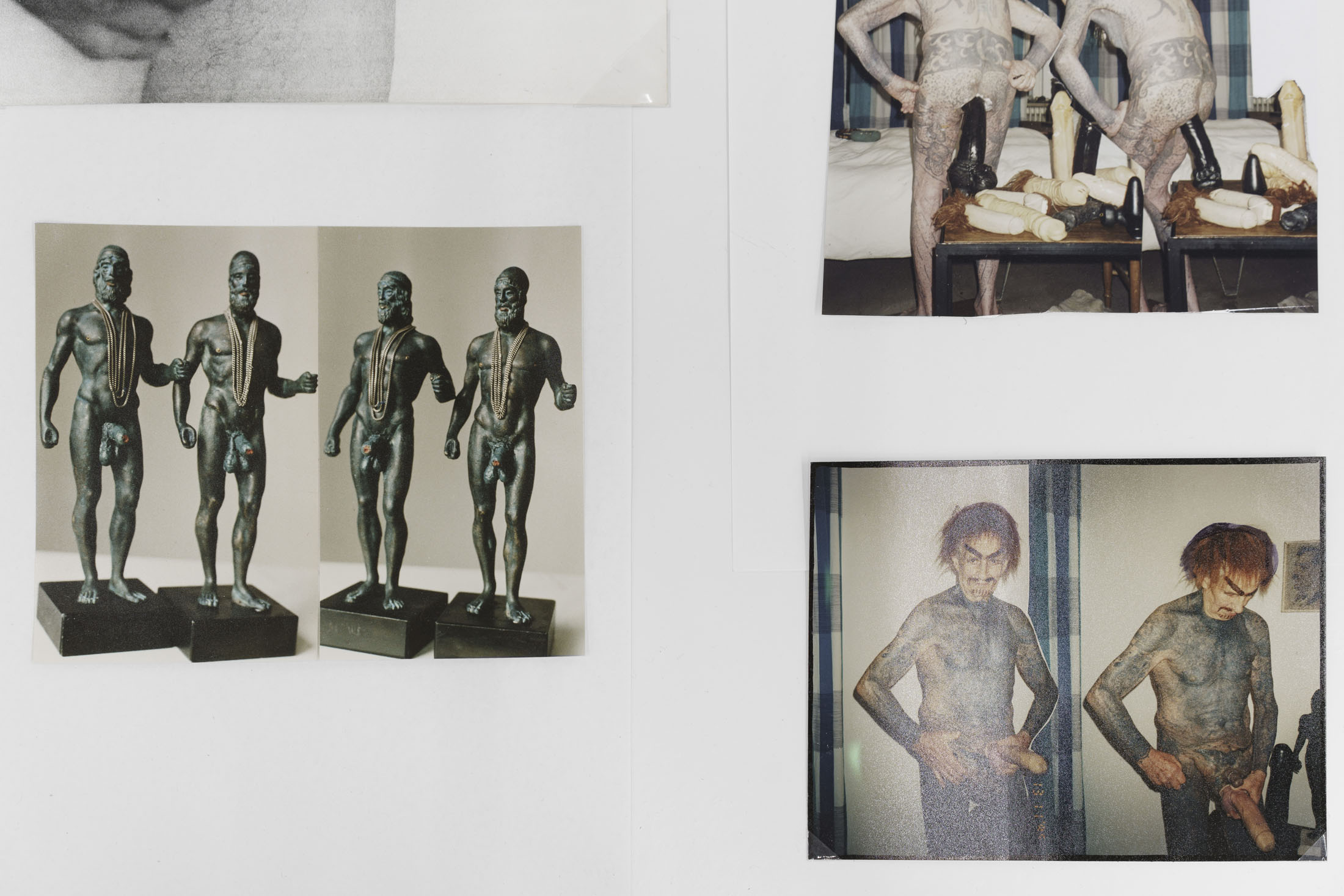
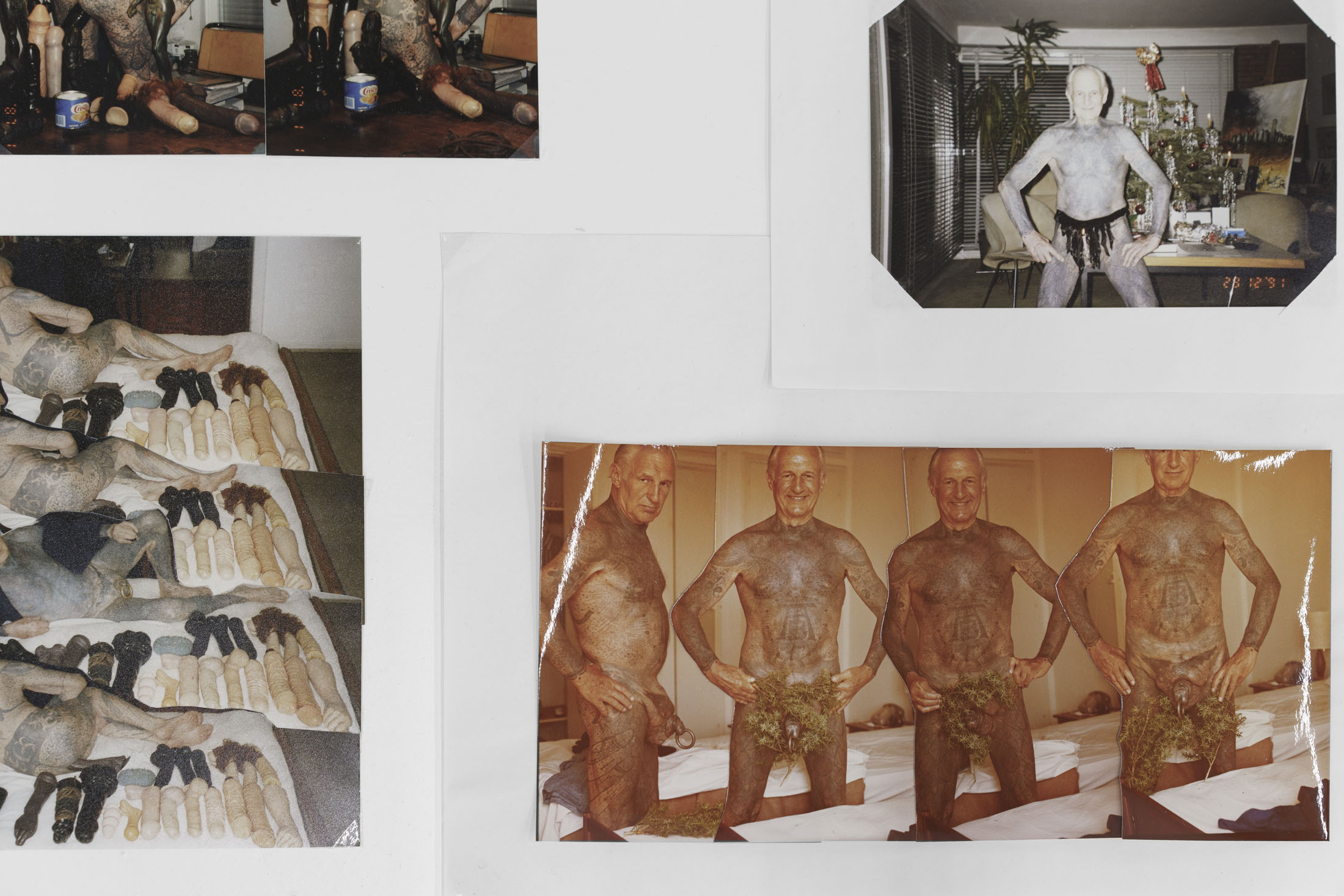
While visiting Hervé Joseph Lebrun in Paris to discuss preparations for this exhibition, I learned the meaning behind Albrecht Becker’s rubber dick. Becker had made a few such objects—prodigious penises cut out of rubber, expressionistically painted, and attached to a standing wooden pole—but they only appear in a handful of his thousands of photographs. Becker gave one of them to Lebrun as part of a large bequest of his work. Unfolding it gingerly before my eyes, Lebrun explained that Becker would set up the pole wherever he intended to stand and then focus his camera on the rubber cock before taking its place and triggering the shutter release. So, Becker and his cock were interchangeable, at least as concerns the camera.
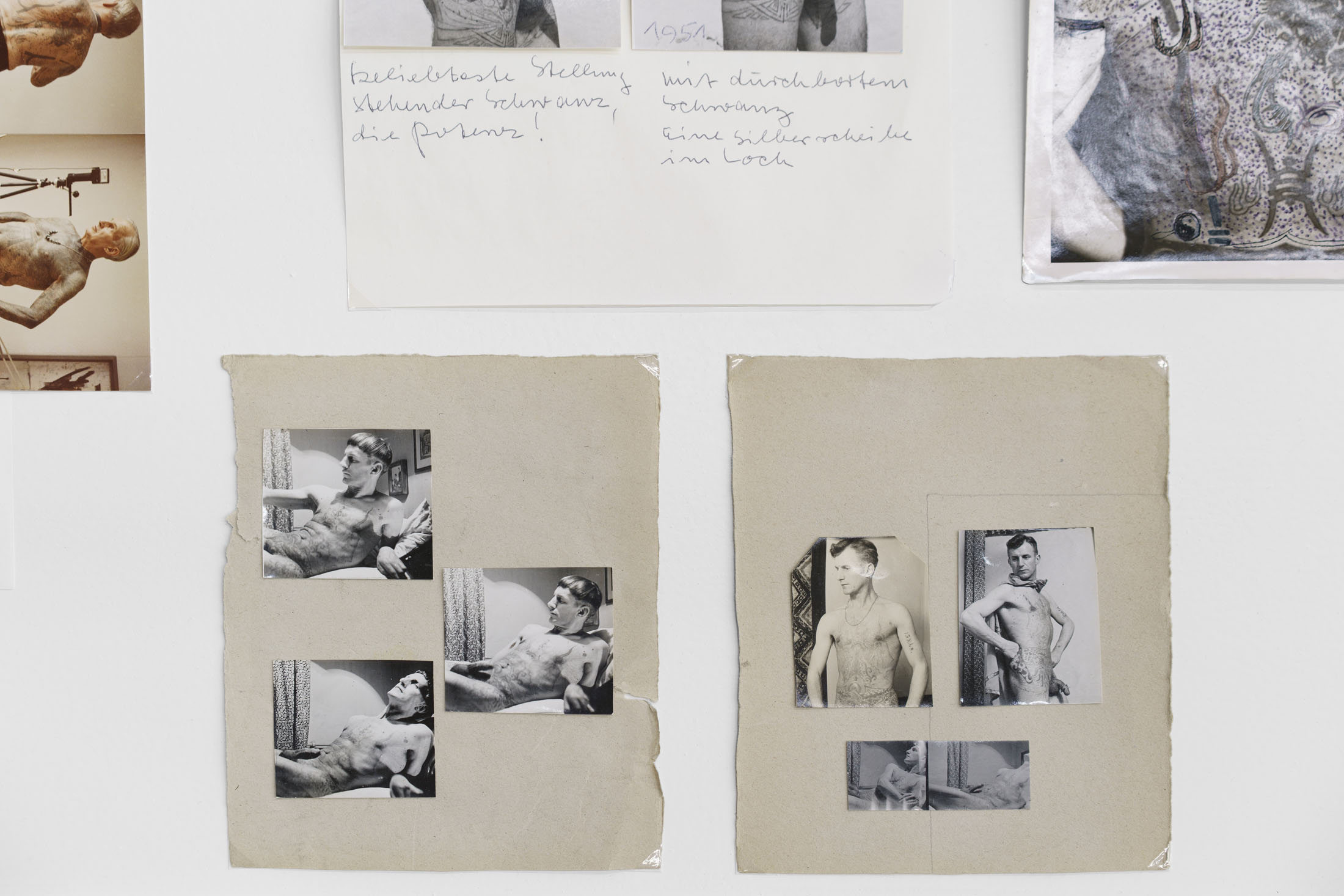
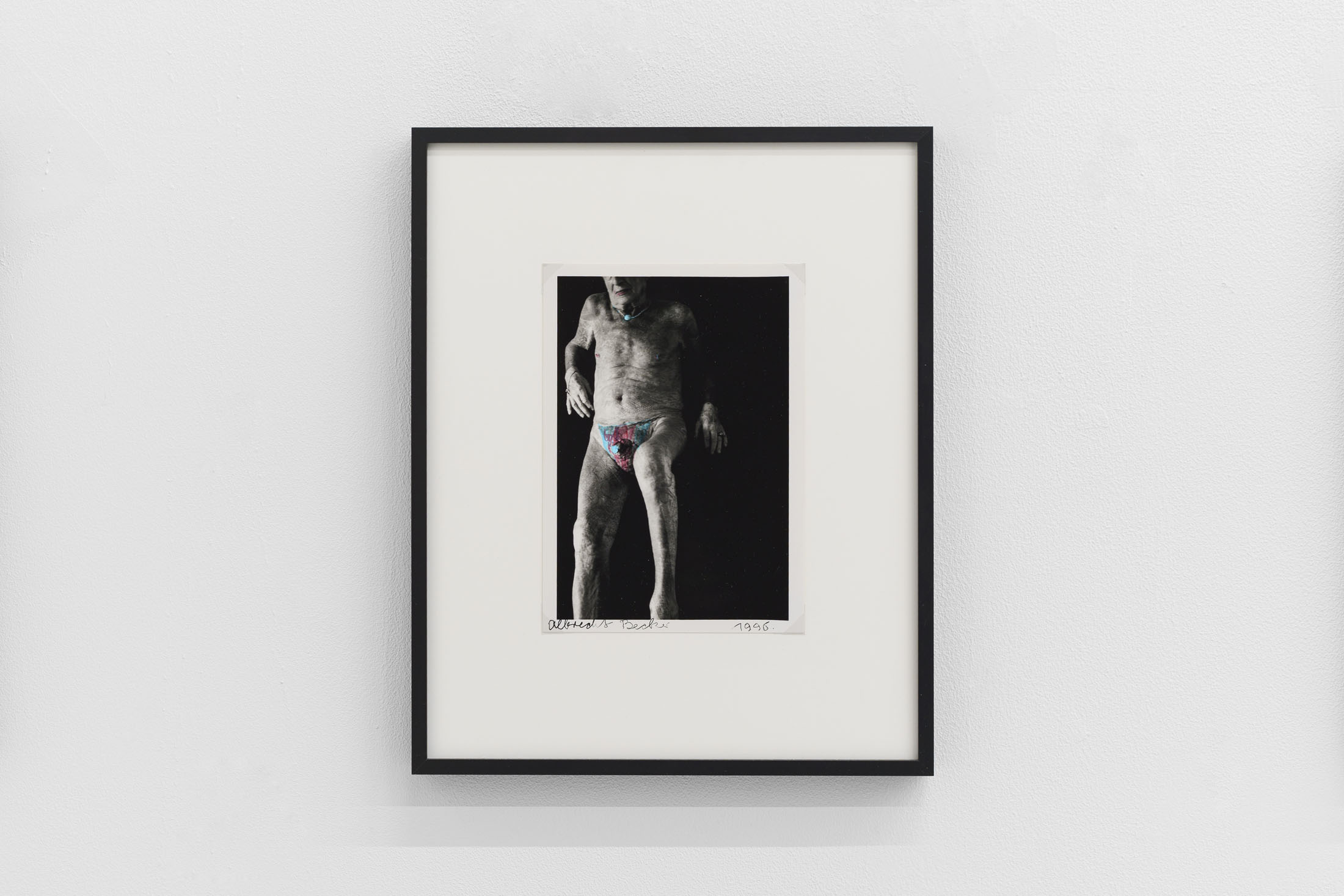
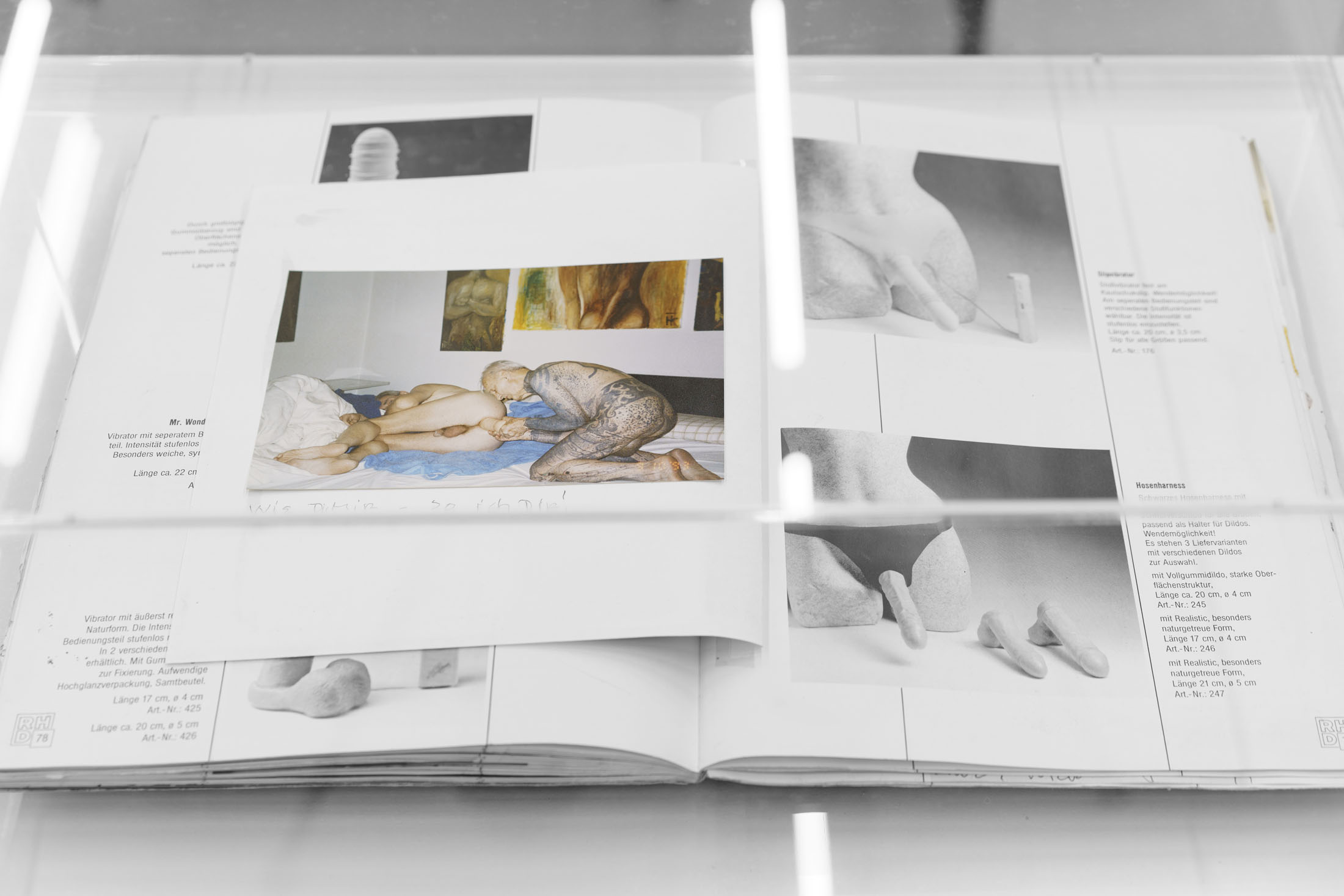
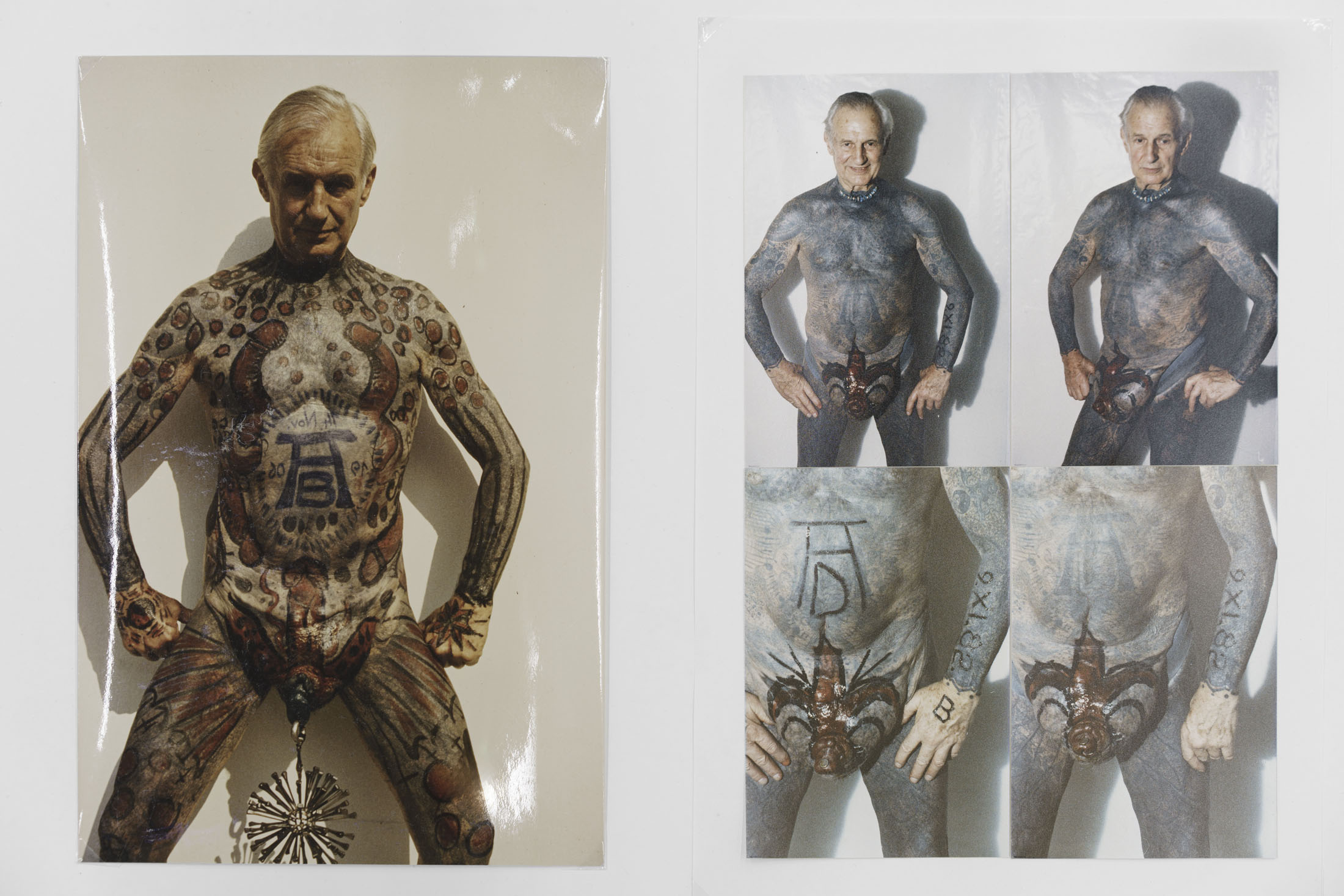
There’s a classic saying from the psychoanalyst Jacques Lacan that the difference between men and women is the difference between having and being the phallus. Becker’s interchangeability with his cock thus introduces a degree of gender trouble. By focusing on his cock, exaggerating it, making it into an object of aesthetic appreciation, he emphasizes masculinity as performance, as artifice, and therefore as incomplete. This applies not only to the rubber prosthesis, but also to his own genitalia, inflated with paraffin oil. While injecting paraffin was meant to increase the size of his cock, it also made it useless, at least in the conventional sense. An early photograph in the exhibition depicts Becker on the beach with an erection, captioned “die Potenz!” In contrast, later images show off his impressive collection of dildos and celebrate his achievements in anal training. For Lacan, the phallus is not equivalent to the penis; instead, it represents the ever-elusive mastery of signification. Becker does not have the phallus, but he has various stand-ins: cock, dildo, body, needle, piercing, painting, etc. While the most obvious stand-in is the Ständer itself, the ultimate one is the self as Ständer.
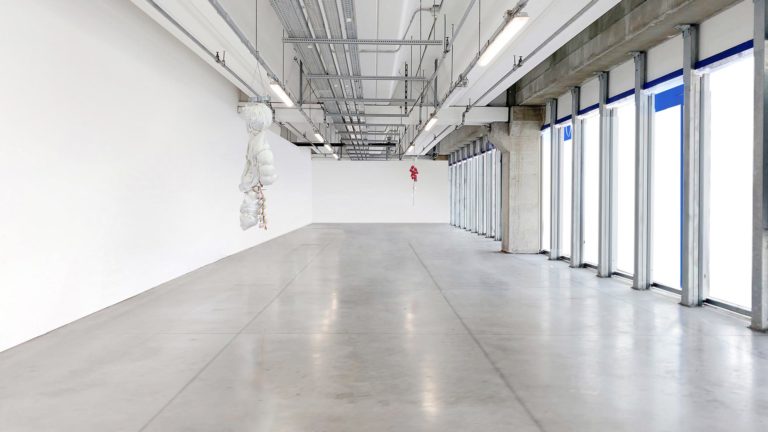
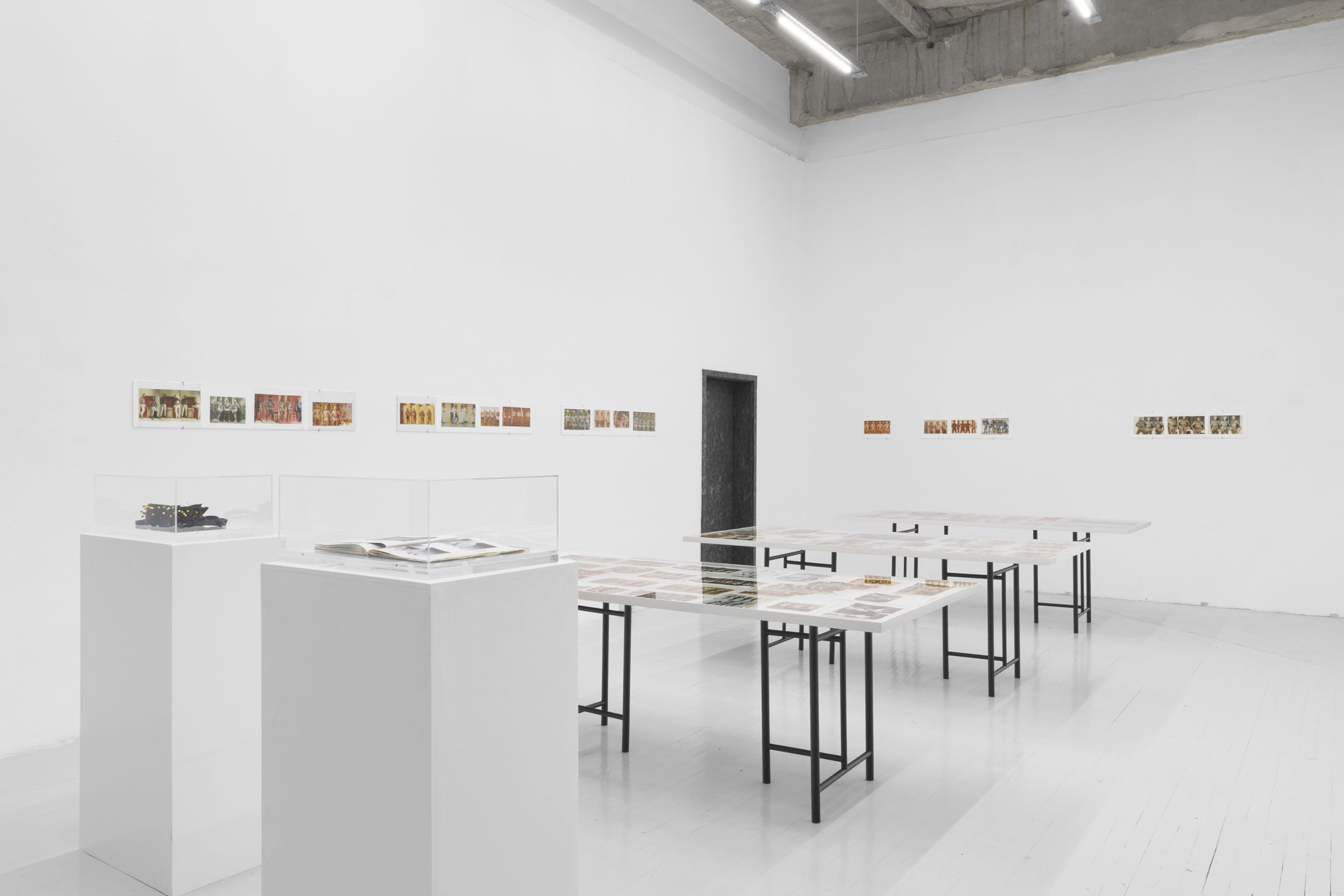
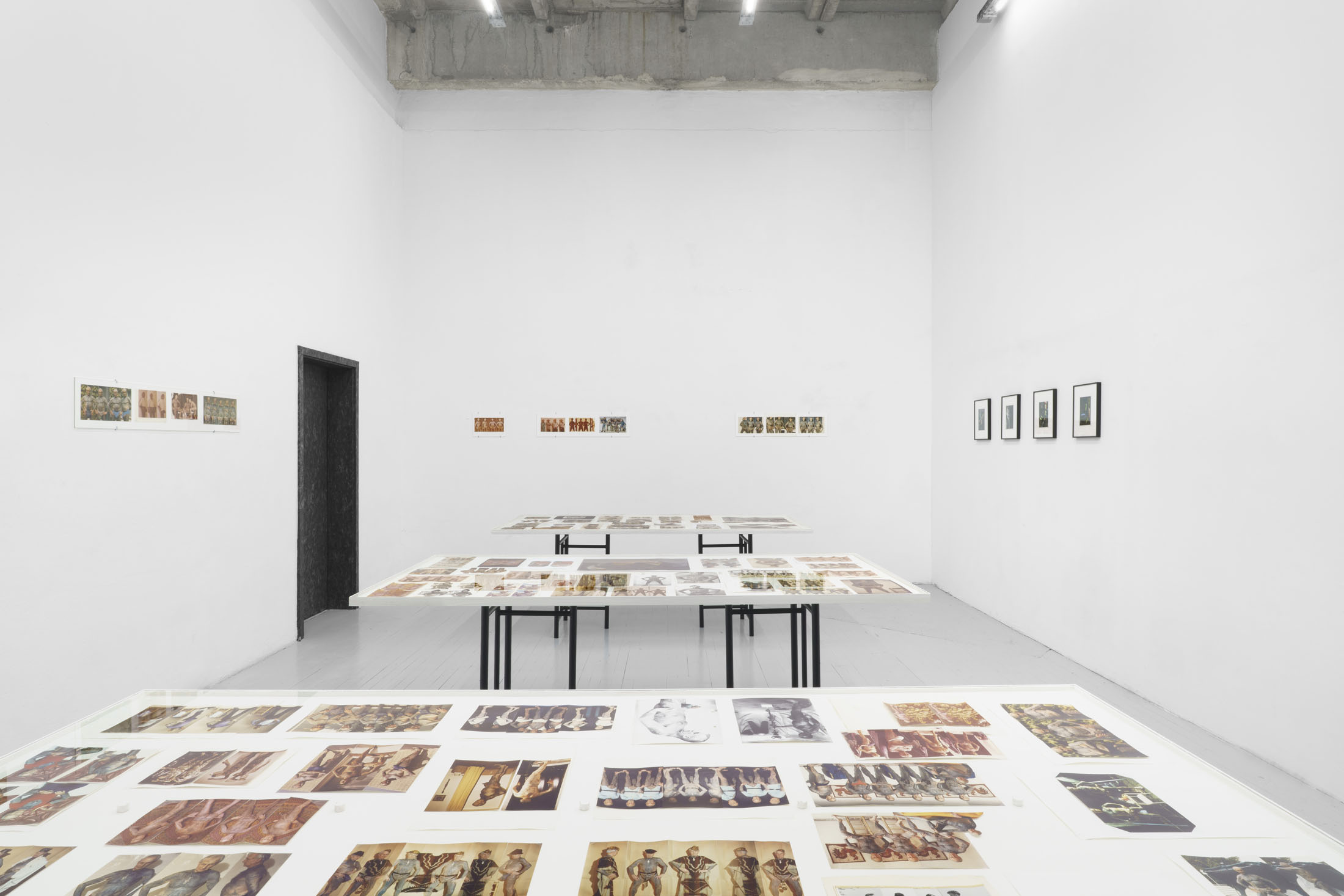
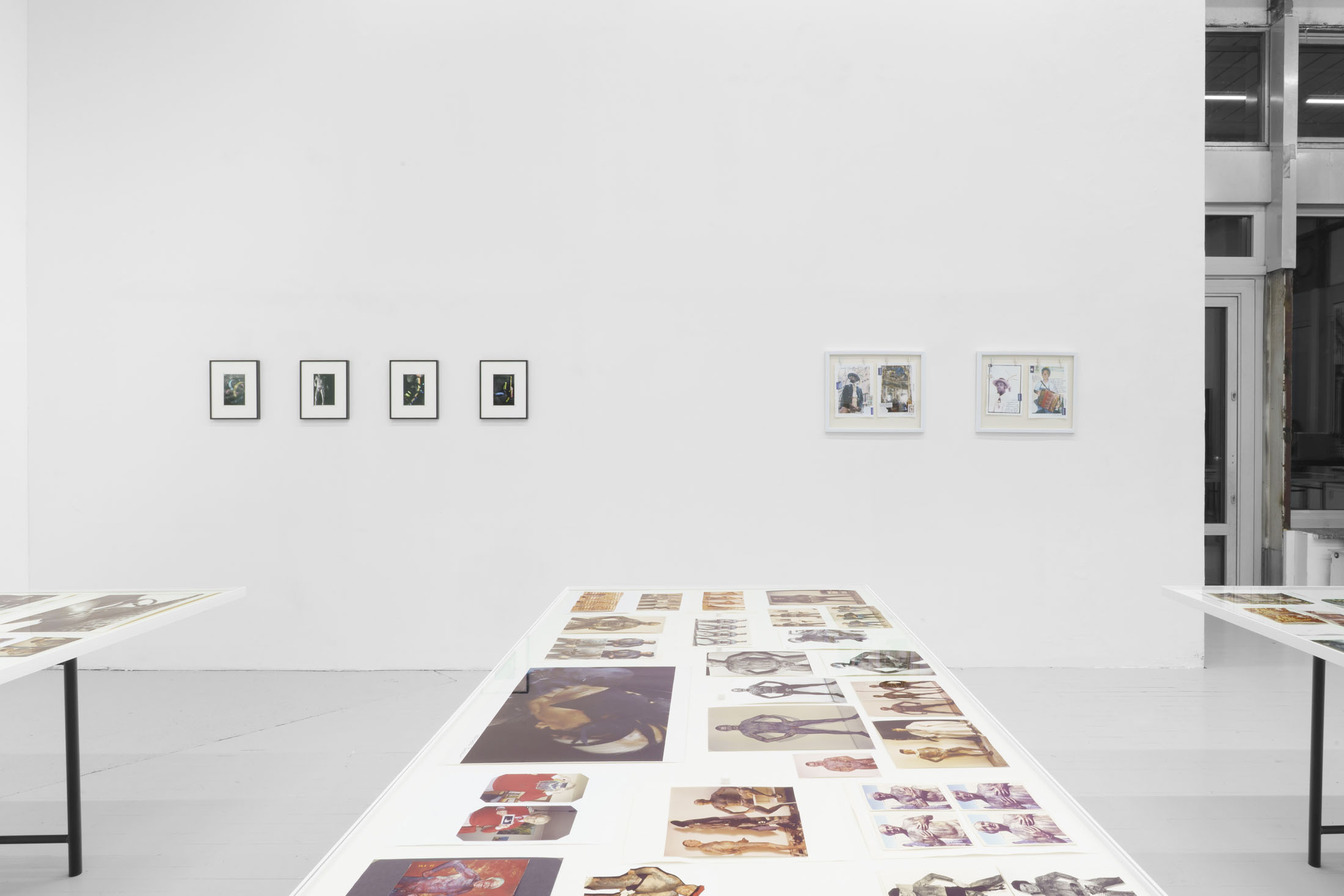
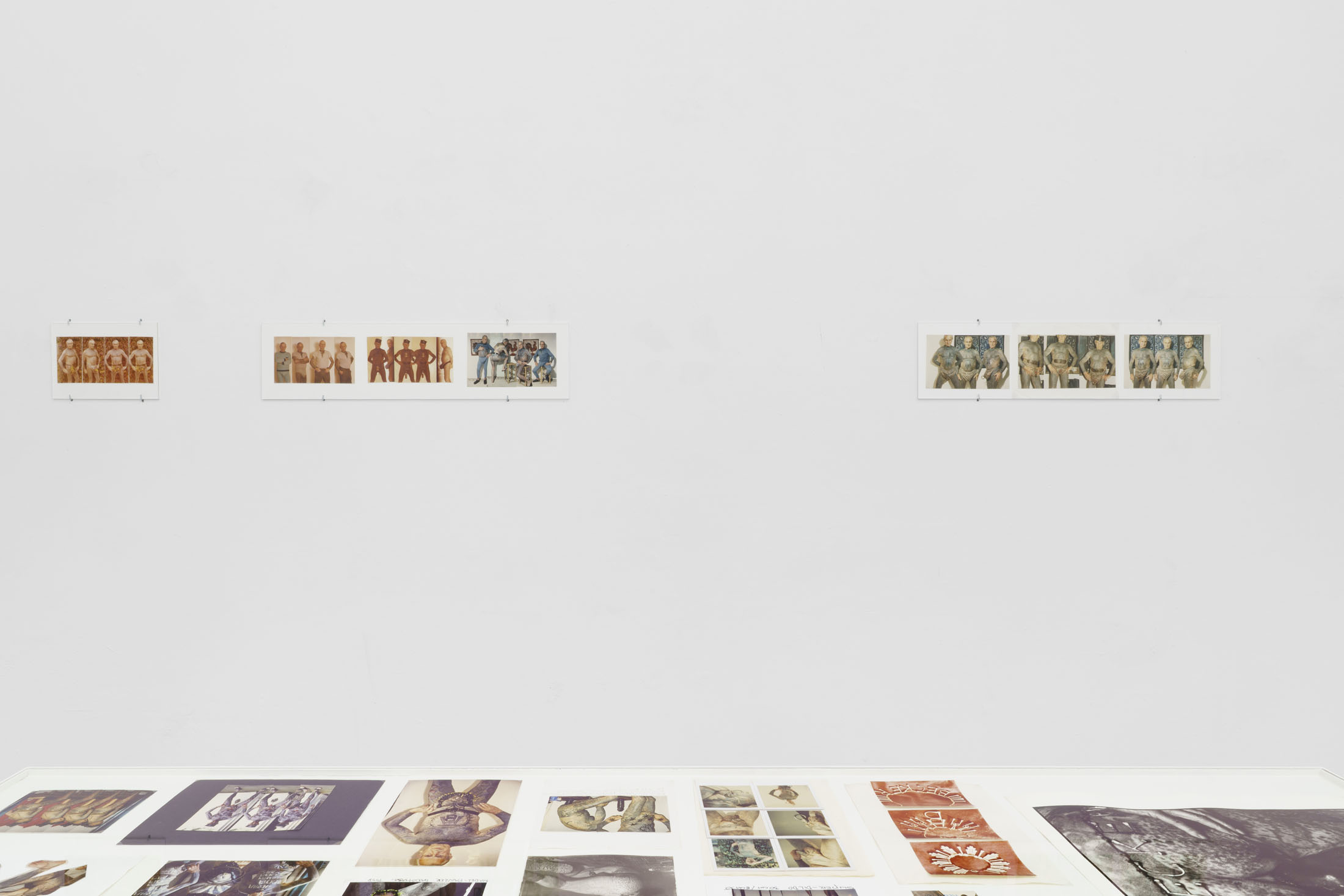
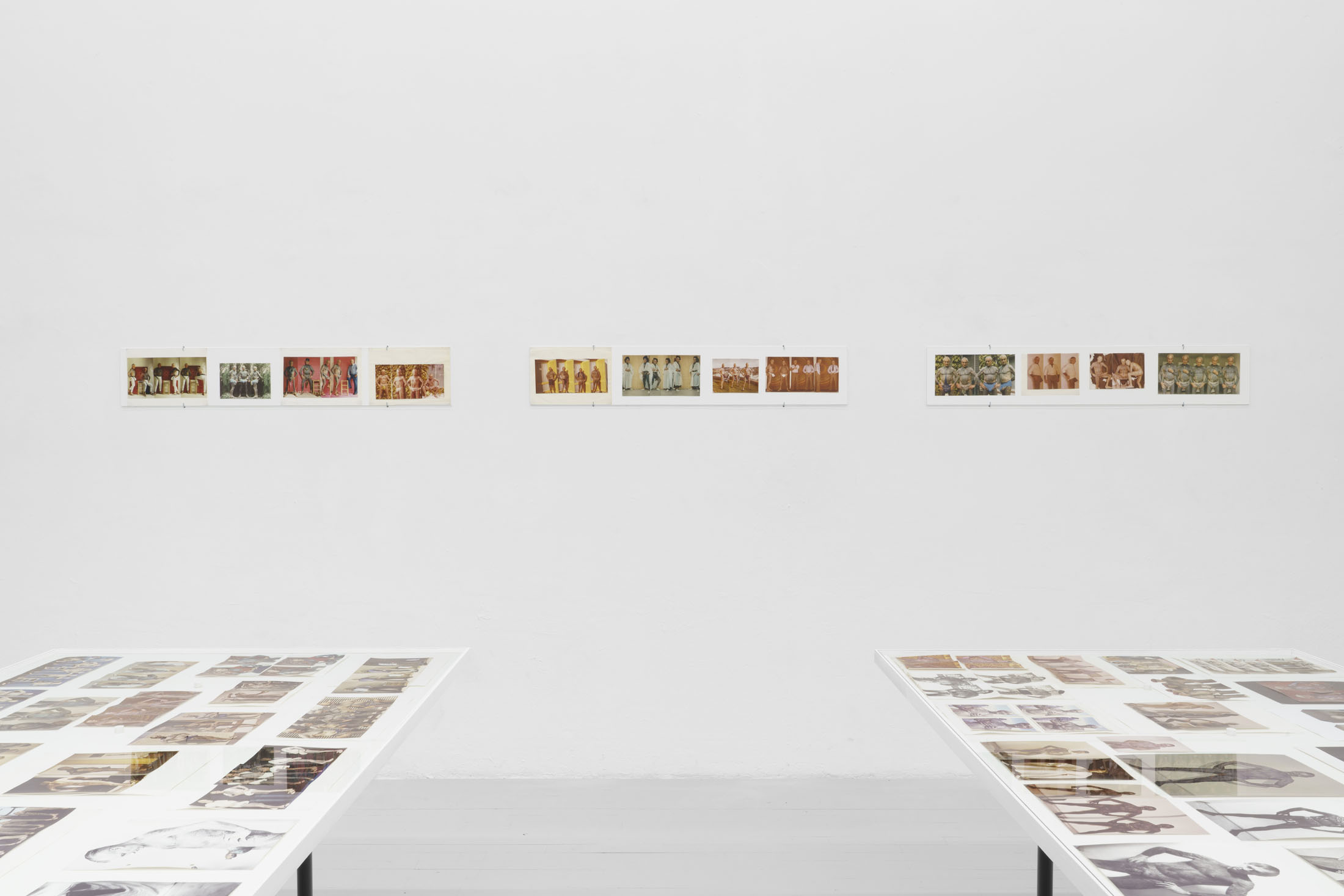
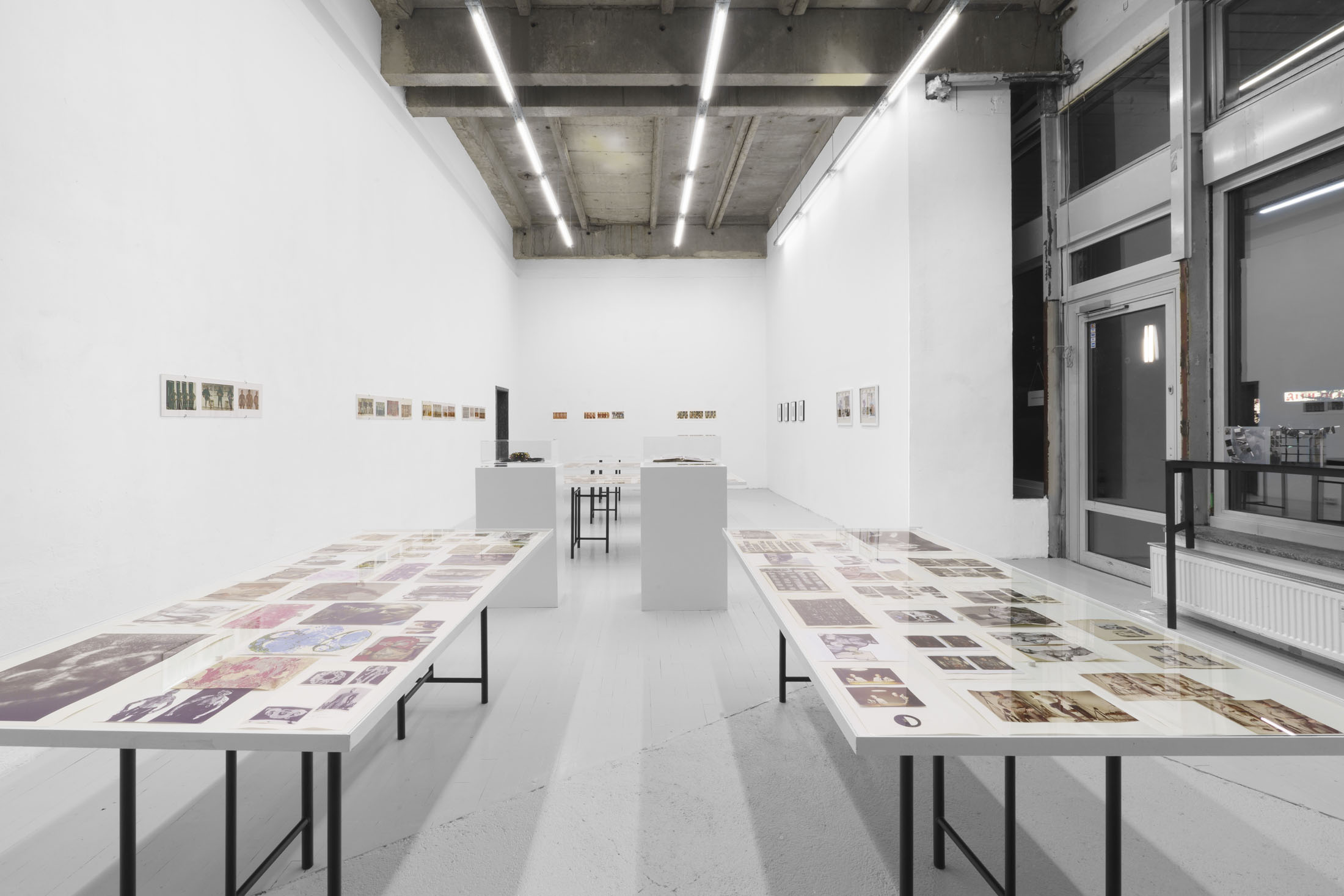
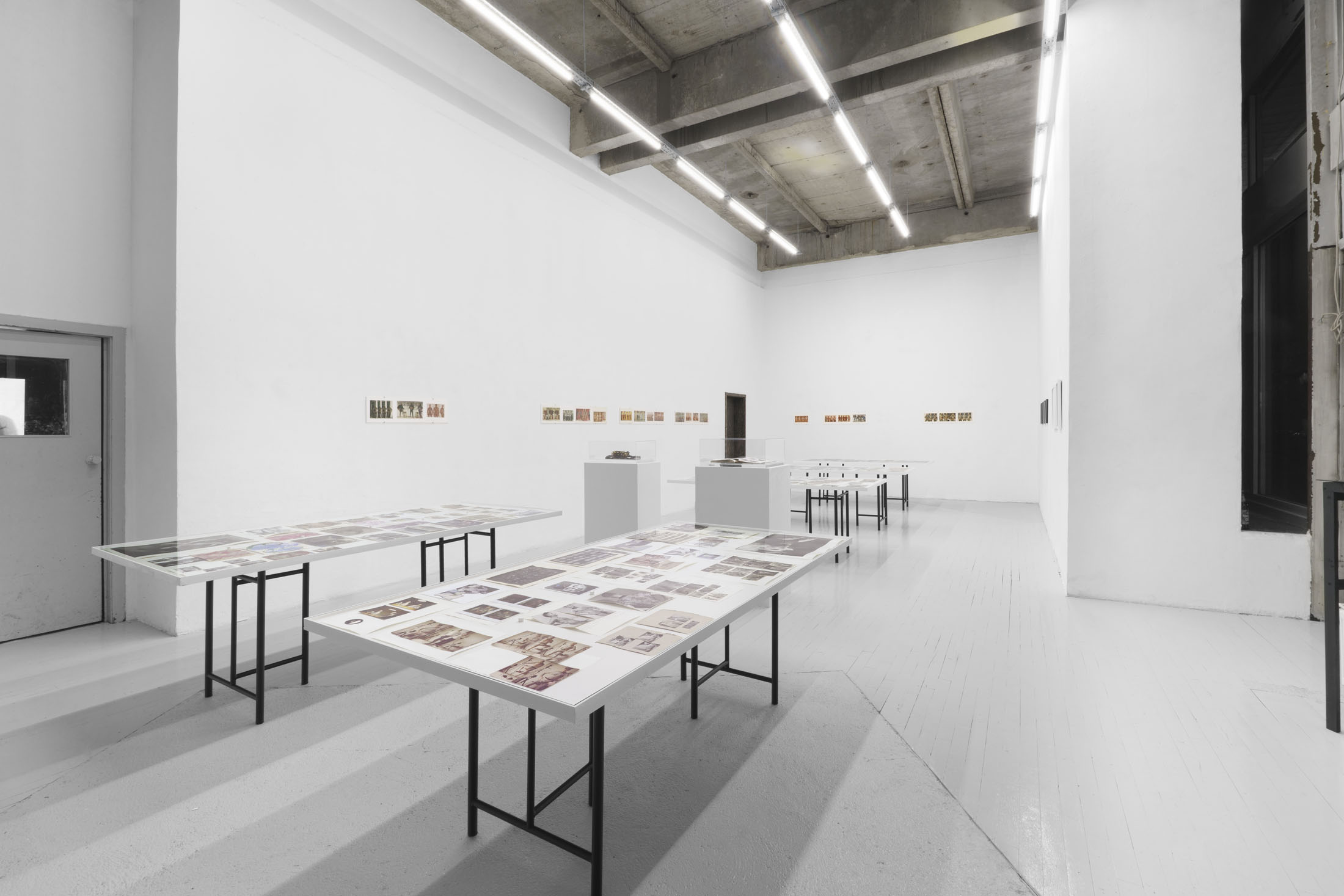
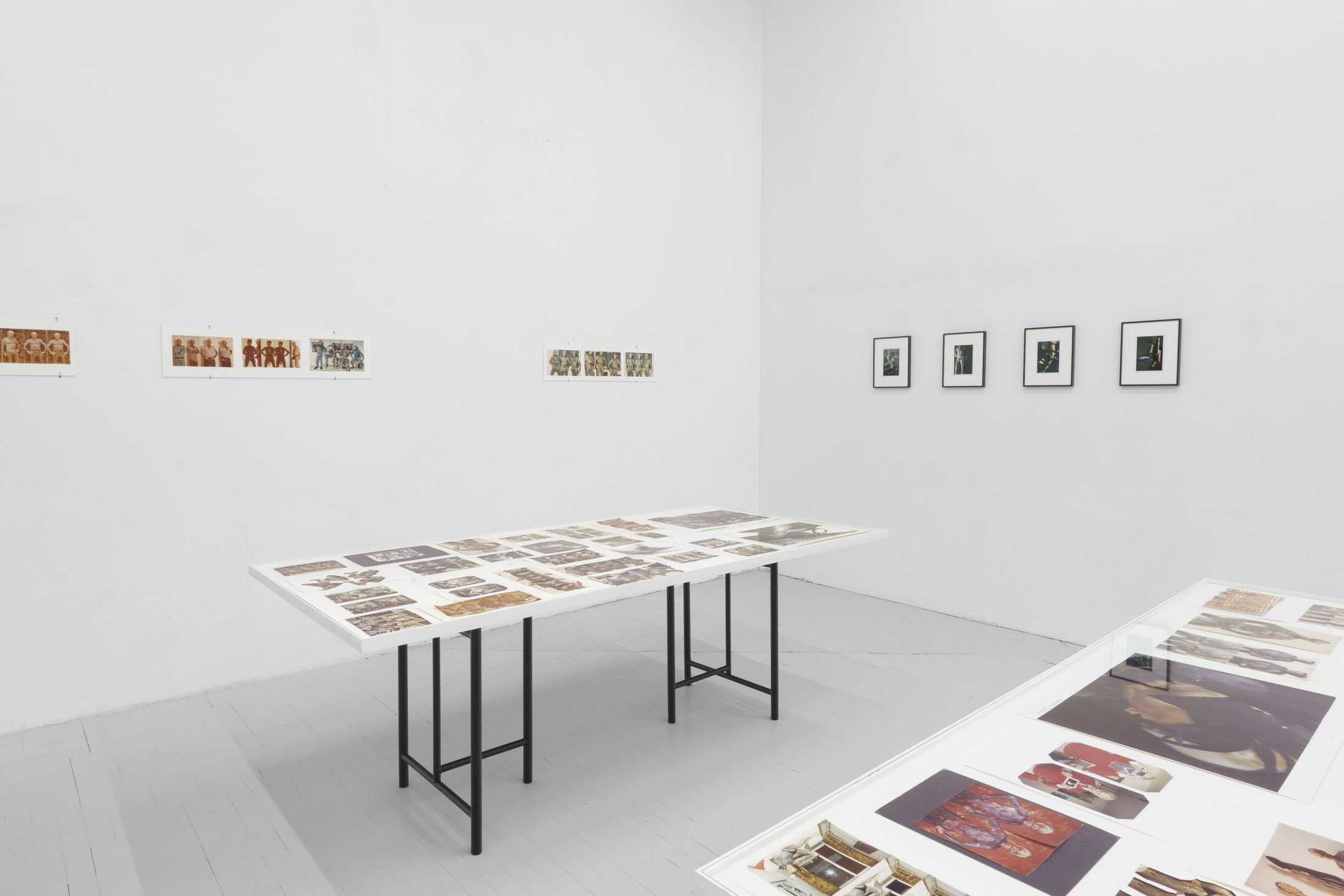
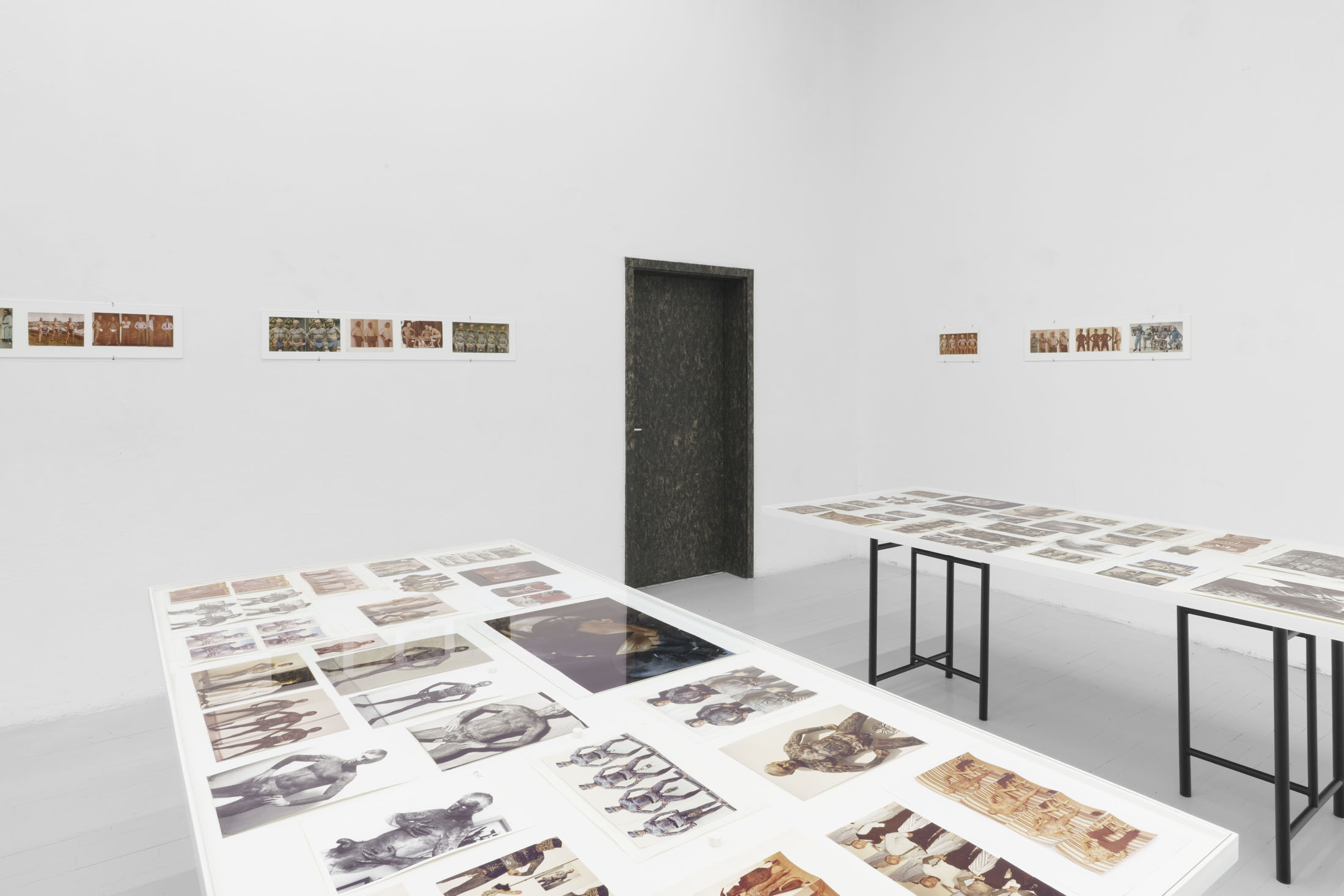
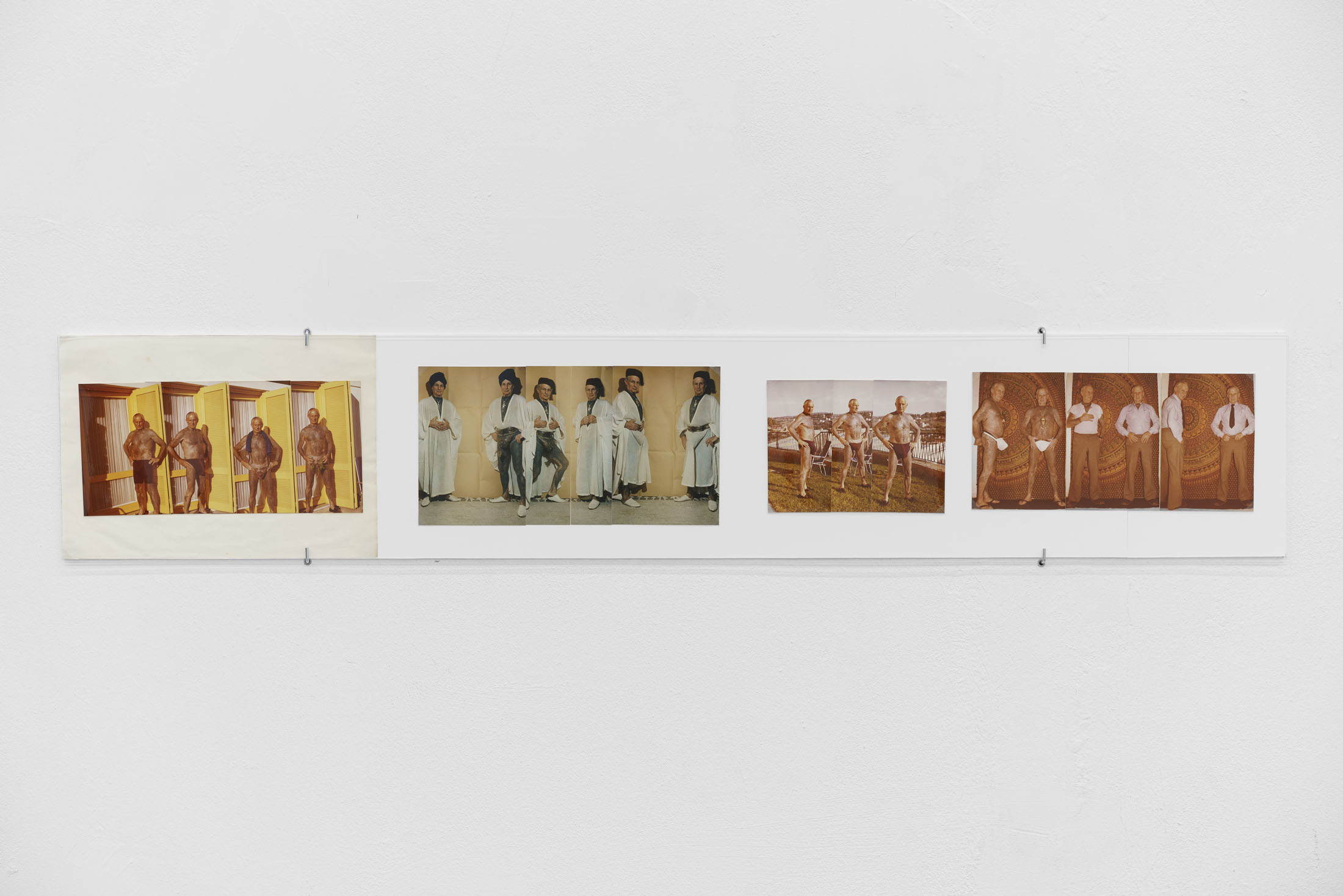
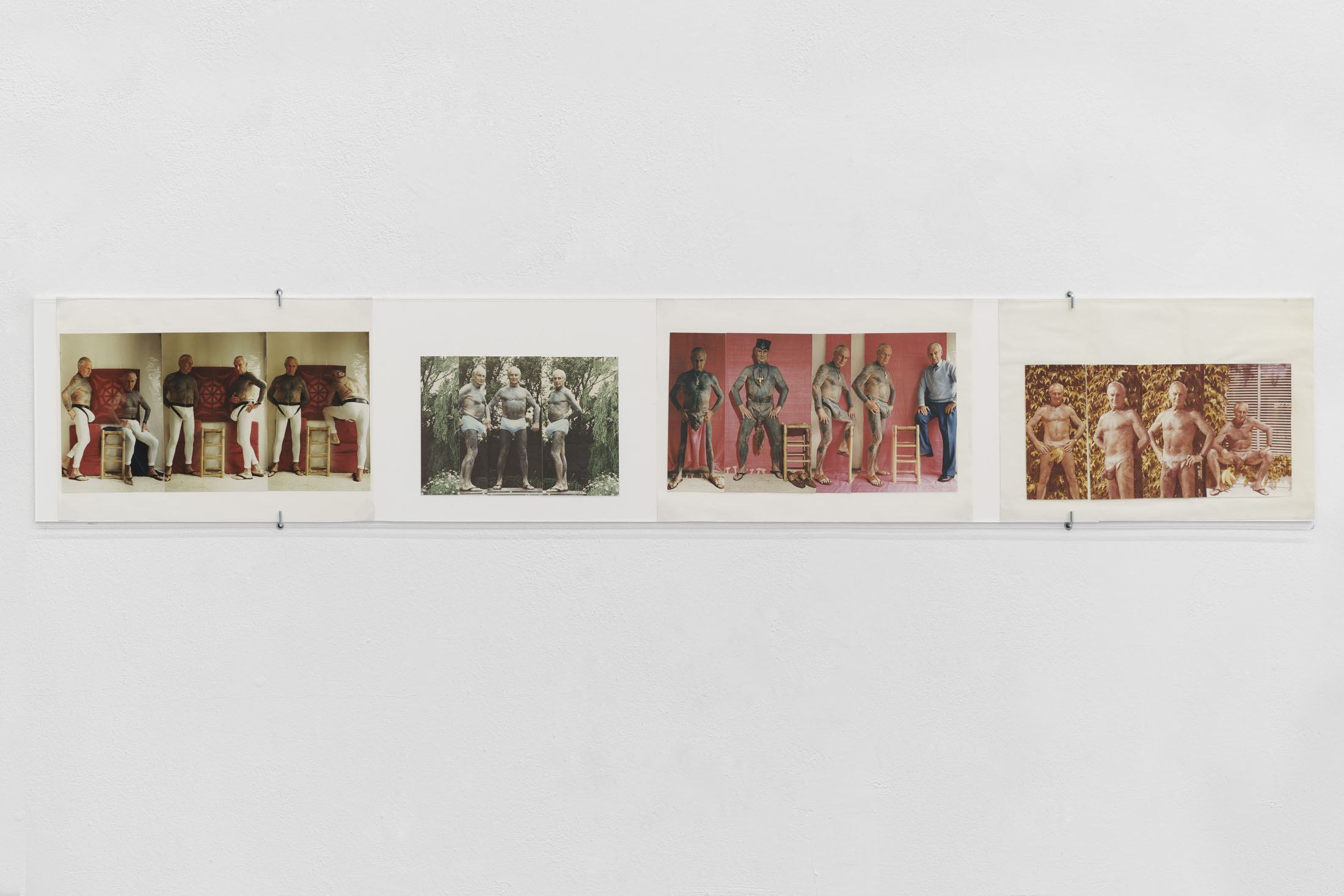
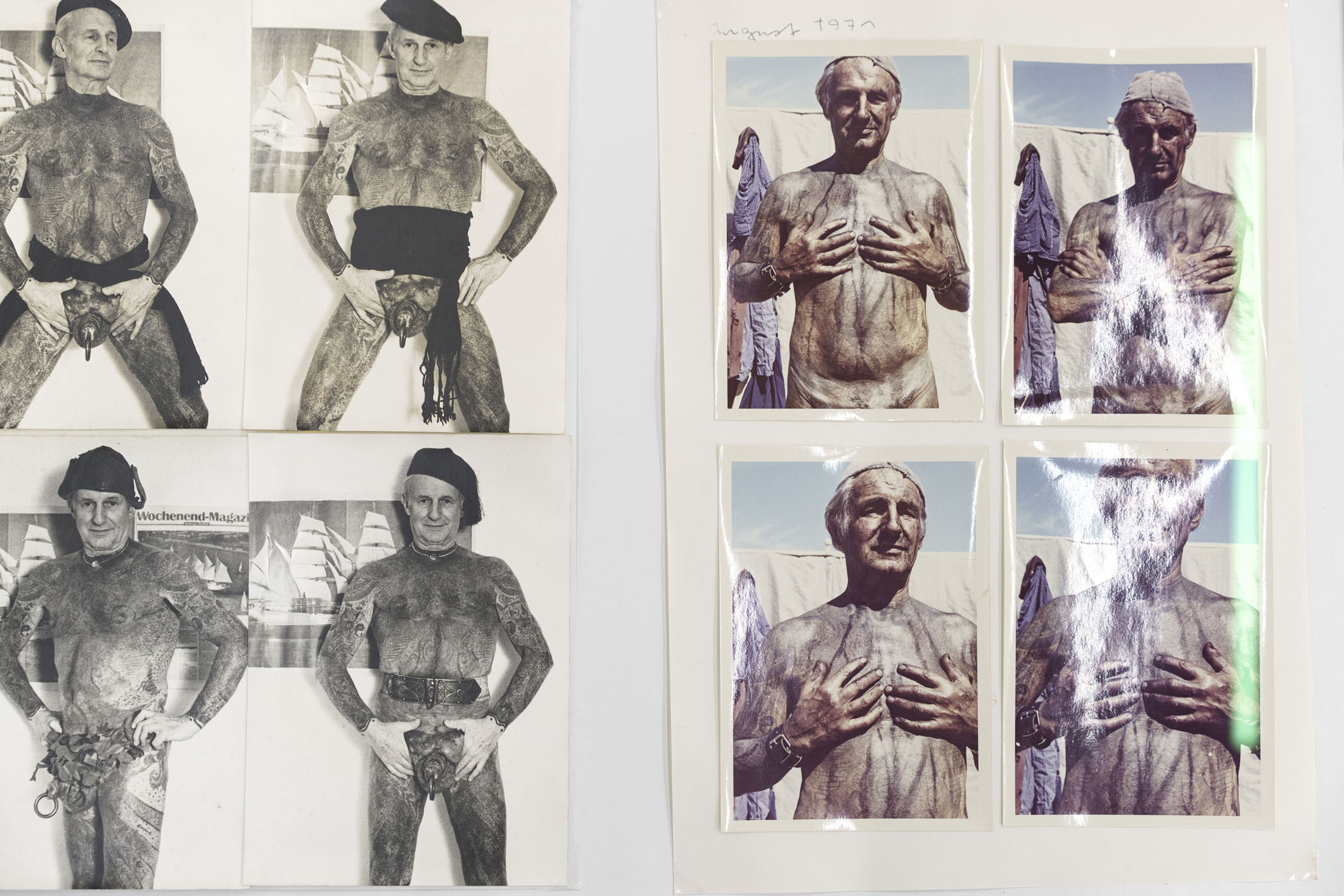
As a practitioner of BDSM, Becker clearly enjoys playing with dominance and submission, and these dynamics characterize his use of photography as well. Since the camera is a tool of discipline and control, it makes a good sex toy. Becker’s photographic work has been received primarily as an example of queer self-expression, but the medium of that expression shouldn’t be overlooked. By exhibiting his photographs en masse—and bringing them into dialogue with the work of other artists—body multiple highlights Becker’s exoticism and how it relates to the history of photography.
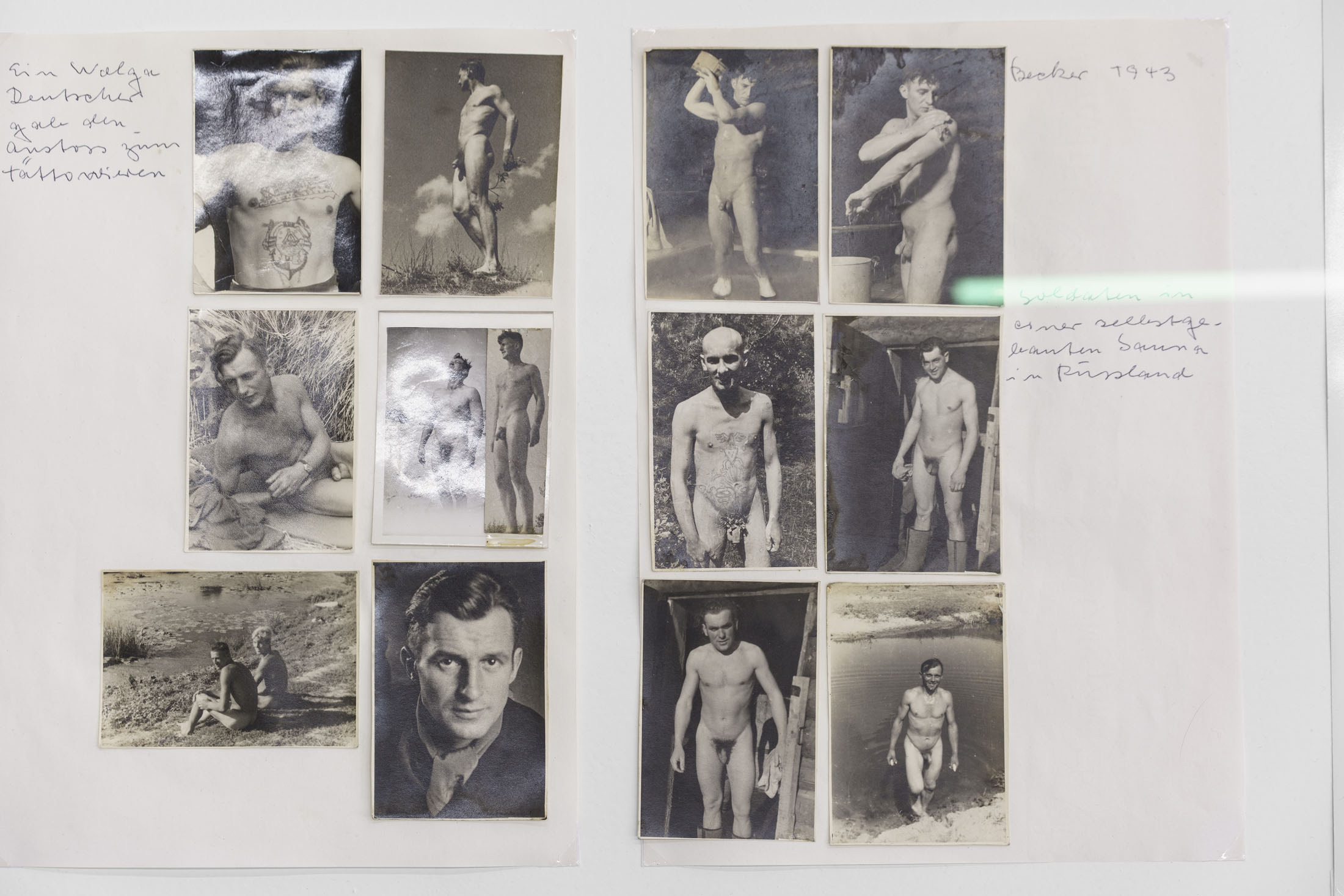
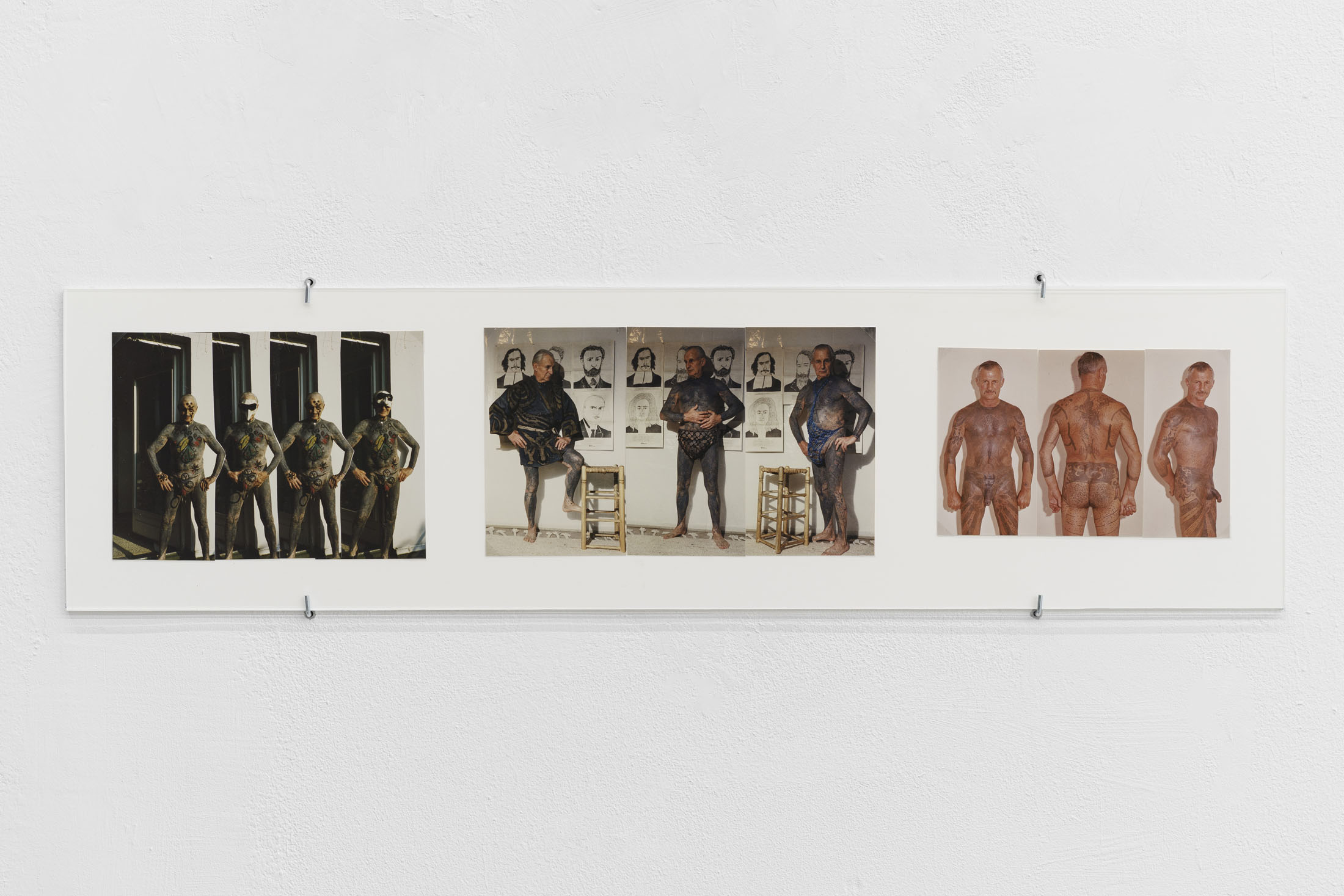
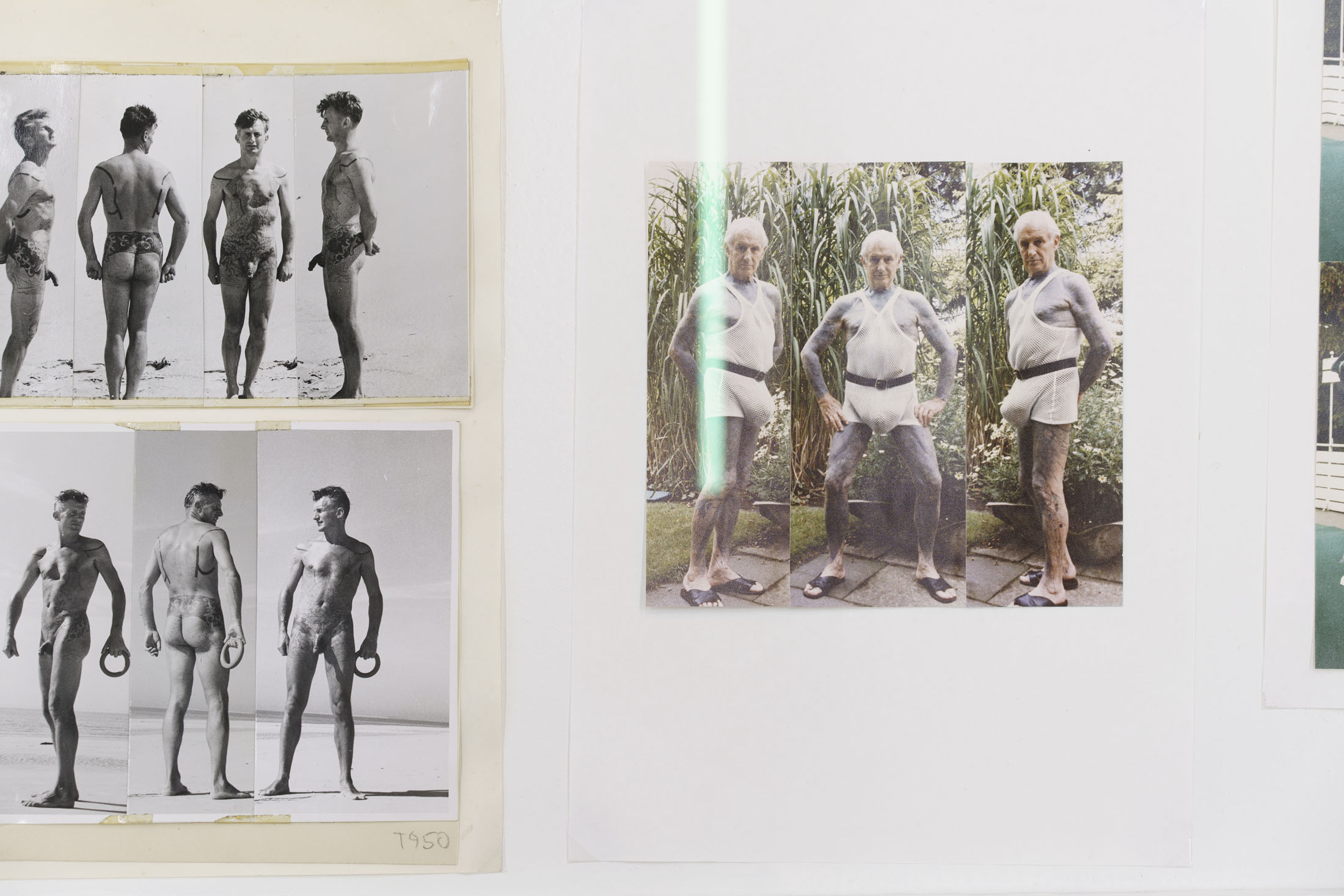
Despite the existence of techniques for image editing and manipulation, the camera has often been described as providing an objective view of reality. This ostensible objectivity allows photography to construct a new reality. In the words of art historian Abigail Solomon-Godeau, “[b]y virtue of its indexicality, its potent illusion of a reality produced by the camera, photography has been an indispensable purveyor of dominant ideologies (of gender, race, class, nation, and their subcategories)” (Solomon-Godeau 2017, 42). Critiques of the ideological use of photography point to the myriad ways in which photography is an act of invention, a technique of artifice, an interpretable sign, etc. However, theatricality and artifice alone do not undermine photography’s truth claims. Take, for example, anthropometric photography, that is, the kind of photography used to measure the body. Anthropometric photography explicitly deploys theatricality and artifice in order not to undermine but to heighten its empiricism. In fields such as anthropology, criminology, sexology, and surveillance, photographers have staged bodies before grids, superimposed them over each other, shown them from multiple angles simultaneously, and collaged them out of fragments to convey the “reality” of biological differences. Photography thus serves the project of cultural and racial taxonomy, while providing a visual grammar of deviance. Becker would have been exposed to such ideas while collecting anthropological texts about tattooing and memoirs of tattooists in his efforts to learn about the practice and its history. Whether consciously or unconsciously, I believe he imitated the aesthetic qualities found in illustrations of tattooing in scientific studies and popular culture, becoming the object of his own exoticizing gaze.
Becker’s photographs allow him to encounter himself as not only different, but self-differing. If his practice reveals the artifice of ethnographic photography, it reveals the artifice in the performance and representation of normalcy as well. But even as he challenges the objectivity of photography, he does not challenge the association of the racialized other with sexual and bodily deviance. Rather, Becker exploits that association in order to articulate his own sexual and bodily deviance. While his masochistic pleasure in submitting to the disciplinary gaze of the apparatus may undermine its fantasy of control, it does not challenge its terms.
The other artists in body multiple take up these terms in different ways. Haitian-born and Berlin-based artist Jean-Ulrick Désert’s multimedia performance series NH2K (1997–ongoing) examines the relation between tourist photography and cultural heritage. By commissioning Bavarian lederhosen in caucasian skin color, he reveals the implicit racialization of traditional dress. Furthermore, he situates this performance of cultural identity in a geographic and photographic context. Désert shows how tourism exists in what Mary Louise Pratt calls the “contact zone”: a space that paradoxically both destabilizes and reinforces cultural differences. For Désert, traveling in Germany with his hybrid identity and his hybrid costume, the foreign[er] is not necessarily a threat. Hence his recontextualization of the old German saying, “Fremder Rat ist Gottes Stimme” [advice from others is the voice of God].
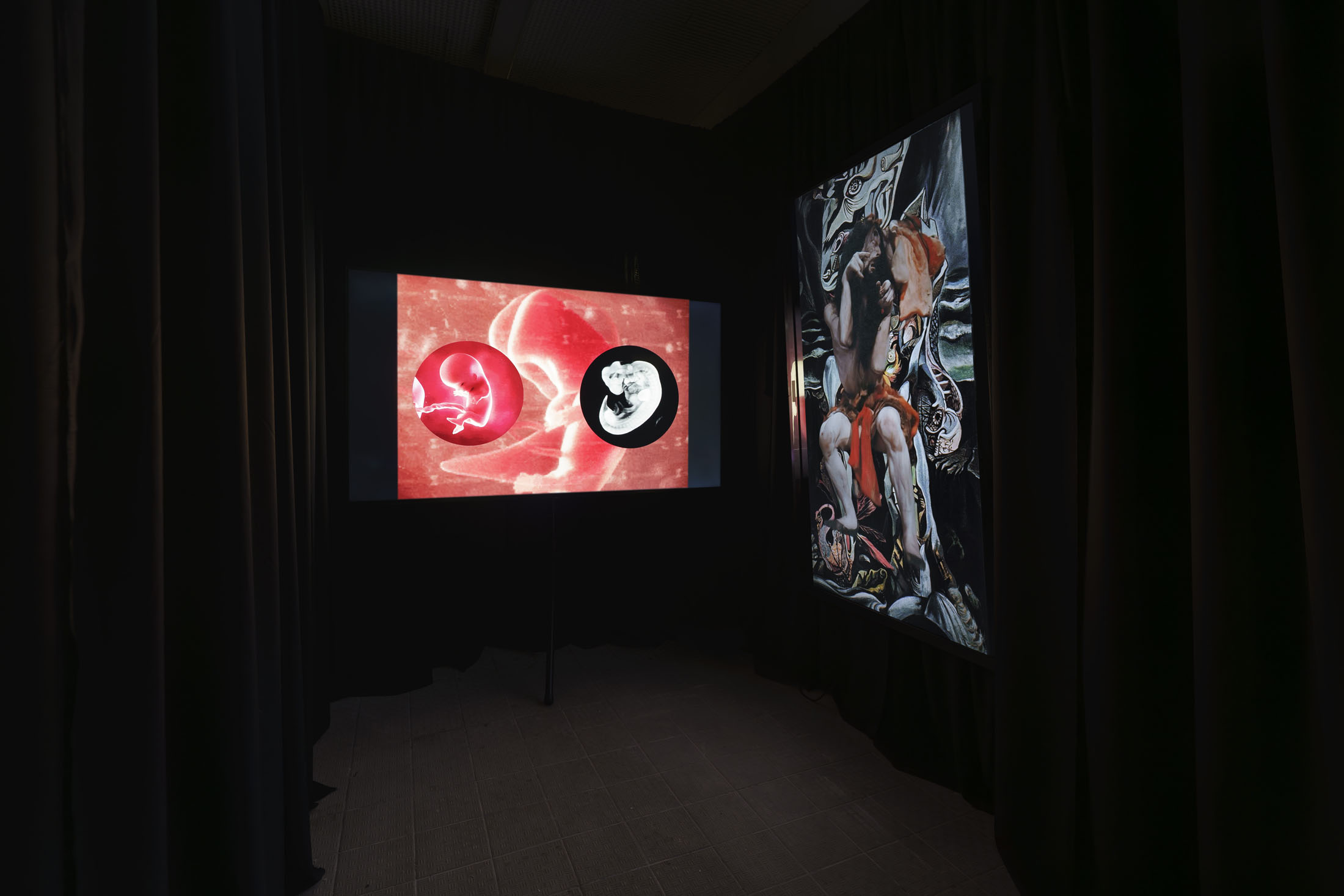
With his two videos, the LA-based American artist Richard Hawkins portrays this “contact zone” more as a nightmare of bodily fragmentation and desubjectivation. Being and its Fetuses (2023) analyzes a drawing by Antonin Artaud from his time among the Mexican indigenous group Rarámuri or Tarahumara. Through digital collage, Hawkins speculates about the myriad cultural and scientific references that may have inspired Artaud’s fascination with the Tarahumaras. Montaged with clips from Sergei Eisenstein’s unfinished film
¡Que viva México!, Hawkins’s video portrays the body as a site of decomposition and recomposition. Redon Spider Sequence (2025) continues Hawkins’s engagement with the work of Japanese choreographer and founder of butoh dance Tatsumi Hijikata. Here, AI technology animates a historical photograph of Hijikata and interpolates it with images from some of the European artworks that inspired him, from Bosch to Redon and Picasso. Rather than embrace AI as a vision of technological progress, Hawkins portrays it as the disintegration of the human into digital mulch.
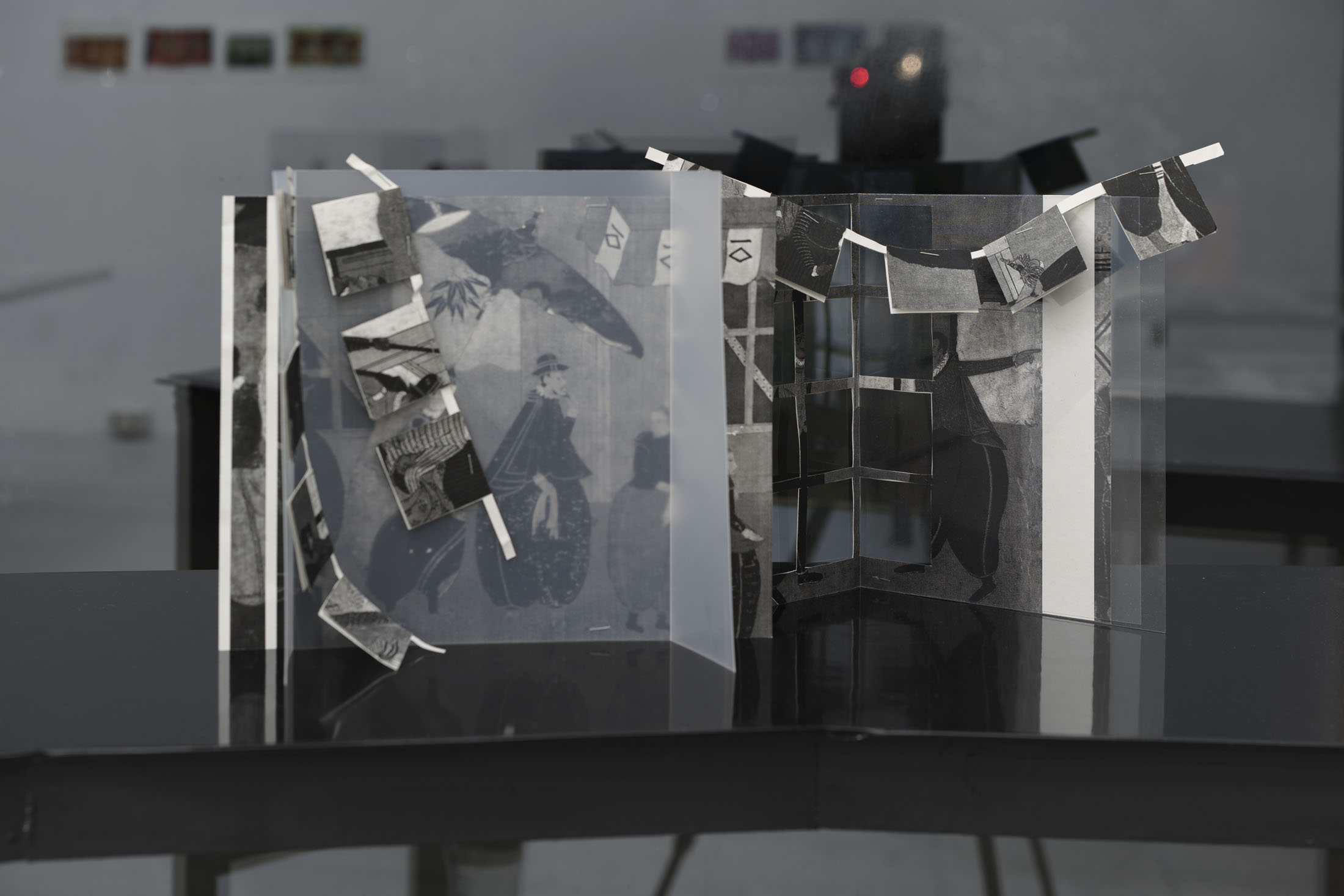
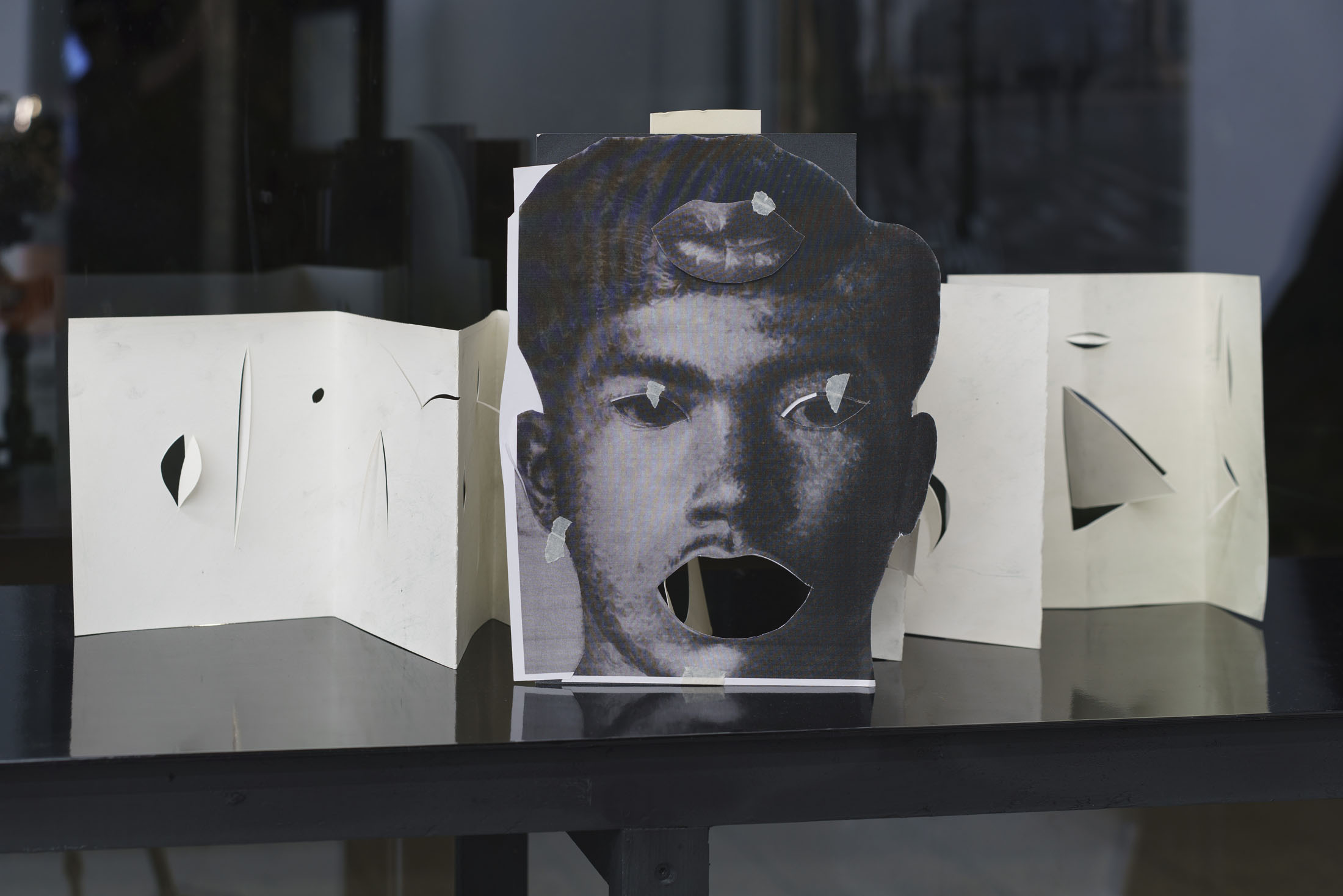
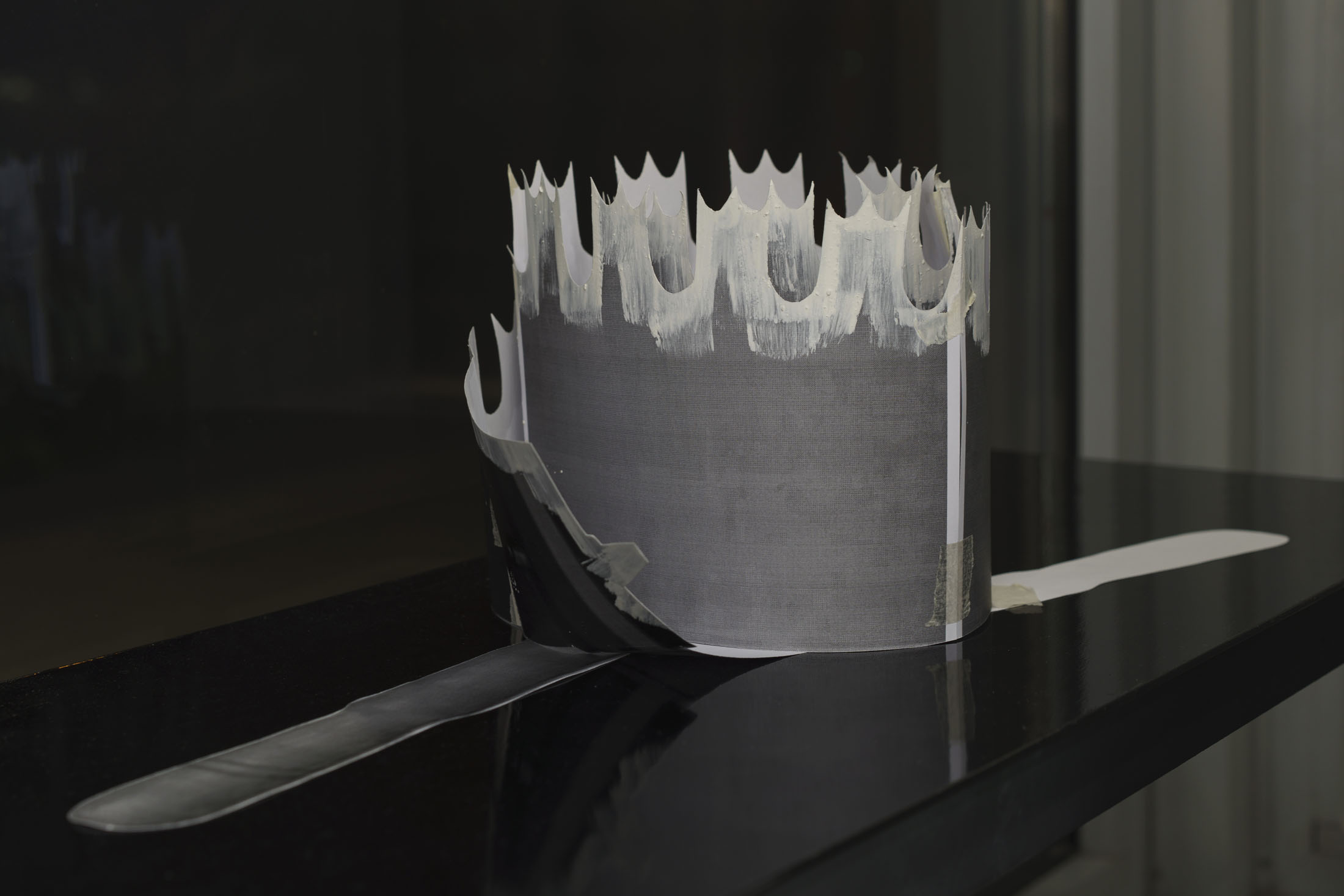
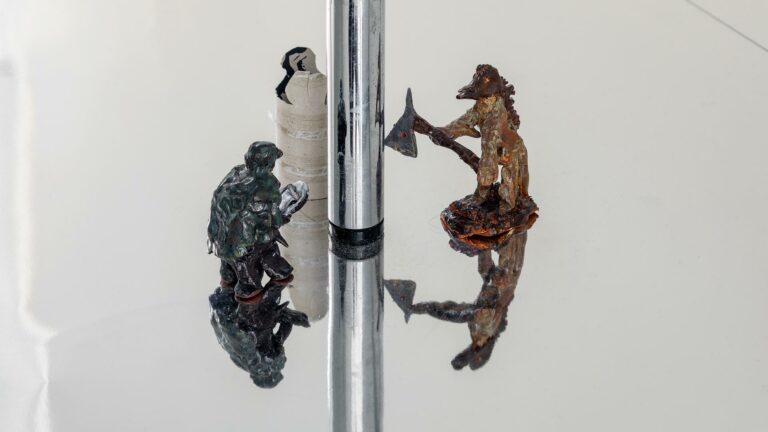
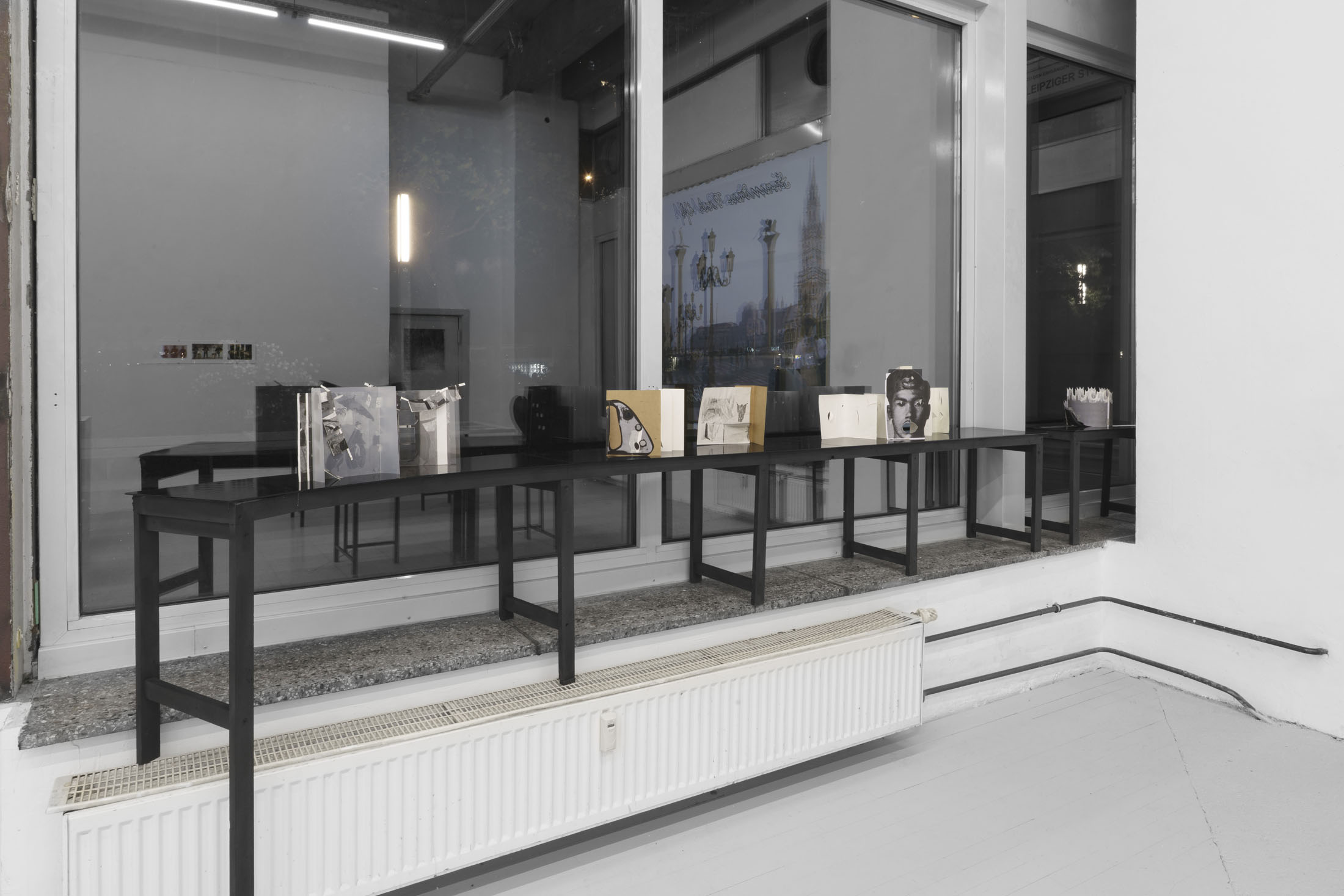
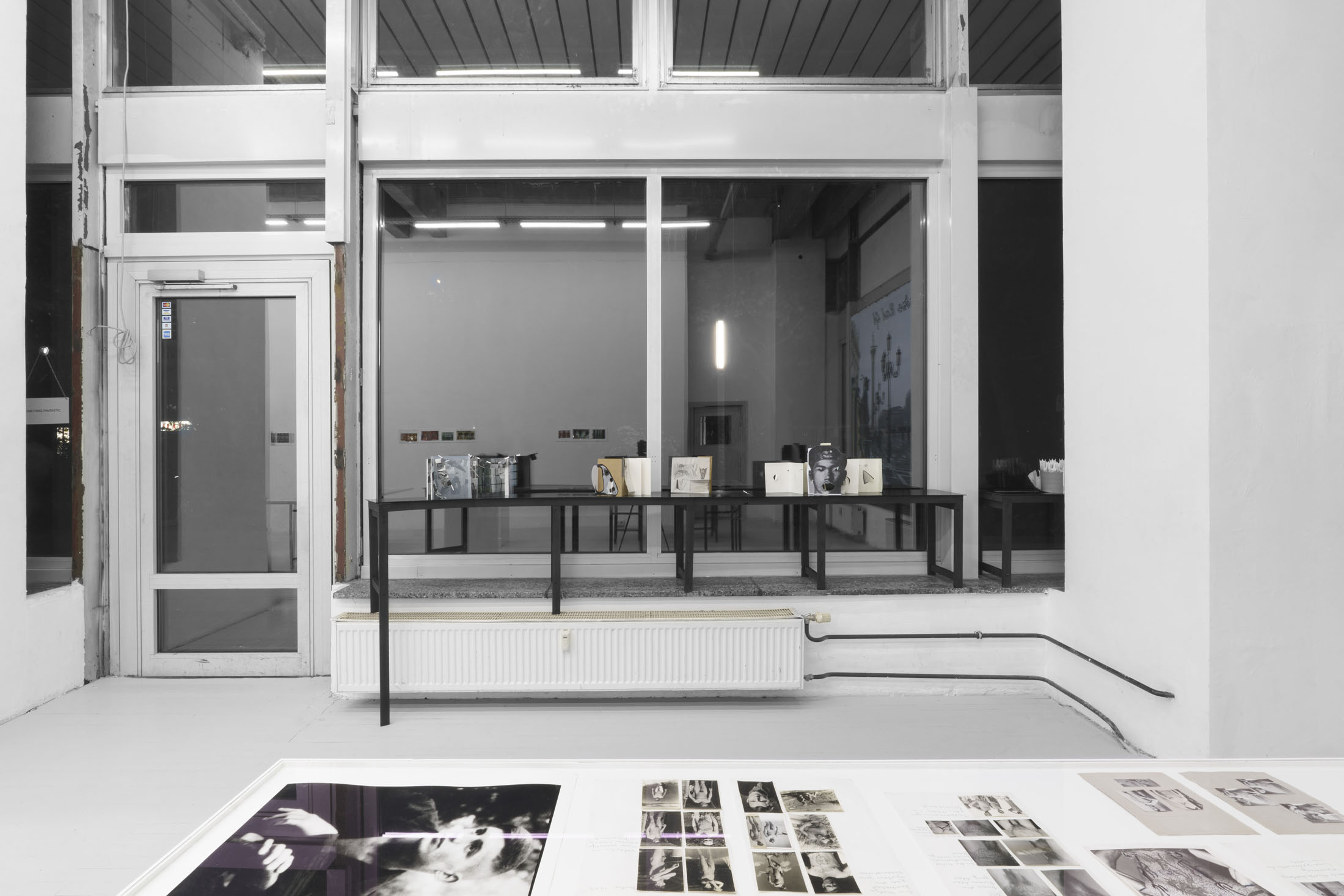
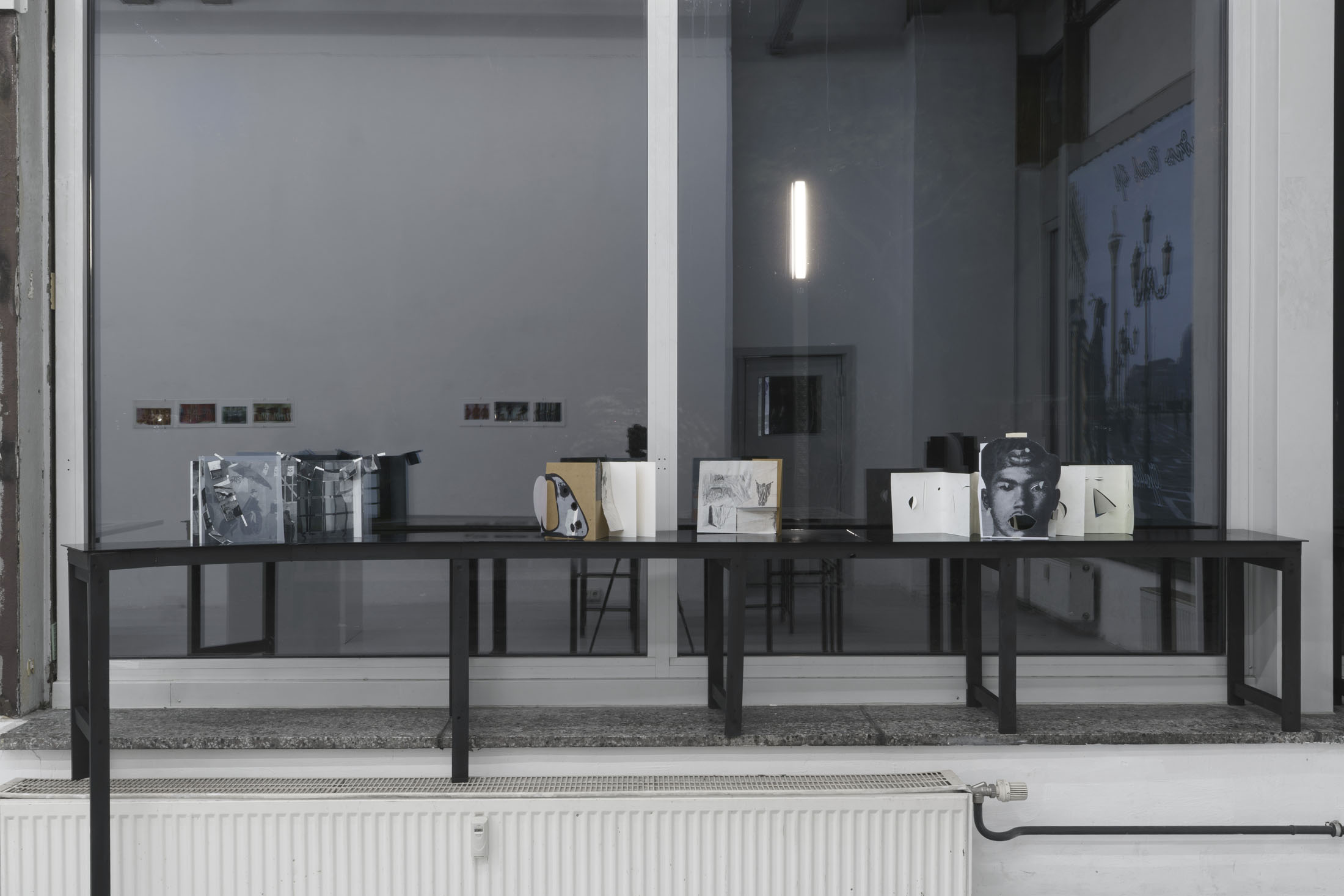
The disintegration and abstraction of the body is not necessarily a source of horror; it can also offer an escape from photographic capture. Lucas Odahara’s folded paper sculptures, titled Intervalos [Intervals] (2024–2025), explore this possibility. Because of the sculptures’ provisional materials and collapsible form, Odahara can make them anywhere in the world. The “intervals” of the title thus refer to gaps between the various locations in the artist’s peripatetic life. But they also refer to Odahara’s multiple identities as a queer, Japanese-Brazilian artist who was long based in Europe. Taking the form of notional theater sets, Odahara’s Intervalos tie back into Becker’s practice as a set designer as well as his role as a performer.
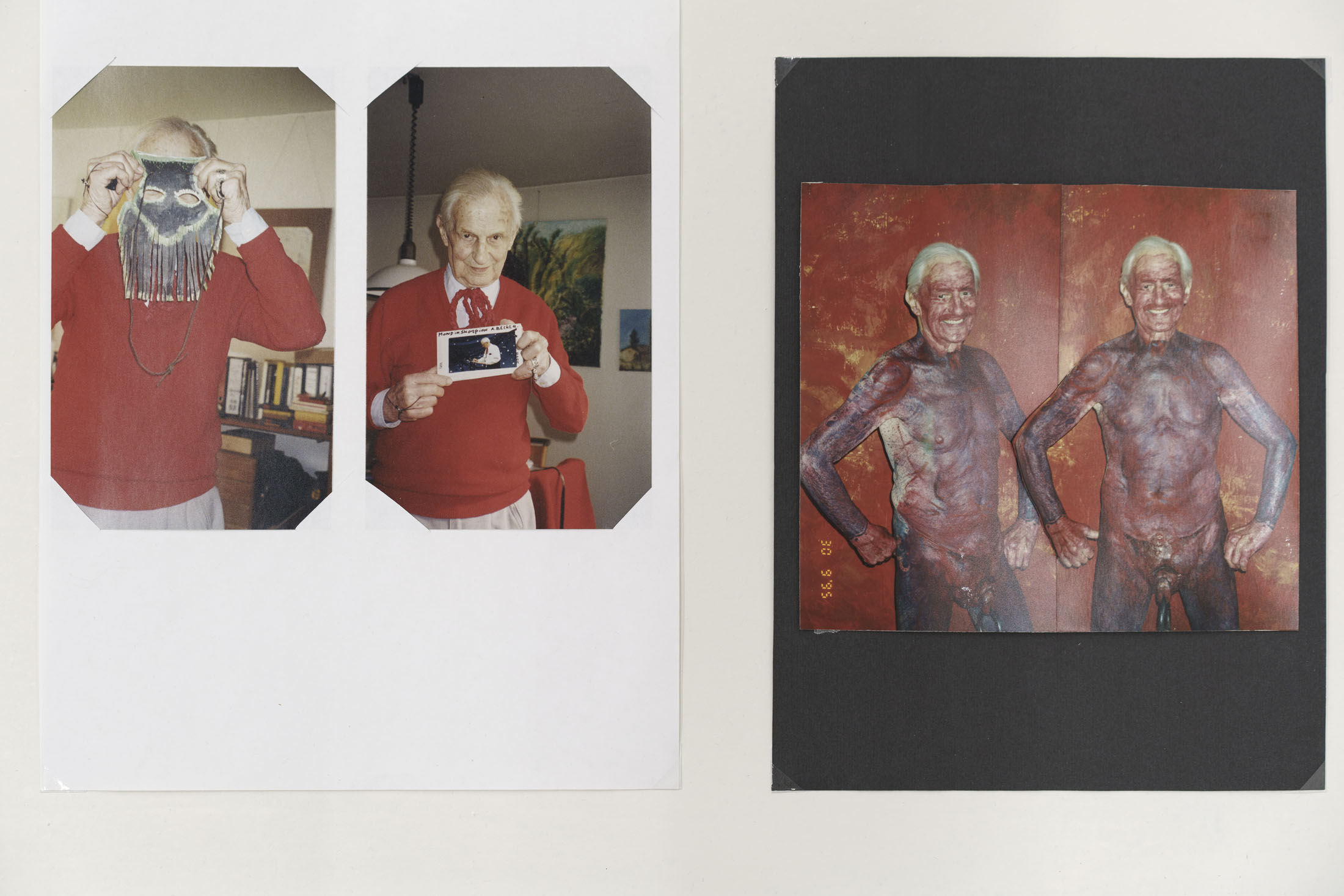
In his autobiography, Photos are my Life (1993), Becker describes a memory from a cruisy Hamburg sauna: “one time there was a coal shoveler in the sauna. He looked superb. He was filthy, really black, and stood under the shower and washed himself. That was the most beautiful thing I had ever seen. A black white man [Einen schwarzweißen Menschen]. Unfortunately, I couldn’t photograph him, so instead we got it on.” He may not have been able to photograph the coal shoveler, but that did not stop him from recreating the effect at home and photographing himself. Coating himself with black paint, he stood naked before the camera, revealing a blackened body thrown against a sharp white background. In this act, it is not the black body that is idealized, but the blackening of the body—the act of deviation rather than the state of deviance. Furthermore, the German term “schwarzweiß” also refers to black and white photography, suggesting not only a fetish for becoming other, but also one for becoming an image, dependent precisely on an equation of the other with the image.
– Tabitha Love
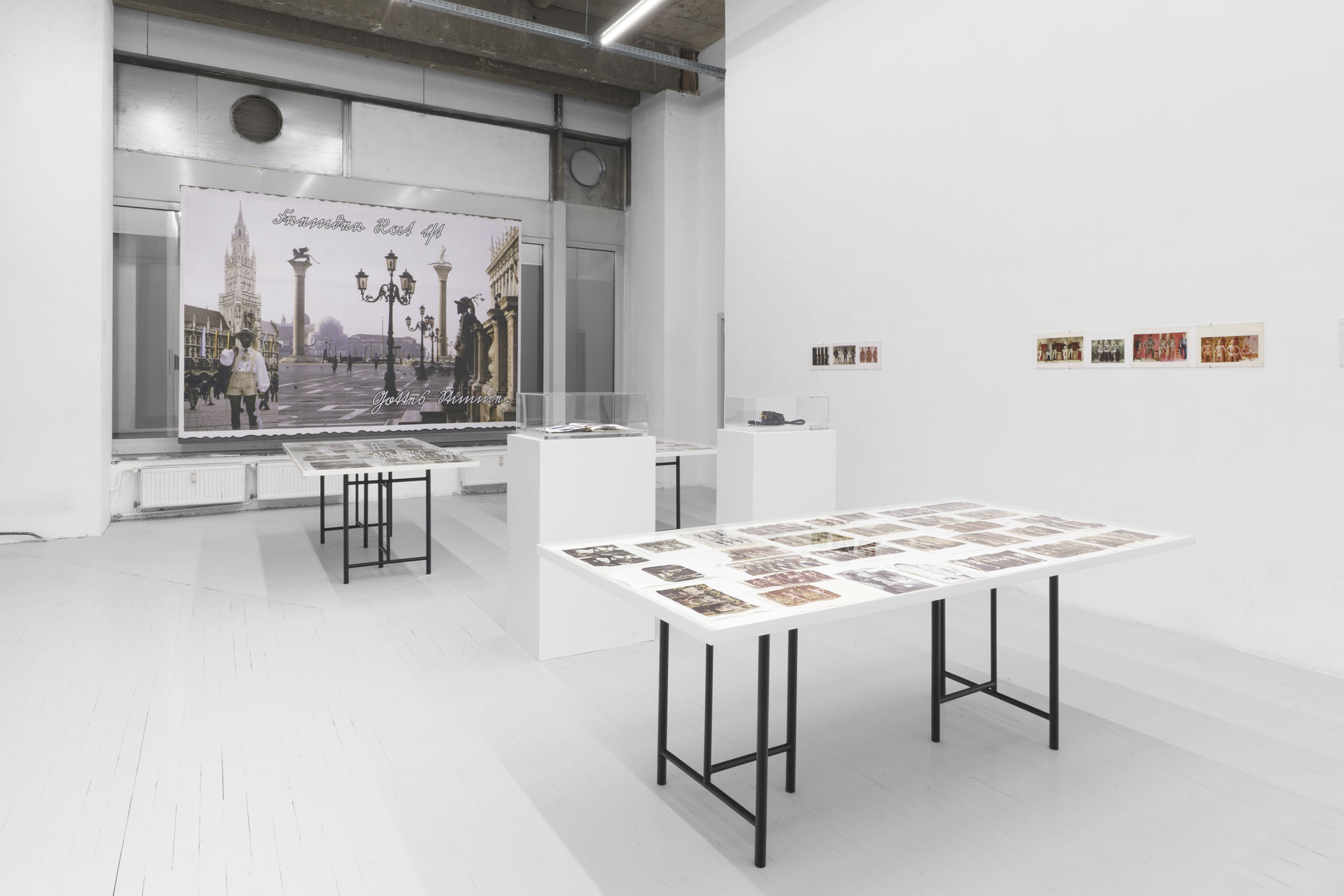
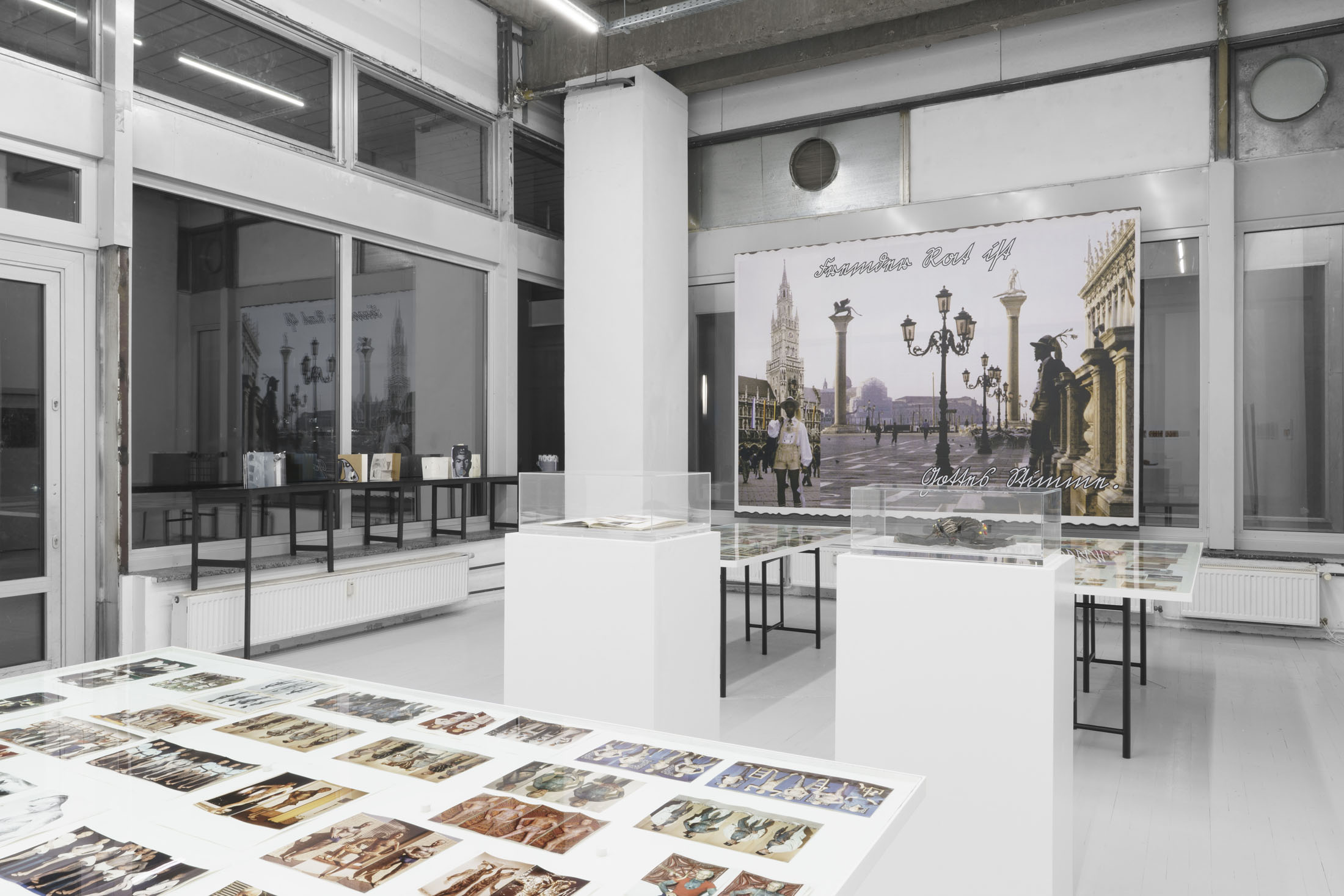
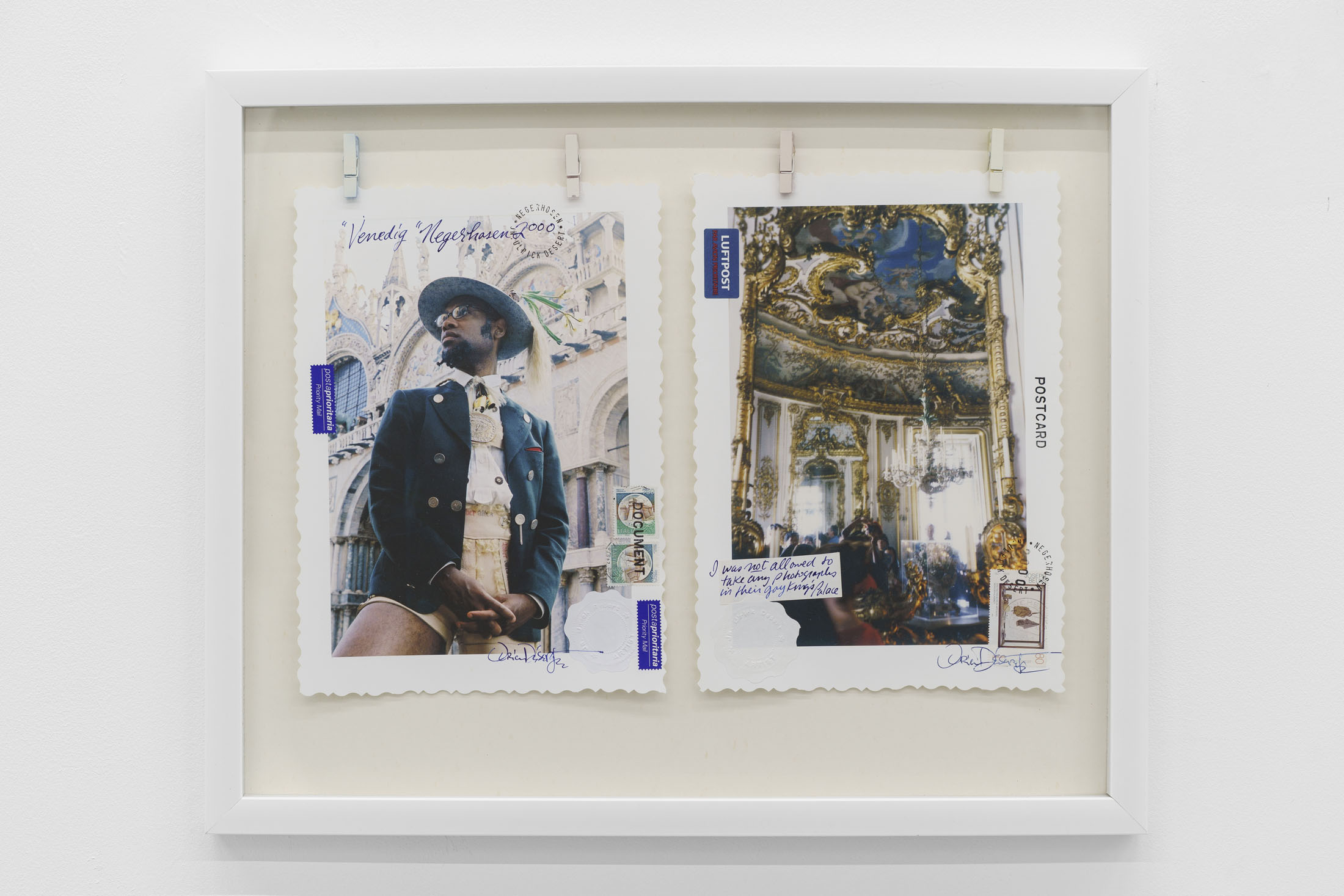
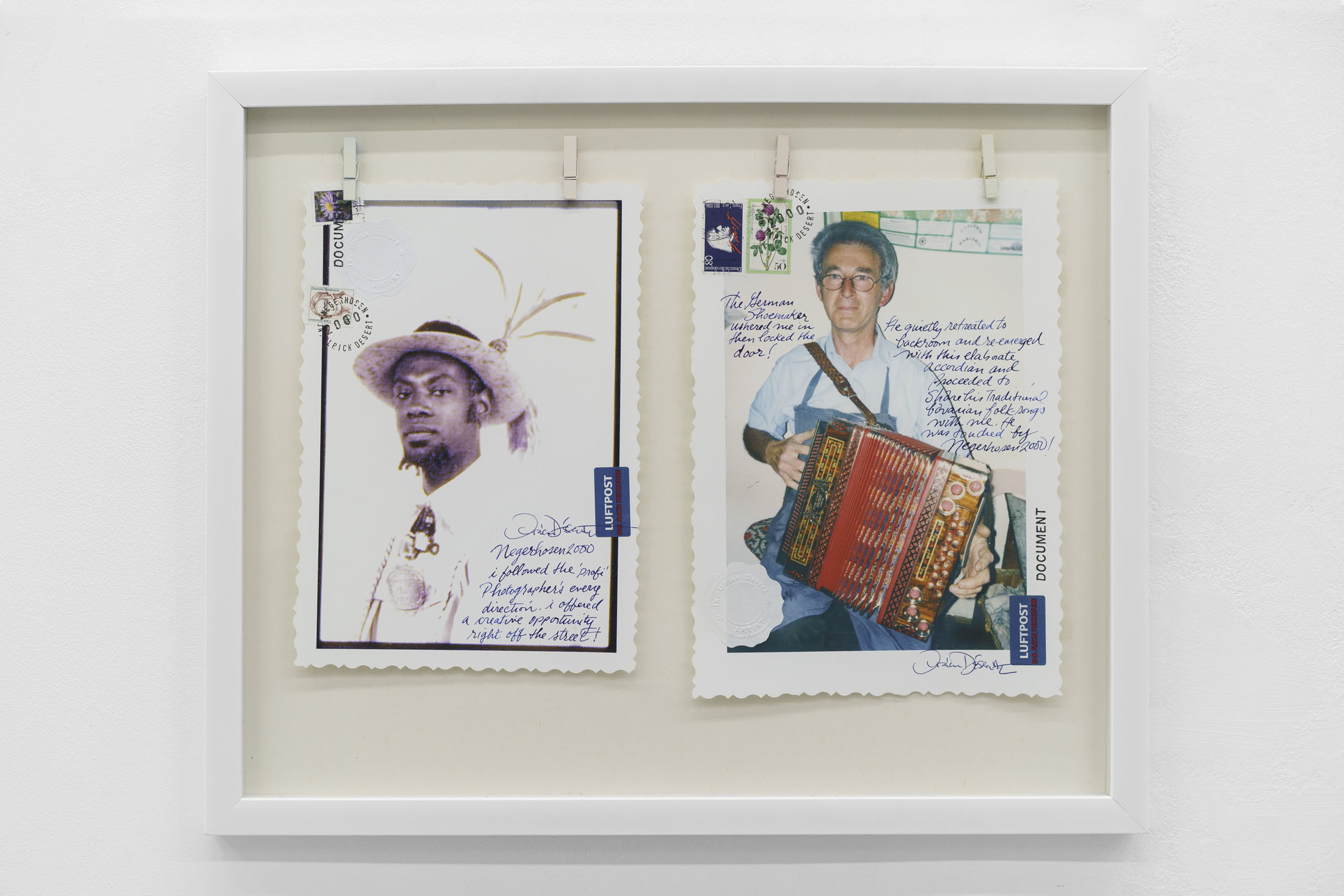
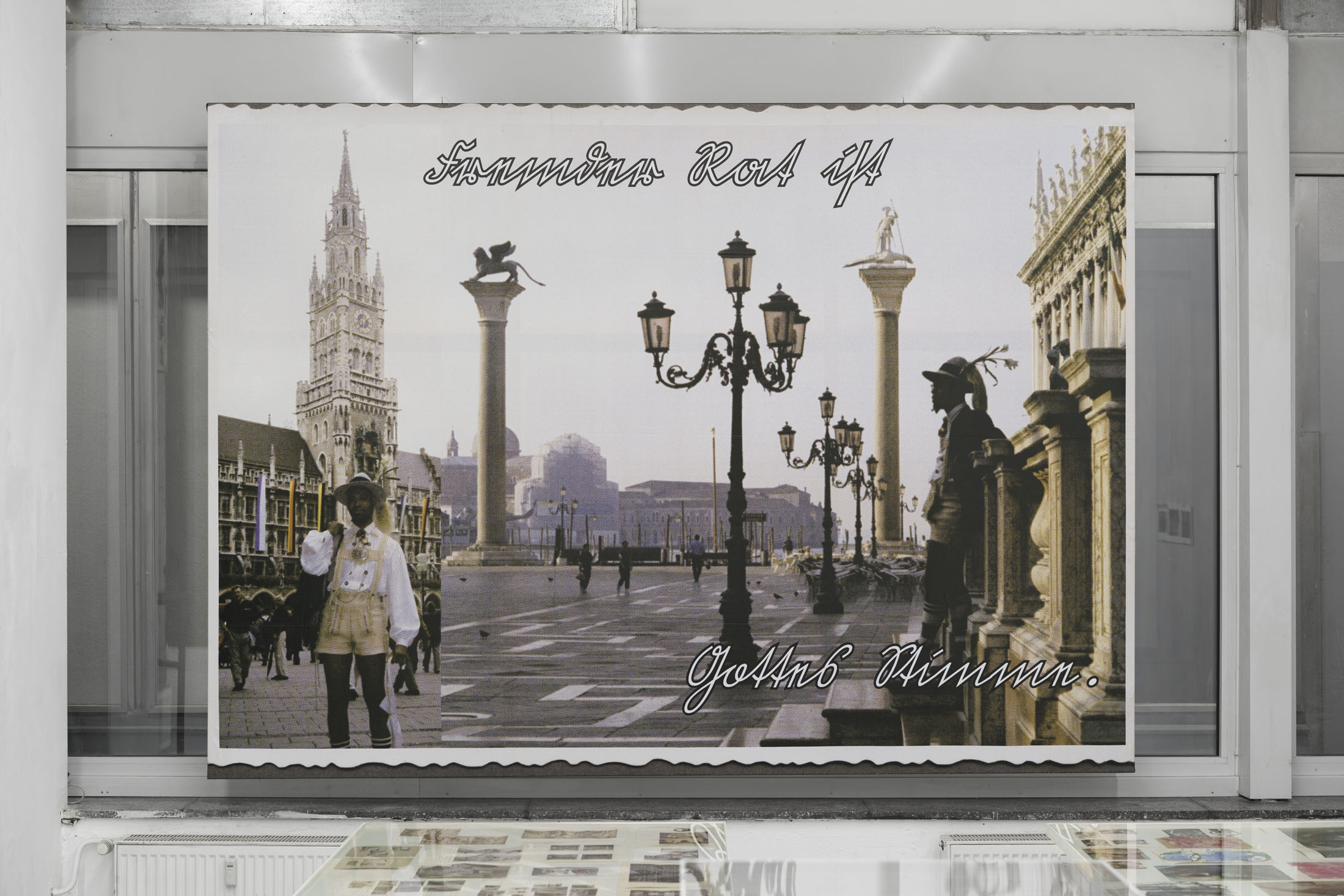
Gottes Stimme (from the Postkarten von meinen Lieben series), 2006, digital print on textile