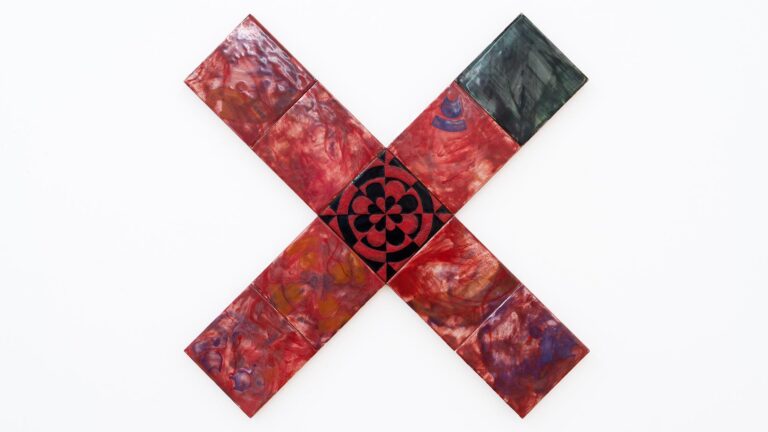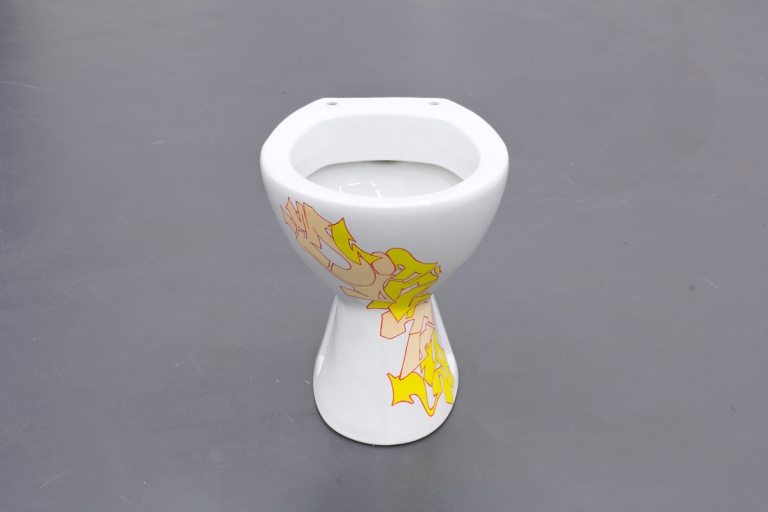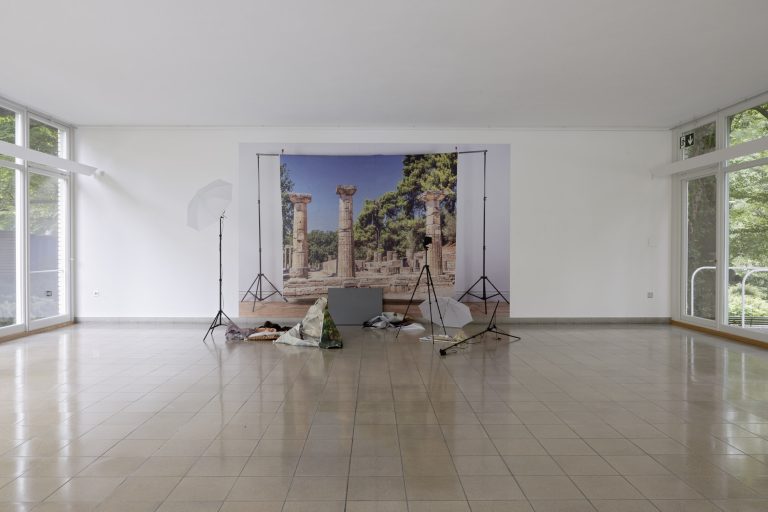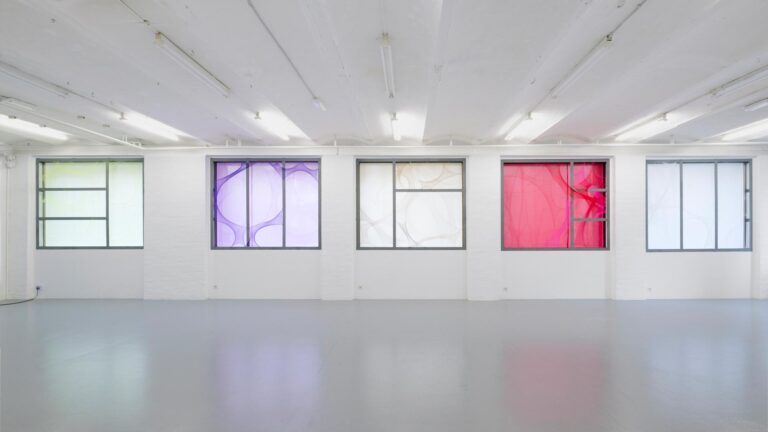
With MERGERS AND ACQUISITIONS, Louisa Gagliardi and Adam Cruces take over the 800 m² of La Grange de la Ferme-Asile for a joint exhibition consisting exclusively of new works. Borrowed from the vocabulary of finance, the title introduces an immediate tension. This is not about business management, but a metaphorical shift: thinking about the relationship between landscape and humanity as a field of alliances, absorptions, resistances and ongoing negotiations.
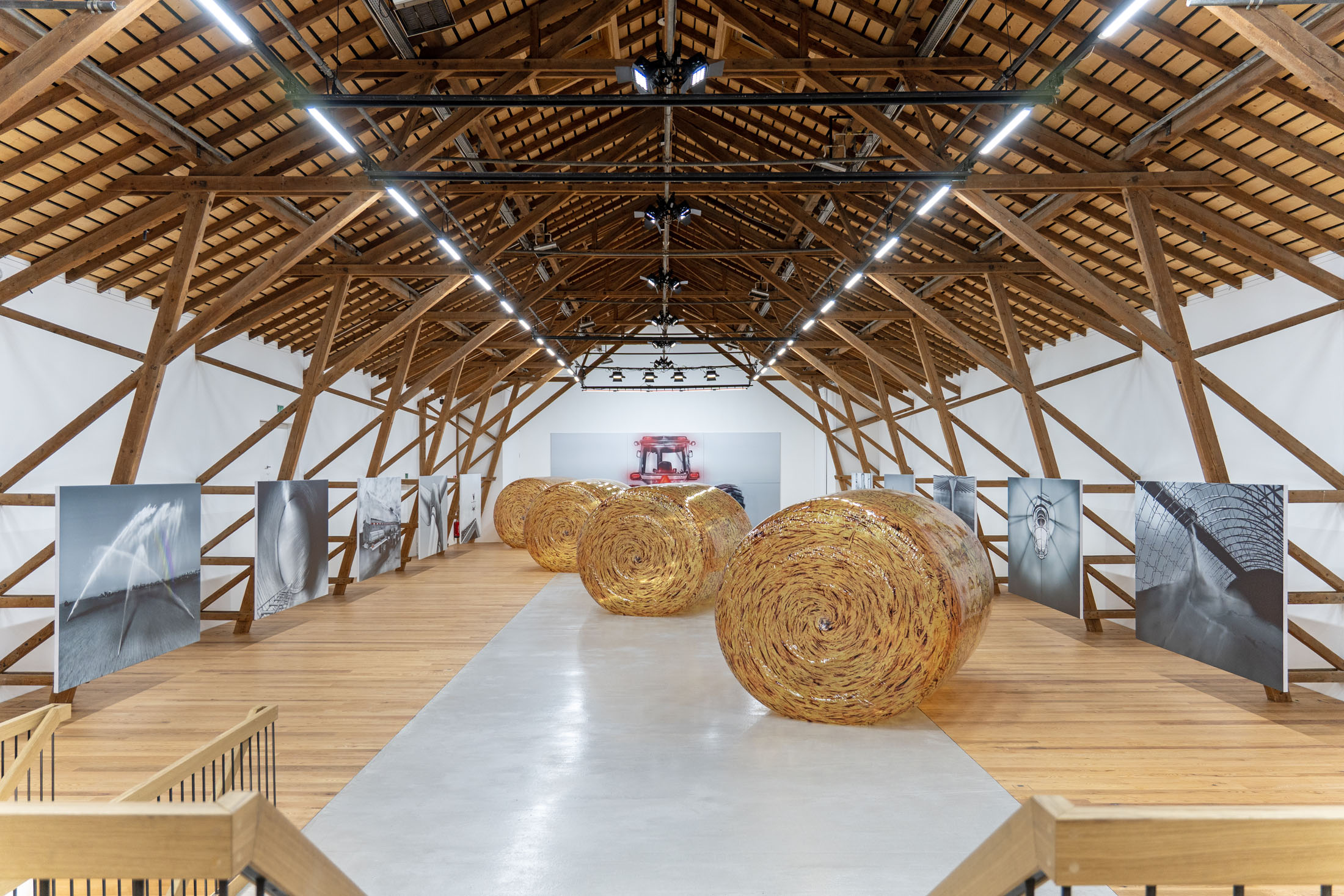
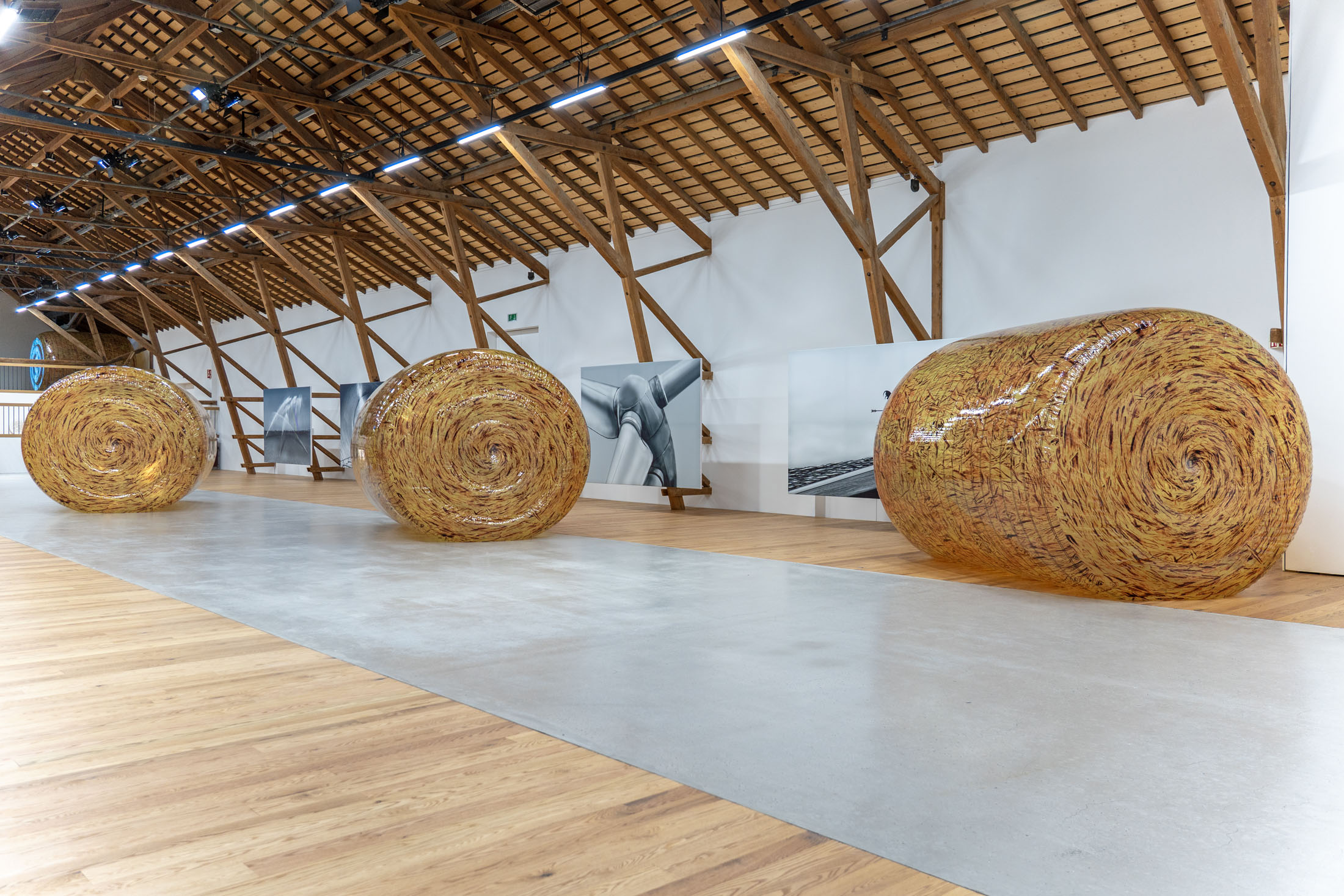
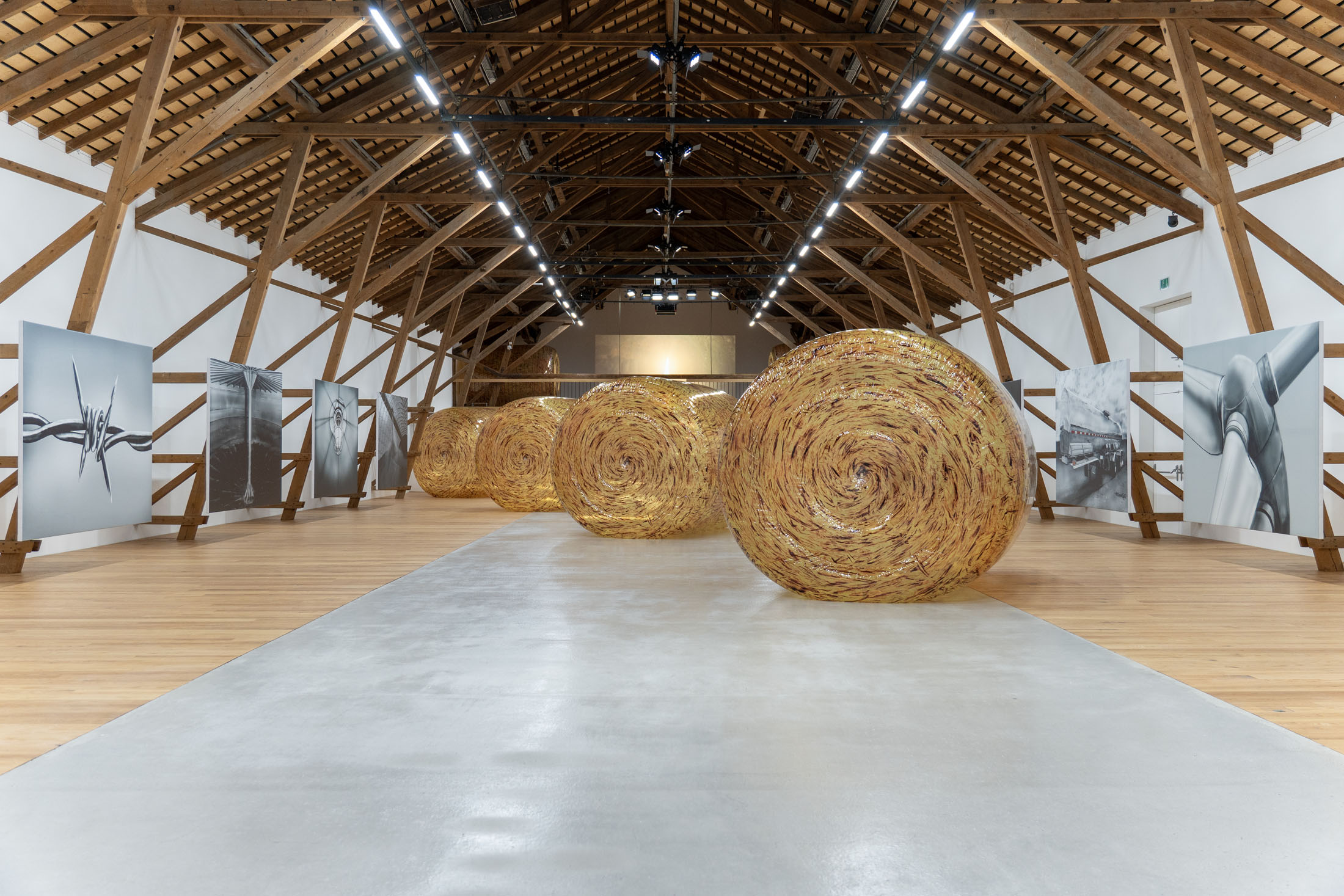
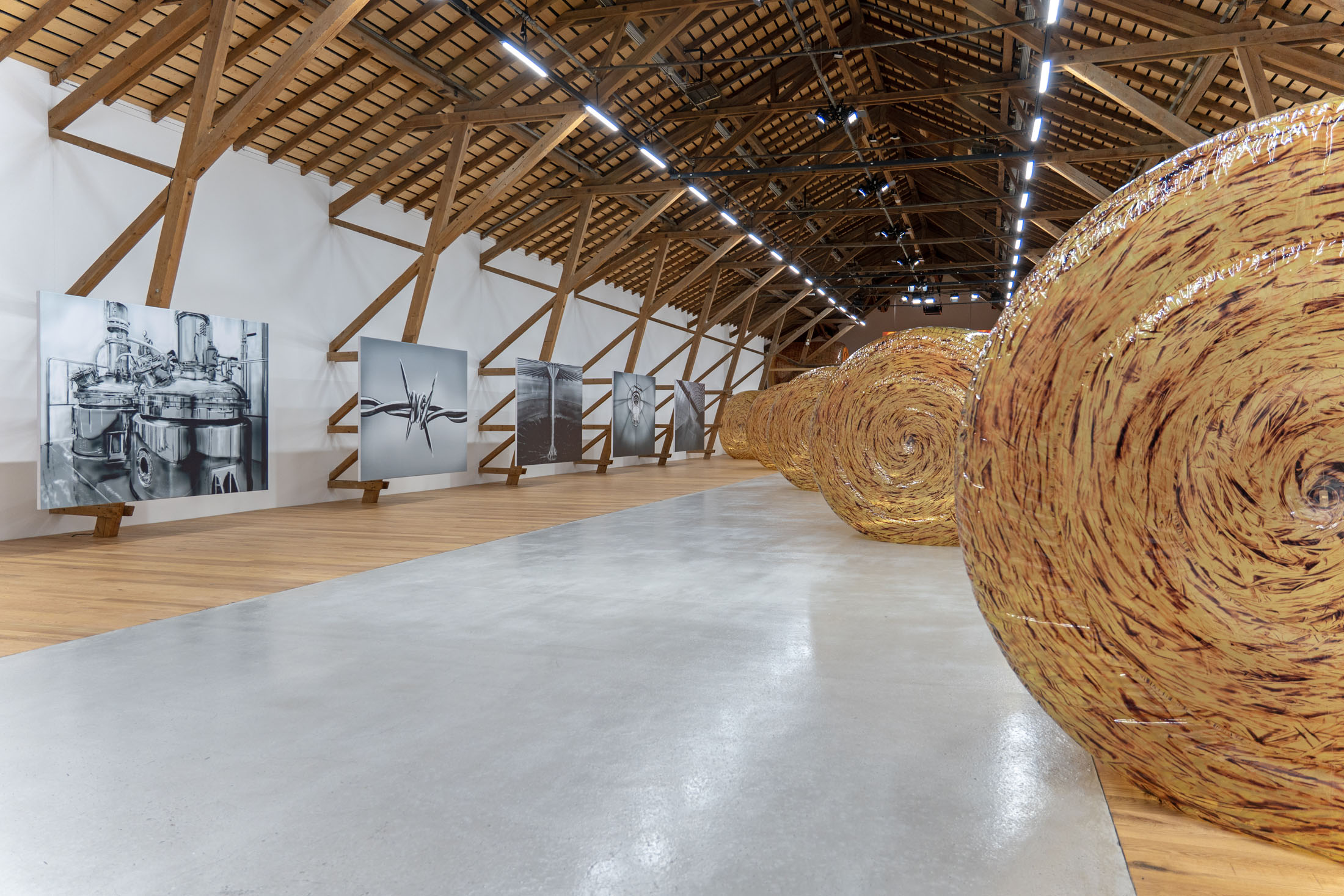
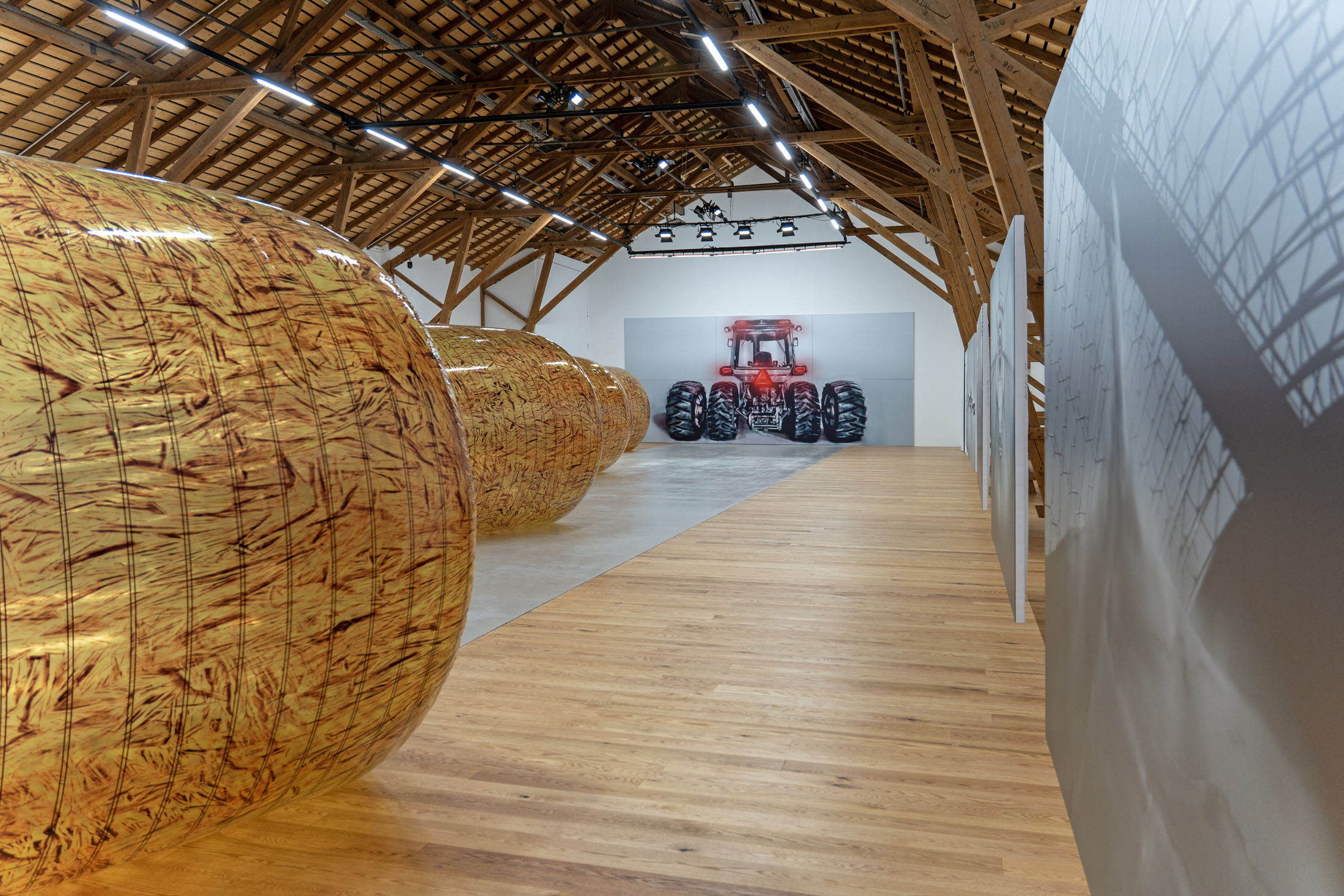
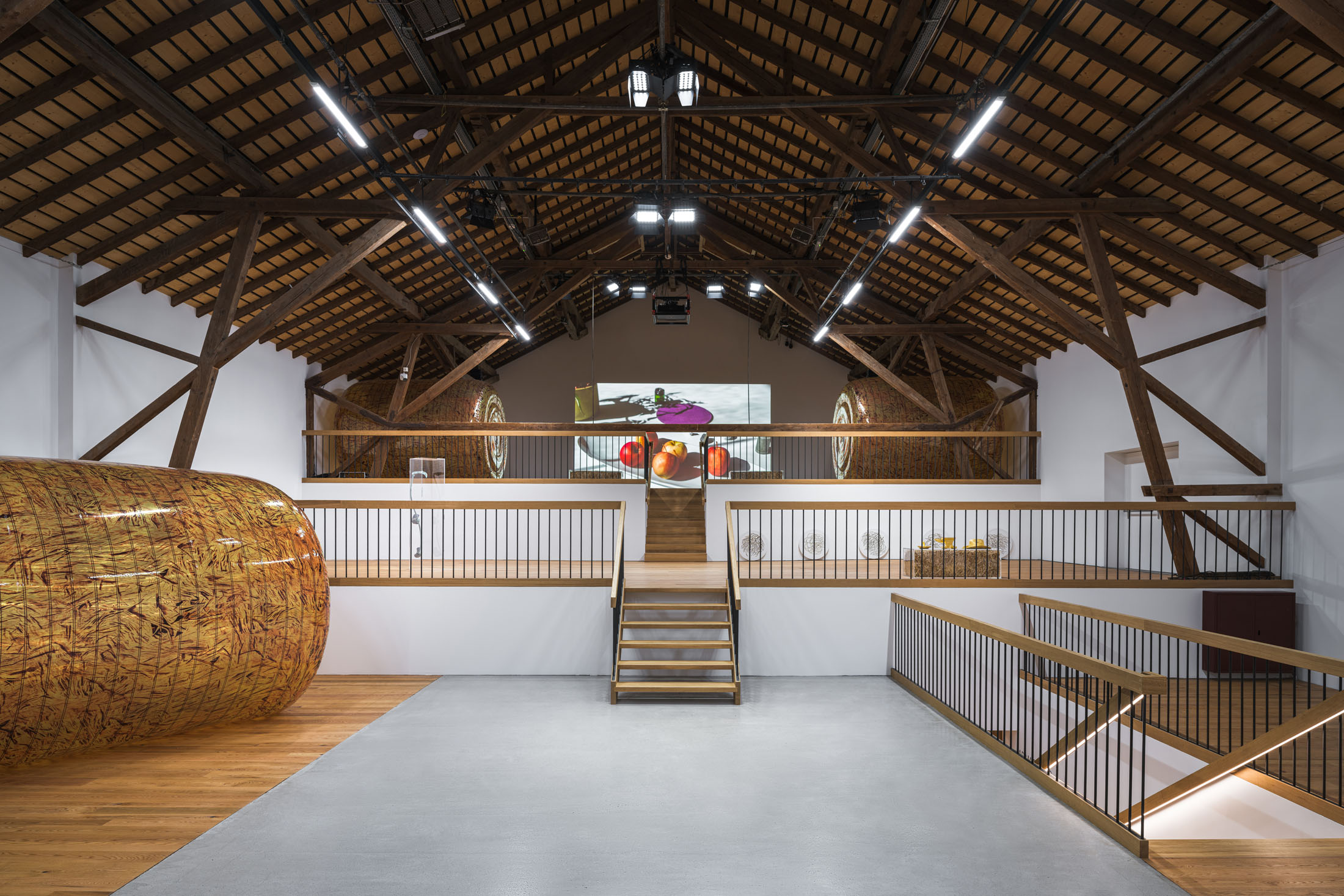
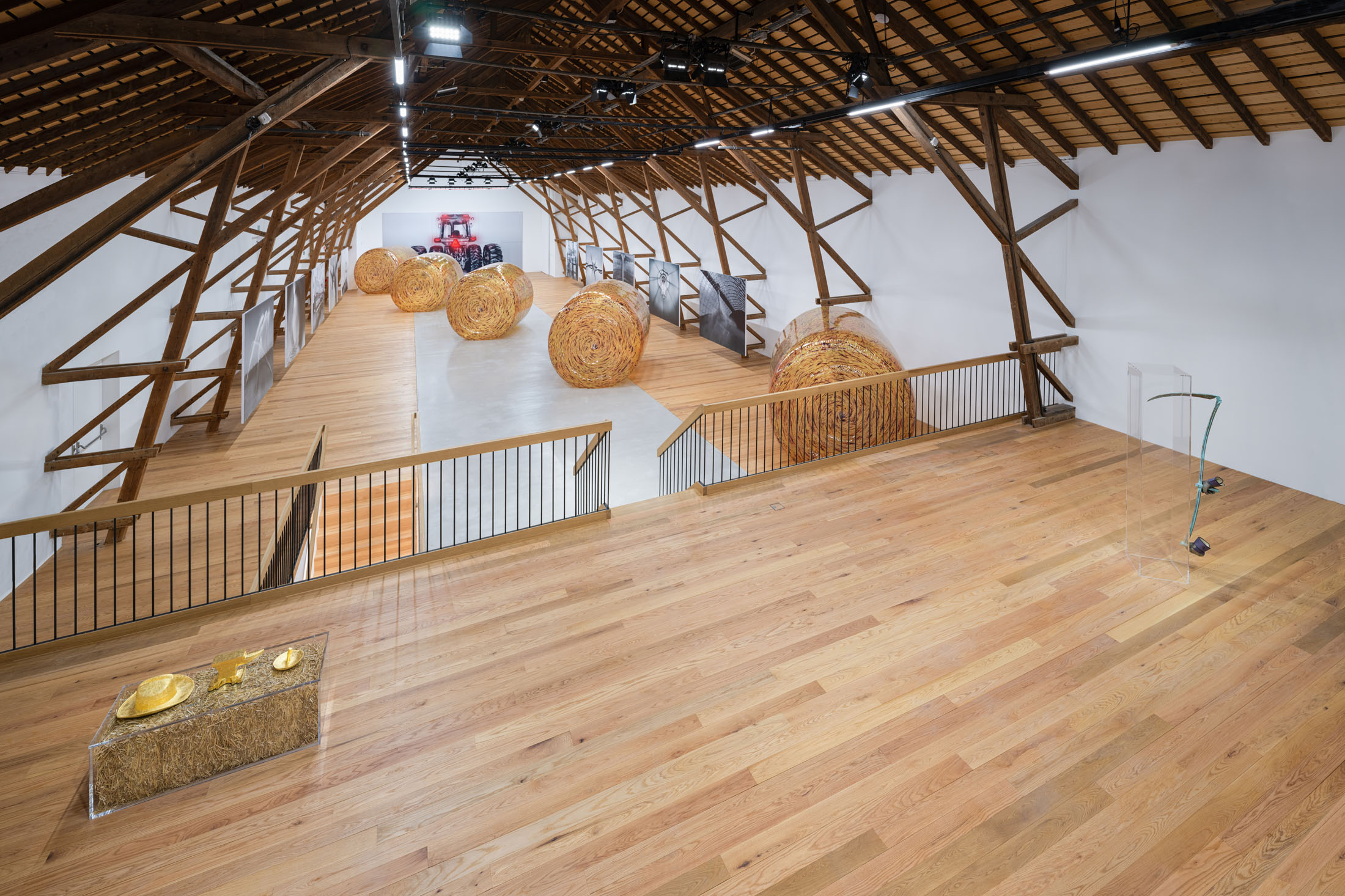
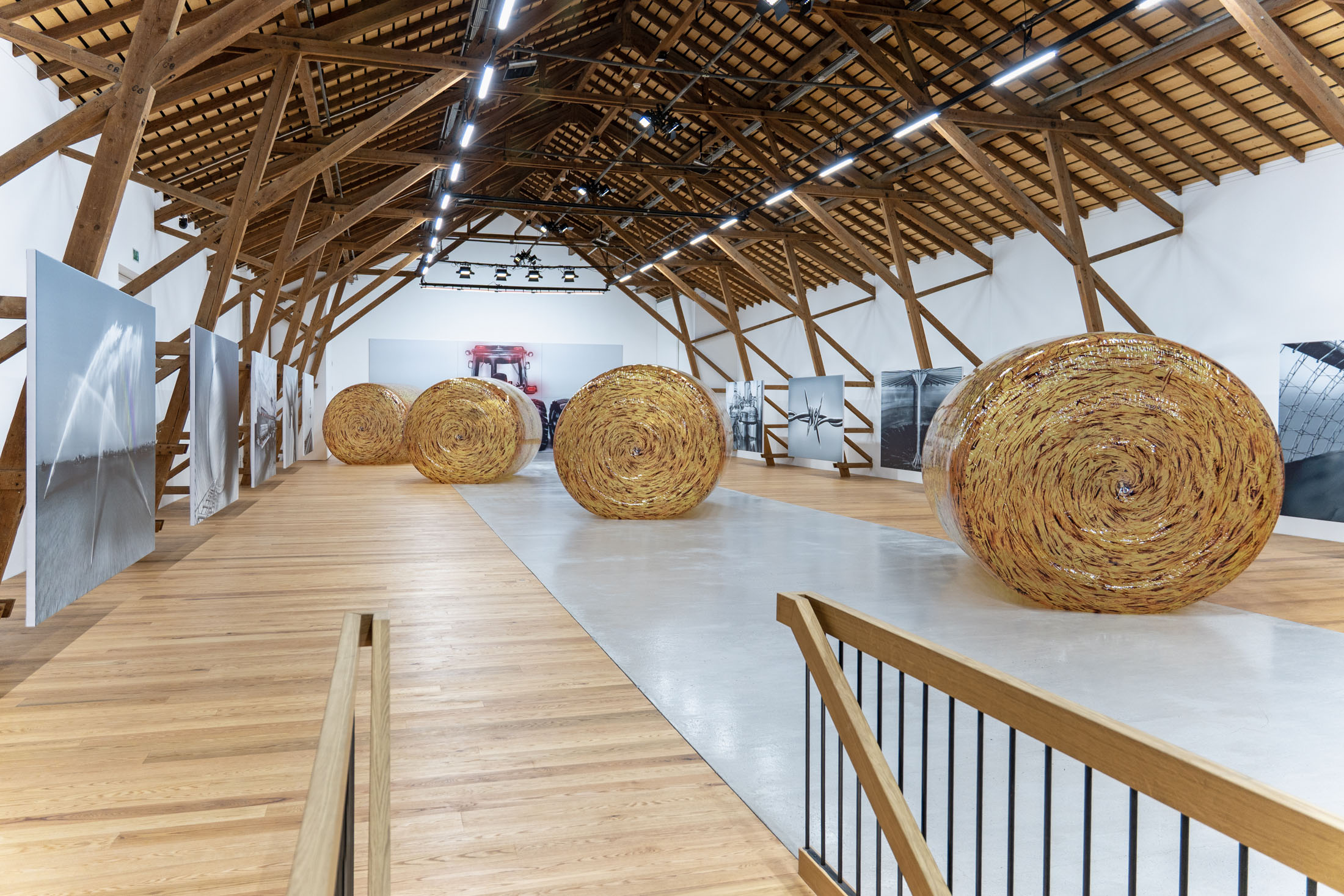
In the old hay barn, whose architecture bears the mark of its agricultural past, the works replay and shift this memory. Straw bales, tools, machines and large mechanised equipment: a range of elements from the rural world that are, here, enlarged, constrained or transfigured. The whole is bathed in a cold, resolutely artificial light, which gives the installation a clinical appearance. The space is not simply a container; it acts as a catalyst, reduced to its original function in order to be better subverted.
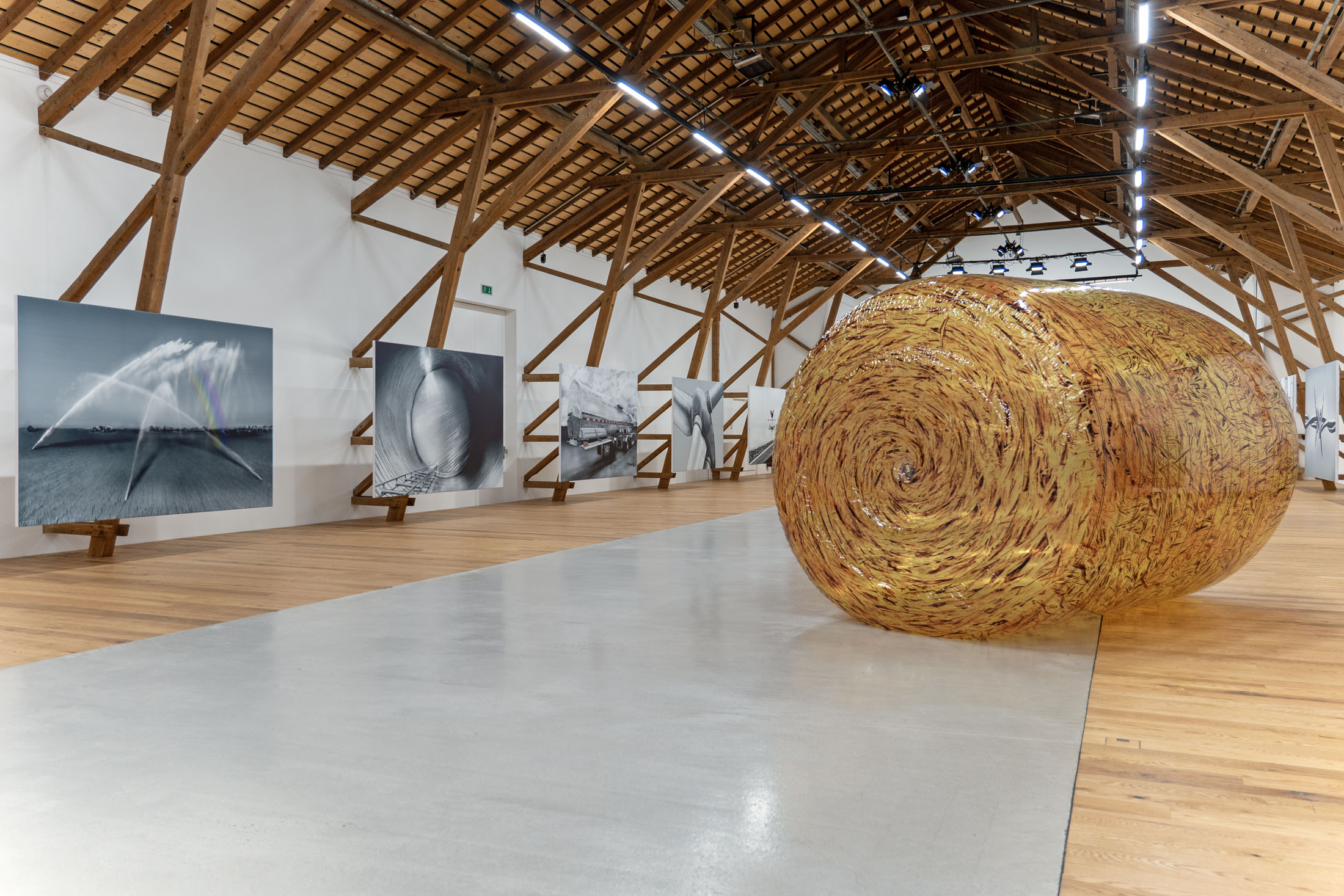
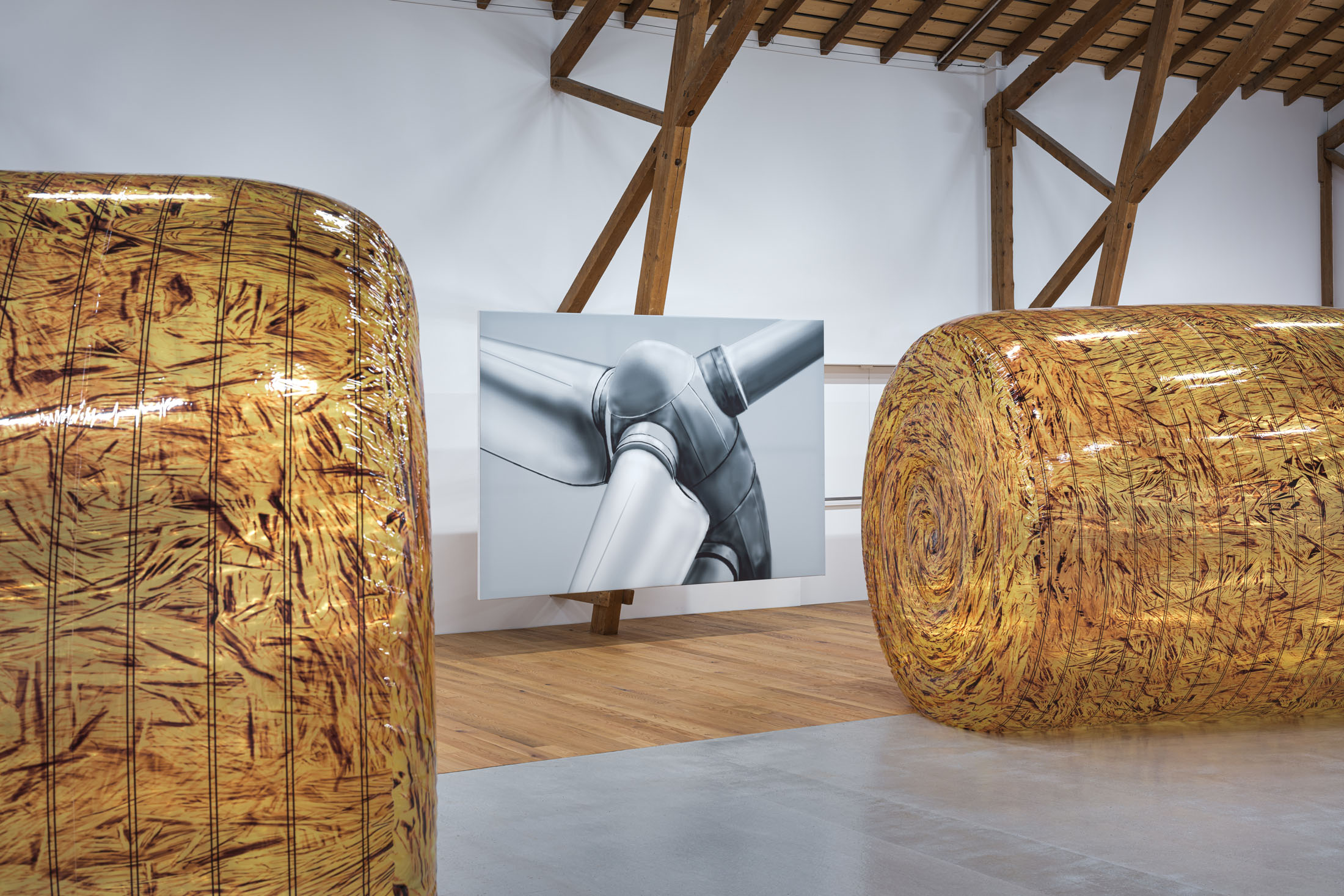
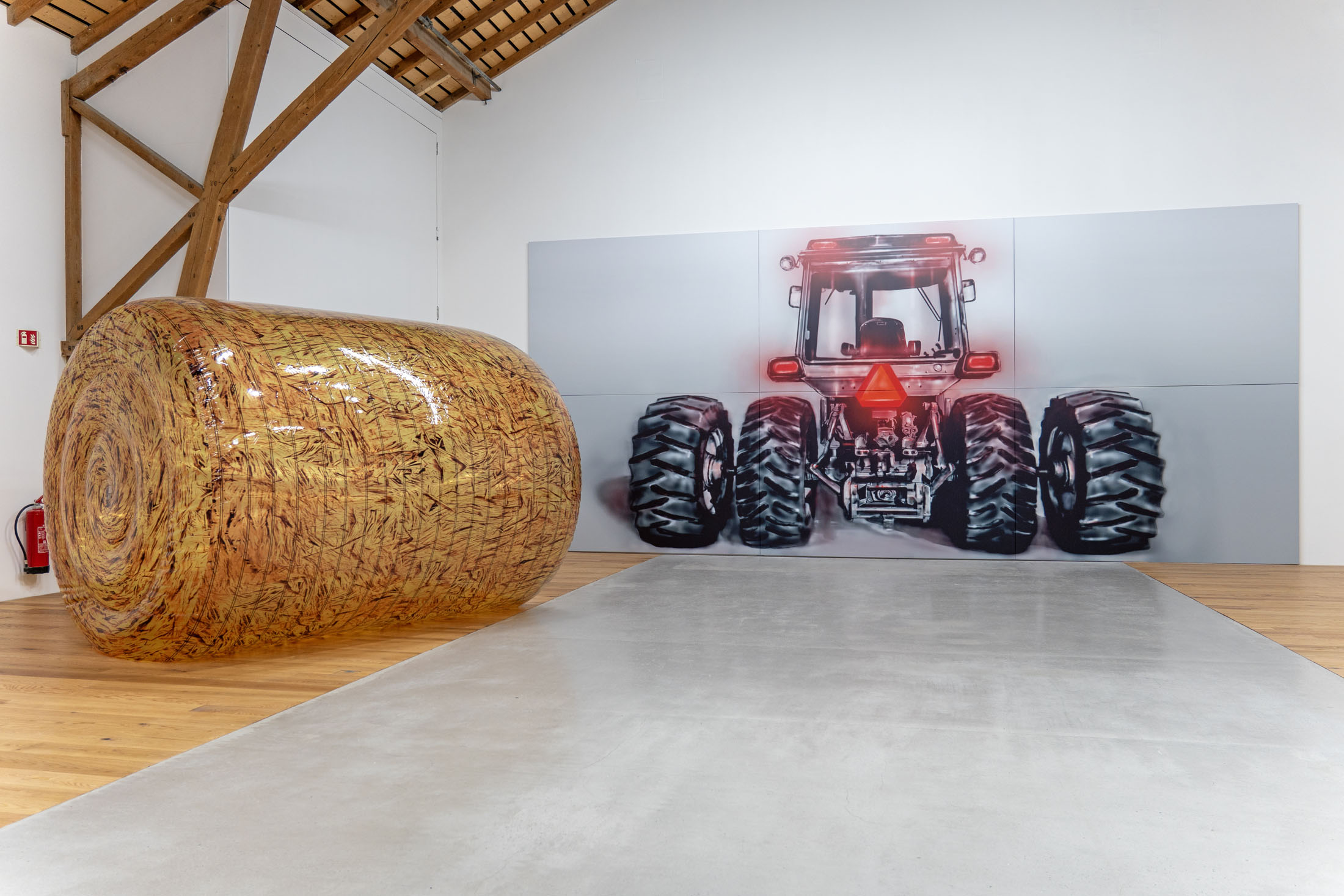
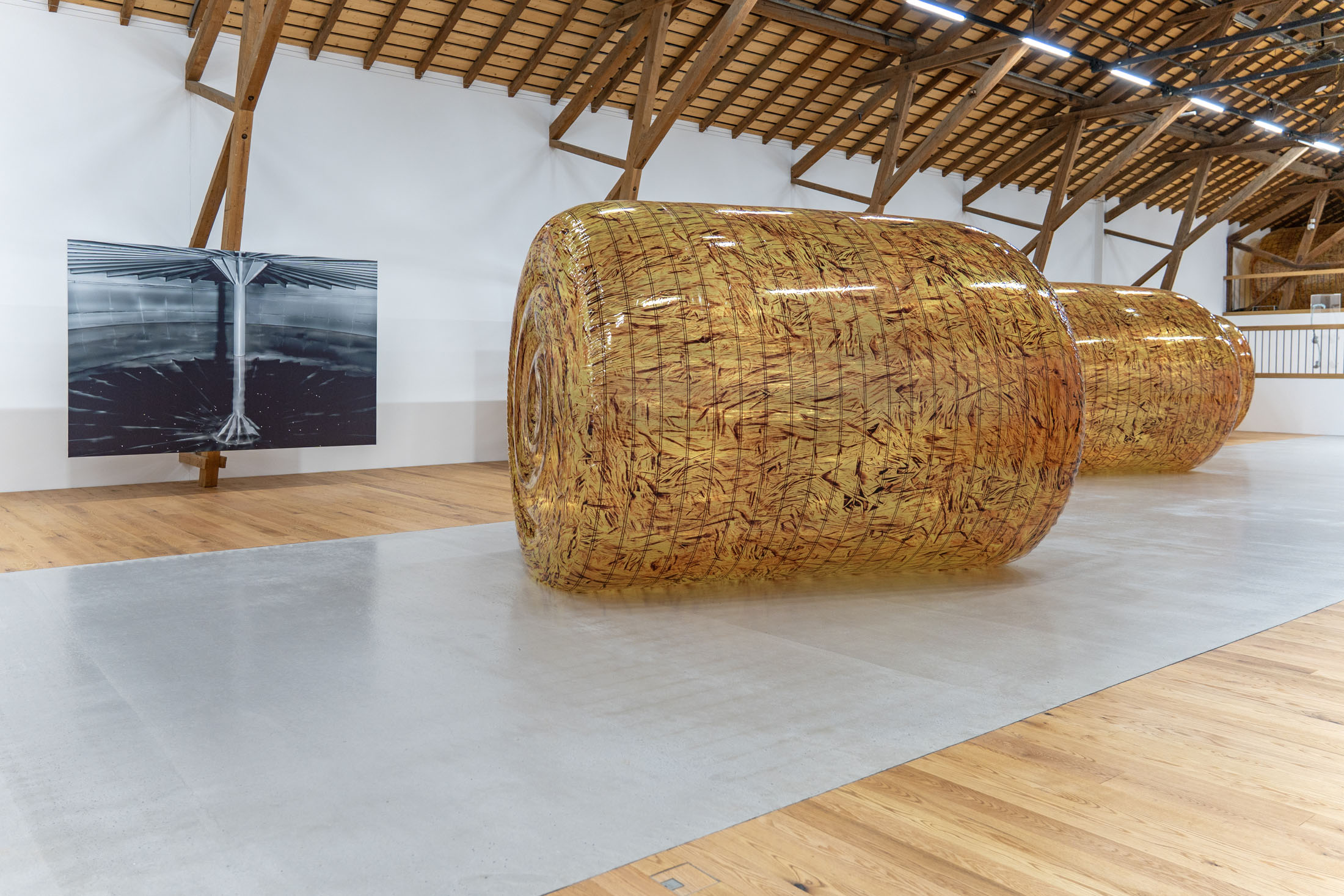
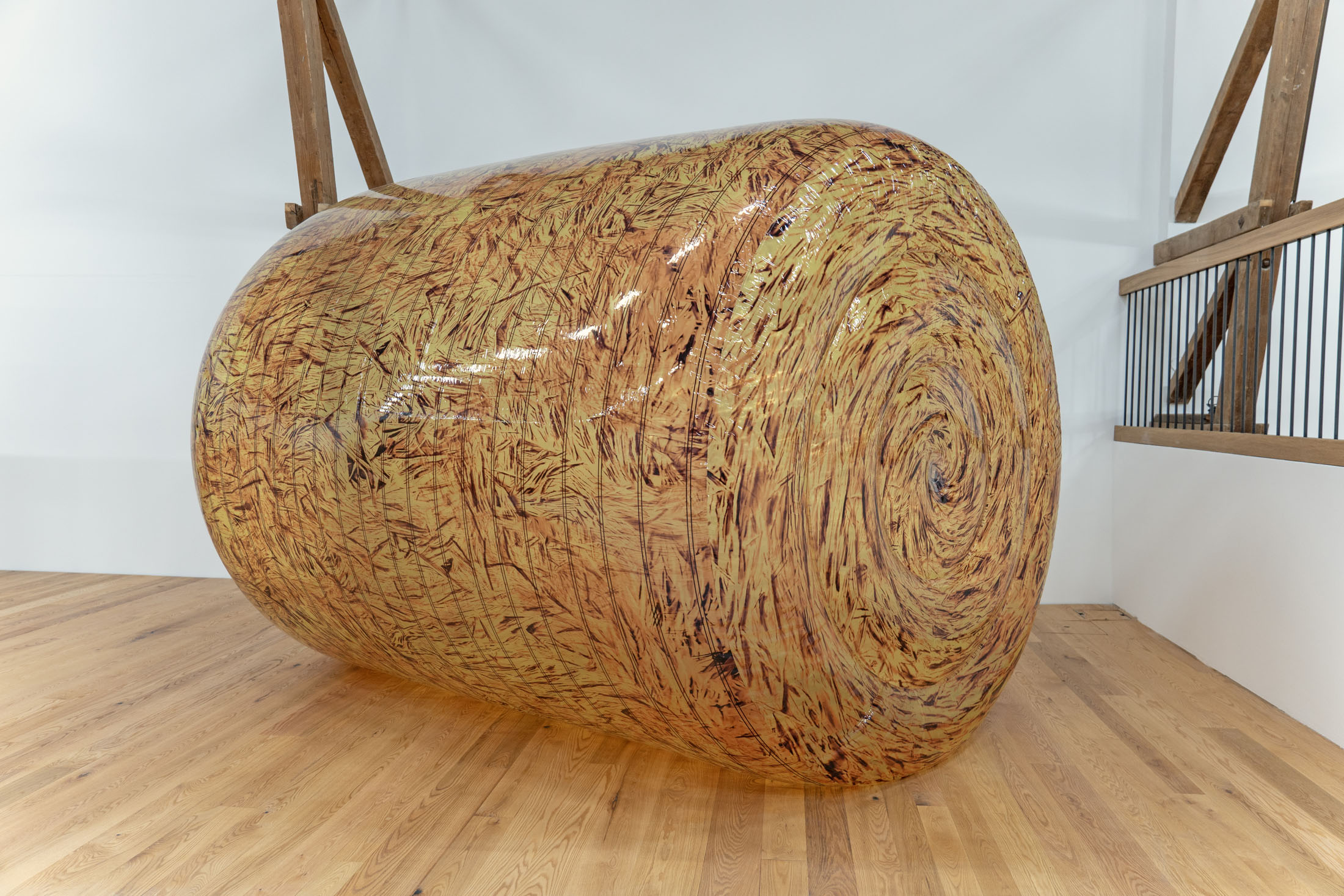
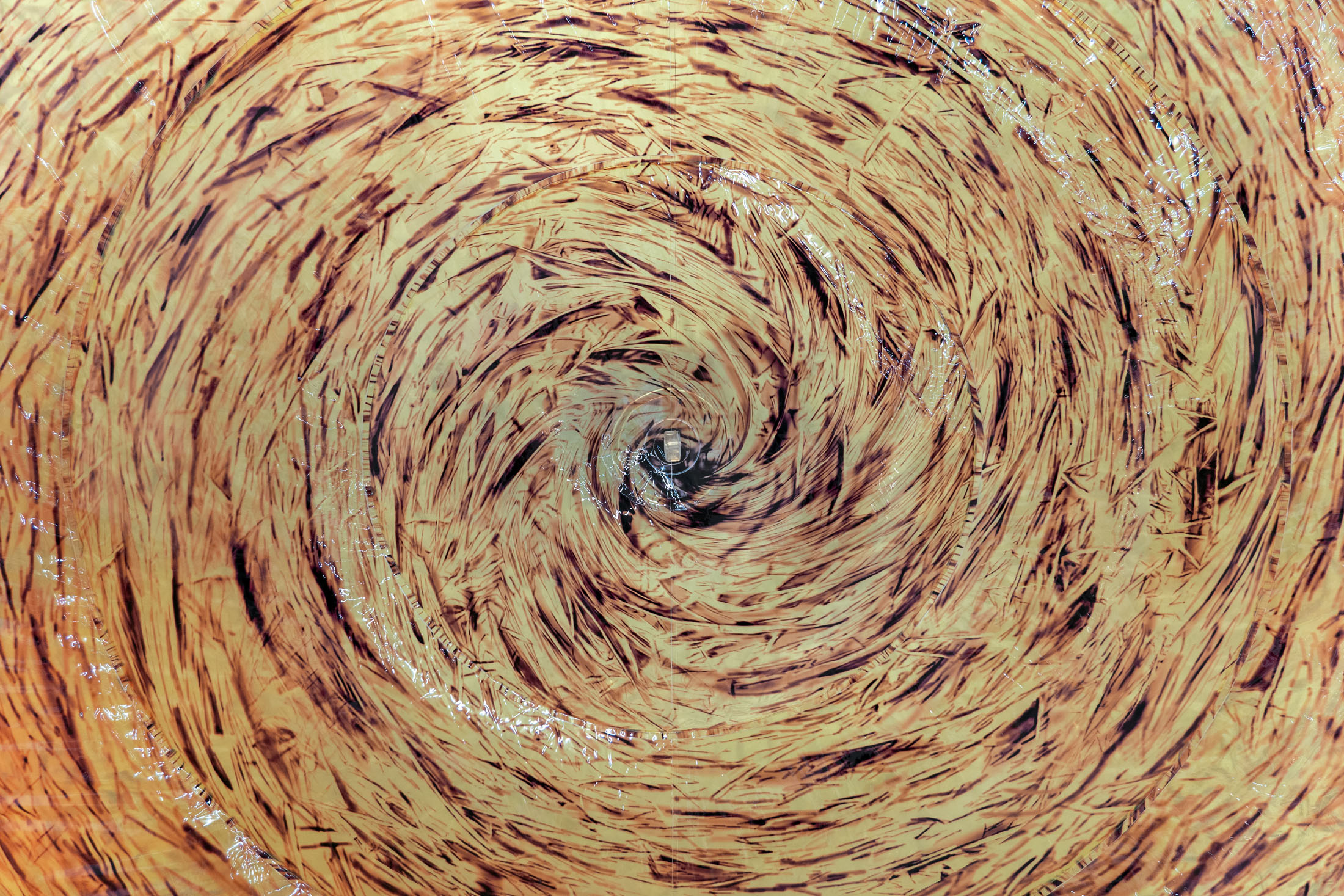
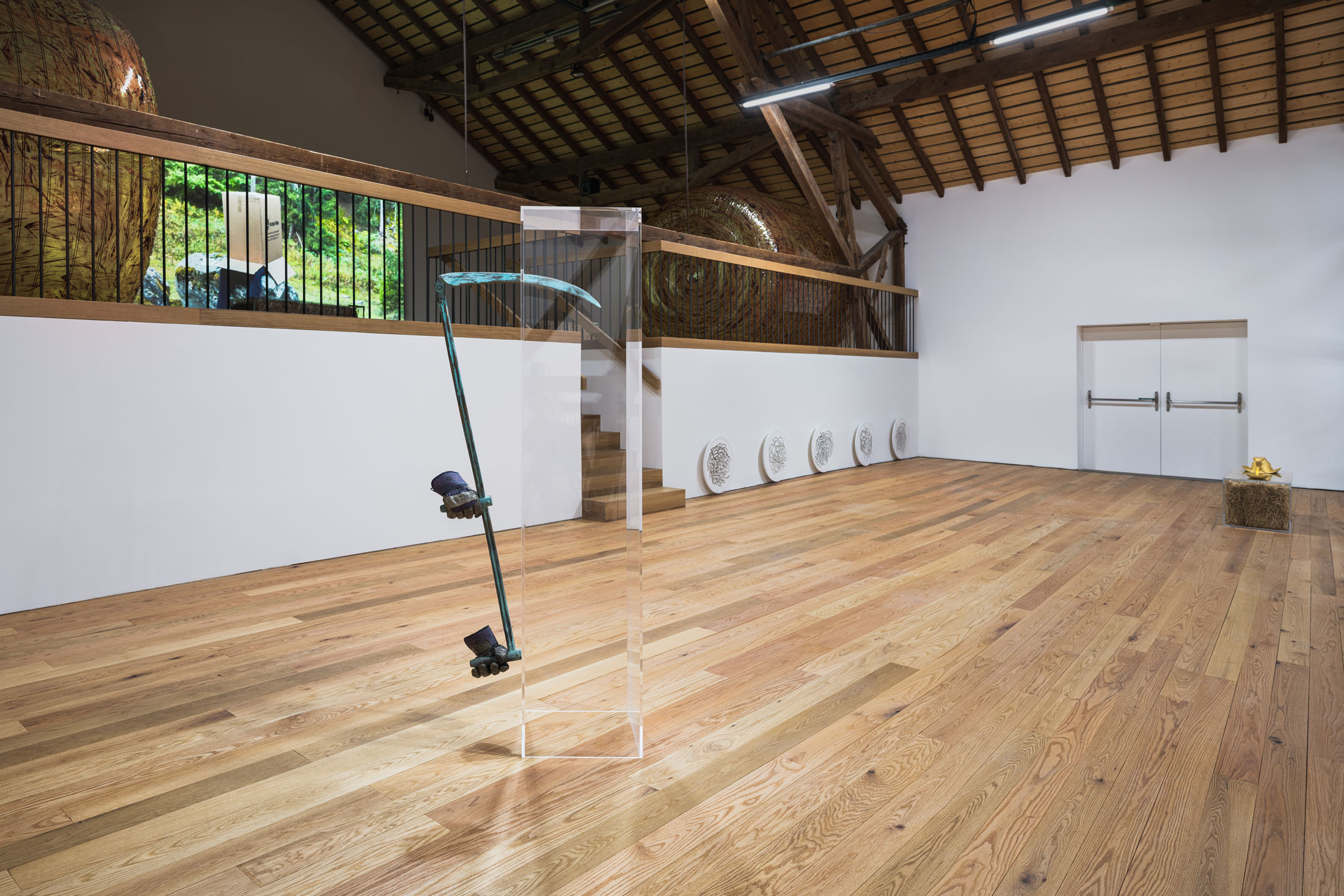
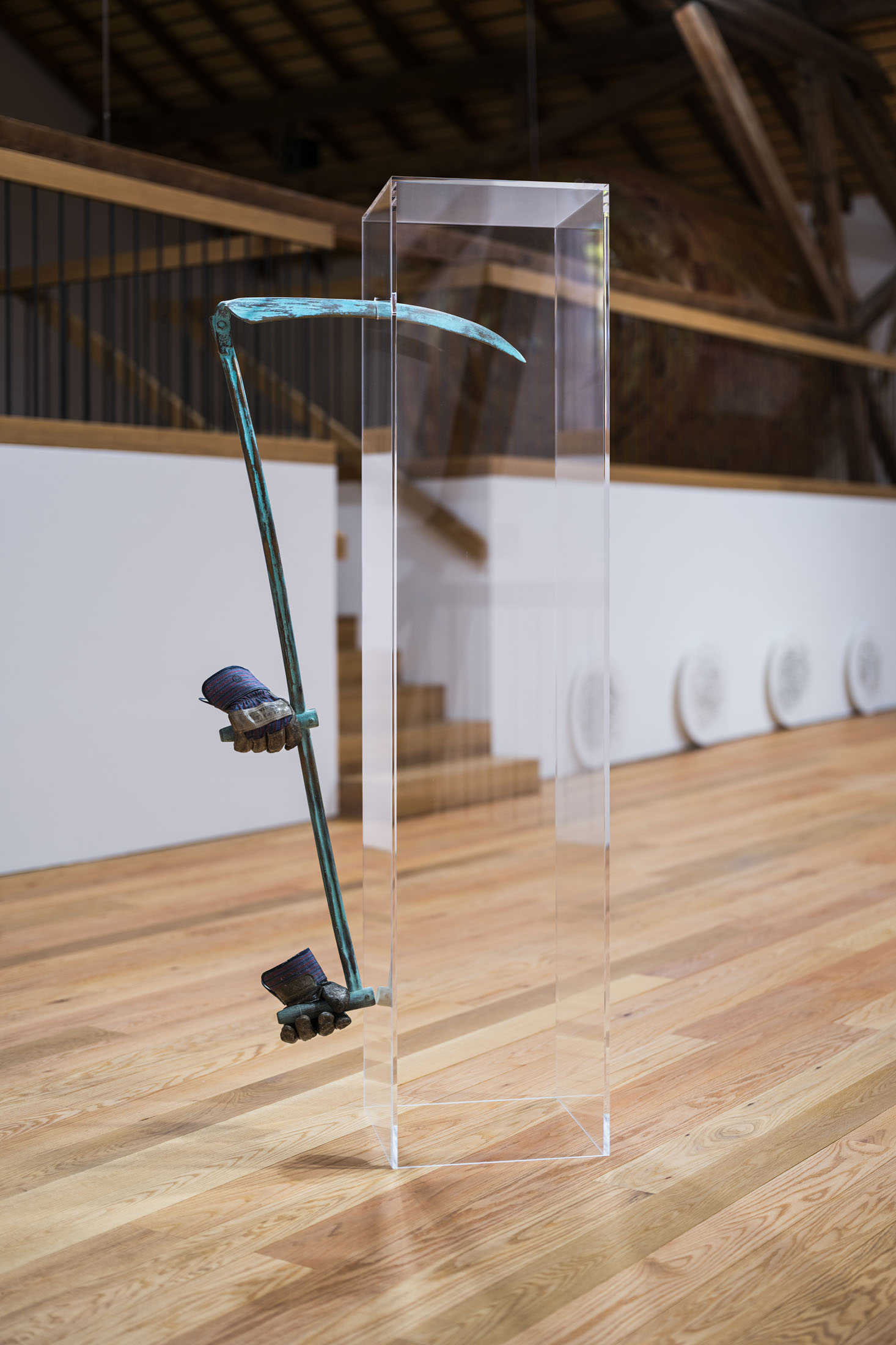
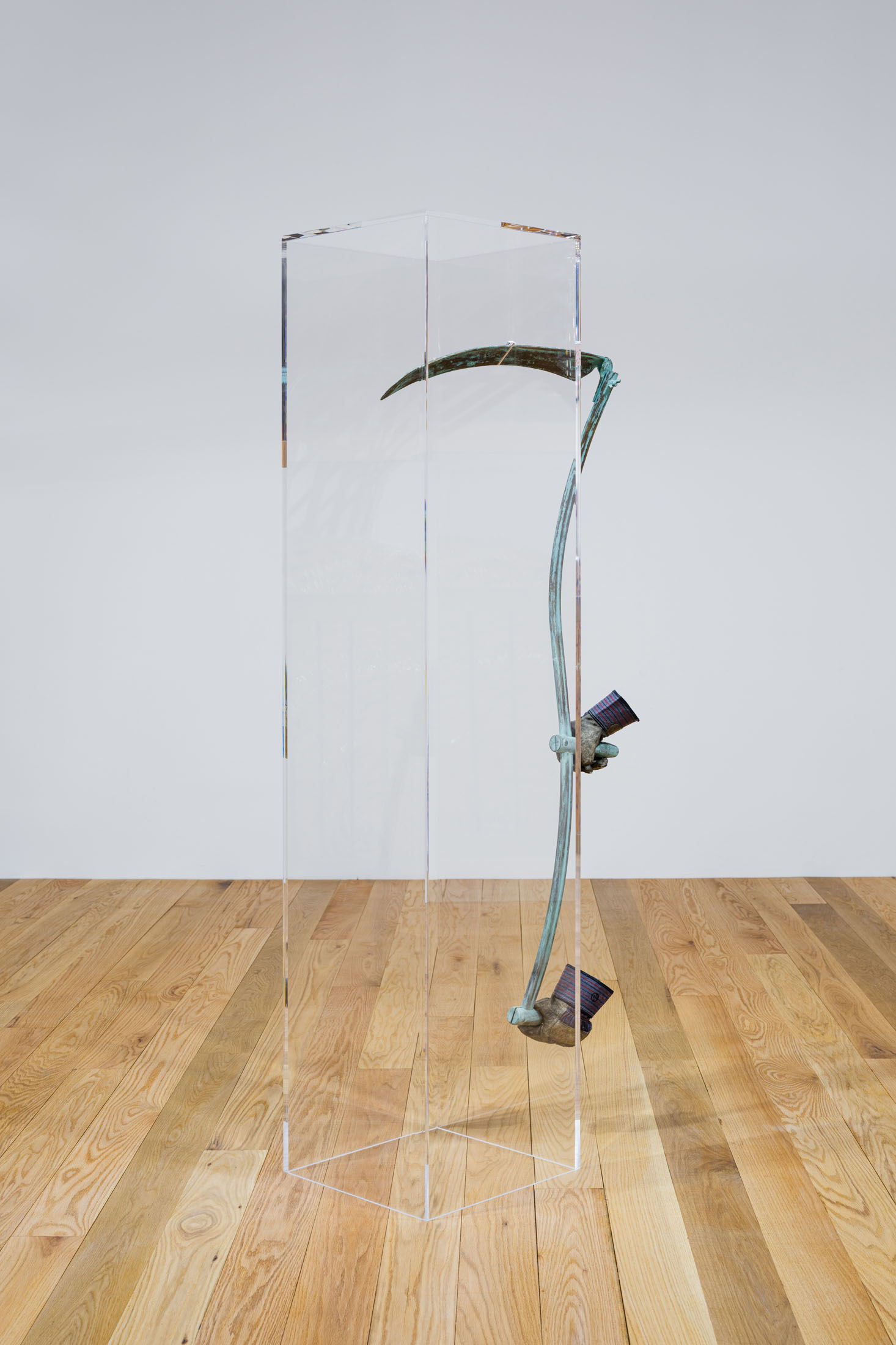
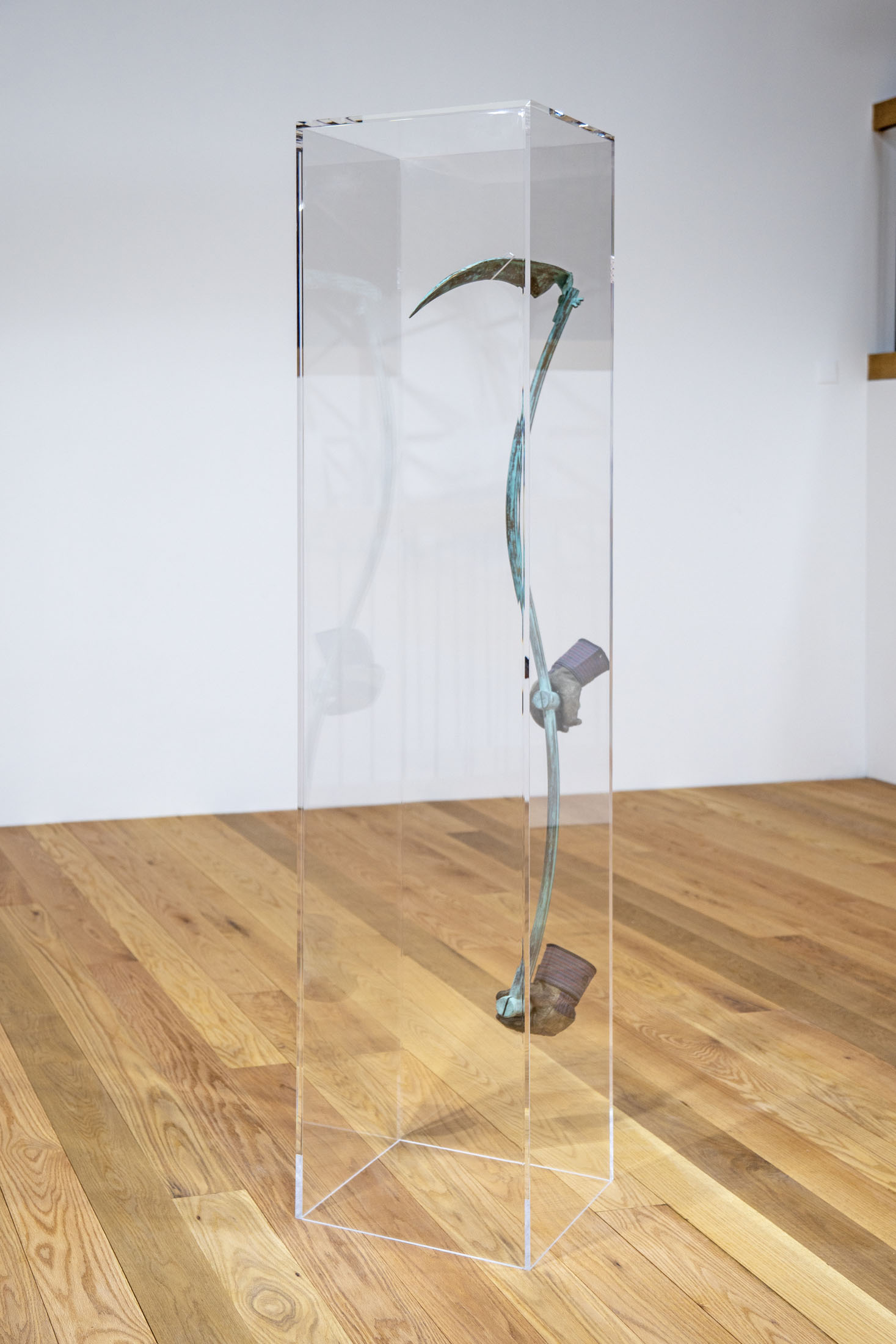
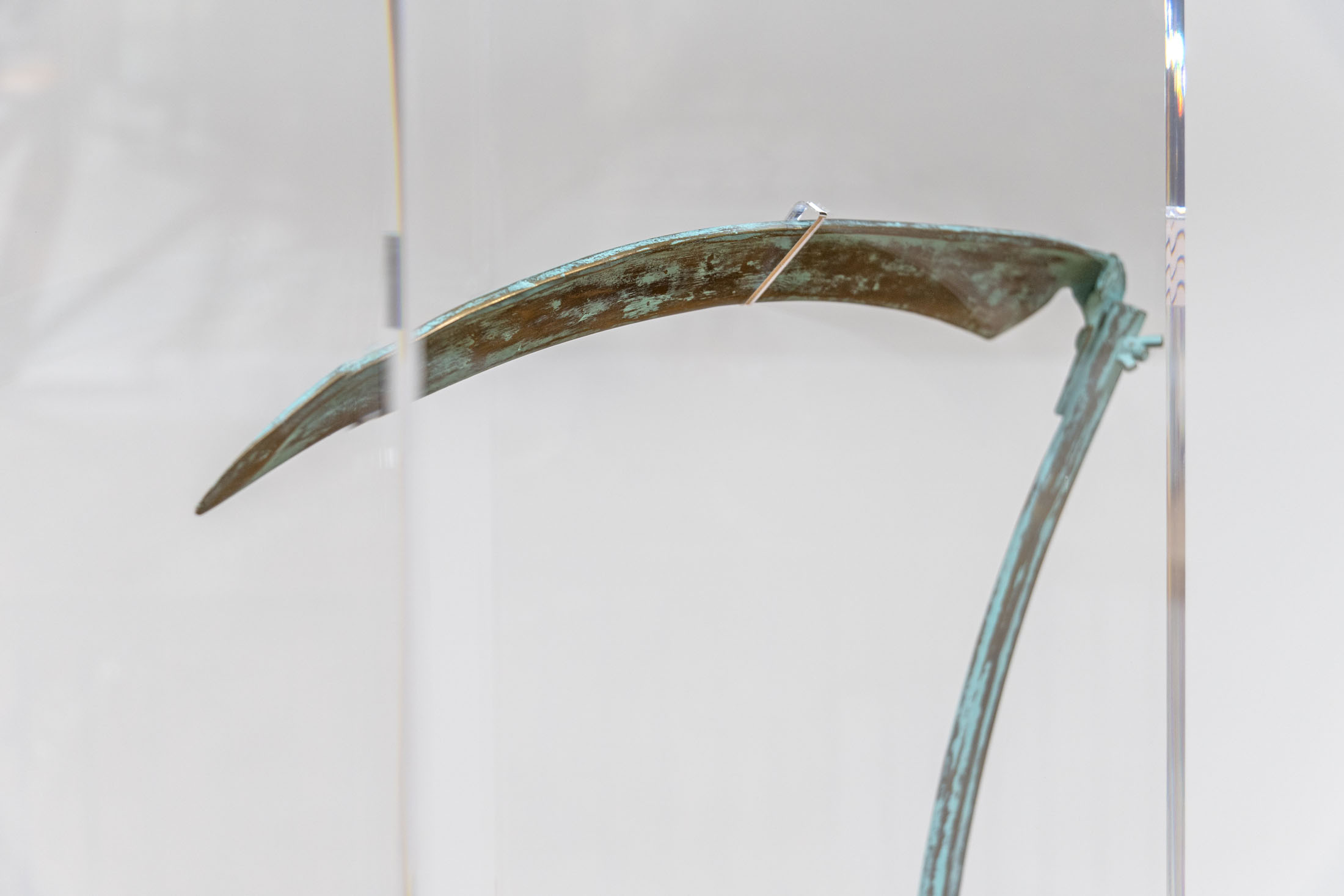
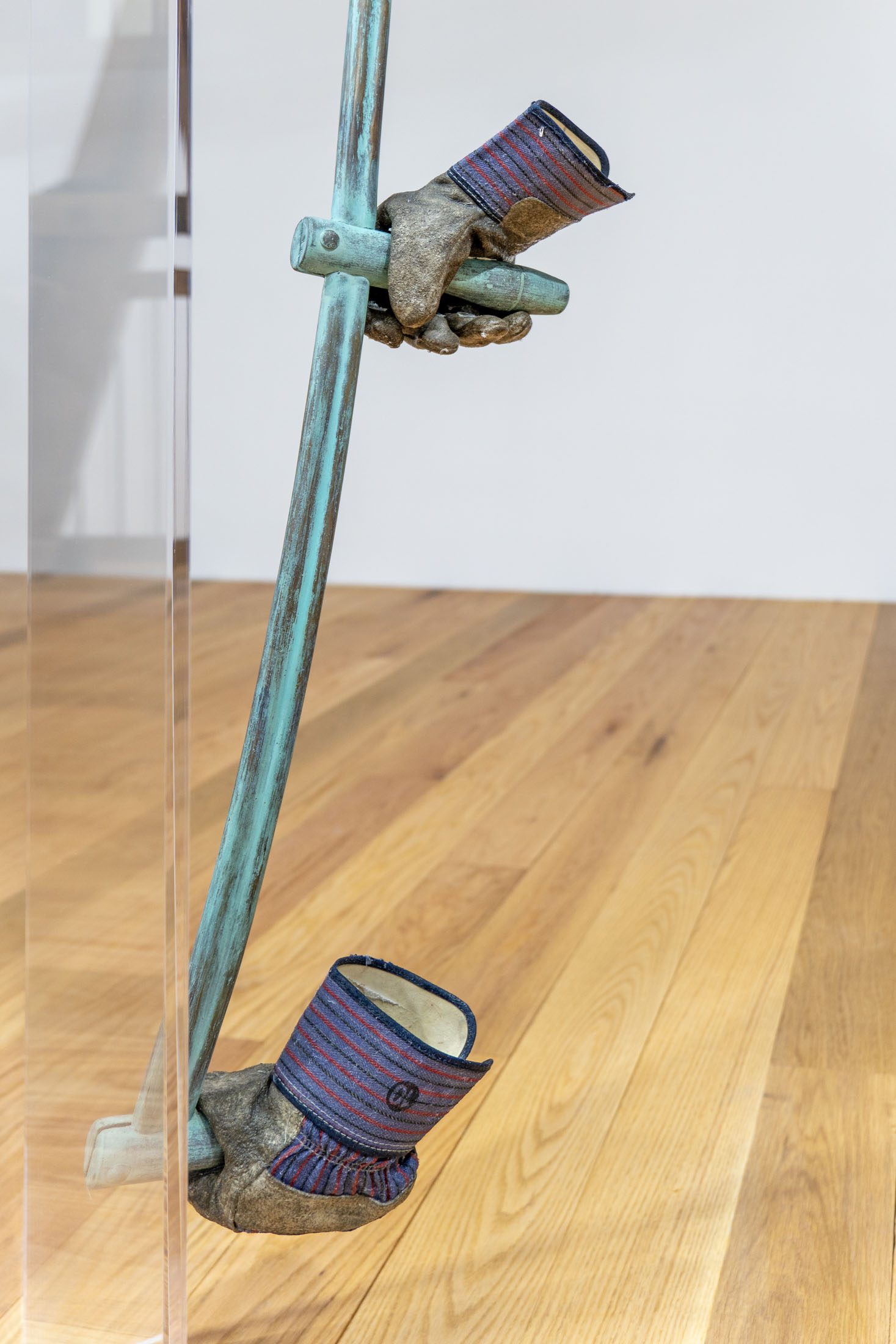
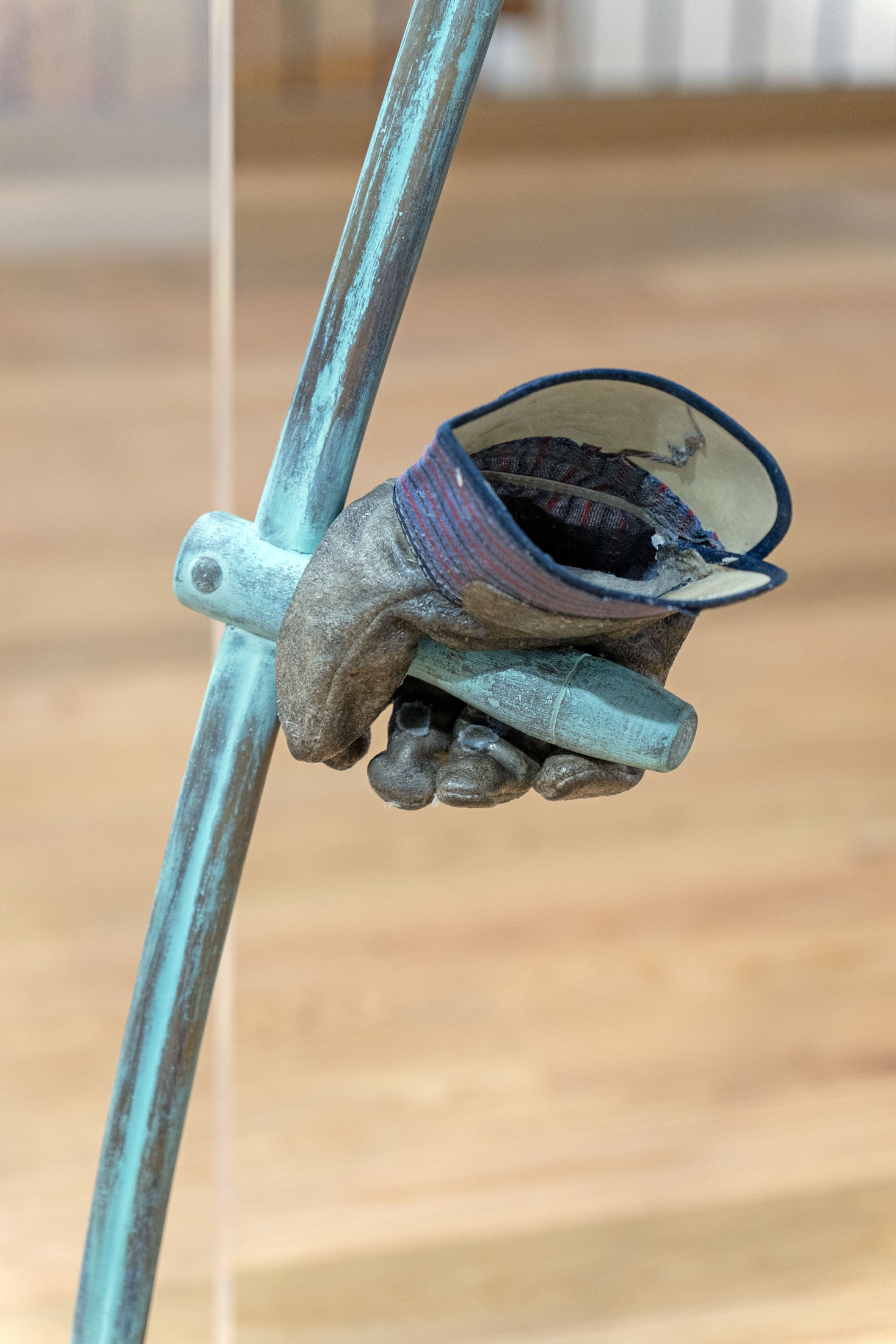
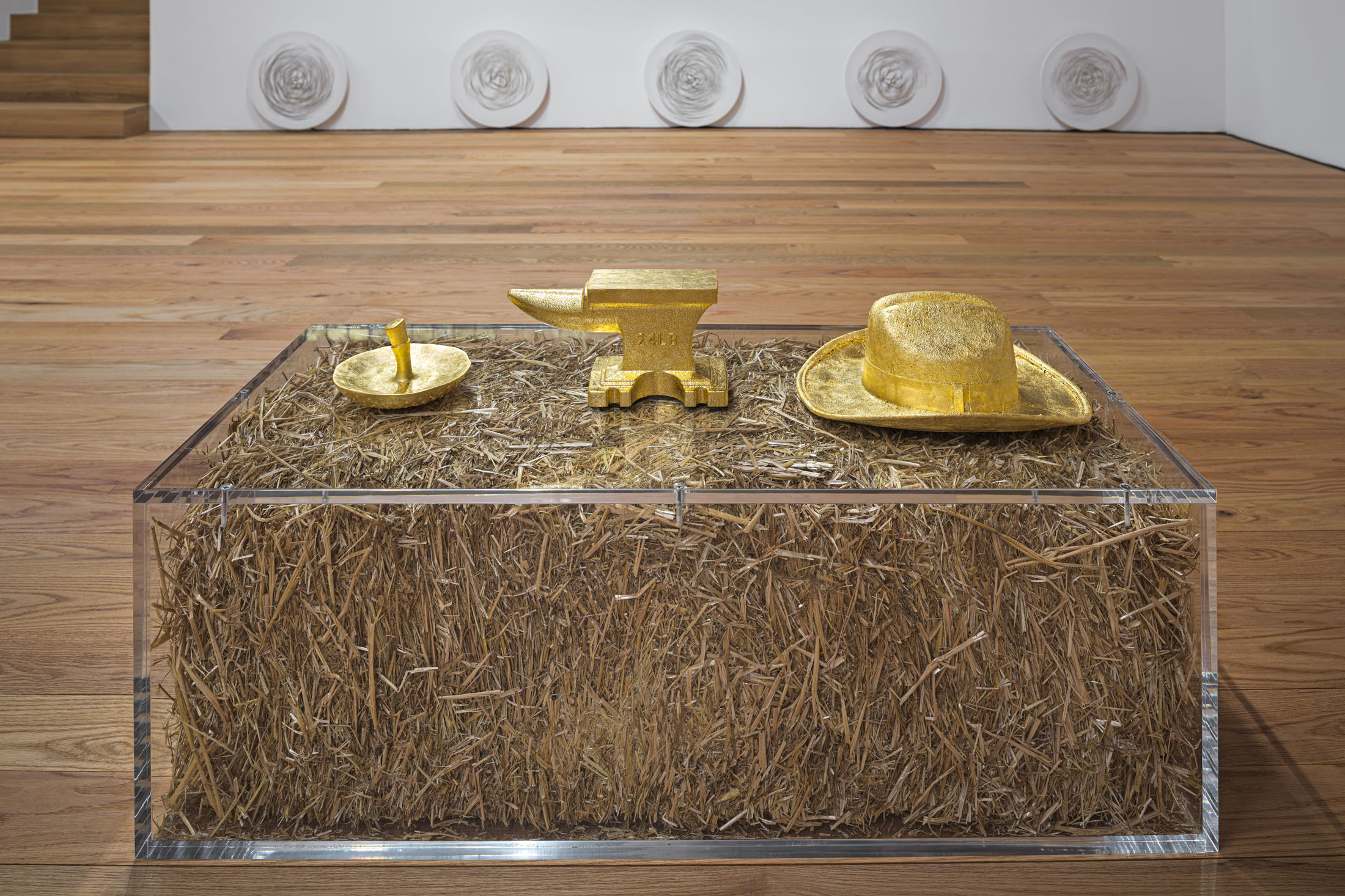
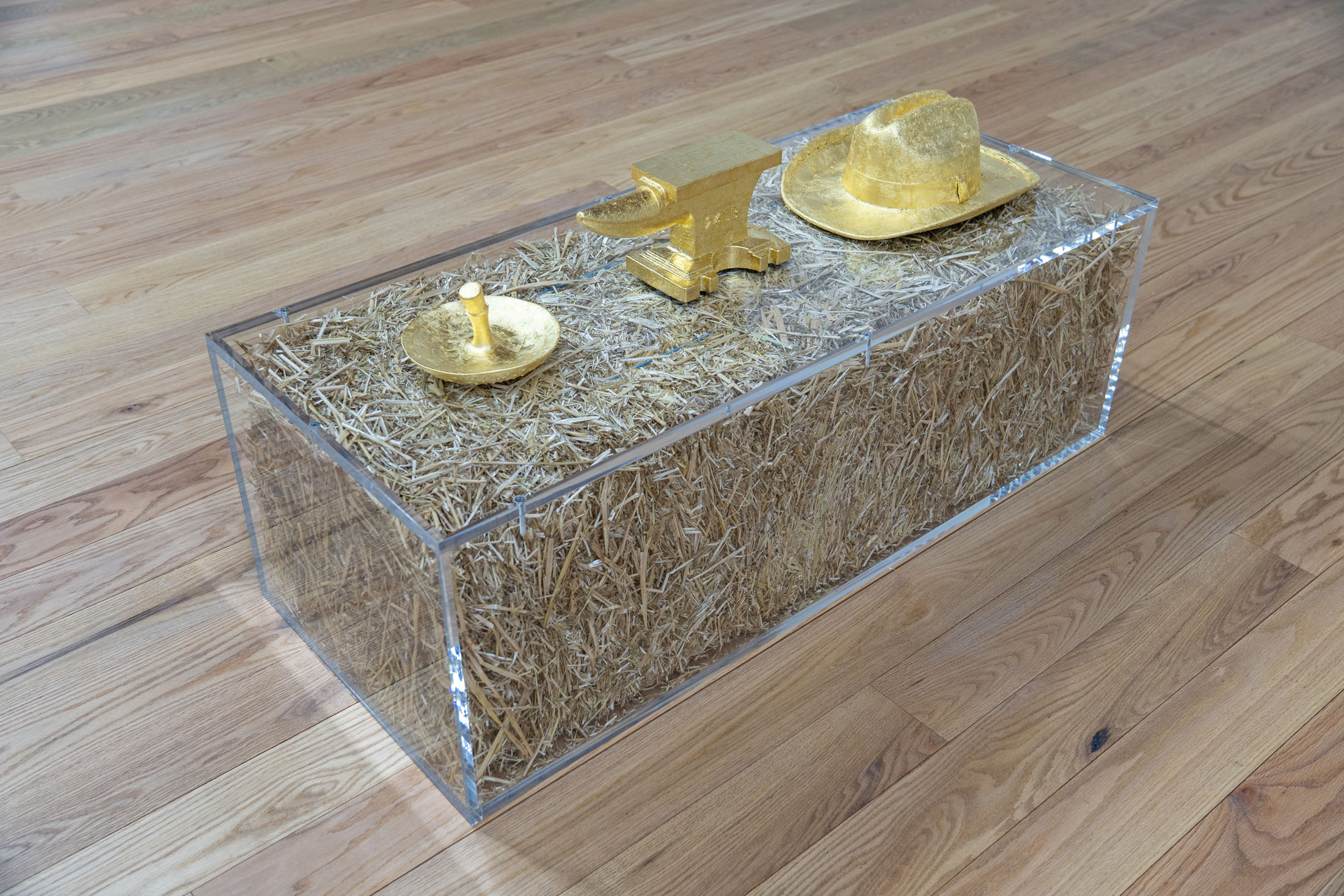
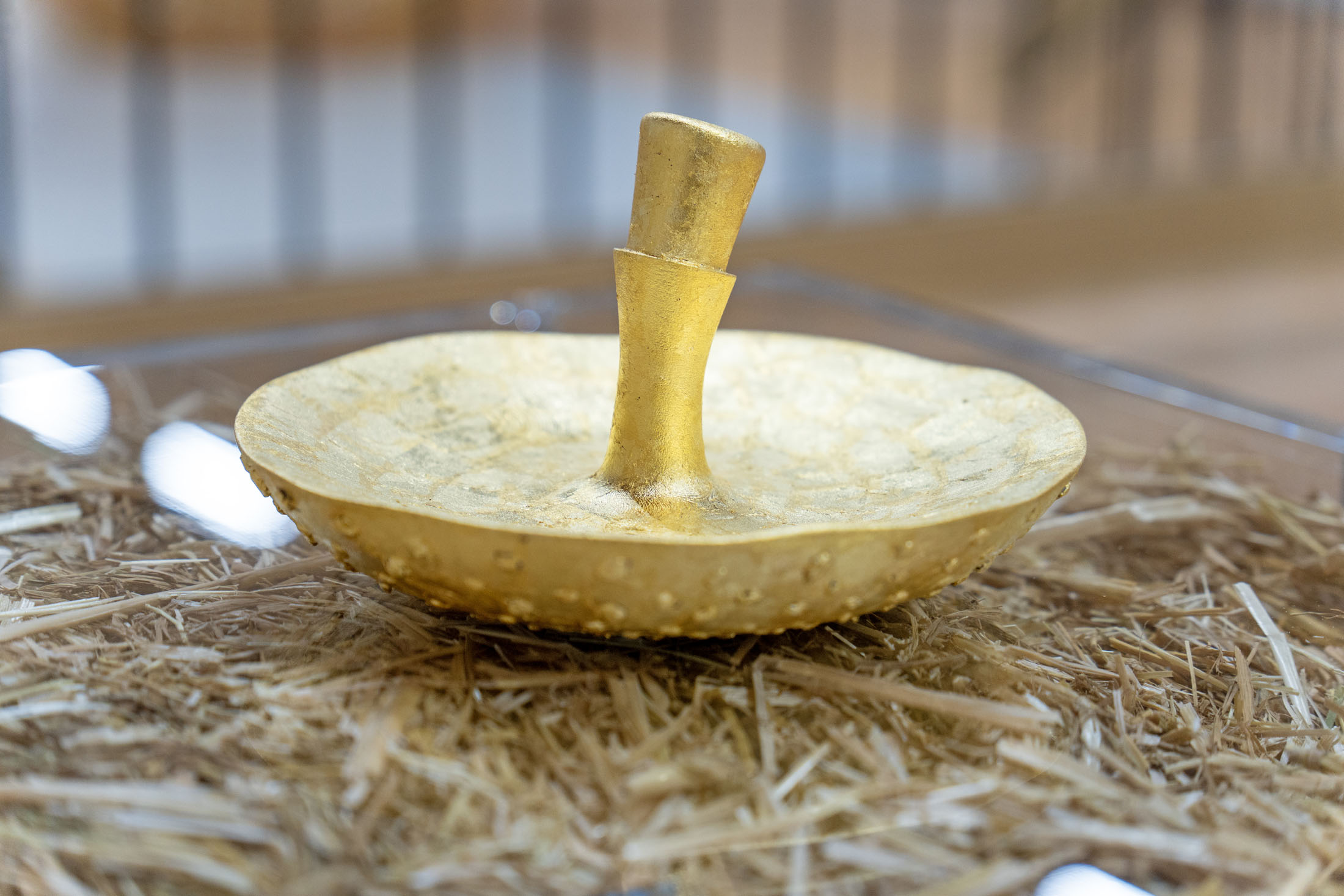
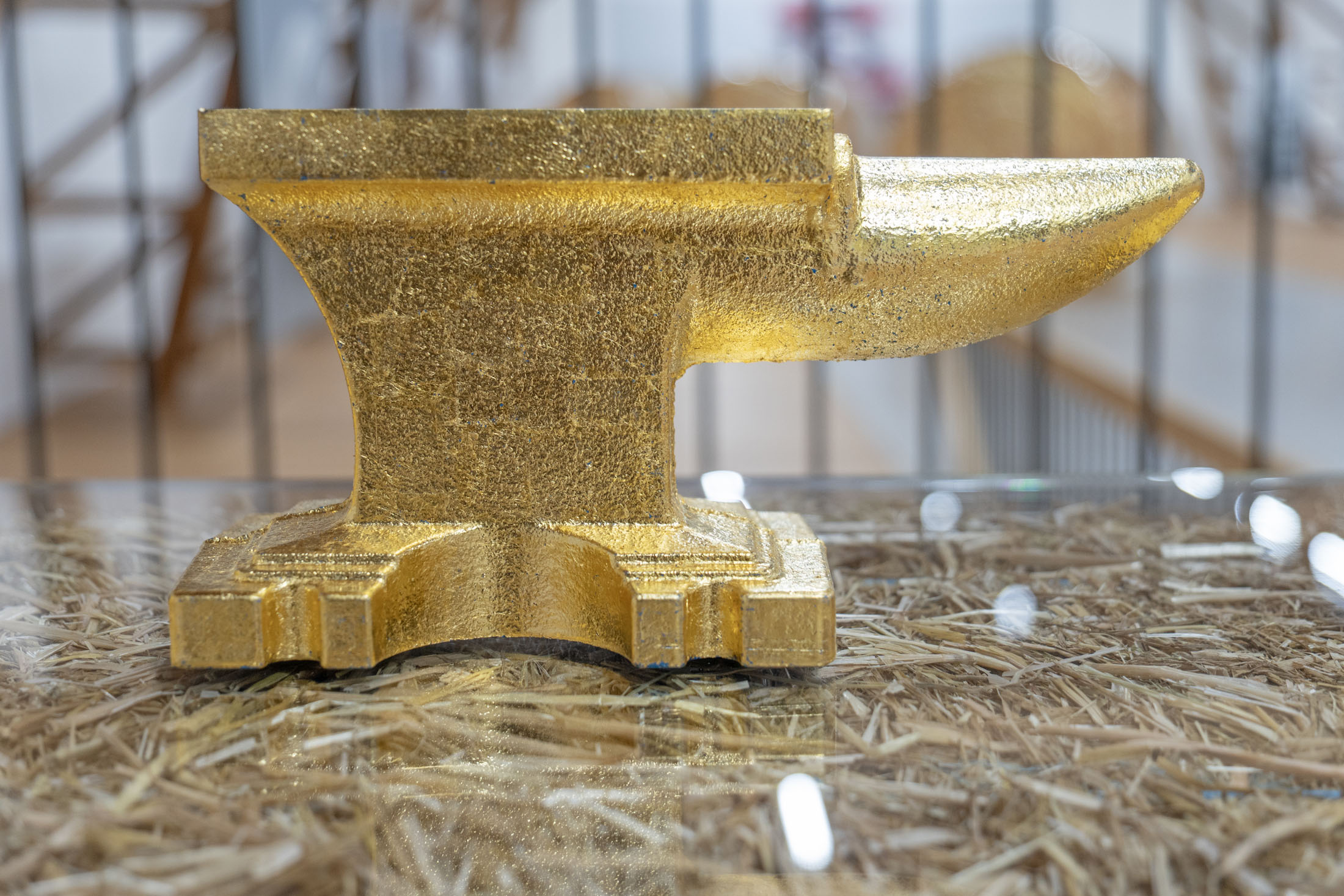
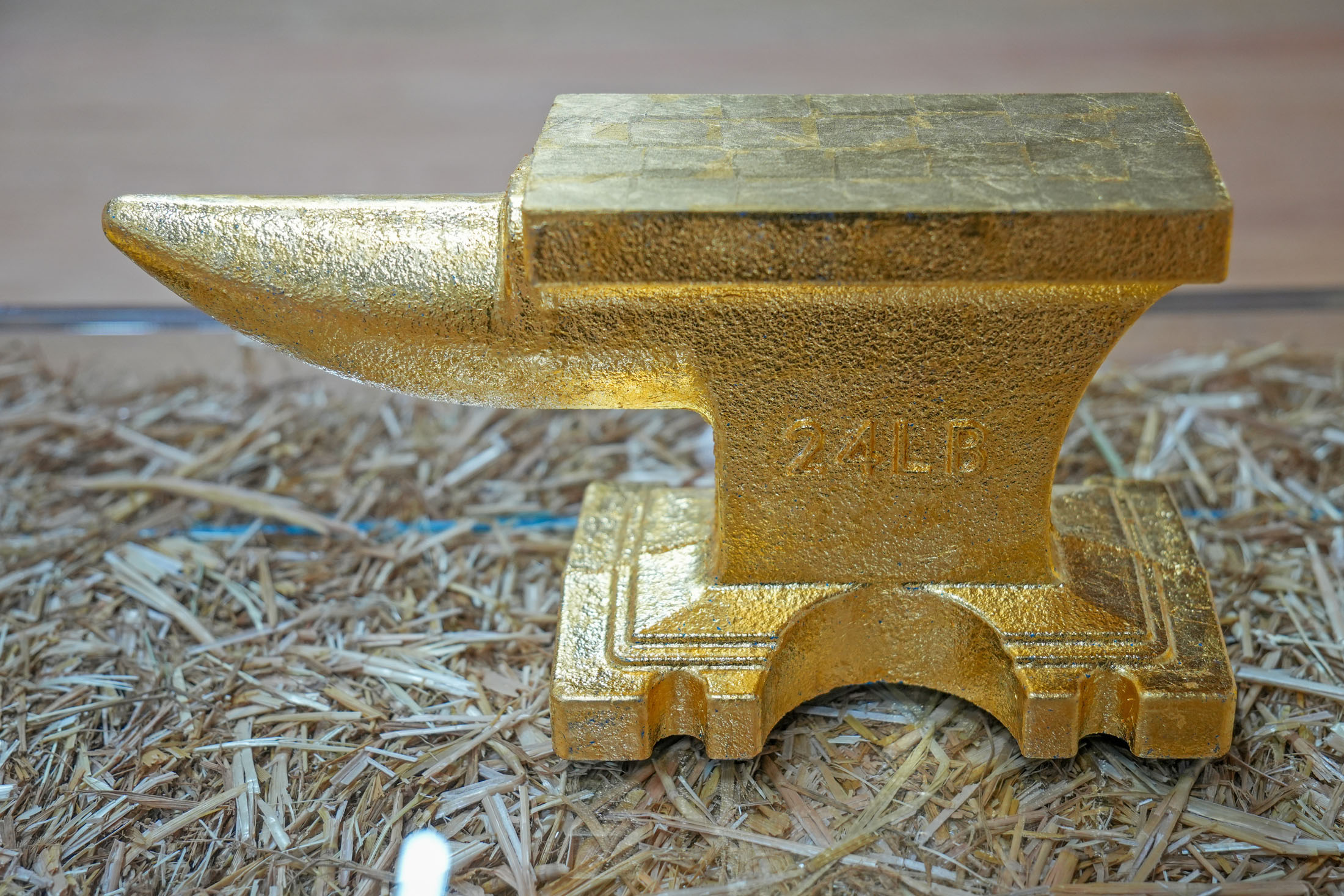
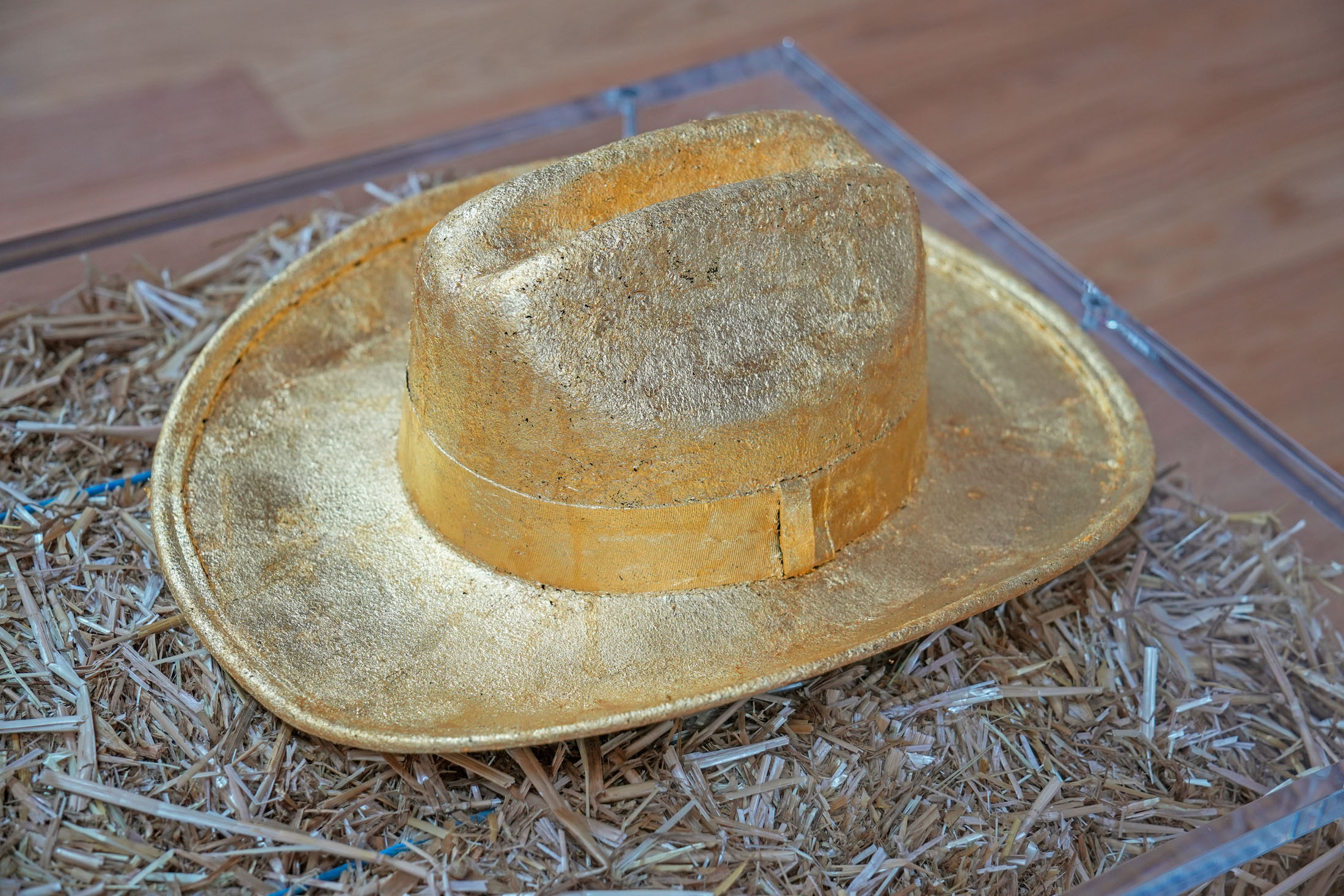
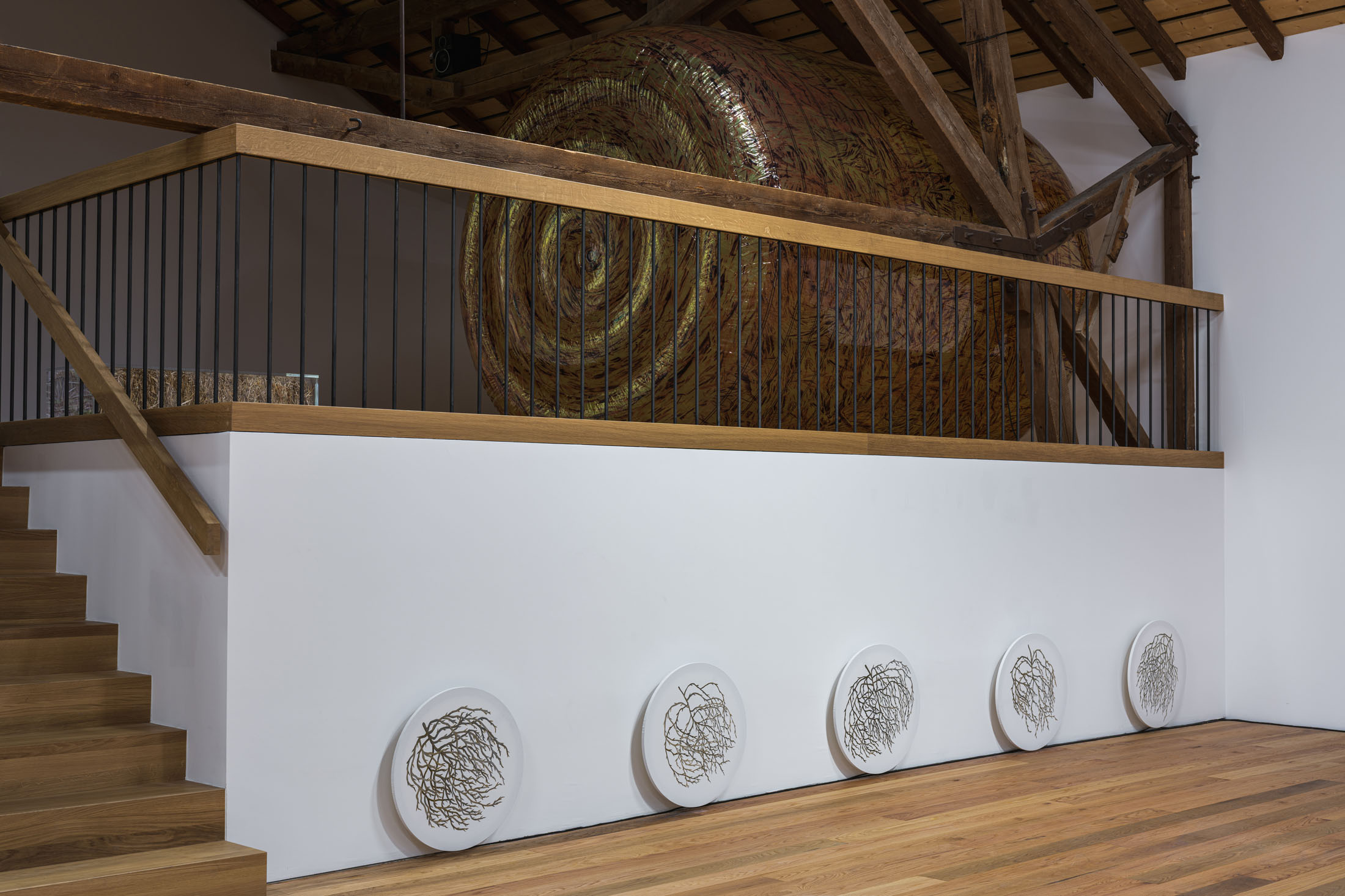
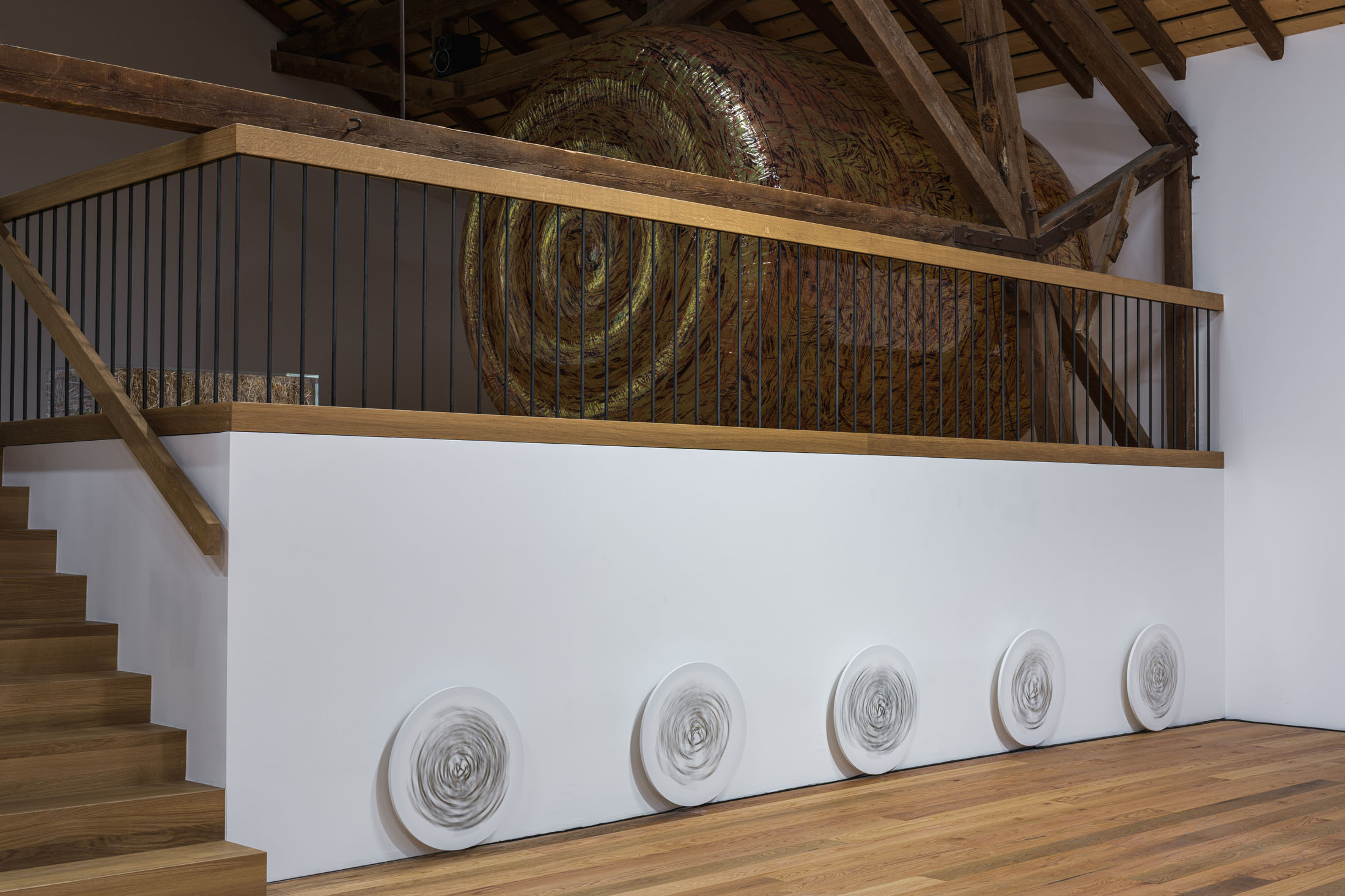
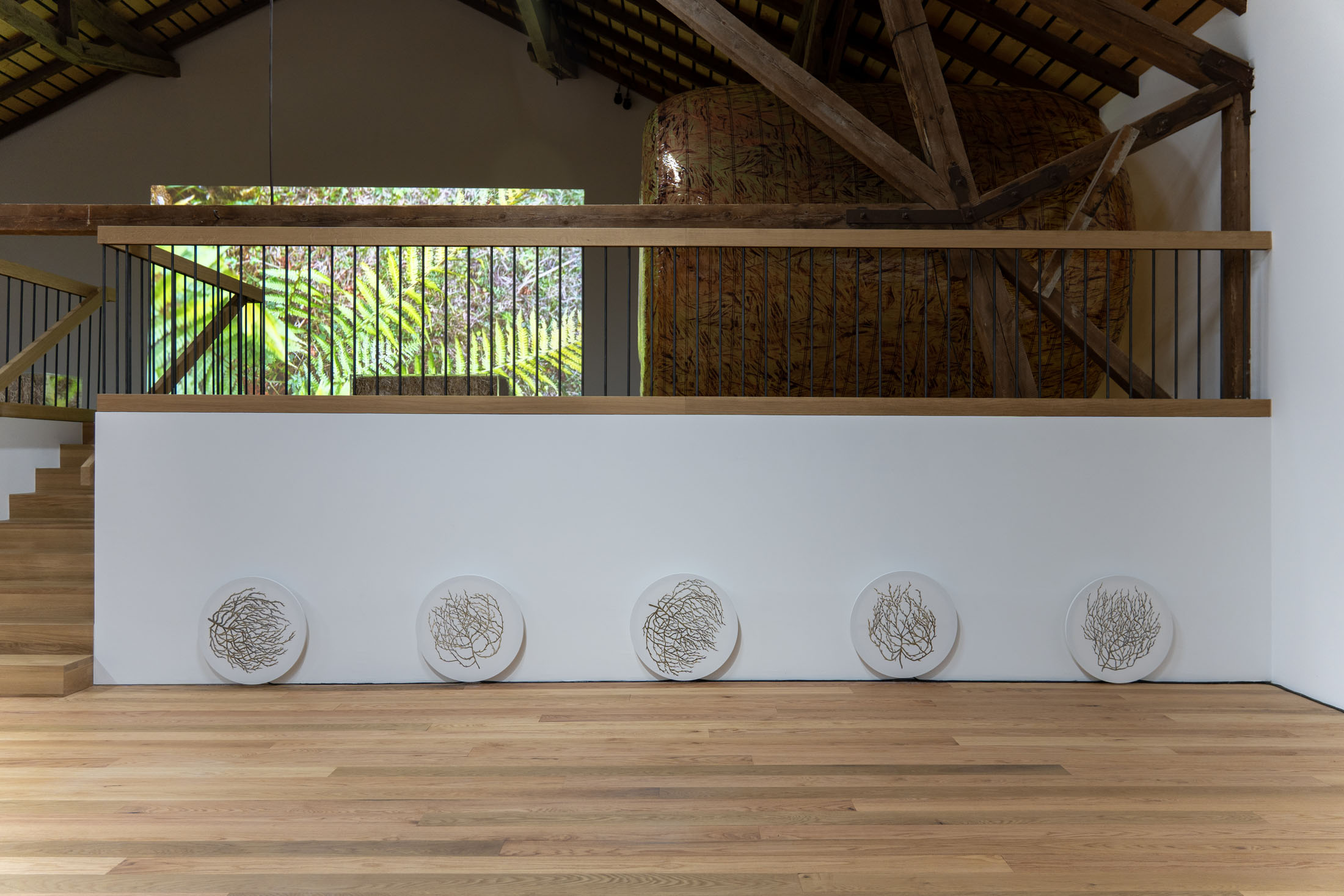
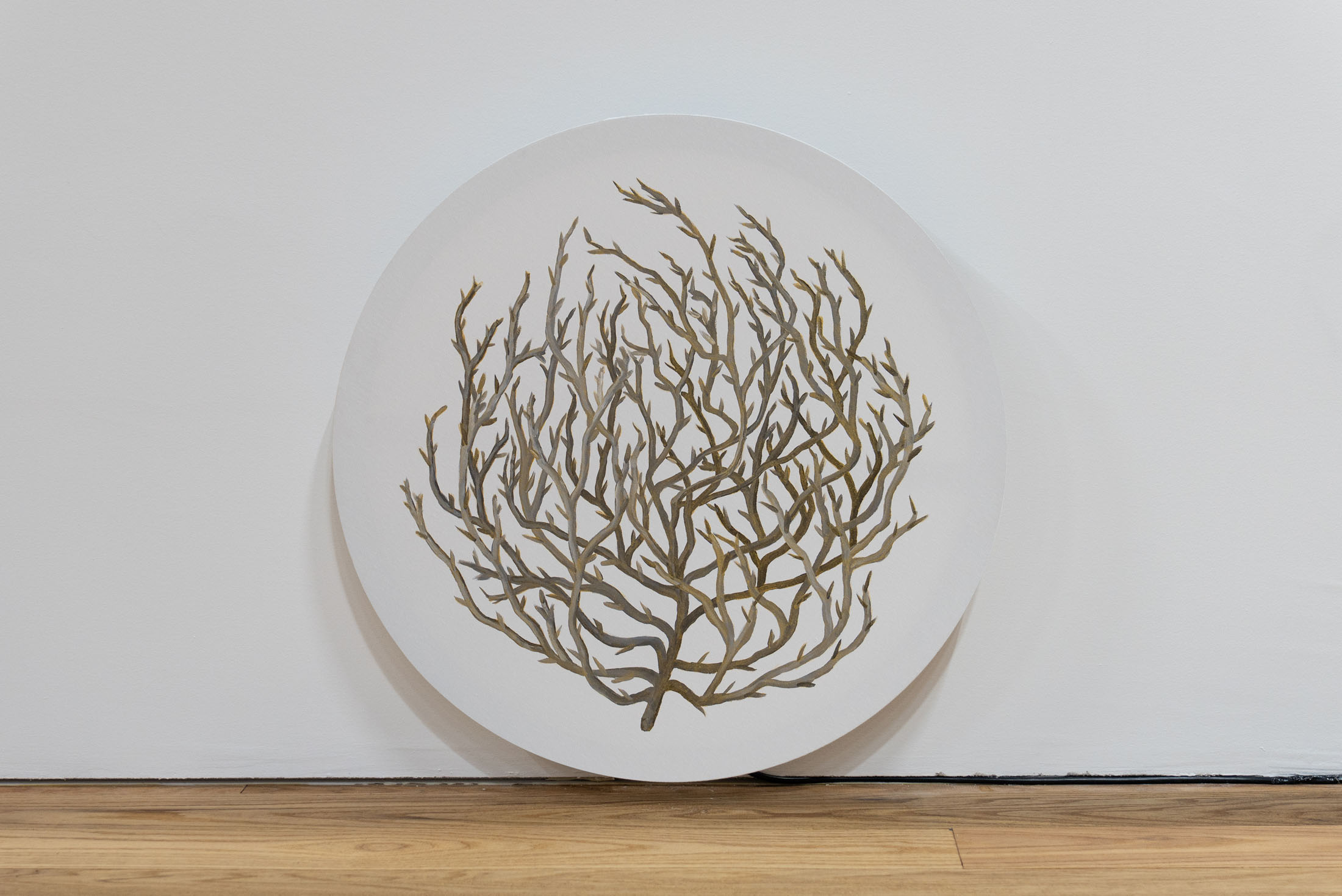
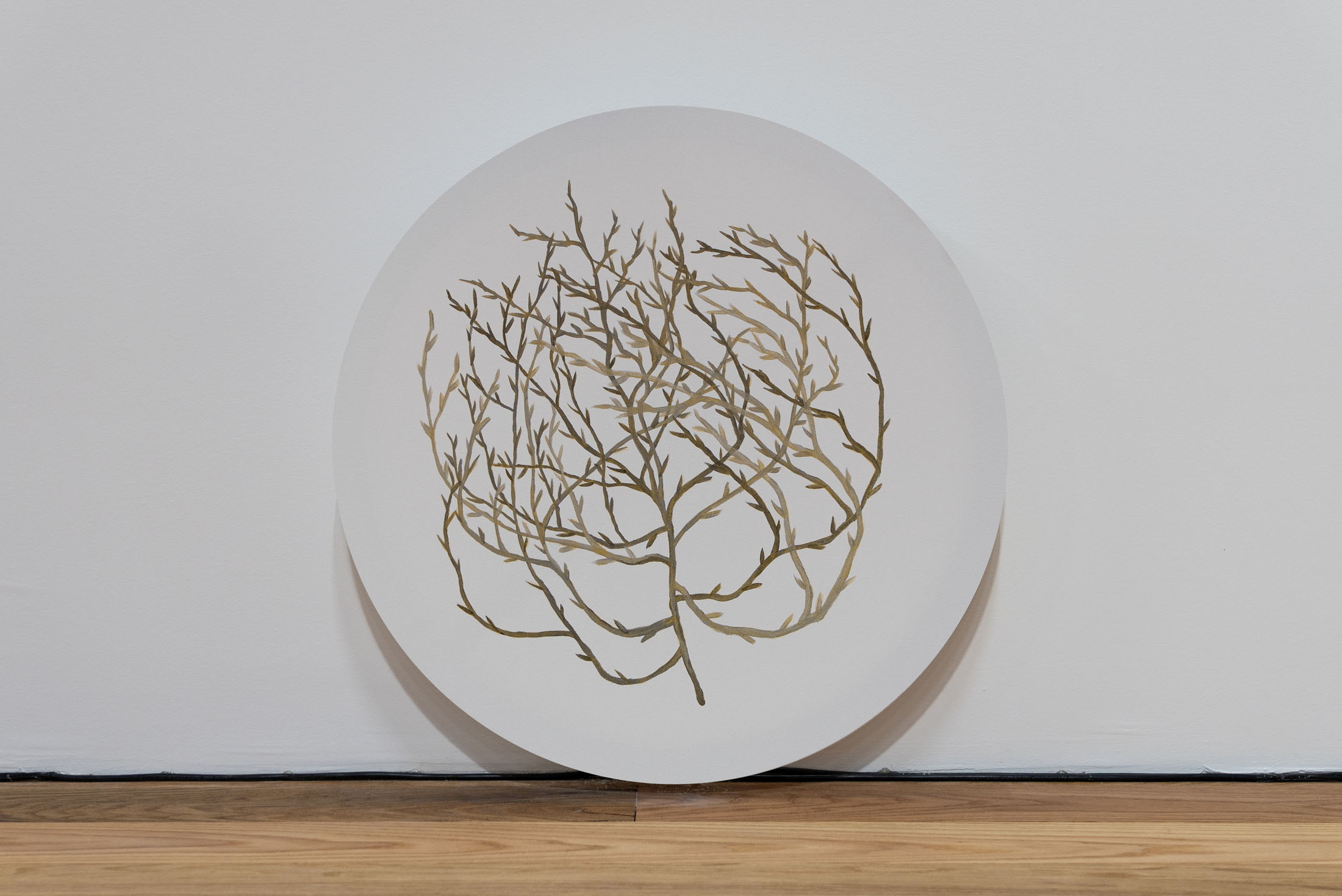
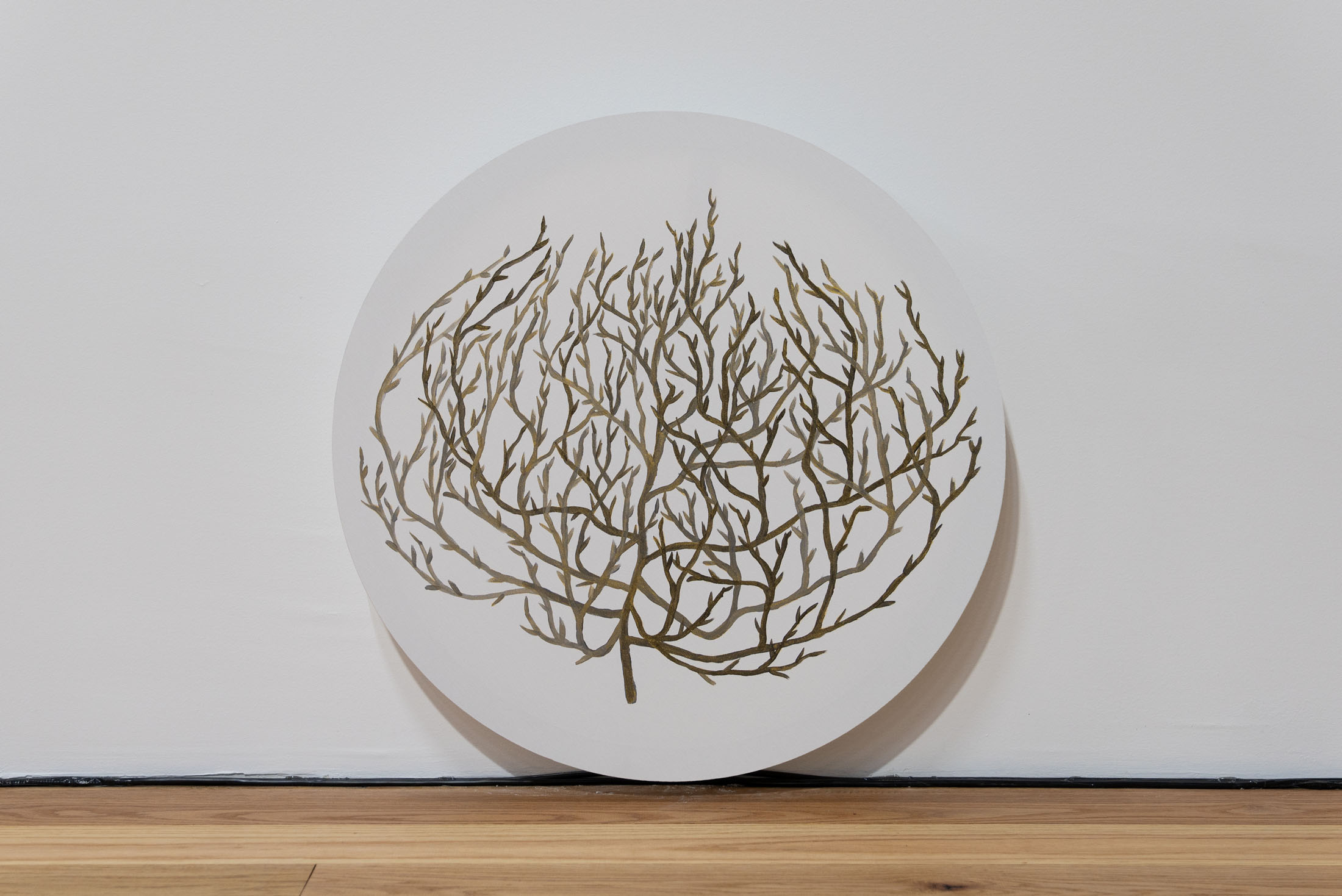
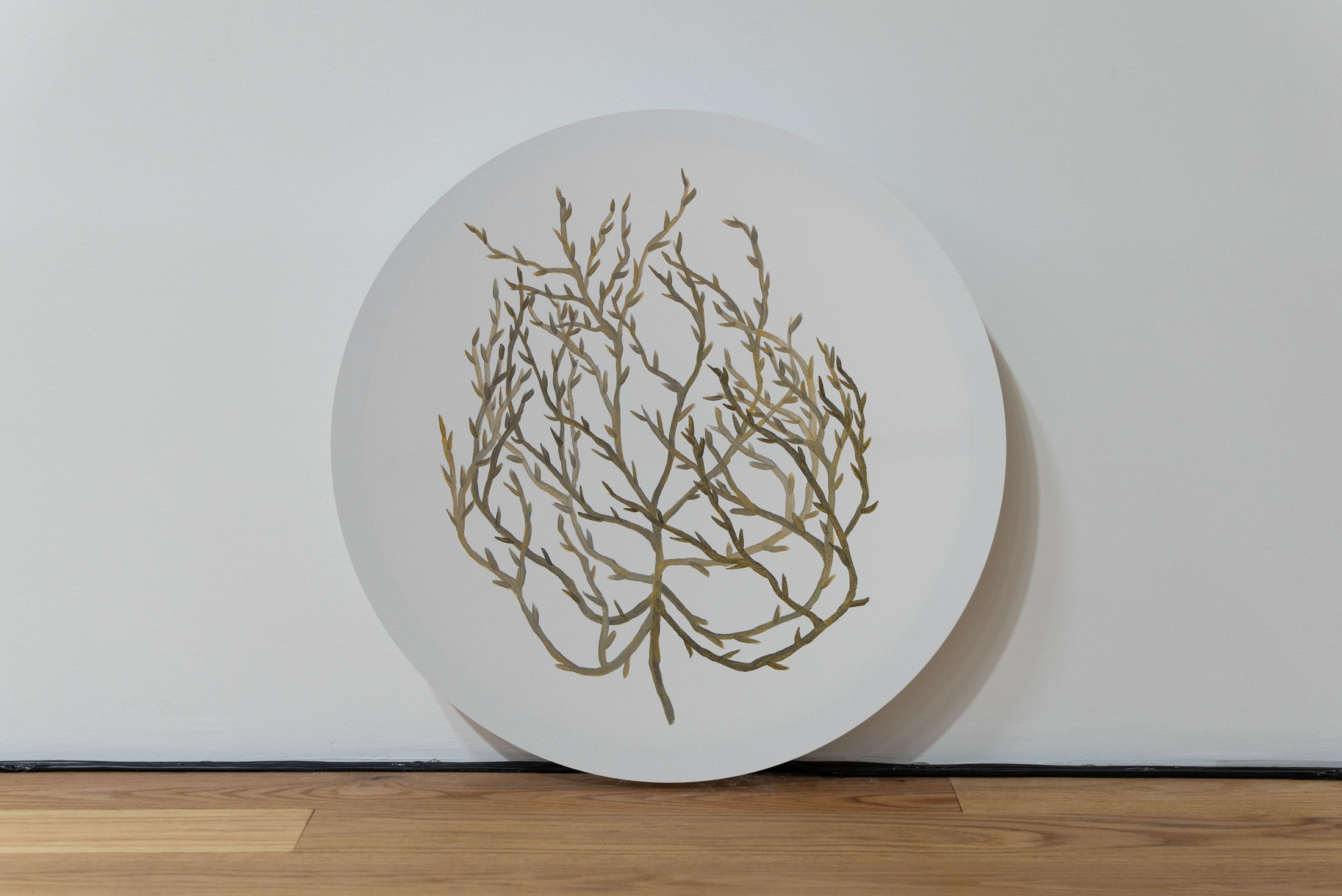
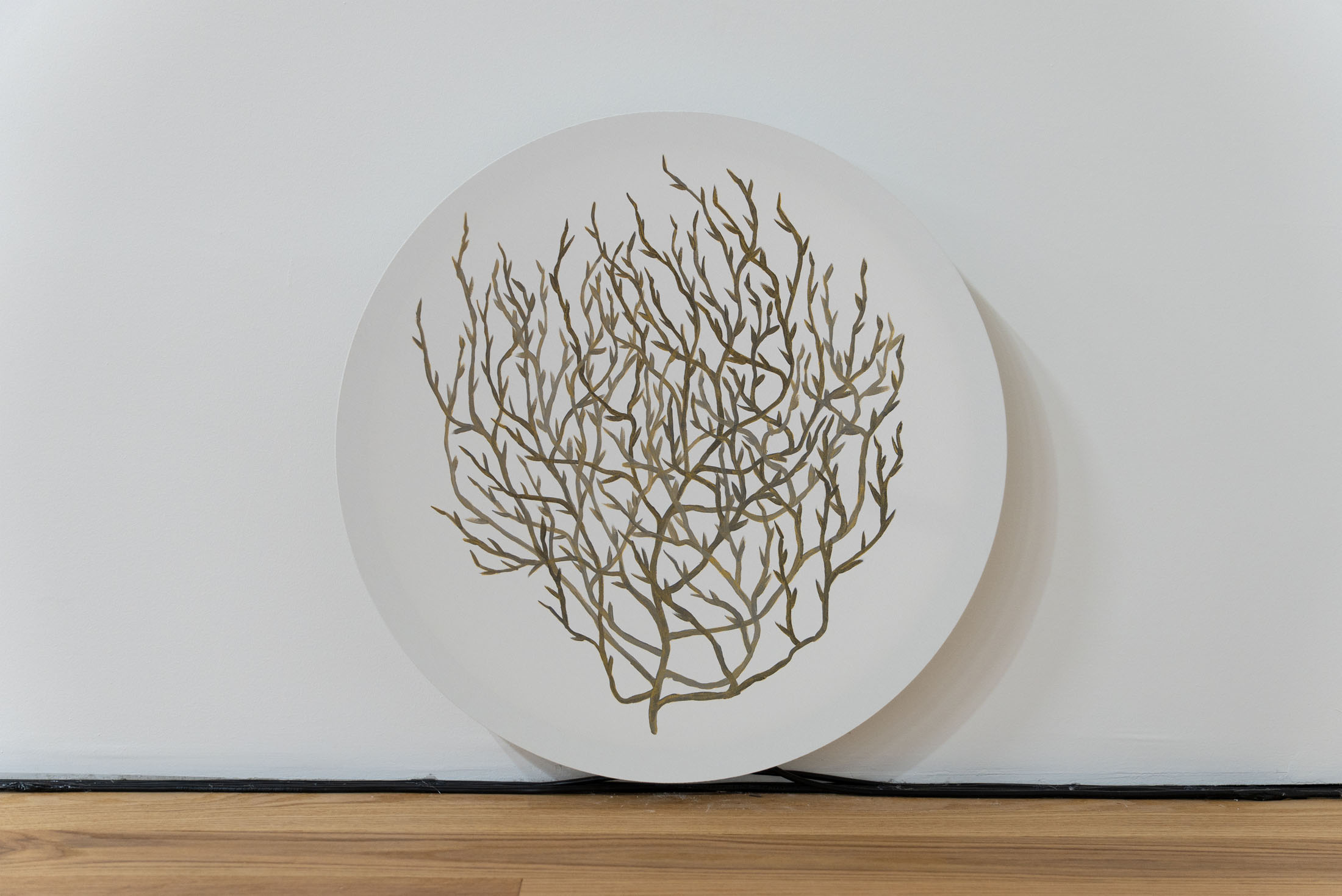
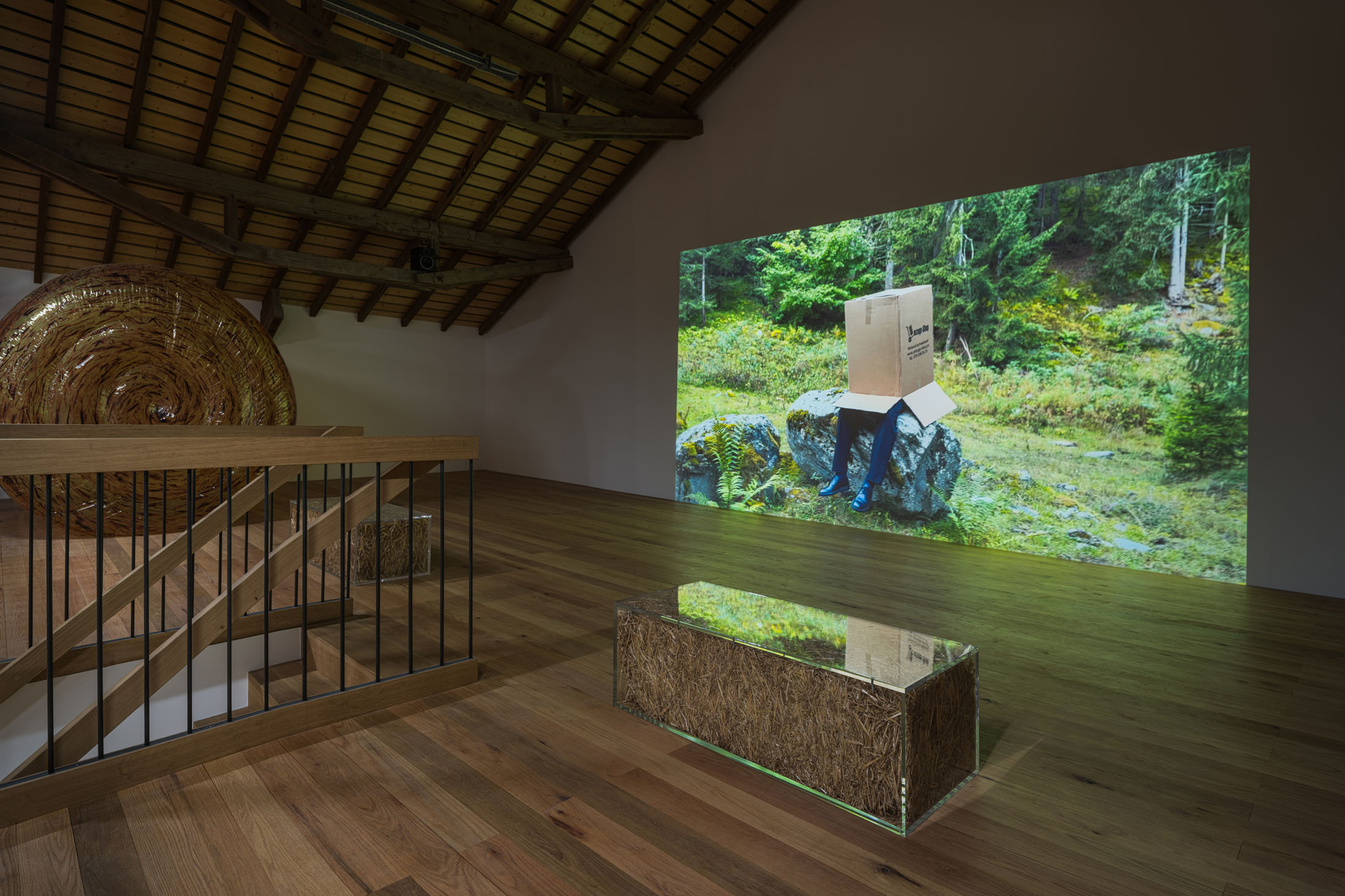
Adam Cruces’ sculptures proceed by translation. Familiar forms are shifted from a regime of use to a regime of representation. Five giant straw bales immediately stand out in the central nave. Light, transparent and oversized, they oscillate between land art subjects and manufactured objects. In the first gallery, a bronze scythe, too heavy to serve any practical purpose, is embedded in a transparent plinth. A mushroom, an anvil and a cowboy hat, embellished with gold leaf, form a strange family of objects, both domesticated and unusable, precious and absurd. Opposite them, tumbleweeds – those ball-like plants carried off by the wind – are motorised: they spin endlessly but never move from their spot. The motion is continuous, but the momentum is suspended. This play on scale, material and functionality unsettles expectations. Adam Cruces stages a nature that is worked, mastered and frozen in an infertile artificiality.
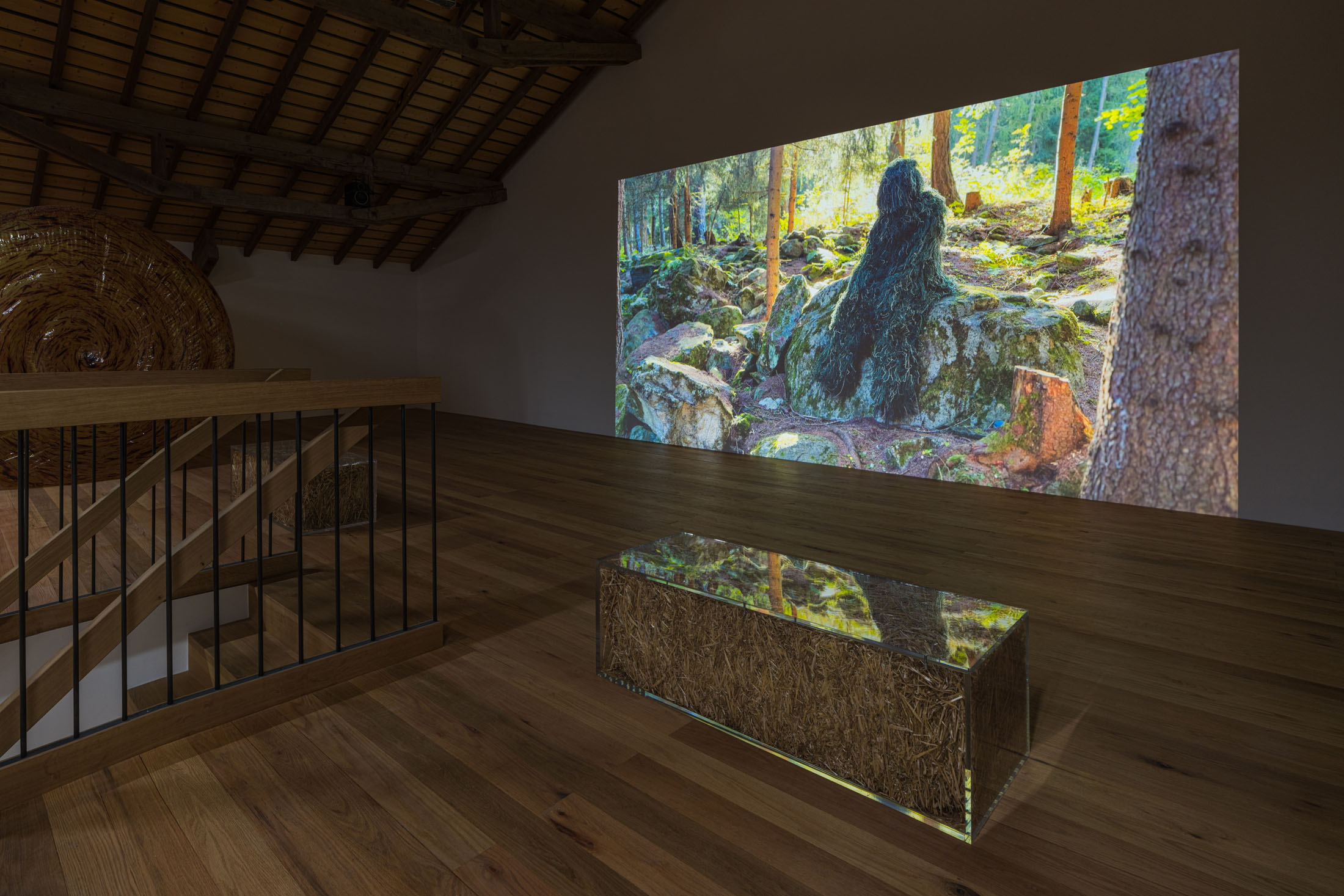
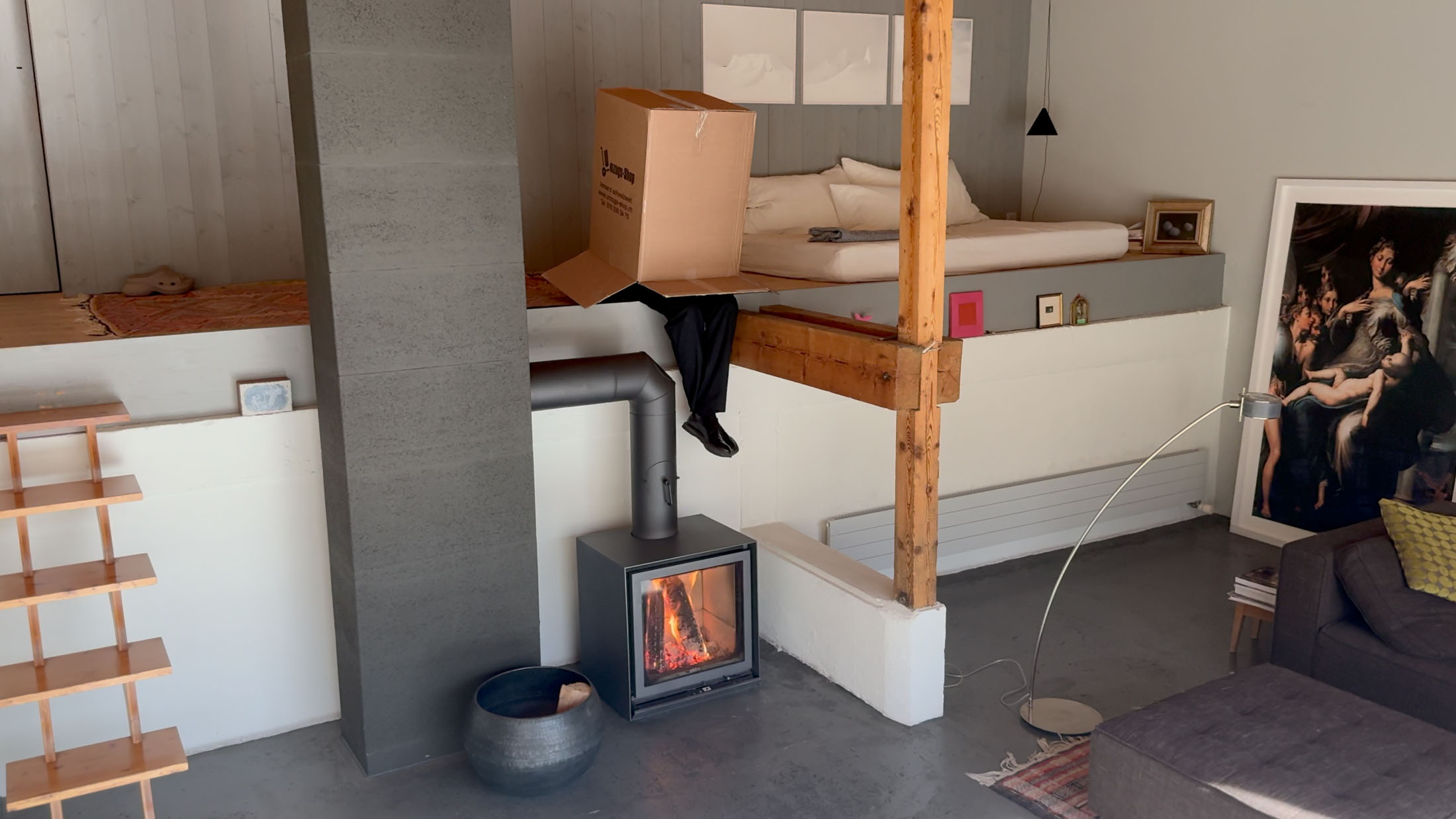
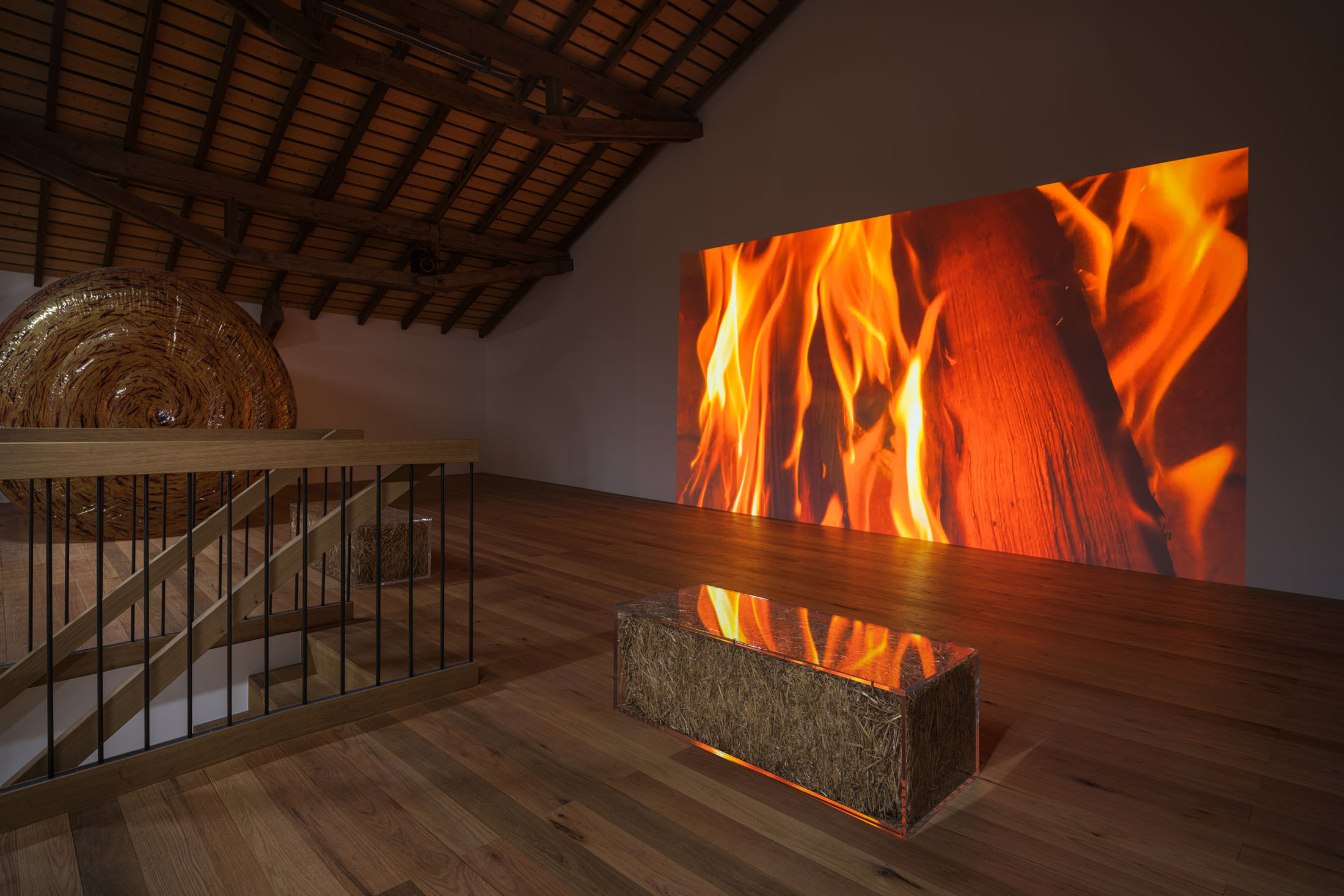
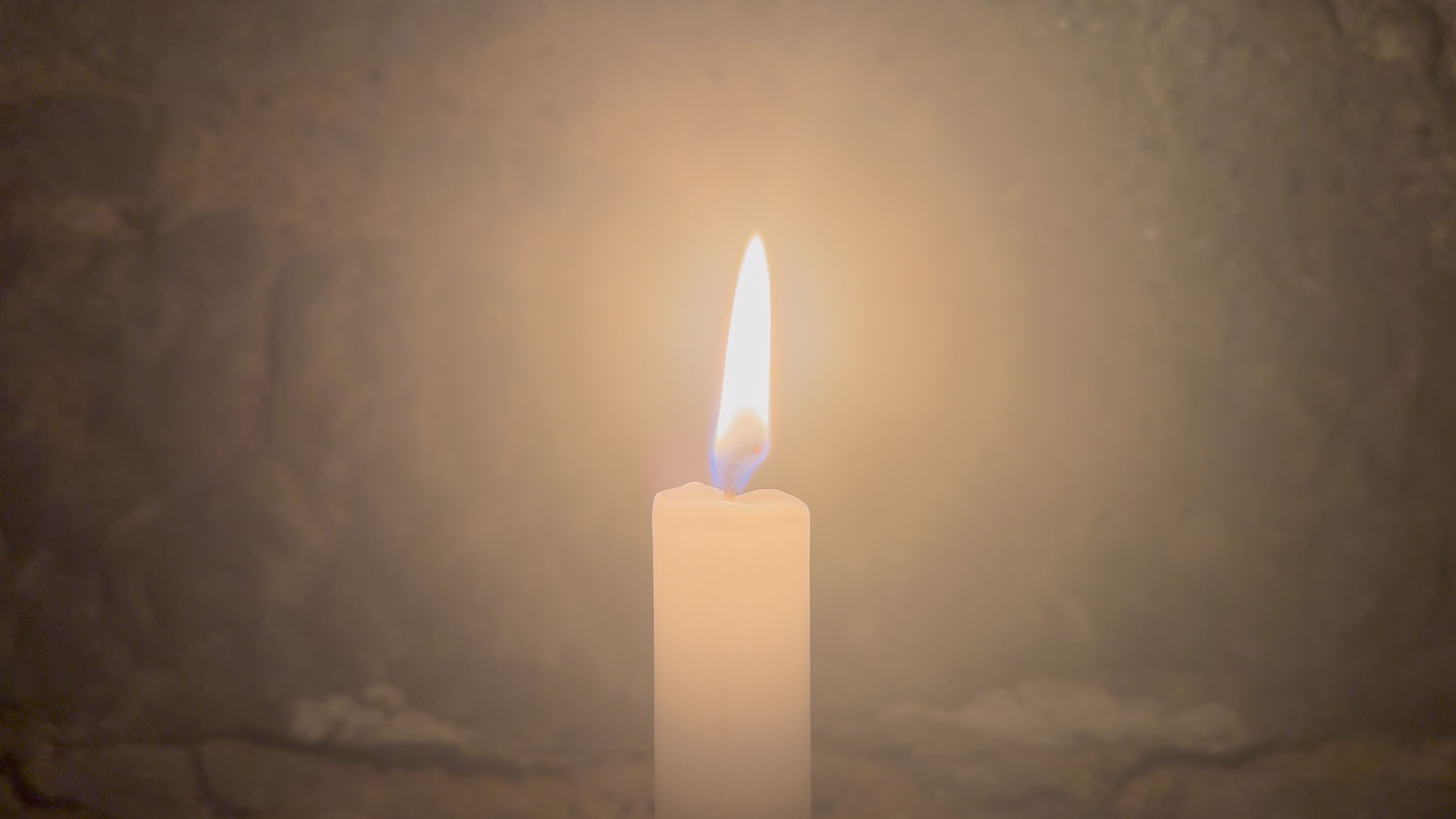
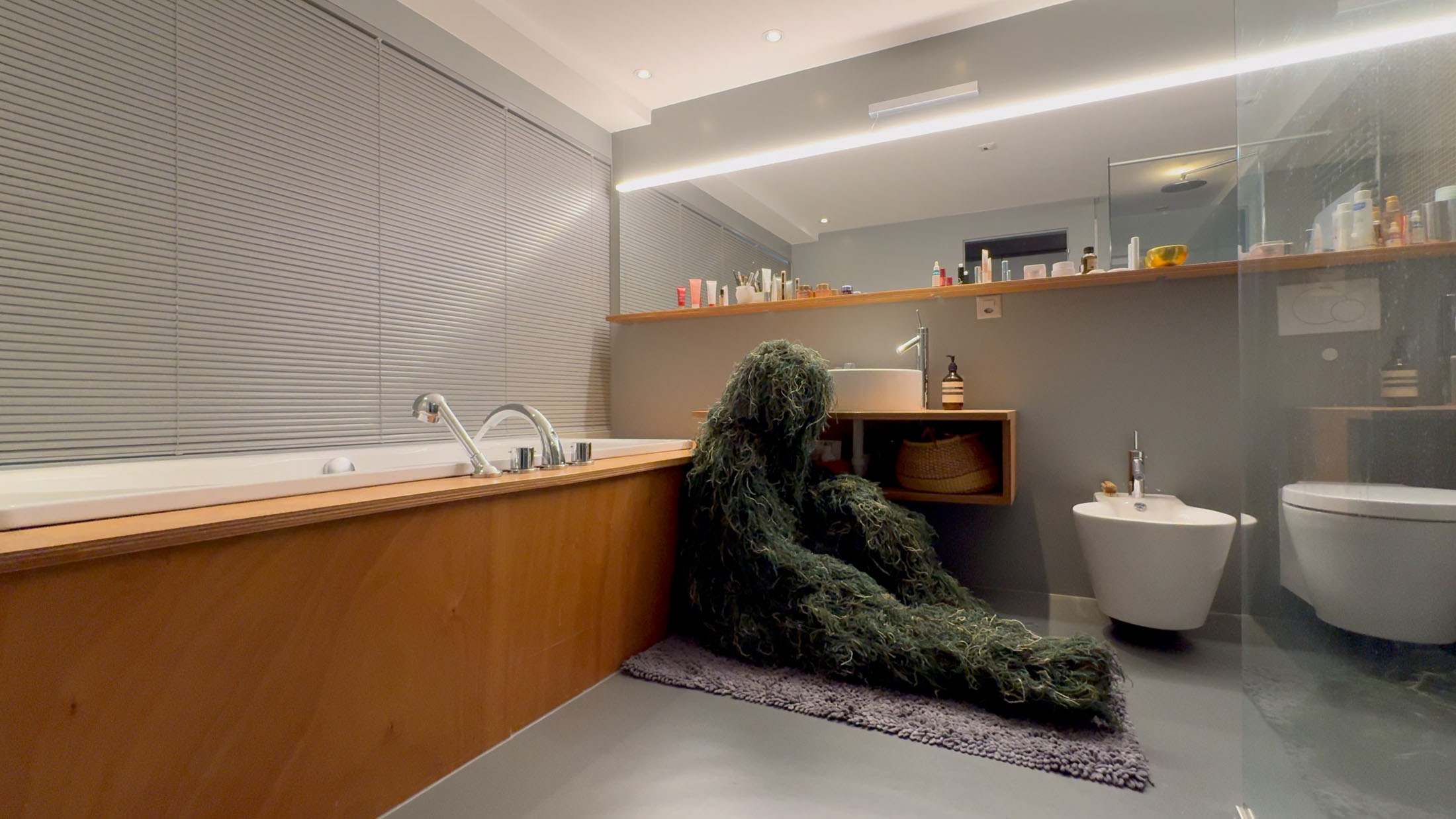
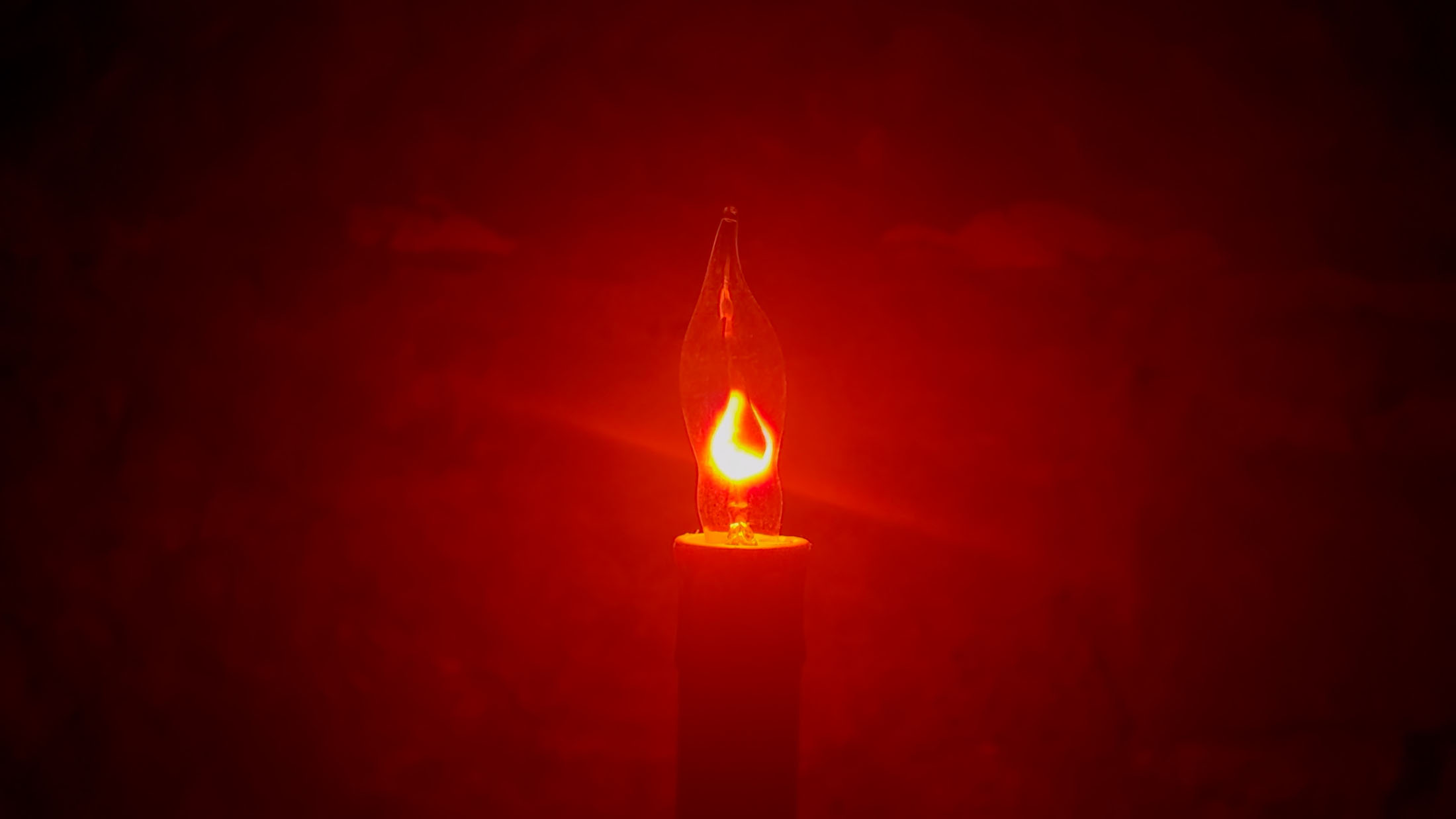
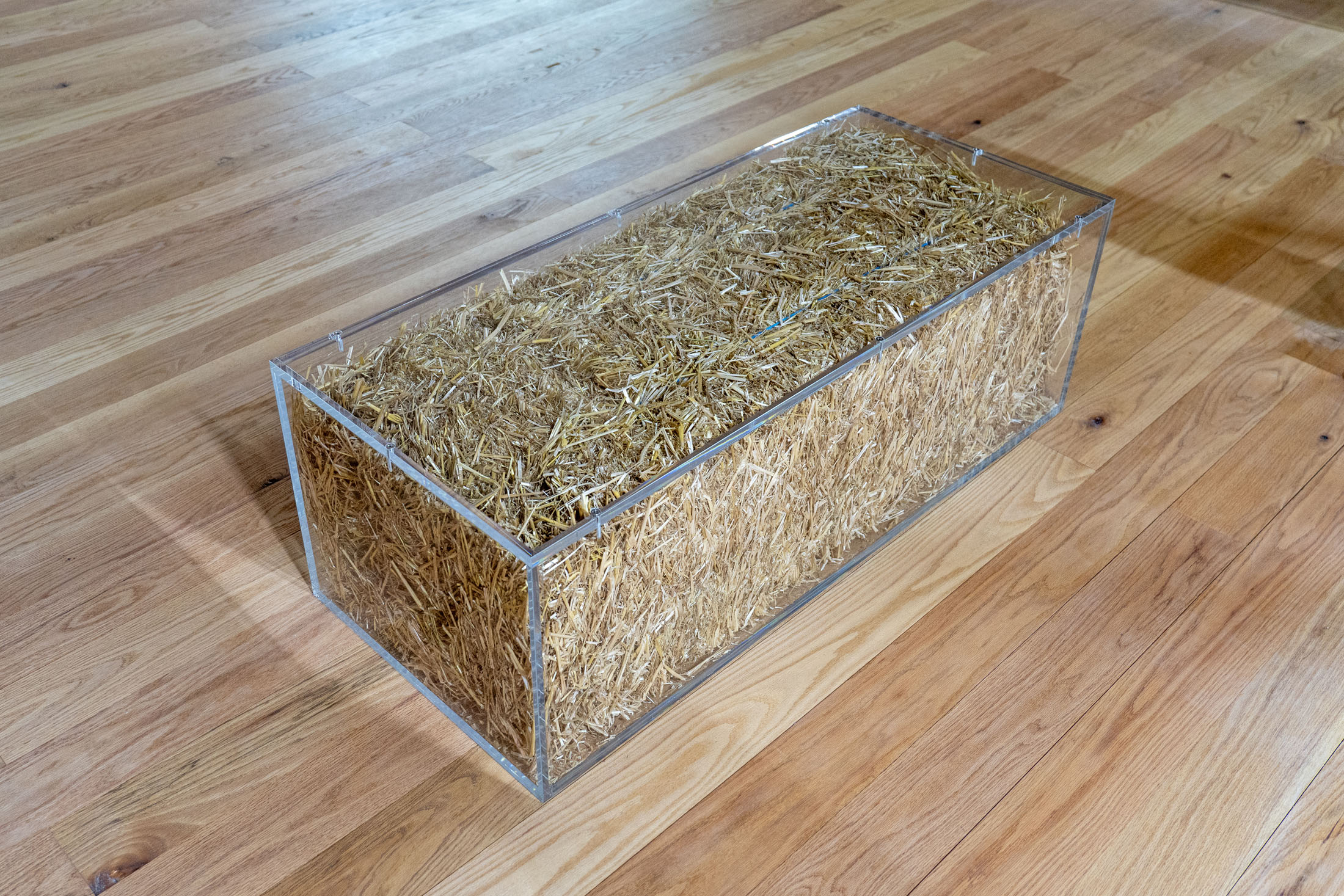
Translation is also the title of the video projected on the wall of the second gallery. Filmed in Valais, between Sion and the Dranse Valley, it extends this reflection. An anthropomorphic figure dressed in a ghillie suit, or camouflage outfit, moves through different environments. Wild and domestic, interior and exterior environments merge and interweave. The shift from a candle with a natural flame, which opens the film, to an artificial version with an electric bulb, which closes it, encapsulates this transition. Like a stranger in his own country, the character embodies a form of interpenetration between worlds. The landscape becomes a skin; humans become a projection surface, and the boundary between observer and observed becomes blurred. Nature seems trapped, as with these plexiglas seats enclosing real straw bales. Are they functional benches or works of art? For Adam Cruces, it is less a question of representing domestication than of revealing its mechanisms and ambiguities, in a constant back-and-forth between appropriation, protection and distancing.
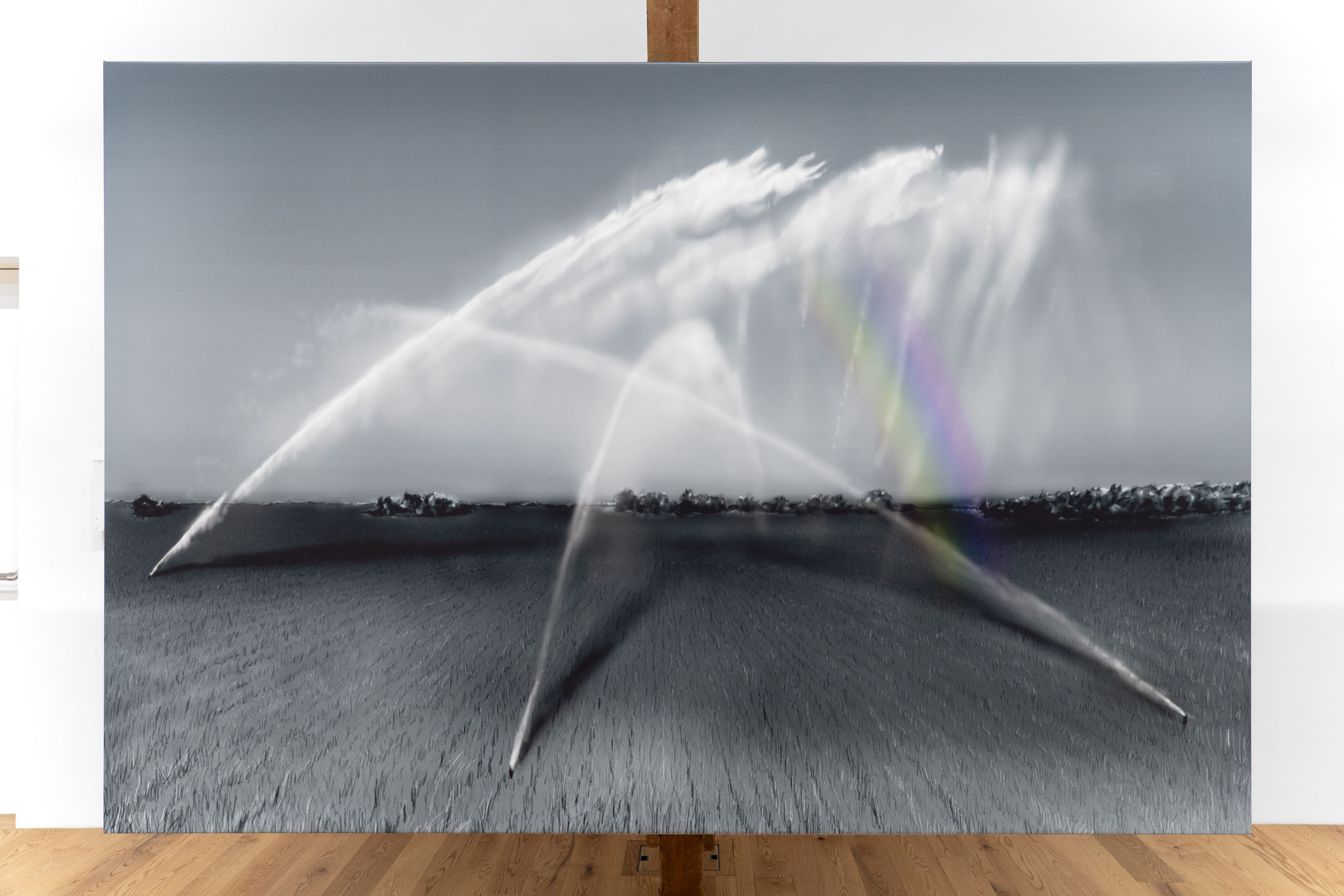
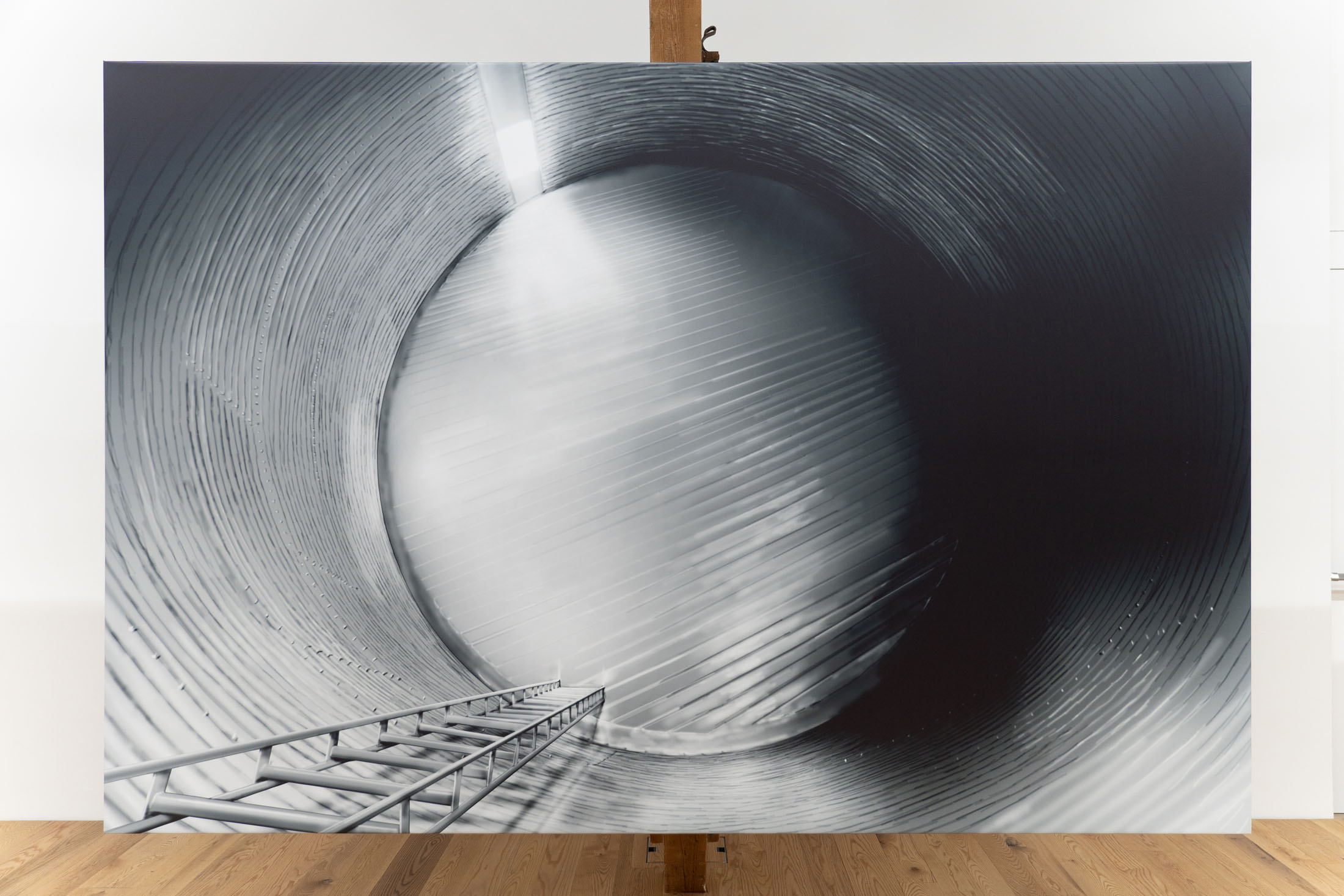
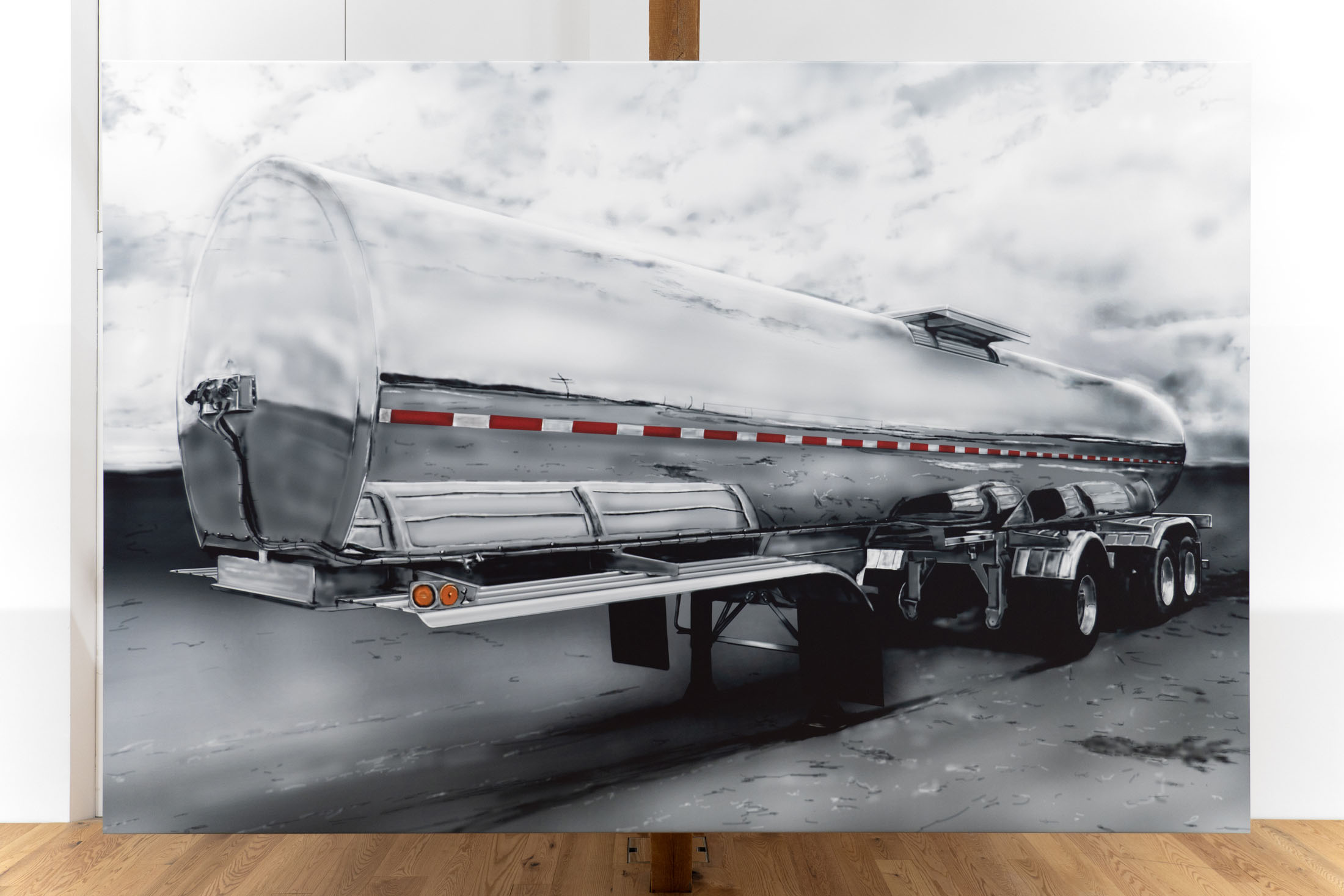
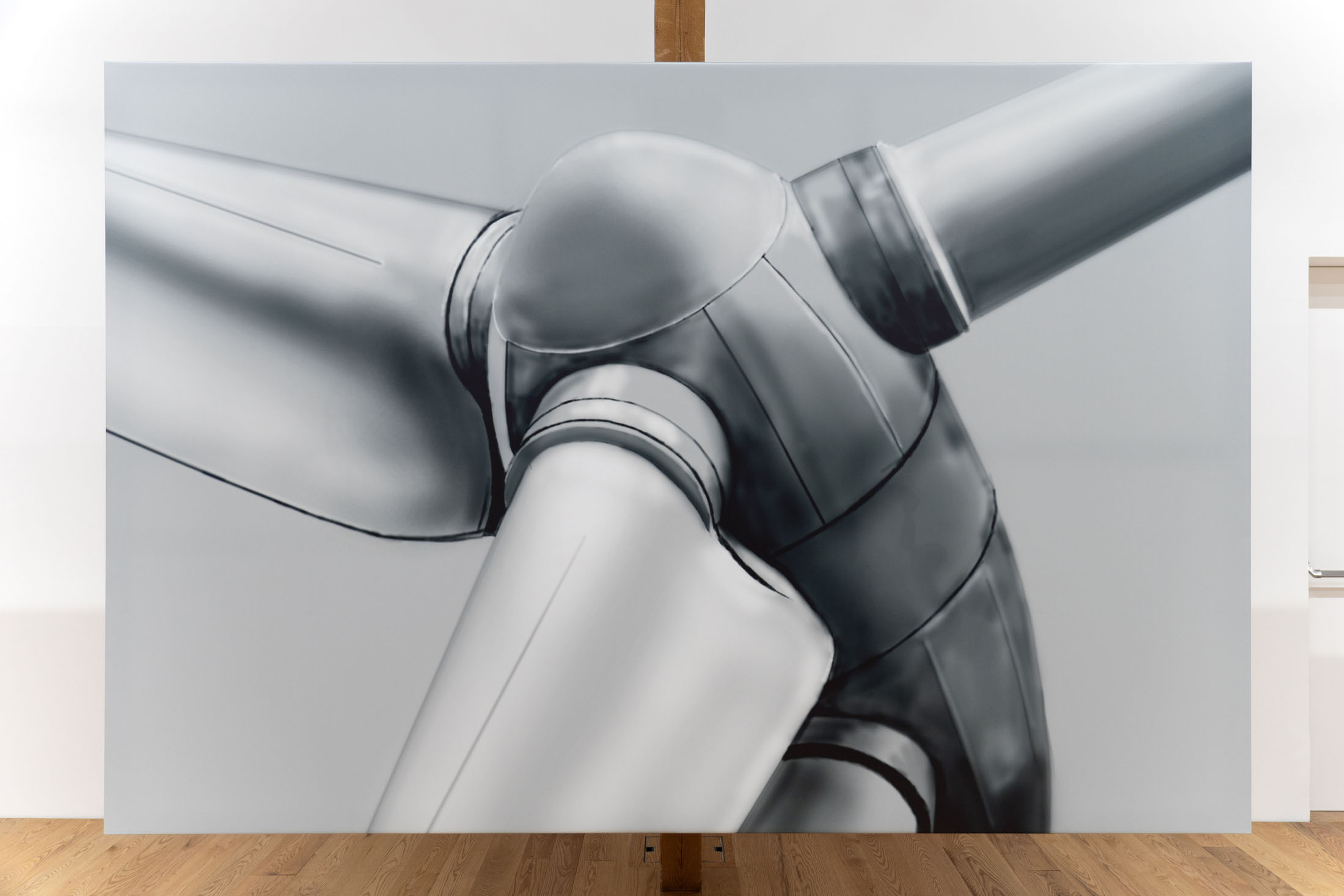
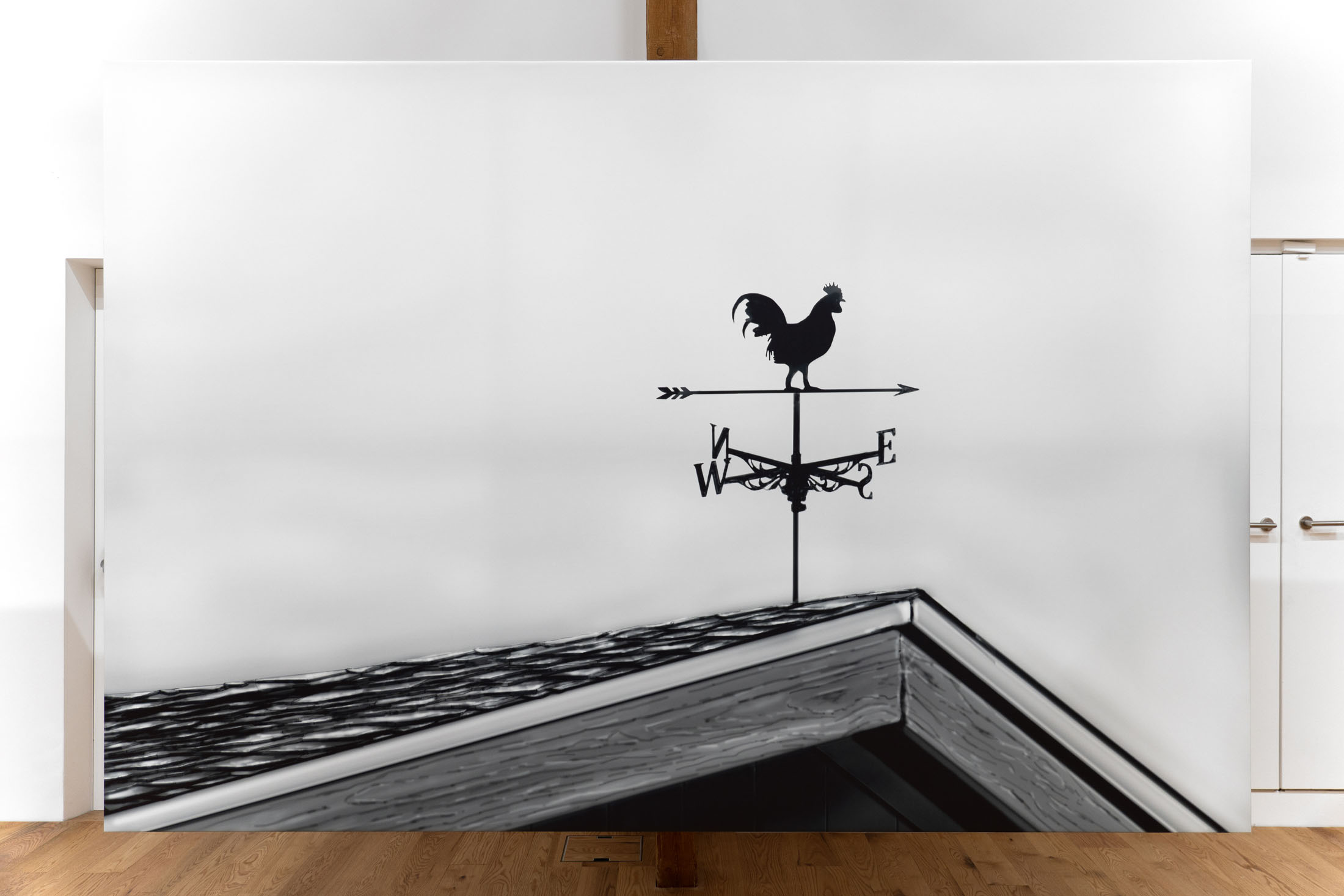
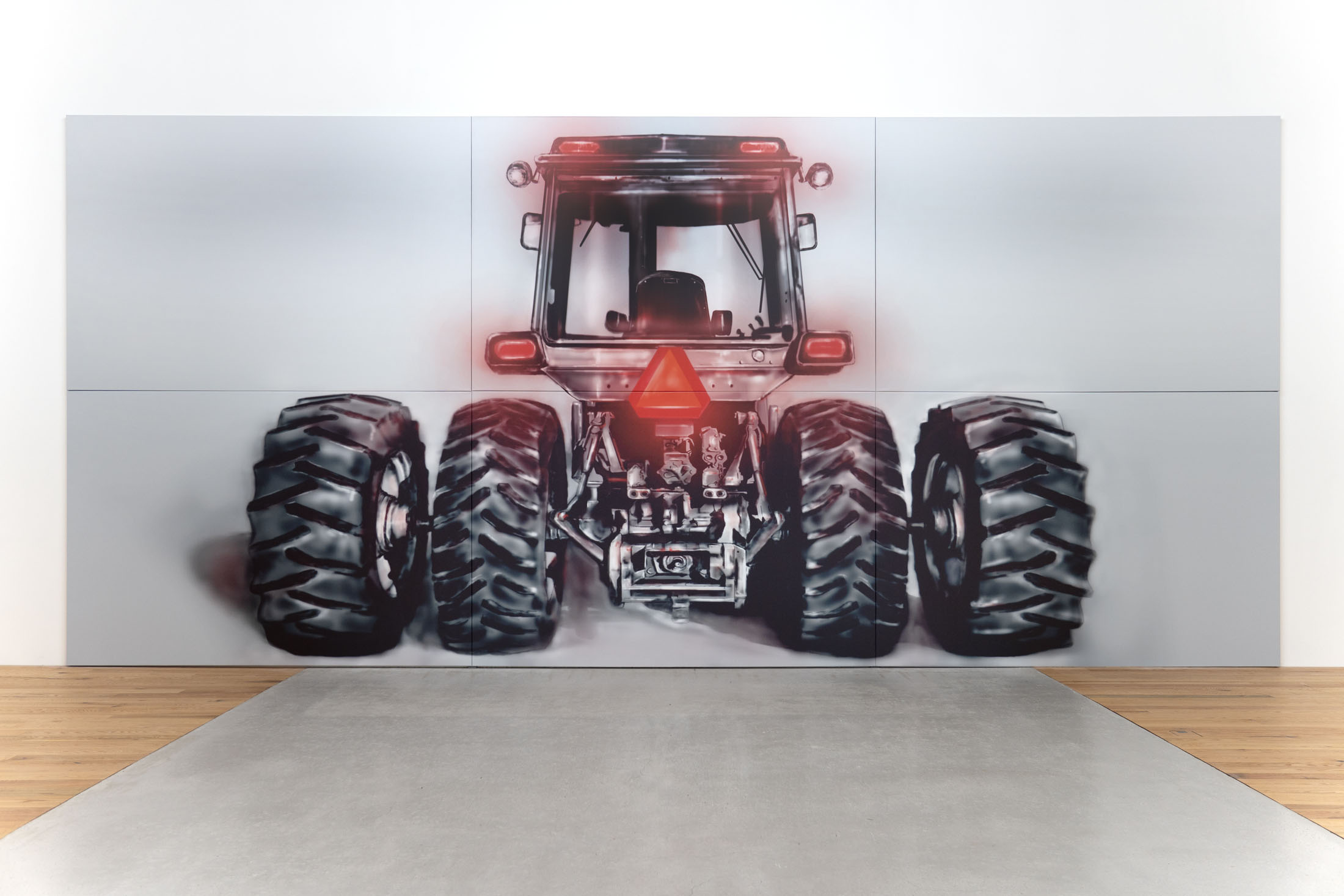
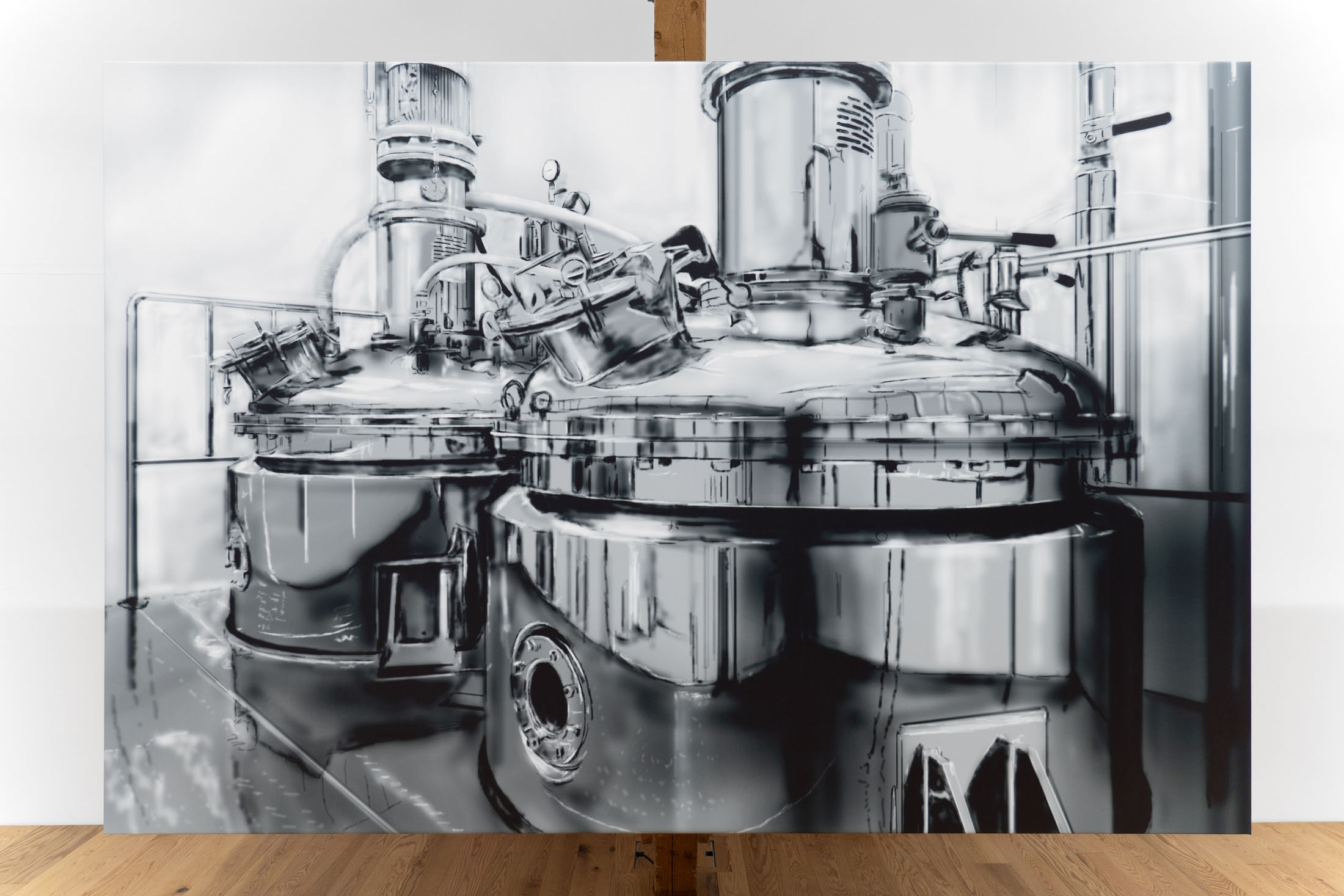
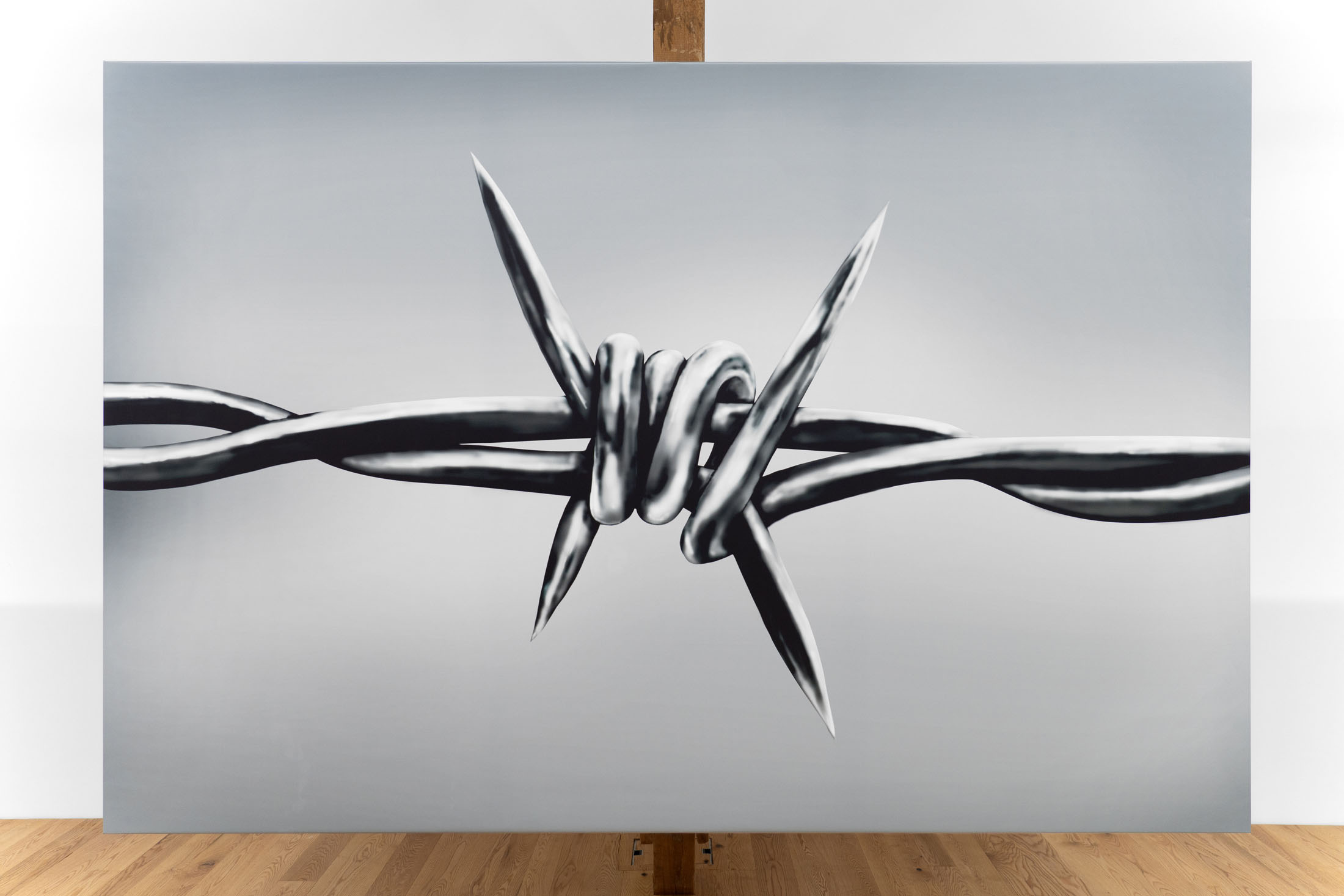
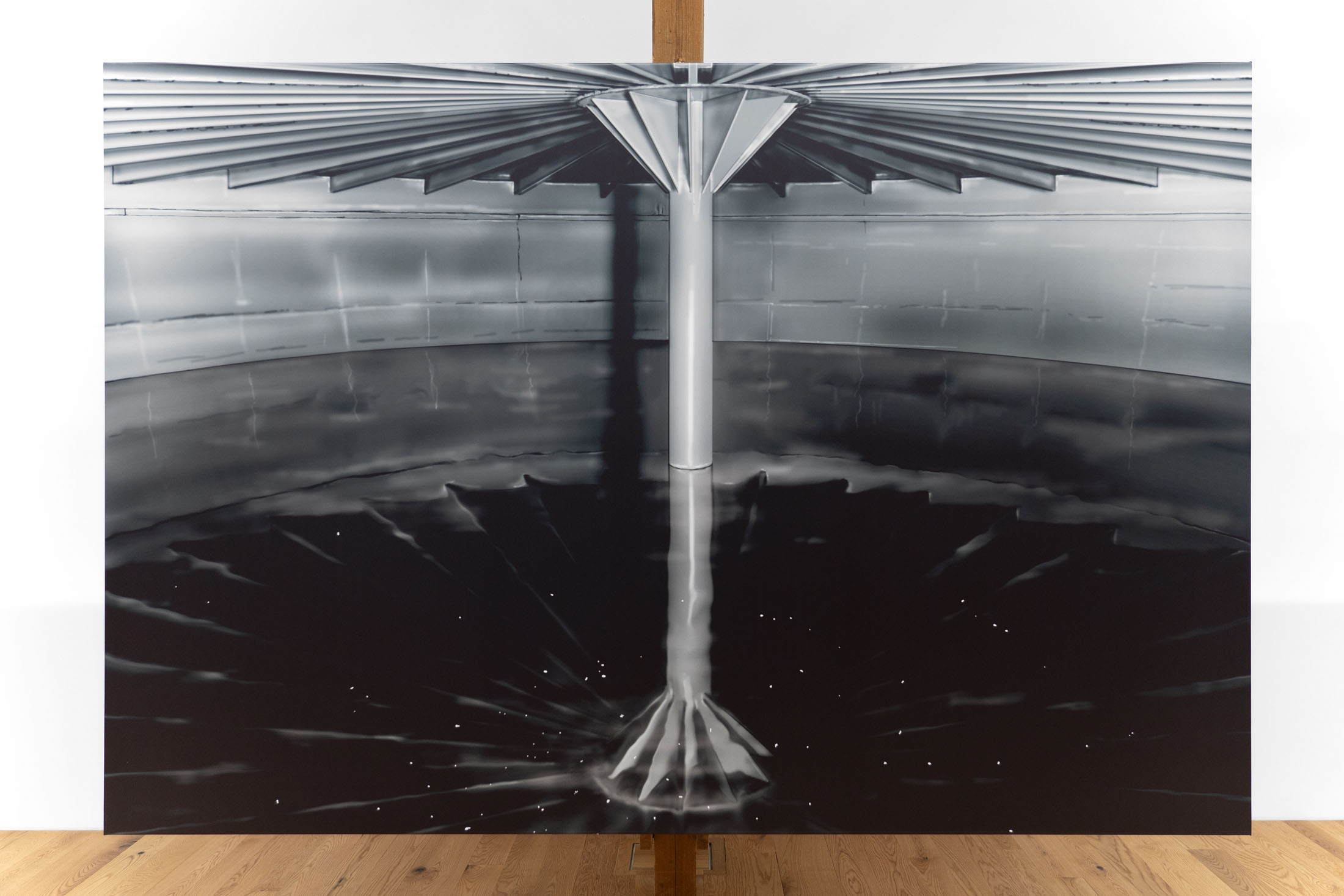
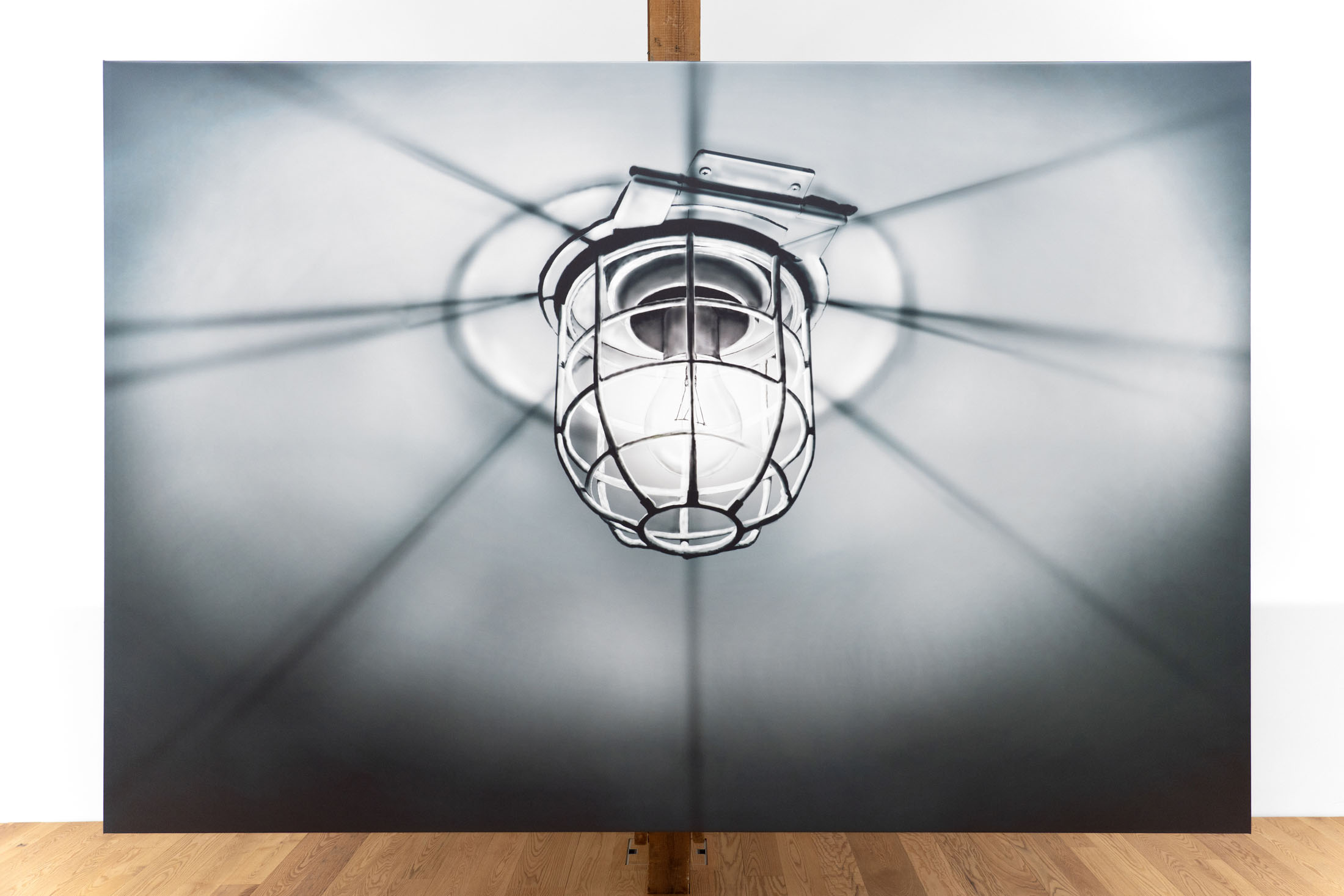
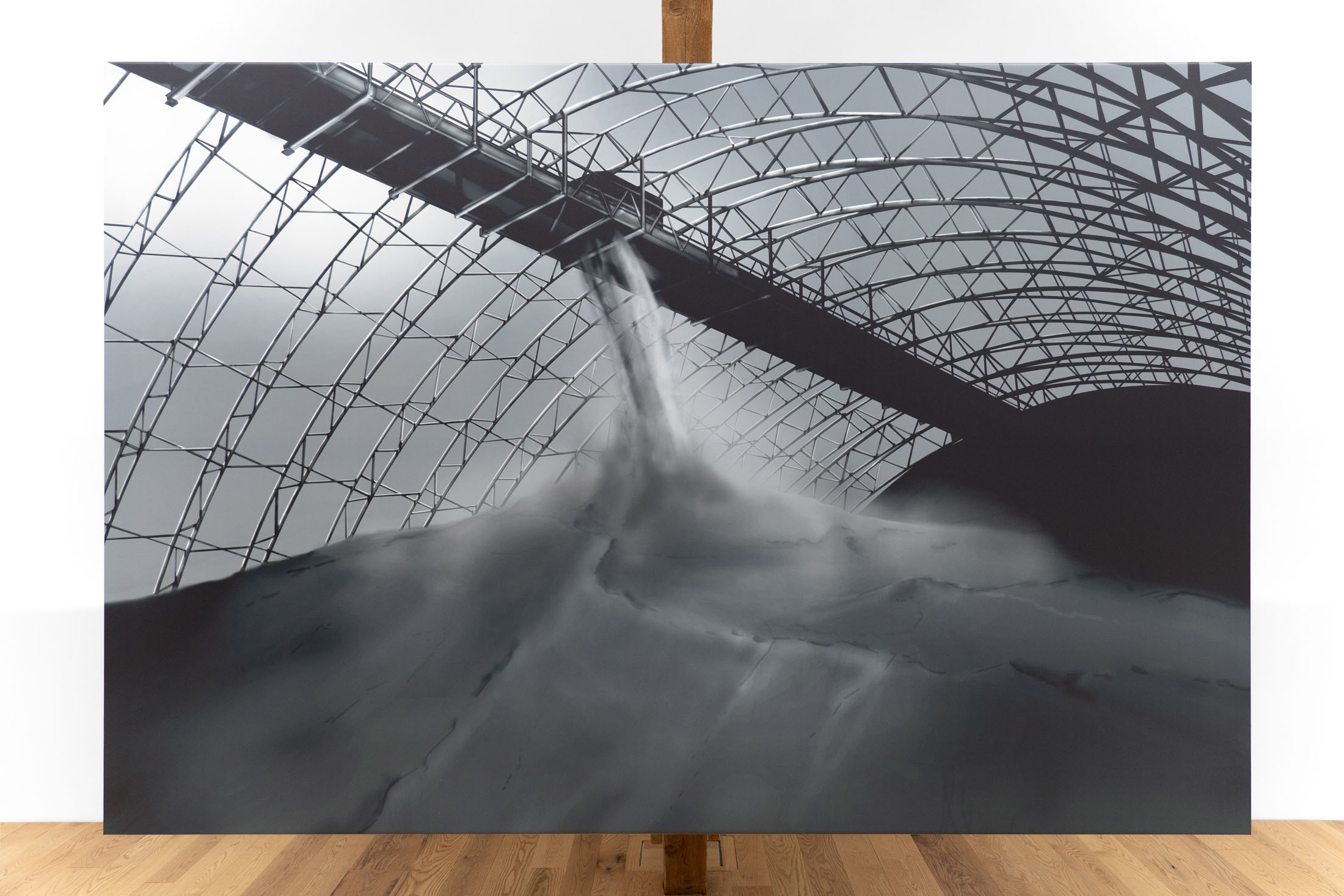
In contrast, Louisa Gagliardi’s paintings unfold another form of strangeness. Created through a process combining digital treatment and printing on PVC, they depict agricultural and industrial equipment: silos, tanks, grain chutes, barbed wire, wind turbines, sprinklers. Devoid of any direct human presence, these images nevertheless retain its trace. The machines, the infrastructure, irrigation and storage systems – all this machinery derived from the agro-industry, these control systems responding to imperatives of profitability – become the true protagonists of the scene. Presented as a single continuous frieze along the farms in the nave, reduced to a sober and austere palette of cinematic grays, these smooth surfaces establish an atmosphere that is both sanitized and threatening. The landscapes to which this equipment belongs are only hinted at through mirror effects, reflections or fragments. Paradoxically, the absence of nature intensifies the enigmatic sensation. Although restricted to a maximum speed of 30 km/h, as indicated by its red triangle, a monumental tractor, whose scale extends to the floor and merges with the concrete slab, appears both playful, like a toy enlarged to absurd proportions, and dangerous. The familiar here shifts into a form of uncanny strangeness, offering us an alternative experience of reality, on the margins of our collective attention.
For both artists, changes in scale act as a destabilising device, transforming ordinary objects into ambiguous presences. Humour surfaces in these displacements, whether in the inflatable hay bales reminiscent of beach or amusement park attractions, in tools rendered unusable by excessive perfection, in old stiff gloves forgotten on the handles of a scythe, or in agricultural machinery elevated to the status of an icon. Oversizing, trompe l’œil effects, artifice and camouflage are all strategies used to shift the viewer’s gaze and unsettle perceptual certainties.
MERGERS AND ACQUISITIONS can thus be interpreted in several ways: the meeting of two artistic practices, the dialogue between craftsmanship and technology, or the convergence of two intimate geographies – the Texan landscapes of Adam Cruces with those of Valais, which shaped Louisa Gagliardi’s childhood – brought together within the same space. But above all, the exhibition unfolds as a metaphor for a broader relationship: that of humanity domesticating, transforming and absorbing nature, while remaining exposed to its forces. At a time when the productivist model is widely questioned, the artists do not stake out a singular position. They prefer to open a field of resonance with works that surreptitiously suggest, in a subtle balance between reminiscence, fascination and concern. Thus, at the heart of this former utilitarian architecture converted into an art space thirty years ago, forms seem suspended. The lighting imposes a controlled coldness, contrasting with the warmth of the wooden framework, as if the historic structure were dominated by a new luminous order. Nothing is entirely natural, nor entirely artificial. Between fusion and absorption, cooperation and rivalry, landscape and humanity appear as two entities in constant mutual redefinition. The exhibition thereby radiates an atmosphere of bittersweet nostalgia mixed with hope, leaving the audience free to inhabit this zone of friction—to recognise their own attachments and contradictions–and perhaps to imagine other ways of coexisting.