Fashion is a dream haunted by dresses.
Christian Dior
What could be sexier, more romantic, dreamier than to be possessed, hunted, haunted by fashion’s undying spectre? The child in me would surely give up the ghost, elated at the mere thought of an avalanche of fabric engulfing my limbs. However, here it is worth remembering the age-old adage be careful what you wish for. If this comes across as too didactic, too much of a buzzkill for our thrill-seeking Prozac-happy present, there is always Sophocles. Nothing like a bit of Greek tragedy, the wrath of the gods and histories repeating themselves ad nauseum to burst through the vapid commercial bubble. When in doubt, ask yourself, what would the Greeks do?
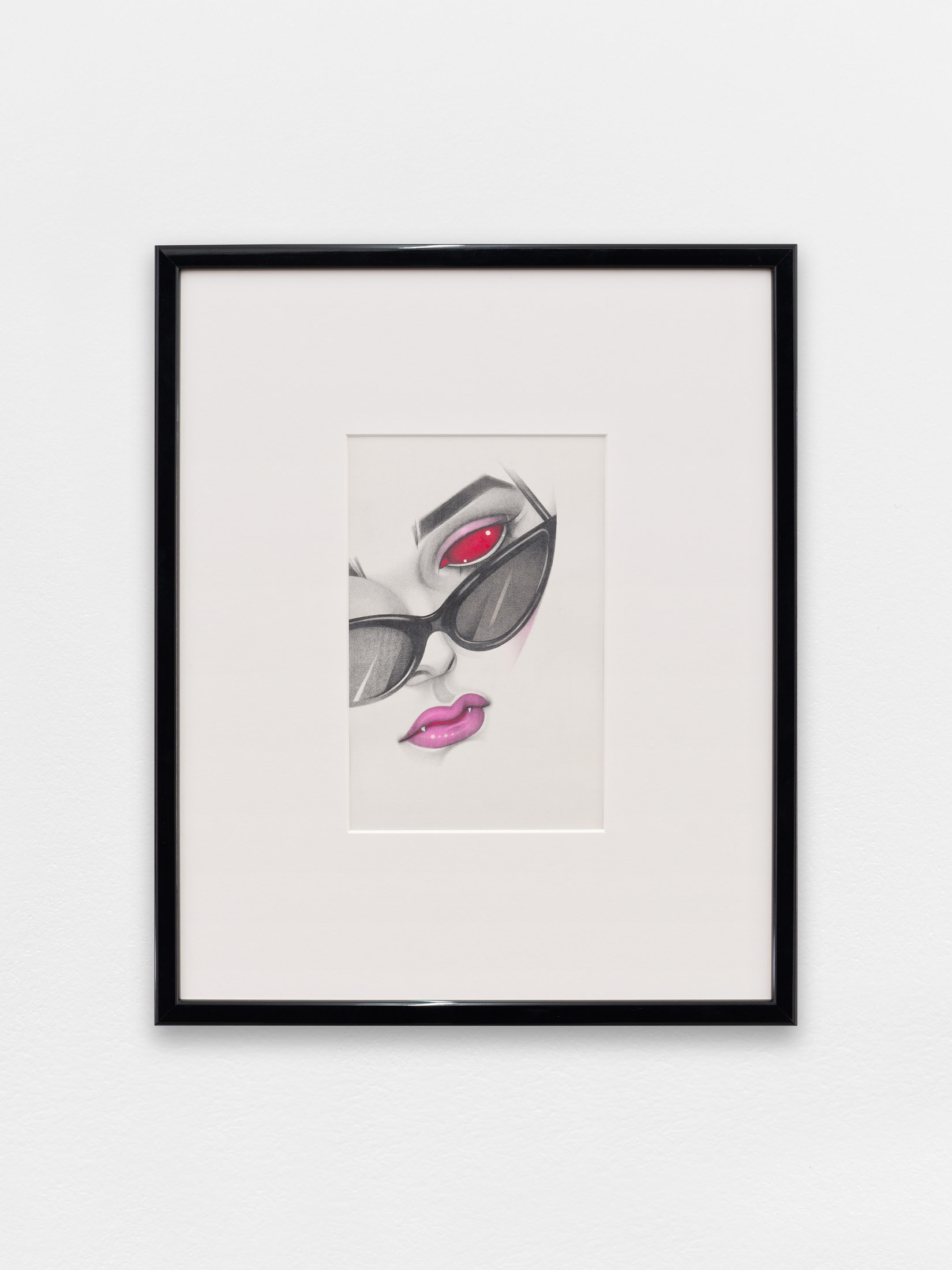
In Antigone, the greatest tragedian of them all provides a moral lesson on the consequences of sacrificing wisdom at the altar of power. If knowledge is power, then is it so surprising that nothing vast enters the life of mortals without a curse if the two are separated? Like a frock without a body, what we are left with is a constellation of flattened images, outer shells that lead nowhere other than to a vast empire of inner emptiness. Maybe it’s time to stop being a basic bitch and grow a pair. Paired together, Zuzanna Czebatul and Mel Odom unpack the burgeoning aesthetics of power and the strategies of appropriation that images are subjected to. Faced with the constant collapse of meaning, no wonder we’re all fighting chronic fatigue. The artists’ work may well be tinged with melancholy, or even perversely inclined to tragedy, but it is exactly through their disavowal of empty laughter and posturing that the drawings, sculptures and fashion items cohabiting at Sans titre open up spaces where desire, longing and a critical acumen can flourish.
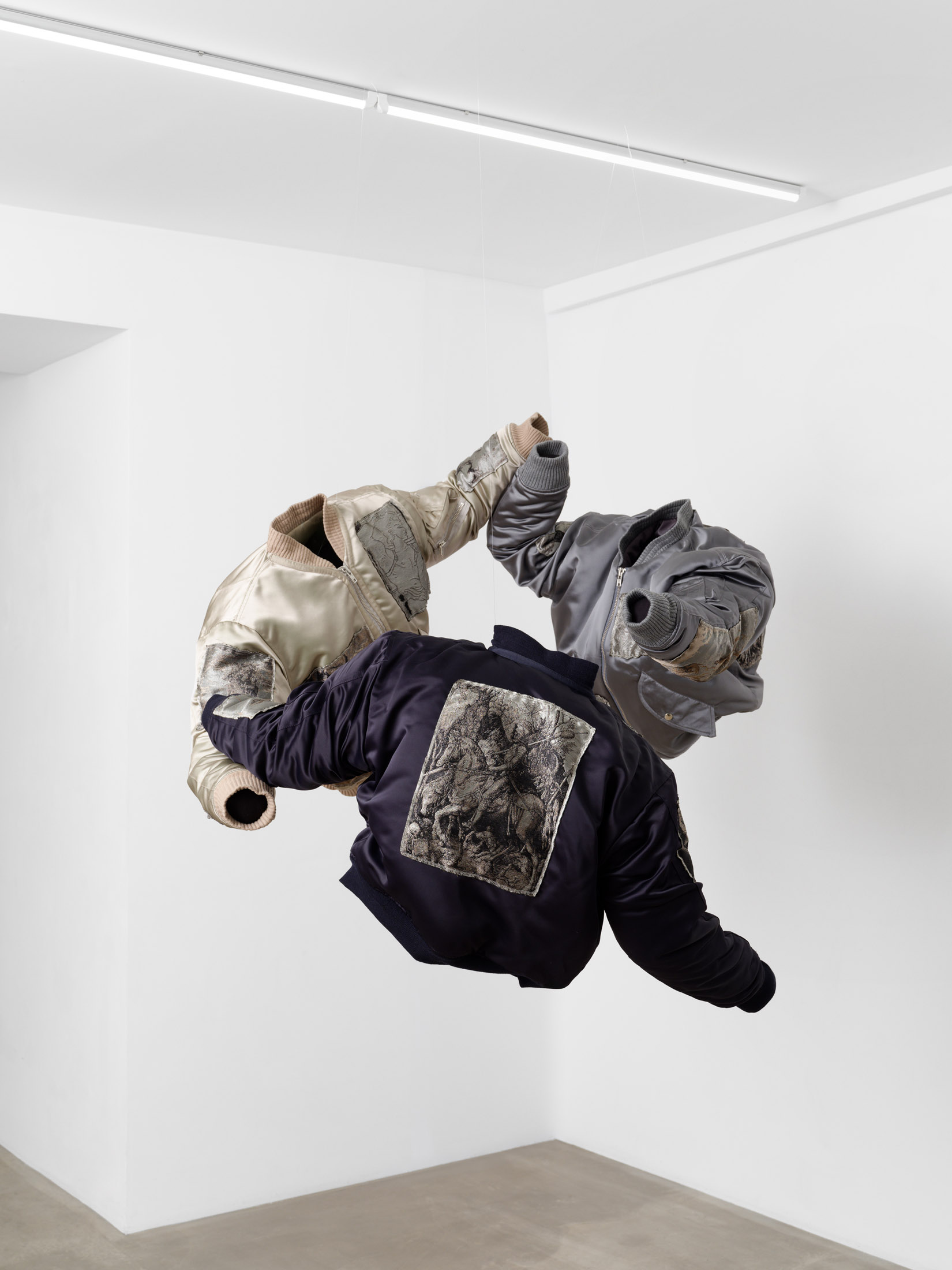
No one in recent years has offered up a better dissection than Mark Fisher of the melancholic atmosphere that pervades in the waking dream of a defiantly unchangeable capitalism, ‘a nightmarish and fumbling autopsy of a long-dead dream … an atrocity exhibition, curating a fashion-show procession of neoliberal spectres and zombies, now haunting and stalking the psyche.'(1) He might have had a particular acrimony towards the explosion of Britpop in the 1990s, an artificially sweetened and pre-packaged version of a new generation avant-garde masquerading as heavyweight cultural clout, but the pointed finger of Fisher’s cultural critique covers a much wider radius. Take the ubiquitous bomber jacket. As with most technological developments, this garment was first designed in 1927 for the U.S. Air Force before making its way into popular culture – one only has to think of Hollywood staples, such as Top Gun (1986) – and subsequently adopted by smaller, niche communities, whether they be skinheads or gabber ravers. Nothing like a whiff of militaristic bombast, toxic masculinity, subcultural coolness and high fashion exclusivity to start the day.
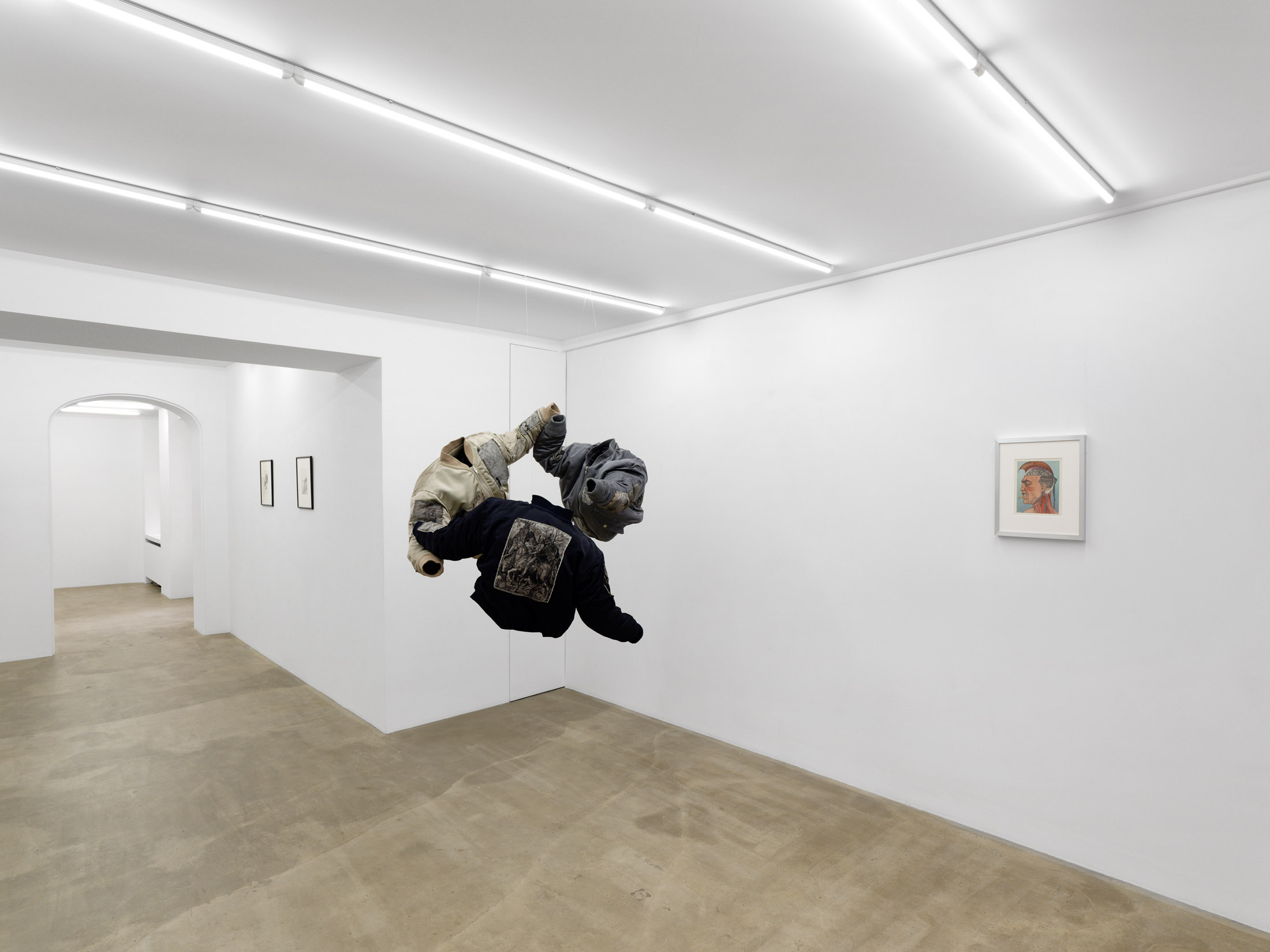
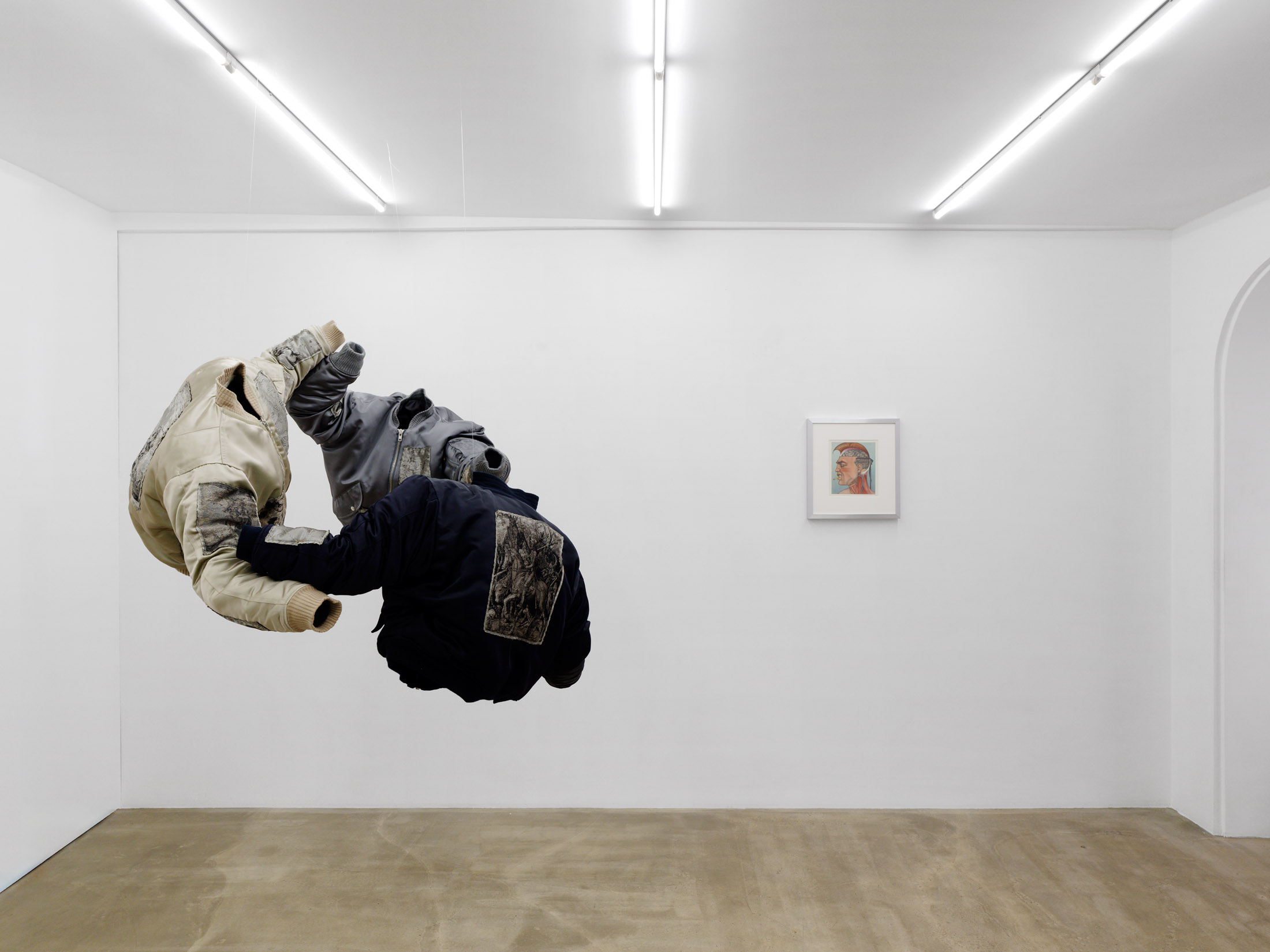
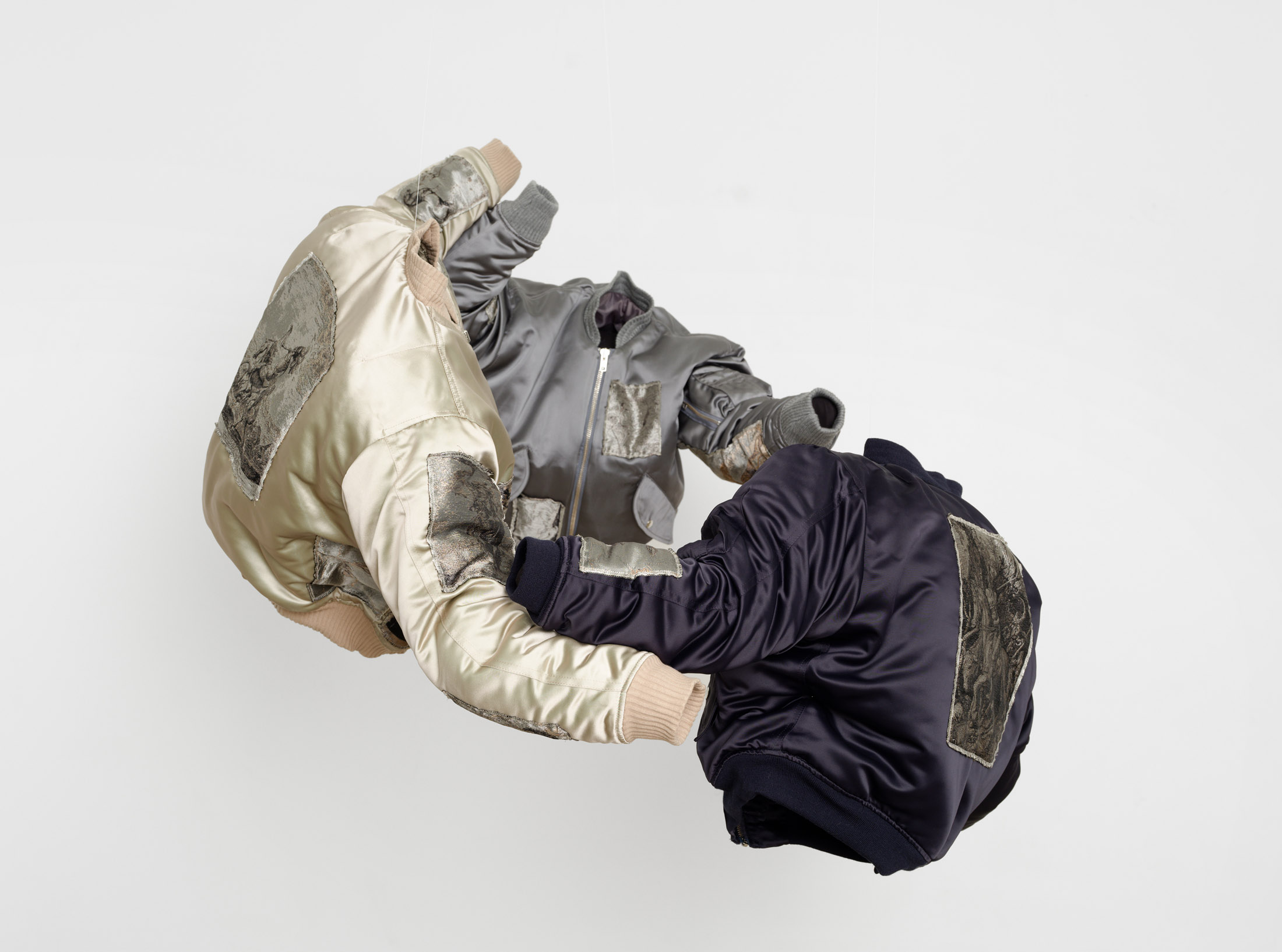
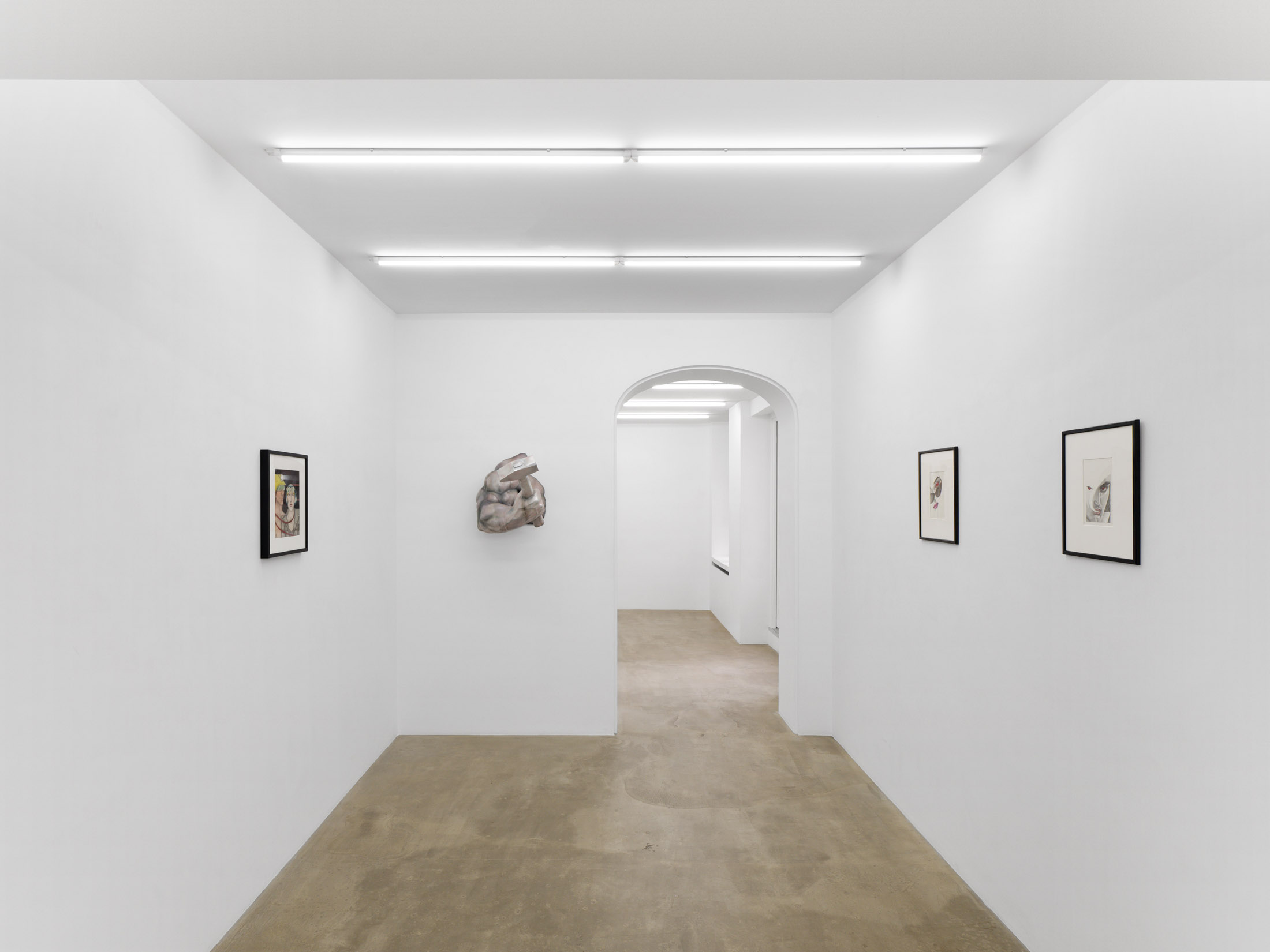
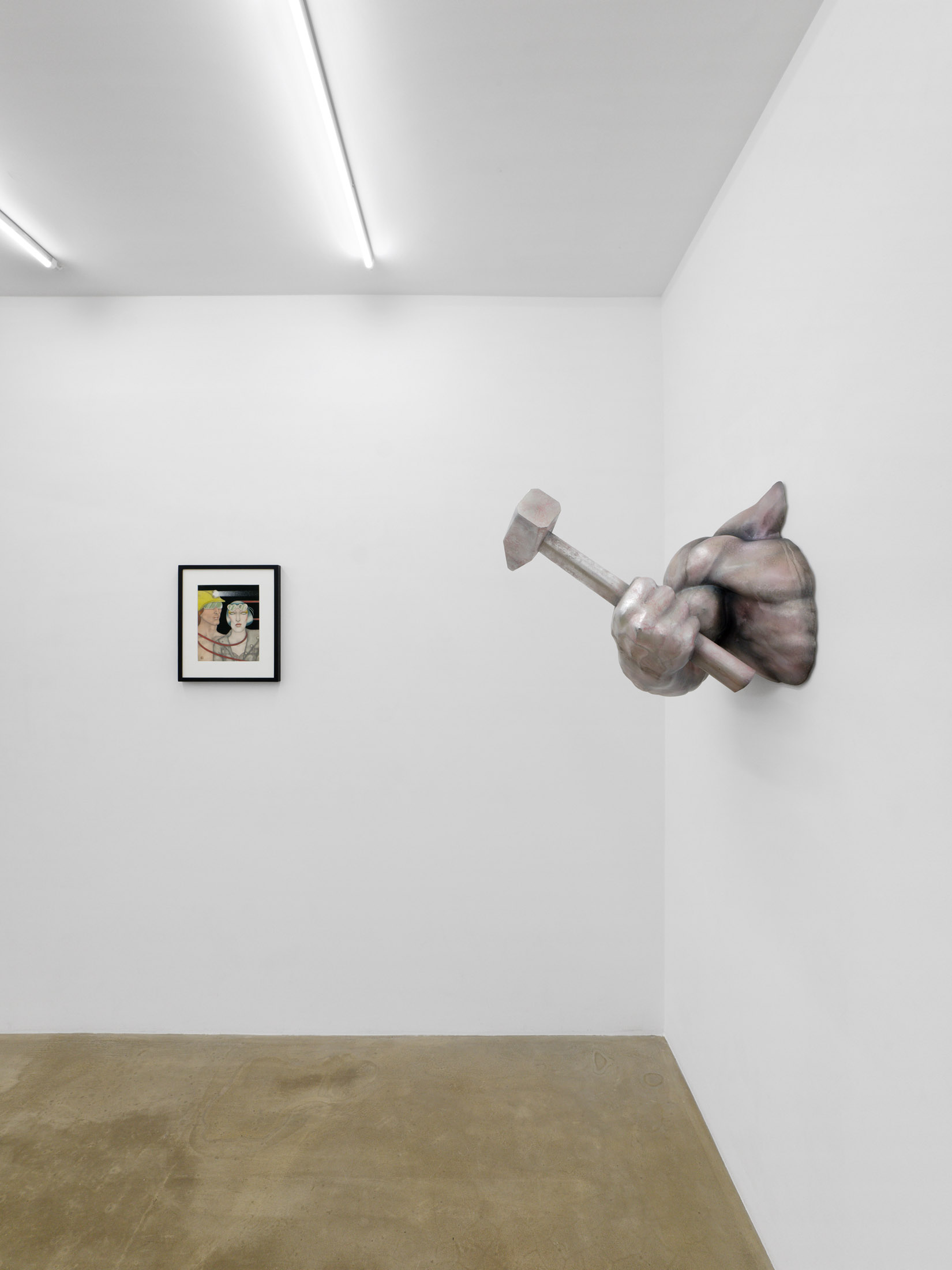
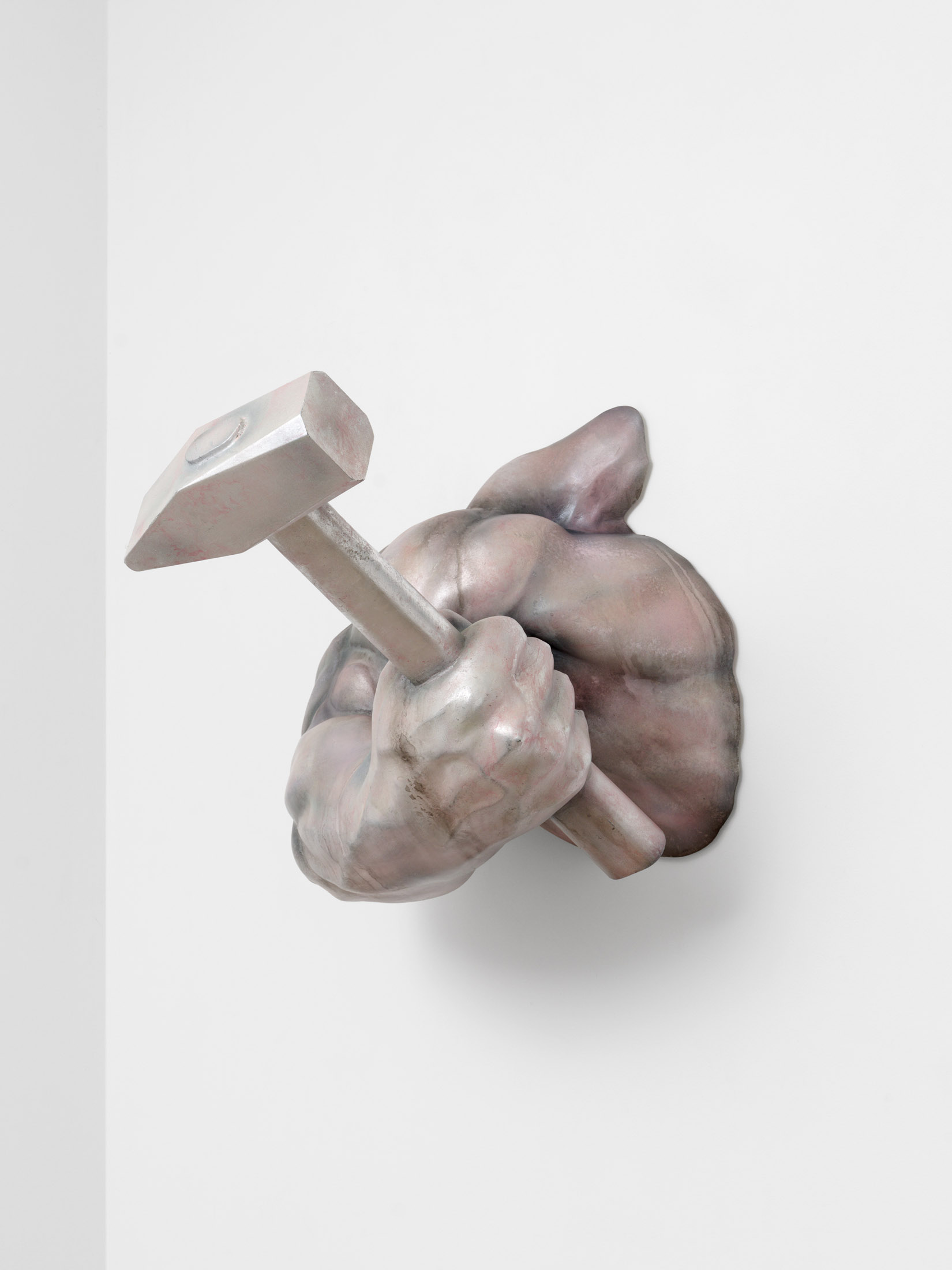
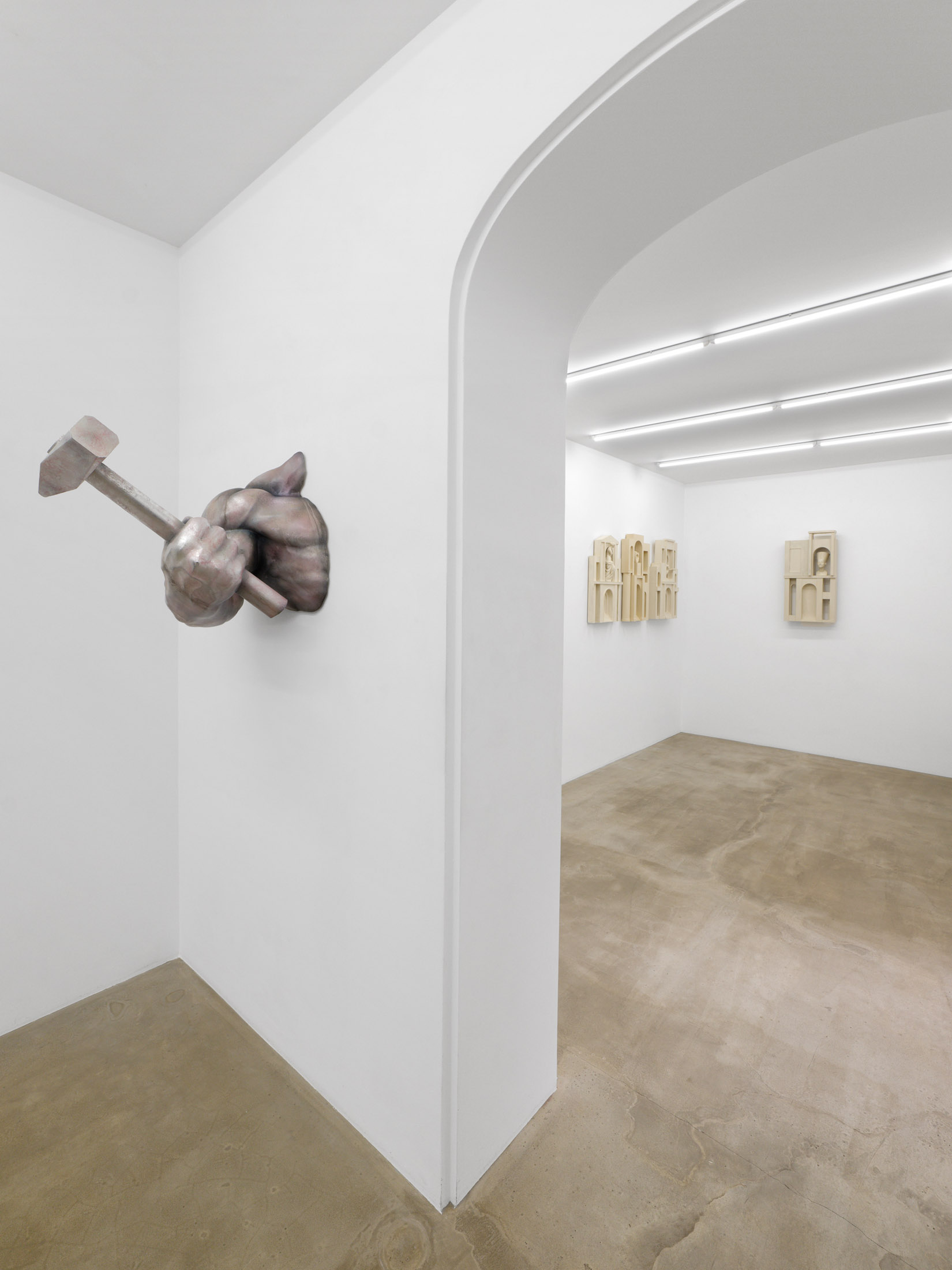
Commercial break – take this quiz to find out which fashion tribeYOU belong to. Zuzanna Czebatul’s trio of twirling bomber jackets (Mission to protect and inspire heroism in all forms, 2026), captured mid-air, recall the same hypnotic formation as Matisse’s La Danse (1910), the dreamlike composition commissioned by Russian entrepreneur and collector Sergei Shchukin, but without the bourgeois lustre. A jubilatory celebration of life exchanged for a necropolitical sabbath, the kiss of death bestowed upon meaning until this latter, forever fragile, implodes. As if to underscore this total collapse of symbolic order, the satin surfaces of Czebatul’s updated version are stitched with textile patchworks, miniature copies of work art history’s greats – Otto Dix,Tamara de Lempicka, Dürer, Michelangelo, Goya, Rubens, Jean Cocteau, the list goes on. What these flattened images have in common is that they either depict war or were made by artists who worked through war(s), a crude, chronological timeline, given the bomber jacket’s original function, of a militaristic surcharge hors norme. However, progress is progress, and what seems to be implied here is that nothing is safe, nothing is sacred, this too will end up in the scrapheaps of history, or at least of the fast fashion industry. Nearby, an overly muscular arm, its hand grasping a hammer, emerges from the wall (Dominique, 2026). Poised in mid-action, in a limbo state of sorts, it’s anyone’s guess whether the ensuing gesture that it plans to enact is one of destruction or creation.
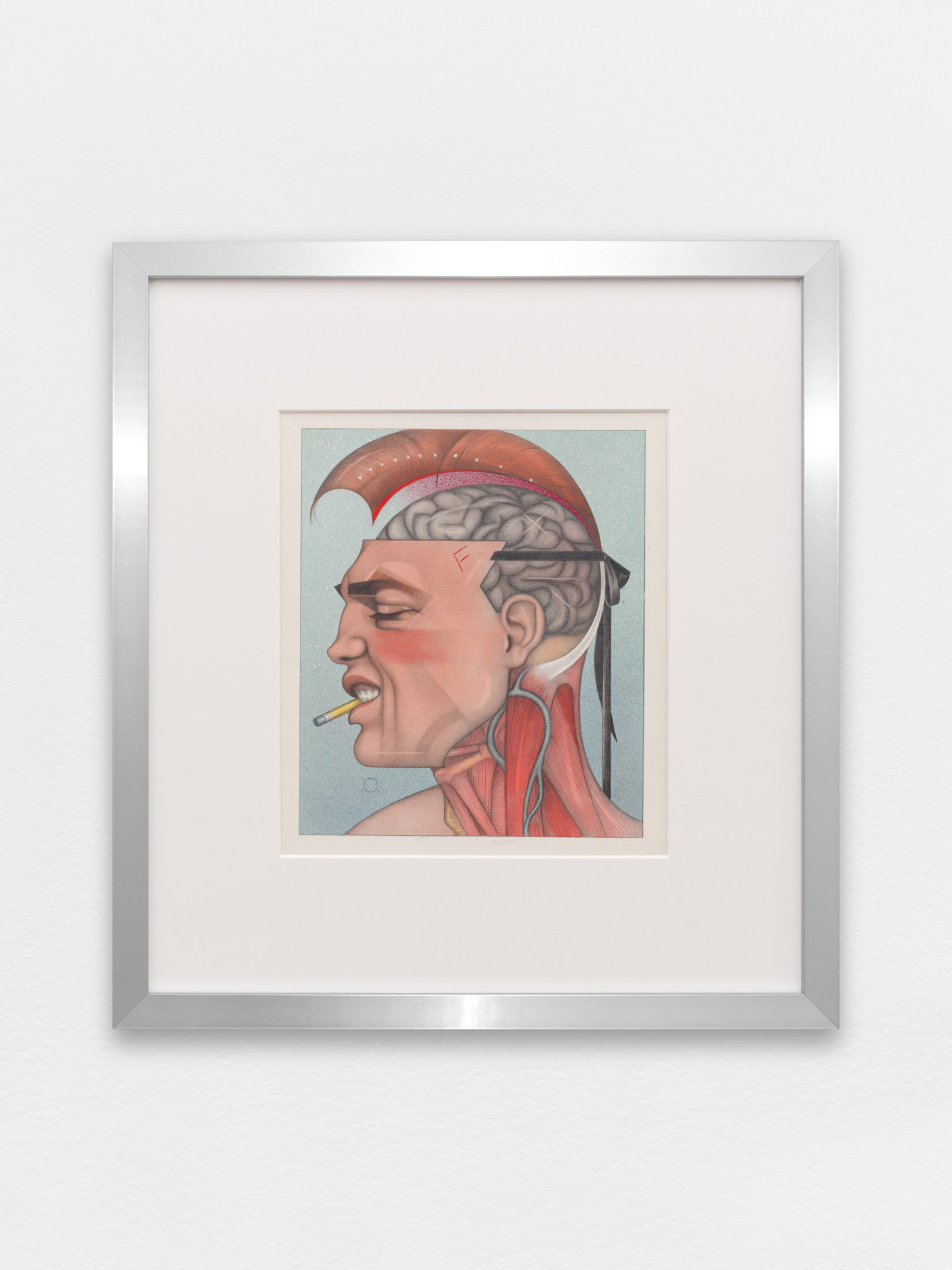
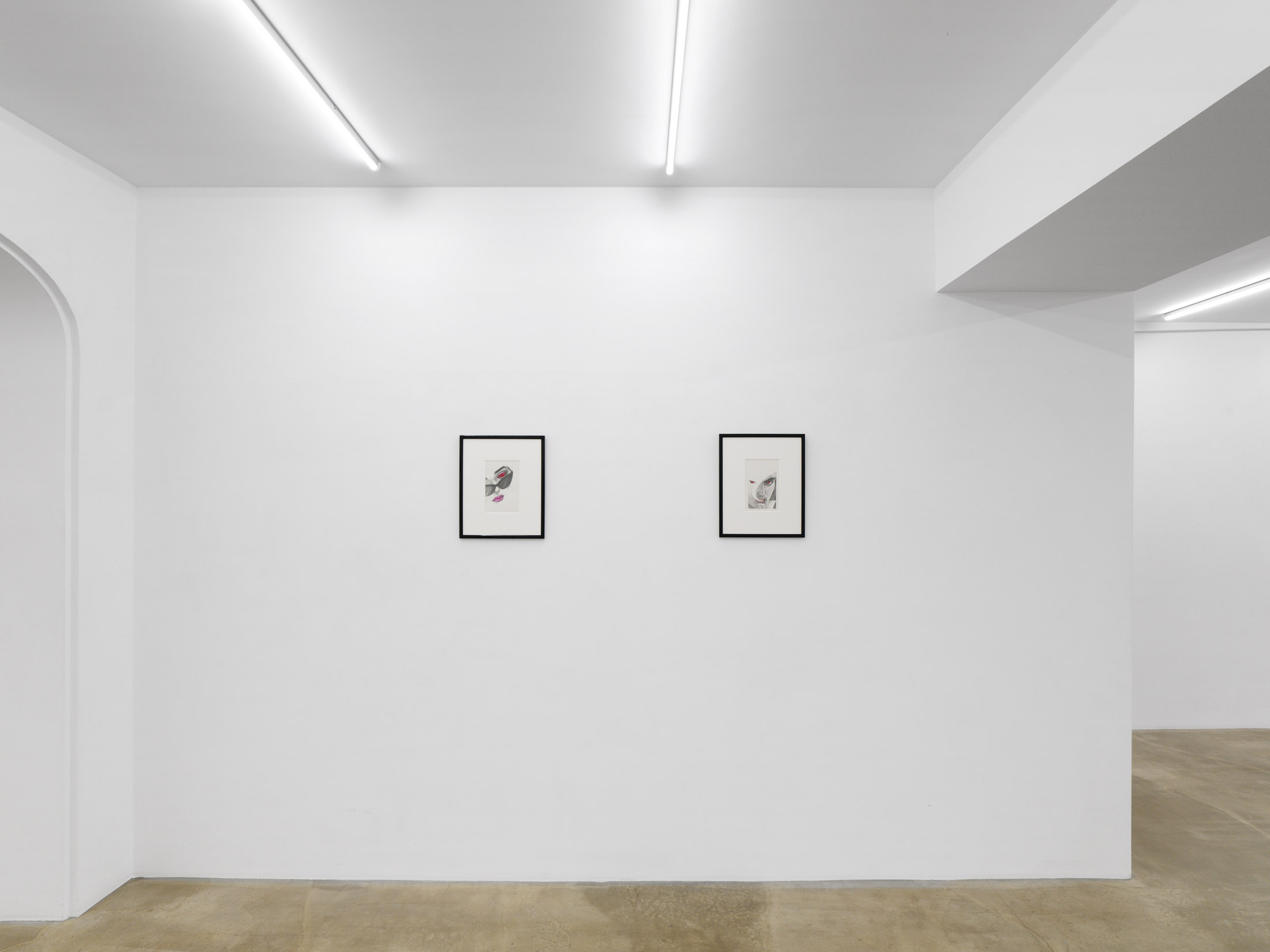
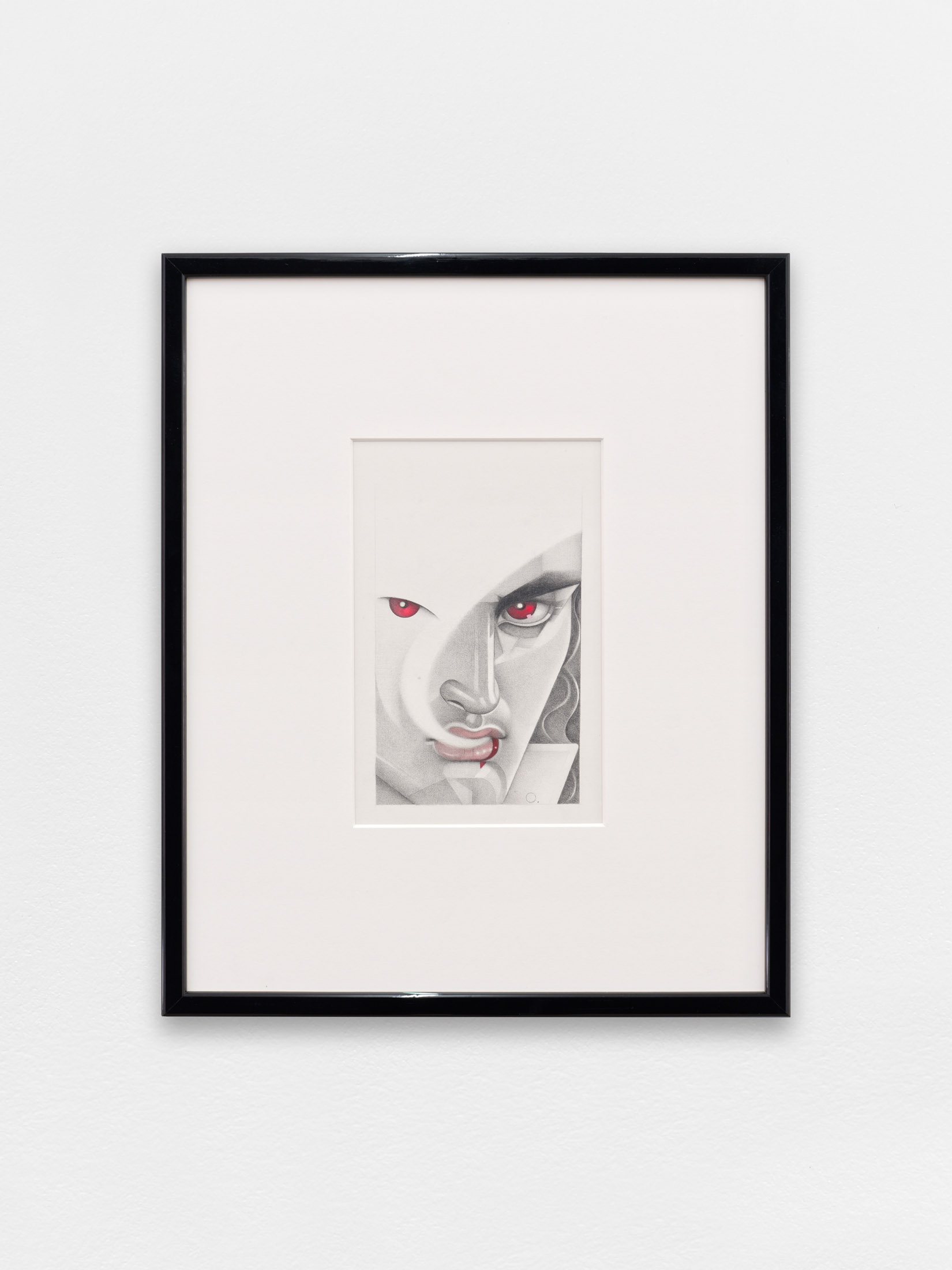
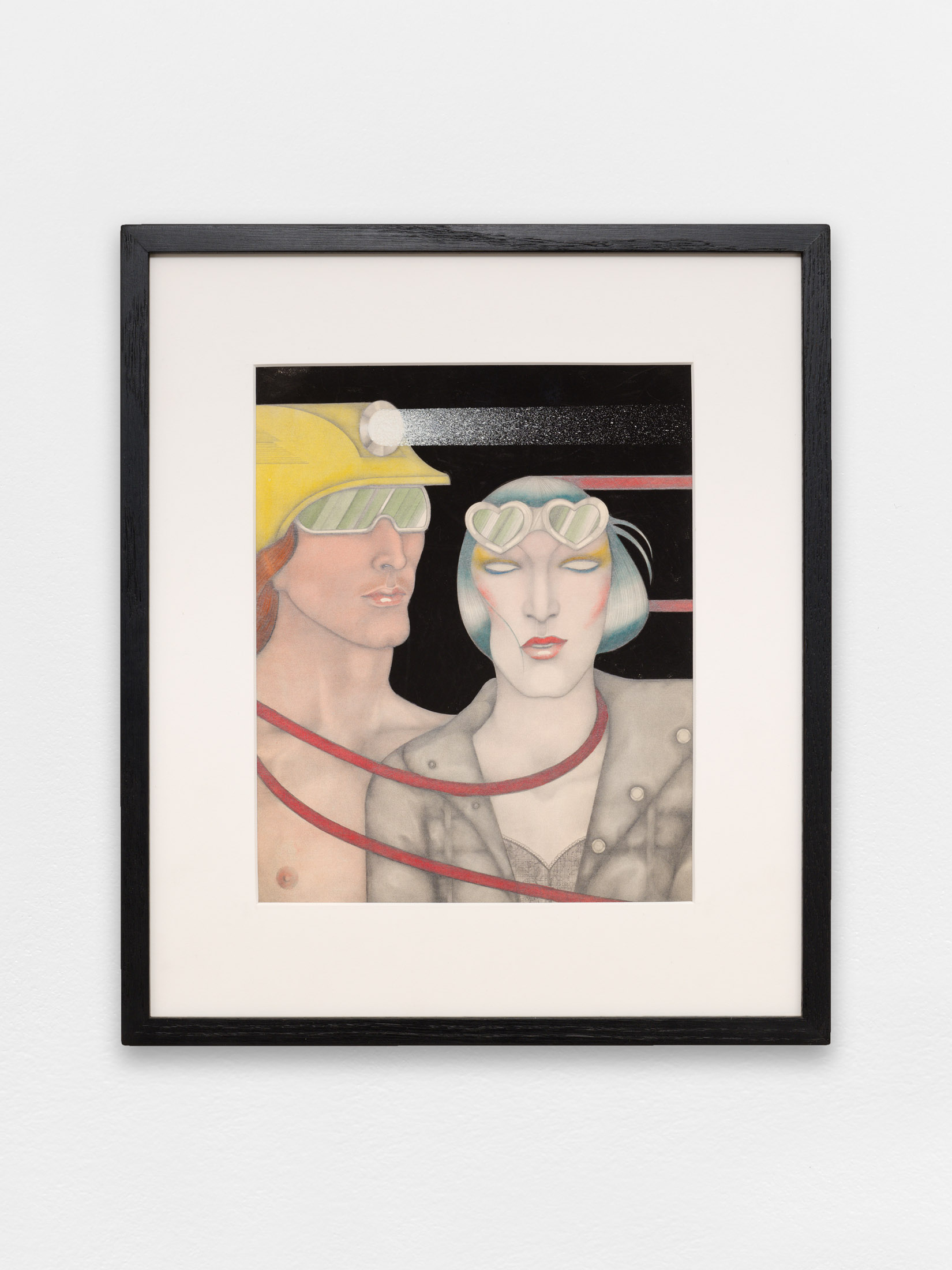
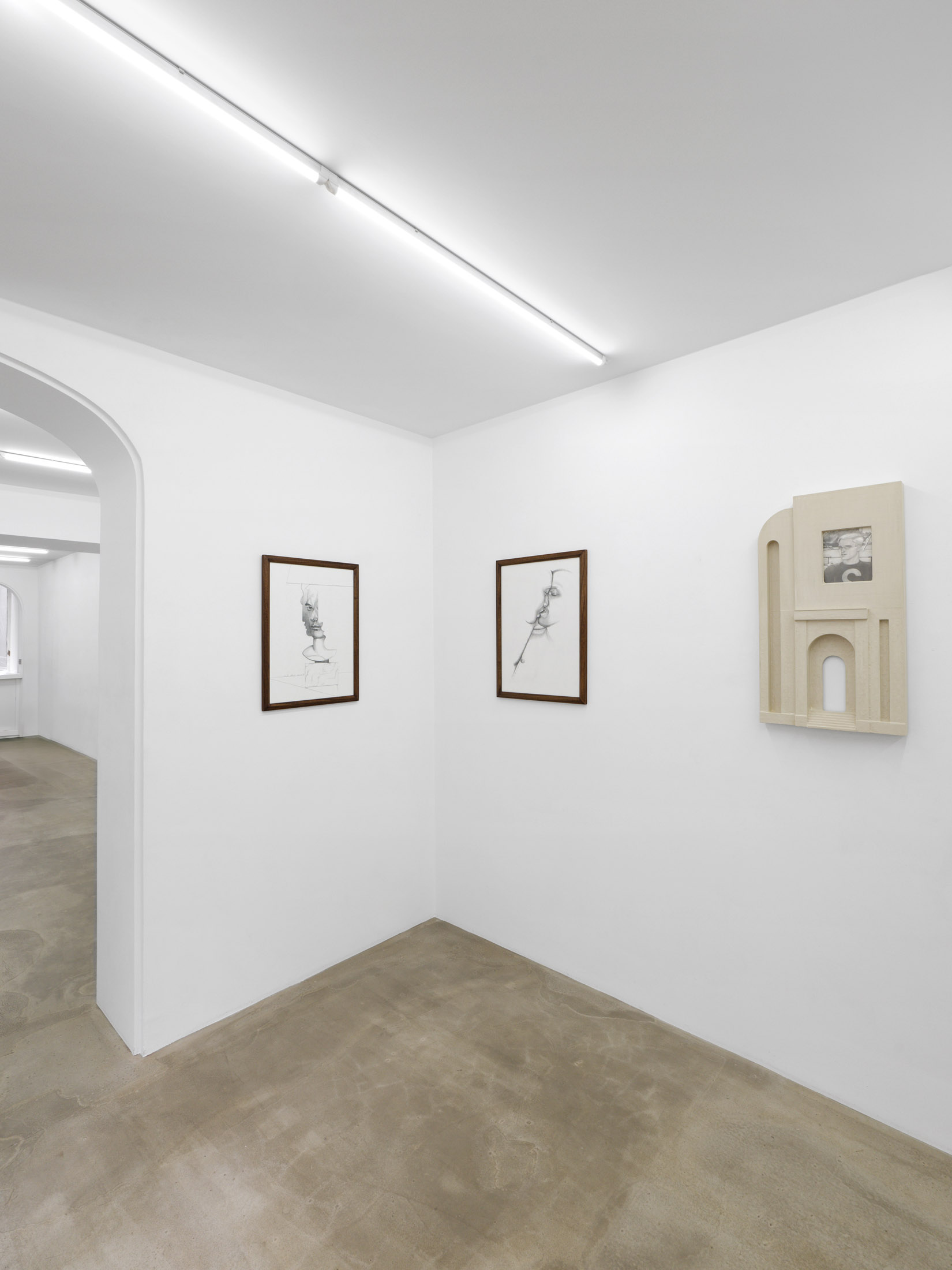
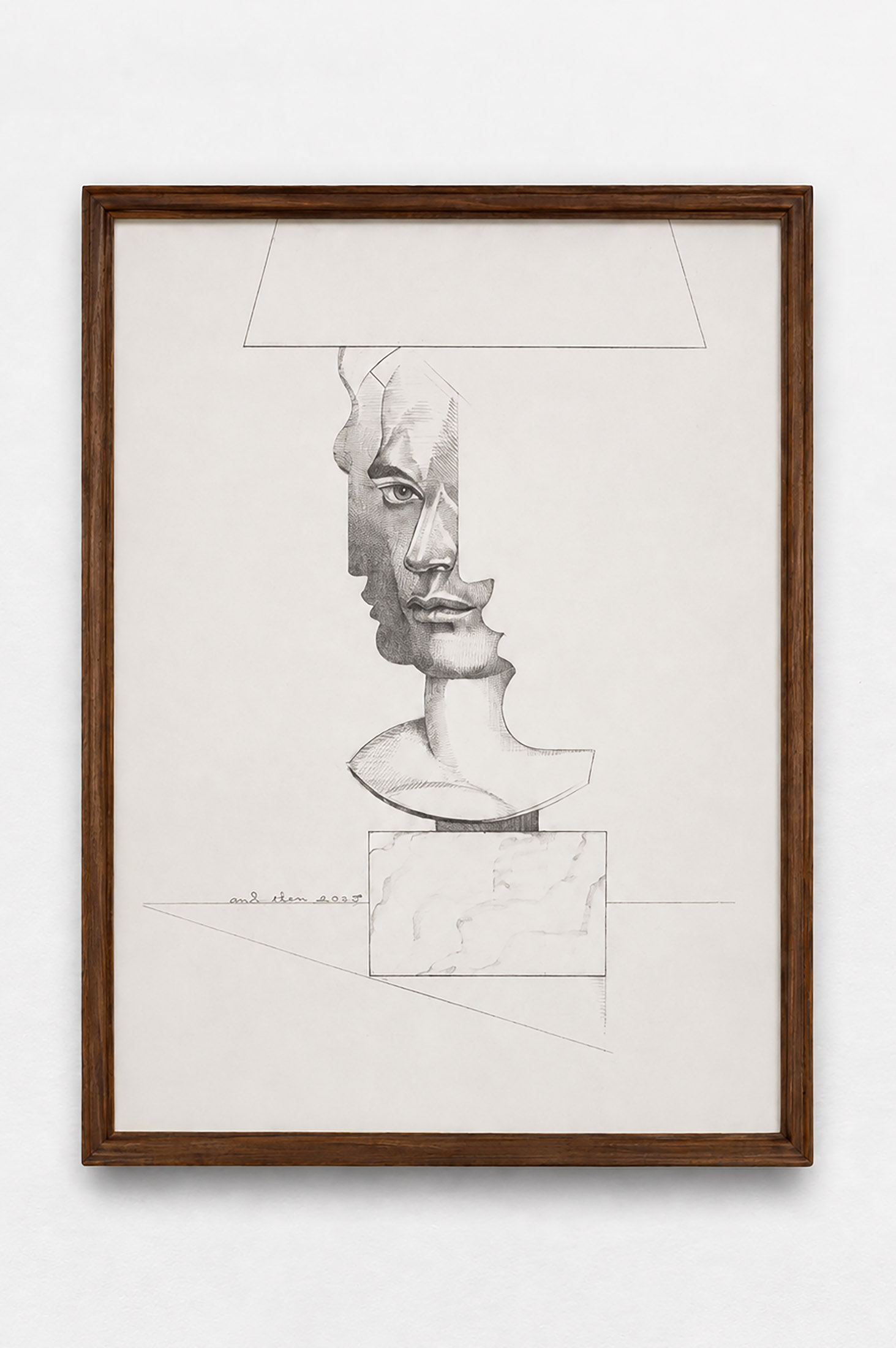
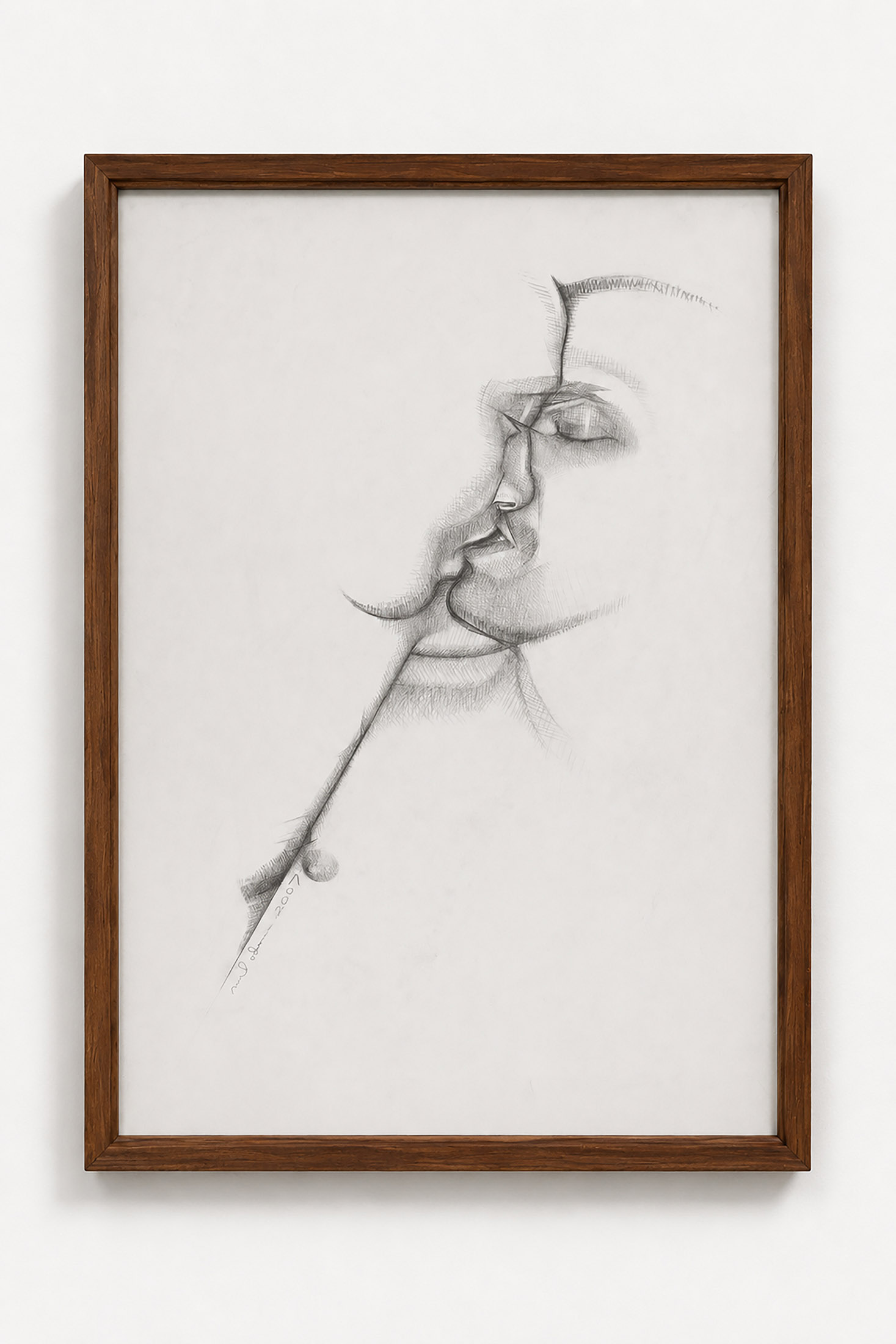
Longevity, what stays and what goes. Mel Odom’s otherworldly, highly stylised illustrations were initially created to grace the covers and pages of (adult) magazines, appearing from the second half of 1970s onwards in Viva, Playboy, Blueboy, and the like, before attaining new heights with a 1980 cover illustration for Edmund White’s novel Nocturnes for the King of Naples.Yet, what is also instantly palpable in these tender drawings of queer desire, emanating a certain cinematographic quality, a pre-Raphaelite and fin-de-siècle aura, is the tenderness with which the lines, curves, colour washes have been applied to paper. Considering that Brain surgery school, Rolling Stone (1988) or Tempter (1990), among many others, were produced at the height of the AIDS crisis, Odom’s works are an ode, homage, love letter to dear ones, many of them since gone, a secret sign language veiled beneath the relative safety of a commercial order for all to see, but only for a select few to understand. An extreme form of beauty to return dignity to and counter the demonisation of those lost to something much greater.
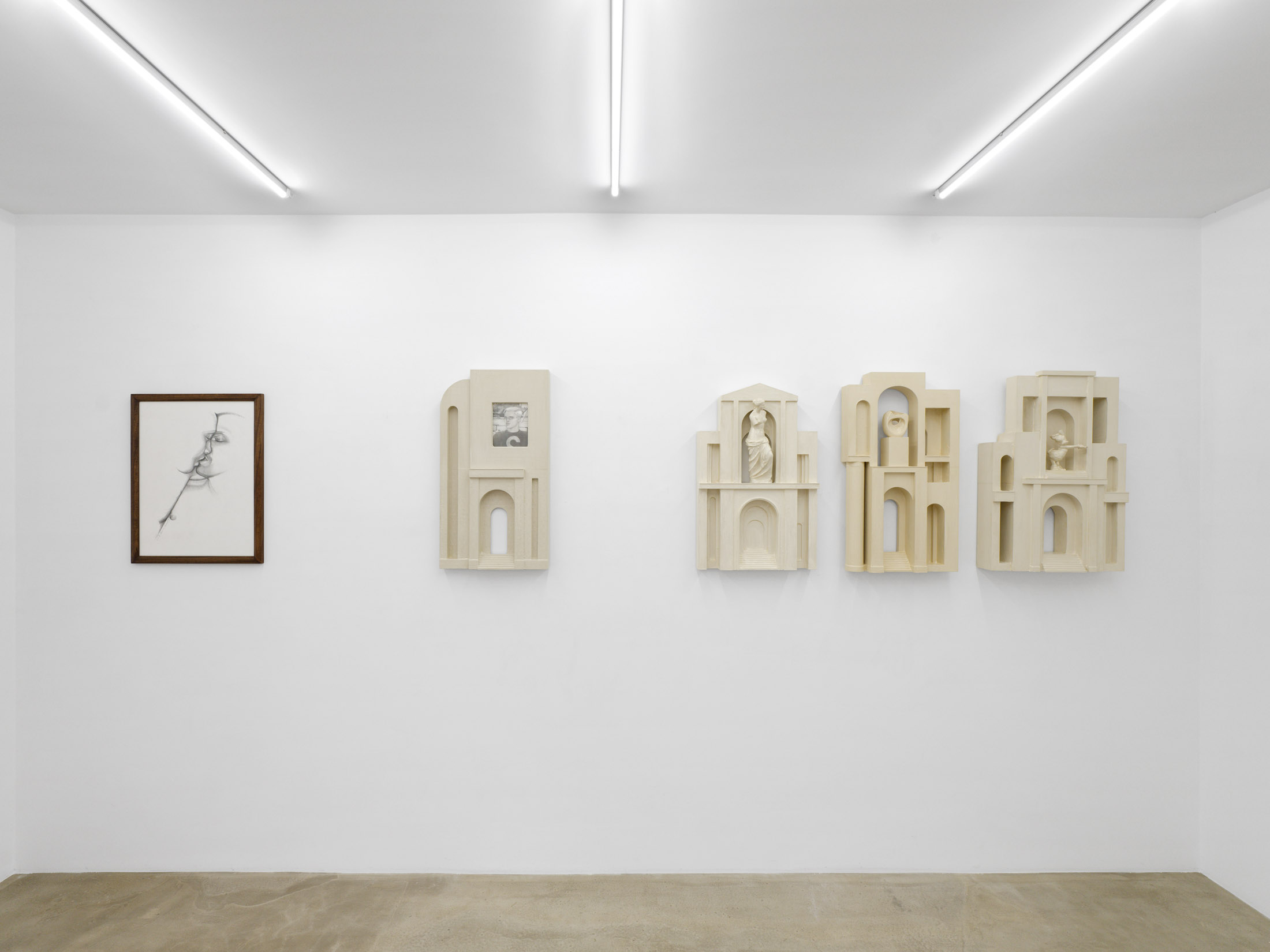
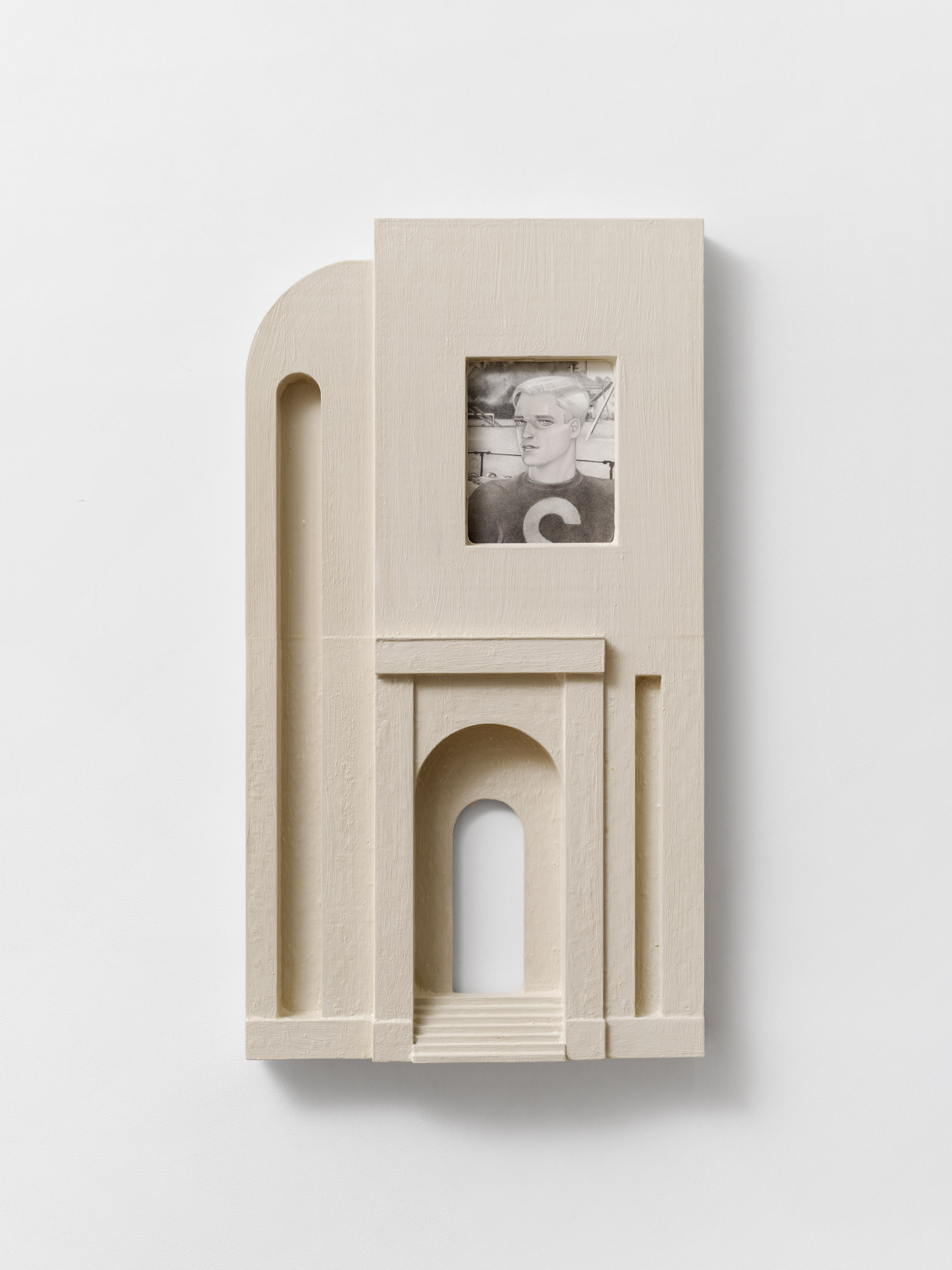
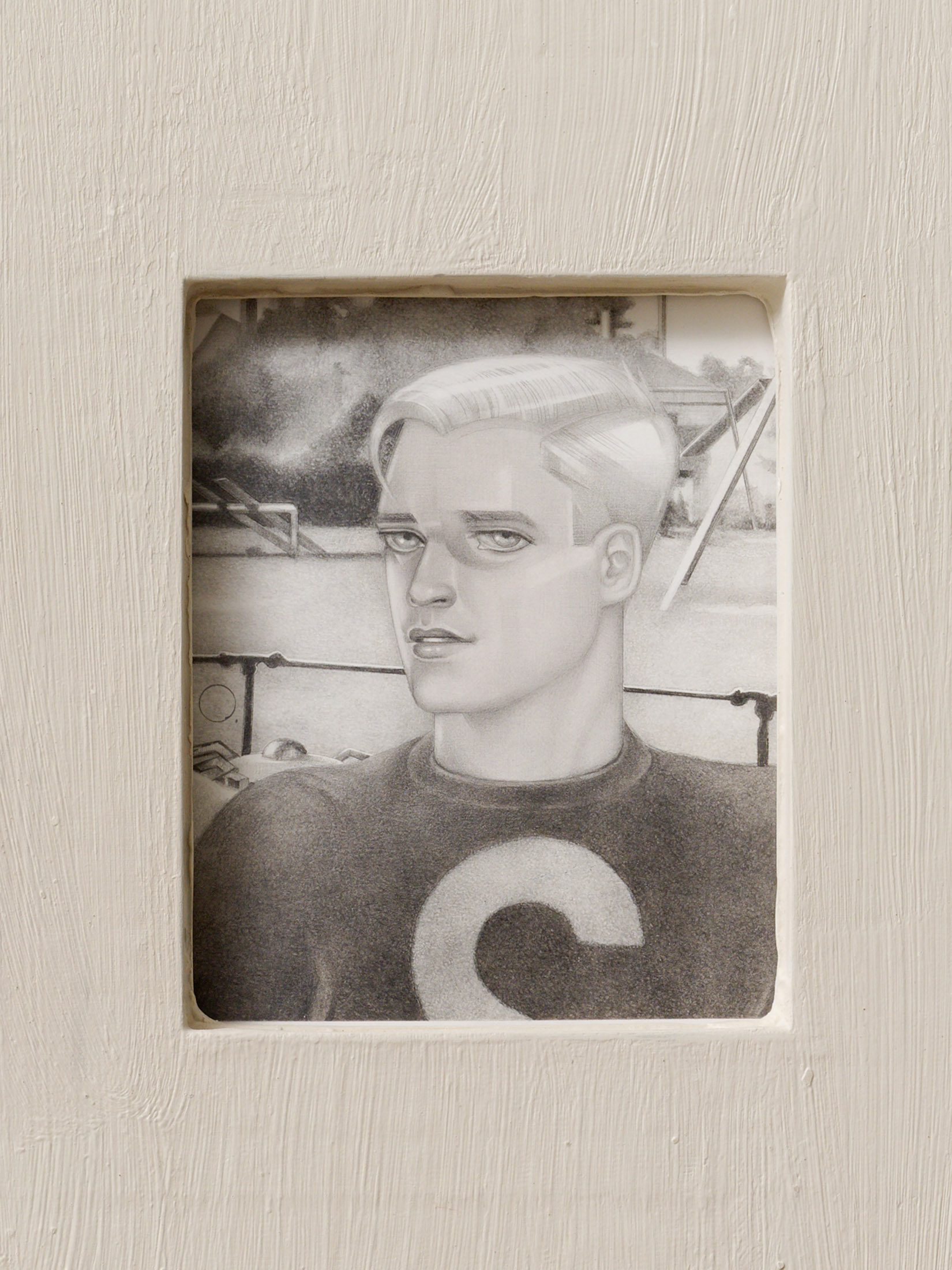
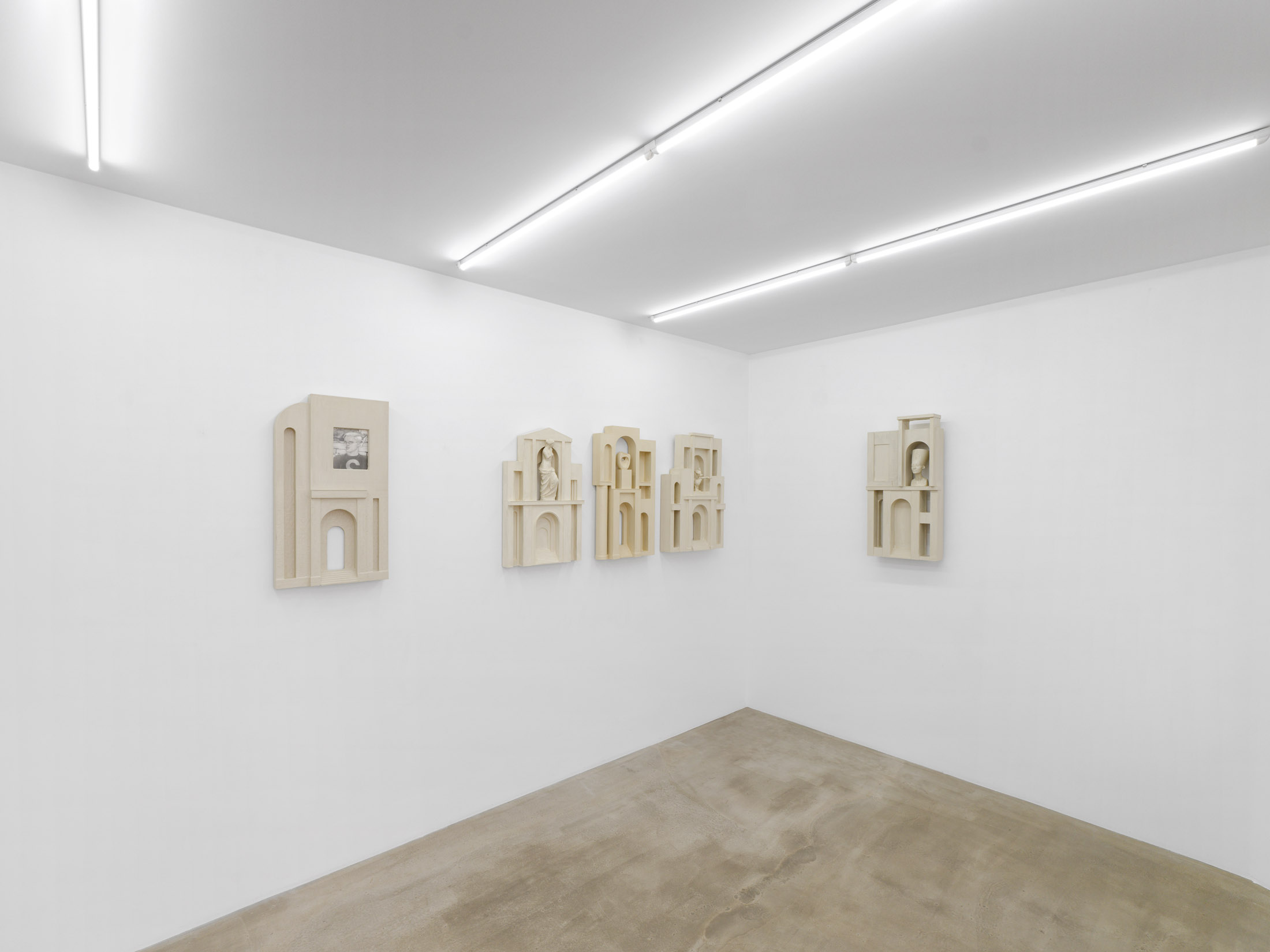
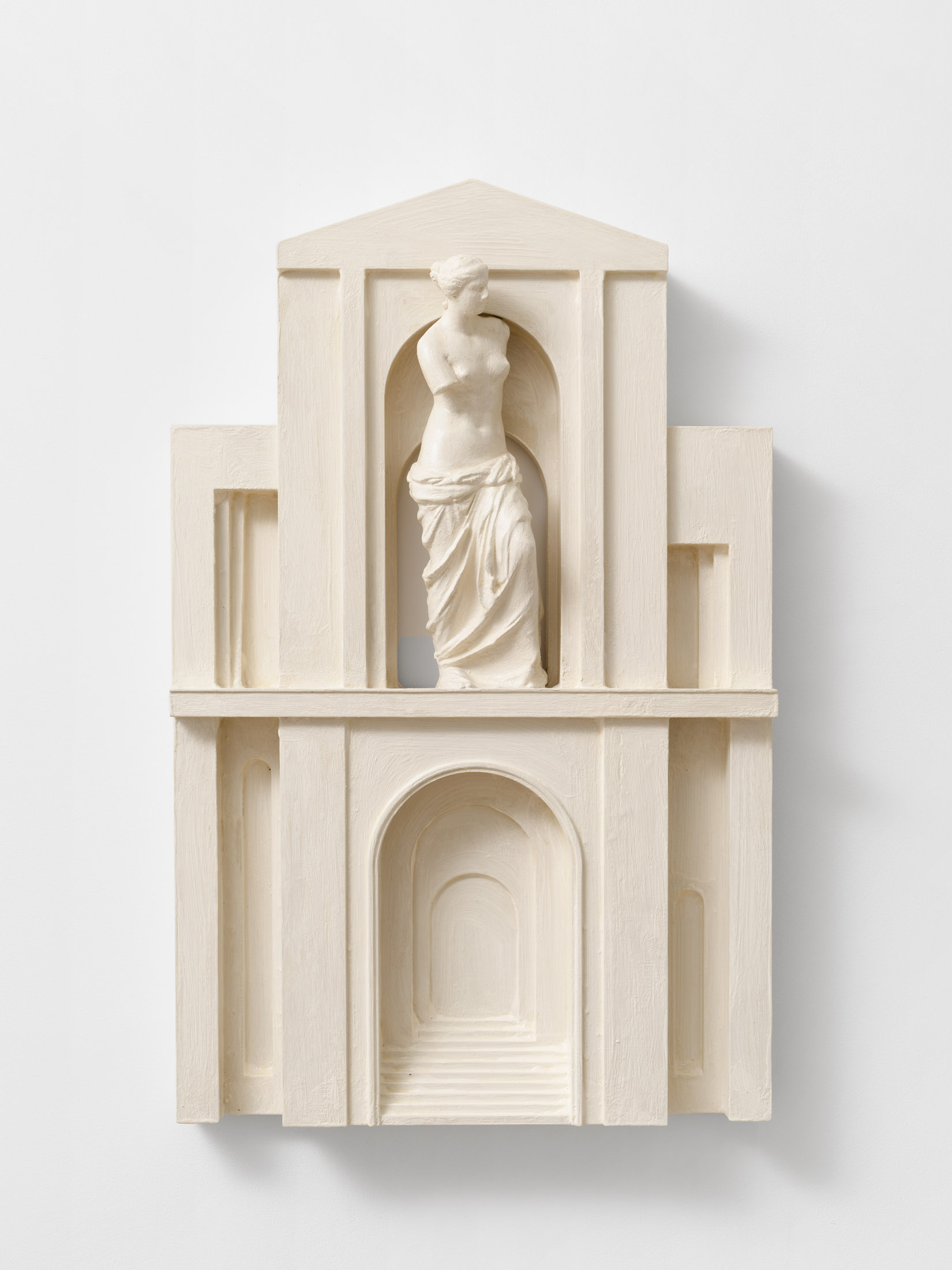
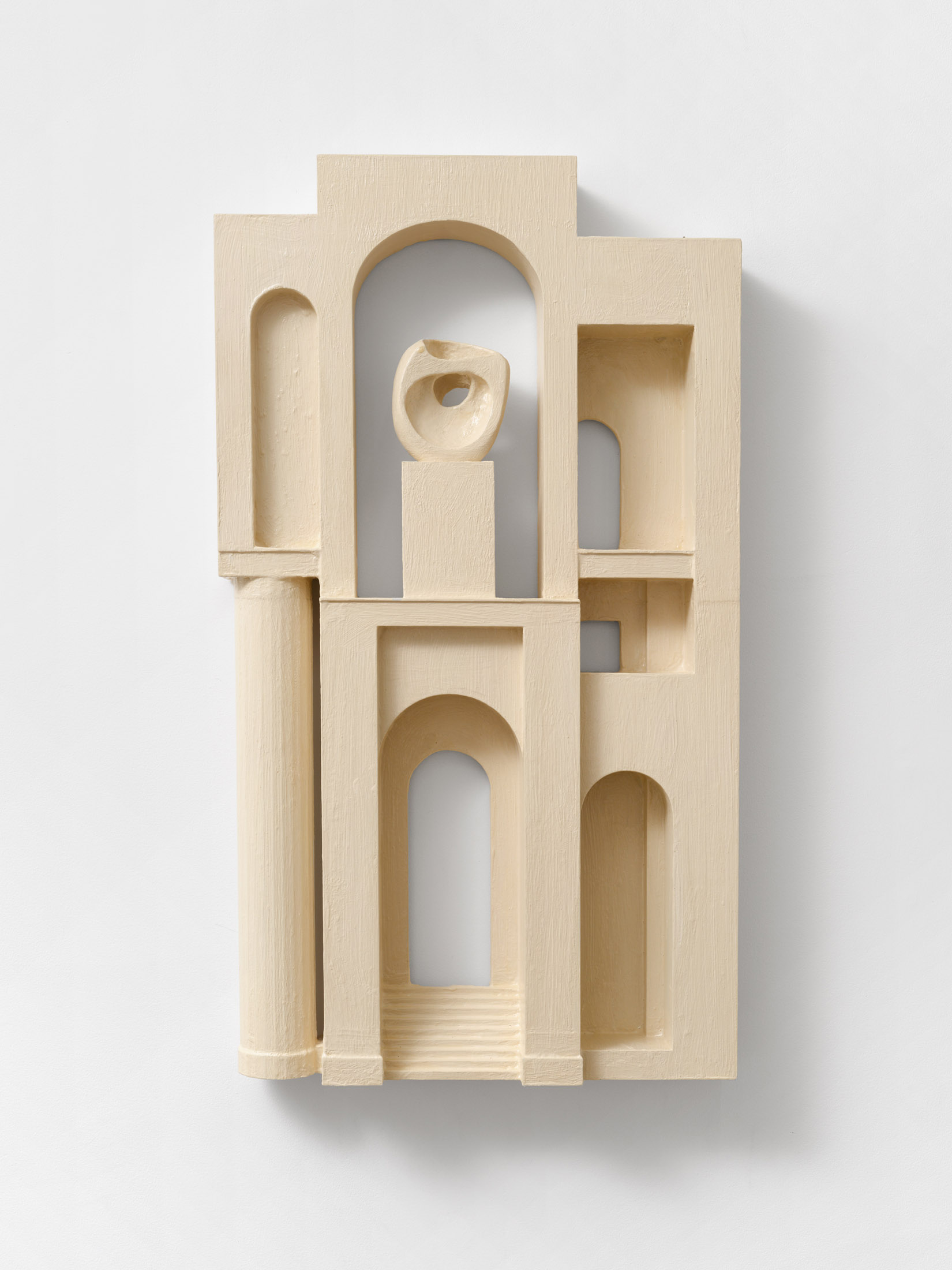
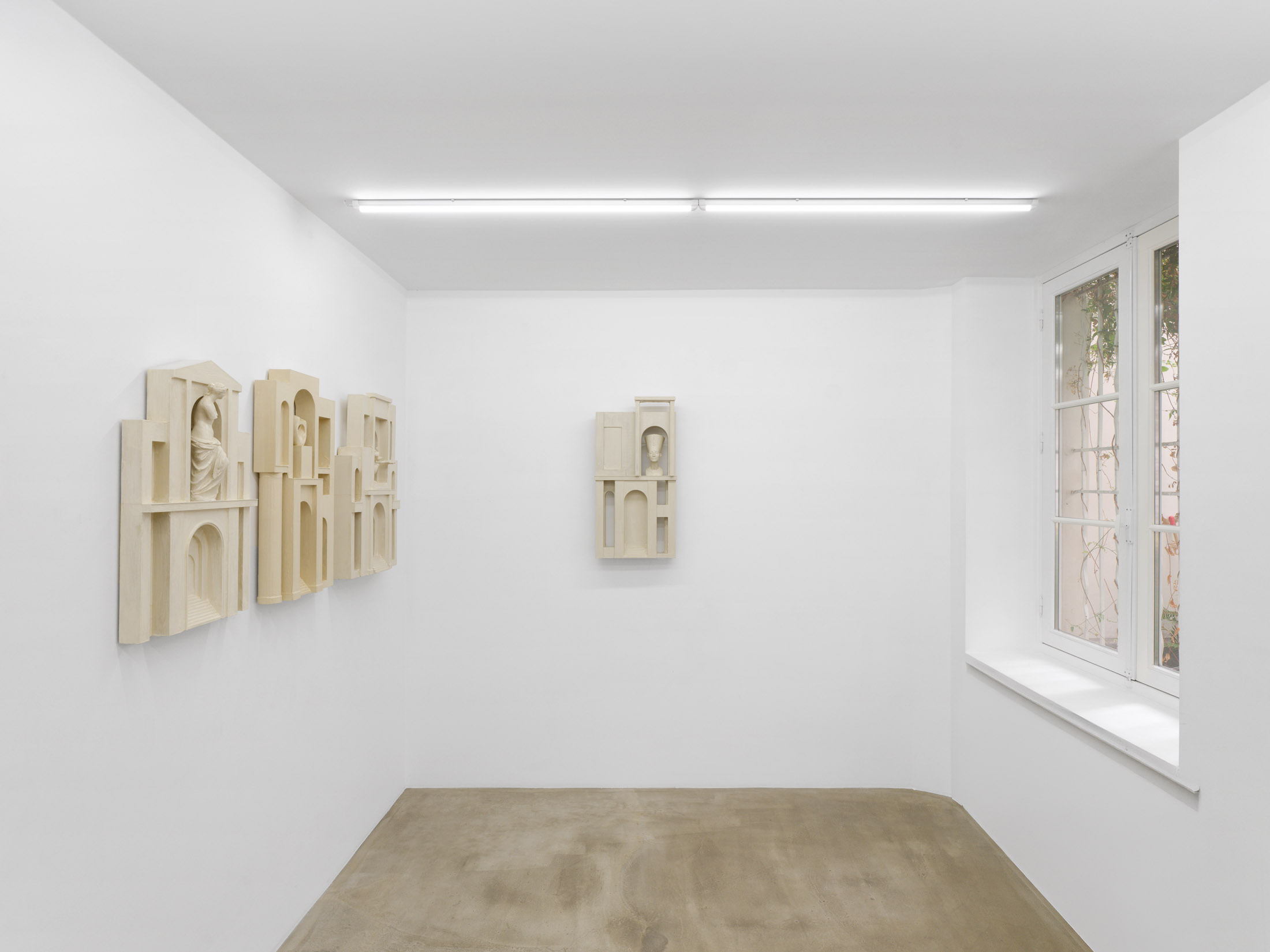
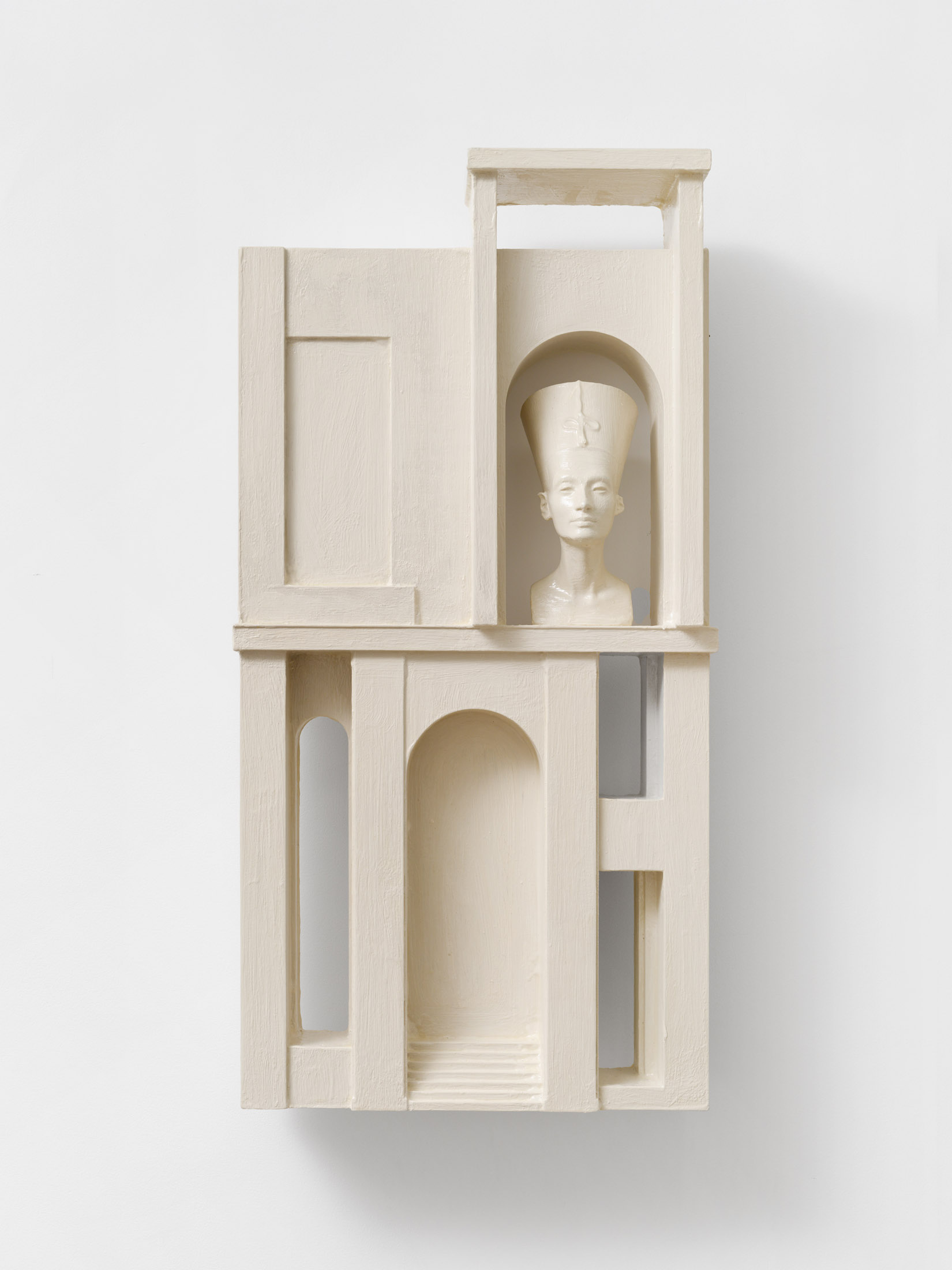
Among the replica artworks and pop cultural icons (Bugs Bunny, Horse of Selena, Nefertiti, Venus de Milo, Daisy Duck, and a Barbara Hepworth sculpture) housed in Zuzanna Czebatul’s series of shallow architectural reliefs (In Every Dream Home a Heart Ache, 2026) is another type of altarpiece that Czebatul has incorporated into one of these fake façades. Sandy Marshall (1999) is a fictional character dreamt up by Mel Odom to accompany Gene Marshall, his highly popular, collectible fashion doll inspired by Hollywood’s Golden Age that first appeared on the market in 1995. In the fantasy universe created by Odom, Sandy, Gene’s brother, is given a tragic death, an automobile accident, pushing Gene further into the depths of a fantasy world. Less known, though, is the fact that this fictional movie star embodies Odom’s real-life grief and mourning as he was caring and preparing to bid farewell to a dying friend. A fictional death to cope with the ravages of life.
The commingling together of these histories of art, taste and class suggest that cultural identity is a battleground, an invention that indulges in evasive ambiguity. Robert Venturi may have called on us to learn from Las Vegas, but if what’s in play is a certain nonchalance when it comes to respecting historical lineages and pedigree, then really, it’s the whole history of Western architecture and iconography that should be pulled in for questioning. The only hope, as brought to us here by Zuzanna Czebatul and Mel Odom, is that there is a grain of wisdom left still in the interstices.
–Anya Harrison
Zuzanna Czebatul, born in 1986 in Poland, lives and works in Berlin. A graduate of the Städelschule in Frankfurt, she develops a sculptural and installation-based practice that examines the forms, narratives and architectures of power. Through columns, obelisks, tapestries, archaeological remnants and monumental interventions, she diverts the signs of authority in order to reveal their fragility, ambiguity and transformative potential.
Her work reactivates the codes of commemoration and ornament, moving between solemnity and humour, monumentality and decay, seduction and critique. By replacing notions of permanence with those of ephemerality, instability and fluidity, Czebatul proposes an unsettled reading of the symbols that shape our political and social imaginaries.
Recipient of the Allegro Art Prize in 2022, she also received the Werkstattpreis from the Kunststiftung Erich Hauser the same year. Her solo exhibitions have been presented at Dittrich & Schlechtriem, Berlin; Sans titre, Paris; Kunsthal Thy; Kunstpalais Erlangen; CAC Synagogue de Delme; Futura, Prague; CCA Ujazdowski Castle, Warsaw; and Ludlow 38, New York. Her work has also been included in numerous group exhibitions, including at the Middelheim Museum, Antwerp; Berlinische Galerie, Berlin; Somerset House, London; the Baltic Triennial, Vilnius; the Athens Biennale; among others. Her works are held in several public and private collections, including the Federal Art Collection of Contemporary Art Germany, Kunstsammlung Erlangen and Sammlung Philara.
Mel Odom, born in 1950 in Richmond, Virginia, lives and works in New York City. He studied Fashion Illustration at Virginia Commonwealth University before continuing his education at Leeds Polytechnic Institute in England. Moving to New York in 1975, at the height of gay liberation, Odom developed a singular visual language shaped by Broadway theatre, Greek mythology, Hollywood noir, disco culture and eighties music videos.
His drawings are known for their refined, dreamlike atmosphere, combining decadence and tenderness, fetish and innocence, theatricality and emotional sincerity. Early in his career, Odom developed a demanding process in which each image was redrawn and layered multiple times, producing the luminous, delicate quality that became one of his signatures. Throughout the 1970s, 1980s and 1990s, his work circulated widely through major publications includingTime,The NewYork Times Magazine, Rolling Stone, Blue Boy and Playboy, where he was a regular contributor. He also created book covers and illustrations for authors such as Roald Dahl, Joyce Carol Oates, Patrick White and Tom Robbins. His illustrations have received multiple awards from the Society of Illustrators and other graphic arts organizations. His work has been gathered in several publications, including Mel Odom — Gorgeous!, published by Apartmento in 2024; First Eyes, published in Japan in 1982, and Dreamer, published by Viking Penguin in 1984 with a foreword by Edmund White.