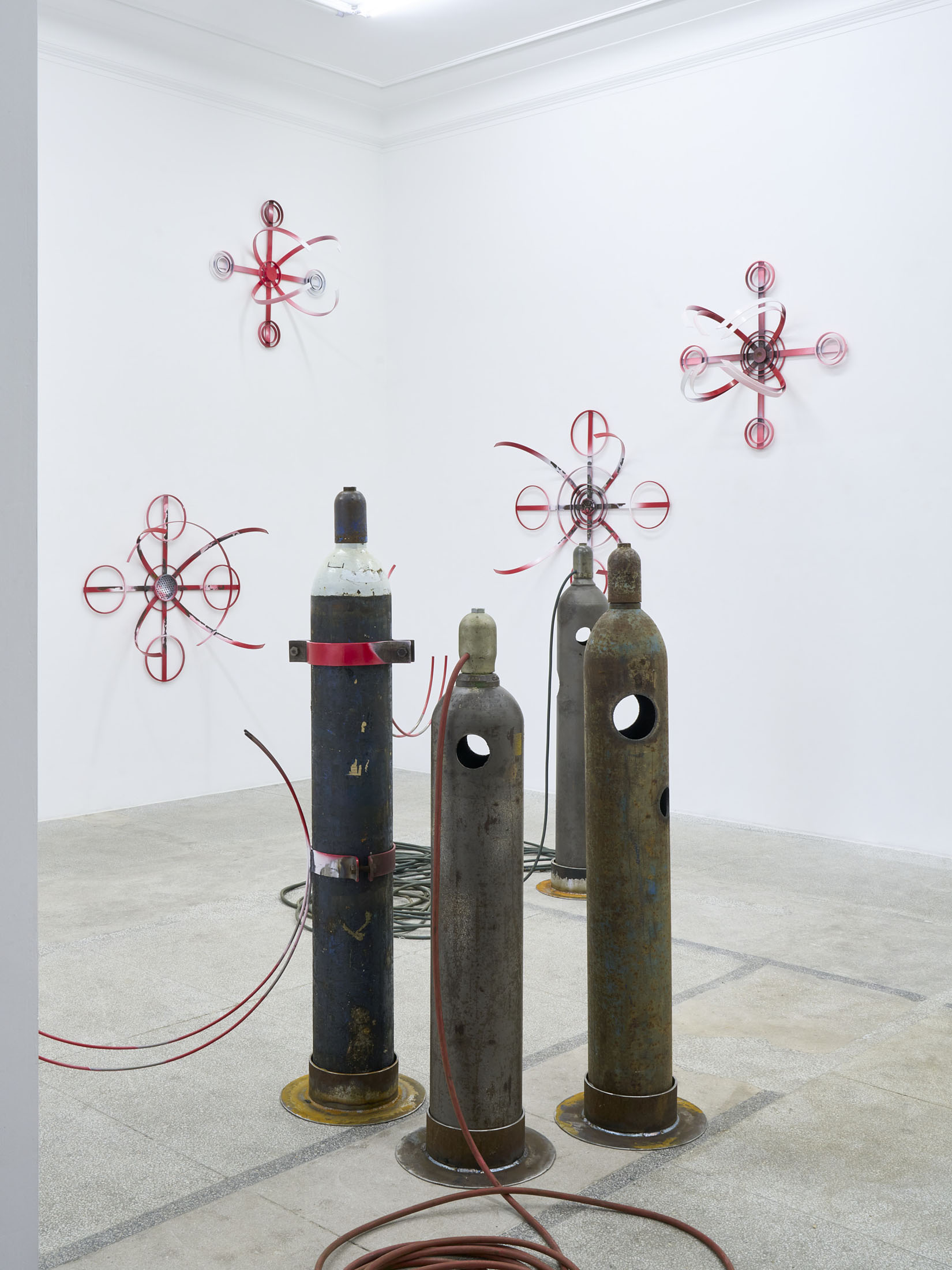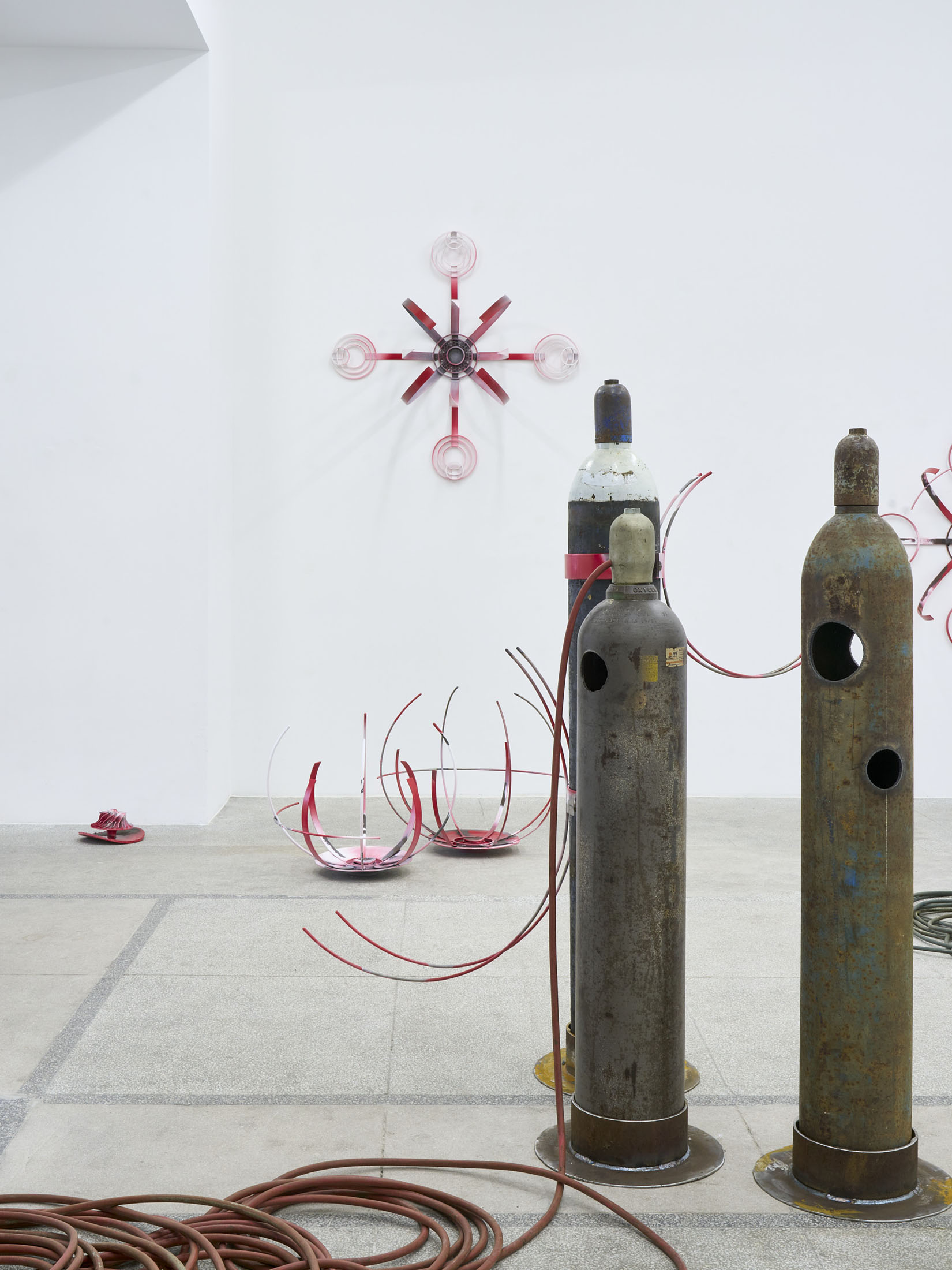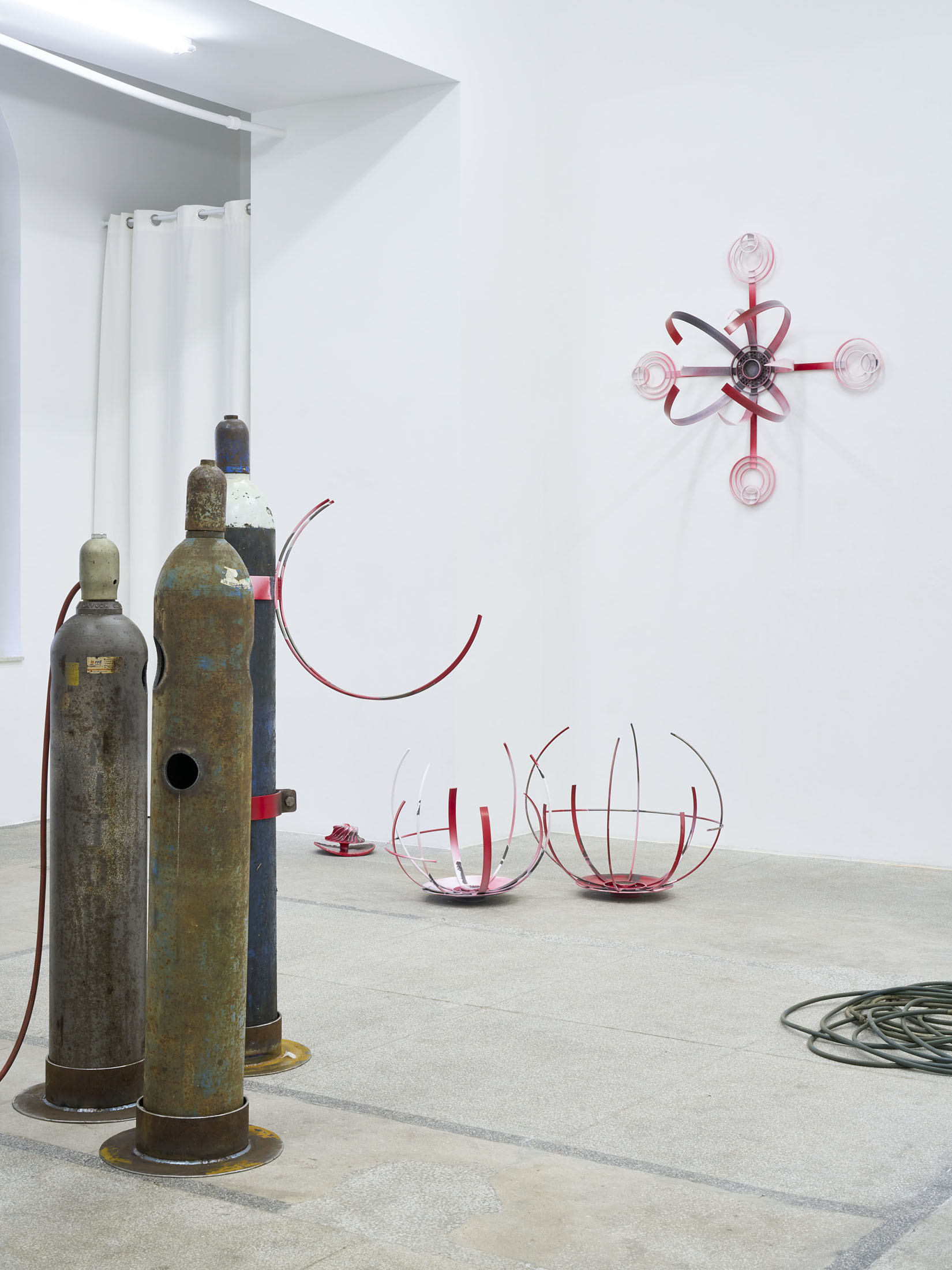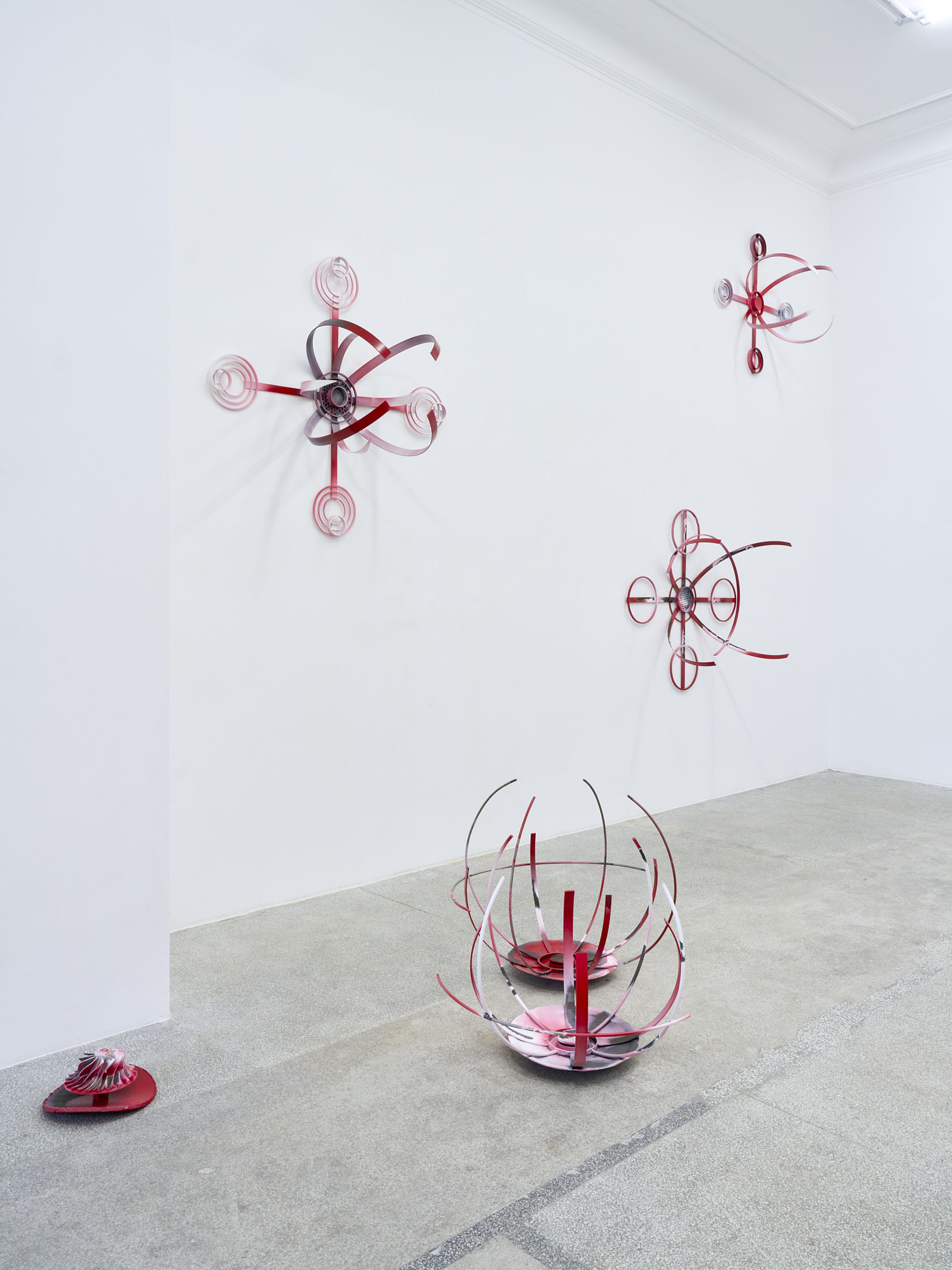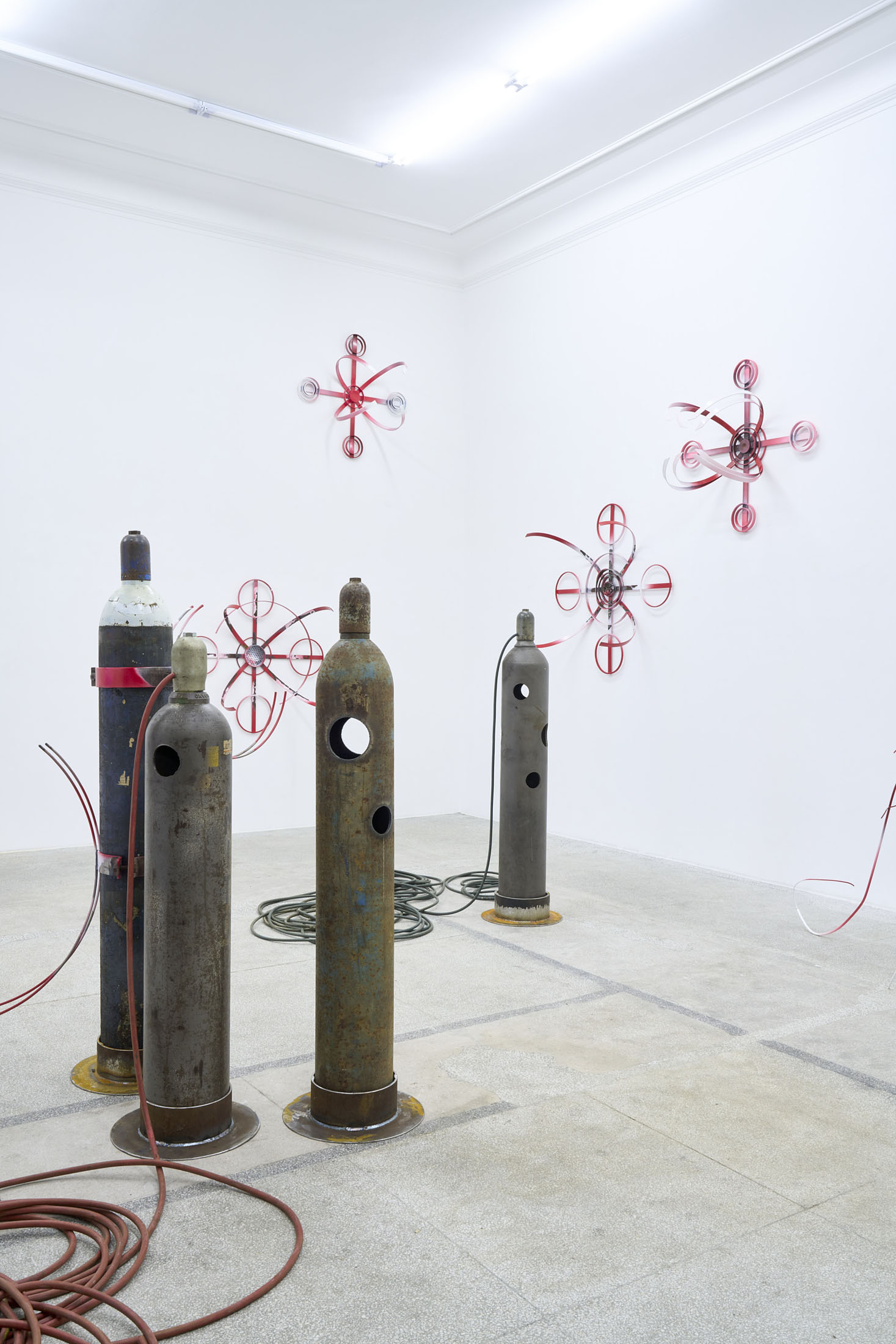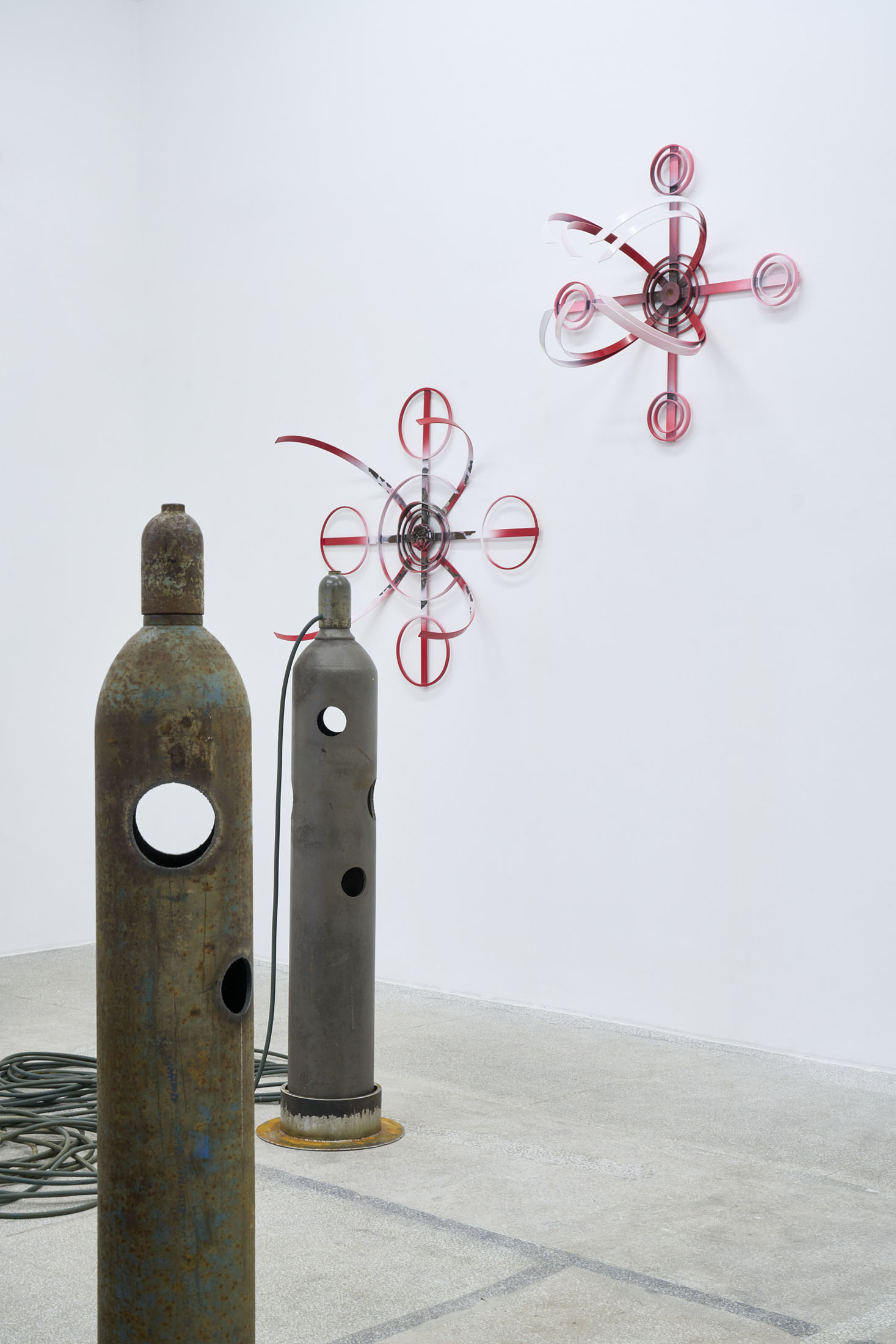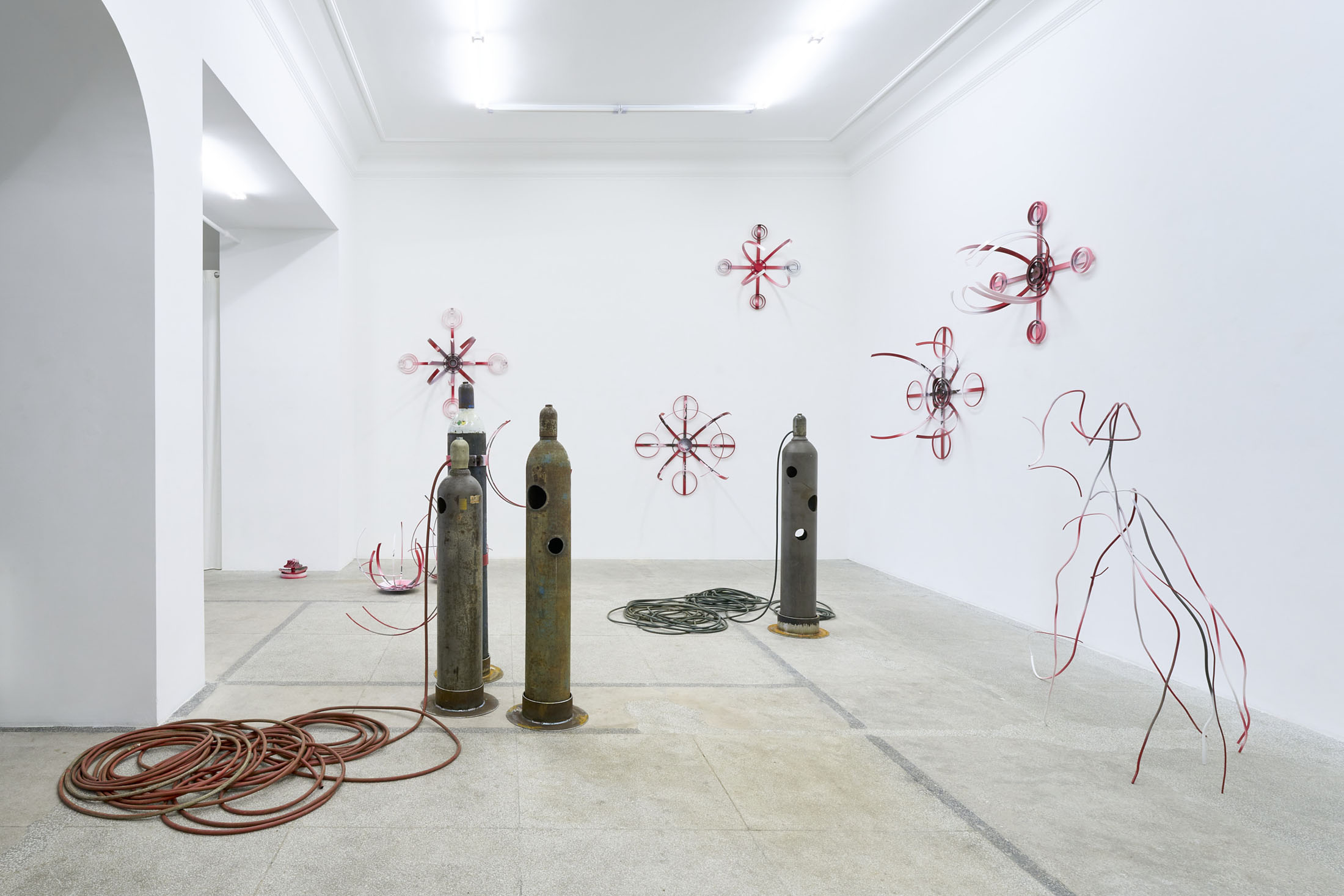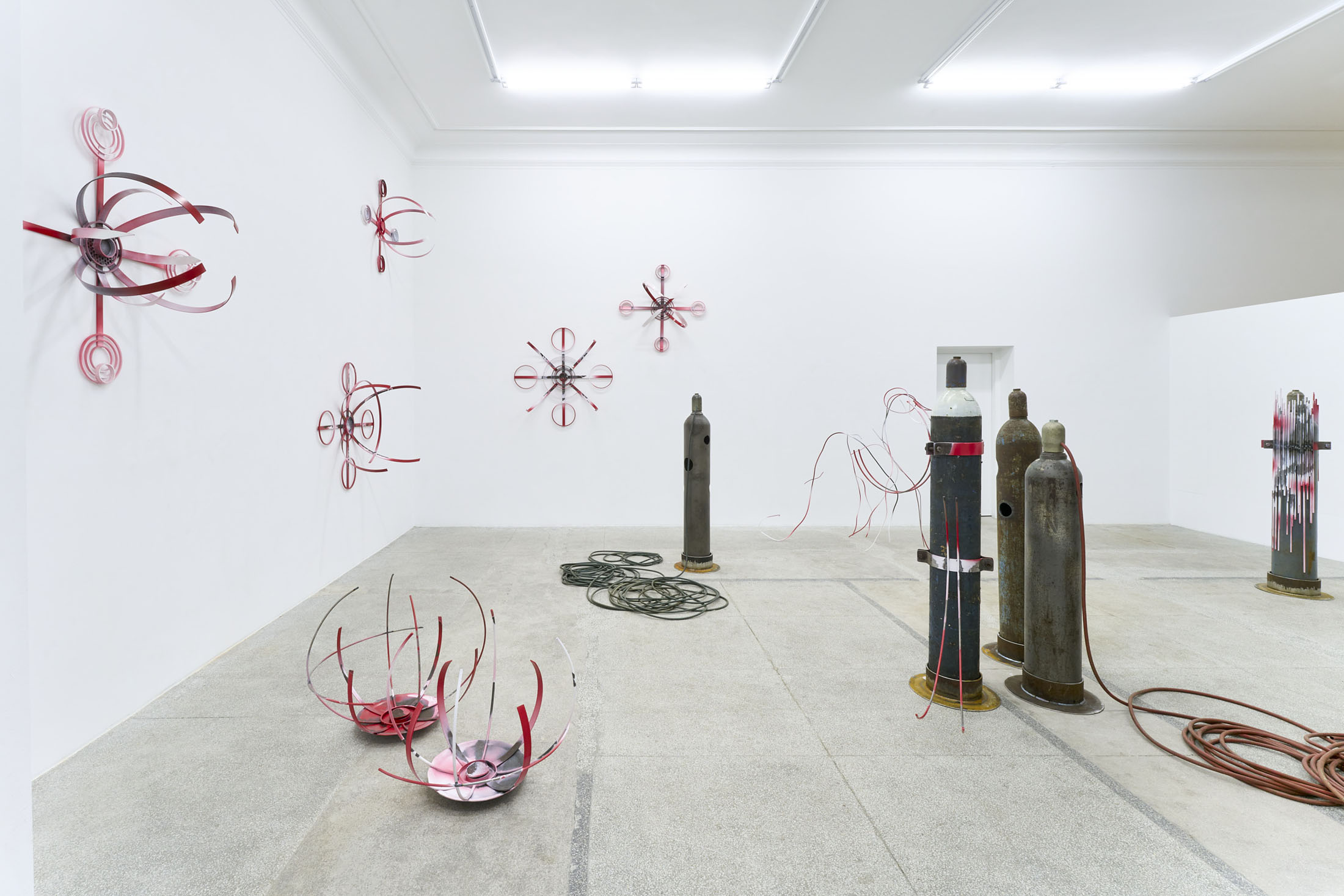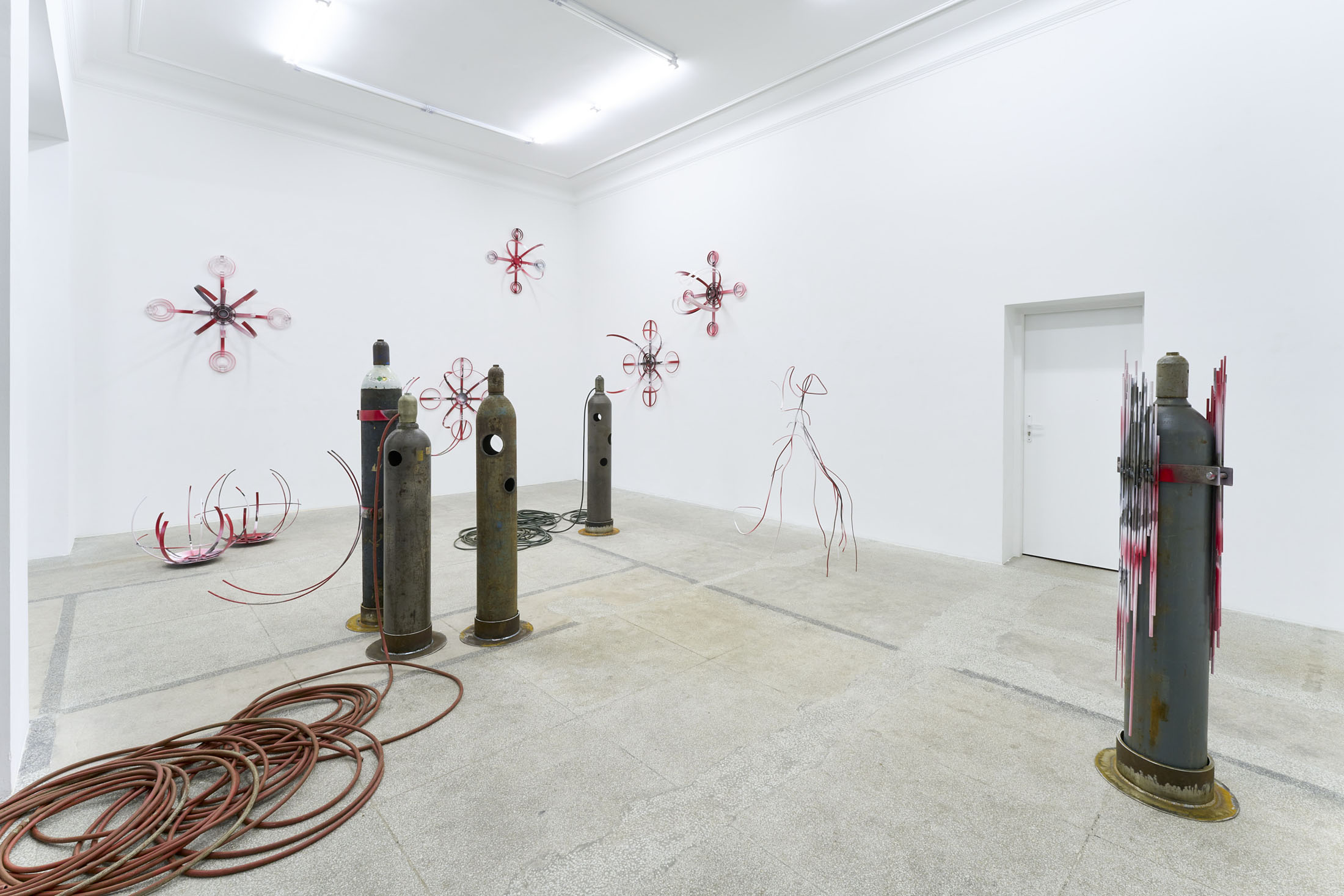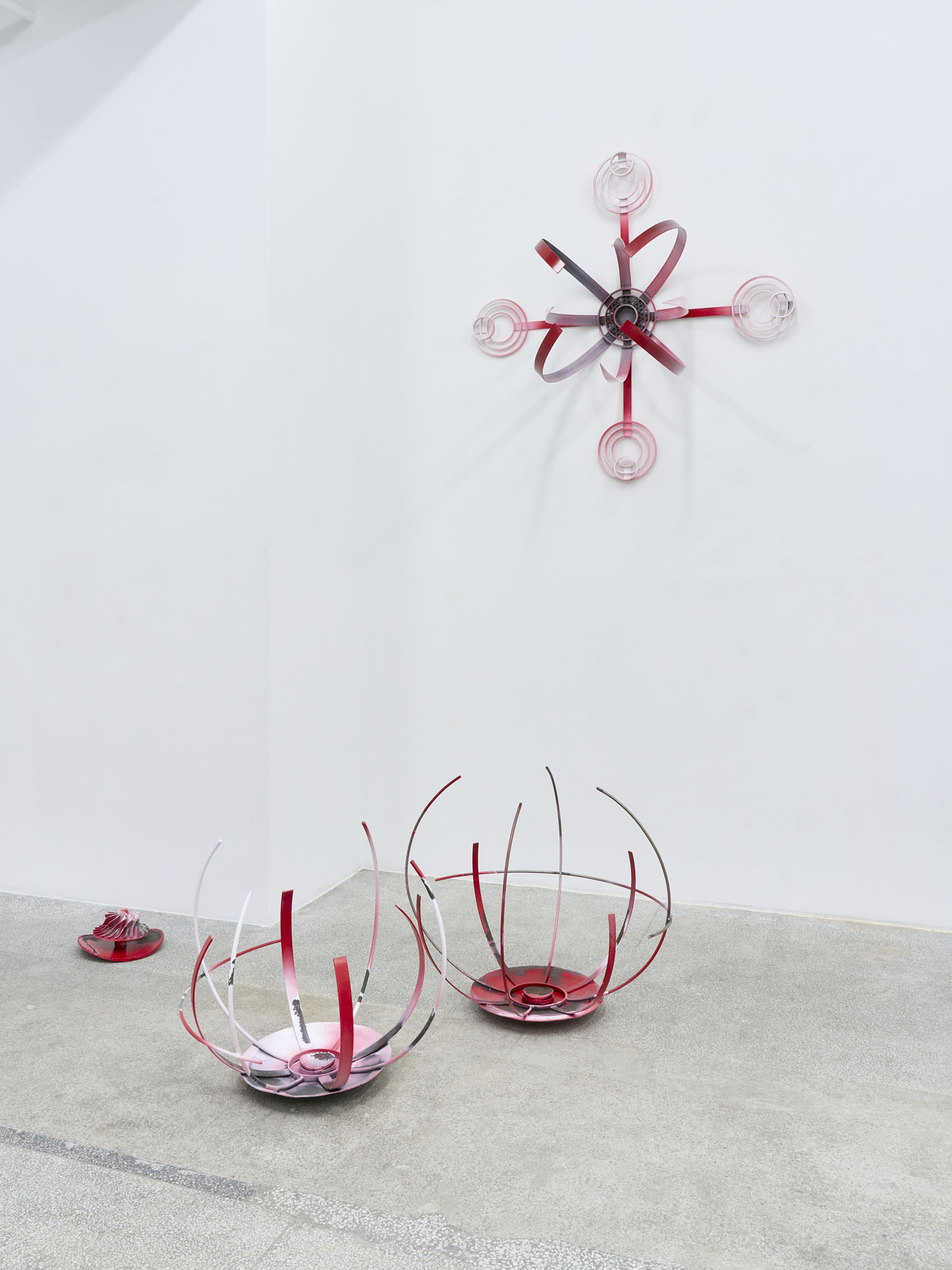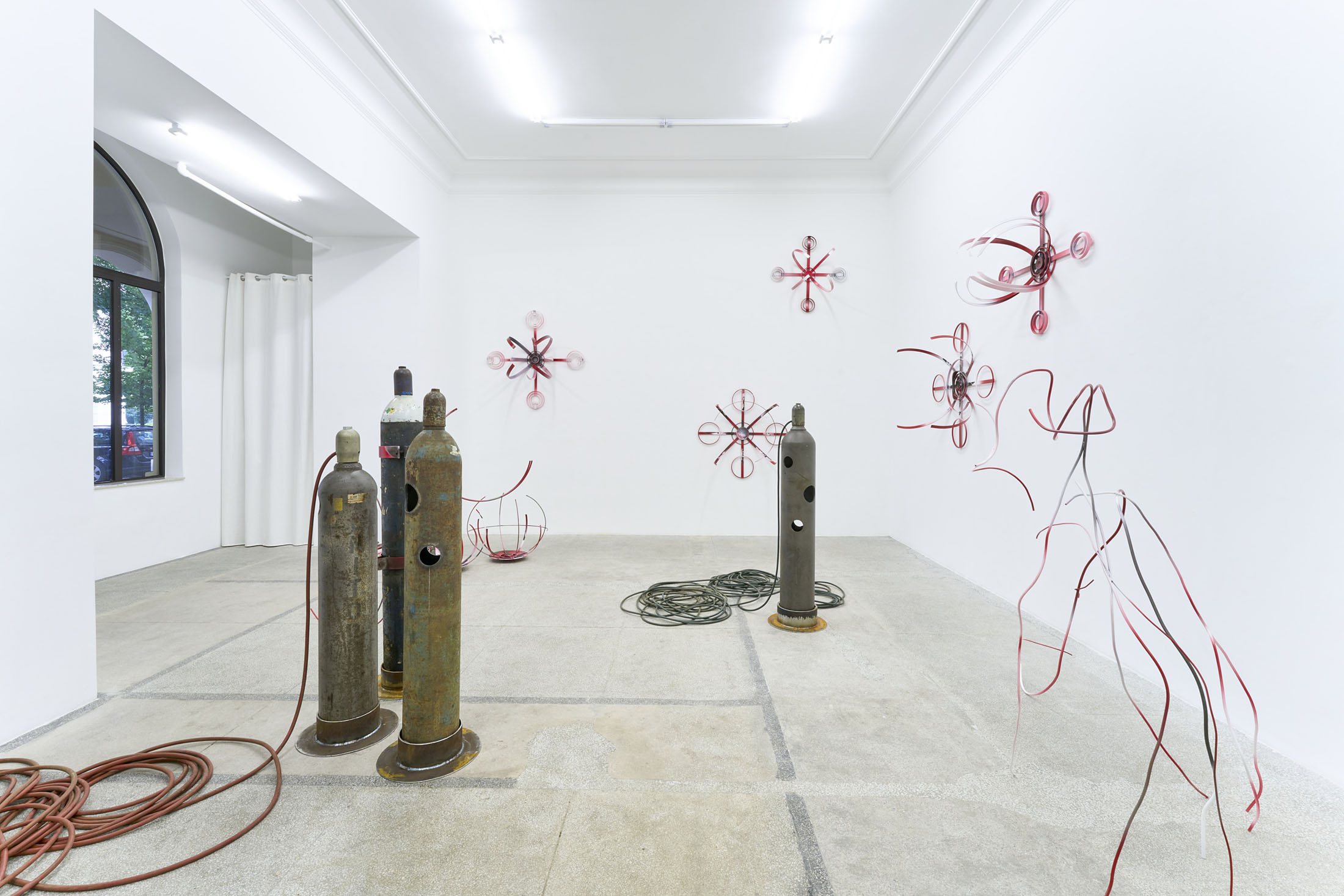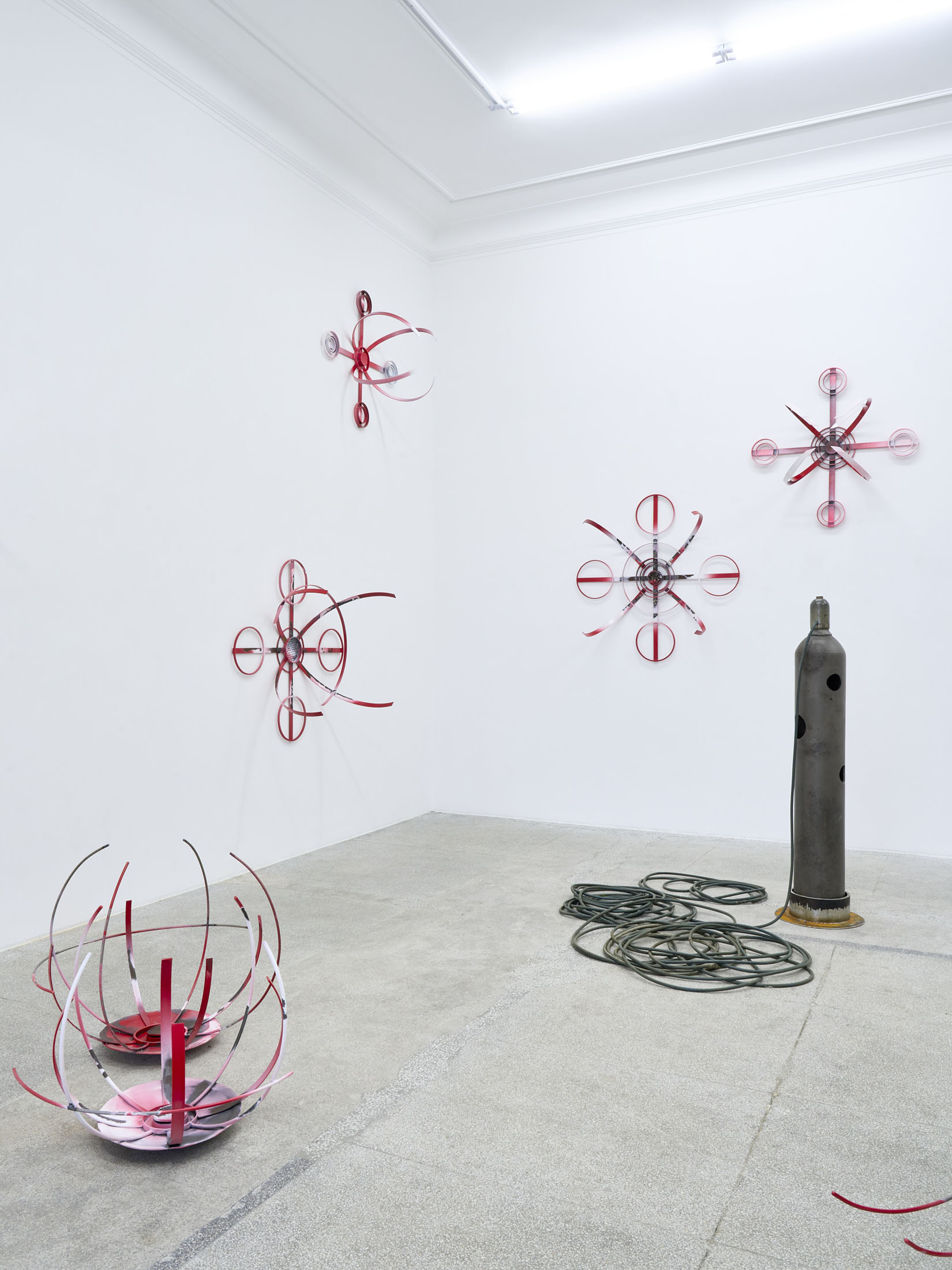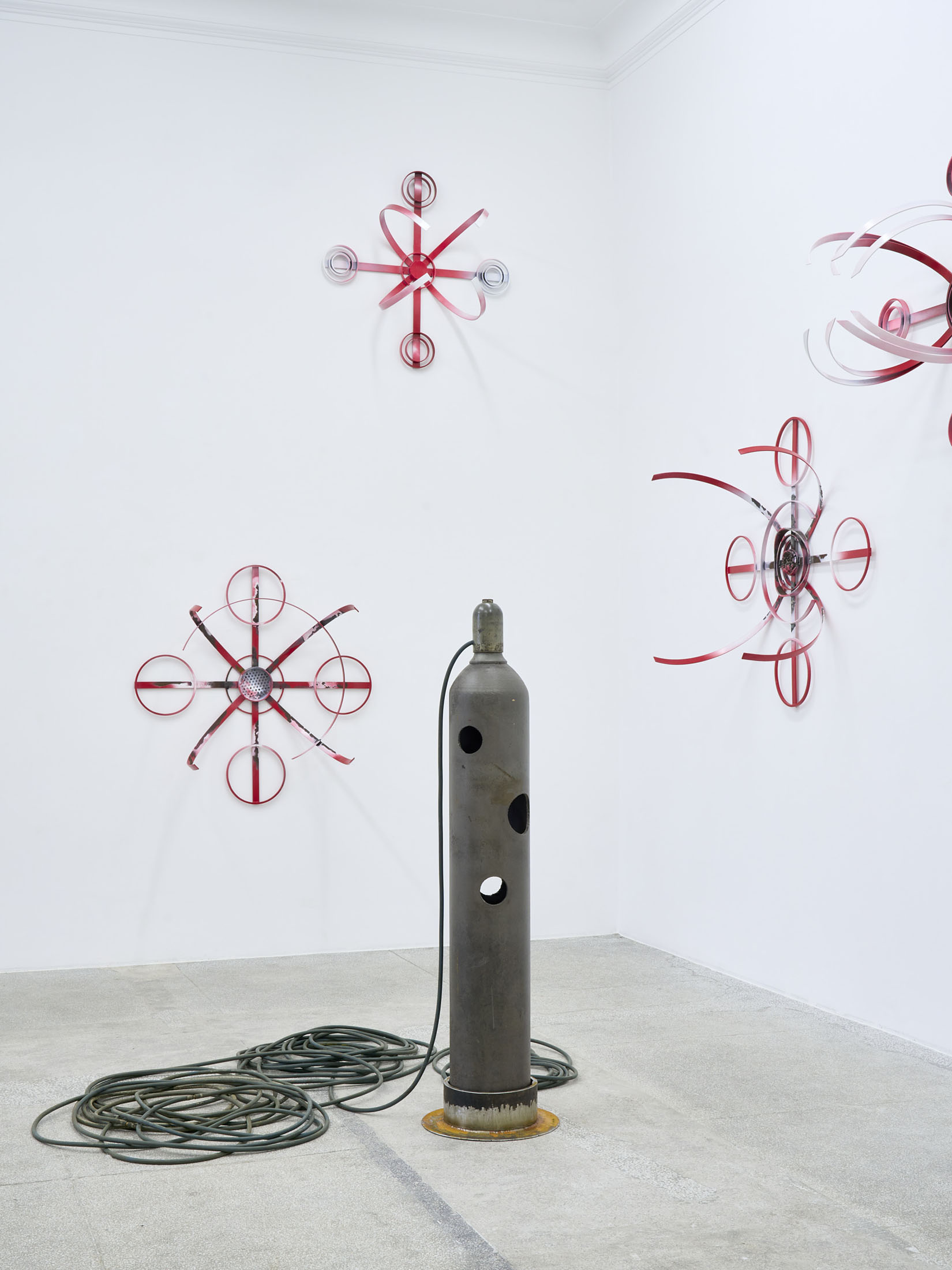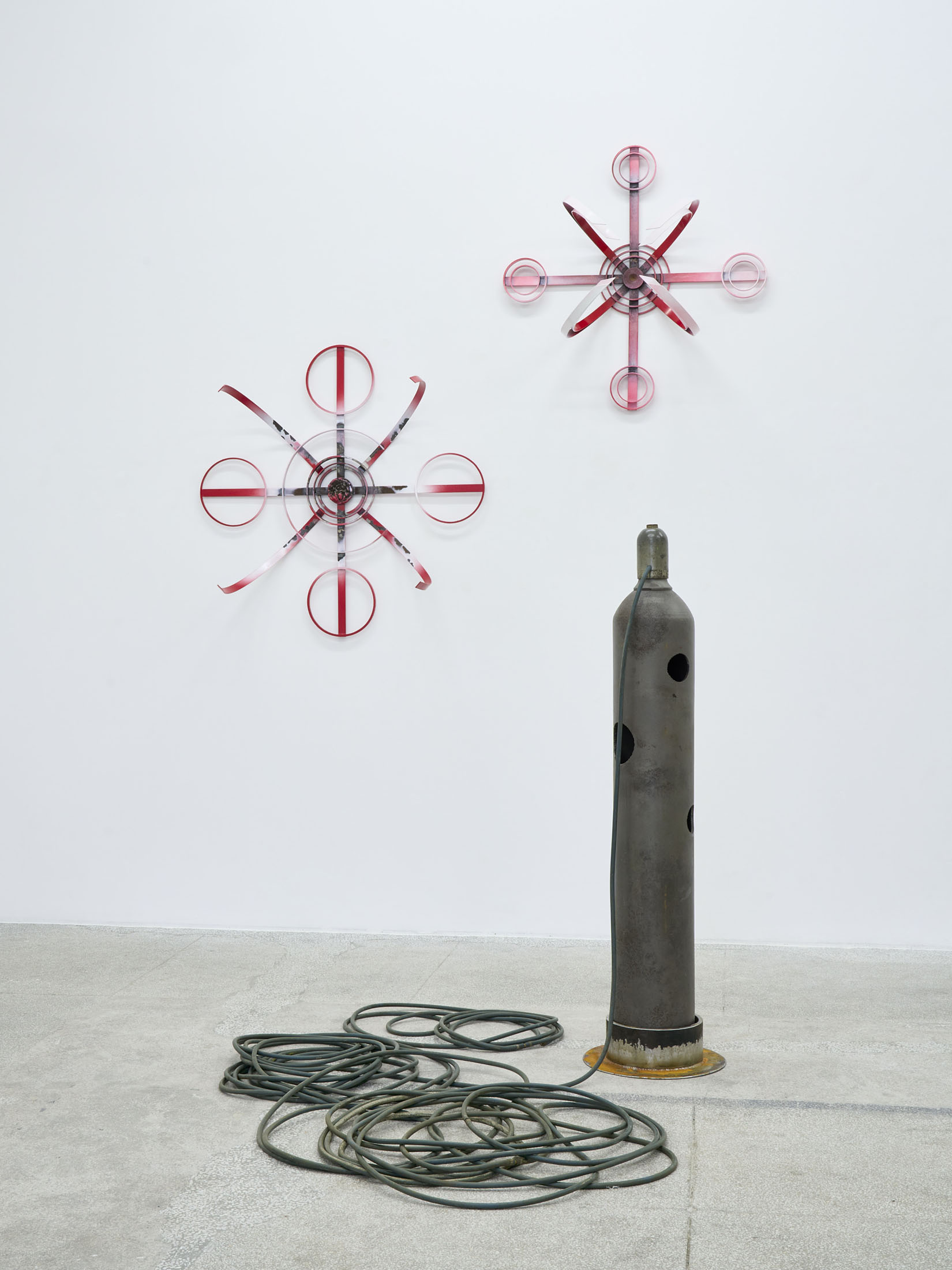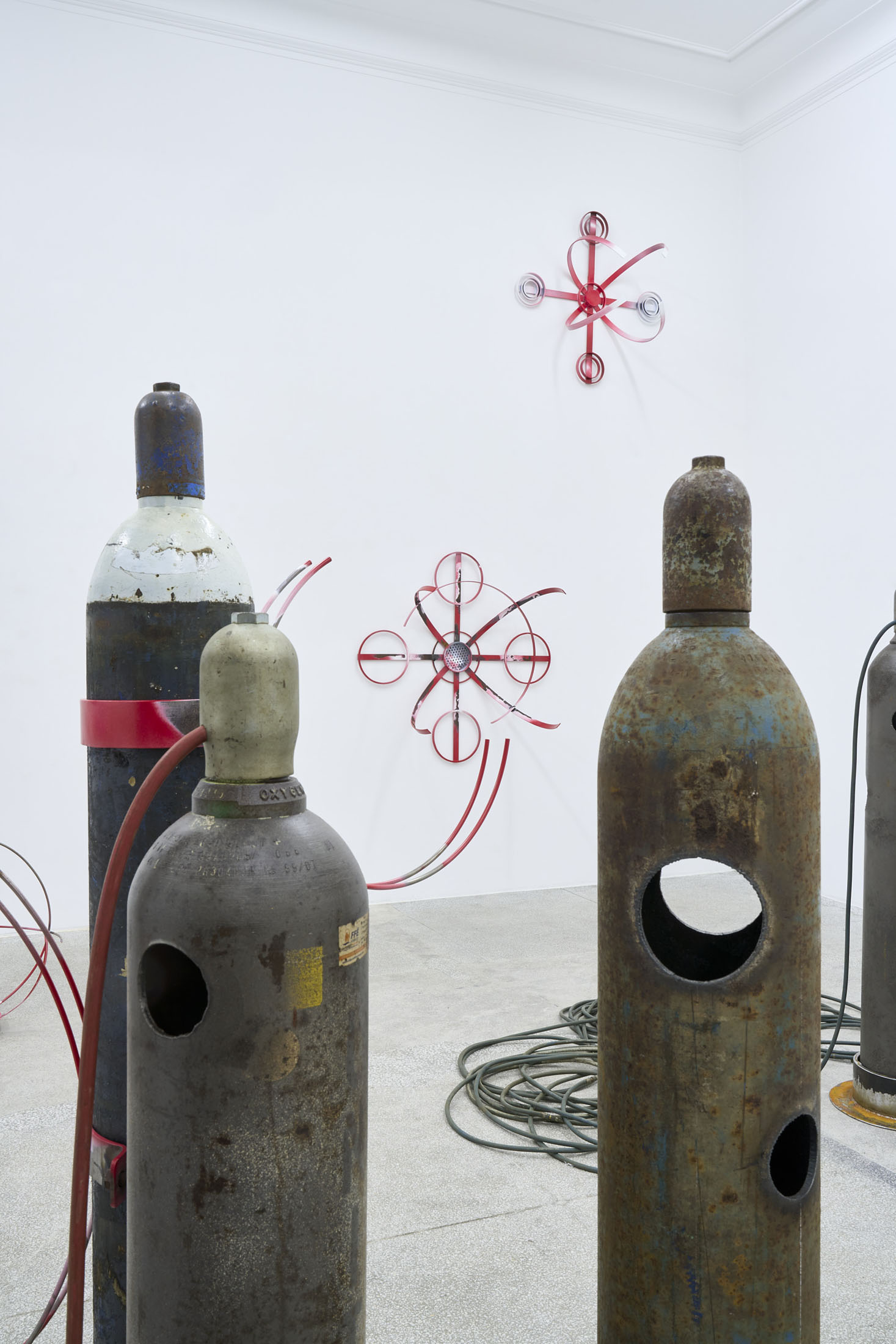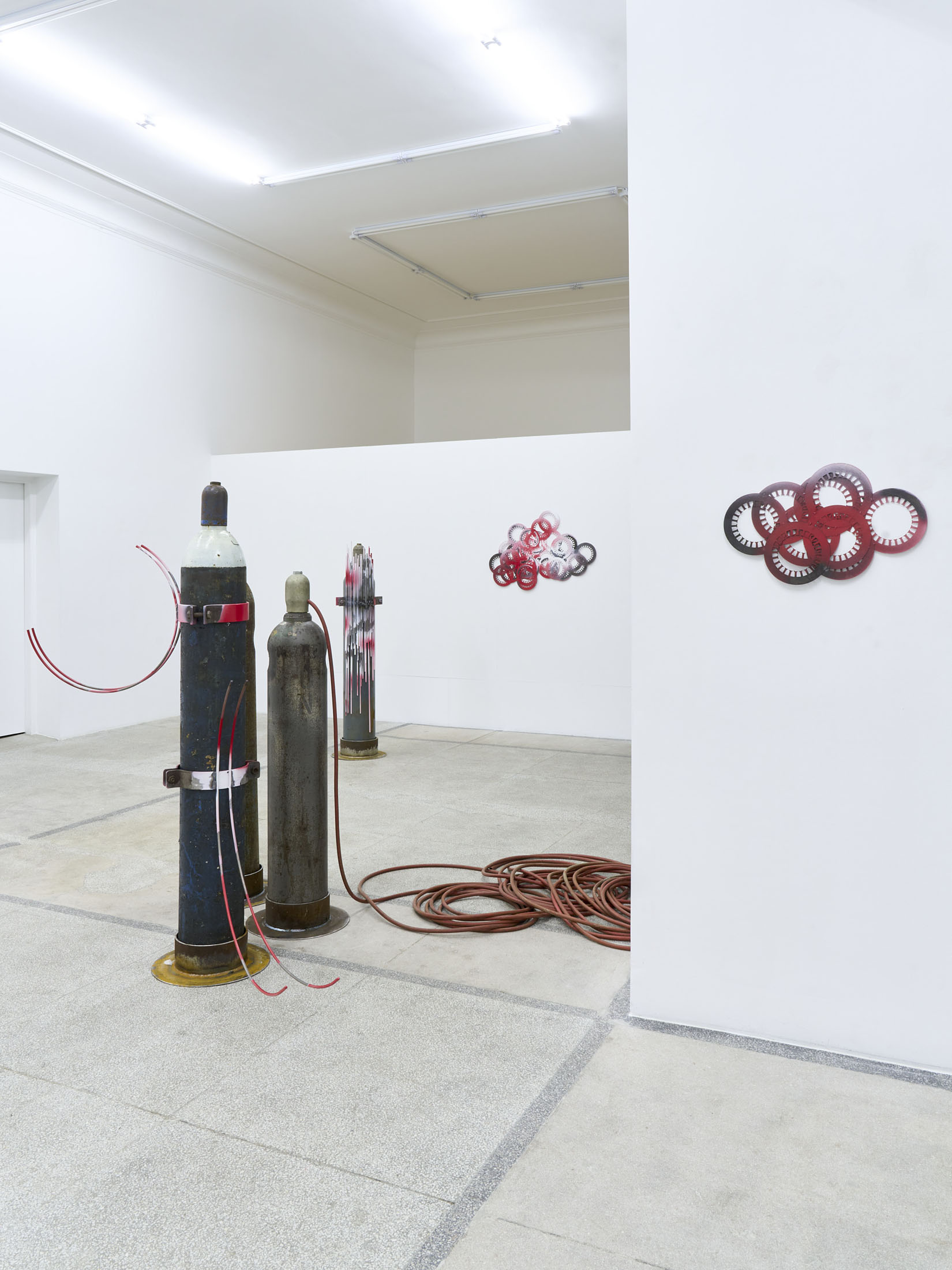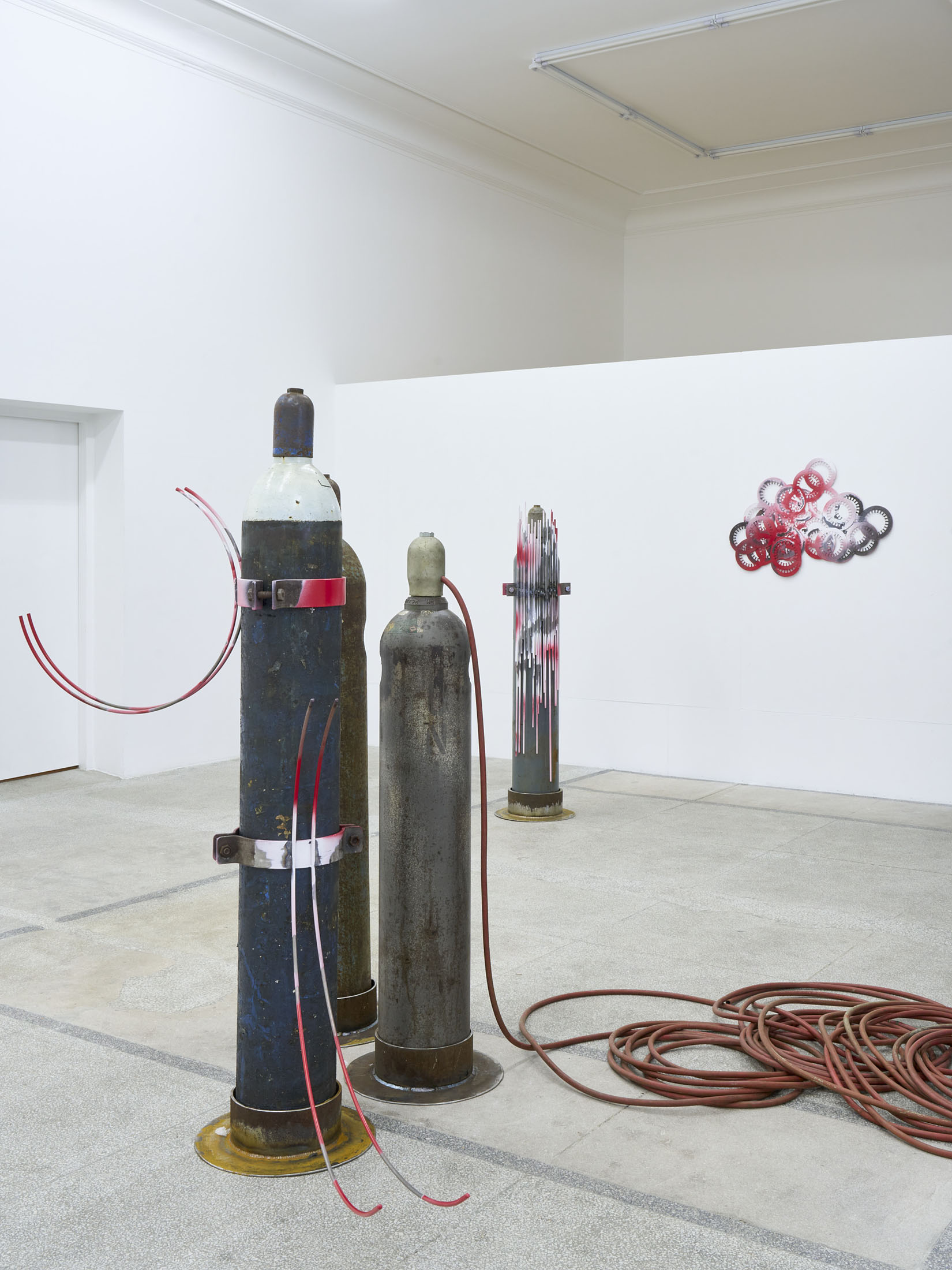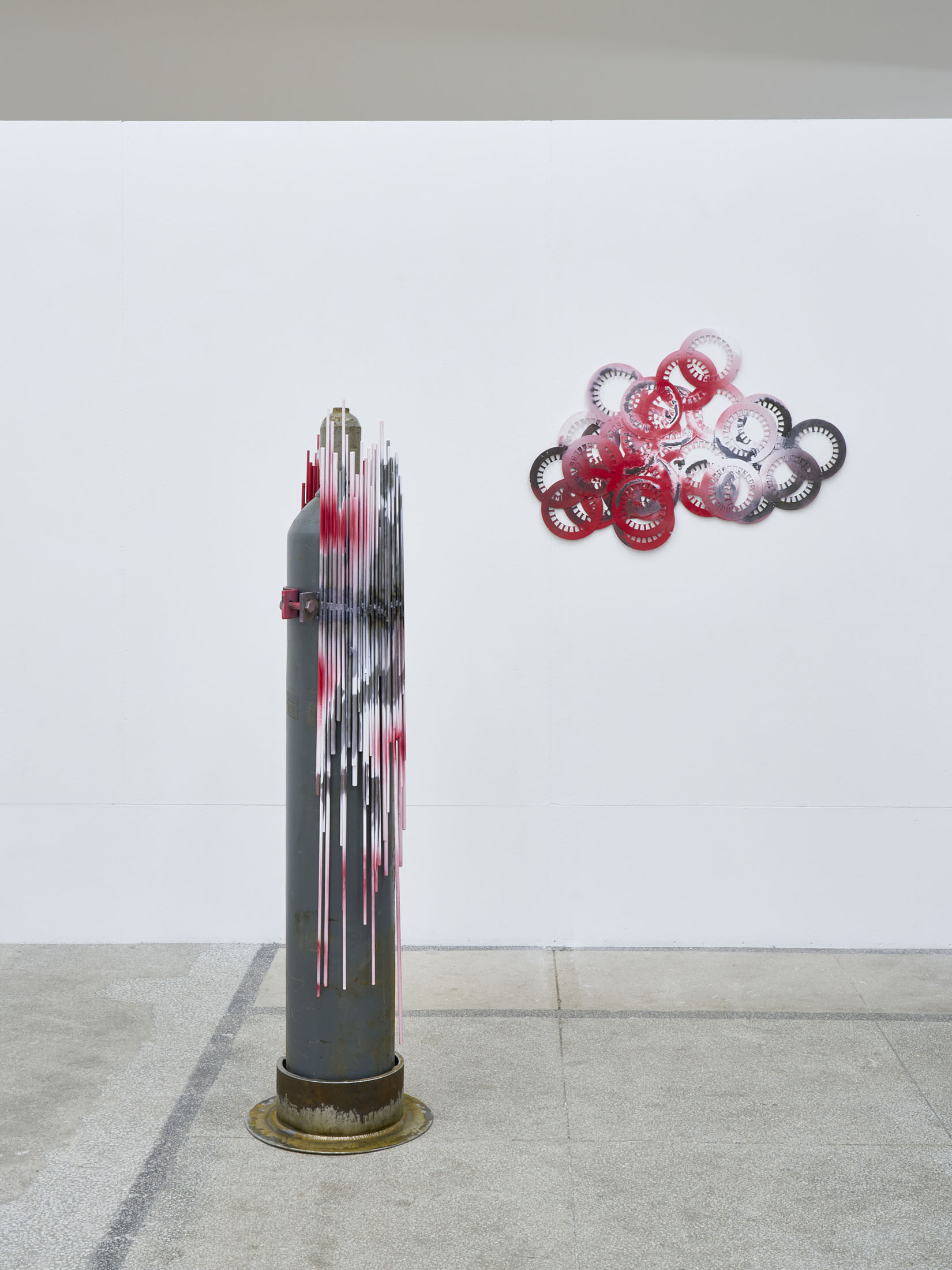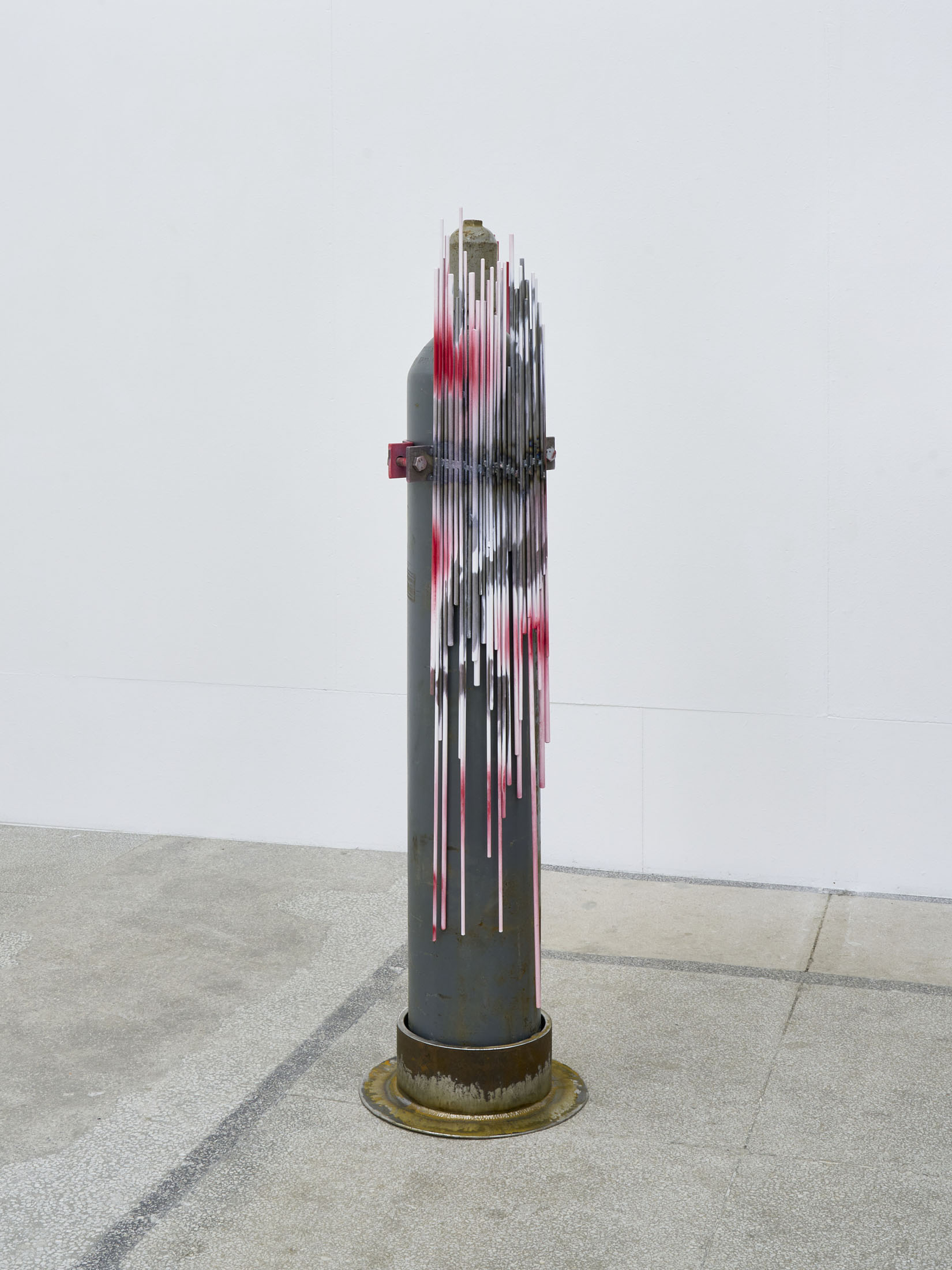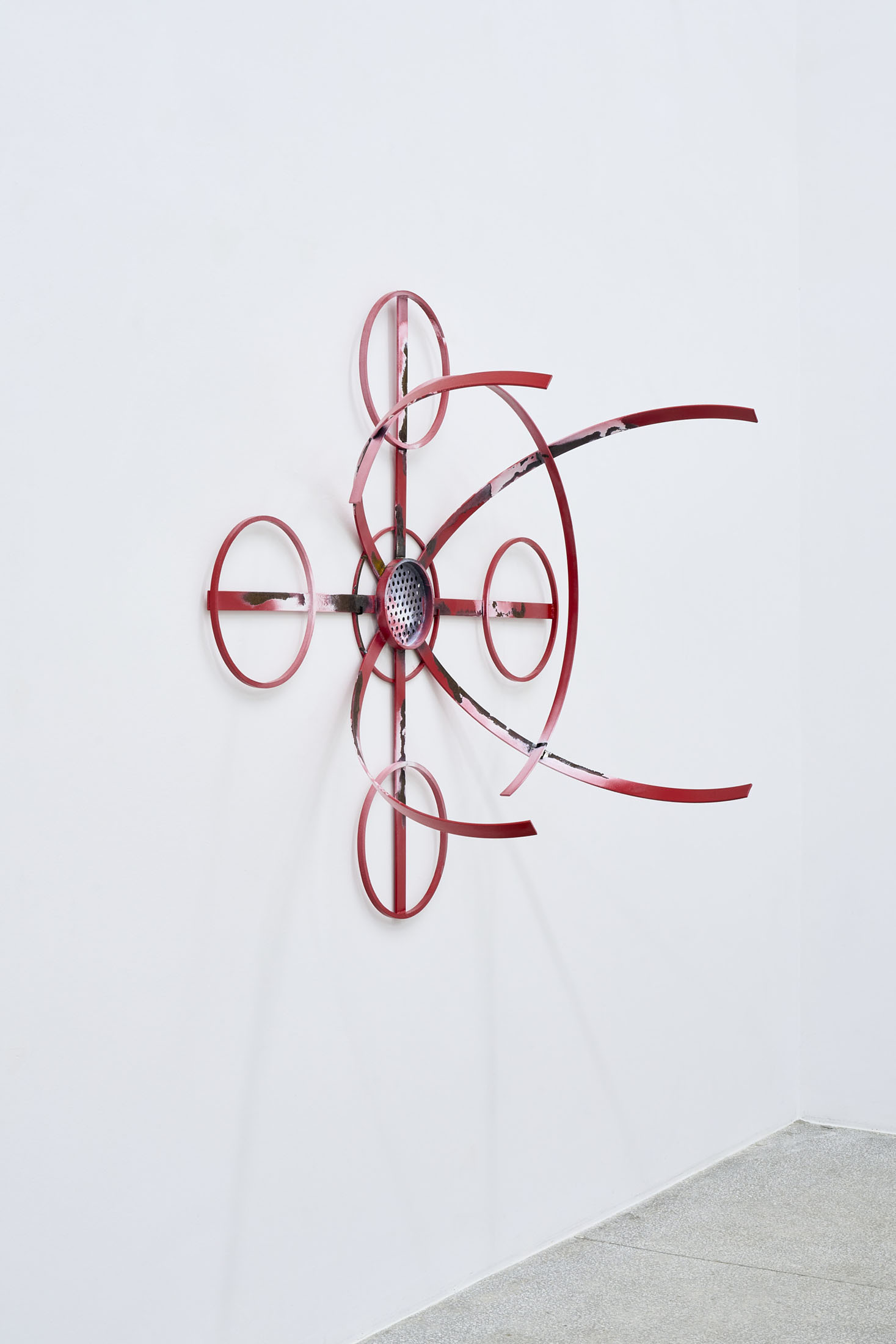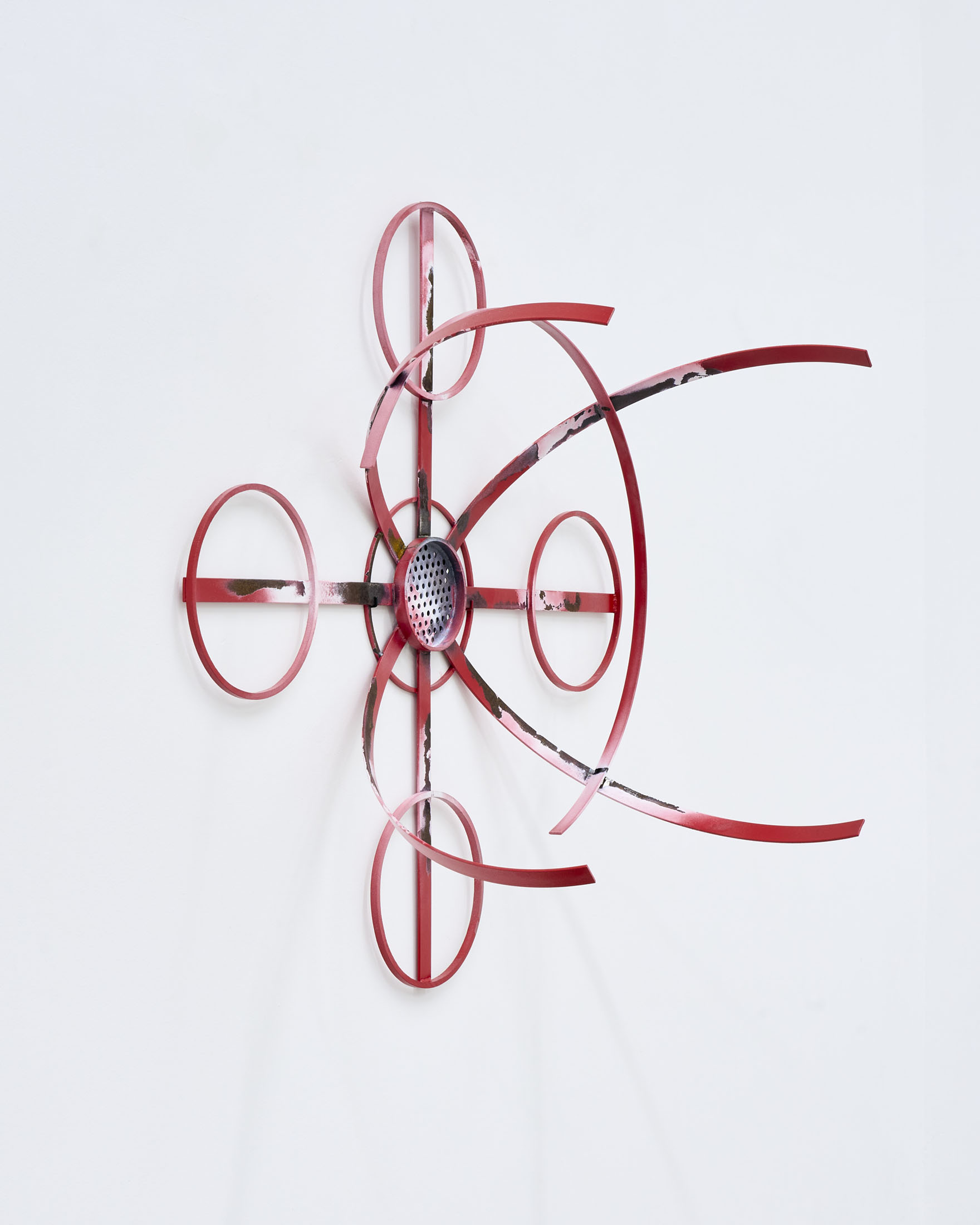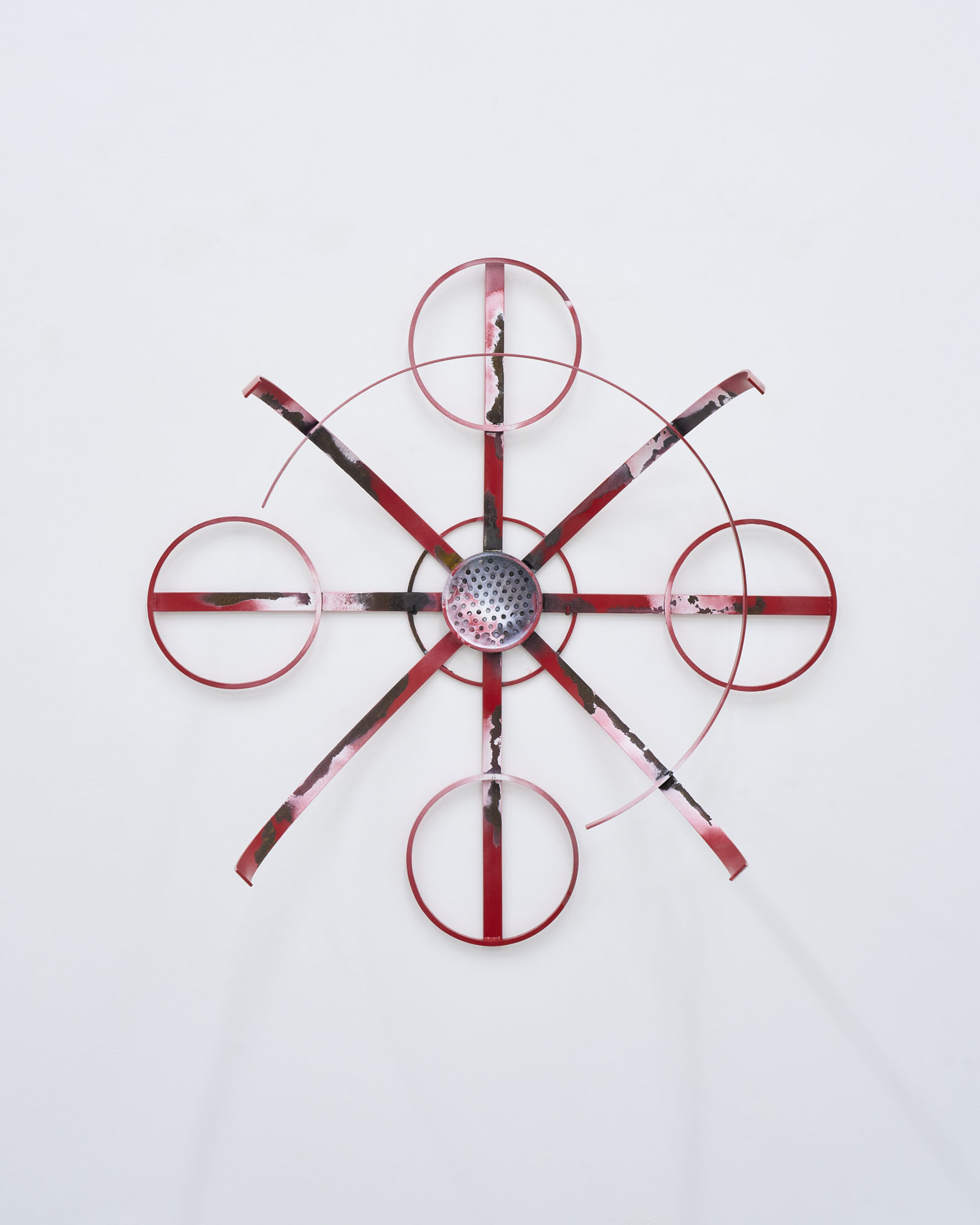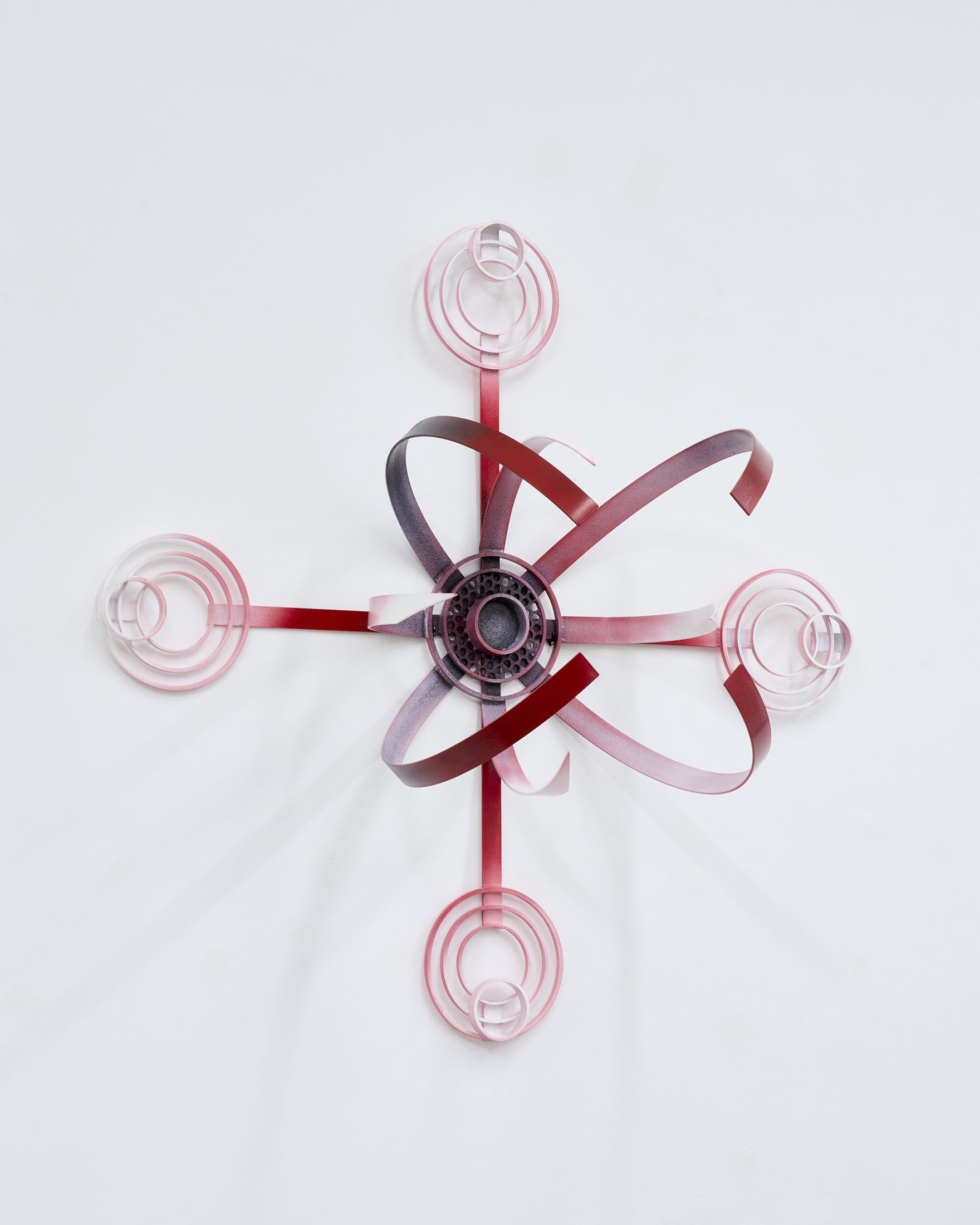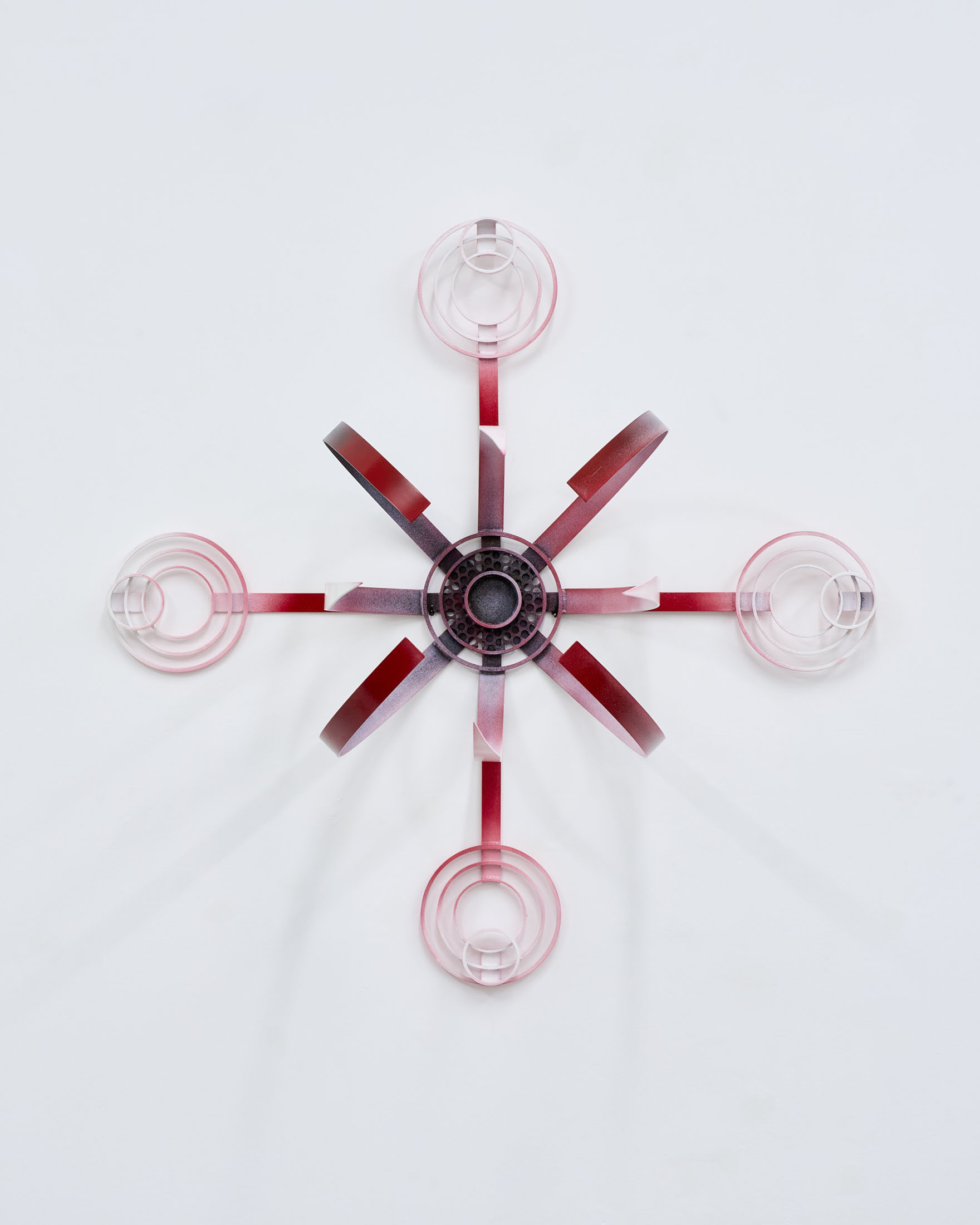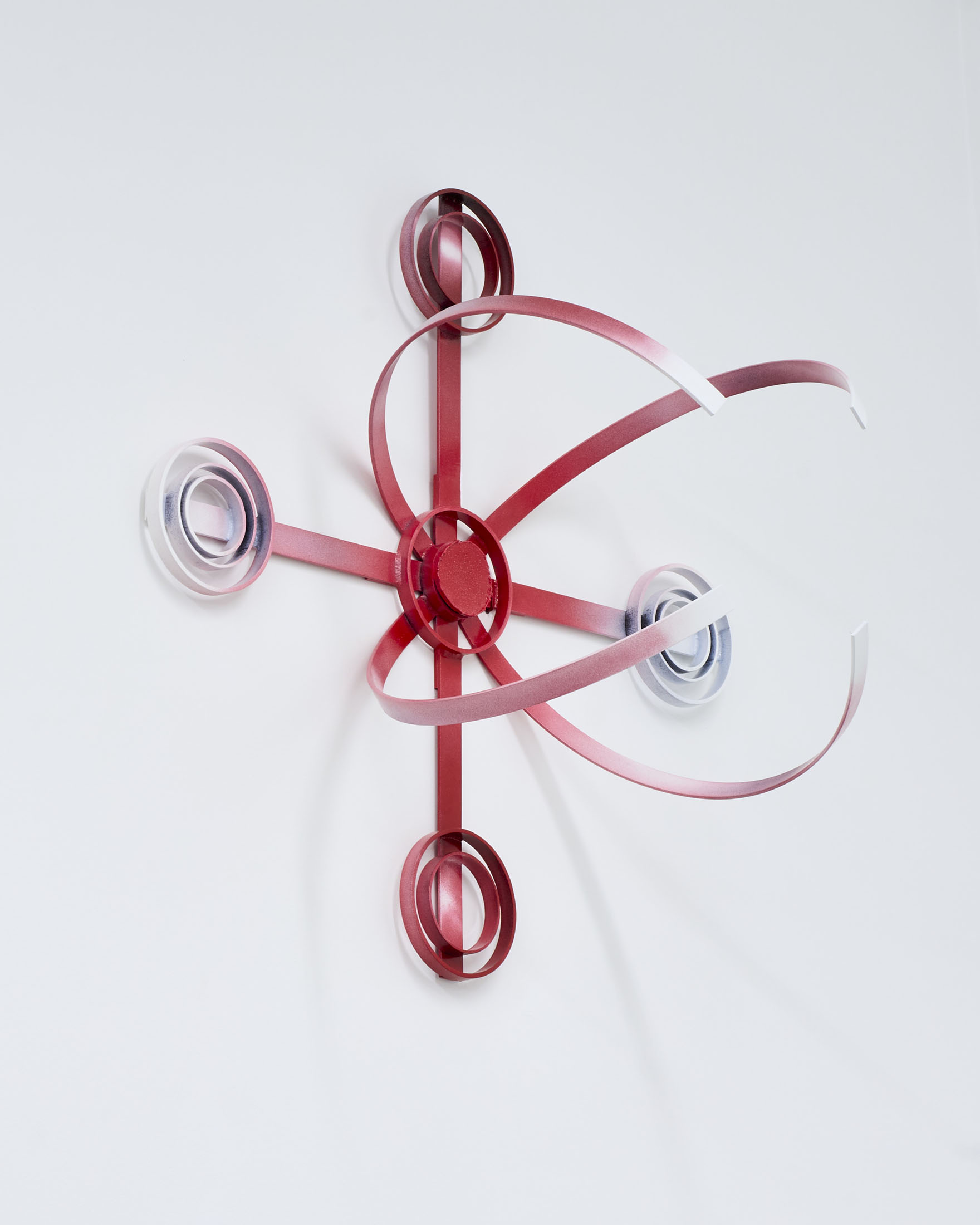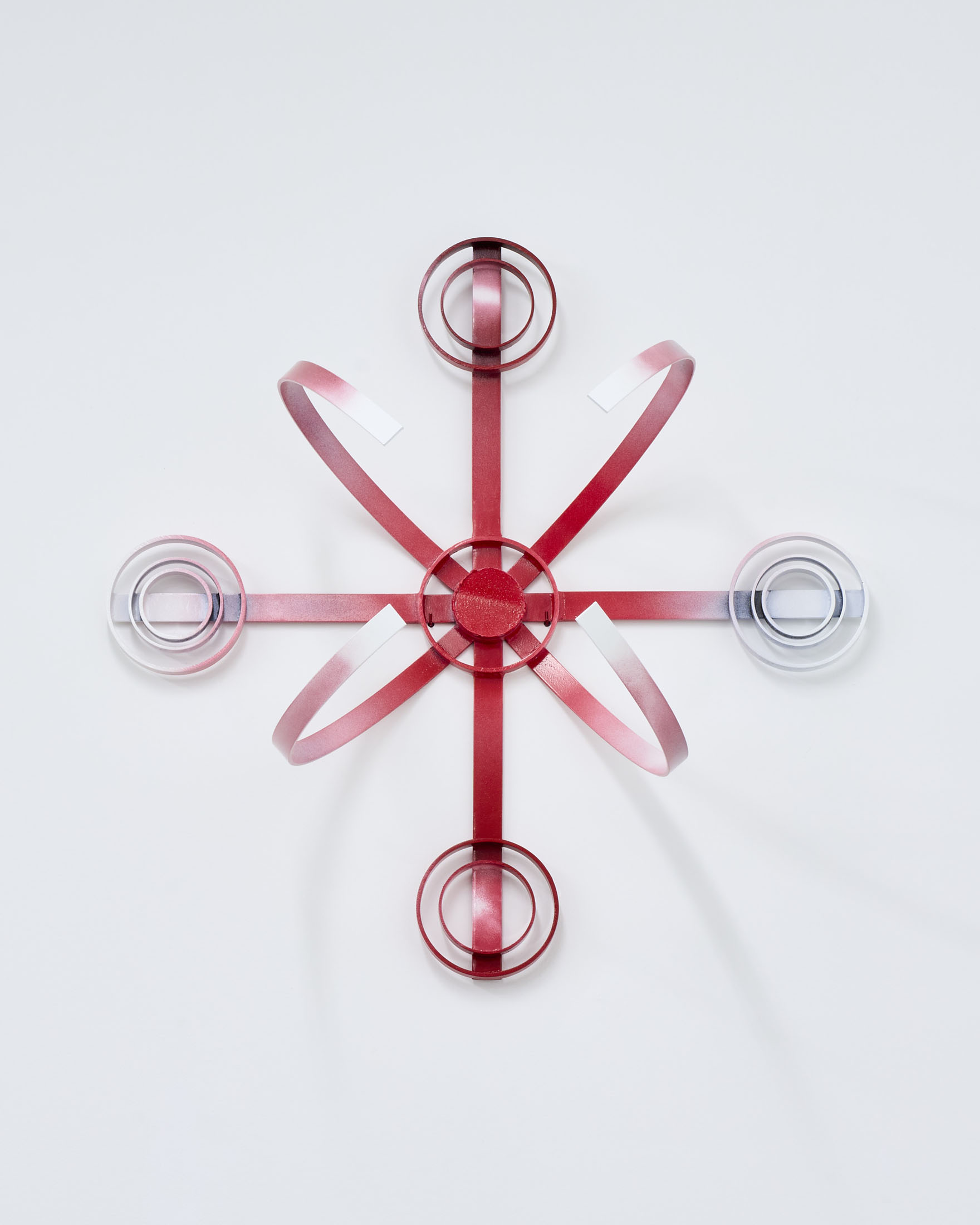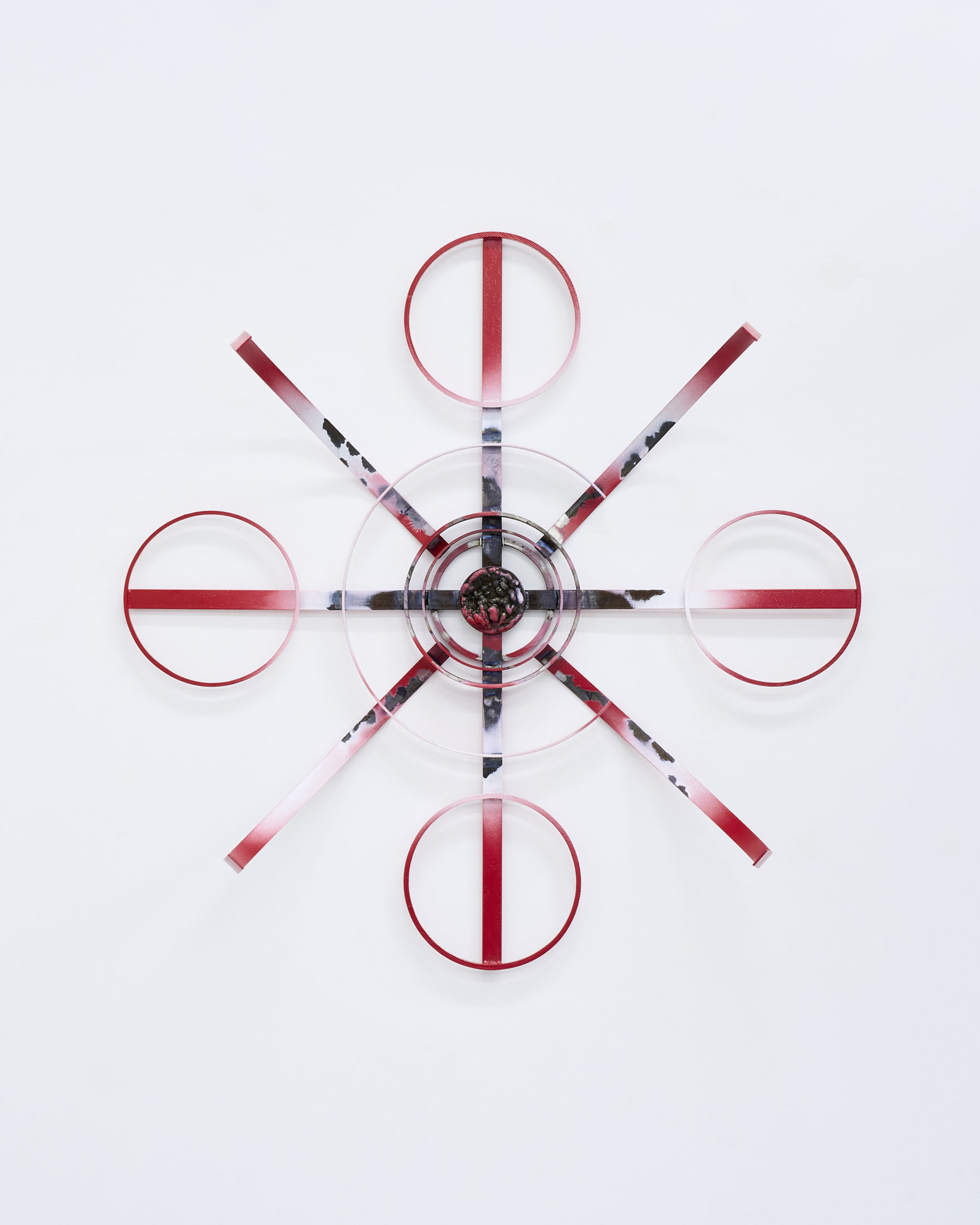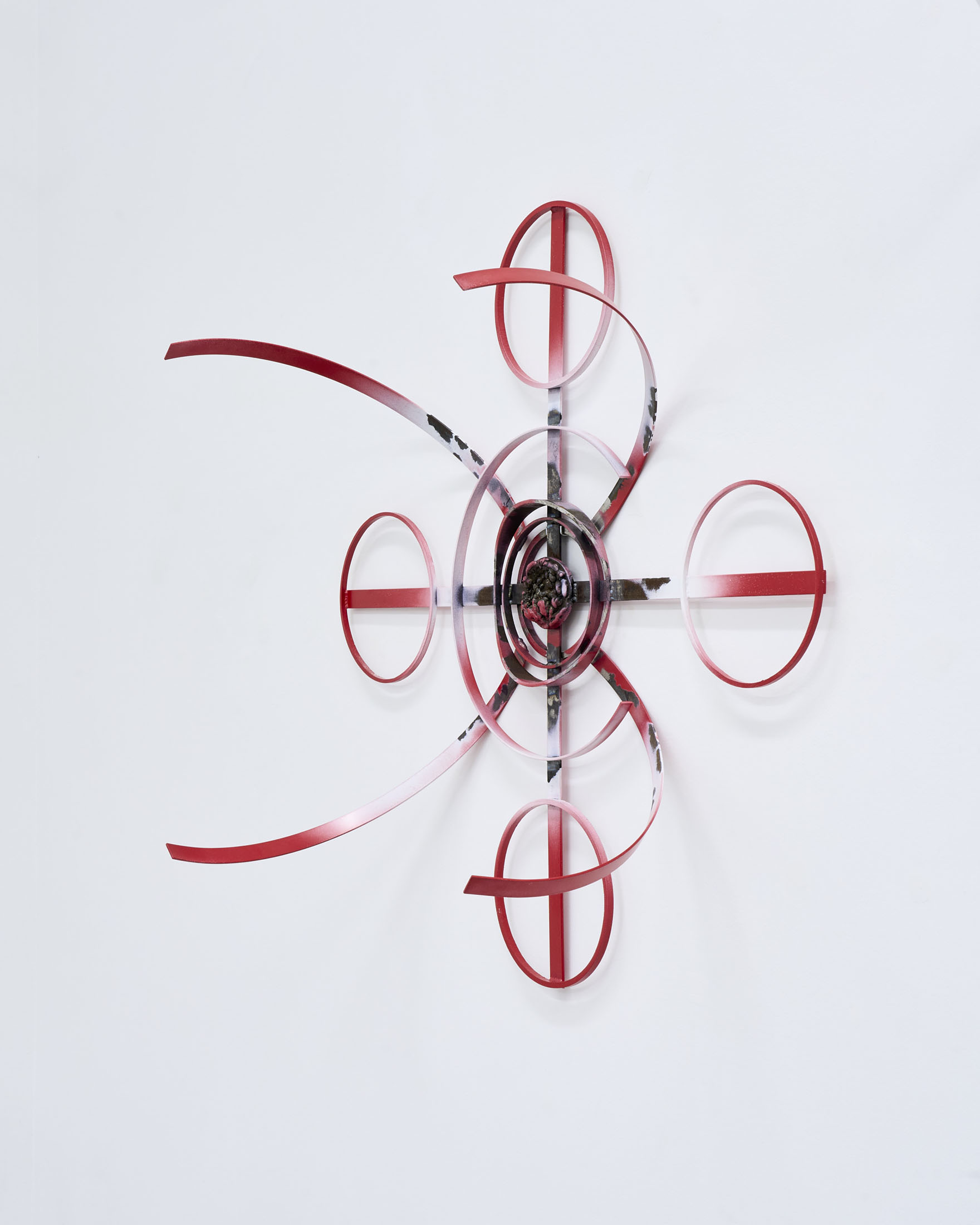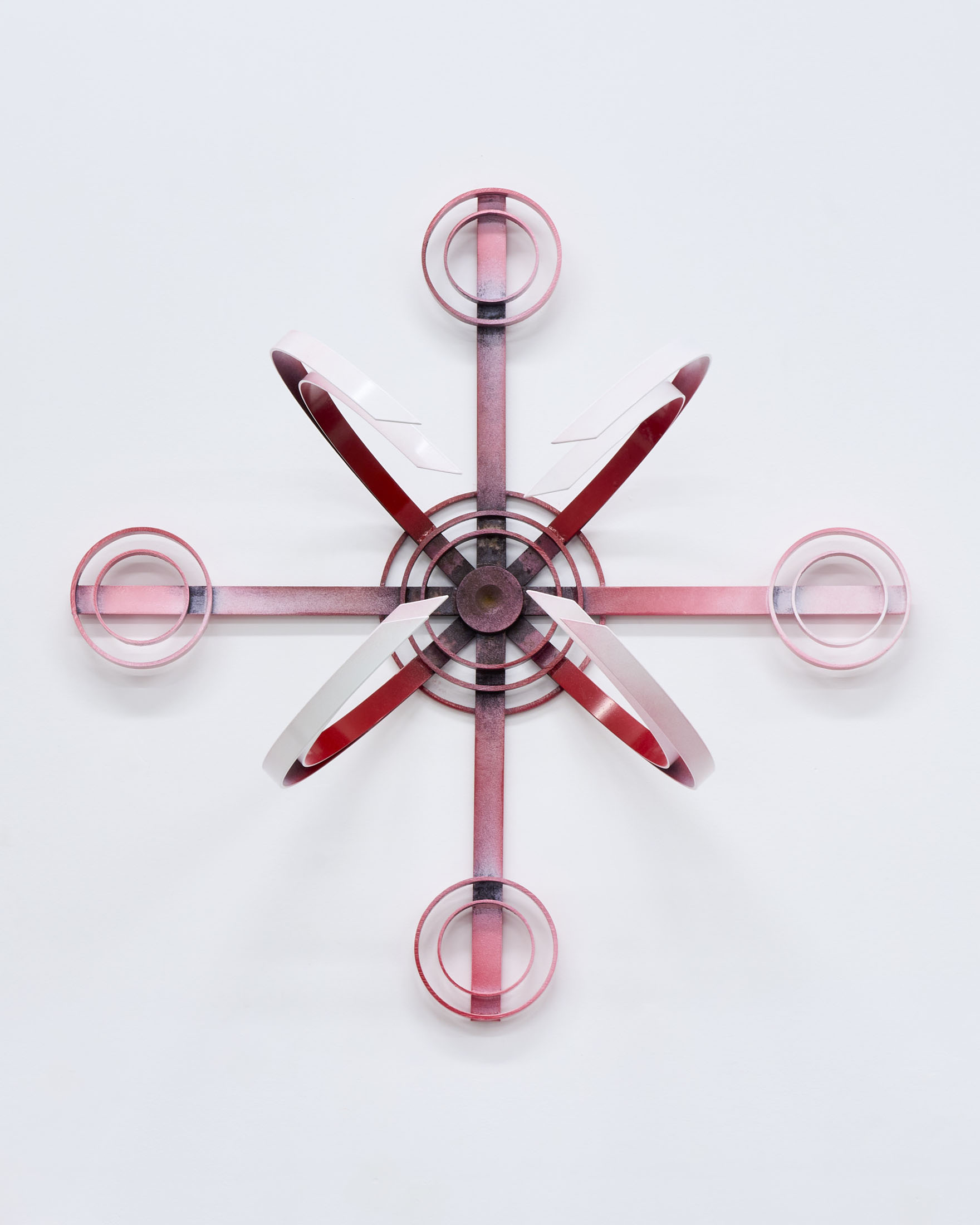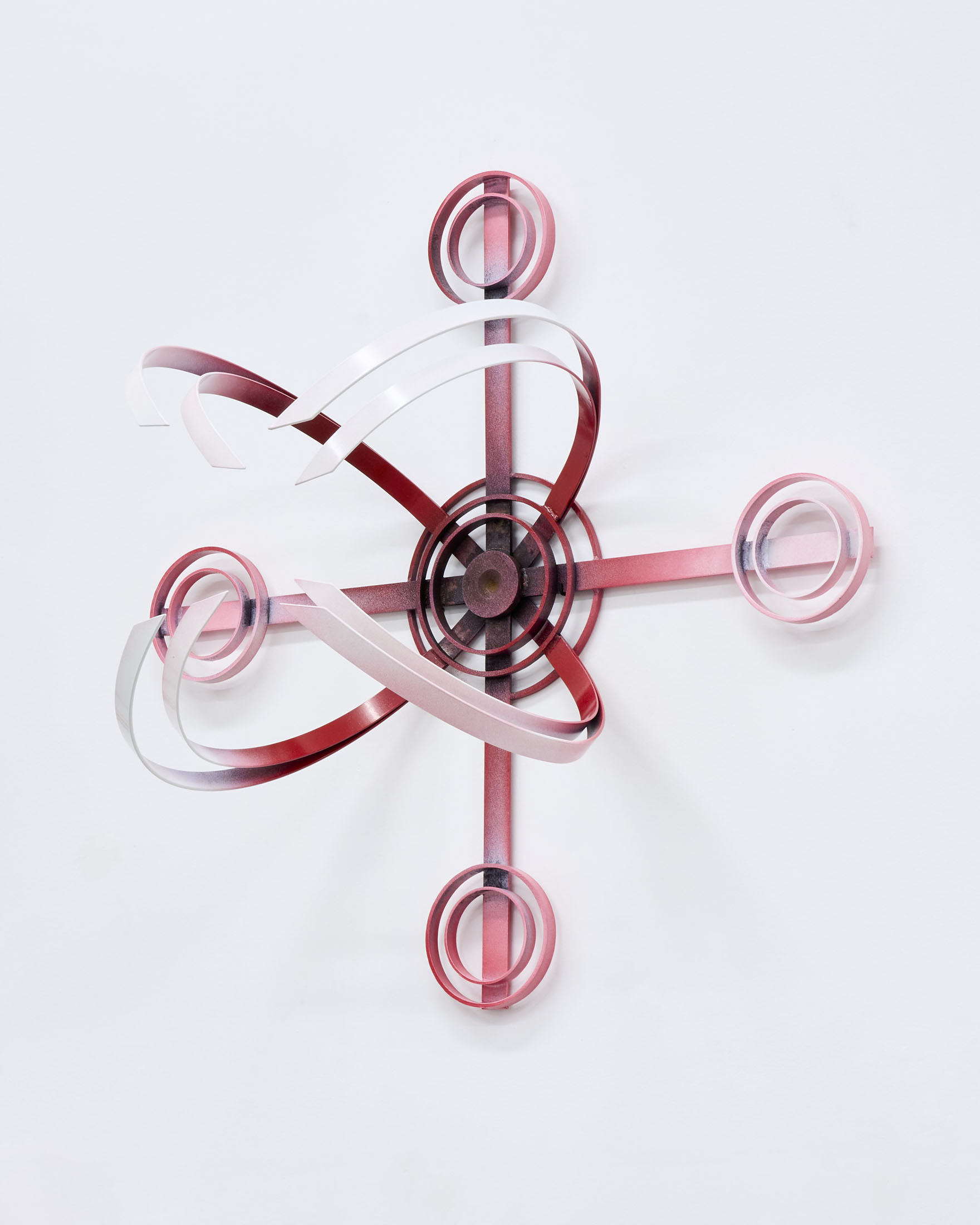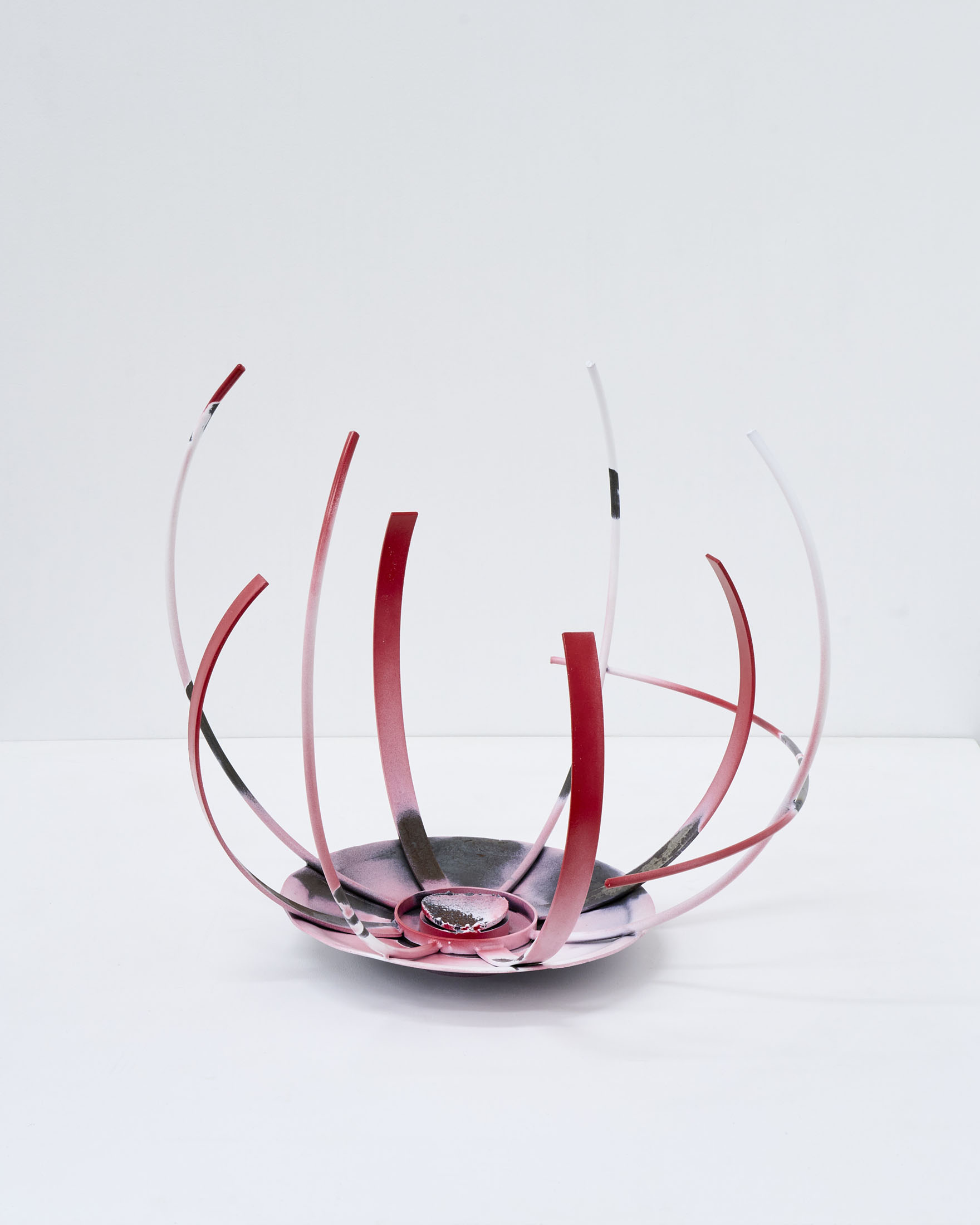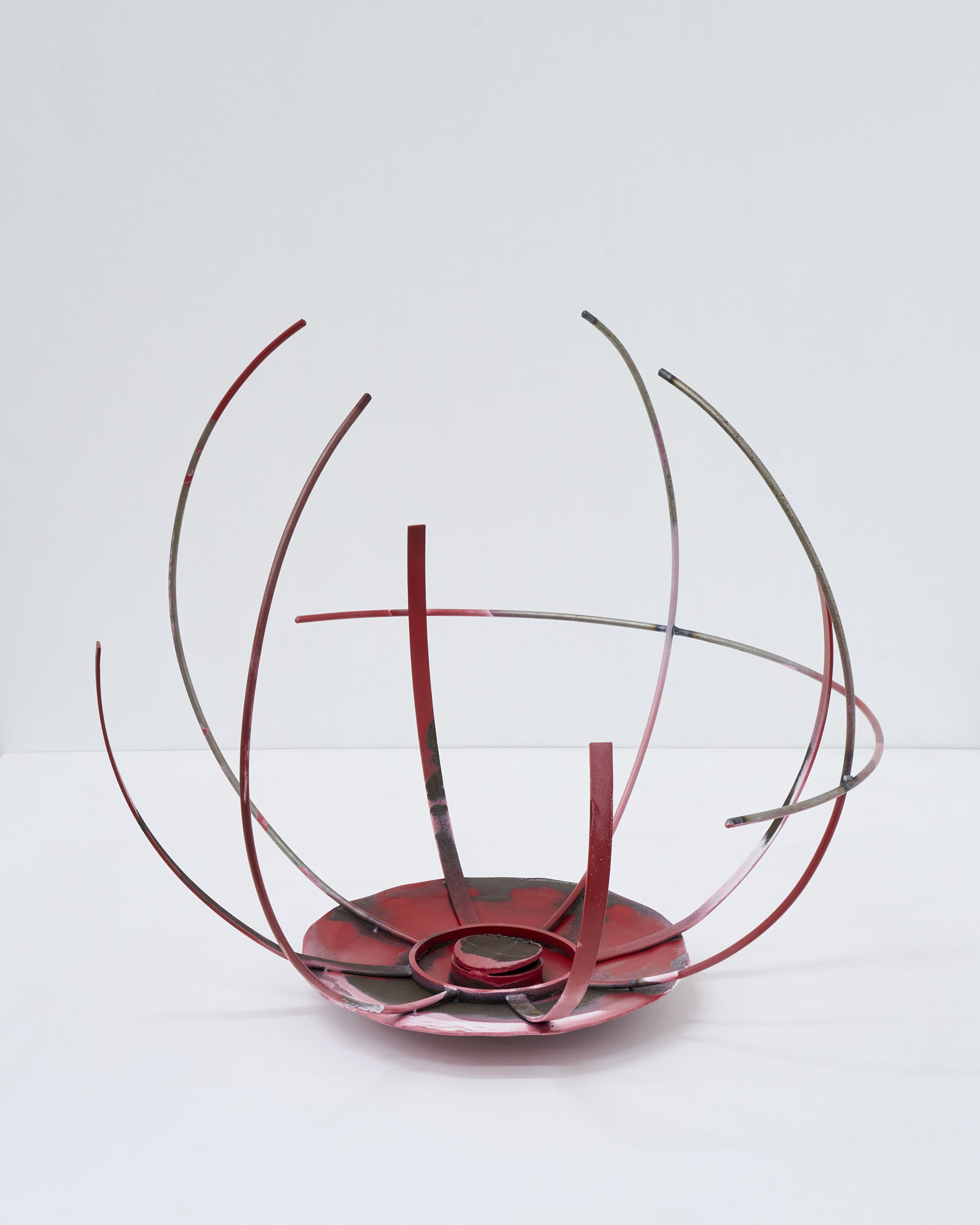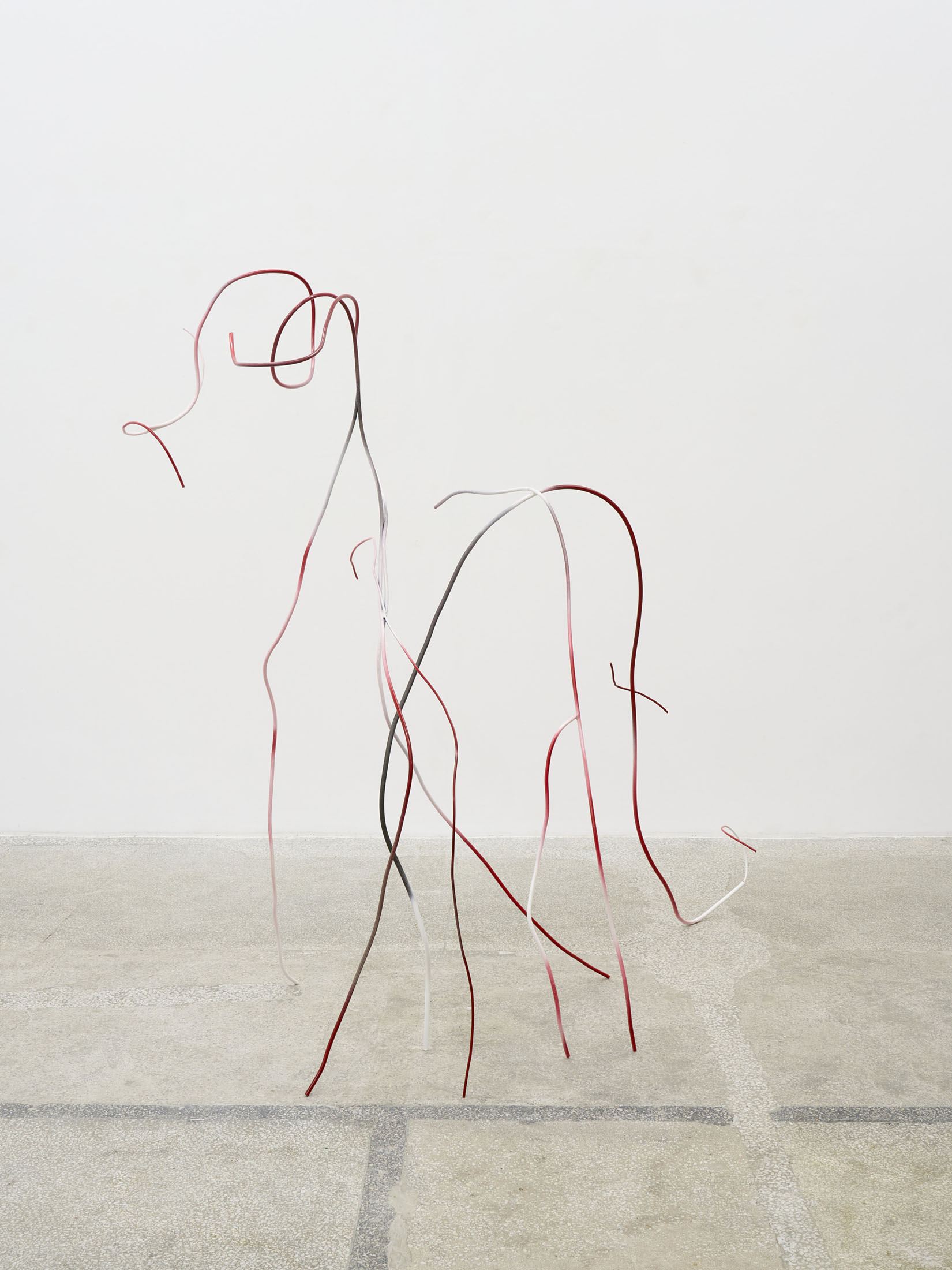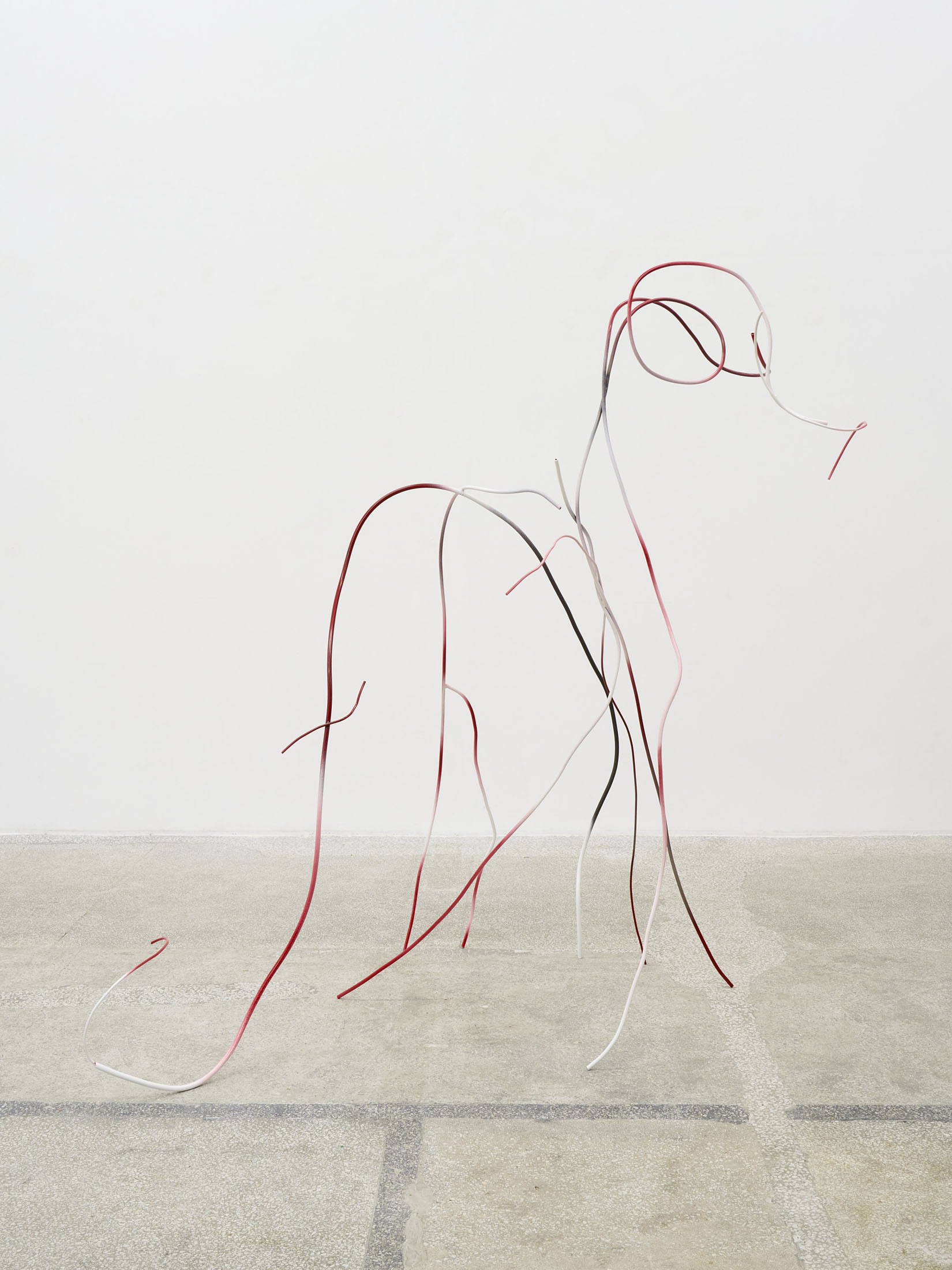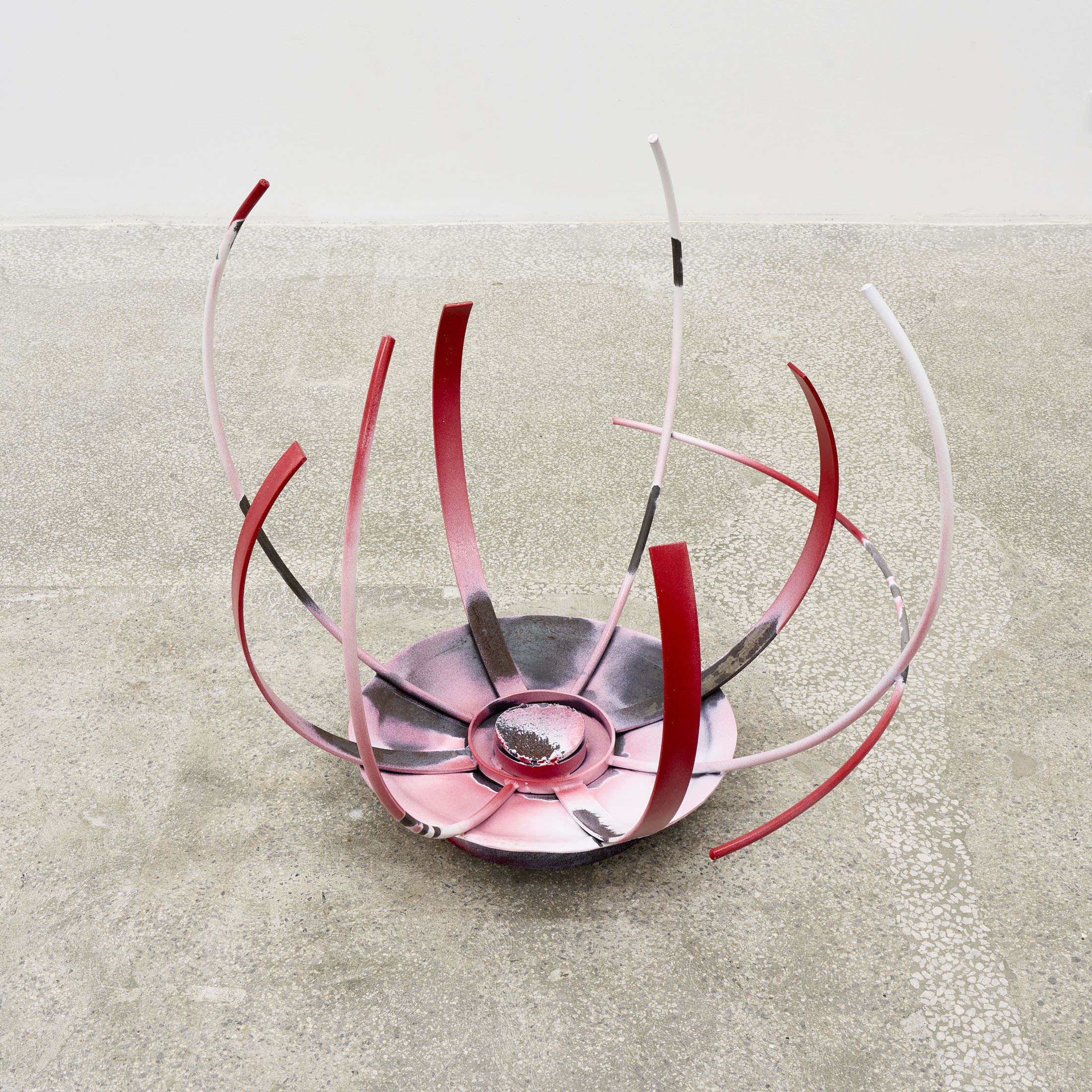
Swarm, Zuza Golińska, 2025
I
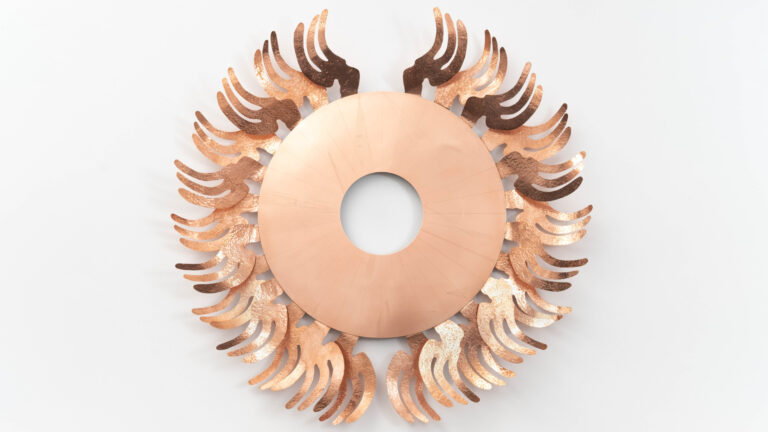
The sight of these forms made their heads spin. The shapes and symmetry of the lines resembled drones. Only this time they didn’t circle above their heads. The air didn’t tremble. They were positioned vertically; their outstretched arms invited them to come closer. It was unclear whether they were dangerous. From a distance, they looked like carnivorous plants or flowers that closed as soon as they sensed the touch of a potential victim. The air tasted of metal. It was hard to tell who had designed these symbols. Placed centrally, they indicated a change of order.
II
Some said that symbols were needed – after all, the times were a-changed. After years of drought, a promise would have been welcome. A believable story. Someone saw them as heralds of a new religion. Others were convinced that the forms’ symmetrical proportions were tied to the electron shells of a hydrogen atom. Clearly, this had to do with physics. The circles rippling like water, one nested within another, were thought to represent parallel worlds the few survivors had tried in vain to contact. In the Western Region, the dominant belief was that the symbols were connected to the planetary conjunction, especially Mars, whose long-promised colonisation had never come to pass. Apparently, the proof was in the colour. But those in the Eastern Region rejected the idea. For them, it was obvious: the new symbols spoke of the endless war – one that, after devouring nature, had begun to imitate it. They claimed it was a collective organism, its fragmented mind operating like a swarm. Whatever the interpretation, they approached the forms with caution.
III
The oxygen tanks had long been empty. Then again, there was barely any oxygen to start with. It was delivered in tiny doses through a narrow tube. One deep breath – a luxury, something to look forward to after days of brief, violent gasps. Each dose was rationed out at designated points. The industrial gases were said to be contaminated, but no one really cared. Distribution was risky: the oxidiser could ignite instantly on contact with fat, sparking fires that erupted in short, rapid bursts. But the tanks had stood empty for some time now. Their punctured steel walls revealed rusty insides. The explosive threat was gone. Rumour had it some tanks were still full, but no one dared to ask for their share.
IV
It was all a matter of language. The symbols communicated with one another.
Their arrangement was deliberate. They fed on the last traces of oxygen seeping from the tanks. This was a perfectly self-sustaining environment: growing on its own, no longer needing anyone.
Gdańsk and Warsaw, 2024–2025
Translated by Malwina Chełminiak