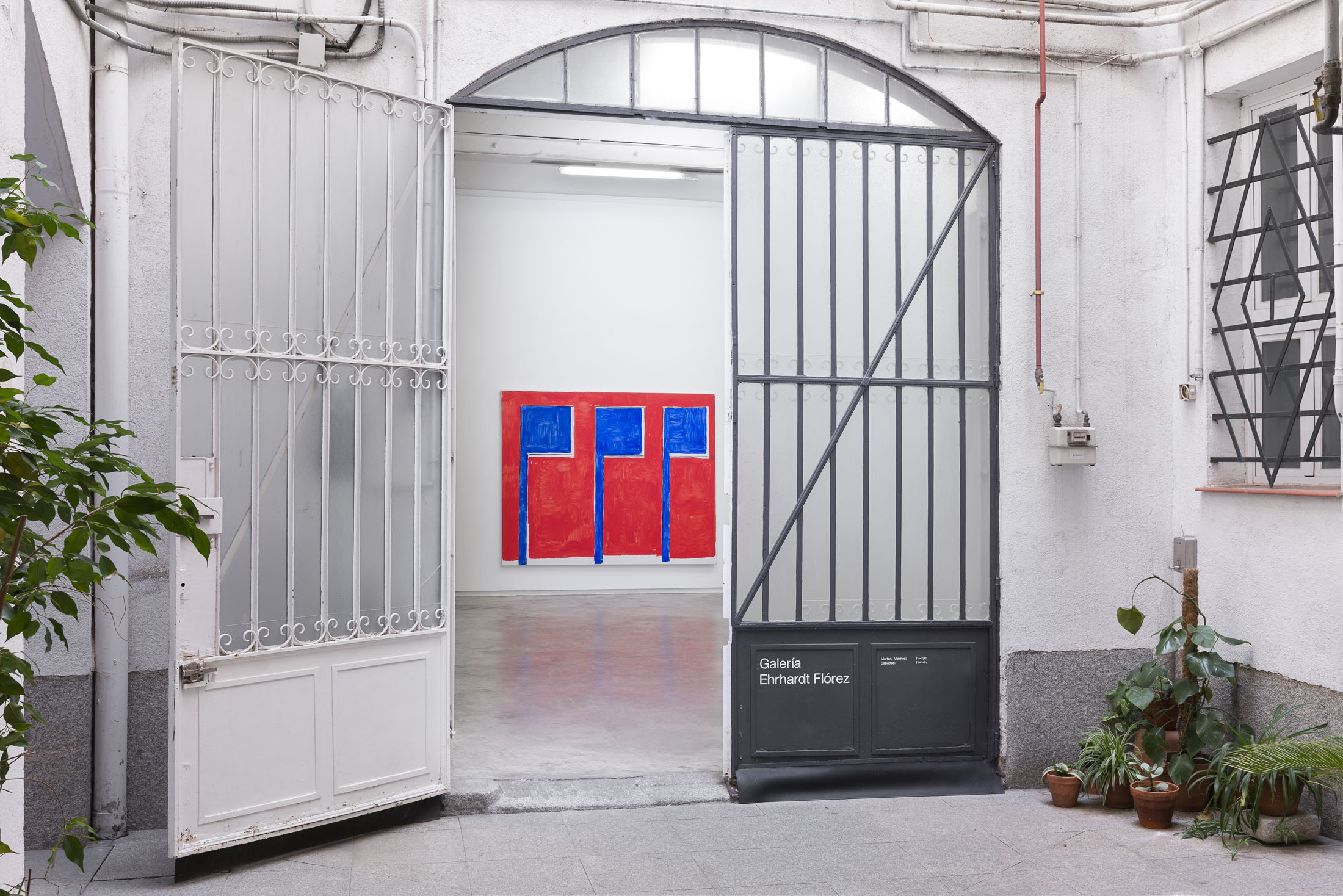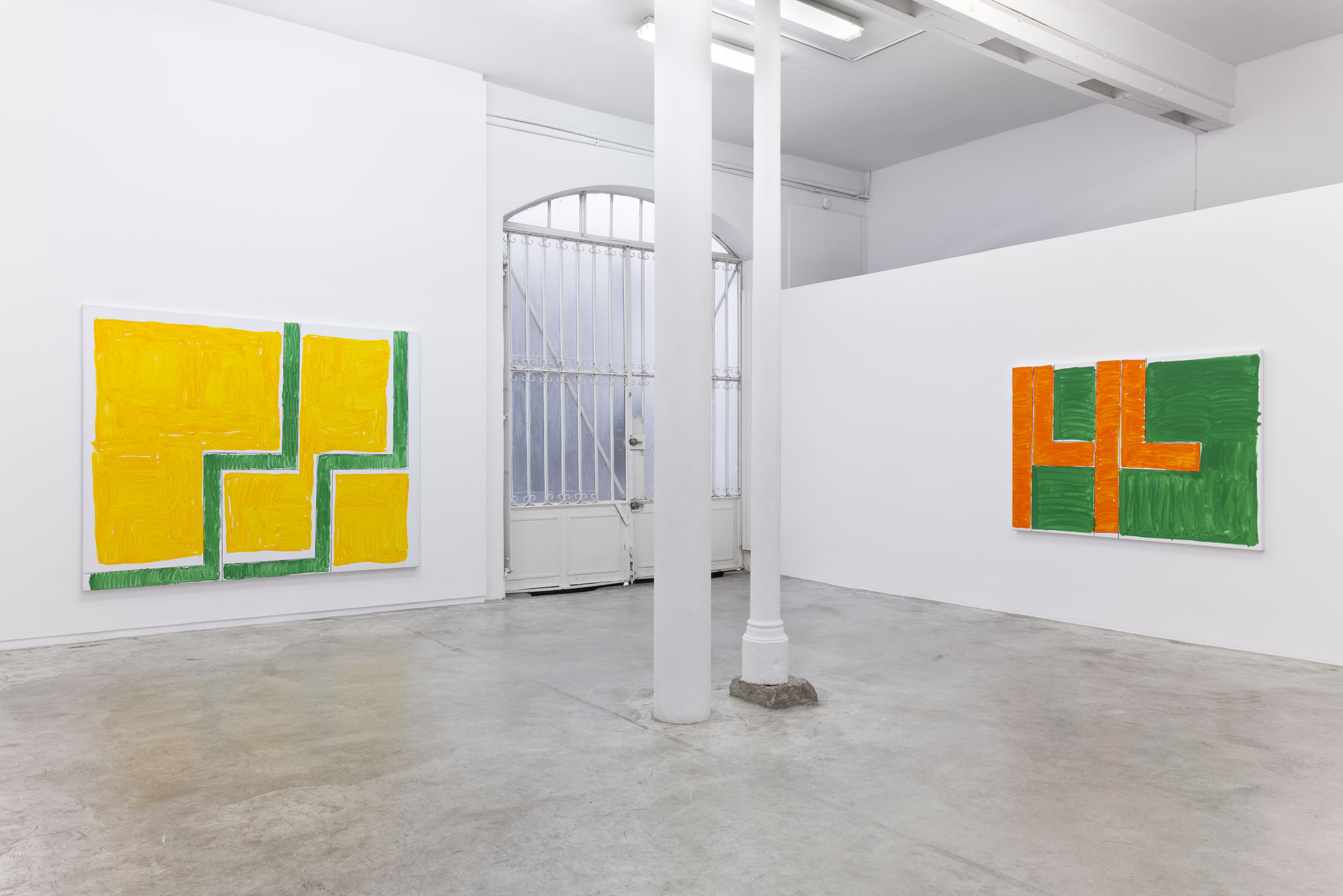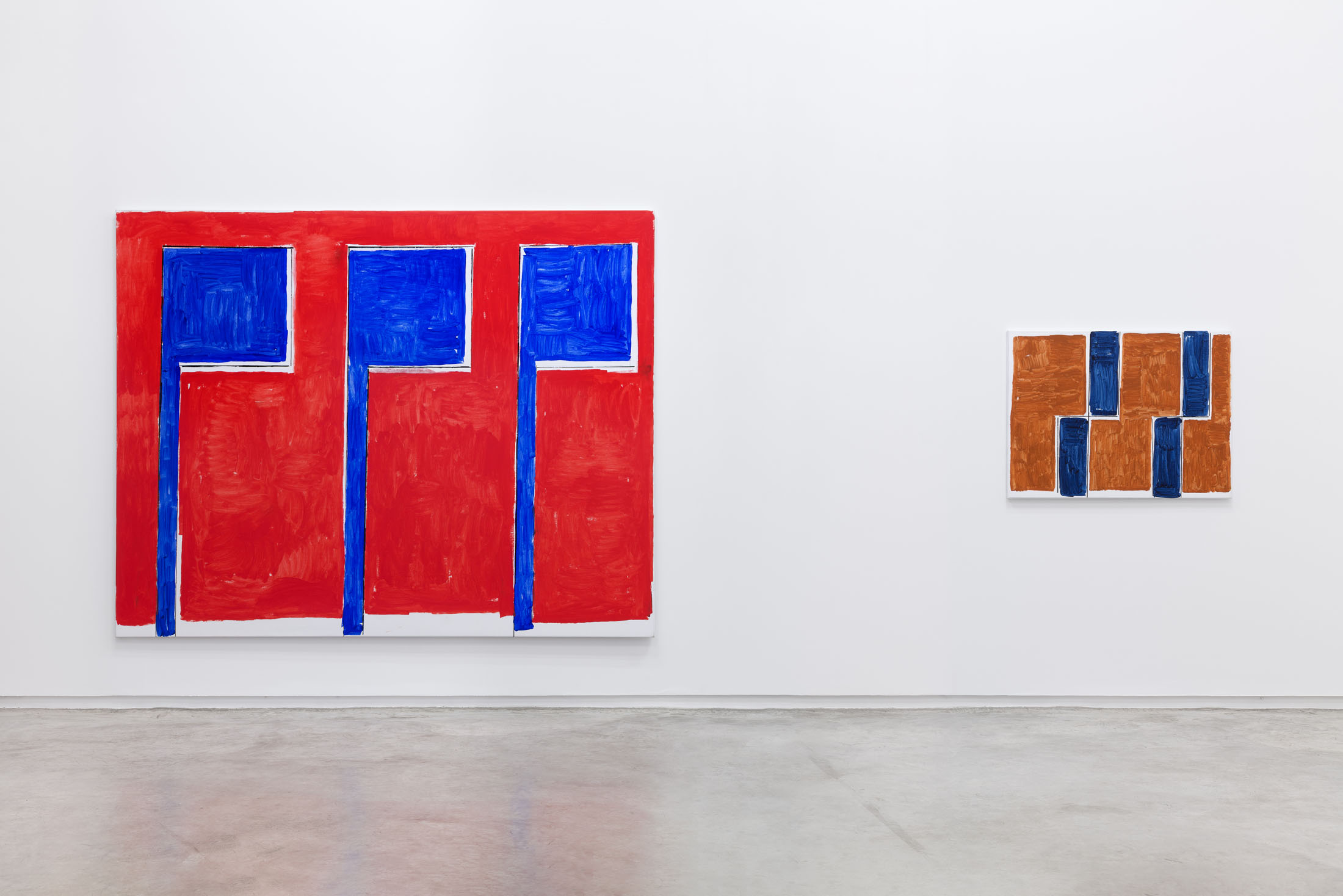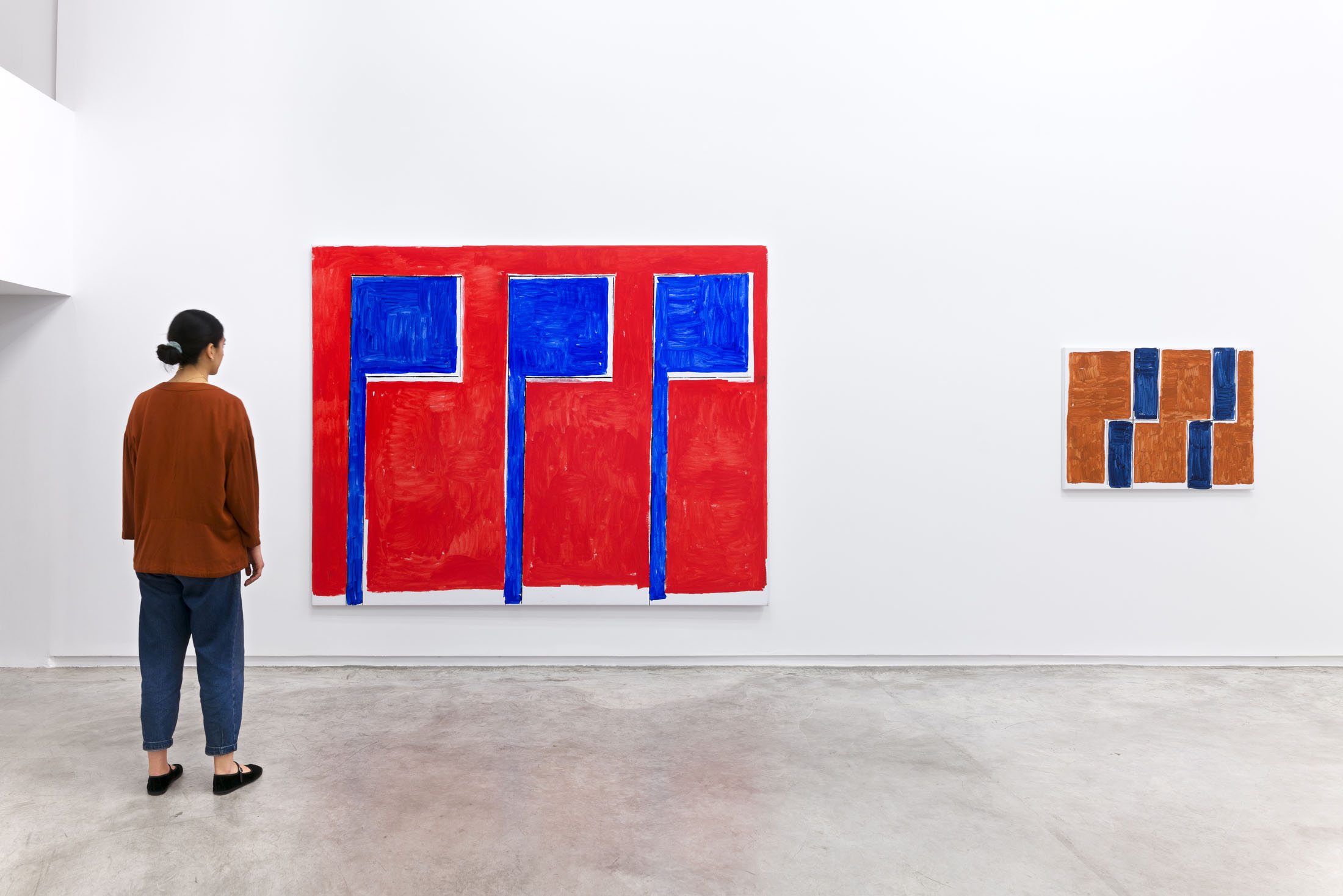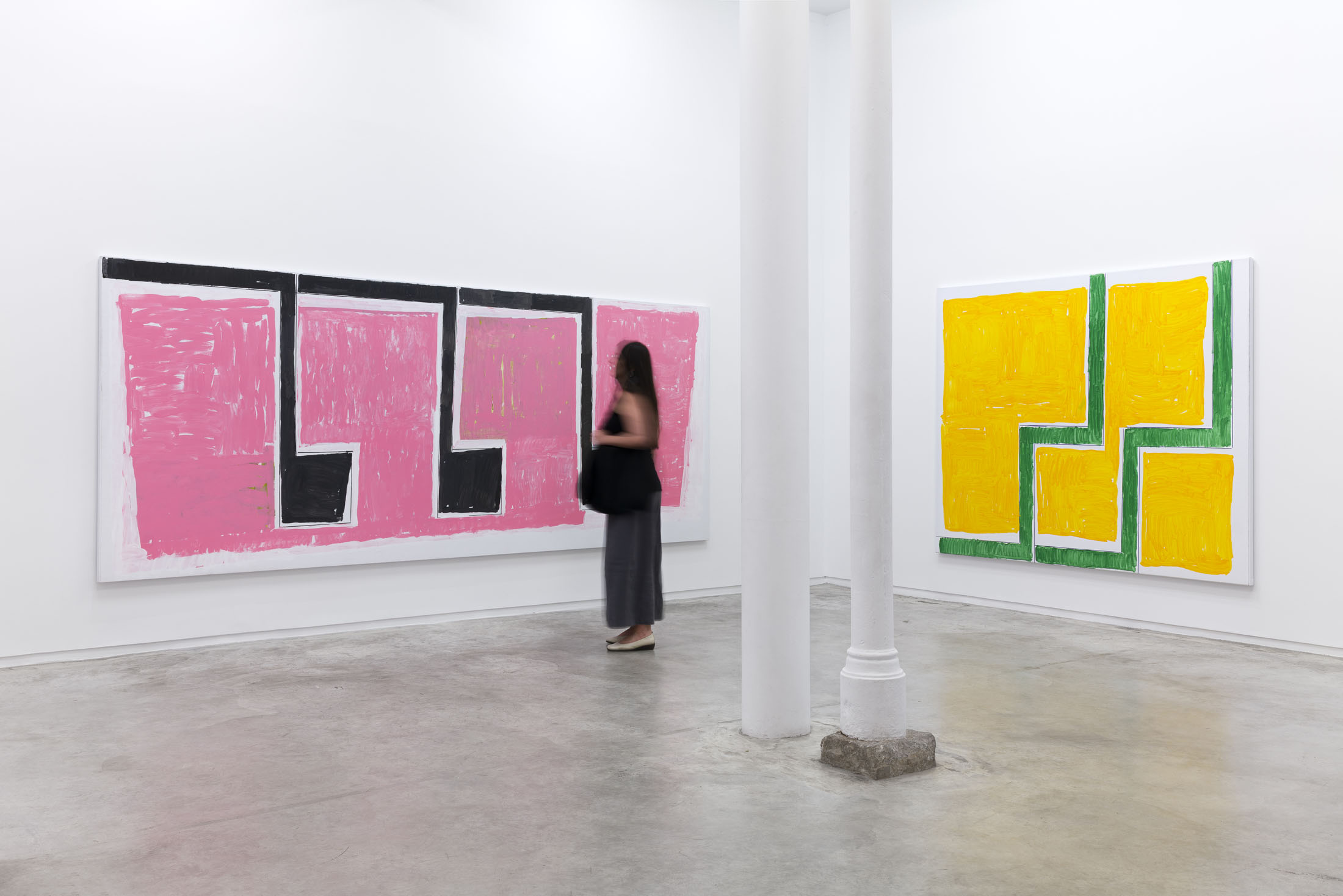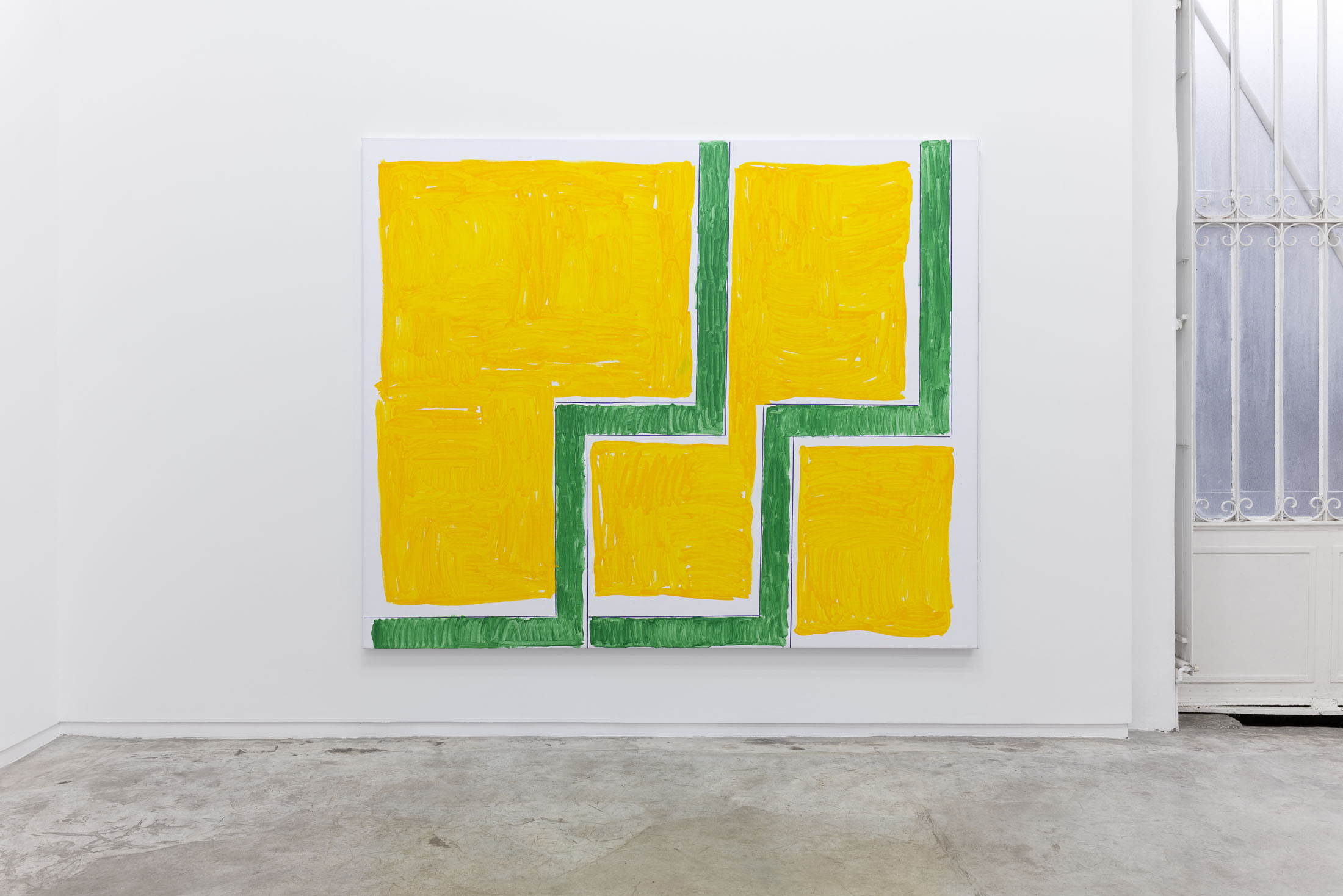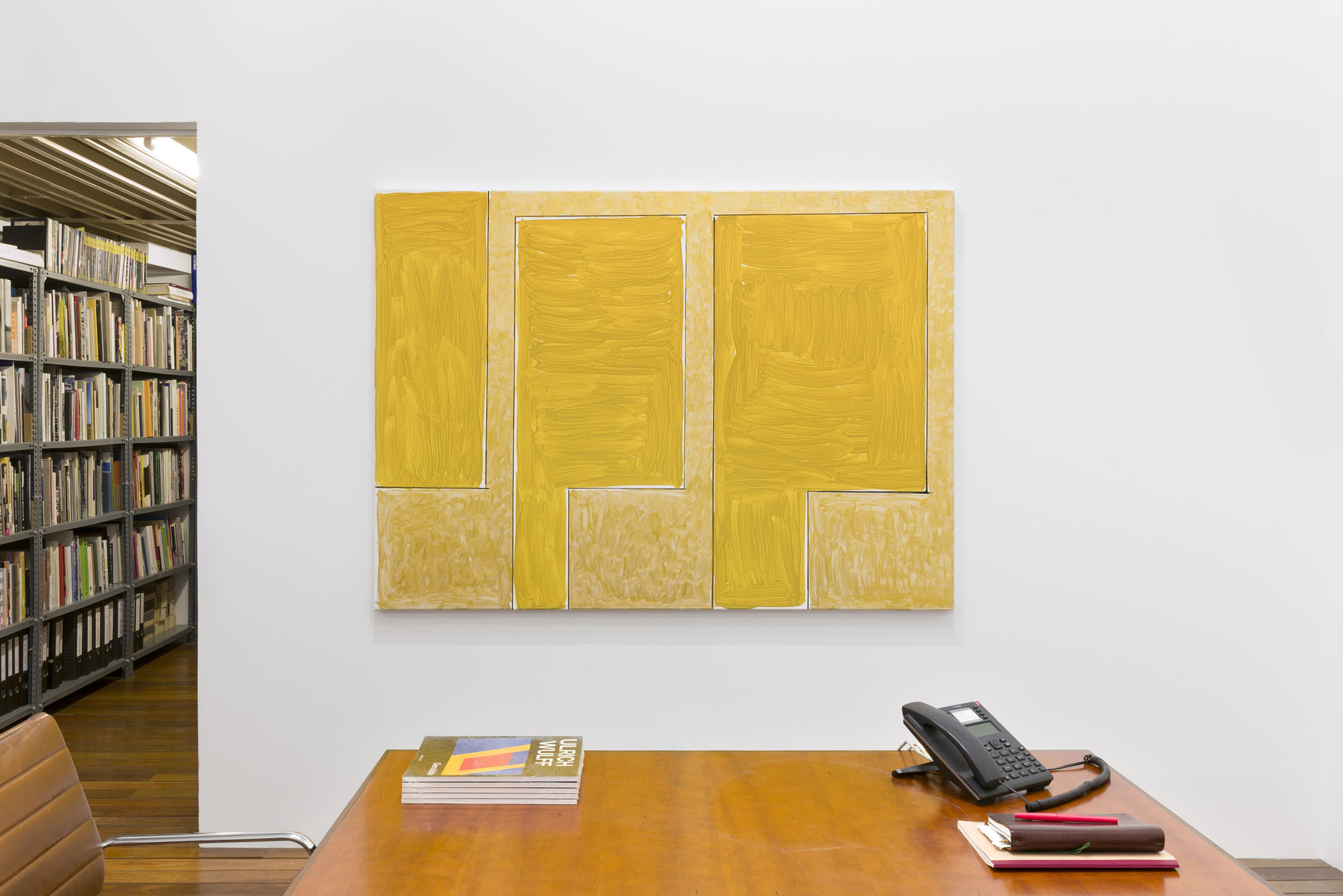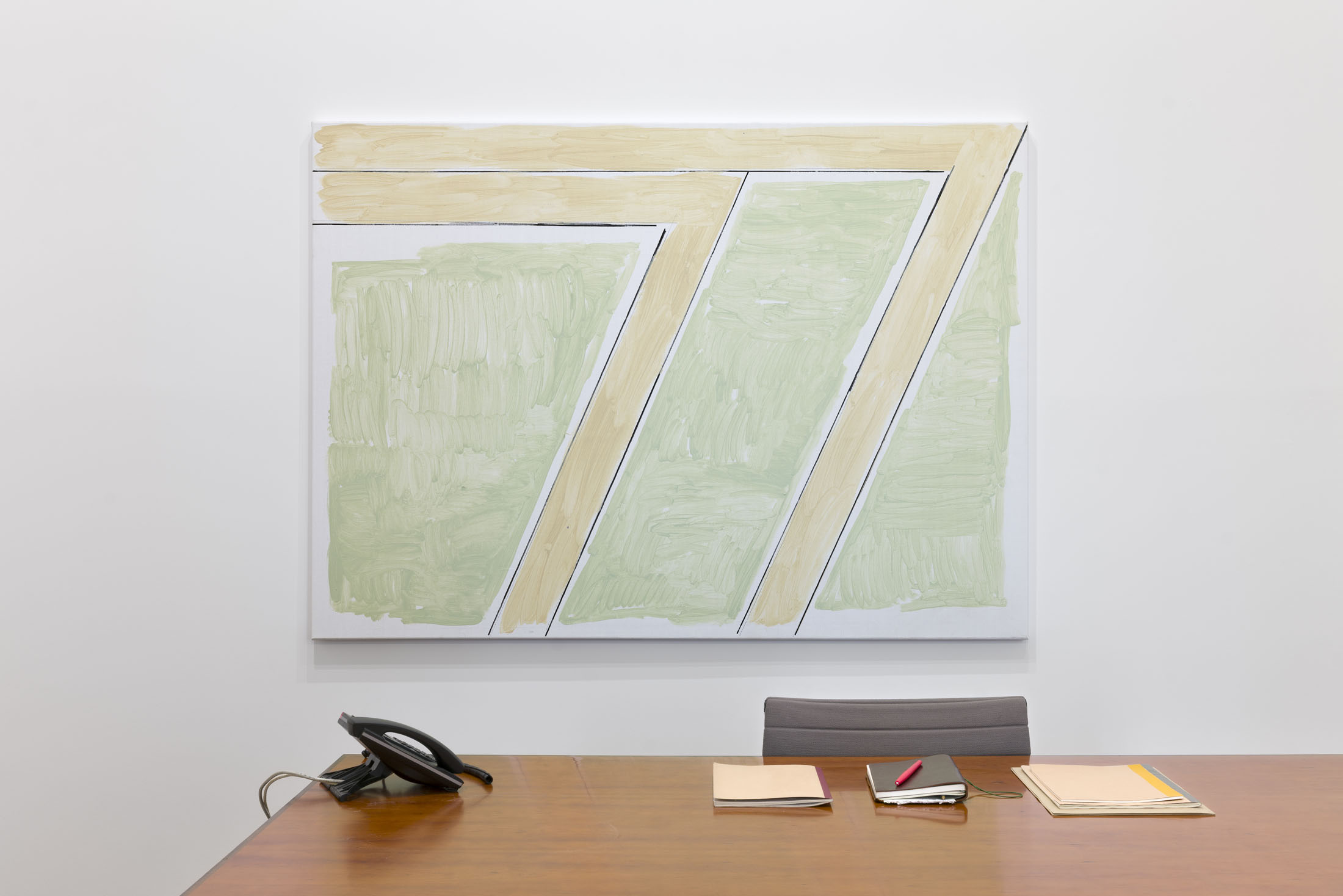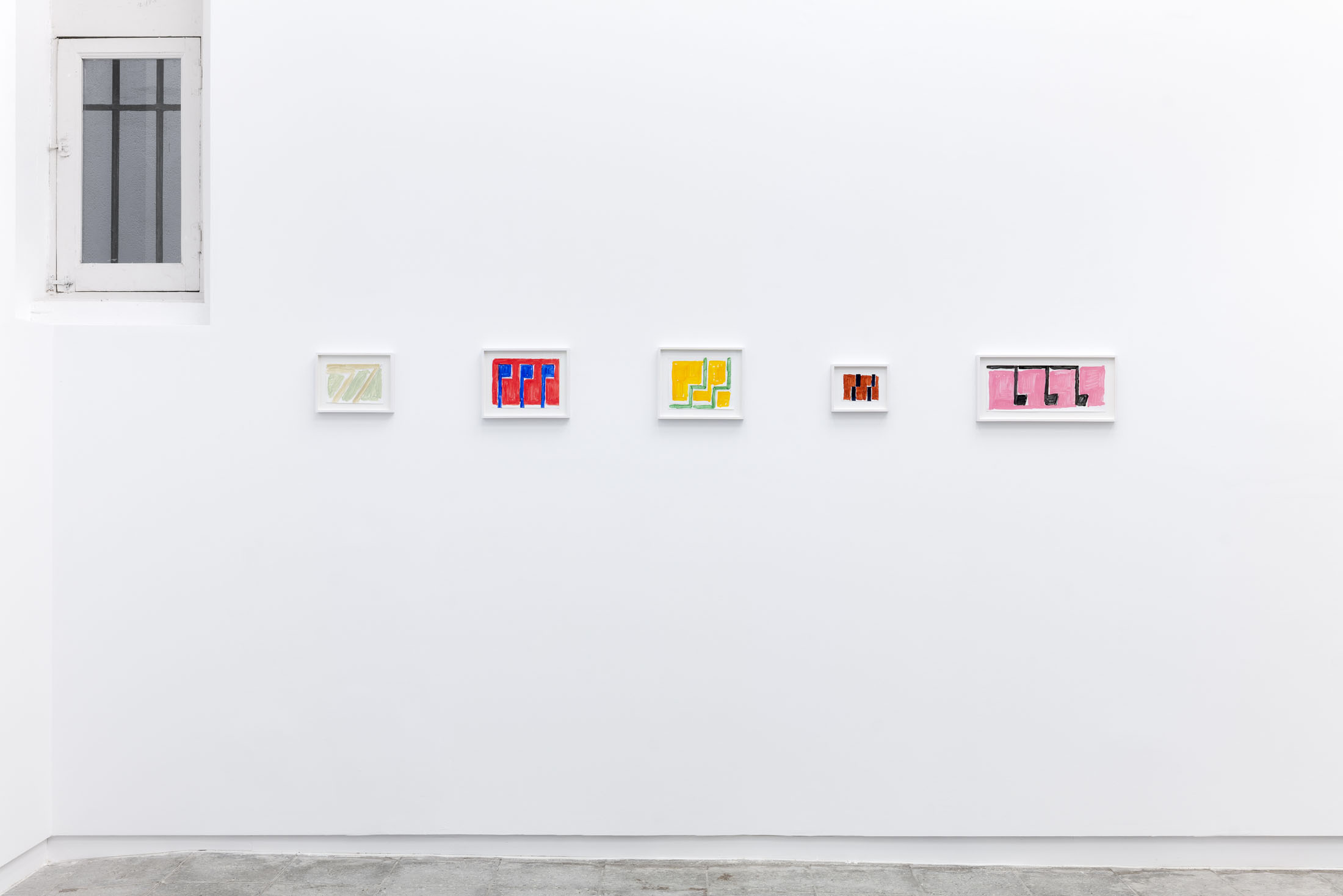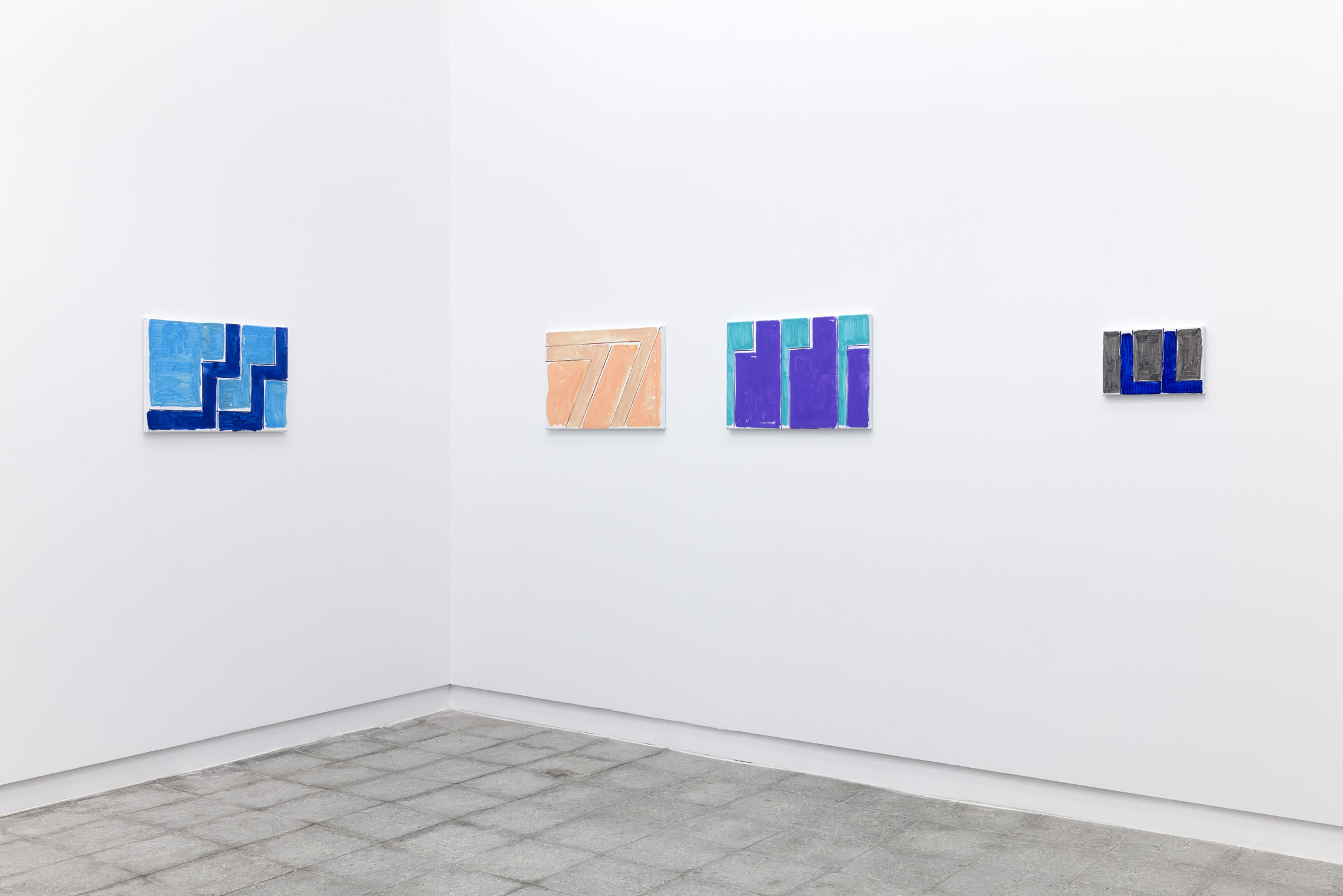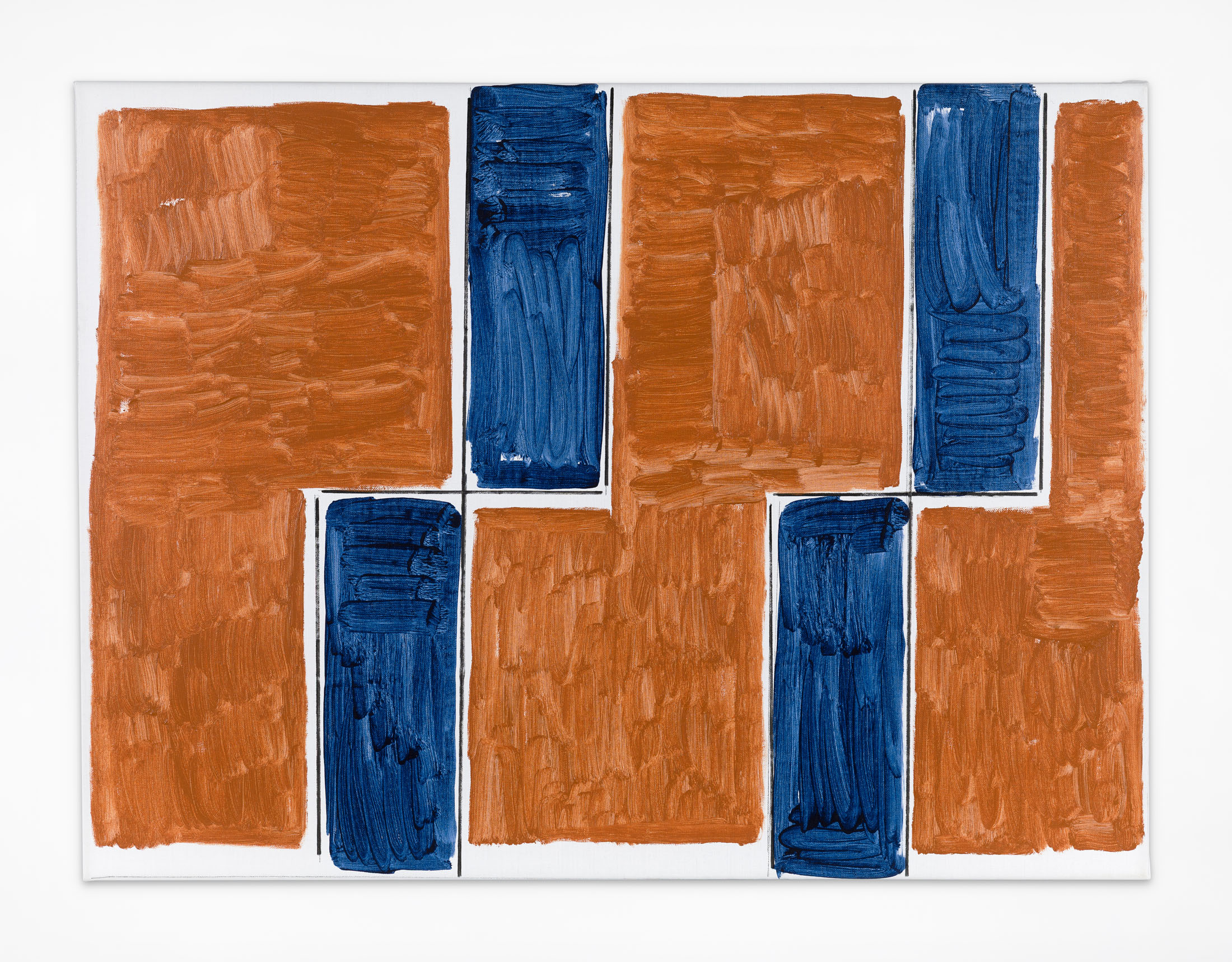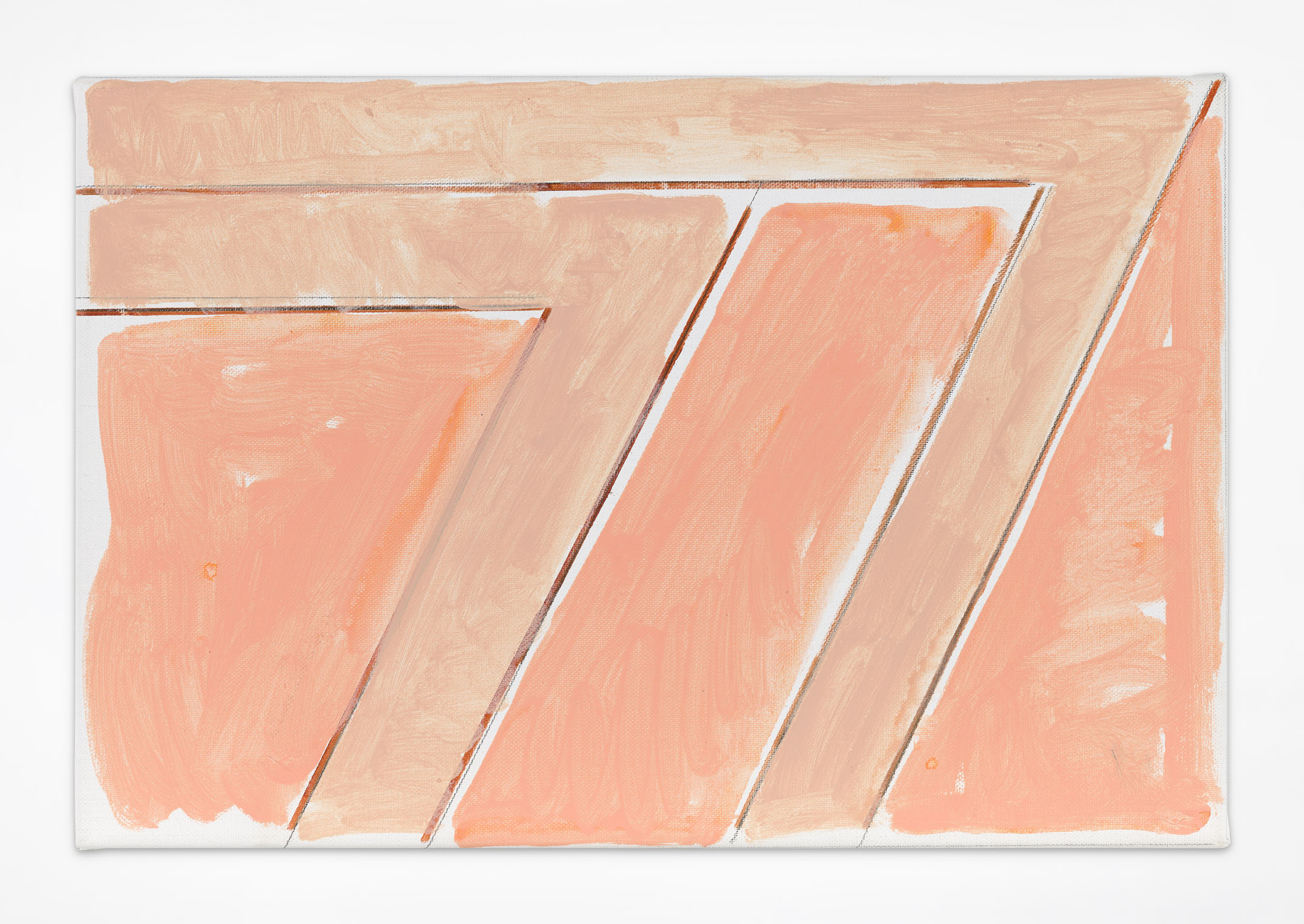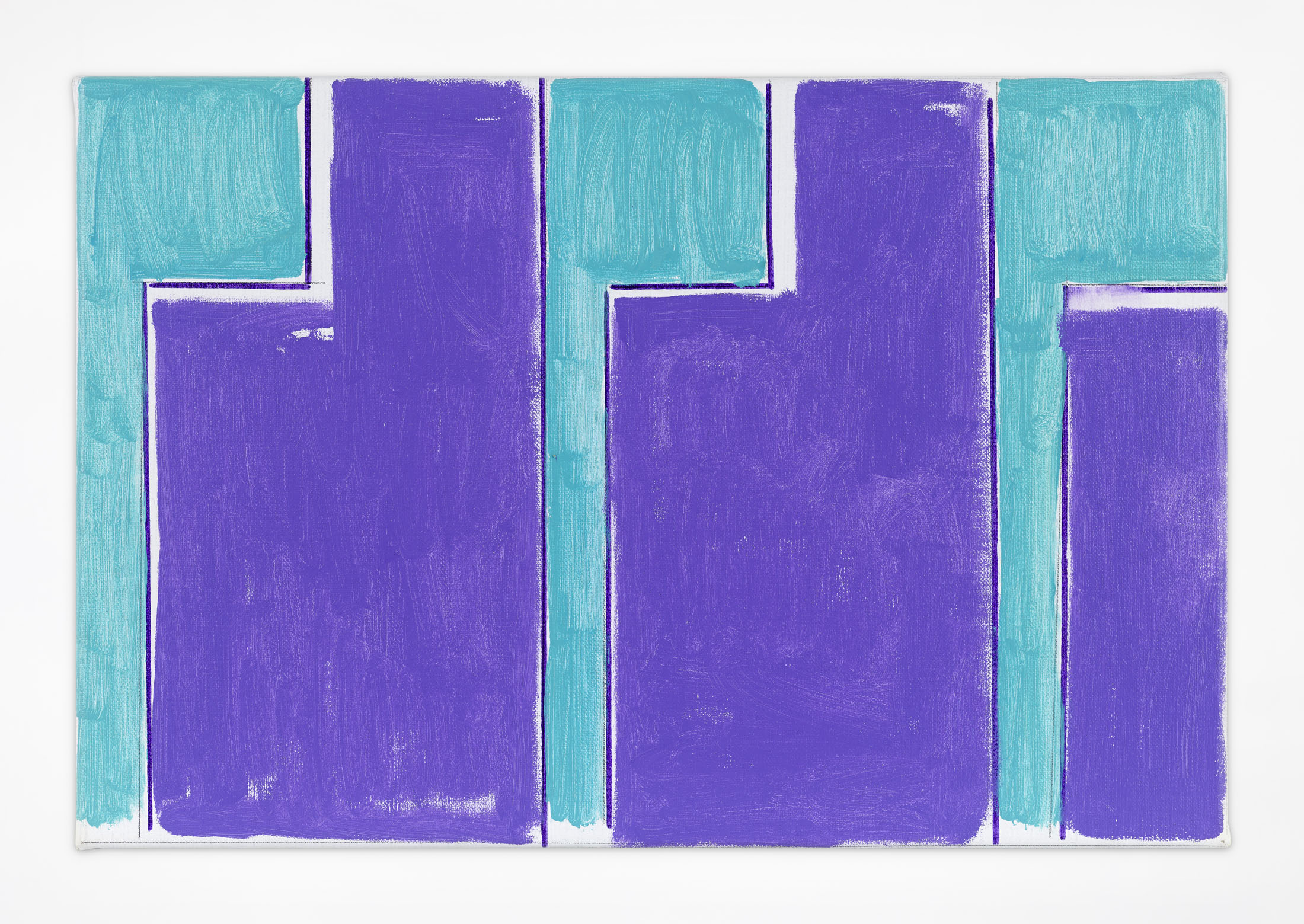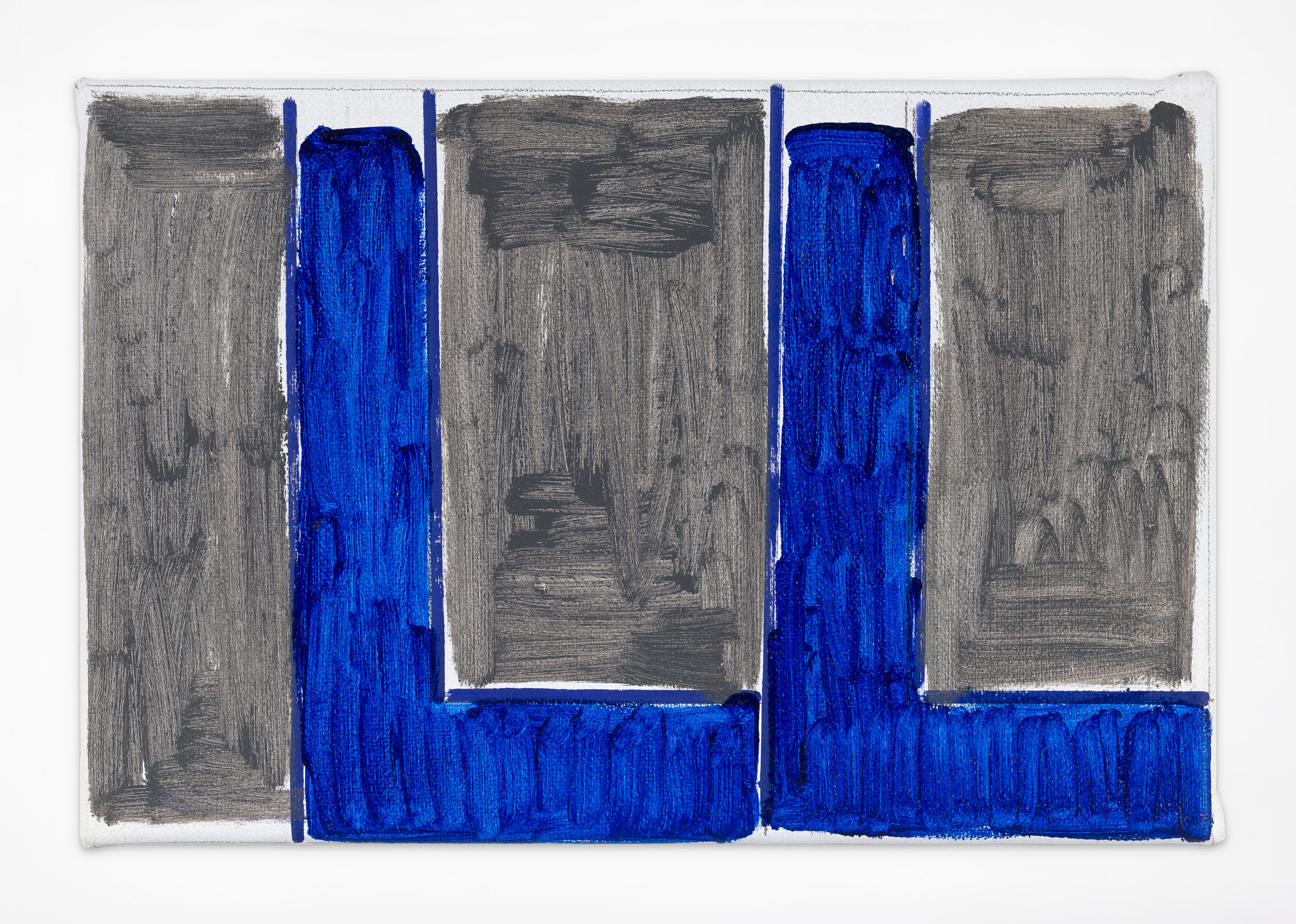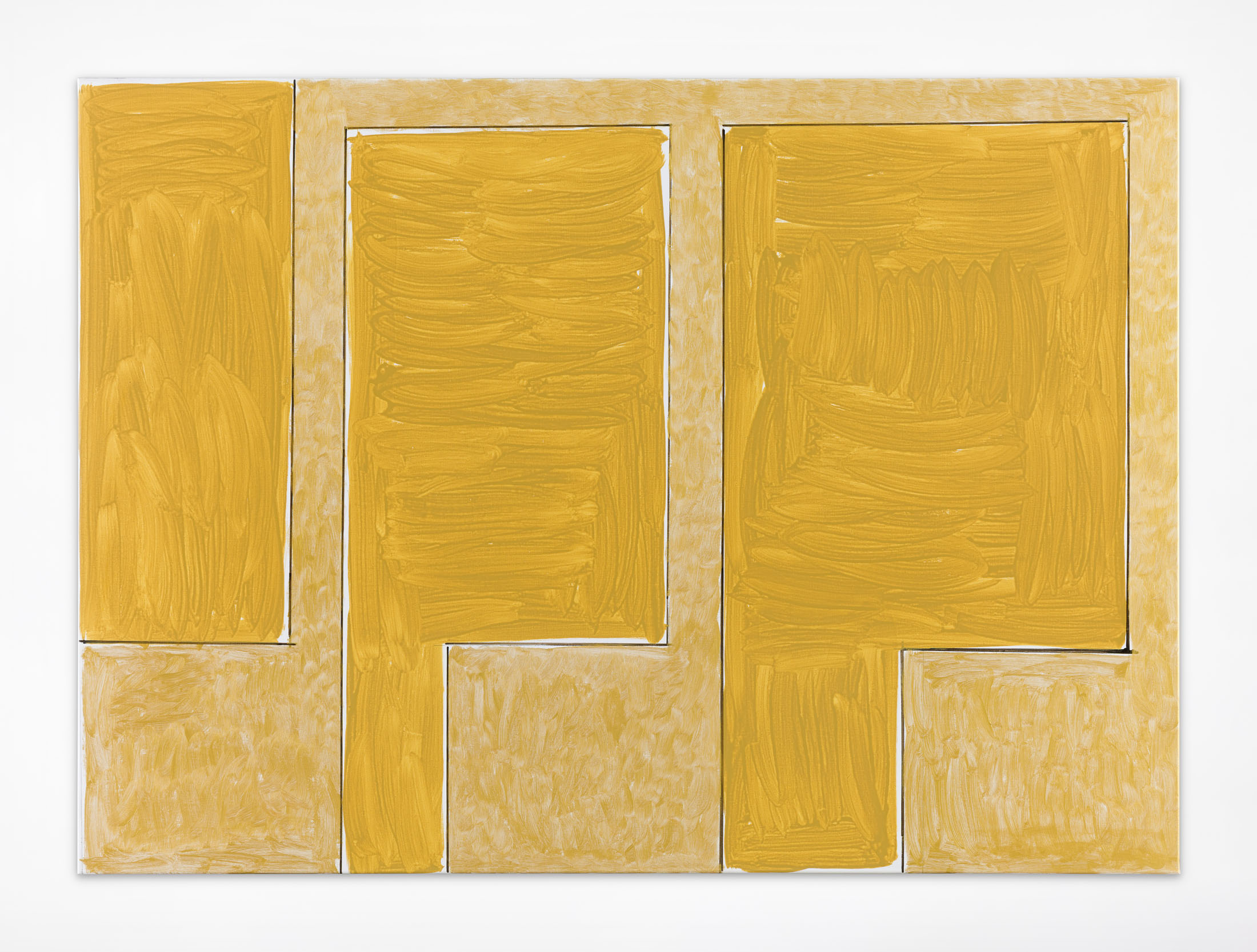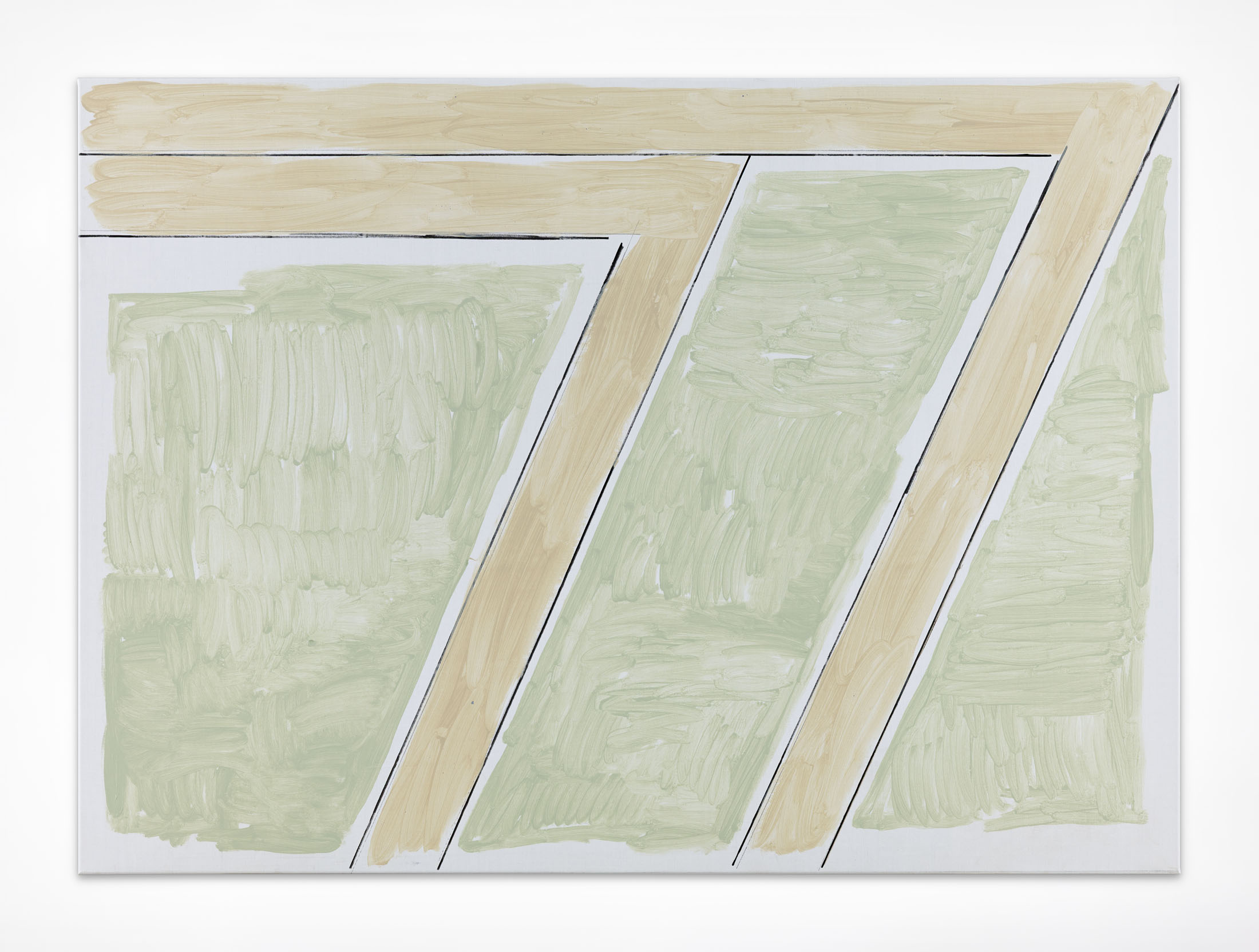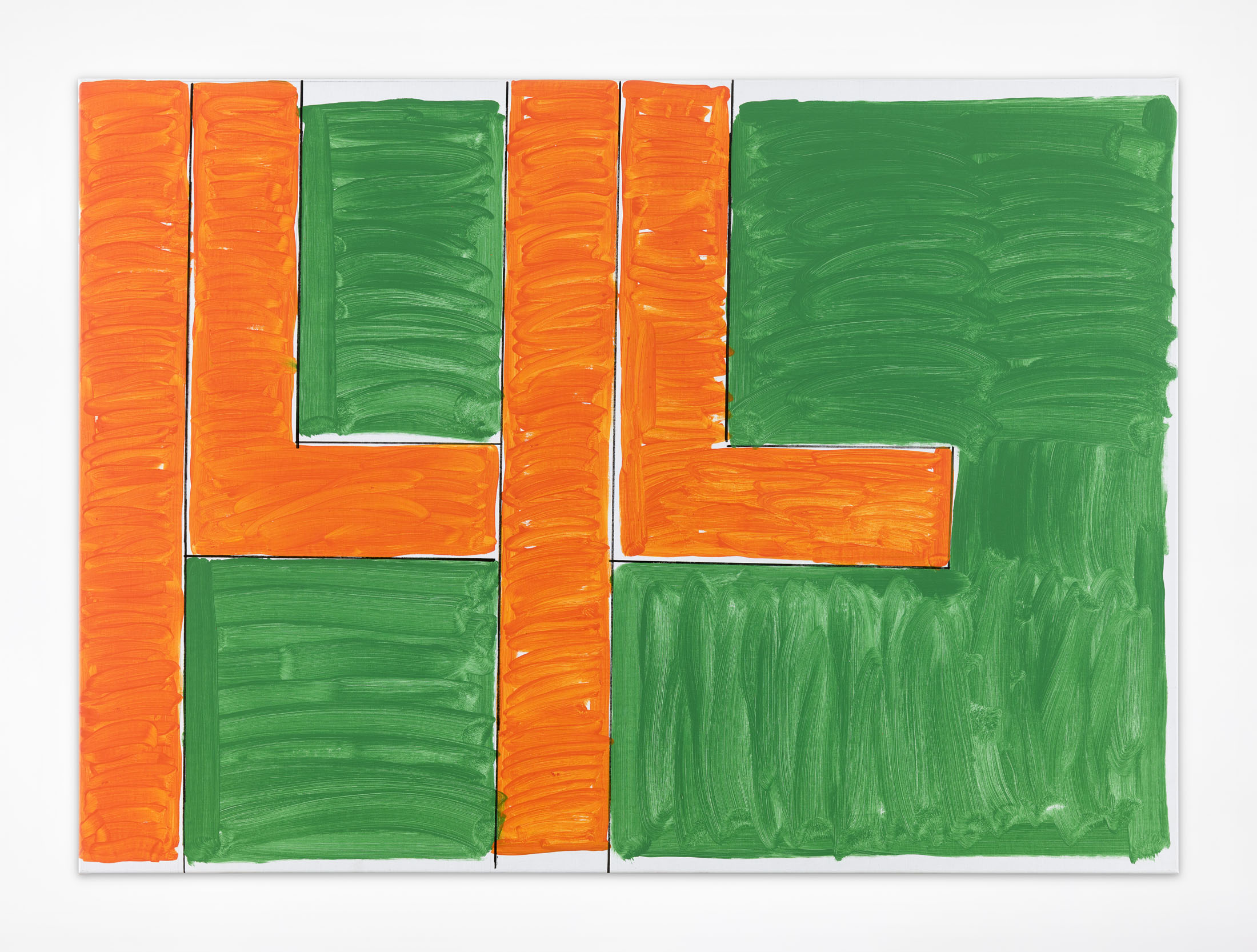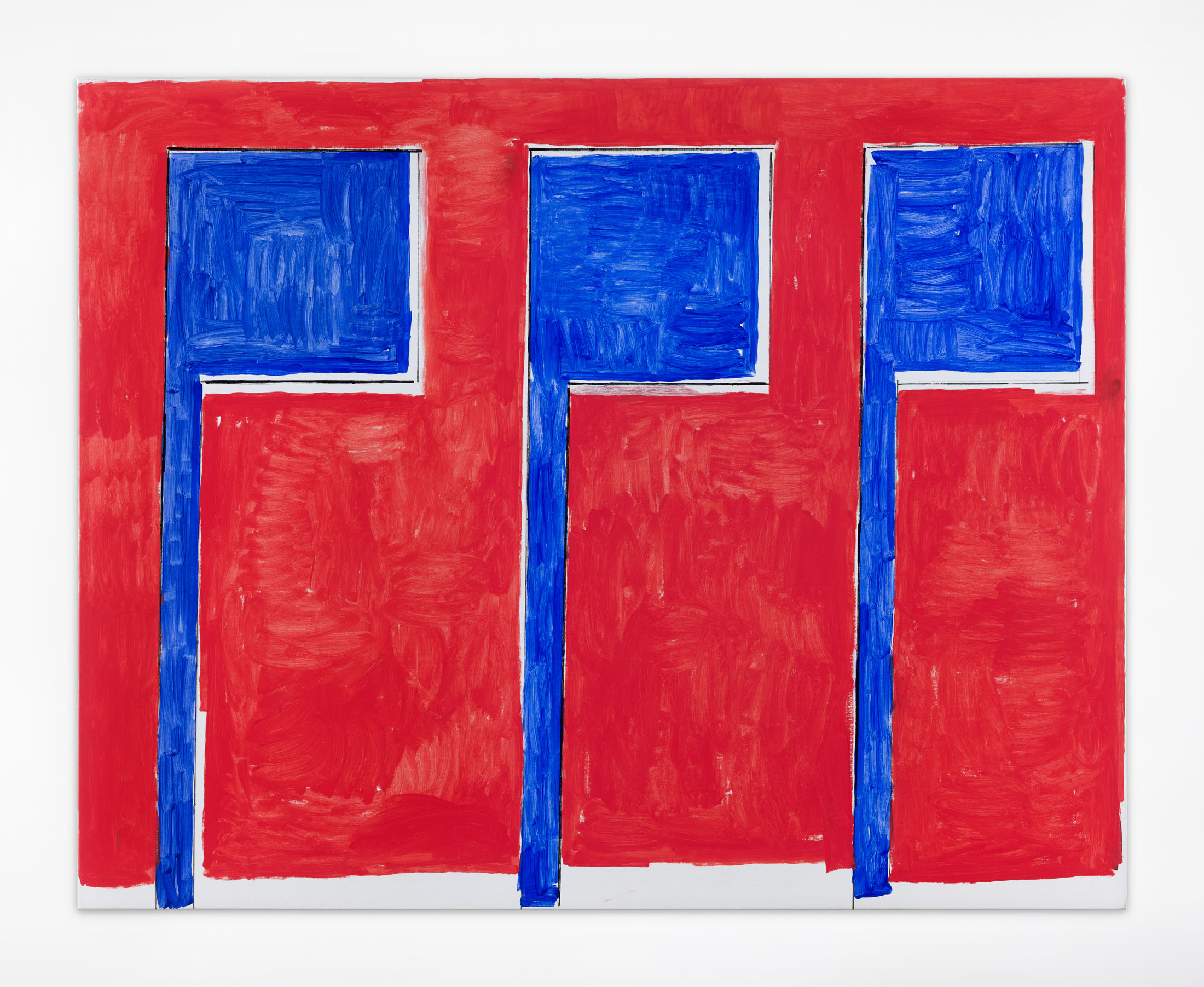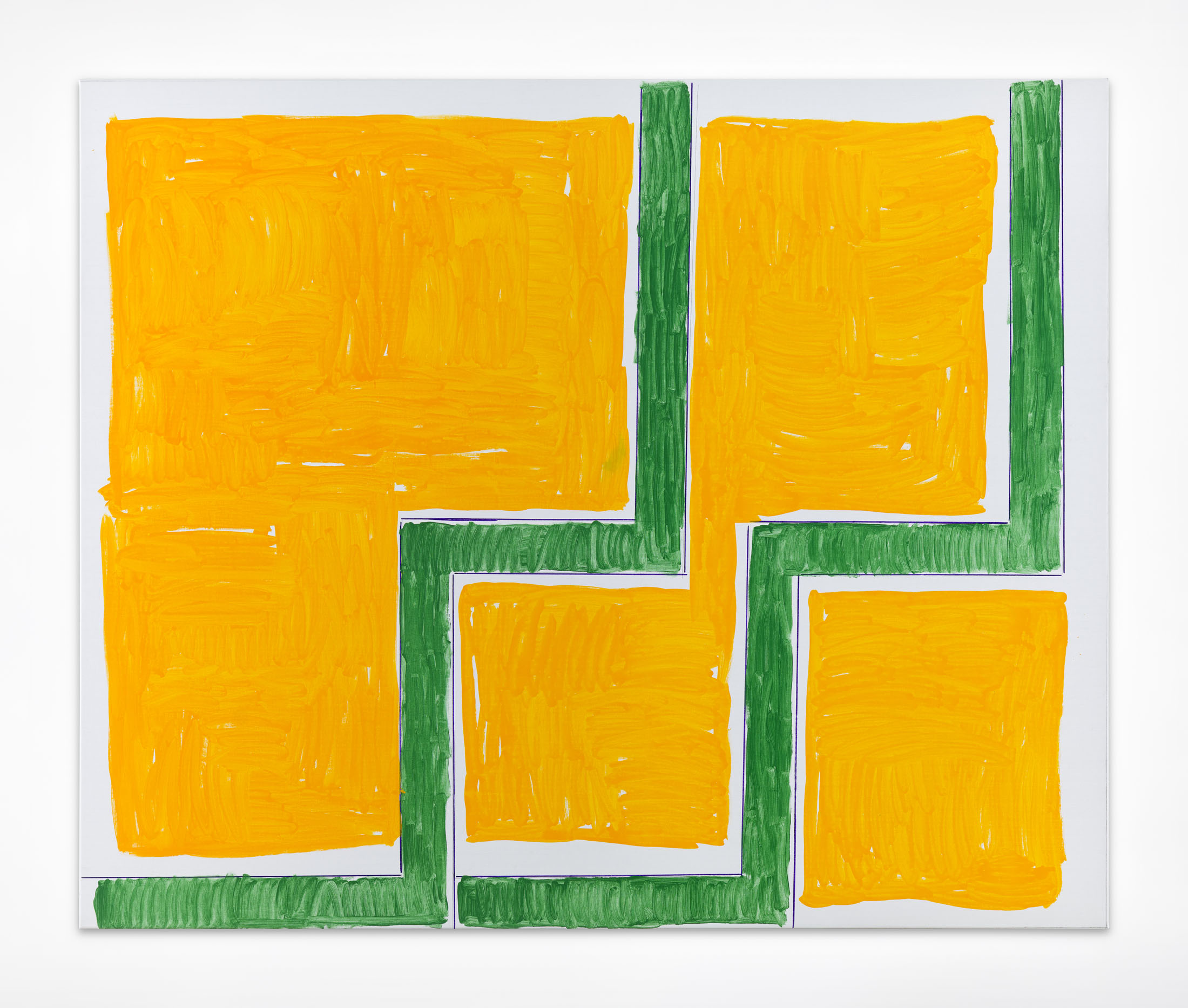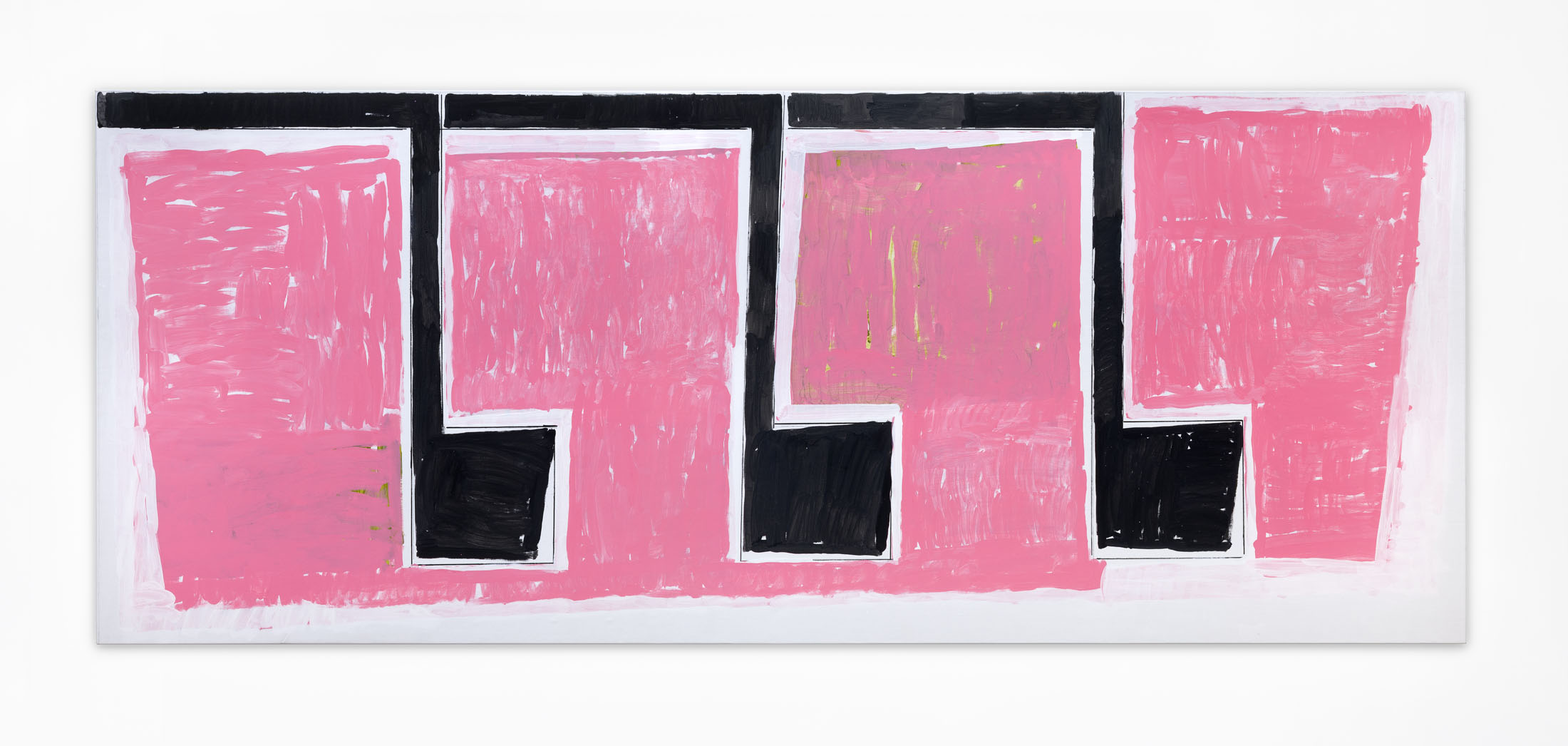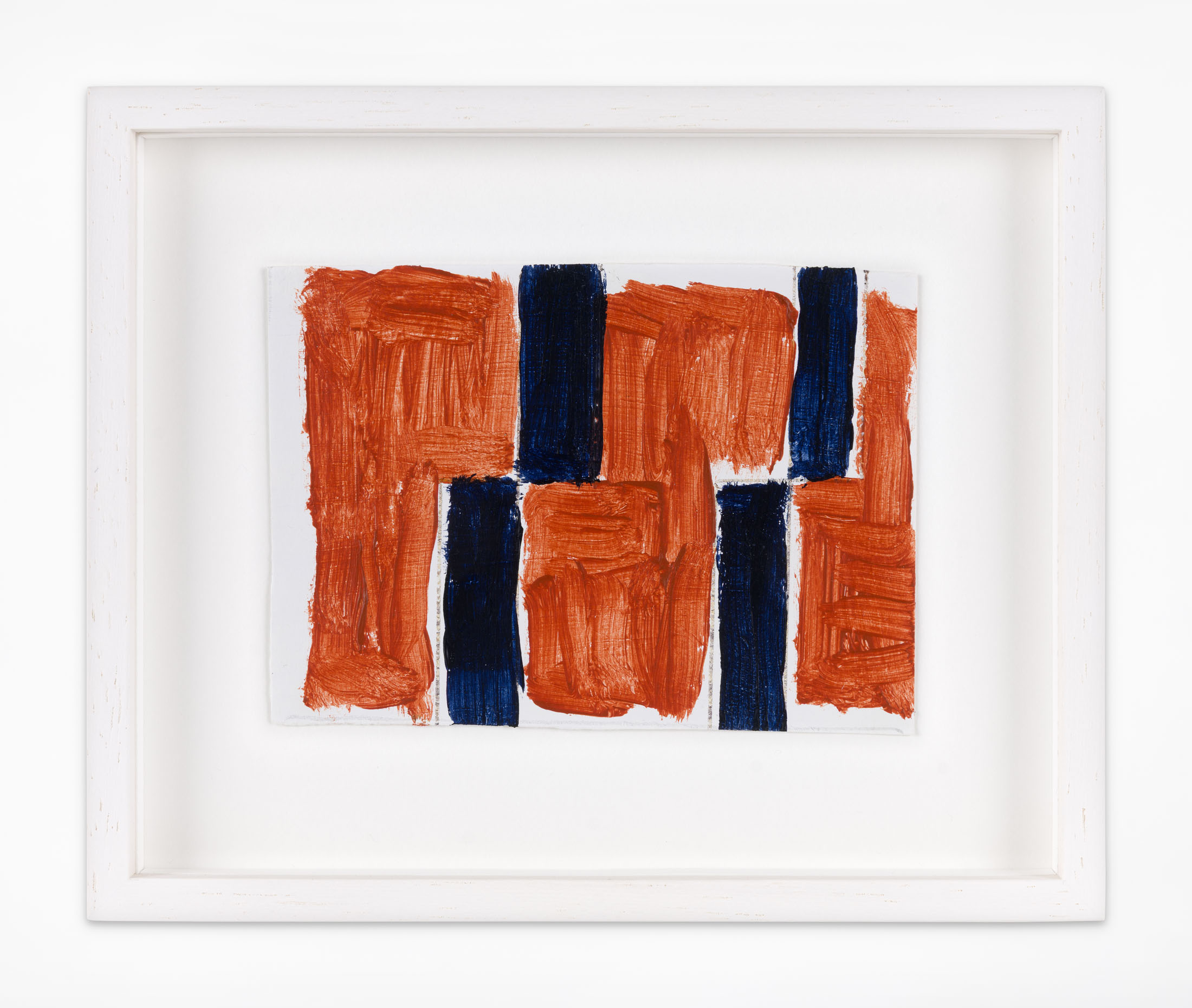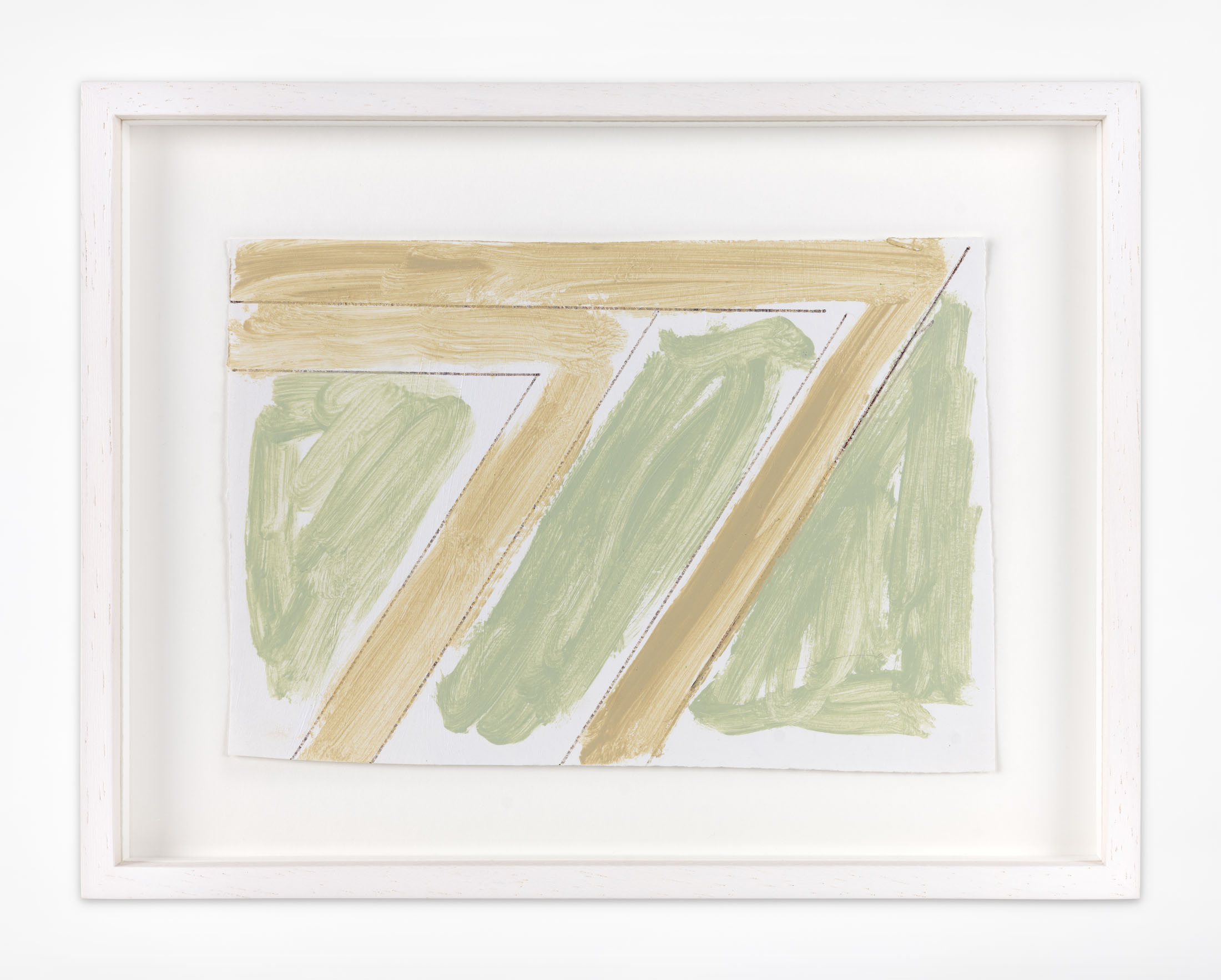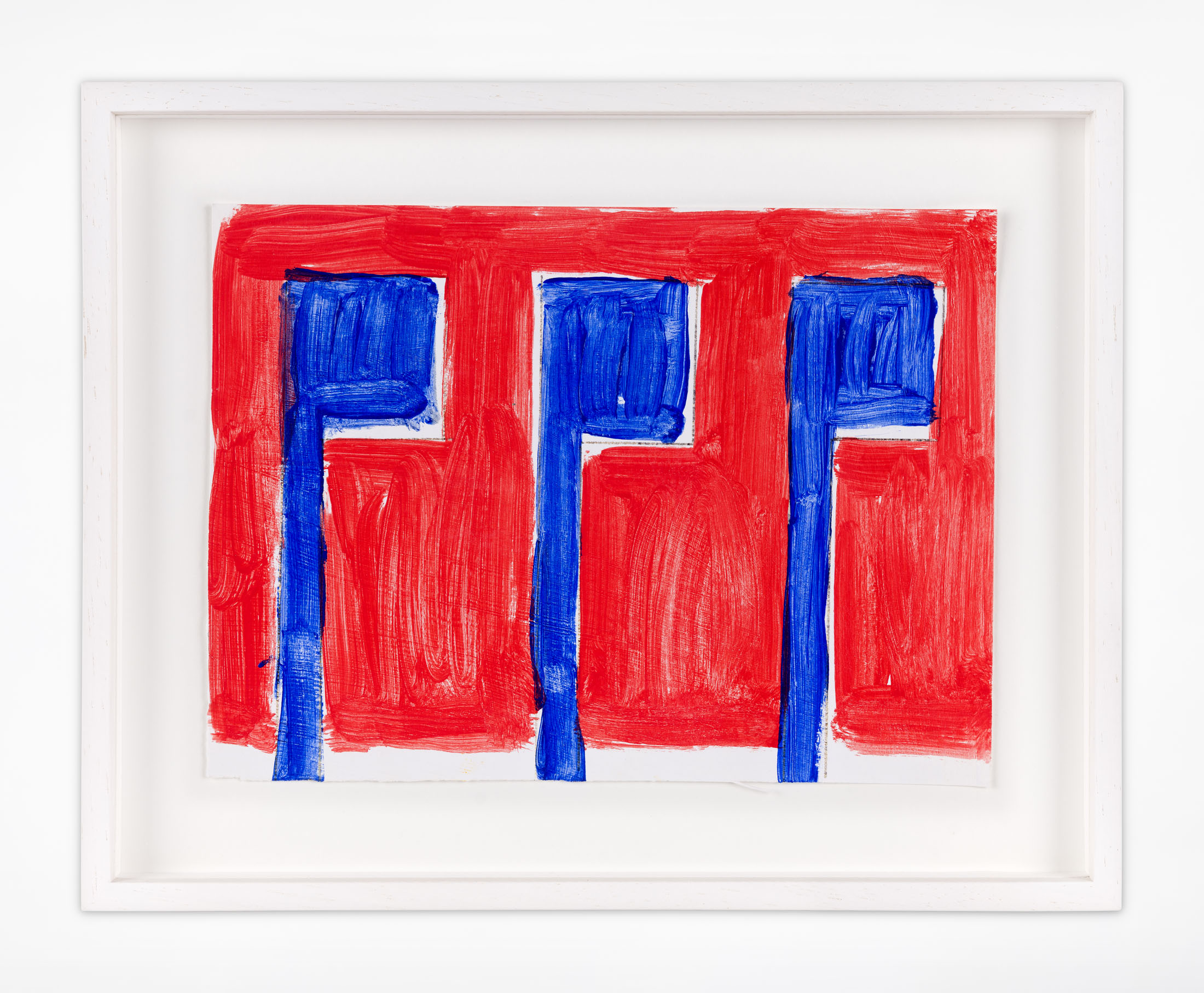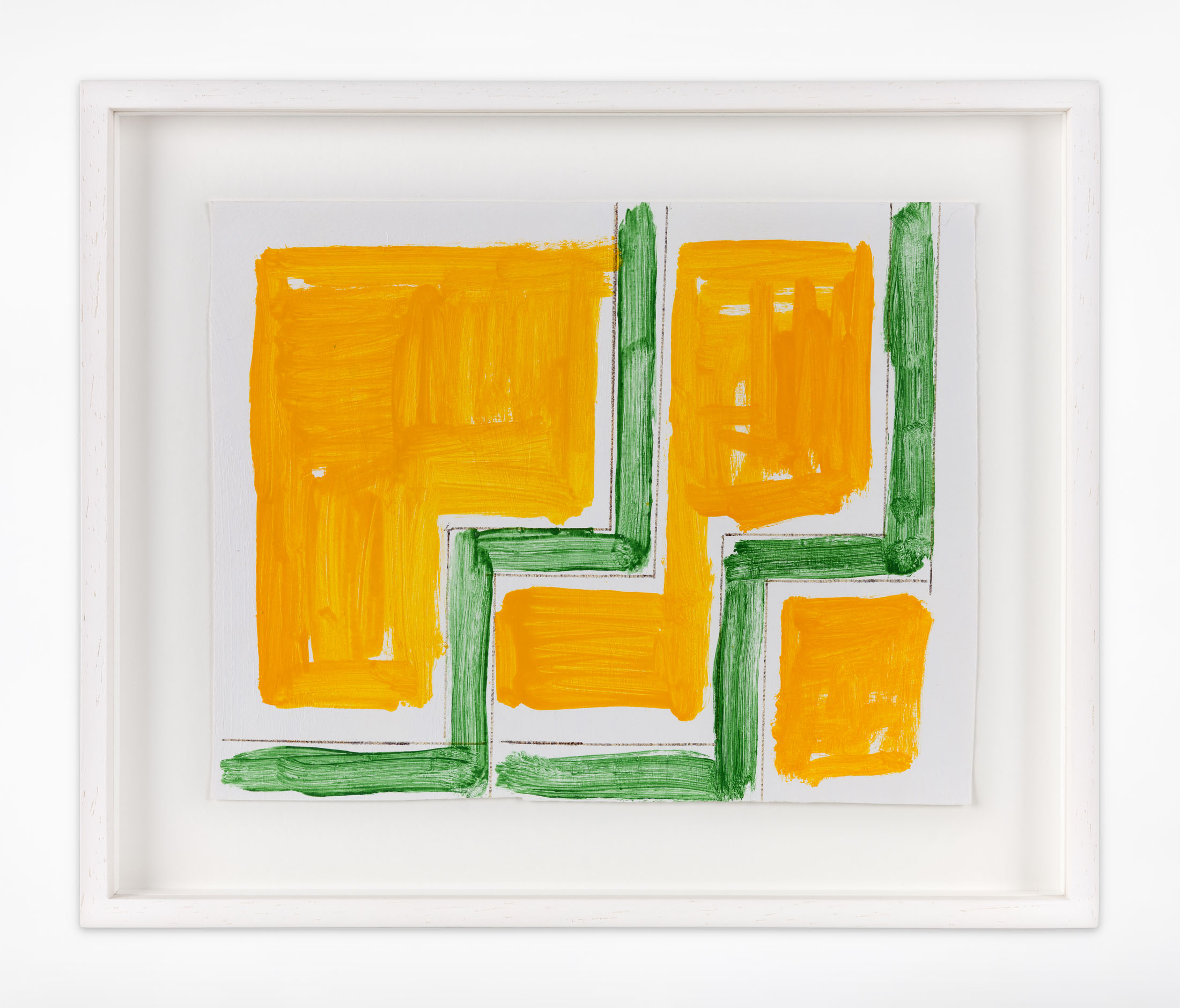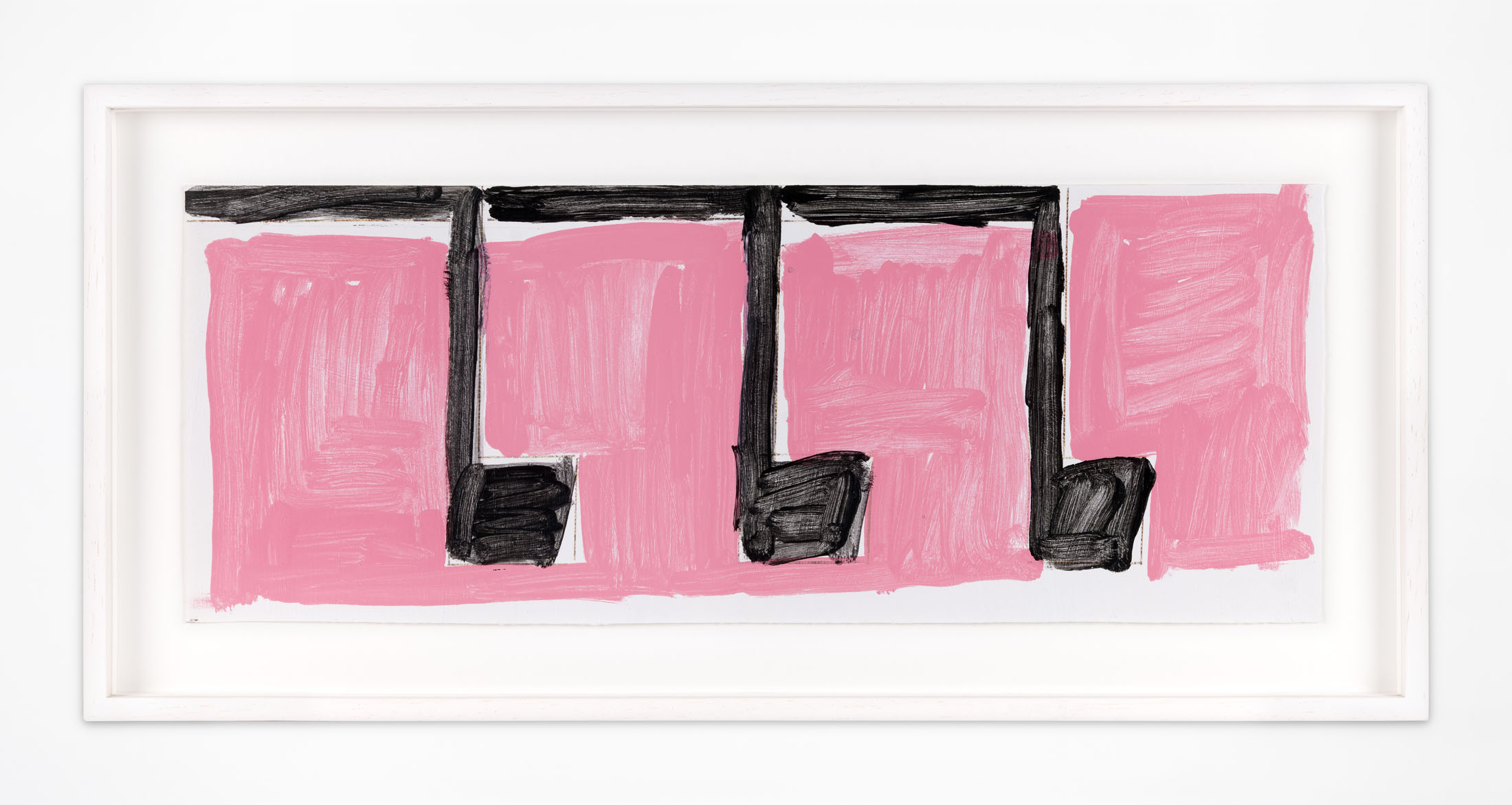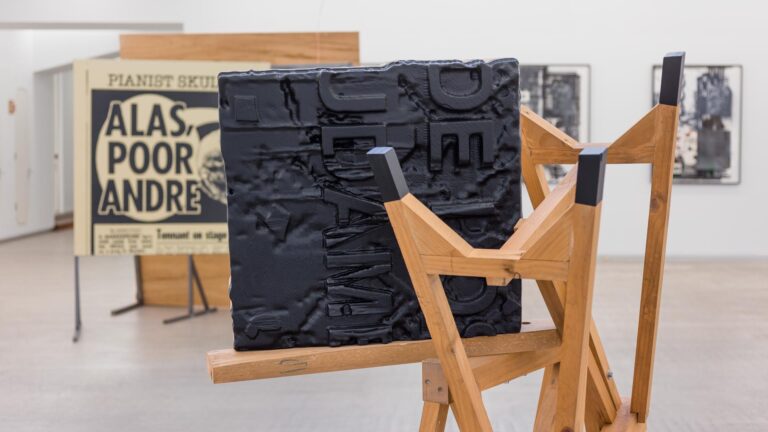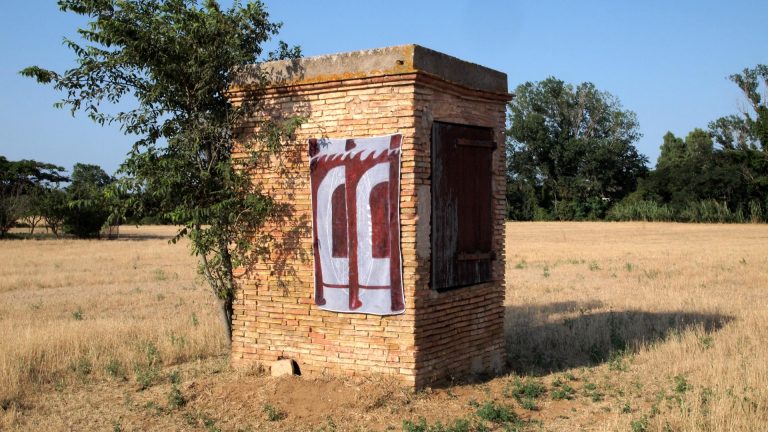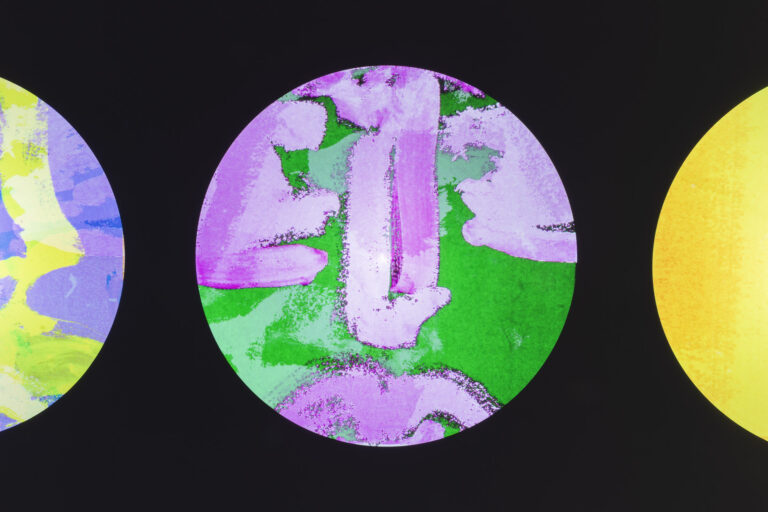
Piet Mondrian’s paintings, especially those painted from 1919 onwards, began to enter what he called ‘a real and completely human harmony.’ In a way, this synthesis can also be seen in the new paintings Ulrich Wulff presents in his first solo exhibition in Spain: his paintings permeate and merge the concrete and self- sufficient world of painting with the lived experiences of the very lives in our everyday world.
Like Lucio Fontana, Robert Ryman, Blinky Palermo and Günther Förg before him, Wulff converts the entire pictorial surface into the very image of the painting itself. He does not simply paint an image within a painting but uses its entire surface as an image and gives, in what might be called a Cézannist approach, equal pictorial weight to each area of the painted surface.
For Ulrich Wulff, formal experimentation as a unit of measurement is not just replaced, but rather absorbed, by a human touch. Indeed, everything in his work is connected to the human condition. The meaning of the painting responds to the totality of a body as the vital foundation of the painting. Geometry is not the subject of his painting, nor does it operate through geometric logic; instead, it involves a surrendering of the power of definition and conception of the pictorial to a single framework of evaluation and purpose: as a unit, the attention of Wulff’s new paintings is directed to internal rather than external measurement.
In the painter’s own words, they follow the »Bildmaß« or pictorial measure, which posits an equivalence with the truth of painting, its self-consciousness. Such pictorial measure explores relationships within painting that neither can be reduced to the pictorial plane, nor be deducted from reality. Everything is the same in his paintings: there is no distinction between painterly lines and clearly contoured colour fields. And although line and colour appear different to our eyes, their inner essence forms a total unity. The line expands and acts as colour field, whereas planar colour realises itself by means of its surrounding, demarcating contrast hues.
Everything is visible and pure. Painterly invention and human experience align as one. Wulff’s paintings are not symbols or geometries, but they do question certain dynamics of time or systems of proportions and scales. On the contrary, they are presence or vibration, underpinned by something similar to what John Cage, in his particular quest for ‘earthquake-proof music’, called ‘flexible time brackets.’
Interestingly, however, Wulff does not think in terms of themes, series or even individual motifs. The theoretical concern is directly fused with the intuitive act upon the surface. The paintings relate more closely to a new sensibility capable of expressing itself autonomously on certain pictorial truths than to the formalisation of certain geometries. They are flat surfaces connected to the human. If during the historical avant-gardes the flat form was equated with exalted spirituality or with the general essence of things, here the plane, the surface, contains a vital experience conveyed by the pictorial field.
It is astonishing how the supposed main value of these paintings, that of matter, is paradoxically dissolved in a kind of presence or irradiation. Wulff nonchalantly maintains that the only possibility for the painting to be perceived is in its material faculty or dimension, and that the only possible way of approaching the potential spirituality of the painting is precisely through the physical quality of the materiality of the world. The material as the only connection to the spiritual.
His paintings seem to dilute and disappear, weightlessly, on a surface where colour and line merge. From their flatness, the vertical or inclined forms, the vibration of the colours (some corporeal and fleshy, others metallic and faded) as well as the dissolution of the contours, which transform colour into line and line into tone (moving away and towards each other, almost magnetised, constructing and diluting the form), neutralise and suppress the distinction between figure and background, between matter and non-matter. The corporeality of matter seems to disintegrate on the plane of Wulff’s paintings, becoming transparent and crystalline.
Visually, there is an image, but it disappears and is eliminated in favour of the plane, subtle and free of layers, reaffirming the two-dimensionality of the pictorial surface. The shimmering golds and silvers are moving and hypnotic, while the indecipherable pinks and purples appear as if by magic, offering an initiatory chromatic experience.
Ulrich Wulff ’s works catch and dominate the eye with their bold, synthetic appearance, and their rhythm and pulse of vibrant dynamism. We might ask: What is it that moves them? What illuminates them? … John Golding said of some of Mondrian’s and Kandinsky’s paintings that ‘when we look at them, we feel that something is going to happen’, and ‘that twilight was the hour of revelation and exaltation’ of our human longing.