Crystals have long been credited with healing and protective powers. The passage from the realm of spirituality to that of the occult appears seamless. Occultus – the hidden – names experiences that lie beyond rational explanation. Phenomena that hover between worlds. In the late nineteenth century, occultism enjoyed a fresh boom: séances, table-turning and spiritualist experiments coexisted with modern image technologies such as photography and X-ray imaging, which promised to render the invisible visible. Mediums, many of them women, assumed a central role as intermediaries between this world and the next. The hope of providing technical proof of paranormal phenomena materialised in the so-called ectoplasms: body-like substances that seemed to emanate from mediums and were captured photographically. The body itself became an interface between spheres, a surface on to which the invisible could be projected.
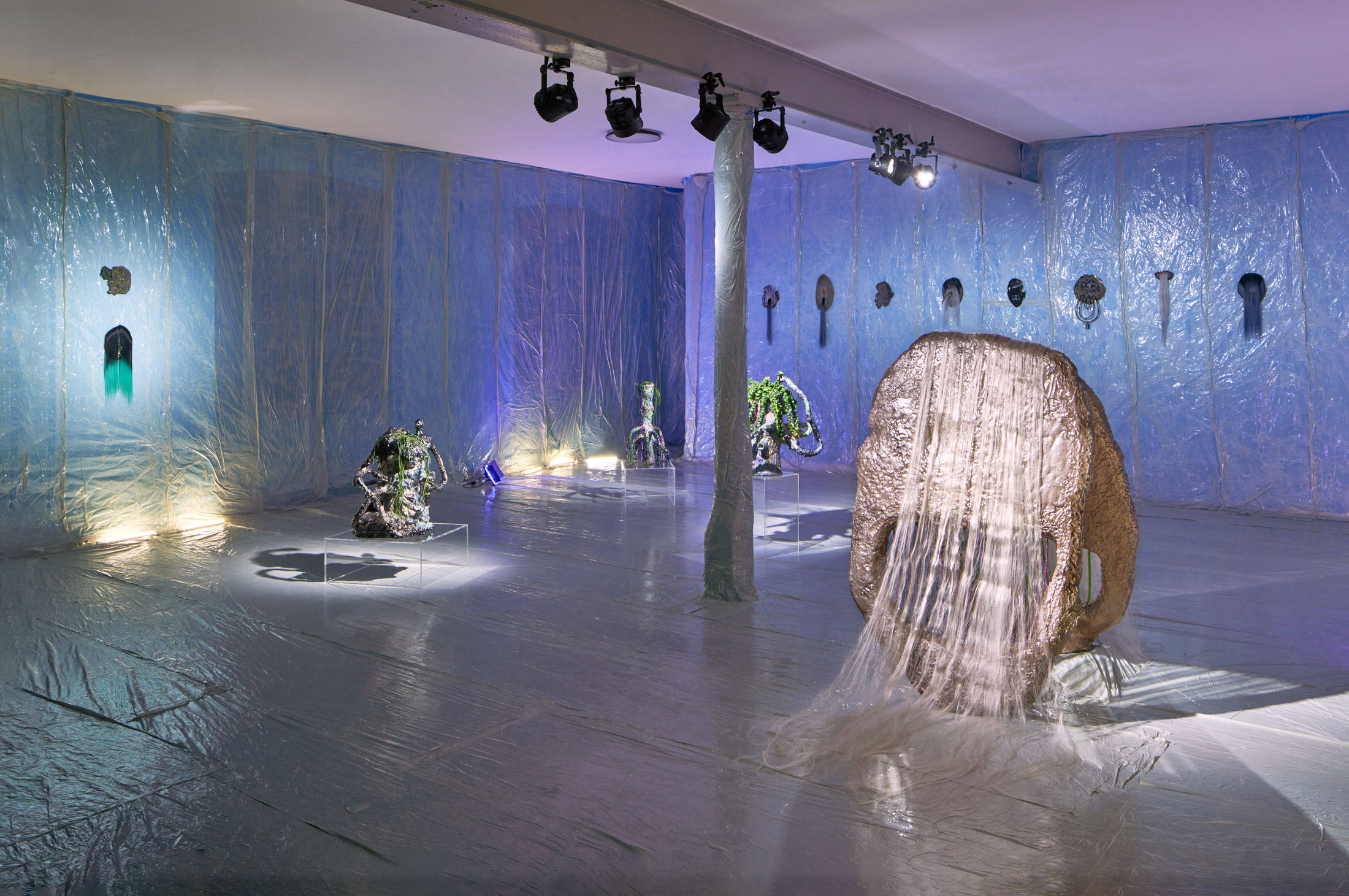
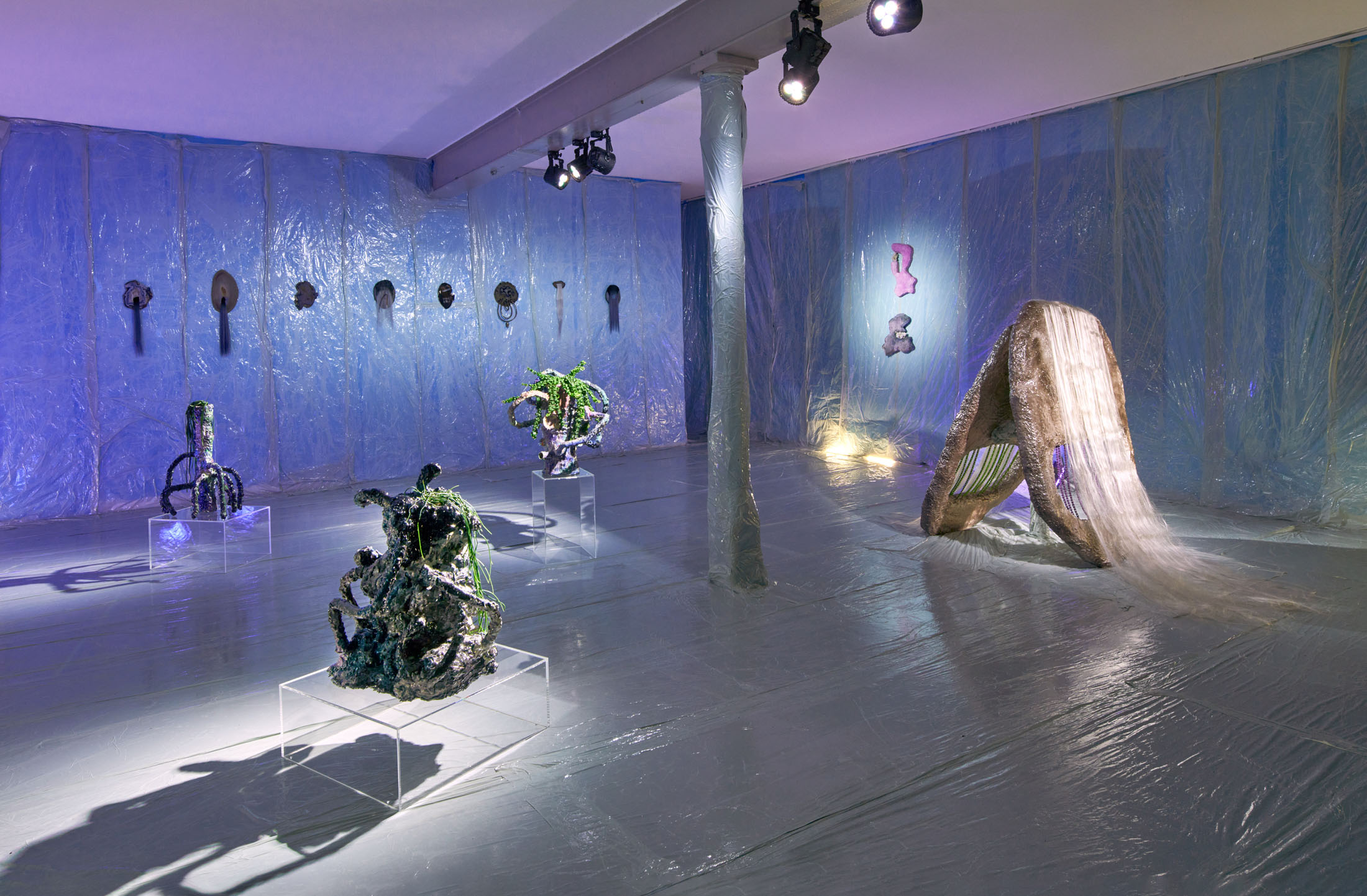
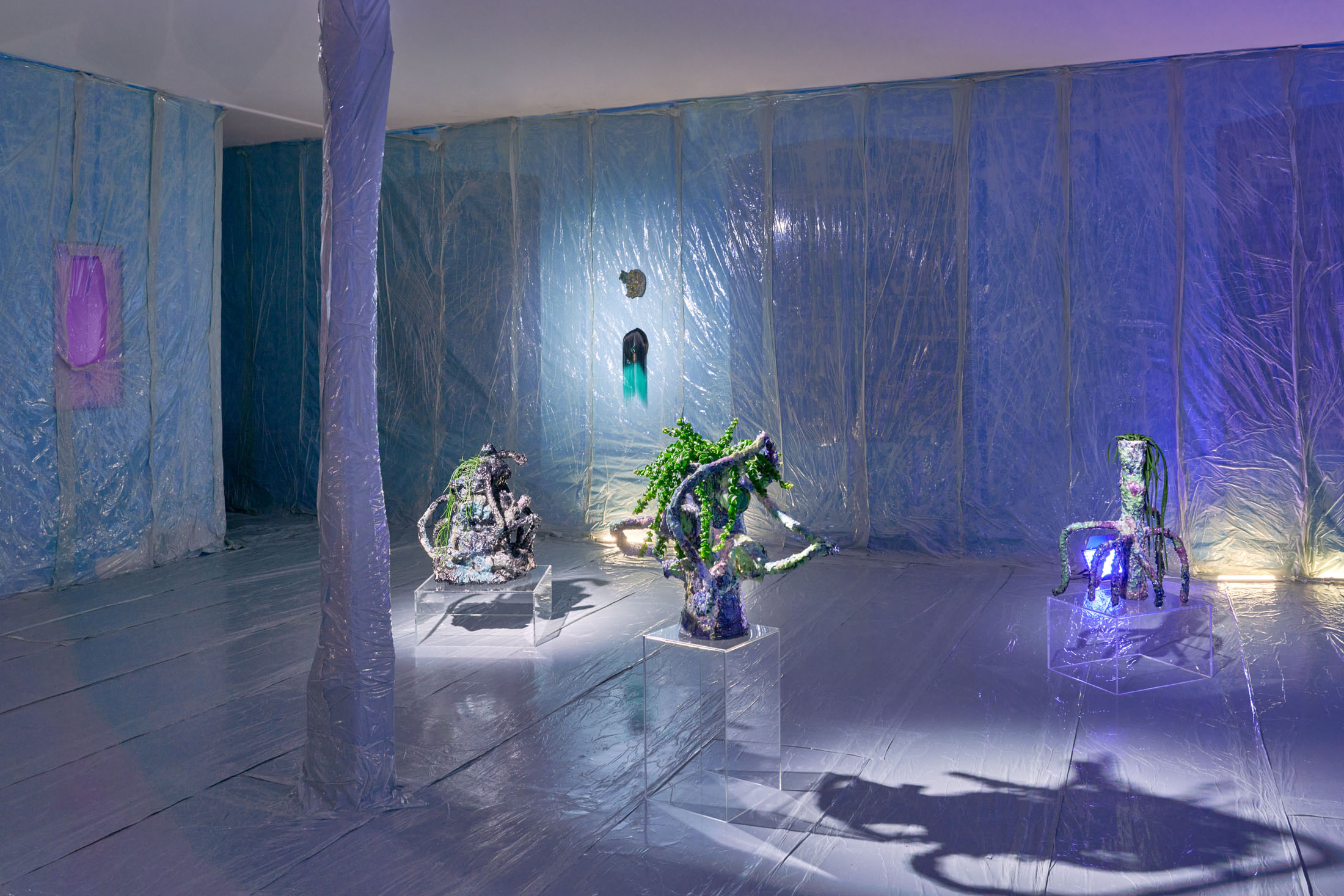
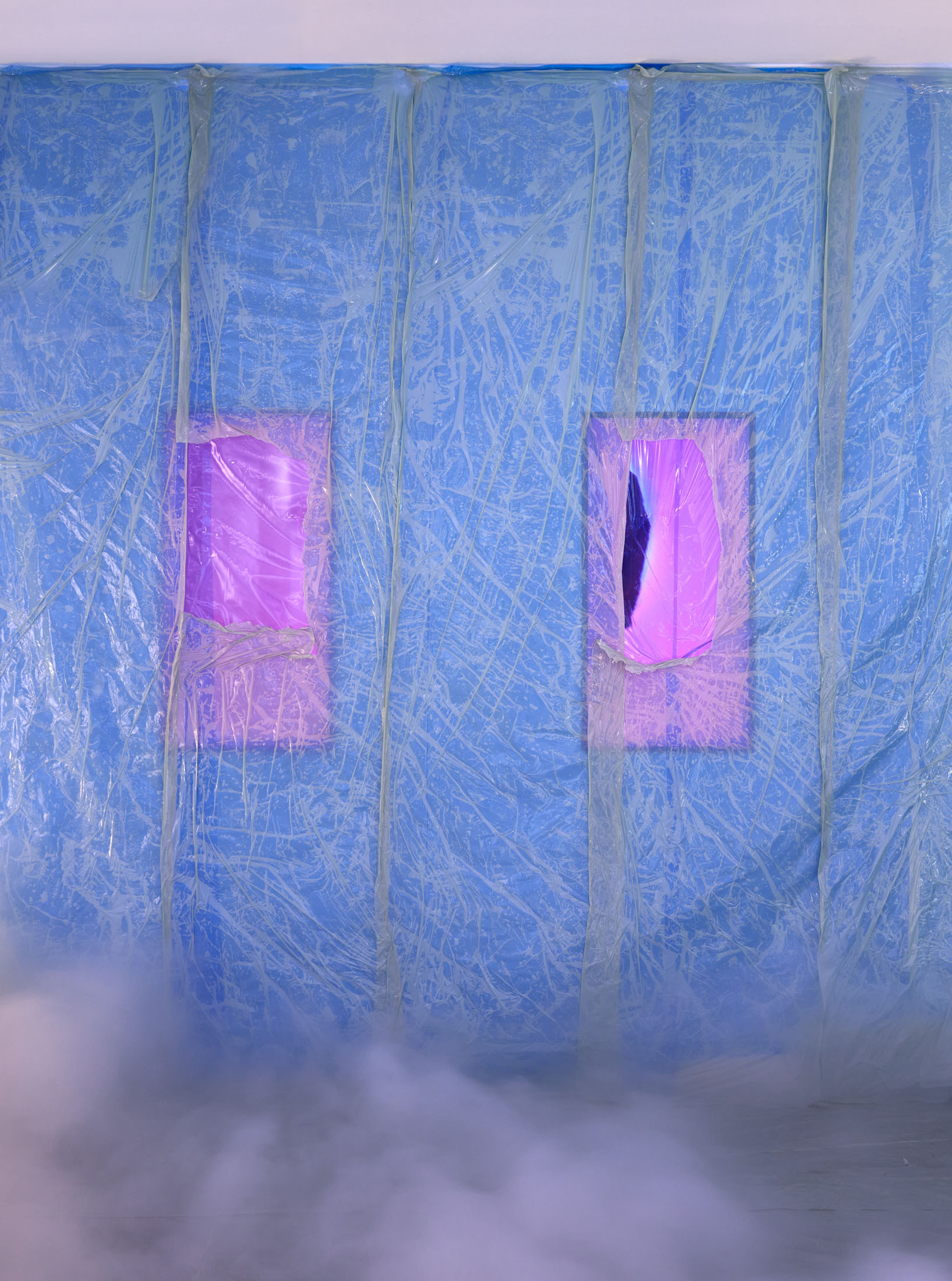
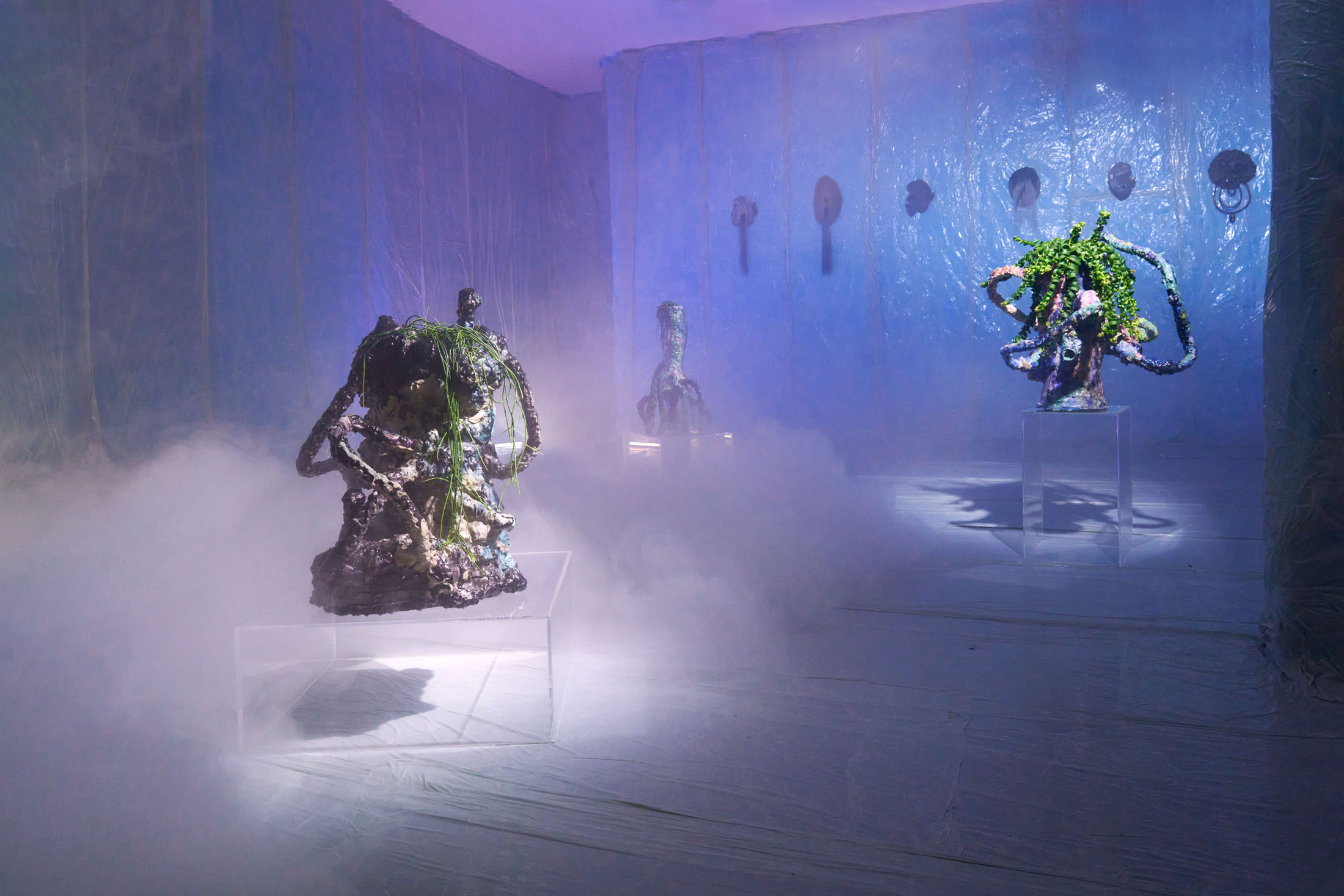
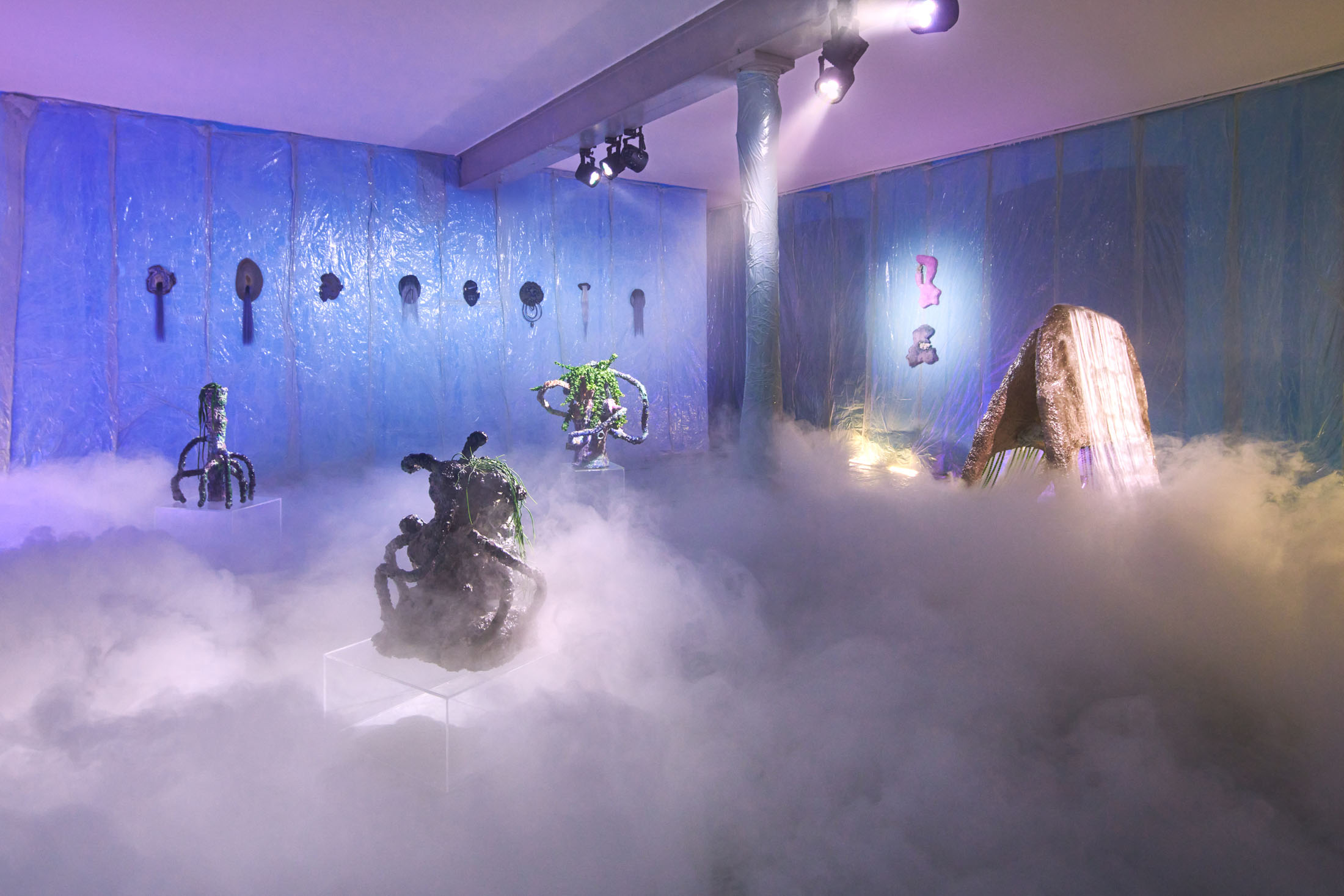
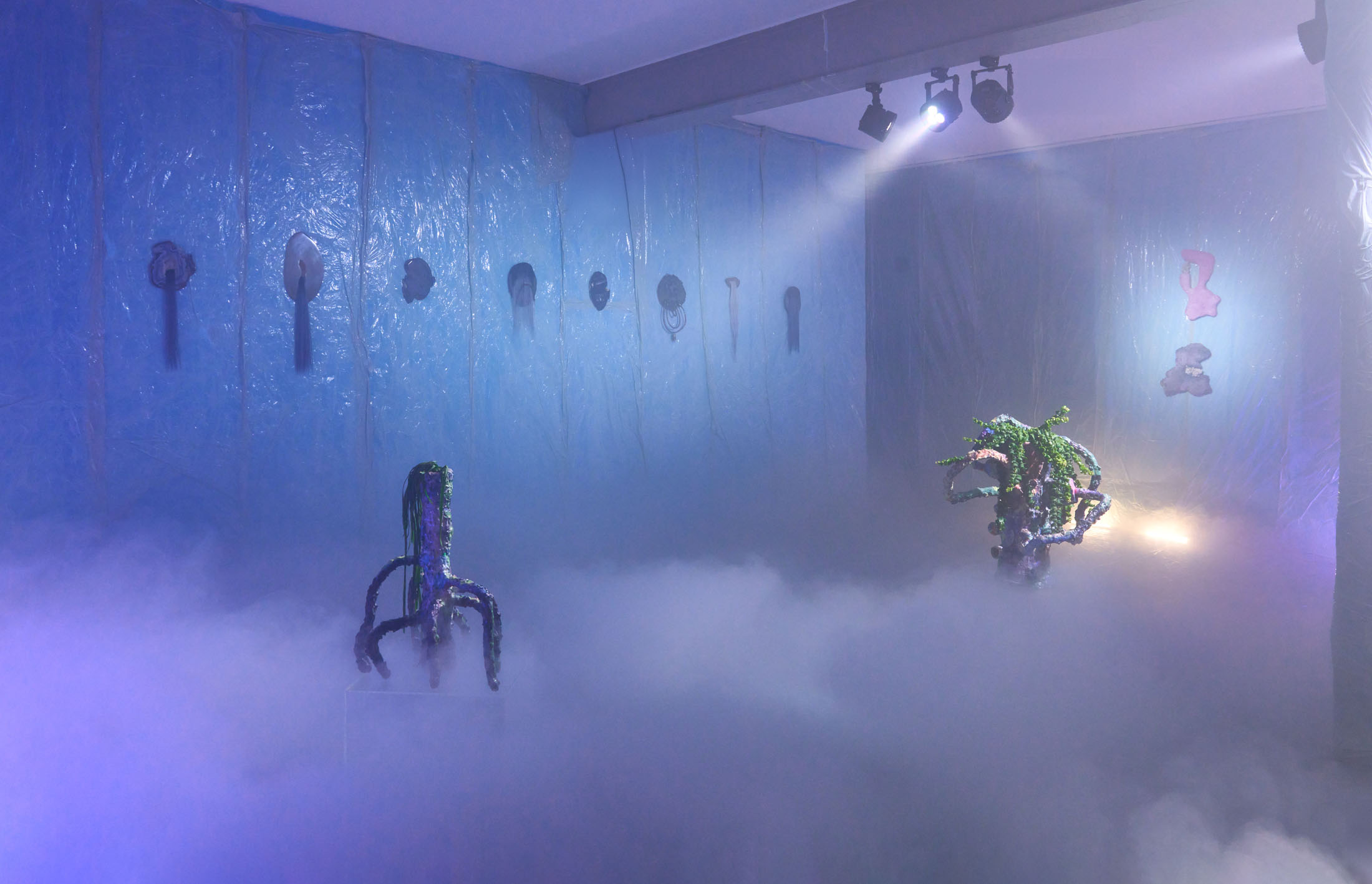
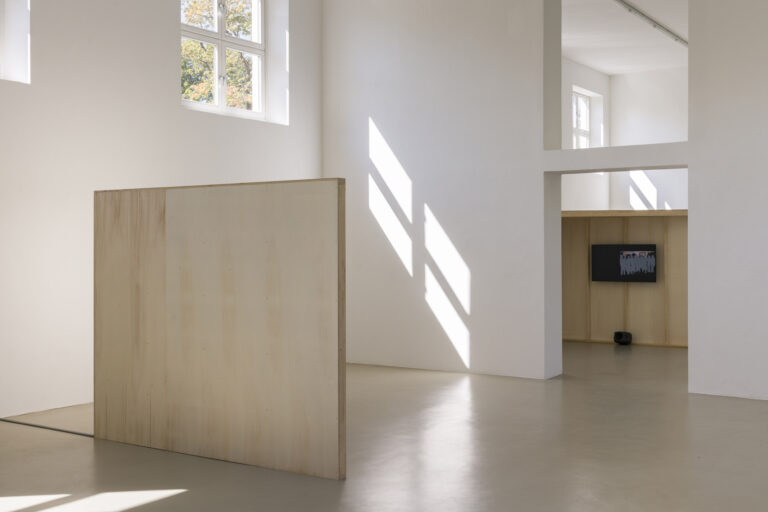
Tina Kohlmann’s practice operates precisely within this charged field between materiality and imagination, between corporeality and speculation. Her objects read like remnants of an unfamiliar culture – relics from a sphere that eludes established orders. Her sculptures are at once humorous and uncanny, artificial and vulnerable. The exhibition space becomes a liminal zone in which texture and light compress into a blue membrane between reality and imagination.
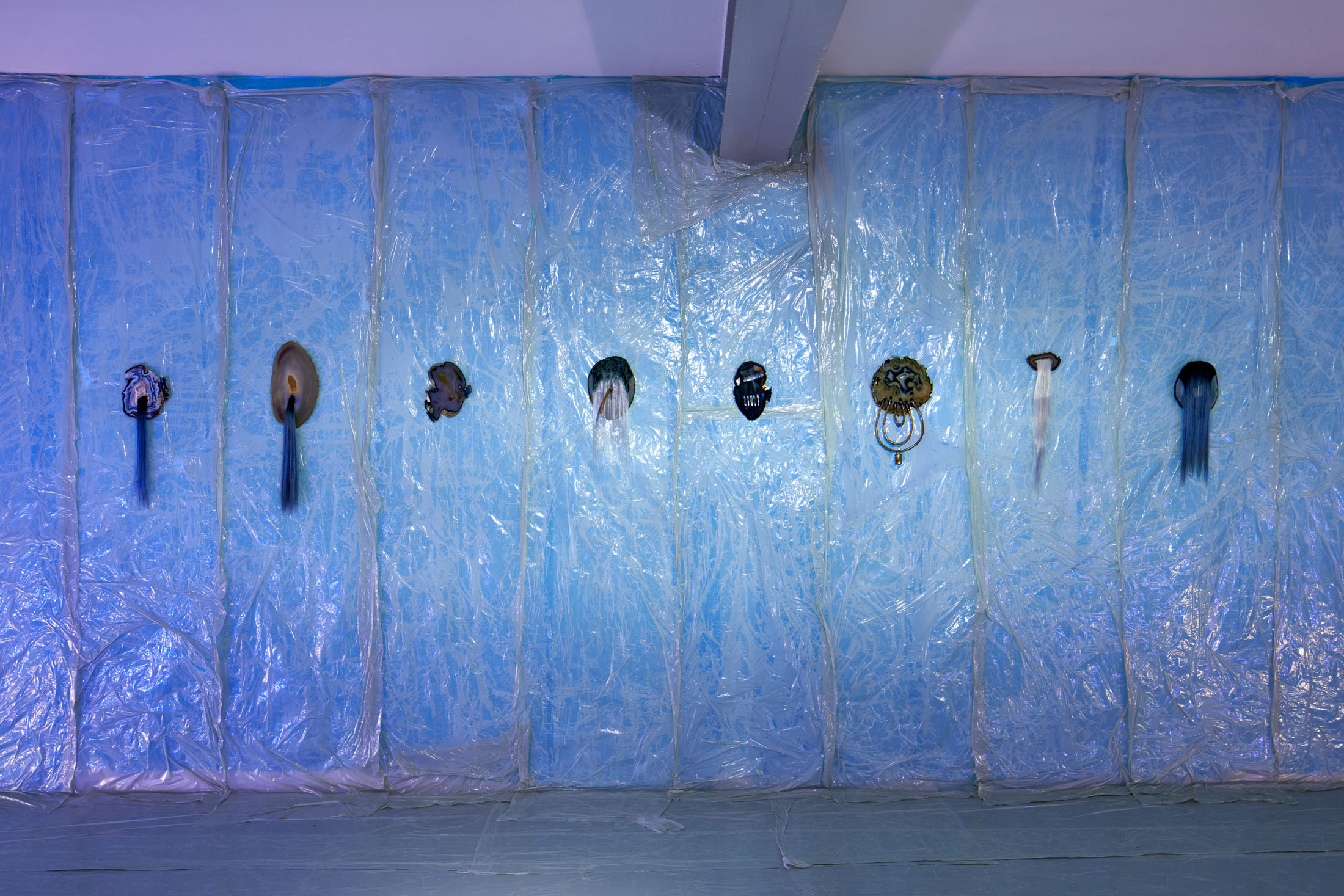
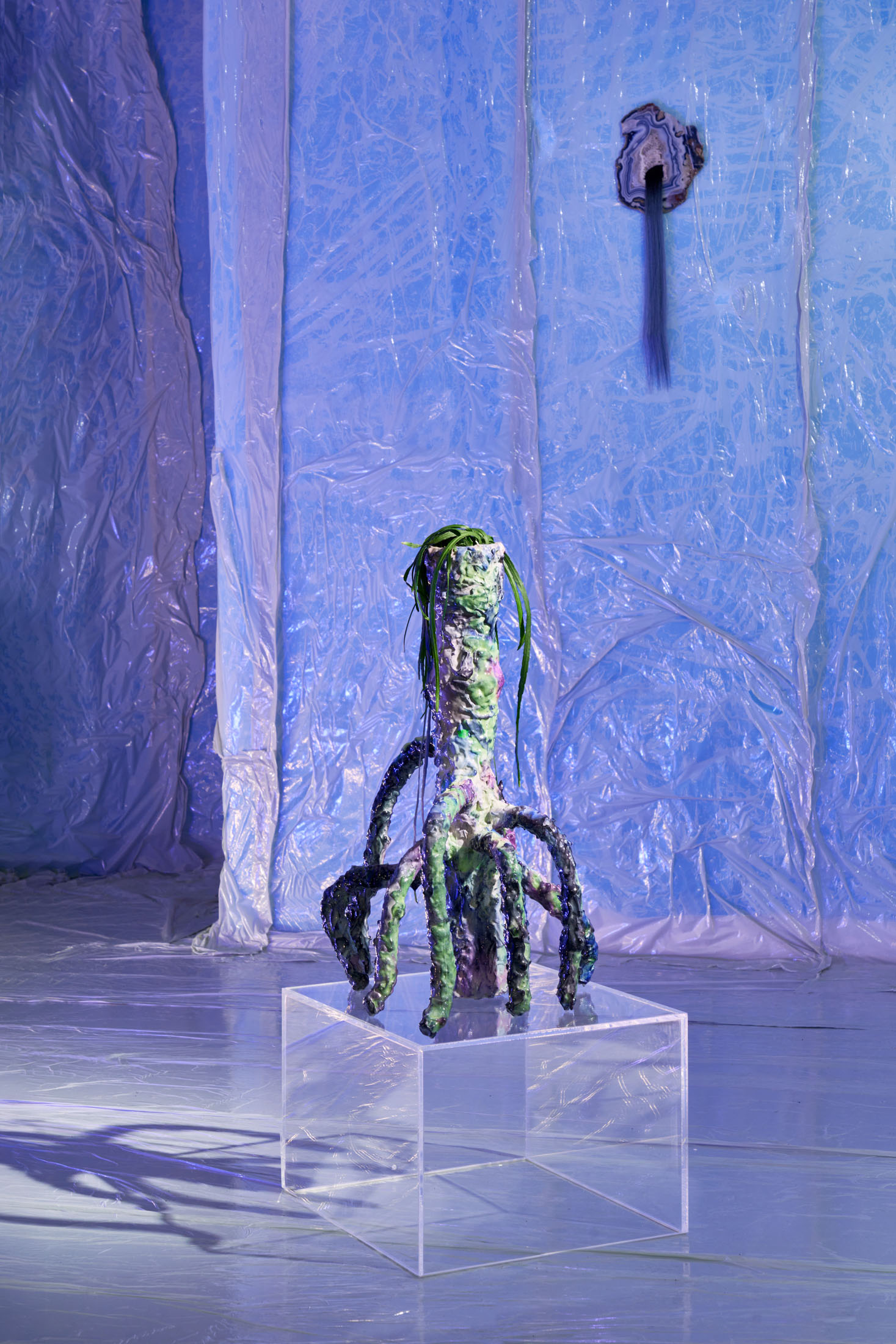
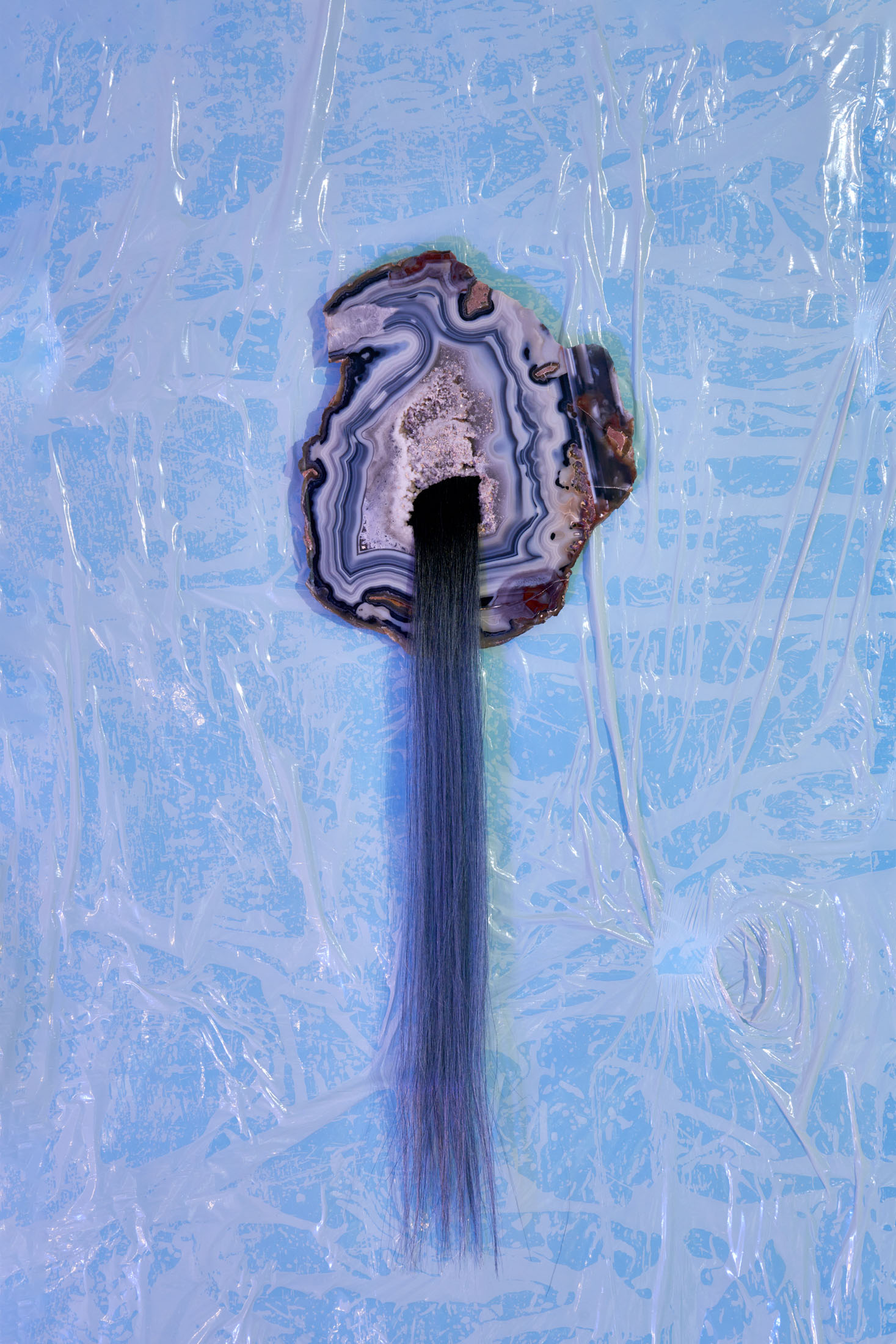
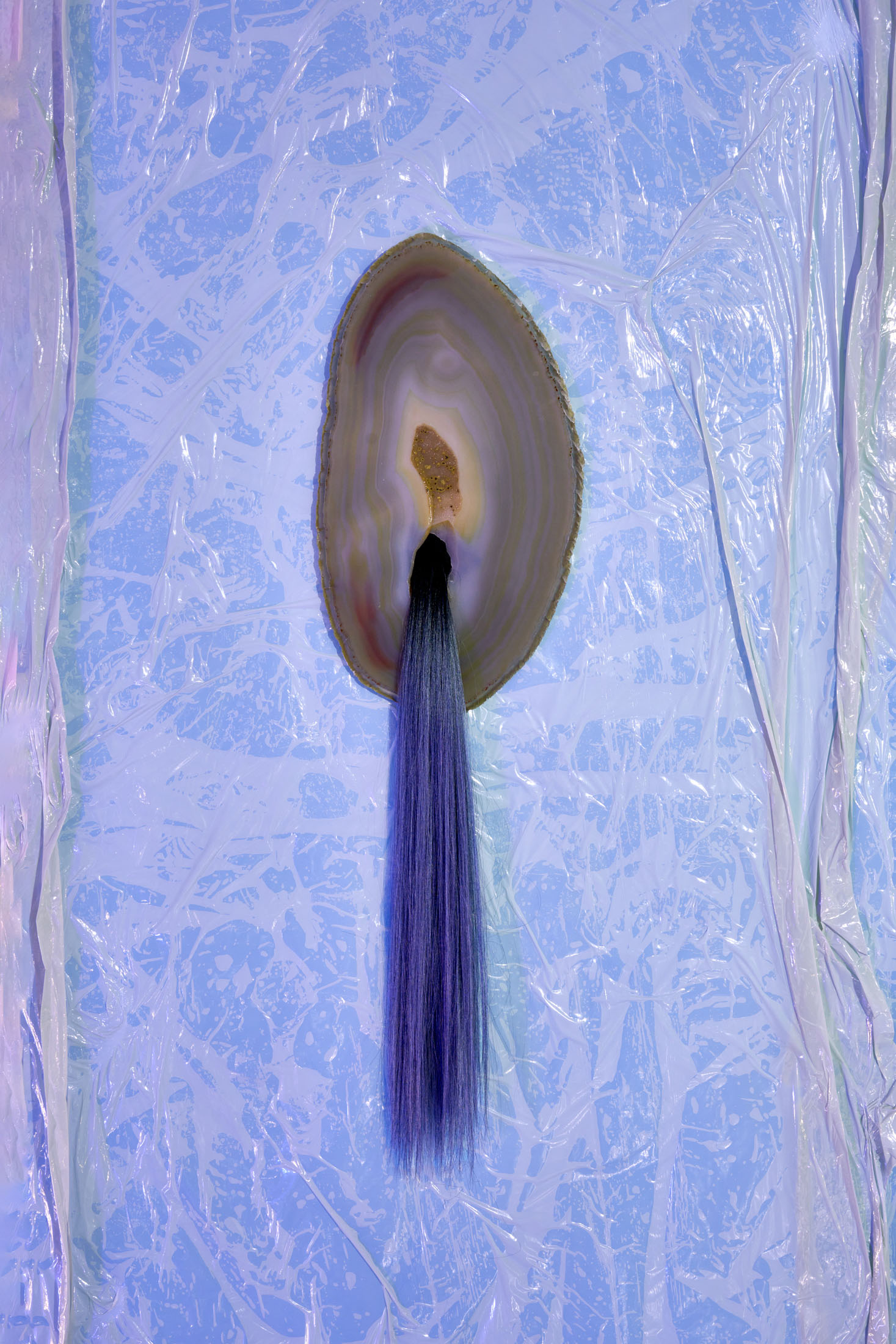
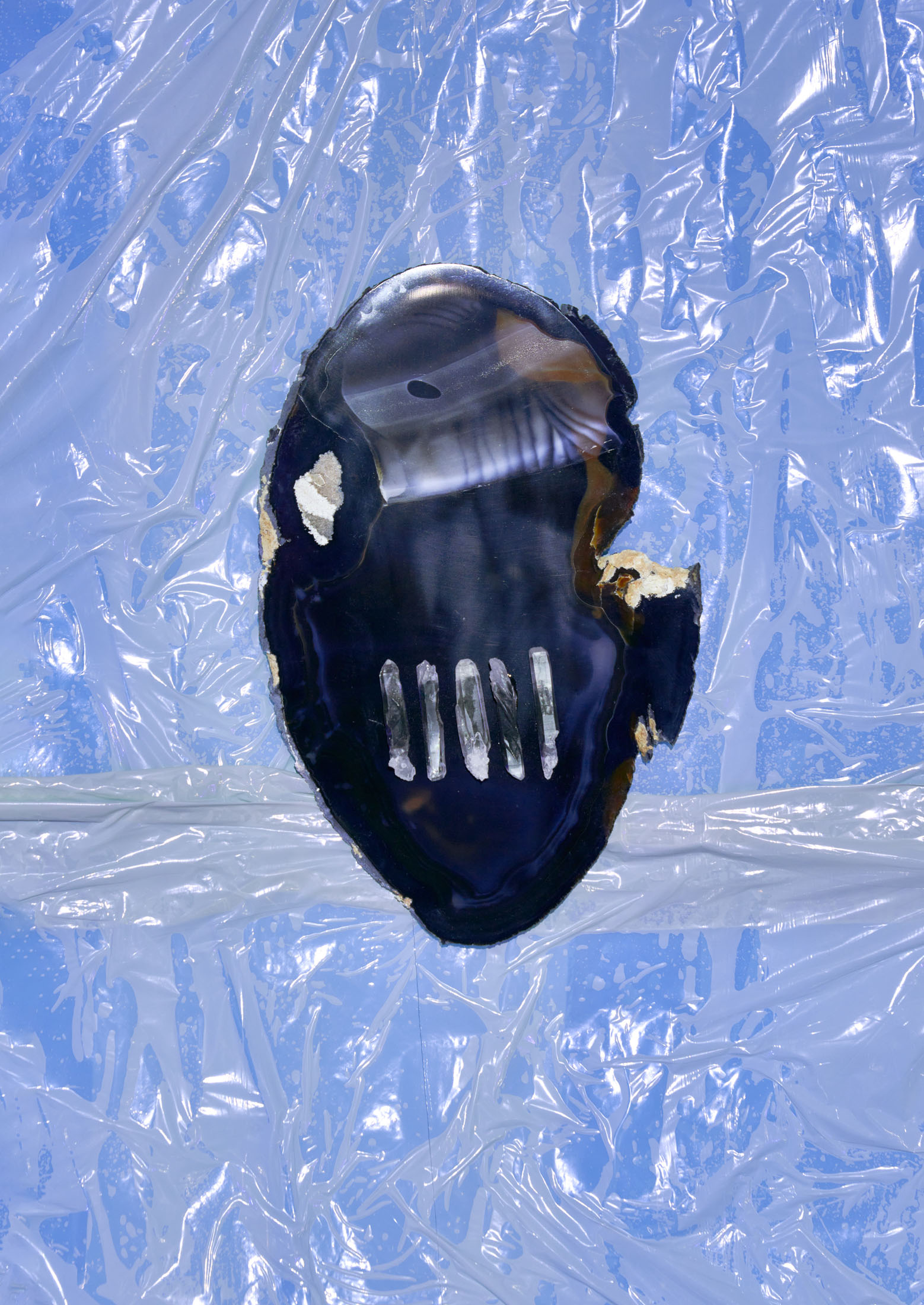
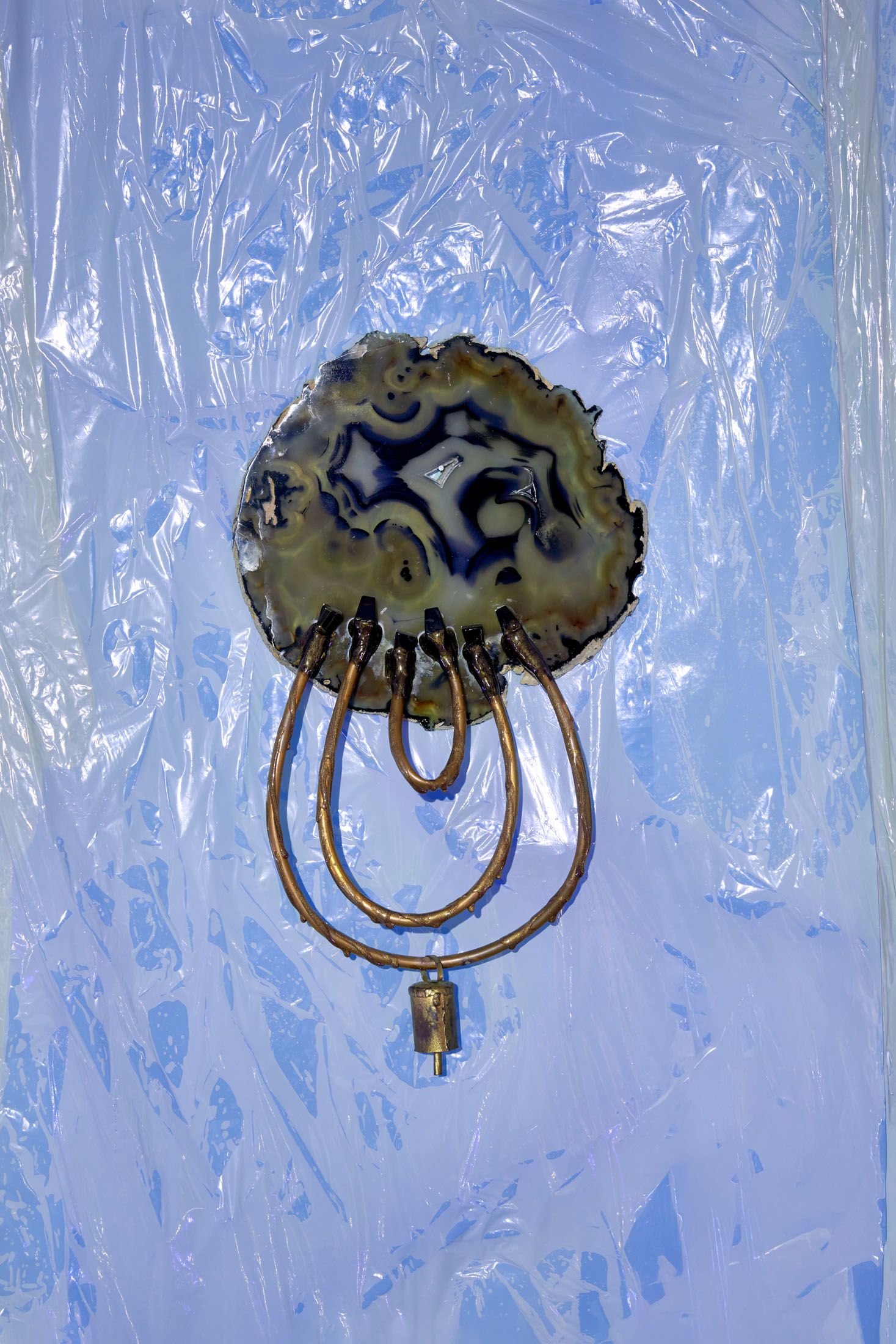
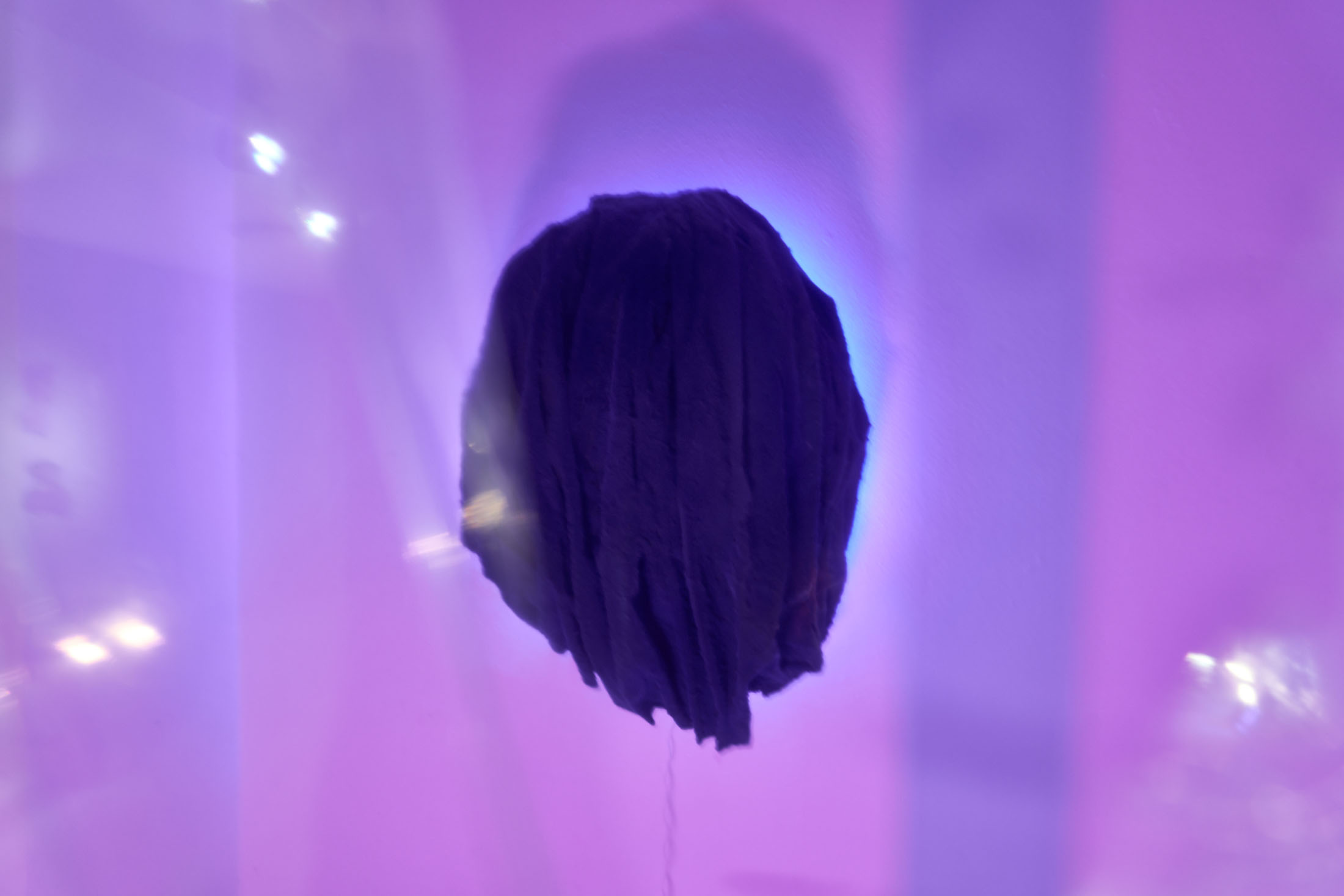
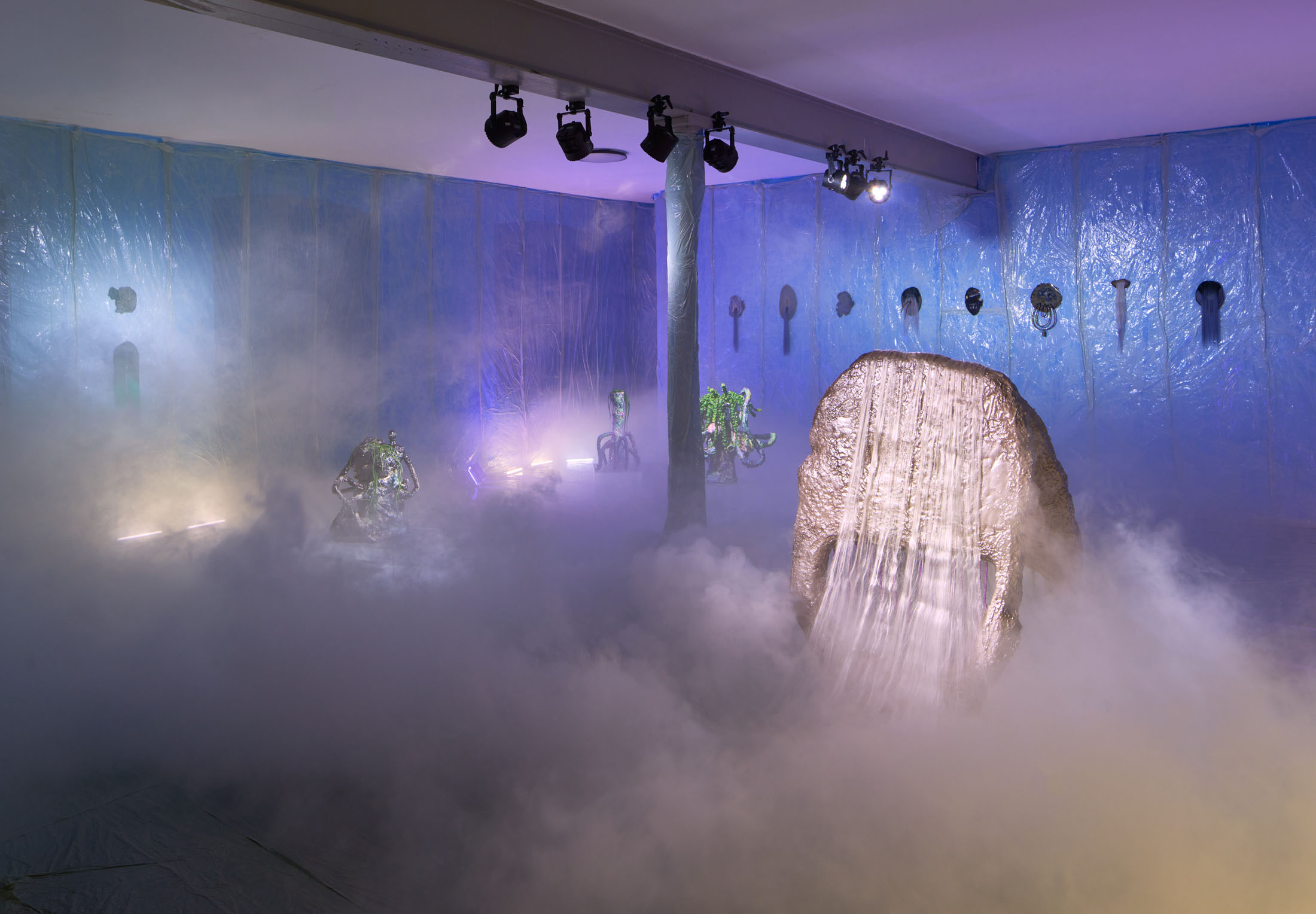
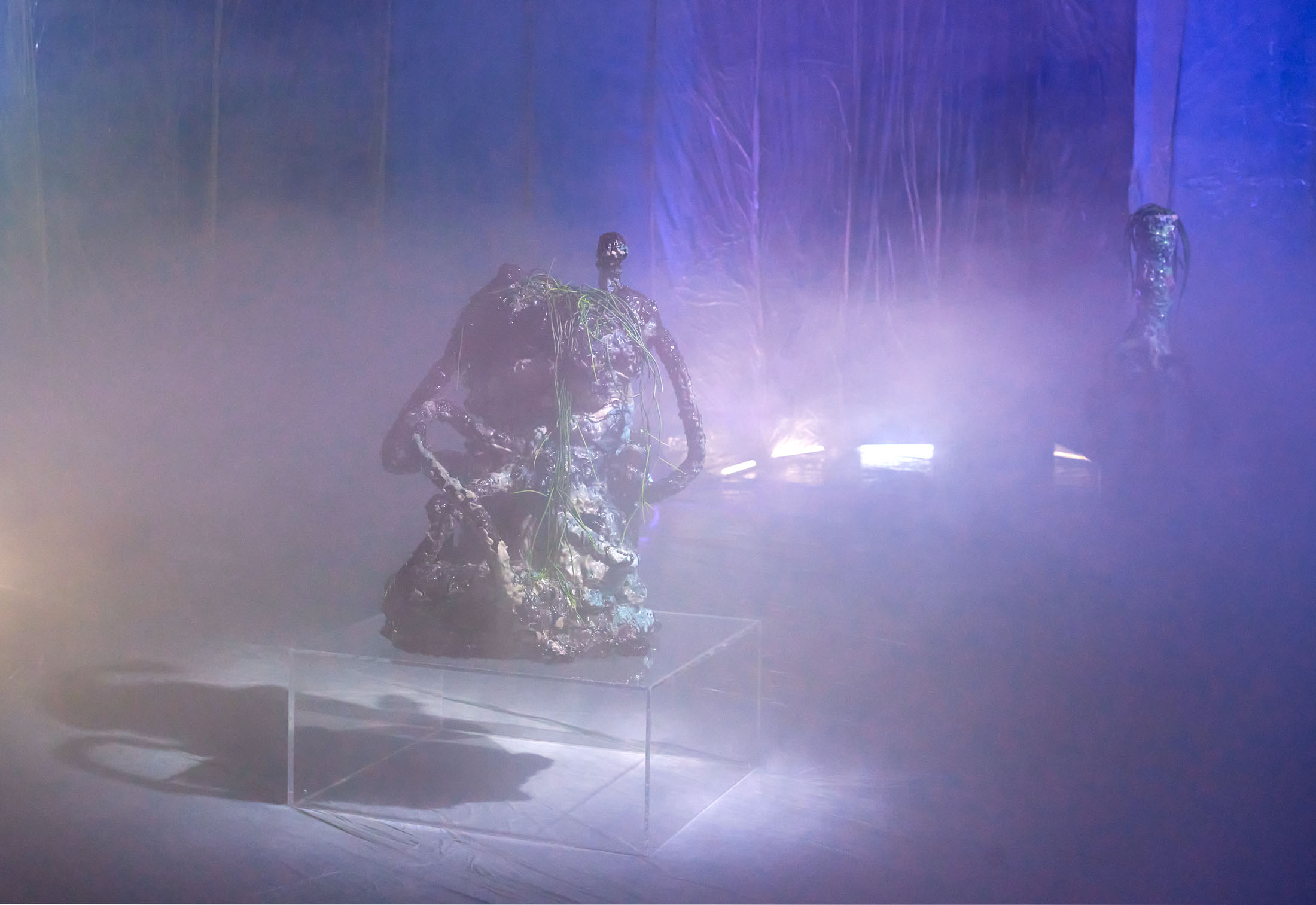
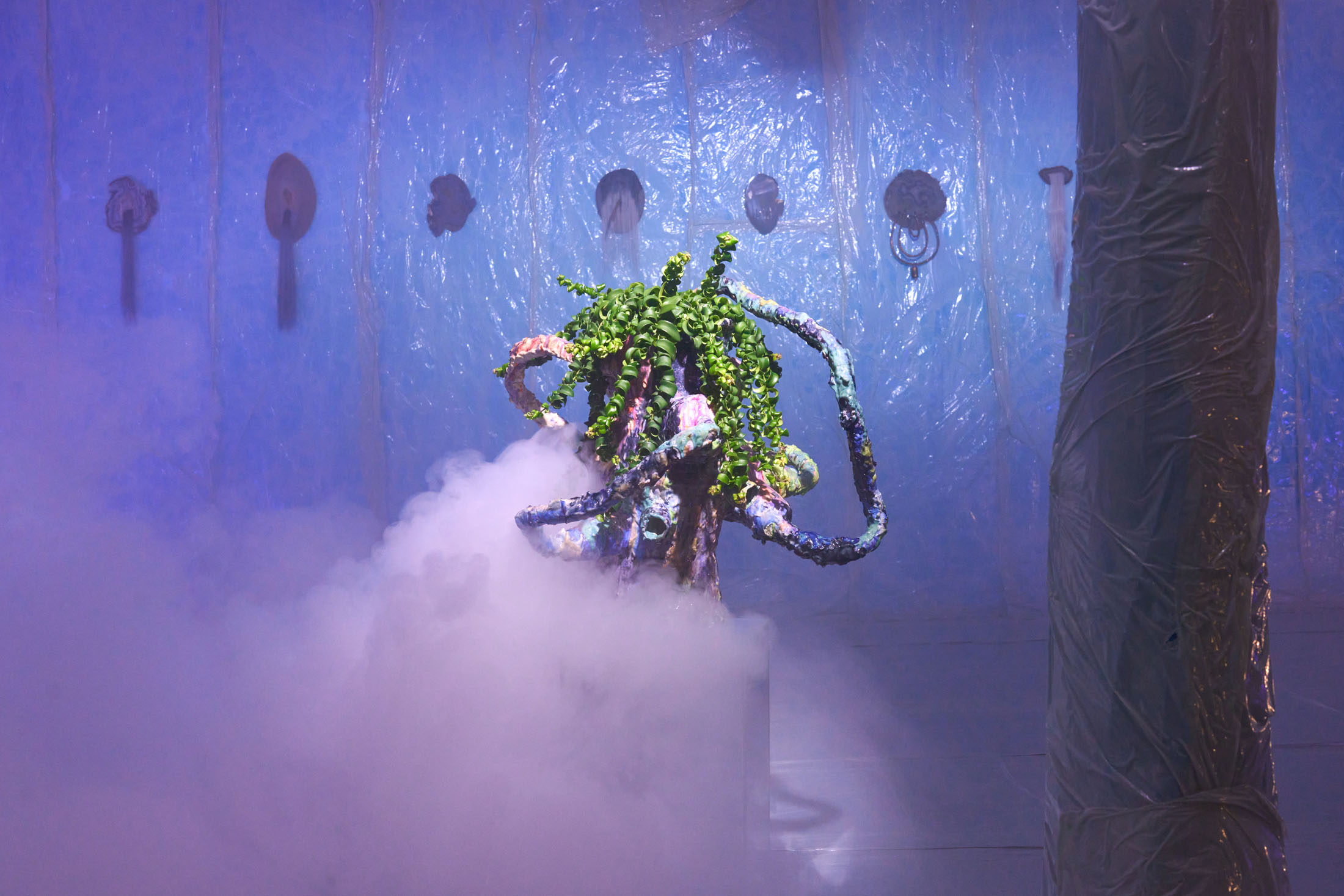
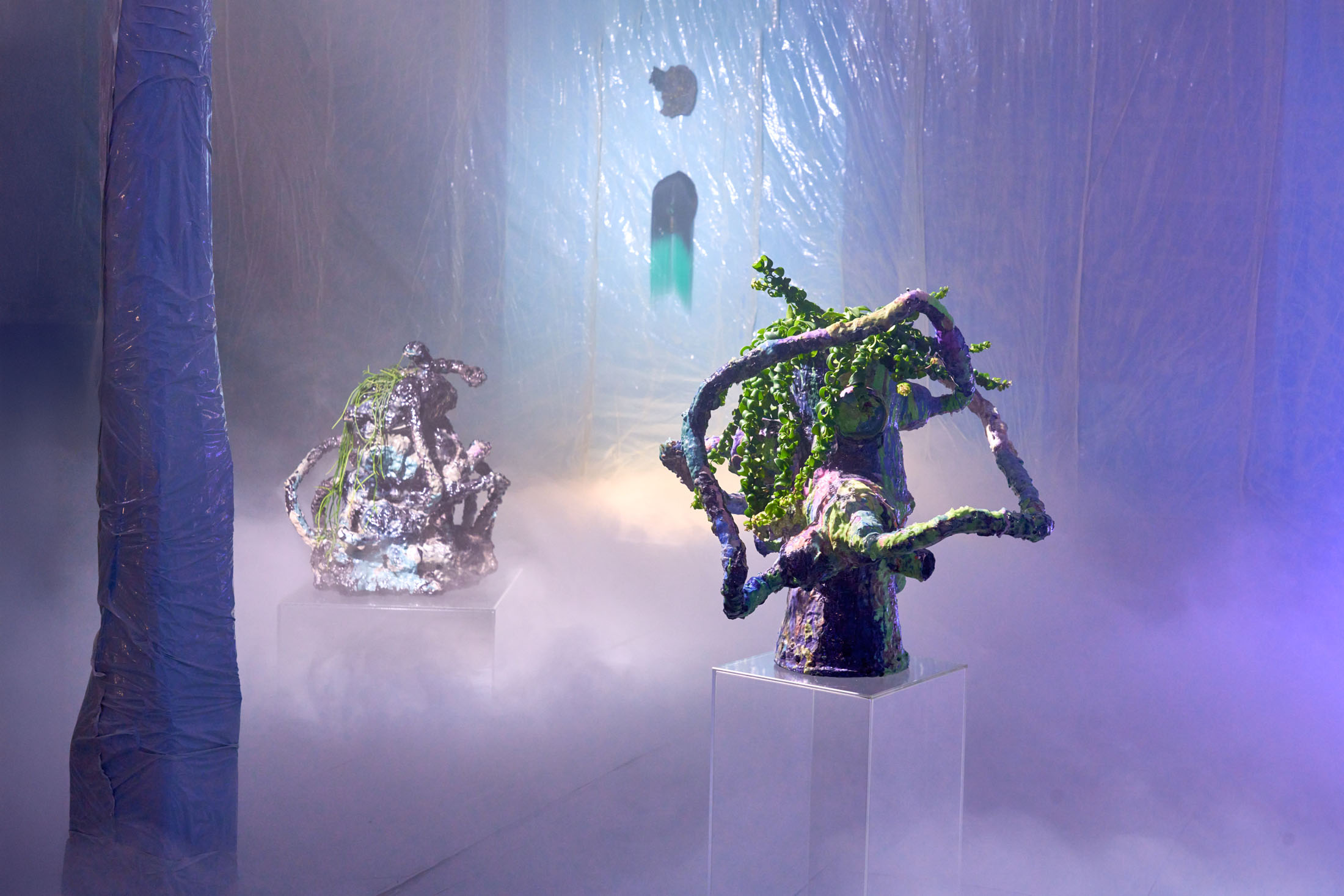
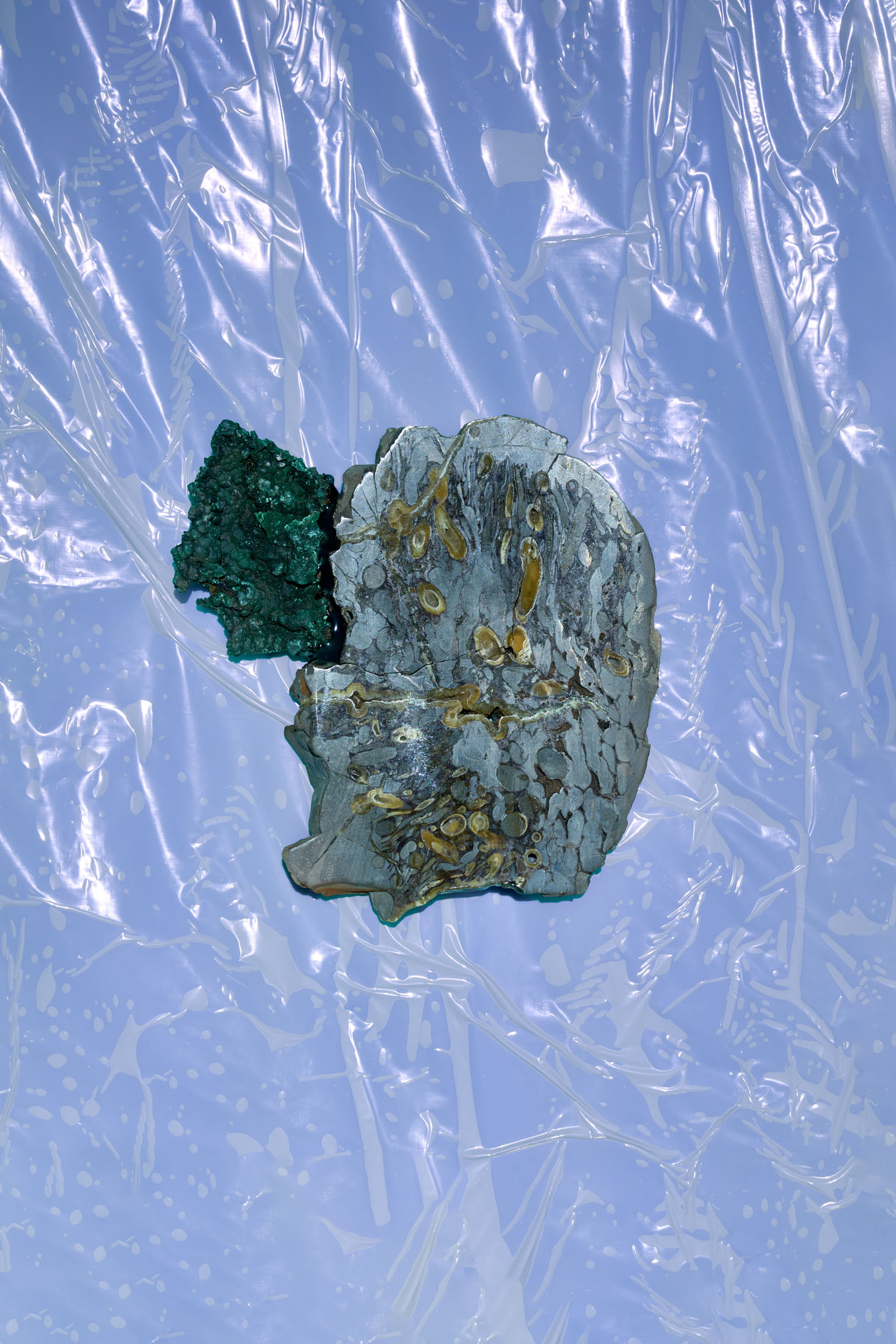
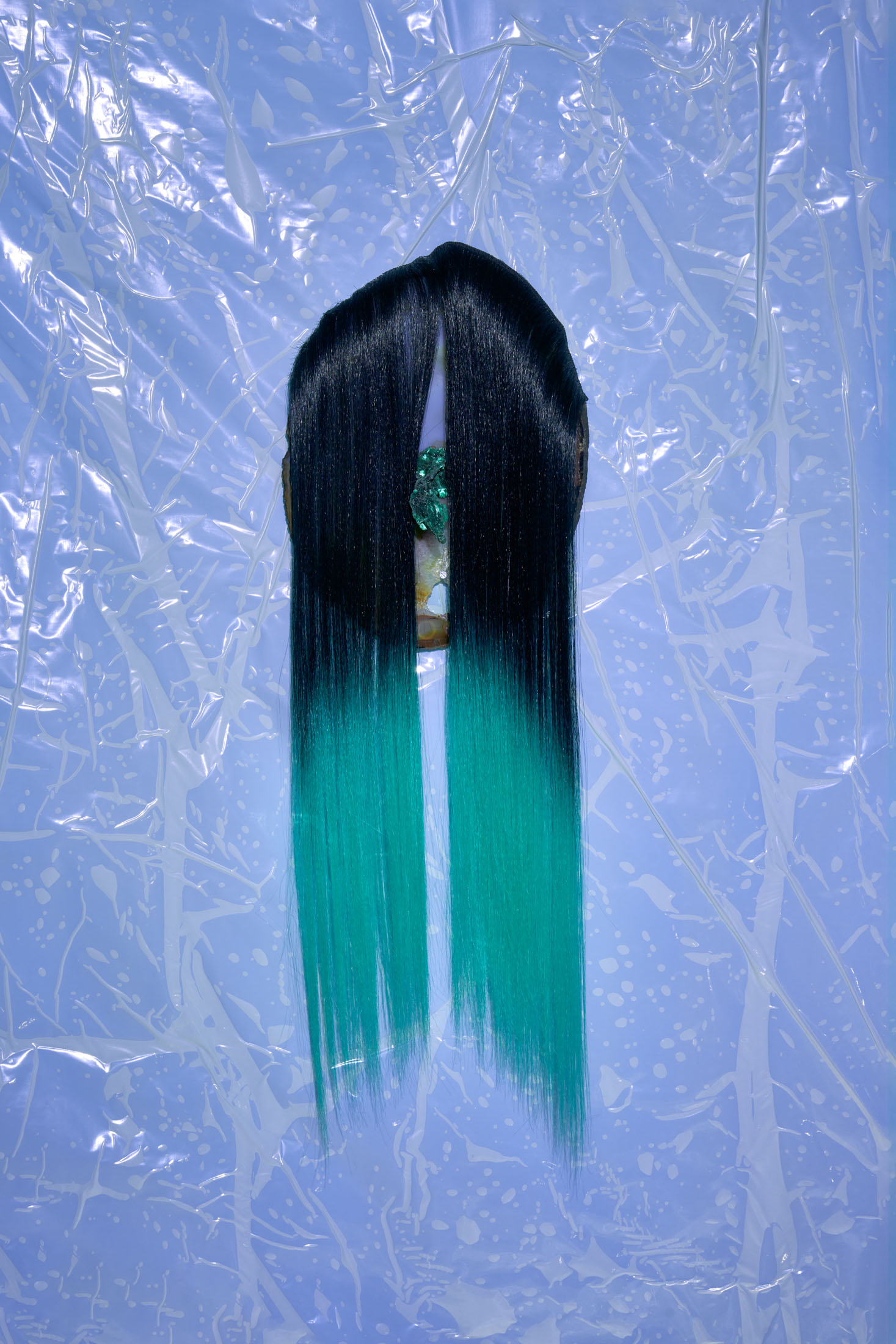
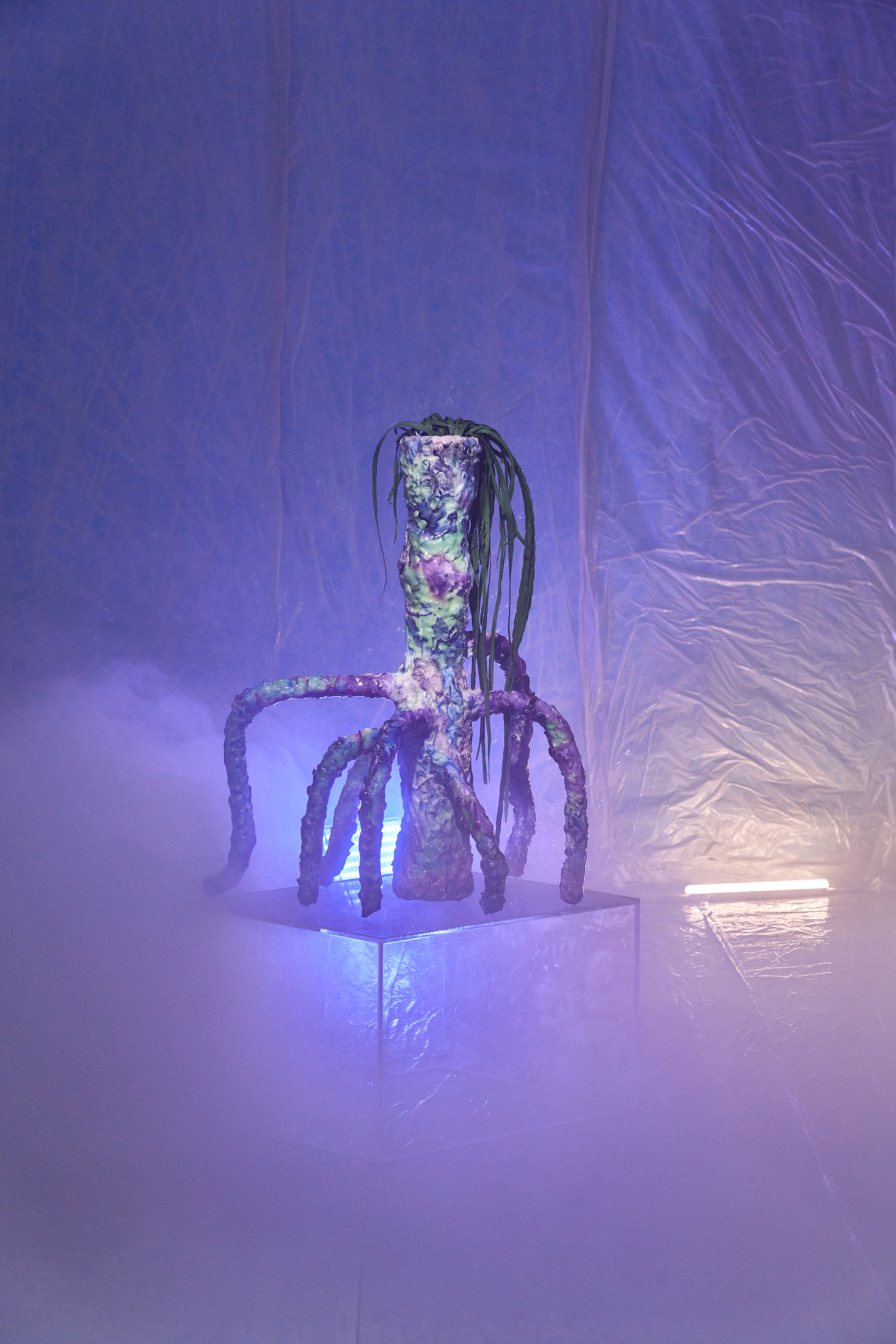
Along the front wall hang eight slices of agate, a stone associated with protective and calming qualities. Their oval forms evoke an ancestral gallery of spectral faces, adorned with rock crystal, bells or hair extensions – the latter having become integral to Kohlmann’s work since her time in New York. Oscillating between melancholy youth aesthetics like Evans and Marshall (both 2020), and spiritist figurations, such as the media-like heads Stanislawa P. (2020) and Eva C. (2025), from whose bodily orifices ectoplasm appears to flow. Here, however, it is synthetic strands of hair that seem to sprout from the mineral surfaces. Kohlmann revels in the collision of oppositional materials: agate meets plastic, plaster meets epoxy resin, malachite meets artificial hair. It is a parity of the heterogeneous, reminiscent of the wunderkammer. The three free-standing sculptures Crazal (2025), Cassotis (2022) and Chetel (2021) read simultaneously as archaic vessels and as organic underworld creatures. Both aspects converge in the mythological title Cassotis, derived from kassyo in Ancient Greek, meaning “to stitch” or “to join”, while also recalling the spring nymph of the Delphic oracle who bestowed her prophecies upon the priestess.
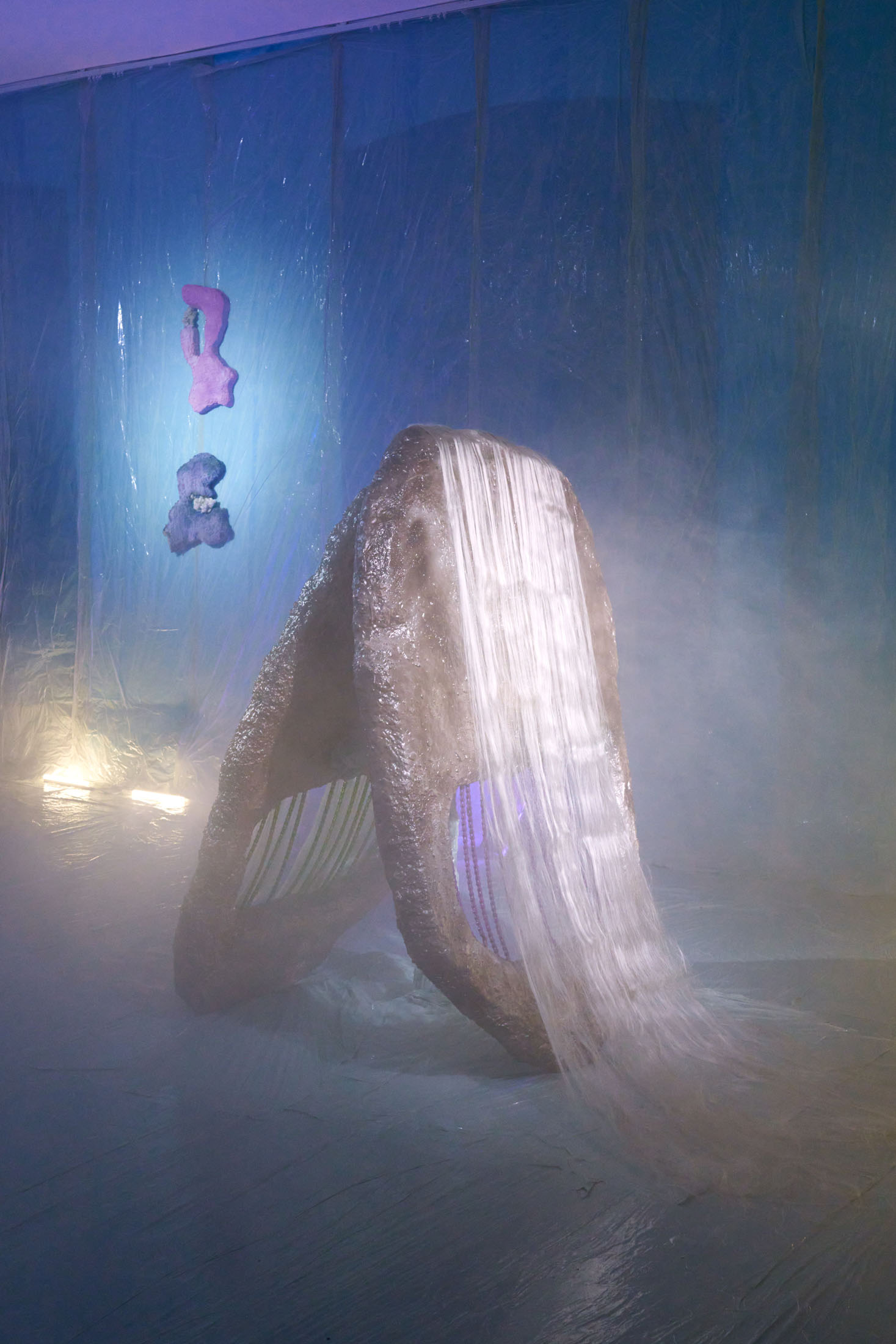
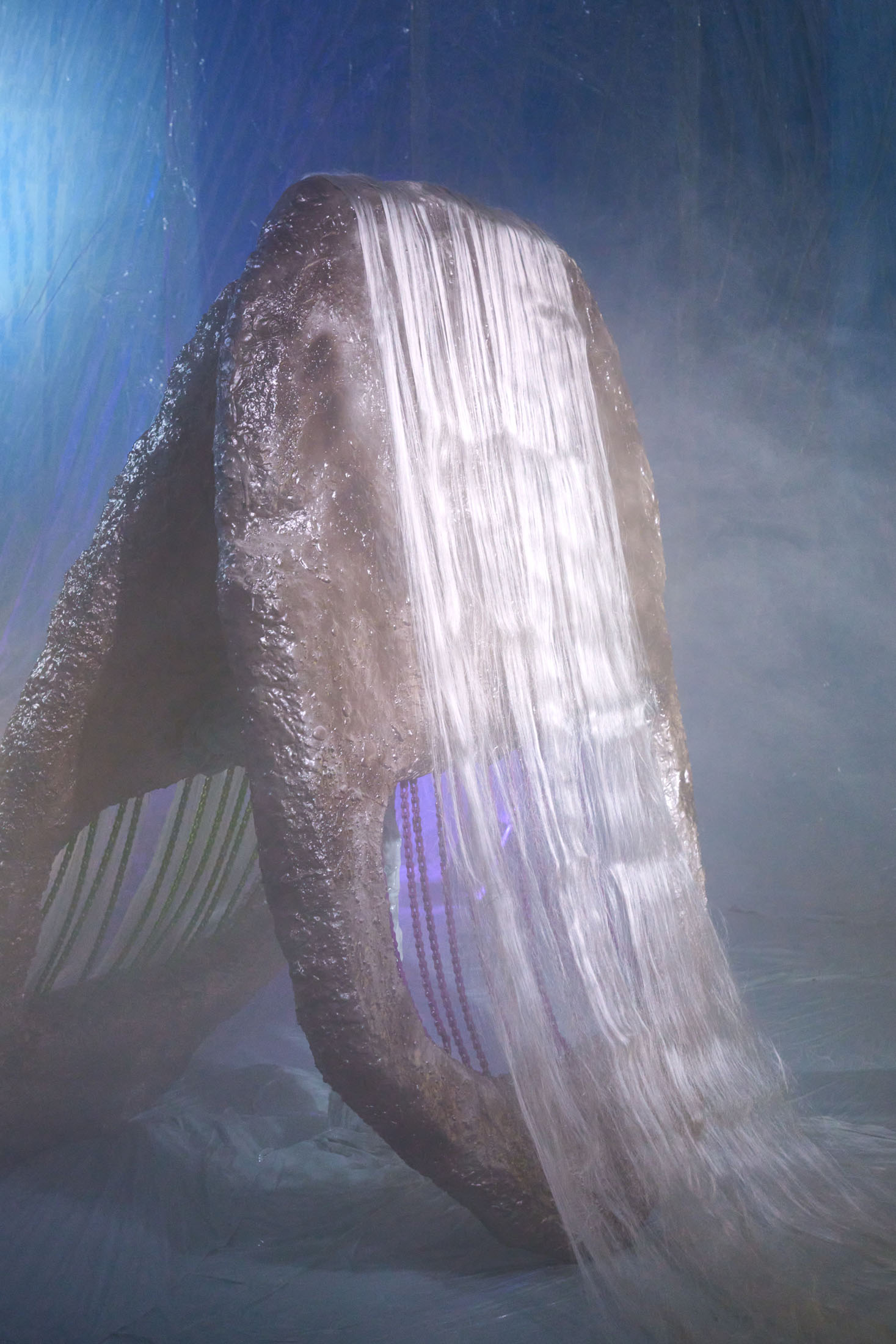
At the centre of the room stand Cosmedin + Ammon (2021), two oversized masks that function as guardian figures. Kohlmann here references Rome’s “Bocca della Verità” – a stone wall sculpture said, in legend, to bite the hands of liars with its gaping, mask-like mouth. Her version is gentler, softer: metallic in its shimmer, with silvery-white hair and a playful expression. The mouths grin; purple bicycle chains block the gullet – the test of truth is neutralised, perhaps even ironised. Theta State (2023) likewise attends to the condition of in-betweenness. Theta waves denote neural oscillations in the brain that arise in the transition from wakefulness to sleep, as well as in trance or hypnosis – a state in which consciousness slows and the subconscious rises to the surface.
Kohlmann’s work evokes this slipping into an interstitial realm. In an age marked by the ongoing disenchantment of the world, the total availability of information and the declining significance of traditional religions, the return of spiritual practices comes as little surprise. Astrology, tarot, manifestation and frequency teachings promise orientation where rational explanations no longer console. As in the nineteenth century, the yearning for the irrational seems once again to be forming as a counterweight to an over-rationalised present. Kohlmann’s works negotiate precisely this longing: for the invisible, the unnameable, that which cannot be grasped by the naked eye – a place between worlds.
— Maja Lisewski