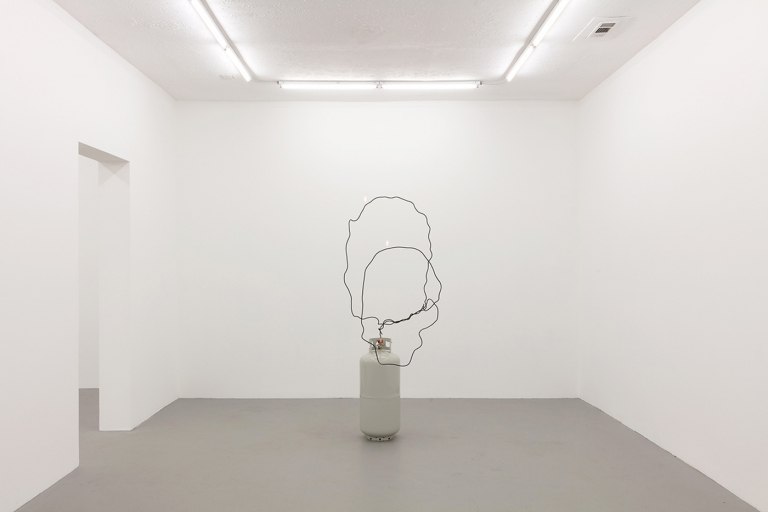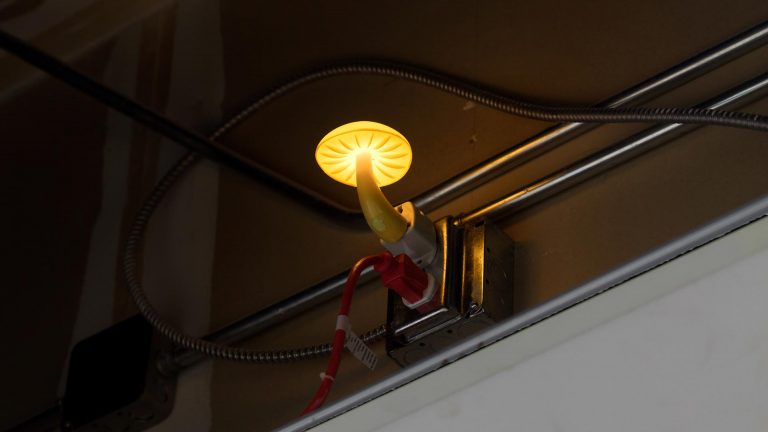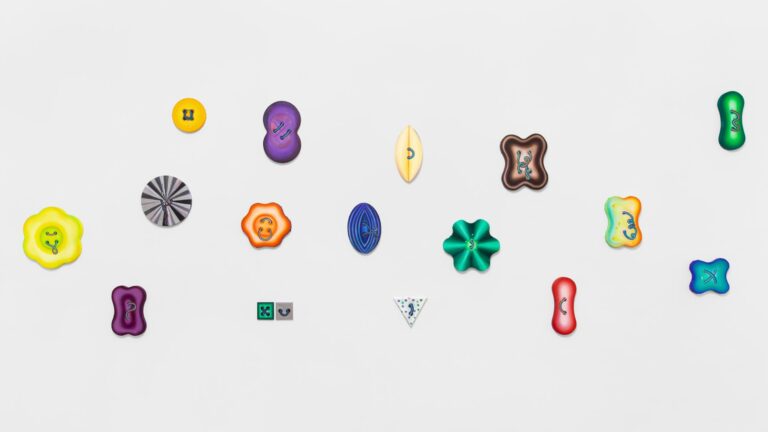
Working against conditions of entrenched surveillance and a pervasive atmosphere of publicity, the artists included in Tender create cryptic linguistic forms and rituals of exchange: here, opacity becomes intimacy. Like a hand cupped around a single ear in a crowded room, alternative codes and linguistic forms suggest the possibility of speaking closely, ‘beneath the din’, as the poet Mary Ruefle has described it. Here, language is put in a blender, chopped and screwed, chewed and muddled, occluded in private symbologies, yet in each work there is an effort to communicate afresh. There is a focus on the materiality of languages – alphabets, mouths of tongues and teeth, systems of violent or strange designations – elements that are broken down and reconstituted. There is also a yearning, a drive towards a secondary or alternative way of communicating made on the ruins of archaic systems: an intimate, alternative language that might only be understood by a close-knit group, or even just a single other.
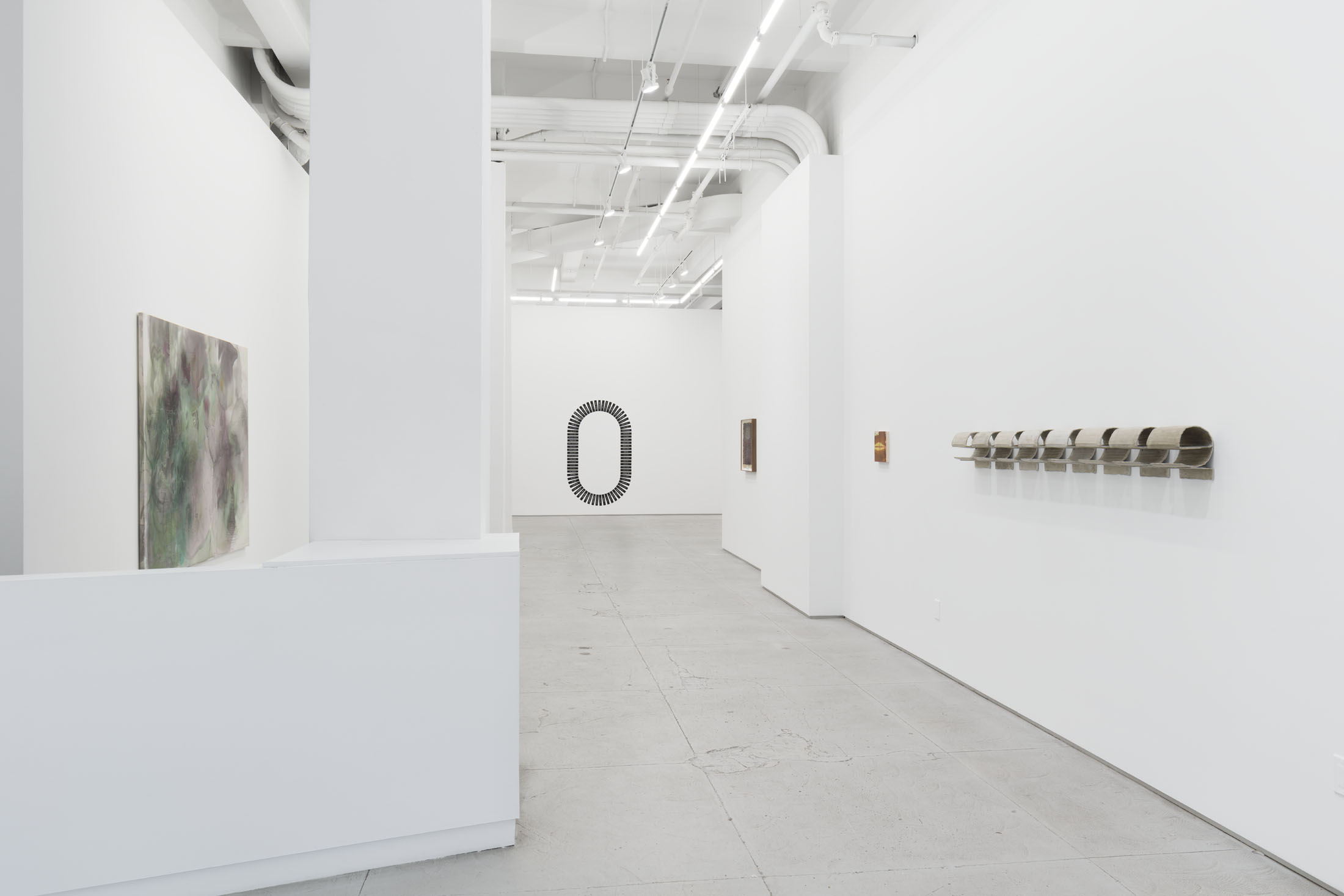
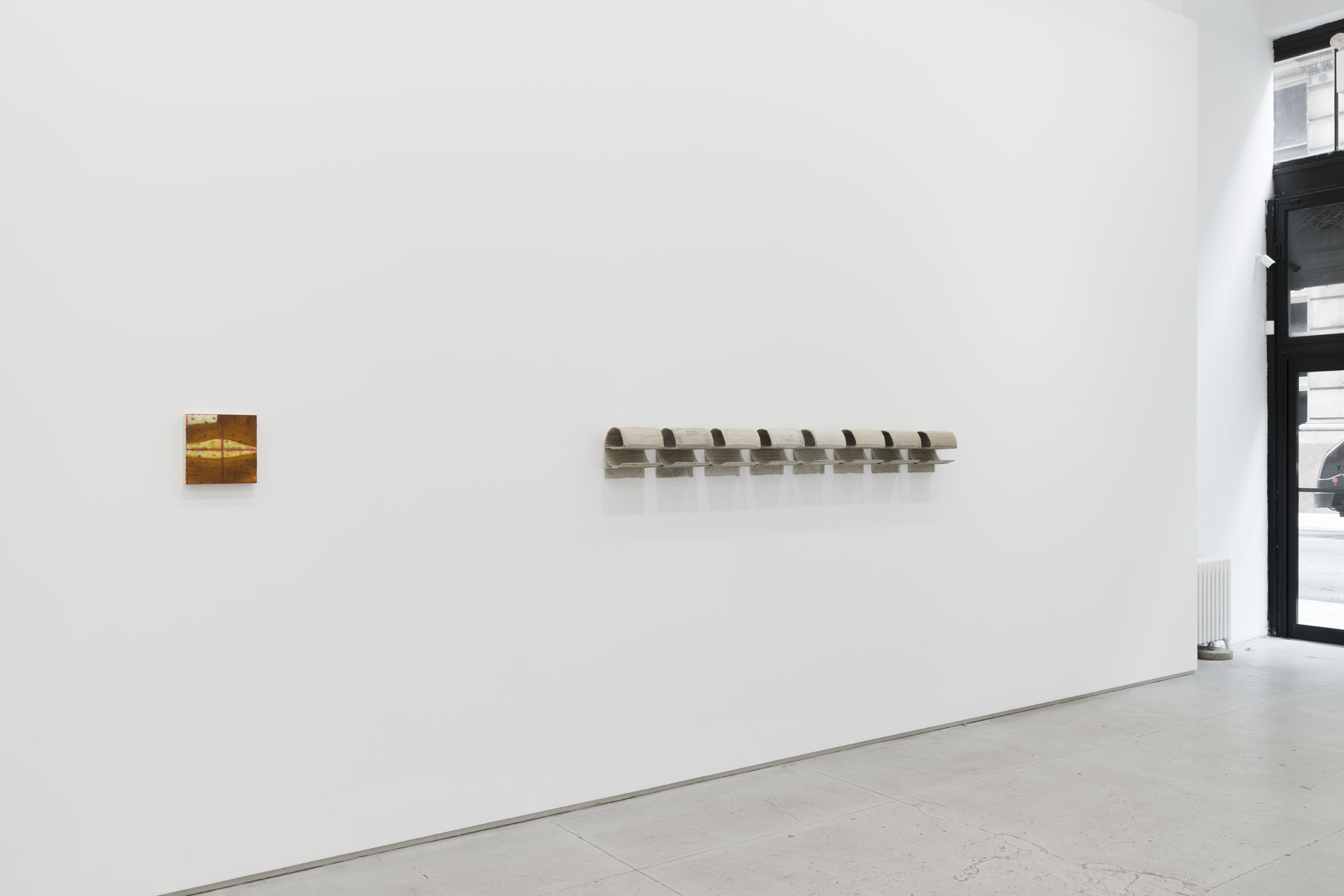
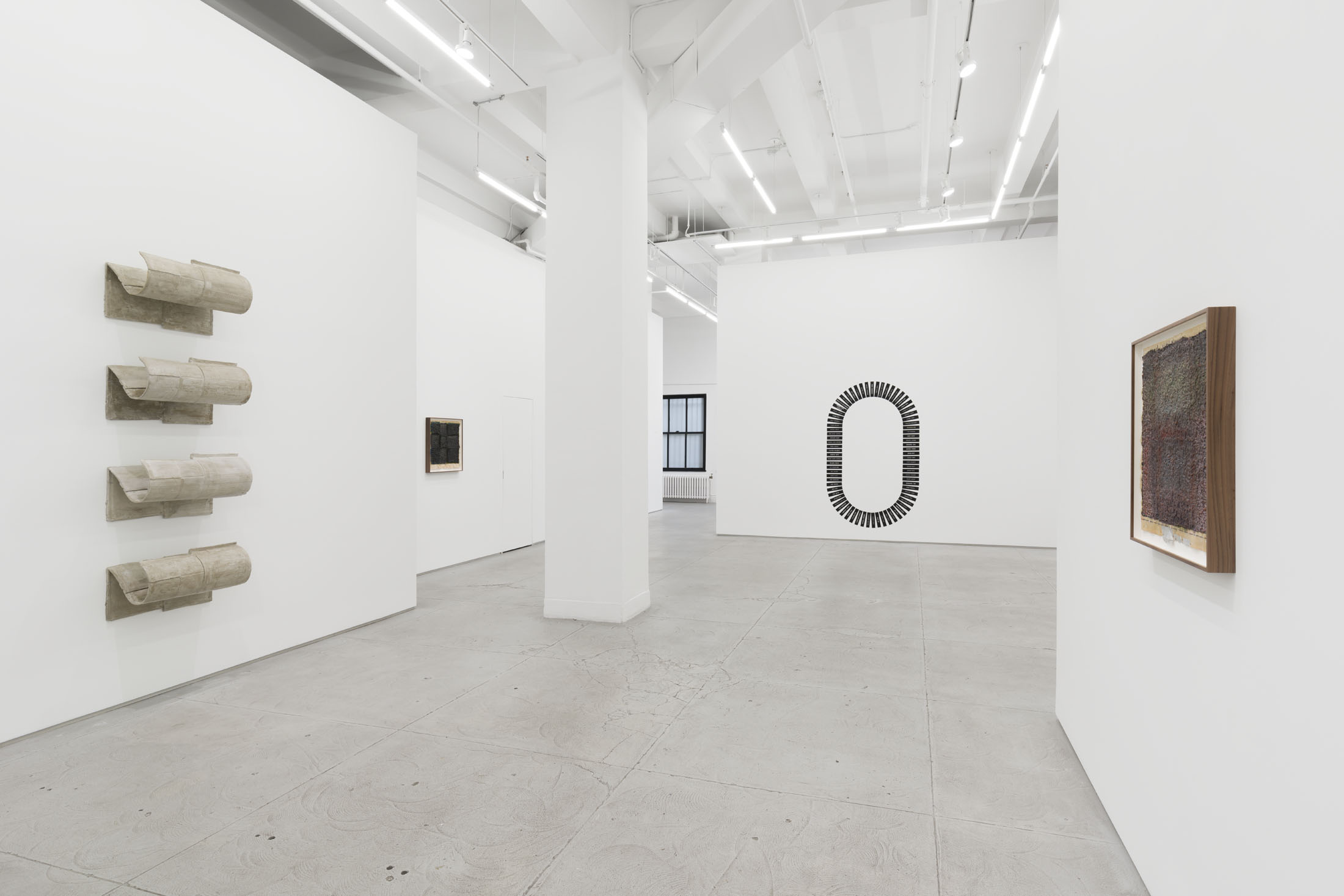
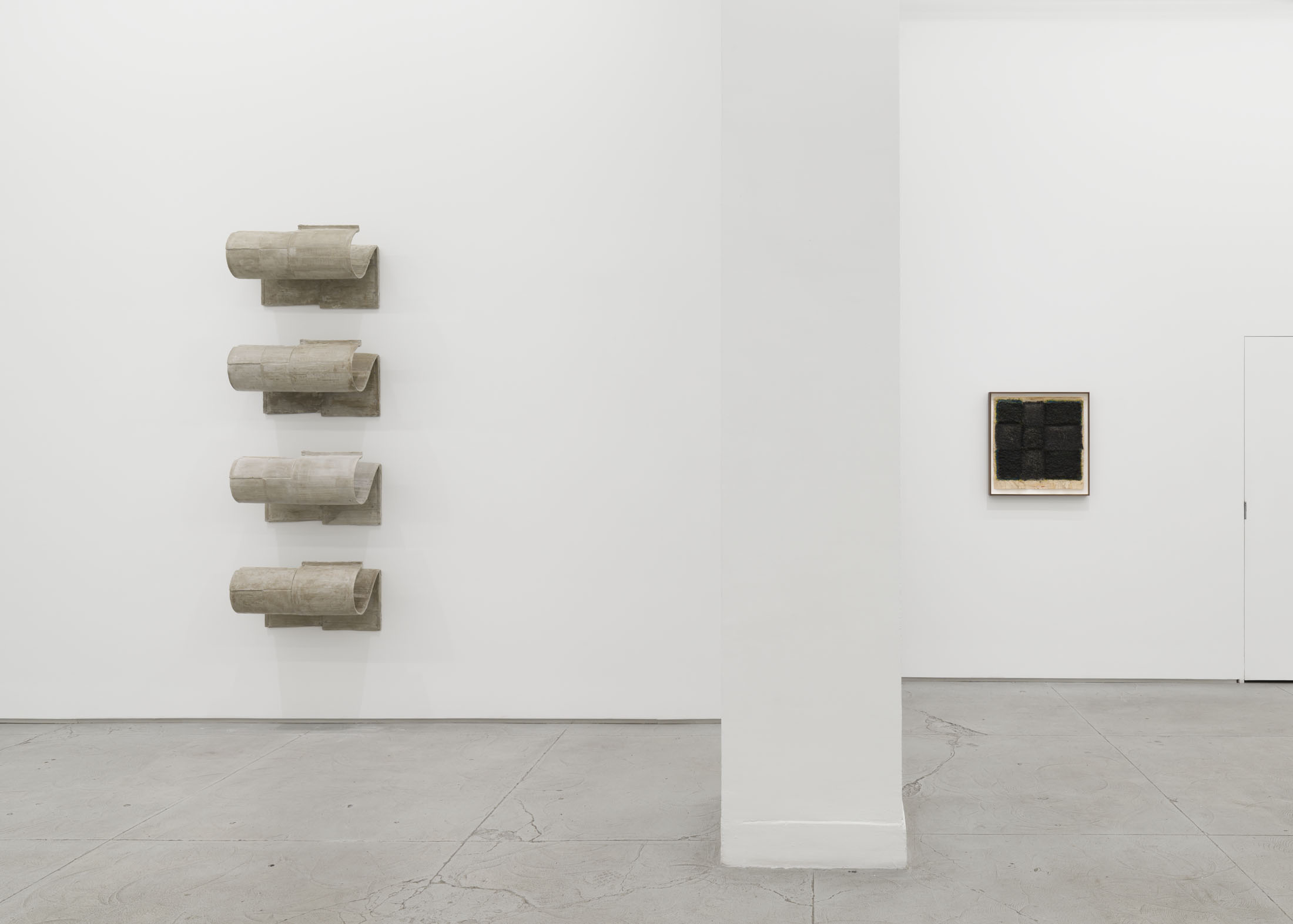
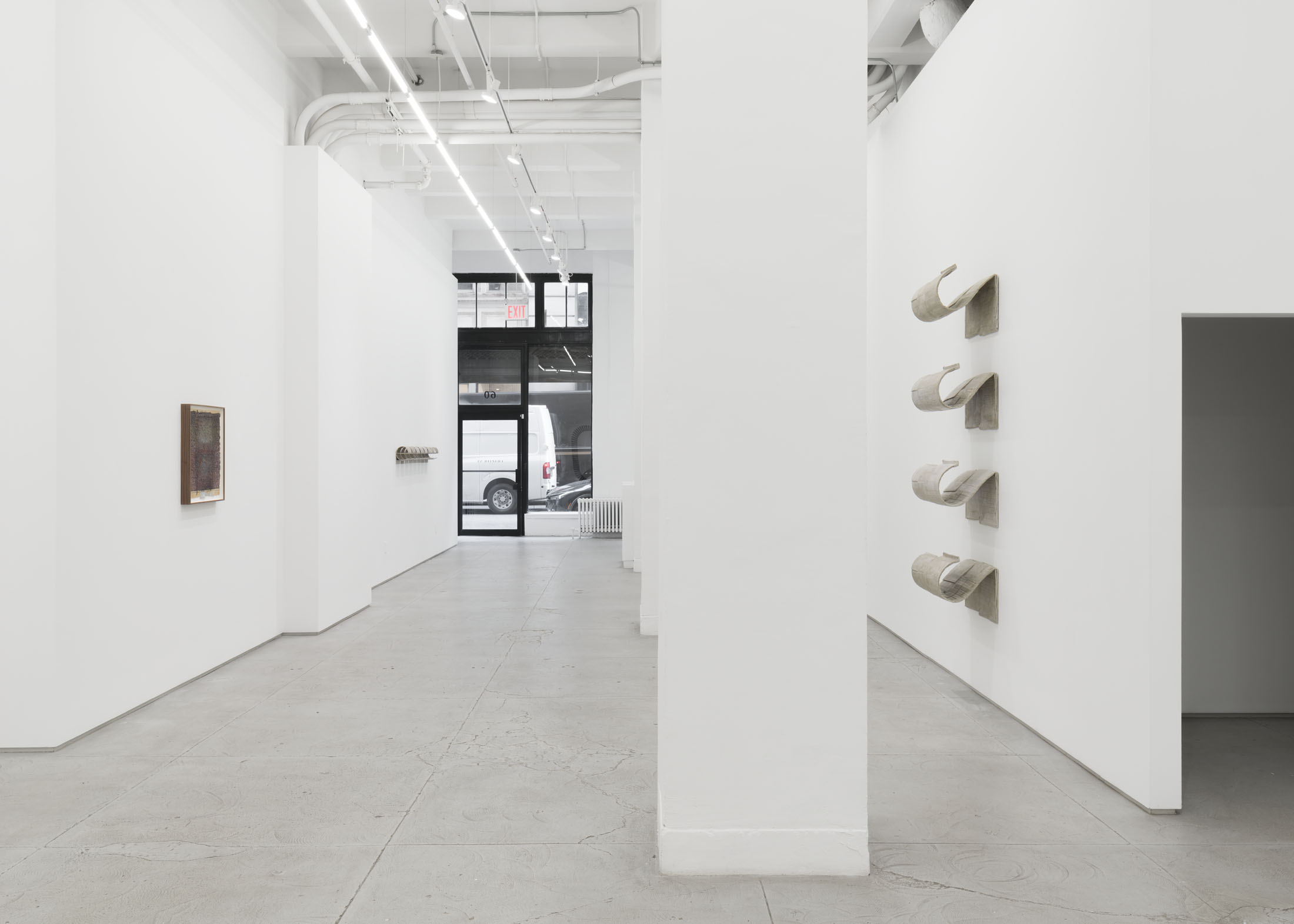
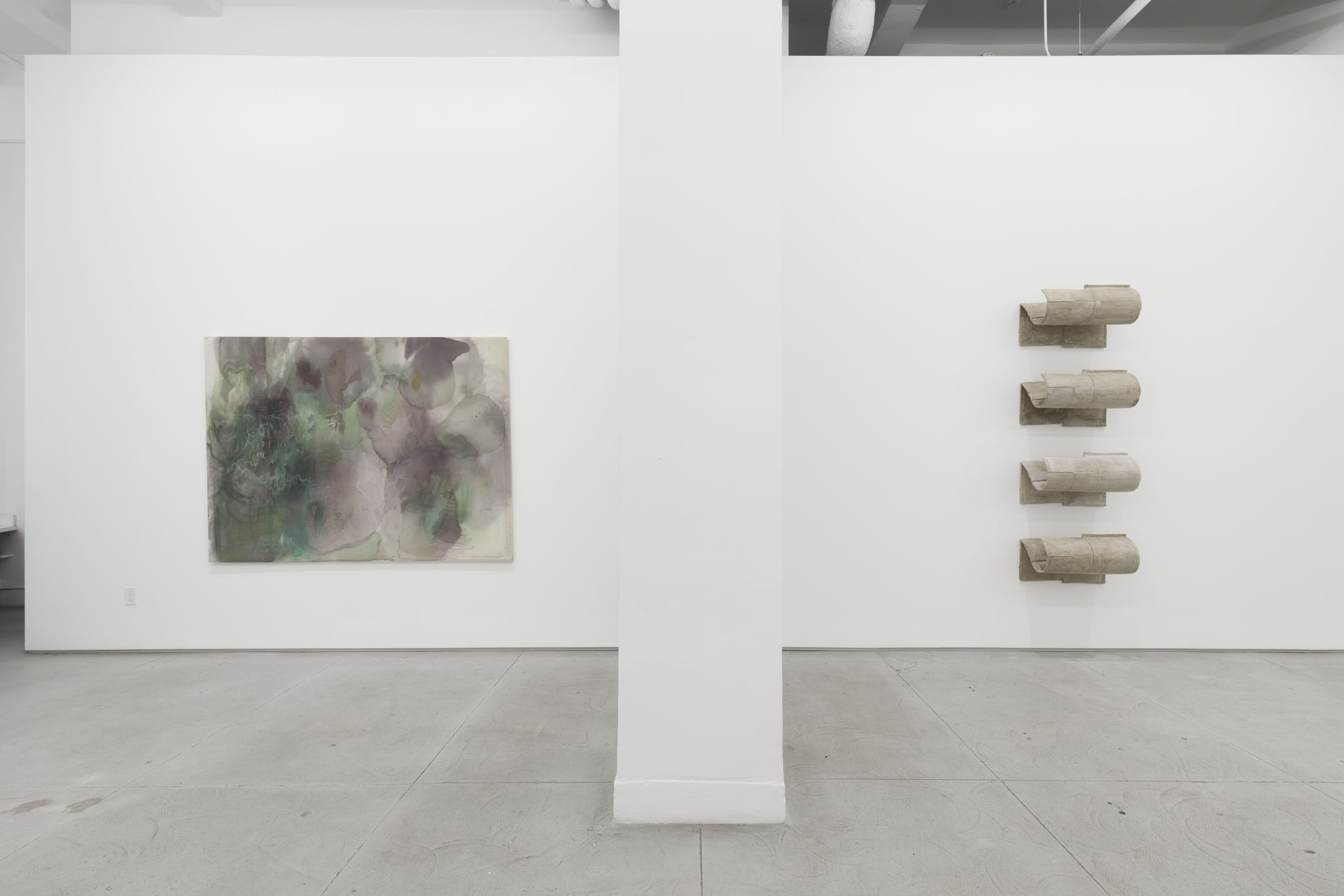
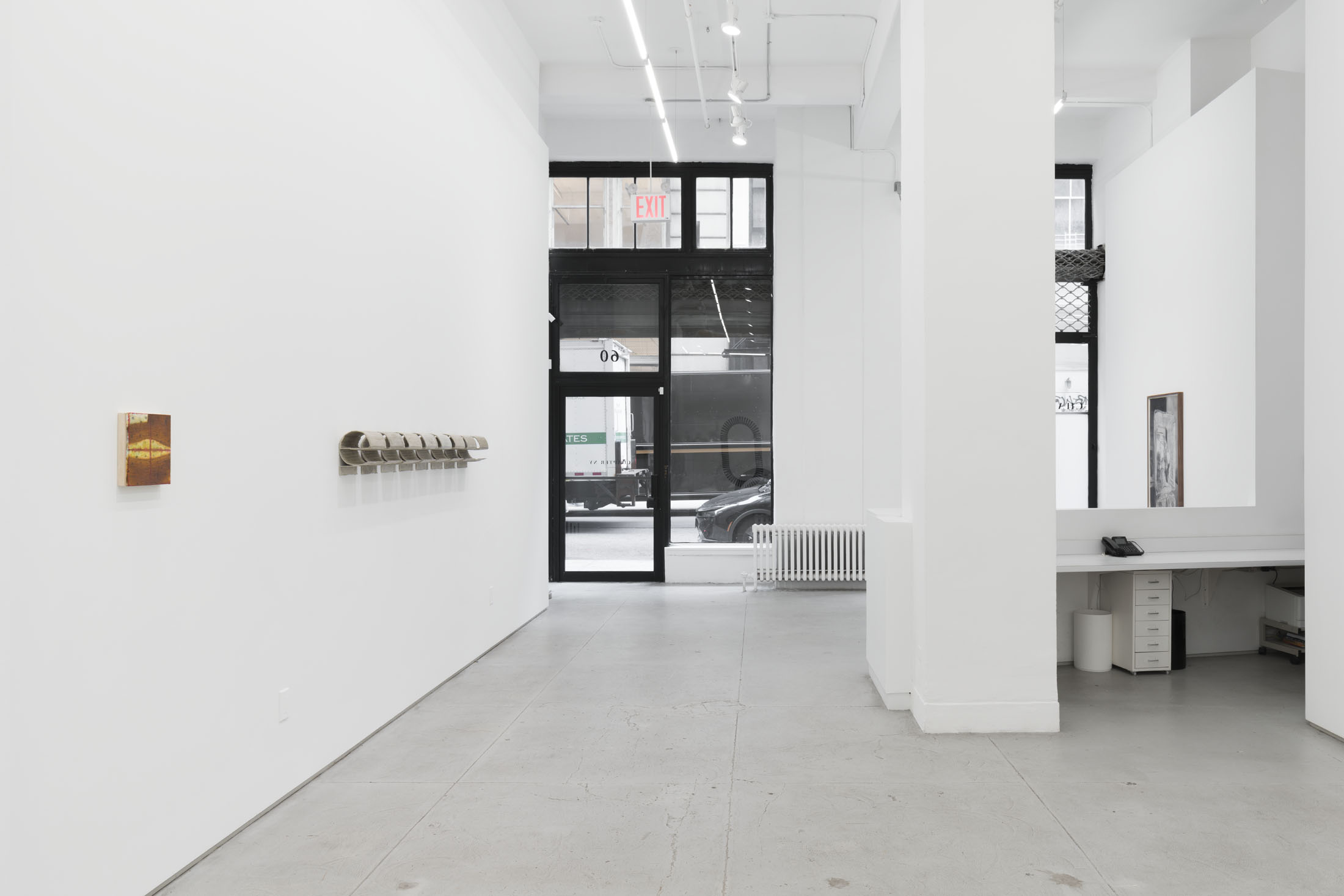
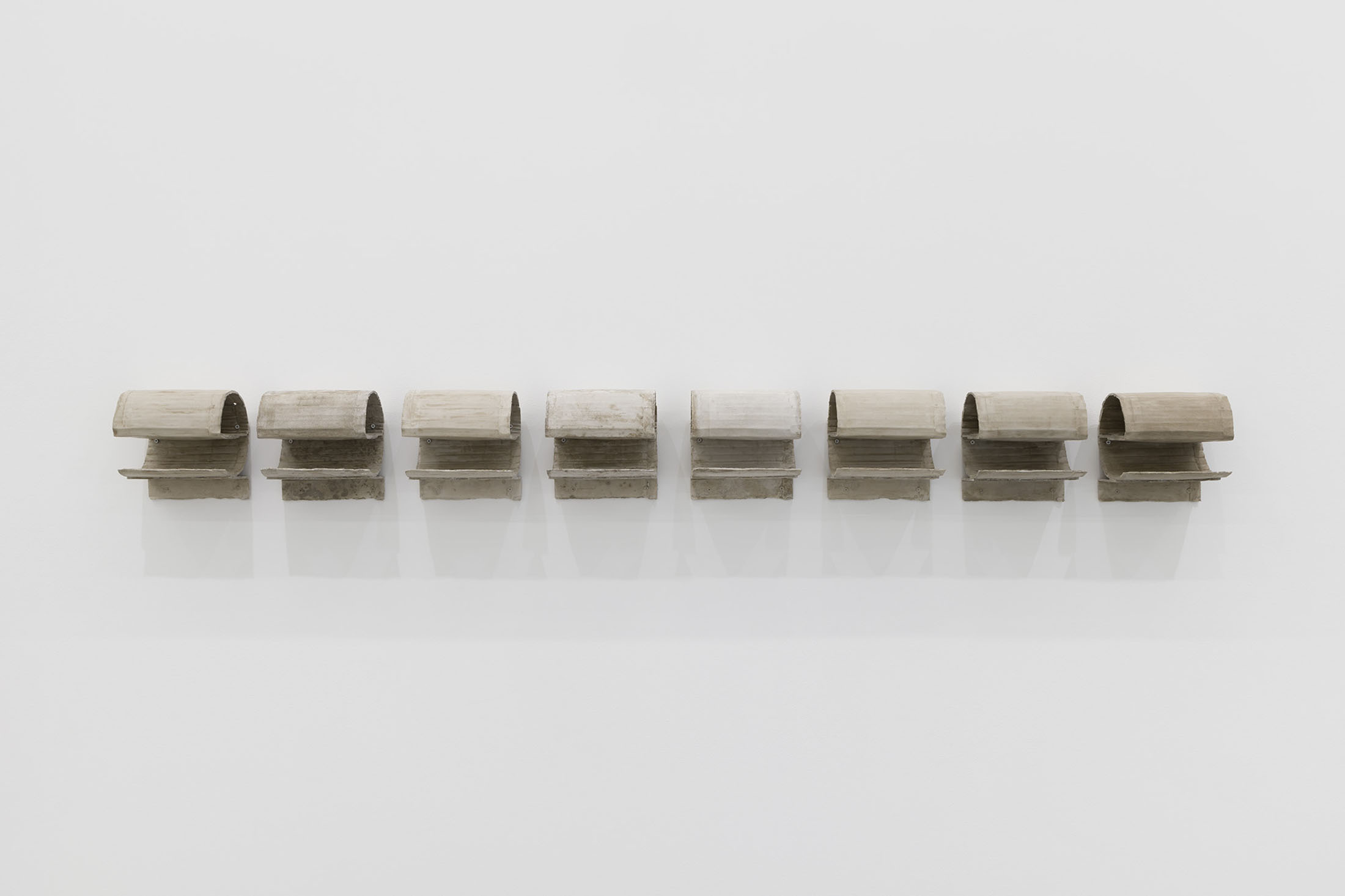
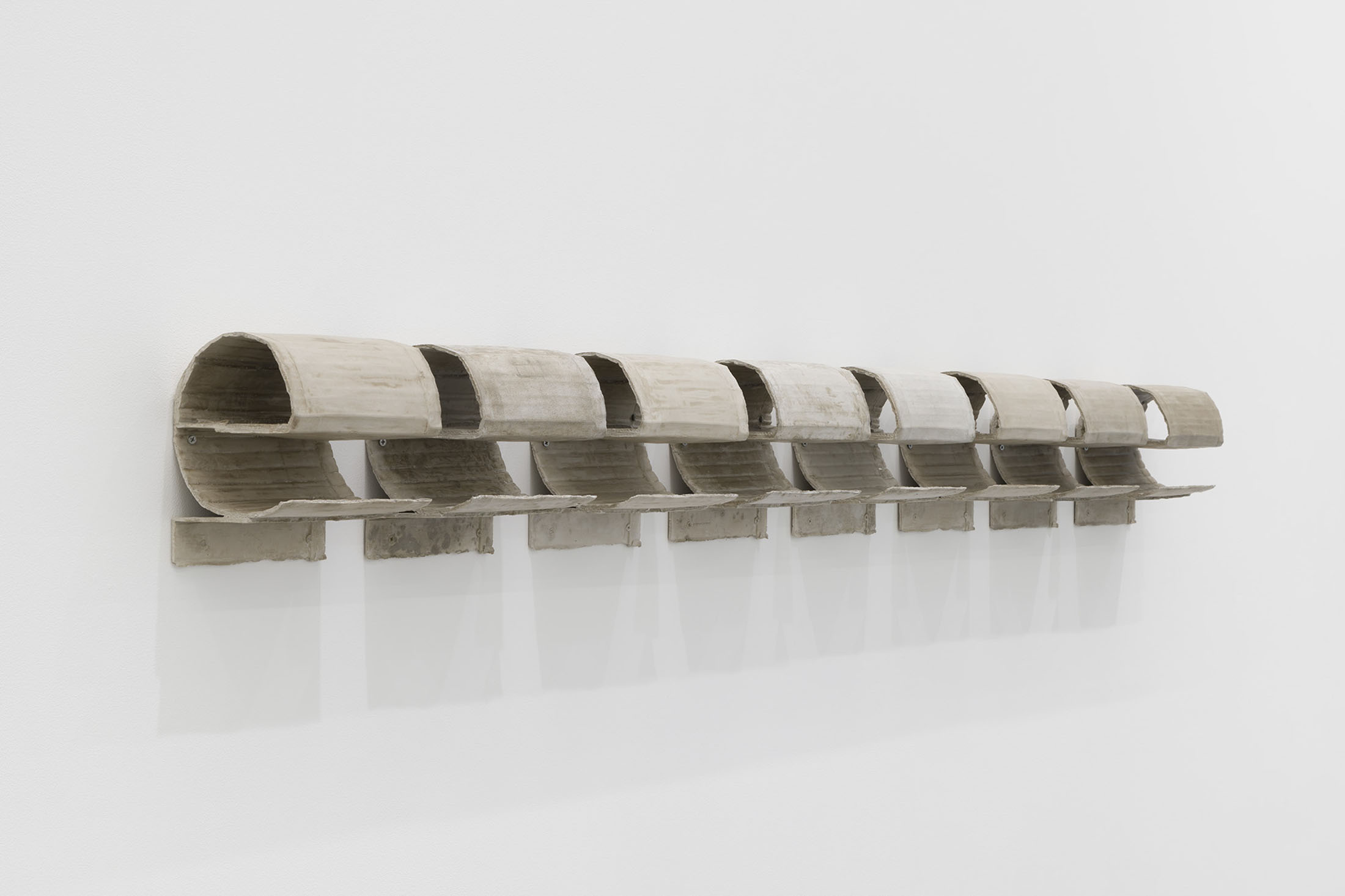
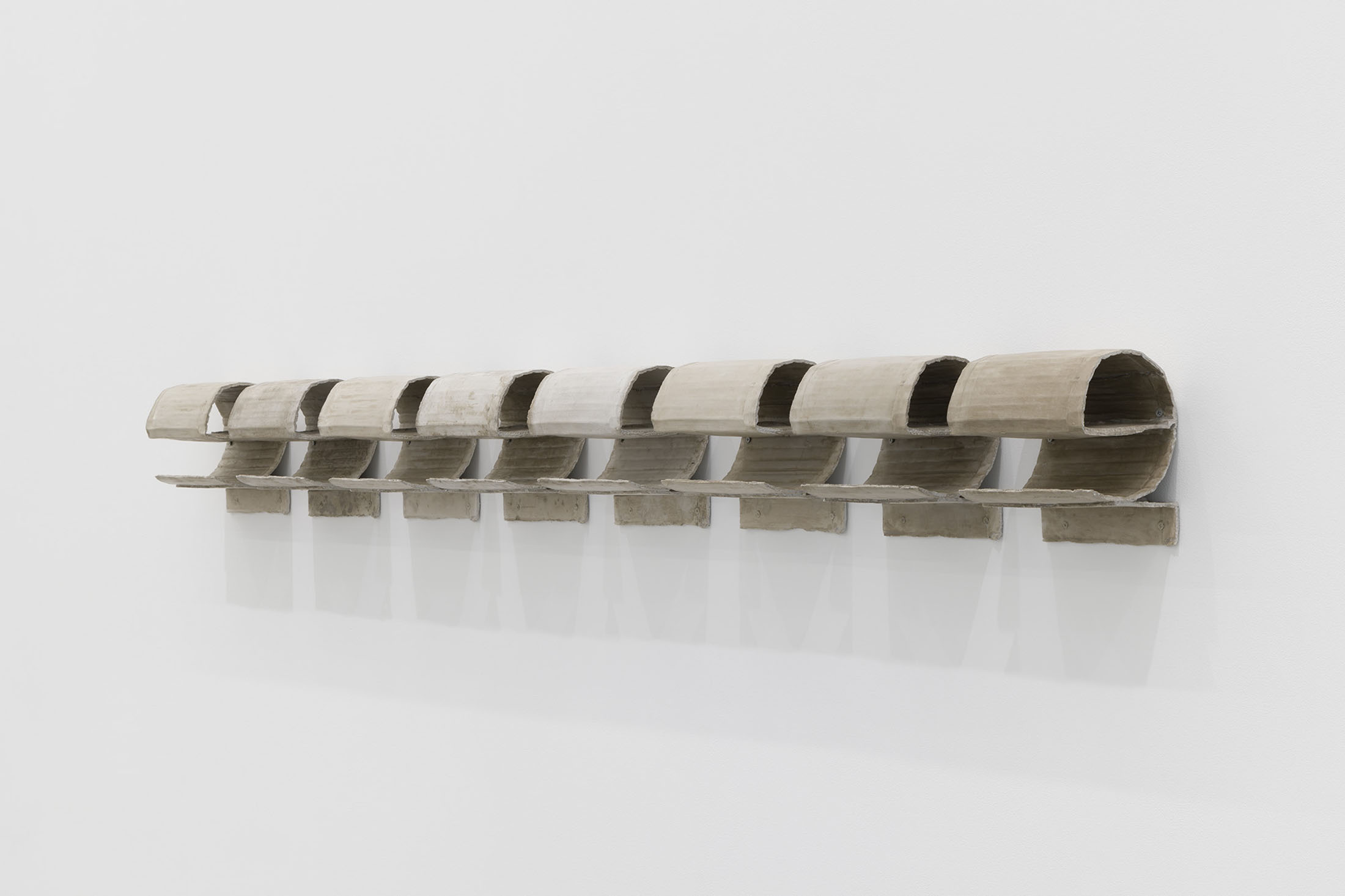
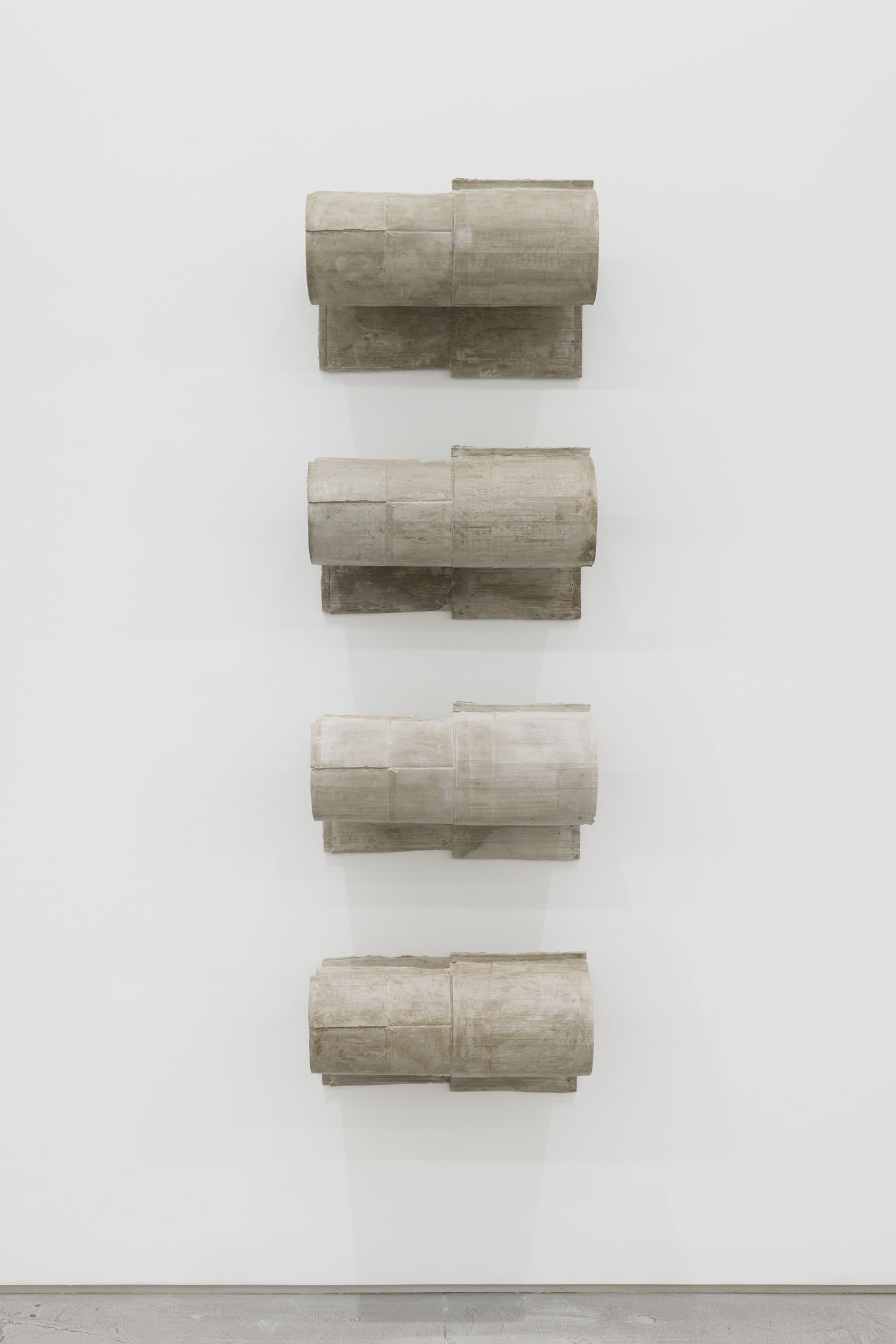
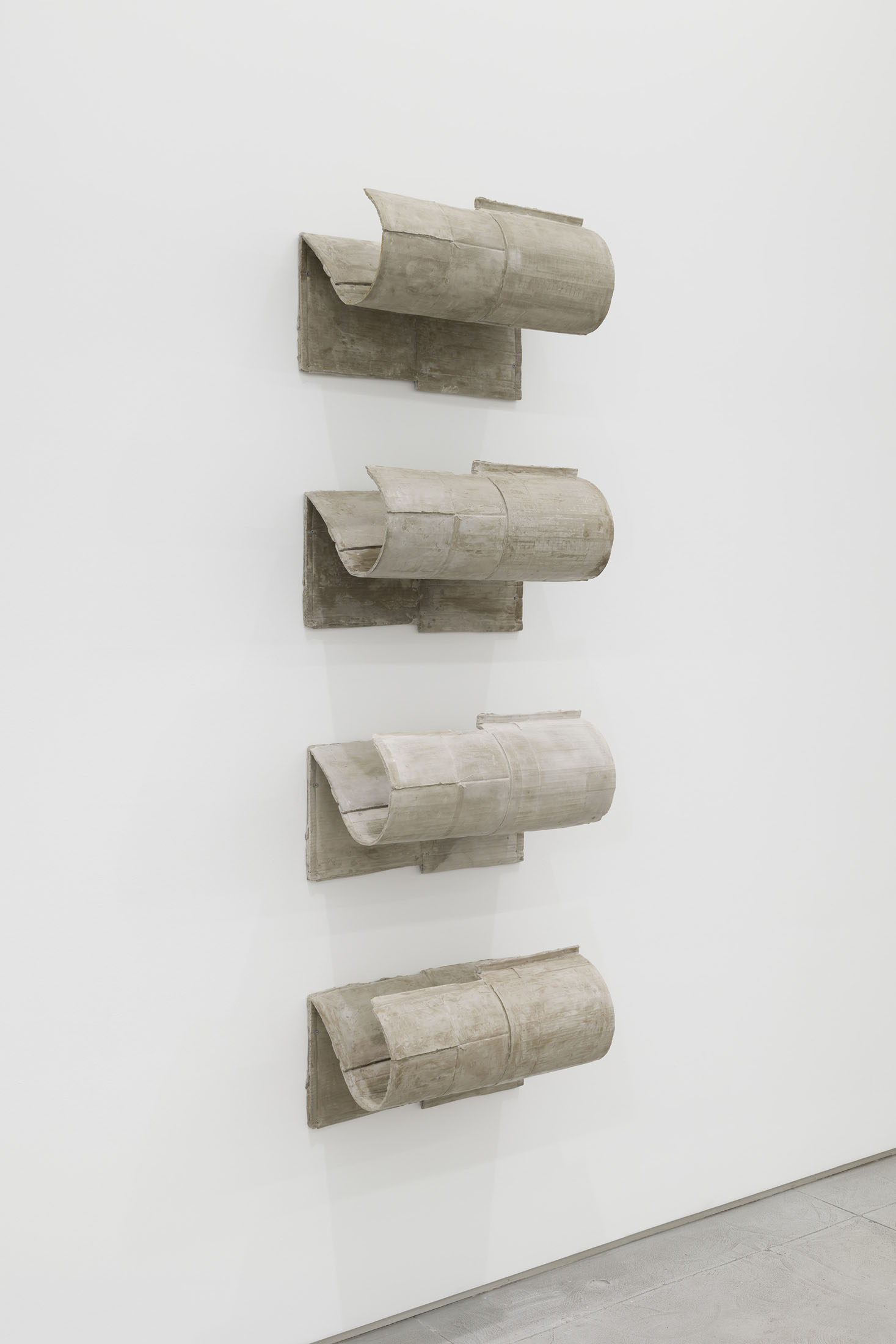
Michaela Bathrick creates concrete sculptures of large graphemes, such as letters or numbers, which she pours into handmade cardboard positives. Transforming characters such as the lower-case ‘e’ or the number ‘2’ seen here, into heavy, physical forms, Bathrick’s sculptures suggest alternative ‘use values’ for written characters, as though they were architectural elements or tools, like I-beams or A-frames. The sculptures can only be ‘read’ from the side, where they are presented in repeating series, performing the kind of repetition that loosens a word from its meaning, from the sounds and values that letters and numbers designate. Seen head-on, their forms are suggestive of other objects: fittings, fixtures, furnishings, signs, and architectures.
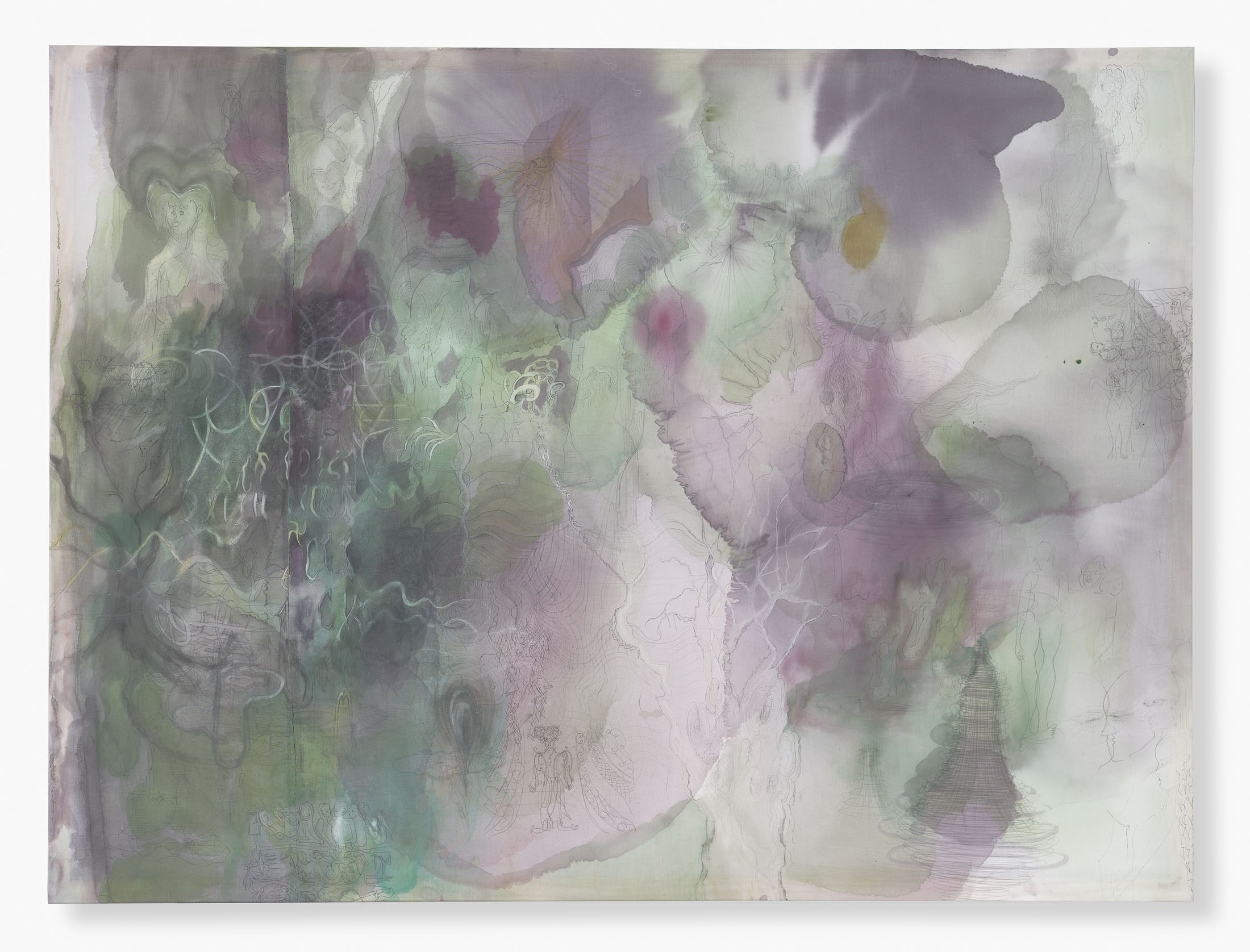
The inky blooms of Rosario Zorraquín’s painting AL (2024) provide light, watery veils over some of the smaller gestures and symbols that the work also contains. The works from this series are akin to a psychic retch, a purge, in which images form out of heedless accumulation, splotches of pigment and defining lines that inch closer to historical depictions of hell from different cultures, to Goya’s capturing of human suffering; they grapple with the more repellent aspects of being human. Her work is also deeply invested in translation and language, stretching its possibilities to remain fiercely and tenderly anti-discursive. Her practice is an ever-revealing process, immersed in contingency and opacity, at the mercy of the change and transformation involved in being-human: the ways of a simultaneously sacred and mundane existence.
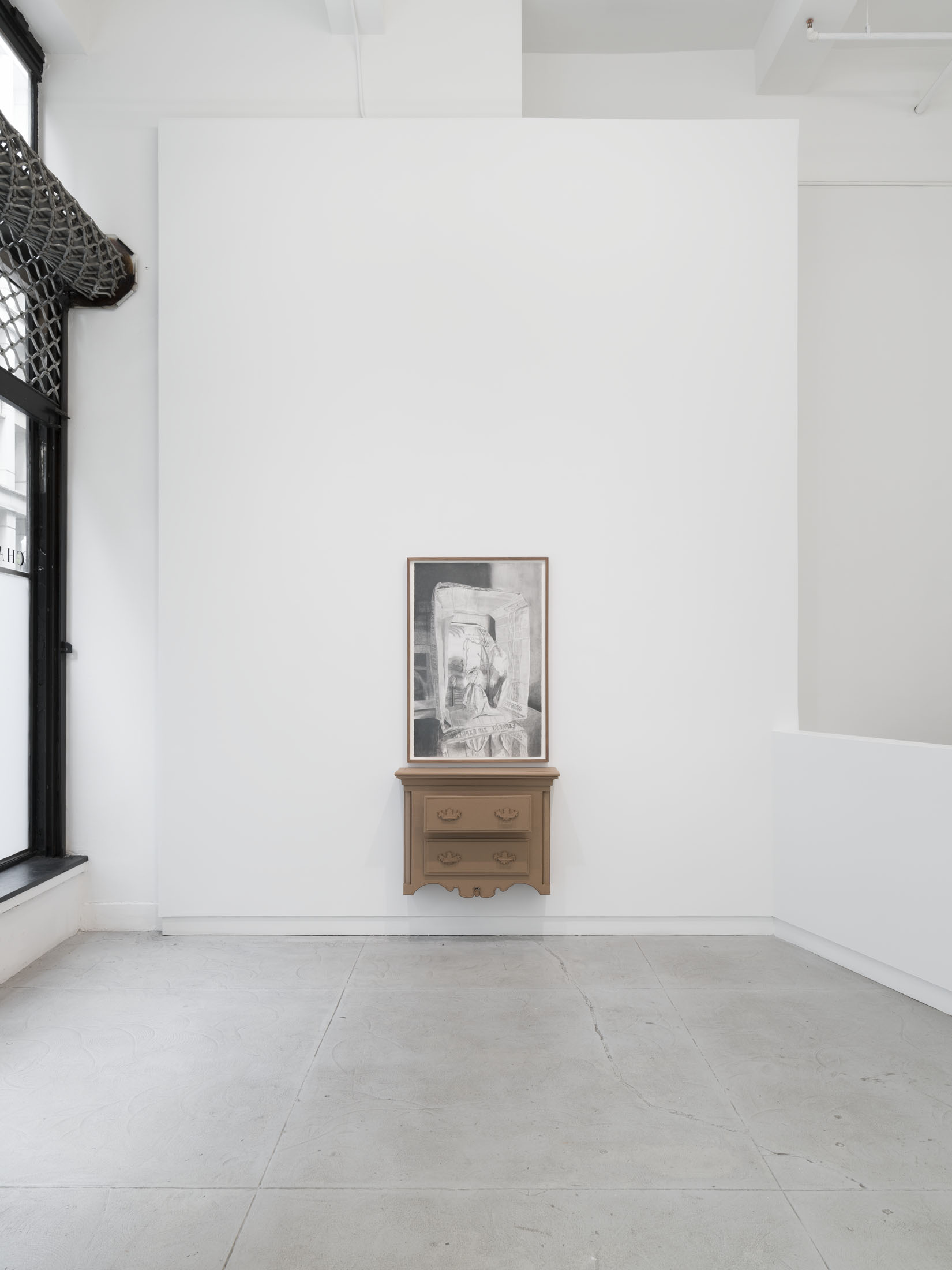
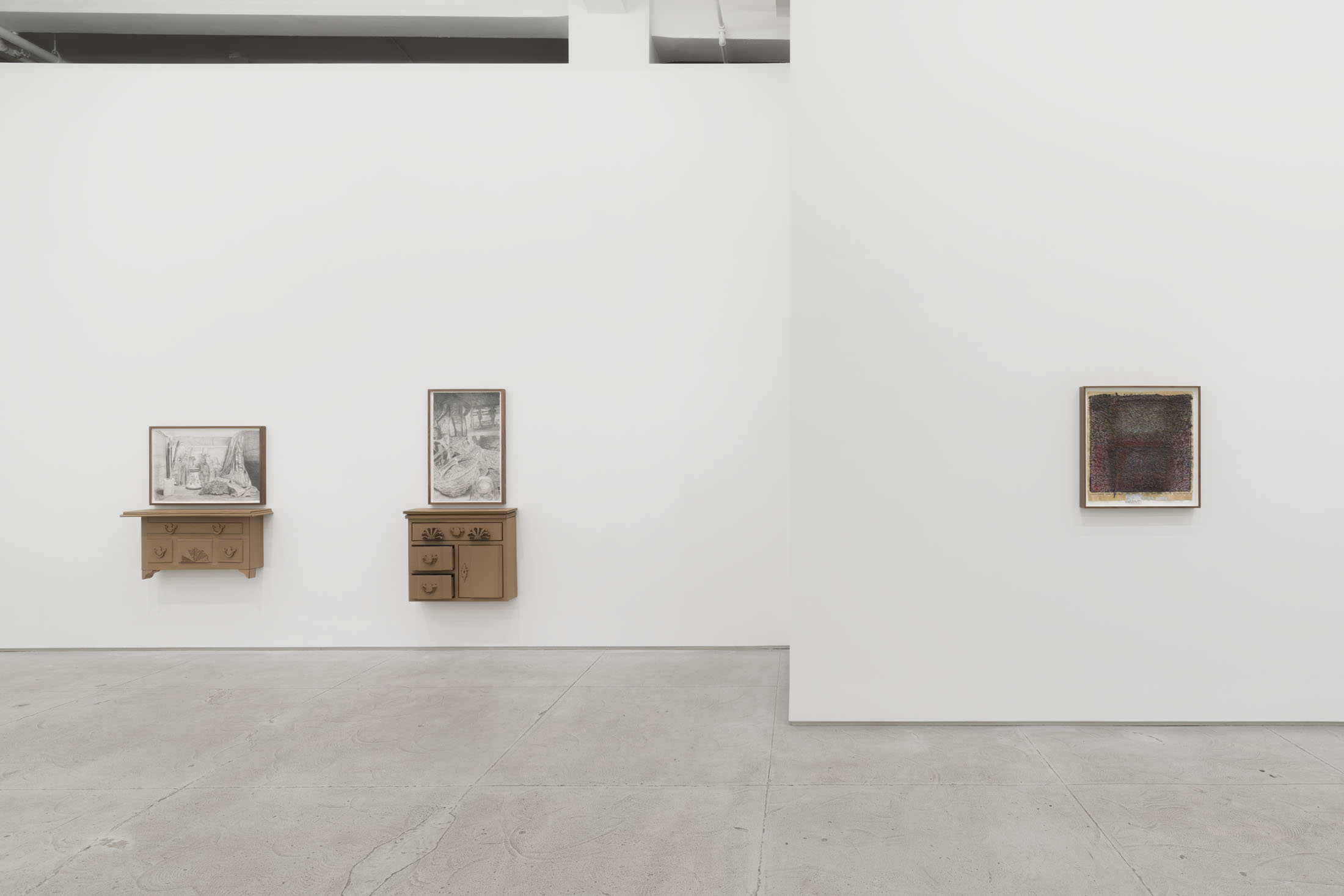
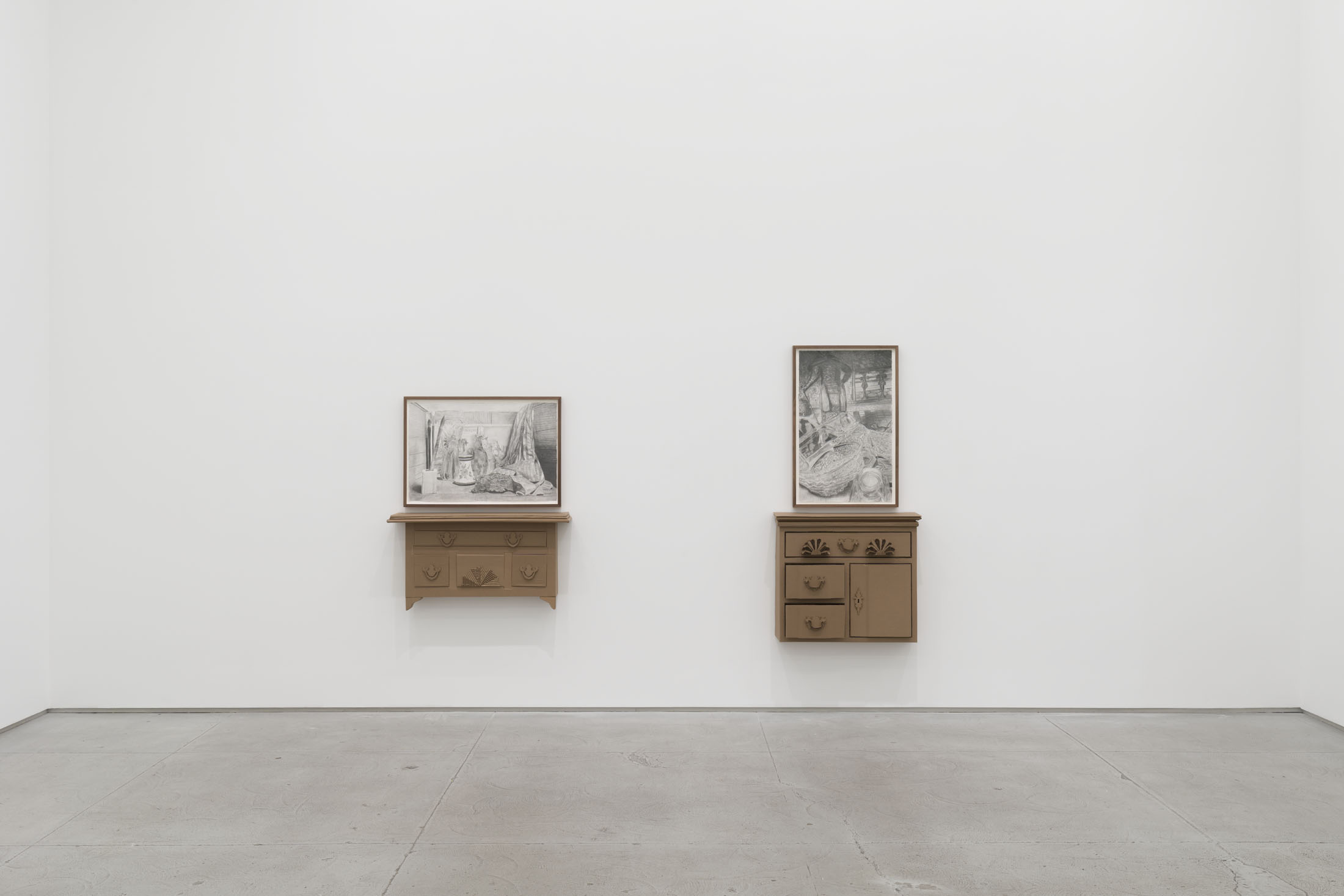
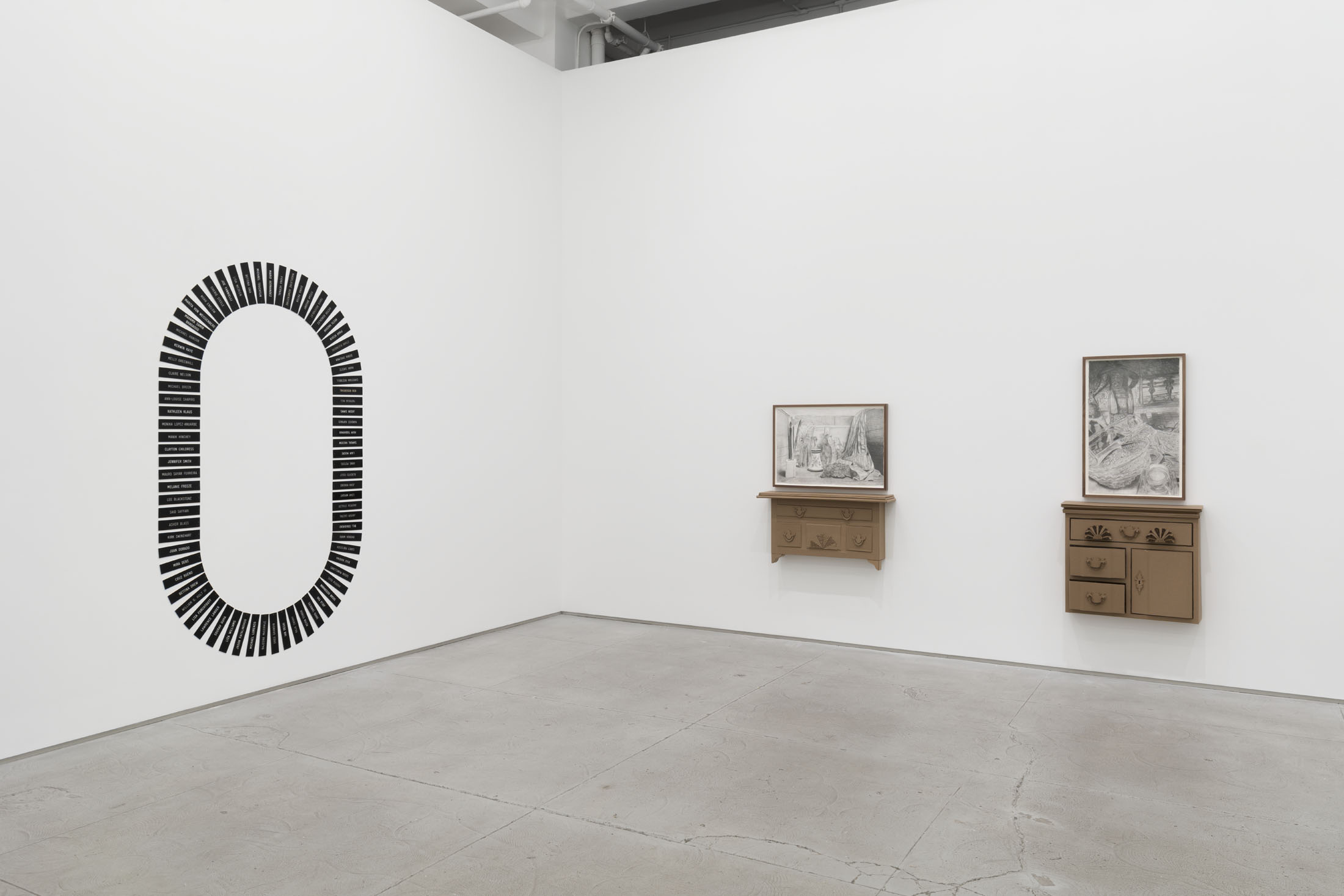
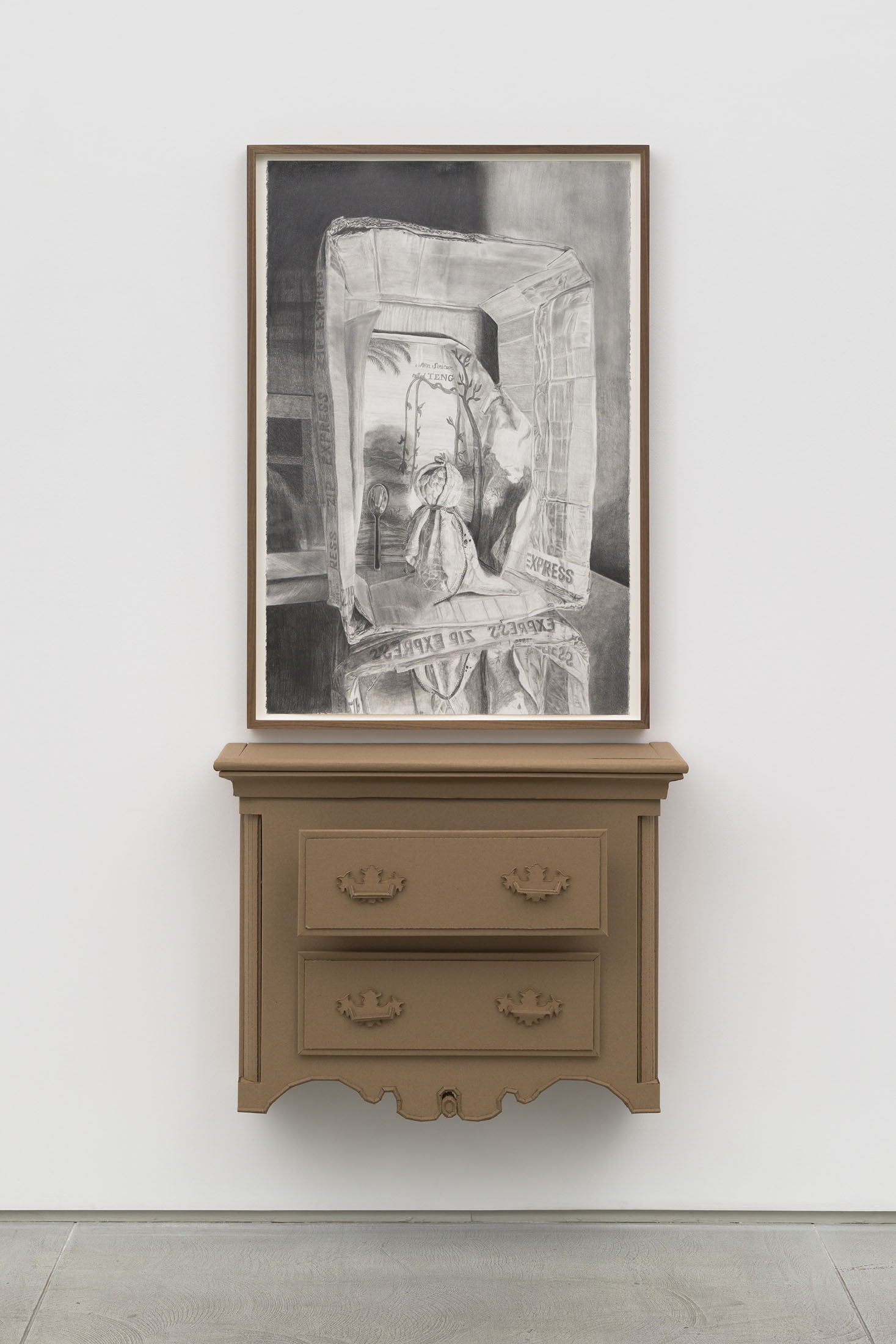
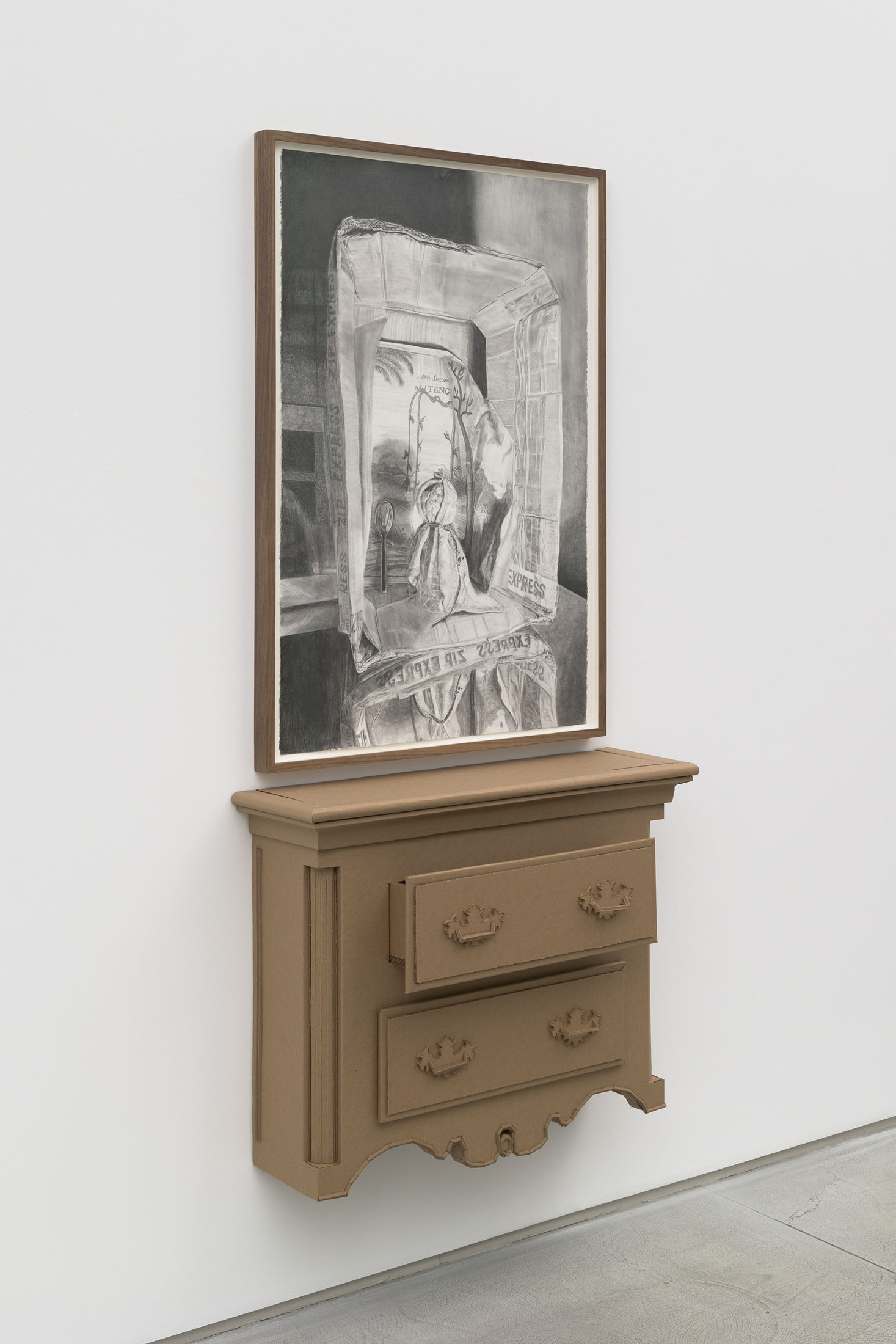
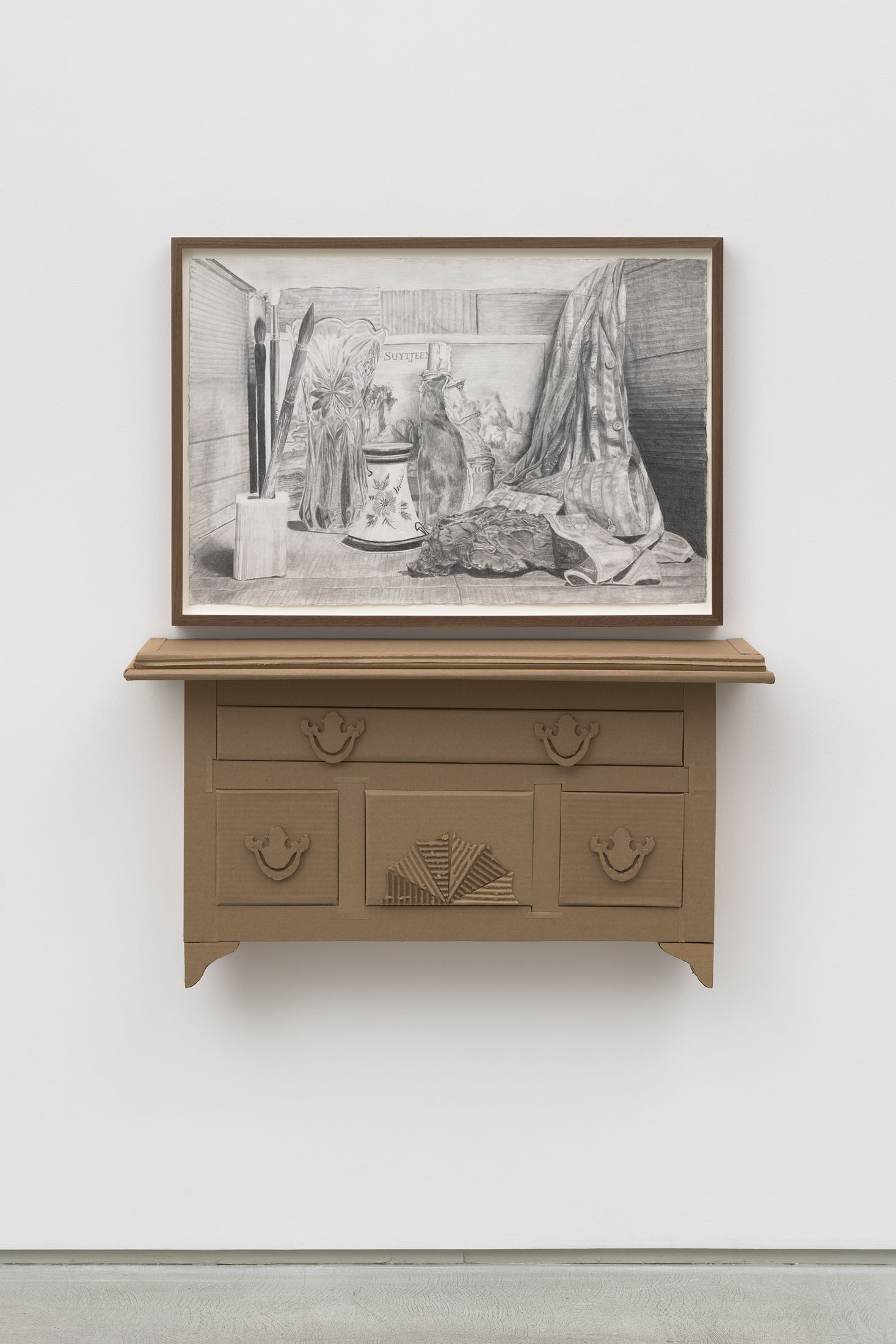
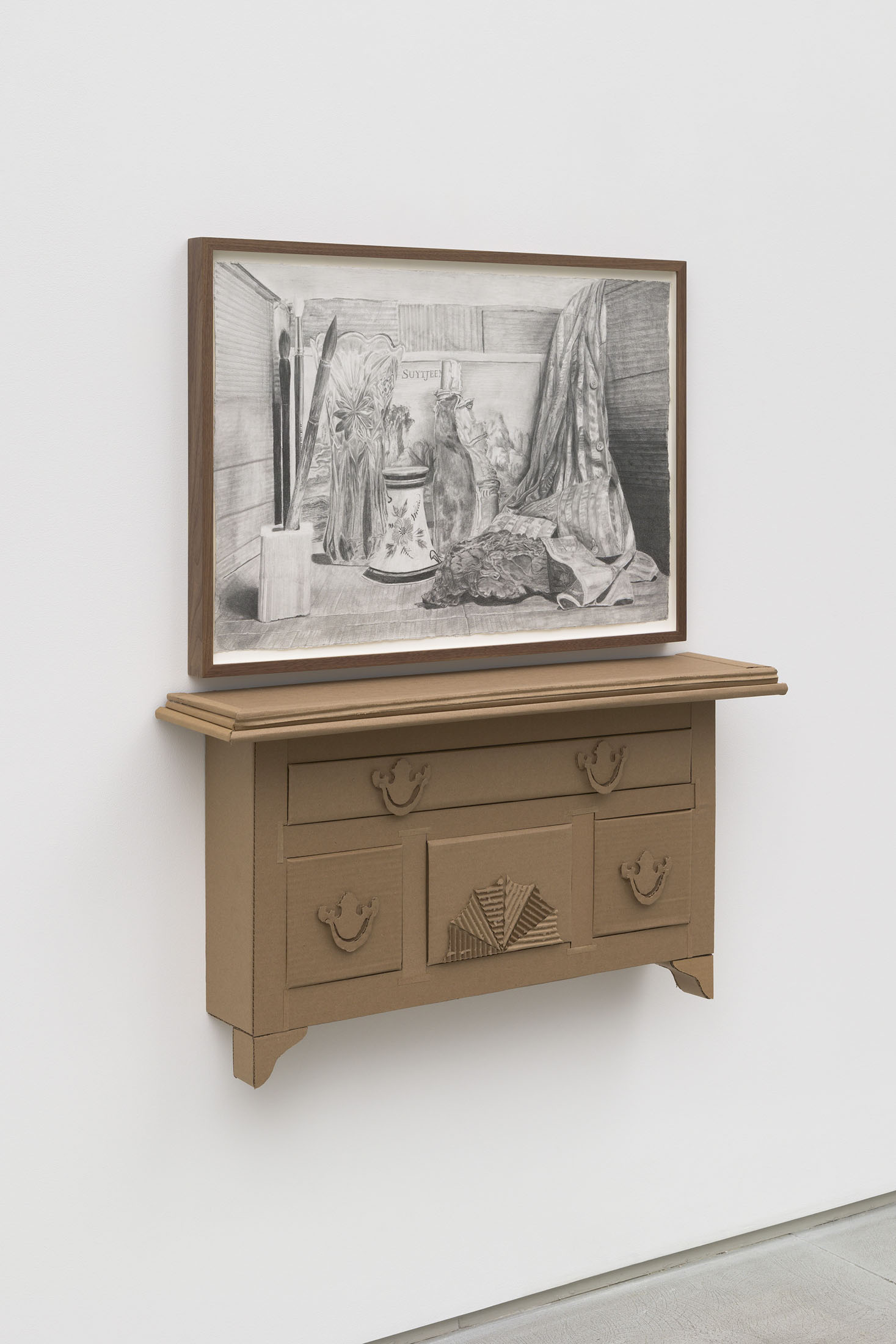
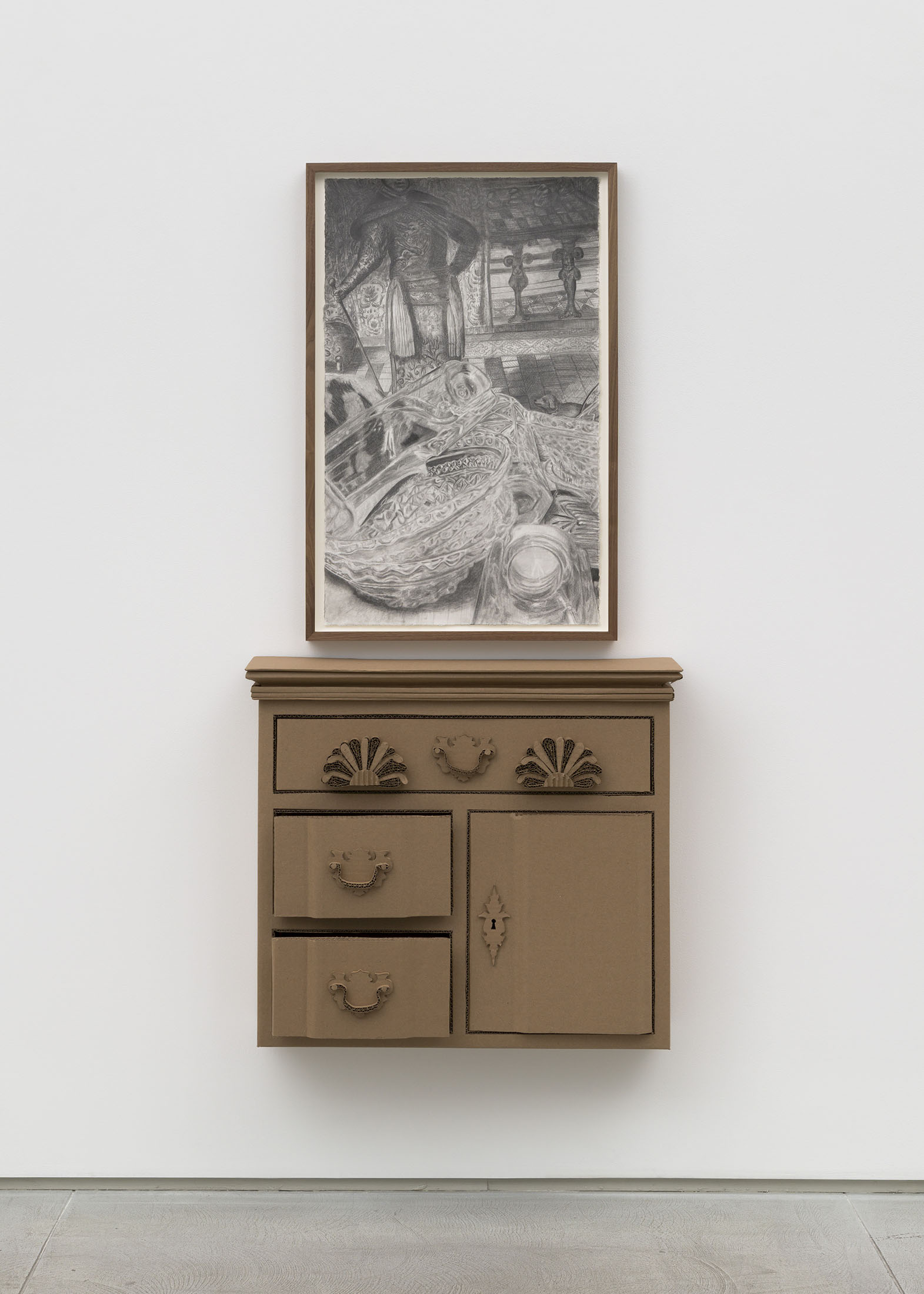
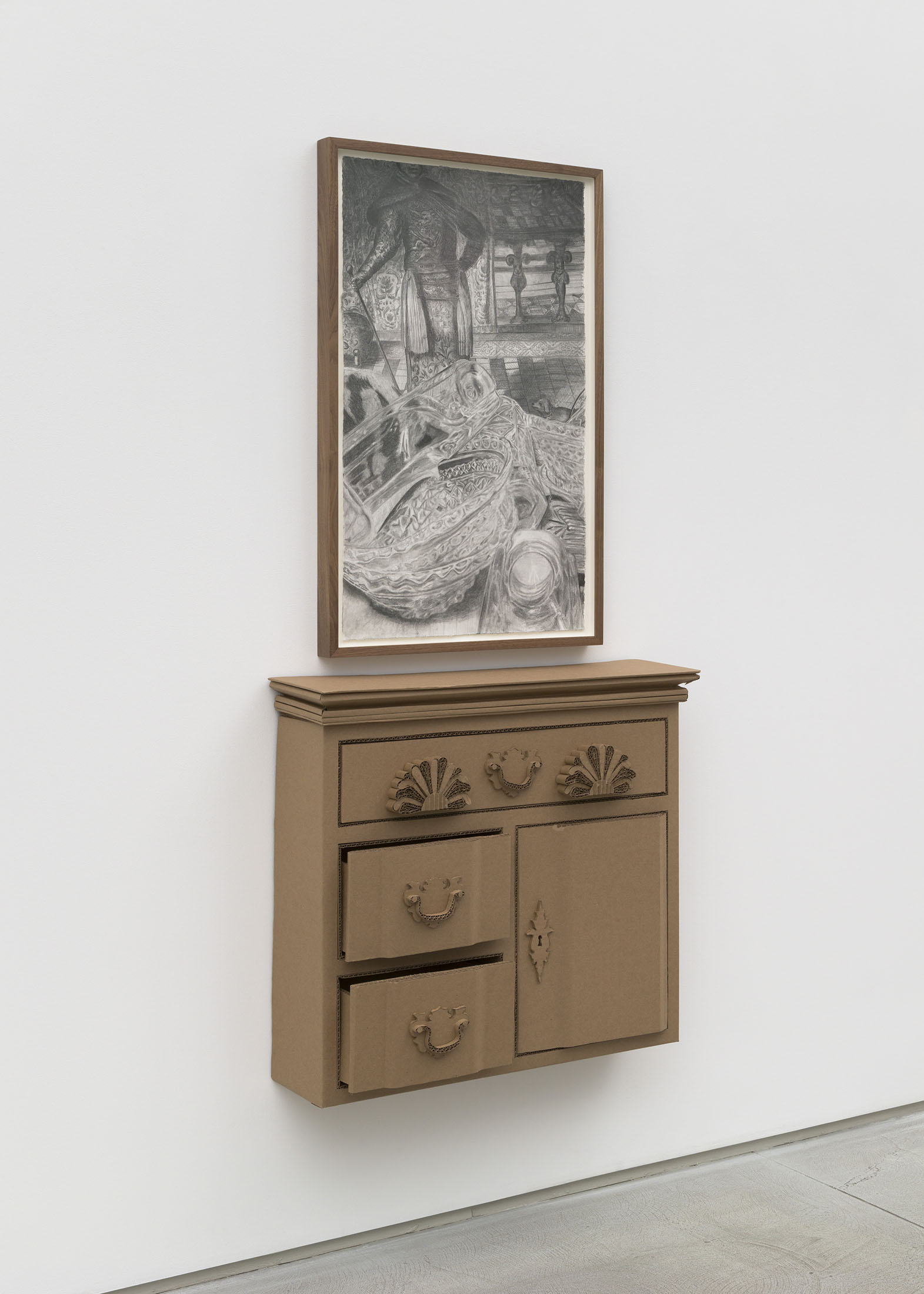
The collective CFGNY often works with bootlegged objects – faked, copied, improvised, ‘off’ – as a starting point for accessing skewed visions of cultural identity. For a new series, the collective has been creating still life pencil drawings of dollar store “Made in China” homewares, knick-knacks, and toys, rendered by multiple members of the group, who pass them amongst each other over the course of several weeks. Made in conversation with the Dutch still life tradition, the drawings also draw in elements that relate to the VOC (the Dutch East India Company), which carried out devastating colonial business in Asia, sending ‘luxury’ goods back to Europe. The drawings include fragments of an illustrated 17th-century VOC travelogue, which was partly a record and partly an invention created by its publishers and became the basis of Chinoiserie motifs prevalent throughout European and American design culture. The drawings are paired with cardboard sculptures based on objects on display in the American Wing of the Metropolitan Museum of Art, a reminder of the packaging materials that constitute one of the basic materials of contemporary trade and the institutional afterlife of business capital.
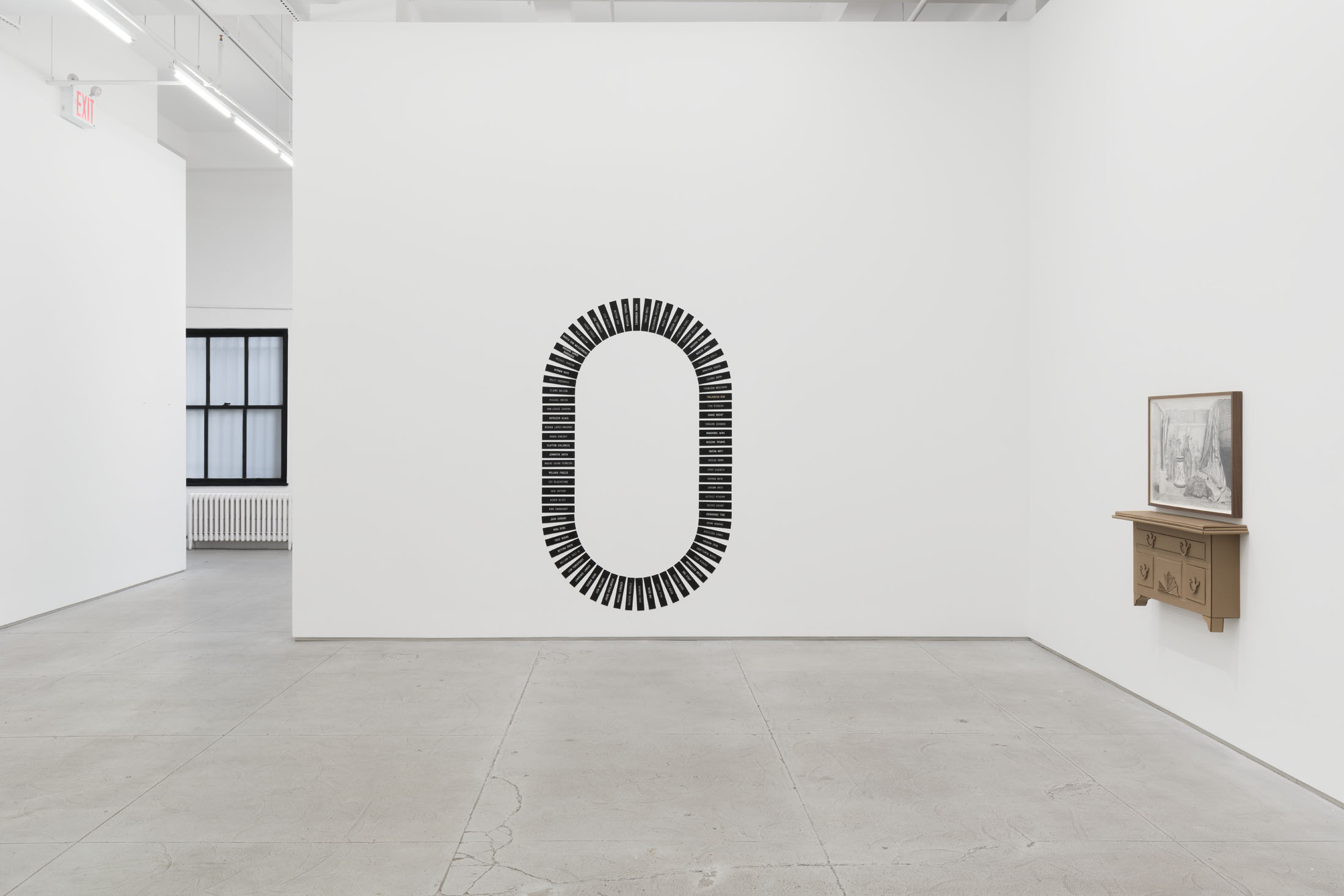
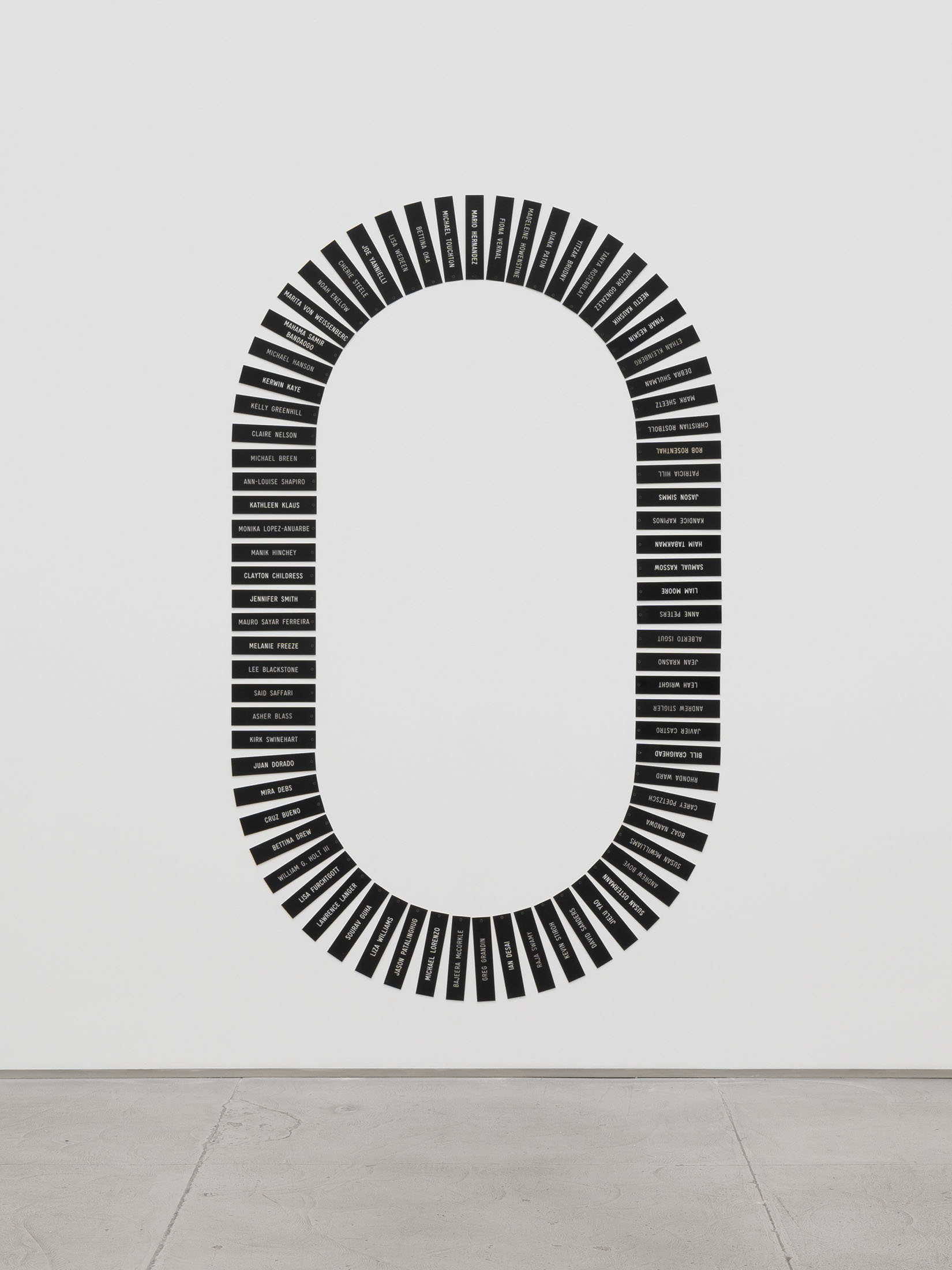
Salim Green uses strategies of abstraction, evasion, and concealment to work through and play with relational politics. In recent exhibitions like Dark Forest Theory and DFT 2025, he’s considered how speculative social theories can be a generative framework to consider Blackness and survival. As part of a class he was teaching at Wesleyan University, he and his students elected to adopt new names, registering the way that one’s behavior would often change to suit a new alias. Green himself went by Professor Shifty, an avatar that he has recently begun to employ selectively as a proxy to make public appearances and in a recent film. When he found a set of decommissioned name tags featuring the names of Wesleyan professors in the college basement, they began to suggest the possibility of other possible avatars and collaborators. Green’s paintings Fade (my) thy neighbor (2025) and TBA (2025) are made on felt, a ground that furs and fuzzes clear lines or distinctive imagery, creating hazed images and forms. Shifty is to Green what the paintings are to the various reference points and textures that inspire the works: reference a lived experience but conceal and protect their subjectivity and, in turn, open them to further possibilities.
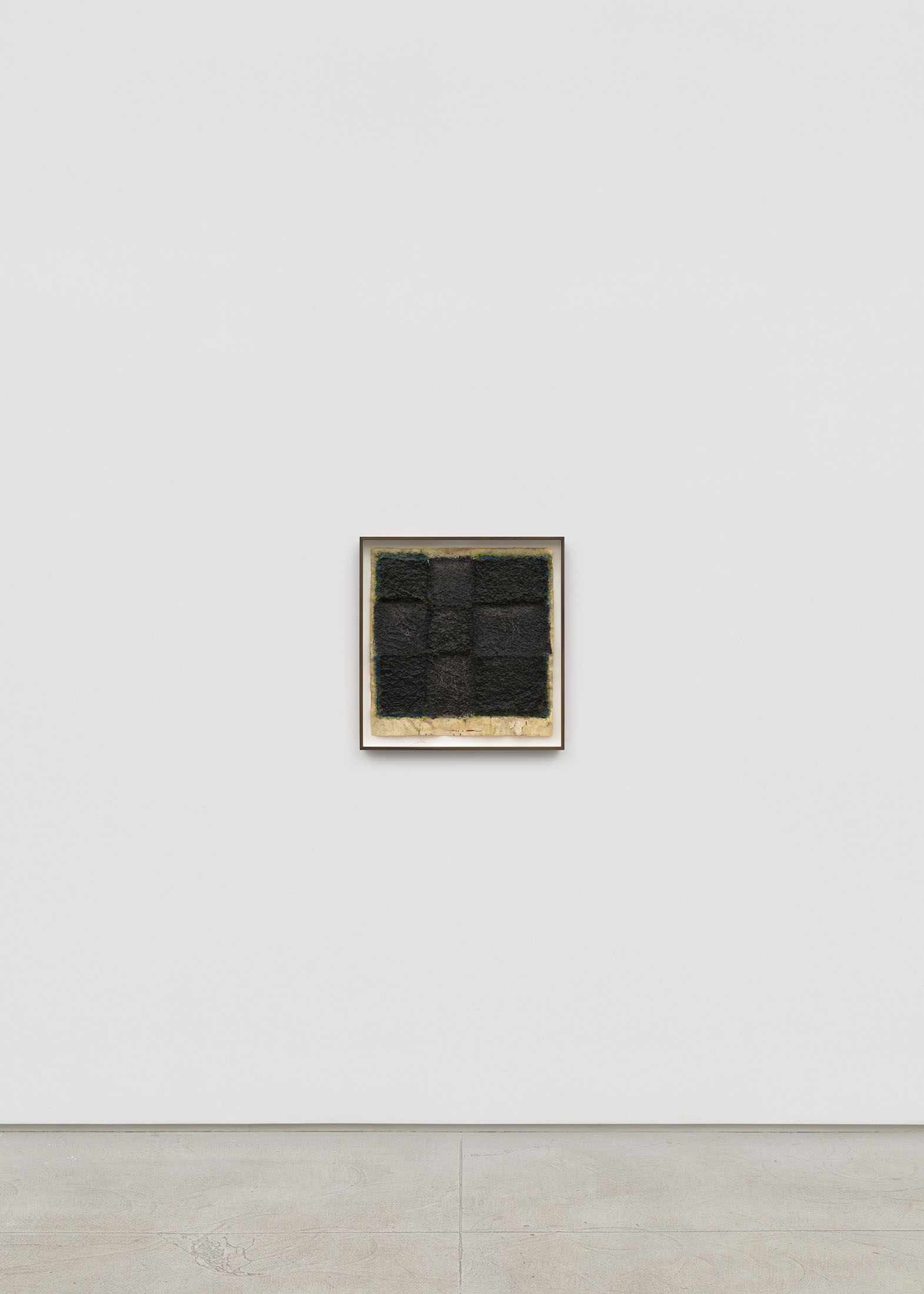
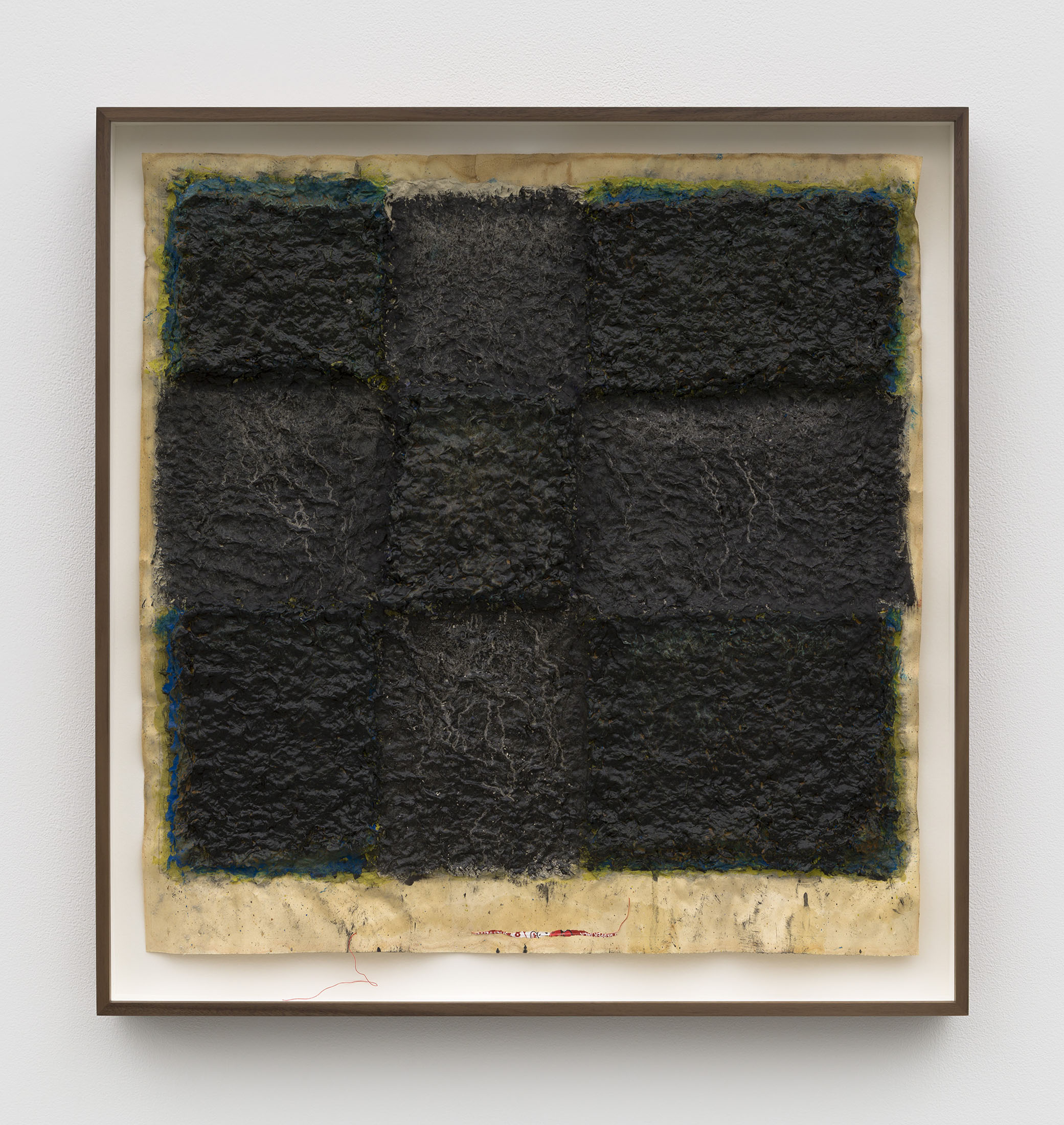
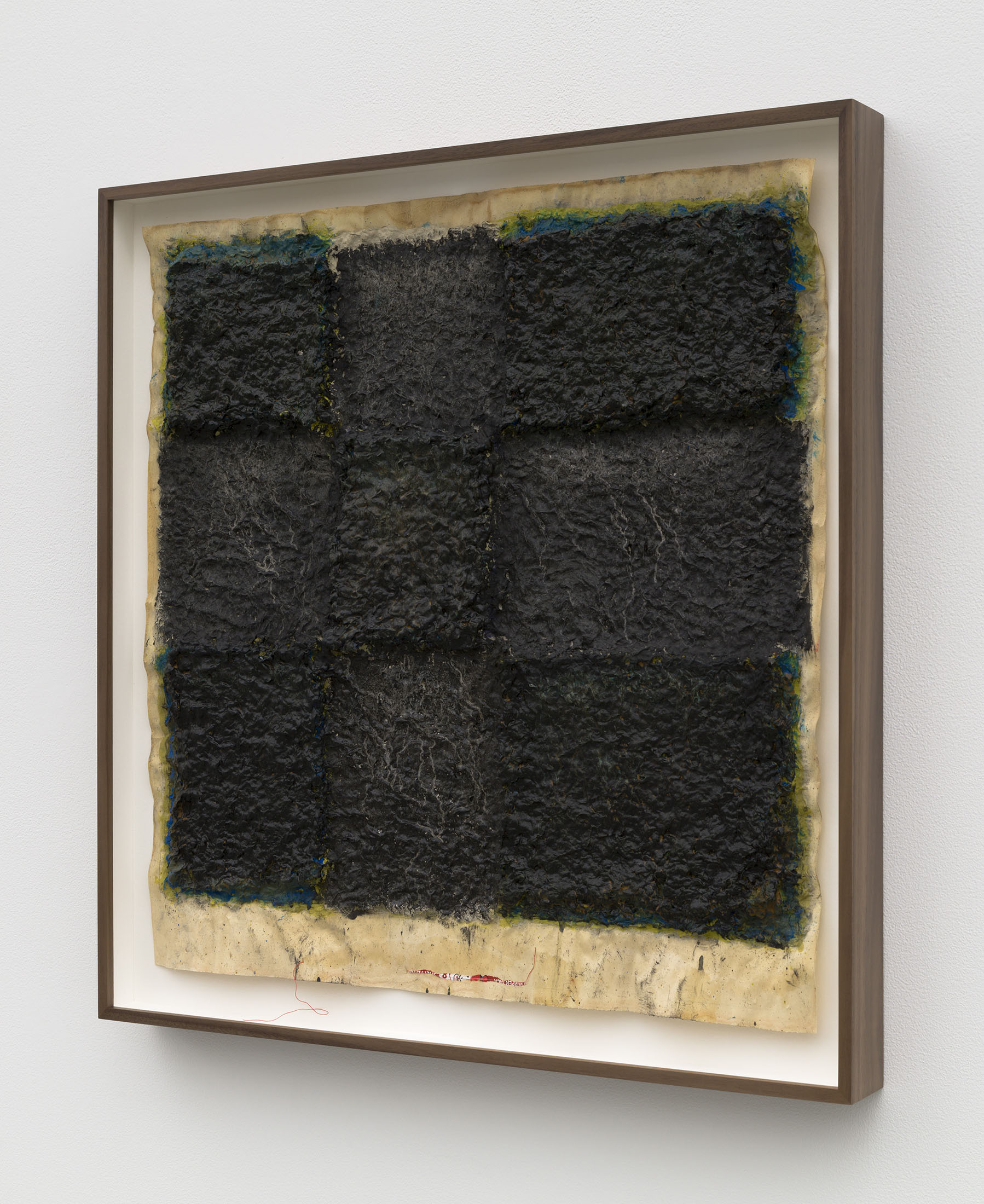
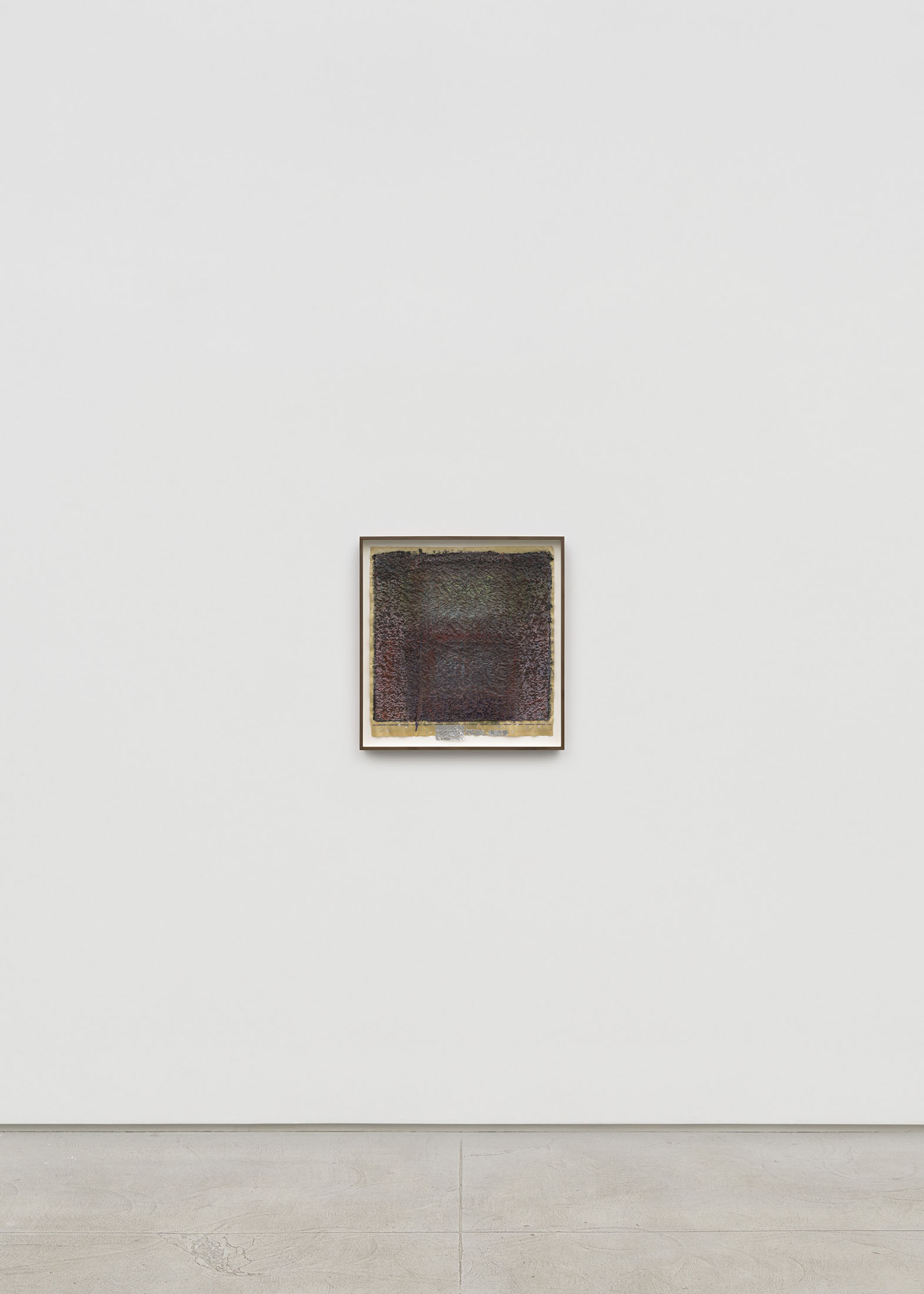
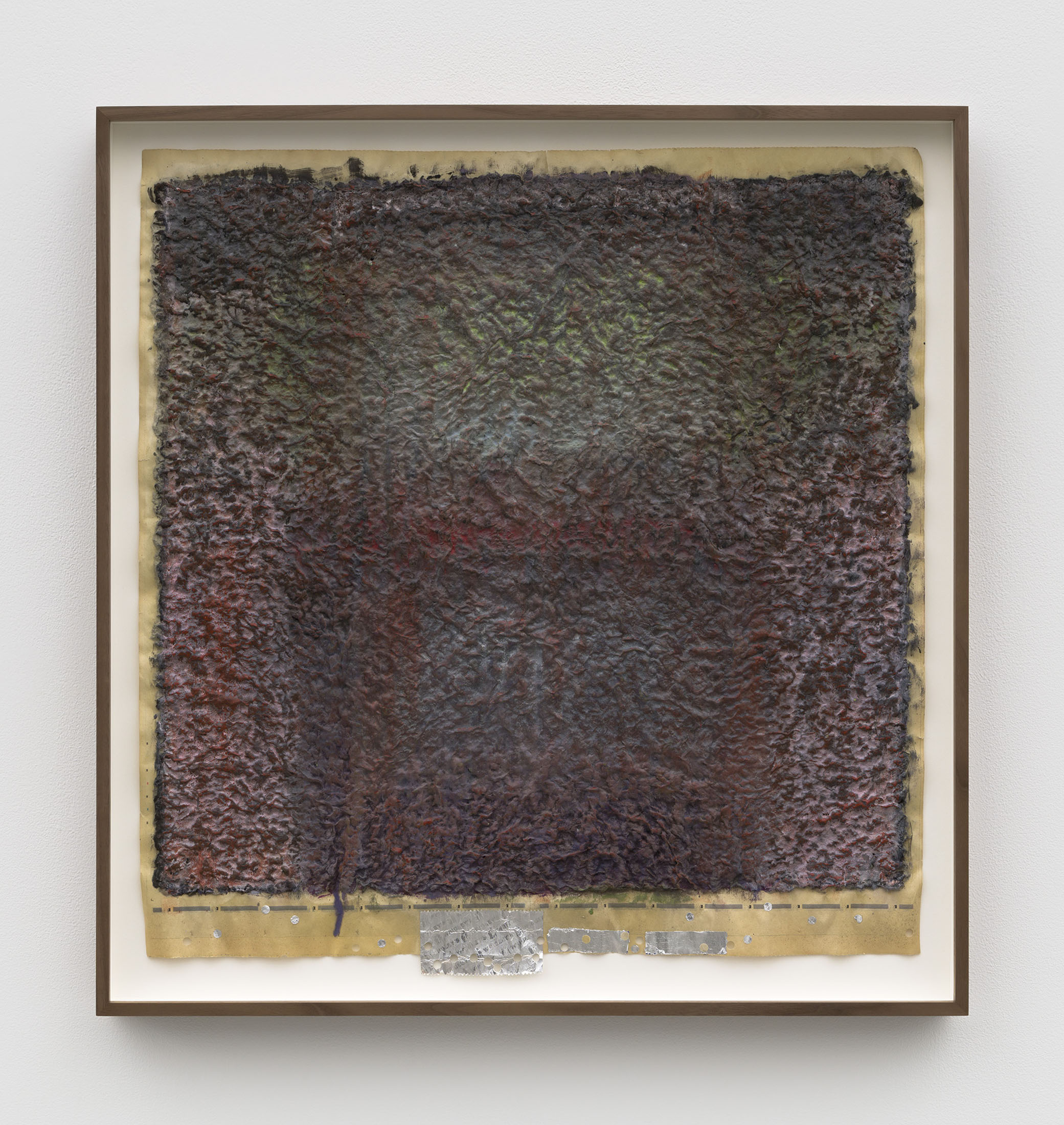
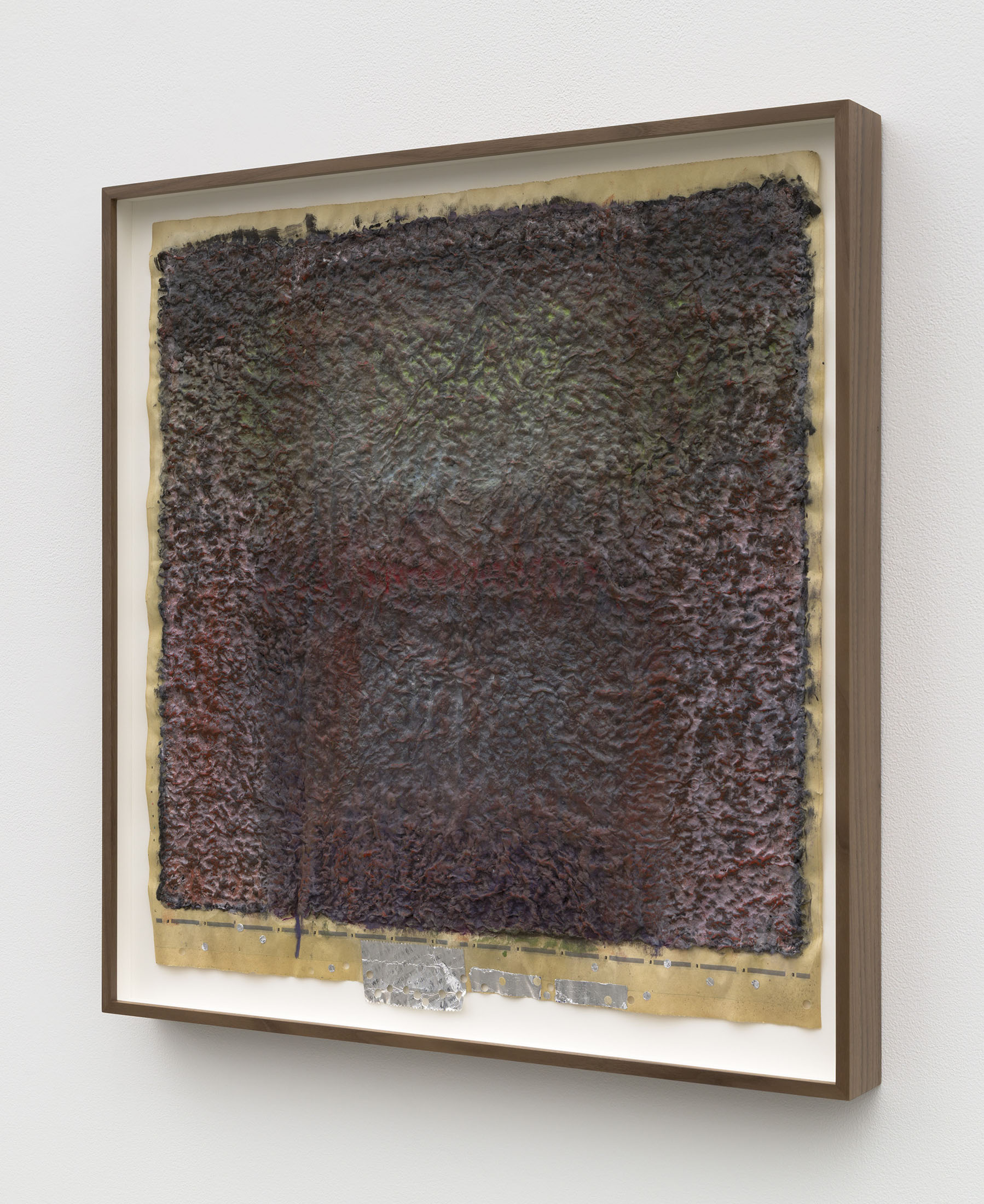
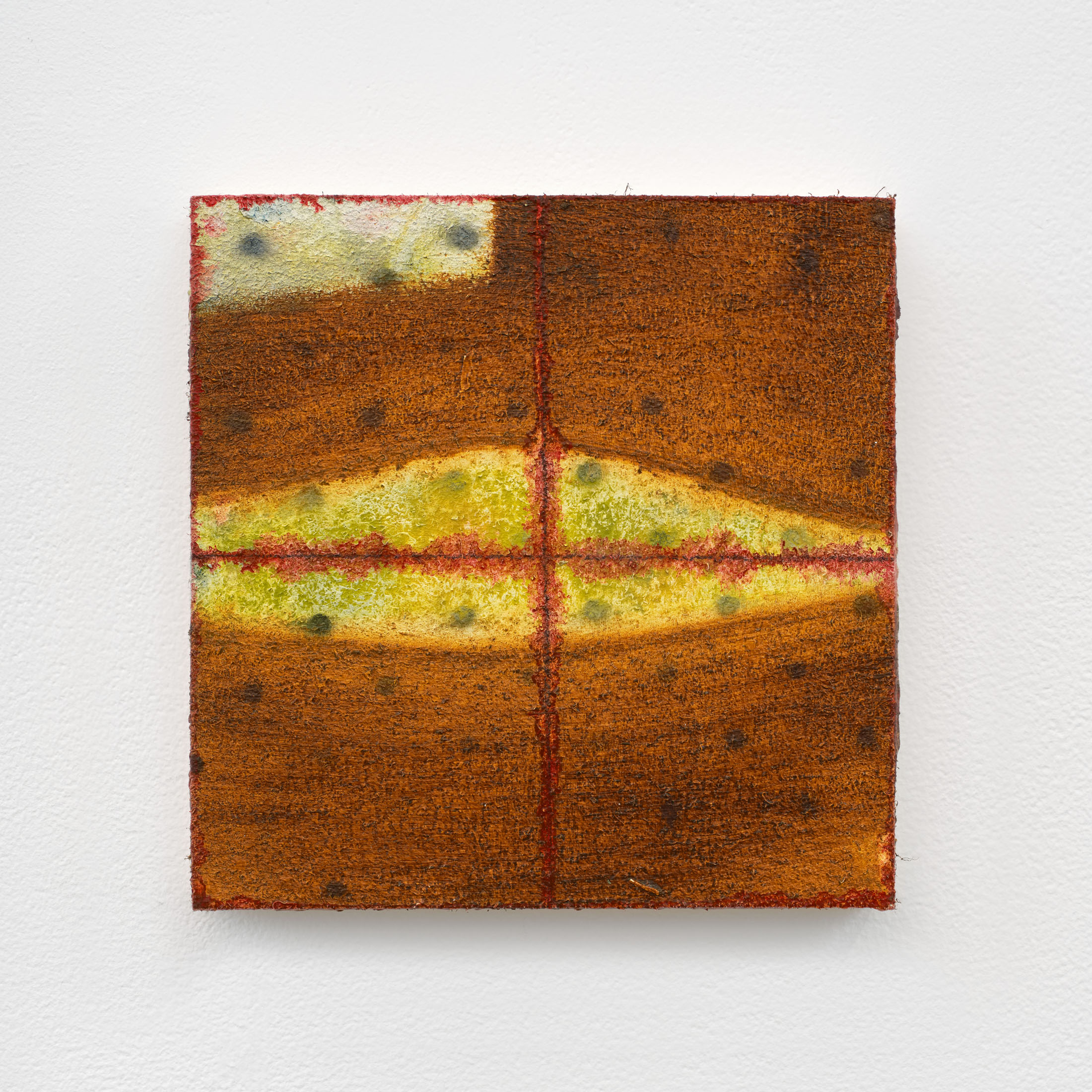
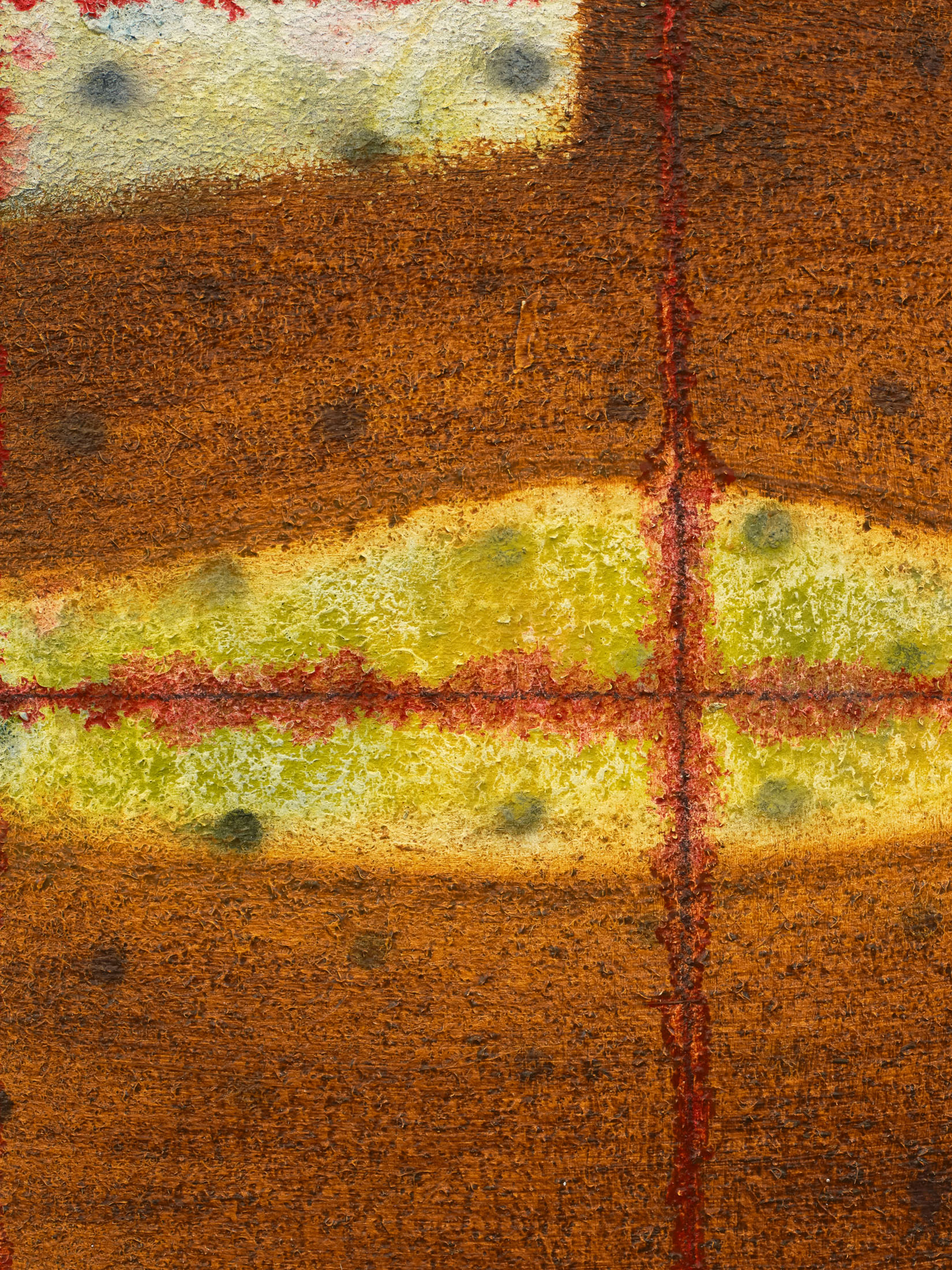
Magnus Maxine Flowers has created a longstanding series of paintings in which she blends down the interior pages of a daily newspaper in a food processor and then pours it onto the publication’s front page, reconstituting it as a sculptural substrate for her paintings. Working with newspapers from dates that hold particular significance to her, she also affixes small everyday mementos to the paintings when they are finished, such as fruit stickers from her daughter’s snacks or wrappers from packs of gum. Drawing on historical constraint methods for painting, these works also summon consumption, digestion, and care, as well as private languages, daily rituals and nonverbal communications that might be shared between a parent and child, or between the artist and herself.
CFGNY works in Brooklyn, NY. They have had solo exhibitions at Hot Wheels, London, UK; Contemporary Art Gallery, Vancouver, CA; Hammer Museum, Los Angeles, CA; Japan Society, New York, NY; Bel Ami, Los Angeles, CA; 47 Canal, New York, NY; among others. Their work and performance have been shown in group exhibitions at Chapter NY, New York, NY; The Cooper Hewitt, New York, NY; ILY2, Portland, OR; Pratt Manhattan Gallery, New York, NY; Somerset House, London, UK; Asia Art Achieve in America, Brooklyn, NY; Helena Anrather, New York, NY; X Museum, Beijing, CN; RISD Museum, Providence, RI; Kayokoyuki, Tokyo, JP; Emily Harvey Foundation, New York, NY; MoMA PS 1, Queens, NY; among others. CFGNY is composed of Daniel Chew (b. 1998, San Jose, CA), Kirsten Kilponen (b. 1987, Chicago, IL), Ten Izu (b. 1992, Oakland, CA), and Tin Nguyen (b. 1988, Attleboro, MA).
Michaela Bathrick (b. 1992 Oakland, CA) is a sculptor living in New York City. Bathrick completed her BA at UCLA in 2015, attended the Whitney Independent Study Program in 2020, and received her MFA from Bard in 2025. In 2024 Bathrick has had solo exhibition at Louis Reed Gallery, New York. In 2026 she will have a solo show at SculptureCenter as part of their In Practice series. Her work has been shown in group exhibitions at Galerie Timonier, New York, NY; Post Times, New York, NY; KDR, Miami, FL; One Trick Pony Gallery, Los Angeles, CA; White Columns, New York, NY; among others.
Magnus Maxine Flowers (b. 1985, Juneau, AK) lives and works in Pasadena, CA. She received her BFA from California Institute of the Arts, Valencia, CA in 2013, and is currently pursuing her MFA at University of California, Los Angeles, CA (expected 2027). Flowers has had solo exhibitions at King’s Leap, New York, NY; Sebastian Gladstone, Los Angeles, CA; Stanley’s, Los Angeles, CA; among others. Her work has been shown in group exhibitions at Chapter NY, New York; Silke Lindner, New York, NY; Laurel Gitlen, New York, NY; Michael Benevento, Los Angeles, CA; Night Gallery, New York, NY; David Zwirner, New York, NY; Sebastian Gladstone Hollywood, Los Angeles, CA; among others.
Salim Green (b. 1996, Middletown, CT) lives and works between Los Angeles, CA and Middletown, CT, where he is currently the Sullivan Fellow in Art at Wesleyan University. Green earned a BA from Wesleyan University in 2020 and an MFA from the University of California Los Angeles in 2024. Green’s work has been exhibited in solo and group exhibitions at Chapter NY, New York, NY; Société, Berlin, DE; Josh Lilley, London, UK; François Ghebaly, Los Angeles, CA; Room 3557, Los Angeles, CA; SculptureCenter, New York, NY; Bellyman, Los Angeles, CA; Stony Island Arts Bank, Chicago, IL; Fábrica, Mexico City, MX; among others. His work is included in the collections of the Getty Research Institute, The Kinsey Collection and the Tyler School of Art and Architecture, Temple University.
Rosario Zorraquín (b. 1984, Buenos Aires, Argentina) lives and works in New York. Zorraquín studied at the Universidad Nacional de Arte, Buenos Aires, ARG and was a Beca Kuitca Scholar at the Universidad Torcuato di Tella, Buenos Aires, ARG. Her work has been exhibited at Hessel Museum of Art, Annandale-On-Hudson, NY; Americas Society, New York, NY; SIC art space, Helsinki, FI; Kurimanzutto Gallery, New York, NY; Kraupa-Tuskany Zeidler Gallery, Berlin, DE; Revolver Gallery, New York, NY; Isla Flotante Gallery, Buenos Aires, ARG; Museo Nacional de Bellas Artes, Buenos Aires, ARG; Museo de Arte Moderno de Buenos Aires, Buenos Aires, ARG. Zorraquín’s work is included in the collection of Museu d’Art Contemporani de Barcelona, Barcelona, SP; Museo de Arte Moderno de Buenos Aires, Buenos Aires, ARG; Taguchi Art Collection, Tokyo, JP; Ama Amoedo Collection, UY; Alma Colectiva, Guadalajara, MX; and Alliuz Collection, Guadalajara, MX.