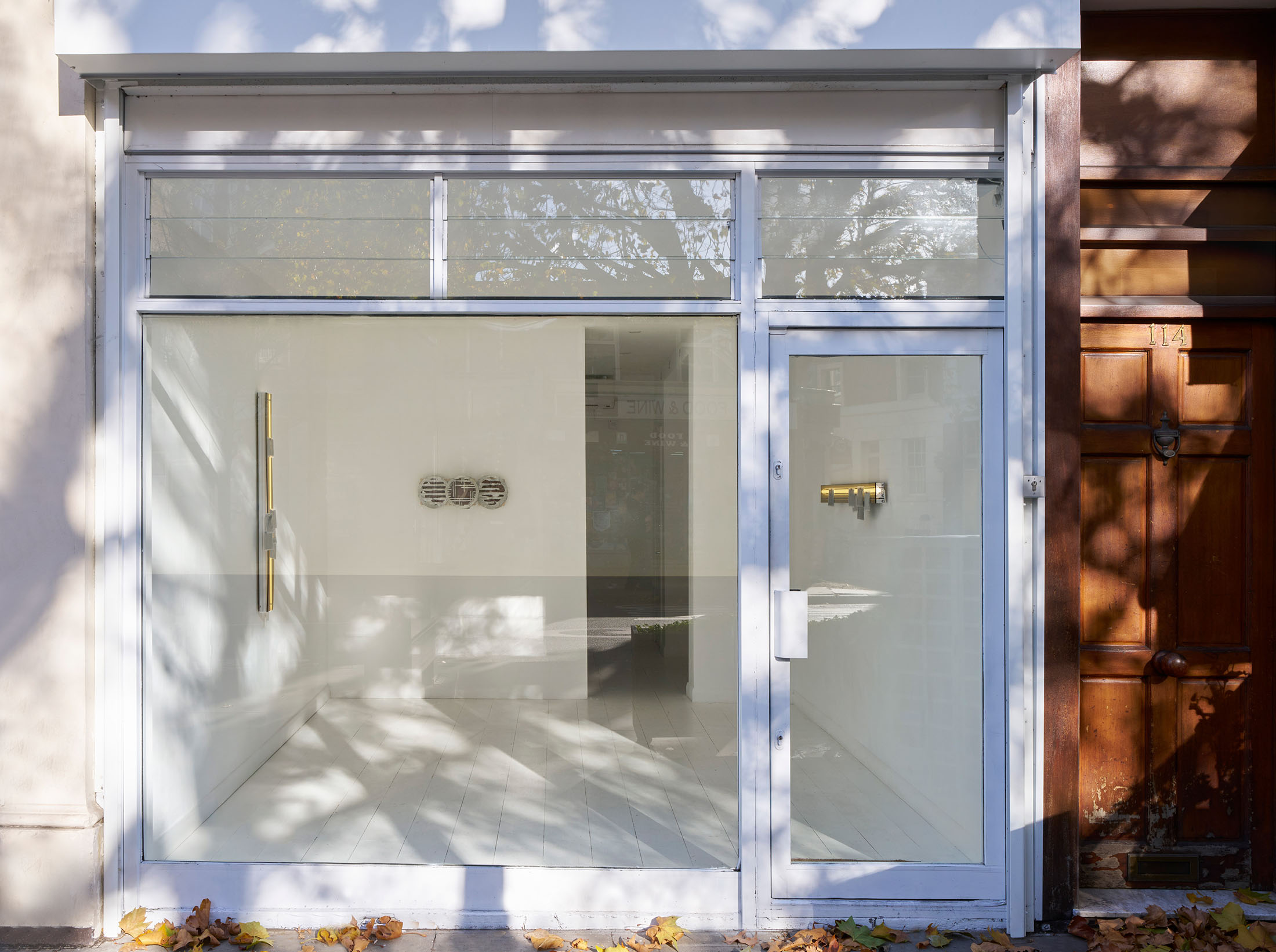
British artist Ted Le Swer (b. 1995, Nottingham) presents his first solo exhibition Soft Exit, in London. The conception of this exhibition was fuelled by the curator’s sustained interest in the future development of electronic sculpture and new-media art, as well as an exploration of how non-traditional materials and media can reshape the relationships between artworks, materiality, and ecology.
Ted’s practice brings together moving-image and sculptural processes, employing computer-generated imagery, wet photography, and the fabrication of props. His work explores how contemporary society values and negotiates its relations with ecology, examining how these diverse connections materialise, reveal, and rebel.
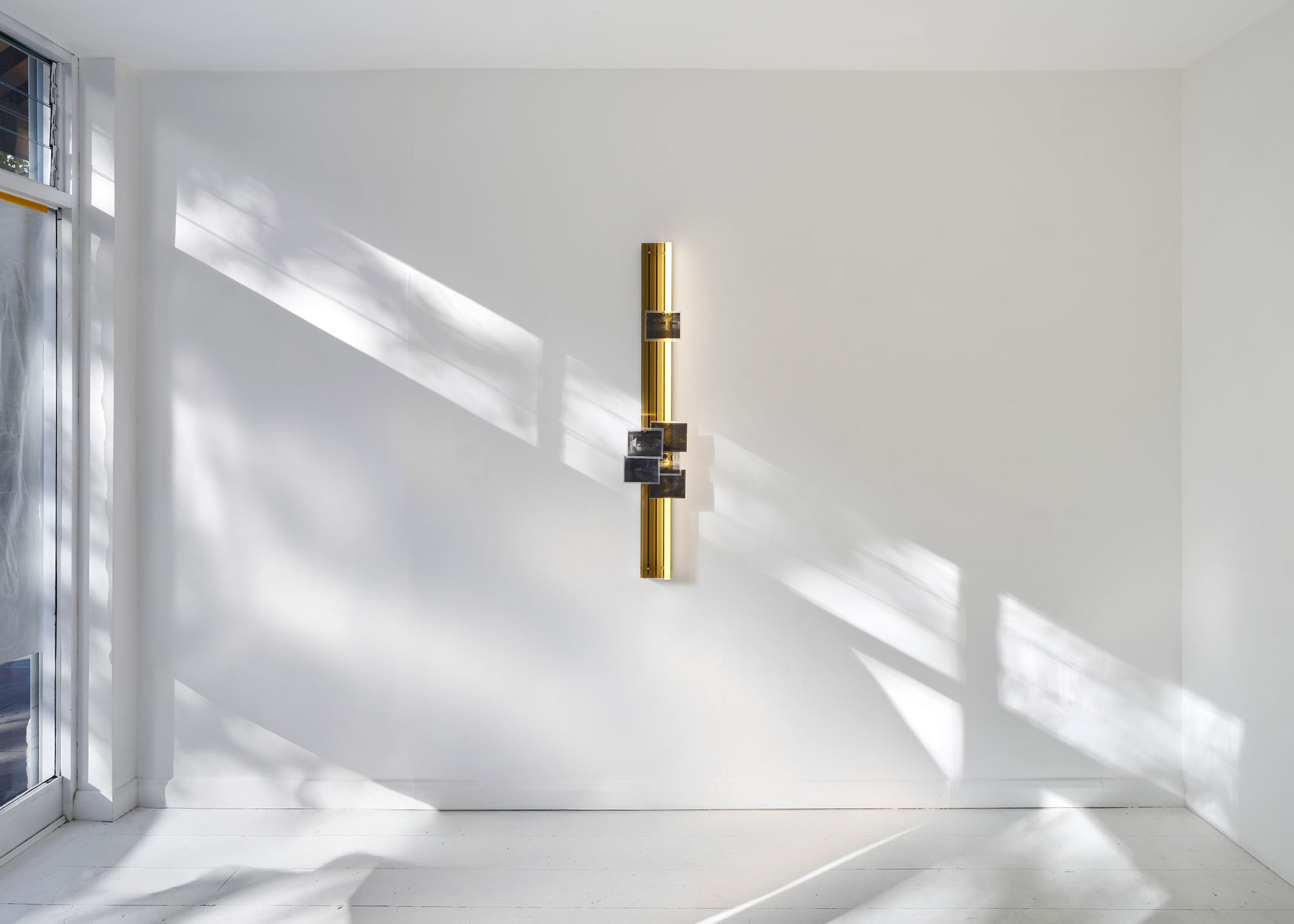
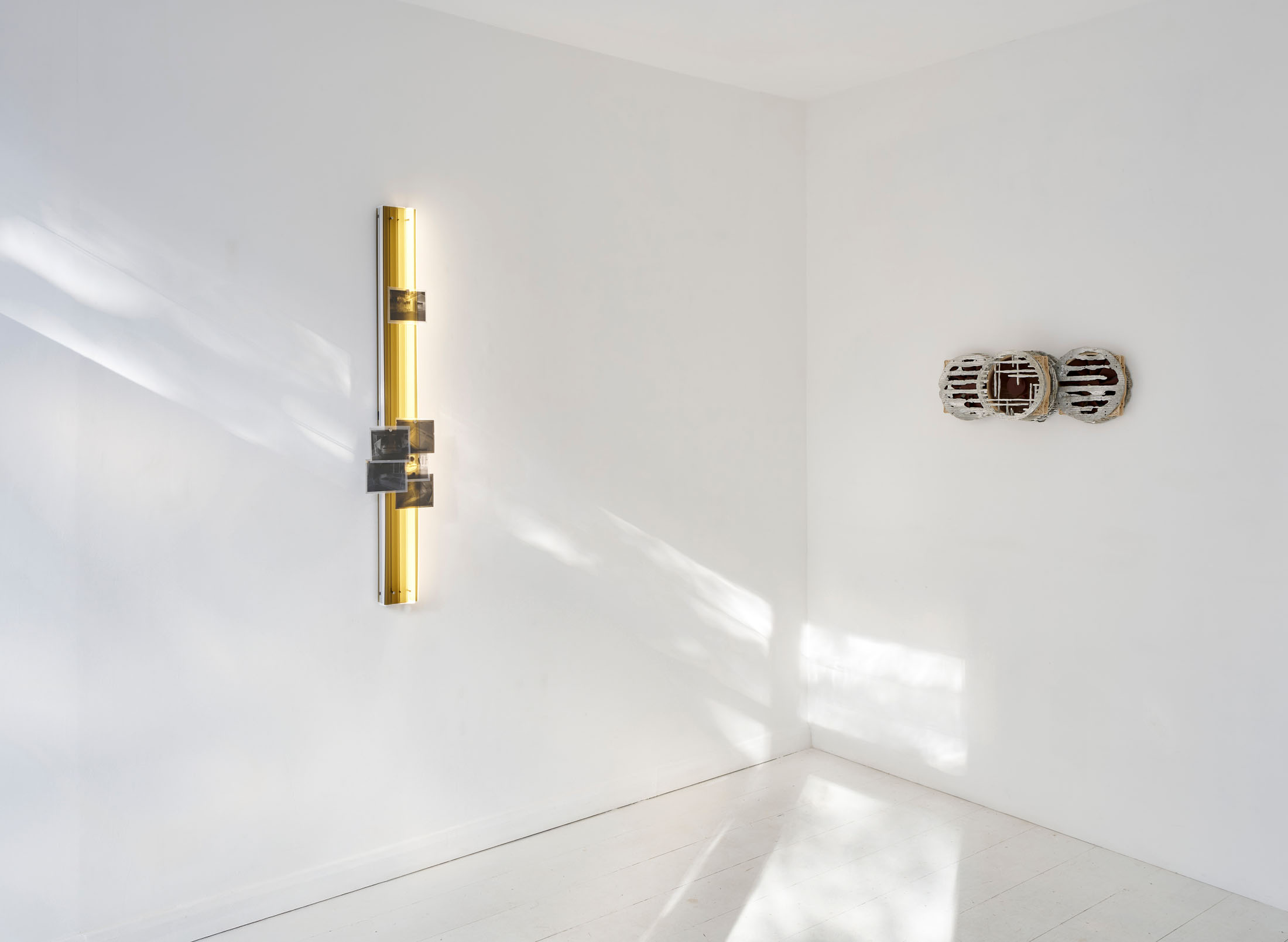
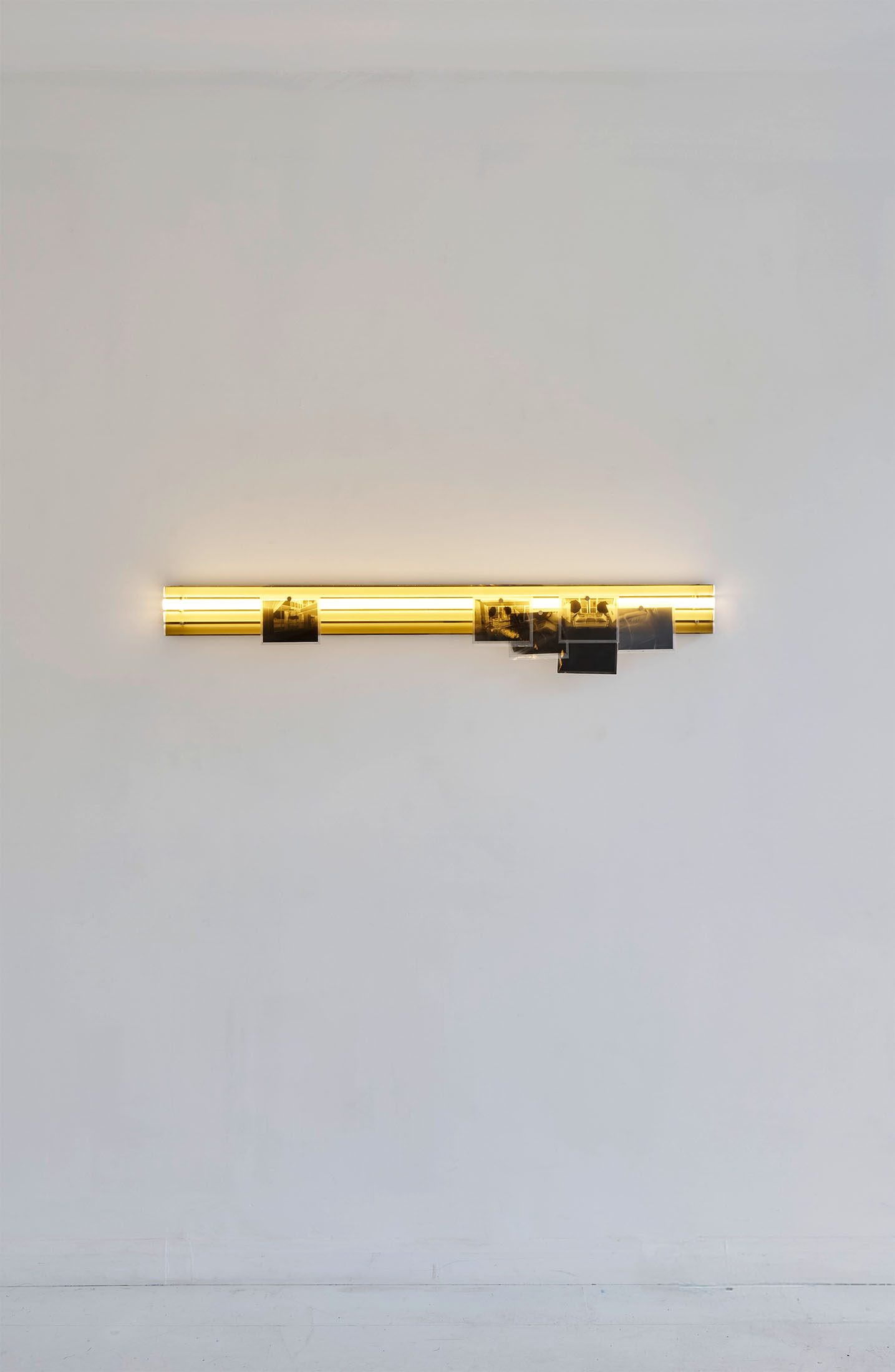
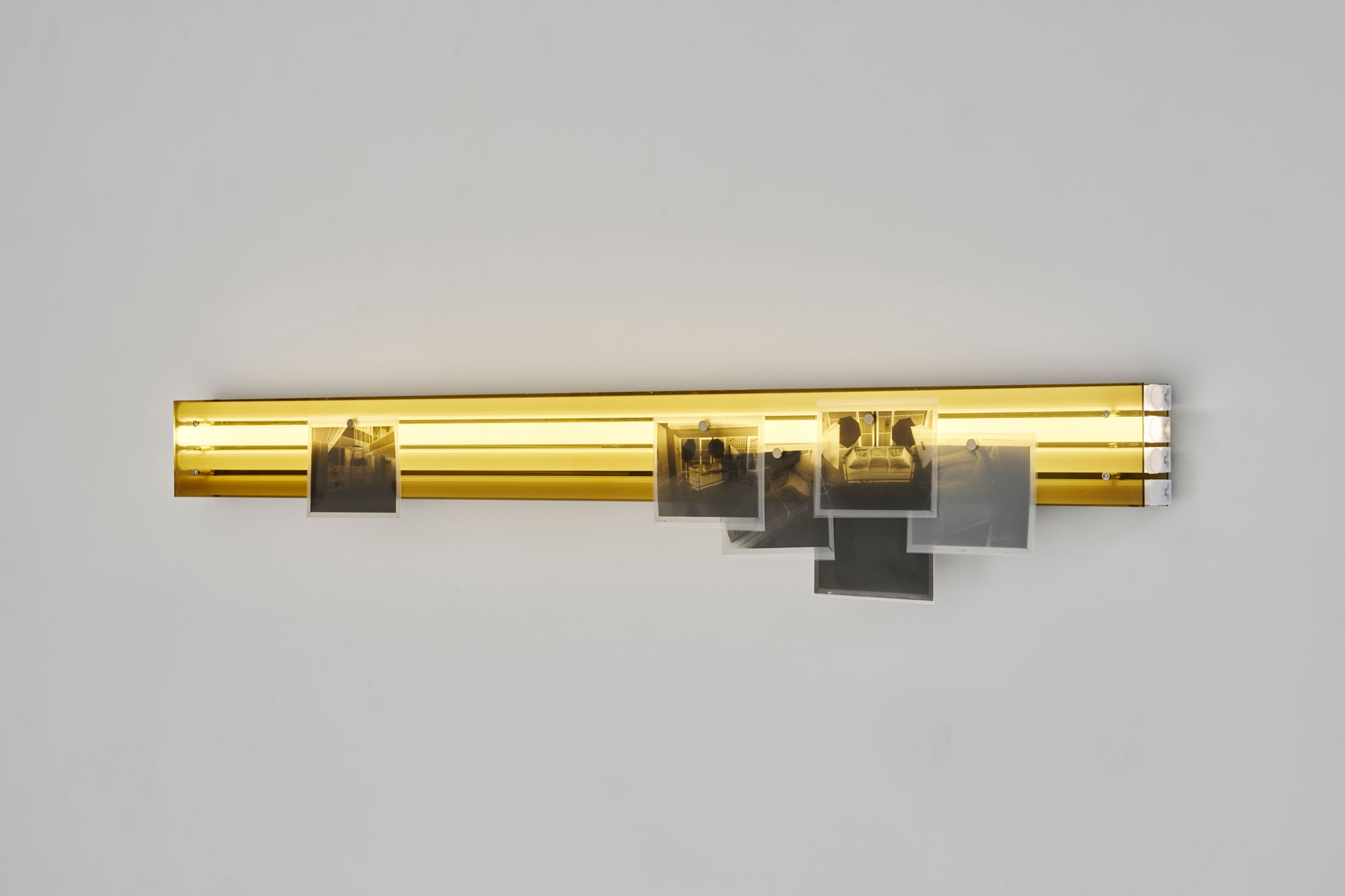
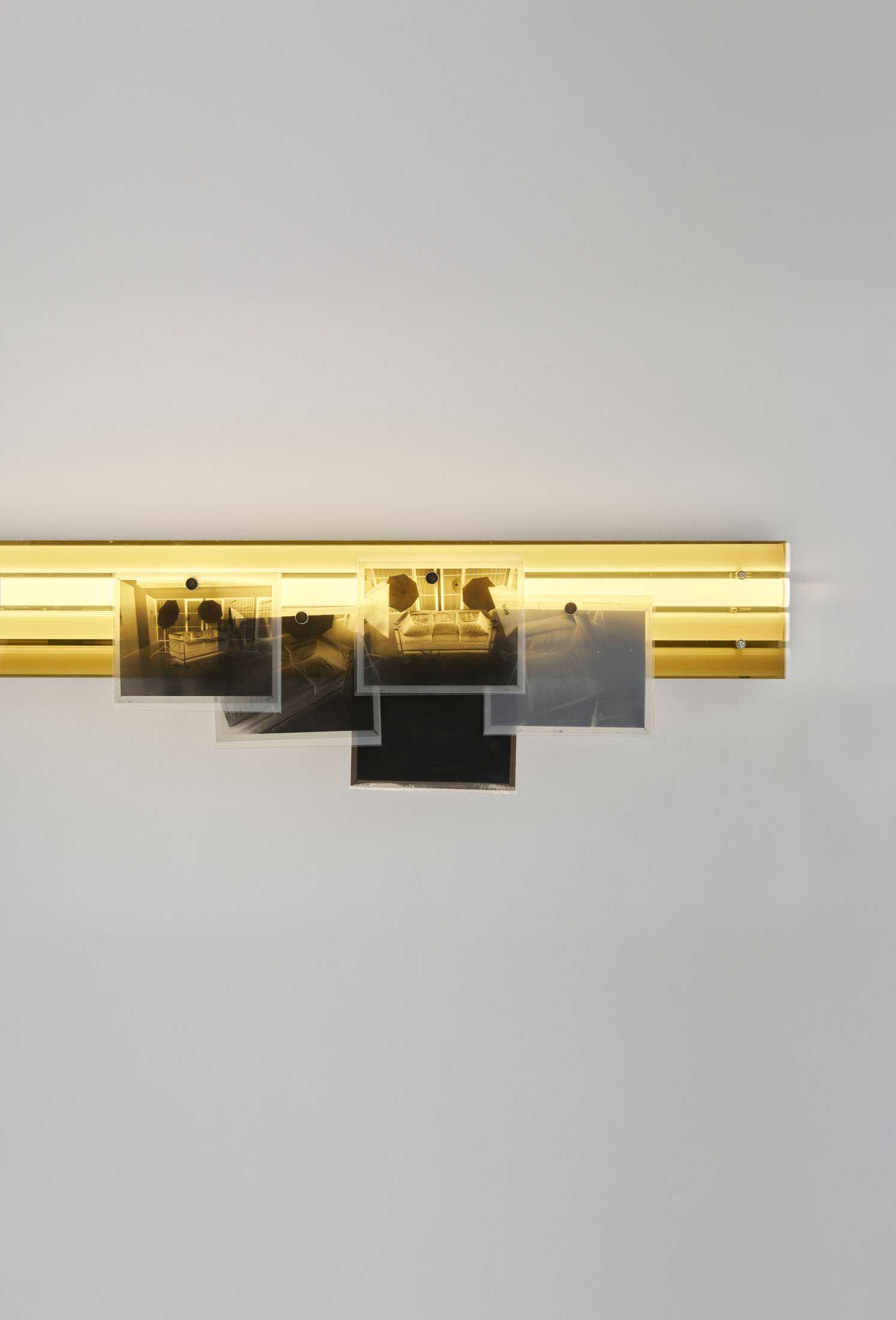
Delving into his spectrum of research, specifically on corporate ecology, Soft Exit presents a series of 4×5 film negatives captured within a discreet, custom-made cardboard camera obscura, in their analogue form and as digitised scans. The images were captured inside the world’s largest advertising conglomerate. Secretly photographed over a prolonged period of time, they capture the conglomerate’s revolving front door and, once inside, a found leather office sofa.
Through laboured hour-long exposures, the negatives offer an ambivalent gaze towards the space where global image production begins. Soft Exit considers how its material mechanics permeate estrangement through space and labour. Working with speculative imaging processes, the work attempts to inhabit and restage its inflections of dislocation. Observing the building’s material entry-point, whilst fantasising of the immaterial exits within. Gazing to create a rehearsal space where estrangement becomes not simple severance, but an elastic aperture for rebellion.
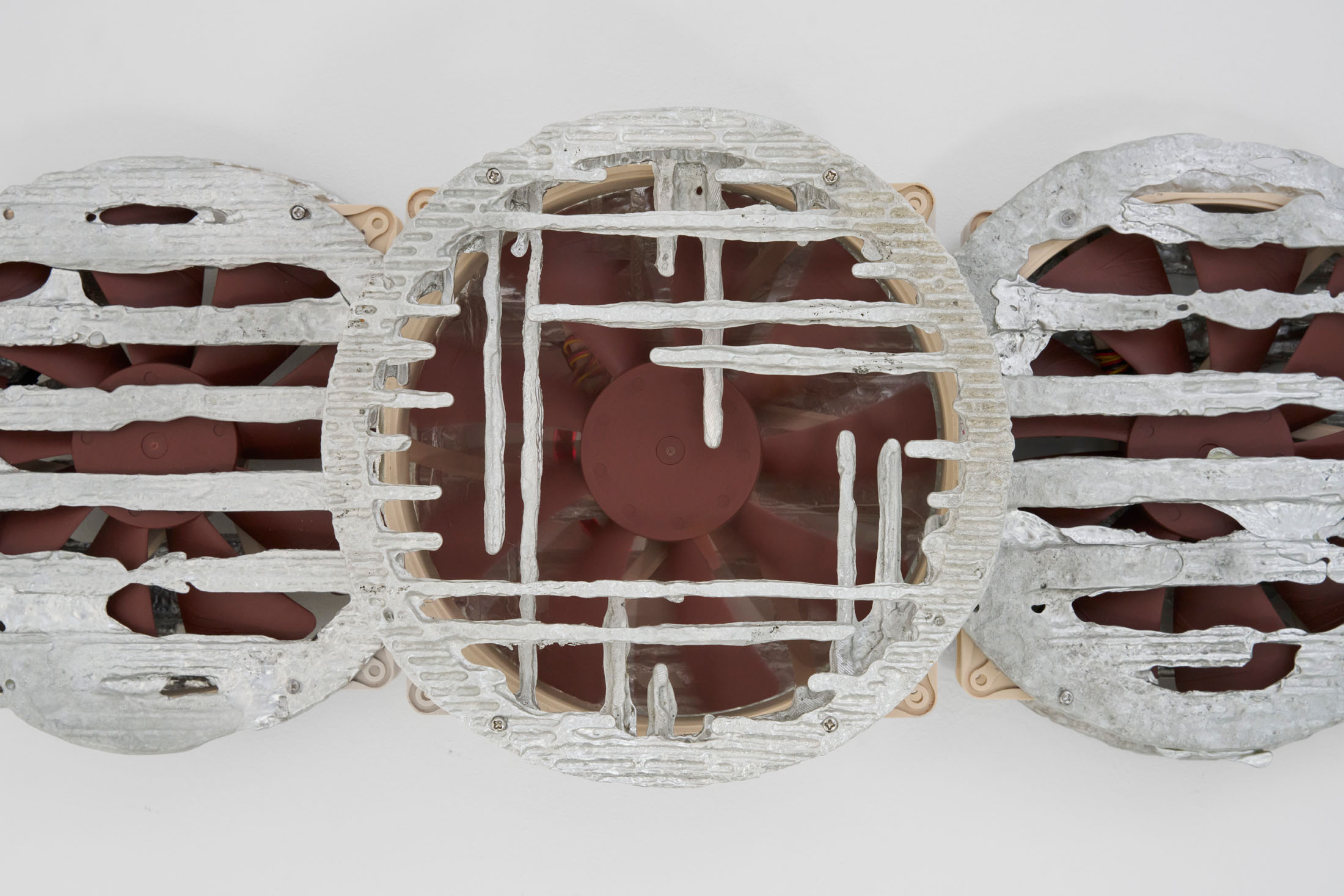
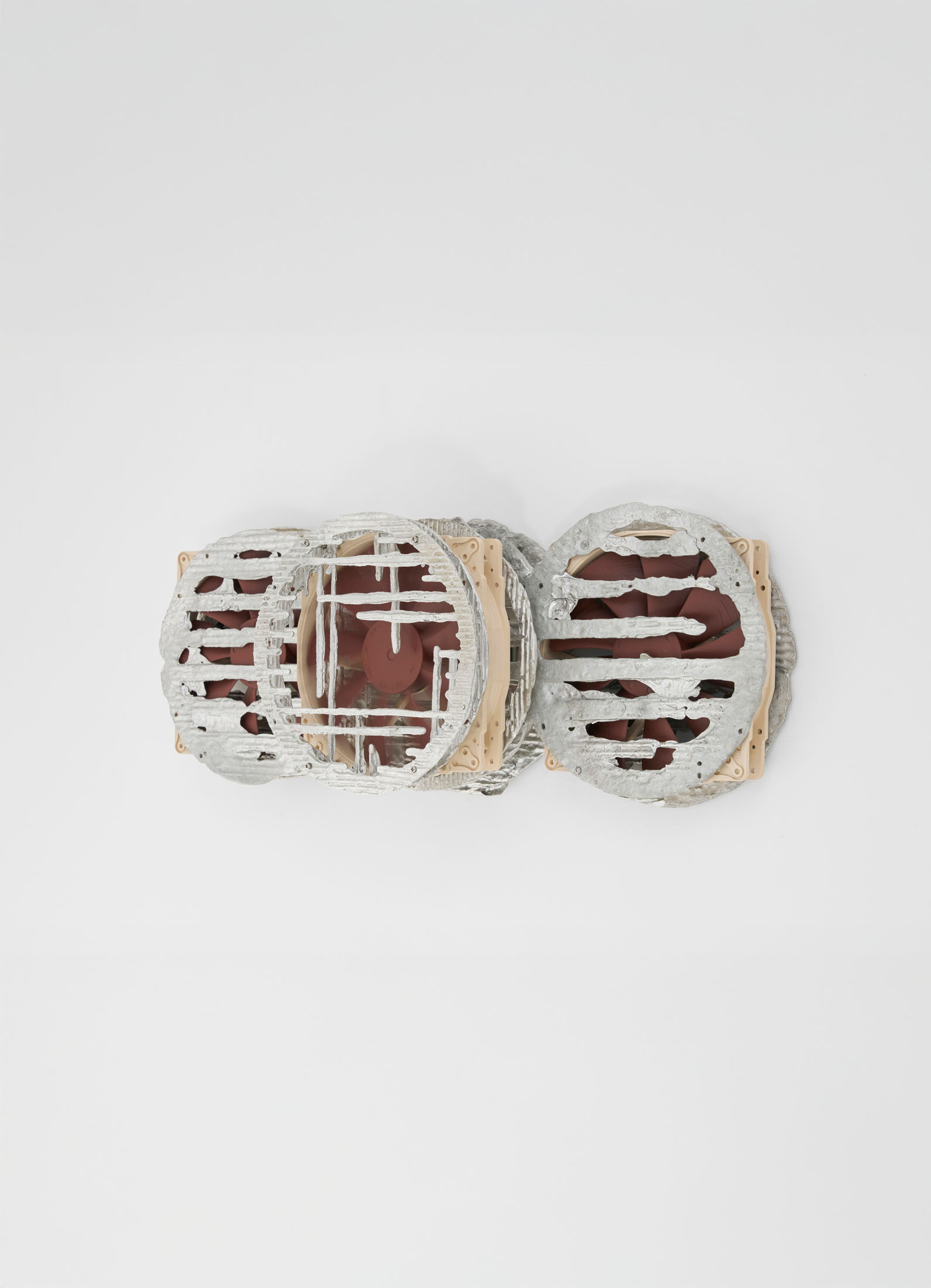
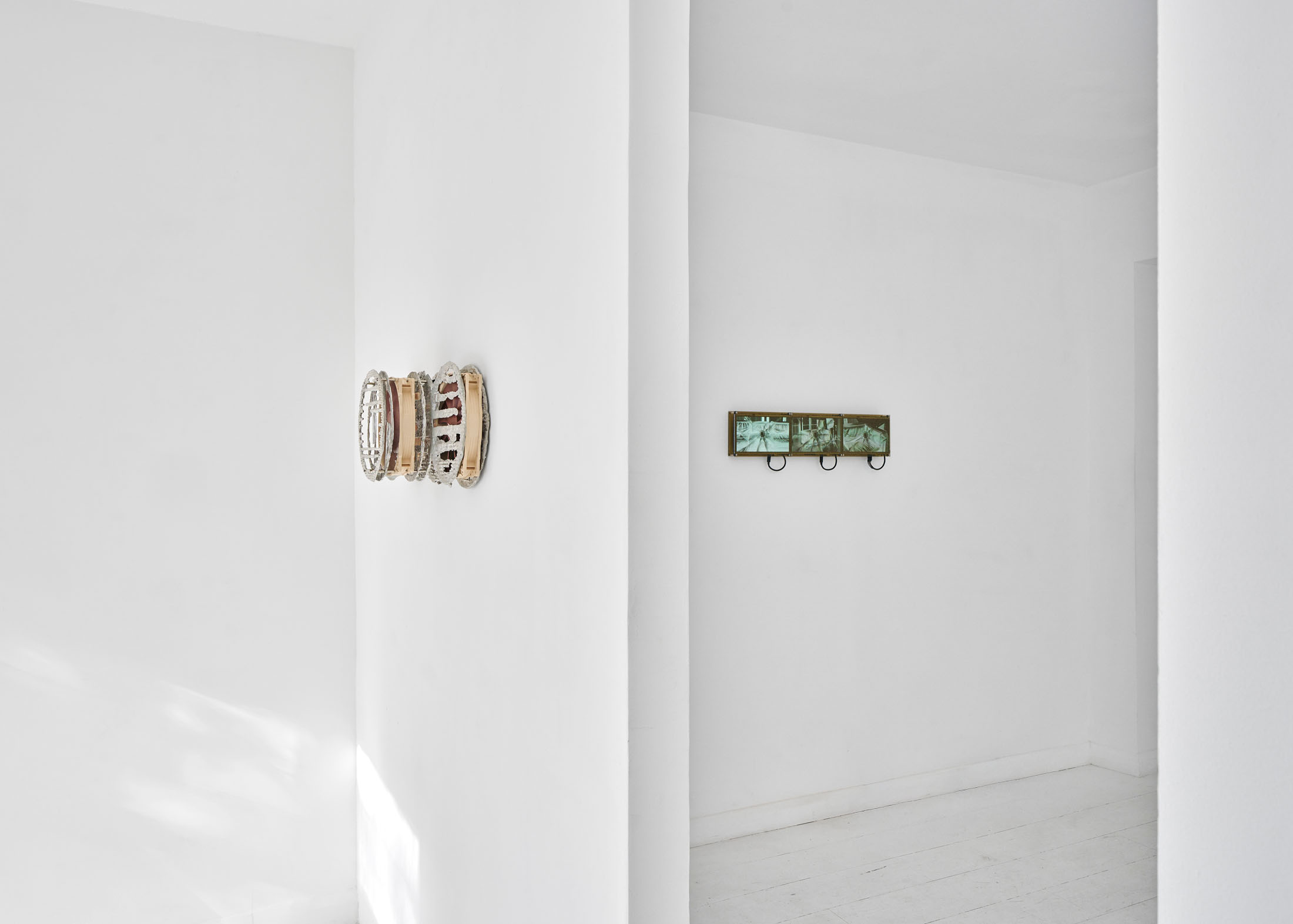
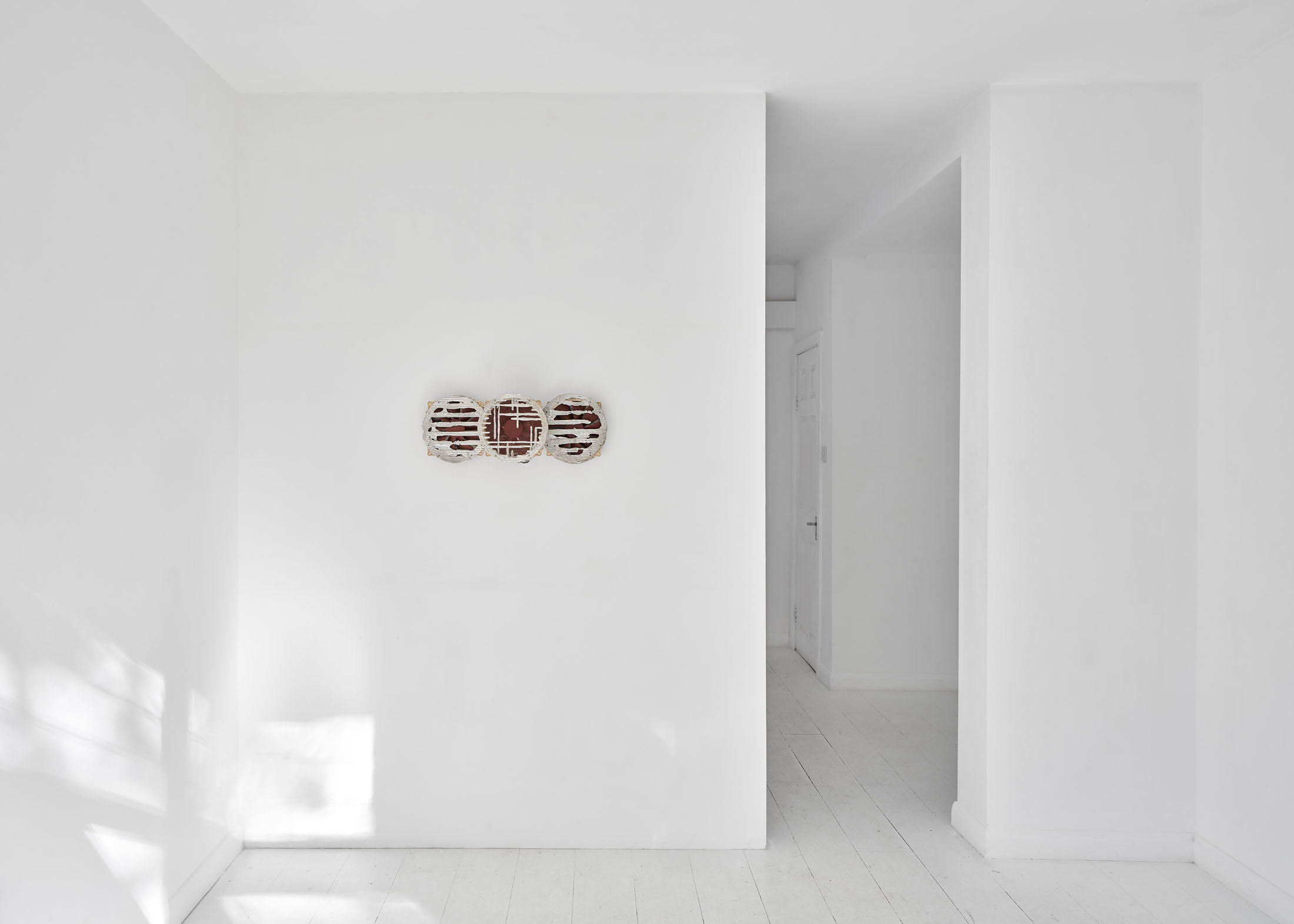
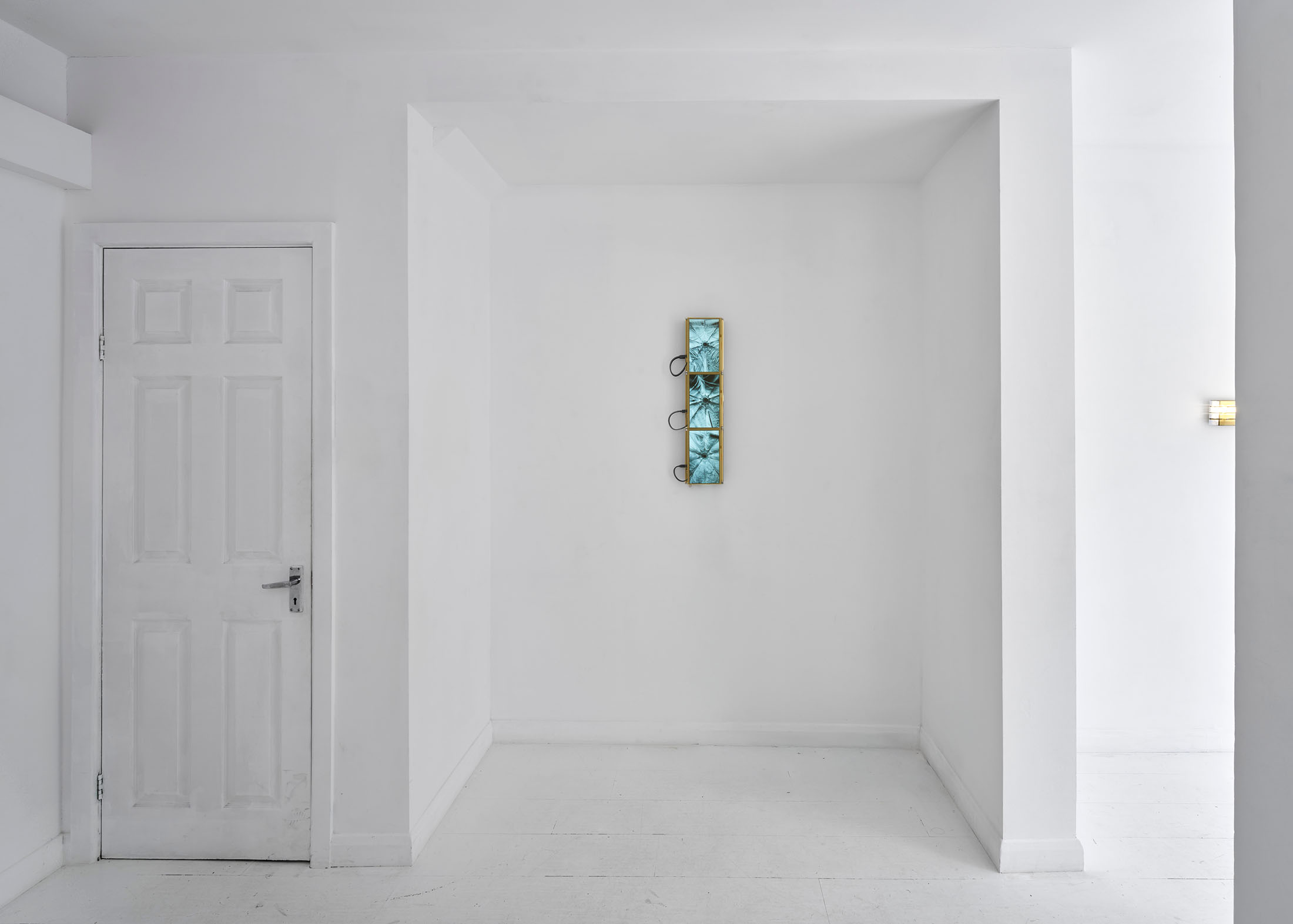
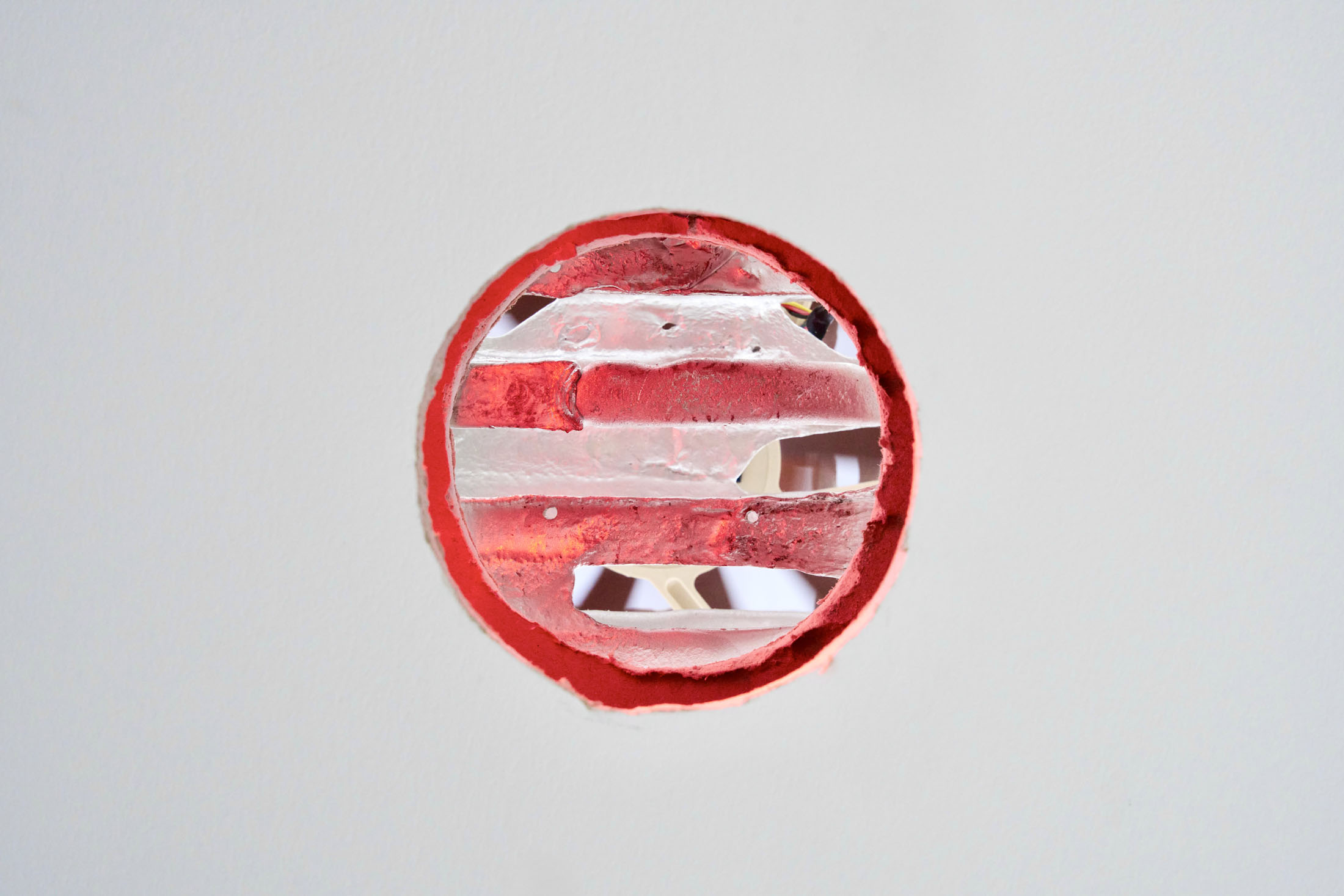
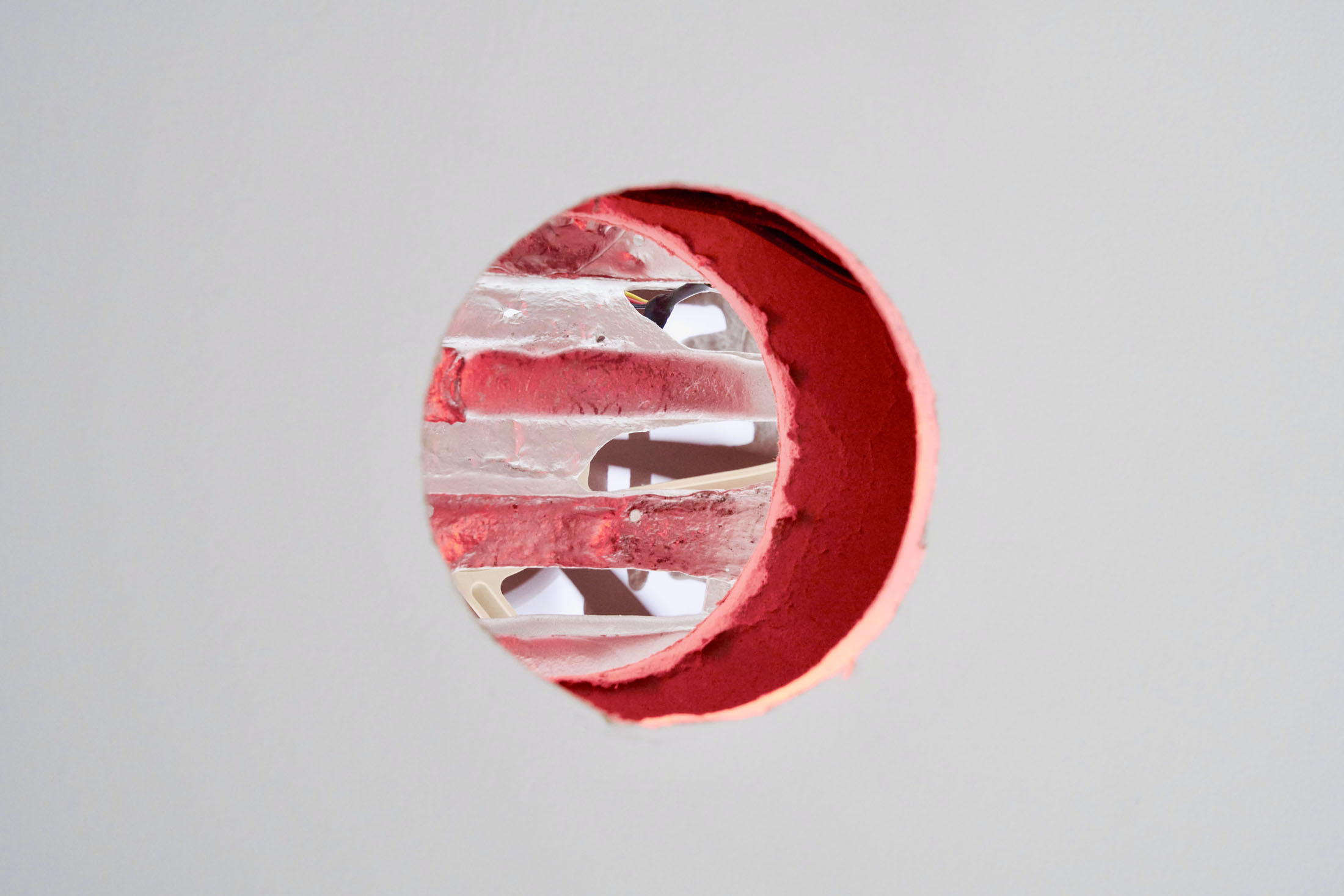
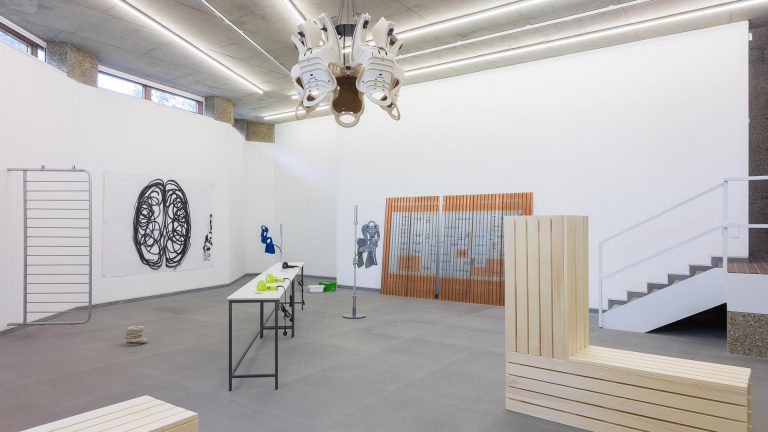
Embedded within the gallery system, the fans of Extractor (2) emit a gentle hum, breathing faintly through a punctured opening in the rear wall. Its layered façade, cast from smelted metal salvaged from the conglomerate’s former headquarters, carries the material memory of its source. Through its aperture, air circulates between the gallery’s front and rear spaces, allowing ambience to drift while its gridded surface resists any fuller passage.
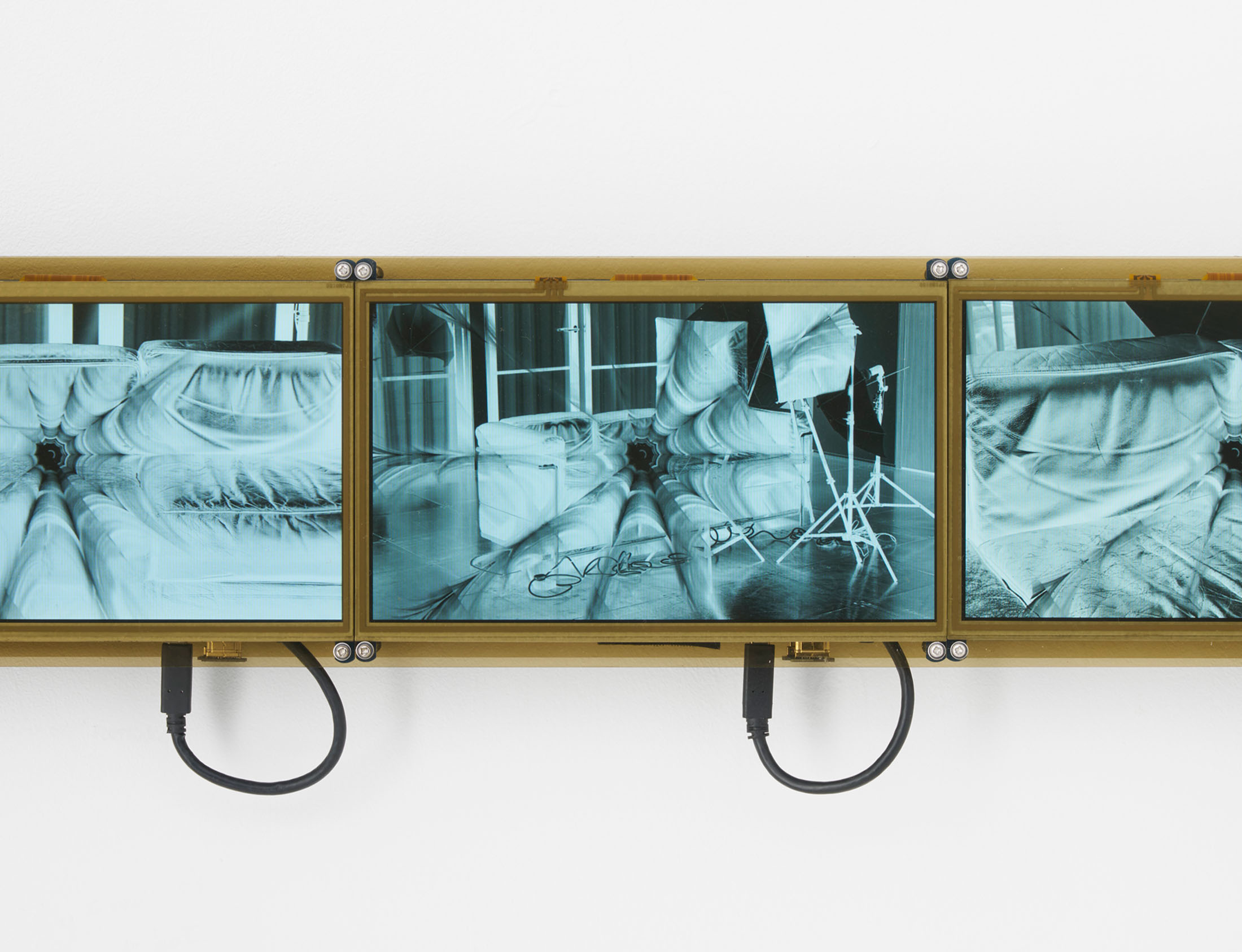
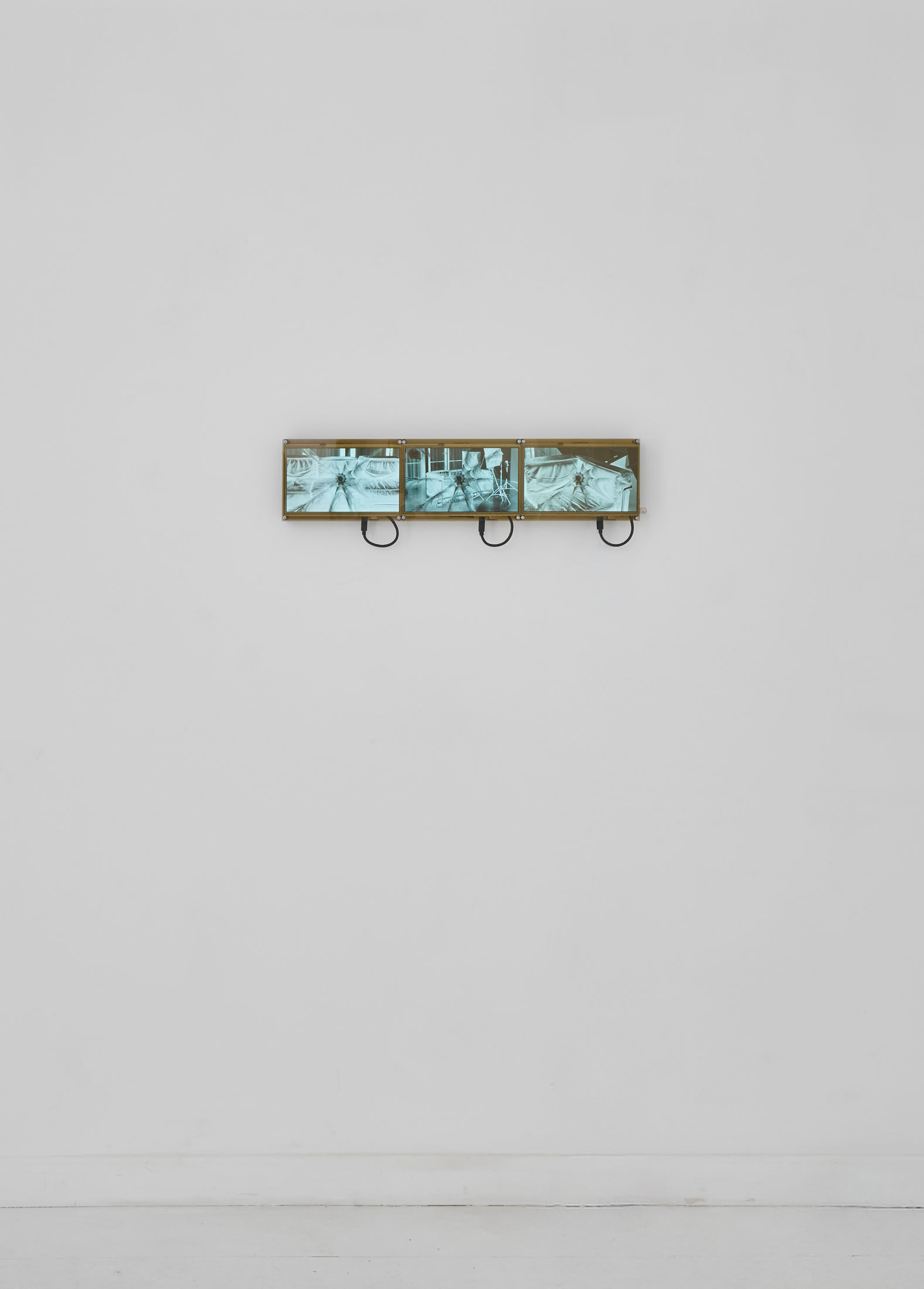
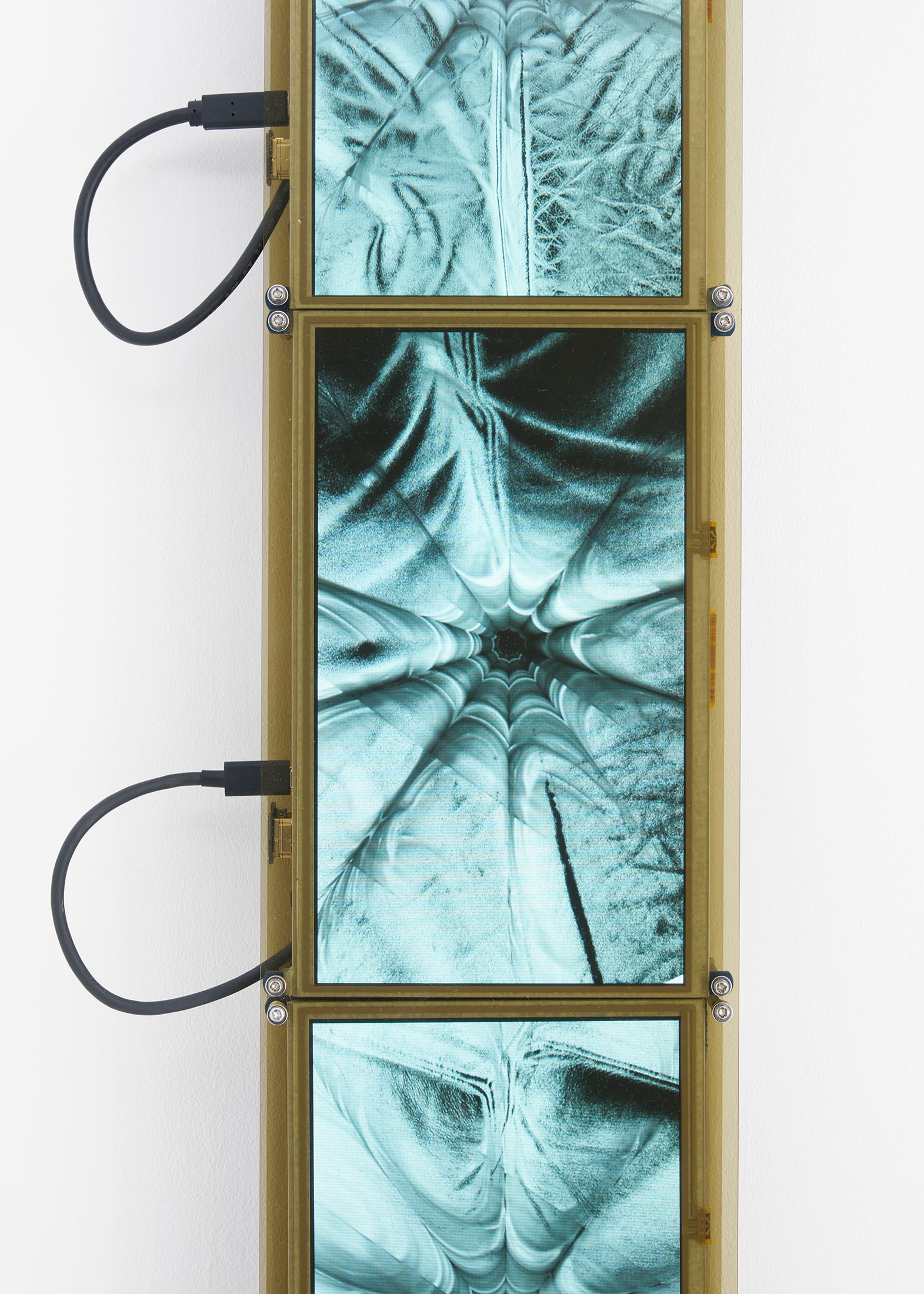
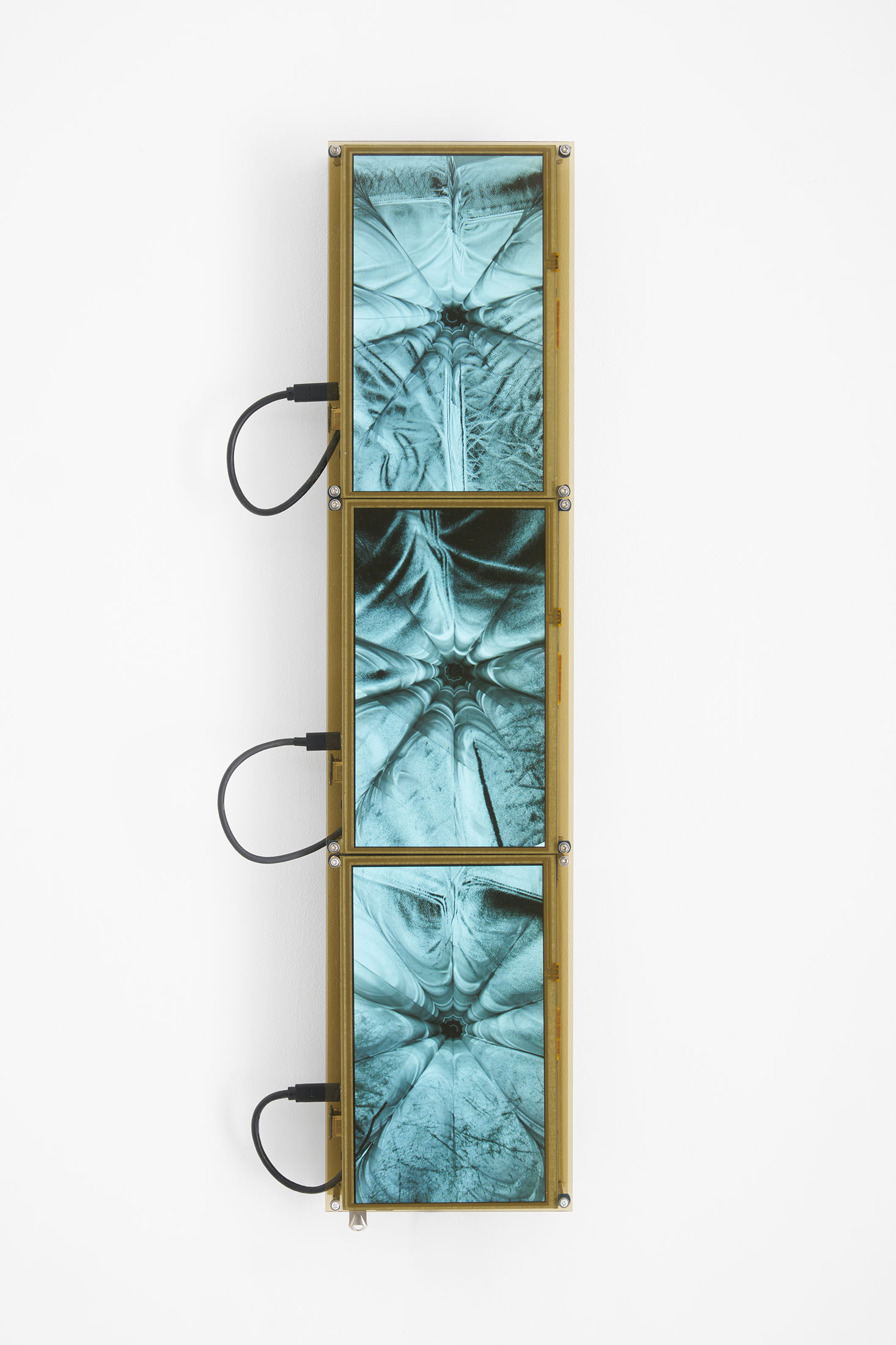
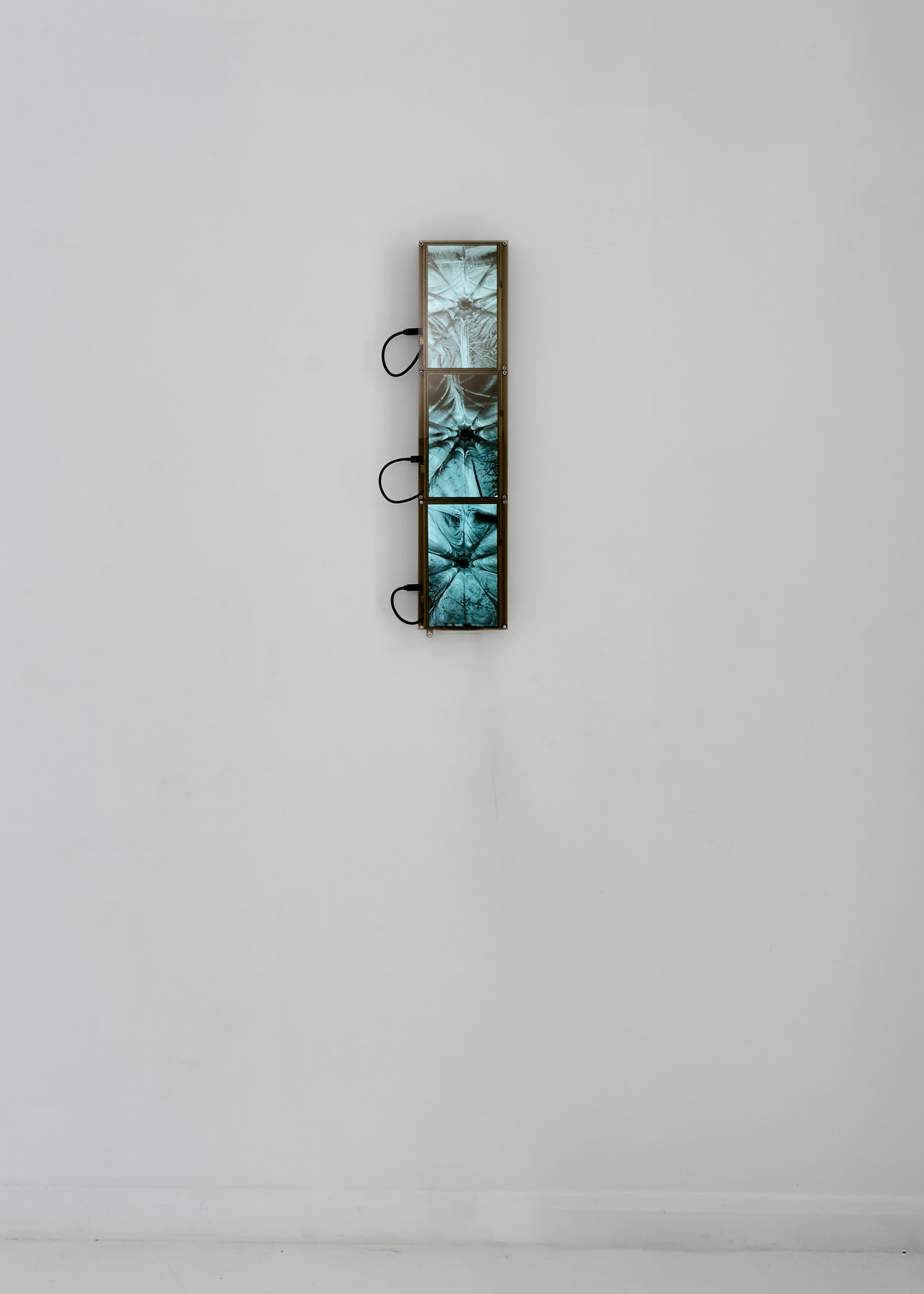
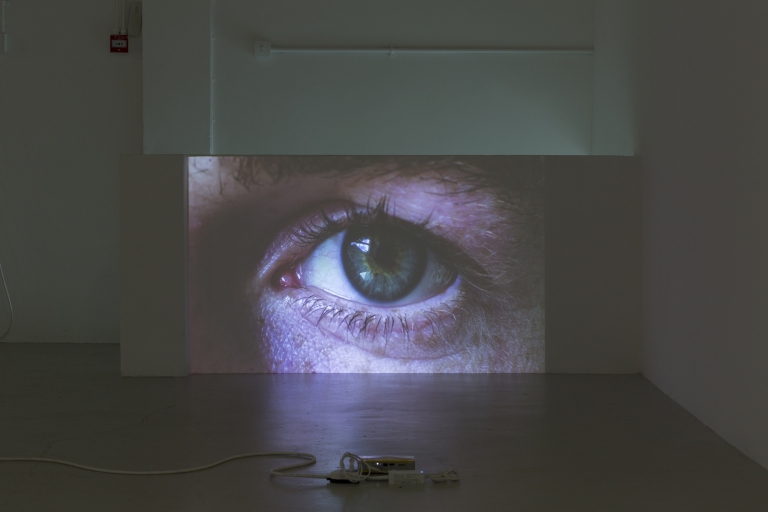
Nearby, the moving images of Soft Exit (1) flicker across custom-built CCTV monitors, surveilling not corridors or offices, but the single worn leather sofa: an archetype of corporate soft power. The 4×5 negatives, digitised and reanimated through computer-generated visual effects (VFX), borrow advertising’s own language of fantasy. Through VFX, the film’s edges fold inward, dissolving through and beyond itself. The raw film becomes a surveilled gaze; its subject, an object of desire.
Taking its title from the colloquial soft exit, a gentle departure from labour that doesn’t happen all at once, the body remains whilst the mind departs. Inhabiting image and material through disobedience and intoxication, Soft Exit inhabits estrangement into an act of resistance. Through its recursive gestures of surveillance and dislocation, the work rehearses how the conglomerate’s threshold might be restaged towards sensuous, more-than-human entanglements. In this suspended estrangement between image and subject, Soft Exit reforms an ecology that slips, and softly exits beyond the frame.
In the curator’s sight, the choice of non-traditional materials, the hybridisation of media (moving-image, wet-photography, and prop fabrication), and the repurposing of works as a “consumable object” that is both displayable and collectable, form an experimental field. The artist works primarily with Houdini — a 3D software widely used in visual effects — employing computational logic as both a sculptural and conceptual tool. Through this practice, digital sculpture is repositioned as an “ecosystem of processes,” where the boundaries between design, computation, and ecology are deliberately blurred, presenting a material poetics of the algorithmic era.