Cool people enter the exhibition space. The exhibition provides digital cameras and a green screen. People take photos of each other. The resulting shots show the figures against a blank background, the gallery itself made invisible. It’s a really cool exhibition. Realtime in the foreground. The potential to act in a boundless space. The call to action is handed over to the beholders, skillfully indicating that the artist’s action here is the gesture that declares change to be material.
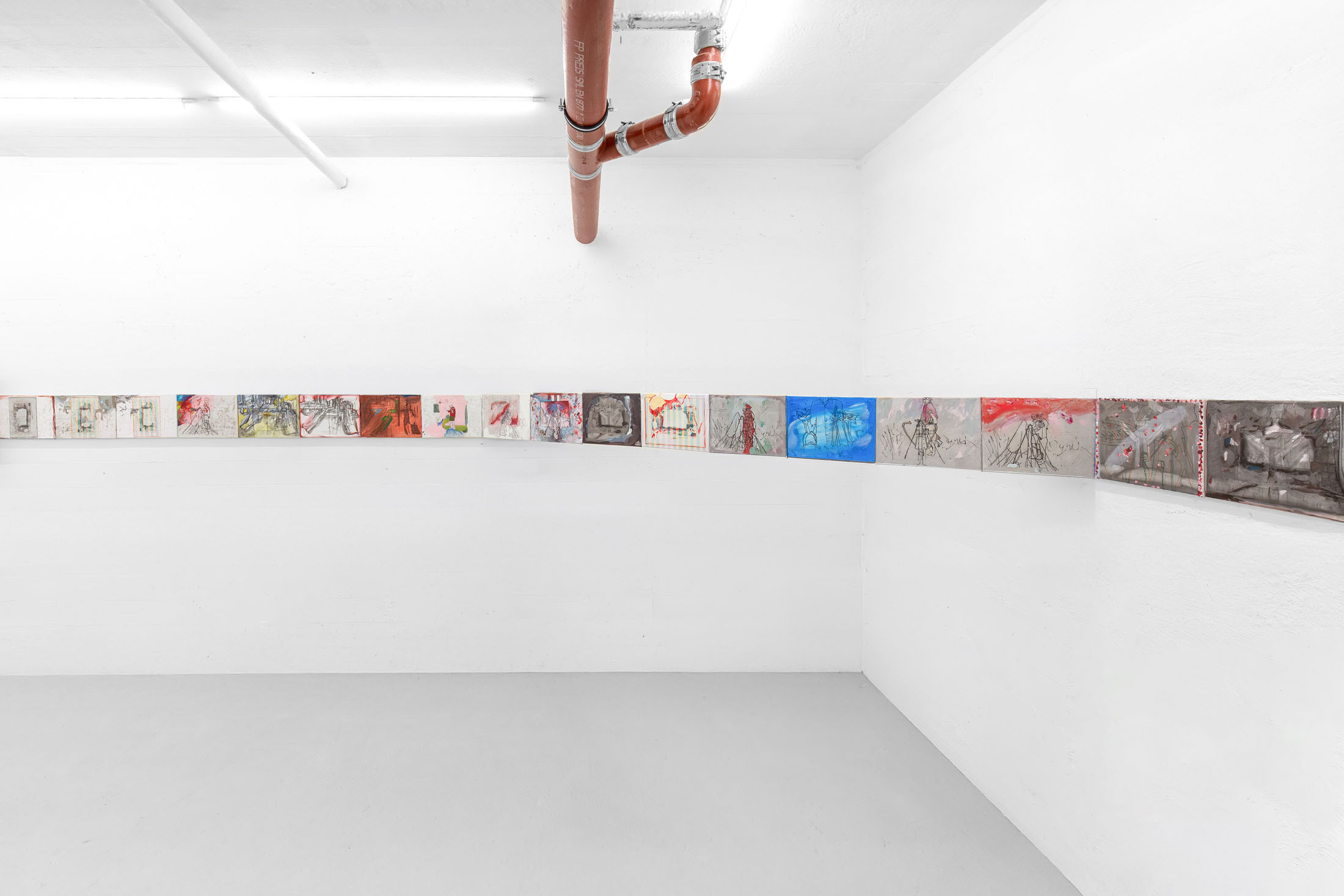
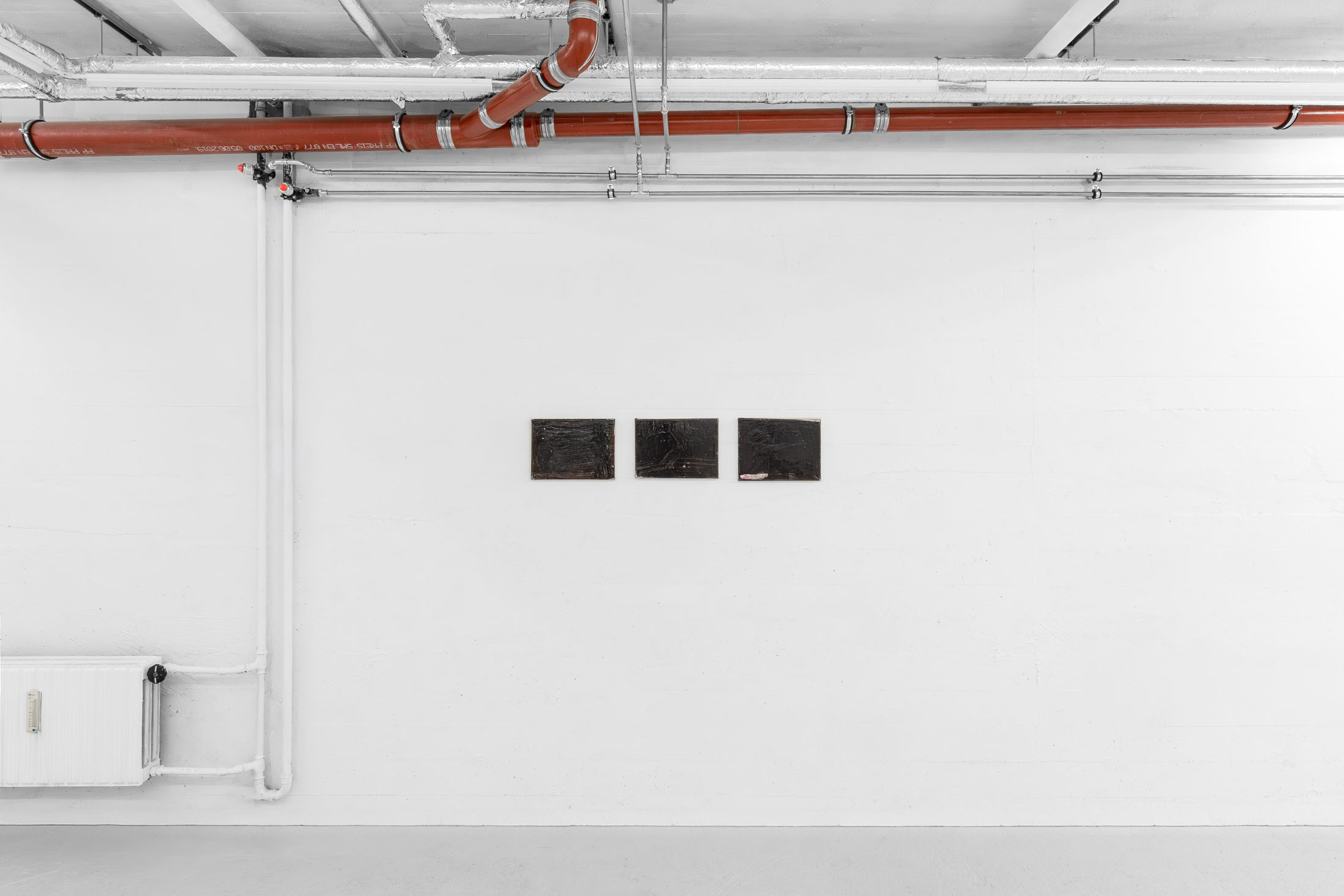
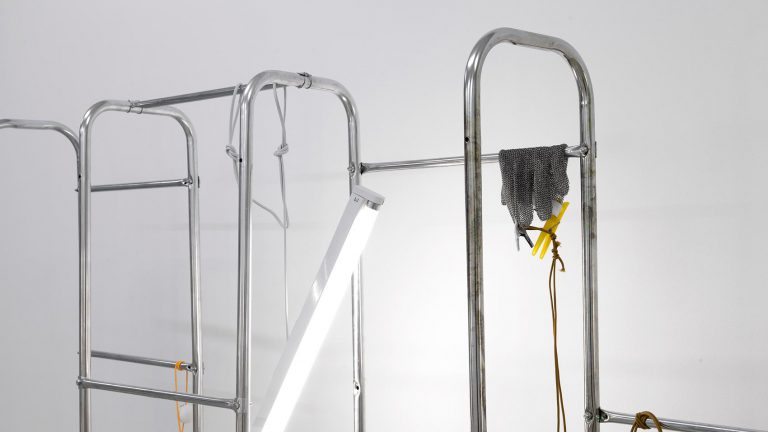
No, I didn’t opt for the green screen here. I would have avoided the pipe problem in Matteo’s exhibition space. The drainpipe on the ceiling is aesthetically incommensurable to the other things and Erzeugnisse in the room. But I don’t feel the need to simply gesture towards what is absent, despite the allure of ‘really seeing’ a veiled past moment that determines the sequence of transience.
In Museum Highlights: A Gallery Talk (1989) Andrea Fraser comments on the art space as a domain of expertise. She also speaks to the need to hear beyond the projected authority of an experienced voice, to hear the echoes of other voices.
The voice of one producer is as important as any other for the choir. Embodying someone else’s (cool) voice in order to be in fleeting possession of listeners is a fallacy. What matters is what the story tells and how it is remembered.
Dye Bias
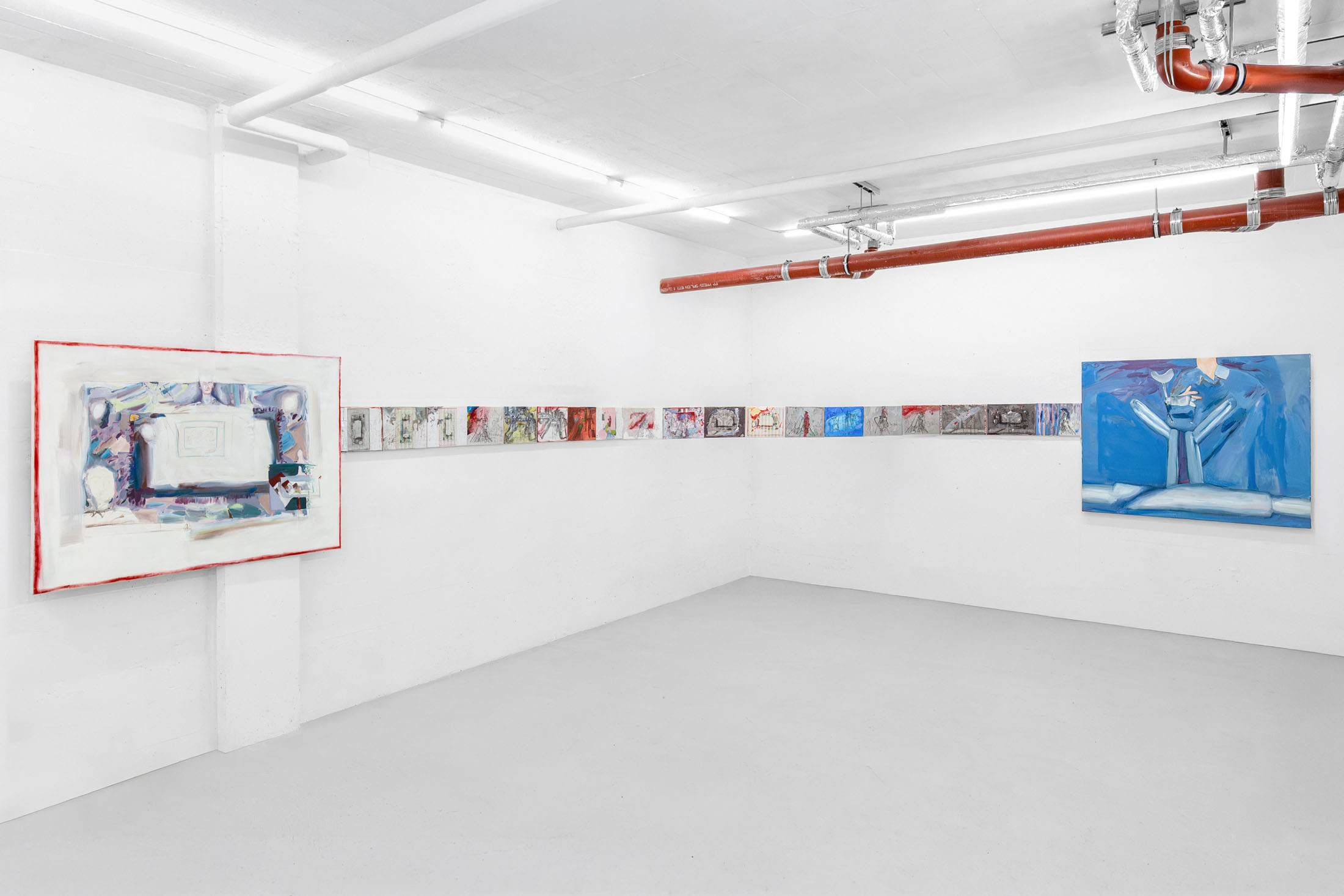
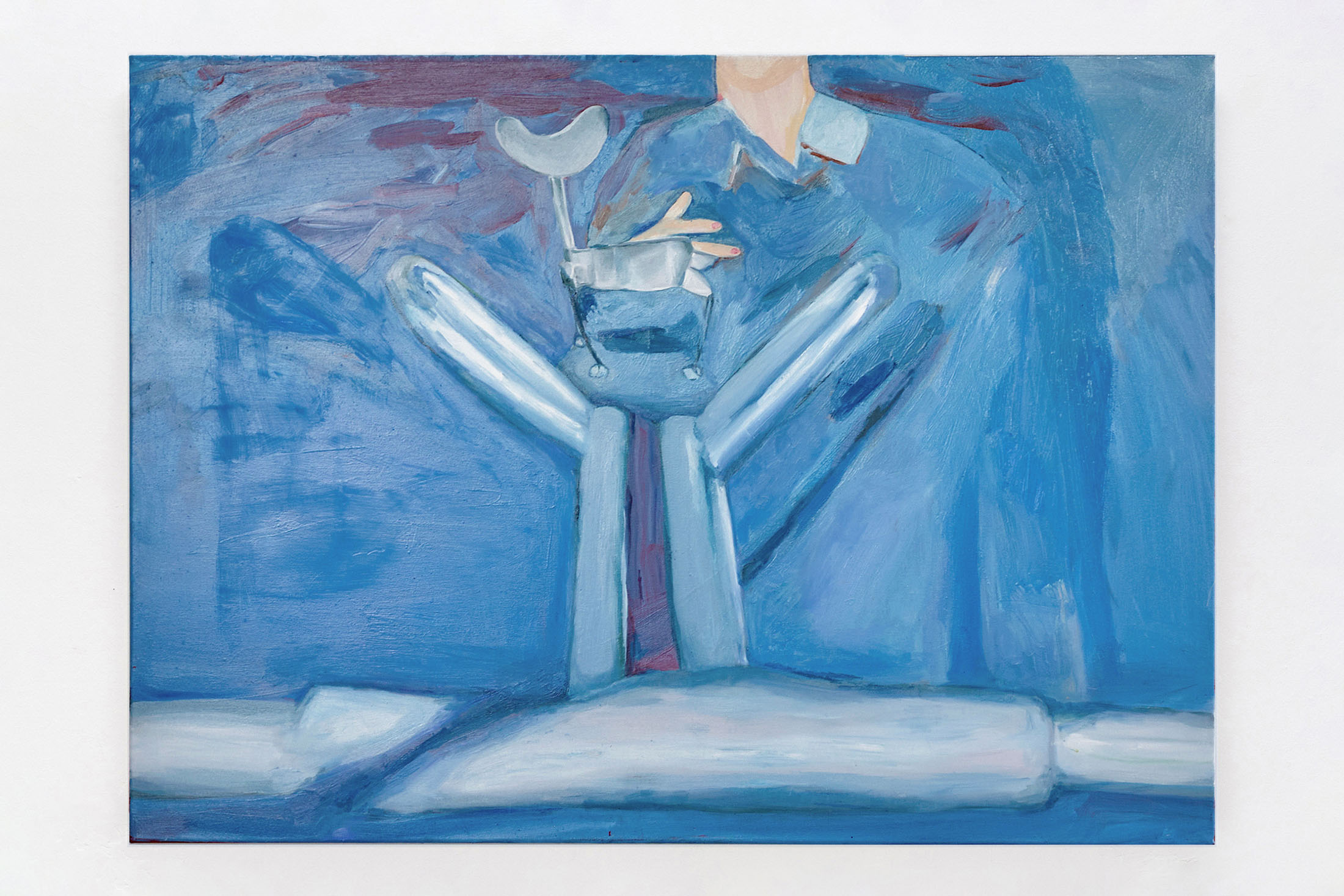
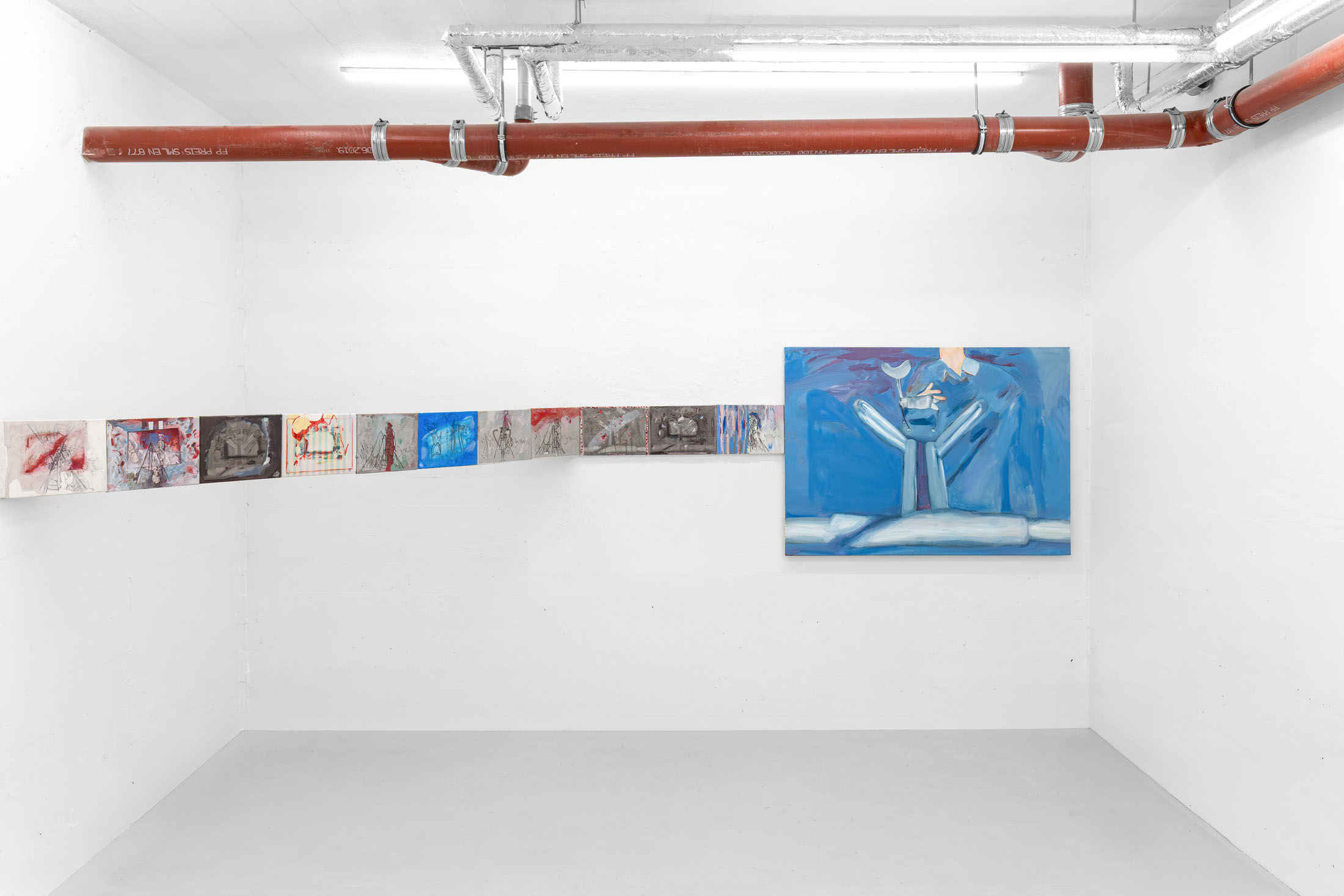
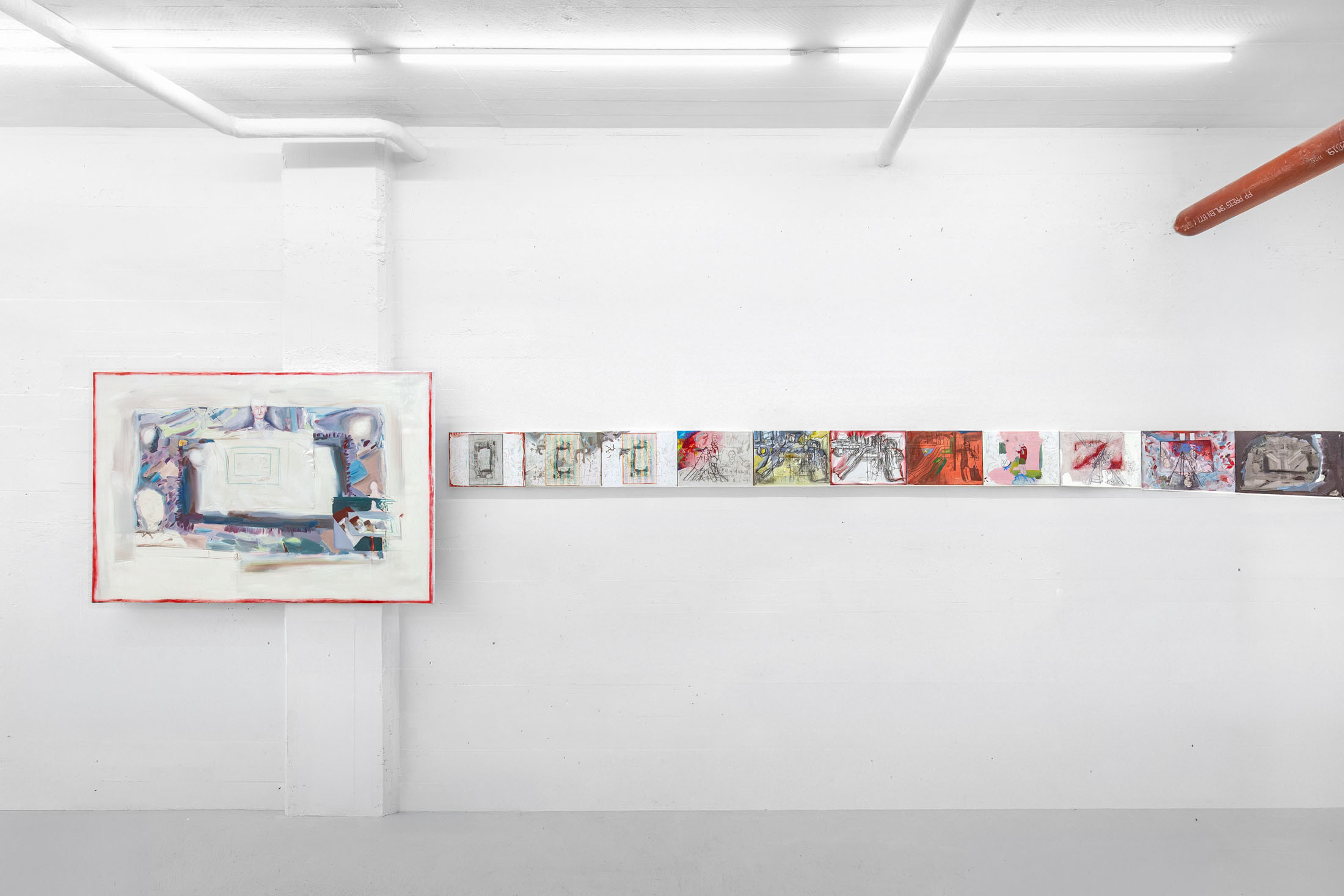
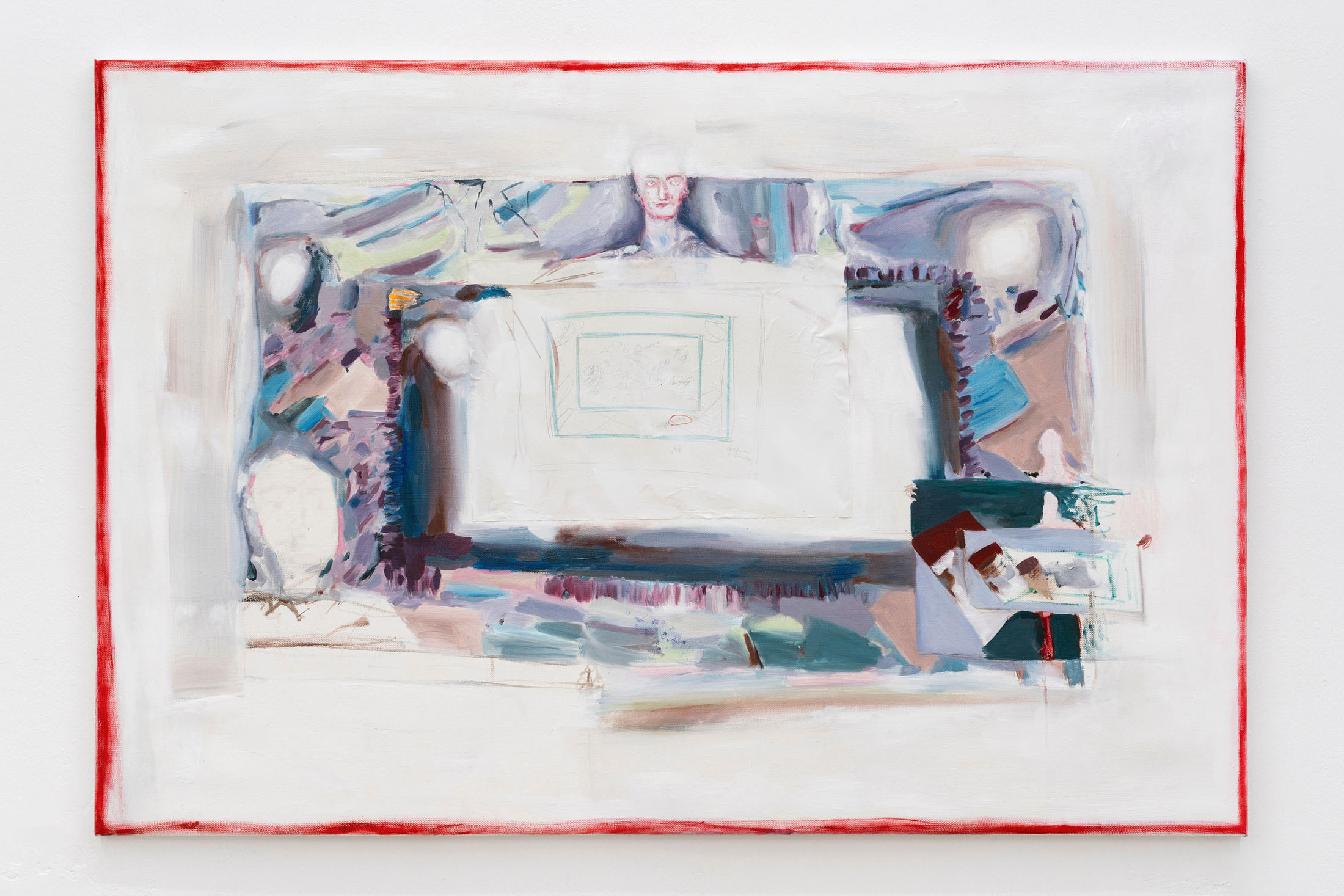
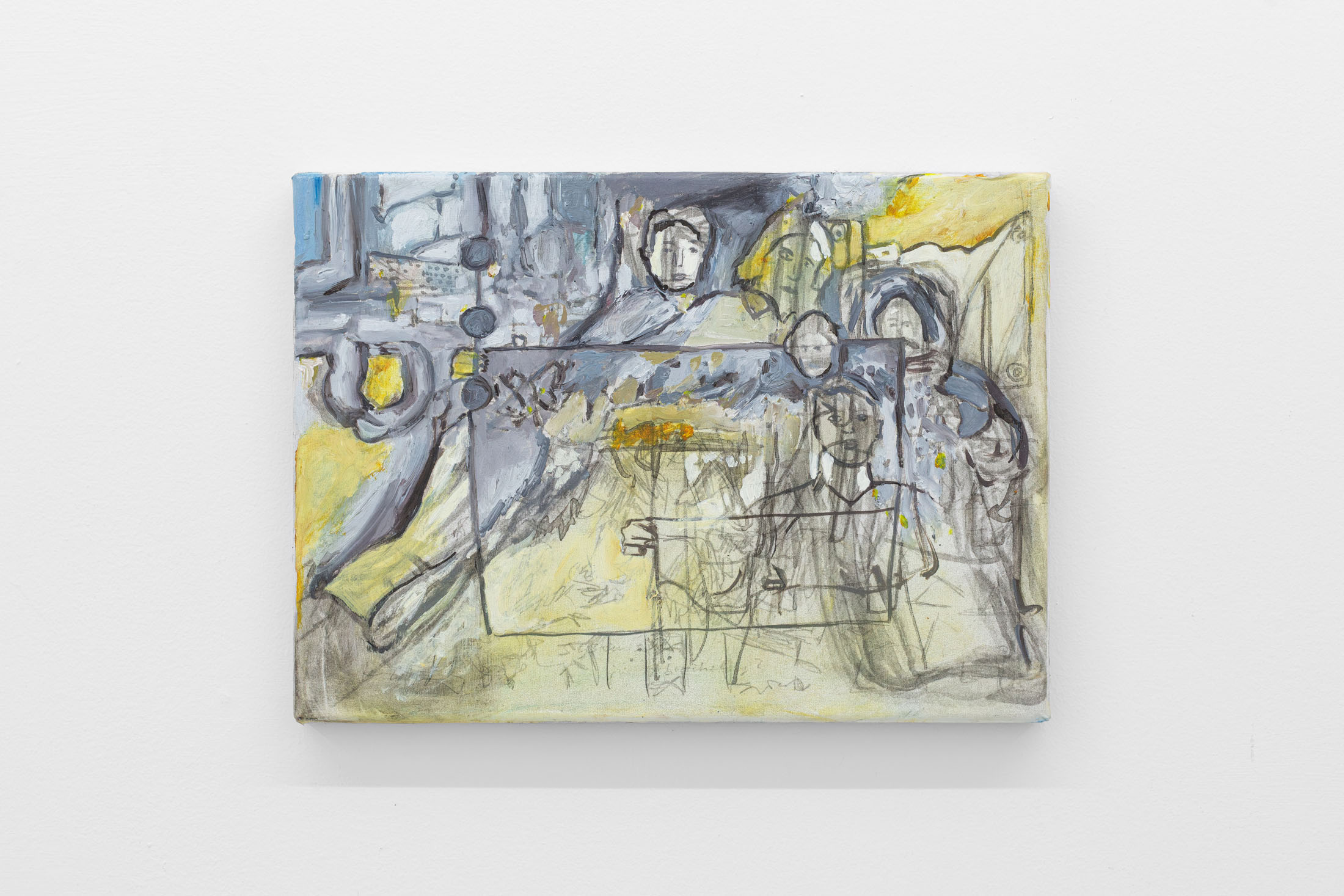
Two paintings enable me to touch upon their inherent spatiality. Both of these have been featured in different exhibitions in Christiania and Düsseldorf.
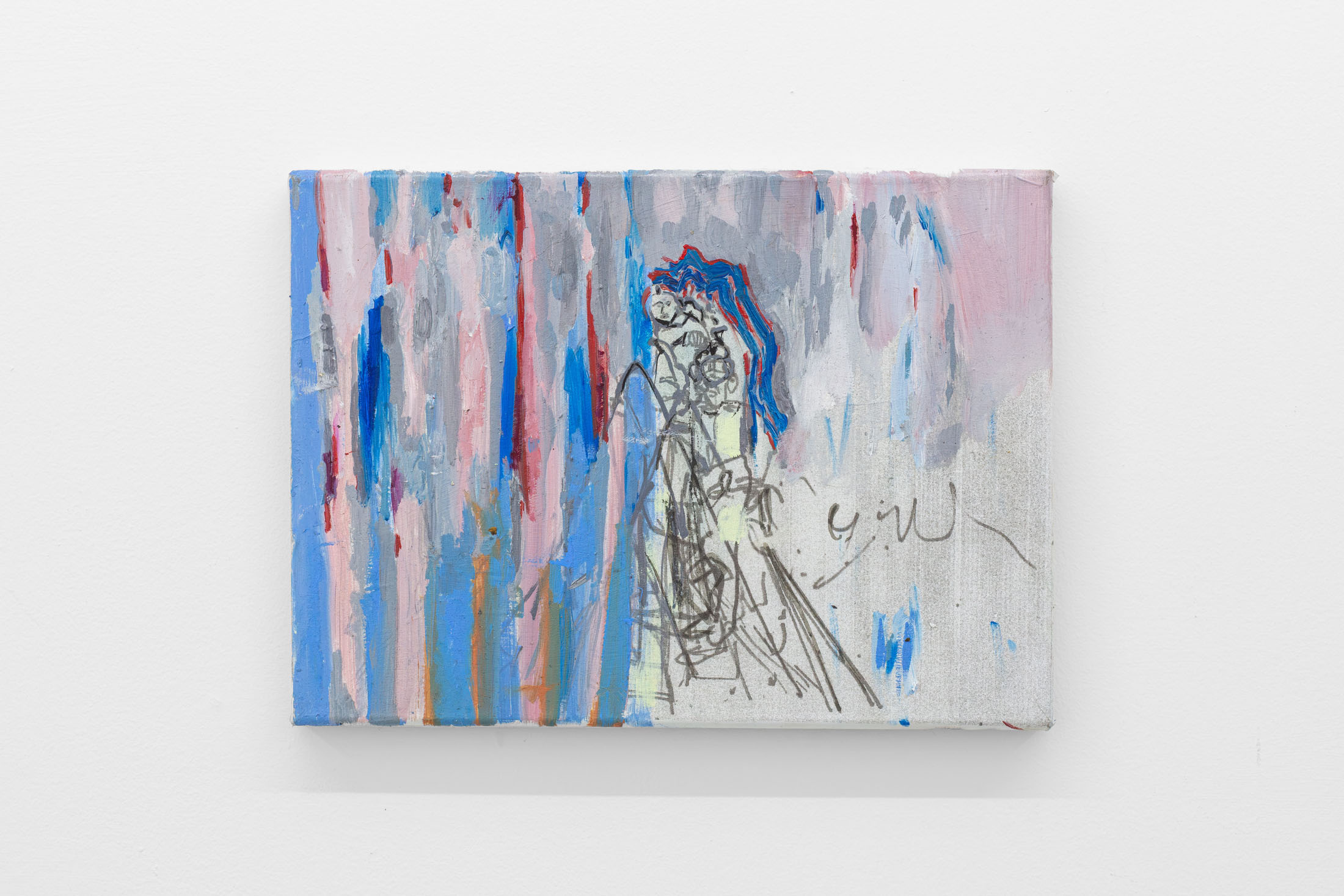
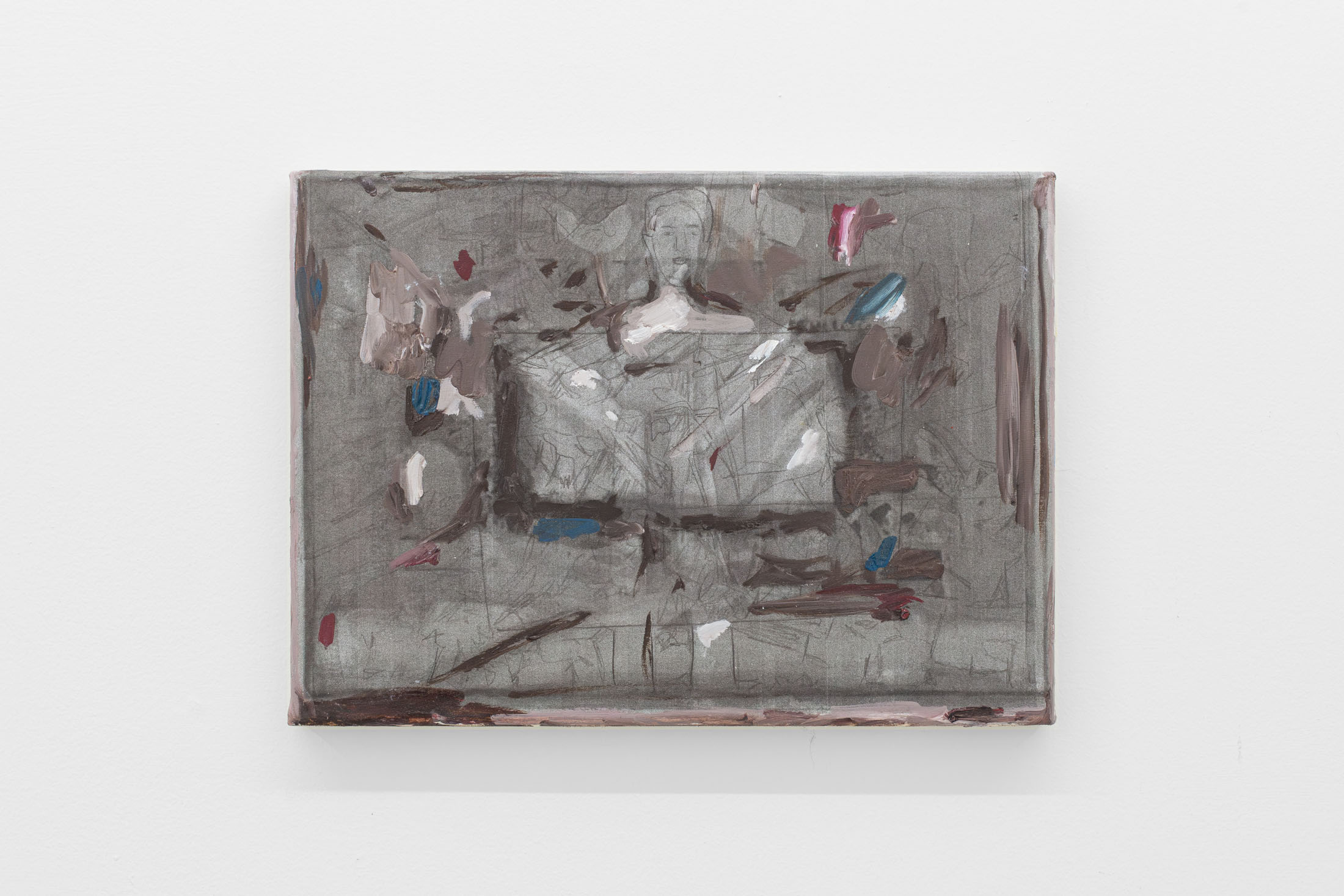
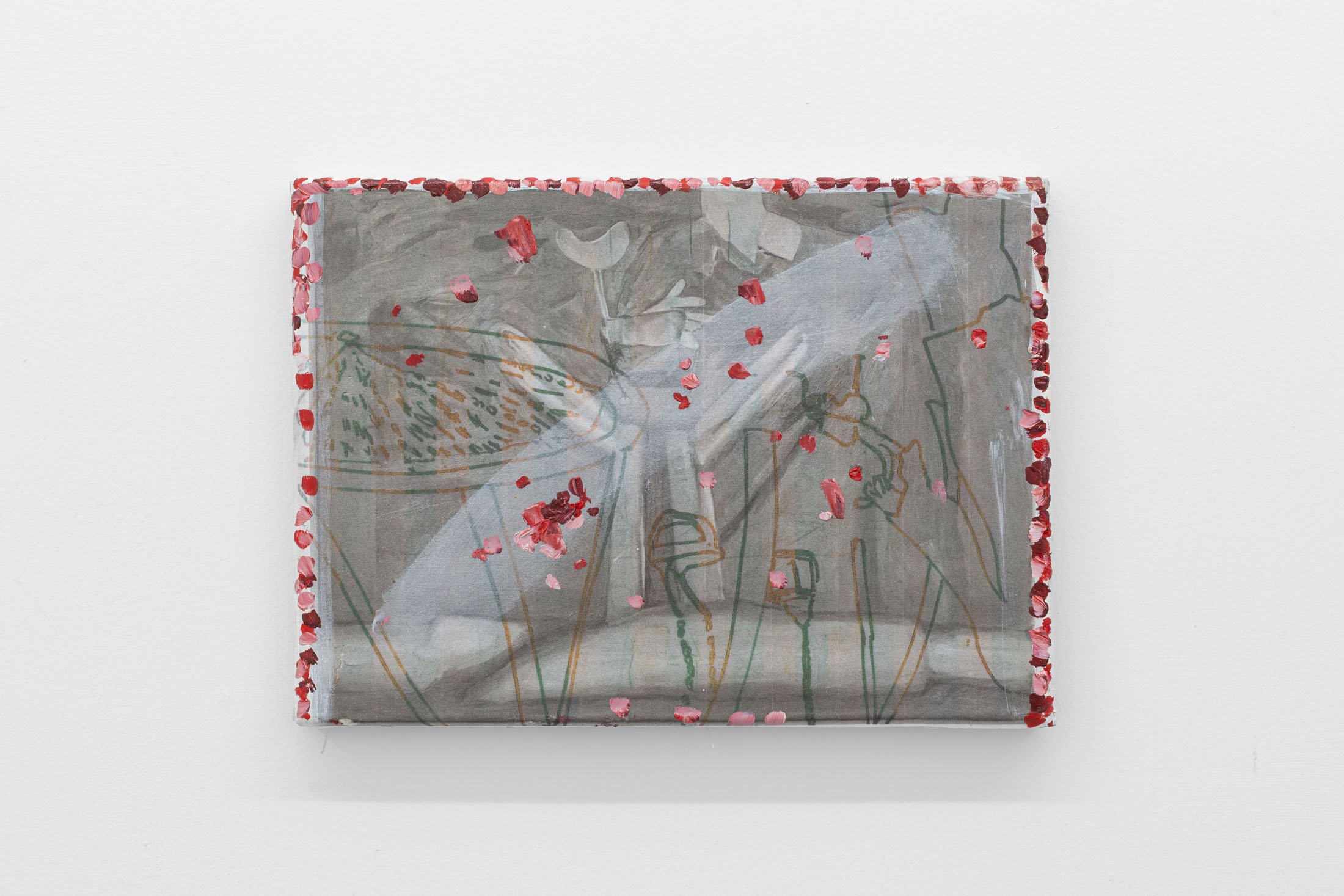
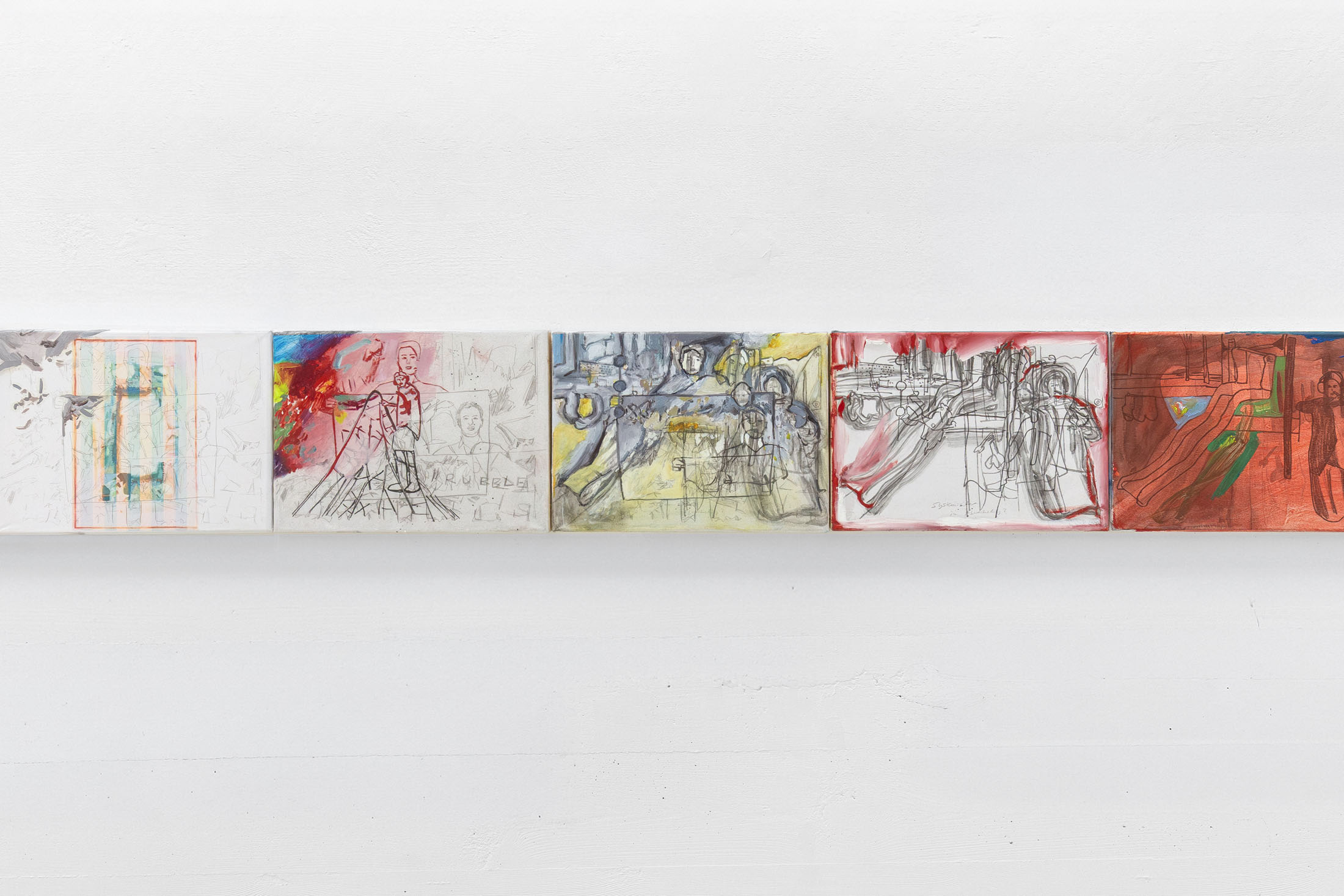
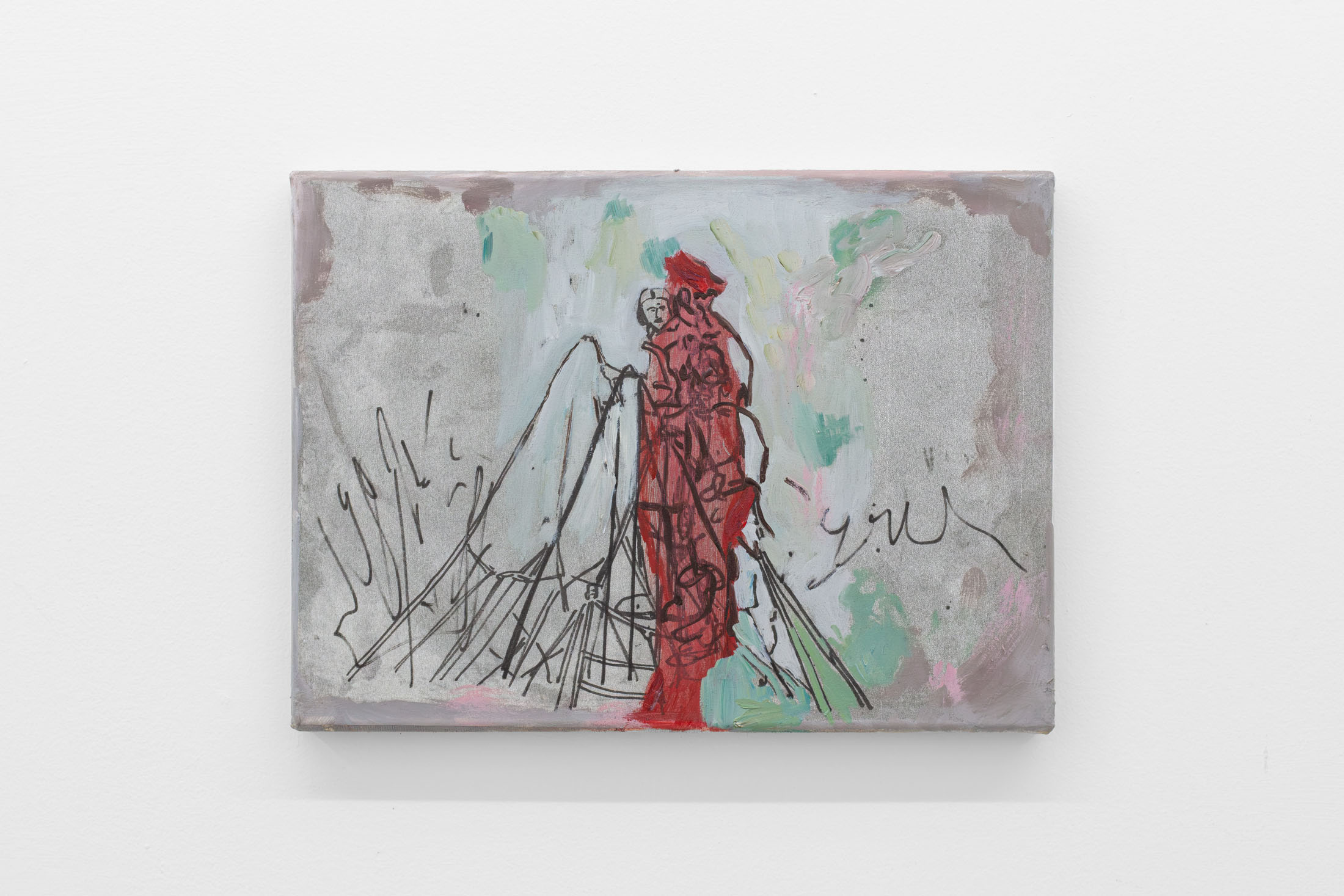
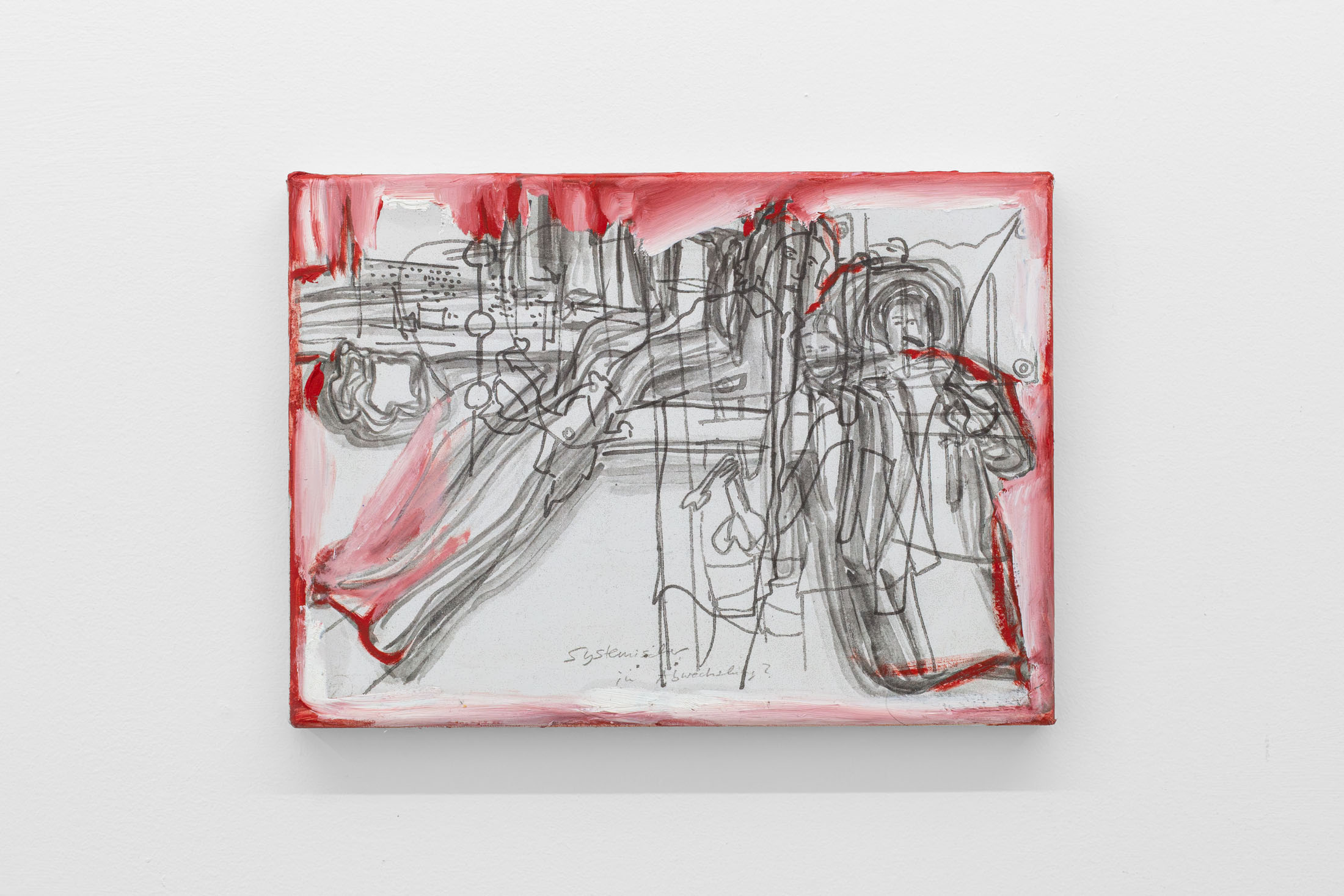
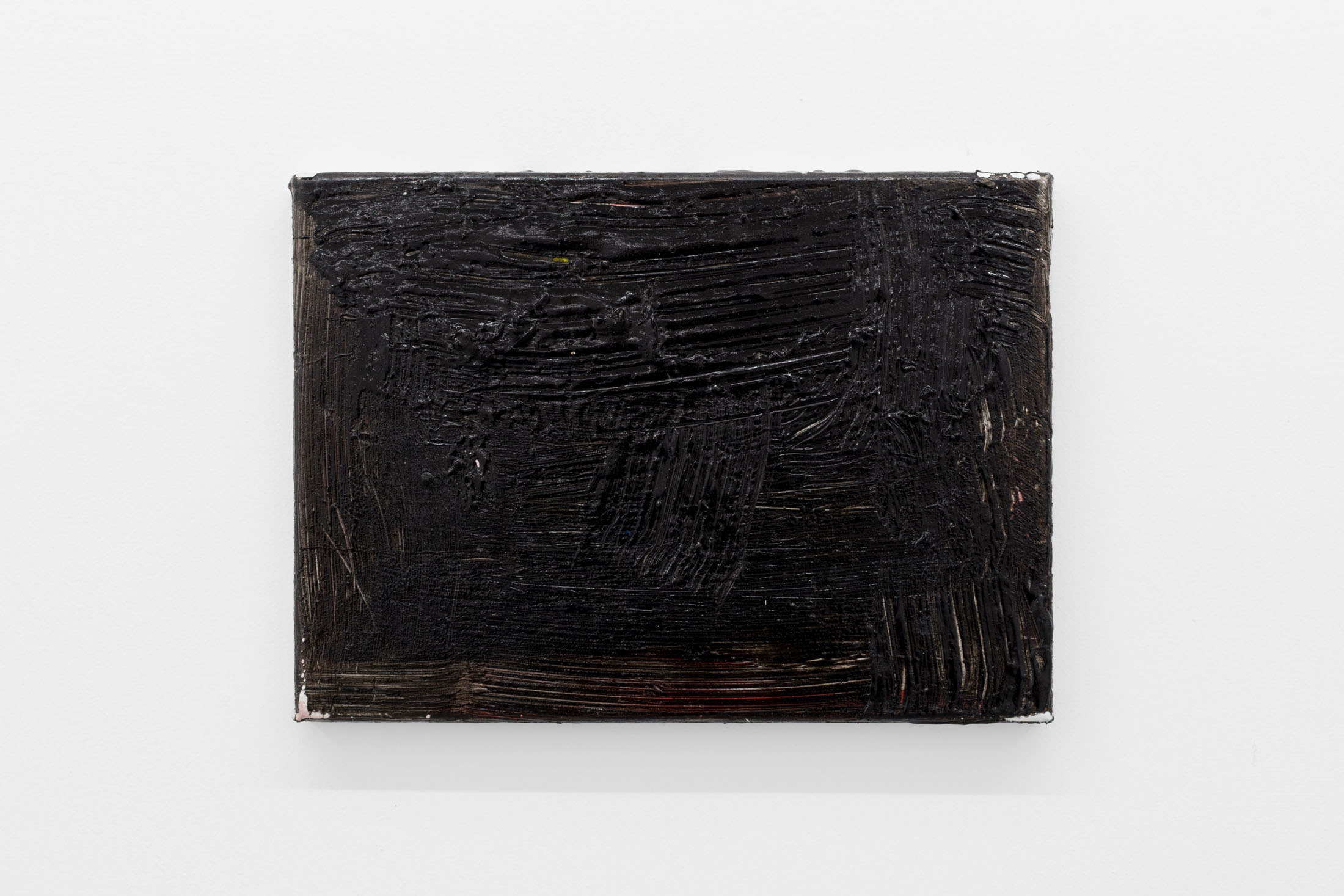
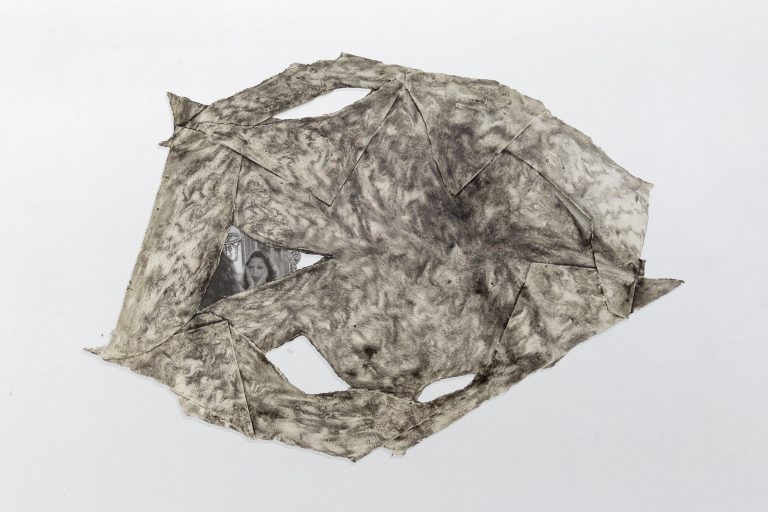
Motifs, surfaces, and colors from “On the edge of war (always)” and “Edging” are mirrored and echoed in the “Tourette” series. Here you see a selection of: forty small-format canvases, covered with combinations of copies of images from the two paintings. Various drawings are taken from the pictorial space of “Edging”, sometimes being superimposed several times by the copier.
I traced lines and broke through them. I monochromatized the surface with black, dust-loving latex.
Which pictorial space dominates doesn’t matter. Each image is different despite they ample each other in parts.
I am concerned with the process of transmutating spaces which requires action. The architecture of a space offers different actions. That is why I am now going to tell you about the literary background of the two pictorial spaces that form the basis of the “Tourette” series, as a reaction to a theoretically infinitely comprehensible environment.
No. I am not going to do it!
If this exhibition or the works in it were a commissioned work, the client would be unknown, unlimited, and absent. This is not intended to sound Protestant, as if my
decisions or my hand were guided by God or the police.
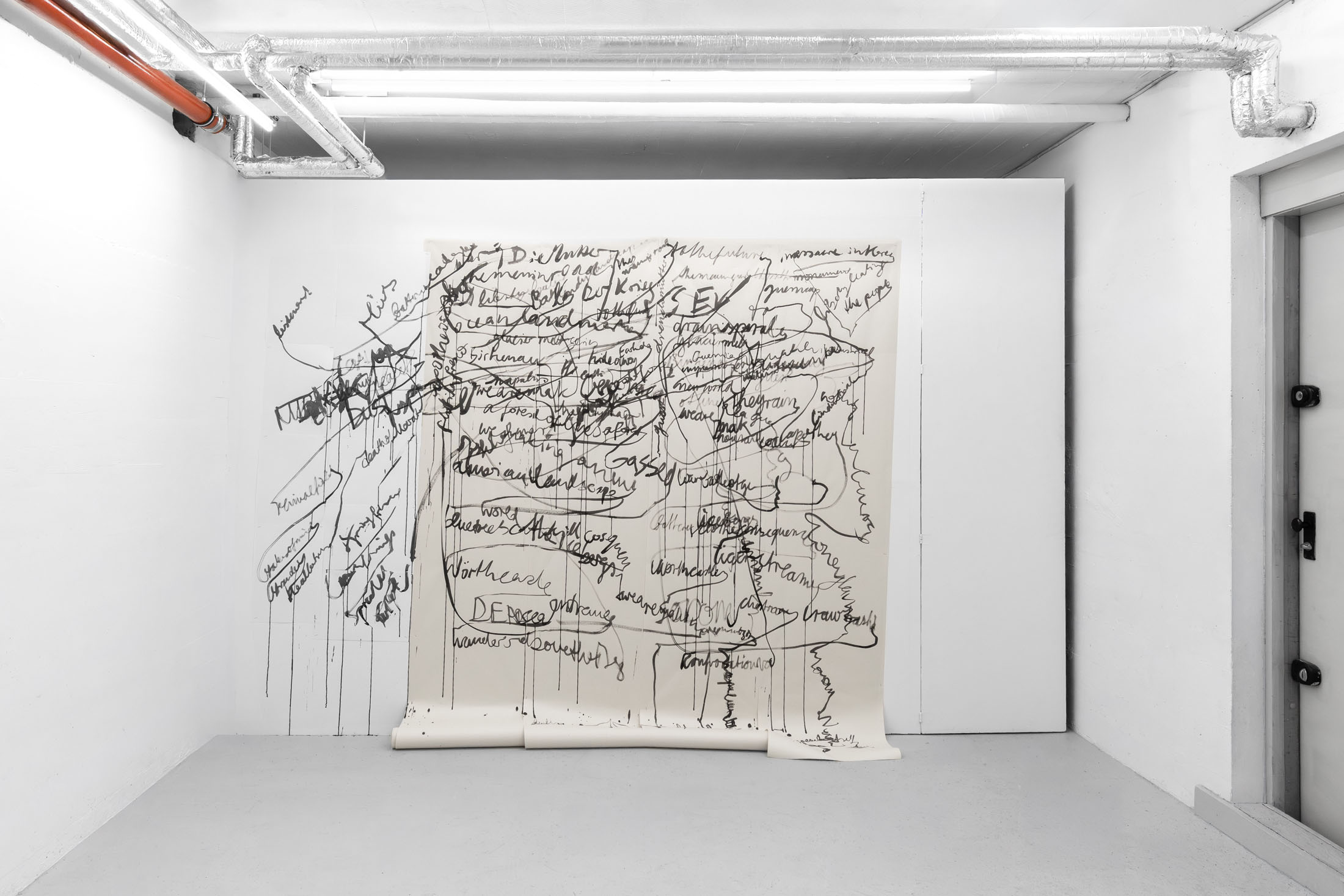
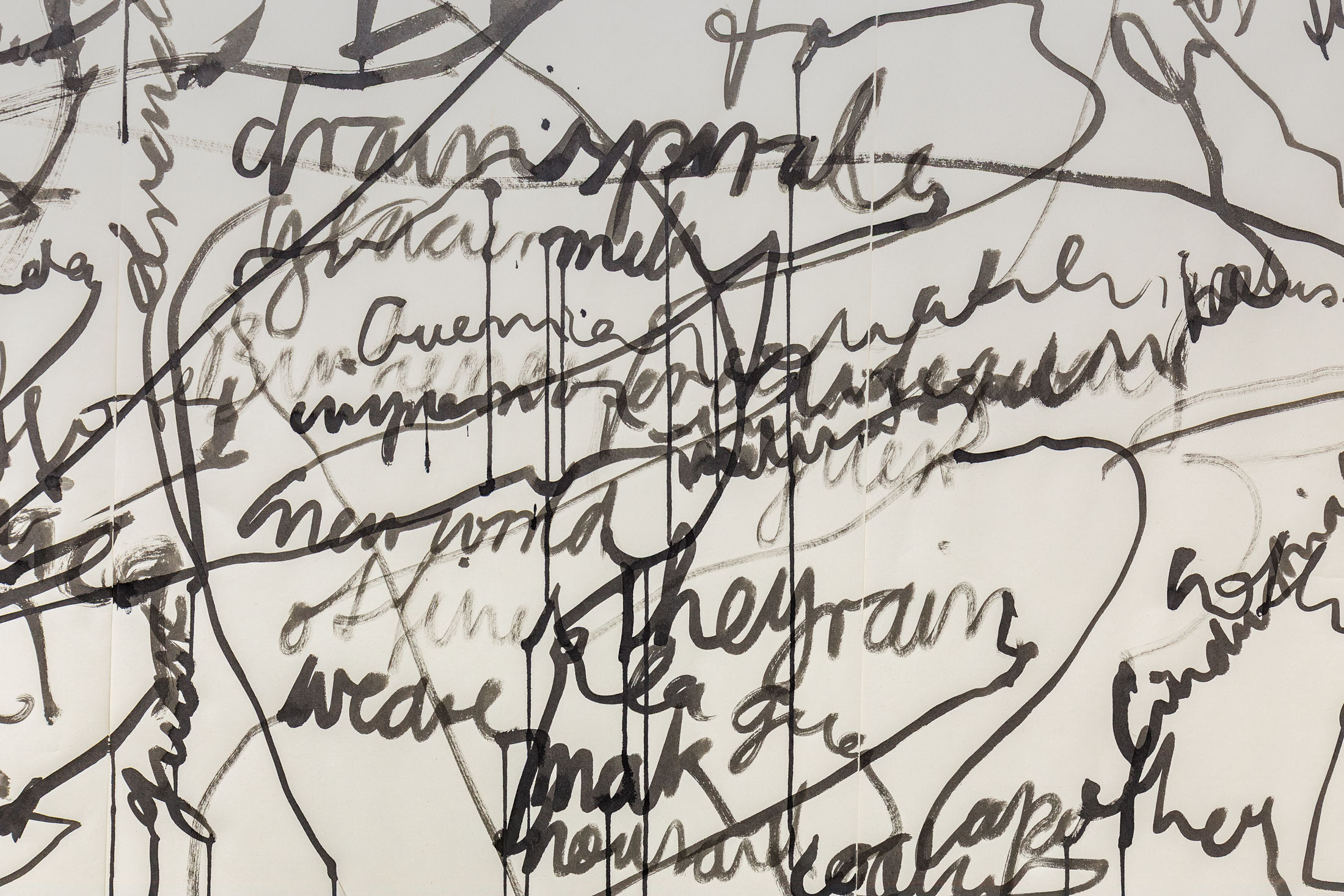
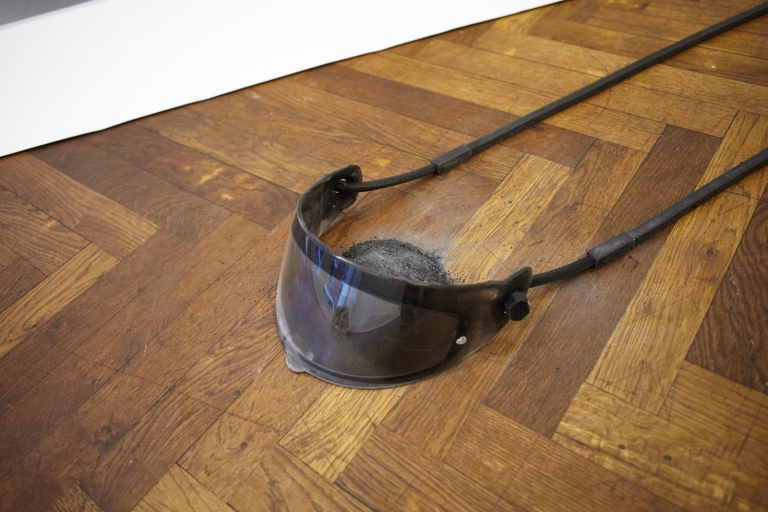
On entering the exhibition space, you see the traces of a performance on the right-hand side. A sound work was presented that recited the titles of ninety-one paintings, ranging from 1638 to 2025, each addressing the destruction of inhabited environments. The titles were arranged alphabetically.
Two performers copied the other’s transcription of the paintings’ titles, with a delay between each reading the other’s titles and writing them down.
How to map an image is ambivalent in the tracking of locality. Where does it come from, what’s the source, etc. However an idea is framed or a story sequenced, form and surface become more or less theatrical. And words provoke a historical response from the form and surface they remind us of.
– Stella Sieber
Stella Sieber (b.1992, DE) lives and works in Berlin. Sieber holds a BFA from HFBK Hamburg and studied at Städelschule in Frankfurt. She graduated with a MFA from Malmö Art Academy in 2024. Her work has been exhibited at Gl. Strand (Copenhagen, DK), Christiania Biennale (DK), Rinde am Rhein (Düsseldorf, DE), Christian Torp (Oslo, NO), Neue Alte Brücke (Frankfurt, DE), Sangt Hipolyt (Berlin, DE), City Galerie Wien (Vienna, AT), Mauer (Cologne, DE) and Kammer Rieck (Berlin/Hamburg, DE) among others.