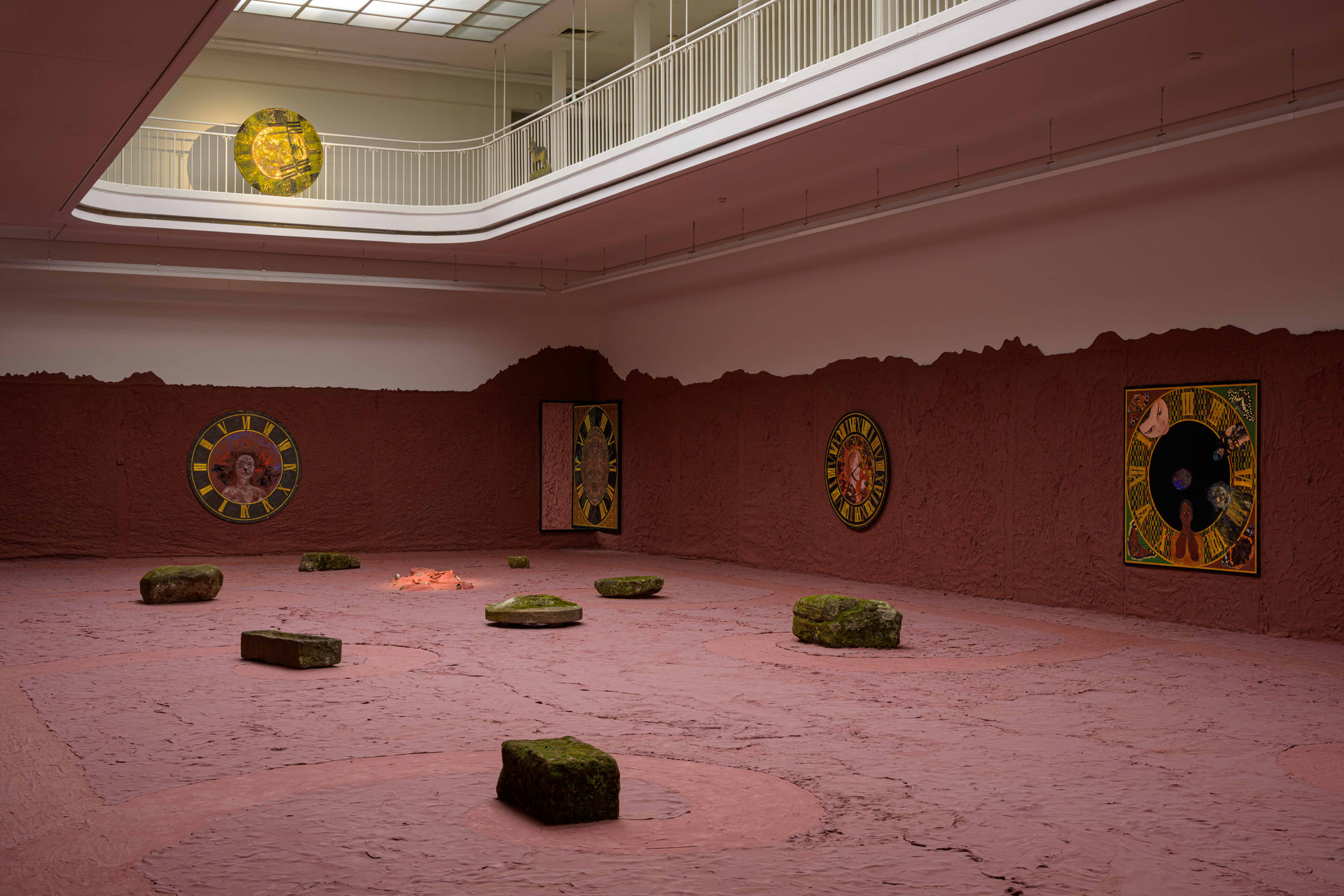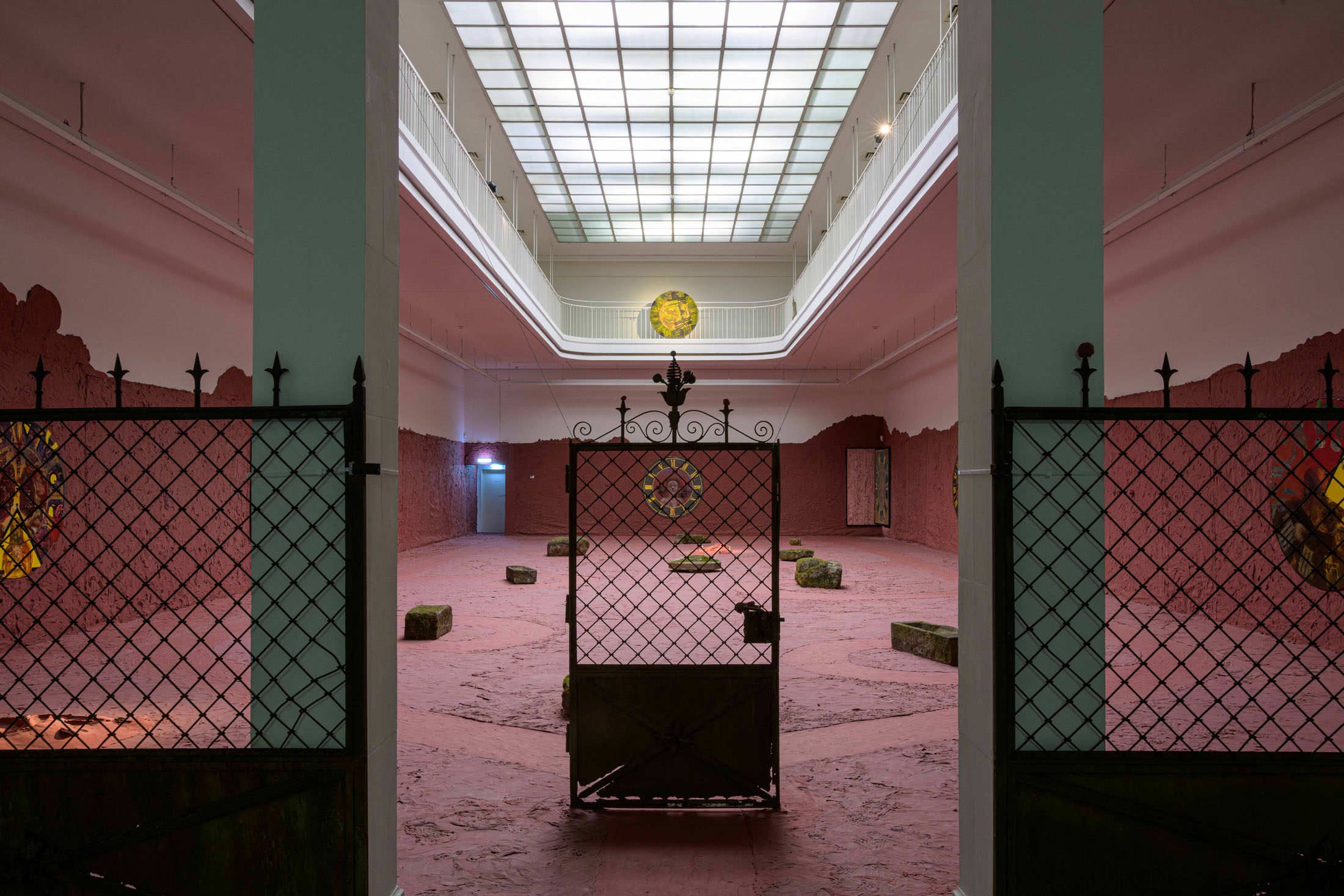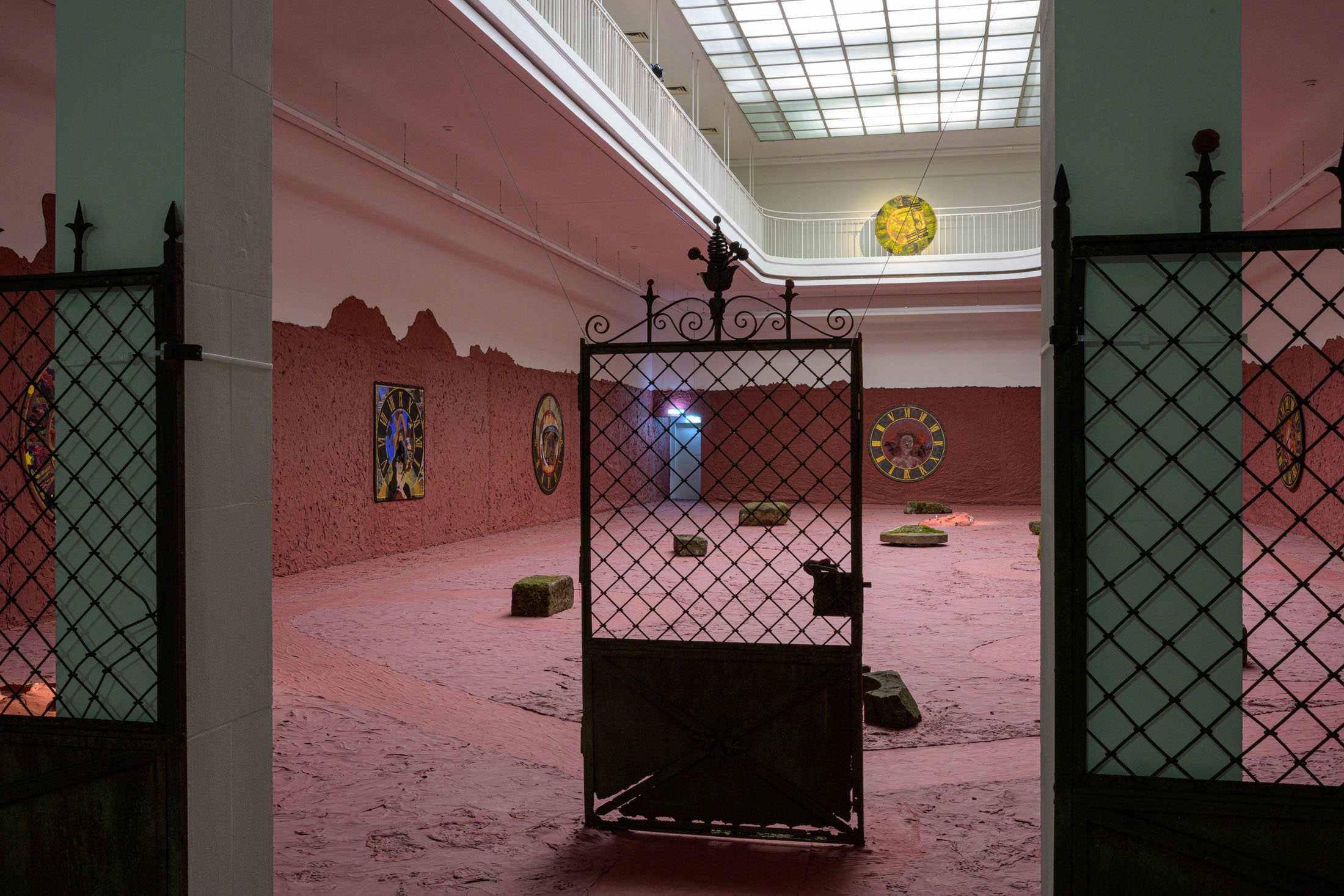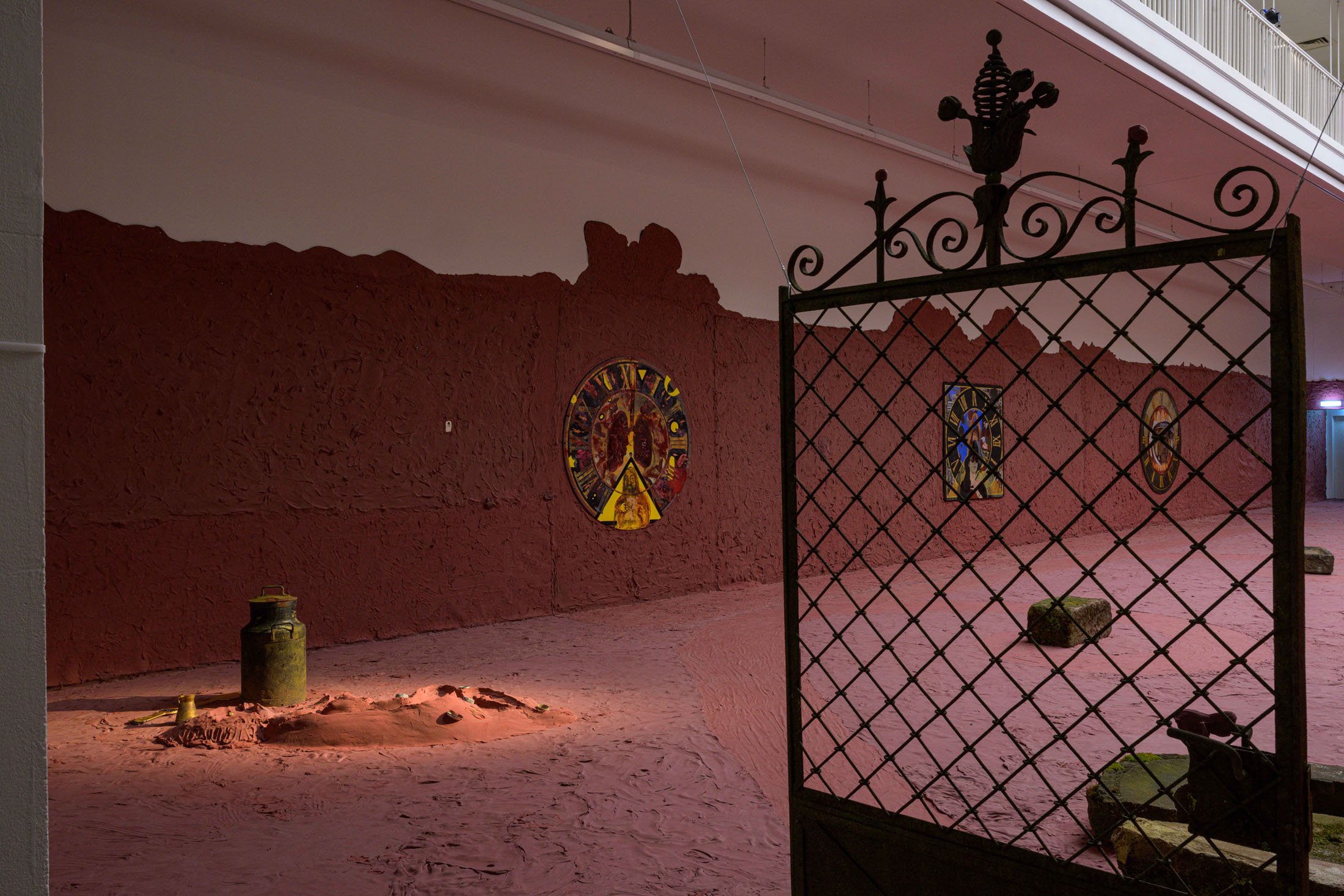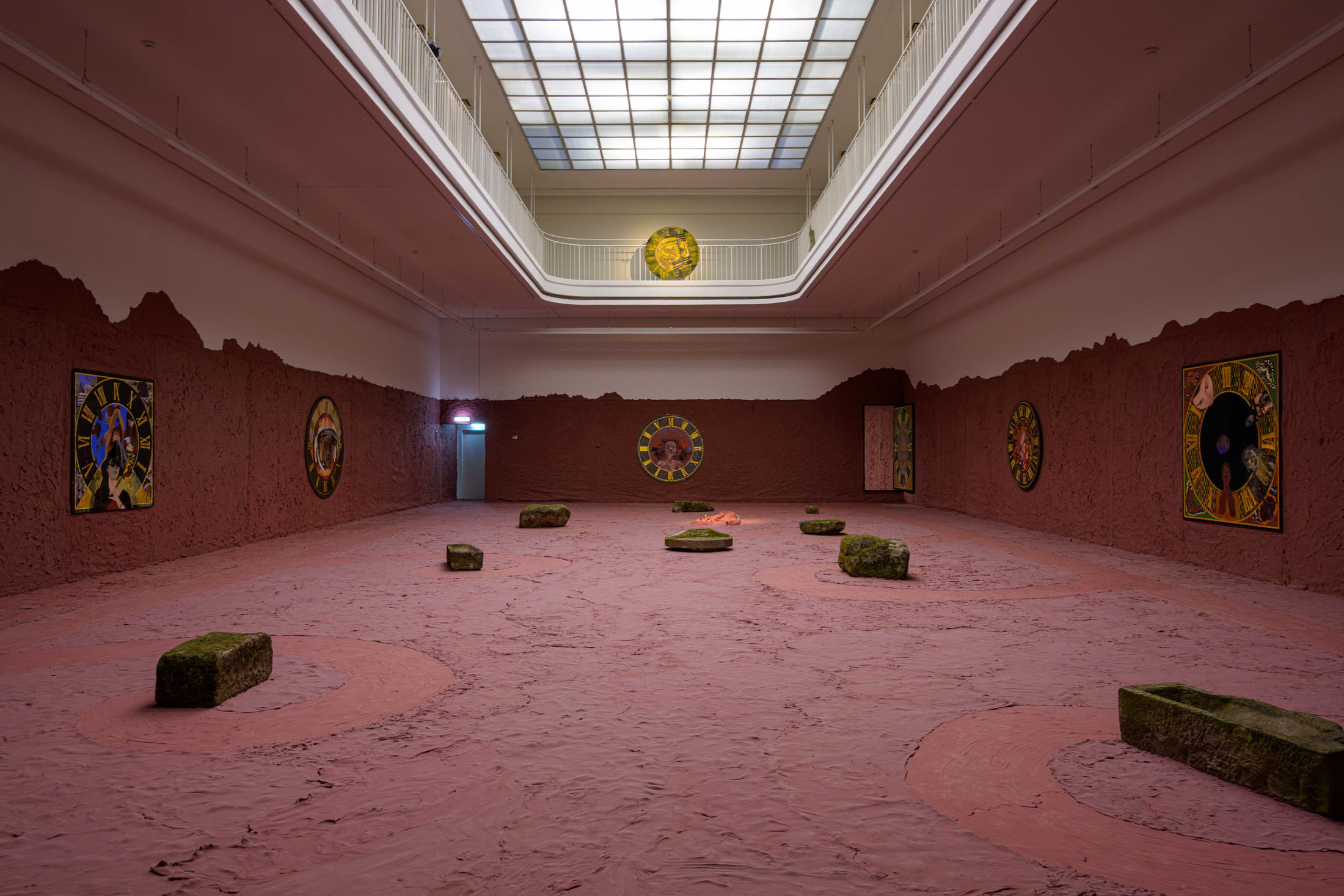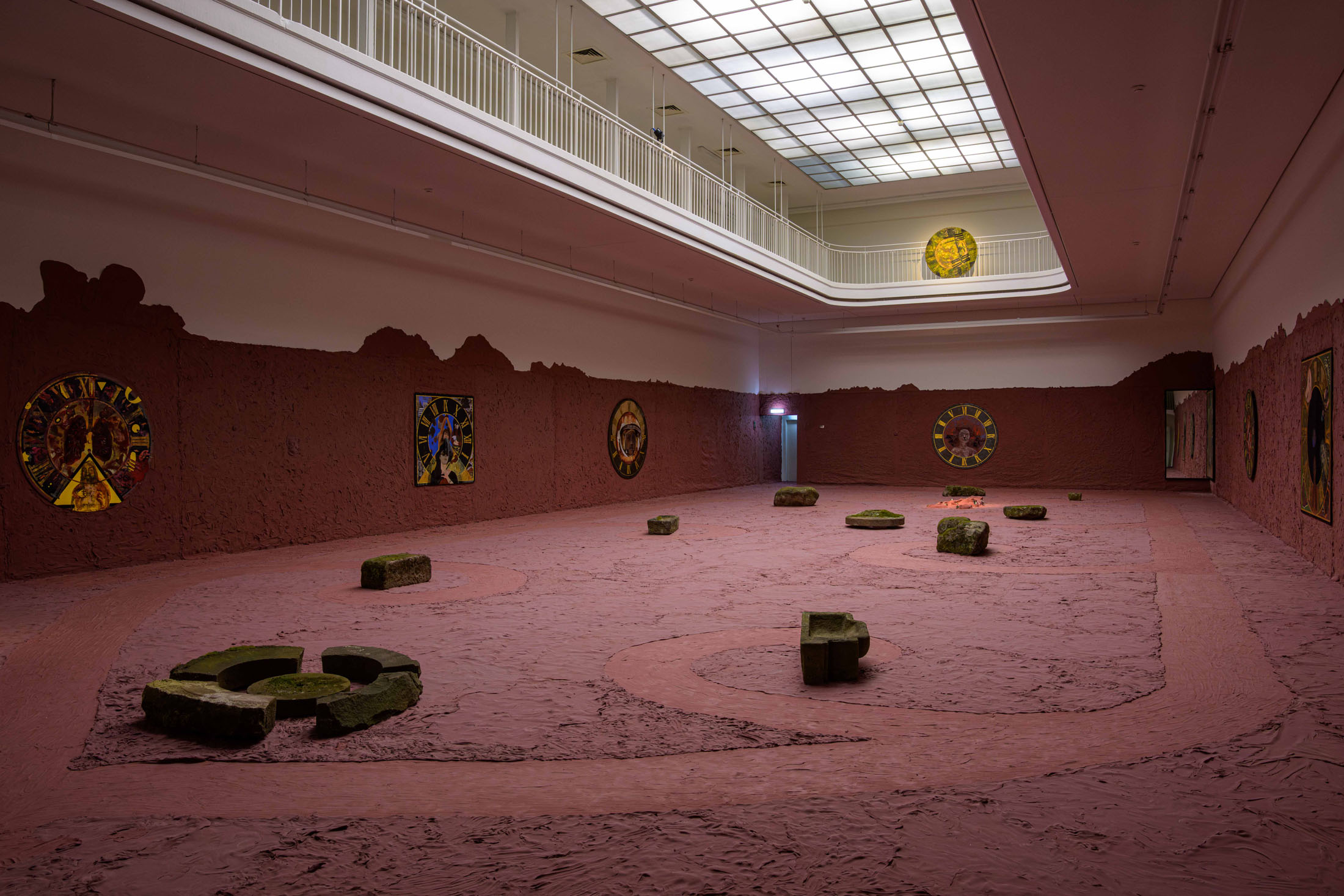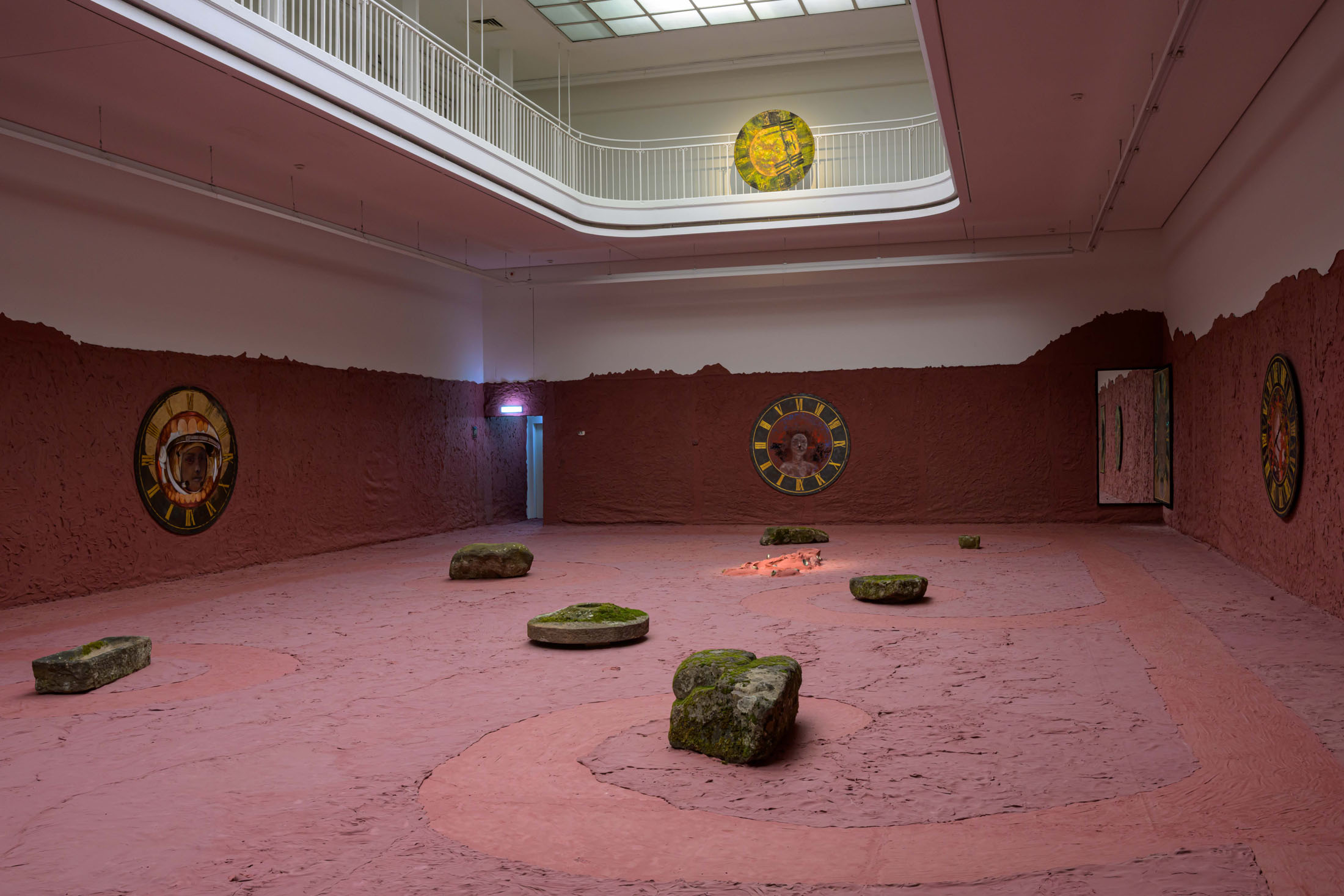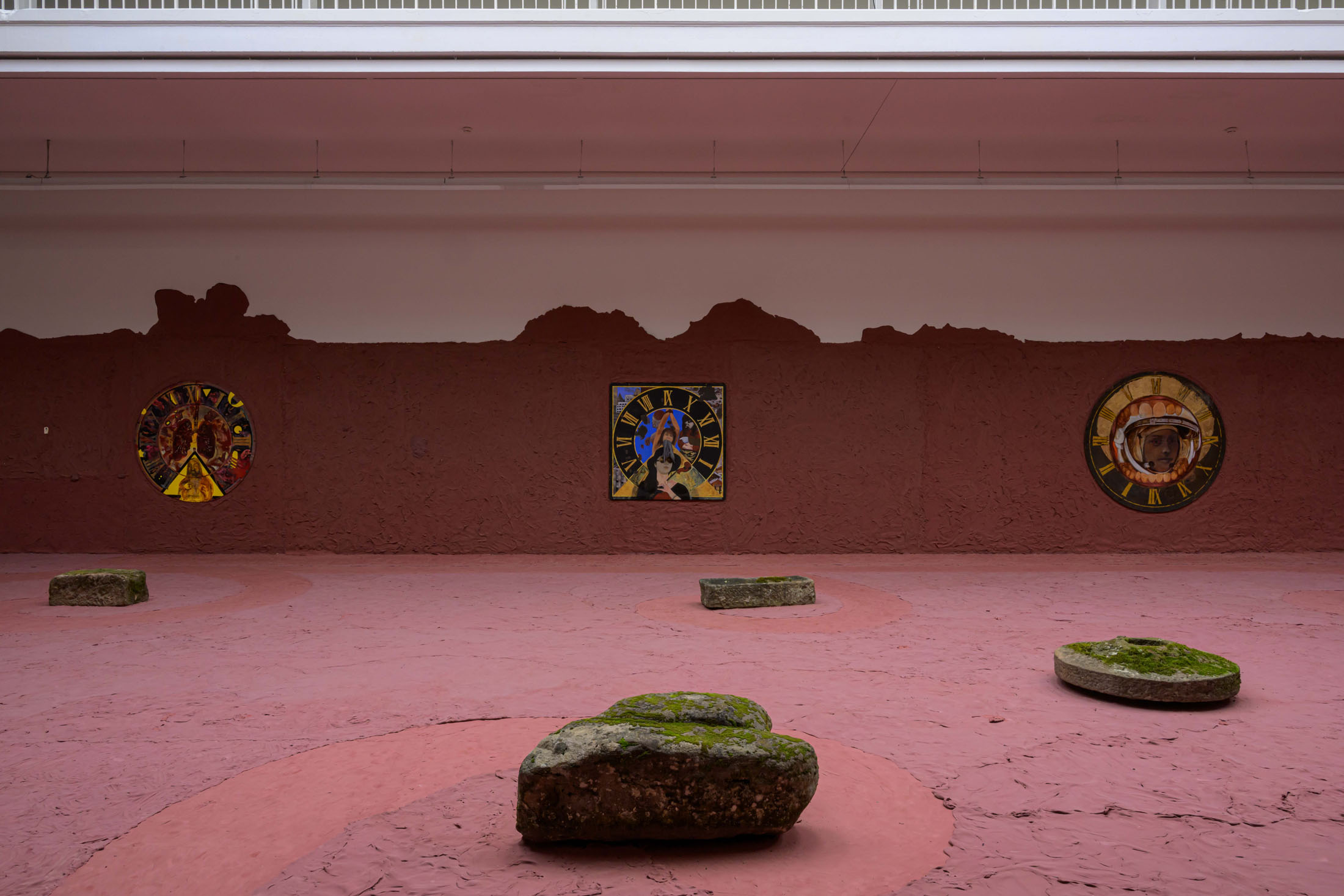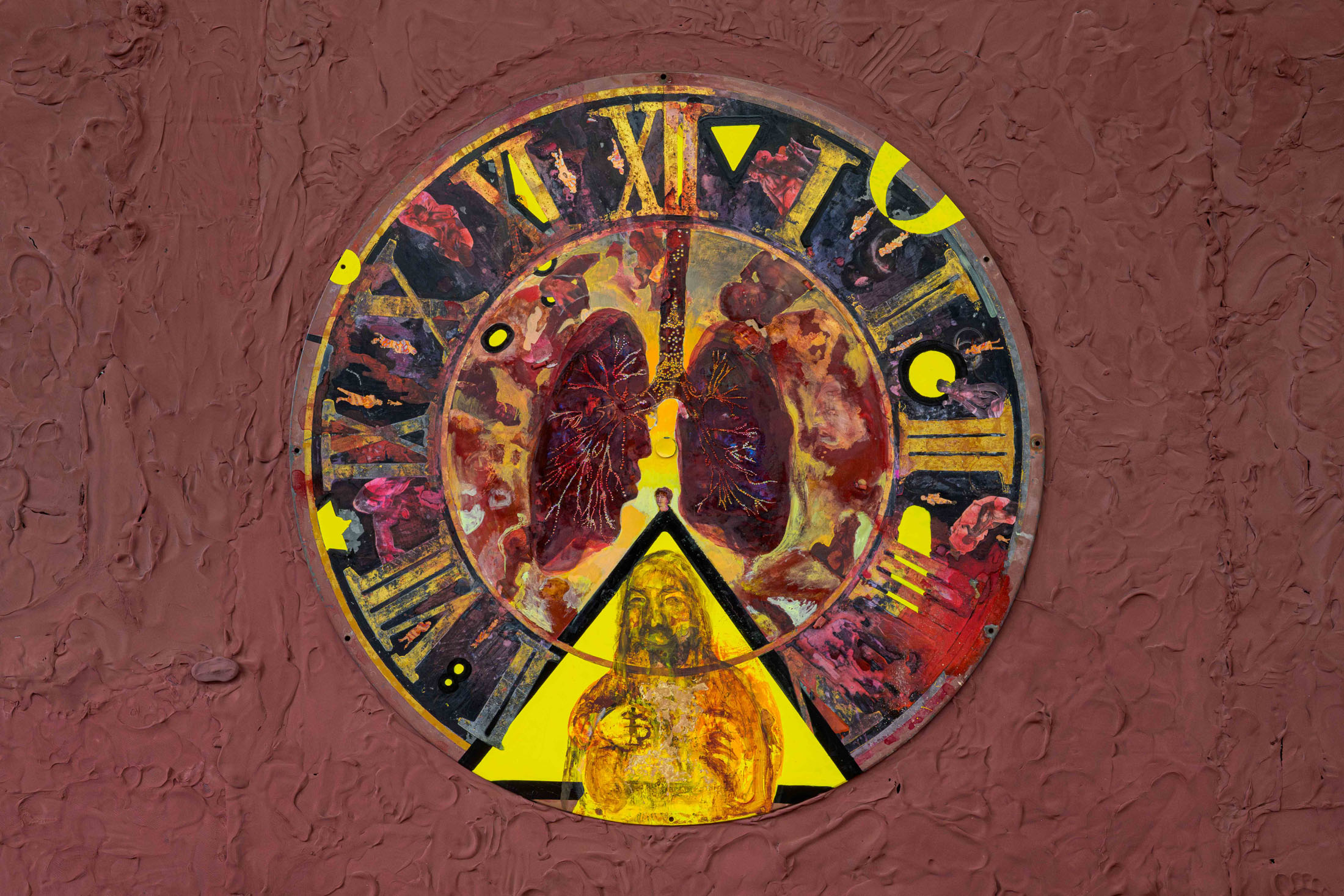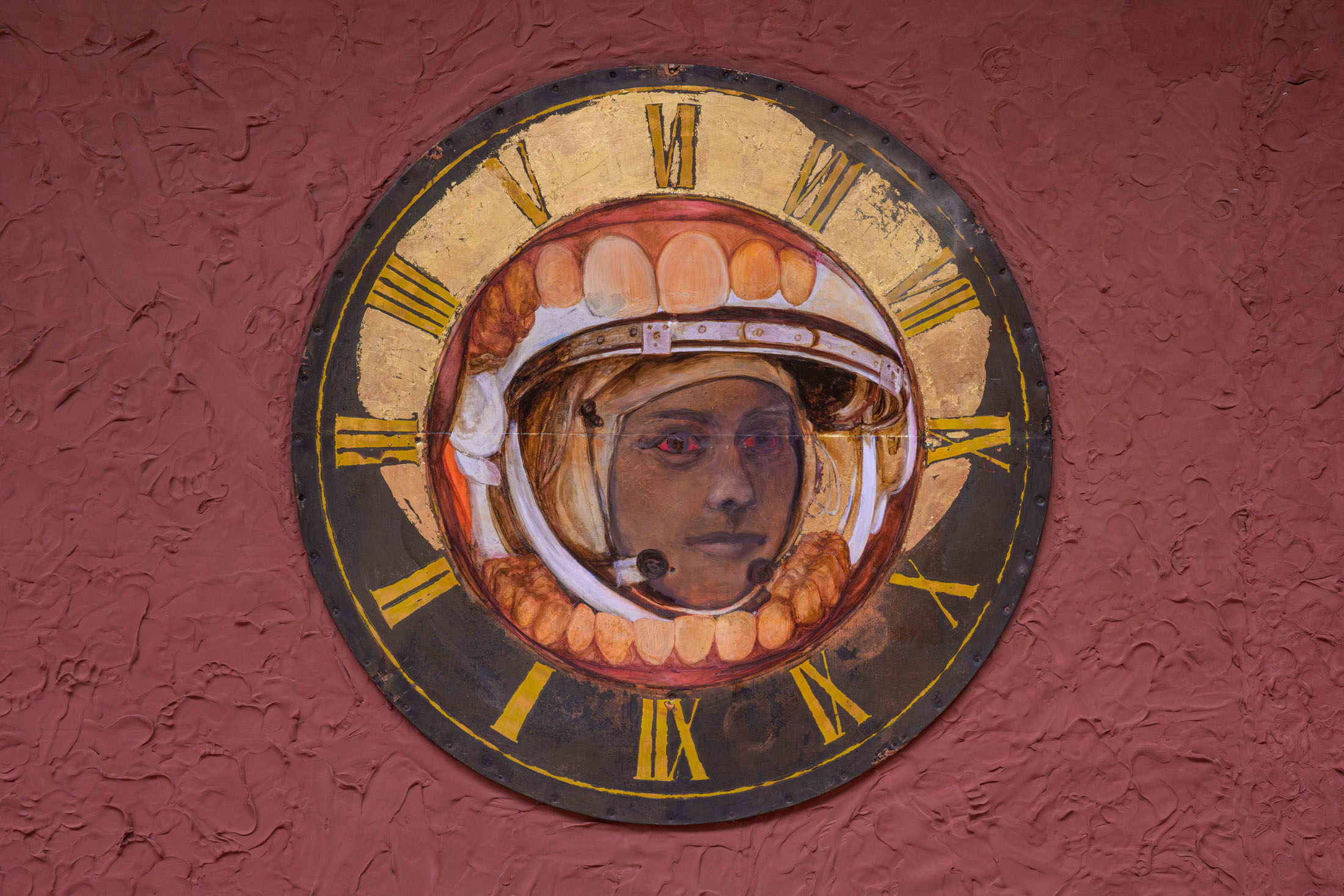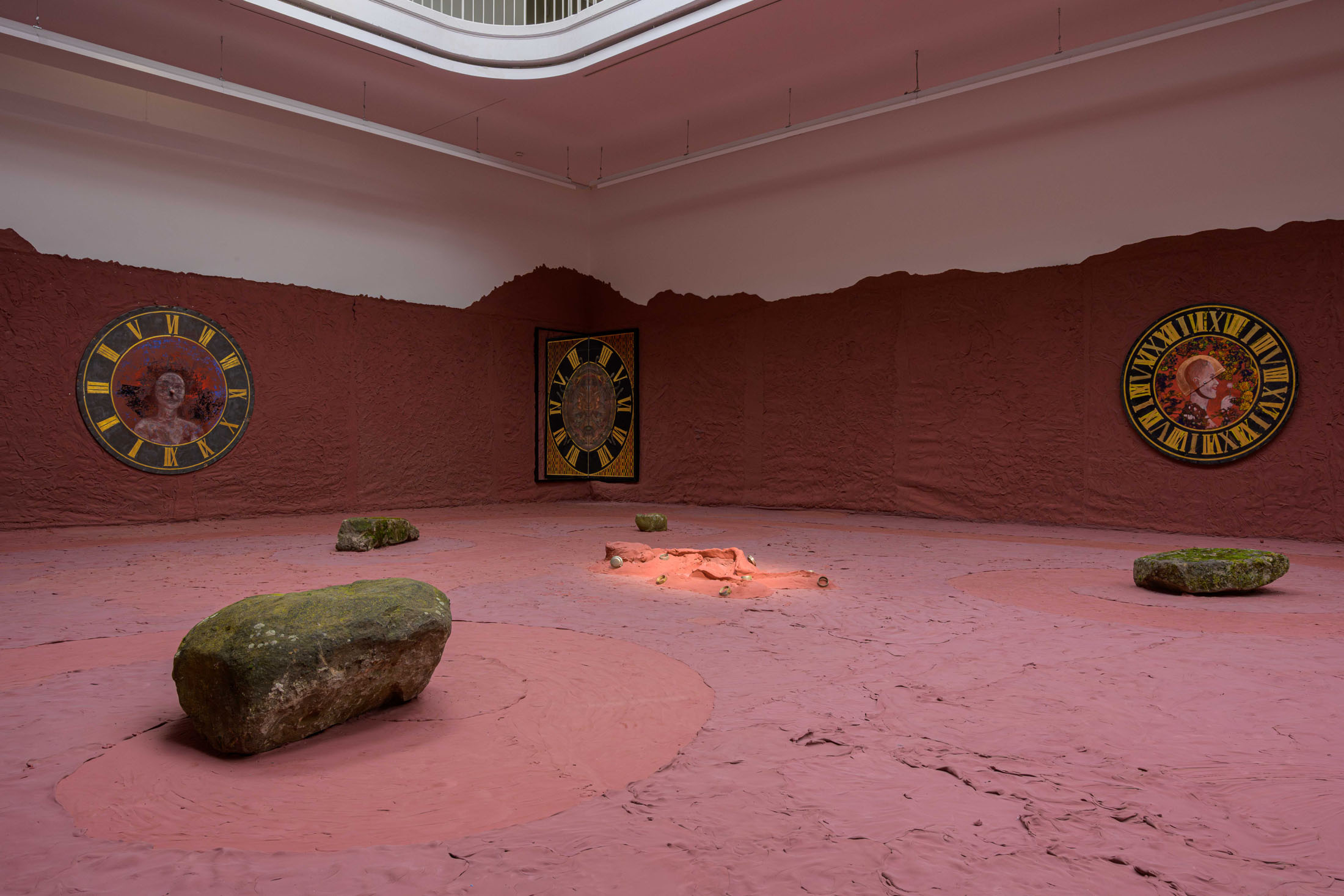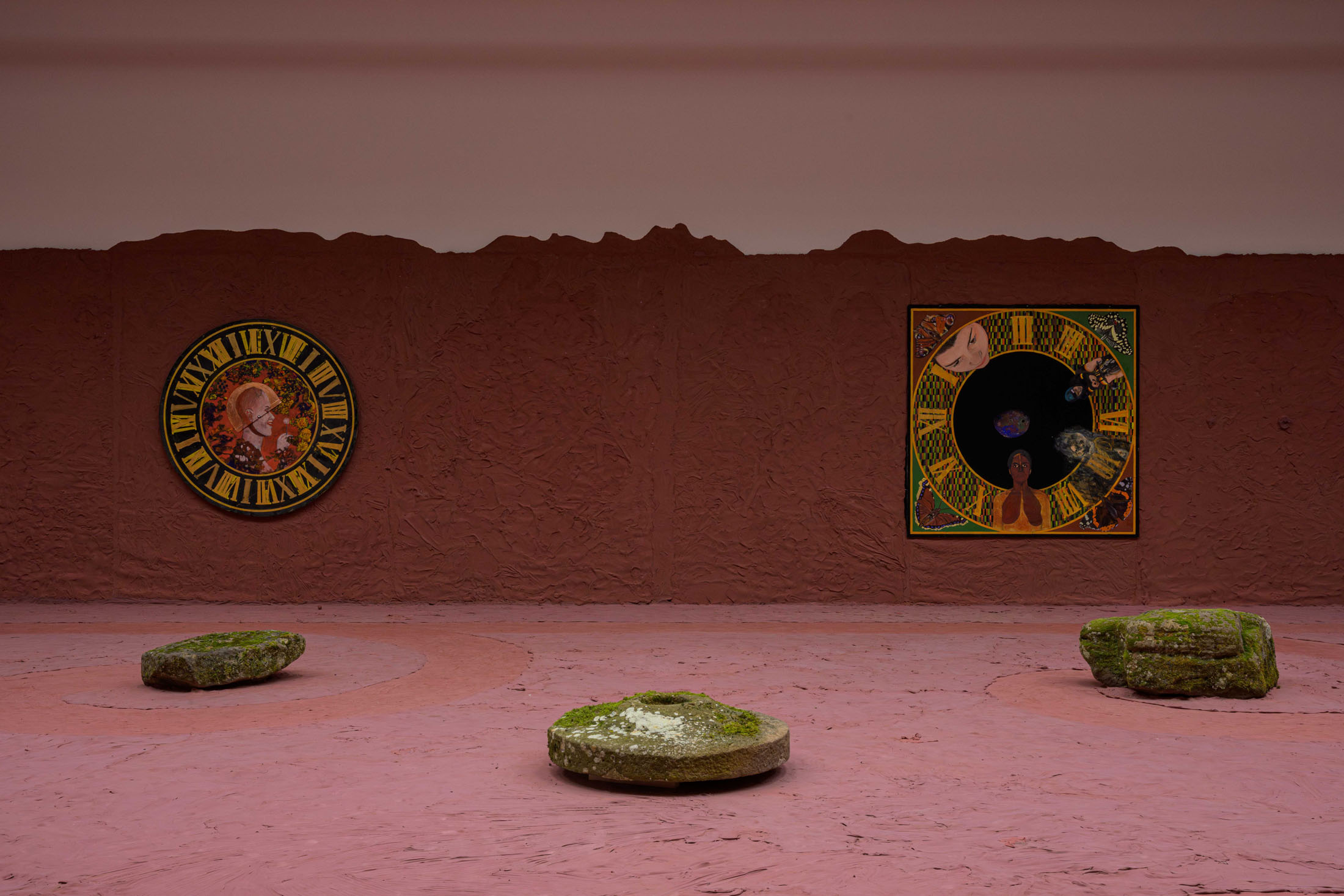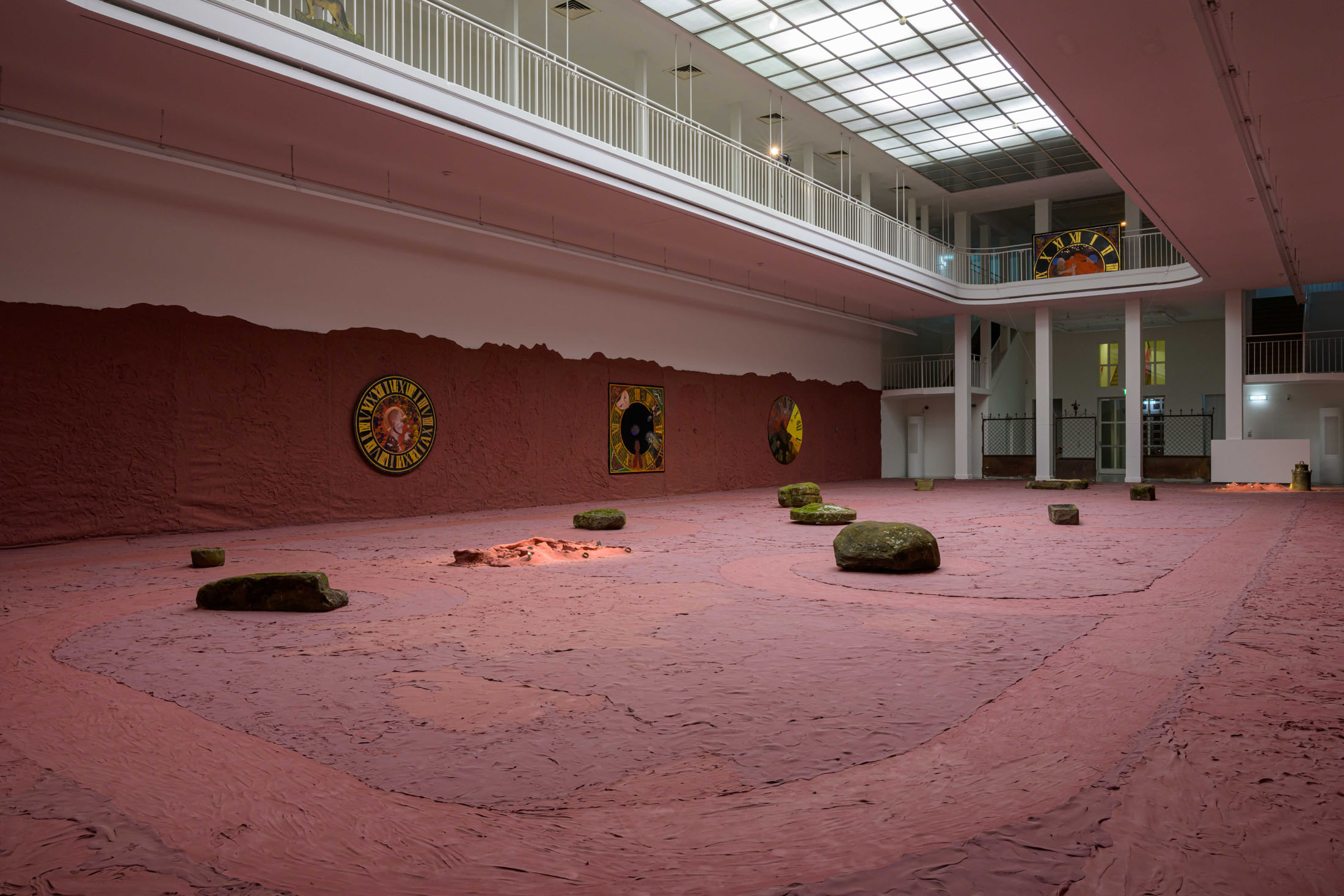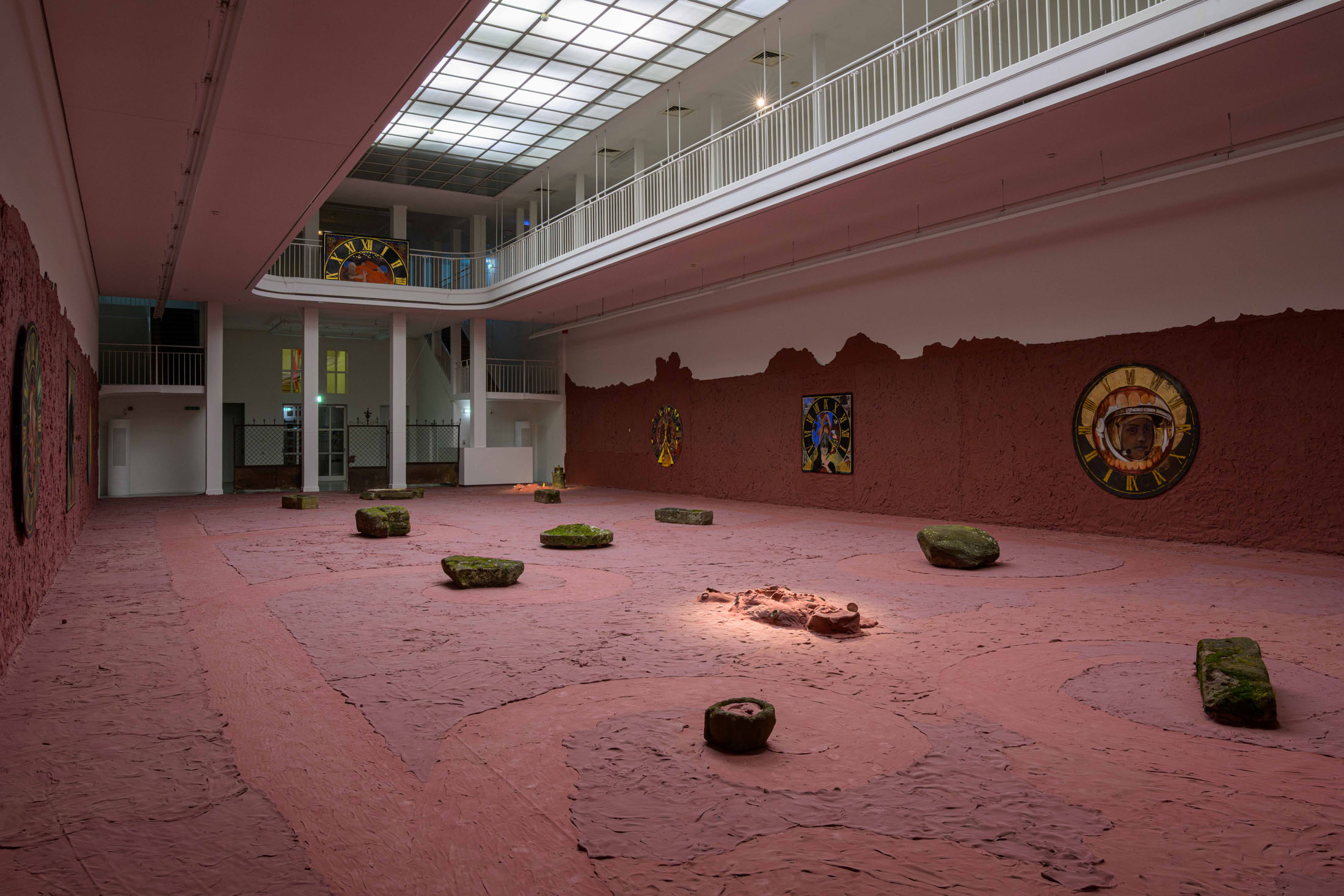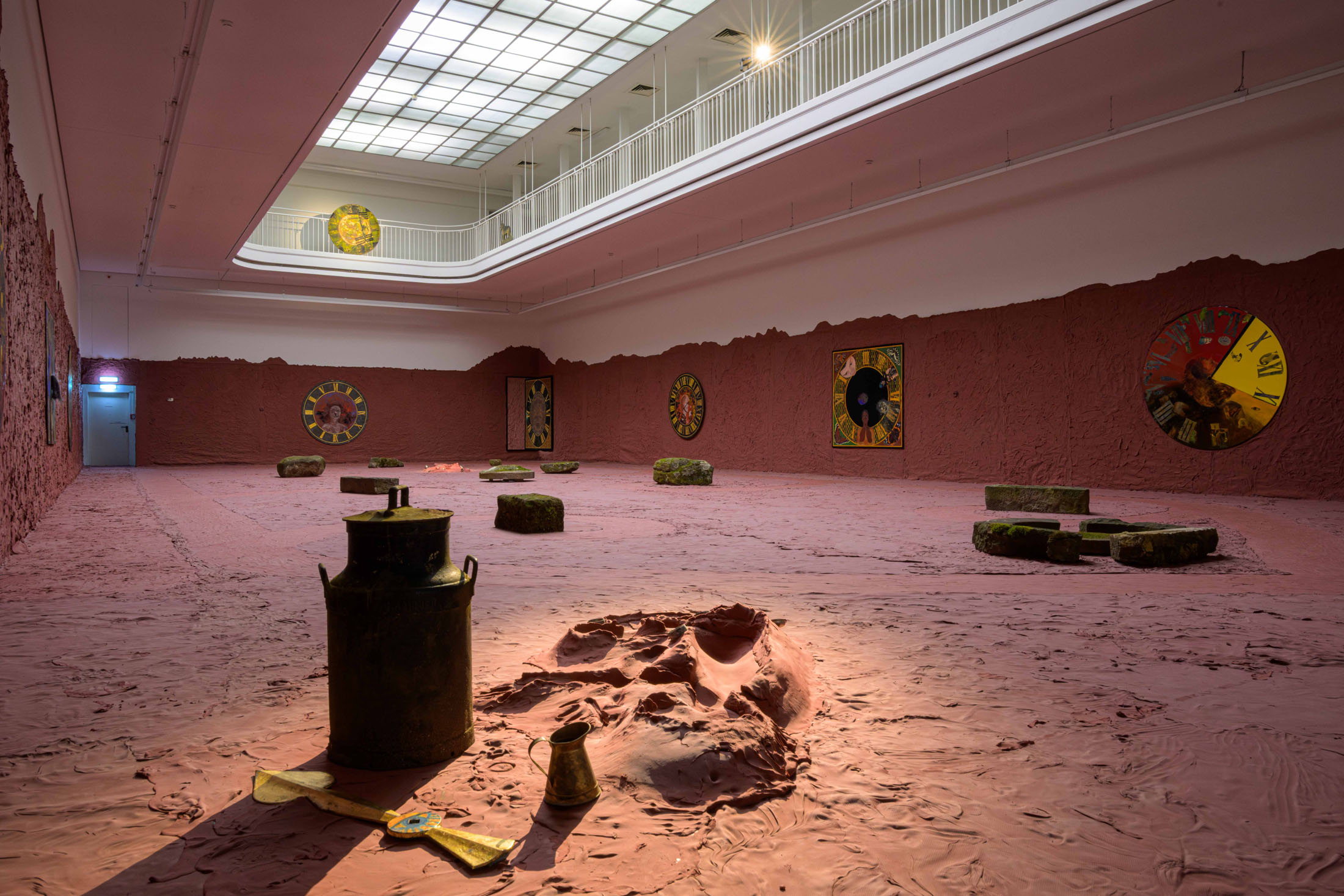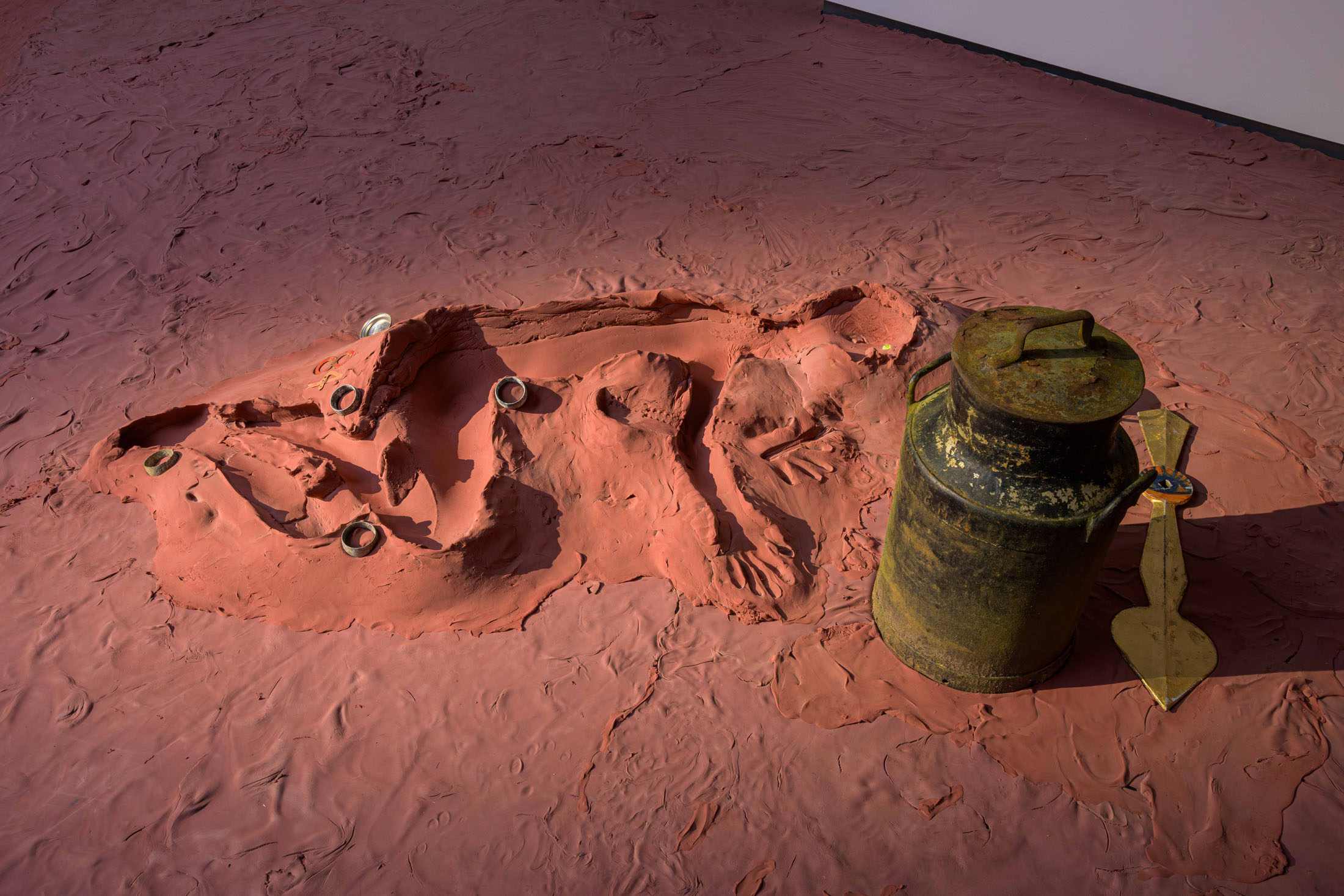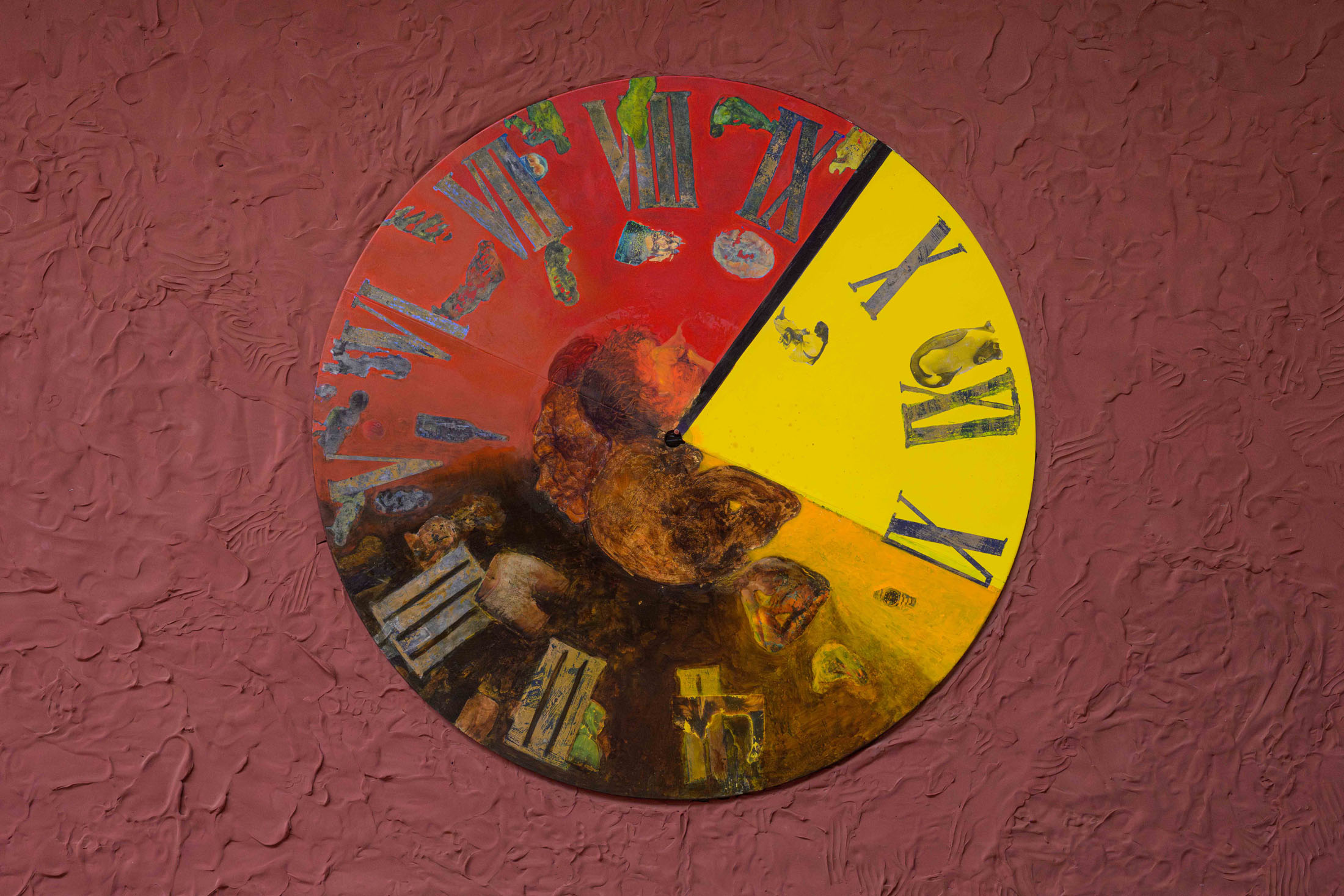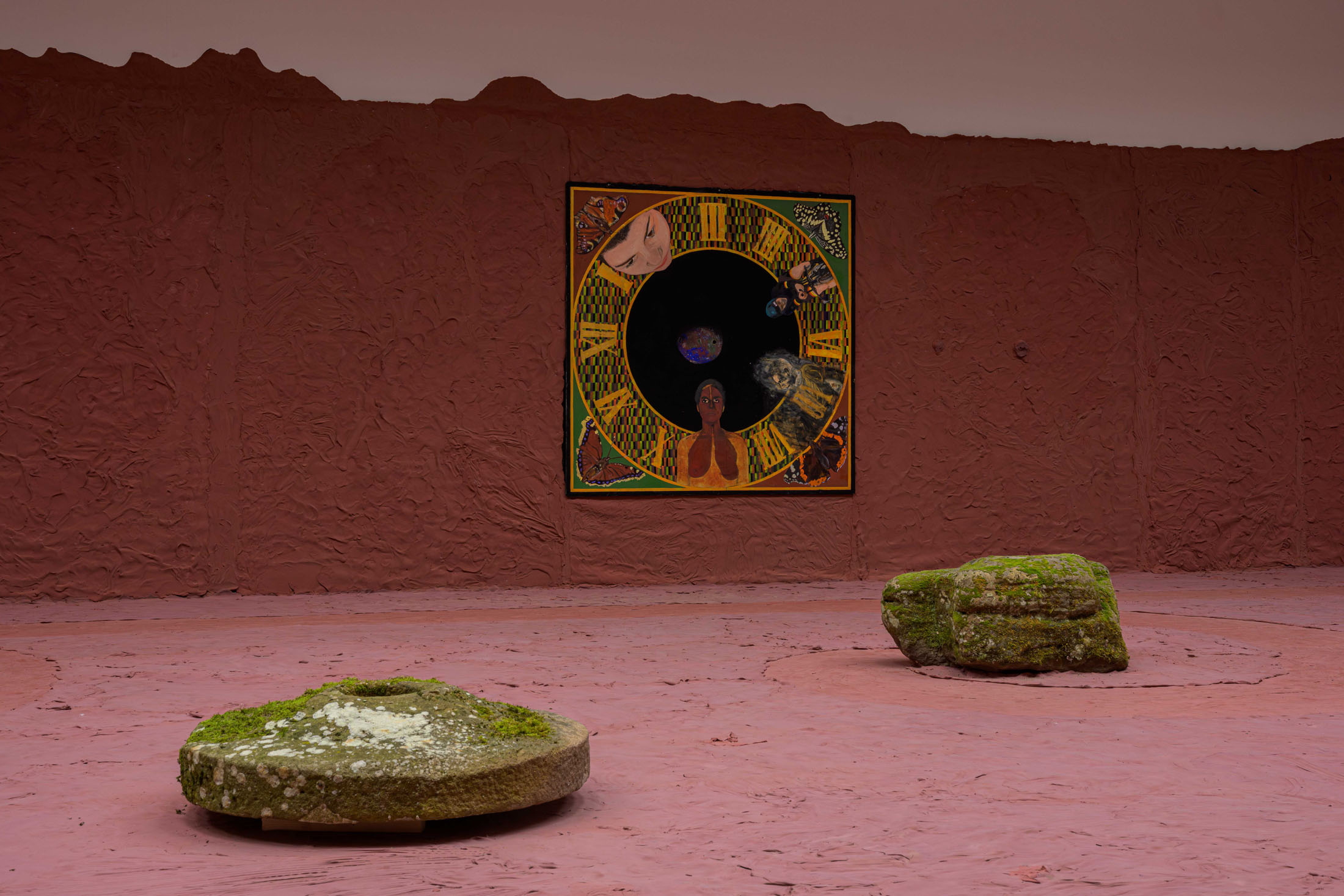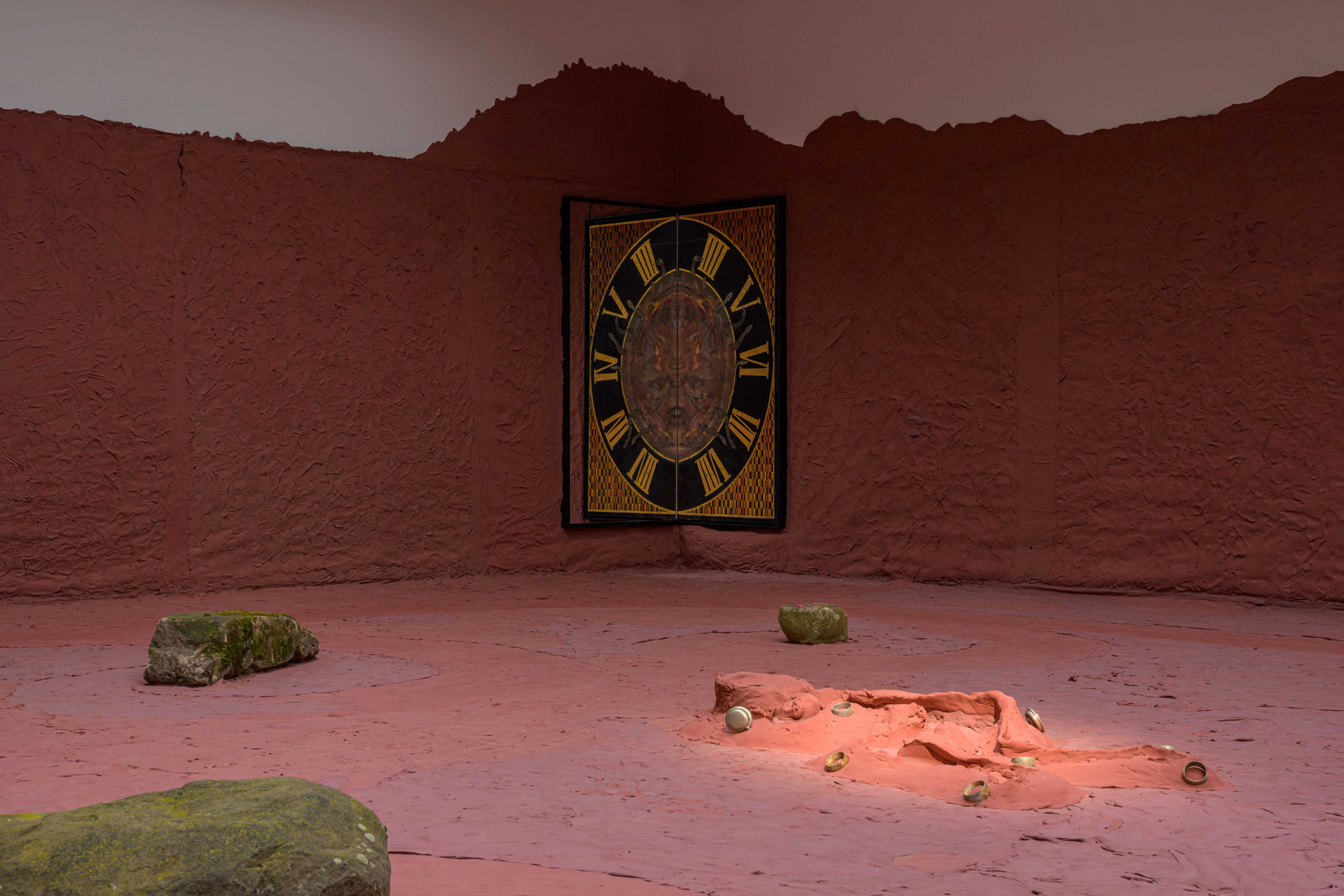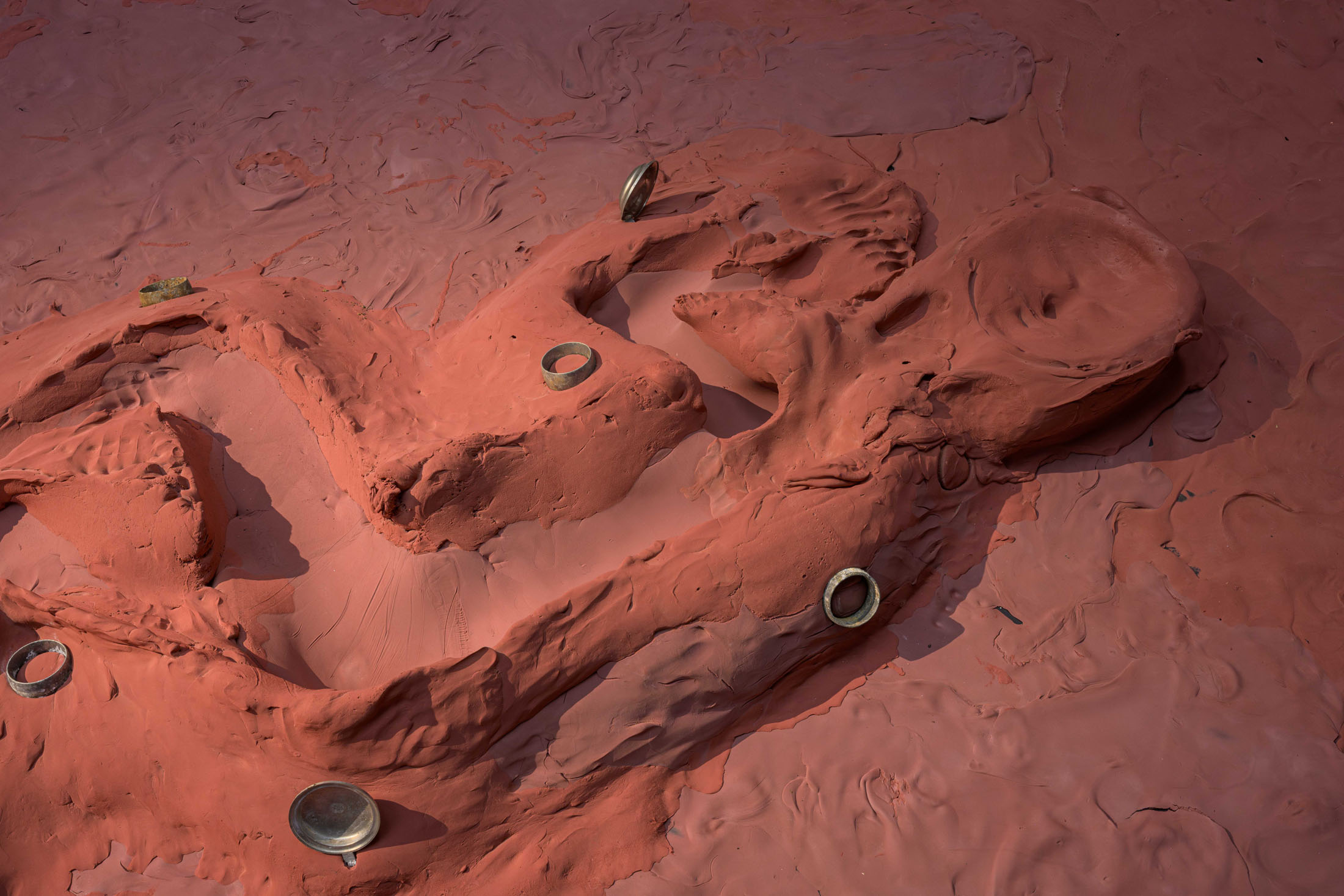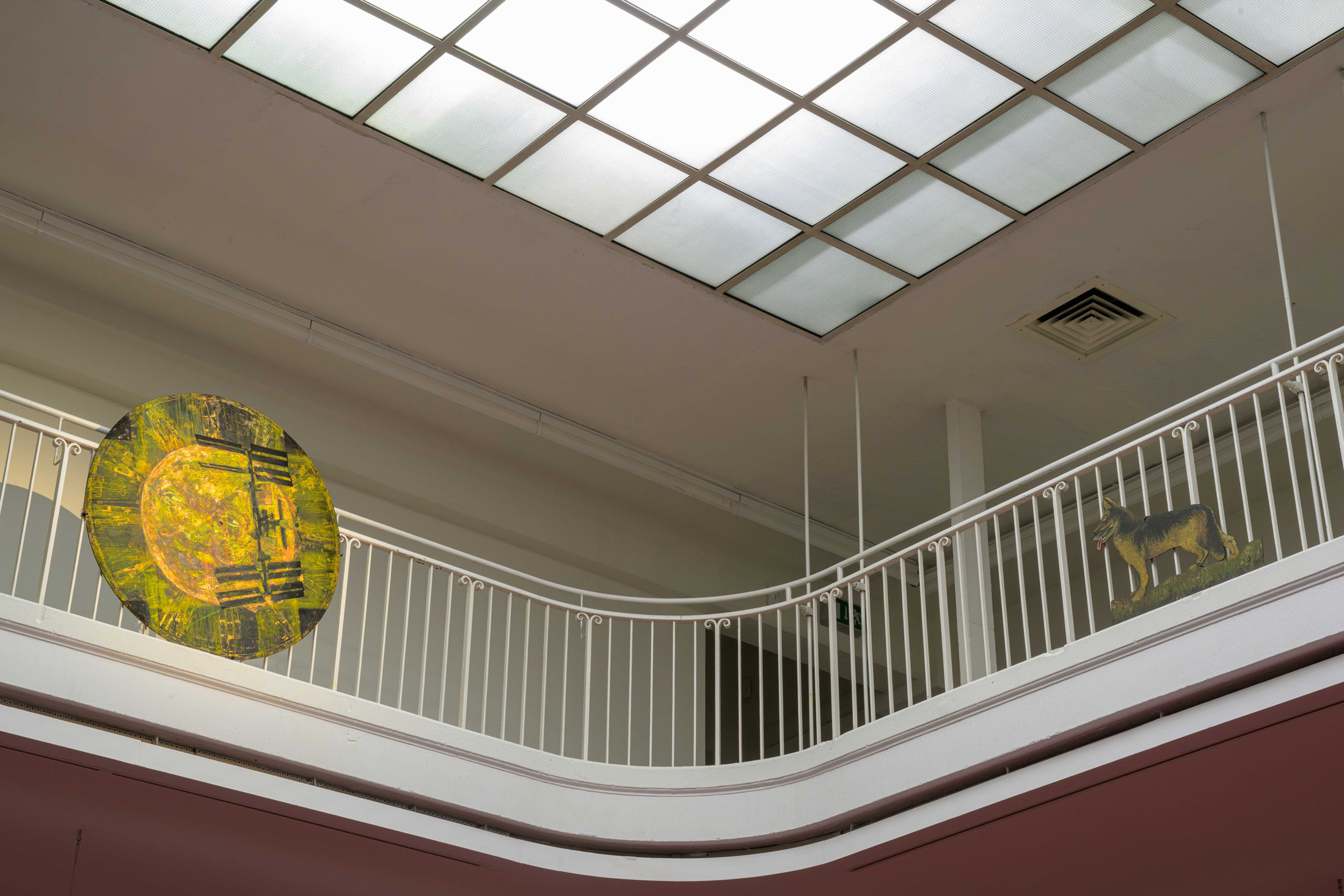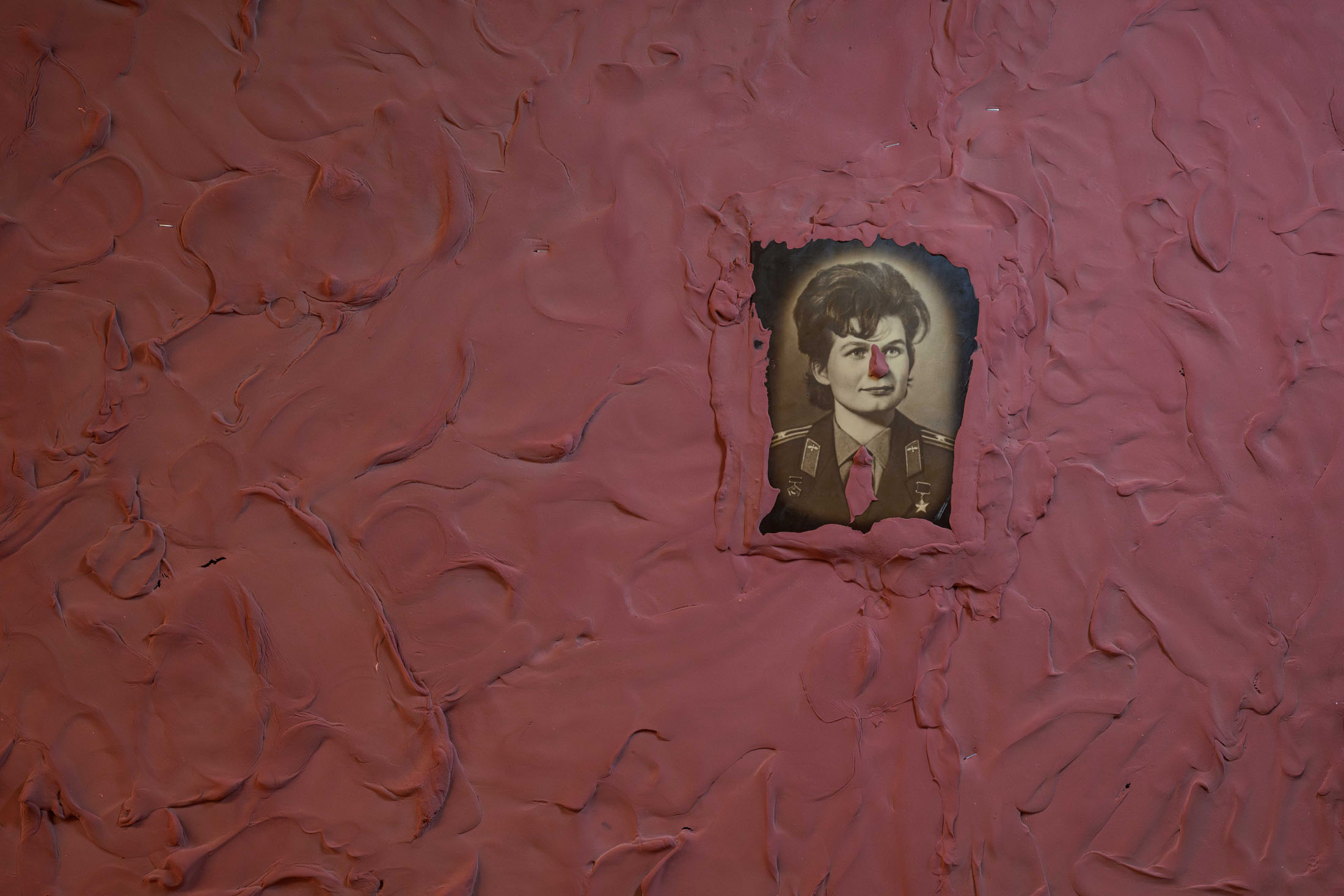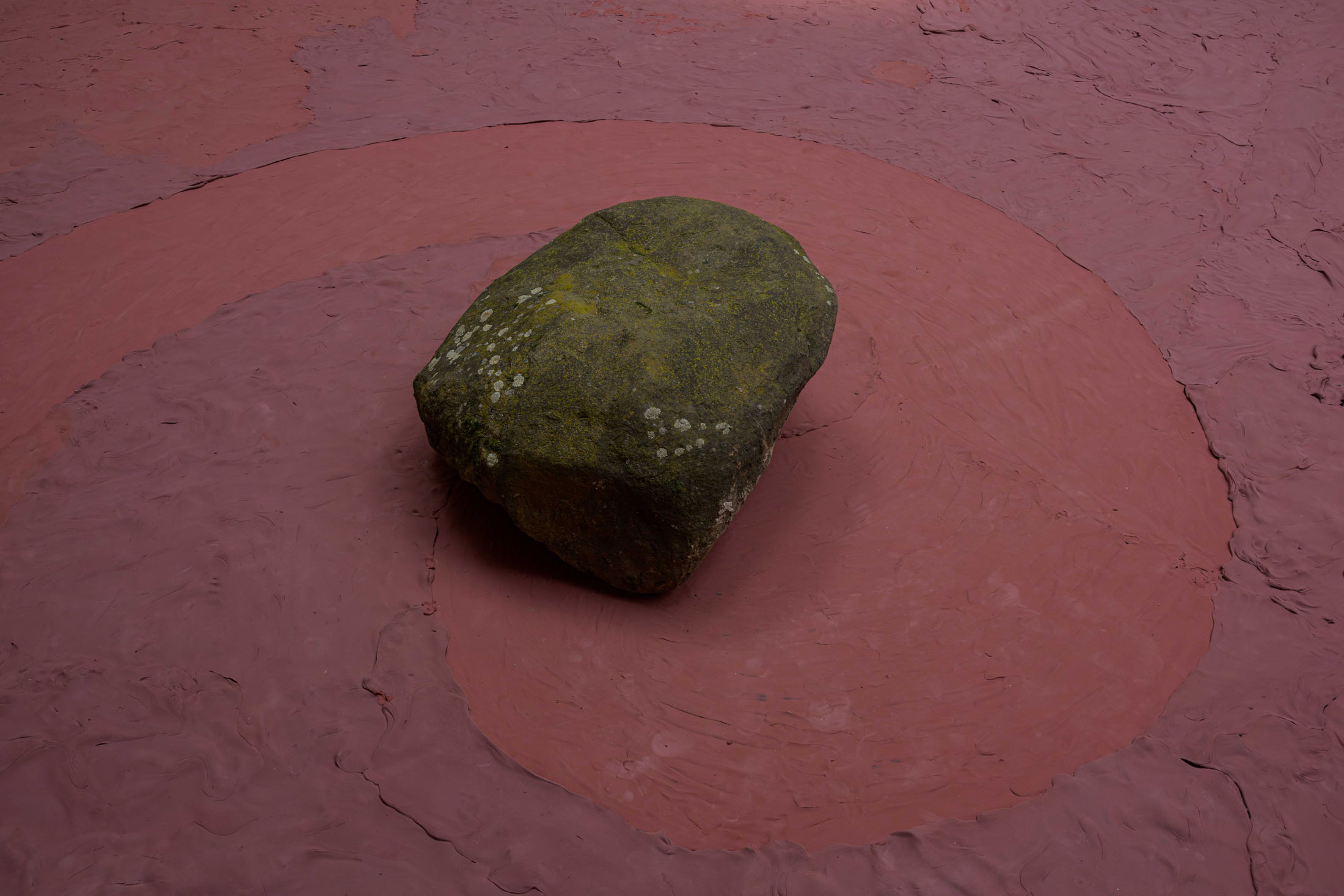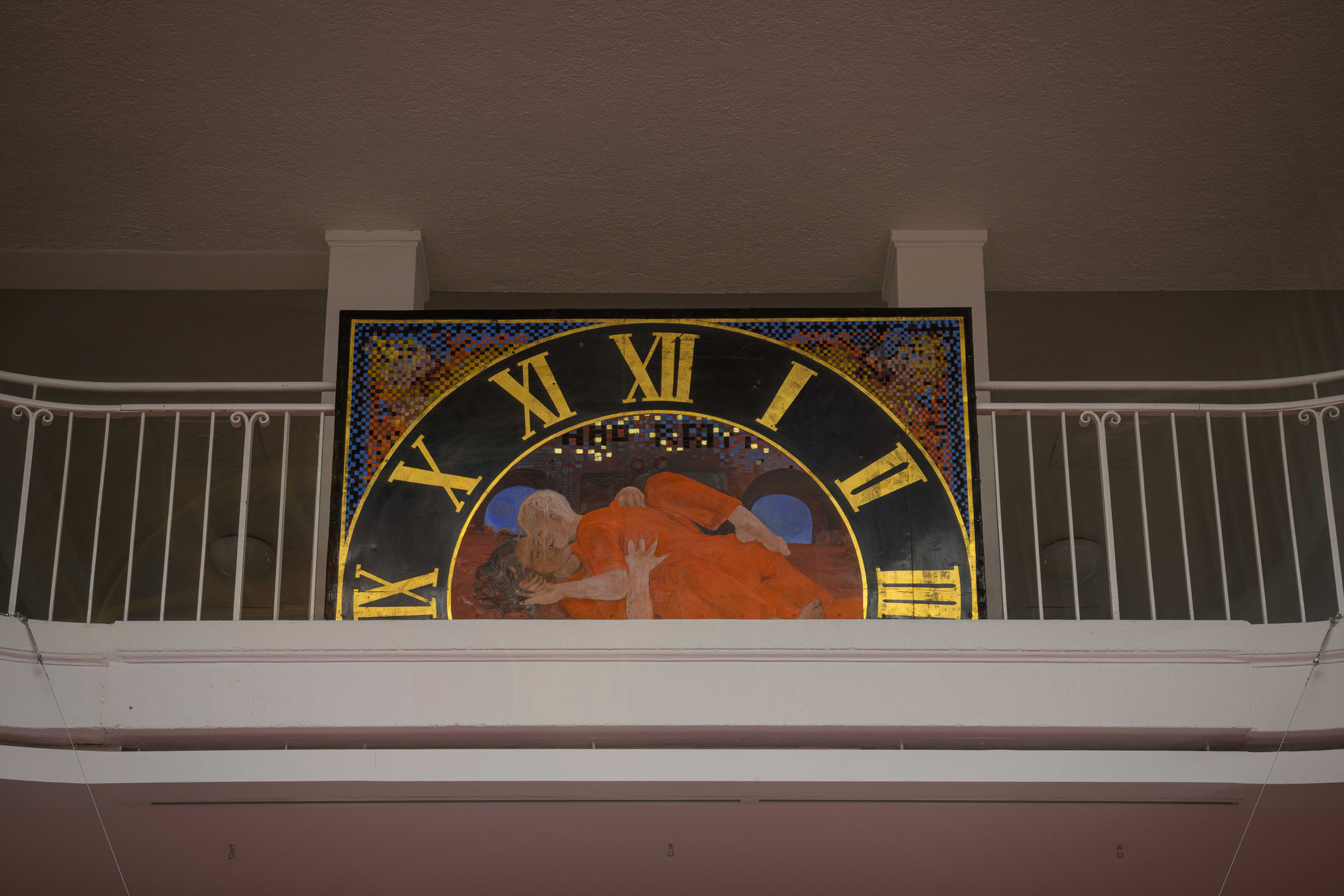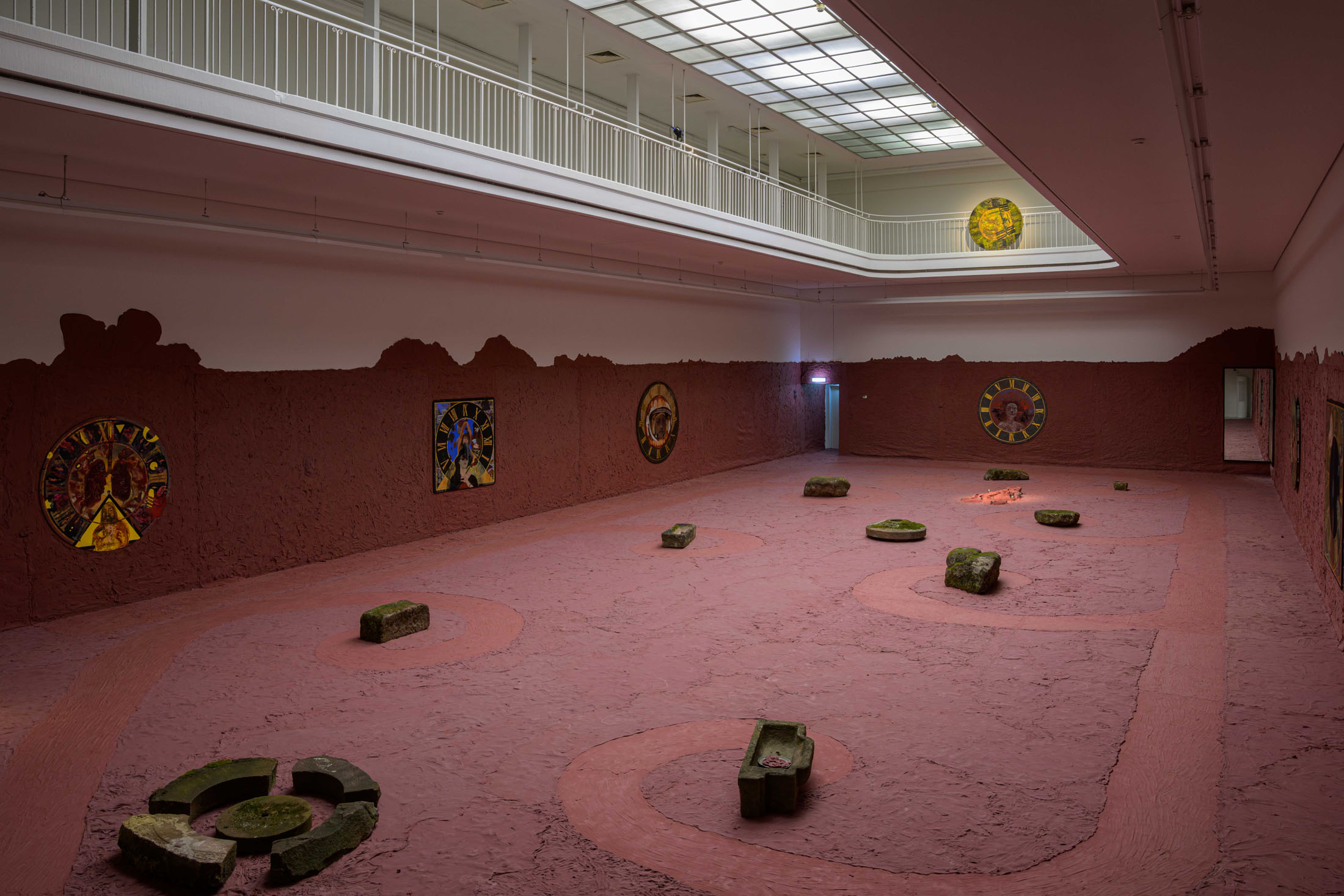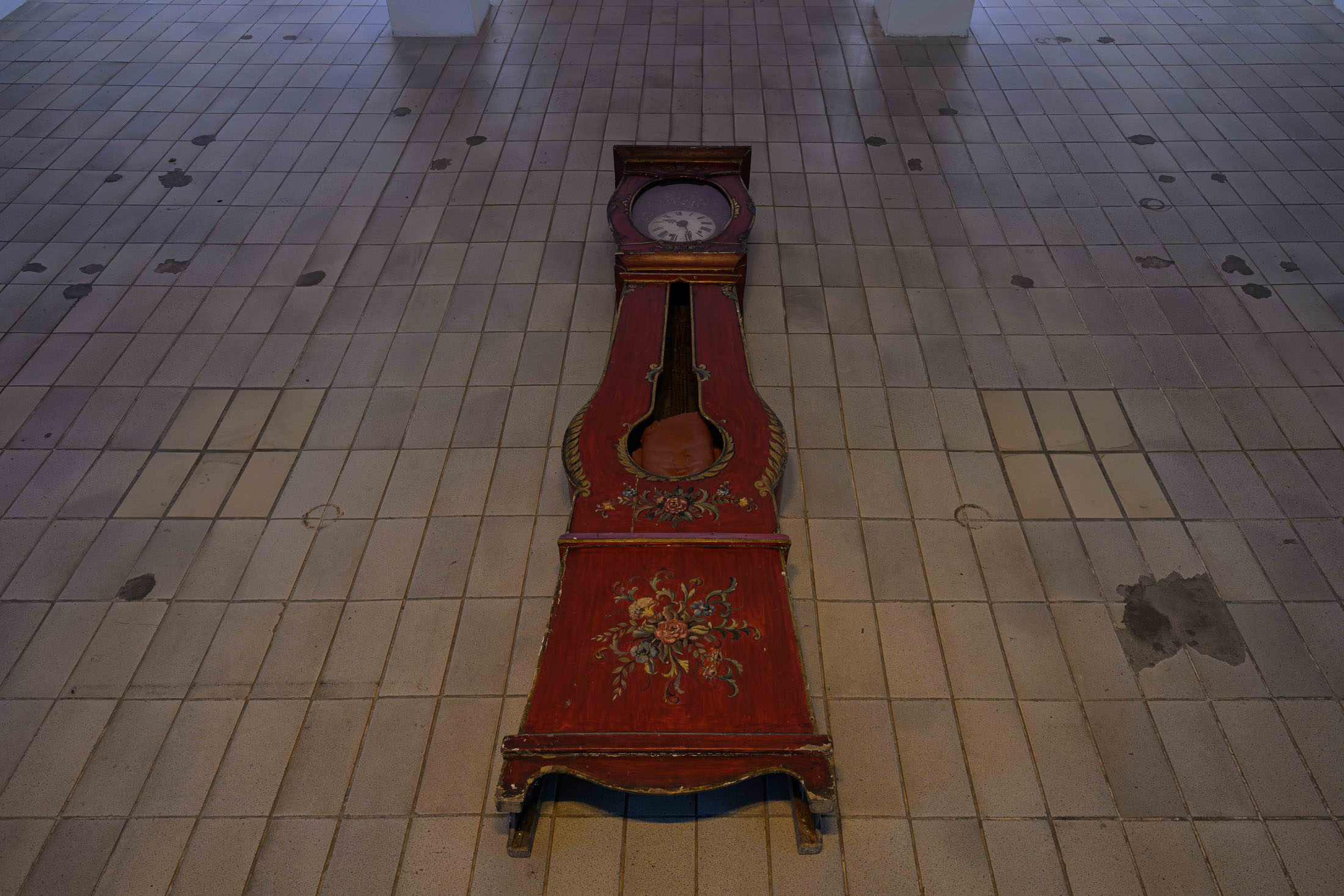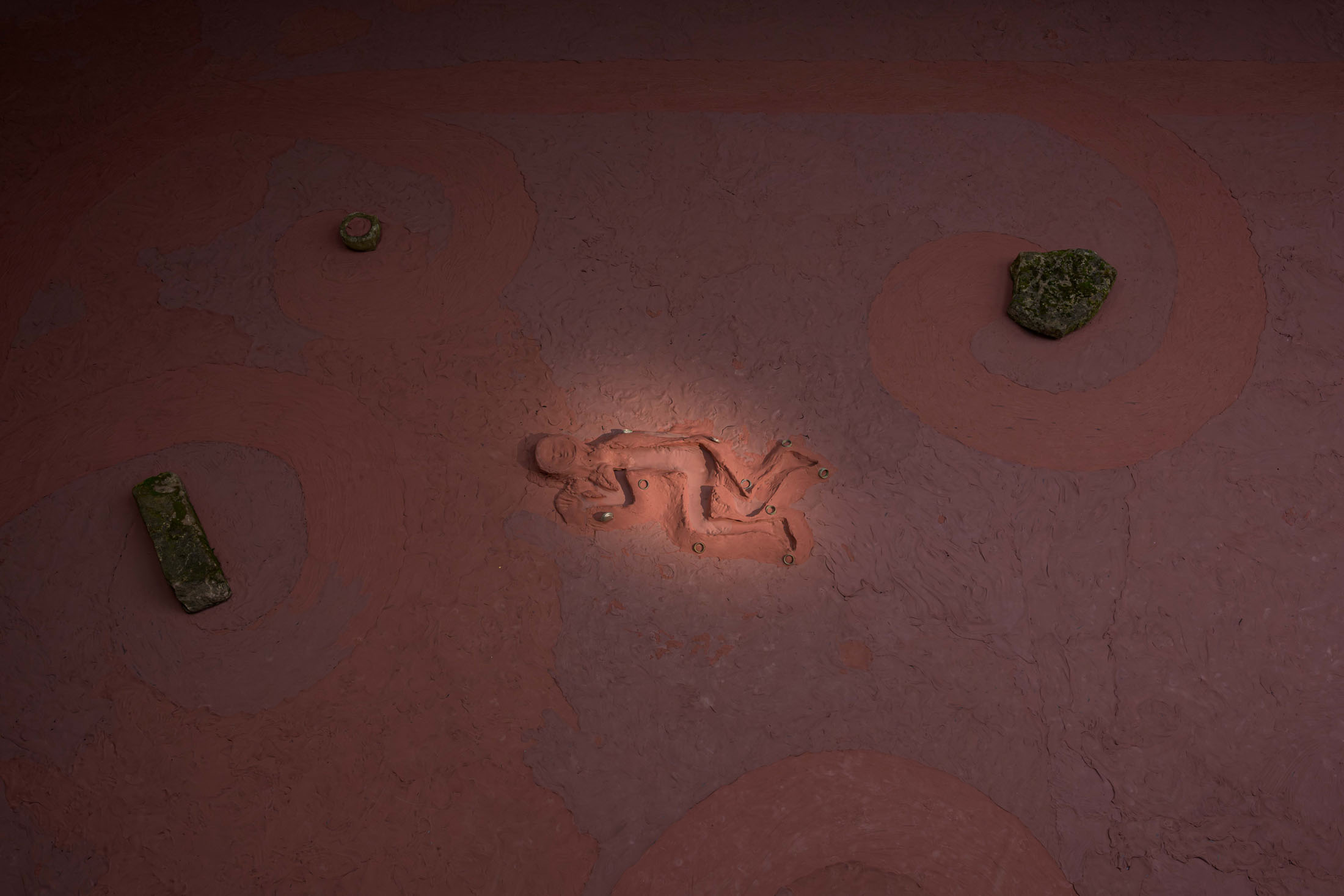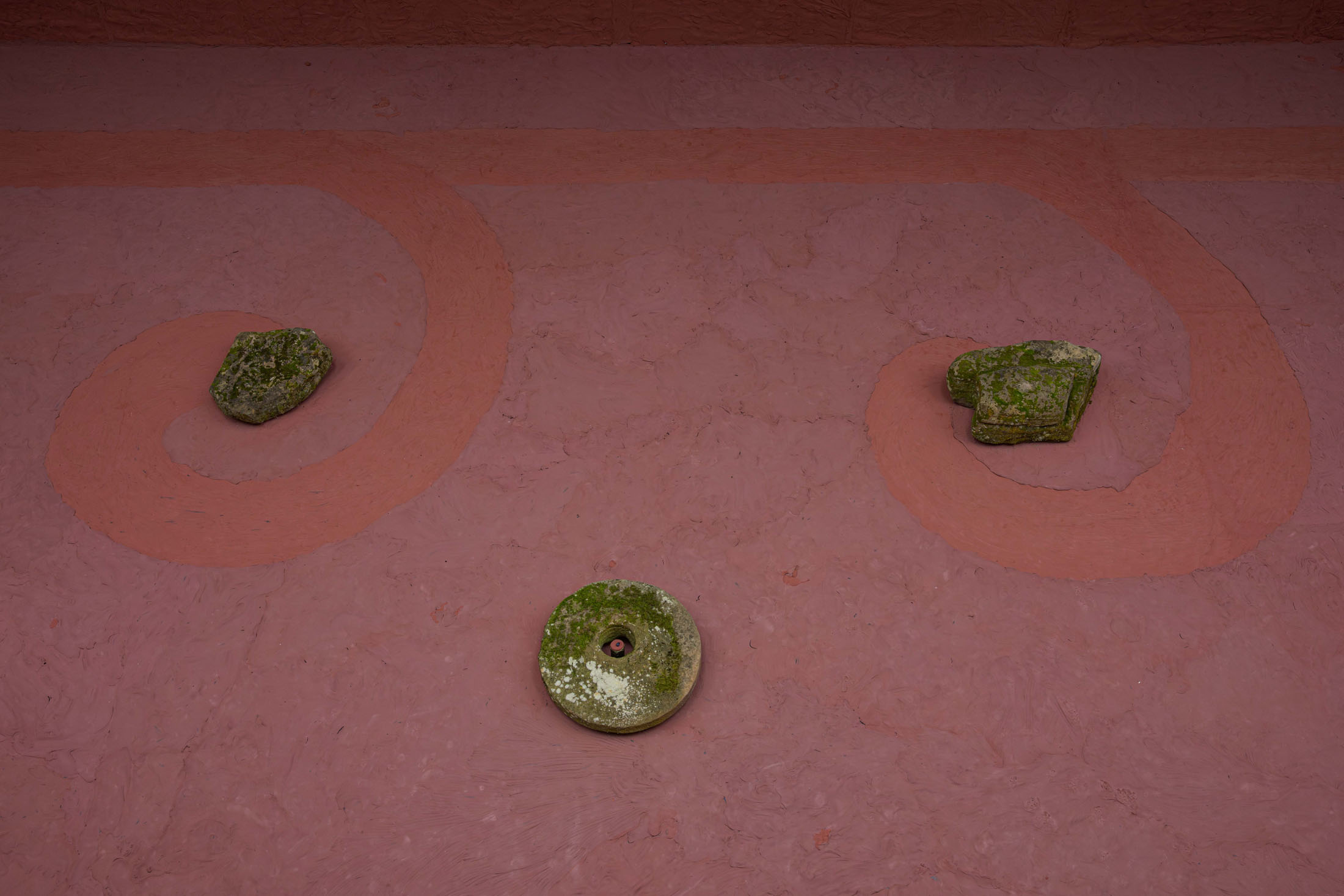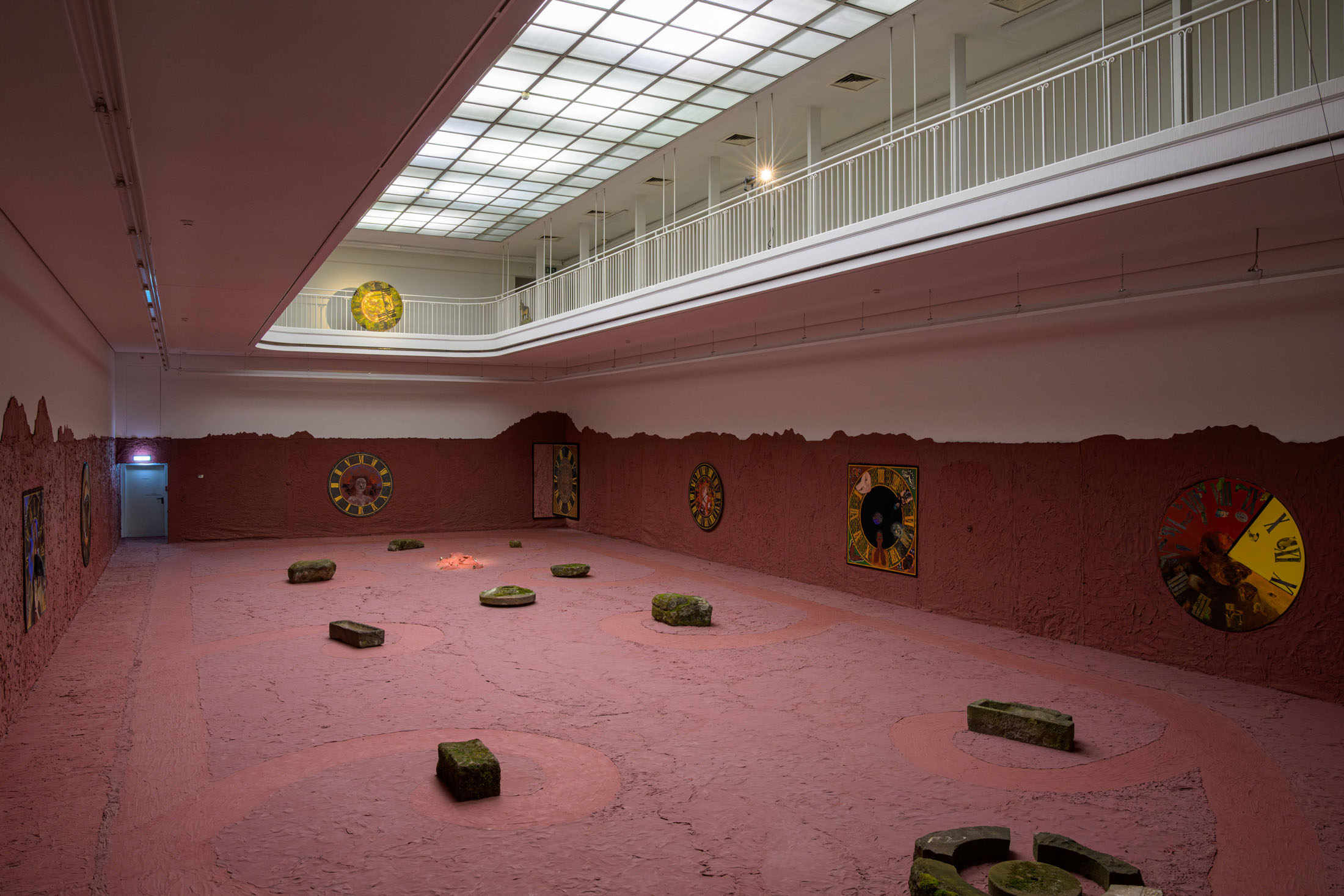
For her first institutional solo exhibition in Germany, Stanislava Kovalčíková creates an expansive installation made of red plasticine, a synthetic modelling clay, that serves as an environment for a series of paintings on discarded clock dials from Prussian church towers. The installation evokes the sensation of being enclosed within a body – a living mothership. But it is a sick, decaying organism. The yielding yet resistant materiality of the plasticine and its muffled acoustics amplify the impression of being inside an architecture of bodily tissue, or a padded cell.
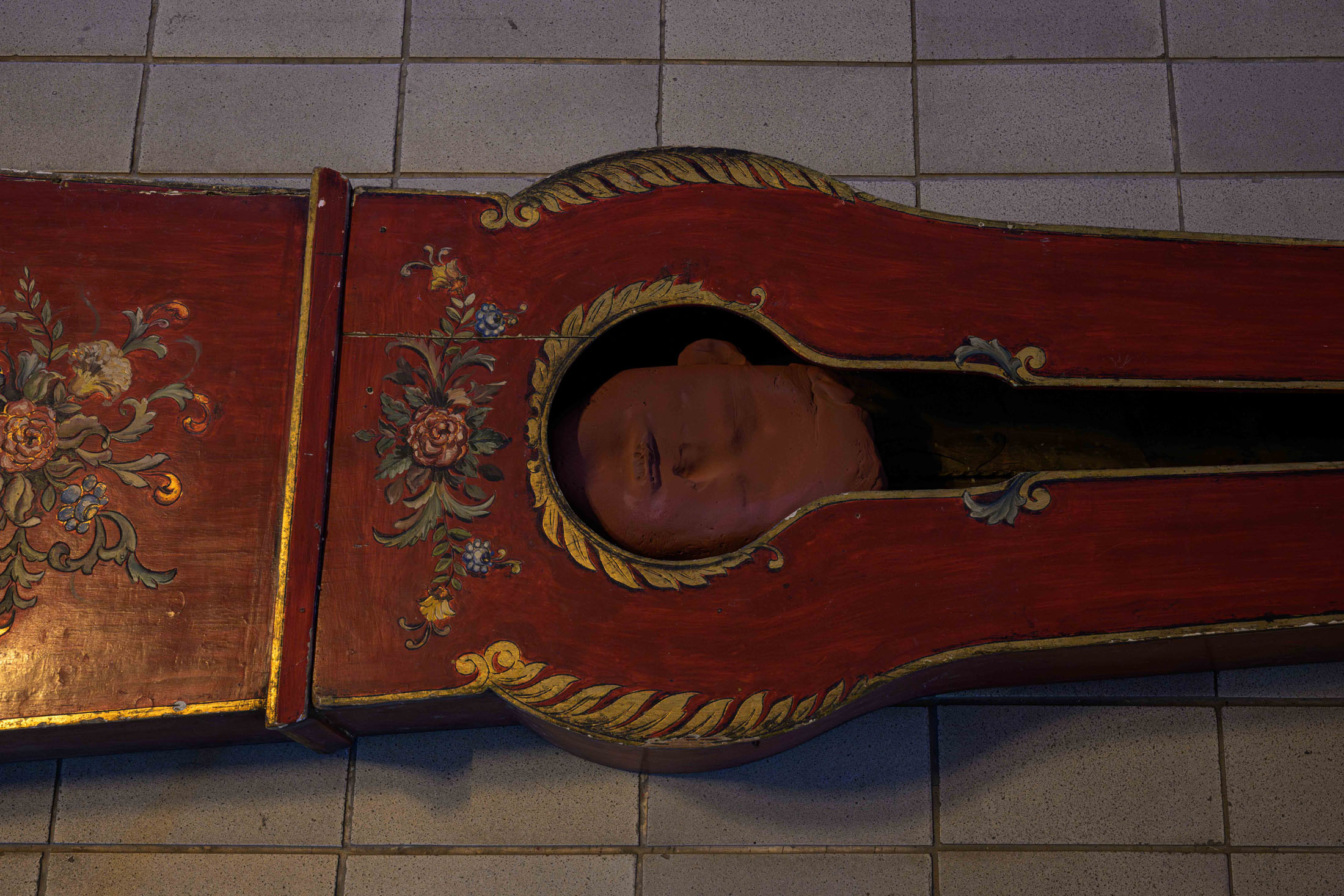
In Rubigo, Kovalčíková interweaves imprints and rusted materials with emptied rituals and decomposing bodies, with relics of a vanishing world and extraterrestrial visions. On the enamelled surfaces of the weathered clock dials, the artist uses painting to probe the human figure – its vulnerability, pain and desire, dependency and estrangement. The figures appear in constellations yet seem detached from any shared space or time. Rather than following the uniform ticking of a clock and its attendant linearity and measurability, the paintings are governed by the logic of dreams.
With special thanks to Emalin, London and Antenna Space, Shanghai.