“Use your imagination.” Printed atop the Blue Book—the small stapled exam booklet[1] long used for secondary-school and university-level handwritten exams in the U.S.—the phrase was meant to encourage critical thinking. Introduced in the early-20th century, the booklet faded with the digital shift and has recently returned as a hedge against AI-assisted cheating. Yet the imagination line feels oddly placed on an exam, which is meant to test knowledge, not invention. Years after filling those pages—hand cramping over essays decrypting the symbolism of grapes present in Caravaggio’s Bacchus for an art history class in Florida/New York[2]—“Use your imagination” reads less as inspiration than permission to bullshit: a slogan that quietly trained generations to admire elaborate displays of nothingness.
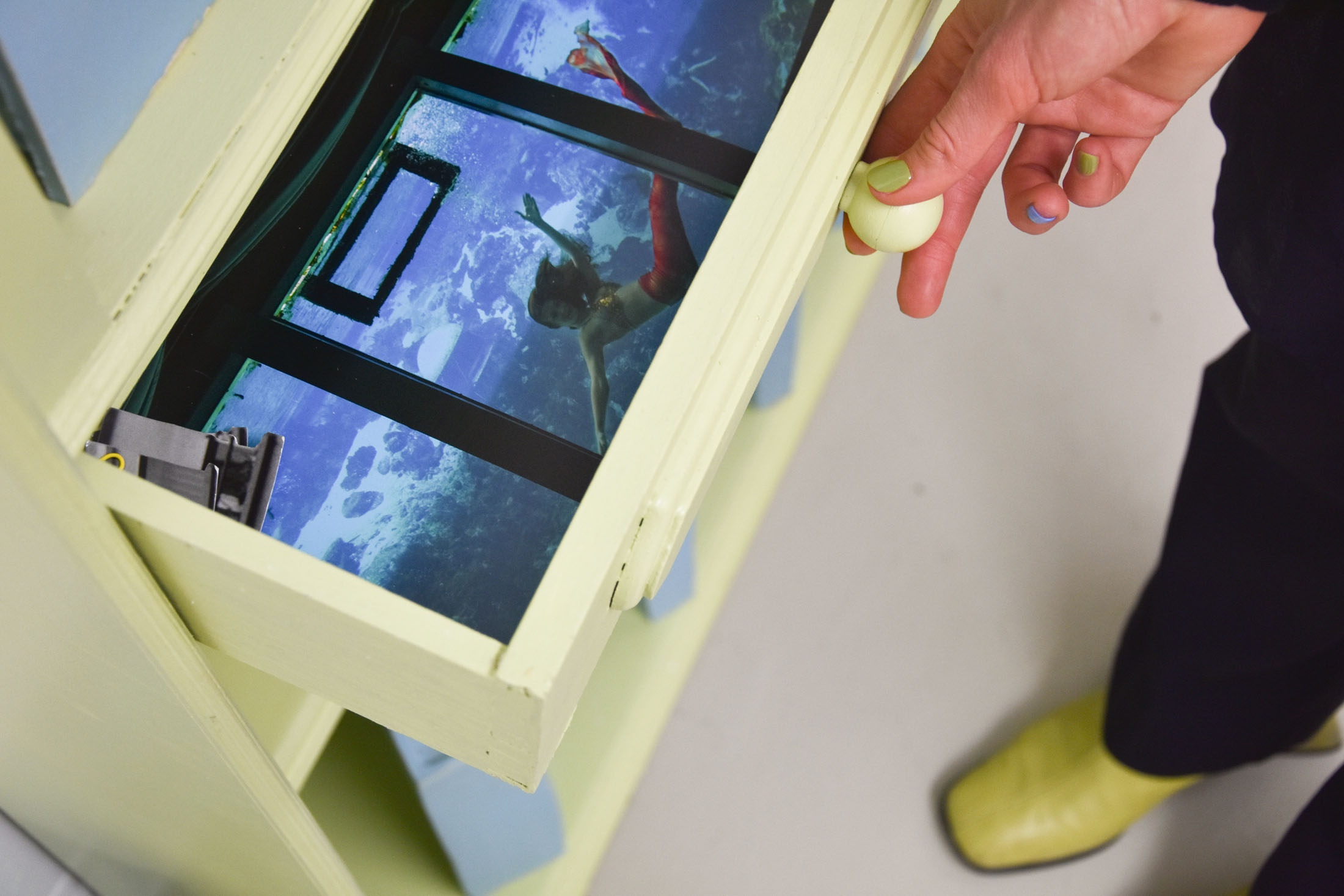
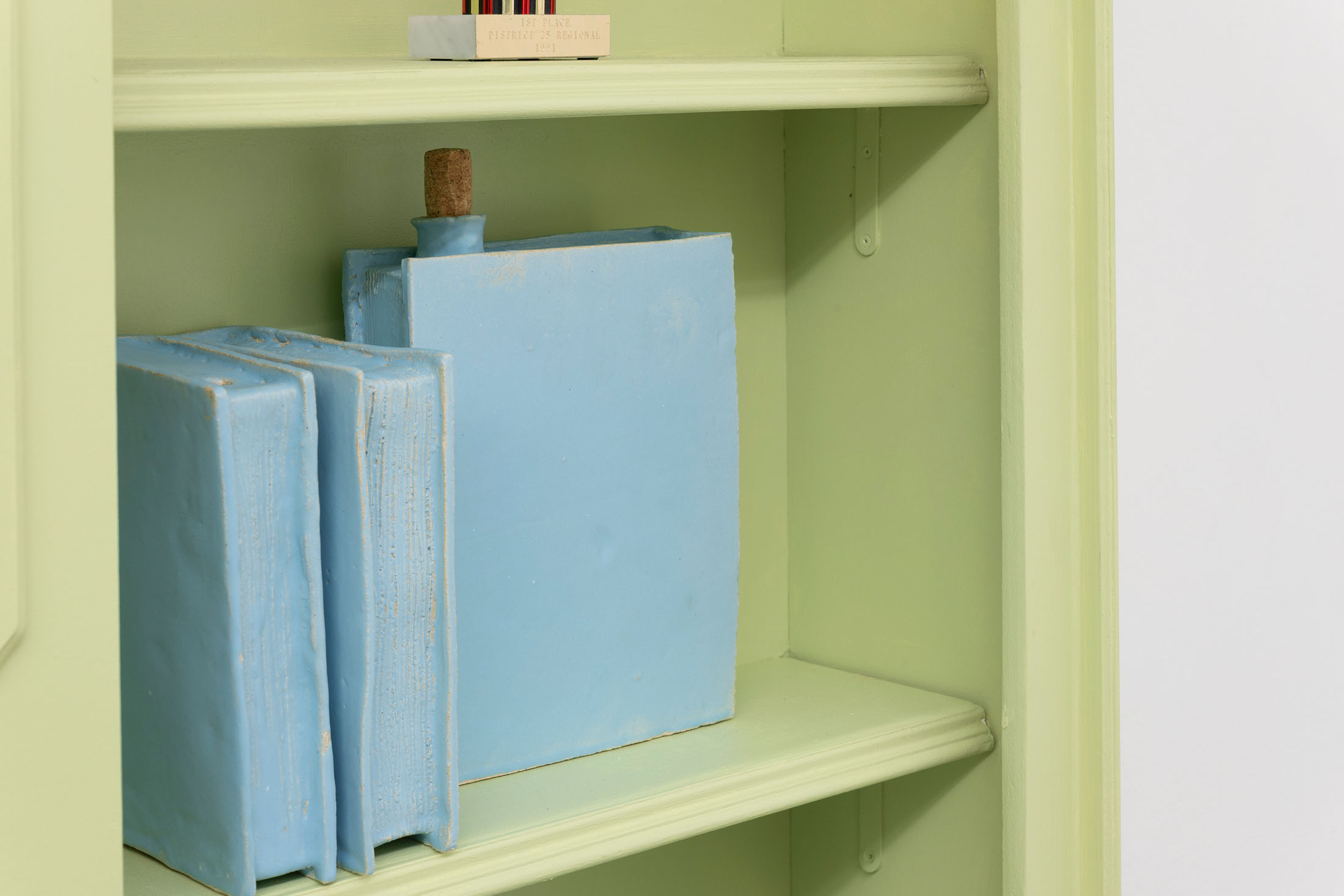
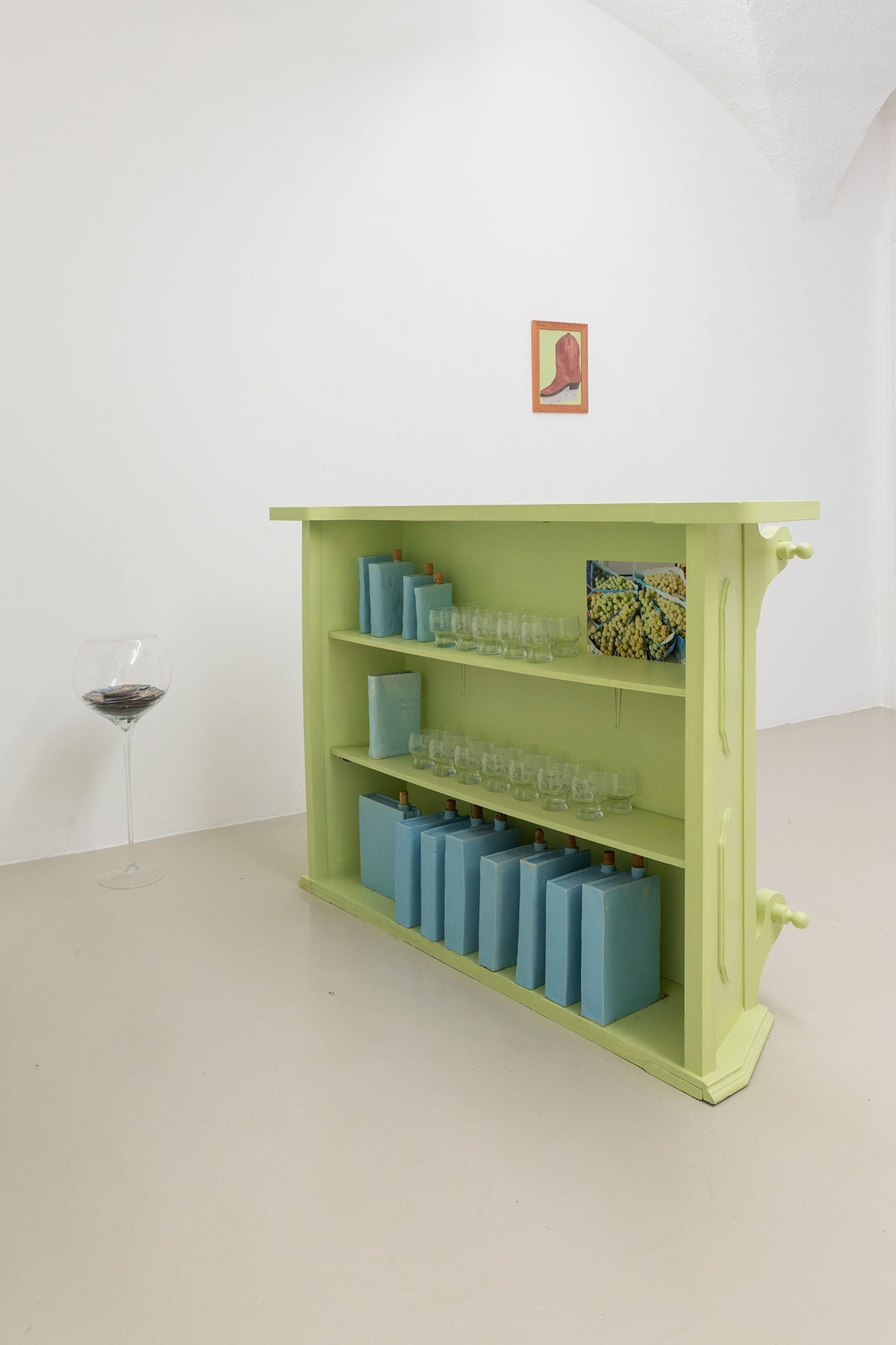
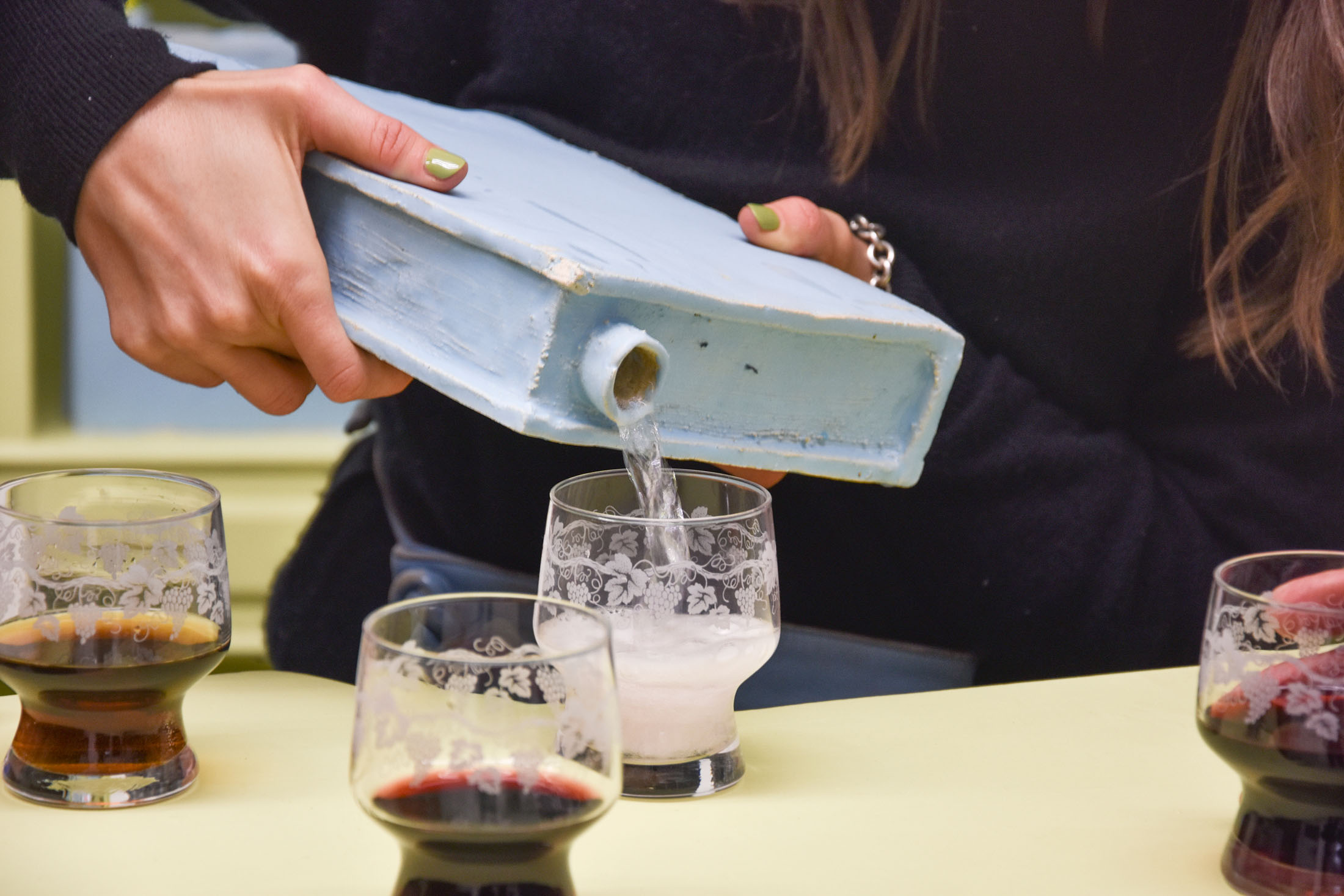
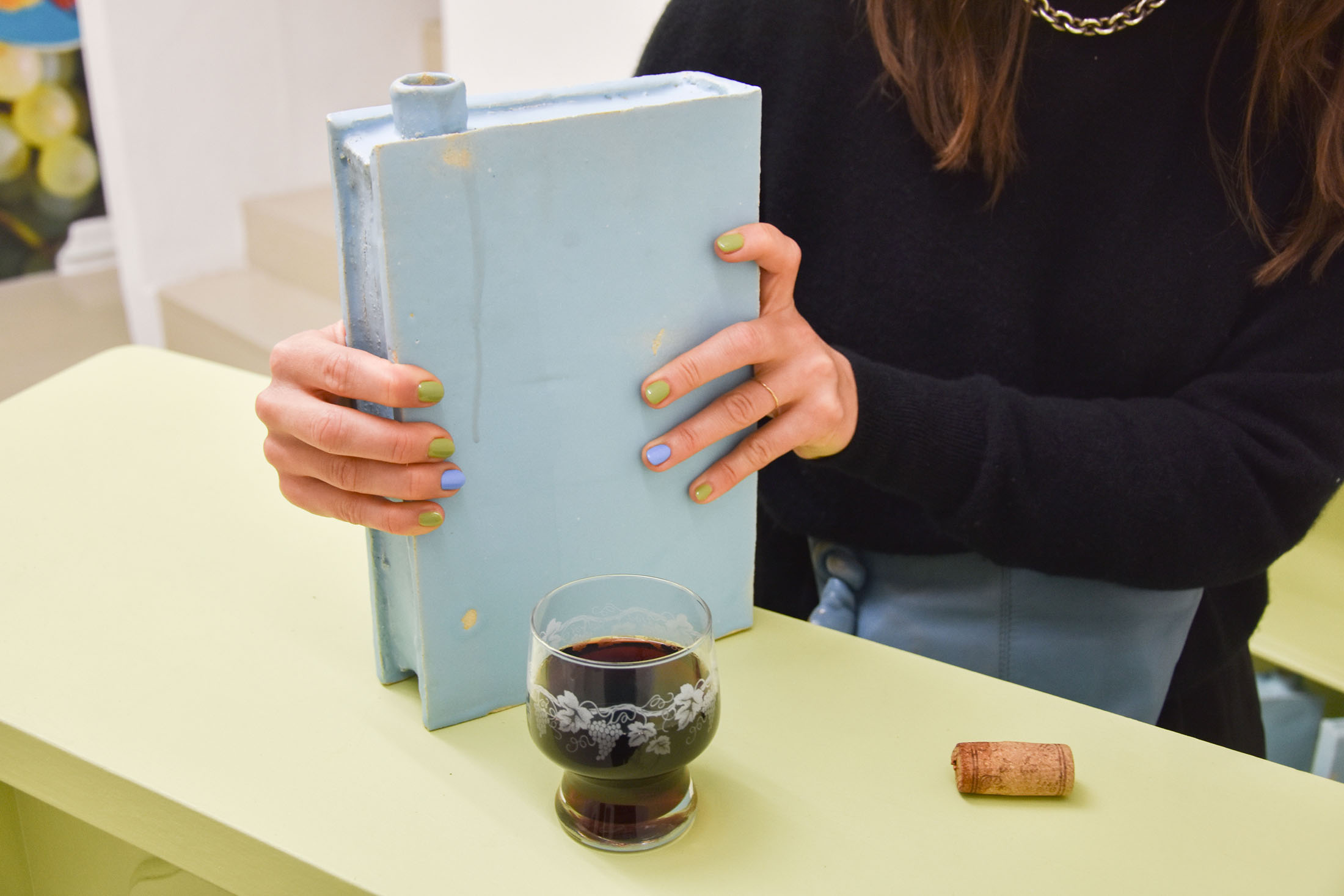
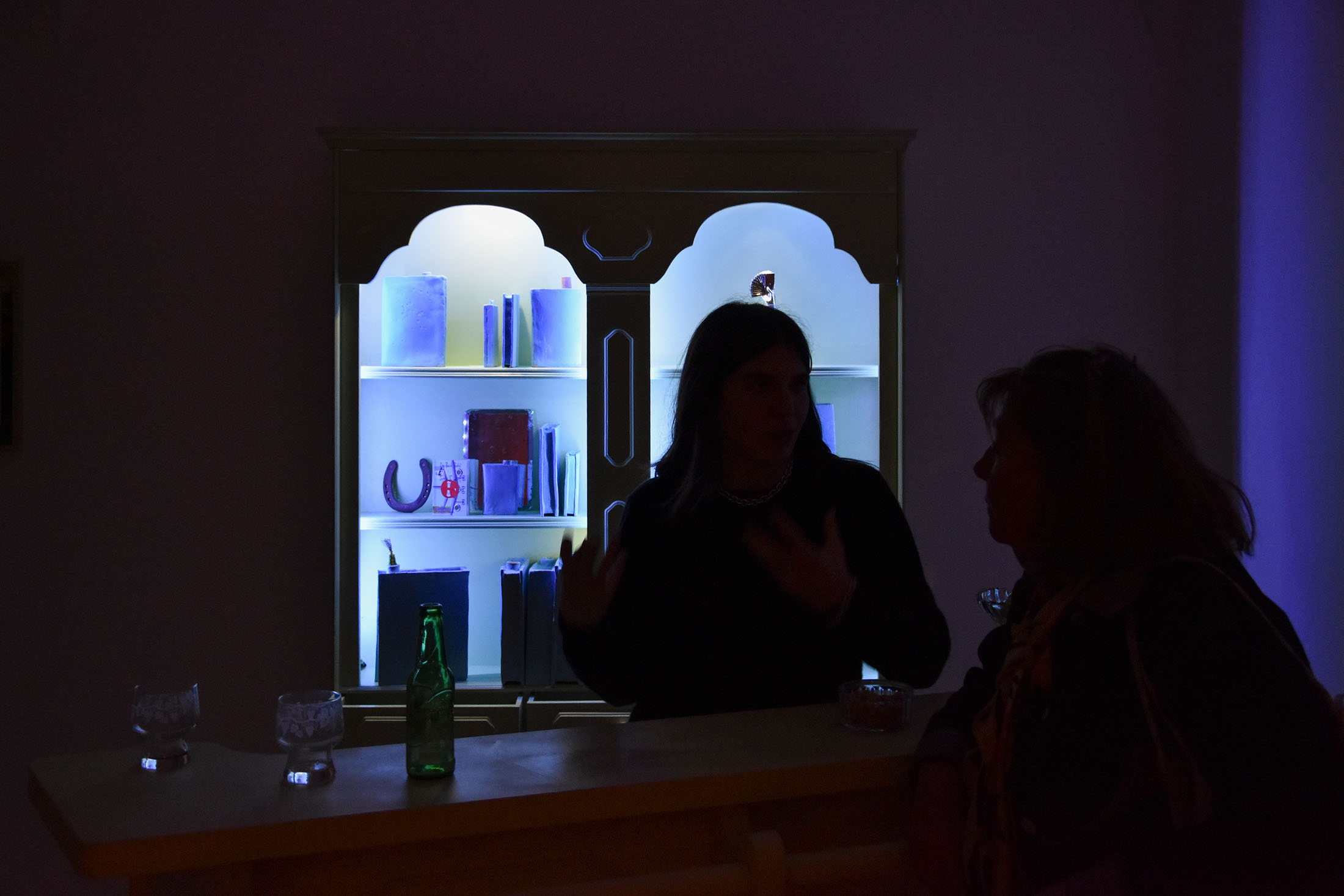
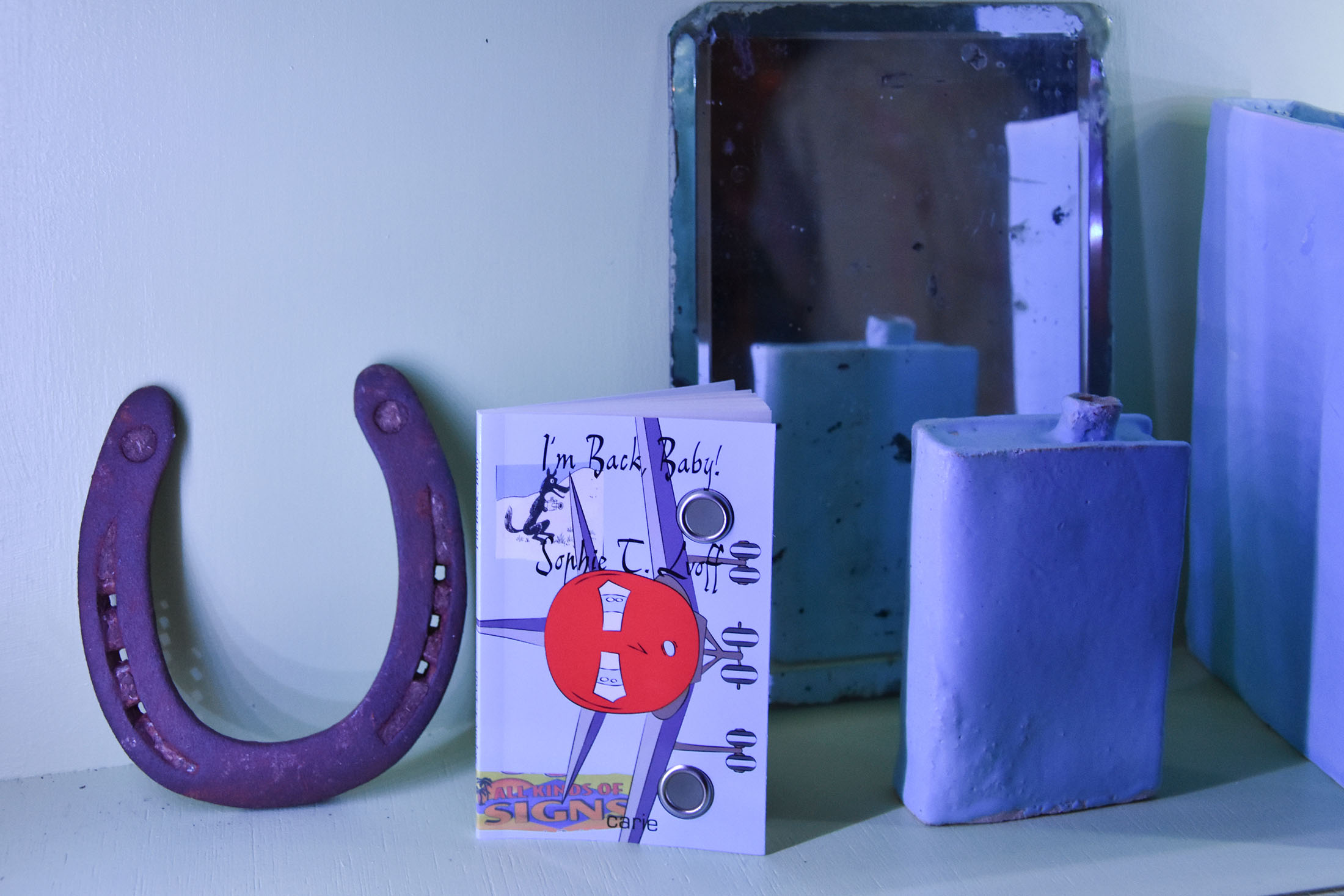
Display, transmission, tricks, secrets, symbols—these are themes we discussed with Sophie T. Lvoff while she prepared her solo presentation Crazy Boots. The work stems from reading forty-seven books during her pregnancy and postpartum period, as well as reflecting on containment—the gestating body, a book and its content, a bottle filled with liquid. A riff on the monochrome[3] and a situation-installation[4] shake these themes into an ambiguous cocktail, served from the blue book-bottles[5] themselves. And if Sophie is trained as a photographer—although today her work also expresses itself through language, objects and spaces—her photographic practice should be understood broadly: as a gesture of framing a non-reality within reality, of display, and of unsettling the banal, be it on a photographic surface or in space.[6]
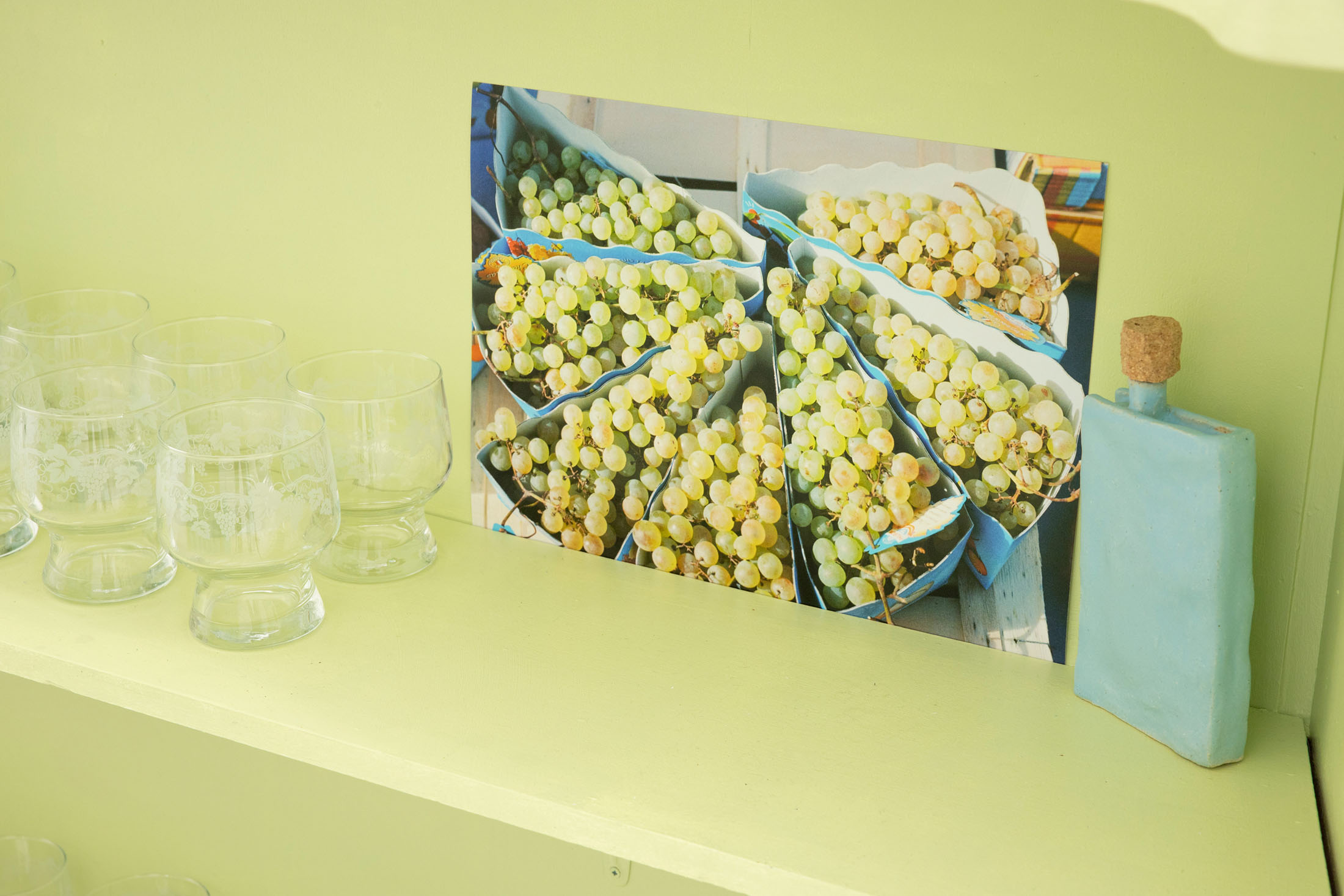
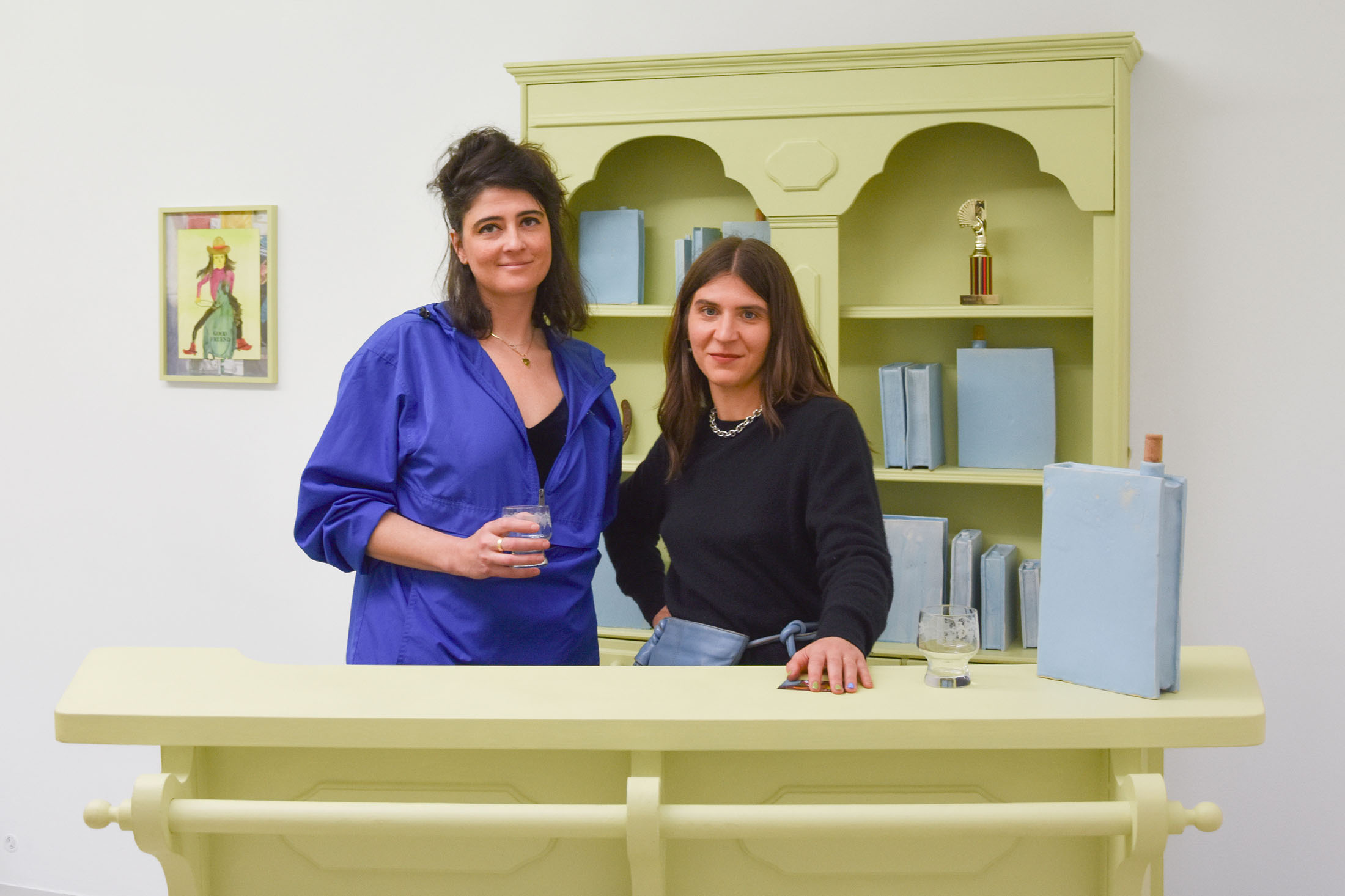
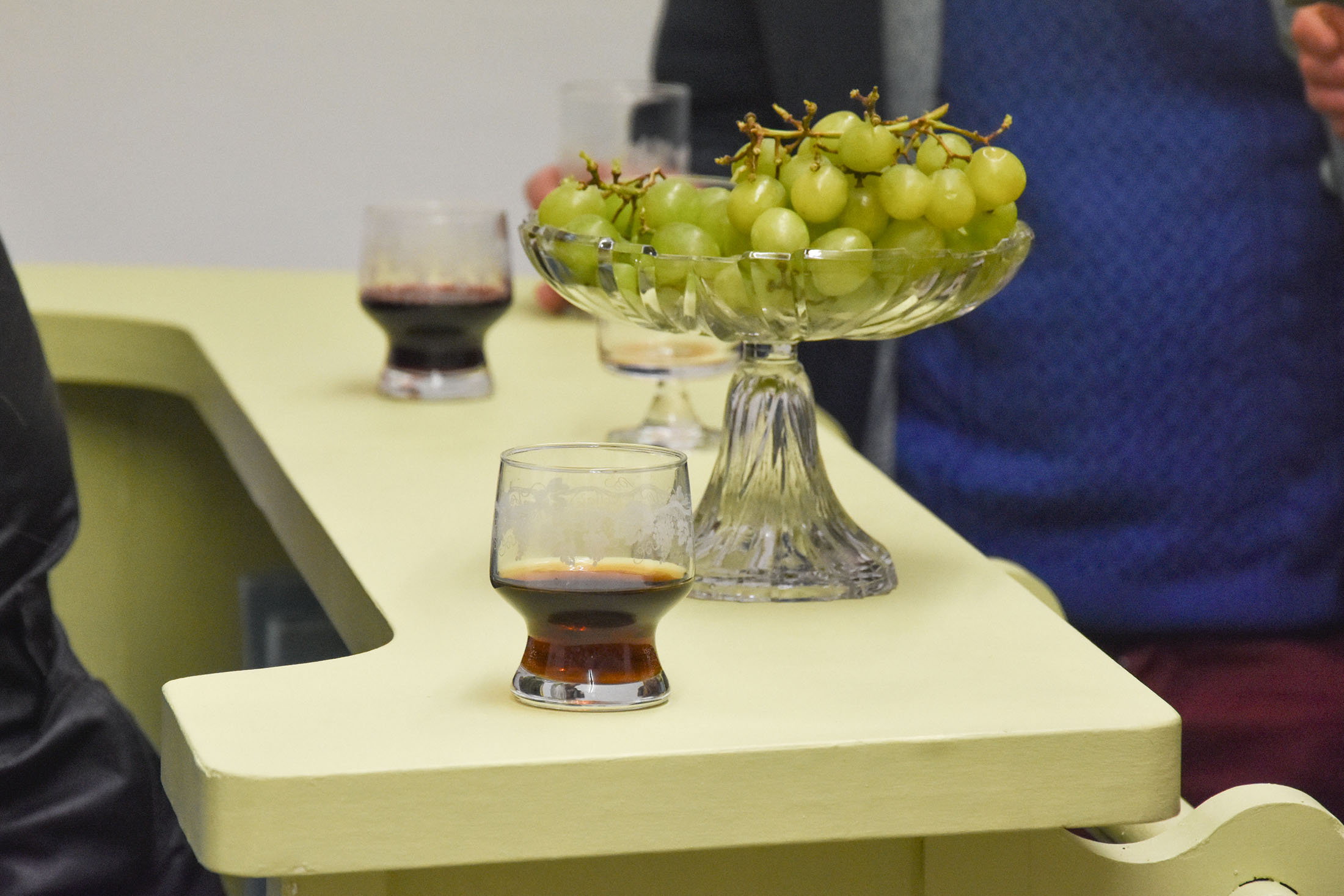
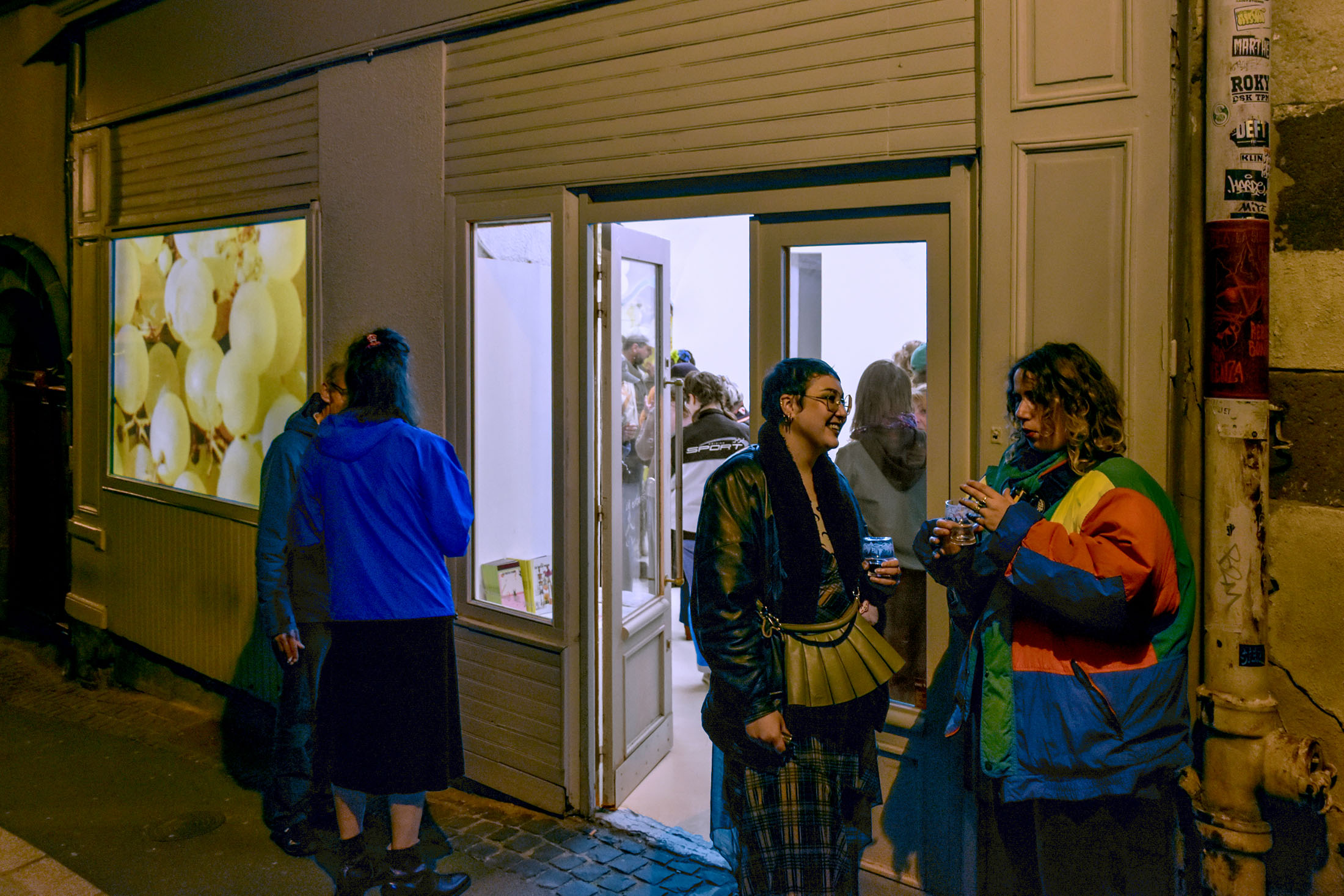
A shadow of a doubt emerges from the street, as the display window of In extenso is covered with an adhesive sticker of a zoomed in image of grapes, tricking passersby into questioning the nature of the premises: cave à vins? supermarché? A few steps further, one peeks in to find a bar-cum-bookcase (or bookcase-cum-bar?), behind which the artist serves calimochos (with Pepsi[7], not Coke) and white wine spritzers[8] on the night of the opening. A zoomed-out version of the green grapes photograph from the window scales the wall. Although the grapes simply happened—that is, they were the subject of one of the artist’s most recent and favorite photographs, taken in Bretagne in 2025—the symbolism runs deep. From power to abundance, fertility, hospitality and indulgence, the grapes—and their vines—also represent knowledge, coming full circle.
This looping is not only felt in the repeated motifs—let’s call them the regulars—but also in certain gestures, ticks inherent to the artist’s practice—let’s call her the bartender. Ticks, and also tricks (don’t forget to tip!). Placed in a large wine glass—a novelty format from the U.S., also recalling bar decor—an enigmatic business card offers a cheatsheet, along with a phone number, similar to a work she presented in our first collaboration in 2019[9], in which a bronze business card emerged from a wall with only a name and phone number, enticing visitors to dial. The fruit trompe l’oeil also makes a comeback, making the text she wrote for fruits & légumes applicable here as well: “there’s at least two other secrets in this […] one private, one public.”[10]
As for the title of the exhibition, it refers to a nickname given to the artist unbeknownst to her—before she heard it through the grapevine—prolonging the reflection on what is presented (said) and what is hidden (kept secret). The lyrics of the theme song from Cheers[11] ring out a little differently.
Sometimes you wanna go
Where everybody knows your name
And they’re always glad you came
You wanna be where you can see (ah-ah)
Our troubles are all the same (ah-ah)
You wanna be where everybody knows your name
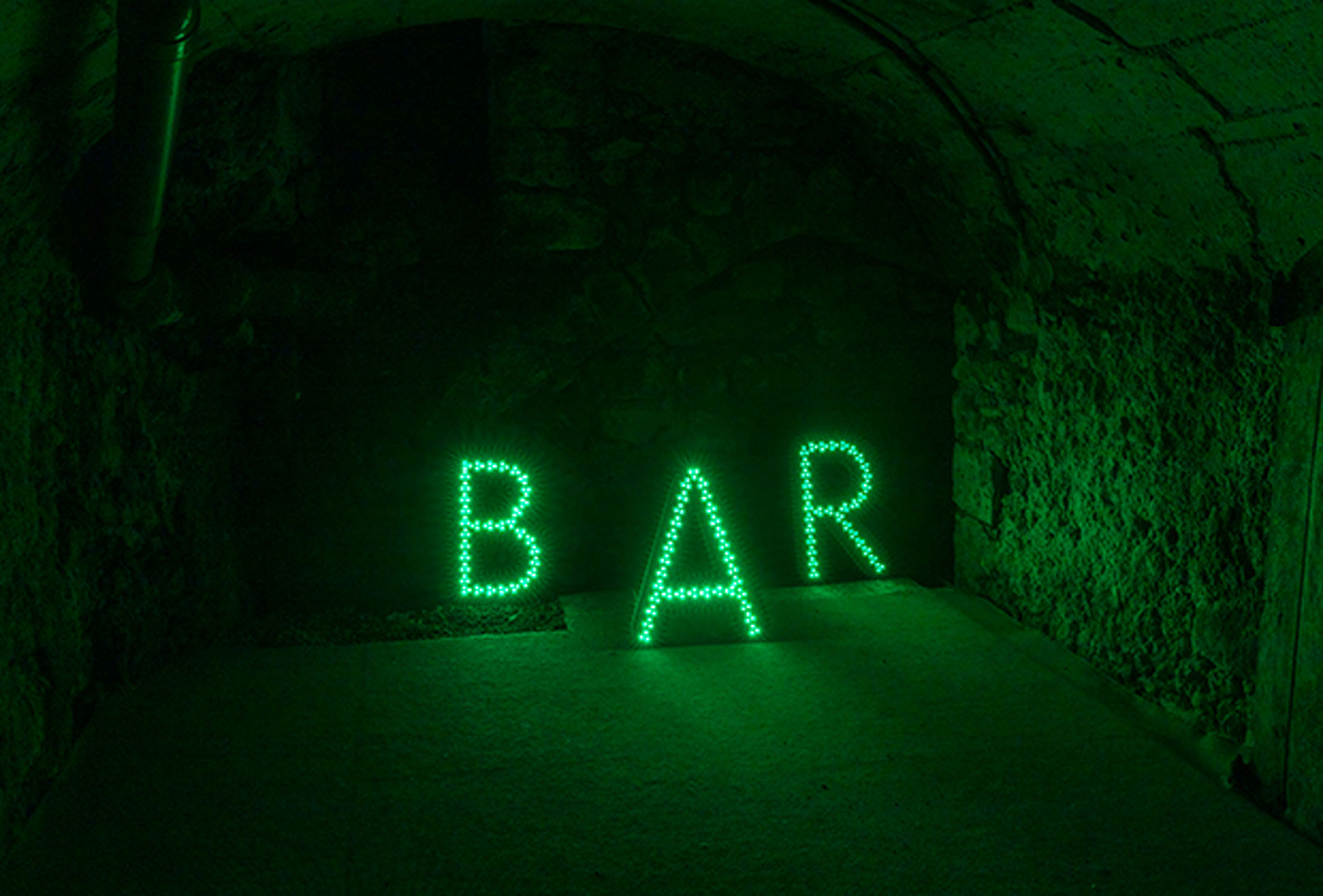
Crazy Boots is the perfect name for the bar.
–Katia Porro
Acknowledgments:
Mimi’s in the Marigny, New Orleans
Mac’s Club Deuce, Miami
Harry’s Banana Farm, Lake Worth
Goldie’s, Greenpoint
Le Condor C, Paris
Singordie, Marseille
Les Maraîchers, Marseille
Le Bar du peuple, Marseille
L’Ours, Clermont-Ferrand
Le Fil du Temps, Uzerche
[1] Blue Books typically have dimensions 8.5 by 7 inches (220 mm × 180 mm) or 11 by 8.5 inches (280 mm × 220 mm), and contain from four to twelve sheets of ruled paper, stapled through the fold.
[2] Sophie T. Lvoff studied in New York, where she is from. I began my studies in Florida, where I am from.
[3] From Malevich’s paintings to Louise Nevelson’s environments and Anne Truitt’s sculptures.
[4] To borrow the term from late Belgian artist Guillaume Bijl (1946-2025).
[5] The artist produced 47 ceramic book-bottles with the help of Romain Kloeckner.
[6] Since 2008, Sophie T. Lvoff has had the mention “photographie plus…” on her business card.
[7] As a child, the artist was convinced that Pepsi was a drink of the gods. Her grandfather was a Pepsi salesman.
[8] Pinot grigio, half of a La Croix, a lot of ice and lemon: Stephen Collier’s recipe.
[9] In the exhibition L’Almanach des aléas at the Fondation d’entreprise Pernod Ricard, Sophie T. Lvoff presented the work The Davidoff’s, a collaboration with Elia David. The phone number that appeared was 01 40 56 02 01.
[10] Sophie T. Lvoff collaboration with Elia David, Fruits & Légumes, Medium Argent, Rouen, 2019.
[11] Cheers was a popular TV sitcom in the US that ran from 1982 to 1993 set in a bar in Boston.
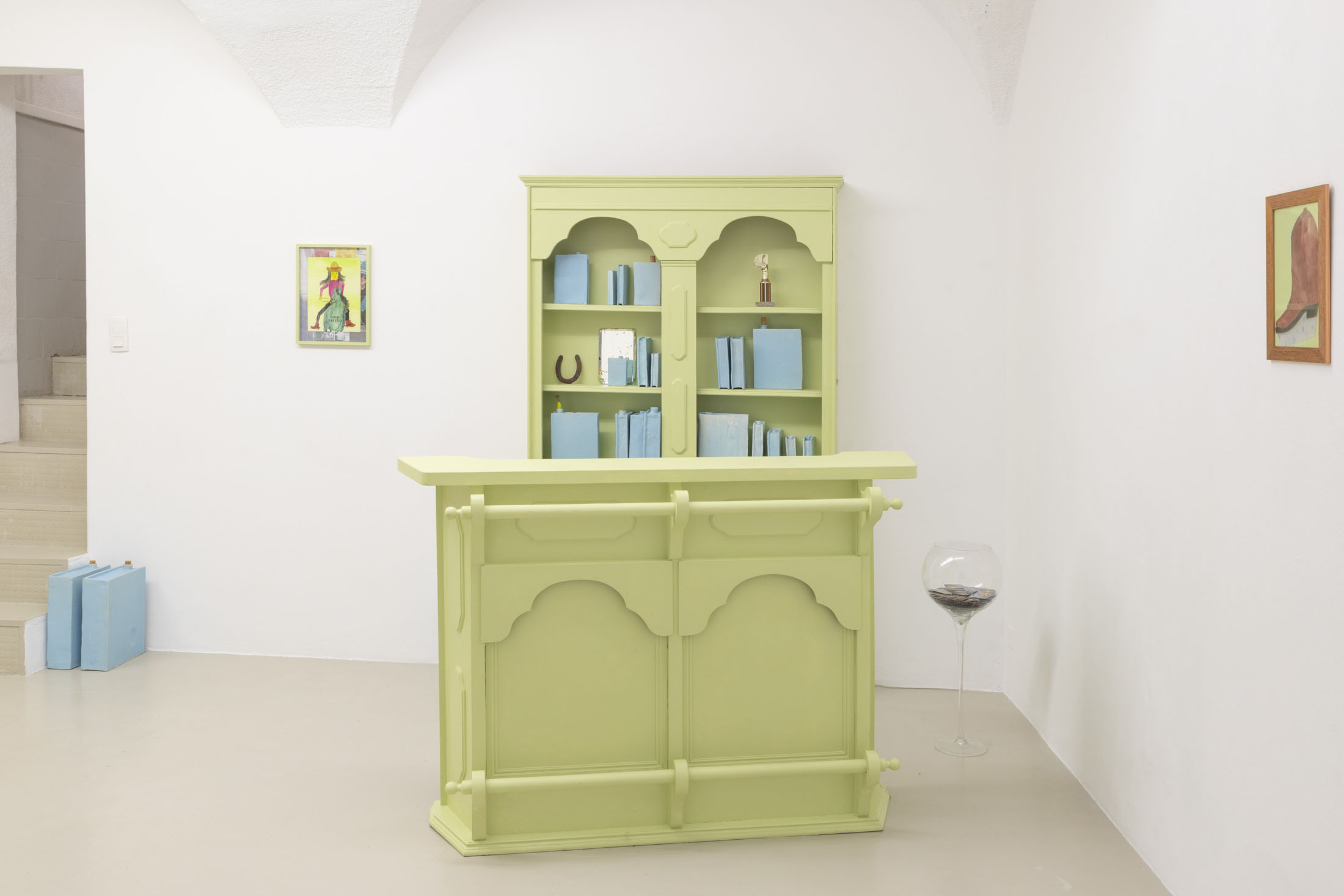
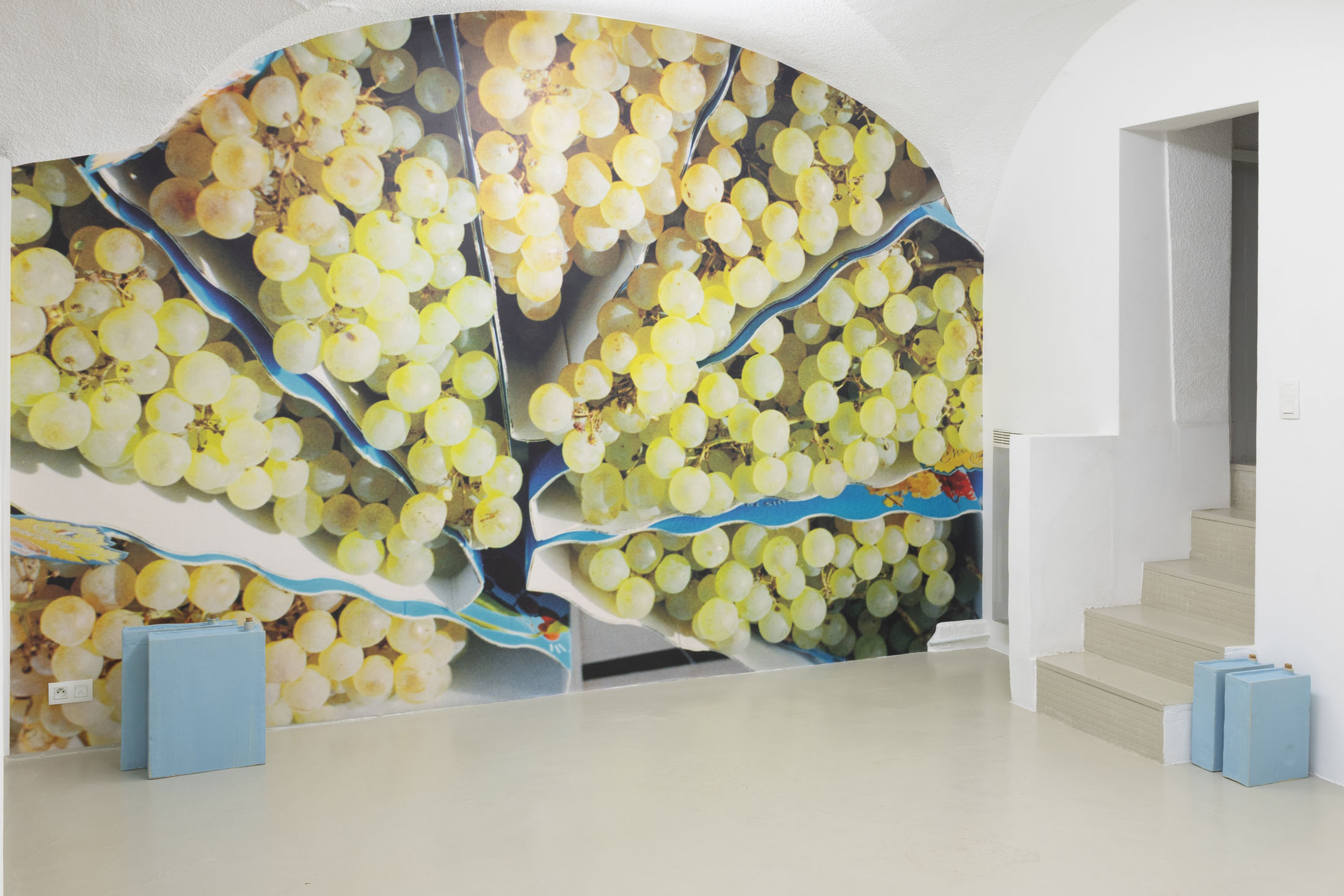
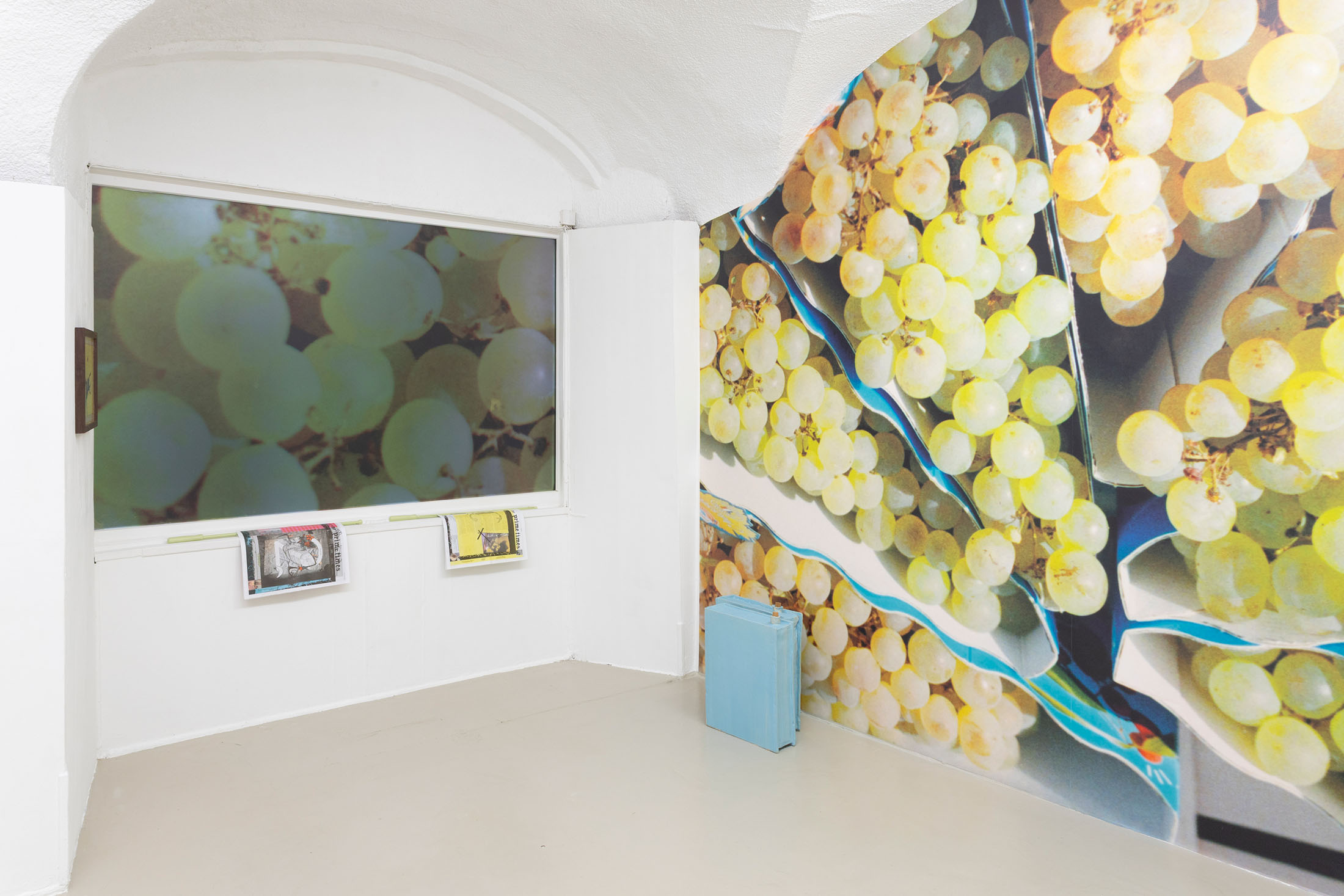
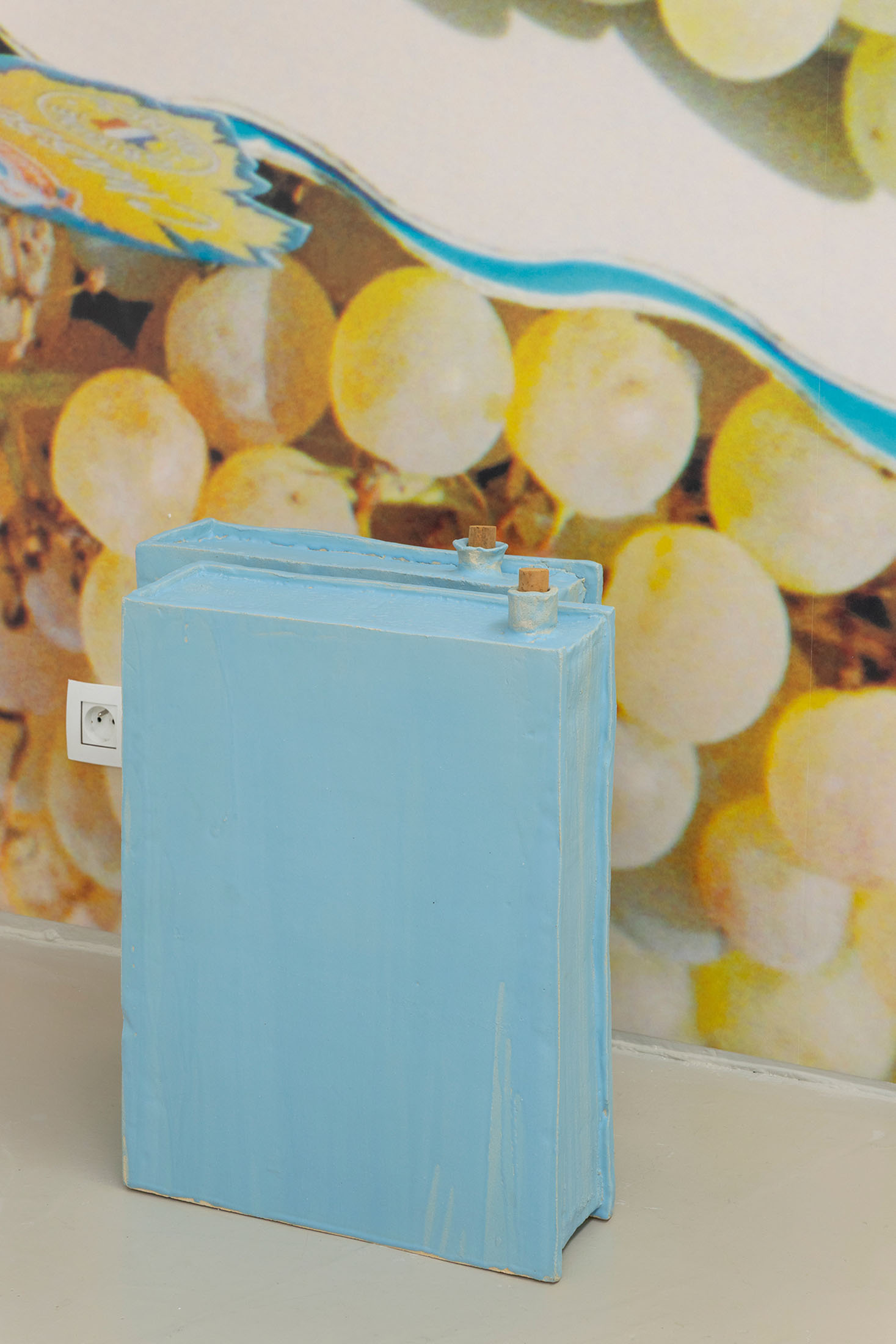
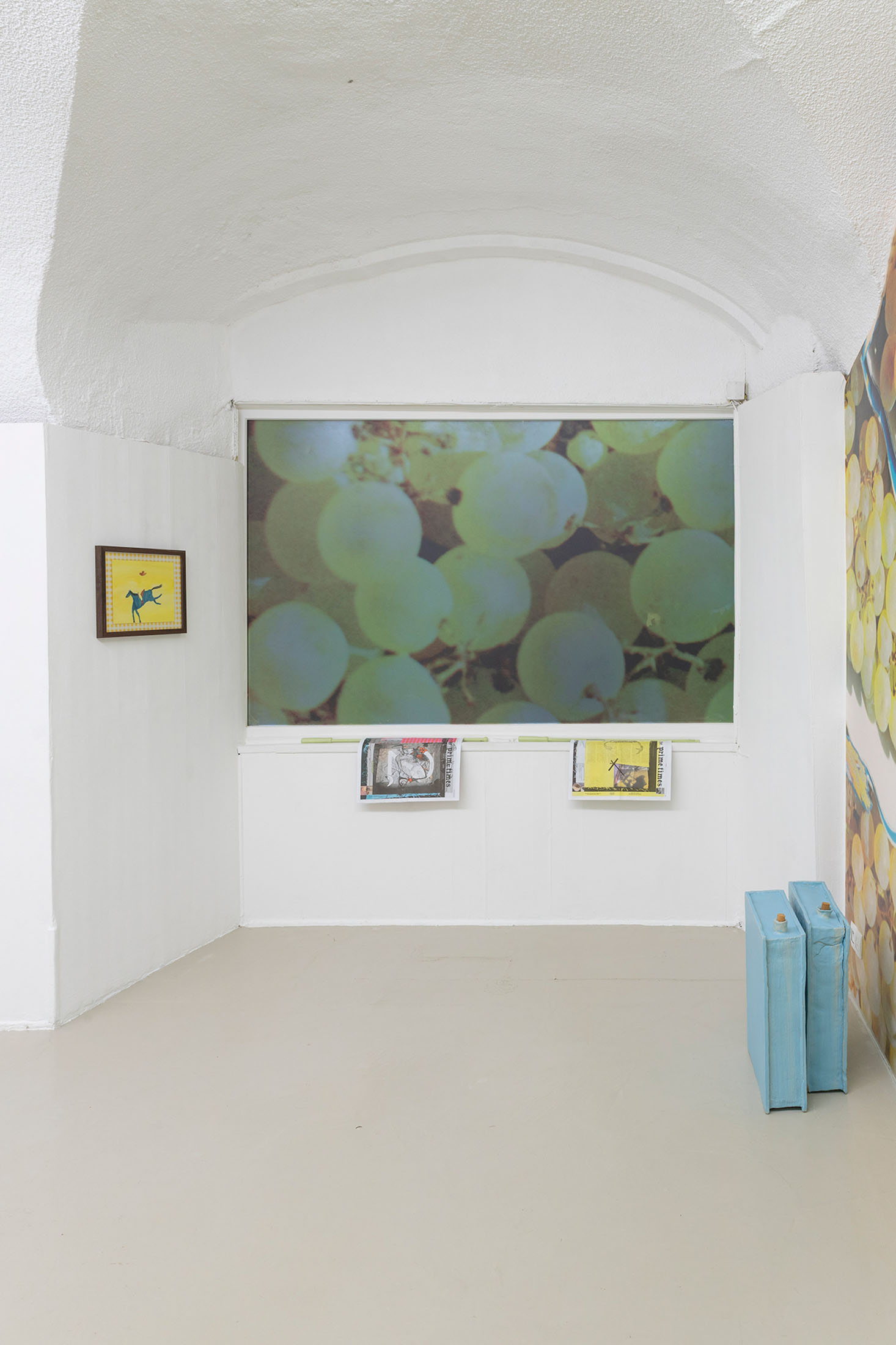
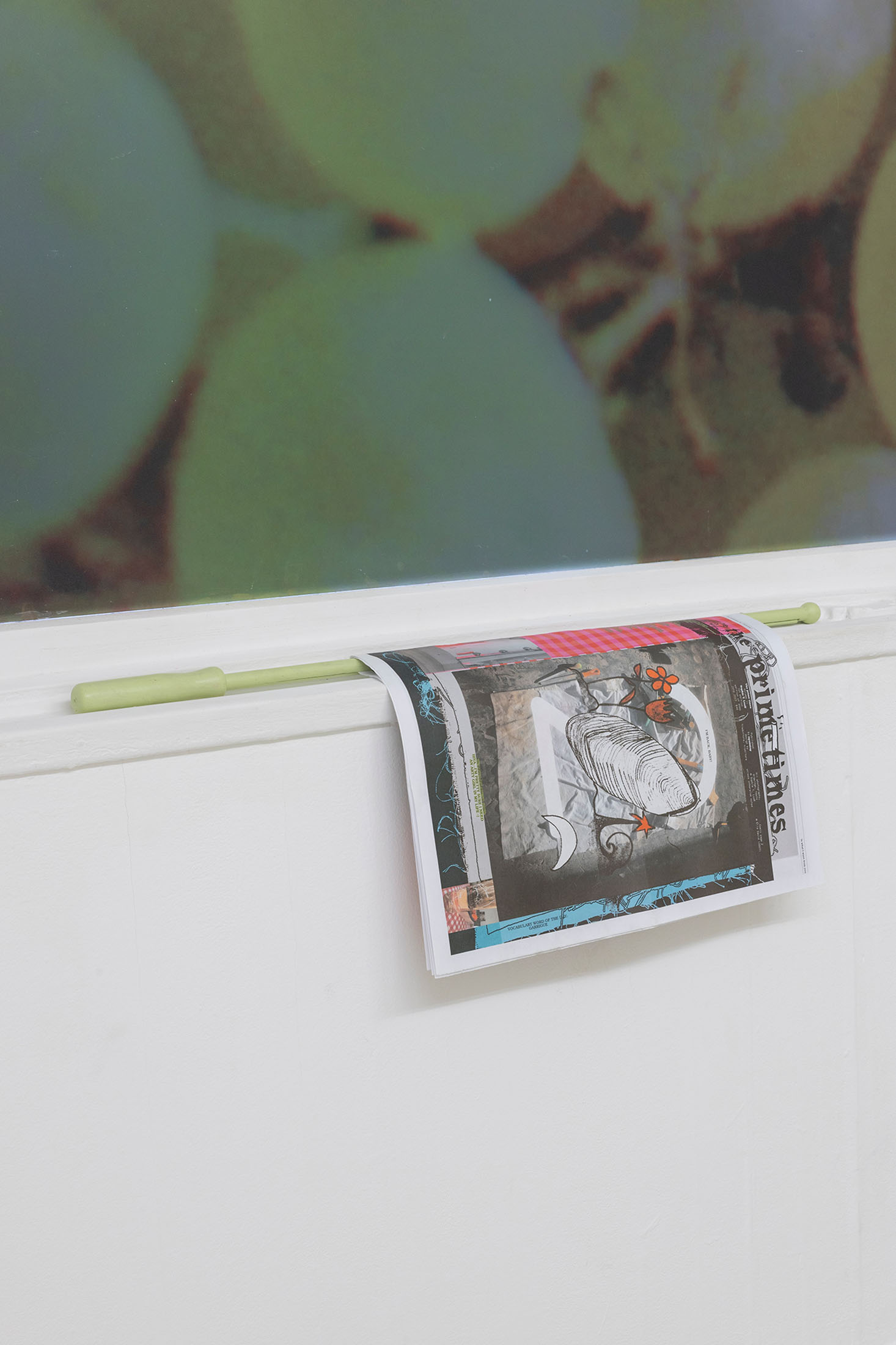
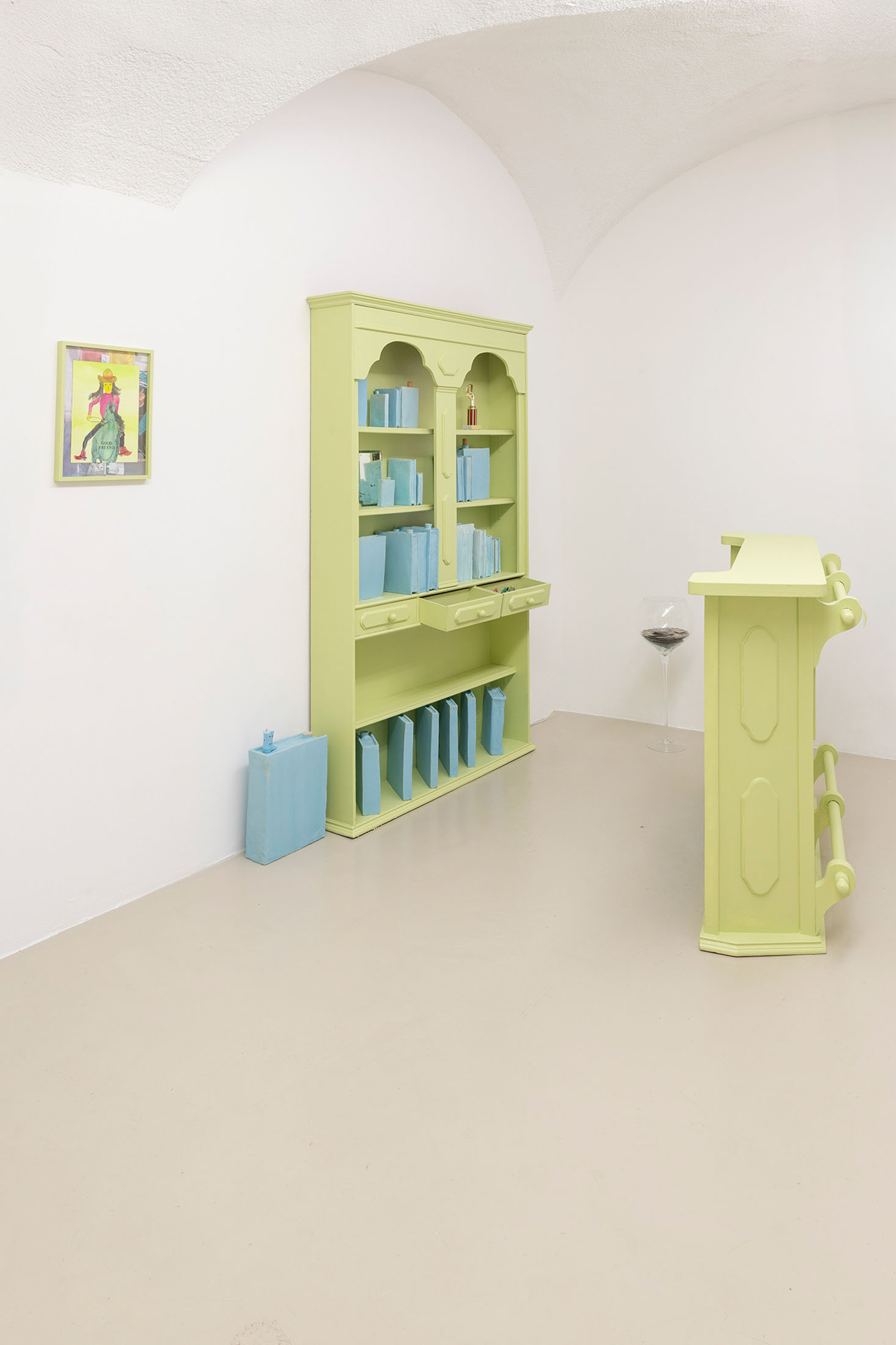

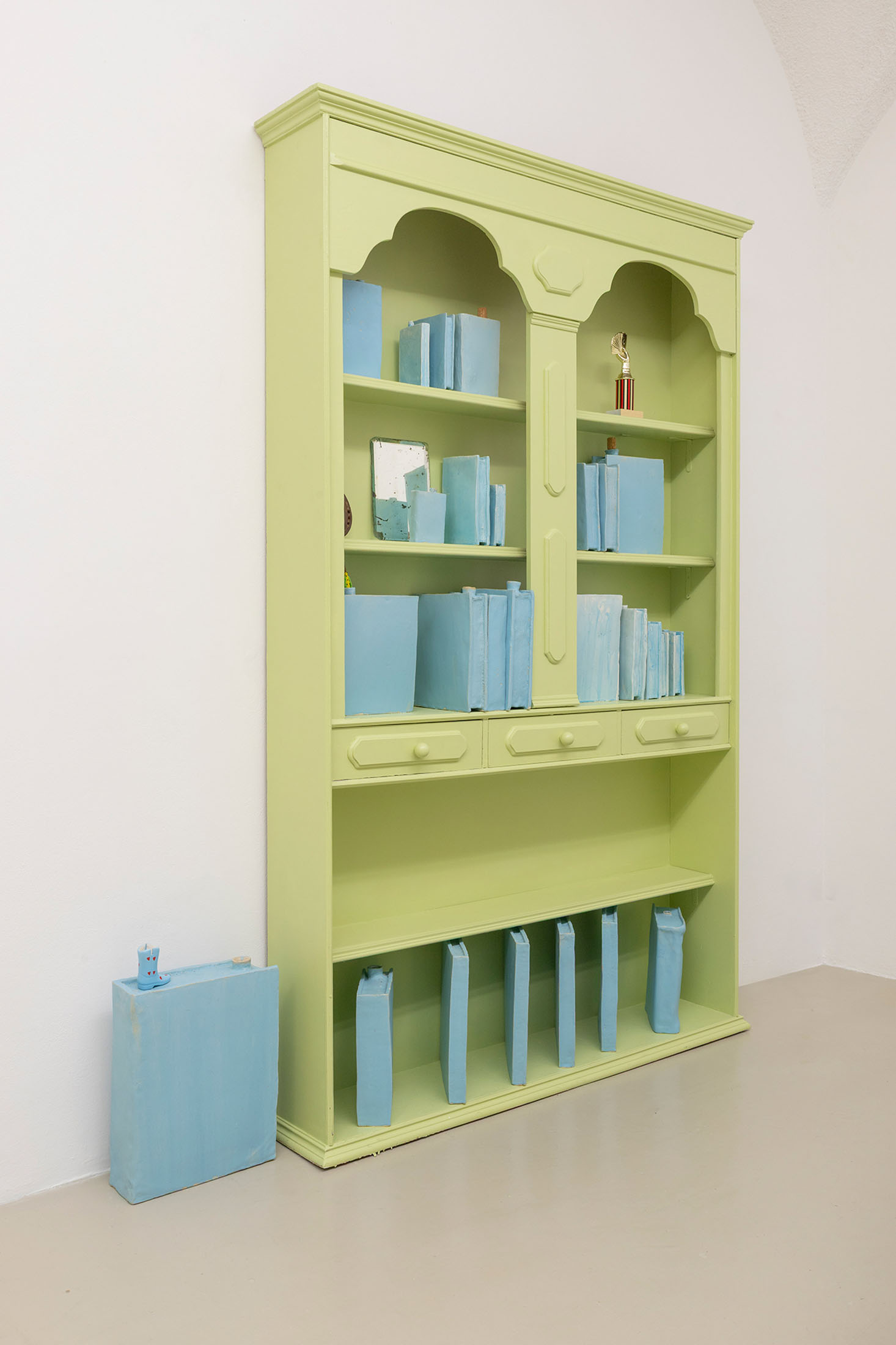

Photo: Marjolaine Turpin