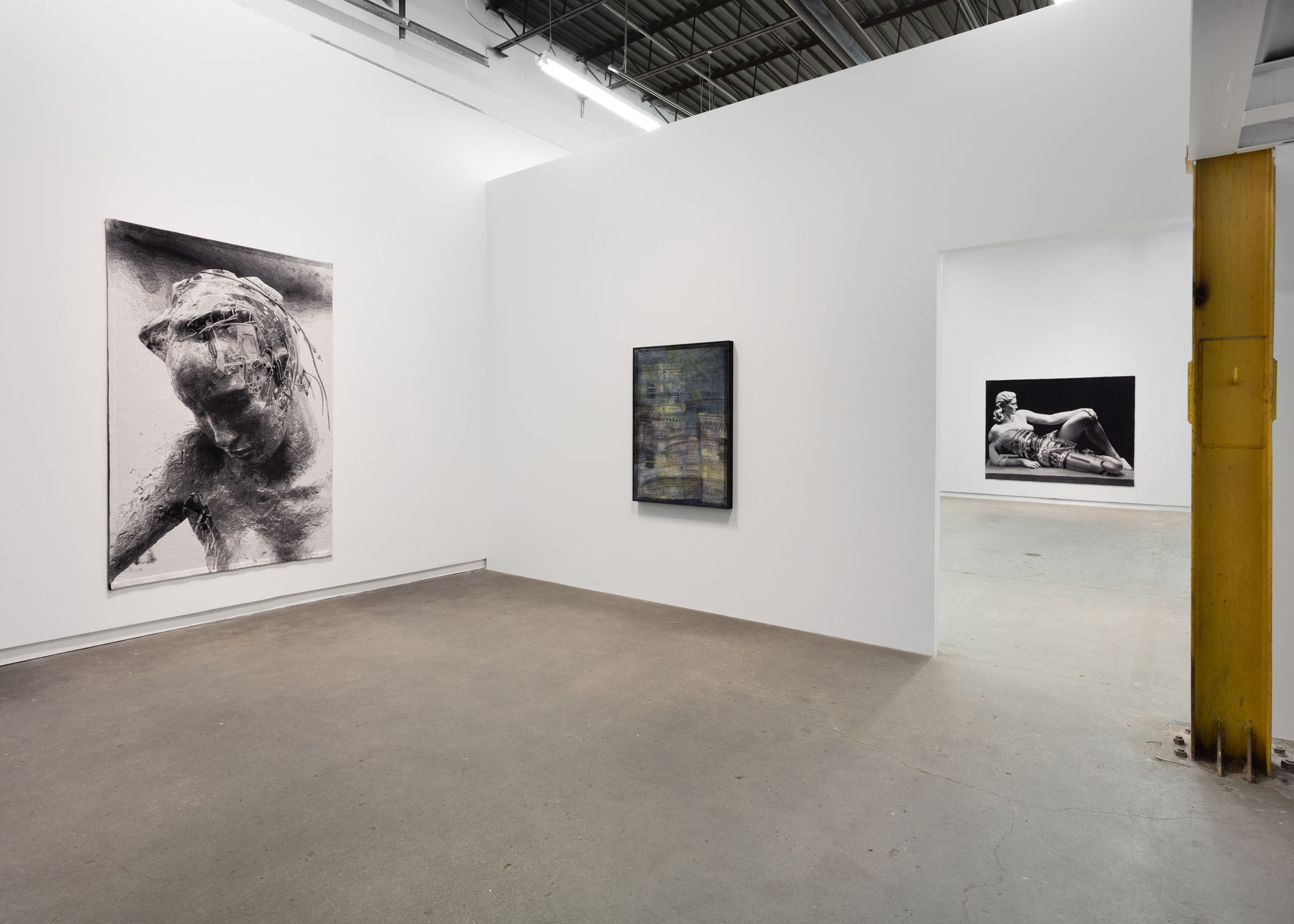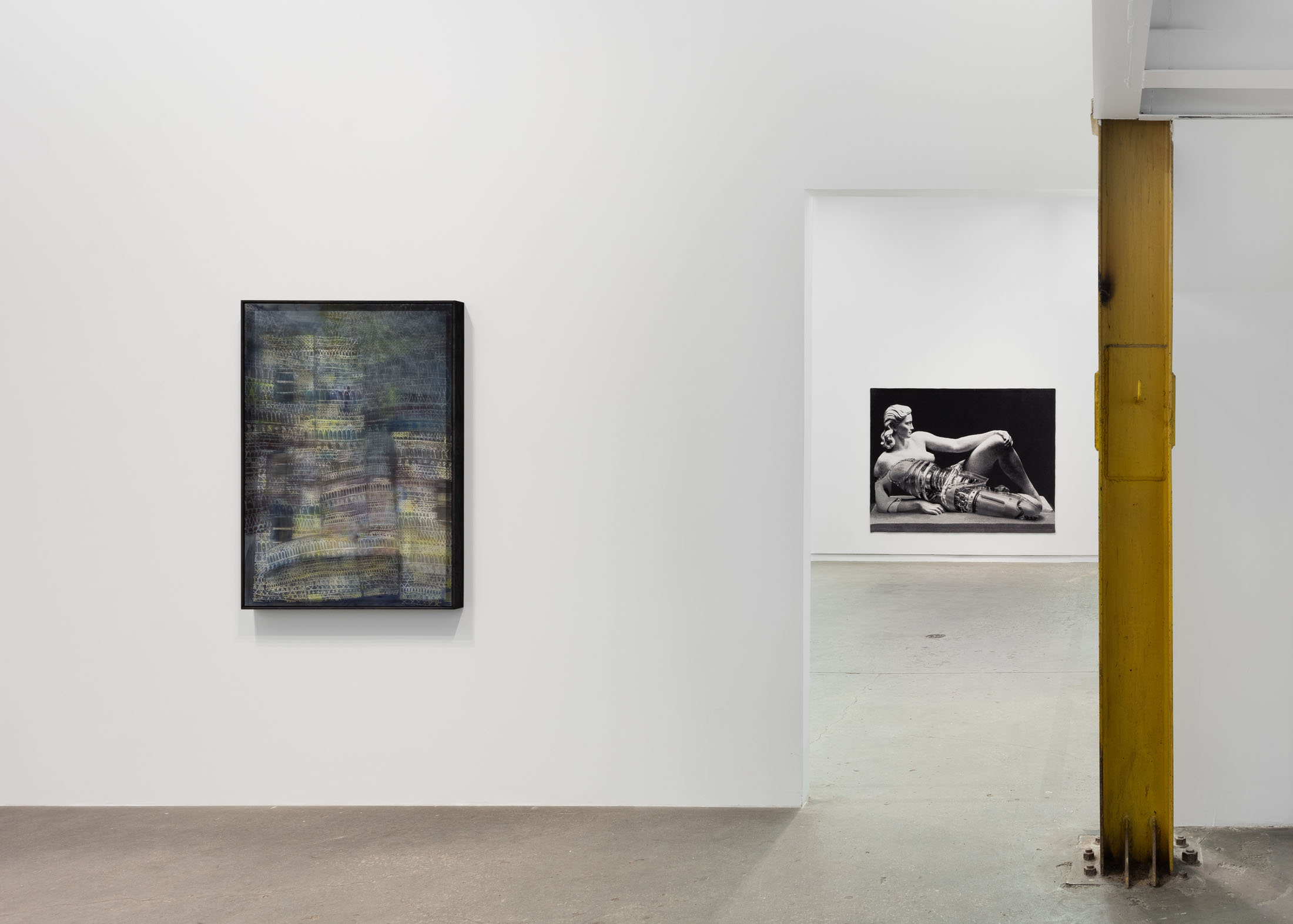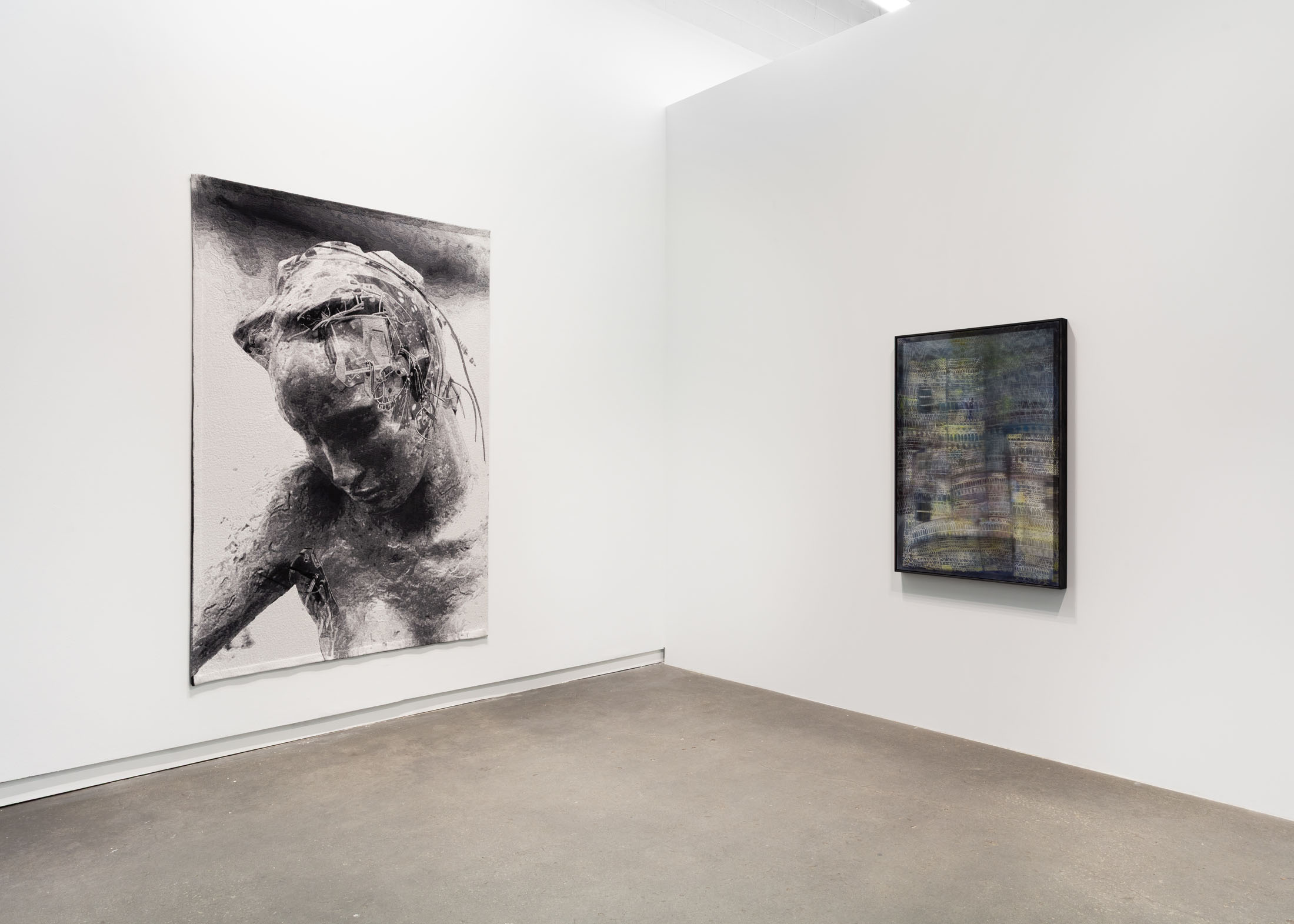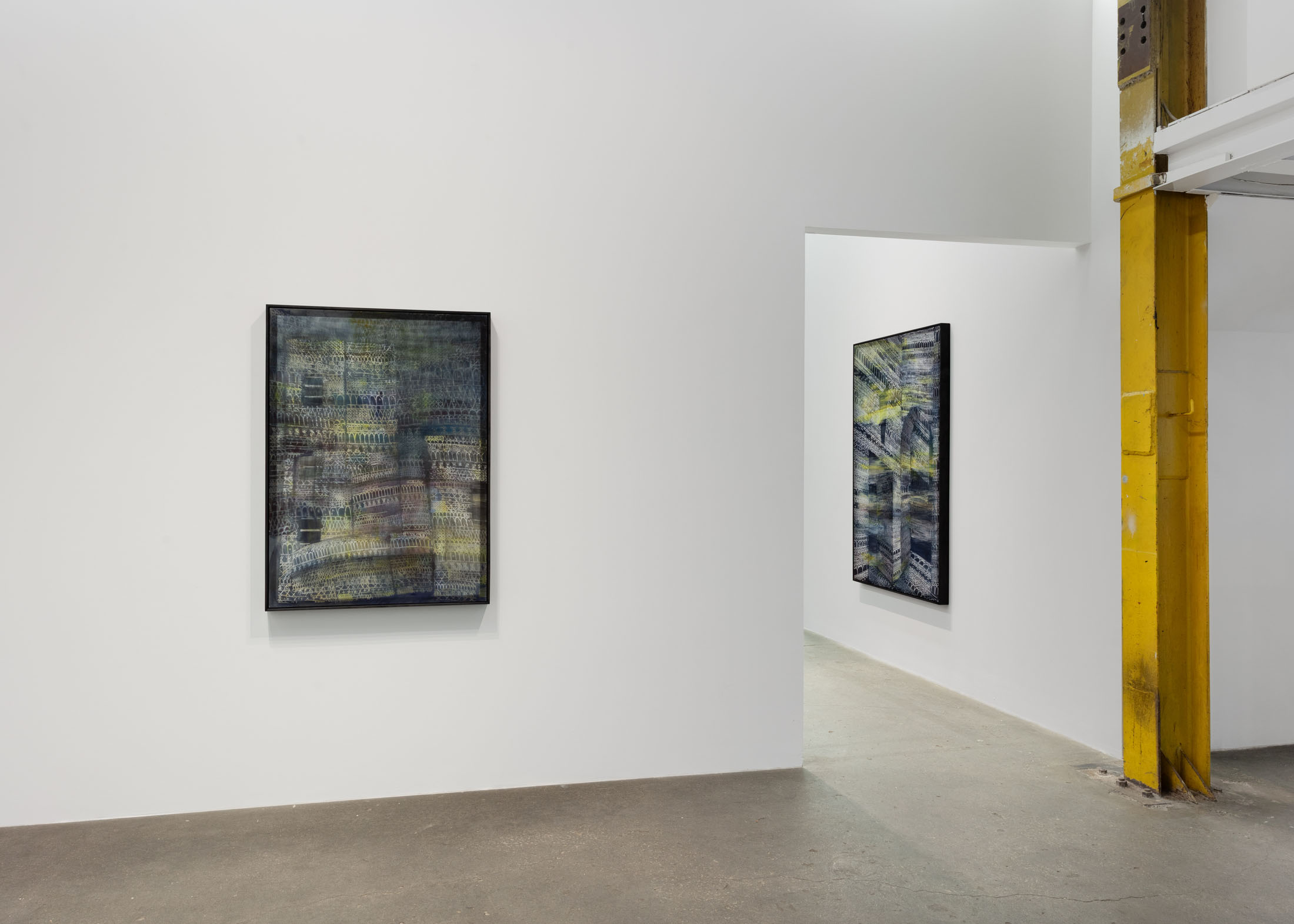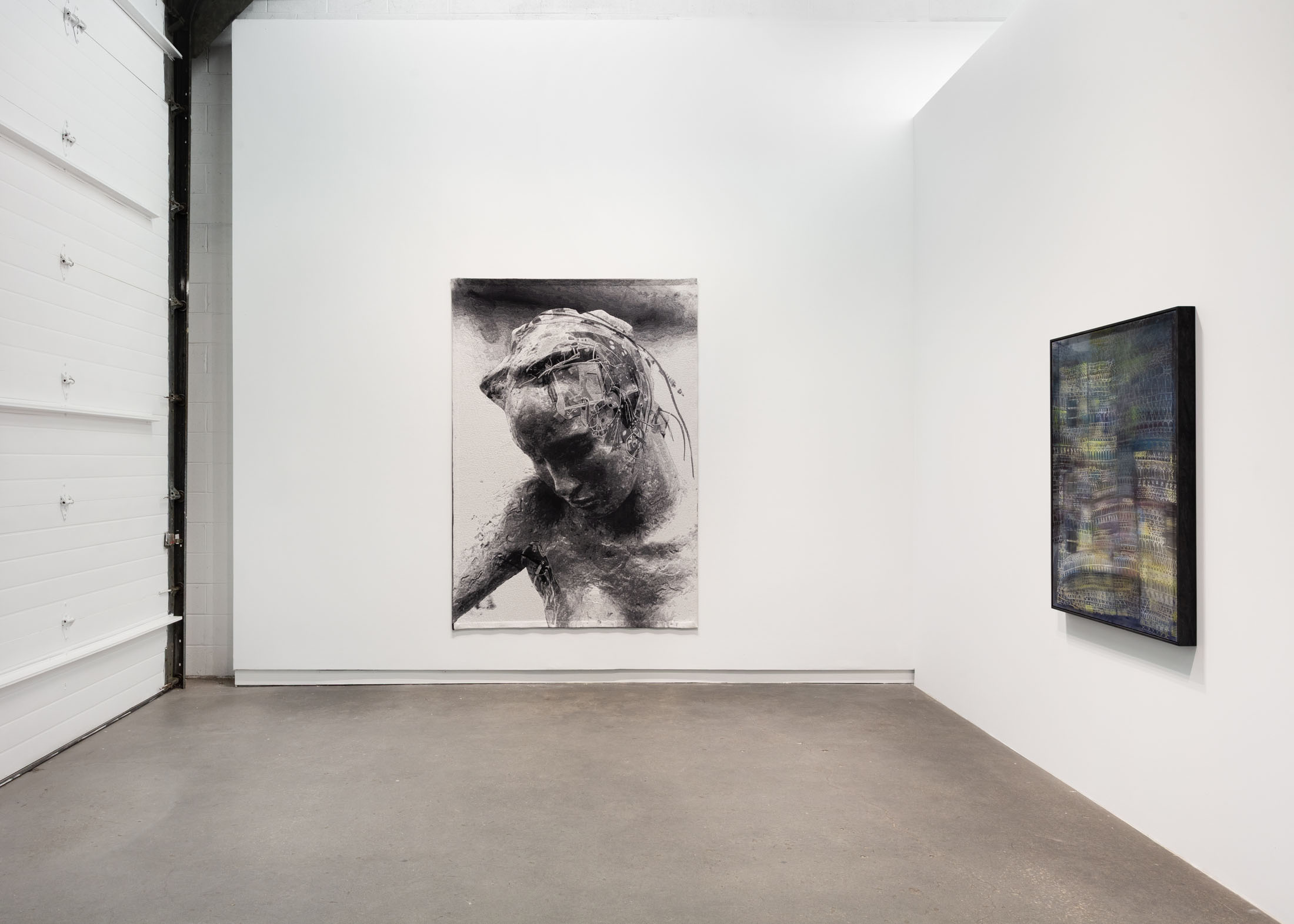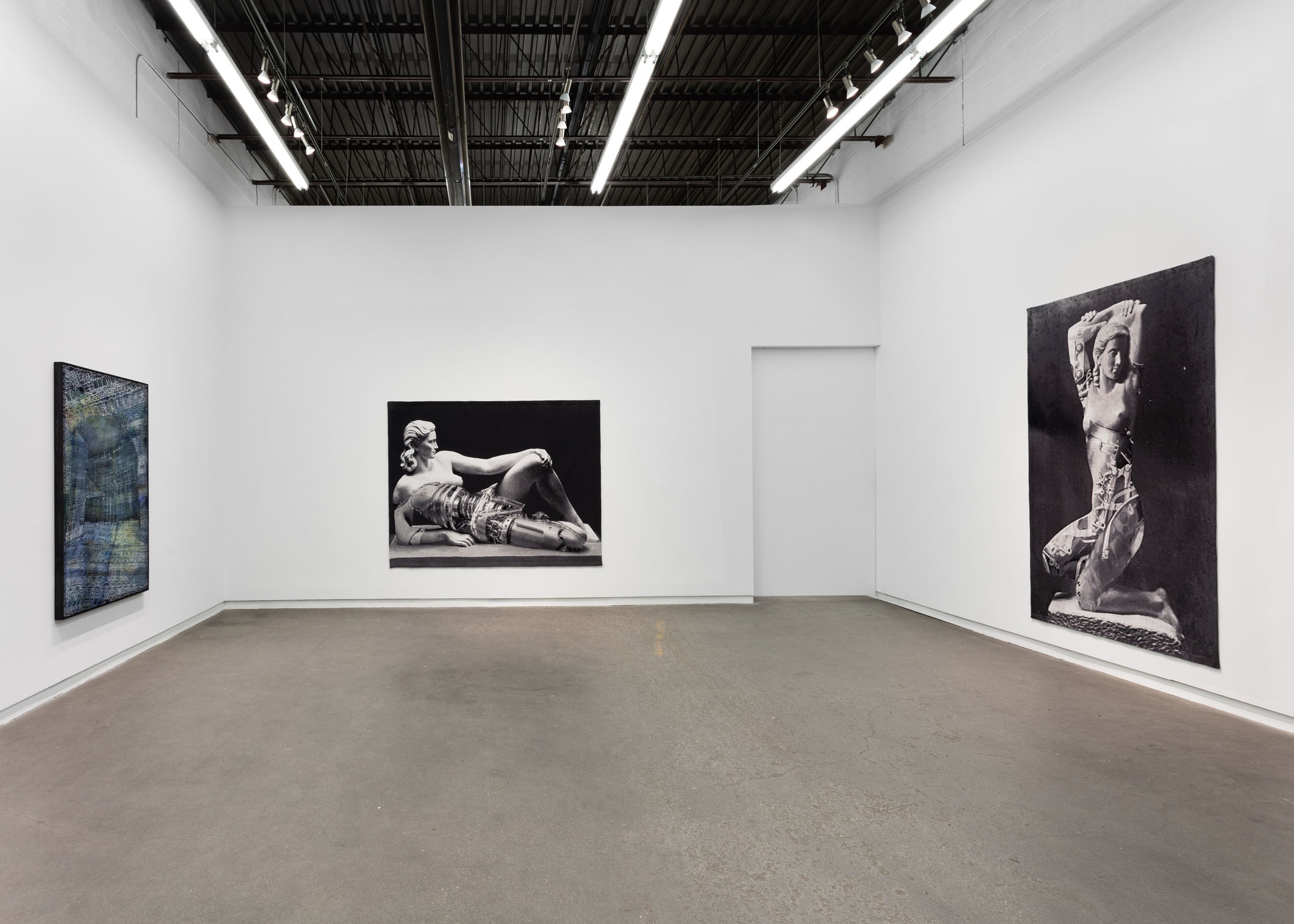
Daniel Faria Gallery is pleased to present The Wave, Shannon Bool’s sixth solo exhibition with the gallery.
The underlying sensibility of Bool’s work stems from collage, which allows her to complicate the historic and cultural charge of the images she appropriates by re-contextualizing them into new and destabilizing constellations. Much of Bool’s process subverts hierarchies of material value, by using mediums associated with craft such as jacquard weaving, batik silk painting, or ceramics. Together, the artworks in this exhibition contend with the danger and beauty of progress and how aesthetic systems historically repeat themselves.
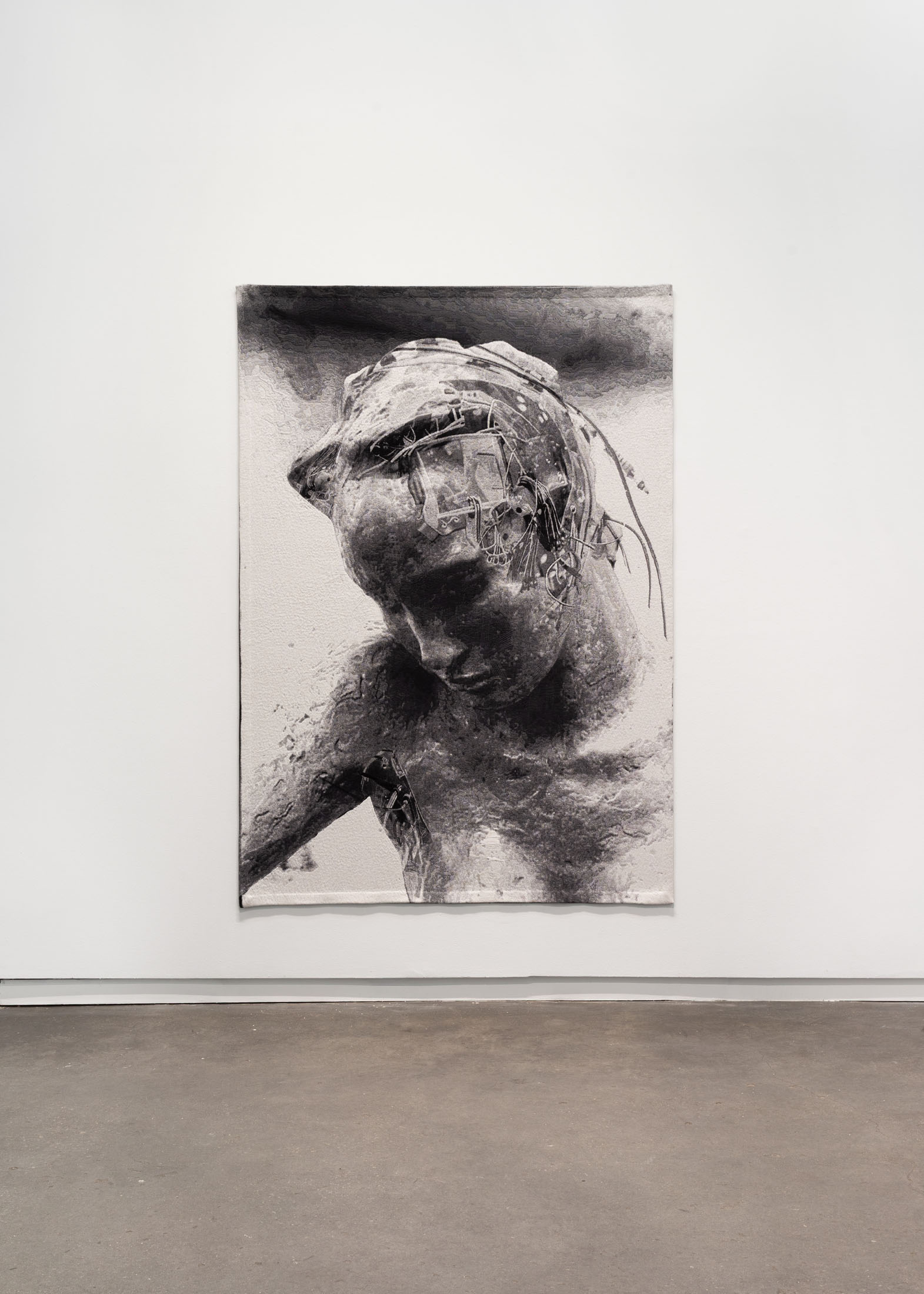
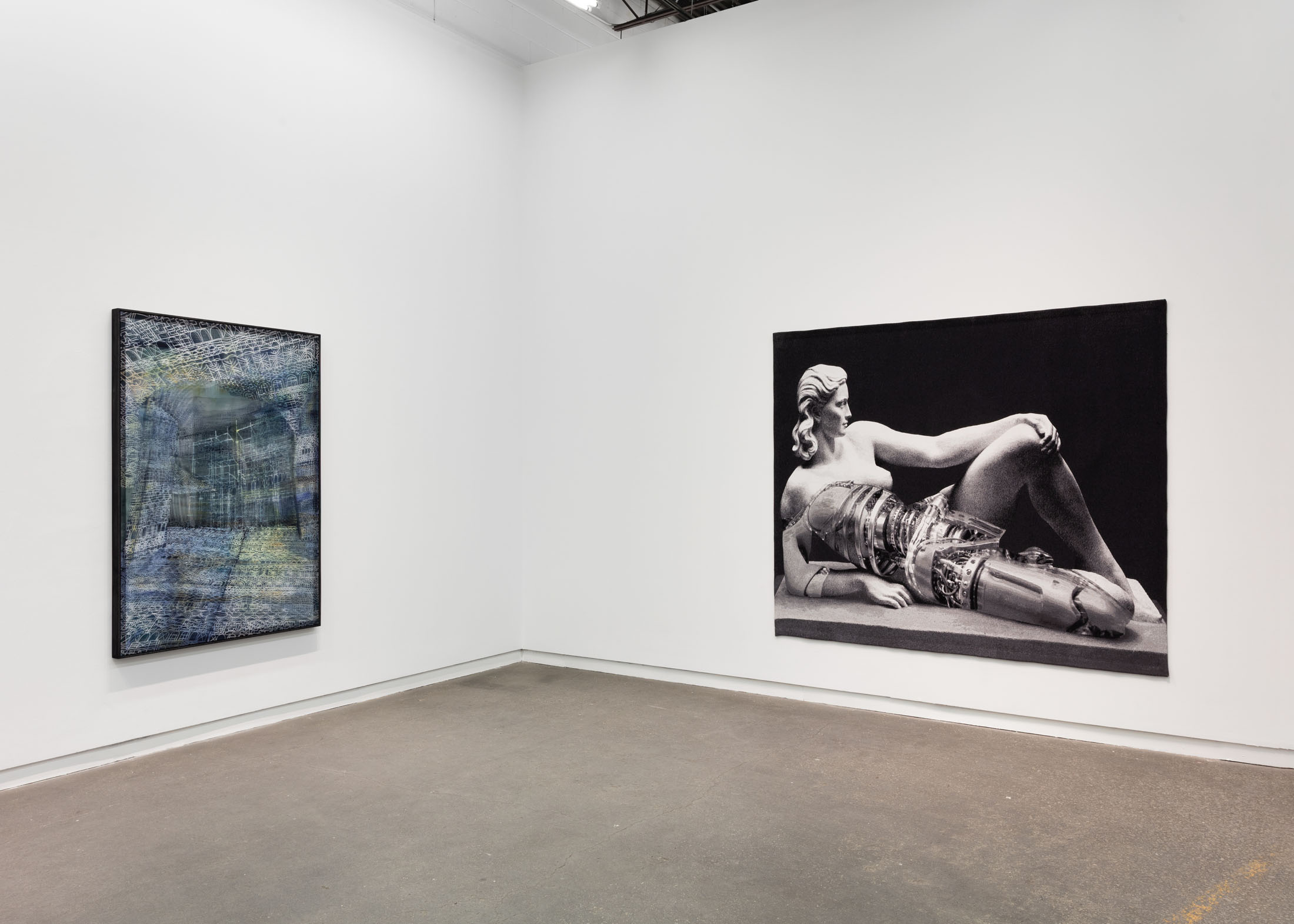
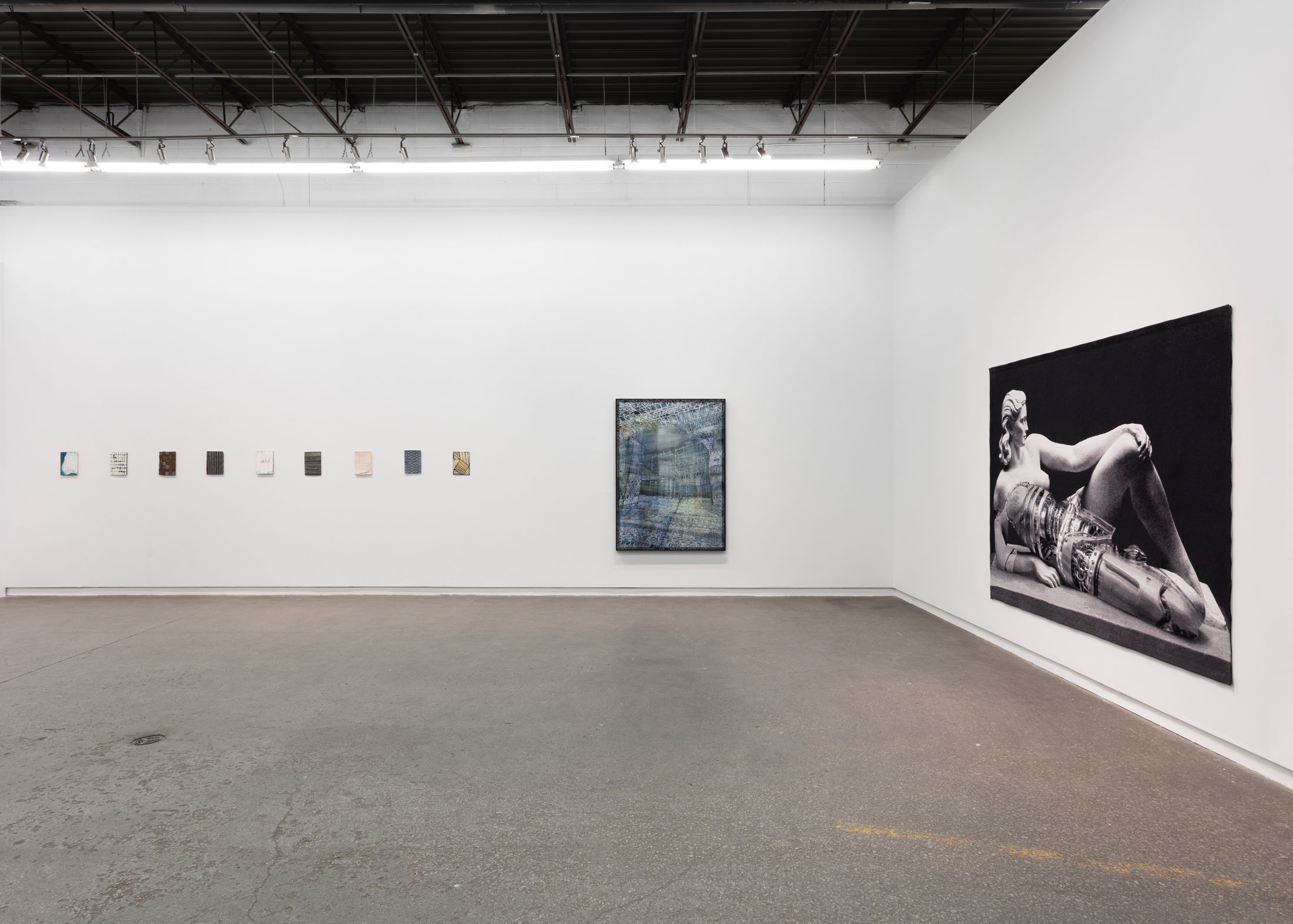
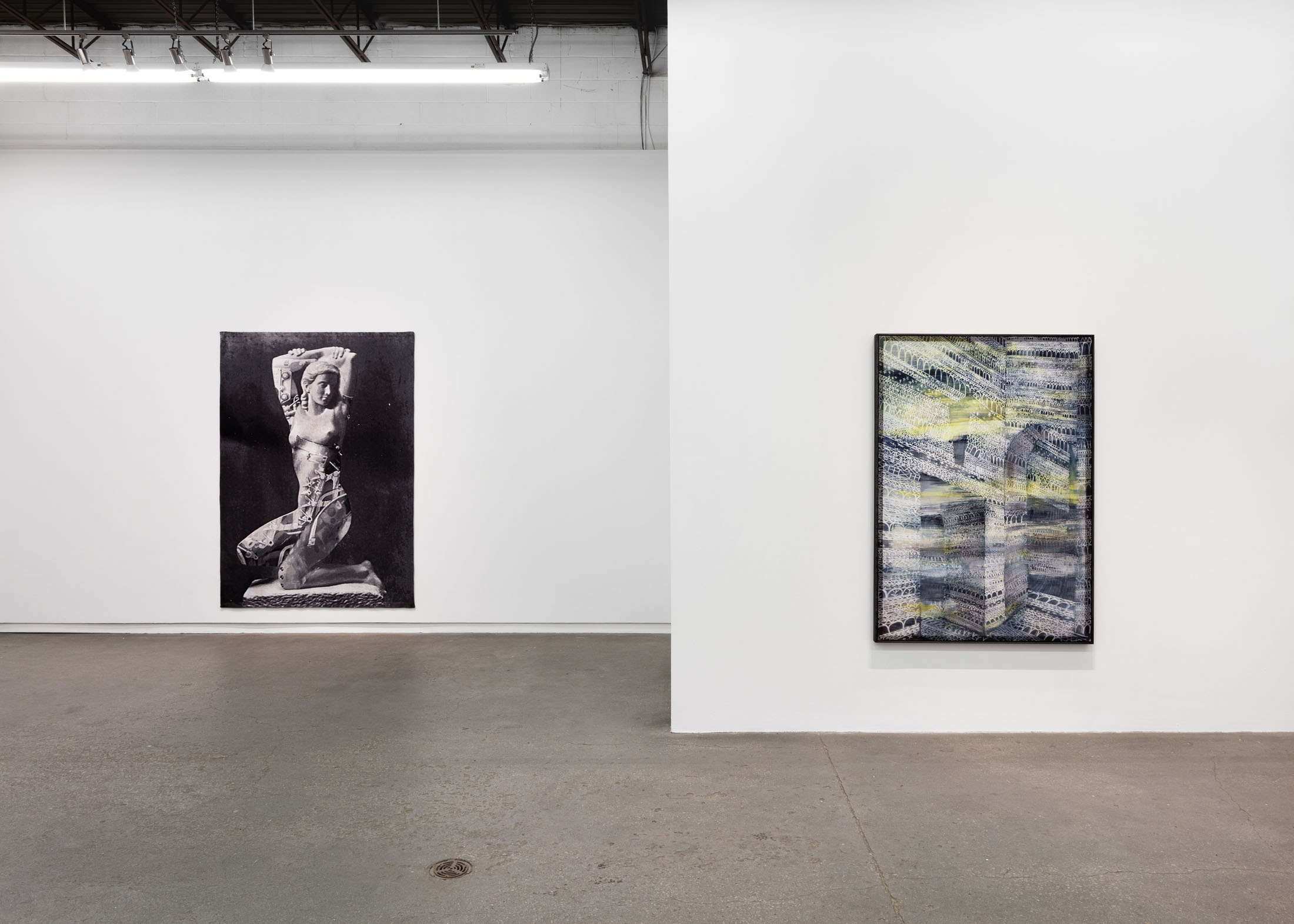
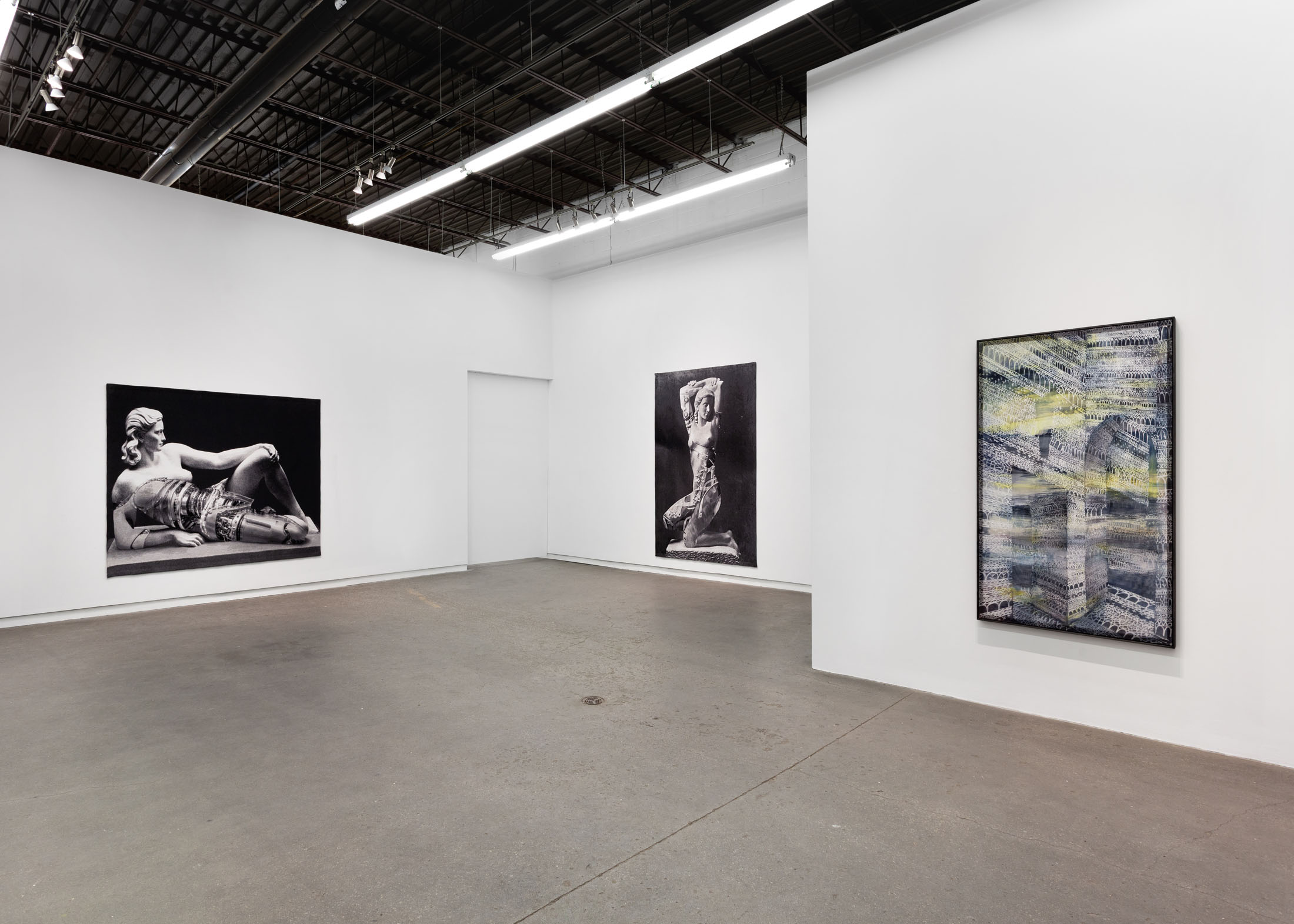
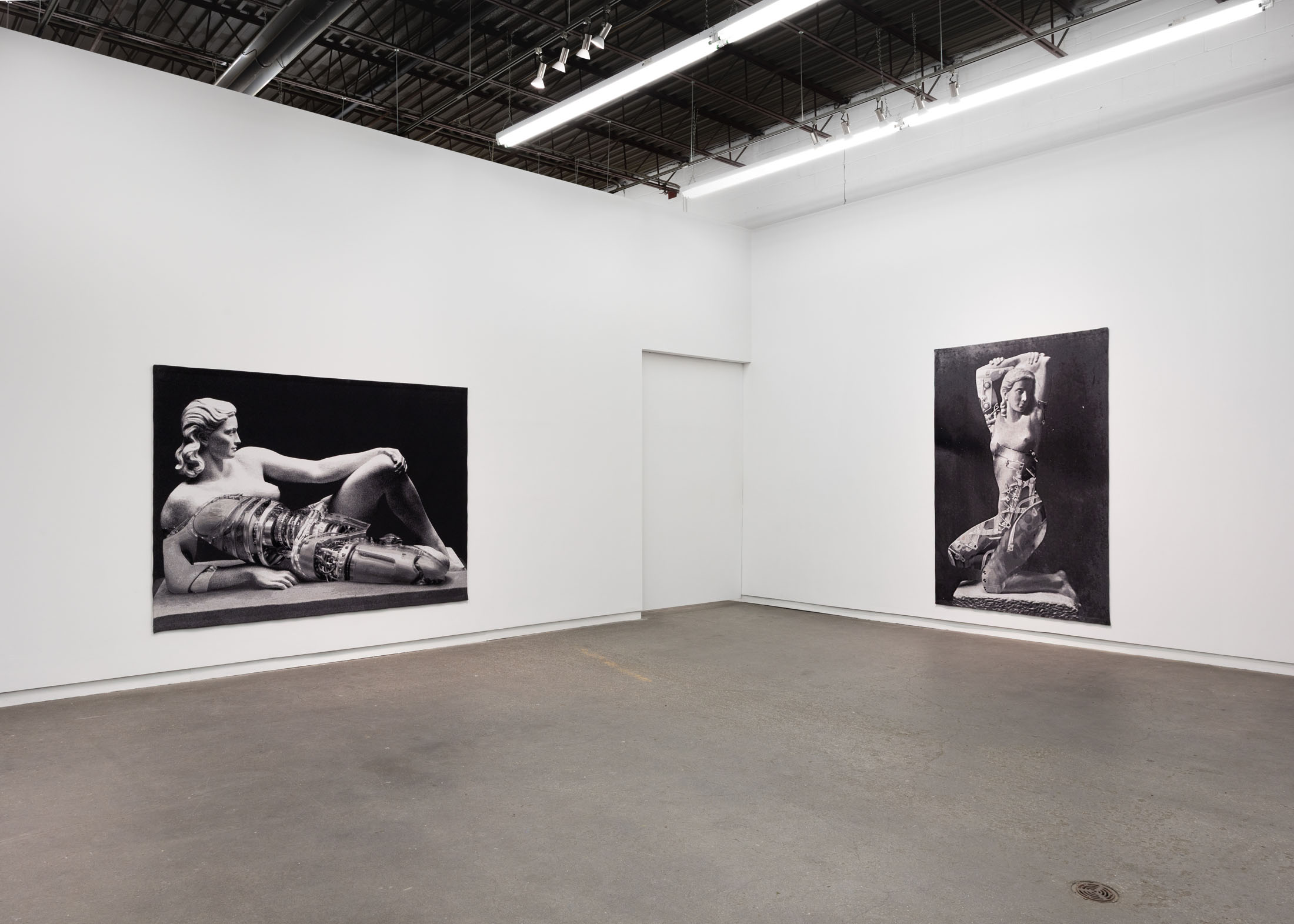
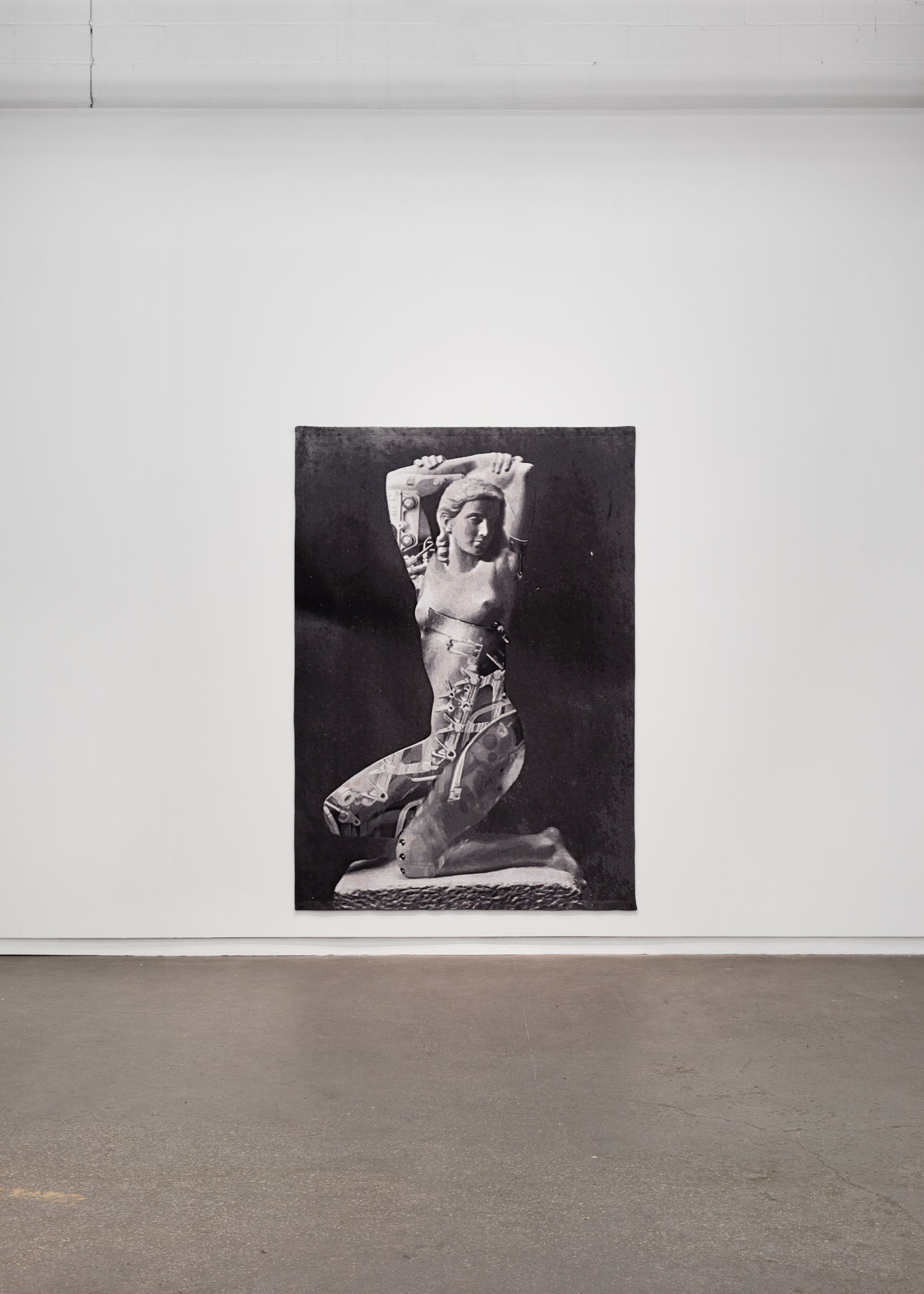
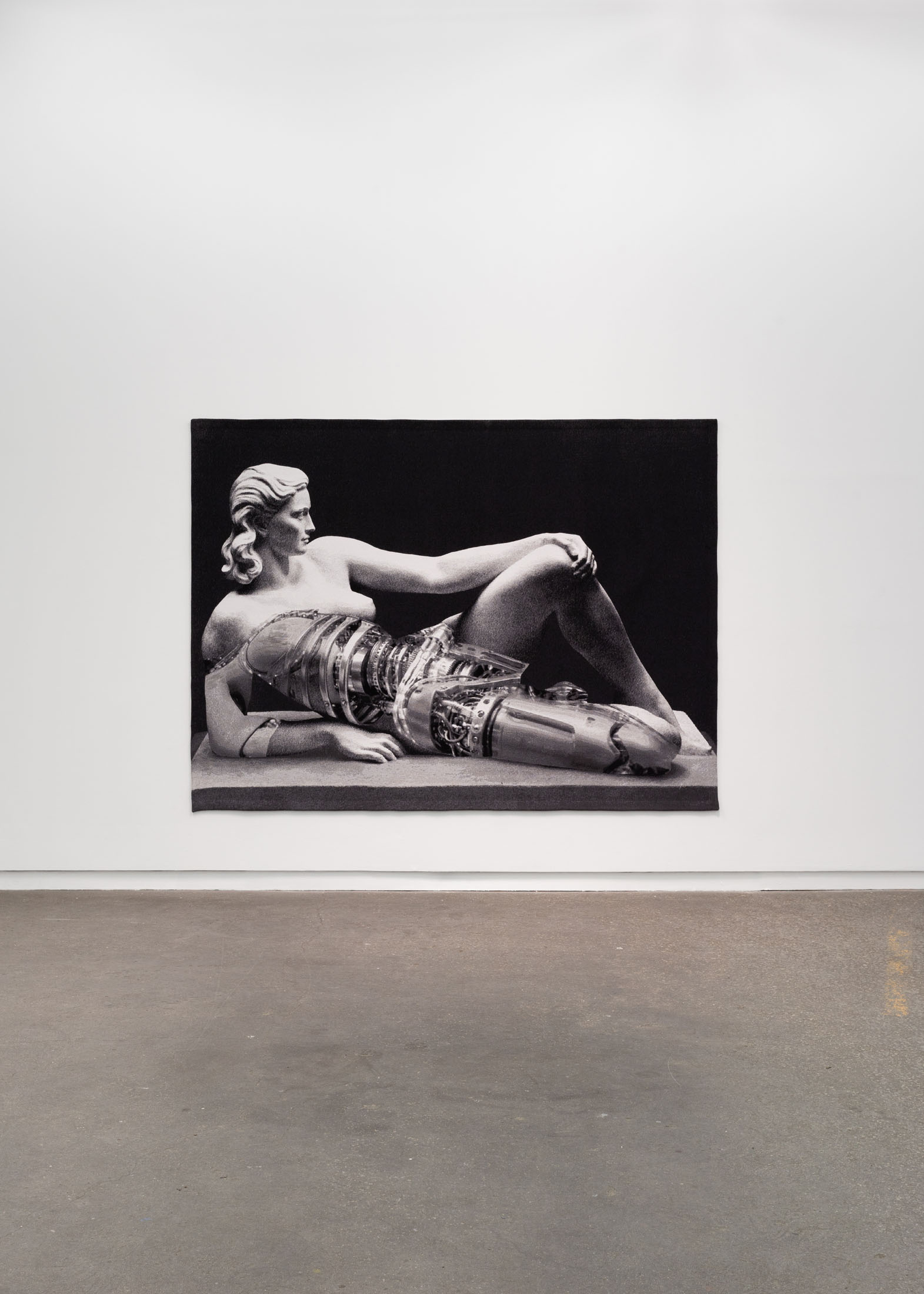
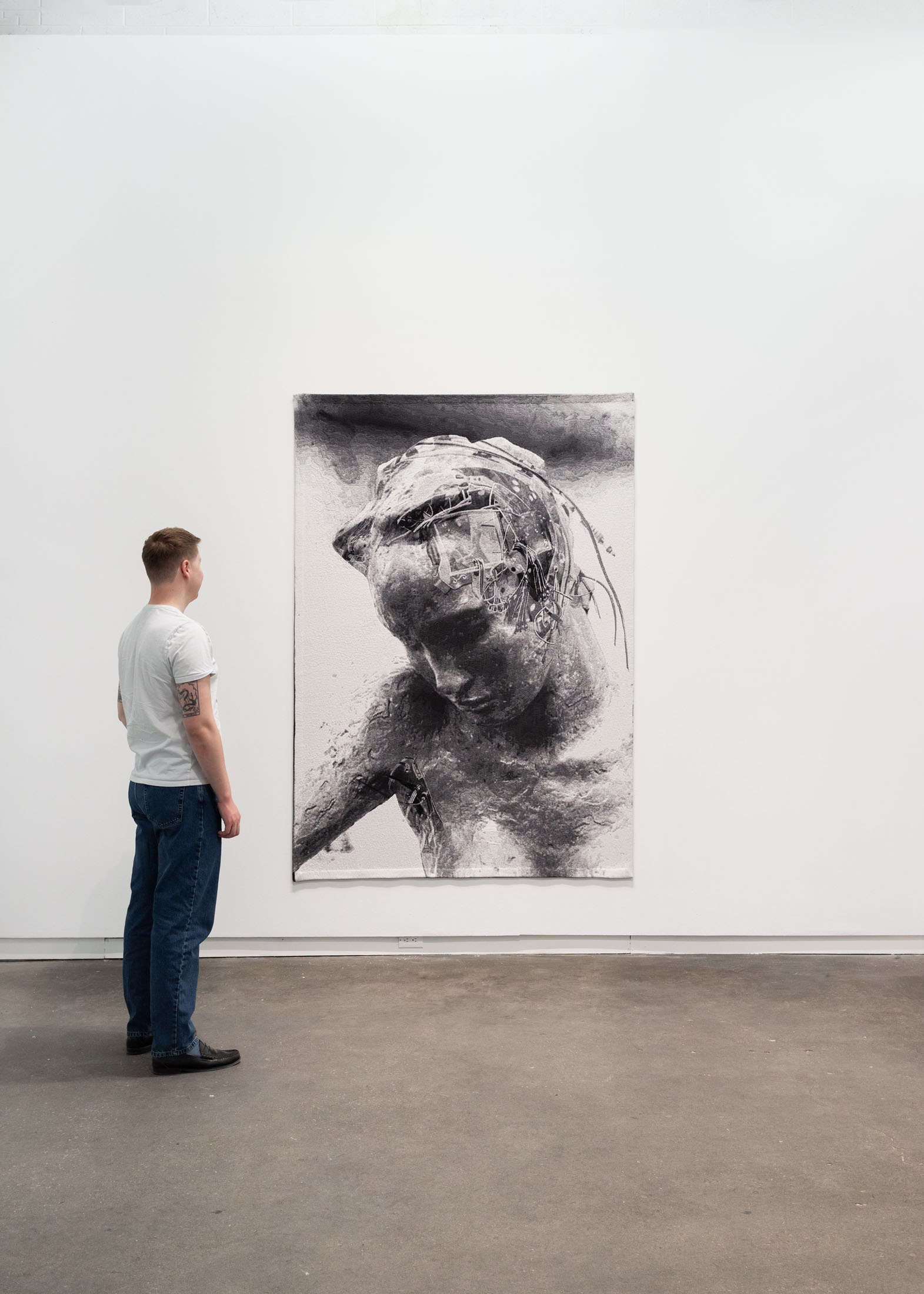
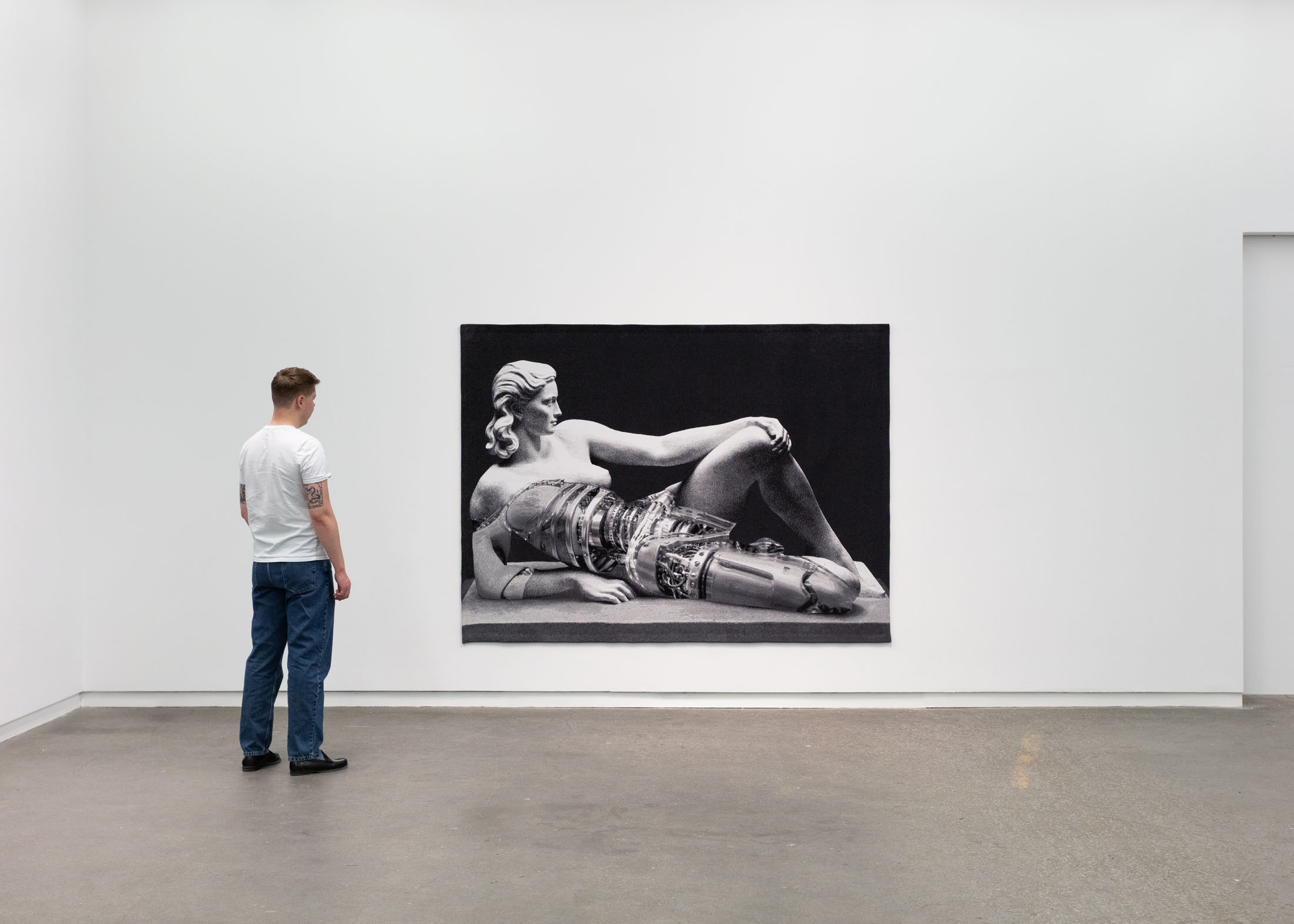
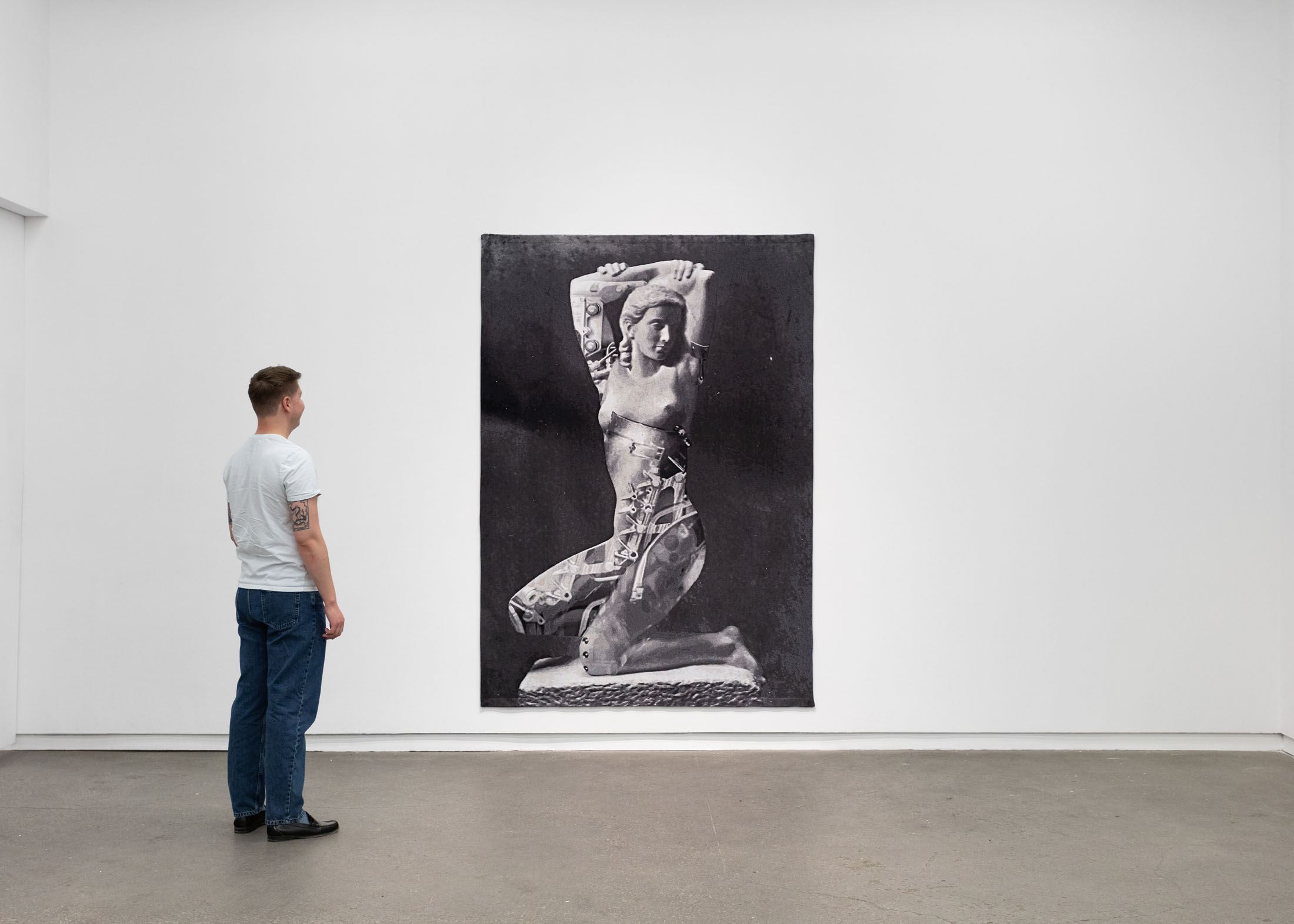
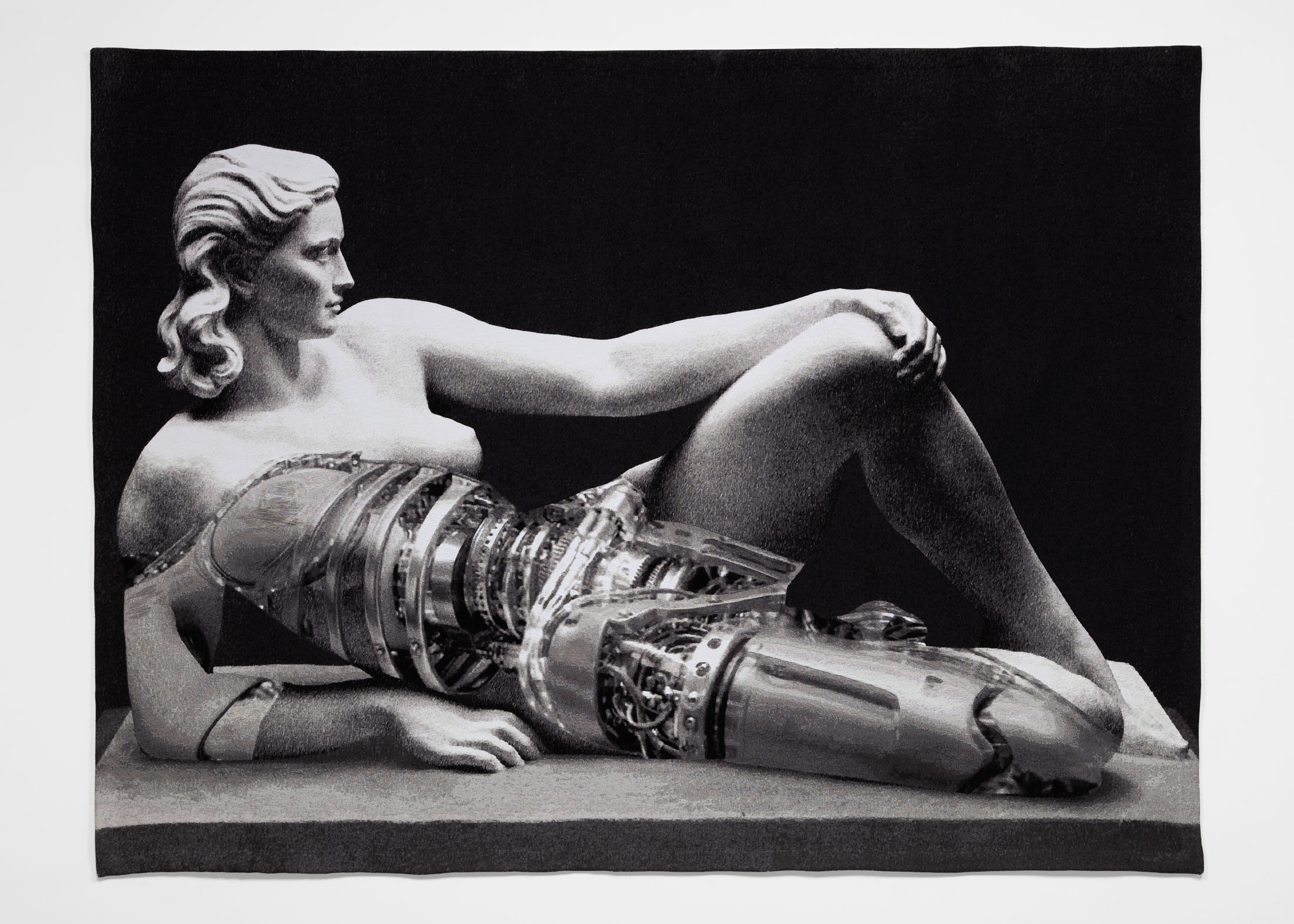
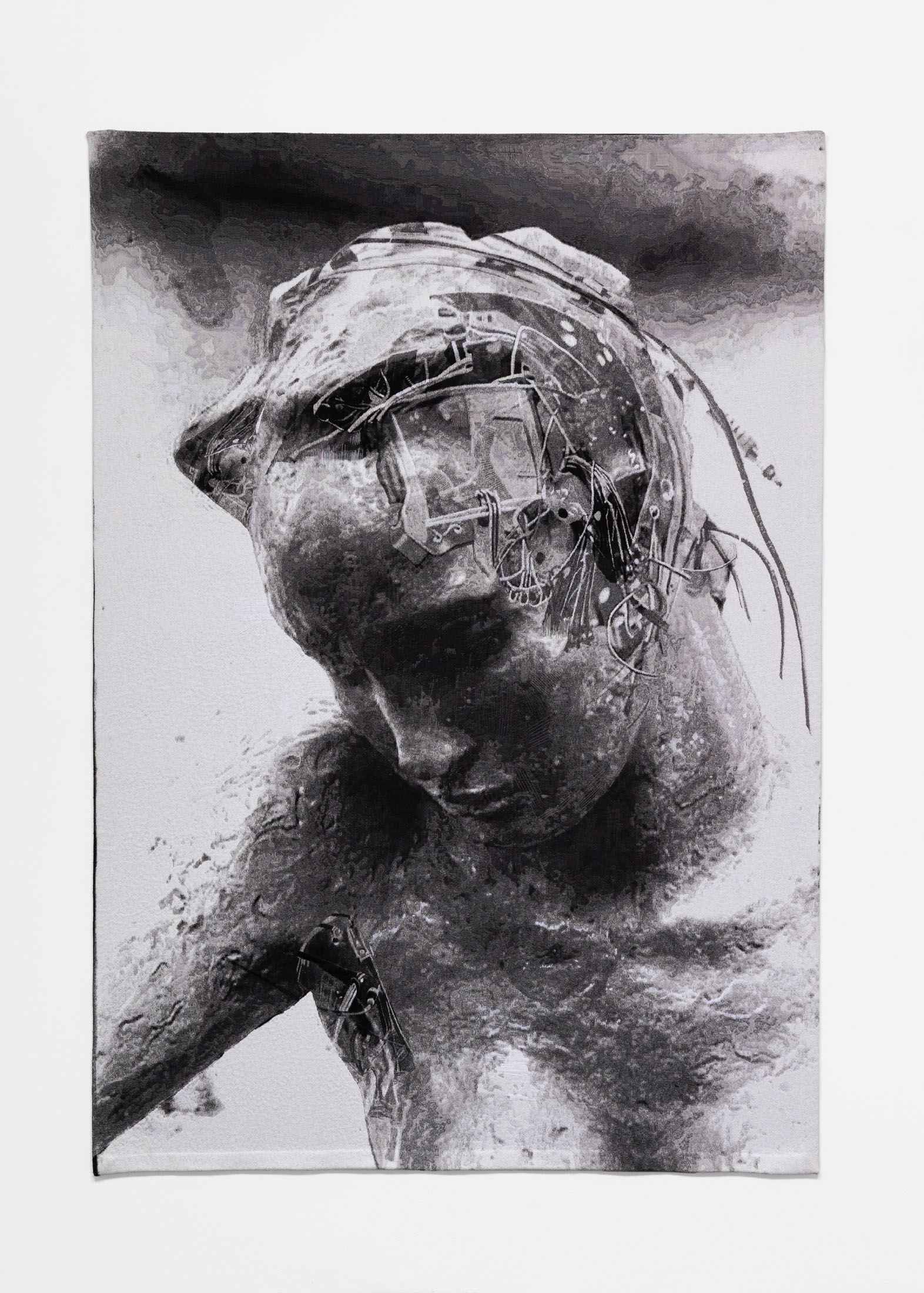
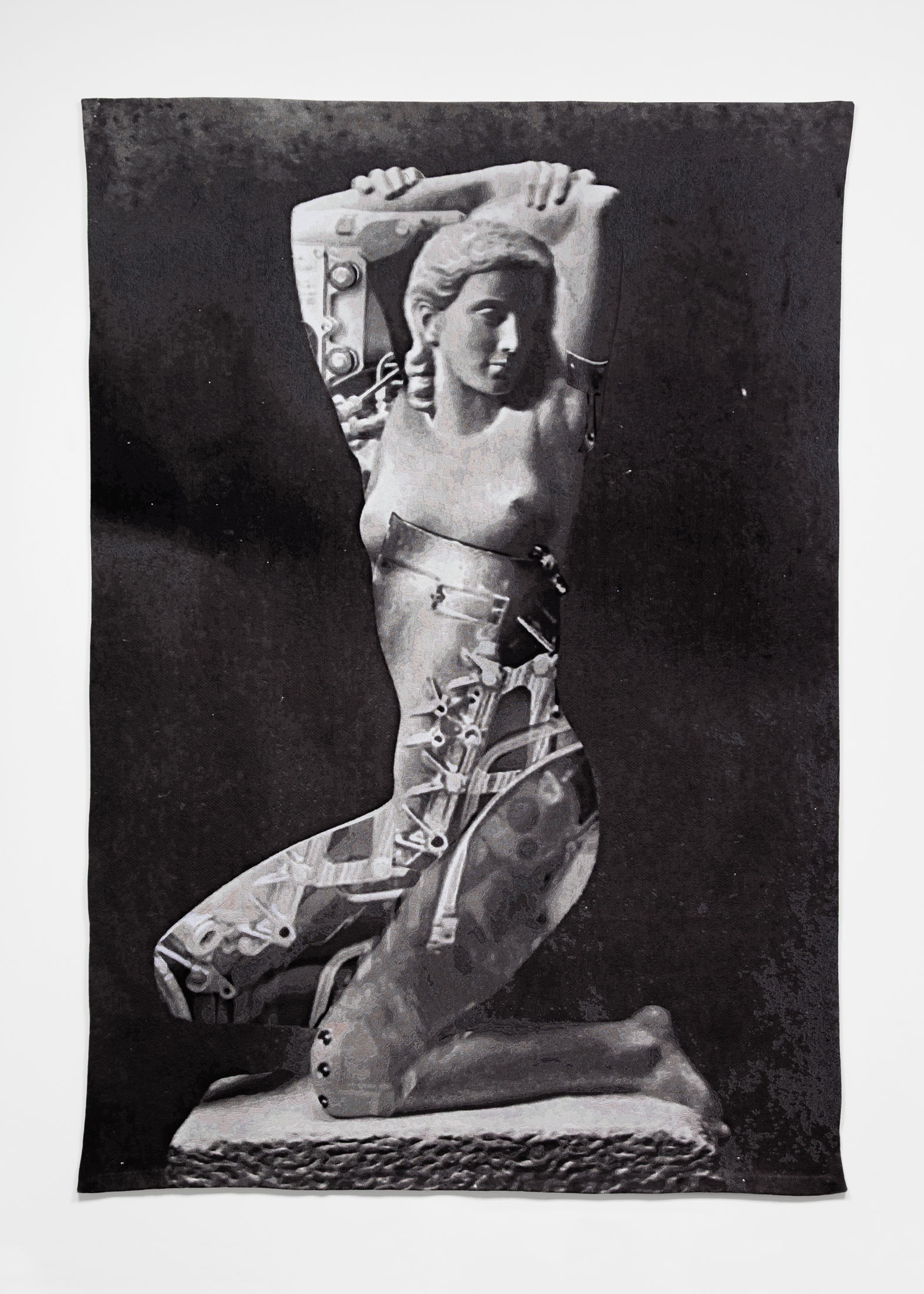
The title of the exhibition comes from the German Die Woge, the title of a reclining nude sculpture by Fritz Klimsch from 1936. Die Woge is most often used metaphorically and poetically to describe a large and powerful wave, the fearsome awe of nature, a surge of emotion, or the driving force of power behind something. In three new large-scale tapestries, Bool uses images of sculptures by Klimsch and Georg Kolbe, taken from her personal archive of postcards from the period. Bool chose the highly iconic motifs of the Pietá, the Venus, and the Odalisque, depictions of the female nude that have served as instruments for a wide range of projections and fantasies throughout Western art history.
While neither Klimsch nor Kolbe was a party member, their athletic, neoclassical-style nudes were eagerly adopted and celebrated by the Nazi regime, and their works were featured in the “Great German Art Exhibitions” held between 1937 and 1944 in the Haus der Deutschen Kunst in Munich. The rise of neoclassicism at this time communicated a rationality based on sublimating the living space of the individual into the social space of the collective, where emotion gave way to reason, chaos to order, and a sense of civic duty reigned over individual desires. Ultimately, under fascism, sculpture was utilised to shape ideology at a visceral, emotional level, not just through words but through images that defined reality itself.
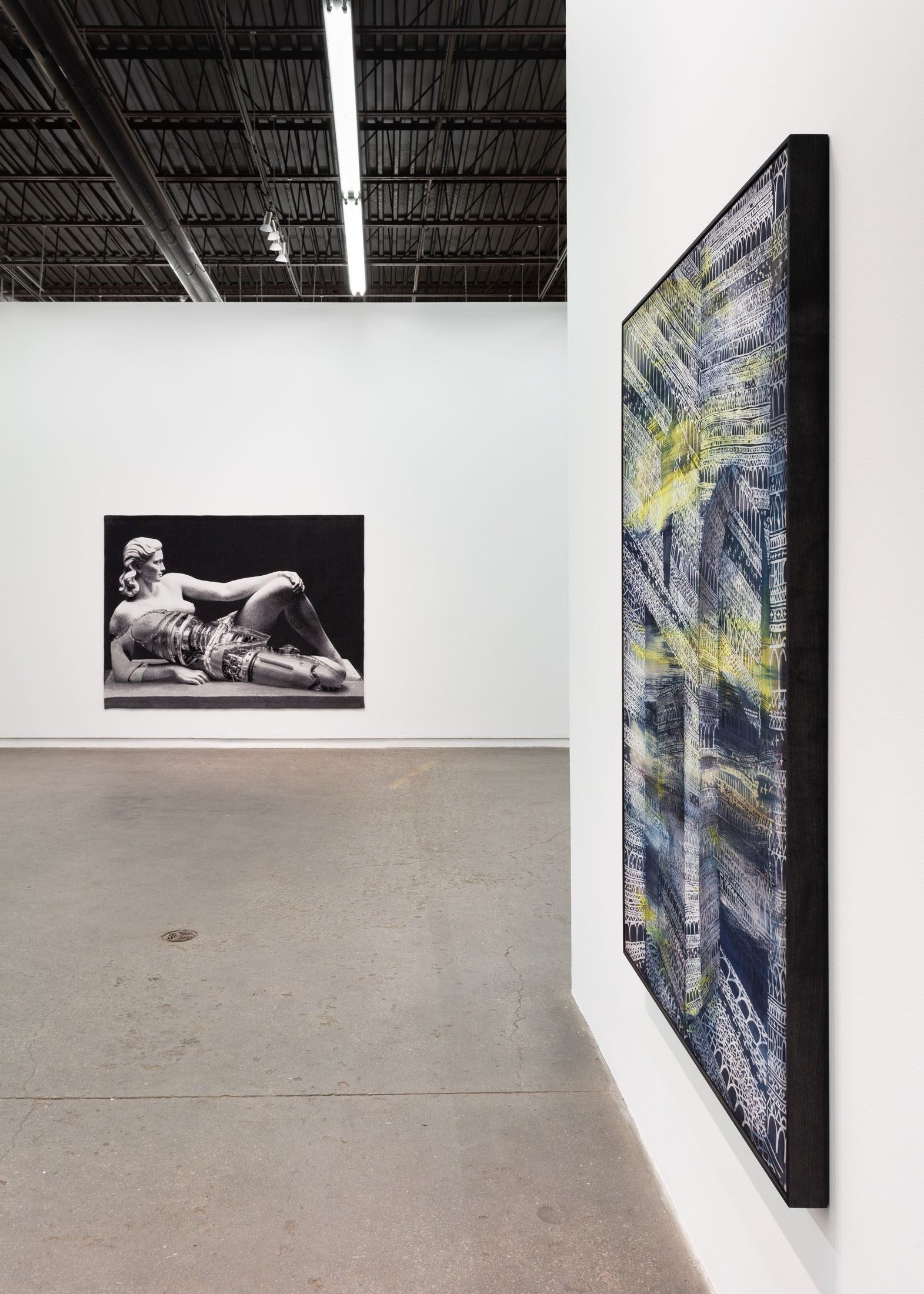
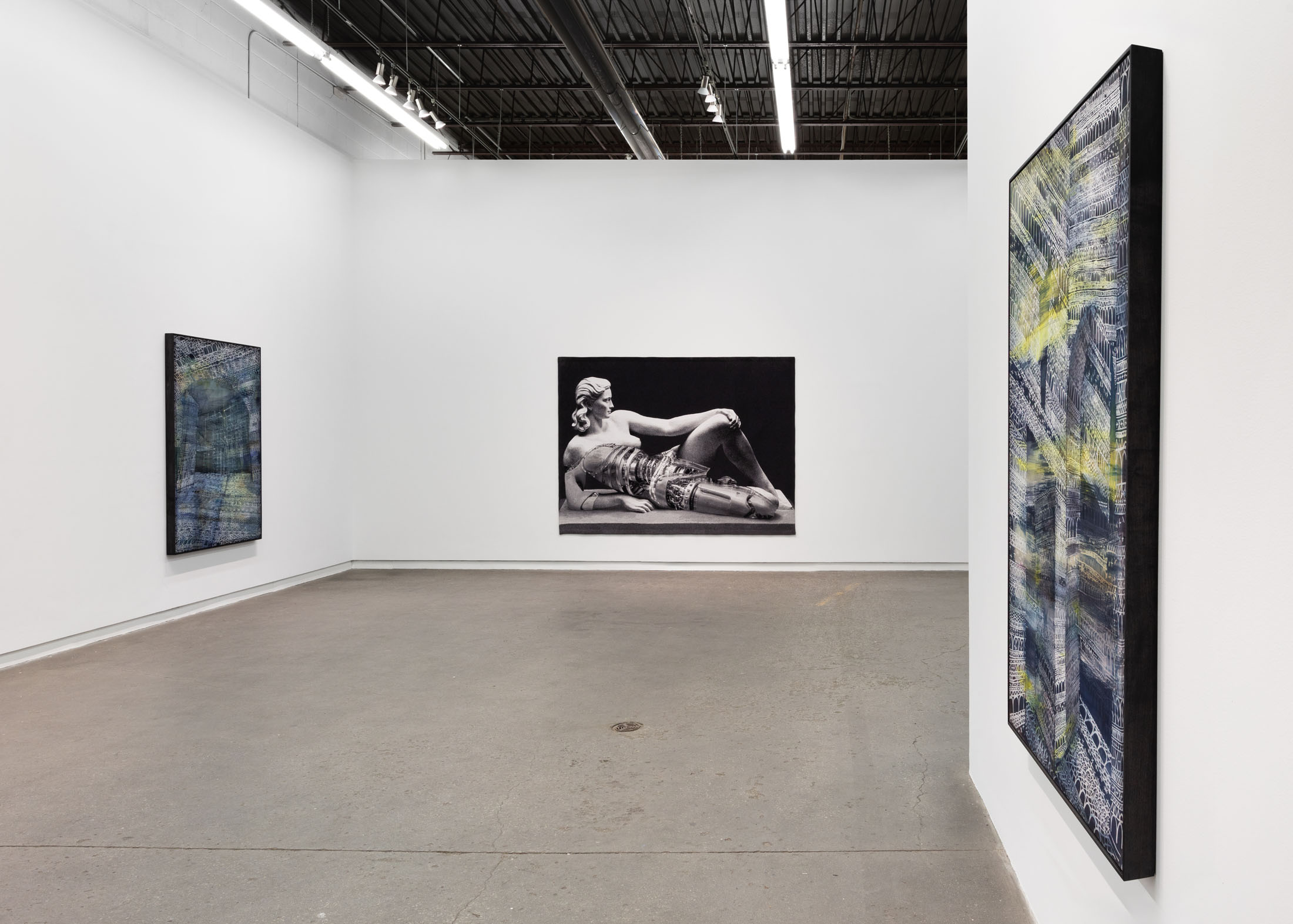
In the new tapestries, Klimsch and Kolbe’s idealized female bodies, so easily instrumentalized by systems of power, are intertwined with images of a different kind of power and idealization: those of contemporary technology and robotics. Gears, bolts, and wires are collaged with the sculptures, including the Rolls Royce engine currently being used to power Germany’s Leopard tanks, a humanoid robot, and a fantasy animation describing Elon Musk’s female Tesla bot, or “Optimus” robot. The resulting figures appear both futuristic, classical and dystopic: relics simultaneously from the past and the future, both of which are barreling towards current fever dreams of “progress”. By translating these archetypal depictions of women and “hi tech” fantasy into jacquard tapestries with hand embroidery, Bool integrates the hard unnegotiable materiality of stone and metal into the soft technology of weaving.
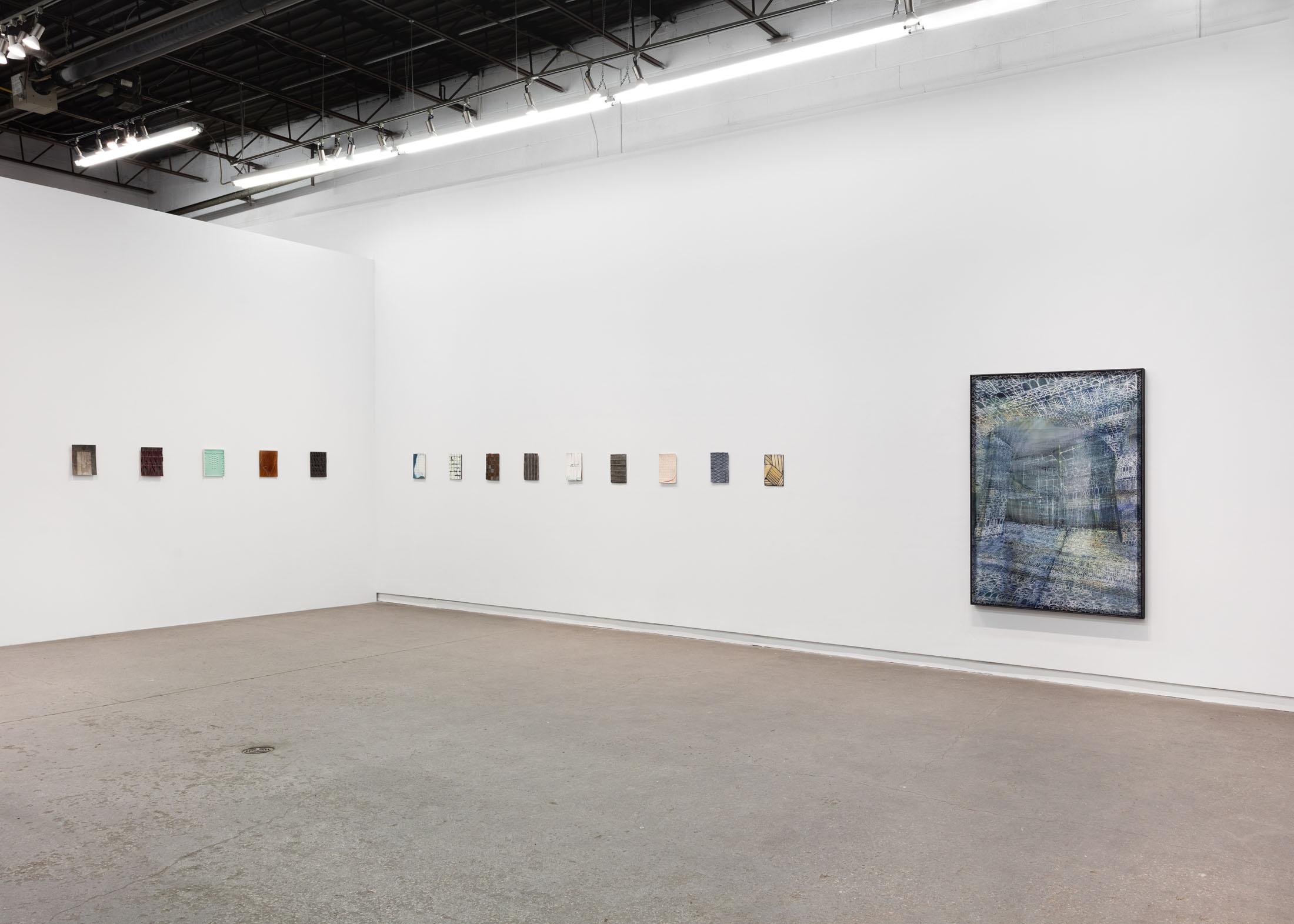
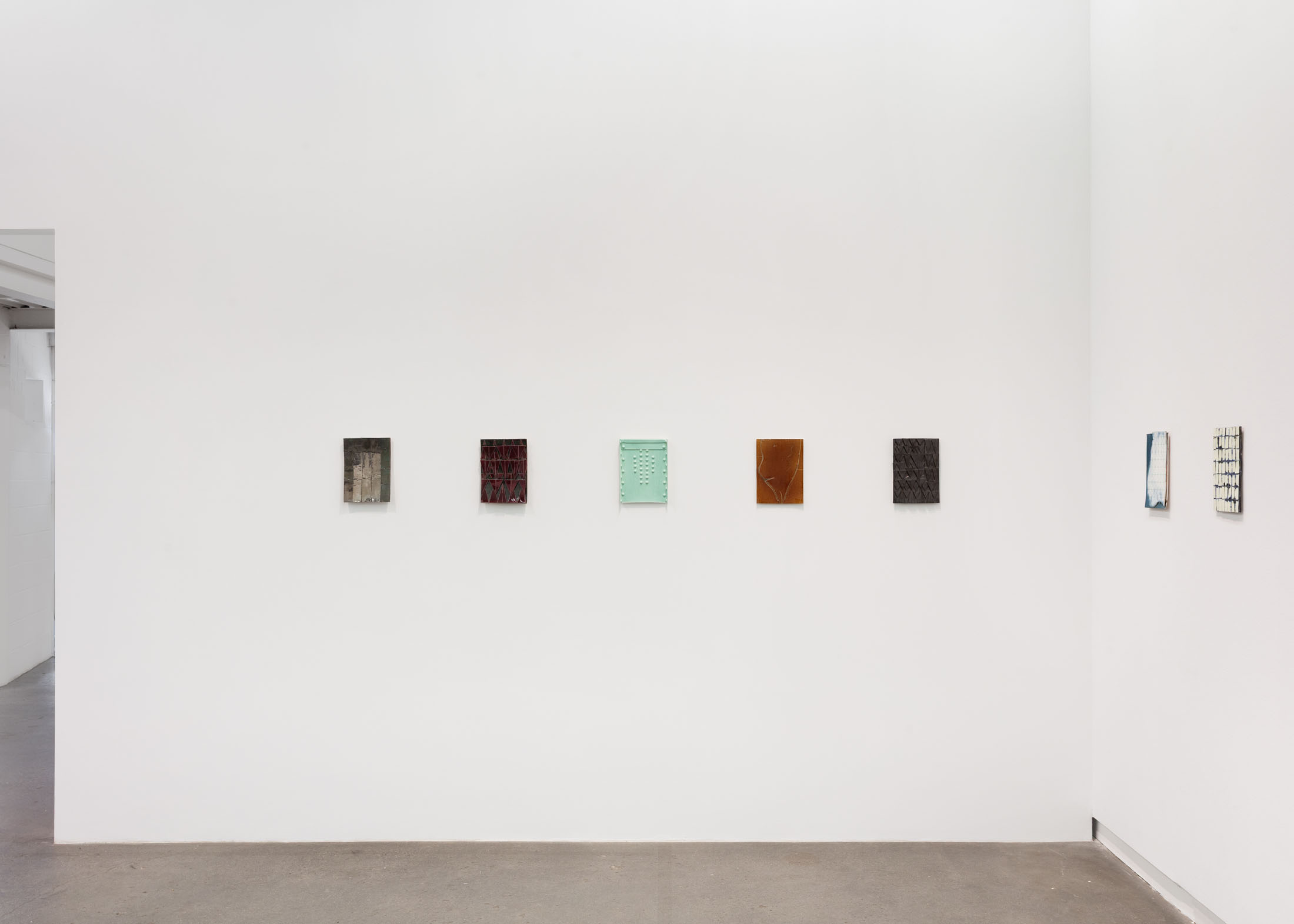
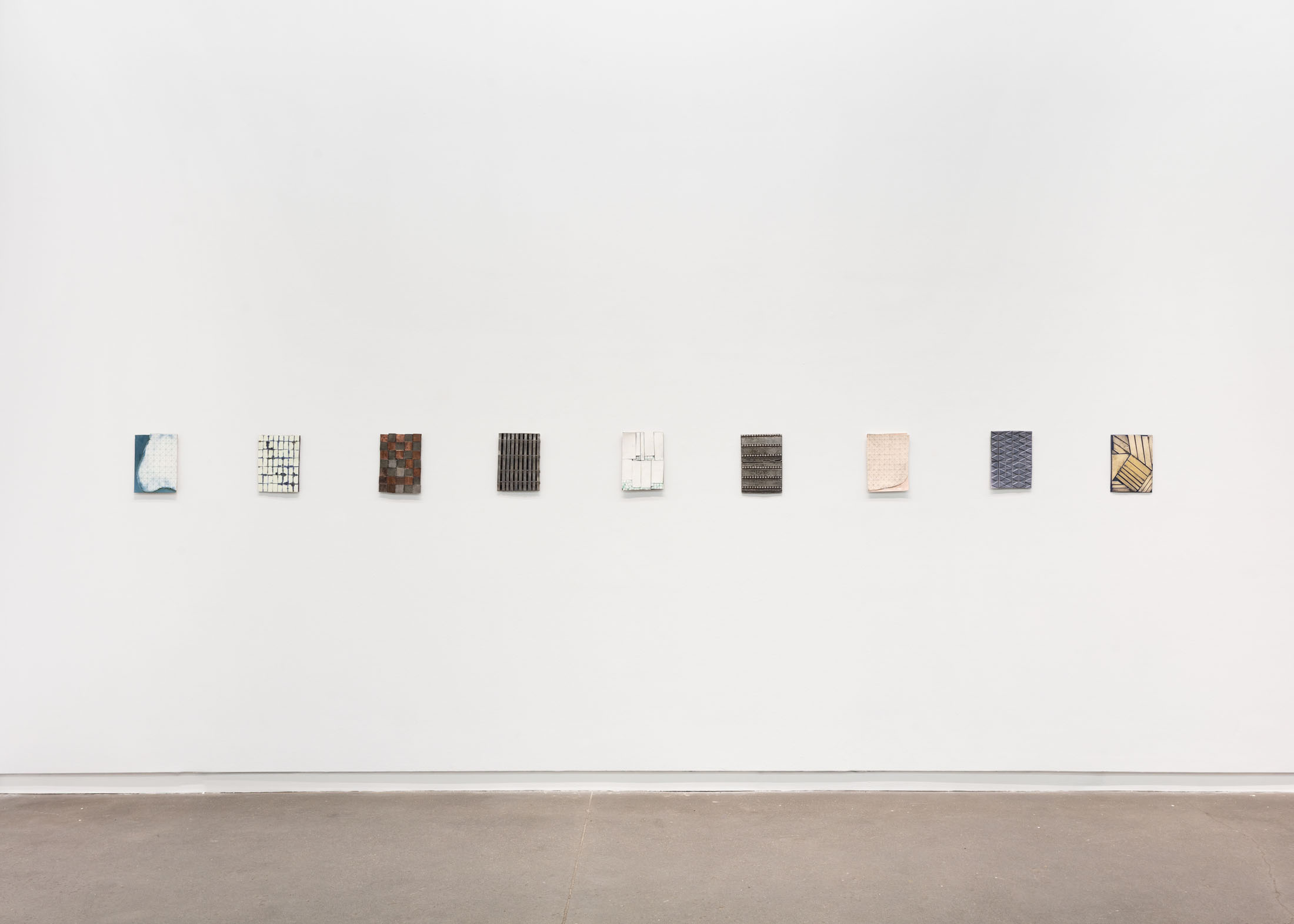
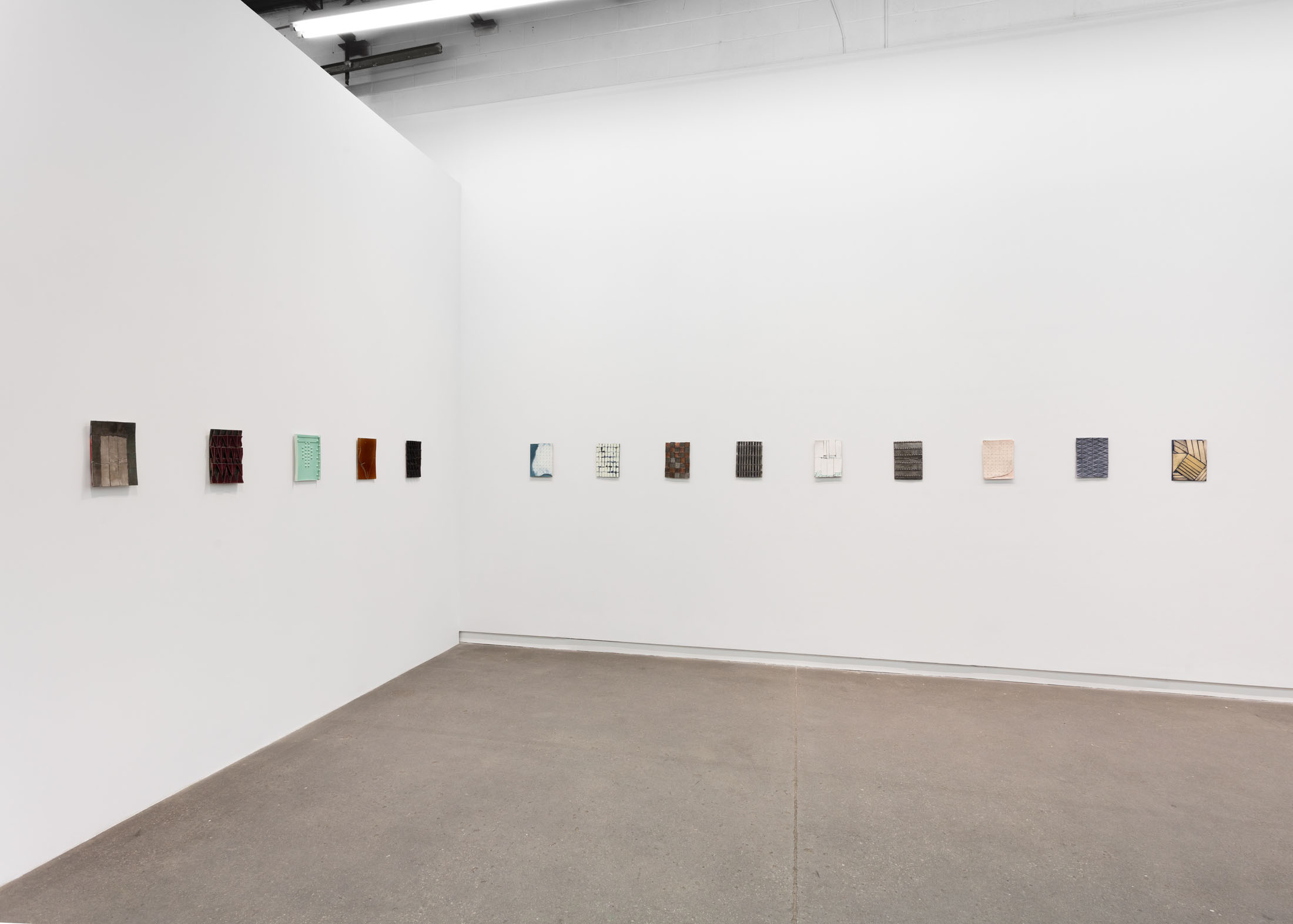
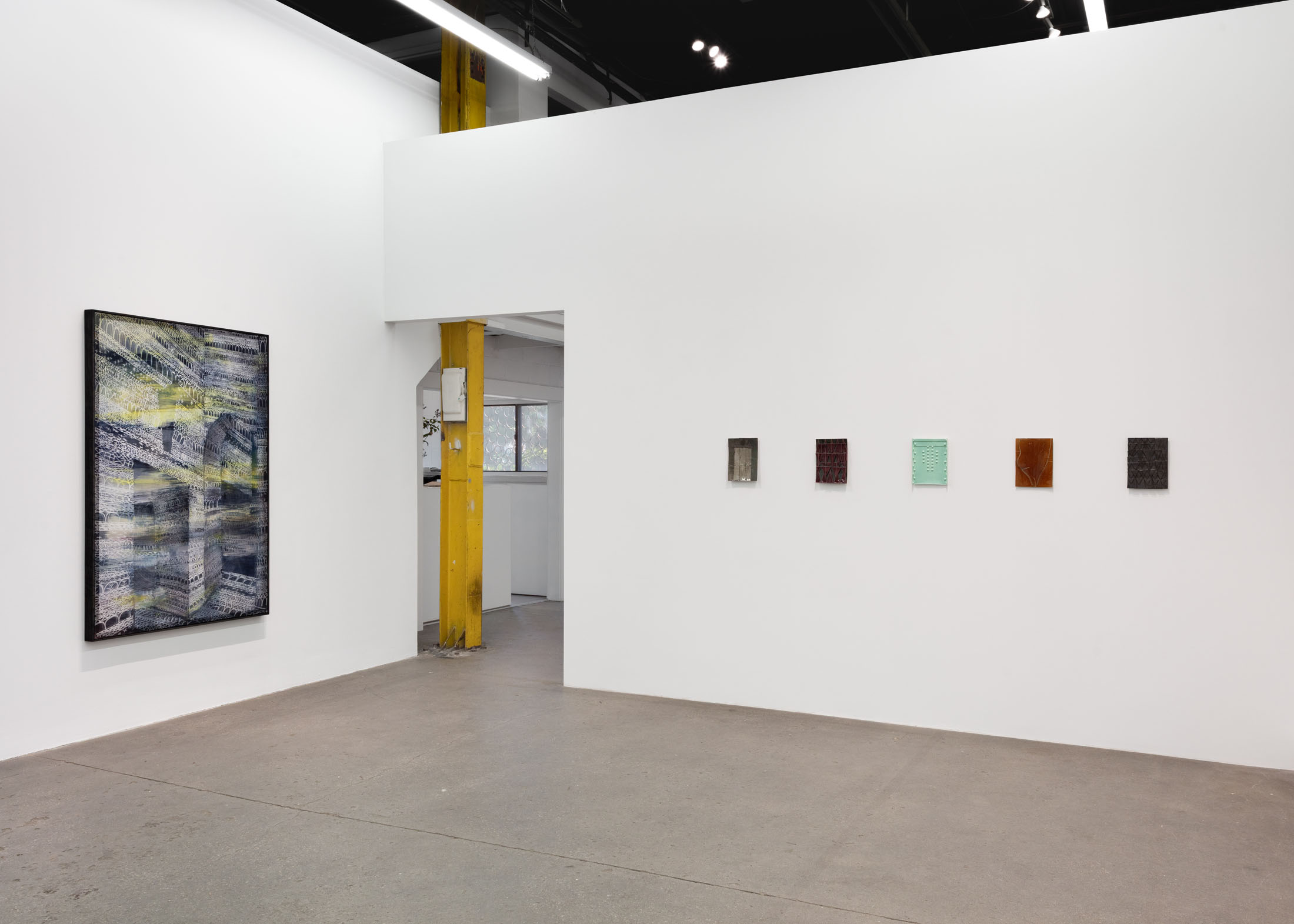
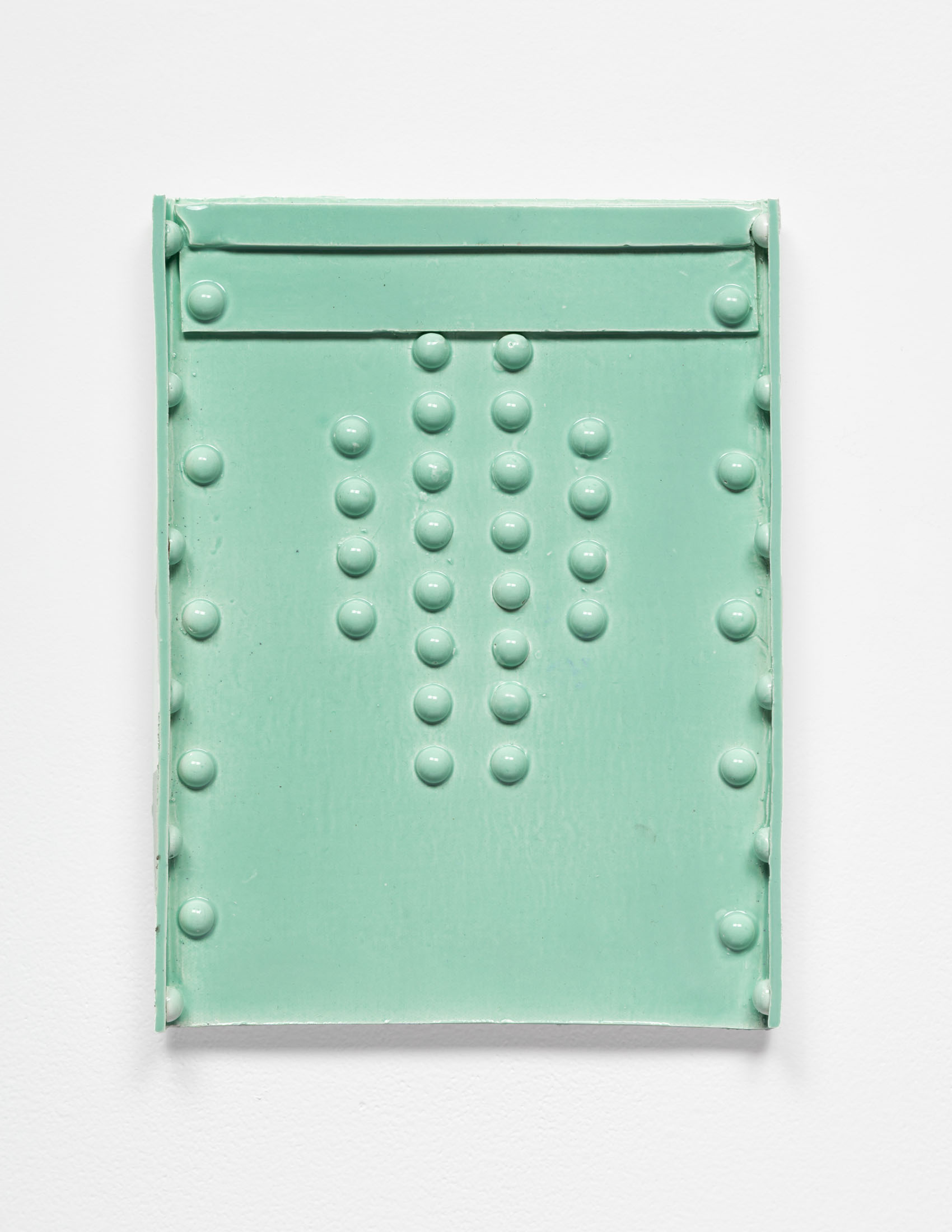
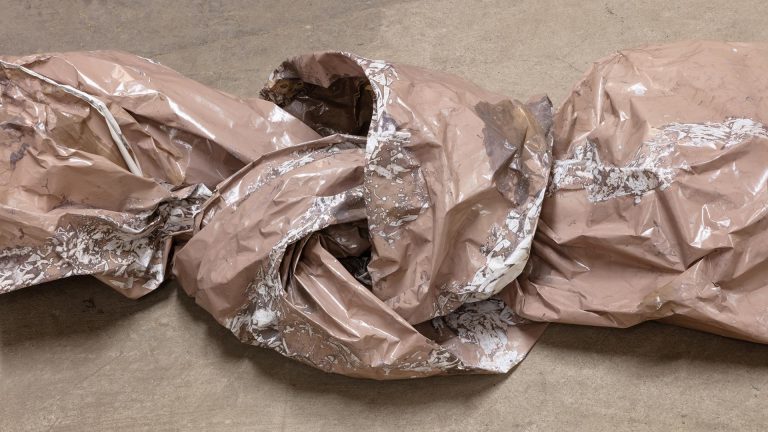
Bool’s new series of porcelain works also refer to machinery, albeit in abstracted grids, lines and patterns. Much like the threads of the tapestries, these compositions are in turn challenged by the materiality of porcelain and glaze. During her execution of a public commission for the Cologne Opera House, for which Bool created a large-scale installation made of tiles produced in Portugal, she began experimenting with the medium as a painting material in its own right. Using a machine roller, she produces a specific scale of slab, which she then responds to intuitively in a formal language that challenges the two dimensional aspect of painting. These works are fired and glazed in her studio, often up to six times, to reach the right configuration of glazes and precious lusters.
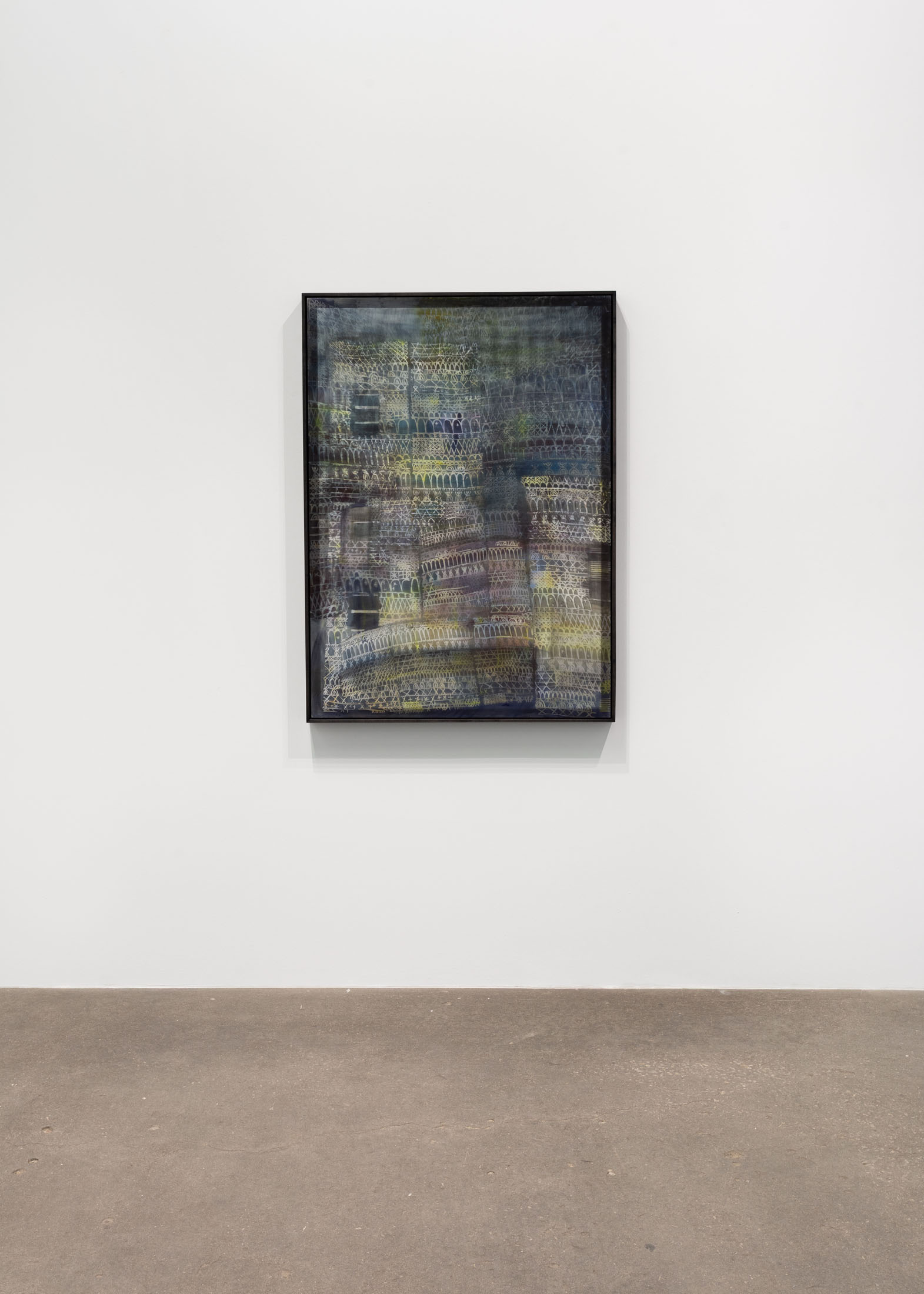
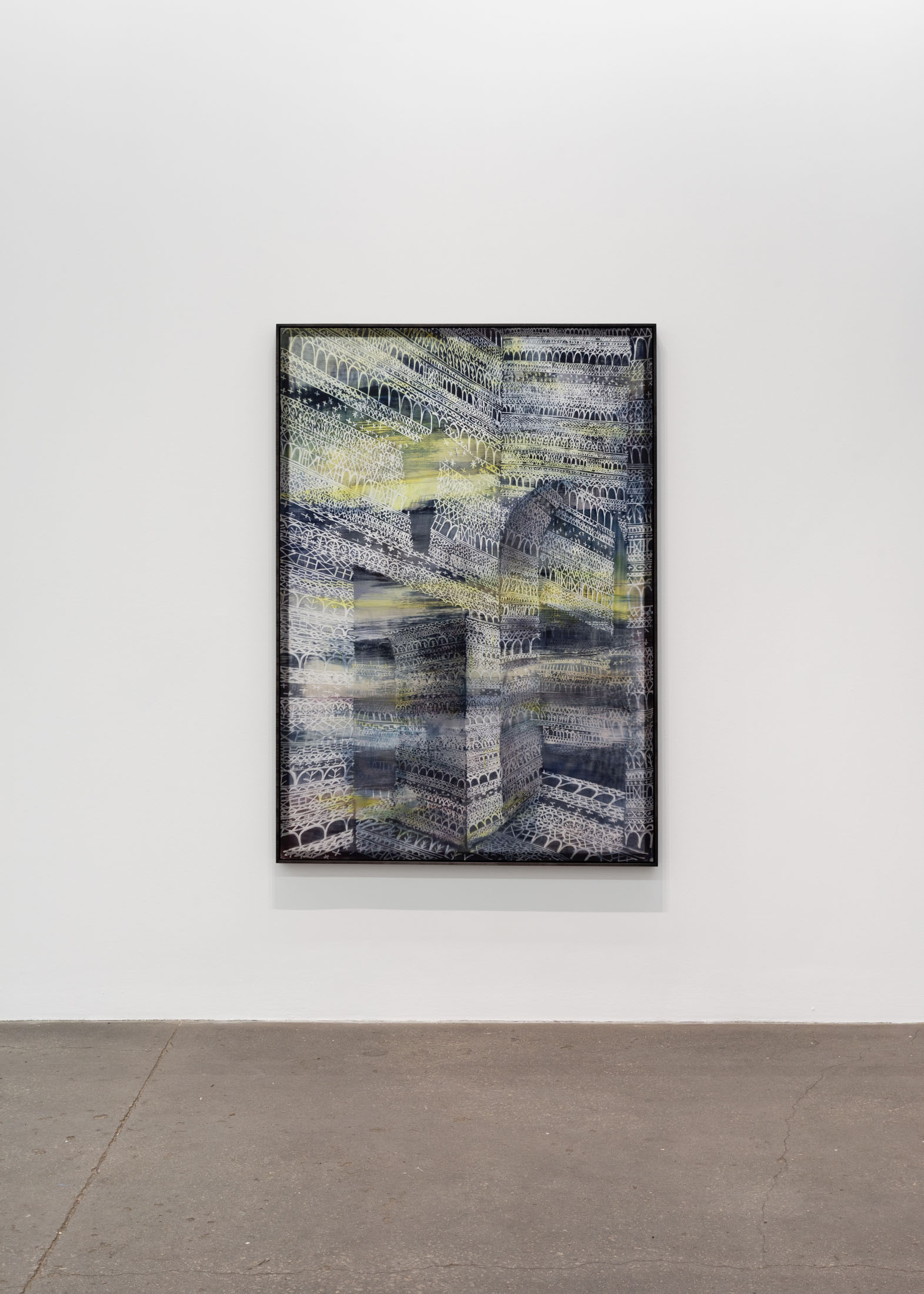
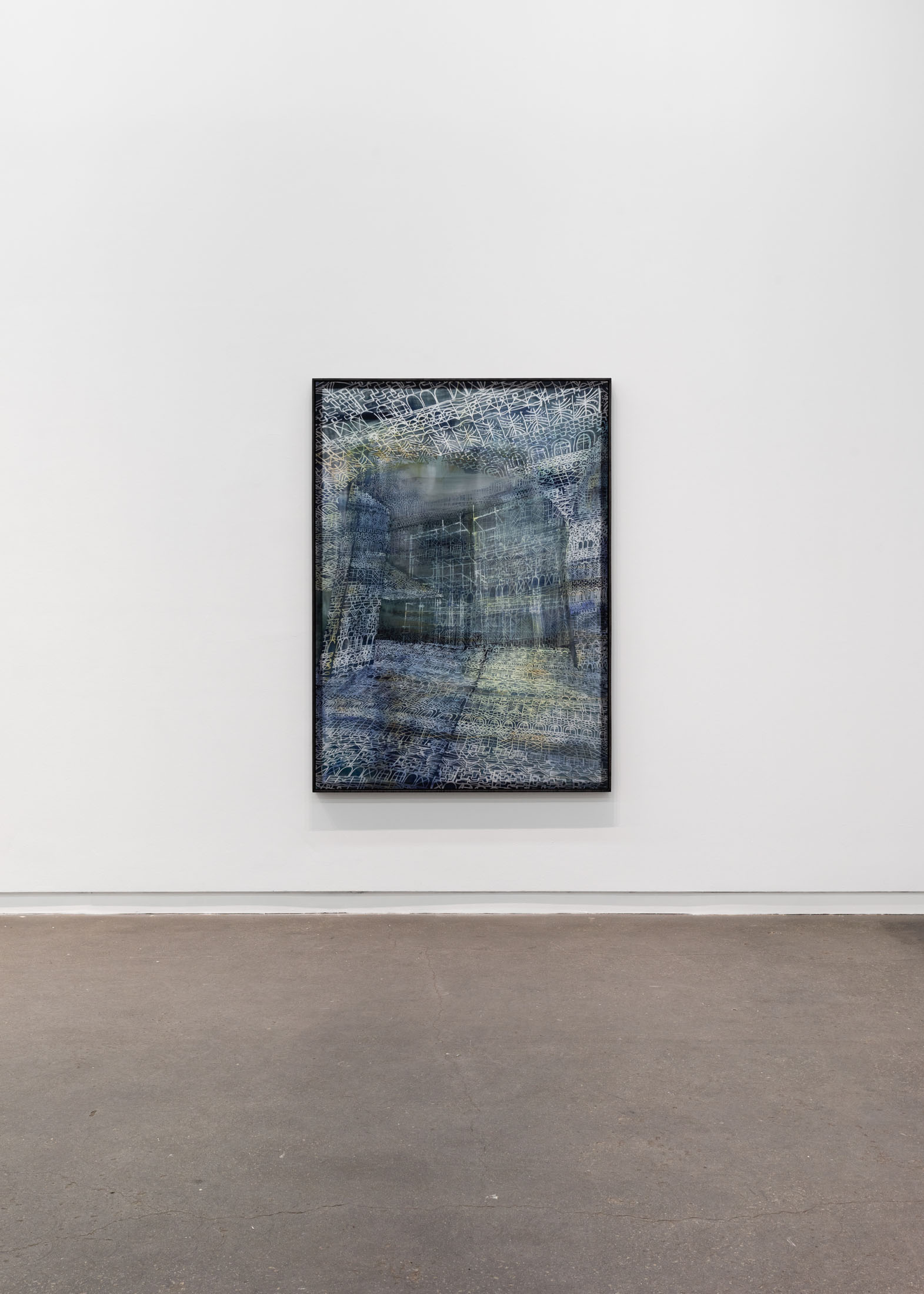
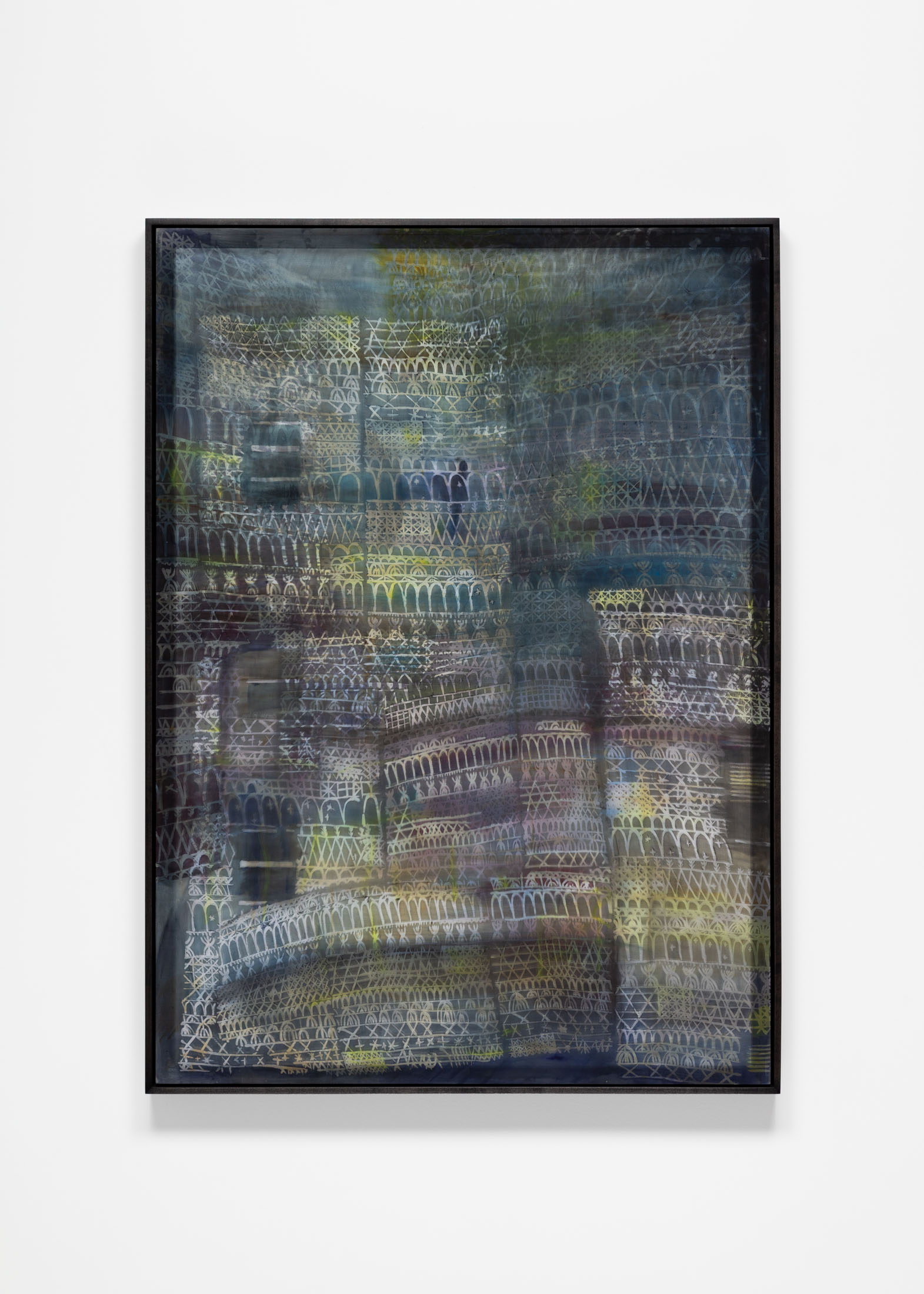
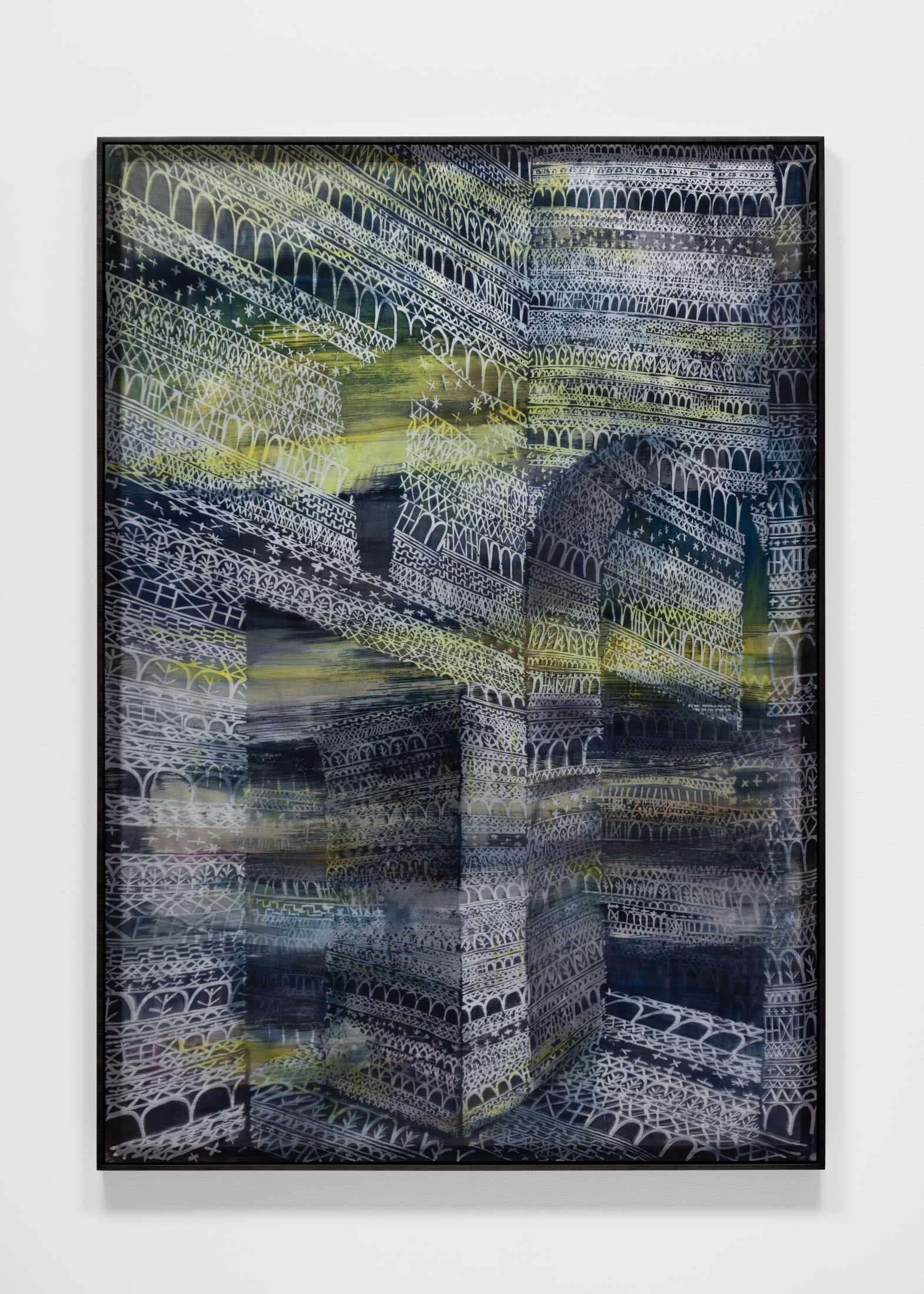
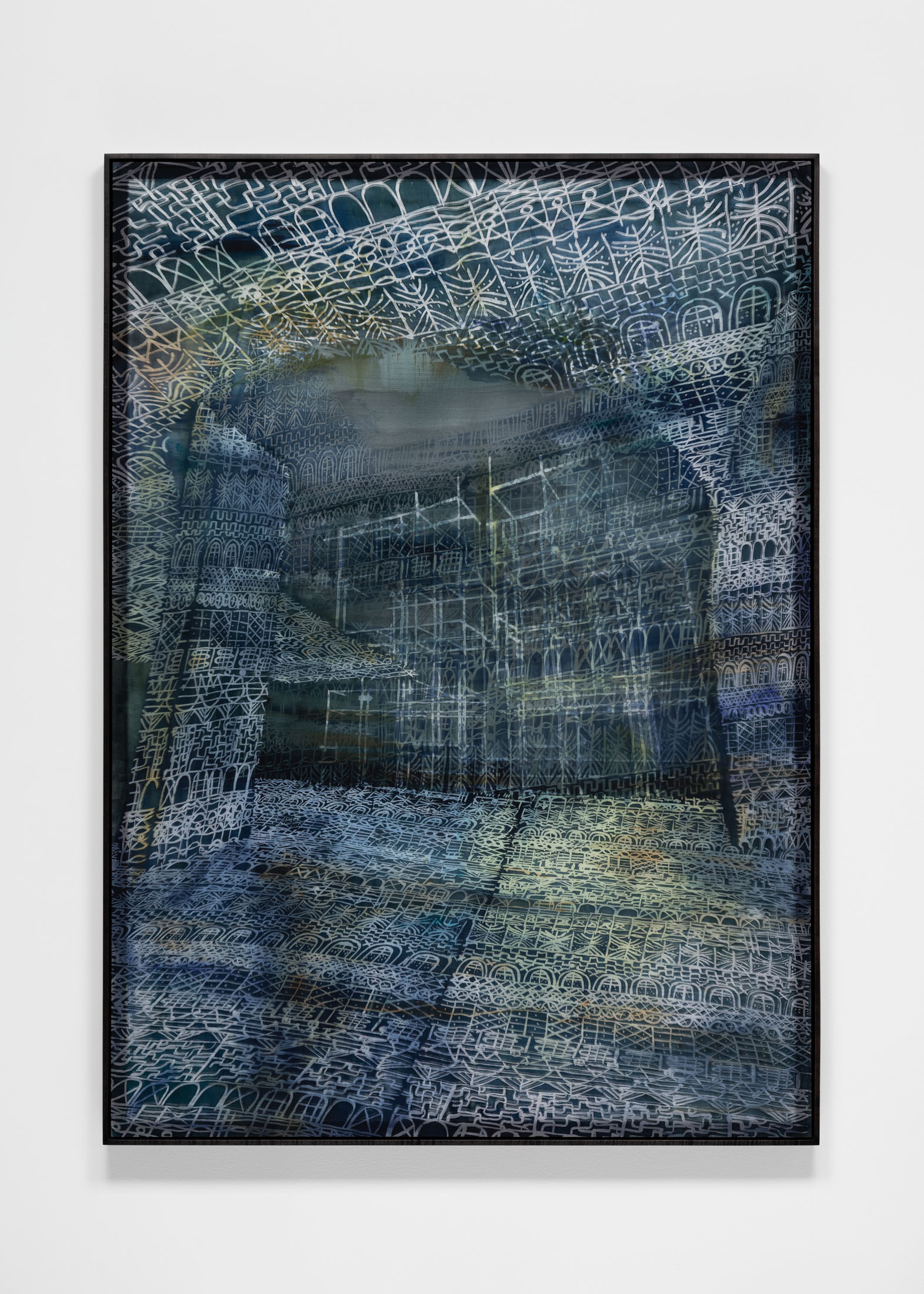
In her silk paintings, Bool utilizes a wax-resist process to create multi-layered paintings referencing different architectural bodies. The paintings in this exhibition begin with found images of decayed structures of power: the facades of Italian modernist and fascist buildings, which are then overlaid with scanned sketches and doodles Bool has made by hand. In this process, the recognizable architectural forms are refracted and abstracted. Painted on a thin layer of chiffon silk using wax, textile dyes, oil paint and inks, they are then stretched over a mirror. The patterns are doubled in reflection, and the room in which the work hangs, as well as the viewer’s own body, enters into the space of the painting. The rational construction of the original architectural structures is broken down in this process of rendering from image, to abstracted pattern, to delicate silk, to reflection.
Shannon Bool lives in Berlin, Germany. She graduated from the Staedelschule, Frankfurt in 2004. Recent solo exhibitions include: Kadel Willborn, Düsseldorf (2025); Daniel Faria Gallery, Toronto (2022); Museum of Contemporary Photography, Chicago (2022); Kaiser Wilhelm Museum, Krefeld (2022); Confederation Centre Art Gallery, Charlottetown (2022); Gut Kerkow, AngerMünde (2021); Agnes Etherington Art Centre, Kingston, ON (2020); Kunstverein Braunschweig (2019); The Canadian Cultural Center, Paris (2019); and Musée d’art de Joliette (2018). Bool has recently completed a public commission for the Cologne Opera in Germany. Bool’s work has been included in exhibitions at institutions such as: Kunstmuseum Stuttgart; Kunstsammlung Chemnitz; Kunstmuseum Bonn; Lenbachhaus, Munich, Sprengel Museum, Hannover; National Museum of Germany, Bonn; Museum für Moderne Kunst, Frankfurt; White Cube Gallery, London; the National Gallery of Canada, Ottawa; the Metropolitan Museum of Art, New York; and the Vancouver Art Gallery. In 2013 Bool was artist in residence at the Villa Romana in Florence, Italy. Her work can be found in numerous collections, including: the Museum für Moderne Kunst, Frankfurt; The Metropolitan Museum of Art, New York; the Lenbachhaus, Munich; The Perez Art Museum, Miami; The National Gallery of Canada, Ottawa; The Art Gallery of Ontario, Toronto; and Musée d’art contemporain de Montréal, Montreal. Bool is a professor of Painting at the Academy of Fine Arts in Mainz, Germany.