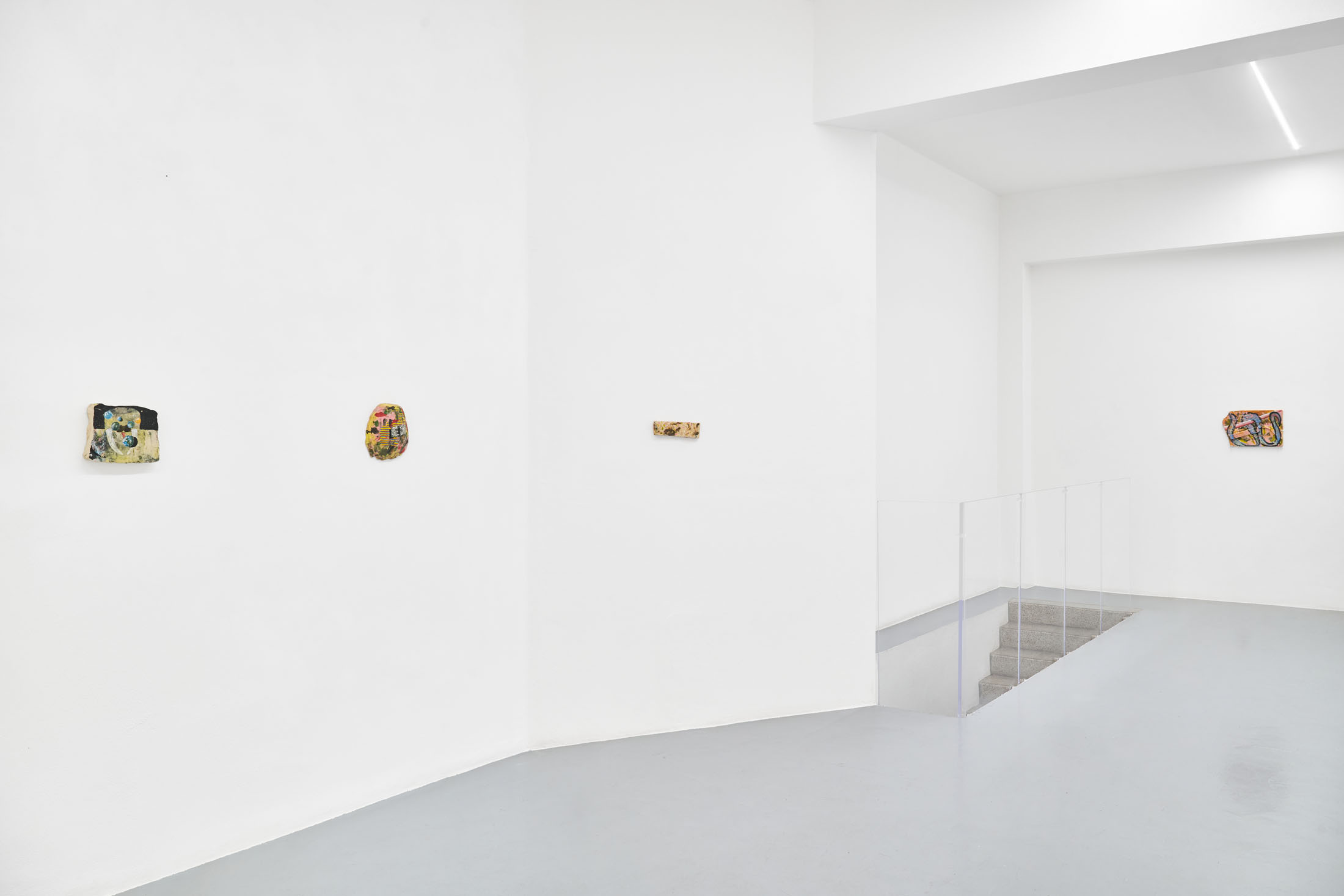
The artist Sam Linguist was raised in the small town of Waxahachie, Texas, where he spent his teenage ye-ars working at Webb Gallery, a space dedicated to the cosmic explosions and Surrealist fantasies of visionary artists, often self-taught or excluded from the mainstre-am—the gallery itself far-removed from prevailing Ame-rican art centers. There, he encountered figures like San-ford Darling, Royal Robertson, and Burgess Dulaney whose works in clay, paint, marker, and glitter, revealed new hallucinatory worlds. This idiosyncratic personal mythology plays itself out in an art practice that affirms a devotion to handmade objects, enigmatic private dre-amscapes, and exuberant traces of the everyday, which Linguist conveys on wobbly slip cast surfaces made by hand or formed from found items spanning domino tiles and turtle shells to Styrofoam and hardcover books. Poi-sed between sculpture and painting, Linguist transfigu-res the ordinary material of clay into poetic and impro-visational entities, orchestrated by the alchemical force of the kiln yet firmly grounded in their familiar, physical materiality.
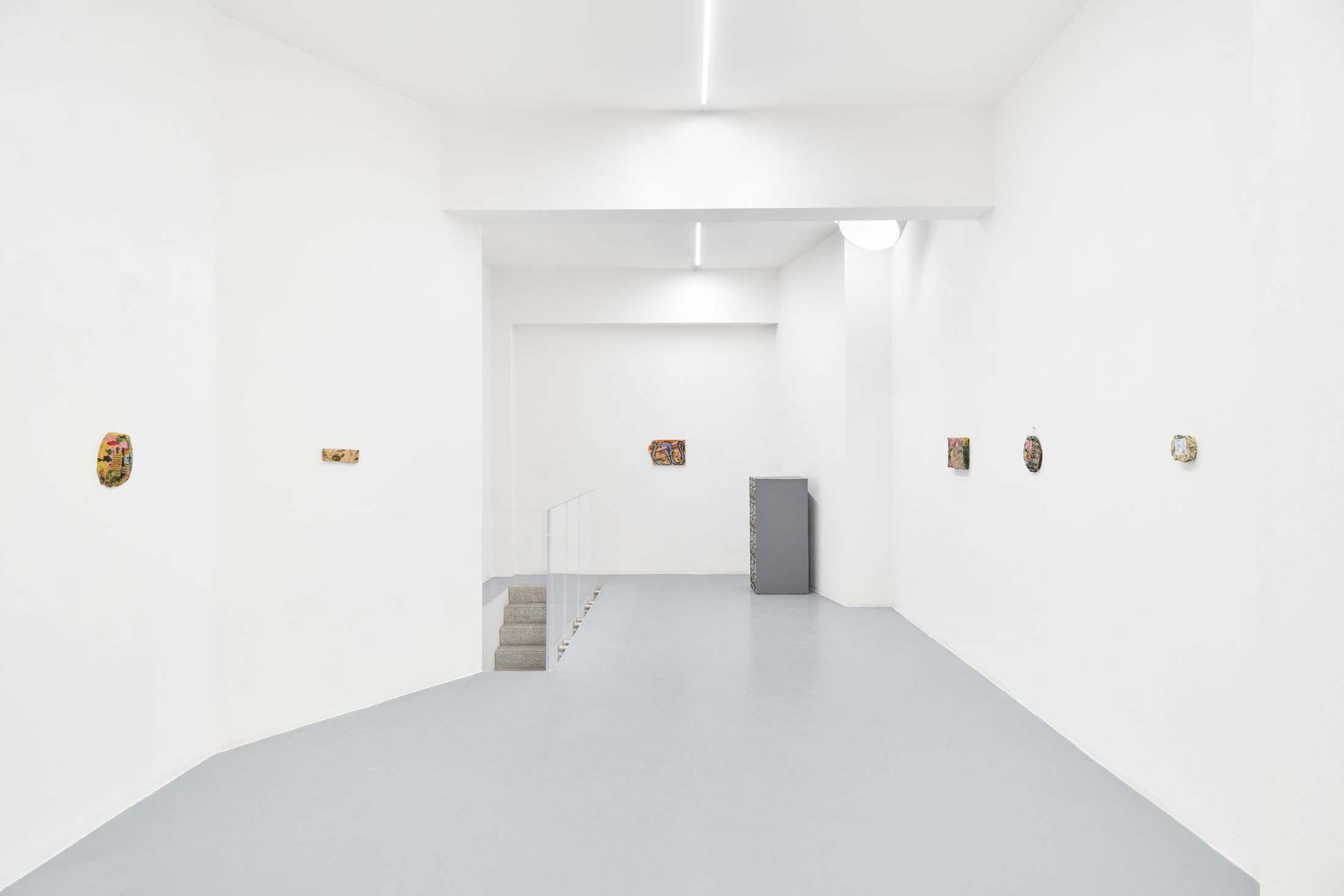
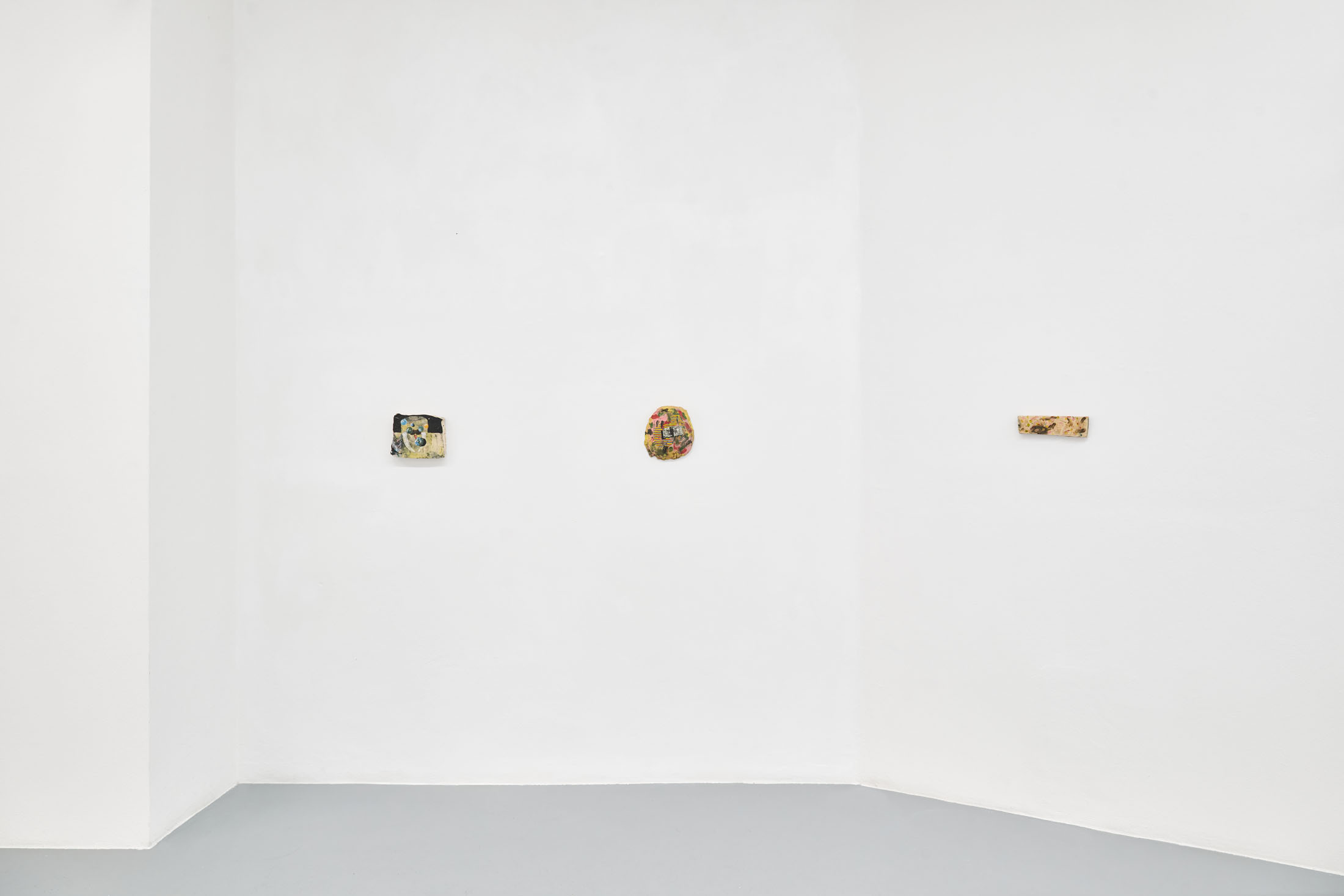
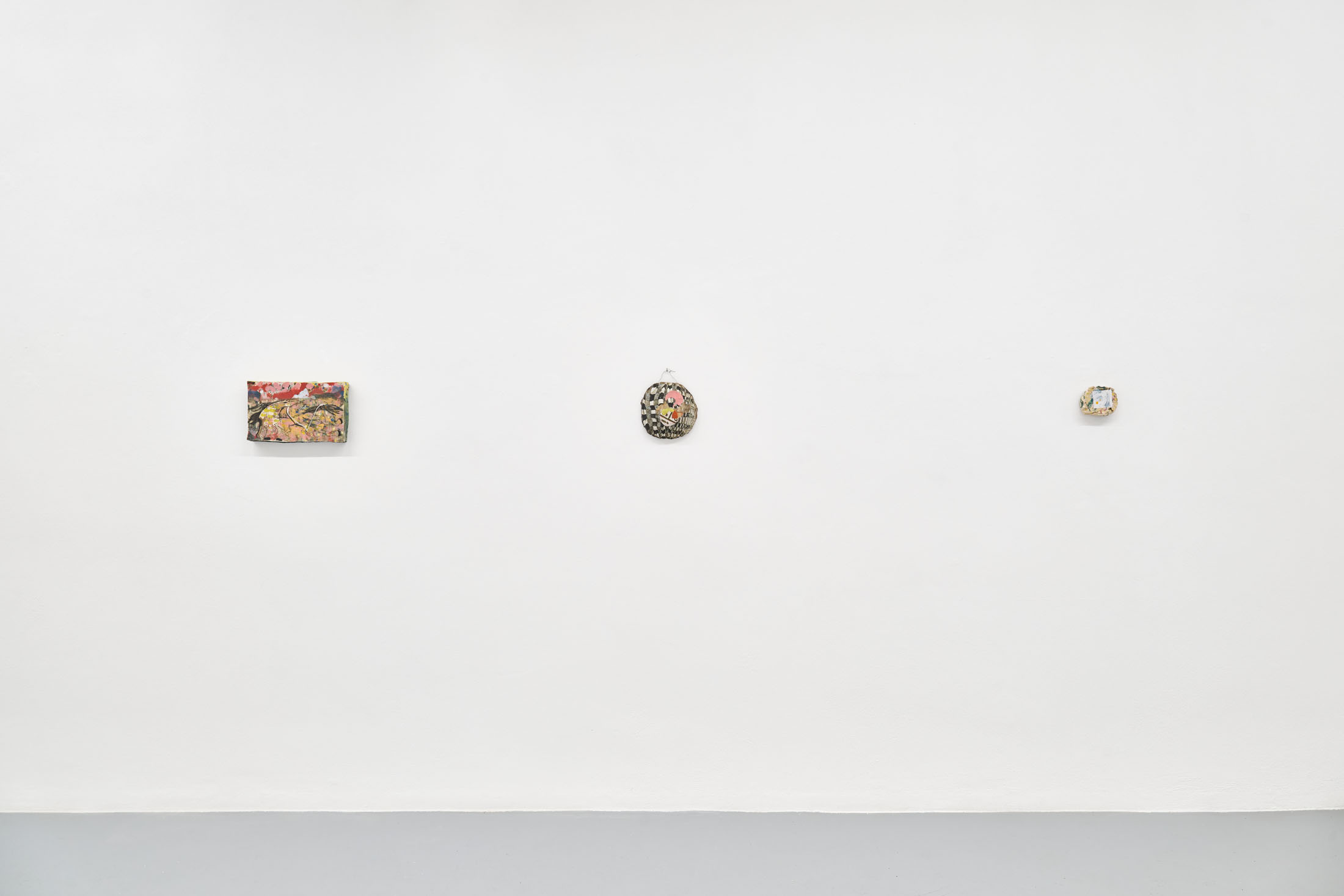
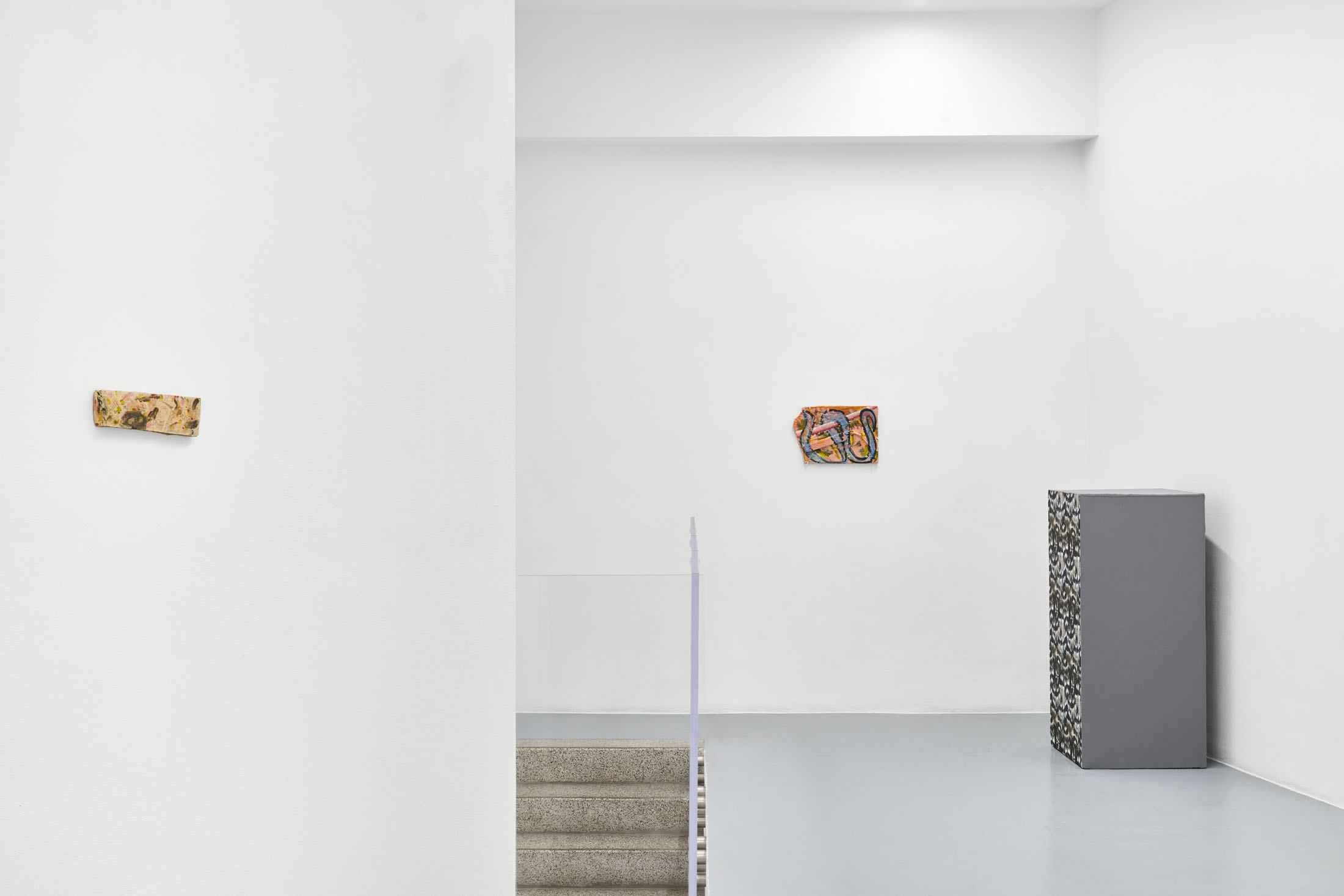
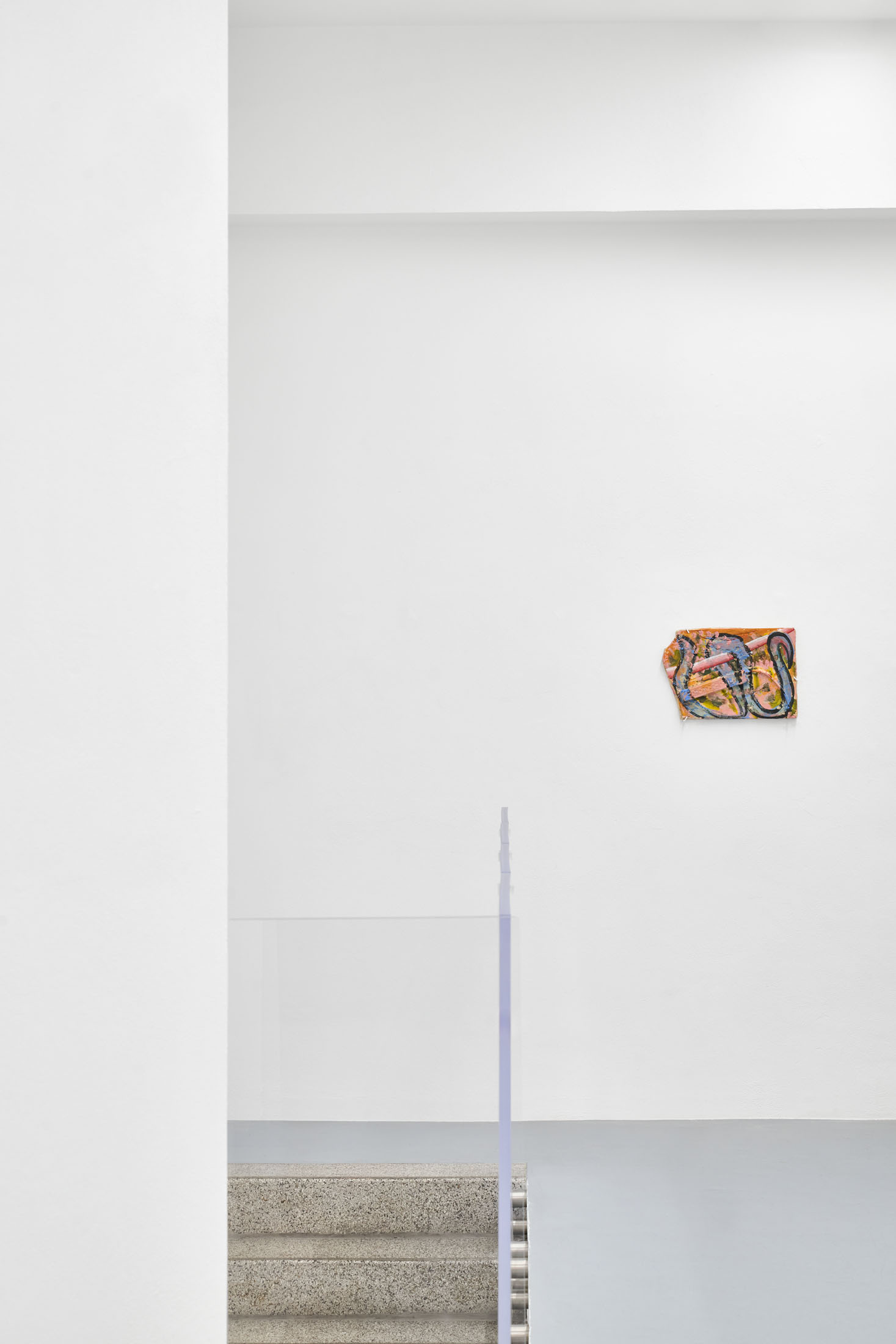
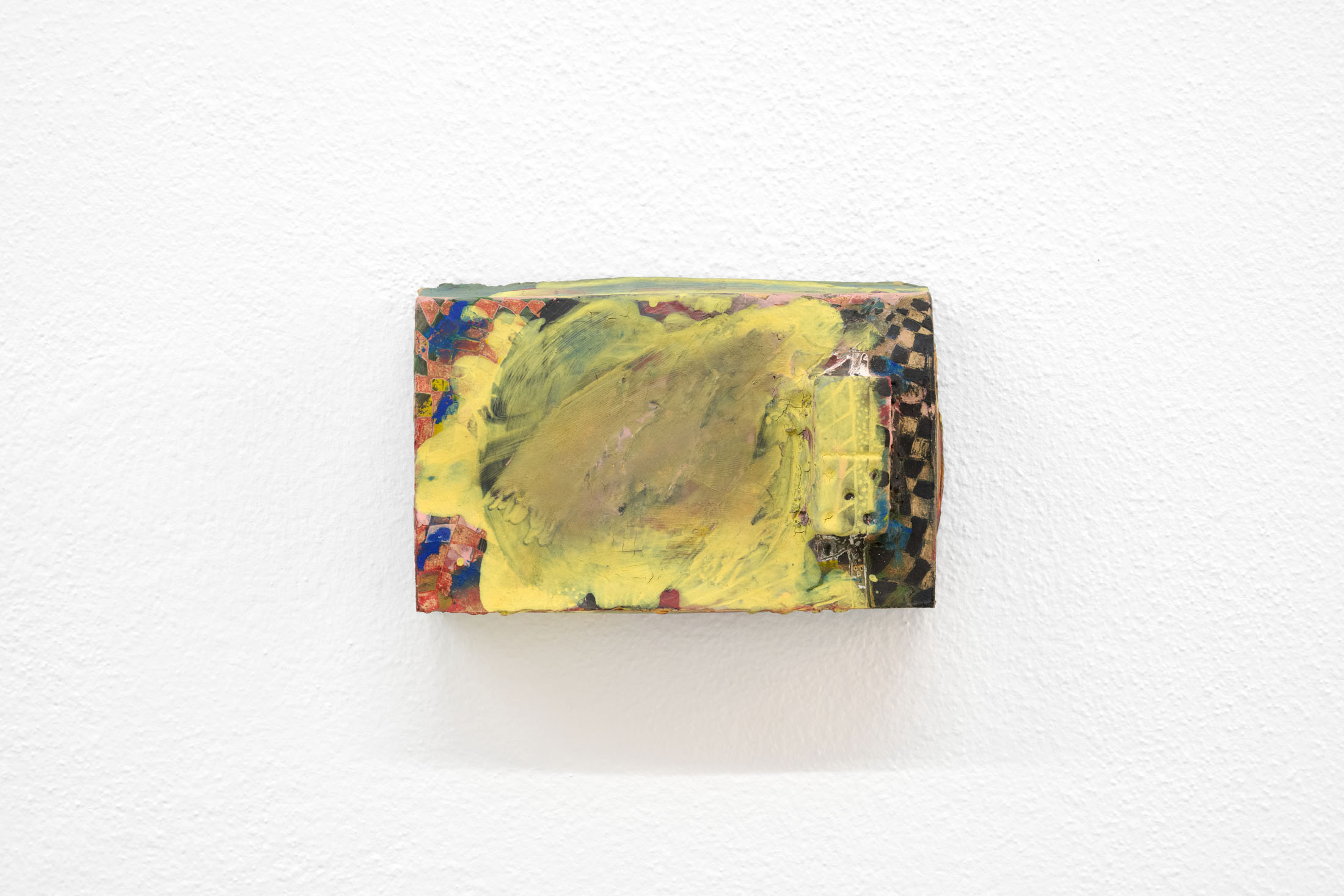
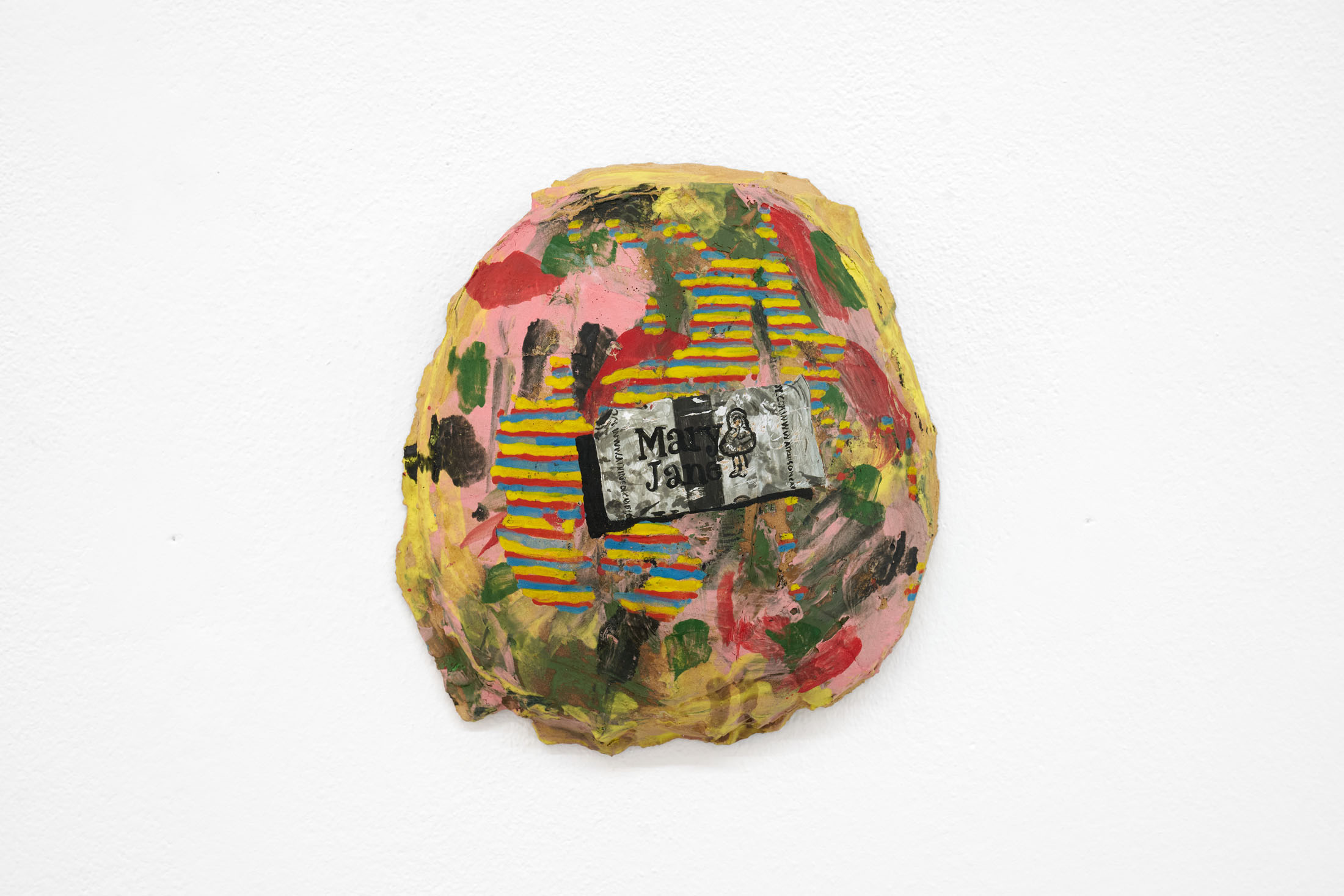
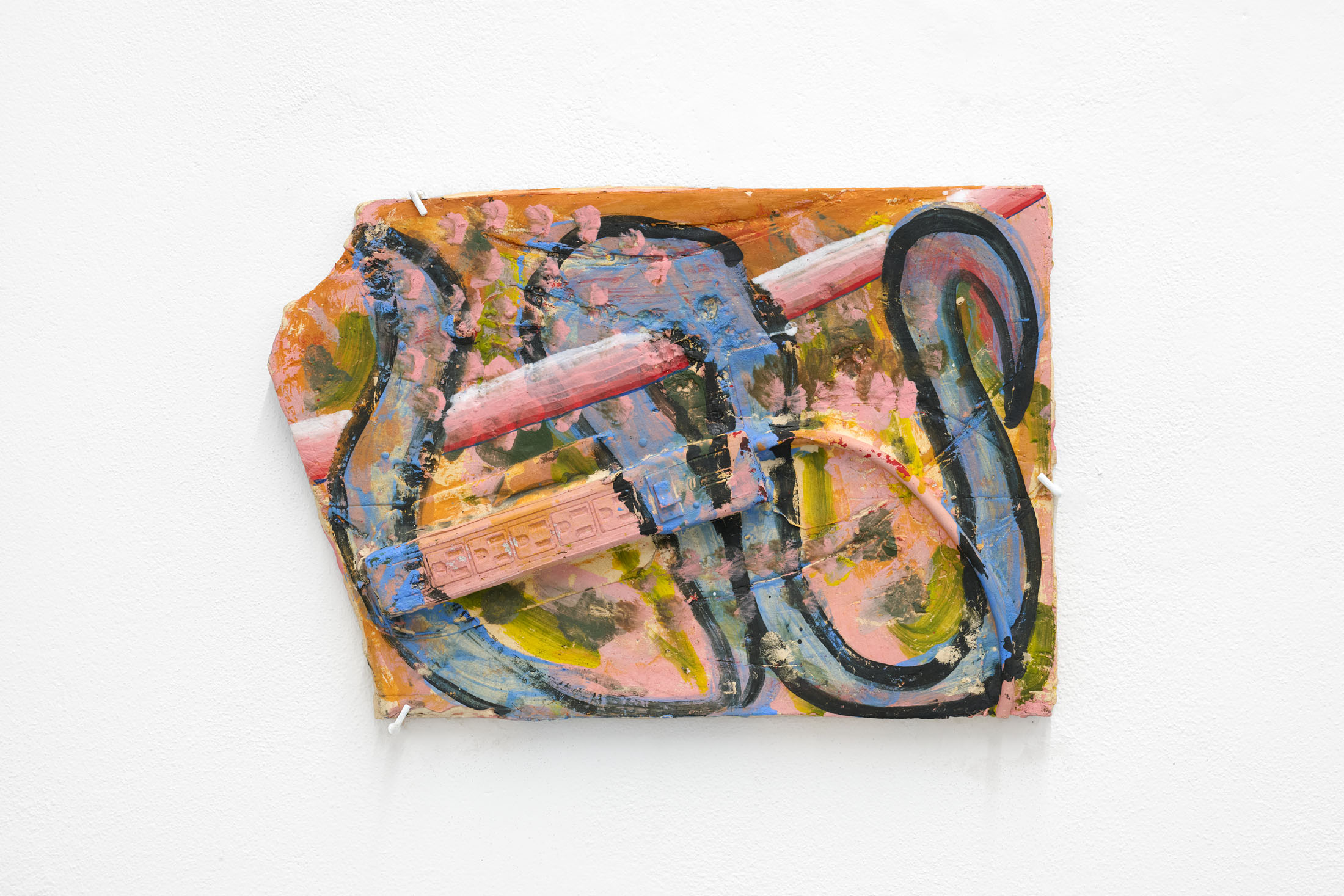
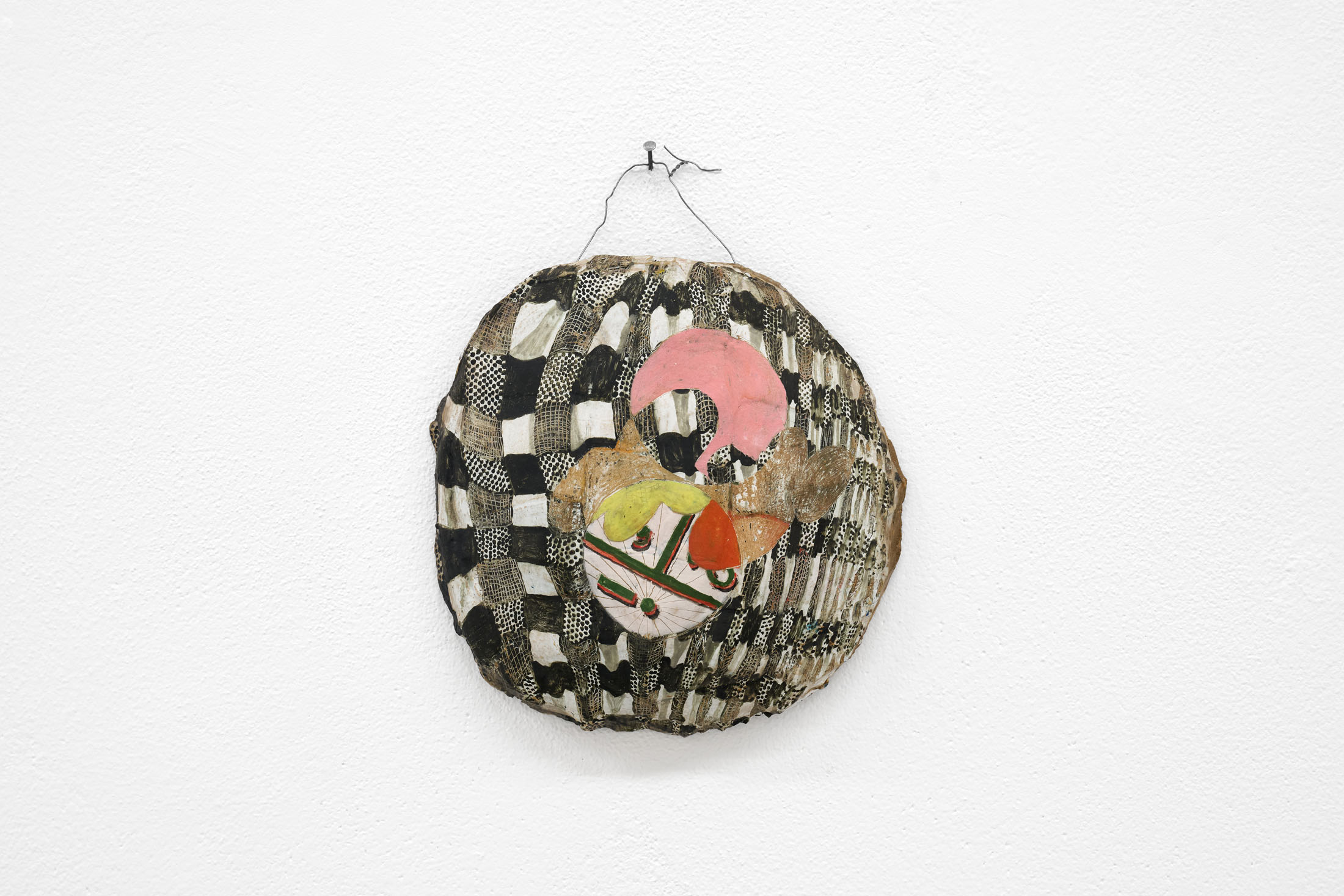
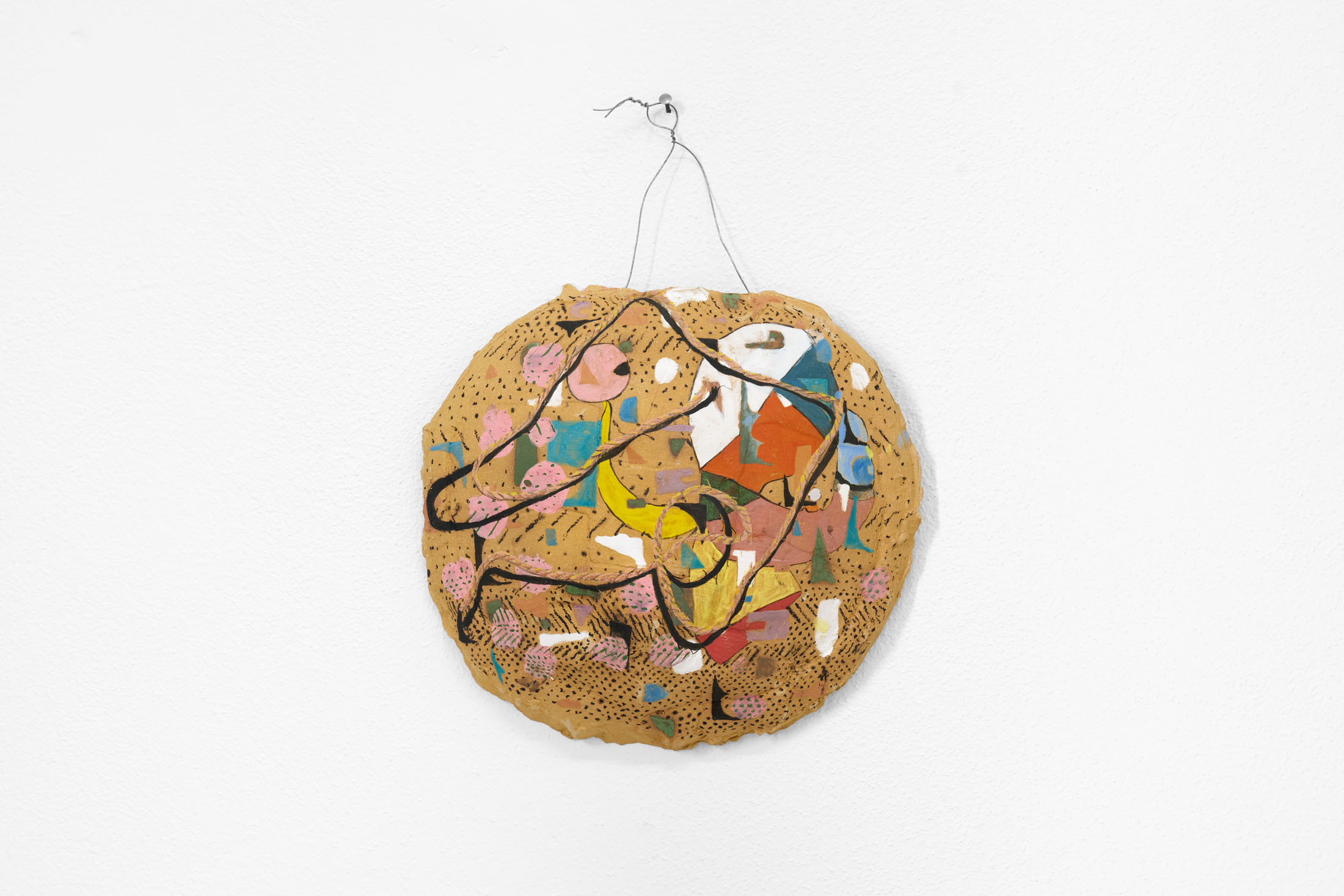
Many of the underglazed stoneware works included in WRR at Triangolo carry such direct impressions of every-day objects on their surface: in runner run running (2026), a blue serpentine form collides with smears of pink and green glaze atop a cast power strip, which is staged in the composition like a prop in a scene, the cord slung in a corner. The painted ceramic turtle shells hippie love and vomit and jazz cigarette (both 2026), speckled, stri-ped, and daubed with casual brushstrokes, evoke both the techniques of visionary artists like Sister Gertrude Morgan or Chuckie Williams who painted on any surfa-ce they could find, or alternatively, the fondness among children to paint on rocks. Together, these works repre-sent a union of intricate layers of paint and a type of “painting in reverse” as the artist puts it, in which under-glaze is applied on a slip cast mold, and then transferred onto the surface of the clay when fired.
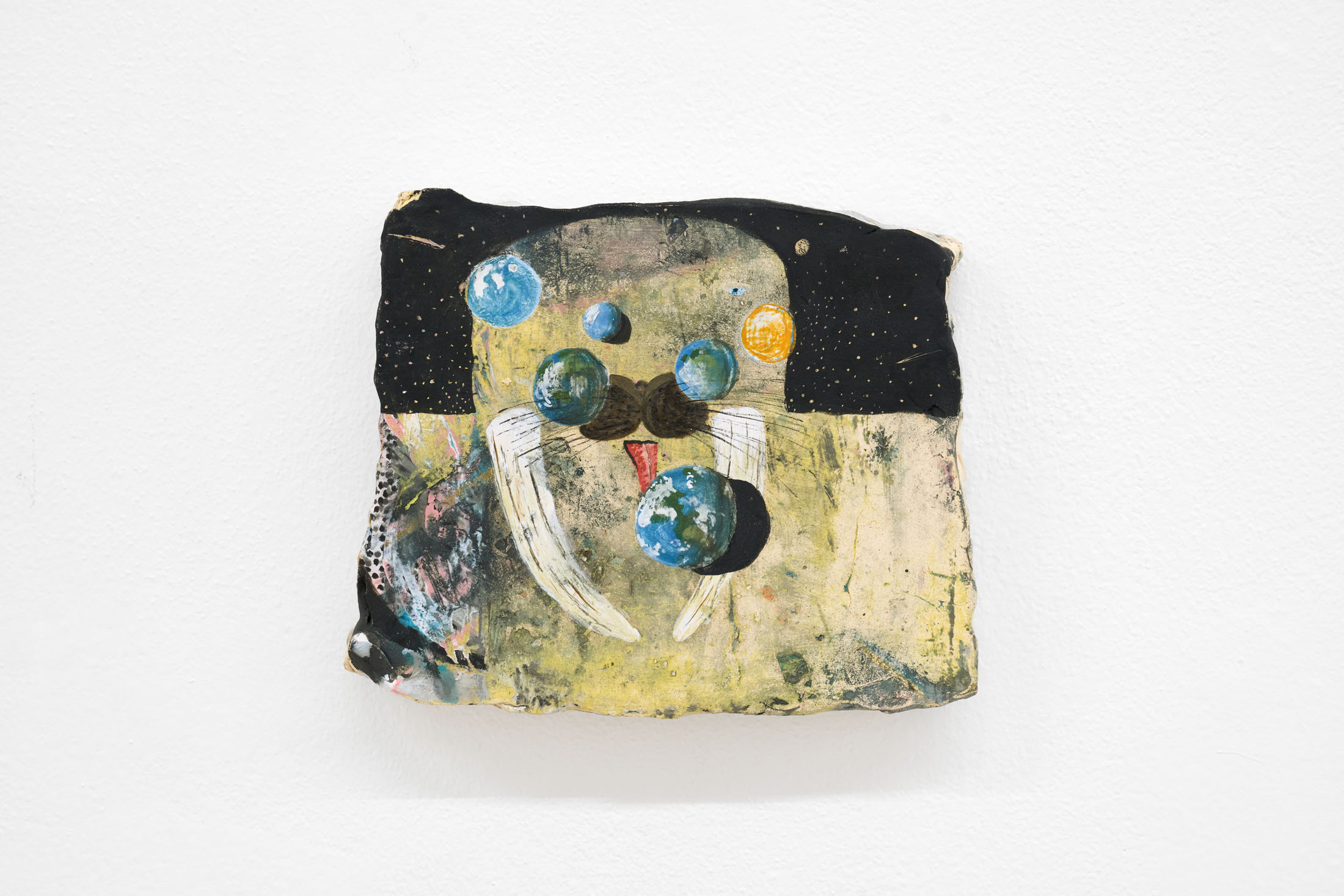
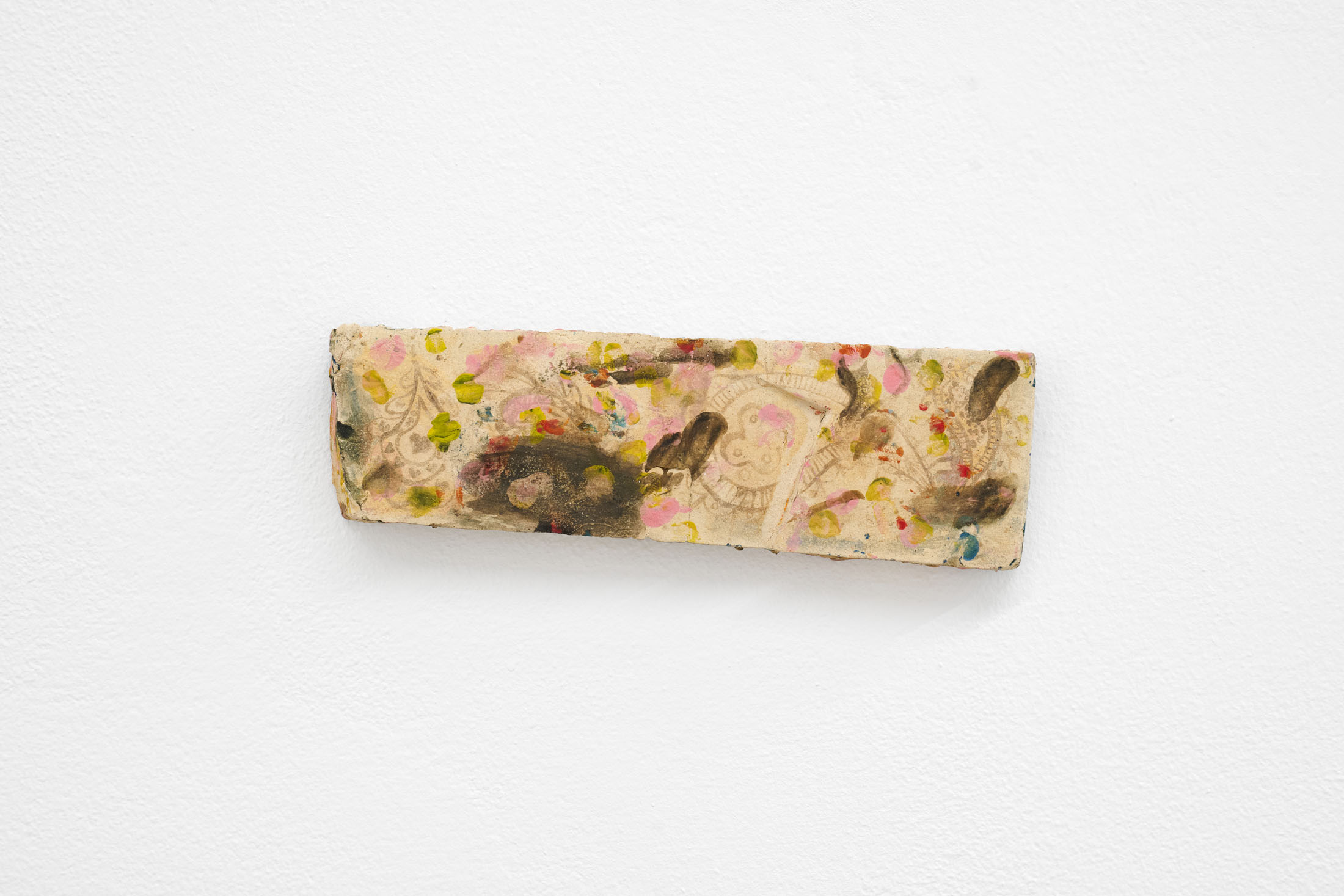
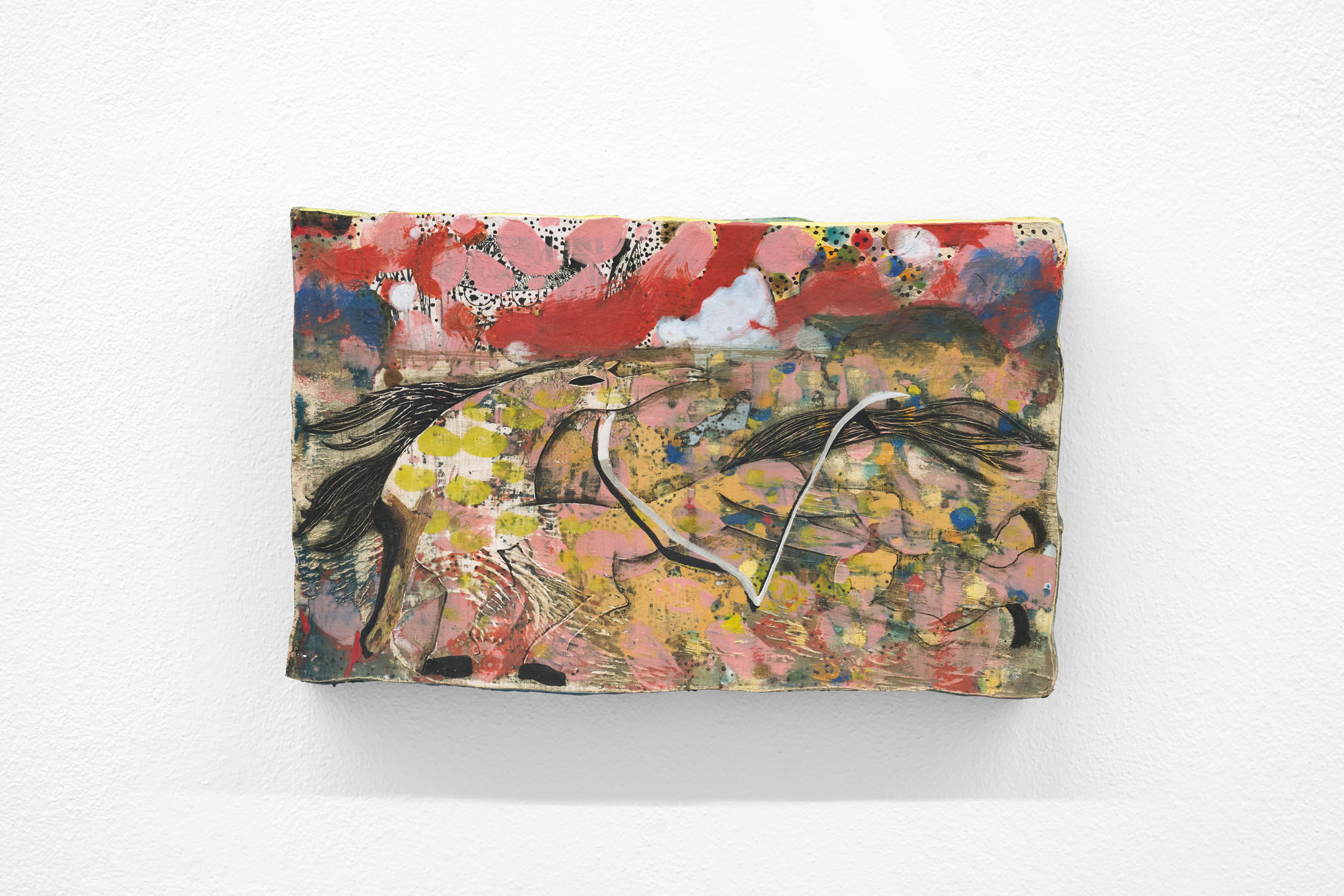
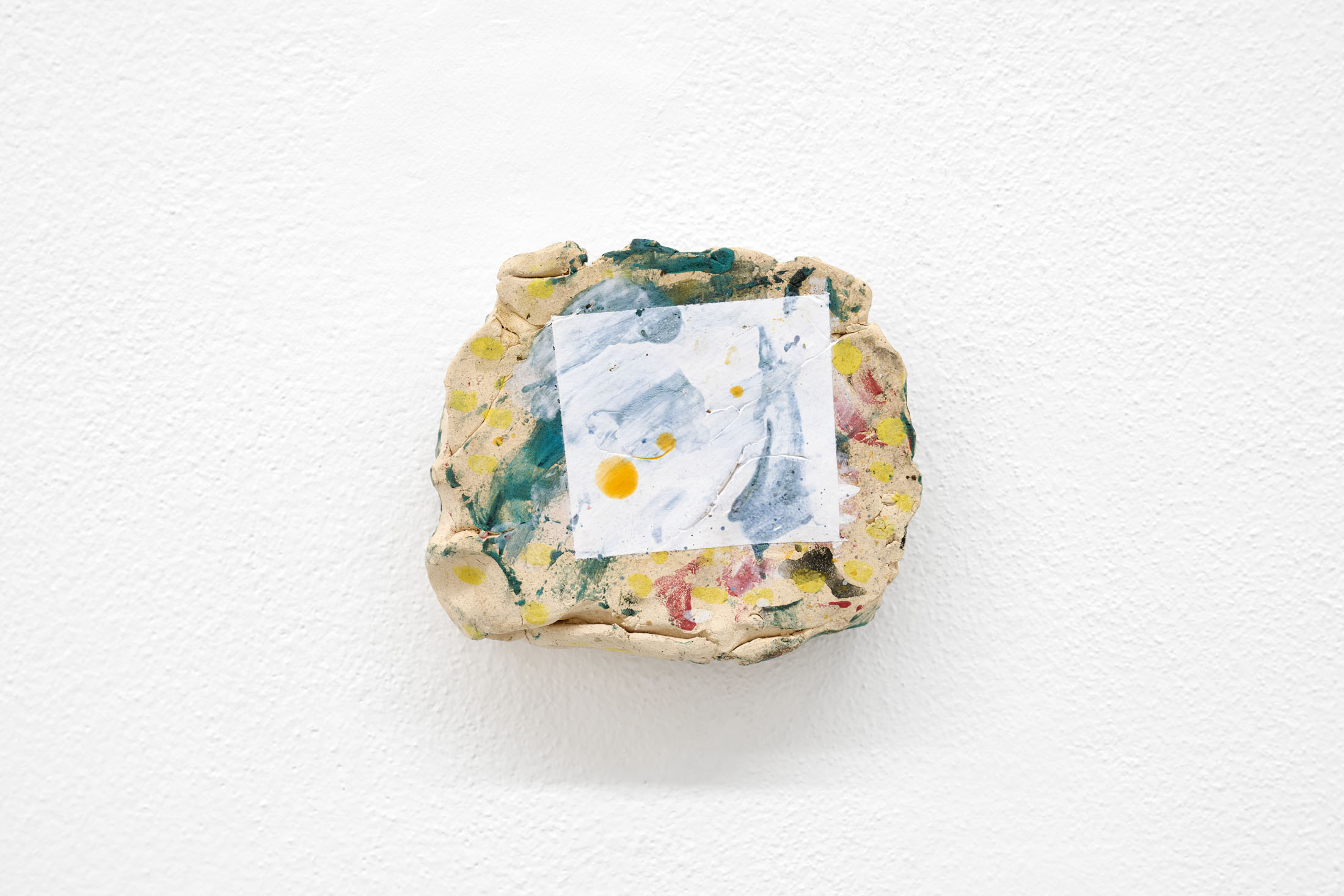
An effect of these processes is almost one of premature aging. Works such as Beemo (2026), an uneven slab with a horse leaping across its surface, or the multi-layered Kel-sie drinks grapefiruit vodka (2026), a ceramic block sugge-stive of a fragment of tile or a stepping stone, appear at times decisively vulnerable—even warped or weather-be-aten. But if Linguist’s works evoke the corroded and cor-rupted contents of an archaeological excavation, they also embody a kind of artmaking that exalts a tension between the conversational and provisional and a more everlasting materiality. Linguist himself sees his metho-dology as a practice for the age of climate catastrophe: “I use ceramic because it’s almost eternal. It’s archeological; it feels timeless in the way that it won’t decay. . . pigment is literally baked into the surface to never erode, yet [it] is ultimately fragile”.
Like the ceramics dug from ancient archaeological si-tes, Linguist’s ceramics, too, are vessels for a pastiche of compositions alternately representational and abstract, painted with spare, casual smears and rendered in fine detail. As Linguist says, “It is this archival process where I’m trying to find things that I want to save. . . It’s almost like a curatorial practice.” As with pieces like the moun-tain like angels (after Shuvinai Ashoona) (2026), whose title references the Inuk artist Shuvinai Ashoona, known for her drawings of contemporary Inuit life in which humans and animals coalesce and merge, many of Linquist’s wor-ks serve as a type of repository of art historical and vi-sual fascinations. Drawing from a diverse array of refe-rences for WRR, from Kandinsky, Hopi paintings, and Laura Owens wallpapers to Memphis Group furniture or the design of a hotel pillow, Linguist exhibits a sensi-tivity and generosity to his references, as he does to his materials, forming through his work his own kind of no-tebook of matter, thought, and form. As he puts it: “I ask myself how to make something so that I can keep track of and remember what has happened.”
–Madeline Weisburg