We are pleased to announce that Bukia Vakhania is continuing its programme at a new location in Tbilisi. The exhibition space at 27 Zandukeli Street is inaugurated with Horizons, Walls, Horizons…, a solo exhibition by Salome Chigilashvili.
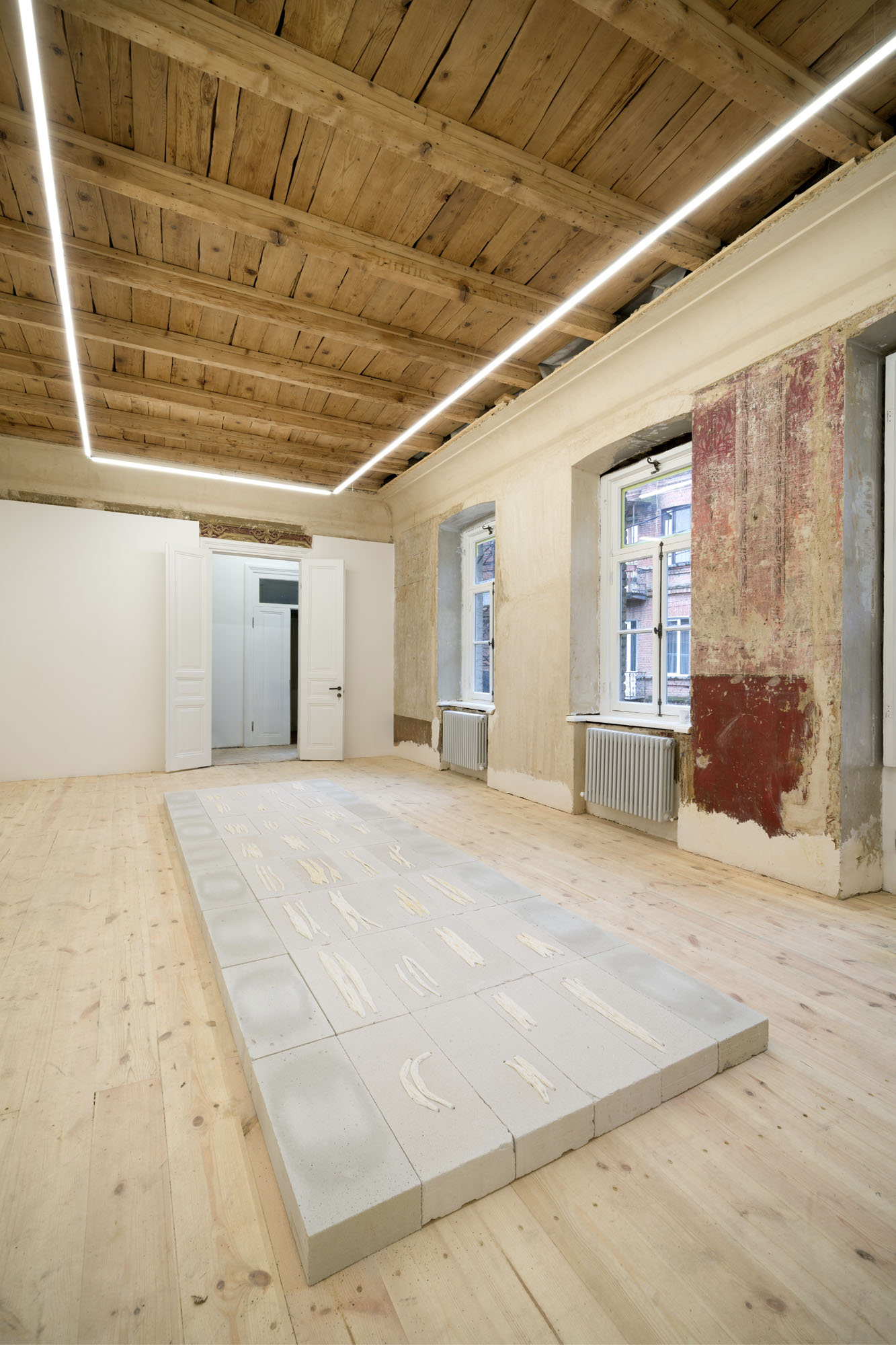
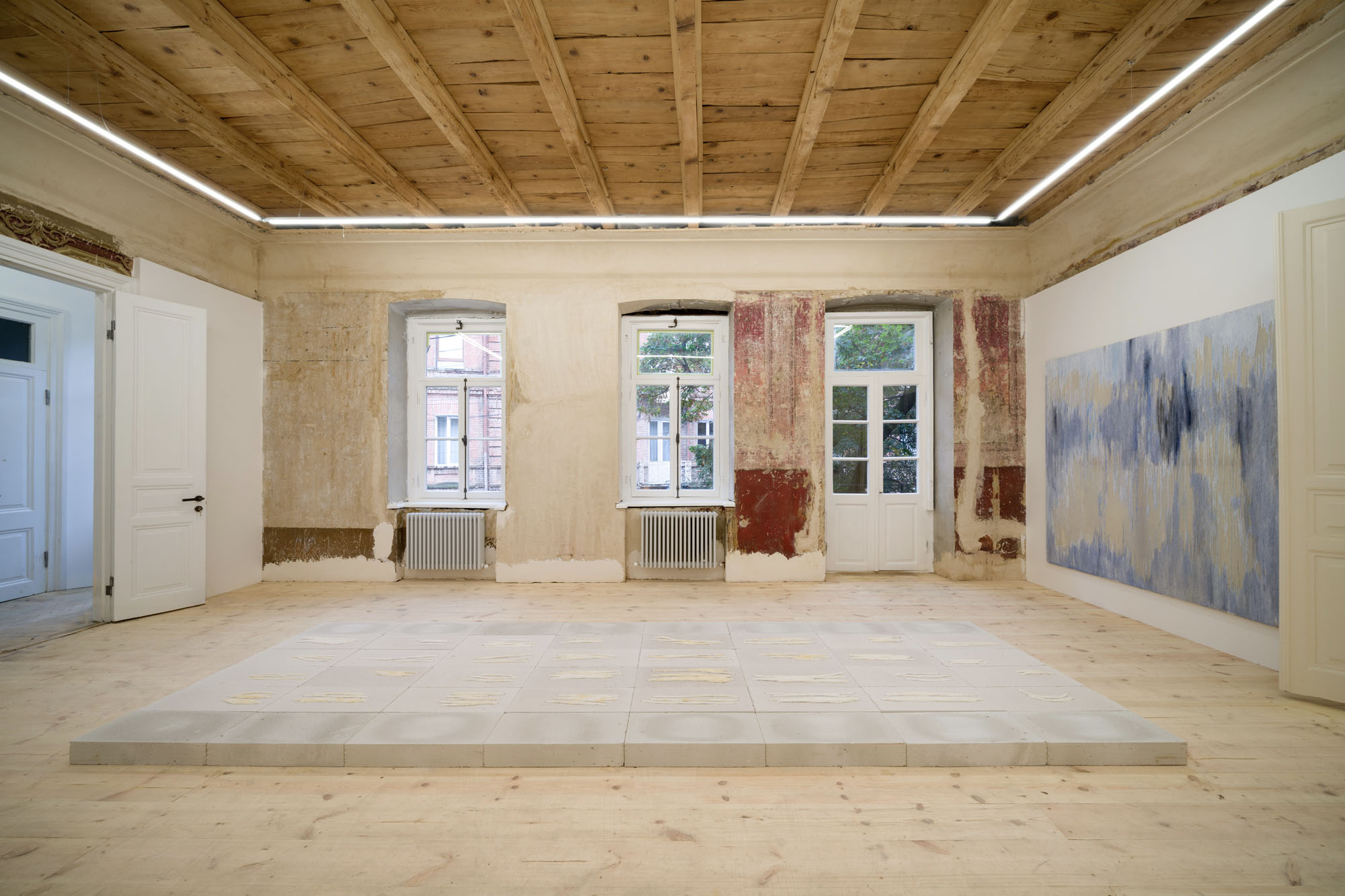
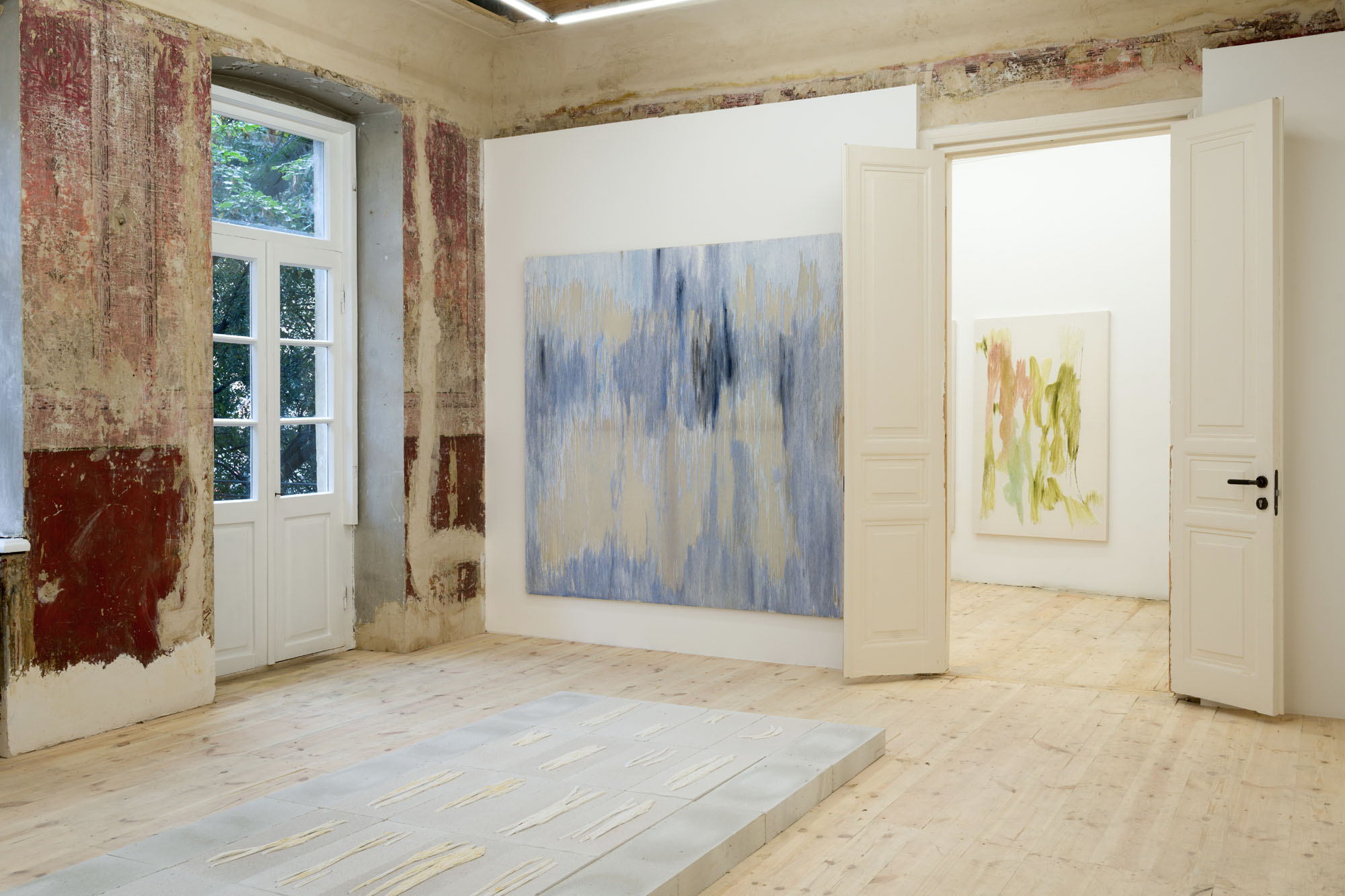
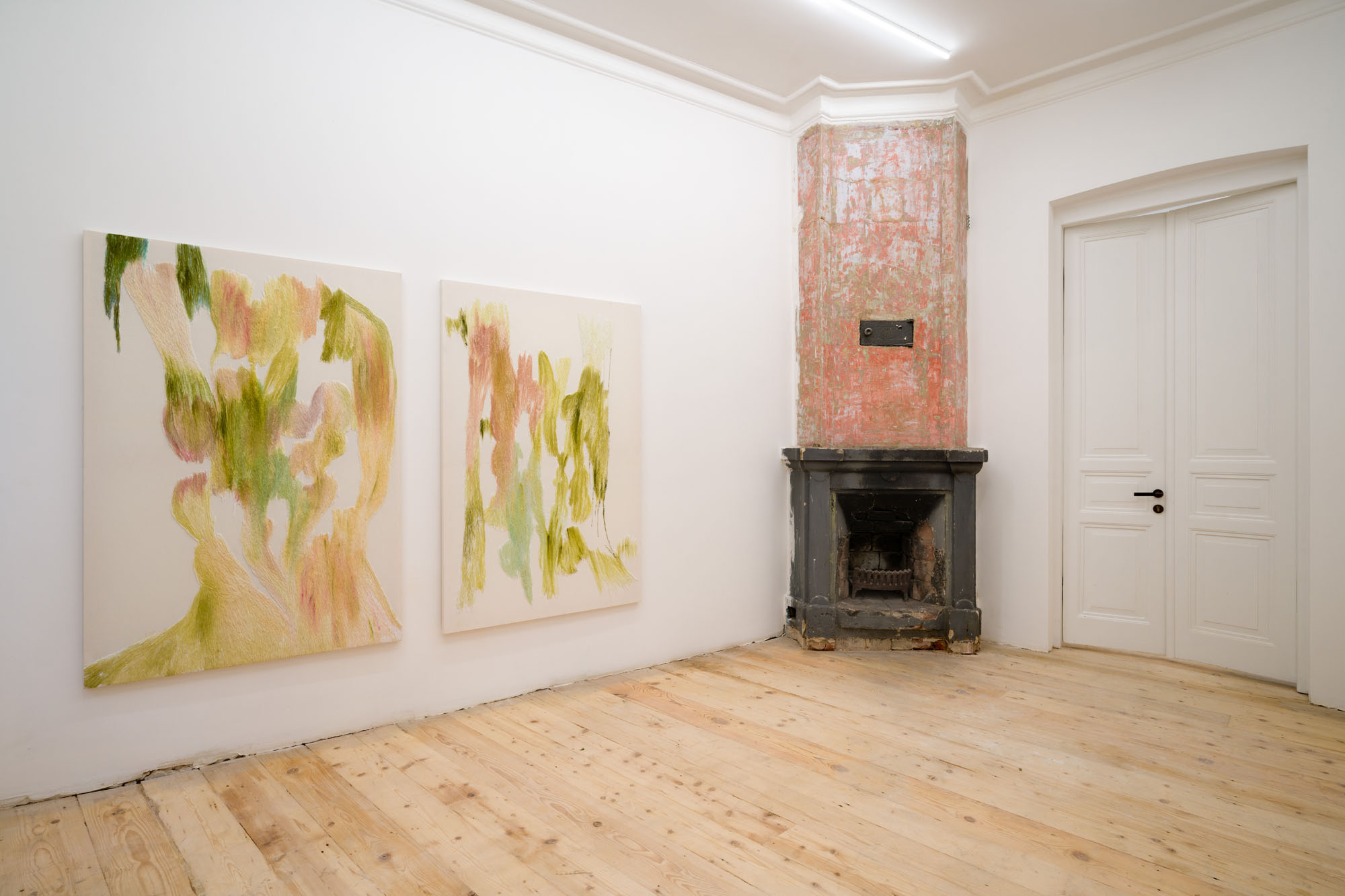
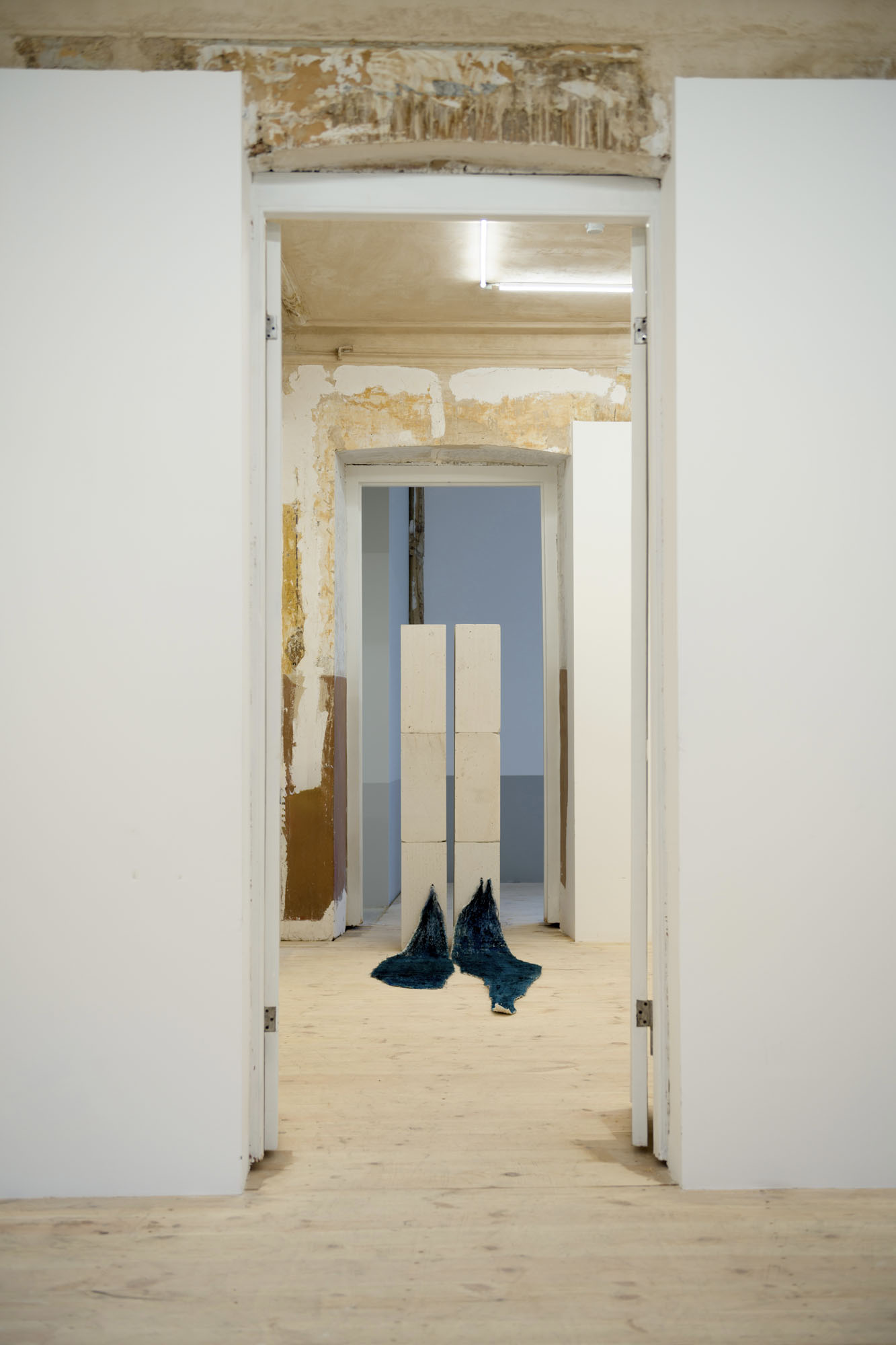
The concept of the exhibition responds to the transitional state of the space itself. Still undergoing renovation, the interior is gradually changing as existing elements give way to new materials and structures. Against this process of transformation, fragments of plaster and wall painting remain visible across its surfaces, forming a distinct micro-system and revealing a quiet resistance to erasure.
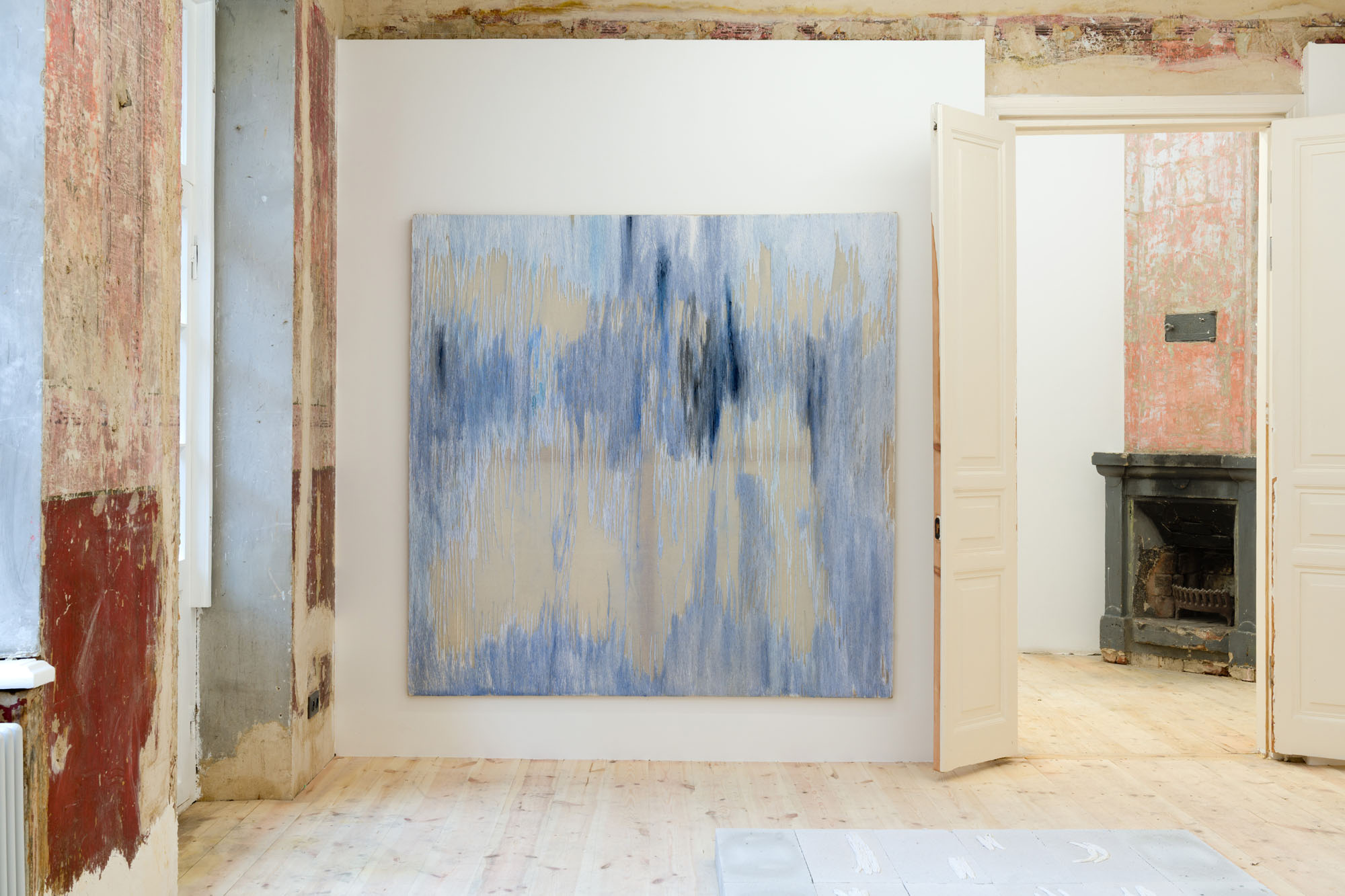
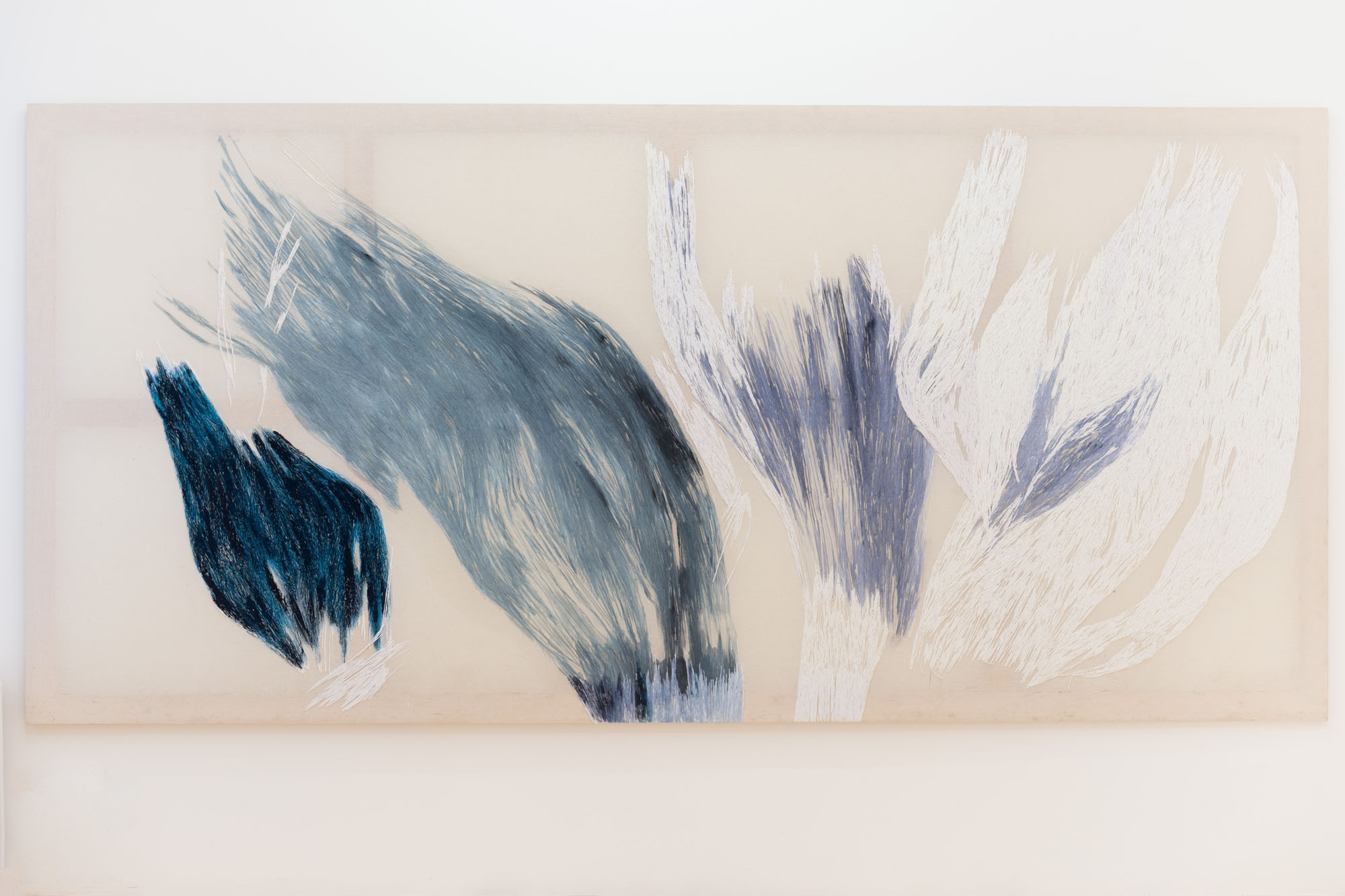
This condition extends into the exhibition itself. Sculptural and architectural objects are brought together with embroidered textiles to form a spatial installation in which the traditional technique of embroidery enters into dialogue with architectural form and acquires a new spatial dimension.
This relationship also unfolds within a broader historical and cultural context. For centuries, embroidery formed an integral part of everyday material culture, while also carrying sacred significance alongside its decorative function. Closely connected to women’s daily lives, it occupied an important place within the domestic sphere and played a significant role in shaping identity and forms of self-expression.
In Chigilashvili’s work, this long-standing tradition enters into contact with the material language of construction. Textile is brought together with concrete and architectural structures, but the relationship between them is not merely formal. The two practices also carry different social histories: embroidery has traditionally been associated with the feminine and domestic sphere, while construction has largely belonged to a masculine and patriarchal domain. Chigilashvili brings these material languages into the same space, where the intimate, handmade quality of embroidery meets the weight and solidity of monolithic structures, producing forms that are at once tactile, architectural and hybrid.
This relationship also opens onto a wider question of spatial perception, particularly the experience of finitude and infinity. Throughout the exhibition, horizon and architectural form continually interrupt and extend one another, creating a tension between openness and enclosure. This movement becomes
one of the exhibition’s central spatial principles. Areas defined by architectural structures gradually open outward, only for another barrier to appear beyond them, followed in turn by another horizon.
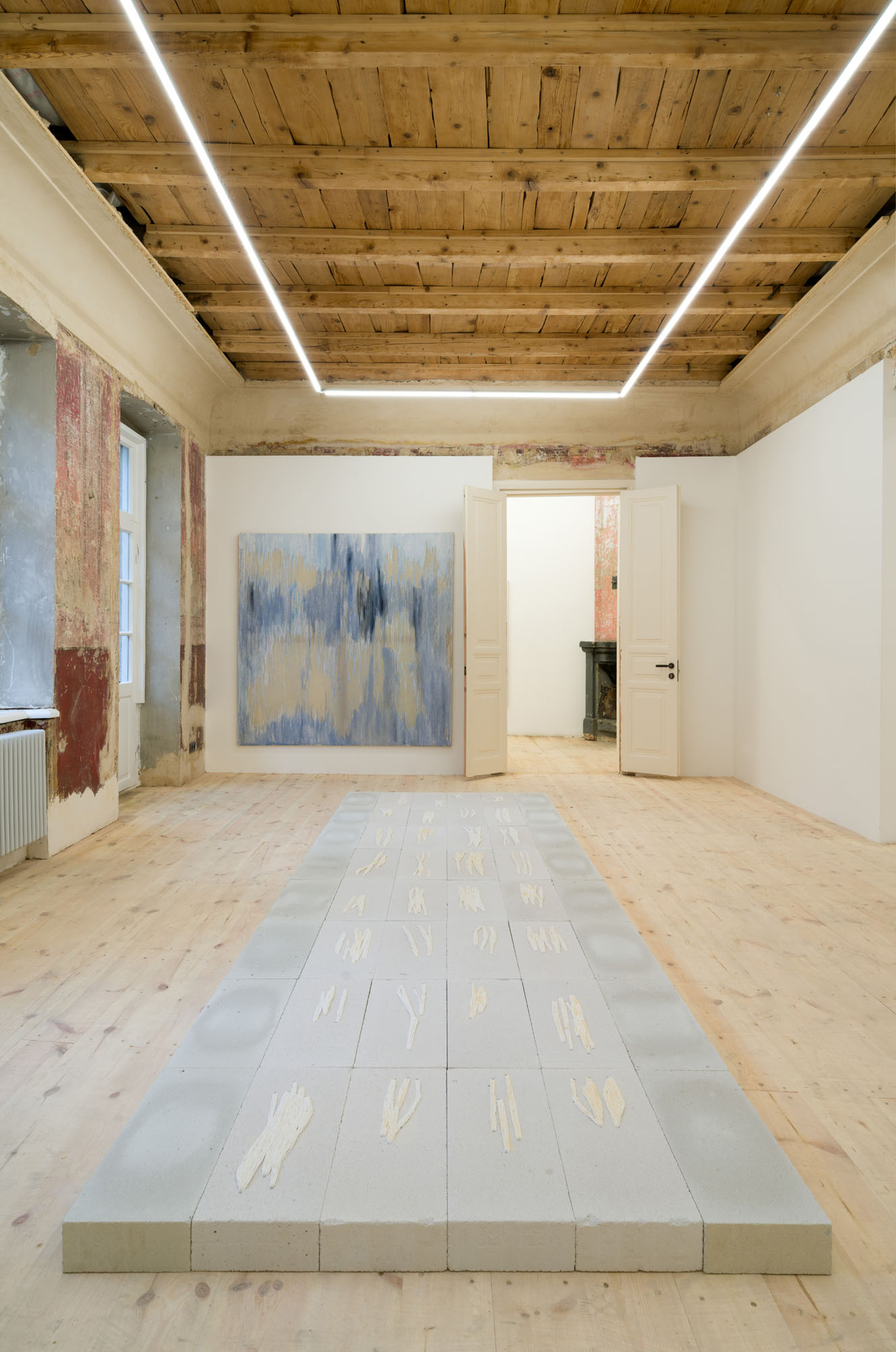
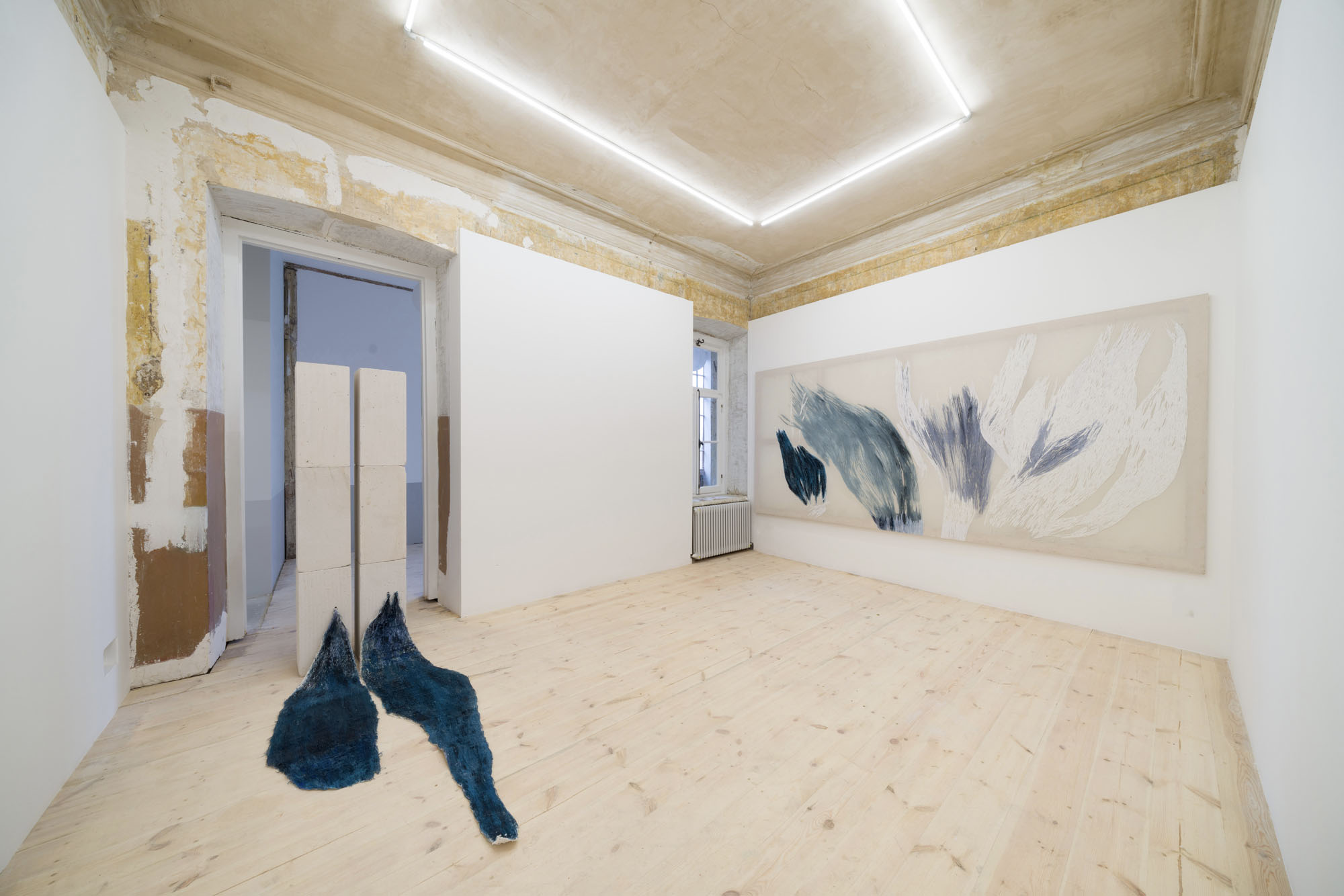
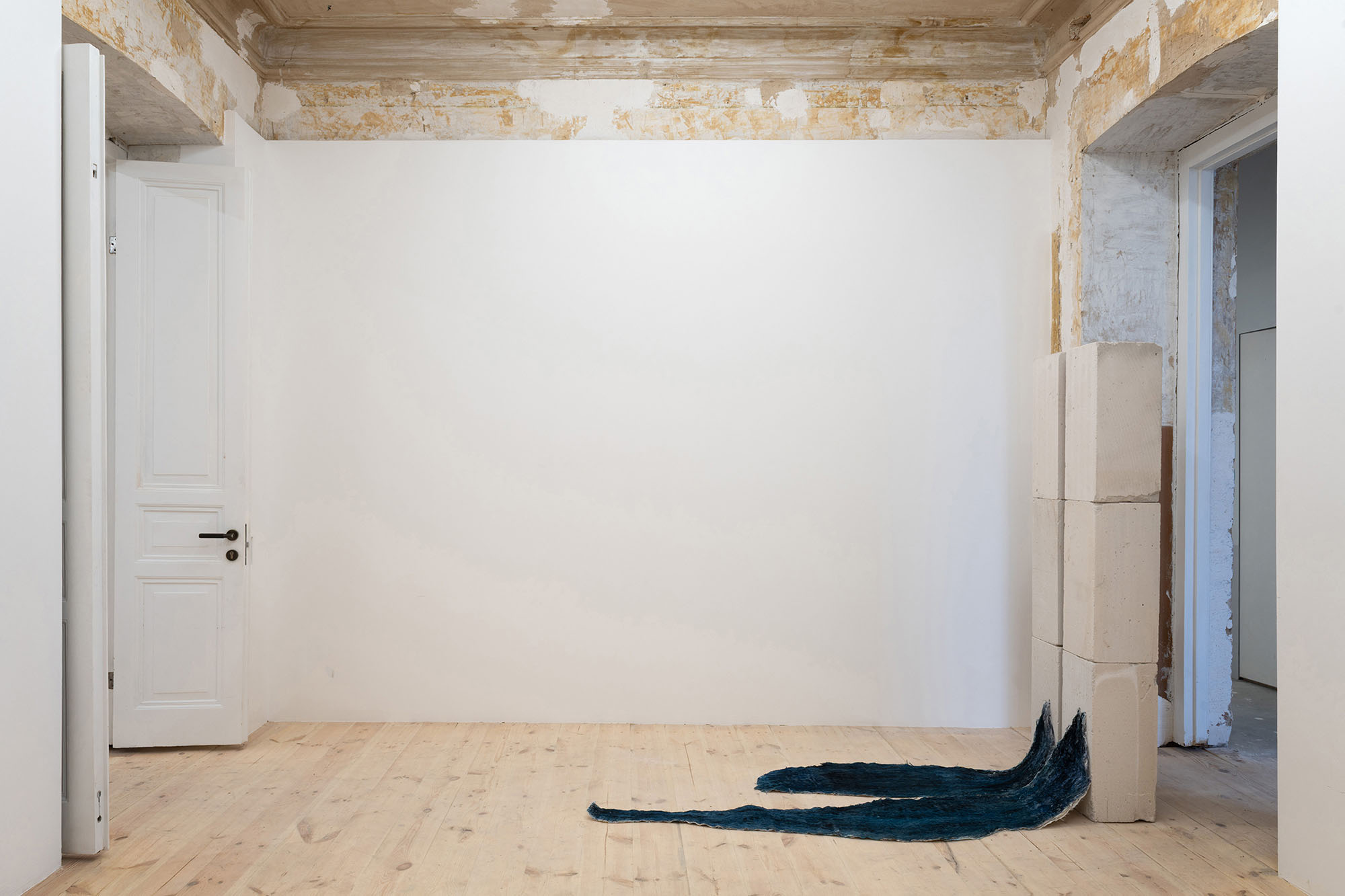
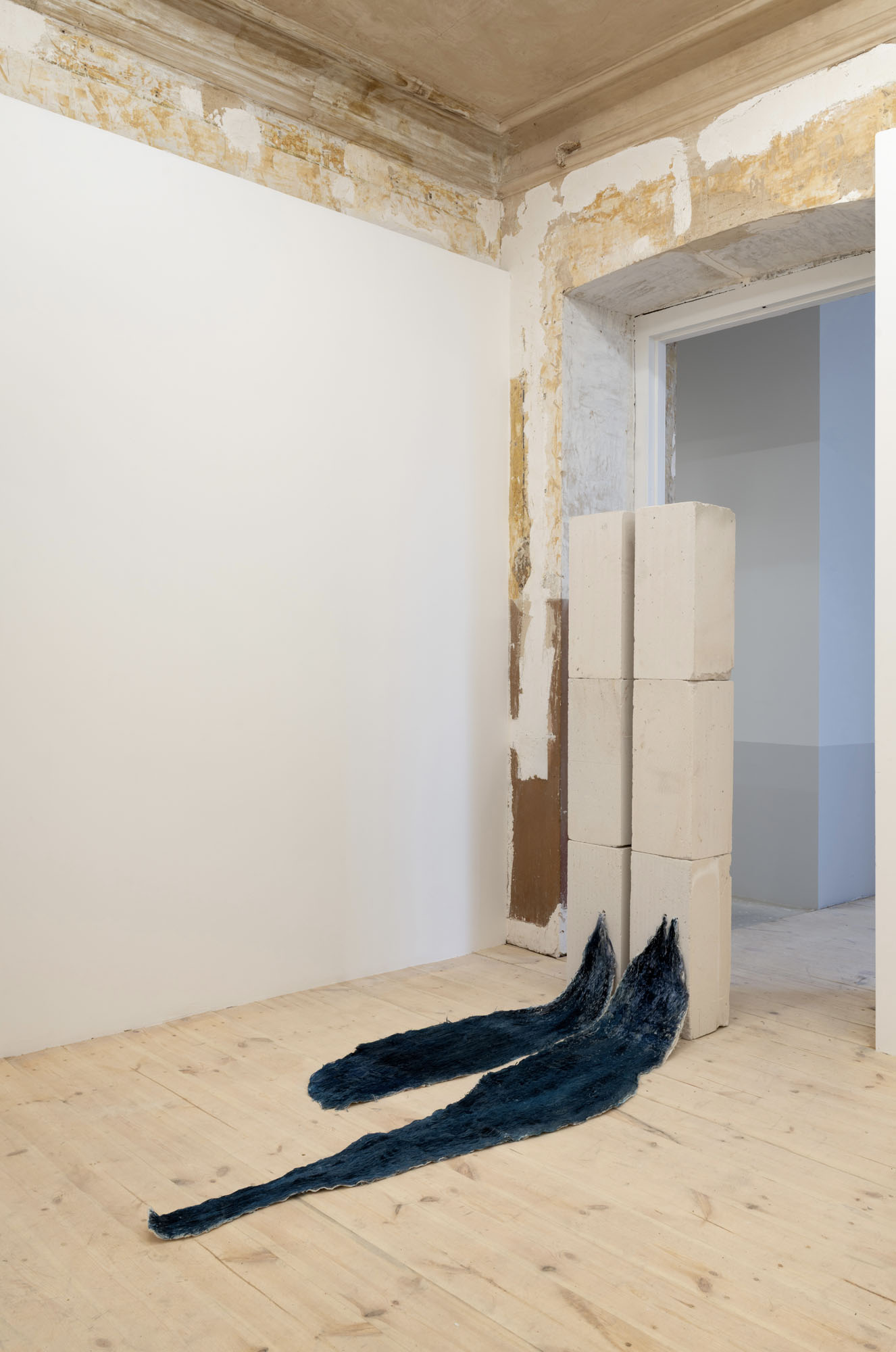
Upon entering the space, attention is drawn to an architectural object composed of two monolithic concrete elements from which an embroidered textile descends and gradually unfolds. The fabric introduces movement into the otherwise static structure, giving the work a greater sense of fluidity and extension. The object recalls the form of an ancient Egyptian obelisk, historically associated with the cult of the sun god. Chigilashvili reflects not only on the symbolic meaning of this historical monument, but also on its formal and spatial presence. Through this transformation, the concrete elements begin to read as walls or barriers rising within the space.
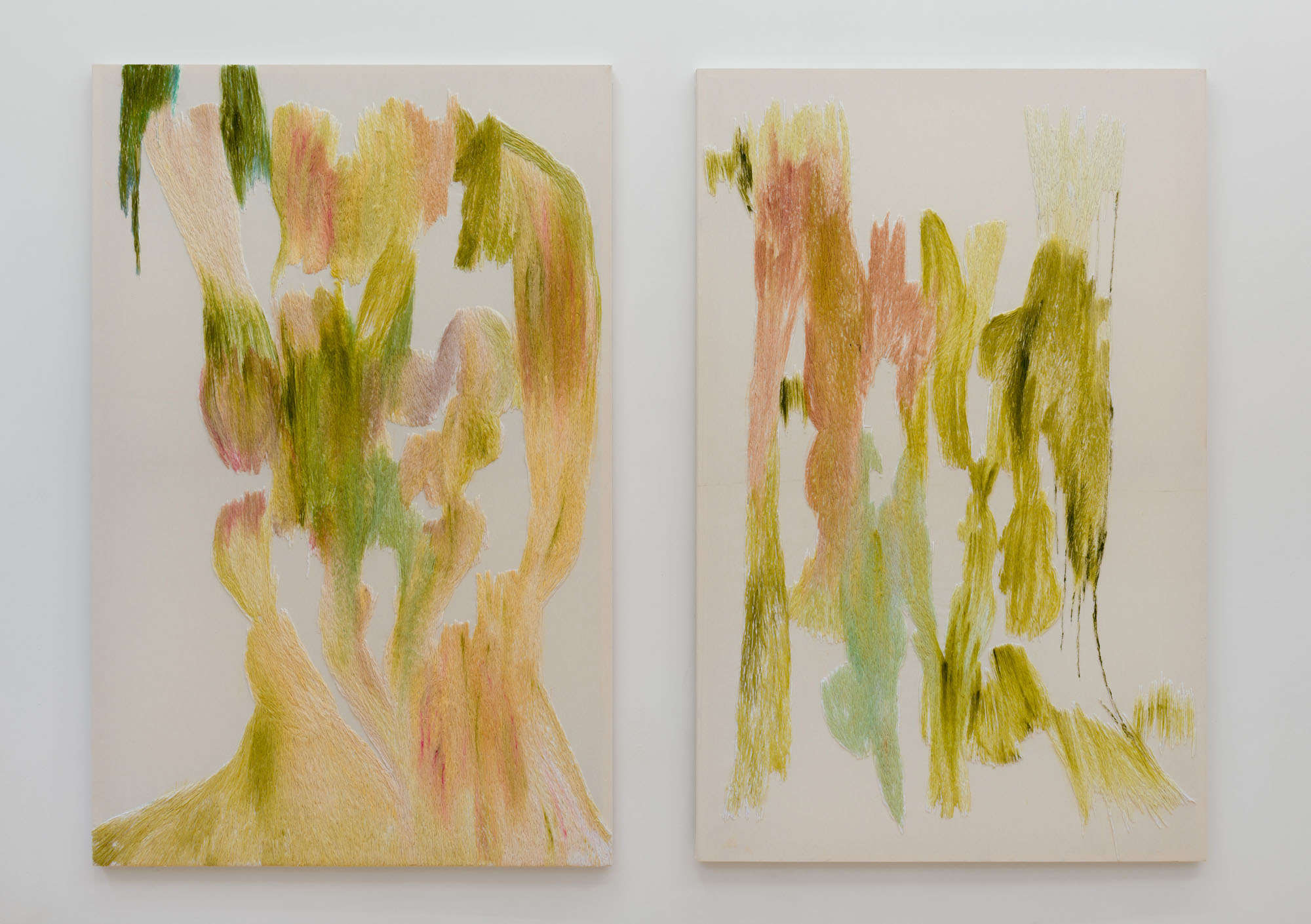
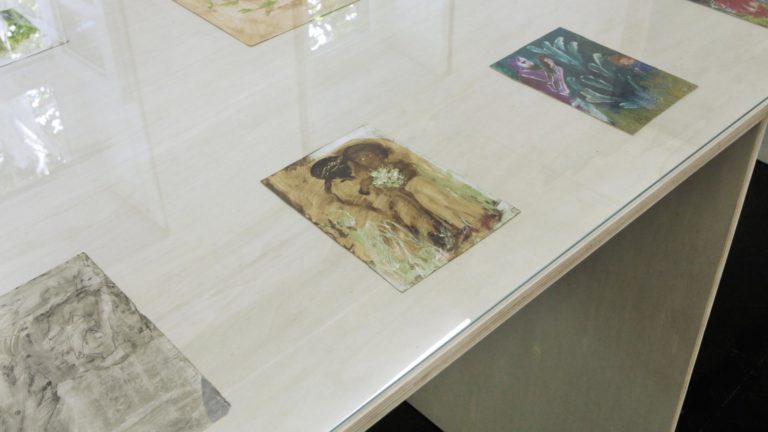
Another central element of the installation is a sequence of rectangular concrete slabs carrying embroidered ornament across their surfaces. They recall architectural fragments uncovered through archaeological excavation, as though traces of time had been preserved within them. Relief-like and linear forms move across each slab, varying in length, thickness, direction and density. Some follow parallel paths, while others intersect, separate or converge, creating shifting rhythms across the surface. The embroidered textiles develop this relationship in a different direction. In contrast to the weight and rigidity of the concrete structures, the forms here are more fluid, while the density and tactility of the thread give the surface a stronger relief-like quality. The image no longer appears simply as something held within the plane of the textile, but begins to acquire volume and spatial presence. In this sense, the works approach the condition of architectural bas-relief, where image and surface come together through depth, texture and material form.
Salome Chigilashvili (b. 1996, Tbilisi) is Georgian visual artist. She graduated from Visual Arts, Architecture & Design School – VA[A]DS of Free University of Tbilisi.
Chigilashvili is a multimedia artist, works in different mediums including sculpture, painting, found objects. As a material she often uses threads and plaster.
Chigilashvili’s works have been exhibited at Gallery Artbeat (Tbilisi, Georgia), Nathalie Karg Gallery, New York, USA, D. Shevardnadze National Gallery (Tbilisi, Georgia), Emma Scully Gallery (New York, USA), Projects Gallery (Berlin, Germany), Georgian National Museum (Tbilisi, Georgia), Somerset House (London, England).