According to the Zohar, or Book of Mystics, skin is the tunic that is said to have clothed Adam and Eve after the Fall. A paradoxical garment, it is both what separates the individual from the world and what enables a relationship with it—simultaneously a point of contact and a boundary. It is this permeable zone, this site of passage and inflection, that Hudinilson Jr., Matthias Odin, and Nobuko Tsuchiya each explore in their own way, revealing skin as a sensitive space where self-perception, relations to others, and construction of new imaginaries intersect.
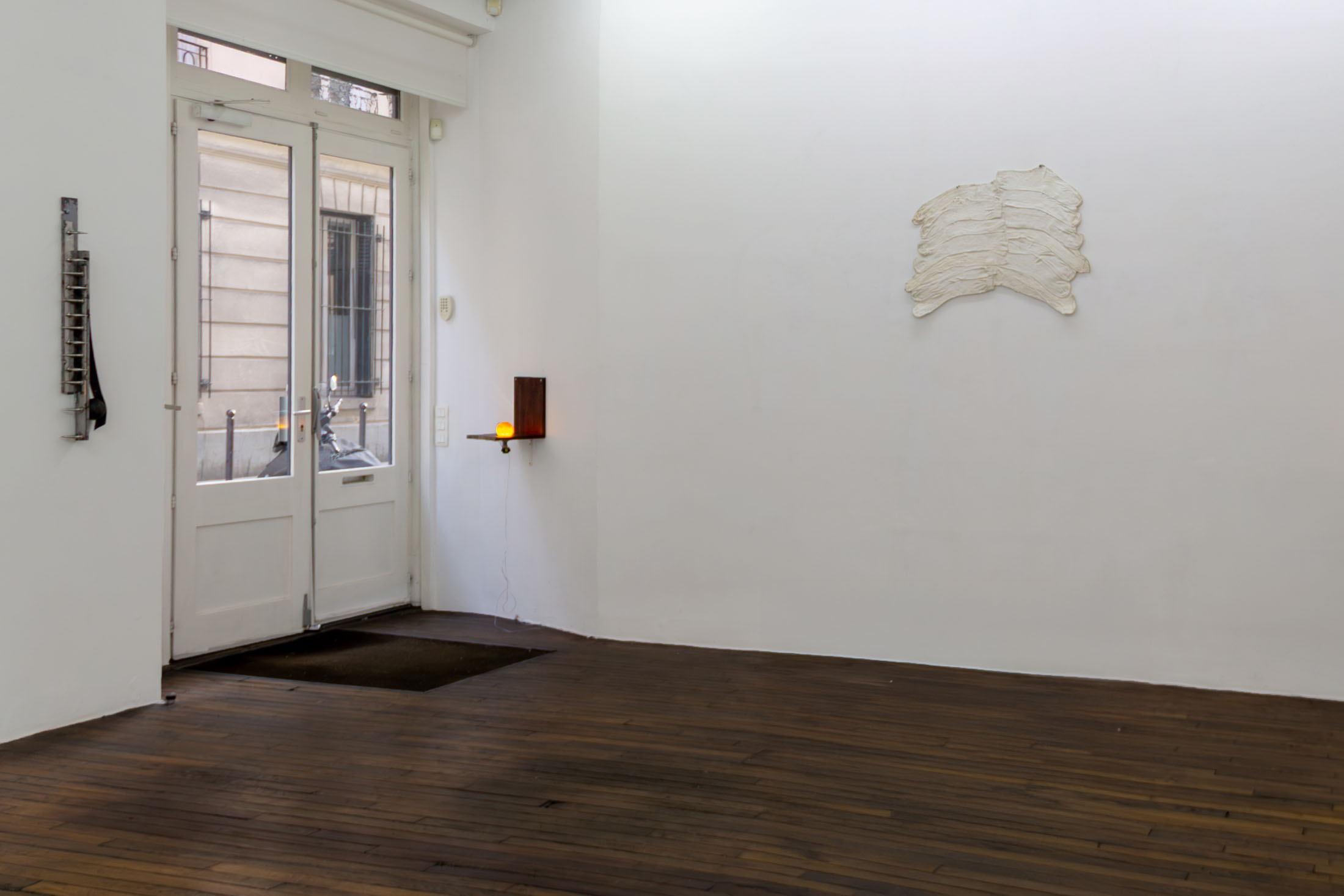
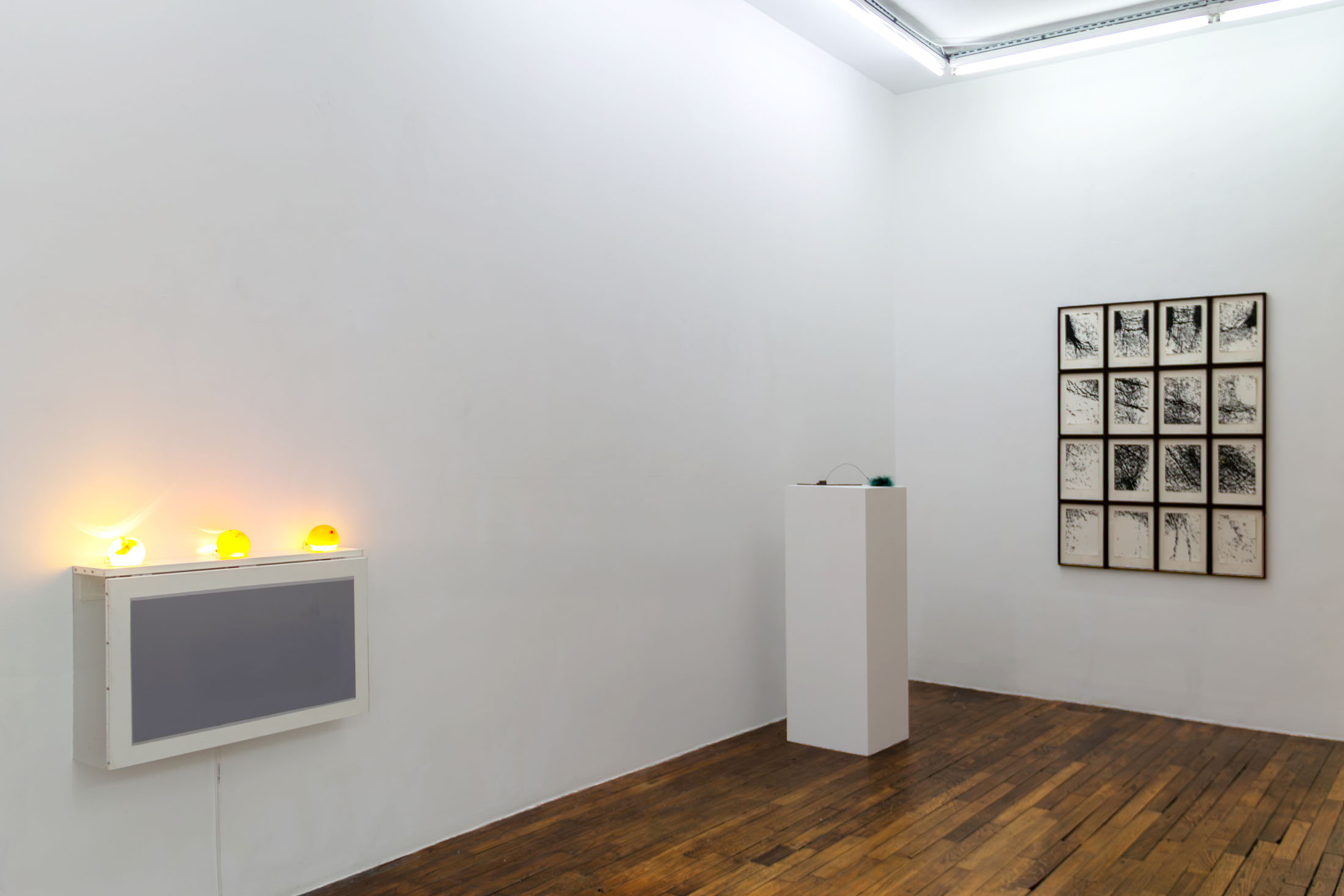
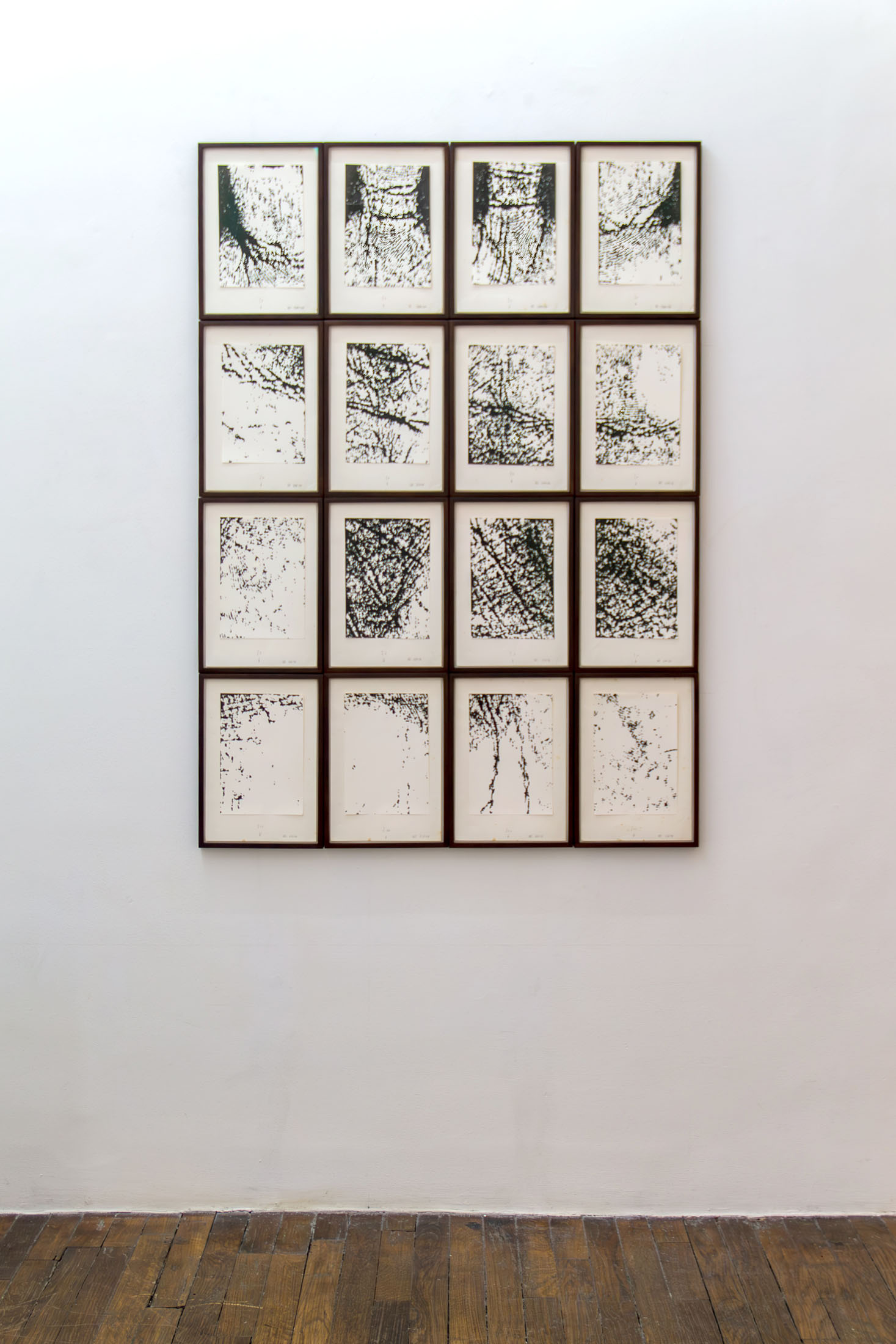
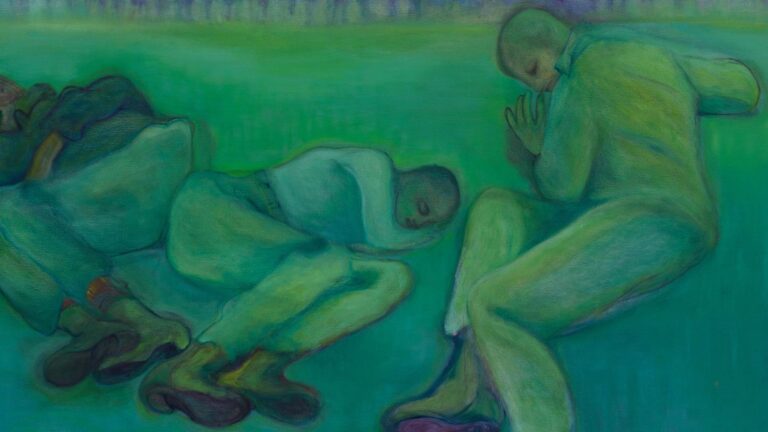
In the work of Hudinilson Jr. (1957–2013, Brazil), skin becomes an abstract landscape, a territory to beprobed. From the late 1970s onward, photocopying became his primary medium: immediate, reproducible, and mechanical, it allowed him to manipulate, fragment, and decenter his own body until it became unrecognizable. With the collective 3NÓS3, he repurposed the printers of the University of São Paulo to push self-representation to its limits, transforming xerography into an act that was at once intimate, subversive, and political. This “exercise in seeing oneself,” enacted through the repetition of the photocopied gesture, becomes an existential practice: seeing oneself to reconnect both with oneself and with the world, archiving the everyday to turn it into symbol, and transforming intimacy into an act of resistance. His garments coated in liquid latex crystallize this tension. Preserved in a fixed state, they become relics of a vanished presence, echoing the AIDS crisis that profoundly affected his community in the 1980s. Of the body, only the envelope remains: the imprint, the trace.
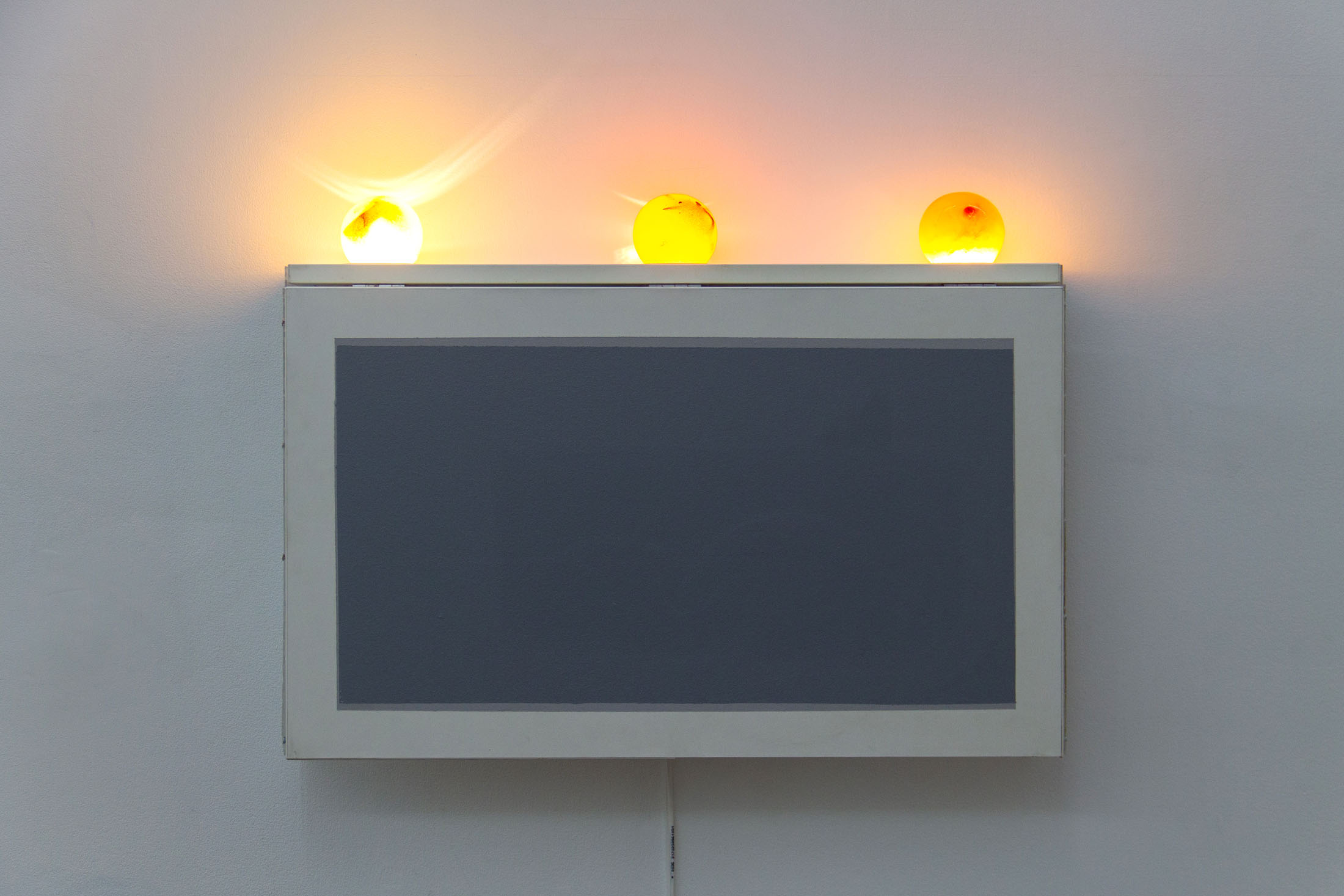
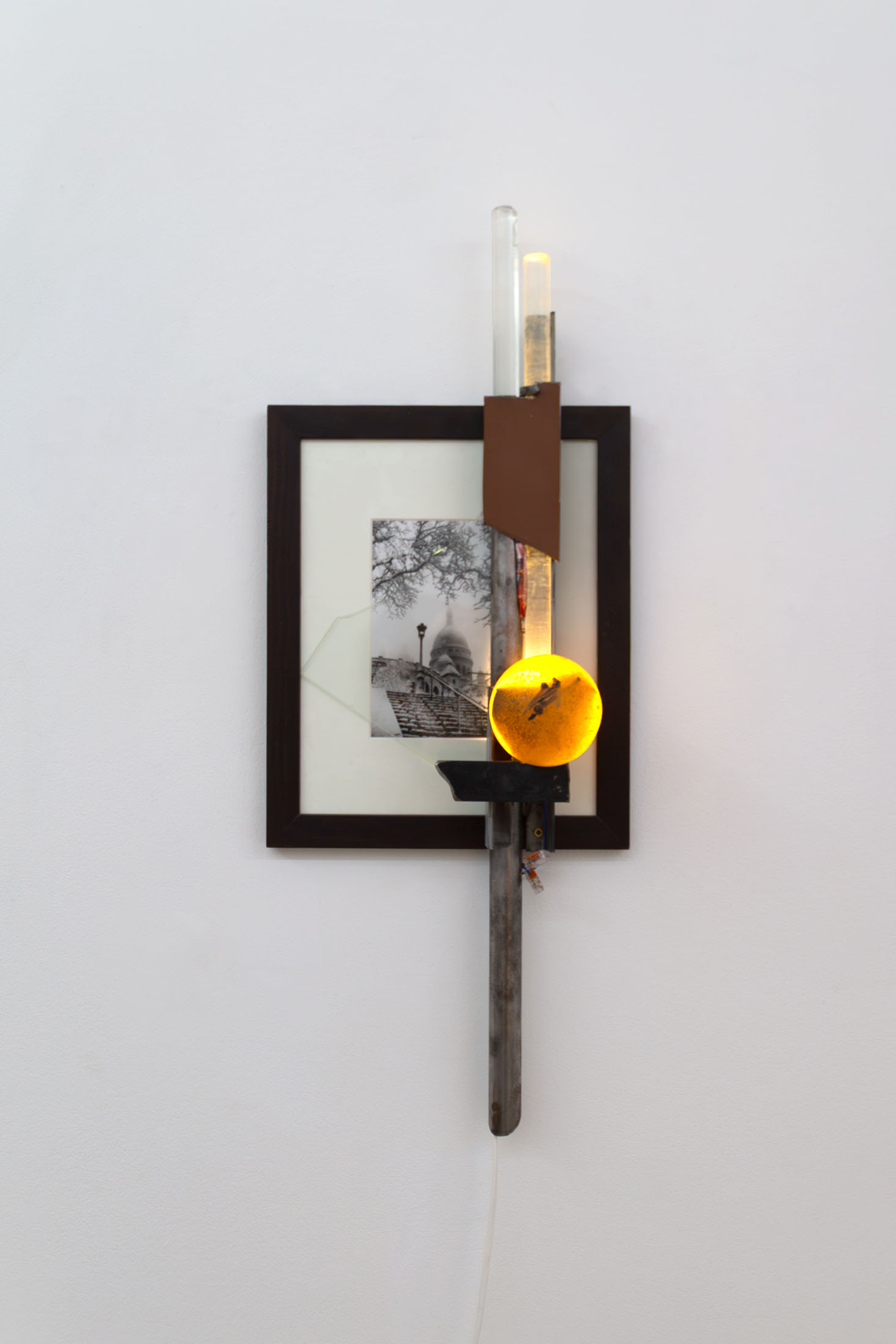
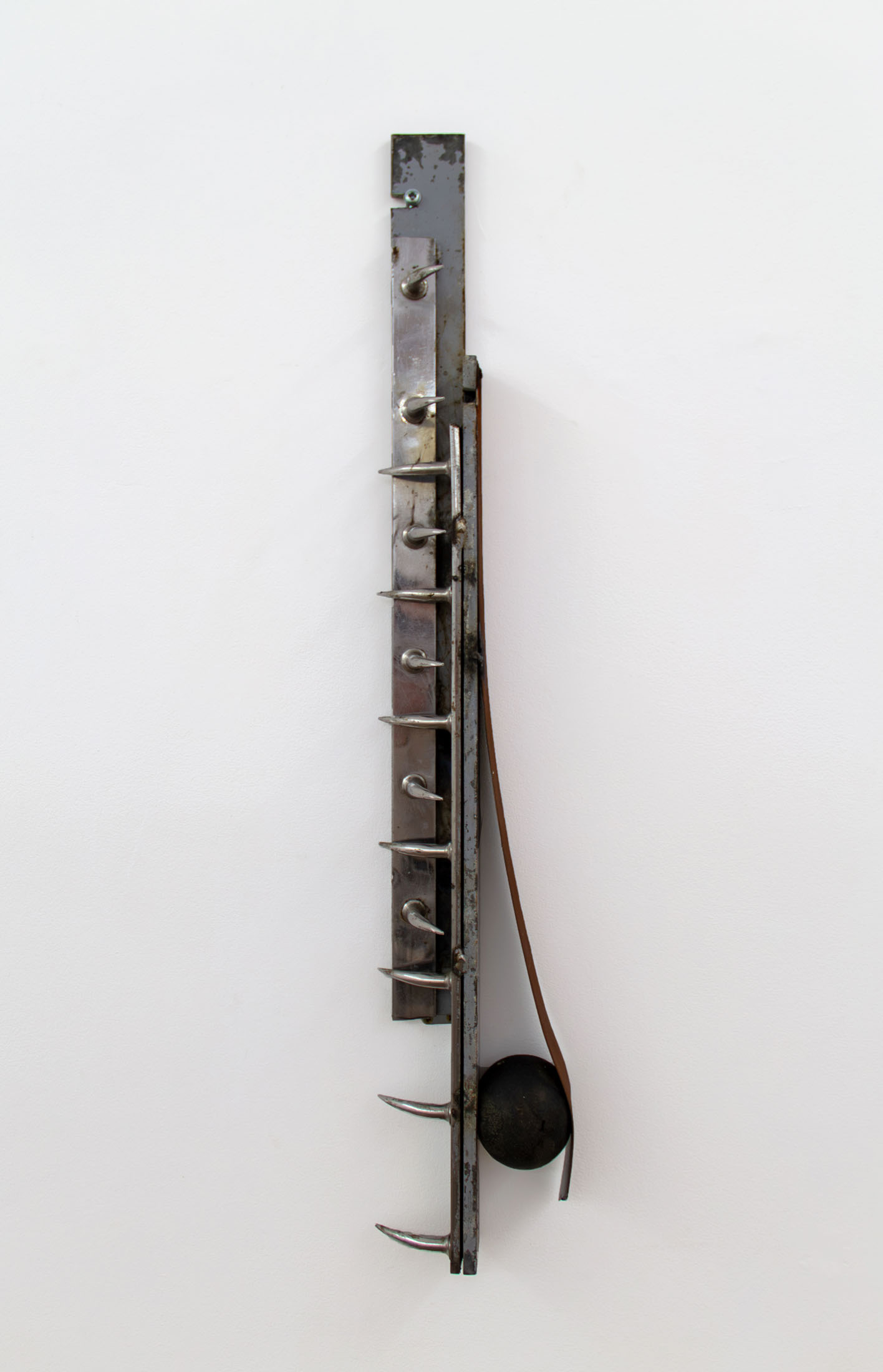
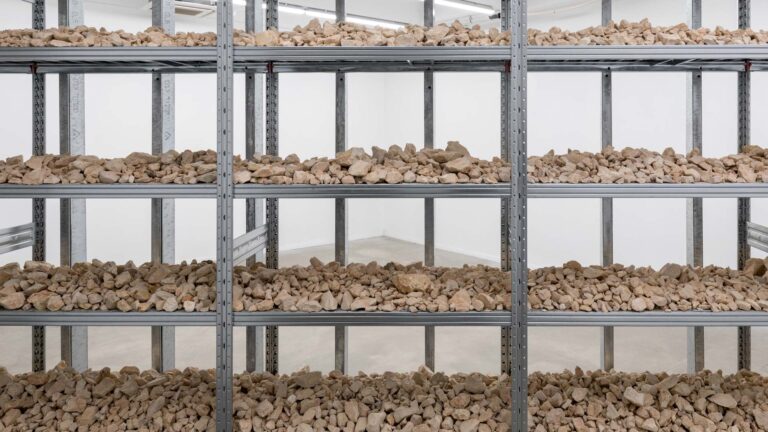
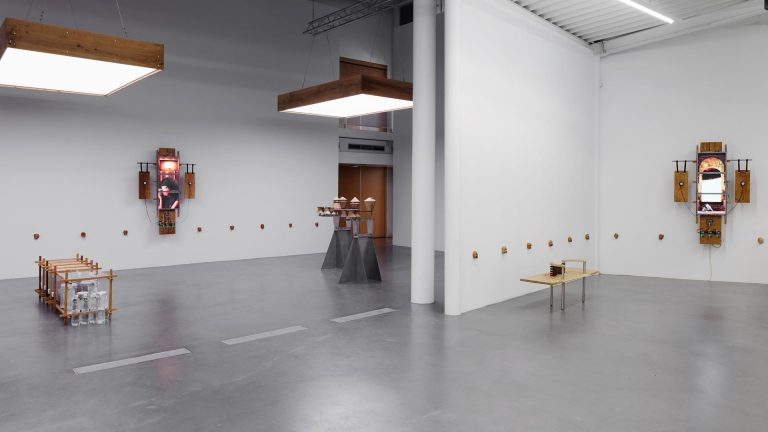
The work of Matthias Odin (b. 1995, France) focuses on familiar objects and everyday remnants charged with memory. During his wanderings, he collects fragments—wooden frames, side tables, butcher’s hooks—which he transforms into sculptures. The works presented in the exhibition all feature backlit resin spheres, modeled after stress balls, objects designed to absorb the anxiety of our bodies. Encased within the resin are small fragments—nails, dust, and traces of places— preserved as particles of memory. The artist’s body appears here in negative, present through what has passed through it, in dialogue with the fragments of reality gathered along his path. Skin thus becomes a witness to a world that leaves its mark, absorbs, and transforms into a porous and poetic material.
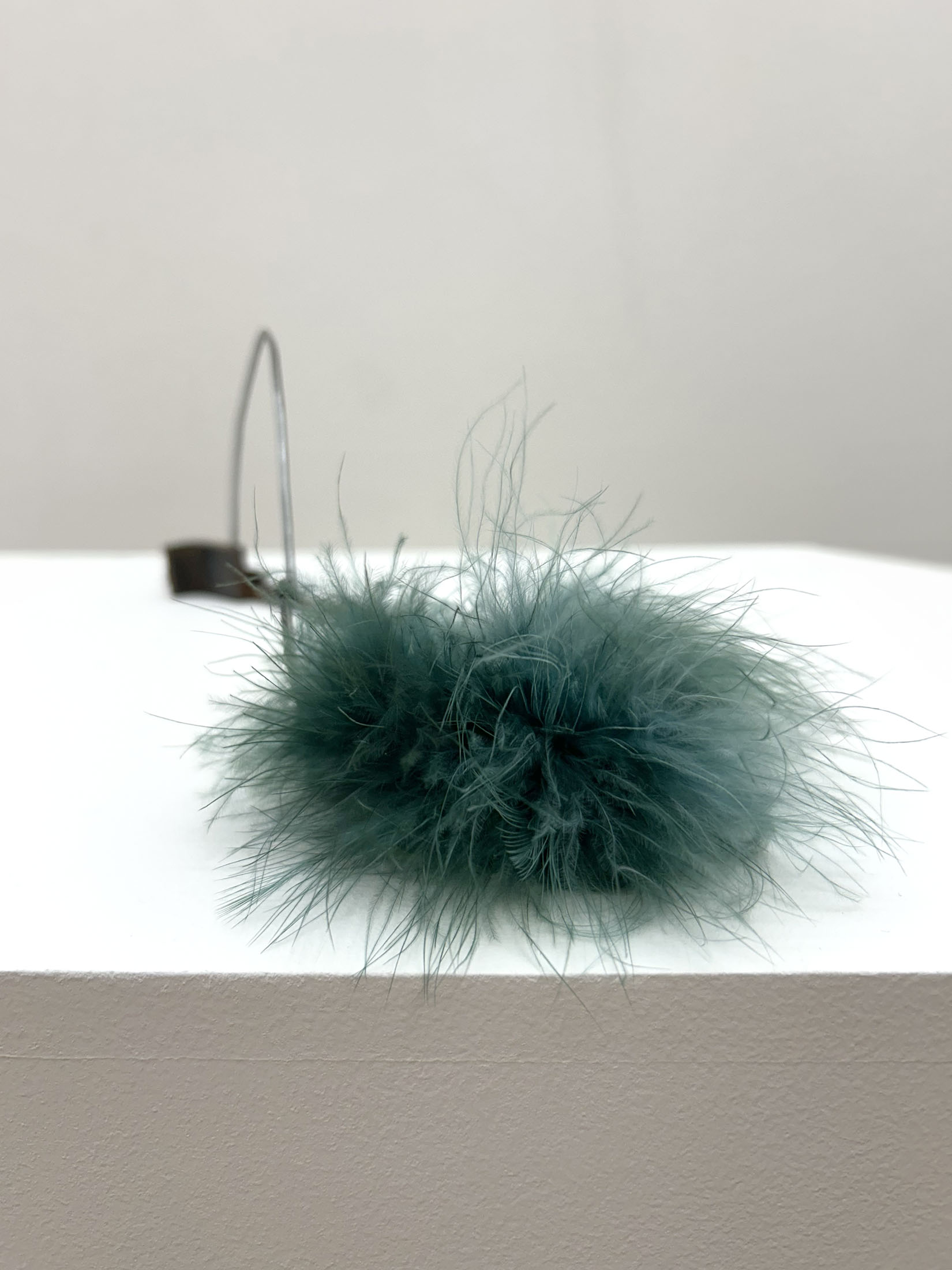
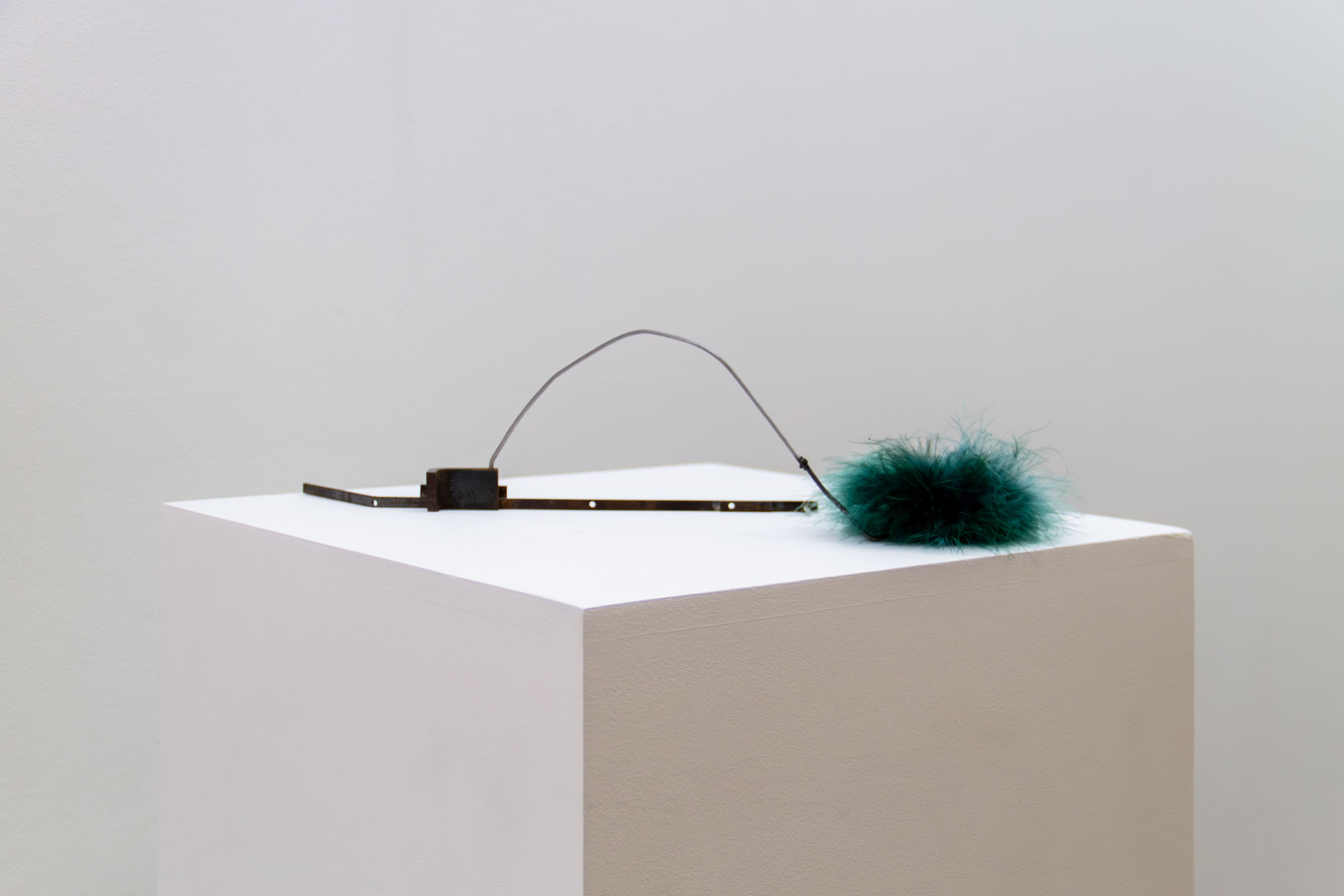
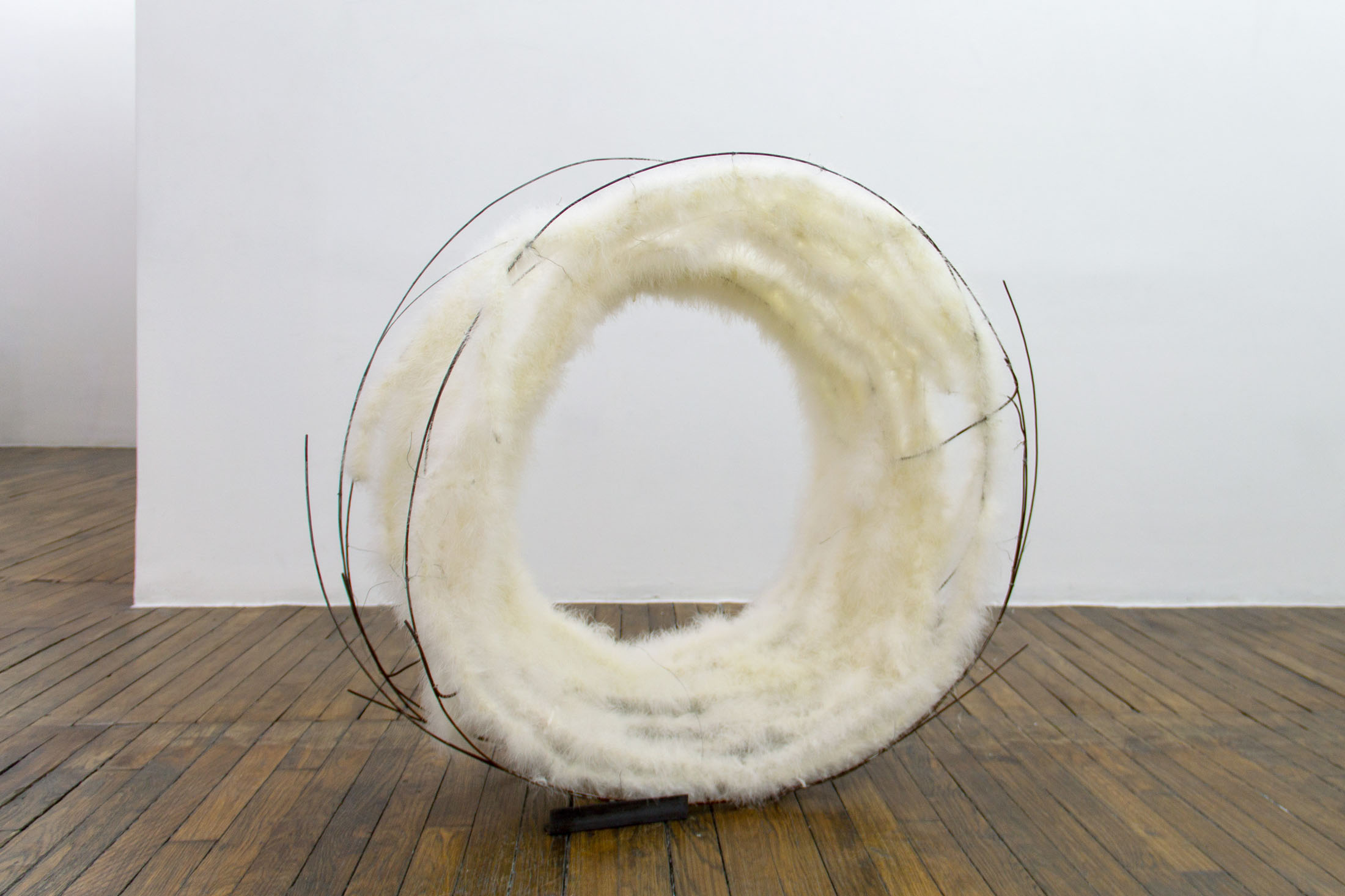
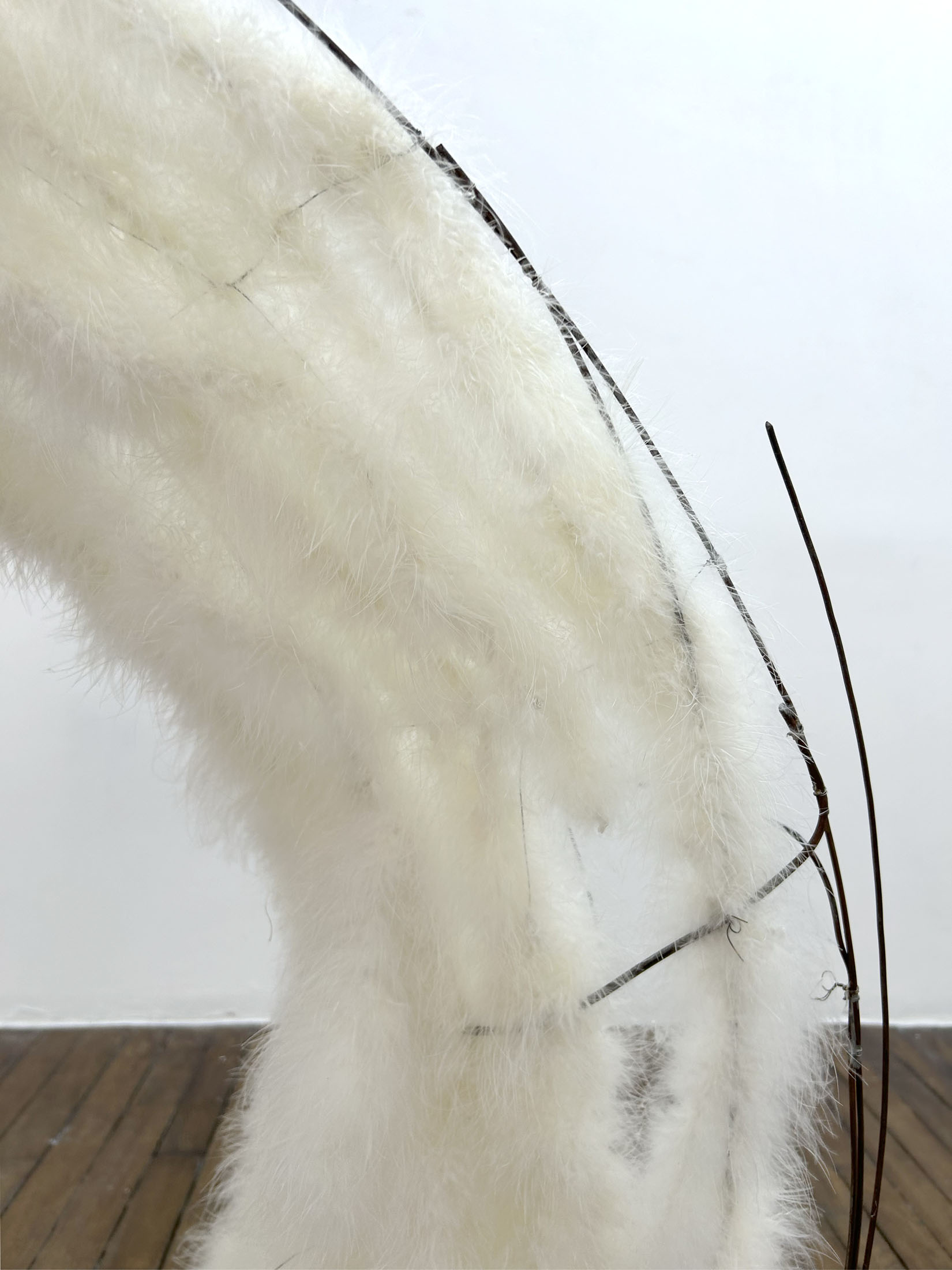
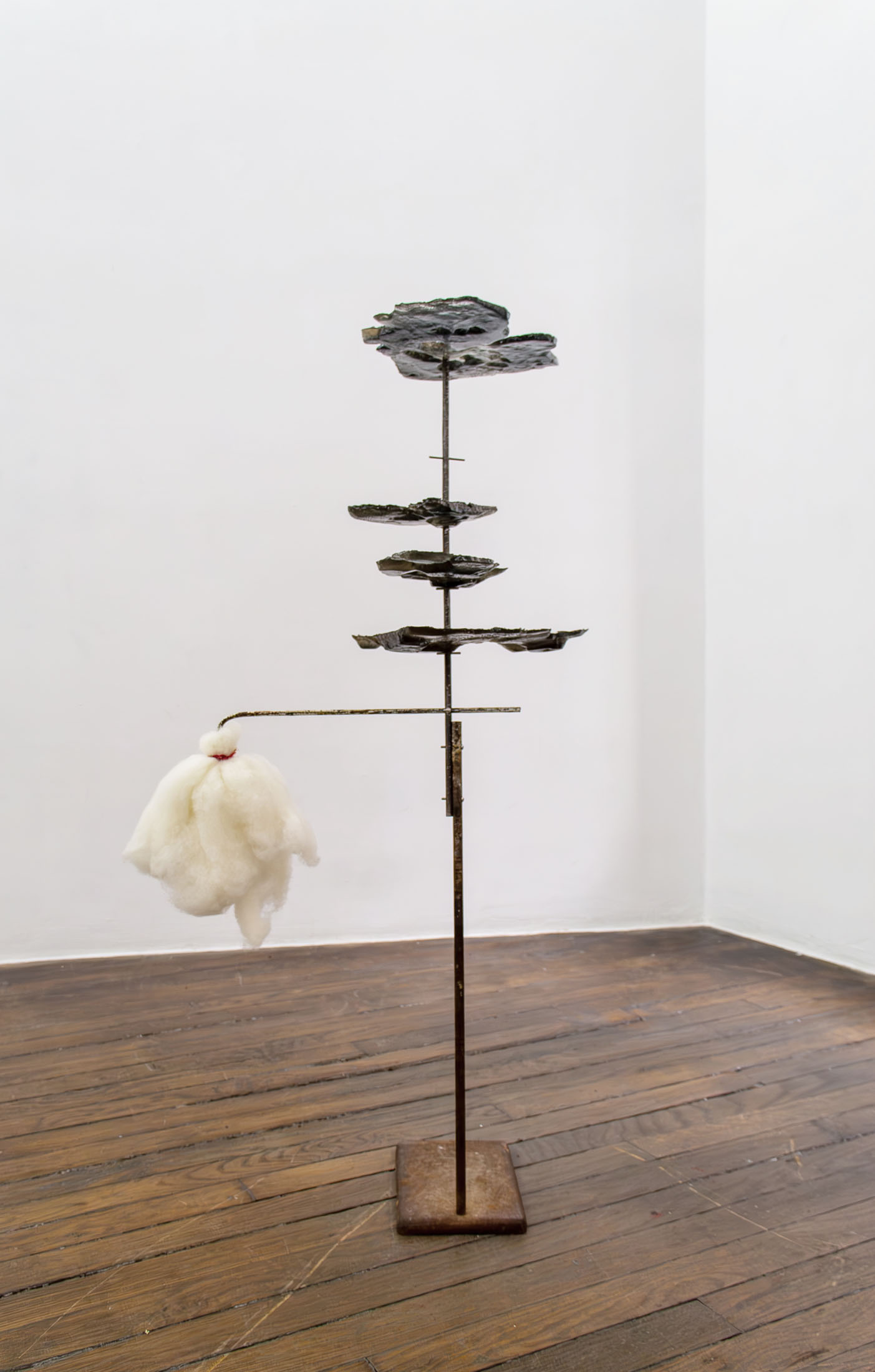
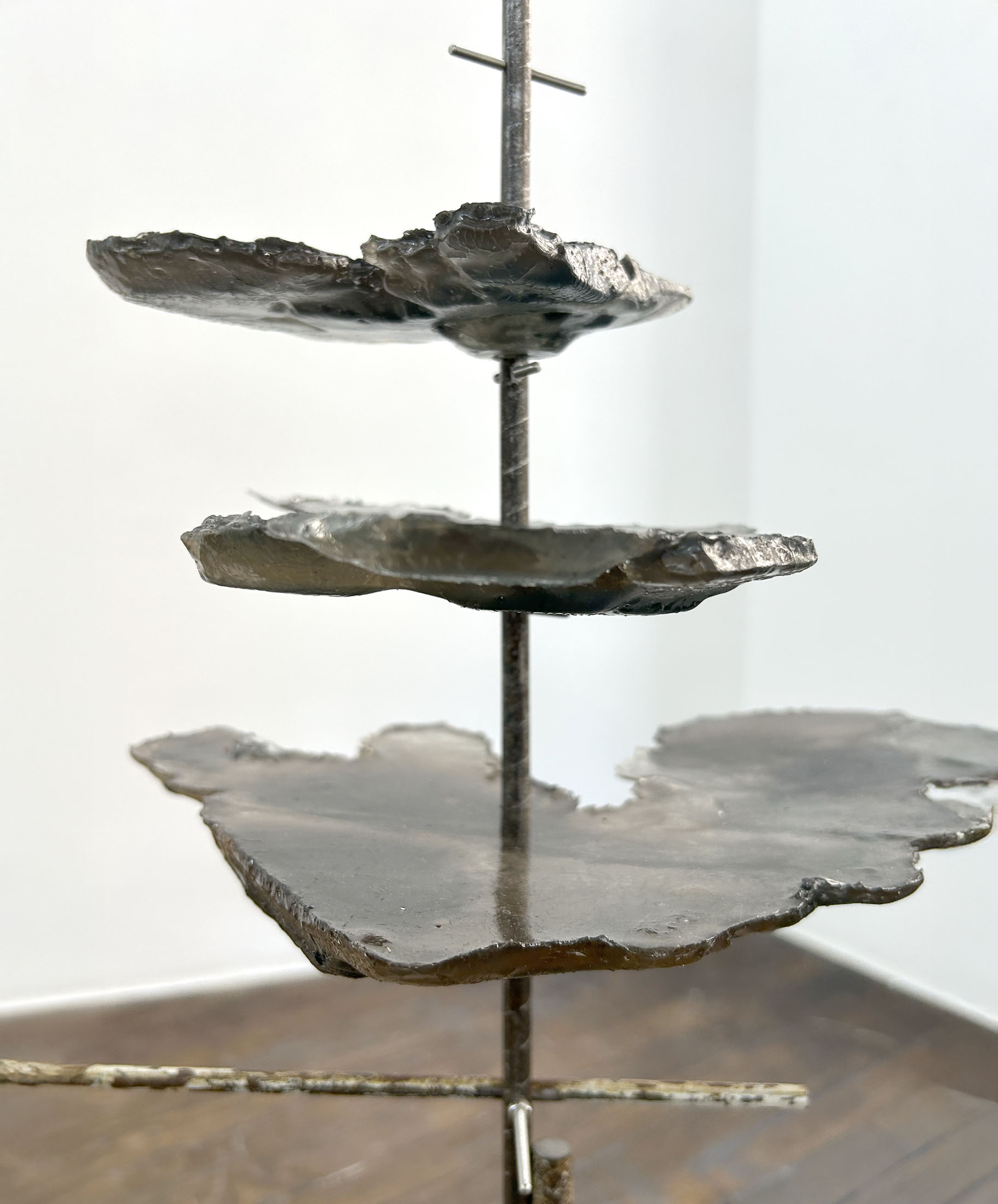
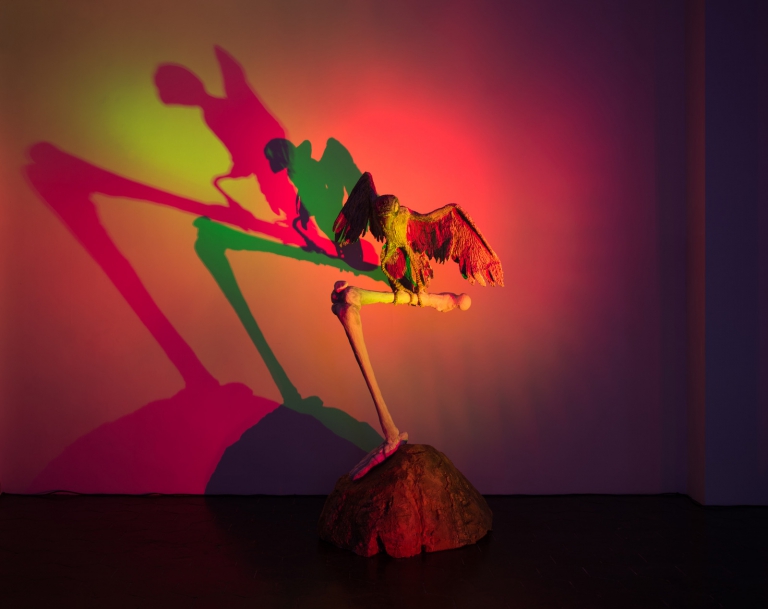
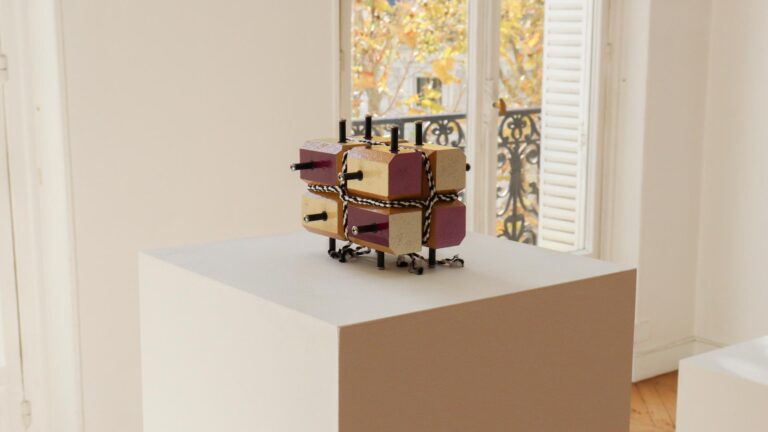
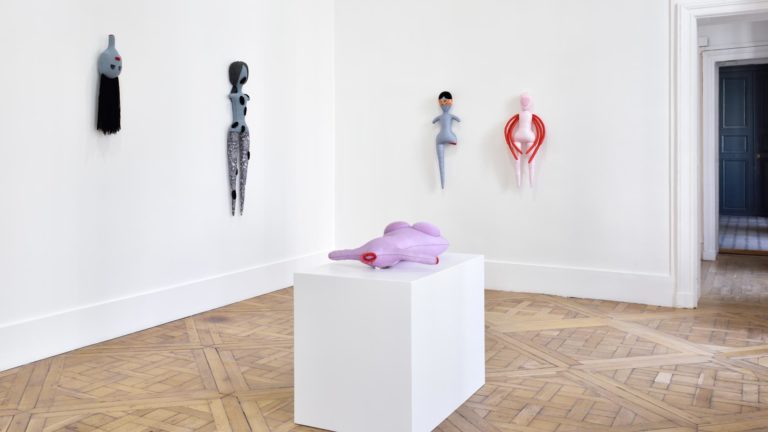
The hybrid sculptures of Nobuko Tsuchiya (b. 1972, Japan), meanwhile, seem to belong to a universe still in formation. Delicate assemblages of found objects and reconfigured fragments, they evoke both futuristic fossils and artifacts from an archaic past. Their uncertain appearance invites viewers to slow down, to attend to details, and to imagine the possible narratives of these forms before they undergo further transformation. As in Hudinilson Jr.’s work, Tsuchiya’s practice circulates between the infinitely small and the infinitely vast, between the intimate and the cosmic. Her works open up fissures and function as promises of metamorphosis—thresholds leading toward realities yet to be explored.