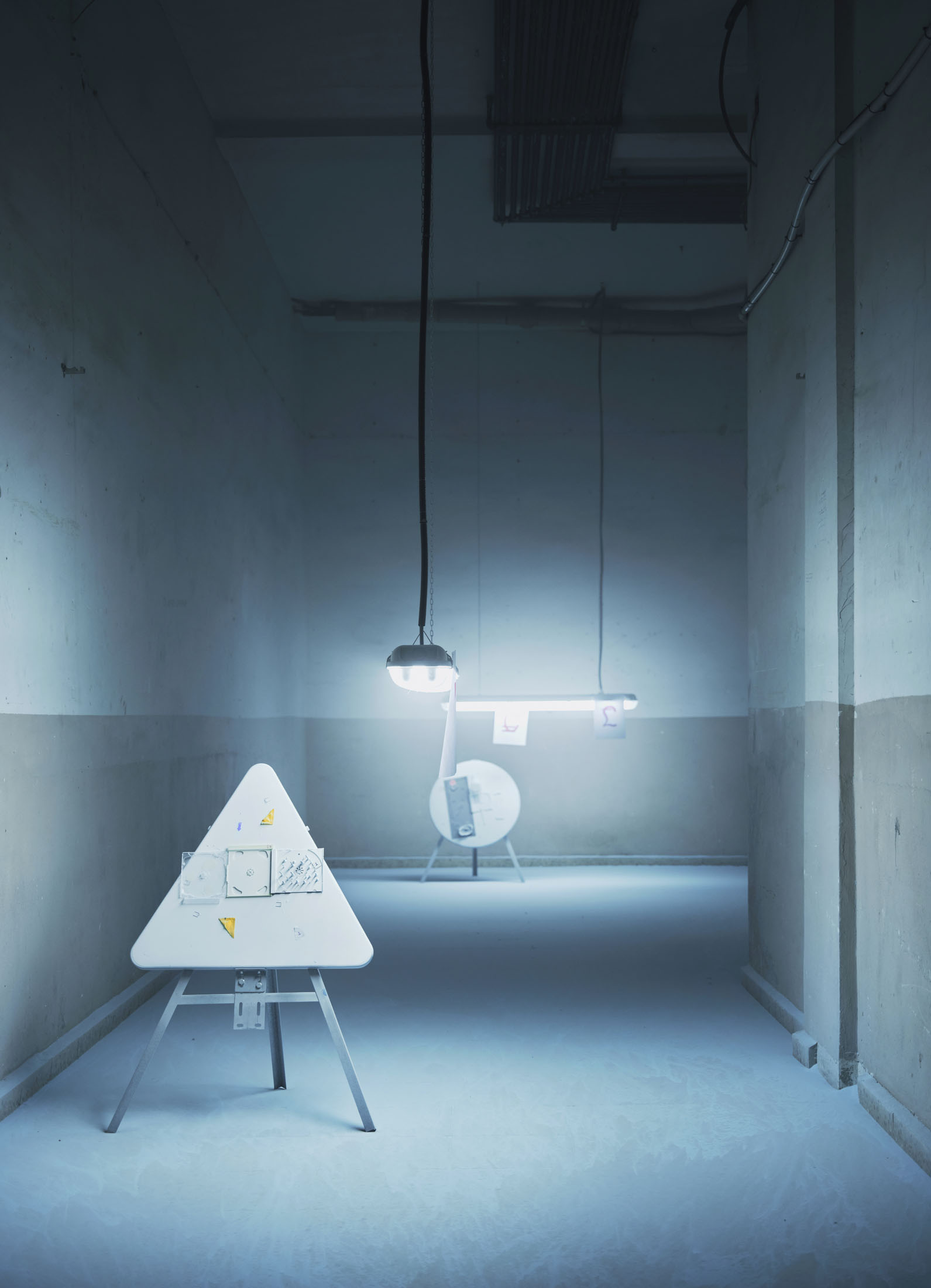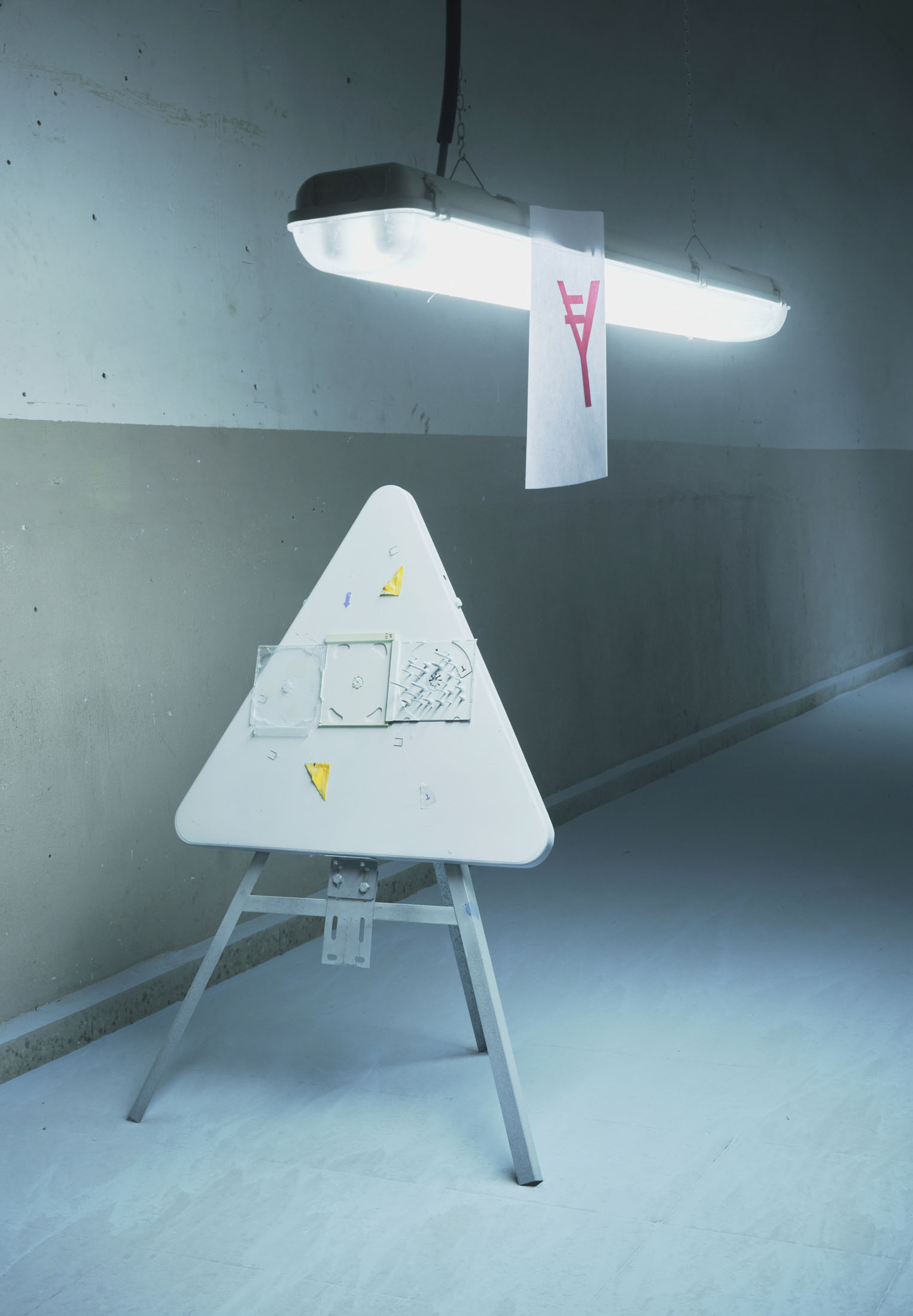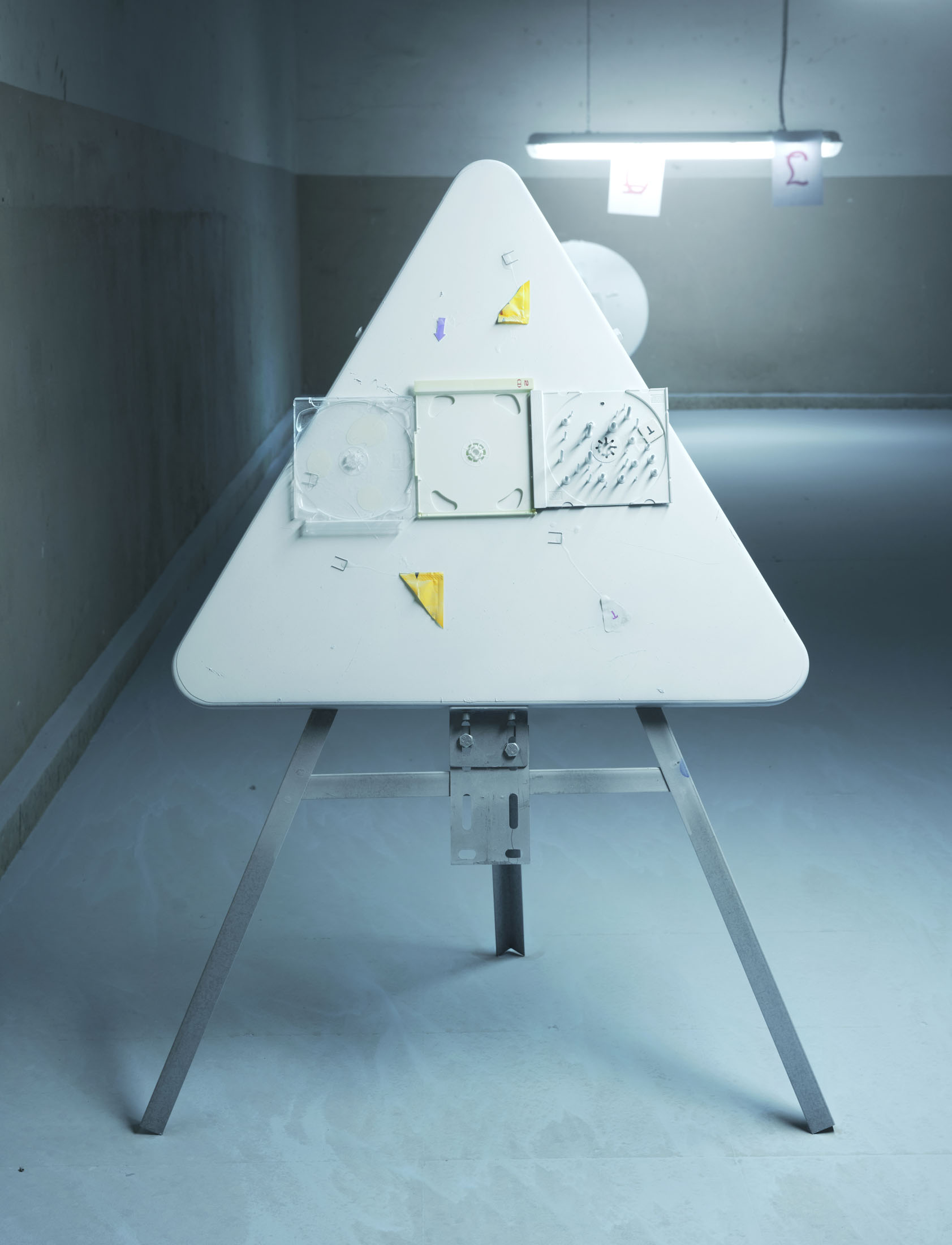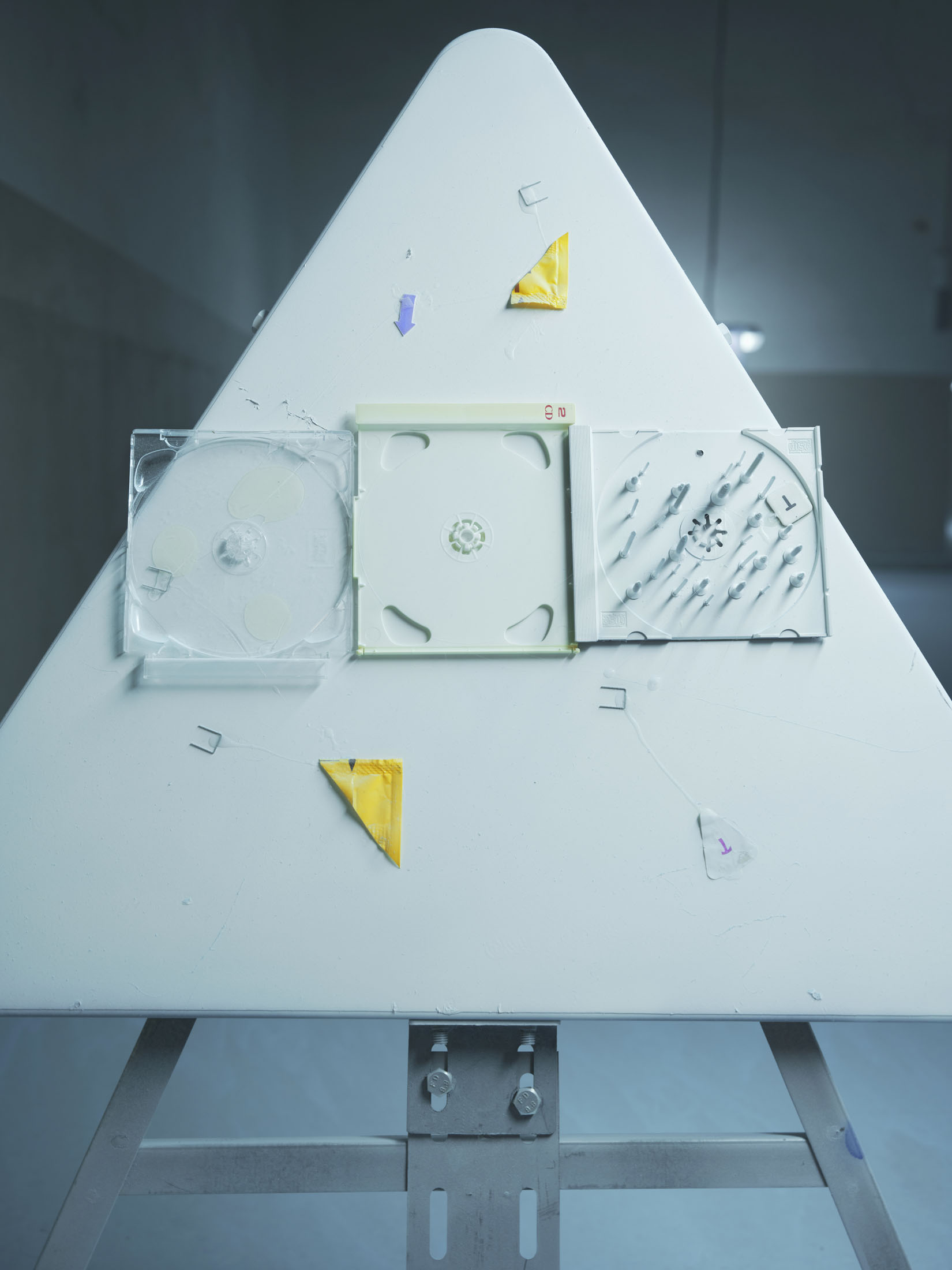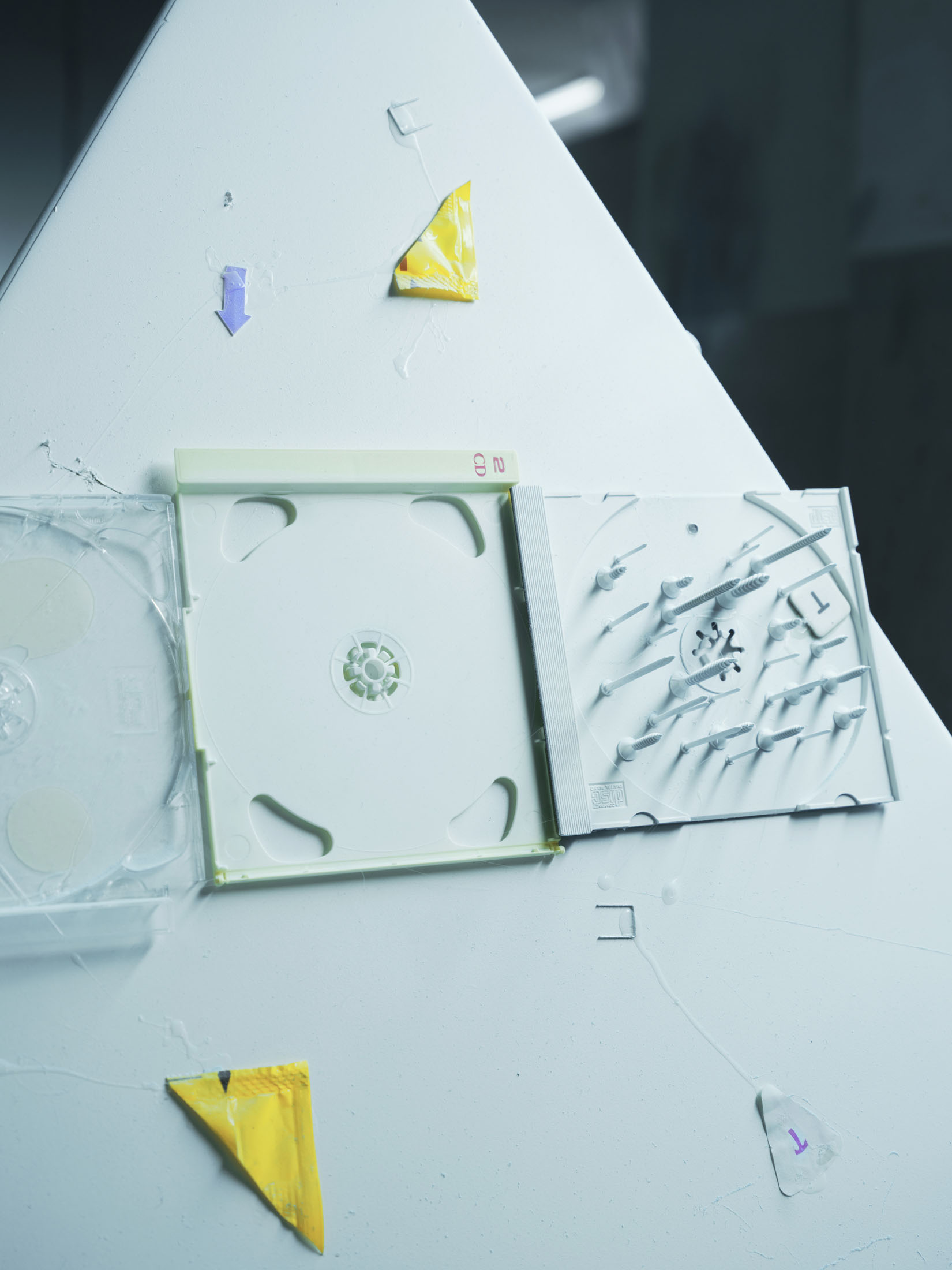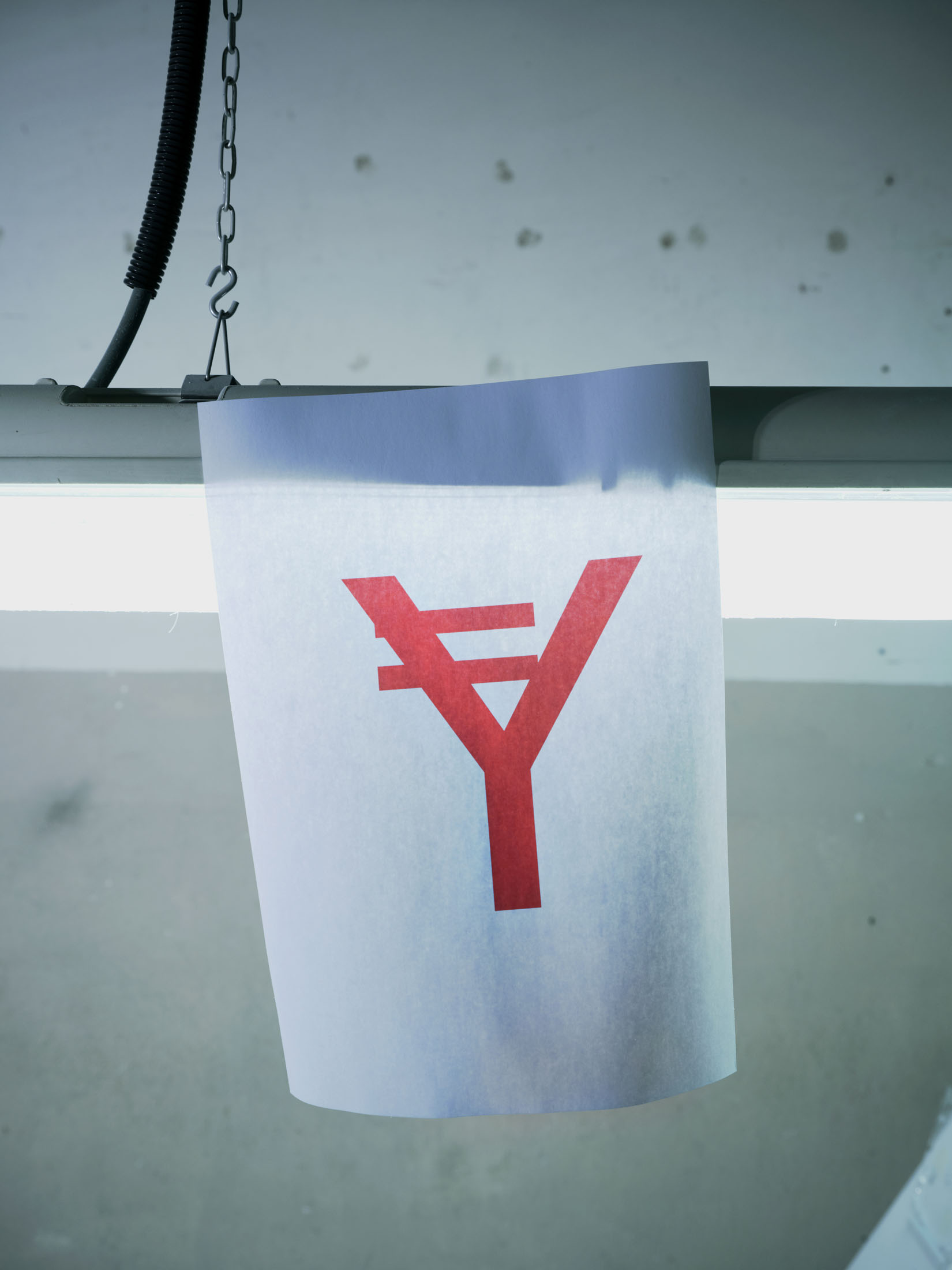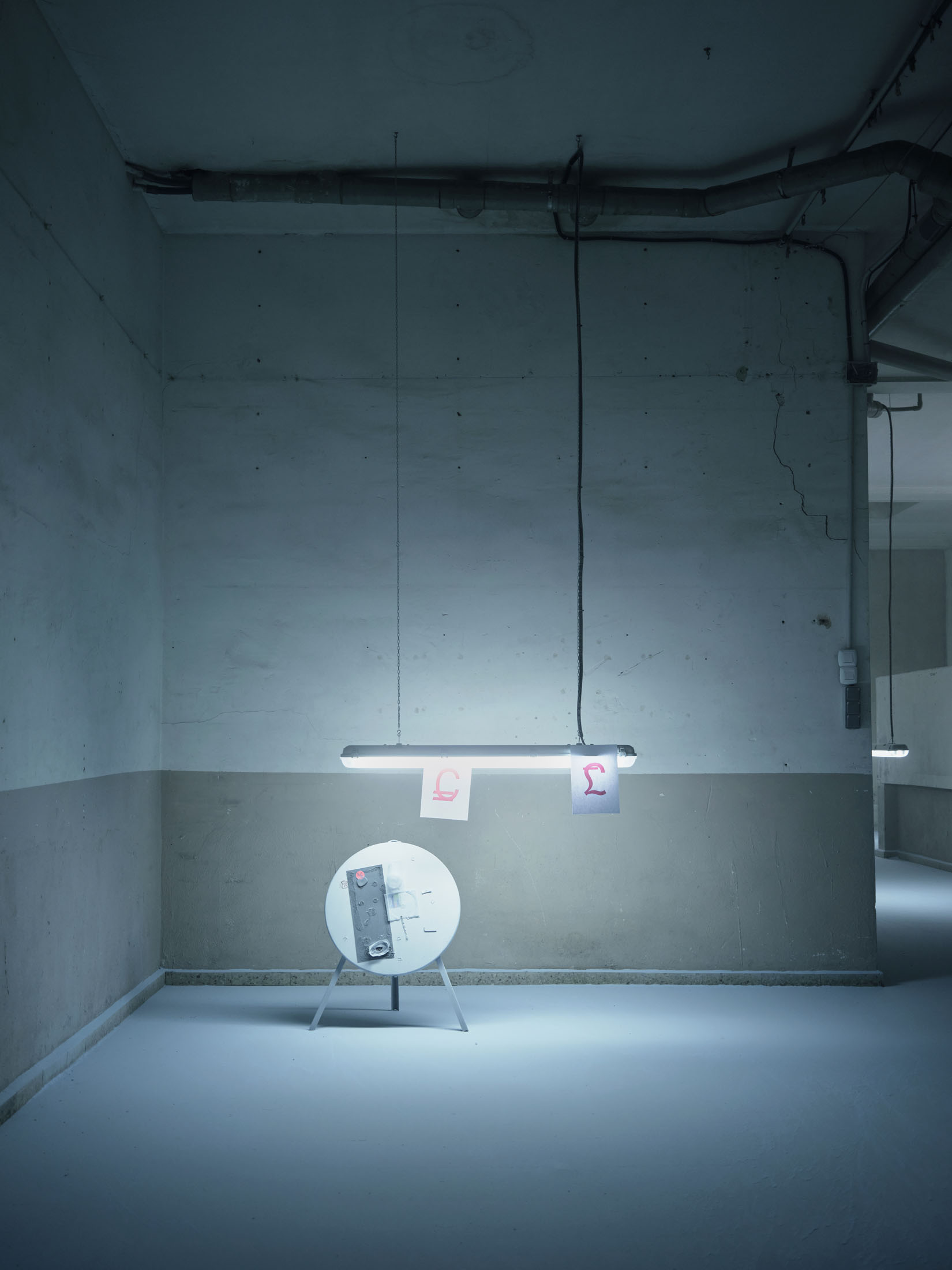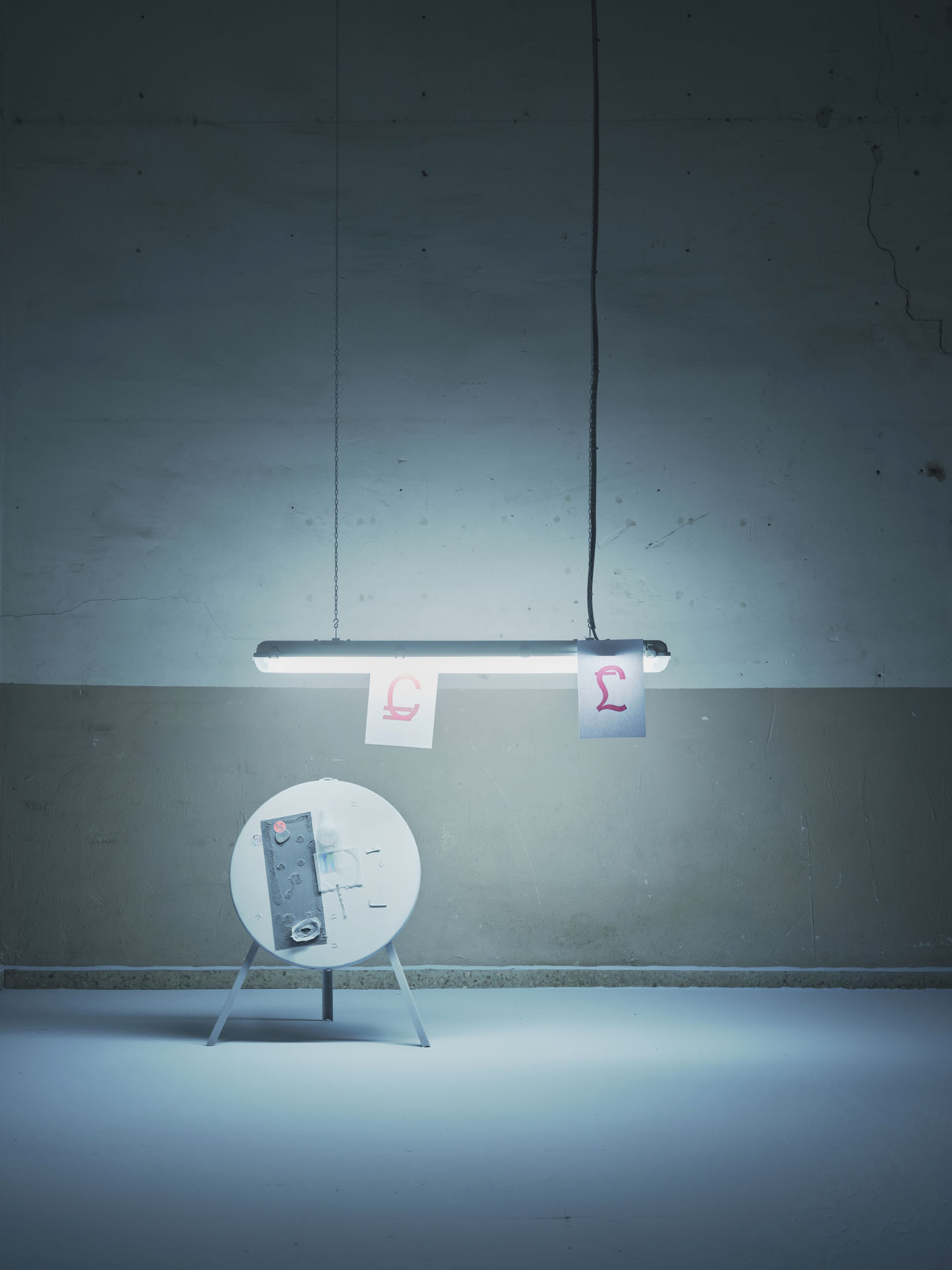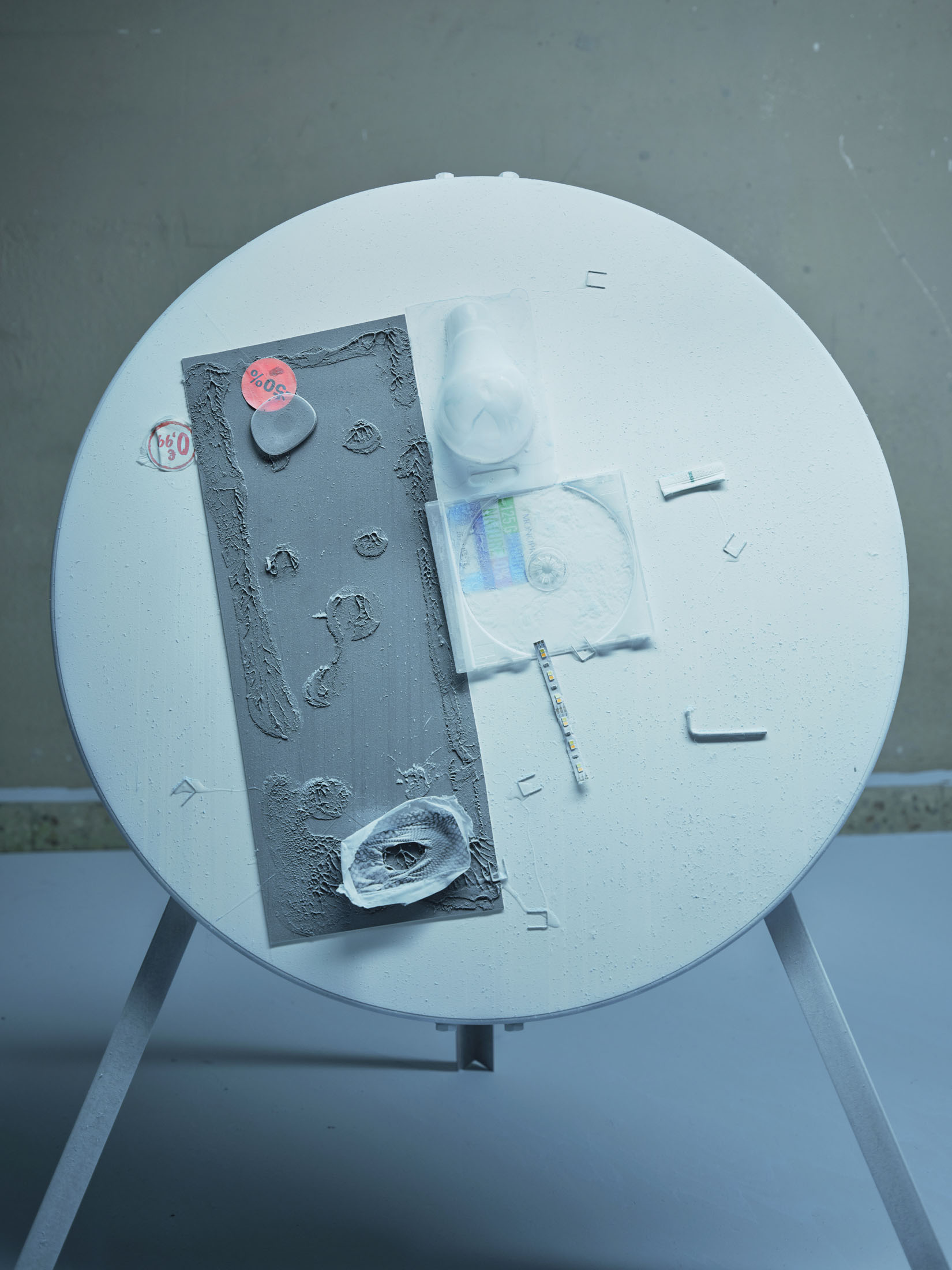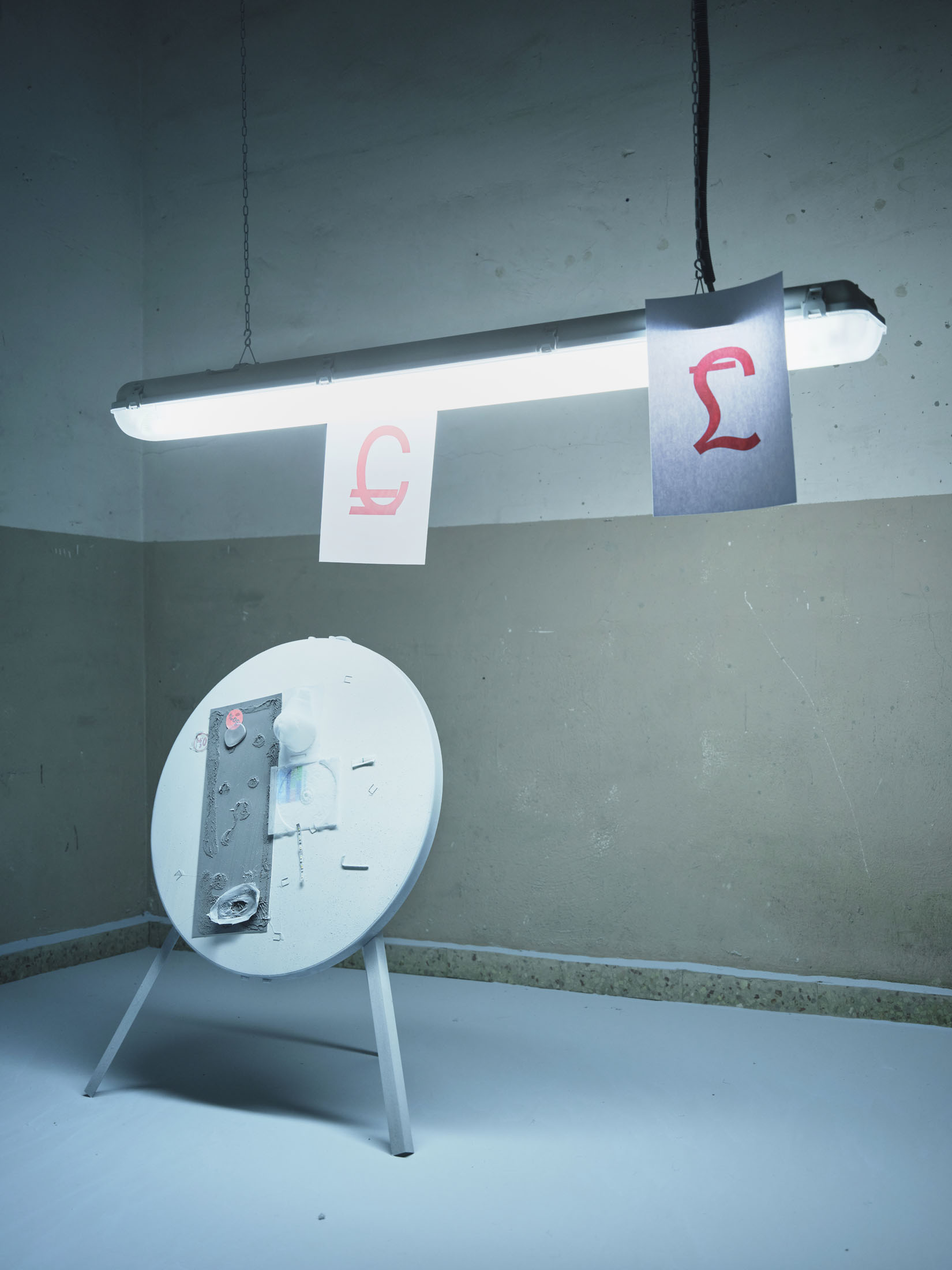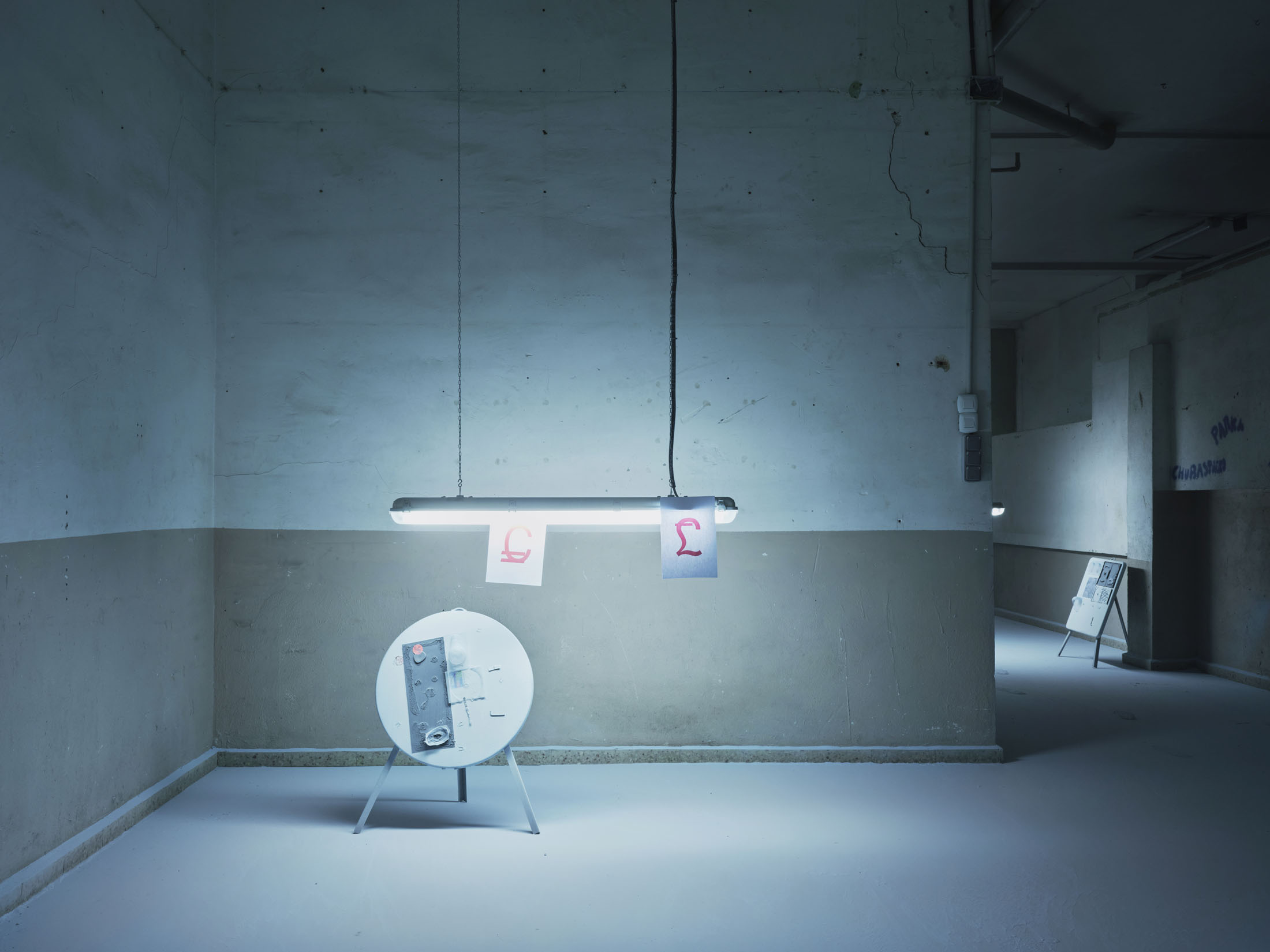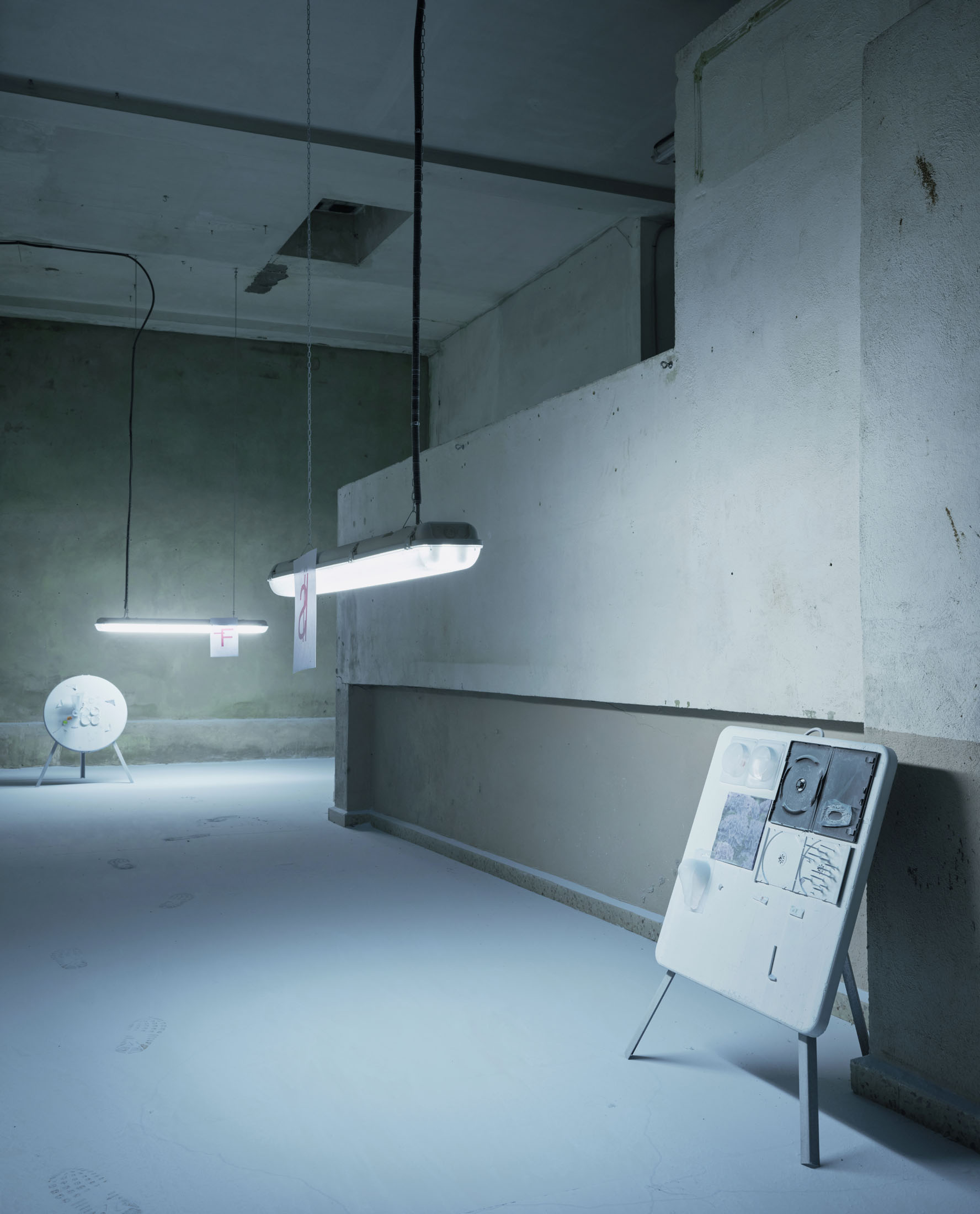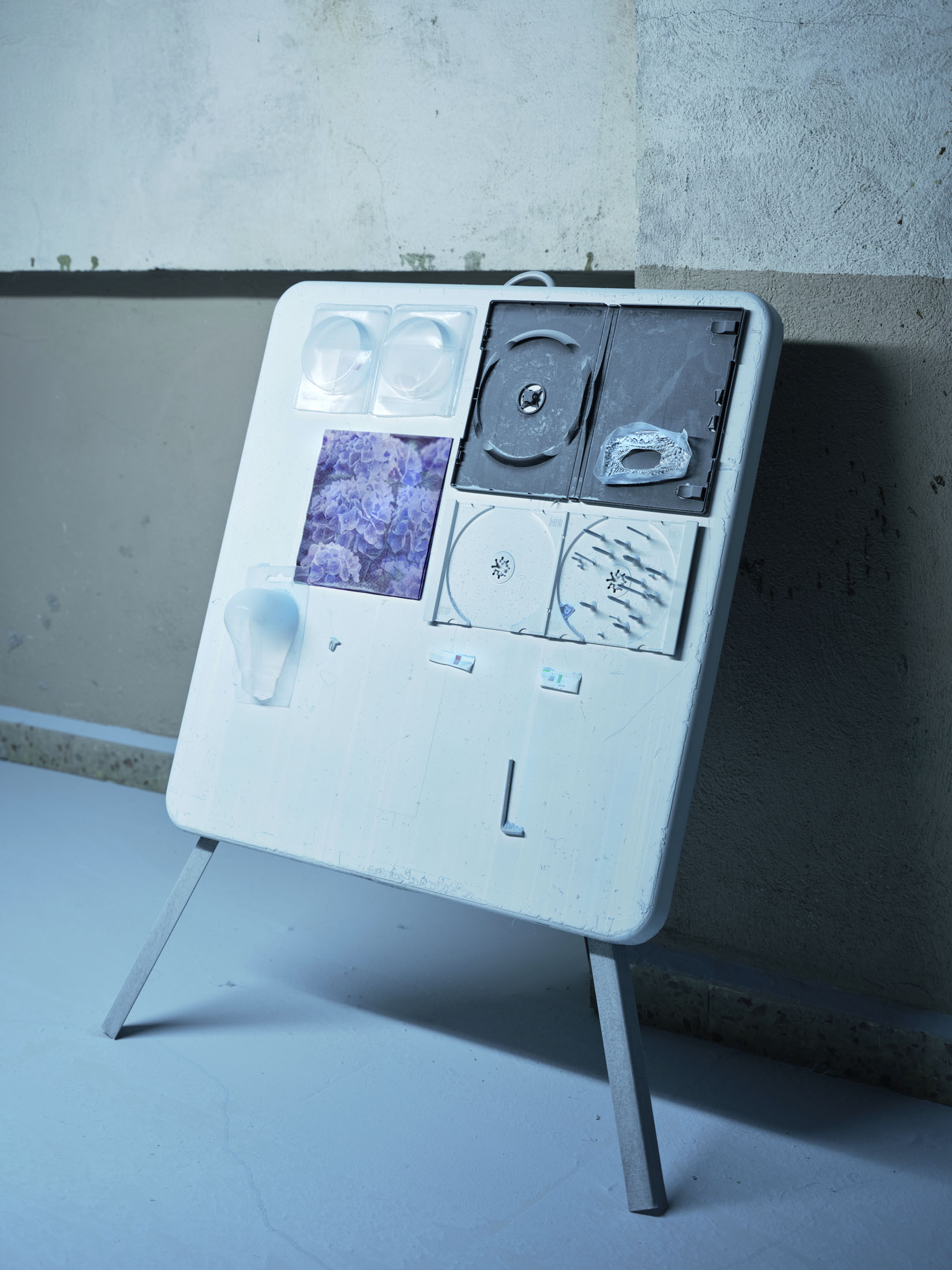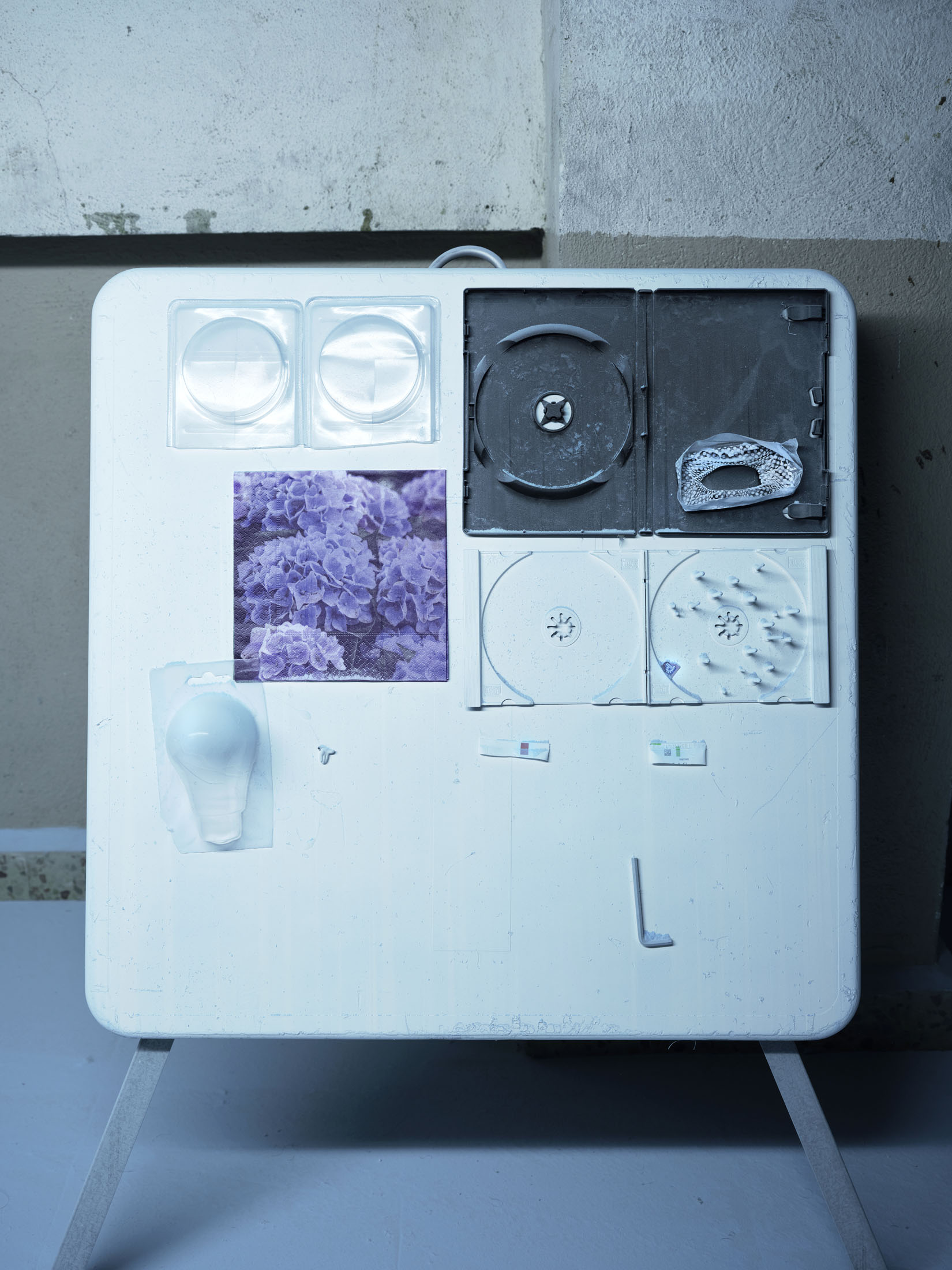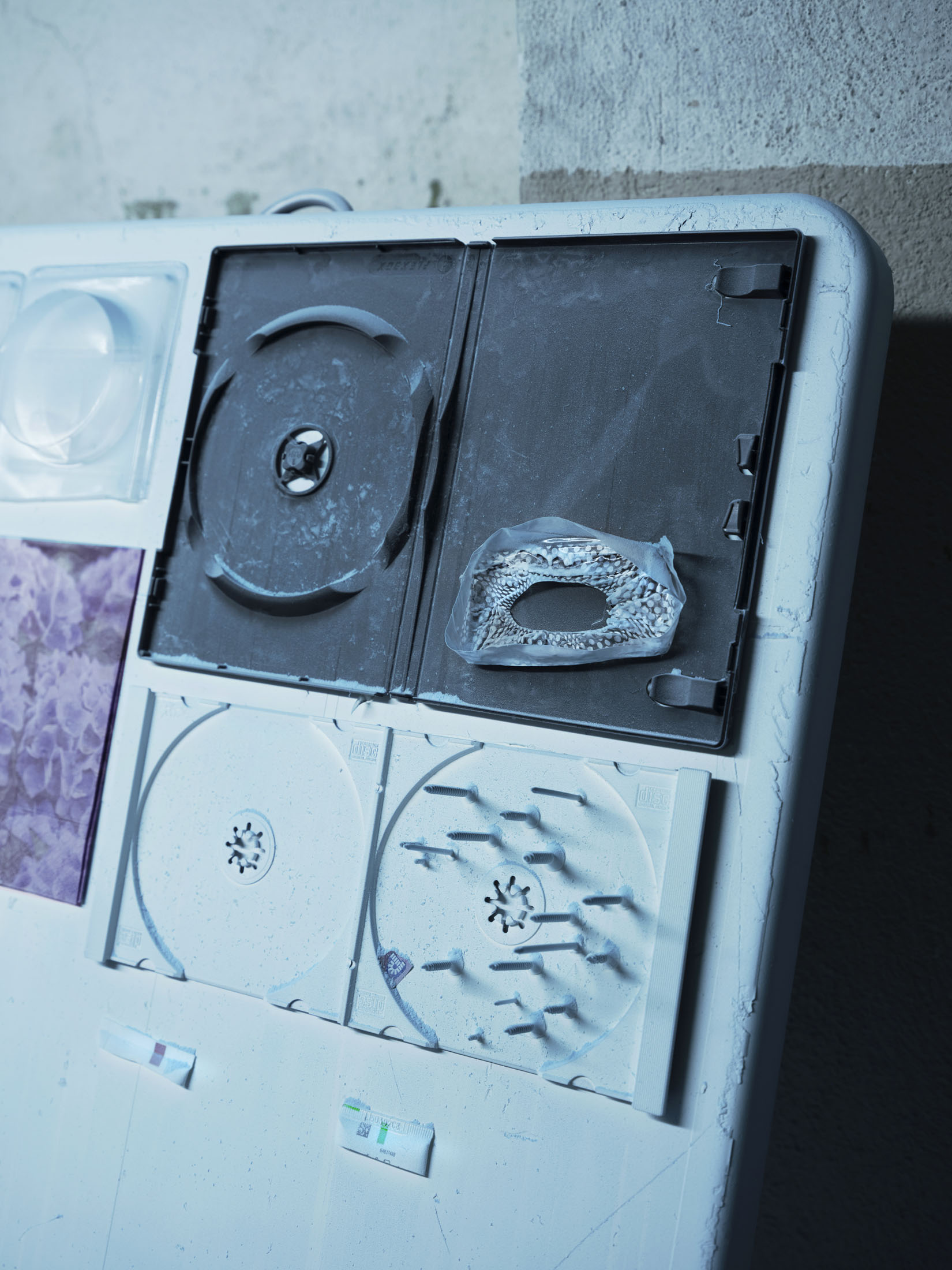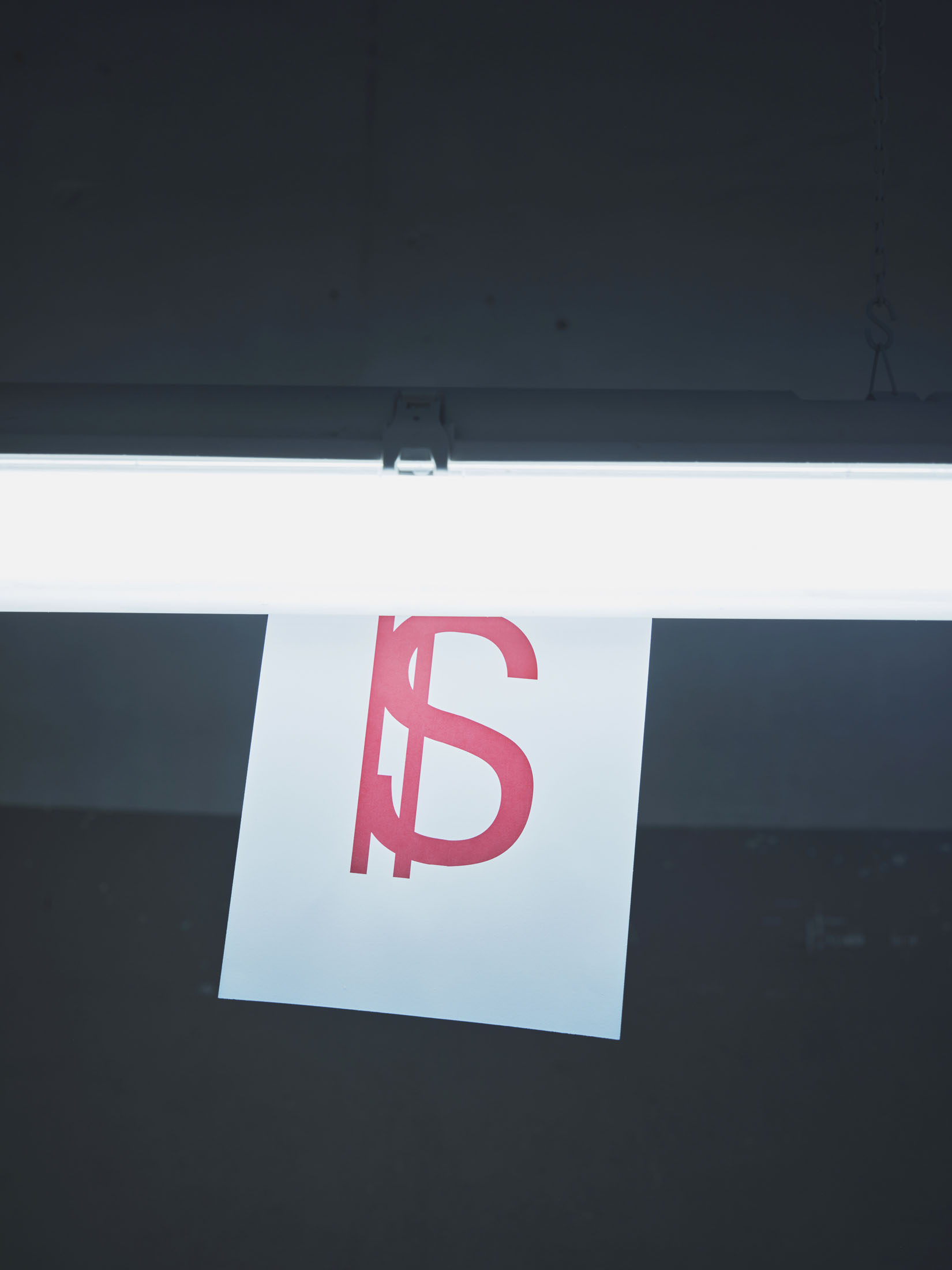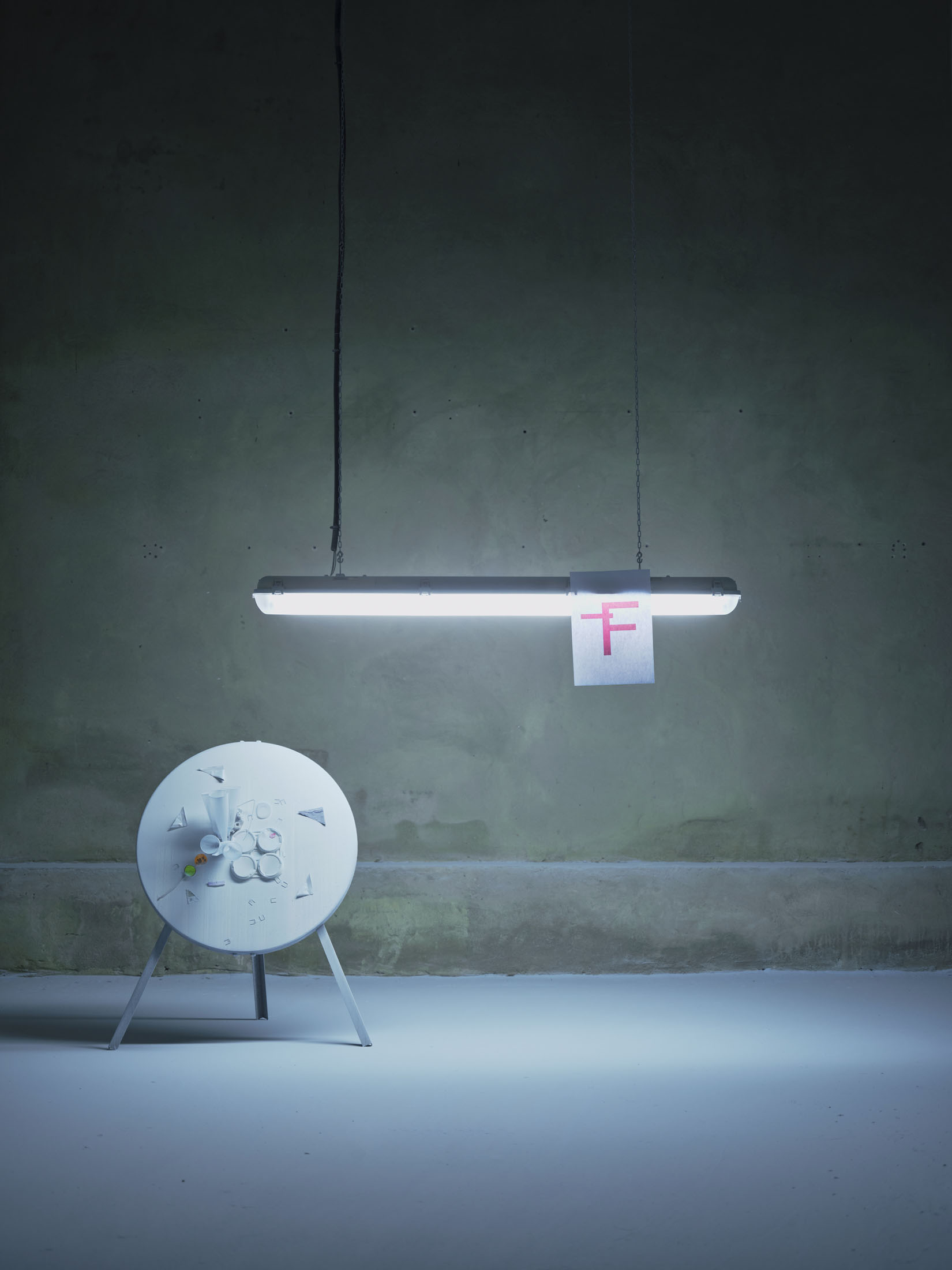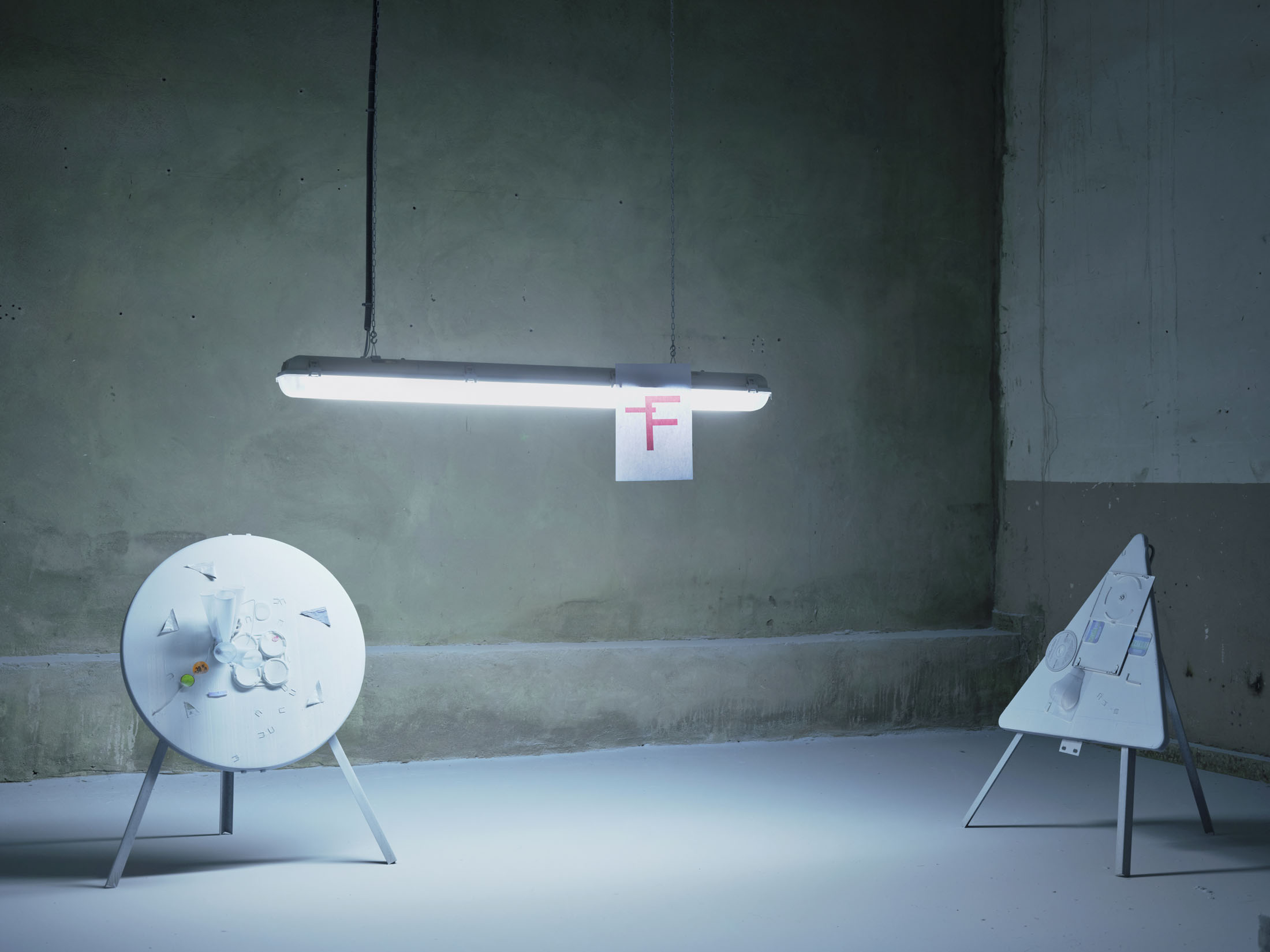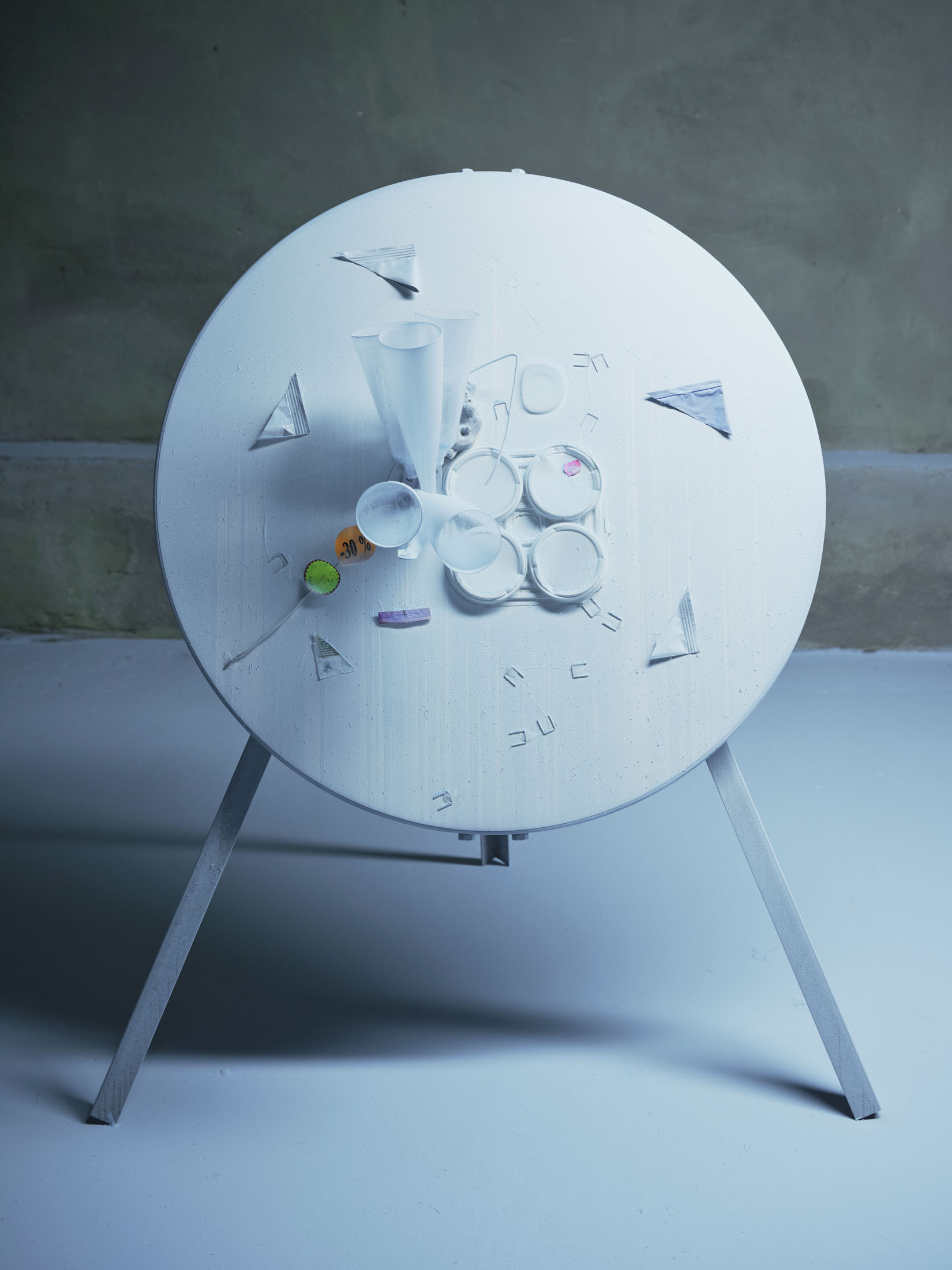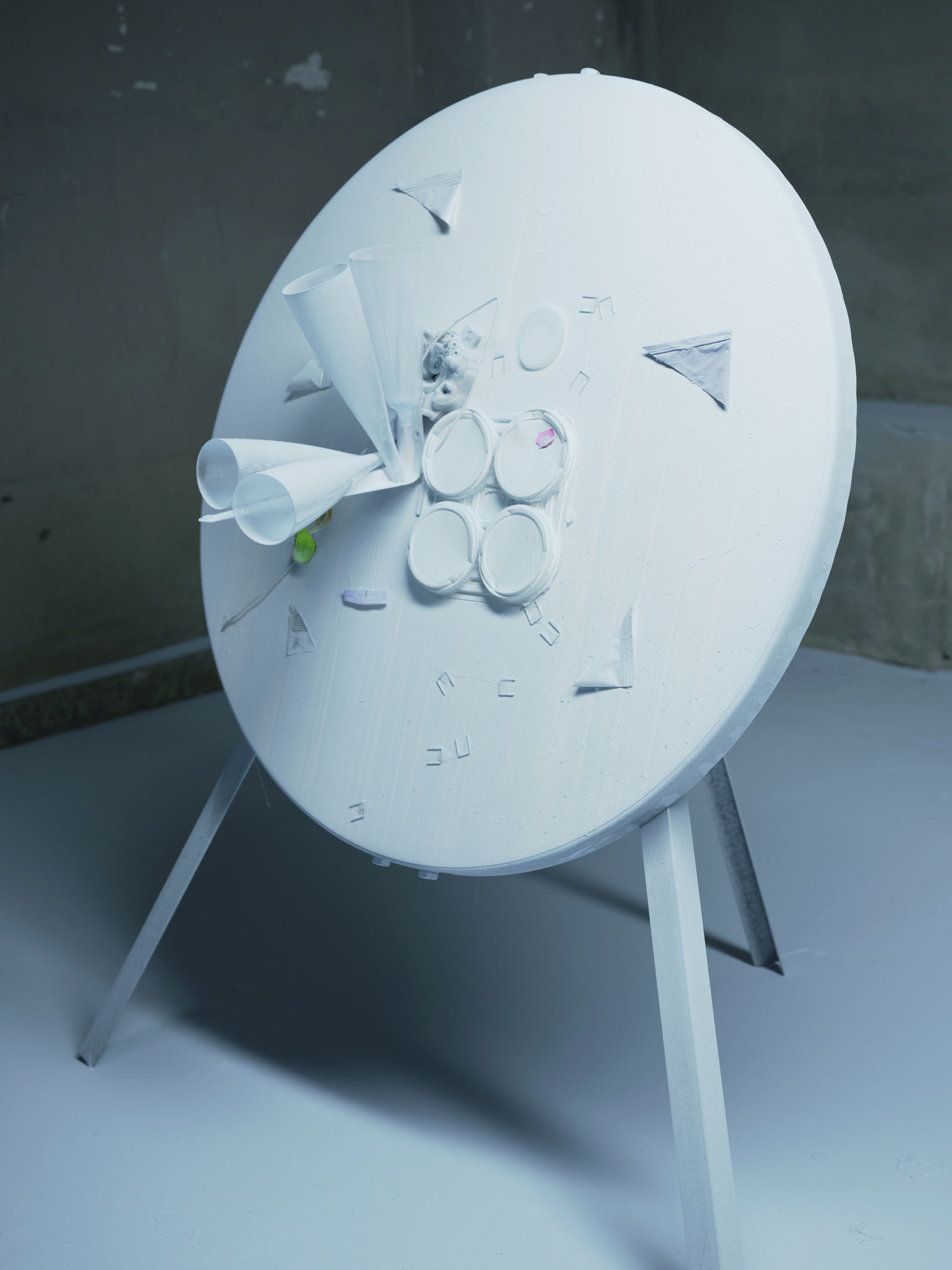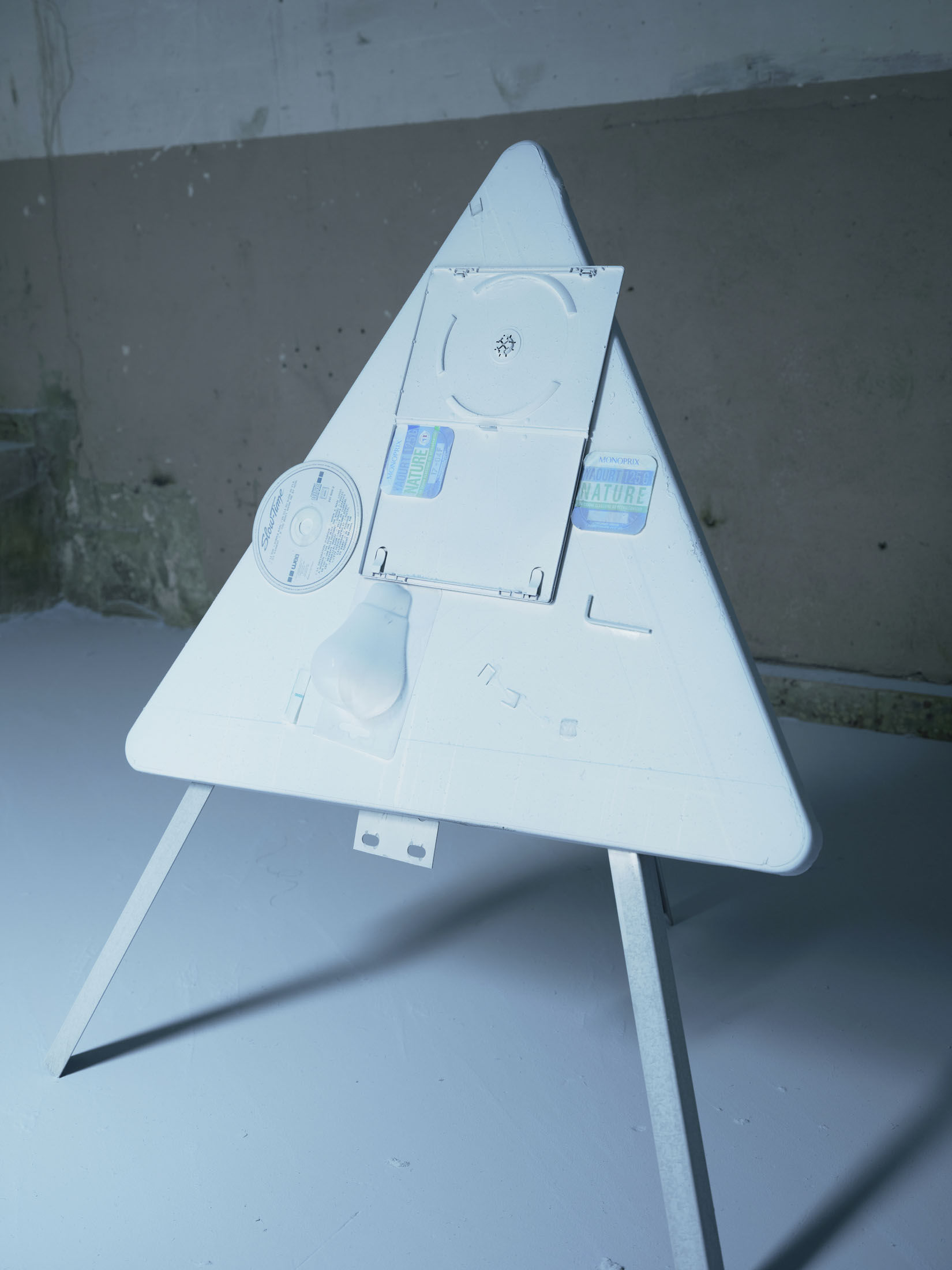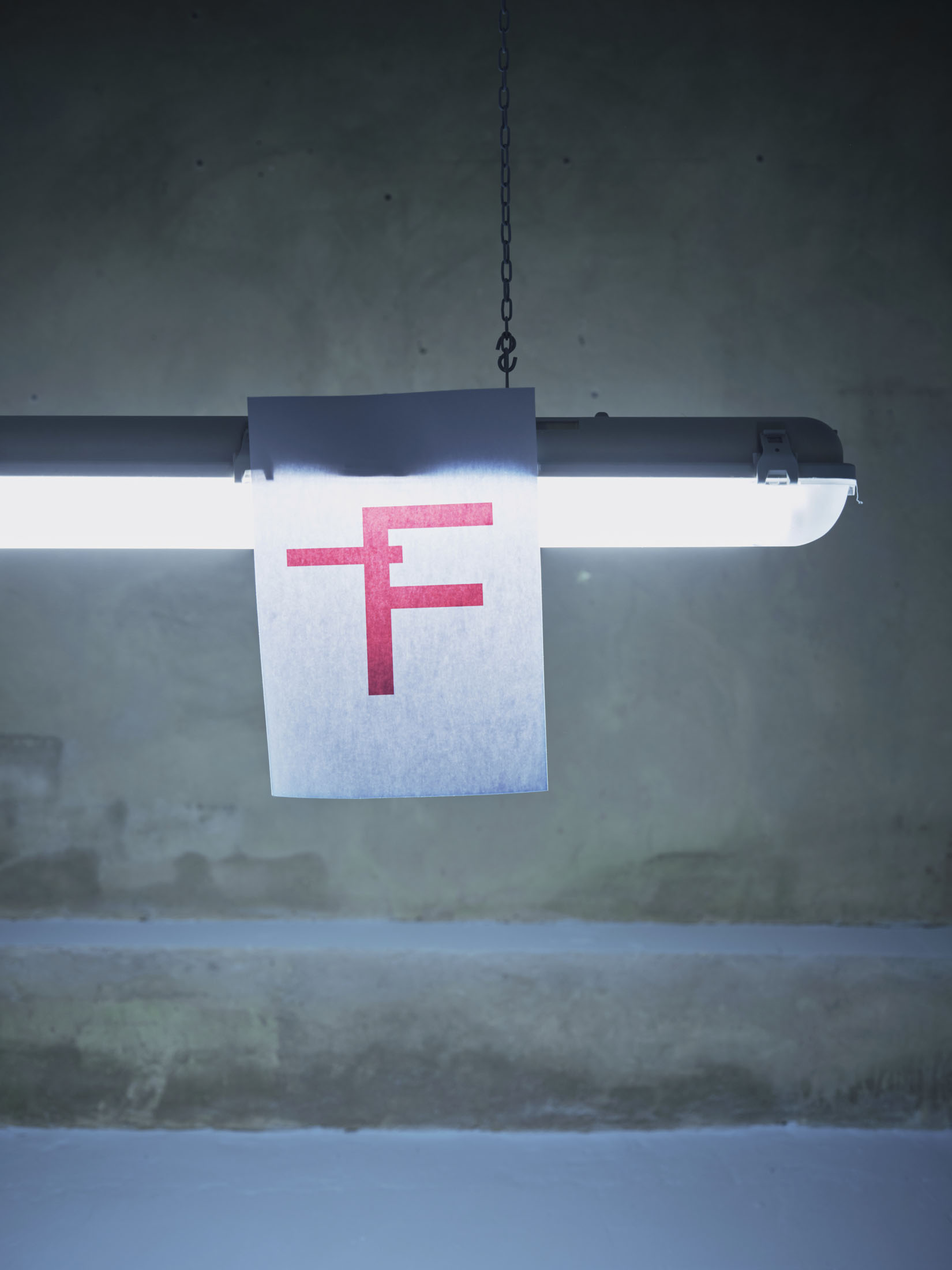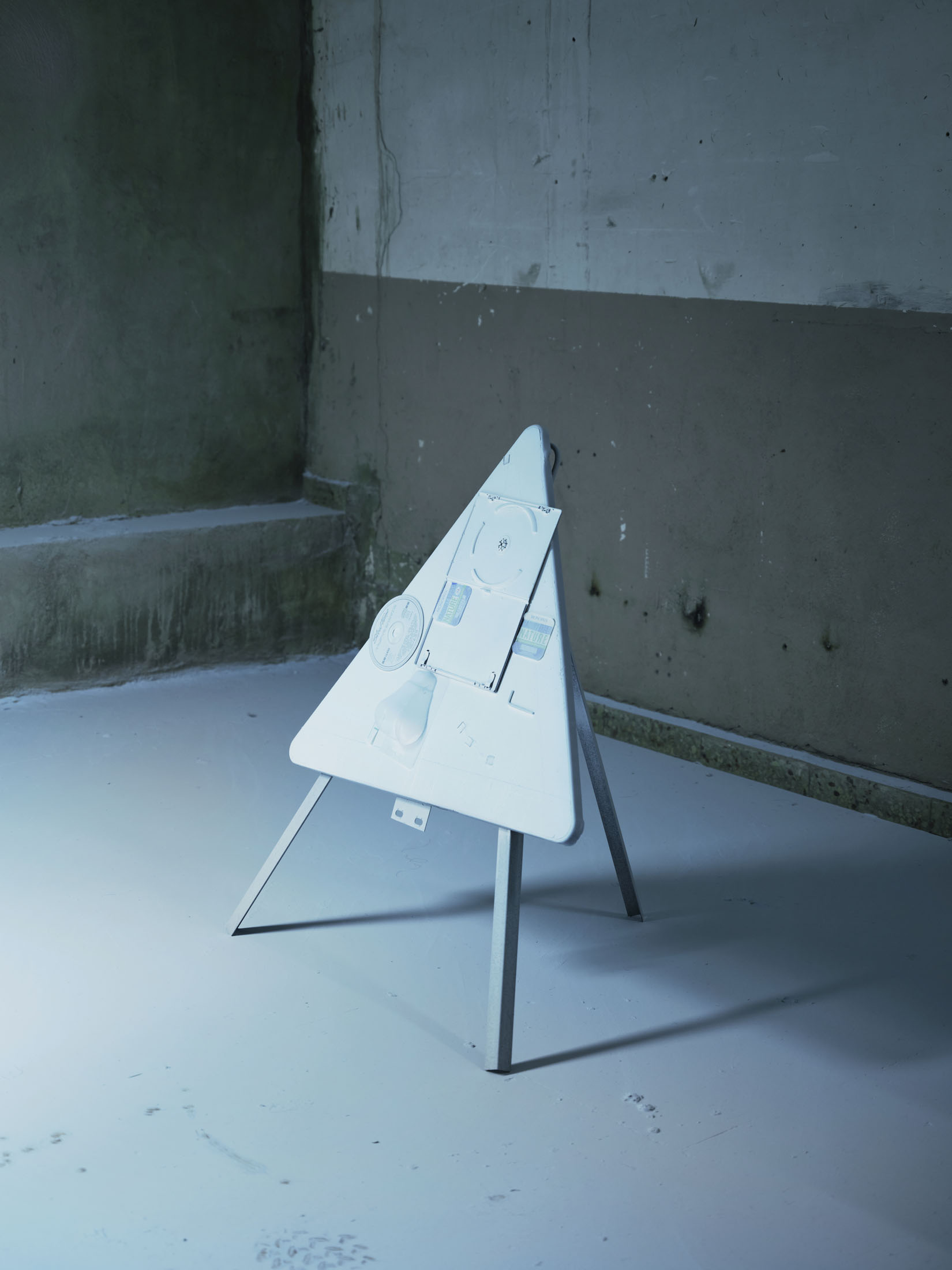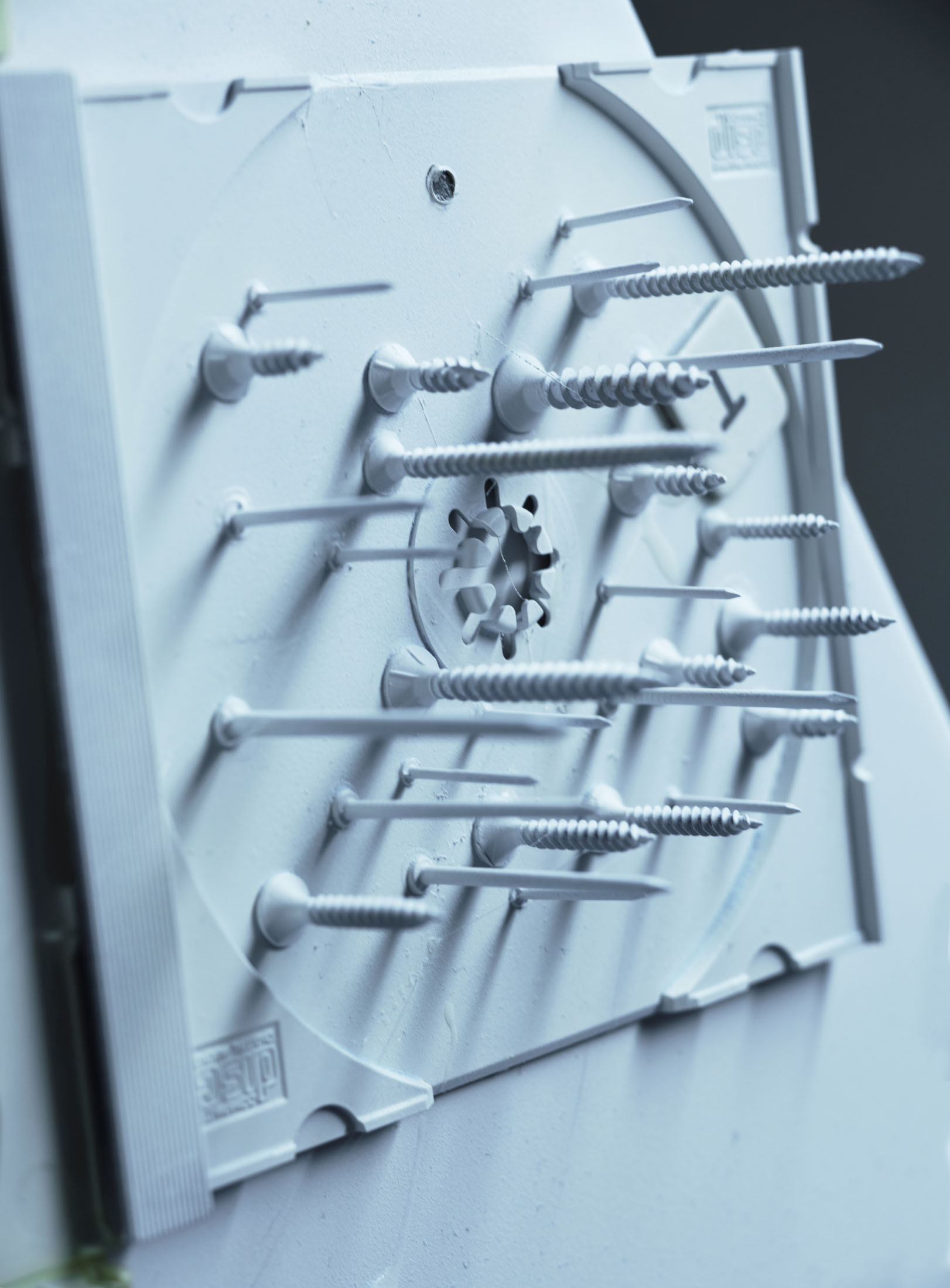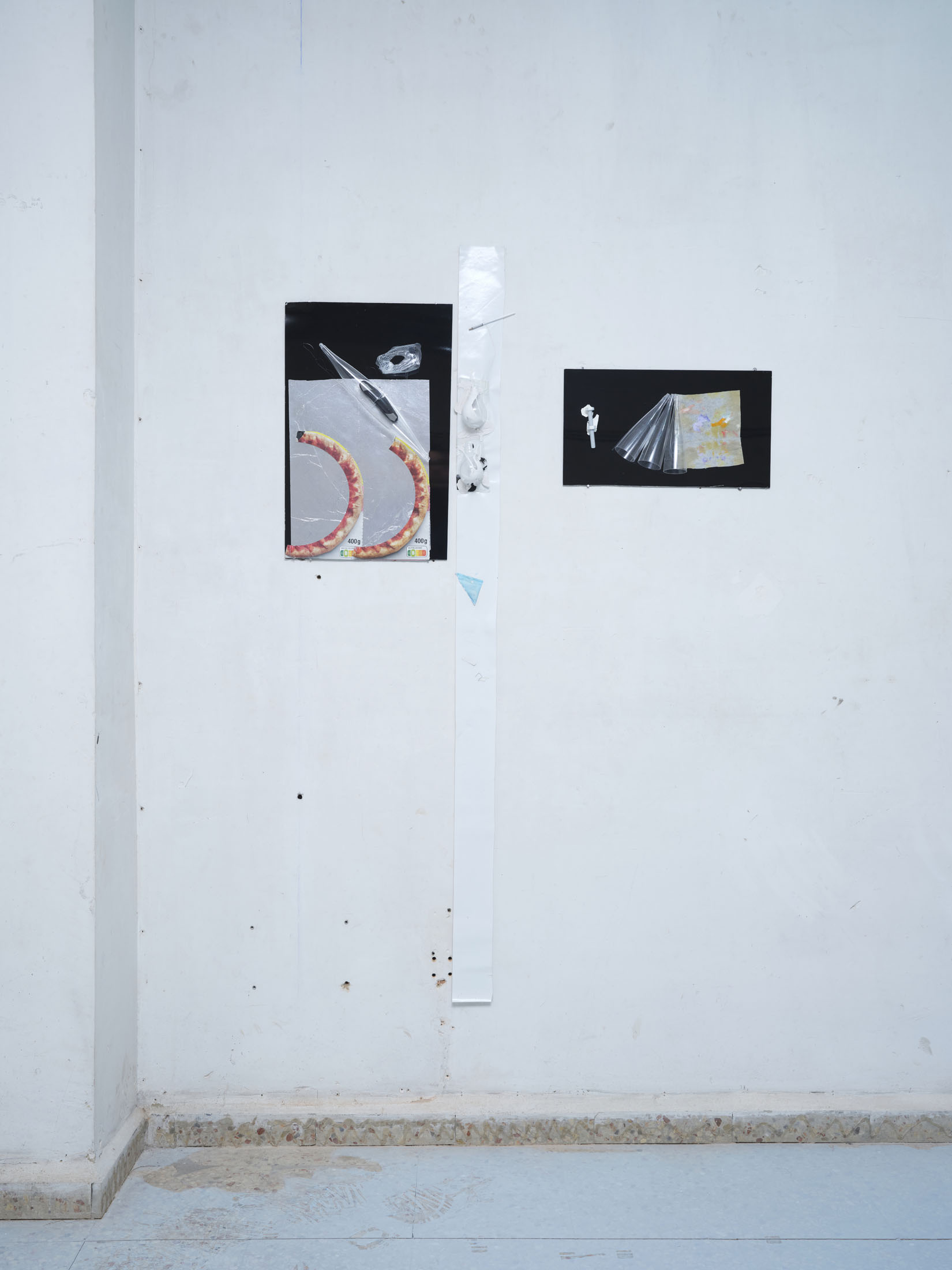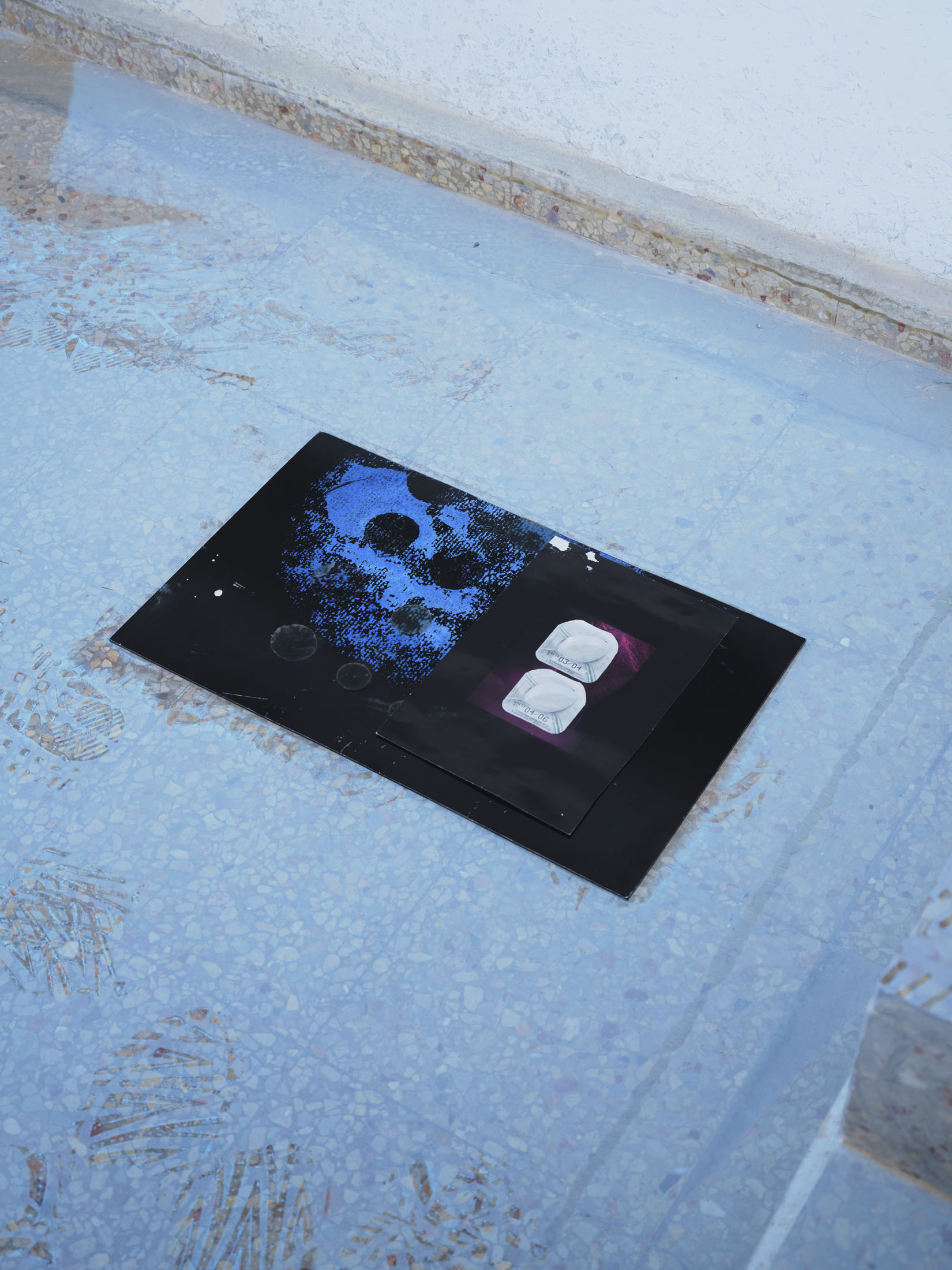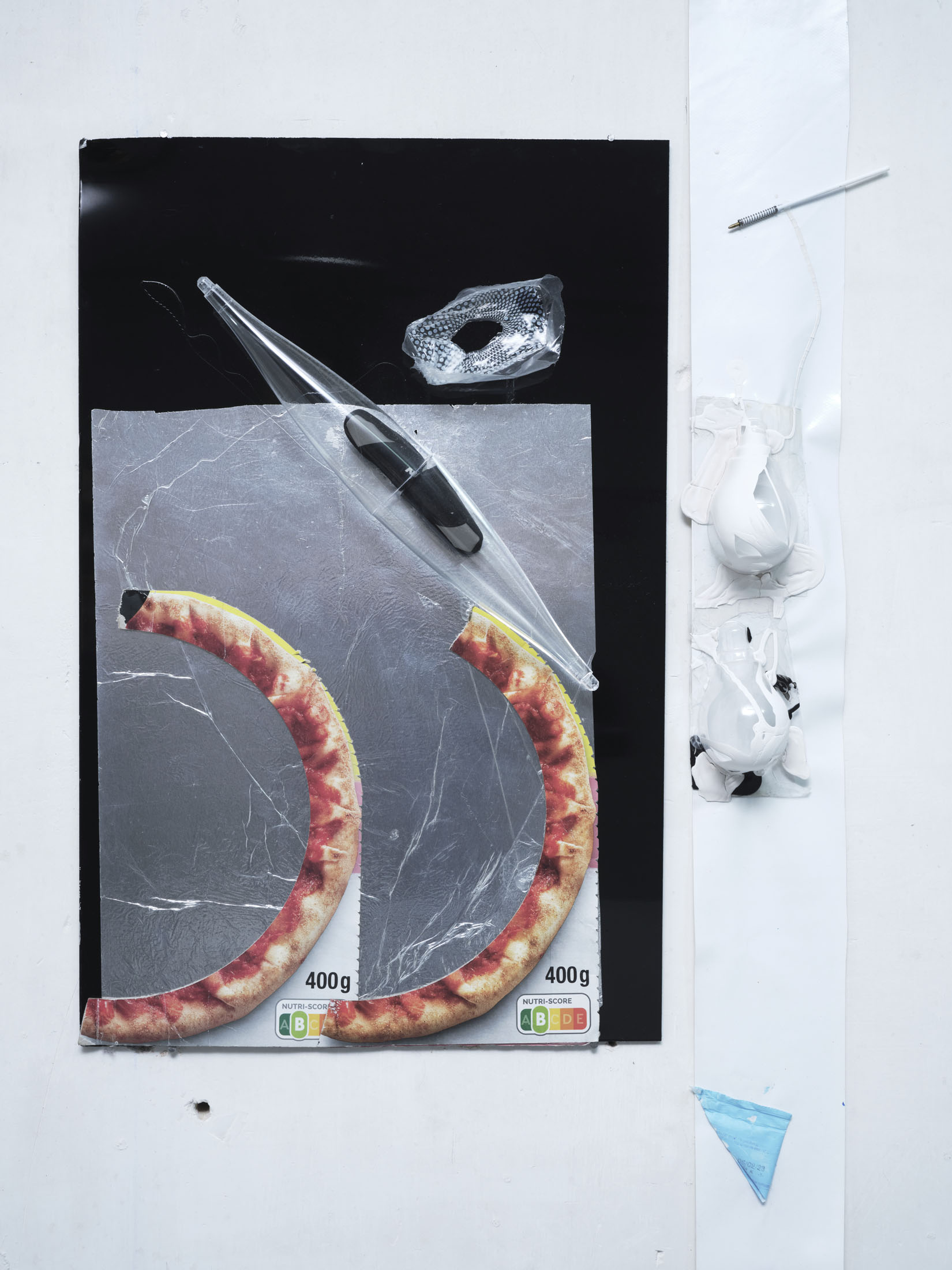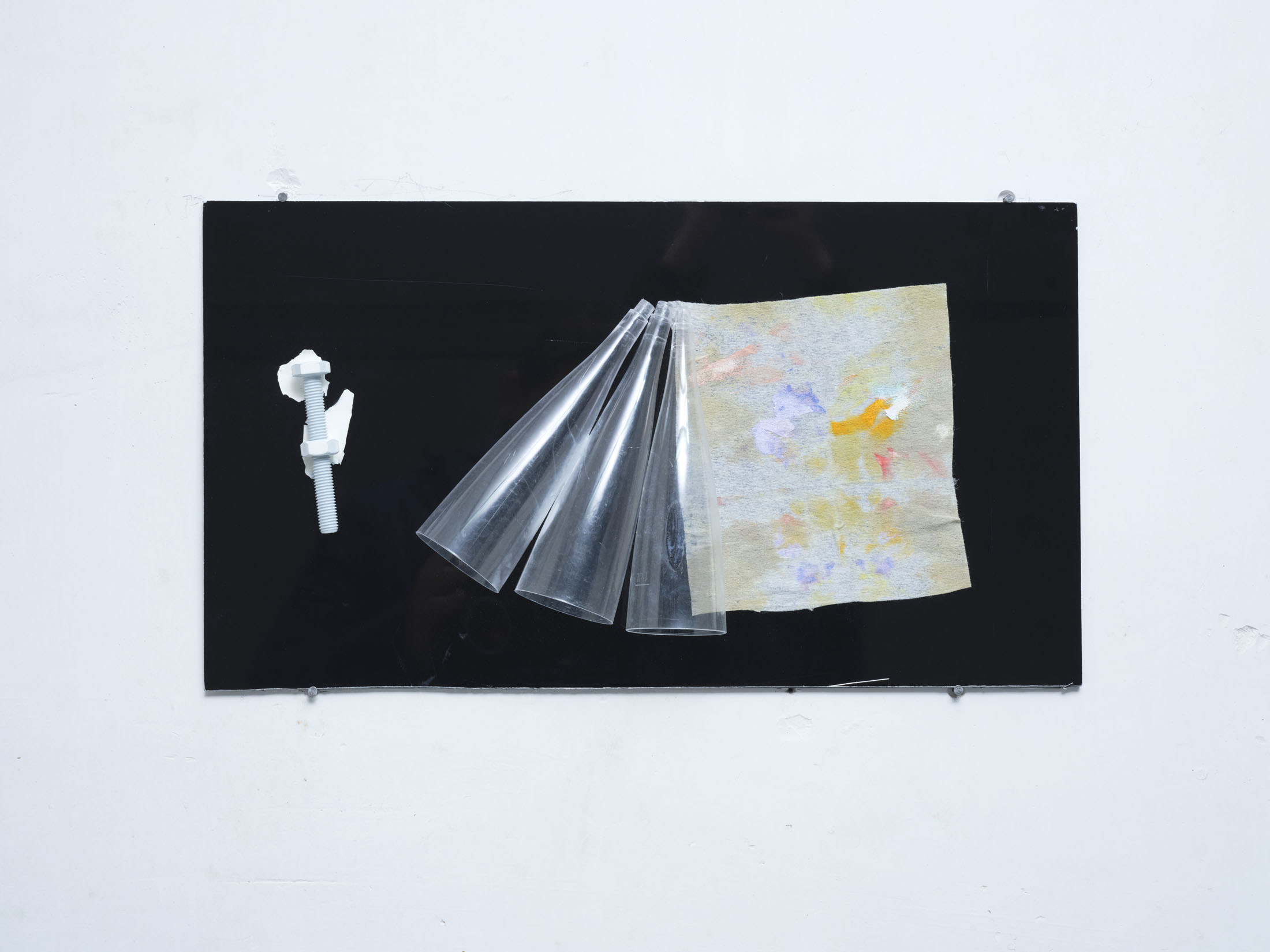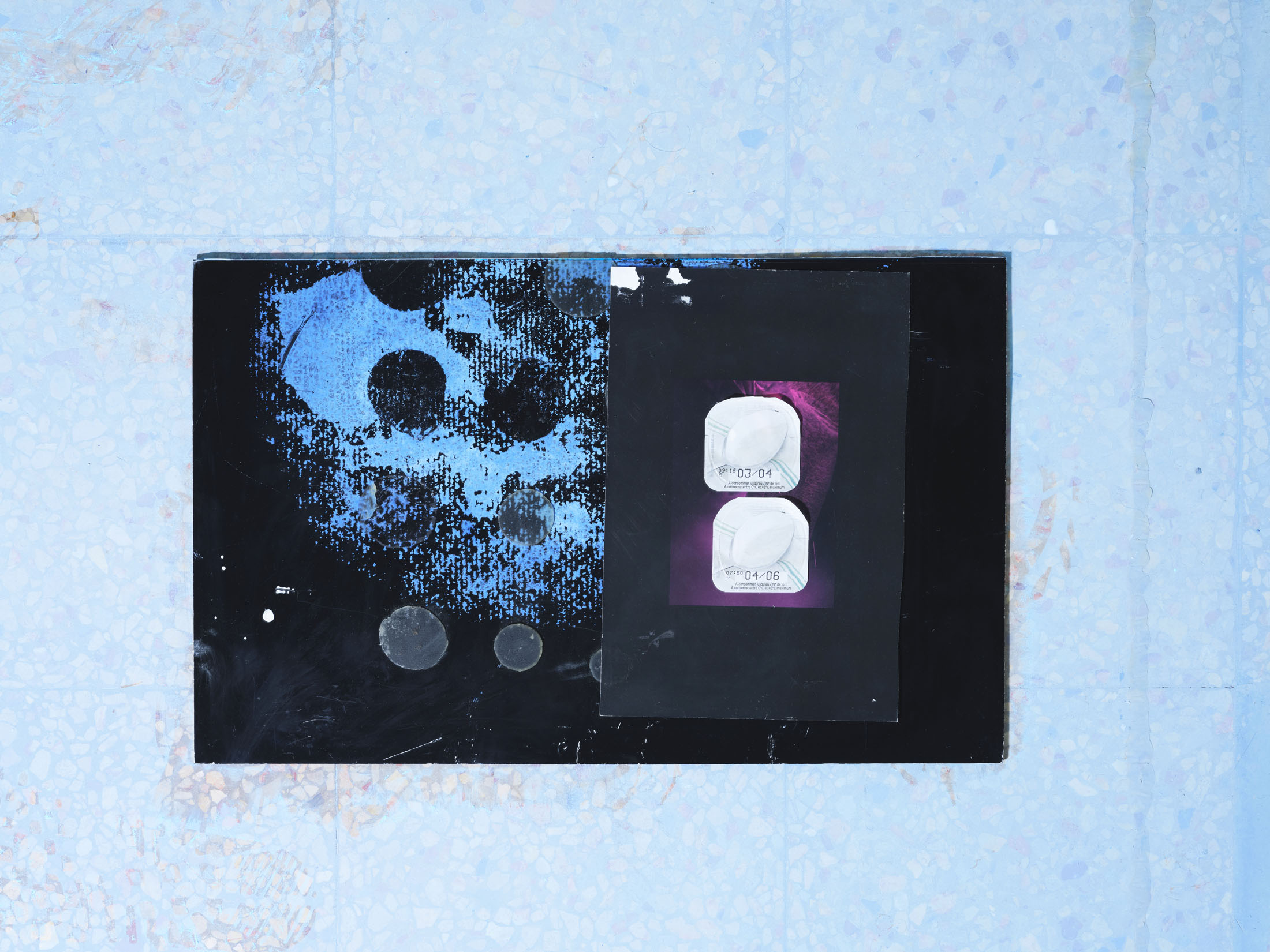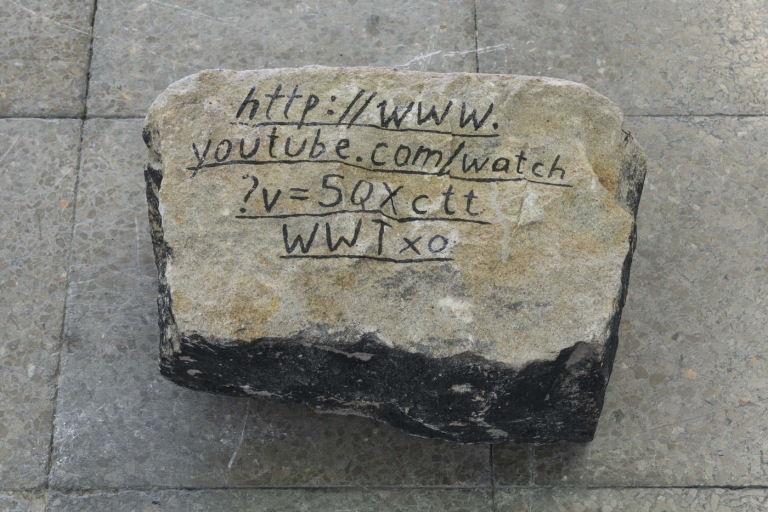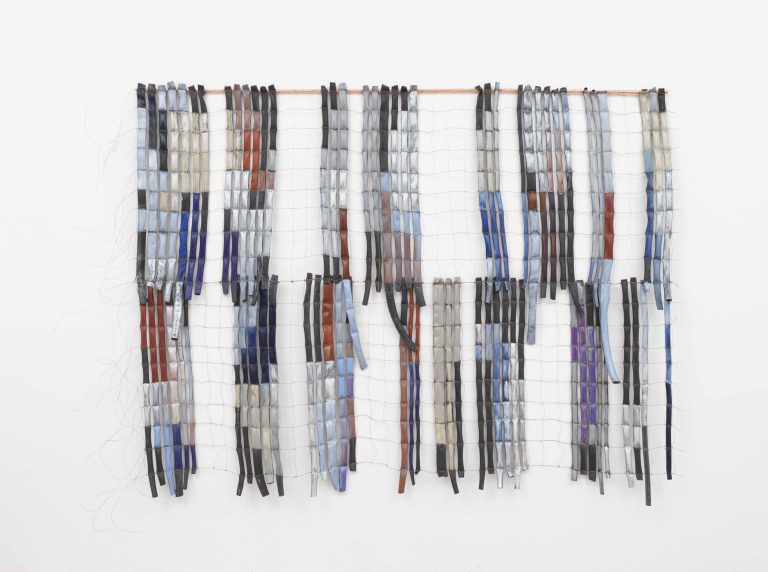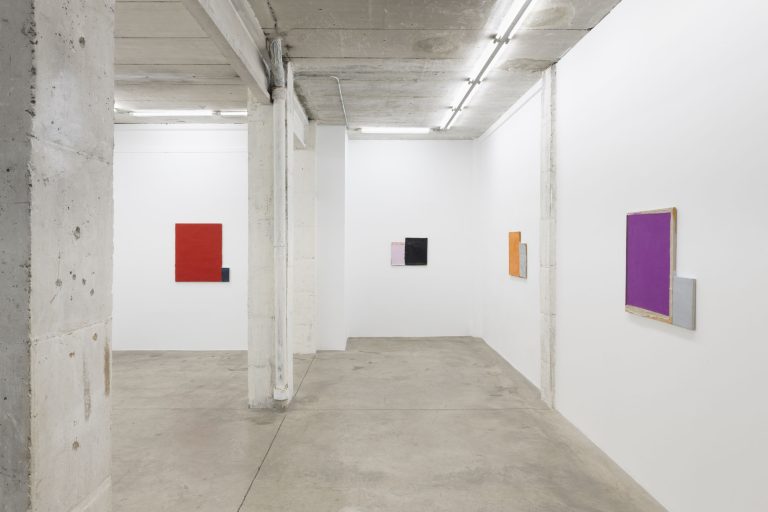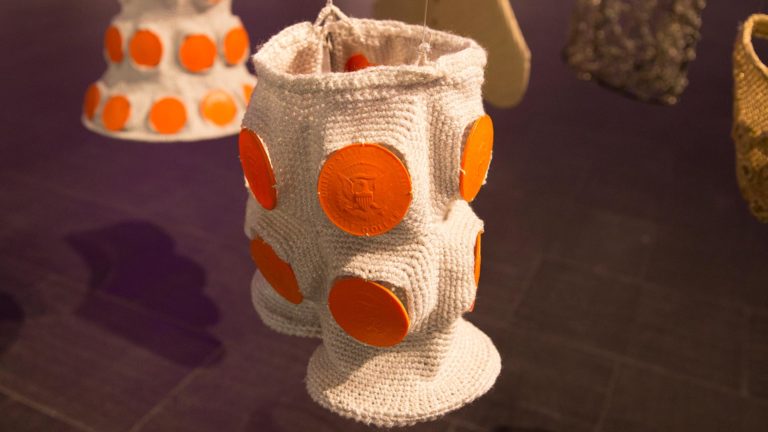
Point Relais is a reconfiguration operation in which the artist, Pepo Salazar Lacruz, develops a series of sculptural exercises of unresolved and fragmentary forms. From the fragment, a play of insinuations takes effect, inviting the public/reader/viewer to reconstruct the totality of the object. In Point Relais, the fragment acts as a vector that materially inscribes a historical structure through apparently neutral gestures.
The wrappers insist on an interface logic: packaging precedes the object (and exceeds its use). Reduction reaches its most literal degree in the compositions of chip bag corners, where the instructions “open here” or “easy-to-open” persist. These formulas design our gesture and regulate our actions, demand an already learned choreography; a series of repeated movements that naturalise certain postures. Relations are bounded, akin to the mechanisms of abstraction of capital—capable of converting networks of social relations into autonomous signs such as money or brands. Yet in the repetition and decontextualisation operated by the artist, that regulatory function is suspended.
The traffic signs remain, but they no longer return instructions. Even so, they do not stop proposing a rhythm. They theatricalise their presence now that they have ceased to be reflective. They have stopped offering a clear solution and from this negative position, they operate. In doing so, they disengage from universal standardisation. The rhythm is marked by a course of variations and repetitions. Salazar Lacruz articulates this through his creative process; when he approaches comfort and glimpses a recognisable code, he changes the pattern. This erratic trajectory could be told through a road trip—at dusk, the car headlights present the traffic signs to you in the most scenic way. They maintain a tempo, that of appearance, but now they answer nothing.
For Salazar Lacruz, art presents itself as a potential practice that allows escape from univocal, reductionist and categorical forms. Here he finds a language with rhizomatic aspirations in which the work functions as a process of encrypting personal and collective references. These encodings occur through exercises in abstraction, from a non-interpretable constant. The resulting forms are assemblages drawn from an archive/collection that have lost their totality and recombine with one another losing their function, meaning and code. In this loss, a place of possibility emerges around a (non-)insistence (a threshold or negotiation between the two terms), a return of the same in another place. Each relation originalises itself without forgetting its previous, present and future conditions, forms and symbols.
The articulation of elements “acts asif”—occupying a place in a differentiated way. An intensity that depends on something else; that is, objects as profiles that connect one thing to another, never in themselves. The loss of value, form and function exists also as an anti- descriptive operation, metaphorised in the loss of expression of inoperative signals as their semiotic codes are flattened. A flight that returns to its position and is disposed within an exhibition exercise in which, ultimately, the classical form of display appears: works on the wall. A final stage of the show that attempts to abandon the exhibition’s own rhythm.
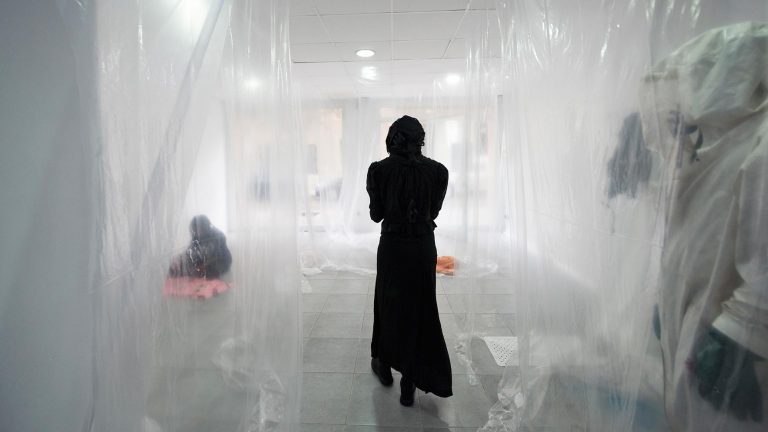
Understanding the show as an operation turns the space into both a conceptual and legitimising frame and an affected and affective material. The dimming of the lights invites the atmospheric apparatus to become part of the exhibition rhythm, emphasising its presence and function. To force the estrangement of the space, Salazar Lacruz sprays the exhibition with fire extinguishers to make dust a basso continuo that turns his sculptural gestures into a series of intensities arranged within a single perceptual field.