In 1957, Valencia began its plan to permanently cover its urban irrigation ditches, a lengthy process that originated in the urban expansion that came after the demolition of the city walls in 1865 and followed the hygienist and rationalist principles of 19th-century urban planning. For centuries, the irrigation ditches had served a dual purpose: as an irrigation system and an urban sanitation network. The reuse of wastewater, together with sludge, provided valuable nutrients to the medieval agrosystem and created a relationship of interdependence that benefited both the city and the surrounding area.
This balance gradually weakened until, with the Preliminary Project for the Improvement of Sanitation in Valencia (Pla Sur, 1968), a network of collectors was designed that definitively separated irrigation from urban drains, as a result of the environmental problems caused by discharges. Geographer Roland Courtot de – scribed this transformation as the transition ‘from the orchard around the city to the city around the orchard’. Other voices, however, speak rather of a transition from
a city ‘in the orchard’, integrated into mutual flows, to a city ‘above the orchard’, spread out over an increasingly residual historical landscape.
Pepet’s work is rooted in the relationship between water, landscape and the social structures that arise from its management. His practice explores irrigation channels as inherited architecture and as a political metaphor: a system that sustains life, but also a space of conflict, corruption and inequality.
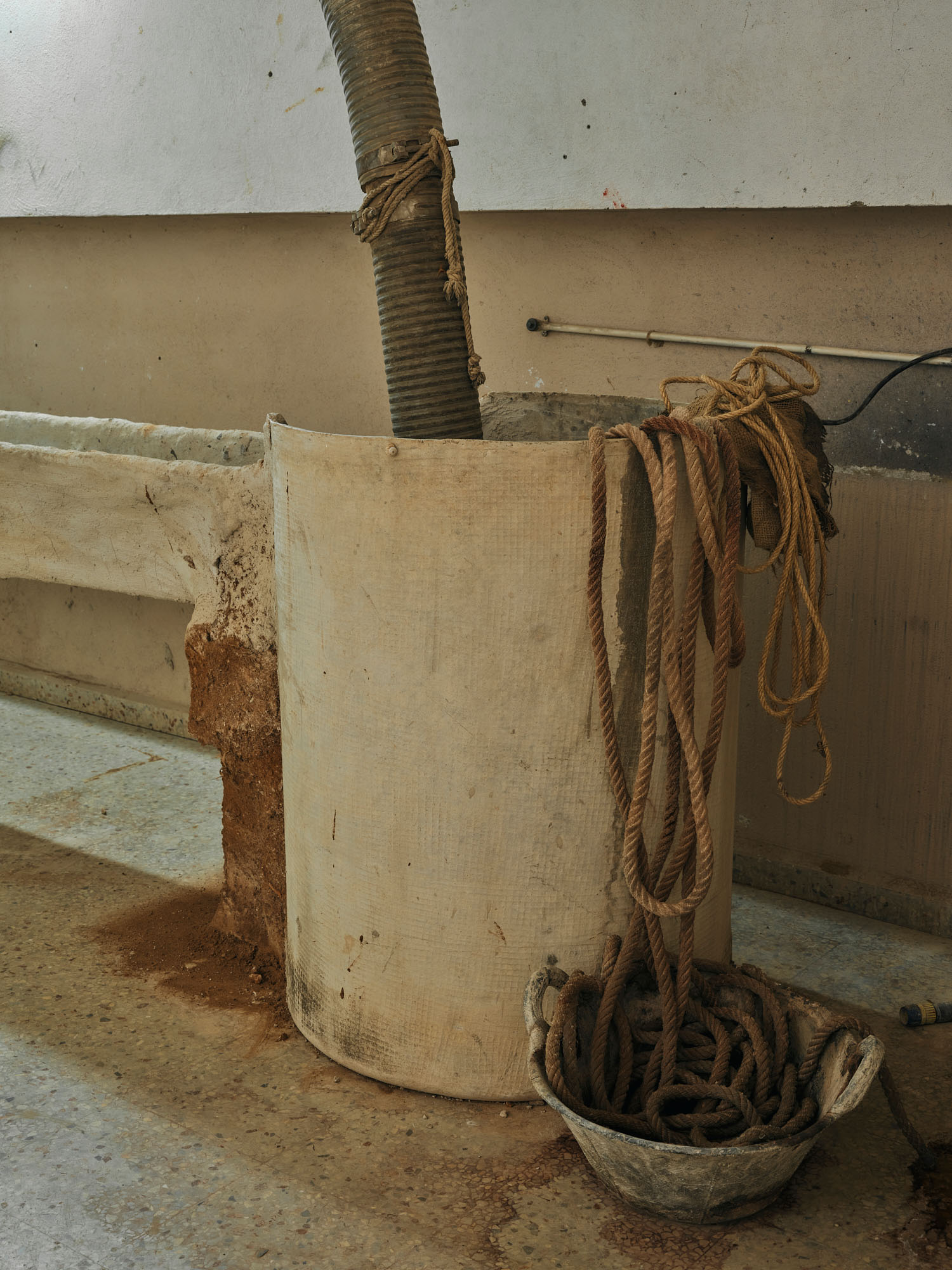
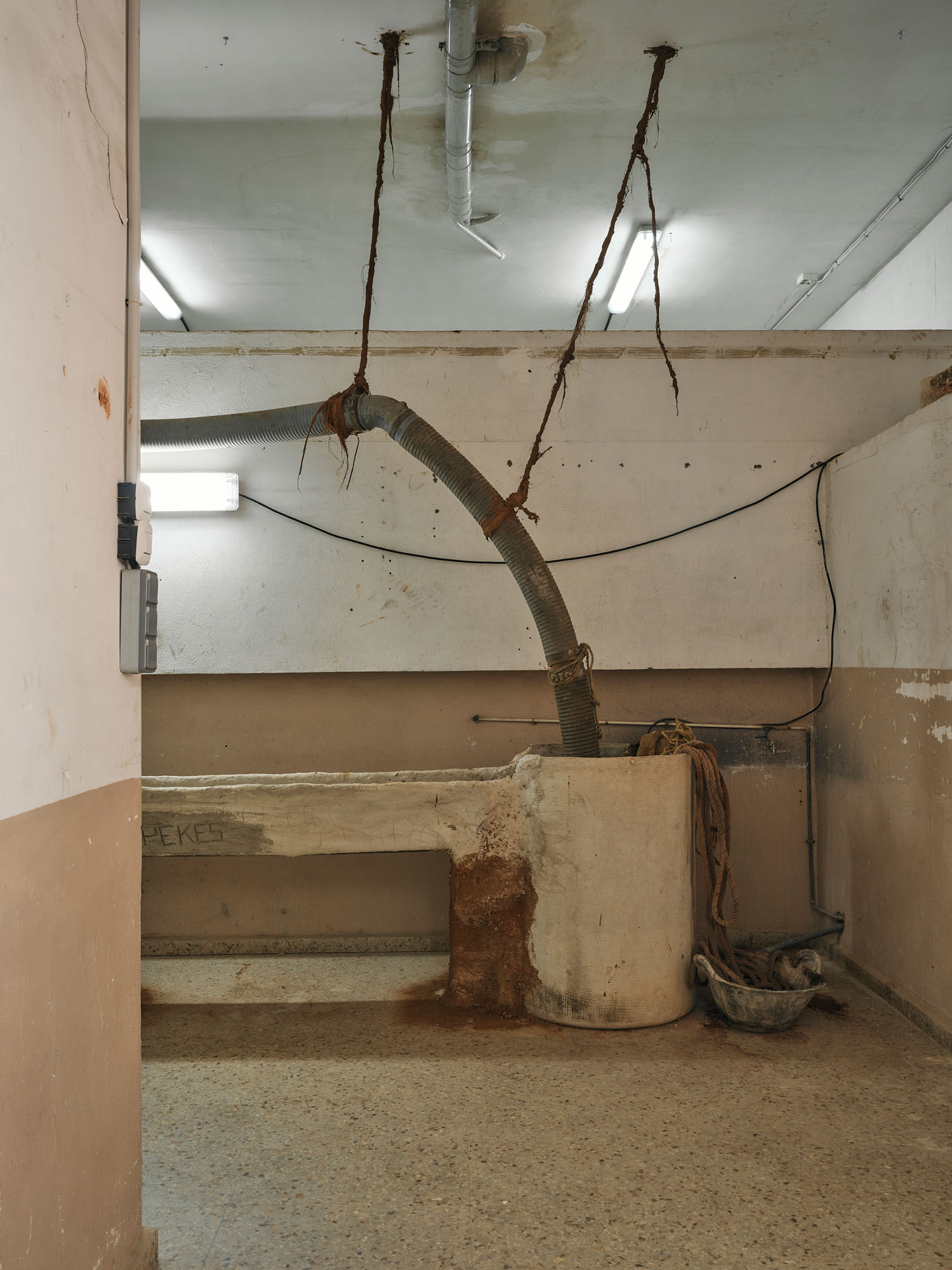
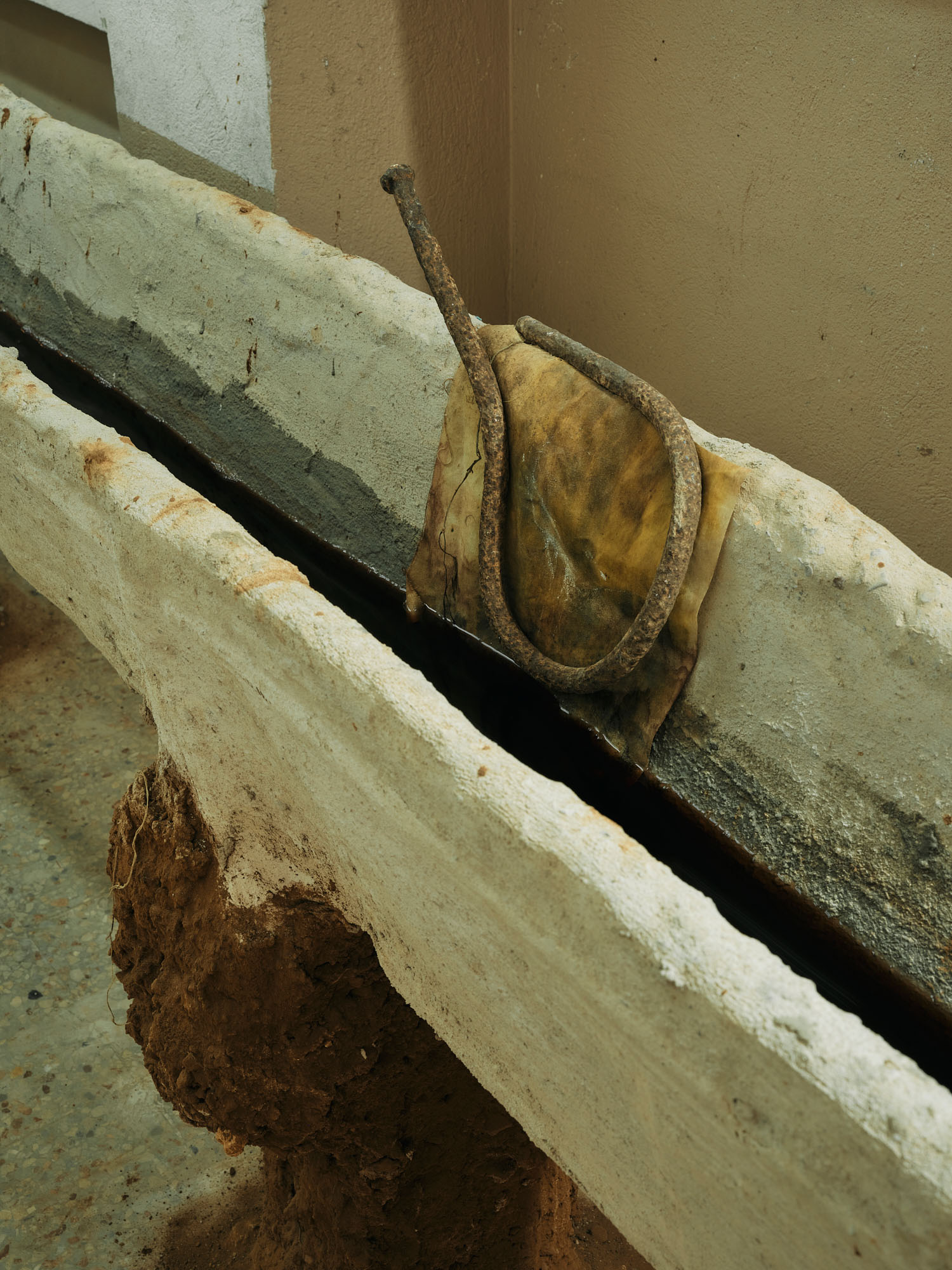
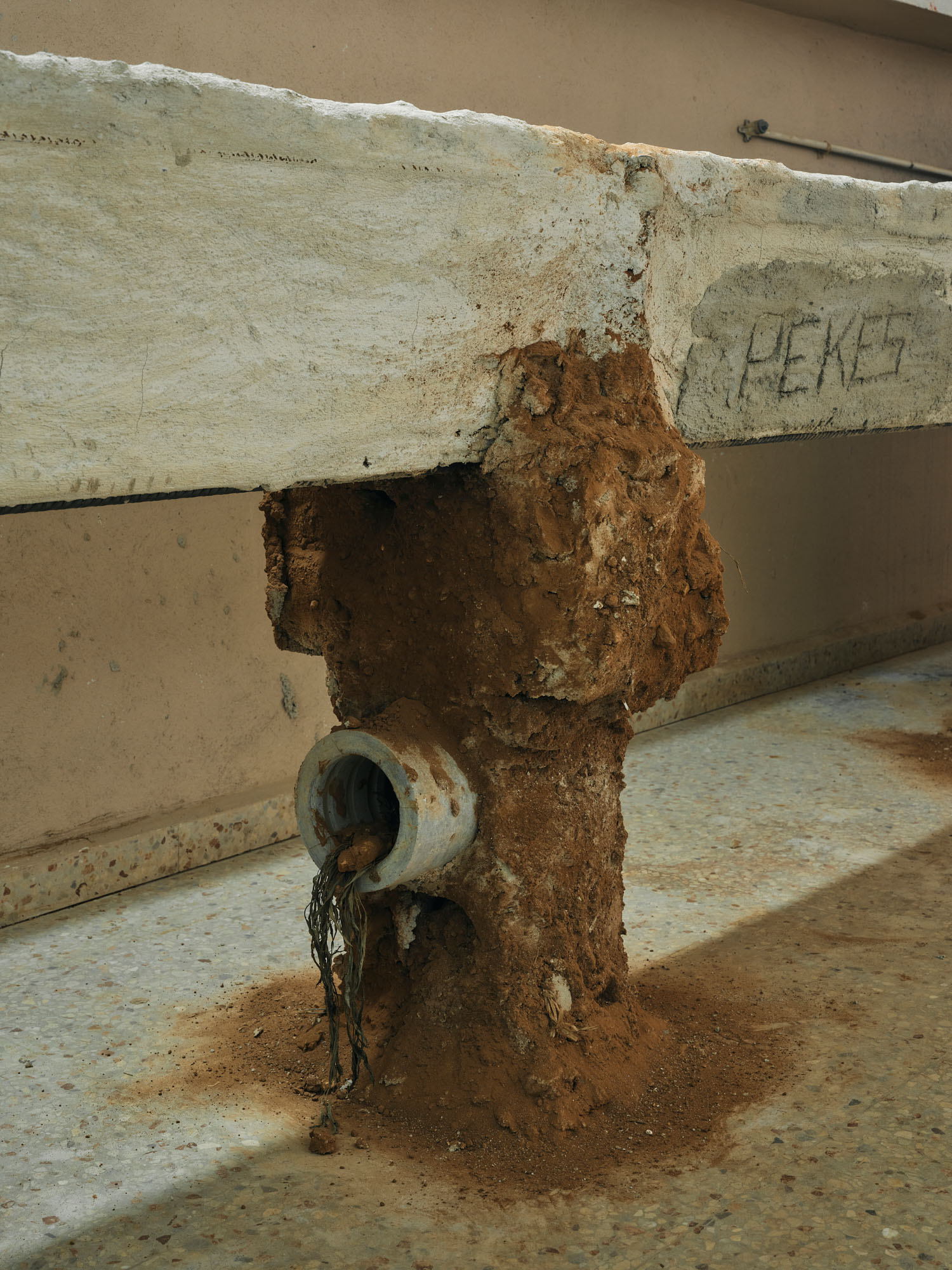
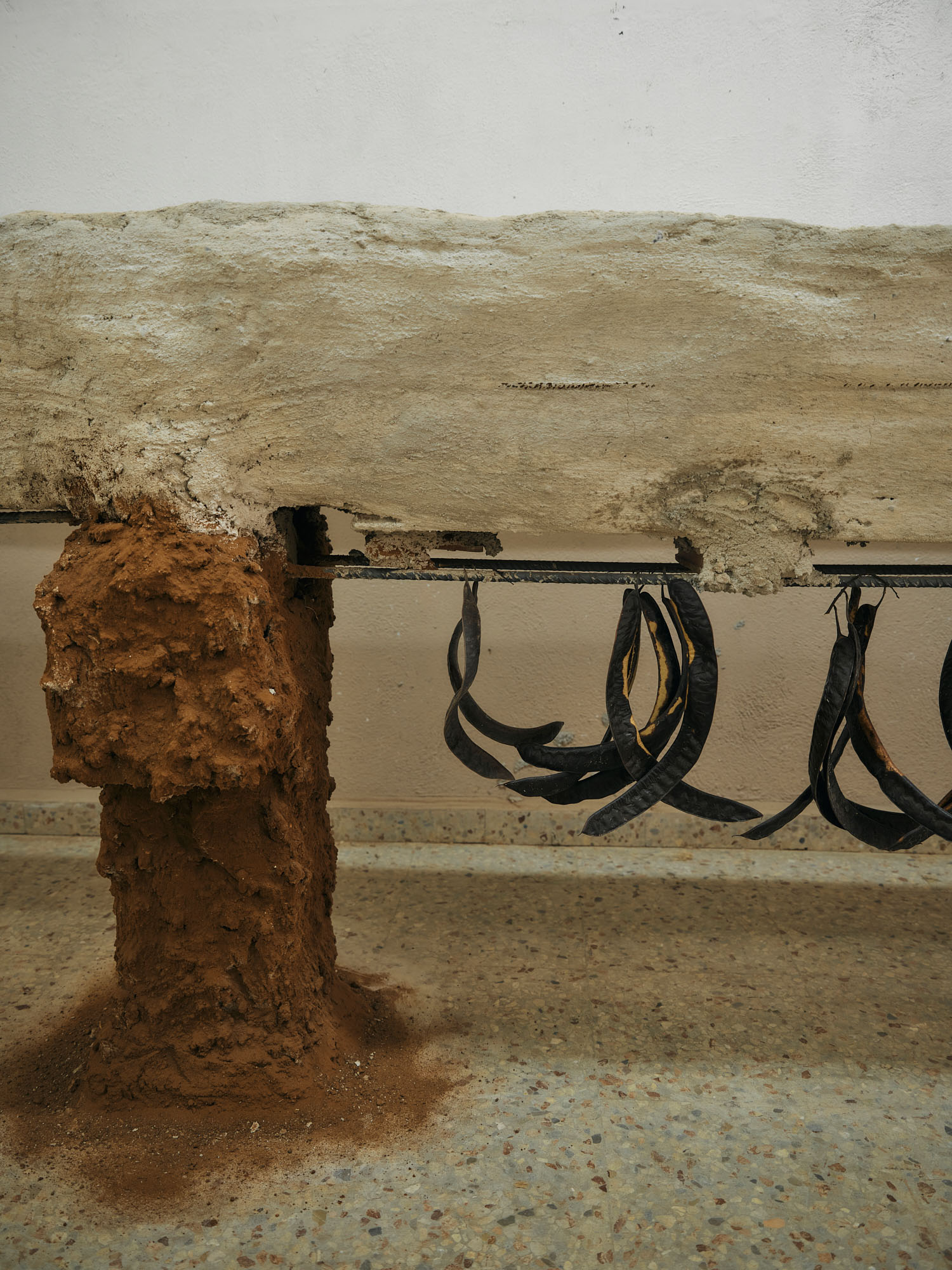
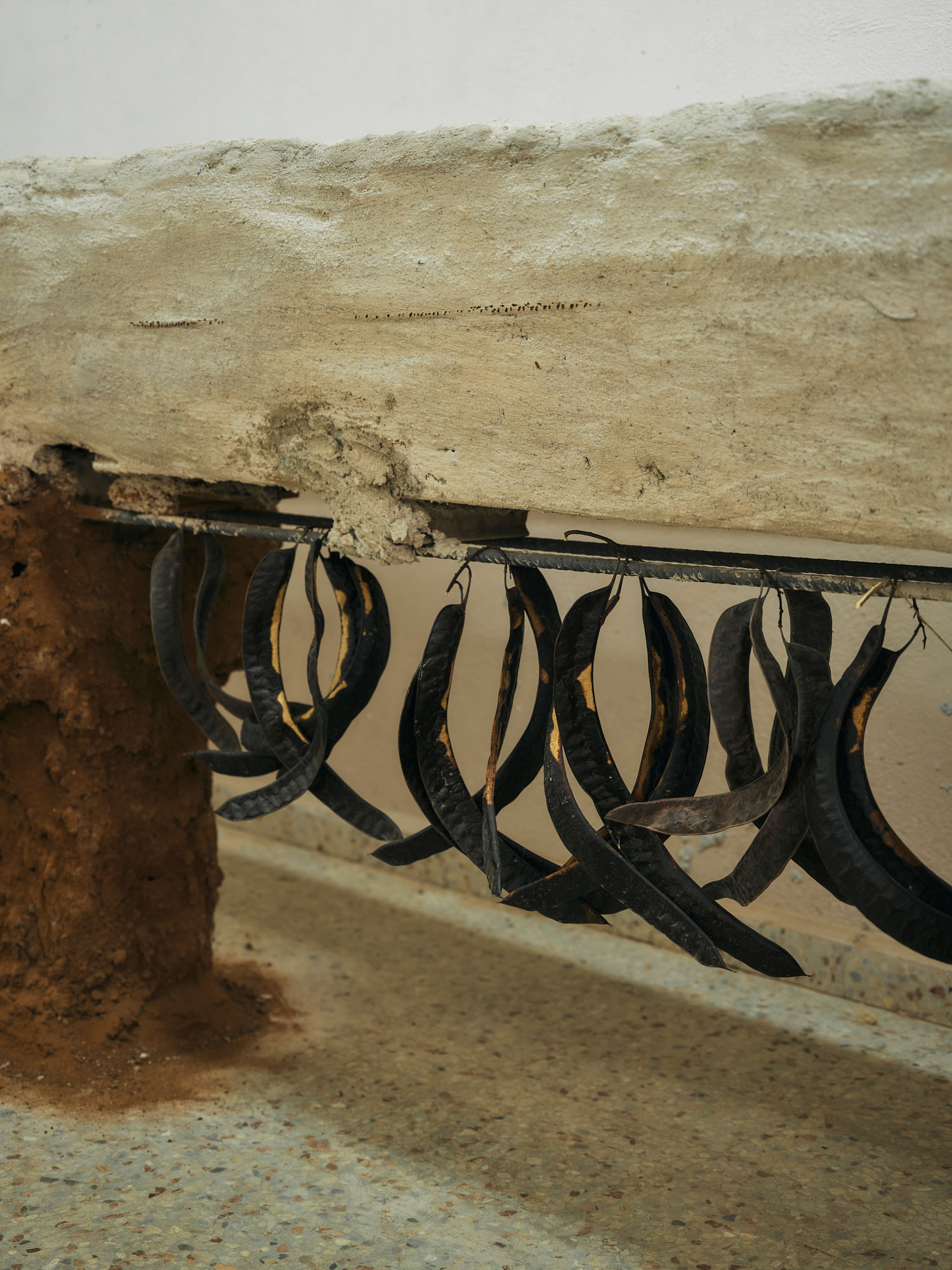
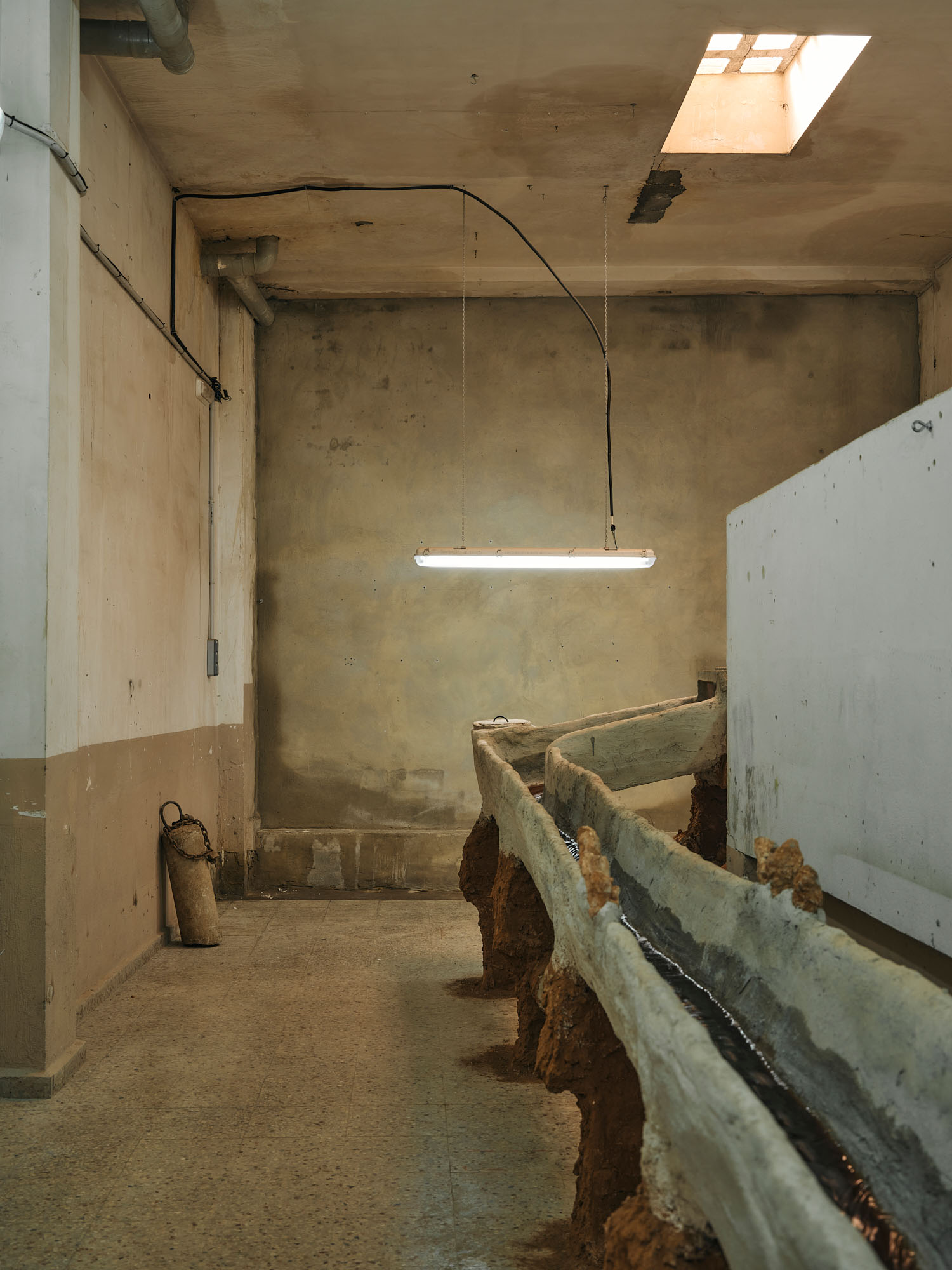
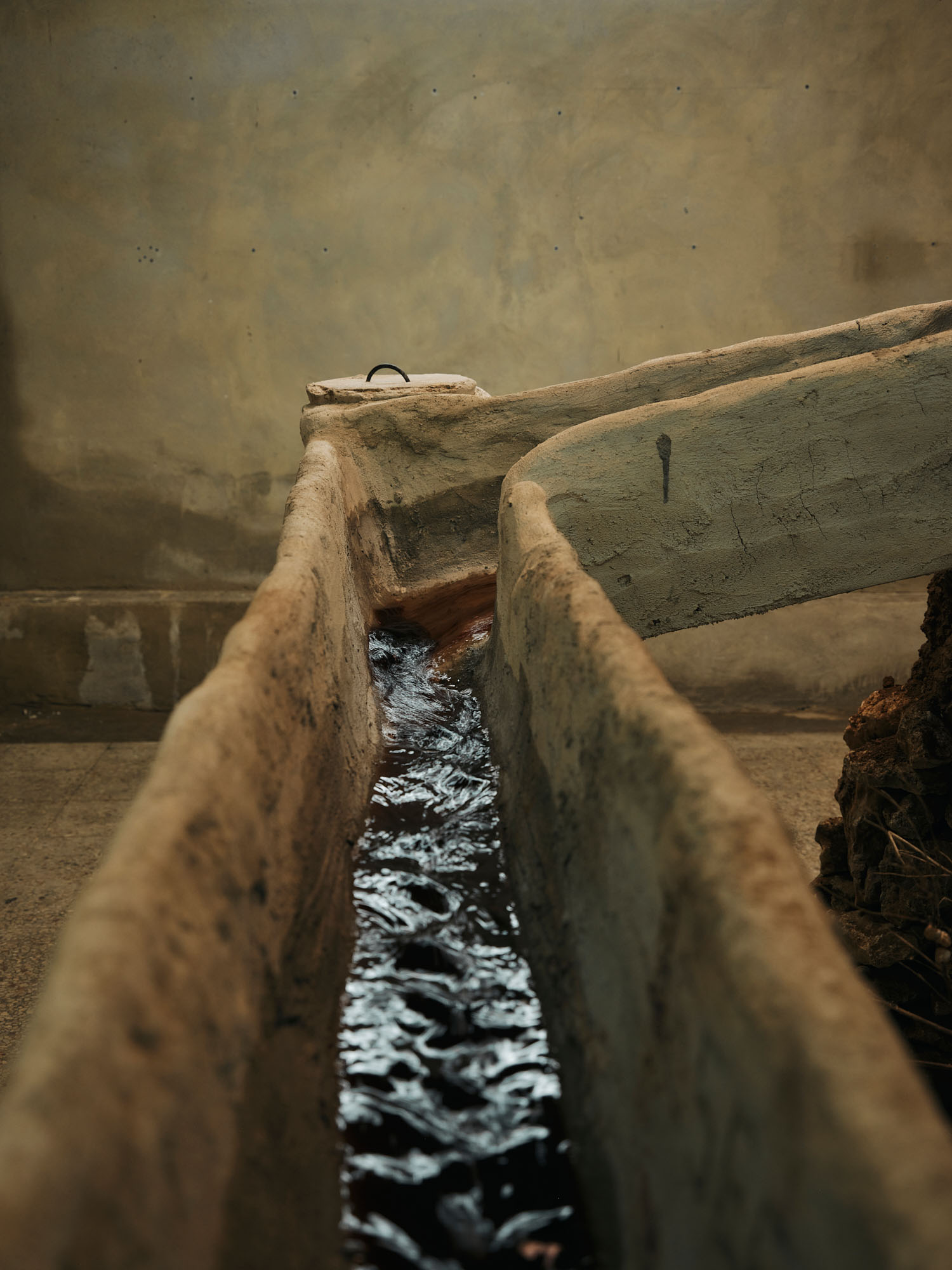
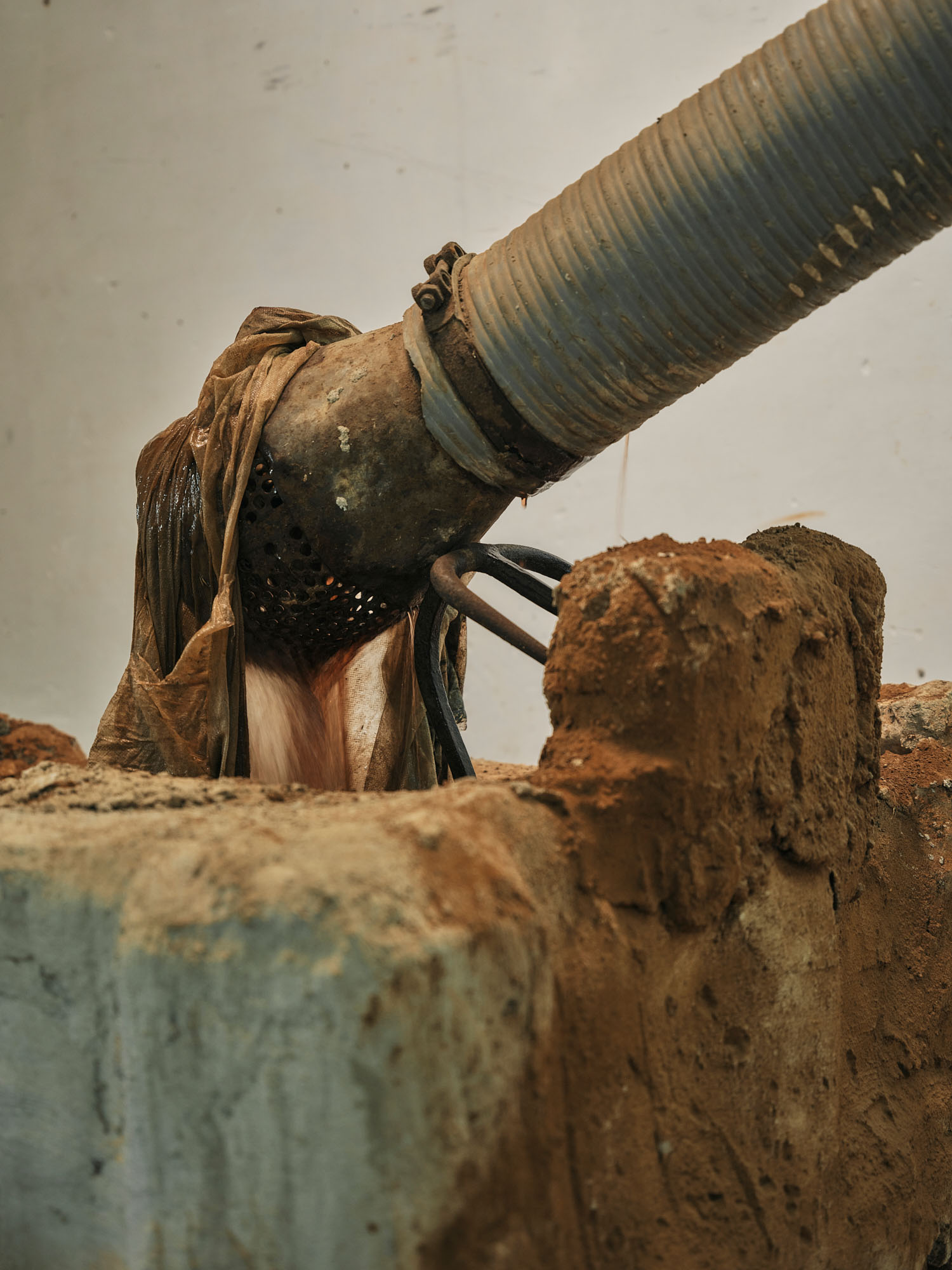
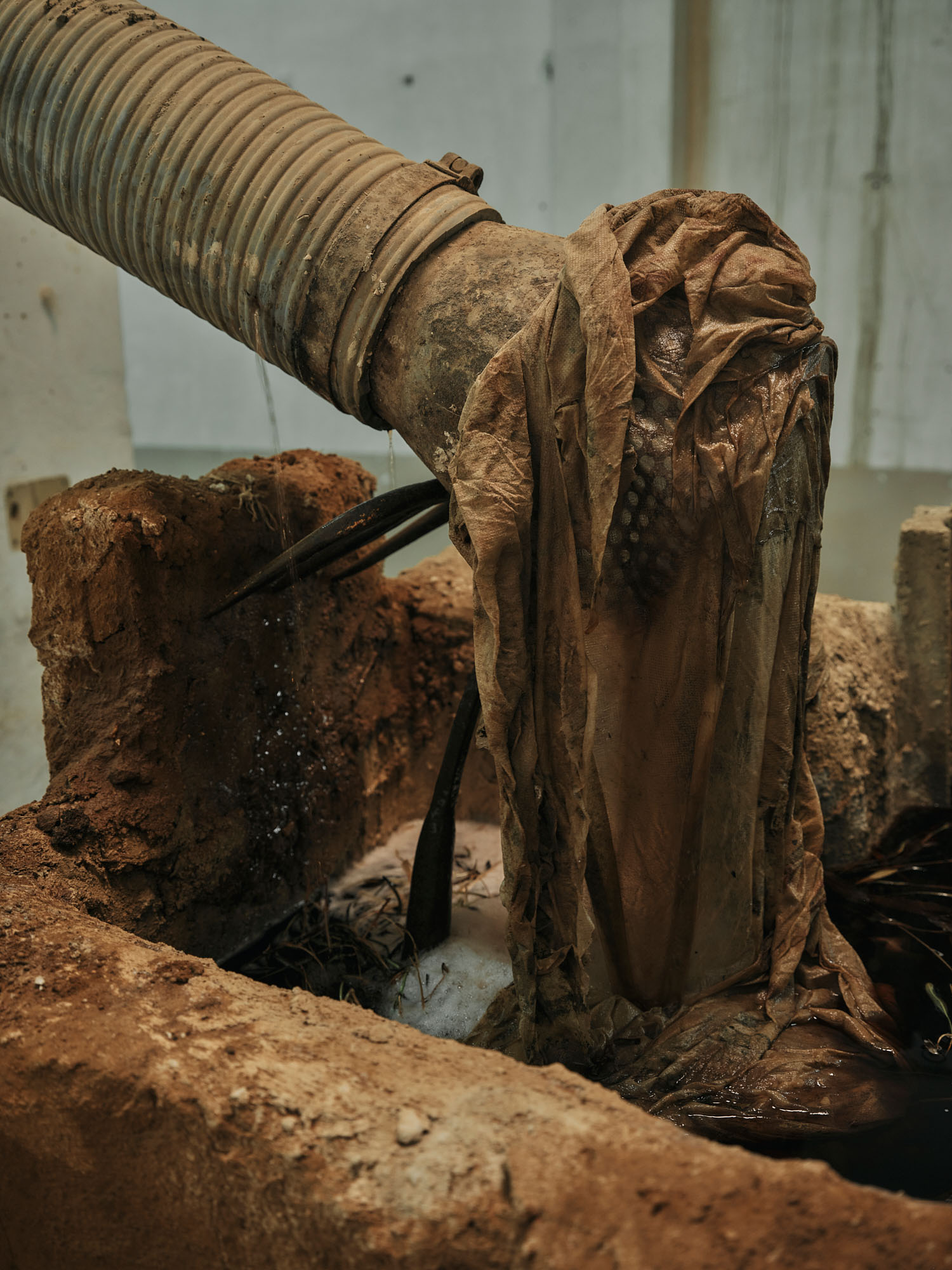
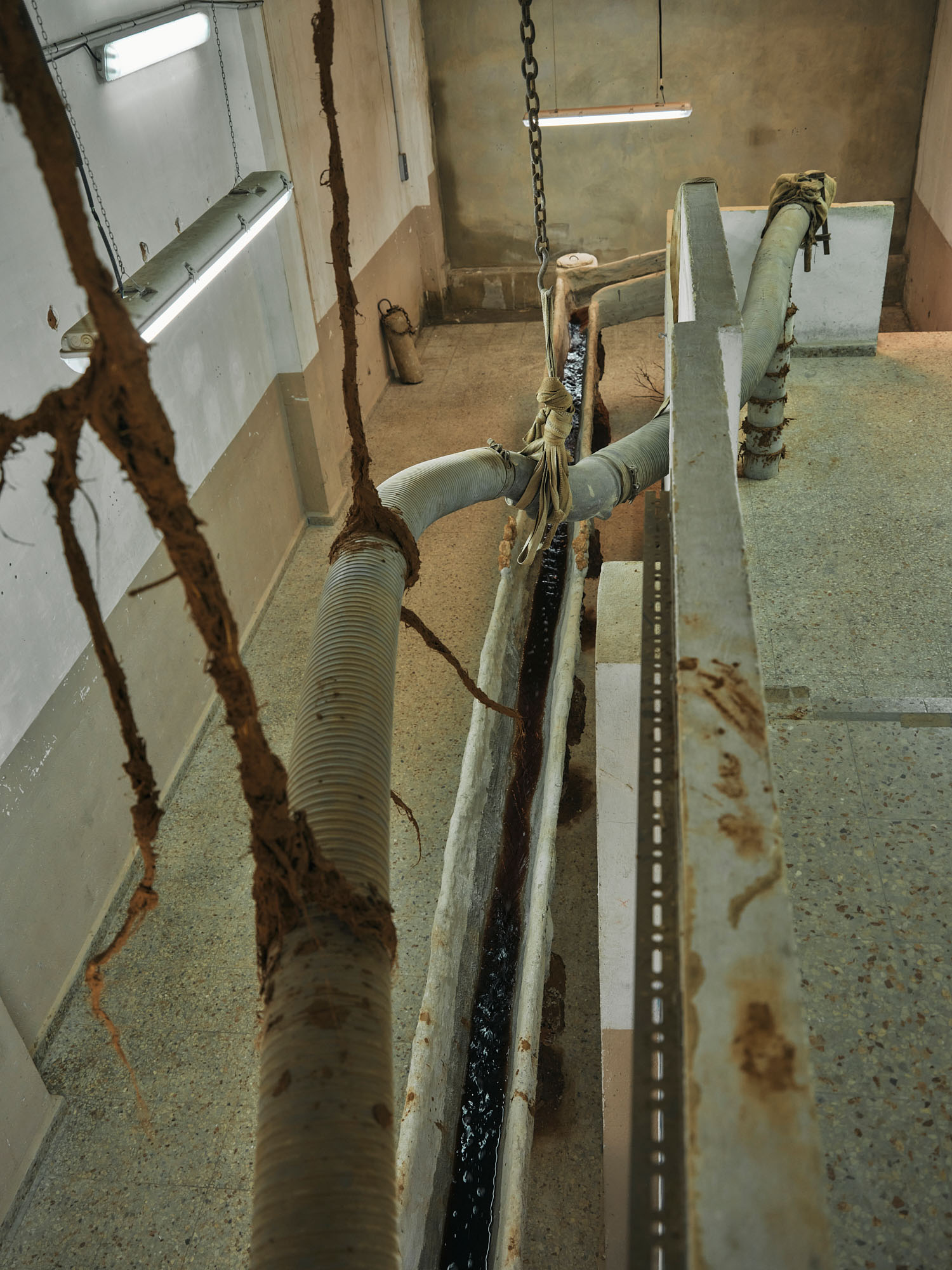
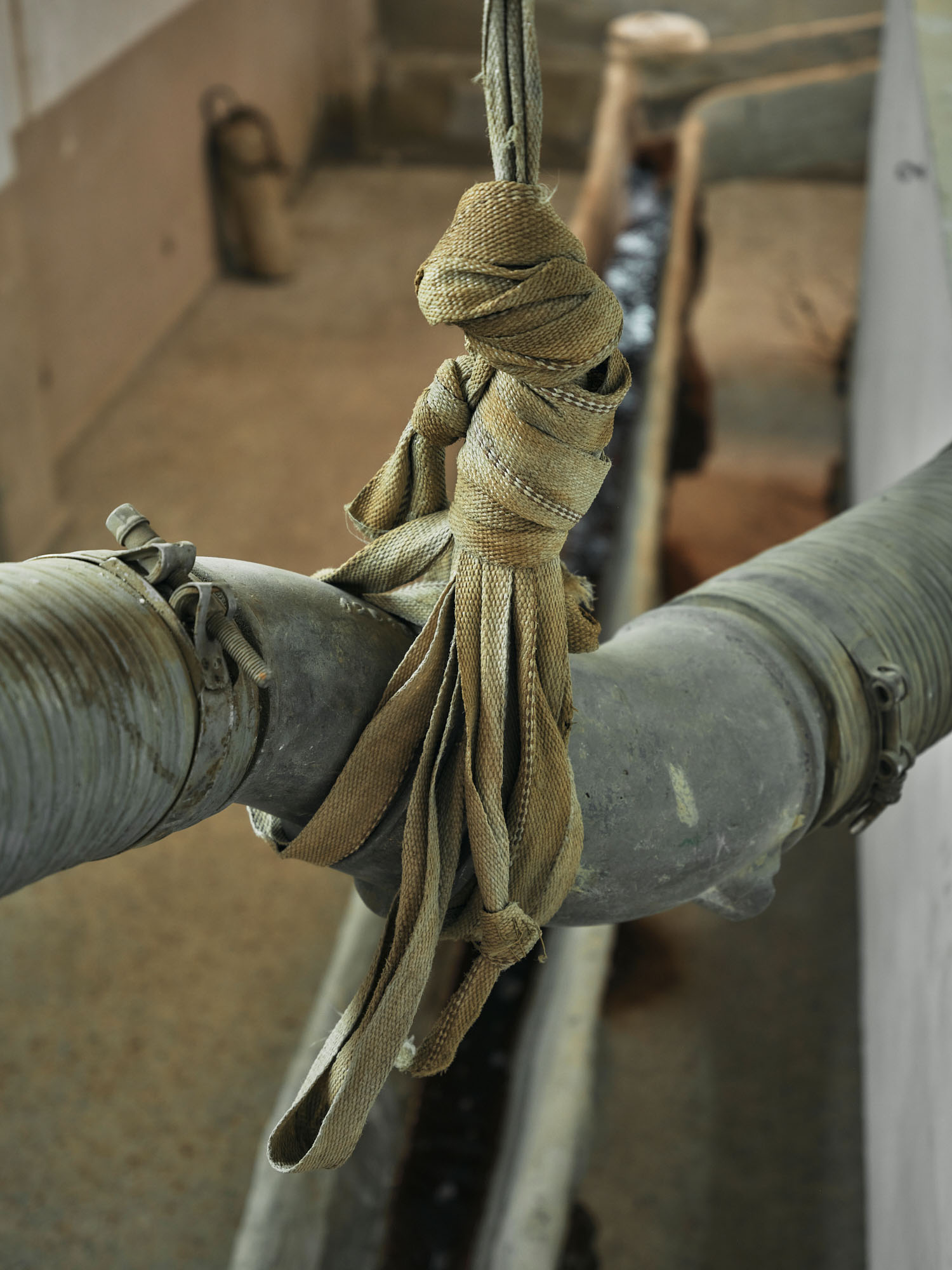
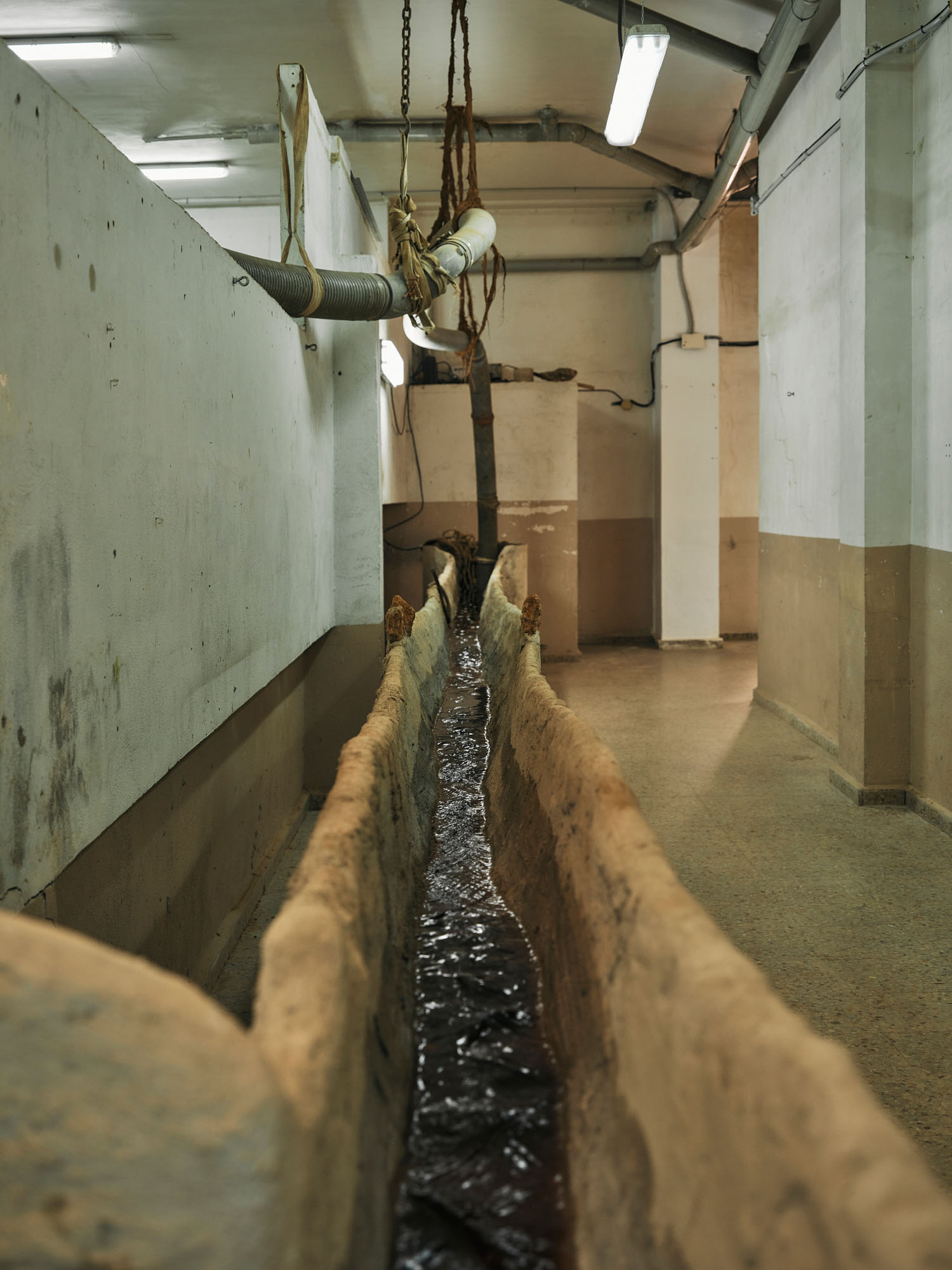
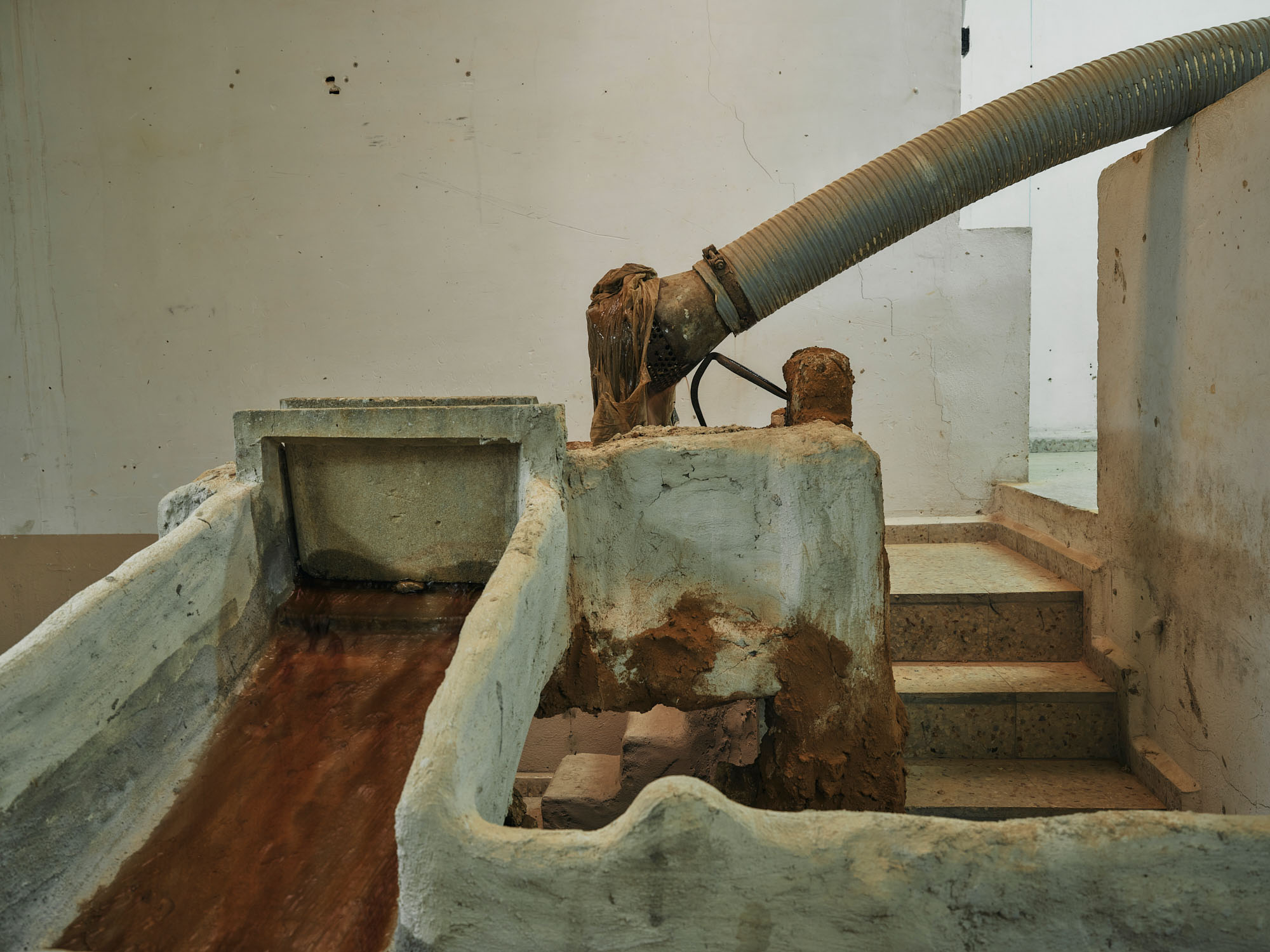
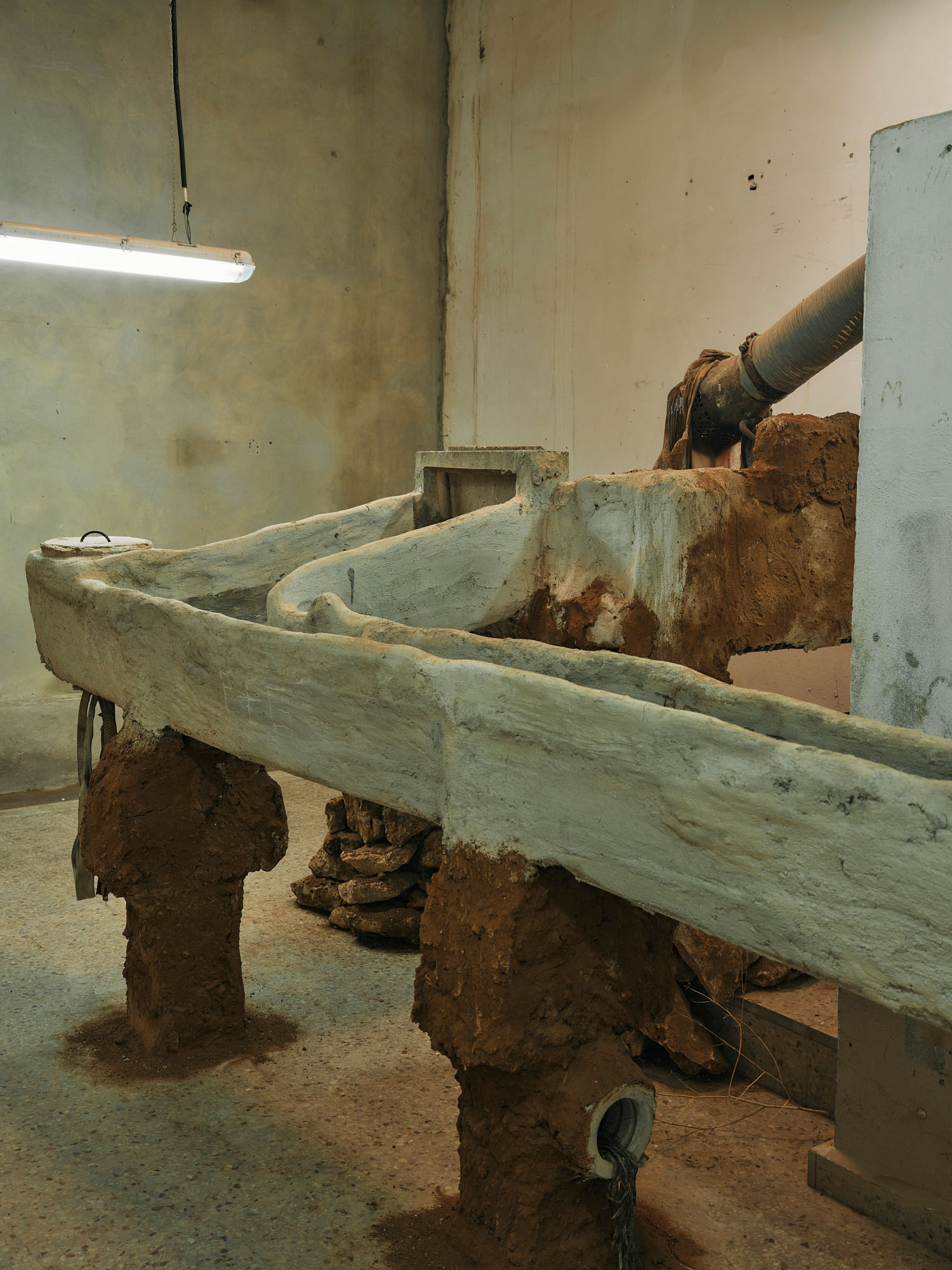
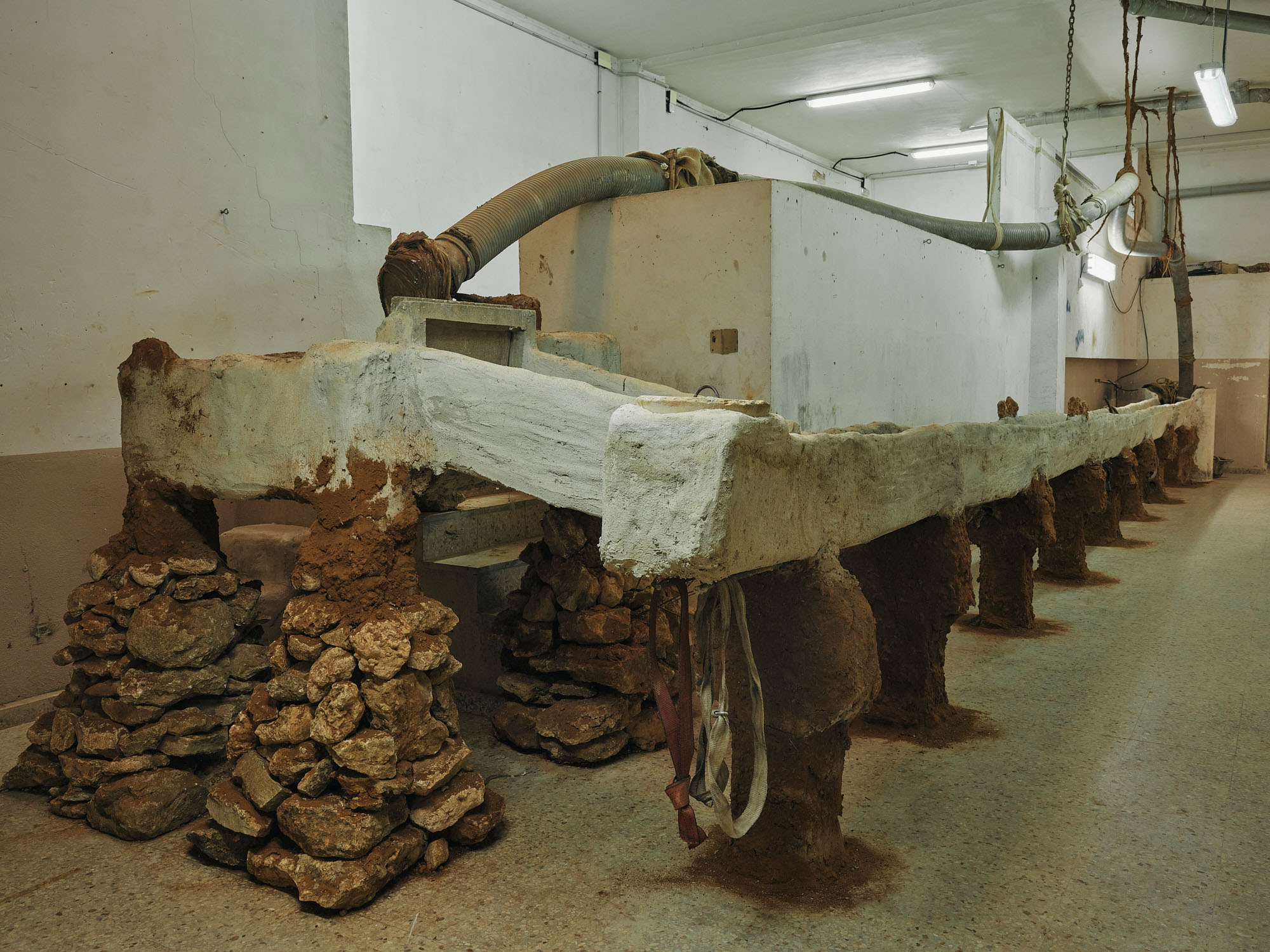
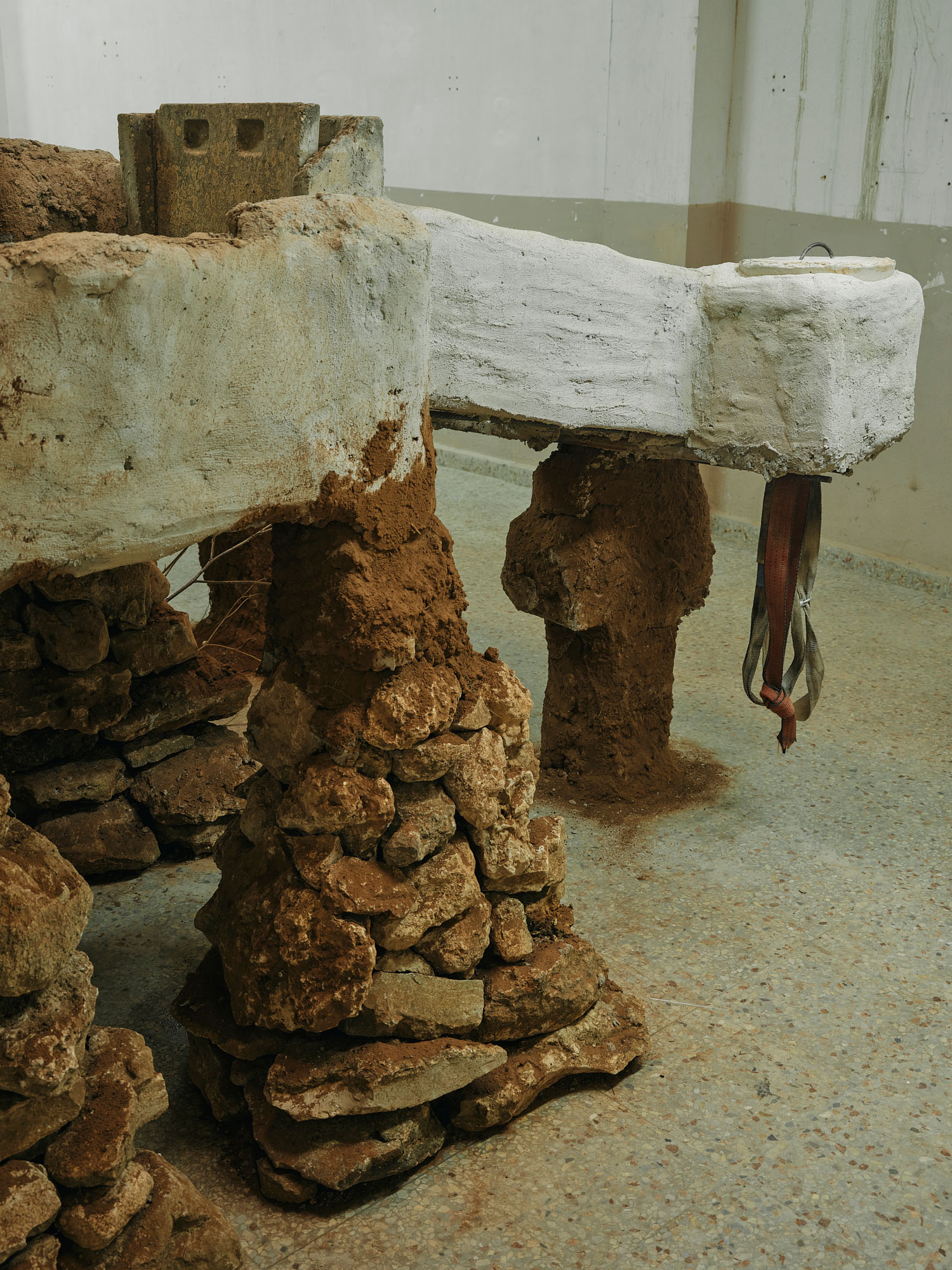
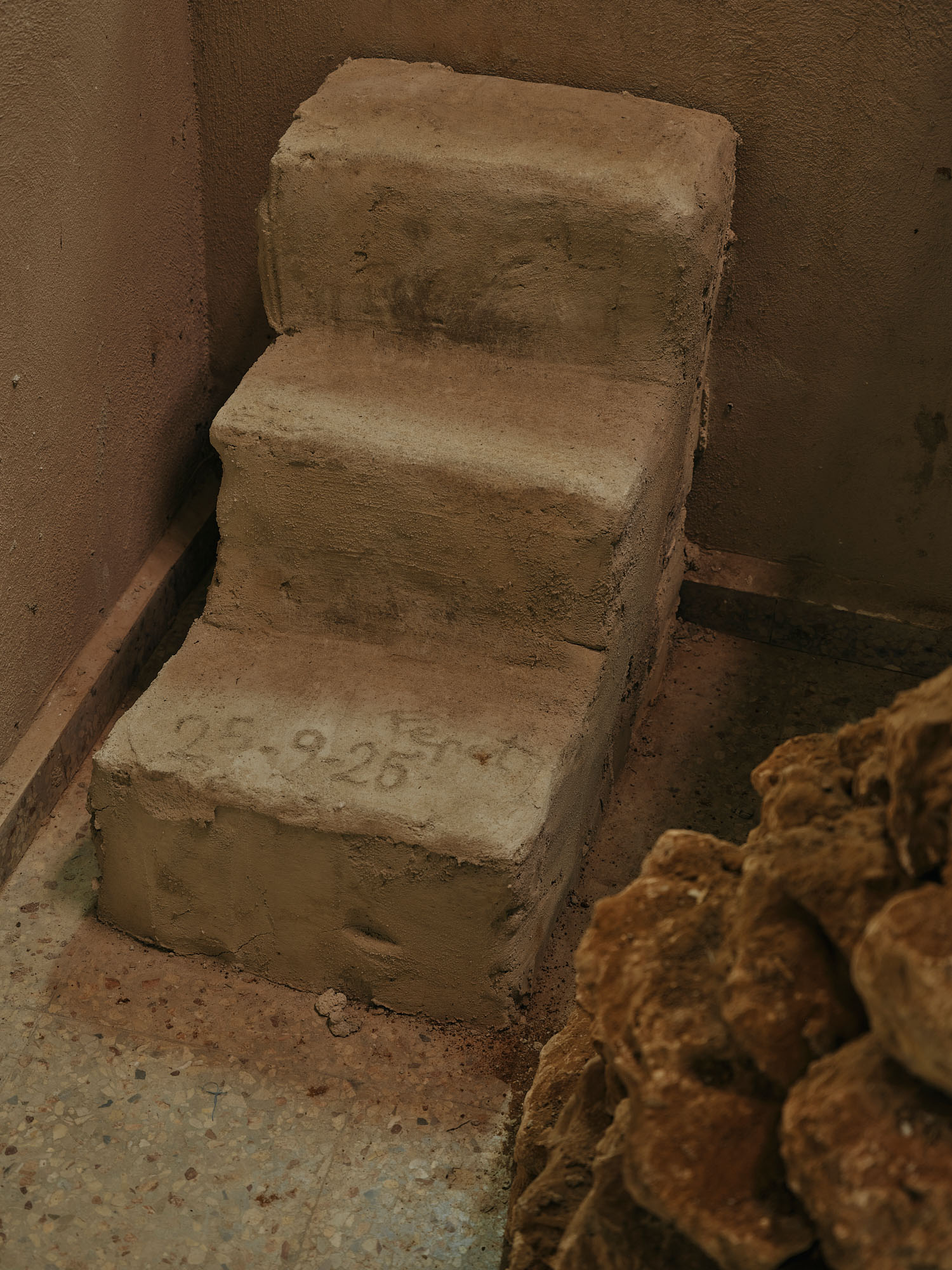
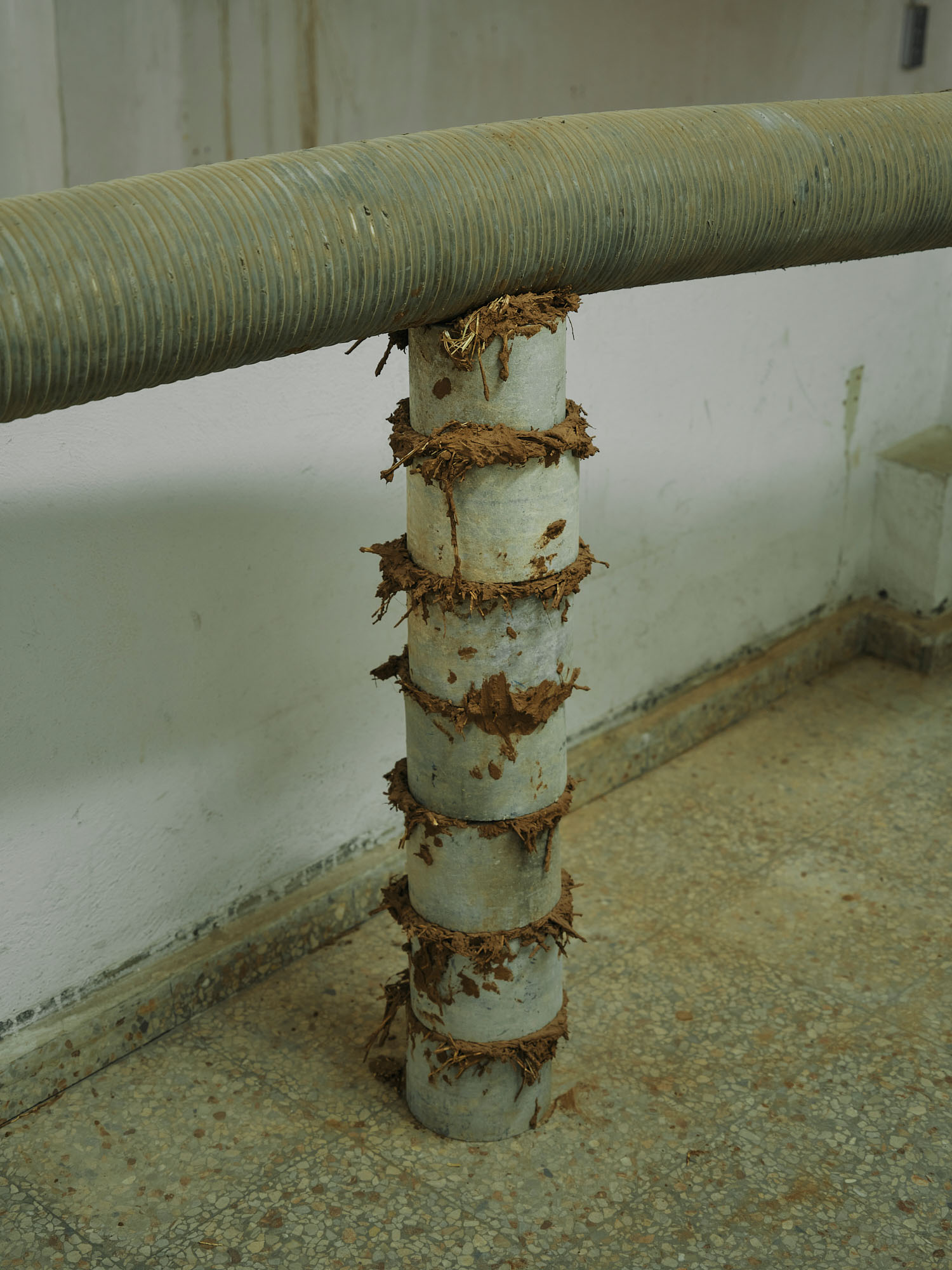
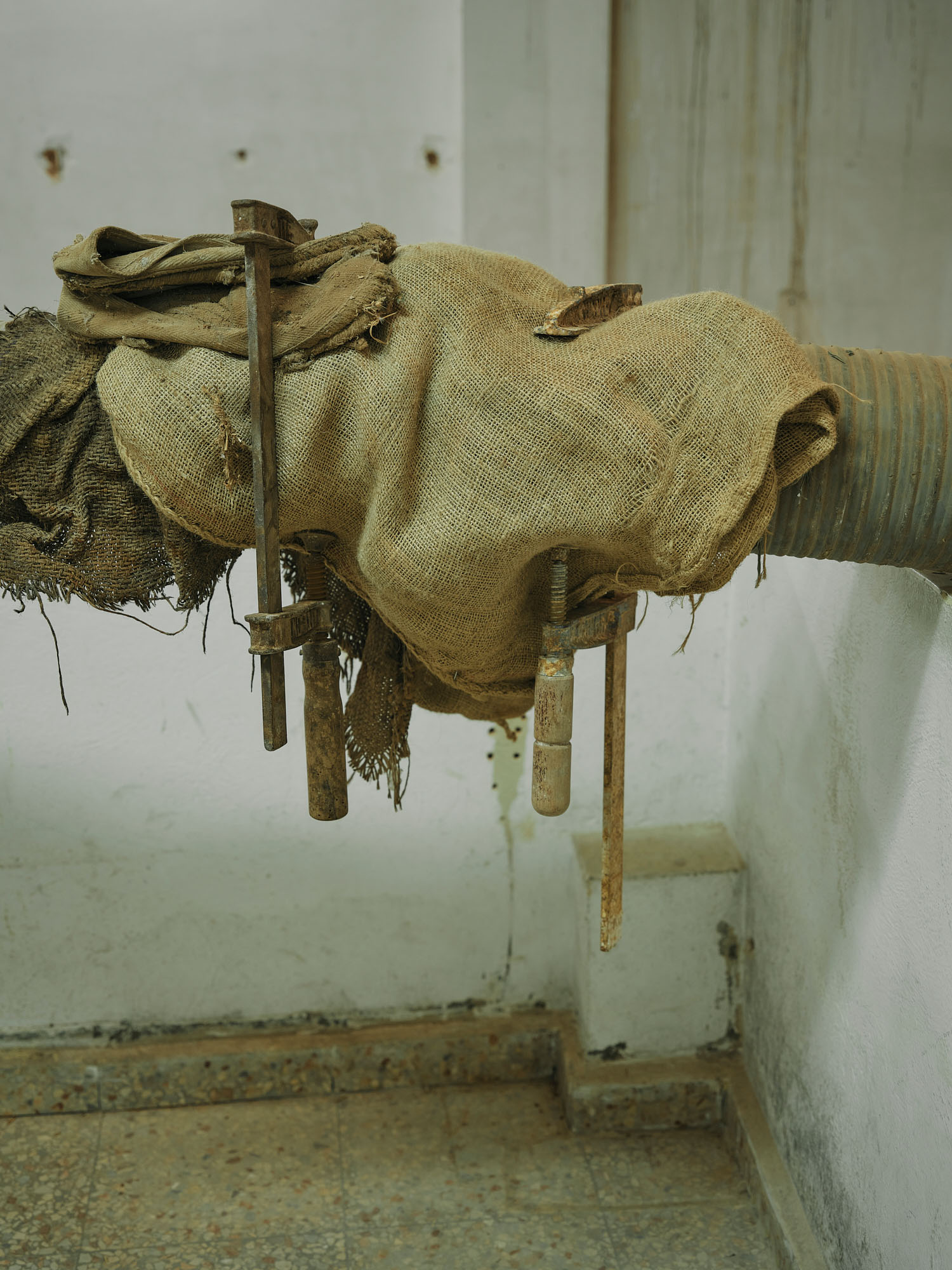
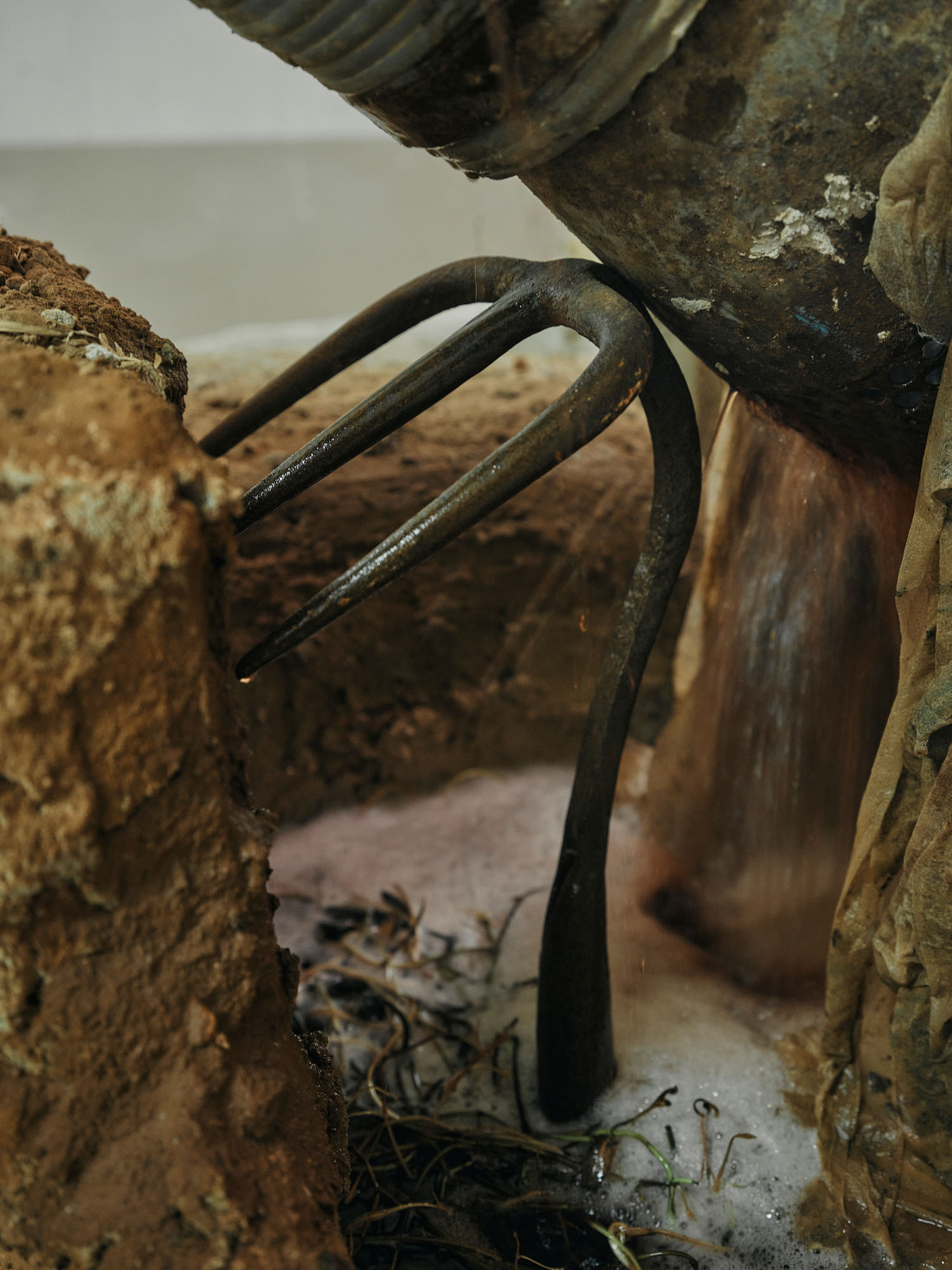
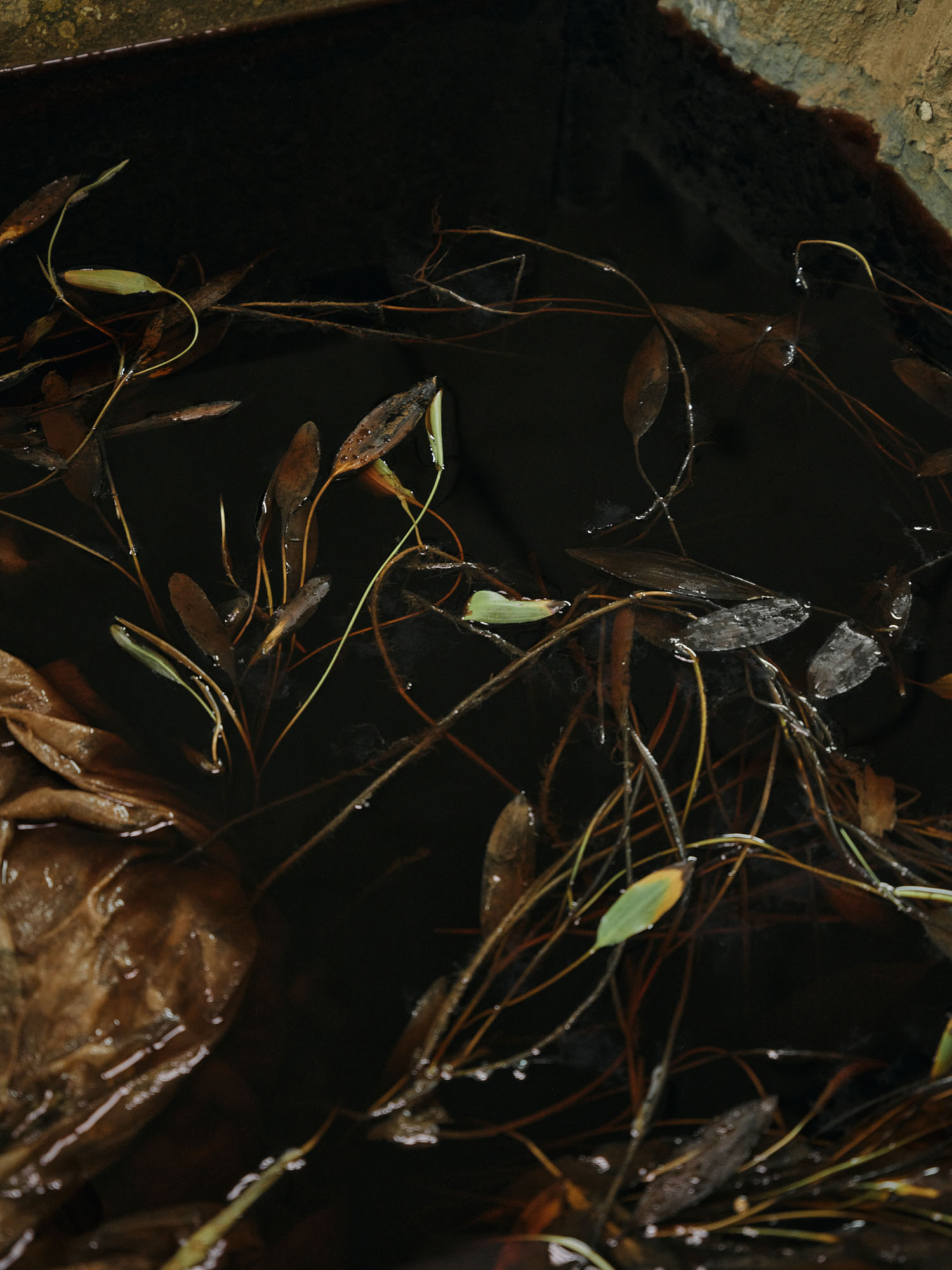
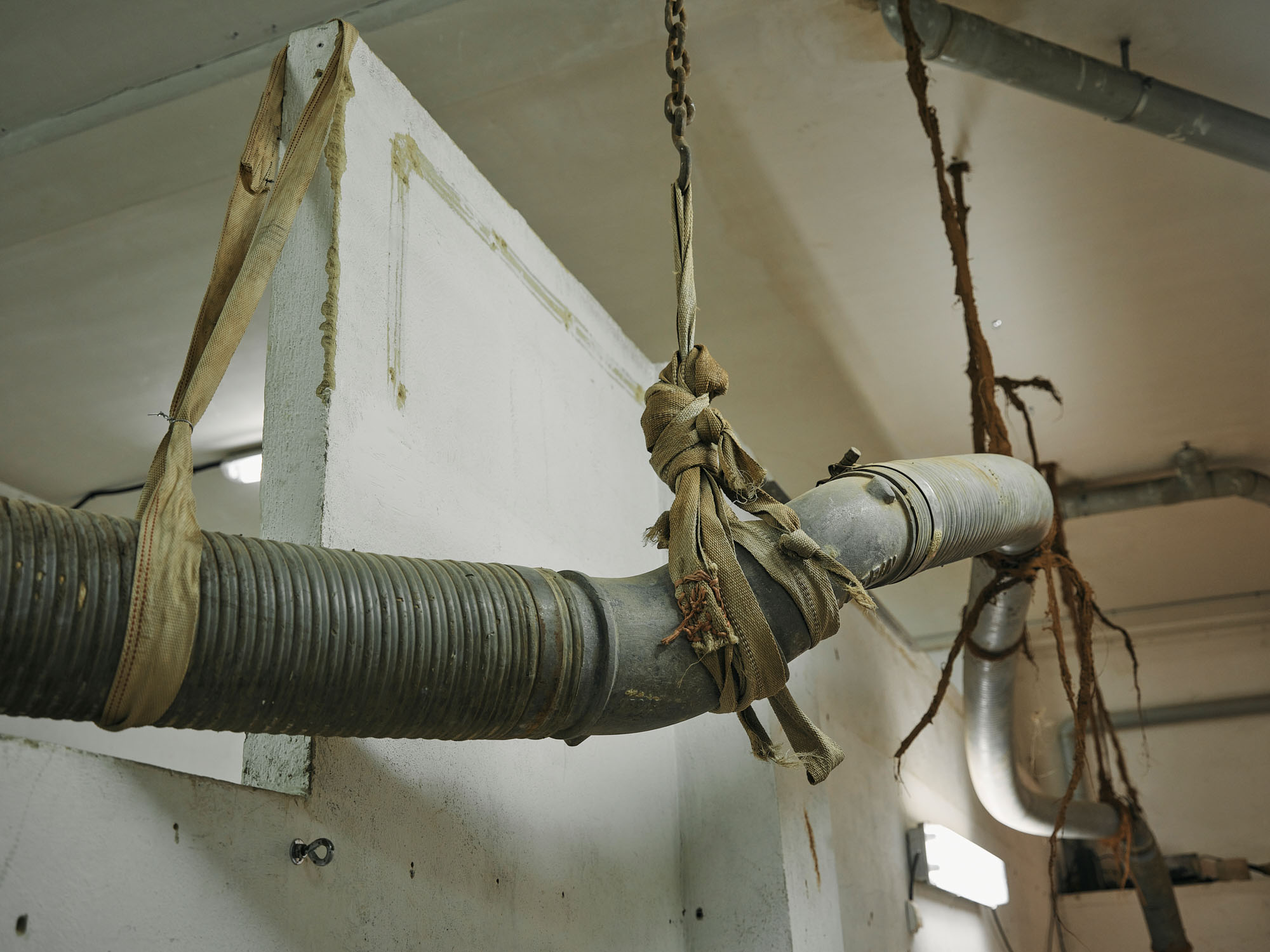
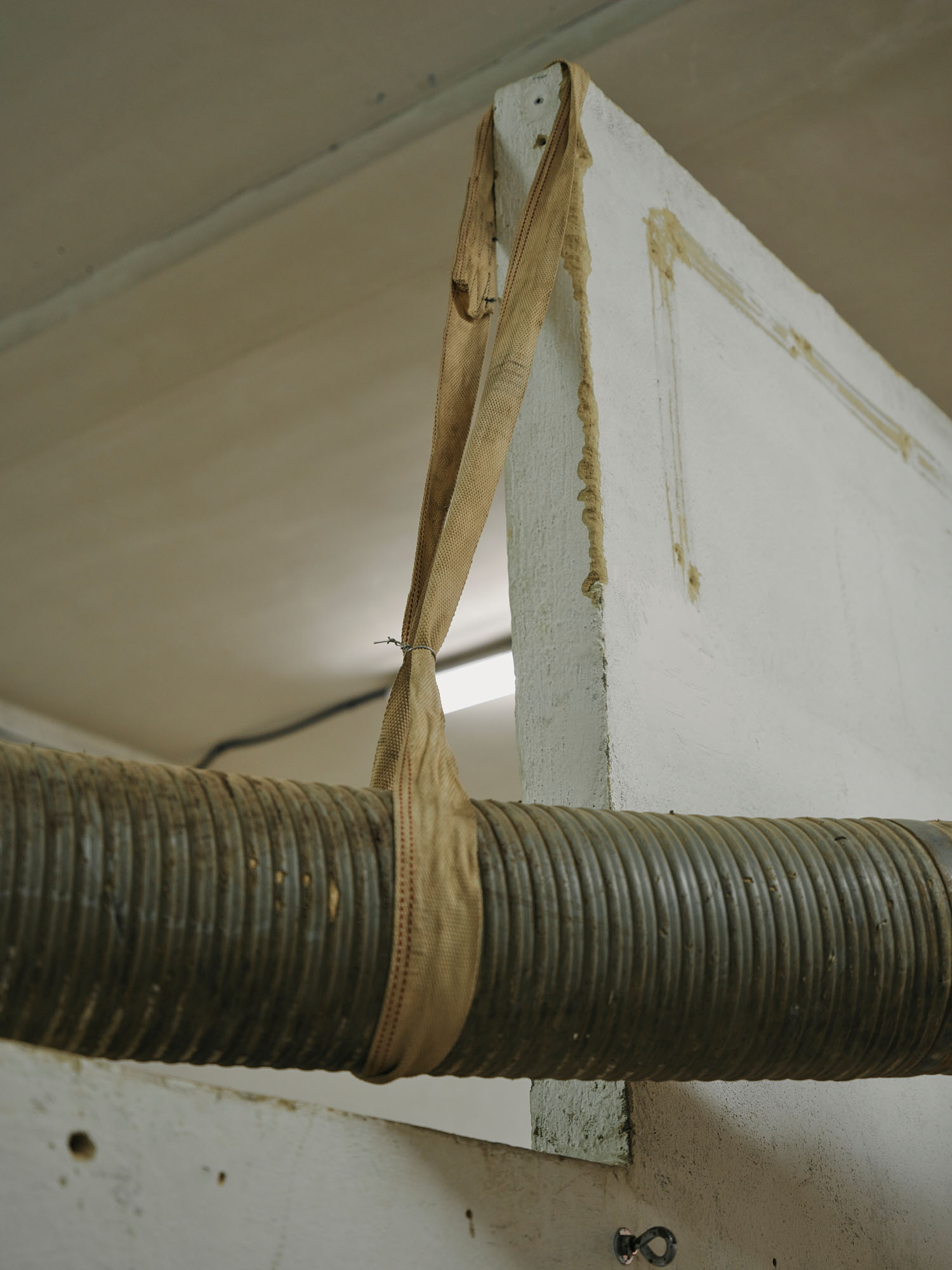
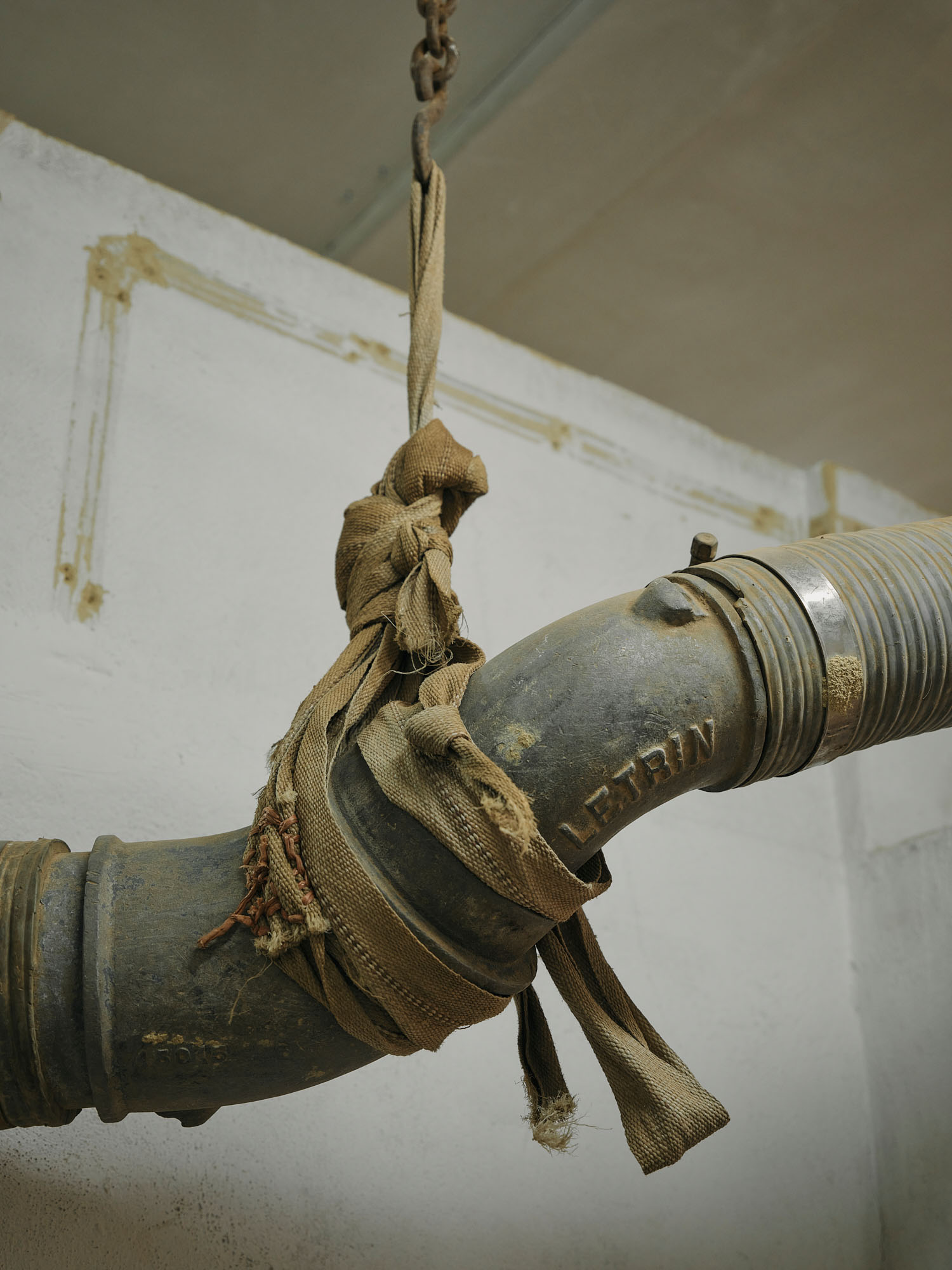
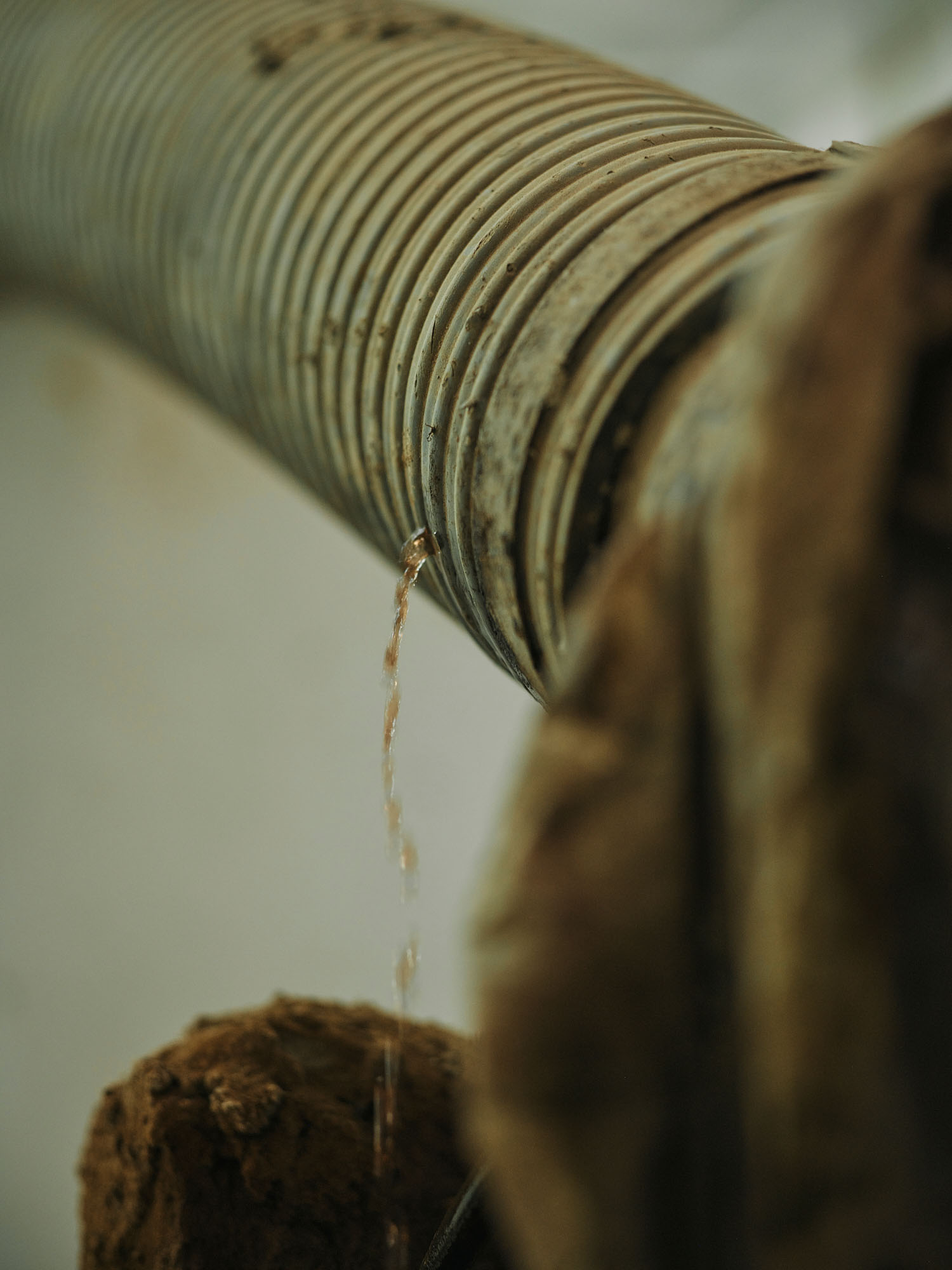
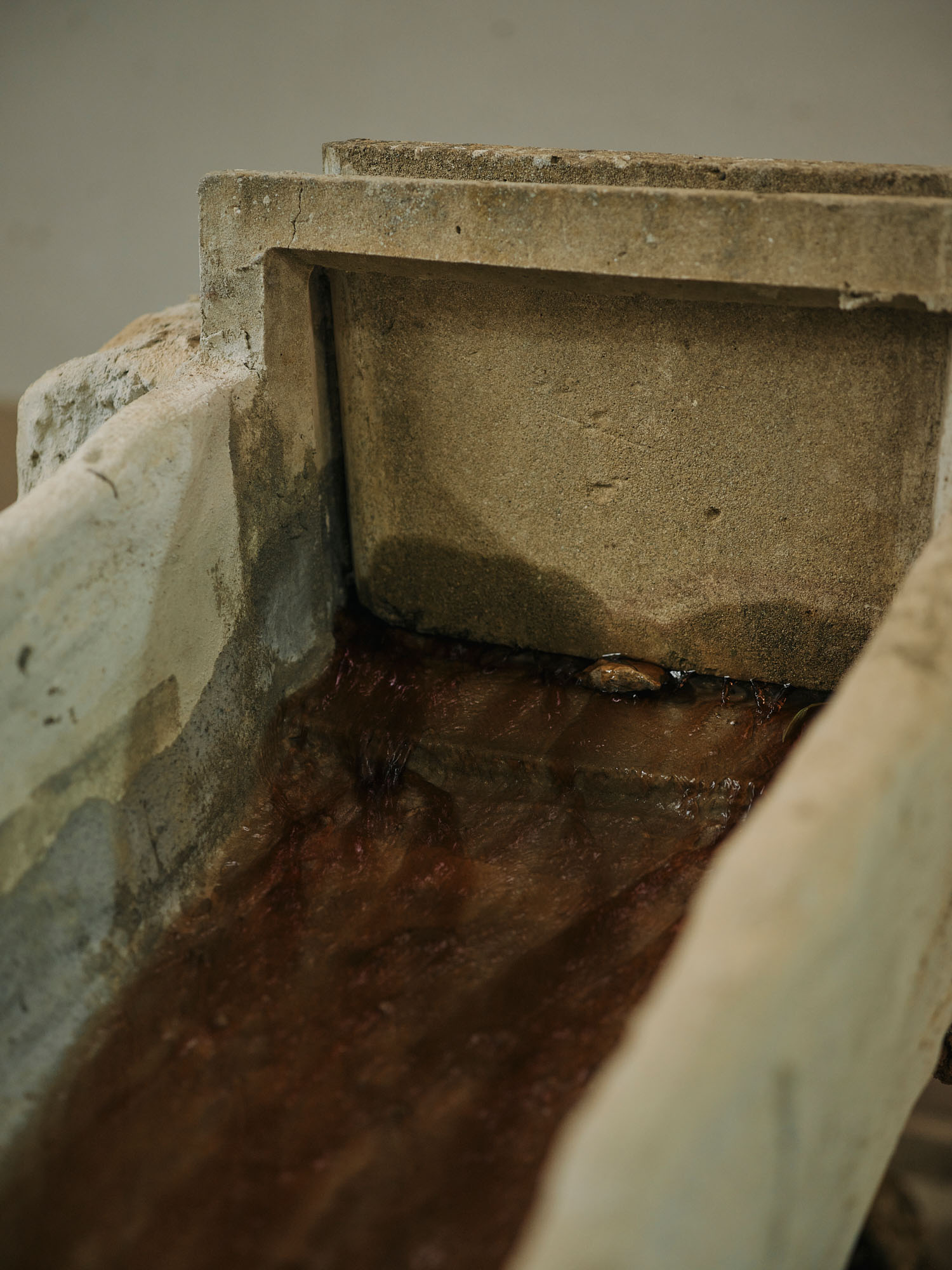
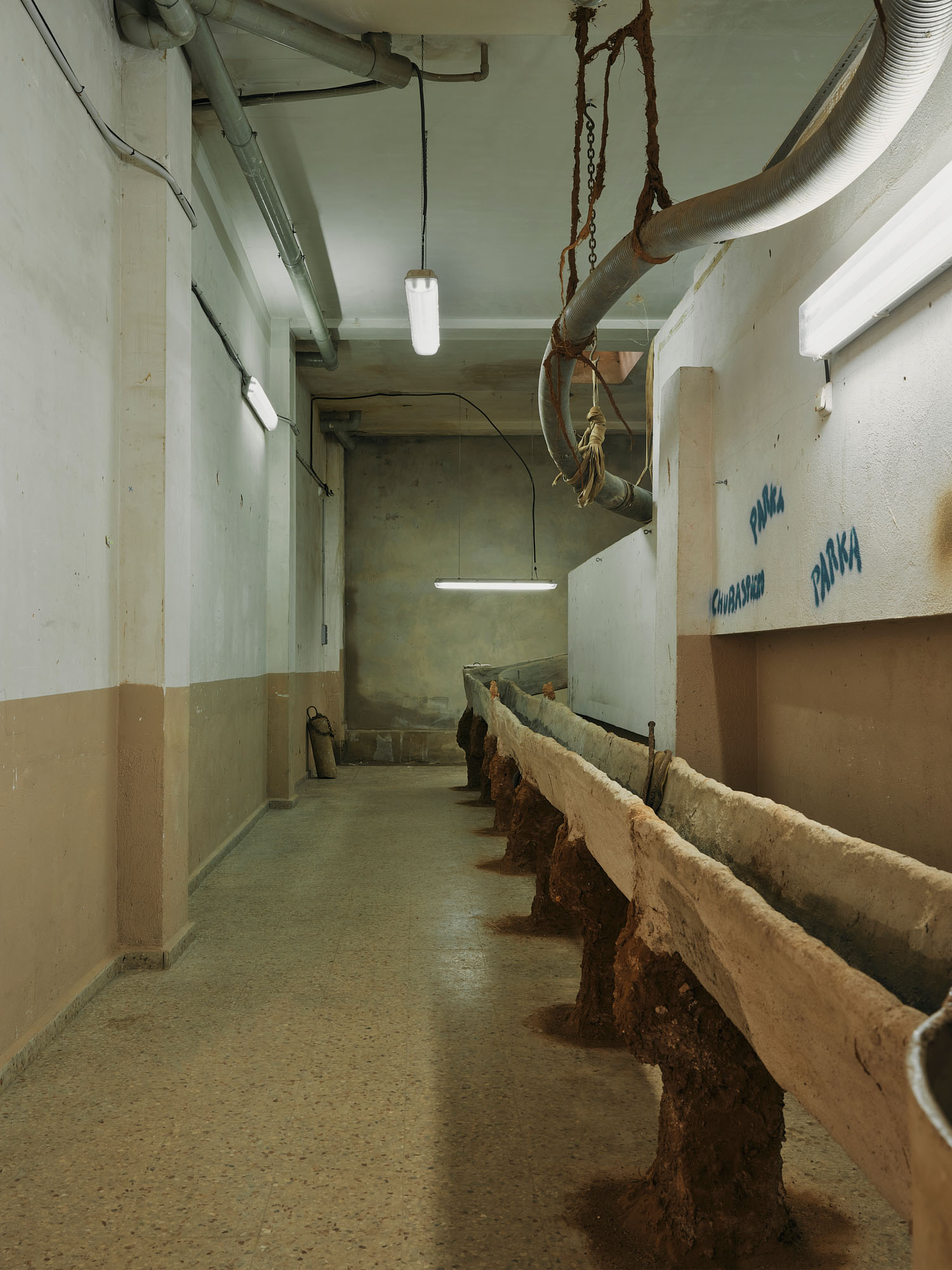
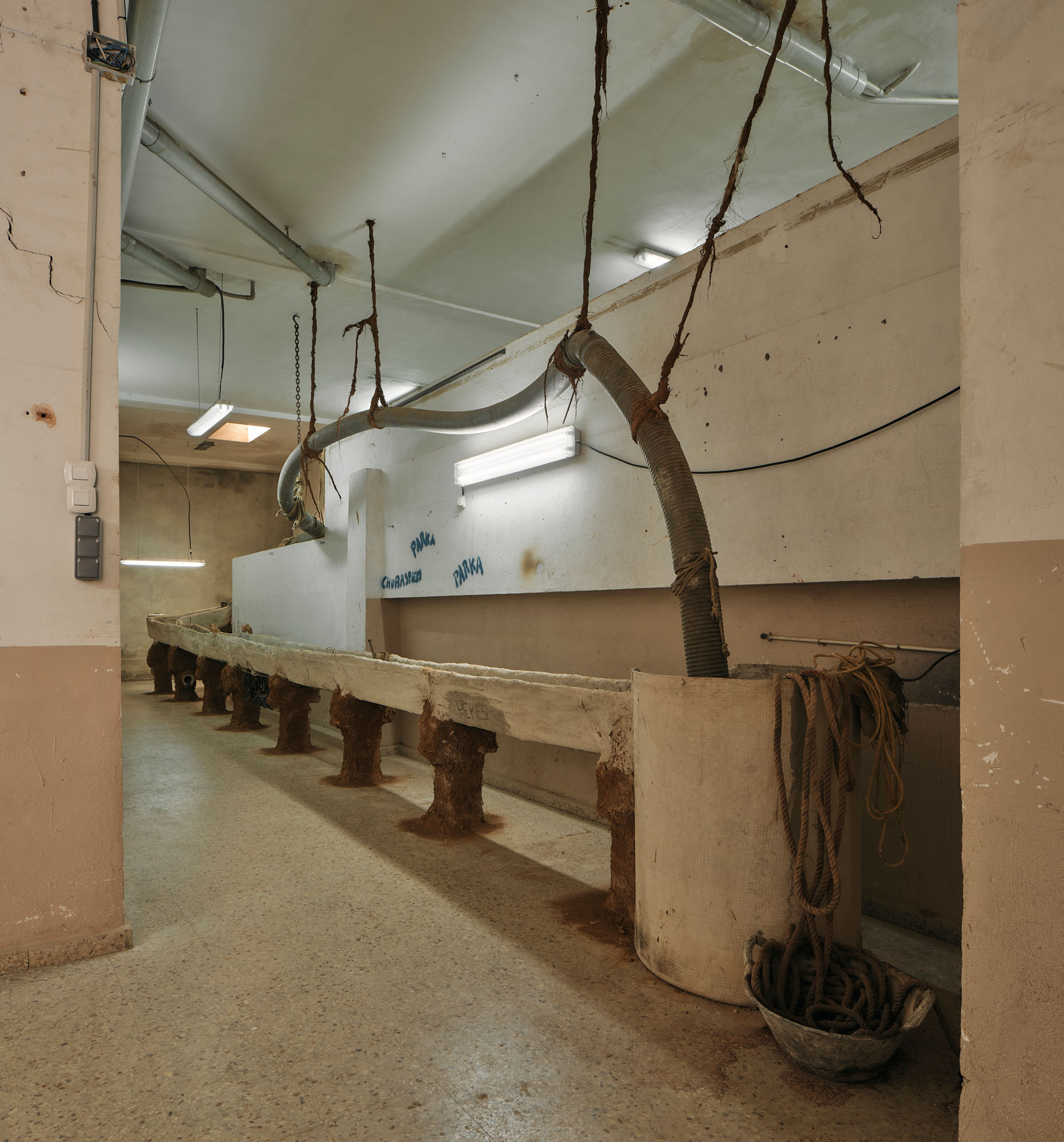
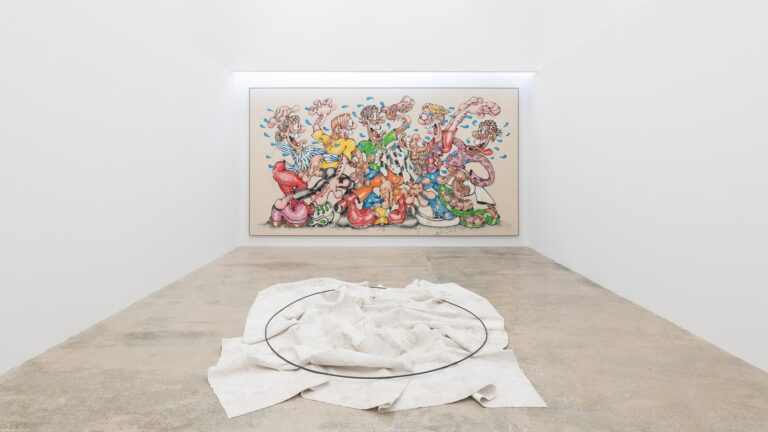
The installation features a suspended irrigation channel supported by columns, with water flowing through the room and rising again in a circular flow. This architecture, hidden under layers of dust and cladding, evokes the legacy of a system that has renewed the orchard for centuries. The route shows the incorporation of rural waters into the urban environment and dialogues with the characteristics of the space, where water downspouts pass through the ceiling. Pepet thus condenses the affective capacity of the irrigation channels revealing their hybrid condition: ancient community infrastructures, still active under the asphalt, connecting agricultural production fields with the fabric of the contemporary city.
The piece, like the strata of the earth, traces a vertical line through space. A gesture that points to water as the thread connecting past and present, rural and urban, local and global.
–Néstor García & Empar Polanco
Pepet
Benifaió (Valencia), 1998
Born in the village of Benifaió, to a family that has always lived off agriculture, Pepet is a multidisciplinary artist whose works encompass painting, sculpture, and installation. His expression focuses on asserting the importance of agriculture and livestock as a fundamental basis for human subsistence, as well as denouncing the market forces in a sector permanently condemned to overexploitation.
The artist’s growth has been marked by the premature need to integrate into the primary sector under the mastery of his grandfather. Pepet represents everything around him and the purity of its elements; be it the field and the tools used to till it, the animals, or their death.
As a farmer, he has worked at the Chateau de la Crée Vineyards in Santenay (France) harvesting grapes and as a viticulture assistant and in his own fields of persimmon, grapefruit, and orange in Benifaió (Valencia). Her artistic work has been seen in national venues such as Luna in Valencia and the Santiago Ydañez Foun-dation/La Vicaría in Puente de Génave. He was a resident artist at Ezprogi (2024) through a collaboration with the Huarte Center.