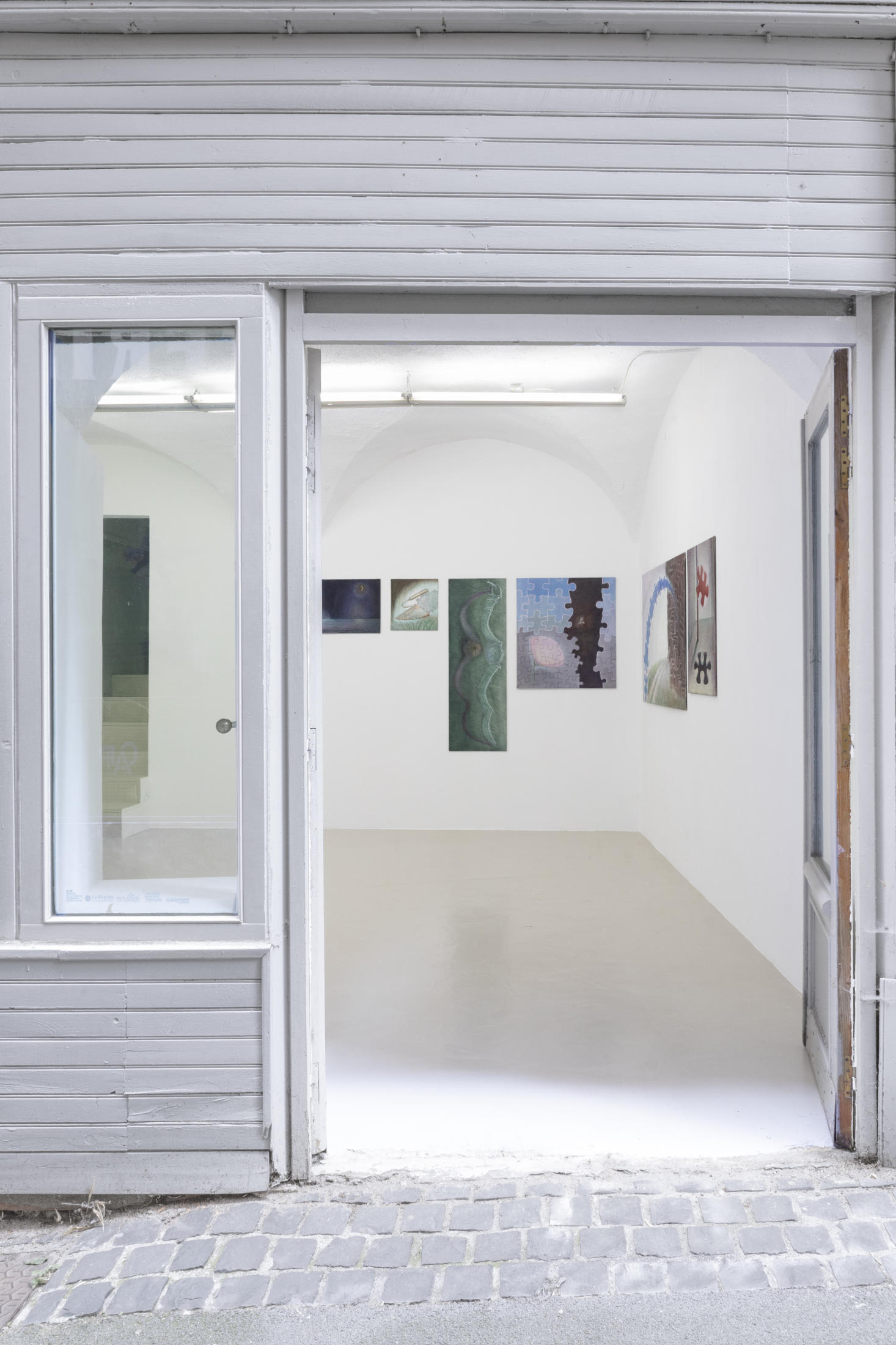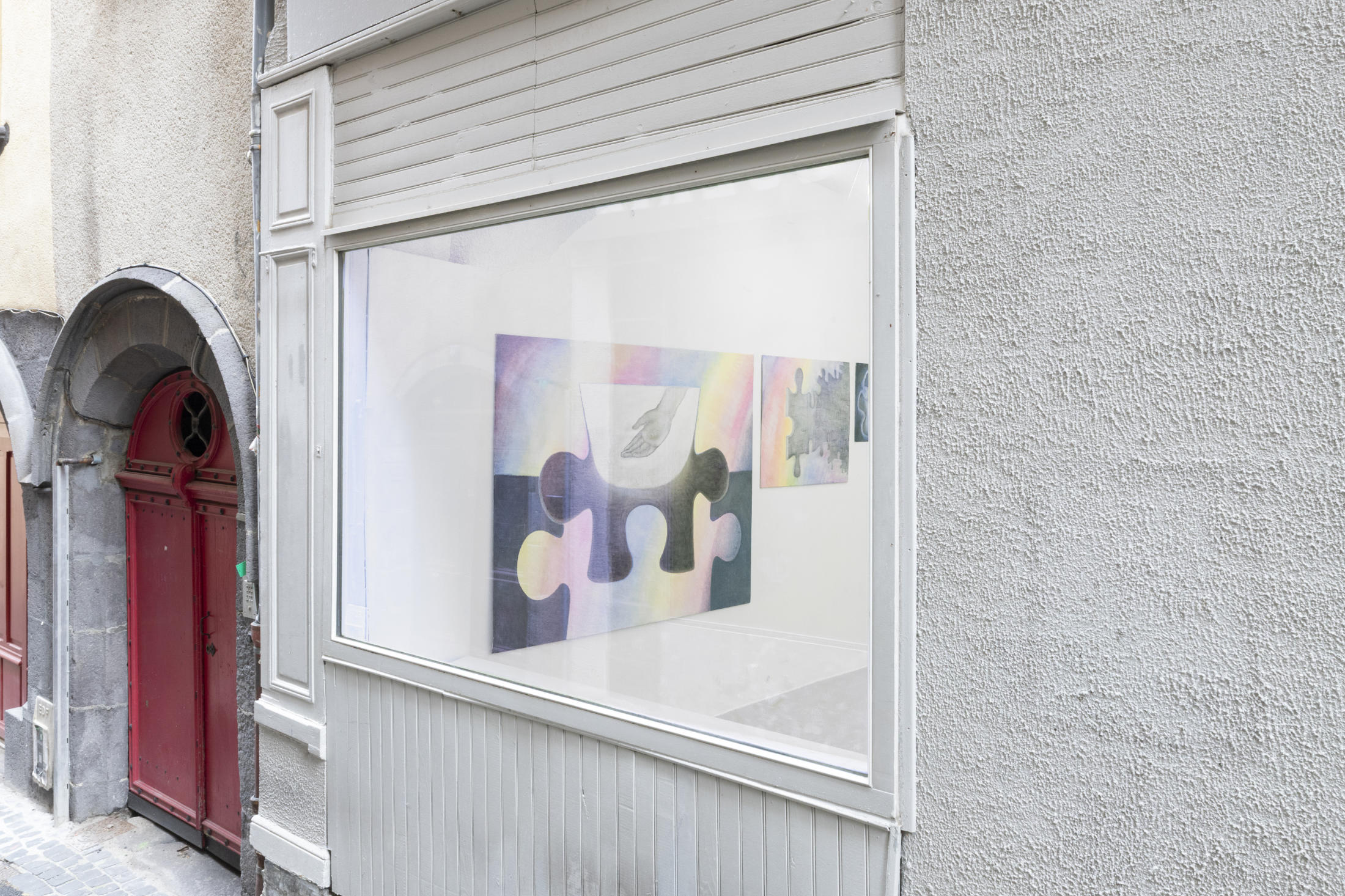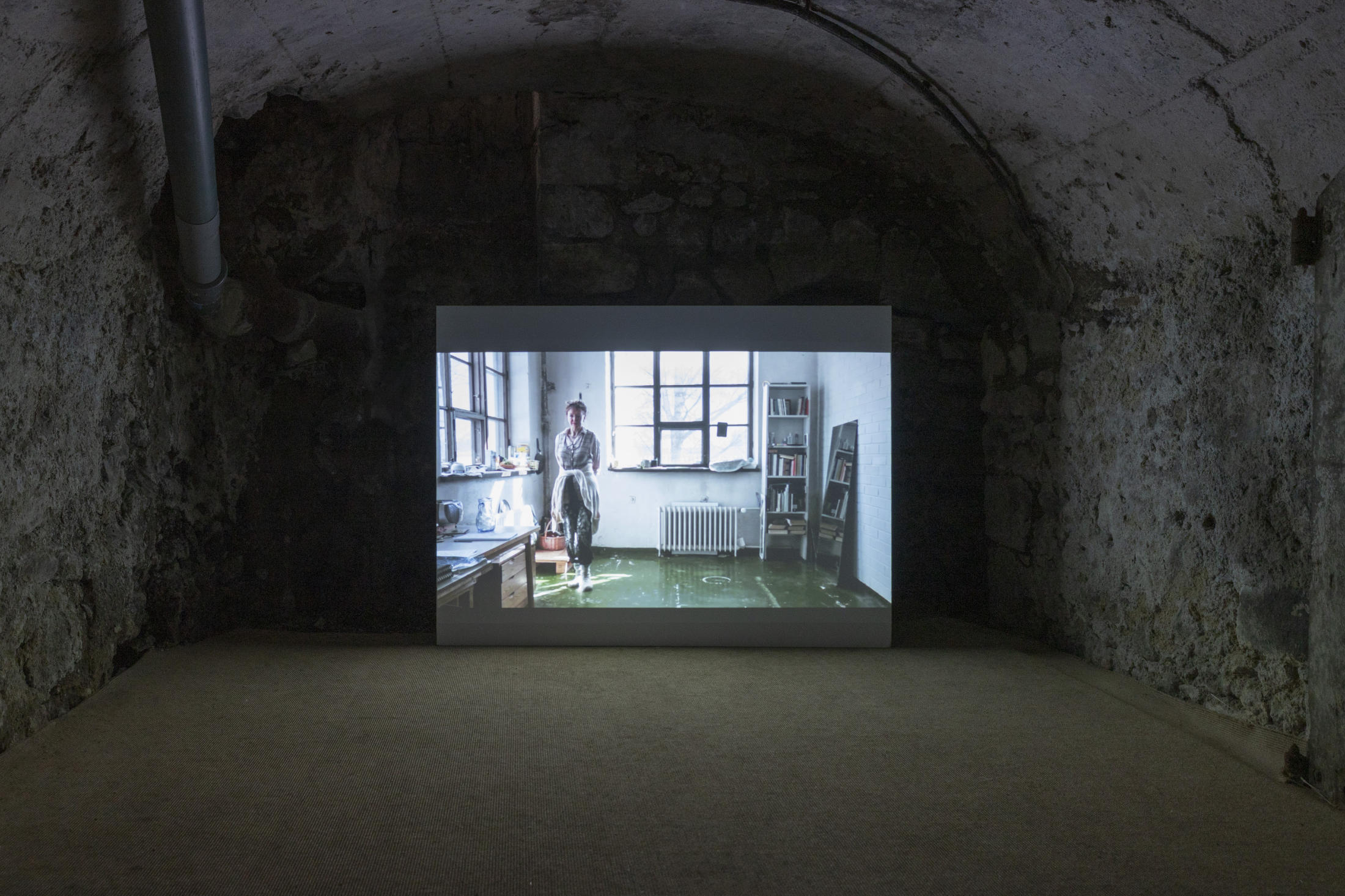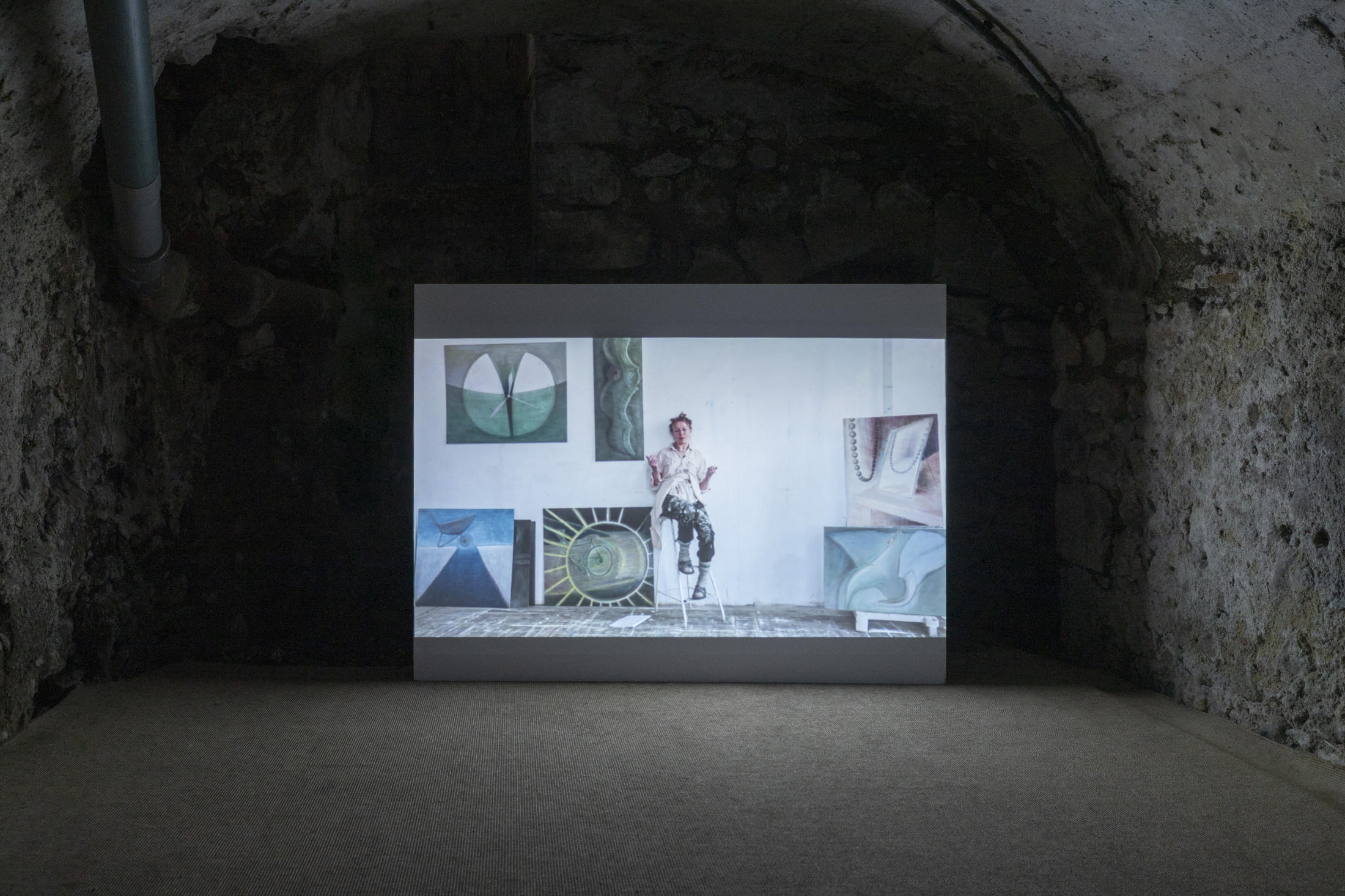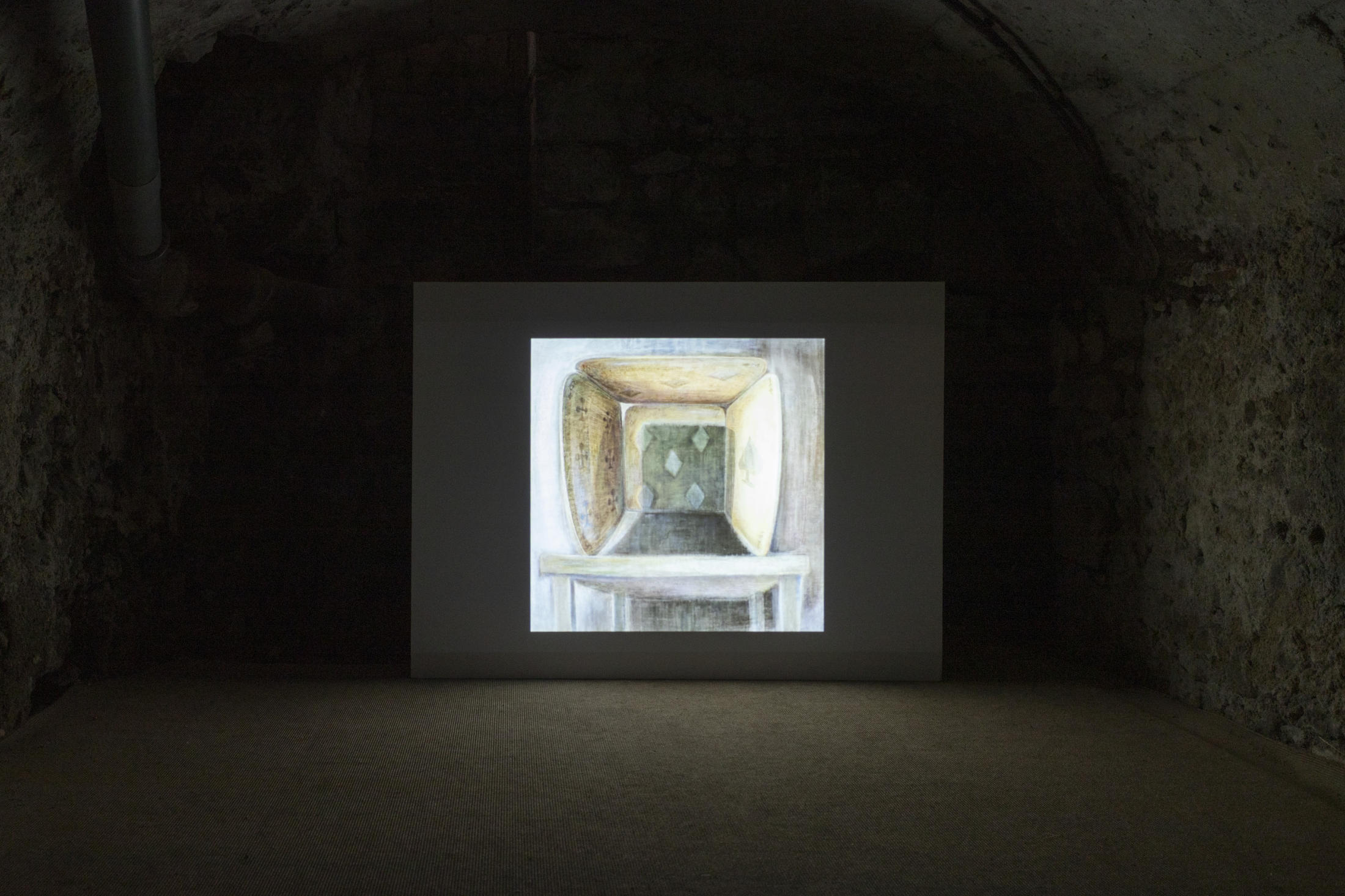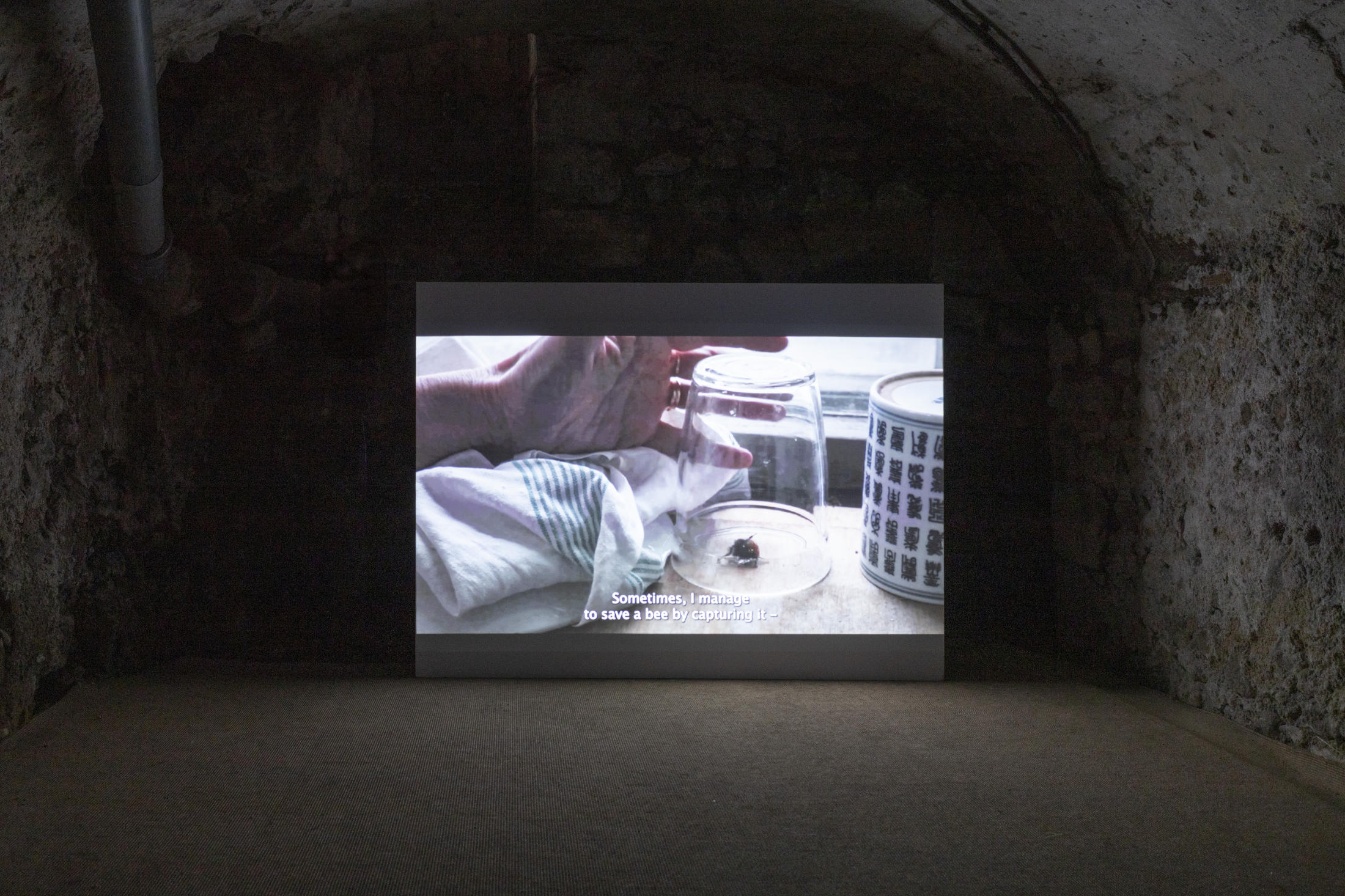
“What kinds of bones are proper for priming pictures; how to make a pen for the purpose of drawing; how to begin to paint pictures; how to colour water, or a river, with or without fish; how to paint a wounded person; how you should regulate your manner of living so as to preserve decorum and keep your hand in proper condition […] and how you should select and draw a figure in relief[1]; why women should abstain from using medicated waters on their skin”[2]… These are but a few examples of advice to painters in a fifteenth-century treatise written in the early Renaissance by Cennino Cennini.[3]
A copy of this book is used by artist Pamela Brandt (1950, Finland) as an instrument to release a bumblebee found in her studio in the film by Georg Grotenfelt presented here in the basement. Read today, Cennini’s treatise can feel at once authoritative and oddly performative: a compilation of practical instruction that occasionally borders on the absurd. Here, the book, albeit an incidental prop in the scene, offers a fitting lens through which to understand Pamela Brandt’s practice. Drawing upon the canonical history of art while continually slipping beyond its boundaries, Pamela Brandt unsettles and transforms inherited iconographies into a personal vocabulary of symbols attuned to the present.
“Along with seriousness, there is a potential absurdity and sometimes the possibility of playfulness,” Pamela Brandt wrote to me about her work after we first met in a café in snow-coated Helsinki in the winter of 2025. She brought several binders filled with images of her work from the past five decades, arranged chronologically—a system of organisation that is not only archival, but also points to time, and more broadly to existence as something experienced and structured, as central themes in her practice.
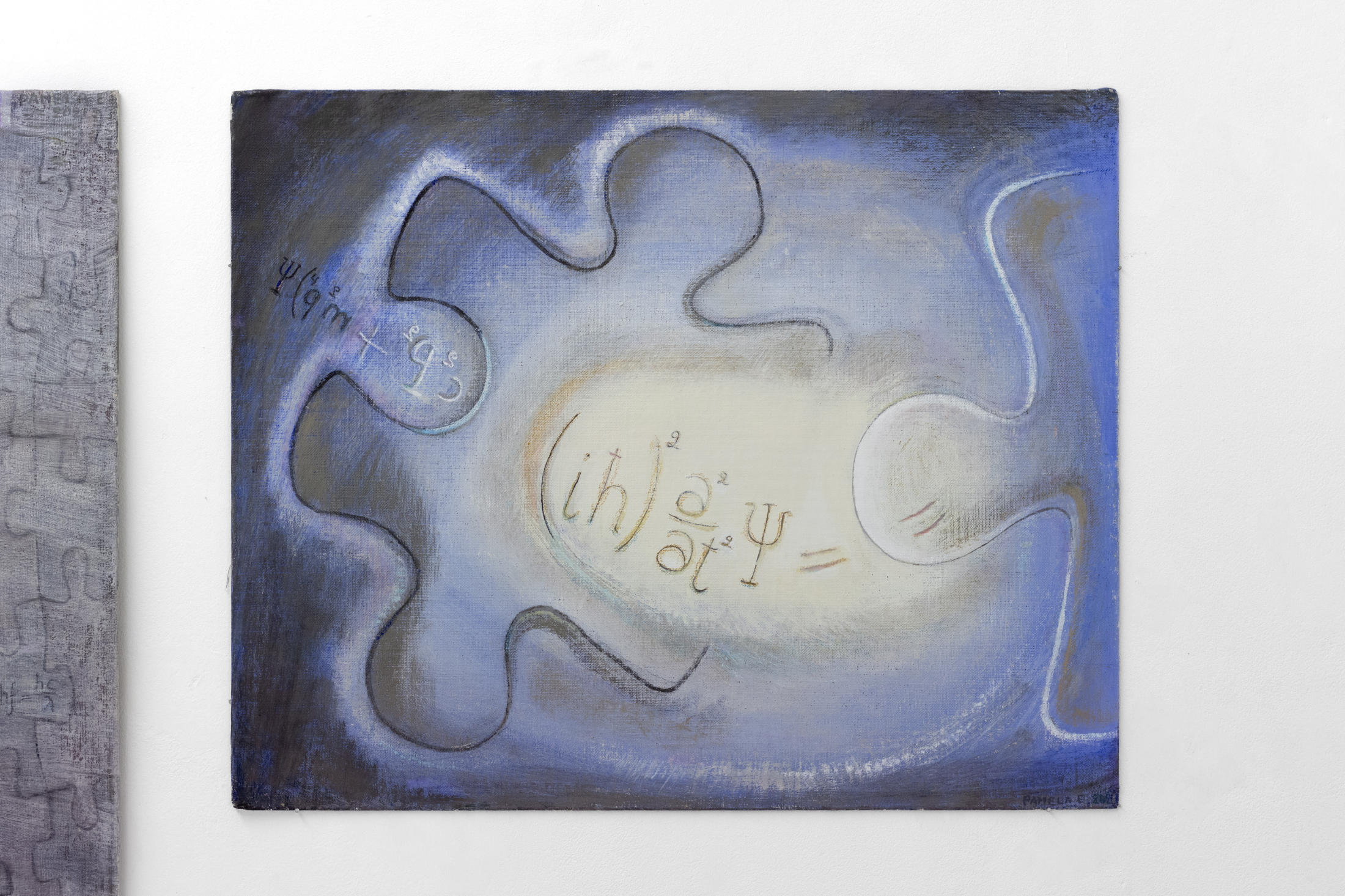
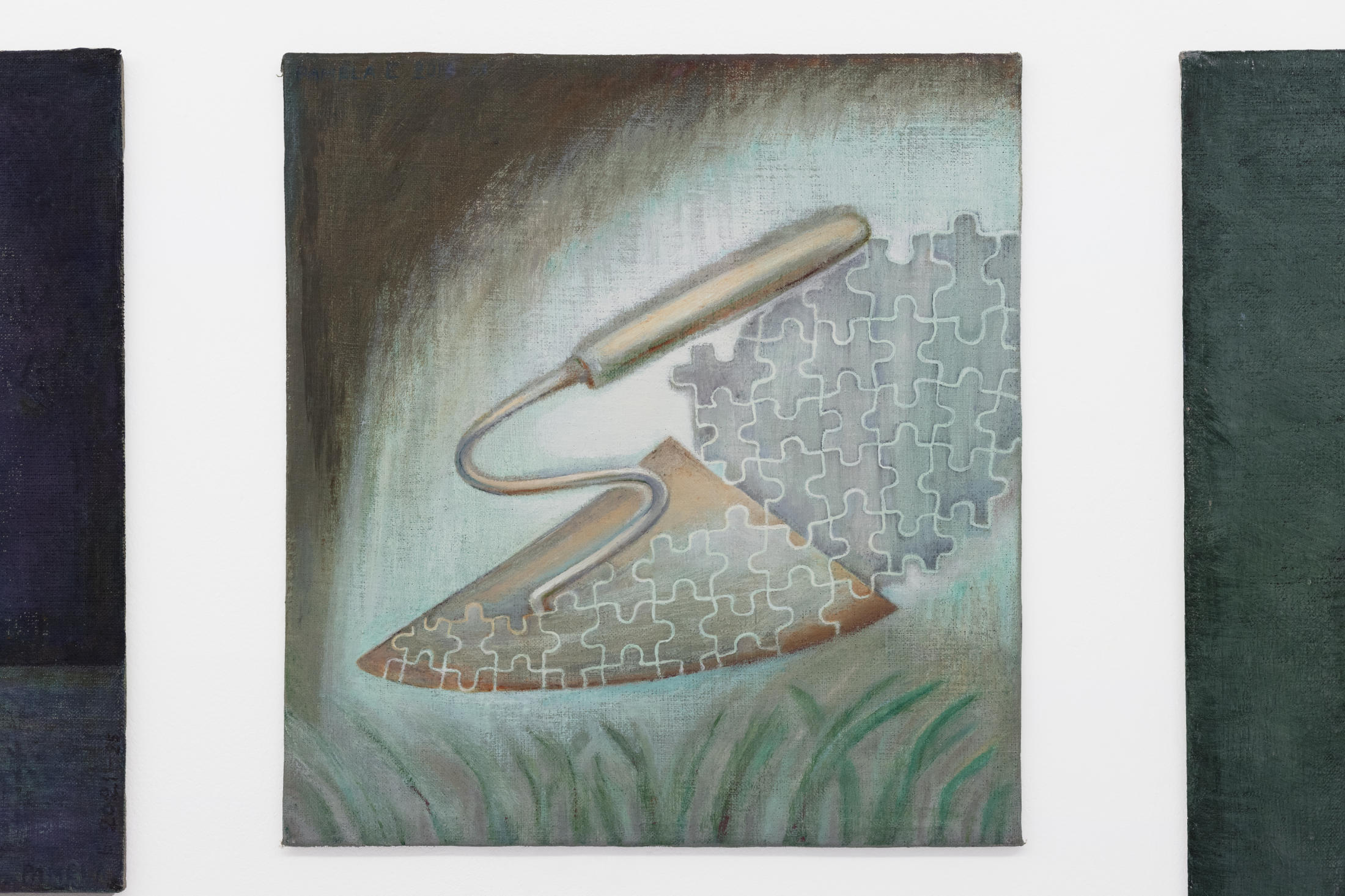
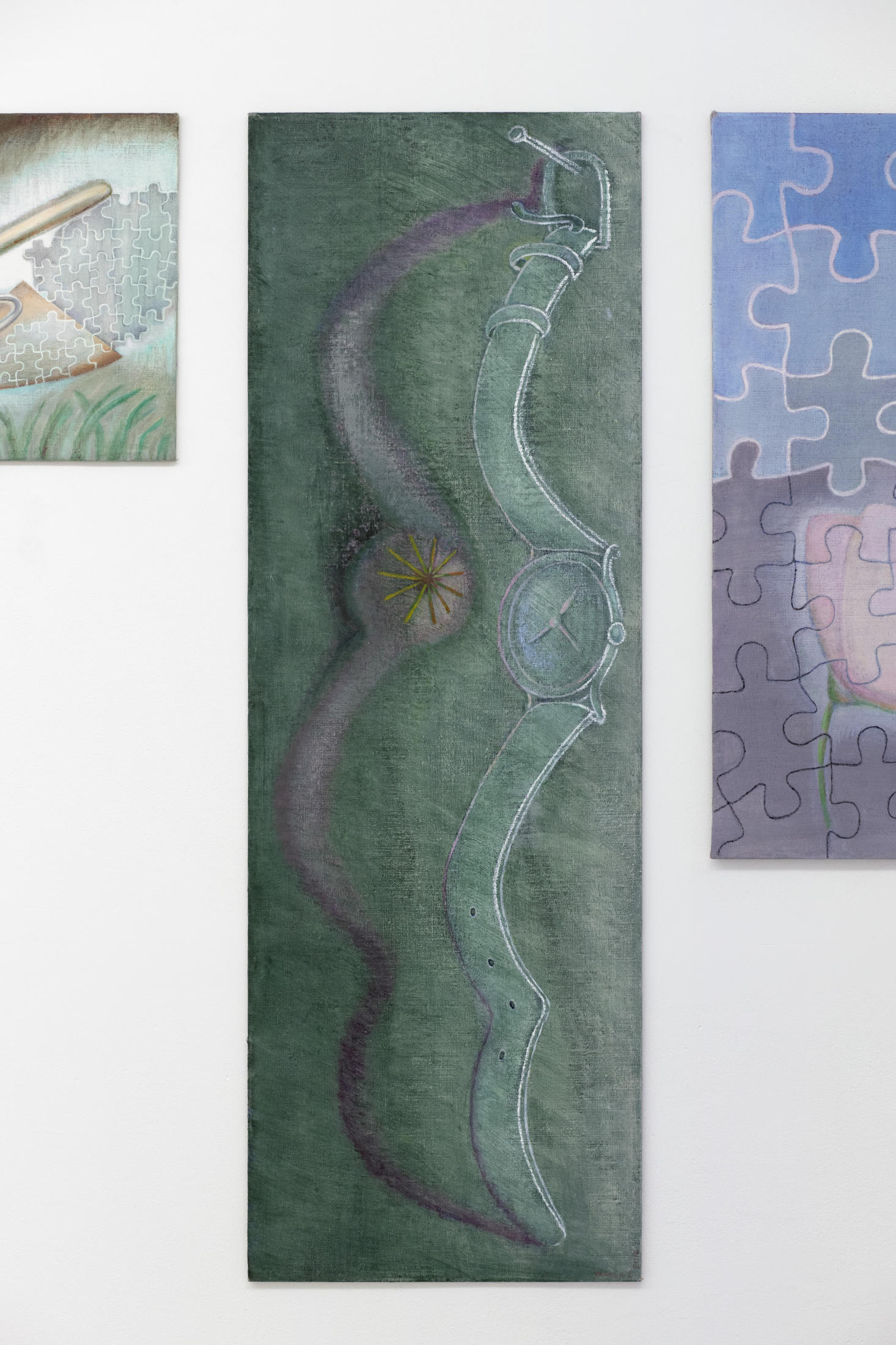
The story of creation—a recurring motif in early art history—serves as a point of departure. Pamela, however, replaces religious icons with everyday objects in a renewed visual narrative. Punctuated by mathematical equations, her symbolic system reflects an enduring curiosity about how meaning, order and existence might be understood from multiple perspectives. Chance and logic, play and structure function as narrative devices through which Pamela constructs a dreamlike and even hallucinatory universe populated by familiar signs. In the beginning (in Pamela’s early works, that is) there were playing cards, dice, chess pieces, bowling balls and pins; now, clocks, tools and puzzles.
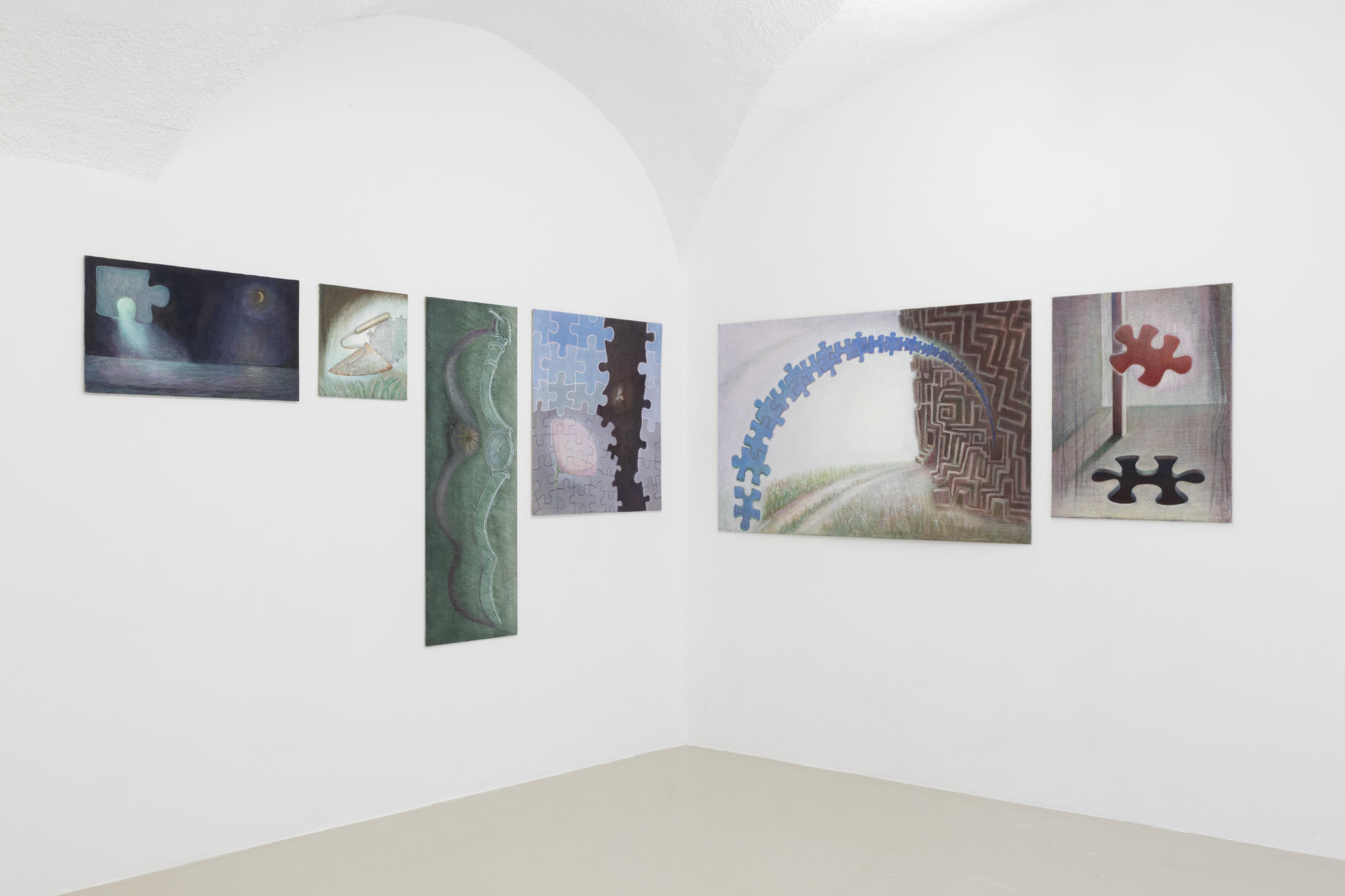
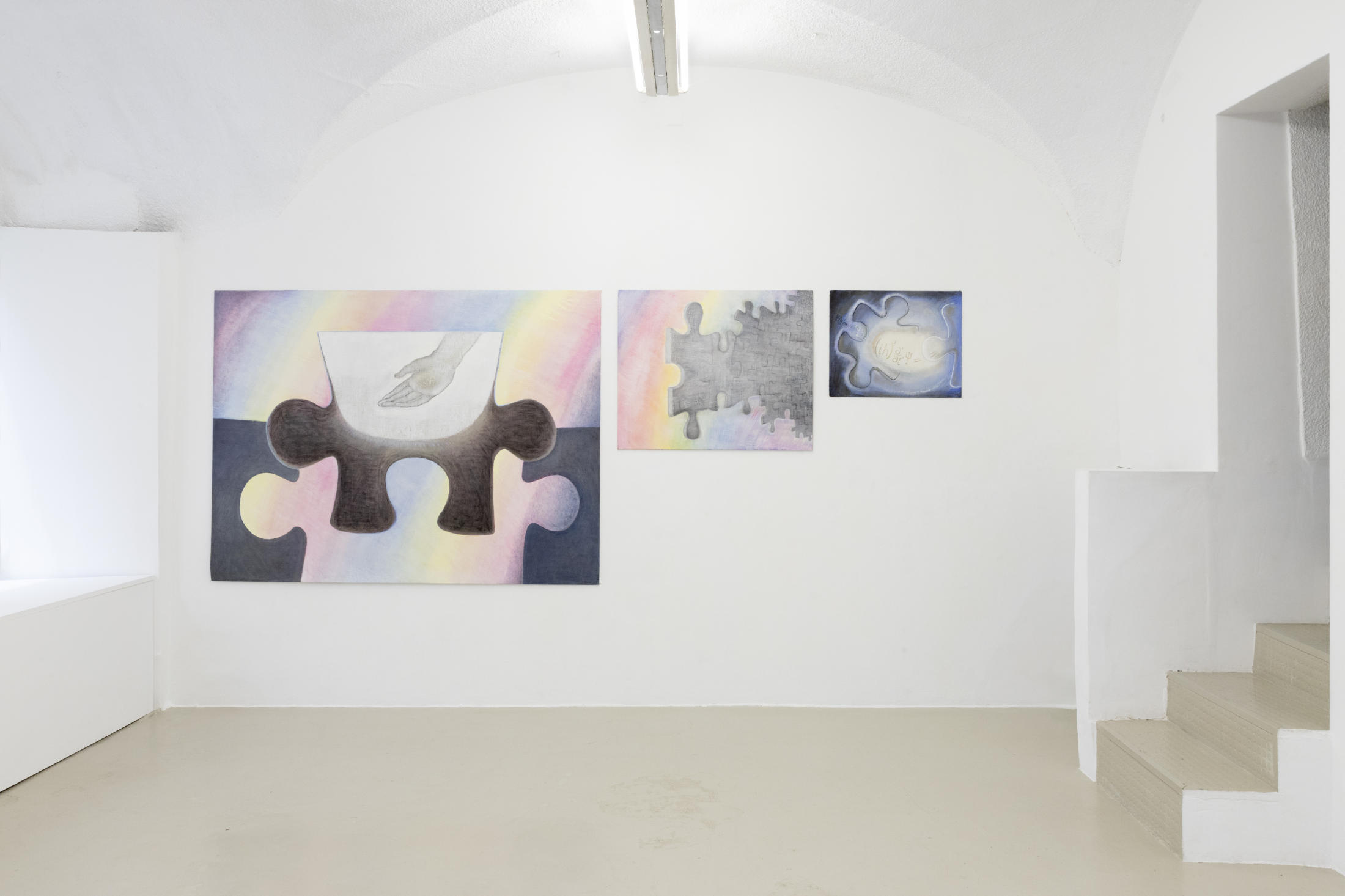
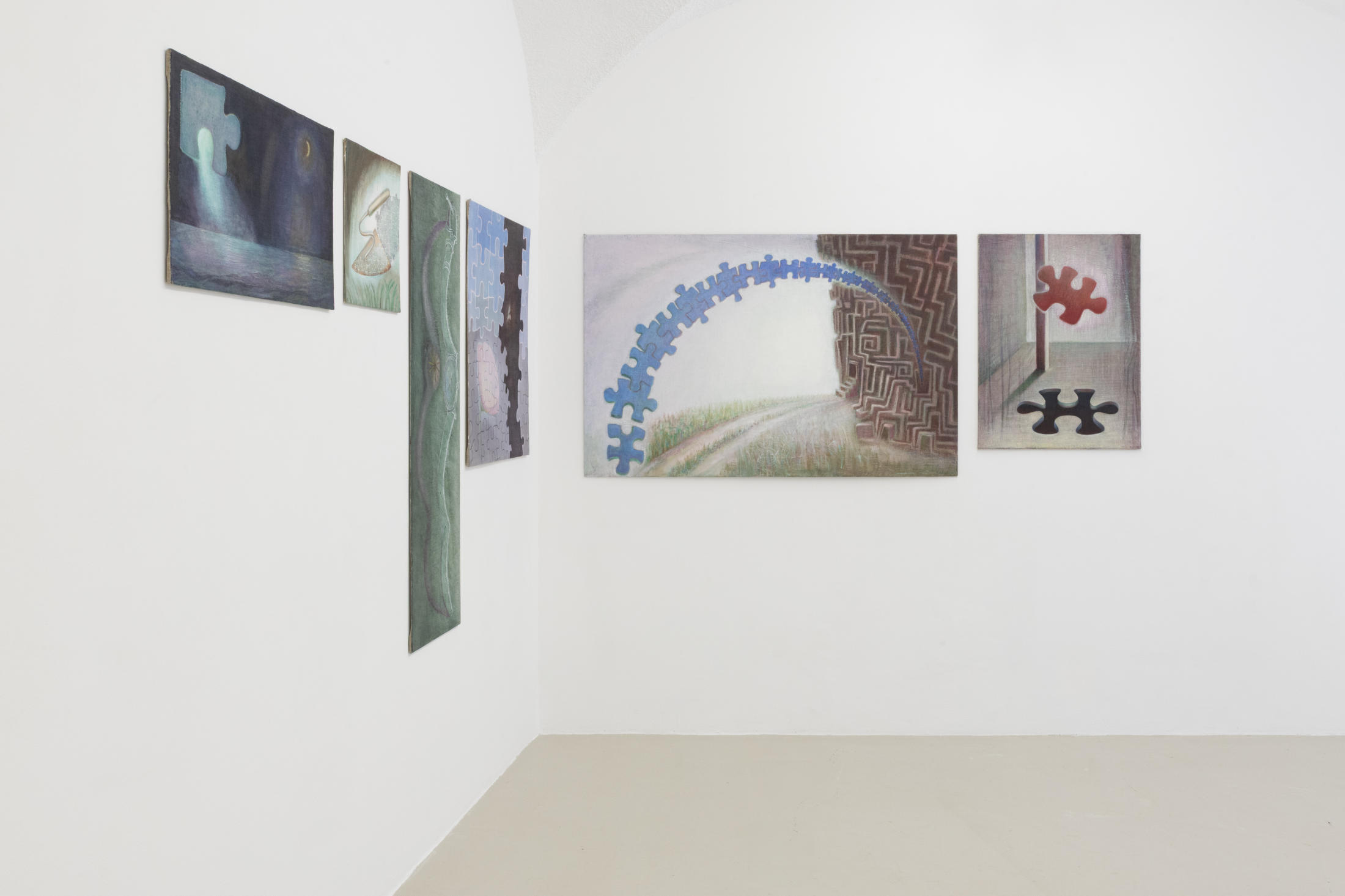
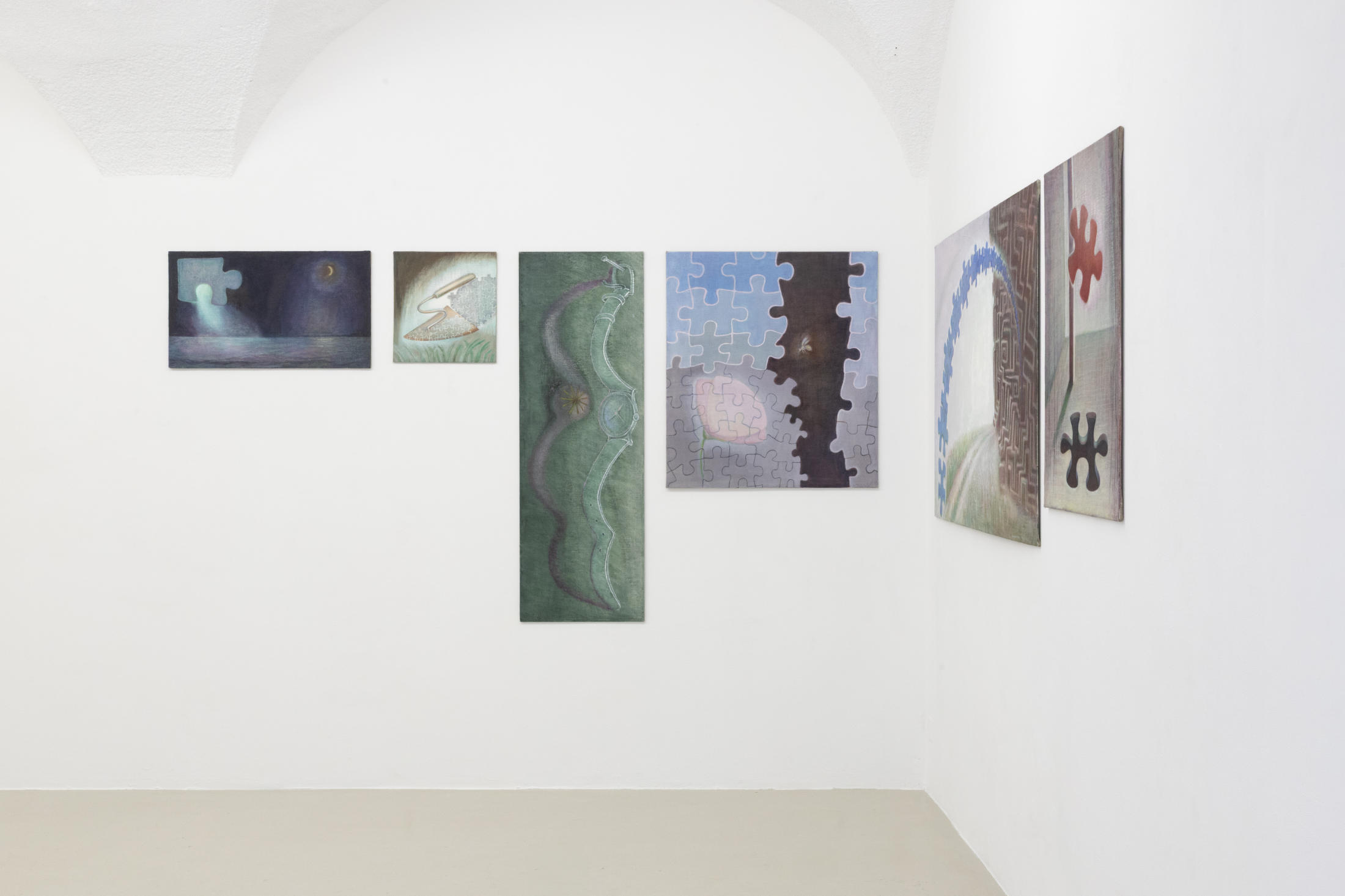
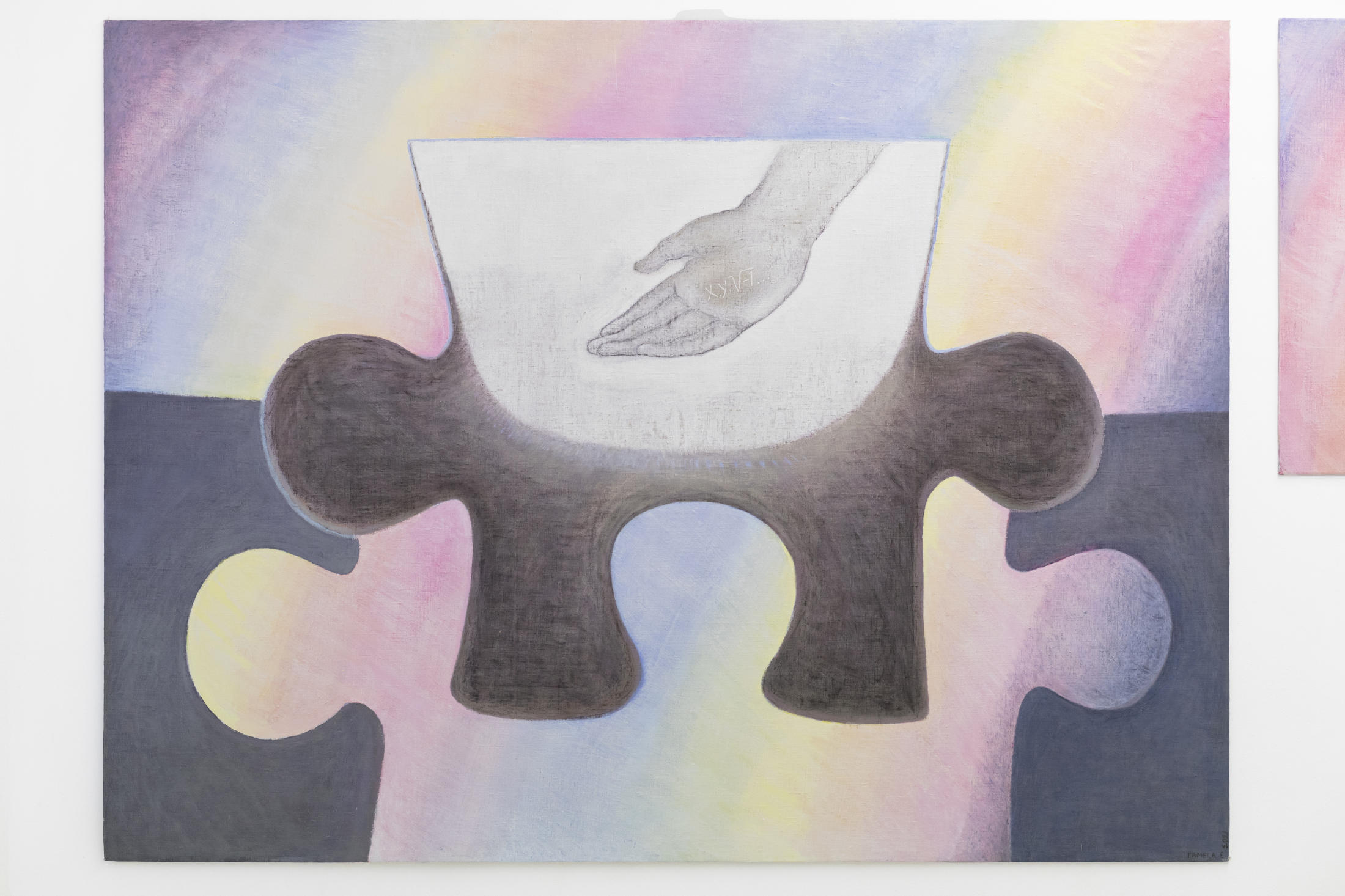
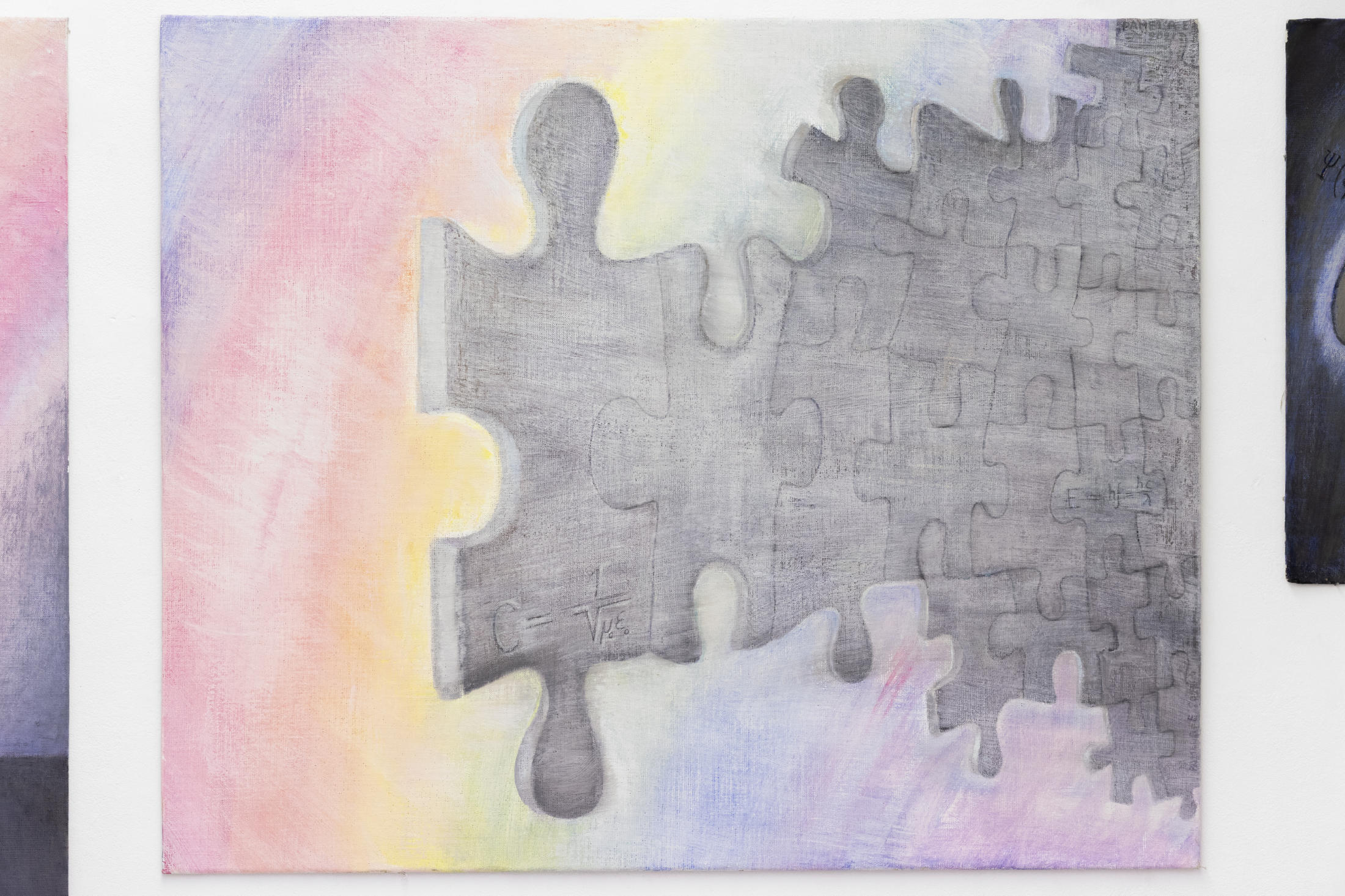
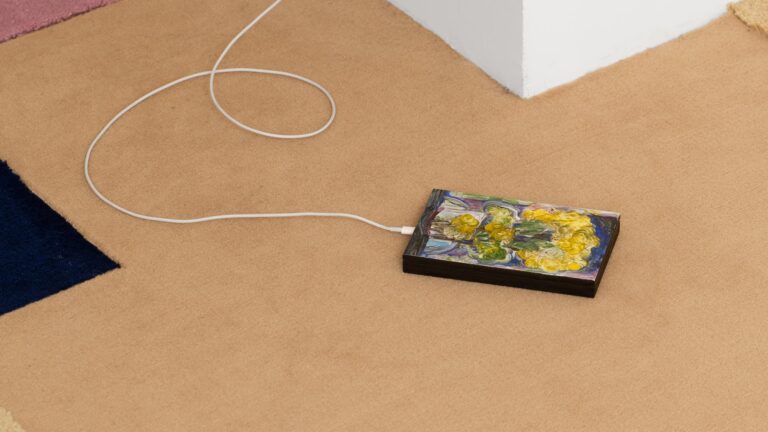
The seriousness and play extend to the materiality of the paintings themselves. Executed on canvas mounted on aluminium and prepared with a bone-based gesso—techniques that could have followed instructions from Cennini’s treatise—the tempera and oil paint produce, at times, a trompe-l’œil effect, reading instead as coloured pencil or oil pastel. This perceptual shift reflects not only her proximity to the arts—her mother was a painter; her father, a painter and poet—but also the reworking of inherited conventions into something less rigid. Her handling of composition, light and shadow draws out the almost literary quality of the work, articulated through a palette that alternates between darkness and sudden bursts of light, evocative of Finland’s extreme seasonal rhythm, where summers verge on continuous day and winters on near-total night.
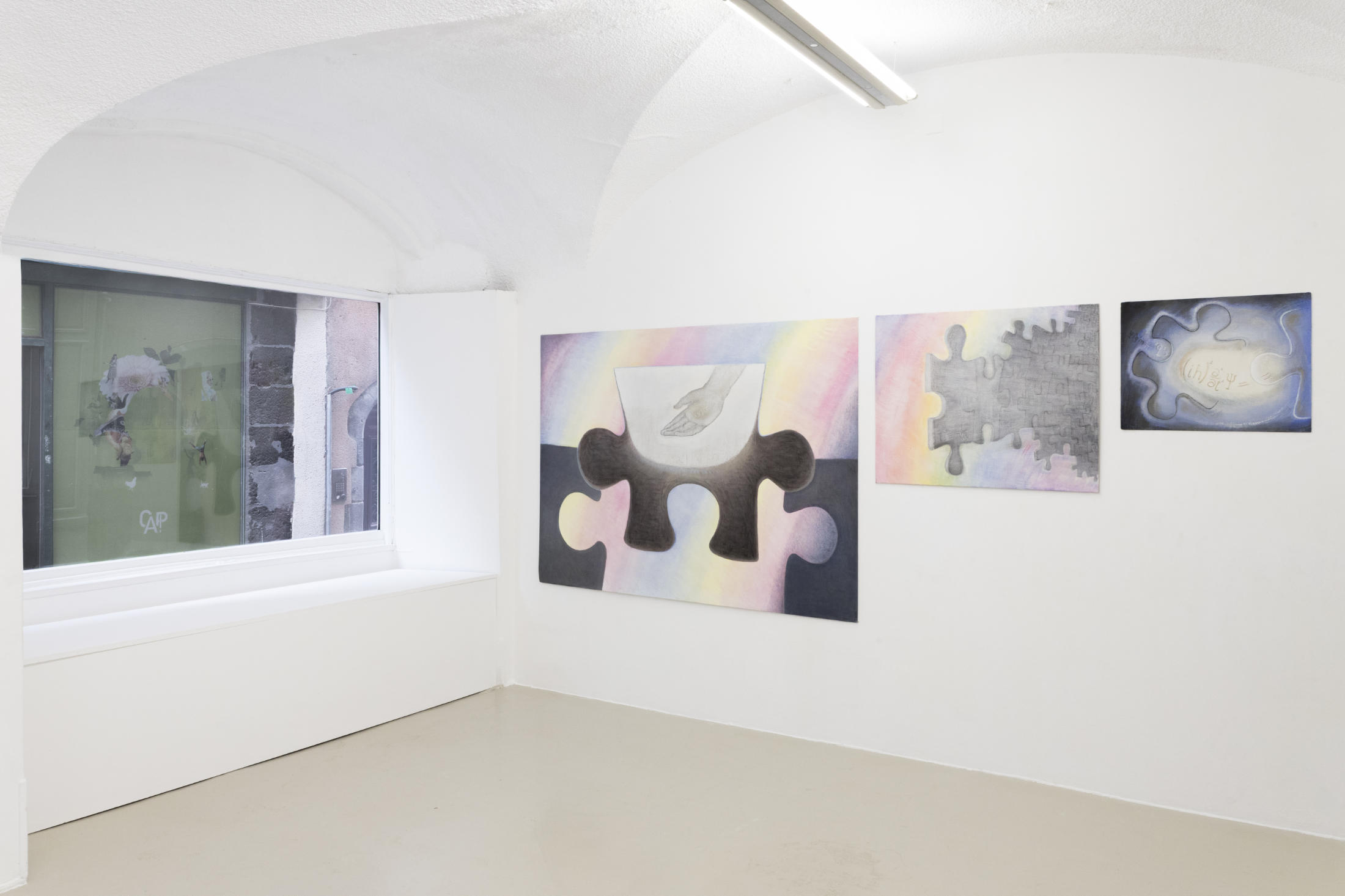
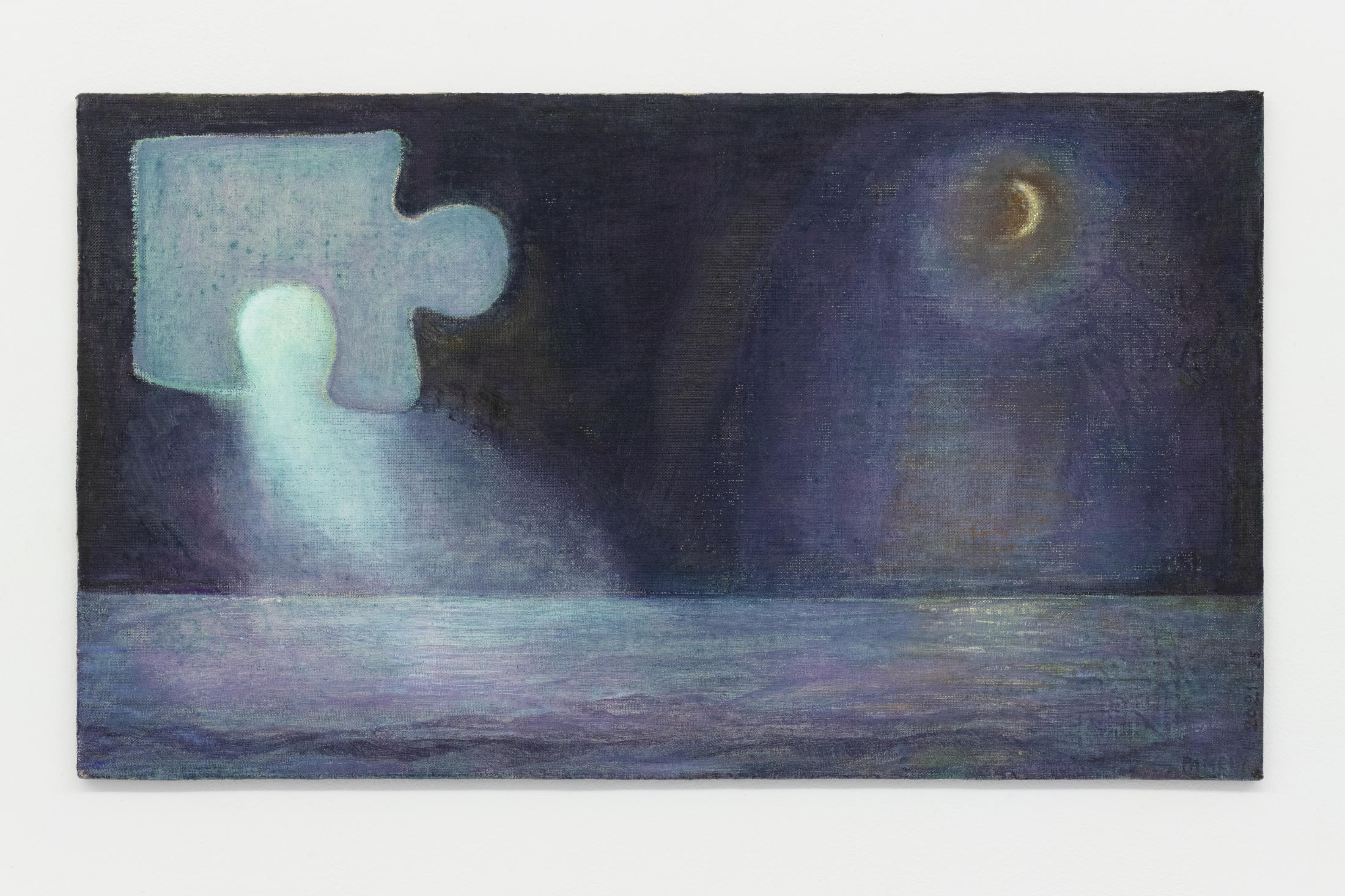
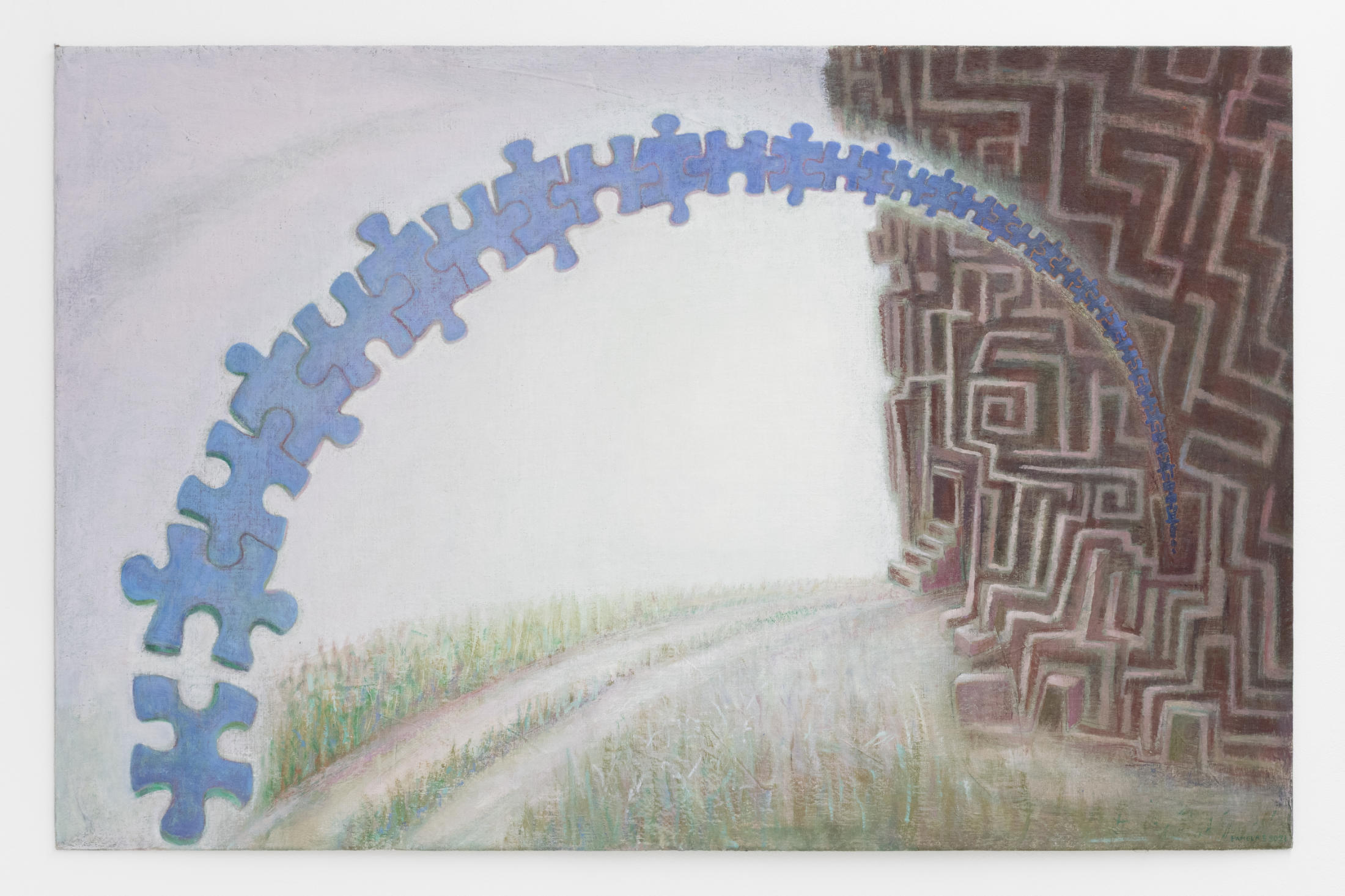
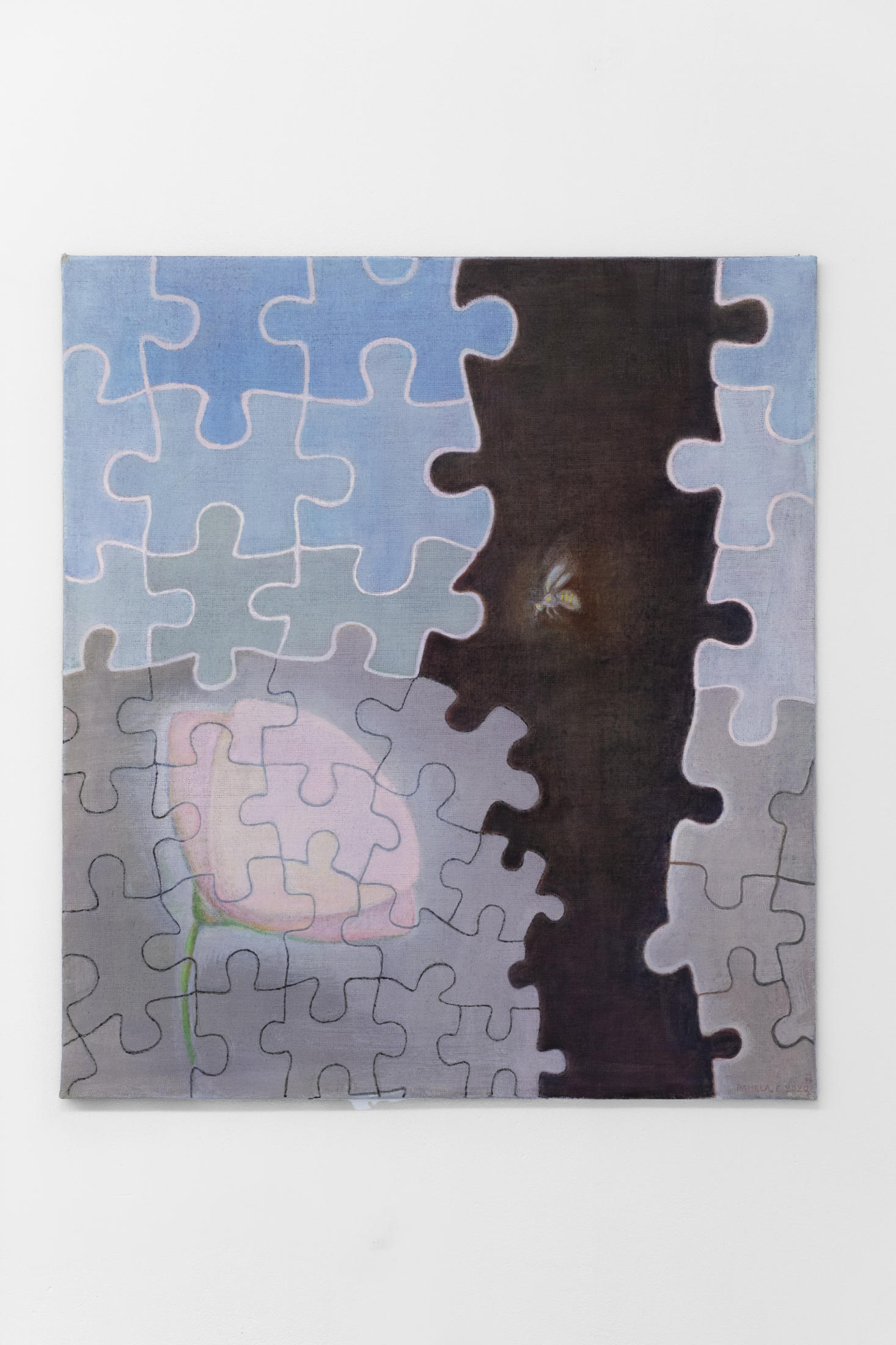
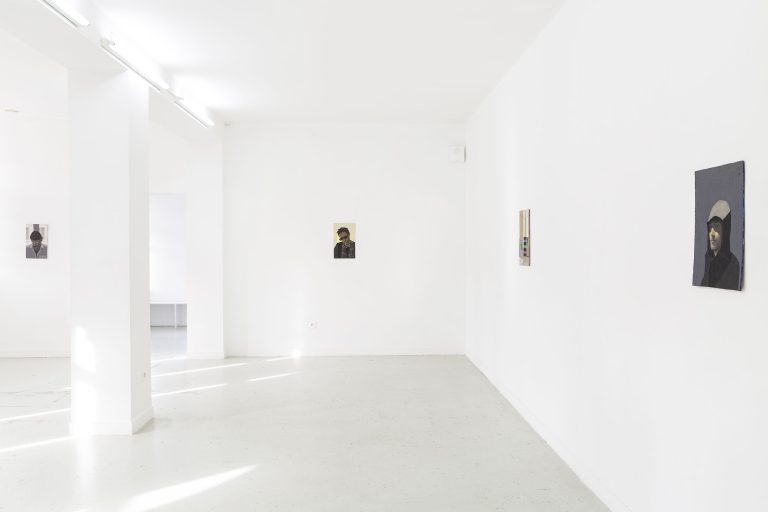
In the series of paintings presented at In extenso, the puzzle piece emerges as a central motif. Originally developed in the eighteenth century as an educational tool[4], the jigsaw puzzle gradually shifted toward leisure, marking a broader transformation in its mode of being: from instrument to play, disappearing in use while orienting thought toward an imagined wholeness.[5] At once seemingly useless as an isolated form and essential as the promise of completion (think metaphor of the missing piece), it fluctuates between excess and necessity. In Pamela Brandt’s paintings, the puzzle becomes a marker of time (We Don’t Know), a structural principle (Celestial Bridge and Labyrinth; Construction), a point around which meaning is assembled and withheld (Language of Being; Velocity of Light), but also an embodiment of limitation and finitude.
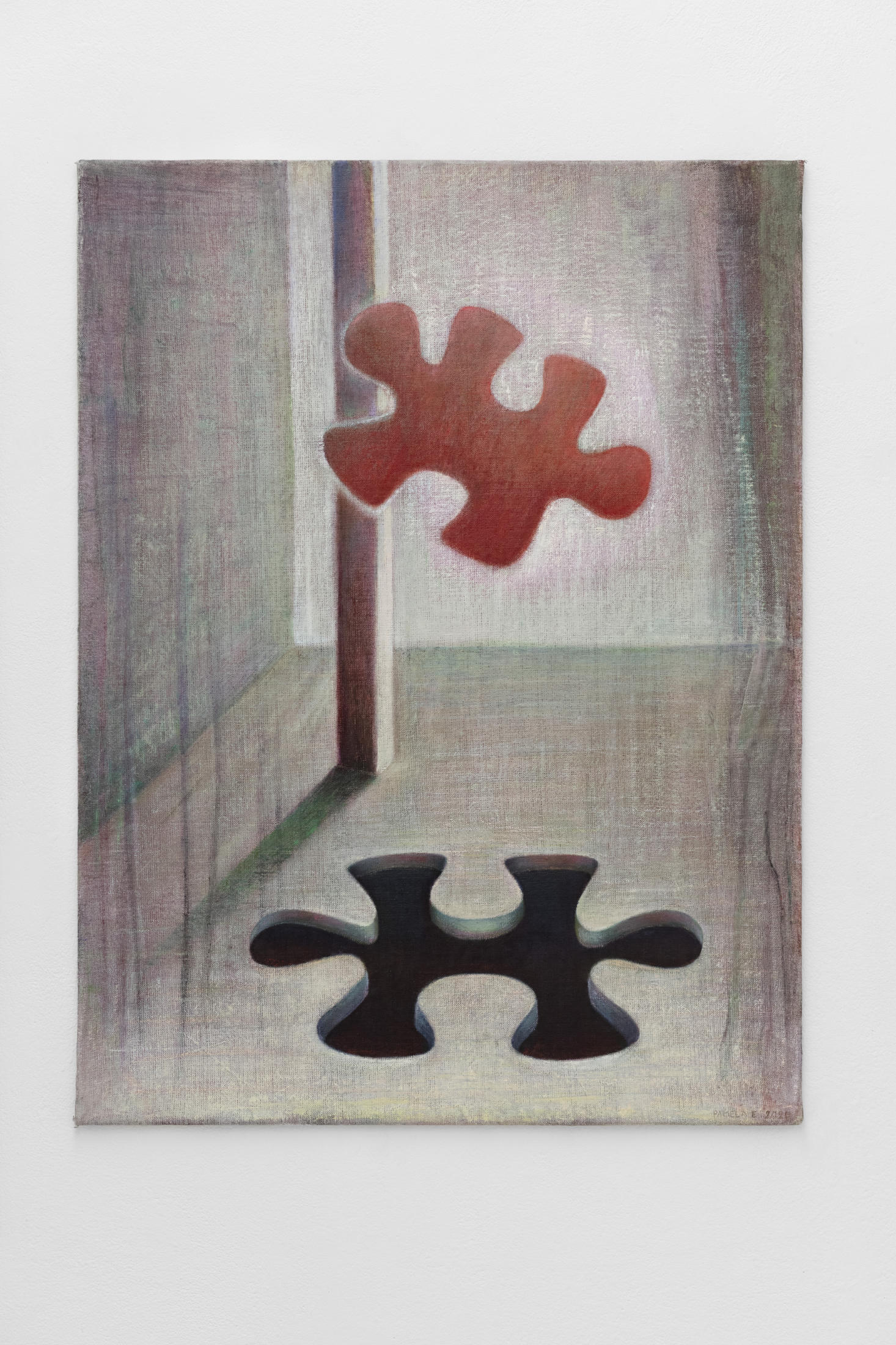
In Falling Towards a Hole, a space reminiscent of early Renaissance interiors becomes the stage—the undulating outer edges recalling the folds of a theatre curtain, despite the absence of one—for a dramaturgy centred on the puzzle piece. Pamela once noted in an interview[6] that it is the only painting in which the object embodies the human rather than an existential condition, appearing as a being in its own right, falling towards a hole: a disappearing act, like a magic trick, or a meditation on the void.
Against the contemporary backdrop of a world theatre in which spectacle eclipses lived experience, Pamela Brandt’s paintings trace a poetics of existential predicaments. Time, and its shadow[7], slip into the scene as a reminder that time is a constructed form of play: rule-bound, imagined and provisional.
–Katia Porro
Pamela Brandt is a painter. She constructs scenes in which everyday and imaginary elements merge, freeing them from the constraints of their original functions. At the same time, she weaves into them a symbolic language rooted in art history and mysticism. She renders them on paper or on canvases created using a process unique to her practice: aluminum sheets coated with gesso made from animal bones, which serves to stretch and securely hold the canvas in place.
Pamela Brandt was born in Helsinki in 1950. In the 1970s, she studied at the Free Art School in Tor Arne’s studio, where she herself taught from 2013 to 2017. She has had several solo exhibitions, notably at Kohta Kunsthalle (2021), Galerie Anhava (between 1993 and 2021), the Finnish-Norwegian Culture Institute (Oslo, 2010), and the Gothenburg Art Association (Gothenburg, 2003), among others. She has also participated in numerous group exhibitions, notably at Pitted Dates (Helsinki, 2025), Gallery SIC (Helsinki, 2024), and Elverket (Tammisaari, 2015 and 2019). Some of her works are included in the collections of the Swedish Cultural Foundation in Finland, the Art Museum of Helsinki, the Gothenburg Art Museum, the PricewaterhouseCoopers Collection, and the Amos Anderson Art Museum.
Her exhibition Falling Towards a Hole is her first solo exhibition in France and outside the Nordic countries.
Georg Grotenfelt was born in 1951 in Helsinki. He is a film maker and architect. Some of his films include Pamela Brandt: In her studio (2021), Silent Rhapsody (2000), The Landscape with the Double Shadow about the poet Rabbe Enckell (2005), Notes from a White City about poet Gunnar Björling’s Helsinki (201), Relections – a film essay on the Painter Brothers von Wright (2017), The Dissident: a Day in the Life of Pentti Linkola (2018), amongst others.
[1] In the same breath.
[2] He wrote: “If you use cosmetics, your face will become withered, your teeth black, and you will become old before the natural course of time, and be the ugliest object possible. This is quite sufficient to say on this subject.”
[3] Cennino Cennini, A treatise on painting, 1437.
[4] It is said that French writer and educator Jeanne-Marie Leprince de Beaumont used wooden puzzles as early as the 1750s to teach geography to children, predating the claims that cartographer John Spillsbury was the inventor of the jigsaw puzzle.
[5] In Georg Grotenfelt’s film, Pamela discusses Heidegger’s concept of tool-being, where a tool is primarily understood in use rather than as an object of observation. Heidegger distinguishes between ready-to-hand (when a tool is smoothly used in practical activity) and present-at-hand (when we step back and view it as an object).
[6] Pamela Brandt in conversation with Anders Kreuger, Kohta, 30 September 2021.
[7] Pamela Brandt, Shadow Time, 2021.
[8] Traduction : Tomber vers un trou.
[9] Sans transition.
[10] Il écrit : «Si vous utilisez des produits cosmétiques, votre visage se flétrira, vos dents noirciront, vous vieillirez avant l’heure et deviendrez la chose la plus laide qui soit. Cela suffit amplement pour clore le sujet».
[11] Cennino Cennini, Traité de la peinture, 1437.
[12] On raconte que l’écrivaine et pédagogue française Jeanne-Marie Leprince de Beaumont utilisait déjà des puzzles en bois dès les années 1750 pour enseigner la géographie aux enfants, bien avant que le cartographe John Spillsbury ne soit présenté comme l’inventeur du puzzle.
[13] Dans le film de Georg Grotenfelt, Pamela discute du concept heideggérien de l’être-outil (tool-being), selon lequel un outil est avant tout compris dans son usage plutôt que comme un objet d’observation. Heidegger distingue le prêt-à-l’emploi (ready-to-hand) – lorsque l’outil est utilisé de manière fluide dans une activité pratique – et le présent-à-portée de main (present-at-hand) – lorsque nous prenons du recul pour le considérer comme un objet.
[14] Pamela Brandt en discussion avec Anders Kreuger, Kohta, 30 septembre 2021.
[15] Voir la peinture Shadow Time, ou L’Ombre du temps, 2021.