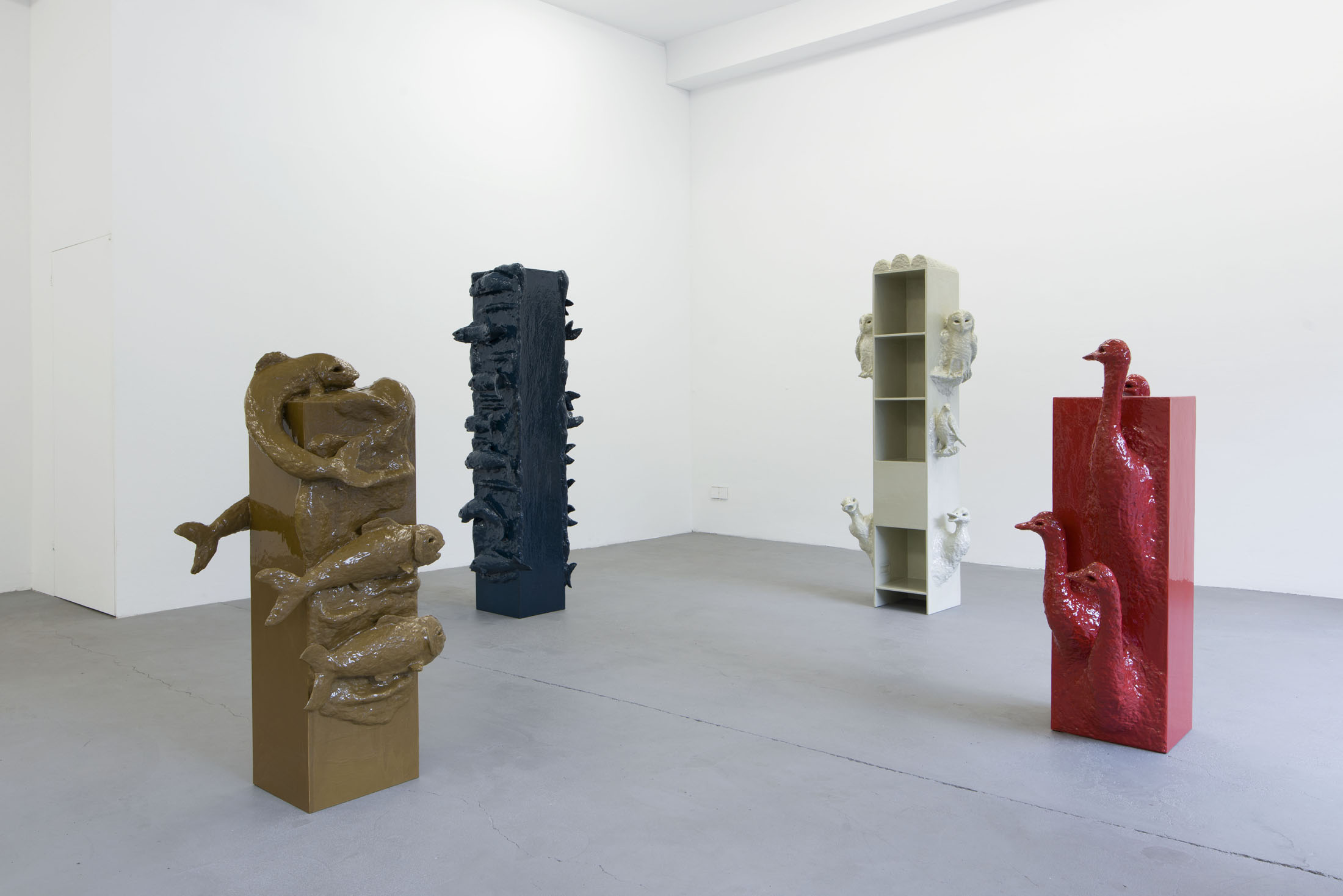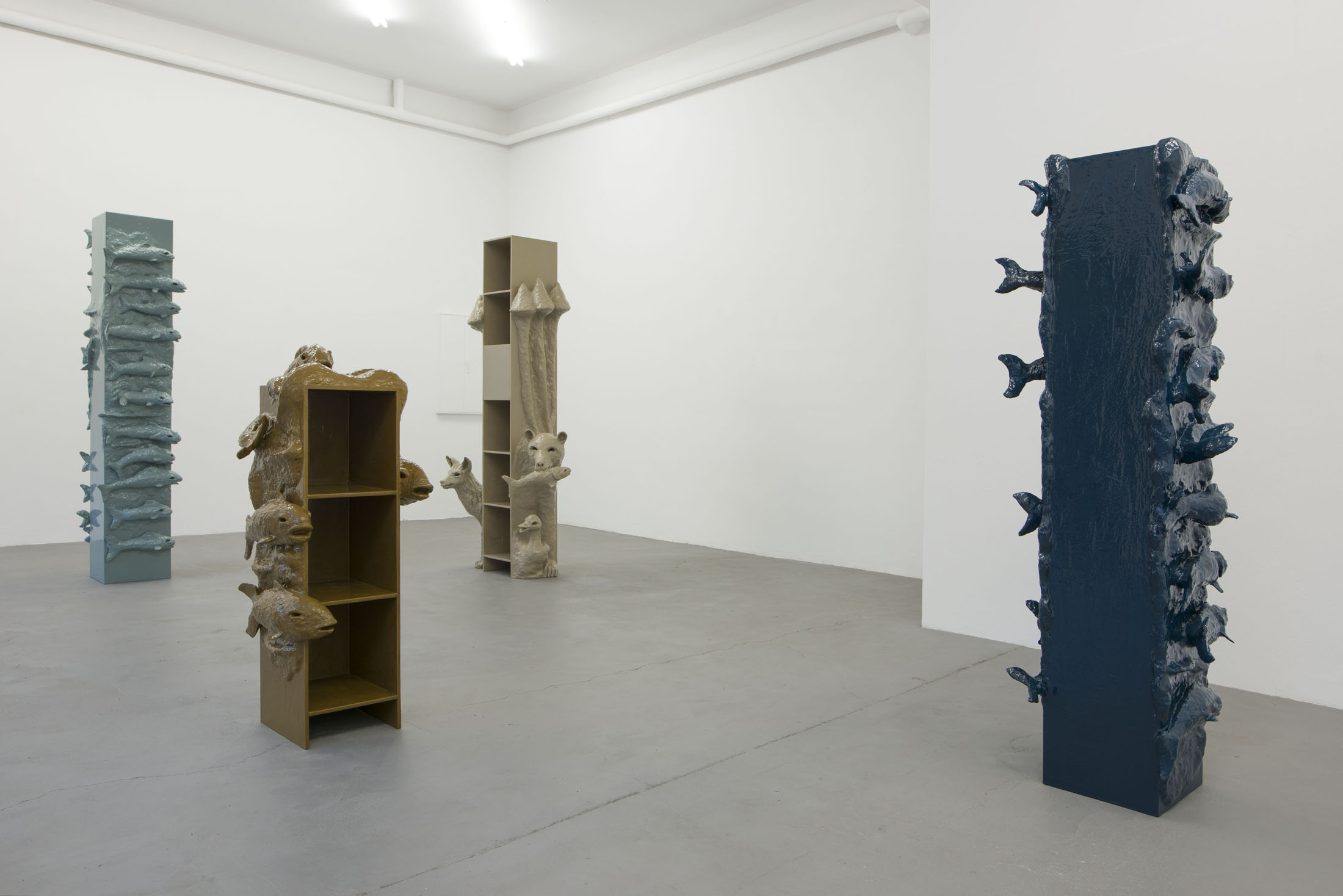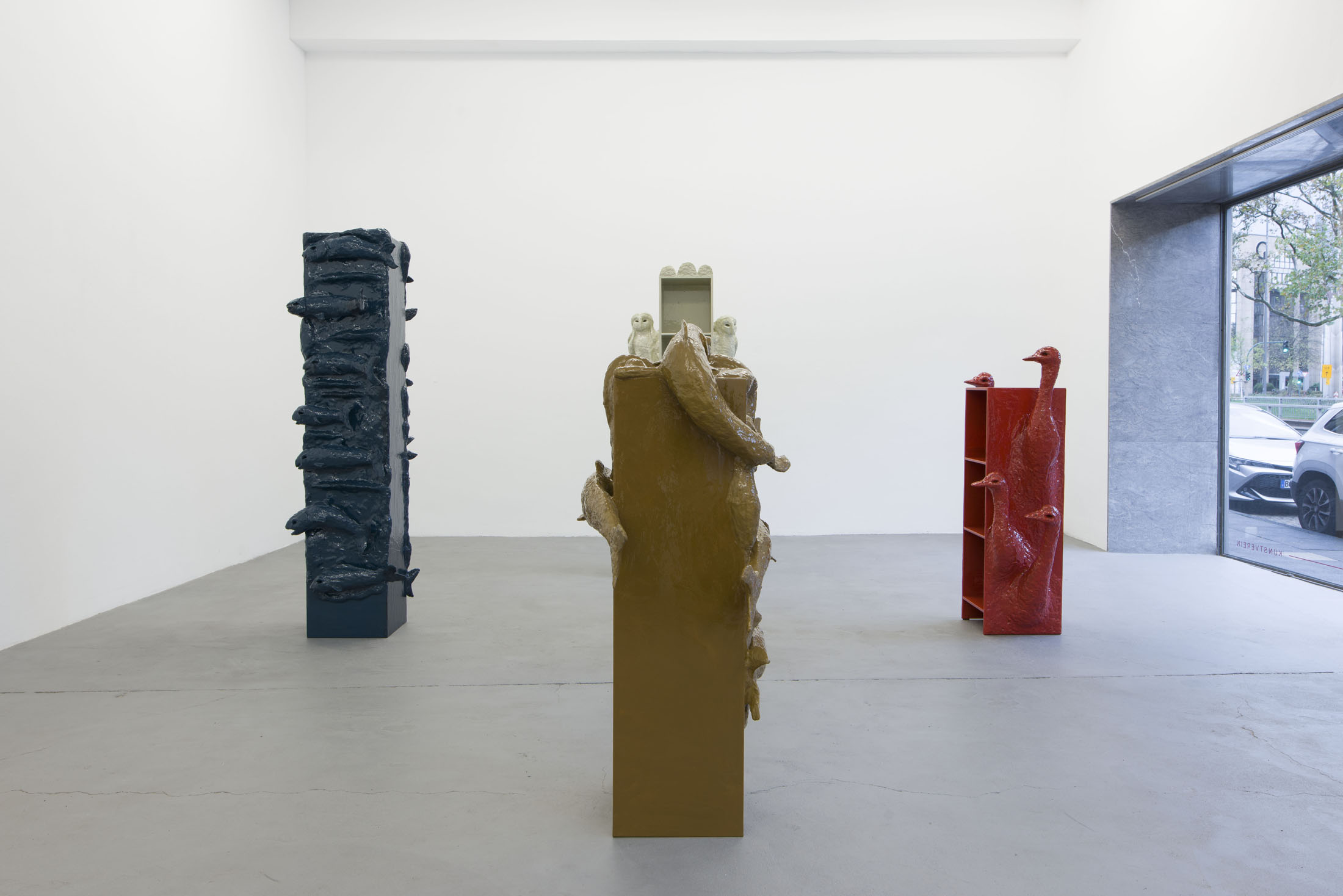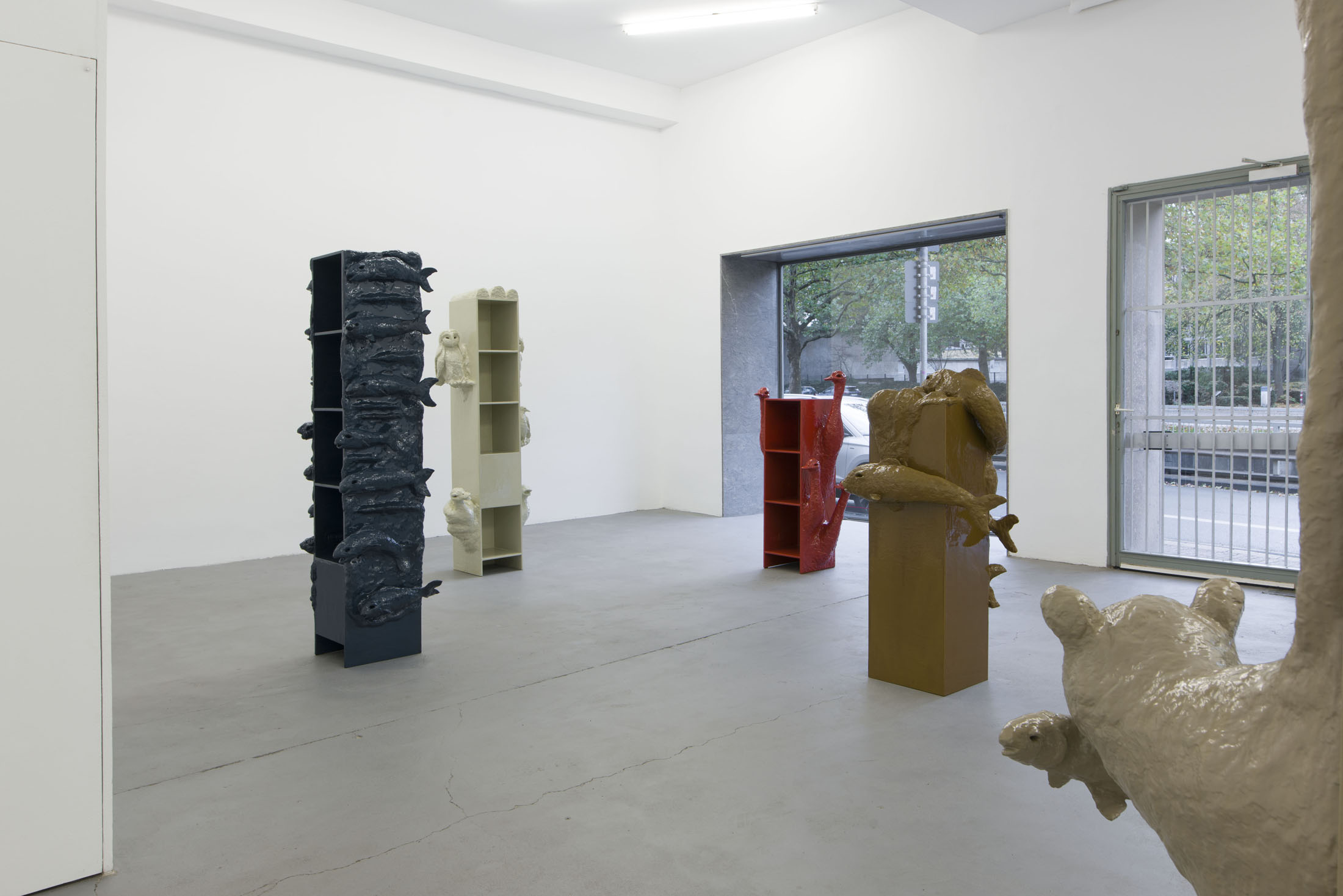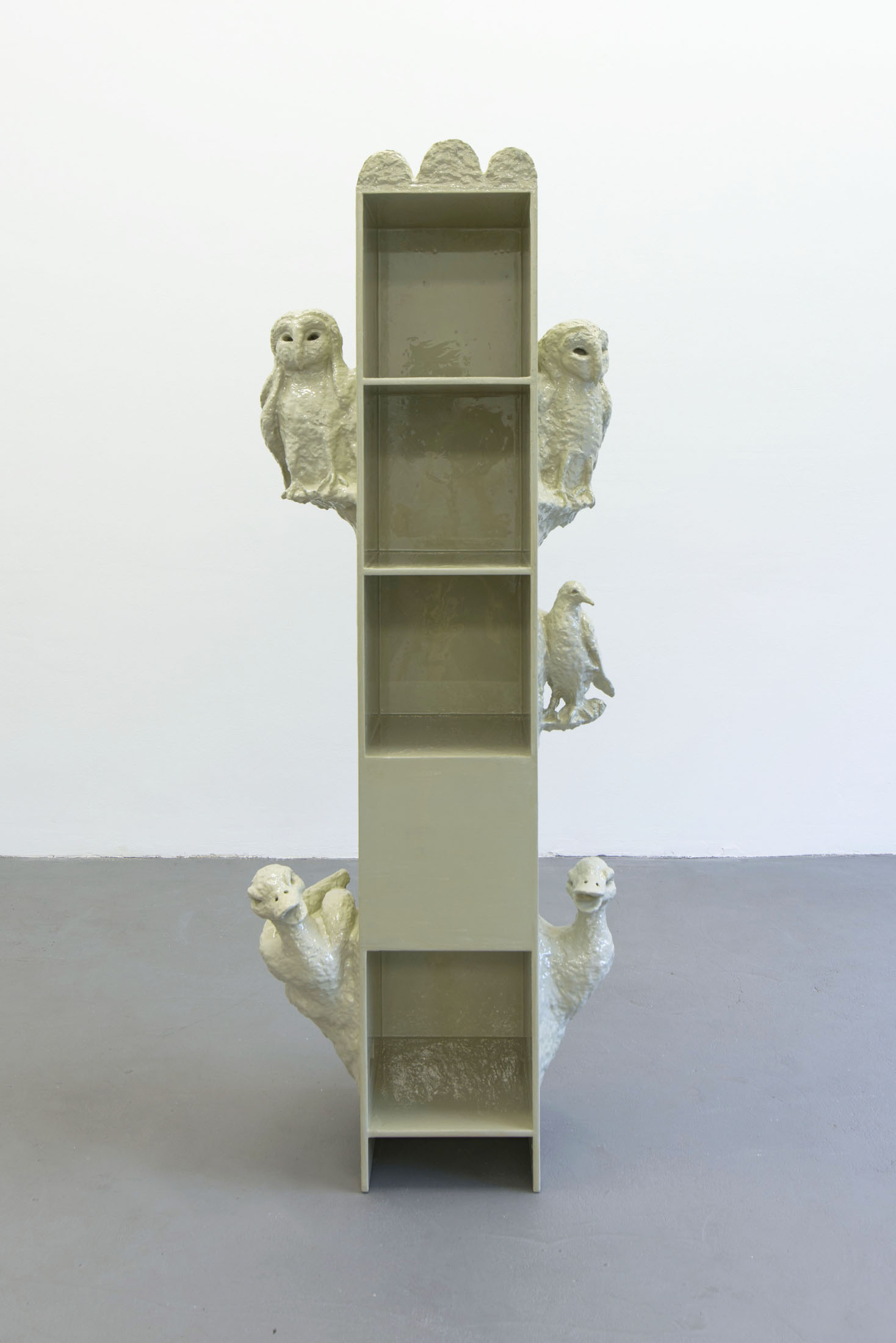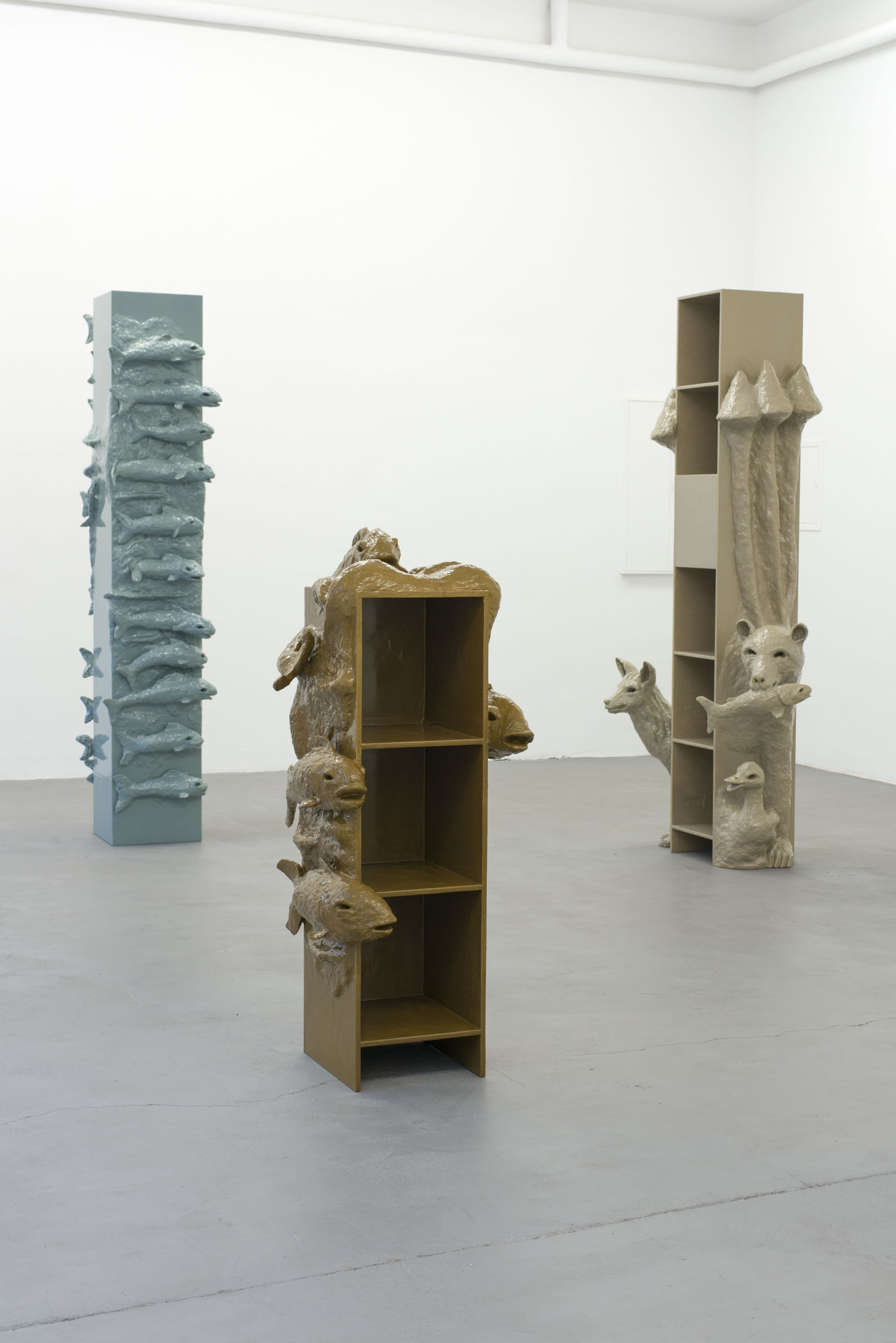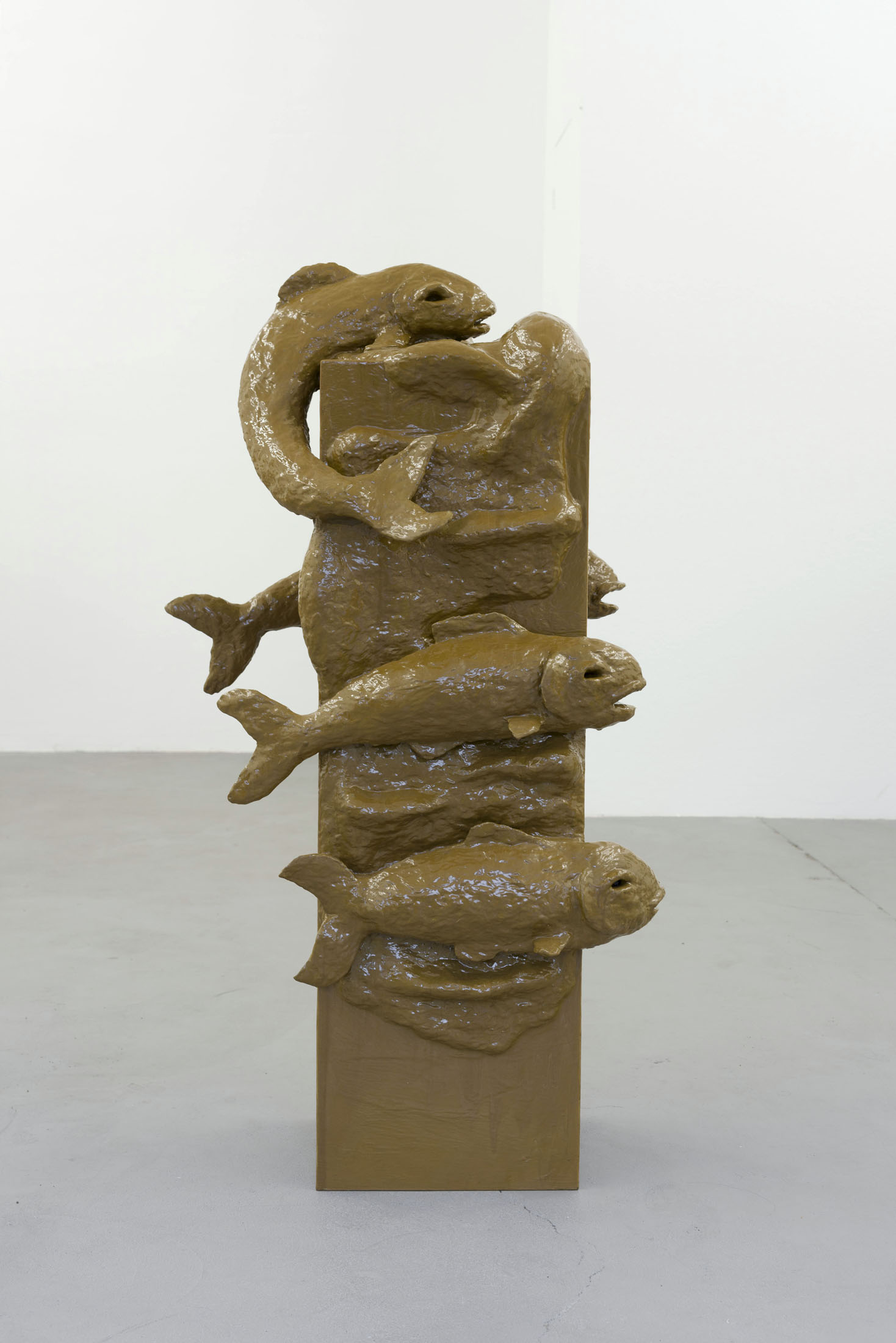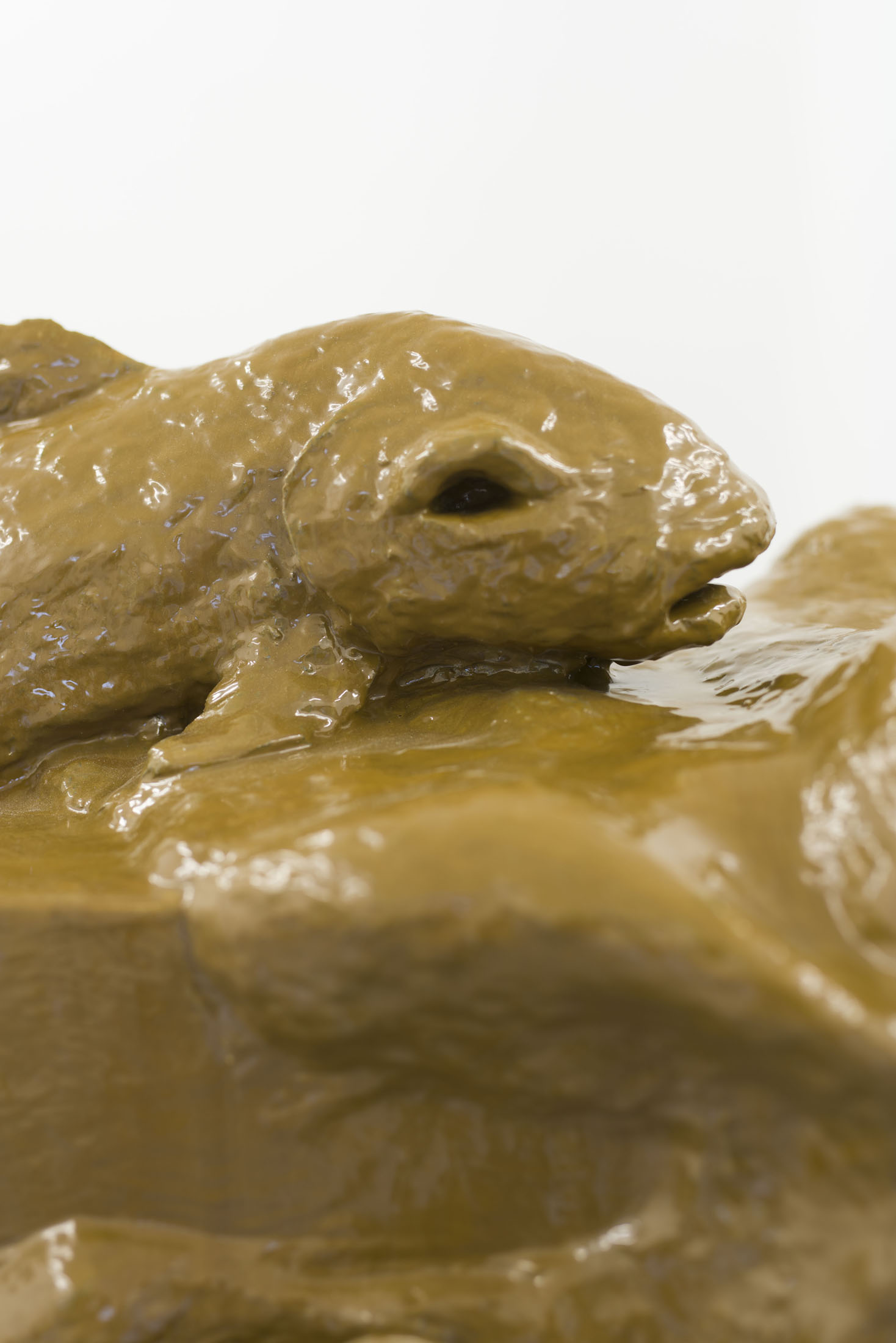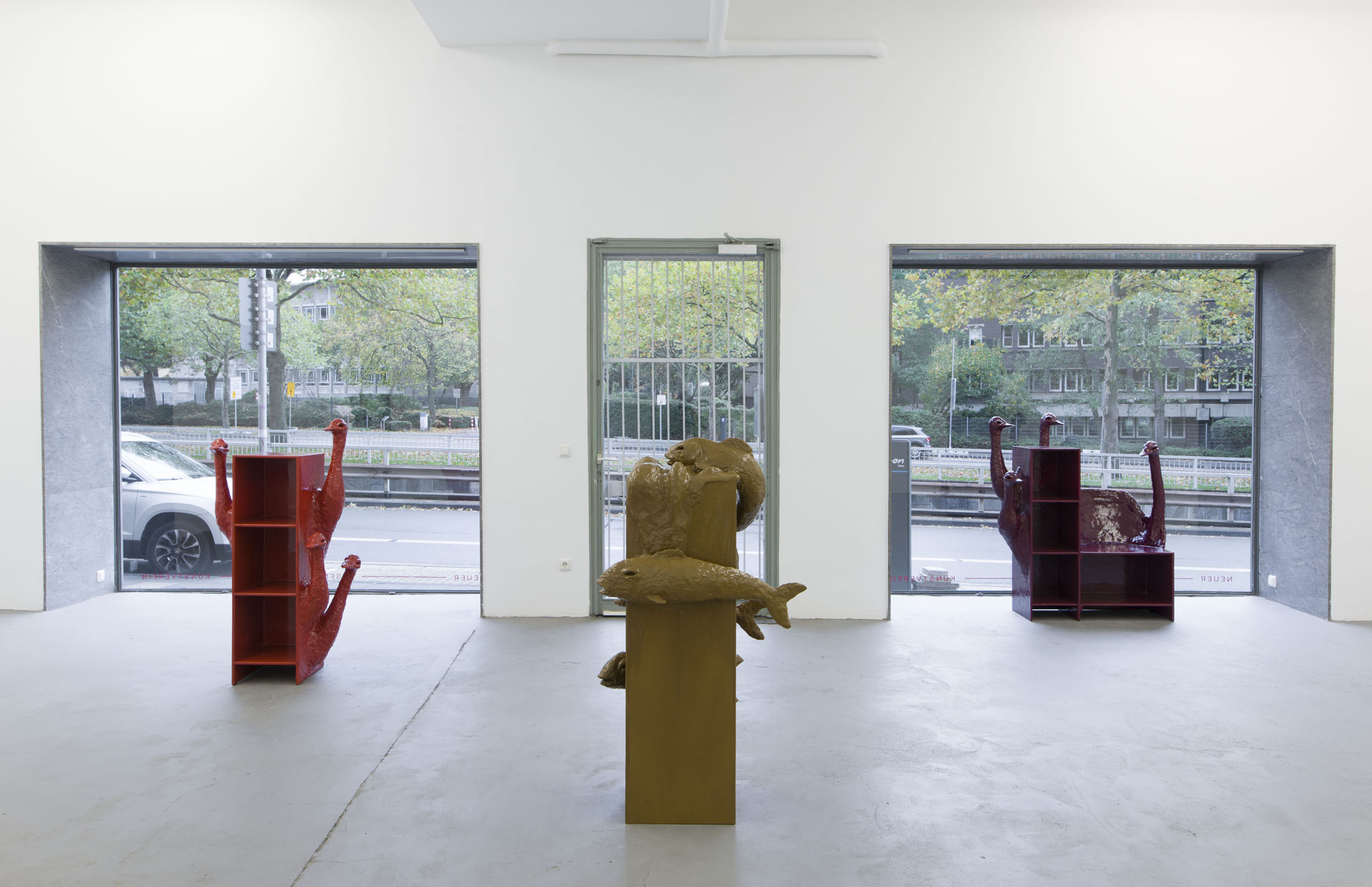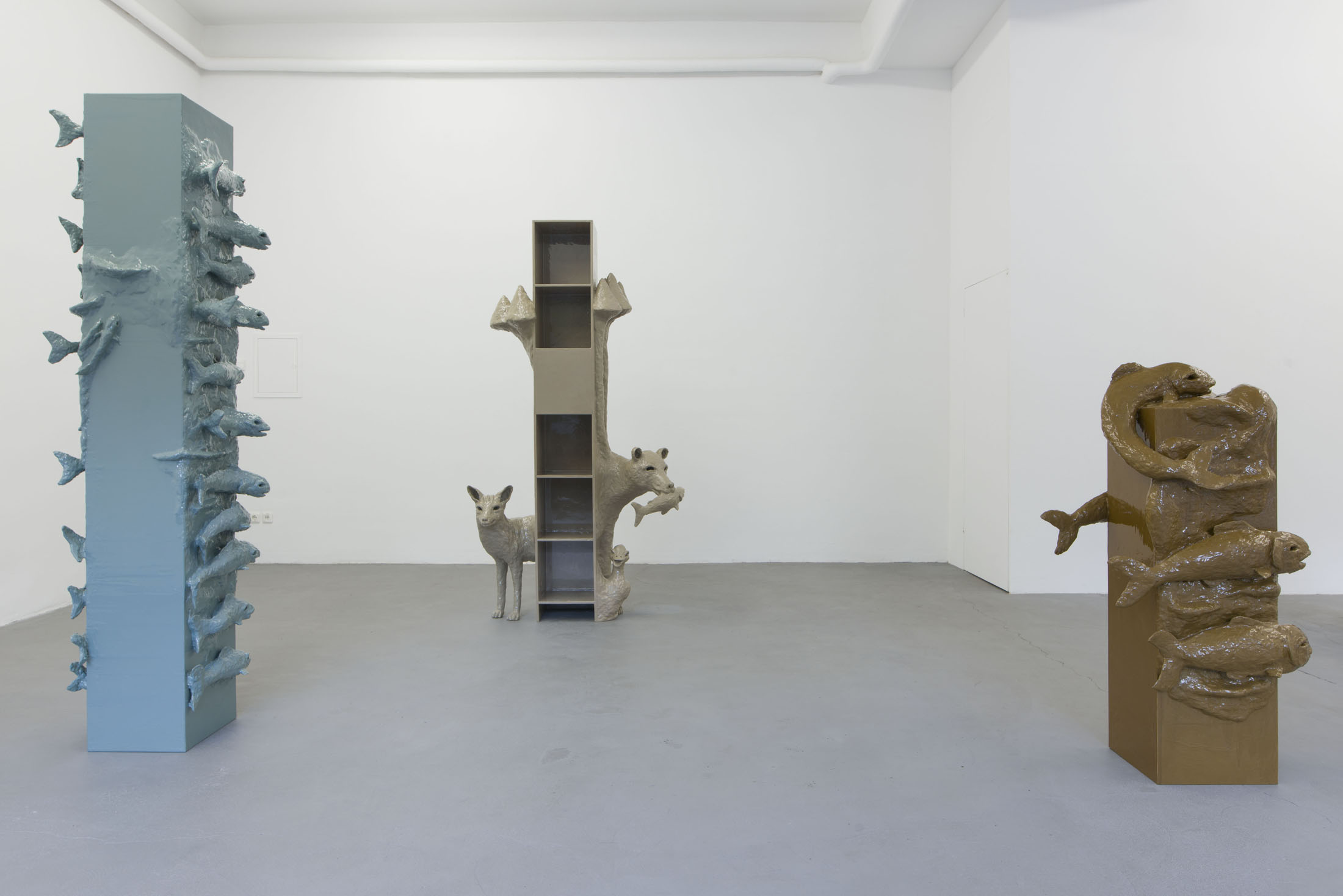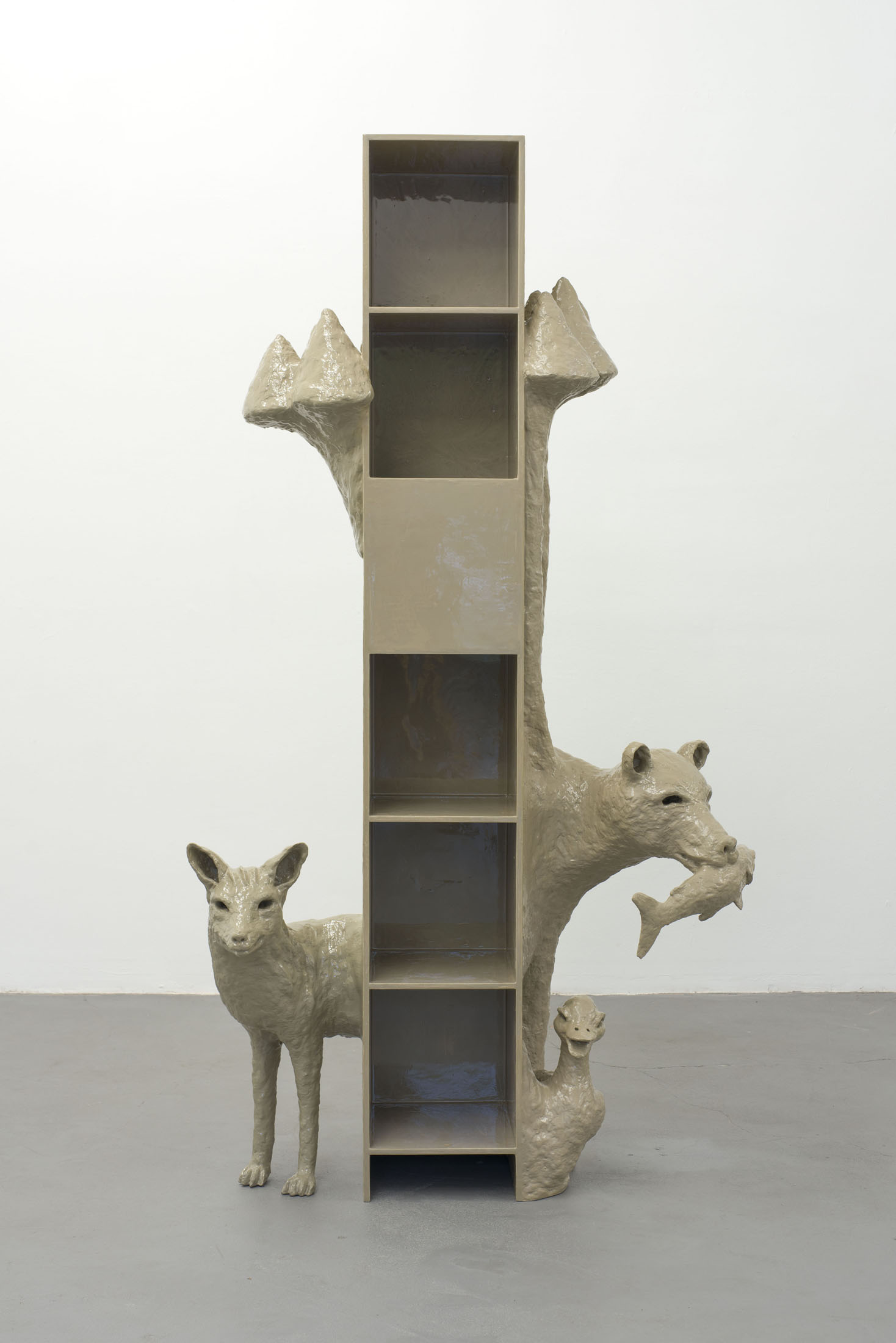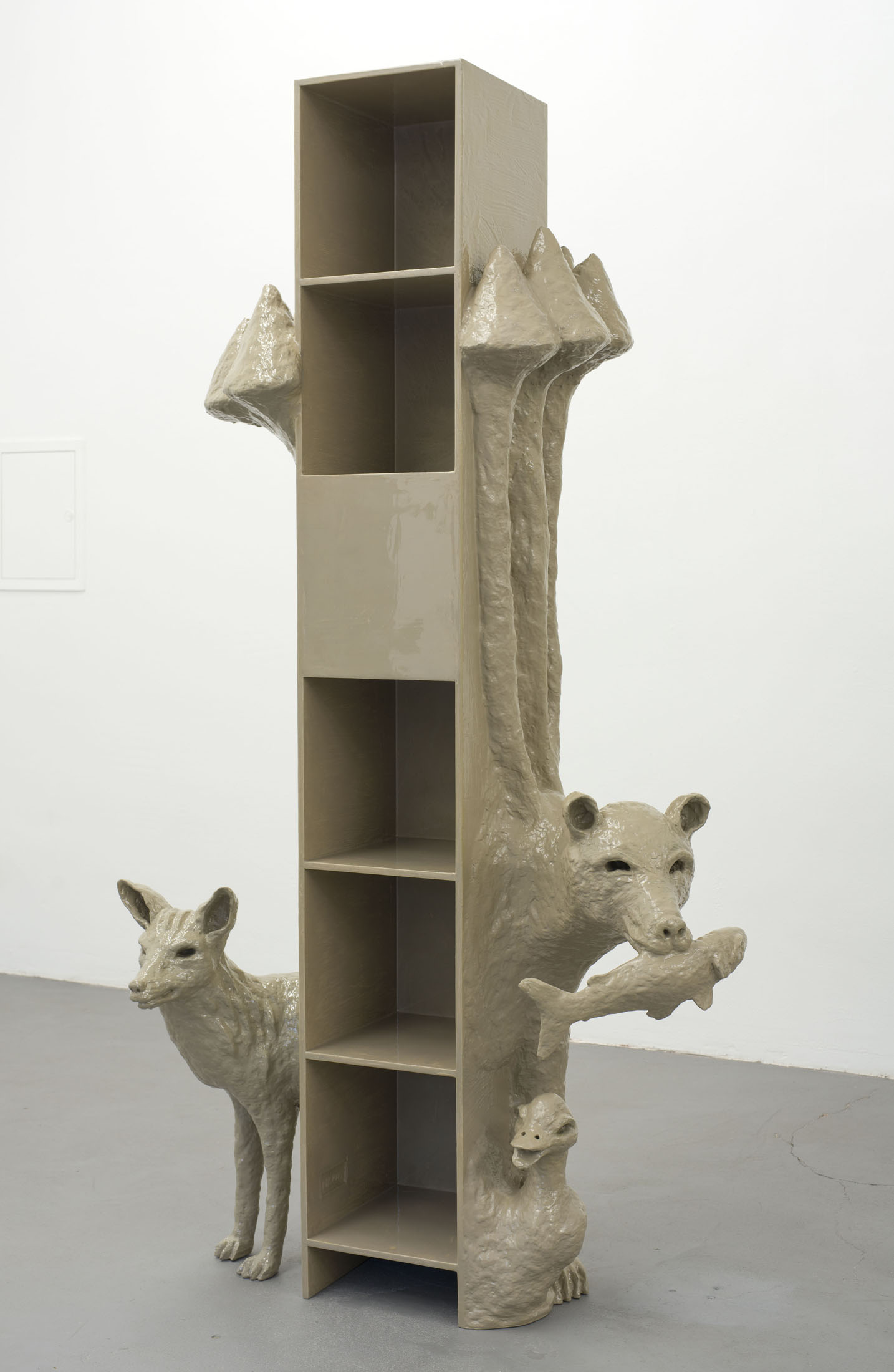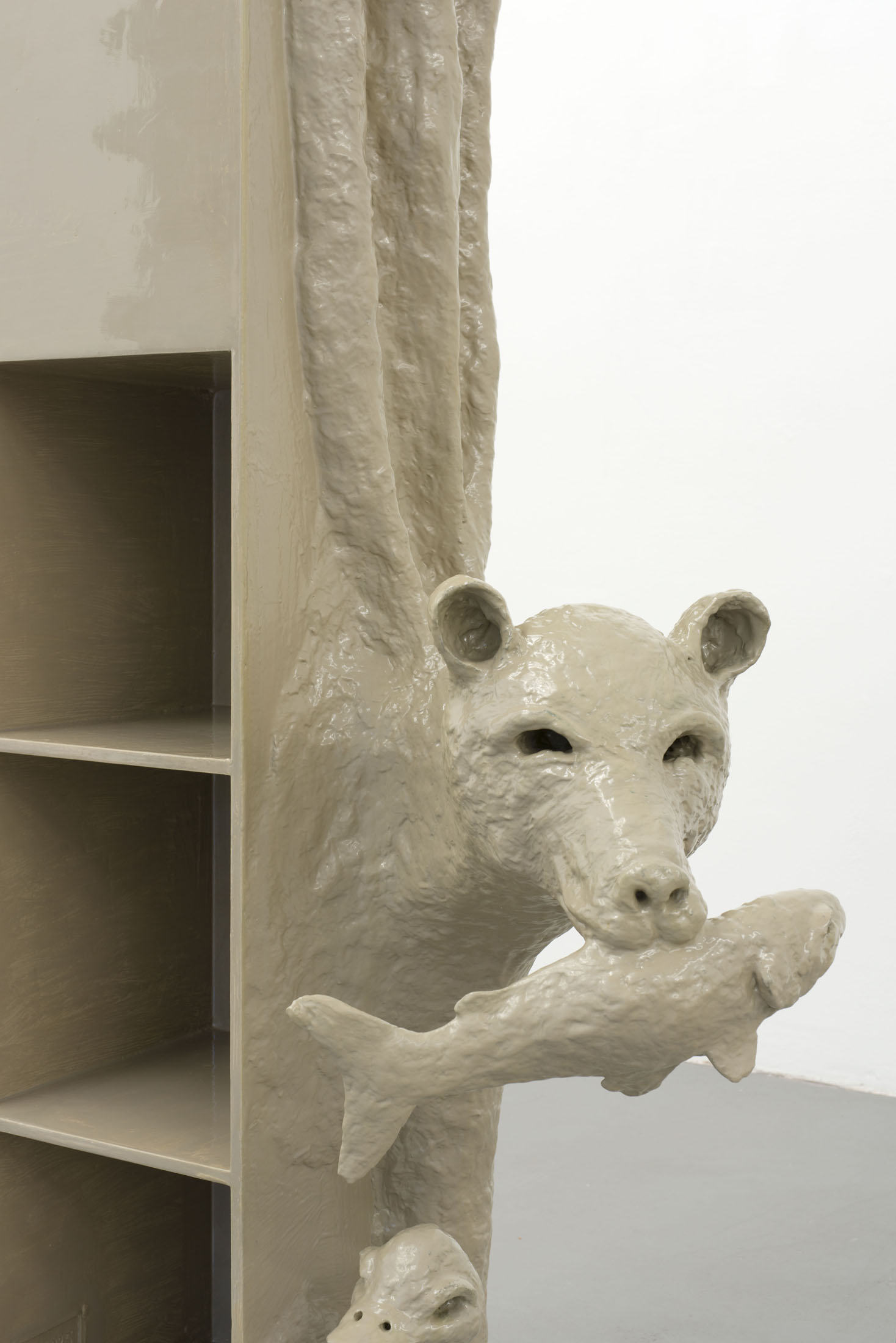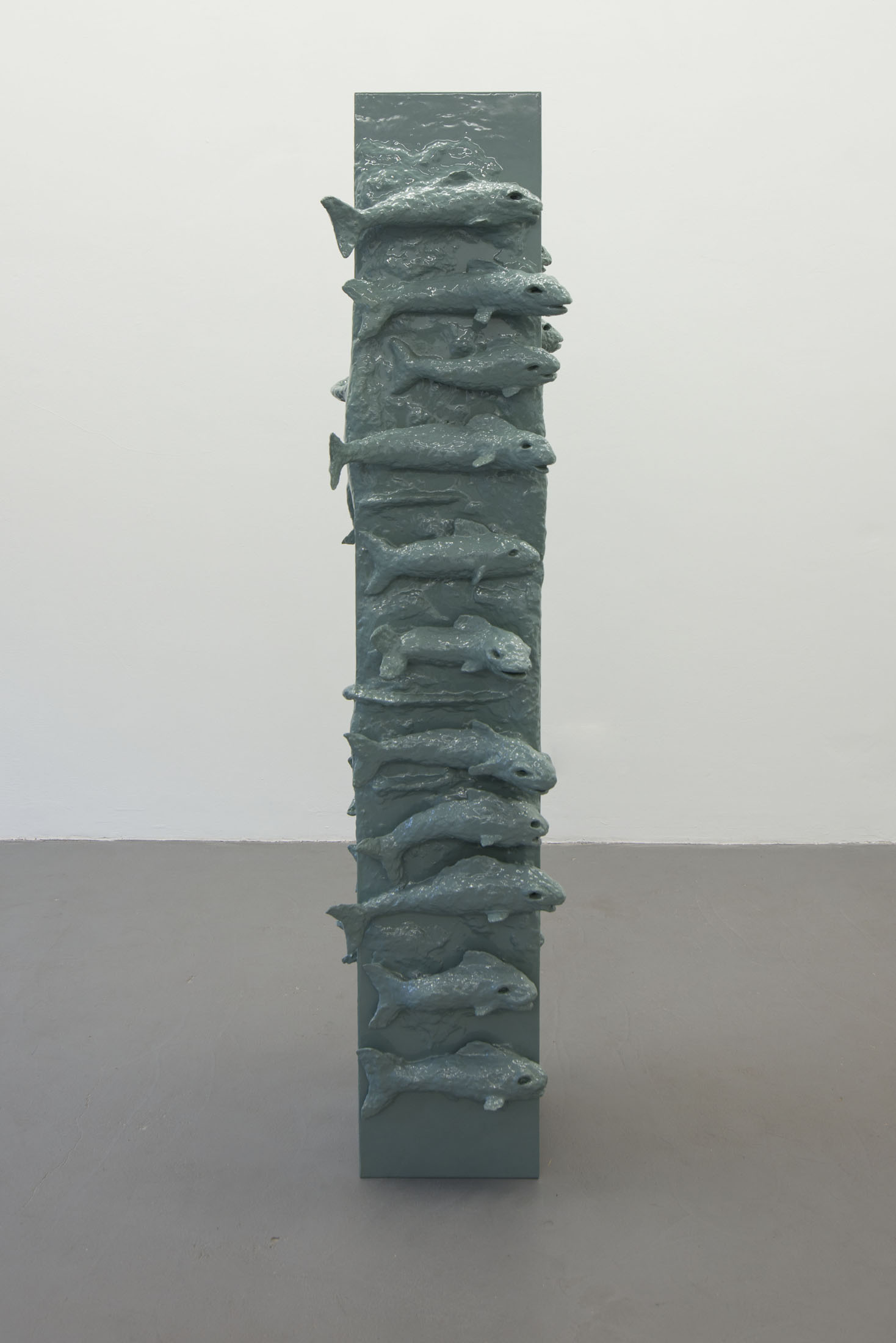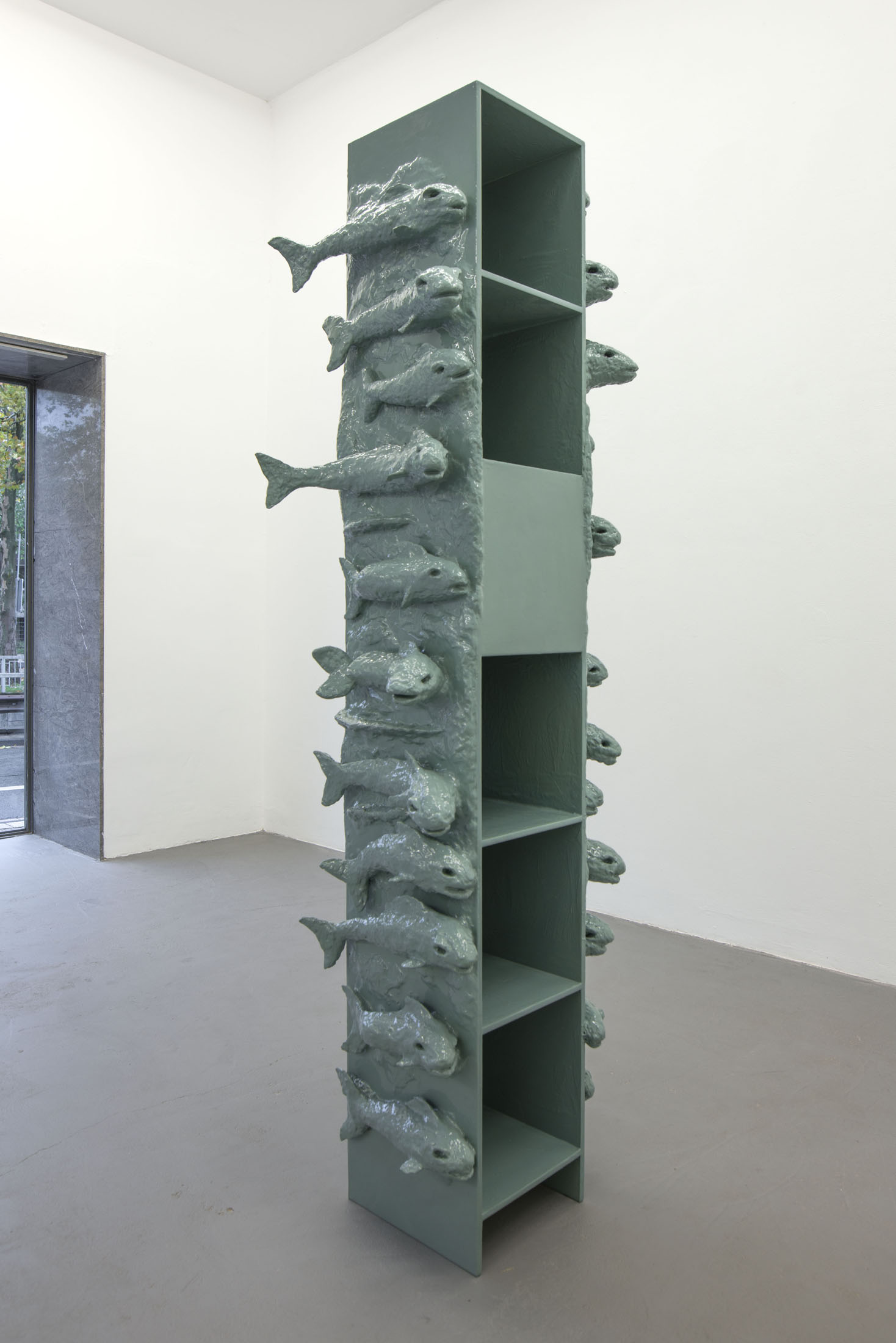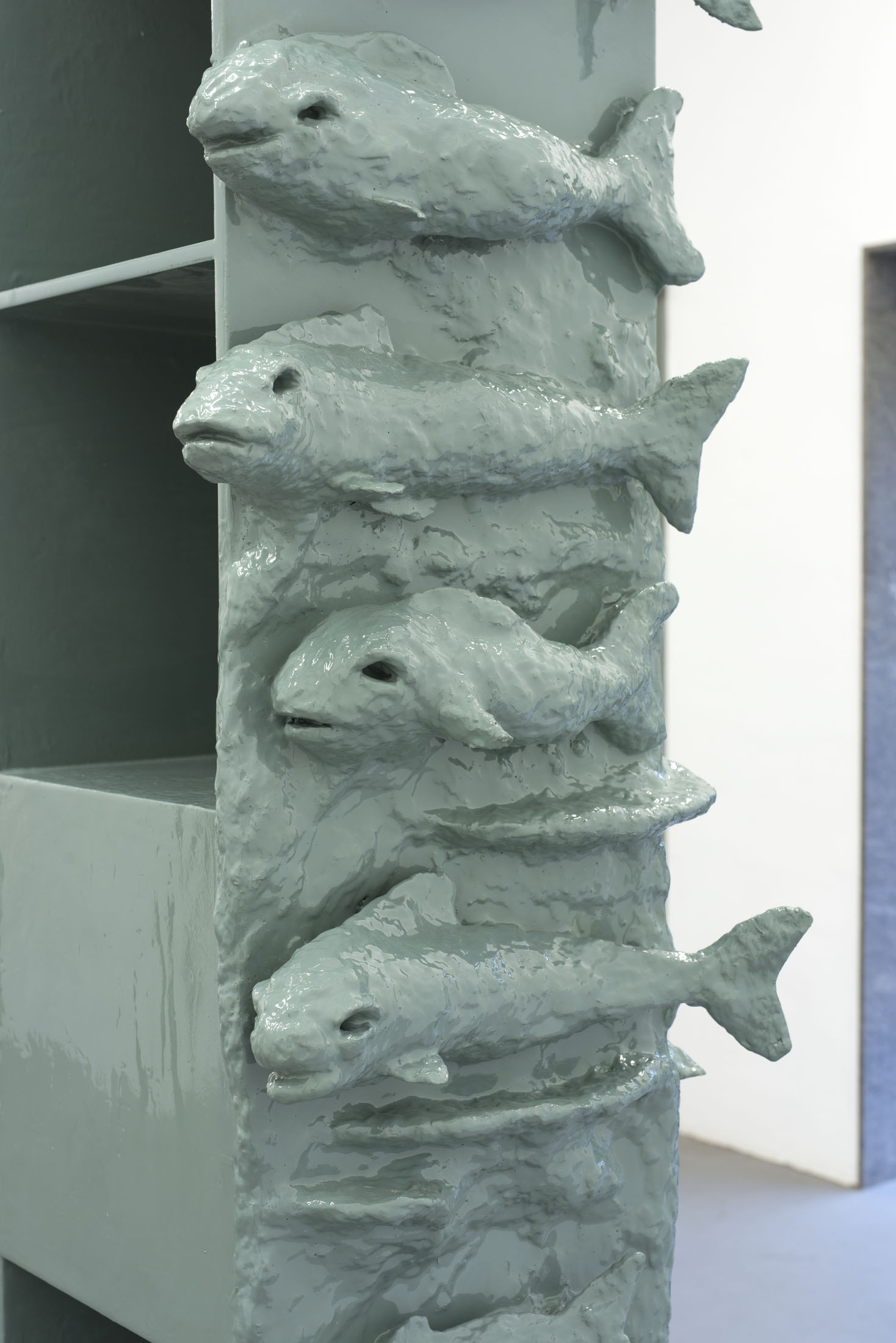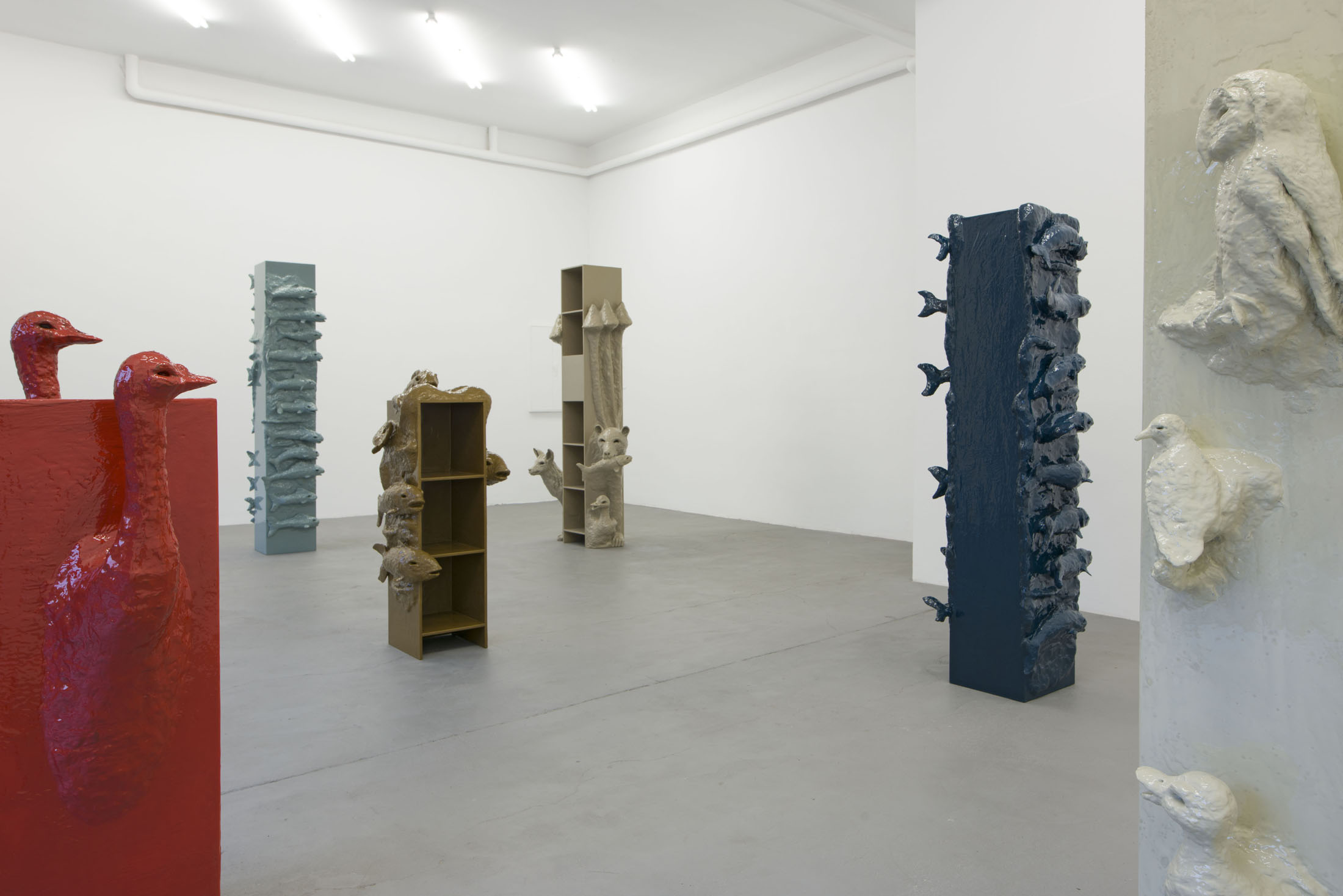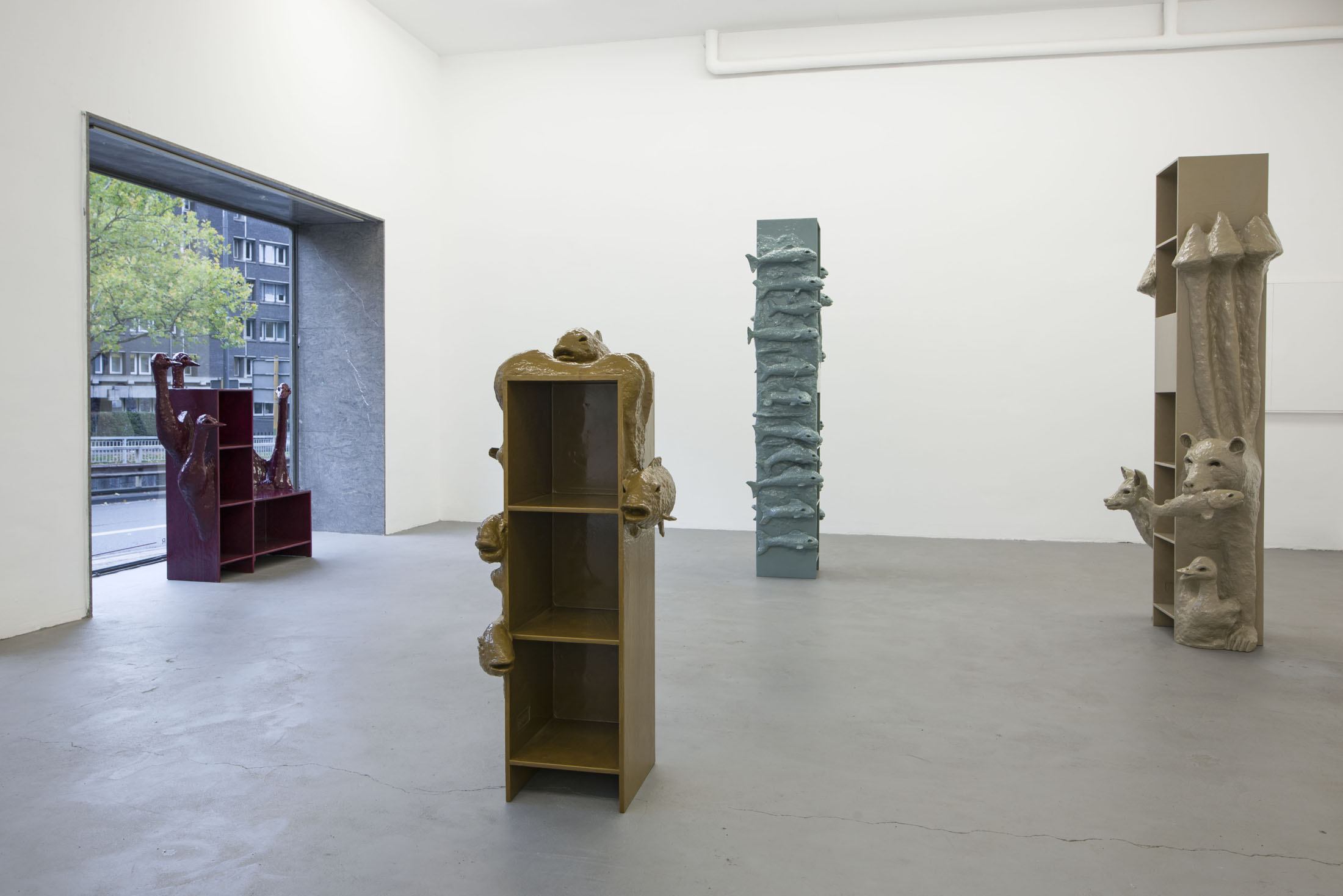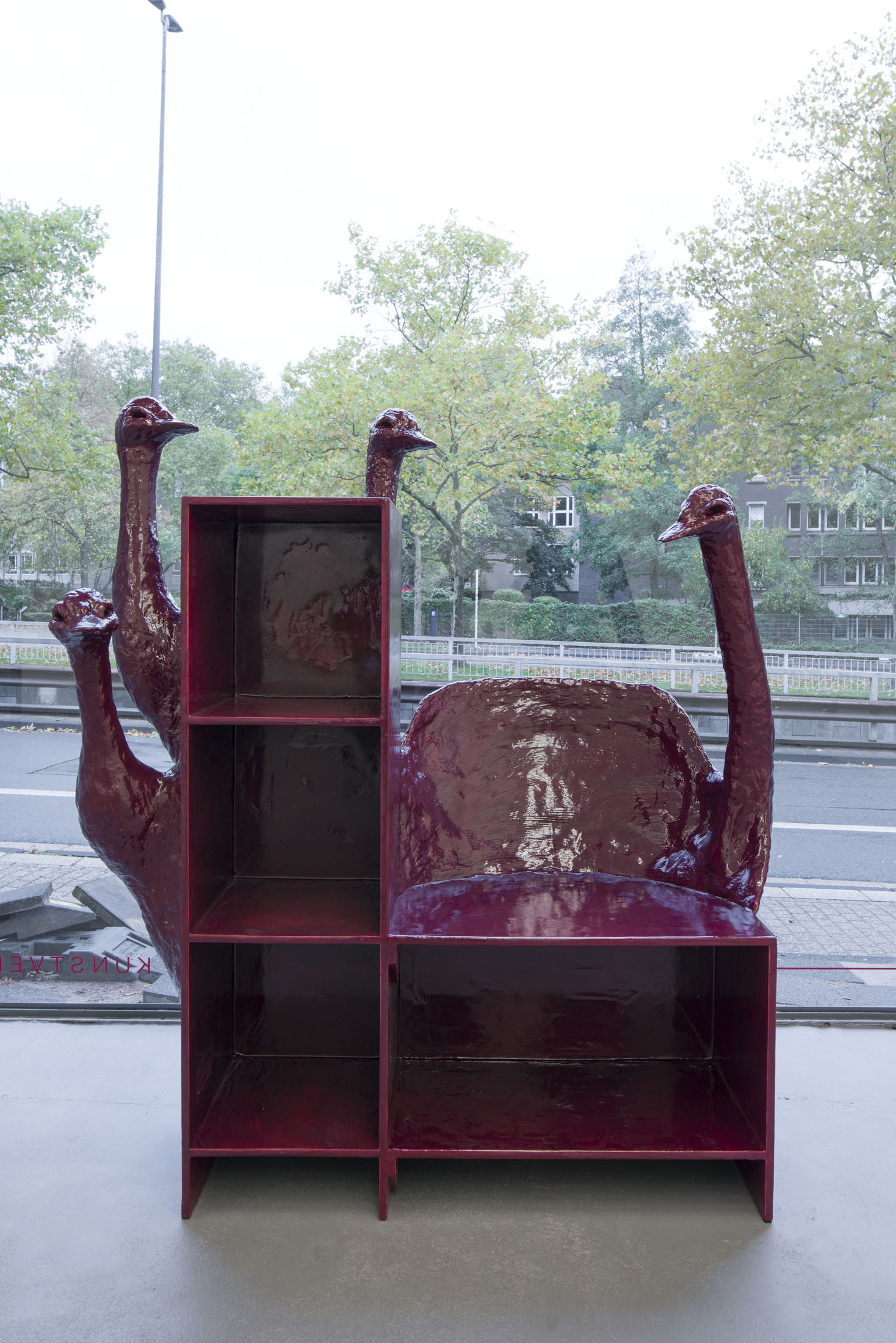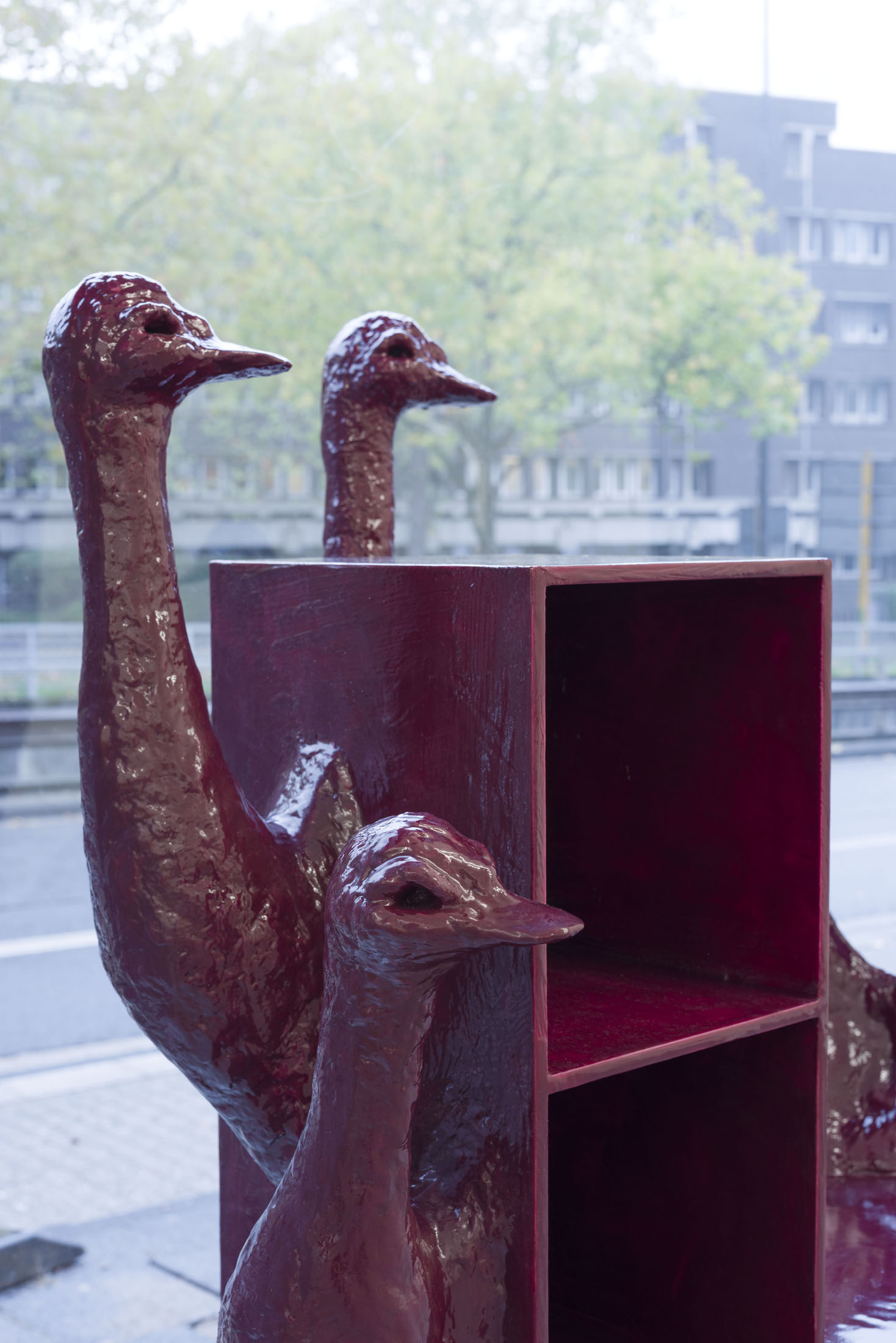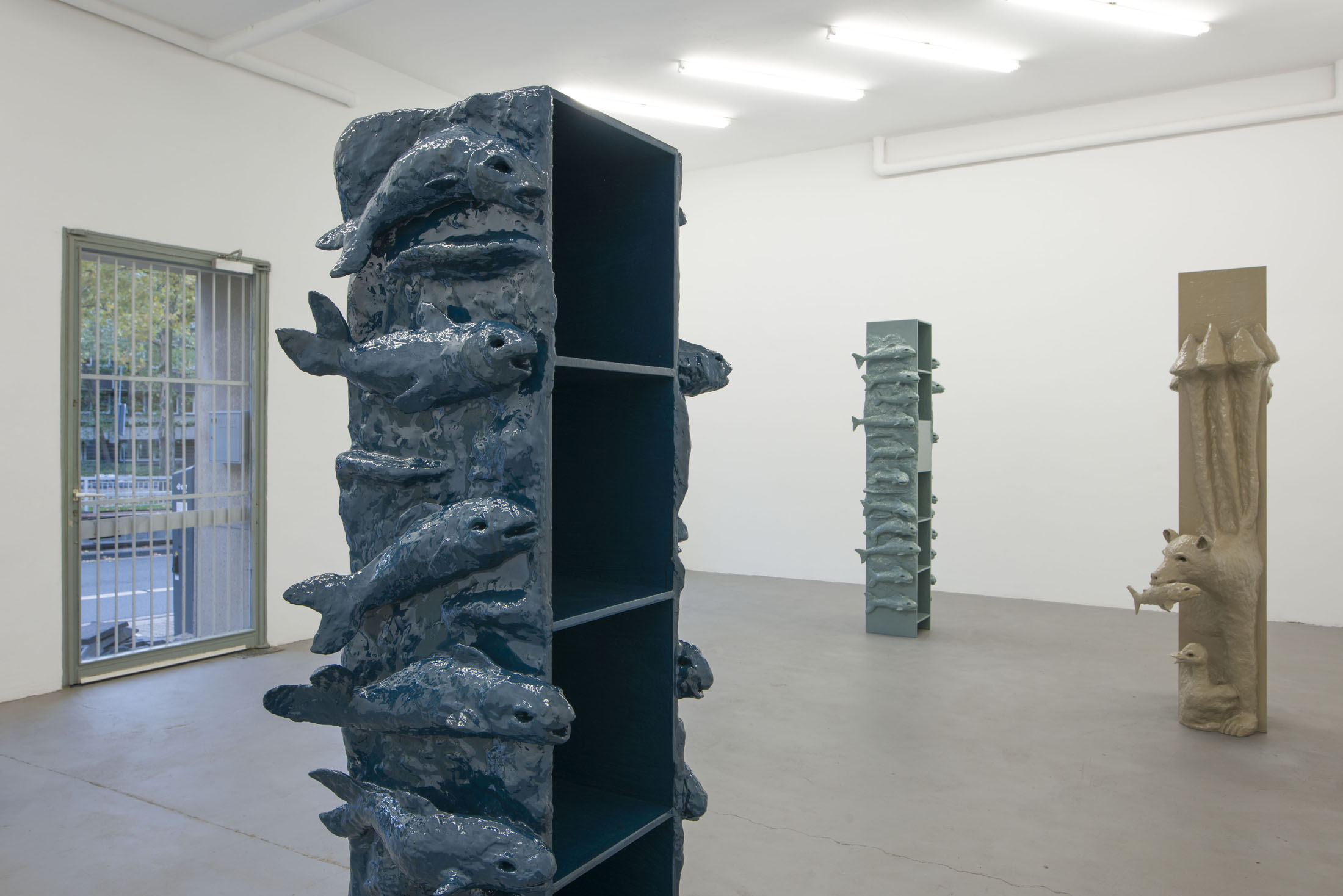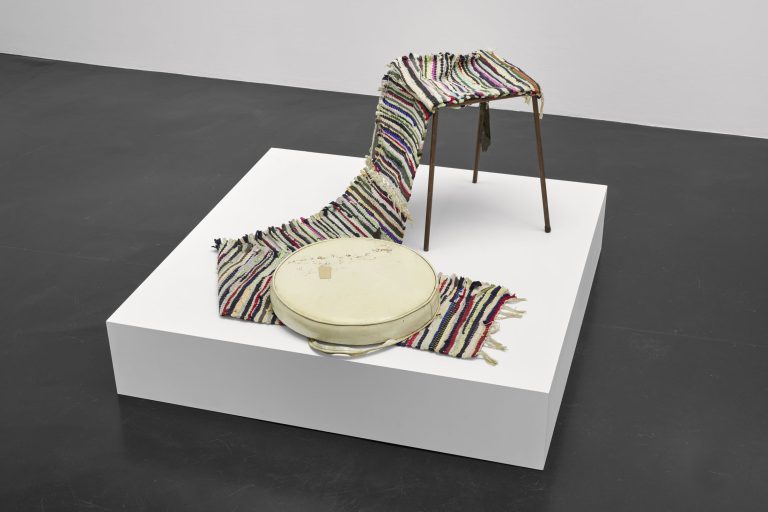
Nuri Koerfer’s sculptural practice hybridises the autonomous artistic concept of the inoperative object with its counterpart, the object of utility. She playfully propels chairs, benches, shelves, and tables towards other, unintended forms of use, without abandoning their original functionality as furniture. In addition, the gravity of Koerfer’s sculptures is altered by the intertwining of the usually strictly separate spheres of the animal world and furniture, the latter already offering numerous empty spaces for the weight of humans and their objects. Relationships and proportionality – initially genuine sculptural questions – expand from the formal to a more general level through these juxtapositions, without offering any rash answers or solutions.
The works in ‘Shelfs’, Koerfer’s exhibition for the Kunstverein, continue her sculptural exploration of the totem, this primordial system of social structure. What does it mean to be assigned an animal or plant as a guardian spirit? To what extent does the totem interact with the psyche and forge a bond between individual and environment? For the first time, Koerfer focuses less on furniture that offers proximity to the human body or can even stand metonymically for it. Instead, attention is drawn to forms of spatial organisation of storage, containers of externalisation. Continuing to reflect on the totem, one might ask which objects and ideas are impressed upon the personality ? Which theories or narratives have we consciously or unconsciously stored within ourselves, leaving us unable to clearly distinguish whether we carry them around with us or whether, perhaps, the opposite is true?
Within Koerfer’s work, the shift towards shelf typologies signifies a new emphasis on height and vertical organisation, which is accompanied by a more elaborate energy in sculptural terms. On the reception side, however, these vertical works demand a different physical orientation, which, according to Rem Kohlhaas or Isa Genzken, can and should also create connections to the delirious. Whereas, if one takes the kinship to the totem seriously, the verticality of the forest still shimmers faintly somewhere behind the metropolis. Perhaps the central concept surrounding Koerfer’s practice is consciousness. The imprinting, manifestation and renewal of consciousness are explored in each of her objects. One does not have to relate this to oneself, but the applied aspect of the works gently compels one to constantly relate to it.
Nuri Koerfer (*1981) lives and works in Berlin. She studied at the Lucerne University of Applied Sciences and Arts and at the Bram Shaw School of Art in London. She has had solo and group exhibitions at Lars Friedrich, Berlin; Melas Martinos, Athens; Lodovico Corsini, Brussels; and the Kölnischer Kunstverein, among others. She also co-programmed the MAVRA art space in Berlin. ‘Shelfs’ is Koerfer’s first institutional solo exhibition.